Oracle OCTOBER 02, 2023 : VOL. 51, NO. 1 The

CONTENTS NEWS STUDENTS OPINION FEATURE A&E OCTOBER 02, 2023 cehsnews.com 01 COVER 5 Gettin’ Hot in Here 6 Beat the Heat 7 A Taste of Scotland 8 The Republic Transition 9 Trot to the Top 10 A Race to the Gold Cup 11 Science in the Ocean 26 Time is Ticking 13-14 For the Love of Teaching 15-16 New Sheriff in Town 17-18 Teams at East 21-22 A New Age of Learning 19-20 Stuck in the Middle 23-24 Reading Between the Lines 25 Transportation Troubles 12 Back to School Plague 29 Barbie Mania 30 A Swift Rescue SPORTS 27 Alterations to History 28 Behind the Student Section
CO-EDITOR-IN-CHIEF
As a new school year begins, so do the new changes that BCSC and Dr. Parsons are bringing to the school. From lanyards to academic teams, there are many new concepts that are being enforced this year. With new ideas come differing opinions and a fresh way of thinking about school.
These ideas and amendments are what our two writers, Lilly Arnholt and Nathan Phan, talk about in the cover section of the issue. Along with those changes comes a special shout out to the English department for stepping up in the absence of Mrs. Fields due to unforeseen health problems.
Newspaper in itself is very grateful towards the head of the English department, Mrs. Kannianen for helping take over Newspaper and ensure we would be able to continue on this school year, even if Mrs. Fields is not in school.

With a special feature from Mrs. Kannianen, Dr. Parsons and Mrs. Carroll, we believe that many students will be interested in the stories told through the cover pages.
Later in the issue, one of our new writers, Tari Linnenman, beautifully executed a story about the up and coming debate over banned books in both public school and homeschool. This story is unlike any we have written before, as this story includes the opinions of teachers and parents as well as students from both homeschools and public schools. We are excited to bring this fresh perspective and hope you can find yourself reading this story along with the others.
To finish off the issue on a lighter note, a new writer on staff, Natalie Vanest, and a returner, Kindred Shafer, take on the Arts and Entertainment section of the paper. In these pages, they cover all things Barbie and The Eras Tour. These two writers are very passionate about their story topics and are looking forward to sharing their knowledge.
From our staff to everyone reading, we are very grateful for every one of you who help support us and allow us to write stories about our school and topics that affect every student. If you have a story that you would like to share or a specific topic that you would like us to cover, reach out to us over Instagram or Email at cehsnews@gmail.com, and, as always, carry on O’s!
design by: Jami Porter
STAFF
PRINT EDITORS-IN-CHIEF
Sierra Perkinson
Sara Durnil
WEB EDITORS-IN-CHIEF
Kindred Shafer
Arlynn Fleming
DESIGN EDITOR
Jami Porter
BUSINESS MANAGER
Cole Staggs
MANAGING EDITORS
Nathan Phan
Grace McMahon
PHOTOGRAPHY EDITOR
Ava Goode
MULTIMEDIA AND SOCIAL MEDIA EDITOR
Lilly Arnholt
CONTENT EDITORS
Ella Lynott
Ella Anthis
Tari Linnemann
STAFF
Kendall Chapple
Nataley Cheshire
Abigail Dabson
Lily Davis
Sidney Johnson
Lilah Klei
Rahianna Logan
Ellie Schlaudroff
Kailani Scott
Natalie Torres
Natalie Vanest
ADVISOR
Chasidy Kannianen
EDITORIAL
Table of Contents
02
Sara Durnil
Lily Davis STAFF

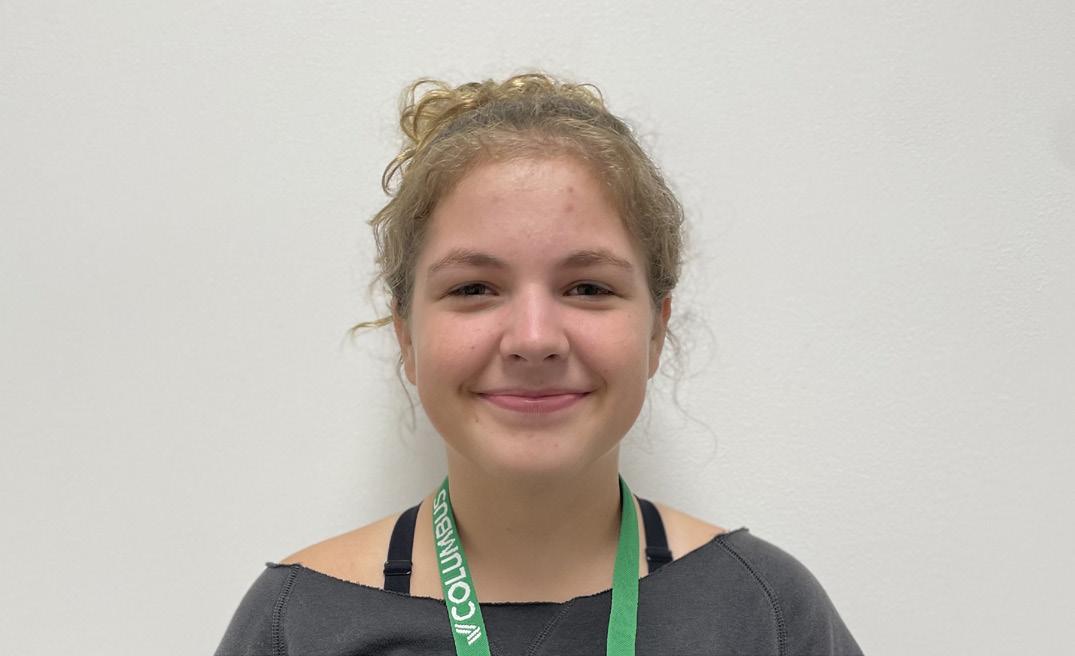

I am super excited for my second year of newspaper. This year I am a writer for the printed issues of The Oracle and a designer for the stories on the website. I enjoy being a part of the staff and being able to work with everyone to get our stories out to the community. This issue I wrote about Garrett Lasure’s BMX career. It was very interesting to learn about the sport and to hear about how it has impacted Lasure’s life. It was great to learn more about the students at East. I am excited to see where this year goes!
KENDALL CHAPPLE STAFF
Heat Waves and Cooling Stations was the first story that I got to design. Through reading and designing this story, I learned how heat waves affect us and how we can use cooling stations to help us get through rough temperatures. I also got total creative freedom to make it look however I wanted! I learned how to use Adobe in order to design, and I am really happy with how my design turned out.
TARI LINNEMANN STAFF


I have had the privilege of writing my first print story on the BCSC book protests. I have always been passionate about literature and what it has to offer regarding my education, so I was able to relate to this topic on a more personal level. I was able to use my experiences with ho- meschooling to inspire the perspective of this story. This topic has been discussed by many parents and faculty, but the perspective of the students has not been heard, so I am glad I can start helping the students build a voice into what goes into our schools and what does not.

OCTOBER 02, 2023 cehsnews.com STAFF HIGHLIGHTS
03
Visit Our Website! CEHSNEWS.COM Listen to
Our New Playlist
WORD SEARCH

F A L L
Table of Contents
04
design by: Jami Porter
ACORN BLANKET COZY JACKET PUMPKIN
BONFIRE HALLOWEEN LEAVES RAKE AUTUMN CIDER HARVEST PIE SCARECROW
APPLES
Hot in Here
Heat waves are hitting the Midwest
Ella Lynott
The first recorded use of the phrase “heat wave” was in 1896. It was a scorching summer for New York when a 10-day heat wave hit. 1,500 people were killed that year by both the heat and overcrowding. Air conditioning units were broken and there was barely any running water.
On top of those vital resources being out of use, the majority of jobs at the time took place outside, which is how many of the deaths occurred. Many would think this problem would be solved by learning from past mistakes, but that is not the case.
According to the National Aeronautics and Space Administration, more than 100 million people ranging from the mid-Atlantic to the Midwest were under heat alerts in August, with temperatures reaching triple digits.
2023 has been the hottest year to date. In fact, June, July and August of this year are recorded as the hottest months since 1980. President Biden is treating climate complications as a very serious threat. He has taken climate leadership in many different aspects. From securing the Inflation Reduction Act, the largest climate investment historically recorded, to invoking the Defense Production Act. President Biden is delivering one of the most ambitious climate agendas in history.
According to Reuters.com, many of the heat waves taking place worldwide can be attributed to one issue, heat domes. Heat domes occur when high pressure systems form in the atmosphere. These systems act like a lid, trapping heat in a specific area, causing extremely high temperatures.
A high-pressure ridge that remains over central United States has been trapping hot air over the region and funneling moisture from the Gulf of Mexico. This ridge has caused the recent increase in heat waves.
Heat waves pose serious risks with soaring temperatures. Individuals must hydrate, find shade and limit physical exertion. The intensification of these events due to climate change calls attention to the importance of everyone’s contribution to environmental preservation.
05
Gettin’
OCTOBER 02, 2023 cehsnews.com
Beat the Heat

How cooling stations are saving the summer

 Ella Lynott
design by: Kendall Chapple
Ella Lynott
design by: Kendall Chapple
With summer temperatures soaring, cooling stations are becoming essential in Columbus. These air-conditioned havens provide a safe refuge from the heat, offering water, rest areas and a much-needed break for those without home air conditioning. They are playing a crucial role in preventing heat-related illnesses such as heat rash, heat cramps, fainting, heat exhaustion and heatstroke.
According to Columbus.in.gov, as of August 23, 2023, Columbus officials opened a cooling station at Donner Center from 1-6 p.m., the hottest hours of the day. Cooling stations are air-conditioned public spaces set up during heat waves to prevent people from overheating. They provide a safe, cool environment, usually stocked with water to prevent dehydration. Cooling stations are often found in community centers, libraries or other public buildings. They are vital for those without home air conditioning and the elderly and those with health issues. These stations have quickly become an essential part of Columbus’s community response to extreme heat, ensuring everyone has a place to escape the high temperatures.
Cooling stations are a remarkable way to fight the environmental impact of the usage of individual air conditioning. As reported by Inspire Clean Energy, when people use their own air conditioning (AC) units, the energy utilization can be massive. A home AC unit uses 3,000 units of power every hour, which equals 72,000 units for one day. According to The Washington Post, an AC unit can account for 60 to 70 percent of an electric bill in the summer. The number of money one can save differs depending on factors such as the size and quality of the unit, as well as the heat outside. Researchers have estimated one can save up to 11 percent in their annual energy savings. The cooling stations are now reducing the need for individual AC use. This reduction in energy consumption can significantly decrease the carbon outflow with energy production.
In addition, cooling stations can indirectly contribute to environmental preservation by minimizing the number of people suffering from heat-related issues. The healthcare sector, including hospitals, also contributes to environmental pollution through energy use, waste production, and other factors. By reducing the number of people needing medical attention due to heat-related illnesses, cooling stations can help lessen this impact.

Furthermore, cooling stations can foster a sense of community, encouraging people to share resources rather than using them individually. Cooling stations are an excellent example of how we can adapt to rising temperatures in a way that benefits not only our health and safety, but also the environment.

In conclusion, cooling stations are a vital resource, providing a communal, energy-efficient solution during heatwaves. They foster community spirit and contribute to environmental sustainability. Their role in reducing energy consumption and promoting shared resources makes them an essential part of the future. They are truly beneficial for both people and the planet.

06
News
A Taste Of Scotland
A view of Scottish culture brought to Columbus
Sidney Johnson
Each year in Columbus, Indiana, a Scottish Festival is celebrated on the second weekend in September. Elizabeth Bostelman, a volunteer coordinator of the Scottish Festival board, is full of knowledge about not only the Scottish Festival, but Scotland itself.
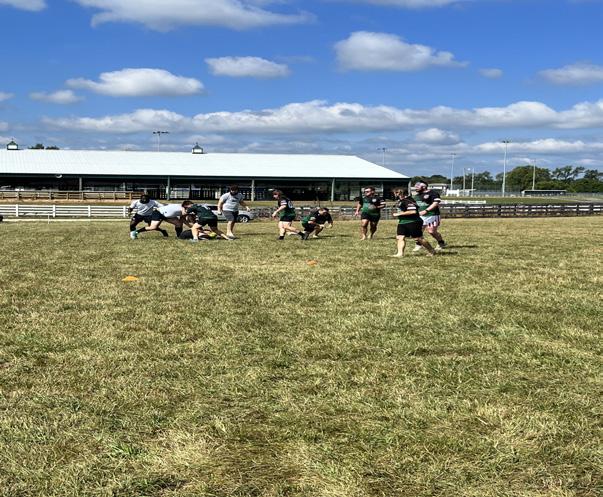
Bostelman has Scottish ties through her mother’s side. Her family lived in the United Kingdom for a few years. She was able to visit Scotland and feel a strong connection due to her family’s heritage.
“Now, I get to bring it back to Indiana,” Bostelman said. ”I really enjoyed visiting the Edinburgh castle, walking the royal mile and seeing the history of it.”
While Bostelman has volunteered for the Scottish Festival since high school, the event actually began many years prior.
“This will be year 30 for the festival, but we took a two year break due to COVID-19,” Bostelman said. “So this is really year 32.”
While visiting the Scottish festival, one can expect to see many traditional activities. They provide entertainment for all ages and interests.
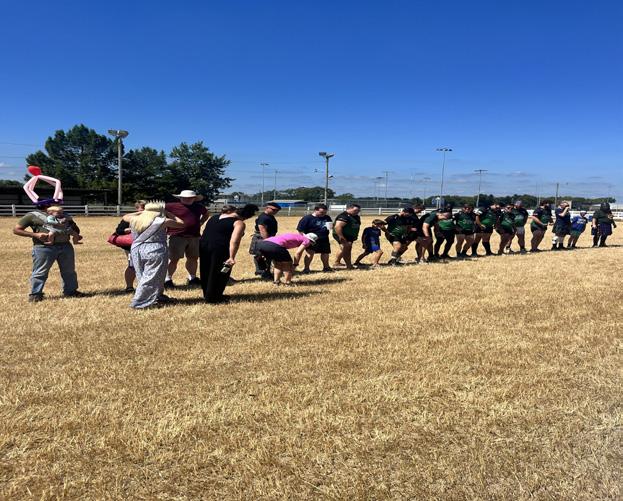
“Our entertainment pavilion has typical Scottish music and even hard rock versions of it,” Bostelman said. “We also have pipe bands, sheep dogs, a children's area with crafts, highland athletics like throwing cabers, vendors, food trucks, European car shows and rugby matches.”
Although the festival is well advertised in Columbus, it is also published in the Indiana festival guide, which brings in many visitors.
“Most of the people who come are from outside of the county, but most are from other parts of Indiana or even Louisville, Kentucky,” Bostelman said.
Throughout the past 32 years that the festival has gone on, it has been located in Columbus. Even though it moved from Mill Race Park to the Bartholomew County Fairgrounds, the festivities still took place in Columbus.
“About 30 years ago, our mayor wanted to get people excited about Scotland and the culture there,” Bostelman said. “Another factor is that Cummins recruited a lot of people from England and Scotland, so there was a huge Scottish population in Columbus.”
Similar to the previous mayor, Bostelman was trying to get people excited about the Scottish festival and learning about Scotland.
“We are always looking for volunteers, and we hope to bring more locals to the festival in the next few years,” Bostelman said.
07
OCTOBER 02, 2023 cehsnews.com
design by: Rahianna Logan
The Republic Transition
Navigating the shift from print to online news
Abby Dobson
The Republic is a local newspaper published in Columbus, Indiana and nearby counties. The Republic was created over 150 years ago, and it has become incredibly popular over time. The demand for online content has dramatically increased, and AIM Media Indiana has made the tough decision to shift to an online-focused platform to expand their content range.
After this decision to focus on online content, the print team has decided to provide a printed paper every Wednesday and Saturday. There will also be an online edition for those two days.
While this new focus gives many people throughout the community more access to stories through the web, those who relied on the printed copy will be affected.
As opinions over these changes are voiced, editors from The Republic have answered the frequently asked questions and addressed some of the public’s concerns, including Julie McClure.
McClure, an editor of The Republic, wrote a letter about the changes within The Republic. In the letter, McClure talks about her experience of writing for the newspaper and how it is not just affecting the community, but also the staff.
“For those of you who think this pivot to online isn’t difficult for the editors and reporters at The Republic, you would be mistaken,” McClure said. “We too are having to take a moment to adjust, recalibrate and position ourselves to report the news on an internet platform in new ways.”
Many people are concerned about older community members and how this significant change of going online will affect them. Technology can be challenging to learn and navigate, while one can just grab and read the physical newspaper. McClure also addresses this issue in her letter.
“We have been reaching out to the segments of the community serving older residents, who have been the most vocal about concerns accessing online content at therepublic.com,” McClure said. “We have had sessions at Mill Race Center and are planning public sessions at the library to invite those who are concerned about this change to learn more about it and how to navigate reading The Republic online.”
As more concerns grow while The Republic makes this significant change to its newspaper, they are taking the time to accommodate our community and ensure nobody is left behind.
08
News
Trot to the Top
East Senior wins national title in showmanship category.
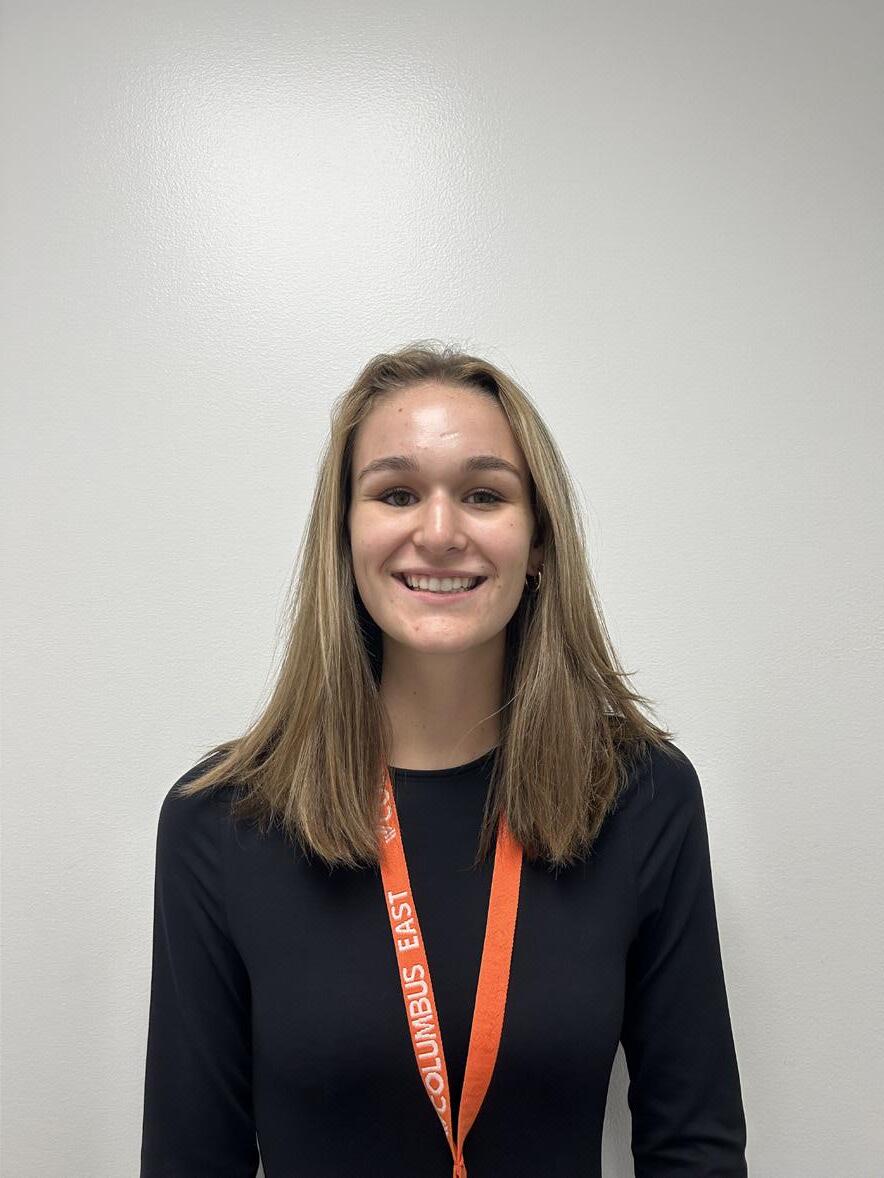
Afar fetched dream for many people is to win an official title in the sport that they pour their heart into. Senior Greta Hemmerlein takes this a step further by winning a world championship title at the recent Palomino Horse Breeders of America World Show.


“I started riding horses when I was five years old,” said Hemmerlein. “I’d ask my mom everyday, when I was probably three years old, and I’d ask her everyday, and she’d say ‘No, no, you have to be five,’ so that kept me quiet for a while. However, on my fifth birthday, I was like ‘Mom, I have to ride horses’ and so then she had to let me.”
As time goes on, a rider and horse bond, get close, and build trust. However, there comes a point in time when a rider and horse have perfected their work, their presentation, and can no longer get any better. Along with that, her old horse was twenty-two years old, which is relatively old for a horse. That is why Hemmerlein and her trainer eventually made a switch to her new horse.
“My trainer and I had decided that it was time for me to try something new, because that horse and I had reached our full potential and we weren’t going to get any better. I wasn’t going to learn anything new,” said Hemmerlein.
The switch to the new horse, Moglie, was not an easy one. Not only was he young, about six years old when Hemmerlein first met him, but he was not fully trained.
“One of [the challenges] was you couldn’t get him to move forward,” Hemmerlein said. “He just wouldn’t walk forward under the saddle. He wouldn’t do anything. That went on for about a month.”
However, over time, they two began to work together, and eventu ally, they clicked.
Moglie’s old owners had mentioned to Hemmerlein that they did not want him to go to waste, waiting around on their land. It was a more than perfect match, so much so that the two managed to win multiple tournament titles at the Palomino World show, including Grand Champion.
FIRST 1 FIRST 1 FIRST 1 FIRST 1 FIRST 1 FIRST 1 FIRST 1 FIRST 1 FIRST 1 FIRST 1 FIRST 1 FIRST 1 FIRST 1 FIRST 1 FIRST 1 1 FIRST 1 FIRST 1 FIRST 1 FIRST 1 FIRST 1 FIRST 1 FIRST 1 FIRST 1 1 1 1 FIRST 1 FIRST 1 FIRST 1 FIRST 1 1 FIRST FIRST FIRST FIRST 1 1 1 1 1
09
Grace McMahon
OCTOBER 02, 2023 cehsnews.com
Left- Hemmerlein holds up her awards and winnings Right- Moglie, the horse, stands and waits.
design by: Grace McMahon
A Race to the Gold Cup
Garrett Lasure’s journey to first in state.
Garrett Lasure is a senior here at East. One of Lasure’s interests is BMX racing, or bicycle motocross. It is off-road bicycle racing around manmade tracks. BMX racing is a sport that anyone can do, despite age or proficiency.
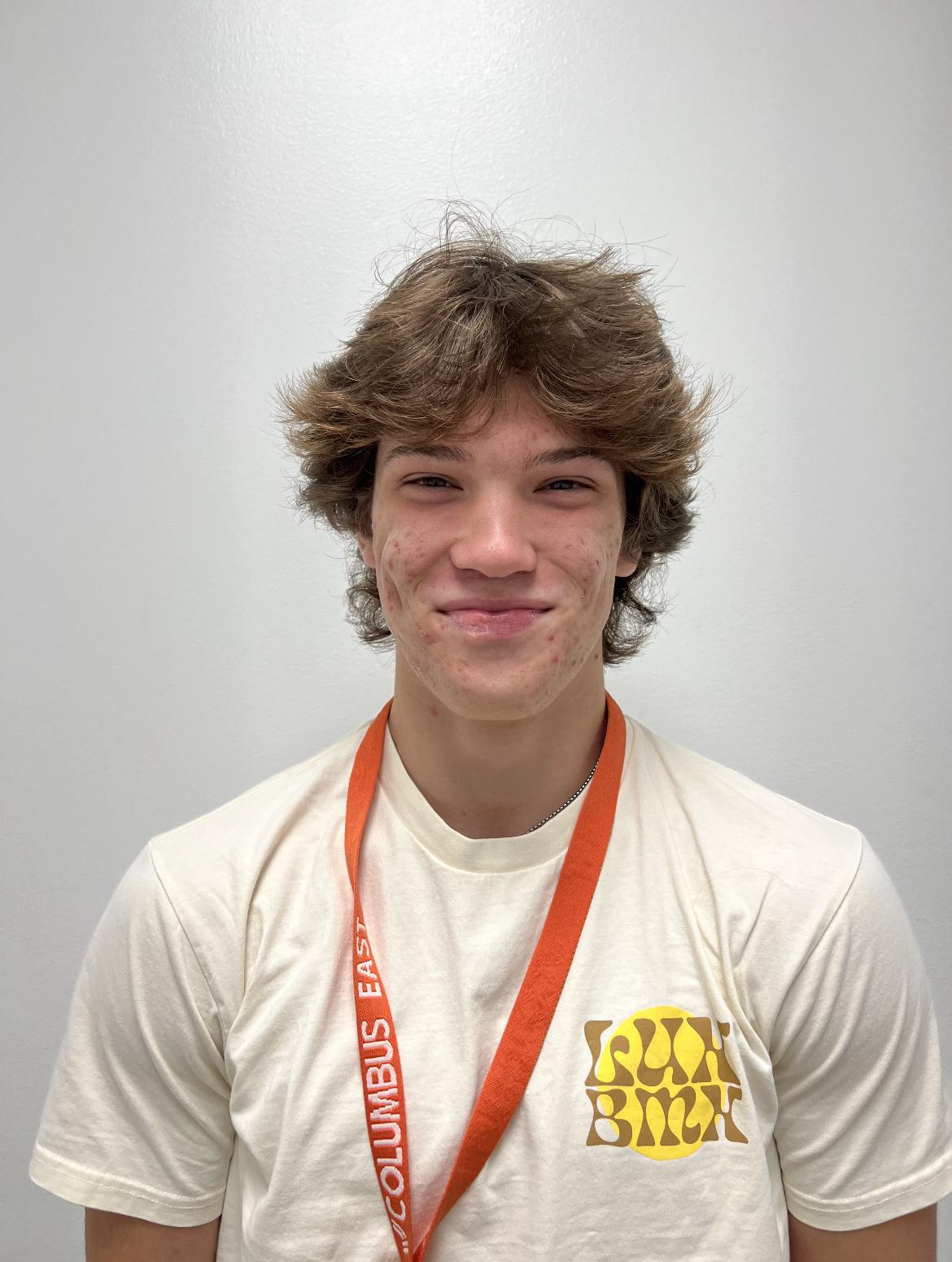
“We have people at our track from ages two up until people in their 60s, so anyone can do it,” Lasure said. Lasure practices at the Columbus BMX track near the fairgrounds.
“I have been racing since I was four,” Lasure said.
Lasure learned how to ride a bike when he was only three years old, and within a year, he was racing. Lasure continued to race for the next nine years, until he decided to take a break in order to focus on basketball. After spending a few years playing basketball, Lasure found himself back at the track.
“I am going into both the state and the Gold Cup finals being number one in points,” Lasure said.
Lasure shares that he is looking forward to competing in the upcoming Gold Cup competition. He has spent many hours practicing and working to secure his spot as number one in the state. Lasure is so far ahead in the competition that even if he were to not compete in the state finals, his attendance to the event alone would still put him in first place.
“For my first year I am thinking of attending UIndy,” Lasure said.
Lasure plans to attend UIndy for his first year of college since it is not too far from home and is very close to a BMX track. His goal was to attend Purdue until he found out there were no BMX tracks within a two hour radius of the campus. Since Lasure is not ready to give up his sport yet, he is finding ways to still be able to balance his education and his sport.
“I’m thinking about transferring to Bloomington after a year or two,” Lasure said. Although there are not many BMX tracks around Bloomington, he is going to the city to be close to home and to further his future degree.
Lily Davis
START START START START START START START START START START START START START START START START START START START START START 10
Students
Science in The Ocean
East’s Ocean Science class goes to Key Largo before Fall Break
Cole Staggs
Though little is known about the deep ocean, aspiring science students and marine biology teachers alike, do their best to discover new flora and fauna in the cities of the ocean: coral reefs.
Mike Walls, the Anatomy and Physiology, Ocean Science and Biology teacher at East will be taking the 2023-2024 Ocean Science class to Key Largo, Florida to study the local coral reefs.
Walls has been taking his class to Marine Lab “[since] 2009, when we started up the Ocean Science class,” Walls said.
With a multitude of great experiences, Walls recalls his favorite part of the field trip.
“I like when we look through the algae,” Walls said. “There are so many things you don’t expect to find there [and] I love snorkeling in the mangroves.”
From snorkeling in the mangroves to swimming in a coral reef nearly three miles out from shore, the Ocean Science field trip has an array of activities sure to leave aspiring scientists to ponder the ecology of the ocean.
Even when all seemed lost due to a tropical storm in Florida, the group of adolescent scientists were able to “stay in a fancy hotel” and since “there were big swell waves coming in from the tropical storm…we learned about long-short currents,” Walls said.
The trip exhibits day and night snorkeling in the coral reef, a lab where students cultivate their very own jellyfish larva in the hopes of growing them into medusas and a multitude of other labs to keep students preoccupied.
One of the activities most students are excited for, though, is snorkeling in the coral reefs around Key Largo.
“I’m really excited to be in the water,” Senior Barbara May, a student planning to attend the trip, said. “And seeing different types of fish and corals.”
One aspect of the trip many students are looking forward to is physically exploring the water.
“I like more of the hands-on stuff, rather than the science [lab] stuff,” May said.
With such an exciting and fin-tastic field trip coming up for the Ocean Science class, multiple students and teachers are excited to see what becomes of these aspiring young marine biologists.
OCTOBER 02, 2023 cehsnews.com Students
design by: Sidney Johnson
11
2/5 people are sick
design by: Ellie Schlaudroff
Back to School Plague Sickness invading East
Natalie Torres
Every year, as school starts back up, there is something in the air that makes students and staff feel unwell. The spread typically starts after the first few weeks into school. Some people call it a common cold, but others refer to it under another title: The Back to School Plague.
This plague spreads like wildfire. Since students are in close spaces and classrooms for long periods of time, sharing desks, lunch tables, touching the same doorknobs and sharing a multitude of items with other students, there is a higher risk of infection and spread of what is going around.
When asked, two out of the five people claimed to have been affected by getting ill. They both stated that it has caused them to fall behind in classes and it has made it difficult to focus in class.
This school sickness affects many students and staff in many different ways. It causes them to miss school, fall behind in classes and even impacts their social life. This plague usually sticks around for about three weeks and spreads around the school at an alarming rate.
In a Centers for Disease Control and Prevention (CDC) article, it speaks about the power of teachers sharing how important it is to be aware of what is going around the school and how to handle it. The article recommends that, “students and staff keep their hands away from their nose, mouth and eyes.”
The plague may consist of a few different sicknesses. This could be a common cold, stomach flu, influenza, mono and even COVID-19. Now that the weather is changing, the students are being surrounded by coughing and sneezing peers which makes it easier for sickness to spread.
Cases of these illnesses are rising, especially COVID-19. Dr. Brendan Jackson, the CDC’s COVID-19 incident manager stated that, “after roughly six, seven months of steady declines, things are starting to tick back up again.”
COVID-19 cases are spiking back up. Entering this winter season and being surrounded by thousands of students, many other illnesses are also beginning to pop up.
It is important for each person at East to stay prepared for this winter season. Being sick has many disadvantages relating to school and overall. Be sure to not share drinks, always wash your hands and keep things clean.
12 October 02, 2023 cehsnews.com Students
For the Love of Teaching
Appreciate your teachers everyday
Nathan Phan
In the everyday world, people are normally not too excited about going to work. The reason may be the workload, lack of respect or the worker environment; people constantly dread going to work.
At East, the teachers prove that work is not only a job, but an opportunity to help have a real, positive impact on their students to help them through life, no matter the subject.
English teacher Jennifer Carroll, entering her 11 year of teaching at East, is one such teacher who finds the impact that she has on students and their lives also influences her teaching career.
“Whenever my former students would come in, email me or message me about their lives and how I impacted them is really fulfilling for me as a teacher,” Carroll said. “I just love to have that ability as a teacher to learn from my students as much as they have learned from me. Every year, I learn newer and newer things from all of my students.”
A part of that fulfillment as a teacher comes from knowing that the other teachers that they work with have each other’s backs. English teacher and Department Chair Chasidy Kannianen, who has taught a total of 20 years with 11 of those years at East, along with the other English teachers, have created a stable and collaborative work environment for each other to help strengthen student education.
“We are a very collaborative group and a very helpful group to one another,” Kannianen said. “Even though I have never taught ninth grade English, I know that if I needed to, I would have a bunch of people who are willing to help me understand the curriculum and get through the year.”
Having each other’s backs and not only being able to help out with teaching but also having normal check-ins with one another is a major focal point of the teaching environment.
With English and Newspaper teacher Megan Fields being gone, many teachers have stepped up to help her out while she takes a leave to focus on her health.
“The start of the school year is always crazy. Helping Fields, though, was an easy transition, we teach the same classes,” Carroll said. “Sure I lost some prep time, however, that is easy to get back or work on at home. Helping her classes and the students so she can recover and take care of the baby and herself is far more important.”
While Carroll is more behind the scenes, helping Fields with grading students’ assignments and creating lesson plans, Kannianen has stepped up by checking in on her classes during her free periods and even taking charge of The Oracle.
“Newspaper is totally new for me. Right now, I’m focused on just getting a feel for the class and managing it as best I can,” Kannianen said. “I can manage people pretty well but I do not know the nitty gritty of Newspaper and what exactly goes into it. I am currently working towards putting some structure into there and then as we go through this first edition, trying to understand how the whole process works.”
English was always on Kannianen’s mind when she grew up, but surprisingly, it was not her first option when she started college.
“When I was in eighth grade, I had an English teacher who told me that I was a really good writer, so I had that in the back of my mind,” Kannianen said. “When I went to college, I thought I was gonna go into the nursing program but things changed and I always had that teacher’s voice in the back of my mind, so that’s why I chose English as my profession.”
As Kannianen was influenced by the writing portion of English, Carroll was an analyzer who loved the portion of English that would ask the questions.
“Growing up, I always liked to read, I found myself constantly over analyzing every little thing and wondering about the whats and whys,” Carroll said. “Everyone also has a story to tell, even if they seem to be not very talkative, I enjoy being able to learn about my students and to develop that relationship and connection with them.”
Although Teacher Appreciation Week is during the first week of May, students should always appreciate their teachers and what they do for them as they also have their own stories to tell.
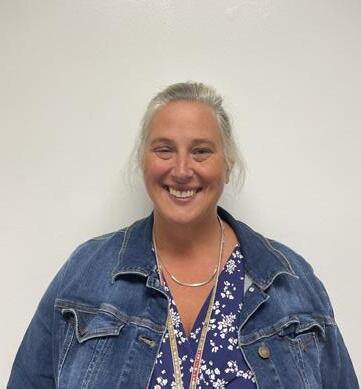
New Sheriff in Town
Dr. Parsons’ background and expectations for the school year
 Lilly Arnholt
Dr. Michael Parsons, the new principal of East, has brought a lot of expectations up with him. To truly understand his morals and expectations of students and staff at East, it is important to get to know him first.
Parsons is a very family-oriented man. He has a wife, Arlene, and two children, Caleb and Natalie. They are very adventurous people that spend every moment outside of school outdoors.
“We love to do backpacking trips where we pack everything into our backpacks; food, tent and everything, and disappear into the woods for an extended period of time. We just go on hiking trails,” Parsons said.
Other than backpacking, his family does various other activities at school. Parsons’ son, Caleb, plays soccer, while his daughter, Natalie, is starting volleyball. His wife works at McDowell, teaching students English as their second language.
“I love my family. My favorite thing to do outside of work is be with them,” Parsons said.
Although Parsons’ top priority is family, he takes pride in his work as well. His working background is extremely complex. He has worked at four other schools for multiple years before coming to East. Before East, he worked as a principal for six years at Clifty Creek, but that is not all.
One memory that Parsons is fond of from Clifty Creek is when he moved his entire office into the sixth grade hallway for around three or four months.
“And I’d be pretending like I’m talking on the [school] phone
when I’m in the middle of the hallway. There’s no outlets. That was the funny part of it,” Parsons said.
He also worked at Huntington Middle School and South Bend as an assistant principal for three years. Prior to all of that, he was a middle school Social Studies and Special Education teacher.
Parsons always knew he wanted to be back in a high school, and East was his first choice.
“I felt like this was a once in a life-time opportunity to be the principal at East High School,” Parsons said.
He feels like the student body makes up a majority of the school’s personality, but he also really likes the building as a whole.
OCTOBER 02, 2023 cehsnews.com
“It’s not a school of cliques. People accept one another,” Parsons said
When Parsons first came to East he knew that he was going to reinforce the rules. He wants East to be the safest and most accepting it can be for all the students.
“I want every child to have an amazing experience in school,” Parsons said.
He started his reinforcement of rules the first day of school, calling out all the kids walking in late and making sure everyone is wearing their lanyard.
“The lanyards are district wide. That had nothing to do with me,” Parsons said.
He likes the idea that he can walk around and know who is in what grade. He has also been making boundaries for students to go during lunch, ensuring all students are accounted for and not wandering around East doing whatever they want.
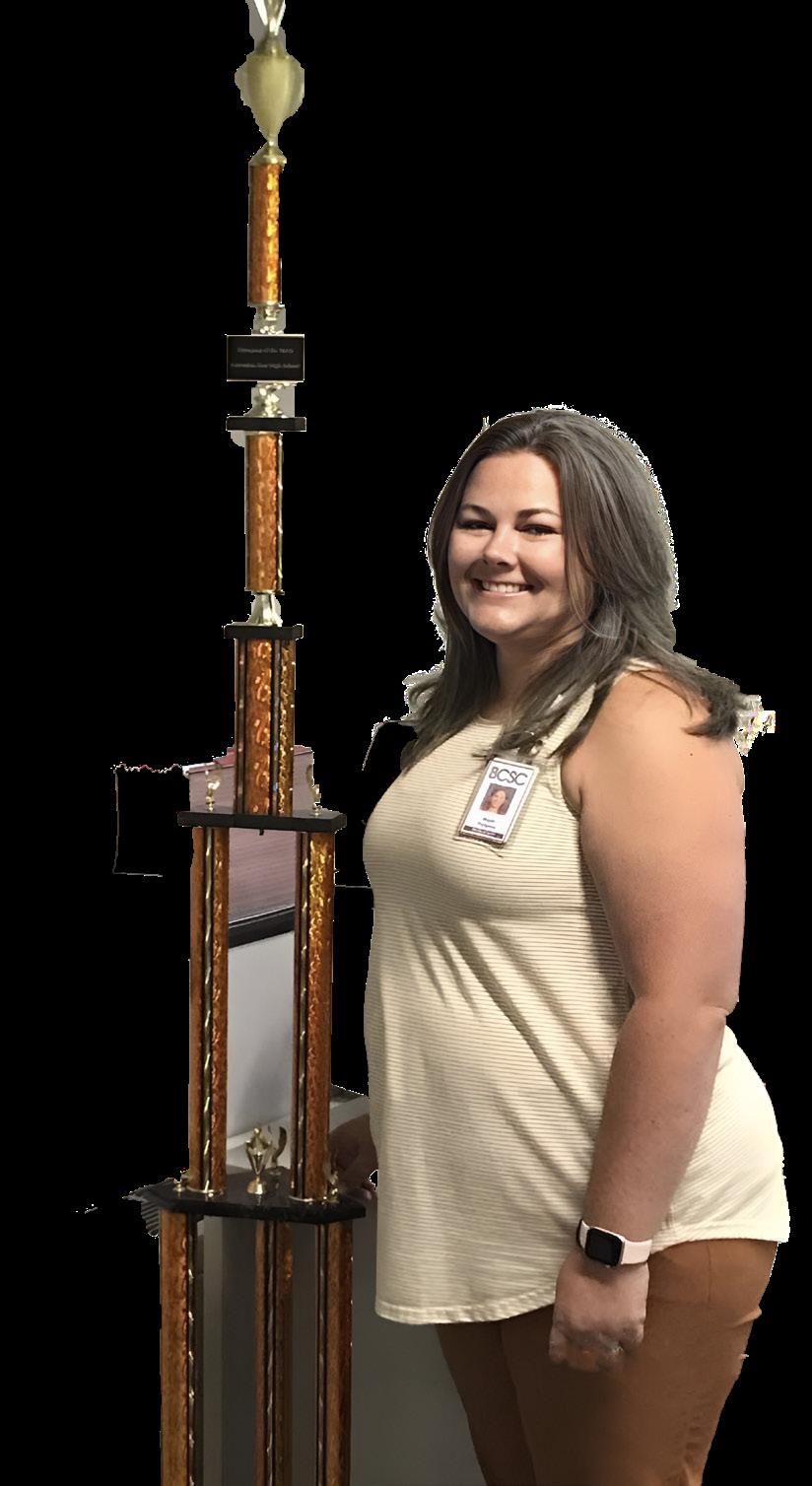
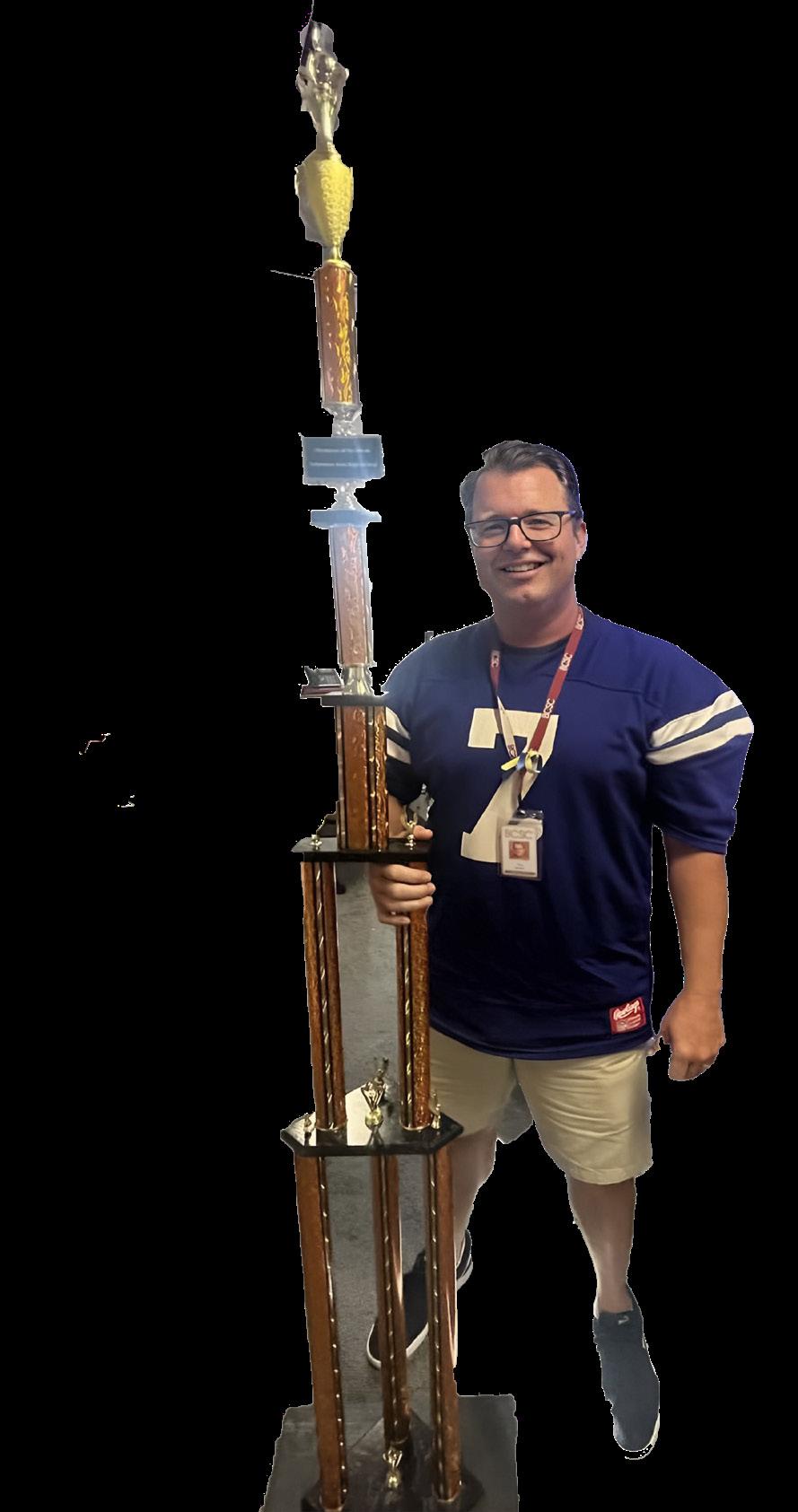
Parsons wants everyone to know that he means business. He is planning on enforcing more expectations for stu dents and teachers. He has also started a new tradition where he recognizes a teacher each week by presenting them with the olympian trophy and recogonizes a student by highlighting them on social media.
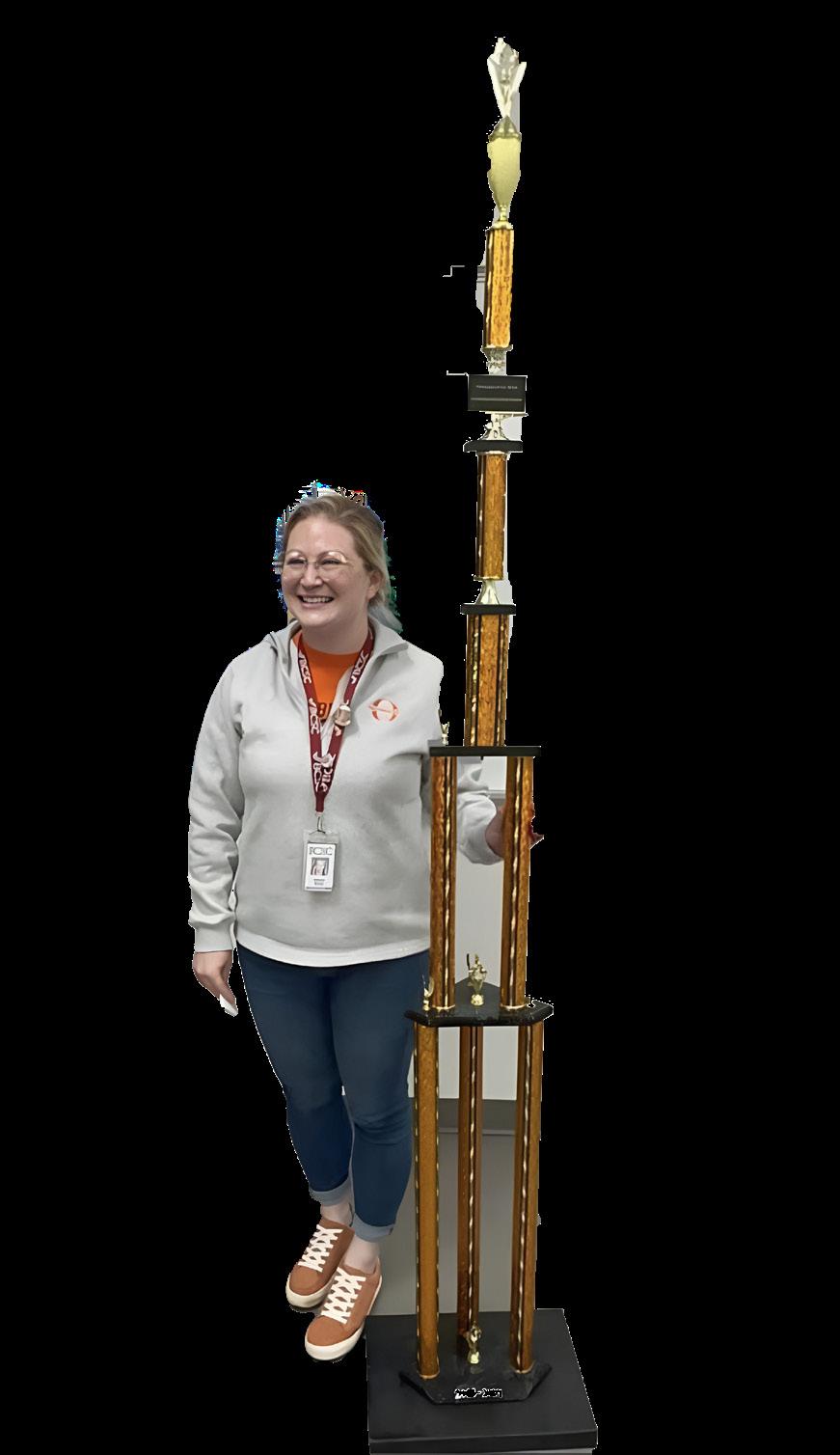
Starting the second quarter, a new phone rule will jump into action. Students will not be allowed to have their phones out during any instructional part of a class. Par sons knows that a student being on their phone most like ly means that they are not listening, so taking the distrac tion away will ensure that students are paying attention.
“I think this phone is an incredible tool and I have zero desire to take it away from kids,” Parsons said. “But when a teacher is teaching, when a teacher [has] put together an excellent lesson, they should not have to worry about competing for your attention with a phone.”
He also plans on discussing with all teachers about grading expectations. He plans on discussing late work, grading tactics and overall classroom expectations and management.
“There [are] opportunities to bring more understanding to the students on how each process is done so they have a very healthy understanding of the grading system,” Parsons said. “So they can prepare, to ensure they get the
best grade.”
Parsons has started his first year at East with a boom, making everything different from previous years. He has and is making this school the best it possibly can be, and he is proud of his work. He kindly asks that all students think of the bigger picture and follow his rules.
“Those are expectations and I will not change my expectations,” Parsons said.
Previous Olympians of the Week photos from columbuseasths on Instagram
Cover
design by: Arlynn Fleming
Teams at East
Are the teams at East playing out?
Senior Jake Gilbert believes that the changes are going to affect East in a negative way. Even with the big changes, Gilbert thinks these changes may not be beneficial for students at East.

“For me personally, I was one of the people who had a new counselor. Having someone different from the past 3 years that I have built a relationship with, so switching to someone completely new was different to me,” Gilbert said.
Gilbert also claims that there are a couple of disadvantages to the teams and grade-associated colored lanyards.
“Having the different teams does put you in a certain spot so it’s harder to reach out to certain counselors,” Gilbert said. One other disadvantage is that the lanyards make it easier to push a stereotype onto a grade.
“You can look at someone and automatically know what grade they are in. And I feel like sometimes there can be some stereotypes within that grade,” he said.
Overall, Gilbert thinks that the teams and the lanyards could be detrimental to the students and teachers.
Junior Sophie Anderson does not think that the changes are very different from what the rules were before. She also thinks that the lanyards are helpful for everyone at East.

“My counselor stayed the same from last year so it wasn’t that big of a change. Honestly, I don’t think it’s that different from the system we’ve had before. We were still grouped off, but it was based on last names,” Anderson said.
With her counselor staying the same, Anderson keeps the connection she has made in the years past. Also, there have always been counselor in charge of certain groups at East, but now it is in a slightly different format.
Anderson also believes that it is better for students to have a designated counselor fortheir grade. That counselor will be specialized per grade.
“I think it’s more beneficial for people to have a counselor based on their grade. For freshmen, it can get them started or like seniors preparing for graduation,” Anderson said.
She believes that the lanyards are a good thing that helps guarantee the safety of everyone at East.
“It makes sure that everyone that’s in the building should be in the building. Scary things can happen,” Anderson said.
OCTOBER 02, 2023 cehsnews.com
24’ 25’
Sophomore Taye Linnemann thinks that nothing has really changed at East. He also thinks that the lanyards are beneficial for students and teachers. He realizes they have a purpose and students should be wearing them at all times.

“I feel like it has kind of been the same as it has always been. With all the new stuff, nothing is really changing. Everyone is taking what classes they need to get out of high school,” Linnemann said.
He believes that the lanyards are for a logical reason. It is also for staff to always know if someone is supposed to be in the building and who is not.
“It’s just a way to keep track of who’s in what grade,” Linnemann said. While Linnemann does realize that the lanyards can seem like a burden, he believes that they make the school a lot safer. It also makes students feel more safe when they are in school and can relieve a lot of stress that is brought with the start of school.
“It gives people confirmation about who they are and what they do,” Linnemann said.
27’
Freshman Jetta Smith believes that the changes from middle school to high school are not that drastic. While there are some changes, they are not that significant to her.
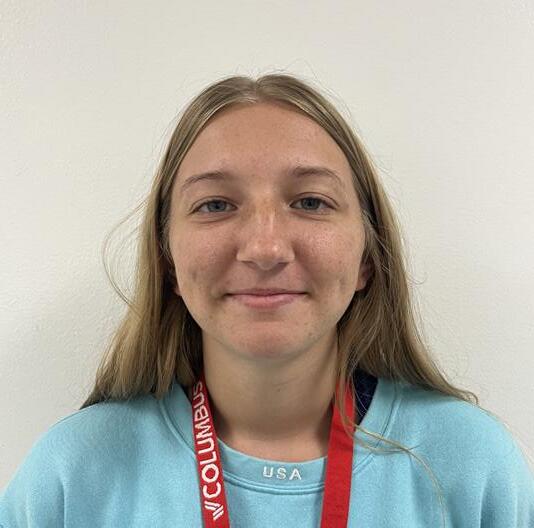
“In middle school we didn’t have lanyards, I think that sometimes they are annoying. But also it is a way to keep everyone as safe as possible,” Smith said.
She believes that teachers and students should be aware that lanyards are here to keep everyone at East safe. It allows everyone to know who is supposed to be in the building and who is not.
“The lanyards help students and teachers by making sure everyone is where they are supposed to be,” Smith said.
The main objective of the lanyards are for safety, so that has to be considered when thinking about the negatives of wearing lanyards.
Even with the teams, Smith believes that everything is more organized for everyone, especially freshmen this year and soon to come. It is also helpful because you can get exactly what you need for your grade level.
Cover
design by: Arlynn Fleming 26’
Lilly Arnholt
The benefits of both Conrad and Jeremiah Stuck in the Middle
Ella Anthis
Over the past two summers, many teenagers have become infatuated with the series The Summer I Turned Pretty (TSITP). In June of 2022, the first season of the show was released on Amazon Prime Video. Season two recently aired in July with new episodes coming out every Friday. Ever since TSITP was released, it has become one of the top 10 most watched shows in the world, according to About Amazon.
Before TSITP was a television series, it was a book series, written by Jenny Han. Han wrote three books in the series, implying there will soon be another brilliant season of the show. In the books and show, there are two brothers, Jeremiah and Conrad Fisher, and a girl, Isabel (Belly) Conklin, who are all best friends. Belly is torn between the two brothers, but it seems as though she has been in love with Conrad since the beginning.
Jeremiah Fisher has the personality of a golden retriever. He lights up the room whenever he walks in and always has a smile on his face. Jeremiah has a big heart, although it is concealed by his flirty personality. While he has a smile on his face at all times, Jeremiah is still themost sensitive person on the show. He knows Belly’s attraction to Conrad will always be stronger than the one to him. He is genuinely hurt inside.
OCTOBER 02, 2023 cehsnews.com
19
In the first episode of the first season, Belly said that she has been in love with Conrad for almost her whole life. She only thought of Jeremiah as more than friends the summer that she turned 16. Belly tried all summer to get over Conrad, but we all know that one never truly gets over their first love.
In the show, there are two teams: team Conrad and team Jeremiah. There are many reasons why the audience may choose one side versus the other. I believe that Conrad is the right person for Belly, mainly because of their undeniable chemistry. In both season one and two, Jeremiah is always jealous whenever Belly and Conrad exchange a single conversation. He somehow always finds a way to get back at Conrad. On the other hand, Conrad only wants Belly to be happy. Instead of him getting jealous and greedy, he chooses to let them be happy while he is heartbroken inside. Senior Madelyn Poe explains her reasoning for her being team Conrad.
Team Conrad or Team Jeremiah
“I’m team Conrad because he and Belly have dated before and that was Belly’s first true love so I think that they are going to end up together,” Poe said.
Jeremiah has a pleasing personality. He has always been there for Belly and wants to be with her. Jeremiah seems to be the person who endlessly hypes Belly up. He always tries to make her smile and remind her that she is looking good at all times. Jeremiah compliments her all the time and speaks his mind. They have been best friends since they were kids, and Belly believes that it would be abnormal to start a relationship. It seems as if people lean more towards Jeremiah because of how he treats Belly and because Conrad is messing with Belly’s feelings. Senior Chloe Gilley talks about why she thinks team Jeremiah is the better choice.
“I’m team Jeremiah because one, he’s more attractive and two, he’s the underdog. Underdogs always win,” Gilley said.
Belly never knows which boy to choose. She likes Jeremiah because of the way he treats her, but, deep down, Belly knows she will always be in love with Conrad since he was her first true love. It seems as if there will never be an end to this abiding love triangle.
Opinion design by: Kailani Scott
Conrad 53% Jeremiah 47%
20
A New Age of Learning
How physical learning and online learning affects students
Eddie Vogel, a teacher at East for over 20 years, has worked with many students within Algebra One and has witnessed many changes in the school system, such as how learning skills have adapted to newer generations. Over the years, Vogel has had to use both textbook and digital learning.
“When I started teaching I only had textbooks, but throughout the years digital learning has increased,” Vogel said. “I think both have benefits, but being a teacher in math, students will always need to write things down.”
Vogel believes that websites have overtaken the real-life learning of students.
“With students relying on technology so much in newer generations, it affects how students think on their own and how they feel the need to rely on websites for understanding all the time,” Vogel said.
With technology surrounding students, it is almost impossible for the online world not to be an aspect of each individual’s lives.
“It's so easy for kids nowadays to just go out and look up the answer but the problem is that sometimes answers can be wrong and it doesn't help the student learn how to do anything,” Vogel said.
EA S
TMadelyn Poe, a senior at East, believes that she gained more experience through textbook learning. When speaking with Madelyn Poe, she was asked what she preferred: textbook or digital; She chose textbooks.

“It gives a better experience in school,” Poe said.
Many students feel the same. For many years now schools have had a hard time deciding whether to have students learn online or on paper.
“Digital learning is always a struggle to use because there is always things that could go wrong and it always messes up,” Poe said. “...that can affect how you get your assignments done and the amount of time you have to work on them.”
Another issue that Poe struggles with when using digital learning is the effect it has on her eyes and causes her to have headaches. This is a concern that many students have, as studies show being on a screen for multiple hours at a time can wear out your eyes.
“I think digital learning can effect how students learn because of how easily you can be distracted,” Poe said.
Poe adds that she thinks digital will soon be all we have in schools and is grateful she will not be in school much longer to have to undergo that.
V.S OCTOBER 02, 2023 cehsnews.com 21
Statistics:

“Over the years results suggest that students engage in different learning strategies that might short-circuit comprehension when interfacing with digital devices compared to print,” Anna Niccoli said.
Niccoli has a doctorate in education. She also claims that when taking samples in the United States 92% of students chose textbook based learning instead of digital. Students in her samples state that they have more trouble concentrating on digital assignments than assignments that are on paper.
As technology progresses and becomes something more frequent in schools, the effects and benefits that technology has on students and generations to come can mold students’ minds on what learning is and how they are supposed to navigate.
At East when asked a total of ten randomly selected students, consisting of mostly upperclassmen, six out of the ten stated they prefer textbook learning.
As students continue to grow in classes and school more students are struggling with the shift of assignments being physical to digital. Many have different outlooks on where learning should go in the future and if digital learning should be stressed more in the next generations.
Opinion design by: Nataley Cheshire 22
Goode Hungry? Visit Yee Kee today!
Ava
Reading Between the Lines
The challenge of literature throughout the BCSC organization
Tari Linnemann
The Bartholomew County School Corporation (BCSC) book controversy has sparked a heated debate throughout the community regarding the power of literature to impact young lives. The idea each group unanimously agrees upon is that each child within BCSC deserves the best possible education. However, people disagree about which books should be included in that education.
The BCSC book controversy is the challenging of literature and its place in our district libraries. Parents and adults in the county wonder why these resources are necessary towards their children’s education, while other parents see the benefits of having their children read these books rather than being shielded from it. This opens up the idea of censorship within schools and libraries, sparking a heated debate with teachers, parents and administrators.
When discussing the educational system, it is important to remember all perspectives, not just those of the parents or adults in charge. Junior Keana Wooten supports the intellectual freedom given to kids through books in the library.
“These books share uncomfortable topics that need to be shared in school, no matter how uncomfortable they are,” Wooten said.
Wooten believes that parents and kids should mutually agree upon policies about restricting books in school libraries.
“Those policies should give that same freedom to all parents and students,” Wooten said. “I think it should depend on the parents. If the parents don’t want their kids to read it that’s a different story, but if it’s just banned from the entire school that is just not giving them a choice.”
One of the most controversial aspects of the book ban is its portrayal of American history. When books like To Kill a Mockingbird are censored, it raises questions about our responses to the uncomfortable parts of our past. Harper Lee’s novel portrays racism, sexual assault, abuses of power and prejudice against intellectual disability. These issues are still relevant today.
“It is lessening my education on the past and how America came to be,” Wooten said. “I believe it would affect your education if these books were banned because you’re not learning about all these things. For example, To Kill A Mockingbird is about injustice regarding African Americans, and that stuff still goes on today, so we should still learn about how bad it was before so we can learn to improve in the future.”
The BCSC book controversy is not only restricted to public schools. This controversy has also affected the homeschool community. One homeschool parent who believes that invested adults should have a say in what children read is Amy Ewald.
“It sounds to me like that’s really the biggest question is who is in charge of overseeing what a kindergartener can read, what a ninth grader can read and what a twelfth grader can read. I think that’s a difficult question, too,” Ewald explained.
Ewald has homeschooled all three of her kids from preschool through twelfth grade. Although her students do not attend a BCSC school, her position as a taxpayer influences her opinion on the educational system.
OCTOBER 02, 2023 cehsnews.com 23
“The school board should hire teachers they can trust to make those decisions. As a homeschool parent, I do feel like parents should have a say in what their kids read. If they feel uncomfortable with a book, they should be allowed to say, ‘I don’t want my child to read this book,” Ewald said.
Sophomore Grace Hart has been homeschooled her entire life. She has always loved reading and expanding her education through literature.
“I think that the book ban is a good idea, but certain books on the list should not be on the list. I definitely think there are some books that should be banned because of the content. Sometimes reading books like To Kill a Mockingbird helps you to see that those things were definitely wrong, though,” Hart said.
Her stance on who should have the authority to decide which books students read favors parents because of their maturity and experience in making decisions.
“I would say just the parents because I feel like parents have a broader knowledge about what is appropriate in books, and I feel like parents should have a say in what is appropriate for the kids to read,” Hart said.

Jennifer Carroll has a vested interest in what students read because she is both an English teacher and a parent of BCSC students.
“As a parent, I think it affects me because I don’t want another parent deciding what my child should be reading or determining what is good or bad for my child based on their opinion,” Carroll said. “As a teacher, I think it will limit what we are able to discuss. As an educator, my job is to help people understand and be able to communicate.”
Carroll believes that students should have unfiltered access to literature.
“You have to have books and open conversations to be able to address societal issues, cultural issues, and personal issues,” Carroll said. “A lot of these books promote positive things in the communities people live in. You can’t have a one size fits all for any of these issues.”
One thing is clear: people care deeply about the books that students read. We value literature because literature reflects our values.
Feature
24 1984 The Color Purple Of Mice and Men The Hate U Give The Cather in the Rye Looking for Alaska All Boys Aren’t Blue Animal Farm This Book is Gay The Bluest Eye They Both Die at the End The Absoultely True Diary of a Part-Time Indian Lord of the Flies Where the Wild Things Are Grapes of Wrath Gender Queer
design by: Sara Durnil
Transportation Troubles
The lack of bus drivers is becoming a greater problem day by day
Local schools are currently grappling with the inconvenience caused by the shortage of available school bus drivers, which is significantly impacting transportation services. This shortage has created difficulties for residents and commuters, leading to a decrease in the reliability and efficiency of the bus system.
The lack of school bus drivers can be attributed to various factors, including the high demand for drivers in other industries and challenges associated with recruiting and retaining qualified individuals. As a result, the transportation services provided by local schools have been strained, causing inconvenience and frustration for students, parents and staff.
BCSC Transportation Director, AJ McKeand, gives insight on how the shortage came about.
“Bus drivers have primarily been small business owners, retirees and farmers,” McKeand said. “People are working longer, so they are retiring at an older age, so they aren’t interested by the time they can retire.”
Efforts are being made by the transportation department to address this issue and find solutions. They are offering competitive salaries and training programs to attract more individuals to become bus drivers. Partnerships with local educational institutions and community organizations are also promoting bus driving as a viable career option.
Mckeand, as well as other department officials, are on a path to solve the shortage.
“We have given several raises over the past few years to try and make pay enticing,” Mckeand said. “The biggest challenge is that it is a part time job and most that are interested need more hours, not to mention obtaining their CDL takes 60-90 days.”
In the meantime, alternative transportation options like ride-sharing services have become popular as people seek alternatives to the limited bus services. However, these alternatives may not be accessible for everyone, which further complicates the situation for those who rely on public transportation.
The Department of Transportation is empathetic to the students and families affected.
“It can be very confusing for the students…they are having to ride parts of other bus routes that may extend their ride times,” Mckeand said. “We try to communicate changes with families on what is going on.”
Although the struggle for more bus drivers is evident in Columbus, it should not be overlooked that strong efforts are being made to solve the problem of hiring more. Therefore, it is important that attention is brought to this issue and ensure that everyone is putting in their best effort to solve the problem.
Kindred Shafer
OCTOBER 02, 2023 cehsnews.com Feature
25
design by: Ellie Schlaudroff
design by: Sidney Johnson
Time is Ticking
The effect clubs at East starting late has had on students
Sierra Perkinson
With the beginning of school, comes the beginning of the regular clubs at East. However, this year, there was a delay for some of these clubs to begin. Key Club and Bring Change to Mind (BC2M) are just two examples of clubs that had to wait or are still waiting.
September
September 15
September
19 18 17 16
The delay on starting up has had an effect on these important clubs. Senior Nadia Harris, the President of Key Club and active member of other clubs within East believes the wait to start Key Club has caused some setbacks with service projects.
“We had a few projects that were planned out to happen in the beginning of the year, but we didn’t really get to do those because Key Club hasn’t gotten the chance to start,” Harris said.
In order to finally get the club started, action had to be taken.
“Eventually…we had our first board meeting in September, and we just went straight to Dr. Parsons’s office to talk to him. That’s how we got it started,” Harris said.
However, Key Club was not the only club affected. BC2M has waited for the signal to get started for quite some time.
September
September 14 13
“I’ve had kids come up to me and ask like ‘when’s Bring Change to Mind gonna start?’ They’re just really wanting to be involved in it, which is really exciting for us, but we don’t have the okay, so that’s been a little frustrating,” BC2M President Katelyn Stetter said.
Although the wait to start has been frustrating, Stetter understands that Dr. Parsons has many priorities within East, and is doing his best to meet each students’ needs.
“I think Dr. Parsons is truly just trying to figure out what the right rhythm of Advisory is just because there’s so many people going to so many different places… So he’s just trying to maintain everybody in the school and…keep track of which clubs are when,” Stetter said.
With a new principal and a new year, East and its many clubs are figuring out the best rhythm for everyone, which takes time. It has been a learning experience for both the administration and club presidents, who have learned to take action in advance and communicate.
“Figure out the small things first before school starts,” Stetter said.
26
September September
TIME IS RUNNING OUT!
OCTOBER 02, 2023 cehsnews.com Feature
Alterations to History Many changes to East athletics
WELCOME TOSTAFFORD FIELDHOME OF THE COLUMBUS EAST OLYMPIANS
As people passed Stafford Field, many have noticed construction with a notable area missing. As we enter the 2023-2024 school year, we are thrown into change as the set of bleachers on the away team’s sideline is replaced with a new and modern set. Athletic Director David Miller has the answers to why the old bleachers were replaced.
“The reason why we decided to replace those bleachers was due to their condition,” Miller said. “The bleachers themselves were old and starting to become unsafe. There were some parts of the bleachers that started to become shaky and unstable.”
Miller’s role also changes this year, as his title goes from ‘Dean’ to ‘Athletic Director,’ but the change was nothing new to him.
“The transition has been going well. The last few years, for half of the day, I was a dean, while for the other half, an assistant Athletic Director. So I've been down in the Athletic Director office a lot over the past three years,” Miller said. “I have been pretty involved with East Athletics since 2006.”
The construction of new bleachers was not the only change that came to the football field, as the East bleachers were decaled with a flashy banner, giving way to a new name, “The Fire Pit.”
“It was something that Dr. Parsons and I brainstormed,” Miller said. ”It quickly caught on due to the connection that name has with the Orange Pit in the gym.”
While the bleachers and overall stadium take on the new name, the field itself stays under the same name of Stafford Field.
Stafford Field may have students questioning the name, as the history of its namesake is not often discussed among students and teachers.
The field is named after former East football head coach John Stafford.
“John Stafford was a longtime head coach for East football,” Miller said. ”So after he retired, the field was named after him to forever memorialize him in East history.”
As East enters this new chapter, many changes are coming to East Athletics, some of which will make East unique.
OCTOBER 02, 2023 cehsnews.com
27
Nathan Phan
Behind the Student Section
What makes Easts’ student section great
Searched Go ogle and still couldn’t find any competition.
Nathan Phan
Your mom called, you left your game at home.
One of the best parts of the school year is always showing school spirit. At East, the idea of school spirit pops into most students’ heads during both North versus East weeks in which the crosstown rivals compete against each other to prove which school runs the town.
However, another major way to show school spirit can be done all throughout the school year: attending and participating in the student section.
Participating in the student section includes many chants to invigorate both the crowd and the players, being loud and excited for when the team scores or gets a major defensive stop and dressing up in a theme to show support.
In years past, there were many instances of the East student section not fulfilling its potential as numerous students were no-shows while some others left before the end of the game.
Senior Chloe Gilley has made it her goal to help the student section meet that potential as a way to promote East Athletics.
“My overall senior project is managing and marketing East’s Athletics through Instagram. The student section plays a huge role in marketing our team,” Gilley said. “Bigger crowds make the games more exciting. Student sections also have the ability to contribute to the success of a team.”
One such way Gilley has helped advance the student section is by adding leaders to help organize the student section and to be the biggest sources of energy.
“To bring energy to games, as leaders, we prepare chants, go all out in the theme, and make sure we are the loudest ones in the student section,” Gilley said.
Chosen as a leader, senior Carson Williams is hyped to be a role model for his classmates as he goes all out to represent East and keep up the high energy.
“It just feels good to be there for my school, and to be able to lead others in a similar manner just makes it that much more impactful for me,” Williams said. “We have to make sure that the student section stays energized and stays loud. If we can keep that energy high and consistent throughout the entire game, then I think we truly have a great student section.”
GAME ON
Sports
design by: Jami Porter
28
Barbie Mania Barbie movie divides movie lovers
Kindred Shafer
Barbie, directed by Greta Gerwig, was one of the most anticipated films of 2023, and because of that, it earned more than 1.38 billion dollars worldwide, becoming the highest-grossing film in Warner Bros’ 100-year history, according to CNN. Many have had drastic opinions on the blockbuster.
Freshman Jetta Smith expresses appreciation for the Barbie movie.
“It showed how women can do anything in the world nowadays because back then they weren’t able to and shows how our world has changed,” Smith said.
Many viewers found the movie to be touching with some even sharing on social media that the film made them cry. Barbie’s gratitude for being given the chance to inspire and empower others struck the audience.
Sophomore Danyel Roxbury gives insight into emotions felt during the film.
“I thought it was kind of emotional at some points,” Roxbury said. “It was weird to see her transition from the Barbie world to the real world.”
In general, people had criticism towards the film, such as the storyline and character development. Some viewers felt that the plot was predictable and lacked depth, while others found the characters to be one-dimensional and lacking in complexity.
Freshman Lyla O’Neal conveys a lack of plot.
“We could go off of it and give reasons why it was beneficial, but there was nothing clear about that,”O’Neal said. “I was expecting something a lot different.”
Walking into a film one only knew the brisk plot of, it is no surprise people did not enjoy the movie and had harsh opinions of it.
Junior Saige Plummer communicates disappointment for the film.
“I found it really boring that I left halfway through the movie,” Plummer said. “It was funny at times but it was really predictable and just felt like something was missing.”
Political critic, Ben Shapiro, disliked the movie so much he released a 40-minute video, as well as took to his social media platforms claiming the Barbie would fall off a financial cliff. He also called the movie, “Flaming garbage.”
People have varying tastes and preferences when it comes to films. Some might love action-packed blockbusters, while others prefer thought-provoking dramas. Some might have strong opinions, defending their favorite films, while others might passionately critique certain aspects. Ultimately, it is all about personal taste and subjective interpretation.
OCTOBER 02, 2023 cehsnews.com 29
A Swift Rescue
Taylor Swifts ‘The Eras Tour’ has boosted the economy in various ways

Natalie Vanest
Taylor Swift’s ‘The Eras Tour’ quickly became one of the highest grossing tours in North America, the tour is anticipated to make $2.2 billion in total. According to The Times Magazine, Swift is predicted to surpass Elton Johns ‘Farewell Tour’ that holds the current record of $939 million.
Swift has been performing shows equivalent to two or three Super Bowls multiple times a week for over six months. Each time a show is held, it is thought to boost the local economies by millions of dollars each night. The governor of Illinois, J.B. Pritzker, gave Swift credit for reviving the state’s tourism industry.
It is more than just the shows that help give the economy the needed boost. Stores all over the country have experienced supply shortages as fans buy out materials to make friendship bracelets and create intricate outfits for the tour. Swift also offers exclusive merchandise that are only sold during the shows. The merchandise consists of sweatshirts, vinyl records, T-shirts and more. Each item costs anywhere from $10-75, keeping all merchandise affordable for all concert attendees.
“If Taylor Swift were an economy, she’d be bigger than 50 countries,” President of QuestionPro Research and Insights Dan Fleetwood said. The tour’s opening night in Glendale, Arizona grossed more money than Super Bowl LVll.
In Cincinnati alone, more than $48 million was made in only two nights, according to Cincinnati’s tourism office.
World leaders, such as the mayor of Budapest, are requesting Swift to perform in their countries, showing the high demand for the artist and the influence she has had on other countries’ economies.
Swift performed six consecutive nights at SoFi stadium in Inglewood, California, bringing in more revenue than ever. The face value of a ticket to the ‘Eras Tour’ ranges from $45-500. Tickets have been resold for up to $7,000.
Fans are willing to go the extra mile in order to see Swift’s performances, including students at East. Students have traveled to other states as far as Nashville, Tennessee, and spent up to $1,000 to see her performances.
The ‘Eras Tour’ impact gave the economy the needed push to overcome the struggles caused by the pandemic through fans spending money at a multitude of businesses. The amount of money made has allowed the economy to strengthen and heal.
https://www.crimsoncriernews.com/entertainment/2023/03/28/swifties-gear-up-for-eras-tour-shows/#photo
Arts & Entertainment
30
design by: Lilah Klei