Meets Design





THINK BEYOND

From key terminology to architectural drawing standards, CEDIA gives you the tools to confidently bring technology into your client conversations.
Scan the QR code to find out how you can make your projects come to life.

I am excited to introduce the 2026 issue of Technology Meets Design – The Best of Smart Home Style, a publication that celebrates the best and latest expertly designed and integrated smart homes. This edition has been endorsed by Elizabeth P. Lord-Levitt, CMKBD, MSRECM, CLIPP.
Technology Meets Design – The Best of Smart Home Style is more than a display of beautiful homes that have been successful in reaching finalist and winning levels in the CEDIA Smart Home Awards. It applauds the collaborative achievement between smart home professionals and their partner trades, reinforcing that excellence is measured by both the finished experience and the journey it takes to get there.
As we present this year’s edition of Technology Meets Design – The Best of Smart Home Style, we’re excited to spotlight the dynamic progress and fresh initiatives that continue to highlight how the smart home industry and design build profession are intertwined.
We have curated the content to resonate especially with you, our valued colleagues in the design, architecture and homebuilder community. We believe these pages will inspire, inform, and strengthen your understanding of the CEDIA channel and demonstrate the tangible benefits that come from collaborating with a smart home professional.
The message is simple: when you partner with a CEDIA member, you’re not just enhancing your projects, you’re ensuring highly satisfied clients and exceptional outcomes.
Thank you for your continued engagement and for being part of a community dedicated to pushing boundaries and creating remarkable living spaces.
Warm regards,

Daryl Friedman Global President & CEO, CEDIA

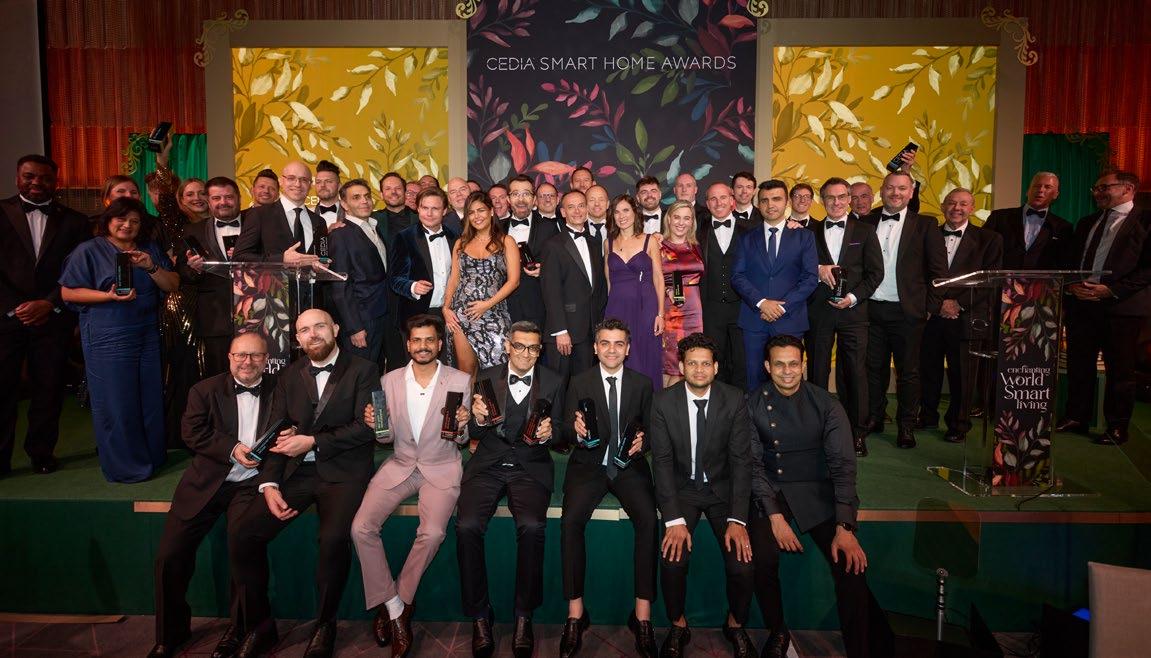
About CEDIA
The CEDIA Smart Home Awards celebrates outstanding innovation and excellence in smart living environments. Run by CEDIA, the program acknowledges the projects, individuals, products, and solutions that are shaping the future of connected homes and intelligent design.
From home security and automated solutions to home theaters and entertainment spaces, the CEDIA Smart Home Awards projects provide inspiration for the level of technology integration that consumers want in their properties.
The awards offer design build professionals valuable insights into the evolving landscape of smart technologies and their impact on residential spaces. The recognition given through these awards highlights the latest advancements, best practices, and trailblazers in the field, providing inspiration for those working at the intersection of design and technology.
We encourage interior designers and architects to follow the results of this program as a resource for understanding key trends, influential projects, and market leaders driving progress in the smart home sector.
CEDIA® is the Association for Smart Home Professionals™. Established in 1989, CEDIA is dedicated to advocacy, connection, and education, and fosters a thriving community as the home for smart home professionals. Globally, CEDIA advances the rights of technology integrators by working with governmental bodies; gathers industry professionals and allied tradespeople for learning and networking; and creates trainings, standards, and certifications to ensure the continued growth of the smart home industry. CEDIA co-owns Integrated Systems Europe, the world’s largest AV and systems integration exhibition, and founded CEDIA Expo, the world’s largest residential technology show. Today, a community of over 30,000 CEDIA members from more than 80 countries deliver smart home technology solutions that enrich homeowners’ lives. Learn more about CEDIA at cedia.org
CEDIA Smart Home Awards


A strong relationship between an interior designer and an AV integrator is essential for creating spaces that are both visually beautiful and technologically functional. As a designer who specializes in residential construction projects, an AV integrator has become just as important on my jobsites as any other trade contractor, like a plumber or a cabinet installer. An integrator and a designer must work seamlessly from the beginning stages, in order to integrate technology that can be hidden or blended into the design instead of looking like an afterthought. They provide me guidance in the early stages, regarding structural needs (conduit paths, recesses, power locations) and equipment placement that can support both optimal performance and aesthetic quality. AV integrators also understand acoustics, lighting control and automation workflows, resulting in a space that feels intuitive for my clients, with technology supporting daily life rather than complicating it. Having an integrator as part of my team only accentuates my designs, as well as my client’s experience in their home.
When I was introduced to CEDIA, it became an amazing resource for interior designers like myself. Their directory of members allows me to find skilled AV integrators in my area. I feel confident when working with an integrator who is a member, as their involvement adds validity to their profession. CEDIA also provides extensive educational opportunities for designers, to assist them in broadening their understanding of smart home technology and how to work with an integrator. Designers must prioritize their understanding of home integration, in order to inform a client of their options, and then be able to articulate their client’s needs to an integrator. Technology isn’t a trend, it’s a way of life, and as a designer, we must advocate for our clients and their projects when it comes to updating their homes with the newest home integration features. And CEDIA has been a vital partner in making that happen.
Elizabeth P. Lord-Levitt CMKBD, MSRECM, CLIPP Principal Designer, Elizabeth P. Lord Residential Design LLC

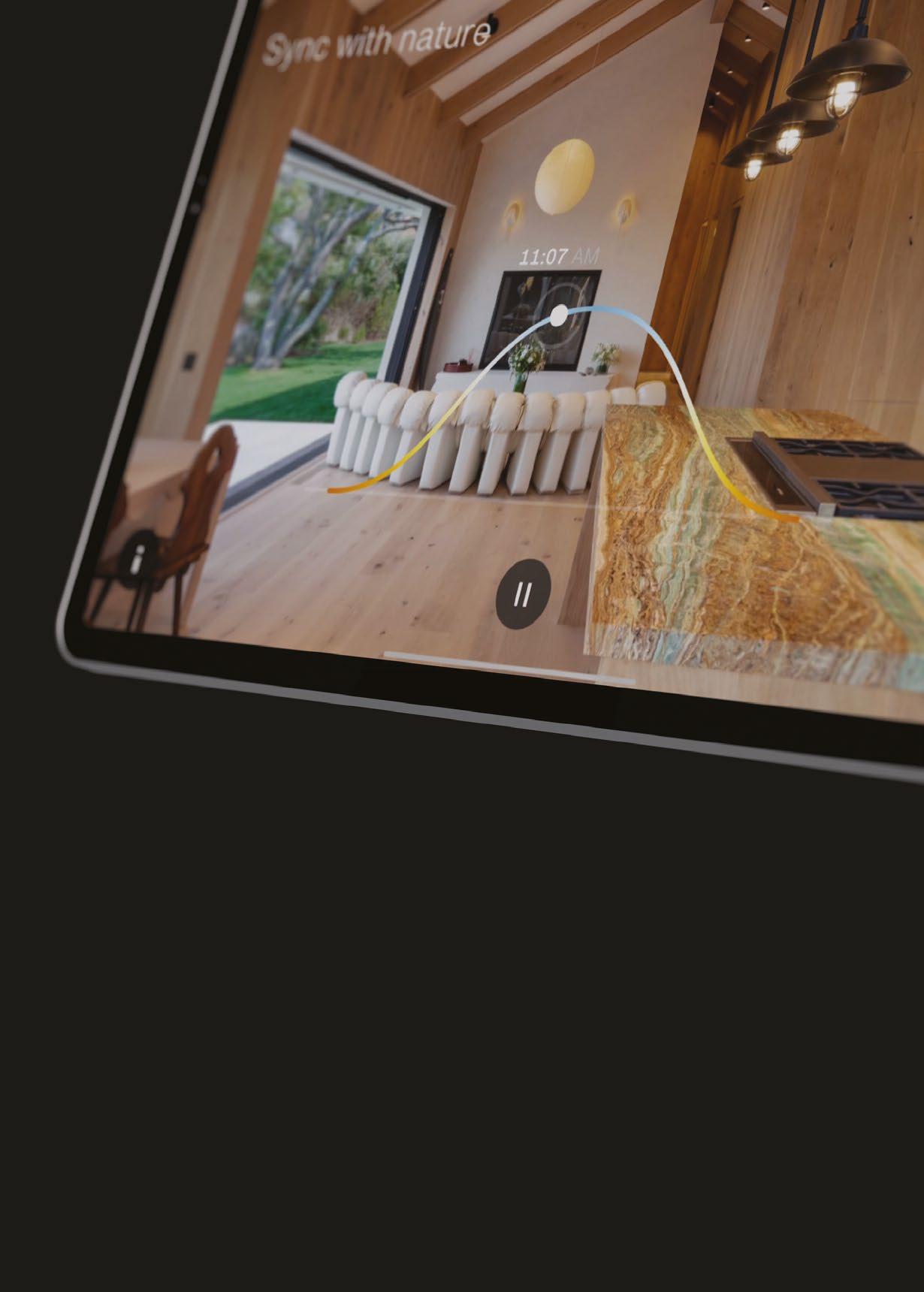
Bring the Showroom to the Living Room
The Lutron Luxury Experience App brings the showroom experience to your iPad. Guide clients through an immersive journey that invites them to virtually interact with light, shades, and controls—and visualize solutions in their own environments. Available only for iPad
Technology Meets Design
Media Room vs Home Cinema: What Every Designer Should Know
Designing for entertainment in a home comes down to intention. Should the space serve as a dedicated cinematic escape, or as a flexible hub for everyday living?
When homeowners speak about creating a space for entertainment, two terms often surface: home cinema or theater and media room. While they are sometimes used interchangeably, they carry distinct meanings that can shape the design process and the overall experience for the client. For designers of a living space, understanding these differences from a non-technical perspective is crucial.
In both styles, it is critical to allow space around the perimeter of the room between the structural walls and the walls you see to
successfully conceal loudspeakers, acoustic treatments, and other equipment. Just how much space we need depends on our performance goals for each client and their room.
Home Cinema (theater)
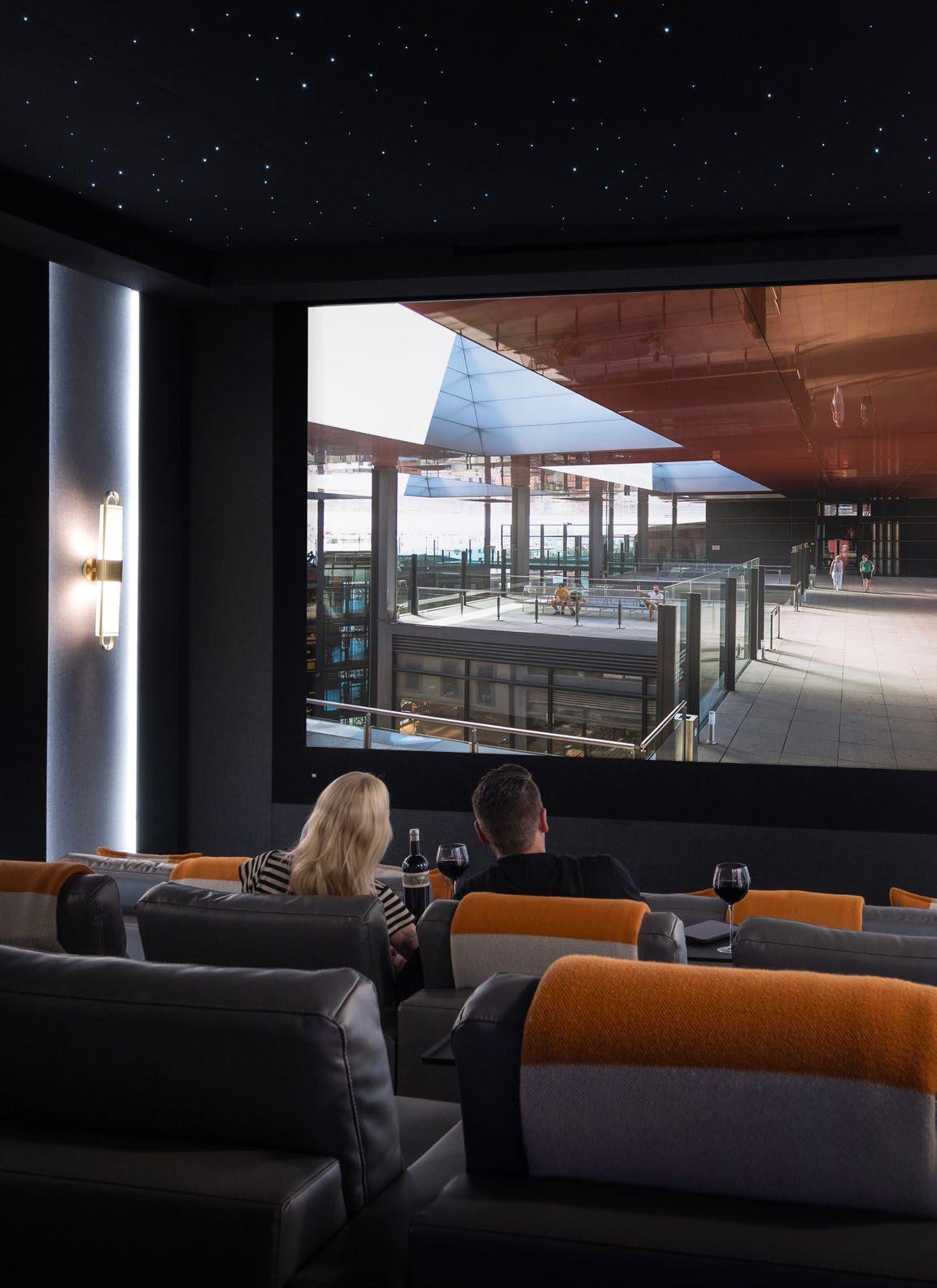
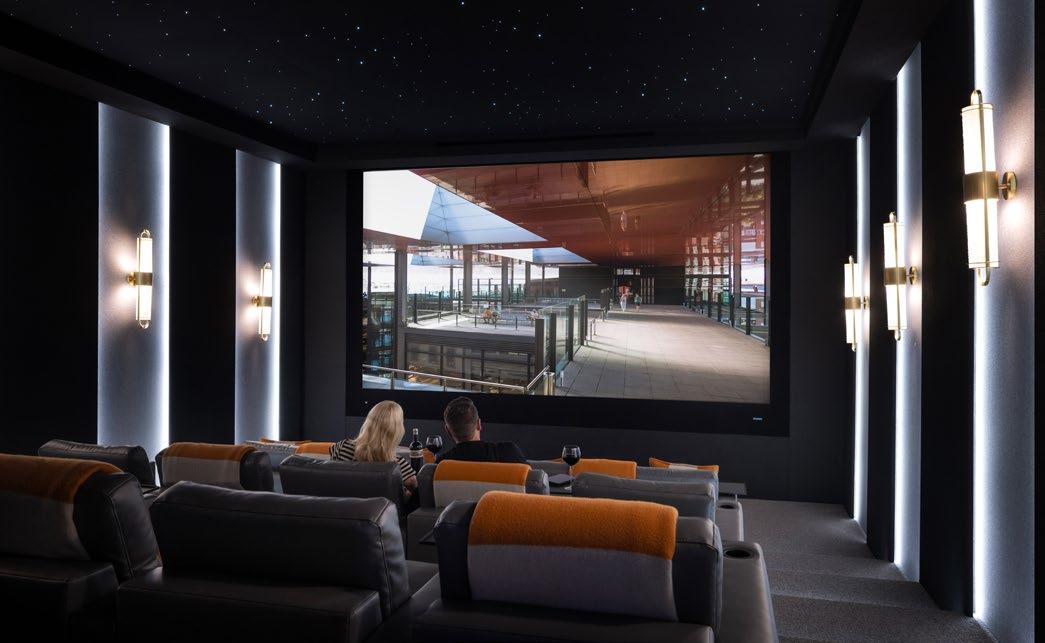
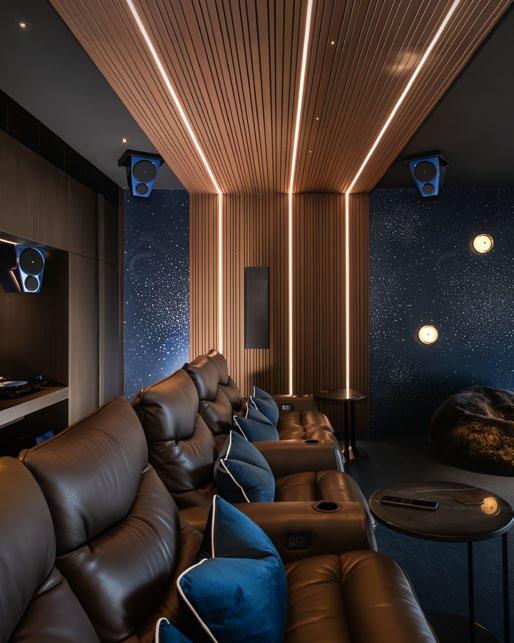
A home cinema or home theater is a room with a singular focus. Its purpose is to replicate the feeling of being in a commercial cinema, but within a private residence. The design is dedicated exclusively to film and television viewing, often centered around a large projection screen or direct display and supported by immersive surround sound. The sound system should be tailored appropriately to the space using acoustic
treatments, the performance level your clients want, chosen together with your smart home professional, and the number of listeners. Speakers themselves should be entirely concealed or barely noticeable, to minimize visual distraction.
From a design perspective, this space is defined by control: light is minimized; color palettes lean towards darker to reduce reflections, the finishing textures considered as shiny surfaces can impede on the visual experience, and seating is oriented in fixed rows for the best possible viewing angle. In short, the architecture and furnishings are shaped by the cinematic experience.
Credit:
Cantara
Media Room
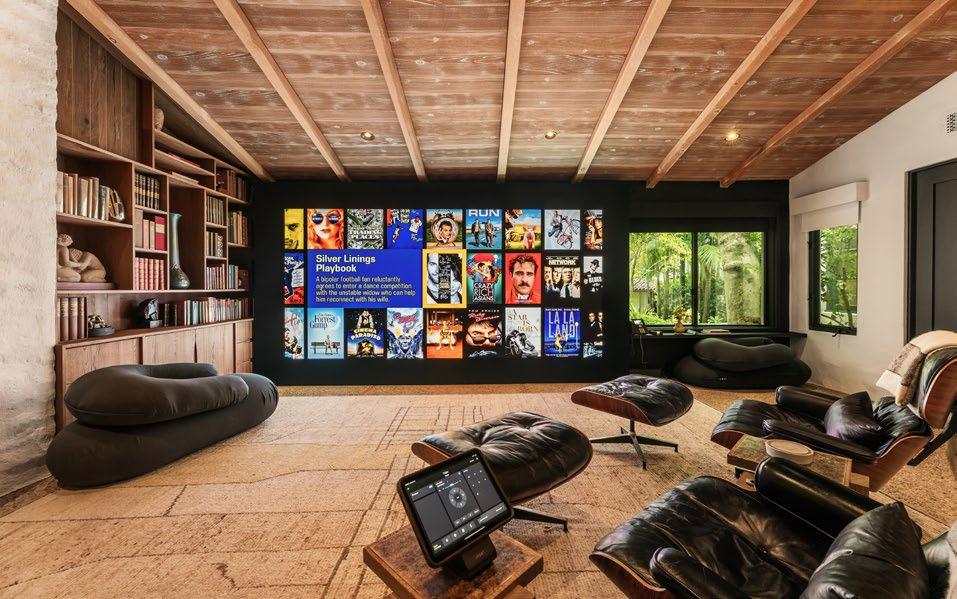
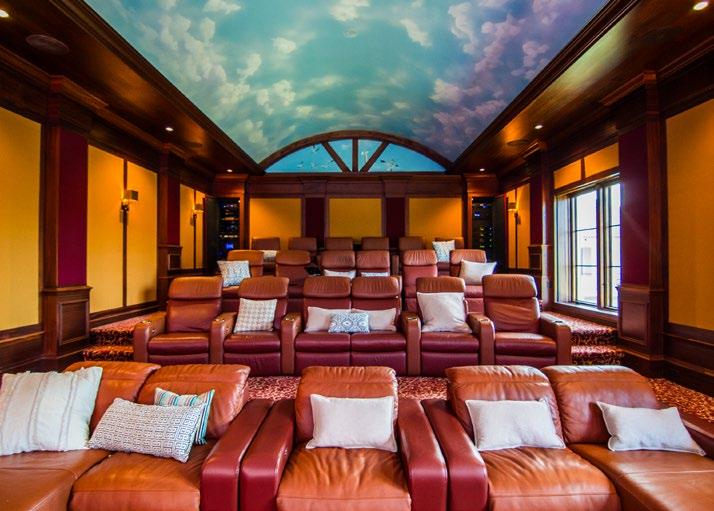
Alternatively, a media room is more flexible in function. Rather than existing purely for films, it is a multipurpose space that adapts to different forms of entertainment. Families may use it to watch television, play video games, stream music, or host casual gatherings. While the technology may still include surround sound and a large screen, the layout is less rigid.
Designers might prioritize comfort and versatility over cinematic precision, opting for sectional sofas, natural light, and décor that blends with the rest of the home. A media room is often an extension of everyday living, not a sealed-off environment.
For interior designers, the key is to recognize the lifestyle and expectations of the client. A home cinema requires a controlled environment and dedicated furnishings, whereas a media room prioritizes adaptability and integration with broader interior design. Neither is inherently better than the other. The distinction lies in intent: is the goal to replicate theater at home, or to create a social hub that embraces entertainment as part of daily life?
Ultimately, whether shaping a hushed, immersive cinema or a lively, multifunctional media space, the designer’s role is to ensure technology feels harmonious with form, function, and atmosphere.
Credit: Denote
The Auteur
Cantara
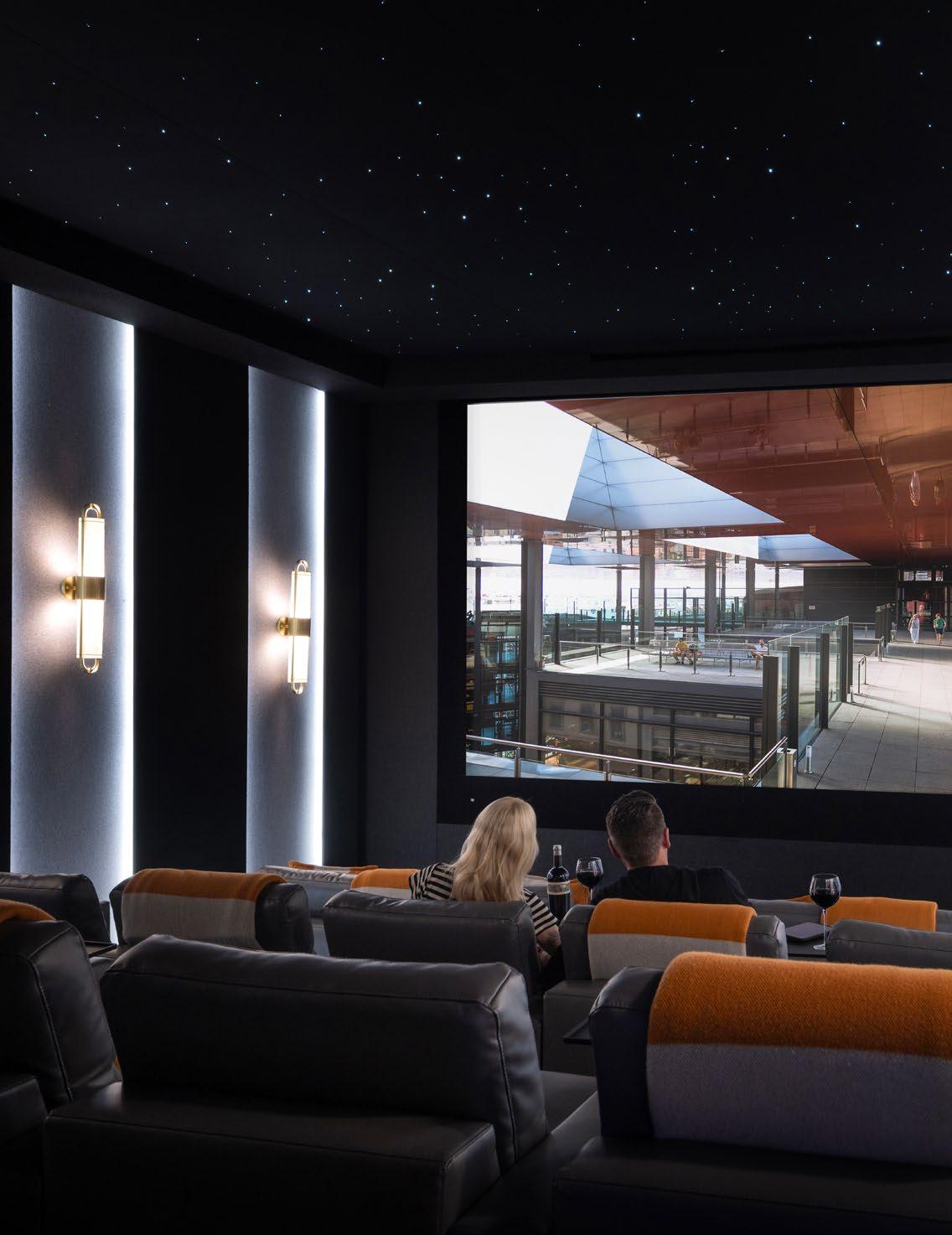
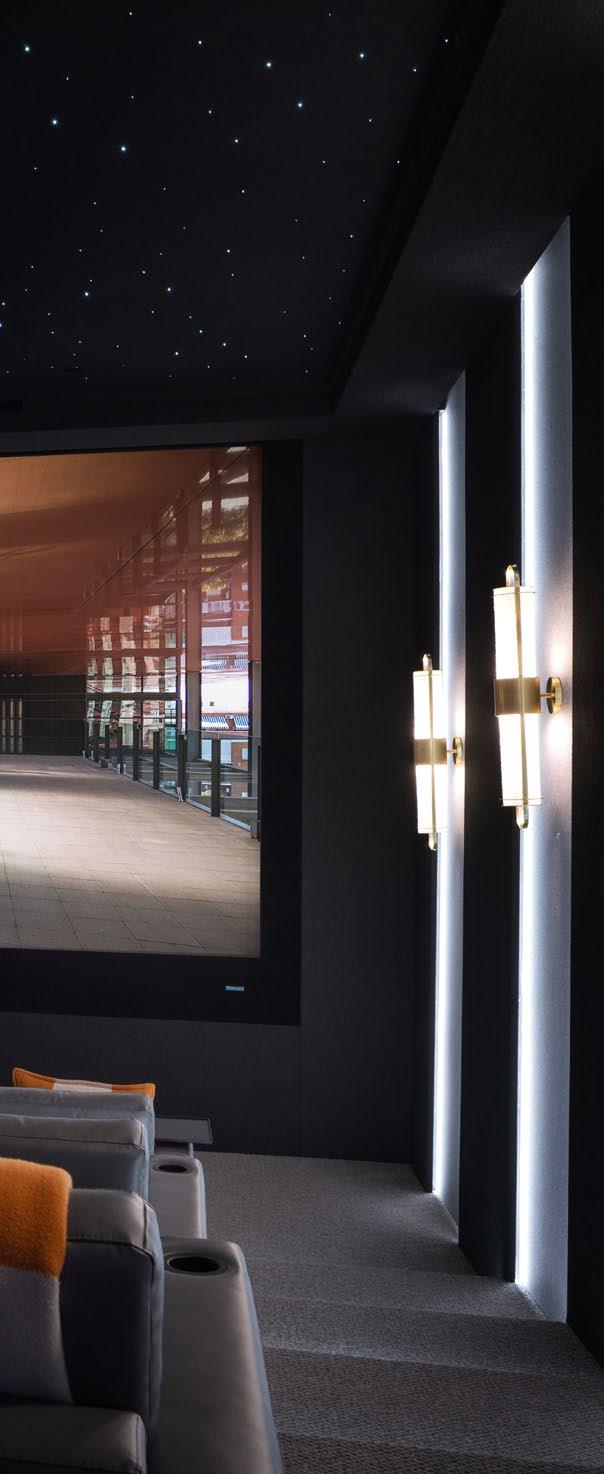
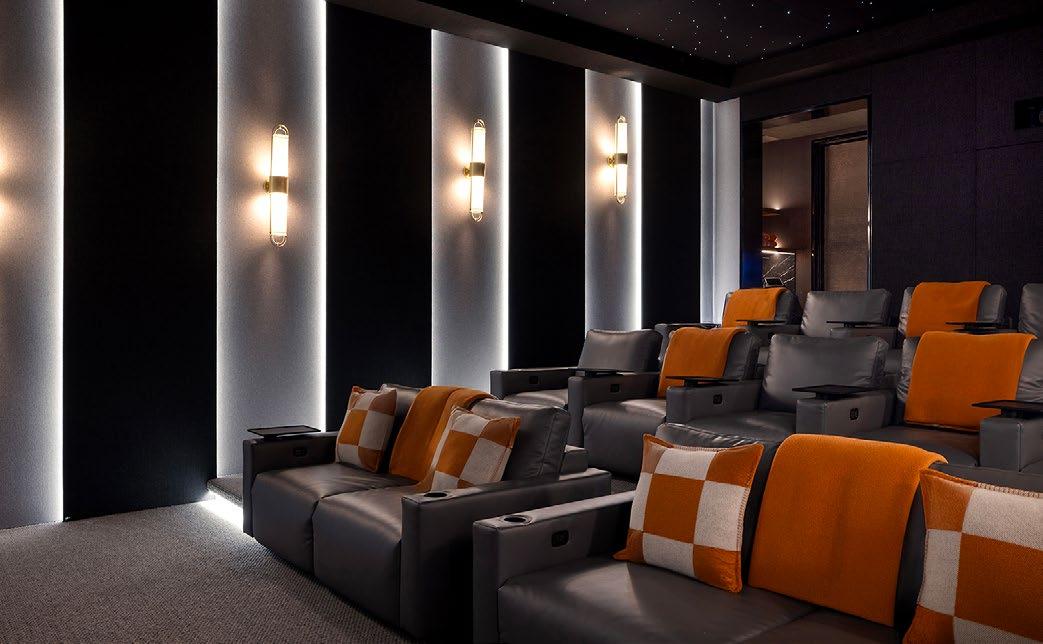
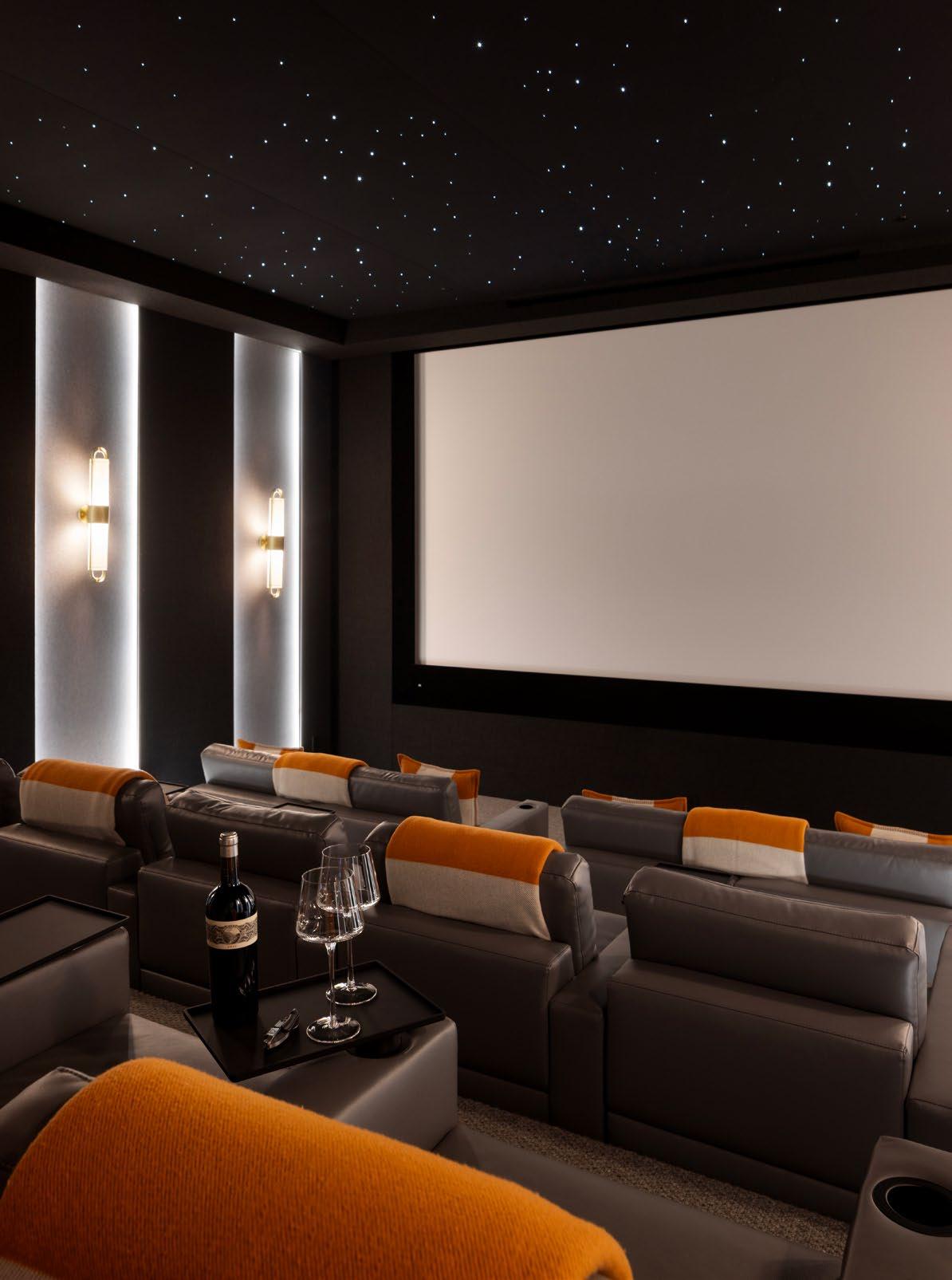
An elite Hollywood sound executive crafts a cinema of rare precision, merging professional studio performance with a warm, personal space designed for family connection.
This was never going to be just a room with a screen. The client — a post-production executive with decades of experience in Hollywood — wanted something far more personal. For him, cinema is not just entertainment. It’s craft. It’s a memory. It’s connection.
From their first meeting, Cantara understood the brief. The goal was to create a private theater that could perform at the level of a professional mix stage, while feeling warm, intimate, and completely detached from the idea of a showroom. The space needed to transport. It needed to envelop. And it needed to let the story breathe.
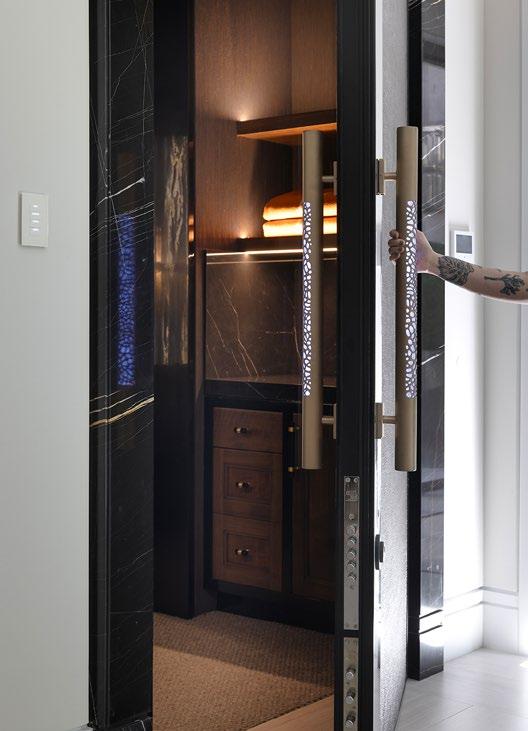
The theater was planned from the outset as part of a new build, which allowed Cantara to be involved from the ground up. Acoustic isolation was crucial, especially with bedrooms above. The room was constructed as its own cocoon within the home, allowing the client to watch films at full volume late at night without disturbing the rest of the family.
A deep, dramatic palette grounds the space visually. The starlit ceiling was nonnegotiable. The screen, chosen for its clarity and flexibility, adjusts to suit different film formats. There are no visible speakers. Everything is tucked away or built in, allowing the room to speak for itself.
Midway through construction, the client asked for an upgrade to support the latest in immersive audio formats. By that stage, the ceiling had already been acoustically floated. Rather than undo the work, Cantara engineered a discreet solution, carefully integrating the new speakers without altering the acoustic performance.
Other challenges emerged — space for a larger screen had to be carved out, and the technical equipment required clever heat management. But each decision, large or small, was guided by the same question: how will this feel?
The result is a room that mirrors the client’s relationship with cinema. It’s technically refined, yet emotionally resonant. Whether playing back a film mix or sharing a classic with family, the experience is seamless and deeply personal.
Cantara didn’t just build a theater. They built a space where stories come alive in the way the filmmaker intended — and where the people watching can feel part of something bigger.
The Auteur
A theater built for critical listening, but designed for connection.
Cantara
Cine SM
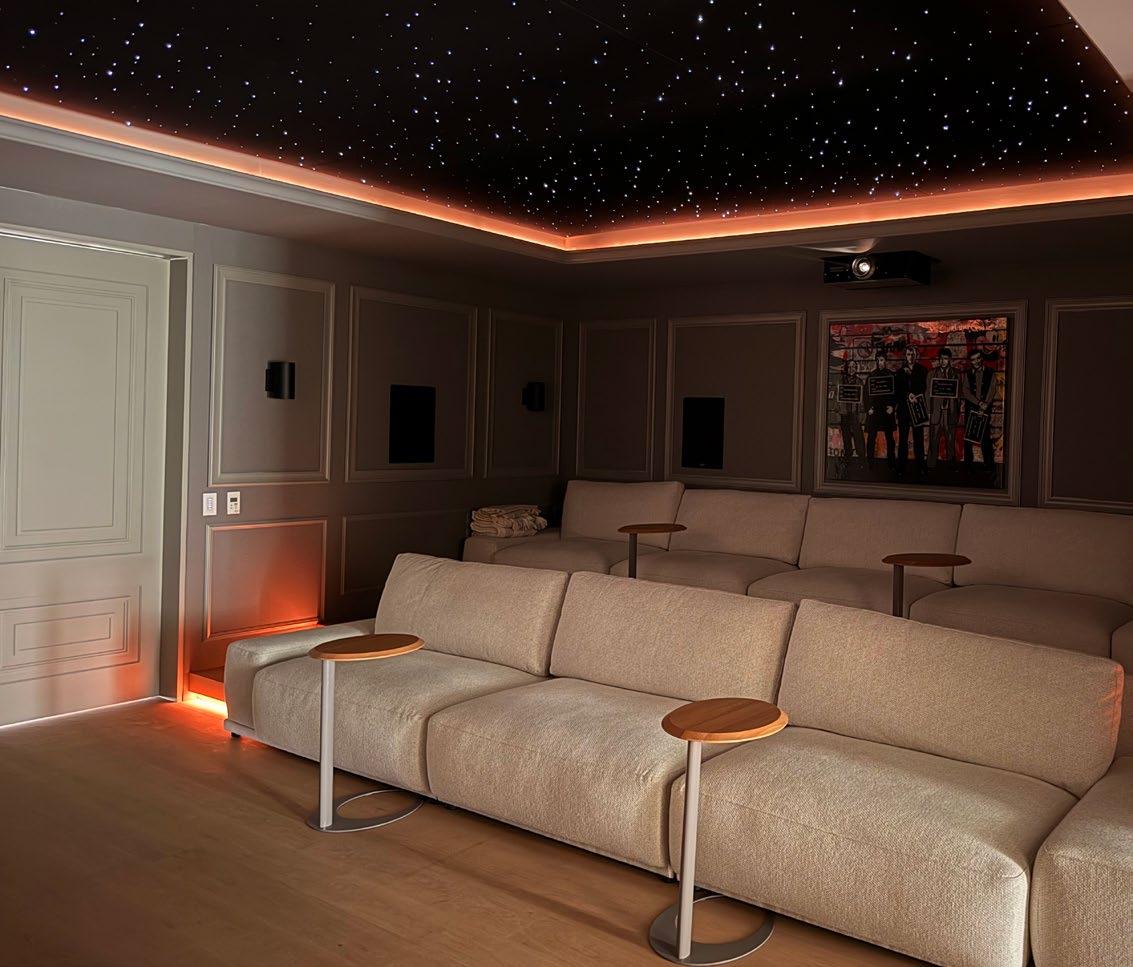
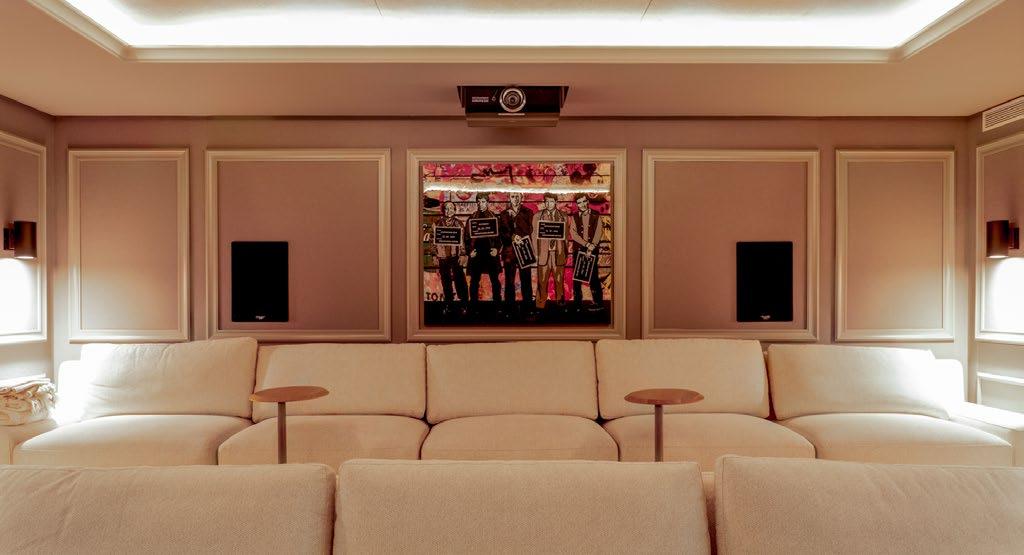
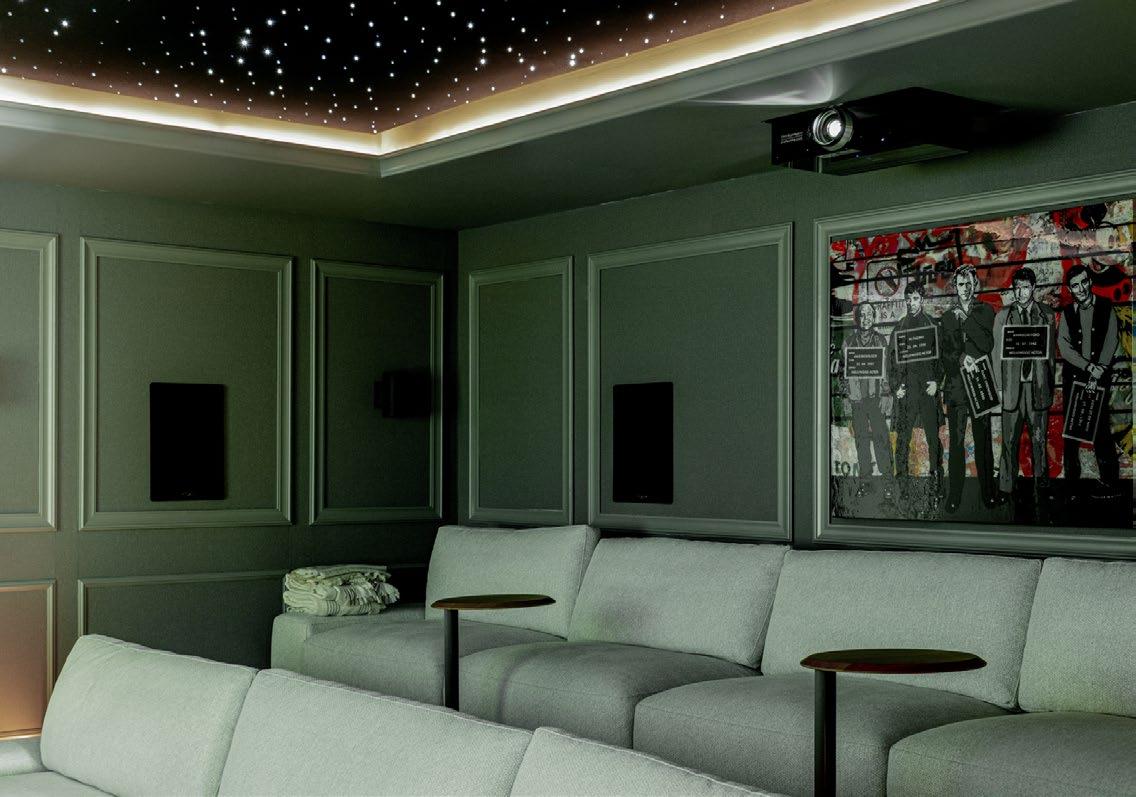
A father’s dream of a simple media room became something far more ambitious. In the hands of Lima Sound Contractors, it transformed into one of Peru’s finest home cinemas.
The client didn’t set out to build a cinema. His original brief was simple: an open-plan media room that could handle casual viewing and background sound. But as the project unfolded — and as he prepared for the arrival of his first child — the space took on new significance. The media room became something quieter, more enclosed, and far more intentional.
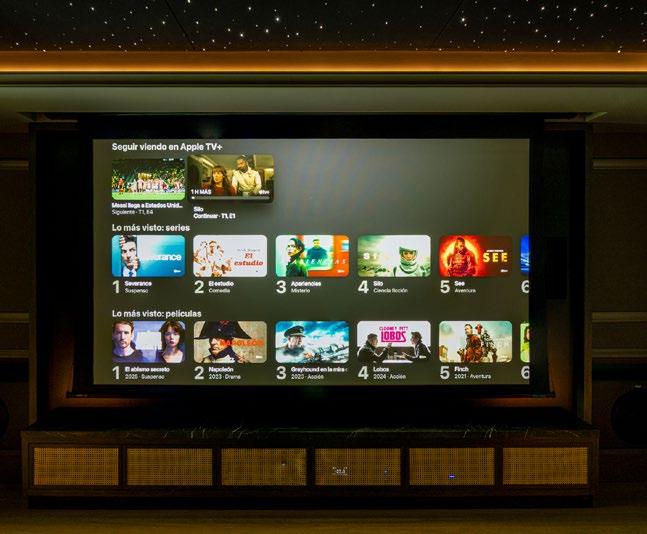
Lima Sound Contractors was already involved when the brief changed. Rather than bolt on features, the team returned to first principles. They proposed sealing the space and turning it into a dedicated acoustic environment. The result was Cine SM, a high-performance home cinema that balances technological precision with emotional purpose. The first step was to reconfigure the room’s architecture. Walls were rebuilt to improve isolation.
Acoustic treatments were layered beneath soft, dark finishes to control reflection, diffusion, and absorption. The ceiling height presented challenges, so every element — screen size, projector placement, seat height — was adjusted for visual alignment. Nothing was left to chance.
A 7.1.4 Dolby Atmos layout was designed using studio-grade Procella speakers, selected for their dynamic performance in smaller rooms. Two subwoofers were positioned based on acoustic modelling to ensure balanced low frequencies across all seats. The speakers are fully concealed behind fabric wall panels, allowing the room to remain visually calm.
The ceiling was transformed with a fiber-optic starfield, offering ambience and acoustic benefit in one gesture. The lighting was zoned and dimmable,
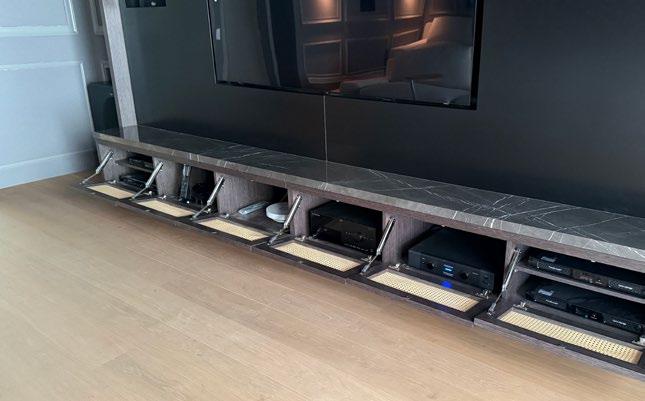
while a Mitsubishi HVAC system provided near-silent airflow. All sub-systems — including climate control, lights, AV — were tied into a single ELAN interface.
Every detail was tuned for experience. An Imaging Science Foundation (ISF)–certified technician calibrated the projector for color and contrast. Anthem Room Correction was used to fine-tune the audio. The result is a cinema that feels effortless to use, immersive to experience, and deeply connected to the rhythm of the home around it.
Cine SM isn’t a showpiece. It’s a space that recedes, allowing story, sound, and emotion to take center stage. Designed during a life transition and delivered with precision, it is now part of the client’s everyday rituals — quiet evenings, shared viewings, time spent together.
Lima Sound Contractors SAC
Cine SM
Lima Sound Contractors SAC
Technology Meets Design
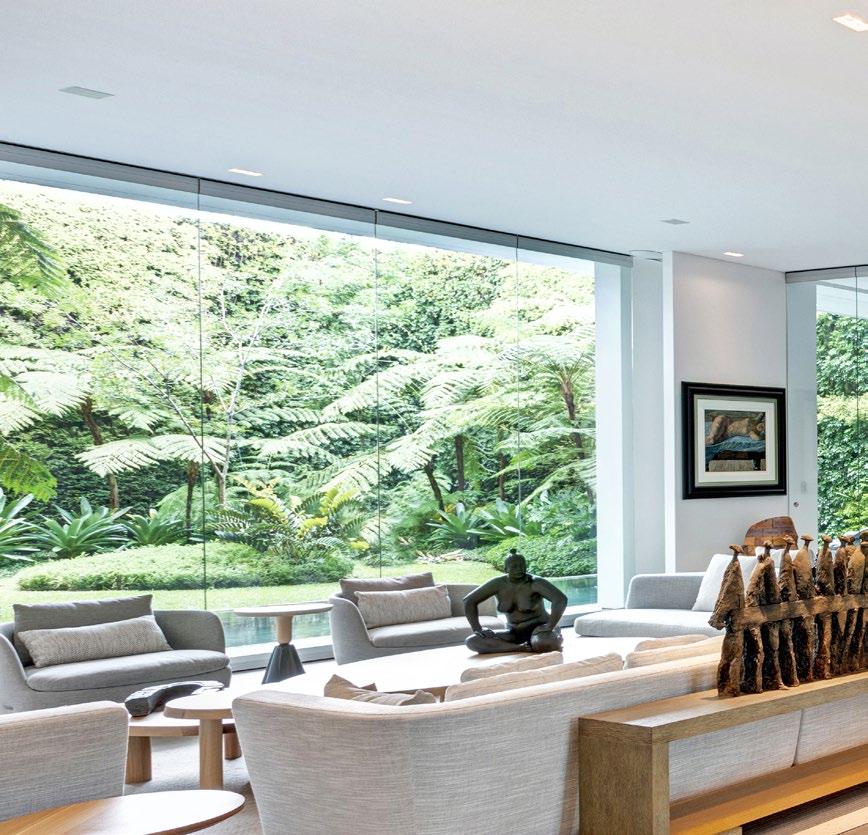
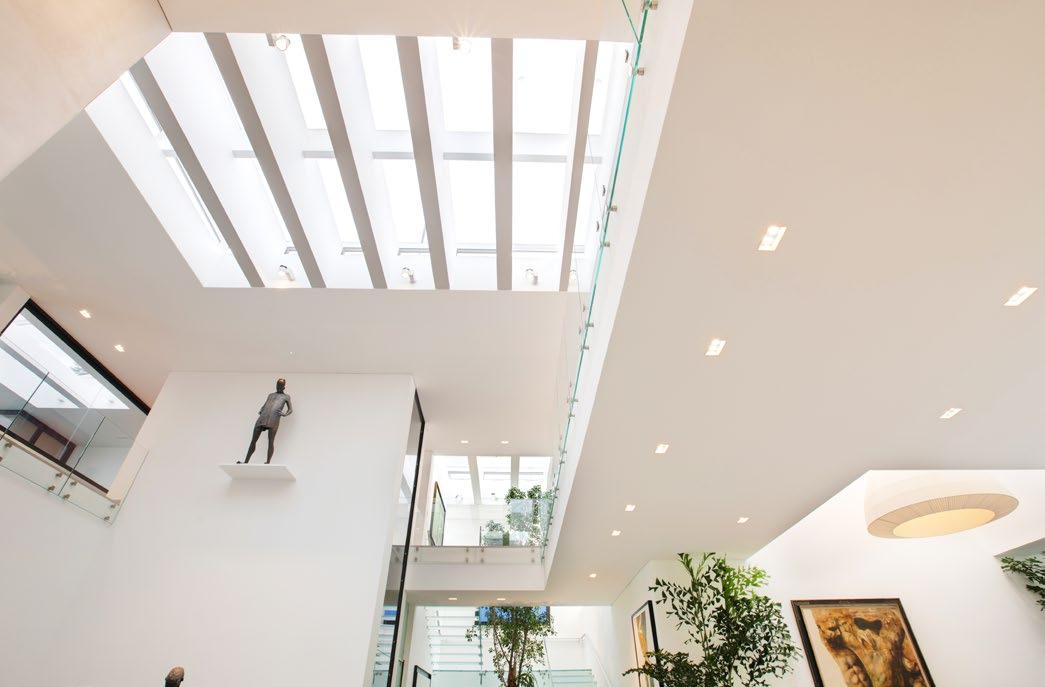
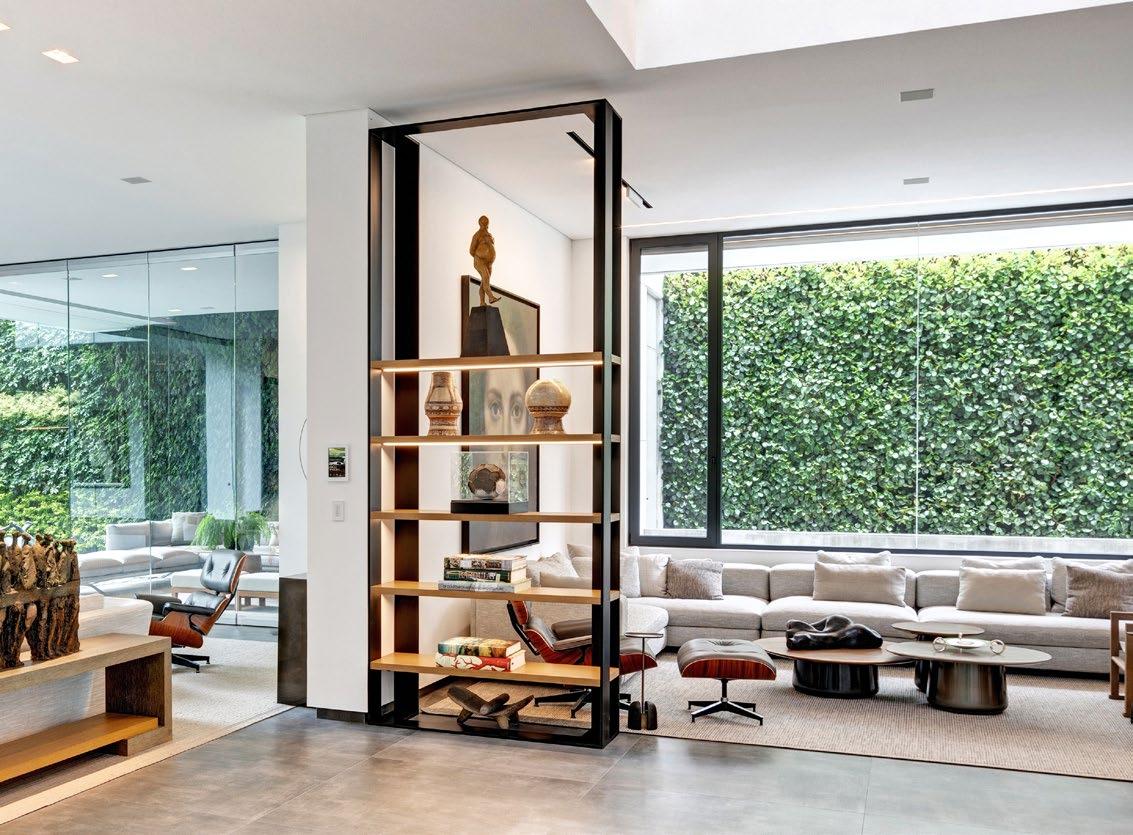
Raskoski Home

AKTIVA
A refined family home in Guatemala is elevated by a seamless integration of audio, lighting, and surveillance, tailored to support comfort without visual compromise.
There’s no flashing screen or oversized speaker to indicate just how much is happening behind the scenes at the Raskoski Home. From the moment AKTIVA joined the project, the goal was to integrate whole-home technology without disturbing the visual clarity of the space. This was not a show home. It was a place for real family living, shaped by comfort, control, and trust in the process.
The client wanted a single system to manage audio, lighting, blinds, security and video throughout the house. But it had to be discreet. AKTIVA’s role began early, during infrastructure planning. Working closely with the architectural team, they ensured the entire cabling system was embedded into the design — avoiding messy retrofits or visual compromises later. Touchscreens were kept flush to the wall. Speakers blended into ceilings. Every component was selected to complement the architecture, not compete with it.
Lighting control became a defining feature of the project. Scenes were tailored not just to functions — like dining or relaxing — but also to the family’s routines. A morning path
gently lifts blinds and lights selected areas, while a ‘goodnight’ scene shuts down the home with one button. Audio was zoned across multiple rooms, including outdoor spaces, with access to streaming platforms and gaming consoles, all via a single, easy-to-use interface.
Security added a layer of quiet reassurance. AKTIVA installed external cameras, smart locks, and motion sensors, all managed remotely via mobile app. The family can check in on the home from anywhere or let guests in with a tap. None of this would be possible without a strong network. The system relies on enterprise-grade connectivity, with full home Wi-Fi coverage and enough bandwidth to support simultaneous control, AV, and cloud services. Importantly, it was built for future upgrades — without needing to rewire a single wall.
By anchoring every technical decision to the design intent, AKTIVA ensured the home works for its owners, not the other way around. It listens quietly, responds instantly, and never interrupts.
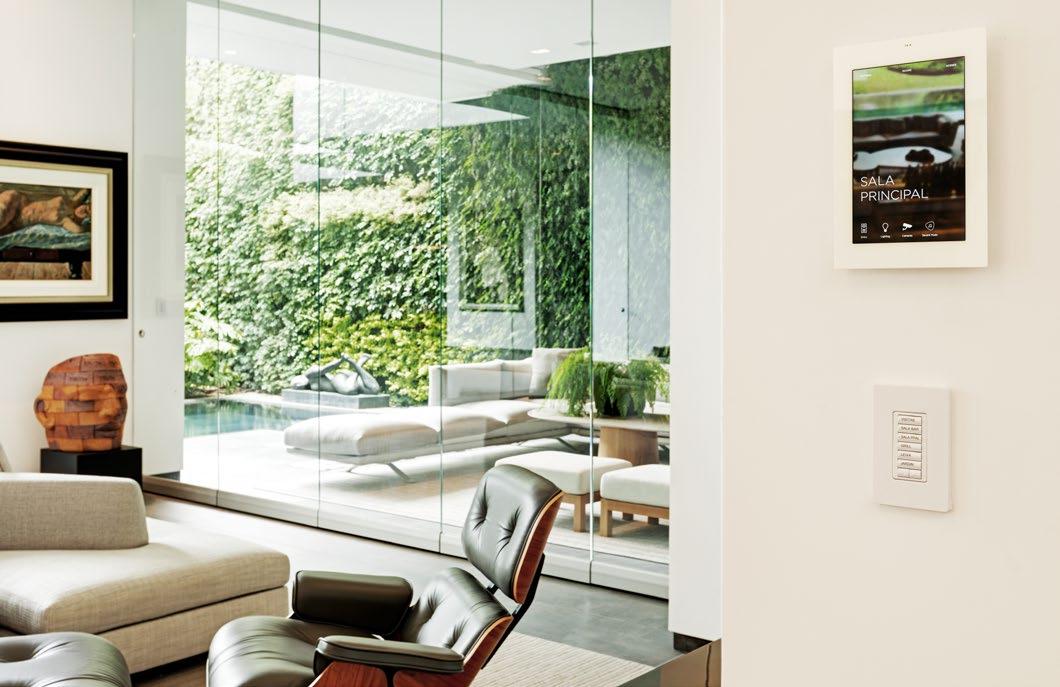
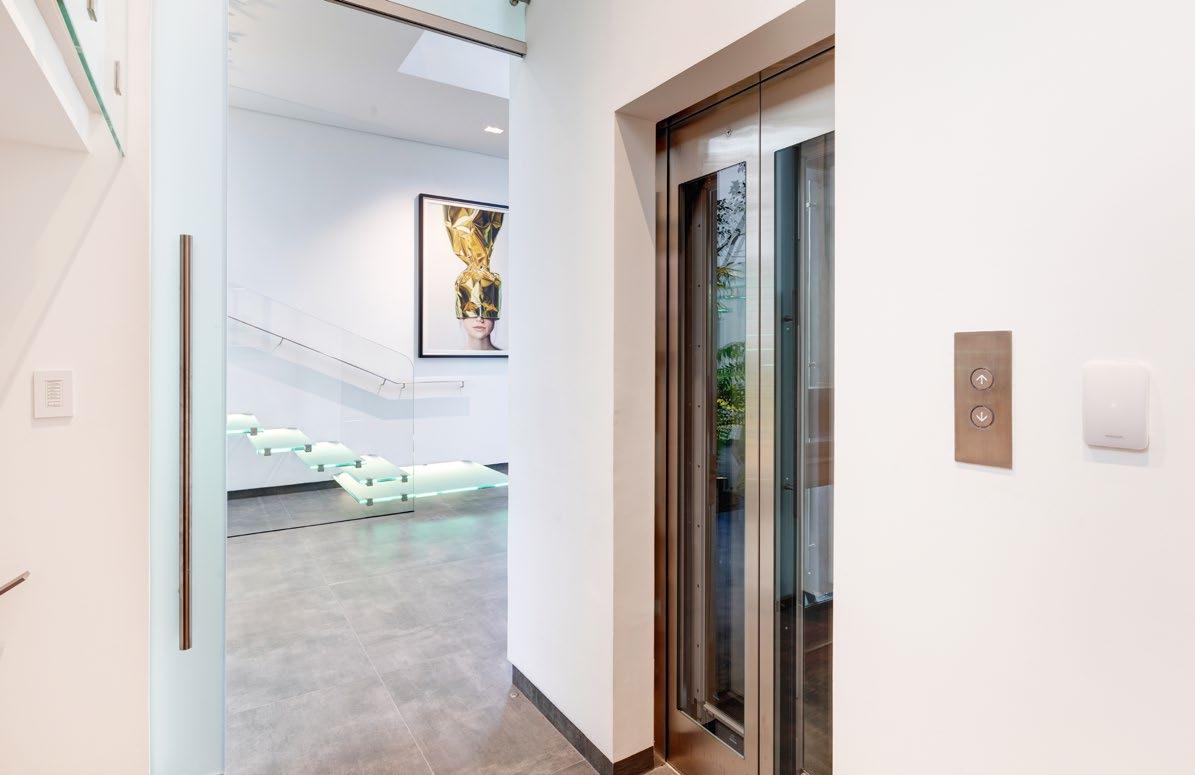
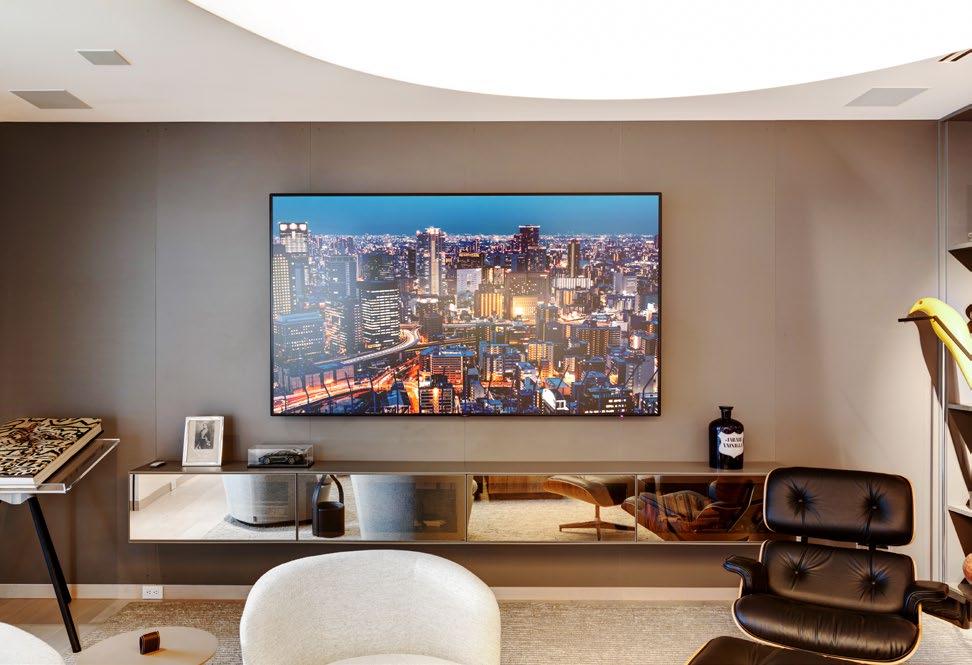
AKTIVA designed the system with scalability in mind to accommodate future expansions or upgrades.
Sekkei Residence
AKTIVA
An
artful lighting plan and intuitive smart home experience come together in this Guatemalan residence, where AKTIVA ensured the technology stayed quietly in the background.
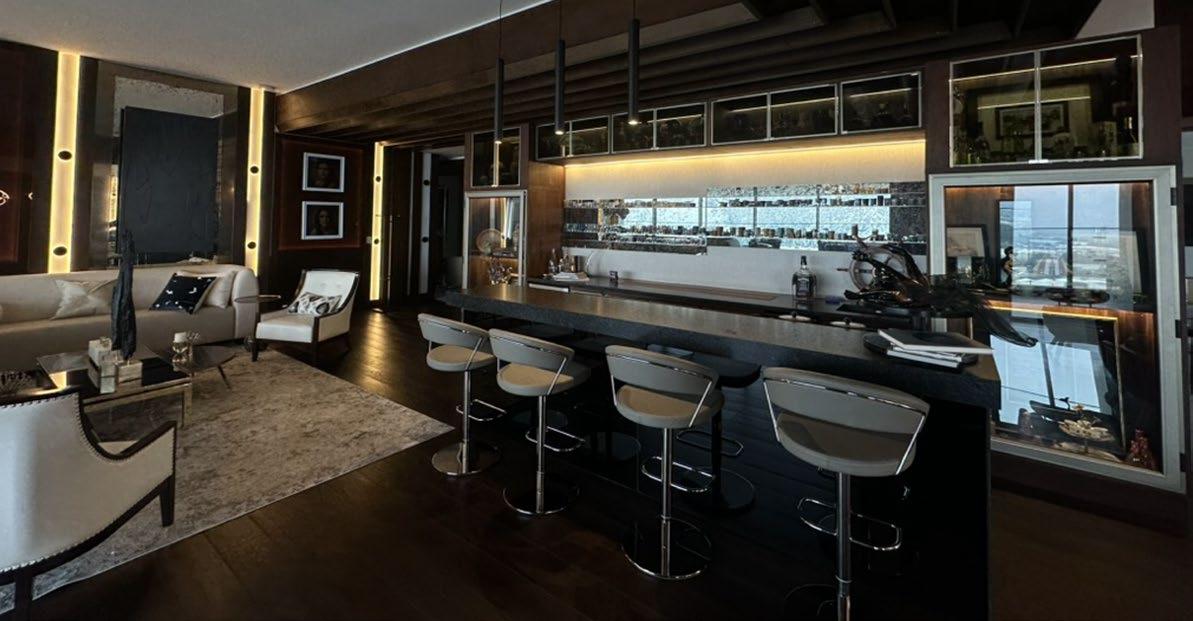
The Sekkei Residence was never going to be a house full of gadgets. From the outset, the homeowner’s focus was on subtlety — on creating an intelligent home that felt calm, coherent, and personal. Based in Guatemala, the brief centered on light and lifestyle. The lighting system had to support visual comfort while elevating specific artworks and architectural features. Everything else (audio, theater, blinds, networking, climate, etc.) had to work as one.
AKTIVA responded with a centralized HomeWorks lighting platform, enabling carefully crafted scenes across the home. The team worked closely with the client, reviewing beam spreads, dimming levels, and control layouts to achieve the precise feel he wanted in each space. Multi-zone audio was also installed, designed to blend into the environment while delivering high-fidelity playback, either synchronized or independent, through an intuitive app and fixed wall controls.
The theater room provides a more immersive escape, with surround sound and a highperformance display integrated discreetly into the architecture. Behind the scenes, strong networking was a priority. The team ensured complete Wi-Fi coverage across the property, supporting seamless control of all systems via mobile or touchpanel.
While the technical scope was ambitious, the installation progressed smoothly. The lighting design required particular attention, with several rounds of adjustments made to meet the client’s expectations for atmosphere and visual clarity. The final result delivered exactly what he had envisioned.
No wall is cluttered. No device calls attention to itself. Speakers were ceiling-recessed, panels were matched to wall finishes, and every interface was positioned with purpose. The result is a smart home that never feels technical. It feels lived-in, thoughtful, and made to reflect its owner.
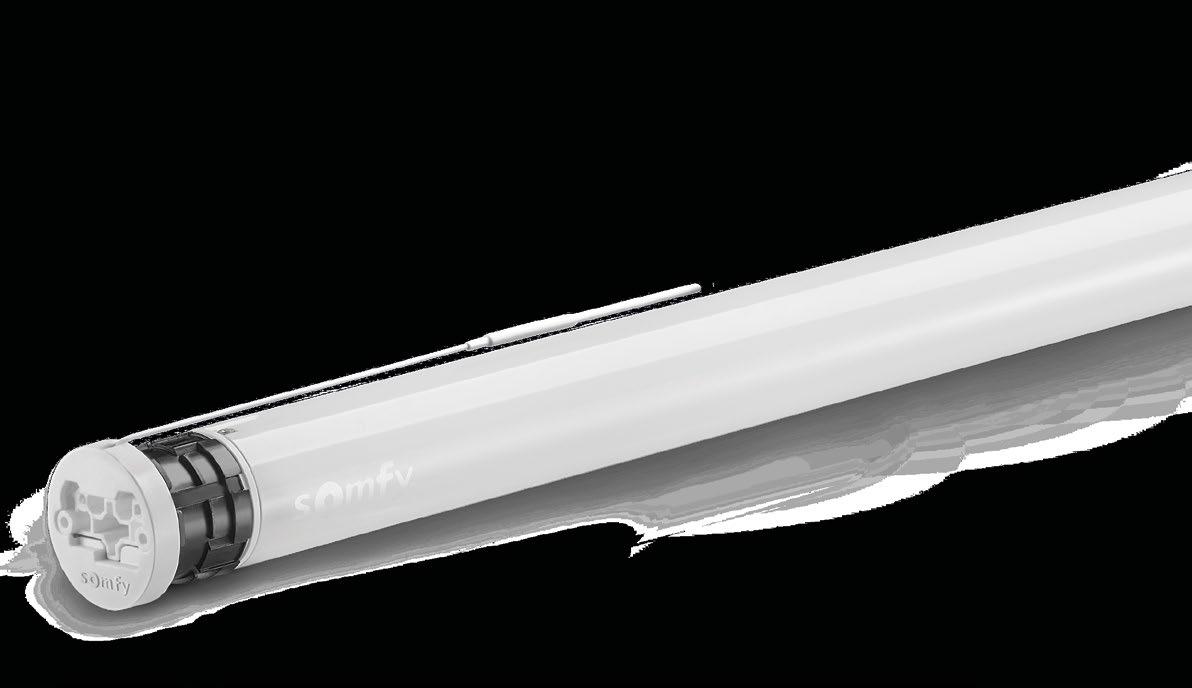
It’s what’s inside that matters
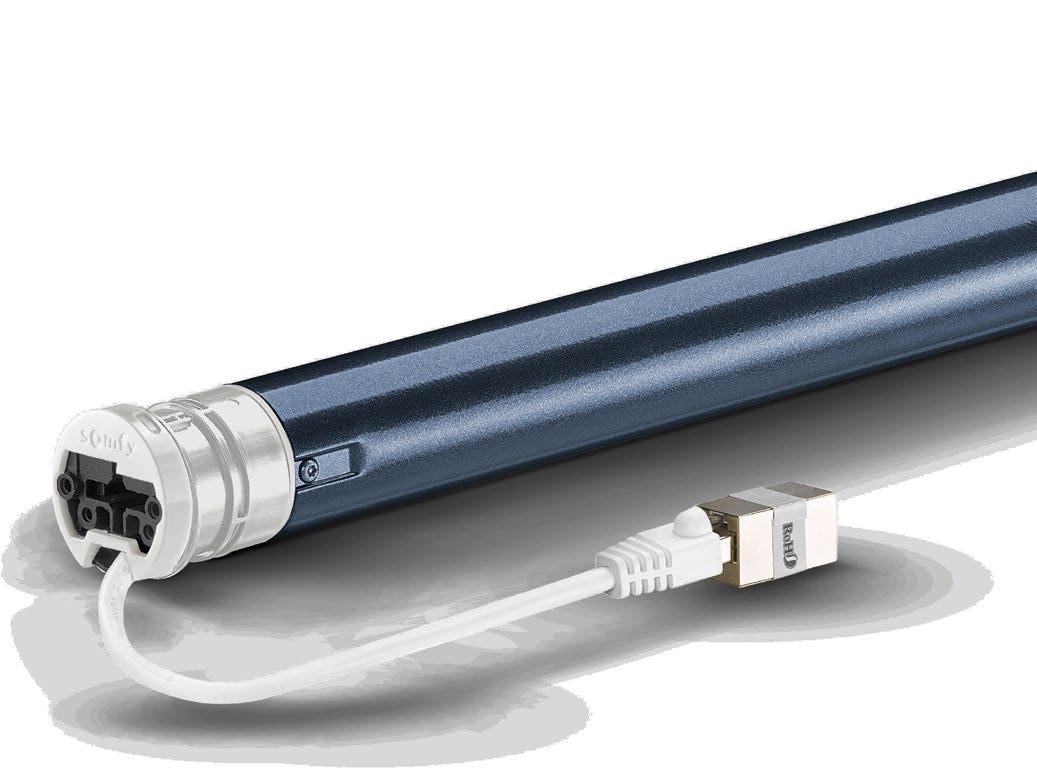
With Somfy, you have the power to choose
the
Control System the Technology the Fabricator
Our partners deliver tailored solutions with seamless integration and unmatched quality.
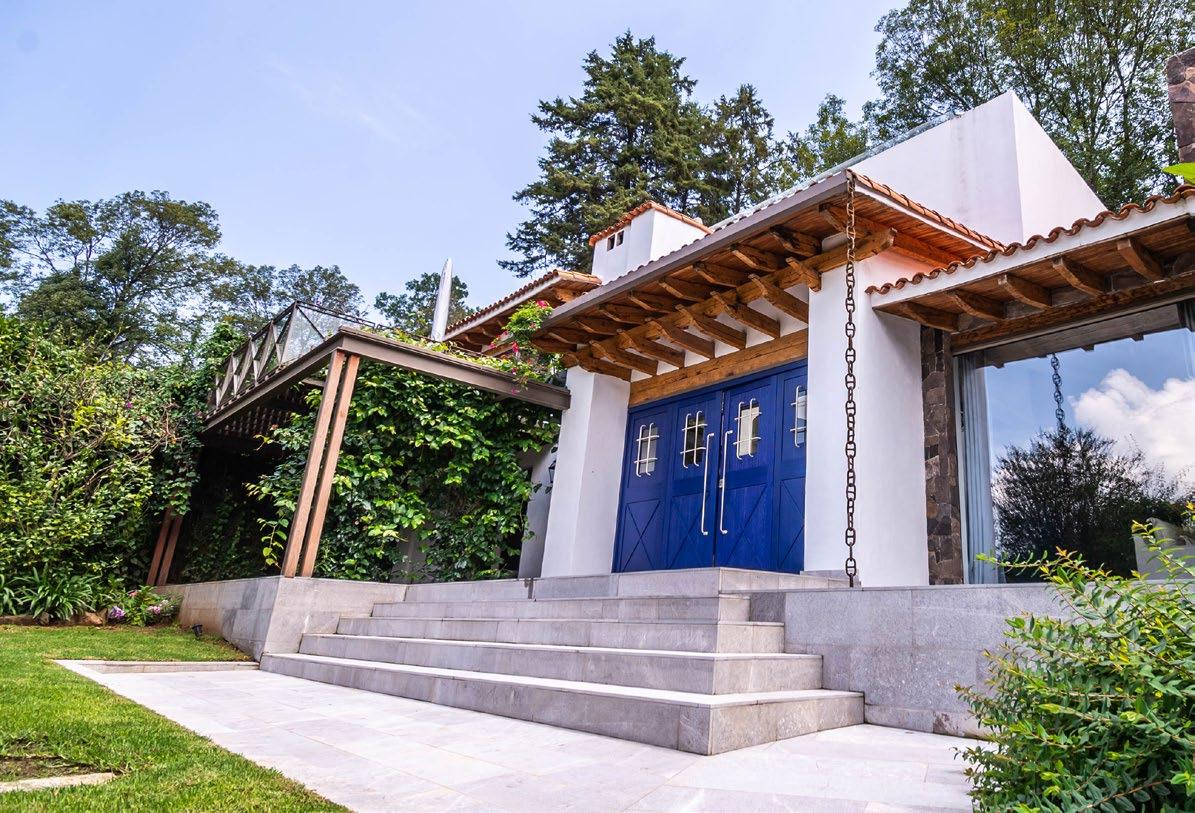
Avándaro 122
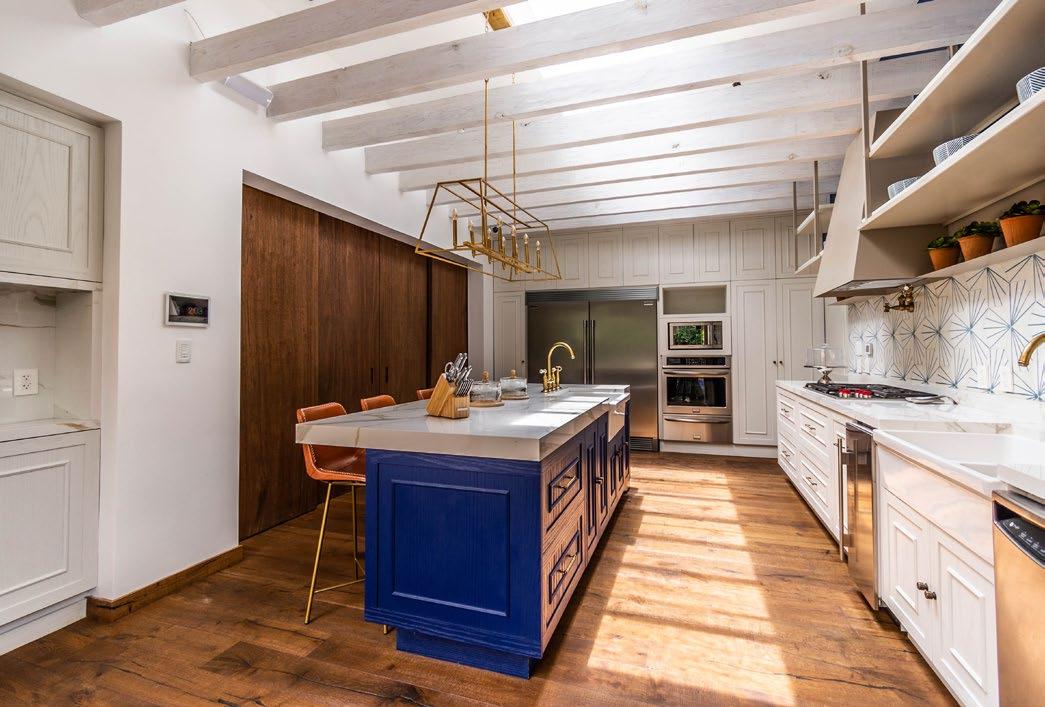
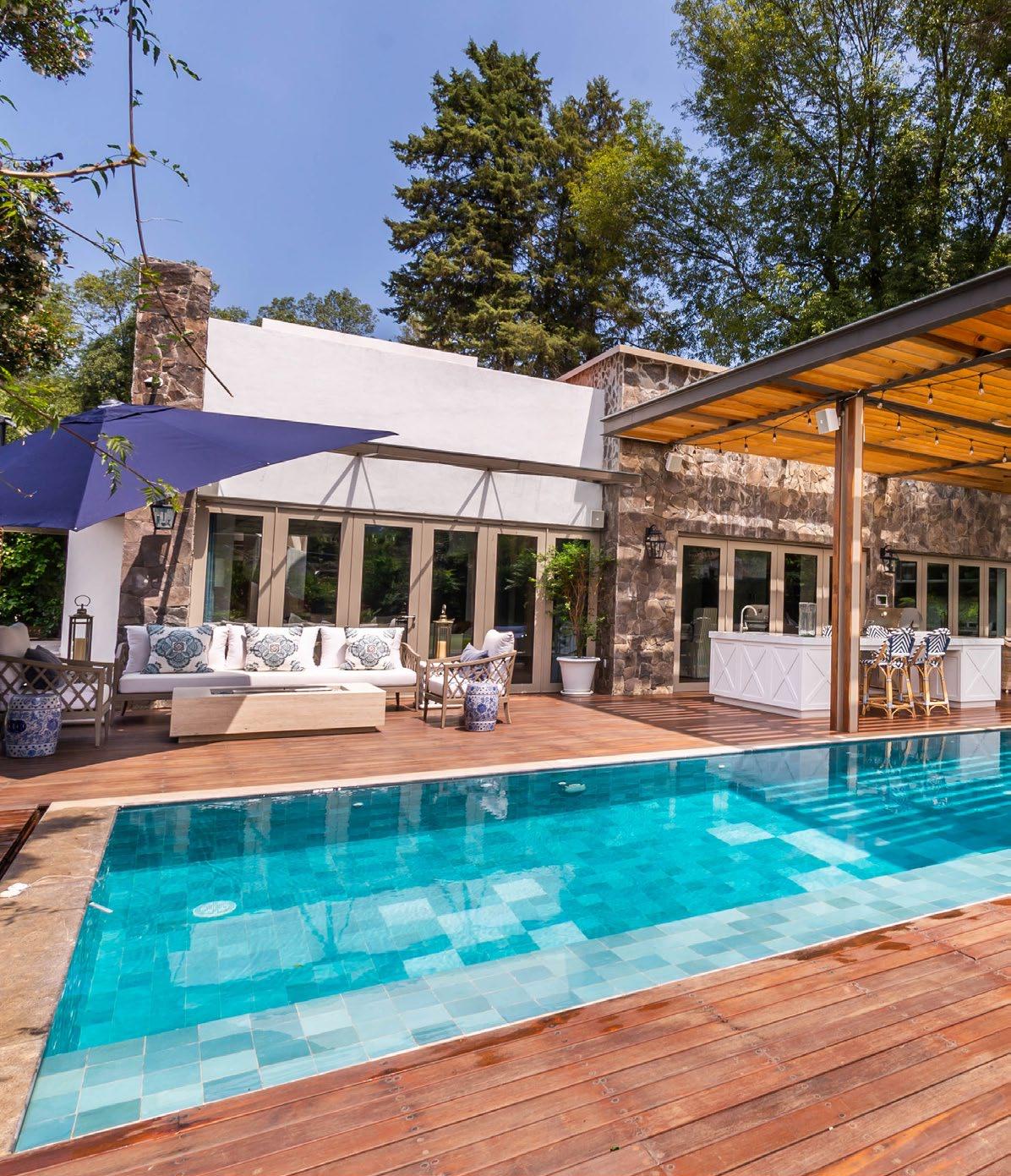
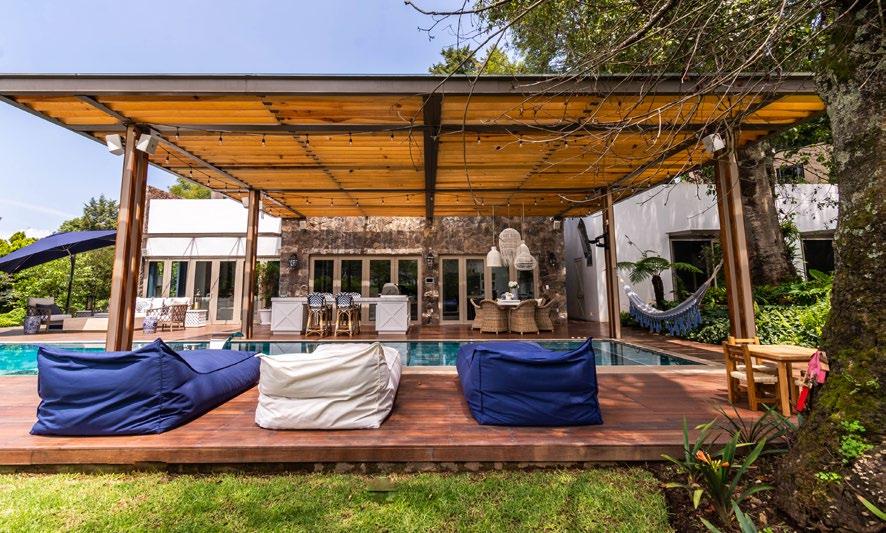
Avándaro 122 sits quietly in a residential pocket of Valle de Bravo, close to the pine forests of the Monarch Butterfly Biosphere Reserve. The family who owns it comes here on weekends to rest, recharge, and host friends. They wanted a home that felt effortless — where the lights adjusted on their own, music followed them from room to room, and guests could come and go without fuss.
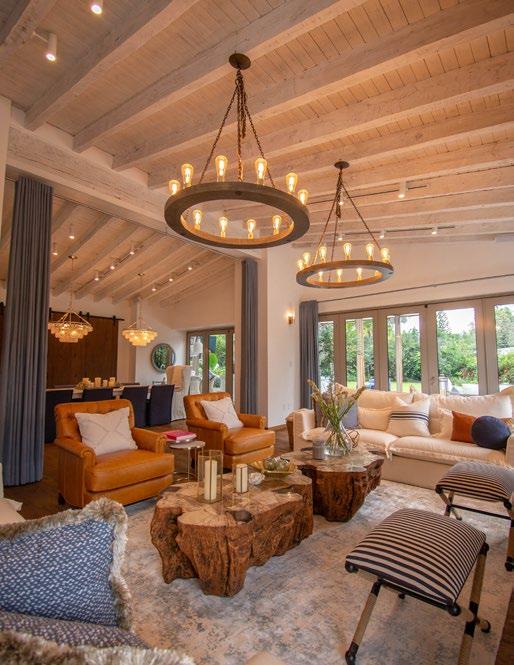
Integrator, Smartlab, worked alongside S+U Arquitectos from the design phase to ensure the home’s technology was never intrusive. The result is a Control4-powered system that controls audio, lighting, climate, security, intercom, video, and even appliances, without calling attention to itself.
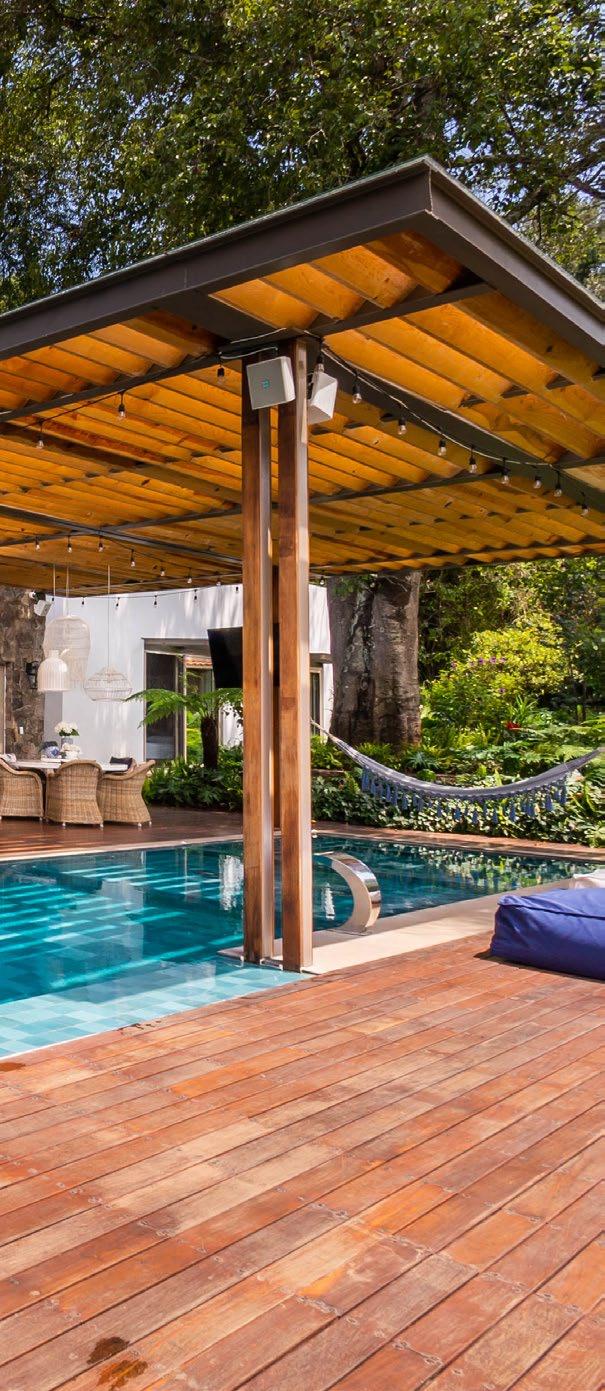
Seven audio zones are spread throughout the home, including a powerful outdoor system that supports up to 180 guests. Two home cinemas were tucked into the living room and master bedroom, with speakers recessed into ceiling beams and floor-mounted subwoofers hidden alongside furniture. Lighting is controlled through 37 carefully selected keypads, some wired, others wireless, depending on the structure of each space.
Voice control plays a key role, with Alexa units placed discreetly into ceiling speaker housings. The family uses simple spoken phrases to trigger scenes like ‘Pool Party’ or
A smart weekend retreat in Valle de Bravo balances quiet luxury with advanced automation, offering seamless control across lighting, audio, climate, and more.
‘Goodnight’, which control multiple systems at once. More than 10 touchscreens are located throughout the property, adjusted to suit the height and habits of each user.
Outdoors, the automation continues. A weatherproof screen, garden speakers, and dimmable lights allow the family to extend gatherings into the evening. The pool responds to a programed routine that activates heating, hydropumps, lighting, and music in one go. Even the appliances — including refrigeration — can send alerts and adjust their energy usage according to different household modes.
Getting a strong network signal across the entire property was not easy, due to thick masonry walls. Smartlab installed a carefully positioned mesh system with fine-tuned access points to ensure seamless coverage across all areas, from the living spaces to the terrace and utility zones.
Rather than layering tech over the design, Smartlab embedded it into the home from the beginning. Every device was placed with care and purpose, allowing the space to feel organic, balanced, and calm.
Avándaro 122 is not defined by its technology, but it would not function the same without it. Here, innovation works quietly in the background, supporting family life without ever interrupting it.
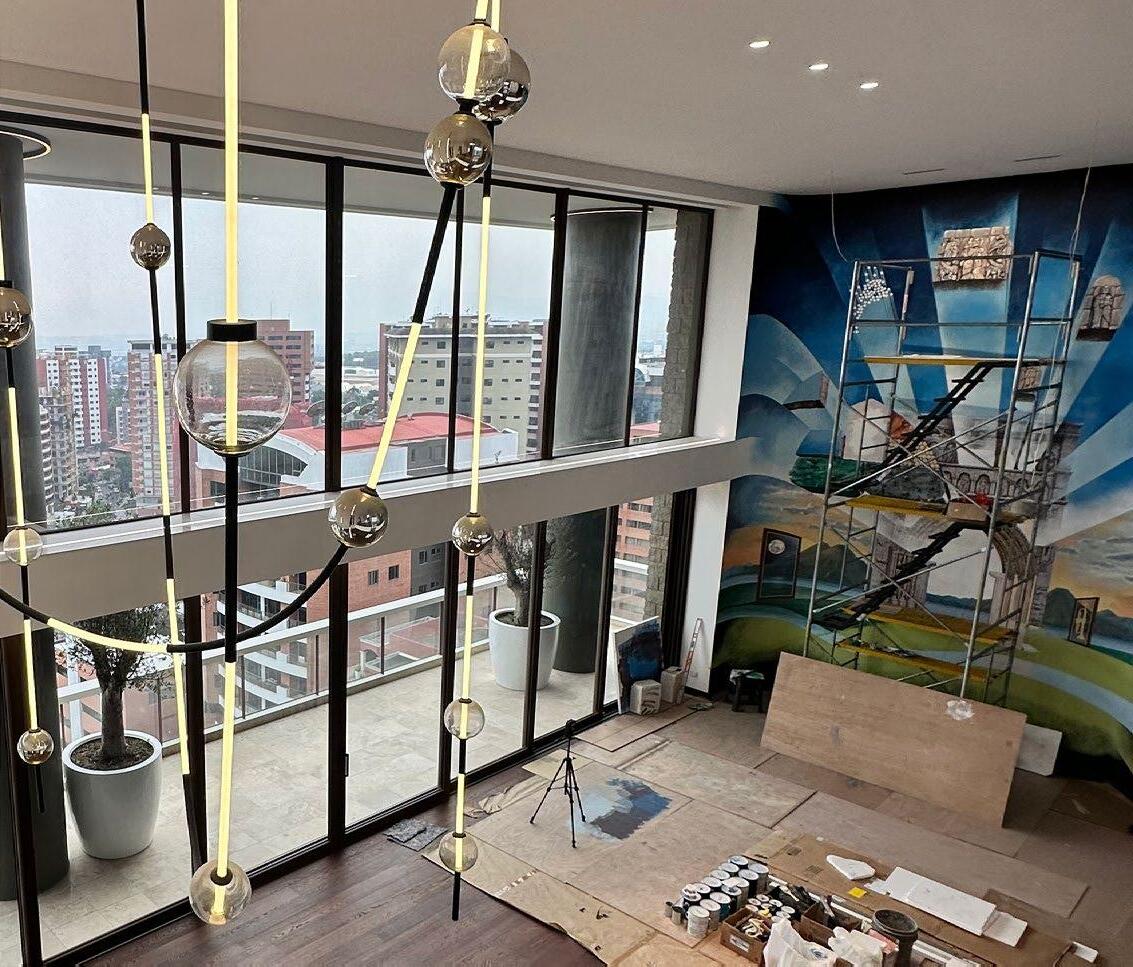
Tiffany Home
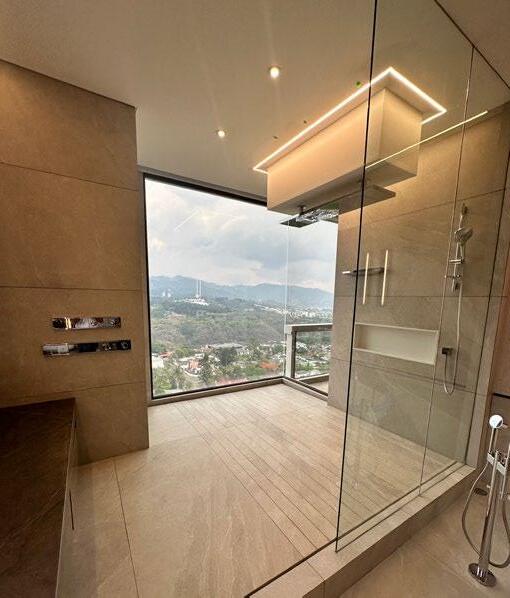
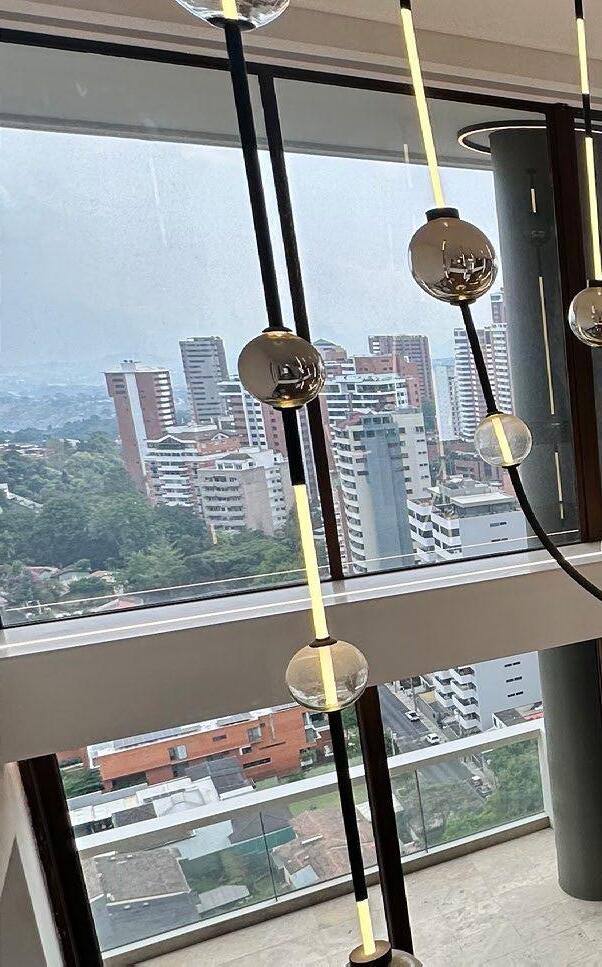
In Guatemala City, a dramatic three-story apartment becomes the ultimate expression of quiet luxury, where comfort, control, and design live in perfect balance.
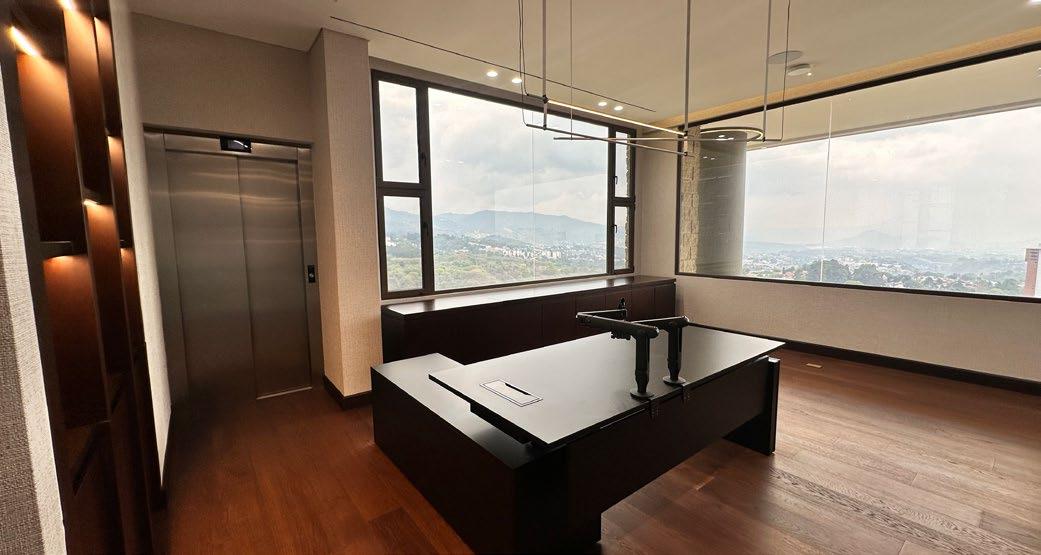
This apartment may have been designed for one, but it was built for many. Set across three levels in Guatemala, the home belongs to a client who lives alone yet loves to entertain. His vision was clear from the beginning. He wanted total control over the space, without the technology ever being seen.
Integrator, AKTIVA, worked closely with architect, Fernando Gonzalez of Estudio Lezino, to bring that idea to life. Lighting was one of the first priorities. Some rooms needed to glow softly, others to flood with light. Together, they landed on a design where lighting scenes could shift the entire mood with one press of a button. The keypads themselves were chosen not just for what they could do, but for how they looked.
Music flows through every room. Speakers are either completely invisible or tucked into the ceiling, chosen with help from the design team to match the tone of each space. Fourteen screens are hidden throughout the home, and the client can play something different on each one or link them all together when guests arrive.
Even the rooftop pool can be controlled from the same system. All of it runs quietly in the background. There are no cables, no clutter, and no confusion. Just a calm, beautiful space that responds with ease.
For the client, it was about more than convenience. It was about creating a home that felt like his, from the inside out.
AKTIVA
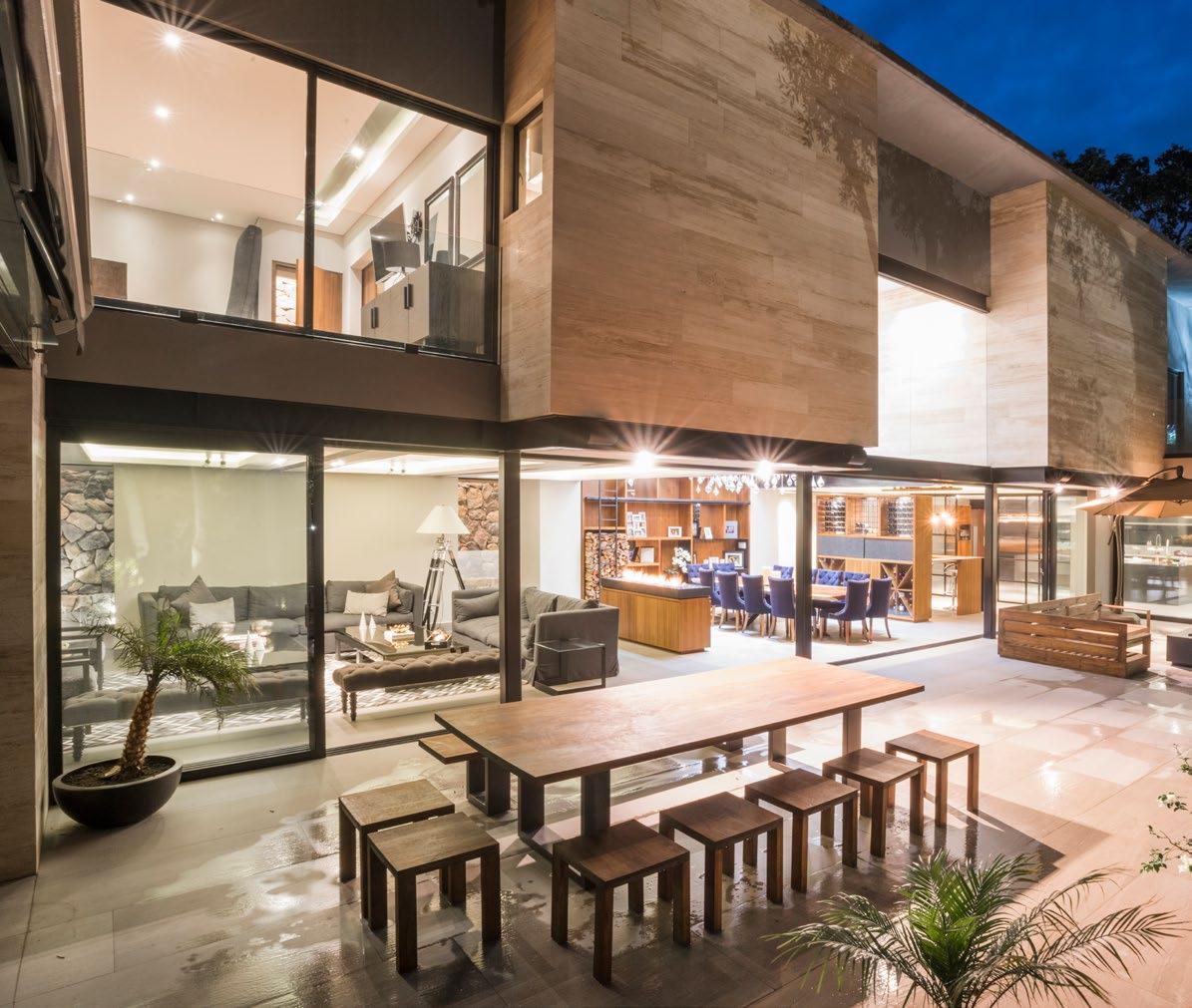
RH5
An ambitious new build in Mexico blends intuitive smart home control with family-first design, creating a multi-zone sanctuary tailored for living, playing, and unwinding.
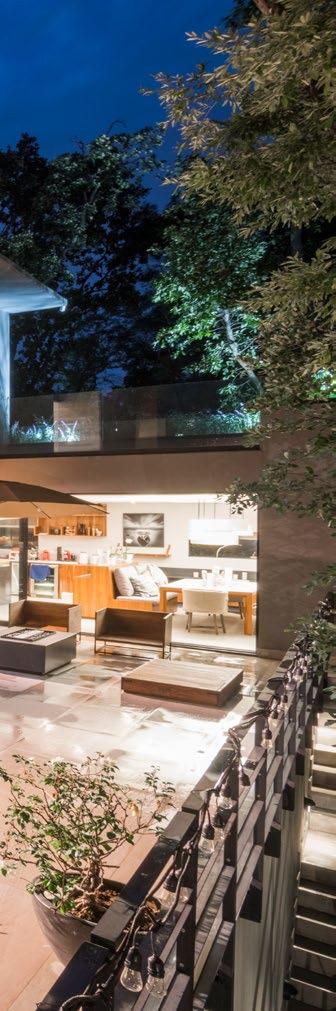
When the owner of RH5 began planning his family’s forever home, he wanted more than a few high-tech tricks. He wanted a home that felt effortless, where smart features worked quietly in the background and every system — from lighting to security — was easy to use. Working with Smartlab from the earliest design stages, RH5 was shaped not around hardware, but around how the family wanted to live.
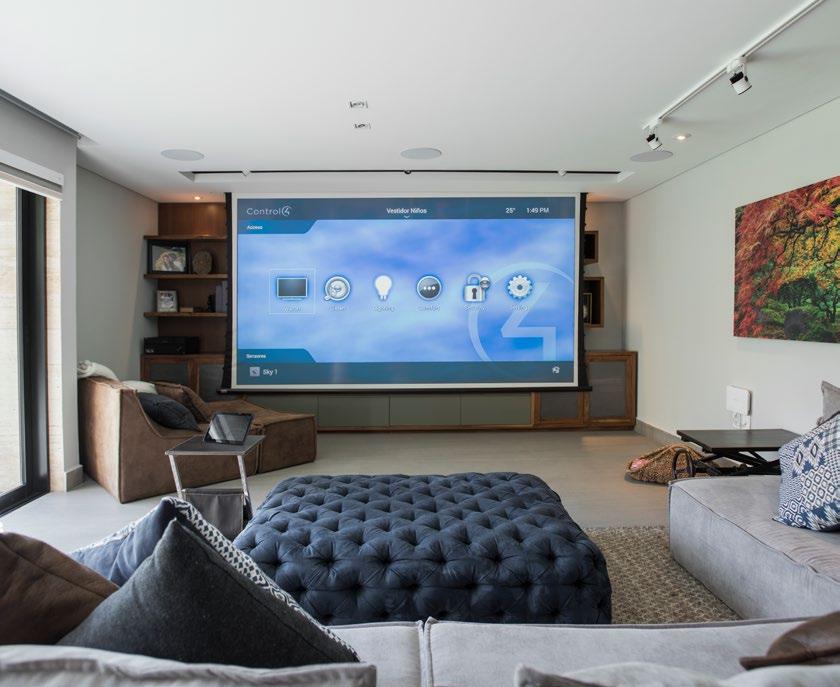
From the outside, the home presents as a contemporary rural retreat. Inside, it’s a different story. There are two dedicated cinemas. Music can be played in one room or across the whole house. Every screen, speaker, light, lock, and blind is connected through a central Control4 system. But the real story lies in how all of this fits the family’s everyday life.
In the dining room, for example, a basketball hoop folds down quietly from the ceiling. It’s hidden until a pre-set scene is triggered — something the client can do with a voice command, a touchscreen, or the press of a button. Lights dim, music starts, and the space transforms from formal to fun in under 30 seconds.
Just off the main bedroom is a fully kitted car workshop. When the homeowner enters, motion sensors trigger lights and music without needing a touch. This is where he spends his weekends, and the system adjusts to support those long hours.
Elsewhere in the home, the spa area responds to a simple command: “Relax.” Water features start, RGB lighting cycles between colors, and calm music fills the space. The firepit out in the garden does the same — offering soft lighting and background playlists at a moment’s notice. Each room has its own scenes and schedule, whether it’s the playroom automatically shutting off video at bedtime, or the master bedroom gently waking the family with light and music each morning.
Importantly, control isn’t restricted to one device or interface. There are touchscreens placed at comfortable heights throughout the home, voice assistants discreetly built into the ceilings, and buttons that are clearly labelled and thoughtfully positioned.
RH5 doesn’t rely on showy features. It relies on good conversations, careful planning and systems that feel second nature. It’s a home where the technology works just as hard as the architecture to support the family inside it.
Smartlab
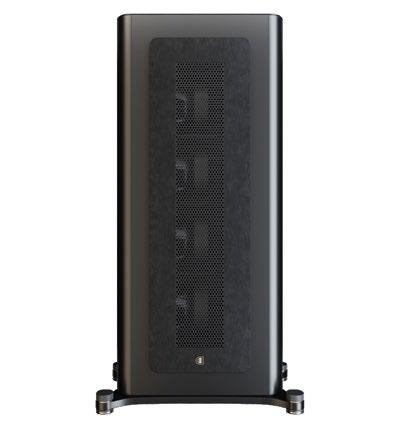
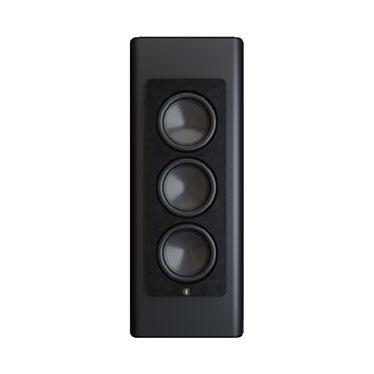
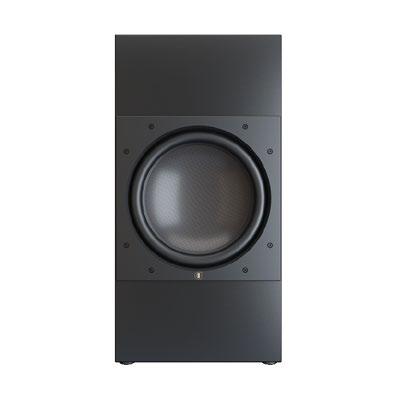
ARCHITECTURAL SUBWOOFERS WITHOUT COMPROMISE

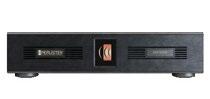
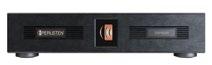
DSP3000 amp
DSP1500 amp
D8is
D3is
R18is
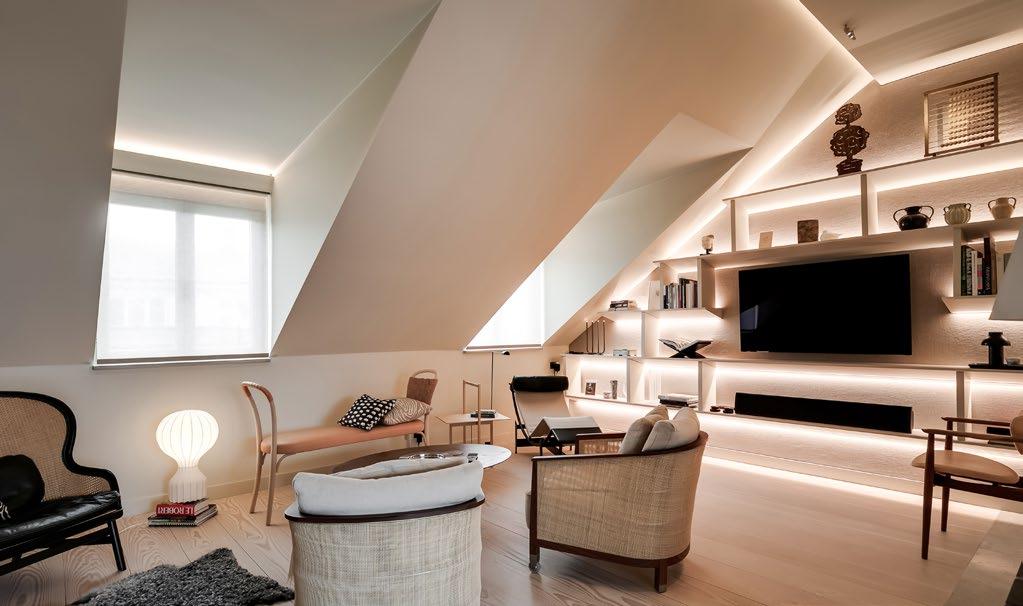
How to Know When Your Client is Asking for an Integrator
Clients often describe lifestyle aspirations in everyday language. Recognizing these cues helps designers know when to involve a smart home professional to ensure technology and architecture align seamlessly.
I
In today’s residential projects, homeowners increasingly expect their properties to do more than provide shelter. They want spaces that anticipate needs, adapt to routines and, above all, feel effortless to use. For architects and interior designers, this means learning to recognize the language clients use when they describe what they want their home to achieve.
Technology integration is not about knowing every piece of equipment on the market. Rather, it is about identifying the key phrases that suggest a professional integrator should be brought into the design conversation.
When a client mentions lighting scenes or expresses interest in dimmable lighting that changes throughout the day, this points to lighting control systems. Similarly, references to climate comfort, zoned heating and cooling, or energy efficiency highlight the need for integration of HVAC (heating, ventilation, and air conditioning).
Credit: Aloud
Requests for whole-home music, invisible speakers, or sound in every room indicate distributed audio. If they speak about cinema or theater experiences at home, big screens, or surround sound, then a dedicated media room or home theater system may be appropriate.
Conversations about gates, cameras, or intercoms usually fall into the realm of security and access control. When clients ask for control from their phone, one remote for everything, or automation that just works, they are describing centralized control platforms.
Other clues appear when they discuss lifestyle aspirations. Mentions of motorized blinds, glass that adapts to sunlight, or shading that responds automatically point to automated window treatments. Comments about pool control, spa settings, or outdoor entertaining with music and lighting often expand the conversation into exterior living spaces.
Even less obvious remarks, such as wanting the house to wake up gradually, shut itself down at night, or simulate occupancy while traveling, suggest an interest in broader automation. These are moments where design professionals should pause and bring in an integrator who can translate those desires into reliable, easy-to-use systems.
The key lies in listening carefully. Clients may not know the terminology, but their aspirations provide the roadmap. By spotting these phrases and engaging the right expertise early, architects and designers can ensure the home not only looks beautiful but also lives beautifully.
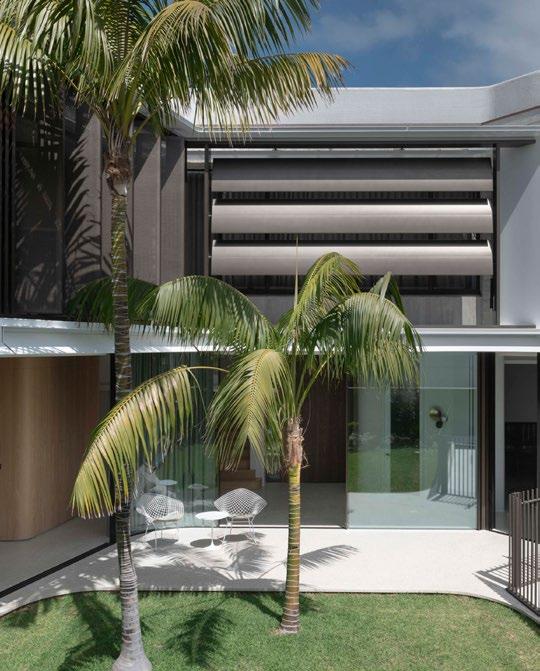
Credit:
Ryelec
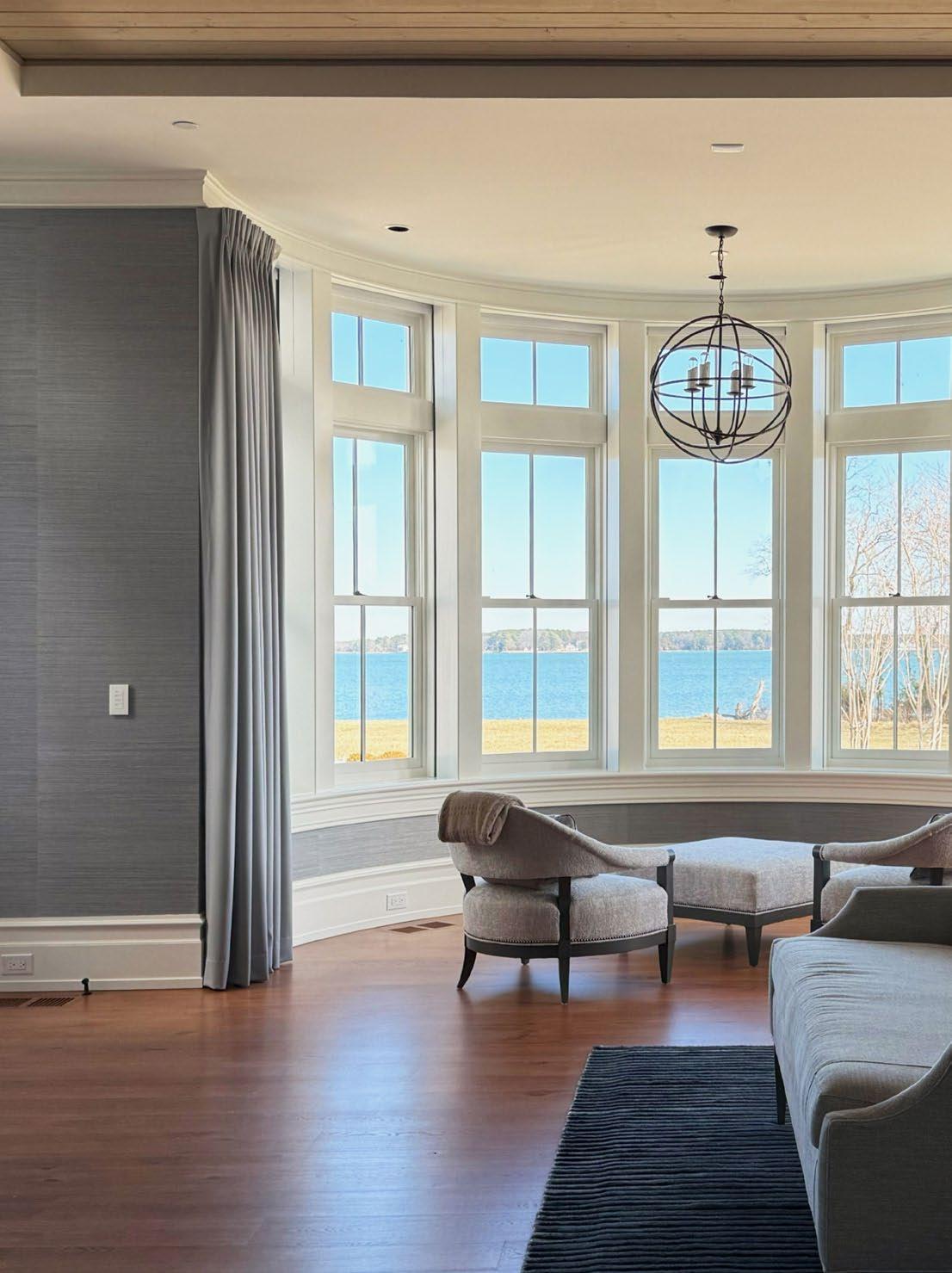

River House
SmartTouchUSA
This riverside estate may span five buildings, but it feels like one complete home, thanks to a control system that disappears behind the walls.
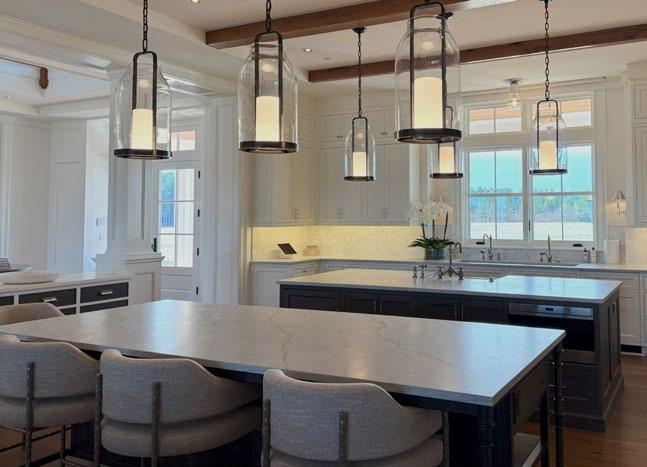
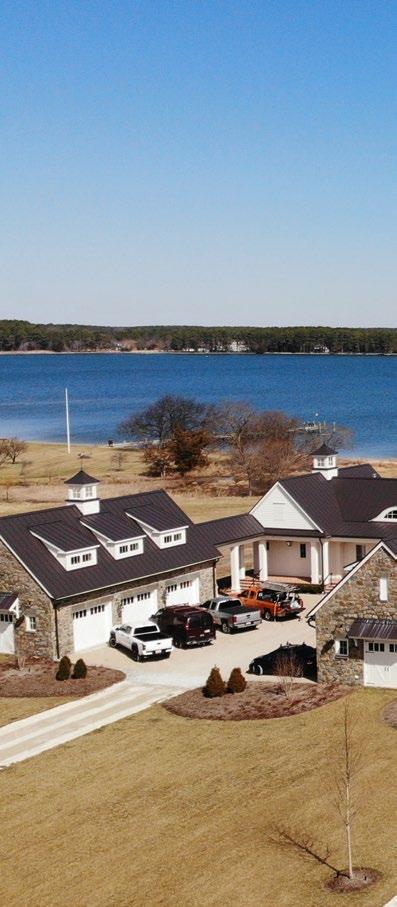
River House sits within a sprawling riverside landscape in the United States, its five distinct buildings linked not just by pathways and gardens, but by an invisible thread of technology. From the outset, the brief was clear. The owners wanted total control — lighting, security, entertainment, shading — but without visible clutter or over-complication. The home had to feel seamless. It had to work across structures but never get in the way of design.
SmartTouchUSA was brought in early, with enough lead time to develop the backbone of the system before finishes were finalized. A hybrid network of 10-gigabit fiber and Cat6 cabling was laid between the main residence, guest residence, pool house, and two detached garages, one of which houses a gym. From there, every decision was led by both functionality and restraint.
Lighting and shading, managed by Lutron, respond to natural rhythms. Keypads were color-matched and placed with care, aligned with joinery lines or built discreetly into paneling. In the primary bedroom, where complete darkness was required by a light-sensitive client, traditional solutions would have interrupted the ceiling details. Working with the builder and trim carpenter, SmartTouchUSA engineered custom magnetic access panels to conceal the shade system entirely.
Audio, built on Crestron, is present in all the right places and invisible in the ones that matter. Sonance speakers are embedded in ceilings. Outside, James Loudspeaker tower and satellite speakers are tucked between stonework and plantings, delivering immersive sound around the firepit and pool without visual impact.
In the living room, a 98-inch display was fitted flush with cabinetry. Beneath it, a custom-width soundbar lines up perfectly with the joinery. Dual subwoofers are hidden beneath the floor. The entire system — including Apple TV, Ubiquiti surveillance streaming, and control processors — is rack-mounted away from view.
Security was simplified. Originally three separate systems, it was redesigned as one partitioned platform, giving each building independent control without requiring the owners to manage multiple interfaces. A central keyed switch shuts it all down for service, saving time and complexity.
Across River House, the integration is invisible but essential. The system learns how the family lives, adapts to their needs, and never demands attention. It’s the kind of luxury that doesn’t look like technology at all — it just feels like everything works.
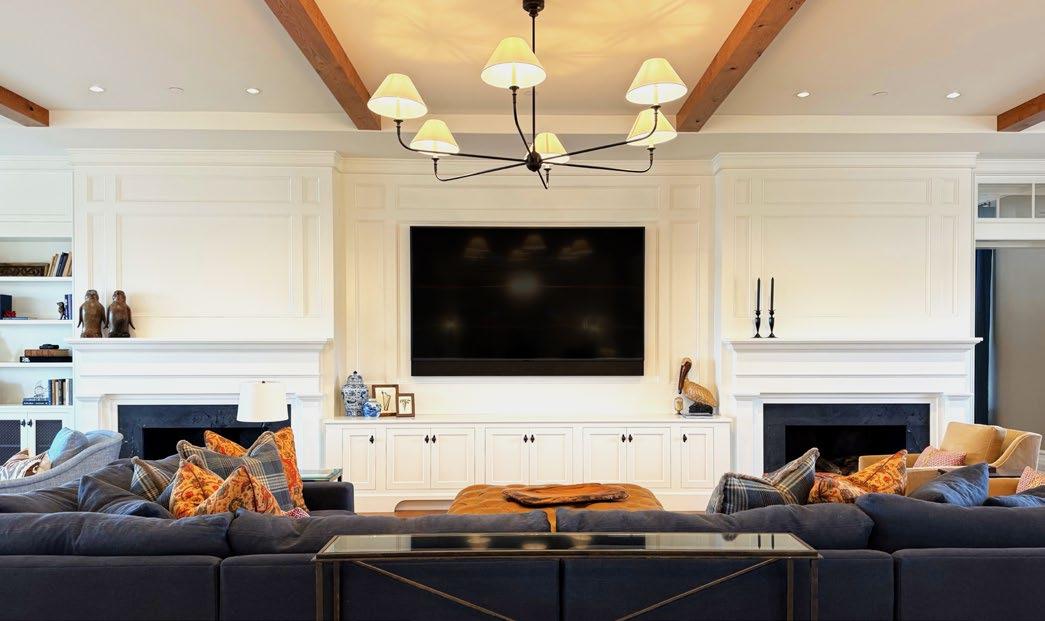
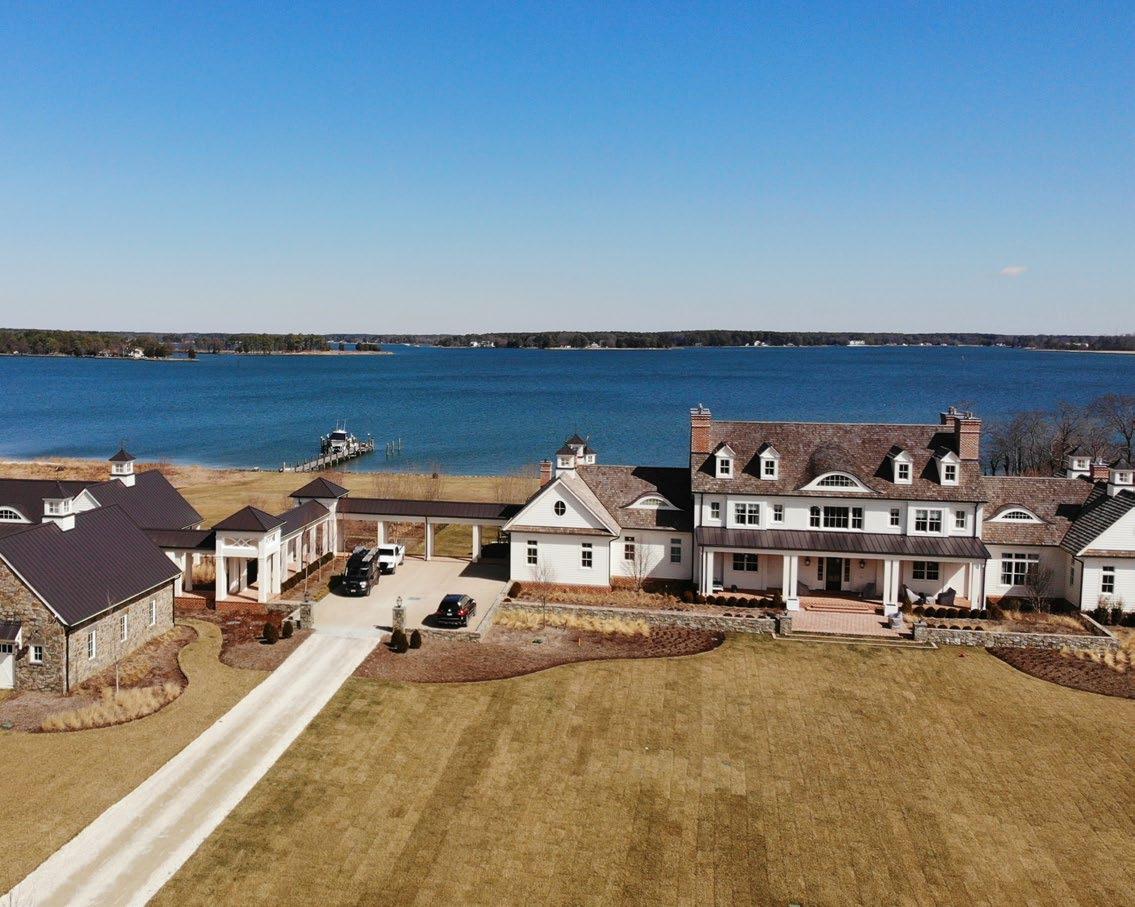
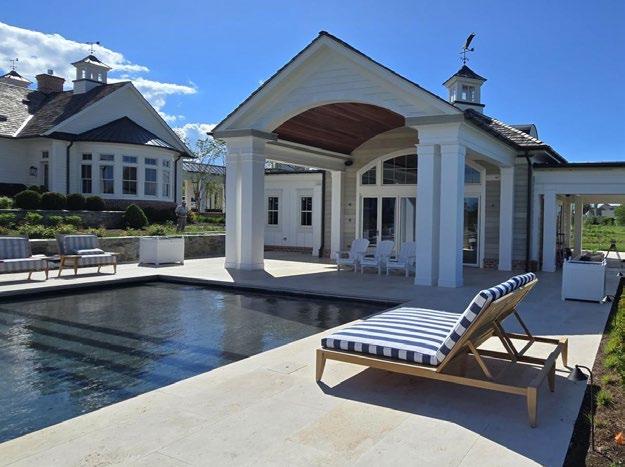
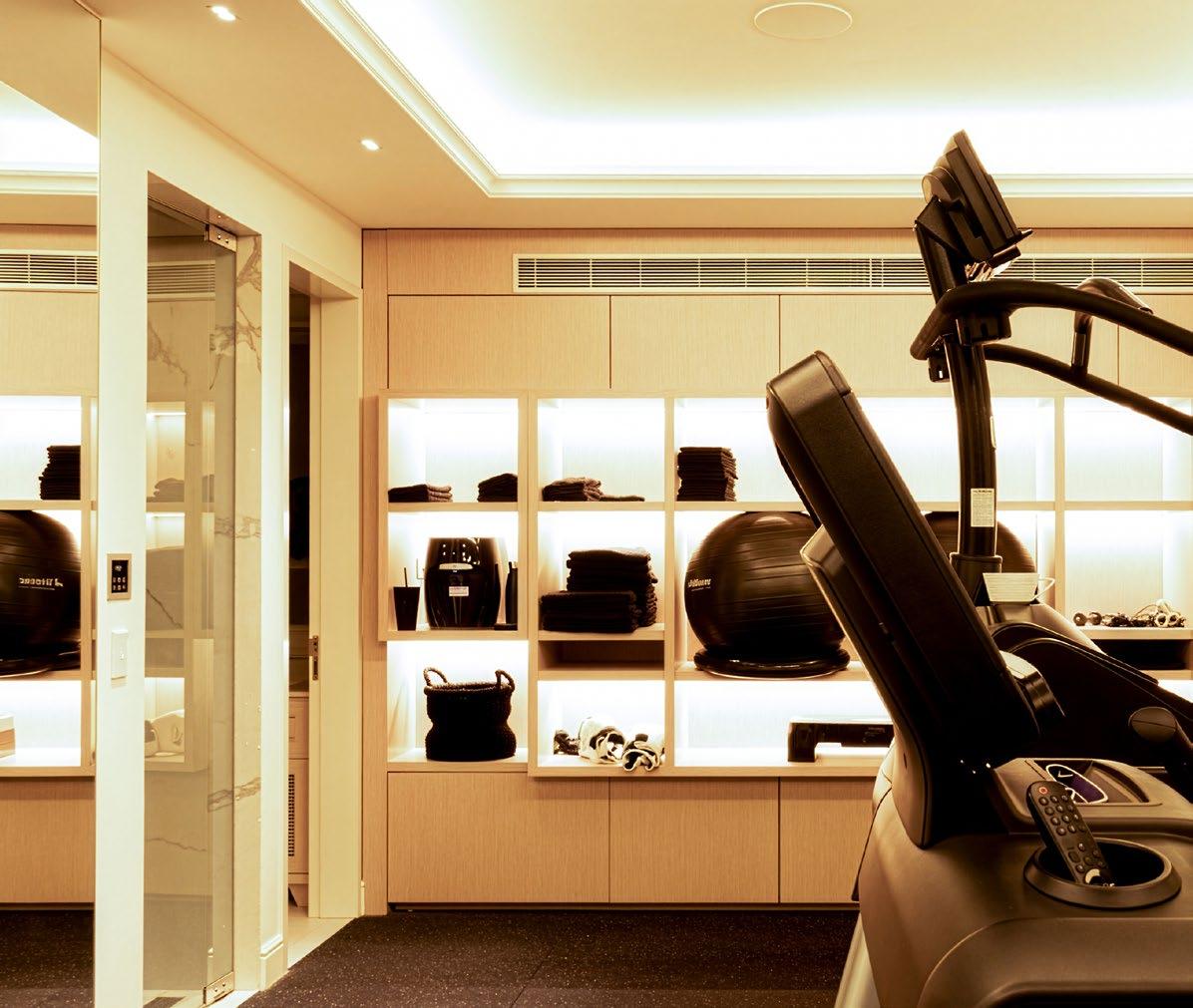
The moment the lights dim, you forget you’re in your own home.
CASA SM
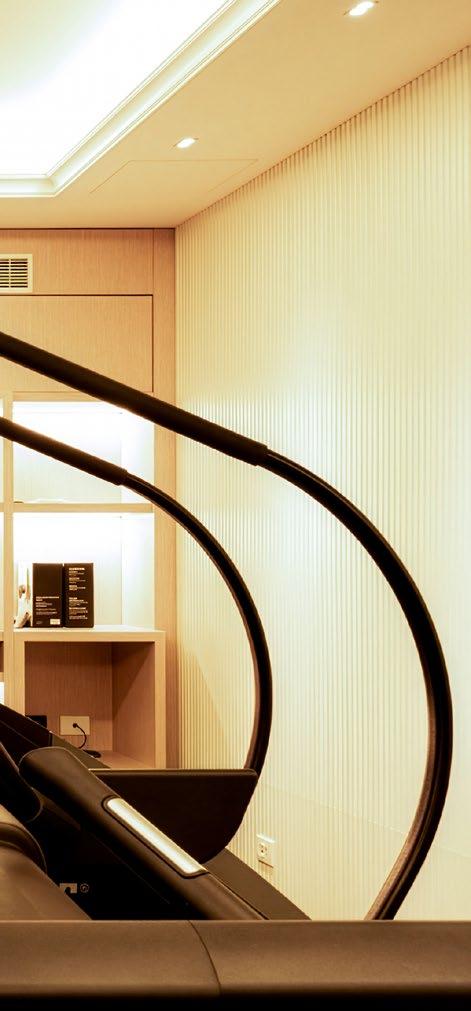
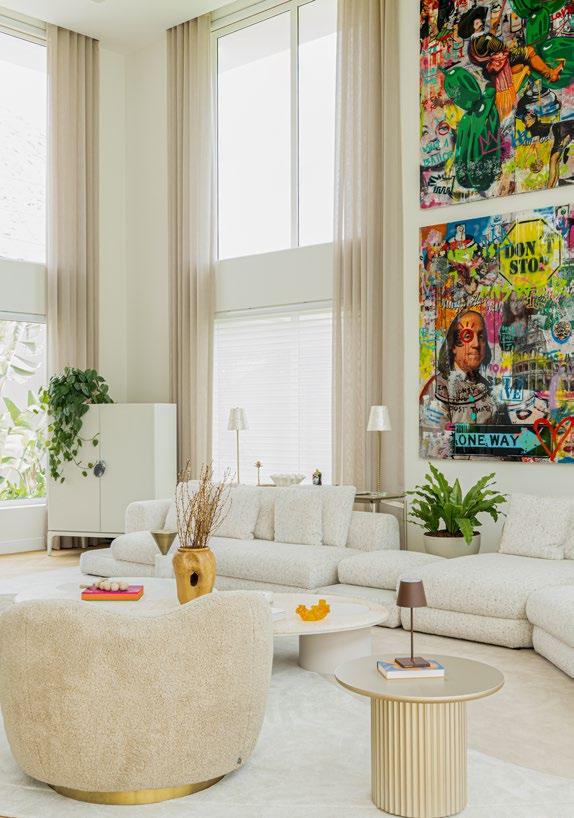
A refined family residence in Peru is transformed into an entertainment haven, with music in every room, concert-quality sound in the garden, and a cinema hidden behind acoustic doors.
When the owners of CASA SM first imagined their new home, their focus was on simplicity: good-quality music in key areas and a few practical smart features. But as the build took shape, so did their ambition. Room by room, the brief evolved into something far more sophisticated – a home built not just for daily comfort, but for unforgettable experiences.
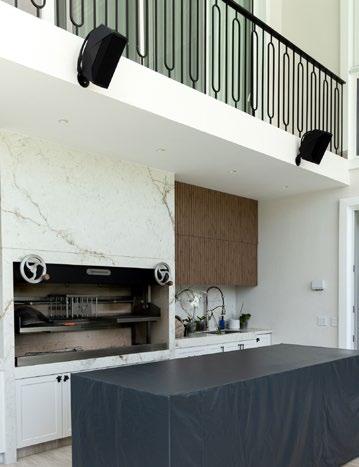
Lima Sound Contractors guided this transition with care. Working closely with interior designer, Gisela Buendia, they designed an entertainment system that feels completely invisible until it springs to life. There’s a fully calibrated home cinema tucked behind sealed acoustic doors, garden
speakers hidden among planters, and even subwoofers built into the terrace grill cabinetry.
Music flows throughout the house thanks to highperformance speakers from Meridian, Paradigm, and NEXO, while an ELAN control system makes it easy to set the perfect mood with lighting, climate, and audio. From quiet dinners to parties of more than 100 guests, the system adapts effortlessly.
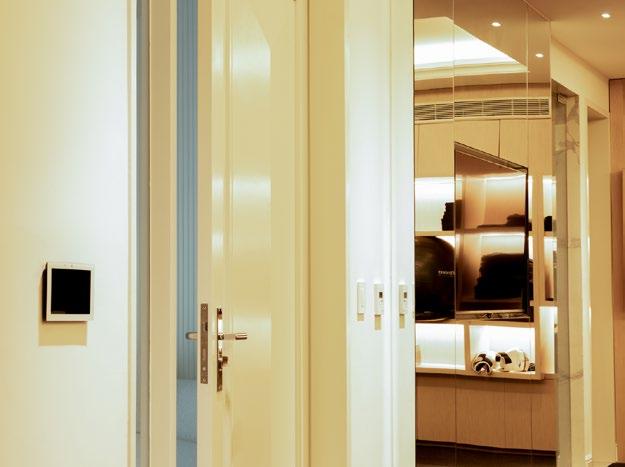
This is not a home that overwhelms with screens and controls. Touchpanels are discreet and well-placed, finishes are left uninterrupted, and no speaker ever competes with the architecture. It is an example of what’s possible when performance and design work together in harmony.
Lima Sound Contractors SAC
Project Riverside
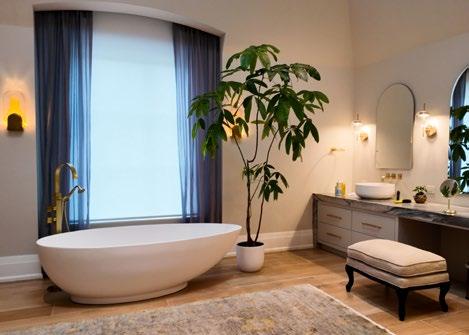
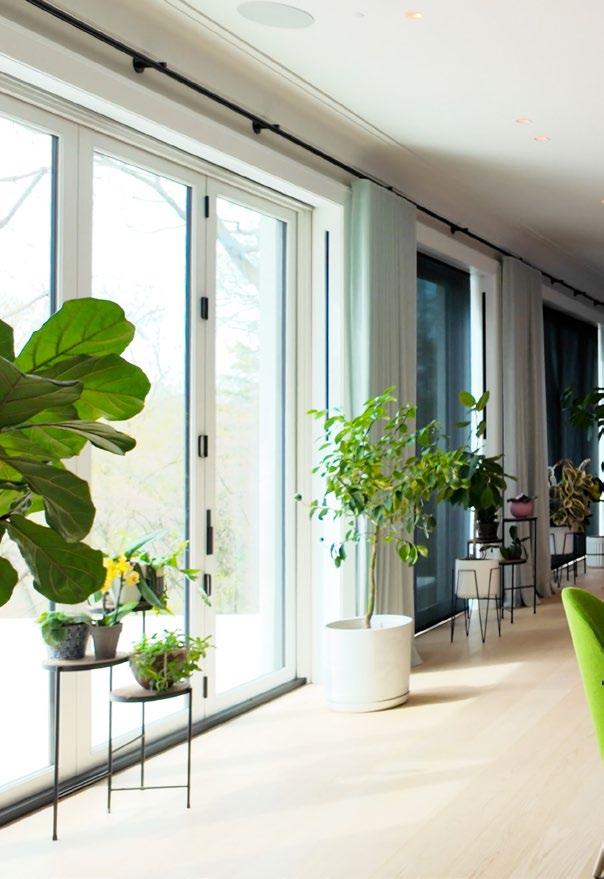
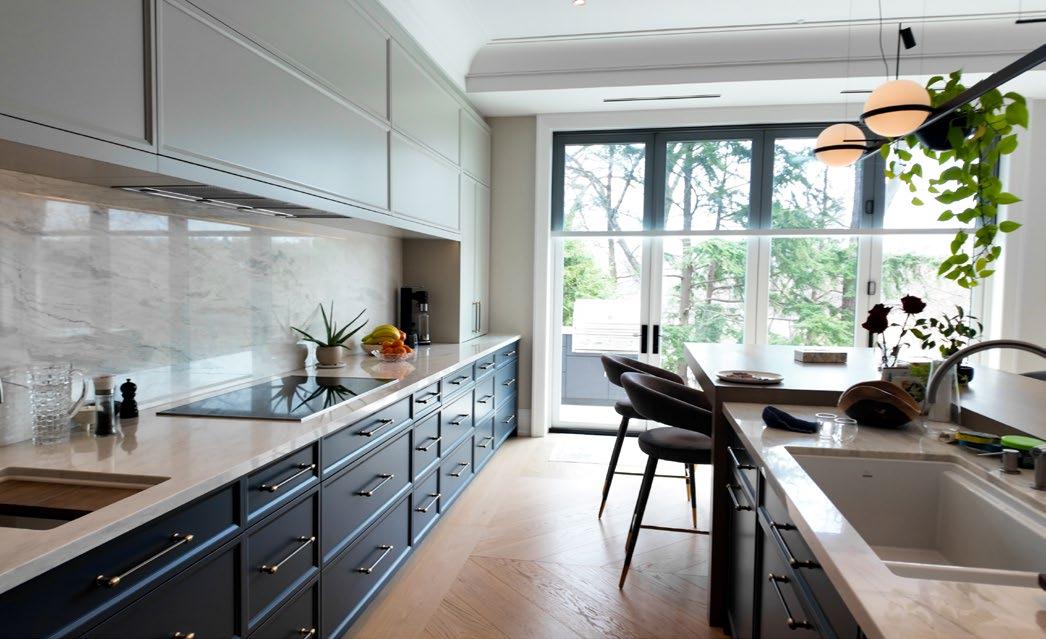
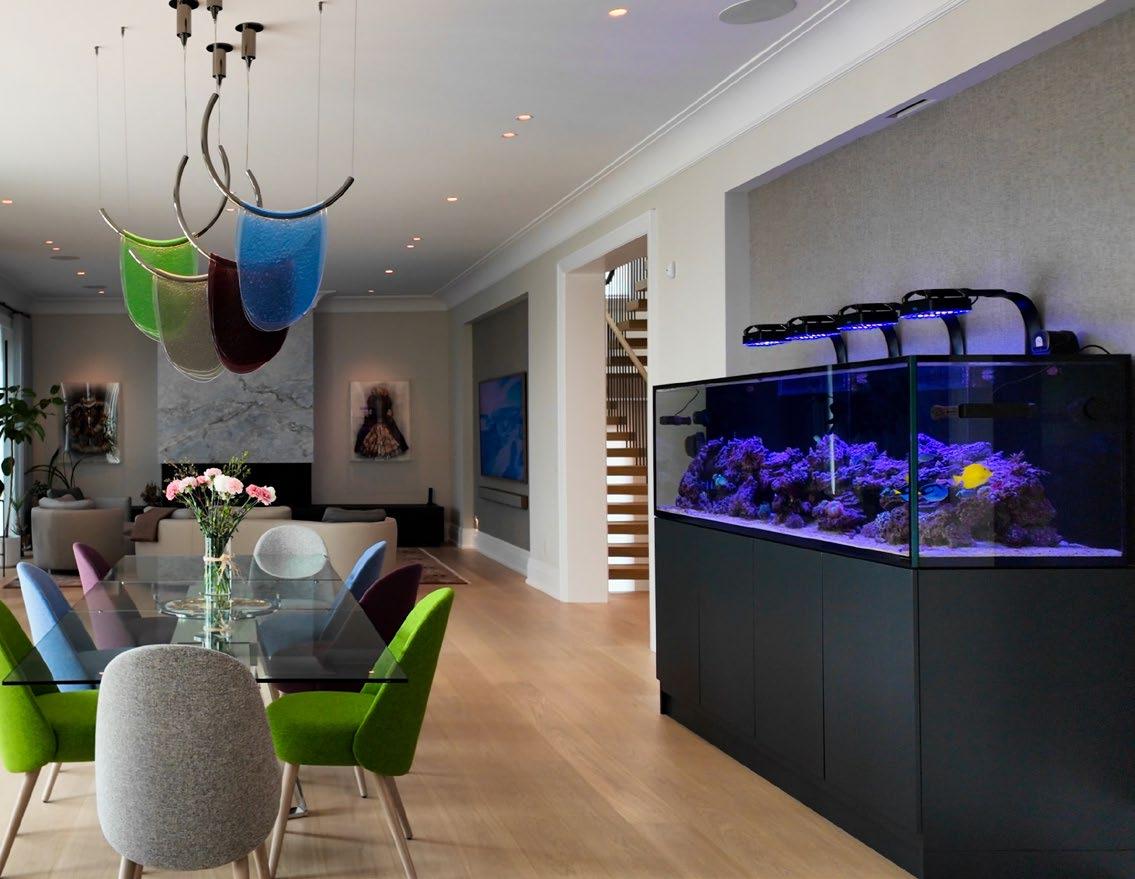
By combining thoughtful design with discreet technology, this riverside home in Canada offers a calm, connected lifestyle that adapts beautifully to its owners’ needs.
From the outside, Project Riverside presents as a calm and timeless home, surrounded by trees and flowing water. Inside, though, it quietly delivers one of the most personalized and thoughtful smart home experiences in the country.
Cloud 9 AV was brought in early to help the owners create a home that could manage lighting, comfort, security, and entertainment effortlessly. But the brief went further. One of the homeowners wanted a system that would work for the whole family, while also offering the flexibility to add features over time.
The team selected Control4 for its balance of elegance and personalization. It gave the owners an easy way to manage the home from touchscreens and phones, while also allowing one of them to experiment and customize when they wanted to.
The lighting and shading design was just as personal. Over 50 sleek glass keypads were installed throughout,
each one engraved with custom symbols instead of words. This made the system easier to use and far more beautiful on the wall.
Security and access were carefully considered. Instead of a standard smart lock, the family sourced a European door system that could be fully integrated without batteries. It works seamlessly through the home’s control system, with front-door video and alerts tied into the same app. Even the blinds and bug screens disappear into the design. They raise and lower automatically based on the time of day and season, or with the touch of a button when fresh air or privacy is needed.
At Project Riverside, technology never shouts. It supports. It blends in. And it helps the owners feel completely at home, whether they’re relaxing with family or making quiet adjustments behind the scenes.
Cloud 9 AV Inc
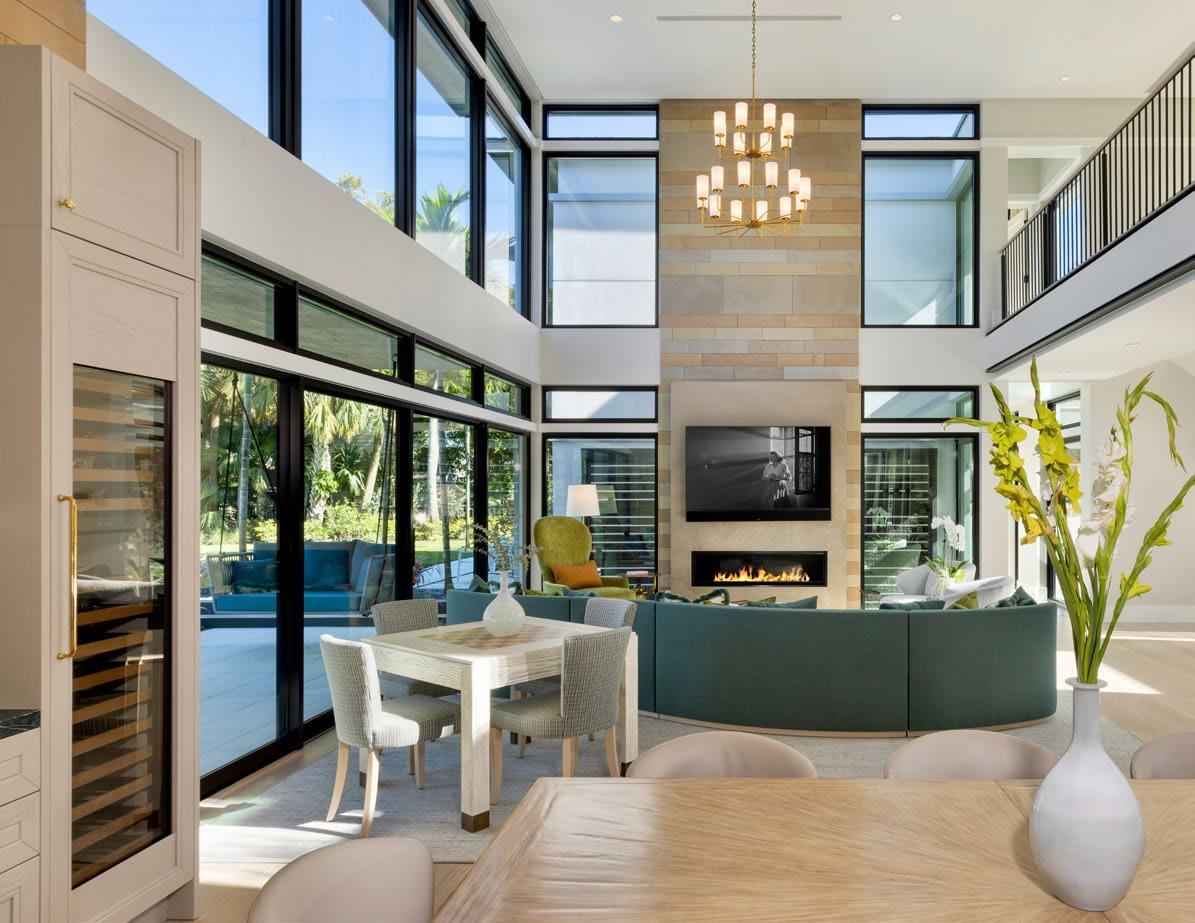
Golf
Course Getaway
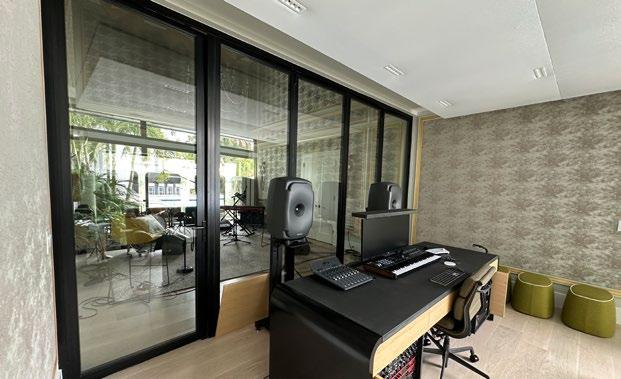
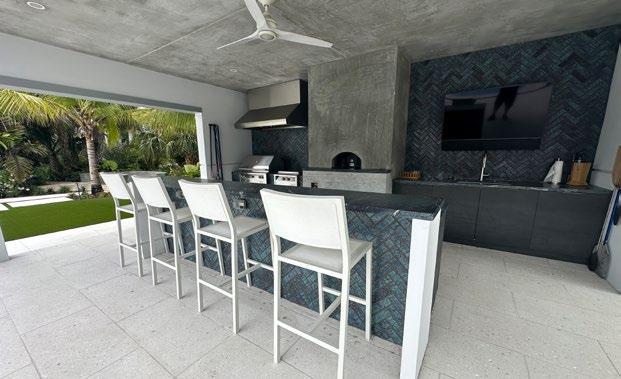
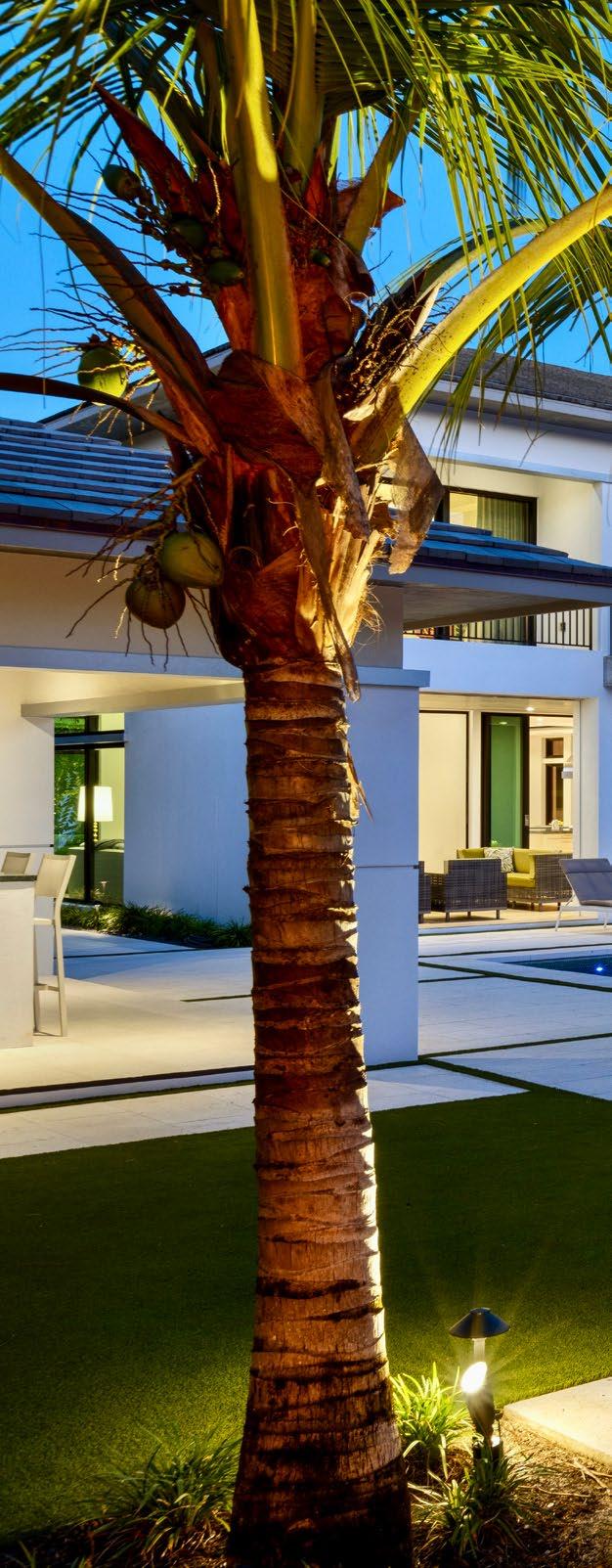
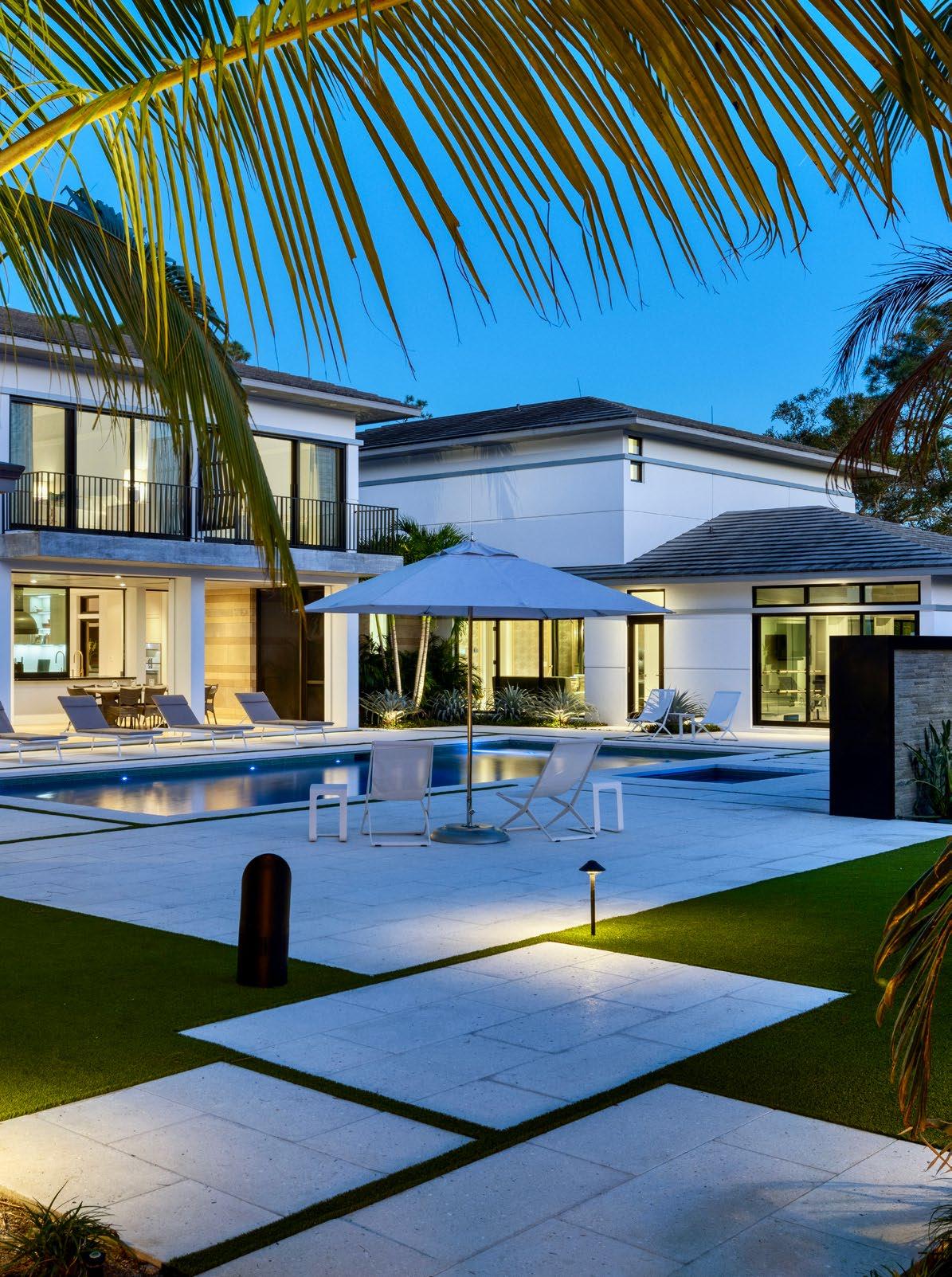
For the owners of this holiday home in Florida, simplicity wasn’t just a preference. It was a necessity. Their main residence in Chicago had left them wary of home technology altogether, after poor installation and constant troubleshooting. So when they set out to build their second home — a place to gather with extended family, entertain outdoors, and spend time in a recording studio — they wanted a different outcome.
They didn’t need bells and whistles. They needed technology that worked quietly in the background.
ETC was brought into the project through a builder they had worked with before, allowing for early collaboration and honest conversations. The clients were open about their hesitations, and the team responded by keeping the focus on comfort, ease of use, and a clean design.
One of the biggest challenges came in the media room, which had glass on nearly every wall. Rather than compromising the architecture, ETC used custom blackout shades that overlap slightly to ensure full coverage when lowered yet completely disappear into ceiling recesses when raised. The solution preserved both light and function.
Built for music, family, and food, this second home overcame early hesitation to deliver a smart system defined by comfort, control, and careful detailing.
Outdoors, the couple wanted a vibrant space for family meals and celebrations. ETC worked with the builder early to lay conduit that would connect outdoor lighting, speakers, and displays to the main control system. A chef’s kitchen, garden speakers, and a covered lanai all now operate with the same intuitive controls as the interior.
Even the owner’s music studio — designed separately — was brought into the system so he could control lighting and AV without needing to switch apps or remotes.
Some surprises emerged. A television mounted above a fireplace began cutting out. The problem was traced to excessive heat, which had cracked the stone and overheated the equipment. ETC worked with the builder to replace the fireplace with a cooler model and reinstall the TV with care.
There were other small setbacks: slow remotes, shading delays, and last-minute wiring tweaks. Each was handled with care, and the team remained on-site until every system worked perfectly.
Today, the Golf Course Getaway is exactly what it set out to be — a warm, calm, connected home that never overwhelms.
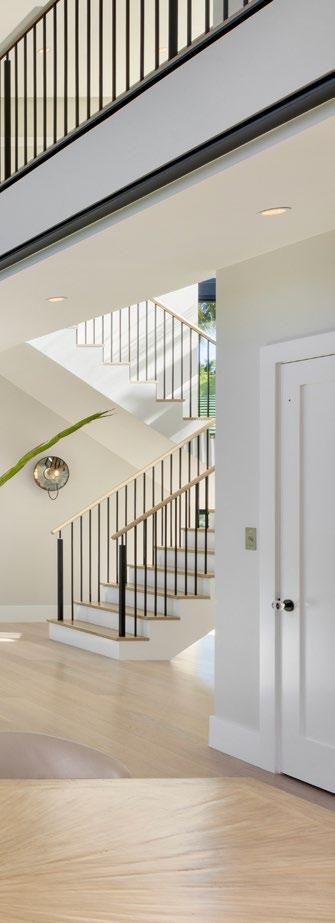
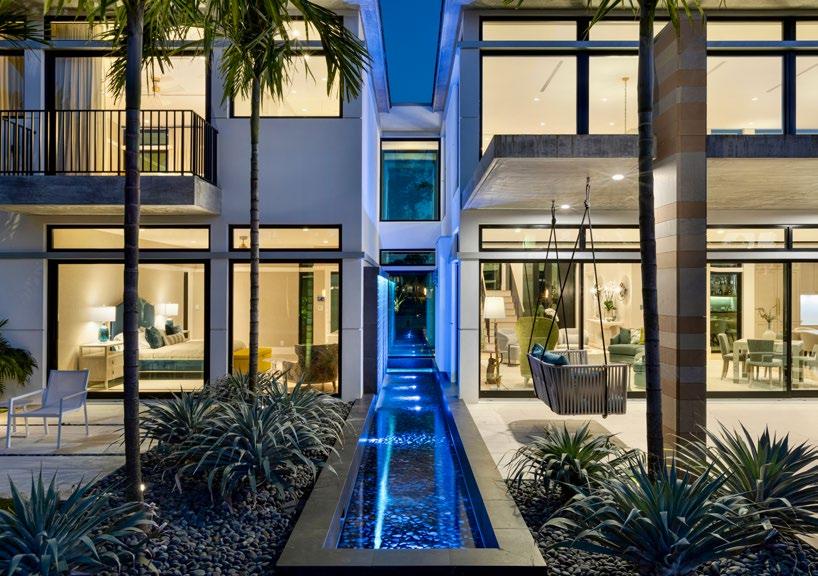
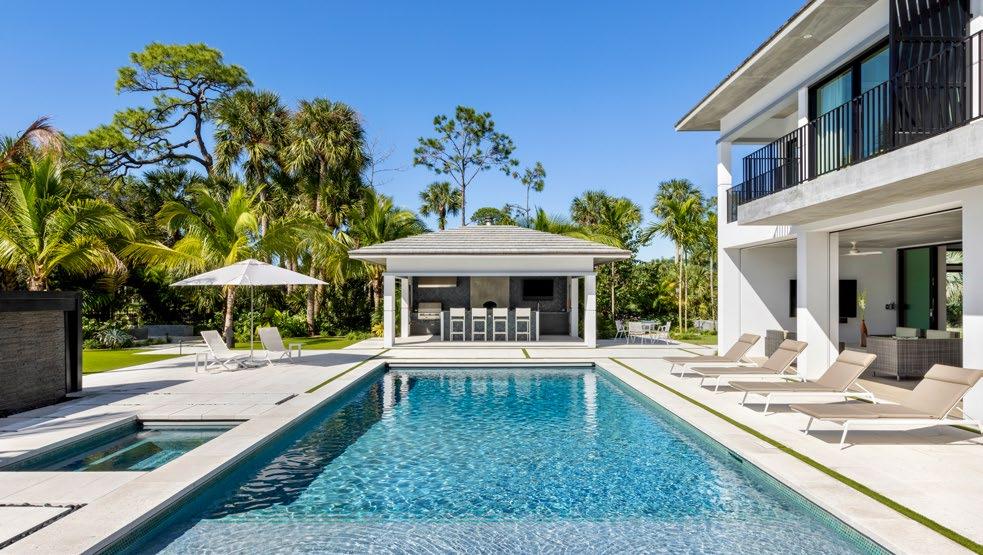
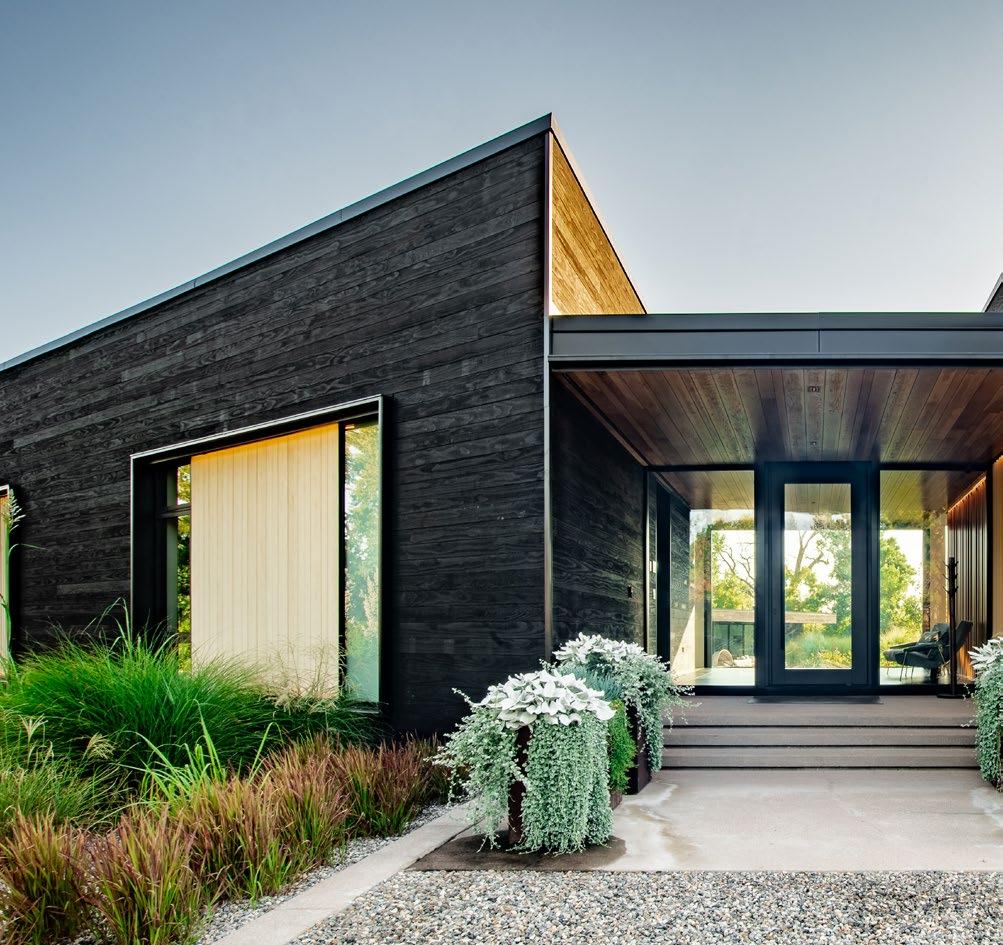
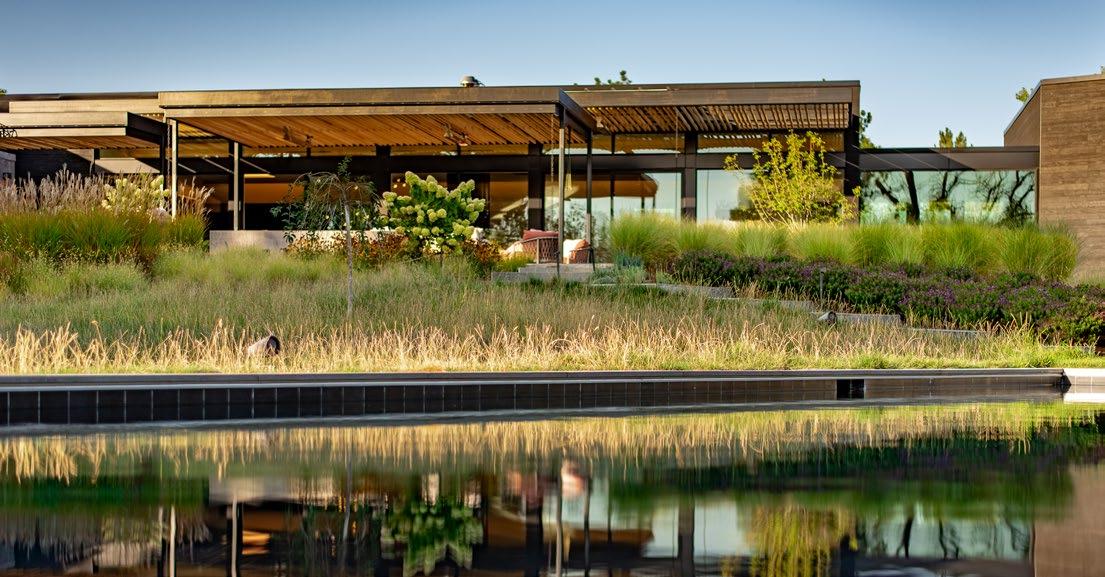
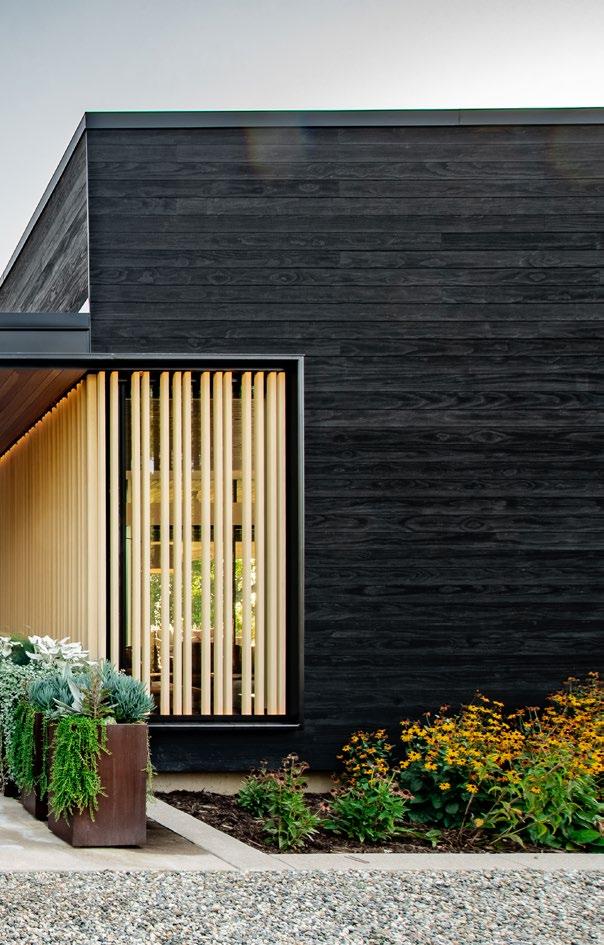
Japanese Architectural Masterpiece
Where quiet design meets quiet control, this serene estate delivers a full smart home experience without ever drawing attention to itself.
There is a calm precision to this home. Inspired by the principles of Japanese architecture, its rhythm lies in symmetry, stillness and restraint. But while its design feels effortless, the technology behind it is anything but simple. Logic Integration was asked to create a fully automated smart home experience that included lighting, shading, audio, video, HVAC, security, and access control — without disturbing the aesthetic clarity of the space.
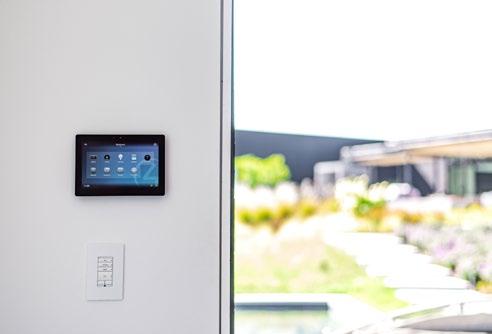
The client made their position clear from the outset: no visible clutter, no blinking lights, no wall acne. They wanted full control of the home, but never at the expense of design. To achieve this, Logic Integration selected Control4 as the primary platform, allowing all systems to operate under one interface. From lighting scenes to motorized shades, everything could be controlled via discreet touchpanels, custom keypads, and mobile devices. Interfaces were flush-set into walls and color-matched to finishes, giving them the visual weight of a light switch but the intelligence of an entire system.
Audio was distributed across the home using Origin Acoustics speakers, chosen for their ability to vanish into ceilings without sacrificing performance. Outdoors, the team installed 6.1 and 4.1 speaker arrays hidden within garden beds and hardscaping. A Binary 900 Series IP-based video system managed content distribution between AV sources and displays, reducing the need for bulky local hardware.
Shading was a key consideration. Screen Innovations motorized shades were recessed into ceilings, designed to lift silently and disappear when not needed. Lighting was a hybrid mix of panelized and localized Control4 dimming, using adaptive phase dimmers to handle a variety of loads. Each zone was programed with scenes based on the client’s routines — from gentle morning transitions to complete evening shutdowns.
The network backbone needed careful planning. The home’s materials, including concrete and steel, made standard Wi-Fi coverage nearly impossible. Logic Integration modeled a wireless heatmap and installed an Araknis network with access points placed to maintain high signal strength in every zone. The system was segmented to separate critical operations from guest traffic, protecting bandwidth, and ensuring stability.
Surveillance and access were equally refined. Luma cameras, automated locks, a Control4-connected garage, and discreet Ring Elite door stations gave the client peace of mind without disrupting the home’s façade.
The finished result is a residence that doesn’t just meet the brief — it elevates it. Sophisticated, silent, and deeply considered, it proves that true smart homes don’t need to announce themselves.







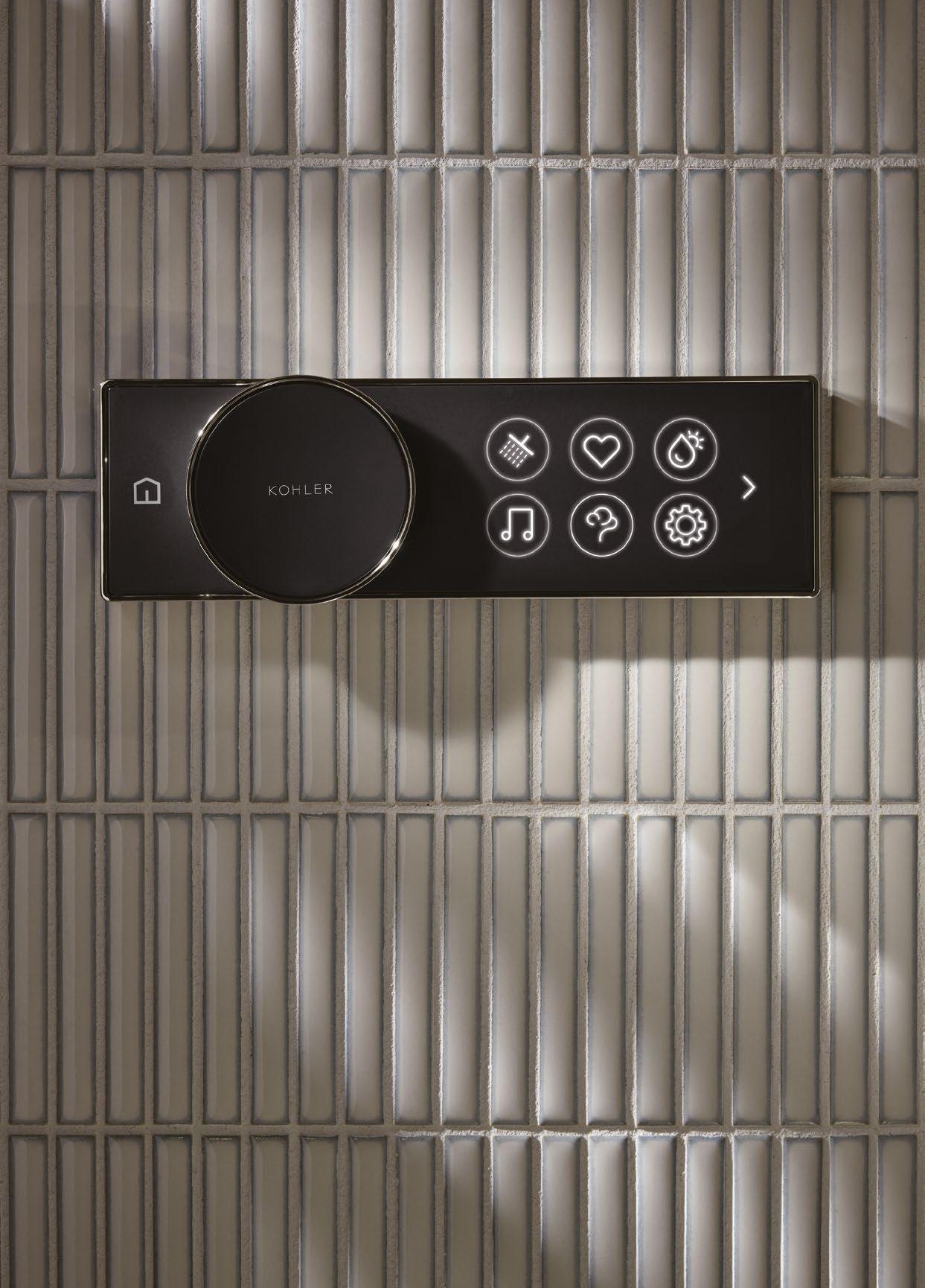
Anthem+™ Smart Showering Integrates With Control4

Before some of the most iconic smart home products became household names, Kohler began to transform showering with the precise operation and uncluttered look of digital controls. Now, the integration of Anthem+ Smart Showering with Control4 Smart Home System provides an even more connected, personalized, and immersive well-being experience.


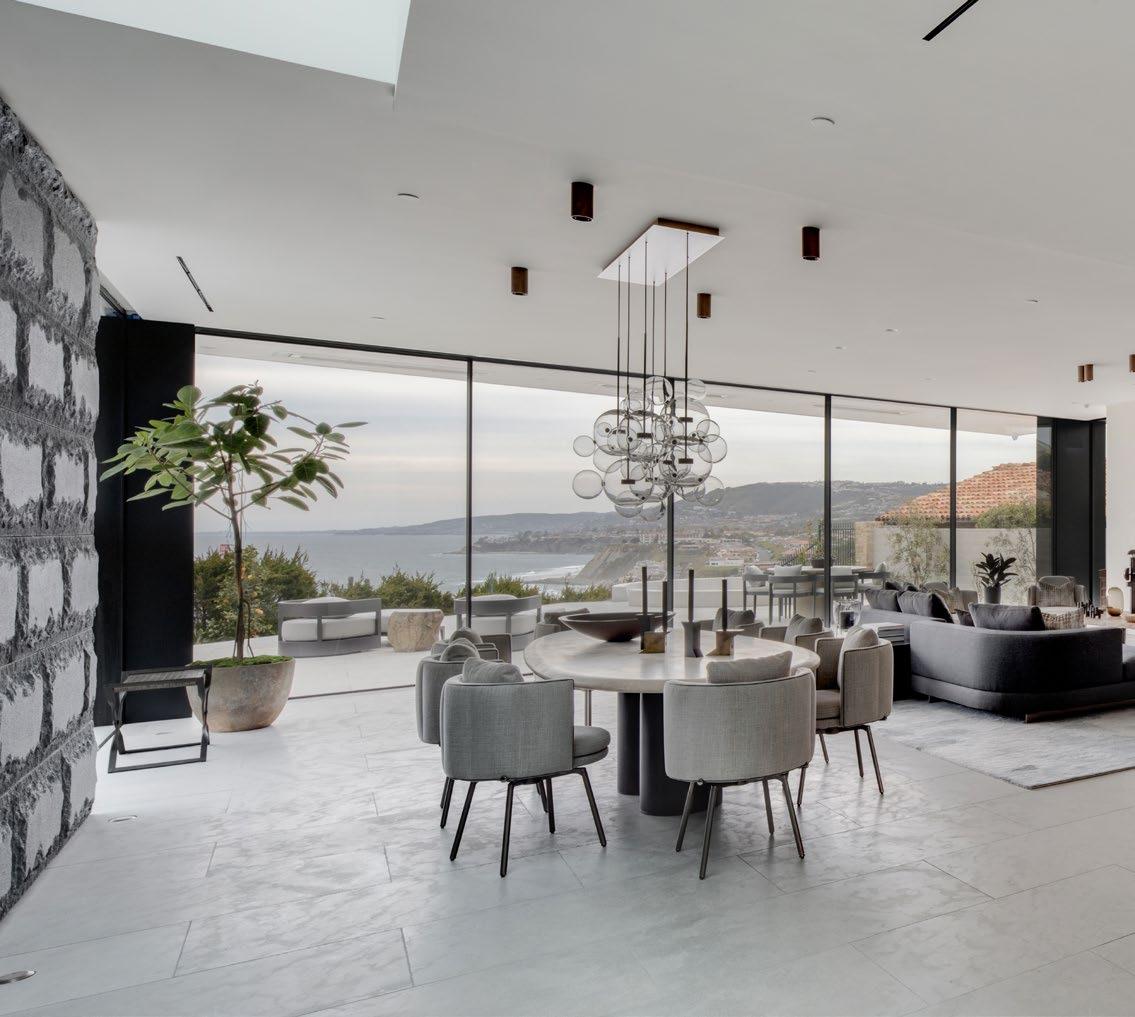
In this minimalist Californian retreat, voice control and hidden technology dissolve into the architecture, delivering a refined, intuitive living experience tailored for design-conscious empty nesters.
Hushed Horizon
Cantara
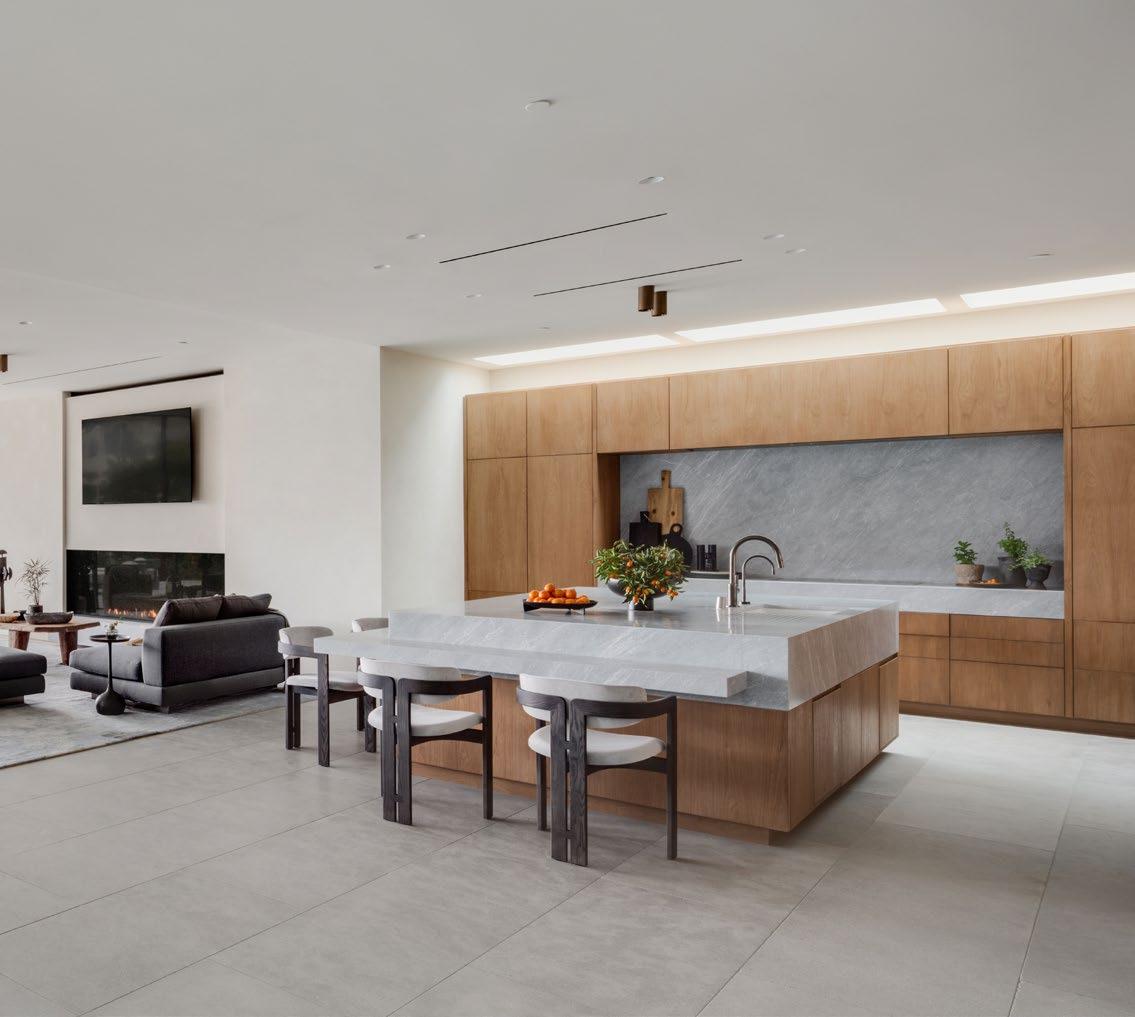
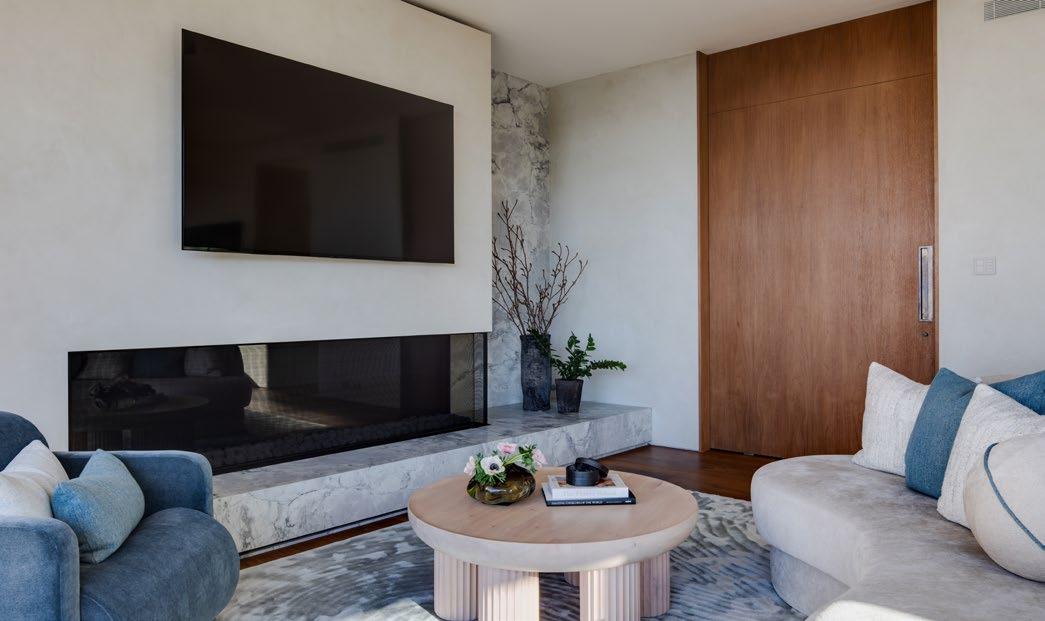
By the time construction began on Hushed Horizon, the owners were clear about what they didn’t want.
They had dealt with unreliable smart home systems before and were skeptical of over-promising technology. Their goal was simple: a home that felt intuitive and calm, with no visible tech and no frustration.
Working with integrator Cantara from the earliest planning stages, the couple had initially leaned towards off-the-shelf voice assistants in each room. But their expectations soon outgrew the limitations of consumer-grade devices. After a visit to the Josh.ai Beverly Hills experience center, they shifted course. The system’s contextual voice control — able to handle their strong English accents — felt like a natural fit.
From that moment, everything changed. Working in close collaboration with architect, CJ Light & Associates and interior designers,
Frank Berry Designs and Table Thirty Three, Cantara devised an automation strategy that elevated convenience while remaining architecturally discreet. The technology would be present in every room, but visible in none.
Invisible Sonance speakers were installed behind drywall, creating immersive multi-zone audio with no visible grilles. Motorized Lutron blinds were recessed into custom ceiling pockets. Ceiling microphones, nearly invisible, captured room-specific voice commands without disruption. Josh.ai responses were played back through the integrated speaker system — no pucks, no clutter — just a calm, omnipresent voice.
At the core, a Control4 system drives the logic. From synchronizing blackout shades and projection screen masking in the home cinema, to climate control and daily routines, the system adapts to the couple’s lifestyle. A dedicated equipment rack, hidden in the
basement, keeps all hardware out of sight and efficiently ventilated.
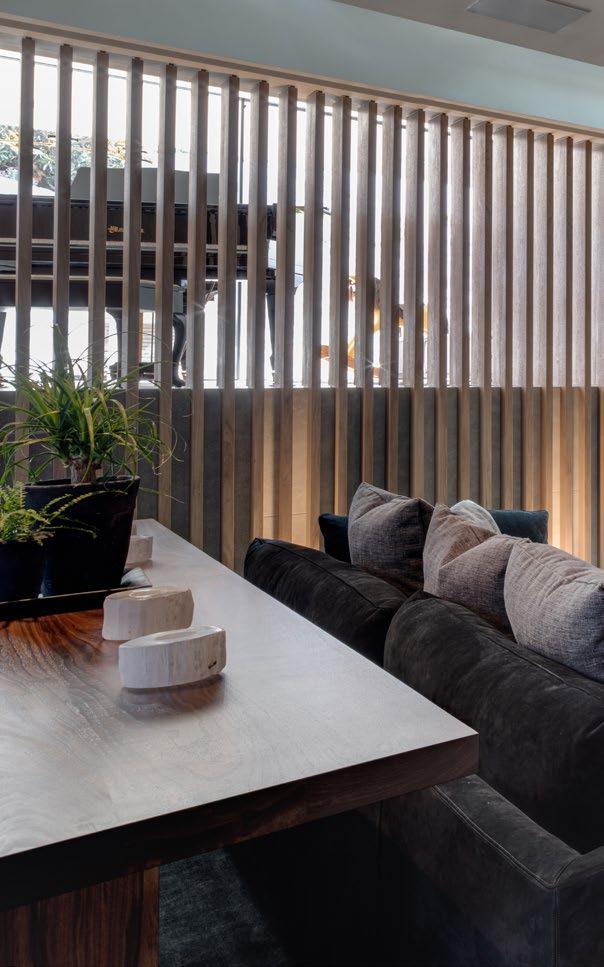
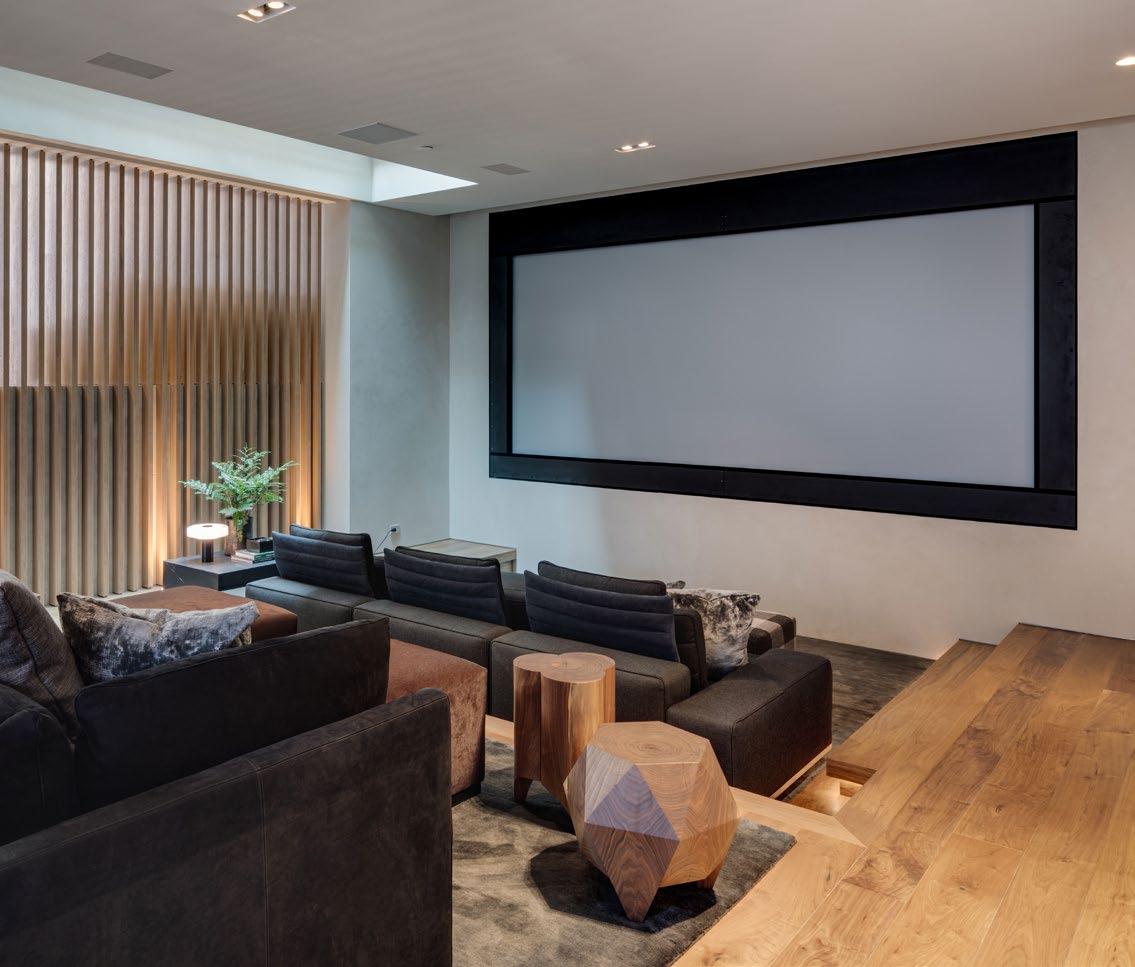
One of the project’s greatest design challenges was the cinema room. A full-length skylight, glass rear wall and slatted timber detailing complicated sound and light control. Cantara engineered a bespoke motorized blackout system that disappears when not in use, allowing the space to transition seamlessly between daylit lounge and pitchdark theater.
The result is a home where nothing is shouted. The experience is smooth, intuitive, and beautiful. Lights rise gently in the morning. Shades close with a word. Music follows from room to room. And the technology, once a source of stress, is now entirely silent.
Cantara
The homeowners finally experienced what they’d always hoped for — a smart home that simply worked, without making itself known.
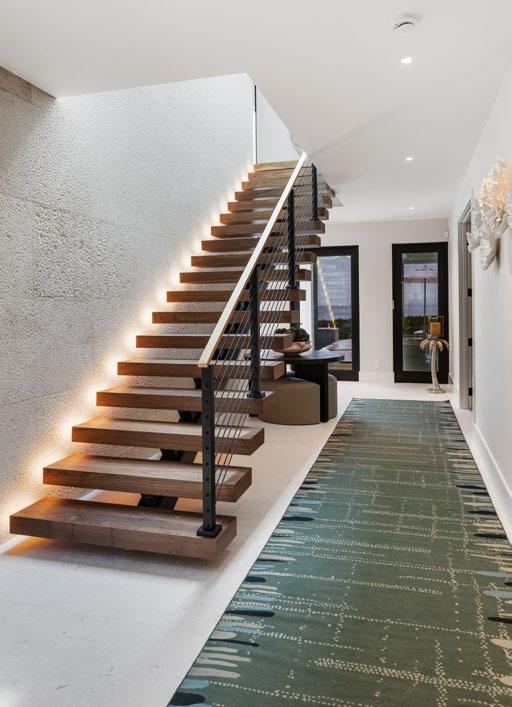
Oceanic Oasis
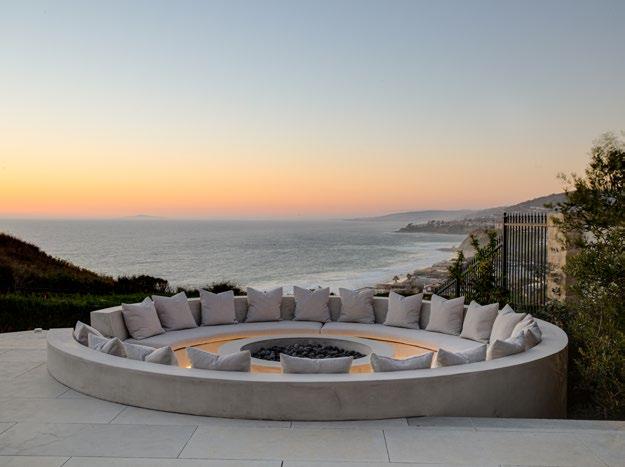
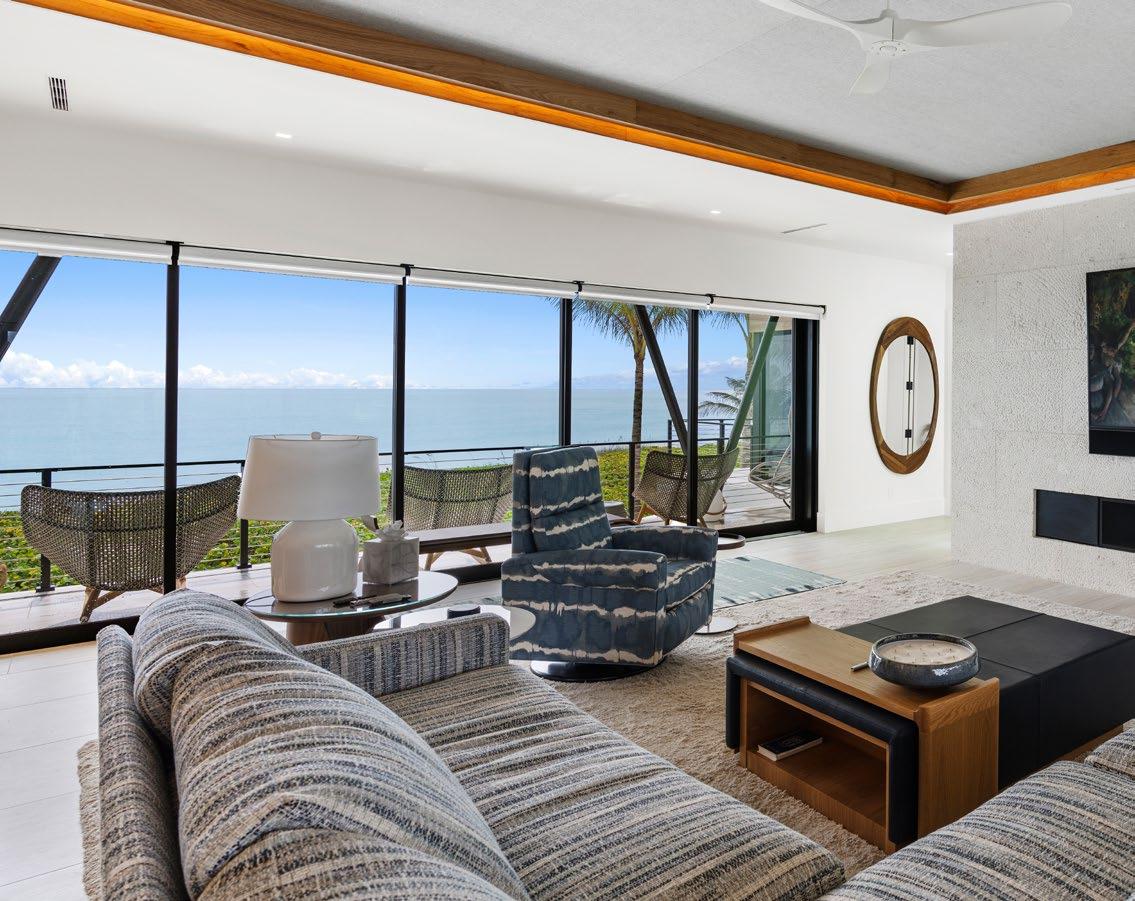
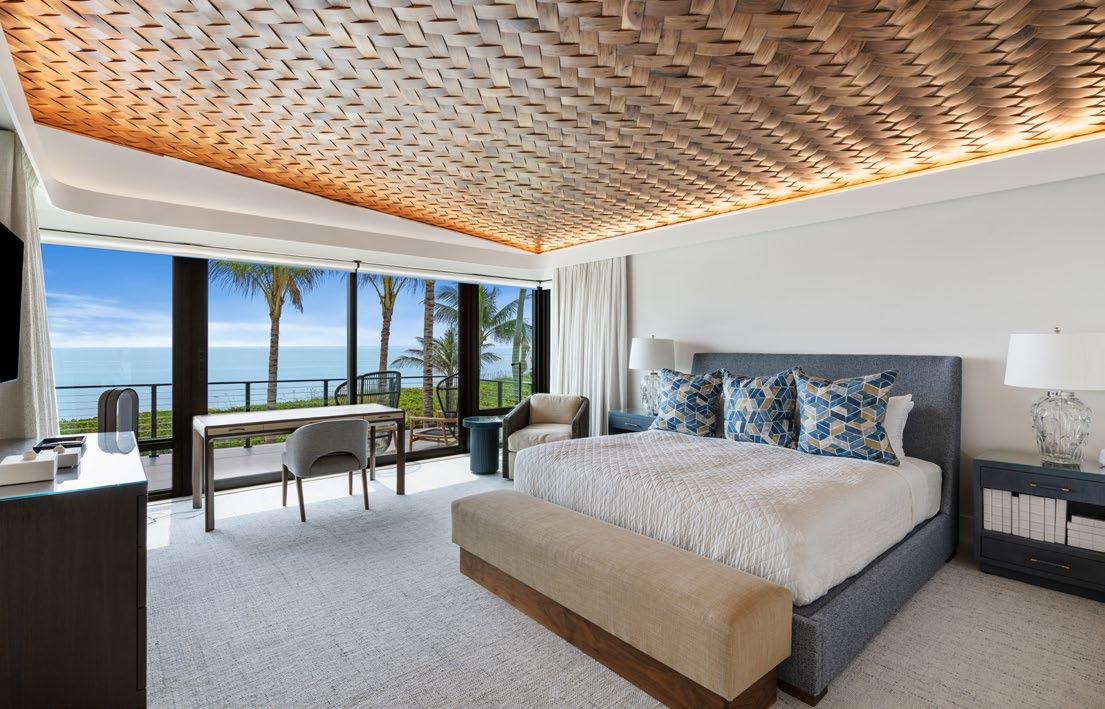
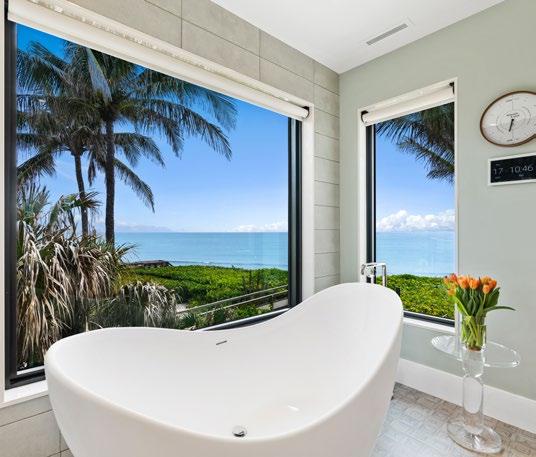
Built to host a beachfront wedding, this coastal smart home now serves as a serene, high-performance retreat for everyday living.
There are few briefs as emotionally charged — or as logistically strict — as designing a smart home around a wedding day. But that was the vision. The homeowner dreamed of exchanging vows in the comfort of her own beach house, surrounded by friends, family and the subtle, seamless experience of a fully integrated home.
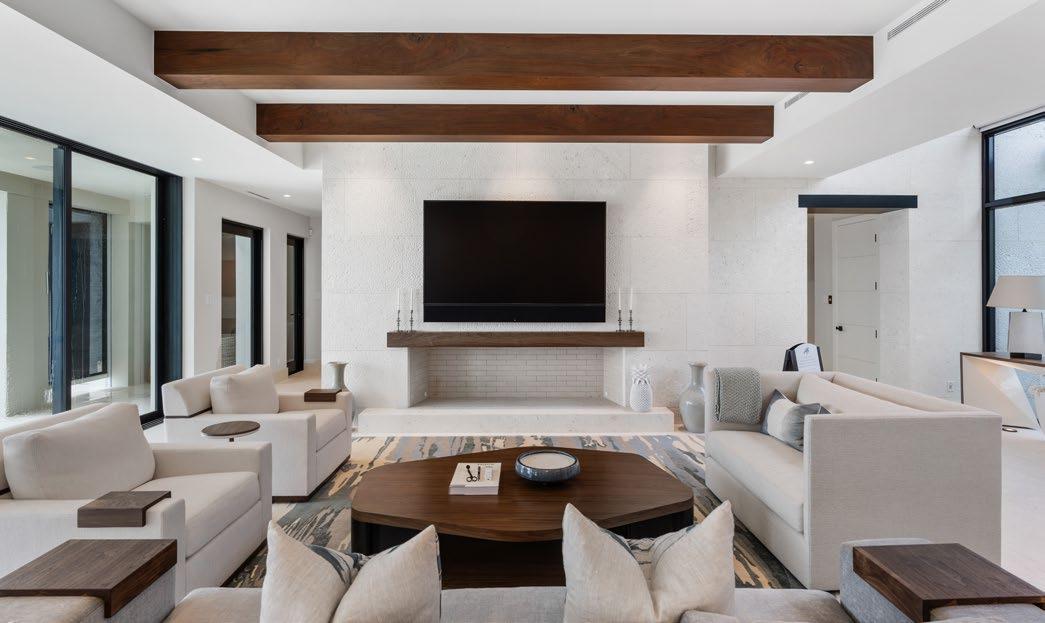
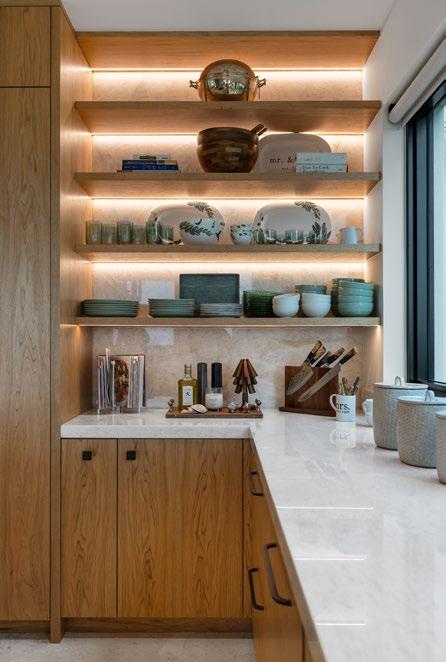
ETC was brought in from the very beginning, not just to supply equipment, but to help build the atmosphere of the home. Every element needed to feel intentional. Music needed to follow guests from room to terrace. Lights had to be gentle, flattering, and shift from daytime to evening without feeling staged. Shading, temperature, and comfort had to work without needing attention.
The homeowner worked closely with the team to develop custom lighting and music scenes for the big day, with buttons engraved on sleek wall keypads — First Dance, Cocktail Hour, Reception — each triggering a carefully balanced mix of ambience and sound. A Control4 system allowed guests and hosts alike to operate everything
without needing an instruction manual.
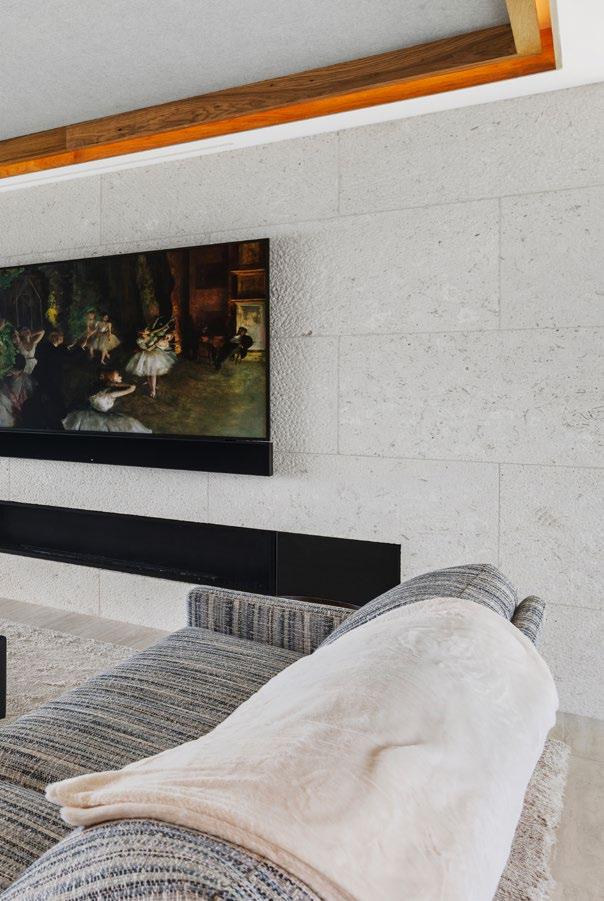
Just weeks before the wedding, the homeowner made a last-minute request to add video to several spaces. ETC reworked the design quickly, adding the required technology without affecting the schedule or compromising the clean visual aesthetic. They also backed up her entire music library locally, just in case internet access failed on the day.
In the final week, ETC carried out a full system test. Dozens of devices were connected simultaneously, lights and music ran on rotation, and the home was pushed to its limits. The system passed every check. A technician stayed on-site during the wedding to ensure nothing interrupted the experience.
After the wedding, the team returned to re-engrave the keypads. Gone were First Dance and Reception. In their place: Sunrise. Dinner, and Evening Wind Down. A home designed for one incredible day had quietly stepped into its next chapter.
ETC Florida
ETC Florida
Oceanic Oasis
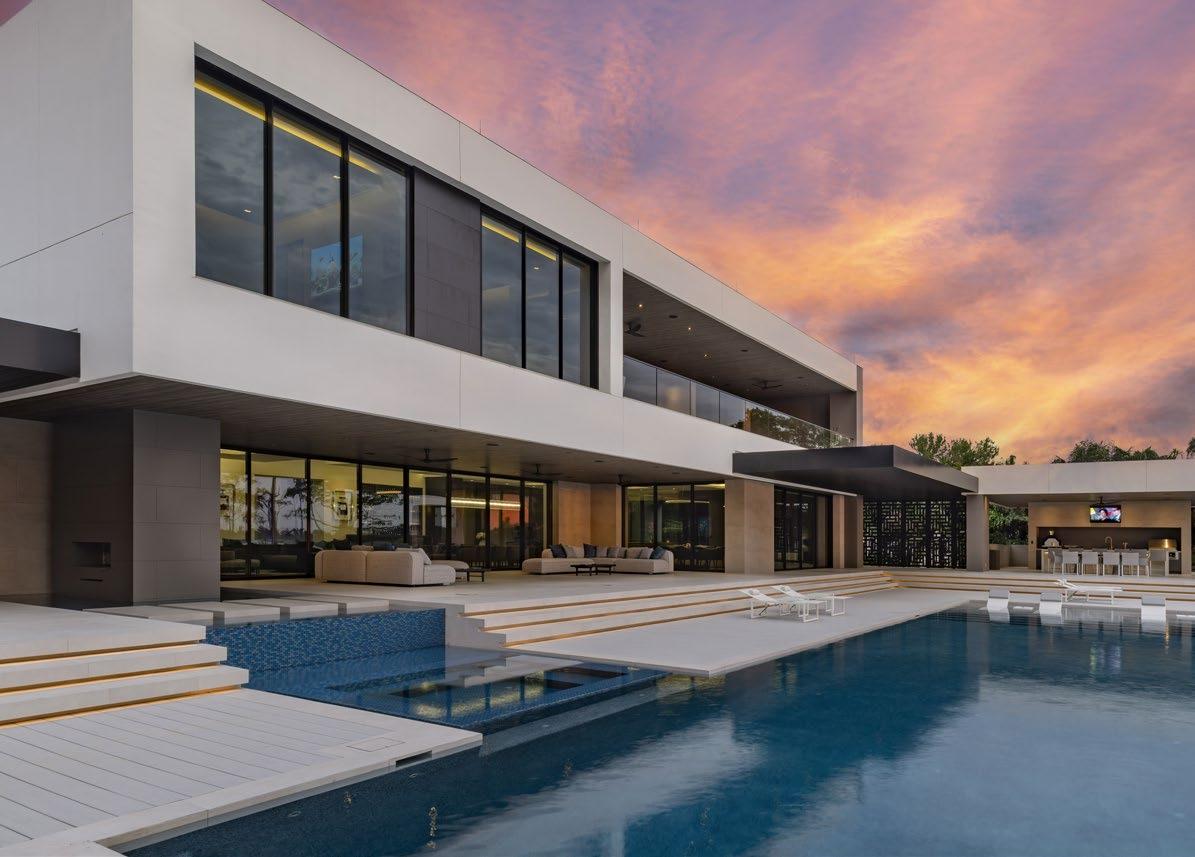
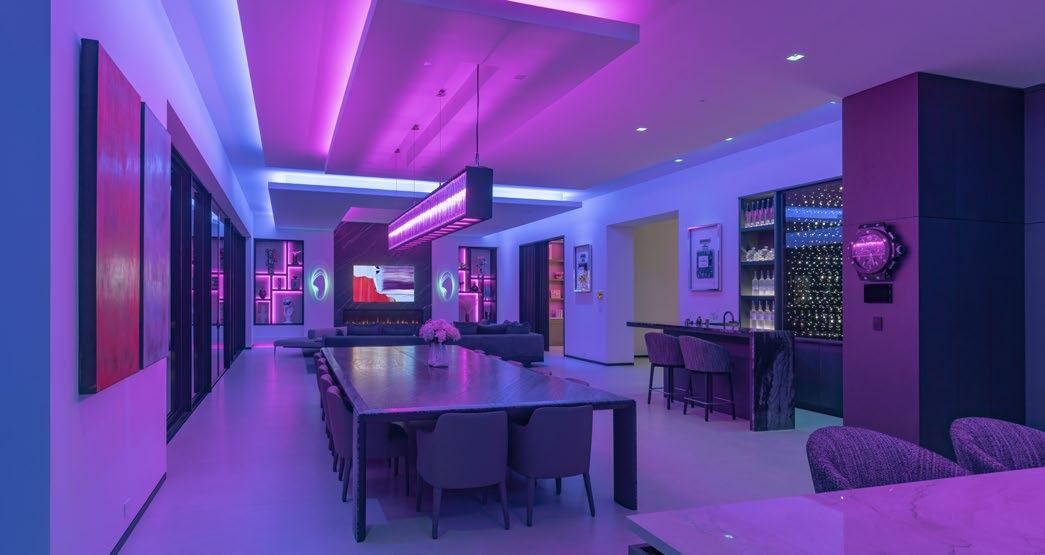
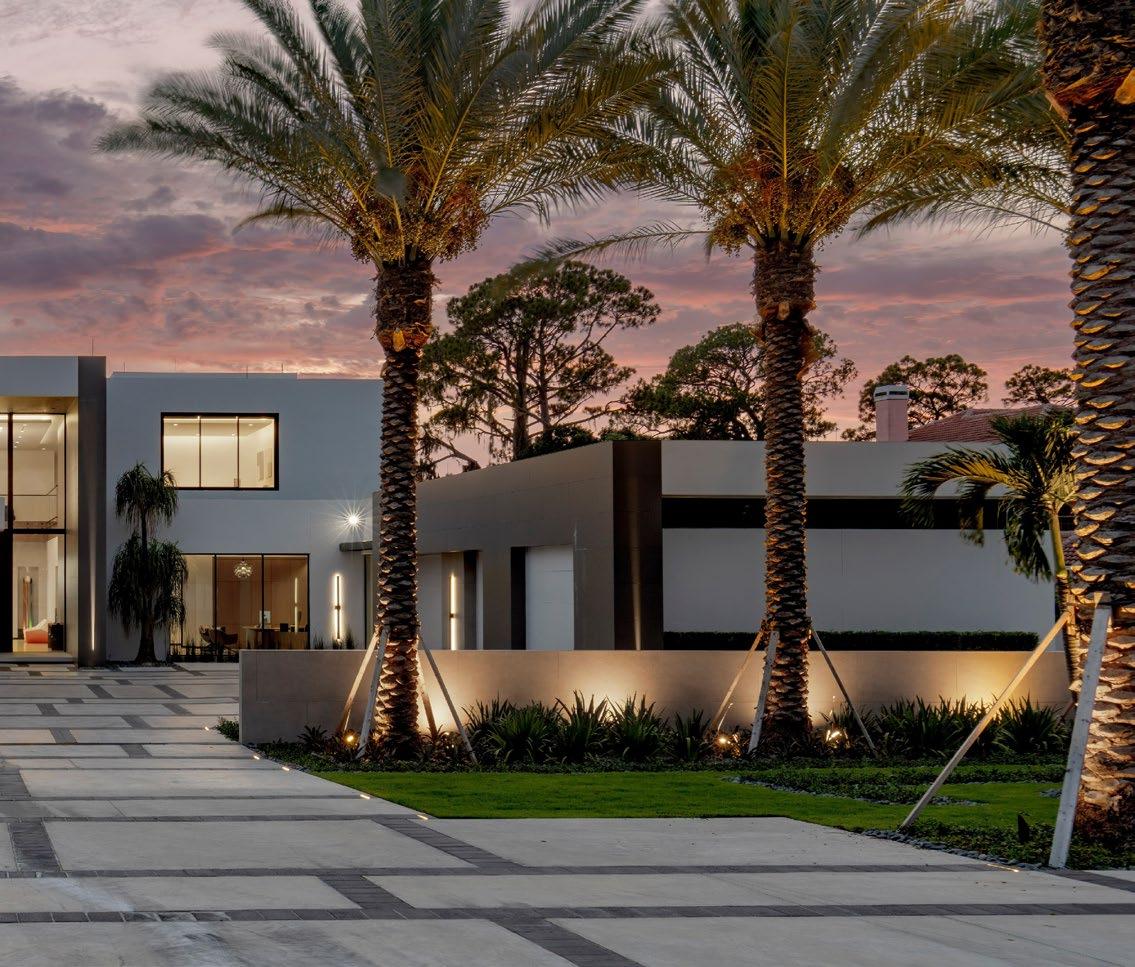
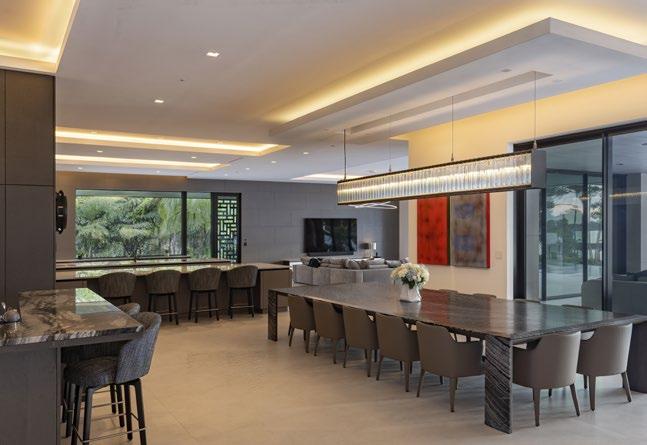
Modern Lakefront Intelligent Estate
This lakeside smart home was designed to feel effortless, where lighting shapes every space and technology responds to your voice alone.
This modern lakefront home in the United States began with a vision grounded in restraint. The client wanted the best in home technology, but insisted it be invisible. Every edge had to be clean. No clutter. No distractions. Just balance between light, form, and comfort.
Integrator, ZIO, became involved early, supporting the family’s existing home while planning was underway for the new one. That trust laid the foundation for what would become a six-year collaboration involving 130 design changes, extensive coordination with trades, and a pandemic that challenged progress at every turn.
Throughout, the architectural intent remained the guide. Spaces flow openly, shaped not by walls but by light. Cove lighting, built seamlessly into ceiling details, became the defining feature of each room. With input from the architect and interior designer, ZIO specified trimless, square fixtures and flush-mounted speakers to maintain the clean ceiling lines. Voice control was essential. The homeowner wanted to walk into a room and say what they needed. Josh.ai enabled that, letting them adjust lighting, shades, and entertainment without lifting a remote. Control4 unified the experience
behind the scenes, drawing together audio, climate, and security into a single, accessible system.
Lighting scenes were thoughtfully layered throughout the home. Soft glows mark the transition from day to evening. In shelving units designed for both the living room and main bedroom, concealed linear fixtures provide depth without visibility. Every controller and cable is hidden. Every light is serviceable, but unseen.
The project was not without its complications. Ceiling details evolved over time, requiring continual redesign. Shade pockets had to be rebuilt and repositioned, sometimes more than once. But the team remained focused on the outcome, working closely with the builder and joiner to ensure every element fitted the wider narrative.
What emerged is a home that feels composed and calming. There are no keypads shouting for attention, no racks of switches or wall clutter. The technology doesn’t interrupt. It responds.
The homeowner’s experience is now fluid and immediate. Lights rise and fall with voice cues. Music follows them through each space. And when they need to disconnect, the home fades into stillness just as easily.

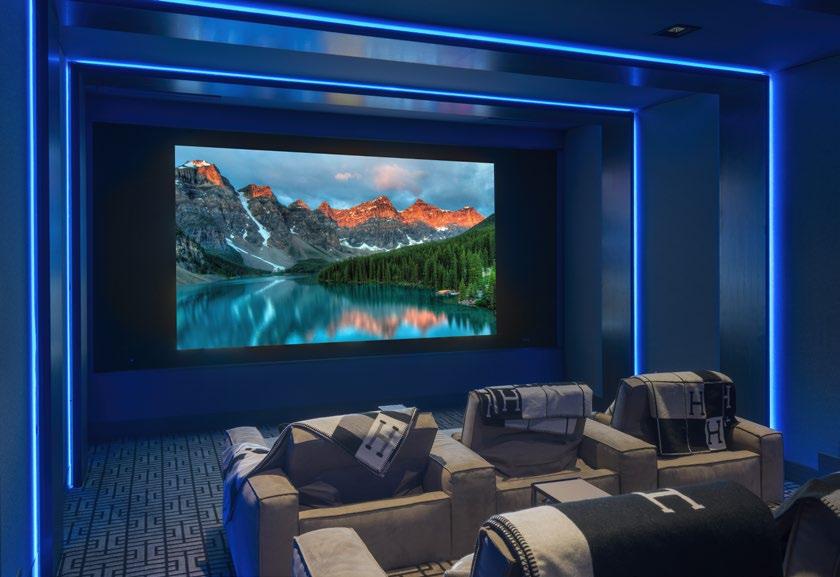
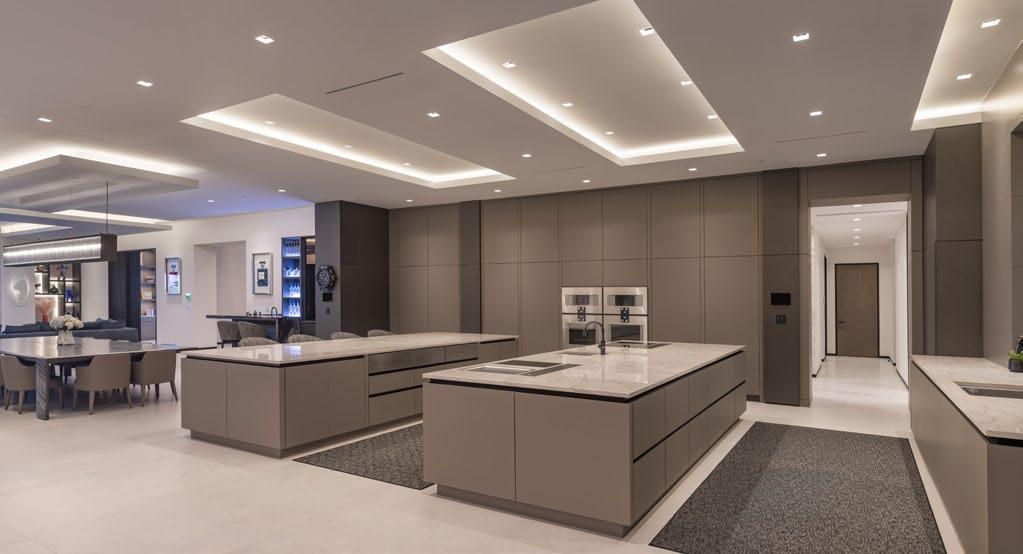
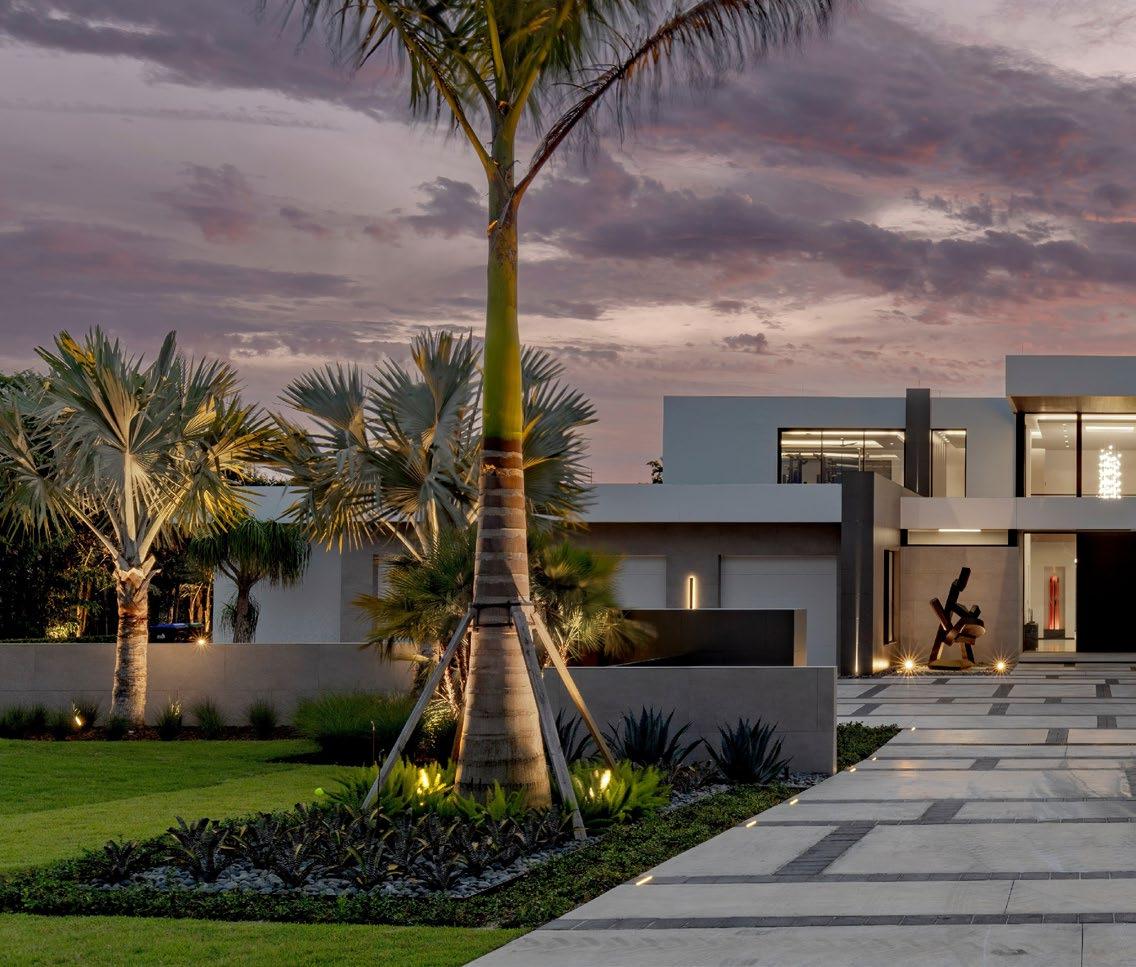
Modern Lakefront Intelligent Estate
Technology was never treated as an afterthought. It’s part of the architecture.
ZIO Group, LLC
La Plata Residence
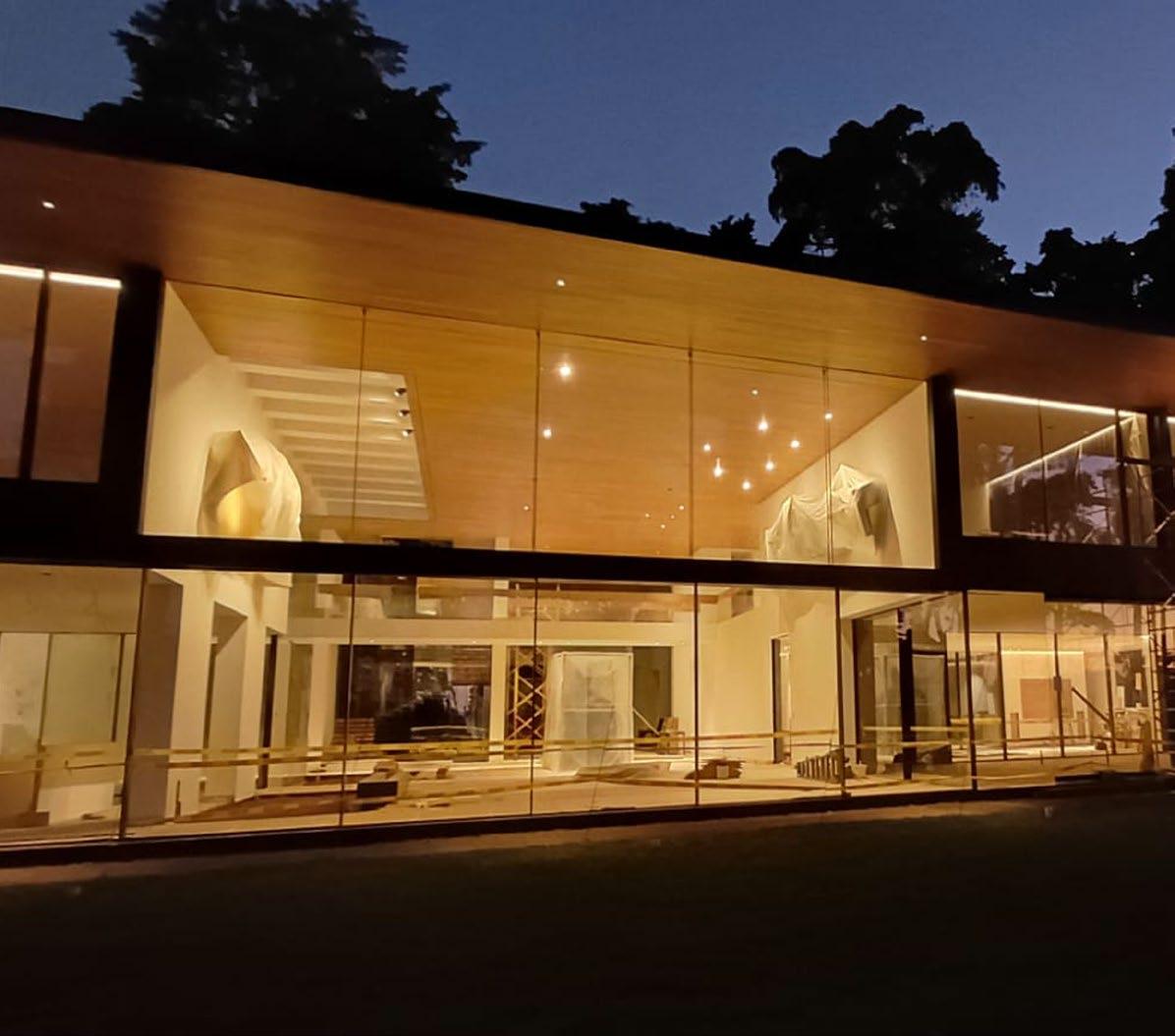
This Guatemalan residence blends minimalist architecture with thoughtful automation, creating a calm, intuitive environment that adapts to its owners rather than the other way around. AKTIVA
The owner of La Plata Residence wanted a home that would take care of itself. Not flashy or overwhelming, just smart where it mattered. From their first meeting, AKTIVA understood the assignment — to create a place that felt calm and natural, with technology that responded quietly to everyday life.
Comfort was key. Lights that shift with the time of day. Shades that know when the sun is too strong. Music that follows you through the house. A gentle breeze, brought in through motorized windows when the temperature rises. All of it controlled from a single app or keypad, but mostly just happening on its own.
The team also delivered peace of mind. Security features like cameras, facial recognition, and fingerprint entry were included, but carefully tucked away so they never made the home feel cold or clinical. Audio was treated with the same respect. Speakers were hidden in ceilings or completely out of sight, filling the home with sound without disturbing the interior.
Everything was planned down to the smallest detail. From wiring and controls to how each room would feel at different times of day. AKTIVA worked closely with the designers and builders to make sure the technology didn’t take over the space — it simply supported it.
After three years of construction and careful planning, La Plata is ready for its family. A home that runs smoothly, feels quiet, and makes everyday life a little more enjoyable.

Why Early Contractor Involvement Matters in Smart Home Projects
Inviting a smart home professional into the design conversation from the beginning of a project, can mean the difference between seamless living and costly compromises.

In residential projects, the design stage is where the DNA of a home is set.
Architects sketch out proportions, interior designers shape the material palette, and builders prepare the path to delivery. Yet when it comes to technology integration, many projects still treat it as an afterthought. The result is often compromised design, added costs, and systems that fall short of client expectations.
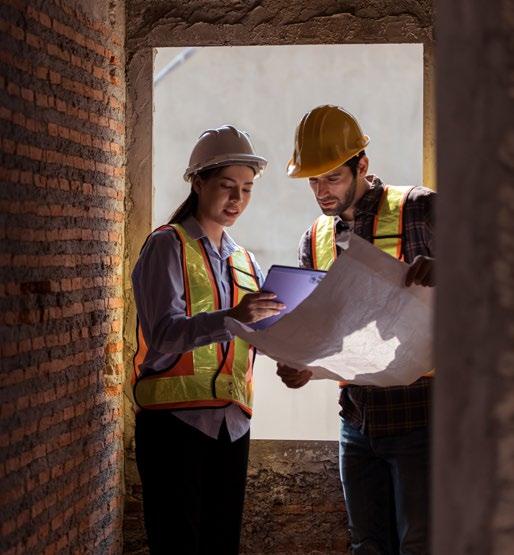
Early contractor involvement (ECI) places the smart home professional at the table from the outset. This ensures that lighting control, audiovisual systems, security, shading, networking, and environmental controls are woven seamlessly into the architecture rather than forced in later. An integrator’s role is not simply about recommending products but aligning technology with the way a client will use their home, all while protecting the architect’s and designer’s vision.
One of the most overlooked aspects of smart homes is the infrastructure. Cable runs, ventilation for racks, equipment access, and power provision must be planned into the fabric of the build. Without the integrator’s input, critical pathways may be blocked by structural beams, ceiling coffers or cabinetry. Retrofitting these later often means ripping open walls, incurring unnecessary costs and risking delays.

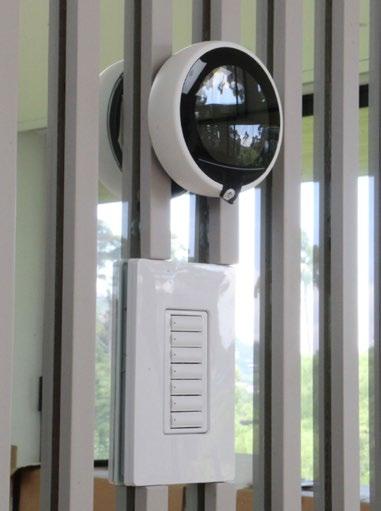
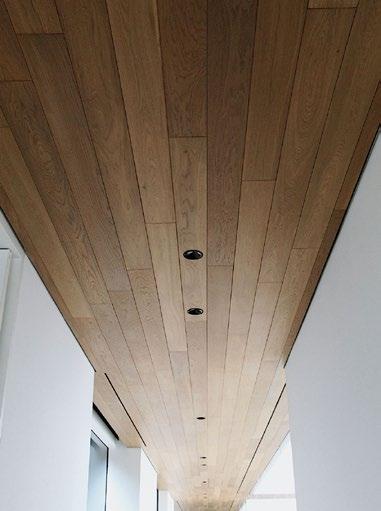
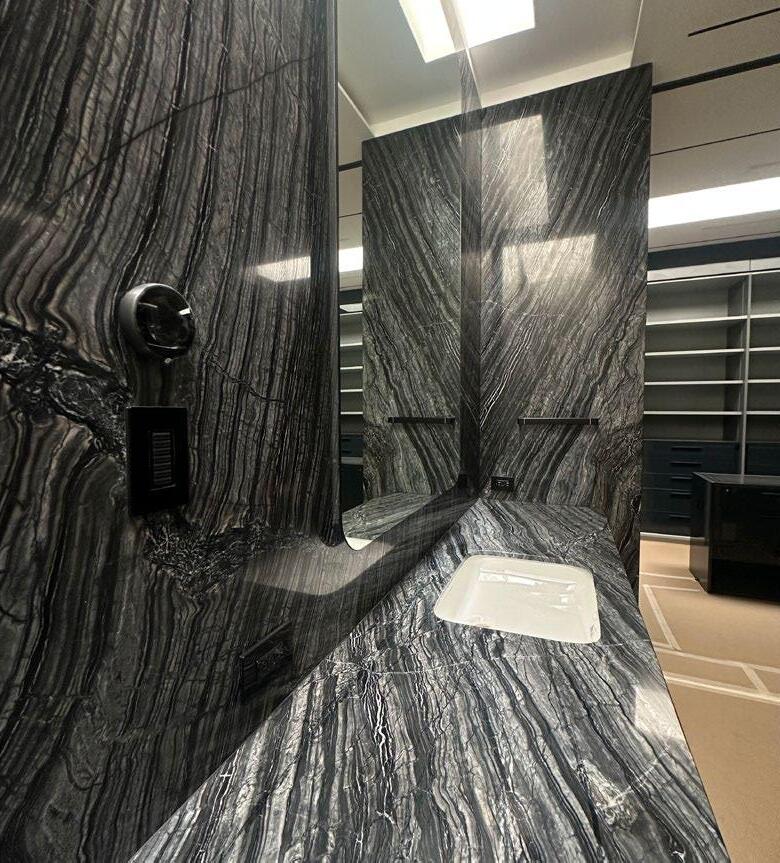
There are also aesthetic consequences. Without early coordination, homeowners may end up with visible switches where a flush, discreet solution could have been used. Loudspeakers might clash with carefully chosen finishes if speaker cutouts are decided after installation. Even the placement of lighting fixtures and shading pockets needs technology input to ensure control systems operate as intended.
From a performance perspective, poor planning can compromise acoustic treatments, ventilation, and sightlines in media rooms or home theaters. A system that looks impressive on paper may underperform simply because critical design decisions were made before the integrator’s involvement.
By contrast, when integrators collaborate with architects, designers and the build community early, every element is considered holistically. The result is a home where technology enhances rather than interrupts the design, and where the client enjoys intuitive control without compromise.
In today’s market, homeowners expect both style and substance. Engaging a smart home professional early is the surest way to deliver both, ensuring the finished home is as intelligent as it is beautiful.











Technology Meets Design
The best of Single Room Solution
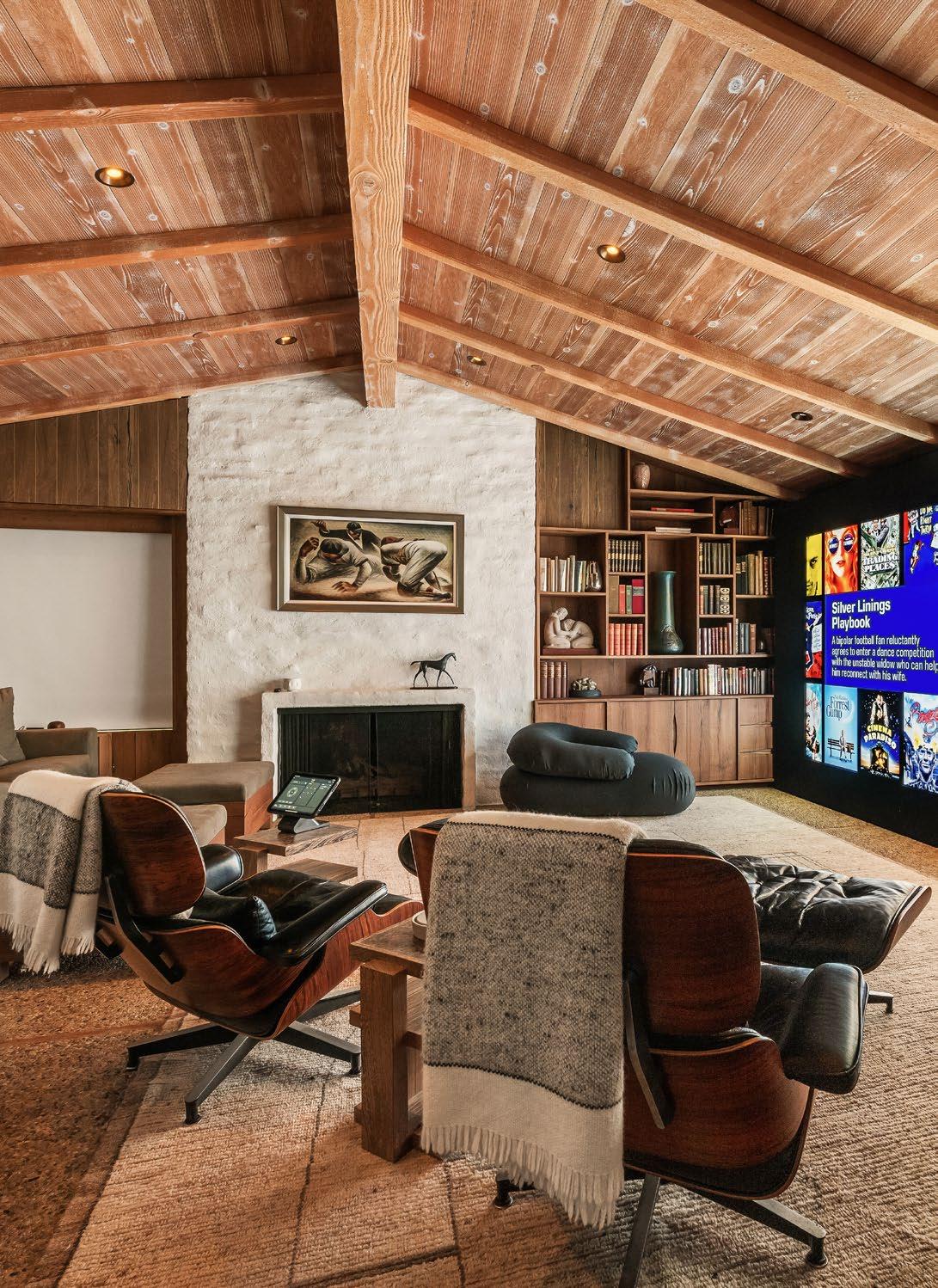
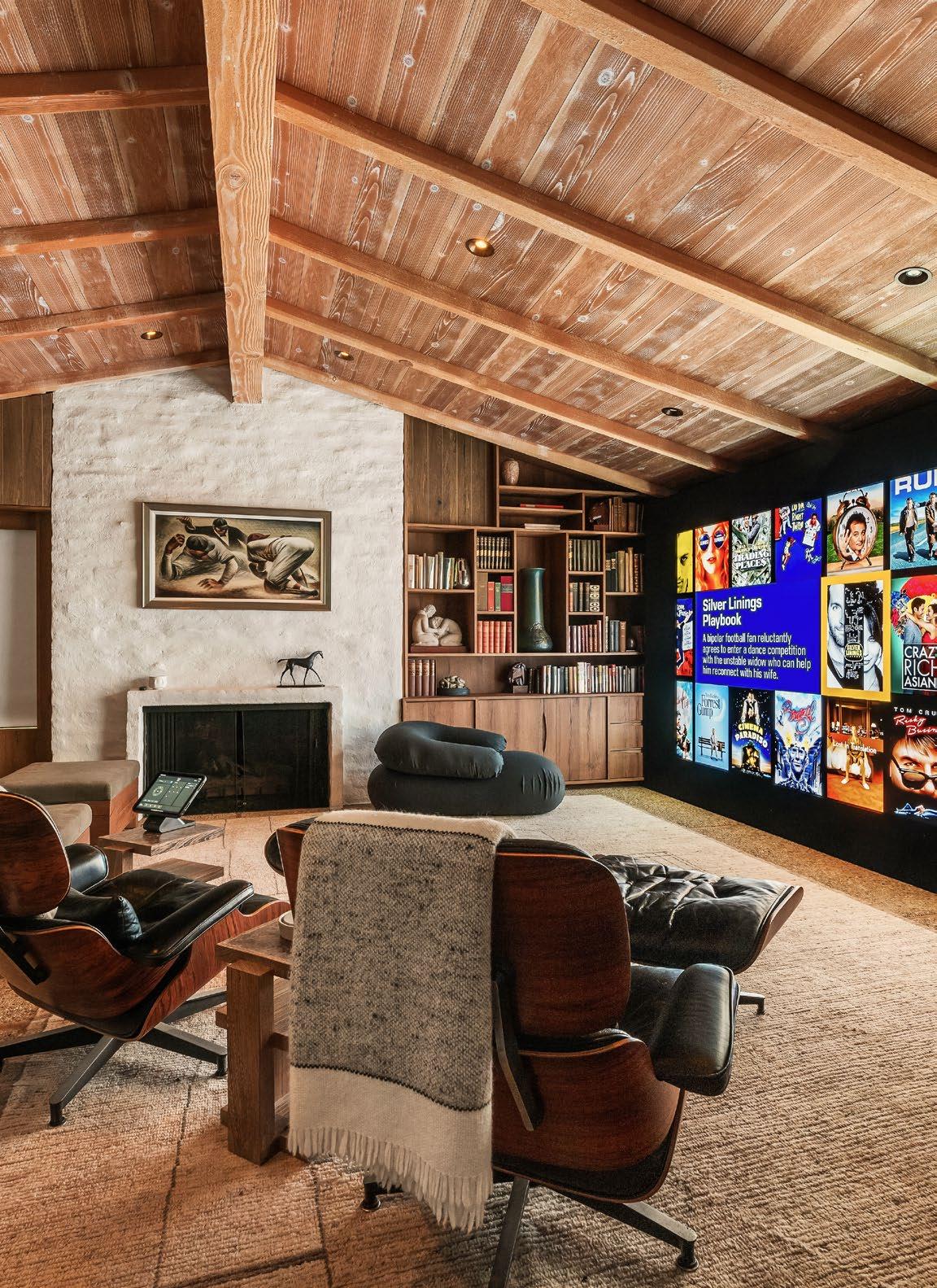
Brentwood
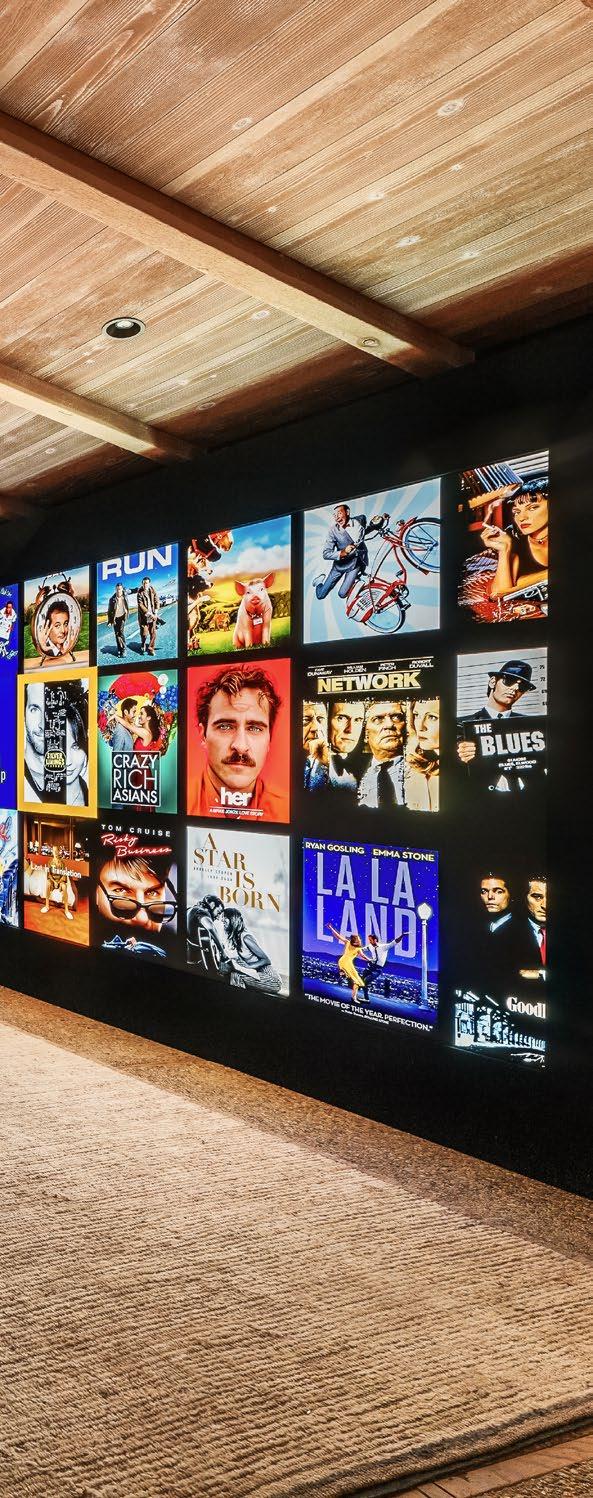
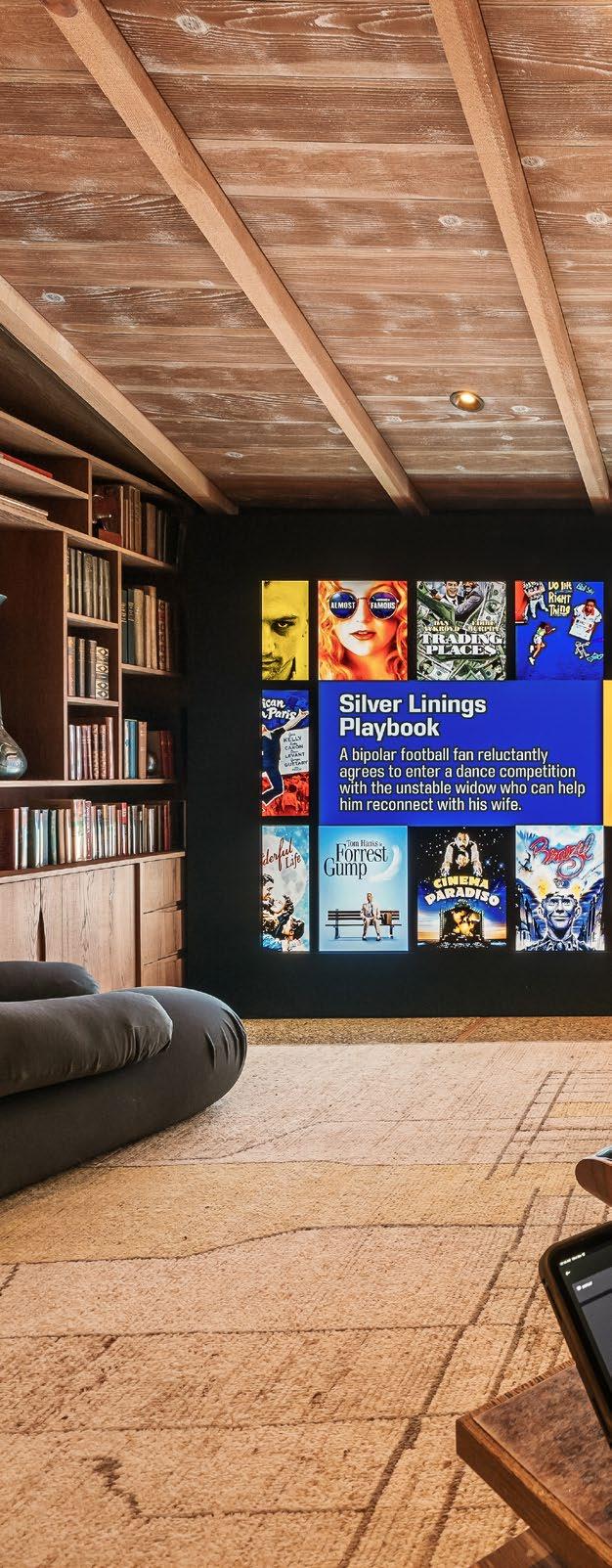
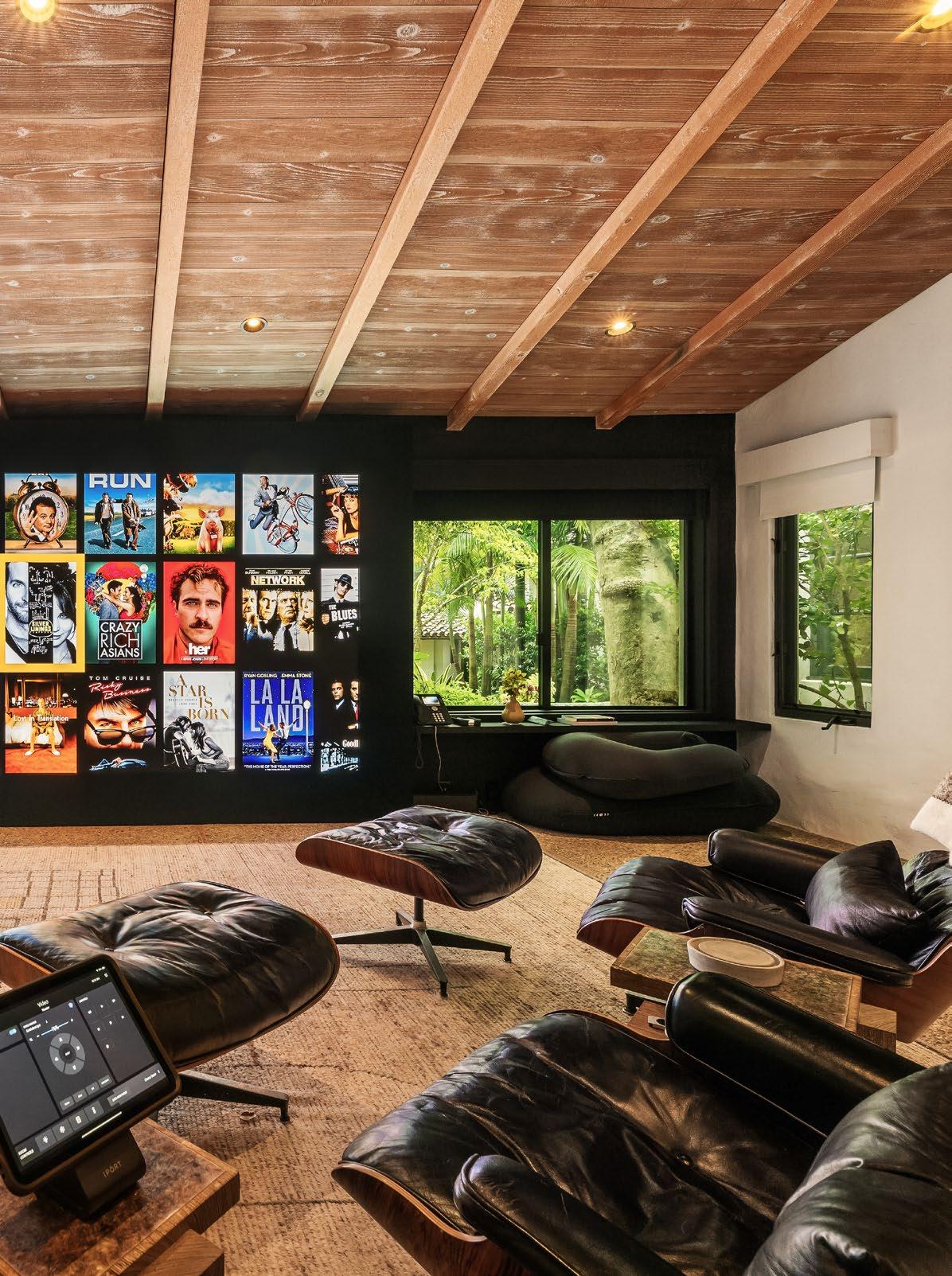
In this US-based renovation, a once-forgotten media room becomes a refined, highperformance retreat. The result is immersive yet calming, smart yet invisible.
At the Brentwood residence, one room had been left behind. While the rest of the home had already been refreshed, the media room still bore the layout and finishes of another era. The family, now working remotely and investing more time in home-based wellness, wanted something far more versatile: a media room that could deliver high-end cinematic performance, accommodate work-from-home needs, and transition effortlessly into a quiet retreat. Just as important, they didn’t want it to look or feel like a tech-heavy space.
Global Wave Integration understood the balance required. The team approached the space not as a technology installation, but as a design problem. The architectural features — particularly the ceiling beams — were to remain untouched. There was no attic space to conceal cabling or speakers, and the back wall couldn’t be altered. These constraints informed every decision.
The ceiling was subtly raised, not to show off technology, but to allow for hidden in-ceiling audio. Rather than install visible grilles or panels, acoustically transparent printed fabric was used to conceal everything from speakers to sound treatments. Where the room’s layout made this impossible, speakers were discreetly placed above a window or within a bookshelf, always with an eye to visual cohesion. Even the rear speakers, often the most intrusive, were blended into the space using the same design language.
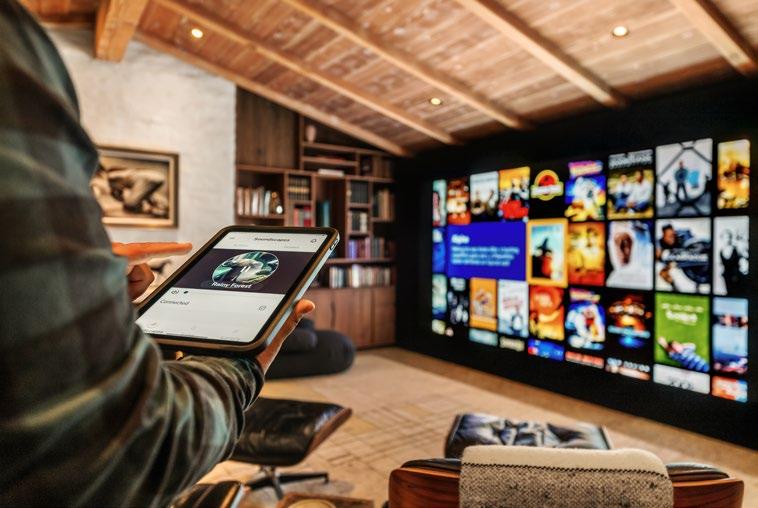
In place of a traditional projector, the team installed a cinema-grade video wall, chosen for its image quality and compact footprint. It avoids the need for a ceiling-mounted projector while delivering exceptional clarity and brightness, even during the day.
But this room is for more than movies. It features the Wave of Wellness app, allowing the space to shift between different atmospheres: a wellness retreat, a productive home office, or an entertainment hub. Lighting adjusts to support circadian rhythms, ambient audio sets the tone, and a voice-controlled AI assistant offers wellness guidance or scene changes with ease.
From the outside, it’s hard to tell this is a highly sophisticated room. That was the point. The homeowners wanted something that didn’t shout for attention but instead invited it.
Whether used for movie nights, meditation, or Monday morning meetings, the space flows naturally with their lives.
Global Wave Integration
Brentwood
The goal was simple - make it work beautifully without looking like a room full of technology.
Moving to the Future
ETC Florida
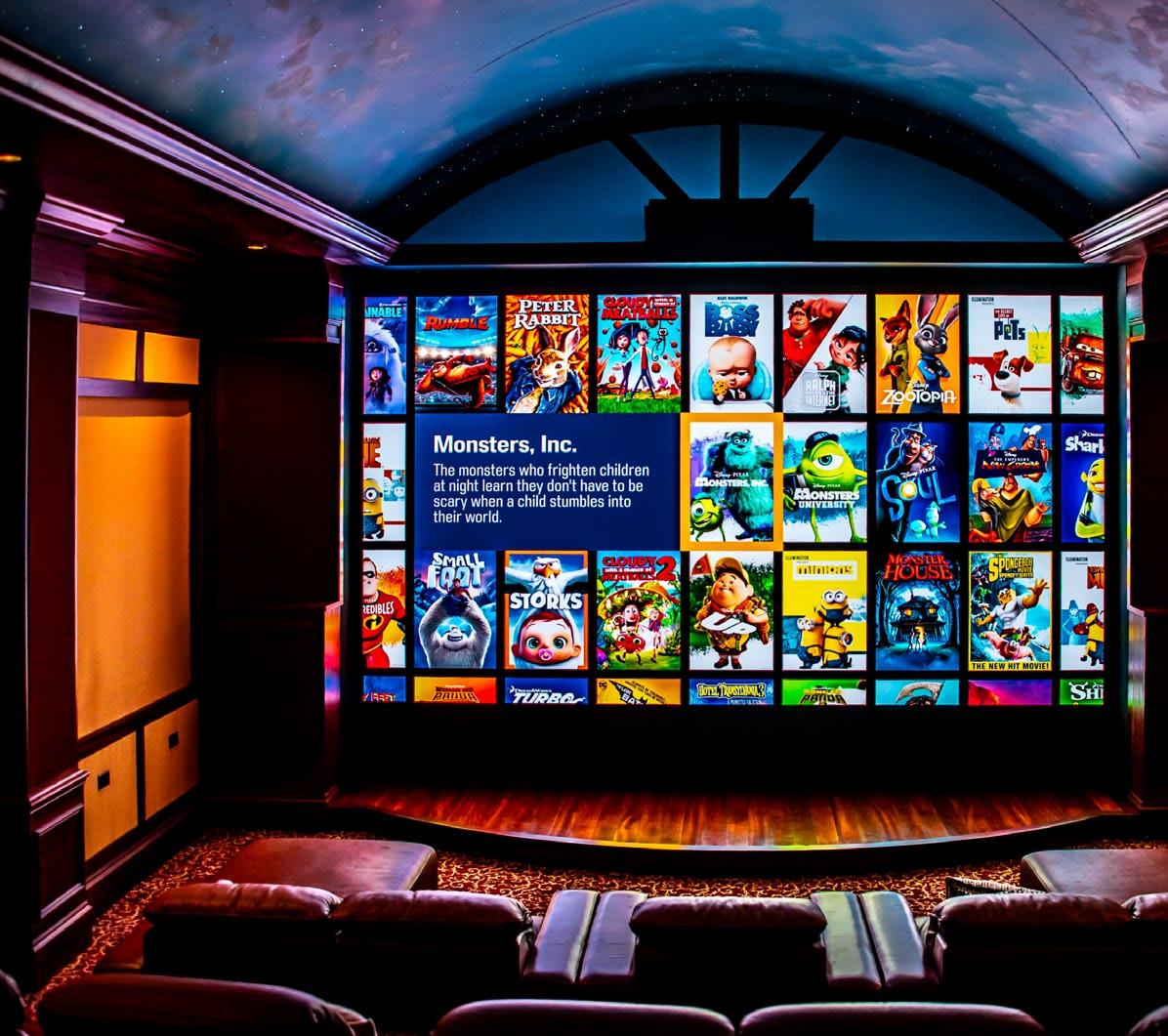
A tired home cinema makes way for a bold, multifunctional space that now hosts live family performances, educational sessions, and immersive film nights.
This project began with a single request: replace the aging projector. But what followed was a complete reimagining of how this Florida family used their home theater.
The homeowner spoke often about his children — their love of performing, their joy in using the space for plays, concerts, and learning. What he needed wasn’t just better picture quality. He needed more room. More freedom.
And a design that still honored the elegance of the original space.
ETC replaced the old ceiling-mounted projector with a large-format video wall. That single move changed everything. With the equipment out of the way, the stage could be expanded, giving the children more space to move and perform. The room instantly felt more open and more purposeful.
To keep the sound just right, speakers were moved into custom-built side columns, and the former projector area was cleverly used to enhance the depth of the audio. But nothing was made to look out of place. Every fabric panel was matched, and the much-loved ceiling design stayed exactly as it was.
At the heart of the room is a simple control system. One tap adjusts the lights, the temperature, the curtains, and the sound. The homeowner can set the scene for movie nights, music practice, or family learning without thinking twice.
This is no longer just a home theater. It’s a space that reflects how the family lives, learns, and shares time together.
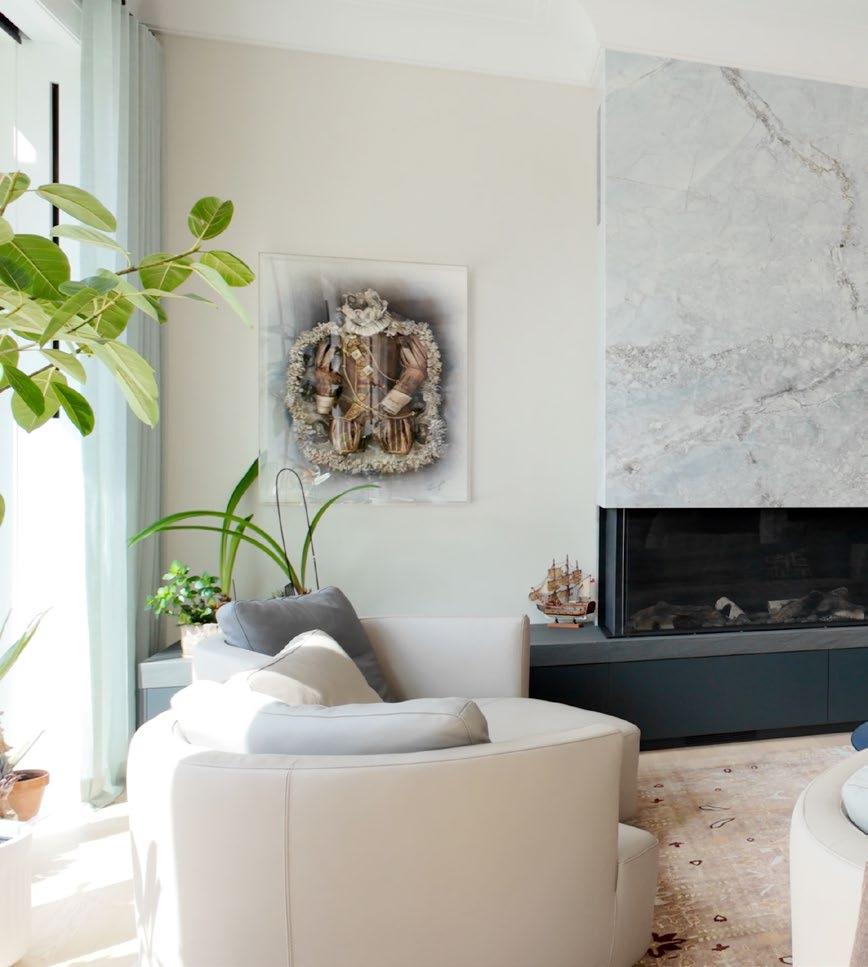
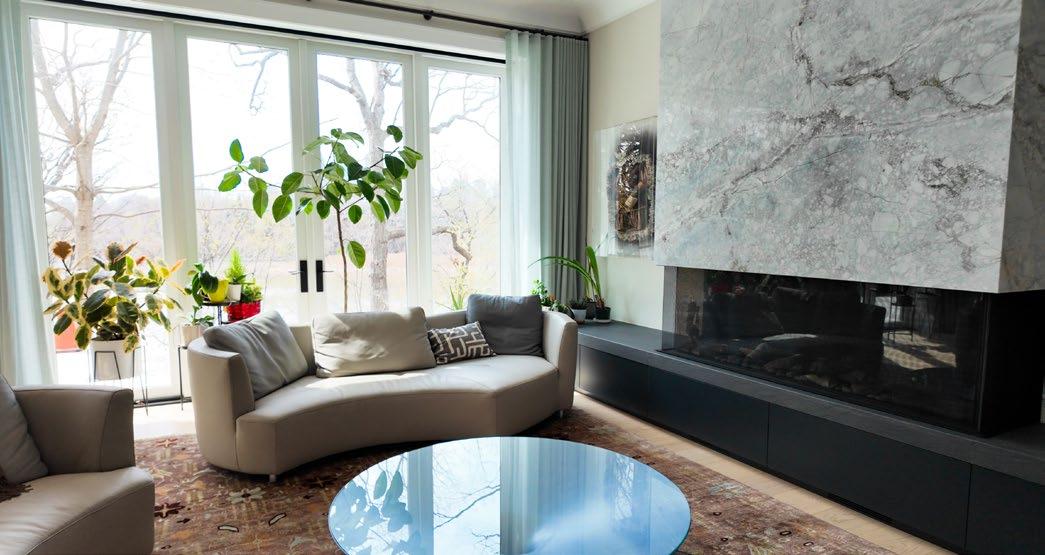
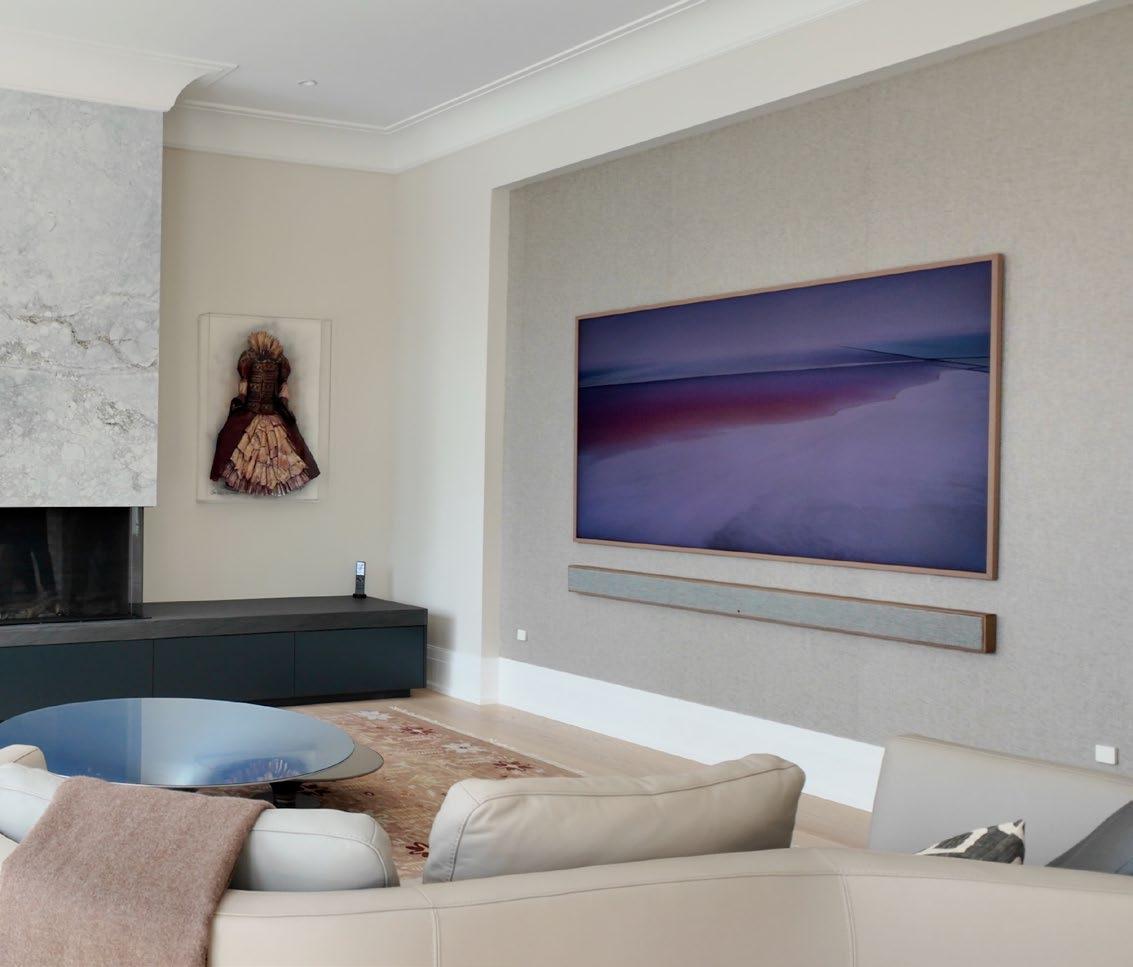
In this elegant Canadian great room, the television disappears into the wall, and the sound seems to come from nowhere. The technology is quiet, but the result is unforgettable.
This family room sits at the heart of a larger open-plan space in a modern Canadian home. It needed to feel welcoming, uncluttered, and functional for everyday life. Just as important, it needed to perform — offering great sound and vision without dominating the room.
Cloud 9 AV worked closely with the homeowner, who also took on the role of interior designer, to ensure the technology felt like a natural part of the home. The television, an 85-inch screen that doubles as wall art when not in use, was framed to match the style of the room. Below it, the soundbar was trimmed in the same timber as the surrounding joinery. The result is a wall that feels more like a piece of furniture than a media setup.
Bass fills the room from a speaker hidden under the fireplace. There are no black boxes on display, no flashing lights, and no cables in sight. All the equipment lives in the basement.
Control is simple. A single remote allows guests, grandparents, and kids alike to choose what to watch with one touch. There are no complicated menus or wall panels. Getting the balance right took patience. Ceiling speakers were placed in line with the room’s lighting layout, and every finish was matched to the homeowner’s vision. The result is a room that looks effortless but delivers when it counts. A place to relax, connect, and enjoy, without ever feeling like a media room.
Project Riverside Cloud 9 AV Inc
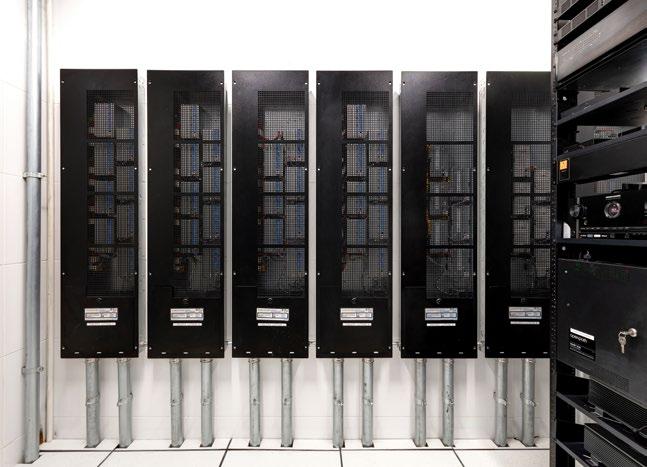
How to Design for Equipment Racks
An equipment rack is the hidden heart of a smart home. For architects and designers, its placement and housing are key to performance, serviceability, and discretion.
In modern homes, the equipment rack is the quiet engine that drives every smart system. Lighting control, audio distribution, security, networking, and environmental control all converge here.
For interior designers and architects, the focus is not on what sits inside the rack, but on the environment that surrounds it. Placement, ventilation, accessibility, and discretion are the key design considerations that ensure both technical performance and architectural harmony.
A well-designed rack location is, first and foremost, about space. These enclosures are often taller than two meters and require sufficient clearance front and back for airflow and technician access. A narrow cabinet or poorly planned cabinetry may look neat at the design stage, but once installed, can make servicing a system nearly impossible. Futureproofing should also be part of the thinking. Systems evolve, and additional components may need to be added over time, so allowing for growth is crucial.
Ventilation is another essential consideration. Equipment generates heat, and without proper airflow, performance and longevity are compromised. Ideally, the rack should be housed in a dedicated cabinet or room with passive ventilation or, in larger systems, active cooling. Positioning near HVAC return air ducts can also support thermal management, but only if planned early in the architectural drawings.
Noise is a factor often overlooked. Fans, hard drives, and mechanical components create a low hum that can quickly disrupt a tranquil interior. Placing a rack adjacent to a bedroom or living space is best avoided.
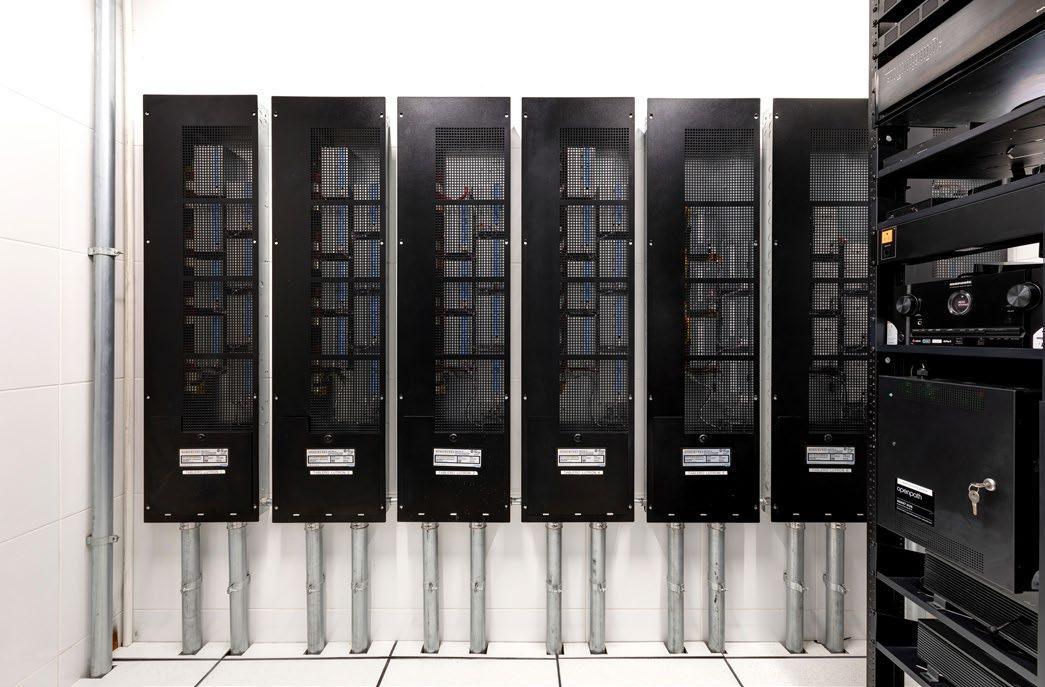
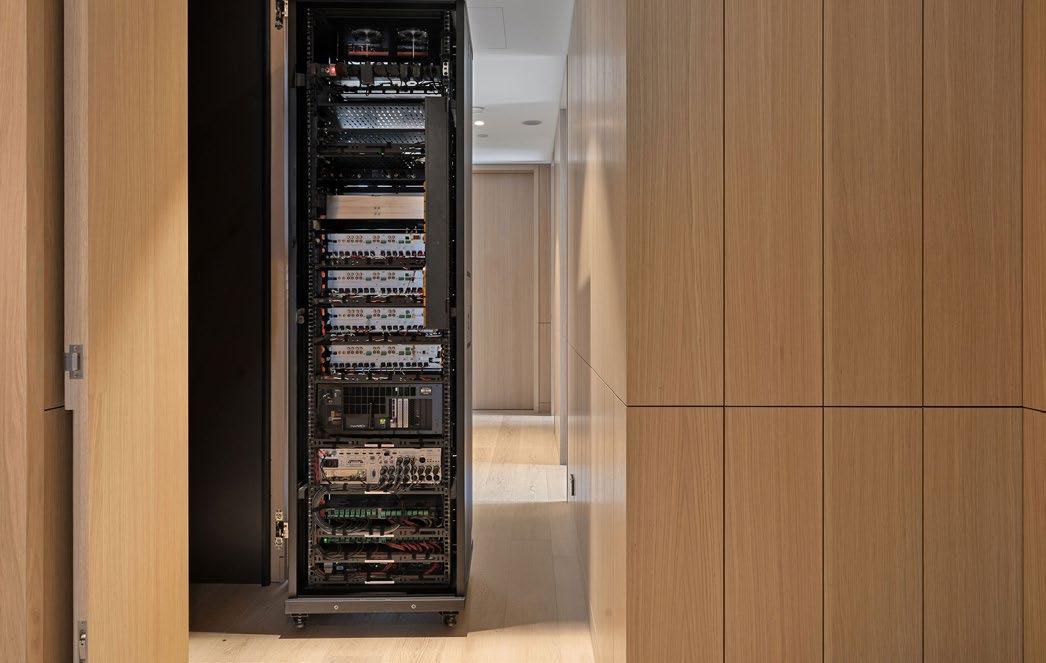
Instead, utility spaces such as basements, service corridors, or under-stair spaces can provide the ideal balance of accessibility and acoustic separation.
Accessibility cannot be overstated. Unlike decorative elements, racks require ongoing interaction by technicians. Doors should swing wide, adequate lighting must be provided, and flooring should be stable enough to allow racks to roll in and out. Designing a generous service pathway at the planning stage saves significant headaches once the system is operational.
Finally, discretion plays a major role. A rack should serve invisibly, its presence hidden behind cabinetry or within a service room, allowing the home’s interiors to shine uninterrupted. Designers who embrace this principle ensure technology never competes with the aesthetic intent.
By considering space, ventilation, acoustics, access, and concealment, architects and designers can create environments that not only house the rack securely but support the performance of the entire smart home system. Like all good design, the success lies not in the equipment itself, but in the way the surrounding architecture quietly enables it to function.
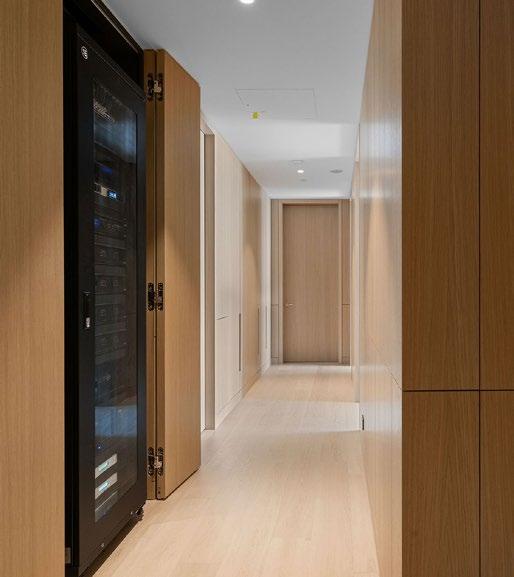
Credit: Kayder
Credit: Kayder
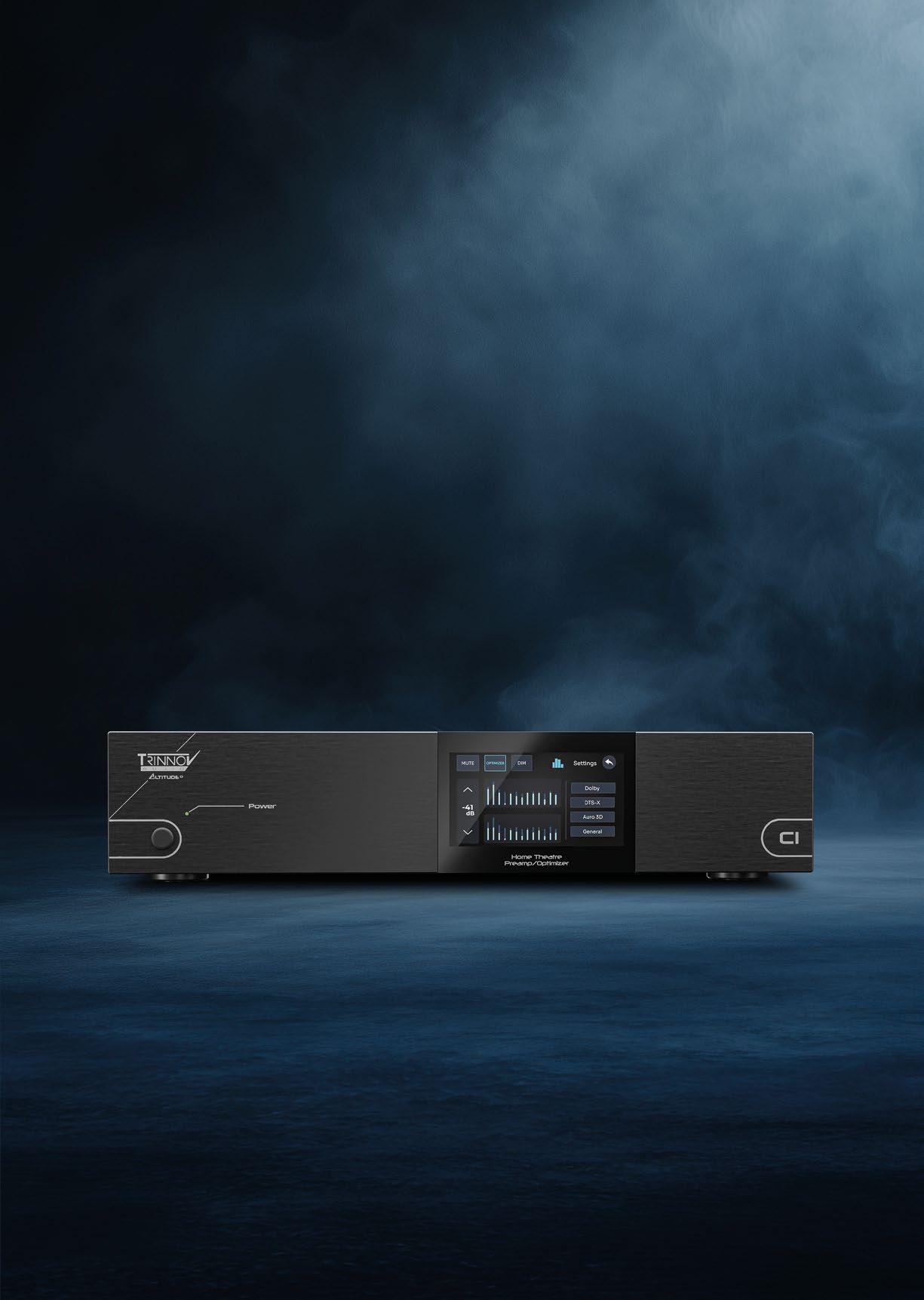

Technology Meets Design
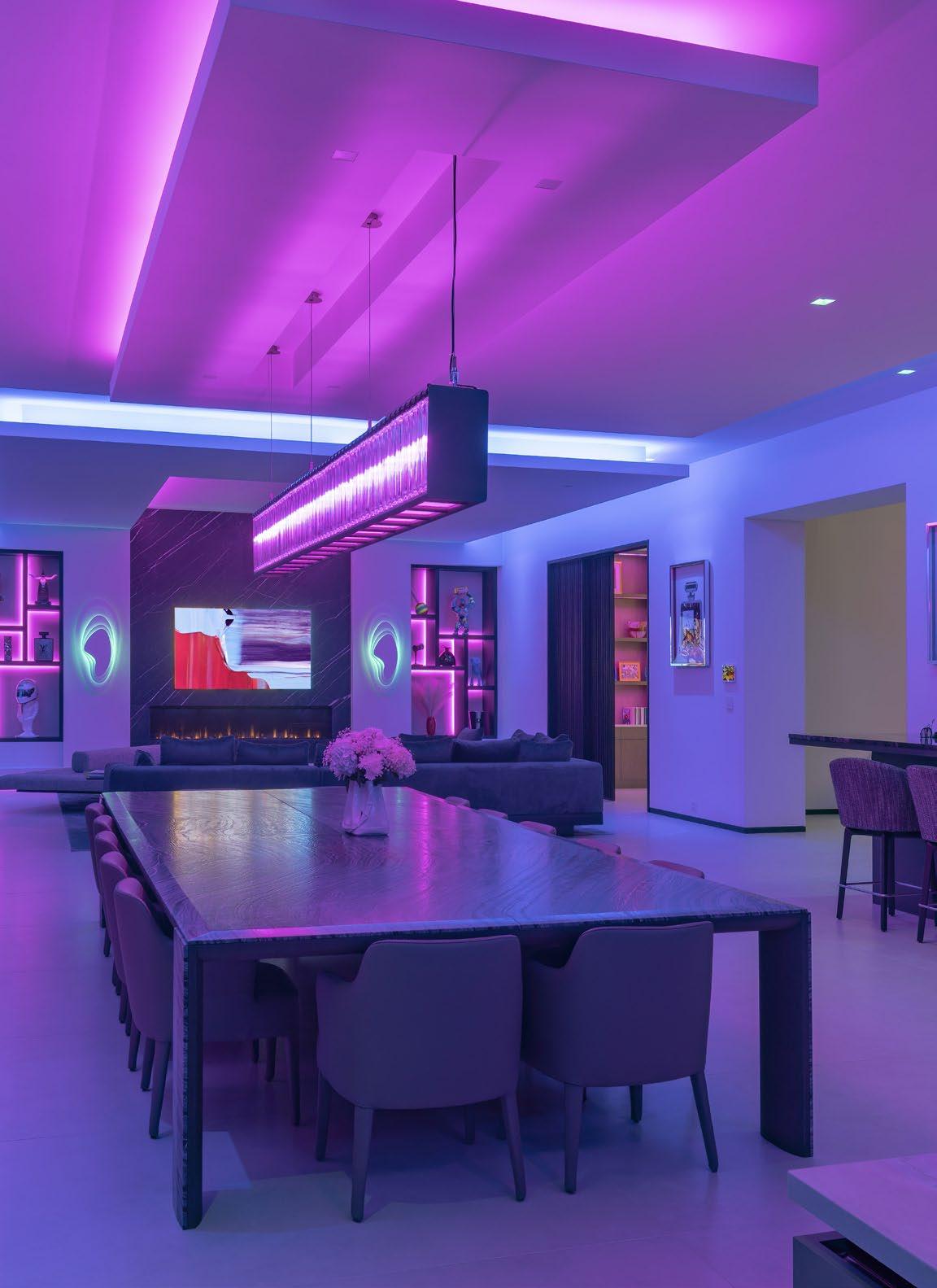
Excellence in Lighting
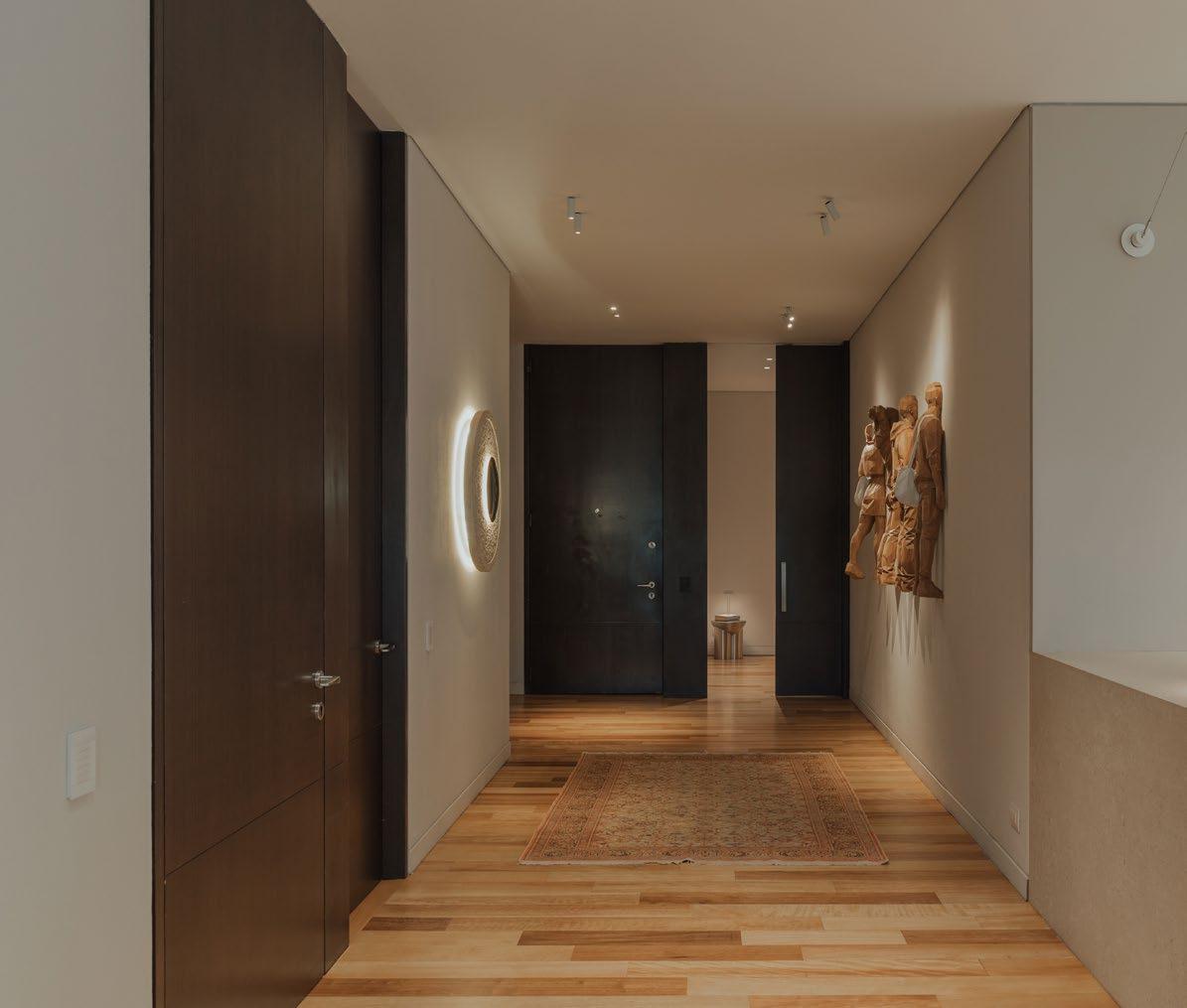
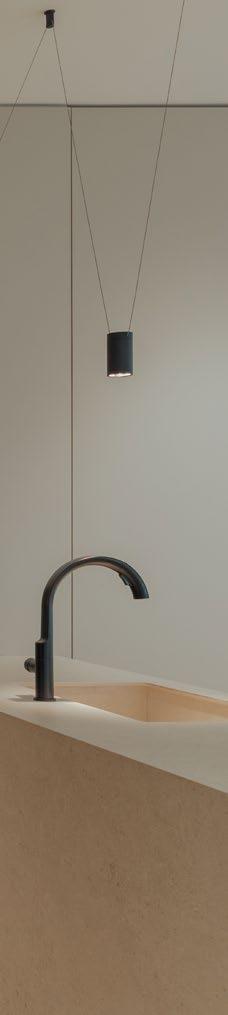
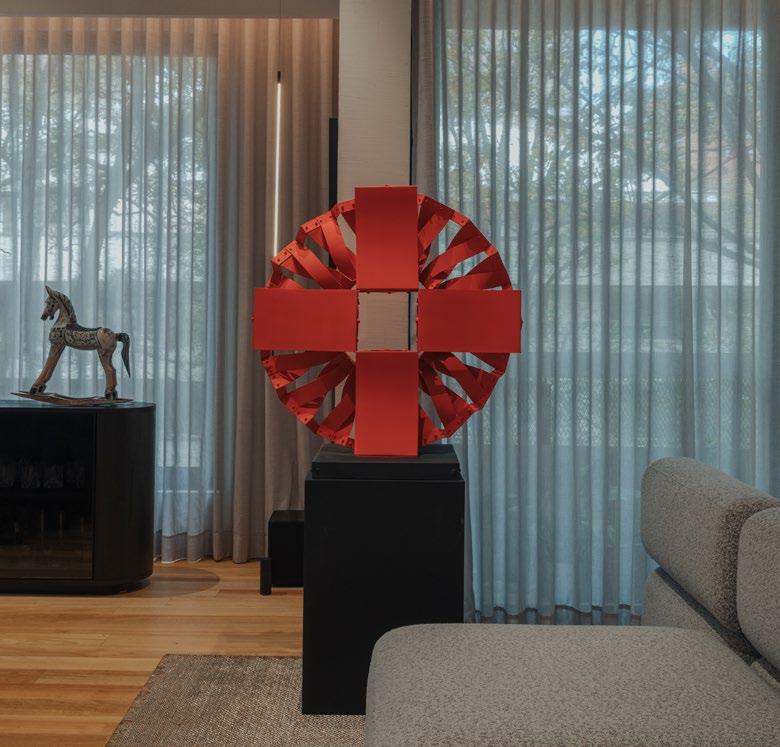
Casa MM
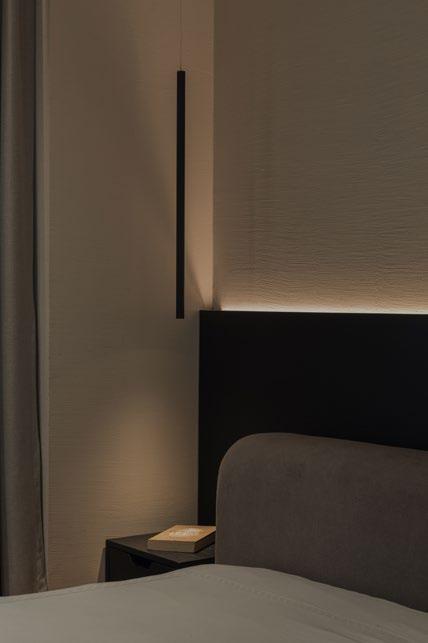
A 100-day transformation in Colombia turns a once-dated apartment into a luminous, art-focused home, blending Crestron automation with Italian lighting and intuitive design.
Casa MM began with a practical decision. The client, a 32-year-old lawyer, chose a 14-yearold apartment not for its finishes, but for its location, views, and untapped potential. While newer apartments nearby demanded a premium, this one offered something more valuable: the opportunity to create a personalized home.
Design Lab was given 100 days and a $300,000 budget to bring it to life. From day one, the process was collaborative, guided by how the client worked, socialized, and spent his time. He worked from home, hosted dinner parties, enjoyed reading, and had a growing art collection.
The existing layout was closed and outdated. Design Lab opened the kitchen, reorganized the spatial flow, and placed light at the center of the design. Rather than rely on grids of downlights, the team used carefully placed recessed fittings and linear LED strips. These accentuated materials and textures while creating a gentle transition between zones. Targetti’s adjustable architectural lighting was paired with elegant decorative pieces from Davide Groppi to anchor specific moments.
Each of the client’s 16 artworks was treated as part of the design. A delicate origami-inspired installation was lit to emphasize shadow and movement. A front-lit Alejandro
Rajut piece near the dining table offered contrast. The bookshelf in the home office, filled with over 250 titles, became a quiet backdrop to daily work.
Behind the scenes, a Digital Addressable Lighting Interface (DALI) system provided independent control of every fixture. This was paired with a Crestron automation system for unified control of lighting, shading and audiovisual elements. Black Nova and Crestron Horizon keypads were selected for their minimal presence and integrated seamlessly with the architectural palette.
Structural complications emerged during demolition, including thick concrete walls and unexpected plumbing. Instead of compromising, the team responded with design-led solutions. Lighting was reoriented to highlight the floating kitchen island from a new angle, resulting in stronger visual impact.
Throughout, the focus remained on balance. Technology was never the feature, only the enabler. Lighting was not added as decoration but used to shape the mood and meaning of each room. The finished home reflects the client’s lifestyle without distraction or excess. Since completion, several of his friends have commissioned Design Lab to help reimagine their own spaces.
Design Lab
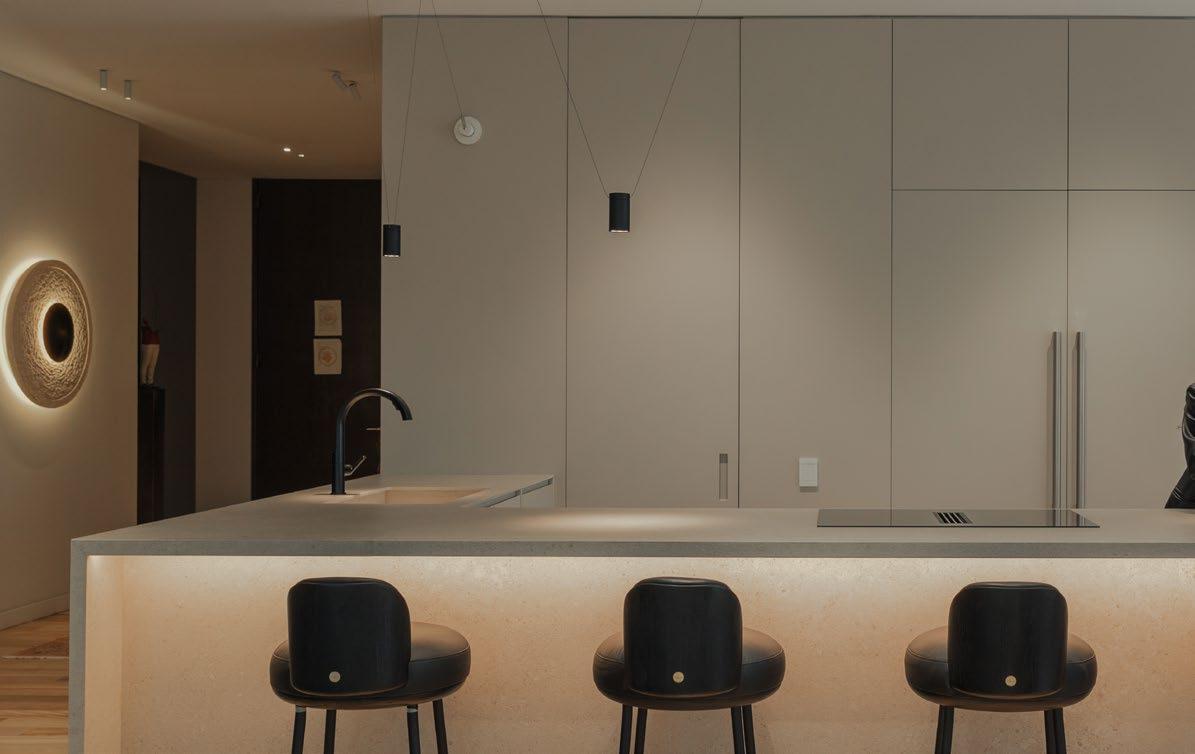
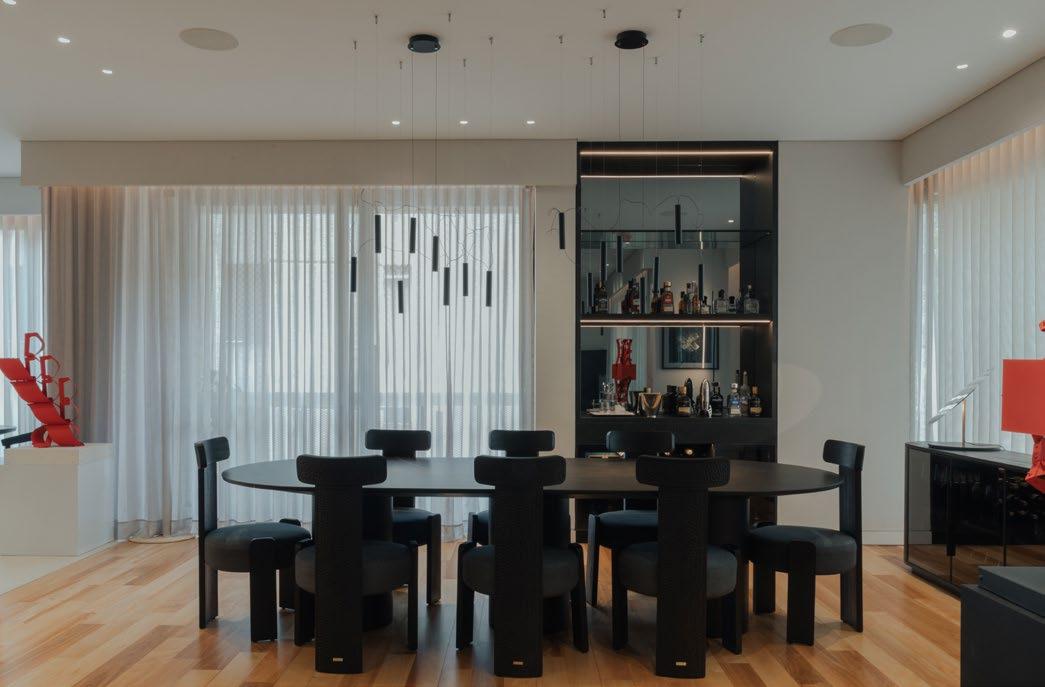
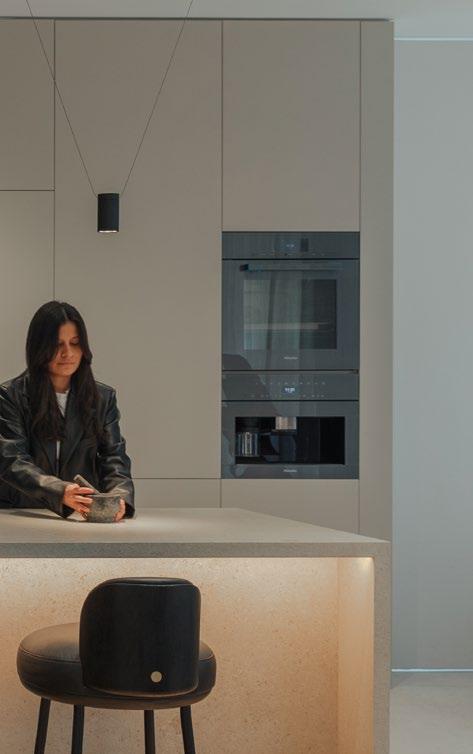
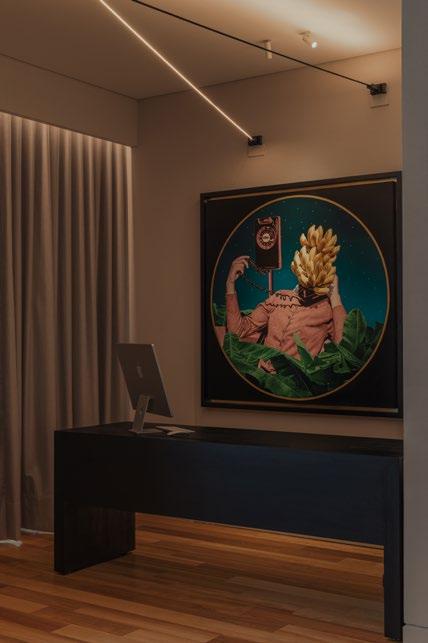
Light became the thread that tied the entire home together.
Design Lab
Casa MM
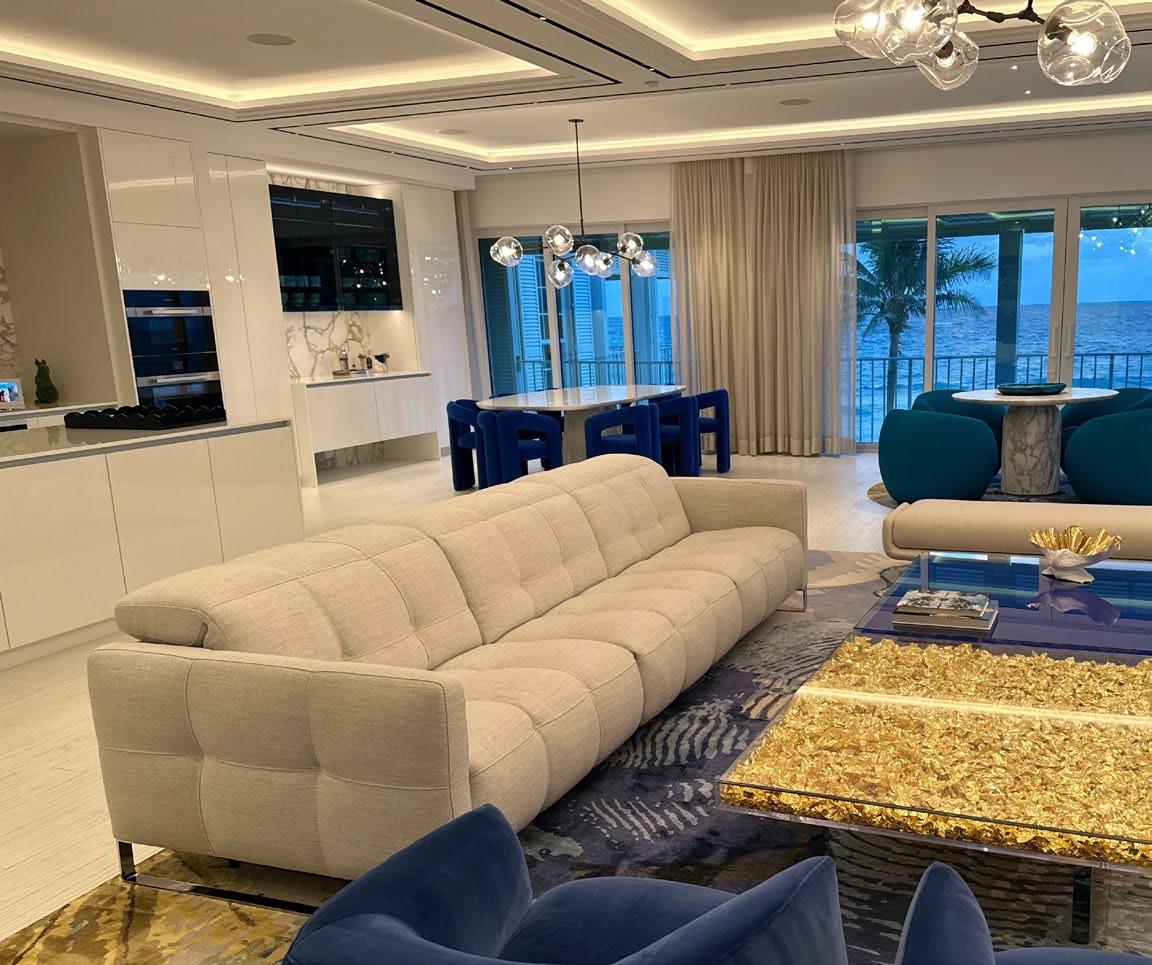
Modern Magic
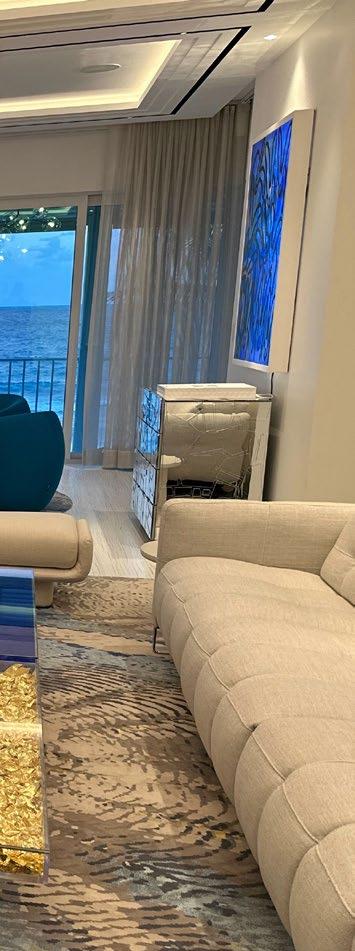
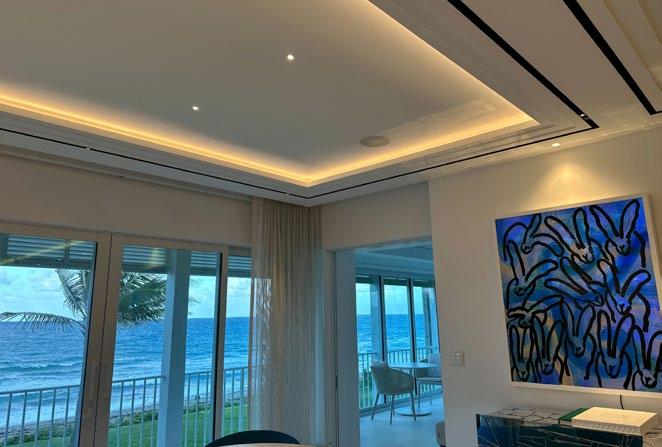
This Florida apartment may look like a calm, coastal retreat, but behind every flush ceiling and glowing wall lies a tightly choreographed performance of light and technology.
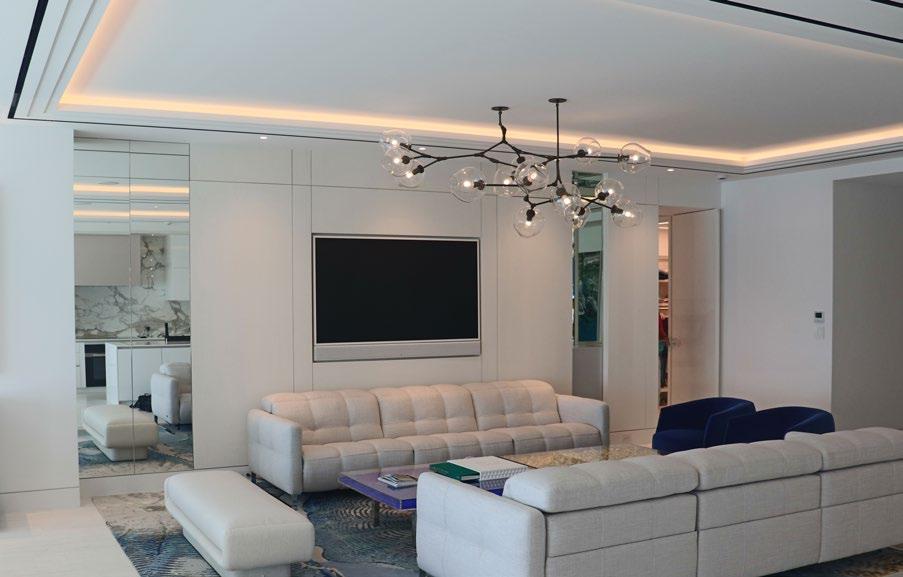
Every decision in this Florida beachfront apartment hinged on one design rule: keep the ceiling clean. That meant no visible vents, no bulky lights, and no compromise. The client wanted lighting that would impress, technology that worked without fuss, and finishes that felt completely intentional.
ETC joined the project early, following a referral from the builder who knew the initial plans couldn’t deliver the level of refinement the client was chasing. Working alongside Bonilla Torregroza Architecture and Patti Xenos Design, ETC helped reset the direction. Their goal was to make every technical element feel invisible. The ceilings became a stage for soft, sweeping light, measured precisely to wash across the plasterwork. Walls, joinery, and even wardrobe interiors were lit with careful attention to proportion and softness.
Every piece of technology was chosen to support the design, not distract from it. Touchscreens were tucked into cabinetry. Speakers were hidden. A television in the kitchen was built into the stone island, rising at the push of a button and swiveling to face the room. Even the power outlets sat flush within the walls.
With limited construction time, ETC created a full-scale mock-up of the ceiling in their warehouse before anything was installed. This allowed the client, designer and builder to see and approve every detail, from lighting tones to ceiling finishes.
Behind the scenes, smart systems manage lighting, shading, temperature, and music. But on the surface, this home is calm, glowing, and beautifully resolved. It’s a home that doesn’t show off its technology — it simply works.
When Design Meets Technology: A New Era of Collaboration
Technology has moved from the periphery of home design to its very core. The Technology Meets Design judging panel discusses how architecture, interiors, and smart systems are finally learning to speak the same language.
When architect Dean Keyworth of Armstrong Keyworth began his career, a conversation about technology rarely appeared in a design meeting. “There might be a chat about where to put the television,” he says with a laugh. “But now there’s an entire chapter in my new book on smart home technology. It’s become integral to the conversation around luxury interior design.”

Dean Keyworth Armstrong Keyworth Ltd
Keyworth was joined by Susie Rumbold, Sam Brunsden, Peter Warren, and Toni Sabatino on this year’s CEDIA Technology Meets Design judging panel. Together they represent every angle of the modern home — architecture, interiors, construction, and the increasingly vital layer of intelligent systems that ties it all together. Their collective view is that the industry is undergoing a quiet but profound transformation.
“Technology can enhance both the functionality and aesthetic of a space,” adds Sabatino, principal of Toni Sabatino Style. “It’s not just about control; it’s about comfort, energy awareness, and celebrating design through light and sound.
When thoughtfully integrated, it highlights the materials, art, and architecture we work so hard to perfect.”
“Technology is no longer a bolt-on,” says Brunsden. “It should be treated as a fundamental design layer, like mechanical, electrical, or plumbing. You can’t build a home without considering how it will connect and perform digitally.”
Beyond Luxury
For decades, smart homes were the domain of the very wealthy: large properties filled with complex control systems and theater rooms that required an owner’s manual. That perception, says Rumbold, is fast disappearing.
“It goes beyond high-end residential now,” she explains. “There’s a trickle-down effect. You’re seeing elements of smart design in rental developments and mid-market projects. It’s becoming expected, and that’s the real shift.
The challenge is keeping it usable; technology only succeeds when it feels effortless.”
Sabatino agrees, noting that the perception of technology as an indulgence is fading fast. “We’re seeing it move from luxury to lifestyle,” she says. “Smart lighting, shading, and energy monitoring are becoming standard expectations, even in smaller or multifamily developments.”

Warren, who develops homes under the EAB Homes banner in the United Kingdom, has seen that expectation firsthand. “Whether we’re selling at £1 million or £5 million, every buyer assumes there will be some technology in the house,” he says. “The difficulty is balancing budget and expectation. People love the idea of smart features but are often surprised when they discover what they actually cost.”
For him, the solution lies in future readiness. “At the very least, we make sure the wiring infrastructure is there,” he says. “Even if clients can’t afford full automation immediately, they’ll have the option later. Readiness is value.”
Designing for Every Life Stage
While technology is frequently associated with convenience, the panel agrees its real power lies in adaptability. Homes can now evolve with their occupants, accommodating everything from hybrid working to aging in place.
Brunsden from Dyntec, who sits on the advisory board of the International WELL Building Institute, highlights how certification frameworks are expanding to include digital wellness and senior living. “It’s about infrastructure that supports life changes,” he says. “You might design a home for a young family today, but 10 years from now it could need in-home care facilities. If the systems are in place — connectivity, monitoring, control — you can support that transition without rebuilding.”
Rumbold shares a similar observation from her interior design studio, Tessuto. “We often work with clients who are planning longterm residences. The brief now includes lifestyle questions: How do you consume entertainment? Do you travel frequently? Will you need
Clients want to invest in their lifestyle. Technology that supports accessibility and aging in place ensures the home evolves gracefully with its occupants.
Susie Rumbold Tessuto
assisted living features later? These conversations help us create a specification that can adapt. Flexibility is everything.”
Keyworth adds that routine itself influences design. “A young couple might have unpredictable schedules, while retirees tend to have consistent habits. Technology can respond to both. Automated lighting and shading can align to routines, adjusting naturally over time. It’s incredibly powerful when it works with, rather than against, human behavior.”
“Preparing a home for the future is part of responsible design,” says Sabatino. “Clients want to invest in their lifestyle. Technology that supports accessibility and aging in place ensures the home evolves gracefully with its occupants.”
The Invisible Infrastructure
Every member of the panel points to networking as the unsung hero (and frequent villain) of the modern home.
“It still amazes me,” says Warren, “how many clients come to us saying, ‘I just want the internet to work properly.’ In new builds with reinforced concrete or thick insulation, you can have zero phone signal and patchy Wi-Fi. A beautiful home is useless if it’s not connected.”

priorities; it’s about coordination.”
Toni Sabatino Style
Warren, who frequently mediates between the two worlds on site, sees personality as part of the challenge. “Developers, designers, and AV guys integrators all come with stereotypes –— the tech people seen as nerds, the designers as fussy about finishes. But when everyone drops their guard, the results are incredible. The client wins, the process runs smoother, and the project feels cohesive.”
“The best homes happen when design and technology teams stop protecting their turf,” says Warren. “It’s about communication, openmindedness, and remembering that everyone is working toward the same goal.”
Today, lighting panels and keypads are designed beautifully. They’re tactile, elegant, and can complement the room’s aesthetic. We’re finally at a stage where technology contributes to the visual story rather than interrupting it.
Brunsden agrees. “Audio-visual has become IT. Everything sits on a network — lighting, shading, heating, entertainment. If that backbone isn’t designed properly, nothing else functions. A good integrator understands data infrastructure as well as design aesthetics. It’s the new electricity.”
Keyworth nods. “There’s still an education gap among designers. We need to understand how much space a rack requires, what cooling it needs, and where access panels must go. Without that knowledge, we frustrate the integrator. It’s about cross-education between our disciplines.”
Sabatino highlights another layer: “So much of the conversation now is about network reliability. People think Wi-Fi is magic, but it’s infrastructure. A well-planned backbone is what makes automation truly invisible.”
Bridging Aesthetic and Technical Worlds
Historically, interior designers and integrators approached projects from different planets: one focused on appearance, the other on performance. The panel agrees that collaboration is now dissolving those boundaries.
“It used to be all about big black speakers and ugly white docks stuck on de Gournay wallpaper,” says Rumbold. “That’s gone, thankfully. Today, lighting panels and keypads are designed beautifully. They’re tactile, elegant, and can complement the room’s aesthetic. We’re finally at a stage where technology contributes to the visual story rather than interrupting it.”
For Brunsden, success depends on timing. “Too often, I’m brought in after the interiors are finalized. By then, the equipment room is too small or the ceiling grid doesn’t work for the lighting layout. Bringing consultants in early, at the same time as mechanical and electrical engineers, saves everyone headaches later. It’s not about competing
Redefining Professionalism
A decade ago, many integration firms operated more like trade contractors than consultants. Brunsden believes that’s changing. “We’re seeing a rise in specialist design consultants who don’t sell equipment,” he explains. “They operate like MEP (mechanical, electrical, and plumbing) engineers, producing specifications and drawings for tender, ensuring the design matches the client’s brief rather than pushing a particular brand. It’s a sign the industry is maturing.”
Rumbold supports this model. “Integrators should be at the table with the architect, engineer, and interior designer from day one,” she says. “They bring technical expertise that can shape the concept. When that happens, the client ends up with a product that truly reflects their needs and budget.”
Keyworth adds, “The role of education can’t be overstated. Designers don’t need to become technologists, but they should understand the basics: spatial requirements, ventilation, and maintenance access. It’s the same respect we show lighting or HVAC specialists.”
Overcoming Misconceptions
Despite progress, misconceptions persist — both among professionals and homeowners. “One of the big ones,” says Keyworth, “is the idea that everything is wireless. People think you can just do it over Wi-Fi. You can’t. You still need serious cabling if you want reliability.”
Rumbold laughs. “And clients always forget about access. Underfloor heating is a great

Toni Sabatino
Tom Webster Webster Harding Architects Ltd.
When Design Meets Technology: A New Era of Collaboration (continued)

example. People think there’s no equipment, then realize they need large manifolds and panels. The same goes for technology. If you want it to be invisible, you have to plan for where it lives.”
For Brunsden, the biggest misunderstanding is assuming technology and design are at odds. “That’s old thinking,” he says. “Invisible speakers, recessed projectors, beautifully engineered switch plates — there are so many ways to make it elegant. The earlier we collaborate, the easier it is to integrate seamlessly.”
Sabatino observes that many clients still see smart systems as complicated or unnecessary. “I ask them if they’d buy a car with roll-down windows,” she says. “Technology has matured. Streaming updates and intuitive interfaces have made it accessible, not intimidating.”
The Convergence of Creativity and Control
Across continents, this convergence of design and technology signals a new mindset. In New York, Sabatino’s kitchen-centric philosophy celebrates open-plan spaces where lighting and automation enhance daily rituals. Her belief that technology should serve wellbeing echoes throughout her work, where lighting and control enhance the joy of everyday rituals. In London, Rumbold’s process-driven interiors rely on technical precision to deliver emotional comfort. In New Zealand, architect Tom Webster — also a fellow Technology Meets Design judge — uses integrated systems to balance sustainability and cinematic experience.
Wherever they work, the lesson is the same: technology belongs in the design conversation from the start.
As Rumbold concludes, “Great design isn’t about adding more. It’s about making life simpler, calmer, and more connected. When design and technology are truly aligned, you don’t see the systems. You just feel the difference.”
Great design isn’t about adding more. It’s about making life simpler, calmer, and more connected. When design and technology are truly aligned, you don’t see the systems. You just feel the difference.
A Future of Effortless Living
Looking ahead, the panel predicts a future where systems fade entirely into the background. Rumbold envisions homes that quietly self-regulate: “We’re already seeing shading and climate systems that respond automatically to sunlight or temperature. People won’t need to think about it because it’ll just happen, creating comfort and efficiency without intrusion.”
Keyworth points to emerging artificial intelligence. “We’re heading toward unified control, where you simply talk to the home or wear a device that understands context. But that only works if everything behind the scenes is engineered correctly.”
Brunsden sees hardware shrinking. “When I started 20 years ago, equipment racks filled entire cupboards. Now we’re halving them every few years. Edge computing will make them smaller still. Integration will get simpler, but expectations will rise. People aren’t impressed by automation anymore; they’re impressed when it’s invisible.”
“The goal is not more gadgets,” says Sabatino. “It’s about homes that anticipate our needs, enhance wellbeing, and make daily life feel smoother. The best technology disappears into design, leaving only comfort and beauty behind.”
For Warren, the greatest innovation may be cultural. “We’re finally recognizing the value of collaboration. For years, projects went wrong because people worked in silos. Now the word I keep coming back to is communication. When everyone’s on the same page (client, designer, integrator, builder, etc.) the handover is silent. No calls, no complaints. That’s when you know it’s worked.”
Advice for New Designers

As smart technology becomes standard, more designers are encountering integrators for the first time. The panel’s advice is simple.
“Don’t be defensive,” says Keyworth. “If a client wants something that challenges your aesthetic, look for solutions rather than roadblocks. Listen to the experts, they’re there to make your vision work in practice.”
“Bring them in early,” adds Rumbold. “It’s just good business. The sooner they contribute to the brief, the more cohesive the result.”
Brunsden encourages due diligence. “Choose your partners carefully. Don’t just go local or cheapest. Look for certification, experience, and scale. You’re trusting them with the home’s nervous system.”
Warren agrees. “Avoid the race to the bottom. Quality integration costs what it costs, but it adds enormous value in the long run. Collaboration and transparency beat cutting corners every time.”
Sam Brunsden Dyntec
Peter Warren EAB Homes
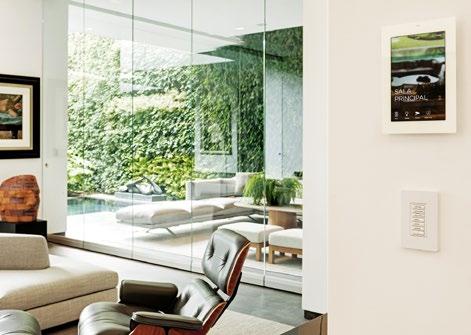
AKTIVA
Best Integrated Home – Level I 2025 Winner
Best Integrated Home – Level I 2025 Finalist (for two projects)
Best Integrated Home – Level IV 2025 Finalist
Excellence in Rack Building & Design 2025 Finalist
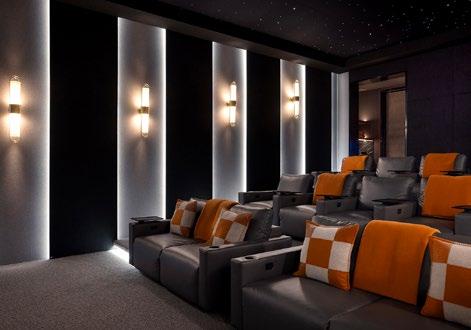
Cantara
Best Home Cinema 2025 Winner
Best Integrated Home – Level III 2025 Winner
Excellence in Documentation 2025 Finalist
Excellence in Support & Maintenance 2025 Finalist

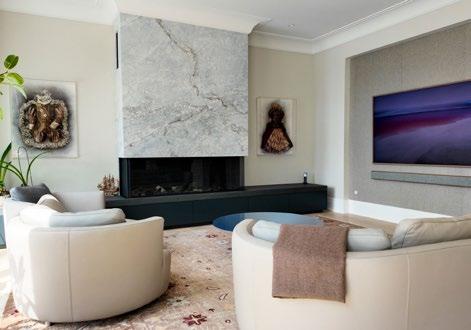
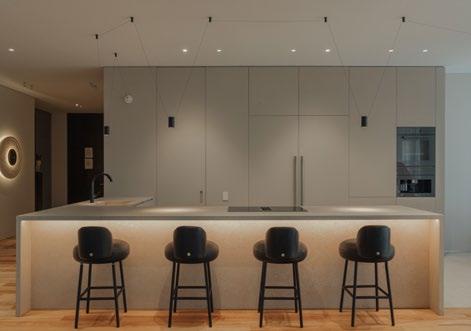
Cloud 9 AV Inc
Best Integrated Home – Level II 2025 Finalist Best Single Room Solution 2025 Finalist
in Lighting 2025 Winner
Meets Design 2025 Winner


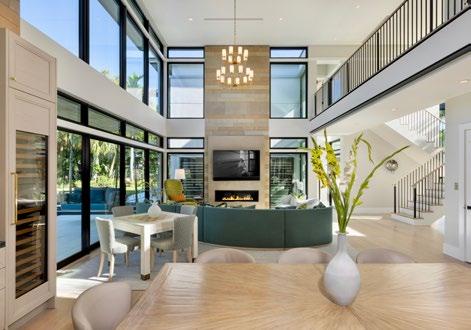
ETC Florida
Excellence in Support & Maintenance 2025 Winner
Best Integrated Home – Level III 2025 Honorable Mention
Best Integrated Home – Level II 2025 Finalist
Best Single Room Solution 2025 Finalist
Excellence in Lighting 2025 Finalist

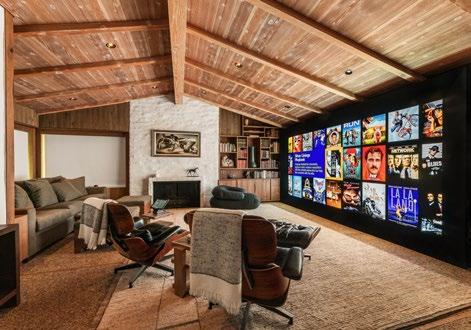
Global Wave Integration
Best Single Room Solution 2025 Winner
Excellence in Innovation 2025 Winner
Excellence in Documentation 2025 Finalist
Excellence in Support & Maintenance 2025 Finalist

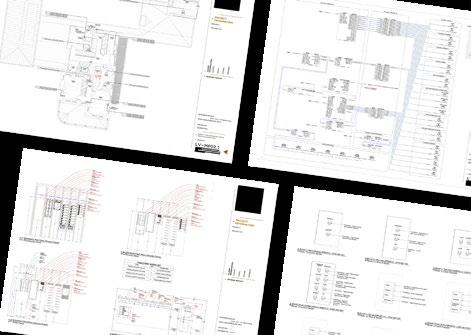
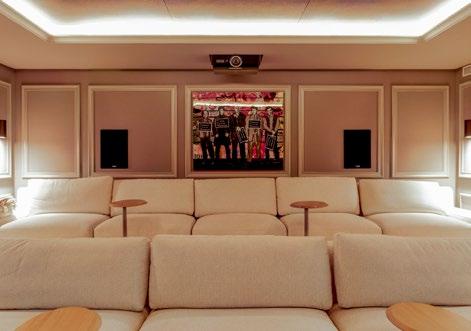


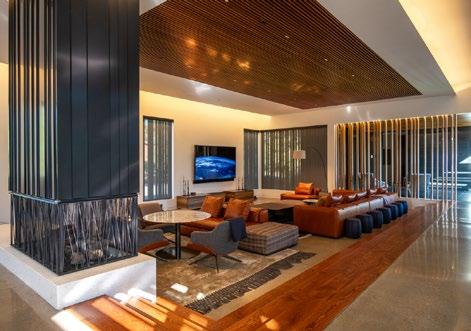
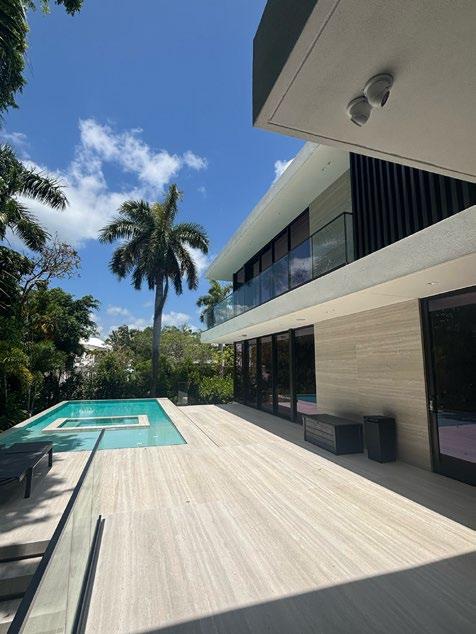

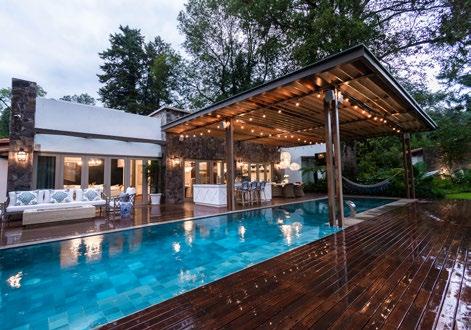
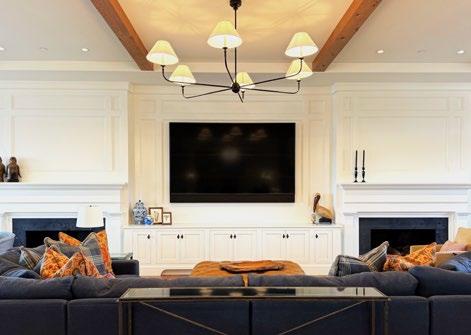


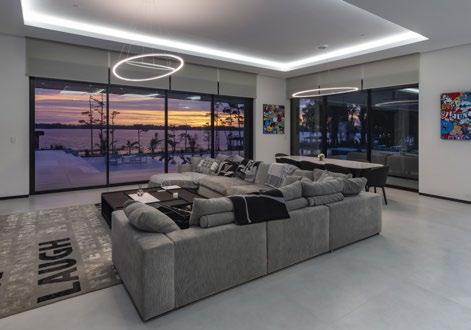
ZIO Group, LLC

Global Best Integrated Home 2025 Winner
Best Integrated Home – Level IV 2025 Winner
Excellence in Rack Building & Design 2025 Winner
Excellence in Documentation 2025 Honorable Mention
Excellence in Lighting 2025 Honorable Mention

Use the CEDIA Find a Smart Home Professional tool to locate a CEDIA Integrator Member most suited to address your smart home needs and create your perfect smart home.
CEDIA represents Smart Home Professionals worldwide and the tool will allow you to find a professional in your area.