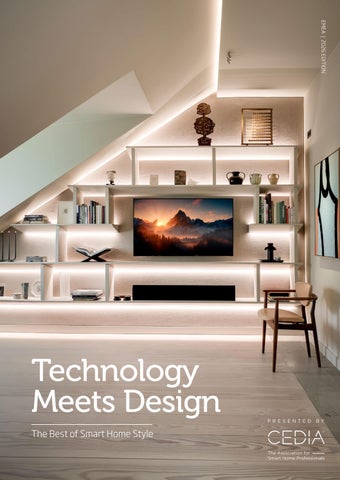
Meets Design





THINK BEYOND

From key terminology to architectural drawing standards, CEDIA gives you the tools to confidently bring technology into your client conversations.
Scan the QR code to find out how you can make your projects come to life.

I am excited to introduce the 2026 issue Technology Meets Design – The Best of Smart Home Style, a publication that celebrates the best and latest expertly designed and integrated smart homes. This edition has been endorsed by BIID and CODIC.
Technology Meets Design – The Best of Smart Home Style is more than a display of beautiful homes that have been successful in reaching finalist and winning levels in the CEDIA Smart Home Awards. It applauds the collaborative achievement between smart home professionals and their partner trades, reinforcing that excellence is measured by both the finished experience and the journey it takes to get there.
As we present this year’s edition of Technology Meets Design – The Best of Professional Smart Home Style, we’re excited to spotlight the dynamic progress and fresh initiatives that continue to highlight how the smart home industry and design build profession are intertwined.
We have curated the content to resonate especially with you, our valued colleagues in the design, architecture and homebuilder community. We believe these pages will inspire, inform, and strengthen your understanding of the CEDIA channel and demonstrate the tangible benefits that come from collaborating with a smart home professional.
The message is simple: when you partner with a CEDIA member, you’re not just enhancing your projects, you’re ensuring highly satisfied clients and exceptional outcomes.
Thank you for your continued engagement and for being part of a community dedicated to pushing boundaries and creating remarkable living spaces.
Warm regards,

Daryl Friedman Global President & CEO, CEDIA


About CEDIA
The CEDIA Smart Home Awards celebrates outstanding innovation and excellence in smart living environments. Run by CEDIA, the programme acknowledges the leading projects, individuals, products, and solutions that are shaping the future of connected homes and intelligent design.
From home security and automated solutions to home cinemas and entertainment spaces, the CEDIA Smart Home Awards projects provide inspiration for the level of technology integration that consumers want in their properties.
The awards offer design build professionals valuable insights into the evolving landscape of smart technologies and their impact on residential spaces. The recognition given through these awards highlights the latest advancements, best practices, and trailblazers in the field, providing inspiration for those working at the intersection of design and technology.
We encourage interior designers and architects to follow the results of this programme as a resource for understanding key trends, influential projects, and market leaders driving progress in the smart home sector.
CEDIA® is the Association for Smart Home Professionals™. Established in 1989, CEDIA is dedicated to advocacy, connection, and education, and fosters a thriving community as the home for smart home professionals. Globally, CEDIA advances the rights of technology integrators by working with governmental bodies; gathers industry professionals and allied tradespeople for learning and networking; and creates trainings, standards, and certifications to ensure the continued growth of the smart home industry. CEDIA co-owns Integrated Systems Europe, the world’s largest AV and systems integration exhibition, and founded CEDIA Expo, the world’s largest residential technology show. Today, a community of over 30,000 CEDIA members from more than 80 countries deliver smart home technology solutions that enrich homeowners’ lives. Learn more about CEDIA at cedia.org
CEDIA Smart Home Awards

The partnership between the British Institute of Interior Design (BIID) and CEDIA has grown from strength to strength, reflecting the evolving landscape where interior design and integrated technology are inseparable. Over the past years, our two bodies have worked closely to bridge the gap between creative vision and technical innovation, empowering designers and integrators to deliver truly exceptional spaces.
As BIID Past President Dean Keyworth notes in his recent book, New Luxury, “When I am working with clients who want to incorporate smart home features, my two major concerns are, firstly, that the technology fits discreetly into the scheme, and secondly, that the controls are easy to use, making life easier, not more complicated. The key to a successful Smart Home, which improves the day-to-day lives of the occupants and looks beautiful, is for the interior designer and technology integrator to start working together as soon as possible in the project timeline.”

This kind of collaboration is more important than ever. As clients expect more from their homes - comfort, entertainment, flexibility, safety, and well-being - the opportunities for our two sectors to form meaningful partnerships are only growing. By working together from the earliest stages of a project, designers and integrators can unlock new creative possibilities and ensure that technology enhances rather than detracts from the design intent.
The BIID and CEDIA are committed to supporting our members on this journey. We encourage all professionals to make the most of our shared resources, training, and networking opportunities. Together, we can set new standards for excellence in design and technology integration.
We are proud to endorse this publication, which celebrates the best of both worlds and inspires our communities to keep pushing boundaries together.
Katherine Elworthy COO, BIID
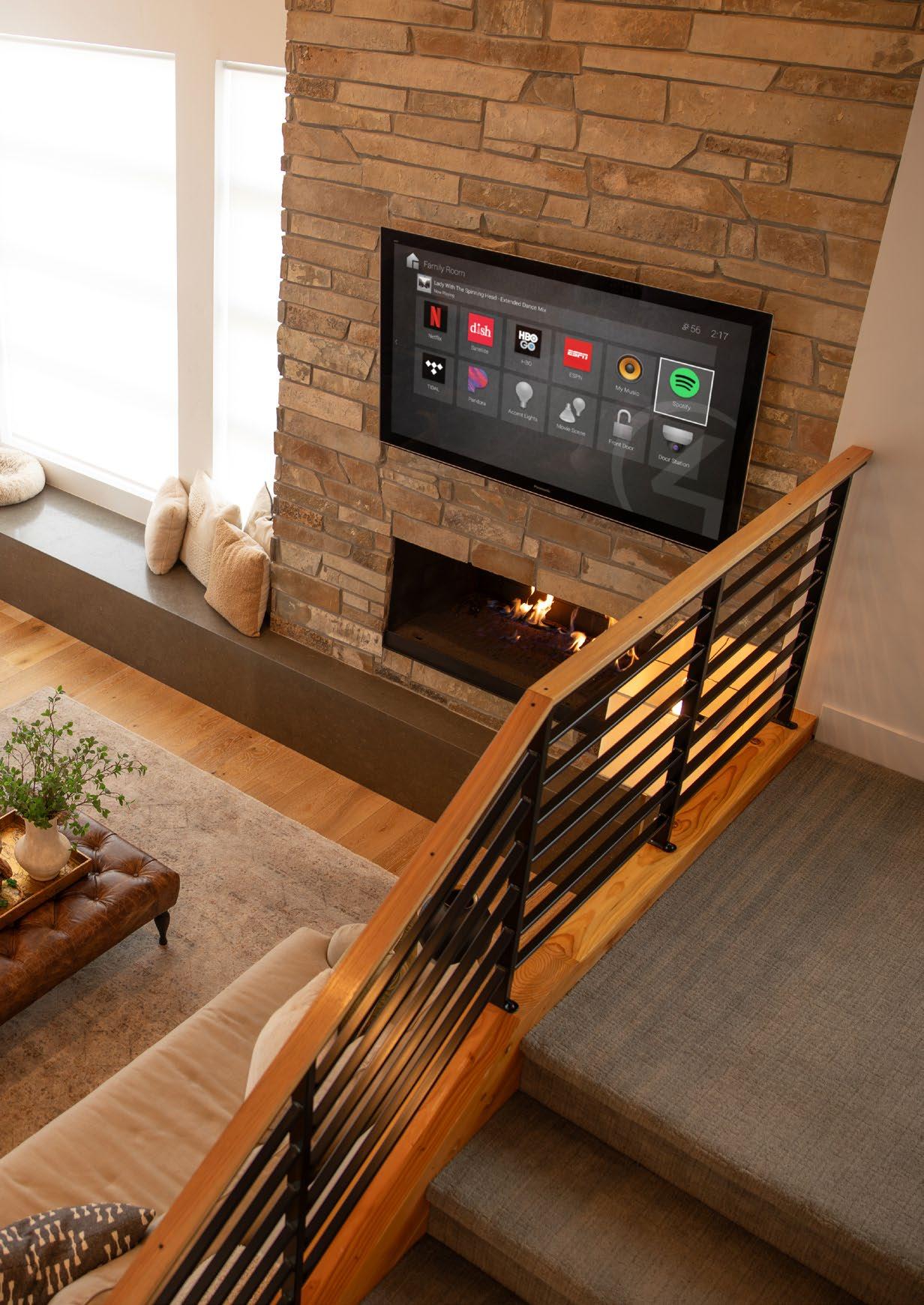
HOME AUTOMATION, REIMAGINED
X4 lets you personalise everyday routines to reflect your lifestyle.

LEARN MORE

CODIC, Col·legi de Dissenyadors d’Interiors i Decoradors de Catalunya, is an influential association in Catalonia dedicated to promoting excellence, innovation, and creativity in interior design. In recent years, our organisation has recognised the growing importance of integrated technology in both residential spaces, which is where our relationship with CEDIA has stemmed from.
Our collaboration with CEDIA and support for ISE reflect CODIC’s commitment to advancing the dialogue between design and technology. By actively encouraging our members to attend ISE and spotlighting CEDIA’s expertise, we have helped expand awareness of how smart solutions can enhance the qualities we value most, including comfort, aesthetics, and functionality. Many CODIC members have discovered new possibilities by engaging with CEDIA’s community, harnessing the latest in home automation, AV systems, and intelligent lighting to refine their projects and deliver more to their clients.
The role CODIC plays in this evolving landscape is to act as a bridge: connecting creative professionals with the technical insights and collaborative opportunities offered by CEDIA. The crosspollination between our communities allows designers to stay ahead of trends and ensures that technology integration always serves and elevates design intent.
We are proud to champion the partnership with CEDIA – which includes endorsing this publication – and to celebrate the creative potential that emerges when great design and leading technology come together. We invite our community to keep exploring, collaborating, and setting new standards with CEDIA members.
Sandra Guiu Ribera Vice-Dean, CODIC


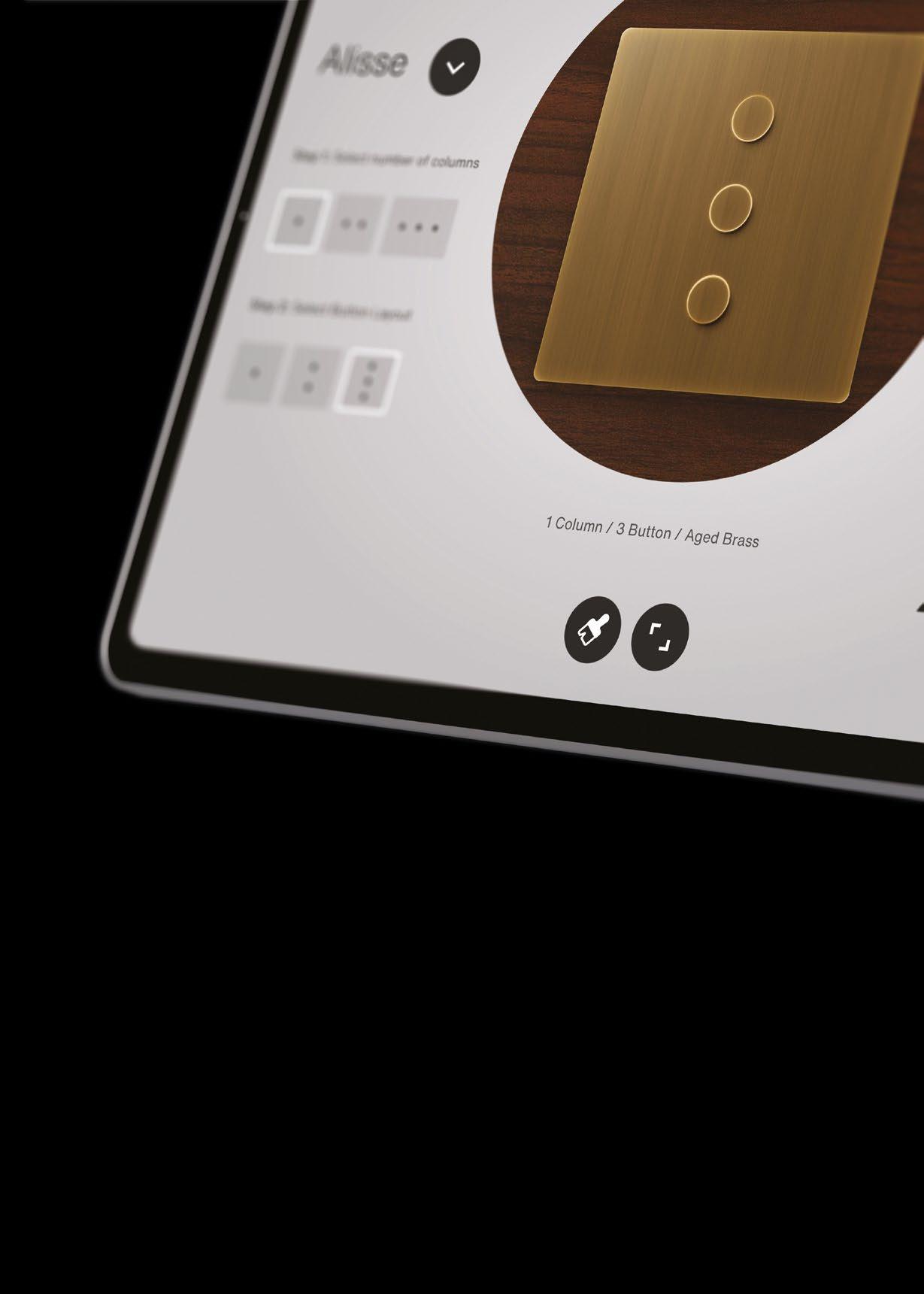
Bring the Showroom to the Living Room
The Lutron Luxury Experience App brings the showroom experience to your iPad. Guide clients through an immersive journey that invites them to virtually interact with light, blinds, and controls—and visualise solutions in their own environments. Available only for iPad.
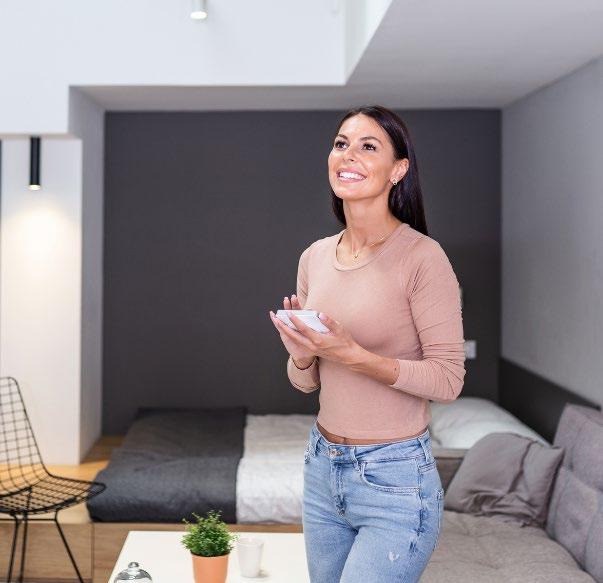
Circadian Wellness in The Smart Home
Did you know that smart home technology can impact your general wellbeing?
We explain how you can use smart tech to help regulate your body’s circadian rhythm – your natural sleepwake cycle, which is important to your overall health.

What Is Circadian Wellness?
Circadian wellness refers to aligning your body’s internal clock (known as your circadian rhythm) with your daily routine (such as when you go to sleep).
Light plays a crucial role in regulating your circadian rhythm. Being exposed to excessive artificial light (whether through a screen or a room’s lighting) can disrupt your body’s natural rhythm, which can then negatively impact your sleep, mood and overall health.
How Lighting Affects Circadian Rhythms
Lighting affects your circadian rhythm because your body recognises different light intensities and colours as signals for when you should wake, focus, relax and sleep.
For a regulated circadian rhythm, we want to see certain levels of light at particular times of day. Optimum lighting exposure would be:
• Morning: Bright, blue-toned light to help promote wakefulness.
• Afternoon: Natural light to sustain energy levels.
• Evening: Warmer, dimmer tones that signal to the brain that it’s time to prepare for sleep.
Imagine the world before electricity. You naturally learnt to wake as the sun rose and would head to sleep as the night drew in. Nowadays, the existence of artificial light can disrupt our circadian rhythms because we’re seeing light at the wrong time of day. Circadian rhythm lights can combat the disruption and ensure that we’re being exposed to the right levels of the right type of light at the right time.
What Is Circadian Lighting?
Circadian lighting is artificial lighting (i.e. smart bulbs, tunable white lights, dynamic LED panels) that mimics natural patterns of daylight. It’s designed to support your internal circadian rhythm by changing colour temperature and intensity throughout the day.
How Smart Homes Enable Circadian Wellness
You can programme your home’s smart lighting to follow schedules that align with your circadian rhythm.
For example, you can create a routine where your lights will gradually fade in bright, blue-toned light to help you wake up.
Potential benefits of improving your circadian health include:
• Greater sleep quality
• Better focus during the day
• Enhanced mood and energy levels
Examples of Circadian Rhythm Light Solutions
Several types of smart home technology can promote circadian wellness, including:
Tunable Smart Bulbs
You can programme smart bulbs to shift from cool to warm white light to replicate natural daylight patterns. Your bulbs can be bright and blue-toned when you need to wake up, and warmer and dimmer when it’s bedtime.
Automated Blinds and Shades
You can time your blinds to automatically open and close with the sun to reinforce circadian alignment.
If the hours of natural light don’t align with the wake-up and wind-down times you need to suit your lifestyle, you can combine blackout blinds with smart lighting. The blackout blinds can keep the sun out to give you more rest, while smart lighting mimics the gentle wakening of natural light.
Sunrise Alarm Clocks
Swap your traditional noise-making alarm for one that emits lights to aid a gradual morning wake-up. You can use a sunrise alarm clock as a standalone device even if you don’t have smart lighting.
Whole-home Lighting Systems
As with many types of smart technology, it’s generally more effective when you use it across your entire home, rather than in just one area.
Even if the bedroom is the most crucial area, you’ll get the most out of your smart lighting by connecting it to home-wide set-ups. If you go for a professional-grade system, you’ll be able to explore full-spectrum lighting that’s connected to other technology and tailored to you. For example, you can have a system that dims your home’s lights at the same time as cooling it.
Circadian Wellness Beyond Lighting
For the biggest impact, you can use smart lighting with additional smart technology for a wellrounded approach to circadian wellness.
Some other types of smart home technology that you can use include:
• Temperature automation: Keeping your home cooler at night can encourage better sleep.
• Soundscapes: Programme your smart speakers or voice assistant to automatically play audio cues that help you start or wind down the day.
By combining different types of smart tech to get the right light level, room temperature and atmosphere, you’ll benefit from a multi-sensory environment that supports your natural rhythm.
Why Use a Professional Integrator for Circadian Lighting?
While you can buy smart light bulbs and sunrise alarm clocks off the shelf, you should consider hiring a professional if you want an integrated system. A CEDIA-certified integrator will help you get the most out of your smart home technology and check that every element works together.
A Smart Home Professional will ensure:
• Home-wide circadian lighting with centralised, seamless control
• Integration across lighting, audio, blinds and heating, ventilation and air conditioning (HVAC)
• Custom schedules and automation that match your lifestyle
• Systems that automatically adapt as seasons change
By investing in a professional installation, you’ll have the reassurance that your circadian rhythm light technology will work exactly as you want.



Technology Meets Design
Media Room vs Home Cinema: What Every Designer Should Know
Designing for entertainment in a home comes down to intention. Should the space serve as a dedicated cinematic escape, or as a flexible hub for everyday living?
hen homeowners
Wspeak about creating a space for entertainment, two terms often surface: home cinema and media room. While they are sometimes used interchangeably, they carry distinct meanings that can shape the design process and the overall experience for the client. For designers of a living space, understanding these differences from a non-technical perspective is crucial.
In both styles, it is critical to allow space around the perimeter of the room between the structural walls and the walls you see to
successfully conceal loudspeakers, acoustic treatments, and other equipment. Just how much space we need depends on our performance goals for each client and their room.
Home
Cinema
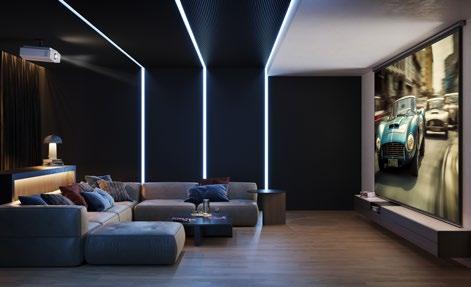
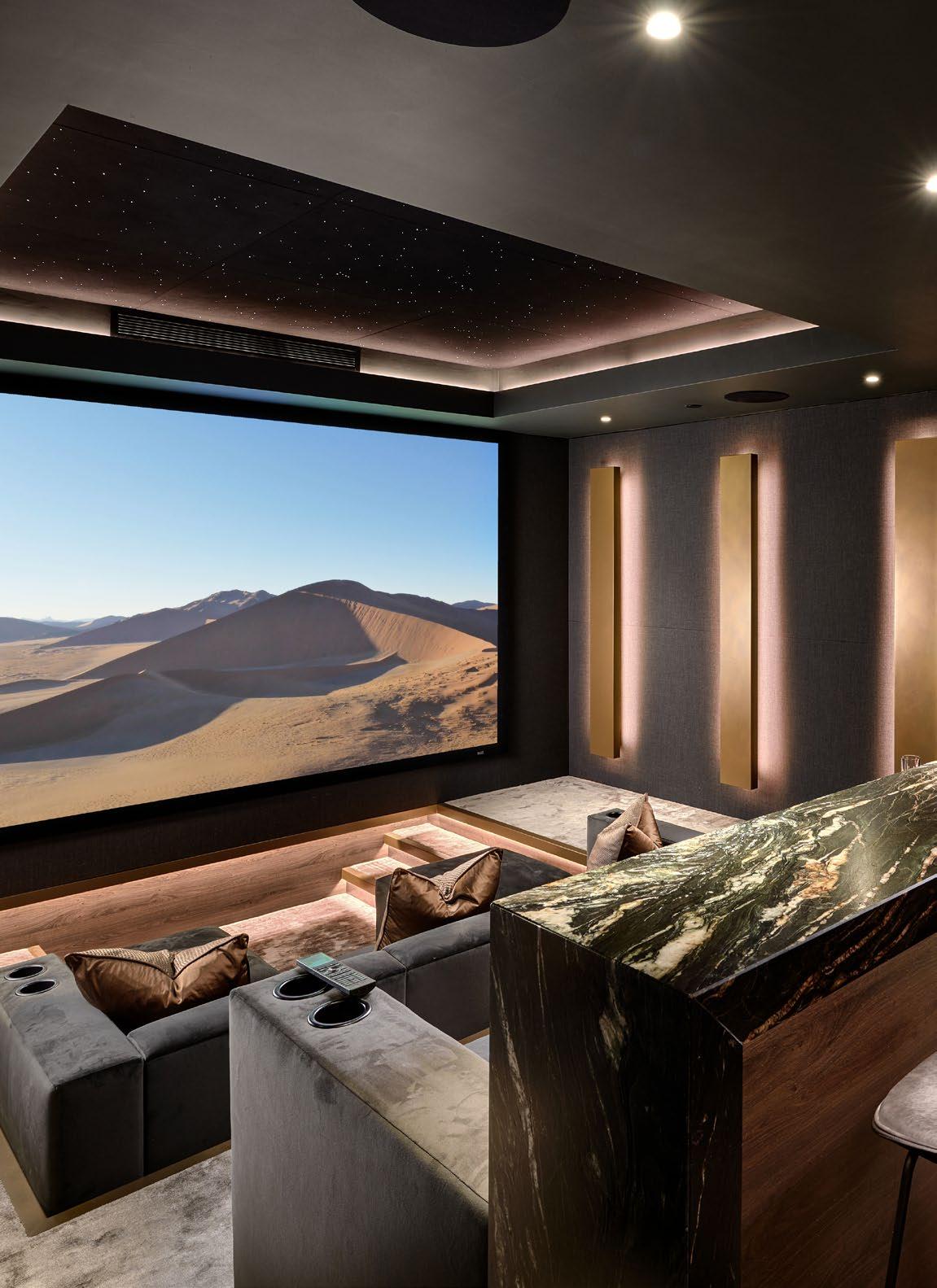
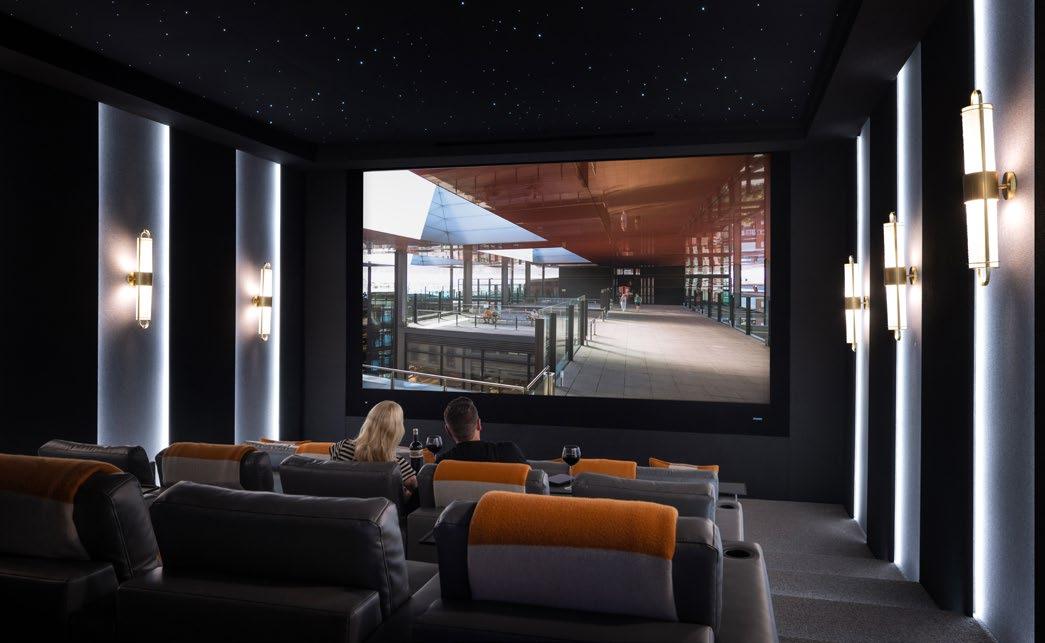
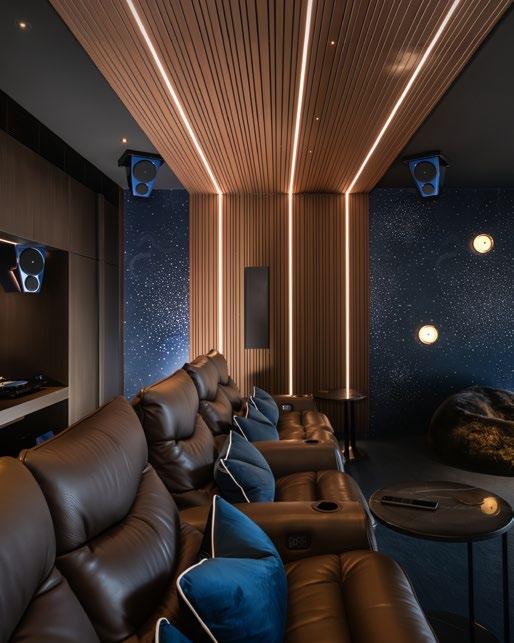
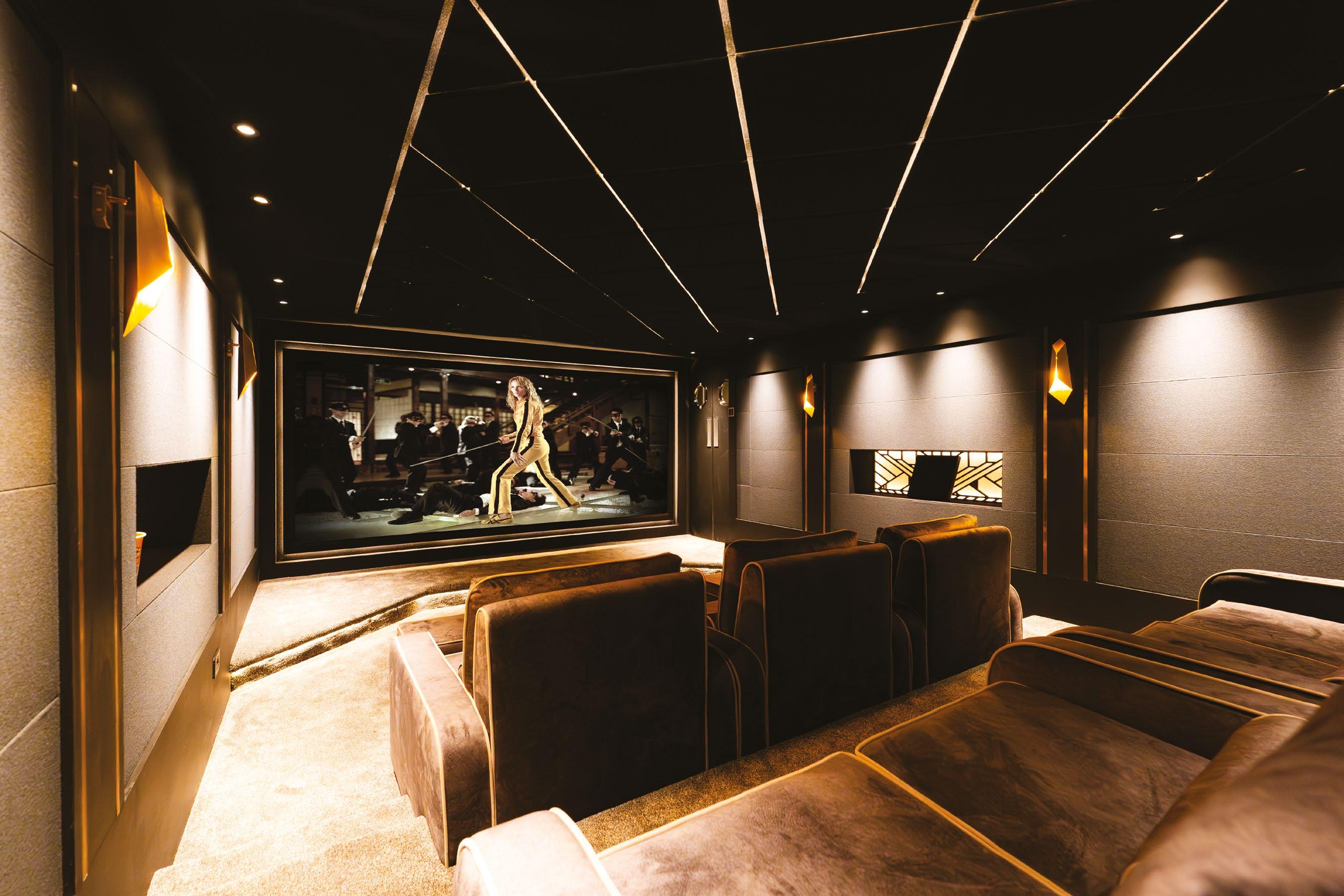
A home cinema is a room with a singular focus. Its purpose is to replicate the feeling of being in a commercial cinema, but within a private residence. The design is dedicated exclusively to film and television viewing, often centred around a large projection screen or direct display and supported by immersive surround sound.
The sound system should be tailored appropriately to the space using acoustic
treatments, the performance level your clients want, chosen together with your smart home professional, and the number of listeners. Speakers themselves should be entirely concealed or barely noticeable, to minimise visual distraction.
From a design perspective, this space is defined by control: light is minimised; colour palettes lean towards darker to reduce reflections, the finishing textures considered as shiny surfaces can impede on the visual experience, and seating is oriented in fixed rows for the best possible viewing angle. In short, the architecture and furnishings are shaped by the cinematic experience.
Media Room
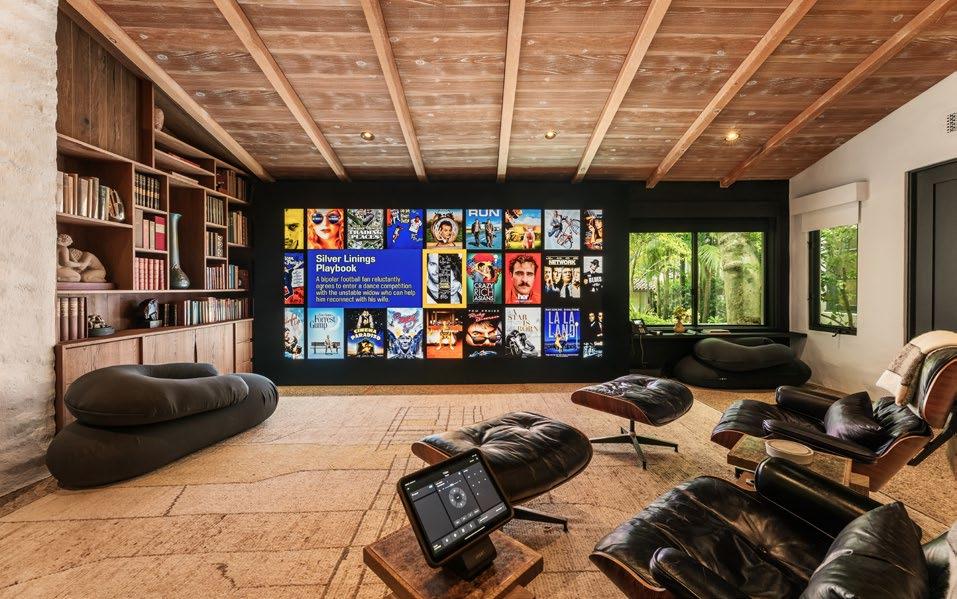
Alternatively, a media room is more flexible in function. Rather than existing purely for films, it is a multipurpose space that adapts to different forms of entertainment. Families may use it to watch television, play video games, stream music, or host casual gatherings. While the technology may still include surround sound and a large screen, the layout is less rigid.
Designers might prioritise comfort and versatility over cinematic precision, opting for sectional sofas, natural light, and décor that blends with the rest of the home. A media room is often an extension of everyday living, not a sealed-off environment.
For interior designers, the key is to recognise the lifestyle and expectations of the client. A home cinema requires a controlled environment and dedicated furnishings, whereas a media room prioritises adaptability and integration with broader interior schemes. Neither is inherently better than the other. The distinction lies in intent: is the goal to replicate cinema at home, or to create a social hub that embraces entertainment as part of daily life?
Ultimately, whether shaping a hushed, immersive cinema or a lively, multifunctional media space, the designer’s role is to ensure technology feels harmonious with form, function, and atmosphere.

Beside the Seaside
CinemaWorks
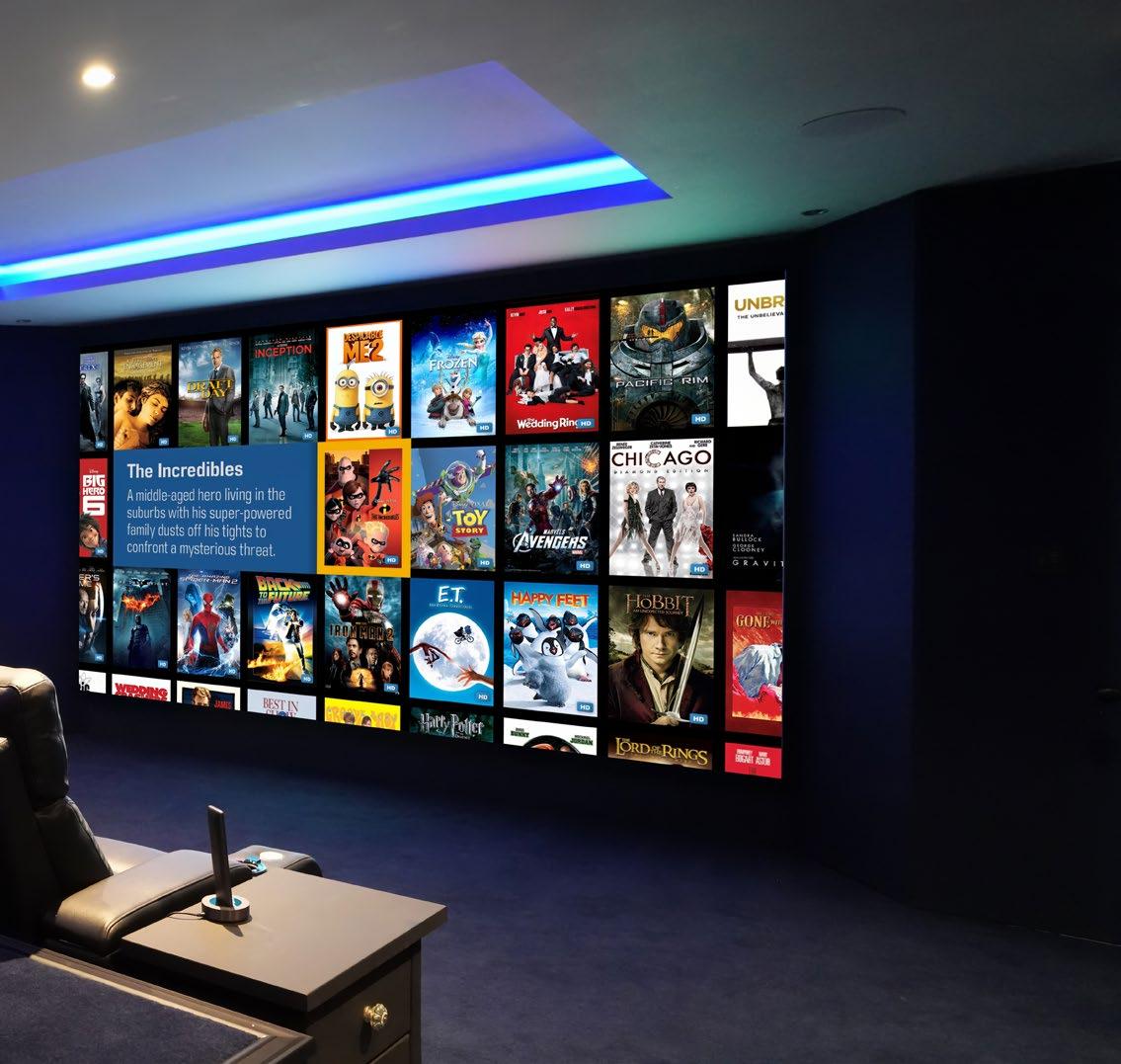
A traditional-style home cinema brings rich, immersive audio and understated drama to a seaside Victorian home, balancing budget, performance, and architectural charm with engineering precision.
When Steve and Jan traded the pace of Surrey for the serenity of the South Coast of the United Kingdom, their newly acquired Victorian home came with a peculiar 1950s side extension, long abandoned from its original purpose as a swimming pool. Instead of demolishing it, the couple opted to transform the space into something Steve had always wanted but never had room for — a dedicated home cinema.
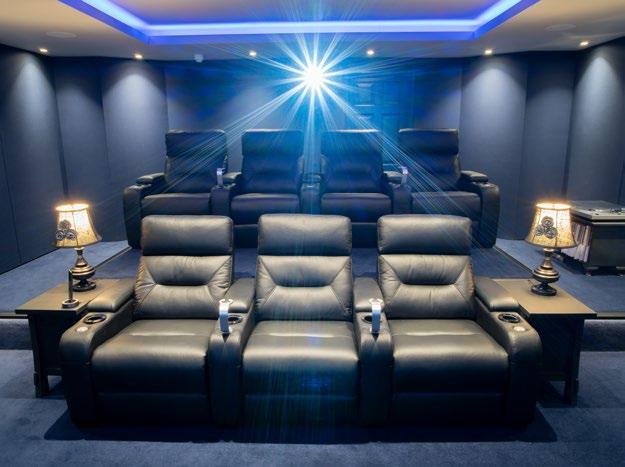
CinemaWorks was engaged following a series of Zoom consultations during lockdown. The technical conversations quickly outpaced competitors. Steve, a retired electrical engineer who is still hands-on in his 70s, gravitated toward the integrator’s engineeringled approach: speaker toe-in angles, RP22 sound pressure targets, and acoustical consistency across seating rows were all discussed in depth. That trust grew into a collaborative design process, where performance was balanced with cost sensitivity. At 6.4m x 5.8m, the room was large enough to
warrant a proper cinema layout but also presented challenges. A rear projection and equipment closet was introduced to shorten the space and avoid acoustic unpredictability. The room was then engineered to accommodate a 16-channel Klipsch and Emotiva system, prioritising speaker quality and placement over channel count. Every enclosure was custom-built to manufacturer specifications and toed in precisely, concealed behind acoustically transparent navy wall fabric.
A Sony XW7000 projector was selected following a side-by-side demo against its lower-spec counterpart, with the final image scaled to 3.5m width to meet desired brightness levels. The 16:9 screen was a deliberate choice, favouring Steve’s passion for Formula 1 and sports content over the allure of a wider cinematic aspect ratio.
Atmos speakers were installed within a double coffer ceiling, and LED lighting was subtly integrated using bevelled-edge wall panels and scalloped downlights. Jan’s aesthetic preferences steered the
room’s traditional styling, which was made possible by a flexible yet refined Rako lighting system, all tied together through Savant control. The lighting was programmed around real-life usage — low light for watching, mid-brightness for casual multitasking, and full scenes for cleaning or guests.
Despite late-stage construction challenges, including reduced ceiling height and unexpected door placements, the integrator adapted the riser design and speaker locations to maintain performance without compromising comfort or symmetry. Postinstallation, system calibration included manual sub phase tuning and time alignment using Room EQ Wizard to refine the spatial accuracy and tonal balance.
This isn’t just a cinema that looks the part. It’s a room that performs beautifully, where engineering met enjoyment, and where thoughtful design has given Steve and Jan more than they ever expected.
Beside the Seaside
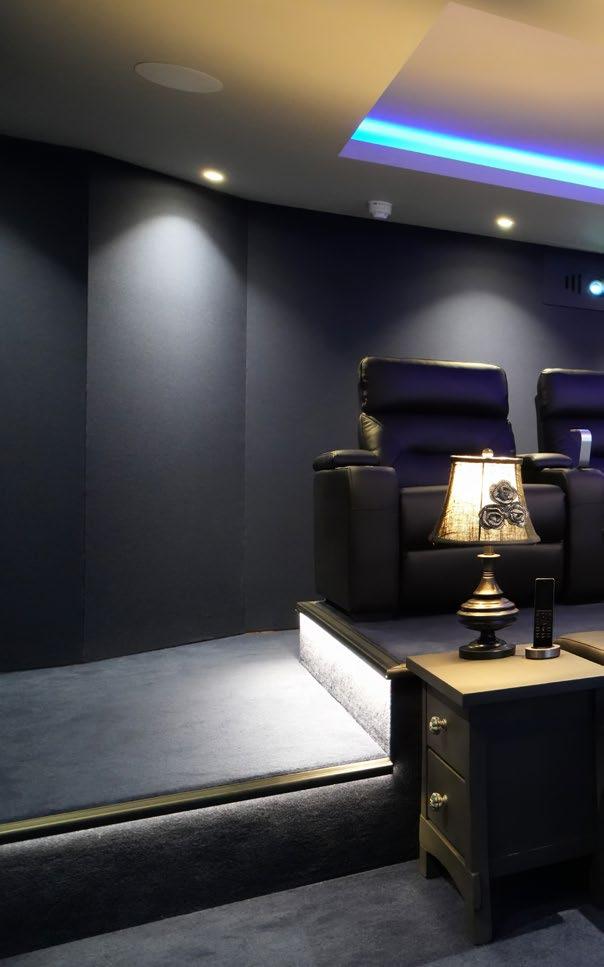
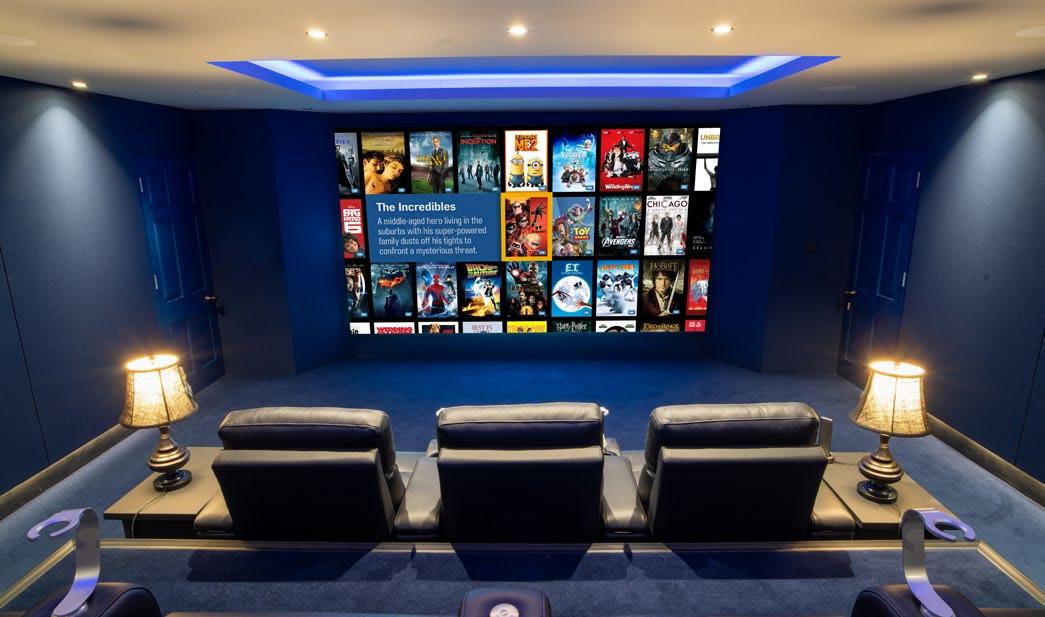
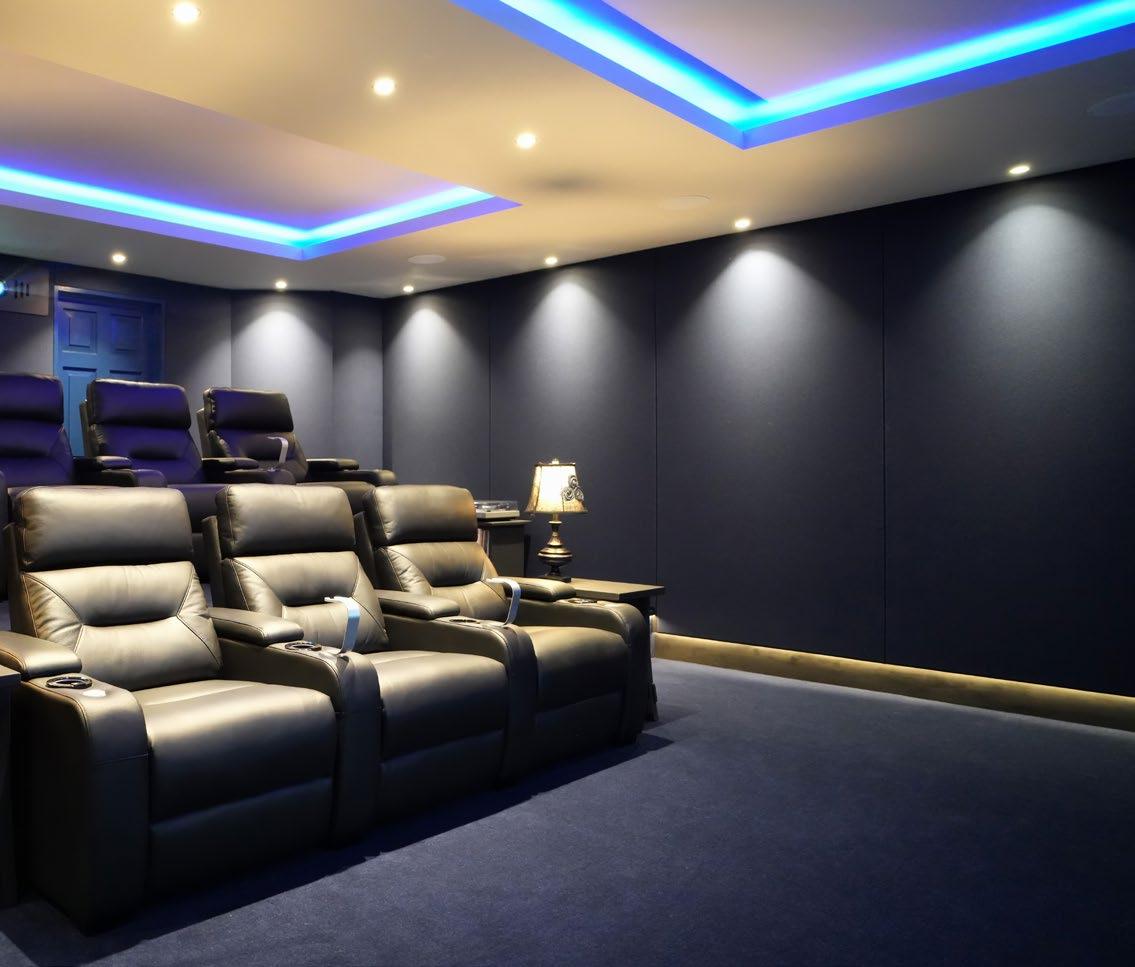
In balancing precision with restraint, this cinema achieves something rare — immersive performance without visual intrusion.

Hi-Concept
Blockbuster Barn
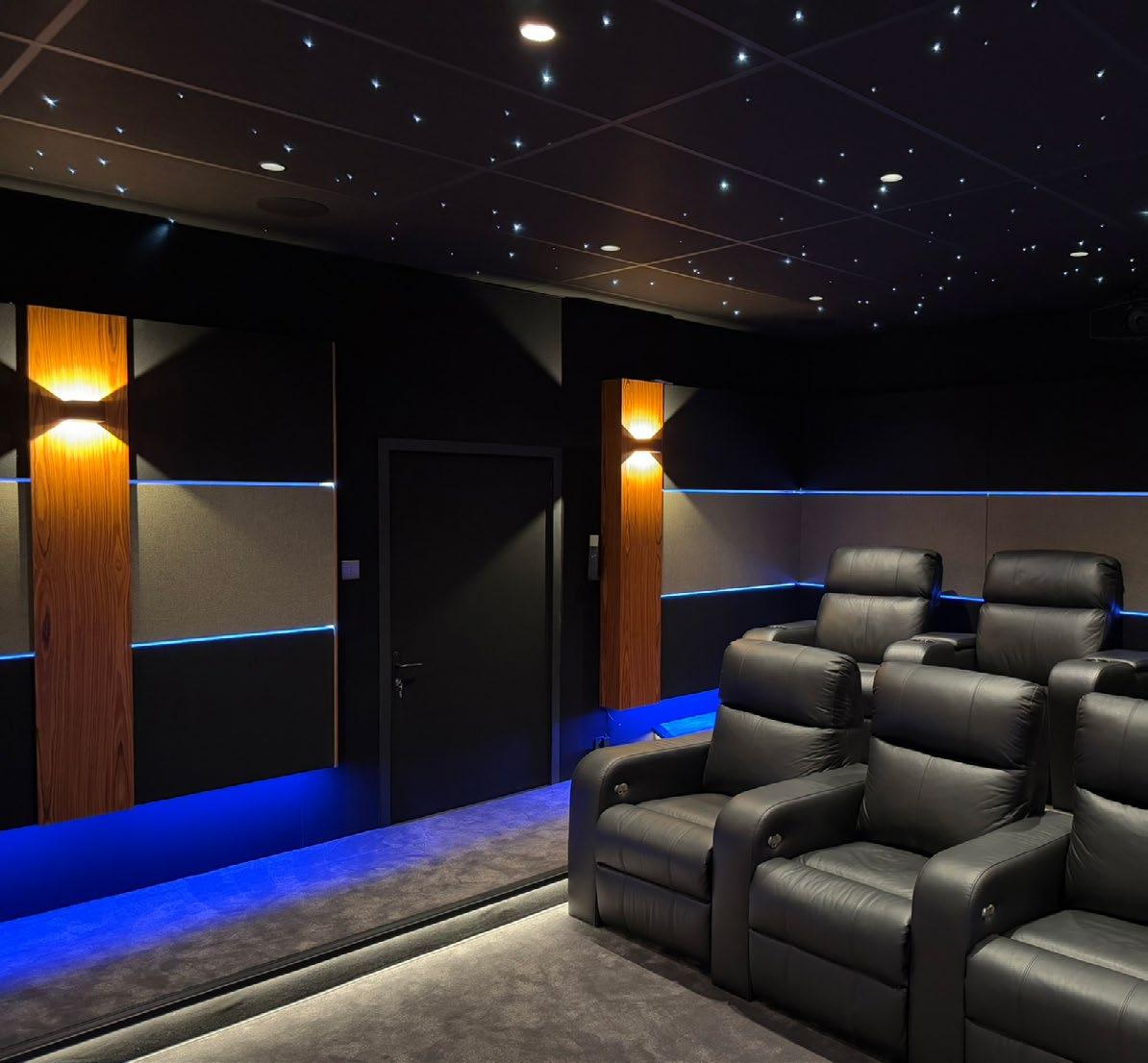
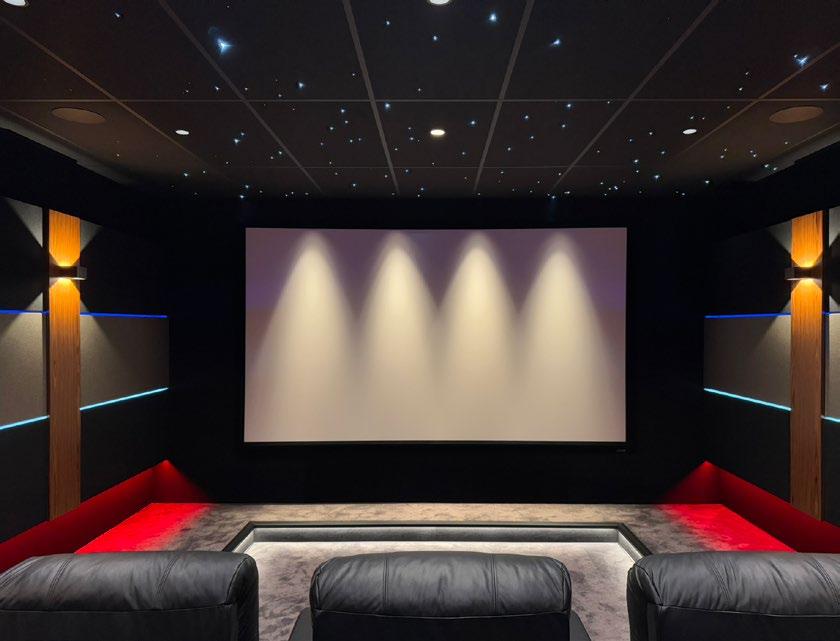
A dilapidated French barn becomes a spectacular seven-seat home cinema with a nostalgic twist, crafted with Control4 automation and acoustic precision by Hi-Concept.
Tucked among the fields of rural France, a onceforgotten agricultural barn now conceals one of the most characterful home cinemas imaginable. What began as a dream sketched in the margins of a film buff’s imagination has been realised through the technical craft and creative flexibility of French integrator, Hi-Concept. This is not just a smart room for watching movies; it is a cinematic sanctuary shaped by nostalgia, immersive technology, and years of planning.
The client, a collector of classic cars and retro memorabilia, had long envisioned turning his disused barn into an entertainment complex. At its centre would be a private cinema that didn’t just perform well, but reflected his love of vintage arcades, jukeboxes, and the golden age of Hollywood. From the outset, the brief was bold. Four themed zones would eventually occupy the space — cinema, lounge, bar, and car garage — but the first priority was a seven-seat cinema that would feel as personal as it was powerful.
Hi-Concept delivered a room that walks the line between spectacle and subtlety. A 5.2.4 Dolby Atmos configuration ensures full vertical immersion without overpowering rear seating, while LCR speakers are hidden behind an acoustically transparent screen. The acoustic treatment was equally purposeful. LED-lit wall panels conceal broadband
absorption and bass traps, supporting precise audio calibration via Dirac Live. Every seat in the room experiences clean imaging, deep impact, and dynamic surround.
Video performance received the same level of care. A native 4K HDR projector and micro-perforated screen were calibrated to exacting SMPTE standards, with careful consideration given to viewing angles and riser height. Even after the client requested a mid-project adjustment to lighting zones, the team responded swiftly — opening sealed walls, rerouting cable paths, and reprogramming the Control4 automation system without compromising finish or schedule.
But it’s the emotional quality of the project that leaves the strongest impression. From foosball tables to pinball machines in the adjoining lounge, every design choice is a nod to the client’s personality. The Control4 interface ties it all together, allowing seamless transitions between ‘cinema mode’ and more playful, social scenes.
There are more advanced cinemas out there. But few feel this honest. Few carry such a strong sense of character. And few offer such a vivid reminder that great design doesn’t begin with equipment specs; it starts with a story worth telling.
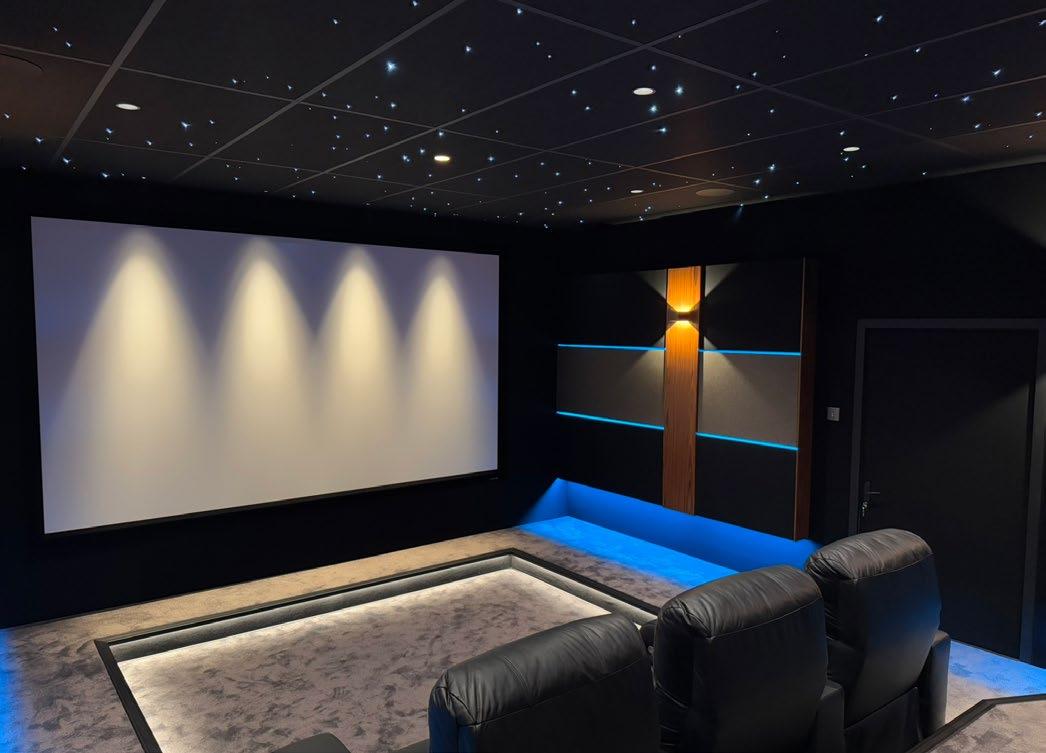
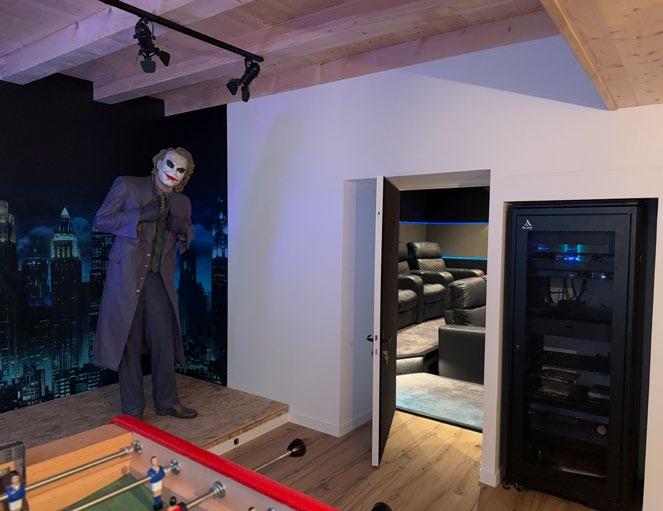
Every detail, from lighting to acoustics, was crafted to reflect the client’s passion for film.
Blockbuster Barn
Hi-Concept
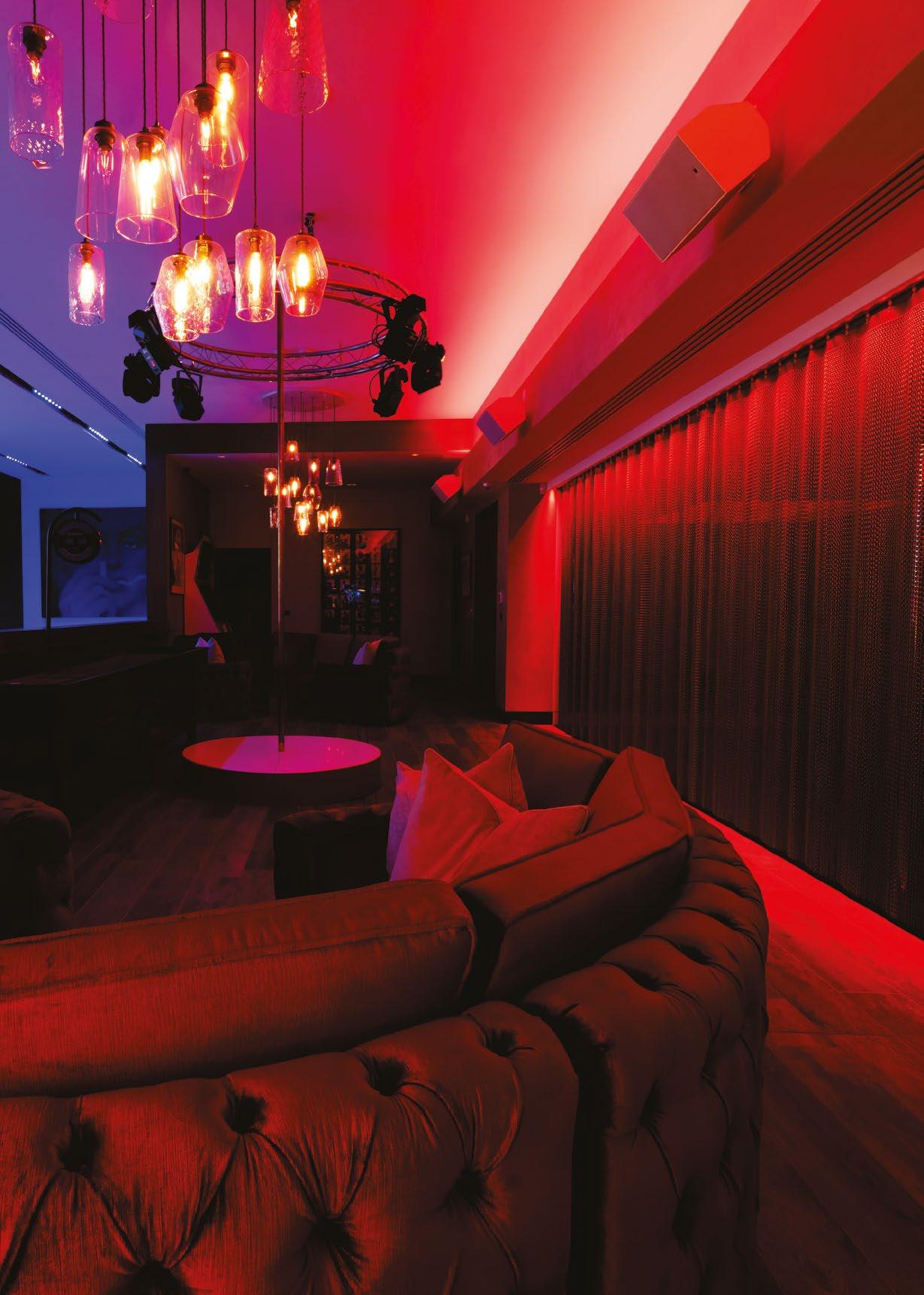
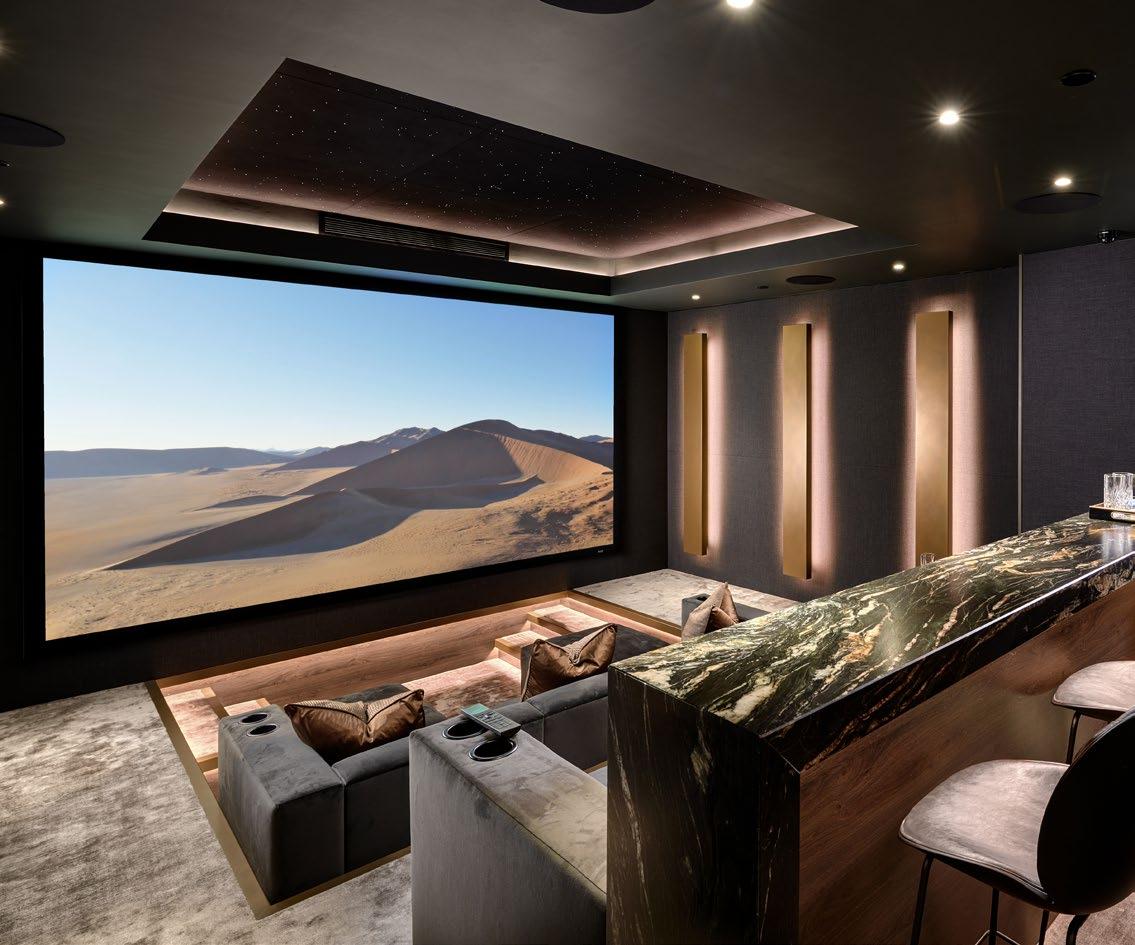
Buzzards Road Home Cinema
An early concept was flipped to deliver this stunning UK cinema, with Dolby Atmos, intuitive control, and luxury finishes layered over an expertly engineered acoustic design.
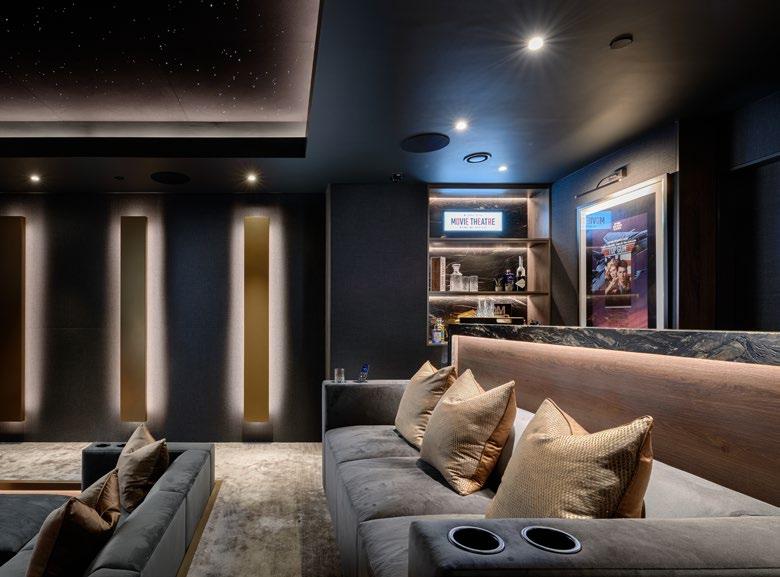
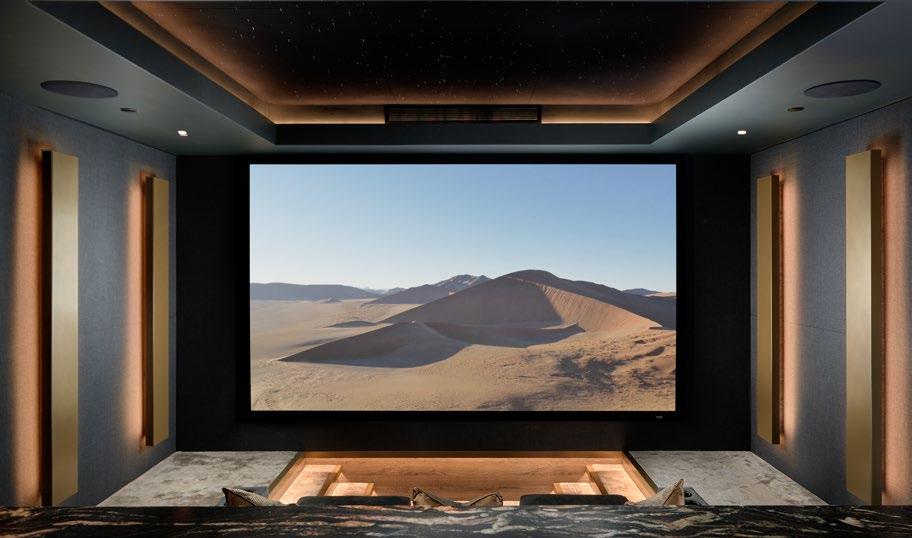
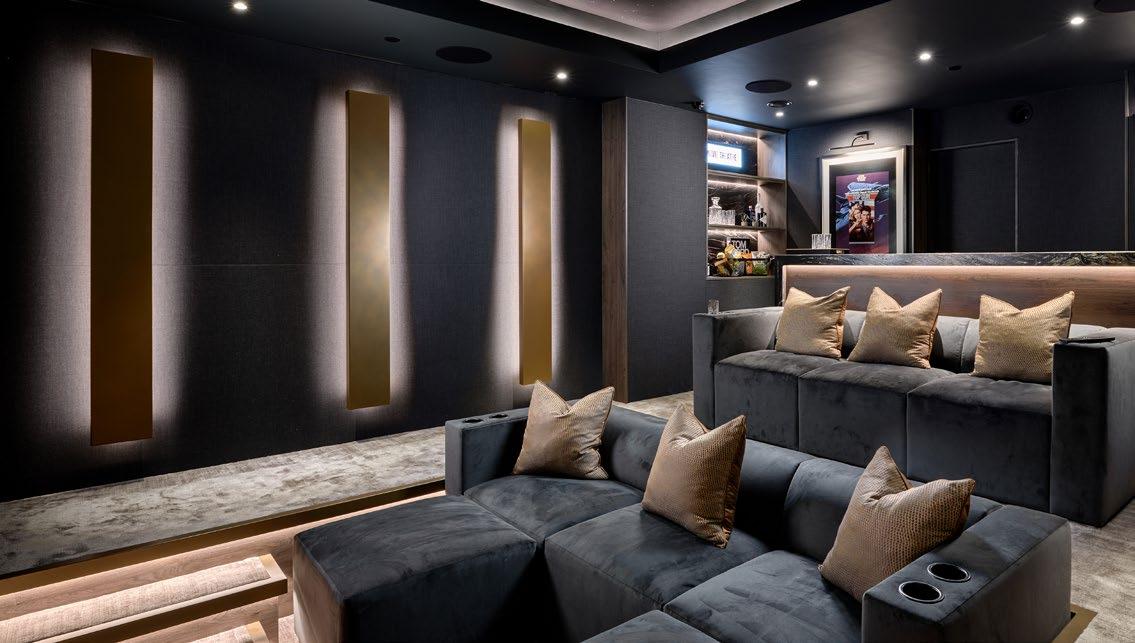
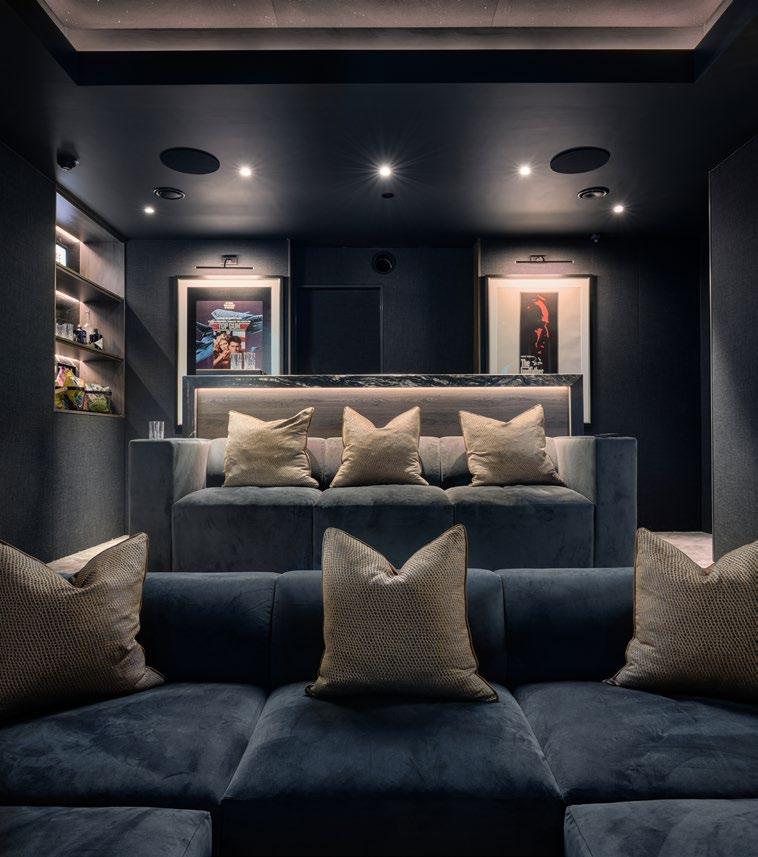
The rolling countryside of the United Kingdom may feel a world away from the glitz of a film premiere, but within this newly built residence, a cinematic marvel is quietly redefining home entertainment. Originally envisioned as a space where a gym and cinema could coexist through a shared display, the Buzzards Road Home Cinema underwent a transformative reimagining at the hands of integrator, IndigoZest and cinema designer, Cinema Luxe. What began as a technically challenging vision soon evolved into something far more refined, thanks to a client willing to rethink expectations and a team ready to challenge assumptions.
The shift from a commercial LED screen to a properly calibrated 4K projection system not only elevated the room’s visual impact, but enabled a full 9.4.4 Dolby Atmos speaker layout. Careful reorientation of the room layout resolved
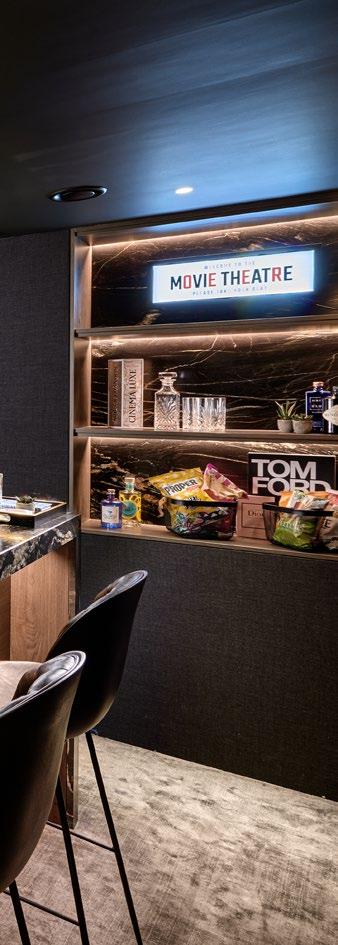
long-standing issues in seating geometry and acoustics, while a decision to relocate the gym screen altogether freed the cinema to operate as a dedicated, immersive space. Interior designer, Sinead Kelly Herbert worked alongside APM Design & Build and the AV team to layer bespoke elements — including a stone-finished bar, CNC-cut wall panelling, and bronze accents — over a performance-driven framework. Technology remains discreet: speakers are hidden behind stretched fabric, the projector is concealed above the door, and HVAC is whisper-quiet thanks to a custom-built baffle wall solution.
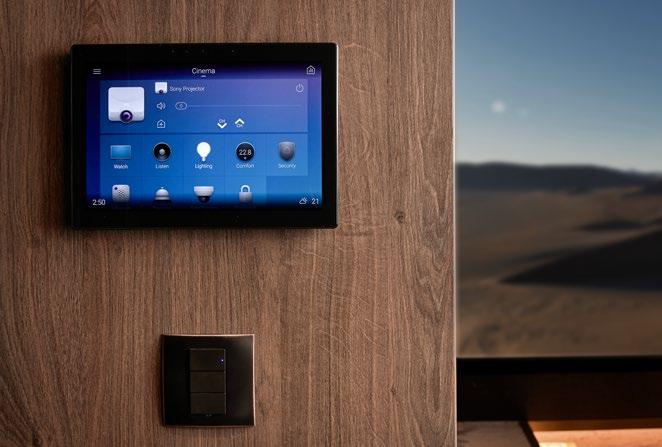
Integrated control brings it all together. From family movie nights to Newcastle United games broadcast throughout the house, the system is both intuitive and deeply personal. This award-winning space balances elegance with impact, delivering blockbuster entertainment without compromising a single design detail.
Buzzards Road Home
Cinema
The reorientation of the room completely unlocked its potential for both performance and comfort.
IndigoZest Ltd & Cinema Luxe
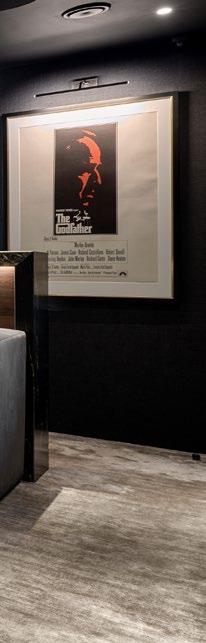
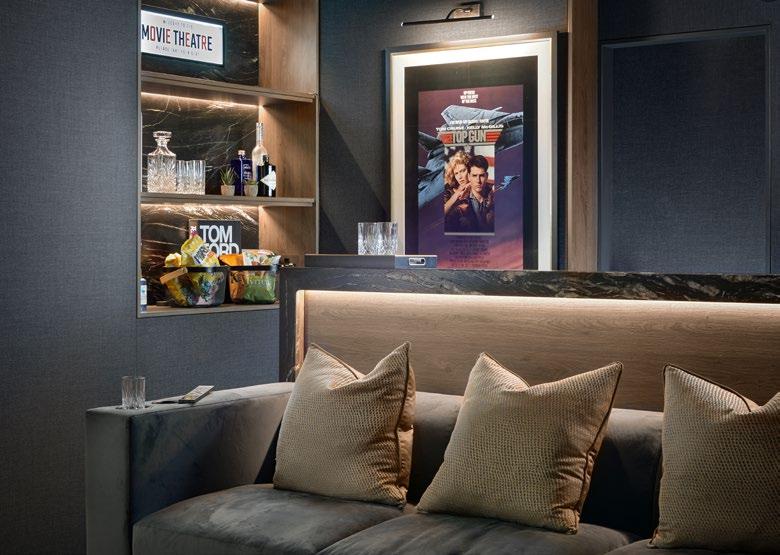
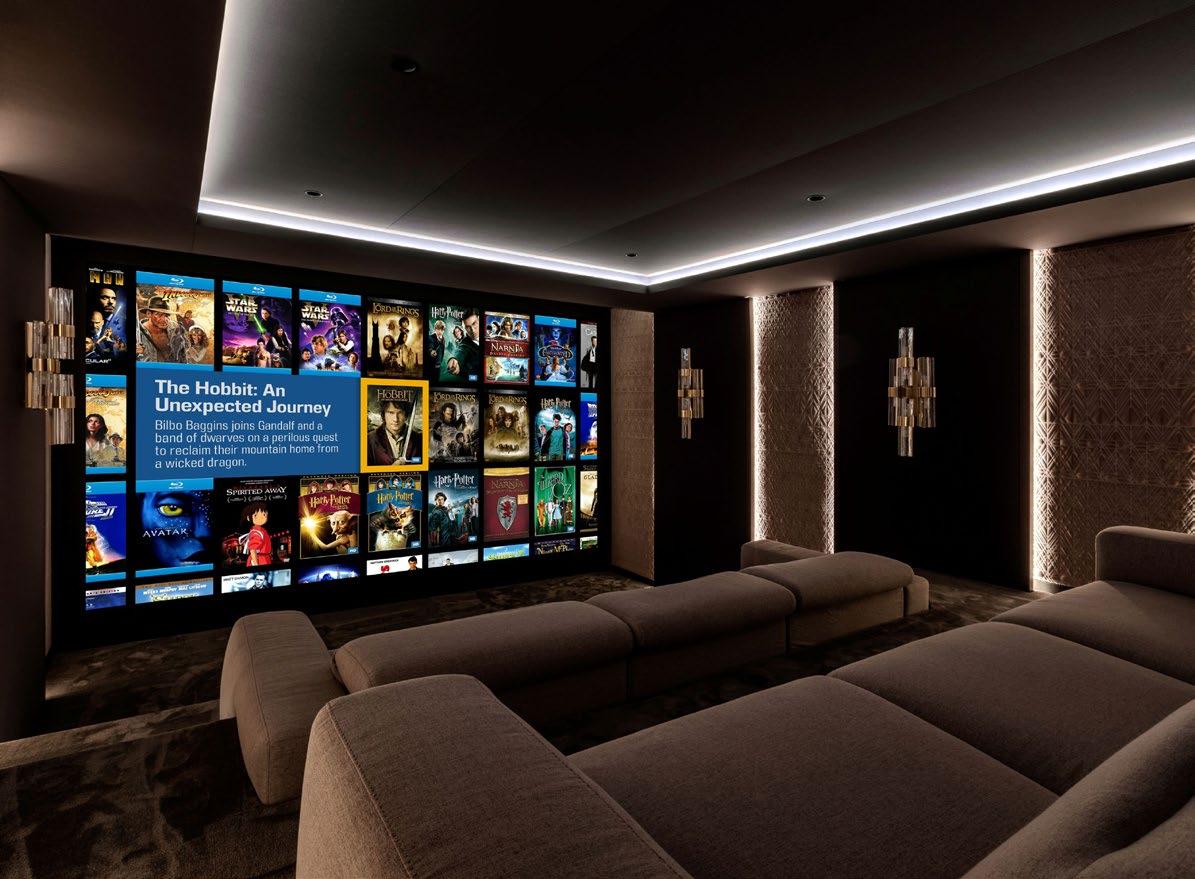
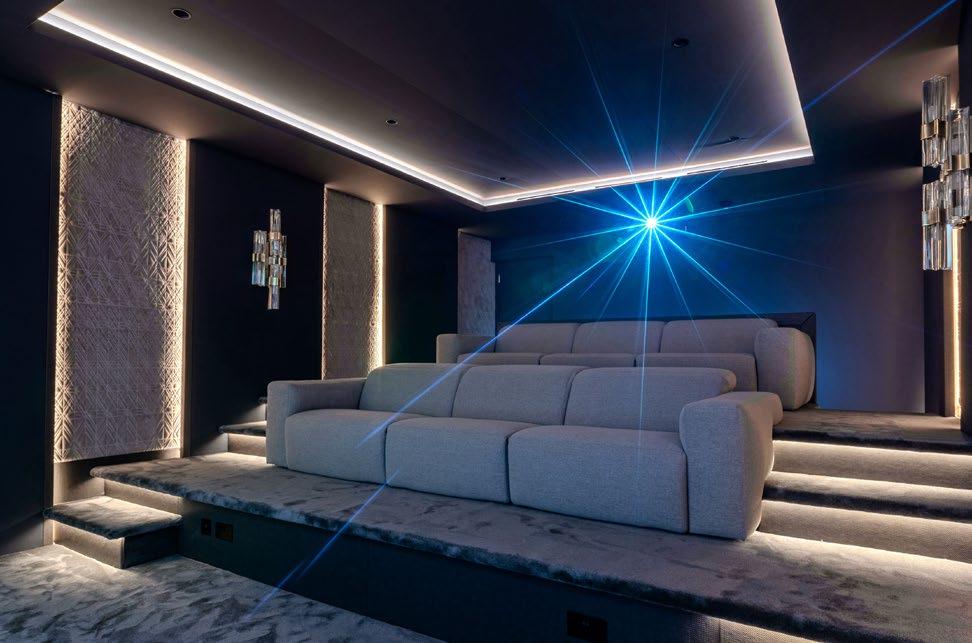
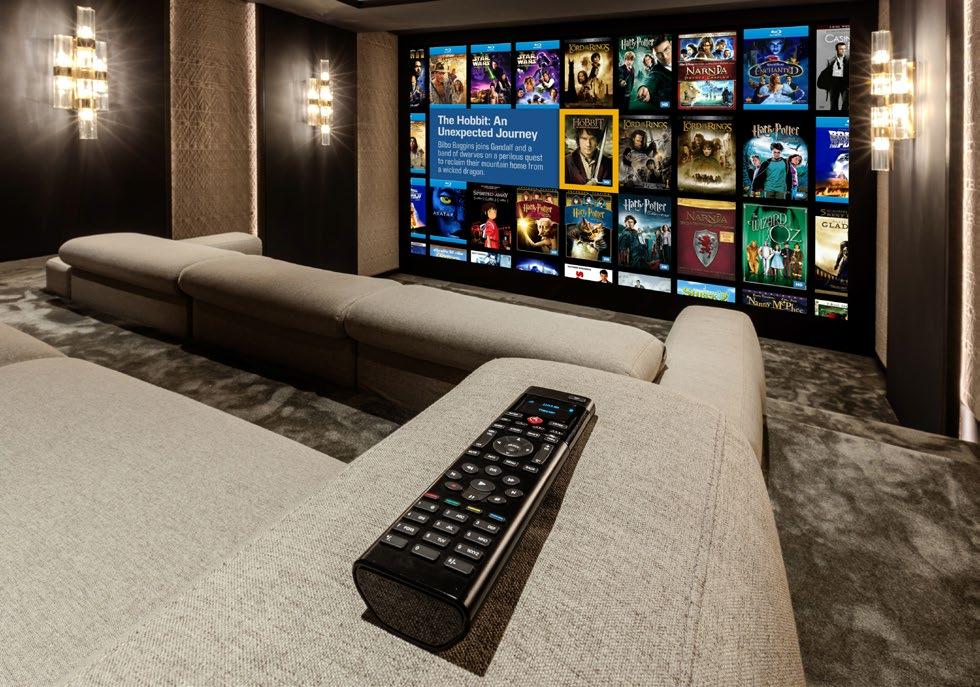
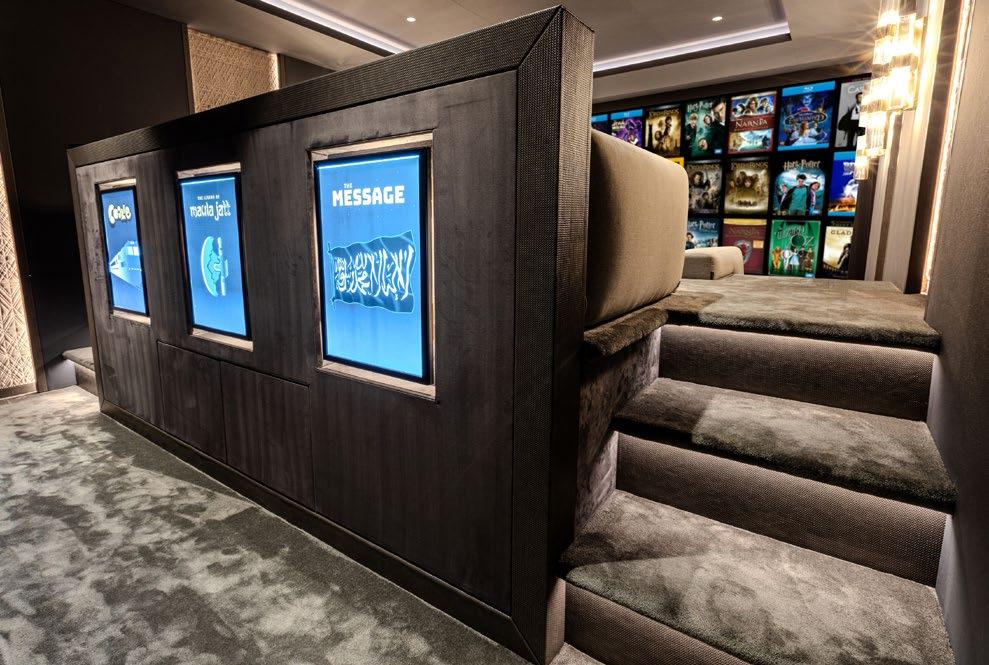
Basement Luxury Cinema
A dramatic basement transformation in Wembley pairs opulent interior design with a precision-engineered 15-channel home cinema system, fine-tuned to satisfy a discerning cinephile’s dream.
Tucked beneath a large family home in Wembley, United Kingdom, this once-unassuming basement playroom has been radically reimagined. The client, inspired by a visit to a friend’s 14.6.1 Dolby Atmos setup in the United States, had one ambition: to recreate a cinematic experience that thrilled in every sense, and looked just as impressive.
With design groundwork already laid by Interieur London, integrator, Finite Solutions, was brought in for their technical expertise. Winning the project was no small feat; the homeowner opened a four-way tender, including their existing smart home integrator. Ultimately, it was Finite Solutions’ commitment to high-detail pre-sale modelling, mood boards, and demo-driven reassurance that secured their place.
Adapting the existing layout proved complex. The client insisted on a walkway behind the back row to mimic the ambience of commercial cinemas, which meant seating was pushed forward, forcing compromises in viewing angles. But Finite Solutions worked within these limitations, carefully
reworking the risers and embedding a Wisdom Audio system with 15 channels and four subwoofers into tight cavity spaces, achieving both elegance and exceptional sound pressure uniformity.
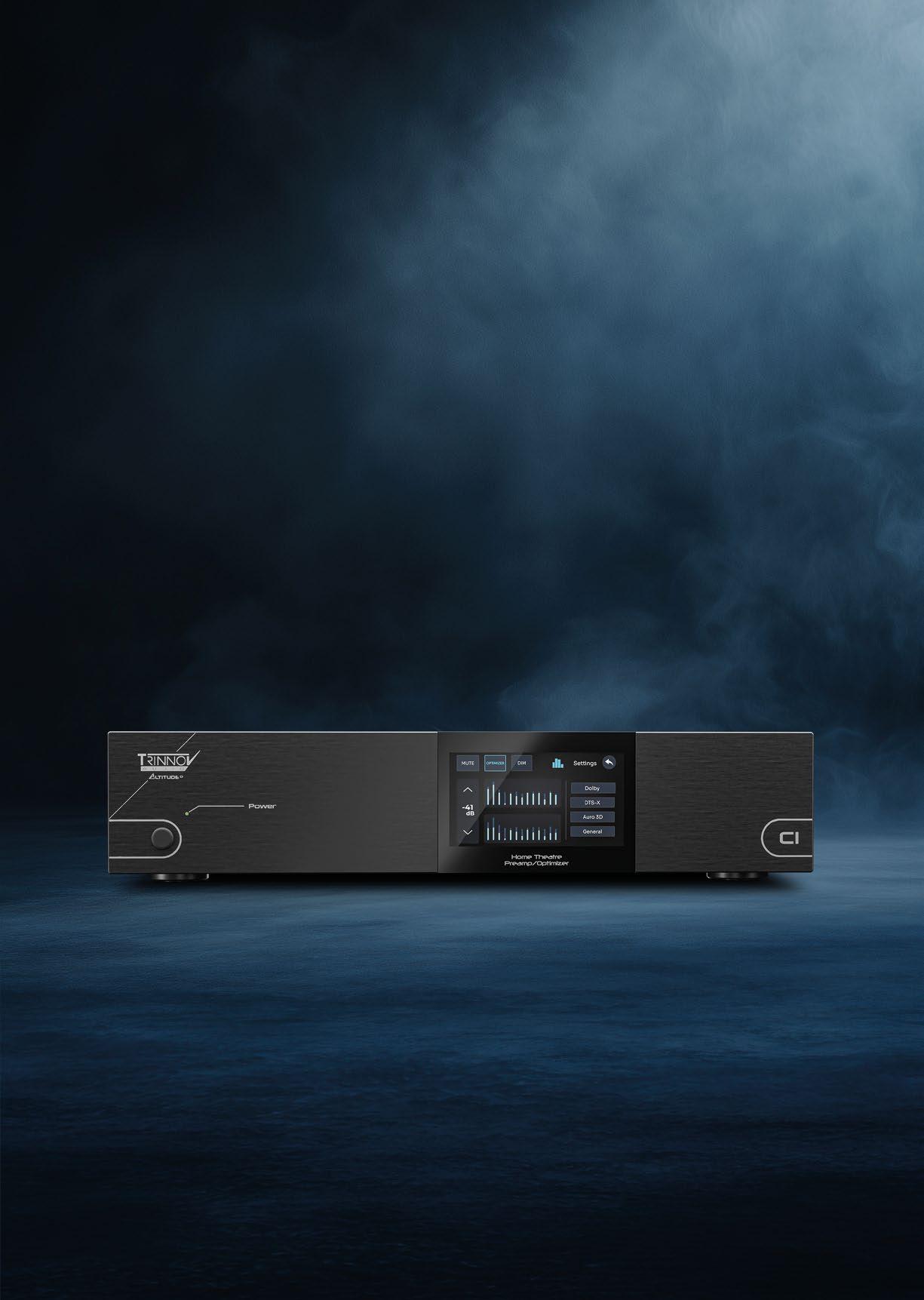
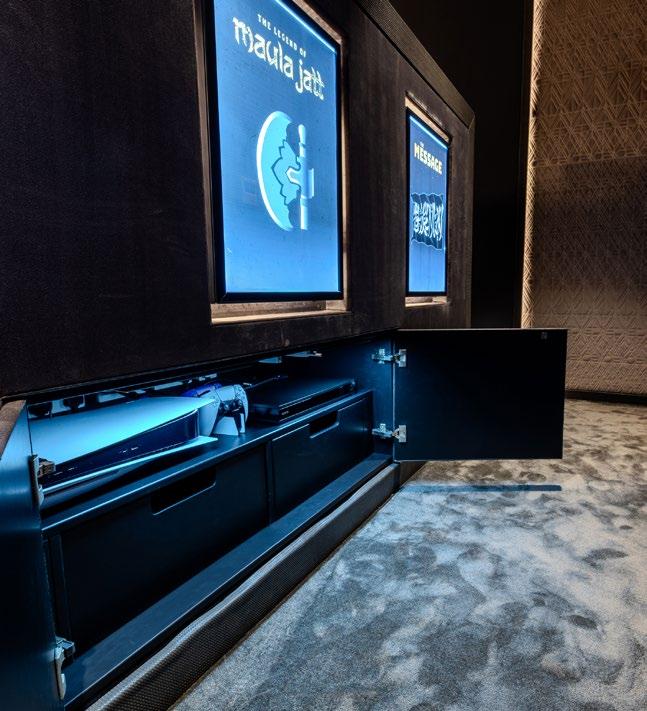
Trinnov’s processing and calibration delivered sonic performance tailored to the client’s exact taste, including three preset sound curves for different moods. A JVC NZ9 projector was chosen over higher-lumen models for its image quality, with a 4-metre CBS acoustically transparent screen and high-gain fabric ensuring brightness held up in complete darkness.
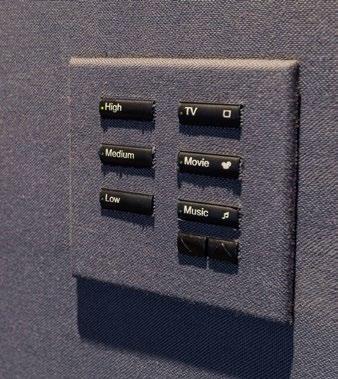
Close collaboration between Finite Solutions, Interieur London, and the client’s existing Control4 and Lutron integrators ensured smooth integration of HVAC, lighting, and control. Every detail, down to a custom fabric-matched keypad, was considered.
This was a project of deliberate compromises and focussed intentions, crafted for someone who knew exactly what they wanted — and didn’t mind breaking a few rules to get it.
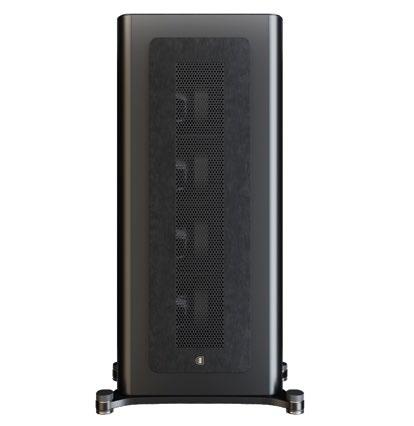
ARCHITECTURAL SUBWOOFERS WITHOUT COMPROMISE

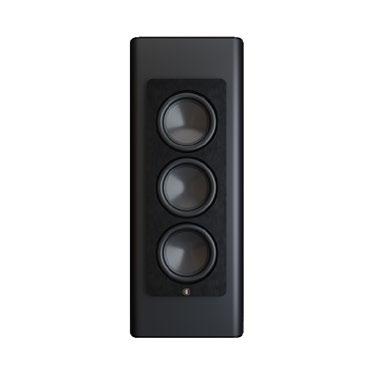
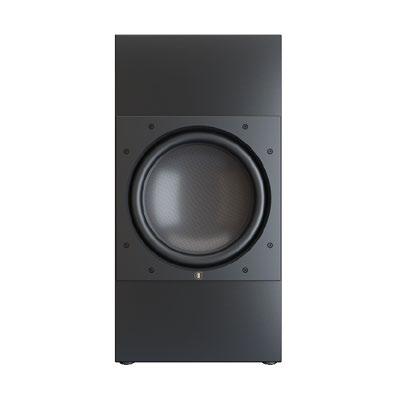
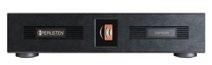
DSP3000 amp
DSP1500 amp
D8is
D3is
R18is
Flotopia
Die Zwei – Heimkino GmbH
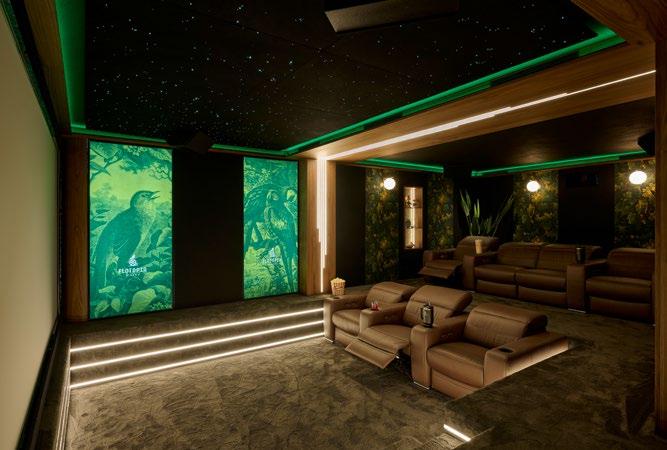
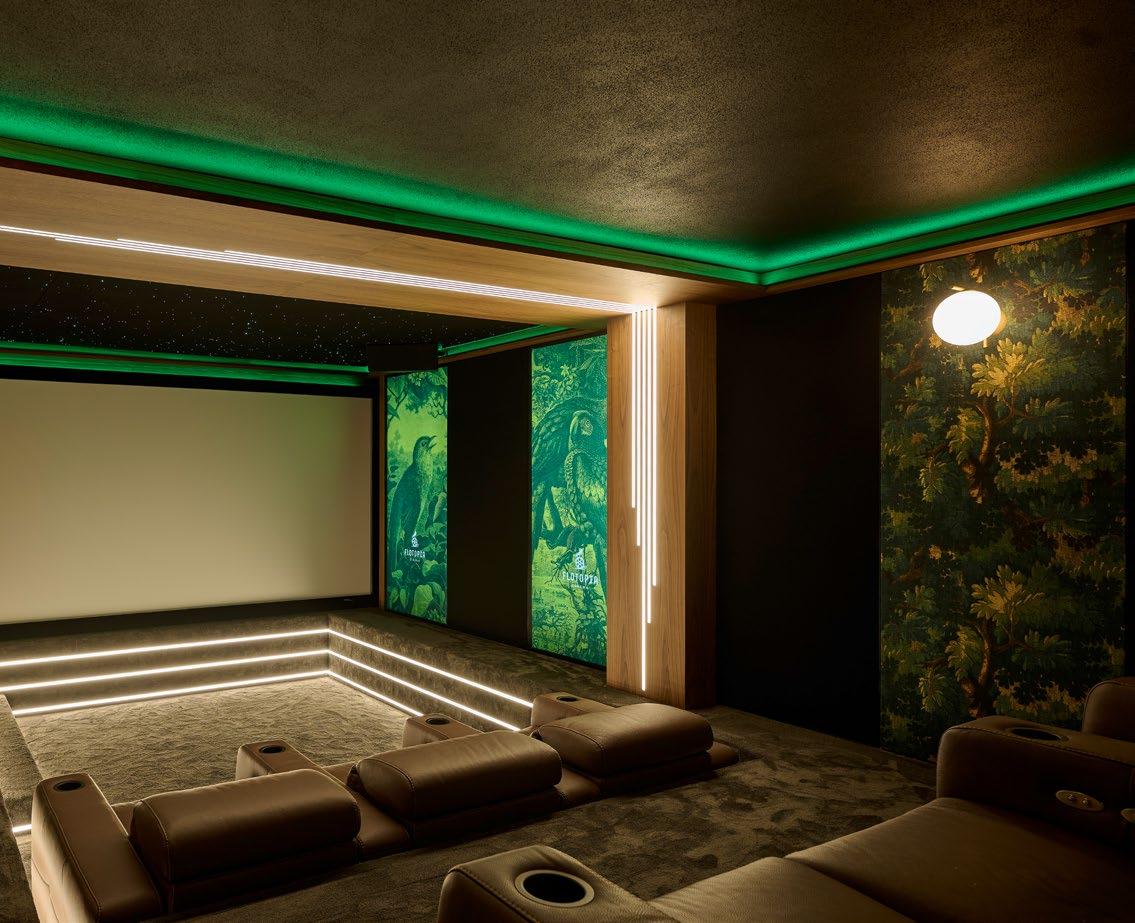
A home cinema in Austria’s alpine countryside is reimagined with cutting-edge audio, immersive video, and tactile design, delivering warmth, comfort, and reference-grade performance.
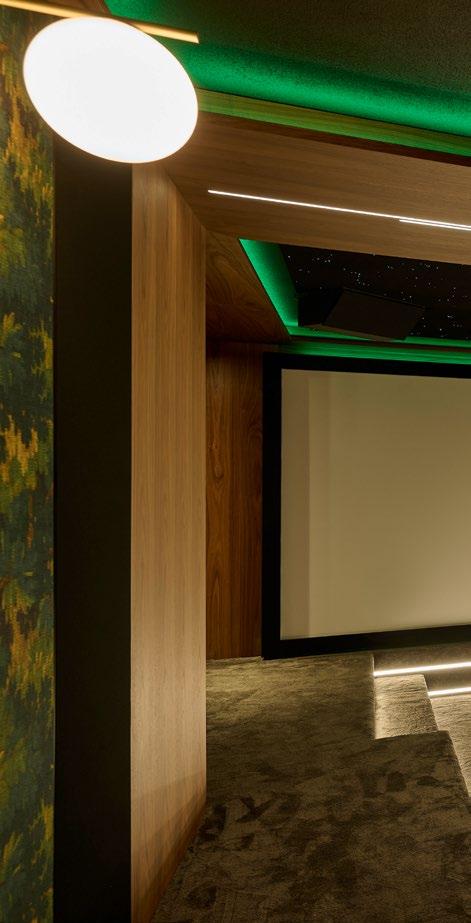
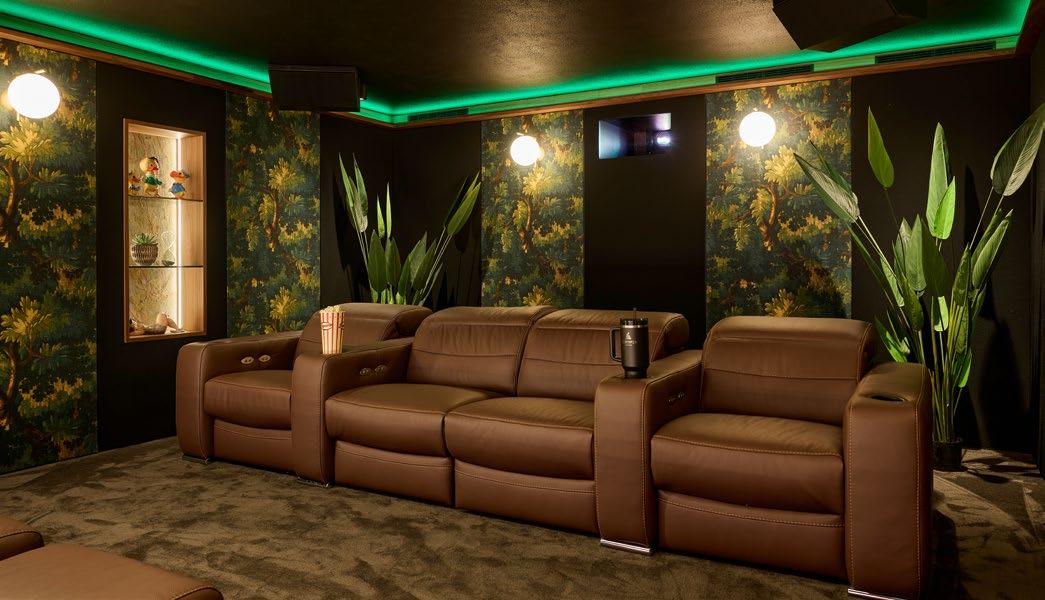
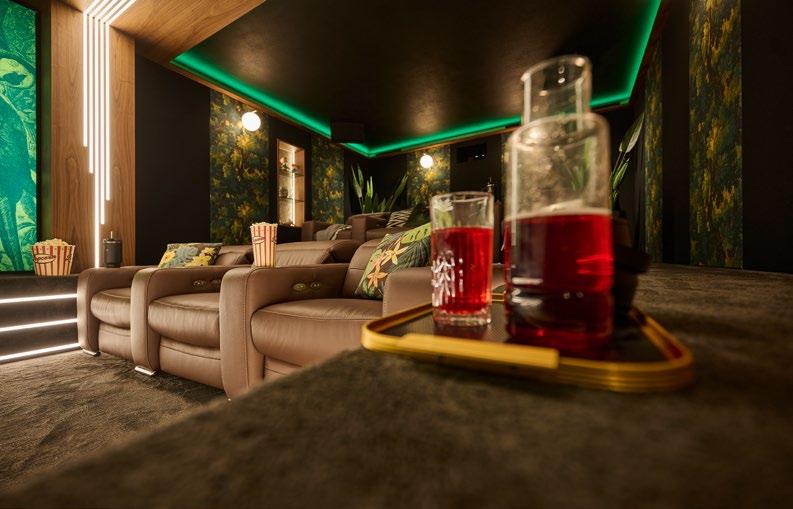
The Austrian Alps offer a kind of silence that almost demands contrast. For one dedicated cinephile, that contrast came in the form of a private cinema — a renovation project that elevated a low-ceilinged, modest DIY room into an acoustically pristine, emotionally engaging space. Integrator, Die Zwei – Heimkino answered the brief with a design-first, performance-driven approach that leaned on the client’s own soundproofing business and a shared respect for detail. Two early challenges — the confined space and low ceiling — were overcome not just with technical ingenuity but with aesthetic commitment. A structural ‘pit’ at the front now houses the reference viewing seat, enhancing sightlines while becoming a visual centrepiece. It’s paired with a dark walnut interior palette, soft fabric panels, and a concealed audio infrastructure that delivers unrelenting power without disrupting the warmth of the room.
Control and calibration were crucial. A Trinnov Altitude32 processor, 24-channel layout and WaveForming subwoofer system power the audio landscape. Meanwhile, a Sony GTZ-380 projector beams native 4K HDR imagery onto a 4.2-metre cinemascope screen with automated masking. Every cable, bracket, and ventilation path was deliberated in CAD and tested in VR.
Lighting and ventilation are automated through Crestron, with a large wall-mounted panel offering full user control. A discreet bar tucked into an old chimney recess encourages socialising before and after screenings, adding texture to the room’s function and narrative.
Ultimately, this is a space that feels sculpted rather than built. One where the client’s passions — film, sound, family — are honoured through seamless technology and tactile comfort.
Flotopia
Die Zwei – Heimkino GmbH
The client describes this room as his favourite in the house, despite three levels of entertainment space elsewhere.

Cinema Genius in Geneva
An 1820s Swiss cellar is transformed into a heritage-protected private cinema, where high-performance AV and acoustic precision redefine immersion without touching a single structural wall.
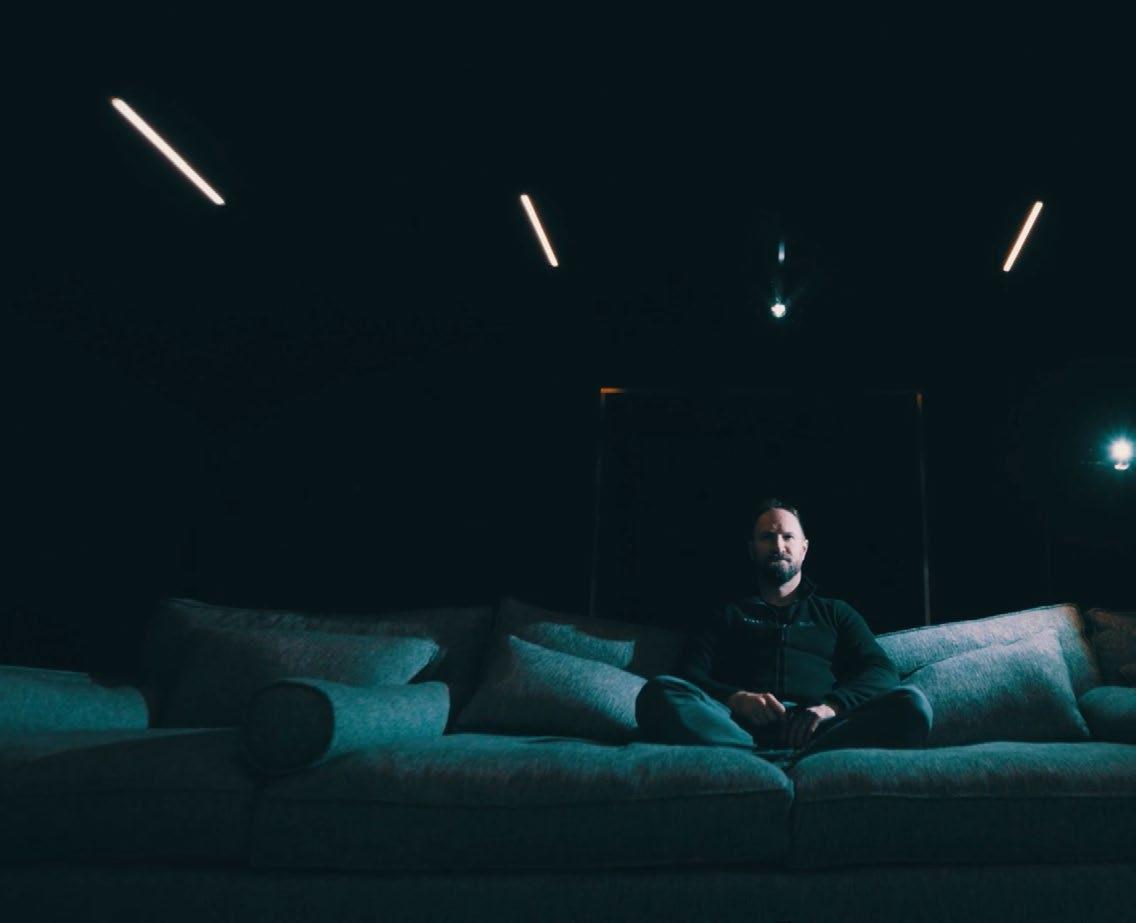
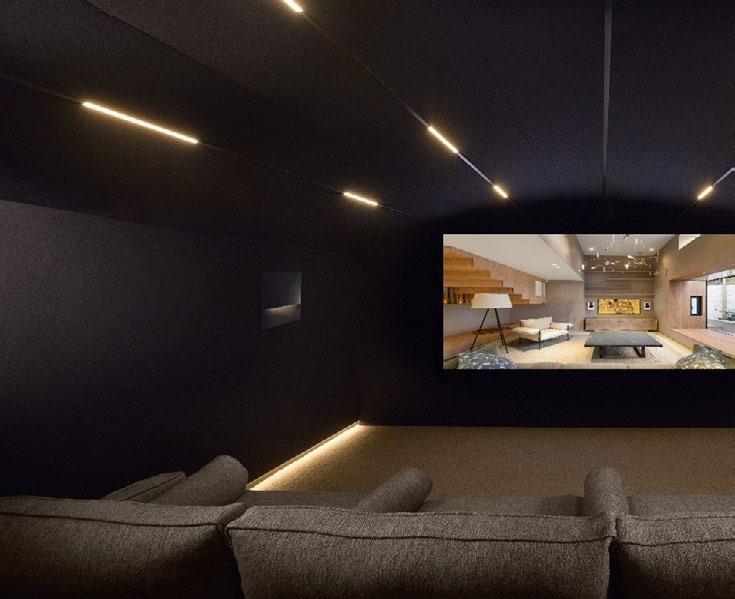
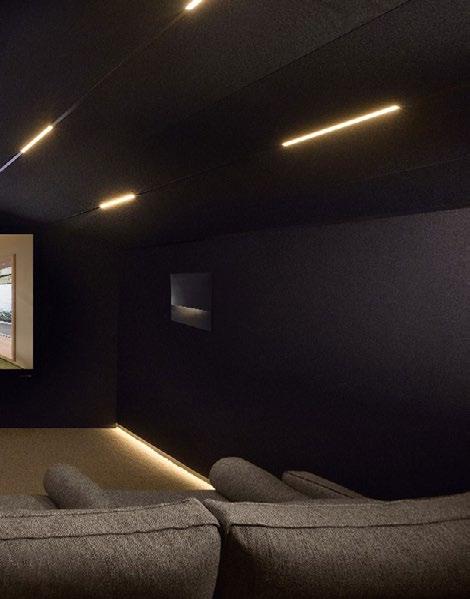
Creating a cinematic masterpiece inside a heritage-listed Swiss cellar is no small feat. The Geneva home in question, dating back to the 1820s, presented KNEKTD with both a technical and architectural challenge: how to deliver an uncompromising AV experience within a centuries-old, masonry-built basement that couldn’t be structurally altered.
The client, already familiar with KNEKTD’s work from a previous London residence, returned with a clear ambition — one rooted in immersion, clarity, and refinement. While the room’s dimensions and materials were set in stone, the integrator saw an opportunity to build precision into the surfaces themselves.
The team designed new wall, floor, and ceiling frameworks from scratch to tame reverberation and house high-performance hardware. A faceted ceiling was introduced to navigate the curves, balancing form and function without encroaching on the building’s historic envelope.
Audio was central to the brief. With Wisdom Audio’s Sage series forming the backbone of a 9.4.4 Dolby Atmos system, the team worked closely with the manufacturer to ensure no speaker was over- or underperforming for the space. Calibration and acoustic treatment — sourced through CinemaTech and Cinemabuild — were mapped with forensic attention to detail.
A JVC NZ900 projector, Screen Research cinemascope display and Kaleidescape system with MadVR processing created the visual counterpart, with ambient light eliminated thanks to the client’s decision to seal the room’s only window. Video calibration was executed by Dr Julian Scott, ensuring the projected image matched the meticulousness of the audio.
Control4 serves as the system’s intuitive command centre, while Lutron RA2 lighting and Wattbox power management bring daily ease to the technical complexity.
For a client immersed in the latest tech, this was less about flash and more about fidelity. Every component serves a purpose. Every compromise was avoided.
KNEKTD Ltd
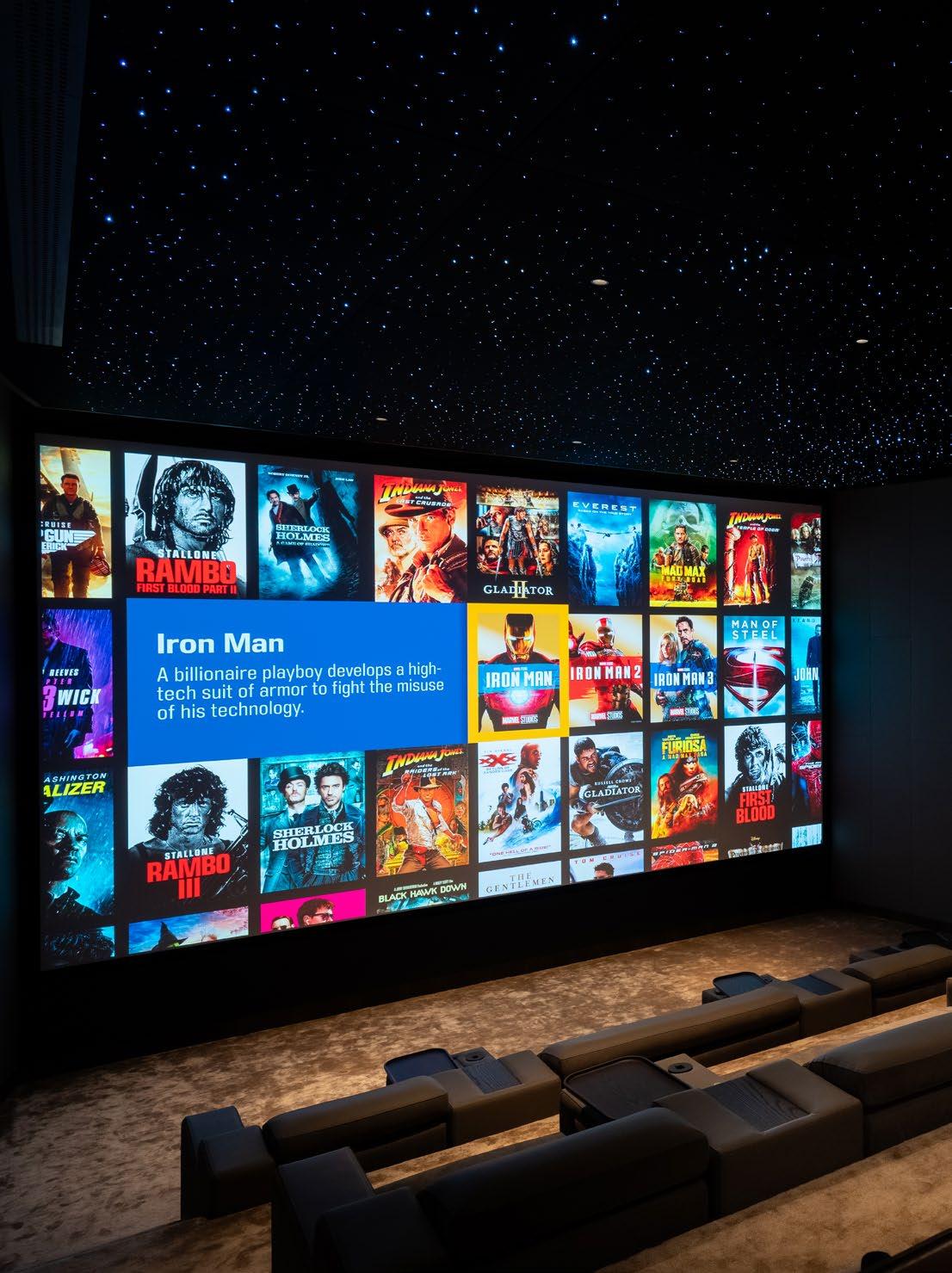
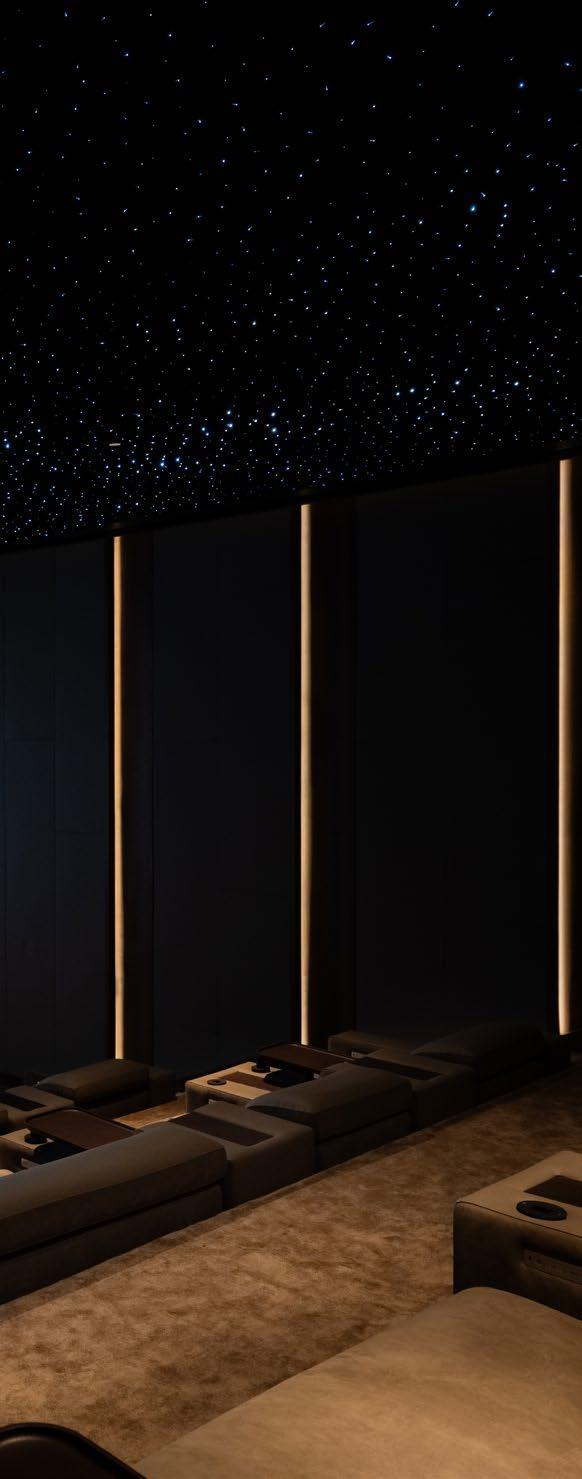
RR Cinema
MCBEE
A superhero-inspired home cinema comes to life in India, merging tactile technology, theatrical design, and immersive audio-visual precision.
When the client approached MCBEE with his vision, it wasn’t just about technology. It was about character. The brief was to create a Marvel-inspired sanctuary — part man cave, part theatre — capable of hosting family and friends while offering a cinematic experience that rivalled commercial-grade cinemas. Situated in the basement of a pre-built home, the project came with unique spatial constraints and high-performance expectations.
To deliver, MCBEE took control of every phase, including civil work, interior design, and technical integration. With ceiling height limited and seating for 15 required, the team excavated the floor to form three distinct rows, preserving comfort and optimal sightlines. Two immovable structural columns were cleverly absorbed into the third tier’s stepped platform, creating cohesion rather than compromise.
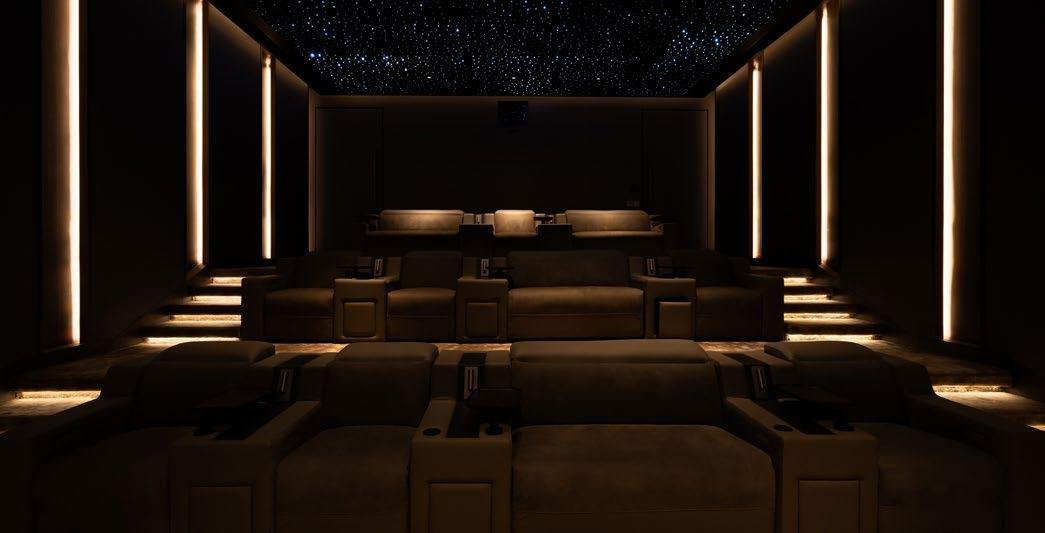
A fully integrated 9.4.6 Dolby Atmos system was calibrated around Wisdom Audio’s line-source speakers and four subwoofers, paired with Trinnov’s room correction to ensure spatial precision. Each custom recliner includes Crowson motion actuators that translate low frequencies into body-felt sensations, deepening the emotional impact of every scene. Even cleaning was considered, with a one-touch ‘maintenance mode’ that reclines all seats simultaneously.
Lighting and automation were equally refined. A Lutron-controlled fibre optic ceiling, pixel lighting, and cove illumination transform the space from ‘Movie Night’ to ‘Music Mode’ or ‘Intermission’. HVAC challenges were addressed through a fresh-air system and CNC-machined MDF grills, designed to eliminate noise and condensation while harmonising visually with the interior.
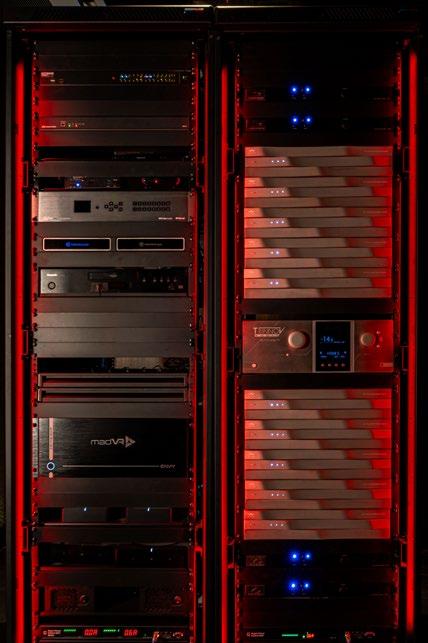
The centrepiece, however, is the glass-enclosed rack room. Lit to match the cinema’s ambience, and revealed via a motorised panel, it transforms infrastructure into theatre. From MadVR’s non-linear stretch technology to an AV Pro switching system, every detail was curated for performance without complexity.
A VR walkthrough offered the client complete visualisation of the space before construction began, ensuring no surprises. Every design decision was approved in advance, which allowed the team to proceed without modification or delay.
The result is not just a high-performance AV installation. It’s a space that reflects the client’s imagination, executed with discipline and flair.
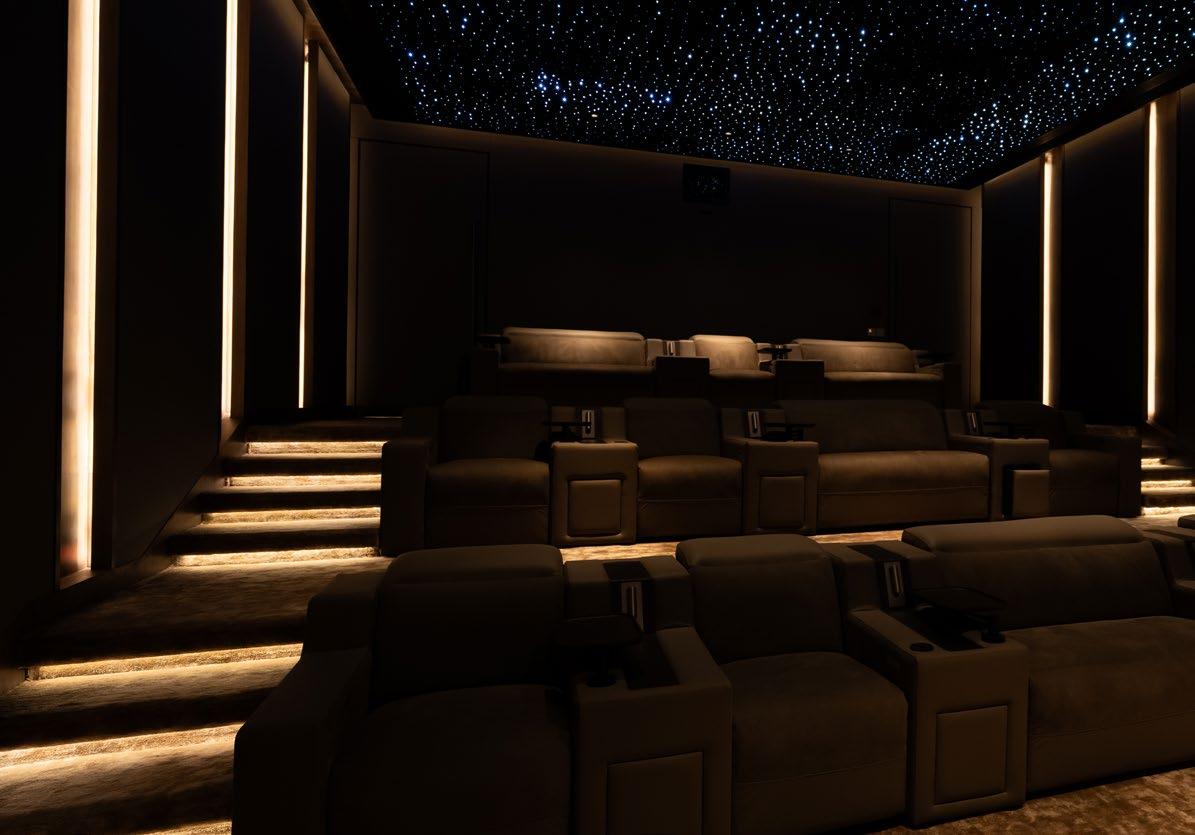
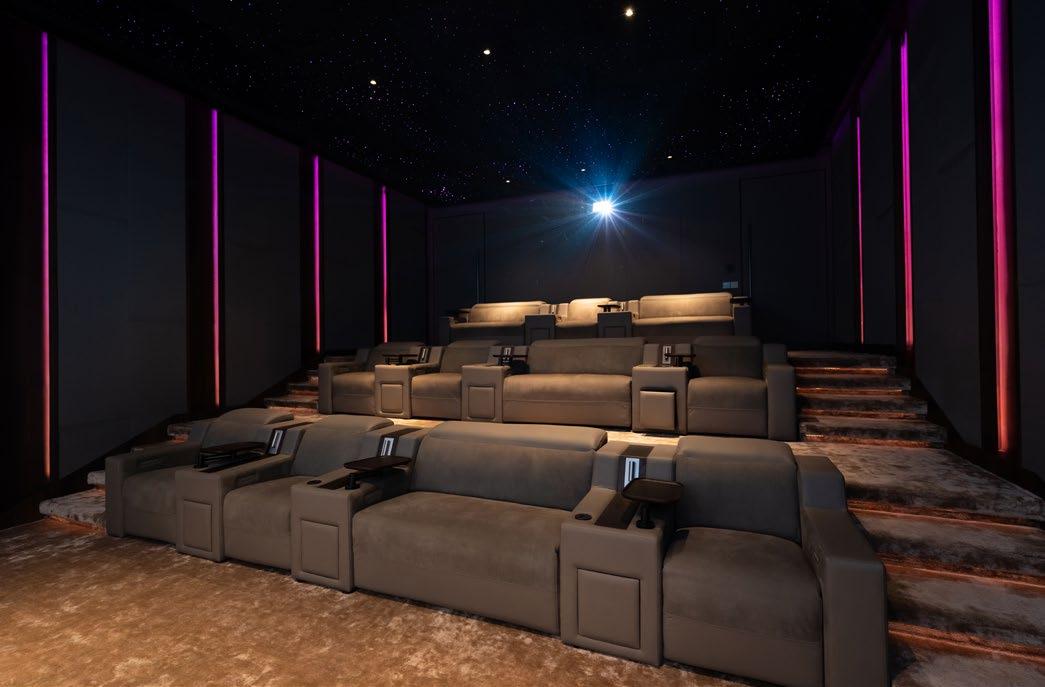
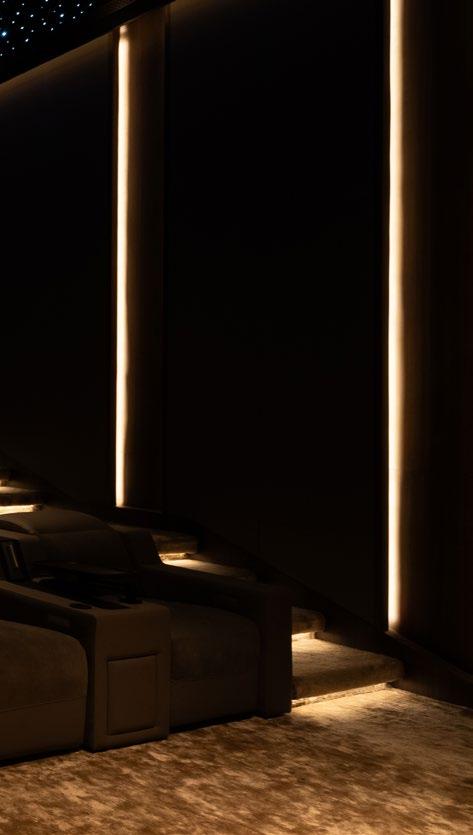
RR Cinema
MCBEE
From the fibre optic ceiling to tactile recliners, every element was built around immersion.
Why Early Contractor Involvement Matters in Smart Home Projects
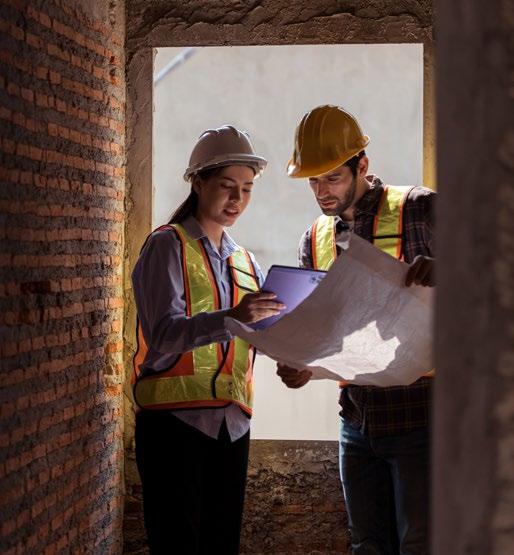
Inviting a smart home professional into the design conversation from the beginning of a project, can mean the difference between seamless living and costly compromises.

In residential projects, the design stage is where the DNA of a home is set. Architects sketch out proportions, interior designers shape the material palette, and builders prepare the path to delivery. Yet when it comes to technology integration, many projects still treat it as an afterthought. The result is often compromised design, added costs, and systems that fall short of client expectations.
Early contractor involvement (ECI) places the smart home professional at the table from the outset. This ensures that lighting control, audiovisual systems, security, shading, networking, and environmental controls are woven seamlessly into the architecture rather than forced in later. An integrator’s role is not simply about recommending products but aligning technology with the way a client will use their home, all while protecting the architect’s and designer’s vision.
One of the most overlooked aspects of smart homes is the infrastructure. Cable runs, ventilation for racks, equipment access, and power provision must be planned into the fabric of the build. Without the integrator’s input, critical pathways may be blocked by structural beams, ceiling coffers or cabinetry. Retrofitting these later often means ripping open walls, incurring unnecessary costs and risking delays.

There are also aesthetic consequences. Without early coordination, homeowners may end up with visible switches where a flush, discreet solution could have been used. Loudspeakers might clash with carefully chosen finishes if cut-outs are decided after installation. Even the placement of lighting fittings and shading pockets needs technology input to ensure control systems operate as intended.
From a performance perspective, poor planning can compromise acoustic treatments, ventilation, and sightlines in media rooms or home cinemas. A system that looks impressive on paper may underperform simply because critical design decisions were made before the integrator’s involvement.
By contrast, when integrators collaborate with architects, designers and the build community early. The result is a home where technology enhances rather than interrupts the design, and where the client enjoys intuitive control without compromise.
In today’s market, homeowners expect both style and substance. Engaging a smart home professional early is the surest way to deliver both, ensuring the finished home is as intelligent as it is beautiful.

Bahari Haven
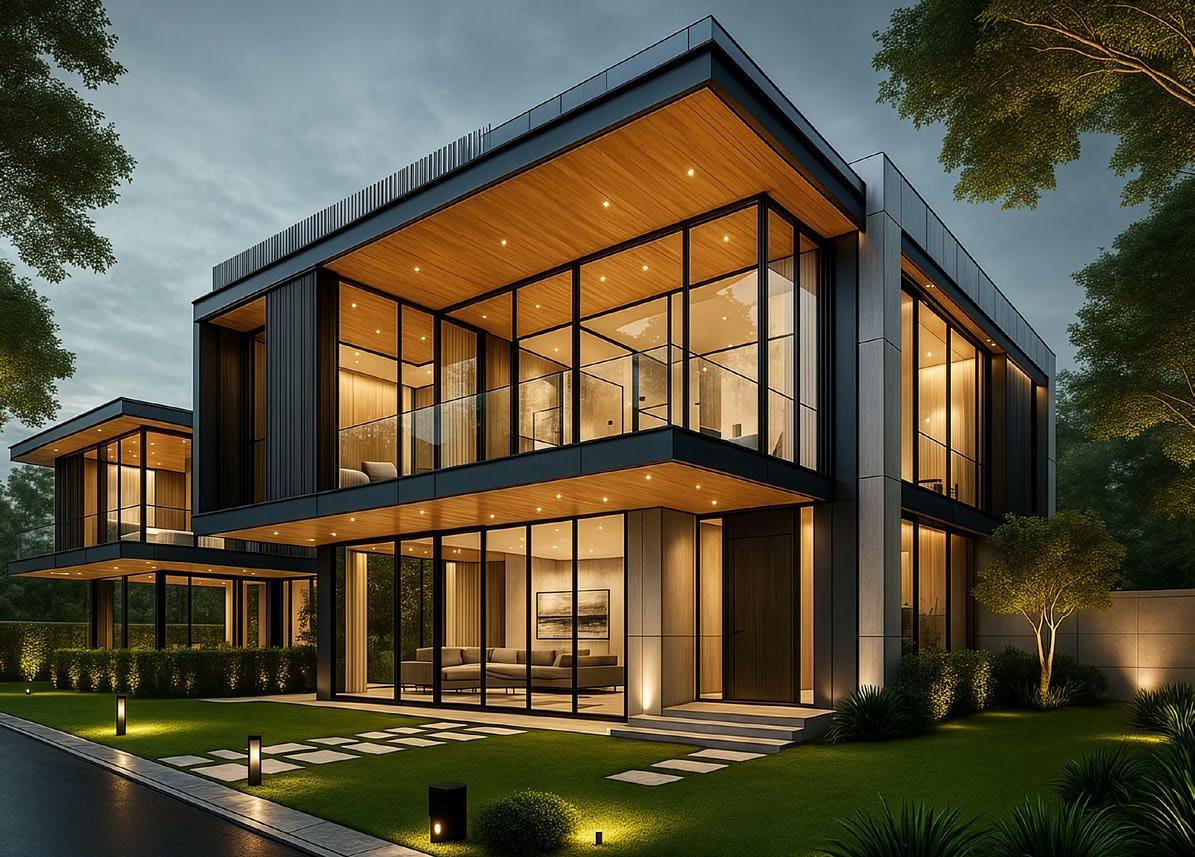
A luxury residence in Mombasa is reimagined as a seamlessly connected sanctuary, where lighting, privacy, entertainment, and security are all unified under one intuitive smart home interface.
In coastal Kenya, where humidity and salt air shape both design and durability, this home’s transformation into a smart, secure retreat demanded more than just robust hardware. The homeowner wanted simplicity, elegance, and a user experience that matched the architectural ambition of the residence itself. The team at Audio Visual Control Systems delivered a system where every element of comfort and convenience could be controlled from anywhere in the world.
This was not a retrofit of convenience; it was a considered orchestration of subsystems into a coherent whole. Lighting automation and motorised curtains were configured with scene control, giving the client the ability to shift ambience with a single touch. A multi-room AV system brings high-fidelity audio and centralised 4K video to key zones, yet disappears into the fabric of the building. Security was another priority. A CCTV system with networked video recording, an AJAX smart alarm with motion and environmental sensors, and a VPN-enabled network backbone gave the client confidence that safety wouldn’t be compromised, even remotely.
The scale of integration required a dedicated AV control room and automation cabinet, both heat- and powermanaged to withstand Mombasa’s unforgiving climate. Careful planning during construction ensured that networking infrastructure, air conditioning, and power stability were all addressed before fit-off, avoiding costly reworks. Close coordination with civil and interior teams maintained the visual integrity of the design.
This is a home that doesn’t just respond to its environment; it anticipates the needs of its occupants.
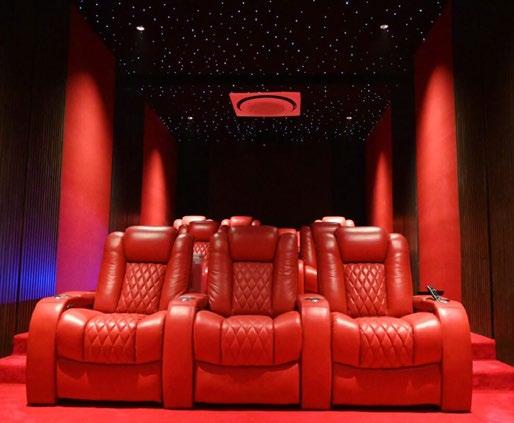
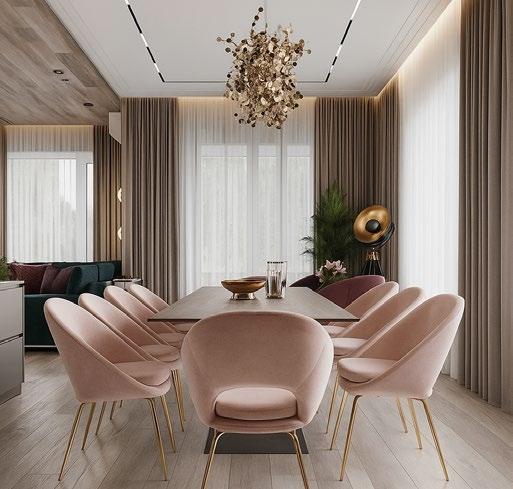

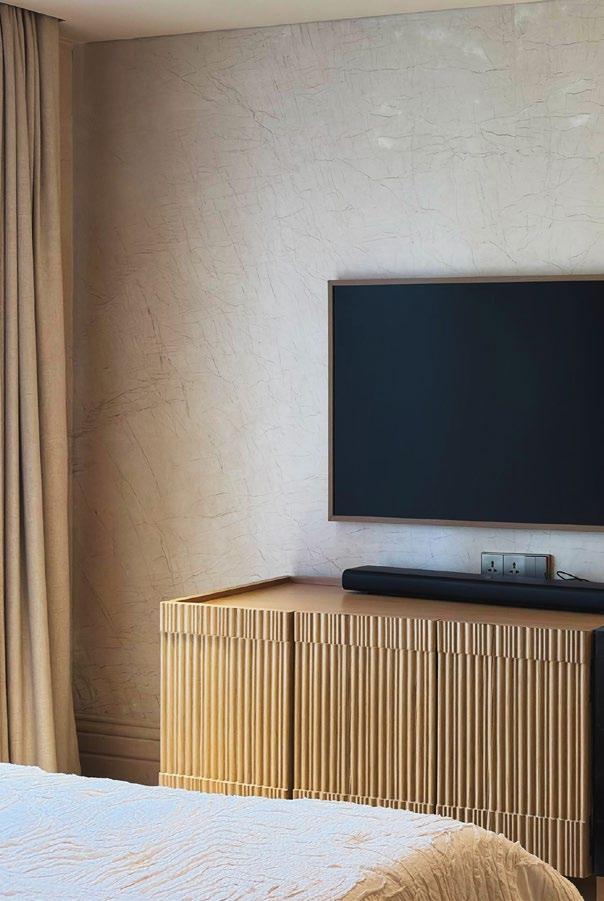
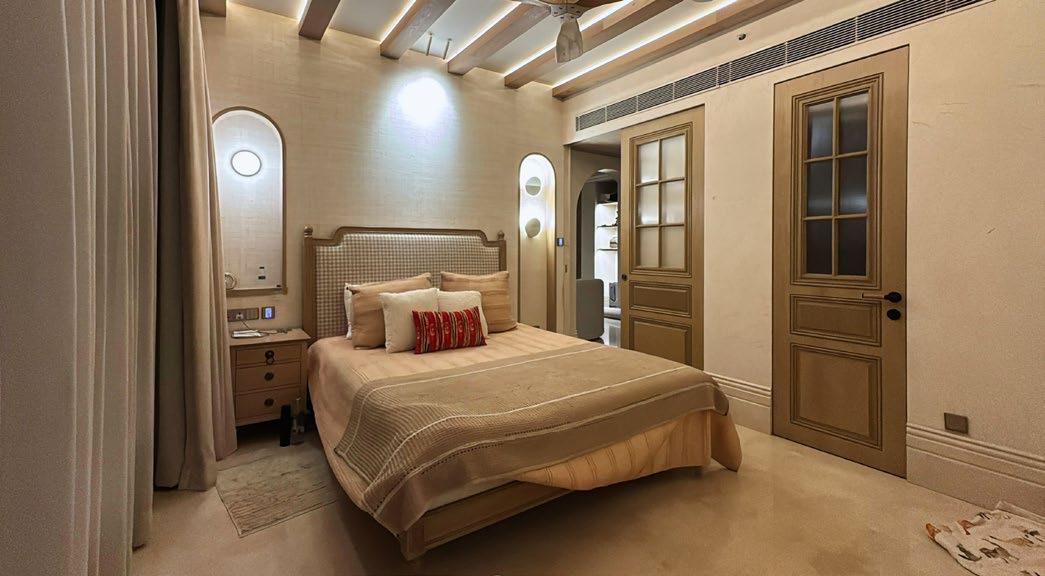
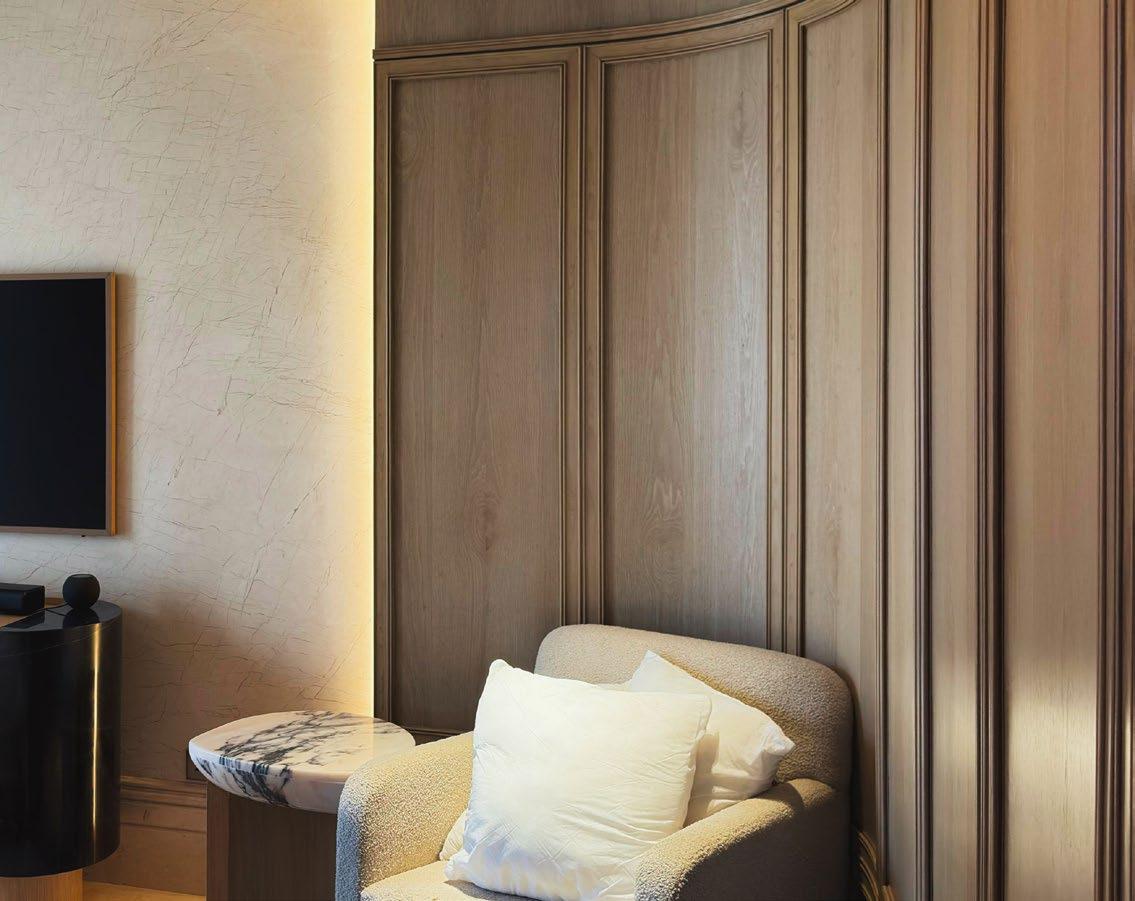
Casa Bodhi
An
architect’s own home in India becomes a study in discretion, elegance, and deeply personal smart living, thanks to a long-standing collaboration with Beyond Alliance.
In a leafy part of India, where modern apartments often double as showrooms for personal expression, architect, Padmini Pandey turned the lens inward. Her 1500-square-foot residence wasn’t just another project. It was a deeply personal one, built not for a client, but for herself, her elderly mother, their dog, and the rhythms of daily life. The technology had to do more than work. It had to listen.
Beyond Alliance, with whom Pandey had partnered many times before, was given a rare gift: full creative trust. The brief was clear — “I want my home to feel alive!” — but the boundaries were firm. A budget of ₹35–40 lakh. No visible technology. No floor-standing gear. And nothing too delicate for a dog’s curiosity.
Control across lighting, climate, AV, access, and Apple HomeKit was delivered through a custom Crestron system, powered by a compact DIN-AP4 processor to conserve space. Every room had a clear purpose, from
the retractable screen and Dolby Atmos surround in the living room, to the geofenced climate settings in the master suite.
Importantly, each resident had a different interface. The architect toggled scenes and schedules from her Apple Watch or iPhone. Her mother used simplified keypads at accessible heights. The home’s staff had restricted control — lights, fans, and curtains only in common areas.
Where most homes chase features, this one was driven by feeling. The lighting followed the time of day. The footlights anticipated movement. Music shifted from walk-in wardrobe to bar lounge without a second thought. Even the access system responded with personalised greetings based on facial recognition. Nothing interrupted the calm. And that, perhaps, is what makes this home truly smart.
Beyond Alliance
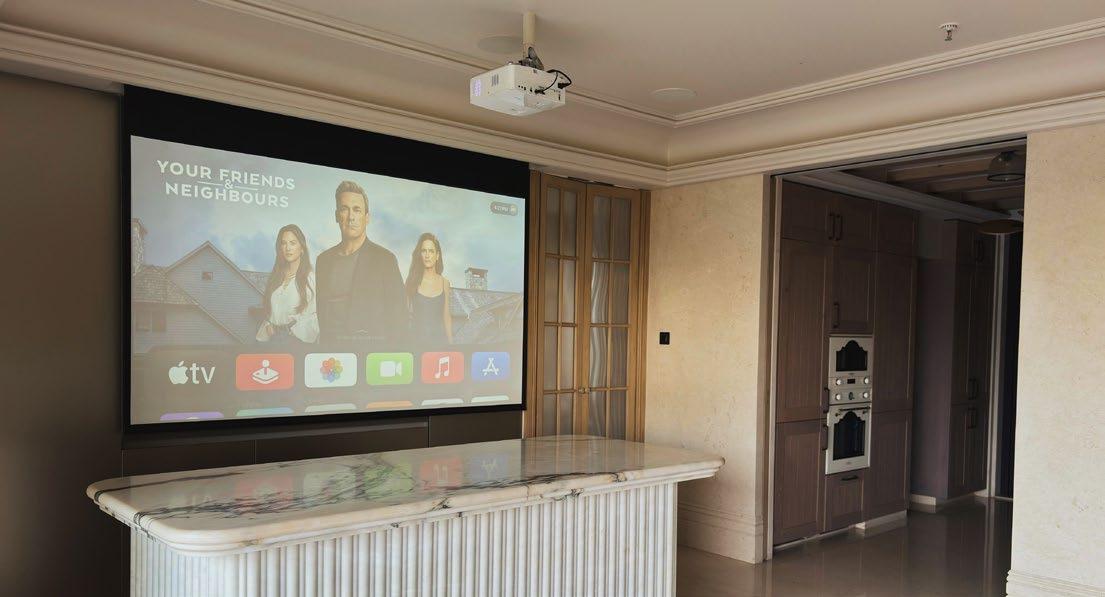
Casa Bodhi
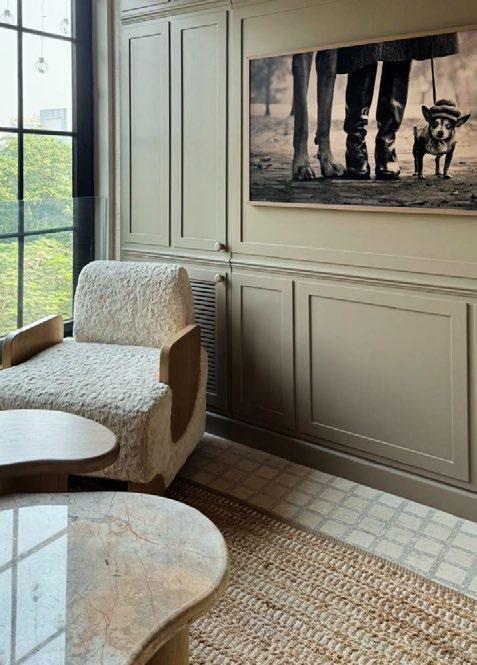
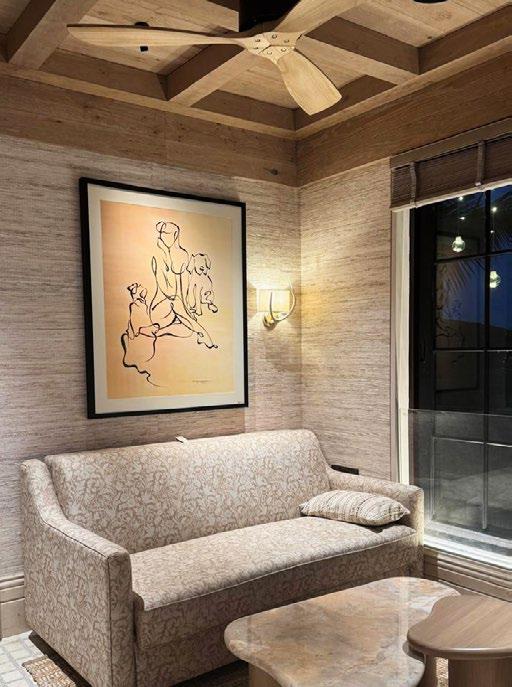
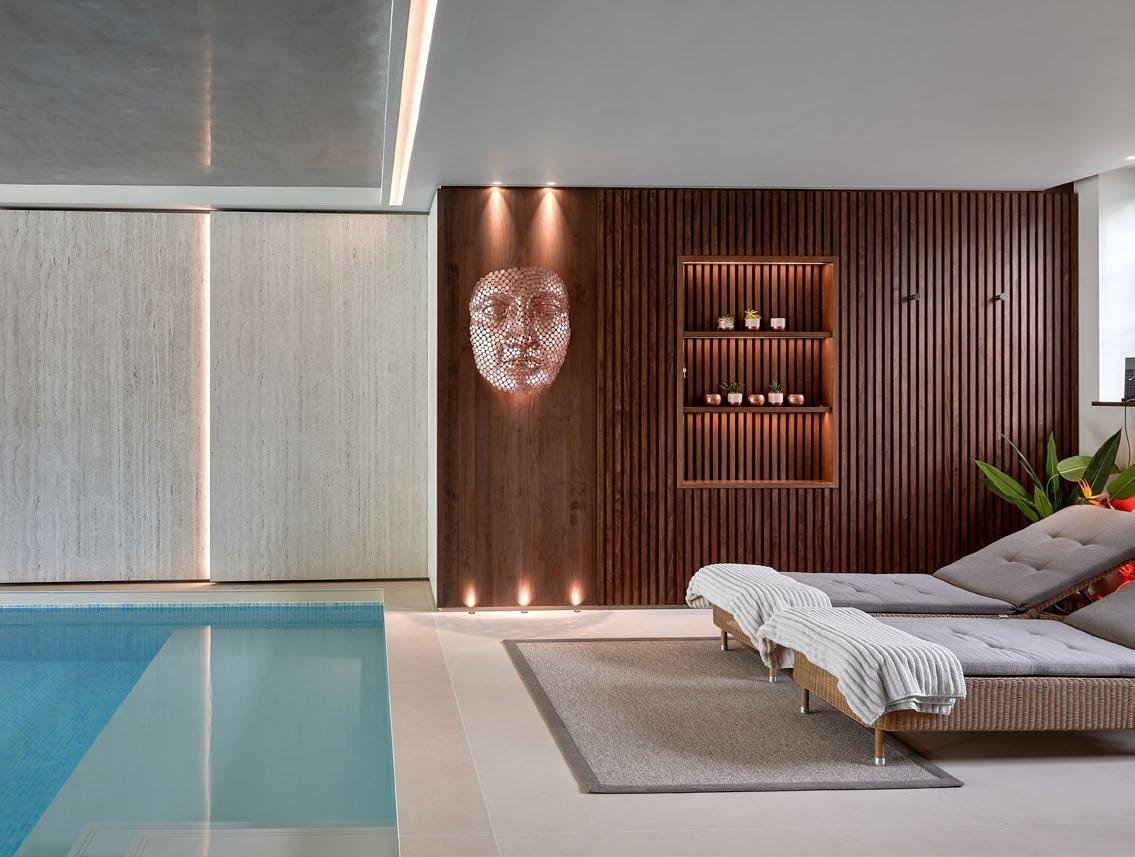
Buzzards Road Project
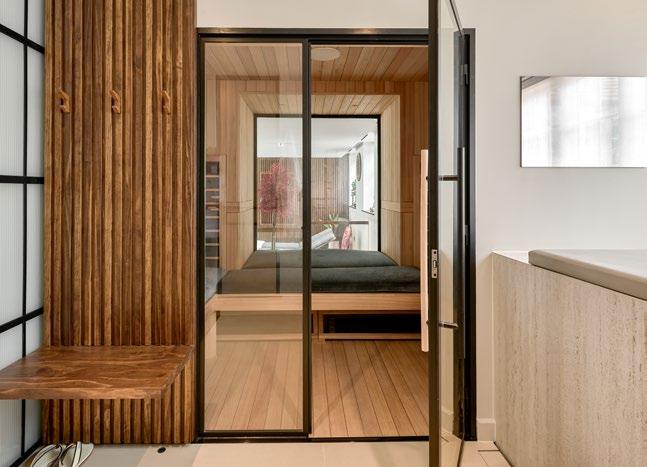
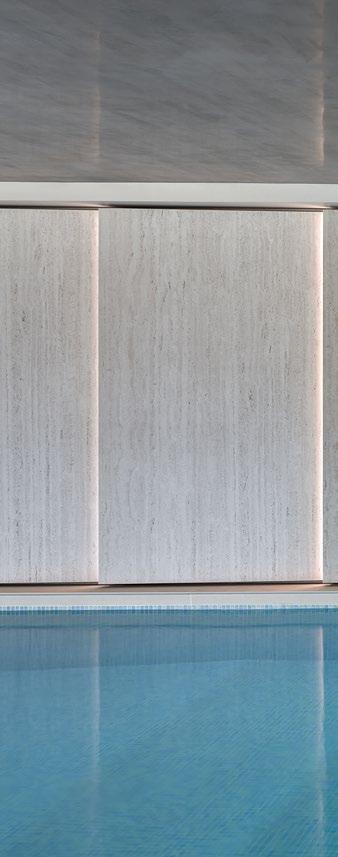
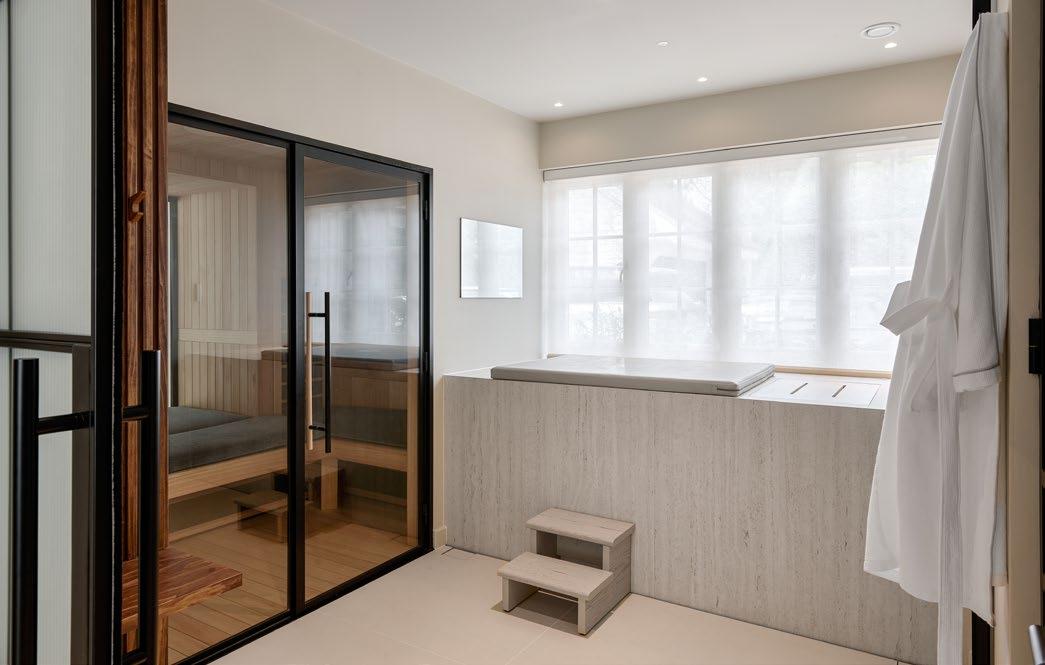
A wellness retreat within a Georgian property evolves into a fully connected smart estate, with technology seamlessly bridging the gap between new luxury and traditional charm.
The original house had no integrated technology. Not even structured cabling. Yet the client’s vision for the Buzzards Road extension was far from modest. They imagined a wellness sanctuary complete with pool, sauna, gym, treatment room, and guest suite, tied together by a world-class cinema. But this wasn’t to be a separate pavilion. They wanted the extension and original home to function as one.
IndigoZest delivered on that ambition by centring the project around a single control platform, which not only unified every zone of the new addition, but also retrofitted functionality across the old house. Rather than compromise the architecture, the system became an enabler of form. Lighting control, for example, was centralised across the extension and futureproofed within the main house. Every keypad was matched across both areas, disguising the fact that the systems differed behind the scenes.
The cinema, designed in collaboration with Cinema Luxe, featured a 9.4.4 Dolby Atmos loudspeaker configuration and high-lumen 4K projection. The entire room was acoustically treated and finished with concealed speakers and equipment. Elsewhere, the AV system spans the pool, sauna and gym zones. Mirror TVs and invisible speakers were chosen to keep visual clutter low.
Environmental challenges — such as heat, moisture, and thick walls — were met with considered engineering. Touchscreens and access points were strategically placed to retain visual calm and deliver reliable performance.
Interior designer Sinead Kelly Herbert, builder APM, lighting specialists at Plum and cinema design experts all contributed to a seamless result. For the client, technology has gone from being a necessary evil to something they now find indispensable.
IndigoZest Ltd
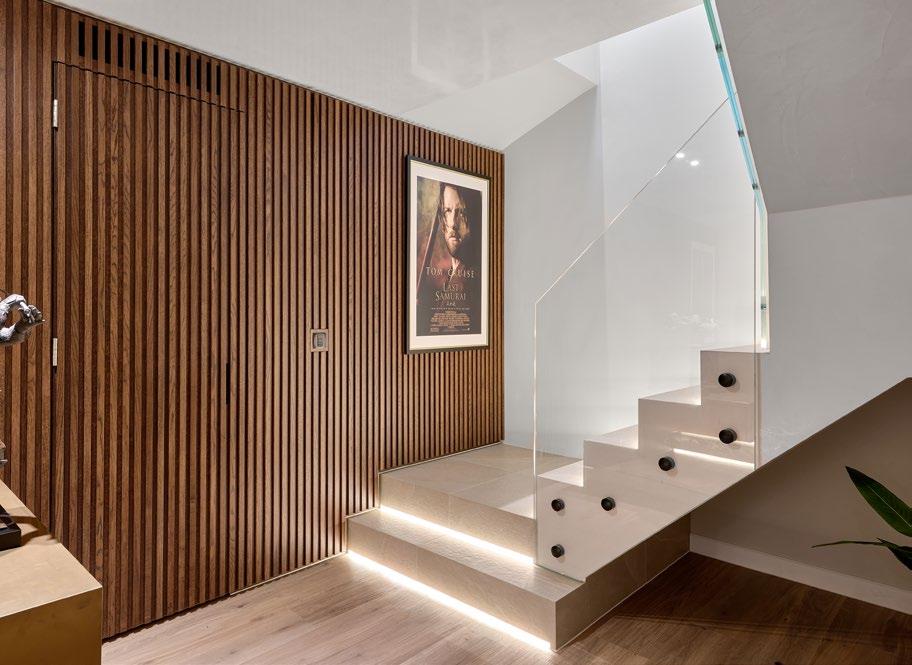


Buzzards Road Project
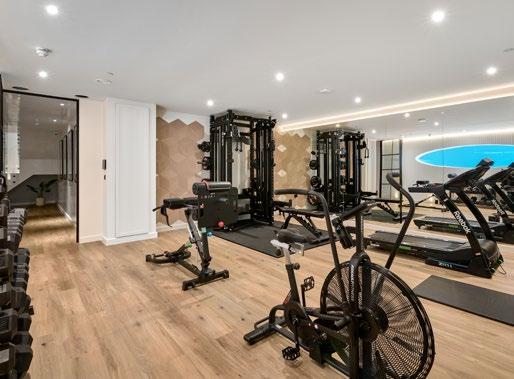
Even in high-humidity zones, the technology performs flawlessly without disrupting the design.
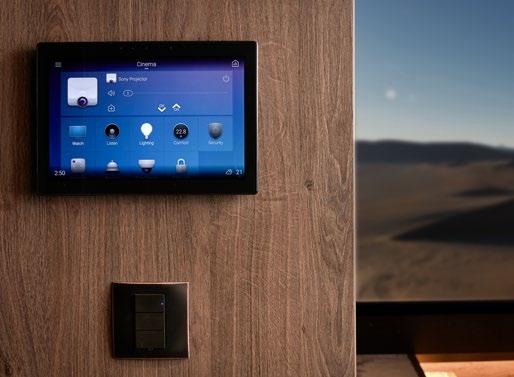
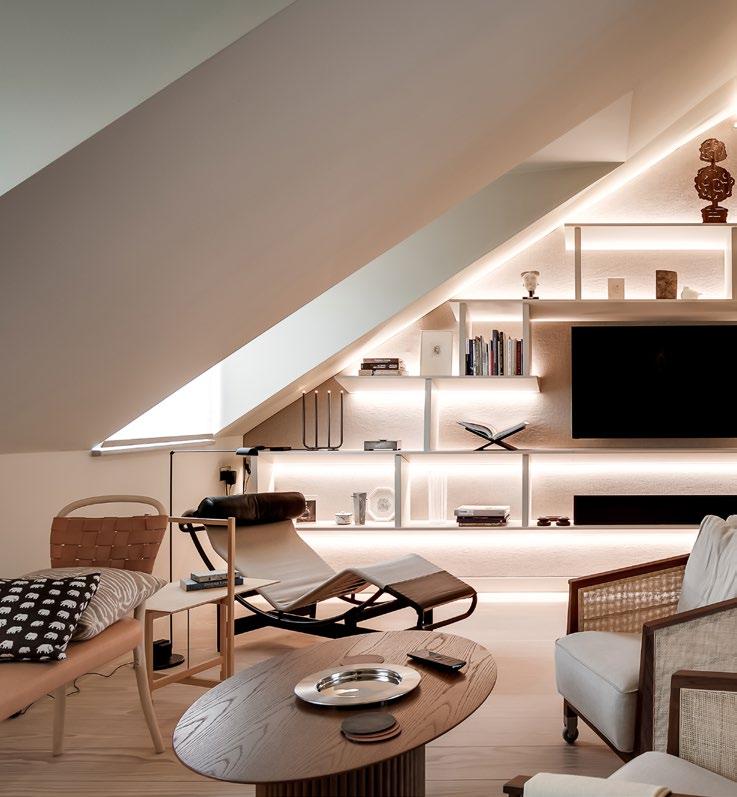
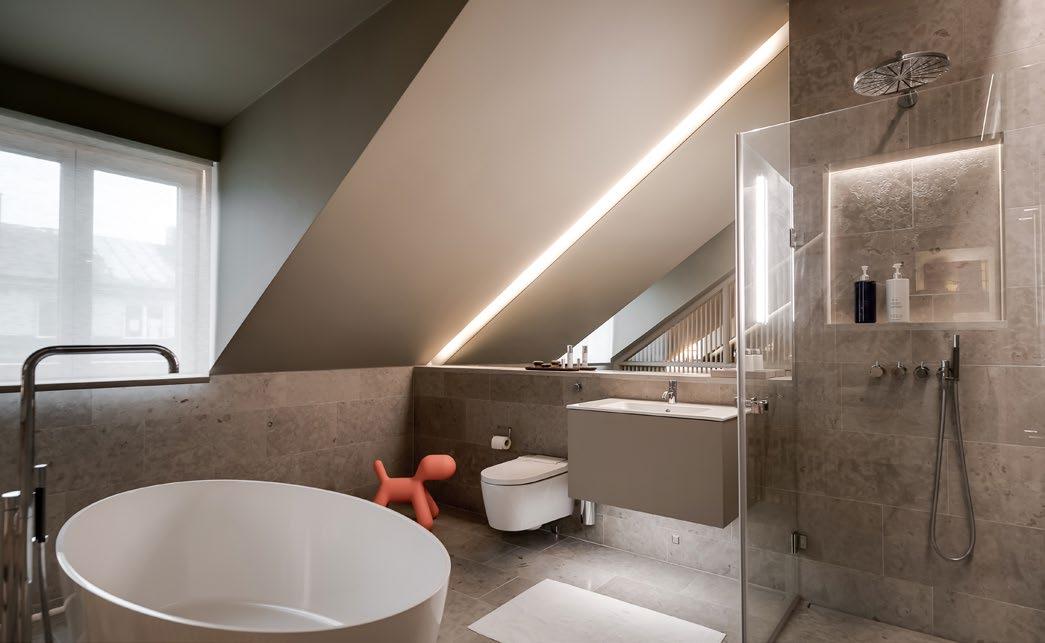
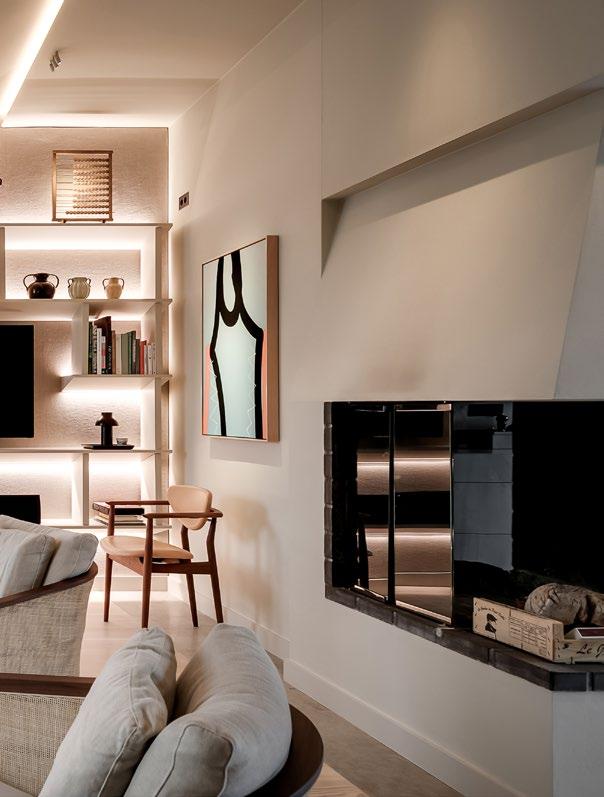
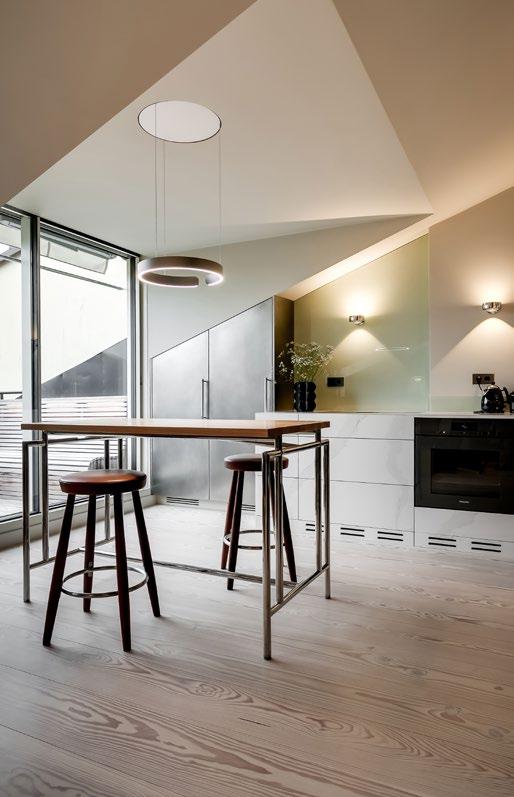
In central Stockholm, a compact loft was transformed into a discreetly intelligent home, blending Crestron-powered simplicity with a Scandinavian vision of peace, privacy, and precision.
Scandinavian Loft
Perched above the leafy boulevards of Östermalm, Stockholm’s most stately district, this retired couple’s loft redefines the idea of a smart home. Compact yet calm, technically rich yet visually restrained, the residence reflects a clear design principle: technology should serve, not speak.
The owners, a worldly couple in their seventies, sought more than modern convenience. They wanted a quiet space that felt like an extension of nature, where light and materials worked in harmony and where every function enhanced, rather than interrupted, their daily rhythm. Working closely with Rex Arkitektbyrå, the team at Aloud was invited to embed intelligent control systems into this intimate penthouse without compromising its Scandinavian sensibility.
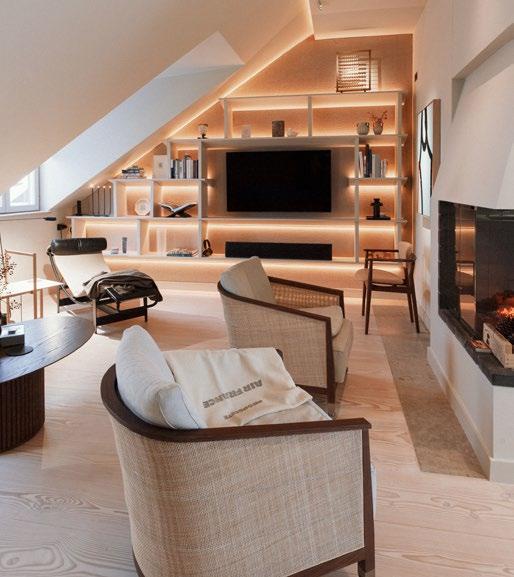
Crestron was selected as the primary control platform for its ability to unify diverse systems — including lighting, shading, climate, security, audio, and video — into one elegant user interface. Functionality was paramount, but visual discretion was the guiding rule. Invisible speakers were embedded in ceilings, their grilles custom-painted to match the walls. Cameras were discreetly placed and colour-matched to their surfaces. Even the subwoofer was hidden behind cabinetry, with only a slim grille hinting at its presence.
A significant challenge was the heat management. With
a black roof and expansive glazing, the loft was prone to overheating during Sweden’s long summer days. The clients, adamantly against air conditioning due to its ambient noise, requested an alternative solution. Aloud’s team implemented a passive ventilation strategy, controlled via KNX and sensors embedded behind Meljac keypads. The system ensures airflow remains silent, smart, and responsive.
Driver walls were scattered throughout the loft to distribute heat loads and avoid overburdening any one space. These components were mounted on pull-out rails and neatly concealed within joinery, developed in coordination with the architect to preserve both access and aesthetics. Lighting throughout was carefully programmed around the body’s natural circadian rhythm, offering gentle wake-up sequences in lieu of alarm clocks, and supporting long, dim winter days with warm, even glows.
A standout feature is the delivery access system, designed to allow packages to be received securely while the owners are away. Via the Crestron app, they can disarm the alarm, unlock the door, and monitor deliveries in real-time, aided by hidden hallway cameras.
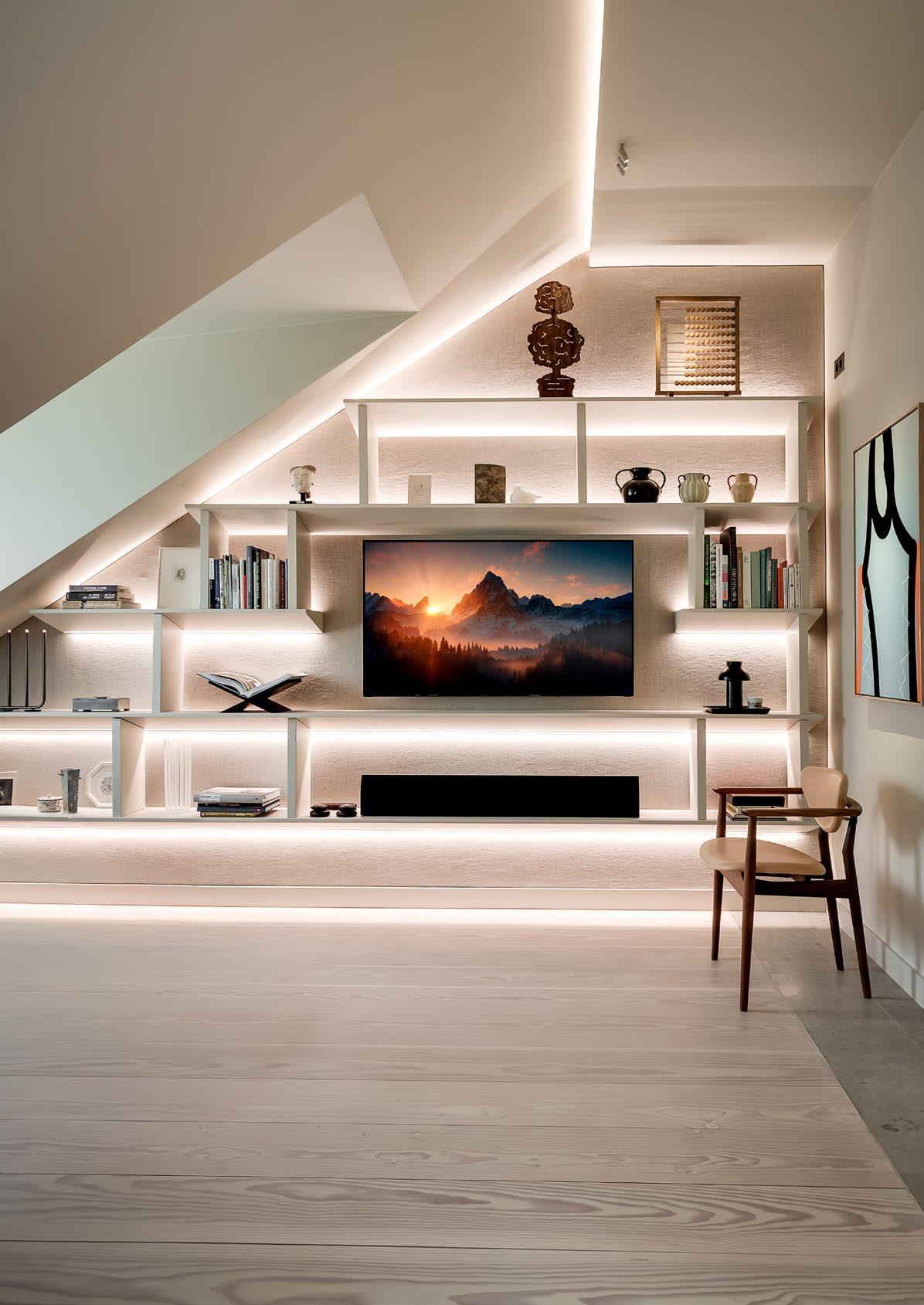
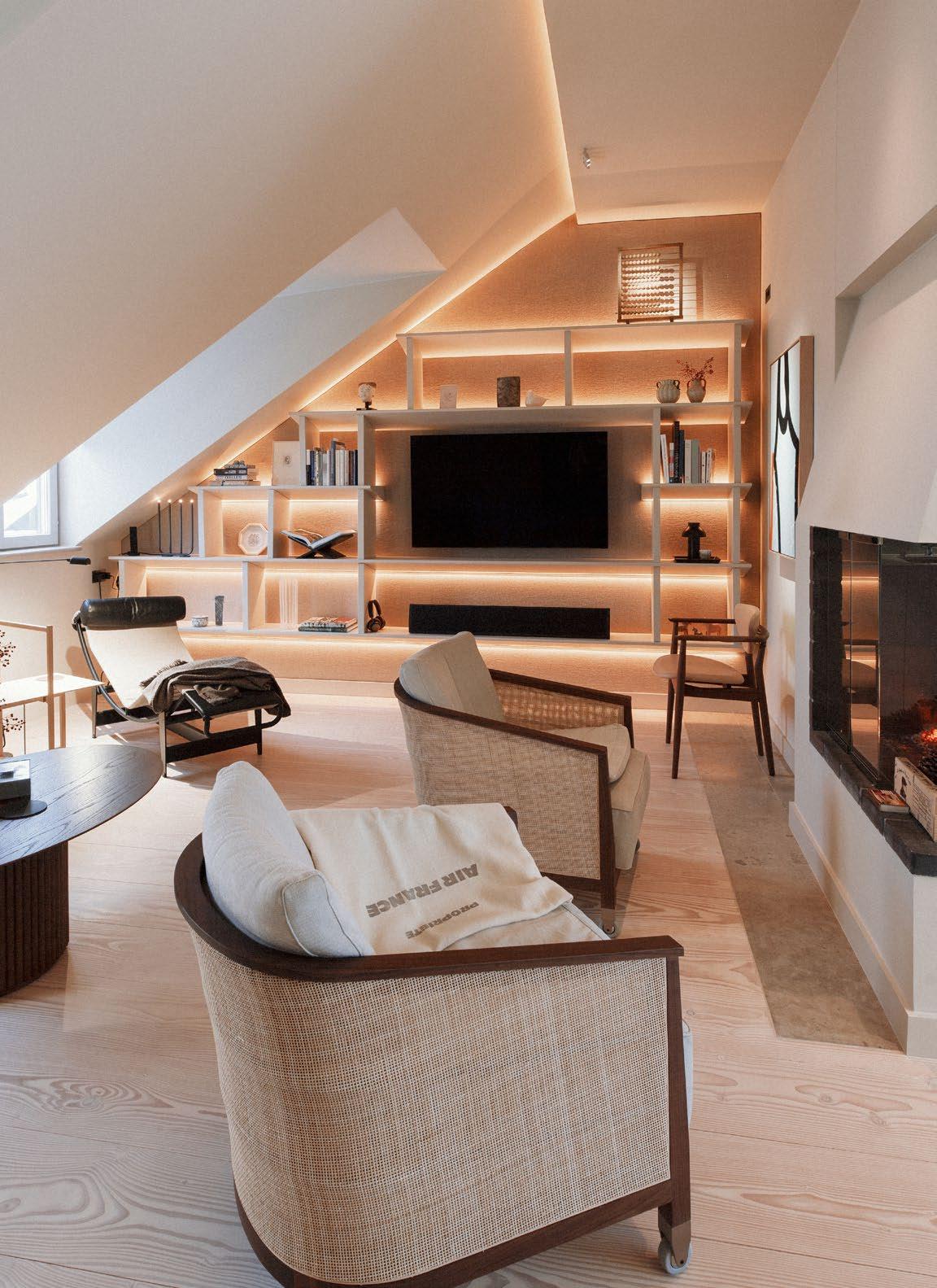
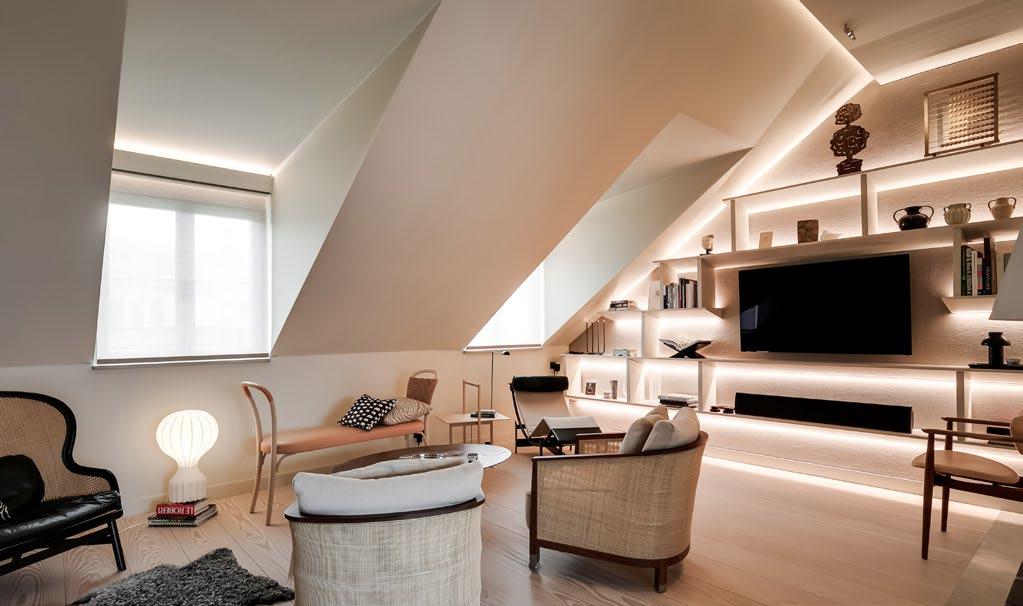
In the studio, where the couple reads, listens to music, and watches TV, a custom-built bookshelf houses the display and soundbar while concealing acoustic treatment. It is here that the home’s layered sophistication is most evident—quiet, precise, and intentionally simple.
Aloud
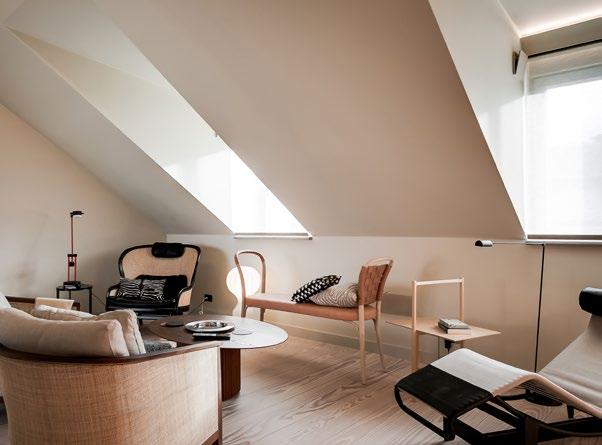
Scandinavian Loft
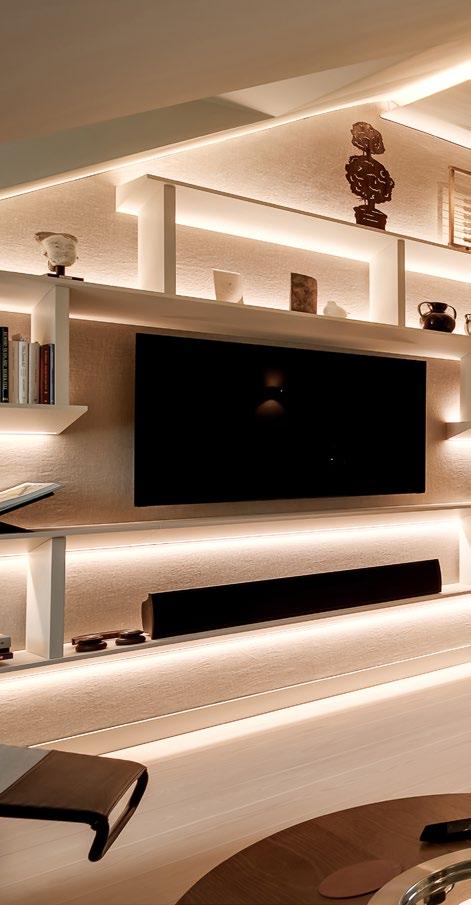
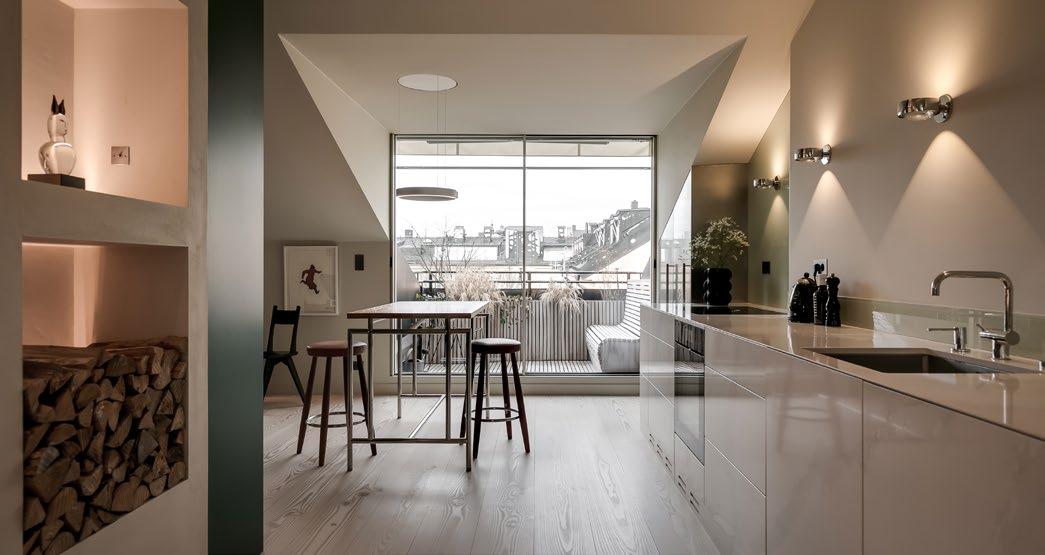
Aloud
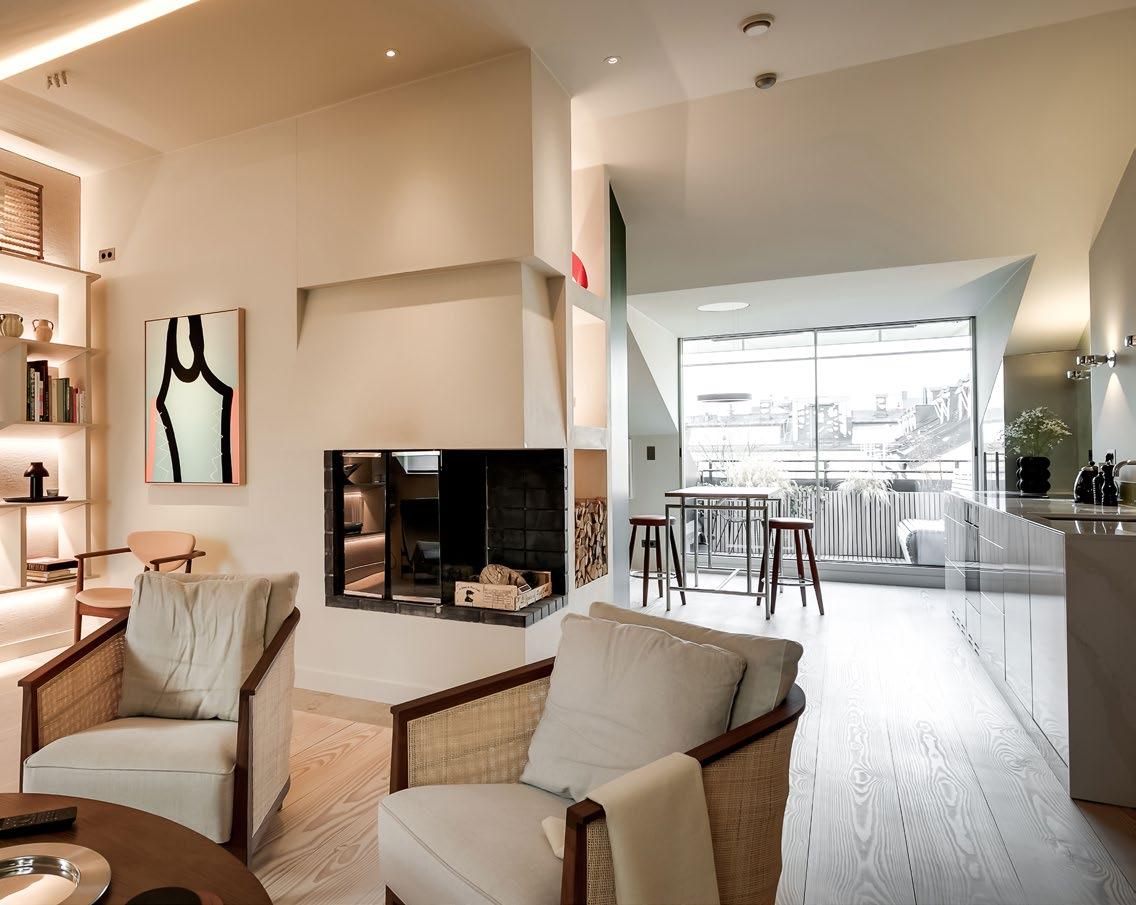
They wanted a sanctuary, not a showroom. Every system had to serve daily life without making noise or demanding attention.
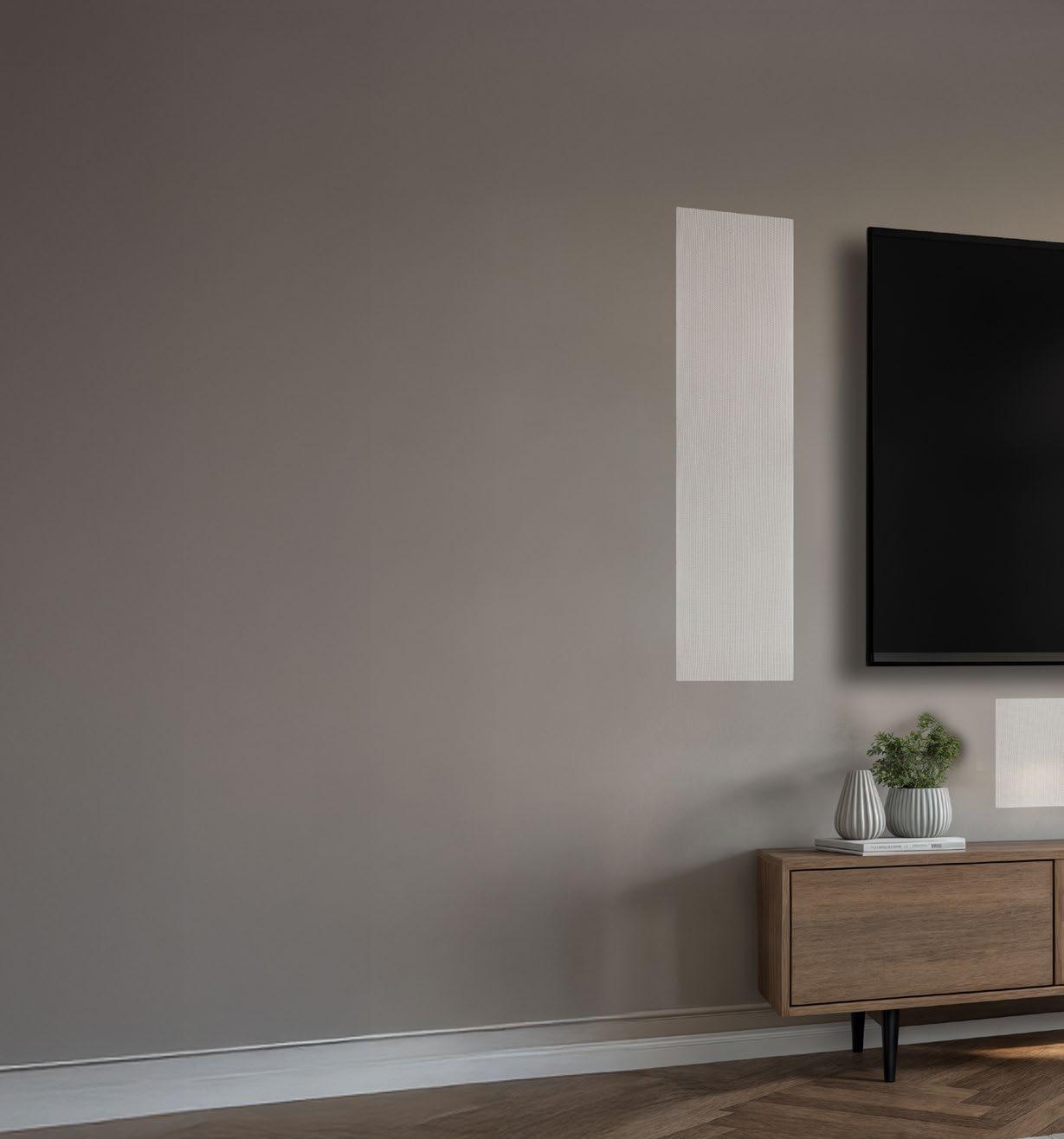
High performance, high-fidelity built-in
Creator Series
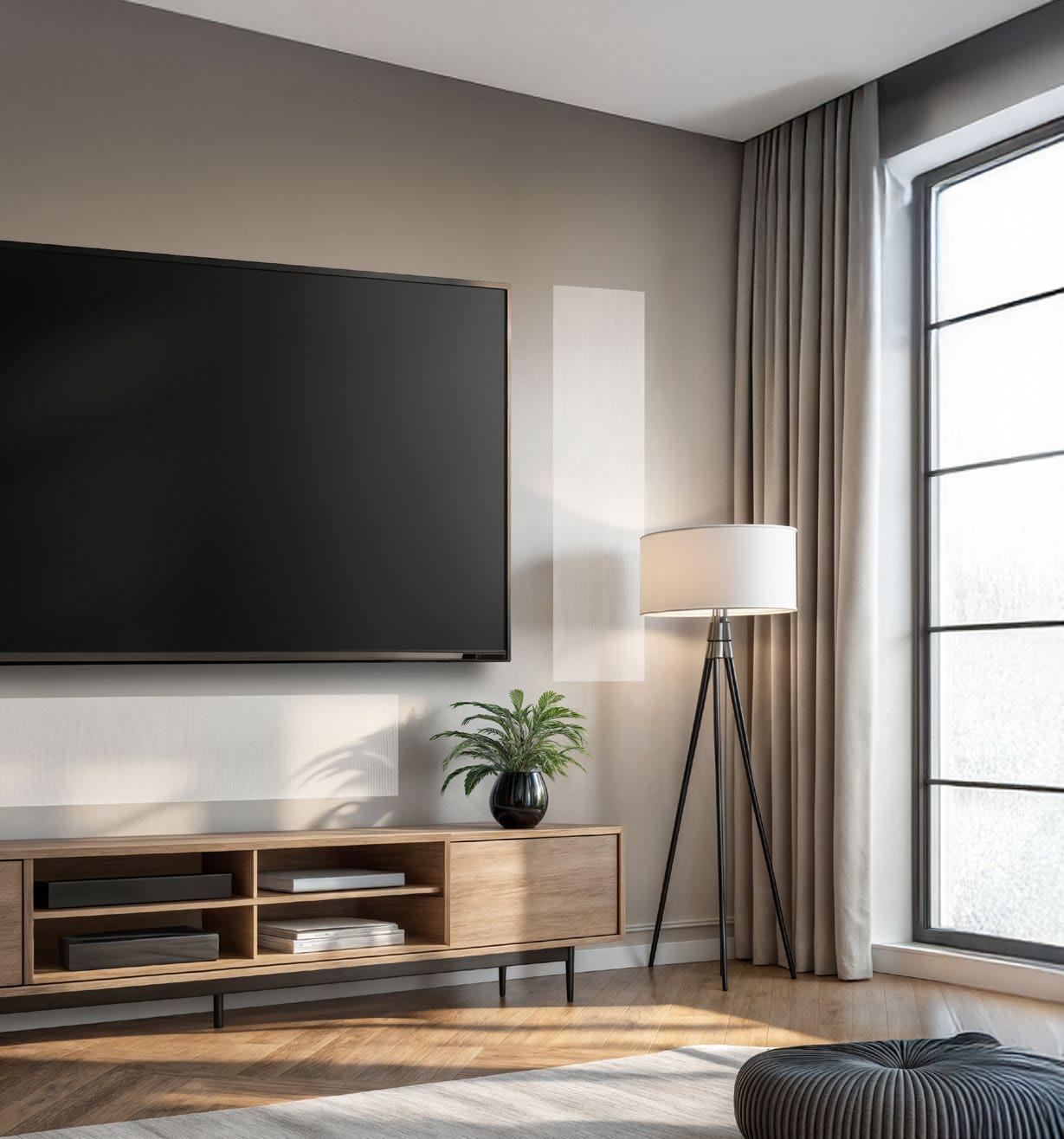
Monitor Audio creates its 4th generation of in-ceiling and in-wall speakers – an all-new focused streamlined range. Models include new design and acoustic technologies to support the demands of the installer: flexibility, usability, intuitive functionality, easy installation, superior build quality and outstanding sound performance.
Listen Again.
Explore
Pictured: Creator Series W3L
Fitzroy Square
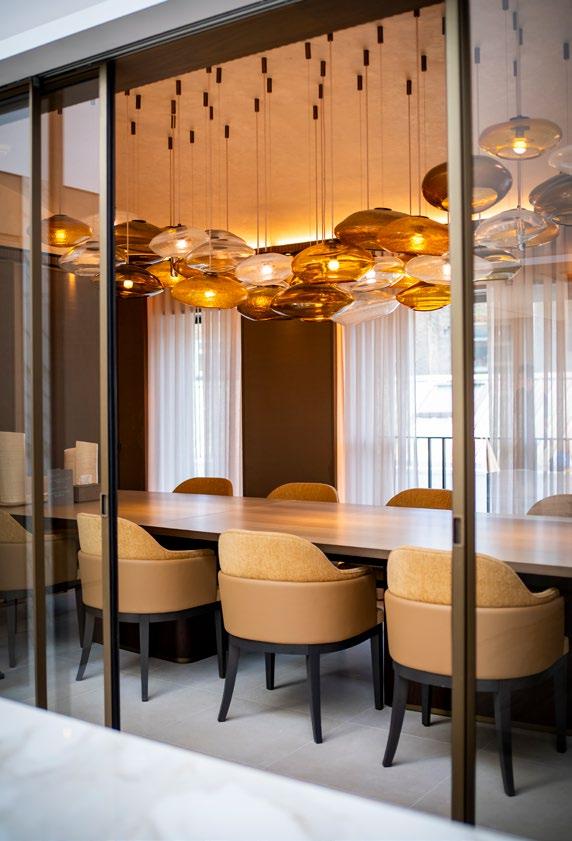
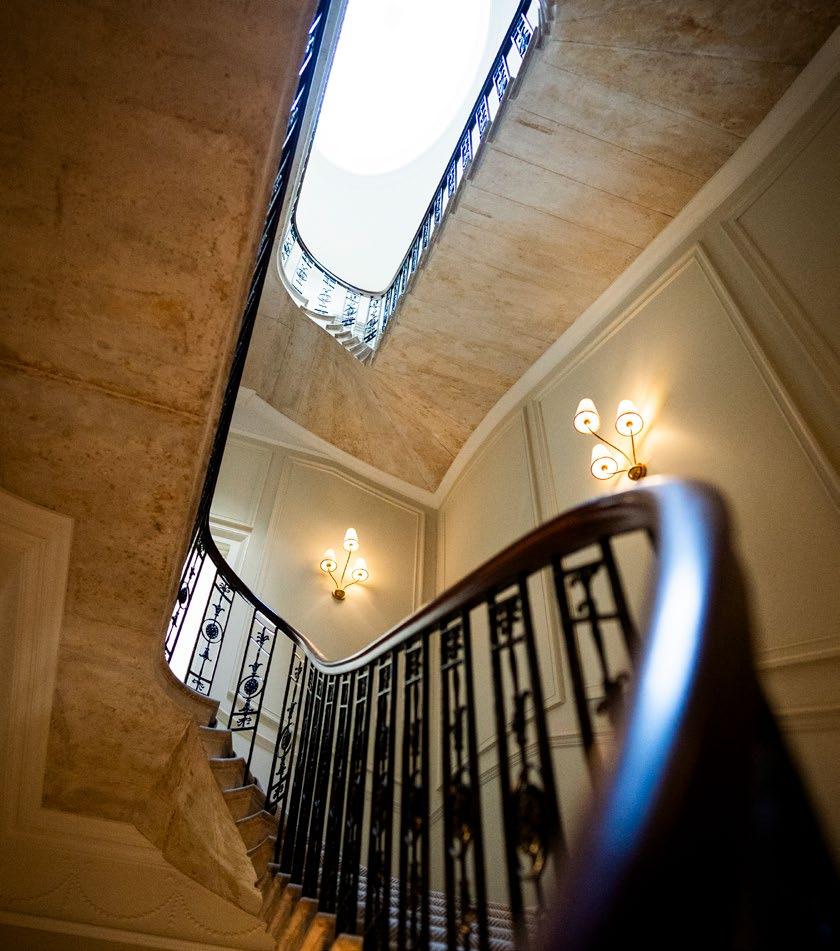
Mosaic Audio & Visual Ltd and James Gorst Architects discreetly modernised a Georgian townhouse in London’s Fitzroy Square, uniting heritage design with effortless whole-home automation via KNX control.
Modernising a Grade-I listed Georgian townhouse is never a task for the faint of heart. At Fitzroy Square in London, the stakes were especially high. The home’s heritage protections required strict architectural sensitivity, while the client’s ambitions called for a comprehensive, intelligent control system that could operate invisibly within the restored structure.
Led by James Gorst Architects, the renovation included extensive refurbishment of both the main residence and adjoining mews, as well as the construction of an underground spa and swimming pool. Technology was to be central to the new living experience, yet invisible in form. Mosaic Audio & Visual Ltd, the appointed integrator, was engaged early to ensure that the vision for intelligent living would never undermine the home’s historic integrity.
The solution was a full-building KNX automation system, discretely managing subsystems including lighting, HVAC (heating, ventilation and air conditioning), shading, audio, fireplace control, security and access, and a bespoke fire response solution. Over 10 equipment racks were distributed across three key zones, with meticulous zoning designed to simplify both initial commissioning and long-term maintenance.
Keypads and touchscreens were offered up early for architectural review, allowing the design team to select finishes that complemented the historic interior. Solid brass interfaces from Meljac were chosen for their tactile elegance, blending seamlessly into walls finished with centuries-old detailing. In rooms where original ceiling features prevented the installation of in-ceiling speakers, Mosaic Audio & Visual Ltd collaborated closely with the design and M&E teams to develop alternate audio solutions, often deploying surface-mount or free-standing options with equal sonic precision.
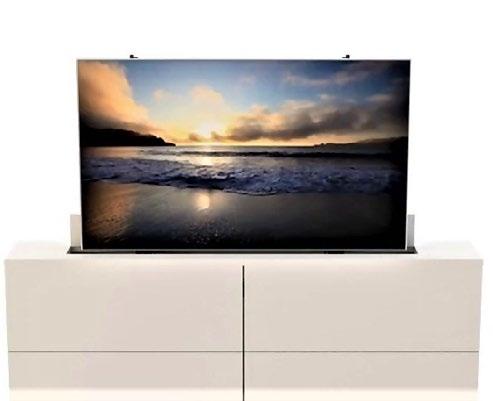
In the home office, a motorised mechanism conceals the television entirely when not in use. This subtle inclusion speaks volumes about the philosophy behind the project — technology should support the architecture, not overshadow it.
Security was a high priority. The system includes multilayered detection using presence sensors, window contacts, and a CCTV network. These elements are integrated into the wider control scheme for peace of mind without visual clutter. Each keypad throughout the house was programmed individually, based on the client’s routines and preferences. At its core, Fitzroy Square is a masterclass in balance. Its systems are sophisticated, responsive and fully connected, yet remain unobtrusive by design. For the client, that translates to effortless control, custom-tailored to their lifestyle. For the building, it ensures its past is respected while its future is assured.
Mosaic Audio & Visual Ltd
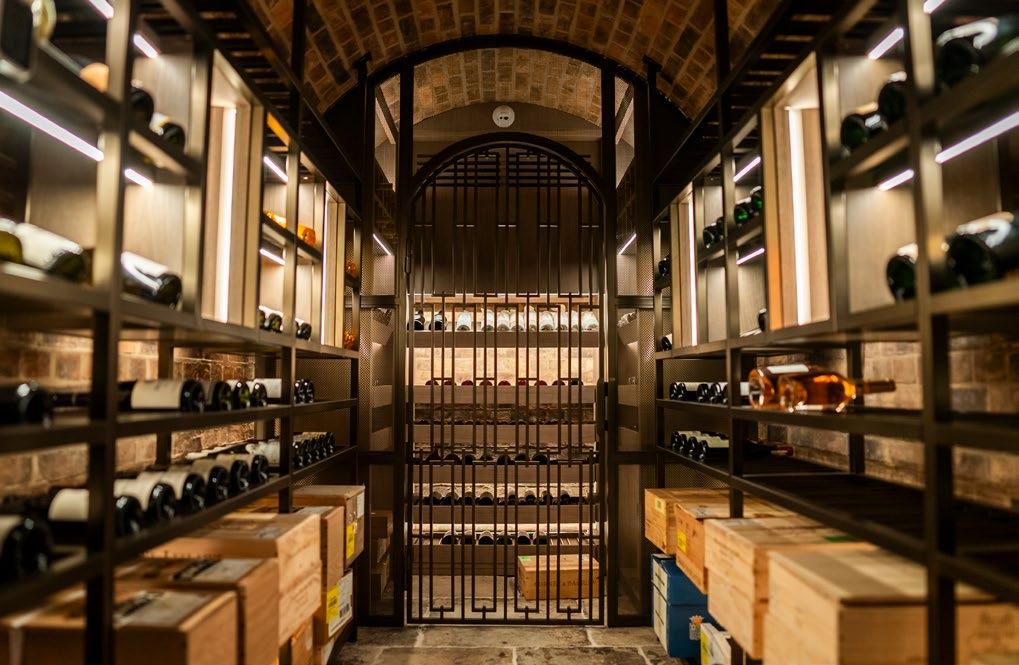
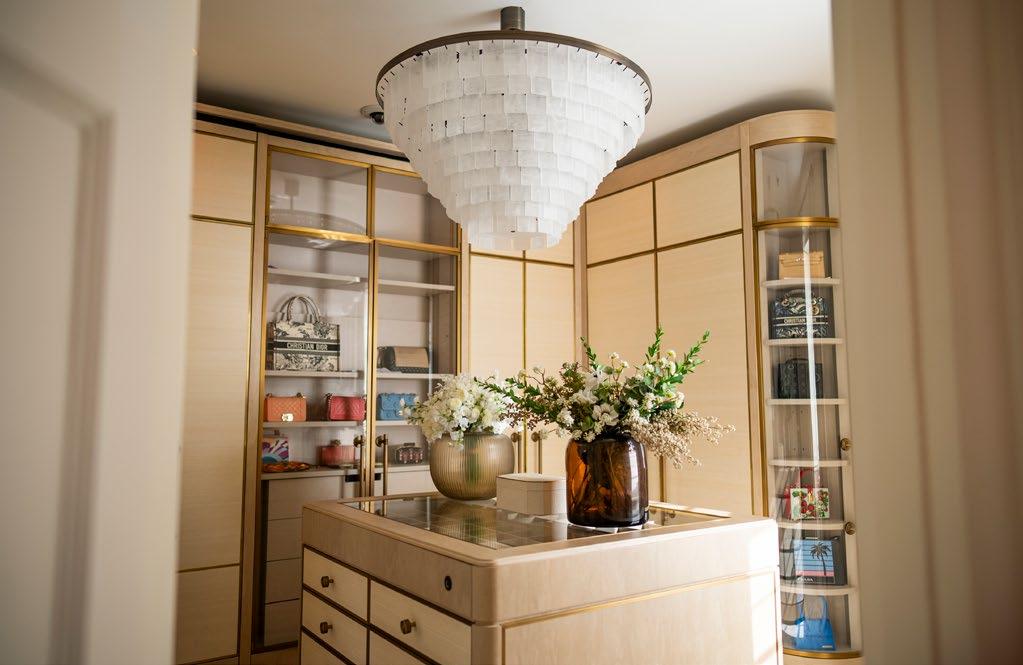
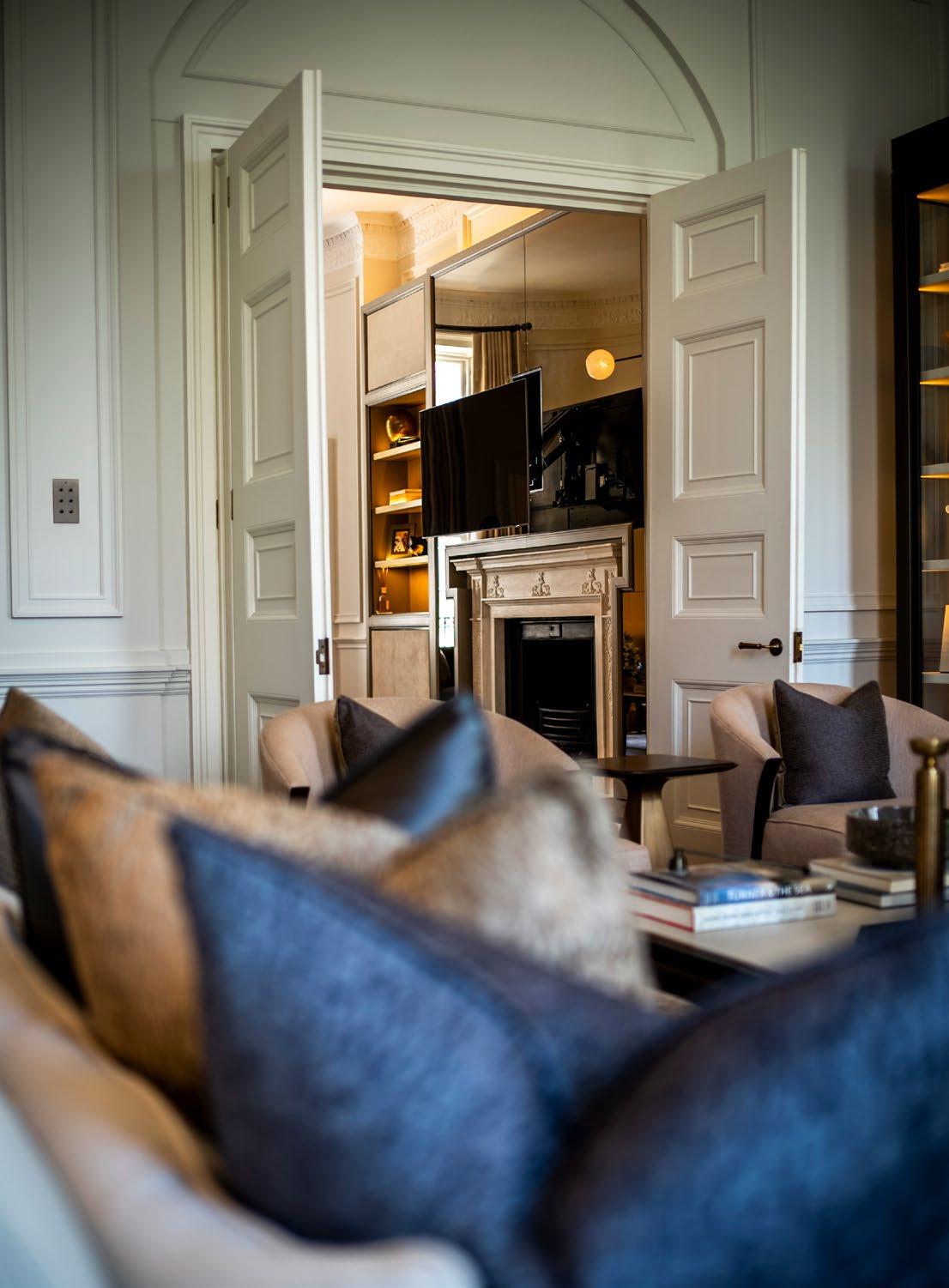
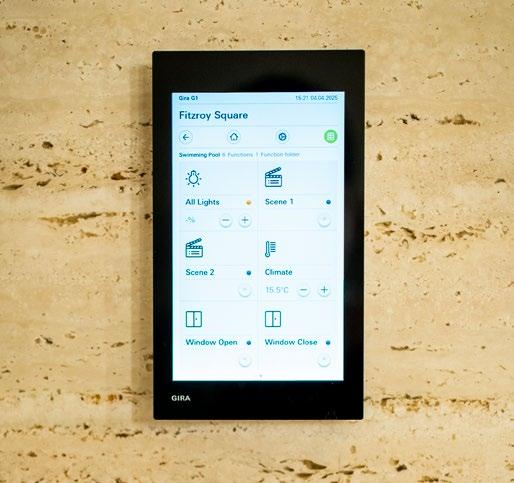
Control interfaces were carefully selected to complement the Georgian interior rather than compete with it.
Fitzroy Square
Mosaic Audio & Visual Ltd
How to Know When Your Client is Asking for an Integrator
Clients often describe lifestyle aspirations in everyday language. Recognising these cues helps designers know when to involve a smart home professional to ensure technology and architecture align seamlessly.
In today’s residential projects, homeowners increasingly expect their properties to do more than provide shelter. They want spaces that anticipate needs, adapt to routines and, above all, feel effortless to use. For architects and interior designers, this means learning to recognise the language clients use when they describe what they want their home to achieve.
Technology integration is not about knowing every piece of equipment on the market. Rather, it is about identifying the key phrases that suggest a professional integrator should be brought into the design conversation.
When a client mentions lighting scenes or expresses interest in dimmable lighting that changes throughout the day, this points to lighting control systems. Similarly, references to climate comfort, zoned heating and cooling, or energy efficiency highlight the need for integration of HVAC (heating, ventilation, and air conditioning).
Credit: Aloud
Requests for whole-home music, invisible speakers, or sound in every room indicate distributed audio. If they speak about cinema experiences at home, big screens, or surround sound, then a dedicated media room or home cinema system may be appropriate.
Conversations about gates, cameras, or intercoms usually fall into the realm of security and access control. When clients ask for control from their phone, one remote for everything, or automation that just works, they are describing centralised control platforms.
Other clues appear when they discuss lifestyle aspirations. Mentions of motorised blinds, glass that adapts to sunlight, or shading that responds automatically point to automated window treatments. Comments about pool control, spa settings, or outdoor entertaining with music and lighting often expand the conversation into exterior living spaces.
Even less obvious remarks, such as wanting the house to wake up gradually, shut itself down at night, or simulate occupancy while travelling, suggest an interest in broader automation. These are moments where design professionals should pause and bring in an integrator who can translate those desires into reliable, easy-to-use systems.
The key lies in listening carefully. Clients may not know the terminology, but their aspirations provide the roadmap. By spotting these phrases and engaging the right expertise early, architects and designers can ensure the home not only looks beautiful but also lives beautifully.
Technology Meets Design
Technology Beyond the Home
Project College Care Kent
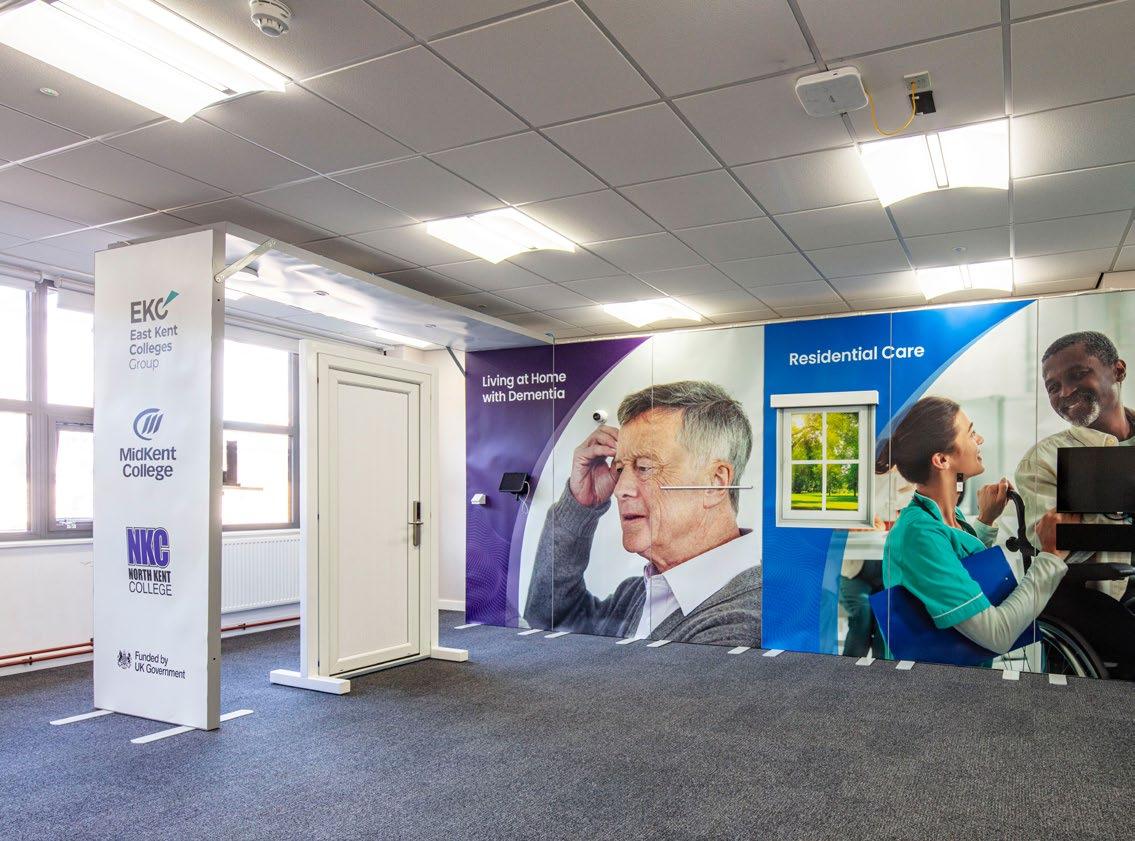
A suite of six smart training environments redefines assisted living education across Kent, giving students real-world insight into how technology can support independence, dignity, and care in the community.
There is a quiet confidence in the way good design reshapes the lives of others. For EKC Group, a further education provider across Kent, that meant reimagining how the next generation of care workers learn.
As part of a successful Local Skills Improvement Fund bid, EKC Group set out to install immersive, technologyrich learning environments across six of its campuses. The aim was twofold: create real-world learning experiences for students and tackle sector-specific skills shortages in Health and Social Care. The result is a pioneering set of demonstration suites, each known as an Independent Living Smart Space, designed and delivered by smart home integrator, Automated Spaces.
Each suite mimics a living environment fitted with smart lighting, motorised shading, fall detection, door access control, voice assistants, and connected care dashboards. But instead of placing the tech at the centre,
the integrator led with outcomes. Everything in the space responds to the lived experience of three personas: a person living with dementia, a resident in care, and an older adult in sheltered housing. This ‘scenario-first’ approach meant Health and Social Care teachers could focus on teaching rather than technology, aided by custom interfaces, step-by-step scripts, and hands-on training.
A standout feature is the custom-written Control4 driver enabling two-way communication with the connected care platform. This not only alerts carers when something’s wrong, but also allows the system to ‘nudge’ the individual first, preserving dignity and promoting independence. Each system was prebuilt in a modular exhibition frame, reducing disruption to the colleges and standardising the user experience. From the mmWave fall sensors to the quiet cooling fans, every decision was intentional. These are spaces designed to teach care, by first embodying it.
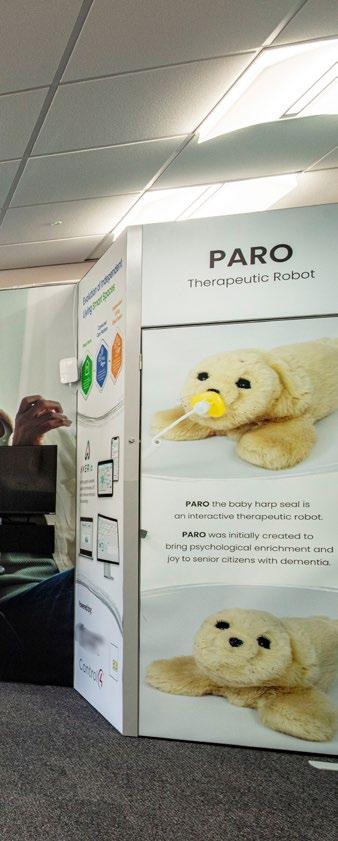
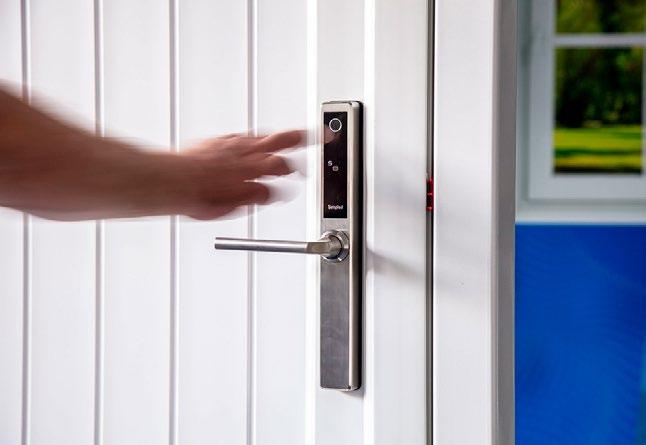
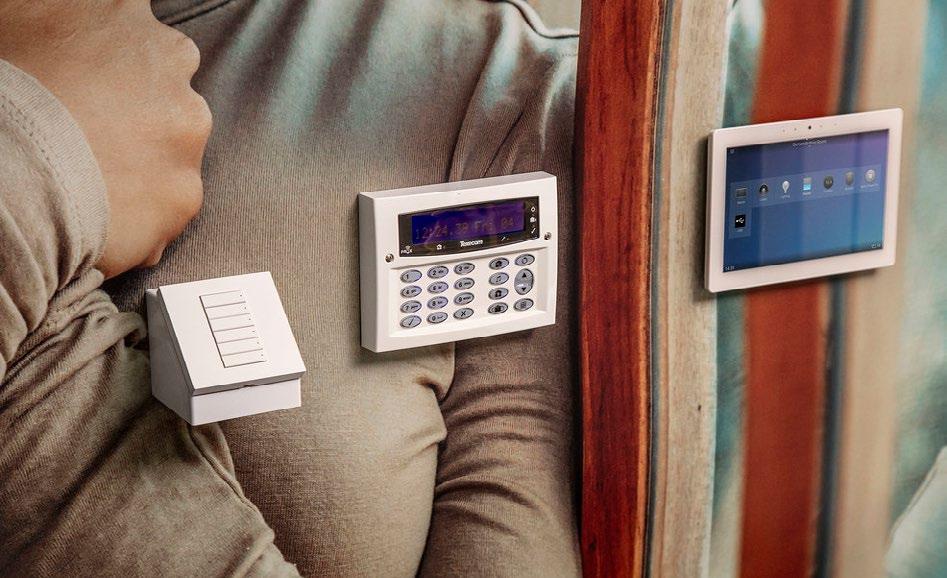
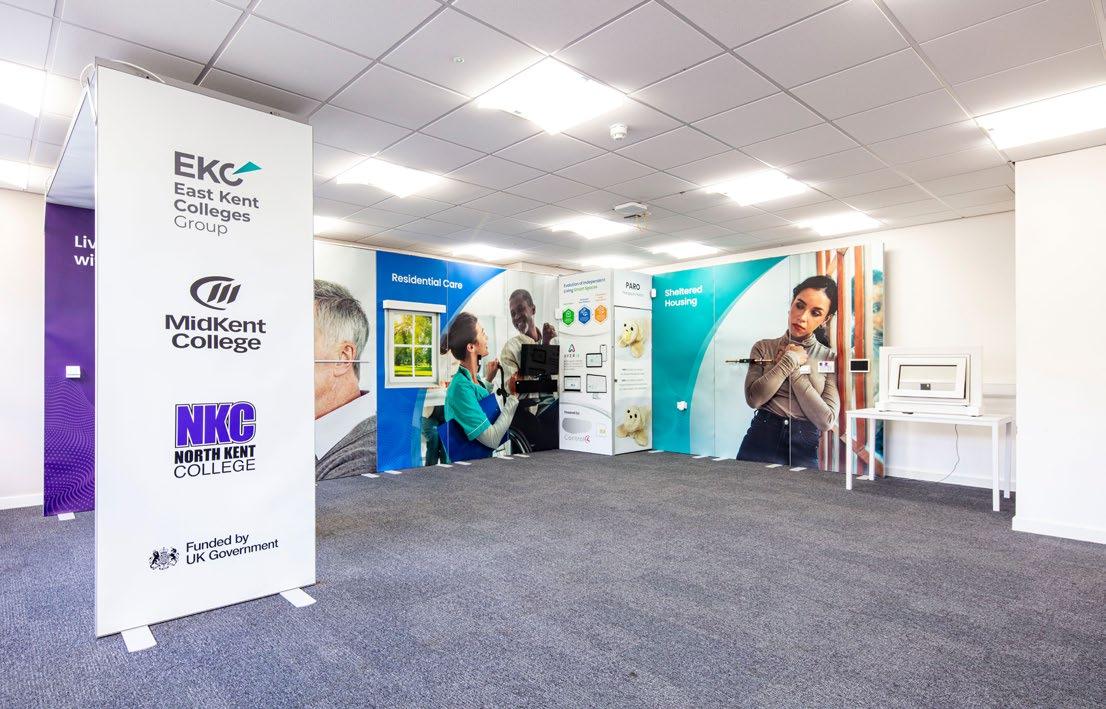
The Control4 interface made complex demonstrations intuitive for teachers and students alike.


Georgian London Town House
A listed Georgian townhouse in Central London becomes a discreetly intelligent base for business, entertaining and philanthropy, thanks to a harmonious collaboration between Edison Projects, Thomas Croft Architects, and Olivia Outred Studio.
Set within the classical facades of a Georgian terrace, this London townhouse had long fallen into disrepair. Yet, beneath the fading plaster and outdated utilities, the family behind its ambitious revival saw potential for something more — an elegant headquarters that could operate as their primary business office, host clients and events, and support their philanthropic ventures with quiet efficiency.
Working alongside Thomas Croft Architects and Olivia Outred Studio, Edison Projects was tasked with weaving modern functionality into a protected period building. Every detail was considered: original features had to remain untouched, modern systems had to be whisper-quiet, and finishes had to echo the interior’s traditional material palette. Coordination between design teams, heritage authorities, and the contractors was essential, particularly given the layers of regulation tied to listed status.
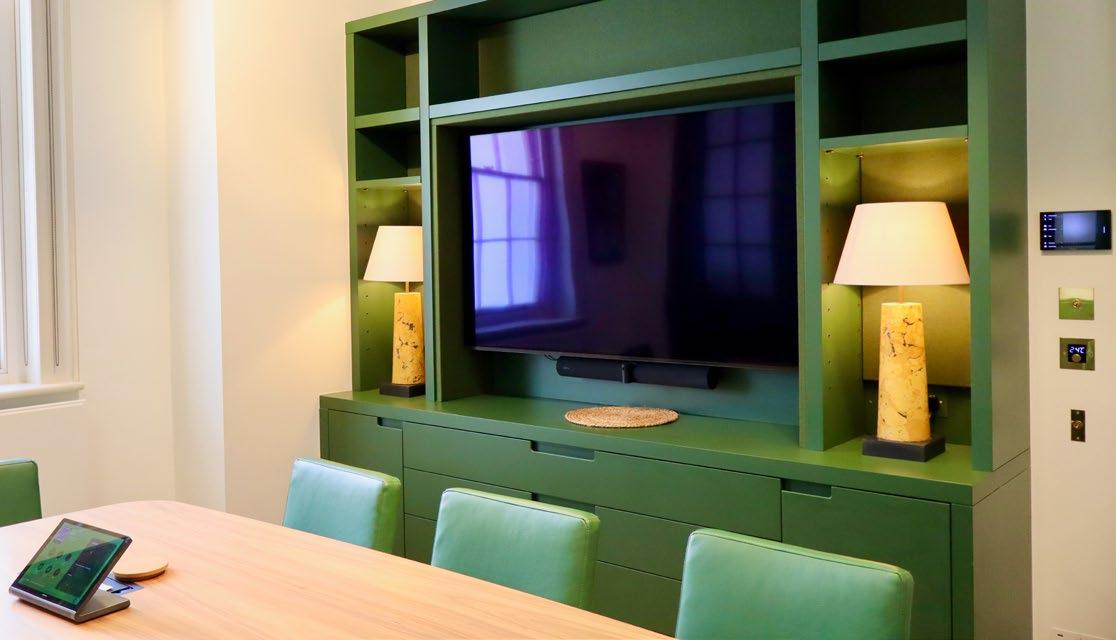
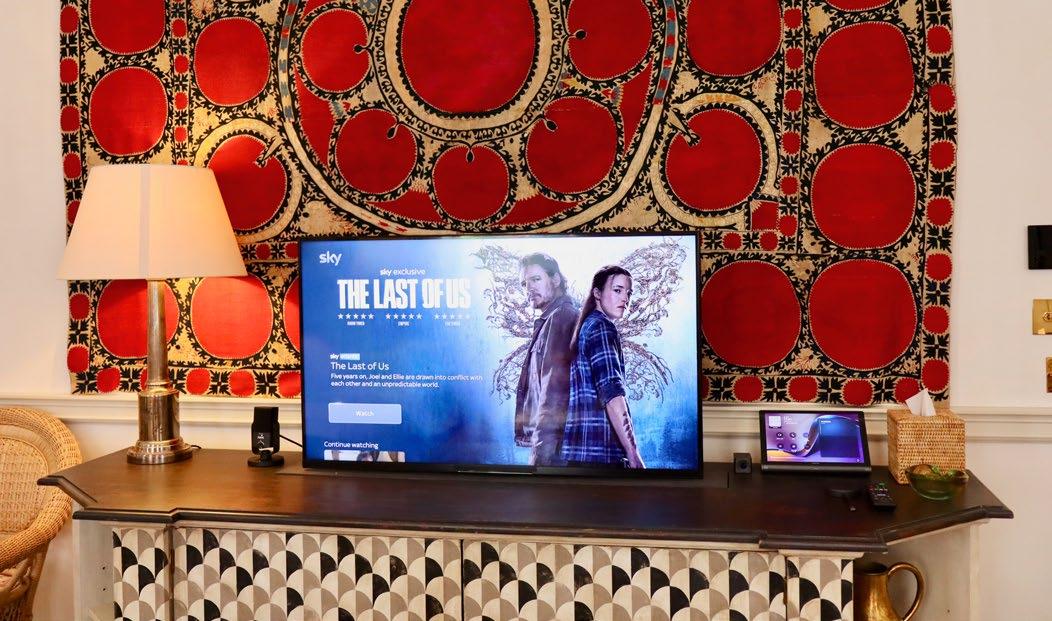
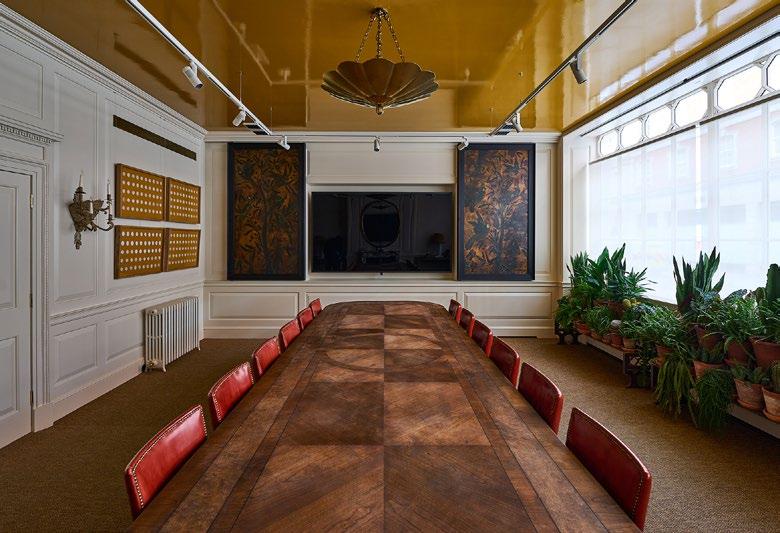
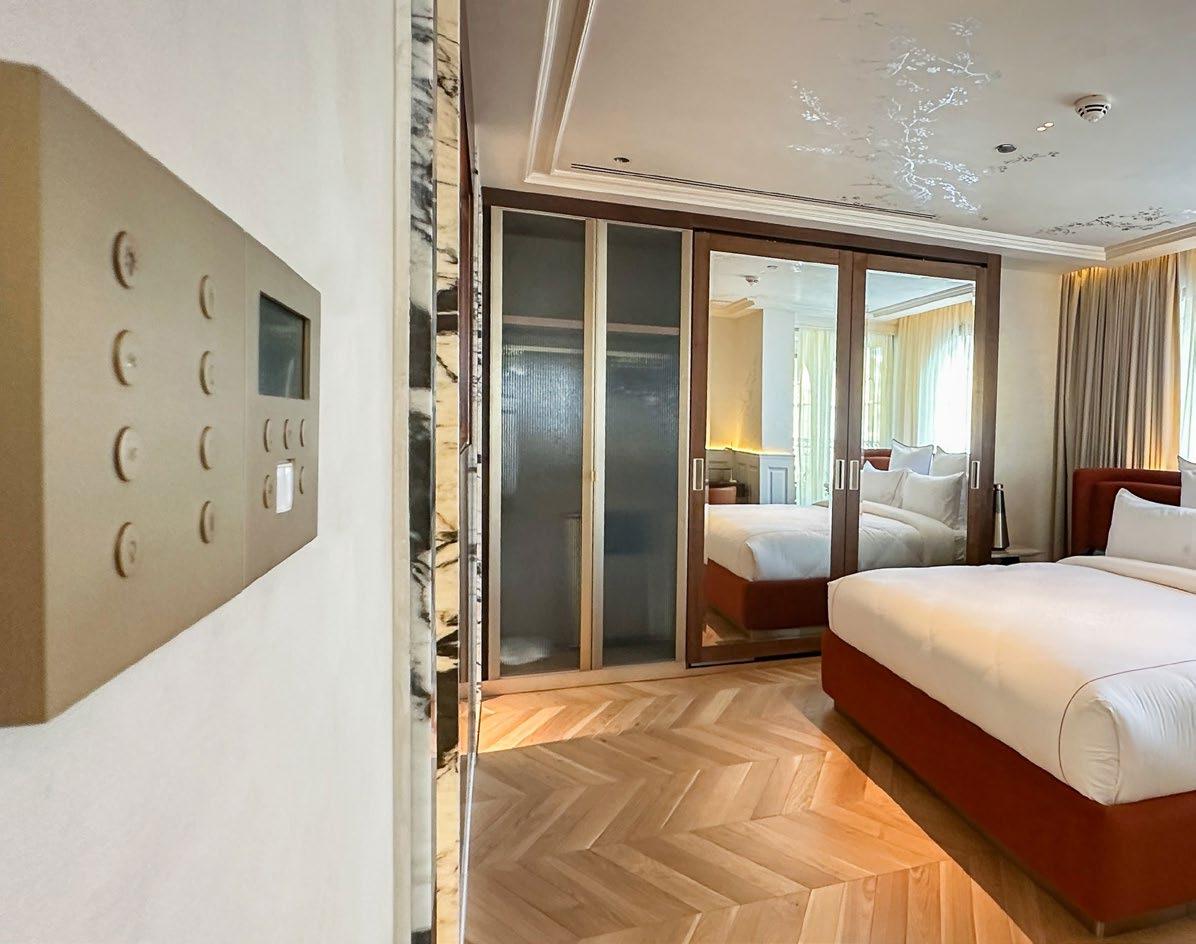
Crestron formed the backbone of the integrated AV and conferencing system, offering effortless control across meeting spaces, club rooms, and lounges. Lutron HomeWorks QSX managed ambient lighting and shading with antique brass toggles that honoured the home’s original character. Switchable smart glass enabled flexible privacy, while plaster-in speakers from Sonance and Velodyne allowed for high-performance sound without visual disruption. Wi-Fi zones, VLAN-separated networks, and a custom-programmed user interface ensured the space could pivot from boardroom to cocktail reception without fuss.
As a final assurance, Edison invited both client and support staff to immersive demos prior to handover, ensuring the system was intuitive from day one.
Edison Projects
The Townhouse Hotel
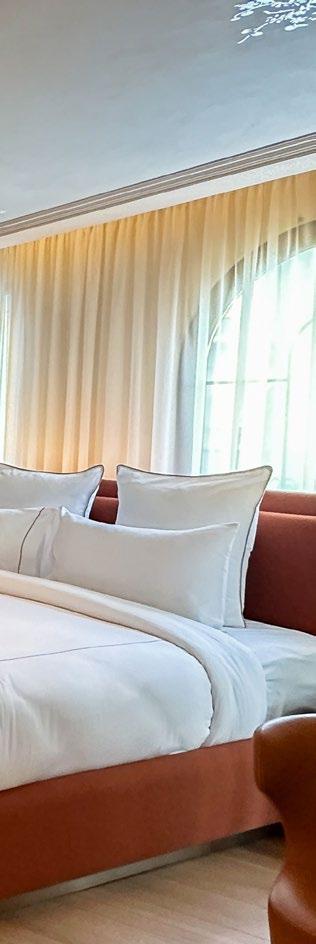
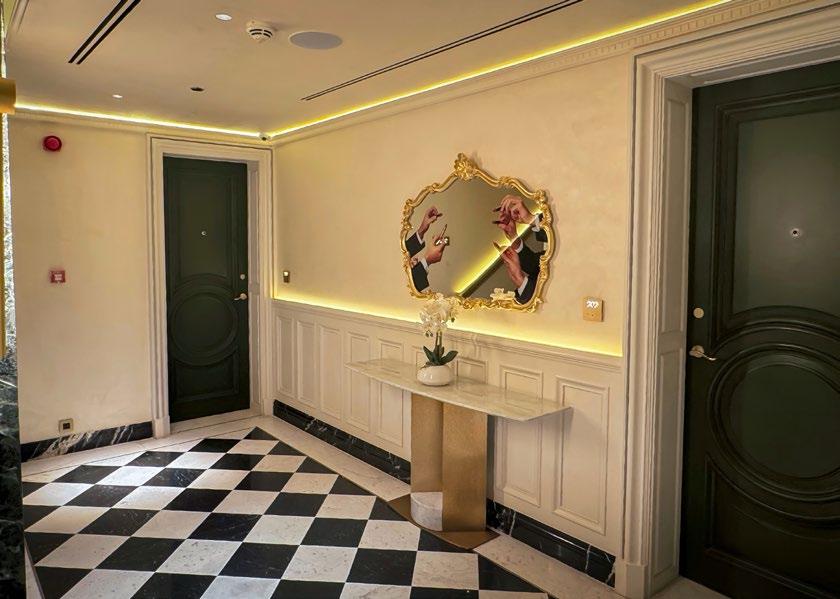
A luxurious boutique hotel in Pakistan redefines the guest experience through deep collaboration between integrator, architect, and interior designer, blending hospitality intelligence with discreet design integration.
What began as a vision from a designsavvy young couple has matured into one of Pakistan’s most technologically refined boutique hotel experiences. The Townhouse Hotel is an elegant, guest-focussed property that challenges the notion of what a small-scale hospitality venue can achieve, blending the warmth of home with the polish of a luxury residence. Its design is minimalist and tactile, but beneath the surface lies a powerhouse of seamless integration.
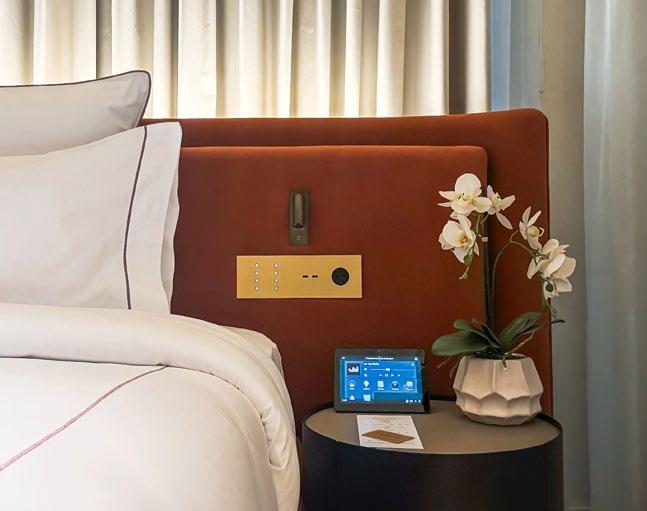
Synergy Technologies was brought on to engineer a control system that could disappear entirely into the hotel’s finely crafted interiors. The brief was uncompromising: intuitive automation, refined aesthetics, and integration across every subsystem. This included lighting, shading, HVAC, audio, access control, IPTV, and AV — all orchestrated via a tightly knit network of Lutron HomeWorks QSX,
Control4, and GRMS, linked directly to Opera PMS and Salto access control.
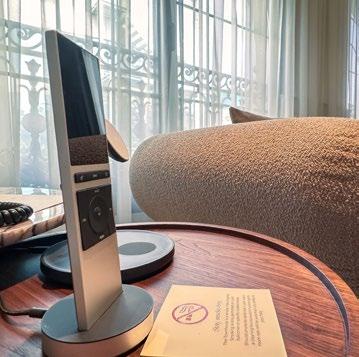
What sets the Townhouse apart is the depth of integration. Check-in sequences are automated and sensory: lights adjust, music begins, curtains open — each detail is choreographed to welcome. Bang & Olufsen audio systems and mirror-TVs feel like sculptural elements, while custommachined brass faceplates and signage echo the hotel’s high design narrative. Even web content for in-room touch panels was tailored in-house by the integrator to maintain consistency across platforms.
Collaborating closely with KI Design Collaborative and a host of specialist manufacturers, Synergy pushed beyond residential norms to build a system of scale, precision, and grace. This is not just smart hospitality. It is hospitality that feels designed from the inside out.
Smart Home Routines: Simplifying Your Life with Home Automation
Smart home routines can make your life easier. By combining smart home technology with automation, you maximise convenience.
In this guide, we’ll explain what home automation routines are and how to use them to simplify your life. Plus, we’ll share some of the best smart home routines.
What Are Smart Home Routines?
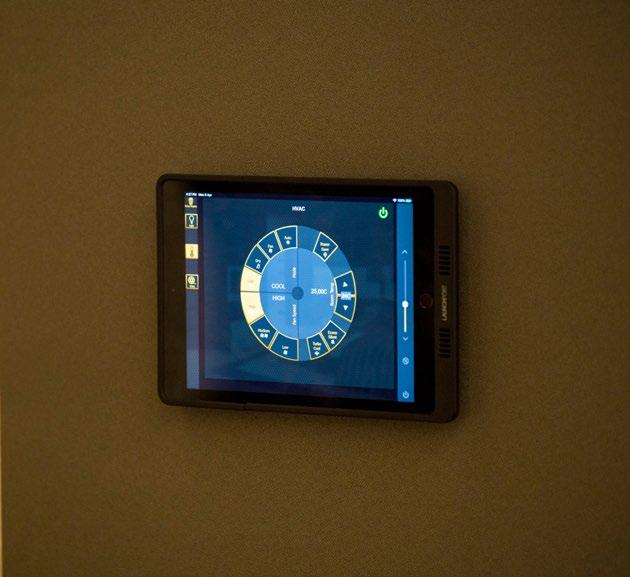
Smart home routines are the series of automated actions that smart technologies carry out. Want your smart lights to turn off when you leave the room? That’s a smart home routine.
So, what’s the difference between smart home technology and smart home routines?
Smart home technology refers to the devices and functions in your property (e.g. smart heating, security, lighting) that you control remotely or from a centralised point. Meanwhile, smart home routines are specifically the sequences of actions that happen when triggered (i.e. with a command or sensor).
For example, a smart washing machine is smart home technology. A smart home routine would be a sequence of events, such as the washing machine sending you a text message if you don’t open the door within 10 minutes of the load finishing.

Why Smart Home Routines Are The Future Of Convenience
Smart home routines streamline daily tasks. By connecting devices and using automation, you can program your tech to work in a way that suits you with fewer manual steps.
Routines provide consistency, save time and can boost energy efficiency. For example, if you accidentally leave your freezer open, it’s a major inconvenience and a waste of energy (and money if food spoils). If you set up a routine that sends you a notification if your freezer door remains open for two minutes, you can react quickly. You could program more steps, too. So, if you don’t address the notification then the routine could trigger an announcement via your smart speaker.
As well as stopping mishaps that lead to energy wastage, smart routines also make your everyday life easier. You can set up a routine that means lights dim when it’s time for your children to go to bed – helping you to get your little ones settled.
The Most Popular Smart Home Routines
With so many people looking for hacks and tricks to simplify their lives, it’s unsurprising that smart routines have risen in popularity online –particularly on social media platforms like TikTok. We’re here to give you a round-up of the most popular smart home routines.
Popular Routines
Smart lighting: Morning routines, you can automate your lights based on timing, helping you gradually wake up with soft lighting and natural light simulations. In the evening, program a routine where your lights gradually dim to help you get to sleep. So, when you say, “Lights, get me ready for bed”, your lighting will fade away. Alternatively, you can program a relaxation mode in the evening to help you gradually wind down.
Voice Assistant Tasks
By using a voice assistant, you can get the weather, news, or reminders before you’ve even got out of bed. Take it to the next level by setting up routines that link multiple devices. For example, connect your voice assistant to your coffee machine so that your wake-up drink is ready for you after you say, “Morning coffee, please.”
Security Settings
Sleep easy at night by locking doors, closing blinds, and setting up security cameras with one command.
Smart Plugs
Save energy by automatically turning off devices that aren’t in use. You can set this routine up based on a timer function or use a voice command like “Turn off all unused plugs”.
Automated Schedules
Set up time-based schedules for your thermostat, lights, and appliances to stop wasting energy. You can program your heating, lighting and any non-essential devices to turn off when you’re at work or sleeping.
Creating Custom Routines For Your Unique Needs
Everyone’s needs are different, so you should customise your smart home routines. If you work nights, you’ll want your blackout blinds to drop down at different hours than in the home of someone working from nine to five. You can set up custom schedules for
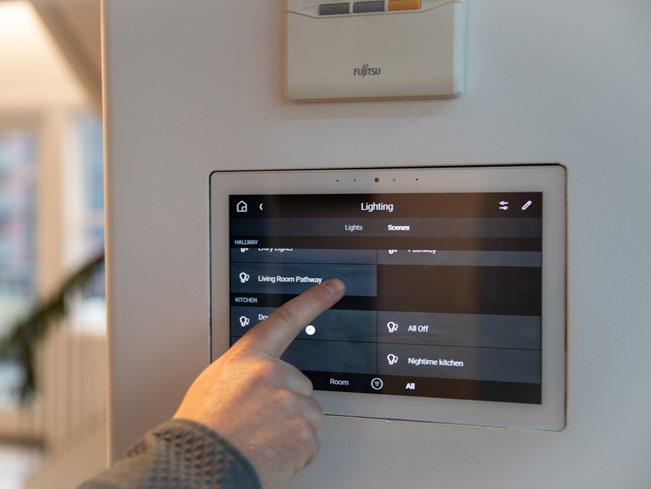
heating, cooling, lights and devices so that they all suit your needs.
You can also create custom triggers based on specific conditions. For example, “When I leave the house, lock all doors and set the thermostat to energy-saving mode”. If you live with other people, this routine might not work for you. However, it will be better suited to you if you live alone or are always the last to leave.
Benefits Of Smart Home Routines
There are several benefits of smart home routines including:
Improved Convenience And Time Management
Automation makes it easier to manage multiple tasks. Things that were once frustrations (e.g. struggling to find the light switch when returning home after dark) become effortless (e.g. your hallway lights automatically turning on when you unlock your front door).
You’ll also save time on repetitive tasks like constantly adjusting your thermostat. Instead, your smart home will take care of everyday routines.
Enhanced Home Security And Peace Of Mind
By automating home security measures, you can benefit from an increased peace of mind. No need to worry about whether you locked the door behind you when it’s done automatically.
Notifications, camera feeds, and remote control of locks and other home features also ensure that your property is secure. Plus, it’s easy to check on your home wherever you are.
Energy Efficiency And Cost Savings
Smart home routines can optimise your energy

consumption and reduce your utility bills. Any routines that automatically turn off disused appliances and unnecessary heating and lighting will cut waste.
If you want a sustainable, eco-friendly property then home automation routines that prioritise minimising energy use are an excellent thing to have.
Future Trends In Smart Home Routines
Smart technologies are continually evolving. Emerging technologies, such as AI and machine learning, will influence the next generation of home automation routines.
For example, even the process of automation could become automated. An intelligent system will be able to identify patterns and then suggest automation based on your behaviour – saving you from the mental load of coming up with a routine.
Smart home routines offer many benefits. They can save energy, time and money. What’s not to like?
To get the most out of smart home routines, it’s worth experimenting with different automations and seeing what works for you. Once you’ve got the basics set up, you can tweak your routines. By letting smart technology take control of tiresome tasks, you can improve your daily life.
If you’re interested in creating smart home routines, get in touch with a CEDIA-certified member.
When Design Meets Technology: A New Era of Collaboration
Technology has moved from the periphery of home design to its very core. The Technology Meets Design judging panel discusses how architecture, interiors, and smart systems are finally learning to speak the same language.
When interior designer Dean Keyworth of Armstrong Keyworth began his career, a conversation about technology rarely appeared in a design meeting. “There might be a chat about where to put the television,” he says with a laugh. “But now there’s an entire chapter in my new book on smart home technology. It’s become integral to the conversation around luxury interior design.”

Dean Keyworth
Armstrong Keyworth Ltd
Dean was joined by Susie Rumbold, Sam Brunsden, Peter Warren, Tom Webster and Toni Sabatino for this year’s CEDIA Technology Meets Design judging panel. Together they represent every angle of the modern home — architecture, interiors, construction, and the increasingly vital layer of intelligent systems that ties it all together. Their collective view is that the industry is undergoing a quiet but profound transformation.
“Technology can enhance both the functionality and aesthetic of a space,” adds Toni, principal of Toni Sabatino Style. “It’s not just about control; it’s about comfort, energy awareness, and celebrating design through light and sound.
When thoughtfully integrated, it highlights the materials, art, and architecture we work so hard to perfect.”
“Technology is no longer a bolt-on,” says Sam. “It should be treated as a fundamental design layer, like mechanical, electrical, or plumbing. You can’t build a home without considering how it will connect and perform digitally.”
Beyond Luxury
For decades, smart homes were the domain of the very wealthy: large properties filled with complex control systems and cinema rooms that required an owner’s manual. That perception, says Susie, is fast disappearing.
“It goes beyond high-end residential now,” she explains. “There’s a trickle-down effect. You’re seeing elements of smart design in rental developments and mid-market projects. It’s becoming expected, and that’s the real shift.
The challenge is keeping it usable; technology only succeeds when it feels effortless.”
Toni agrees, noting that the perception of technology as an indulgence is fading fast. “We’re seeing it move from luxury to lifestyle,” she says. “Smart lighting, shading, and energy monitoring are becoming standard expectations, even in smaller or multifamily developments.”

Peter, who develops homes under the EAB Homes banner in the United Kingdom, has seen that expectation firsthand. “Whether we’re selling at £1 million or £5 million, every buyer assumes there will be some technology in the house,” he says. “The difficulty is balancing budget and expectation. People love the idea of smart features but are often surprised when they discover what they actually cost.”
For him, the solution lies in future readiness. “At the very least, we make sure the wiring infrastructure is there,” he says. “Even if clients can’t afford full automation immediately, they will have the option later. Readiness is value.”
Designing for Every Life Stage
While technology is frequently associated with convenience, the panel agrees its real power lies in adaptability. Homes can now evolve with their occupants, accommodating everything from hybrid working to ageing in place.
Sam from Dyntec, who sits on the advisory board of the International WELL Building Institute, highlights how certification frameworks are expanding to include digital wellness and senior living. “It’s about infrastructure that supports life changes,” he says. “You might design a home for a young family today, but 10 years from now it could need in-home care facilities. If the systems are in place — connectivity, monitoring, control — you can support that transition without rebuilding.”
Susie shares a similar observation from her interior design studio, Tessuto. “We often work with clients who are planning long-term residences. The brief now includes lifestyle questions: How do you consume entertainment? Do you travel frequently? Will you need
Clients want to invest in their lifestyle. Technology that supports accessibility and ageing in place ensures the home evolves gracefully with its occupants.
Susie Rumbold Tessuto
assisted living features later? These conversations help us create a specification that can adapt. Flexibility is everything.”
Dean adds that routine itself influences design. “A young couple might have unpredictable schedules, while retirees tend to have consistent habits. Technology can respond to both. Automated lighting and shading can align to routines, adjusting naturally over time. It’s incredibly powerful when it works with, rather than against, human behaviour.”
“Preparing a home for the future is part of responsible design,” says Toni. “Clients want to invest in their lifestyle. Technology that supports accessibility and ageing in place ensures the home evolves gracefully with its occupants.”
The Invisible Infrastructure
Every member of the panel points to networking as the unsung hero (and frequent villain) of the modern home.
“It still amazes me,” says Peter, “how many clients come to us saying, ‘I just want the internet to work properly.’ In new builds with reinforced concrete or thick insulation, you can have zero phone signal and patchy Wi-Fi. A beautiful home is useless if it’s not connected.”

priorities; it’s about coordination.”
Toni Sabatino Style
Peter, who frequently mediates between the two worlds on site, sees personality as part of the challenge. “Developers, designers, and integrators all come with stereotypes — the tech people seen as nerds, the designers as fussy about finishes. But when everyone drops their guard, the results are incredible. The client wins, the process runs smoother, and the project feels cohesive.”
“The best homes happen when design and technology teams stop protecting their turf,” says Peter. “It’s about communication, openmindedness, and remembering that everyone is working toward the same goal.”
Today, lighting panels and keypads are designed beautifully. They’re tactile, elegant, and can complement the room’s aesthetic. We’re finally at a stage where technology contributes to the visual story rather than interrupting it.
Sam agrees. “Audio-visual has become IT. Everything sits on a network — lighting, shading, heating, entertainment. If that backbone isn’t designed properly, nothing else functions. A good integrator understands data infrastructure as well as design aesthetics. It’s the new electricity.”
Dean nods. “There’s still an education gap among designers. We need to understand how much space a rack requires, what cooling it needs, and where access panels must go. Without that knowledge, we frustrate the integrator. It’s about cross-education between our disciplines.”
Toni highlights another layer: “So much of the conversation now is about network reliability. People think Wi-Fi is magic, but it’s infrastructure. A well-planned backbone is what makes automation truly invisible.”
Bridging Aesthetic and Technical Worlds
Historically, interior designers and integrators approached projects from different planets: one focused on appearance, the other on performance. The panel agrees that collaboration is now dissolving those boundaries.
“It used to be all about big black speakers and ugly white docks stuck on de Gournay wallpaper,” says Susie. “That’s gone, thankfully. Today, lighting panels and keypads are designed beautifully. They’re tactile, elegant, and can complement the room’s aesthetic. We’re finally at a stage where technology contributes to the visual story rather than interrupting it.”
For Sam, success depends on timing. “Too often, I’m brought in after the interiors are finalised. By then, the equipment room is too small or the ceiling grid doesn’t work for the lighting layout. Bringing consultants in early, at the same time as mechanical and electrical engineers, saves everyone headaches later. It’s not about competing
Redefining Professionalism
A decade ago, many integration firms operated more like trade contractors than consultants. Sam believes that’s changing. “We’re seeing a rise in specialist design consultants who don’t sell equipment,” he explains. “They operate like MEP (mechanical, electrical, and plumbing) engineers, producing specifications and drawings for tender, ensuring the design matches the client’s brief rather than pushing a particular brand. It’s a sign the industry is maturing.”
Susie supports this model. “Integrators should be at the table with the architect, engineer, and interior designer from day one,” she says. “They bring technical expertise that can shape the concept. When that happens, the client ends up with a product that truly reflects their needs and budget.”
Dean adds, “The role of education can’t be overstated. Designers don’t need to become technologists, but they should understand the basics: spatial requirements, ventilation, and maintenance access. It’s the same respect we show lighting or HVAC specialists.”
Overcoming Misconceptions
Despite progress, misconceptions persist — both among professionals and homeowners. “One of the big ones,” says Dean, “is the idea that everything is wireless. People think you can just do it over Wi-Fi. You can’t. You still need serious cabling if you want reliability.”
Susie laughs. “And clients always forget about access. Underfloor heating is a great example. People think there’s no equipment,

Toni Sabatino
Tom Webster Webster Harding Architects Ltd.
When Design Meets Technology: A New Era of Collaboration (continued)

then realise they need large manifolds and panels. The same goes for technology. If you want it to be invisible, you have to plan for where it lives.”
For Sam, the biggest misunderstanding is assuming technology and design are at odds. “That’s old thinking,” he says. “Invisible speakers, recessed projectors, beautifully engineered switch plates — there are so many ways to make it elegant. The earlier we collaborate, the easier it is to integrate seamlessly.”
Toni observes that many clients still see smart systems as complicated or unnecessary.
“I ask them if they’d buy a car with roll-down windows,” she says. “Technology has matured. Streaming updates and intuitive interfaces have made it accessible, not intimidating.”
The Convergence of Creativity and Control
Across continents, this convergence of design and technology signals a new mindset. In New York, Toni’s kitchen-centric philosophy celebrates open-plan spaces where lighting and automation enhance daily rituals. Her belief that technology should serve wellbeing echoes throughout her work, where lighting and control enhance the joy of everyday rituals. In London, Susie’s process-driven interiors rely on technical precision to deliver emotional comfort. In New Zealand, architect Tom Webster uses integrated systems to balance sustainability and cinematic experience.
Wherever they work, the lesson is the same: technology belongs in the design conversation from the start.
As Susie concludes, “Great design isn’t about adding more. It’s about making life simpler, calmer, and more connected. When design and technology are truly aligned, you don’t see the systems. You just feel the difference.”
Great design isn’t about adding more. It’s about making life simpler, calmer, and more connected. When design and technology are truly aligned, you don’t see the systems. You just feel the difference.
A Future of Effortless Living
Looking ahead, the panel predicts a future where systems fade entirely into the background. Susie envisions homes that quietly self-regulate: “We’re already seeing shading and climate systems that respond automatically to sunlight or temperature. People won’t need to think about it because it’ll just happen, creating comfort and efficiency without intrusion.”
Dean points to emerging artificial intelligence. “We’re heading toward unified control, where you simply talk to the home or wear a device that understands context. But that only works if everything behind the scenes is engineered correctly.”
Sam sees hardware shrinking. “When I started 20 years ago, equipment racks filled entire cupboards. Now we’re halving them every few years. Edge computing will make them smaller still. Integration will get simpler, but expectations will rise. People aren’t impressed by automation anymore; they’re impressed when it’s invisible.”
“The goal is not more gadgets,” says Toni. “It’s about homes that anticipate our needs, enhance wellbeing, and make daily life feel smoother. The best technology disappears into design, leaving only comfort and beauty behind.”
For Peter, the greatest innovation may be cultural. “We’re finally recognising the value of collaboration. For years, projects went wrong because people worked in silos. Now the word I keep coming back to is communication. When everyone’s on the same page (client, designer, integrator, builder, etc.) the handover is silent. No calls, no complaints. That’s when you know it’s worked.”
Advice for New Designers

As smart technology becomes standard, more designers are encountering integrators for the first time. The panel’s advice is simple.
“Don’t be defensive,” says Dean. “If a client wants something that challenges your aesthetic, look for solutions rather than roadblocks. Listen to the experts, they’re there to make your vision work in practice.”
“Bring them in early,” adds Susie. “It’s just good business. The sooner they contribute to the brief, the more cohesive the result.”
Sam encourages due diligence. “Choose your partners carefully. Don’t just go local or cheapest. Look for certification, experience, and scale. You’re trusting them with the home’s nervous system.”
Peter agrees. “Avoid the race to the bottom. Quality integration costs what it costs, but it adds enormous value in the long run. Collaboration and transparency beat cutting corners every time.”
Sam Brunsden Dyntec
Peter Warren EAB Homes
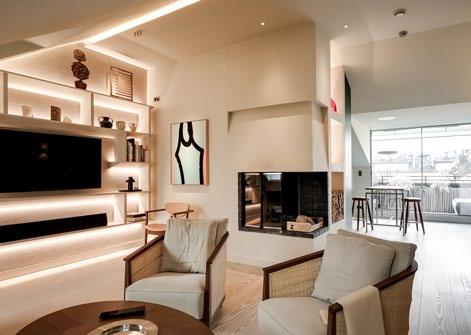
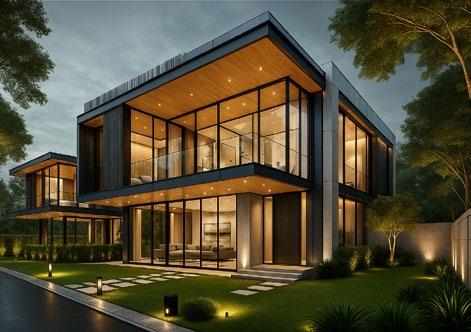
Aloud Audio Visual Control Systems Limited

Best Integrated Home - Level II 2025 Winner
Excellence in Lighting 2025 Highly Commended
Excellence in Documentation 2025 Finalist
Excellence in Support & Maintenance 2025 Finalist
Best Integrated Home - Level I 2025 Winner
Excellence in Support & Maintenance 2025 Winner


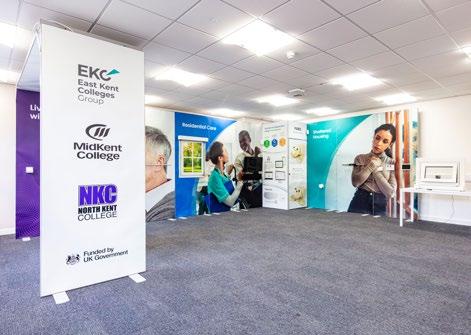
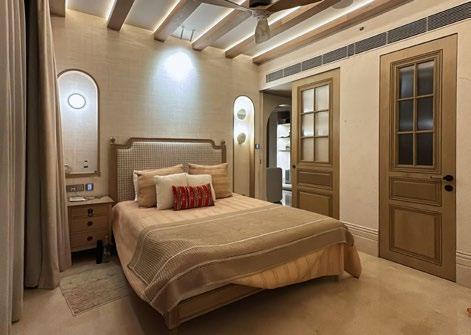
Automated Spaces Beyond Alliance
Excellence in Innovation 2025 Winner
Technology Beyond the Home 2025 Winner
Excellence in Support & Maintenance 2025 Finalist
Excellence in Documentation 2025 Finalist
Integrated Home - Level I 2025 Finalist

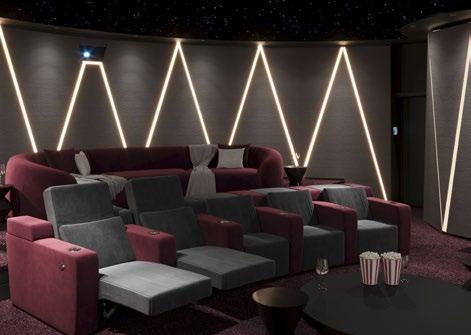
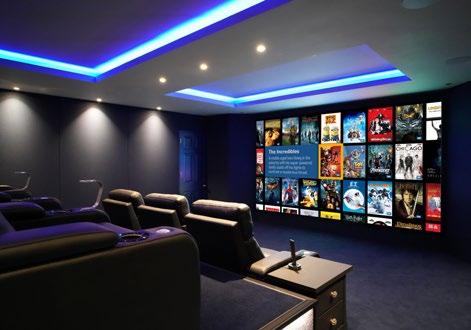

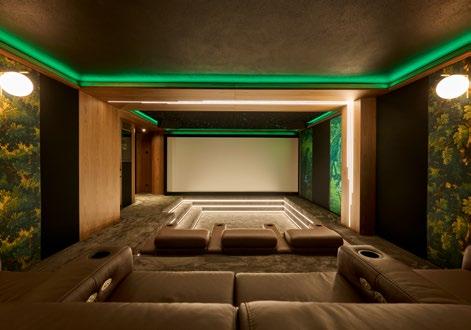
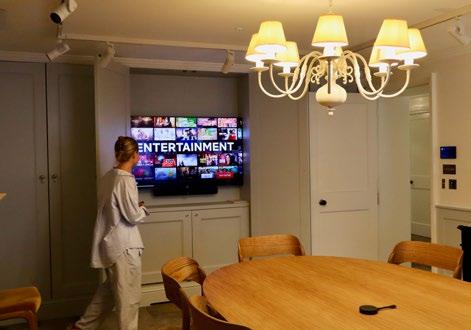
Best Home Cinema - Level III 2025 Winner
Excellence in Lighting 2025 FInalist Germany Member Since 2020
Technology Beyond the Home 2025 Finalist

www.diezwei-heimkino.de

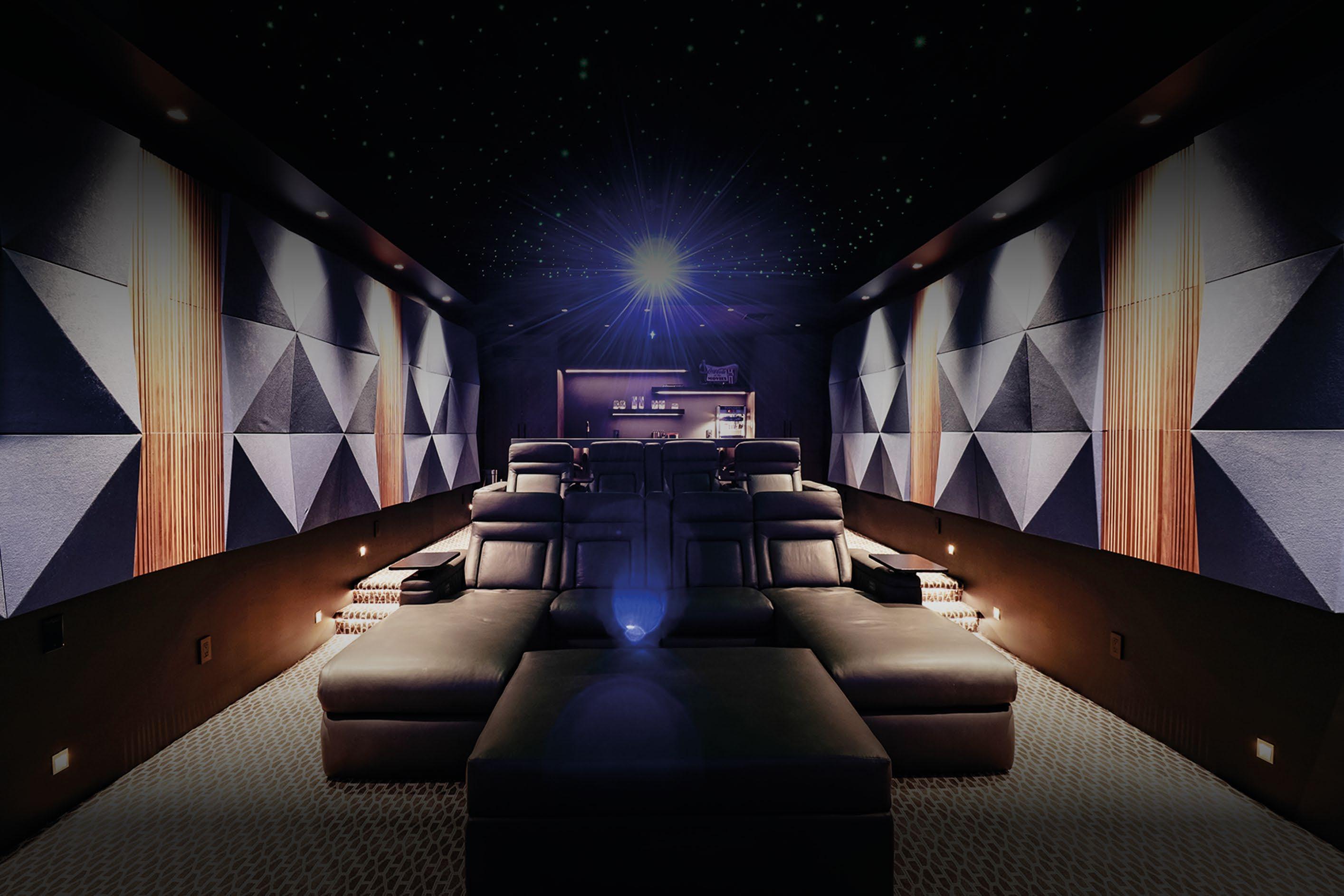
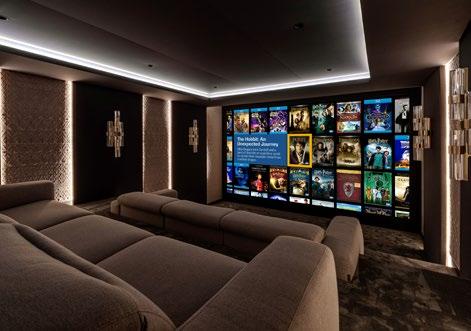
Finite Solutions
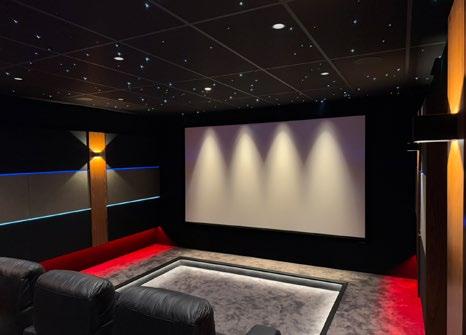
Best Home Cinema - Level II 2025 Finalist
Best Home Cinema - Level I 2025 Finalist

Hi-Concept
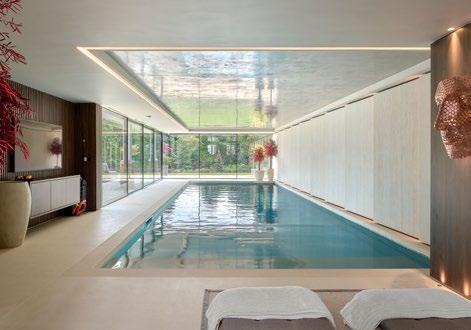
IndigoZest Ltd
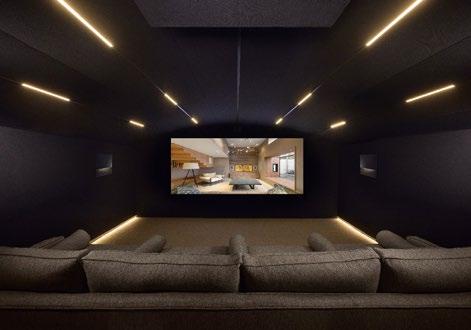
KNEKTD Ltd
Best Home Cinema - Level II 2025 Winner
Excellence in Lighting 2025 Winner
Technology Meets Design 2025 Winner
Best Integrated Home - Level II 2025 Finalist
Excellence in Lighting 2025 Finalist United Kingdom Member Since 2015

www.indigozest.co.uk
Kingdom Member Since 2012
Best Home Cinema - Level III 2025 Finalist

Immersive Sound Processors, Receivers & Amplifiers
CREATE IMMERSIVE, WORLD-CLASS HOME THEATERS LIKE MAGIC
State-of-the-art calibration with DIRAC Live Art Room Treatment & StormAudio manual calibration tools




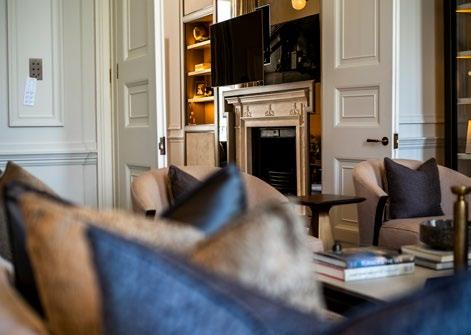
Mosaic Audio & Visual Ltd
Best Home Cinema - Level IV 2025 Winner
Excellence in Support & Maintenance 2025 Winner
Excellence in Documentation 2025 Finalist
Excellence in Lighting 2025 Finalist
Best Home Cinema - Level III 2025 Winner
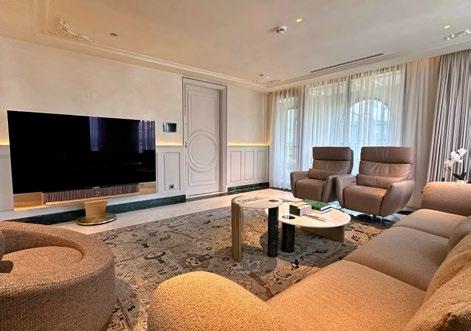

How to Design for Equipment Racks
An equipment rack is the hidden heart of a smart home. For architects and designers, its placement and housing are key to performance, serviceability, and discretion.
In modern homes, the equipment rack is the quiet engine that drives every smart system. Lighting control, audio distribution, security, networking, and environmental control all converge here.
For interior designers and architects, the focus is not on what sits inside the rack, but on the environment that surrounds it. Placement, ventilation, accessibility, and discretion are the key design considerations that ensure both technical performance and architectural harmony.
A well-designed rack location is, first and foremost, about space. These enclosures are often taller than two meters and require sufficient clearance front and back for airflow and technician access. A narrow cabinet or poorly planned cabinetry may look neat at the design stage, but once installed, can make servicing a system nearly impossible. Futureproofing should also be part of the thinking. Systems evolve, and additional components may need to be added over time, so allowing for growth is crucial.
Ventilation is another essential consideration. Equipment generates heat, and without proper airflow, performance and longevity are compromised. Ideally, the rack should be housed in a dedicated cabinet or room with passive ventilation or, in larger systems, active cooling. Positioning near HVAC return air ducts can also support thermal management, but only if planned early in the architectural drawings.
Noise is a factor often overlooked. Fans, hard drives, and mechanical components create a low hum that can quickly disrupt a tranquil interior. Placing a rack adjacent to a bedroom or living space is best avoided.
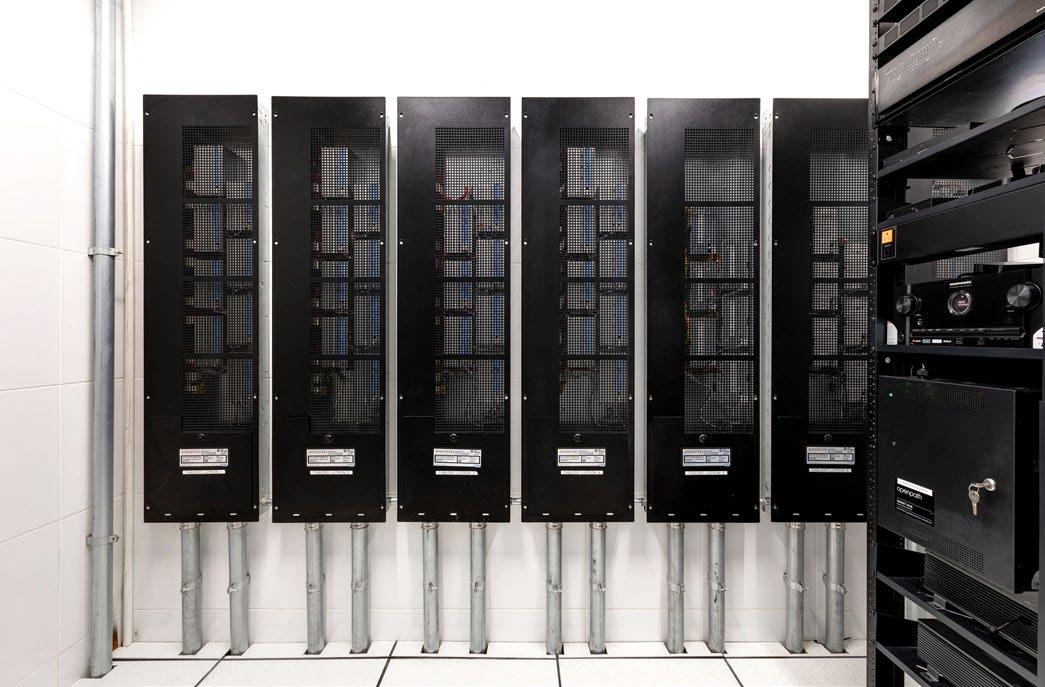
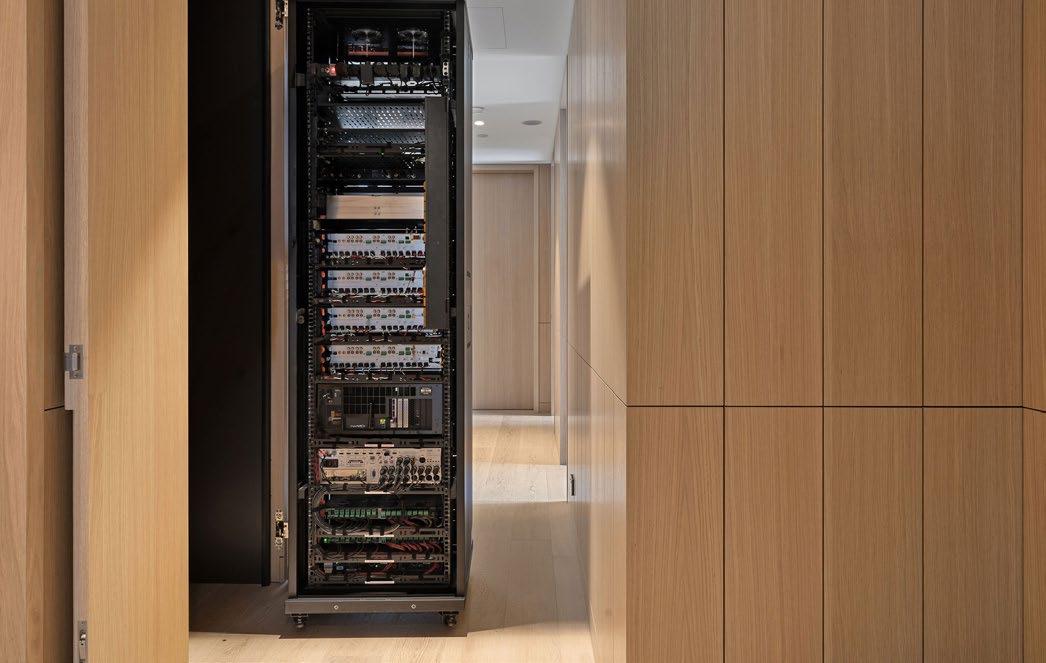
Instead, utility spaces such as basements, service corridors, or under-stair spaces can provide the ideal balance of accessibility and acoustic separation.
Accessibility cannot be overstated. Unlike decorative elements, racks require ongoing interaction by technicians. Doors should swing wide, adequate lighting must be provided, and flooring should be stable enough to allow racks to roll in and out. Designing a generous service pathway at the planning stage saves significant headaches once the system is operational.
Finally, discretion plays a major role. A rack should serve invisibly, its presence hidden behind cabinetry or within a service room, allowing the home’s interiors to shine uninterrupted. Designers who embrace this principle ensure technology never competes with the aesthetic intent.
By considering space, ventilation, acoustics, access, and concealment, architects and designers can create environments that not only house the rack securely but support the performance of the entire smart home system. Like all good design, the success lies not in the equipment itself, but in the way the surrounding architecture quietly enables it to function.
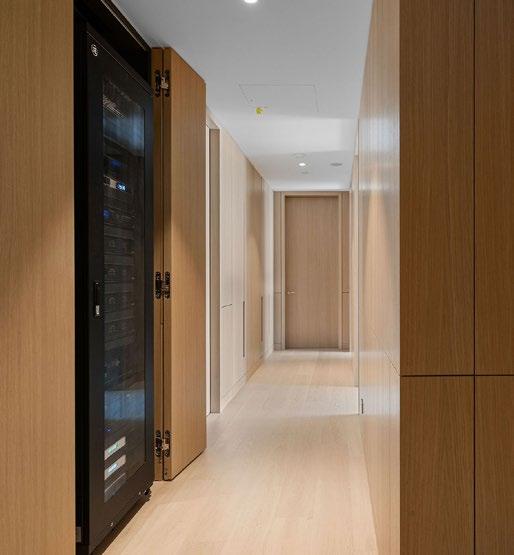
Credit: Kayder
Credit: Kayder
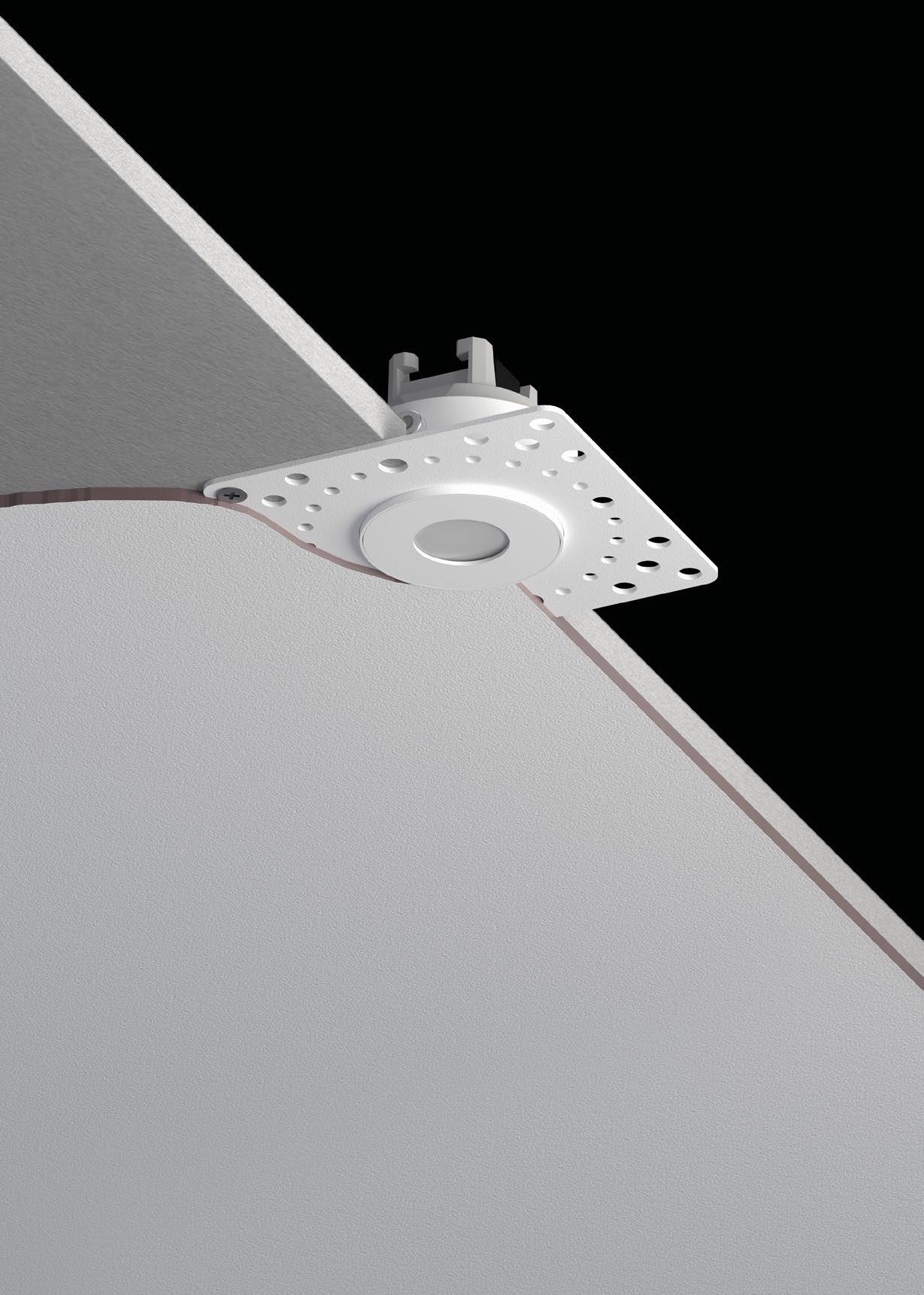
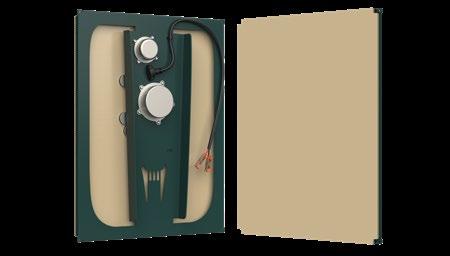

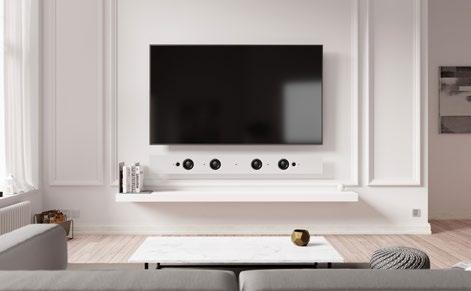
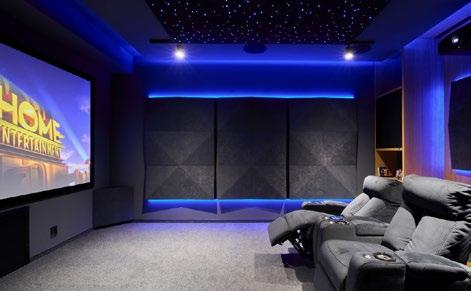


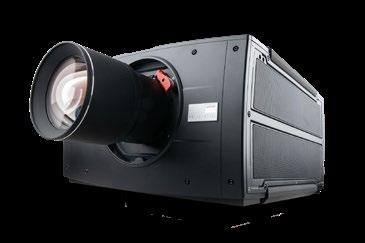

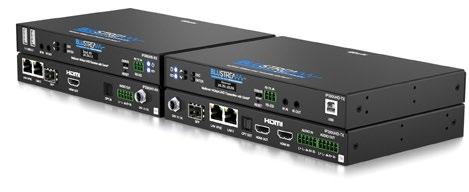
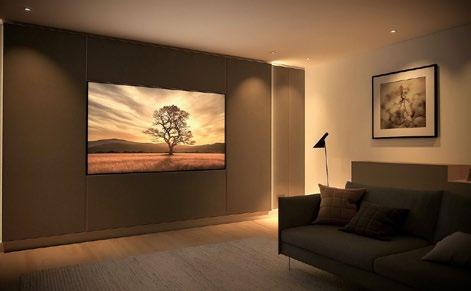
www.cinemabuildsystems.co.uk
ILLUMINATING YOUR FINE RESIDENTIAL CINEMA
BARCO RESIDENTIAL PRESENTS THE NEW SHINING STAR IN RESIDENTIAL CINEMA STARRING HIGH BANDWIDTH HDMITM 2.1 AND THE LATEST NATIVE 4K DLP® CHIP POWERED BY RGB LASER PROVIDING REC.2020 COLOR GAMUT AND 6,000 LUMENS
ALSO AVAILABLE IN CINEMASCOPE


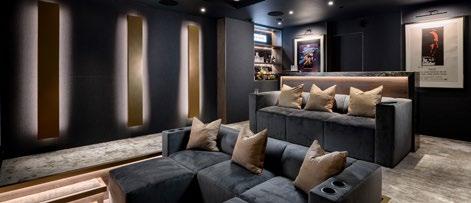

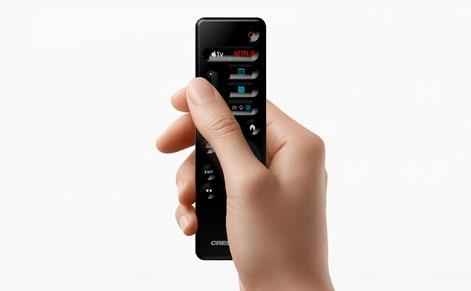

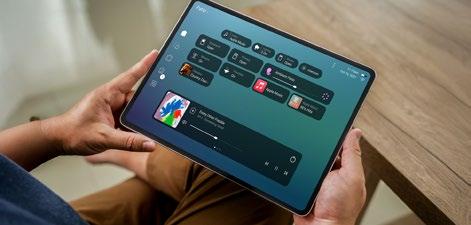



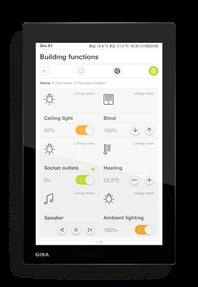
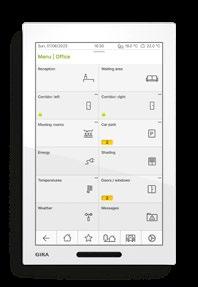
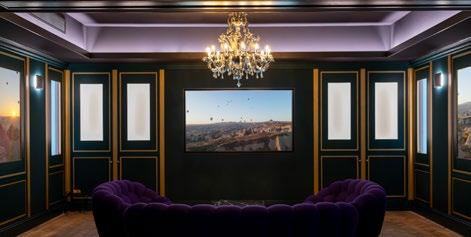


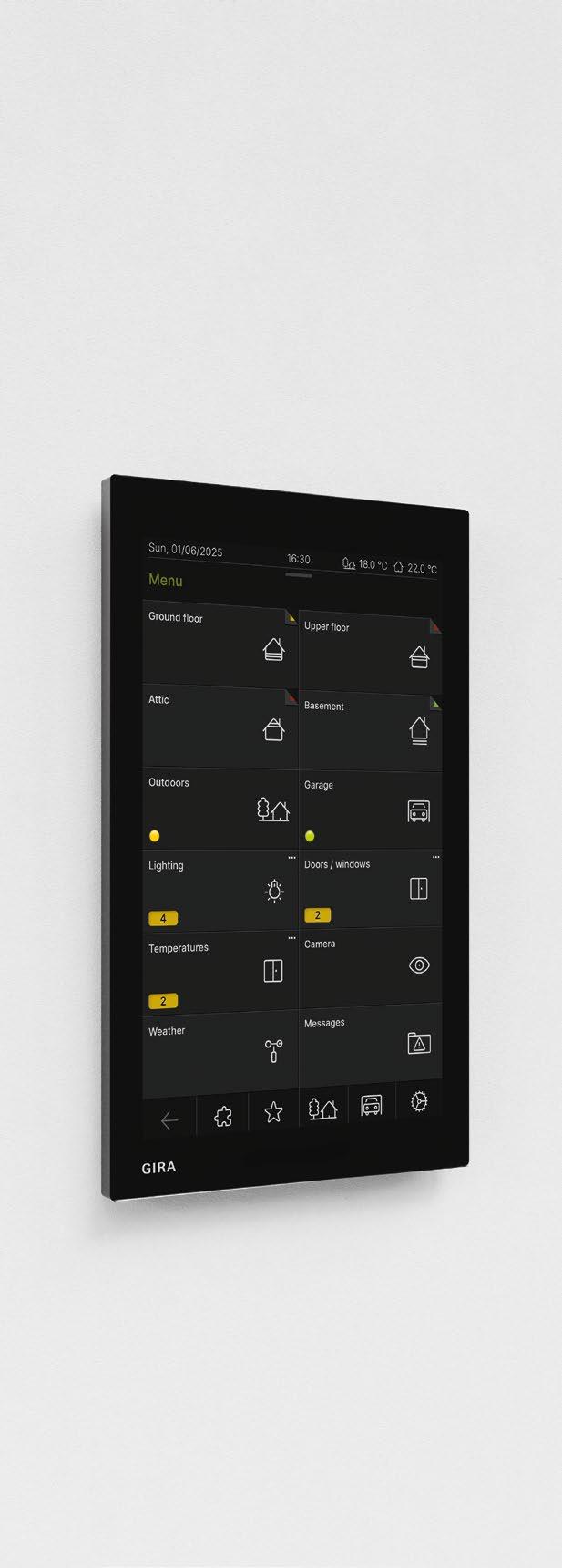
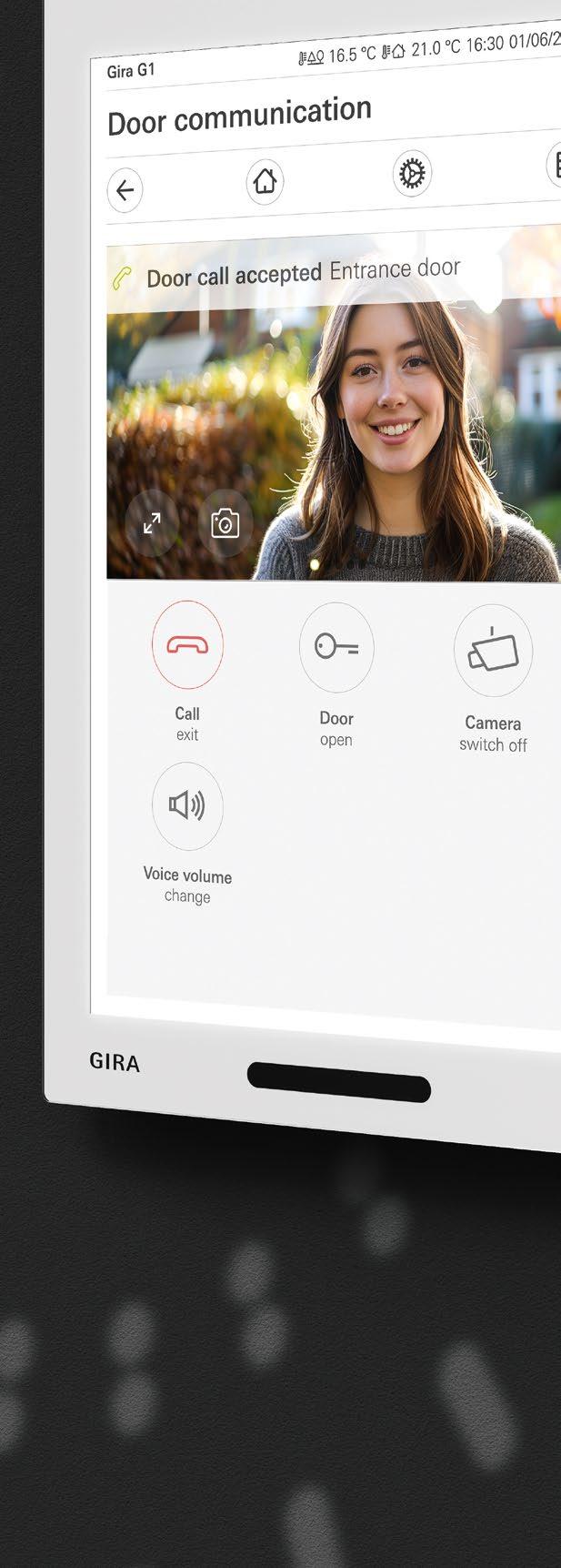


www.litheaudio.com
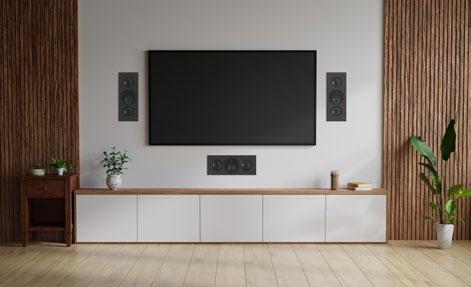


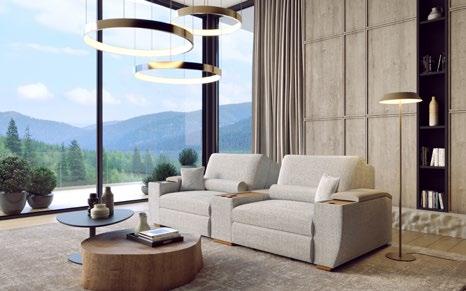

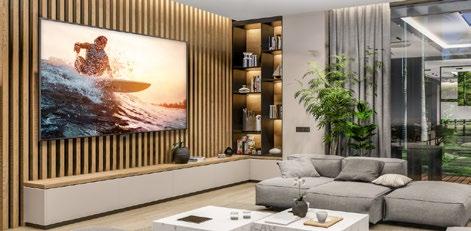

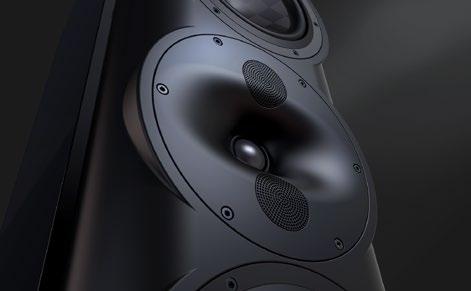

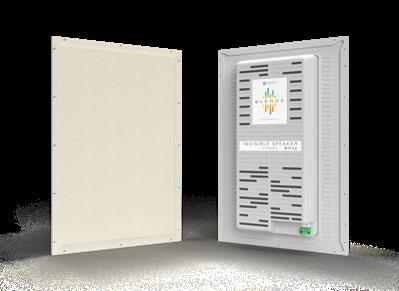

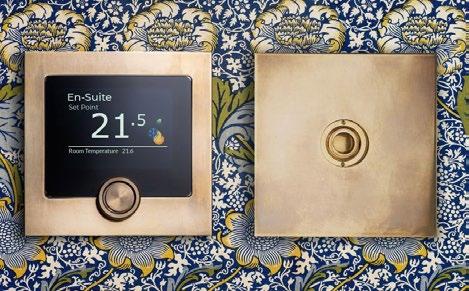


Performance. Art.
Meet THE BLACK SWAN, the sculptural centerpiece of transformative home cinema sound.
Its iconic asymmetrical horn system and enclosure are forged in carbon, finished in 13 layers of piano lacquer, buffed by hand to a lustrous mirror finish, and fastened in 24-karat gold.
From whispered notes to 132 dB SPL peaks, THE BLACK SWAN captivates with ASCENDO’s legendary cinematic dynamics, exquisite detail, and musicality for an immersive home theater experience like no other.
Only from ASCENDO, THE BLACK SWAN turns highperformance cinema into high art.