Three-hour Tour
Three-hour Tour
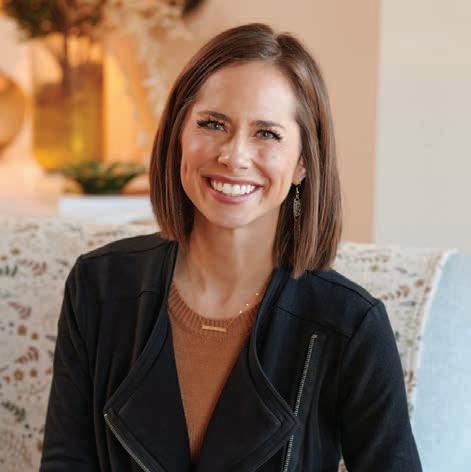
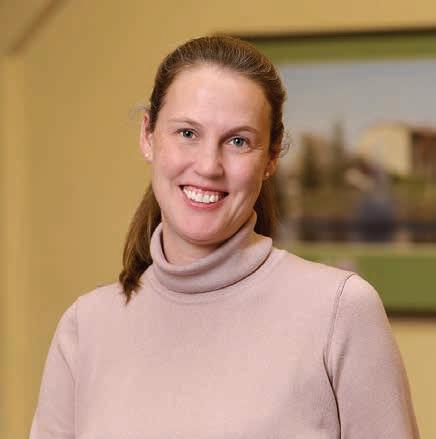
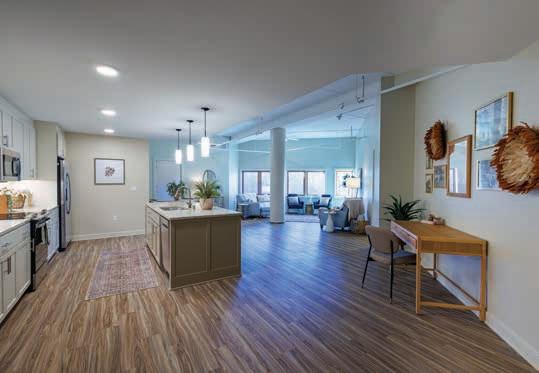
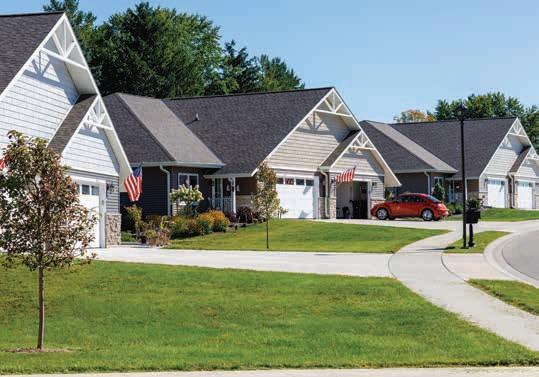
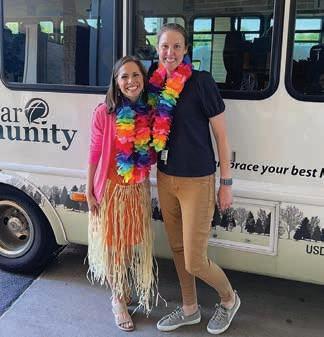
Step aboard our Cedar Community tour bus and enjoy all the independent living options available, from homes to apartments including the many amenities with your sales team captain, Abby, and her rst mate, Julie.
Thursday, June 4
Thursday, June 25
Thursday, July 16 9 a.m. to noon





















After the tour, enjoy lunch at our Top of the Ridge Restaurant, where you will have an opportunity to learn more, ask questions, and socialize with residents who already call Cedar Community home.



















IN THIS ISSUE...
SPRING—A time of change, renewal, and re ection
(and a bit of cleaning, too!)
Update from President & CEO Nicole Pretre| 4–5
From the editor’s desk
Message from our chief administrative o cer| 6
Commonheart
Our partner in home health and hospice| 7
Resident pro le
Meet Bob Brennan and Kate Green| 8–11
Waitlist 101
There’s a waitlist...because good things are worth planning for| 12–17
Cedar Community welcomes new neighbors
Hear their why| 18-19
Time, talents, and treasures
59-year adventure Otto and Kay Peña | 20-21
More than healthcare
The variety of jobs in senior living communities| 22–23
2026 Leadership Event
Jay Allen | Music that moves millions | 24-29
Volunteer highlight
Meet Sherry and Linda Viesselmann | 30-31
A life of service
Meet Richard Ludin | 32-33
News you can use Updates and more!| 34
Cedar Community Champions
Celebrating outstanding team members| 36-37
Curana Health
Our partner in senior care | 37
Spring cleaning for the soul
A message from our director of spiritual care| 38
Season of renewal
A message from our philanthropy director| 39

SIGN UP NOW!
Sign up at cedarcommunity.org to get news and updates delivered to your inbox about events, seminars, open houses, and the latest happenings at Cedar Community. There will be a lot of exciting endeavors in the months to come— and you won’t want to miss out.
Enjoy, explore, and embrace your best life!
Live More is published for the friends and neighbors of Cedar Community. If you would like to add a neighbor’s name to our mailing list, please contact us at 262.338.2819.
To view Live More online, visit cedarcommunity.org/ live-more-magazine/.
EXECUTIVE EDITOR
Sarah Malchow
MANAGING EDITOR
Carrie Sturn
CREATIVE DIRECTOR
Cyndi Frohmader
ON THE COVER
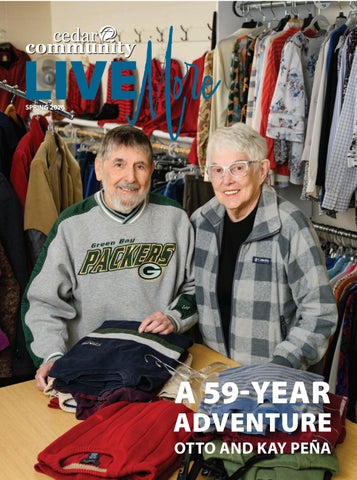
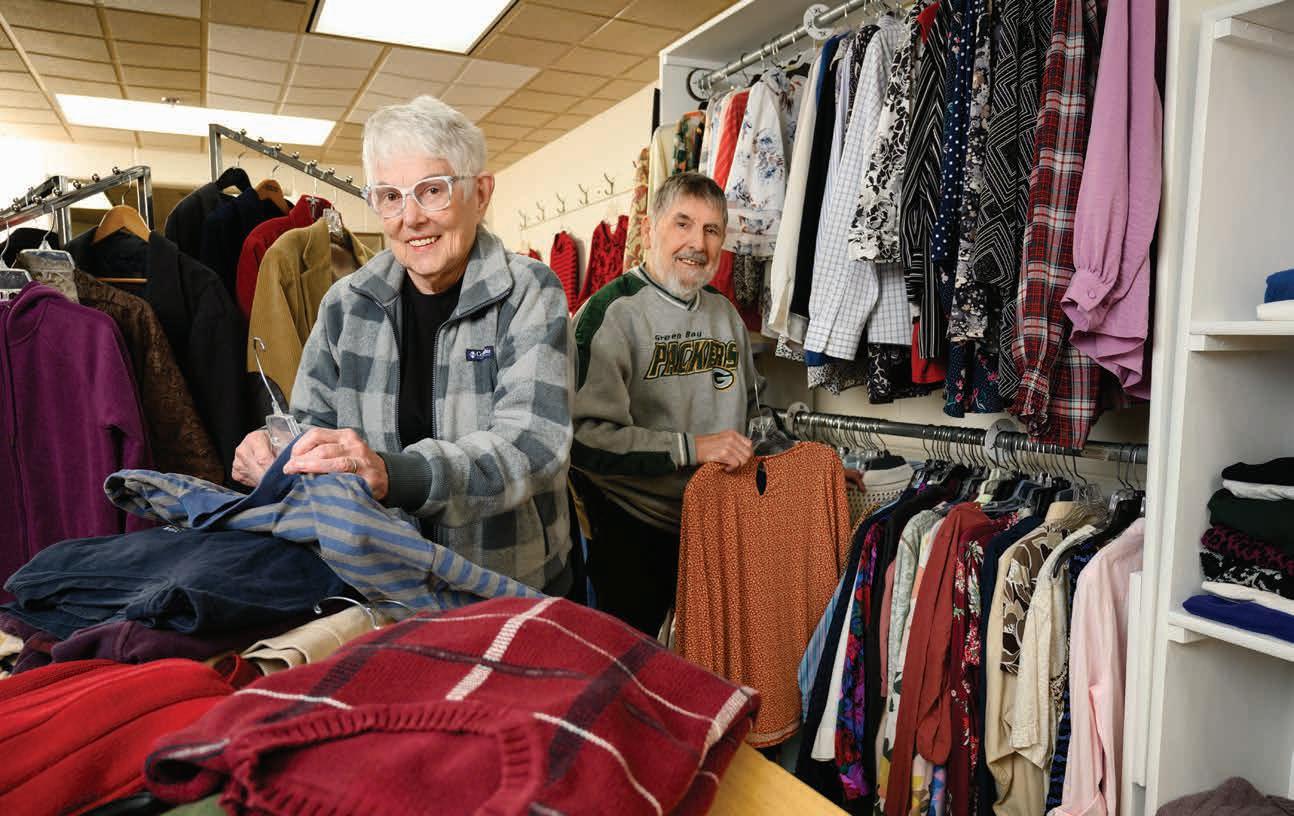
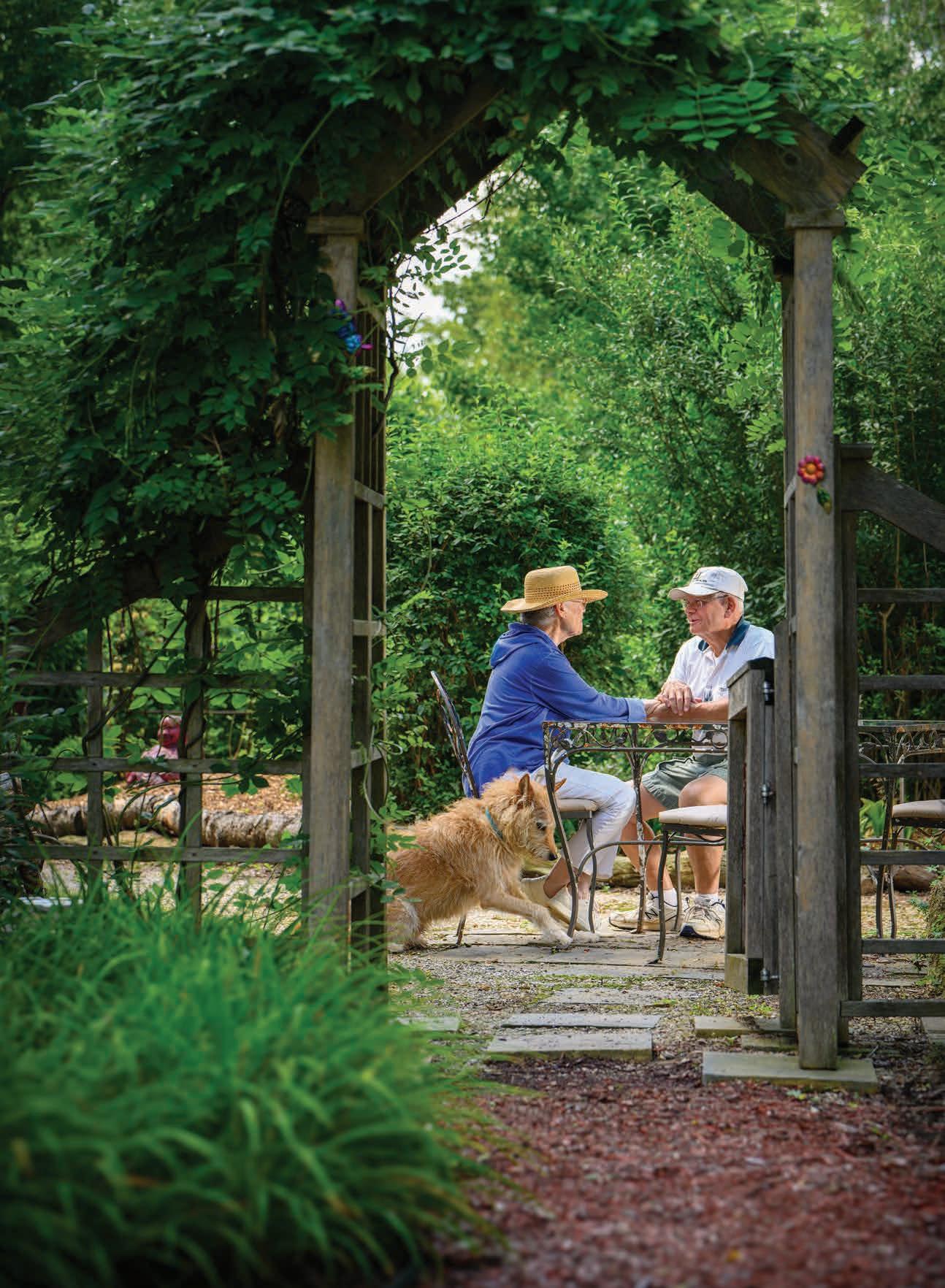
Otto and Kay Peña volunteer regularly in Cedar Closet— just one of the many ways they stay active.
OUR MISSION
To model Jesus’ love by creating life-enhancing relationships, services, and environments.




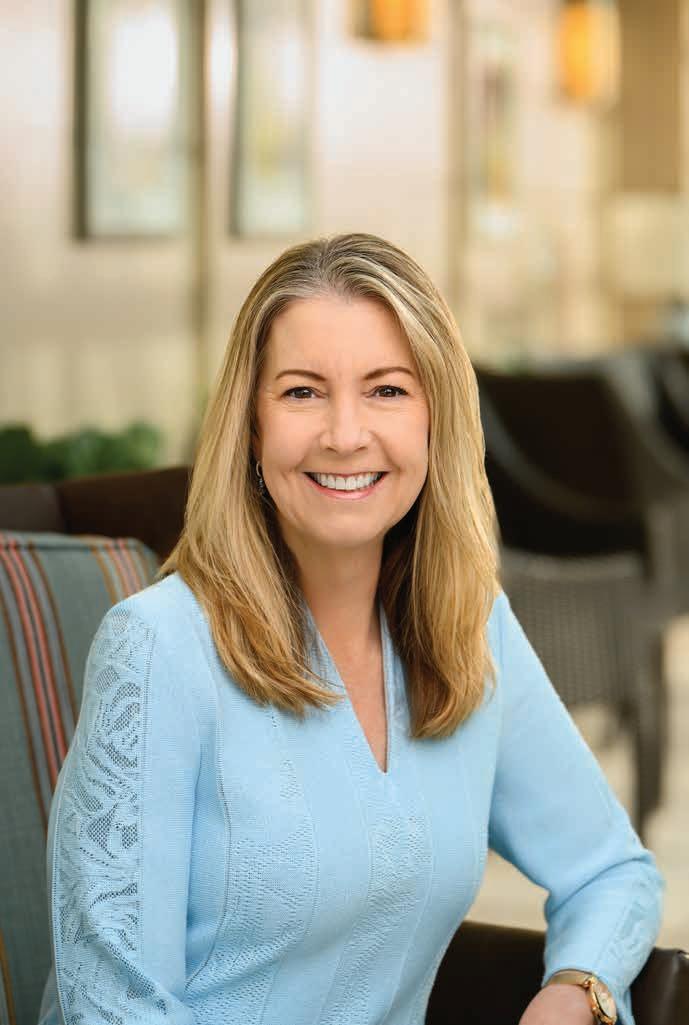




Nicole Pretre President and CEO
I am approaching my fth anniversary serving as the president and CEO of Cedar Community. WOW. Time ies. And yes, I’m still having fun! As I nd myself re ecting on these past ve years, I’ve also been thinking about my overall career journey. I am often asked to speak on leadership and recently had the chance to spend time with a group of young and emerging leaders through the LeadingAge Wisconsin leadership program. The conversation sounded familiar and had all the buzzwords such as servant leadership, empathy, and accountability. And then came the question that always seems to be asked of leaders: “What would you change or do di erently if you had the chance?”

Of course, the go-to answer seems to be “I wouldn’t change a thing,” whenever someone is interviewed or re ects on their career or life choices. That answer is easy, neat, and tidy—and entirely untrue. Because let’s be honest—of course we’d change things. Maybe not the results, but de nitely the ways we got there.
And that’s not regret talking; that’s leadership and growth.
When I was 23 years old and fresh out of my undergraduate years, I landed my rst big leadership role as a local TV news executive producer. My evening news anchors had been on-air longer than I’d been alive, and my reporters were young, ambitious, and sometimes a little too eager for their own good. Every day was a sprint of breaking news and high-stakes editorial decisions that impacted real people. I was leading before I fully knew how, and guring it out on live television, no less! It was thrilling, exhausting, and way too much responsibility for someone who still needed a mentor more than a title.
At that age, I believed leadership meant being con dent, decisive, and never showing doubt. I was wrong. What I didn’t understand then was that true leadership isn’t about being the loudest or most con dent voice in the room; it’s about listening, learning, and making space for others to be seen and heard. Real leadership is about lifting people up and leaving behind a legacy that inspires others to lead.


Fast-forward through a crazy career and leadership path, with many ups and downs, to my upcoming anniversary as the leader of Cedar Community. I can say with experience that the question—what would I change—takes on a whole new meaning once you’ve lived through the messy reality of leading an organization. It’s often what people don’t see: the long sleepless nights, the mistakes you make (in my case, on live television), and the lessons learned only after falling at on your face.
Here’s what I’ve come to believe. The best leaders are the ones who’ve earned their scars in full view and who aren’t afraid to admit where they went wrong. We grow when we recognize that change isn’t a aw in our story; it’s the point of our story. So, no, I won’t say “I wouldn’t change a thing” the next time I’m asked that question. I can think of so many things I’d change. But I’m grateful for every stumble, every crisis, and every awkward conversation that taught me something real about leading people. Because real leadership isn’t about perfection. It’s about showing up, growing up, and owning how you got here, and being ready to do a few things di erently the next time around.





A time of change, renewal, and re ection (and a bit of cleaning, too!)

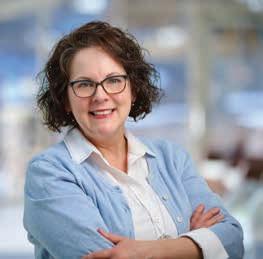
Sarah J. Malchow, CFRE Chief Administrative O cer
Spring always feels hopeful to me. There is the promise of more sunshine. The muchanticipated return of birdsong in the air. And the renewal in nature that is God’s gift of ora and fauna waking from her long winter slumber. I wait in hope.
In every edition, we aim to a rm the signi cance of each individual’s life and value, to impart the wisdom of those who walk alongside us, and to inspire hope in our ability to Live More—no matter where we are in our aging journey. It is with pleasure that I invite you to read more about the friends, neighbors, team members, and community champions who make Cedar Community the incredible place it is!
· “I hope we make it…” was likely the sentiment that Bob Brennan and Kate Green had in mind when they began their 3,5000-mile trek from Alaska to their new home at Cedar Community. Two at tires and countless moose later, it was truly a leap of faith and a journey not for the faint of heart. We are glad you made it here, Bob and Kate!!
· Becoming a Champion for Others: Music that Moves Millions. Cedar Community was honored to mark its fth annual corporate leadership event with special guest, singer, songwriter, musician, and philanthropist Jay Allen. His commitment to supporting individuals and families (and caregivers) facing the ravages of Alzheimer’s and dementia brought us to tears and inspired hope for the future. Thank you, Jay, for shining a light on our work.


“I thought it was a good idea…” Otto and Kay Peña’s life together has been an adventure—to be sure. One birth, eight adoptions, and endless hours of advocacy later, the Peña’s home became a place of hope. Now at Cedar Community, they continue to share their experiences and their love of life with neighbors and friends alike. Thank you, Otto and Kay, for showing us exactly what hope (and humor!) look like.
I hope that you will be inspired to enjoy, explore, embrace life, and Live More in the season to come!
Take courage,




PS: In each and every edition, it will be my pleasure to share some of the interesting and inspiring journeys and highlights of Cedar Community residents, friends, neighbors, and team members; our commitment to quality and exceptionalism; and our focus on responsibility and stewardship. Enjoy!
MISSION
To model Jesus’ love by creating life-enhancing relationships, services, and environments.
GUIDING PRINCIPLES AND PRIORITIES
COMMUNITY TEAM QUALITY RESPONSIBILITY
We create a sense of community where older adults, families, and partners can thrive with purpose, dignity, and joy.
We nurture a culture of purpose, excellence, and belonging.
We challenge ourselves to be exceptional in everything we do.
We steward our resources wisely.









destination: CEDAR COMMUNITY

BY: Gladys Sachse Resident, Cedar Community



Independent Living
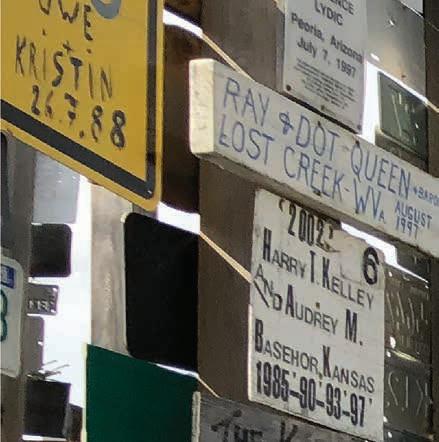


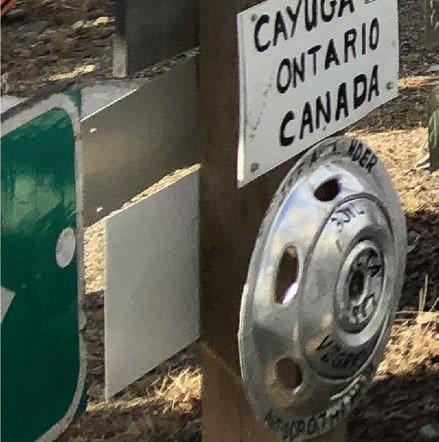


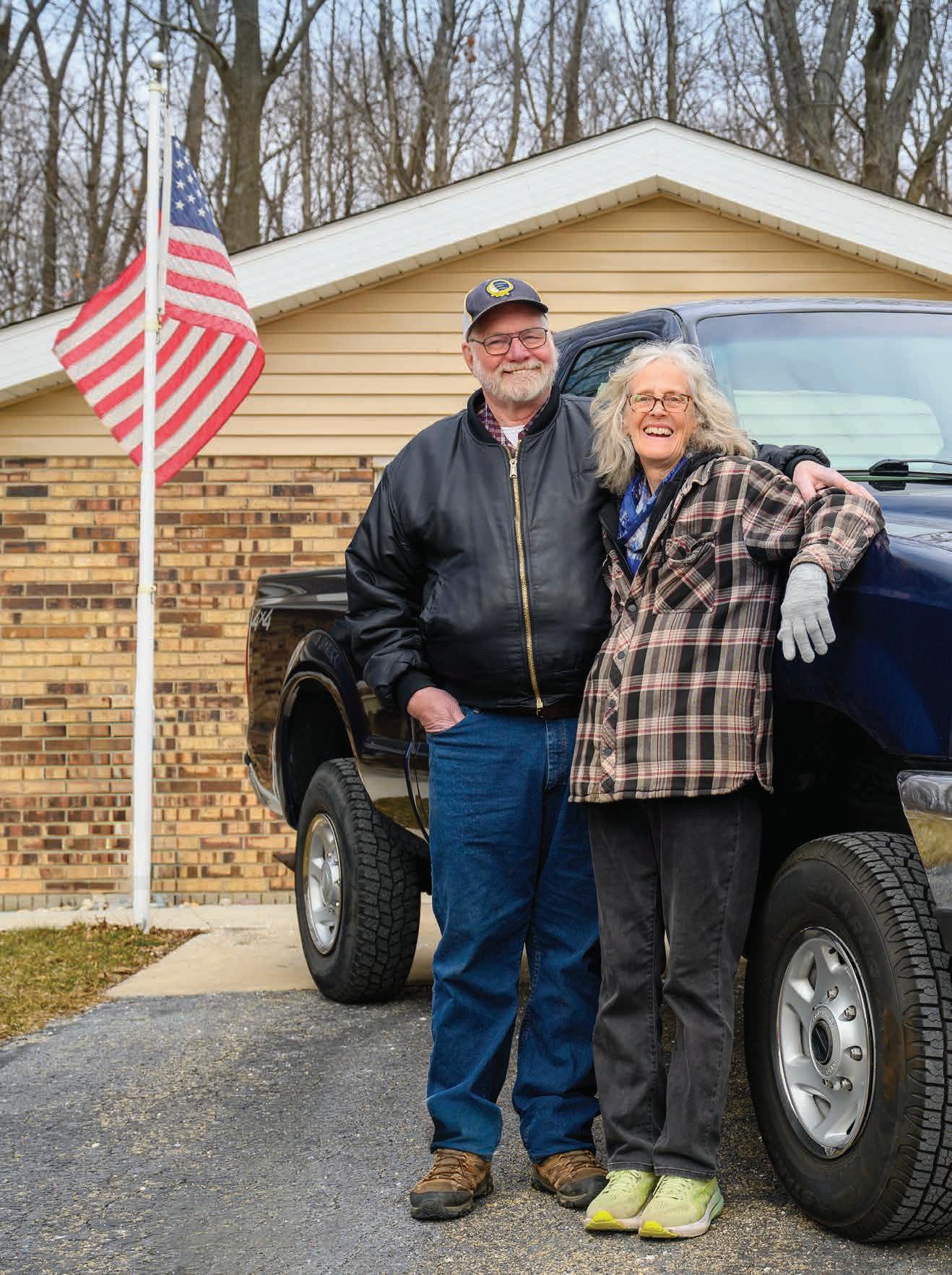
Bob Brennan was born in Minneapolis, Minnesota, where he grew up with three older sisters and one younger brother. Kate Green was born in Elgin, Illinois, and grew up in Barrington, Illinois, with one brother and two sisters.
Their story began when Bob and Kate met while attending the University of Minnesota in Minneapolis. They were married three years later, and after graduation, they lived in Plymouth, Minnesota, a suburb of Minneapolis.
There are only four major highways in Alaska. To venture further, one needs a snow machine, boat, or airplane—and Bob and Kate owned a small plane. During their time in Alaska, they visited Fairbanks and Juneau and took the ferry to Ketchikan. They drove to the Chena Hot Springs north of Fairbanks, where there is an ice hotel and hydroponic vegetables are grown year-round in greenhouses heated by hot spring water.

Bob majored in English Literature. After college, he attended Minneapolis Technical College, where he studied aviation mechanics and electronics. He earned his Airframe and Powerplant license, as well as an FCC Electronics license, and began working for Northwest Airlines. Bob started in the radio shop and later moved into aircraft maintenance, working on larger planes, including 757, 747, and DC-10, for 20 years. When Northwest Airlines went on strike, Bob accepted a line engineer position with Cathay Paci c Airways, where he worked for 13 years. Cathay Paci c was based in Hong Kong.
Kate graduated with a degree in social work and later earned her teaching degree in special education. She began her career with the Minneapolis Public School system. After moving to Alaska, she worked for a private agency before joining the Anchorage School District as a work coordinator. In this role, she partnered with local businesses to provide young adults with job experiences. She really enjoyed her work and spent over 45 years working with young adults ages 18-22.

They shed on charter boats out of Homer, Seward, Nikiski, and Valdez. The charter mates would llet the salmon and halibut and ash-freeze the sh. The next morning, Bob and Kate would pick up their cooler and bring their catch home. In Valdez, with a six- sh limit per person, they were able to return home with 12 silver salmon.
They watched the start of the Iditarod Trail Sled Dog Race and even followed parts of the race from the air. The Iditarod is an 1,100-mile endurance race in which teams often run 100 miles per day, with top racers nishing in nine days. Both mushers and dogs train year-round. One musher regularly took his dogs swimming in a lake near the kennel, while another bought a refrigerated semi-trailer and installed a large treadmill so his dogs could train in cold conditions during the summer.

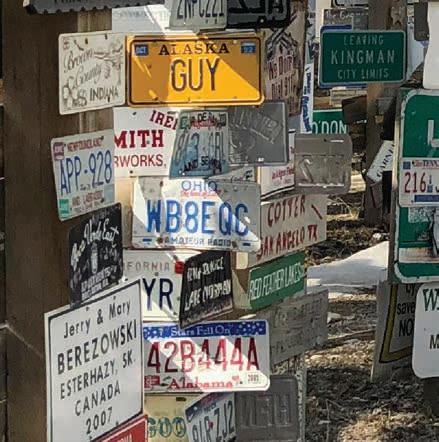
It had long been Bob and Kate’s dream to move to Alaska. For ve years, Bob placed his name into consideration for positions in Anchorage. In 1996, they nally made the move and settled in Chugiak, near Anchorage. Their home sat on two and a half acres in a fairly remote, heavily wooded area. From their house, they could see the Chugach Mountains to the south and the Alaska Range and Turnagain Arm-an inlet from the Paci c Ocean to the north. In the winter, they could even see Mount McKinley on the horizon.
Their veterinarian lived next door and owned a sprint racing dog team, while the neighbor on the other side had an Iditarod team. Some evenings, one dog would begin howling, and a neighbor dog on the other side would answer back. Soon, all the dogs would be singing—a sound Bob and Kate enjoyed.
In addition to their Alaskan adventures, Bob and Kate traveled to Miami, Hawaii, Ireland, France, China, and Singapore—their favorite. From Minnesota, they also took a motorcycle trip through the mountains to Seattle and back.

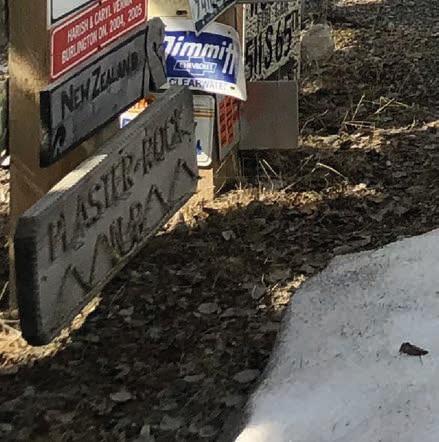
After retiring, Bob and Kate began searching for a continuum of care senior living community. There were no such places in Alaska so they searched online for “faith-based senior living,” which led them to Cedar Community. Liz Goldberg, then the move-in coordinator, and Abby


Jonasson, sales director, helped guide them through the process. It was hard to leave Alaska after 26 years, but in May 2022, they drove their camper 3,500 miles to Cedar Community.
Their entire household was loaded onto a semi, driven to the Port of Anchorage, transported by container ship to Tacoma, Washington, and then sent by train to Chicago. When it arrived in Chicago, there was a shortage of union truck drivers, so their belongings were stuck in Chicago for six weeks!

Meanwhile, Bob and Kate, along with their dog, Penny, drove nine days from Alaska to Wisconsin. Along the way, they blew two tires. Frost heaves promted a fender brace rod to break and rub against the tire, causing it to wear rapidly and burst. The rst tire blew near Whitehorse, Yukon, in the middle of nowhere. Kate heard a chainsaw in the distance and walked toward it with Penny. The man she found had a generator, compressor, and the tools needed to help Bob change the tire—Kate referred to him as “the angel in the woods.”



The second tire blew near Great Falls, Montana. Once again, another “angel” appeared, this time with a large toolbox in his truck to help change the tire.
When Bob and Kate arrived at Cedar Community, they moved into their independent living home on the Cedar Ridge Campus. Liz arranged for them to stay in a guest room at the independent living apartments until they were able to purchase a mattress. Neighbors brought food and provided basic furniture and household items until their belongings nally arrived six weeks later. Bob and Kate say the warmth and kindness of the sta and residents were unbelievable!


Two years later, they moved into a Village Home in the North Village, which they describe as the perfect home on a wooded lot where they can enjoy nature. They love watching birds and wildlife from their windows and walking the wooded trails and around Big Cedar Lake.
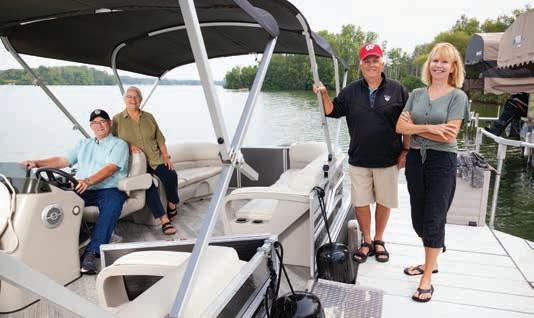
Bob volunteers as a pontoon boat captain and golf cart driver at Cedar Community. He is also a docent at the EAA Museum in Oshkosh and is regularly at the Cedar Community Woodwork Shop, where Kate sometimes joins him. Kate volunteers at the West Bend Food Pantry twice a week and at the St. Vincent De Paul Society at their church (which helps the needy and homeless). Bob and Kate also took Penny, their therapy dog, to visit residents at The Aspen at Cedar Lake, Cedar Community’s assisted living. Penny also walked with them in the Village Fourth of July parade. In late winter, Bob and Kate also volunteer with the maple syrup project.



They came a long way to nd the perfect place to live and retire—and they found it.






There’s a waitlist...

When residents reflect on their decision to move to Cedar Community, two sentiments come up again and again:
“I’m so glad we did this—we can enjoy all the wonderful amenities and activities and stay engaged.”
...because good things are worth planning for.
Many of us hope to stay in our current homes for as long as possible, often thinking we’ll remain there “until the good Lord decides to bring us home.” But as time passes, home ownership can become more of a burden than a refuge. Routine upkeep and unexpected repairs can become financially draining—not to mention the stress of managing it all.
Making a move to senior living is typically not on someone’s bucket list—but it should be. Today’s senior living communities are designed as places to live fully with opportunities to enjoy, explore, and embrace your best life. As more people shift toward this mindset, many senior living communities are experiencing an influx of seniors and now have waitlists.
“I wish I had moved sooner so I could have enjoyed all the community has to offer.”
Why it might be time to explore senior living
Your social circle has gotten smaller.
1 4 2 5 3 6
Days go by without any faceto-face social interaction.
Your calendar is mostly filled with doctor’s appointments rather than social engagements—things you have to do rather than things you want to do.
If you can relate, it may be time to explore what’s waiting for you in a senior living community. Today’s senior living communities may look very different than they once did. Residents decide how active they want to be—old hobbies resurface, opportunities to learn something new are abundant, new friendships are formed, and life can feel renewed.
Television has become your primary form of entertainment. Your neighborhood has changed, and your neighbors have become strangers. You don’t feel like leaving the house as much, especially in bad weather.
Senior living communities are places to thrive, and many people are living longer with a full continuum of care that supports changing needs as you age in place. Beyond the square footage of your apartment is a whole community full of enriching experiences, opportunities, and meaningful connections. While senior living communities can tell you how great life will be if you make the move, only you can decide what best fits your needs and your lifestyle. We are not all the same.



Why senior living communities have waitlists
As you begin exploring senior living communities, you may hear there is a waitlist. A waitlist typically indicates that a community is in high demand. This demand often re ects a strong reputation, desirable amenities, quality care, or an appealing lifestyle. Because homes and apartments become available gradually, communities use waitlists to manage interest and ensure a fair, organized process when openings occur. Rather than being a barrier, a waitlist allows individuals to express interest early and secure a place in line for future availability.
How a waitlist works
While each community varies, most waitlists follow a few common practices:
Application and deposit: A completed application and refundable or partially refundable deposit are usually required.
Priority order: Placement on the waitlist is often based on the date of application and desired home or apartment type.
Estimated timing: Communities may provide an estimated timeframe, but openings depend on resident moves, care transitions, or new construction.
Communication: Staying in touch is important. Communities often check in to con rm interest or update preferences.
Bene ts of joining a waitlist early
Planning ahead and joining a waitlist has its advantages:
More choice: Early placement may mean better access to preferred apartment styles, locations, or views.
Peace of mind: Knowing you have a plan in place can provide peace of mind for both you and your family.
Smoother transitions: A waitlist allows proactive planning rather than making decisions during a health crisis.
Community connection: Many communities invite waitlist members to events, tours, or educational programming, helping them feel connected long before move-in.
What a waitlist does not mean
It does not guarantee an immediate opening or require an immediate move.
It does not always mean a long delay. Availability can change quickly, and some residents are pleasantly surprised by how soon an opportunity arises.
Questions to ask about a waitlist
Before joining, consider asking the community:
•Do I lose my spot on the waitlist if I am not ready when you call?
• Can I join more than one waitlist at the community if I am unsure which style of living I prefer?
• Does joining the independent living waitlist o er me any priority should I need higher levels of care prior to moving in?
• Is there a deposit, and is it refundable?
• Can I change my preferences over time?
• How often will you update me on my status?
• Are there opportunities to participate in community events while waiting?
A step toward your future
For older adults, a waitlist is less about waiting and more about planning. It re ects a thoughtful approach to choosing a community that aligns with your lifestyle, values, and long-term needs. By understanding how waitlists work, you can move forward with con dence knowing you’re taking an important step toward ful lling your next chapter.
How the waitlist works at Cedar Community
At the time you select a speci c home, or if you decide to join the Cedar Community independent living waiting list, you will receive:
• Down Payment Agreement: A down payment of $5,000 is required to select a home, apartment, or to secure a position on the waiting list.
• Application for Residency
• Residency and Services Agreement
The Down Payment Agreement and Application for Residency should be completed and returned with your down payment to the sales o ce. After your application has been reviewed and accepted in writing, your name will be placed on the waitlist, if that is your wish, or a move-in meeting will be scheduled if you selected an available unit.






FAQ Cedar Community
Frequently asked questions
Have an independent living question?
We have the answer.
Q: WHAT HAPPENS TO MY DOWN PAYMENT WHEN I MOVE IN?
A: Your down payment will convert into a refundable security deposit for the apartment or home you have selected.
Q: IS THE DOWN PAYMENT REFUNDABLE IF I CHANGE MY MIND?
A: If you request to be removed from the waitlist, Cedar Community will refund $2,500 of your down payment.
Q: IF AN APARTMENT OR HOME REQUIRES RENOVATION, CAN I SELECT OR UPGRADE SOME OF THE ITEMS DURING RENOVATION?
A: If your home or apartment requires renovations, you may be provided with a list of standard selections for cabinets, ooring, appliances, and other items. Should you wish to select upgrades, you will be charged 75 percent of the cost of the upgrades before the renovation begins, and the balance is due at the time you move into your home or apartment.
Q: WHAT IF I AM ON THE WAITING LIST AND I DECLINE AN APARTMENT OR HOME WHEN ONE IS OFFERED TO ME?
A: Persons on our waitlist keep their position (determined by the date you entered into a Down Payment Agreement) on the list until they either accept an apartment or home or request to be removed from the waitlist.
Q: CAN I REQUEST THAT I ONLY BE CALLED FOR SPECIFIC HOMES/APARTMENT UNITS OR TYPES OF HOMES/APARTMENT UNITS WHEN I AM ON THE WAITLIST?
A: You will be able to set up speci c selection criteria for a home or apartment. For example, you can specify only a third- oor apartment, or only a particular home(s), and/or establish a contact date restriction on your le at any time. If you would like to make changes to your speci cations, you can call the sales o ce to make those changes. Selection criteria do not a ect your place on the waitlist; however, please keep in mind that the more restrictions you have, the longer it may take to have an apartment or home become available to t your speci cations.
Q: IF I AM ON THE WAITLIST AND I AM CALLED ABOUT AN APARTMENT OR HOME, HOW LONG DO I HAVE TO DECIDE IF I WOULD LIKE TO ACCEPT?
A: If you are o ered an apartment or home, you have 10 days to accept the unit before it would be o ered to the next person on the waitlist.
Q: DO THE FEES (MONTHLY FEES, ADDITIONAL FEES FOR SERVICES, ETC.) EVER GO UP?
A: Yes, like everyone and every business, Cedar Community will experience increased labor and utility costs and other unforeseeable expenses. Fees are evaluated annually to most appropriately balance resident needs with market trends and the organization’s nancial sustainability. The Residency and Services Agreement does stipulate that Cedar Community has the ability to raise rates at any time with 30 days’ written notice. The sales team is happy to o er you past years’ increases for reference to aid in your nancial planning.
Q: CAN I HAVE A PET AT CEDAR COMMUNITY?
A: Four-legged friends are welcome in independent living at Cedar Community. Cats and dogs are allowed. Weight restrictions vary by location. A non-refundable $1,000 pet fee is required for each pet.


Start your next chapter today
Senior living isn’t one size fits all, and Cedar Community understands that. Our goal is to help you make a decision that aligns with your lifestyle, values, and long-term needs. If you haven’t already visited, we invite you to schedule a personal tour to learn more about Cedar Community and the many services and amenities available.
Take a moment to reflect on how you want your retirement years to look, and call Abby at 262.338.4617 or Julie at 262.365.5200 to learn more about planning for your future.
THE STATS
Industry studies show senior living communities are experiencing high demand.
The United States is projected to be short 550,000 senior living units by 2030.
Eighteen percent of communities have waitlists for specific apartment sizes, and 25 percent have them for specific care levels. Highly desirable or larger units often have longer waitlists.
Many community waitlists average around six months; highly desirable communities may have waitlists ranging from two to 10 years.
Cedar Community welcomes new neighbors
Cedar Community is delighted to welcome several new residents to the neighborhood. We are thrilled to have you all as part of our community and can’t wait for you to settle in, get comfortable, and begin writing this next exciting chapter of your lives. This move represents a well-earned transition into a carefree lifestyle—one filled with connection, comfort, and peace of mind.
We hope you enjoy every moment of all Cedar Community has to offer.
Margaret Gawlik
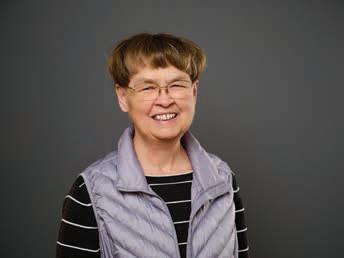
Margaret appreciates the faith-based values of Cedar Community as well as the care provided if she needs it in the future. “This place will take care of me so my boys don’t have to, and that means a lot to me.”
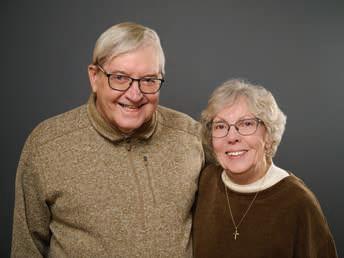
Dave and Sue Schultz
When their condo became too much to manage, they chose a place with future health options. They love the outdoors and their new home. “It wasn’t our plan to move so soon, but a greater power had a di erent plan and we’re loving it.”

Stan and Joanne Wargolet
The Wargolets toured six or seven senior living communities, but Cedar Community always rose to the top. “It’s so friendly and welcoming.” Joanne also enjoys the Top of the Ridge Restaurant— and not having to cook.
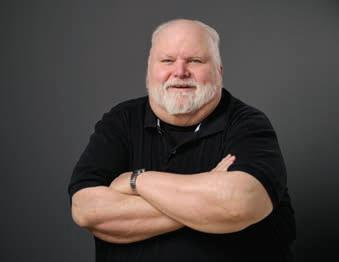
Greg Harding
Of all the places Greg toured, he felt Cedar Community had the best vibes.“I am having so much fun participating in water aerobics and playing Sheepshead with new friends.”
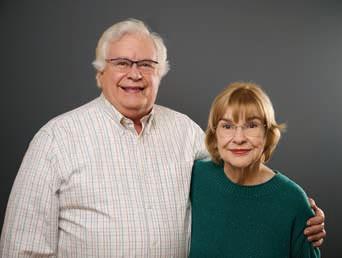
Bob and Karen Larsen
Bob and Karen joined the waitlist after friends had done so—and now couldn’t be happier. Bob, a music lover, joined the Choristers, while Karen, a master gardener, looks forward to getting her hands dirty in the Cedar Ridge Gardens as well as the pottery studio.

Helmut Sperl
“I moved from another independent living community to Cedar Community for the amenities and miles of hiking trails.”
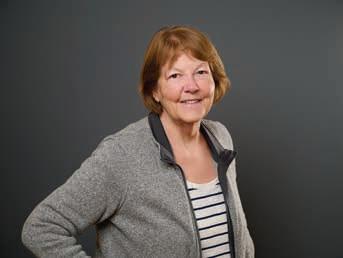
Peggy Wattenbach
Cedar Community has been familiar to Peggy for most of her life, growing up on Big Cedar Lake. “I knew this was the place to be and didn’t need to tour any other senior living communities.”

Evelyn Wol
Evelyn was tired of maintaining a home on her own and made the move in October of 2025. “When I walk in my apartment, I feel this is home and I am so glad I am here.”
A 59-YEAR ADVENTURE


OTTO AND KAY PE ÑA
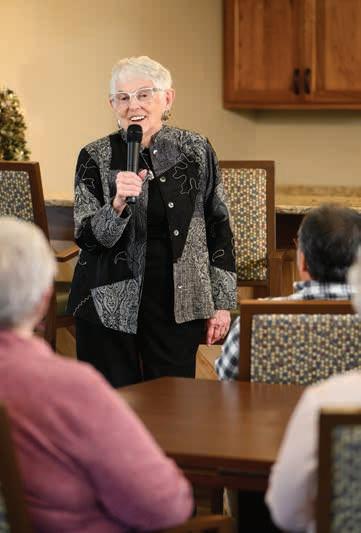
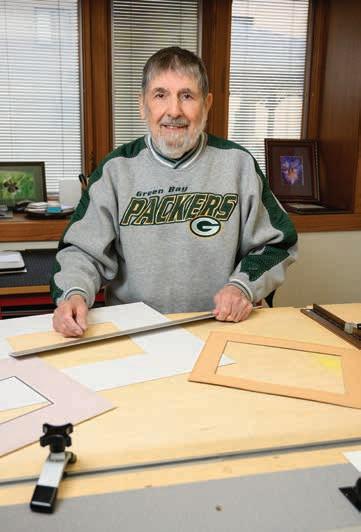
Otto and Kay Peña have called Cedar Community’s independent living home for nearly ten years—enjoying life in a Village Home on the Cedar Lake Campus. Married for 58 years, their life together has been nothing short of adventurous—from raising nine children (one born to them and eight adopted) to traveling the world.


The Peñas adopted children from Vietnam, Korea, India, New Mexico, and Wisconsin. Some were infants; others were school-aged. Many were considered “hard to place” as they were di erently-abled or carrying emotional scars from neglect and instability. Kay notes that physical challenges were often easier to navigate than the emotional traumas.
Their son from Korea was eight when they adopted him. He had never attended school and was deaf, not knowing either Korean or English. The entire family learned sign language together—a true testament to their commitment to create a better future for each of their children.


Adoption rst became a topic of conversation when Otto saw the 1950 lm Cheaper by the Dozen, a comedy based on the true story of a family raising 12 children. “I was living in New Mexico after serving four years in the United States Air Force and saw so many kids living on the streets,” Otto recalls. “I thought having a large family was a good idea.” Kay laughs, “I was young and in love and was not as willing to share my opinions as I am today.” She said, “Why not?”—and that’s how it all began.
The Peñas also fostered children and were deeply involved in advocacy for children with special needs. Kay testi ed in Madison and even before Congress, speaking on behalf of children and families. She became an advocate not only for her own children but also for friends whose children needed help. “What began as volunteer work became a big part of my life,” says Kay.
Kay spent her earlier years raising children and working a variety of jobs. The money she earned was often saved in a sock—quite literally—so the family could travel. “I didn’t have a career. I had jobs,” says Kay.
After raising her children, she decided to pursue a management degree and enrolled at Cardinal Stritch College at age 50. She earned a bachelor’s degree and went on to what she says is her “most sparkling” job as a program services coordinator for the Muscular Dystrophy Association.
After serving his country, Otto worked in a variety of roles at a bank before becoming a foreign exchange dealer—buying and selling foreign currency on the international and domestic markets. He enjoyed the work for 33 years. At 89, Otto jokes, “I loved my job and would still be working there if they hadn’t let me go.”
For a short time afterward, he started his own business. However, during a routine physical, doctors discovered ve blockages in his heart a ecting four arteries—two in the same artery. While Otto was recuperating from surgery, Kay quit her job. Together, they decided to travel. When he was not yet even 60, Otto decided, along with Kay, that they were ready for retirement. They have never looked back.
Their travel adventures have taken them to the Republic of Mongolia, Vietnam, China, New Zealand, Australia, Hawaii, Alaska, and many more destinations. They often choose more unique and niche experiences—working with an archaeologist in Alaska, learning to make poi from taro in Hawaii, working with cowboys on a cattle ranch, walking the Camino de Santiago across northern Spain, and exploring the Prague-Vienna Greenways.
As life slowed down a bit, so have their travels. “We live at a summer camp,” says Kay, referring to life at Cedar Community. “We used to go to weekend camps with our kids where we’d get up in the morning, check the activity schedule, and head o in di erent directions. That’s what life is like here.”
The Peñas raised their children in Milwaukee’s Sherman Park neighborhood before moving to a condo in Germantown—joking that they downsized so their children couldn’t move back home. After 20 years there, and at the recommendation of their daughter, they moved to Cedar Community. They both say Cedar Community “saved” them during COVID. They believe isolation in their former condo would have been di cult, and they are grateful to be surrounded by neighbors they now call friends. “You talk about loving your neighbor,” Kay says. “This is the place.”
The Peñas didn’t waste time getting involved in life at Cedar Community. Otto was in the woodworking shop within 10 days. He has served on the resident activity committee, helped with the maple syrup group, joined the photography club, and is often found in the art room cutting mats for resident artisans.
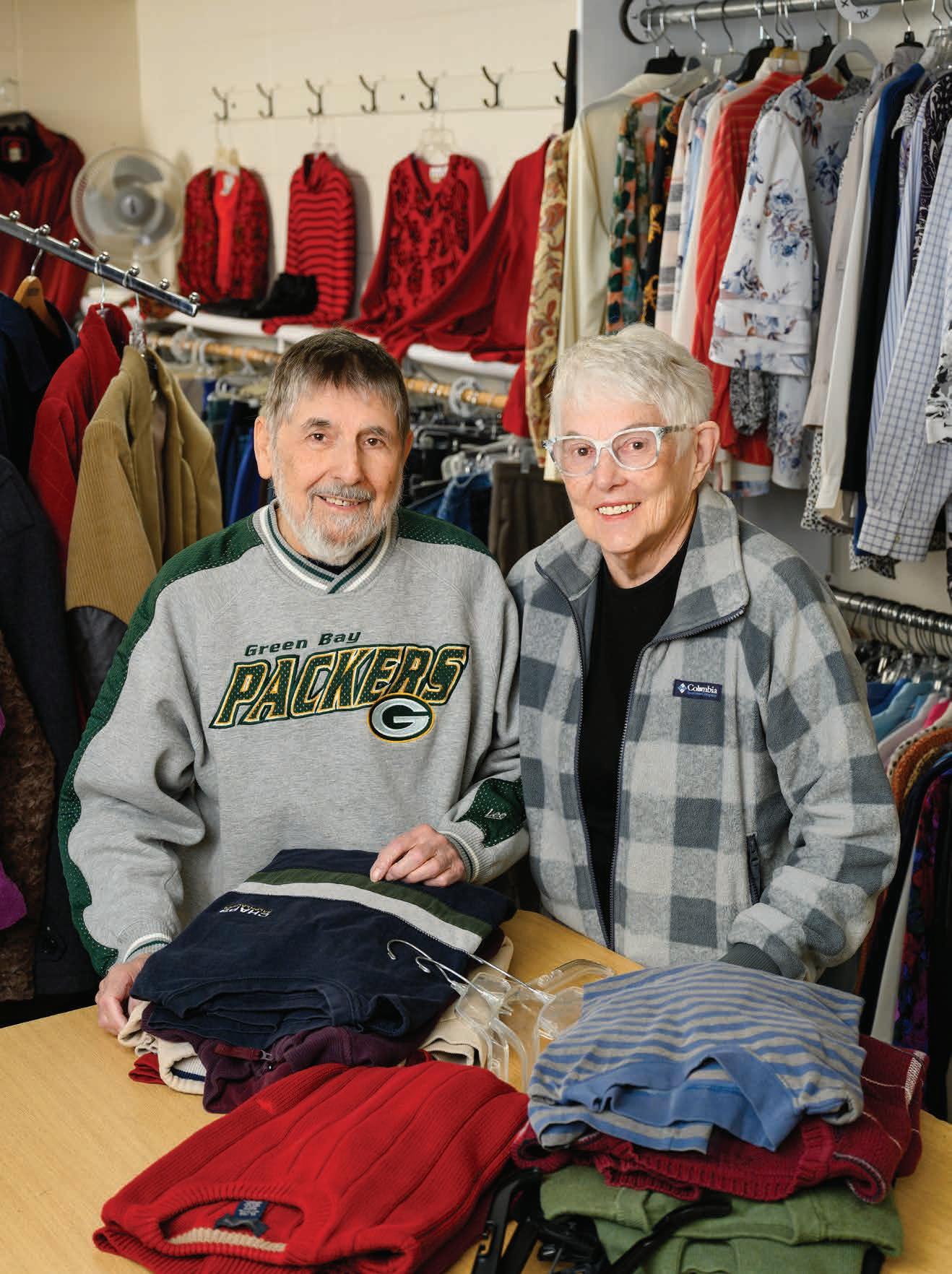
Kay participates in the knitting group, book club, and Choristers; enjoys “playing” in the art room creating toilet paper rolls and craft scrap birds for residents’ birthdays; has served on the resident council; and has dabbled in the former lapidary studio. Together, they volunteer regularly in Cedar Closet, Cedar Community’s clothing resale shop.
Cedar Community has also reunited them with old friends. Several residents once lived in Sherman Park. Rich Miller, fellow independent living resident, even attended grade school with Kay. “He told his wife he couldn’t believe it was me because I used to be so quiet,” laughs Kay.
Now, give her a microphone, and she will gladly tell you a story. She enjoys open mic nights, sharing life lessons and she has had many. Why wouldn’t she with nine children and traveling around the world? “I was laughing like a schoolgirl,” laughs neighbor Jan Braby with tears in her eyes.
Today, their children are scattered across Wisconsin, North Carolina, Texas, and Arizona. One son passed away after a long battle with mental illness. Their son Damon is a familiar face at the customer relations desk on the Cedar Lake Campus when it’s not baseball season during which he works for the Milwaukee Brewers.
Their life experiences have shaped who they are today a treasure to those who know them; faithful friends to neighbors; and gifts to Cedar Community for their time, talent, and heart.
When asked if there was anything else to know about them, Kay grins, “We’re still married. Just barely.” They both laugh. It’s been a life not for the faint of heart but one neither would change. The Peñas got their large family and all the adventures that came with it.
Thank you, Otto and Kay, for all you do. Cedar Community is grateful to be a part of the next chapter in your story.
MORE THAN HEALTHCARE: The variety of jobs in senior living communities
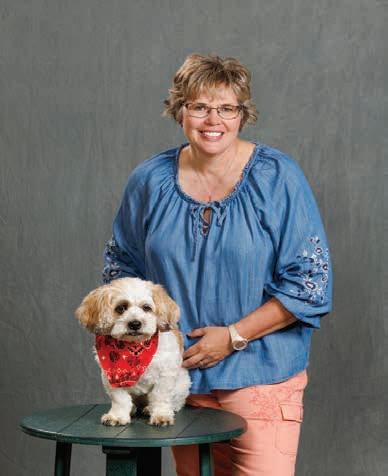
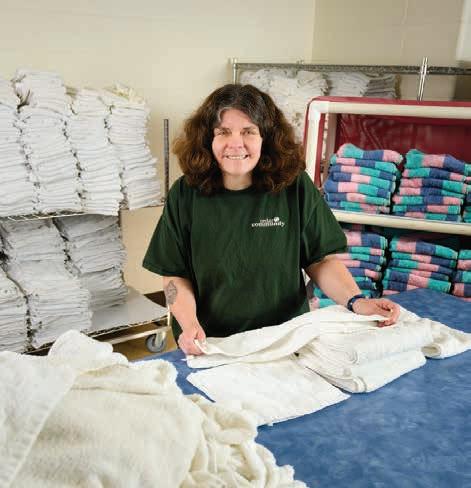
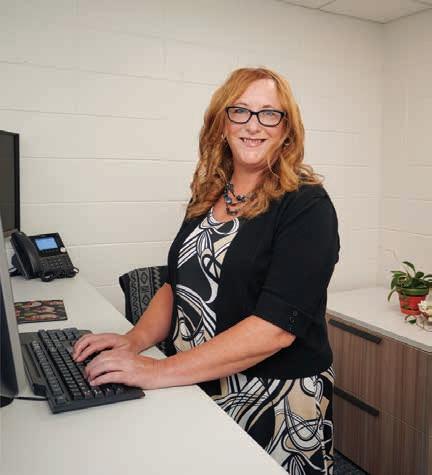
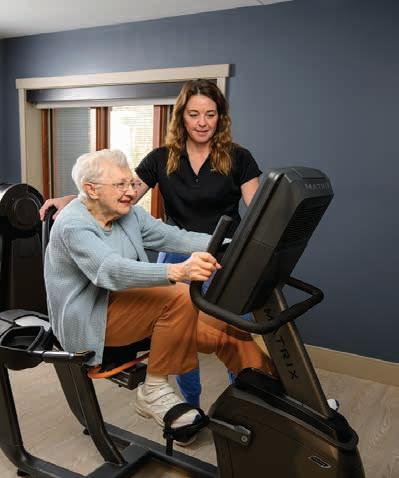
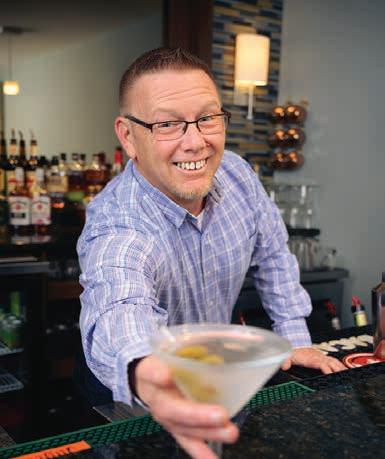
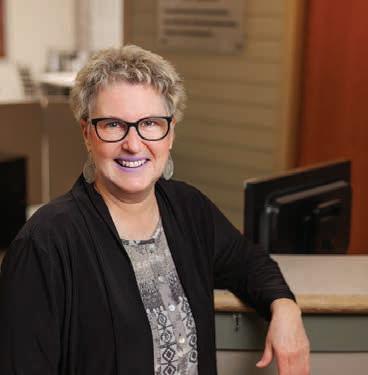
Oftentimes, when people think about working in a senior living community, careers including nursing, caregiving, rehabilitation, or other medical-related jobs are the rst that come to mind. While these positions are vital to operations, they represent only a fraction of the career opportunities available.
The reality is that senior living communities o er a wide variety of career opportunities—welcoming people with many di erent skill sets and backgrounds. Many of these roles have nothing to do with healthcare—yet they make just as much of an impact on the organization.
Career opportunities range from hospitality and dining services, cooks, and dietitians to activities and life enrichment, maintenance, grounds crew, housekeeping, nancial services, laundry, administration, marketing, philanthropy, sales, reception, social work, human resources, nance, spiritual care, personal training, salon and spa services, and central supply. Behind the scenes, these professionals keep operations running smoothly daily.
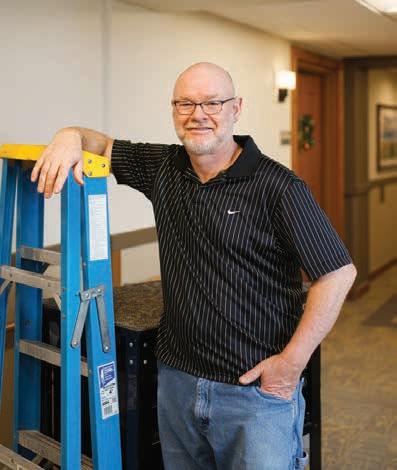
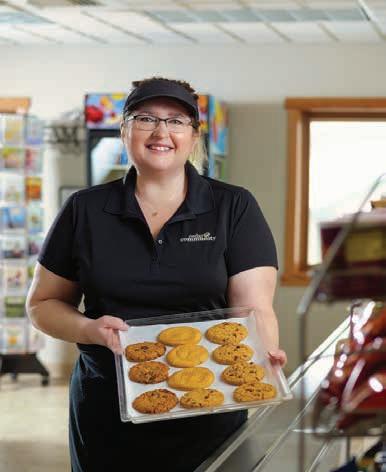
Together, Cedar Community’s team members are dedicated to rede ning aging and creating vibrant communities where older adults can thrive. As an award-winning senior living community, we o er a range of lifestyle options and personalized care services—from independent and assisted living to skilled nursing, memory care, and short-term rehabilitation—made possible by our team members.
Cedar Community’s commitment to supporting residents also extends to supporting our team members. As a nonpro t senior living community, Cedar Community not only o ers a variety of career paths but also meaningful opportunities for professional growth and advancement. Each year, many team members celebrate milestones of 20, 25, 30, 35, 40, and even 45 years of service. This longevity has created pathways for career advancement, with team members growing from roles such as certi ed nursing assistants to directors of nursing and facilities. New positions have been created as Cedar Community continues to expand and grow, not only managing the health and wellness of residents but of team members as well.
There’s something di erent about working for a nonpro t—and residents often say they feel it the moment they walk through the door. When the mission comes before pro ts, the work feels more personal. Genuine connections are formed, and a true sense of belonging develops. Team members, residents, and families often comment on how Cedar Community feels like an extended family. The relationships formed and the ability to make a di erence in someone’s life every day is incredibly impactful—making it truly meaningful work. When your work aligns with a mission you believe in—it’s more than just a job.
Our team members are the heart of our community, and building relationships is what we’re all about. We o er more than just a paycheck—we o er opportunities for growth and development. To learn more about the careers available at Cedar Community, visit cedarcommunity.org/careers.


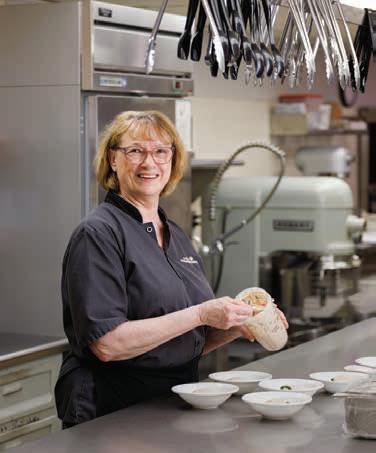
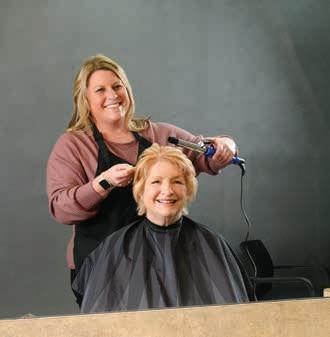
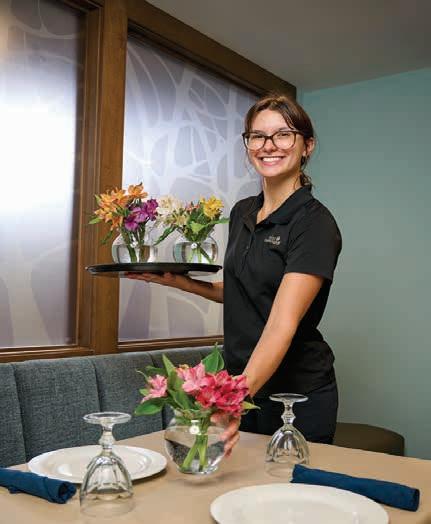
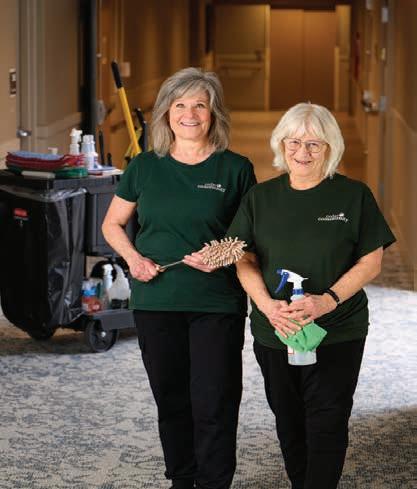

“One thing we noticed about the sta ng at Cedar Community—it was apparent to us as a family that the management really does a great job of identifying, developing, and retaining talented people. You meet the CNA who is going to nursing school or the nurse who has moved into management. When you see a business that retains and develops its employees, you know it’s a great place to work.”
Paul Nelson family member of a past resident
Leadership Event 2026
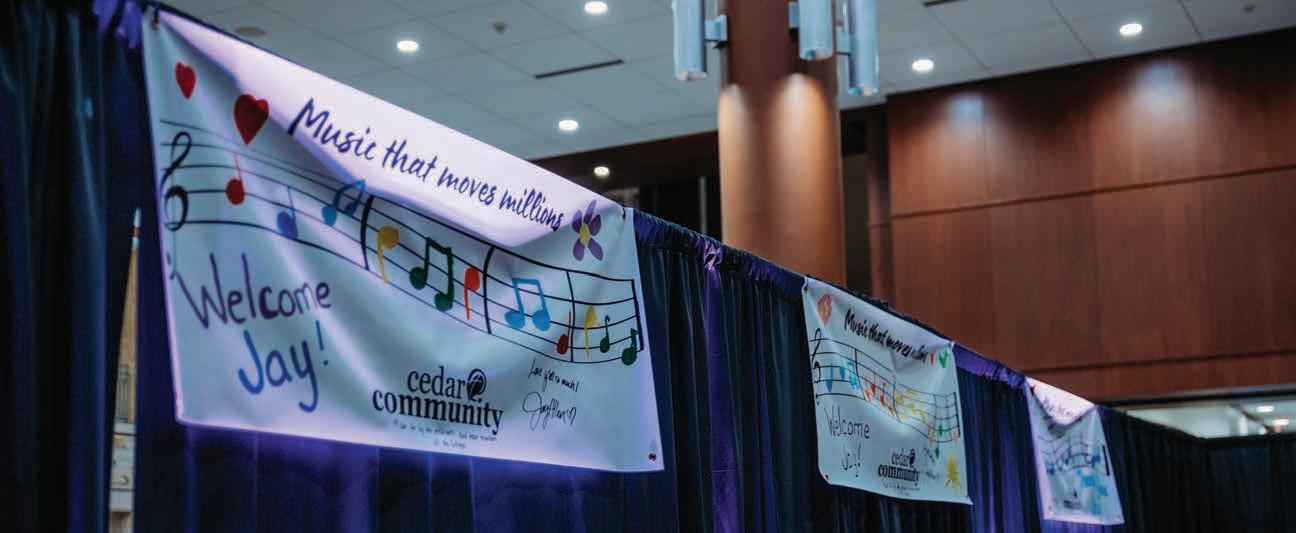
Becoming a champion for others JAY ALLEN: Music That Moves Millions



Thank you to everyone who sponsored and attended Cedar Community’s 2026 leadership event. The event was an opportunity to connect every leader who aims to lead, inspire, and serve others. Over 425 people attended with the generous support of 44 sponsors. Thank you for joining us to celebrate the power of community, leadership, and legacy—where every note, every action, and every purposeful life has an impact.
“I am incredibly grateful to our event sponsors who chose to answer the call, invest in our mission, and help make this event possible for our community. Your generosity and willingness to say ‘yes’ have made a powerful impact. Together, you helped raise more than $140,000 to strengthen Cedar Community’s Partners in Caring™ Charitable Fund, ensuring continued support for individuals whose resources may run short. And for that I say—‘Thank you!’”
Jenny Zaskowski, philanthropy director

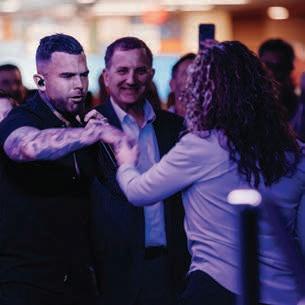

“This life is not just about us. There’s going to come a point in your life when you ask yourself, ‘What did I do with all my time? What legacy did I leave? Who did I help and what impact did I make?’”
Jay Allen (People.com 12/15/23)
Nationally acclaimed singer-songwriter Jay Allen is known for his country-rock music and impactful philanthropy e orts. Following the loss of his mother to Alzheimer’s in 2019, Jay has passionately dedicated his career to raising awareness and funding for Alzheimer’s and dementia-related causes. To date, he has helped raise over $160 million to combat these diseases.
Jay Allen rst captured national attention on The Voice, earning chair turns from Blake Shelton and Gwen Stefani. His work has been featured on ABC World News, PeopleTV, and media outlets across the globe. Through powerful lyrics and heartfelt storytelling, Allen’s message resonates with anyone committed to making a di erence and leaving a legacy to inspire others.


“What an amazing event! YOU ALL did it again. Thank you for creating such special opportunities for so many to enjoy, re ect, and just have an outright fun time!
Angela King, CPA, CFO EUA


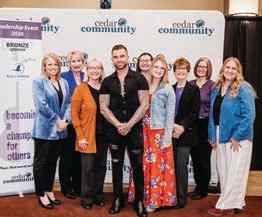



“As a rst-time sponsor, this evening was truly moving. Most impactful was recognizing the caregivers in the room—the quiet heroes whose dedication and heart deserve to be celebrated.
Rose Petitte, Senior Vice President Horicon Bank







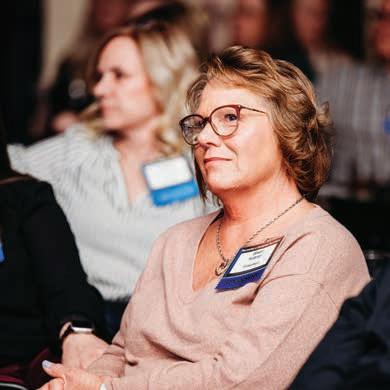
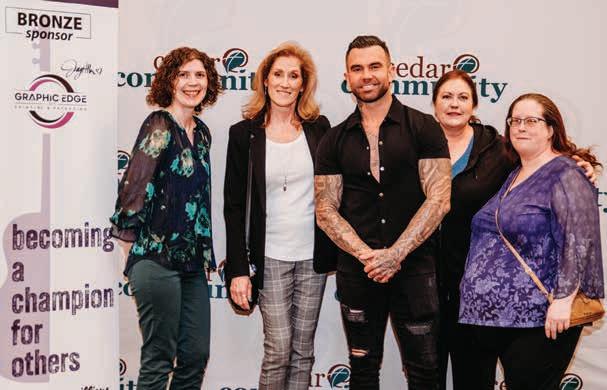





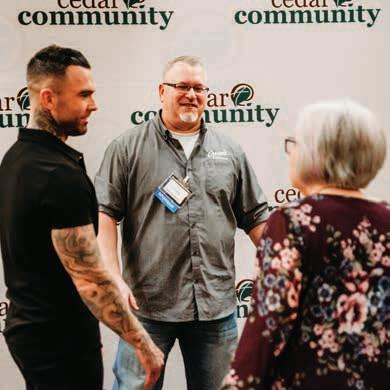

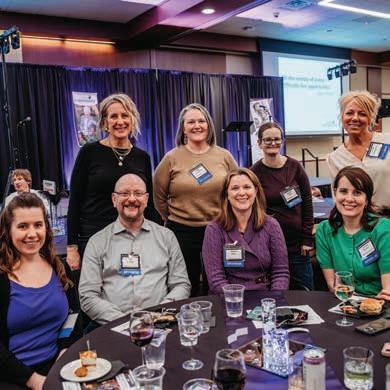





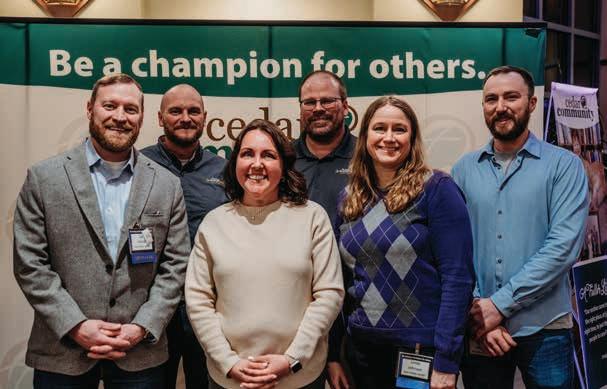

Jay Allen visited The Cottages at Cedar Run during his time at Cedar Community. Follow us on Facebook to listen to his amazing tribute.


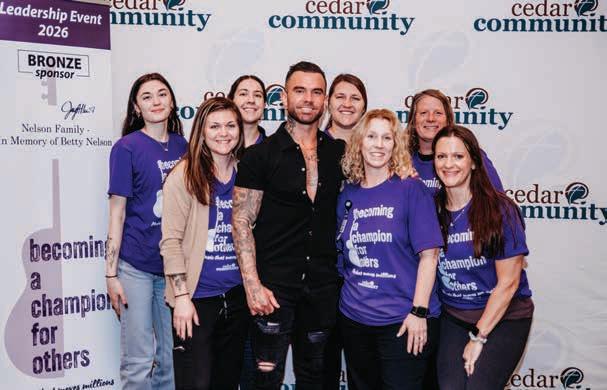
































Nelson Family in memory of Betty Nelson





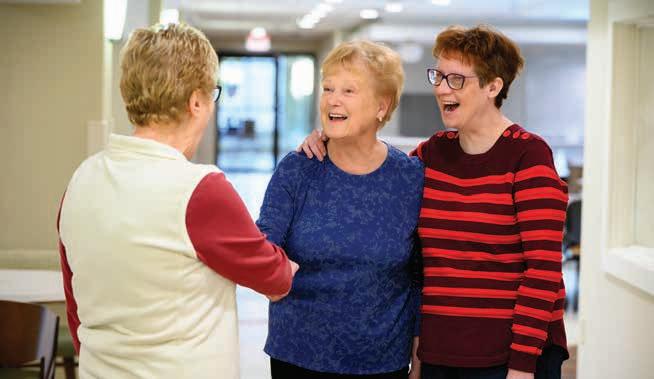
A move to Cedar Community was a natural step for Linda Viesselmann and her husband, Marv, in 2020. They had known about Cedar Community for many years, and after a lifetime of owning and maintaining a home, they were ready for a simpler way of living. “We didn’t want a house anymore, and Cedar Community was always someplace you knew about,” says Linda.
Marv and Linda were some of the very rst residents who moved into the Cedar Ridge Homes on the Cedar Ridge Campus. They moved from Saukville, and it didn’t take long for them to feel at home.
Seeing how much her parents enjoyed life at Cedar Community, their daughter Sherry followed. About a year ago, she moved from her home in Port Washington to an independent living apartment at Cedar Ridge Apartments. For Sherry, the move was a fresh start—moving to Cedar Community and leaving her longtime job at Walmart in Saukville for a new opportunity in West Bend.
Both Linda and Sherry agree that living at Cedar Community provides a sense of comfort and security. They appreciate the quiet atmosphere, friendly neighbors and team members, and the feeling of living among people who share similar life experiences. Linda jokes, “I think I’ve met most of the people I know at Cedar Community through Sherry.” Family connections only make it more special with Linda’s sister and brother-in-law, Dane and Karen Barber, also living in the independent living apartments.
That social connection extends into volunteering, which has always been an important part of Linda and Sherry’s lives. Before moving to Cedar Community, they volunteered at the Portal in Grafton and the American Legion in Saukville. At Cedar Ridge Apartments, they share their passion for gardening by helping water and care for the patio plants and decorative pots that welcome residents and visitors at the entrance. “Volunteering has opened the door to many new friendships,” both Linda and Sherry share. Their love of owers comes from years of tending gardens. While Linda also maintains a garden space in the Cedar Ridge Gardens and grows some vegetables, owers are her favorite to plant.
Volunteering doesn’t stop there. Linda also helps out at Cedar Treasures, Cedar Community’s resale store, while every Saturday night, Sherry can be found leading Bingo with residents at Cedar Ridge Apartments. “What started as a small group has now reached over 40 residents,” Sherry says with a smile.
Helping others is what Sherry enjoys most. She regularly assists a neighbor with washing dishes and keeping the kitchen clean and also helps with open mic nights. For both Linda and Sherry, making friends and supporting their neighbors is very rewarding.
When not volunteering, Sherry works about 20 hours a week in the bakery department at Pick ’n Save. In the earlier chapter of her life, Linda spent more than 20 years showing horses. She enjoys meeting fellow residents who share that same passion. She also worked as a dental assistant for 20 years before retiring—and later ful lled a lifelong dream of becoming a bartender. She spent time bartending at the American Legion in Saukville and later at the Knights of Columbus in West Bend. “I like the busyness of it,” laughs Linda.
Staying active is a priority for the Viesselmanns. Sherry participates in swim and exercise classes, while Linda tends to her gardens at her Cedar Ridge Home. Pets are also an important part of their daily life. Sherry has a 10-year-old Shih Tzu named Missy, who enjoys play dates with Linda’s dog, Charlie, a seven-year-old Havanese— while Sherry is at work.
Cedar Community isn’t just a place to live. It’s a place to volunteer, remain active, build new friendships, explore new chapters, and live your best life. We are grateful and blessed to have generations of families who call Cedar Community home.
Thank you for all you do, Linda and Sherry!
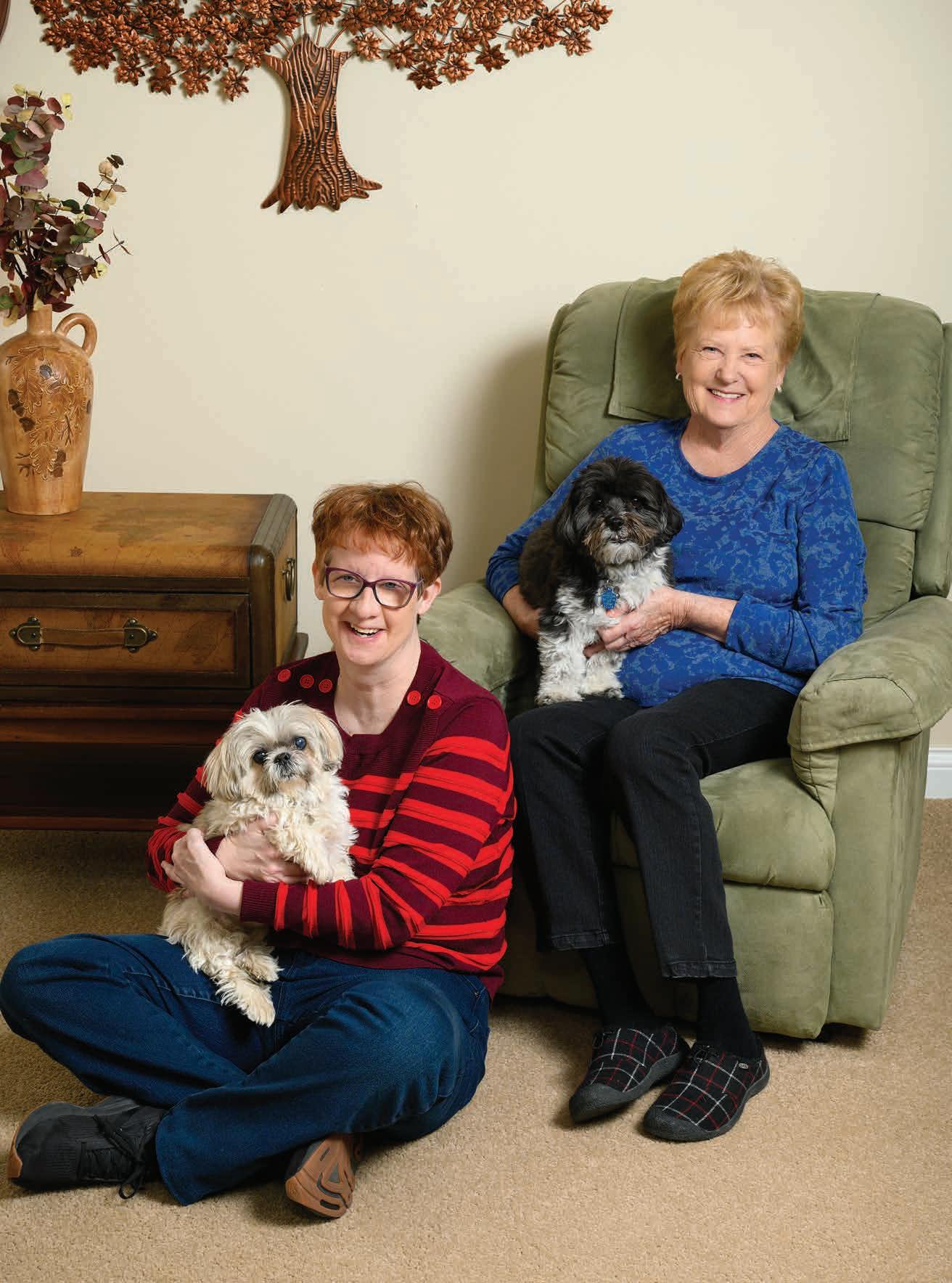
Sh y and Linda Viesselmann
A life of s vice:
Richard Ludin
BY: Tom Blumenberg Resident, Cedar Community Independent Living
The early years
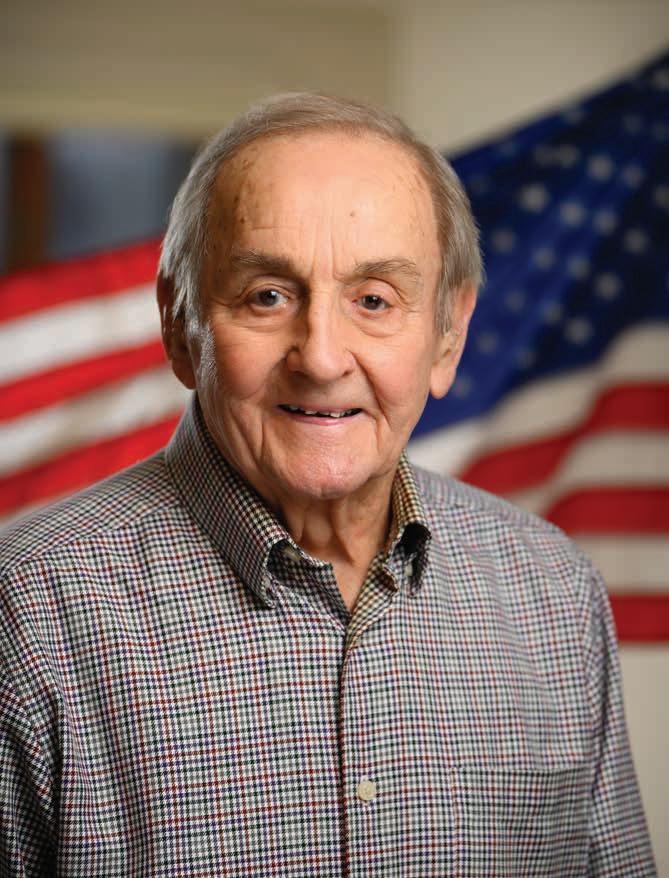
Richard (Dick) Ludin was born in Milwaukee in 1932. His father, Alex, immigrated from Mannheim, Germany, in 1900. Alex held multiple jobs, including working as a chau eur for horse-drawn carriages. Always on the go, he was remembered as a kind and reliable man. Alex’s wife, Theresa, was born in Austria and immigrated in 1912. She lived a busy and challenging life caring for a large family of eight boys and six girls.
The family lived on the north side of Milwaukee near Marquette University. Dick recalled enjoying a happy childhood, with simple pleasures like visiting the shores of Lake Michigan and having picnics after church in Kletzsch Park. Spending a nickel at a local candy store was considered a special treat.
Dick attended 18th Street School from kindergarten through sixth grade. While his childhood was largely happy, it was not without challenges. Because of a high-roofed mouth that caused him to stutter, he received special schooling to help him manage the issue.
Drafted
In eleventh grade, Dick and three friends wanted to enlist in the Army. His application was declined because of a problem with his feet. Instead, he went to work at Gimbels department store in Milwaukee. After a year, he received his draft notice, and despite his earlier rejection, he was inducted into the U.S. Army.
Duty
In 1952, Dick reported for duty at Fort Sheridan, Illinois. He was then sent to Indian Town Gap, Pennsylvania, for boot camp—a place he described as “quite a place,” with rough training in cold weather, grueling terrain, and physical challenges. The inductees were told the training was designed to prepare them for service in Korea.
During a forced march, his foot problem ared up. Rather than reporting to sick bay, he treated it himself by soaking his foot—using his helmet as a makeshift tub.
Because of the serious nature of his foot problem, Dick was o ered the opportunity to muster out of service.
However, his strong sense of camaraderie—especially with three fellow soldiers training as infantrymen— kept him going. His grit and loyalty to his fellow soldiers carried him through.
Dick eventually boarded a troop transport ship sailing out of Washington State and was sent to Korea. They landed in Inchon and traveled through the night to the Punchbowl (a distinctive bowl-shaped basin located in Gangwon Province, North Korea). His unit moved every few weeks, and he saw ghting at several locations on the front line including Pork Chop Hill, Bloody Ridge, and more. The chaplain often spent time with the soldiers on the front lines.
One night, Dick’s buddies recommended to the chaplain that Dick become a cook. Four cooks were being sent home, and replacements were needed. Dick agreed and began his next assignment. His unit relocated every few weeks, and the mess tents were the rst to encamp.
Later, Dick learned that some soldiers in his unit had previously been prisoners in the U.S. penal system. He had a harrowing experience when one such soldier held a bayonet to his throat after becoming upset about an issue in the chow line. Later, while heading to the front line, Dick heard gun re and learned the o ending soldier had been killed. Nothing further was said about the incident.
On Armistice Day, July 27, 1953, during his last encampment, there was a terri c amount of military action. Dick recalled the sky was ablaze with mortar re.
To learn more about how you can become a champion for others, please contact the philanthropy team at 262.338.4625 or visit cedarcommunity.org.
Returning home
After completing his tour, Dick returned to the United States and was stationed at Fort Leonard Wood, Missouri. He was no longer cooking but oversaw the feeding of four companies and the commanding
o cers. A Colonel Bowman asked him to reenlist for three years and become a warrant o cer, but family obligations called him home.
Discharged
Dick was honorably discharged in November 1954. He returned to Milwaukee by bus and was joyfully reunited with his family. Back home, he remained active in the Army Reserves. At the time, with the end of the Korean War, President Eisenhower was calling for a reduction in forces. This, and his mother’s declining health, led Dick to leave military life.
Life goes on
Dick maintained contact with some fellow soldiers, but over time, those connections diminished. He began his civilian career as an ironworker and later met a wonderful woman who became his wife. Olga (Sue) Fucela left the business world to become a stay-athome mother, caring for their three sons. Olga su ered from lung disease and passed away in 2016.
Re ections
Throughout both his military service and postmilitary life, Dick re ected on the importance of soldiers and all people watching out for one another. He considers most veterans to be helpful people. He enjoyed his time in the military, and in many ways, he wished he had stayed in. He is deeply concerned about current wars and world situations.
Cedar Community
After his wife’s passing, Dick remained in his beautiful home in Menomonee Falls for a year before moving to Cedar Community’s independent living apartments.
Thank you for your service, Dick, and thank you for sharing your story.
NEWS YOU CAN USE
Cedar Community receives 2026 Customer Experience Award from Activated Insights

Cedar Community is proud to announce that we have received a 2026 Top 100 Customer Experience Award from Activated Insights, the leading provider of training, recruitment, retention, experience management, and recognition tools to improve and grow longterm and post-acute care organizations. This recognizes Cedar Community’s outstanding performance and solidi es our position in the top echelon of care providers nationwide.
“It is our pleasure to congratulate Cedar Community for their well-deserved achievement being among the top 100 locations who won our Customer Experience Award,” says Bud Meadows, chief executive o cer of Activated Insights. “It’s wonderful to see the hard work that Cedar Community is putting in to provide high-quality care—their e ort isn’t going unnoticed. This award allows them to provide proof of quality to potential new residents and caregivers.”
Qualifying for the Customer Experience Award signi es that Cedar Community’s independent living has consistently ranked within the top 15 percent of care providers and from those, among the top 100 across the nation over the past 12 months. This achievement underscores our unwavering commitment to delivering exceptional experiences to residents and their families.
Erika Wolnik, independent living administrator, shares, “This honor truly belongs to our team members whose compassion and commitment make a di erence in the lives of our residents every day. Cedar Community has been devoted to serving our residents with excellence for over seven decades, and that commitment continues to shape everything we do.”
Throughout the year 2025, Cedar Community engaged independent living residents and their families in monthly telephone interviews. These conversations included open-ended questions and ratings across various categories. Cedar Community used this feedback to drive continuous improvement in independent living operations.
Cedar Community nalizes acquisitions
On March 1, 2026, Cedar Community proudly nalized the acquisition of Spero Gardens, an assisted living community located in Hartford, and Spero Heritage, a community in Watertown o ering independent, assisted living, and memory care.
These acquisitions follow a thoughtful and deliberate period of realignment around and reinvestment in Cedar Community’s core operations. It represents a signi cant step in our nonpro t mission to expand our presence and services—allowing us to bring best-in-class compassionate care to more individuals and families throughout the surrounding communities.
Cedar Community is committed to honoring and upholding the strong reputations these organizations have built. We look forward to serving the residents of Hartford and Watertown.
To learn more, visit their websites.

Wake


Cedar Community Champions
Nursing Champion
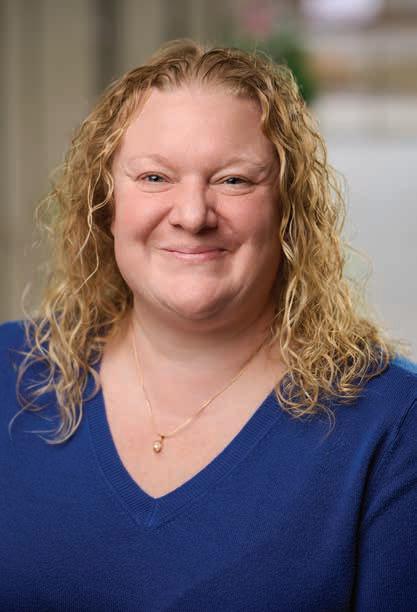
Teresa Whitney Healthcare Administration Assistant
How long have you worked at Cedar Community?
19 years
What do you enjoy most about working at Cedar Community?
“The teamwork and camaraderie. I have met so many amazing people and many I call family.”
What her colleagues are saying...
“Teresa has consistently stepped up wherever help is needed. Her positive attitude, willingness to learn, and genuine kindness and care for both residents and team members shine through in everything she does. She leads with compassion and reliability, and her contributions make a meaningful difference every day.”
Dining Champion
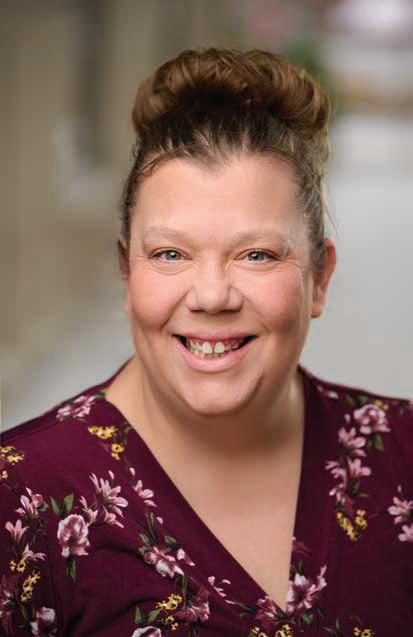
Julie Rosbeck Clinical Dietitian
How long have you worked at Cedar Community?
22 months
What do you enjoy most about working at Cedar Community?
“Caring for the residents as well as working with rehabilitation patients, seeing them get better, and helping make everyone who lives here feel comfortable and cared for.”
What her colleagues are saying...
“Julie does an excellent job educating patients and families. In my 35 years working in skilled nursing facilities, I’ve never seen a dietitian play such a vital role on the interdisciplinary team or communicate so effectively with patients. She is also a key contributor to the dining teams, actively participating in performance improvement initiatives.”
Cedar Community Champion
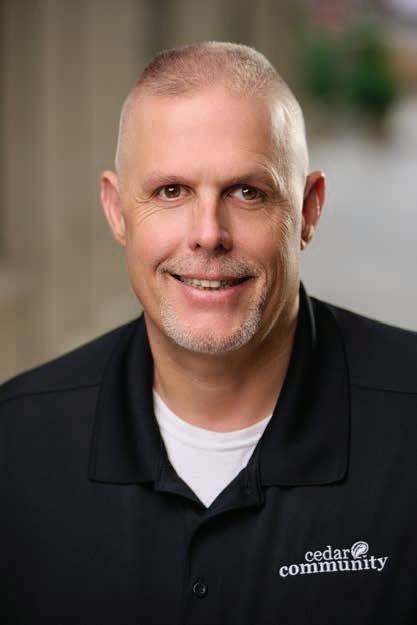
Todd Griesbach Director of Housekeeping and Laundry
How long have you worked at Cedar Community?
Seven months
What do you enjoy most about working at Cedar Community?
“The support from management and my colleagues. The residents are wonderful and the sense of teamwork across the organization truly stands out—making Cedar Community a supportive and rewarding place to work.”
What his colleagues are saying...
“Todd consistently goes above and beyond, stepping in without hesitation during emergencies, regardless of the time or circumstance. His reliability, willingness to help, and commitment to doing whatever is needed have a meaningful impact on both resident wellbeing and team morale. Todd truly exemplifies what it means to be a team player.”

Every quarter, Cedar Community recognizes team members who go above and beyond their everyday tasks for our residents, families, volunteers, and their fellow team members. Cedar Community is proud to announce our Team Members of the Quarter award winners.
Kevin Sander
Controller
“Kevin demonstrates exceptionalism in all that he does. He is a trusted and valued team member, and his knowledge of accounting in the senior living industry is deep. He truly embodies Cedar Community’s Guiding Principles and Priorities, and I’m proud to have him on my team.”
Jim Karls, Chief Financial Officer
Congratulations! TEAM MEMBER OF THE YEAR!
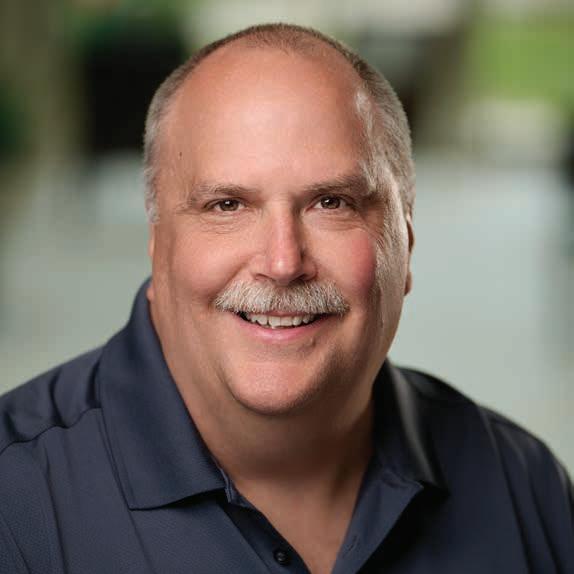
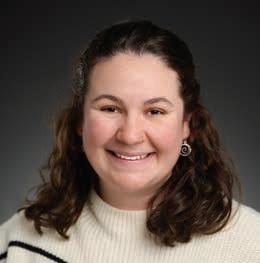
Rev. Emma Sancomb, BCC Director of Spiritual Care

Spring cleaning for the soul
Each spring, I experience a familiar pull back to the garden. Some of us might be eagerly waiting to sink our hands into the soil and begin the quiet, hopeful work of preparation. We know before anything new can grow, the ground must be tended, old roots cleared, soil loosened, and nutrients restored. As I have anticipated this ritual of returning to my garden, I’ve found myself wondering what kind of spring cleaning my own mind and soul might need right now.
Just like a garden, our inner lives accumulate debris over time. Unspoken grief, lingering regrets, old stories about who we are or who we are no longer allowed to be, and I wonder how these things can compact the soil of the spirit. They don’t disappear on their own. Instead, they may harden, making it di cult to allow joy, curiosity, or peace to take root. Spring invites us to notice this—not with judgment or shame—but with gentle honesty and grace.
Wherever you are on this journey of life, we carry full histories. We have loved deeply, lost painfully, learned the hard way, and survived more than we ever imagined we could. That lived wisdom is rich compost, but only if we let it breathe. This season of “spring cleaning” might invite us to loosen our grip on what no longer serves us— expectations we placed on ourselves years ago, roles we feel pressured to maintain, or the belief that growth is only for the young.
Preparing the soil of the heart might mean allowing ourselves rest without guilt. Saying “no” more often. Forgiving ourselves for the choices we would make di erently now. It might also mean making space for something new, like wonder, playfulness, creativity, or a deeper connection.
Embodied practice:
Place a hand on your heart, close your eyes, and take a deep breath. Say to yourself, “God, allow me to compost what must be composted and plant what needs to be planted.”
Repeat it as many times as you need and know that you are enough. scan to download a printable card of this practice

Gardening teaches us patience. We do not rush the soil into readiness, nor do we demand immediate results. We trust the process, knowing that unseen work is happening beneath the surface. Our inner spring cleaning is much the same. Small, intentional acts of care can slowly restore what has been depleted. How might you practice such intentional acts of care? You might consider prayer, journaling, conversation, or time in nature.
As the earth awakens around us, may we allow ourselves to do the same. May we tend our inner gardens with compassion, preparing the soil for whatever this next season holds. After all, growth does not end—it simply changes form. And spring reminds us, year after year, that new life is always possible.
Grace and peace to you, beloved friends,

Season of renewal
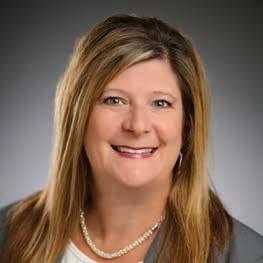
Jenny Zaskowski Philanthropy Director

Spring is a season of God’s reminder that after every winter, new life emerges; that renewal is always possible; and that we are called to steward the blessings entrusted to us with care and intention. As the world brightens around us, many take this time to revisit their plans—updating nancial documents, refreshing legacy wishes, or ensuring preplanning re ects their values and faith. These steps are not just practical; they are spiritual expressions of gratitude and love.
At Cedar Community, our mission re ects this same spirit of renewal. Each day, we are honored to walk alongside older adults as they continue writing meaningful chapters lled with joy, dignity, and purpose. Spring reminds us that growth is possible in every season of life.
This time of year naturally invites re ection on the plans that shape our own future: reviewing nancial goals, updating legacy wishes, and aligning charitable intentions with the values that guide us. These decisions are deeply personal acts of care for the people and causes that matter most.
I recently met with a longtime supporter who shared that she had nally updated her estate plans after years of “meaning to get around to it.” She told us, “I didn’t realize how much lighter I’d feel once everything was in place. It wasn’t just paperwork it was a gift to my family.” Her thoughtful planning ensures that her values will continue to support Cedar Community’s mission—bringing comfort, dignity, and joy to future generations of older adults. Her experience echoes what we hear from many supporters: that planning for the future is not only an act of organization, but an act of love.
These stories, rooted in gratitude, faith, and intention, re ect the heart of Cedar Community’s supporters. Your generosity, in all its forms, is a seed that grows far beyond what any of us can see.
As you move through this season of renewal, I invite you to re ect on the legacy you feel called to leave. If you feel moved to explore how your generosity can continue to support Cedar Community’s mission, we are here to walk with you—gently, respectfully, and with open hearts.
May this spring bring you peace, clarity, and the assurance that your gifts, your faith, and your love make a lasting di erence. Together, we are planting hope and building a future that will bloom for generations.



To learn how you can make a lasting impact at Cedar Community, contact Jenny Zaskowski at 262.338.4625 or visit cedarcommunity.org/give.
CEDAR COMMUNITY SERVICES DIRECTORY
Independent Living West Bend
· Cedar Ridge Apartments
· Cedar Ridge Homes
· Cedar Lake Village Homes
·The Lofts at Cedar Lake
262.338.4617 or 262.365.5200
·The Willows at Cedar Lake
262.306.4299
Assisted Living West Bend
· The Aspen at Cedar Lake
·The Cottages at Cedar Run (memory care)
262.306.4299
Short-term Rehabilitation and Skilled Nursing
·Cedar Lake Health and Rehabilitation Center
262.306.4240
Outpatient Rehabilitation
262.306.2150
Home Health and Hospice
1.844.206.4930
Onsite Health Clinic
608.352.4955
Restaurant and Catering
· Top of the Ridge Restaurant
262.338.2812
Cafés
·Cedar Ridge Café (Cedar Ridge Campus)
262.338.4614
·Cedar Lake Café (Cedar Lake Campus)
262.306.2100, ext. 4128
Resale Shops
· Cedar Treasures (Cedar Ridge Campus)
262.338.8377
·Cedar Closet (Cedar Lake Campus)
262.306.2100, ext. 4119
Volunteers
262.306.4218



Philanthropy
262.338.4625
Cedar Lake Pharmacy
262.306.4251
Cedar Community Salon & Spa Services
·Cedar Lake Health and Rehabilitation Center
262.306.4281
·Cedar Ridge Apartments
262.338.2813
·The Aspen at Cedar Lake
262.306.2130, ext. 4429
·The Cottages at Cedar Run
262.365.6500, ext. 5405
Cedar Community Main Number
262.306.2100
Careers cedarcommunity.org