Civil, Environmental & Architectural Engineering at the University of Kansas // Fall 2025
THIS ISSUE:
CEAE professor recognized for research in community resilience
CEAE alumni’s work in traffic management impacts millions of Kansans KU football linebacker navigates athletics and engineering
Letter from the Chair
Dear Friends,
We have had a lot to celebrate since our last CEAE Update with a beloved student activity celebrating its 50th anniversary, CEAE faculty excelling in leadership roles, national recognition for our important research and much more.
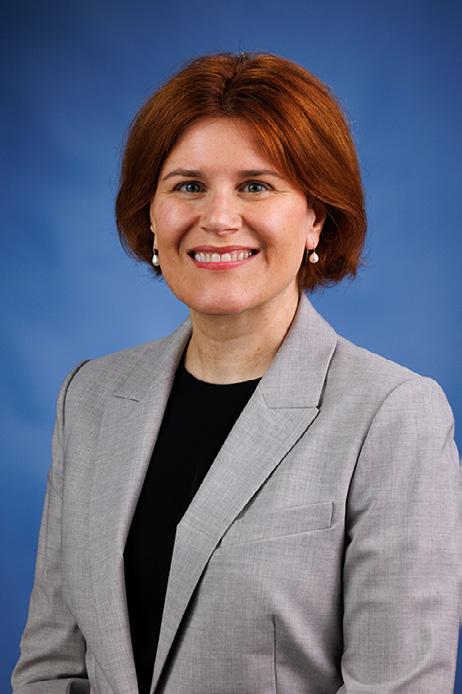
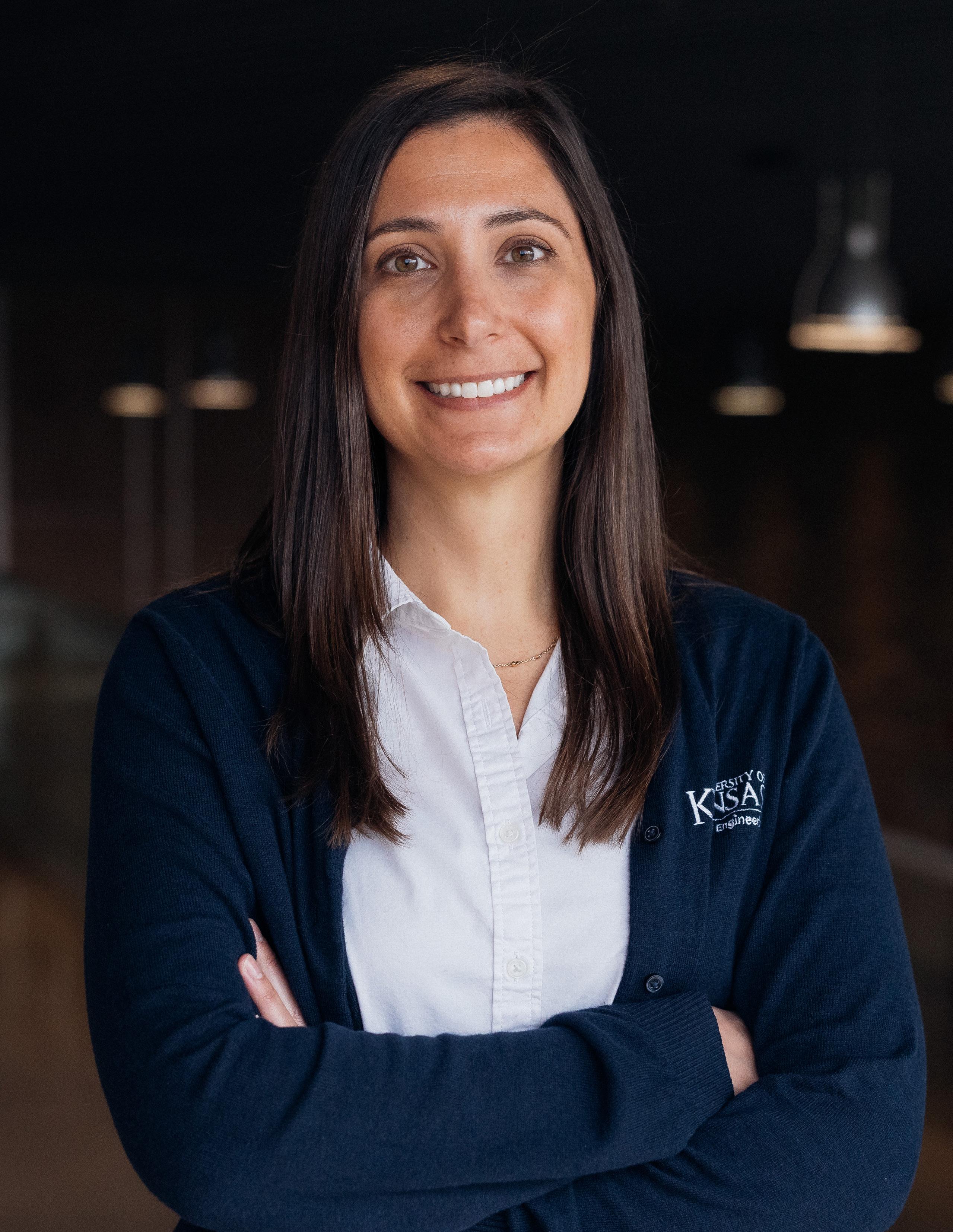
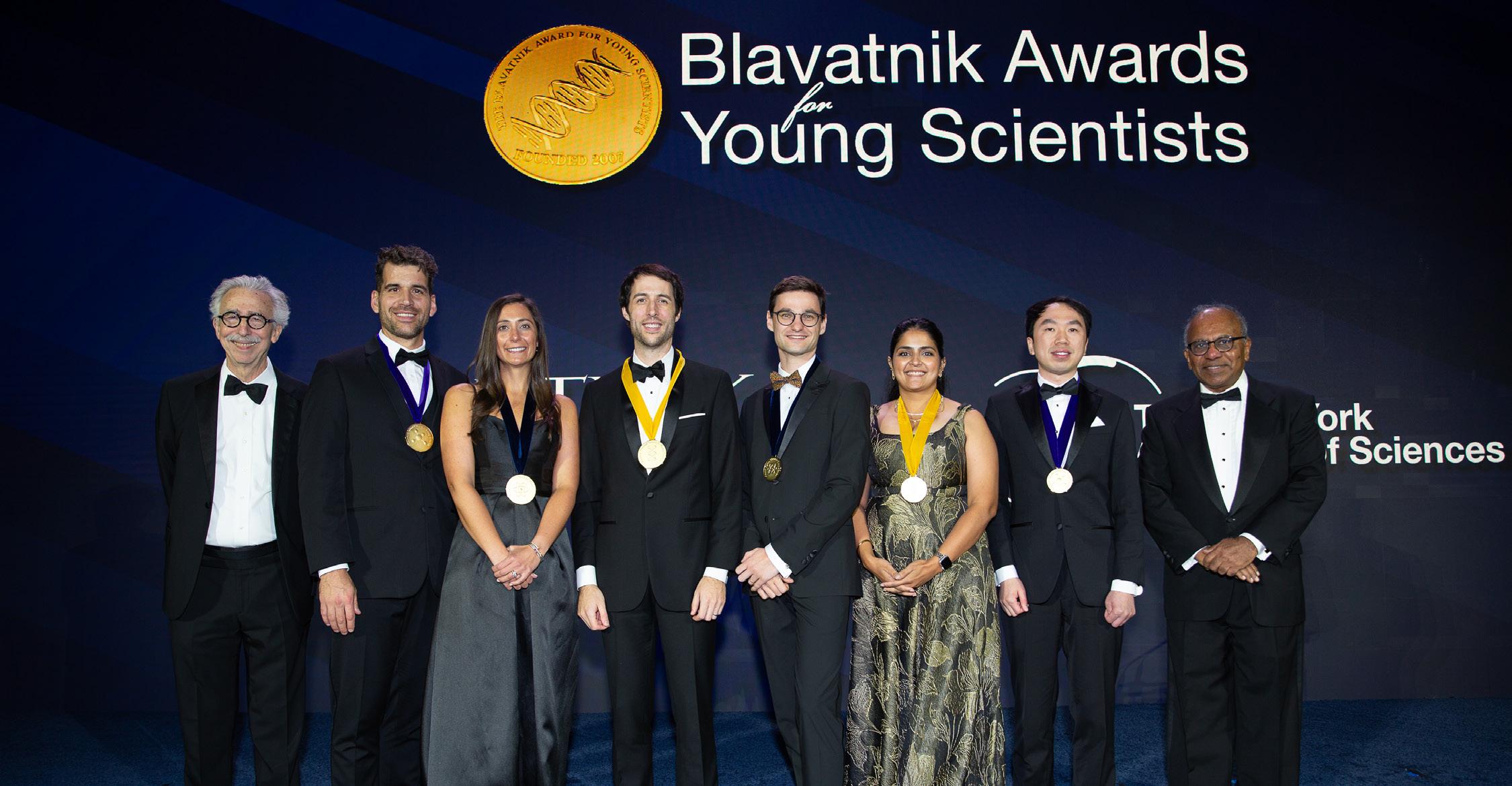
This issue, we highlight Elaina Sutley, associate dean for impact and belonging. She was not only a recipient of the 2025 University Scholarly Achievement Award last spring but was also recently named the laureate of the 2025 Blavatnik National Award for Young Scientists in the Physical Sciences and Engineering Category for her work in community resilience after natural disasters. Sutley is KU’s first ever laureate and the first ever laureate in civil engineering, so it was only fitting that we highlight her achievements in this issue’s feature story.
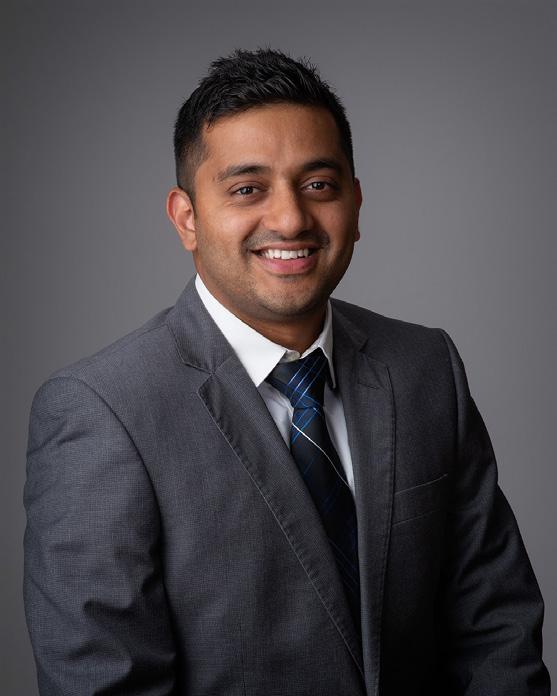
In our alumni feature, we speak with Shivraj Patil, a CEAE MS graduate whose research is still being used in day-to-day traffic management. Now a traffic engineering team leader, Patil oversees projects — from high-tech highway systems to smalltown traffic studies — that directly impact thousands of drivers across Kansas.
Finally, we celebrate many student achievements in this issue of the CEAE Update, including one unique story. Ezra Vedral, a junior in civil engineering, was named the 2025 Outstanding Sophomore at the CEAE Awards Banquet last April. This year, he is a redshirt sophomore on the KU football team. In our student feature, we sit down with him to learn a little more about the balancing act that is being an engineering student and a member of a Division I team.
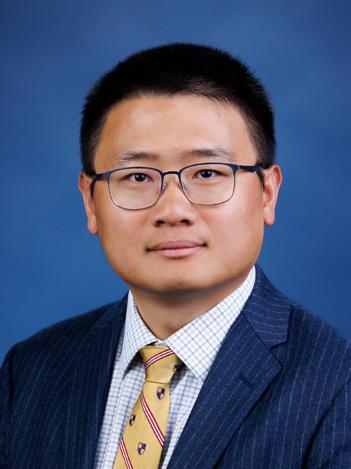
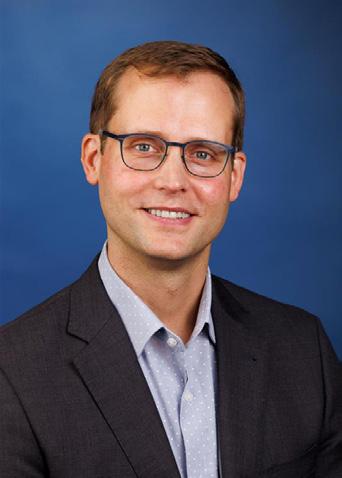
Additionally, we welcomed four new faculty members to the department this fall semester. Xinlong Du joins us from the University of California, Berkeley, Will Lindquist joins us from William Jewell College, John Shelley joins us from the U.S. Army Corps of Engineers and Shi’an Wang joins us from the University of Texas at El Paso.
Thank you once again to our alumni and friends for your constant support of our department. From coordinating site visits with our student groups to speaking to our classes about career opportunities to providing generous philanthropic support, you have opened doors for our students and helped us grow as a department. I am excited to see what the new year has to offer for the Civil, Environmental & Architectural Engineering department.
Rock Chalk,
Caroline R. Bennett
Charles E. & Mary Jane Spahr Professor Department Chair
by
CEAE Update is published annually by the Department of Civil, Environmental & Architectural Engineering at the University of Kansas.
DEPARTMENT CHAIR
Caroline R. Bennett
EDITOR & DESIGNER Emma Herrman
Comments, suggestions or address changes may be emailed to emma.herrman@ku.edu or sent to:
2150 Learned Hall
1530 W. 15th St. Lawrence, KS 66045
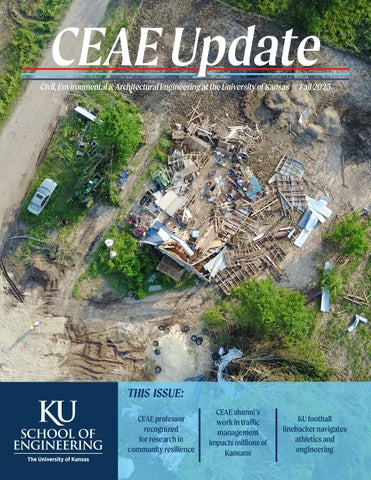
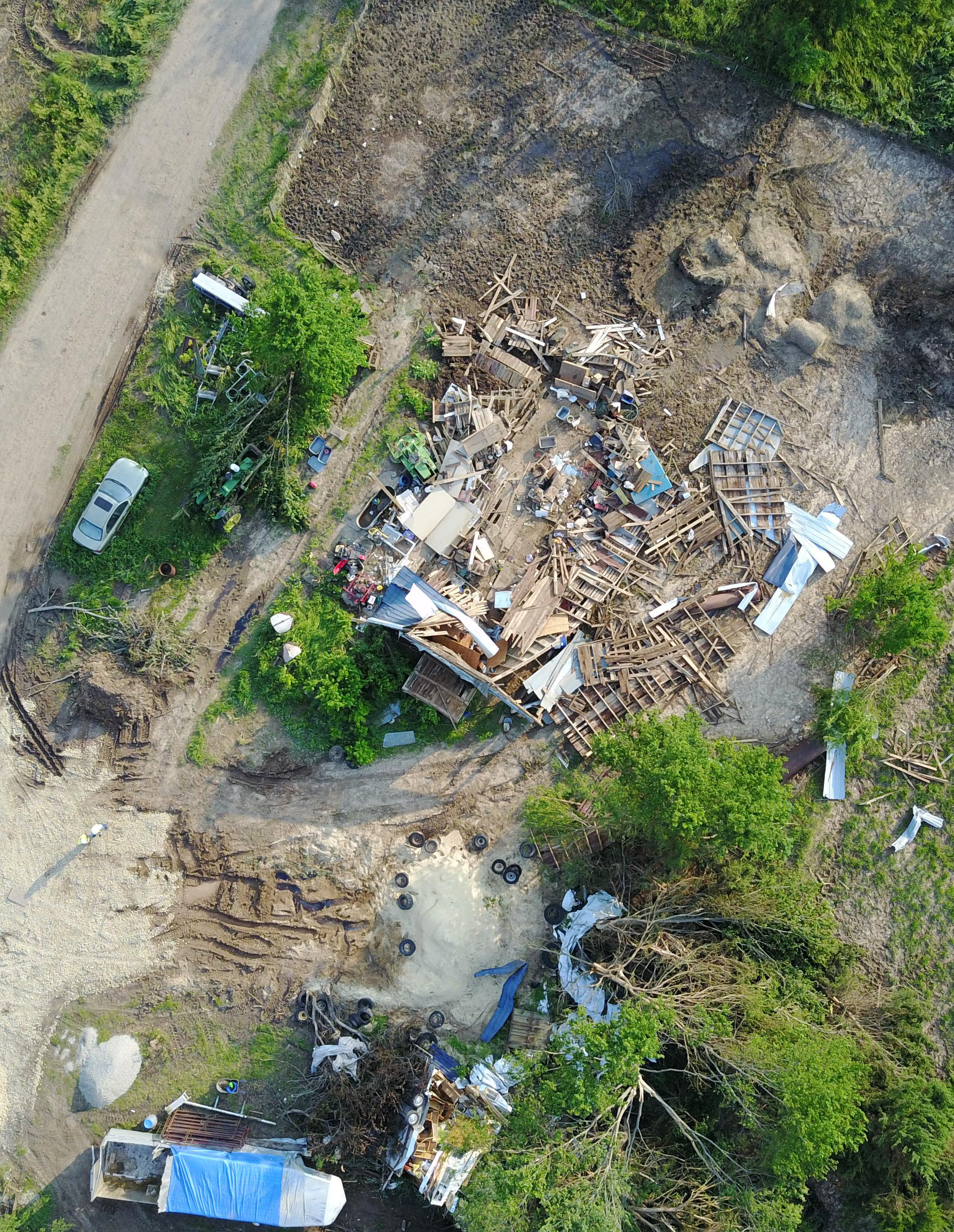
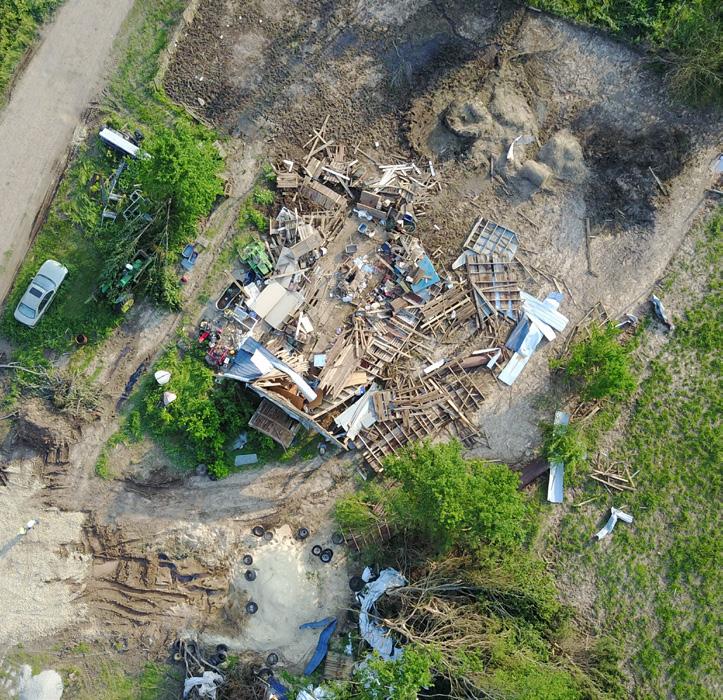
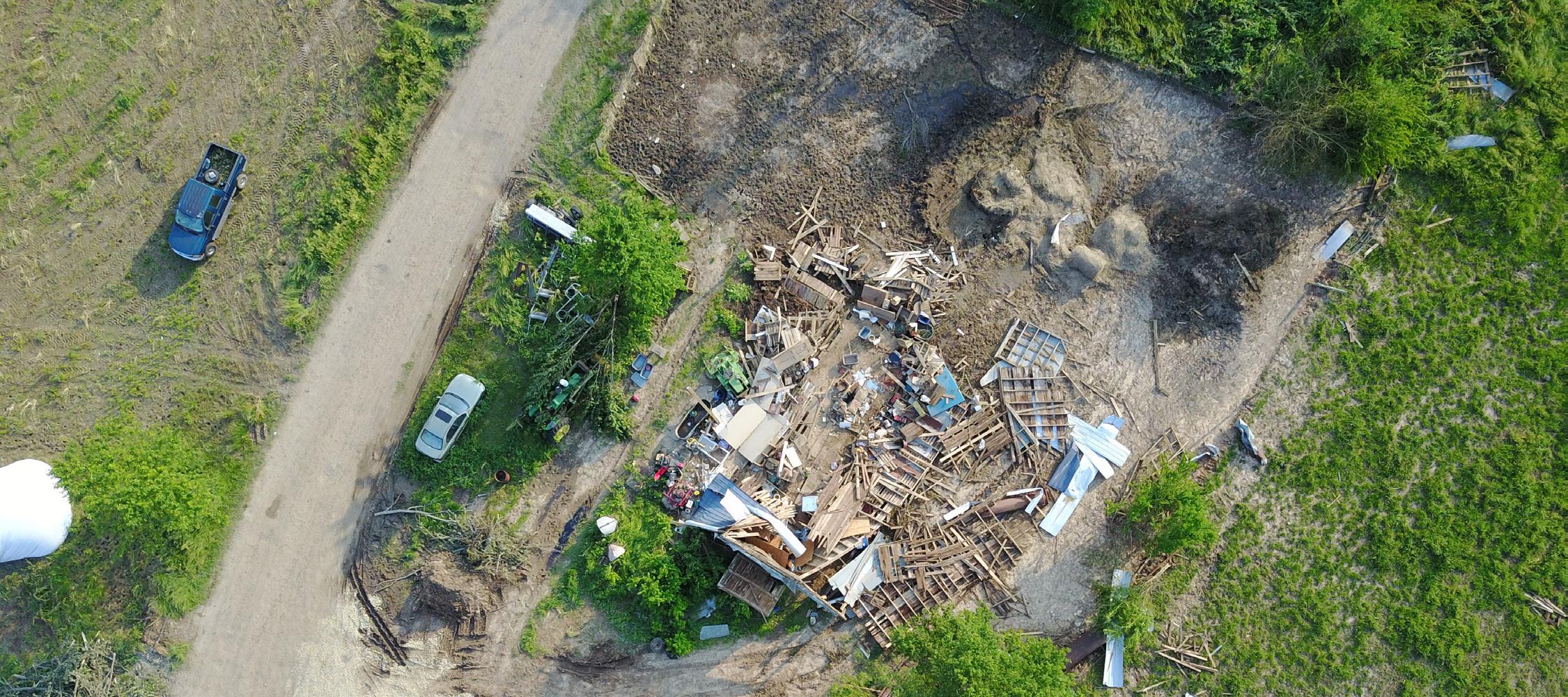
An aerial view of structural damage done by an EF4 tornado that struck Linwood, Kansas, in May 2019. This survey was done as part of an ongoing research project into resilience in communities affected by natural disasters.
Photo
Emma Herrman
Photo provided by Elaina Sutley.
News & Notes
FACULTY UPDATES
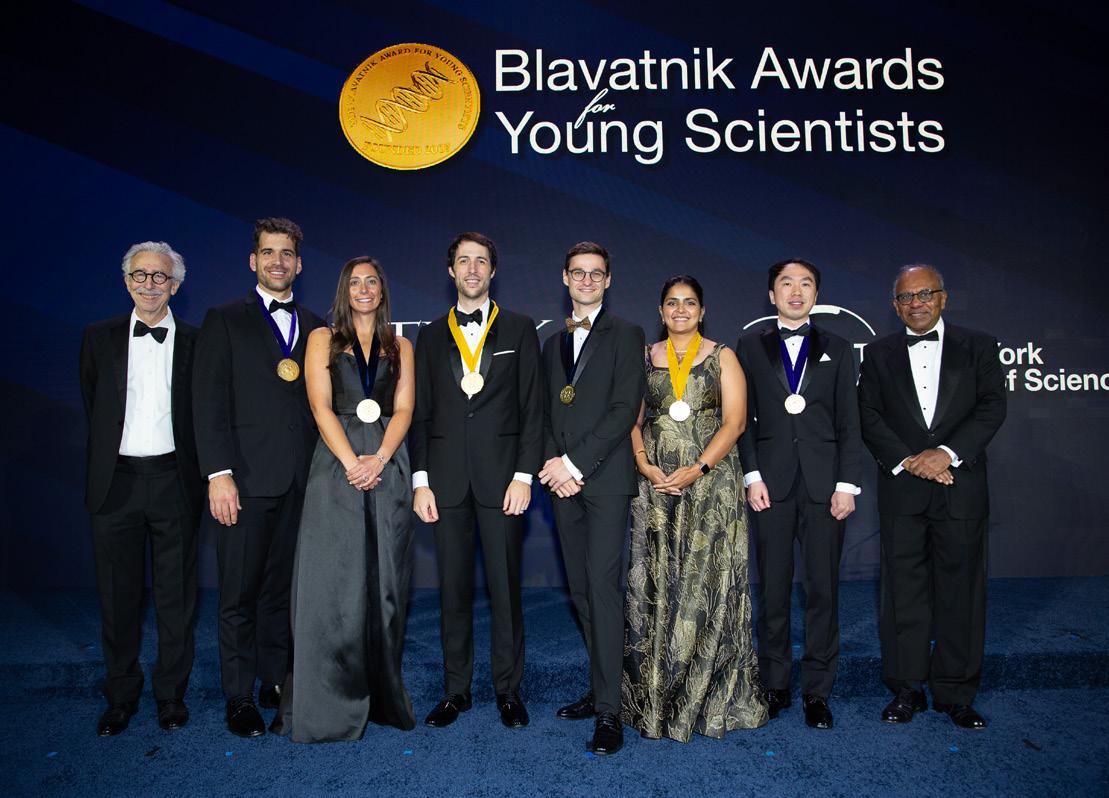
Elaina Sutley was awarded the Blavatnik National Award for Young Scientists. This award is one of the country’s most significant prizes for early-career researchers. She is KU’s first laureate.
Elaina Sutley was selected as one of three recipients for the 2025 University Scholarly Achievement Award, which recognizes outstanding contributions to research.
Jie Han was named the Giroud Lecturer at the 2026 International Geosynthetics Society (IGS) conference in Montreal.
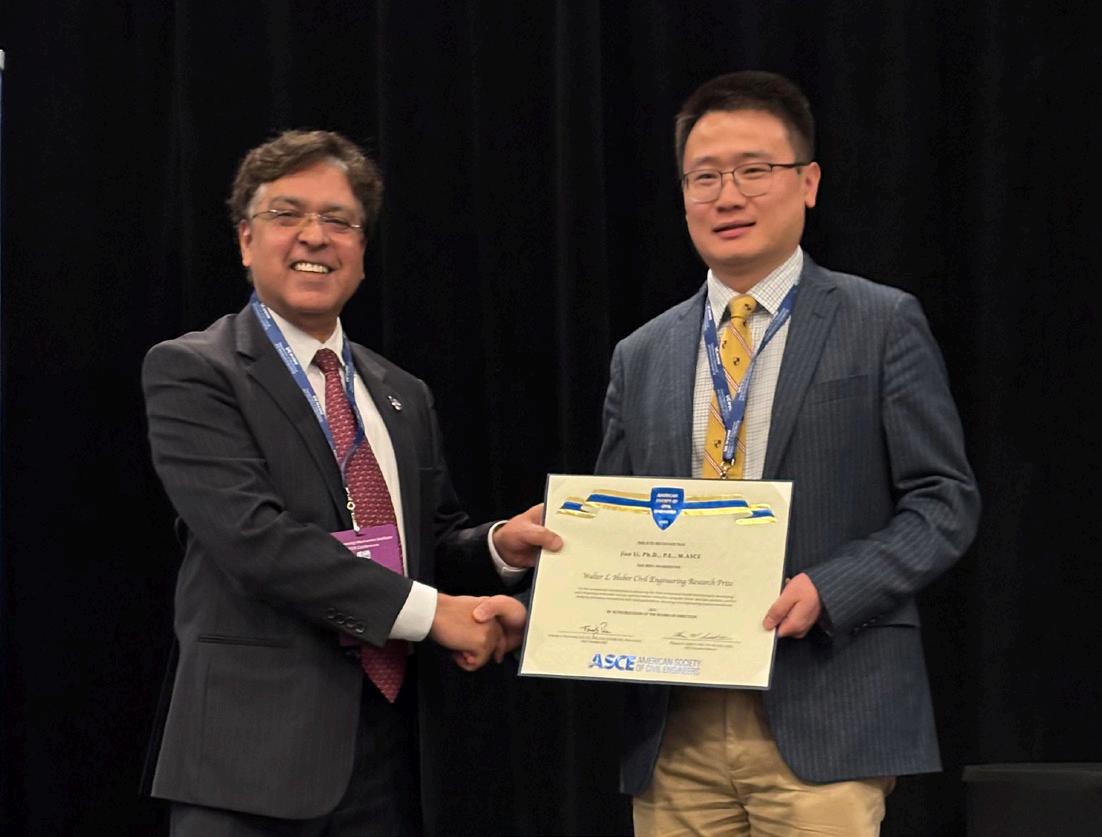
Jian Li received the Walter L. Huber Civil Engineering Research Prize at the 2025 Engineering Mechanics Institute Conference. This award recognizes his contributions to structural health monitoring and the integration of sensing and data analytics in civil infrastructure.
Brian Lines was awarded a Chancellor’s Club Professorship for his excellence and dedication to teaching. This professorship is a five-year term.
Caroline Bennett was named the recipient of the 2026 AISC T.R. Higgins Leadership Award. This award recognizes outstanding lecturers whose publications are considered an outstanding contribution to the engineering literature on fabricated structural steel.
Jian Li was elected a Fellow of the American Society of Civil Engineers.
Bill Kirkham and Bob Lyon retired from the CEAE Department at the end of the fall 2024 semester. They had served the department and university for a combined total of nearly 30 years.
David Darwin received the Distinguished Engineering Service Award (DESA), the School of Engineering’s highest honor.
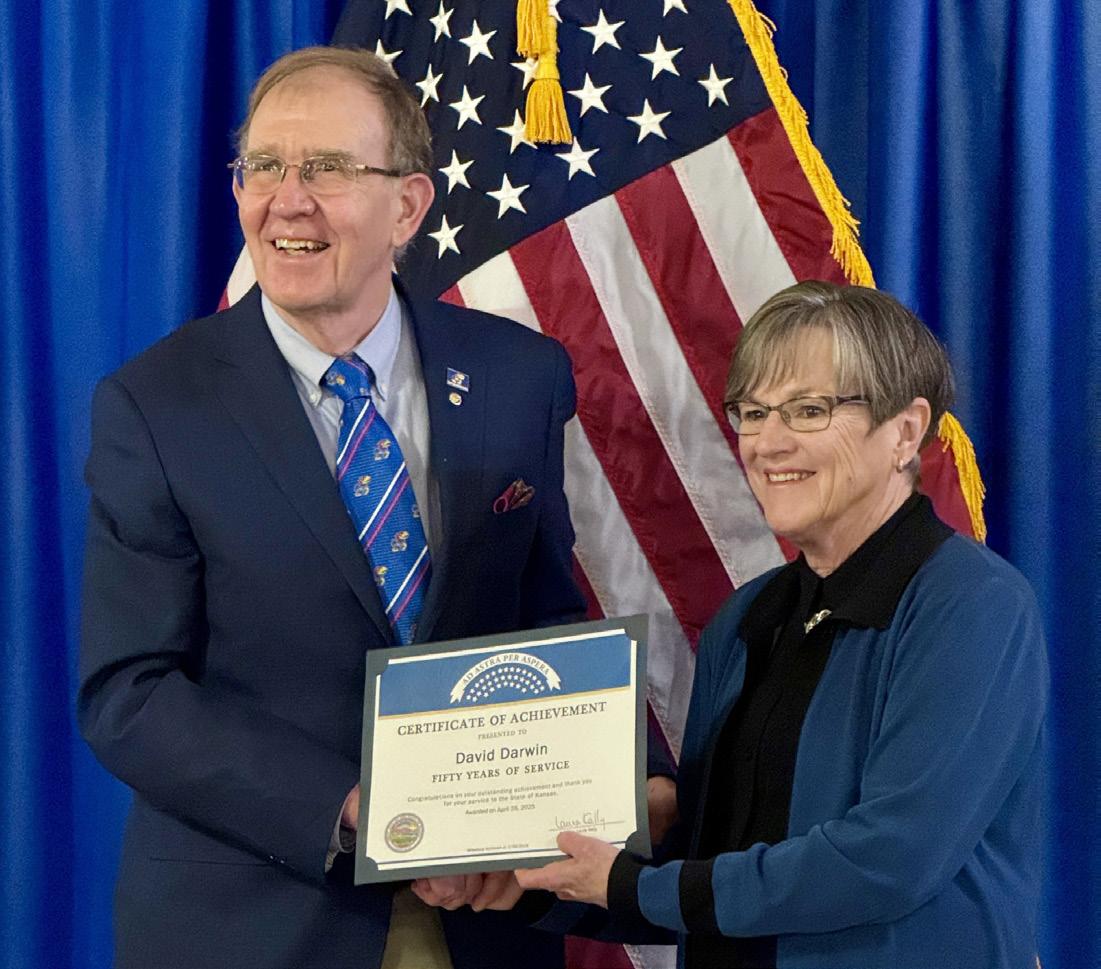
David Darwin was recognized by Kansas Governor Laura Kelly for 50 years of service to the state of Kansas.
Andrés Lepage and his team, led by Dr. Jeffrey Dragovich, won the Belgium-based UCLouvain 2023 Blind Prediction Competition for shake table earthquake response of concrete walls.
Rémy Lequesne has been named the associate dean for faculty and staff affairs.
Ted Peltier has been named the associate dean for academic affairs.
Elaina Sutley was promoted to associate dean for impact and belonging with the School of Engineering.
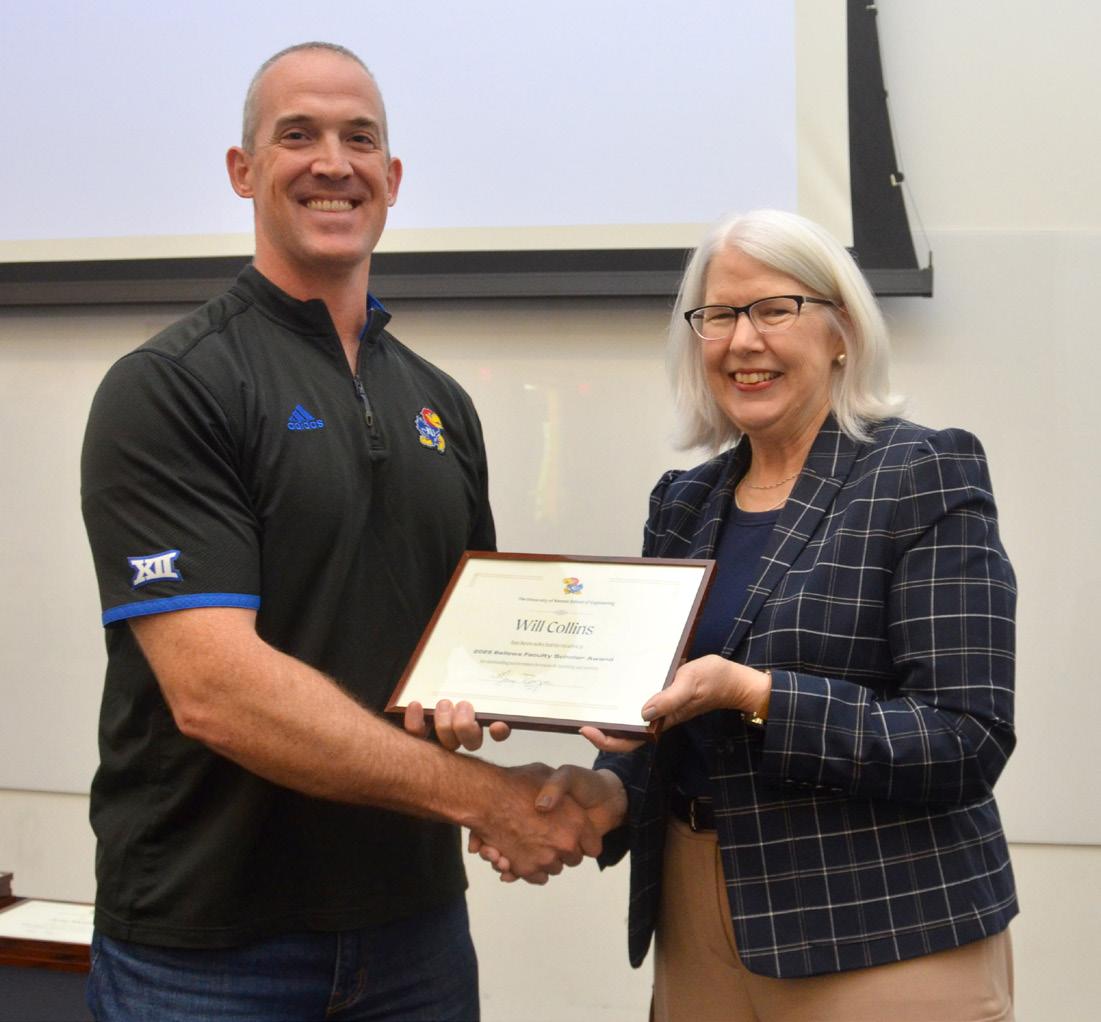
Will Collins was named one of the Bellows Faculty Scholars at the School of Engineering’s first annual awards reception.
Four awards were presented to CEAE faculty and students during the 2025 School of Engineering Recognition Ceremony.
• Rémy Lequesne received the Henry E. Gould Excellence Award in Mentoring.
• Jie Han received the Miller Professional Development Award for Science.
• Ted Peltier received the Sharp Professorship.
• Pedro Marquez, E’25, received the Outstanding Master’s Student Award.
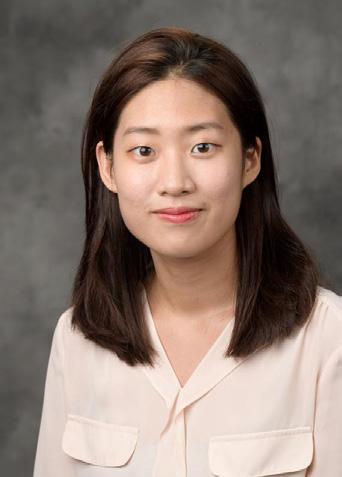
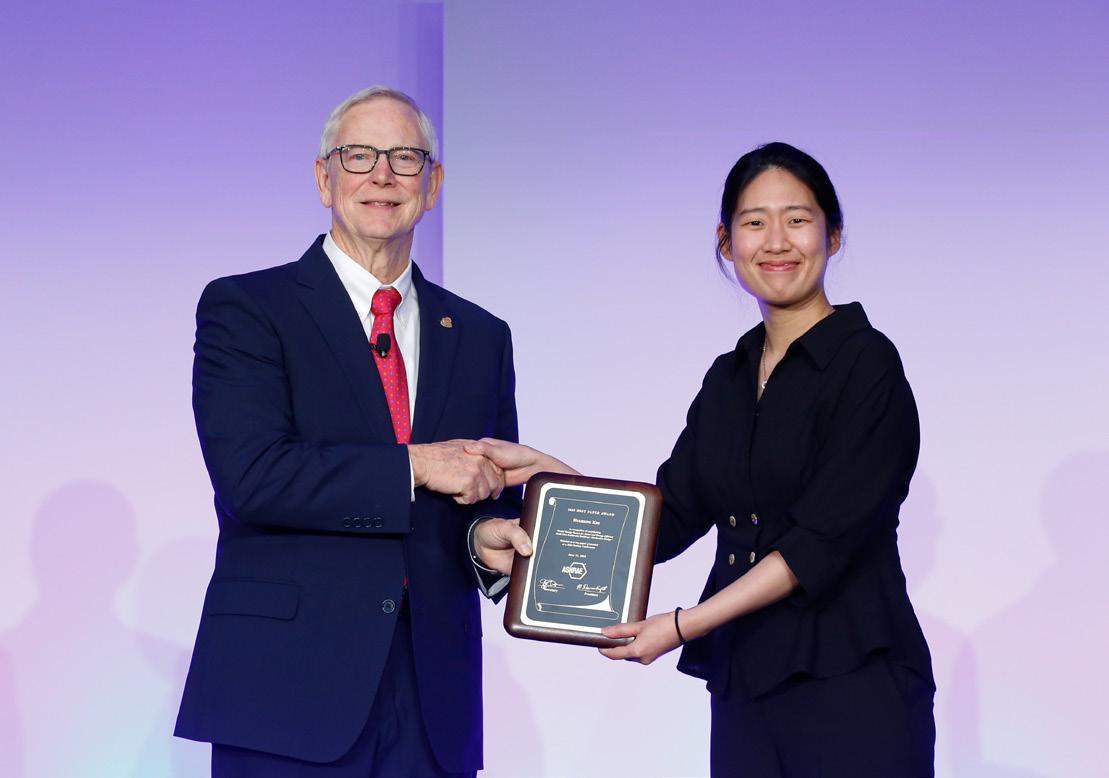
Huijeong Kim and her contributors were awarded a Best Paper Award during the 2025 ASHRAE Annual Conference in Phoenix. Their paper was titled, “Social Energy Games for Smart and EnergyEfficient Multi-Unit Residential Buildings: Mechanism Design.”
Elaina Sutley was elected to the 2024 Structural Engineering Institute Board of Directors.
Three CEAE professors were appointed as Chair’s Council Professors:
• Elaina Sutley was appointed the Diane M. Darwin Chair’s Council Associate Professor.
• Will Collins was appointed the Stanly T. and Phyllis W. Rolfe Chair’s Council Associate Professor.
• Josh Roundy was appointed the Harold A. and Donna R. Phelps Chair’s Council Associate Professor.
Hongyi Cai celebrated 15 years of service to the University of Kansas. William Collins, Michael Panethiere, Josh Roundy and Elaina Sutley celebrated 10 years of service.
Rémy Lequesne
Jian Li
Jie Han
Huijeong Kim
Waqas Rana celebrated 20 years of service to the University of Kansas. Darlene Lantz celebrated five years of service.
Emma Herrman was awarded a 2025 School of Engineering Staff Excellence Award in recognition of her outstanding contributions to the department and the school.
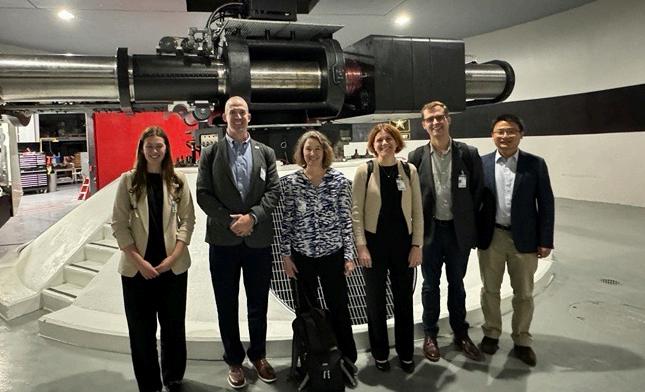
Top left: Huijeong Kim receives the Best Paper Award at the 2025 ASHRAE Annual Conference. Middle Left: (From left to right) Madelyn Hilgenbrink, William Collins, Amy Hansen, Caroline Bennett, Rémy Lequesne and Jian Li at ERDC in Vicksburg, Mississippi. Bottom left: Will Collins receives the Bellows Faculty Scholar Award from Dean Mary Rezac. Top right: Elaina Sutley (third from left) at the 2025 Blavatnik Awards for Young Scientists. Middle right: David Darwin and Governor Laura Kelly. Bottom Right: Jian Li recieves the Walter L. Huber Civil Engineering Research Prize at the 2025 Engineering Mechanics Institute Conference.
STUDENT UPDATES
Afeez Badmus and Mona Sheehan were selected to present their research at the Capitol Graduate Research Summit (CGRS). Badmus’ presentation was titled, “Lifecycle Benefit-Cost of Designing Wood-frame Residential Buildings to Withstand Tornado Hazards,” and Shaheen’s was titled, “Monitoring and Mitigation of Wind-Induced Vibration of HighMast Illumination Poles in Kansas.” They were recognized at the 2025 Graduate Awards Ceremony.
Adam Mouak was selected as the 2025-2026 ACI Foundation Concrete Practitioner Fellow. This fellowship includes a scholarship, recognition on the ACI website and assistance in finding an industry mentor.
Jasmine Perea was awarded a 2025 Graduate Research Fellowship from the U.S. National Science Foundation (NSF). Perea will join a group of distinguished scholars who have excelled in careers in STEM research, innovation and education.
Lola Ogundare, a student in construction management, has been selected as a recipient of the SAE Doctoral Engineering Scholarship. This $16,000 scholarship provides support to students pursuing doctoral studies in engineering with the intent of teaching engineering at a university. Ogundare’s advisor is Brian Lines.
John Holt received the Outstanding Student Award at the Council of University Transportation Centers Award Banquet hosted by the MidAmerica Transportation Center – Transportation Safety and Equity (MATC-TSE).
Mozaher Ul Kabir was awarded a Geosynthetic Institute (GSI) fellowship for his research proposal, “Improving Effectiveness of Moisture Reduction in Unsaturated Soils with High Fines Using Coated Wicking Geotextiles.”
Mandy Gibbs was named the ASCE Region 7 Representative to the ASCE Student Presidential Group. Gibbs joined the ASCE leadership meetings and provided input and feedback from a student perspective.
Catherine Kipp and Jordan Nutter were awarded scholarships at the 2025 Women’s Transportation International Annual Conference in April. Scholarships are awarded to celebrate the remarkable achievements undergraduates and graduates have made in the engineering field.
Ibilola Ogundare was awarded a $5,000 scholarship from PCI Midwest.
Tasmin W. Binty received the Kansas Water Environment Association (KWEA) 2024 scholarship award.
Research by Afeez Badmus, under the guidance of Elaina Sutley, were published in the Frontiers in Built Environment Journal. Their paper, “State-of-the-art review on reducing residential buildings’ risk to tornado hazards,” studies the structural risks of buildings during inclement weather.
Sian Helfrich, recent graduate and incoming master’s student, was selected as a 2025-2026 Self Memorial Scholar.
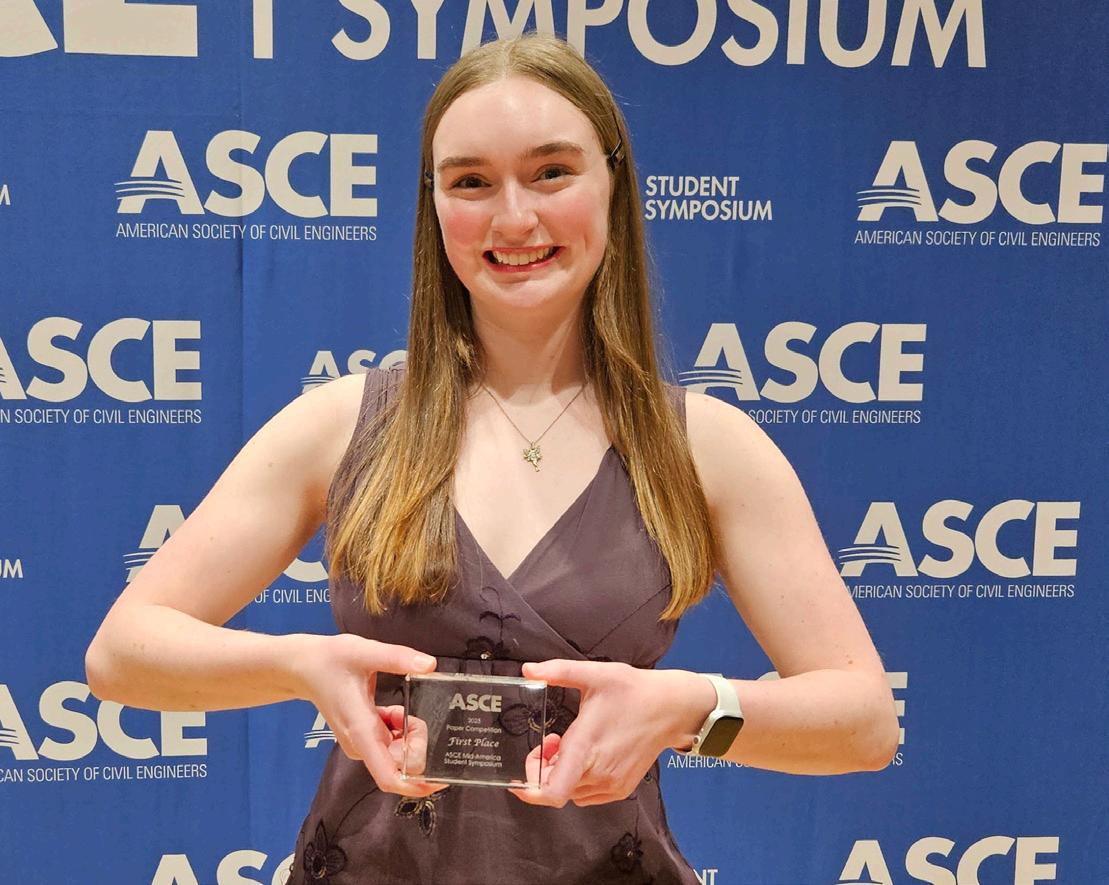
Catherine Kipp took home first place in the Student Symposium Paper Competition at the 2025 ASCE Symposium for her paper, “The Role of Ethics in Infrastructure.”
Molly Kalthoff received an Outstanding Presentation Award for the 28th Annual Undergraduate Research Symposium.
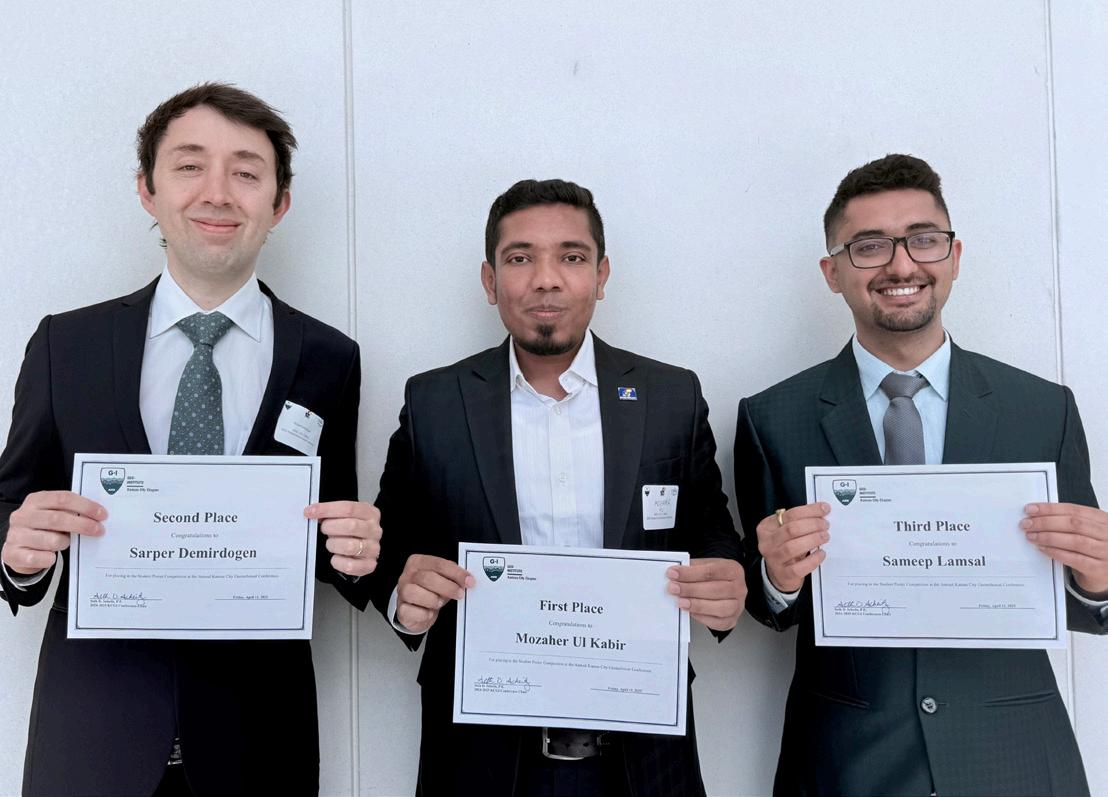
Three CEAE students presented at the 2025 Kansas City GeoInstitute Chapter conference and each took home an award in the student presentation competition:
• Mozaher Ul Kabir – first place
• Sarper Demirdogen – second place
• Sameep Lamsal – third place
Three CEAE students received awards from the 2025 National Robert J. Besal Memorial Education fund:
• Natalia Berthot
• Emma Rinehart
• Eli Tormes, E’25
Megan Wittman was featured on Research Matters, a radio show in collaboration between Kansas Public Radio (KPR) and KU Grad Studies. Wittman discussed innovative approaches to more sustainable wastewater treatment.
The KU Concrete Canoe team and KU Steel Bridge team competed in Nebraska at the 2025 ASCE Symposium.
The Concrete Canoe team took home first place for project proposal, second place in technical presentation and second place overall for the competition. The Steel Bridge team took home second place in aesthetics and third place in structural efficiency, stiffness and cost estimation. They also took home fifth place overall.
The KU Concrete Canoe team celebrated its 50th anniversary in 2025. The program was established in 1975.
Molly Kalthoff was nominated for a Udall Scholarship. This scholarship recognizes students who demonstrate leadership, public service and commitment in the fields of tribal public policy, Native health care or the environment.
Bre Waterman presented her research as part of the EWRE Seminar Series. Her talk, “From Mesocosms to Watersheds: Investigating Stream Nitrogen Transport and Removal in Agricultural Landscapes,” provided valuable insights into how nitrogen moves through waterways and impacts ecosystems.
Mandy Gibbs
Lola Ogundare
Sian Helfrich
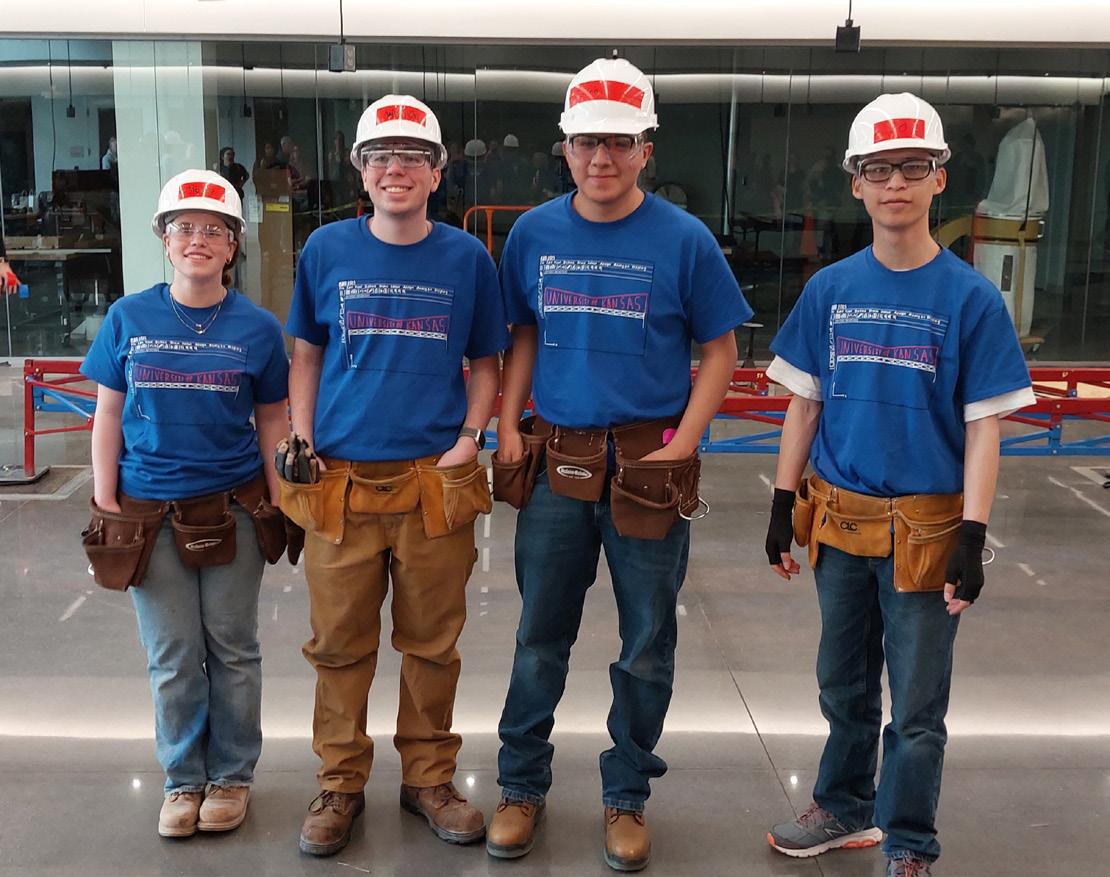
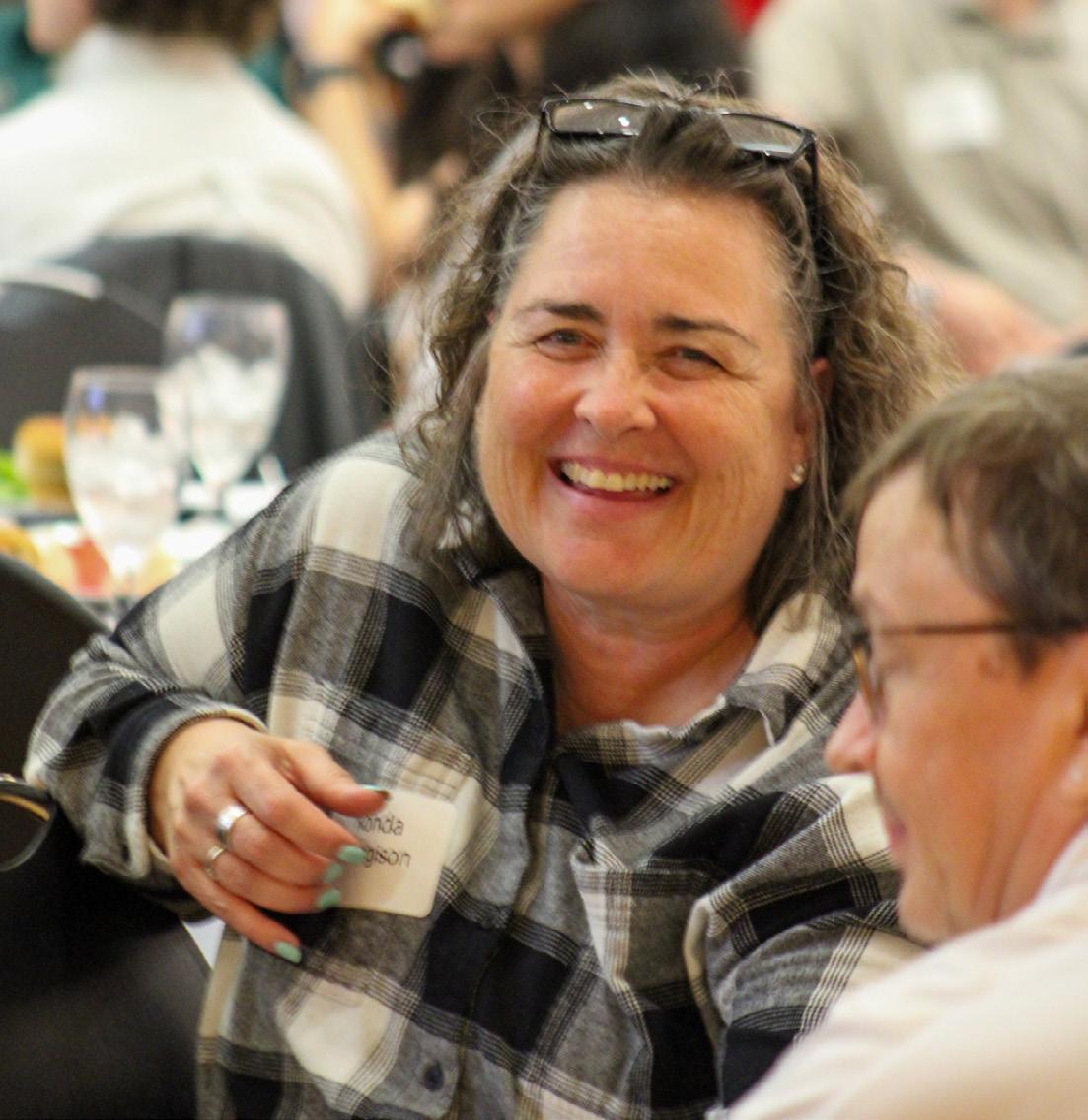
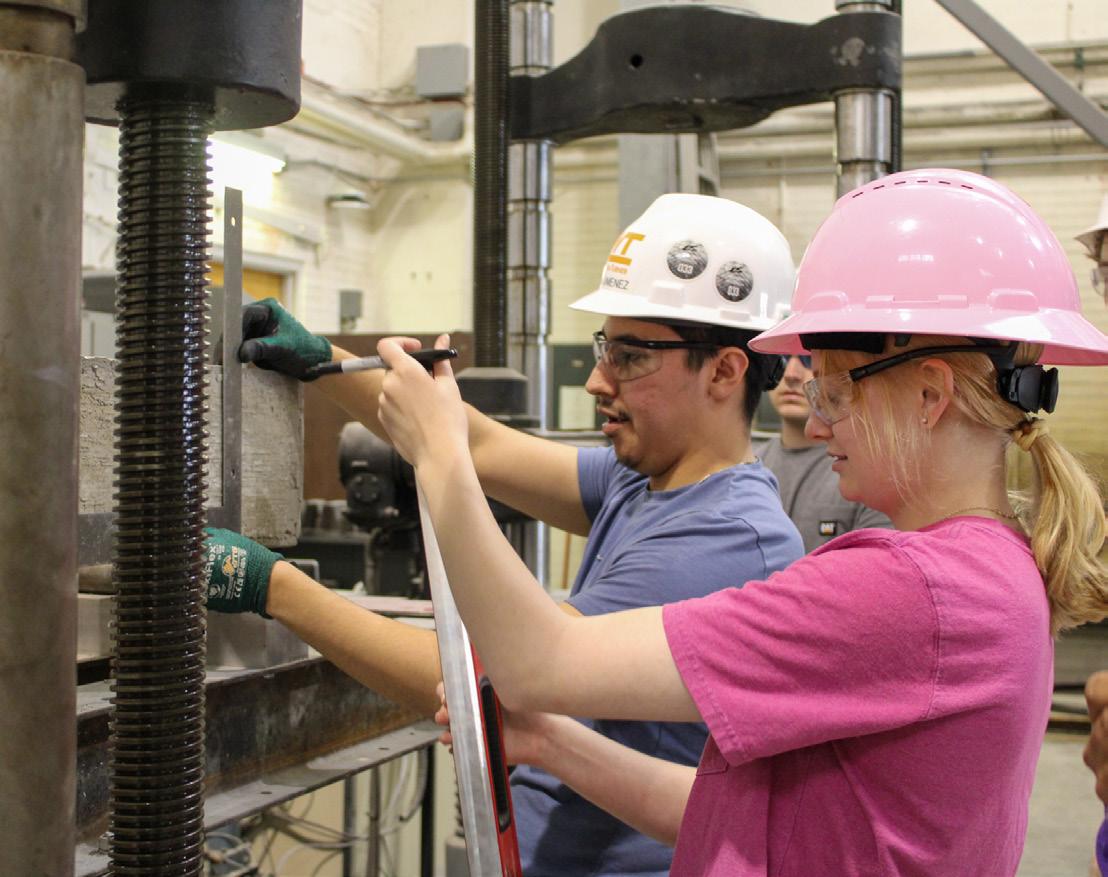
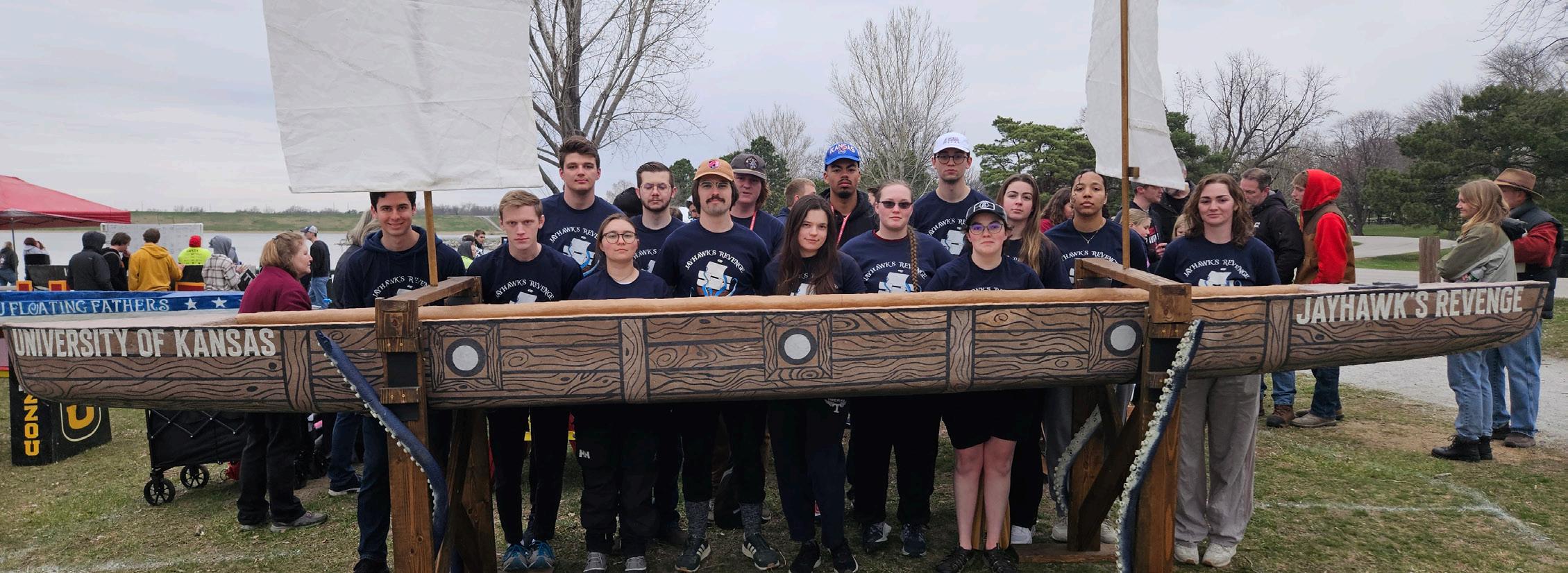
Top left: (From left to right) Molly Hageman, Wyatt Dragon, Antonio Huerta-Mado and Joe Chan representing Steel Bridge at the 2025 ASCE Competition. Top right: Aiden Jimenez and Sian Helfrich test beams in the lab. Left: Ronda Morgison at the 2025 Awards Banquet. Above: (From left to right) Afeez Badmus, Elaina Sutley and Mona Shaheen at the 2025 Graduate Awards Ceremony. Below: The 2025 KU Concrete Canoe team during the ASCE Competition.
Apex Engineers, Inc. announced the promotion of seven employees to key leadership positions, three of whom are CEAE alumni:
• Jason Gibson, E’08, for his promotion to associate principal
• Logan Chamberlin, E’12, for his promotion to associate principal
• Jeffrey Bloss, E’16, for his promotion to associate
Doug Everhart, E’01, has been named the new community sector operations director at Henderson Companies.
Brian Fairchild, E’16, recently earned his Professional Engineer (PE) certification. This certification is earned after completing four years of progressive experience under a licensed PE and passing the certification exam. Fairchild is an Assistant Water Resources Engineer at Olsson.
Brian Falconer, E’88, is part of the structural engineering team tasked with the PENN 2 Redevelopment. Falconer is a principal engineer with Severud Associates.
Cyra Chronister, E’25, received the Alexis F. Dillard Student Involvement Award during the 2025 graduation season. This award is presented to students who have unselfishly contributed to the university through campus involvement.
Andy Mergenmeier, E’86, has joined WDM USA as director of pavement and safety engineering. WDM USA is a global leader in road safety and pavement management.
Mike Orth, E’88, G’89, was named CEO of Gannett Fleming TranSystems in its shift to its new name, GFT.
Will Scherman, E’14, has joined the Denver office of Land Advisors Organization. Previous to this role, Scherman worked with many of the nation’s premier home builders.
CEAE alum and former DESA recipient Gregs G. Thomopulos, E’65, has been selected as one of 11 distinguished ASCE members. The class was officially inducted during the 2025 ASCE Convention in October.
Walter Bleser, G’08, has been named the vice president of strategic consulting services at RailPros.
Yuqiu Ye, E’18, Ph.D.’24, joined the Youngstown State University faculty as a professor.
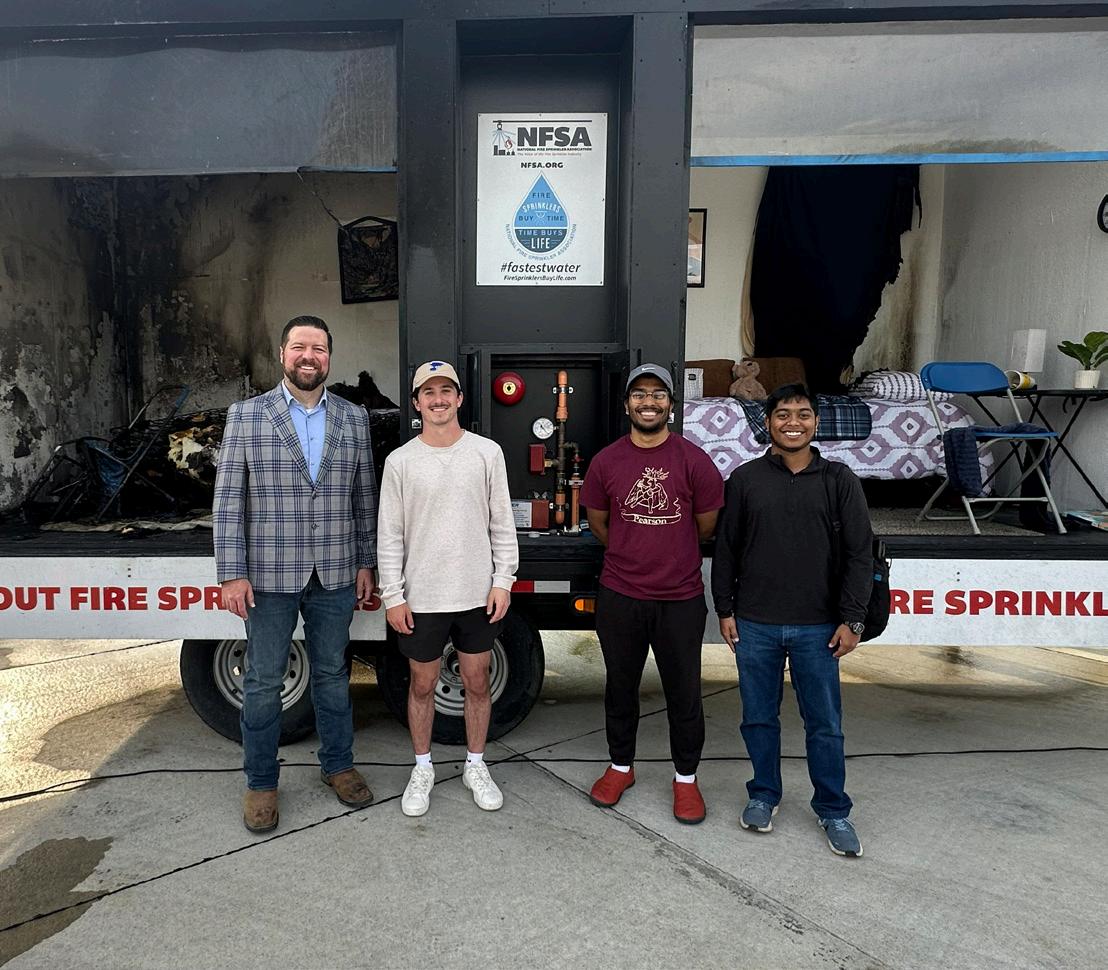
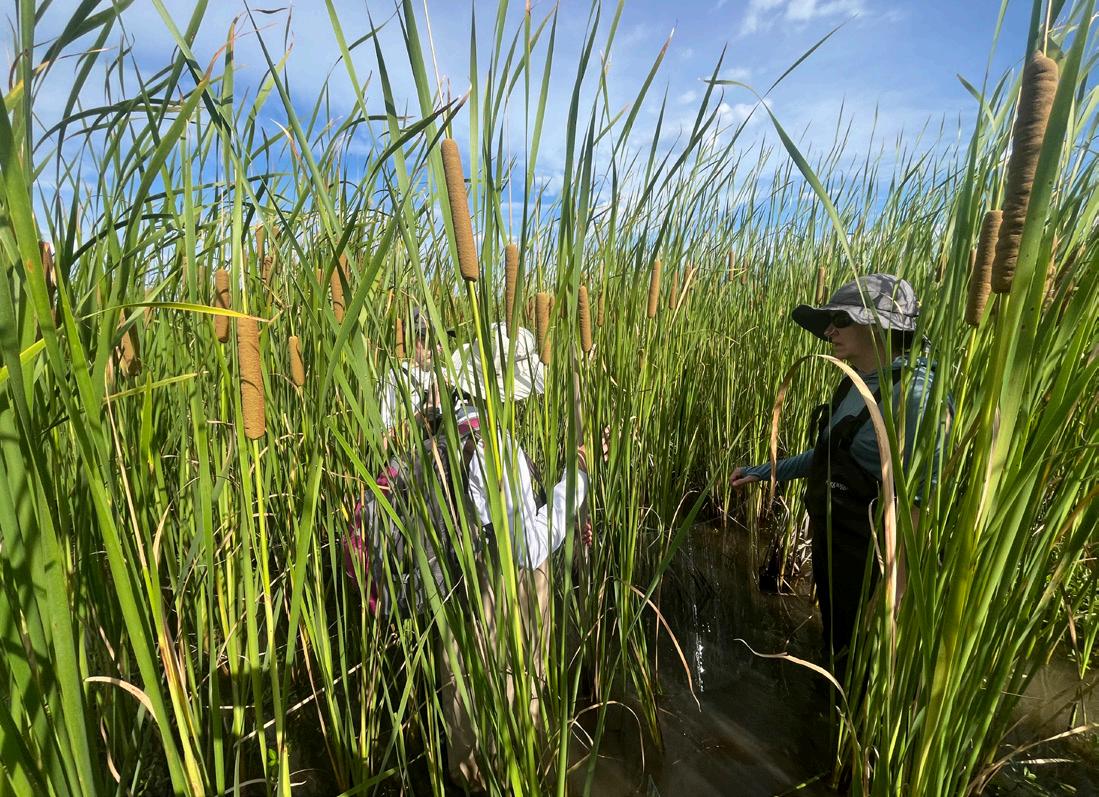
Top: (From left to right) Sarper Demirdogen, Mozaher Ul Kabir and Sameep Lamsal at the 2025 Kansas City Geo-Institute Chapter conference where they each took home an award in the student presentation competition. Middle: Ben Brooks (left) and members of the Fire Protection Club showcasing a burn trailer. Bottom: Amy Hansen (right) and her graduate students conduct research in the field.
Student Achievements
KU Engineering students take home several awards at concrete canoe, steel bridge competitions
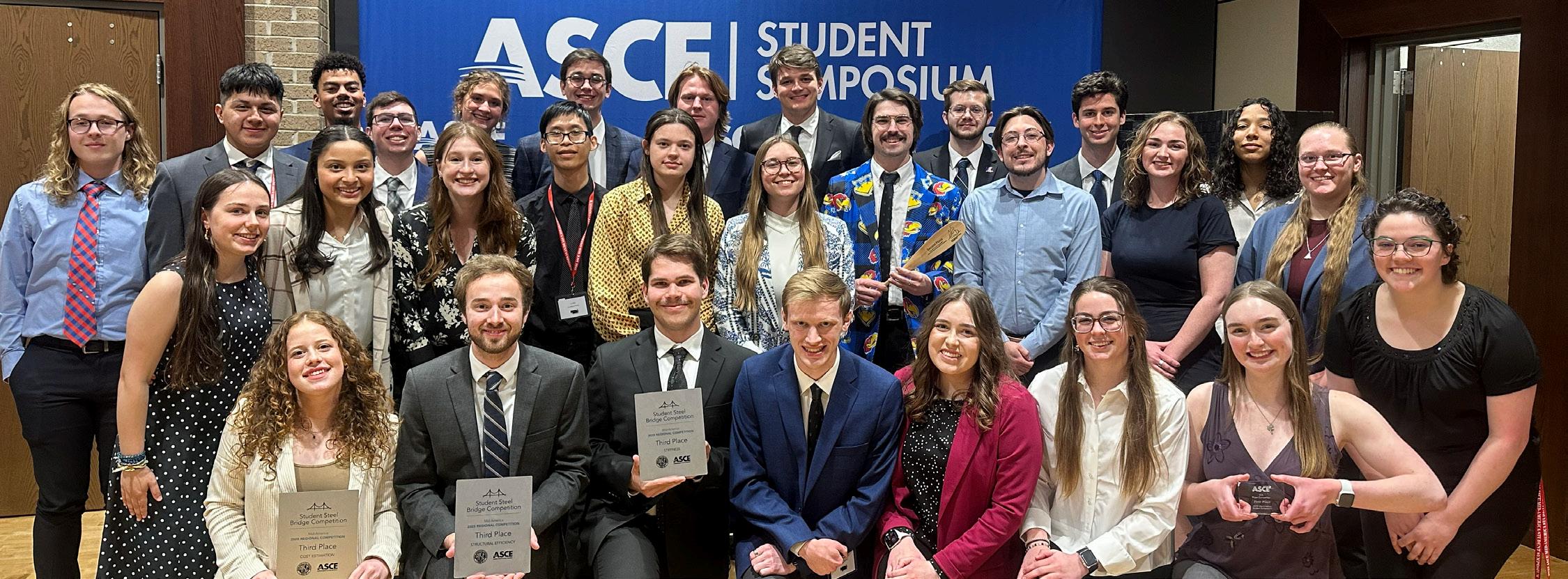
University of Kansas Department of Civil, Environmental & Architectural Engineering student groups took home several awards at the 2025 ASCE Mid-America Student Symposium. The KU chapter of the American Society of Civil Engineers, the Concrete Canoe program and the Steel Bridge program also traveled to Lincoln, Nebraska, to take part in their respective competitions.
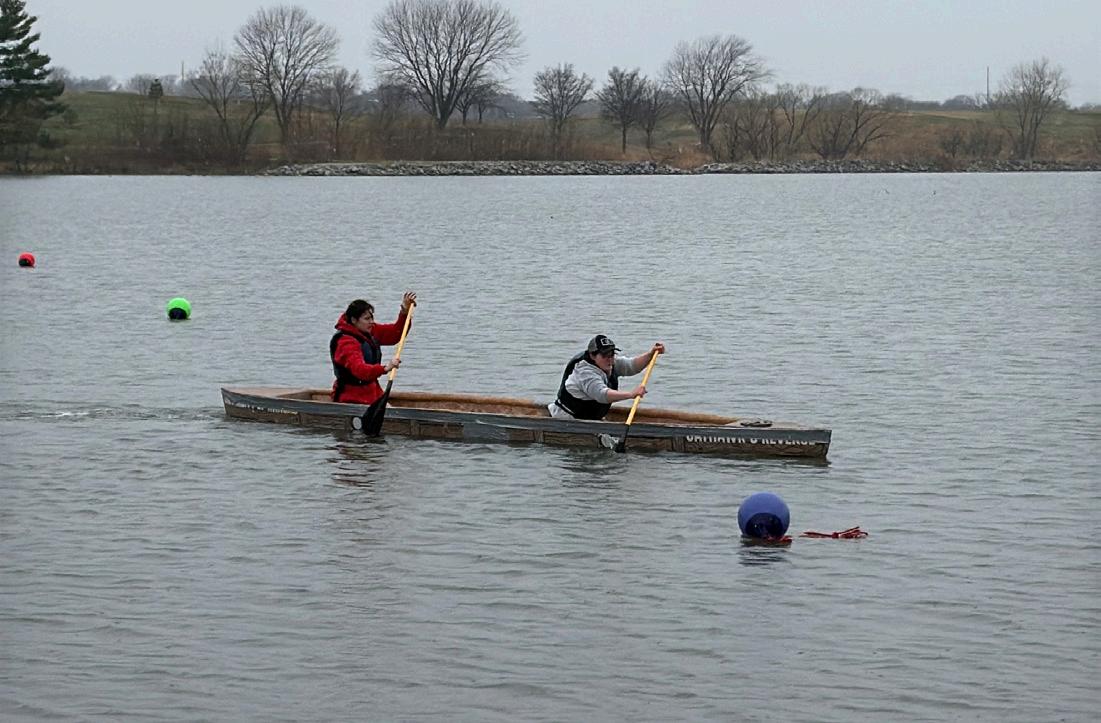
The Concrete Canoe team took home several awards, including first place in project proposal, second place in technical presentation and second place overall for the competition.
“The team’s technical report was so amazing,” said Arrington Farmer, graduate in architectural engineering and graduate advisor for the program from Edwardsville, Illinois. “I think it was the best one I’ve seen, and I’m super proud of them. They really knocked it out of the park this year.”
As part of the competition, the Concrete Canoe team not only raced the canoe in Holmes Lake at the University of Nebraska-Lincoln but also presented a comprehensive business proposal to judges regarding the cost-effectiveness and construction practices involved in producing the canoe.
Their theme, Jayhawk’s Revenge, stems from the program’s continued dedication to improving the canoe. Dominic Arbini, junior in architectural engineering and Concrete Canoe captain from Fenton, Missouri, plans on taking next year’s canoe all the way to the top.
“We continue to try to push ourselves to be the best team we can be,” Arbini said. “This year, we really put an emphasis on working together, looking at our weaknesses and trying to strengthen them as much as possible to take revenge for the mistakes we’ve made in the past and push toward a better team.”
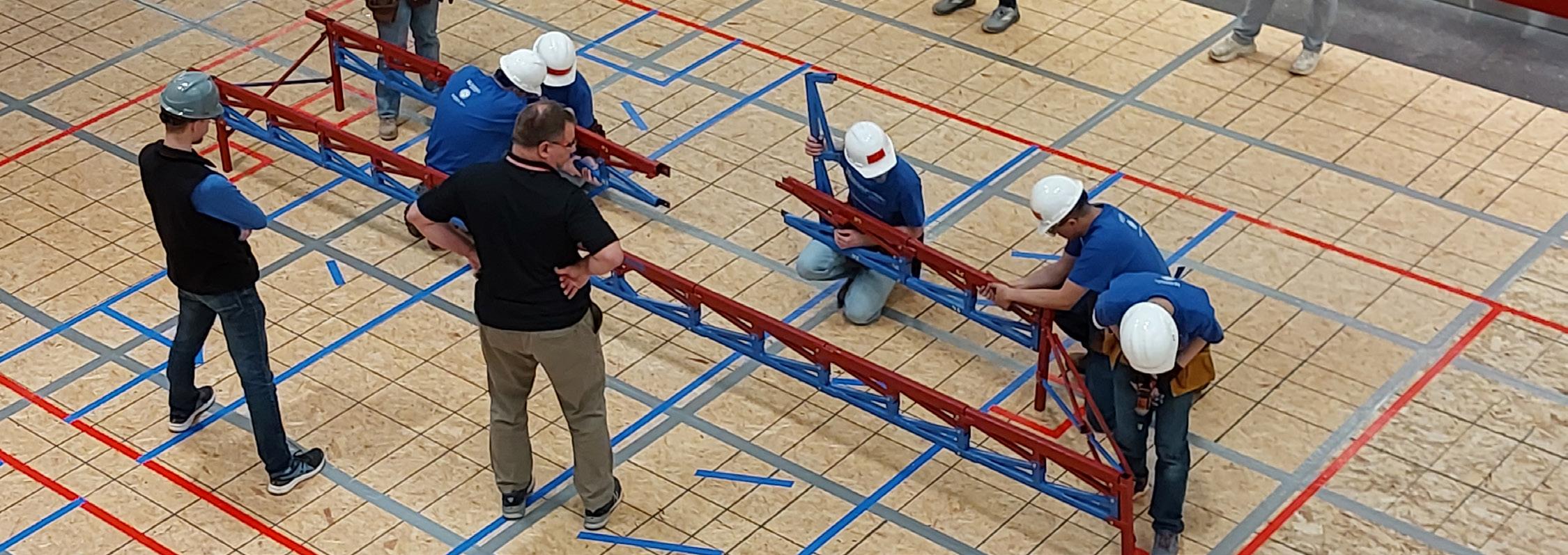
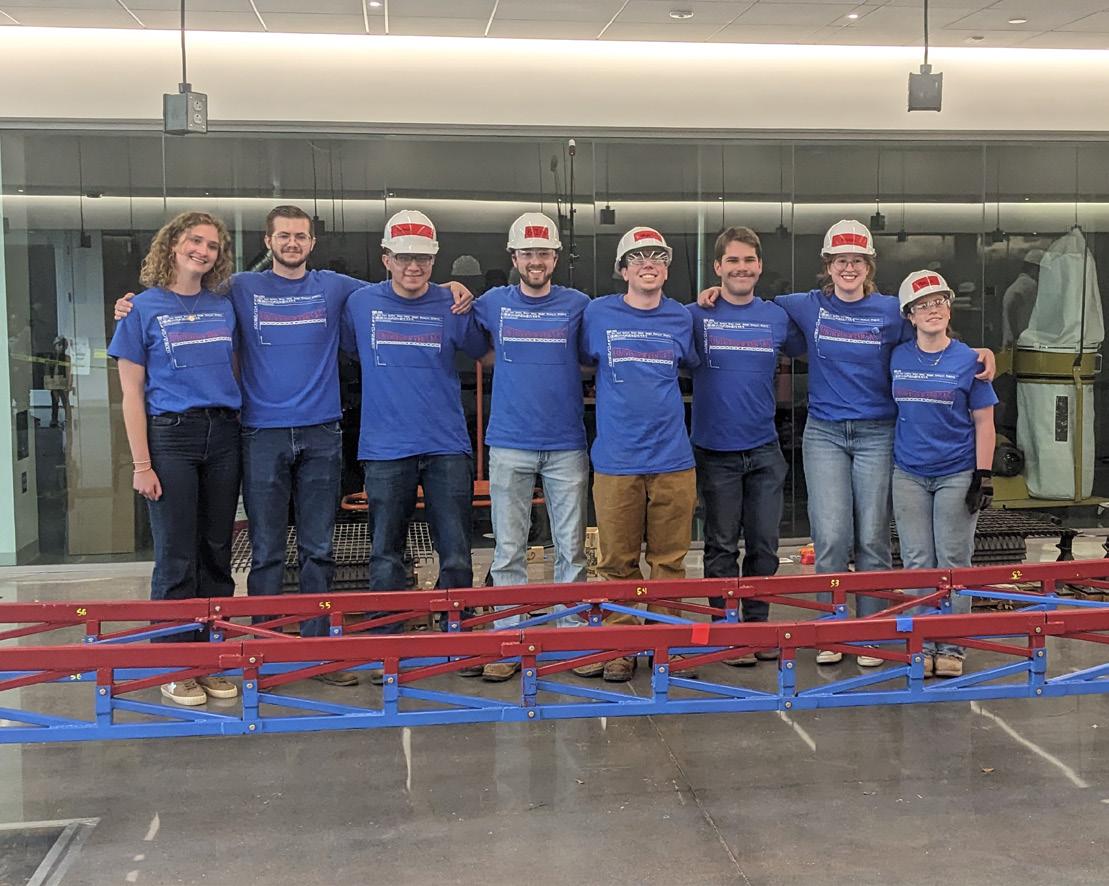
The KU Steel Bridge team also placed well in this year’s competition, taking home several awards, including second place in aesthetics and third place in structural efficiency, stiffness and cost estimation. The team took home fifth overall.
The Steel Bridge program was designed to provide KU engineering students with an opportunity to work and compete on a nationally competitive design team. Students involved in the program are able to develop teamwork and communication skills necessary in the workplace, steel fabrication skills, computer-aided design experience and more.
“I am extremely proud of our team’s accomplishments this year,” said John Holt, graduate student in civil engineering and Steel Bridge fabrication lead from Lawrence. “The path to making it to the competition was fraught with challenges, but through all the obstacles, our team pulled together. We have improved greatly as a club and will continue our path of improvement and success into next year.”
In this competition, each student team develops a concept for a scale-model steel bridge to span approximately 20 feet and to carry 2,500 pounds. The team must determine how to fabricate its bridge and plan for an efficient assembly under timed construction conditions. Finished bridges are loadtested, weighed and judged on aesthetics.
“KU Steel Bridge has come a long way in the past two years, and our team’s successes at the competition this year are a great reflection of that,” said Brian McGuire, senior in civil engineering and Steel Bridge president from Edgerton, Kansas. “We walked away from the competition with awards in four of the eight categories. I can’t wait to see what the team will accomplish in the future.”
The KU ASCE Chapter also took home second in the Transportation Competition, where teams were given a
The KU Steel Bridge Team during the competition at the 2025 ASCE Symposium.
complex design challenge on the day of the competition and tasked to propose a solution in a five-minute proposal, including submittal materials. Teams were judged by a panel of traffic engineering and highway design experts.
“I am really proud of how we placed in the transportation competition this year,” said Mandy Gibbs, junior in civil engineering and KU ASCE chapter president from Leawood, Kansas. “This is reflective of our overall growth as a student organization as we continue to bring more students to the symposium every year. The range of competitions allows everyone to compete and showcase the skills they have learned from KU.”
Catherine Kipp, a junior in civil engineering from Omaha, Nebraska, was awarded first place in the Student Symposium Paper Competition. Her paper, “The Role of Ethics in Infrastructure,” explored the responsibility of engineers to prevent infrastructure disasters, assist in disaster recovery and advocate for stronger safety standards within their organizations and for the profession as a whole. It further discusses how engineers can fulfill these responsibilities by following the ASCE Code of Ethics.
“Engineering ethics is a topic I am very passionate about, so I was grateful to have the opportunity to write about it and represent my school with my communication skills — an overlooked but essential quality for engineers to possess,” Kipp said.
The ASCE Mid-America Student Symposium is one of 22 ASCE regional student symposia held annually as an opportunity for student chapters to showcase their skills and achievements in various civil engineering activities. The MidAmerica Region includes 17 universities from Kansas, Illinois, Iowa, Missouri, Nebraska and South Dakota. KU is scheduled to host the ASCE Student Symposium in 2027.
Top: The 2024-2025 KU ASCE Chapter. Middle: The 2025 Steel Bridge team at the ASCE Mid-America Student Symposium in Nebraska. Bottom Left: Catherine Kipp holds her first-place award the Student Symposium Paper competition. Bottom Right: The 2025 Concrete Canoe, Jayhawk’s Revenge, in Holmes Lake.
KU Engineering students win regional Traffic Bowl Competition
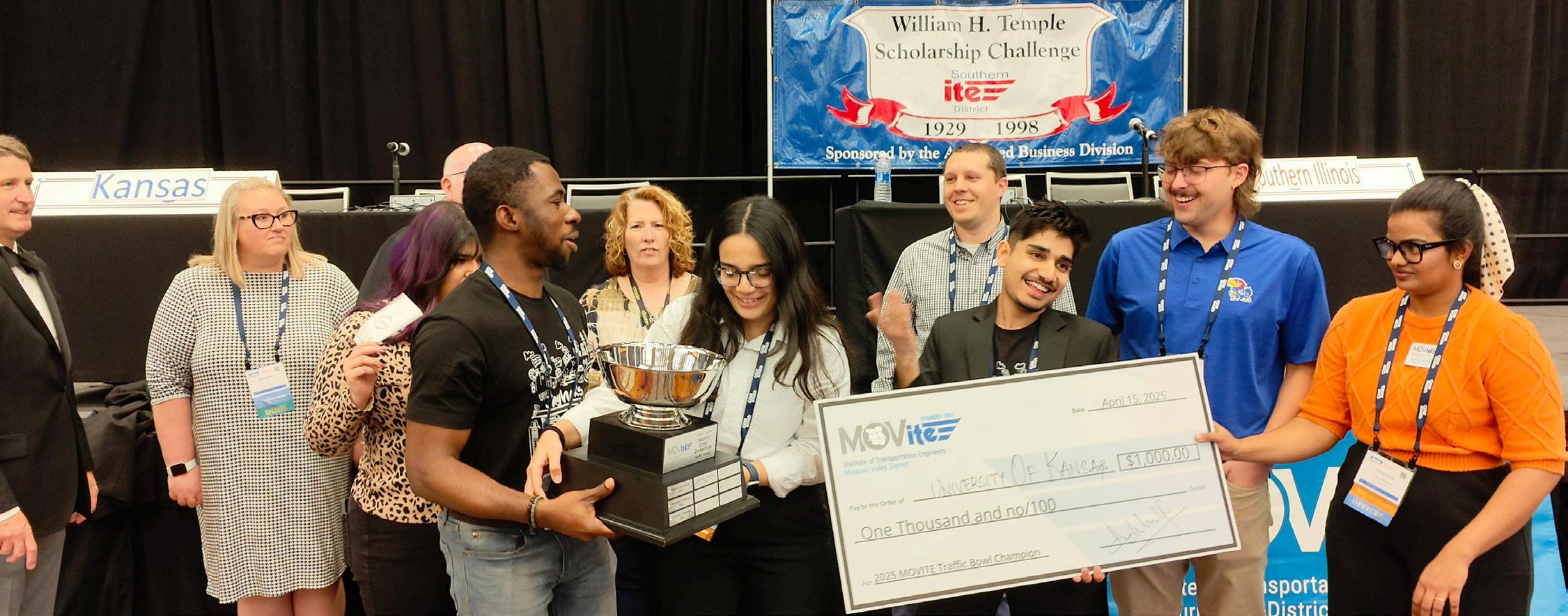
The KU-Institute of Transportation Engineers (KUITE) traveled to Memphis, Tennessee, in April to compete in the 2025 Missouri Valley District Institute of Transportation Engineers (MOVITE) Traffic Bowl Competition, where they won first place.
University of Kansas students Mahgam Tabatabaei, doctoral candidate in civil engineering from Karaj, Iran; Moses Azu, graduate in civil engineering from Cape Coast, Ghana; John Devore, junior in civil engineering from Wichita, Kansas; and Aayush Karki, graduate in civil engineering from Sunsari, Nepal, served as representatives from the student group.
“Being part of KU-ITE as secretary and treasurer has been a rewarding experience,” Karki said. “It’s been an incredible journey, and winning the competition was surreal. I’m proud to represent KU and MOVITE at the 2025 ITE Collegiate Traffic Bowl this August.”
The 2025 MOVITE Traffic Bowl Competition hosts teams from the Missouri Valley District of ITE chapters. Teams from Arkansas, Iowa, Kansas, Nebraska and Oklahoma all competed for a chance to represent their university at the national competition later in the year. Now district champions, the KU-ITE team traveled to Orlando in August to compete against the remaining 10 district winners from the U.S. and Canada at the ITE International Conference.
“My involvement with KU-ITE has been filled with engaging events and valuable conference experiences,” Tabatabaei said. “We are so honored to represent the MOVITE district at the ITE International Conference in August.”
During the MOVITE Traffic Bowl Competition, the KU-ITE team answered questions on a broad range of transportationrelated topics, including traffic operations, planning, roadway design, engineering policies and more in a “Jeopardy”-style
quiz. Preparing for the competition involved an in-depth review of ITE references. As a team, the KU-ITE representatives practiced with mock questions in a challenging experience that strengthened both technical knowledge and teamwork.
“I haven’t been a part of KU-ITE for long, but I have had a great time,” Devore said. “Everyone is so welcoming and willing to help you get involved.”
Additionally, Tabatabaei received an award for the second year in a row during the annual MOVITE poster competition. In 2024, she took home first place for her research on driver behavior adjacent to shared lanes such as HOV lanes. This year, she took home second for her poster on defining different clusters of congested traffic conditions to classify density values.
“Being involved in KU-ITE has provided other fantastic opportunities for me, such as participating in the annual MOVITE poster competition,” Tabatabaei said. “I’m very honored to have received an award for two consecutive years.”
The Institute of Transportation Engineers is an international educational and scientific association of transportation professionals who are responsible for meeting mobility and safety needs. ITE facilitates the application of technology and scientific principles to research, planning, functional design, implementation, operation, policy development and management for any mode of ground transportation. Through its products and services, ITE promotes professional development of its members, supports and encourages education, stimulates research, develops public awareness programs and serves as a conduit for the exchange of professional information.
The KU-ITE Team at the 2025 Missouri Valley District Institute of Transportation Engineers (MOVITE) Traffic Bowl Competition.
Student Profile
FEzra Vedral
Linebacker and Leader
CEAE student walks two paths in football and civil engineering
By Emma Herrman
Photos provided by KU Athletics
rom a young age, football was in Ezra Vedral’s blood. A junior in civil engineering, Vedral came to the University of Kansas from Omaha, Nebraska, where he grew up the fourth of five siblings in a tight-knit, athletic family. Sports are practically a family tradition, with each one of Vedral’s siblings competing at the Division I level in different disciplines: football, basketball, track, cross country and pole vaulting.
Though athletics have always been important, Vedral has never wavered on his decision to major in engineering. In fact, having opportunities in both football and engineering was important when looking at future universities.
“I have never compromised on either school or football. I can’t imagine one without the other.”
“I wanted to play football, and I wanted to study engineering,” he said. “I have never compromised on either school or football. I can’t imagine one without the other.”
KU was one university that checked every box and also offered Vedral the opportunity to stay close to home.
“I love getting back to Omaha whenever I can,” he said. “And at the time I committed, the football program was on an upward swing. I wanted to be a part of that.”
While athletics ran deep in the family, Vedral was also drawn to the problem-solving nature of civil engineering.
“I’ve always been a big math and science guy,” he said. “Never a big writer. Engineering was a good way to keep challenging myself in the areas I love.”
Now in his third year at KU and a redshirt sophomore,
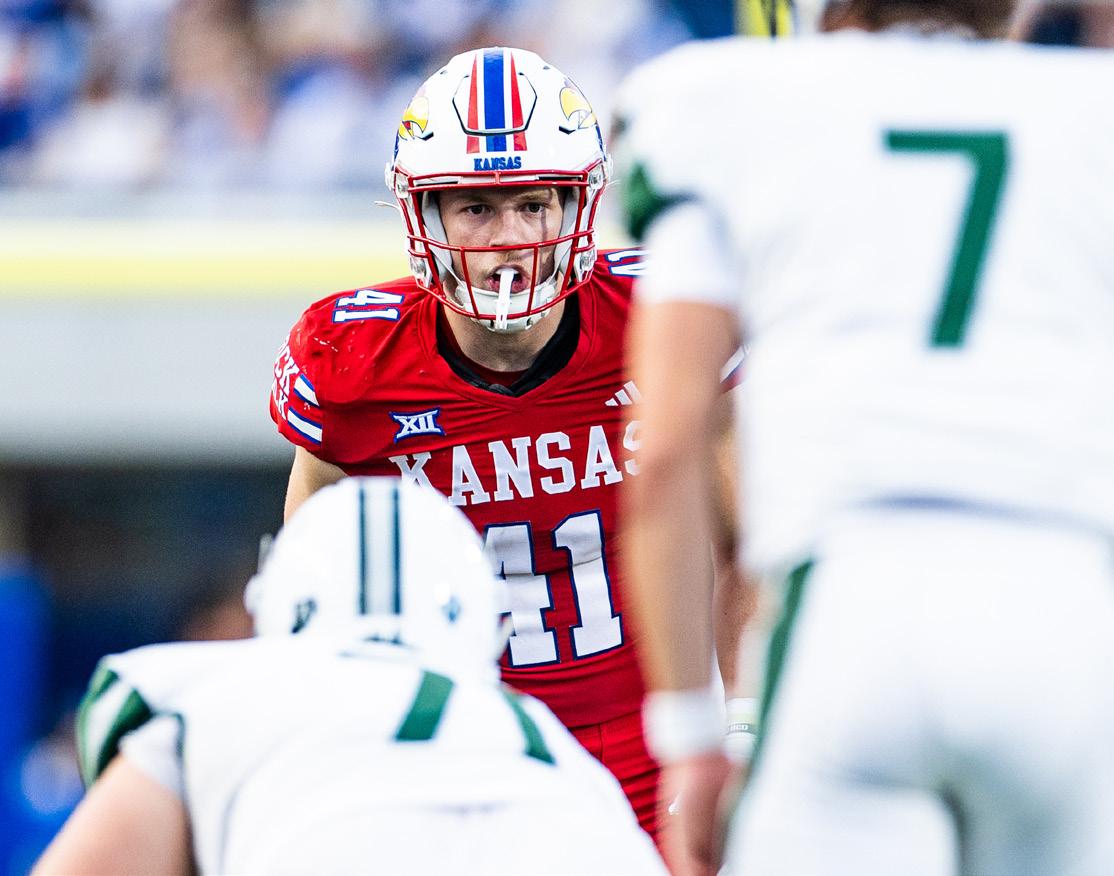
Vedral is firmly rooted in both communities. On the football field, he commands the middle linebacker position, a role that demands leadership, quick thinking and communication. In the classroom, he thrives in structural analysis and design, learning from professors who recognize the discipline and work ethic he brings from athletics. However, balancing football and engineering requires more than just time management. It also demands resilience and sacrifice.
“Mindset is everything,” Vedral said. “You give up your free time and social life, but I haven’t really seen it as a sacrifice because I get so much from football and engineering.”
During football season, Vedral is up by 4:30 a.m. and at the facility an hour later. In the afternoon, he focuses on his academics, attending his classes and working on homework. Spring and summer occasionally offer a little more flexibility, but even then, his commitments remain constant.
Vedral’s teammates are quick to admire his dual path.
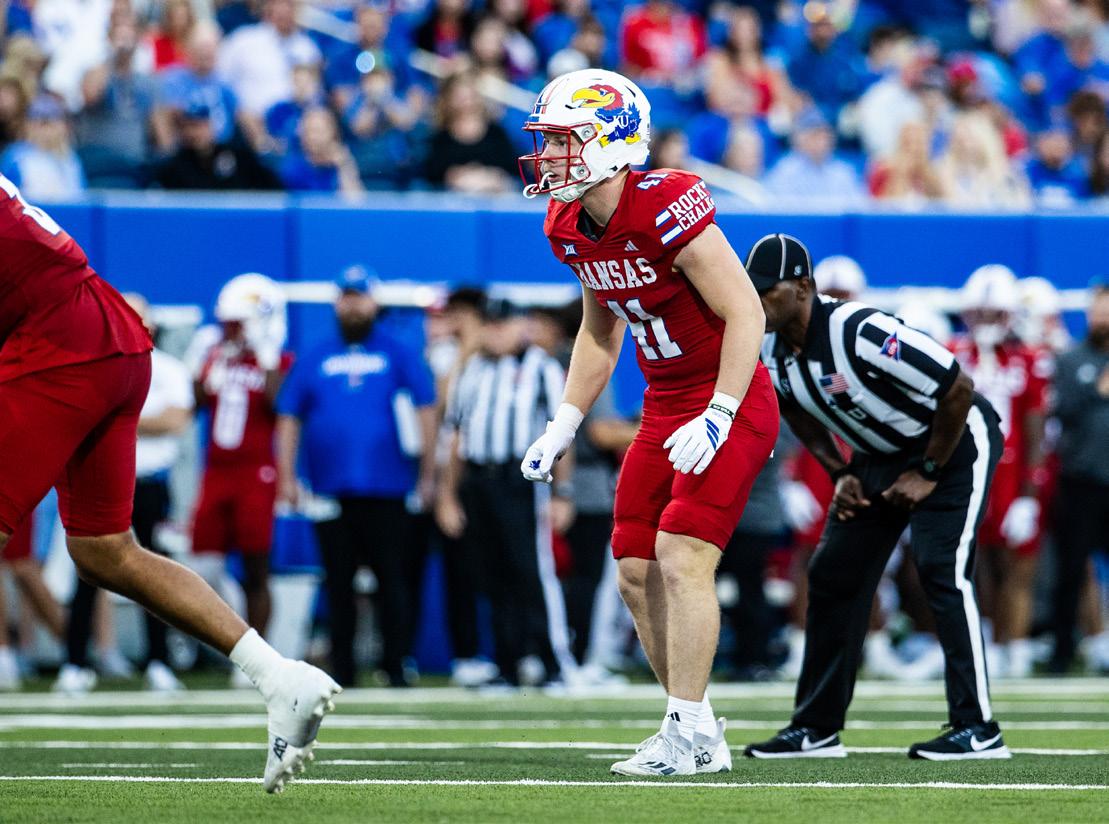
Vedral on the field during the KU vs Wagner game.
“They always say they don’t know how I do it,” Vedral said with a laugh. “But then I see them writing tons of papers, and I tell them I could never do that. The math makes sense to me. It’s easier than writing a 10-page paper.”
Professors and peers in engineering have also been supportive, accommodating travel schedules and helping him balance group projects.
“It’s always a juggling act,” Vedral admitted, “but both communities have been great about working with me.”
The overlap between football and engineering might not be obvious at first glance, but Vedral sees the connections every day.
“There are so many things you learn in football about attitude and approaching problems with an unrelenting desire to get it done,” he said. “That carries over to engineering. If something’s not working, you find another way. You keep pushing.”
As a linebacker, Vedral is also responsible for reading the offense, communicating with teammates and getting everyone aligned before the snap. This sense of leadership kicks in as well when taking part in group engineering projects.
“If something’s not working, you find another way. You keep pushing.”
“If someone isn’t pulling their weight, you learn how to handle that,” Vedral said. “You know what needs to be said and how to get everyone moving in the right direction. Football has taught me how to lead by example and by communication.”
Three years in and Vedral’s time at KU has already been marked by several standout moments both on the field and in the classroom. On the football side, he recalls the thrill of KU’s upset victory over Oklahoma in his first season.
“They were ranked No. 6, so beating them at home was amazing,” he said.
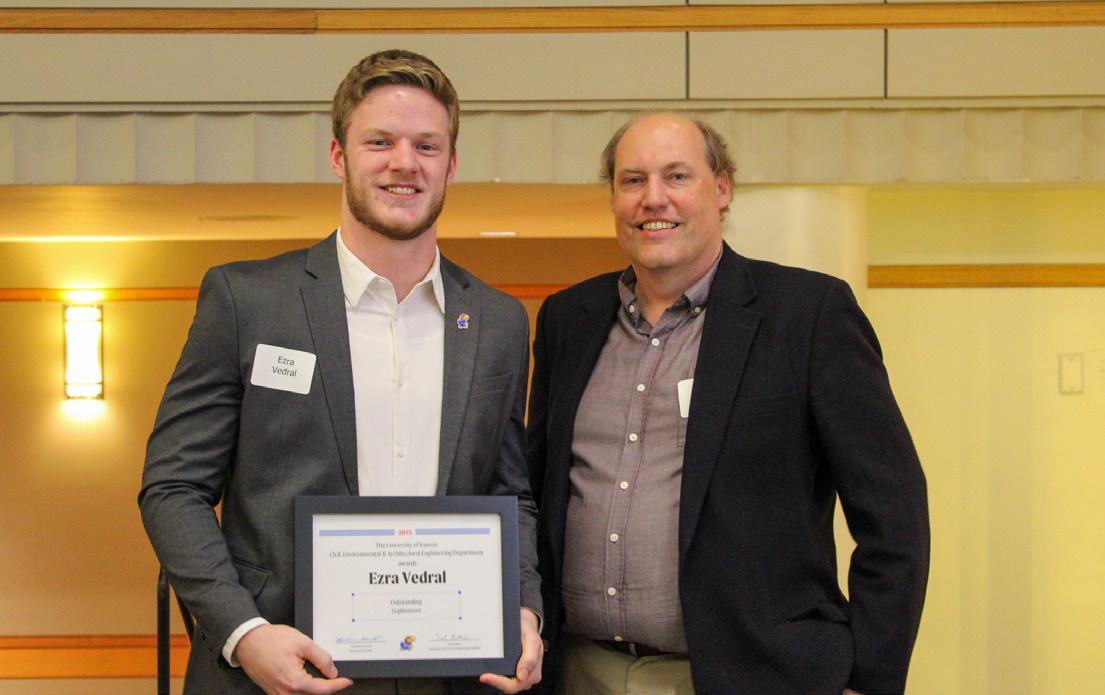
Additionally, Vedral was named the CEAE Department’s
Outstanding Sophomore at the 2025 Awards Banquet.
“That was really special,” he recalled. “I was putting in a lot of work, and to be recognized like that felt incredible.”
Of course, juggling two demanding worlds isn’t easy, and Vedral admits the hardest part is navigating the differences between football and engineering.
“They’re two very different communities,” he said. “You have specific people you go to for engineering problems and others for football problems. The way you act and interact is different in each.”
One of those people on both the engineering and athletics side is Will Collins, associate professor, who Vedral credits as someone who has supported him throughout both sides of his college experience.
“I’ve really enjoyed learning from Dr. Collins,” he said. “I’m taking a steel design course with him that is really interesting, but he was also a student athlete, so I talk to him about his experience.”
On tough days, when both Vedral’s commitments feel overwhelming, he tries to keep perspective.
“I remind myself that this is one of the most formative times of my life,” he said. “I’m learning so much from both football and engineering. That motivates me to keep going.”
Beyond his packed schedule, Vedral finds ways to recharge. Watching movies and TV with his roommates is a favorite pastime, as well as playing other sports for fun when time allows.
Vedral and Ted Peltier at the 2025 Awards Banquet. Photo by Emma Herrman.
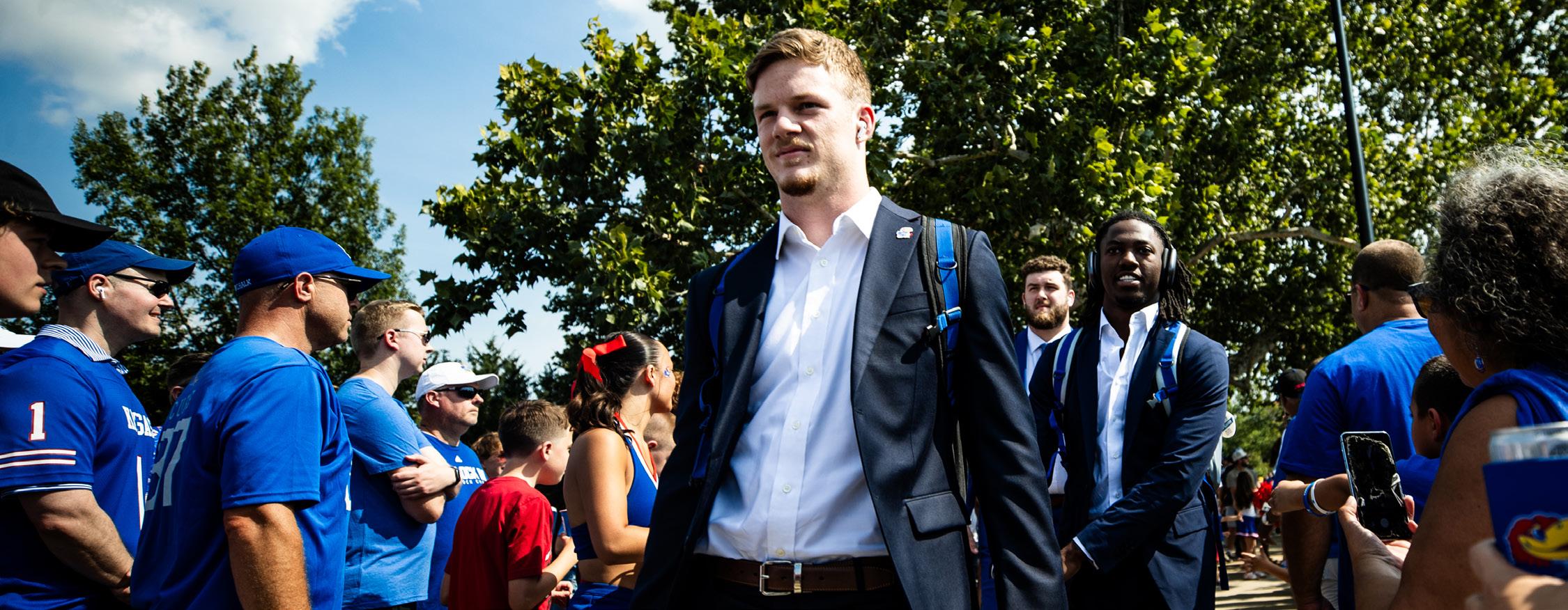
Vedral and fellow teammates walk down the Hill in anticipation of their game against Fresno State.
“I’m a big volleyball fan,” he said. “Whenever I get the chance, I’m playing that or basketball.”
While football dominates his present, Vedral is starting to look ahead to the future.
“Once my eligibility is up, I want to get into the workforce with my degree,” he said. “I’d like to work as a structural engineer for whatever firm I can find a good fit in.”
Additionally, he’s realistic about where his path might take him.
“A lot of engineers with strong leadership and interpersonal skills end up in executive roles,” he explained. “I think I’d be good at that, even if it means doing less of the day-to-day engineering. Football has prepared me for that kind of leadership.”
“Don’t let anyone tell you it can’t be done. The only person who decides that is you.”
For students looking at balancing academics and athletics, Vedral’s message is clear: It’s definitely possible.
“Don’t let anyone tell you it can’t be done,” he said. “The only person who decides that is you. Be prepared to make sacrifices, because it takes time to be great at something, but don’t be afraid to try.”
Looking back, Vedral can’t imagine choosing one path without the other. Football and engineering, though vastly different, have shaped him into a disciplined leader, a problemsolver and a teammate.
“The grueling environment of college football has made me a better leader,” he said. “And the challenges of engineering have sharpened my problem-solving skills. Together, they’re teaching me lessons I’ll use for the rest of my life.”
As he continues his journey at KU, Vedral’s story is a testament to what can happen when passion meets
persistence. Whether he’s calling defensive plays on the field or calculating load paths in a classroom, he’s proving that success doesn’t come from choosing between two worlds but from thriving in both.
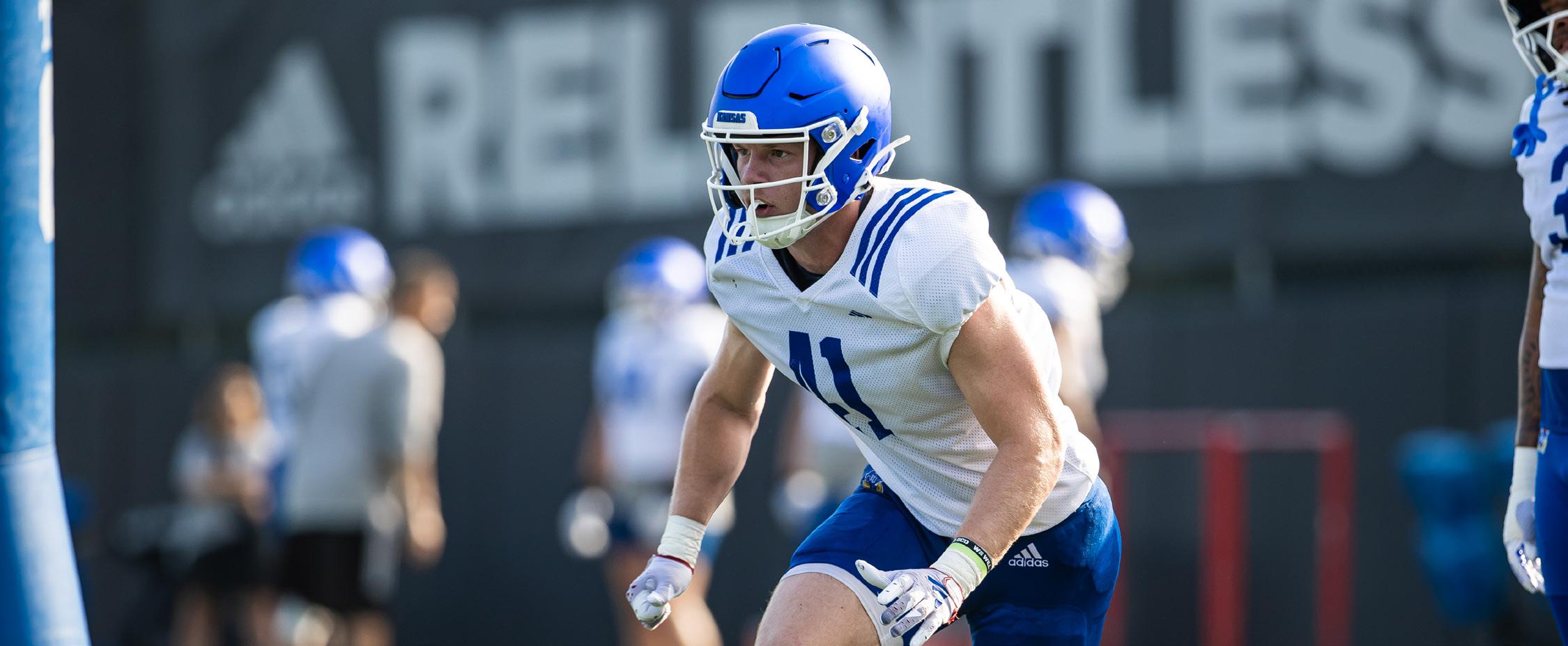
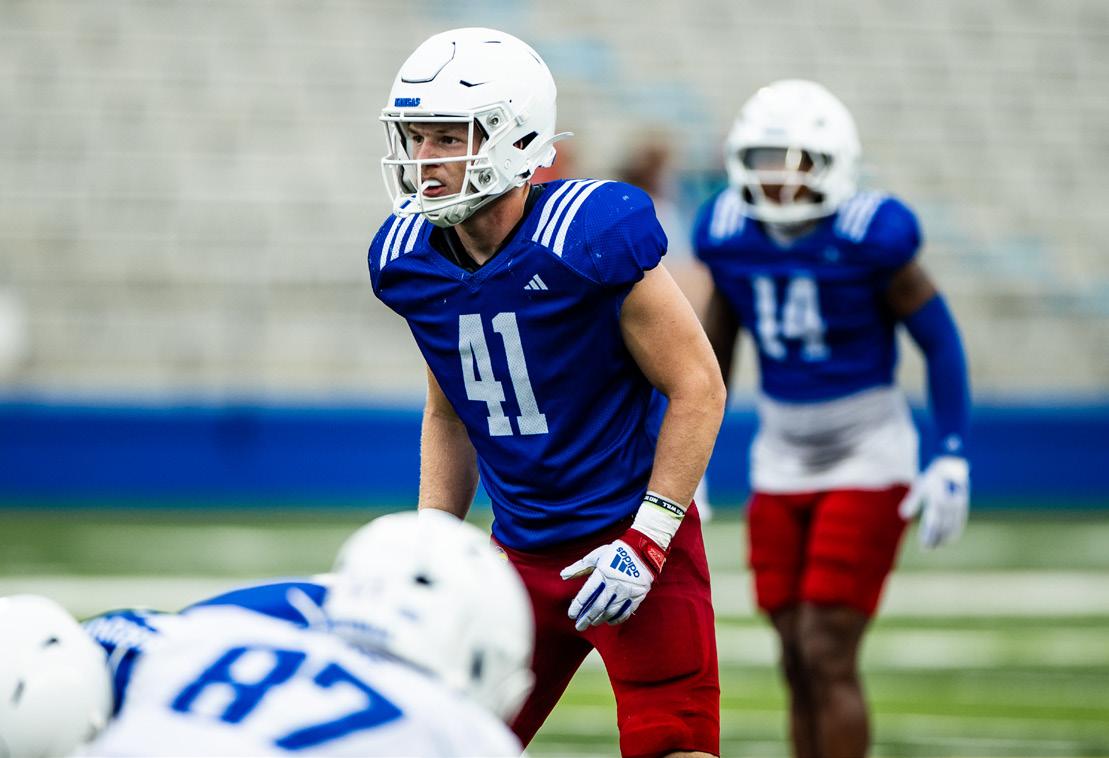
Top and Middle: Vedral during football camp over the summer. Bottom: Vedral during the Wagner game.
Engineering Resilience
Structures, Communities and Belonging in Civil Engineering
By Emma Herrman
Photos provided by Elaina Sutley
Photo
Civil engineering wasn’t initially the plan for Elaina Sutley when she was contemplating her future. Growing up in a small town in Alabama,she saw limited professional options.
“As long as I can remember, I wanted to be a lawyer,” Sutley said. “In my town, if you wanted to be a professional, you could either be a doctor or a lawyer. I was too queasy around needles, so law was the obvious path.”
When she joined the University of Alabama as an undergraduate, she started work on a business degree with her sights set on attending law school at Harvard. She enjoyed the idea of making compelling cases before a judge, advocating for clients and shaping arguments with logic and persuasion. Structural beams, load calculations and disaster resilience were nowhere on her radar.
Life, however, has a way of shifting trajectories. For Sutley, it was when a lawyer from her hometown encouraged her to pursue civil engineering, knowing her high scores in math and science, and suggesting it would give her an edge in applying to a competitive law school.
“My junior year of college I took the intro to structural engineering class – what we call structural analysis here at KU - and the professor of that class had a position for a GRA open up on an NSF project studying nanomaterials,” Sutley recalls. “One thing led to another, and I signed up to do a master’s degree.”
“Belonging starts early. The goal is to create a community where every student feels like they belong.”
The National Science Foundation, or NSF, supports fundamental research and education in all non-medical fields of science and information. This project may have been the first NSF-funded project Sutley was a part of, but it definitely wasn’t the last.
“While I was in the middle of my master’s degree, I met my eventual Ph.D. advisor and loved his research on
earthquake engineering,” Sutley said. “We bonded over the fact that he had also wanted to go to law school and that his goals had changed. I signed up to do a Ph.D. with him before I had even finished my first semester as a master’s student, and the rest is history.”
She relocated to Colorado to complete her doctorate at Colorado State University, where her research expanded into earthquake engineering and, ultimately, into the field that has defined her career: community disaster resilience.
“Having a social science component in my research is important because a big part of it is looking at inequities and disparities in underserved populations, but with the context of disasters in communities,” Sutley said. “As a structural engineer, buildings are one thing we care about, but the impacts of extreme events are not just a structural engineering problem.”
By 2015, Sutley had finished her doctorate and accepted a position at the School of Engineering at KU, a move that surprised even her.
“Life has a way to take you where you are supposed to be,” she said with a laugh. “The people were welcoming, the facilities were impressive and KU is an R1 institution that values research. That gave me the space and support to develop my work.”
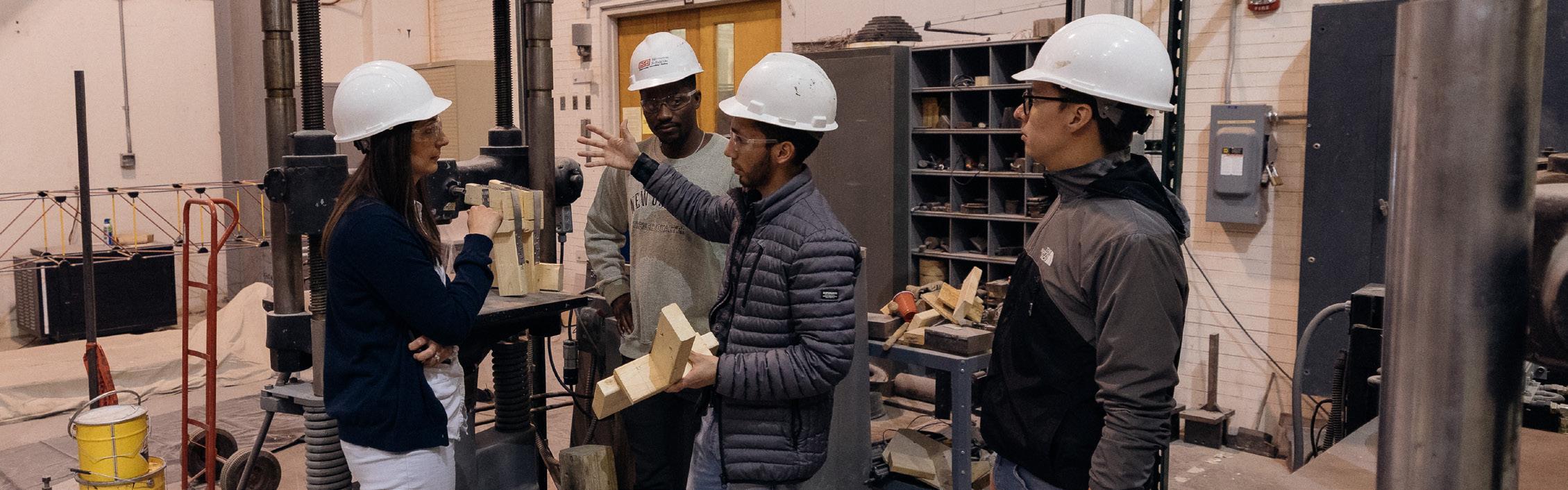
Sutley and her research team in the lab.
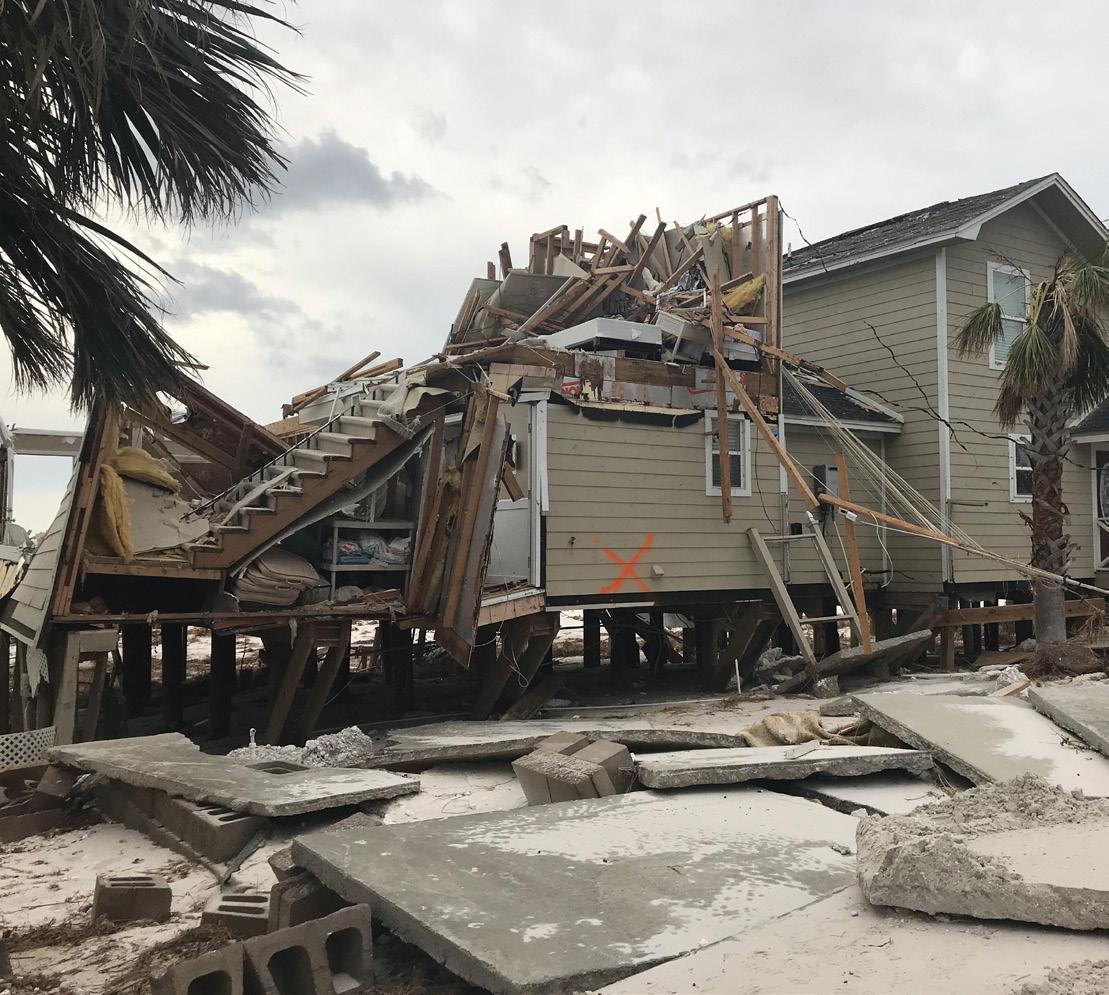
Damage to a house after Hurricane Michael hit the Florida panhandle.
In 2021, Sutley stepped into a new role within the School as the associate dean for diversity, equity, inclusion and belonging. This role shifted in 2024 to associate dean for impact and belonging, reflecting an evolving vision. Through initiatives like IHAWKe, an umbrella organization that brings together all student groups within the School, Sutley has worked to ensure that all students feel connected to the engineering community.
“Belonging starts early,” she said. “We have summer programs for incoming freshman, outreach for middle and high school students and events for current students. The goal is to create a community where every student feels like they belong.”
REDEFINING RESILIENCE
Sutley’s research has never been about abstract equations on a chalkboard. It’s about people. When a tornado levels a town or a hurricane floods a community, the question isn’t just whether the buildings stand, but it’s also about who gets left behind in recovery, who has access to resources and how policies shape resilience.
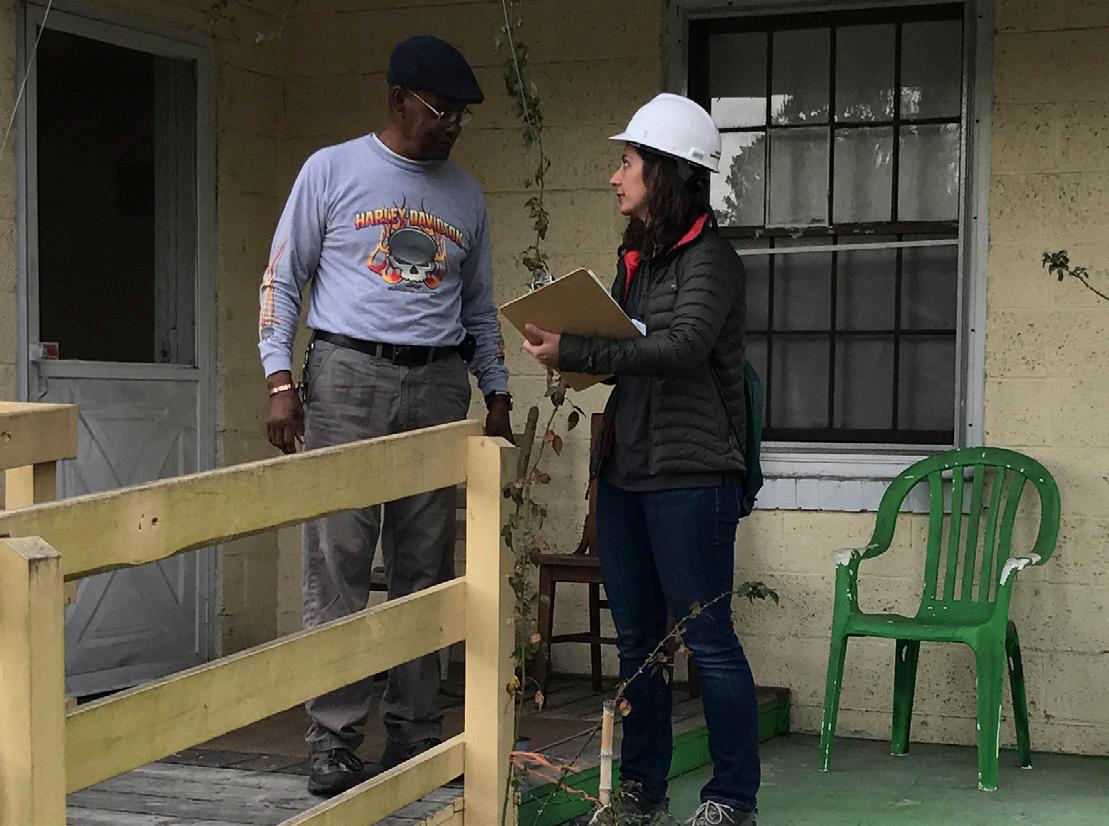
Her landmark work came through the National Institute of Standards and Technology’s Center of Excellence for Risk-Based Community Resilience Planning, a decade-long, multimillion-dollar project led out of Colorado State University. Sutley led one of the largest and most collaborative efforts on the project: a longitudinal field study in Lumberton, North Carolina, which originated after Hurricane Matthew in 2016. Over the course of seven years, Sutley led 58 different team members spanning a dozen universities and NIST researchers in the effort. Sutley and her team returned to the same community impacted by disasters year after year to survey residents, interview businesses, talk with school and community officials and document how recovery actually unfolded.
“Traditionally, structural engineers show up after a disaster, document the damage and leave,” Sutley said. “We wanted to understand the long-term picture: what repair looks like, how resources flow, what decision-making processes unfold and how the different sectors intersect.”
The data from the field work informed a number of resilience models that have been incorporated into a tool called IN-CORE.
The project, which officially wrapped up this summer, was groundbreaking. The resilience models her team developed are now being used by city officials in Salt Lake City, Utah; Joplin, Missouri; and Galveston, Texas to inform their local
decision-making.
“I don’t know if I’ll ever know the full impact our study will have,” she said. “But to be able to say that real communities are using our tools to make decisions – that means a great deal to all of us.”
WHEN TORNADOES HIT HOME
In 2019, community resilience came a bit closer to home when an EF4 tornado tore a 32-mile path across the region, damaging over 300 structures in Linwood and the Bonner Springs area. Within days, Sutley had pulled together a team to investigate damage and initial impact.
What they found was both familiar and frustrating: Nails misfired, anchorage missing and corners cut in construction.
“You read about these things in other events, but seeing them in person was still shocking,” she said.
After her research, Sutley and her team began raising awareness, speaking with local building officials, homebuilders and engineering groups about the gaps in construction quality and inspection. She even appeared on PBS to share her findings with a broader audience. While no sweeping policy changes followed immediately, she believes the awareness mattered.
“Education is hard to measure,” she said. “But even having conversations about what’s possible can spark change.”
Six years after the destruction, Sutley is still hard at work providing research into community resilience within Kansas communities. Her most recent project, funded by NSF, focuses on adaptive and resilient infrastructures driven by social equity. The project has already led to surprising discoveries and is being used to help drive community decisions.
Wyandotte County, in far eastern Kansas, encompasses much of the Kansas City metropolitan area on the Kansas side of the state line. Sutley said county officials there wanted to use her team’s research to see how it could benefit their community.
“Education is hard to measure, but even having conversations about what’s possible can spark change.”
“We worked with them to develop an online dashboard for the data we had collected,” Sutley said. “While the project was always focused on developing decision support tools, the dashboard specifically came about through a request from one of our partners from Wyandotte’s Unified Government. I’m hoping the outcomes of this project will be really beneficial for Kansas.”
This project brings together other universities including Kansas State University and Wichita State University as well as four Kansas counties in addition to Wyandotte. Now an expert in cross-institutional research, Sutley is well-versed in bridging the gaps in disciplines and says building relationships
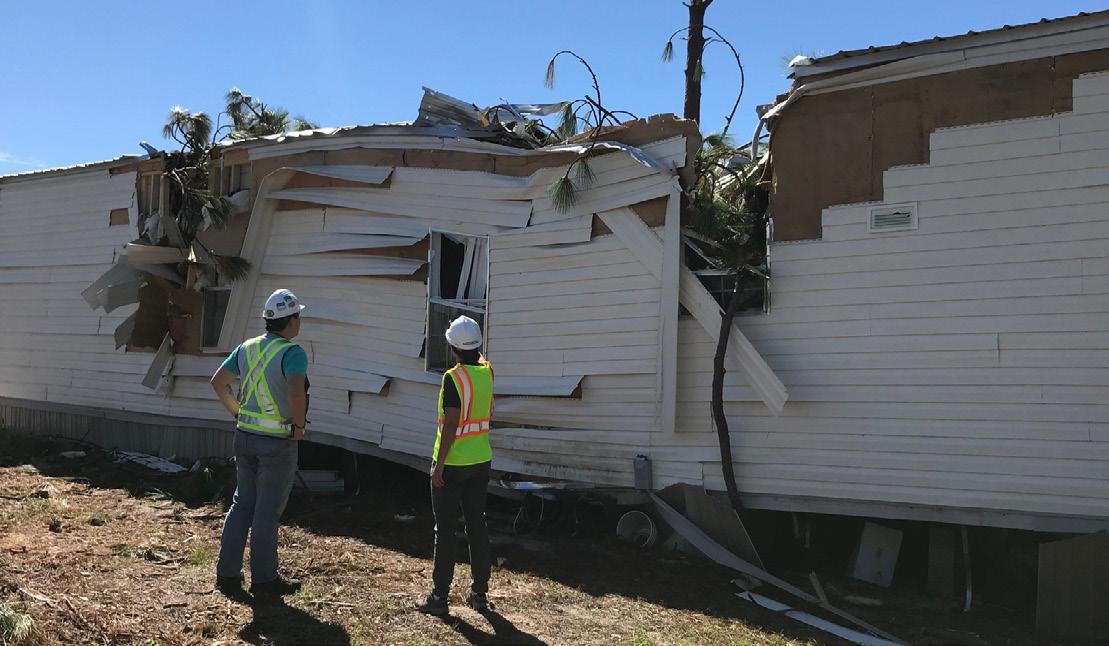
Sutley’s research team examining structural damage after Hurricane Michael.
is key.
“It’s important to have time that’s not just agenda-driven,” she said. “When you actually know your colleagues, you feel more comfortable asking questions – even the ones that feel dumb – and that makes collaboration more productive.”
As this project moves into its fourth of five years, Sutley is looking forward to the benefits the research will provide in the future.
“These partnerships are meaningful,” she said. “It’s about making research useful, not just publishable.”
CLIMATE, CODES AND COMMUNITIES
These partnerships will hopefully benefit the future of engineering and the improving of outdated building codes.
“People assume buildings are designed to higher standards than they actually are,” she said.
According to Sutley, many urban areas in Kansas have codes on the books, but many are decades out of date, and
vast swaths of rural Kansas have no codes at all.
“Adopting and enforcing the code is just the minimum,” she said. “We should be doing more, but even the minimum would put us in a much better position.”
Climate change, meanwhile, presents a moving target. Building codes today don’t formally account for it, though efforts are underway. Hurricanes are stalling longer, wildfires are spreading farther and rainfall is intensifying. Societal factors also complicate the picture with different policymakers taking different stances on regulation and research funding.
“These shifts matter because they shape what we can study, what gets funded and what communities can do,” said Sutley.
“It’s about making research useful, not just publishable.”
The work, however, continues despite a shifting landscape. Thanks to a collaboration and contribution from the Federal Emergency Management Agency, Sutley and her team have three manufactured homes they plan on testing in the Florida International University’s wind tunnel. Sutley hopes this project will lead to the first major updates to the Housing and Urban Development code since 1994.
Lately, Sutley has her sights set on co-establishing research infrastructure that supports long-term disaster resilience research for all. The hope is for a 10-year project worth millions of dollars that could close the gap in connecting the impact of mitigation to recovery, how communities adapt to chronic hazards, and on closing the gaps in long-term recovery. The idea is still in the process of being reviewed, but she’s not planning on giving up without a fight.
“The team is committed to keep trying until we get something,” she said. “That’s a big research goal of mine, to be able to continue doing longitudinal research and being able to bridge the temporal gap for hazards and disasters.”
Arial footage of structural damage done by the Linwood tornado.
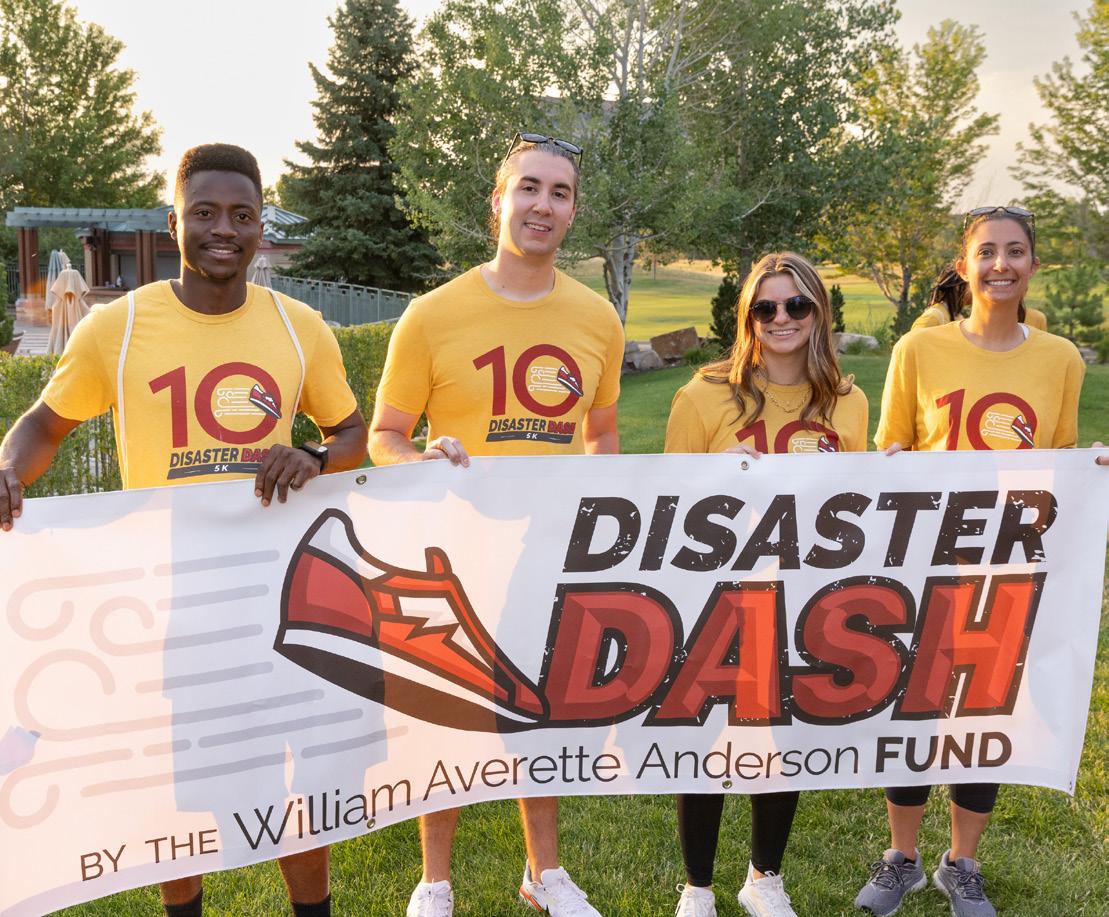
Sutley and her students at the Disaster Dash.
TEACHING RESILIENCE
Despite the scope of her projects, Sutley’s favorite part of the job remains her students. In particular, she highlights the satisfaction of being able to mentor all students from undergraduate to graduate-level students.
“I’ve worked with so many students,” she said. “To see them learn so much and find their passions around these topics makes my career that much more fun.”
And for the next generation of engineers looking to make change, her advice is simple: Get involved. Whether it’s student organizations, national standards committees or local community projects, Sutley says, real-world engagement builds the perspective necessary to tackle engineering’s biggest challenges.
“Getting involved in the community could give you some different experiences alongside the ones you’ll get in the classroom,” she said. “If you can’t directly be involved with the thing you want to change, back it up the pipeline and find the place you can get involved.”
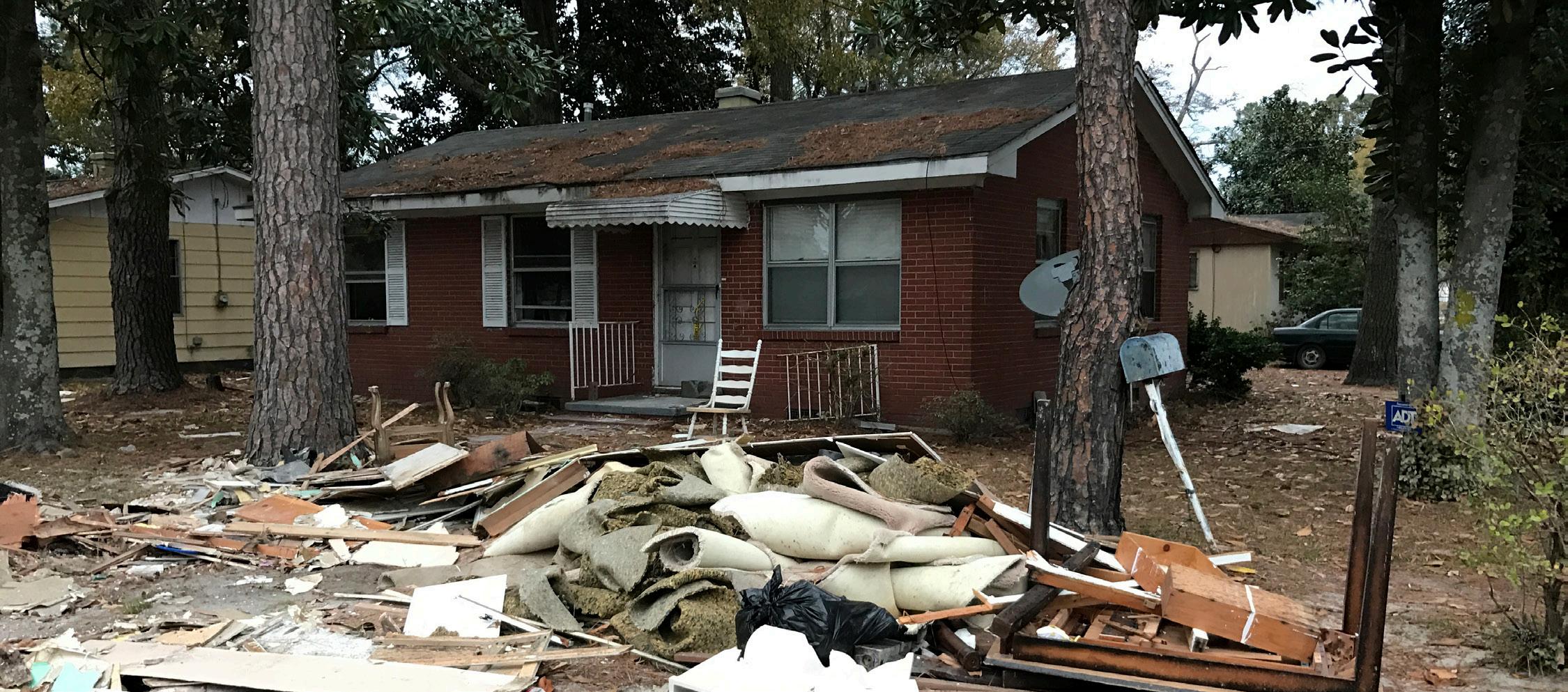
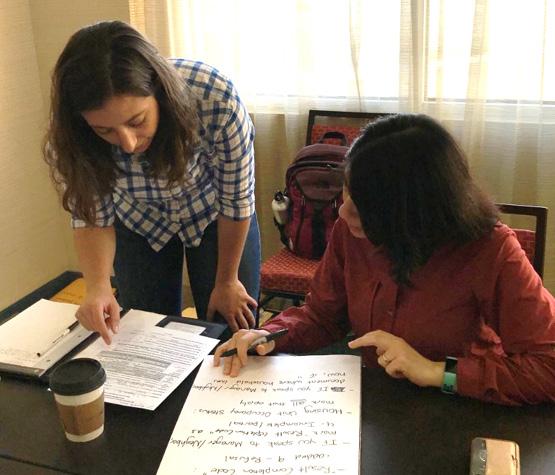
Top: Debris after a flood in Lumberton, North Carolina. Middle: Sutley and a co-worker review data taken from surveys of the community. Bottom: Sutley surveying a community member after the Lumberton flood.
CEAE Academy
The KU CEAE Academy, founded in 2011, honors our department’s most distinguished alumni and former faculty. Members are chosen by the CEAE Advisory Board in recognition of their outstanding professional achievements, high ethical standards, advocacy and support of KU CEAE.
KATIE SCHULTZ, E’03 B.S. Civil Engineering
University of Kansas civil, environmental and architectural engineering alumna Katie Schultz, class of 2003, is the KU CEAE Academy inductee for 2024.
Schultz was selected for this honor due to her contributions to the field of engineering and her ongoing commitment to mentorship and leadership within the industry.
While Schultz graduated from KU in 2003, she was a Jayhawk long before she enrolled in classes. Her father, Christopher Allen, was an electrical engineering professor who died in December 2024. It was his love of engineering that inspired her to join the School of Engineering her freshman year.
“I was born a Jayhawk for sure,” Schultz said. “I was fortunate to get my father’s gift at being good at math, and he always encouraged me to think about engineering as a pathway.”
She initially started her degree in chemical engineering but soon found that it wasn’t quite the right fit. She then joined her father’s footsteps into electrical engineering, but though she enjoyed the content, something still didn’t feel right. It wasn’t until after she took a step back from engineering, joining the School of Business for a year, that she said she was able to see the bigger picture about her skill sets and how they could shape a career.
“Dr. Thomas Mulinazzi, the associate dean of engineering at the time, asked to have a meeting with me,” Schultz said. “It was a pivotal conversation for me because I was able to be honest about my experiences to date. He told me I shouldn’t do something I didn’t like and encouraged me to consider civil engineering.”
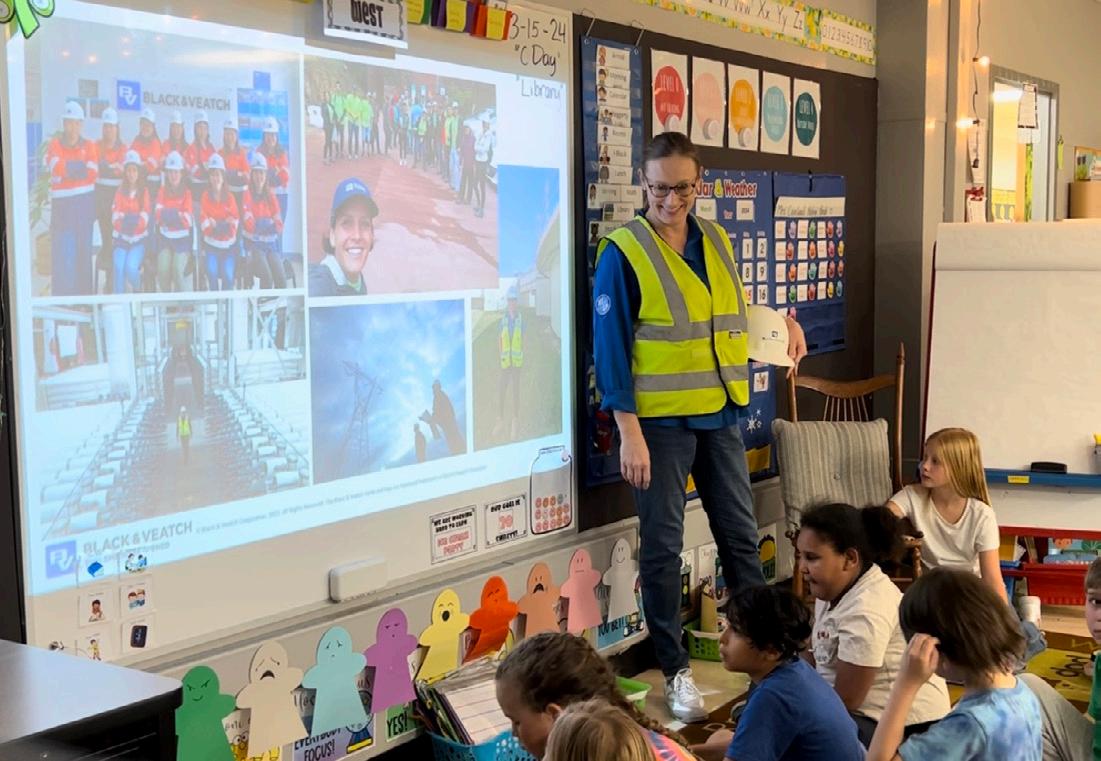
Now, 22 years after her graduation, Schultz is taking the lead at engineering firm Black & Veatch as VP, engineering & development services global resources leader, where she is responsible for the more than 4,500 Black & Veatch engineers around the globe. Over the past year she traveled to Black & Veatch offices across the United States, Asia, the United Kingdom and India.
“The goal, and my passion, is to meet face to face with our professionals,” Schultz said. “It’s hard to be in a regional office
where you’re supported from world headquarters in Kansas City, so we want to make sure there is a bit of that human touch, literally and figuratively.”
Schultz has had a hand in many programs within the company, from supporting female engineers to providing young professionals with necessary soft and hard skills they’ll need to succeed in the future.
“The world needs passionate engineers now more than ever,” she said. “So, for those who have chosen this field, let’s make sure they’re cared for. Let’s make sure they are supported and growing.”
Some of the programs Schultz has helped to implement include the EDGE Program, which is an early career rotation program that gives engineers an opportunity to try different functions within an engineering firm to ensure they’re choosing the right one for their career path, and Black & Veatch’s learning laboratory, which provides both a physical and digital space to facilitate knowledge sharing and skill building.
Schultz has taken her programming outside of Black & Veatch as well, offering her support with IHAWKe programming. During her tenure as vice president of talent at Black & Veatch, Schultz championed funding for the IHAWKe Leadership Retreat, ensuring that student organization leaders could build connections and collaborate effectively before the school year began. She also facilitated visits to Black & Veatch, providing students with industry exposure and professional insights.
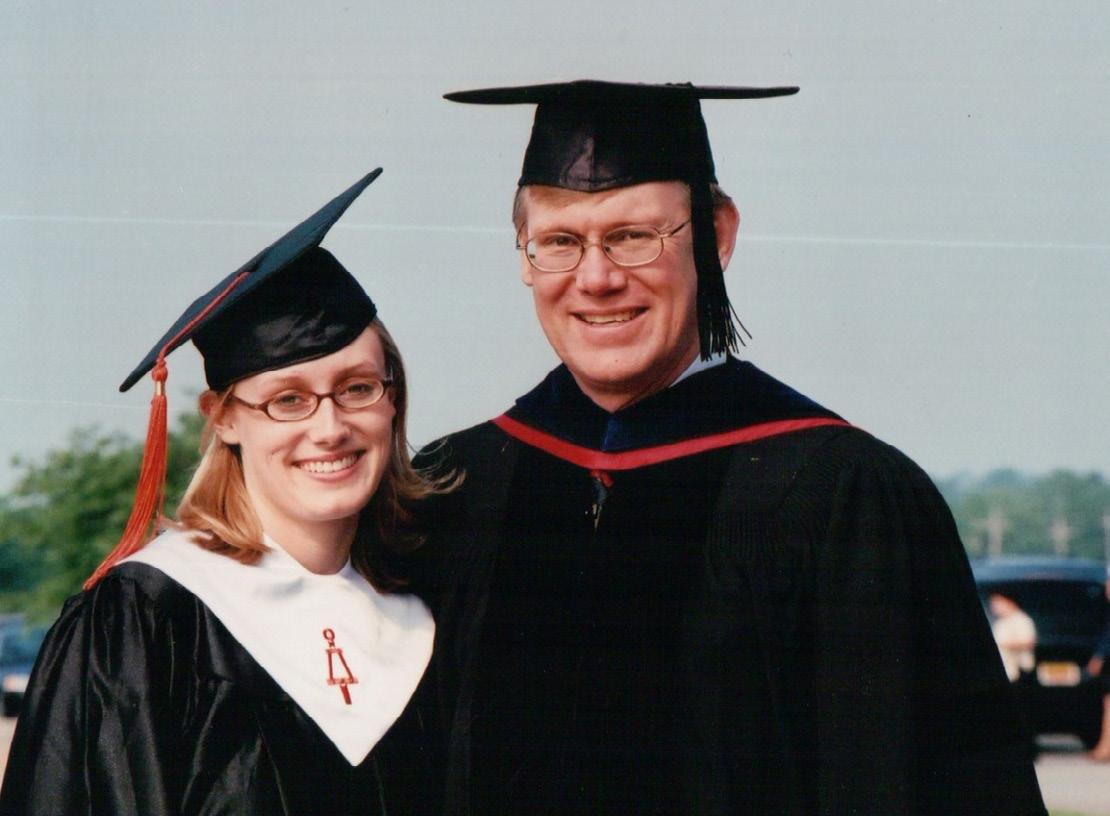
Schultz and her father, Christopher Allen, at her graduation in 2003.
Photos provided by Katie Schultz
As a mother of four, Schultz is also passionate about showing women that they can successfully balance family life with a thriving career and shares her professional experiences through social media in the hope that she can inspire other women to pursue their ambitions without hesitation.
“Don’t let the world tell you that you can’t do it,” she said. “I love being a mom. It’s my most important role. That doesn’t stop me from being able to contribute meaningfully to the field of engineering, though. They can both exist together in a healthy way.”
Reflecting on this honor, Schultz said she is grateful for the support of her father, the KU Engineering community and the lifelong friendships she’s made that have shaped her journey.
“This award is an incredible honor,” she said. “I hope it serves as encouragement for future engineers to build meaningful connections, support one another and push forward in making an impact.”
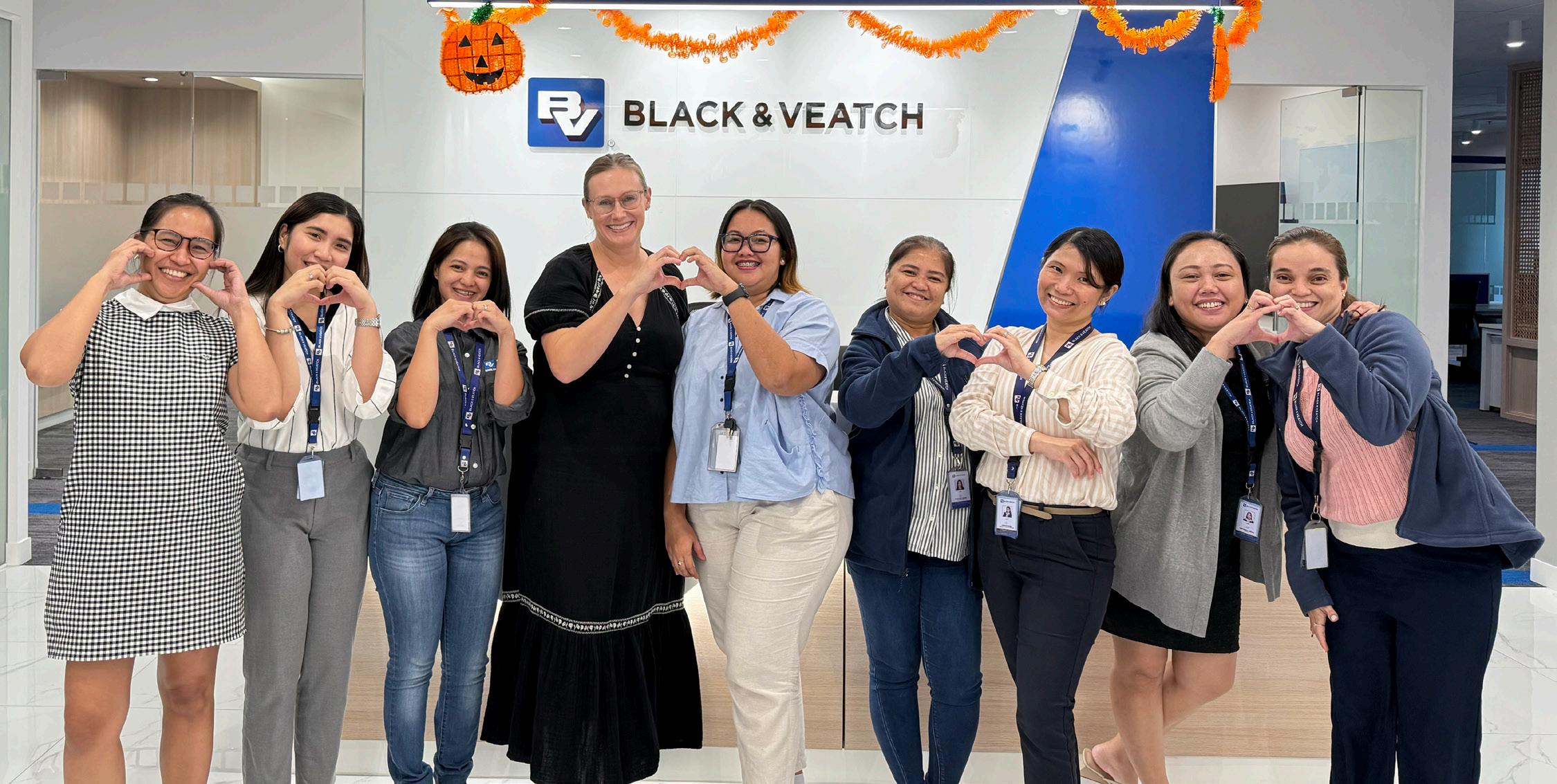
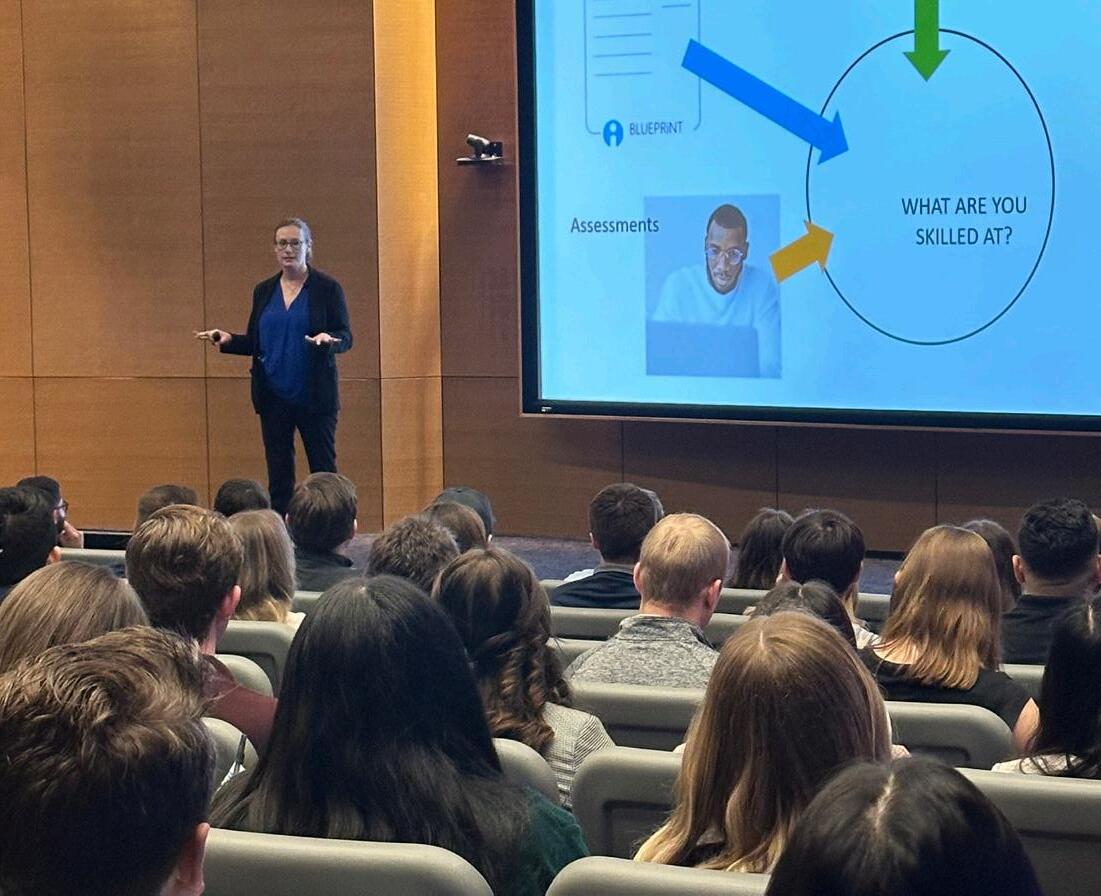
Top: Schultz and the female engineers at the Manila office of Black & Veatch in the Phillippines. Middle: Schultz speaks with elementary school children about her work at Black & Veatch. Bottom: Schultz speaks to an audience of mostly female engineering students as part of her work to reach women in engineering.
Alumni Spotlight
WShivraj Patil, G’15
Engineering Trust, One Road at a Time
CEAE graduate leads innovations in traffic management and public safety across Kansas
By Emma Herrman
Photos provided by Shivraj Patil
hen Shivraj Patil boarded his first-ever flight in 2013, leaving behind his family in western India to pursue a master’s degree at the University of Kansas, he wasn’t sure what to expect. A lifelong fascination with roads had led him around the globe, but he hadn’t even Googled Lawrence, Kansas.
“All I knew of the United States was skyscrapers in New York or Miami from TV or movies,” he said with a laugh. “Driving in from Kansas City International to Lawrence, the tallest building I saw was maybe three stories.”
Twelve years on, Patil is a traffic engineering team leader with GFT, formerly TranSystems, and manages Kansas’ Statewide Traffic Management Center. He oversees projects that touch the daily lives of millions of drivers across Kansas and beyond.
Patil traces his love for transportation engineering back to the road trips of his childhood. Growing up in a city roughly the size of Wichita, with extended family about 100 kilometers away, Patil and his family made routine trips between the towns. At first, the route was a narrow, two-lane road, but as infrastructure projects slowly transformed the roadway into a four-lane highway and eventually a complete freeway, Patil was captivated.
“I was in sixth or seventh grade, just amazed watching the change,” he said. “I’d look at the pavement, the new lanes, the scale of it all. It was incredible that something so small could transform into something so huge and imposing. That’s when I knew I wanted to be in transportation.”
After completing his bachelor’s degree in civil engineering in India, Patil decided to continue his studies abroad. Word of mouth from a former roommate led him to Kansas and to the CEAE Department.
Patil immersed himself in the civil engineering master’s program, specializing in transportation and expanded his understanding of the field beyond highways.
“I realized just how many avenues transportation engineering has,” he said. “I didn’t know which direction I
wanted at first, but the conversations I had with Dr. Steven Schrock and Dr. Thomas Mulinazzi really helped. They listed out the options and that guidance led me toward traffic engineering.”
The program was hands-on, providing priceless experience for Patil and the rest of his cohorts. He recalls countless field assignments, driving a trailer for his thesis project on portable traffic signals and collaborating with fellow graduate students on data collection.
“We don’t talk enough about that,” he reflects. “In the real
“It was incredible that something so small could transform into something so huge and imposing.”
world, people ask about projects you’ve done at work. But honestly, the fieldwork and collaboration we did at KU gave me the foundation I use even today. Those experiences have been the stepping-stones.”
Today, his thesis is still in use, aiding in safety of the state’s infrastructure.
“It’s amazing to see something I worked on in school being applied statewide,” he said.
Upon graduation in 2015, Patil joined GFT (then TranSystems) as a traffic engineer where he took on the work of day-to-day operations at the Wichita-based WICHway Traffic Management Center (TMC), a Kansas Department of Transportation (KDOT) initiative.
“The project runs the operations of an entire metro area’s highway technology,” Patil said. “It’s fascinating. Everything from the dynamic message signs to the cameras, the sensors.
It was still fairly new for the state at the time, and I was excited to be a part of it.”
From 2015 to 2019, Patil’s days revolved around the Wichita metro system. In 2019, the project expanded to cover the entire state of Kansas, with WICHway managing the statewide highway cameras, incident alerts, adverse weather and roadway messaging excluding Kansas City.
“That was a big moment,” he said. “It showed how well we had performed in Wichita that the state trusted us to handle it on a larger scale.”
Today, the TMC continues to be his most rewarding project, both personally and professionally.
“I can’t take credit for the system,” he said, “but I’m part of something that helps hundreds of thousands of people every single day.”
In less than a decade, Patil rose to team leader for GFT’s Midwest traffic engineering operations. He manages not only the Wichita TMC team but also oversees projects across the region.
“If someone can pick up the phone, call me and trust my opinion, I’ve succeeded.”
“The faith the company had in me was humbling,” he said. “Being a team leader came sooner than I expected. Now a big part of my role is training the next generation of engineers and helping them get up to speed.”
For Patil, leadership is less about titles and more about trust.
“My only career goal has been simple: be good at what I do,” he said. “If someone can pick up the phone, call me and trust my opinion, I’ve succeeded. It doesn’t matter if I’m an intern or a CEO.”
This trust is imperative in every aspect of Patil’s work. Managing traffic for an entire metro area and a whole state comes with constant pressure. Accuracy is paramount.
“It takes 10 good messages to undo the damage of a single bad one,” he said. “If a sign says, ‘Crash ahead, merge right,’ and there’s nothing there, people won’t trust the system next time. We have to be right 10 out of 10 times.”
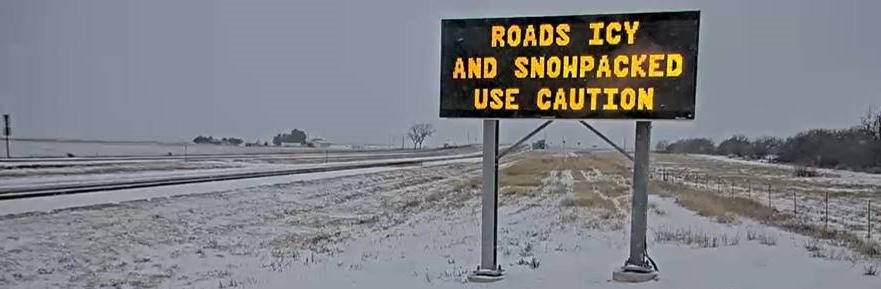
Winter storms, multiple incidents and limited resources
make perfection challenging, but Patil doesn’t let that stop his team from doing their best.
“There are days with 18 different things happening at once. Something might slip through,” he said. “You just do your best, stay transparent and earn the public’s trust day after day.”
While large-scale projects like WICHway make headlines, Patil finds equal pride in smaller efforts. He highlights KDOT’s Traffic Engineering Assistance Program, which funds affordable traffic studies for small towns.
For example, Patil was involved in a project for Lyons, a small town of about 3,000 people located in the center of Kansas.
“All they needed was to evaluate whether going from a signalized intersection to a two-way stop was feasible. It was small, but they didn’t have the funding themselves,” said Patil. “When we came in, the city officials were so grateful. Those projects are incredibly rewarding.”
These small-town projects are just as impactful as the multimillion-dollar highway initiatives.
“At the end of the day, most of Kansas is rural,” he said. “Helping smaller communities matters. It’s about not forgetting where you come from.”
Throughout his career, Patil has witnessed a decade of rapid technological change in traffic management. When he started, the roadside assistance cameras were grainy and
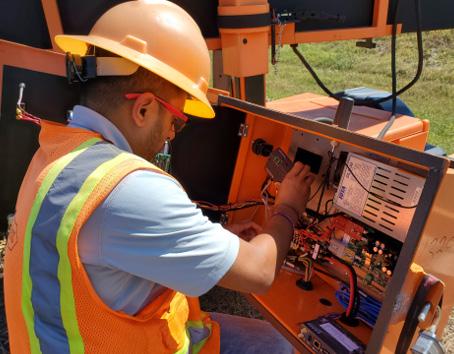
Patil works at a work zone trailer.
unreliable. Today, they have crisp color, night vision and even wipers to clear the rain.
“Technology evolves constantly,” he said. “Every week there’s someone pitching something new. We always have to be careful and ask if it’s really useful. Will it still matter in 10 years, or be obsolete in two?”
While talk across all industries had been about artificial intelligence and its use in the workforce, Patil believes that human oversight will remain essential, particularly in the traffic management industry.
“We let the systems process the data,” he explains, “but a human makes the final call. If there’s a high wind warning, for example, we confirm before posting it. Public trust depends on accuracy.”
“At the end of the day, it’s all about safety and improving lives.”
Accuracy is a common thread throughout Patil’s career. That and safety. From training law enforcement officers in traffic incident management to updating drivers on travel times, his work reduces risks and saves lives.
“When 60 to 70% of drivers change routes after seeing a delay message, that’s potentially tens of secondary crashes avoided,” he said. “Taking people off a highway at high speeds and onto city roads may inconvenience them, but it could prevent something fatal.”
His work also intersects with public emergencies like Amber Alerts, tornado warnings, flash floods, snow and ice storms and so much more.
“We’re tied into every kind of emergency event in Kansas,” he said. “Our goal is to always protect both: the traveling public and the responders.”
Despite his achievements, Patil stays humble when looking toward the future of his career.
“If you define success too narrowly, you risk losing your hunger once you achieve it,” he said. “For me, the goal is simply to be better every day. That applies today, tomorrow and even at retirement age.”
Still, he sees his immediate future in mentorship.
“Right now, my focus is on training young engineers,” he said. “Passing along knowledge is how you make sure the industry keeps growing.”
To continue that mentorship, Patil offers some straightforward advice for any students considering careers in traffic engineering or intelligent transportation systems.
“Don’t chase the shiny new toy,” he said. “Technology changes too fast. Focus on your basics. If you understand the fundamentals, you can adapt to anything.”
From his start on witnessing the growing roads in his hometown to shaping the safety of Kansas drivers, Patil’s career has been built not on chasing prestige, but on building trust, staying curious and never forgetting the people whose lives depend on the work.
“At the end of the day, it’s all about safety and improving lives,” Patil said. “If I can do that for Kansas, the place that gave me my start, it’s even more meaningful.”
Student Organizations
50 years afloat: How the KU Concrete Canoe program turned concrete into legacy
This year marked a milestone for the University of Kansas Concrete Canoe team. Established in the spring of 1975,
Concrete Canoe celebrated its 50th year in 2025. What began as a student-led project in the mid-1970s has now grown into a tradition that has shaped generations of Jayhawk engineers, built lifelong friendships and made a splash in the world of civil engineering.
From learning to float …
The KU Concrete Canoe Program was launched with a simple yet bold idea: What if concrete could float? In the hands of creative KU engineering students, that question became a challenge. Inspired by the first collegiate races in 1970, leading to a regional competition that began at Kansas State University the previous year, David Darwin, now a distinguished professor, took the lead in developing KU’s own team.
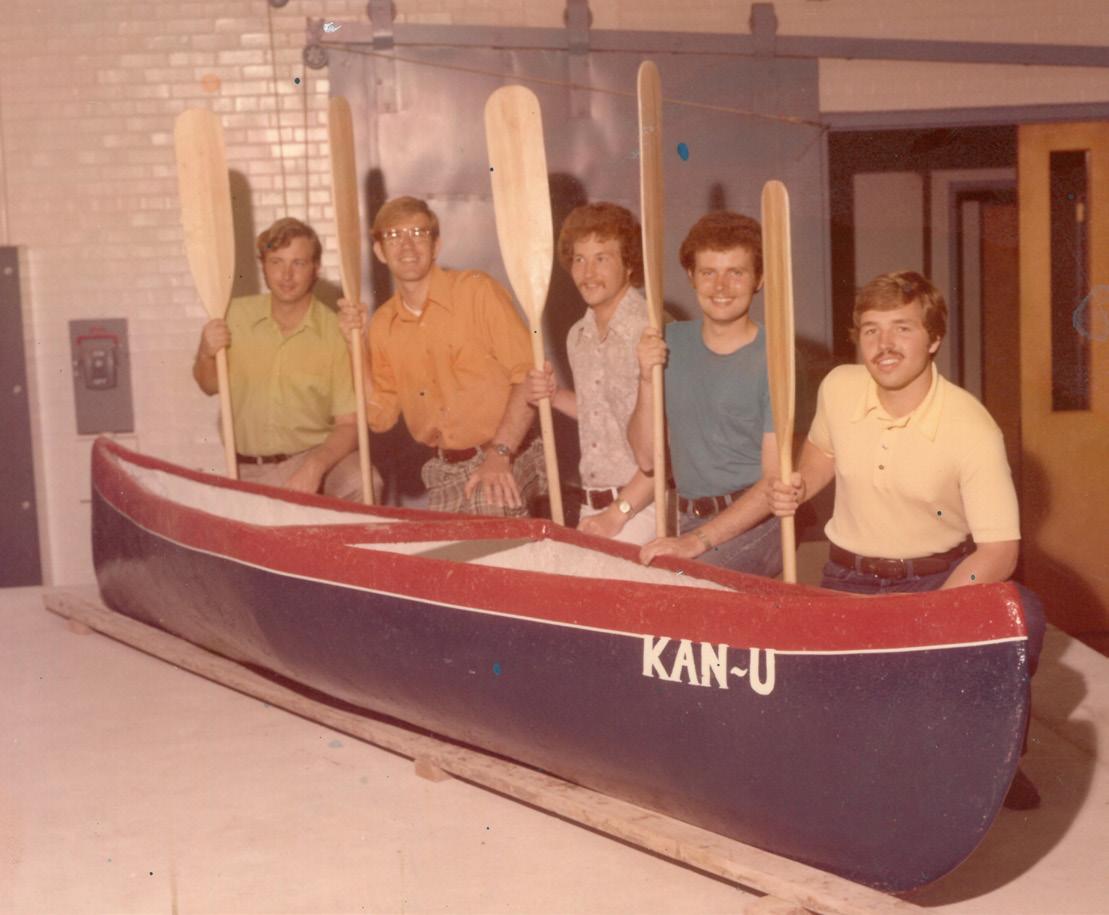
“When I got to KU in the fall of 1974, I thought that we ought to have a concrete canoe team,” said Darwin. “We started racing that spring up in Manhattan with our canoe, KAN-U.”
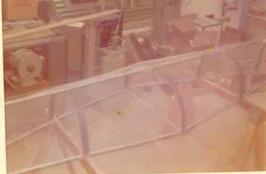
KAN-U, a play on both the word “canoe” and the KANU radio station, was made of 3/4-inch steel conduit, half-inch hardware cloth (wire) and concrete that was lighter than water. In spite of the lightweight concrete, the boat weighed over 300 pounds. The team didn’t win that year, but the knowledge it took home helped the next Concrete Canoe team bring members closer to a trophy.
An addition to the student races were the faculty races, which have now been discontinued. According to Darwin, these races were “a big deal.”
“We’d always have one faculty team,” he said. “Over the next 10 years, that would usually be Stan Rolfe and me.”
That first year, Darwin and Rolfe came in third place. The next, they came in second. Finally, in 1977, Darwin and Rolfe took home first place in the faculty canoe race, and they didn’t lose for at least 10 years after that.
“After Stan and I won the faculty race in 1977, the students kicked in and won the whole thing for years,” he said.
Since the program began, the rules and regulations of the competition have changed and shifted. In the beginning, teams used whatever resources they were able to get their hands on to create the best possible canoe, including actual racing canoes.
“There was a canoe shop on Michigan Street, and the owner was happy to talk to us about canoes,” Darwin said. “He lent us a racing canoe and we put it in the flume and measured the whole canoe and designed ours off of that.”
Now, there are complex rules to follow in creating a
concrete canoe, and 3D-printing a canoe based on a racing canoe won’t cut it. KU wasn’t the only team to use a wide range of strategies to make the best canoe it could, however.
“At the national level, we had some heavy competition with the mechanical engineers at the University of Alabama in Huntsville,” Darwin said. “That’s one of the NASA sites, so they’d use all sorts of space-age materials in their canoe. In those days, you could paint a canoe with epoxy or anything else you wanted to use, so the very best canoes didn’t look like they were concrete.”
Some teams used fiber-reinforced or thermal-setting
Top: KAN-U, the first Concrete Canoe in 1974. David Darwin is second from left, in the orange shirt. Bottom: The bare bones of a concrete canoe before casting. Photos courtesy of Darwin
polymers that would create a really strong boat. Now, in 2025, the canoes are purely cementitious materials.
“This year’s canoe is a work of art,” Darwin said. “There’s not a bit of epoxy in the thing at all. If they don’t win the bestlooking canoe out there, I don’t know what will.”
This year’s canoe took home second place overall at the 2025 Mid-America Student Symposium, as well as first place in project proposal and second place in technical presentation.
“I think the Concrete Canoe program is a real fixture in civil engineering departments,” Darwin said. “I think it’s going to have a good, long life.”
… To sailing the seas
As KU Concrete Canoe celebrates 50 years of innovation, the team honored the past by pushing the boundaries
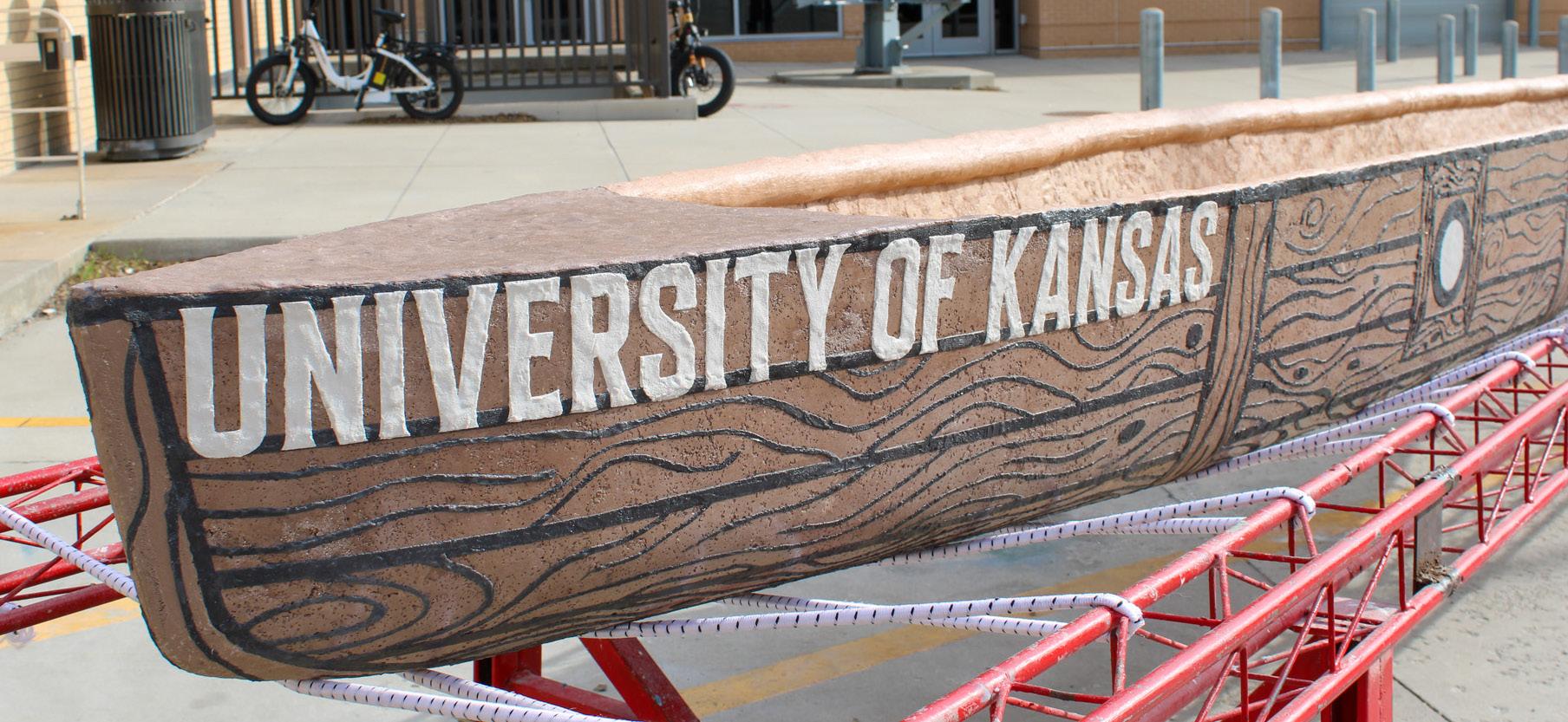
of what’s possible with its boldest design yet: Jayhawk’s Revenge.
Led by Dominic Arbini, junior in architectural engineering and captain of the canoe from Fenton, Missouri, the team set out not just to build a canoe, but to raise the standard for the years to come.
“We’ve gotten third and second place in recent years,” Arbini said. “Jayhawk’s Revenge was about taking revenge on those close calls and aiming for our best performance yet.”
The Jayhawk’s Revenge included a reimagined shape and upgrade features, including gunnels and a more paddlefriendly design aimed at making the racing experience smoother and more inviting for new members.
“Concrete is uncomfortable,” Arbini said with a laugh. “So, we tried to make it as race-friendly as possible.”
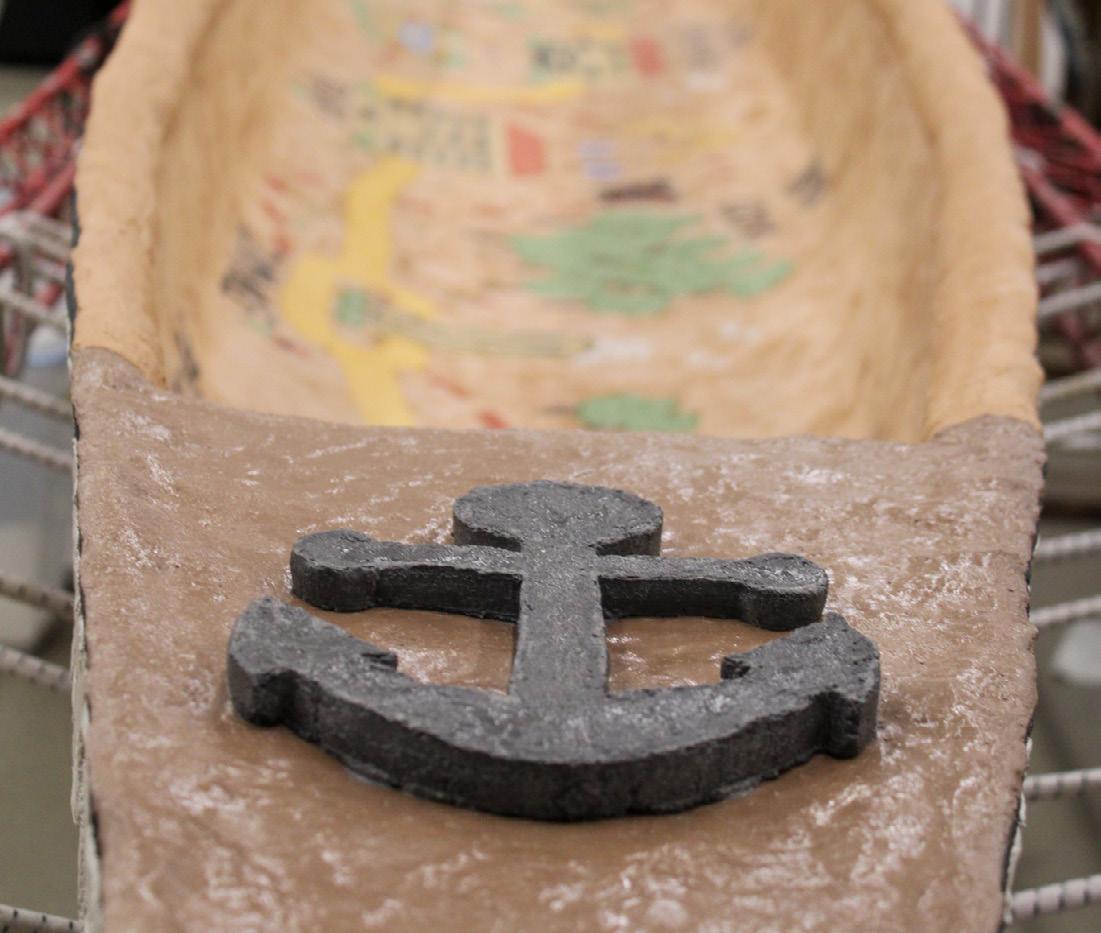
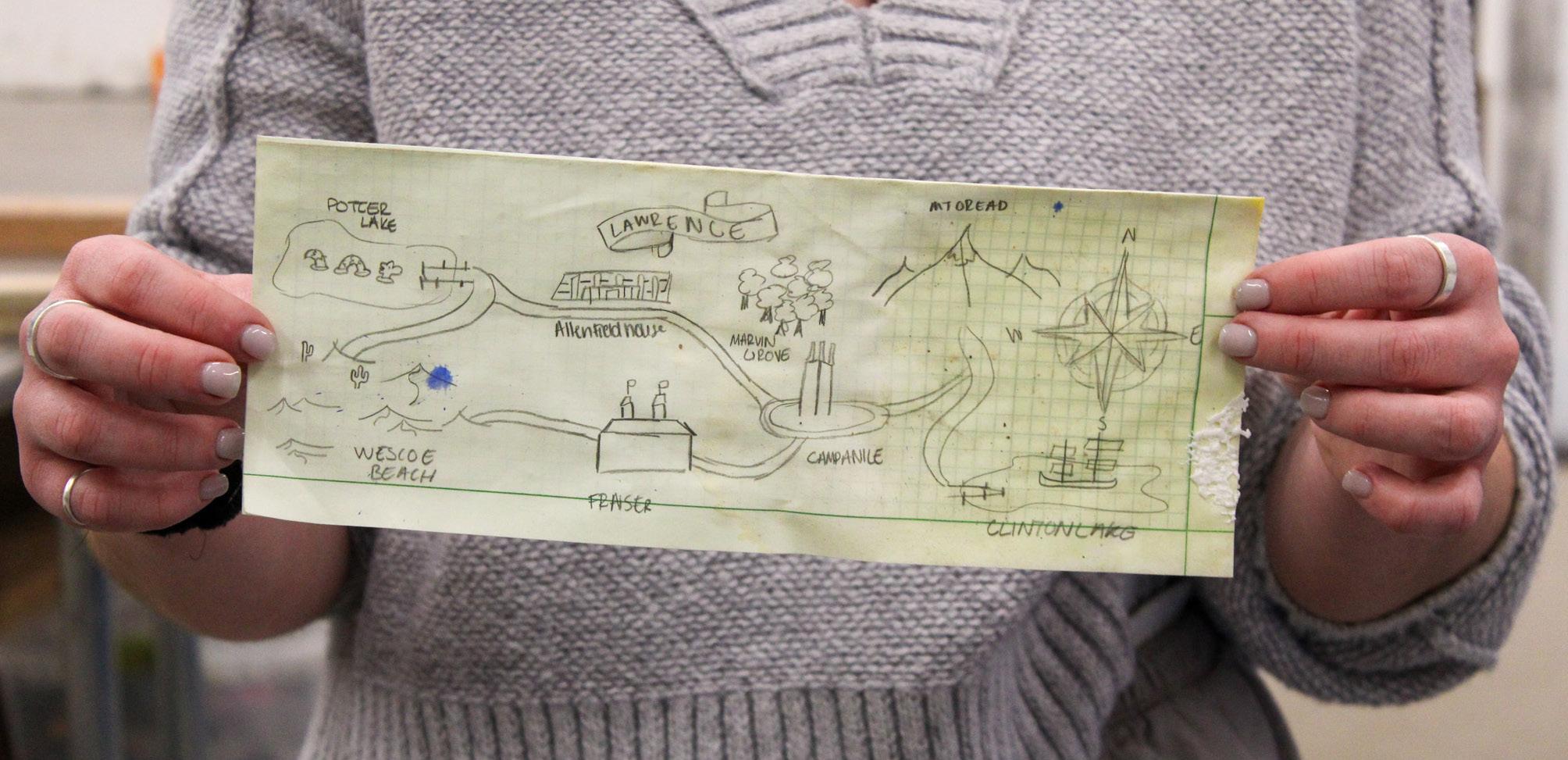
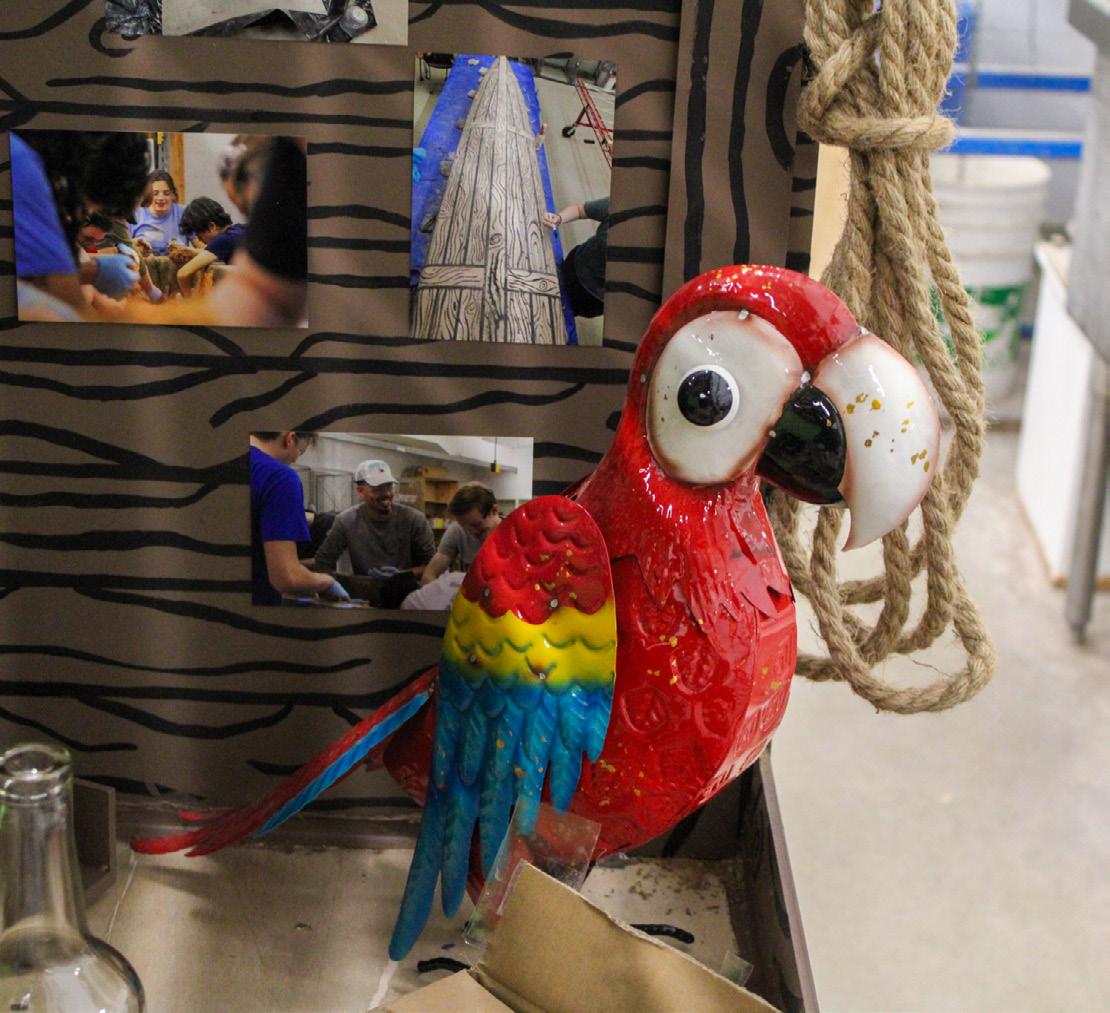
The biggest transformation came in the aesthetic approach. Departing from vinyl and stains, the team committed to a 100% concrete-based decoration, using pigmented concrete to create vivid, fully integrated visuals. At the heart of the design? A hand-crafted pirate treasure map featuring the KU campus, representing the team’s second home – the first being, of course, the concrete lab.
“Every inch of this canoe is concrete,” said Arrington Farmer, graduate in architectural engineering and graduate adviser for the program, from Edwardsville, Illinois. “Every design aspect that we chose this year was just trying to push us to be better and better. At some point, we said, ‘Well, we’re already doing so much. Let’s go a little bit farther.’”
Last year’s build also reflected the evolution of a postCOVID comeback. After the team briefly dissolved in 2021, a few determined students – including Farmer and former captain Cam Figgins, graduate in civil engineering, from Shawnee – restarted the program.
“This was the first year where a lot of members of the exec board had some experience and had some idea of what we were doing,” Farmer said.
For last year’s team, the journey was one of constant adaptation and community-building. From a cracked canoe
The 2025 Concrete Canoe - Jayhawk’s Revenge
The outline of the treasure map inside Jayhawk’s Revenge. The map was designed by Emma Russin, graduate in environmental engineering.
to cold, rainy competition conditions, the KU Concrete Canoe team embraced the challenges head-on. Those moments that aren’t necessarily fun in the moment but quickly become unforgettable in retrospect are what the team now lovingly refers to as “Type II-fun.” Long nights, messy labs, surprise challenges — all now memories the team treasures.
“Every time I went to the lab, I got to spend time with my friends,” Arbini said. “It kept me motivated. This has been the best part of my college experience.”
Farmer, who moved to Texas after her recent graduation, agrees.
“I don’t think we’ll remember the hard times as much as we’ll remember the wins, the laughs and the people. That’s what sticks with you.”
There are many words of wisdom both Arbini and Farmer, as well as Darwin, can offer, but mainly the best thing to do is just to show up.
“It’s intimidating to join a technical club,” Arbini said. “But just be there, ask questions and get involved. We love what we do, and we want to share it.”
“There are no stupid questions,” said Farmer, “especially in a project this unconventional. New members often bring ideas we haven’t thought of.”
Heading into his last year as captain, Arbini hopes to continue to grow the knowledge of building a concrete canoe to pass down to the next 50 years of teams, but for the most part, he just looks forward to growing the community and changing the narrative of engineering-focused activities.
“I’d love to push to have more events on the lake so that we can not only bring people in but show them that we’re not just a bunch of nerds in a lab,” said Arbini with a laugh. “We do have fun. I want to build up a good team so the program can continue to grow when I’m gone.”
Jayhawks Revenge outside of the concrete lab before being loaded into the van to head to the competition
Final details to match the pirate ship theme.
Department Updates
The Civil, Environmental and Architectural Engineering Department welcomed four full-time faculty members at the start of the fall 2025 semester.
Xinlong Du joins the department as an assistant teaching professor. He is teaching Strength of Materials and Theory of Elastic Stability this fall. Du joins CEAE from the University of California, Berkeley where he served as a postdoctoral scholar. Du holds a doctorate in civil engineering from Northeastern University in Boston, a master’s in civil engineering from Tongji University in Shanghai and an bachelors in civil engineering from Central South University in Changsha.
Will Lindquist joins the department as a teaching professor. He is teaching Statics & Dynamics, Design Reinforced Concrete Structures and Advanced Design Reinforced Concrete Structures this fall. Lindquist joins CEAE from William Jewell College where he served as an associate professor and department chair. Lindquist holds a doctorate,
master’s and bachelor’s degree in civil engineering from KU.
John Shelley joins the department as an associate research professor. He is teaching Water Resources this fall. Shelley joins CEAE from the U.S. Army Corps of Engineers where he served as a hydraulic engineer. Shelley holds a doctorate in civil engineering from KU, where he was also a SELF Graduate Fellow, and a bachelor’s in civil engineering from Brigham Young University.
Shi’an Wang joins the department as an assistant professor. He is teaching Highway Safety this fall. Wang joins CEAE from the University of Texas at El Paso where he served as an assistant professor. Wang holds a doctorate in civil engineering from the University of Minnesota, a master’s in electrical and computer engineering from the University of Ottawa and a bachelor’s degree in automation (traffic information and control) from Chang’an University in Xi’an, China.
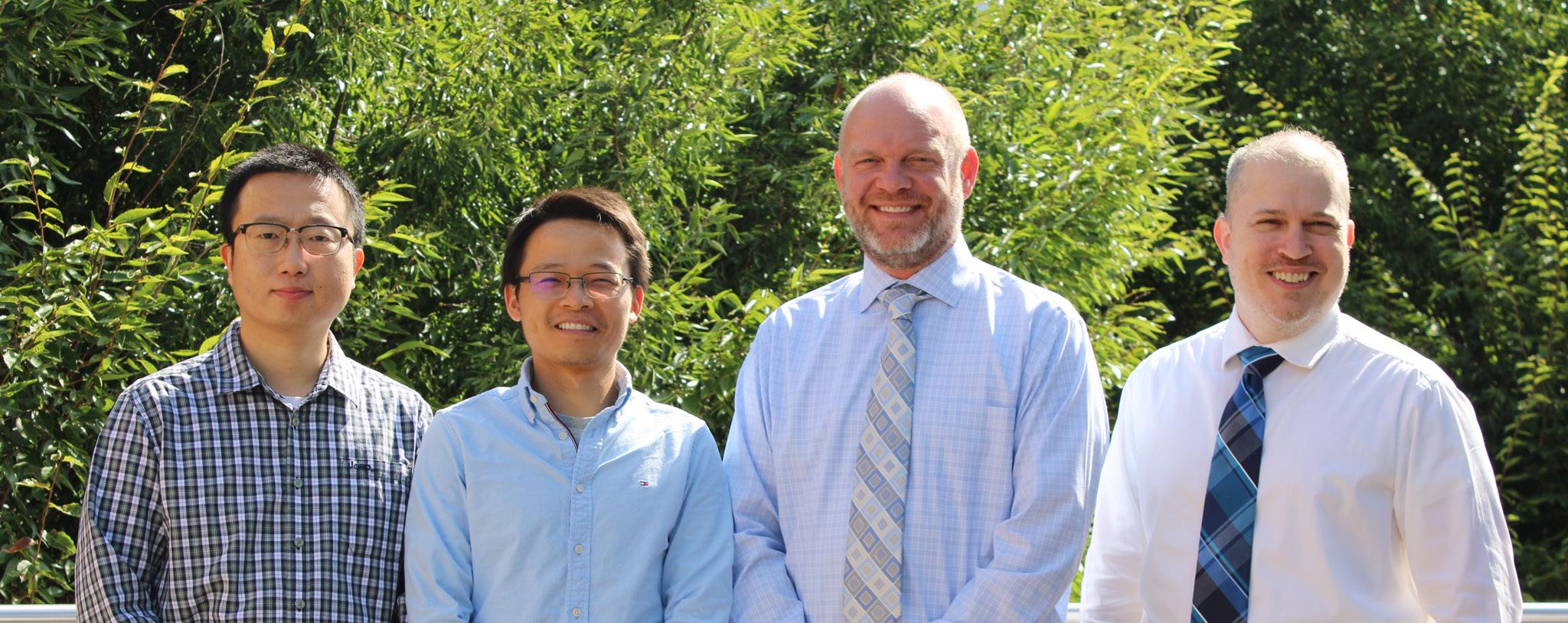
From left to right: Xinlong Du, Shi’an Wang, Will Lindquist and John Shelley.
KU engineering professor wins Blavatnik Award for Young Scientists
Elaina Sutley, associate professor of civil, environmental and architectural engineering and KU Engineering associate dean for impact and belonging, is the laureate of the 2025 Blavatnik National Award for Young Scientists in the Physical Sciences and Engineering category. She is KU’s first-ever laureate.
The Blavatnik Awards, independently administered by The New York Academy of Sciences, honor researchers nationwide in three categories: Life Sciences, Chemical Sciences and Physical Sciences and Engineering. The laureates in each category receive an unrestricted award of $250,000 — the world’s largest unrestricted science prize available for earlycareer scientists. Winners were announced and recognized at a ceremony at the American Museum of Natural History in New York City.
“The University of Kansas is proud to celebrate this extraordinary recognition of Dr. Sutley’s research,” said Chancellor Douglas A. Girod. “Her work has tremendous potential to improve lives, increase safety and enhance communities in Kansas and beyond.”
Sutley’s research focuses on natural hazards and disasters, community resilience and long-term housing recovery with a focus on helping to modernize building codes across the country. The goal is to make communities more resilient while helping policymakers and local leaders make informed decisions about the most effective ways to prepare for and recover from these disasters.
“Dr. Sutley winning the Blavatnik Award is a source of pride for the entire KU community. It is a tremendous honor to see her important work recognized on the national level,” said Mary Rezac, dean of the KU School of Engineering. “With natural hazards and disasters increasing potential harm to structures and society, her research is critical to safety and security around the globe.”
Sutley joined KU in 2015. She has worked on numerous projects funded by the National Science Foundation, as well
as being part of the 10-year Center for Risk-Based Community Resilience Planning funded by the National Institute of Standards and Technology.
Sutley earned her doctorate in civil engineering from Colorado State. During her time at CSU, she was co-trained in sociology, setting her research on a path to put people at the center of her engineering research.
Prior to CSU, Sutley earned bachelor’s and master’s degrees in civil engineering from the University of Alabama.
Recognized alongside Sutley as laureates are Philip Kranzusch, Dana-Farber Cancer Institute, Harvard Medical School in Life Sciences; and Frank Leibfarth, the University of North Carolina at Chapel Hill in Chemical Sciences.
About the Blavatnik Awards for Young Scientists
The Blavatnik Awards for Young Scientists, established by the Blavatnik Family Foundation in 2007 and independently administered by The New York Academy of Sciences, began by identifying outstanding postdoctoral scientists in New York, New Jersey and Connecticut. In 2014, the Blavatnik National Awards were created to recognize faculty-rank scientists throughout the United States. In 2017, the awards were further expanded to honor faculty-rank scientists in the United Kingdom and Israel.
About Sutley’s Research
Sutley studies the impact of earthquakes, hurricanes, wildfires, floods and tornadoes. Her research addresses the question: As population growth and climate changes make these disastrous events more unpredictable and extreme, how can we ensure that people living in hazard-prone areas are kept safe and with stable housing before, during and after these forces of nature?
Empowering Future Engineers Through Summer Camps
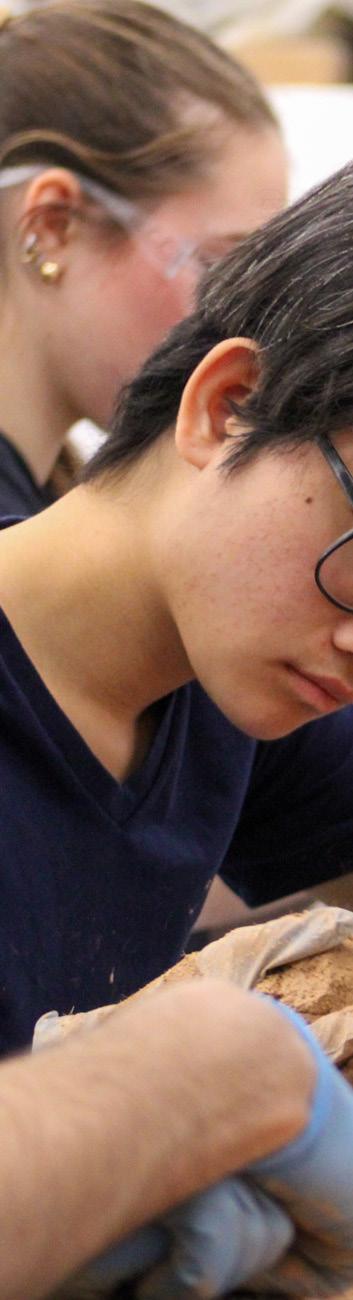
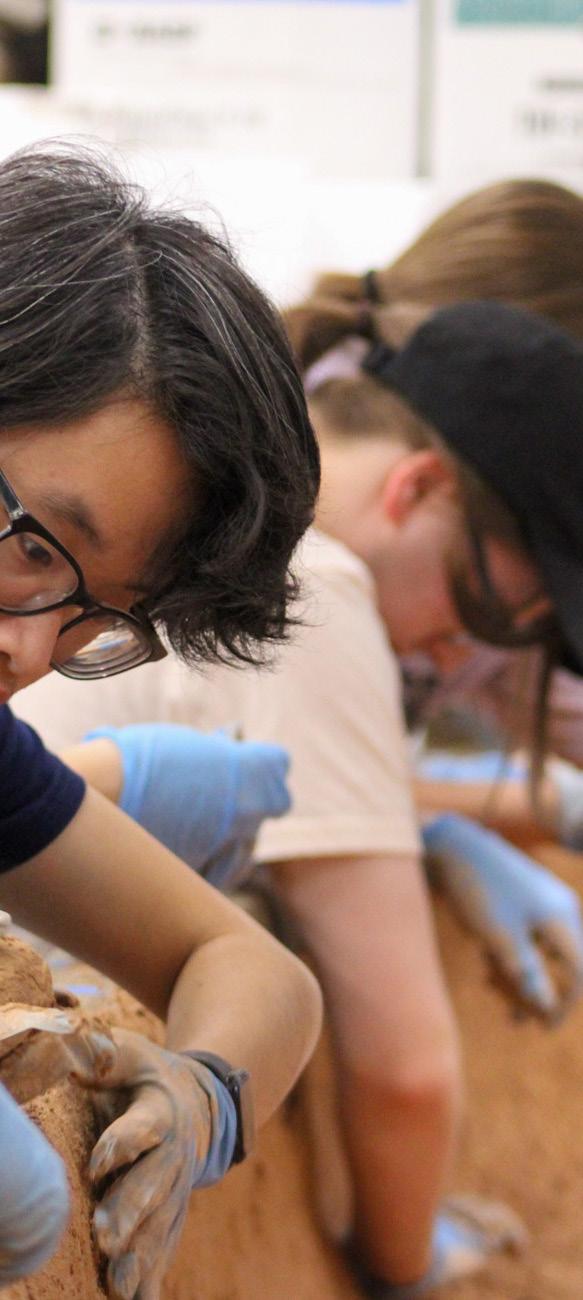
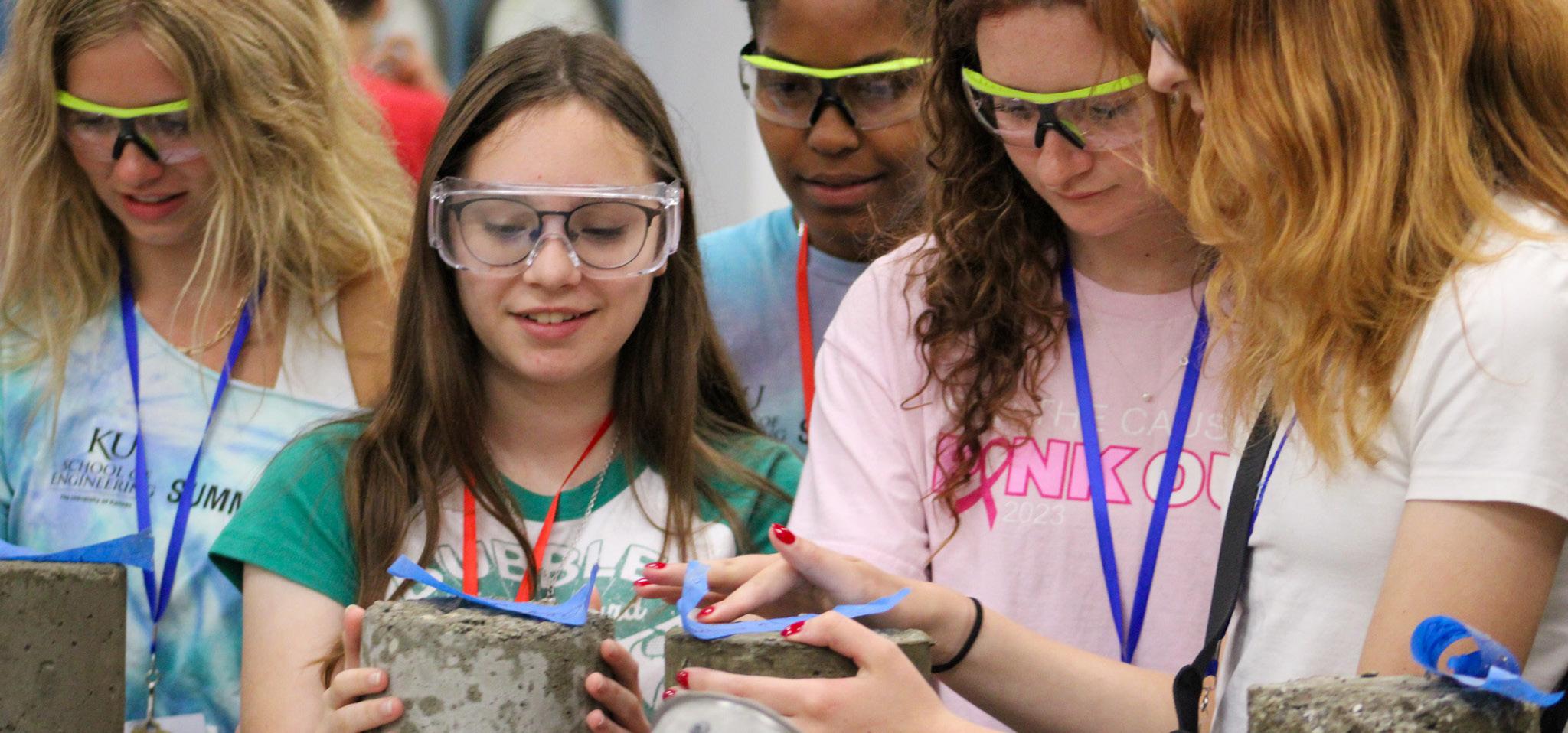
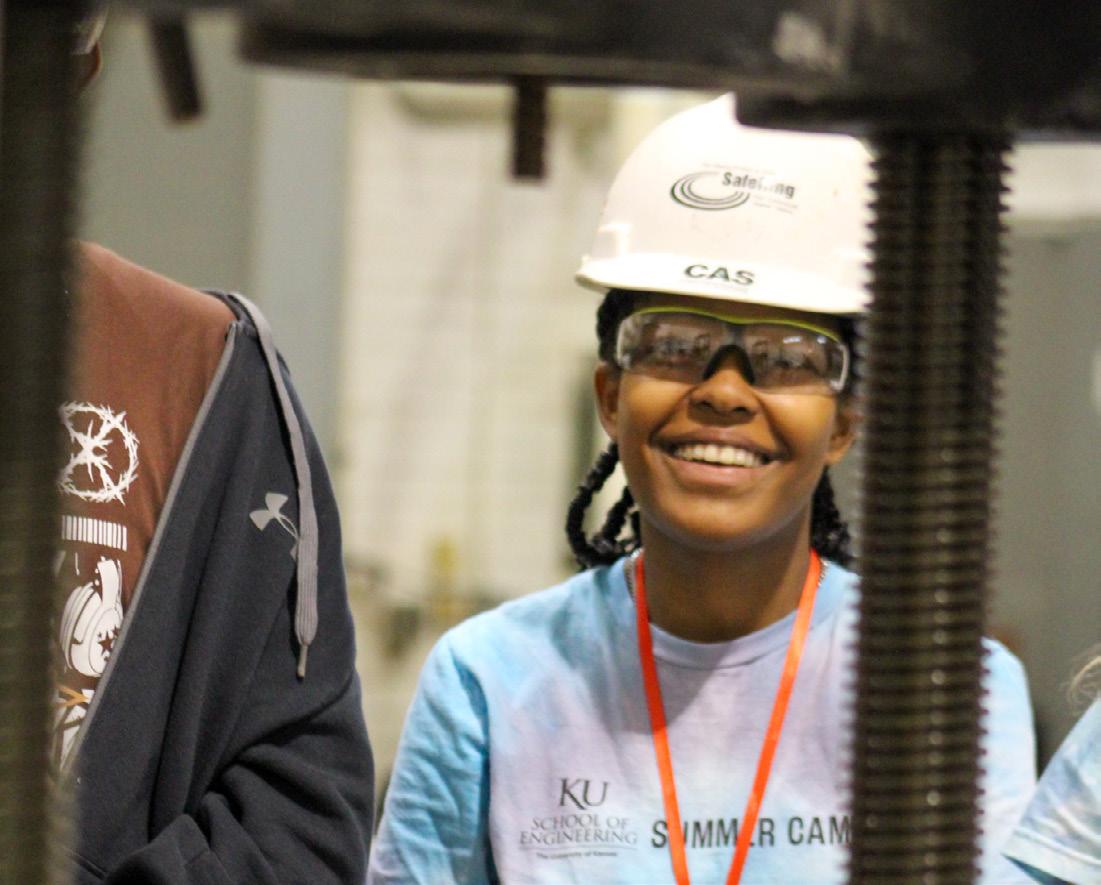
At KU Engineering, discipline-specific camps for students in grades 9–12 provide immersive learning over the course of a week. In the Civil, Environmental and Architectural Engineering (CEAE) camp, students cast concrete and conducted crush tests; evaluated water quality parameters and toured treatment facilities; and gained insight into the societal impact of CEAE professionals. These experiences are made possible through the generous contributions of faculty time and expertise during the summer.
In 2023, Professor Justin Hutchison began coordinating the CEAE summer camp program and, in collaboration with the School of Engineering’s Director of Recruitment and Outreach, initiated efforts to collect and analyze camp outcomes. Students consistently report that the hands-on activities are highly engaging (who doesn’t love crushing a concrete cylinder?). Notably, 52% of rising high school seniors who attend the camps ultimately enroll in a KU program. However, students who participate earlier in their high school careers enroll at lower rates, suggesting that sustained engagement leveraging varied curriculum across multiple years may be key to increasing enrollment.
Using these insights, the 2025 summer camps were redesigned to feature thematic curricula focused on Sustainability and Resilience, Energy and Computing and Engineering for Health, spanning all engineering disciplines. The curriculum now includes tailored tracks for 9th–10th graders and 11th–12th graders. Beyond technical skills, the camps also foster essential soft skills such as teamwork, communication and problem-solving. Alumni support through funding, project ideas, volunteering or mentorship is vital to sustaining and expanding these programs. As we look to the future, we’re excited to continue expanding the curriculum for our week-long camps, while also developing new day-camp experiences for middle and elementary school students, ensuring we reach younger learners and help address the growing gap in the engineering workforce.
Top: High school students look at the different concrete specimens in the concrete lab. Middle: A high school student in the concrete lab. Bottom: Another high school student watches a beam test in the high beam lab. Photos by Emma Herrman
From Research to Action: KUTC Advances Transportation in Kansas
The University of Kansas Transportation Center (KUTC), led by Steven Shrock and Alexandra Kondyli, continues to advance transportation research, training and safety initiatives across the state. Two of its leading programs, the Kansas Local Technical Assistance Program (LTAP) and the Kansas Rural Transit Assistance Program (RTAP), achieved major milestones in 2025.
LTAP has provided training to more than 500 participants from across Kansas, offering hands-on courses in gravel road maintenance, winter operations and work zone safety to support local agencies in building and maintaining safe, reliable infrastructure. LTAP also hosted the National LTAP conference this year in July. Rebecca Bilderback recently stepped into the role as the new LTAP director.
Under the direction of Kara Cox, RTAP delivered training to more than 1,300 participants across the state, including rural transit drivers and transit managers, with courses covering defensive driving, emergency procedures,
passenger assistance, wheelchair securement and transit management.
In partnership with the Kansas Department of Transportation (KDOT), KUTC also plays a central role in statewide Road Safety Assessments (RSA). KUTC has developed and delivered training that focuses on pedestrian and bicycle safety, equipping professionals and communities to design safer streets and intersections. Another vital effort at KUTC is the SAFE Schools for Safer Future project under the Mid-America Transport Center (MATC), which is evaluating the impact of Kansas’s long-running Seatbelts Are For Everyone (SAFE) program. By measuring its success in encouraging teen seat belt use through education, incentices and enforcement, the project aims to strengthen this proven strategy for saving young lives.
Research remains a cornerstone of KUTC’s mission. Through the K-Tran project, “From Analysis to Action,” the center is leading a comprehensive study of vehicle crash readiness and the role of vehicle features in fatal and serious injury crashes in Kansas. This work will provide KDOT and traffic safety partners with data-driven insights to improve policies, guide regulations and reduce severe crash outcomes. Together, these programs underscore KUTC’s commitment to integrating research, training and partnerships to enhance the safety of Kansas roads, strengthen its transit systems and foster more connected communities.
In Memoriam: Warren Corman and Rick Ensz
The CEAE Department and the University of Kansas community recently lost two remarkable individuals whose lives and legacies left an enduring mark on the campus. Allen Fieldhouse architect Warren Corman and former KU track star Rick Ensz each contributed in unique ways to the traditions, history and spirit of KU.
Warren Corman (1926 – 2025)
A 1950 architectural engineering graduate, Corman went on to shape the very face of the Hill. As an architect with State Architect Charles Marshall’s office and later as a principal at the firm Peters, Williams and Corman, Corman played a role in designing and overseeing one of KU’s most defining facilities as a university architect: Allen Fieldhouse. Corman’s career spanned decades, during which he contributed to countless university and state projects, leaving behind an indelible architectural journey. Additionally, Corman served as a CEAE Board Member, helping to move the department forward. Beyond his professional achievements, Corman was celebrated for his mentorship, dedication to KU and his ability to bring people together with kindness and wisdom. He died August 28, 2025. He was 99 years old.
Rick Ensz (1956 – 2024)
During his time at KU, Ensz was a standout middle-distance runner who competed on the Jayhawk track team in the 1970s. A native of Great Bend, Kansas, Ensz made his mark as a top competitor in the 800 meters and 1,000 yards, earning All-America honors and representing KU with grit and determination. His athletic achievements contributed to KU’s proud tradition in track and field, inspiring future teammates and Jayhawks alike. Ensz also served as the CEAE Board Chair for several years, where his expertise in the engineering field was integral in further developing the Department’s mission of supporting students.
In addition to his work on the field, Ensz completed a bachelor’s degree in civil engineering and a master’s degree in environmental engineering. After his graduation in 1981, Ensz joined various engineering companies throughout Kansas before retiring. He remained a loyal supporter of KU Athletics and a beloved member of the Jayhawk family until his passing. He died December 4, 2024. He was 67 years old.
Warren Corman
Rick Ensz
Steven Shrock
Alexandra Kondyli
Give Back to CEAE
Supporting the CEAE Department through donations helps us sustain the opportunities that define a KU engineering education. Your contributions make a direct impact whether that’s empowering student organizations, funding hands-on projects or enhancing labs and learning spaces. These gifts fuel innovation, collaboration and professional growth, ensuring students have the tools and experiences they need to excel. By giving back, alumni and friends help strengthen the department’s legacy and invest in the future of engineering at KU.
Donations can be made online with links provided in the sections that follow. Additionally, you can send checks directly to the KU Endowment Association. Checks can be made payable to “KU Endowment Association” with one of the account numbers provided in the sections that follow:
Gift Processing Department KU Endowment PO Box 928 Lawrence, KS 66044-0928
Unrestricted gifts provide the department with the flexibility to address its most pressing needs as they arise. These contributions make a direct impact by supporting student opportunities, advancing faculty development and
funding essential updates to facilities and equipment. By giving without restrictions, donors empower the department to respond quickly and strategically to emerging priorities, ensuring continued excellence in education, research and innovation.
Support CEAE Student Groups | Memo Line: Account #41518
Supporting CEAE student organizations is one of the most meaningful ways to invest in the next generation of engineers. From Concrete Canoe and Steel Bridge to Engineers Without Borders and the Institute of Transportation Engineers, these groups give students the chance to apply classroom knowledge to real-world challenges, develop leadership and teamwork skills and connect with industry professionals. From national competitions and community outreach to professional development events, student organizations shape well-rounded graduates who are ready to make
an impact.
Donations to these groups help cover travel, materials and project costs, ensuring all students, regardless of financial background, can participate fully. By supporting CEAE student organizations, donors help create transformative experiences that prepare students for successful, rewarding careers in civil, environmental and architectural engineering. Visit ceae. ku.edu/student-orgs to learn more about our different groups and visit bit.ly/ceae-giving to make a gift.
Students with ASCE and AGE at a site visit with McCownGordon and STAND Structural Engineering.
Support the Chair’s Council Fund |
Memo Line: Account #43226
The Chair’s Council Fund plays a vital role in supporting the retention of outstanding CEAE faculty. By providing resources to recognize and reward excellence, this fund helps sustain the department’s tradition of academic and research leadership.
Through the Chair’s Council Fund, CEAE awards termlimited professorships to faculty members who are progressing to the next promotional rank. These awards acknowledge their achievements and potential for continued impact in teaching, research and service. This fund has been instrumental in attracting and retaining exceptional faculty, ensuring that CEAE continues to thrive and inspire the next generation of engineers.
By recognizing and empowering faculty at pivotal moments in their careers, this fund not only fuels innovation and discovery but also enriches the learning experience for students. Visit bit.ly/ceae-giving to make a gift.
Support the HVAC Lab Remodel | Memo Line: Account # 43611
The CEAE Department is preparing to remodel the HVAC lab for KU’s Architectural Engineering (ARCE) program, making an exciting step forward for research and education in building systems. This renovation will create a state-of-the-art environment that enhances hands-on learning and supports innovative HVAC research, positioning the program to reach new heights in both academic and industry impact.
A centerpiece of the remodel will be the addition of a dual-room test chamber, allowing researchers to develop more efficient HVAC systems and study how humans interact with smart building control technologies. Once complete, the upgraded lab will serve as a world-class research space for CEAE faculty and students, expanding opportunities for
collaboration, innovation and discovery while strengthening the ARCE program’s reputation as a leader in sustainable and intelligent building design.
Research is at the heart of CEAE’s mission, driving advancements that shape the future of infrastructure, sustainability and the built environment. By combining technical expertise with real-world applications, department faculty and students are developing innovative solutions to global challenges in energy efficiency, materials and design. The remodeled HVAC lab will further amplify this research impact, providing a platform for cutting-edge experimentation, collaboration with industry partners and hands-on learning that prepares students to lead in a rapidly evolving field. Visit bit.ly/ ceae-giving to make a gift.
Will Collins teaches a class.
Left: Sanjeeb Thapa, CEAE grad student, testing specimens in the lab. Above: Jie Han describes his research in geotechnical engineering, strides made largely in part to the support of CEAE’s laboratories.
CEAE Conferences
The Civil, Environmental and Architectural Engineering Department within the School of Engineering offers five conferences over the year. The Asphalt Paving Conference and Geotechnical Engineering Conference are held in the fall semester and the Environmental Engineering Conference and Structural Engineering Conference are held in the spring semester. The Construction Safety Conference is organized by the National Center for Construction Safety and is held in the summer.
70th Annual Structural Engineering Conference
Each conference offers the opportunity for industry leaders to showcase their business, learn about new trends in the engineering fields and network with engineers across the country. If you are interested in learning more about the conferences or would like to learn more about becoming a sponsor or exhibitor for one or more of our conferences, please contact Emma Herrman, outreach & communications coordinator, at emma.herrman@ku.edu or visit our website at ceae.ku.edu/ceae-conferences
Top left: Joe Knapp presents on the Key Bridge cleanup. Top right: An attendee of the Structures Conference. Bottom left: Benjamin Schafer, the 2025 Higgins Lecturer, presents to a full auditorium. Bottom right: Jennifer A. Bridge presents on Florida Building Inspection Laws. Photos by Emma Herrman.
Top left: Jesse Bell presents on nitrate contamination in drinking water. Top right: Kyle Cappotto, CEAE grad student, presents his research on novel dredging in Tuttle Creek. Bottom left: Kelli Deuth presents on PFAS and the air pathway. Bottom right: Attendees at the Environmental Conference. Photos by Emma Herrman.
Above: CEAE students play yard games at the ASCE Welcome Back Picnic. Top right: CEAE Professors Kazi Fattah and Nishit Shetty play yard games at the annual Department picnic. Bottom left: An undergraduate CEAE student at the annual Department picnic. Bottom right: Mandy Gibbs (left) and Kelsey Schnettgoecke (right) take a selfie with another engineering student during the ASCE Welcome Back Picnic in August. Photos by Emma Herrman.