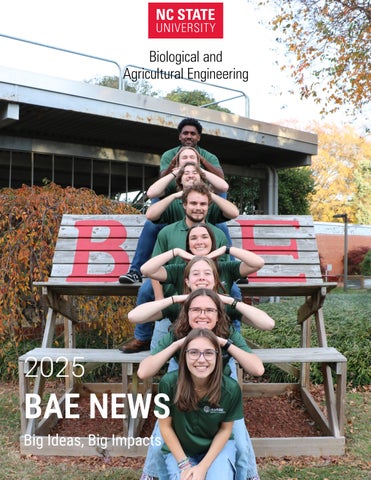
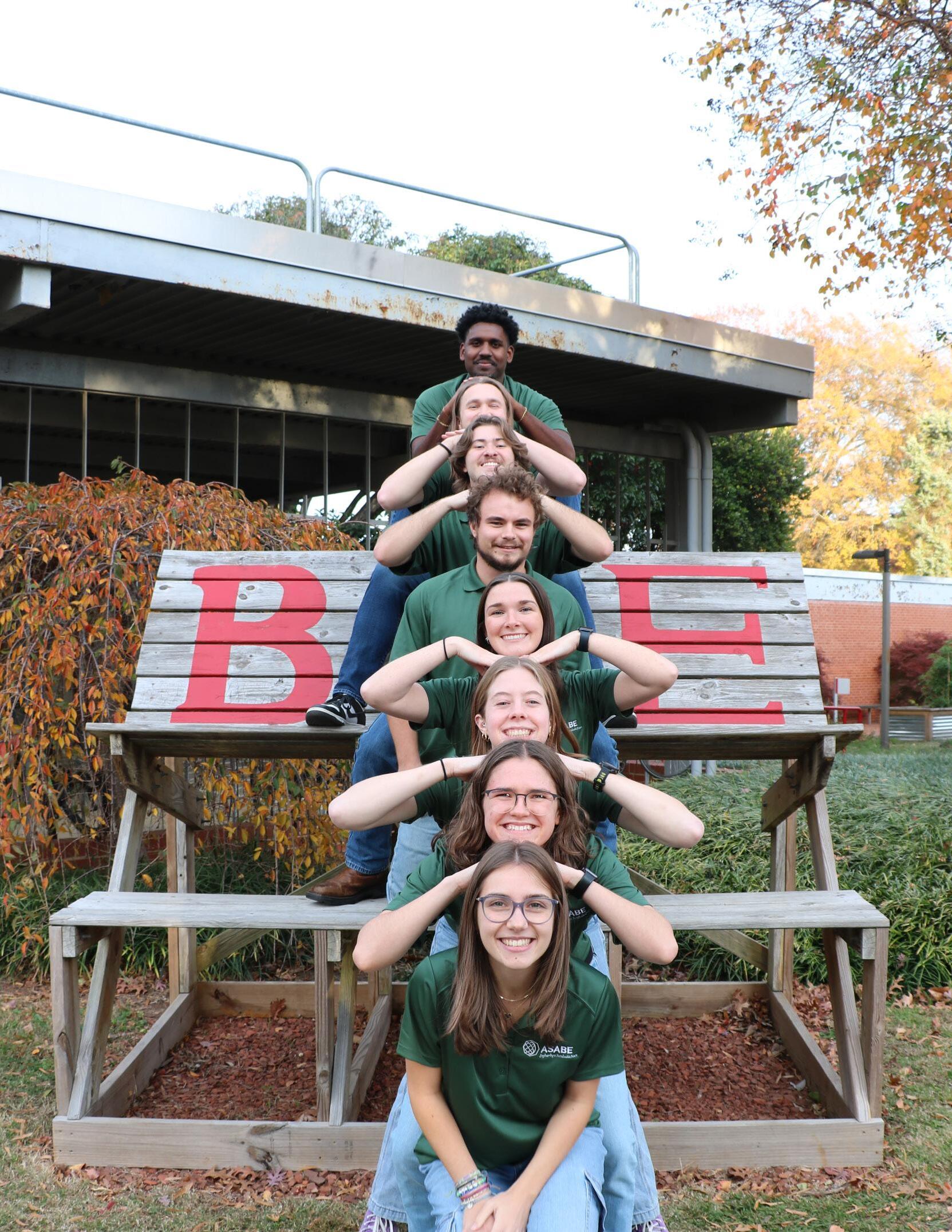
2025 BAE NEWS
Big Ideas, Big Impacts
Our Statewide Impact
NC State's Department of Biological and Agricultural Engineering's statewide impact reaches from the coastal plains to the mountains of North Carolina. Research, extension, education and collaboration efforts strive to serve the people of North Carolina to ensure the prosperity of our state.
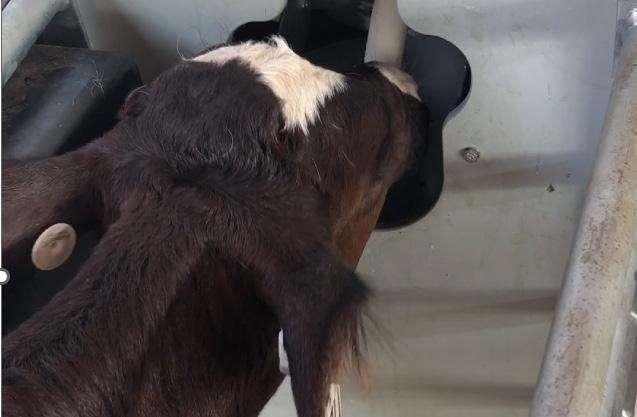
Jason Ward, an associate professor in BAE, is part of a team developing an AI system at Piedmont Research Station Dairy Facility to detect early dairy calf health using automated feeder data in Salisbury, NC. The goal is to analyze calf drinking behavior to reduce antibiotic use and treatment costs by catching respiratory and other issues at the earliest stage.
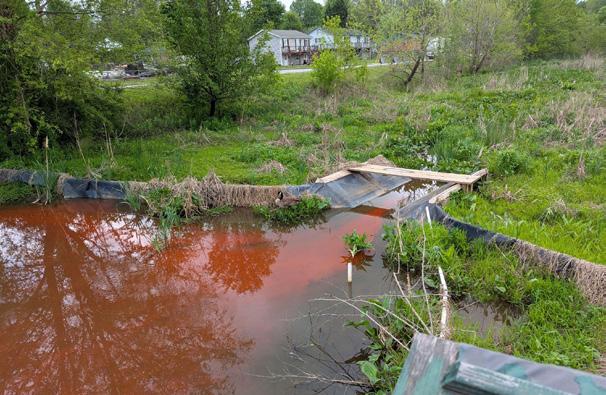
Constructed Stormwater Wetlands (CSWs) are often avoided in North Carolina because their large surface area needs lead to higher construction costs compared to other stormwater control measures. Amanda Van Pelt, a PhD candidate working with Bill Hunt, is monitoring and collecting data from a wetland in Lenior, NC. Her findings will help modify current design practices to make CSWs a more viable stormwater control measure.
Along the central North Carolina coast, Natalie Nelson, an associate professor in BAE, is teaming up with oyster farmers to close the gap in coastal water quality data collection. As part of the “See Salt” program, Nelson partners with oyster farmers to incorporate sensor upkeep into their daily routines. This community-based monitoring effort will help predict salinity patterns which are crucial for determining estuarine health and predicting pollution events. 4 3 See Salt Program
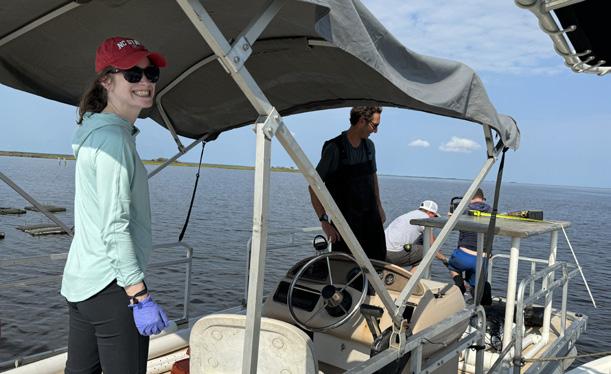
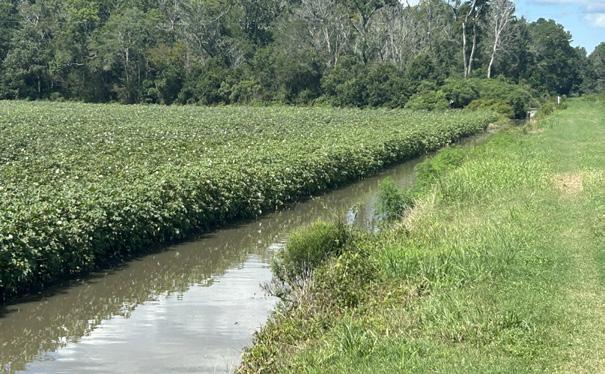
4 Detecting salinity with a first alert notification system
Chad Poole, a BAE assistant professor and Extension specialist, is working with a team in the Blackland region of North Carolina to prevent saltwater intrusion on crops. This ongoing project focuses on developing a system that alerts county extension agents of saltwater intrusion. The agent then notifies the landowners and producers who are affected so they can take action to control or prevent saltwater intrusion within the drainage system.
Pre-Clinical Detection of Calf Health Through AI Data Analysis and Machine Vision
Reducing the Size of Stormwater Wetlands: A New Flow-Through Design Approach
Photo courtesy of Eric Herbst, NC Sea Grant.





LETTER FROM THE DEPARTMENT HEAD

Dear BAE Community,
This is my first letter since joining NC State BAE, and it has been an energizing beginning. In just a few months, I have seen firsthand the strength of Biological and Agricultural Engineering and its unique ability to sustain natural resources, strengthen agricultural systems, and support thriving communities. The people highlighted in this issue, our students, faculty, and staff, bring this mission to life every day.
Our undergraduate program, ranked seventh, continues to expand and modernize, with more than 250 students across our engineering and engineering technology majors. Highimpact experiences grew once again through structured internships, study abroad and our senior design courses. Curriculum updates in leadership, ethics, biogeochemistry and artificial intelligence ensure our graduates are prepared to lead in a rapidly changing world.
Student excellence continues to stand out. At the ASABE Annual International Meeting, our quarter scale tractor team earned first place for the second consecutive
year, reflecting the talent, creativity and dedication of our students and their faculty mentors. Our student competition teams across robotics, design, and engineering showcase the depth and hands-on preparation of the BAE experience. One of our senior design teams placed second in the Gunlogson Environmental Design Student Competition!
Our graduate program remains exceptionally strong and is ranked fourth in the nation. Two of our students, Chris Oates and Evelynn Wilcox, earned National Science Foundation Graduate Research Fellowships, among the most competitive graduate awards in the country. They represented two of only eight recipients at NC State, the only awardees in CALS, and half of all COE awardees this year. Their success reflects the momentum and talent within BAE, alongside continued student research awards, conference recognition and national visibility.
BAE Extension programs continue to support North Carolina agriculture and communities through drought, early season water stress, and the impacts of Hurricane Helene. Our specialists focus on providing producers with water resilience strategies and tools to protect yield under rapidly shifting conditions, while also contributing to statewide efforts in flood mitigation planning and watershed management.
This year also marked the 60th anniversary of the North Carolina
Irrigation Society, founded in BAE. More than 100 practitioners, industry partners, alumni and the society’s founder joined us in Raleigh to celebrate decades of leadership in irrigation innovation. In addition, our extension faculty led the mid-Atlantic EcoStream conference, which brought nearly 500 professionals together to discuss technologies, research and practices in stream restoration.
Our research enterprise continues to deliver solutions across rural, urban, and industrial challenges. Faculty advanced technologies in waste conversion and renewable energy, biobased materials, environmental sensing, agricultural AI, autonomous systems and climate resilience engineering. They published nearly 100 manuscripts, presented worldwide and secured major research investments, including a landmark $6 million interdisciplinary award led by Dr. Daniela Jones, the largest in our department’s history.
As we close the year, I am grateful for the alumni, partners and supporters who fuel this work. I invite you to reconnect with Weaver Labs, stay close to the advances underway and continue helping us strengthen agriculture, protect natural resources and build resilient communities across North Carolina and beyond.
Go Pack, and Go BAE!
DS
BAE
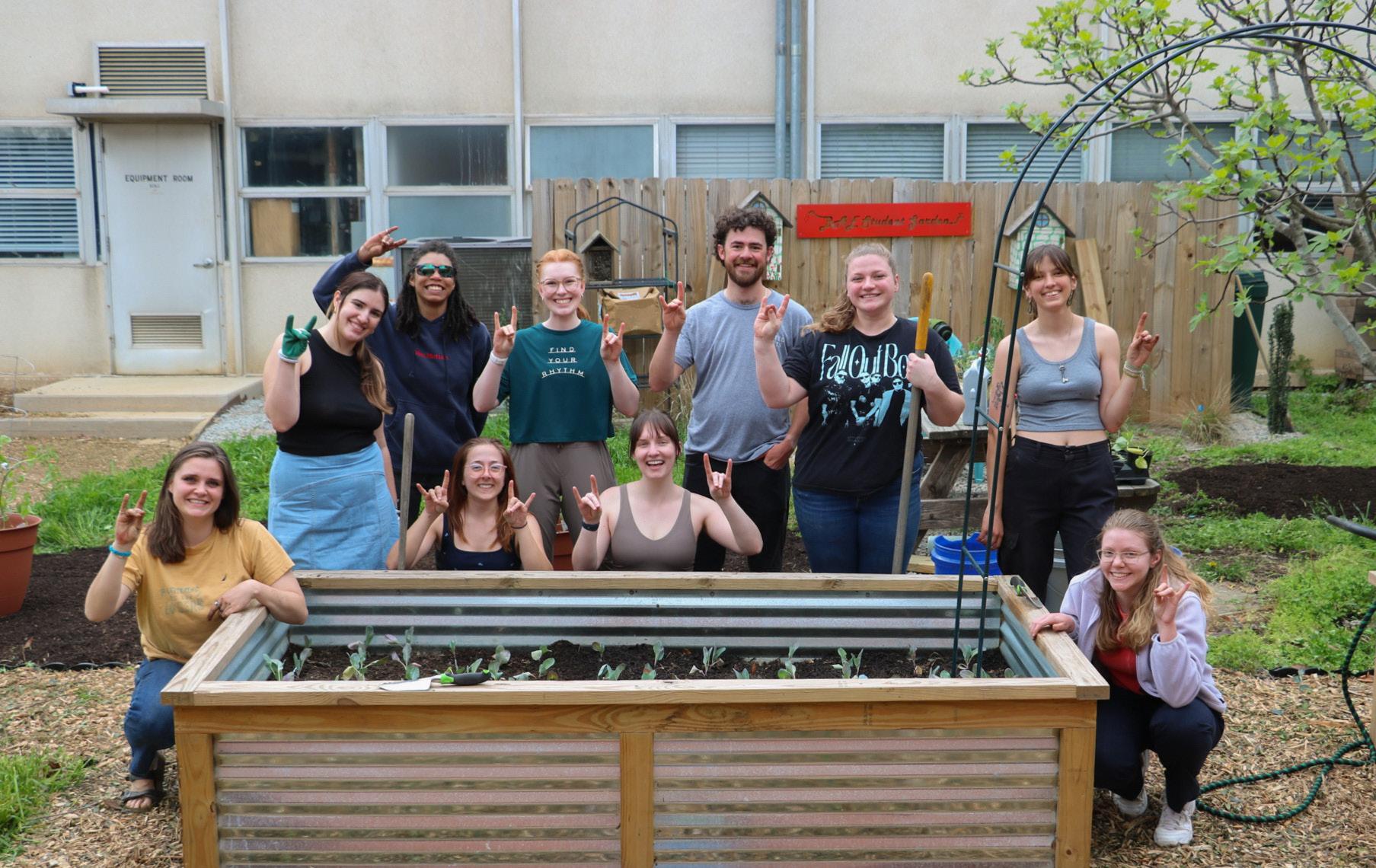
PEER Garden Continues to Thrive
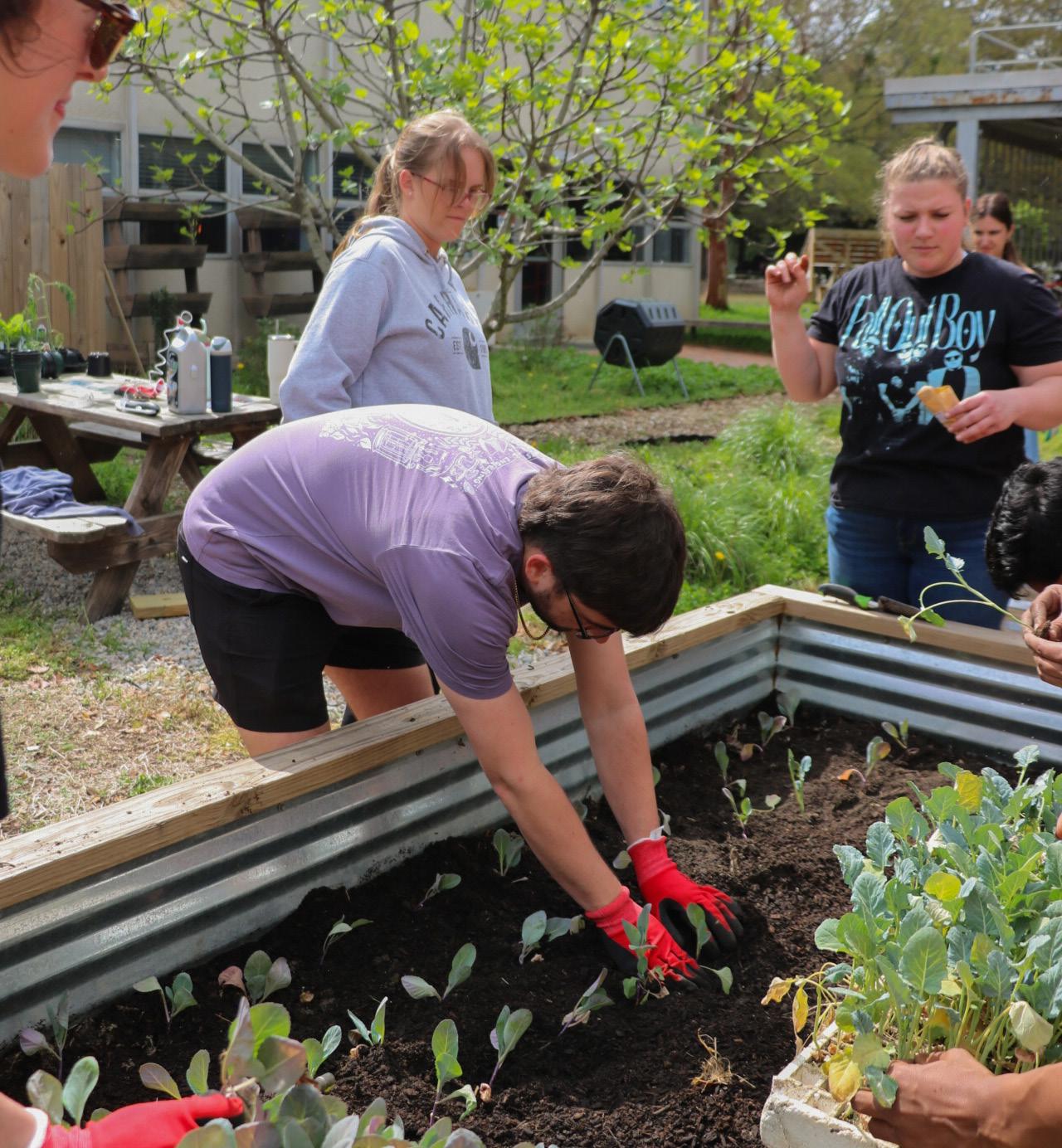

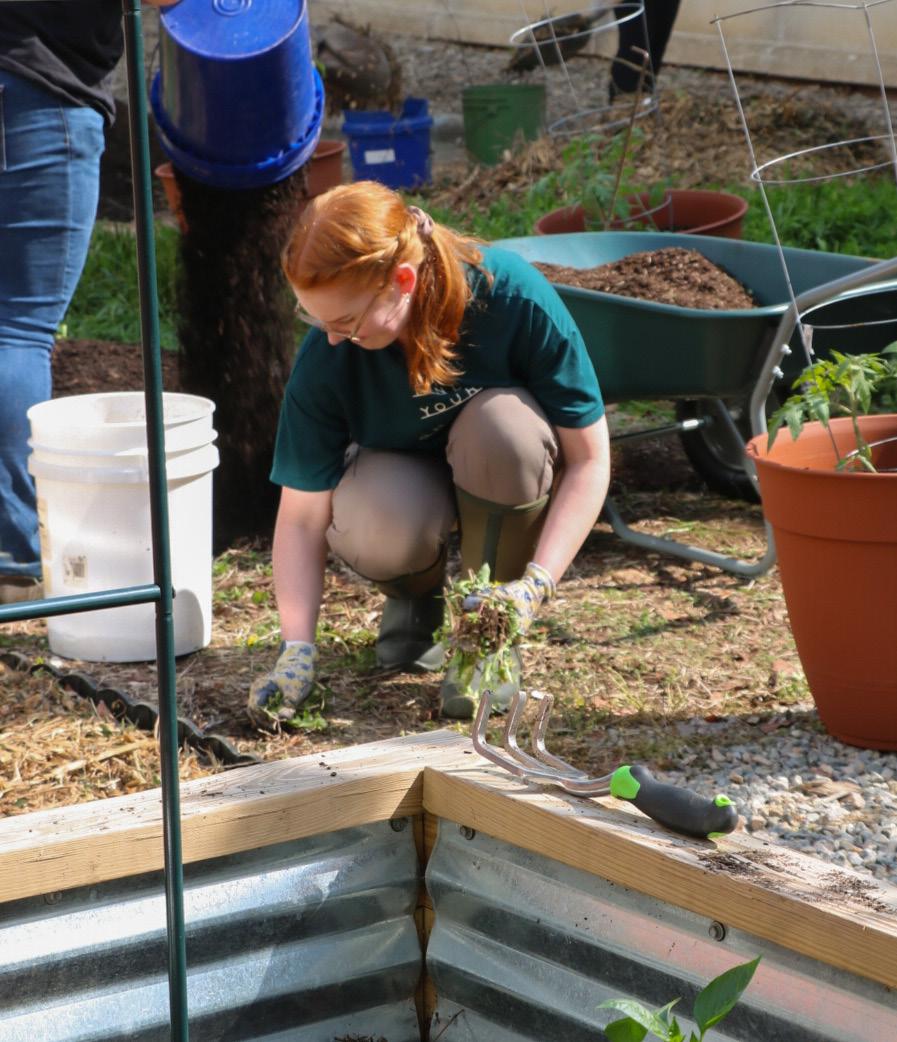
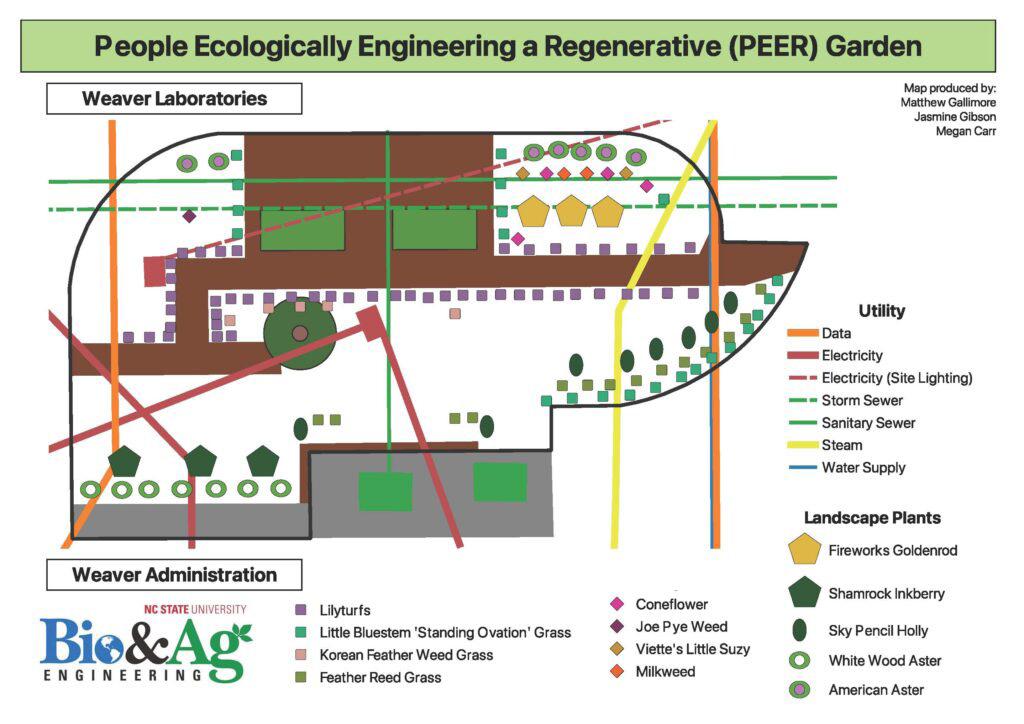
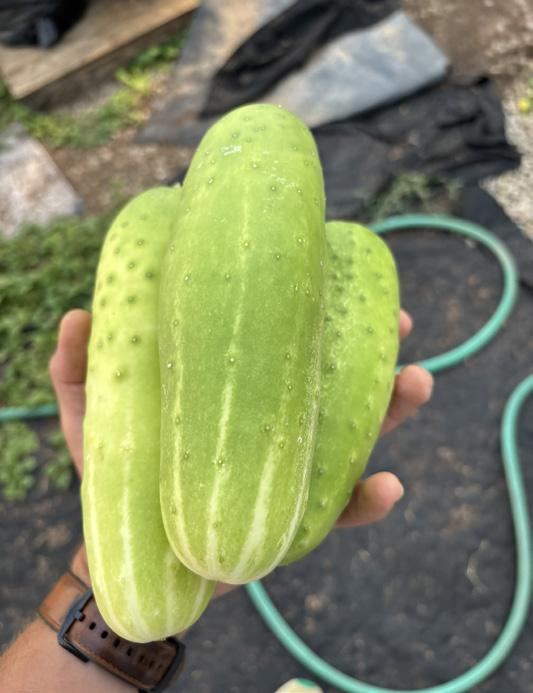
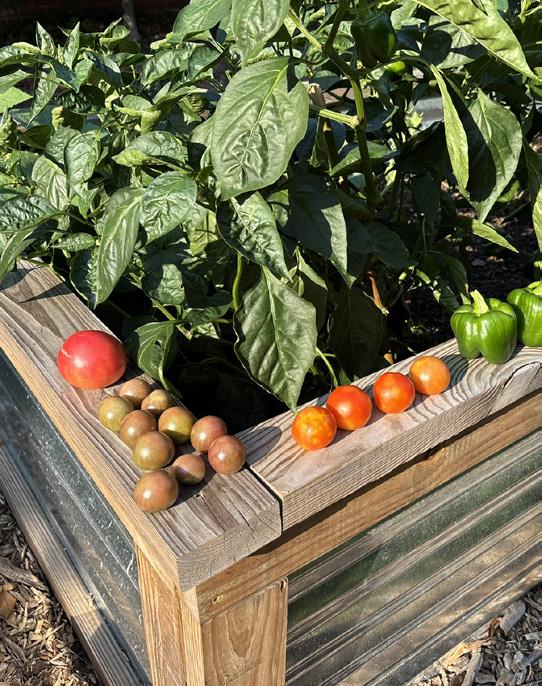
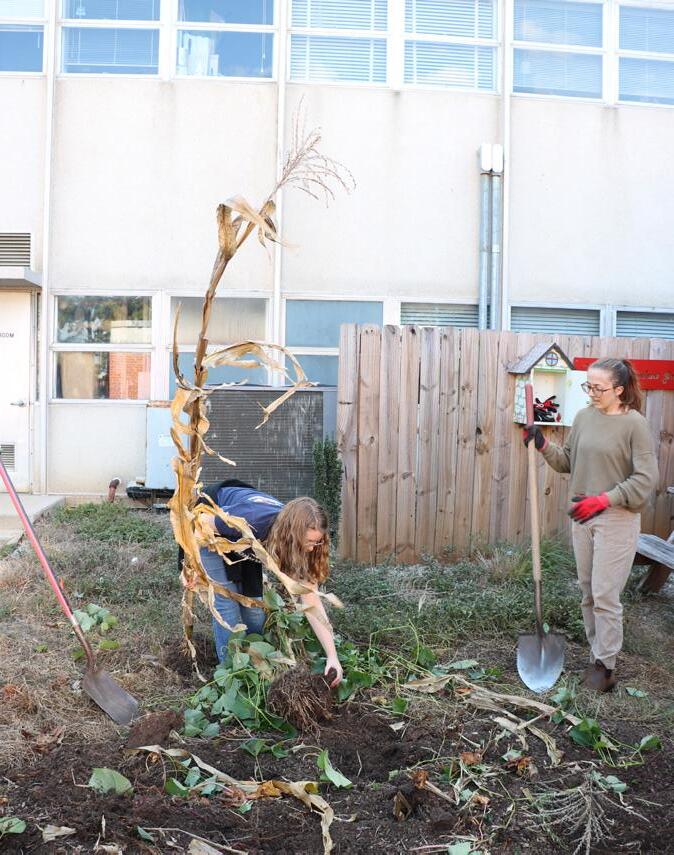
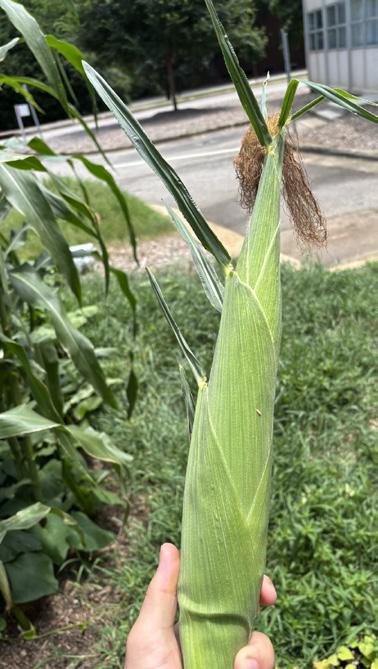
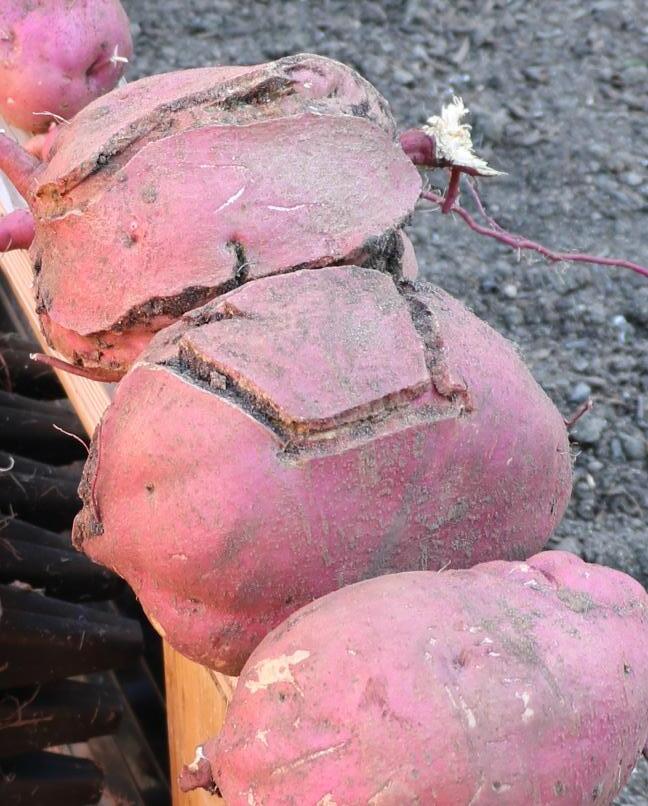
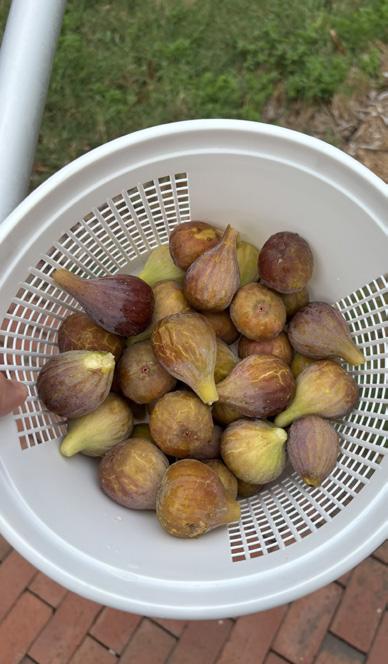
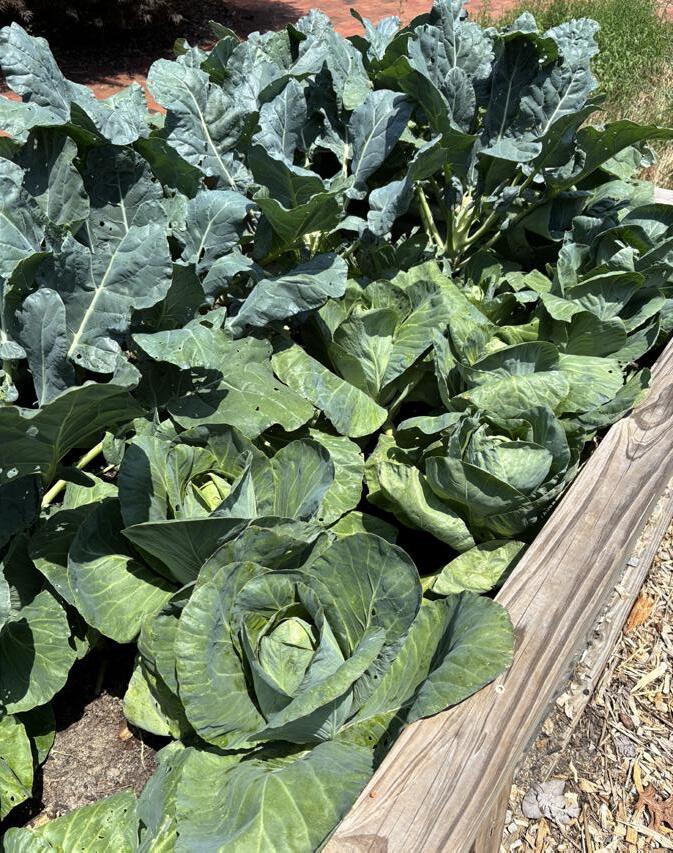
This year's harvest included green peppers, a variety of tomatoes, sweetpotatoes, figs, strawberries, cabbage, broccoli, and corn.
Flip to page 30 to hear updates from the garden chair!

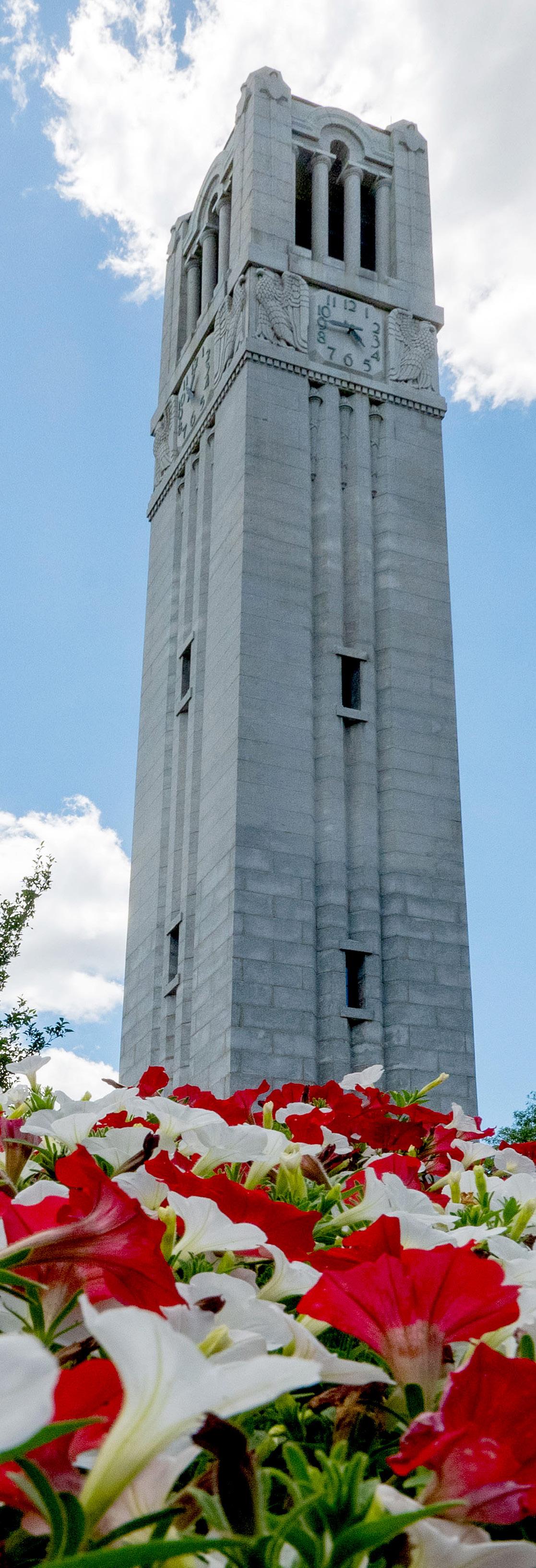
Thanks to all of the donors who contributed on Day of Giving in 2025! In 24 hours, the department raised $6,661!

Scan to #givepack all year long!
From Lab to Field: Using Biochar to Clean Watersheds
By Olivia Rogers
Protecting watersheds across the state is crucial to ensuring water stays clean and safe for drinking and recreation, while also keeping aquatic habitats healthy. However, human activities, particularly wastewater from rural treatment plants, can introduce harmful nutrients into these systems.
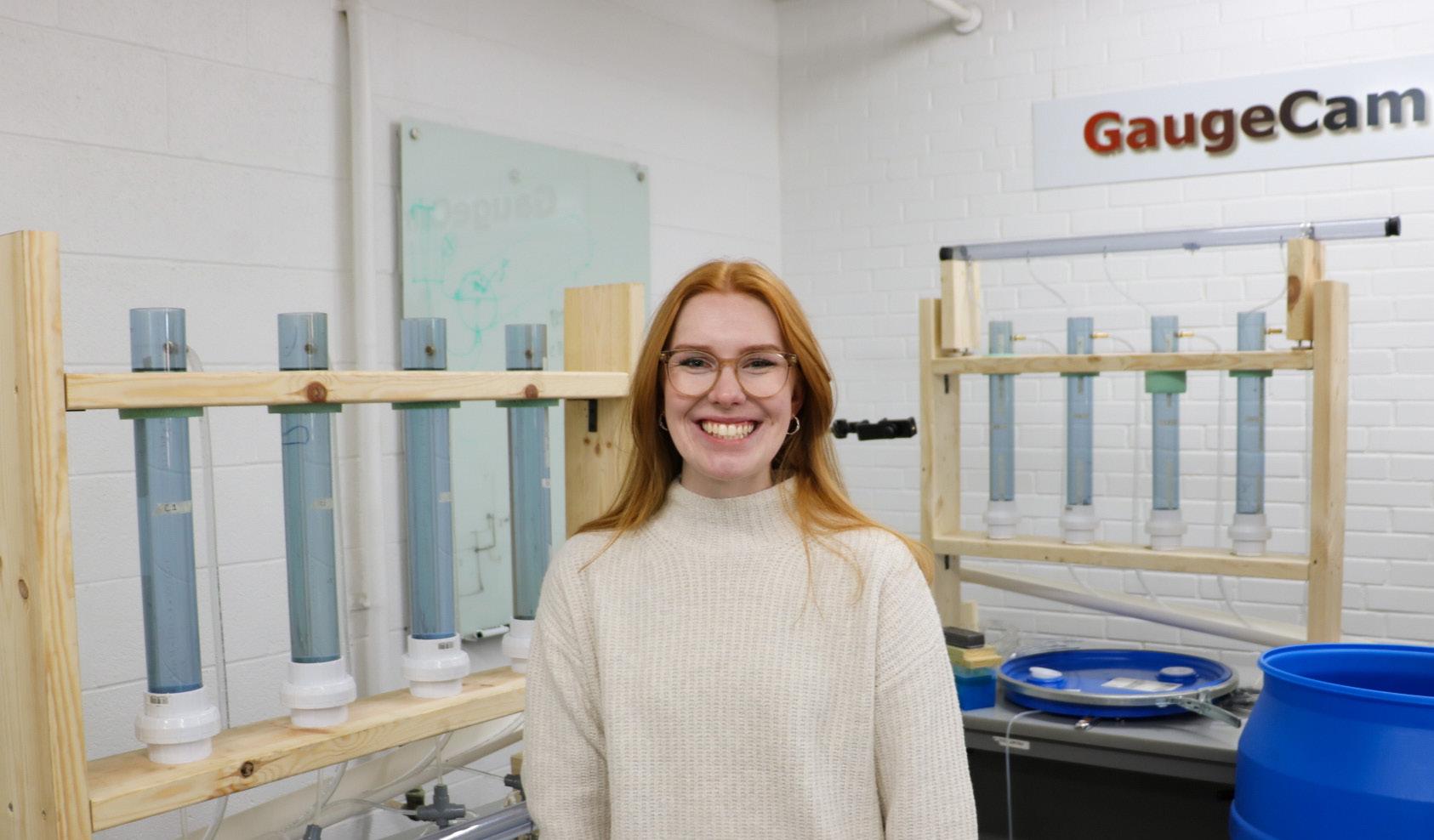
Liz Riedel, a graduate student in NC State University’s Department of Biological and Agricultural Engineering, is investigating a low-cost solution to improve water quality in rural wastewater systems by using biochar as a filtration device.
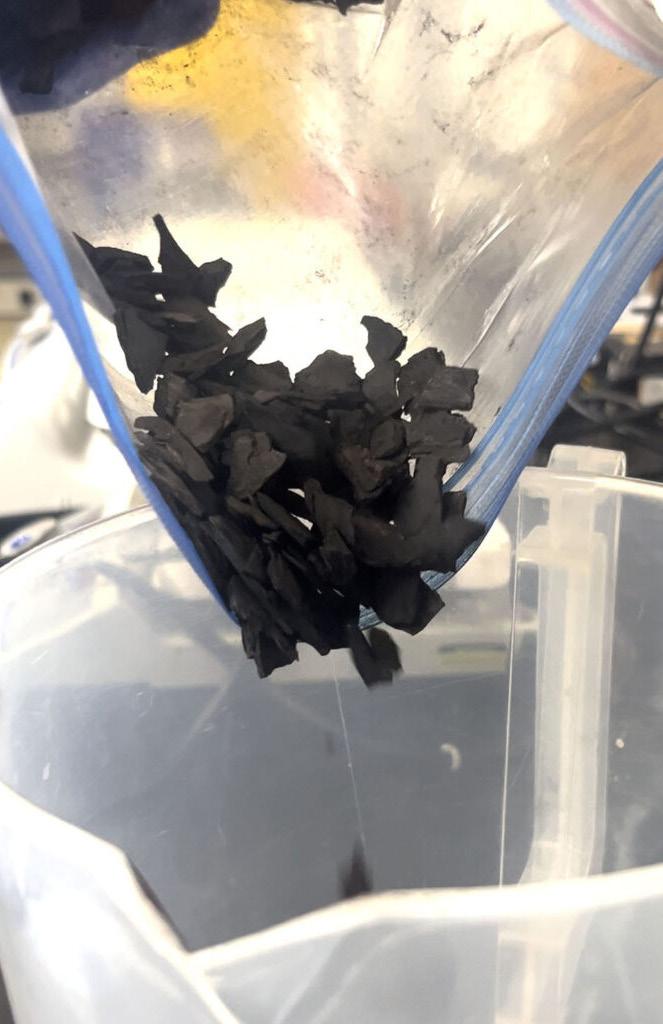
Biochar is a charcoal-like substance produced by heating plant materials, such as pine bark, in an environment absent of oxygen. In Riedel’s research, she uses biochar to absorb pollutants like nitrogen and phosphorus from wastewater before it enters a watershed. This reduces the risk of eutrophication, a process that can disrupt aquatic ecosystems by causing excessive algae growth. The health of watersheds, a land area where surface and underground water flows to
a specific outlet, determines the quality of the water draining into rivers, lakes and streams.
Riedel says she was drawn to this project because it is connected to NC State’s Extension work.
“I liked the aspect of having an impact and helping other people, especially because we’re working with rural towns, that often have limited budgets to develop low-cost alternatives for improving wastewater treatment,” she says.
The project, funded by North Carolina’s Water Resources Research Institute, strives to implement cost-effective technology to create the biochar in such a way that small towns can apply it to their treatment facilities, no matter the size.
The study requires a lot of time at research sites collecting samples, but it involves even more time in the lab. When she’s not in class, Riedel dedicates 20-25 hours a week to conducting experiments and making biochar.
She focuses on creating two types of biochar: Magnesium-doped biochar and Hydrogen peroxide-doped biochar. Magnesium-doped biochar absorbs phosphate, while Hydrogen peroxide-doped biochar absorbs ammonium from wastewater.
To make Magnesium-doped biochar, Riedel follows a very specific process. She soaks pine bark nuggets in a concentrated magnesium chloride solution for six days. Then, the saturated nuggets are put in a kiln (an insulated oven) at 600 degrees Celsius for two hours. Next, the biochar is sieved to an appropriate size for use in laboratory experiments. Hydrogen peroxidedoped biochar is made by putting pine bark nuggets in the kiln at 400 degrees Celsius for four hours, sieving the resulting biochar to the necessary size, and then soaking it in a hydrogen peroxide solution for six hours. After it is dried in an oven, the biochar is ready to be added to the laboratory scale column study.
Riedel designed the experiments to provide insights into the biochar’s ability to adsorb ammonium and phosphate in a flow-through configuration. Different flow rates, nutrient concentrations and biochar doses are being tested in the biochar-packed columns. These tests will help determine the best parameters for nutrient removal with biochar in constructed treatment wetlands.
At this point in her research, Riedel is preparing to apply the biochar filter on a larger scale at bigger wastewater treatment wetland facilities.
The journey has involved a lot of living and learning.
“It was definitely a lot of trial and error, reading literature and going back to what other people have done while also keeping our ideas in mind,” Riedel says. She values the balance of building from previous research on biochar production and applying new formulations.
“Even if other people have done this before and you try to do the exact same thing, there are little
parameters that can always throw things off,” she says.
The smallest deviations can lead to variations in results. But it’s the frustrating aspect of needing to get things just right that has made Riedel appreciate how water treatment works.
Seeing everything take shape gives her a rush. “If I’m in the middle of an experiment and the pollutant removal rates appear promising, that gets me really excited,” she says.
Ultimately, her research aims to protect both humans and wildlife by keeping watersheds healthy. After graduation, she plans to work in the ecological engineering field and continue working on the design and implementation of naturebased solutions for water treatment.
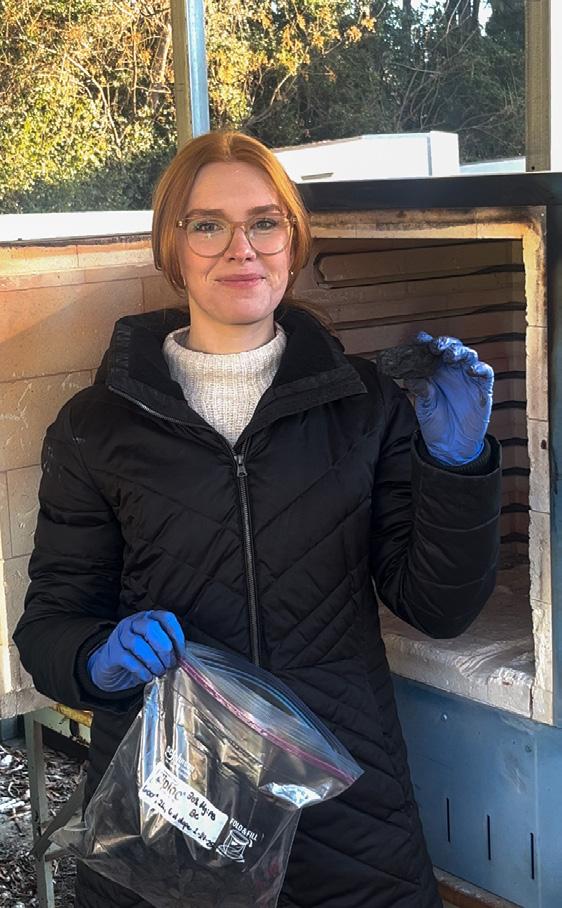
“I want to show that it’s possible to use naturebased solutions, and they can be the same price, or maybe even cheaper than [traditional water treatment solutions] like concrete or mechanical options, ” says Riedel. “It might seem untraditional because there’s not a lot of information or research on it yet, but I think people just need to give it a chance.”
Riedel heats pine bark nuggets to produce biochar.
Biochar is added to Riedel’s solutions to soak.
Investing in Innovation: Two BAE Students Awarded NSF Fellowship
By Olivia Rogers
The U.S. National Science Foundation’s (NSF) Graduate Research Fellowship Program (GRFP) continues to recognize promising young researchers. Among the cohort of 2025 fellows are two students from NC State University’s Department of Biological and Agricultural Engineering (BAE). Christopher Oates and Evelynn Wilcox are among eight NC State students awarded the fellowship this year.
The GRFP is a prestigious program that grants fellowships to promising graduate students across the country each year. The program provides fellows with three years of financial support and an annual stipend of $37,000. Its goal is to help support and fund graduate student research that has the potential to make a significant impact in STEM research. With this support, Oates and Wilcox can work toward their research and professional goals.
Lingjuan Wang Li, William Neal Reynolds Distinguished Professor in BAE, is elated to have students who embody the department’s values and passion receive this honor.
“We’re so proud of them and excited to see the impact they’ll continue to make in their fields,” Wang Li says.
Oates is working towards his Ph.D., with research that centers on water quality monitoring, modeling and management. His goal is to identify and fill monitoring gaps so that more people have access to the environmental data they need.
“I focus on nutrient management, as elevated nutrient concentrations in waterways can lead to eutrophication and harmful algal blooms,” Oates says.
“While there are many extensive water quality monitoring systems and programs across the country, my research has found that many of the most agriculturally-intensive U.S. watersheds either completely lack nutrient monitoring or have monitoring stations that are overburdened relative to the nutrient inputs in those watersheds.”
Growing up in a rural area helped shape Oates’ passion. “Issues like hurricanes, subsequent flooding and poor water resource management have significantly impacted my hometown, and limited educational opportunities make addressing these issues even more difficult. As such, I wanted my graduate research to address some of the challenges that are common in many communities similar to where I’m from,” he says.
Christopher Oates (Left) and Evelynn Wilcox (Right) receive NSF Graduate Research Fellowships.
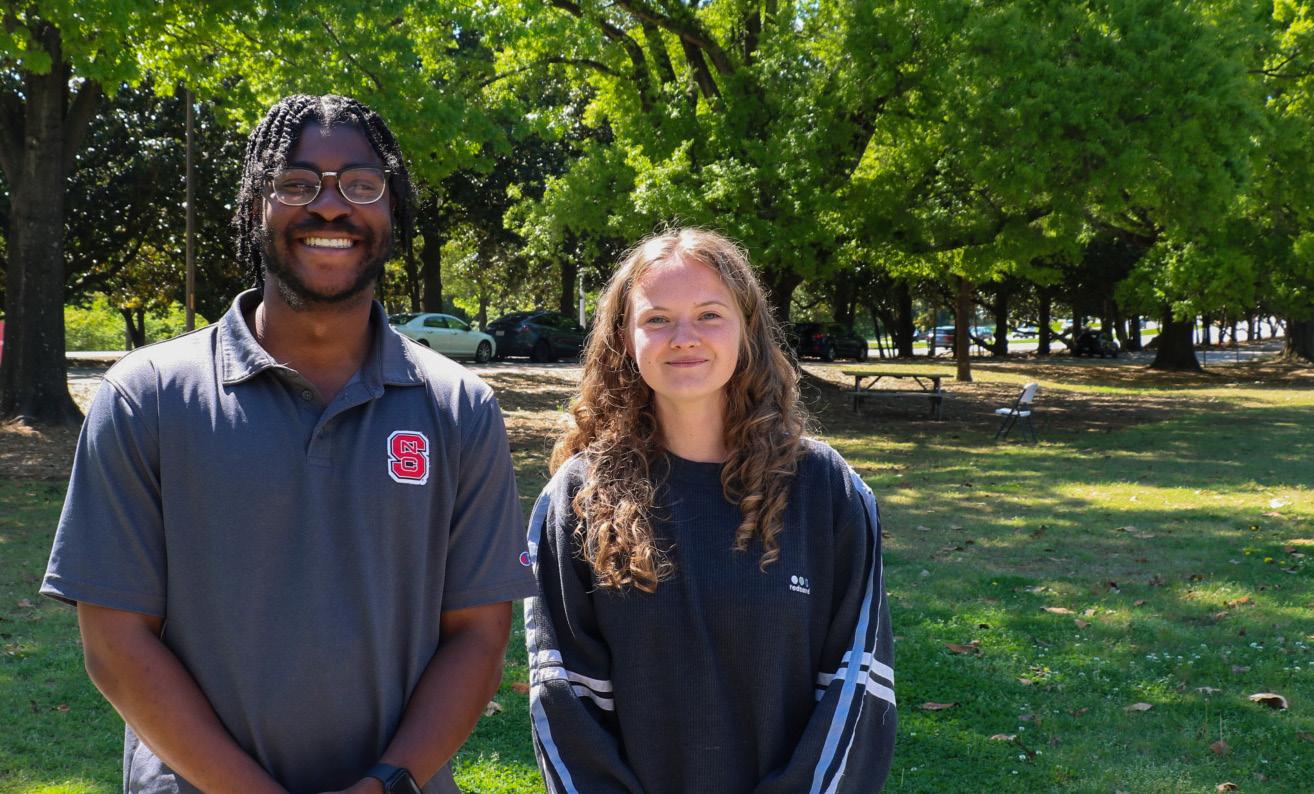
Wilcox is also looking to address major challenges. She is a first-year Ph.D. student in BAE. As an undergraduate student she worked as a research assistant in the department, and this sparked her interest in using image processing to better understand natural systems. Her past research focused on a remote sensing project aimed at characterizing shoreline and habitat changes at the Rachel Carson Reserve in North Carolina and contributing to the development of a disease detection model that quantifies the extent of disease in tomato plants.
“Looking ahead to graduate school, my research will include the development of deployable technologies that seek to further optimize agricultural systems,” Wilcox says.
She is passionate about her work because it is uniquely positioned to apply emerging technology to long-time agricultural challenges. The potential to make a difference in the lives of farmers and ensuring they have the tools they need to succeed in an ever-changing environment is also very motivating for her.
“By leveraging advanced tools and techniques, we can collect precise data that enable us to optimize agricultural practices and address pressing issues such as food security, sustainability and resource management in the face of a growing global population,” Wilcox says.
As GRFP fellows, Oates and Wilcox will be able to pursue their passion-driven research.
“I’m just really thankful for NSF and their belief in me and my future,” Oates says. “My advisors, Natalie Nelson and Khara Grieger, have been incredibly supportive and instrumental in my graduate endeavors.”
“This opportunity will allow me to continue my work in the Department of Biological and Agricultural Engineering at NC State, where the focus is not just on developing cutting-edge technologies but on creating practical solutions that benefit growers and communities,” Wilcox says. “I am excited about the potential of my research to contribute to the development of sustainable agricultural practices and enhance food security for the future.”
Engineering Hands-on Experience
By Olivia Rogers
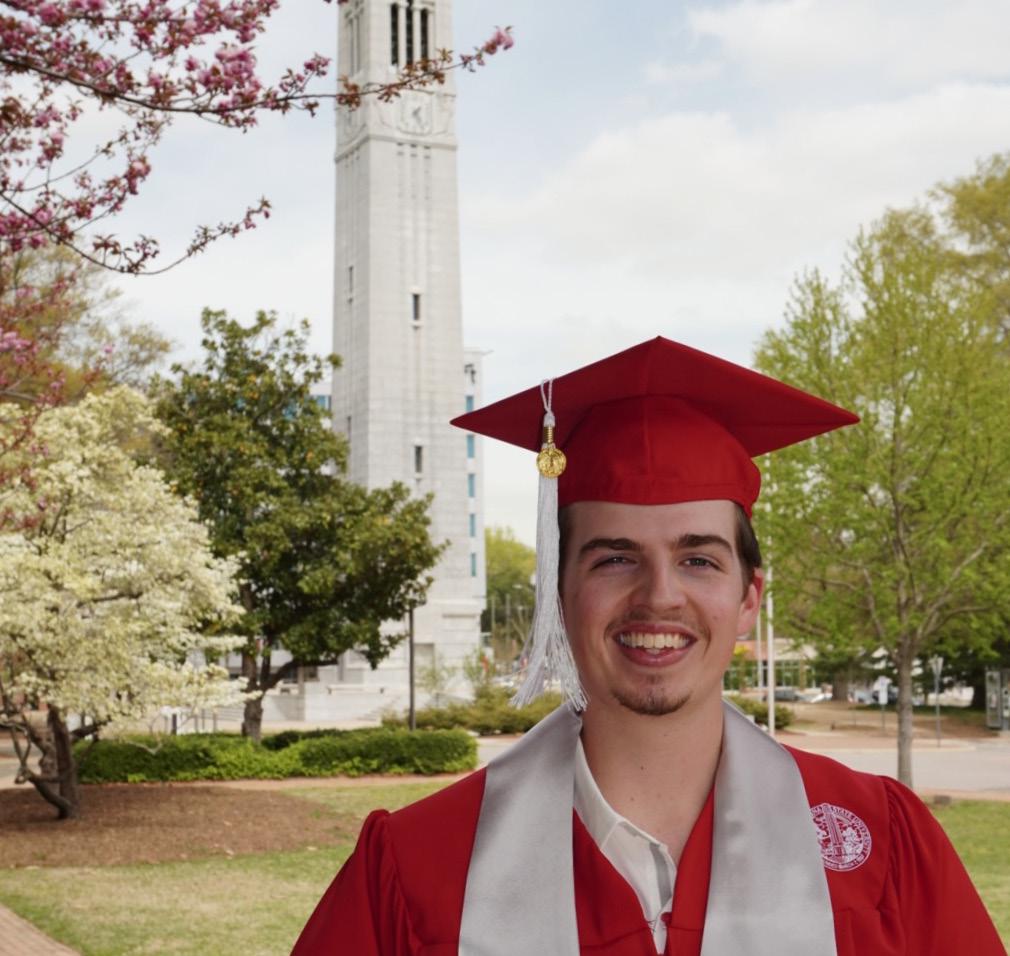
Clark Roberts knew he belonged at NC State University after a field trip to campus his freshman year of high school. Four years later, he graduated from the Department of Biological and Agricultural Engineering with a number of meaningful experiences under his belt.
Roberts graduated on May 3, 2025 with a degree in biological and agricultural engineering technology (BAET) with a concentration in agricultural systems management and minors in crop science and agribusiness management. As he prepared to walk across the stage to accept his diploma, he looked back on the time he spent as a student and an undergraduate research assistant in the College of Agriculture and Life Sciences.
His interest in combining theory and practice in agriculture started his junior year of high school.
“I wanted something that involved critical thinking and working with my hands,” says Roberts, whose background in farming and love for his high school biology classes made BAET a great fit.
“Once I began my college classes, I knew I made the right choice. Each BAET and crop science class has given me valuable information that I will take with me after I leave campus.”
When he wasn’t spending time doing homework in Weaver Labs, Roberts sought opportunities to apply his coursework through hands-on research. That’s what led him to undergraduate research.
For two years, he worked on turf research with NC State’s Pesticide and Trace Element Fate and Behavior Research group, and he worked on corn and cotton research in NC State’s Weed Science Program for one year. Over the course of these three years, Roberts cultivated his love for learning by doing.
While working as an undergraduate research assistant in the Pesticide and Trace Element Fate and Behavior Research group, Roberts conducted spray experiments on row crops, analyzed golf course soil samples for pesticide activity and history, and analyzed herbicide effectiveness on weeds and turfgrass on research plots and greenhouses.
After two years of turf research, he shifted gears to corn and cotton research in 2024. This work focused on applying varied rates of herbicides to corn and cotton and conducting greenhouse experiments.
“It was a great experience because I got to travel all around North Carolina to conduct herbicide research trials for industry pesticide companies,” Roberts says. While traveling to greenhouses and research stations, he learned skills like how to read a pesticide label, properly calibrate a backpack sprayer and rate weed growth in the field.
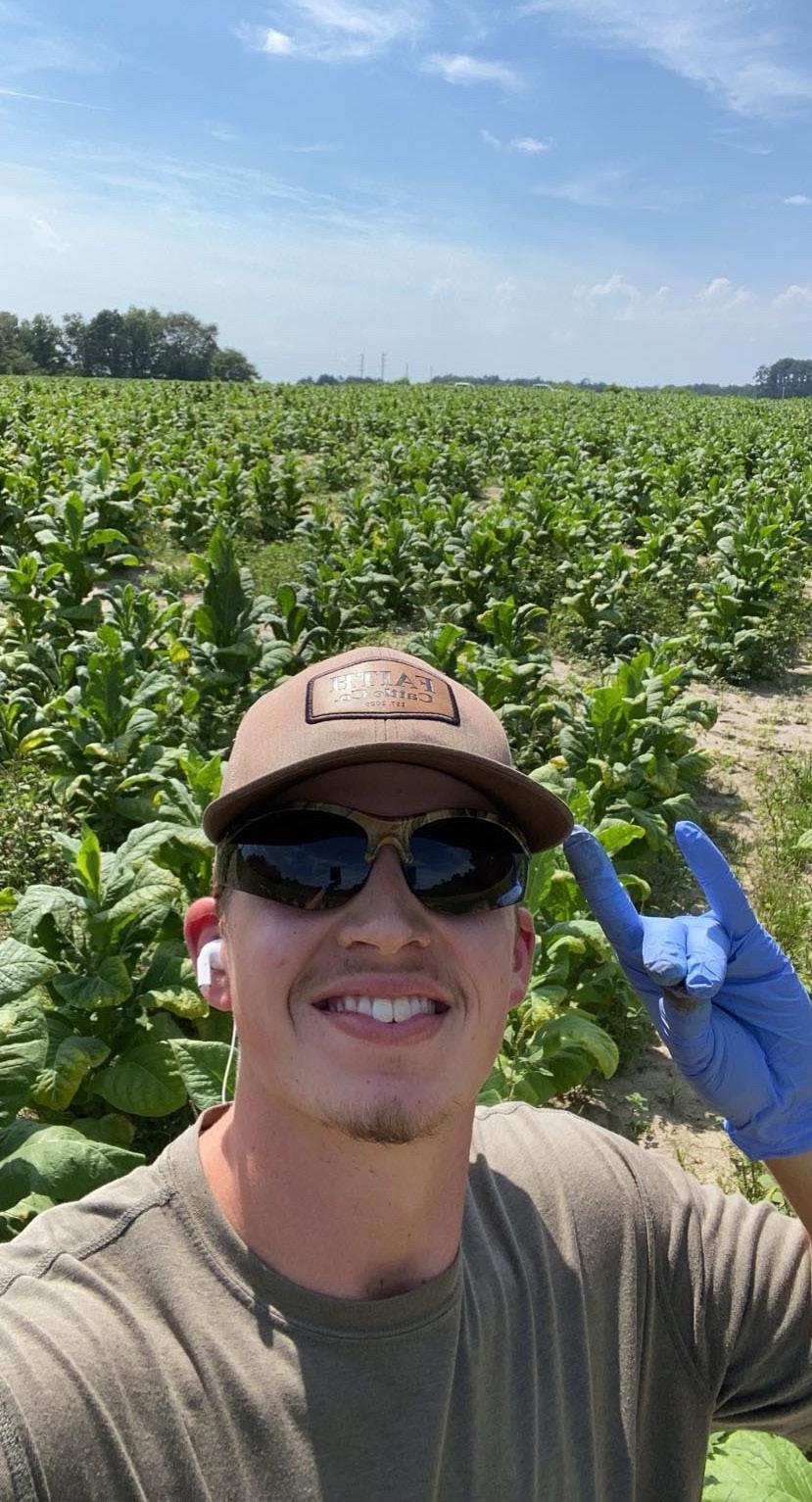
Roberts during tobacco research at Sandhills Research Station.
Working with Ph.D. and master’s students who thought differently than him helped Roberts develop as an undergraduate research assistant. By helping with the technical side of projects, “I learned even more about agriculture and how state research is conducted than just by being in the classroom,” he says.
An important lesson he learned from his four years at NC State is “that a perfect score does not define you,” he says. Coming to college from a small town, he quickly realized he was going to have to learn to juggle a lot.
That mindset has given him the confidence to take chances and explore different career paths. He plans on starting a career in the North Carolina Department of Transportation or in the geotechnical industry.
Roberts says any students thinking of coming to NC State to study agriculture should do it. “The professors in CALS want to help you succeed, and most have been in the same shoes as you. They understand the struggles of college and by asking for help you will be just fine.”
“When I got to college, I was overwhelmed with everything that a freshman had to keep up with,” Roberts says. He believes speaking with peers and “learning that doing your best is much more important than stressing over test grades” are two good pieces of advice to stick to.
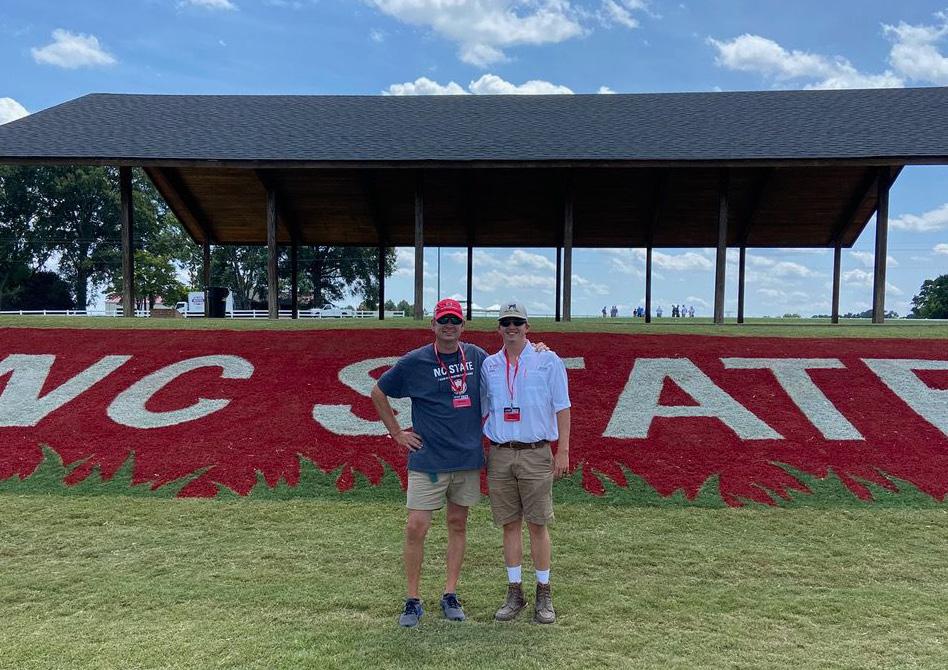
Roberts with his dad at the 2023 Turf Field Day.
FROM KILNS TO KITCHENS: UNLOCKING BIOCHAR’S POTENTIAL IN ITALY
Written by Olivia Rogers
In the world of Italian pizza, the choice between Neapolitan, Roman and Sicilian is steeped in tradition and appreciation for the cooking process. Each style has its own unique recipe to create the final product of a culinary delight. The method of crafting biochar, with its different biomass choices and performance characteristics, is surprisingly similar.
Praveen Kolar, a professor in the Department of Biological and Agricultural Engineering at NC State University and self-proclaimed foodie, recently spent three months exploring both of these worlds as a Fulbright Scholar at the University of Bologna in Italy. While abroad, he spent time sampling Italian cuisine and working on his research project, which focuses on transforming rice
husk into biochar (a black carbonrich material formed when biomass is heated without oxygen) to power capacitors in energy storage devices.
The Ingredients: Choosing the Best Biomass
As any good chef would know, you must start your process by choosing your ingredients. To create quality biochar, Kolar began by testing different types of biomass. Biochar can be made from a range of carbon-rich materials.
For Kolar’s uses, he wanted his material to have a large surface area and be porous or permeable. “I ran so many samples there, not only rice husk. I actually tried peanut husk, coffee chaff, commercial
biochar — I mean everything,” he says.
Kolar plans to use rice husks in his research, not only because it performs very well, but also because it is a common agricultural byproduct around the world. Using rice husks to make biochar would give farmers the opportunity to sell it as a value-added product.
The Oven: The Power of Pyrolysis
Once the ingredients are put together, it is time to put it in the oven. The degree of heat you set your oven to depends on which style of pizza you are making. Formulating biochar also requires specific cooking conditions.
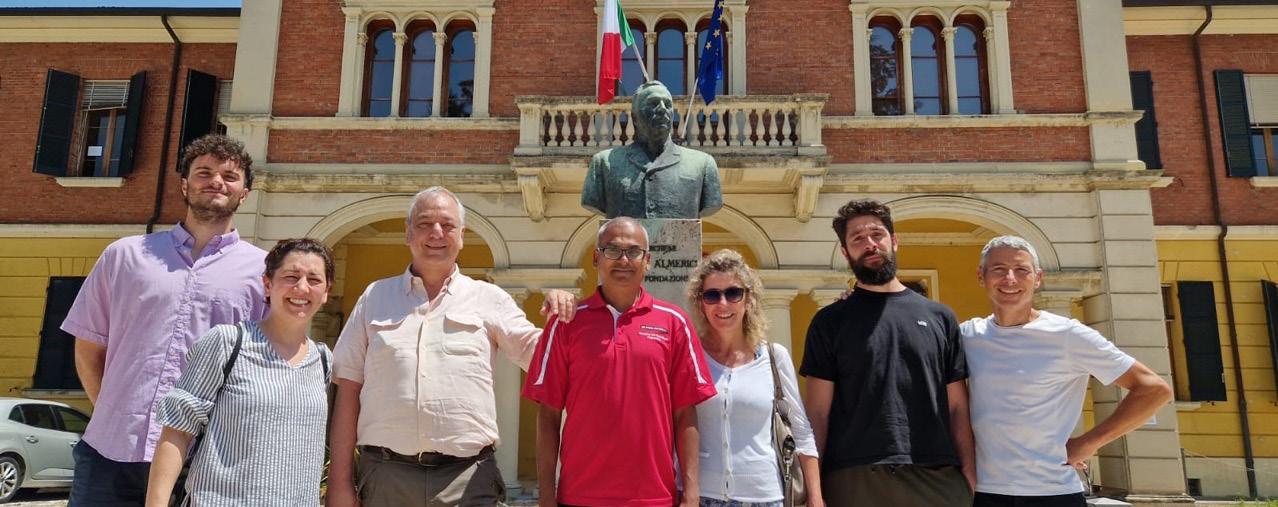
Praveen Kolar, center, with faculty and researchers from the University of Bologna.
Instead of an oven, Kolar uses kilns absent of oxygen to heat the biomass and unlock its potential to create energy. A kiln heats biomass at extreme temperatures so that a process called pyrolysis can occur. This process destroys gases and other materials in the biomass, leaving only the black carbon-rich biochar. Once the biochar is made, researchers can use it as fuel, a catalyst or several other applications depending on the desired characteristics. The exact temperature of the kiln determines the finished product, much like an oven setting.
Digging In: A High-Power Capacitor
When the pizza is ready, it can be served on the go, family style or buffet style, depending on the consumer. In Kolar’s research, the biochar goes on to be used as energy in a capacitor — a kind of battery that provides short bursts of high power.

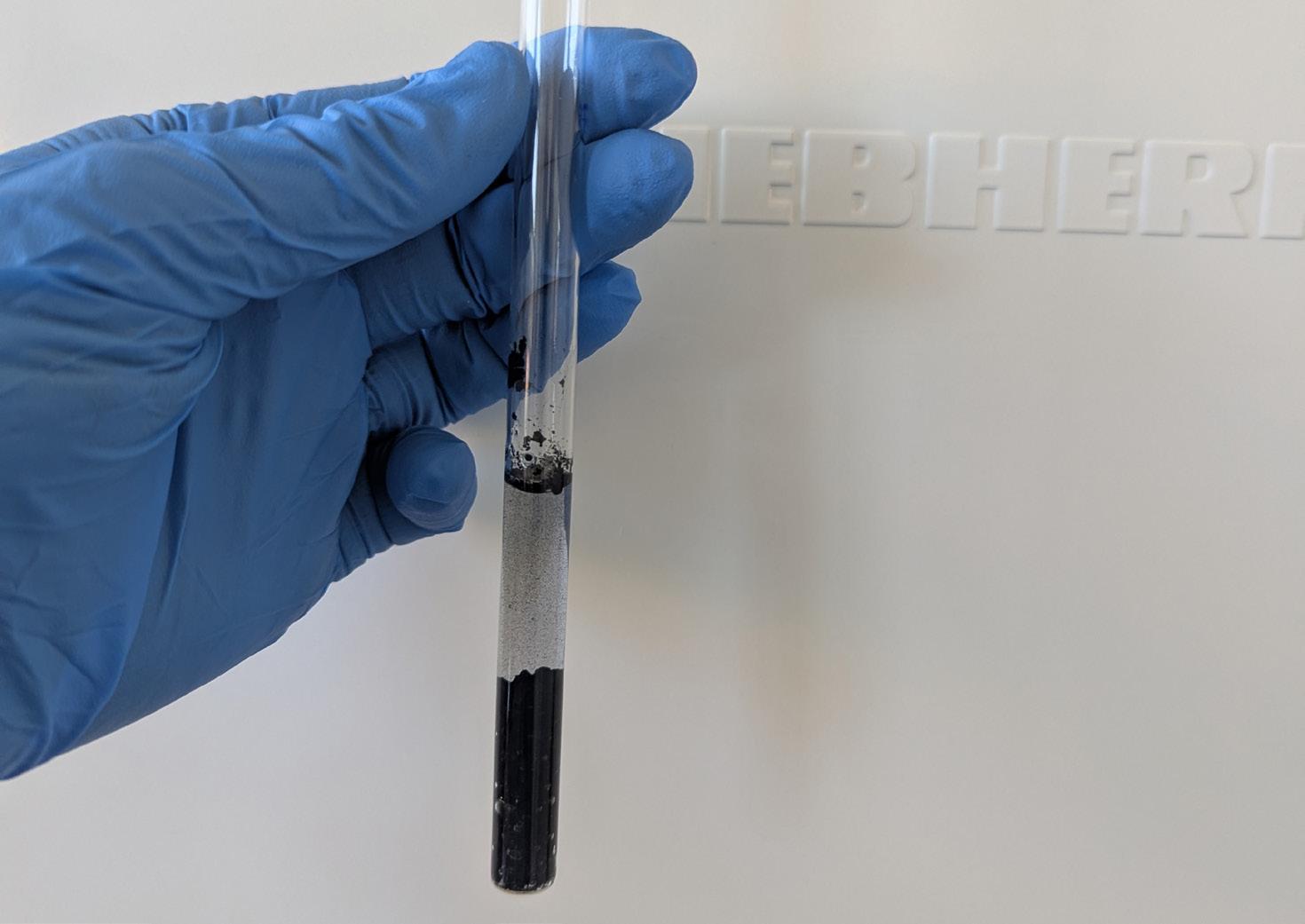
After biomass turns to biochar, its quality is tested in the lab.
“The battery has its own place, but I cannot use a battery to do activities which require a lot of energy,” Kolar says. “Imagine we are driving a car, and then we want to pass somebody. For those 20 seconds, we have to go really fast to pass the car, and then we go back to our normal speed. So for those few seconds, you need a lot of energy. That’s how a capacitor uses energy.”
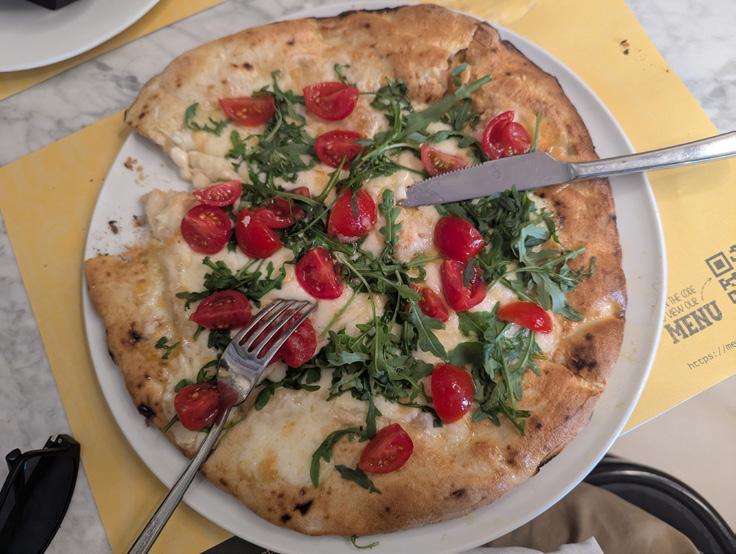
On his breaks from the lab, Kolar traveled around Italy sampling all the different styles of pizza.
Biochar is typically used to power certain types of batteries that require a small amount of energy for a long period of time. Kolar has other ideas about how to utilize this energy in different ways.
In North Carolina, “we have waste that we could repurpose, reimagine,” he says. Using biochar to power capacitors could help make products like lights that power
camera flashes, defibrillators and everyday devices more sustainable.
A Place at the Table
Unlocking the potential for biochar could create more places at the table for this resource. “Biochar is perhaps one of the better ways to create products that not only help the environment, but also provide a new revenue stream for farmers,” Kolar says.
Now that Kolar is back from Bologna, he is sorting his data and reminiscing on all the culinary experiences he had between lab sessions.
“The pizza is not the same in Naples as it is in Rome or Bologna,” he says.
Just like in the world of Italian pizza, creating biochar requires you to combine your ingredients, set fire to them, and decide which is best.
Protecting North Carolina Coastlines with Natural Solutions
By Olivia Rogers
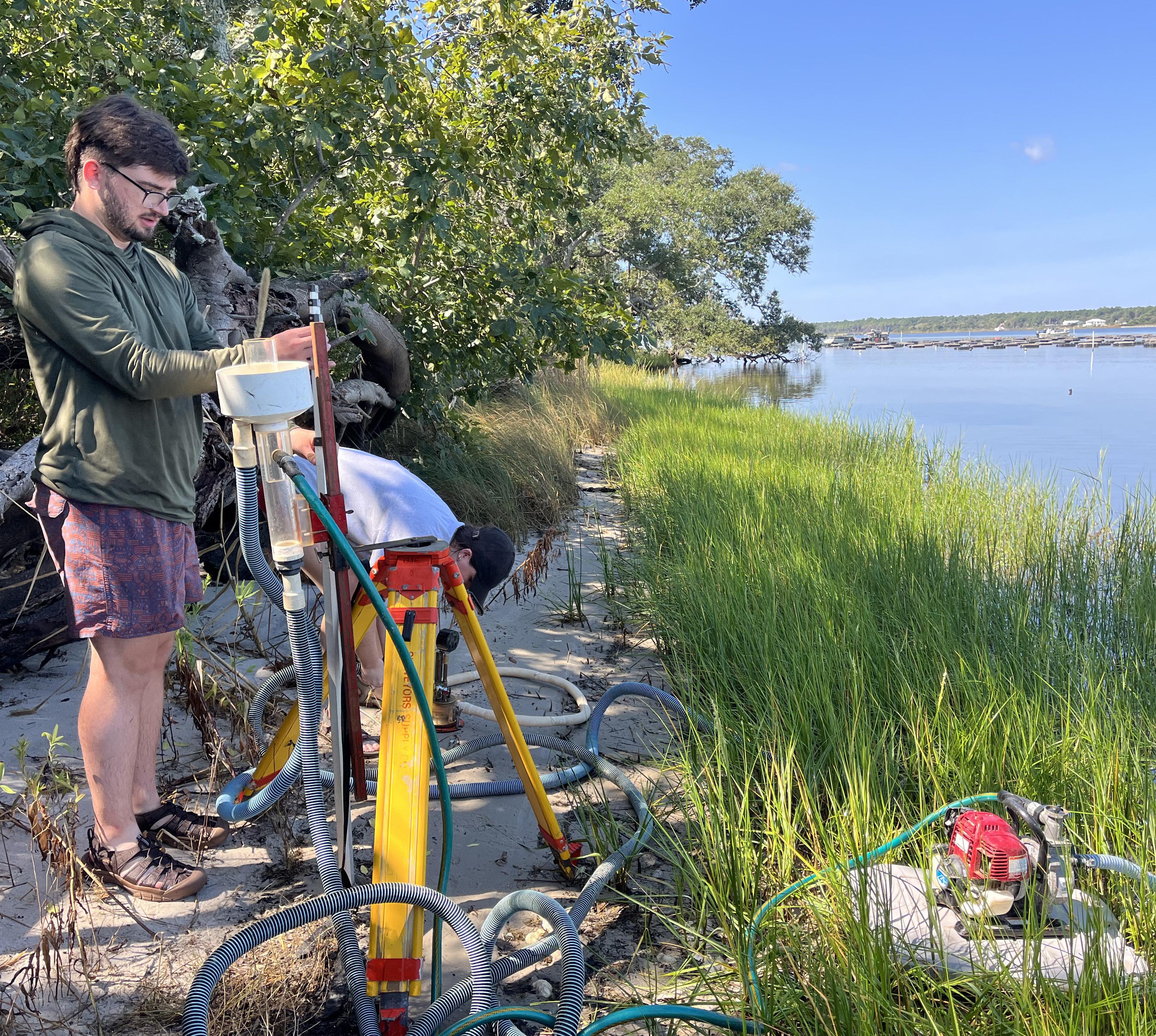
North Carolina’s oyster aquaculture industry is growing rapidly. Simultaneously, coastlines across the East Coast are eroding as sea levels rise and weather patterns change. Sam Holberg, a doctoral student in the Department of Biological and Agricultural Engineering at NC State University, is exploring a potential solution that involves using oyster farms to preserve our shorelines.
Holberg, recently named a 2025 Sea Grant Coastal Research Fellow and a Southeast Climate Adaptation Science Center Global Change Research Fellow, finished his master’s project on the effects of North Carolina’s oyster aquaculture industry on water quality in July. For his doctoral studies, he is working with
Celso Castro-Bolinaga, an associate professor of biological and agricultural engineering who leads the Environmental Sediment Mechanics Research Group, to leverage oyster farms as a nature-based solution to halt erosion along the coast.
Originally from Florence, South Carolina, Holberg spent many summers outdoors. It was amongst nature in South Carolina’s coastal plain, where his interest in the natural world blossomed. “I was outside a lot as a kid camping, so I was always interested in plants, animals and water,” he says.
In high school, Holberg found he gravitated toward biology. His interest in engineering began after his
calculus teacher suggested he look into engineering programs.
Holberg took this advice and attended Clemson University, where he graduated with a bachelor’s degree in biosystems engineering. As a biosystems engineering major, he felt he could combine his love for the natural world with his drive to solve grand challenges.
“I tried a few different focus areas within biosystems engineering,” Holberg says. “I did renewable energy, water quality and then, finally, through an internship my junior year, I decided I wanted to do coastal work.”
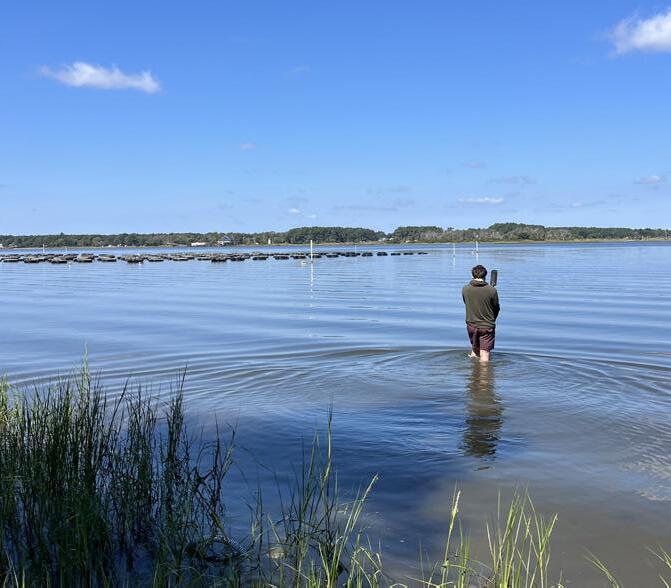
As a graduate student at NC State, Holberg is applying his passion to practical solutions. For his oyster aquaculture and erosion research, he spends his time taking measurements around oyster farms and collecting data for models.
Holberg’s passion stems from how actionable his work is. “That’s one reason I like graduate school — you’re working towards solving issues,” he says. He hopes to demonstrate that oyster farms can help preserve shorelines as well as produce food.
Currently, man-made sea walls are used to reduce the impacts of erosion. “Imagine you put up a concrete wall — the stuff behind the wall is not going to move, but it’s also not going to get better,” Holberg says.
His project aims to implement a solution with an ecological function. “My research looks at whether an oyster farm is putting more sediment behind it, while also producing food sources at the same time.”
Another project he has participated in as a doctoral
student involved heading to the coast of Florida to collect data after hurricanes Helene and Milton as part of a multidisciplinary team from the National Science Foundation’s Nearshore Extreme Events Reconnaissance (NEER) Association. This data collection effort will continue over the next two years through a recently funded National Science Foundation award.
“There’s not a lot of field data in general around extreme event-induced barrier breaches,” Holberg says. The measurements and data they collected in Florida will be used to create models around how extreme weather events interact with coastal systems and infrastructure.
It’s that adaptability in his research that Holberg has come to value in graduate school. “Coming up with new creative ideas to solve problems, I feel like is one of the strengths of biological engineers, because sometimes biology is confusing, and nature doesn’t behave the way you want it to. You always have to be flexible and try out new things,” he says.
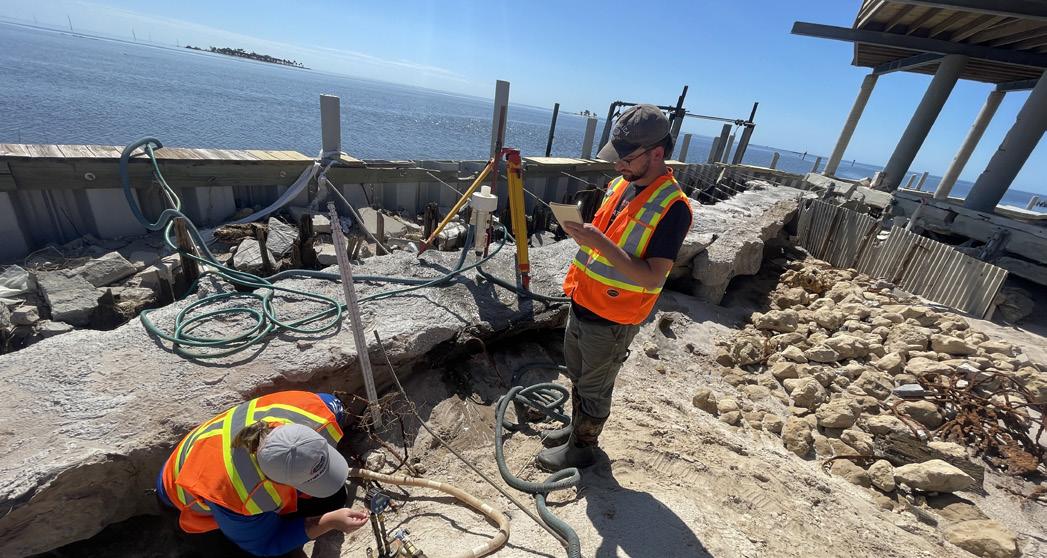
Researching the effects of oyster farms on our shorelines could provide the data needed to adapt current methods, such as man-made infrastructure like sea walls, to lasting nature-based solutions.
“Shoreline erosion is a very big problem, and a lot of people live on the coast,” Holberg says. “If we can protect our shorelines through either oyster farms and nature-based methods, or even create models to know when extreme storms are going to cause catastrophic openings in inlets … coastal management agencies can make more informed decisions for coastal communities.”
Holberg conducting jet erosion tests behind a seawall that failed in Horseshoe Beach, Florida following Hurricane Helene.
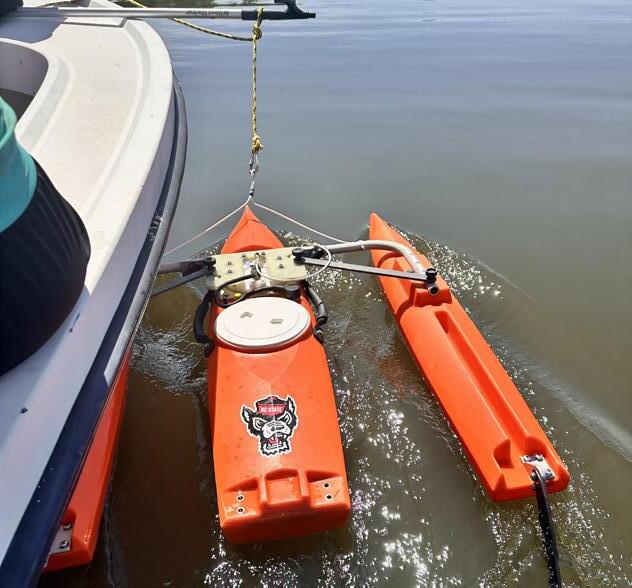
Holberg uses a variety of tools to gather data at his research sites.
From Trash to Biogas
By: Olivia Rogers
Have you ever caught yourself standing between a recycling bin and a trash can, unsure what category your trash belongs to? One type of waste that doesn’t fit neatly into either bin is food and other organic waste. This waste often ends up in landfills, where it produces methane, a powerful greenhouse gas. Researchers at NC State University are working to divert that waste and put it to better use.
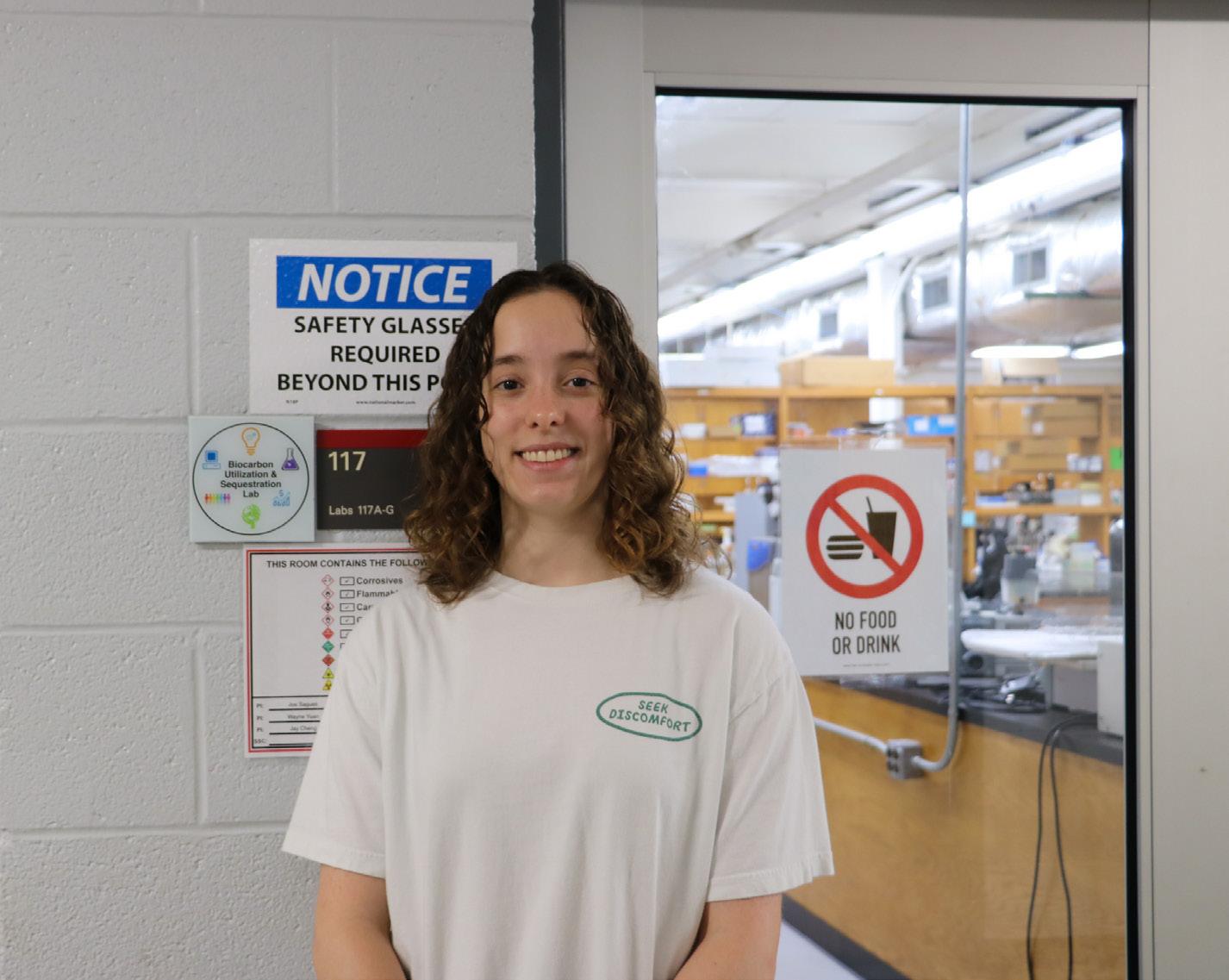
Inside the Biocarbon Utilization and Sequestration (BUS) Lab at NC State, researchers are working to leverage sustainable biomass resources for valuable applications while also removing carbon from the atmosphere. The lab is led by Joe Sagues, an assistant professor of biological and agricultural engineering, whose research focuses on carbon removal and innovative uses of biomass.
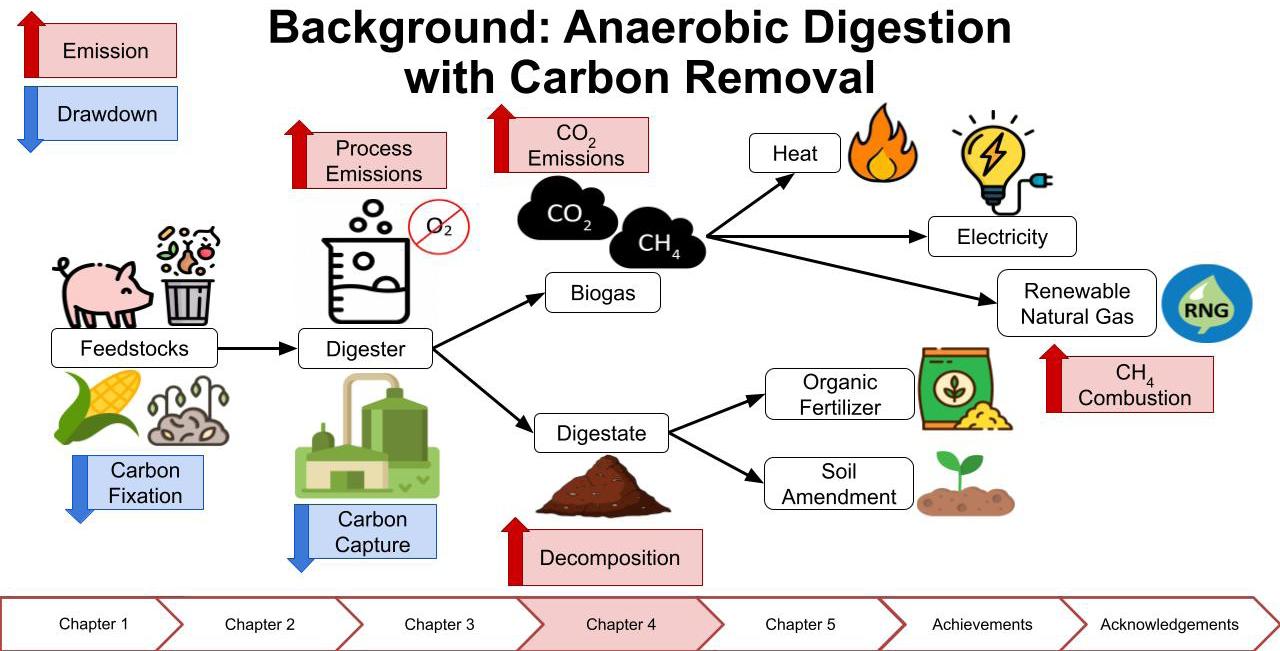
Abby Studnek, a junior majoring in biological engineering with a bioprocessing engineering concentration, spent her summer contributing to an ongoing research project in the BUS Lab that focuses on diverting organic waste from landfills and converting it into biogas through anaerobic digestion. This process uses microorganisms to break down organic waste without oxygen, creating biogas, a renewable energy source. The research aims to apply different uses to the methane and carbon dioxide that make up biogas.
“The goal of the project is to take biogas produced from organic waste and use it as a replacement for natural gases, to use this energy, but also to mitigate the methane that waste would be producing in a landfill,” Sagues says. “The methane can be used to generate heat and electricity, or upgraded into renewable natural gas, and the carbon dioxide can also be captured and applied in useful ways, such as for wastewater treatment and other industrial processes.”
Studnek recently reflected on how her time in the lab has shaped her understanding of carbon removal and energy production while also answering her questions about how she could make a difference with her degree.
Was this your first time doing undergraduate research?
This was my first time doing research in bioprocessing work. Last summer I worked with Dr. Barbara Doll in the Department of Biological and Agricultural Engineering, doing ecological engineering research. Over the past year, I was also part of NC State’s Engineering Sustainable Composting and Outreach Program ((e)SCoOP) where I did research involving biotechnology.
What made you apply to NC State, and how did you decide your major?
Going into college, I didn’t really know what I wanted to do, but people were like, ‘You’re good at science and math. You should do engineering.’ So that’s what I did. I actually found Biological and Agricultural Engineering through a friend who recommended it to me because I’ve always been interested in sustainability and the work that goes along with that.
Has it been a good fit?
It’s definitely been a good fit. In my classes I get to see the actual, real-world application of my interest in science and math. Getting to see solutions to real-world problems has kept me here.
What made you want to do undergraduate research?
To get experience really. I’ve said I have liked sustainability for a long time, and that I’d love to do something in engineering, but I had no idea what that was. So it really was to discover what I can actually do with my degree. Trying out the different concentrations, like ecological and bioprocessing, has helped me get a more concrete idea of what I want to do.
"Knowing that my little piece this summer could actually be part of something that leads to more renewable energy sources from anaerobic digestion is exciting."
The BUS Lab has a variety of ongoing carbon capture and utilization research projects. Graphic by Julia Cunniffe.
“The goal of the project is to take biogas produced from organic waste and use it as a replacement for natural gases, to use this energy, but also to mitigate the methane that waste would be producing in a landfill,” Sagues says.
What are you passionate about?
How did you spend your summer in the BUS Lab?
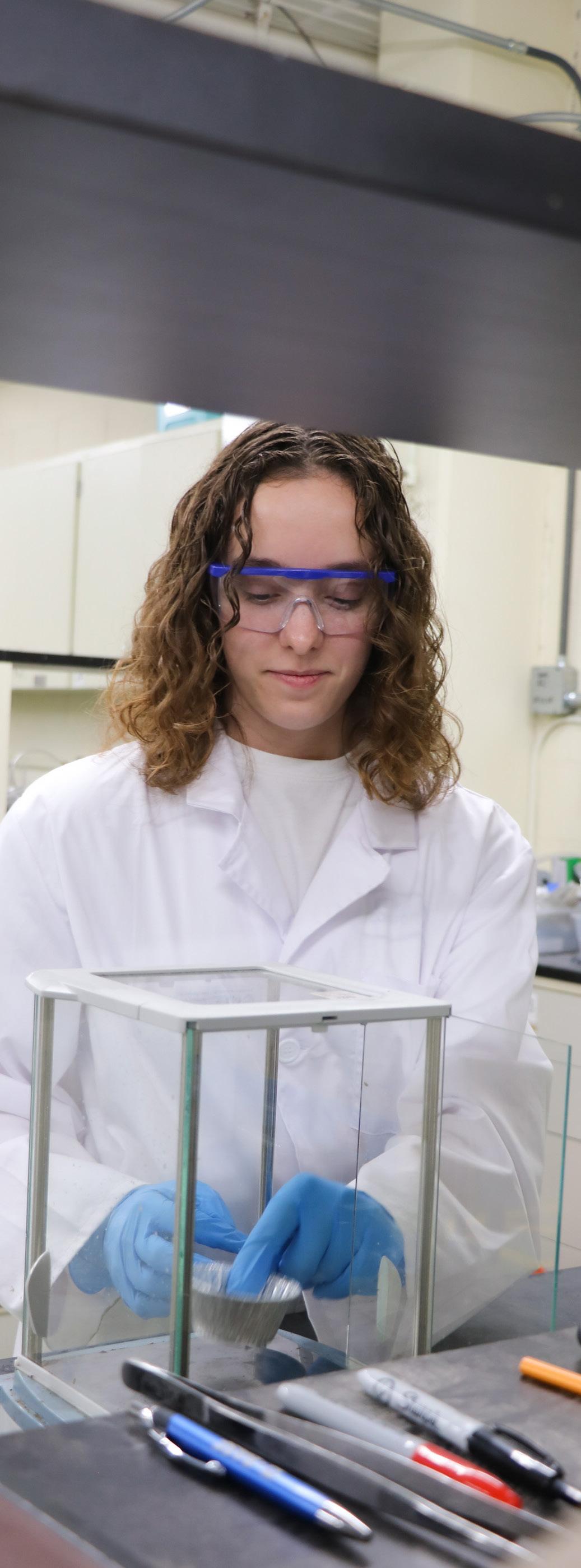
I worked with Drs. Yaojing Qiu and Joe Sagues on their biochemical methane production project. I looked at different industrial, municipal and organic waste products to see how much methane they can produce via anaerobic digestion over a 30-day period. My main role was to characterize all the samples, such as total solids and volatile solids. After those 30 days, we made comparisons between the samples to see what type of characteristics led to more favorable production.
What was your biggest challenge?
The main thing I keep thinking about was the flexibility I had to have with scheduling and also learning how to productively multitask, because some lab tasks can take a long time. It’s figuring out not just doing one thing at one time, but seeing how you can layer different things to be the most productive. Experimentally, in terms of the methods, we didn’t have too many challenges. It was really the scheduling, and just being flexible with what samples don’t come in on time. So what can we do instead, right?
Well, for engineering: I’ve always loved problem-solving and efficiency, and that’s like the bread and butter of it. We need energy for as long as we’re going to be here, so we’re always looking for new sources that aren’t going to harm the planet. Being able to do research in an area in which I know I’ll be giving something to people, like literally light and energy, is exciting.
Knowing that my little piece this summer could actually be part of something that leads to more renewable energy sources from anaerobic digestion is exciting.
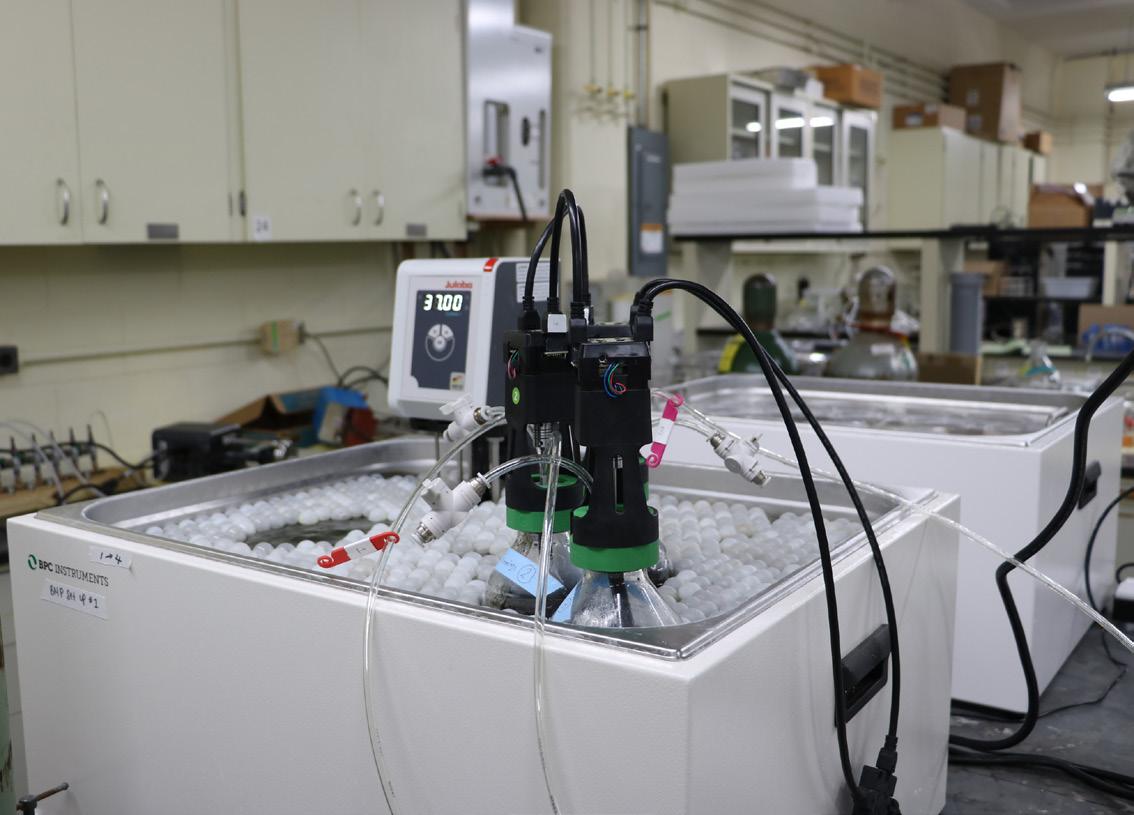
Studnek gained experience working with different lab technology.
Precision on Autopilot
Autonomous Drone Accelerates Research for Drought-Tolerant Soybeans
By: Olivia Rogers
For growers and researchers, keeping pace with crop maintenance during the growing and harvest seasons is a massive, time-consuming effort. But the future of crop production could require less hands-on operation with new agricultural technology.
Frank Bai, an assistant professor in the Department of Biological and Agricultural Engineering (BAE) at NC State University, is testing a drone docking solution that he hopes will help growers automatically assess the health of their crops remotely. Bai’s research focuses on developing and applying advanced and reliable technologies in precision and digital agriculture to address gaps in sensing, data processing and application to enhance system efficiency.
Bai has been working on this specific drone project with Justin Macialek, BAE’s research project coordinator, and Trevor Quick, IT systems administrator for BAE. Operating out of NC State’s Sandhills Research Station in Jackson Springs, North Carolina, the team collaborated with the
station’s superintendent, Jeremy Martin, to install and configure an autonomous drone system. The project relies on a shielded BVLOS (Beyond Visual Line of Sight) waiver from the Federal Aviation Administration (FAA) to realize the remote operation.
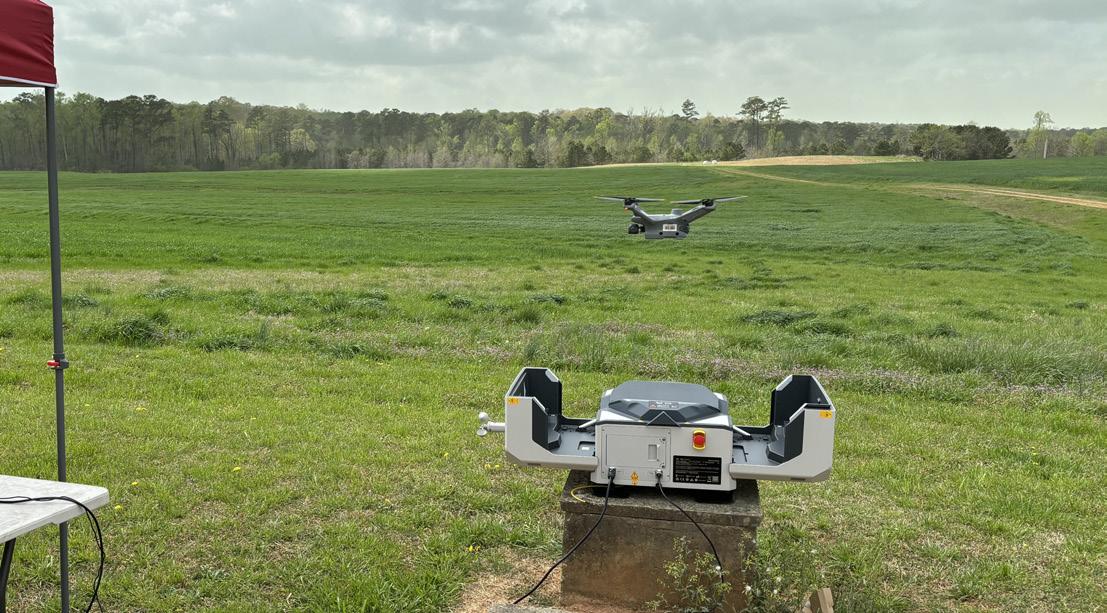
The drone self-launches, flies out to perform its tasks and returns to its docking station to save and send the data it collected.
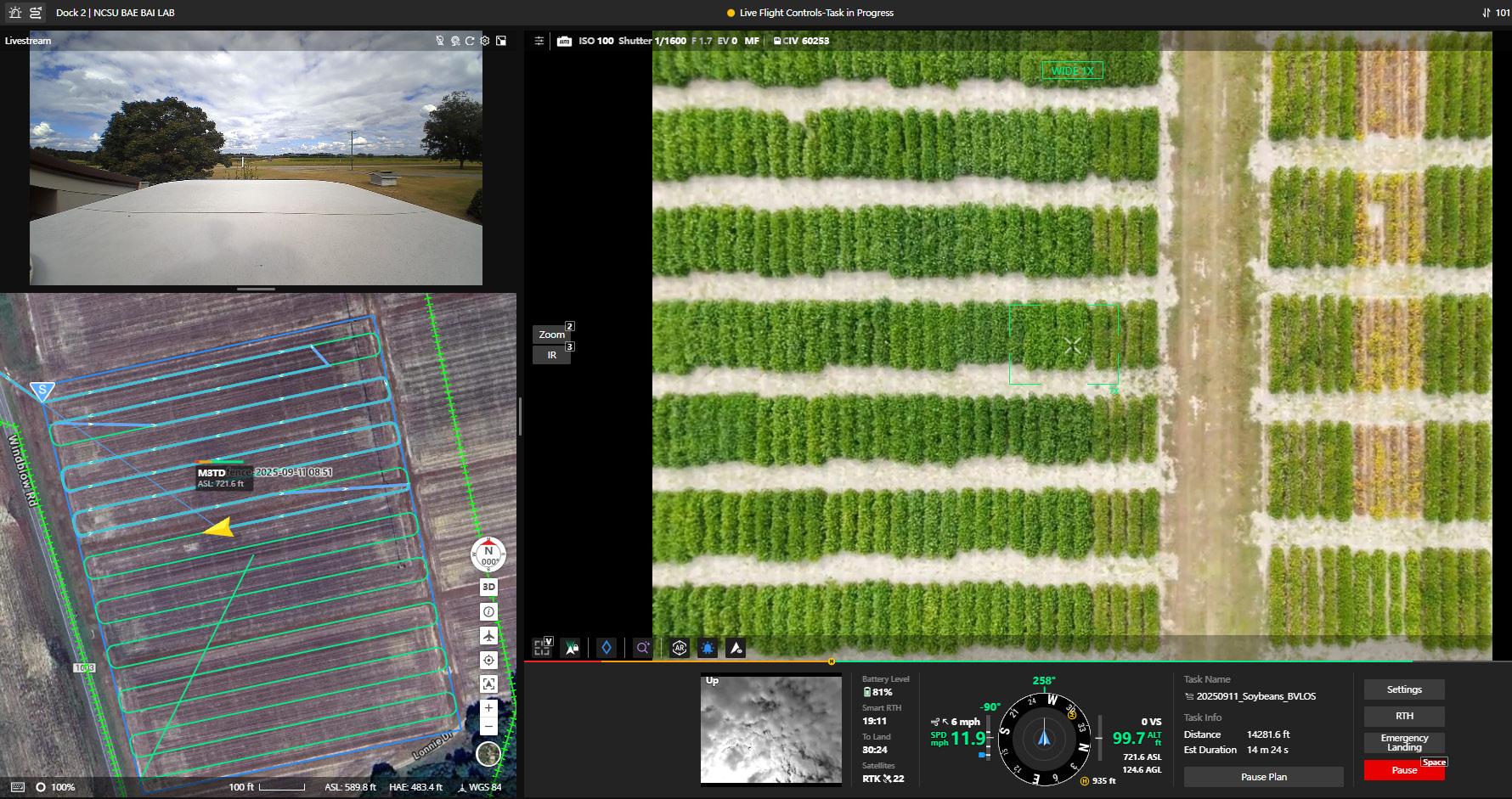
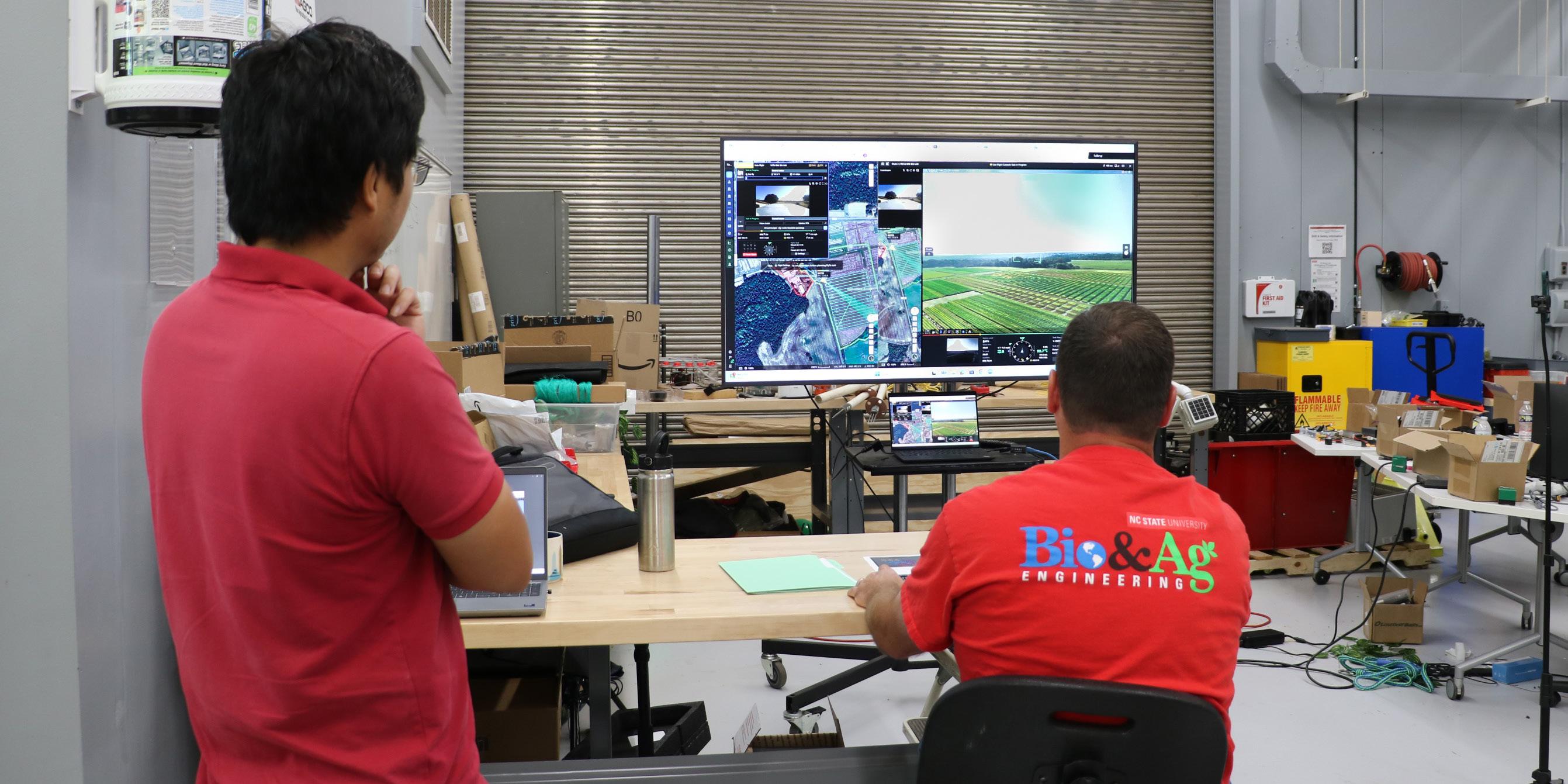
Drone images allow users to see the treatment differences in real-time.
“Research teams often need to travel a few hours to research stations to collect the data. I believe we are among the first research groups to leverage BVLOS operations within the College of Agriculture and Life Sciences, which can help potentially save significant travel time and the overall operation cost for research projects,” Bai says. “I used to have to stay overnight to collect data in the late afternoon and early morning.”
This technology could help reduce costs related to traveling to and from research sites. Instead of spending a minimum of three hours on the road between Raleigh and the research station to manually fly the drone, Bai can use this drone system remotely to fly on a pre-defined route through fields.
The drone system could also save growers time by doing frequent sweeps of a crop, detecting plant stress early and reporting that to the farmer. Bai’s team hopes to develop this system into an automatic scouting agent that sends field reports to the grower’s phone.
Bai recently test-launched the drone from NC State’s campus. The drone docking system allows the remote pilot to monitor and control the drone through a cloud-based platform.
While the team was observing on a screen in Weaver Laboratories, the drone took flight at the Sandhills Research Station, followed a preprogrammed flight path and gathered data on a soybean field.
Bai has partnered with Ben Fallen, an assistant professor in the Department of Crop and Soil Sciences and research agronomist with the U.S. Department of Agriculture’s Agricultural Research Service. Fallen’s research focuses on altering the genetic lines of soybeans to be more droughttolerant. The autonomous drone system provides high-frequency data — scheduling hourly flights on selected days — which is crucial for studying plant health and life cycles. The team collects phenotypic data through high-resolution images to precisely measure soybean water efficiency at the field plot level.
“We want to integrate this autonomous drone system, soil and weather data, and models to build a digital tool that simulates crop transpiration at high resolution,” Bai says.
The tool will also allow soybean researchers to perform a genetic analysis of the crop and select the ideal genetics for more resilient plants.
Additionally, Bai plans to incorporate these technologies into his courses, so students can develop an understanding of how precision agriculture and modern technology can be applied together.
“We are proving that this technology can be affordable, reliable and intelligent for not only researchers, but also growers in digital agriculture,” Bai says. “This means future field crop production will be more efficient and potentially autonomous.”
The autonomous drone takes off from a docking station.
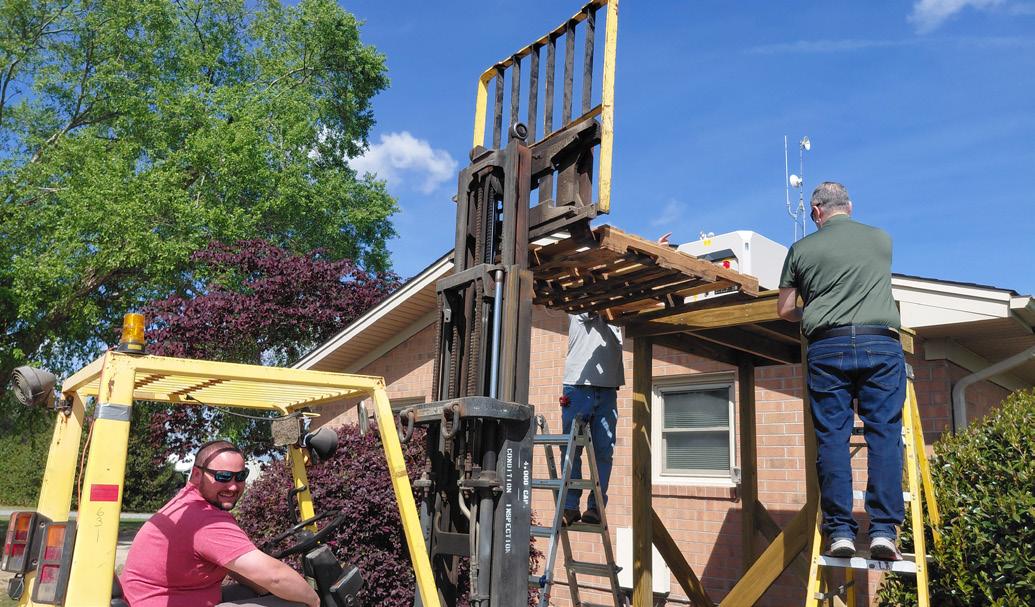
Research station staff built a platform for the drone landing dock.
Back to the Basics: Changing the Course of Stream Restoration Practices
By Olivia Rogers
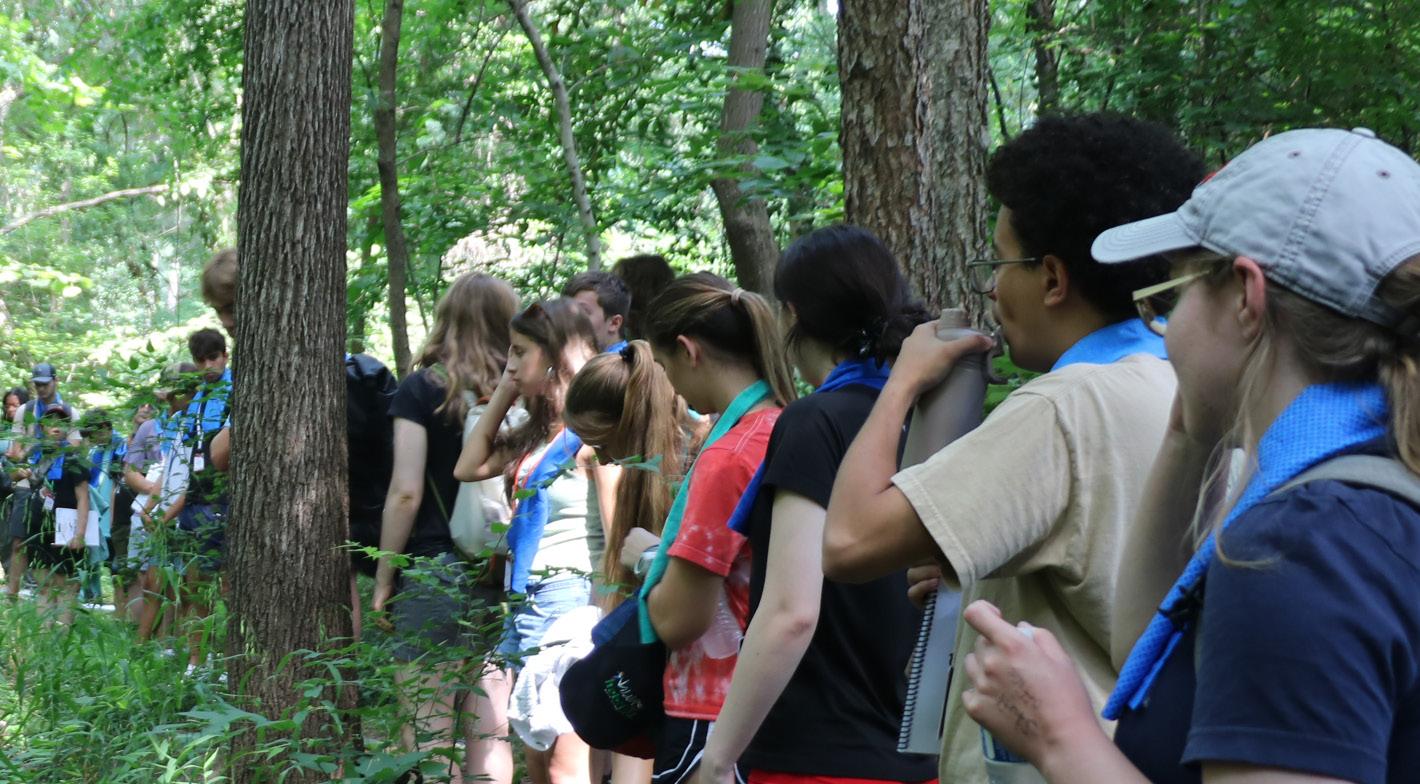
America’s streams and rivers are the silent lifelines of the landscape. Biological and agricultural engineers who focus on stream restoration work to keep these environments healthy and stable. This past summer, more than 400 experts from all across the industry gathered for NC State University’s EcoStream: Stream Ecology and Restoration Conference in the rolling hills of Asheville, North Carolina, to reflect on how stream restoration has changed over time and where the practice is headed.
The Department of Biological and Agricultural Engineering (BAE) has been involved in stream restoration since it began to take shape as its own discipline.
Restoring streams and waterways, a newer biological engineering concentration, has evolved over the years from man-made solutions to more naturebased solutions. NC State alumni and faculty have participated in leading this shift in the industry's approach from rigid, concrete-focused stabilization to sustainable restoration.
Nurturing Healthier Streams
Faculty and staff worked together to form the NC
State Stream Restoration Program which works alongside state and federal agencies and restoration practitioners. Spearheaded by BAE Department Emeritus Professor, Greg Jennings, the program’s work led to government agencies adopting more environmentally sensitive approaches for stabilizing and restoring degraded streams throughout the state. The BAE program also created training courses to aid the industry in adopting and implementing the new restoration approaches. Since 1999, the BAE department has taught more than 100 courses training thousands of professionals from across the southeastern U.S. and beyond. The concepts were also integrated into the BAE graduate and undergraduate curricula.
Rebecca Stubbs, who earned her bachelor’s degree in biological engineering from NC State in 2015, now works as the practice lead on the stream restoration team for McAdams, a civil engineering and land planning firm in Raleigh. She says protecting streams is vital because “all runoff from rainfall eventually flows into a stream.”
Stubbs believes “investing in the restoration of degraded streams, wetlands and buffers is crucial for improving the quality of surface waters on which we all depend.”
For decades, the standard practice in stream restoration used structures like rock, steel and concrete to stop erosion. The overuse of this method often stabilized the banks at the expense of the ecosystem. Banks would become bare, which would affect the stream and surrounding areas.
Natural resource professionals, researchers and engineers worked together to implement a new approach that prioritized working with the natural environment, rather than against it.
Darrell Westmoreland, an alumnus of the BAE department who has spent 30 years in the industry, has been involved in this transition since it took root. Westmoreland is the founder of North State Environmental, Inc., which has projects all across the country. He has collaborated with experts in wildlife biology, hydrology and aquatic ecology from numerous agencies, including the North Carolina Department of Transportation, the Army Corps of Engineers and the national and state forest services.
Interdisciplinary collaboration has been key to developing the discipline as new challenges appear. “I feel like we've really come a long way through the years
of developing that happy spot between bioengineering, the green side of stream restoration, into what is also equally important, the civil engineering side of the industry,” Westmoreland says.
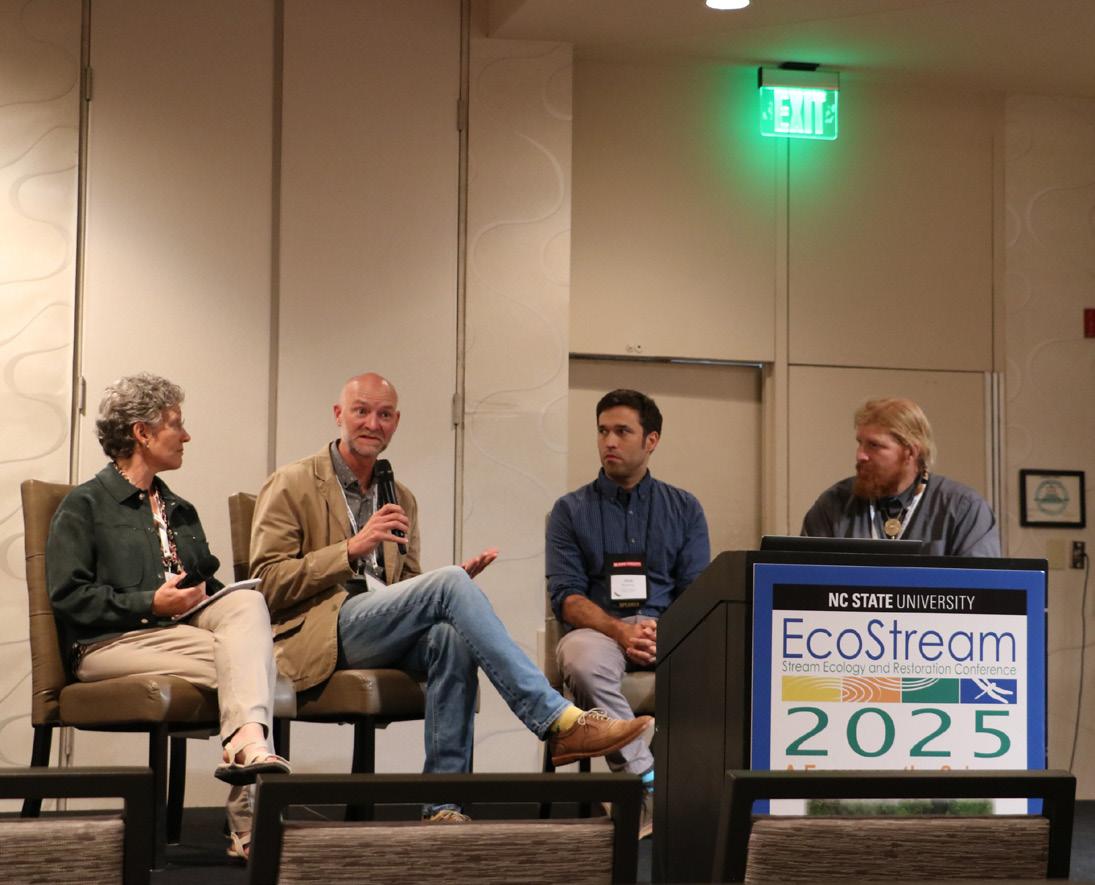
Experts gathered to talk about the future of stream restoration at the 2025 EcoStream conference.
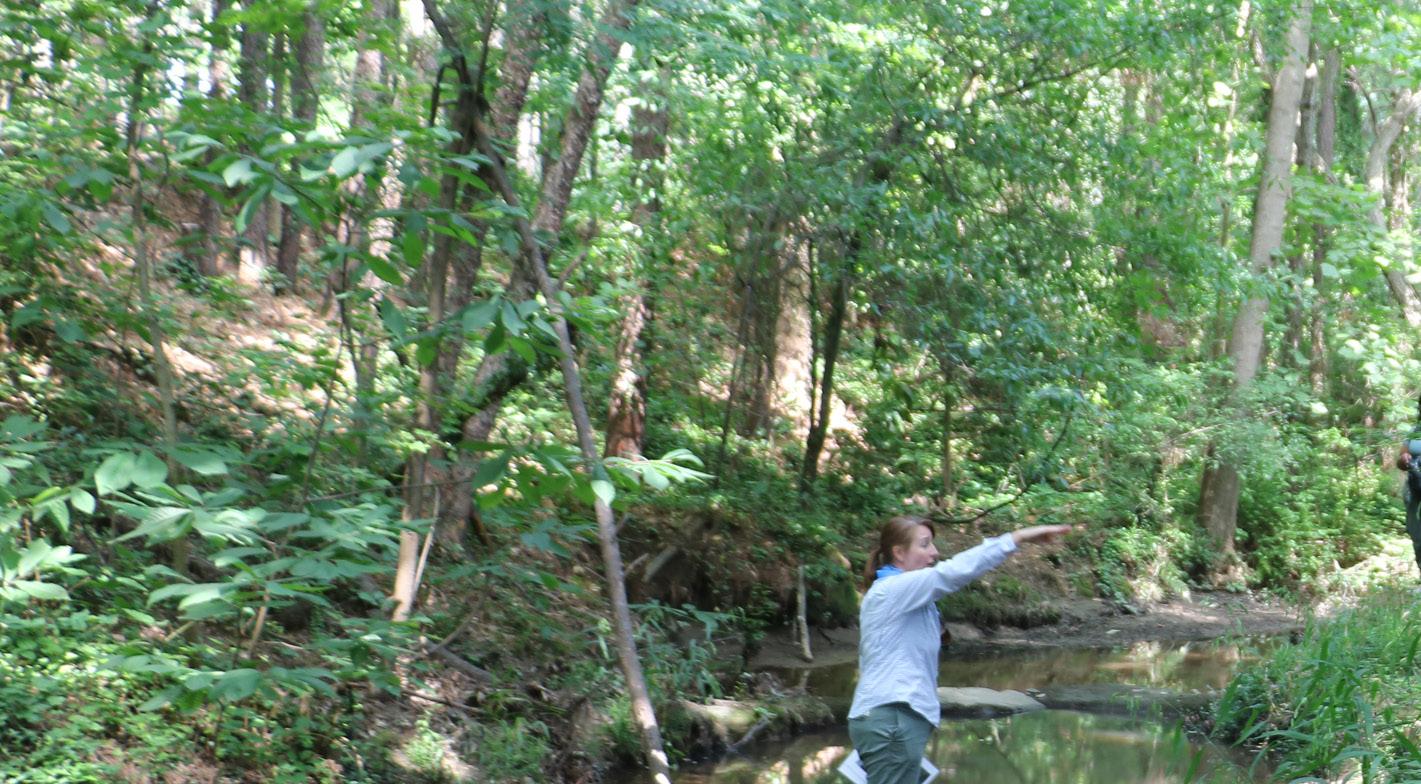
Doll leading a tour of Rocky Branch after restoration.
Tangible Impact
For NC State, the best example of this change in approach is right on campus. Before 2002, the Rocky Branch Stream, which cuts through the university, was one of the state’s most polluted streams and suffered from heavy erosion and narrowing.
Barbara Doll, an associate Extension professor and Extension specialist at NC State, led the charge to restore Rocky Branch Stream.
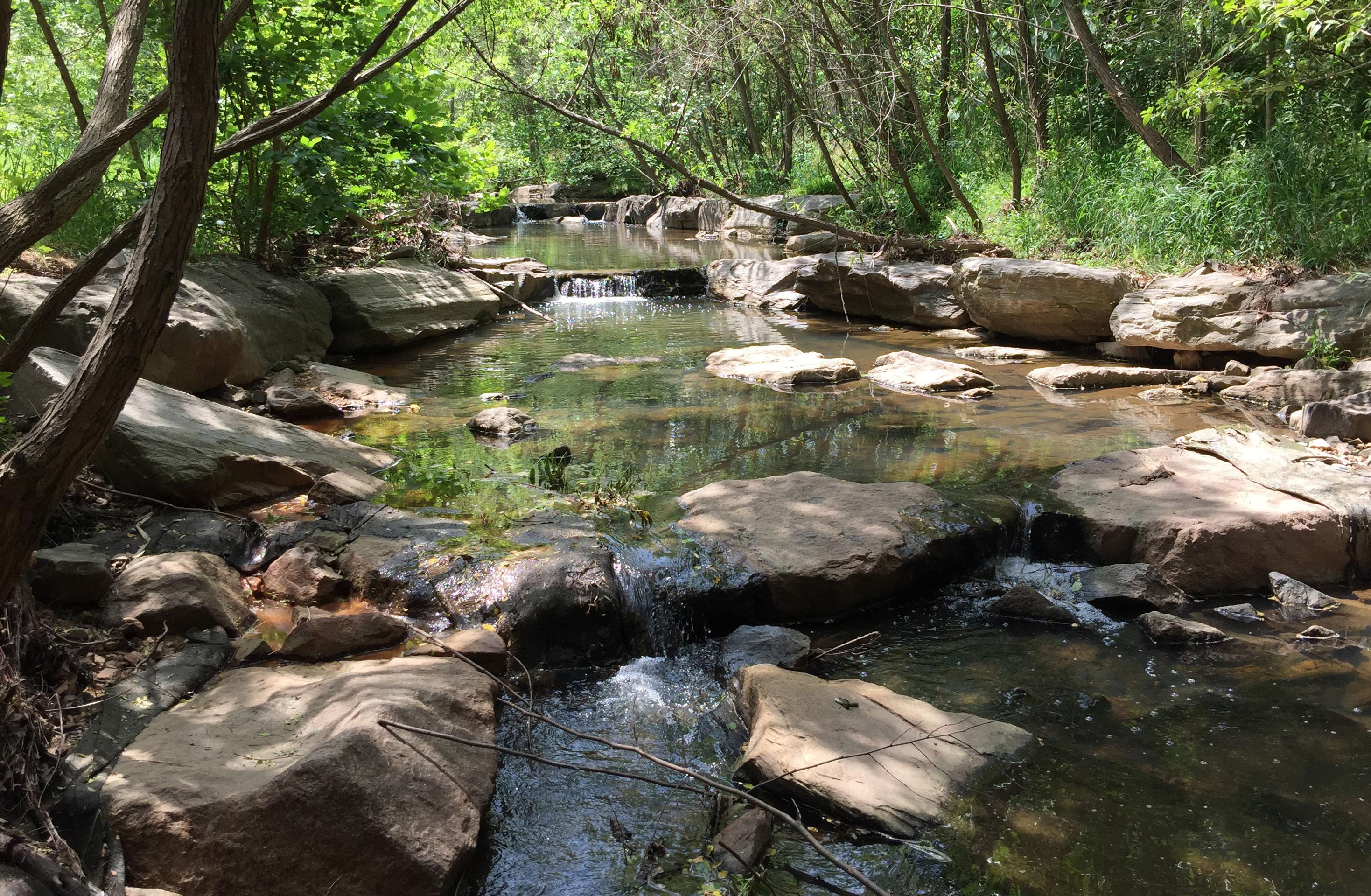
Under her guidance, the team restored the stream by emulating natural channels and creating a new floodplain. The result is a thriving system where native vegetation grows along a greenway, providing essential wildlife habitat and a scenic public space for students and visitors.
By prioritizing the replication of natural forms and habitats of streams, this project became a living example of how the new approaches could make lasting impacts. As Doll puts it, they now find examples of "stable, healthy environments and use them as a template to incorporate natural features into restoration projects.”
Sharing case studies like Rocky Branch helps keep collaborators informed on how to apply emerging techniques to their own projects.
“Because stream restoration is a relatively young discipline compared to other engineering and design fields, conferences like EcoStream, along with trainings and workshops, are invaluable,” Stubbs says.
Doll, who leads EcoStream, strives to improve the “science and performance of stream restoration” through collaboration. She believes there should always be a line of communication between biological engineers, policymakers, researchers and scientists so that the discipline can continue to shape itself around emerging issues.
This high-level involvement ensures that cutting-edge academic research directly informs professional practice and regulatory decisions. Through this comprehensive effort, NC State is leading by example, providing a space to share findings and develop stream restoration methods to fit the changing landscape.
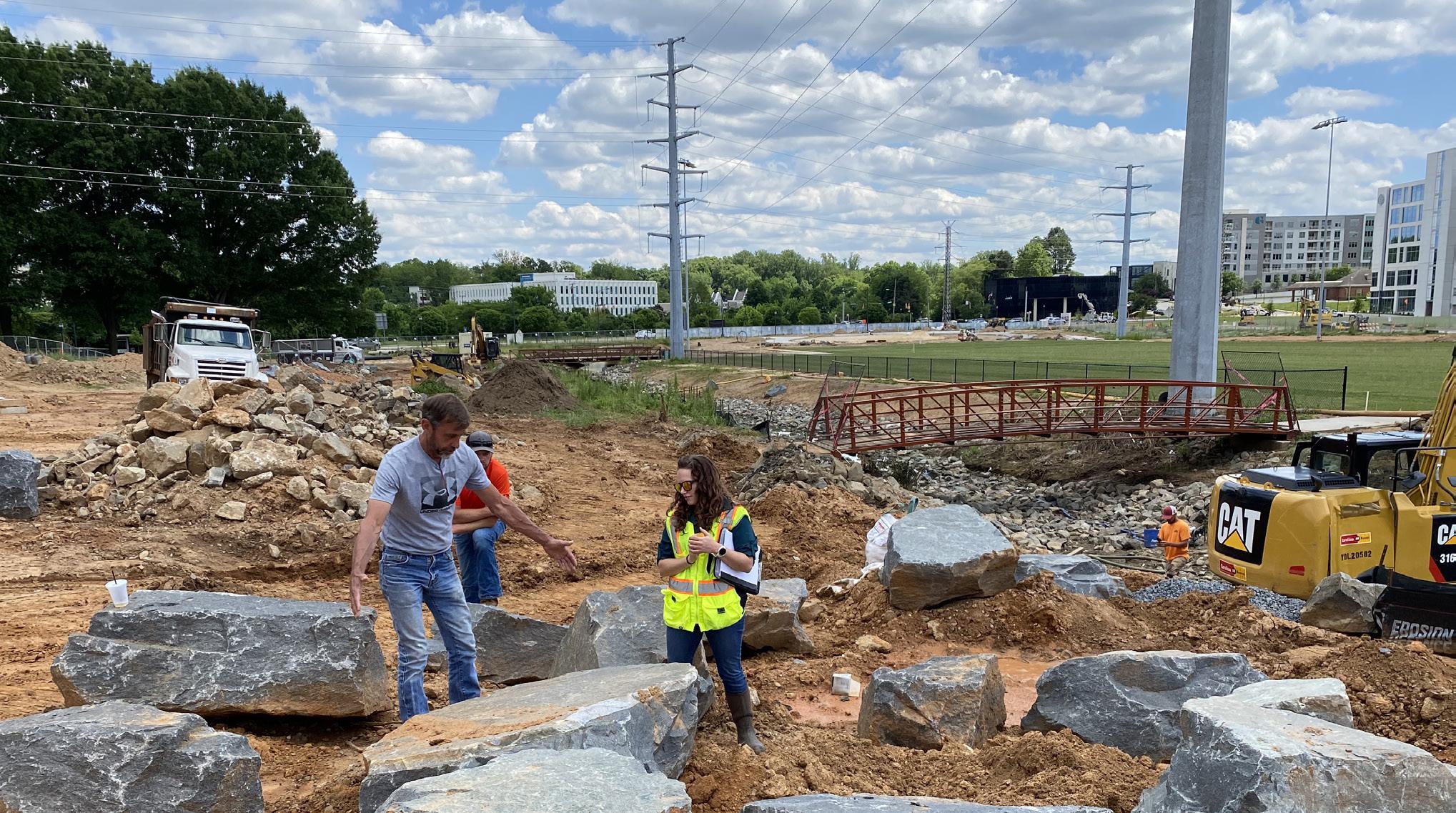
Stubbs applies her NC State education as a lead on McAdams’ stream restoration team.
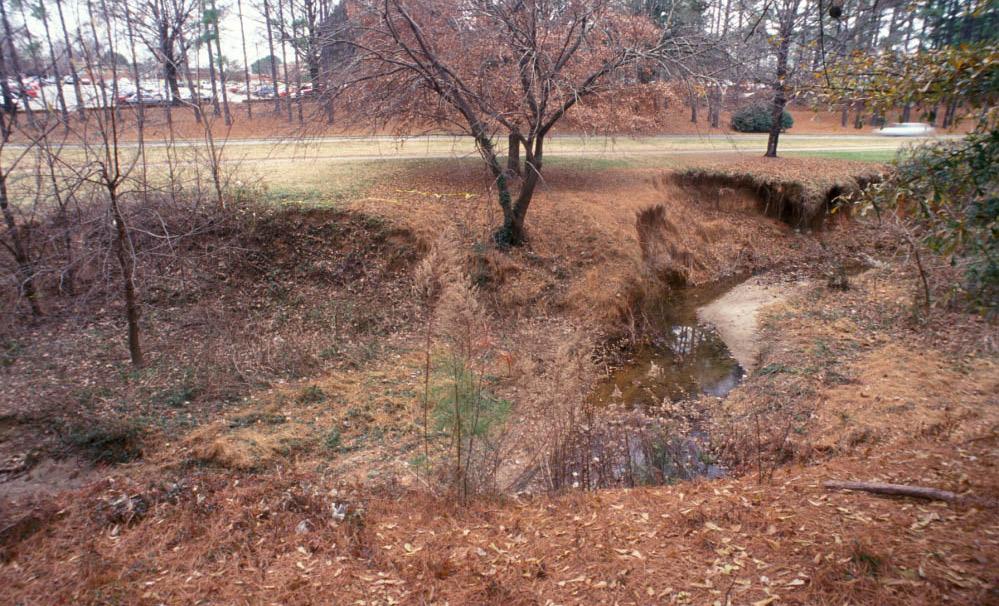
Rocky Branch before and after restoration was completed in 2010.
AIM 2025
Toronto, Ontario
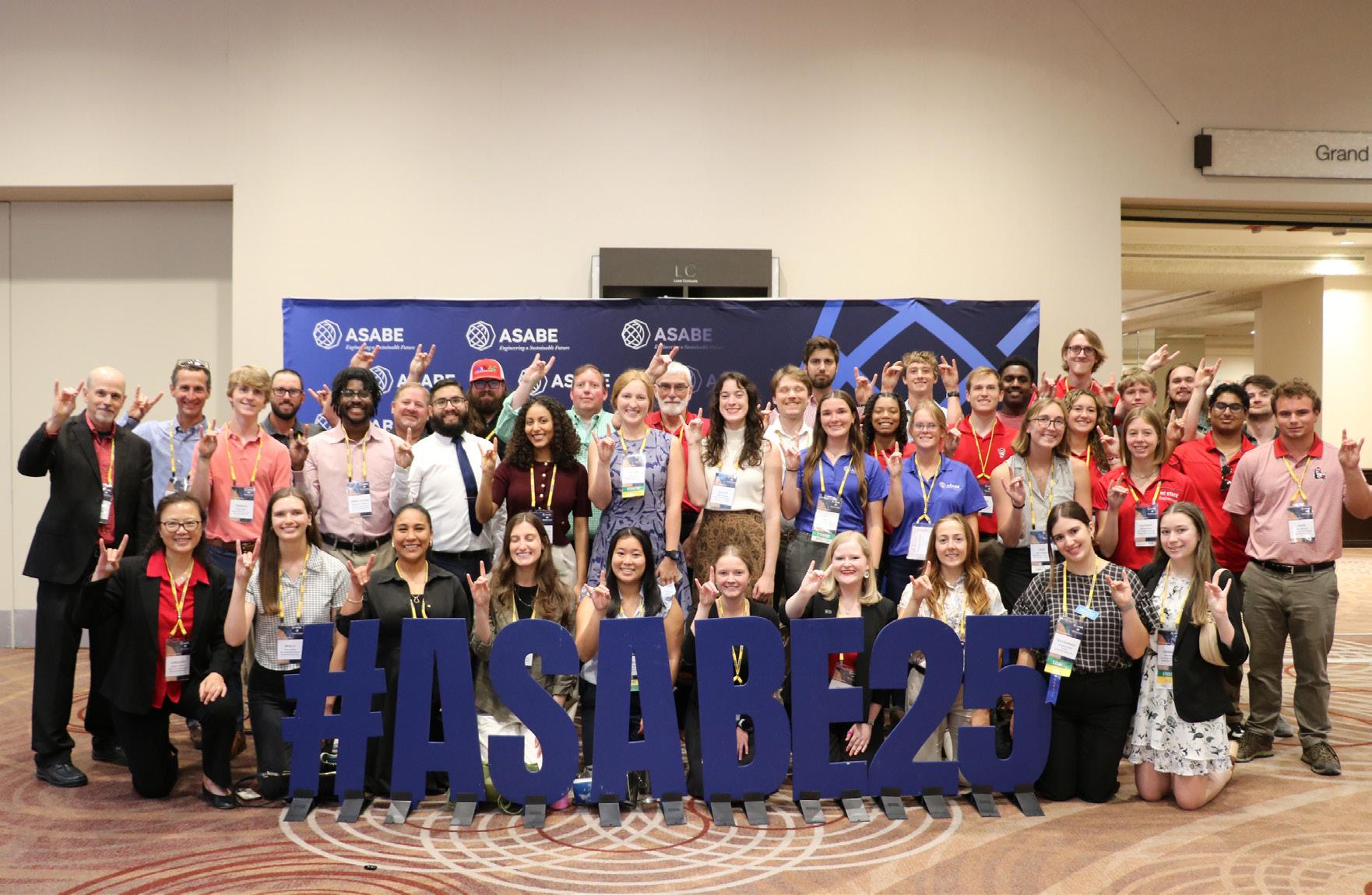
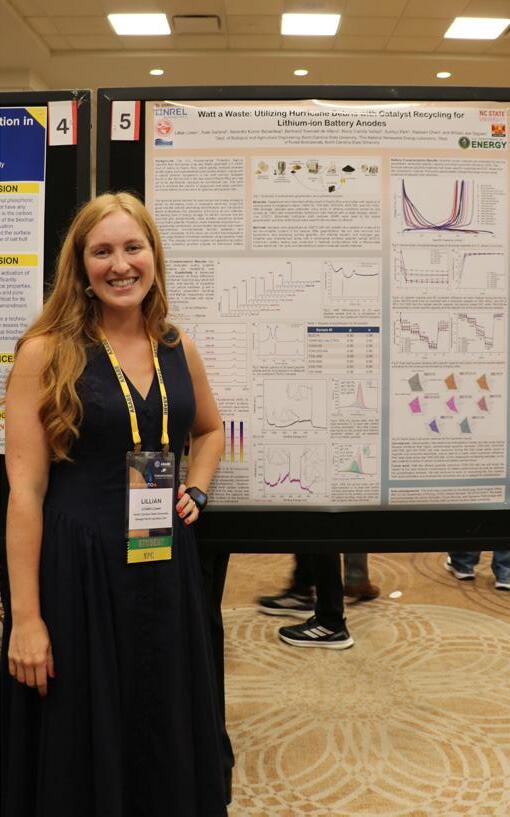
She placed in the poster/ oral student presentation competition for the Energy Systems technical community. Her poster was titled "Watt a Waste: Utilizing Hurricane Debris with Catalyst Recycling for Lithium-ion Battery Anodes."
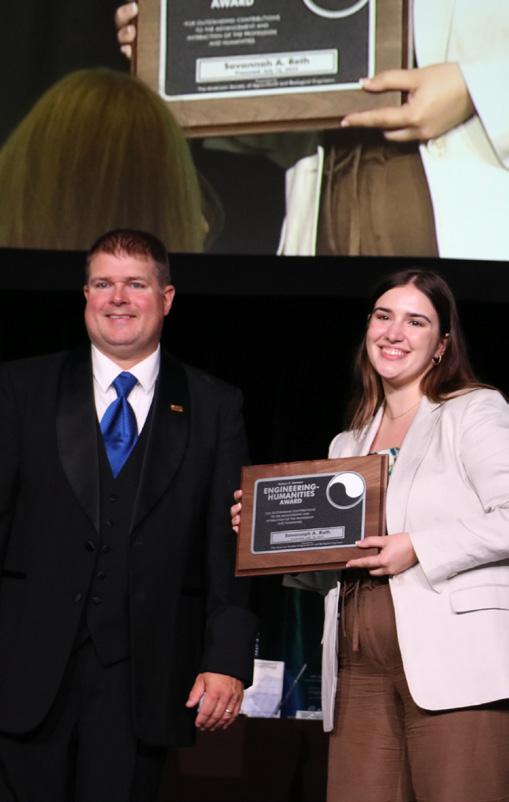
She won the Robert E. Stewart Engineering-Humanities Award. Her work integrates arts, history and religion with her engineering studies and outreach activites, advancing the interaction between the engineering profession and the humanities in meaningful ways.
Savannah Roth
Lillian Lower
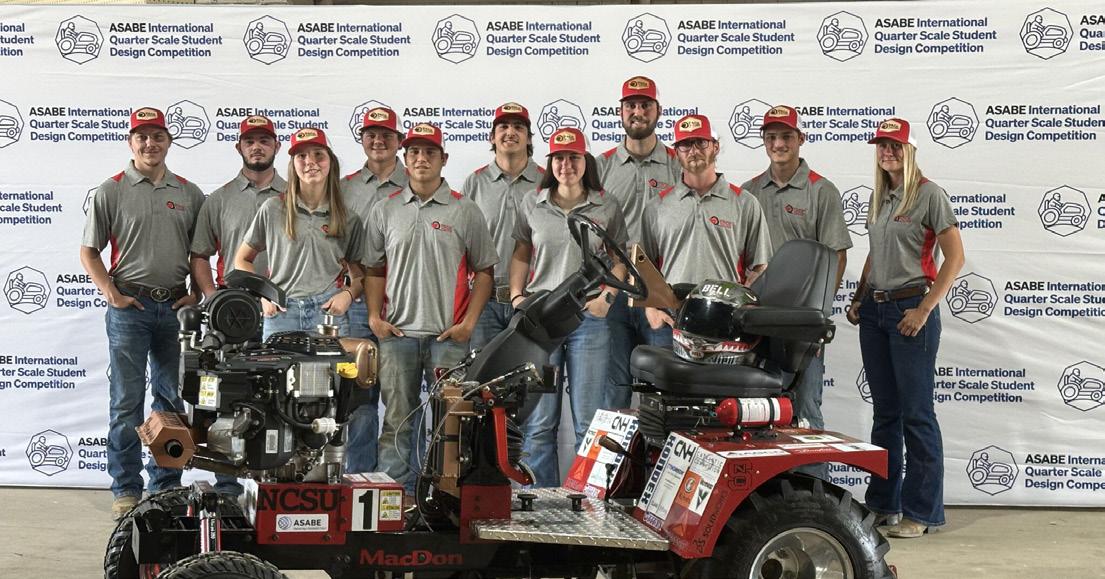
Pack Pullers
The team traveled to Peoria, Illinois for the 2025 International Quarter-Scale Tractor competition. They placed 1st overall for the second year in a row!
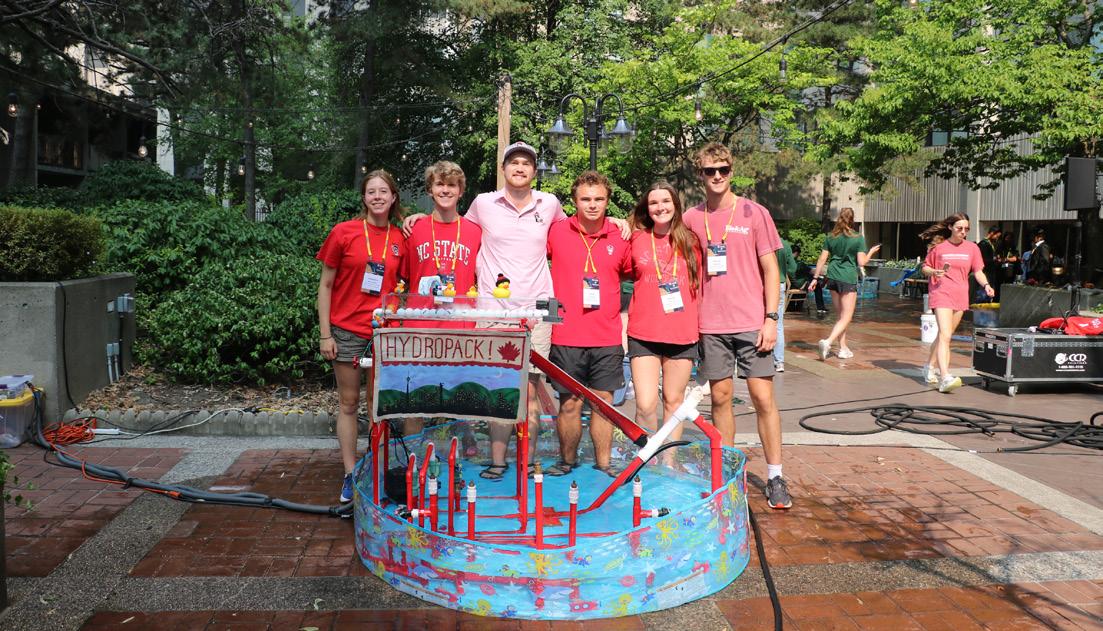
Hydropack
The Fountain Wars competition team competed at the Annual International Meeting. The team spent a year designing a fountain that could shoot a ping pong ball into a bucket 15 feet away! Their aesthetic display was inspired by Canada.
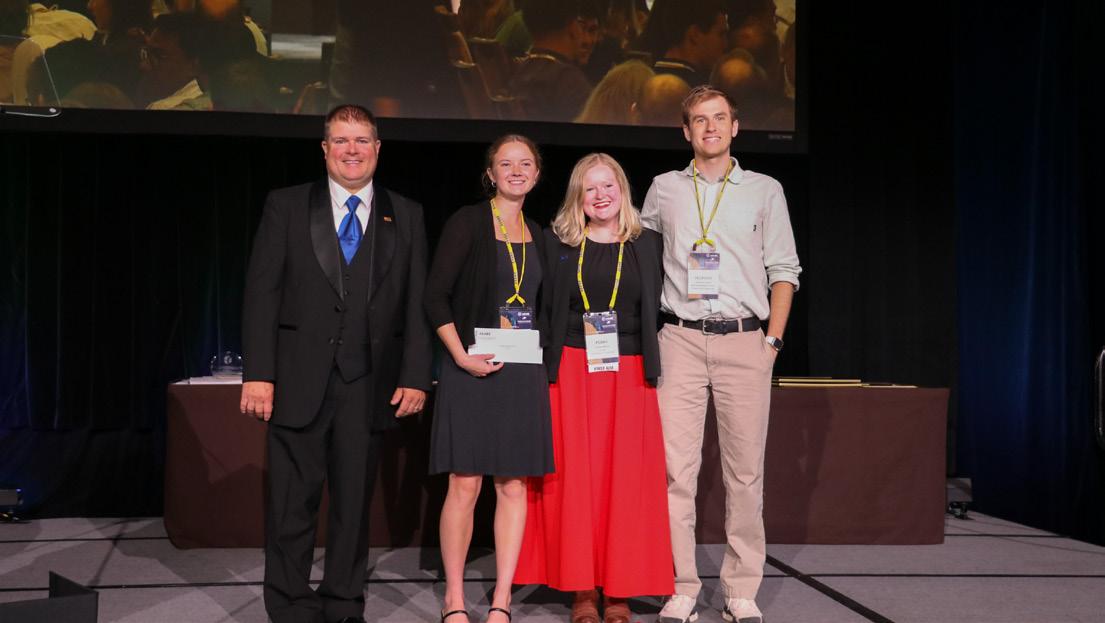
G.B Gunlogson Student Design Competition
Perry Berlin, Grace Sullivan, Evelynn Wilcox and Jackson Evans won second place for their senior design project. Their project " Improved Mariculture Floating Bag" was highlighed in ASABE's 2025 Resource issue.
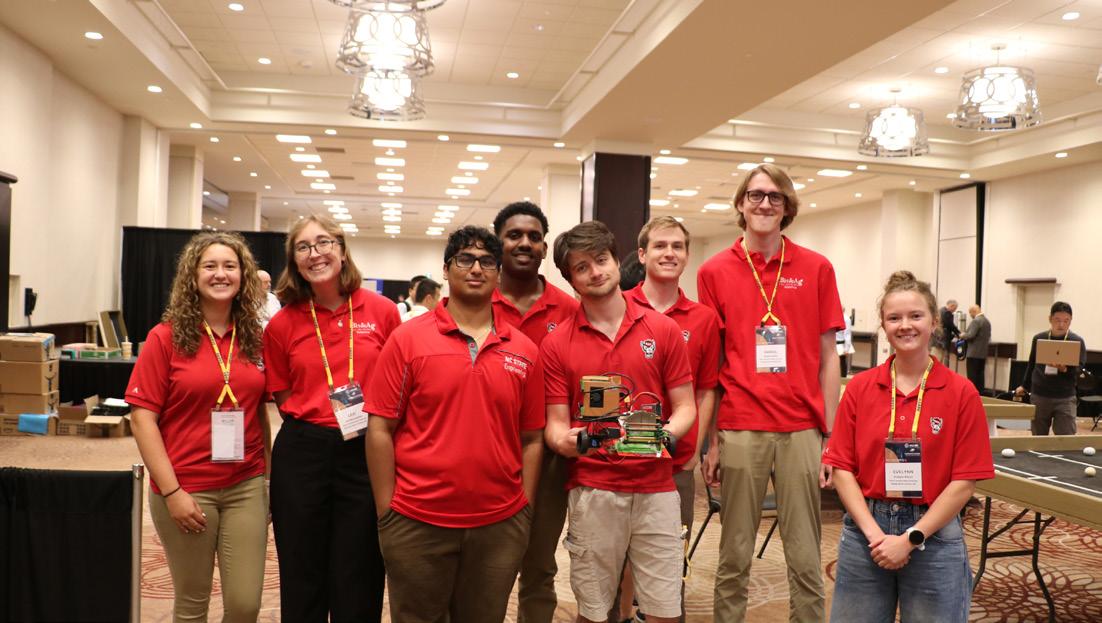
RoboPack
The team spent the year building and testing a robot that could sort and grade eggs. At the 2025 competition the team successfully placed with an honorable mention in identification.
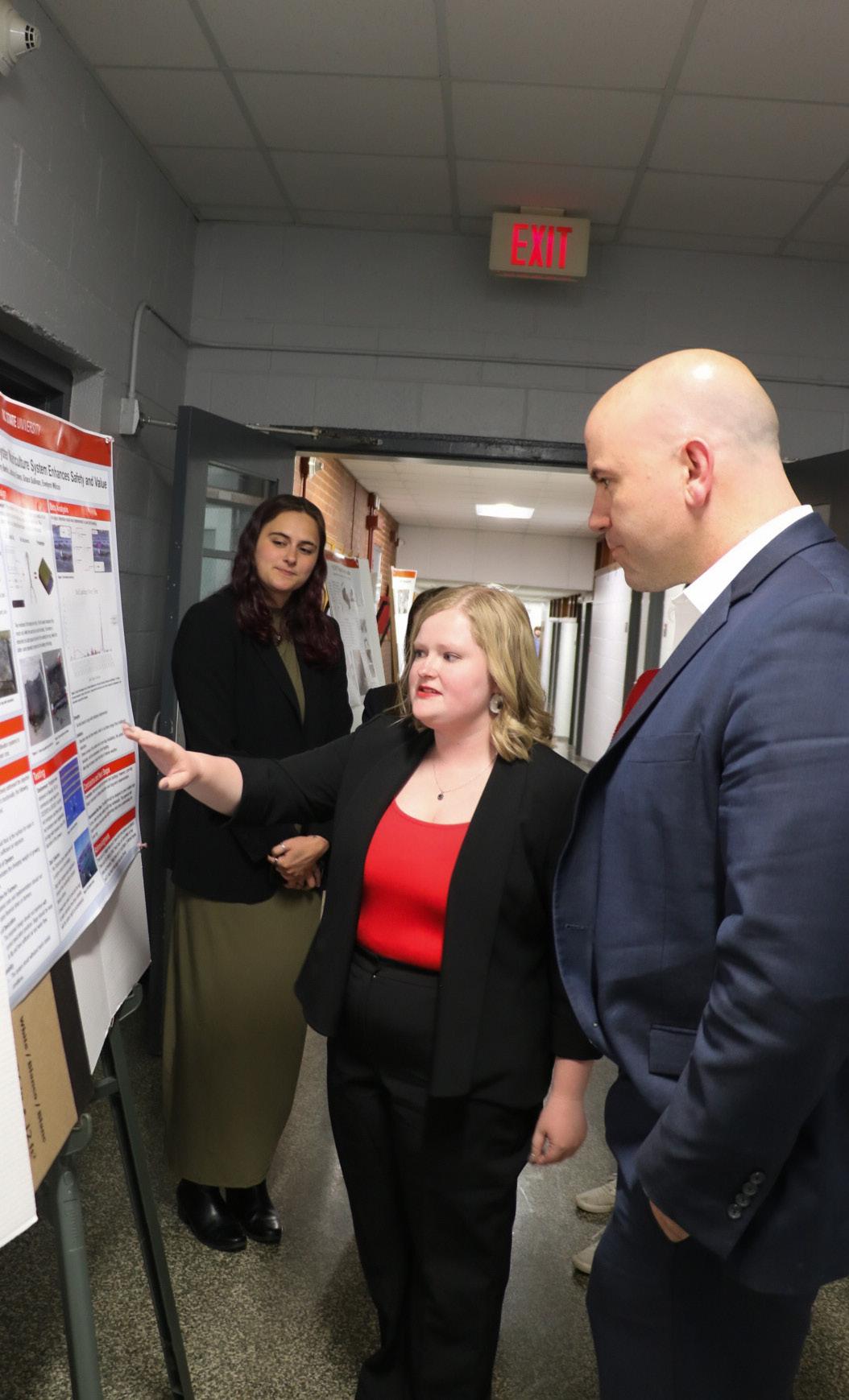
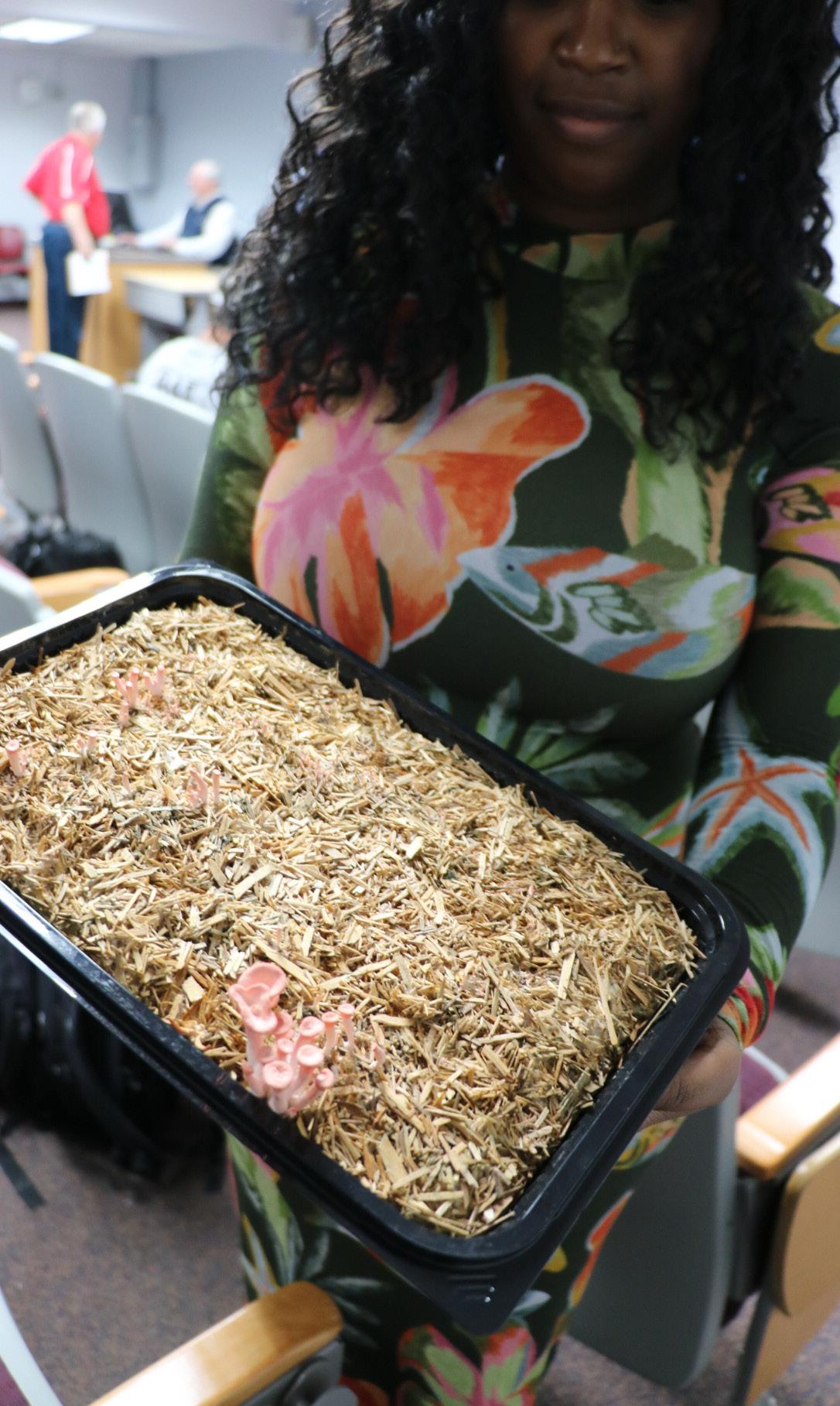
2025 SENIOR DESIGN PROJECTS
End of year senior design projects give students the opportunity to Think and Do.
The BAE Department’s Senior Design program is nationally recognized. Finished projects have gone on to benefit the industries and communities around North Carolina.
Over the years, BAE senior design teams have competed nationally at the American Society of Biological and Agricultural Engineers Annual International Meeting. In the past, NC State BAE teams have won second and third place in the Gunlogson Senior Design competition.
Grant Ellington, BAE Extension associate professor, teaches the year-long senior design course. The course is a two-hour class that meets twice a week.
Students divide into groups and spend the year working on a project of their choice. Each group
has a faculty and industry advisor to help guide them. Time is also set aside for three-hour lab group meetings. These resources provide students with the opportunity to apply what they learned in their classes. At the end of the year, seniors give a department-wide final project presentation.
Biological and Agricultural Engineering Technology (BAET) seniors are also assigned their own capstone project. Tommy Stephenson, director of undergraduate programs for BAET, leads the new BAET Capstone Program. The program provides seniors with the opportunity to showcase their skills in biological and agricultural technology.
In BAE it is best to learn by doing.
BAE Senior Design
Middle Creek Tributary Stream Morphology Assessment
Team 1: Shelby Reinhardt, Anika Bhatnagar, Joseph
Ammons, Sarah Landers
Faculty Mentor: Barbara Doll
Advisory Board: David Williams, Joe Wright, Randall Etheridge
Pokeberry Stream Morphology Assessment
Team 2: Gabe Da Silva, Andrea Salazar, Bennett
Kimball, Davina Morris
Faculty Mentor: Barbara Doll
Advisory Board: Connor Bottorff, Toby Vinson, Randall Etheridge
Improved Mariculture Floating Bag
Team 3: Evelynn Wilcox, Perry Berlin, Jackson Evans, Grace Sullivan
Faculty Mentor: Natalie Nelson and Steve Hall
Advisory Board: Erin Boyette, Sana Siddiqui, Joe Wright
Biochar Production from Agri-Industrial Wastes
Team 4: Kiarra Condon, Nicholas Bell, Graham McIntosh, Cielo Esquivel
Faculty Mentor: Yuan
Advisory Board: John Norwood, David Williams, Sydney Seymour
NCDOT Truck Mounted Seeder
Team 5: Kyle Young, Jackson Boney, Carson Beckham, Isabella du Plessis
Faculty Mentor: Jason Ward
Advisory Board: John Norwood, Aaron Motsinger, Devin Carroll
Edible Mushroom Cultivation from Agri-Industrial Wastes
Team 6: Gabriella Vertreese, Akieliah Robinson, Reiney, Sophia Hasapis
Faculty Mentor: Yuan
Advisory Board: Jacob Dunn, Sydney Seymour, Sana Siddiqui
The Continuous Anaerobic Digestion of Organic Waste
Team 7: Kristen Hall, Chloe Lum, Brian Ngo, Khing Masaya-anon
Faculty Mentor: Joe Sagues
Advisory Board: Devin Carroll, Sydney Seymour, Sana Siddiqui
City of Wilson Stormwater Management Plan
Team 8: Anna Davis, Grace Davis, Avery Hunter, Caroline Woods
Faculty Mentor: Bill Hunt
Advisory Board: Connor Bottorff, Toby Vinson, Randall Etheridge
NCDOT ATV Mounted Granular Herbicide Application
Yueyang Jin, Evan Harris, Nathan Ring, Kylie LaGamba
Faculty Mentor: Justin Macialek
Advisory Board: Aaron Motsinger, Erin Boyette, Jacob Dunn
BAET Capstone
Redesign of Pollen Applicator for the North Carolina Forestry Service
Team 1: Hunter Beasley, Clark Roberts, Nathan Spencer, Kai Stuppnig
Advisor: Max Hooks
Advisory Board: Erin Boyette
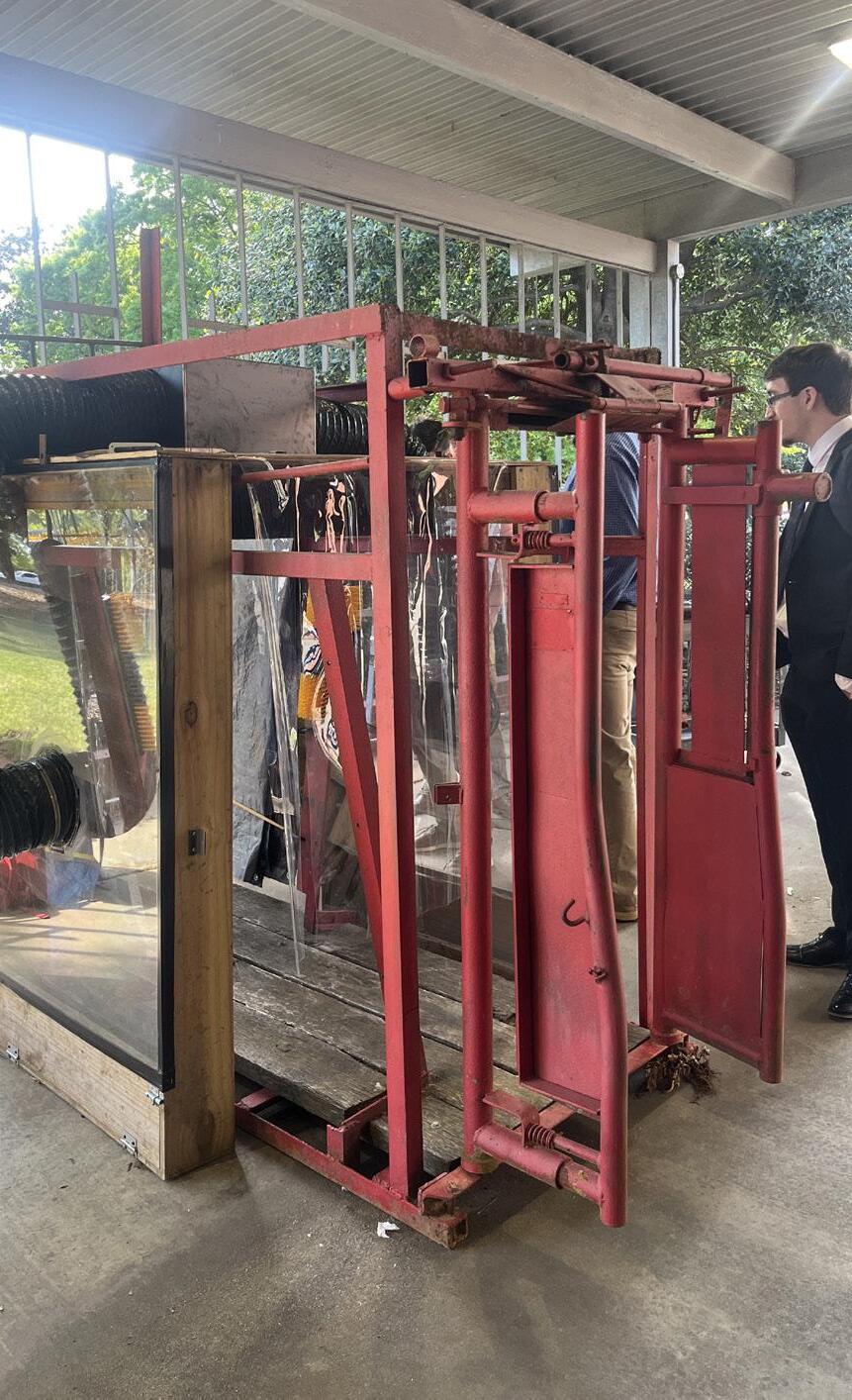
Economical Cattle Fly Vacuum System
Team 2: Caleb Bunch, Carson Crowley, Frank Flaherty, Brandon Shore
Advisor: Sanjay Shah
Advisory Board: John Norwood
Aquatic Biomass Harvester
Team 3: Chloe Biondi, Brynna Laughter, Olivia Palmer, Meghan Riddick
Advisor: Mike Burchell and Ryan Sartor
Advisory Board: Aaron Motsinger
Irrigation Pressure Device for Single Overhead
Sprinkler Time and Optimal Spray Distance
Team 4: Andrew Delahunty, Ethan Johnston, Caroline Keenan, Robert Lawson
Advisor: Chadi Sayde
Advisory Board: Devin Carroll
American Society of Agricultural and Biological Engineers
Reese Cole, President
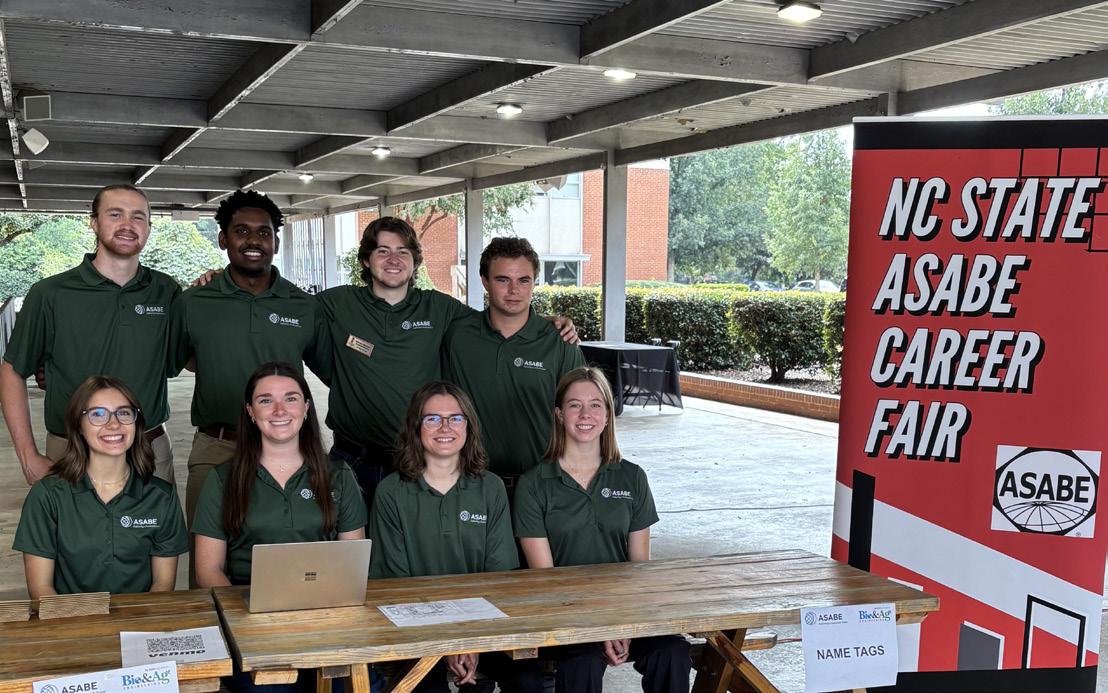
This year, the American Society of Agricultural and Biological Engineers (ASABE) at NC State focused on connecting members with faculty, industry leaders, and peers while supporting their academic and professional growth. Through collaboration and community, we’ve built a strong network by hosting service events, social outings, career fairs, and bi-weekly meetings.
In September, we hosted our annual ASABE Career Fair, where 34 biological and agricultural-focused companies met with over 100 students to discuss career
Graduate Student Association
Sam Holberg, President
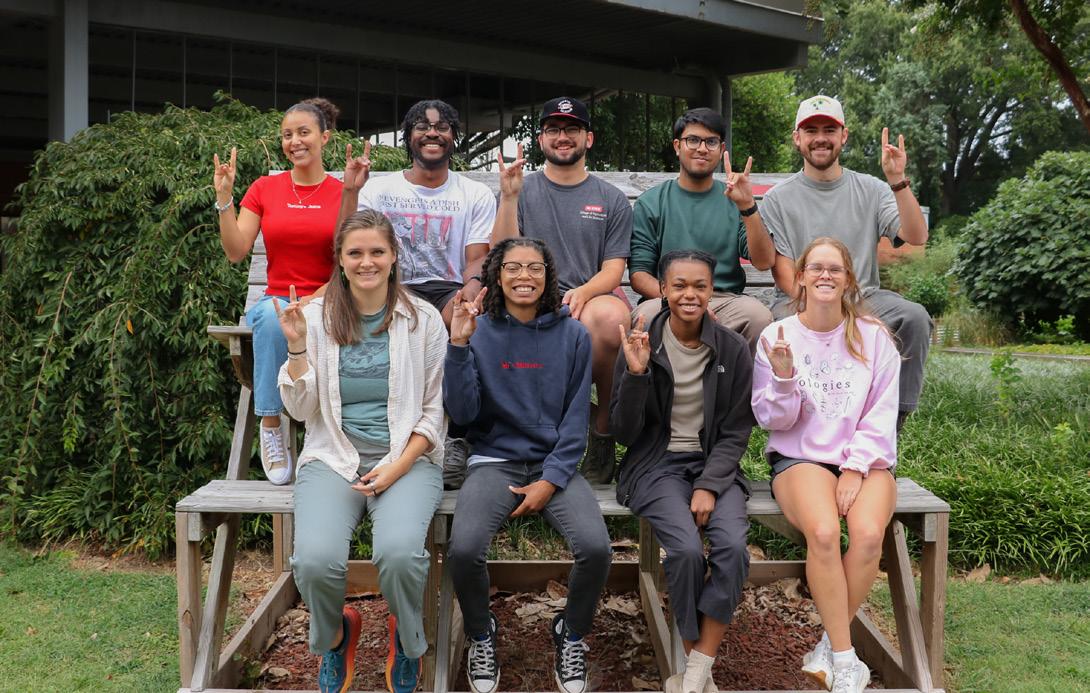
The Graduate Student Association (GSA) is excited to continue its mission of supporting graduate students in the BAE department and providing them with opportunities for personal and professional growth. Our primary goal for the 2025-2026 academic year is to broaden the diversity of participation at events, promote professional and personal development opportunities, and strengthen the connections between our graduate students. For
opportunities. Soon after, we launched our annual sweetpotato sale fundraiser, sponsored by Kornegay Family Farms. Members helped organize, package, and distribute 2,000 lbs of sweetpotatoes and visited the farm to learn about North Carolina’s sweetpotato production firsthand.
In March, our chapter attended the ASABE southeastern regional rally at Texas A&M University, joining students from universities including Virginia Tech, Mississippi State, and Florida. The weekend featured workshops, lab tours, design challenges, and social events. We look forward to attending next year’s rally at the University of Arkansas.
For the first time, ASABE at NC State participated in Shack-A-Thon, raising funds for Habitat for Humanity by designing and constructing the BAE Shack. This was an exciting opportunity to connect with fellow BAE students for a good cause along with putting some engineering principles into action through the shack’s construction. We’re eager to continue this tradition and strengthen our impact next year.
professional development, in the 2025 Spring semester, the GSA hosted a 3-minute thesis competition, with participation by 15+ undergraduate and graduate students and post-docs. Congratulations to Lily Lower, Lindsey Hassel, and Paige Seibert for placing in the graduate student category of the competition.
So far this Fall semester, we have hosted a professional development event focused on scientific communication and hosted a Weaver Labs research tour. For personal development, there were many events in the Spring, including a BAE trivia night, an NC State baseball game event, and wellness bingo.
In the Fall semester, we organized a trivia night and a Halloween movie night, and a door decoration contest. We look forward to many more events in the 2025-2026 academic year.
GSA P.E.E.R. Garden
Nathan Salas, Garden Chair
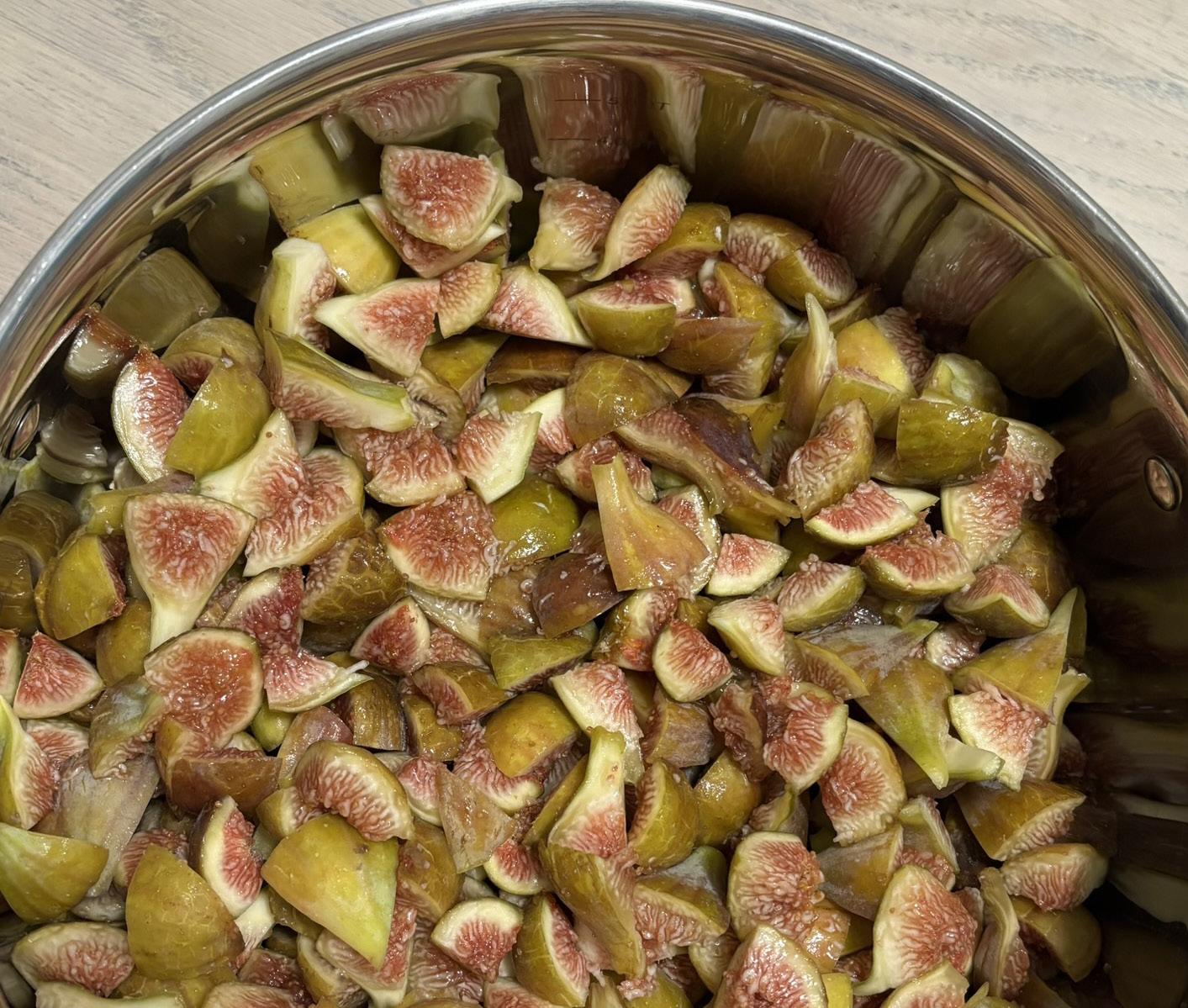
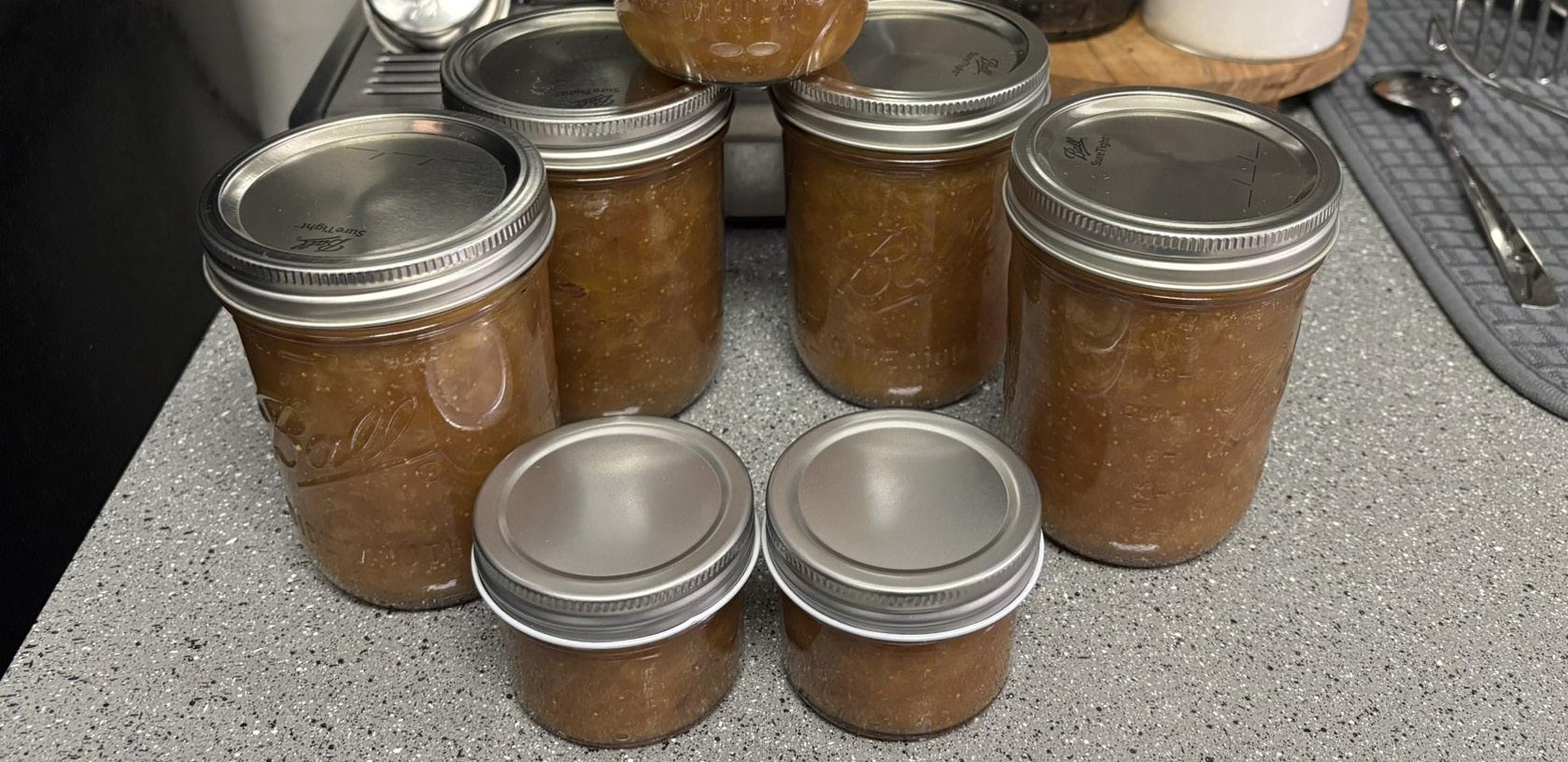
The BAE PEER Garden had another fruitful season, yielding broccoli, corn, cabbage, strawberries, tomatoes, peppers, cucumbers, herbs, and of course, figs. We had so many that we were able to make a few jars of fig jam!
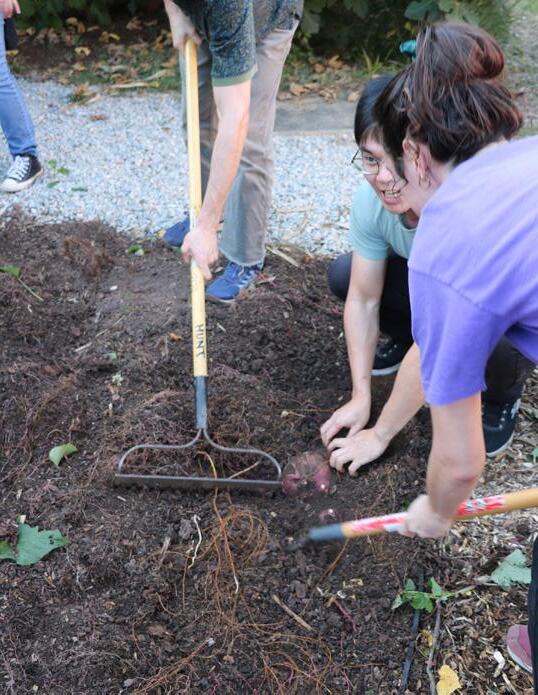
Graduate students recently harvested the sweetpotatoes, uncovering several impressively large ones. Garlic bulbs and two new blueberry bushes have been added to keep the garden alive through the cold months. At the start of the new year, onions will be planted, and improvements to the herb tower and strawberry patch will begin. Keep your eyes out for upcoming garden events and spring planting. Thank you to everyone who contributed to and enjoyed this year’s harvest!
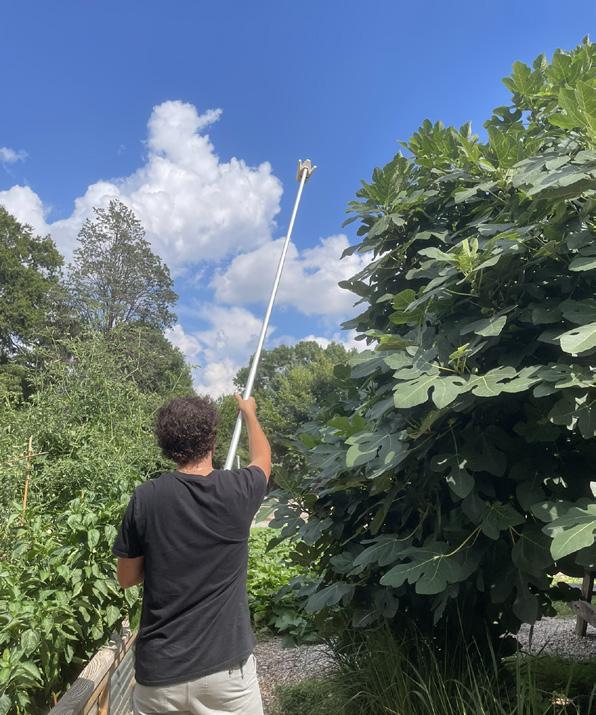
Salas fashioned a fig grabber to reach the delicious figs that were out of reach. Every fig counts when making fig jam!
SPROUTs
Ty Zanders, President
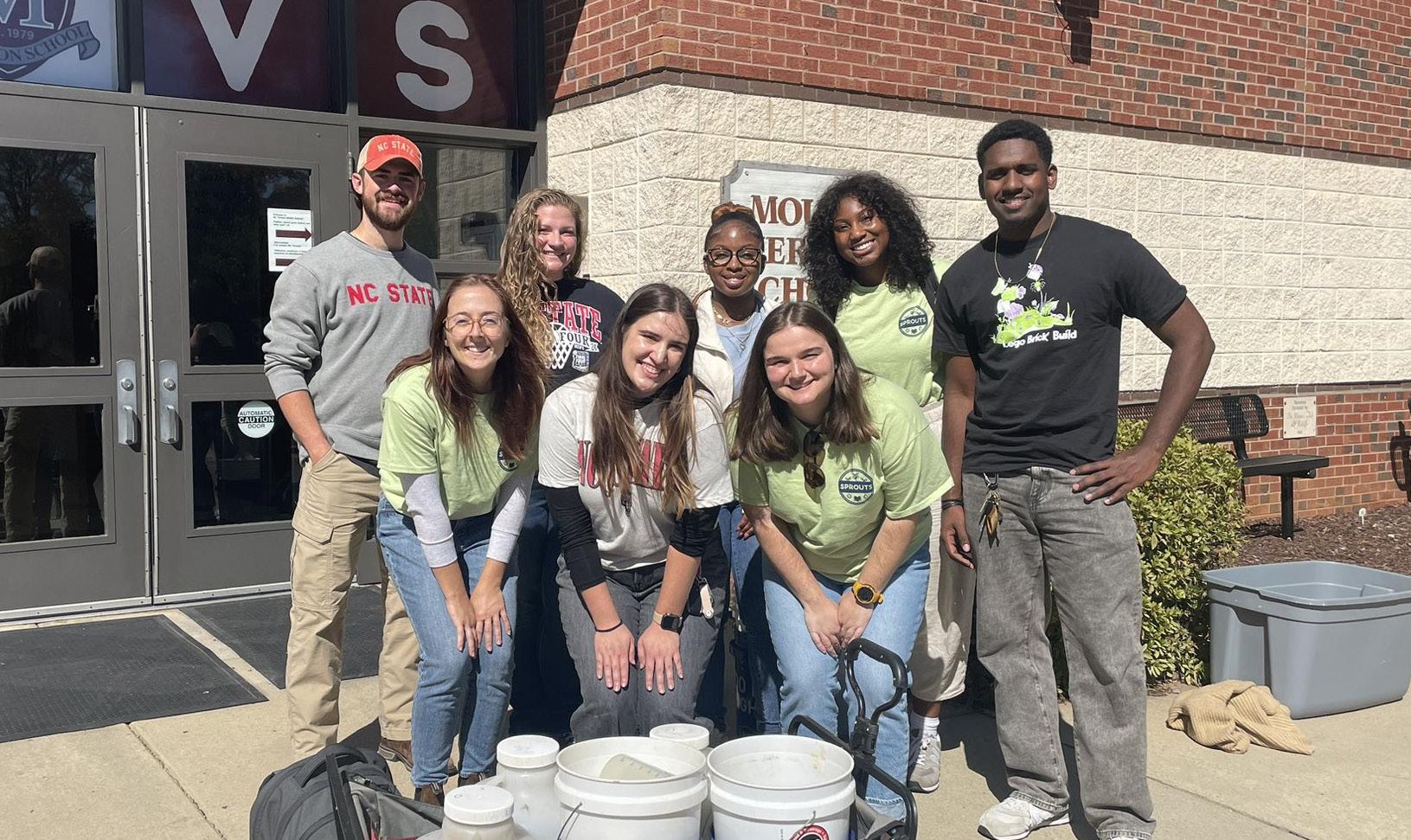
SPROUTs (STEM Program to Reach Our Underrepresented Teens) is an outreach group within the BAE department dedicated to bridging the gap between K-12 and college STEM education. This year, SPROUTs continued our partnership with Mt. Vernon Middle School and Mary Phillips High School. Both schools offer small, supportive learning environments for students who have faced challenges in traditional classroom settings.
At Mt. Vernon Middle, we worked with science and math teachers to support their curriculum through hands-on labs and interactive discussions. Students particularly enjoyed exploring engineering design concepts and even connected these lessons to stories they were reading in English class about life in the Wild West and the need to dig wells to water farms! At Mary Phillips High, we continued our tradition of hosting an informal college and career panel. Rather than a formal event, our volunteers joined students during study hall to chat about college applications, gap years and even how to choose a dorm roommate!
We’re excited to continue working with these students in the Spring semester. If you’re interested in getting involved, keep an eye out for volunteer requests from the SPROUTs team!
Un-fig-ettable fig jam
Pack Pullers
Nathan Kiger, Captain
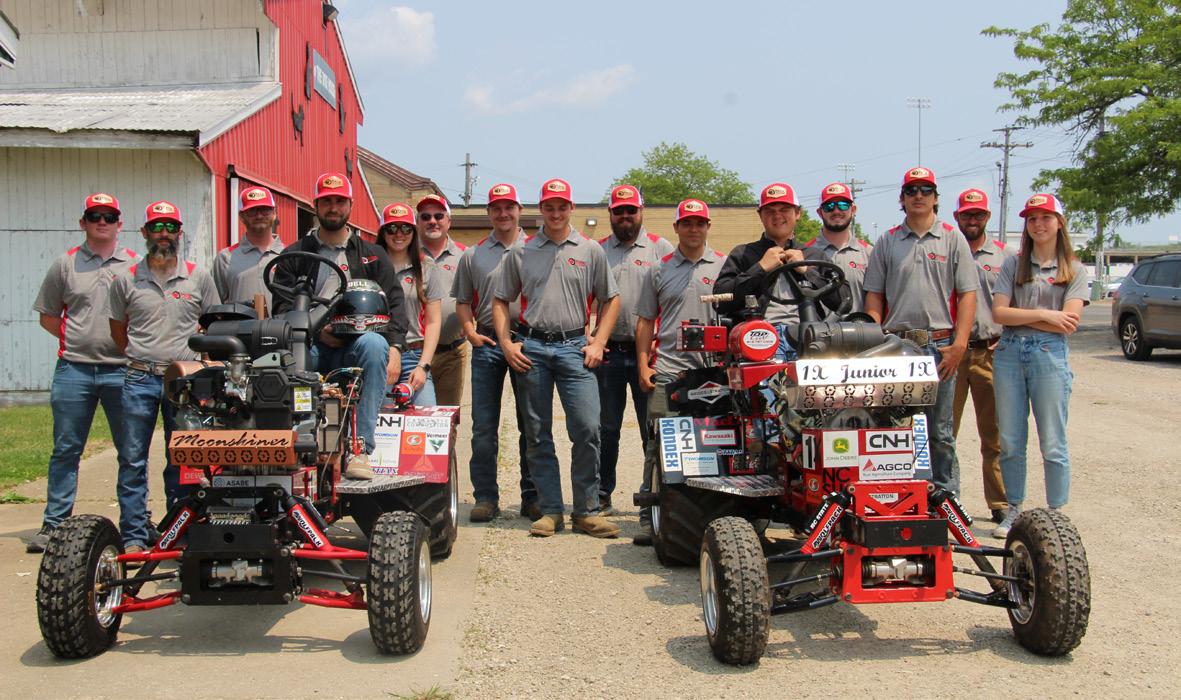
The Pack Pullers finished up last year strong after winning the ASABE International Quarter Scale Tractor Student Design Competition in Peoria, Illinois last summer. The team has looked to start this next year by focusing on refining last year’s design and improving reliability through extensive testing of the 2025 tractor. Increased membership and interest have allowed the
HydroPack
Parker Bolton, Co-Captain
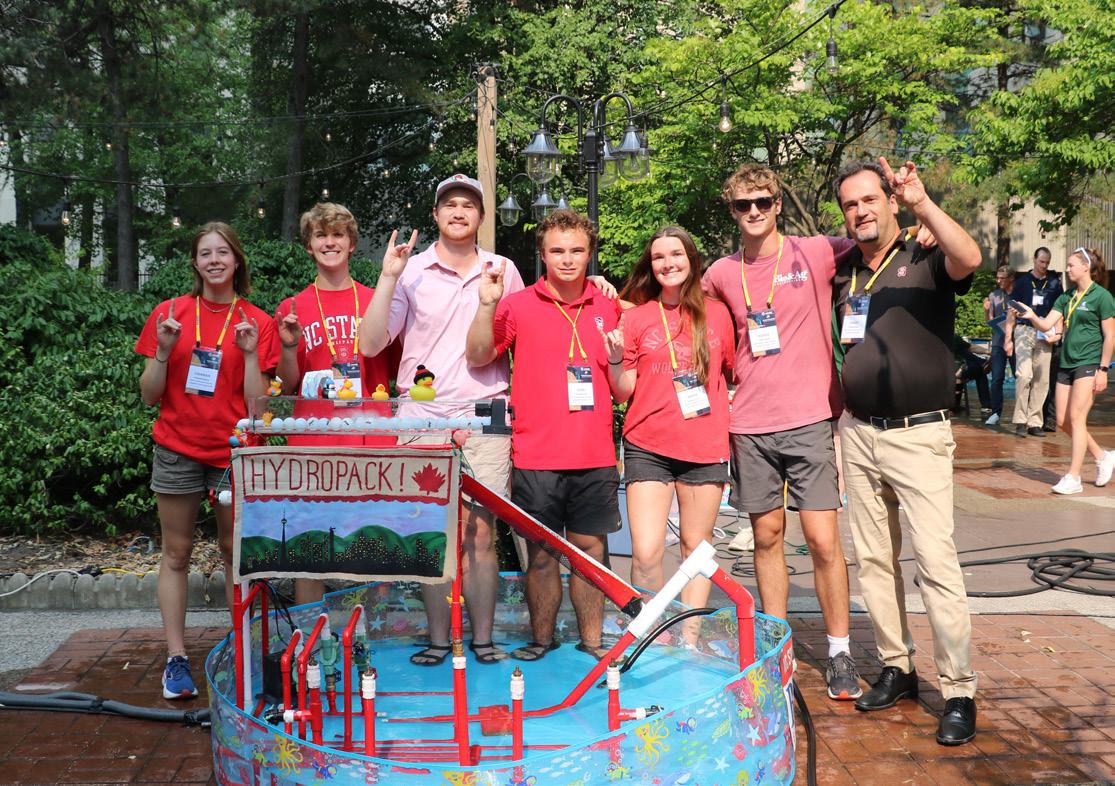
The Gunlogson Fountain Wars Student Competition is an international collegiate design contest focused on completing a task using only hydraulic power. The competition deliverables include a written engineering design report, oral presentation, and built design.
The NC State Fountain Wars team has seen some big changes this past year and is looking forward to
club to create a dedicated testing and design team, making projects more efficient and giving every member hands-on involvement in tractor design and development which takes place in the Fall semester.
This fall, the team proudly showcased the Intimidator and Moonshiner tractors at the North Carolina State Fair in the Antique Farm Machinery Building. The Pack Pullers also had the honor of pulling Moonshiner before the United Pullers of the Carolinas Regional National Tractor Pull, where the announcer recognized the club’s back-to-back championships to a packed grandstand.
Special thanks go out to the United Pullers of the Carolinas and the National Tractor Pullers Association for helping promote Pack Pullers at NC State.
next year’s competition in Indianapolis, Indiana! This summer was our first year competing under our new team name, HydroPack, and we received an award for Most Attractive Design. This school year is also our first with an officer team - captain, secretary, and two team leads.
Our design challenge this year includes moving an object around a racetrack, with bonus points awarded for track obstacles such as loops and gates. Points are also awarded for lap completion and speed.
The HydroPack team is beginning prototyping this semester, focusing on custom vehicle and track designs. We are also incorporating Indianapolisinspired aesthetic elements into our fountain. We are excited to compete and welcome any students interested in joining the team!
Alpha Epsilon
Abby Smith, President
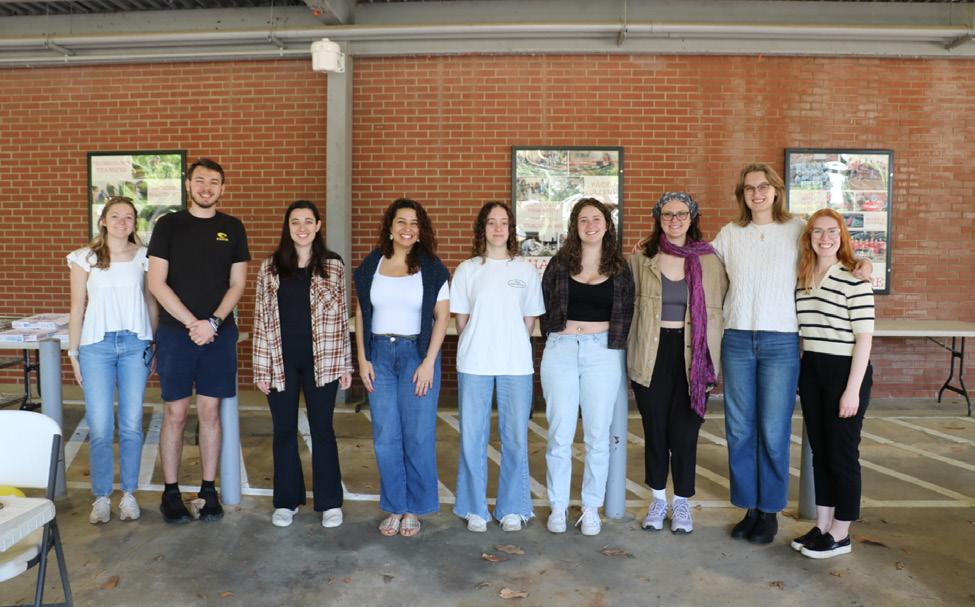
Alpha Epsilon (AE) is the honor society for Biological and Agricultural Engineering (BAE) graduate and undergraduate students. The goal of the society is to uphold the pillars of character, scholarship, and professionalism so as to facilitate strong connections among members.
This year, AE plans to conduct a service event where engineering students can have a positive impact on their surrounding communities aside from the great engineering work they're already doing.
RoboPack
Ethan Mullen, Captain
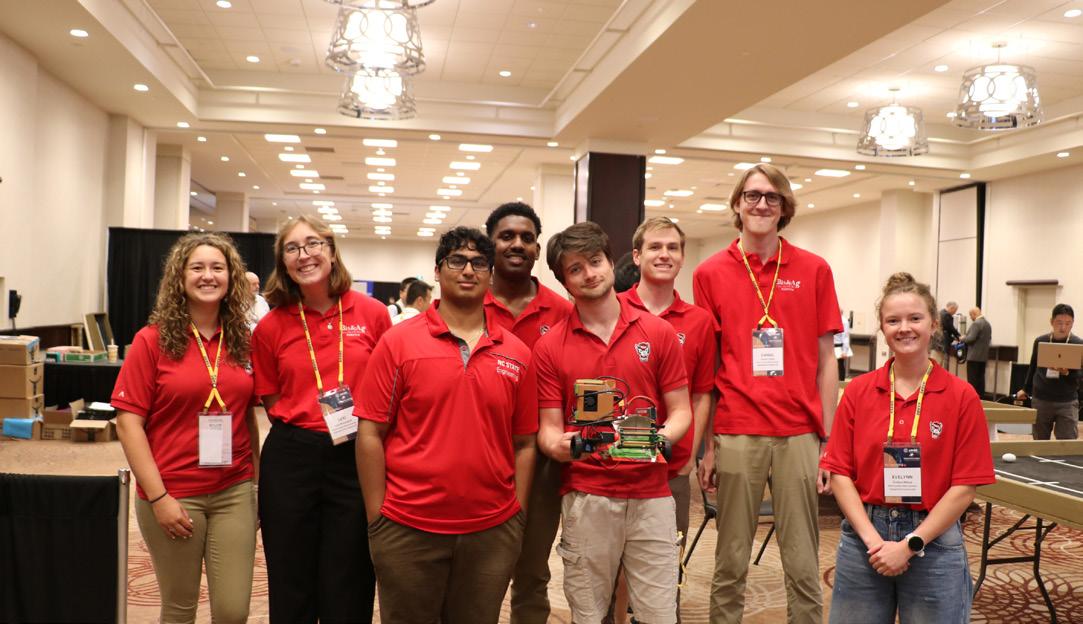
RoboPack is an agricultural robotics club dedicated to designing and developing autonomous robots capable of performing agricultural tasks. Composed of students from a variety of disciplines, our team represents NC State University at the annual ASABE AIM Robotics Competition. Each year’s competition theme centers around a major agricultural commodity from the host location. For example, the most recent competition was held
The local soup kitchen or the NC State Dairy Facility are the focus for these service events, depending on their need this semester. Alpha Epsilon has also had the opportunity to speak at an American Society of Agricultural and Biological Engineers (ASABE) meeting to raise awareness of the honor society to underclassmen. Along with speaking at different events, AE plans on continuing the legacy of the alumni speed networking event in which all BAE students can attend and promote knowledge of jobs in industry and what life after a degree can look like from industry professionals themselves.
Overall, the goal for this semester is to promote awareness for the club so that first and second-year students can take advantage of the opportunities provided by AE and prepare the current members for graduation or their next semester.
in Toronto, Ontario, where eggs are a significant commodity. Our challenge was to design a robot that could autonomously identify and sort eggs based on provided parameters. Our team successfully placed with honorable mention in identification.
This year’s competition will take place in Indianapolis, Indiana, where corn is a major commodity. Our task is to identify and remove unhealthy corn plants while navigating an obstacle course. We have already begun prototyping a competitive design.
With the momentum from last year’s success, we are confident that our robot will continue the Wolfpack dynasty of excellence.
GRADUATION
FALL 2024
B.S. IN BIOLOGICAL AND AGRICULTURAL ENGINEERING TECHNOLOGY
Austin Brown Jack Doherty
Luke Pike Mckinley Richardson
MASTER OF BIOLOGICAL & AGRICULTURAL ENGINEERING
Jonathan Lewis Advisor: François Birgand
Grayson Lowman Advisor: Mahmoud Sharara
Andrew Lyons Advisor: Bill Hunt
M.S. IN BIOLOGICAL & AGRICULTURAL ENGINEERING
Mohammad Nooshzadi Motlagh Advisor: François Birgand
Earth Pender Advisor: Mahmoud Sharara
Laurie Pisciotta Advisor: Mohammed Youssef
PH.D. IN BIOLOGICAL AND AGRICULTURAL ENGINEERING
Sujit Ekka
Dissertation: Optimal Swale Design for Highway Stormwater Runoff Treatment. Under the direction of Bill Hunt.
Caleb Mitchell
Dissertation: Resilience of Stormwater Control Measures to Floods, Bioterrorism, and Industrial Runoff. Under the direction of Bill Hunt.
SPRING 2025
B.S. IN BIOLOGICAL AND AGRICULTURAL ENGINEERING TECHNOLOGY
Hunter Beasley
Jack Biggs
Caleb Bunch
Frank Flaherty
Weston Fleming
Jackson Huneycutt
Ethan Johnston
Johnell Kincaid
Brynna Laughter
Meghan Riddick
Clark Roberts
Kai Stuppnig
B.S. IN BIOLOGICAL ENGINEERING
Andrea Aguirre Salazar
Joseph Ammons
Carson Beckham
Nicholas Bell
Evelyn Perry Berlin
Anika Bhatnagar
Jackson Boney
Kiarra Condon
Gabriel Da Silva
Anna Davis
Grace Davis
Isabella du Plessis
Cielo Esquivel
Jackson Evans
Kristen Hall
Evan Harris
Sophia Hasapis
Avery Hunter
Yueyang Jin
Bennett Kimball
Kylie LaGamba
Sarah Landers
Chloe Lum Khing Masaya-anon
Graham McIntosh
Davina Morris
Brian Ngo
Nathan Reiney
Shelby Reinhardt
Akieliah Robinson
Grace Sullivan
Gabriella Vertreese
Evelynn Wilcox
Caroline Woods
Kyle Young
M.S. IN BIOLOGICAL & AGRICULTURAL ENGINEERING
Nicole Davis Advisor: Natalie Nelson
Jonathan Lewis Advisor: François Birgand
Trevor Quick Advisor: Lucie Guertault
Savannah Roth Advisor: Bill Hunt
PH.D. IN BIOLOGICAL AND AGRICULTURAL ENGINEERING
Megan Carr
Dissertation: Coastal Bacterial Water Quality at the Watershed Scale and in a Changing Climate. Under the direction of Natalie Nelson.
Christopher Pascual
Dissertation: Optimizing Nutrient Conversion and Recovery in Marine Aquaponics. Under the direction of Steve Hall.
Vanessa Rondon Berrio
Dissertation: Advancing the Formate Bioeconomy via Microbe Discovery, Metagenomics, Genetic Engineering, and Techno-economic Analysis. Under the direction of Joe Sagues.
Ethan Woods
Dissertation: Composting and Enhanced Rock Weathering: The Environmental Impact and Economic Feasibility of Two Emerging Carbon Removal Pathways. Under the direction of Joe Sagues.
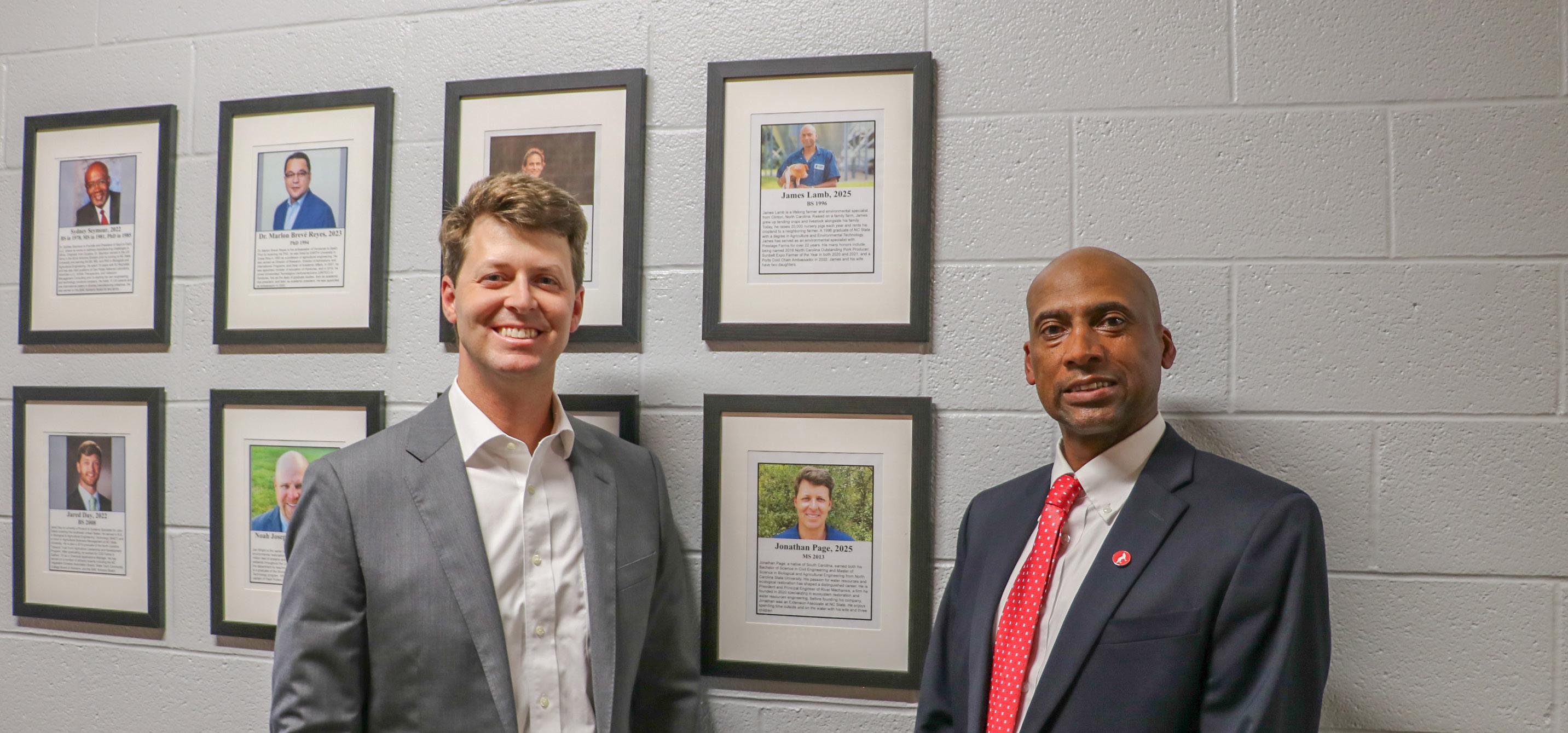
2025 OUTSTANDING ALUMNI
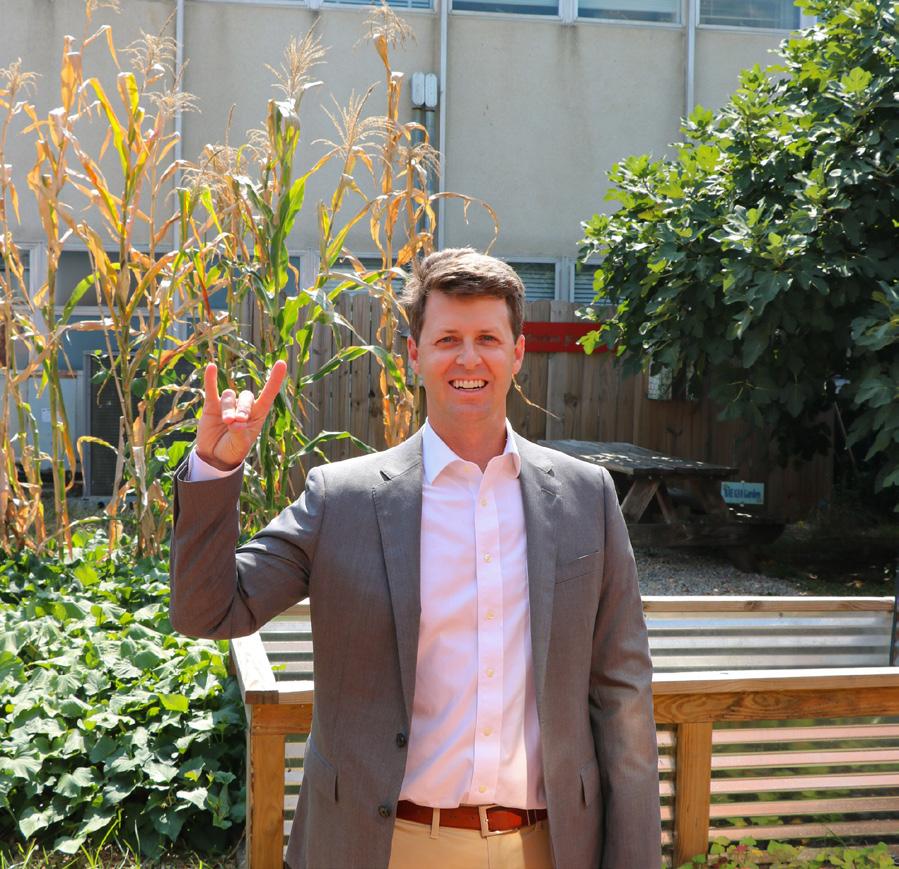
James Lamb
James Lamb is a lifelong farmer and environmental specialist from Clinton, North Carolina. Raised on a family farm, James grew up tending crops and livestock alongside his family. Today, he raises 20,000 nursery pigs each year and rents his cropland to a neighboring farmer. A 1996 graduate of NC State with a degree in Agriculture and Environmental Technology, James has served as an environmental specialist with Prestage Farms for over 22 years. His many honors include being named 2016 North Carolina Outstanding Pork Producer, and Sunbelt Expo Farmer of the Year in both 2020 and 2021.
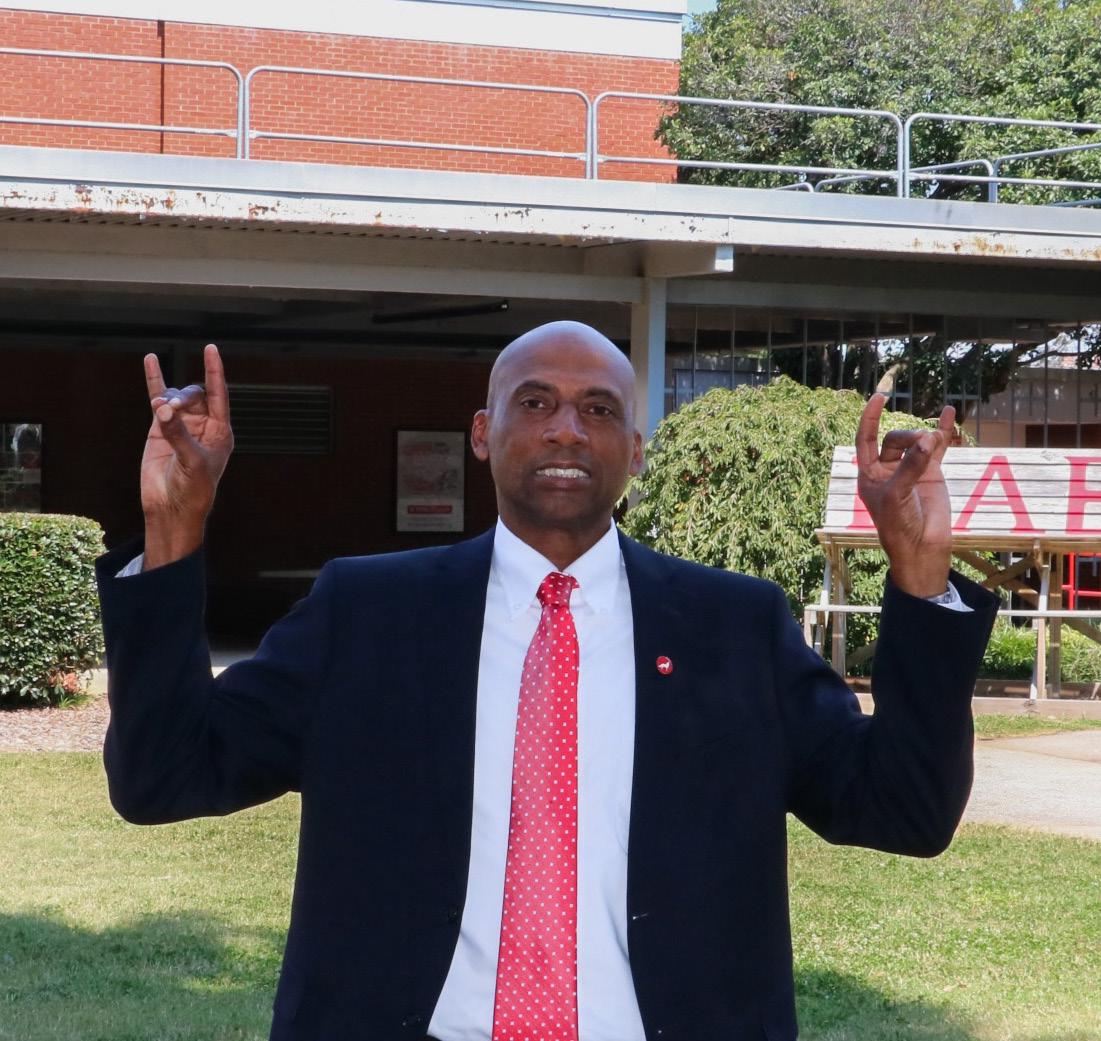
Jonathan Page
Jonathan Page, a native of South Carolina, earned both his Bachelor of Science in Civil Engineering and Master of Science in Biological and Agricultural Engineering from North Carolina State University. His passion for water resources and ecological restoration has shaped a distinguished career. He is President and Principal Engineer of River Mechanics, a firm he founded in 2020 specializing in ecosystem restoration and water resources engineering. Before founding his company, Jonathan was an Extension Associate at NC State.
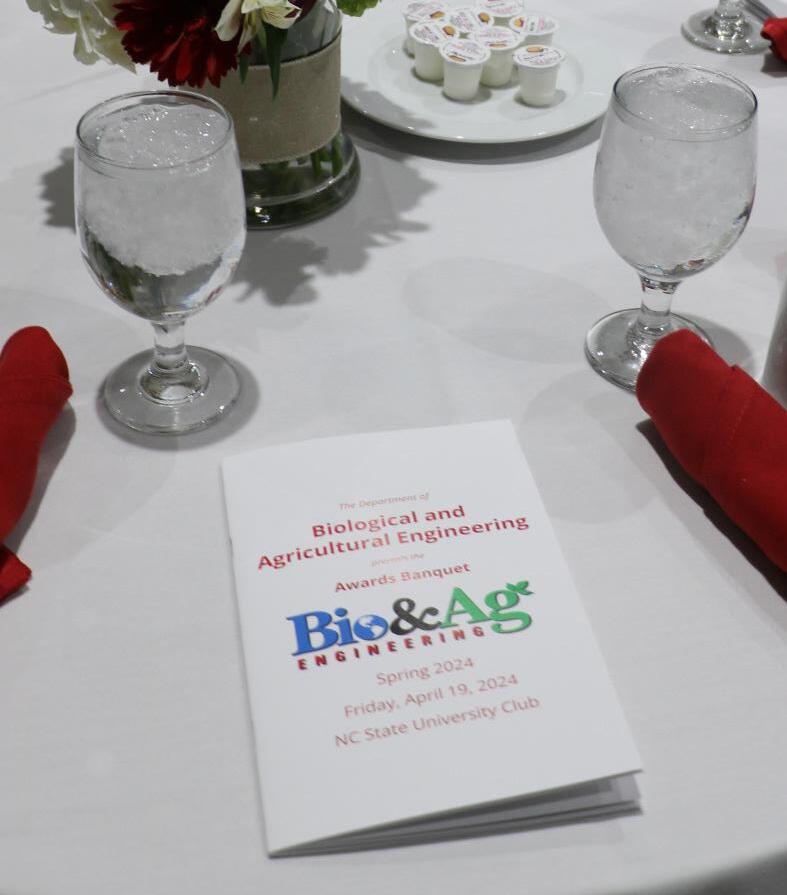
AWARDS AND HONORS
Student Awards
Perry Berlin - BAE Humanities Award, Barbara and George Blum Scholarship awardee, placed 1st in the Undergraduate Student Photography category of the 2025 Envisioning Research Contest at NC State
Reese Cole - Jane P. and Charles W. Suggs Scholarship
Anna Davis - BAE Citizenship & Service Award
Sophia Hasapis - Outstanding Member (ASABE)
Isaac Hedges - NC State College of Engineering Grand Challenges Scholar
Bennett Kimball - E.J. Tyson Scholarship
Lillian Lower - 1st Place in BAE GSA Three-Minute Thesis, CALS Graduate Student Leadership Award, 2025 NGenE Workshop, designed for advanced graduate students and postdocs
Khing Masaya-Anon - BAE Scholarly Achievement Award
Callie McCright - Henry D. Bowen Fellowship
Claude McLeod - Ronald E. Sneed NC Irrigation Society Scholarship
Simon McNair - Ronald E. Sneed NC Irrigation Society Scholarship
Lydia Miller - F.J. Hassler Fellowship
Christopher Oates - 1st place lightning talk presentation at the 2025 North Carolina Water Resources Research Institute Annual Conference, named 2025 National Science Foundation Graduate Research Fellow
Akieliah Robinson - E.J. Tyson Scholarship
Savannah Roth - ASABE Robert E. Stewart
Engineering Humanities Award, CALS 2 Minute Pitch Competition 1st Place, awarded the NC State Space Grant by NC State Sea Grant
Paige Seibert - F.J. Hassler Fellowship
Hannah Wall - Henry D. Bowen Fellowship, BAE
Outstanding Teaching Assistant
Evelynn Wilcox - CALS 2025 Student of the Year, BAE Leadership Award, 1st place in the Undergraduate Student Graphics category of the 2025 Envisioning Research Contest at NC State, 2025 National Science Foundation Graduate Research Fellow, Jane P. and Charles W. Suggs Scholarship
Fan Wu - Robert O. Evans Fellowship
Olivia Palmer, Brynna Laughter, Meghan Riddick, and Chloe Biondi were awarded BAE 2025 Outstanding Capstone Project Team Award
Perry Berlin, Grace Sullivan, Evelynn Wilcox and Jackson Evans were awarded BAE 2025 Outstanding Senior Design Project Team Award and also won second place in ASABE's 2025 Gunlogson Senior Design Competition
Staff Awards
Justin Macialek - BAE Outstanding Professional
Olivia Rogers - BAE Outstanding Staff Member
Faculty Awards
Grant Ellington - 2025 CALS Teacher Award of Merit, 2025 BAE Outstanding Teacher
Lucie Guertault - 2025 Gertrude Cox Award for Innovative Excellence in Teaching and Learning with Technology
Daniela Jones - BAE Outstanding Young Faculty Member
Natalie Nelson - 2025 CALS Outstanding Graduate Instructor Award
Tommy Stephenson - BAE Outstanding Professor Award (ASABE)
Jason Ward - BAE Outstanding Extension Specialist
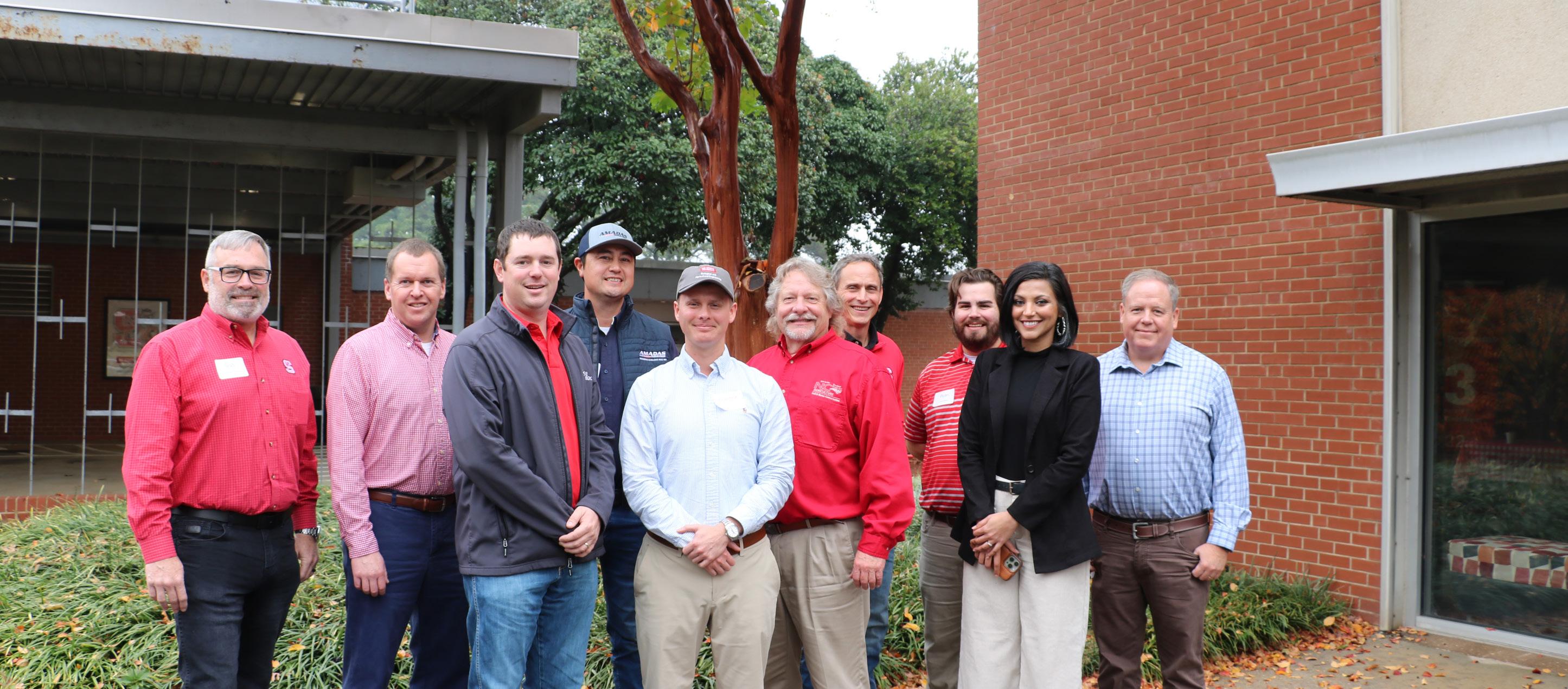
2025-2026 ADVISORY BOARD
The BAE Advisory Board provides valuable guidance to keep the department at the forefront of the field of biological and agricultural engineering. They foster industry connections among BAE faculty, staff and students while also providing strategic advice to improve research, Extension and academics.
Randall Etheridge, Ph.D. — Chair East Carolina University Term 2023 – 2026
Connor Bottorff Hazen and Sawyer Term 2024 – 2027
Devin Carroll Custom Controls, Inc. Term 2023 – 2026
Jonathan Graham Amadas Industries Term 2025 – 2028
Hal Landenbach
Agri-Waste Technology Term 2025 – 2028
John Norwood Duke Energy Term 2024 – 2027
Ryan Phillips John Deere Term 2025 – 2028
Sana Siddiqui 1Eatz Term 2023 – 2026
Gus Simmons Cavanaugh Solutions Term 2025 – 2028
Toby Vinson Division of Energy, Mineral, and Land Resources, NCDEQ Term 2024 – 2027
David Williams NC Department of Agriculture and Consumer Services Term 2023 – 2026
Joseph Wright Wright Contracting, LLC Term 2024 – 2027
Envisioning Research
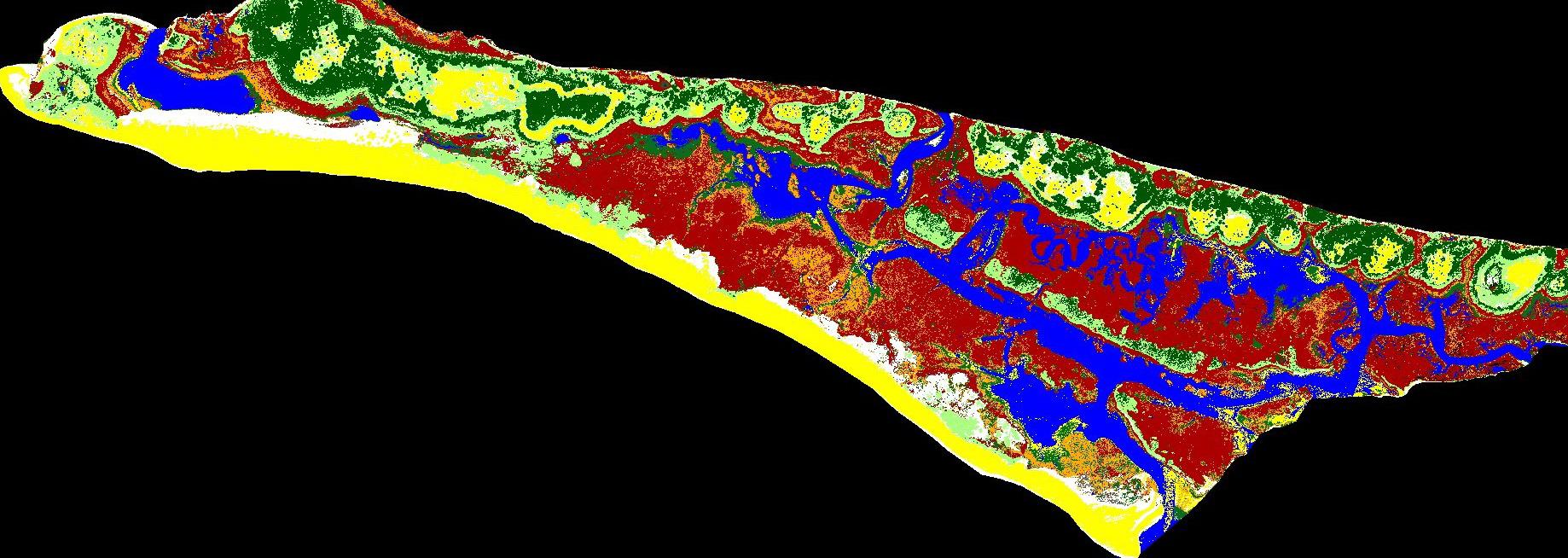
From volcanic eruptions to microscopic polymers, NC State researchers highlighted their vital work in natural resources, biochemistry, engineering and more through art in the 2025 Envisioning Research Contest.
Evelynn Wilcox won first place in the undergraduate student graphics category in the 2025 competition.
“Over the past 60 years Bird Shoal at the Rachel Carson Reserve has undergone dramatic shifts in both shoreline and habitat. The causes of these changes remain uncertain, yet their impacts could seriously affect nearby coastal communities. This project investigates what might be driving these changes, aiming to support better planning and protection efforts. In this image we use habitat classification – a method of mapping different habitat types – to clearly identify ground habitats at Bird Shoal. This allows us not only to track changes in current conditions but also to compare with past and future images. By spotting patterns over time, we can better understand how habitat shifts relate to shoreline movement and what that might mean for the future of this coastline," Wilcox says.
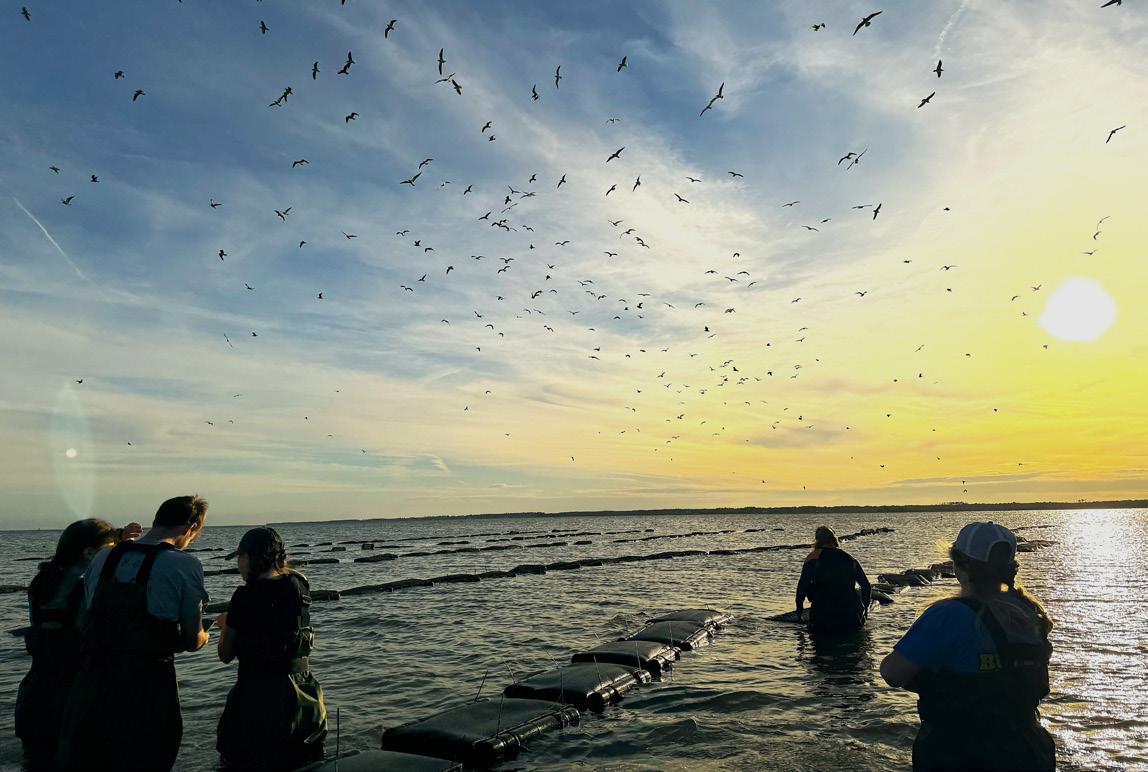
Perry Berlin, won first place in the undergraduate student photography category in the 2025 competition.
“Currently, oyster farms are at risk of contamination by bird guano. This research seeks to limit contamination risk by implementing a physical barrier between birds and the floating bags the oysters are grown in. In order to better understand the process of oyster farming before initial design, a site visit was performed at a local oyster farm in Beaufort North Carolina. This sight visit allowed the team to gauge the needs of oyster farmers and discuss potential solutions for the bird landing issue. A new device was then created to create a netted barrier that physically keeps the coastal birds from accessing the oyster bags. These new systems are complete with custom hooks attached to buoys, and various nets surrounding individual bags. For future work, a larger scale system will be created to house entire rows of bags under a single net,” Berlin says.
RECENT RESEARCH, EXTENSION AND TEACHING GRANTS
Michael Burchell - Evaluation of Innovative Technologies and Practices to Improve Rural Wastewater Treatment and Watershed Health
Celso Castro Bolinaga - EAGER: Collaborative Research: Longitudinal Investigation of Two Hurricane-Generated Barrier Island Breaches in Southwest Florida, National Science Foundation (NSF)
Celso Castro Bolinaga - Improved Understanding of Dynamically Stable Channels with Mobile Bed and Erodible Banks with Application to Restoration and Flood Resilience, NC Department of Environmental Quality (NCDEQ), Division of Mitigation Services (DMS)
Celso Castro Bolinaga - Ecohydrogeomorphically Informed Egg-Laying Habitat Restoration: Using Ecology, Hydraulics, and Geomorphology to Improve Stream Restoration, NC Department of Environmental Quality (NCDEQ), Division of Mitigation Services (DMS)
Lucie Guertault - NC State University DELTA Hybrid Learning Grant to Redesign Water Management Course
Steven Hall - BARD: Award, Aquabot for Precision Aquaculture, (USDA)
Natalie Nelson - Revitalizing Estuaries by Making More Room for Water in Coastal Landscapes NC, (National Fish & Wildlife Federation), Lead institution: North Carolina Coastal Federation
Natalie Nelson - Coastal Contamination Communications, (NC Extension)
Joe Sagues - Innovating Synergistic Bioproducts from Leather Waste for Energy Storage & Energy Utilization, Tapestry (industry project)
Joe Sagues - Scaling Up Cotton Textile Waste Composting with CO2 Utilization, (USDA) National Institute of Food and Agriculture (NIFA)
Joe Sagues - A National Assessment of Carbon Removal via the US Cotton Industry, (Cotton Inc.)
Joe Sagues - A Feasibility Study of Atmospheric Carbon Removal via Burial of Cotton Waste Biomaterials, (Cotton Inc.)
Sanjay Shah - Cooling mat evaluation on sow performance (NC Dept. of Ag. & Cons. Services)
Tommy Stephenson - Precision Agriculture Technologies for Cotton Production in North Carolina (North Carolina Cotton Producers Association)
GIVE TODAY IMPACT TOMORROW
The Department of Biological and Agricultural Engineering (BAE) provides a high quality, hands-on education for future engineers and creates a research and Extension environment that drives innovative and application of engineering technology in machine systems and precision agriculture, ecological engineering, environmental engineering, and bioprocess engineering. The generosity of BAE alumni and friends helps us to recruit and extend unique educational opportunities to the best and brightest students into our program and support and retain outstanding faculty to teach those students. Potential ways in which you can support BAE include the following opportunities. Give today and impact tomorrow!
BAE Enhancement Fund
The BAE enhancement fund provides departmental flexibility to support key initiatives in academics, research, and Extension. The fund helps support student and faculty travel to regional, national, and international meetings, funds for adjunct instructors, publication support, and computing resources for our department. With your help and generosity, the BAE department can continue to respond immediately to exciting challenges and opportunities for our students, professionals, staff, and faculty.
High Impact Educational Experiences: Undergraduate Research Opportunities and Study Abroad
A key component to the academic and professional training of BAE students include undergraduate research opportunities. The BAE department is committed to providing undergraduate students with a high-quality research experience to promote the professional development of these students. The BAE department is designing undergraduate research scholar programs that can interface directly with individuals and companies, allowing you a competitive advantage in terms of gaining access to our best and brightest students. The BAE department is also very supportive of student professional development through study abroad. Numerous study abroad opportunities exist at NC State University, but at times, the costs are too restrictive to allow students to participate. The Department participates in a multi-institutional study abroad experience in Belgium and leads a program on Roman Engineering in Spain.
Endowment Opportunities
Endowment gifts are long-term investments from alumni and friends of the BAE department. The stability and growth potential represented by an endowment gift amplifies its impact. Several types of endowments can be created.
Undergraduate Scholarships and Graduate Fellowships
Make an impact on a student’s life by providing financial resources to assist in their education. Graduate fellowships allow the BAE program to compete for the very best graduate students across the globe.
Distinguished Professorships
Endowed professorships are a key for building the national and international reputation of a department, and they allow us to recruit and retain the most exceptional faculty members. We utilize the state of North Carolina’s generous matching program, which provides 1/3 of the cost of the endowed professorship.

NC State University Department of Biological and Agricultural Engineering Raleigh, North Carolina
MAKE AN IMPACT
A gift to the Department of Biological and Agricultural Engineering is an investment in the problem-solvers of the future.
Support the programs most meaningful to you through monthly, quarterly, annual or one-time donations. To provide general support to BAE, visit go.ncsu.edu/bae_online_giving.
Checks payable to:
N.C. Agriculture Foundation - BAE Box 7645, Raleigh NC 27695-7645
For giving questions, please contact Chris Wessel by phone at 919-5157678 or by email at chris_wessel@ncsu.edu.






www.bae.ncsu.edu
facebook.com/NCStateBAE
@NCState_BAE
instagram.com/NCStateBAE
go.ncsu.edu/bae-youtube go.ncsu.edu/bae-linkedin