
Extension Connection
Sullivan County

Upcoming Events & Programs
Issue Highlights Issue Highlights ssue Upcoming Events & Programs
Friday Fitness Series 5/1, 5/8, 5/22, 5/29
Parkinson’s Support Group 5/6, 6/3, 7/1, 8/5, 9/2
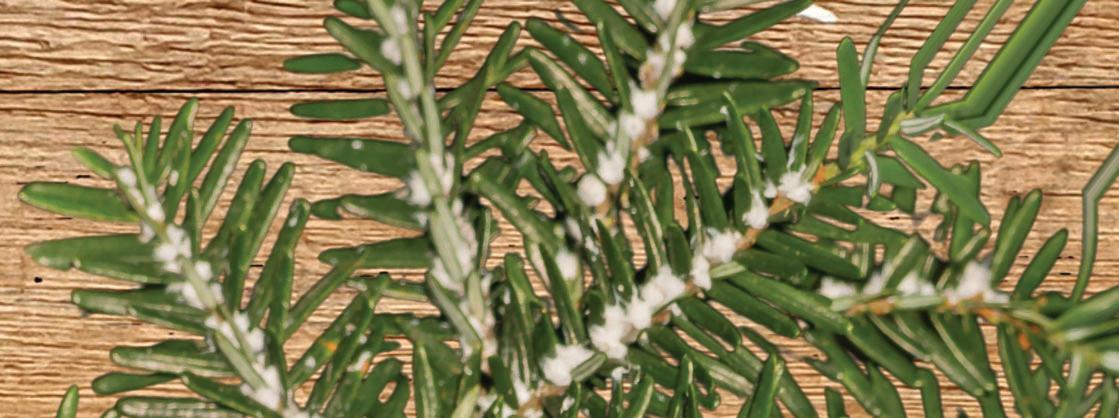
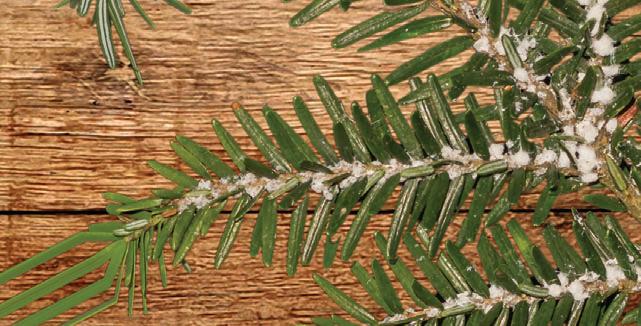
Invasive Species in the Catskills 5/14
D.I.Y. Energy Savings Session 5/21
Raising Pigs on Small Acreage 6/6
Caregiver Cafe Support Group 7/13, 8/10, 9/14, 10/19, 11/9, 12/14
2026 Sullivan County Youth Fair 8/14, 8/15, 8/16
See more events and opportunities on sullivancce.org/events.
Follow us on Facebook and Instagram!



State Agriculture Department announces $1.7 Million Available to Support Beginning Farmers
Transplants or Direct Seeding – What’s Best?
NYS DEC Refrigerant Ban: What Farmers Need to Know Now
Managing Risk: Using Heat Lamps on the Farm
The Power of Beef’s Protein
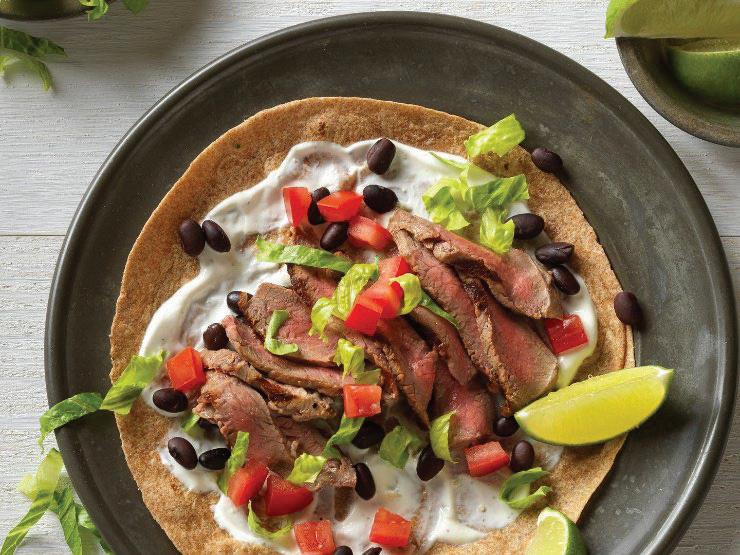
Mexican Steak Soft Tacos

CHSC Report May 2026: Celebrating our Partnerships
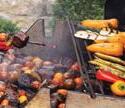
May is National Beef Month! Check out page 14 for fun facts about grilling season and cattle’s role in managing wildfires!


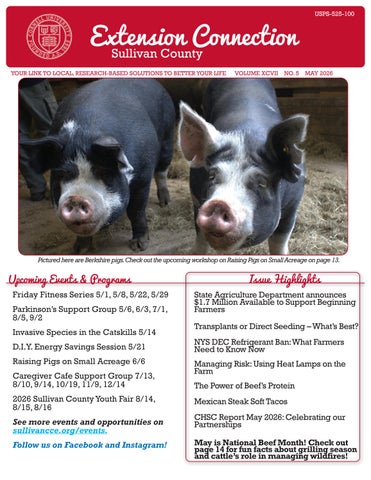
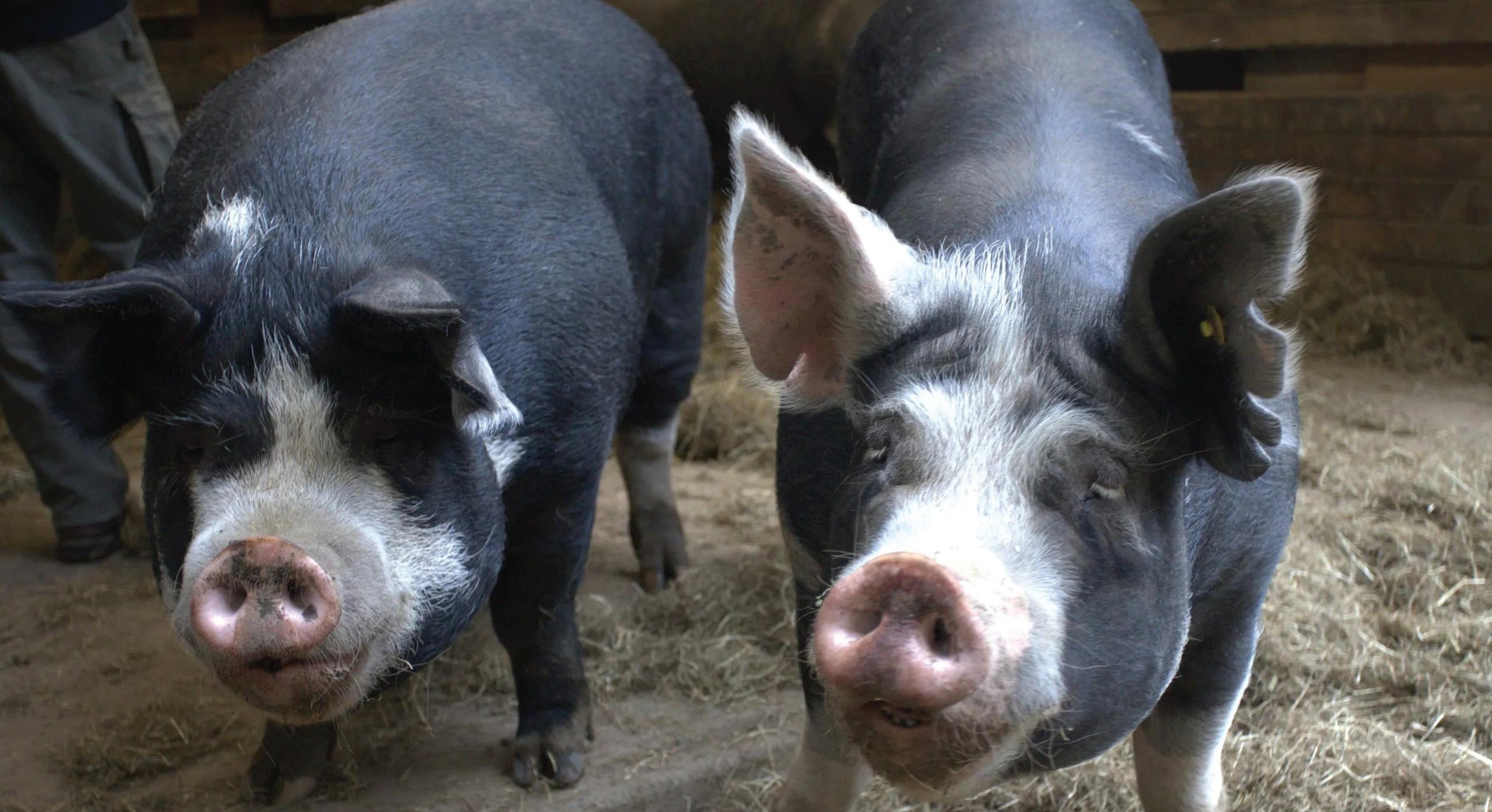
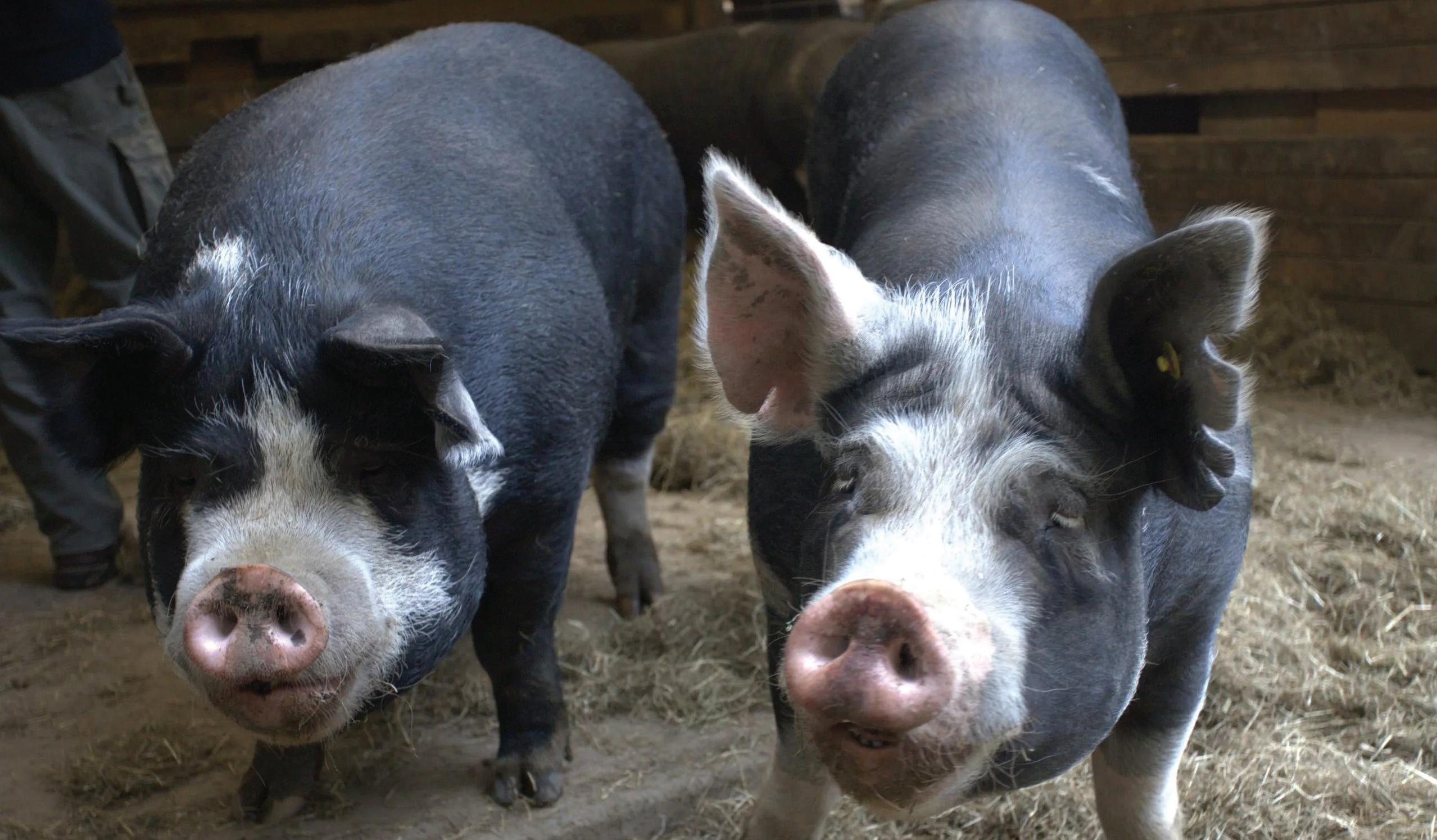
Pictured here are Berkshire pigs. Check out the upcoming workshop on Raising Pigs on Small Acreage on page 13.
Welcome to the Issue!
Page 3 Invasive Species in the Catskills
Page 4 State Agriculture Department announces $1.7 Million Available to Support Beginning Farmers
Page 5 Electronics Recycling
Page 6 Transplants or Direct Seeding – What’s Best?
Page 8 Delaware Watershed Conservation Fund
Page 9 NYS DEC Refrigerant

Ban: What Farmers Need to Know Now
Page 10 Managing Risk: Using Heat Lamps on the Farm
Page 13 Raising Pigs on Small Acreage - June 6, 10:00 am12:00 pm
Page 14 Fast Facts!
Page 16 The Power of Beef’s Protein
Page 18 Mexican Steak Soft

Table of Contents
Tacos
Page 20 CHSC Report May 2026: Celebrating our Partnerships
Page 22 Creating Healthy Schools and Communities Initiatives in Sullivan County
Page 24 Move Your Way: What’s Your Move?
Page 26 Upcoming Events
Page 27 Thanks to Our Sponsors!

NotifyCCESullivan if you have
Notify CCE Sullivan if you have a change of address: 845-292-6180
sullivan@cornell.edu
OFFICE HOURS
Hours: Mon - Fri | 8:30 am to 4:30 pm
Phone: 845-292-6180
E-mail: sullivan@cornell.edu Website: www.sullivancce.org Facebook.com/ccesullivanagfood Instagram.com/ccesullivan
YouTube: bitly.com/ccesullivan
BOARD OF DIRECTORS
Dawn Parsons.......................President
Alex Alorro...................Vice President
Robert Kaplan.......................Secretary
John Garigliano.....................Treasurer
Brian McPhillips...........Legislative Rep.
Patricia Claiborne.............Cornell Rep.
Stacey Johnson
John (JP) Lang
Erika Malmgreen
Mark McLewin
Jennifer Mitchell
Meaghan Mullally-Gorr
Laura Quigley
Gary Silver
Gary Silverman
Diana Weiner
PROGRAM COMMITTEE
Heather Brown
Roberta Chambers
Nu El
Courtney Hanback
Carmela Hugel
Cathi Paci
Carol Roig
Stephen Stuart
Eugene Thalmann
Deborah Worden
EXTENSION CONNECTION
Produced by: Cornell Cooperative Extension Sullivan County Edited by: Aaron Denman, Katie Gasior & Nicole Slevin Nikolados Cornell Cooperative Extension Sullivan County provides equal program and employment opportunities.
NOTICE: Official endorsement of advertisers and their products is not intended by the acceptance of their sponsorships for the Extension Connection.
STAFF MEMBERS
Colleen Monaghan..............................................................................Executive Director
Tracy Broyles...............................................................................SALT Program Manager
Alan Carroll...................................................................Food Systems Program Manager
Luciana Carvo.................................................................STNY/4-H Program Coordinator
Lynn Colavito..............................................Community Cupboard Program Coordinator
Martin Colavito...........................................................Prevention Programs Issue Leader
Wanda V. Cruz...............................................Healthy Communities Program Coordinator
Aaron Denman.........................................................Association Operations Coordinator
Drew Fuller............................................................................. CPIP Program Coordinator
Katie Gasior........................................................................Horticulture Subject Educator
Jenna Gangel...................................................................Shop Taste NY Market Manager
Joy Leon.................................................................Nutrition & Physical Activity Educator
Kim McDonnell............................................................................................TNY Market Manager
Nancy McGraw.......................................................Educator, Caregiver Resource Center
Melinda Meddaugh.......................................................Ag & Food Systems Issue Leader
Tess Isabel Molina Bayly.............................FORx Youth Prevention Program Coordinator
Barbara Moran................................................4-H Youth Development Program Manager
Luis Ocasio........................................................................Prevention Program Coordinator
Patricia Ocasio...................................................................Prevention Program Coordinator
Shanice Owens..............................................Community Cupboard Program Coordinator
Abyssinia Pla El...................................................................................Finance Coordinator
Monica Ponce-Agredano ...............................................................Ag. Program Assistant
Michelle Proscia..............................................Agriculture Production Program Manager
Nicole A. Slevin Nikolados.............................................Senior Administrator, Operations
Tara VanHorn.........................................................................................Finance Manager
Malinda Ware................................................................Statewide Engagement Specialist
John Wilcox..........................................................................................Facilities Manager
Veronica Yangis.........................................................................Taste NY Operations Coordinator
Kayla Evans, Julieth Melendez, Billy Wells..............................................Ag Market Coordinators











































































STATE
AGRICULTURE DEPARTMENT ANNOUNCES $1.7 MILLION AVAILABLE TO SUPPORT BEGINNING FARMERS
Submitted by Aaron Denman, Association
Operations Coordinator
New York Farm Viability Institute is pleased to announce that the 2026 NYS Beginning Farmer Competitive Grant Program (BFCG) is now open as of March 16. The BFCG is a competitive funding opportunity administered in partnership with the New York State Department of Agriculture and Markets. The program will provide 1.7 million to support beginning farmers in building financially sustainable, independent, commercial agricultural enterprises throughout New York State. RFP closes on June 14, 2026.
What can be funded?
• Start-up, improvement or expansion of farm operations
• Purchase of land, machinery, equipment, or livestock
• Construction or improvement of structures
• Marketing initiatives
• Worker or apprenticeship training
• Other business needs tied to financial impact
Note: Vehicles and boats are not allowed
Who is eligible?
• Applicants must be a New York beginning farmer with 10 years or less of farm operation experience and who will materially and substantially participate in operating a farm in New York State.
• Applicants must demonstrate the potential for the project to grow the business and improve financial sustainability. All applicants whose farm generated less than $1,000 in the previous year must provide a business plan.
Proposals may support a business that produces any type of agricultural product, with the exception of cannabis.
How to Apply
Please take the following steps before applying:
1. Thoroughly read the Technical Requirements to learn about the program’s eligibility, rules and structure.
2. Review the Round 1 Recap to learn more about how to create a competitive application.
3. Review the Frequently Asked Questions (FAQ) document.
4. Review a .pdf copy of the online application.
5. Review the required budget template.
6. Go to the Online Application Portal to take the eligibility quiz and start your application (new applicants must create a profile in the application portal).
Funding Information
Application Period: March 16 – June 14, 2026
Total Funding Available: $1,700,000
Required Match: 5%
For more information, documents, and to apply please visit nyfvi.org/ grant-programs/producer/ grants/beginning-farmer.
Source: “2026 Beginning Farmer Competitive Grant Program.” NYFVI.ORG, April 9, 2026. https://nyfvi.org/grantprograms/producer-grants/beginning-farmer/2026bf/.
TRANSPLANTS OR DIRECT SEEDING – WHAT’S BEST?
Written by Steve Reiners, Professor and Chair, Horticulture Section, School of Integrative Plant Science, Cornell University, Cornell AgriTech.
Submitted by Aaron Denman, Association Operations Coordinator
This is part of a series of columns that he wrote about vegetable gardening during the pandemic.
Sometimes it can be a bit confusing when you’re trying to decide whether to use vegetable transplants (starts) or plant seed directly in your garden. There are advantages and disadvantages to each method and a lot depends on both the vegetable and the time of year.
If we lived in a nice, warm place with a long growing season, it would be easy to start everything in the garden with seeds. But here in upstate New York, our growing season is limited to 130 to 150 days of frost-free growing. Although that sounds like a long time, consider how chilly it can be even after the last spring frost. Our soils remain pretty cold into June.
When you plant a seed into a cold soil, it germinates very slowly. Even cold tolerant seeds like peas and spinach, which can be planted right now (late March or early April, depending on the season),

germinate better when the soil is warmer. For example, it would take peas about 35 days to germinate with a soil temperature of 41F. Raise the temperature to a still cool 50F and it takes only 14 days. Go to 60F and they emerge in 9 days.
Slow emergence in a cold soil exposes the seed to more plant diseases. The seed may rot before it germinates. As of March 25, soil temperatures in Ithaca were close to 46F and in Geneva, about 50F. You can speed things up by laying a clear plastic sheet over the soil after planting to warm it up. The heat from the sun will raise the soil temperature 10 to 15 degrees. Once you see the seedlings emerging, remove the sheet.
Obviously, if cold-loving
seeds like peas have a problem in cold soils, heat-loving crops like tomatoes and peppers would fair much worse. Each requires a minimum of 60F and would prefer a soil ten degrees warmer. That’s why we start them indoors where we can keep temperatures warmer and transplant the starts outside later in the season after danger of frost has passed and the soil has a chance to warm up.
As a gardener, you’re probably thinking, why don’t we use transplants for everything?
Unfortunately, some crops respond poorly to transplanting. Beans and peas for example, often succumb to transplant shock and even those that survive will be weak and poor-yielding.
Crops that we grow for their roots, like carrots, beets and turnips also don’t transplant well. Often the large taproot is lost, and we’re left with a plant with a fibrous root system. That’s fine for the plant but not good for us as we need that taproot to harvest.
There are some plants that will do fine planted either way, depending on the season. Lettuce is a good example of that. In the spring, when the soil is cool, it is best to use transplants. If planting in late August for a fall crop, feel free to direct seed. Lettuce seed will take two weeks to germinate in cold April soil but 3 to 4 days in the summer.
Best ways to start vegetables for our gardens
Direct Seed Outdoors
• Beans
• Beets
• Carrots
• Parsnips
• Peas
• Radish
• Rutabagas
• Sweet corn
• Turnips
Direct Seed or Transplant
• Broccoli
• Cabbage
• Collard
• Cucumber
• Endive/Escarole
• Kale
• Lettuce
• Pumpkin
• Spinach
• Squash
• Swiss chard
Use Transplants Started Indoors
• Brussels sprouts
• Celery
• Eggplant
• Leeks
• Melons
• Pepper
• Tomatillo
• Tomato
One advantage of starting your own transplants rather purchasing them from a garden center is choice. Even the best garden center may have no more than 15 or 20 varieties of tomatoes. And likely far fewer of other, less-popular vegetables. By purchasing seed and starting your own, you may have a choice of hundreds of unique varieties. You might be thinking that with the warm spring weather we’ve been having that it is too late to start warm-season crops like tomatoes, peppers, eggplant, squash and cucumbers. But one of the biggest mistakes gardeners new to starting
their own seeds is starting them too early.
You only need to start tomatoes and eggplant about 6 weeks before transplanting. So, if you are shooting to transplant them around June 1, you have until mid-April or so to start them inside. Peppers can use a bit more time. Start them about 8 to 10 weeks before transplanting. For extra early cucumber and squash harvest, start plants inside 2 to 4 weeks before transplanting outside after all danger of frost has passed. But use care when transplanting as their root systems are fragile.
Starting the seeds indoors sounds easy enough but it requires expertise and special conditions. Gardeners often underestimate the light requirements of the plants and wind up with tall, spindly plants that don’t do well once taken outside. Sometimes it’s easier to use a professionally grown plant.
Source:
Reiners, Steve.“Transplants or Direct Seeding – What’s Best?” CALS, March 26, 2021. https://cals.cornell.edu/ school-integrative-plant-science/school-sections/ horticulture-section/outreach-and-extension/ pandemic-vegetable-gardening/pandemicvegetable-gardening-2021-archive/transplants-ordirect-seeding-whats-best.
NYS DEC REFRIGERANT BAN: WHAT FARMERS NEED TO KNOW NOW
Written and submitted by Michelle Proscia, Agriculture Production Program Manager
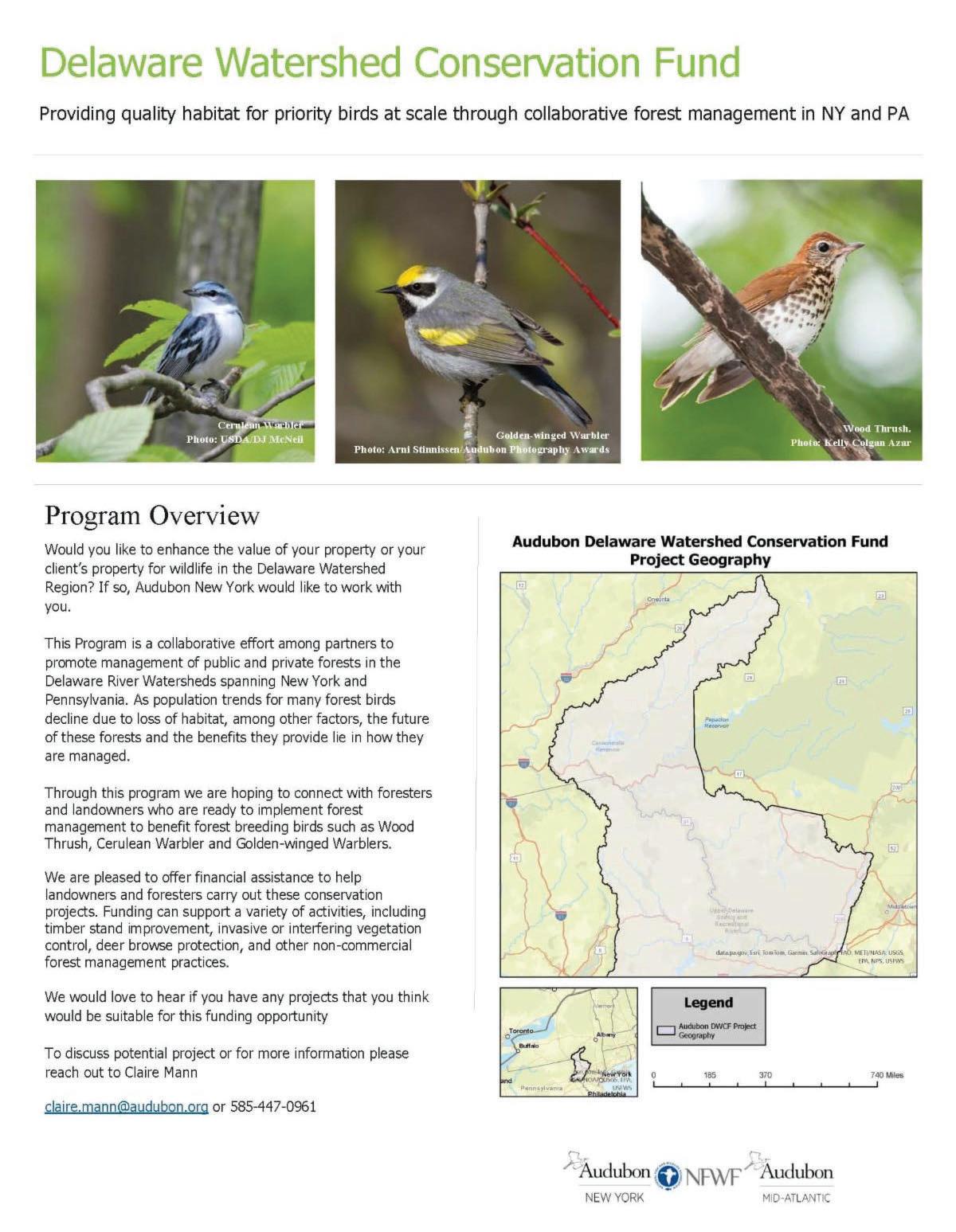
New York State’s Department of Environmental Conservation (DEC) has finalized new regulations phasing out high global warming potential (GWP) refrigerants, most notably hydrofluorocarbons (HFC) b across several sectors. While the rules primarily target new equipment, they will have real implications for farms that rely on refrigeration for milk storage, produce cooling, walk in freezers, and other critical operations.
What’s Changing: The DEC rules restrict the sale and installation of certain high GWP refrigerants beginning in 2025–2026, depending on the equipment category. Existing systems can continue operating, but replacement parts, retrofits, and service options may become more limited and more expensive over time.
Why It Matters for Farmers
• Equipment replacements may require new refrigerants. When older systems fail, farmers may

not be able to replace them with like for like units using legacy HFCs.
• Service technicians may shift away from older refrigerants. As supplies tighten, repair costs could rise and turnaround times may lengthen.
• Cold chain reliability is at stake. Dairy, produce, meat, and value added operations depend on consistent cooling, making proactive planning essential.
• Financial planning becomes more important. Newer, compliant refrigerants and systems can be more efficient, but they may require upfront investment.
What Farmers Should Do Now
• Inventory your refrigeration systems and
note the refrigerants they use.
• Talk with your HVAC/R technician about expected serviceability and timelines for phase outs.
• Budget for future upgrades—especially for older units nearing end of life.
• Explore incentive programs that may help offset costs for energy efficient, low GWP systems.
• Stay informed as DEC releases additional guidance and compliance details.
The bottom line: this isn’t a crisis, but it is a transition. Farmers who plan ahead will avoid costly surprises and keep their operations running smoothly.
MANAGING RISK: USING HEAT LAMPS ON THE FARM
Written by Michael Glos, Cornell Small Farms Program
Submitted by Aaron Denman, Association Operations Coordinator
No farmer wants to have a fire, but we all practice fire prevention in different ways.
It is an accepted premise that farming is a daily lesson in managing risk. Some farmers are more risk averse than others but we all find our comfort level and work from there. For example: I am not comfortable borrowing $100,000, while I know other farmers of my same scale who are. The risk of a fire on the farm is another area which is managed differently by each farmer. No farmer wants to have a fire, but we all practice fire prevention in different ways.
This spring I opened up my email inbox to find some very unsettling news. The night before there had been a fire at the Maine farm where I had first interned 20 years ago. The barn where I had learned to milk, harness horses, and generally catch the farming bug was a smoldering pile. And worse of all, it took the lives of all the animals in it, including one of



the horses I had worked with. My heart went out to the Thayer’s who could only watch in tears as a centerpiece of their farm went up in flames. Luckily no humans were injured or killed.
Through conversations with other farmers and firefighters, I know the truth about rural fires and the role of the fire department. If you live rurally and have a fire you should not depend on the fire department to come save your house or barn. We have seen too many fires destroy houses of friends and neighbors. Even the house of our local volunteer fire department chief burned while, ironically, he was at the fire station.
We have a fantastic
network of volunteer firefighters who will come, but only in time to contain a fire, potentially try to rescue the occupants, and keep it from spreading to other structures. The fact is, it will likely be at least 30 minutes after I make that call that a fire engine will show up at my farm. Even with three volunteer stations within 5 miles of my house, the firefighters have to first get to the station after receiving the call and then come to my place. All the water has to be trucked in or pumps have to be set up to transport the water from our pond or the creek across the street. During this time the fire will be burning and spreading. With those assumptions we know the most important thing to do is to prevent the potential of a fire on the farm and, secondly, to
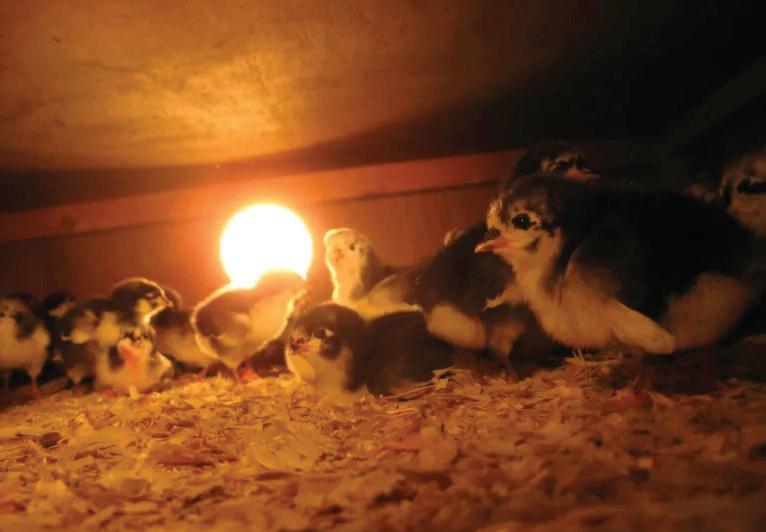
Chicks staying warm under an Ohio Brooder. Photos by Michael Glos
have a plan of what to do if we have one. Prevention primarily involves removing as many risks as possible and reasonable. I can only scratch the surface on preventative measures, but we know that buildings with power in them have an increased risk of fire. Our equipment shed is unlikely to burn because it has no source to cause a fire, but our main barns and house, all with power, are at a higher risk. Add a propane heater, all wood construction, 1000 bales of hay, feed, many electrical outlets, and freezers with motors and you have many potential sources of fire.
For the sake of this article I will primarily look at one potential source of fire on our farm: heat lamps. They were the cause of the fire in Maine, a number of other fires I have heard about, and two fires on our own farm. Heat lamps, generally defined, are portable hanging fixtures with bulbs in them (usually 150-250vw). They can be purchased at almost any farm or general hardware store and are usually cheap, under $10.00.
A number of characteristics that are not always fully appreciated make heat lamps a high risk. Most are poorly
made, with short thin cords, poor connections to the fixture, unreliable attachment points for hanging, and just general cheap construction. In addition, farmers generally don’t have a good place to install them because many of us plan to use them “temporarily” and don’t have a permanent set up. Perhaps it has gotten cold so a lamp is quickly hung up in the corner of a stall to warm a newborn lamb or 100 chicks that have just arrived. This heat lamp hangs in the corner, attached with baling twinean accident waiting to happen.
As I mentioned earlier, we have had two fires on our farm since we began in 1996. One was in a greenhouse brooder not attached to, but very close to, the barn. We discovered the fire after it was basically out. Apparently, a brooder lamp had fallen into the bedding. Luckily, aside from the shavings (on wet ground), there was very little to burn. PVC hoops and plastic are not very flammable. But most of the chicks were sadly killed. We felt very lucky that the fire had not spread to our main barn–just feet away.
using “Ohio Brooders” that use heat bulbs but not the hanging fixtures. Not only are they safer, but they can use less power because smaller wattage bulbs are required and are a much better way to warm the chickens.
The second fire happened a year ago last spring. We thought we had learned from our previous mistakes. We were using thicker bulbs, and better fixtures. But one of these must have had a frayed wire internally that shorted out without tripping the breaker. The wires melted and the bulb dropped into the very dry straw in one of our piglet brooder boxes. I believe it is pure luck that I looked out at the sow barn on the way in for lunch. It appeared that the loose snow was blowing off the roof, but as I stepped into the house I had second thoughts. Something didn’t look right. I quickly realized I was seeing smoke, not snow, coming out of the eaves. I called back to the house, grabbed the fire extinguisher, and put out the fire. A few buckets of water finished it off. I fully believe that if I had eaten lunch, our sow barn would have burned.
We moved our brooder facility away from the barn and soon after started
To help prevent on-farm fires from heat lamps, I share the following
recommendations from our experiences:
The best thing is not to use them. An exposed hanging hot bulb that is drying the bedding (tinder) below is always going to be a fire risk. Put in systems for your livestock that do not need the supplemental heat. This may include major paradigm shifts like having lambs later in the spring, or using mother hens to raise chicks instead of buying them. We, like most farmers, are not able (or willing) to completely eliminate a need for heat lamps so we must do everything we can to minimize the risk. At a minimum, turn them off as soon as you don’t need them.
Don’t use cheap poorly made heat lamps. Throw out all of those hardware store heat lamps. We have tried a half dozen types of heat lamps and have currently settled on one from Premier that costs about $40.00. It is completely enclosed and is said to be able to fall and not cause a fire. It has a thick long cord and the electrical connections are sealed.
to using hard 175w bulbs form Farmerboy Ag. Supply. They are much less likely to shatter and we have developed different types of brooder boxes (for pigs and chickens) that stay warm without the need for a 250w bulb.
Secure them like they are permanent. Use chains and not twine. Keep them out of the way of livestock that can disturb them.
Upgrade your breaker panel. At the recommendation of an electrician we installed an “Arc Fault Interrupter” breaker for the circuits in our barns where we have heat lamps connected. Unlike our previous GFI breaker which failed to trip when the fixture sparked, this type of breaker is made to trip. The down side is these breakers cost about $40 instead of $4.00.
Put a smoke detector in all buildings with the potential of fire. A really loud one with an external speaker is recommended but a standard battery operated one with an annually changed battery is a minimum.
Have at least one fire extinguisher at main entrances of all buildings. In our main barn we have one at each end. We use commercial rechargeable extinguishers and check them annually for a full charge. Learn how to use one and have them clearly marked.
Use hard glass bulbs–not the thin glass ones. We have switched over
Use heat lamps in buildings that are isolated from other buildings. For us this means having small detached brooder buildings for our chickens and a specific building for our sows/piglets. This is much preferred to brooding in our main barn where we store all of our grain, hay, freezers, tools, and other livestock.
Review your insurance policy and make sure you know what coverage you do and don’t have. You may think you have more coverage than you actually do and don’t want any surprises when you really need it. We don’t insure everything but we do insure what we don’t want to self-insure.
Michael Glos co-owns Kingbird Farm with his wife Karma in Berkshire, NY. He may be reached through his website, www.kingbirdfarm. com.
Adapted from: Glos, Michael.“Managing Risk: Using Heat Lamps on the Farm.” Cornell Small Farms Program, September 7, 2021. https://smallfarms.cornell.edu/2014/04/ managing-risk-using-heat-lamps-on-the-farm/.

RAISING PIGS ON SMALL ACREAGE
T his
- JUNE 6, 10:00 AM - 12:00 PM
This farm tour is designed specifically for farmers interested in adding pigs to their operation or improving their current swine management practices on small acreage. Participants will learn the fundamentals of raising pigs in a sustainable and efficient while maximizing limited land resources.


will learn the fundamentals of in a sustainable to successfully into a small-scale farm, reduce input costs, and resources, and networks. This event is made
Topics will include breed selection, housing and fencing options, feeding strategies, pasture management, and seasonal care considerations. The workshop will also cover animal health basics, biosecurity, and practical tips for handling and working with pigs safely.
By the end of the session, participants will have a clear understanding of how to successfully integrate pigs into a small-scale farm, reduce input costs, and produce high-quality pork for personal use or local markets. The program will also provide an opportunity to connect with other veteran farmers and share experiences, resources, and support networks. This event is made possible through the Cornell Small Farm Program’s Veteran in Agriculture Project, Farm Ops, and Cornell Cooperative Extension, Sullivan County. Interested participants www.smallfarms.cornell.edu/event/raising-pigs-on-small-


can register at gpg acreage. g

Adapted from:
“Raising Pigs on Small Acreage.” Cornell Small Farms Program, April 17, 2026. https://smallfarms.cornell.edu/event/raising-pigs
https://smallfarms.cornell.edu/event/raising-pigson-small-acreage/#gf_105.


May Focus: Fast Facts, Cool Tools, & News to Use



Cattle grazing helps to manage plant and grass overgrowth.1,2

By grazing in the winter, cattle reduce fuel that would burn in a wildfire during hot and dry months.1,2






Cattle grazing helps the soil retain moisture, which can reduce the impact of wildfires on the environment.1







References









By reducing fire risk, cattle also protect wildlife in the area from losing their habitats.1,2,3


1.Davies et al. 2005. Winter grazing can reduce wildfire size, intensity and behaviour in a shrub-grassland. International Journal of Wildland Fire. https://owri. oregonstate.edu/sites/agscid7/files/eoarc/attachments/854_winter_grazing_2015.pdf
2.Taylor, Charles. 2006. Targeted Grazing to Manage Fire Risk. University of Idaho. Found on: https:/www.sonora.tamu.edu/files/2015/12/Targeted-grazingto-manage-fire-risk.pdf


3.Converse et al. 2006. Small Mammal Responses to Thinning and Wildfire in Ponderosa Pine–Dominated Forests of the Southwestern United States.



































THE POWER OF BEEF’S PROTEIN
Written and submitted by Joy Leon, Nutrition & Physical Activity Educator
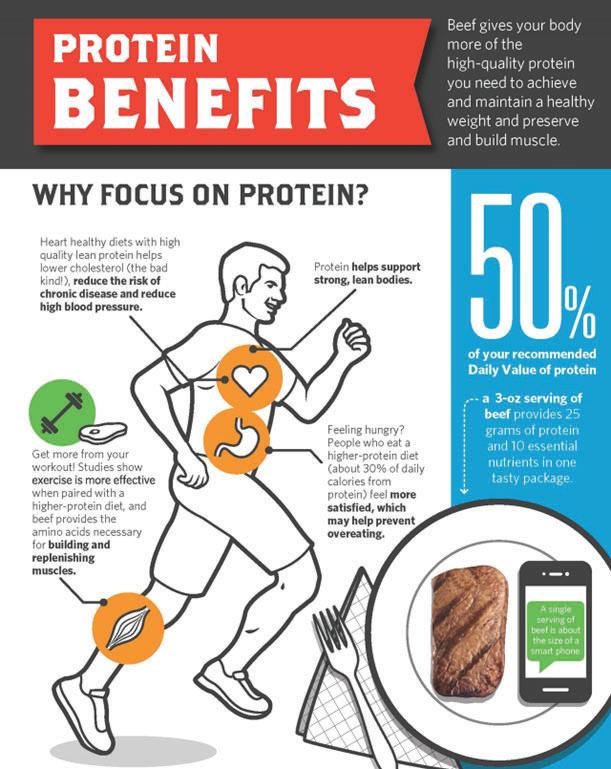
If there was a protein contest, beef would surely be crowned the king! Among the powerful package of 10 essential nutrients beef is known for, protein may be one of the most notable. In fact, one 3 oz cooked serving of beef provides 50% of your Daily Value (25 grams) of this important nutrient— making it an excellent source!
A wealth of research has linked protein to favorable lifestyle markers such as healthy body weight and/ or weight loss, maintaining and building muscle, and overall diet satisfaction. When you’re looking for ways to improve your
health, manage your weight or satisfy your appetite, consider all that protein can do for you:
• Feeling hungry?
People who eat a higherprotein diet (about 30% of daily calories from protein) feel more satisfied, which may help prevent overeating.
• Protein helps support strong, lean bodies. Eating at least 4 ounces of high-quality protein from foods like beef at each meal provides your body with energy to lead an active lifestyle.
• Protein may help cut the fat. Research has shown exercise is more effective for weight management when paired with a higherprotein diet, and beef provides the amino acids necessary for building and replenishing muscles.
Protein throughout the day
So let’s ditch those fad diets and consider how we fill our
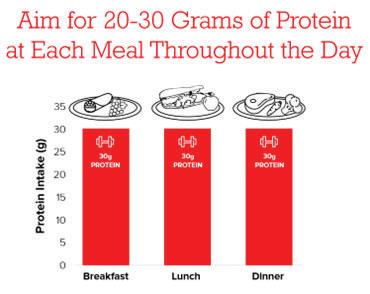
plates at each meal. It’s not only important to just get protein in at dinner or lunch, but to spread it throughout your day. This can really maximize the benefits above. Aim for 2530 grams of protein at each meal and you’ll start to feel the difference.
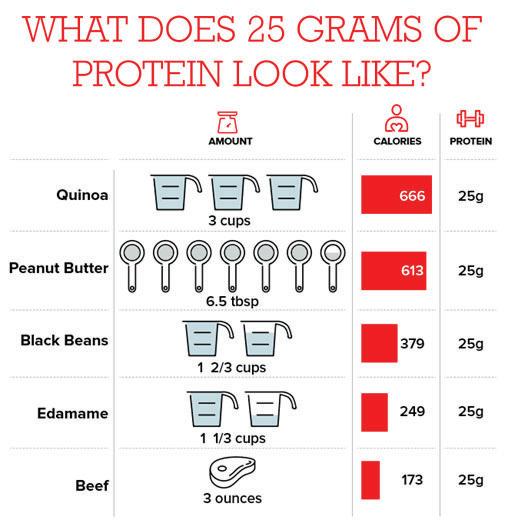
Take a look below to see what 25-30 grams throughout the day looks like (and a simple comparison of beef to plant proteins).
Putting protein into action
If you’re ready to make this one change to your diet, you can start by balancing your protein intake across your meals.
You can also find inspiration for breakfast, lunch, dinner and snacks in our recipe collections and resource pages.
Adapted from:
“Beef - It’s What’s for Dinner - Beef Protein.” n.d. BeefIt’s What’s for Dinner.
https://www.beefitswhatsfordinner.com/nutrition/ beef-protein.
Recipe: Mexican Steak Soft Tacos
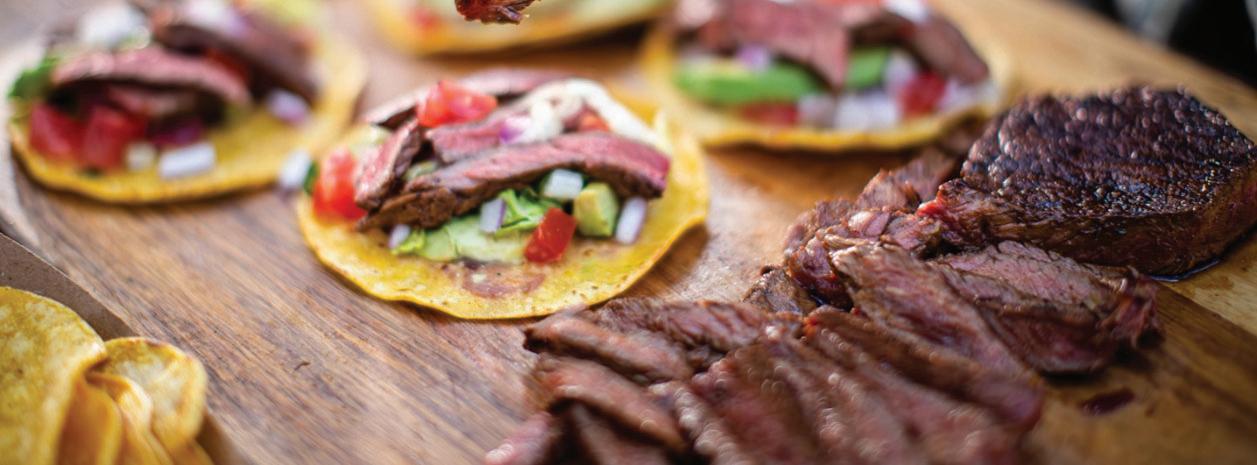
Use leftover steak slices or grill your favorite cut for this take on the Mexican steak softtaco featuringagarlicky lime sour cream.
Total Time: 20 min
Ingredients:
12 ounces leftover beef Flank Steak
1/2 cup dairy sour cream
2 teaspoons fresh lime juice
1 clove garlic, minced
1/4 teaspoon salt
1/8 teaspoon pepper
1/2 cup drained canned black beans
1/2 cup chopped seeded tomatoes
3 cups thinly sliced romaine lettuce
tortillas (8 to 10-inch diameter)
Cooking:
1.Combine sour cream, lime juice, garlic, salt and pepper in small bowl.
2.Spread each tortilla evenly with sour cream mixture leaving 1/2-inch border around edge. Top with black beans; place beef Flank Steak slices on 1 side of each tortilla. Top with tomatoes and lettuce. Fold tortillas in half to serve.
Joy’s tip: If you likecilantro, combine the cremaingredients in a blender with a teaspoon of lime zest to .
Nutrition:

* Based on a 2,000 calorie diet
** Percent Daily Values are based on a 2,000-calorie diet
Nutrition information per serving: 326 Calories; 108 Calories from fat; 12g Total Fat (5 g Saturated Fat; 2 g Monounsaturated Fat;) 64 mg Cholesterol; 505 mg Sodium; 3 g Total Carbohydrate; 4.7 g Dietary Fiber; 32 g Protein; 3.3 mg Iron; 8.5 mg NE Niacin; 0.7 mg Vitamin B6; 1.5 mcg Vitamin B12; 5.5 mg Zinc; 30.7 mcg Selenium.
This recipe is an excellent source of Protein, Niacin, Vitamin B6, Vitamin B12, Zinc, and Selenium; and a good source of Dietary Fiber, and Iron.
Safe Handling Tips:
Wash hands with soap and water before cooking and always after touching raw meat.
Separate raw meat from other foods.
Wash all cutting boards, utensils, and dishes after touching raw meat.
Do not reuse marinades used on raw foods.
Wash all produce prior to use.
Cook steaks and roasts until temperature reaches 145°F for medium rare, as measured by a meat thermometer, allowing to rest for three minutes.

Cook Ground Beef to 160°F as measured by a meat thermometer. Refrigerate leftovers promptly.
Recipe adapted from and photo as seen in The Healthy Beef Cookbook , published by John Wiley & Sons. Recipe, nutrition facts & safe handling tipsretrieved from Joy Leon on April 13, 2026.
Citation:
BIWFD. 2025. “Mexican Steak Soft Tacos.” Beef -It’s What’s for Dinner.
soft-tacos.
-steak-

“With gratitude, we extend a heartfelt thank you to the CCE Grant team for your generous support. Your grant is helping us create a brand-new playground where our children can laugh, explore, and thrive through joyful outdoor play.”
Wanda Rodriguez Kidz Clubb Daycare

Above: Bright Eyes Daycare - children playing with CHSC funded outdoor toys that help develop large muscles and motor skills.

Above: Livingston Manor (Rockland CSD)Stencil -Math & Movement


Success Story
Creating Healthy Schools and Communities Initiatives Sustainable in Sullivan County
Every community has a local government structure comprisedof leaders electedby members of thatcommunity. Among their responsibilitiesareensuringsafety and sustainability while managing resources and services that may include infrastructure. It is not uncommon for subsequent elections to cause turnover of community leaders.
InSullivan County, county-level officersare traditionallyelected every four years. Depending on the local municipal laws, officers such as town supervisorscan vary from two to four years. However, in2023 a state law passedrequiringelections to be moved to even years.Thismeans that those in office who were elected on an odd year (including November of 2025) must go through a new election this year.
Knowing that changes in government are a possibility, it has beenimportant for us to determinewhat steps were needed from the beginning of each planning process,to ensure sustainability for all communityinitiatives.
Our first steps began with attending public meetings includingevents organized by the community, agencies, government, health care providers, municipal board meetings and venues wherewe could attend and talk about CSHCinitiatives. Wemade sure to educate as many people as possible so that when it was time for us to meet with them again (municipalities, health care providers, schools, agencies, etc.) we would no longer be an unknownprogram but onethey were familiar with.
Francis Bacon said, “Knowledge ispower.”
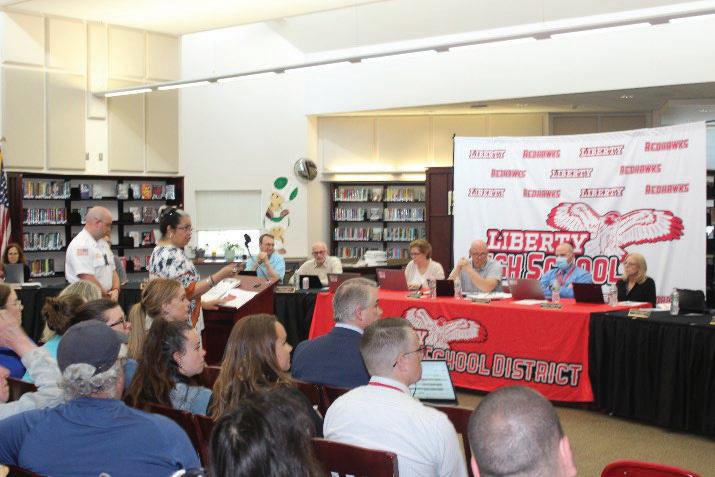
Steven D’Agata, Liberty Chief of Police said, “These improvements not only make our streets safer but also show what can be achieved when communitypartners work together We’regratefulfor CHSC’spartnership in creating safer streets for everyone ”
Our second step was to meet in person with the mayor, town or village supervisor and key individualsthey invited to the meeting. At that point they were provided with more detailed informationonhow wecould assist,forms they would need to complete,and policies that needed to be adopted.
Research related toamunicipality prior to meeting with them has beenvery important. Municipalboard presentationswith community attendance to encourage questions and answers has also been a key factor in the success of CHSC initiatives.
WhenaMemorandum of Understanding (MOU)issigned thepossibly of asmall project
Presentationon Safe Routes to Schoolby Steven D’Agata Village of Liberty Chief of Police and Wanda V. Cruz –CCESC/CHSC Healthy Communities Program Coordinator to Liberty School District Board, parents, teachers, students and community members.
CHSC | Success Story
may follow while a policy is being drafted. Policy and projects arealways related to one another. Normallyit’s an MOU followed by a policyas a project is being planned. Nextan MOA would follow, and end by purchasing equipmentandcompleting projects.
Each time a change of government administration occurs,the same process starts all over again.
“Education, clear communication and respect hasserved us well”-WandaCruz

Grow the gateways (GTG) and Worksite Wellness.
This past year alone we are excitedto see that theTown of Bethel isclose to havingtheir comprehensive plan adopted before this summer begins. The Town of Thompson hs been able to use other resources,and their Comprehensive Plan was recently adopted this year.Meanwhile,the Town and Village of Liberty just recentlyhad their Comprehensive Plan kick off. We are presently working with two municipalitieson resolutions for Safe Routes to Parks, Safe Routes to Schools and hopefully, Vision Zero!
Allof this work hasresulted ina clear path to securingsustainability,safety,accessibility for physical activity, healthy foodsand worksites. The many partners that we have worked with are encouraged to continue the work we’veall startedtogether.

Town of Fallsburg Supervisor Nathan Steingart said, “We benefitfrom the knowledge that Wanda and CHSC bring to the table on policies We are proud to have adapted manypolicies Wanda haspresented to us and d lookforward to a continued relationship to build a healthier community ”
Creating Healthy Schools and Communities (CHSC)at CCE Sullivan is proudto say that in the past ten (10)years,we have assisted with the adoption of over thirty policies related to Comprehensive Plans, Safe Routes to Schools (SRTS), Active Friendly Routes to Everyday Destinations (AFRED), Vision Zero, Food Service Guidelines(FSG), Complete Streets,


To learn more about our work: Visit:
Email: wvc22@cornell.edu


CCESC Creating Healthy Schools and Communities web page at: https://sullivancce.org/food-nutrition/creatinghealthy-schools-communities-chsc-2021-2026

Meeting with (top left to bottom) new Deputy Supervisor -Jeff Wiener, new Town Supervisor -Nathan Steingart, Fallsburg Confidential Secretary –Jennifer Edwards, CCECHSC Healthy Communities Coordinator –Wanda V. Cruz and Town of Fallsburg Parks and Rec. Director –Harris Seletsky.
OLDER ADULTS






What’s your move?
Physical activity can make daily life better. When you’re active and strong, it’s easier to:
Do everyday tasks, like chores and shopping
Keep up with the grandkidsStay independent as you get older
What types of activity do I need?
Moderate-intensity aerobic activity
Anything that gets your heart beating faster counts.
Muscle-strengthening
Activities that make your muscles
And mix in activities to improve your balance!
Aim for a mix of aerobic, muscle-strengthening, and balance activities.
Try activities that count as more than 1 activity type — like dancing, sports, or tai chi — to help keep your body strong and lower your risk of falls.
Physical activity can help manage many health problems.
Reduce symptoms of arthritis, anxiety, and depression
Just getting started?
Help keep diabetes and high blood pressure under control
No problem — start slow and do what you can. Even a 5-minute walk has real health Build up to more activity over time. And all sorts of activities count.
Even things you have to do anywayEven things that don’t feel like exercise
You can get more active. No matter your age, you can




health.gov/MoveYourWay/Activity-Planner