As valued partners of the Colorado Cattlemen’s Agricultural Land Trust (CCALT), We are excited to share with you a summary of our successes over the past twelve months and our future plans. CCALT’s mission is, “to conserve Colorado’s western heritage and working landscapes for the benefit of future generations.” The year saw CCALT advance this mission and deliver impactful conservation across the state. CCALT’s continued success is made possible by the dedication and hard work of a devoted staff and board of directors, and the passion and generosity of landowners, donors, and partners.
2022/2023 Successes
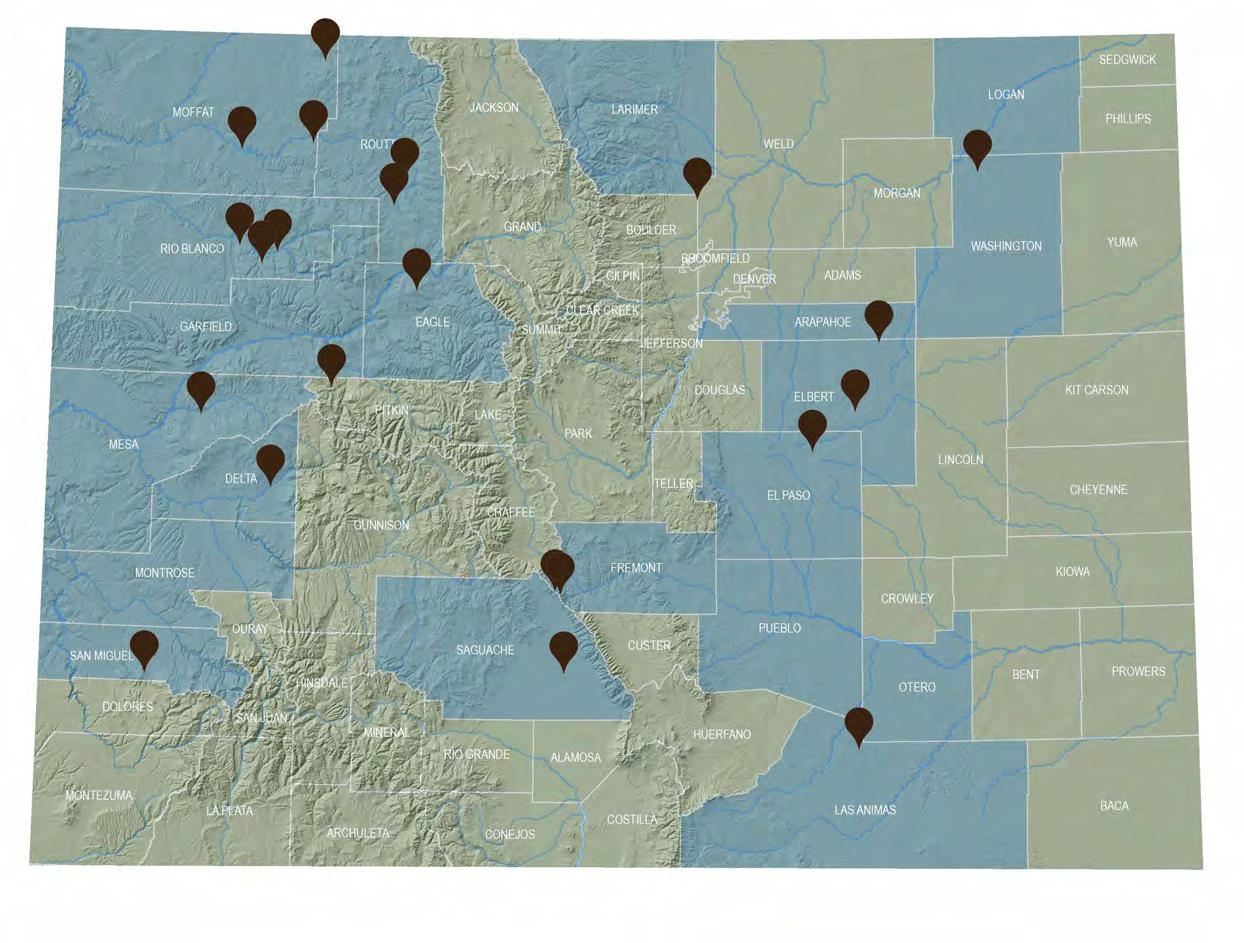
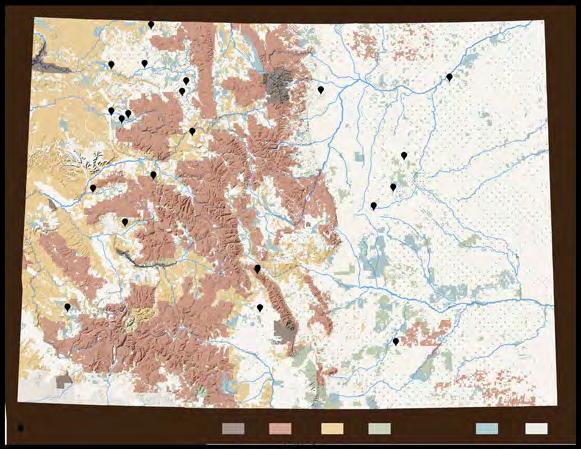
• 22 new conservation easements comprising more than 58,700 acres of working and productive lands. Since 1995, CCALT has partnered with more than 420 landowners to conserve more than 760,000 acres of productive agricultural land.
• Successfully launched a tax credit brokerage program that directs additional financial resources to our landowner partners.
• Launched the Emery-Wilhelm Family Agricultural Resiliency Fund, enabling CCALT to leverage our financial resources to benefit our landowner partners in completing additional conservation projects on their conserved lands.
Looking Forward
The American Farmland Trust predicts that Colorado will lose more than 400,000 acres of productive agricultural land to development by 2040 (25,000 acres per year). This rate of ag land loss is alarming for many reasons including added stress and strain on water resources, infrastructure, and the industries and businesses that support our agriculture producers. CCALT works every day to counter these trends and ensure that our most productive agricultural lands remain available to grow food and fiber. As of this report, CCALT is actively working on 26 conservation projects across the state. These projects comprise an opportunity to conserve more than 60,000 additional acres of land that produce food, fiber, energy, scenic vistas, and critical wildlife habitat. CCALT is also working to expand its additive conservation work and the Emery-Wilhelm Family Agricultural Resiliency Fund to provide more conservation opportunities to our landowner partners. To better connect people to our work and the urgency around the conservation of working lands and production agriculture, we will be rolling out new communications strategies over the next year and opening an office in the San Luis Valley.
None of our success would be possible without the power of partnership. We are immensely grateful for the collaboration and support we receive from other conservation organizations, federal and state agencies, private foundations, individual donors, and most of all our landowner partners. It is these partnerships that allow us to undertake extraordinary conservation projects that have an impact on the ground and across the state.
Your contributions are instrumental in the success of CCALT, and we invite you to join us as we continue to conserve Colorado’s working lands and secure a bright future for generations to come.
Forever Colorado,
Erik L. Glenn Executive Director
Koger Propst President
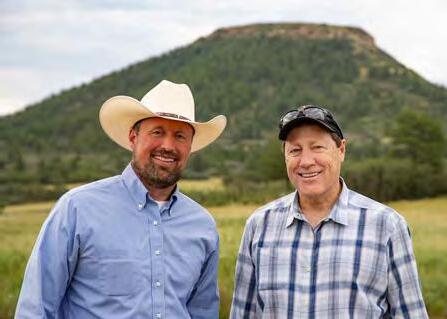
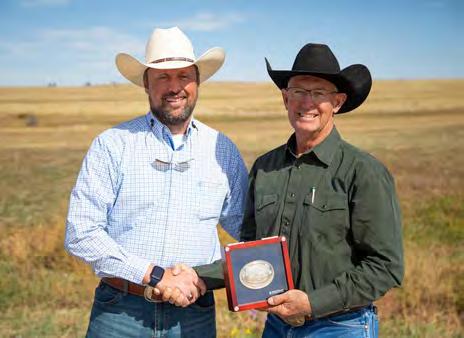
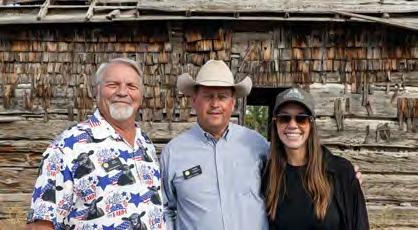
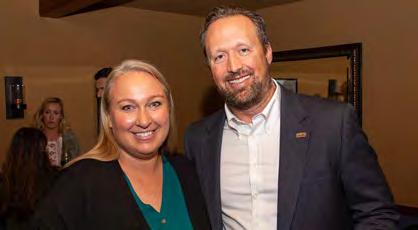
Erik Glenn and Koger Propst at the Greenland Ranch
CCALT BOARD OF DIRECTORS
Officers
Koger Propst President
Tawny Halandras Secretary/Treasurer
Stacy Kourlis Guillon Vice President
Rye Austin Vice President
Orlando González Vice President
Tom Stoever Vice President
John Braly
Jay Fetcher
Jen Livsey
Chancy Love
Ken Mirr
Ben Rogers
Ex-Officio Members
Erin Karney
Larry Kueter
Sandi Turecek
Sara Shields
Billy Gascoigne
Jeff Pyatt
Lee Rooks
Ben Duke
Kenny Rogers
THANK YOU TO
The governance of nonprofit organizations rests with a board of directors comprised of unpaid volunteers. CCALT has been governed by an exceptional board of directors for nearly thirty years, and many people have dedicated immense time and talent to leading this organization. CCALT would like to thank and recognize two individuals who recently concluded their time on the CCALT board of directors after providing many years of combined service. We also welcome Ben Duke and Kenny Rogers back to the Board!
CCALT STAFF
Erik Glenn Executive Director
Anne Rogers Controller
Molly Fales Staff Attorney
Maggie Hanna Director of External Relations
Megan Knott Director of Stewardship
Brendan Boepple Director of Additive Conservation
John Gioia Director of Transactions
Dan Skeeters Stewardship Manager
Courtney Bennett Senior Conservation Manager
Scott Wappes GIS Manager
Karina Puikkonen Communications and Design Manager
Owen Yager Regional Manager of External Relations
Kai Miranda Data, Grants, and Administrative Manager
Jocelyn Catterson Conservation and Outreach Manager
Monica Garcia Conservation Coordinator
Britney Filter CCALT Additive Conservation Fellow
Steve Wooten 2010-2023
Steve joined the CCALT Board in September of 2010. In addition to his service to CCALT, Steve served the Colorado Cattlemen’s Association (CCA) simultaneously, including two terms as President of CCA. The time investment to travel around the state, be engaged in both boards, and rise to leadership in both organizations is no small feat. We owe special thanks to Steve’s family who kept things moving along at the Beatty Canyon Ranch while Steve served the industry and worked tirelessly to help shape conservation tools in a way that works for Colorado’s working lands and the landowners that steward our State’s precious resources. Steve’s contributions and commitment to CCALT are immense, for which we are forever grateful.
Adonna Allen 2019-2023
Adonna joined the CCALT Board of Directors in 2019 as part of the merger with the Yampa Valley Land Trust (YVLT). Adonna played an instrumental role in the success of the merger. Adonna has deep roots in Routt County agriculture. Adonna’s family has ranched in the Steamboat Springs area since the early 1900s. With a commitment to working lands in her blood and a professional background in both ranching and banking, Adonna provided CCALT with valuable insight into landowners’ needs and financial trends.
Steve and Adonna have agreed to continue to serve CCALT in other capacities. We are grateful for their service to the Board, and their continual support of CCALT and its mission.
2022/2023 IMPACT
Conserved lands offer significant economic value that has been highlighted in recent years. In 2018, Colorado State University (CSU) released a study quantifying the return on investment (ROI) of conservation easements in Colorado. The Colorado Natural Heritage Program at CSU also developed a Colorado Conservation Data Explorer (CODEX) map system that can quantify the ROI of ecosystem services such as water purification, air pollution removal, wildlife habitat, and soil retention at smaller scales.
For the 22 properties CCALT helped to conserve during its 2022/2023 fiscal year, CODEX determined that the agriculture, forest, vegetation, and water systems within these lands provide a ROI of at least $10.4 million and up to $30 million for the state. The Delhi Ranch conservation easement is the third largest in CCALT’s portfolio. This easement across the UE and Iron Springs Ranches comprises over 27,000 acres in the Southeast corner of Colorado with an individual ROI of at least $2.6 million and up to $6.3 million alone.
Photo credit: Lee Rooks
DELHI CONSERVATION EASEMENT
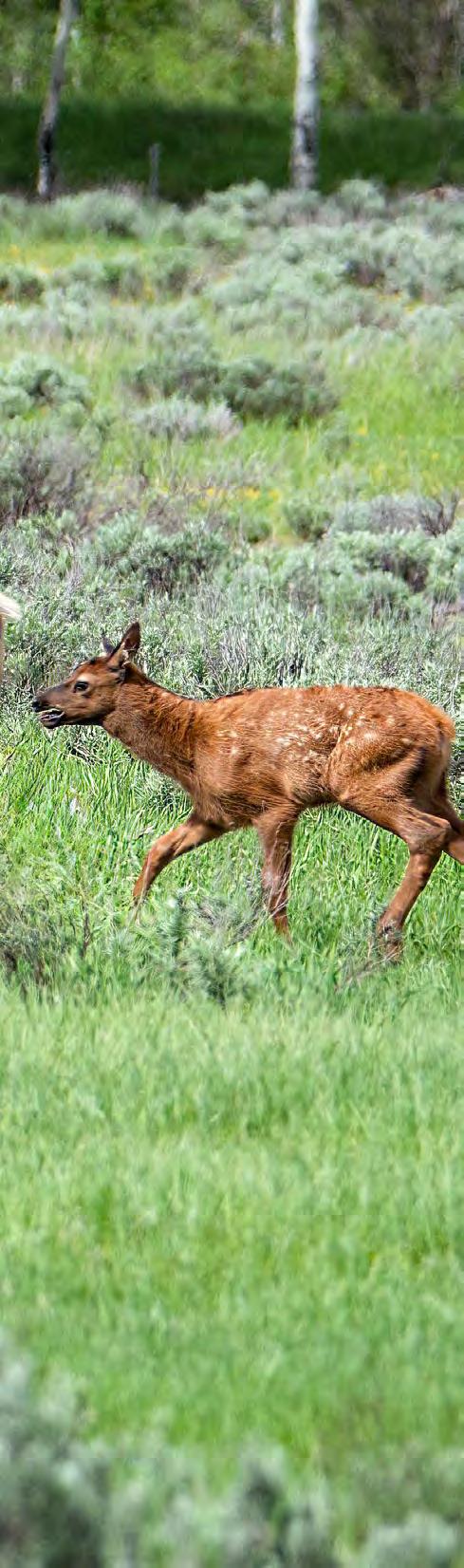
the elk calf
BY: AARON ABEYTA
i am looking for scattered sheep in the wilderness the herder has fallen ill i am on foot the horse is in the wind the horse is smoke the horse is pollen the horse is ghost and the dogs have no loyalty to me
i am walking the meadows of rincon bonito the old men call the spruce at the meadow’s edge los brazos translated the name means arms but the ancient meaning is shadow and silence
i must enter the spruce my abuelito’s voice tells me i must get the count we must know how many have died how many will not return to the llanos south of home we must know how much of our winter work has been lost here in this late june
i will not find every sheep it has been too long the herder sick for five days i am only eleven but i know what death is i have seen the violence of what dogs can do the neck wounds that only coyotes make
i imagine the calf female weigh her with my eyes forty pounds i tell myself the clearing is small no grass small bits of bark twigs dark as morning dark spruce needles the gold of dying things cling to the still wet animal her amniotic sac a yellow shawl on her shoulders ears wet the placenta and cord at her nose i pray to God silently that i am allowed to witness this pray that the cow elk is only at the spruce edge of the forest her large and sleek body somehow brought into the safety of a shadow human eyes cannot penetrate i pray because that is what my abuelita has taught me to do pray that my being here this accident will not mean the death of this animal
i dare not touch what my touch will doom for having touched
as a man i carry this anger it is untraceable yet i know my father taught it to me with his blood with his stories he loved all of us enough to teach us not to trust even so his eyes have in them the dark well of mercy this vine of flower is watered by fire and it is my life
beyond the newborn elk calf the spruce drop down a slight slope light enters in razors of dust pillars of gold
at the edge of the clearing there are six sheep buried in the duff their bodies bloated bellies green and blue necks broken
i am eleven the horse is in the wind and the dogs have no loyalty there are two ravens at the edge of the trees the invisible magpies are crying into the day
i look back toward the elk calf i do not know what to do i am alone i pray because that is what i have been taught to do
i pray for myself i pray for the count and perhaps i pray that too much death will not enter into my life i must have prayed for something like that
o dear and brutal day do not seep into my young heart
dear Lord and dear st. Francis look over the newborn elk calf may her mother hear her chirp may her mother lift her head and run toward the sound and may all living things that have not yet done so dear Lord may they suckle
o dear and brutal day whose light is pillars through dark arms of spruce may the horse return to camp and may the dogs always be loyal
o dear and brutal day here where i stand at the edge of death and birth protect me
o small voice that was me a thousand years ago tell me which way the bear has gone and lead me away toward safety and living sheep small voice that was me so long ago let me sing later let me not know too much anger let me sing forgiveness
remind me o small voice that my father has sent me here alone because he loves me and understands that men must know their fear if they are ever to love
dear and brutal day heal the herder and lead the horse home lead too the mother elk to her calf lead her to lick the newborn clean lead her to eat placenta and cord lead her to swallow the danger the scent of these things brings
my abuelita has taught me to pray she tells me our faith is made of three pillars prayer penance and action that there are eight types of literature in the bible this is one of them she has taught me to pray
i would give away most anything to hear her voice again i would give away words and anger i would give away fear and joy i would give away this abyss between life and death i would give away this spruce and every wilderness to have her lead me in prayer just one more time
i am just a boy she died the winter before i ask her to ask God to save the elk calf i did not dare touch i ask her to walk me back to the open meadow and i ask that the count not grow too high or too heavy for my young body to bear
Aaron Abeyta is a long-time partner of CCALT. In these verses, the vast landscape and the rawness of nature converges with the toil of the land steward. As the cradle of artistry, open lands beckon poets to find rhythm in the everyday dance of conservation, ranching, and nature.
STATEMENTS OF ACTIVITIES FOR THE YEARS ENDING JUNE 30,
CONSERVATION IMPACT WATER
2022
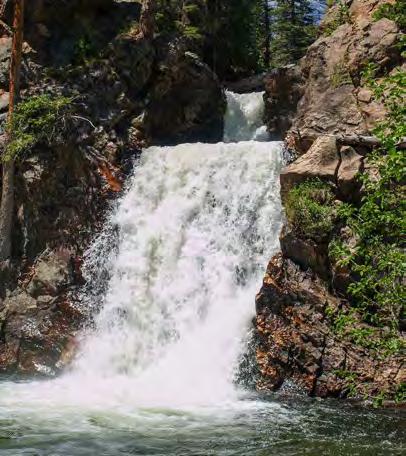
Last winter’s abundance of snow and the statewide drought this past summer have been a stark reminder that water is the lifeblood of the American West. CCALT is dedicated to helping our landowners conserve water resources, ensuring that both productive lands and larger watersheds remain healthy throughout cycles of moisture and drought. 22
NEW MILES
18 DIFFERENT STREAMS
HABITAT
Along major waterways and tributary creeks conserved
2023 flow through 2022/2023 conserved properties
3,895 ACRES IRRIGATED On twelve different ranches
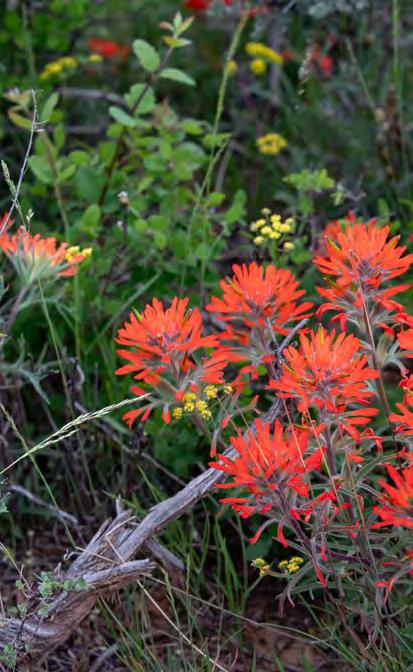
Habitat loss, fragmentation, and land conversions are among the leading threats to our natural world. Permanent land conservation ensures that habitat continues to provide plant communities, soil structure, migratory routes, and other resources that support Colorado’s variety of life. This year, CCALT’s landowner partners helped CCALT conserve large tracts of lands important to the following animals.
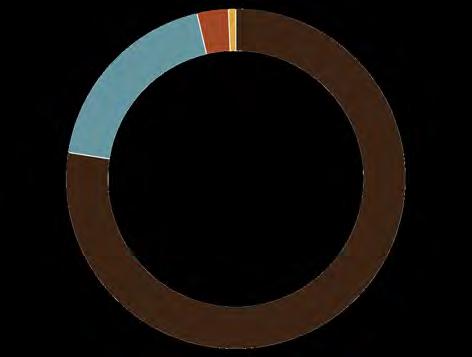
Acres of Wildlife Habitat Conserved
Acres of Notable Habitat
CULTURE SCENIC
Conserving western heritage and working landscapes means keeping working hands on working lands. Working lands conservation supports the resilience of rural economies, supports generational transfer of ranches and farms, and provides a future for the next generation of producers.
29 11
FAMILIES INVOLVED
INTERGENERATION RANCHES
With conserving working lands in 2022/2023
With two or more generations currently working on the ranch
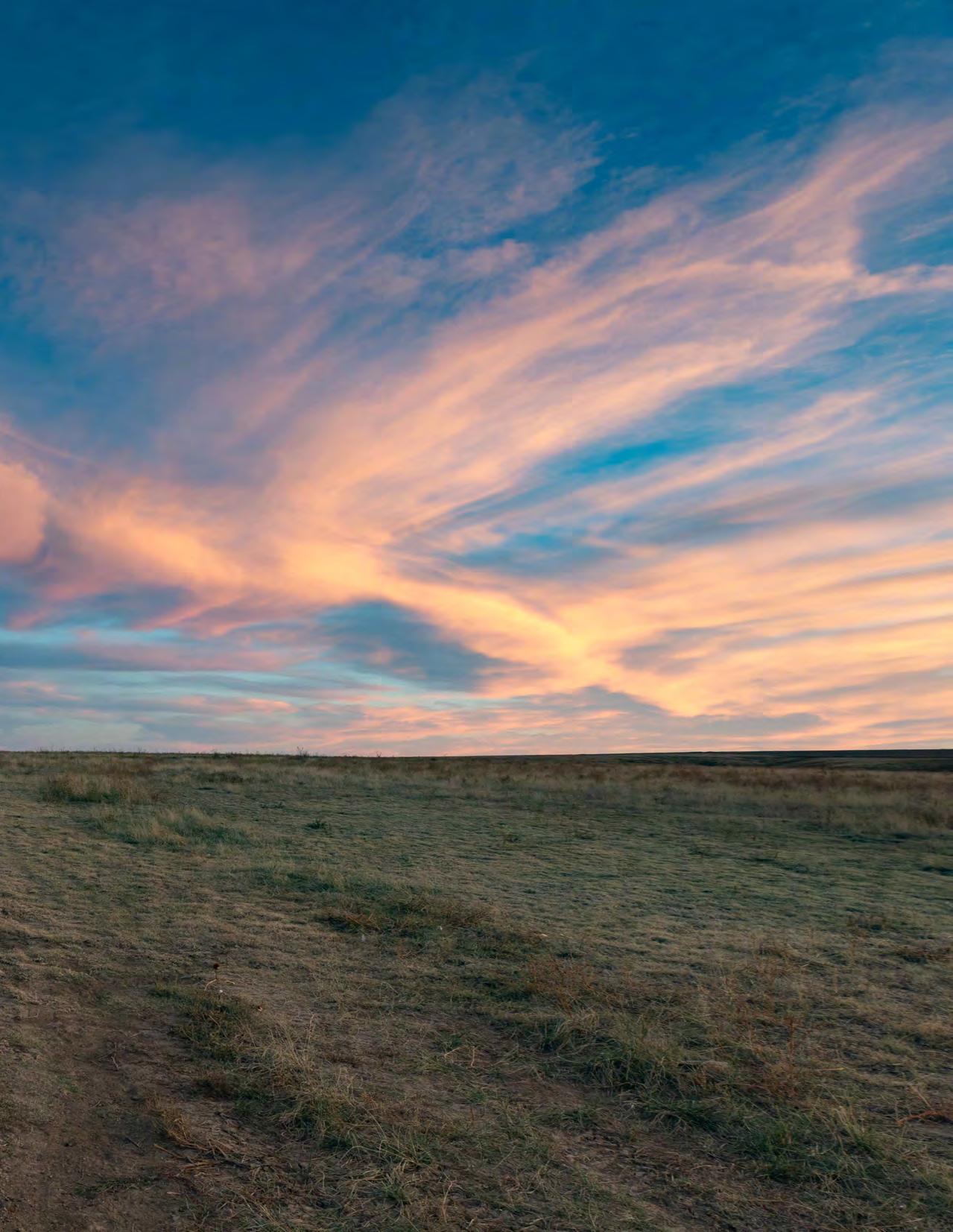
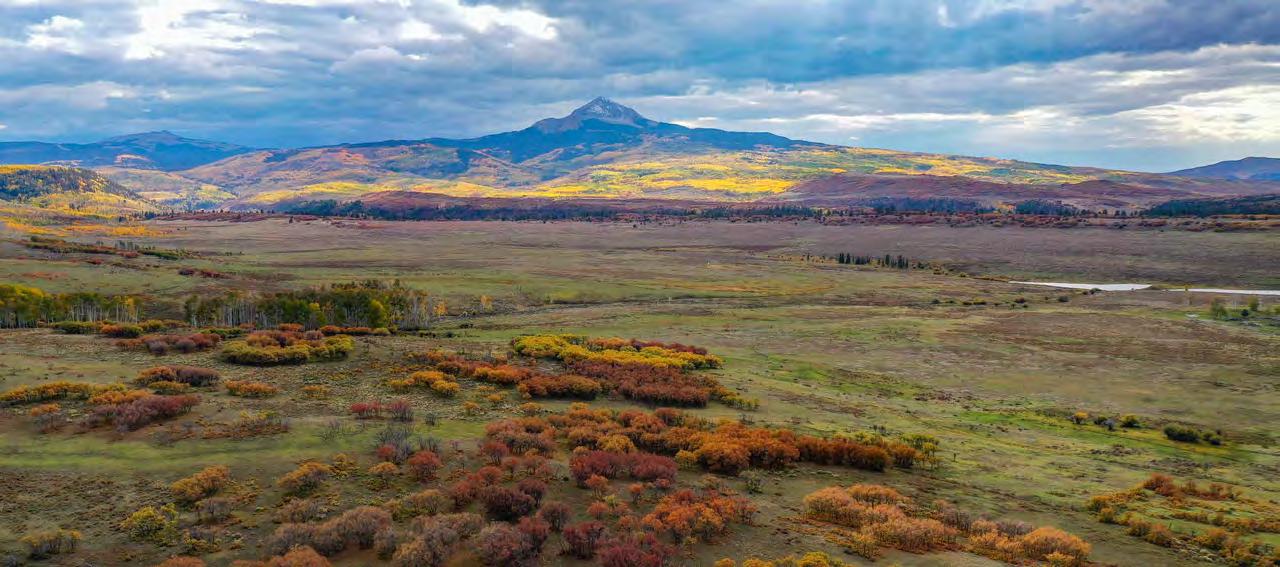
Conserved ranches and farms are the visual gateways to the prairie of Colorado’s eastern plains, the rugged Rocky Mountains along our state’s spine, the high deserts of the Western Slope, and the grassland meadows and river valleys found throughout. Ensuring these views remain will support rural communities that contribute to the Centennial State.
2
SCENIC BYWAYS
18
MOUNTAIN RANGES
THE
PUBLIC AND PRIVATE LANDS CONSERVATION CONNECTION
Nature doesn’t observe borders. While private lands do have boundaries, the landowners within them understand the interconnected nature of their lands to the greater landscapes and ecosystems that surround them. Their stewardship protects natural waterways and wildlife habitats above and below adjoining public lands managed by the National Park Service (NPS), U.S. Forest Service (USFS), Bureau of Land Management (BLM), State land, and Tribal lands, as well as other privately conserved lands.
The Flat Tops and Santa Fe Trail Scenic and Historic Byways are visible from 2022/2023 conserved lands.
Including the Flat Tops in the Northwest, Sangre de Cristos in the Southeast, the Front Range, and the Sneffles Range of the Southwest are visible from 2022/2023 conserved lands.
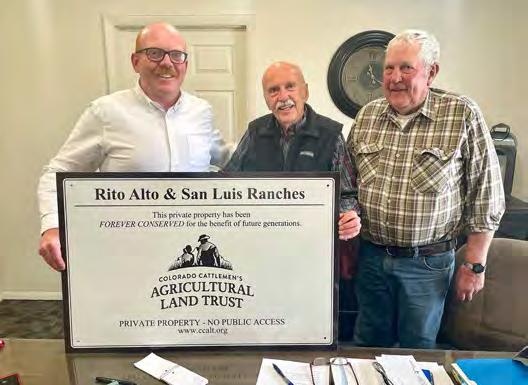
RITO ALTO & SAN LUIS RANCHES
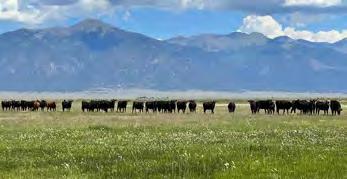
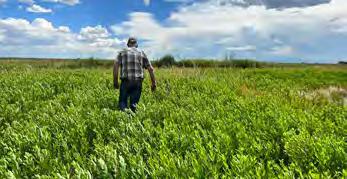
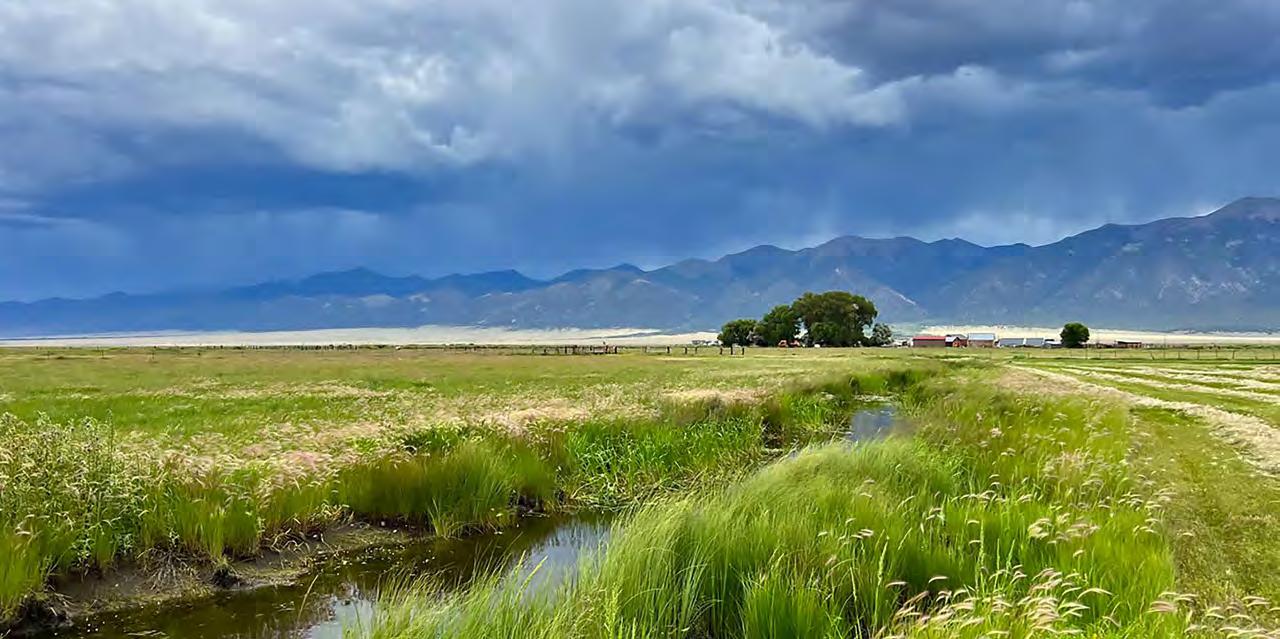
The most valuable partnerships in private lands conservation happen within the family. For more than 40 years, cousins John Albert and Martin Shellabarger, along with their families, have carried on a family agricultural tradition on the Rito Alto and San Luis Ranches that began over 150 years ago.
The Shellabargers homesteaded Rito Alto Creek in the San Luis Valley around 1870. At the beginning of the 20th century, portions of the property were sold to eastern farmers, who quickly abandoned the drier lands they were unaccustomed to farming. Family matriarch Abigail Shellabarger reacquired the divided properties during the Great Depression era to create the current ranches’ boundaries. Albert and Shellabarger have kept their ranches together amidst fluctuating cattle markets, and growing pressures on land and water resources in what everyone just calls the Valley. The mutual family decision to place the two
ranches into a 2,710-acre conservation easement with CCALT ensures their legacy of land stewardship along the Rito Alto Creek corridor continues for generations.
“The conservation ethic of the Alberts and Shellabargers epitomizes the commitment of Saguache County’s ranching families to protect and steward the San Luis Valley’s land and water resources.”
- BRENDAN BOEPPLE
Keeping working hands on working lands is a goal many CCALT partners want to help Colorado ranching and farming families achieve. A network of conservation partners came together to help keep the Alberts and Shellabargers on lands that still provide for their livelihoods and contribute to their greater community.
Continuing a decades-long partnership, CCALT and the Rio Grande Headwaters Land Trust collaborated to gather private and state funders who also saw the importance of these ranches to the local agricultural economy and landscape conservation. With the support of the Gates Family Foundation and the Trinchera Blanca Foundation, funders who have made substantial long-term investments in the Valley, and the Colorado Water Conservation Board, the costs for Albert and Shellabarger to complete the easement project were greatly reduced. Our partners’ conservation commitment to the future of the San Luis Valley helped these important historical ranches remain part of this unique Colorado landscape.
CCALT Director of Additive Conservation
FROM LEFT: BRENDAN BOEPPLE, MARTIN SHELLABARGER, JOHN ALBERT
Photo credits: Dawn Reeder
X7 RANCH
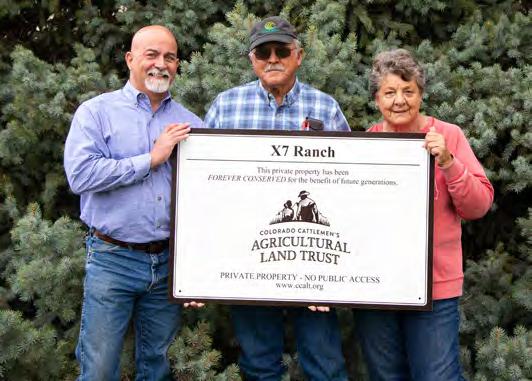
Three current generations of the Hettinger family have been dedicated land stewards of the X7 Ranch and generous conservation partners to the Northeast Colorado community.
The first Hettingers settled in Colorado during the World War I era. Howard Hettinger’s grandfather purchased the ranch’s original acres in 1951. Since then, each generation of the family has farmed, ranched, leased, and purchased land to grow their farming and cattle operation to what it is today: a large, diverse working farm and cattle ranch with a beef cattle operation, seasonal livestock grazing, and dryland and irrigated cropland production. This large operation is managed by Howard, his wife Julie, his son Michael, and his grandson Jake, the fifth-generation rancher in the family.
“The way I think of it, we’re safeguarding something of great value and investing in making this ranch a more sustainable operation going forward. We’re keeping it whole. I’m nearly 100% certain my ancestors would feel the same way.”
- HOWARD HETTINGER
The Hettinger family has been dedicated conservation partners to their community. They own the X7 Ranch, and recently purchased the Bar 3 Ranch, one of the oldest single-family owned and operated ranches in Colorado. The Bar 3 Ranch became a conserved property under CCALT in 2020. A conservation easement became the tool that would also keep the X7 Ranch together. The Hettinger’s agricultural
ventures on the X7 Ranch involve their community’s youth. Local high school students have enjoyed hands-on demonstrations of the latest machinery and techniques the Hettinger family uses for planting and harvesting large crop fields.
Conserving 2,693 acres on the X7 Ranch with CCALT offers significant contributions to their corner of Colorado. The X7 and Bar 3 Ranches protect a stretch along the South Platte River that adjoins a mixture of conserved lands managed by the State of Colorado, Colorado Parks and Wildlife, the Bureau of Land Management, and other private landowners. Their high-quality habitat and water resources provide forage, cover, breeding grounds, production areas, and migration corridors for the wide variety of wildlife in the region. The X7 Ranch is the latest in this growing drive for conservation in a quickly developing region of the state.
FROM LEFT: DAN SKEETERS, HOWARD HETTINGER, JULIE HETTINGER
Photo credits: Dawn Reeder
BRAY RANCHES
MULTIPLE RANCHES - ONE FAMILY
The Bray family currently manages one of the largest cattle operations in San Miguel County as a single family partnership with century deep roots.
“Transitioning a ranch to the next generation is one the most challenging and most rewarding things facing family ranches. We are trying to blend old proven ways with more modern, technological ways in the face of drought and other challenges. Leaving the land intact is the one constant.”
- ROBERT BRAY
Lance, Zandon, and Chayden, and their growing families.
In 1919, Robert Bray’s grandfather purchased the Cone Ranch to establish a sheep ranch. Looking back, the family has had to withstand drought, unstable commodity markets, inflated costs, and changing family dynamics to transition and extend cattle and haying operations to what they have today. The Brays began conserving land with CCALT on their Sandy’s Fort parcel in 2006. They acquired additional land in the last 15 years that Robert Bray owns and manages alongside his sons
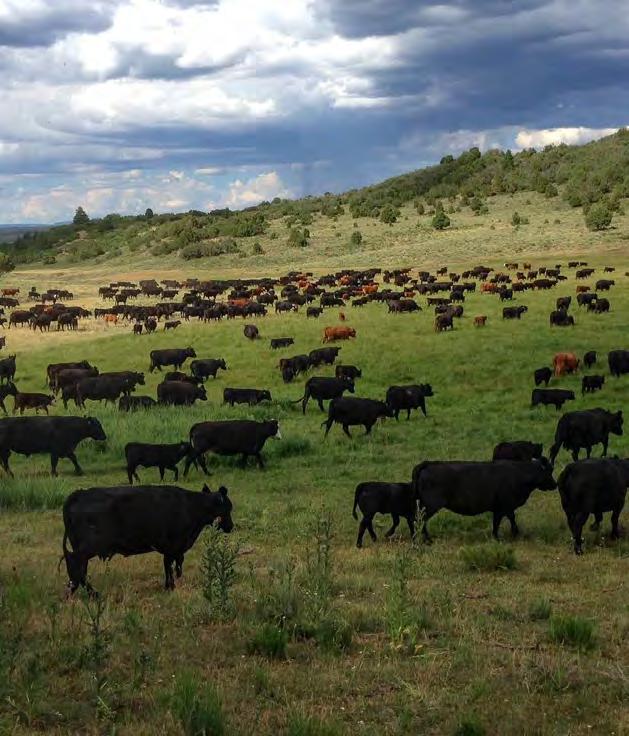
The last five years have tested the Bray family. Facing historically dry conditions in 2018, they had to sell 80% of their herd. The Brays rested the land for a year and made improvements so they could reinvest in livestock and utilize a rotational grazing system to benefit forage and habitat for their herd and wildlife populations in the long-term.
Placing 9,257 acres from five more large parcels into another conservation easement with CCALT became an ideal long-term solution that would allow their agricultural operations to continue with the ability to continue transferring these lands down to future generations.
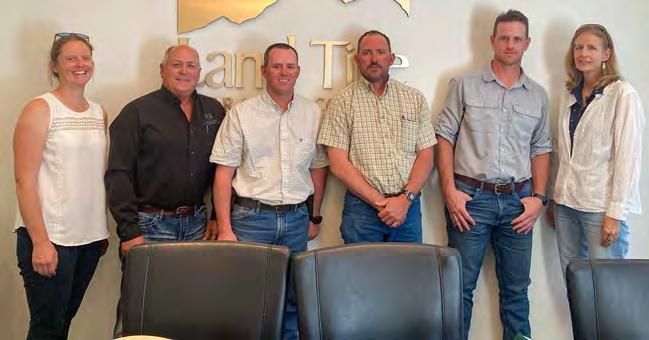
FROM LEFT: MOLLY FALES, ROBERT BRAY, ZANDON BRAY, LANCE BRAY, CHAYDEN BRAY, JANET KASK from San Miguel Open Space
CONSERVATION PARTNERSHIPS
The scale of conserving five ranches required CCALT to secure funding partnerships at the national, state, regional, and county levels. The USDA Natural Resources Conservation Service (NRCS) and Colorado Parks and Wildlife (CPW) provided conservation easement funding. NRCS funded the conservation easement through its Agricultural Land Easement Program designed to help conserve agricultural lands across the country. CPW partnered with the Brays to help accomplish statewide conservation goals such as conservation of big game winter range and extending public access for hunting and fishing. As part of its funding agreement, the Bray family allows public access for big game hunting in the fall for a limited numbers of hunters and days annually for a period of 10 years. San Miguel County and the Muley Fanatic Foundation from Green River, Wyoming supported transaction costs. Both entities saw the ranch’s ability to protect open space, agriculture, wildlife habitat, migration corridors, and the natural beauty which is so vital to the regional economy.
CONE
RANCH | EPPERSON RANCH
| TAYLOR RANCH | BASIN RANCH | HAMILTON POINT RANCH
“Bray Ranches has grown significantly over the last century. The Bray family has recommitted to their operation and community by conserving five of their ranches in perpetuity. CCALT is thrilled to have partnered with the Bray’s to build upon their conservation legacy and give the operation a chanceto exist for another 100 years.”
– MOLLY FALES, CCALT Staff Attorney
LANDSCAPE PARTNERSHIP
The Bray Ranches conservation easement consists of the Cone, Epperson, Taylor, Basin, and Hamilton Point Ranches. They provide varying elevations and terrains that provide year-round grazing in addition to hay production, and excellent wildlife habitat. The Bray’s cattle can walk between the ranches freely, utilizing the higher elevations in summer, and the lower elevations in winter. No trucks required!
The remote, undeveloped character of these properties and their proximities to other undeveloped private and protected public lands provide high-quality habitat and connectivity that is vital to the conservation of big game and other wildlife populations that depend on them for seasonal migrations, natural behaviors, and resilience to climate change. The properties are neighbors to large public lands including Dry Creek Basin State Wildlife Area and extensive Bureau of Land Management terrain that extends into the Uncompaghre National Forest.
Photo credit: Bray Family
Photo credit: Bray Family
MOVING THE NEEDLE
Conservation Partnerships
From its inception, the Colorado Cattlemen’s Agricultural Land Trust (CCALT) has utilized unique partnerships to enhance its conservation services to landowners.
Partnerships are rooted in CCALT’s history from the very beginning, when a group of members of the Colorado Cattlemen’s Association (CCA) forged a partnership with the American Farmland Trust and Great Outdoors Colorado to create CCALT and a new and innovative conservation model which placed the landowner at the center.
Such was the model’s success it inspired similar initiatives in multiple western states. Today, there are seven other agriculture-focused land trusts that have been established based on the CCALT model. These organizations work together through the Partnership of Rangeland Trusts (PORT) to advance conservation policy and share best practices for delivering conservation services that work for working agricultural operations. As a testament to its impact, PORT members have partnered with more than 1,200 farm and ranch families to conserve more than three million acres of working lands across twelve states.
Partnerships have also helped make Colorado’s innovative transferable Conservation Easement Tax Credit program work. This tax incentive has become the main driver of working lands conservation in Colorado. It has also helped
drive economic growth in rural communities. By allowing landowners to sell earned tax credits, Colorado’s program provides landowners with access to much-needed capital that they can use to pay down debt, make investments in equipment or infrastructure, or expand their operations. Buyers of tax credits use them to reduce state income tax liabilities. Last year CCALT began to directly broker tax credits on behalf of its landowner partners. To do this effectively, CCALT has developed new partnerships with several corporations that see the value in supporting working lands conservation.
Every conservation easement at CCALT epitomizes the power of collaboration. These collaborations come in different forms depending on the project. Collaborations may include partnerships to raise funding to purchase an easement or support transaction costs incurred by the landowners. They can also include partnerships with groups like the Intermountain West Joint Venture and the Colorado Natural Heritage Program that help CCALT to showcase the important impacts to society that these projects have through a scientific lens.
At CCALT, we believe real impact and change flourish through lasting relationships. We’re deeply grateful to all our partners who amplify our mission, benefiting both our landowner partners and their communities.
SAVE THE DATE
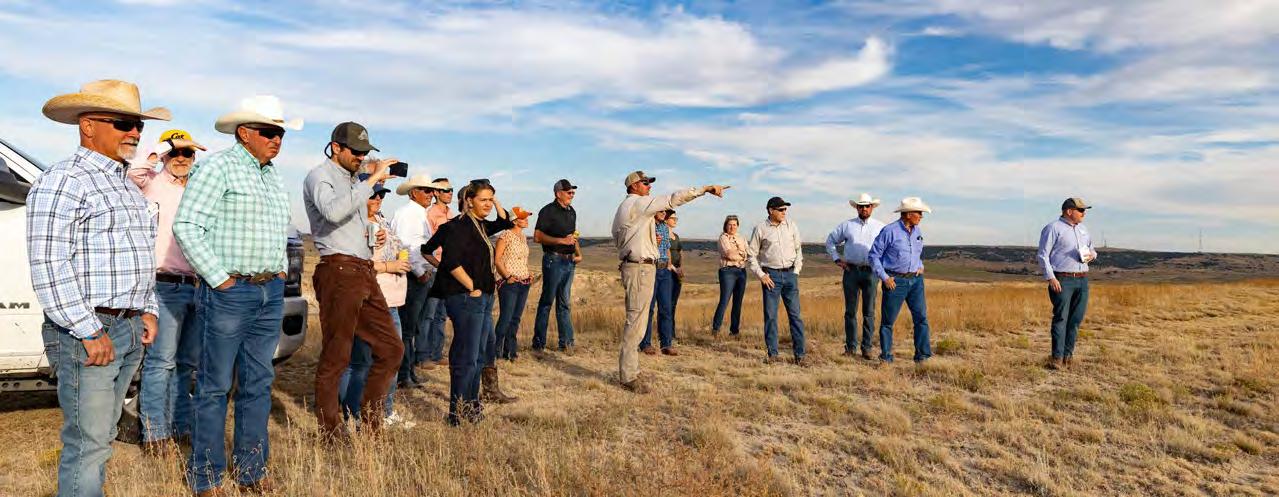
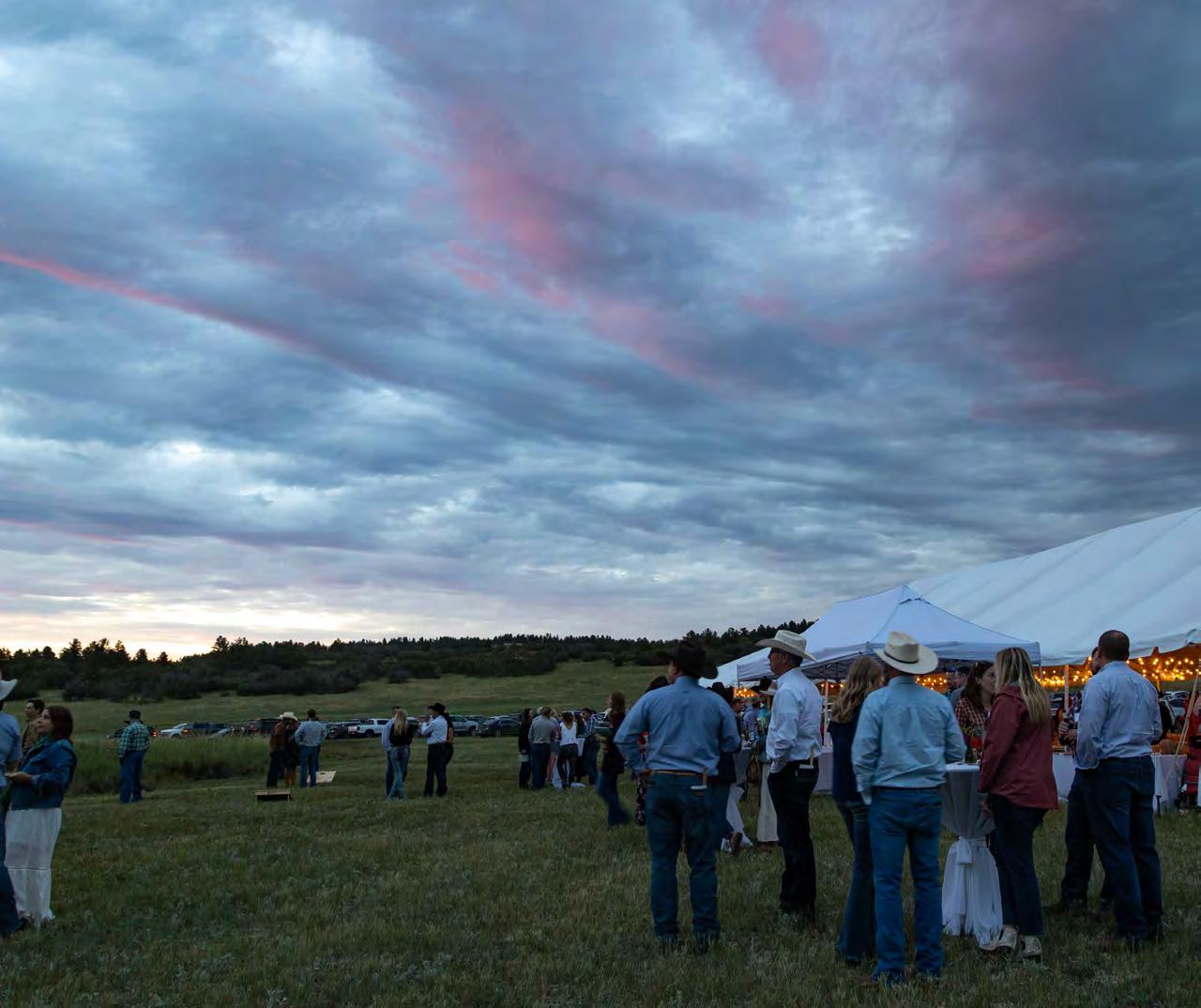
CCALT hosted the 2023 Forever Colorado BBQ at the Greenland Ranch in Douglas County. The Greenland Ranch provided a spectacular venue to celebrate ranchland conservation, unique partnerships that make it happen, and the people who all care deeply about these landscapes. Together we raised more than $217,000. Special thanks to Harmony Land and Cattle for hosting a picturesque evening. CCALT’s efforts would not be possible without the support and commitment of our landowner partners, sponsors, friends, and supporters.
August 10, 2024
Flying Horse Ranch Oak Creek, CO
Visit ccalt.org or contact Owen Yager at owen@ccalt.org or 720-557-8269 to learn more
We’re committed to keeping the spirit of the west alive through conservation of Colorado’s natural resources. Help us continue that mission. Together, we can ensure Colorado stays Colorado, Forever. Get Involved!