

of the Cooperative Baptist Fellowship of North Carolina November/December 2018 Vol. 23 Issue 6
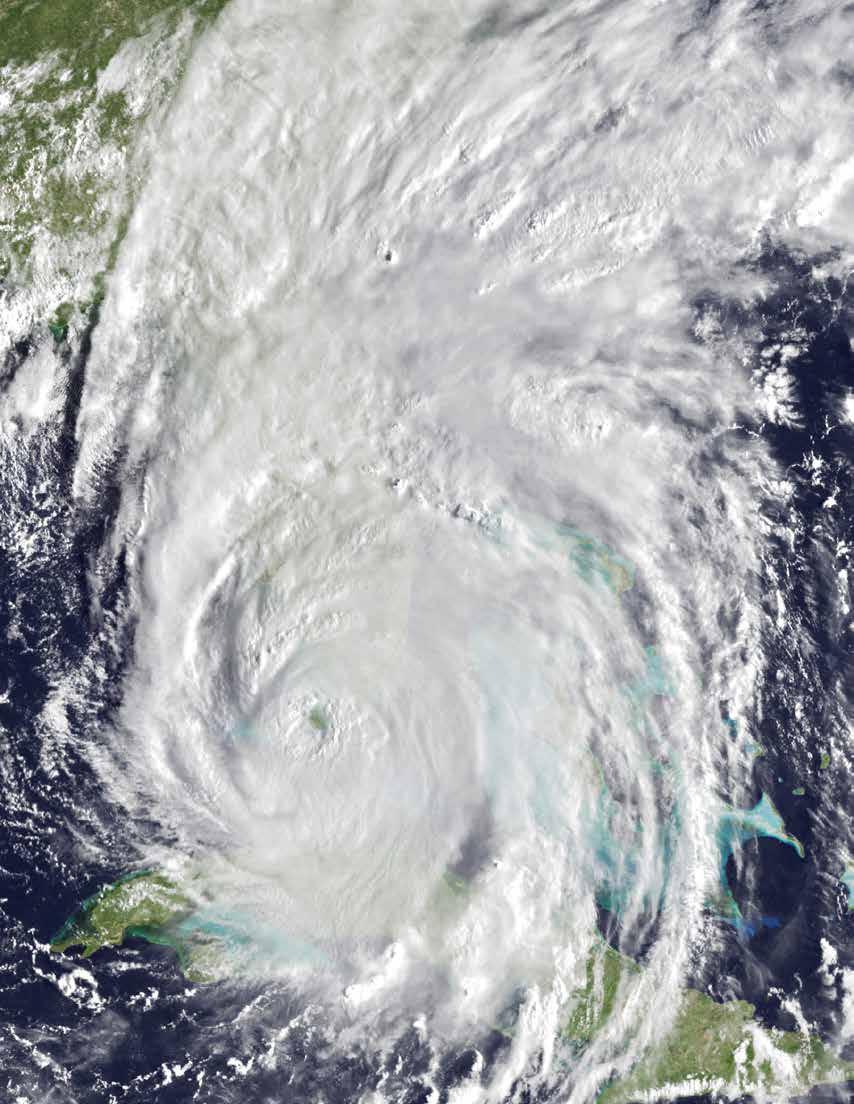
Caring for God’s People Read about CBFNC’s hurricane relief efforts on page 6

of the Cooperative Baptist Fellowship of North Carolina November/December 2018 Vol. 23 Issue 6
Caring for God’s People Read about CBFNC’s hurricane relief efforts on page 6
by Larry Hovis, CBFNC Executive Coordinator
Iwatched a lot of television as a teenager in the 1970s–some would say too much! One program I remember quite well was The Flip Wilson Show. One of Wilson’s best-known characters was Geraldine Jones. Whenever Geraldine would confess a transgression, she would excuse herself with the phrase, “The Devil made me do it!” It always brought a big laugh. It seems the Devil kept quite busy with Geraldine.
What’s your view of Satan? C.S. Lewis in The Screwtape Letters, states:
There are two equal and opposite errors into which our race can fall about the devils. One is to disbelieve in their existence. The other is to believe, and to feel an excessive and unhealthy interest in them. They themselves are equally pleased by both errors and hail a materialist or a magician with the same delight. (p. 17)
The New Testament seems to take the concept very seriously. Luke Timothy Johnson explains,
The New Testament’s extensive language concerning malevolent spiritual forces is never humorous. The terminology varies – some texts speak of the Devil or Satan, others of demons or unclean spirits, of powers and principalities, the Ruler of the Power of the Air, the Dragon and Ancient Serpent – but taken together, these terms point to a conviction, broadly shared by the writers of the New Testament, that a cosmic power, lesser than God but greater than humans alone, inhabited the world and worked against human good in a manner that was anything but comic or quaint. (Commonweal, 9/26/2011)
Unlike Geraldine, I don’t blame the Devil when I say a bad word or eat an extra cookie. I don’t think the Devil is responsible for my poor decisions on a daily basis. But I do find myself drawn to texts such as Ephesians 6:12, “For our struggle is not against enemies of blood and flesh, but against the rulers, against the
authorities, against the cosmic powers of this present darkness, against the spiritual forces of evil in the heavenly places.”
How else can you explain the African slave trade, the Trail of Tears, and the Holocaust? Yes, greedy, sinful human beings were complicit and responsible, but when thousands cooperate to execute evil on such a scale, something else must be going on. As Johnson explains, “there exist powers, at work in and through humans yet commanding a superhuman blind energy, that labor not for the good, but for the destruction of humans and of all human beauty and grace.”
I see the “powers and principalities” at work today in racism, sexism, corporate greed, and mass gun violence. I see the Devil creating conditions of violence and poverty that cause people to leave their homes and migrate to places where they are not welcome. I see the Evil One at work creating addictions to drugs, alcohol, gambling, and sex.
How do we confront the Devil? First, we’ve got to admit the Devil is real. There are malevolent powers at work in the world, stronger than human beings, actively opposing the will and ways of our good and gracious God. Second, we must work together to oppose these powers, to attack them not only where they strike individuals, but also in the institutions and structures that support them, including, when appropriate, our own churches.
To do this work, we need super-human resources. Ephesians 6 describes these resources as “the whole armor of God.” Ultimately, only the power of the Holy Spirit harnessed through the courageous, collective efforts of the people of God can defeat the Devil and stop oppression, injustice, and violence.
Harnessing that power begins with prayer and issues forth in courageous action. May God give us eyes to see and courage to act.
The stakes are too high for us not to confront the Devil. It’s no laughing matter.

While church budget support provides the bulk of the resources to finance CBFNC’s ministries, individual contributions are a vital source of funding. Envelopes are provided in this issue of the gathering. Please consider giving to CBFNC’s annual Mission and Ministry Offering, either by mailing a check in this envelope, or via credit card on our website, www.cbfnc.org We are grateful for all gifts regardless of the amount.
To order additional envelopes to distribute in your church, call (888) 822-1944.
by Marc Wyatt, CBF Field Personnel
Ihad the privilege of participating in a Racial Equity Institute (REI) workshop last May thanks to CBF of North Carolina. From the start, the facilitators had my full attention. Simply stated, the 16-hour workshop helped me to develop a new understanding of how racism has been constructed and systemized in America.

Early in the seminar we took turns going around the room introducing ourselves and stating what we hoped would be the outcome of our learning. I said, “My name is Marc and I don’t want to be a racist anymore.” During one of the breaks a young black man approached me and thanked me for being honest and vulnerable. He told me his name was Nick. Later we shared lunch and our stories.
At the end of the REI we went around the room again. Only this time, we shared how we were doing and what we planned to do with what we had learned. I was deeply affected by the words of each of the black professionals. Each in turn shared a similar “ah-ha” experience. They shared how they had felt the weight of racial inequity always upon their shoulders. The REI had given them a gift. They were all too familiar with their personal experiences but now they had been given affirmation; they weren’t imagining things. They were living in a racially inequitable America.
I was transformed as I realized that there wasn’t just one America. There are two Americas - maybe even a dozen. There is the America I grew up in. And there is the America minorities inhabit. And the two aren’t the same.
When I returned home and tried to explain this to my wife, I found myself emotionally moved. I began to consider my black neighbors across the street and down the block. I don’t really know them. We are friendly, but seem satisfied simply to pass greetings and smiles to each other as we come and go. The next day my neighbor was cutting the grass. I went over and stopped him. I apologized for not being a better neighbor. I told him that I wanted to introduce him and his wife to my wife, Kim. We had a great conversation. Turns out his name is Marc. Go figure?!
REI gave me a sacred gift. You may get yours by attending the next Racial Equity Institute near you.

THE CBFNC RACIAL RECONCILIATION TEAM is committed to helping our churches understand racism in its institutional and structural forms so that we all can be better equipped to work for change. It is partnering with The Racial Equity Institute which is committed to bringing participants into an awareness and analysis of the historical and cultural roots of institutional racism and how the disparities of racism continue today in our systems. It does not focus on individual bias but embraces a movement approach. It believes that “systemic interventions and training can work to change thinking, reduce disparities, and improve outcomes for all populations.”
REI’s Phase I workshop is a full two days, led by two or three trainers with 40 participants. Through presentations, discussion, video, and interactive exercises, attendees are taken on a journey of inherent racism in our country from the 1600’s to today. If you are interested in attending an REI workshop, contact Linda Jones at ljones@cbfnc.org.

Unidiversity is a weeklong Christian summer experience for youth. Meaningful worship, creative Bible study, and loads of fun help us reach our vision of bringing together youth from diverse backgrounds and communities to celebrate the unity we share in Jesus Christ. Camp is unique in that the week is planned and led by church ministers and volunteers.
July 22 - 27, 2019
University of Tennessee | Knoxville Group Registration is Open!
$375/person
Visit unidiversity.org for more information, or send an email to: info@unidiversity.org.
is holding summer camp near you, North Carolina, and we’d love to show you around! We are in Greensboro, Ashville, Danville, VA, Lynchburg, VA and Greenville, SC. If you have never seen camp, you are invited to come visit for a day next summer. All our camps are choc full of fun, parties, Bible study, and thoughtfully planned worship services for youth and children. Each program also offers uniquely-planned camp experiences related to mission involvement, missions education, and personal discipleship. We believe that hands-on mission experience, education, and reflection opens up the hearts and minds of youth and children and leads them to live lives that help make earth as it is in heaven. Dates, rates, and locations for 2019 can be found at www.passportcamps.org. Or, to schedule a guided tour, email us at info@passportcamps.org. Registration is now open!
Iwas milling about, adjusting my pastoral stole, preparing to be present with some of our local teachers at a press conference when the news reporter approached me.
– by Mary Elizabeth Hanchey

Why was I there? I answered with a simple affirmation of our public schools and the teachers that serve in them. But he was asking a different question, and he persevered. Why are you here, as a faith leader, in support of public education?
I stared at him for a moment, summoning all of those things that are true about public schools and God’s children who gather there. As stories about community and brokenness, wealth and poverty, injustice and restoration, passion and exhaustion, the love of discovery and the lack of paper, and the provision of care for the least of these swarmed, fighting for the spot on the tip of my tongue, I wondered if I might ought to simply say: because of Jesus.
Because of Jesus.
Those who undergird their strain against systems of inequity and injustice with the simple refrain that God is love are not wrong. But there is more:
Jesus taught about the impoverished and marginalized. His message was clear. Feed them. Eat with them. Heal them. Carry them to safety. Do not try to use rules of procedure to get out of it. Do not act like you don’t know who your neighbor is. Do not let your love of prosperity or orderliness or possessions distract you from working for the kingdom of God here and now – on earth as it is in heaven. There is no need to cherry pick citations from the gospels because these admonitions fill them.
1. Consider the difference between charity and justice and do both.
2. Charity work will be most welcome and most effective if you work to meet stated needs of the schools. Consider how your mission group might form a partnership with a school or with the school system.
3. Justice work strives to change systems and realities. It heals the whole body rather than treating individual wounds. Consider how your mission group might engage in advocacy for justice within your own school system and for public education across the state.
4. NC Faith Leaders for Public Education (NCFLPE) would love to come to your region and lead a 2-hour training. Please contact us at ncflpe@ncchurches.org
5. Connect on social media. These connections will expose you to data, events, resources, and discussion about public schools.
• On Facebook you can follow @ncflpe, @PublicSchoolsFirstNC, @NCTestingReform
• On Twitter you can follow @NCJC_Education, @EducationNC, and @PS1NC.
1 in 4 children in North Carolina live in poverty. More than 1 in 10 live in extreme poverty. More than 600,000 children in North Carolina do not have access to adequate food, clothing, and shelter. Children who are raised in poverty face struggles that their peers do not face. Their academic outcomes hang in the balance.
Our public schools are hubs of serving the impoverished and marginalized. Public Schools are required by law to provide transportation to and from school, and to provide transportation on specially equipped buses for children who are differently abled. They
(attempt to) provide school social workers, school psychologists, school nurses, and breakfast and lunch. But there is not enough funding to do these things well. Because of that, the children in our care as a community are in danger.
Inadequate funding puts our children in danger I have had the opportunity to listen recently. I heard stories about:
• students falling on or being inappropriately disciplined on buses because their physical disabilities are not being addressed.
• schools where sinks don’t work and hands cannot be washed and soap does not exist.
• schools that only see nurses for a couple of hours a week even though they have children with grave medical fragilities who need monitoring and medicating all day every day.
• hundreds of students on free or reduced lunch who must be fed something no matter how drastically child nutrition budgets are cut.
• teachers who show up to school exhausted and fragile because of the second and third jobs which they must work so that their own children can eat.
These stories are not outliers. They happen in every school district.
We are failing to care for our impoverished and marginalized because we are failing to adequately fund the schools that meet their needs today and educate them for tomorrow. In these failures we perpetuate inequity and injustice. With these failures, we jeopardize both the present and the future of our children.
The poignant reality is that this injustice jeopardizes all of us. Until all of our children have access to the food, clothing, and shelter required to live, all of us suffer from the sickness of our brokenness. Until all of our children can be educated in schools that are clean and safe and staffed with the most qualified educators who can give their full attention to the art of teaching because they are paid a decent wage, all of us suffer from the brokenness. Until each mind and each body is valued and accommodated – wheelchairs, crutches, processing disorders, language barriers, life-threatening allergies, autism, health disparities accounted for – then all of us suffer from the brokenness.
We must not believe the scarcity narrative. Because we worship a God of abundance.
There is enough. It may need to be budgeted differently. But there is enough.
Faith communities must commit to showing up as advocates for the public schools, to championing the common good, and to articulating a story more powerful than the narrative of scarcity.
Because of Jesus.
Churches. This excerpt is altered and reprinted by permission.

by Wanda Kidd, CBFNC Collegiate Engagement Coordinator
Ministering to the least amongst us takes many shapes and forms and it is often people we do not even think about. One of these populations includes the young people who are aging out of foster care. At age 18 they are considered adults and in many cases are emancipated to begin their lives on their own. Those teenagers are some of the most at-risk people you will ever meet. They come from situations that were unstable, often abusive, with very little support system in place to help them move to adulthood.
In North Carolina, there are over 10,000 children in foster care. Last year, close to 500 of them aged out of the foster care system. Here are some of the statistics that will follow them.
• 20% of foster care youth will become instantly homeless upon aging out.
• Less than 3% of teenagers who age out of foster care achieve higher education.
• 72% of girls who age out will become pregnant before the age of twenty-one.
• 24% of older youth who age out of foster care are affected by PTSD.
• Only 50% of older youth in foster care will have employment by the age of 24.
• Only 57% of foster care students will graduate from high school, compared to 85% of the general population.
North Carolina offers some services that provide safety nets to help with this transition. However, for a youth to qualify for these services they must be actively seeking graduation from high school, be able to attend college through a grant program (which only covers partial expenses), or have needs and disabilities that prevent them from living on their own. These transitions are complicated for a student in a stable family, so imagine how complicated it is to attain these goals without a support system.
Home Base at Western Carolina University is one attempt to address these systemic issues. The building that previously housed the Baptist Campus Ministry was sitting vacant. The Assistant Vice Dean of Student Success approached the Baptist Children’s Homes of NC with an idea. He wondered if WCU and the BCH could partner to provide a place where their students who had aged out of foster care or other emancipated students could have the support to thrive while in this high-stress time of life. It was quickly adopted as an excellent idea for all the people involved and it came together very quickly.
Dr. Jim Dean is the director of Home Base. His job is to provide resources and community for these at risk young adults. At their place on campus, they have a food pantry, clothing closet, emergency housing, a computer lab, and a place for them to hang out in a building that was decorated, by their request, to look like a home.
It is the great hope of CBFNC that the CBFNC family continue to look for ways to see our mission with college students and young adults as much more than just mission trips and Bible studies. We believe that we are called to be the presence of Christ wherever the least amongst us needs a word of grace and an advocate for peace and justice. This is just one way that one of our partners, the Baptist Children’s Homes of NC, is carrying out that mission. Continue to pray that we will have eyes to see and ears to hear the voices of those around us who are calling out and then be moved to action.
How can you help? Here are some suggestions from Jim Dean: Visa, grocery store, gas station, and Walmart gift cards go a long way. It is a simple way for people to donate and it’s easy for me to distribute to students. These gifts help students pay for travel expenses like gas and meals, which enables them to spend school breaks with family members. Another wishlist item is a 15-passenger van to take students on trips during school breaks. Donate: Home Base, PO Box 2133, Cullowhee, NC 28723
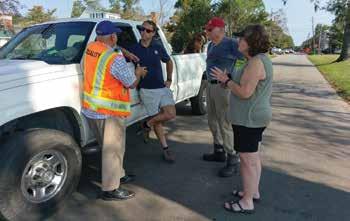
Our state has experienced two “thousand-year floods” – less than two years apart! Matthew and Florence were unwanted visitors that devastated eastern North Carolina. CBFNC is not a disaster relief organization, but we are a missional fellowship that cares deeply about our people, their churches, and their communities. How does our fellowship respond to natural disasters?
The first thing we do when disaster strikes our state is to express care. With both Matthew and Florence, with winds still blowing and the rains still falling, we began reaching out to partner churches, primarily through their pastors. Text messages, phone calls, emails, and social media are the avenues we use to let them know how much we love them and are praying for them. While we certainly aren’t able to speak to everyone directly and quickly, we make a good faith effort to love one another in the midst of the storms and soon thereafter.
We not only communicate that we care, we also seek to share with the rest of our fellowship how they can pray and help. We receive and share reports from churches that were affected so that churches in safe areas can provide support. As Len Keever of First, Dunn and Allison Collier of Angier, Angier, communicated after Florence, their church members were out in the community as soon as the rain stopped, “neighbors helping neighbors,” clearing debris from their property.
We also communicate needs from other agencies. For example, after Florence, FEMA contacted CBFNC for assistance with housing for disaster response workers, thinking we operated retreat centers. Of course, CBFNC owns no real estate, but we communicated that need with our vast network, with the hope that someone in or connected to our fellowship could meet that need.
Though CBFNC is not a disaster response organization, we partner with those who have the calling and capacity to do that work. These partners include:
Baptists on Mission (North Carolina Baptist Men) – CBFNC provides funding for Baptists on Mission. When disaster strikes, we connect volunteers with NCBM for feeding and recovery operations.
CBF Global Disaster Response – CBF Global seeks to identify neglected areas or people groups and organize long-term recovery efforts in those areas. They have been especially helpful in North Carolina in the aftermath of Florence.
Other Agencies – As with the FEMA example cited above, CBFNC will assist other agencies and organizations when they call on us, such as Red Cross and Salvation Army. For example, a Mennonite disaster relief group established its base of operations on the campus of First, Lumberton, after Matthew.
by Larry Hovis CBFNC Executive Coordinator
After Florence, CBFNC convened regular conference call meetings of pastors and church leaders to share information, to support one another, and to coordinate response efforts. These meetings not only enabled everyone to be more effective in ministry, they provided pastoral support within our beloved community.
When disaster strikes, the world’s attention is riveted on the affected areas for a brief time. As Cooperative Baptists, we seek not only to address immediate needs, but also to support a long-term presence. For example, with Matthew, some of the funds collected by CBFNC were used to purchase gift cards distributed by partner churches to their neighbors in critical need. Other funds were used in creative ways by partner churches, such as Dortches, Rocky Mount, which initiated “Rest in the Lord,” a ministry that provided over fifty mattresses to homes in their community. Other funds were used to help rebuild the Robeson County Church and Community Center, an ecumenical organization supported by several CBFNC churches that ministers to the underserved year-round. It is led by Andrew Collier, a member of First, Lumberton.
How does a fellowship respond to natural disasters? In genuine, effective ways that flow out of our deep relationships and unique capacities. Thank you for your participation and support.
2018-2019 CBFNC Theological Education Scholarship Recipients
Thanks to you . . . CBFNC has provided a tremendous level of support for theological education in our state and beyond.
25 students have received direct scholarship aid. These students are enrolled in divinity schools and seminaries in North Carolina and other parts of our country.
$344,607 has been provided by congregations and individuals through the CBFNC Mission Resource Plan to support theological education.
Thank you for your partnership in preparing leadership for Christian ministry.
THOMAS ALEXANDER ALVARDO
Sanford
Southwest, San Antonio, TX
Music Ministry
Logsdon Seminary, San Antonio, TX

LAURA SOFIA
ORTEGA MARIN
Sanford

Southwest Baptist, San Antonio, TX Music Ministry
Baptist University of the Americas, San Antonio, TX

Listings include scholar name, hometown, current church membership, ministry goal, and school. Visit www.cbfnc.org/give to donate. SCHOLARS FROM NORTH
4 in-state partner divinity schools have received significant support to aid specific scholars and to underwrite additional costs of delivering quality theological education.

ALEX RODRIGUEZ
Raleigh
Iglesia Bautista La Roca Asbury Theological Seminary

RONALD PAUL HAYES
High Point
Oak Grove, Boone Congregational Ministry

Baptist Theological Seminary at Richmond, VA
“MICHELE” MILLICENT JOHNSON SHADDEN
Winston-Salem
Peace Haven, Winston-Salem
Chaplaincy / Congregational Ministry
Hood Theological Seminary, Salisbury


JUSTIN CLAUDE MCDOWELL
Shelby First, Shelby Worship Leadership/ Religion & Policy
Truett Theological Seminary, Baylor University, Waco, TX

SARAH BLOSSER BLACKWELL
Matthews
Providence, Charlotte
Christian Education
CHRISTI STEWART HOLLIFIELD
Marion First, Marion Children & Family Ministry
KELLY TOBIAS SETTLEMYRE
Sumter, SC
Spencer, Spindale Congregational Ministry
CBF GLOBAL SCHOLARS in North Carolina
WAKE FOREST SCHOOL OF DIVINITY: Justin Cox, Christian McIvor, Kristan Pitts (SC), Holly Cunningham (KY), Katie Hambrick (GA)
GARDNER-WEBB SCHOOL OF DIVINITY: Laleita Small, Lauren Hamilton (SC), Will Raybon, Jennifer Jennings (SC), Austin Tibbetts (GA), Sarah Laurence (SC), Holly Strother
CAMPBELL SCHOOL OF DIVINITY: Summer Caniglia, Anna Moxley, Patrick Griffin, Tyler Ingram
DUKE DIVINITY SCHOOL: Lynn Holmes, Camille Loomis (VA), Tarvic Linder

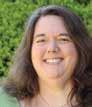
TARSHA BANISTER
Raleigh
Temple Memorial, High Point Congregational Coaching
MARY BETH BECK-HENDERSON
Winston-Salem
Knollwood, Winston-Salem
Chaplaincy or Congregational Ministry
DANIEL RAY GODFREY
Monroe
First, Jamestown Youth Ministry
KAYLEE GODFREY
High Point
First on Fifth, High Point Congregational Ministry
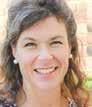


CYNTHIA GAMBLE NORDSKOG
Winston-Salem
Ardmore, Winston-Salem
Food & Faith/Congregational Ministry
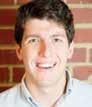
EVAN SIEGES
Matthews
Knollwood, Winston-Salem
Chaplaincy
EMILY PATTON
Raleigh
Hayes Barton, Raleigh

Children & Family Ministry
MICHAEL SIZEMORE
Fuquay-Varina
Hayes Barton, Raleigh Campus Ministry


SARAH GILBERT
Ipswich, MA College Professor

EVAN EDWARDS
Georgetown, TX
Ephesus Baptist Church, Chapel Hill
Hospital Chaplaincy
REBEKAH GORDON
Campbell Divinity School
Trinity, Raleigh Community Ministry

ALAN CLARK NEWCOMB
Gardner-Webb School of Divinity
Boiling Springs, Boiling Springs Youth/Congregational Ministry
ELIZABETH BRITT
Raleigh
New Hope, Raleigh Youth & Campus Ministry
DAVID BRANTLEY
Raleigh
Trinity, Raleigh
Congregational Ministry
GRANT GUBBINS
Raleigh
Trinity, Raleigh
Theological & Devotional Writing

EMMA TILLEY


Baptist House of Studies at Duke Divinity School
First, Richmond, VA Congregational Ministry

Thursday, March 28, 2019
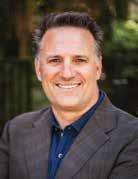
Tod Bolsinger, author of Canoeing the Mountains, serves as vice president and chief of leadership formation at Fuller Seminary. Ordained in the Presbyterian Church (USA) in 1993, Dr. Bolsinger served as senior pastor of San Clemente Presbyterian Church from 1997 to 2014. Prior to that he was associate pastor of discipleship and spiritual formation at First Presbyterian Church of Hollywood.
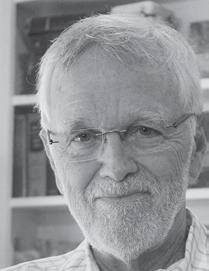
Clyde Edgerton is the author of ten novels, a book of advice, a memoir, short stories, and essays. He has been a Guggenheim Fellow and five of his novels have been New York Times Notable Books. He is a member of the Fellowship of Southern Writers and is the Thomas S. Kenan III Distinguished Professor of Creative Writing at UNC Wilmington. He lives in Wilmington, NC, with his wife, Kristina,and their children.
Thursday, March 28 & Friday, March 29
MARCH
August 2018 Contributions
Designated: $94,568
Undesignated: $151,592
September 2018 Contributions
Designated: $76,578
Undesignated: $134,508
April 2018 - March 2019 MONTHLY UNDESIGNATED GOAL: $104,922
www.cbfnc.org/give
Our encouragement and support go to the following ministers who have recently moved:
Felicia Fox to First, Gastonia as Associate Pastor for Youth, Children and Discipleship
Chris Howe to First, Graham as Pastor
Stuart Lamkin to First, Weaverville as Pastor
Mary Langley to Wake Forest, Wake Forest as Minister to Children and Families
David Little to First, Littleton as Pastor
Carter McNeese to First, Fairmont as Pastor
Tom Ogburn to Westwood, Cary as Pastor
Leah Reed to First, Raleigh as Minister with Community
Hurricane Florence Relief, by Ray and Cathy Owen, Winston Salem, In memory of Stuart Burch
August 2018 - Septembert 2018
Calvary, Mt. Airy
Decatur, GA
CBF Movement Leadership Team
First, Asheville
First, Burlington
First, Clayton
First, Elon First, Greensboro
First, Huntsville
First, Mocksville First, Monroe
First, Mount Airy
Guilford Park Presbyterian, Greensboro
Iglesia Bautista
Mars Hill, Mars Hill
Mars Hill University
Wil Worley to First, Mount Olive as Associate Pastor for Students and Families
Pfafftown, Pfafftown
Piney Grove, Mount Airy
Racial Equity Institute, various locations
Red Latina (CBFNC Hispanic Network)
Robeson Church and Community Center, Lumberton
Trinity, Raleigh
United Methodist Church, Raleigh North Carolina Conference
Unity Christian Church International, Fayetteville Wise, Wise
888-822-1944 www.cbfnc.org
Return Service Requested
501 Foundations of Christian Coaching
Day 1: November 2
Day 2: November 3
Christmount Conference Center
Black Mountain
RE (Reimagining Evangelism)
November 4
Hominy Baptist Church, Candler
Growing Young Regional Workshop
November 10
First, Black Mountain
Children’s Mission Days
November 17
Conetoe Family Life Training Center, Tarboro
Providence Baptist Church, Charlotte
Youth Ski Retreat
January 25-27
Winterplace, WV
NC Growing Young Cohort
Summit 1: January 31-February 1
Summit 2: September 5-6
Trinity, Raleigh
Mid-Winter Young Adult Retreat
Feburary 15-17
Camp Thunderbird, Lake Wylie
South Carolina
Children’s Choir Festival
February 23
Myers Park UMC, Charlotte
Youth Choir Festival
March 8-10
Providence Baptist Church, Charlotte
2019 Annual Gathering
March 28-29
First, Greensboro