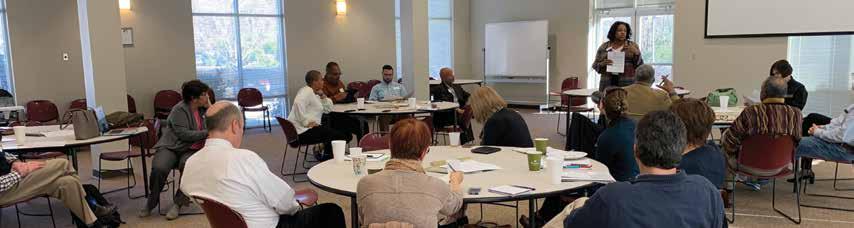
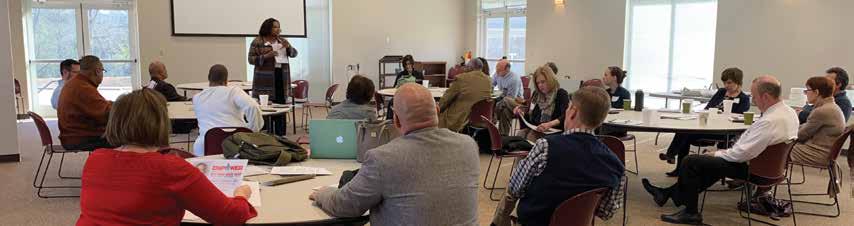
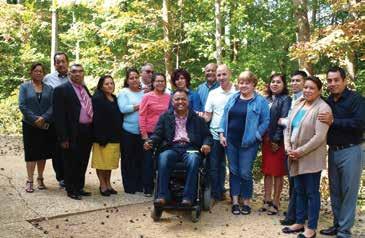
“I want to help the people in that line, but I want that line to get shorter.” “When we realize that there is still discrimination and how we as white people have so much advantage, it is like we wake up. But you don’t just wake up once. We have to commit to waking up again and again. society has a lullaby for white people: go back to sleep, go back to sleep.” –From the Racial Equity Institute follow-up meeting face racial or gender discrimination every day, at least three times a day.” –An African-American female minister | “There difference between diversity and inclusion. A board of old, white men can look around the room and decide they need diversity, they recruit a woman and a person of color. That is diversity. It is window dressing. However, when the board members allow that woman and that person of color an equal voice and when they are willing to make changes to the board’s way of thinking behavior because of the influence of that woman and that person of color, it moves from diversity to inclusion.” “The first rule institutions is ‘sustain thyself.’ Knowing what is right is not the solution. The Right One came into the world and was rejected crucified. ‘Let’s put a stone over the tomb and keep things the way they are.’” | “Privilege is a fact, not an insult! You can’t help you have it, and you don’t have to feel guilty about it. Like it or not, your status in the world will help you get something you may deserve. It will make your path easier, and in some cases, your privilege may blind you into thinking the benefits that you gain from it are ones you deserve because you’re somehow better, smarter, or more deserving than other people.” –From the youth beach
gathering
of the Cooperative Baptist Fellowship of North Carolina March/April 2019 Vol. 24 Issue 2
“Privilege is considered normal and experiences of people who do not belong privileged group are often silenced or ignored. Try to listen to those experiences, even if it can be hard and you don’t like what others are saying. The ability to ignore and dismiss others is a part of your privilege and you can decide whether to contribute to that legacy by dismissing others’ thoughts and beliefs or change it by listening well.” | “Social power dynamics have made some voices more important than others. Choose to use your voice for good. Speak up against slurs and inappropriate jokes. Don’t tolerate discriminatory or disempowering behavior or language around you. Consider how the organizations or groups to which I belong treat others who are not privileged, and make responsible decisions about whether to associate with them. Remember to be careful to speak for people, but stand up with people when you can.” | “You might say, ‘doing that would make me uncomfortable.’
–On opening a conversation with someone very different from yourself | “I want –A minister’s observation of a long soup kitchen line | “When realize that there is still discrimination and how we as white people have so much advantage, it is like we wake up. But you don’t wake up once. We have to commit to waking up again and again. Our society has a lullaby for white people: go back to sleep,
“I face racial or gender discrimination every day, at least
“There is a difference between diversity and inclusion. A board of old, white men can look around the room and decide they need diversity, so they recruit a woman and a person of color. That is diversity. window dressing. However, when the board members allow that woman and that person of color an equal voice and when they willing to make changes to the board’s way of thinking and behavior because of the influence of that woman and that person color, it moves from diversity to inclusion.” “The first rule of institutions is ‘sustain thyself.’ Knowing what is right is not the solution. Right One came into the world and was rejected and crucified. ‘Let’s put a stone over the tomb and keep things the way they are.’” | “Privilege is a fact, not an insult! You can’t help it if you have it, and you don’t have to feel guilty about it. Like it or not, your status in the world will help you get something you may not deserve. It will make your path easier, and in some cases, your privilege may blind you into thinking the benefits that you gain from it are ones you deserve because you’re somehow better, smarter, more deserving than other people.” “Privilege considered normal and experiences of people who do not belong to a privileged group are often silenced or ignored. Try to listen those experiences, even if it can be hard and you don’t like what others are saying. The ability to ignore and dismiss others is a part your privilege and you can decide whether to contribute to that legacy by dismissing others’ thoughts and beliefs or change it listening well.” “Social power dynamics have made some voices more important than others. Choose to use your voice good. Speak up against slurs and inappropriate jokes. Don’t tolerate discriminatory or disempowering behavior or language around you. Consider how the organizations or groups to which I belong treat others who are not privileged, and make responsible decisions about whether to associate with them. Remember to be careful not to speak for people, but stand up with people when you can.” “You might say, ‘doing that would make me uncomfortable.’ - Do it afraid. Begin the struggle. It gets easier.” –On opening a conversation with someone very different from yourself | “I want to help the people in that line, but I want that line to get shorter.” minister’s observation of a long soup kitchen line | “When we realize that there is still discrimination and how we as white people have so much advantage, it is like we wake up. But you don’t just wake up once. We have to commit to waking up again and again. society has a lullaby for white people: go back to sleep, go back to sleep.” –From the Racial Equity Institute follow-up meeting face racial or gender discrimination every day, at least three times a day.” –An African-American female minister | “There difference between diversity and inclusion. A board of old, white men can look around the room and decide they need diversity, they recruit a woman and a person of color. That is diversity. It is window dressing. However, when the board members allow that woman and that person of color an equal voice and when they are willing to make changes to the board’s way of thinking behavior because of the influence of that woman and that person of color, it moves from diversity to inclusion.” “The first rule institutions is ‘sustain thyself.’ Knowing what is right is not the solution. The Right One came into the world and was rejected crucified. ‘Let’s put a stone over the tomb and keep things the way they are.’” | “Privilege is a fact, not an insult! You can’t help you have it, and you don’t have to feel guilty about it. Like it or not, your status in the world will help you get something you may deserve. It will make your path easier, and in some cases, your privilege may blind you into thinking the benefits that you gain from it are ones you deserve because you’re somehow better, smarter, or more deserving than other people.” –From the youth beach retreat led by CBF missionary, Angel Pittman | “Privilege is considered normal and experiences of people who do not belong privileged group are often silenced or ignored. Try to listen to those experiences, even if it can be hard and you don’t like what others are saying. The ability to ignore and dismiss others is a part of your privilege and you can decide whether to contribute to that legacy by dismissing others’ thoughts and beliefs or change it by listening well.” | “Social power dynamics have made some CBF Advocacy Read about Modeling a Positive Public Witness on page 5.
Advocacy
by Larry Hovis | CBFNC Executive Coordinator
Do you remember the story of Hector Villaneuva? In 2010, with financial and spiritual support from CBFNC, Hector started a new church, Bautista la Rocha in Siler City. Though Hector had permanent-resident status in the U.S., he was arrested after he applied for citizenship and it was discovered that he had committed a felony (cashing a check that wasn’t his while he was homeless) many years before he became a Christian, a crime for which he had served his punishment (sixteen months in prison).
Hector was part of the CBFNC family—a brother in Christ with whom we were in fellowship and on mission. There was no question that the CBFNC community would advocate on his behalf. By praying for him, standing with him and his family, and speaking up for him before the authorities, CBFNC staff and churches served as his advocate. Thankfully, after reviewing his case, hearing Hector’s testimony, and seeing the support provided to Hector by his Baptist family, a federal judge canceled his deportation. Hector was able to return to his wife, children, church, and community.
Prior to this experience, we had exercised a strong commitment to missions but we hadn’t thought much about advocacy. After this experience, we realized that a strong commitment to missions requires a strong commitment to advocacy. The issues that affect those with whom we are in a missional relationship, if that relationship is authentic, become our issues.
needs to begin with.
If we believe in feeding the hungry and thirsty, we will advocate to change the conditions that cause them to be hungry and thirsty.
If we believe in welcoming the stranger, we will advocate to create a more welcoming society.
If we believe in providing shelter for the homeless, we will advocate for affordable housing for all in our communities.
If we believe in visiting the sick, we will advocate for them to have adequate, accessible healthcare.
If we believe in ministering to the prisoner, we will advocate for a humane, fair criminal justice system.
“Missions requires not only that we meet basic needs, but that we also address the conditons that caused those needs to begin with.”
Cooperative Baptists have a strong resonance with Jesus’ call in Matthew 25 to minister to “the least of these.” We have understood that in ministering to the needy – the hungry, thirsty, stranger, naked, sick, imprisoned – we minister to Christ himself. Much of what have traditionally called “missions” has revolved around ministry to those in great physical need. To be effective, such ministry requires not only that we try to meet those basic needs but that we also address the conditions that caused those
Oberammergau 2020
Because of this understanding of Christ’s call, CBF Global established an office of advocacy led by Stephen Reeves. This office has developed many resources to help congregations engage in advocacy efforts in their communities, states, and at the national level. (See related article in this issue by Stephen and visit cbf. net/advocacy for more information.)
Ultimately, we engage in advocacy because we have been the recipients of advocacy. In Jesus’ Upper Room Discourse (John 13-17) he explains to the disciples that though the Father has sent him, he must soon leave. But the Father will not leave them as orphans. He will provide an Advocate. That Advocate is the Holy Spirit. That word, advocate, is a translation of the Greek, parakletos. It means, literally, “to call alongside.” It is sometimes rendered comforter or counselor. In other contexts it was even used to describe a defender of another in a court of law.
In sending the Son and continuing to walk alongside us through the Spirit, God has advocated for us, to redeem us from sin and bondage and to provide us with abundant and eternal life. We have been promised God’s ongoing presence, to pray for us, to speak for us, to defend us, to counsel us, and to comfort us in our time of need. God gave us an Advocate for our benefit to be sure, but also so we can advocate for others. May we be faithful to that call.
by Larry Hovis | CBFNC Executive Coordinator
Since 1634, to commemorate their escape from the bubonic plague, residents of the small village of Oberammergau, Germany, have performed a Passion Play commemorating the life, death, and resurrection of Jesus every ten years. The play will be performed again in 2020.
Larry and Kim Hovis will be hosting a trip to Europe, May 18-27, 2020, with the Oberammergau Passion Play as the centerpiece. Additional stops will include Budapest, Vienna, Salzburg, and Prague. “Prior to the trip, an additional educational component will be offered addressing the theological and historical development of the play.”
If you are interested in traveling with CBFNC friends on this wonderful adventure, contact Larry Hovis (lhovis@cbfnc.org) for more information.
The Actions of an Advocate
by Olivia Wagner Wakefield
CBFNC Racial Recolciliation and Justice Ministry Team Member
For several years I had the privilege of teaching an English as Second Language class to a group of young mothers connected to our church. Although the primary goal of the class was to teach English through Bible stories, a secondary role I often found myself in as I helped the women navigate living in an unfamiliar (and at times unfriendly) country was that of advocate. As an advocate, I needed to:
Attend: Be willing to listen (attend) not only with your ears, but also with your heart and mind. Sometimes the concern which is expressed verbally isn’t really the one which is most urgent. Unless I really attend to the other person, I may be advocating for the wrong thing.
Do: Listening is important, but advocacy must also involve a willingness to do—whether it is speaking out, problem solving, or walking alongside as a person learns how to be her (or his) own advocate.
Value: If I believe the Biblical challenge in Leviticus 19 to love others as myself, then I need to value those for whom I am advocating as persons who are equally deserving of the rights and privileges which I so often take for granted. We are of equal value in Christ’s eyes regardless of ethnicity or country of origin. My thoughts and actions need to reflect that.
Open: An advocate is one who is also open—open to accepting and loving others, open to thinking outside the box, and open to finding new ways to advocate when one method of
advocating doesn’t work.
Culturally aware: One of the most enjoyable parts about teaching ESL was learning about the moms—their family traditions and their various cultural and religious backgrounds. Understanding their cultures (and their roles within their cultures and families) helped me know how to be a more effective advocate for each one of them.
Approachable: Another way I saw my role as advocate develop was in a willingness to be approachable. The moms needed to know I would be there for them and listen to them— even though there were many times we miscommunicated!
Trust: In addition to being approachable, an advocate is one who is trustworthy. Developing a relationship built on trust takes time. Although an advocate may want to work quickly, the advocate needs to be willing to take the time to build a trusting relationship.
Empathy: Although I can be an advocate without having empathy, I am more effective when I empathize with those for whom I am advocating. When I empathize, my role as advocate seems much more crucial and my prayer is that God will keep me from indifference to the pain brought on by injustice and racial inequality in our world.
Olivia Wagner Wakefield is a member of the CBFNC Racial Reconciliation and Justice Ministry Team.
Transitions & Growth: A new journey for RED LATINA NC CBF!
Excitement and enthusiasm is evident with a new beginning and the promise of good things to come for our CBFNC Latino network! At the same time, we celebrate 10 years of our CBFNC Hispanic Network under the leadership of Javier Benitez. Many things were accomplished in those ten years: new church starts, retreats for men, women, children, and families, mission endeavors in Mexico and beyond, and meaningful ministry in North Carolina. Prayer and discipleship undergirded it all as evident in the successful churches and ministries flourishing today. With the maturity and growth of the Network, it was time for more structure. A temporary interim steering team diligently worked, creating new bylaws, a new name, and subsequently a new leadership team.
by Linda Jones | CBFNC Missions Coordinator
Rafael Hernandez, Pastor of FBC Latino Ministry, Huntersville. These are very accomplished leaders who have served in many churches as pastors and associate pastors with much wisdom, discernment, and most important of all, faith. In truth, all our Red Latina pastors and leaders are committed, faith-filled, educated ministers providing love, guidance, support, and resources to their congregations and community in these tenuous times as Latinos.
A new chapter has begun for Red Latina NC CBF (“Red Latina” means “Latino network” in English.) Red Latina is under the leadership of Santiago Reales, our new Director. Santiago is a CBF-endorsed chaplain at Trellis Supportive Care. He received an MDiv degree from Gardner-Webb University Divinity School. He has served as pastor and associate pastor at several churches in Texas & North Carolina, most recently Associate Pastor of the Hispanic-Latino Ministry at Piney Grove Baptist Church, Mt. Airy, NC.
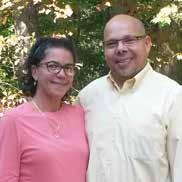
Santiago Reales (right) Director, Red Latina NC CBF, with his wife, Elaine E. Correa-Castro
A new leadership team has been elected by Red Latina. It is composed of Daniel Sostaita, Pastor of Iglesia Cristiana Sin Fronteras, Winston Salem; Richard Contreras, Pastor of Communidad Evangelica International La Red, Charlotte; Fortino Ocampo, Pastor of Centro Familiar Cristiano, Siler City; and
The work of Red Latina NC CBF consists of nurturing a growing, mutual, and interdependent relationship among Latino congregations and pastors, developing collegial learning attending to their unique gifts and needs, and integrating Red Latina churches and pastors into the life of CBFNC. In addition, Red Latina will collaborate with CBF Familia in their focus on Fellowship, Advocacy, Missions & ministry, Identity, Leadership, Intergenerational emphasis, and Alliances. Past collaborations with church planting training, Dawnings, and participating on the CBF Familia leadership team will continue with enthusiasm.
“CBF has been a family to experience faith, community, and gathering. I am excited to be a part of the CBFNC leadership to continue the work of empowering the next generation of Latino pastors and leaders in NC.” – Santiago Reales
Philippians 3:14 ASV “I’ve got my eye on the goal, where God is beckoning us onward-to Jesus. I’m off and running, and I’m not turning back.”
“As I entered the room, Latino pastors and their spouses were gathering for a retreat led by Dr. Herbert Palomino. Snacks were being set out, materials distributed on the tables, and people were greeting each other with hugs. Delight was in the air! We were all glad to see each other! Expectations were high since Dr. Palomino, professor at Gardner-Webb Divinity School, had led a previous successful retreat. I must say any time these friends of mine are together, relationships run deep and joy is present! Life can be difficult for a Latino in NC, documented or undocumented. Yet these pastors and spouses (who often function as co-pastors) minister in Jesus’ name with love to each other, to their congregations, and in their communities. By all accounts, it was a great retreat and Dr. Palomino did not disappoint!”
—Linda Jones, CBFNC Missions Coordinator
CBF Advocacy: Encouraging, Equipping & Modeling a Positive Public Witness
by Stephen K. Reeves | Associate Coordinator of Partnerships & Advocacy, CBF
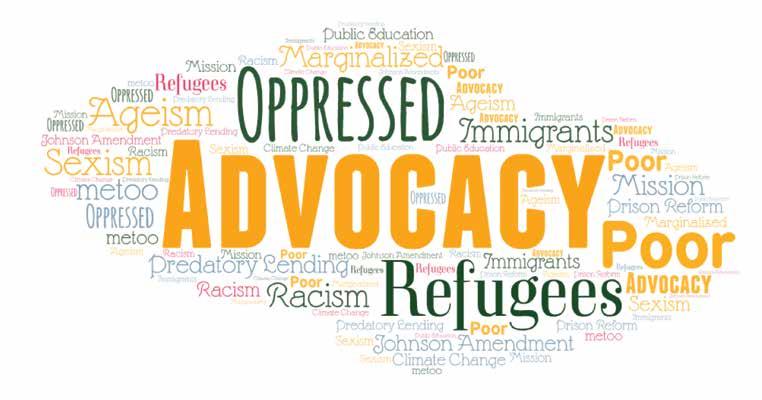
How do we love our neighbor as ourselves? CBF Advocacy begins with missions. A passion for missions can extend to advocating for justice in systems that create so many marginalized, poor and oppressed in our communities. As professor Cornell West reminds us, “justice is what love looks like in public.”
Congregations should consider advocacy a natural extension of their tangible, charitable mission work. CBF Advocacy serves as a resource for congregations making this journey. No matter what issue their mission commitment might lead them to engage, we can help increase the effectiveness of their advocacy efforts.
In addition to encouraging and equipping congregations to
Thoughts on Advocacy I’ve Heard and Pondered Recently
by Rick Jordan | CBFNC Church Resources Coordinator
“You might say, ‘doing that would make me uncomfortable.’ —Do it afraid. Begin the struggle. It gets easier.” –On opening a conversation with someone very different from yourself
“I want to help the people in that line, but I want that line to get shorter.”
– A minister’s observation of a long soup kitchen line
“Privilege is a fact, not an insult! You can’t help it if you have it, and you don’t have to feel guilty about it. Like it or not, your status in the world will help you get something you may not deserve. It will make your path easier, and in some cases, your privilege may blind you into thinking the benefits that you gain from it are ones you deserve because you're somehow better, smarter, or more deserving than other people.”
– From the youth beach retreat led by CBF missionary, Angel Pittman
When it comes to advocacy for refugees and immigrants among us, CBF churches and field personnel in North Carolina have been a model. In April of 2017 when CBF Advocacy established an Action Team for Immigrants and Refugees, we knew Marc and Kim Wyatt should be a part. An excellent example of Christian advocacy comes from Hope Valley Baptist Church in Durham and pastor Bill Bigger. After receiving support from CBFNC and a grant from the CBF Ministries Council to renovate a nearby house to host refugee families, the church was featured in a video produced and promoted by the United Nations High Commission for Refugees. Pastor Bigger was then invited to join World Relief to lobby Congress in Washington DC on World Refugee day. With over onethird of all CBF field personnel serving migrant populations across the globe, CBF Advocacy will continue encouraging and educating our supporters to advocate on behalf of and alongside our immigrant and refugee neighbors.
“When we realize that there is still discrimination and how we as white people have so much advantage, it is like we wake up. But you don’t just wake up once. We have to commit to waking up again and again. Our society has a lullaby for white people: go back to sleep, go back to sleep.”
– From the Racial Equity Institute follow-up meeting
“I face racial or gender discrimination every day, at least three times a day.”
–An African-American female minister
engage in advocacy, CBF Advocacy seeks to provide a model of positive and effective Christian advocacy. In the last five years, CBF Advocacy has invited pastors and church members to participate in advocacy in two main issue areas.
Predatory lending in the form of payday and auto title loans is a usurious practice preying on the financially vulnerable in their time of desperation. The typical interest rate of over 400% APR most often leads to a debt trap, ultimately making the financial hardship worse. CBF Advocacy is a national leader in the call for reform. North Carolina actually has some of the strongest laws in the country protecting borrowers. Families are better off without predatory lending and we will continue to work to restore moral and responsible lending laws.
CBF Advocacy has not and will not encourage congregations to get involved in partisan campaigns by supporting or opposing candidates for office. Not only would this violate the IRS code for nonprofits, in the long run it will mute the prophetic voice of the church and open the door to blatant abuse by politicians. CBF Advocacy is working with the Baptist Joint Committee for Religious Liberty to make sure this rule, often referred to as the “Johnson Amendment,” is not repealed. While CBF Advocacy will invite and encourage advocacy, we will not attempt to force any issue upon a congregation. Finally, CBF will not begin passing resolutions at General Assembly declaring the “right” side of any issue. We will instead seek consensus and hold up churches and pastors of models of advocacy in a given issue area.
Effective Christian advocacy takes long-term commitment, humility, and a recognition that we don’t have all the answers. While our political moment is rife with conflict, the command to love our neighbor remains. If we’re loving our neighbors just as we love ourselves, our voices and actions as citizens will show it. We’re often reminded that we serve as the hands and feet of Christ in this age, but how might we serve also as his voice?
Church Converts Newspaper to Good News Center
by Rick Jordan | CBFNC Church Resources Coordinator
Aseven-day-a-week church” would be a fair description for First Baptist Church of Smithfield. The desire to serve is a part of the church’s DNA, according to the pastor, Lee Colbert. “Our driving question is ‘How can we make a difference for somebody else?’” says Lee, who should know, since he has been a minister at FBC since May, 1979 and pastor since 1985. Still, Lee was a bit nervous when the editor of the local newspaper asked for an appointment ten years ago. “That’s never good,” Lee laughed. “I wondered, ‘What have I done or said that is going to be put into the newspaper?’”
The editor had an offer. The newspaper’s offices and printing shop (21,000 square feet) were across the street from the church. Because of downturn in readership, the newspaper did not need the large space anymore. It was going to go up for sale, but the editor wanted the church to have the first option to purchase it. “The timing was right for us. We had wanted to expand our space for ministries, but had met several roadblocks. The buildings and land around us were too expensive to purchase or renovate. For years, we knew we wanted to grow, but were not sure how it could happen, so the people kept giving and waiting,” Lee said.
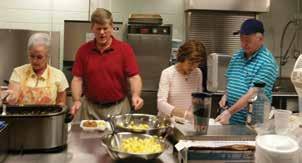
So, the church bought a newspaper office to extend its message of “good news.” The building was gutted and added to, with specific ministries in mind and also with the flexibility to grow new ministries. “We have a nice conference room that is used regularly by boards of non-profits,” Lee pointed out. “We have a large room with a kitchen, restrooms, and classroom space that is dedicated space for our Hispanic congregation. There is space for a clothing and household goods closet and more for meetings and for recreation. The industrial kitchen is used to feed the community.”
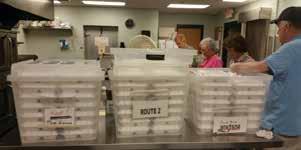
and Lisa Gainey head up this ministry. Anesha explained, “We have four routes with volunteers who make or pack meals and drivers who take them to the persons’ homes. We now take numerous meals to persons each week; others come to church to get them.” Food is often donated from local restaurants and catering services. “We really never know where the food will come from. That was a primary concern as we began this ministry. But God said, ‘Start it and see.’ And God keeps supplying us in surprising ways every week.”
The church also has a backpack ministry which supplies food for school children over the weekends. Lee says, “A young girl whose family is a part of our church told her parents and friends that she did not want presents for her birthday party. She wanted everyone to bring jars of peanut butter to be added to the backpacks. That is the giving nature of this church.”
FBC has also learned to adapt its ministries. “For years, we hosted a Soup Kitchen. The Salvation Army has a meal for lunch and we provided a dinner meal. Over time, our attendance for that dropped. But we knew there were people in our community, particularly the elderly and families with very young children, who needed warm meals. So, now we go to them.” Anesha Johnson
One person who experienced FBC’s “good news” was a woman who had just completed her rehab treatment at a local treatment center. She was beginning a new life with nothing for herself or her two children. She came to the ministry center to get clothes and household items. She had reached her limit when she came back to the door, crying. One of the volunteers told her, “I’m sorry, but that’s all we can give to you today.” The woman said, “I don’t need anything more. I just need to tell you ‘thank you.’”
The church partners with many local churches and organizations. For example, Alcoholics Anonymous and Al-Anon use the ministry center every day. “Our attitude is, ‘how can we help you? If you need our space, it’s yours,” Lee says. “This is building is not for our exclusive use. It is to be used.”
Sometimes, persons are recipients or volunteers for ministries and then become part of the congregation. One lady has done that through the dress sewing ministry. “People may or may not join our church. Our hope is to build trust. If someone comes to our ministry center, it may take ten to twelve visits with us before they believe they can trust us. If we can build that trust and they start going to a church – any church – we have become partners in building the Kingdom,” Lee says.
The year 2019 marks a traumatic moment in American life – the 400th anniversary of the first slave ship’s arrival on these shores in August 1619. In his classic text, Before the Mayflower, Leone Bennett, Jr. wrote:
She came out of a violent storm with a story no one believed, a name no one recorded and a past no one investigated. … A year before the arrival of the celebrated “Mayflower,” 113 years before the birth of George Washington, 244 years before the signing of the Emancipation Proclamation, this ship sailed into the harbor at Jamestown, Virginia, and dropped anchor into the muddy waters of history. . . . What seems unusual today is that no one sensed how extraordinary she really was. Few ships, before or since, have unloaded a more momentous cargo.
The arrival of that ship is an event we ignore at our peril, particularly at this moment in the nation’s history. Its implications impact us yet. Have you seen the recent video in which an AfricanAmerican high school wrestler named Andrew Johnson has his dreadlocks cut off in front of everyone at the New Jersey state tournament? The young wrestler acquiesced, and, with only seconds to spare, his hair was cut with the crowd watching, a 41-second eternity now viewed on social media over 15 million times. Johnson won the match in overtime, but there was no joy in him. It wasn’t about hair; it was about humiliation, and yes, race.
American Racism, 1619–2019: exorcism of this demon is needed—now
by Bill Leonard
to the racist elements in their origins, and what they mean to institutional identity for the future.
Watching the video of those New Jersey events reminded me of the warnings that African-American parents give their children, particularly their male children, on being young and black in the U.S.A.
I also went back to this passage from W.E.B. DuBois’ great work, The Souls of Black Folk, published in 1903, 40 years after the Emancipation Proclamation: “The Nation has not yet found peace from its sins; the freedman has not yet found in freedom his promised land. Whatever good may have come in these years of change, the shadow of a deep disappointment rests upon the Negro people.”
Today, 115 years after DuBois wrote those words, the nation is still searching for peace from the sins of its racist past and present. In December 2018, as the New Jersey wrestling incident went viral, the Southern Baptist seminary in Louisville, Kentucky, issued a 72-page document titled “Report on Slavery and Racism in the History of the Southern Baptist Theological Seminary”, detailing the school’s ties to the South’s slave culture and charting its own contemporary exorcism.
The well-documented study extends from the seminary’s founding by Southern Baptists in 1859, through the Civil Rights movement, and ending with efforts of its board of trustees to distance the institution from a lecture given by Martin Luther King, Jr. on the seminary campus in 1961.
With this important study, SBTS joins such institutions as Baptist-founded schools like Wake Forest and Furman Universities in exploring the advocacy of chattel slavery, Jim Crow legislation and white supremacy by earlier generations of faculty, trustees, donors, graduates and ecclesiastical leaders. They and other schools with similar histories are struggling to respond
The SBTS report illustrates that reality. It begins by asserting that while “the seminary leaders . . . labored to save the eternal souls of blacks no less than whites,” they “contradicted these commitments . . . by asserting white superiority and defending racial inequality. . . . The seminary’s leaders long shared that belief and therefore failed to combat effectively the injustices stemming from it.” The study documents that the school’s four founding faculty, ensconced in the orthodoxy of Reformed theology, were all slaveholders who “defended the righteousness of slaveholding” and “supported the Confederacy’s cause to preserve slavery.” Later, “after emancipation, the seminary faculty opposed racial equality,” supporting “the restoration of white rule in the South” and “Lost Cause mythology” during Reconstruction and beyond.
Before any of us white folks cast the first self-righteous stone, we’d best take stock of ourselves, past and present. Indeed, the SBTS study and others like it compel us to ask, when do our current assertions and actions toward racial or any other kind of inequality contradict our deepest claims to Christian commitment?
As a student of Baptist history, as well as a member of the SBTS faculty, 1975-1992, I’m forced to ask: what am I promoting as gospel right now that later generations will document, repudiate and apologize for? I can’t repent of the racism of my Baptist ancestors if I won’t repent of racism in myself and my own segment of American culture right now.
That’s why we must confront this terrible, teachable anniversary, 1619-2019. Unless we exorcise demon racism, and any biblical or theological means of supporting it, this “one Nation, under God, indivisible” won’t (maybe shouldn’t) last another 400 years.
Bill Leonard is the founding dean and the James and Marilyn Dunn professor of Baptist studies and church history emeritus at the Wake Forest University School of Divinity.
FEATURED
CBFNC ANNUAL GATHERING 2019
First Baptist Church Greensboro
Thursday, March 28 | Friday, March 29
SCHEDULE OF EVENTS
THURSDAY, MARCH 28
LEADERSHIP INSTITUTE
GUESTS
TOD BOLSINGER
Vice President & Chief of Leadership Formation, Fuller Seminary.
CLYDE EDGERTON
Author of novels, short stories, memoirs, and essays – some of which have been New York Times Notable Books.
KYLE MATTHEWS
Minister of Worship Arts, First Baptist Church, Greenville, SC, and the owner of See For Yourself Music, recording artist and songwriter.
STACY NOWELL
Senior Pastor, First Baptist Church, Huntersville.
GUY SAYLES
Assistant Professor of Religion, Mars Hill University & transitional pastor at Calvary Baptist Church in Asheville.
Led by Tod Bolsinger | FBC Greensboro Chapel 1:00 to 5:00 p.m. | $25
LIVING WATER CAFE EXHIBIT HALL OPEN PEER LEARNING GROUP BREAKFAST 8:00 a.m.
WORKSHOPS SESSION #1 9:00 to 10:30 a.m.
JOURNEY
OPENING WORSHIP With Tod Bolsinger 10:45 a.m. to 12:00 p.m.
DAYNETTE SNEAD
Associate Pastor, New Bern’s First Chin Baptist Church & Disaster Response Coordinator, Trenton, NC.
12:00 to 1:30 p.m.
WORKSHOPS SESSION #2 1:30 to 2:30 p.m. WORKSHOPS SESSION #3 2:45 to 3:45 p.m. SERVE
4:00 to 5:30 p.m.
"To the church of God . . . called to be saints, together with all those who in every place call on the name of our Lord Jesus Christ.” –1 Corinthians 1:2
A highlight of every Annual Gathering is the opportunity to hear from the best of the CBF world in a large variety of workshops. Workshops are led by divinity school professors, directors of partner ministries, CBF missionaries, CBFNC staff members, and persons doing exemplary ministry. Below is a list of the workshop titles. Complete descriptions may be found on the Annual Gathering website, cbfncag.com. JOIN US FOR
n BJC and CBF of North Carolina: Our Shared History, Present, and Future
n Ministry in the Age of Polarization
n Finding New Stories Beneath Old Secular Steeples
n Discerning Biblical Voices and Perspectives on Human Sexuality
n Cultivating Generosity
n Beyond Prayers: Practical Methods for Supporting Mental Health in Your Congregation
n We Dissenters
n CBFNC Financial Matters
n Church Safety and Security: Planning that Springs from Faith
n Imagining a Prophetic Spirituality
n Social Media, Teens, and Kids: Managing the Good, the Bad, and the Ugly
n Remain in Love with the Letters of John
n Eco-Theology in the New Testament
n TOPICS (Transformation of People in Christian Study)
n The Improvising Community
n Hurricane Florence Disaster Response
n Meet CBF Field Personnel Serving Refugees and Immigrants In North America
n How to Get ’em Talking
n Celebrating Children in Church
n Making Shifts Without Making Waves
Celebrate
n The Amazing (and Sometimes Shocking) Story of Baptists in North Carolina
n Celebrating 25 Years of CBFNC
n How Can the Helping Pastors Thrive Program Support CBFNC Pastors?
n Reimagining Church Membership and Engagement
n Be Still: Learning to Find Stillness in a World That Never Stops
n #churchtoo: Resourcing Your Congregation on the Issue of Clergy Sexual Abuse
n Scripture Shapes the People of God: A Study of Exodus 16
n Adapting Children’s Sunday School Curriculum to Your Context
n Ministry Resources Roundtable
n Faith Development in Children and Youth
n Empty Nesting and Parenting
n Understanding the Context of My Neighborhood: Challenges I Have Faced as a Community Leader
Students Stretch the Circle of Community
by Wanda Kidd | CBFNC Collegiate Engagement Coordinator
Collegiate Ministry is incredibly important to the spiritual development of young adults. I am always impressed with the ability of young adults to impact their world with the Christian Gospel and with their understanding and appreciation of community.
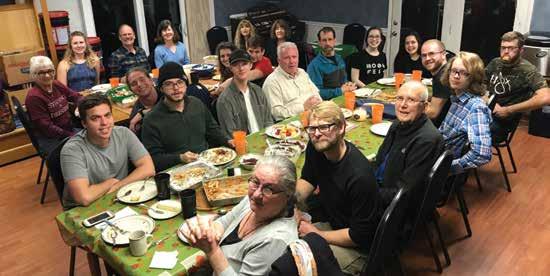
The week before Thanksgiving last year, I had the privilege of being at the Thanksgiving Gathering for the UNC-A United Campus Ministries. That type of event is something I have been part of for 40 years, but that night there was an added dimension to their gathering that I found exciting and very hopeful.
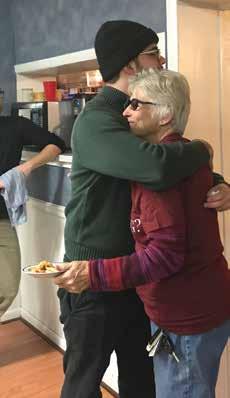
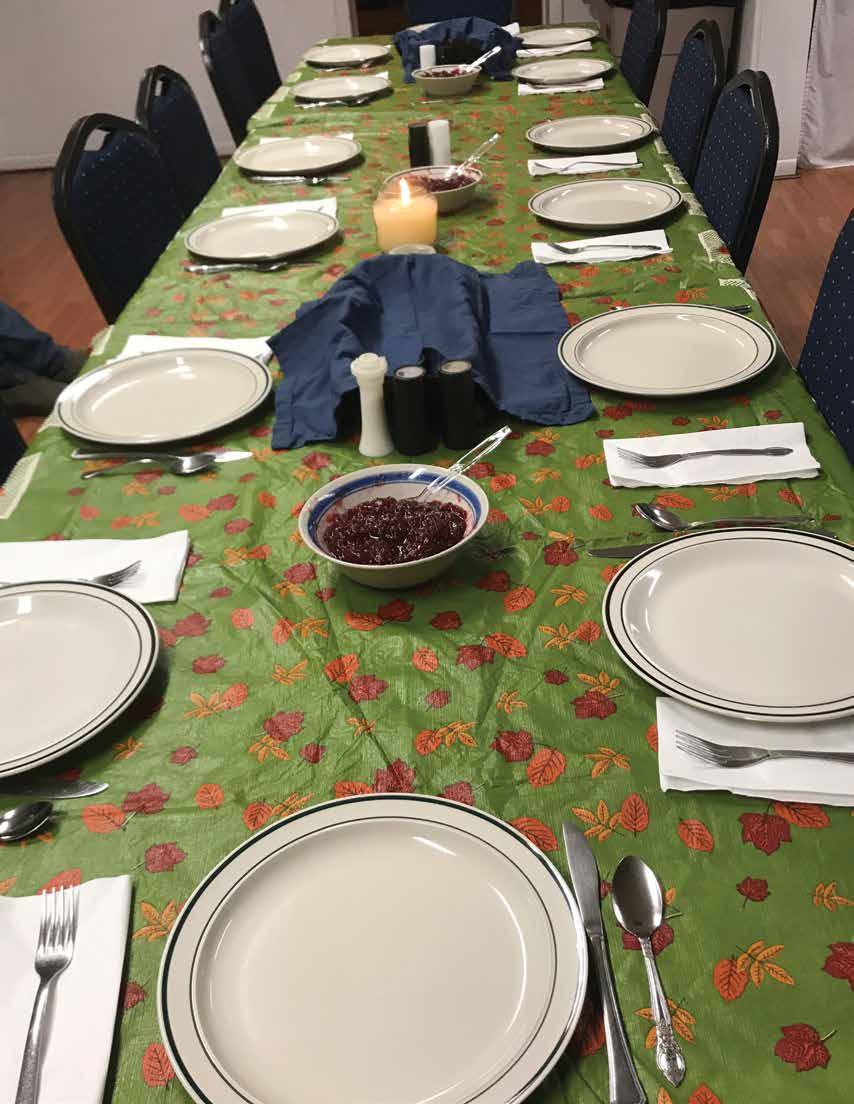
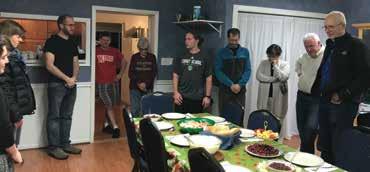
The tables were set with fall and Thanksgiving décor. The students and the intern had set the stage for a festive gathering. All day, the people from several campus ministries had prepared the traditional turkey, dressing, and “all the fixins” meal. Around 6 PM, the crowd began to gather and before we shared a prayer and started the meal, we went around the room and introduced ourselves. There were students from a variety of campus ministries, but some of the people, after introducing themselves, simply said “I am from the community.” At first, I was puzzled. Why were they at a campus student ministry event? Then, it became clear that someone had invited the neighbors from the surrounding community. I wondered who thought to invite them. As it turned out, it was the students themselves.
to the campus. That reality has encouraged the campus ministers and some students to believe that developing a relationship with people on their street is important. They have done that by offering tools and helping with yard work and also working at the
community’s farmers’ market.
So, it only seemed natural to these students that they should invite their neighbors to their Thanksgiving Dinner. I thought it was interesting that the people who were invited were told that they could bring food to share. Seven people from the community came and brought salad, hummus, and other side dishes. They sat around the tables with the students and shared stories and gratitude.
While many campus ministry houses are on the campus, the UNC-A Baptist House is at the end of a residential street that backs up
How insightful it was to offer the community people the opportunity to participate. So often when working with students, we ask groups to bring the whole meal, or if we are inviting people we tell them they do not have to bring anything but themselves. Both of those approaches have a tendency to hamper community. The groups who feed students often bring the food and then leave without interacting with the students. When they are asked to come without contributing, they do not feel like a participating member of the group. Inviting the community to join them as full contributors made the meal a time of shared experience. It broke down many walls.
What a wonderful model of being the presence of Christ where we are and broadening our image of a faith community. I am so hopeful for the future of the church as I witnessed students willing to look beyond their walls and see those around them as Beloved Children of God who, when invited, will come and will bring with them their gifts and their stories.
CAN
CBFNC HONORARY AND MEMORIAL GIFTS
A gift was given to the CBFNC operating budget by Sandra & Billy David in honor of Tiffany Seaford.
Contact
Gifts from individual supporters established this endowent fund to supplement the CBFNC annual operating budget. Gifts to this fund assist all areas of CBFNC ministry as we strive to join the work of God in the world.
MINISTERS ON THE MOVE
Our encouragement and support go to the following ministers who have recently moved: