Jamie Rorrer The Gathering, Editor Director of Communications
Amy Cook The Gathering, Graphic Designer Communications Specialist
Subscribe to The Gathering and our weekly eNews on our website at cbfnc.org. Fill out a subscription form by clicking the SUBSCRIBE button.
cbfnc.org
The Gathering is a seasonal publication of the Cooperative Baptist Fellowship of North Carolina, 2640 Reynolda Road, Winston-Salem, NC, 27106.
3 Reflections: The Seasons of a Church
4 A Season of Legacy
6 A Season to Discern: 4 Areas to Consider When Assessing Congregational Health
7 A New Model for Church Facilities
8 Concern About Mental Health Issues for Students Heading to Campus This Fall
10 Meet the 2021 Lolley Scholars
11 Welcome Ride 2021
12 A Season to Celebrate: 100 Years of Baptist Student Union at Wake Forest University
14 Going Back to the Basics
PASTOR-IN-RESIDENCE PROGRAM Accepting Applications
Helping Pastors Thrive is now accepting applications for the four-week Pastor-in-Residence/Study Leave programs that take place at the divinity schools of Campbell, Duke, Gardner-Webb and Wake Forest Universities.
All expenses for the residency, including food, transportation and housing are paid for by the Helping Pastors Thrive program. In addition, churches are provided funding for securing supply preaching and leadership during the pastor’s time away.
Reflections: The Seasons of a Church
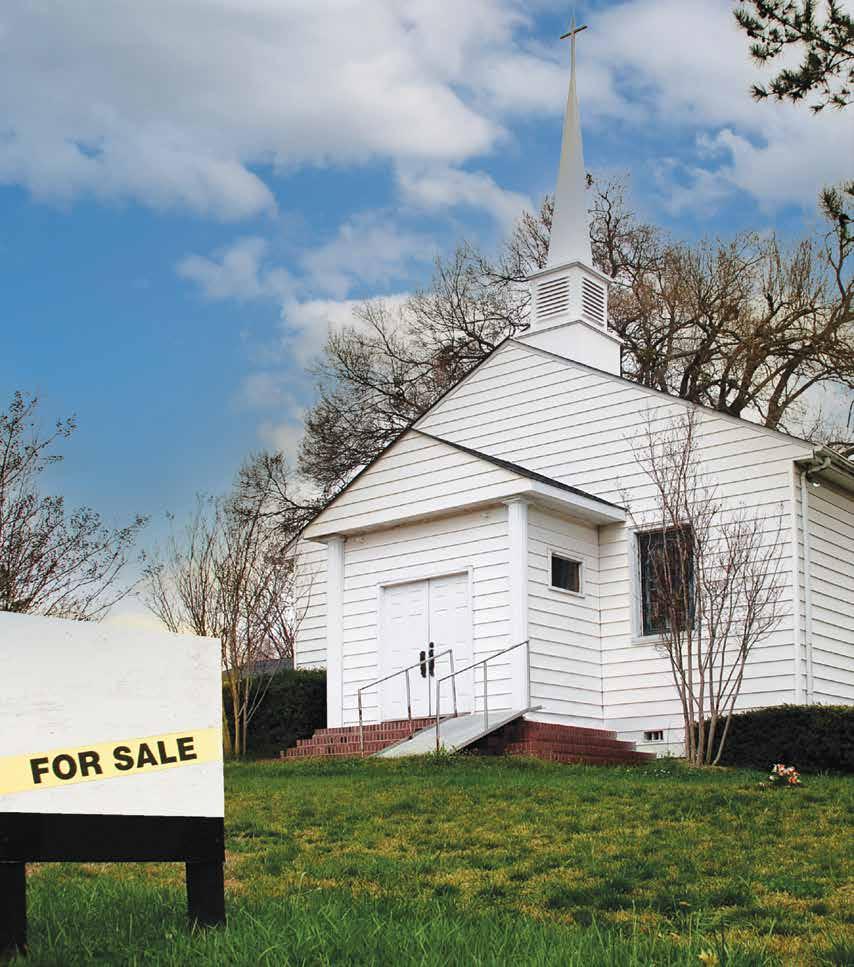
While on a summer bike ride, I took a route I hadn’t ridden in many months. I was surprised to come upon a church whose main sign was covered by black plastic. There was a “For Sale” sign on the lawn. Curious, I rode around the building. Sure enough, the church was vacant.
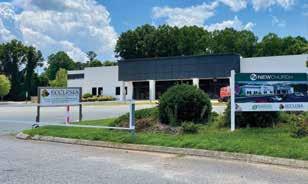
Only a few weeks before, an article in the WinstonSalem Journal featured two new churches that had outgrown their current meeting space and were acquiring property near the CBFNC office. One had bought a movie theater. The other had purchased a strip mall right across the street from the theater.
Obviously, the church that closed and the churches acquiring non-traditional property were in different seasons of their life cycle.
In the 80s, John Killinger wrote two books about “seasons.” Christ in the Seasons of Ministry was published in 1983. Christ in the Seasons of Marriage was published in 1987. In both books, he describes how one’s relationship with Christ grows and changes throughout the four seasons (spring, summer, fall, winter) of the life of a minister and of a marriage.
By Larry Hovis CBFNC Executive Coordinator
We often speak of the “church year” and its seasons— Advent, Christmas, Epiphany, Lent, Easter and Pentecost. These seasons transcend any particular local church, though they may shape a church.
My summer encounters with the old and new churches in my community made me realize that individual churches have seasons, as do ministers, marriages and most aspects of life.
For a church to die well and leave a legacy for future generations is an act of courage and faithfulness.
What characterizes the seasons of a church?
Spring is the season of birth. Vision is clear and energy is strong. There may be struggles with money, property and other challenges of youth, but excitement seems to overcome any difficulties encountered.
Summer is the season of success. Organizational matters (leadership, property, finances, programs and ministries) are solidified and energy is still high. People are engaged, though some who were involved at the beginning may have drifted away. Still, it seems that the summer church has unlimited possibilities.
Fall is the season of maturity—individual and organizational. Congregants themselves, and the congregation as a whole, may be aging. Growth is limited but relationships are strong, resources are secure, missions and ministries are active and most people are satisfied. Fall may last a long time but at some point, to use the late Bob Dale’s language, churches in this stage need to “dream again.”
Winter is the season of legacy. Churches are organic. We call them the “body” of Christ. Bodies don’t last forever. As far as I know, no church mentioned in the New Testament still exists today. Eventually all churches will close. The question is, what kind of legacy will they leave? Churches in the winter season would do well to engage in legacy planning. Otherwise, they will be poor stewards
See “The Seasons of a Church” on page 4.
Church property for sale in the Winston-Salem area.
Reflections: The Seasons of a Church,
of the mission and resources God has entrusted to them. For a church to die well and leave a legacy for future generations is an act of courage and faithfulness.
CBFNC seeks to serve churches in all seasons.
A majority of CBFNC churches, like a majority of churches of all denominations in America today, are probably in the fall season. A growing number are moving into winter.
continued from page 3.
We are probably best at resourcing summer and fall churches. We have much to learn about how to help
winter churches. And we need to increase our efforts to give birth to spring churches.
In the coming years, we will continue to offer ministries and services to churches in all four seasons. We will need to reallocate resources (finances, staff, programs) to better serve churches in spring and winter.
I am a believer in the church—God’s universal church and the local church. And I’m a believer in our fellowship, which serves to network and resource local churches in all seasons of their life cycle, while providing a tangible way for all of us to participate in God’s universal church.
A Season of . . .
WLegacy
By Seth Hix CBFNC Associate Coordinator
ould an unconventional story of courage and faithfulness shown by a congregation in decline be worthy of your time? If so, you’ll want to read this brief account of my recent conversation with Rev. David Peppler, former pastor of Chamberlayne Baptist Church (CBC) in Richmond, Virginia. While CBC is not in North Carolina, it is connected to us through the broader Fellowship of CBF, as well as their two most recent pastors, who both have CBFNC connections.
The history of CBC parallels many in our state’s fellowship. Founded in 1953 to serve a northern suburb of the city, it saw its ministry programs flourish for several decades, perhaps reaching its peak in the 80s and 90s. The early 2000s saw a slow and steady decline. There were no major church splits; only minor divisions over ministry and style. As the demographics of the community around them changed, church members gradually moved away.
When Rev. Peppler arrived in August 2016, the active membership had dropped to around 85 and the church’s budget was disproportionately spent on maintaining their facilities. Following his first year of ministry there, which included 14 funeral services for dearly beloved saints, he felt led to engage the church in some creative ministry experiments. After experiencing a balance of measured successes and failures, the CBC
Movie theater converted into church facility.
One church’s ending becomes another church’s new beginning.
A Season of Legacy,
continued from page 4.
church leadership was noticeably tired. He knew that they lacked the energy it would take to turn things around.
One night at a deacons meeting, Rev. Peppler boldly set aside the regular business of the church to pose a precarious question to the church leadership. “Where do you see Chamberlayne Baptist Church in five years?” The reaction of the deacons was unmistakable. Heads bowed and shoulders slumped. Yet, this moment put the church on a path toward a faithful and courageous Kingdom-centered decision.
Rev. Peppler began a sermon series on being a “Church in the Wilderness.” He also replaced the regular Wednesday night programming for conversations about the church’s future. In this informal setting they learned about how God’s people are to pray in the wilderness, as well as how God cares for his people in the wilderness. Eventually, the Wednesday night sessions turned into brainstorming sessions about the church’s future. No ideas were off-limits or too crazy!
Bethlehem Baptist Church, a 128-year old African American church, to carry on ministry in CBC’s facility. Thus, CBC church leaders began the legal and logistical process of disbanding the congregation.
On Sunday, June 6, 2021, the congregation gathered to celebrate 67 years of faithful ministry in the Chamberlayne Farms neighborhood. Then the next Sunday, June 13, the members of Bethlehem Baptist and Chamberlayne Baptist joined together for a combined worship service to celebrate all the wonderful ways in which God will use their combined gifts for years to come!
Passing the keys over.
A “Futures Team” of key church leaders was formed to continue the work of researching community needs, exploring feasible options, as well as hosting more town-hall discussions with congregation and community leaders. This grassroots approach was critical to the congregation’s spiritual discernment. Yet, since most of the remaining members had been there for 50-plus years, Rev. Peppler says it was also “a deeply painful and emotional process.”
Ultimately, the congregation felt led to gift their debtfree church building to a congregation who could more effectively minister to the community around them. After identifying three possible congregations, they chose
There is certainly sadness and grief around the conclusion of one congregational life-cycle. Yet even in the midst of agonizing conversations, Rev. Peppler said, “God’s faithfulness was ever-present as He made things very clear to us along the way.” Throughout the process, Rev. Peppler remained open and honest, focusing on seasons of ministry and maintaining faith in these difficult circumstances. One Sunday he even preached a sermon on, “What to look for in your next Church!”
The story of Chamberlayne Baptist is a reminder for us all that God’s work extends well beyond the limitations of any one congregation. The boundaries of neighborhoods, ethnicity and congregational identity do not apply to God’s Kingdom. As church leaders in our own congregations, we must seek the courage to ask the hard questions. We must allow ourselves to be uncomfortable and to answer for ourselves the question that permeated every conversation and decision made by Chamberlayne Baptist Church, “Is this what God wants?”
Church seasons and pastoral transitions are a normal part of congregational life. CBFNC offers support and resources for churches, pastors and church leaders in all seasons of ministry. To learn more about how CBFNC can support your church or ministry, visit the “equip” section of our website at www.cbfnc.org/equip.
For pastors and churches in need of help through a transition, contact Seth Hix, associate coordinator, (seth.hix@cbfnc.org) to learn more about engaging with CBFNC in this process.
Both churches gather together to celebrate God’s gifts and goodness.
AREAS TO CONSIDER
When Assessing Congregational Health Discern : A Season to . . .
By Seth Hix CBFNC Associate Coordinator
As churches across our Fellowship continue to shift away from pandemic-focused ministry and settle into more stable rhythms, persistent discernment remains crucial for congregational health. This is particularly true for congregations in a time of pastoral transition. Search teams now find it difficult to articulate their congregational identity as new patterns of ministry emerge. Even simple demographic metrics such as worship and Sunday School attendance or church budgets are often impossible to estimate. Yet, even in the midst of these anxious days, congregations and ministers must still discern God’s call for their lives and communities.
In response to the myriad of new challenges facing our congregations, CBFNC has developed a new tool for churches to quickly assess their vitality and sustainability in several key areas of congregational health. While acknowledging that every congregation is uniquely called to serve within their context, we have identified four areas of church life that should be considered during a ministerial transition. An honest evaluation of each of these areas helps to frame the contextual challenges and opportunities within a particular community. As church leadership discusses each of these areas, the path forward becomes clearer.
A time of transition has always been an excellent opportunity for some type of congregational self-study. This work has been accomplished using a variety of methods through the years. Intentional Interim ministry, church consultants and long-term strategic planning have all been effective tools for churches at different points in their journey. Our current resource development does not seek to replace or duplicate any of this important work. We simply want to help congregations quickly assess the following areas as they begin to discern the next steps.
1. FINANCES : Congregational budgets are rarely a dinner table discussion topic. However, a solid financial foundation and a sustainable financial plan are essential for the success of congregational ministry. Questions to consider are: What are our recent giving trends? How much money in our budget is allocated for clergy compensation or maintenance of our facility? Do we have endowments or financial reserves? Does the utilization of money in our budget align with our mission and vision?
2. PROPERTY: It is not uncommon for the church property to be a church’s largest financial asset. Yet, an outsized facility can quickly become a church’s greatest liability. Many of our church campuses were built for congregational programs of a different era. Some considerations are: How much money is allocated for the maintenance and upkeep of our facilities? Are our facilities adaptable for new ministry opportunities? Are there prospects for collaboration with other faith-based nonprofits in our community?
3. LEADERSHIP: Congregational leadership is not limited to paid staff. Clergy and support staff certainly play an important role in church life, but lay leaders are an essential part of a successful church. A few questions to consider are: Do we have the most efficient and effective ministry and administrative staff structure? Do we have trouble filling our committees with new people? What is the level of energy and engagement among our laity?
4. MINISTRY AND MISSION: This is obviously the most important consideration for any congregation. It is listed last here, however, because the impact of the first three areas is often overlooked. A congregation’s ministry and mission are also more difficult for church leaders to articulate. Some important considerations in this area are: Do we have consistent representative leadership and participation in worship? Are our current discipleship efforts meaningful and effective? Are we increasing our engagement within our community? These four areas work together to paint a picture of the vitality and sustainability of our congregations. This evaluation is not meant to be a strategic plan as much as a quick check-up for your church to identify areas that may need more attention. The best time to begin these discussions with your church leadership was yesterday!
A New Model for Church Facilities
By Randy Carter Senior Pastor New Hope Baptist, Raleigh
For many, success in the church in our context has been the multi-site model: one church with two, three, four or however many locations. At New Hope Baptist Church in Raleigh, we are turning that model upside down. We are working on a model that celebrates one location, many churches.
The events of the last 18 months forced us to reexamine our facilities usage at New Hope. We realized we had some underutilized space that could be better used for the benefit of our neighbors and God’s kingdom. Thus, we began renting space to other churches, ministry organizations and community nonprofits.
Now, on Sundays at New Hope, Jesus is worshiped in English, Vietnamese, French, Korean and Spanish. It’s a glimpse of God’s kingdom “on earth as it is in heaven.”
We will gather for a combined, multilingual service on World Communion Sunday, October 3, 2021.
The convergence of our available space with the needs for space among other congregations, Christian ministries and nonprofits is clear. We are able to provide space at a rate much less than can be found in the city, allowing us to enable groups to utilize more funds for ministry. At the same time, the income gives New Hope Baptist Church a new stream to support the physical campus.
Right now, we have the following in the building:
Churches
• New Hope Vietnamese Baptist Church
• Legado de Amor (Spanish speaking congregation)
• Temple de Disciples de Jesus Christ (Congolese, French speaking congregation)
• Qodesh Family Church (Ghanan primarily, English speaking)
• Breakthrough Ministries (African American congregation)
• A new Korean language church plant (started in July)
Ministries/Partners
• Raleigh Dream Center (outreach ministry, apartment complexes)
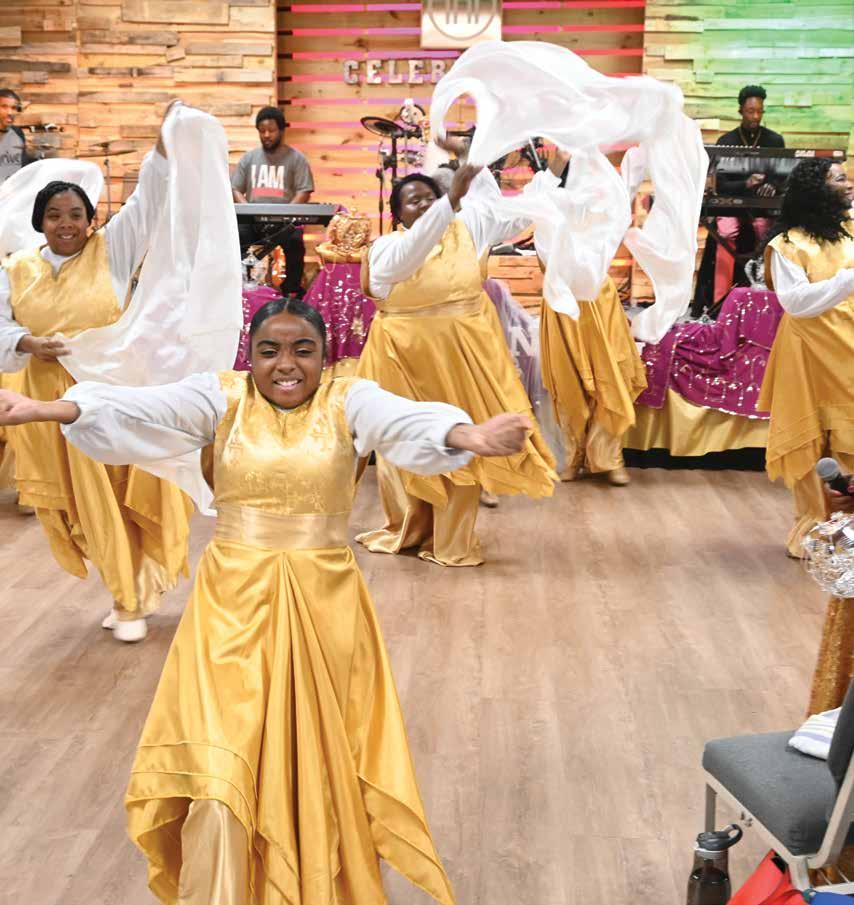
• Titus II Dance Ministry
• The ARC (nonprofit for students and adults with disabilities will begin mid-September for a school-year-long partnership)
Additionally, we provided space to the YMCA last school year for children with working parents, children who needed help with online school and those who simply needed basic structure to their day.
We will have the Girl Scouts meeting on our campus starting this fall and we provide office space for the director of the Community Partnership Network in Raleigh.
I pray it all continues to grow.
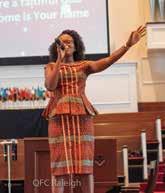
Titus II Dance Ministry.
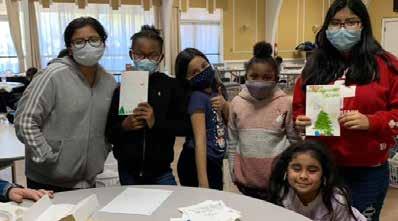
Students from the YMCA Scholastic Center.
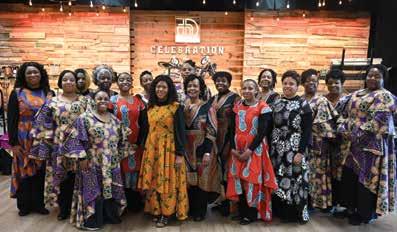
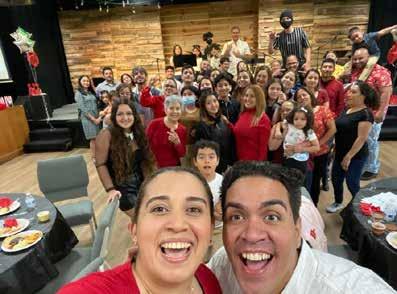
(Above left and right) Qodesh Family Church; (bottom) Pastor Freddy Santana Cuevas and members of Legado de Amor.
Concern About Mental Health Issues for Students Heading to Campus this Fall
By Wanda Kidd CBFNC Collegiate Engagement Coordinator
My daughter gathers data for a large computer company newsletter. Their topic recently was mental health issues. As we were talking, she said they were going to have to put an asterisk by the Generation Z data because the amount of reported depression was skewing the overall picture.
As students have just arrived back to school, this is a wake-up moment. While it is important for all students 23 and younger, I want to raise the issue of students who are on college campuses and away from their family and community systems.
The prospect of a large group of students who have not had a traditional transition from high school to college for over three years gathering in one place is something that needs to be addressed by the schools, the communities that surround them and by those who advocate for young adults.
This year’s sophomores are a major concern for me. The very term means, “wise fools.” Sophomore year tends to lead to a high experience of depression in just a runof-the-mill year. But this year’s sophomores are the group who did not have the traditional graduation, had to stay home the summer they graduated and had a tumultuous freshman year in college. There was no being dropped off and discovering how to live on their own, make new friends and learn to live in new environments.
While herculean efforts were made to help these students continue with schooling in this pandemic era, there has been no authentic way for them to fully socialize with each other.
Isolation is an important factor in depression.
Those who are juniors this year had their freshman year interrupted just as they were preparing for their summer internships, vacations and jobs with their hopes and dreams of adventure in full fantasy mode. All of those plans came to a screeching halt and they had to go home in late spring of 2020 and figure out how to live in a very close family unit. The hope that this would be over soon was a sustaining mantra, until the fall when they realized they were going to live with fits and starts as everyone tried to figure out how to navigate this uncharted landscape of how to continue to get an education in the midst of a pandemic. This up and down, creating significant highs and lows, is another contributing factor to depression.
They experienced more unknown, more fear and less hope than any group of freshmen with which I have ever worked. Now they are ready to start a new school year without being afforded the traditional freshman experience. Yet another thing they cannot get back. Then there are the actual freshmen. They closed out high school learning online and living with the ambiguity and struggle to make choices about an unknown future. They arrived on campus after 18 months of isolation and not having to share cultural space. They have had more free time than any other group of graduating seniors, with flexible work schedules and the ability to bend social norms, like getting dressed, phone use and in-person interaction.
Someone pointed out the other day that they were going to have to retrain their face to be socially acceptable after a year of masking and zooming. That is just a tip of the things we will have to relearn.
Add to all of the personal issues that students bring with them to school, the reality of social turmoil that has gripped the country while they have been isolated and you have a cauldron of concern.
What to do?
I wish I knew, but it is important to acknowledge the issues and begin to work on strategies that will address these concerns. There is no college or university that has the bandwidth to do this on its own.
East Carolina students with Campus Minister Charity Roberson.
Now is the time for colleges and universities to gather trusted people who could help them carry this load. Organize a list of trusted people who would be willing to mentor or listen to students and have them available as needed. Start with your campus ministers, then local ministers and people who are trained as coaches. Write guidelines and mobilize a strategy to navigate this season.
The number one thing to do is talk and listen...listen and talk.
Talk to your students about what they are feeling and experiencing, THEN LISTEN.
This means parents, grandparents, youth ministers, ministers and any person who has a connection with a young adult.
Talk to them when they get to campus. Talk to those who are not leaving home. Talk to them, THEN LISTEN. Do not lecture them, shame them or guilt them. DO NOT make this about you.
Talk to them and THEN LISTEN. Listen to what they are saying and what they are not saying.
Do not be deterred when they tell you they are fine.
Ask specific questions. Fine is not an answer. Things like:
• How was breakfast? Listen
• How is it going with your roommate? Listen
• Tell me about your classes. Listen
• Have you joined a study group? Listen
• What are you learning? Listen
The things you need to check on:
1. Are they eating?
2. Are they making contact with other students?
3. Are they going to class?
Do not call multiple times a day, but call every day for the first month or even until fall break, letting them know that they can call you ANY TIME.
If you live close enough, go to see them a couple of weeks after school has started. Take them out for a meal and see if they will bring a friend to go to with you (your treat of course). The shared context is helpful in making friends.
If you are worried, encourage them to seek counseling on campus. Check back with them to see if they have done it and if need be, call someone on campus or a local pastor who might recommend a counselor.
Campus Minister Tierney Boss and students at Appalachian State during Bible study last semester.
Meet the
Lolley Scholars
Providing support and scholarship assistance to students engaged in theological education is an essential part of CBFNC’s work. Established in 2008 by an endowment fund, the Randall and Lou Lolley Scholarships are CBFNC’s most prestigious theological education scholarships that are helping prepare the next generation of Baptist ministers. Candidates are nominated by someone who can speak to their outstanding promise for Christian ministry. Through generous individual and congregational gifts to the Lolley fund, CBFNC is able to support students for all three years of their Master of Divinity program. Please join us in congratulating the 2021-2024 Lolley Scholarship recipients.
MAGGIE KENNEDY
M. Div. at Duke University Divinity School
Emerywood Baptist Church, High Point, NC
“As I feel called to ministerial work surrounding communities, CBFNC’s principles and values are integral to my calling. Growing up in the Baptist tradition and then committing my vocation to that tradition, scripture, autonomy, priesthood of the believer and freedom of religion are principles I take very seriously in my everyday life. Additionally, several of CBFNC’s values speak specifically to the way in which I approach my calling. I specifically look to those surrounding community, such as collaboration, flexibility and leadership. Watching my mother navigate ministerial life and going through the Student.Church program, I have no thoughts that the work of ministry will be done easily. I do know however, that it is made easier in communion with others and the Spirit. CBFNC’s principles and values lean into the depth and complexity of community with the foundation and guidance of scripture and spiritual traditions. I often joke that I am not going into ministry because I love people, though I do. I am going into ministry because I love God and I feel called to serve Him in community.”
The goal of the Lolley Fund for Theological Education is to support men and women preparing for Christian ministry who are enrolled in seminaries or divinity schools and who have a commitment to serving in Baptist congregations and ministries. Candidates for the scholarships must be nominated by someone who can speak to her or his outstanding promise for Christian ministry and excellent potential for graduate-level work.
Consider making a gift to the Lolley Fund for Theological Education. Your generosity will create a legacy that will impact ministers and congregations for years to come.
KRISTINA MEYER
M. Div. at Wake Forest
University School of Divinity
Canal Street Church
New Orleans, LA
“I believe I have been called to be a higher education chaplain. In order to walk with students through their own lives, I need to have grappled with my own expectations, experiences and questions. Through doing this work within myself while I earn a Master of Divinity, I can stay grounded, guide their processing and better empathize with their struggles. Understanding the complexity of church history will give me useful tools when students are in crises of faith, as many of my generation have been so hurt by the institutional church. Learning practical pastoral skills will allow me to affirm students’ inherent worth as I support their spiritual journey. I am hopeful that I will find a relationship with a CBF congregation in North Carolina with the potential for ordination and meaningful work.”
Visit cbfnc.org and click on “GIVE.” On the donation form, look for “Where would you like to direct your gift?”
Choose “Randall and Lou Lolley Endowment for Theological Education” from the menu of options.
Your support is essential to providing theological education to future Baptist ministers!
State Capital NC Coast
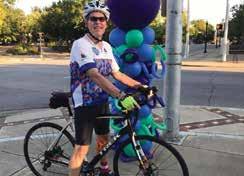
OVER A FOUR-DAY PERIOD, October 14–17, Cooperative Baptist Fellowship of North Carolina (CBFNC) Executive Coordinator Larry Hovis and a small cycling team will ride from the bustling State Capital region to the beautiful NC coast! Every CBFNC congregation is invited to join the mission and the mandate of embracing vulnerable neighbors by giving generously to sponsor Larry’s team. Proceeds raised will be used to provide seed grants to churches throughout the state to start new Welcome House ministries.
Follow Larry’s team on Facebook and Instagram and donate online to become a sponsor. Or mail a check to: CBFNC, 2640 Reynolda Road, Winston-Salem, NC 27106.
Conduct your own Welcome Ride & Facebook fundraiser for CBFNC.
Funds raised will provide grants to establish new Welcome Houses!
October 14–17, 2021
DO YOUR OWN WELCOME RIDE
While the feature of this event is to follow Larry and his team from the capital to the coast, you can join the fun too! Show your support and help us raise money by doing your own Welcome Ride anytime during the month of October. The best part is that you can choose how to do your journey—walk, run, bike, skate, paddle, swim, you name it. Families are encouraged to get the kids involved on their tricycles, scooters, power wheels, hover boards, etc. Youth groups, small groups, other groups are encouraged to participate together by adhering to social distancing guidelines. Choose a distance and duration that is meaningful to you.
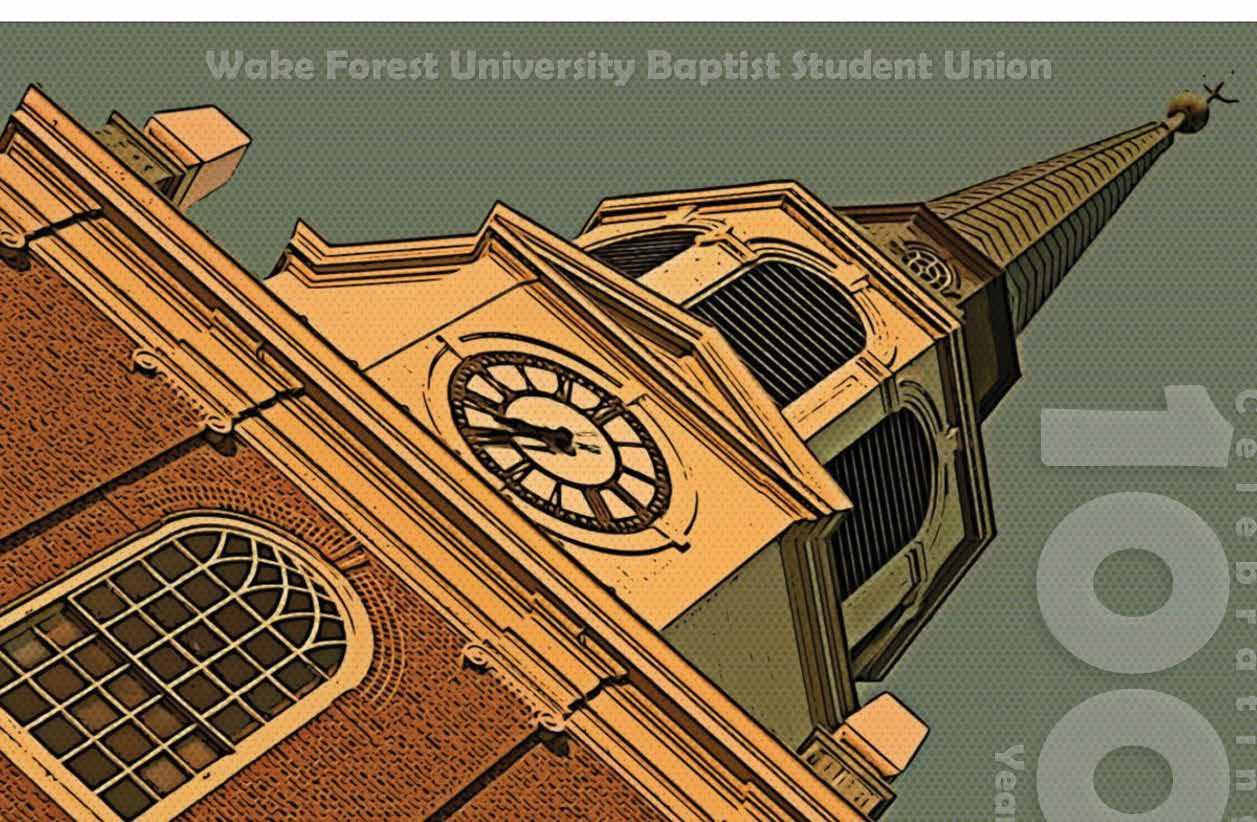
100 YEARS of Baptist Student Union at Wake Forest University Celebrate! A Season to . . .
By Chris Towles
There are many like me, for whom collegiate ministry has had a meaningful impact during our formative years. Thus, I have long admired the vision of CBFNC for emphasizing campus ministry.
Back in the early 90s my own college minister asked me questions that helped me grow spiritually and broaden my view of faith. Collegiate ministry stretched my view of faith beyond myself and my local church community to examine what it means to incarnate the mission and love of Christ.
The ministry I do now is a continuation and re-visioning of the ministry I received as a student. Through the work of CBFNC, Baptist campus ministry continues to have a presence on North Carolina college campuses as Cooperative Baptist Student Fellowship and other ministries.
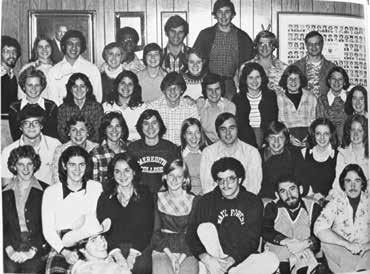
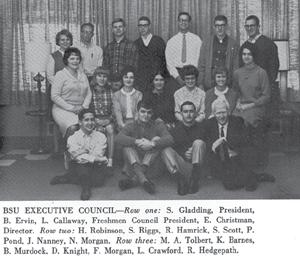
This year, we celebrate a milestone of Baptist campus ministry at Wake Forest University: the 100th anniversary of the Baptist Student Union (BSU). As we are planning ways in which to mark this milestone, I reached out to some alumni of Wake Forest BSU and asked what were some of the critical issues during their time in college.
Looking through the experiences of our alumni spanning from the 50s to the 2000s, it looks like the threads that tie our celebration together involve the places where our ministry has been on critical issues, the inclusivity of the group and the broader world views students gained as a part of their spiritual maturing.
Several responded back about their time when segregation was the main issue. One talked about how in 1957 a major issue was dancing, but that by 1960 the issue was WFU students’ participation with WSSU students in the sit-in demonstration at Woolworths protesting racial segregation.
This reminded me of how the late, long-time Chaplain Emeritus Ed Christman would often talk about the subversive role Baptist students played in integration at Wake.
Because the Board of Trustees at that time did not want to desegregate, Chaplain Christman and others decided to bring a student from Africa to Wake. “Surely the school could not object to a student who had been the result of Baptist missions!” Christman would say.
Edward Reynolds from Ghana was this student, making Wake Forest University the first private college in the south to integrate. Reynolds’ faith had been nurtured by Baptist missionaries in Africa so Christman arranged to have him room with Joe Clontz, who was the BSU president at the time. The other suitemates were also BSU members.
Some alumni remembered the period when Wake Forest struggled with its relationship to the NC Baptist State Convention, changes in the Southern Baptist Convention
CBFNC Campus Minister at Wake Forest University
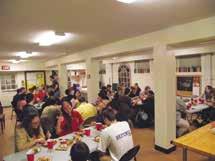
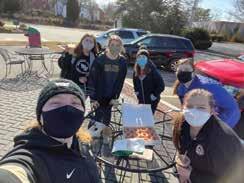
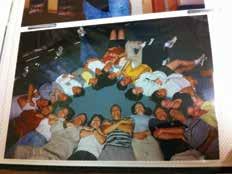
Wake Forest Baptist Student Union memories through the years as seen in past yearbooks.
and overall Baptist identity. Others recalled how many of their conversations revolved around events such as Desert Storm, Vietnam, 9/11 and Watergate.
When I read the many responses about women in ministry, it reminded me of alumni who would tell me that they didn’t know a woman could be a minister until they’d met Becky Hartzog in the BSU.
For many alumni over the past few decades, homosexuality was a critical issue, one that we’ve seen split denominations. Even though Baptist students come from many different churches and backgrounds and often don’t agree, one thing I’ve noticed about them is that as a group they offer good pastoral care to others who don’t get a lot of good pastoral care.
While campus ministry is sponsored by Baptists, it has never been solely for Baptists. It’s a way that the Baptist church has reached out to students on campus whatever their background. It says a great deal that people with no religious background at all or a dif-
ferent religious background have decided “Baptists” were their home. It also says a lot that Muslim students on campus today excitedly tell freshmen that they should check out the Baptist group.
Our big celebration of 100 years of BSU at Wake Forest will take place at Homecoming and Reunion Weekend (October 29-30). It’s not merely about celebrating the vision that Baptists had in 1921 to minister to students where they are. It’s also about the vision that Baptists have in 2021 to provide this ministry that impacts so many. On campus, Christian students have a community in which to fellowship; a place to broaden their faith; and a chance to collaborate in ministry as they become our future leaders. Celebrating 100 years is not merely reminiscing on the past. It’s also recognizing the vision that Baptists have for the future.
Dr. Christopher Towles creates environments where people can wonder, question and grow at Wake Forest University as a CBF-endorsed chaplain. Additionally, he teaches as an adjunct professor at the WFU School of Divinity and Forsyth Tech.
Going. . .
Imet Juan Carlos Cevallos almost 40 years ago in a youth retreat in Colombia, South America. Juan Carlos was appointed as the new pastor of the “Iglesia Bautista Internacional de Greenville” (previously called “The Memorial Baptist Church Latino Ministry”) in Greenville, NC last spring.
Dr. Juan Carlos Cevallos, pastor of the Iglesia Bautista Internacional de Greenville in Greenville,
NC
Born in Ecuador, he holds a doctorate in theology and a master’s degree in theology from the International Baptist Theological Seminary of Cali, Colombia. Juan Carlos is also a graduate of the Associated Evangelical Seminary in Maracay, Venezuela. He served as rector of the Baptist Theological Seminary in Ecuador, supervising editor at Editorial Mundo Hispano (in Texas) and has worked as a translator for the New International Version and the Textual Bible. He collaborated in the writing of the Great Encyclopedic Dictionary of the Bible and worked as editor on the updated and expanded edition of the classic work of the Academic Interlinear of the Greek-Spanish New Testament by Dr. Francisco Lacueva.
When he arrived in Greenville as a new minister, the pandemic also arrived with him. He was forced to get creative to enhance the ministry God was depositing in his hand.
This is Juan Carlos’ experience amidst the pandemic:
“The pandemic definitely upset us! It forced us to rethink our ministries and evaluate what we were doing.
I had four months of pastoring this church before things changed. We had only just begun to get to know each member as we were laying out a plan in a church that had never had a member acquaintance plan.
When we started trying to organize some ministries, we had to ‘cloister ourselves.’ All of our experience of more than 40 years pastoring was of little use. We had to
reinvent how to shepherd in this new era.
By Santiago Reales Director of Red Latina
I began to evaluate what we had done up to that point accompanied by a biblical reflection on the mission of the church. The first few weeks of confinement were full of frustration and anguish. We didn’t have a guide to follow, working examples or anything like that. We were at zero.
From there we had to start with the basics. The first thing was our marriage. My wife was instrumental in starting the process. We had to be closer together and with one heart and one mind to hear the voice of our God. And we certainly did, and still do, hear it!
The second thing we realized was that our experience was secondary. We had always ministered depending on God, and now more than ever our dependence was directly and solely on God. And what better than to listen to Him through his Word.
Third, we got back to basics with two questions: what is the church amid a pandemic? What is the mission of this church during a pandemic?
The answer to the first question was obvious, although difficult for church members to assimilate. The important thing in a church was each member, not the ‘temple’ or building we use. We had to get to work so that each member could get this idea that the church is the building out of their heads.
To achieve this, we had to keep communicating this biblical truth. This forced us to catch up a bit on possible ways to communicate. We created groups on different platforms. We learned to communicate with tools that were new to us. The goal was achieved in a high percentage of the church.
The answer to the second question was equally obvious: the mission of the church is to disciple in the way of Jesus. Discipleship is a force in any adverse circumstance. It was providential that as soon as we arrived at the church we began to implement a discipleship plan, not understanding this as a weekly class, but comprehensive discipleship. That is, it includes teaching, a life of permanent worship, communion and service, not as a church program, but as a way of life.
Back to the Basics,
continued from page 14.
This is certainly a plan that is not easy to do in “normal times” that it is much more difficult in this “pandemic time.” Yet we are immersed in this task. And, God willing, we will continue it while we are in the ministry.
Each morning, we send each churchgoer a short devotional focused on daily life and the Word. At night it is about involving everyone in a time of prayer and intercession for each member of our congregation, for the sick, for the pandemic and a special time remembering the birthdays of the children.
When one of our congregants fell ill with COVID-19, members mobilized to care for the sick in prayer and basic needs. The same happened if someone went to the hospital for any health situation. It was not possible to help corporately, but it was possible to do it personally. It was not easy to do without the personal contact and close prayer of which Latinos are used to.
We began to see a myth fall; that a good Sunday show keeps a church going. We are learning that worship cannot just be a 30-minute Sunday act of singing. It is a whole life system.
We now have a weekday Bible study online and a couples meeting to discuss family matters. It has been essential to start developing a small discipleship group with the leaders we wish to form. They are also the basis for the proclamation ministry.
This pandemic period has been a difficult time for the church in which work started that has no end. We learned to think of people and not programs; we learned to think of people more than buildings; we learned to have a ministry focused on discipleship rather than a one-man ministry.
We get frustrated and we suffer, but we trust that the church of Christ will prevail despite the attacks of death and hopelessness. Christ continues to build his church despite pandemics, personal deficiencies and whatever is opposed to Him. He just requires an open mind and a heart willing to obey and live what his Word teaches us.” –Juan Carlos Cevallos
In partnership with CBFNC, Red Latina’s purpose is:
1. Strategically create projects that strengthen and equip local church leadership by cooperating in alliances.
2. Promote events of the different congregations and ministries within the Latin Network of CBFNC.
3. Promote the improvement of interpersonal relationships at the pastoral and ministerial levels.
How can we be of assistance to you as together we strive to pursue God’s mission in the spirit of Christ? Do not hesitate to contact me at sreales@cbfnc.org.
MINISTERS ON THE MOVE
Our encouragement and support go to the following ministers who have recently moved:
Trey Davis to Ridge Road Baptist, Raleigh as Pastor
Will Gerrald to First Baptist, Hickory as Associate Pastor of Music and Worship
Christi Hollifield to First Baptist, Waynesville as Pastor for Children, Youth and Families
Warren Howell to First Baptist, Raleigh as Minister of Music
Travis McGuirt to Calvary Baptist, Reidsville as Pastor
Josh Owens to First Baptist, Lumberton as Pastor
Ben Wines to Hope Valley Baptist, Raleigh as Pastor
When you make a move or know of someone who has changed places of ministry, please send us an email: seth.hix@cbfnc.org. For assistance to search committees and ministers seeking vocational discernment, visit the Equip Ministers and Churches page on our website (cbfnc.org) or call us at 336.759.3456.
CBFNC HONORARY & MEMORIAL GIFTS
April – June 2021
Barbara Huggins in honor of Wanda Kidd
Christa Warise in honor of the CBFNC Staff
Jennifer and Seth Asbill in honor of Jesse Croom
Lisa and Kenneth Rust in honor of Kim and Marc Wyatt
Mary and Mike Langley in honor of Amy and Andy Jung
John Vestal in memory of Cindy Vestal
Return Service Requested www.cbfnc.org
OCTOBER
Welcome Ride 2021 Kick-Off Block Party First Baptist, Raleigh October 14
Welcome Ride 2021 Capital to Coast October 14–17
Social Media Deep Dive for Churches All Platforms Are Not Equal October 14
Social Media Deep Dive for Churches Best Practices & FAQs October 21
Social Media Deep Dive for Churches Making It Work for You October 28
NOVEMBER
Social Media Deep Dive for Churches From Analytics to Insights November 4
JANUARY
Winter Youth Summit Charlotte, NC January 14–16
MARCH
CBFNC Annual Gathering Trinity Baptist, Raleigh March 17–18