FROM THE PRESIDENT
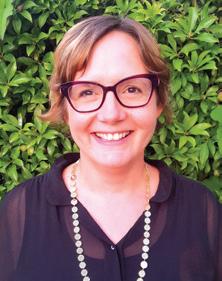
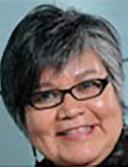
MARGARET A. MEREIGH
Power and Influence
At 4:20 a.m., I left my home in a taxi headed to the Vancouver airport to catch a 6:00 a.m. flight to Kamloops. The purpose of my journey and my first official act as CBABC President was to address the first-year law students of Thompson Rivers University. I had been president for a mere three days at the start of the Labour Day long weekend, and I had experienced no presidential transformation. What could I say to inspire these young people, the future of our profession?
Ultimately, I chose a message about “Power and Influence.” The essence of the message was this.
u u u “Power” can be defined as the ability of a person in authority to control people and resources to achieve a desired outcome. It is easy for us to identify those with power and for us to believe that they are stronger and more relevant than we are. We may even call them “leaders.”
u u u “Influence” on the other hand is not wielded only by persons in authority. It can be wielded by anyone, including you. Rank and title play no part. Those who take the time to affect another person’s thoughts, emotions and ideas are creators of lasting and self-perpetuating change. The subtle talent of influence has the far-reaching ability to change another person’s perception, point of view or belief. This change in perception, point of view or belief can in turn encourage action, which gives form and substance to an idea. This is the gift of the advocate. This is your gift.
I asked these first-year law students to “dream big,” “be positive and optimistic,” “listen and be open to being influenced” and “understand that if we worked as a team, we would achieve and influence more broadly.”
Not satisfied with this tall order, I went further and set three big ideas before them: (1) leadership for women, (2) Indigenous experience and reconciliation and (3) an affordable and responsive justice system for everyone.
In this column, I would like to focus on the second big idea – the Indigenous experience and reconciliation. Many Aboriginal men, women and youth experience poverty, limited education, little employment opportunity, addiction, and physical and sexual violence built on a history of discrimination. The impact of colonialism is real. Through acknowledgement and ed ucation of the Indigenous experience, through recognition of Indigenous legal systems and by embracing reconciliation, we can chal l enge and change the status quo.
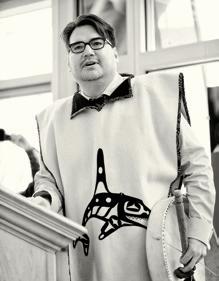
the Tsleil-Waututh Nation, is the new CBABC Truth and Reconciliation Officer responsible for Indigenous education.
Under the stewardship of Indigenous scholars John Borrows and Val Napoleon, UVic Law launched a joint degree program in Canadian Common Law (JD) and Indigenous Legal Orders (JID), the first program of its kind in the world.

As lawyers, we are the most skilled advocates with the ability to change another person’s perception, point of view or belief, which in turn encourages action that gives form and substance to big ideas. The question is: are we wielding our influence for positive change?
Currently, the CBABC and other legal organizations are responding to the calls to action in the Truth and Reconciliation Commission Report (bit.ly/bt1018p1):
CBABC moves forward to implement its own Truth & Reconciliation Action Plan called Taking Action on Reconciliation (bit.ly/bt1018p2)
Ms. Leah George-Wilson, a former elected Chief and member of
I often reflect on the words of Ardith Walkem, “[n]othing about us without us.” The justice system is changing more rapidly than we may appreciate. As advocates, are we working individually and collectively to influence positive change in the justice system? The call to action is not limited to our law students. The call to action is a call to each of us to advance big ideas and influence positive change. It is our nature. We are advocates.

Margaret A. Mereigh president@cbabc.org
Inside This Issue
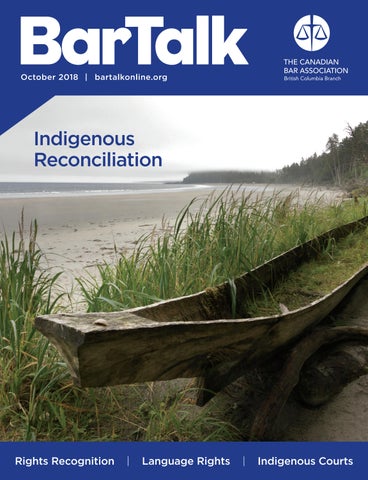
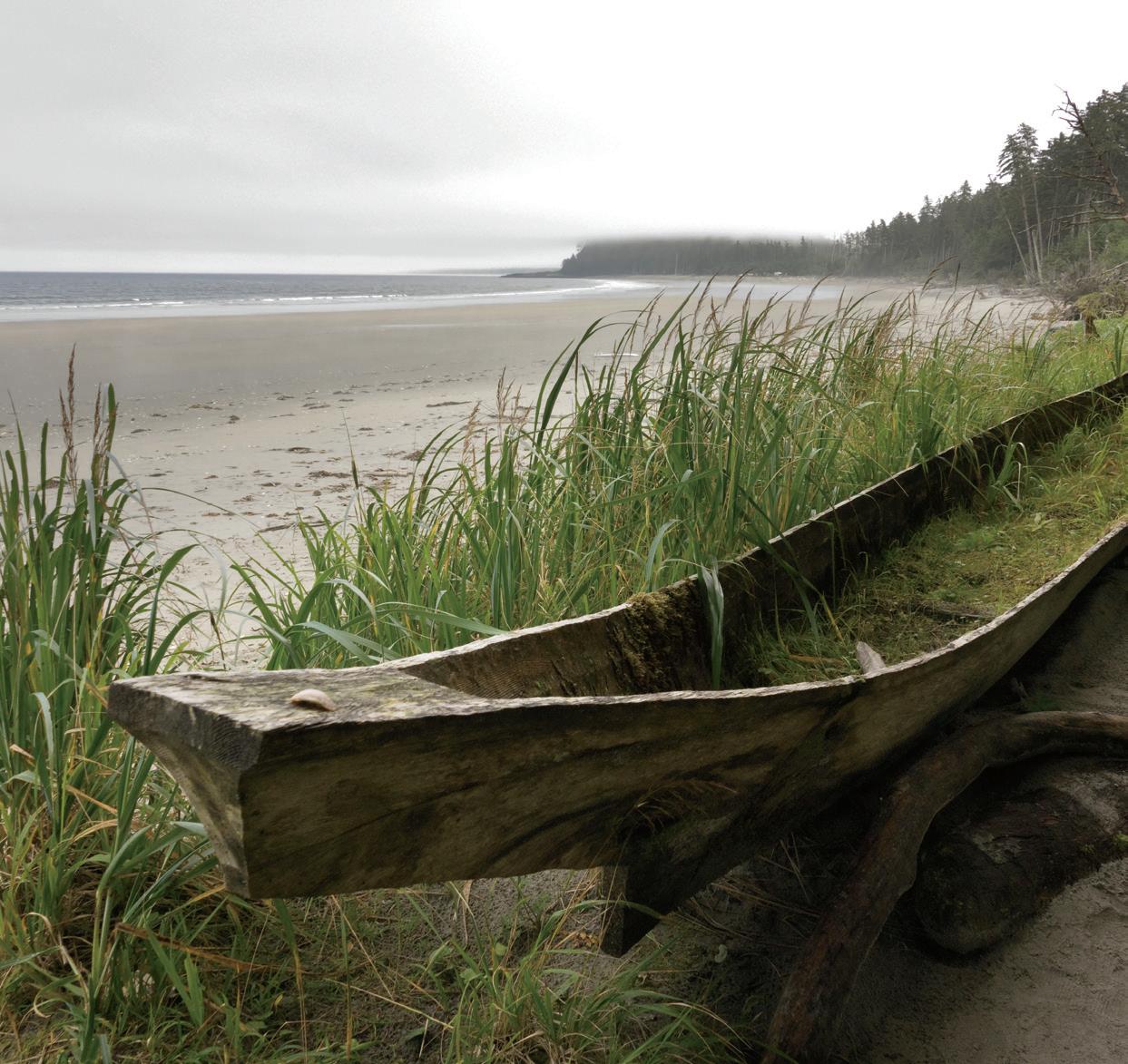
Barristers and solicitors of British Columbia are sworn to “uphold the rule of law and the rights and freedoms of all persons according to the laws of Canada.” But those laws aren’t always just. This issue of BarTalk grapples with the legacy of colonialism, unjust laws and attitudes, and the lawyer’s duty in the face of oppression. Authors call for community and understanding, discussing issues, including treatment of Indigenous youth and adults by the court, Indigenous cultural rights and implications of a UN treaty on the same, the work of the CBABC’s working group, and commentary on justice reform initiatives.
News and Events
4 Renew Your CBA Membership
11 Why Gladue Should Form Part of the Indigenous Child Protection Framework by Frances Rosner
22 WLF BC News
Audition for The Lawyers Show 2019
CLEBC Update
23 BC Legislative Update
Branch & Bar Calendar
Tips from Courthouse Libraries BC
24 2018-2019 Executive Committee
CBA WEST 2019 – April 26-28, 2018
26 Bench & Bar Dinner – November 7, 2018
27 Answering the Call: Advice for Women Thinking About Running for Public Office
Also In This Issue
BARTALK EDITOR
Deborah Carfrae
EDITORIAL BOARD CHAIR
Brandon Hastings
EDITORIAL BOARD MEMBERS
George Hungerford
Eryn Jackson
Kevin Kitson
Kirsten McGhee
Lisa Picotte-Li
Craig Stewart
Crystal Tomusiak
Donna Turko, QC
Sean Vanderfluit
BARTALK SENIOR EDITOR
Carolyn Lefebvre
STAFF CONTRIBUTORS
Travis Dudfield
Kent Hurl
Christopher LaPrairie
Michelle May
Sanjit Purewal
Stuart Rennie
Kerry Simmons, QC
Judy Yen
The BC Branch of the Canadian Bar Association, 10th Floor, 845 Cambie St. Vancouver, BC V6B 5T3
Tel: 604-687-3404
Toll-free (in BC): 1-888-687-3404 bartalk@cbabc.org
BarTalk is published six times per year by the British Columbia Branch of the Canadian Bar Association and is available online at bartalkonline.org.
© Copyright the British Columbia Branch of the Canadian Bar Association 2018.
This publication is intended for information purposes only and the information herein should not be applied to specific fact circumstances without the advice of counsel.
The British Columbia Branch of the Canadian Bar Association represents nearly 7,000 BC members and is dedicated to improving and promoting access to justice, reviewing legislation, initiating law reform measures and advancing and improving the administration of justice.
BarTalk Publication Sales Agreement #40741008
EXECUTIVE DIRECTOR
CAROLINE NEVIN
An Awakened Country and Bar
Reconciliation begins with humility
From a simple reality stems many complicated realities: there were people living on the land we now call Canada, long before there was a Colony of France (first) and Colony of Great Britain (predominant later).
The history of how colonial powers treated the original inhabitants is not unlike that of any other colonized country around the globe at the time. The bizarre rules of the day allowed for claiming of lands and resources, and many a colonizer was an explicit or implicit agent of harm to those who lived here before they arrived. To read “Clearing the Plains” by James Daschuk is to know the horror of living in a country that took advantage of both food access and disease as a means of controlling the state’s relationship with Indigenous peoples. Then subsequent political decisions – residential schools, banning of potlatches, etc. – added fuel to an already flaming fire of cultural destruction.
Fast forward to the big question of today: What are we, people many generations removed from direct culpability, to think and do?
The Truth and Reconciliation Commission gave us a significant gift in that regard; although it doesn’t always tell us “how,” it certainly tells us “why.” And it requires us to acknowledge that current generations of First peoples continue to be experiencing harm, inequality and disadvantage, while generations of colonizers and immigrants to this country continue to experience
opportunities either not available or at direct cost to First peoples.
One of the hardest parts of the “Truth” component of Truth and Reconciliation in our country, is that lawyers, judges and police have been complicit in the harm that has been, and continues to be, imposed on Indigenous peoples. Laws that were passed and enforced early in our history have only engendered distrust and hostility to those holding the same positions now. And here we face one of the very real conundrums for members of the legal profession. We are both the solution AND the problem. Time does not change what happened, and so for many the past is now. We are
I have many different venues where I have status; in the realm of seeking understanding about how I can respond to the TRC Calls to Action, I have no status whatsoever. I can only be a humble questioner and learner. I think that with very few exceptions, this is likely true for all of us.

In June, the CBABC Table Officers and Aboriginal Lawyers Representative and I met with the Aboriginal Justice Council Executive. The pain of the outrageous numbers of Indigenous women and men in prison, and Indigenous children in state care, was clear. Their challenge to us was simple: How can we, as a society, allow these numbers? What will we, as a profession, do to correct this ongoing harm?
When you come to know that you have a part to play in Reconciliation, the single biggest requirement is humility.
the same “lawyer,” “judge,” “lawmaker” and “police” in the minds of Indigenous peoples. So how do we move forward and make a difference?
I have discovered that when you come to know that you have a part to play in Reconciliation (even if you don’t understand it yet), the single biggest requirement is humility.
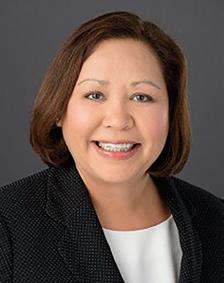
I am proud of the work that the CBABC Truth and Reconciliation Working Group has done to tackle these issues. I am also extremely proud that our Provincial Council has financially supported the creation of a position for our first Truth and Reconciliation Officer, Leah George-Wilson, to help our entire organization more fully embody the true meaning of Reconciliation within everything the CBABC does.

Caroline Nevin cnevin@cbabc.org
feature
RY MORAN AND NICOLE D. BRESSER
What are We Missing in the Reconciliation Conversation?
Five points to consider when approaching reconciliation
Across the country, Canadians are grappling to understand, implement and realize the process of reconciliation. From lawyers to teachers, retirees and elementary school students, the Truth and Reconciliation Commission’s (“TRC”) 94 Calls to Action are being studied, actioned, and implemented. But what is the process of reconciliation without the necessary and all-important component of truth telling?
The perils of attempting to reconcile before we have a full appreciation of the depths of Canada’s attacks on Indigenous peoples and the intent behind these attacks limits our opportunity to fully dissect and digest the harms inflicted on Indigenous peoples and the continued intergenerational effects of these harms. Understanding both the historical and current contexts of the treatment of Indigenous peoples and how these contexts have framed societal views, legal orders and other systems of formal and informal power and influence is of critical importance.
Sadly, many Canadians remain woefully unaware of the rich practices, worldviews and cultures of Indigenous peoples. The many perspectives on pathways to a good life contained within Indigenous communities remain distant to mainstream Canadian society.
Polls across the country affirm this lack of understanding. A poll conducted by the Environics Institute shortly after the close of the TRC showed that the general level of understanding of residential schools
was still remarkably low. A more recent national poll conducted by the Angus Reid Institute this past summer concluded that a majority of Canadians think we are spending too much collective time on apologizing for residential schools and that “we should get on with it.”
The combined effect of a nation lacking understanding in combination with unwillingness to examine the topic presents a significant challenge for sustained national healing.
So, what can be done about this? How can we ensure the critically important conversations of national healing continue? Here are a few tips:
perspectives, laws and culture and how these intersect with mainstream society.
3. ANSWERS: Recognize that dominant society does not have all the answers. Our ecosystems are in collapse while stability and overall global peace seems increasingly perilous. Understand that Indigenous peoples have been systematically excluded from meaningful involvement in these conversations and offer a unique and rightful perspective on these matters.
4. BELIEVE: We have the power to change and we have the opportun-

1. SELF-AWARENESS: Reconciliation is an interrelated set of individual actions, collective actions and national actions. This means that despite the scale of the task, each one of us has the opportunity to be a powerful agent of reconciliation. At the individual level, reflect upon:
What am I a witness to?
Am I a part of this?
Am I willing to do something about it?
Are there sacrifices I am willing to make to change it?
2. BALANCE : Obtain knowledge and balance your understandings of the past and present hegemonies of Canada. Make a full effort to explore Indigenous
ity to create a society better than the one we know now. Understand the broad efforts underway through the truth and reconciliation movement and support those movements in addition to individual awareness.
5. EXAMINE: Examine and question the formal and informal structures within our society with the goal of repairing inequality, inherent injustice and practices that exclude the Indigenous peoples.
It is our hope that considering these five points, your own journey of truth and reconciliation will be enhanced and made more successful. We wish you the very best.
Ry Moran, Director – National Centre for Truth and Reconciliation, Métis and Nicole D. Bresser – Lawyer, Métis.
feature
DARWIN HANNA
Indigenous Language Rights
Awx peǹ tl’u7 Snu Snukwa
Greetings my friends.
Chasneya n skwast
My name is Chasneya.
nłeʔkepmxkn
I am nłeʔkepmx
Tská7a ha nlha7kapmxtsín?
Do you understand the Nlha7kápmx language?
The right to speak an Indigenous language is associated with the revitalization and sustenance of Indigenous languages. According to the First Peoples Cultural Council the number of language learners is increasing. This is a positive development as many Indigenous languages in BC have been labelled as “critically endangered.” To support the revitalization of Indigenous languages there must be a legal framework, similar to French language rights protected under the Charter, that recognizes the right to speak an Indigenous language when receiving government services and programs, including education and the administration of justice. The United Nations Declaration on the Rights of Indigenous Peoples provides the following language rights under Article 13:
1. Indigenous peoples have the right to revitalize, use, develop and transmit to future generations their ... languages, oral traditions, ... writing systems ... and to designate and retain their own names for communities, places and persons.
2. States shall take effective measures to ensure that this right is
protected and also to ensure that Indigenous peoples can be understood in political, legal and administrative proceedings ... through the provision of interpretation.
Based upon Calls to Action number 14 of The Truth and Reconciliation Commission, the federal government has undertaken a consultation process in respect to the proposed Aboriginal Languages of Canada Act (Bill S-212) “… for the advancement of the Aboriginal languages of Canada and to recognize and respect Aboriginal language rights.” Section 7 of the Act would require the responsible Minister to implement commitments to
Indigenous language rights will require Indigenous governments to provide interpreters for the benefit of members and to have written materials in their language. As well, Indigenous language instruction should be properly funded with government support.
In the Northwest Territories, the Official Languages Act (R.S.N.W.T. 1988, c.O-1) provides an example of the official designation of Indigenous languages:
“4. Chipewyan, Cree, English, French, Gwich’in, Inuinnaqtun, Inuktitut, Inuvialuktun, North Slavey, South Slavey and Tåîchô are the Official Languages of the Northwest Territories.”
“(a) recognize and support the right of Aboriginal governments to take action on using and giving official status to Aboriginal languages for the purposes of conducting local governance activities;
(b) recognize and support the right of Aboriginal governments to use Aboriginal languages as the language of instruction ....”
Ostensibly, the reference to “local governance activities” is to programs and services delivered by the Indigenous governments, e.g. Band office, Tribal Council, Métis Council. At issue for Indigenous governments is having the capacity to offer Indigenous language services to their members, including at meetings, e.g. council, membership.
Section 11(2) of the Official Languages Act provides that a person has the “Right to Communicate and Receive Services” in their Indigenous language “where ... there is a significant demand for communications ... or it is reasonable that communications ... be available in that language.” This Act may serve as an example for BC.
Legal recognition of Indigenous language rights will be a major step toward reconciliation of past wrongs emanating from the legal prohibition of speaking an Indigenous language during the residential school colonial period. The legal profession needs to support and encourage the use of Indigenous languages.
Húṁalh
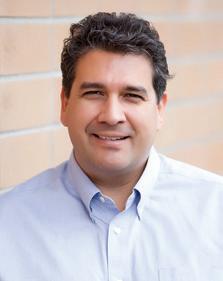
Darwin Hanna, Barrister & Solicitor.
feature
MERLE ALEXANDER
Rights Recognition Admitting denial is 50% of the way
“... The government will develop – in full partnership with Indigenous peoples – a new Recognition and Implementation of Indigenous Rights Framework (“RRIF”) that will include… recognition and implementation of rights legislation.
The federal government’s absence over generations in recognizing and implementing Indigenous rights has resulted in social and economic exclusion, uncertainty, and litigation – when our shared focus should have always been on creating prosperity and opportunity for everyone.
It will be worth it because we will have replaced apathy with action, ignorance with understanding, and conflict with respect…”
PM Trudeau, February 14, 2018
No person denies that those beautiful words are powerful, hopeful and ambitious. In 2009, similar words left Premier Campbell’s lips, giving BC First Nations buoyed hope for Title and Rights affirmation and an end to the consultation war.
Industry naysayers feared that the sky was falling and more than one lawyer raised tsunami/floodgate arguments.
BC’s efforts failed on August 28, 2009 when Grand Chief Ed John declared the legislation “dead.” Dramatic ending. Of course, there are many opinions on the victim’s cause of death. Chief among them delivered by Grand Chief Stewart Phillip was that the Crown could not move beyond a “denial of rights; outdated legal barriers and archaic colonial attitudes within the bureaucracy.”
Is history about to repeat itself?
It is touch and go for this patient also.
Engagement led by Minister Bennett of CIRNA was neither meaningful nor substantive. The Minister did a cross-country road show with a shiny questionnaire and produced “What we heard” reports and overview documents. The documents indicate that they didn’t listen and have no commitment to legal change.
Thankfully, consultation is a two-way street and BC First Nations have a potent competency for proactive engagement. First Nations Leadership Council held three All Chiefs meetings and developed an impressive set of rolling draft Recommendations and Principles and Legislative Draft Instructions. BC First Nations are leading a minority of Indigenous leaders and concretely engaging the RRIF. It may be in vain.
Through the recognition and implementation of rights framework, the work of government will shift from processes primarily focused on assessing whether rights exist – which inevitably is adversarial and contentious – to seeking shared understandings about how the priorities and rights of Indigenous peoples may be implemented and expressed within a particular process, and its outcome. This shift – supported by legislative measures that help build trust that government will act according to certain transparent standards in doing this – will help create opportunities for collaboration and reduce the intensity of conflict.
Certainly, any reasonable person hearing those words would invest some hope on change. Consider for a moment the value of legal certainty where Indigenous peoples and governments accept legal obligations. Consider how this legal certainty might deliver countless resource development projects because we know what is required and rise to the occasion.
There was an agreement between Indigenous peoples and the Prime Minister on legal reform and “genuine” constitutional partnership, but we are nearing a fundamental breach. There is massive gap between the substantial submissions of First Nations challenging the status quo and the impoverished defence of rights denial.
Minister of Justice, Jody WilsonRaybould on April 13, 2018 stated:
Instead, we have the status quo. The status quo in chronological form is: (1) rights assertion; (2) rights denial; (3) rights admission; (4) meaningless consultation, when it should be meaningful and (5) consultation failure.
Imagine the chronology that started with: (1) rights affirmation…
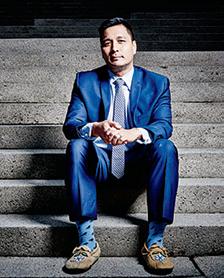
Merle Alexander practises Indigenous Law at Miller Titerle + Company in Vancouver, with a focus on empowering Indigenous Nations through Title and Rights affirmation, sustainable economic development and environmental stewardship.
feature
ALEXANDER BJORNSON
Gamlaxyeltxw v. British Columbia
The impact of modern treaties on overlapping land claims
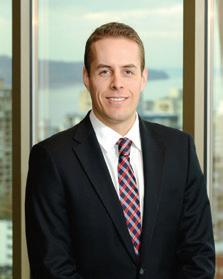
The f ederal government reports that 25 modern treaties have been signed since 1975. In this province, three of those treaties have been completed through the BC Treaty Commission process, although not without some difficulty arising from geographically overlapping claims. In 2014, media outlets reported that several negotiations had stalled, citing overlapping claims as one of the biggest challenges.
The Nisga’a Nation signed the first modern treaty in BC, which came into effect on May 11, 2000 (the “Treaty”). The neighbouring Gitanyow peoples claim Aboriginal title and rights over some of the area subject to the Treaty. In this context, Gamlaxyeltxw v. British Columbia (Minister of Forests, Lands & Natural Resource Operations) , 2018 BCSC 440 considered for the first time how to resolve a conflict between the Crown’s duty to Aboriginal peoples with whom it had entered into a modern treaty and its duty to a different group of Aboriginal peoples with asserted claims for Aboriginal rights and title. At issue was the provincial government’s decision regarding moose harvesting and management plans. The Gitanyow sought a declaration that the Minister was obligated to consult them in respect of such plans.
The duty to consult arises when the Crown has real or constructive knowledge of the claim of an Aboriginal right, the Crown is contemplating conduct that engages the Aboriginal right, and there is a causative link between the conduct and the potential for adverse impacts on the asserted right. Madam Justice Sharma held that the Treaty constitutes a complete code that grants title and rights that are unassailable, except as the Treaty allows. In the result, asserted but not finalized rights, and the concomitant duty to consult, cannot influence the Treaty in any way except as prescribed by the Treaty.
question for the analysis of the existence of a duty to consult where such a conflict exists: would recognizing a duty to consult Aboriginal peoples who have asserted a claim for title and/or rights, in relation to the contemplated Crown conduct, be inconsistent with the Crown’s duties or responsibilities to the Aboriginal peoples with whom it has a treaty? If the answer is yes, then the treaty right “must prevail over the duty to consult.”
The Nisga’a Nation signed the first modern treaty in BC.
In the case before the court, a conflict arose between duties owed by the government to each of the Nisga’a Nation and the Gitanyow respectively with respect to management of moose, particularly due to a decline in moose populations in previous years. Madam Justice Sharma introduced an additional
Here, the duty to consult was triggered (and consultation was found to be partially inadequate) with respect to the Minister’s harvesting decision, although accommodation could not include proscriptions on Treaty rights. There was no duty to consult with respect to the moose management decision, but even if there was, Madam Justice Sharma held that such a duty would be inconsistent and incompatible with the Crown’s Treaty duties and responsibilities, in which case the Treaty would take precedence. It is unclear how broad the repercussions of this decision – which is under appeal – will be, but as treaty negotiations proceed in this province, Aboriginal groups may have cause for concern that asserted rights in overlapping claim areas may become truncated to subsequently established treaty rights by neighbouring Aboriginal groups. Consequences for the modern treaty negotiation process may be significant.
Indigenousmatters
LEAH D. GEORGE-WILSON
These words will always ring true:
“ … W ithout truth, justice is not served, healing cannot happen, and there can be no genuine reconciliation between Aboriginal and non-Aboriginal peoples in Canada.” 1
Often these words and thoughts are not considered when contemplating the plight of Indigenous peoples in Canada. Senator Murray Sinclair, Chair of Truth and Reconciliation Commission of Canada (the “TRC”) has remarked that Canadians should know that Indigenous peoples have done nothing for which they must reconcile and yet they come to the table to do the work. It is true and Indigenous peoples look to Canadians to do the work as well. That work is the healing.
Many sad and horrific things happened to our Indigenous peoples in the dark times of the Indian Residential School (the “IRS”). Generations of Indigenous children were forced to attend the IRS, many forcibly taken from their homes, brought to schools where the intent was not to “teach” but to “remove the Indian from the child.”
From 1899 to 1958, children from my community of Tsleil-Waututh and our neighbor Squamish Nation attended St. Paul’s IRS and later St. Paul’s Indian Day school in North Vancouver on what is now the site of St. Thomas Aquinas High School. Those generations of IRS students suffered the following effects: loss of language and culture, low nutrition, sexual and physical abuse; essentially – they suffered trauma. The generations to follow were impacted as well since the parents that had suffered greatly raised them.
This all occurred right in the midst of a large city.
These are the realities that require healing, that require bringing the truth to light. This truth-telling and healing will allow justice to occur and give our society the opportunity to reconcile. Many people are working toward reconciliation in all areas of society.
It may appear to be a daunting task. The TRC gathered all the truths that IRS survivors wanted to share and preserve.
the first orders of business will be to continue to make space for Indigenous leadership on both the political and legal sectors within the CBABC as well as our legal community.
The TRC released the Calls to Action outlining what needs to be done to get Canada to that reconciliation.
Now is the time to roll up our sleeves and get to implementation.
The CBABC has done some remarkable work on the TRC Calls to Action. Most in the legal profession are aware that the leadership established the Truth and Reconciliation Working Group, which in turn created sub-committees and the cumulative work was the Reconciliation Action and Implementation Plan.
Now is the time to roll up our sleeves and get to implementation. One of
In BC, we are fortunate to have Indigenous legal minds that help the legal community grapple with many issues, from Aboriginal Title to over-representation in the legal system. Those Indigenous lawyers and political leaders are always willing to aid in the development of strategies. We welcome their help and the insight they bring.
Another step is to work with the Indigenous Bar to create cultural competency among all those that participate in the justice system. All Canadians must understand Indigenous peoples and not only from the traumatic perspective. Indigenous peoples are more than what happened to them.
There are many steps to take. Let us remind ourselves that we are willing to take the steps and further, that we are taking the steps together.
1 Honouring the Truth, Reconciling for the Future Summary of the Report of the Truth and Reconciliation Commission of Canada, June 2, 2015, at p. 12
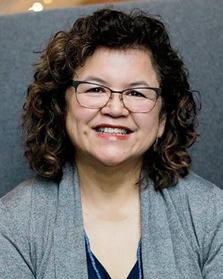
Leah D. George-Wilson, CBABC Truth and Reconciliation Officer.
FRANCES ROSNER
Why Gladue Should Form Part of the Indigenous Child Protection Framework
Judges presiding over criminal matters are required to do their jobs differently when sentencing Indigenous offenders. Gladue directs all judges to consider the unique circumstances that brought the particular offender before the court and to consider healing plans as an alternative to incarceration. This requirement stems from the acknowledgement that Indigenous peoples have been significantly harmed by impacts from colonization, including Indian residential schools and centuries of oppressive government policies. Consequently, Indigenous peoples are overrepresented in our jails due to higher rates of criminality and ongoing systemic discrimination in the criminal justice system.
Similarly, Indigenous children are overrepresented in the child welfare system due to those same impacts from colonization and systemic discrimination. Take for example, the fourth non-compliance ruling by the Canadian Human Rights Tribunal on February 1, 2018 declaring that Canada continues to discriminate against Indigenous children in care through funding policies to child and family service agencies on reserves that incentivize the removal of Indigenous children from their families.1
So, where is Gladue in child protection? When Indigenous parents are struggling to parent due to a loss of transmission of parenting
skills and widespread marginalization, why aren’t judges required to do their jobs differently under the Child, Family and Community Services Act? Since it is always in the best interests of the child to remain with their parents in their Indigenous communities, provided it is safe to do so, shouldn’t special consideration be paid to the unique circumstances of the parents in child protection matters? If the state adequately supports parents to parent then it is also acting in the best interests of the child. But, in order to properly support Indigenous parents – attention needs to be paid to the historical circumstances that gave rise to the child protection concerns in the first place.
Recognizing the unique circumstances of Indigenous offenders in our criminal justice system brought about systemic change in terms of education, training, resources and infrastructure. There are more Indigenous services and programs in our institutions today than 20 years ago. There is greater recognition and understanding of the factors contributing to Indigenous criminality. This means that Indigenous offenders, although responsible for their actions, benefit from a diminished level of moral blameworthiness as reflected in the jurisprudence. Some attention is paid to how the offender is also victim and how restorative rather than punitive justice may be a more appropriate response.
Currently, the rhetoric in child protection centers on choice and parents shoulder the blame for the poor choices they make in the act of parenting. A Gladue framework would place some emphasis on the external factors that led to the actions in question. Armed with this knowledge, child protection agencies would be better equipped to devise healing plans tailored to the specific circumstances of the parent. It would then be incumbent on the government to ensure that appropriate resources were available to Indigenous parents. Judges would have oversight over this process to ensure the Director had fulfilled its duties to support families to stay together. At minimum, Gladue would inform the process and gaps in services would be clearly identified.
Although Indigenization of our criminal justice system has been slow, the more we talk about Gladue the more it has affected outcomes for Indigenous peoples involved in that system. The least intrusive measures principle should include a more probing inquiry into the particular circumstances of the parent through a Gladue lens. This may foster a climate of compassion, which in turn may compel the change that needs to happen in the child welfare system.
1 2018 CHRT 4.
Frances Rosner is a Métis lawyer working as a sole practitioner in Vancouver.
nothingofficial
TONY WILSON, QC
You Only Live Twice
Remembering two soldiers from the First World War
There’s an old adage that you don’t die once, but twice: the first time when you stop breathing, and many years later when someone mentions your name for the very last time. That’s why, as we near Remembrance Day in 2018, I’d like to talk about the First World War, which ended exactly 100 years ago. Two of my relatives served in that war. One came home and had a full life and many descendants (including me). The other did not.
Andrew John (“Jack”) Wilson was my Dad’s father. When he entered the Canadian Army in 1915, he was assigned to the Canadian Corps Cyclist Battalion (“CCCB”), whose members were sent on bicycles to spy on German lines, dispatch messages along the trenches, and take part in direct combat. Ironically, it’s the same job Hitler had in the First World War, but on the German side of the front. Jack was gassed at Passchendaele but survived the war. He eventually moved his family to Victoria where he died in 1961 at 72. When my Dad died in 1996, I inherited an old pair of binoculars Jack took off of a German soldier at Passchendaele who presumably didn’t need them anymore.
Although my mother’s father, Frank Parsons, was a merchant mariner during the war and didn’t serve, his younger brother Graham was conscripted in September 1918. I only discovered Graham’s existence 22 years ago when I had to store an old trunk filled with stacks of my late
grandmother’s papers and photos. I learned for the first time I had a great uncle who never made it home.
Graham was born in Victoria in 1895 and grew up in an old brick house at 1400 Pembroke Street that still stands today. He worked as a deckhand on small ships that transported coal and produce between Victoria and New Westminster with his father Harry Parsons, one of Victoria’s early marine pilots. Unfortunately, Graham would not enjoy the full life, or the descendants given to his elder brother Frank. He died on October 26, 1918, a mere 16 days before the war ended.
Graham didn’t die in the trenches of Belgium or France. Instead, he died in that other great catastrophe of the early 20th century: the influenza epidemic of 1918-1919. The flu killed as indiscriminately as mustard gas or machine guns, and it killed him in North Wales, where he was awaiting deployment at a transit camp called Kinmel Park.
What you might not know is that Kinmel Park is a story of incompetence so profound, it makes Blackadder’s General Melchett look brilliant. 15,000 Canadian soldiers desperately waiting to go home after the war ended couldn’t return to Canada because there were no ships available to transport them. At least one ship allocated to them ended up transporting
American soldiers instead. So, they were confined to camp like prisoners until mid-1919. They weren’t paid on time and had no money for cigarettes and other extras at the canteen. There wasn’t enough food, so they were all on half rations. There weren’t enough beds or blankets, so many soldiers slept on the cold and wet floors of their overcrowded huts. And there wasn’t enough coal to heat the huts, so the flu took hold of the camp. The result, not surprisingly, was an armed mutiny. Five Canadian soldiers were shot and killed, and 23 others were wounded in the revolt. As one of the first flu victims, Graham missed all that. He’s buried in Saint Margaret’s churchyard in Bodelwyddan, together with 87 other Canadian soldiers who were trapped at Kinmel Park and died there.
So there. Now all of you know about two soldiers from the First World War, and perhaps some unpleasant Canadian history as well. By mentioning their names in this column, perhaps I can keep Jack Wilson and Graham Parsons alive just a little longer and delay that “second death” for a few more years.
The entire military service records of Canadian soldiers who served in the First World War are digitized and available at the Library and Archives Canada’s website If you had relatives who served in the First World War, please look them up, read their service records, and this year in particular, say their names.
I give to my community and with Vancouver Foundation, my giving lasts forever.

75 years ago, a single gift started Vancouver Foundation and that gift is still making a difference in the community today.
We can help you create a fund that gives forever. Get started at vancouverfoundation.ca/create or call Kristin at 604.629.5186
sections
Keep Current A review of provincial Section meetings
Year in Review 2017/2018
CBABC Aboriginal Lawyers Forum
Year in Review 2017/2018
Aboriginal Law
Vancouver and Vancouver Island Sections
Year in Review 2017/2018

CBABC Aboriginal Lawyers Forum
uALF facilitates social networking and mentoring for Aboriginal law students and lawyers, while providing opportunities to celebrate and remain connected with Aboriginal culture. Through these objectives, the ALF works to address the various issues facing Aboriginal law students and lawyers. These issues include the retention of Aboriginal peoples in the legal profession and the support and enhancement of the
stature and influence of Aboriginal peoples in the legal profession.
This year the ALF hosted its 7th Annual Retreat on June 22 with a focus on honouring Colten Boushie and Tina Fontaine, a theme in response to the various criminal cases involving Indigenous peoples in Canada in the news of late. In hosting this retreat, ALF sought to raise awareness about how lawyers may get involved in or expand their practice areas or knowledge about the legal issues that come into play in these situations. Among the
many sessions at the retreat, Chris Murphy joined us via live webinar from Toronto to share his experience as Counsel for the family of 22-year-old Colten Boushie who died in a shooting incident in Saskatchewan. The acquittal of the shooter drew national media attention, highlighting racial tensions in Canada. Mr. Murphy expressed that “if we can create empathy with the situation that we’re currently in in the Justice System […] that’s the way to start changing it.”
Aboriginal Law – Vancouver and Vancouver Island Sections
uSelf-government, land claims, treaty rights and native business ventures are among the intriguing and sometimes controversial topics tackled by the Aboriginal Law – Vancouver and Vancouver Island Sections. These Sections help members stay on top of the political, social and economic developments and opportunities involving Canada’s Aboriginal communities, playing a role in shaping legislation and government policy on Aboriginal matters.
On March 27, the Environmental Law and Aboriginal Law –Vancouver Section joined to welcome Sarah Hansen, Miller Thomson; Leah George-Wilson, Tsleil-Waututh Nation, Miller Titerle; Georgia Lloyd-Smith, West Coast Environmental Law, RELAW project; and Maxine Hayman Matilpi, Ma’amtigila and Kwakiutl First Nations, West Coast Environmental Law, RELAW project. In light of the recent high-profile controversy and litigation surrounding major Canadian resource and pipeline projects, Indigenous-led independent assessment processes
have emerged and gained increased importance on major projects proposed in traditional territories, including the Stk’emlupsemc te Secwepemc Nation’s assessment of KGHM’s Ajax Mine Project and the Tsleil-Waututh Nation’s assessment of Kinder Morgan’s Trans Mountain Expansion Project. These speakers collectively shared their experiences as counsel in these matters, and perspectives and lessons learned in the Indigenousled independent environmental assessment processes. In addition, West Coast Environmental Law’s RELAW project was presented, which pairs Indigenous Nations with researchers and lawyers to incorporate Indigenous laws into land and resource management.
On May 29, the Aboriginal Law – Vancouver Island Section welcomed Pinder Cheema, QC, Crown Counsel, Victoria County Bencher; Nicole Bresser, Lawyer, BC Government; and Beatriz Contreras, Partner, Contreras McLennan to discuss three different perspectives on cultural diversity and the legal profession. Ms. Bresser spoke to the history and impact of colonial law on Indigenous peoples, particularly Indigenous women, facilitating a discussion on how as a profession we can move forward in supporting Indigenous peoples. Ms. Bresser focused on cultural awareness, cultural safety, the Truth and Reconciliation Commissions Calls to Action and personal stories from the short documentary “But I Was Wearing a Suit.” Ms. Contreras focused on cultural competency – what it is, why we need it, and how we can work toward obtaining these skills. Cultural competency in the legal profession requires an ability to understand and communicate in a culturally diverse context; provide respectful,
culturally responsive and appropriate services; and assess and understand the needs of culturally diverse clients. Ms. Cheema, QC, discussed the Law Society of British Columbia’s responses to issues of cultural diversity in the profession over the last 25 years, discussing the Women in the Legal Profession report, the LSBC gender equality committees, the LSBC Ombudsman, and the Law Society Equity and Diversity Award.
On June 14, Tom Berger, QC, Ethos Law and Karenna Williams, Grant Huberman, joined the Aboriginal Law – Vancouver Section to reflect on Mr. Berger’s prolific and influential career. For more than 50 years, Mr. Berger has been one of the pre-eminent legal figures in the history of this province. As a young lawyer, he argued the R. v. White and Bob case, solidifying the place of Vancouver Island’s Douglas Treaties as treaties. He later argued the landmark Aboriginal title case Calder v British Columbia. He served as a BC Supreme Court judge, headed the Mackenzie Valley Pipeline Inquiry and other international commissions into environmental and Indigenous rights, recently won the Peel Watershed case for Yukon First Nations, and is continuing to be involved in some of the most pressing issues facing our country.
On June 26, Olga Rivkin, Solicitor at Lidstone & Company Law Corporation and Clayton Leonard, Senior Counsel at JFK Law Corporation in Victoria, joined members of the Aboriginal Law – Vancouver Section to discuss issues surrounding the regulation of water, including water in times of shortage, the ability to secure rights to water, on-reserve water resources, and the duty to provide water, from both the BC and
Alberta perspectives. In discussing the duty to provide water via servicing agreements to First Nation communities, Ms. Rivkin identifies that one issue she sees repeatedly, is the discussion of whether there is a duty to serve – a tricky question which may not have a clear cut answer. In her view, it comes down to how much reasonable notice should a local government provide to a First Nation community if they are terminating such services and what considerations go into such discussions. Mr. Leonard’s presentation focused on the safety of drinking water and sufficiency of water supply in First Nation communities, using the Alberta experience to discuss how it may a good indicator of what might be on the horizon for BC.
ARE YOU READY FOR THE 2018/19 SECTION TERM!
CBABC members receive unlimited access to all 74 BC and 41 National Sections and Forums. There are no additional costs to enroll in Sections!
RETURNING Section Members? CBA members will automatically be re-enrolled to their previous year’s preferred Sections upon renewing their membership. Email sections@ cbabc.org for further details.
Are you a CBA member outside of BC? CBABC offers many Section meetings accessible by webinar and/or teleconference. CBA members outside of BC are welcome to participate in BC Section activities by paying the BC Branch levy.
practicetalk
DAVID J. BILINSKY
Innovation in Law
New ways of moving things forward
r I found some new innovations Might just be my imagination But people can dream... r – Music and Lyrics by R. Tedder, N. Zancanella, B. Kutzle, recorded by One Republic.
What does it mean to be innovative in law? Simply changing laws may have some effect on greater access to justice, but true innovation, in terms of increasing access to and satisfaction from the legal system, I believe, means thinking and doing things differently. After all, Albert Einstein once famously said: “We cannot solve our problems with the same thinking we used when we created them.” Or as W. Edwards Deming, the management consultant who played a large part in Japan’s industrial rebirth, said: “The prevailing style of management must undergo transformation. A system cannot understand itself. The transformation requires a view from outside.”
Insights such as these highlight that trying to change the judicial/legal system by updating laws without adjusting the system within which those laws operate, howsoever meritorious, is little more than rearranging the deck chairs on the Titanic. New approaches are required to bring about real change. What efforts are being taken in this regard?
On Sept 21, by combining data and innovation, the Lagos Innovating Justice Conference (bit.ly/ bt1018pt1) will address how justice could be made more accessible and user-friendly. By combining data (from the Justice Needs and
Satisfaction Survey, a first of its kind, massively participative survey of the justice needs of the average Nigerian) with technology and law, it will seek to birth new ways of how to leverage technology to drive access to justice for citizens.
The College of Law Practice Management (bit.ly/bt1018pt2) recently announced the 2018 winners of its Innovaction Awards. One winner was LawGeex, an Artificial Intelligence (“AI”) contract review automation company. Its AI platform is aimed at spotting risks in everyday business contracts. A study held in collaboration with top academics at leading universities placed LawGeex up against top US lawyers. The LawGeex AI achieved an accuracy of 94%, while the lawyers achieved an average of 85%.
to the startup community) received $65 million in new funding just days after Toronto’s Kira Systems (an automated contract review company) trumpeted a $50 million minority investment (bit.ly/bt1018pt4).
We cannot solve our problems with the same thinking we
used when we created them.
Furthermore, it took 92 minutes for the lawyer participants to complete all five NDAs compared to only 26 seconds for the LawGeex AI.
Money, I was always advised, talks. Well, two venture capital investors are talking with their wallets in terms of the future of legal disruptors. San Francisco-based Atrium (bit. ly/bt1018pt3) (a tech-powered platform providing flat-fee legal services
Last by not least, China’s second Internet court (bit.ly/bt1018pt5) is about to open in Beijing. The Beijing Internet Court is given the jurisdiction to handle certain types of Internetrelated cases that should be tried by a primarylevel people’s court such as disputes arising from online shopping, service contracts, lending, copyrights, and domains. The court will be open 24-hours a day and proceedings of each case, from lawsuit filing to mediation, hearing, and judgment announcement — will be accessible online. China’s first Internet court opened in August 2017. In its first year, the court heard about 12,000 cases and closed about 10,600.
Might be just my imagination, but I have a dream that law can achieve greater access to justice by reaping the benefits of technology from new innovations.
The views expressed herein are strictly those of David Bilinsky and do not reflect the opinions of the Law Society of British Columbia, CBABC, or their respective members.
David J. Bilinsky is the Practice Management Advisor for the Law Society of British Columbia (presently on leave). Email: daveb@thoughtfullaw.com Blog: thoughtfullaw.com
dave’s techtips
Legal Technological Innovations
There is a fable regarding Emperor Augustus of Rome and Hero of Alexandria, who invented the first steam engine (called an Aeolipile) centuries before it finally appeared. On being shown the Aeolipile, the Emperor was to have said: “But what would I do with 200,000 slaves now?” Of course, any comparison between slaves and legal associates’ billable hours, is purely coincidental…
... Yet the legal environment is one of the more, shall we say, resistant to realizing the benefits of new technology. Changing any system is difficult, especially so when it is a firmly entrenched in procedural regulations and societal conventions as is the legal/ judicial one.
uuu At FutureLaw 2018 conference (bit.ly/bt1018tt1) held at Stanford University, nine areas were identified as being open to legal technological innovations. These were: Marketplace, Legal Research, e-Discovery, Document Automation, Legal Education, Analytics, Practice Management, Online Dispute Resolution and Compliance.
We have seen greater innovation in document automation, legal education, practice management, ODR and legal research, courtesy of initiatives such as ROSS AI. Others, however, have proven to be more challenging.
In the closing keynote (bit.ly/bt1018tt2) to FutureLaw 2018, Deborah L. Rhode (bit.ly/bt1018tt3) (the Ernest W. McFarland Professor of Law, the Director of the Center on the Legal Profession at Stanford, as well as the Director of the Program in Law and Social Entrepreneurship, and
uuu Yet efforts continue. Sheffield, England will hold the LegalTech North conference (legaltechnorth.com) on Nov 22, 2018. This conference seeks to bring together incubators, law firms, venture capital firms, futurists and legal startups, with the aim of forming a vibrant legal tech community in Sheffield. It boasts availability of talent as well as low costs as benefits for locating there.
a frequently cited scholar on Legal Ethics) gave a talk on how legal regulation and ethics, as presently formulated (and here the differences between Canadian and US rules are marginal), stand in the way of innovation and change. Perhaps we need to start a dialogue over whom exactly the legal ethics rules are protecting (as does Ms. Rhode in her lecture).
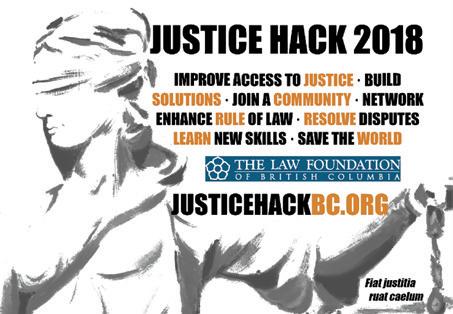
uuu Here in BC, by the time this goes to print, the BC Justice Hack 2018 (bit.ly/bt1018tt4) will have been held. With no less lofty objectives than to improve access to justice as well as save the world, it seeks to bring together “[t]echnologists, business people, designers, and justice system actors (including lawyers)” to tackle legal problems using technology.
Ah – to boldly go where no lawyer – or justice system actor – has gone before!
© 2018 David J. Bilinsky
feature
TINA DION, QC
CBABC Taking Action
Implementing the TRC Calls to Action
The Truth and Reconciliation Commission of Canada (“TRC”) released its Final Report in December 2015, along with 94 Calls to Action (“Calls”), with respect to reconciliation efforts in Canada between Indigenous and non-Indigenous Canadians. Some Calls were in relation to the legal system and profession focusing on new approaches to the relationship it has historically had with Indigenous peoples. The BC Branch of the Canadian Bar Association (“CBABC”) took the initiative to respond to those Calls, focusing on justice issues that are within provincial jurisdiction.
Under the leadership of CBABC 2016-17 President Michael Welsh, QC and vice-president Bill Veenstra, the Executive Committee resolved at its November 2016 meeting to establish a working group. The Truth and Reconciliation Working Group (“TRWG”) was launched at Provincial Council at its January 2018 meeting. An open call was made to Provincial Council members by president Welsh and vice-president Veenstra for volunteers for the TRWG. As then Aboriginal Lawyers Representative to the Executive Committee, I also put out a call to ALF members to join the TRWG.
As a result of the calls to volunteer, more than 25 CBABC members, representing a wide range of practice areas, including federal and provincial Crown Counsel, criminal Bar practitioners, Aboriginal law
practitioners as well as corporate and commercial, and business lawyers, joined the TRWG. Of the 25 members, about 11 were Indigenous members. At the first meeting of the TRWG in February 2018, I assumed the role of chair.
The TRWG formed six sub-committees:
Professional Development and Section Programming sub-committee with a mandate to make recommendations to enhance CBABC’s commitment to implementing the Calls, increasing educational opportunities and developing cultural competency for CBABC members;
Over the next 16 months, the TRWG worked diligently in developing a comprehensive report with action items and implementation time-frames for them. 2017-18 President Veenstra and I submitted the Truth and Reconciliation Working Group Final Report to Provincial Council (June 2018) (“Report”) to Provincial Council at its June 2018 meeting. It is anticipated that the Report will be adopted at the September 29, 2018 Provincial Council meeting.
The CBABC has invited other branches and the national CBA to use any portion of the Report to assist with the implementation of the Calls within their systems.
Development sub-committee, with a mandate to develop a position statement for the CBABC regarding the implementation of the Calls;
Law Firm Resources and Guides, with a mandate to develop subcommittee resource(s) for law firms to adopt and implement;
Indigenous Leadership sub-committee, with a mandate to increase Indigenous participation in CBABC activities and leadership; and
Advocacy sub-committee, with a mandate to develop strategic plans with short-, medium- and long-term external advocacy initiatives related to the Calls.
Commencing in January 2017 and at each Provincial Council meeting since, the CBABC has continued to invite leading Indigenous practitioners, judges of Indigenous heritage as well as nonlawyers to present on a wide variety of topics to enhance the cultural competencies of Provincial Council members. We have heard from Provincial Council members about how valuable the speakers series has been for them. Among the recommendations by the TRWG was the establishment of a Truth and Reconciliation Officer to implement the action and implementation plan contained in the Report, which recommendation was adopted by the Executive Committee.
It has been an honour to work with 2017-18 CBABC President Veenstra, and members of the TRWG in the development of the Report.
Tina L. Dion, QC, practises in Tsawwassen, BC. She is the Chair of CBABC’s Truth and Reconciliation Working Group.
feature
DOUGLAS WHITE III
Disrupting the Inertia And implementing reconciliation within the criminal justice system
“Nothing about us without us” unwinding the underlying tenets of Canada’s criminal justice system.
How can the criminal justice system be transformed in ways that will impact the lived realities of Indigenous peoples involved directly or indirectly in the criminal justice system?
We are in a time where reconciliation is at the forefront of the national discourse. However, if Canadians are serious about reconciliation, collaborative work is needed to unwind the underlying tenets of Canada’s existing criminal justice system. Despite current political mandates encouraging change and decades of reports documenting the failings of the criminal justice system, attempts to seriously interrupt the inertia of the system have had underwhelming results. Instead, Indigenous communities are in the middle of a very serious crisis as reflected in the overrepresentation of our peoples in jails and of our children in government care.
This year, the separate trials and subsequent not-guilty verdicts in the deaths of Tina Fontaine and Colten Boushie drew much-needed attention to what many have described as the systemic failings of the criminal justice system for Indigenous peoples. The pursuit of transformative change begins with understanding all of the ways in which Indigenous peoples have been, and
continue to be, denied justice through the criminal justice system. One such example is the ability to exclude Indigenous peoples from juries through peremptory challenges, as was the case in the second-degree murder trial of Gerald Stanley in the death of Colten Boushie. Building off this understanding, it is imperative that efforts to reform the criminal justice system are driven by Indigenous peoples at every level.
Today, there are various pockets of action related to Indigenous justice across BC and Canada that require appropriate resourcing, coordination and support. In 2017, the BC Aboriginal Justice Council (“BCAJC”) signed a memorandum of understanding with BC’s Attorney General and Solicitor General to undertake to develop BC’s first jointly developed Indigenous Justice Strategy (“the Strategy”). The Strategy is one opportunity to focus on implementing transformative reconciliation within the justice system in BC, and is being built upon the commitment from the province and the BCAJC to work together in an innovative way to effect real change. This approach endeavours to involve Indigenous peoples as true partners and includes the creation and co-hiring of an Executive Director, who will report to both the province and the
BCAJC, to oversee the development and ultimately the implementation of the Strategy.
The BCAJC has been working with the Ministry of Attorney General and the Ministry of Public Safety and Solicitor General to identify key pathways for change. The creation of province-wide Indigenous Justice Centres is being explored as a key initiative under the Strategy. The Centres are envisioned as hubs for Indigenous peoples to access integral justice services in a timely way. Another key area for action being explored relates to the principles set out in the Supreme Court of Canada decision in Gladue. For BCAJC, implementation of Gladue principles includes not only an increase in resourcing and awareness of Gladue reports, but also wholescale systemic change where Gladue principles are integrated throughout the justice system.
It is critical that we disrupt the inertia of the existing system that is failing Indigenous peoples, and remove systemic barriers that contribute to the overrepresentation of Indigenous peoples in this system. We need to embrace the challenge of reconciliation and look for opportunity to initiate a fundamentally different relationship between the province in BC and Indigenous peoples, to address the overrepresentation of Indigenous peoples in the justice system, and to work together to identify pathways to change.
Douglas White III is a member, former Chief, and current Councillor of the Snuneymuxw First Nation and the Chair of the BC Aboriginal Justice Council.
KAREN L. SNOWSHOE
Generous Acts of Reconciliation
Reconciliation (between Indigenous and non-Indigenous peoples) is taking place on many levels across Canada. A quick google search of “reconciliation efforts Canada” comes up with a variety of results, including:
The Truth and Reconciliation Commission’s (“TRC”) “94 Calls to Action” and “How you can help”
“150 Acts of Reconciliation for the Last 150 Days of Canada’s 150th Birthday”
“Three concrete examples of reconciliation in action”
“Resources on Reconciliation –Indigenous Reconciliation Group”
Within the legal profession, many law societies, the judiciary, the Canadian Bar Association and law schools have undertaken various initiatives. The BC Law Society held a Truth and Reconciliation Symposium in November 2017, established a Truth and Reconciliation Committee and in August 2018, voted in favour of a Truth and Reconciliation Action Plan. In 2003, the first Indigenous male Bencher was elected to the BC Law Society and in 2018, the first female Indigenous Bencher was elected.
Certainly, the swell in reconciliation efforts, many initiated in response to the TRC’s 94 Call to Action, is inspiring. The energy created through the actions of both Indigenous peoples and non-Indigenous not only inspires hope but confirms that on a human level, small actions of
kindness, respect, openness, listening, and humility can lead to great change. One kind gesture, whether it be a smile or an act of caring, can be a generous act of reconciliation.
And yet, on a grander scale, this nation called Canada will need a powerful foundation of intention in order to reconcile our past (and present). What remains challenges the very heart and core of our nation’s values and beliefs. Our intentions will need to be steadfast and committed as we address the many outstanding issues faced by Indigenous peoples. Clearly the legacy of 139 Indian Residential Schools operating across Canada from 1883-1997, involving the policy-based apprehension of at
Indigenous peoples in Canada have some of the highest suicide rates in the world (suicide and self-inflicted injuries are the leading causes of death for First Nations youth and adults up to 44 years of age).
Indigenous peoples are overrepresented in Canadian prisons. A quarter of all inmates are First Nations, Métis or Inuit. Indigenous youth make up 46% of admissions to youth correctional services in Canada in 2016/17) and female incarceration rates are 38%.
The disproportionate number of Indigenous children currently in the child welfare system has created a “humanitarian crisis” (Indigenous Service Minister Jane Philpott). In Manitoba, for example, 11,000 children are in care. 10,000 of those children are Indigenous.
400 out of 618 First Nations have had some kind of water problem between 2004 and 2014.
This nation called Canada will need a powerful foundation of intention in order to reconcile our past (and present).
least 150,000 Indigenous children, has left chilling effects among individuals, families and communities. The following facts remain:
Indigenous women and girls in Canada experience disproportionate rates of violence, murder and disappearance.
The above issues are daunting. They are significant and critical. As the tides of reconciliation continue to swell, the responsibility lies within each of us – to increase the momentum – and continue exercising generous acts of caring, kindness, openness, listening, respect and humility.
The views expressed herein are strictly those of Karen L. Snowshoe and do not reflect the opinions of the Law Society of British Columbia, CBABC, or their respective members.
Karen L. Snowshoe is a lawyer, mediator and arbitrator. She is the first Indigenous women elected as BC Law Society Bencher (County of Vancouver). Ms. Snowshoe is dedicated to reconciliation, increasing diversity within the legal profession as well as increasing awareness of mental health issues.
professionaldevelopment
\ EMAIL: PD@CBABC.ORG
\ WEBSITE: CBAPD.ORG
CBABC Professional Development courses are designed to meet the needs of lawyers while still maintaining the opportunity to network and advance one’s career, practice and business. We pride ourselves on bringing courses to lawyers that will provide the required components of professional responsibility and ethics, client care and relations, and practice management components for your Law Society reporting.
Upcoming In-Person Seminars
Ethics in Action: Practice & Community – Victoria I & II
What would you do if it was YOU, who was facing an ethical dilemma? Explore Ethics in Action – cases that could impact your practice and beyond!
Join the CBABC and Victoria Bar Association as we delve into the subject of ethics in an engaging way. Our speakers will identify relevant ethical codes and conduct, put ethics into action by working together on realistic case studies, and highlight emerging ethical problems. Pinder Cheema, QC and Paul Pearson on October 15, 2018, and Dean Lawton, QC and Sarah Klinger on February 11, 2019, will lead your discussion of 10 ethical scenarios with audience members, asking you to critically think your way through practical questions about each scenario. Working in groups, you will work with your peers in an open environment to put ethics into action!
Past attendees comment that the most valuable aspects of the seminar for them were real life examples, and the time spent in small group discussions, as it allows attendees to feel more comfortable in sharing their opinions. This seminar will include scenarios and actionable strategies for you!
Date: October 15, 2018
Location: The Union Club of BC, 805 Gordon Street, Victoria, BC Speakers: Pinder Cheema, QC, Victoria County Bencher, Crown-CounselVictoria and Paul Pearson, Crown CounselVictoria

Date: February 11, 2019
Location: The Union Club of BC, 805 Gordon Street, Victoria, BC Speakers: Dean Lawton, QC, Carfra Lawton LLP and Sarah Klinger, Law Office of Sarah L. Klinger
Civility and Professional Misconduct in Court: A Conversation with Joseph Groia and Joven Narwal
In 2018, the Supreme Court of Canada overturned the Law Society of Ontario Appeal Tribunal’s professional misconduct finding against lawyer Joseph Groia, ruling that a lawyer’s uncivil behaviour in court may not amount to professional misconduct if it is based on a mistaken understanding of the law.
This case was about deciding when courtroom advocacy becomes incivility and when incivility becomes professional misconduct. The Supreme Court added that decision-makers should look at the full situation and circumstances when determining if a line has been crossed.
Join Mr. Groia to hear first-hand about the full extent of this decade-long process and examine the impact of this decision from a professional responsibility and practical perspective. Mr. Groia will provide an overview of the legal determinations in this case and what these mean for lawyers and the legal profession.
Date: October 19, 2018
Location: Law Courts Inn
Restaurant, 800 Smithe Street, Vancouver, BC
Speakers: Joseph Groia, Groia & Company and Joven Narwal, Narwal Litigation LLP
Upcoming Webinars
Supporting Clients in Mediation & Arbitration
This program will help you prepare and support your clients in the ADR processes of Mediation and Arbitration: from educating your clients on the options, to preparing them and supporting them throughout so your clients have a realistic understanding of the process and potential outcomes. This webinar panel will look at both family and civil law mediation and arbitration from panelists who are experienced at working with clients in both models.
Date: November 27, 2018
Speakers: William Holder and Chantal Cattermole, Clark Wilson LLP
CPD On-Demand – When there are not enough hours in the day!
Are you looking to complete you mandatory CPD and ethics requirements but can’t seem to find the time? CBABC’s CPD on-Demand offers you a wide selection of previously recorded programming with self-paced quizzes that are accessible to members and non-members.
uuu Visit our newly revamped, user-friendly CPD On-Demand page today and get your access in an instant!
news&events
WLF BC Update
Thank you to everyone who sponsored or participated in the Ovarian Cancer Canada Walk of Hope on September 9, 2018 at Queen Elizabeth Park. The Walk of Hope was a success and raised vital funds to provide support, raise awareness, and fund much-needed research into the prevention, improved treatments, and ultimately hopefully a cure for ovarian cancer.
Online Extra Article Available at bartalkonline.org
Read Indigenous Courts by Tina Dion, QC


Audition for The Lawyer Show 2019
URINETOWN THE
The hilarious and satirical multiple Tony winning musical comedy – you gotta go!

MUSICAL
If you’ve ever wanted to sing, act and dance onstage, this is your chance!
AUDITION DATES: Thursday, October 18, 7-10 pm Sunday, October 21, 7-10 pm @ Carousel Theatre for Young People (1411 Cartwright Street)
The Lawyer Show 2019 plays at the Waterfront Theatre May 8-11, 2019. For more information email lawyershow@carouseltheatre.ca or visit www.carouseltheatre.ca/lawyershow
CALL FOR CONTRIBUTORS TO CLEBC
CLEBC is committed to implementing the recommendations of the Truth and Reconciliation Commission, particularly Call to Action 27. Our action plan is online at: cle.bc.ca/truth-andreconciliation-action-plan
One of CLEBC’s goals is to involve Indigenous lawyers actively in CLEBC’s work, in creating and delivering courses,
and in developing legal materials.
We issue this invitation to members of the Indigenous Bar who wish to volunteer to be involved in the work of CLEBC.
We are open to new ideas, and are committed to integrating discussion of Indigenous laws into CLEBC courses and content.
We ask Indigenous lawyers, judges, leaders, and academics to identify whether you want to be involved in CLEBC’s work. By sharing your knowledge, you can establish yourself as a leader, boost your public profile, enhance your education, and receive CPD credits.
CLEBC operates in six core areas: Family, Criminal, Real Estate, Wills & Estates, Litigation, and Business. CLEBC has different opportunities that arise to contribute to the work CLEBC does in providing quality professional education to the legal community.
CLEBC is a not-for-profit society, and all of our contributors are volunteers. If you are interested in participating, please email Teresa Sheward, Program Lawyer at teresas@cle.bc.ca
BRANCH
BC LEGISLATIVE UPDATE
ACTS IN FORCE
Current from June 19, 2018 up to and including August 14, 2018
The full version of Legislative Update is now only published online and is available exclusively to CBA members at cbabc.org
BUDGET MEASURES IMPLEMENTATION ACT, 2018, S.B.C. 2018, C. 4 (BILL 2)
Sections 69, 79, 80 and 87 are in force October 1, 2018
BUSINESS PRACTICES AND CONSUMER PROTECTION (PAYDAY LOANS) AMENDMENT ACT, 2007, S.B.C. 2007, C. 35 (BILL 27)
Section 4 as it enacts sections 112.12 to 112.15 of the Business Practices and Consumer Protection Act, and section 8 as it enacts section 189 (4) (f.6) of the Business Practices and Consumer Protection Act, are in force September 1, 2018
CANNABIS CONTROL AND LICENSING ACT, S.B.C. 2018, C. 29 (BILL 30)
Sections 1 and 3, Part 2, Divisions 1 to 3 of Part 4, sections 122 and 126, Part 8 and Division 1 of Part 9 are in force July 9, 2018
CANNABIS DISTRIBUTION ACT, S.B.C. 2018, C. 28 (BILL 31) Act is in force July 9, 2018
CLASS PROCEEDINGS AMENDMENT ACT, 2018, S.B.C. 2018, C. 16 (BILL 21) Act is in force October 1, 2018
COMMUNITY CARE AND ASSISTED LIVING AMENDMENT ACT, 2018, S.B.C. 2018, C. 6 (BILL 5) Sections 1, 2, 4 and 6 to 9 are in force September 1, 2018
ENERGY, MINES AND PETROLEUM RESOURCES STATUTES AMENDMENT ACT, 2018, S.B.C. 2018, C. 15 (BILL 15)
Sections 15, 27 and 28 as it enacts section 133(2)(o.1) of the Petroleum and Natural Gas Act, are in force June 26, 2018
MISCELLANEOUS STATUTES AMENDMENT ACT, 2018, S.B.C. 2018, C. 5 (BILL 7)
Sections 17 to 19 are in force August 1, 2018
MISCELLANEOUS STATUTES AMENDMENT ACT (NO. 2), 2018, S.B.C. 2018, C. 23 (BILL 24)
Section 9 is in force July 16, 2018. Sections 2 and 11 are in force December 3, 2018
SECURITIES AMENDMENT ACT, 2018, S.B.C. 2018, C. 13 (BILL 16) Act is in force June 26, 2018
VOLUNTARY BLOOD DONATIONS ACT, S.B.C. 2018, C. 30 (BILL 29) Act is in force August 1, 2018
OCTOBER
4-5 7th National Pro Bono Conference — Vancouver
NOVEMBER
7 34th Annual Bench and Bar Dinner — Vancouver
30 CBABC Aboriginal Lawyers Forum 9th Annual Holiday Banquet — Vancouver
TIPS FROM
A TRC READING LIST
If law is the sum of its codes and all resulting precedents, is a law library the sum of its curatorial program and the texts in its collection? Part of CLBC’s organizational response to the Truth and Reconciliation Report has been to physically manifest the literature itself. Each regional CLBC branch is now stocked with a bound, physical edition of The Survivors Speak: A Report of the Truth and Reconciliation Commission of Canada. Previously, this report was only available digitally.
Another CLBC response is our internal working group which explores and implements changes to make our spaces, collection, and our working culture more conducive to the work of truth and reconciliation. We are in the midst of changing library signage, artwork, and other postural elements that communicate recognition of the TRC’s recommendations and our attitude of willingness to face change.
Our working group has compiled a Read for Reconciliation Book List –including non-fiction, fiction, children’s books and graphic novels by Indigenous authors. We also actively curate a list of resources useful to the broader legal sector as it approaches truth and reconciliation. If you’re interested to know more, please contact one of our liaison lawyers, Megan Vis-Dunbar (who leads the working group) or Nate Russell.




Margaret A. Mereigh PRESIDENT
Crown CounselCrown Law Division
Vancouver
Bill Veenstra PAST PRESIDENT
Jenkins Marzban Logan LLP
Vancouver
Sandra Mandanici OFFICER
Vancouver



Isabel Jackson ABORIGINAL LAWYERS
REPRESENTATIVE Dept. of Justice Canada, Vancouver

Kenneth Armstrong VICE-PRESIDENT
Stewart & Company
Vancouver
Aleem Bharmal OFFICER
Community Legal Assistance Society
Vancouver
Lauren Chu
YOUNG LAWYERS OFFICER
Crown CounselCrown Law Division
Vancouver
Caroline Nevin EXECUTIVE DIRECTOR CBABC
Vancouver



Jennifer Brun SECRETARYTREASURER
Harris & Brun Law
Corporation
Vancouver
Clare Jennings OFFICER
Crown Counsel
Western Communities
Victoria
Tina Parbhakar EQUALITY REPRESENTATIVE
Vancouver
Read more cbabc.org/About-Us/Governance


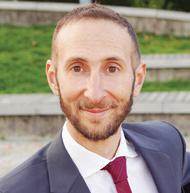
MIKE RACE
Client Partner (604) 283-9316 mrace@zsa.ca
Mike is our Client Partner for Vancouver. A former lawyer with over 12 years of legal recruitment experience, Mike focuses on acquiring high performing Partners, Associates and teams for law firms, as well as General and Legal Counsel for companies across Western Canada.


AMRIT RAI
Consultant (604) 283-9317 arai@zsa.ca
Amrit is a Consultant with over 5 years’ recruitment and headhunting experience. She combines her experience gained from private practice and her strong inter-personal skills, placing junior and senior lawyers in both firm and in-house positions in Western Canada.

LAURA STANLEY
Consultant, Support Services (604) 283-9318 lstanley@zsa.ca
Laura is a Consultant specializing in the placement of Law Clerks, Paralegals and Legal Assistants for clients in Vancouver, Calgary & Edmonton. Laura is conscientious in her work and makes every effort to secure the right fit for clients and candidates.

The Canadian Bar Association, BC Branch and the Law Society of BC warmly invite lawyers and judges to attend the 34th Annual Dinner for the Bench and Bar
Bench & Bar Dinner

Date:
Time: November 7, 2018
5:30 pm Reception (cash bar)
6:30 pm Dinner
Place: Parq Vancouver Kitsilano Ballroom 39 Smithe St. Vancouver
Dress: Business formal
Ticket: $115 00 + GST = $120.75
Mail, email, or fax (fax orders require payment by credit card) your ticket order to:
Canadian Bar Association, BC Branch – Attention: Events 10th Floor – 845 Cambie St. Vancouver, BC V6B 5T3
Email: events@cbabc.org
Tel: 604.646.7855
Fax: 604.669.9601
Join the CBABC Executive and the Law Society Benchers in paying homage to those who have made outstanding contributions to the cause of justice in BC.
The Dinner will feature the presentation of the CBABC Georges A. Goyer, QC Memorial Award for Distinguished Service and the Law Society Award, honouring the lifetime contribution of the truly exceptional in the legal profession... Tickets are limited. Don’t be disappointed; order yours early!
Name:
Firm:
Address:
City:
Telephone:
Postal Code:
Email:
Guest Name: Food Allergies/Restrictions: Ticket order details
QTY Method of payment
Ticket @ $120.75 =
Card holder name: Card no. Expiry
Signature
*Please make cheque payable to Canadian Bar Association, BC Branch Visa MasterCard Cheque enclosed*

2019–2020 Law Foundation Graduate Fellowships
The Law Foundation will issue up to four graduate fellowship awards of up to $15,000 for the 2019–2020 academic year. Applicants must either be:
graduates of a British Columbia law school;
members of the British Columbia Bar;
currently attending, or will be attending at the time of their Fellowship, a graduate program at UBC or University of Victoria Law School (with the exception of a graduate program whose purpose is to provide National Committee on Accreditation equivalency to practice law in Canada); or,
residents of British Columbia. For the purposes of the Fellowships, a resident of BC is anyone who is a permanent resident of Canada, and either currently resident in British Columbia or a person who has been resident in British Columbia for a significant amount of their life.
In order to be eligible, applicants must devote themselves primarily to their full-time graduate studies in law or a law-related area. Please note that a person who is a current recipient of a Legal Research Fund grant from the Foundation is ineligible to receive a Graduate Fellowship.
The Fellowships are available for the 2019-2020 academic year. If a recipient’s program of study extends beyond one year, he/she may apply for a second Fellowship in the next year’s competition. An award of a Fellowship for the first year of study does not constitute a commitment for further funding.
Applications will be assessed by the Fellowships and Research Committee composed of a minimum of three Governors of the Law Foundation and one representative from each of the law faculties of Thompson Rivers University, the University of Victoria and the University of British Columbia. In assessing applications, the Committee will consider not only a candidate’s academic achievements but also the likelihood of furtherance of the objectives of the Law Foundation and the possible benefits to the public of British Columbia from making an award to a candidate.
It is a condition of the Fellowship that a recipient submit two reports to the Law Foundation: an interim report on the program of study following the first term; and a final report, within three months of the end of the academic year on the program of study undertaken, the results obtained and the future career plans of the recipient.
All applications and supporting material must be received at the Law Foundation offices by January 4, 2019 For more information about the Fellowships and the application process please refer to the Law Foundation website at lawfoundationbc.org (under Funding Available/Graduate Fellowships).

Answering the Call: Advice for Women Thinking About Running for Public Office
“We need more women in politics” has become a louder refrain since the 2016 US presidential election. The data suggest women are taking this mandate to heart – not only in the US, where record numbers of women will run in the upcoming midterm elections, but in Canada, where organizations like Equal Voice are holding workshops and leading campaigns to encourage more women to run for elected office. Read some advice for women thinking about making the leap bit.ly/2wZAZfA
CBA NATIONAL MAGAZINE


















BRITISH COLUMBIA career opportunities
IN-HOUSE LITIGATION LAWYER | 5 - 8 YEARS | SURREY / LANGLEY
We are working with a successful, highly diversified private company based in Surrey/Langley, now looking for a confident and competent litigator with a general litigation background to join their high performing legal team. You will need to be comfortable running complex trials, or at least have had experience as second chair on complex trials and are now ready to now step up and take the lead. In addition to general litigation experience, some knowledge around environmental law would be considered an asset. For a confidential discussion on this role or to apply, please contact Amrit Rai at arai@zsa.ca quoting reference #BT28113.
IN-HOUSE LEGAL COUNSEL | 4 - 7 YEARS | VANCOUVER
ZSA is working exclusively with an active and successful group of mining and exploration companies, with NYSE American and Canadian listed entities. They are now seeking a hands-on, energetic lawyer to join their busy office as the group’s in-house Legal Counsel. Reporting directly to the CEO, the ideal candidate will have at least 4 - 7 years’ experience in securities and corporate/commercial law. Any previous in-house experience will be considered favourably, as will having had exposure to US and Canadian securities work. Spanish language skills would also be useful in this role. This is a unique opportunity to head up the legal function within a dynamic, growing group of businesses. For more information or to apply, please contact Amrit Rai at arai@zsa.ca or 604-681-0706, quoting reference #BT27797.
REAL ESTATE ASSOCIATE | 3+ YEARS | NORTH SHORE
Are you living on the North Shore and getting frustrated with the daily commute but still want access to the same high end work? Our client, a premium boutique firm nestled in the heart of the North Shore, could be the answer. They are looking to hire a 3+ year commercial real estate lawyer to assist with their busy practice. This individual must be a high achieving, team player with a sense of humour. In return, our client can provide career growth, work-life balance and a fantastic work environment. For more information or to apply, please contact Amrit Rai at arai@zsa.ca or 604-681-0706, quoting reference #BT27992.
FAMILY LAWYER | 5 - 8 YEARS | VANCOUVER
We are working with a well-established downtown Vancouver law firm, currently seeking an experienced Family Lawyer to join their team. The successful candidate will ideally have between 5 and 8 years’ experience in family law. The firm has a busy practice of high net worth clients, and are looking for an experienced practitioner who can run files themselves, working alongside some of the top-rated senior family lawyers in town. For more information or to apply, please contact Mike Race at mrace@zsa.ca quoting reference #BT26778.
LABOUR & EMPLOYMENT SENIOR ASSOCIATE / JUNIOR PARTNER | VANCOUVER
We’re currently working with the Vancouver office of two national law firms, both looking to add a Senior Associate or Junior Partner to their Labour and Employment groups. These firms attract top talent, and are seeking dedicated and passionate individuals in the field. For more information or to apply, please contact Mike Race at mrace@zsa.ca quoting reference #BT27463.
ESTATE PLANNING LAWYERS | 3 - 7 YEARS & 10+ YEARS | VICTORIA
Our client is a specialist boutique law firm in Victoria, looking for two lawyers to join their team. The firm specialises in business succession planning, personal estate planning, wealth preservation, and trusts. Ideally they are looking for an associate with 3 - 7 years of experience in this area, as well as a more senior practitioner (10+ years) to work closely with the very busy principal. The firm offers exceptional administrative support, a collegial tight-knit environment, and an unparalleled local client network. This is also a great opportunity for a sole practitioner or small group that wants to join a high-performing team. For more information or to apply, please contact Mike Race at mrace@zsa.ca. Ref. #BT28169.
barmoves
Who’s Moving Where and When





Merle Alexander joined Miller Titerle + Company as coleader of their Indigenous Law group and is an experienced practitioner of Indigenous resource law.

Maya Stano joined Miller Titerle + Company’s Indigenous law and business law teams. Maya, a former professional geological engineer, specializes in natural resource development and Indigenous and environmental law.
Ryley Mennie joined Miller Titerle + Company’s Labour and Employment group focusing on labour, employment, human rights and privacy.


Emily Savage joined Miller Titerle + Company as a lawyer in their Business Advisory group. Emily practises corporate commercial law, focusing on private company mergers and acquisitions.
Joelle Walker joined Miller Titerle + Company’s Business and Indigenous Law groups. Joelle is an experienced commercial and business litigator.

Peter Eirikson joined Miller Titerle + Company as a lawyer in their Business Advisory group, practising corporate commercial law with a focus on secured lending and mergers and acquisitions.
Leah George-Wilson joined Miller Titerle + Company practising in their Business and Indigenous Law groups. Leah, former Chief of the Tsleil-Waututh Nation, is a well-known and respected Indigenous leader.
Karan Sodhi joined DuMoulin Black LLP, where his practice consists of corporate matters, with an emphasis on mergers & acquisitions, securities and corporate finance.
Stu Morrow has formed Independent Chair Inc., offering his expertise as an independent chairman of contested shareholder meetings for public and private corporations after 35 years as partner at DLA Piper Canada.
Brandon Deans joined DuMoulin Black LLP, where his practice consists of corporate and securities law matters.
newmembers
Bar Moves space is at a premium and available for free to members on a first-come first-served basis, so send your Bar Move (max. 30 words) and a high-resolution headshot photo to bartalk@cbabc.org now.
Bar Moves is free for CBABC members, but space is limited and offered on a first-come, first-served basis. Send your 30-word Bar Move and high-res headshot to: bartalk@cbabc.org
TO VIEW ALL BAR MOVES GO TO CBABC.ORG/BT/BM_1804
TO VIEW ALL BAR MOVES GO TO CBABC.ORG/BT/BM_1810
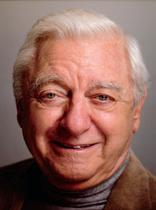
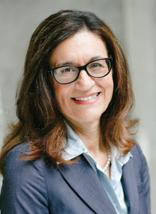


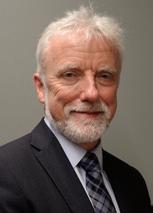
? ?
Gerald J. Lecovin, QC is thinking of joining Happy Memories Rest Home for aged and indigent lawyers. He will restrict his practice to counsel on uncontested adjournment applications.
July & August 2018
Lawyers
Justin Abrioux
Alexander Holburn Beaudin + Lang LLP
Vancouver
Gavyn Backus McMillan LLP
Vancouver
Pamela Bakshi Krentz & Hedman Abbotsford
Max A. Matas Department of Justice Canada
Vancouver
Celina Meghji Zukerman Law Group
Surrey
Robert Millar
Jawl Bundon LLP
Victoria
Kevin Nanne
Gall Legge Grant Zwack LLP
Vancouver
Anita Boscariol spearheads a new Indigenous Law group at Watson Goepel LLP, assisting clients with matters of governance, economic development, consultation and accommodation.
? ? ? ?
Liam Bath joined Hammerberg Lawyers LLP as an associate in the Corporate Commercial group.
Angela Cao Barrister and Solicitor
Vancouver
Stefan Charles Surrey
Nina Chohan Triton Law LLP
Surrey
Mathew Crowe
Alexander Holburn Beaudin + Lang LLP
Vancouver
David Eleff WorkSafeBC Richmond
Alberta Frempong ICBC
Vancouver
Katherine Gach
Norton Rose Fulbright Canada LLP
Vancouver
Brady Gordon North Vancouver
Sarah Pike
SPIKE Law
Vancouver
Michael P. Scott
Clark Wilson LLP
Vancouver
William Slater Slater Law Corporation
Surrey
Mike Tucker
Spilker McNally
Nelson
Andrea Vizsolyi
Victoria
Dean Winterton
Guild Yule LLP
Vancouver
Audrey Yen
ICBC
Vancouver
Articling Students
Margaret Lovely joined with Morrison & Co. to become Morrison & Lovely Law Corporation. She practises primarily in the area of insolvency law, in addition to corporate law, and wills & estates.
? ? ? ?
Michael Doherty joined Ecojustice as a staff lawyer. Dr. Doherty will be litigating in the Ecojustice priority areas of climate change, nature and healthy communities.
Hailey Ha Norton Rose Fulbright Canada LLP
Vancouver
Michael Ho Sangra Moller LLP
Vancouver
Alex Kruize
Daniel K. Lo Mobile Legal and Notarial Services
Penticton
Donald J Larkins Endeavor Law Corporation
Vancouver
Chyna Lines Heath Law LLP Nanaimo
Tony Magre
Blake, Cassels & Graydon LLP
Vancouver
Chris Chu
Alexander Holburn Beaudin + Lang LLP
Vancouver
James Jeffries-Chung
Norton Rose Fulbright Canada LLP
Vancouver
Jayde Jessome
Alexander Holburn
Beaudin + Lang LLP
Vancouver
Jenny Khakh
Borden Ladner Gervais LLP
Vancouver
David Klaponski
Segev LLP
Vancouver
To view all new members, please visit cbabc.org/bt/nm_1810.