This publication is intended for information purposes only and the information herein should not be applied to specific fact circumstances without the advice of counsel.
The British Columbia Branch of the Canadian Bar Association represents more than 6,900 B.C. members and is dedicated to improving and promoting access to justice, reviewing legislation, initiating law reform measures and advancing and improving the administration of justice.
BarTalk Publication Sales Agreement #40741008
EVENTS
THE 17TH ANNUAL VANCOUVER BAR ASSOCIATION/B.C. BRANCH OF THE CANADIAN BAR ASSOCIATION GOLF TOURNAMENT
is on Thursday, August 15 at the University Golf Club. Check in/ registration is from 11:30 a.m.12:45 p.m. and tee time is at 1:00 p.m. Participate in this fun-filled day of golf and prizes, and support law student scholarships.
\ For registration forms, go to: www.cba.org/bc/pdf/events/ van_golf_tournament.pdf
THE 2013 NEW WESTMINSTER/FRASER VALLEY BARS GOLF TOURNAMENT
is scheduled to take place at Guildford Golf Course in Surrey on Thursday, July 4 with tee times starting at 11:00 a.m. Lawyers, judges, court reporters and their friends are welcome. Cost is $95 per person for golf, dinner and prizes. Carts can be rented from the course. Options include stroke play or Texas Scramble. For further information, contact Rick Molstad at molstad.rick@gmail.com.
KELOWNA – April 17, 2013
Volunteers in Kelowna, including lawyers, RCMP and Sheriffs, participated in the Girl Guide Arrests, which taught the Girl Guides about the judicial system in British Columbia.
KAMLOOPS – April 23, 2013
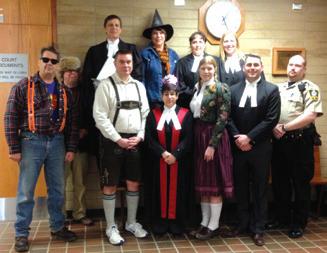
Participants of a mock trial, which was based on Jack and the Beanstalk.
Inside This Issue
Give me land, lots of land. So says the song. We explore the perils of purchase – forfeited deposits, PPT and putting the kids on title; issues facing strata corporations with privacy laws and depreciation reports; divergent caselaw on the Partition of Property Act. We finish with thoughts on diversity issues and difficult people.
News and Events
2 Fore! – Upcoming 2013 Golf Tournaments
Law Week 2013 Photos – Kelowna and Kamloops
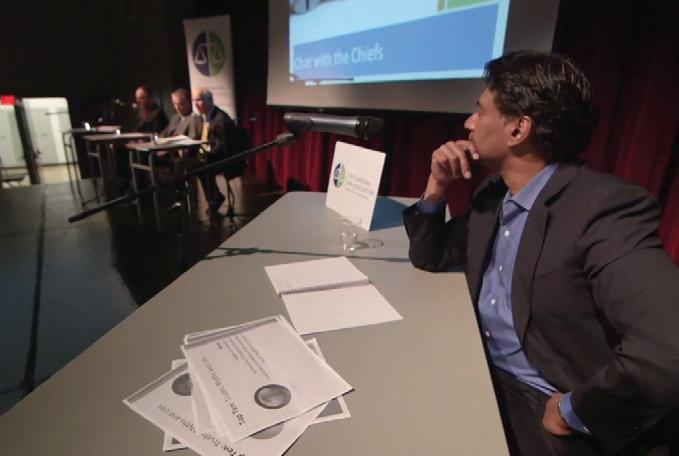
18 Three Chief Justices Share Their Collective Wisdom at Eric Hamber Secondary Law Forum During Law Week
BCAMI Arbitration and Mediation Symposium
B.C. Court of Appeal Decision Upholds Lawyers’ Duty to Clients
19 CBA’s Legal Futures Initiative Aims to Lay Foundation for New Way to Practice Law
CBA Legal Conference, Saskatoon – Aug. 18-20, 2013
CCCA & Rotman School of Management Partner to Create In-House Certification Program
20 2013 CBABC Annual Branch Conference San Diego, California – Nov. 15-17, 2013
CLEBC Update
Lawyer Referral Service (LRS)
21 Legislative Update Branch & Bar Calendar
Congratulations Andrea S. Donohoe
22 Tips from Courthouse Libraries BC
Law Week 2013 Photos – Fort St. John and Vancouver
Practice Tip for the Civil Litigator in Small Claims Court
Also In This Issue
FROM THE PRESIDENT
KERRY L. SIMMONS
Envisioning Equal Justice Ready to activate!
Let me share with you one of the most recent initiatives of the legal profession to address access to justice and improve the public’s experience with the justice system.
At the end of April, the CBA hosted the Envisioning Equal Justice Summit in Vancouver. From coast to coast to coast, over 200 representatives of the private bar, legal aid, government, policy advisors, judges, CBA leadership, benchers, academics, law students, international thinkers, pro bono, community advocates, and the public shared information and ideas over the three-day Summit.
The Summit kicked off with a poverty law simulation developed by United Way Winnipeg and executed with the support of Access Pro Bono volunteers. Registrants were invited to take on a character and experience what that person
might face in his or her day-to-day life. Each character was part of a family that received information about whether or not the family had income, how much they had to pay for rent, utilities, food, child care, etc., and then was given the task of trying to survive the next hour which represented a month in the life of that family.
The fifteen or so families in the simulation lived in a town with a general employer, child care centre, family resource centre, welfare office, bank, mortgage company, loan company, pawn shop, dollar store, grocery store, jail, school, police, group home, homeless shelter and juvenile hall. These services and institutions surrounded the residences and to access a service (e.g. family resource centre) the character had to produce a transportation voucher that represented the cost of accessing the services.
My character was Francesca, a 14-year-old girl. At school, where there weren’t enough seats, I didn’t
get much attention from the teachers and was sent home with a request for money for a field trip. My 17-yearold brother discovered he was going to become a father. He wasn’t in school and didn’t have a job. My mother had to apply for welfare and try to pay the bills with the limited amount of money she received. I was successful at pawning our television to get $30. I tried, unsuccessfully, to get a part-time job.
At the end of the hour, we discussed our experiences. Participants explained how hard it was to fill in the forms required for jobs or welfare. They encountered service providers who were overwhelmed and were frequently disorganized. They often had to break the law or lie in order to survive. There were stories of children being left to reside in a group home because at least there they would be fed. Those with legal problems accessed the legal office the day before their court hearing
because until that point, they were focussing on surviving and getting legal help wasn’t a critical priority. Our experiences in this simulation were just the tip of the iceberg of what many people who live in poverty or have low income experience. With this in mind, we moved into plenary sessions and workshops to learn of and discuss solutions and ideas that work.
These ranged from how law school clinical programs and experiential learning could be better utilized to provide access to justice, to how to measure justice initiatives, to successful uses of technology. To learn more, go to www.cba.org.
Dr. Melina Buckley of Camp Fiorante Matthews Mogerman leads the CBA Access to Justice initiative, which collaborates with the National Action Committee on Access to Justice chaired by SCC Justice Thomas Cromwell. I had the honour of introducing him at the Summit. His words of encouragement to press forward to make changes and implement this work were a great boost of energy to the many participants who make this issue part of their professional contributions.
Kerry L. Simmons president@bccba.org
EXECUTIVE DIRECTOR
CAROLINE NEVIN
Choice. Value. Engagement. New options and rewards with CBA membership
Sometimes, in order to move forward you just have to make a decision – any decision. Most times, though, it pays to do your research first. At the CBA, we’ve just finished a big research and shake-up process that aims to make membership more valuable, more responsive, and more practical in terms of rewarding the choice to belong.
The Canadian Bar Association is an institution – by definition, an “established organization... long associated with a specific function.” Institutions are long-lived in part because they tend to take the long view of their position in society and thus stand strong against the buffeting winds of short-term pressures. That stability is a genuine strength but also a potential weakness if you want to be nimble and move quickly in response to change. The trick is to be both strong and flexible.
When the CBA decided to take a hard look at how and what the CBA delivers in terms of membership value, we knew that talking to members was the only means by which we could get a realistic assessment of where we are now and where we need to go. The end result of our in-depth exploration is a series of changes that have been in the works these past 18 months and are about to become very public as of this summer.
What’s new? First, because we know that you rely on your CBA membership for access to practical, cost-effective professional development, we’re offering you upfront 20 per cent discounts on new packages of PD and Sections as a thank you for membership. On top of that, we’re providing rewards of between three and five per cent on anything else you purchase from us, as a straight reduction on your membership renewal cost the following year. And the third big change is a revamping of our membership categories
to become more inclusive of, and responsive to, the diversity of the profession.
As an example, in B.C., there are 1,422 lawyers who have chosen “non-practising” status with the Law Society, 1,108 who are insured as “part time” practitioners and 658 who are “retired” and still Law Society members. Combined, that’s a whopping 25 per cent of the entire Law Society membership who are not the classic full-time practitioners for whom the CBA originally designed our membership offerings. What we know now is that there is a huge appetite for access to our services (particularly with mandatory CPD) and a strong desire to remain connected to the legal profession. What’s been missing is a cost-effective way to do that through the CBA.
So, now, if you are a nonpractising, part-time or retired member of the Law Society, you will be able to access all of the
services, programs, advocacy and volunteer opportunities that the CBA provides, for half the price of regular membership . If you are a new lawyer in your first three years of call, we’re offering an even bigger discount: 60 per cent off the regular price, because we know that the first few years are when you are working hard to establish yourself and build your own network. No matter your age or practice status, we want you to have the chance to engage in the life of the legal community, and to have access to the people and opportunities that make your professional life as meaningful and rewarding as possible. We also want your expertise, your experience and your perspective on the law and legal issues, because the CBA is constantly called on to influence the development of law and policy. We offer great opportunities to get involved and have a real impact in the world. Please take a moment to consider the value of CBA membership, and renew or sign up at cba.org/membership.
Caroline Nevin cnevin@bccba.org
DAVID J. BILINSKY
Dealing with Difficult People Making good choices in a bad situation
r When people run in circles It’s a very very Mad world, mad world… r
– Music and Lyrics by Tears for Fears, recorded by: Michael Andrews & Gary Jules
All of us are DNA hardwired for “fight or flight.” Being lawyers, the fight option has been honed to a fine edge. However, there are times when the other option may be the better option. It is inevitable that we are going to encounter people who attack us, counter us, oppose our ideas or simply do not like us. Our immediate impulse is to react and attack. It is not easy but ultimately fighting is not the best reaction – it turns a one-sided
reaction into a battle of two egos. We end up responding to a tussle of who is right?
As a practice advisor I see this scenario played out all the time. Giving objective advice when one is on the outside is completely different from being on the inside. Having had a recent personal encounter in such a situation, I can say that it is much harder to make the right decisions when you are the one involved. I went searching for answers. So here are some tips that I have found for helping to make the right choice:
Anger feeds anger: This is a downward spiral that causes us to feel more compelled to defend ourselves the angrier our thoughts become.
It is about them: Most times negativity is a reflection of the other person’s inner state. It isn’t about you – you just happen to be in the wrong place at the wrong time. They are frustrated, angry and in conflict and they are looking for
someone to take down with them.
It is a waste of energy: Do we really want to invest all that time and emotional energy in responding?
the situation and expend some physical energy. You will feel better for it.
Best/Worst case analysis: Negotiation theory speaks of BATNAs: The Best Alternative to a Negotiated Situation. What is the best and worst case scenarios if you do and do not respond.
It is going to affect you: If the fight response emerges, you are going to drag that negativity into other parts of your life when you get home. Do you really want to poison your positive home life this way?
You can choose: Ultimately, you can’t control what people do and say; what you can decide is how you react. You can choose a better way.
Wait it out: Draft the response letter and lock it away in a drawer for Monday. Chances are by then you will have different – more rational – options to deal with this person.
Forgive: Yes forgive. If you don’t then the negativity takes hold inside you.
Go for a run: Get away from
Evaluate from your perspective: Recall that this person is trying to draw you into their game plan. Ask yourself: Will responding to this person advance the things that are most important to me?
Look for the lesson: Inside each difficult situation is something that will help you grow as a person. Don’t lose the opportunity.
Let go: Write out all your thoughts about this situation – roll the paper into a ball and throw it away. Now – carry on with your life!
Responding to mad people is not easy. If it was, then the world wouldn’t have negative people running in circles making life difficult for others.
The views expressed herein are strictly those of the author and may not be shared by the Law Society of British Columbia.
David J. Bilinsky is the Practice Management Advisor for the Law Society of British Columbia. Email: daveb@lsbc.org Blog: www.thoughtfullaw.com
Where do you go for advice on how to deal with difficult people?
Here are some websites you can visit for assistance.
PPC CANADA
(Formerly called Interlock EAP www.ca.ppcworldwide.com or 1-800-663-9099)
Personal Performance Consultants (PPC Canada) offers confidential services to B.C. lawyers and articled students and their immediate families at no cost courtesy of the Law Society of B.C.
PPC can help with personal, relationship and family problems, stress management, substance abuse or work-related concerns.
LAWYERS ASSISTANCE PROGRAM (L.A.P.) (www.lapbc.com, 604-685-2171 or 1-888-685-2171)
Derek LaCroix and his volunteers at The Lawyers Assistance Program provide confidential support, counselling, referrals and peer interventions for lawyers, their families, support staff and articled students who need help to deal with alcohol or chemical dependencies, stress, depression or other personal problems. Based on the concept of “lawyers helping lawyers” the Lawyers Assistance Program relies on a network of volunteers from the B.C. legal community. While the Law Society funds this program as a service to the profession, L.A.P. is entirely independent and all inquiries and interactions are strictly confidential from the Law Society.
COLORADO STATE LIBRARY (CSL) (http://bit.ly/Ny3p54)
Jean Marie Heilig at the CSL has compiled a list of written and video resources on the web on different approaches to dealing with difficult people in different situations.
BURLINGTON COUNTY COLLEGE CAREER SERVICES (http://bit.ly/16v2WtI)
Burlington County College has a great PowerPoint (link above) that breaks down the types of difficult people that you may encounter and suggests positive ways of dealing with each type.
FREE MANAGEMENT LIBRARY (http://bit.ly/10Ehakx)
This website is just a wealth of information on all aspects of management and one of my favorites. The link above will take you to their great information on different aspects of handling difficult people.
As part of its mandate to support legal aid in B.C., the Law Foundation of British Columbia (LFBC) funds legal advocates who work on housing issues, as well as other poverty law matters.
One of the main groups providing information about residential tenancy and other housing issues in B.C. is TRAC Tenant Resource & Advisory Centre. This group provides B.C. tenants and advocates with free legal information about residential tenancy law through a tenant Infoline, website (www.tenants.bc.ca), social media, multilingual resources, and legal education workshops. In 2012, TRAC answered more than 8,000 inquiries from the public and advocates.
Another organization that works in this area is the Kettle Friendship Society, which provides housing advocacy and representation for tenants with mental health disabilities. Through its residential tenancy advocacy program, the Kettle educates tenants about their rights and responsibilities, empowers tenants to make use of the resources available to them, advises tenants on their options, and often represents tenants at dispute resolution hearings.
nothingofficial
TONY WILSON
Memo From the Partners Animal Law Protocols
We are happy to advise members of the firm that we are boldly expanding into areas where we have never gone before to take advantage of demographic shifts and the aging baby-boomers. Our new practice area is “Animal Law.”
This means our Wills and Estates Department will now be acting for clients who wish to leave their entire estates (together with huge tracks of their lands) to their parrots, their cats, their dogs and possibly other animals. In particular, it means that we may be acting for a lot of elderly ladies who have never married, but have 30 or more cats living at home with them. To that end, we have created a toll-free phone line from Victoria (where many of these “cat ladies” apparently live), and we’ve established a pet friendly area in our lounge where clients
can bring their pets while they await meetings with our lawyers. (The articling students will be responsible for maintaining weekly servicing of the kitty litter box).
We are also interested in the cross-marketing opportunities that can come with having a large number of animals in the firm’s waiting lounge, including the potential for offering veterinary services, pet grooming, safaris and the like.
As we expect to be defending many dog owners whose pit bulls have gone psycho and have mauled or eaten a neighbour’s Shih-Tzu (including some dog owners who ride motorcycles, have very large parts of their bodies covered in tattoos and operate strip clubs and grow-ops), we advise all lawyers and staff to be careful, just in case these dogs take a chunk out of you too. Pit bulls are a misunderstood breed. They’re wonderful dogs, unless they aren’t; in which case, we’re here to defend them.
The firm is developing protocols to deal with potential conflicts with
dog and cat names, and whether our lawyers owe duties to the client or the client’s pet under the new Model Code. In the meantime, we are endeavouring to make our firm “animal neutral,” which means the following expressions are now prohibited within documents, correspondence and in all conversations in the office, given that these expressions might offend some of our new clients.
You are to refrain from using the expressions such as “it’s raining cats and dogs,” “dog days of summer” or “dog file” in the office. Someone complained last week that their office was so small, “there wasn’t enough room to swing a cat.” That person no longer works for our firm. Likewise, one of our lawyers mentioned that her colleague down the hall was “batshit crazy.” Although we all know this lawyer is stark raving mad, the expression “batshit crazy” is frowned upon, as it is disrespectful to bats.
Likewise, the expressions “going ape,” or as “busy as a bee” are not acceptable and may result in warning letters. “Killing two birds with one stone,” “living in a “dog-eat-dog world” or being as “hungry as a horse” suggests you are anti-animal and use of these and similar terms will be dealt with harshly. Going animal neutral will involve changes to the lunchroom and client lunches as well. To that end, the firm will no longer permit animal products in the lunchroom fridge, nor will we allow sandwiches delivered for meetings that contain meat products. Obviously, this includes beef, ham, chicken or fish products, but it also includes dairy. Thus, starting as of July 1, milk for coffee will be replaced with soymilk. There are no exceptions to these rules. There are no sacred cows. We believe that Animal Law will be a growing practice area for the firm, and we must adjust our internal practices and procedures accordingly. Our marketing department is in the process of issuing press releases. Accordingly, please do not circulate information about Animal Law until advised to do so. Those who let the cat out of the bag prematurely will be thrown to the wolves.
guest
NICOLE BYRES
Beyond Diversity
Creating an Inclusive Profession
For many years now, law schools and the legal profession have made efforts to encourage people of diverse backgrounds to become lawyers. Judging by the cohorts of law students being offered positions in law firms, discrimination based on gender, race, sexual orientation, and physical disability are no longer the barriers they once were, at least at the entry level. Where the profession is not doing so well however, is in achieving and maintaining diversity at all levels. This isn’t just a problem for our profession. Organizations have now realized that programs to encourage diversity are not enough – it is also necessary to create an environment in which people share a sense of belonging and mutual respect, are valued for who they are, and full participation and contribution are encouraged. In other words, diversity must go hand in hand with inclusiveness.
Inclusive law firms have a commitment to the retention, development, and leadership development of people of diverse perspectives. Without this, talented lawyers of diverse backgrounds will not thrive nor stay to advance through to associate, income partner, and/ or equity partner levels.
In social dynamics, for change to become self-sustaining, a critical mass of individuals must adopt the new attitudes or behaviours. That is
why it is important for all organizations who are engaged in the discussion of diversity and inclusion to take any and all opportunities to share practical and effective strategies.
The good news is that the topic of diversity and inclusion is gaining momentum. In Canada, the following programs and initiatives have been developed or are underway within the legal profession.
In August 2012, the Canadian Bar Association published Measuring Diversity in Law Firms: A Critical Tool for Achieving High Performance. This document explains why diversity is necessary for high performing law firms, and why measuring diversity and inclusiveness is an important first step in creating an inclusive environment. The publication also includes helpful surveys and links to other resources related to diversity and inclusion. (www.cba.org/CBA/equity/diversity/resources.aspx)
have all approved Justicia projects which bring together law firms to share best practices, and to develop resources and programs to support women lawyers in private practice.
General Counsel of thirty-four companies in Canada have issued a statement of support for diversity and inclusion not only within their own organizations, but within the law firms they hire as external counsel.
At the provincial level, the CBABC’s Equality and Diversity Committee, SOGIC, Aboriginal and Women Lawyers Forums also sponsor specific initiatives and programs aimed at diversity and inclusion.
Law Societies in Alberta, British Columbia, Ontario and Quebec
More recently, several national Canadian law firms formed the Law Firm Diversity & Inclusion Network in order to share best practices to enhance diversity and to promote inclusion. Transforming the legal profession so it is more inclusive will not be easy but the rate of change could be faster, particularly if social media were used more effectively by the above noted groups to disseminate ideas and information, and to encourage debate. Leadership is also important. A recent Harvard Business Review blog by Whitney Johnson and Lisa Joy Rosner called Mayer, Sandberg, Slaughter: Driving Change, at a Cost, discusses how a critical mass of thought leaders who took risks in voicing controversial positions on work and life caused a surge in social media conversations, which in turn advanced the issue. As they stated: “When highly visible leaders stick their necks out, it makes it easier for the rest of us.”
Nicole Byres is the Chair of the CBABC Women Lawyers Forum and a partner at Miller Thomson LLP.
sections
Keep Current A review of provincial Section meetings.
Commercial and Real Estate
Vancouver Island
Meeting in Review: March 28, 2013
Speaker: Gail Reaney, Associate Vice President, Colliers International
Topic: Commercial Leasing Issues for Solicitors
Public Sector Lawyers and Criminal Justice
Victoria
Meeting in Review: April 11, 2013
Speaker: Richard Rosenthal, Chief Civilian Director, Independent Investigations Office of B.C.
Topic: The Independent Investigations Office of British Columbia
Real Property
Vancouver
Meeting in Review: April 25, 2013
Speaker: David Mckenzie, Jenkins Marzban Logan LLP
Topic: Builders Liens Tips for Solicitors
Commercial and Real Estate
Vancouver Island
uGail Reaney of Colliers International presented on issues of concern to solicitors arranging leases on commercial properties. She explained that the slowing economy is responsible for the slow, but steady, office space market. This new pressure has provided greater incentive to target new clients with unique leasing requirements. High tech businesses are more than ever seeking creative landlords who will allow flexible use of space. Their leases tend to be short-term, as they may need to expand, relocate, or even fold, within a short time-frame. They should also be concerned about any termination clauses. Other lessees are looking for a space that is a good fit with their environmental concerns. This could be aimed as much at reducing their budget footprint as their carbon footprint, but the focus is usually on building a healthy work environment. US retailers are one group that are becoming increasingly aware of the environmental features and effect of potential lease spaces. Gail finished by reviewing challenges that face all types of lessors, and how solicitors can assist in mitigating them.
Public Sector Lawyers and Criminal Justice
Victoria
uRichard Rosenthal was appointed the first Chief Civilian Director of the Independent Investigations Office of B.C. in 2011, and since then his office has investigated incidents where it appears that “a person may have died or suffered serious harm as a
result of the actions of an officer, whether on or off duty, or an officer whether on or off duty, may have contravened a prescribed provision of the Criminal Code or a prescribed provision of another federal or provincial enactment.”
Members of both Sections were invited to attend in-person in Vancouver, or participate by video-link in Victoria. Mr. Rosenthal provided an overview of the successes and challenges faced by his office since its very recent inception, and took questions from Section members on how the relevant sections of the Police Act, excerpted above, are being interpreted. A webinar recording of this meeting is available to members of the Public Sector Lawyers Section and the Criminal Justice – Victoria Section and is included with the minutes posted online.
Real Property Vancouver
uSpeaking to the Real Property – Vancouver Section in April, David Mckenzie of Jenkins Marzban Logan LLP provided an overview of liens, how they are
used in the construction industry and who may use them, as well as helpful advice on the filing process and example scenarios. In British Columbia liens are governed by the Builders Lien Act. David was keen to clear up any misconceptions, explaining that while a lien is a remedy that is available when an improvement has been made to a property, improvement should not be taken to strictly mean changes which add to the property’s value. The Section also heard how they can use their understanding of builders liens to ensure the contracts they draft for parties involved in construction projects offer the greatest protection. A webinar recording of this meeting is available to members of the Real Property –Vancouver Section and is included with the minutes posted online.
For enrolled CBA members, more detailed information and available minutes from the Section meetings are online at www.cba.org/bc in CBABC Forums and Sections under Professional Development.
memberservices
SECTION NEWS
Chatter with Chairs Shannon Mather, Chair YOUNG LAWYERS VICTORIA
This year our Section has continued its focus on building a strong collegial atmosphere among the young lawyers of Victoria by having a variety of educational and social events. We have also reached out to several other Victoria Sections to encourage the transfer of knowledge. In March, we were fortunate to have Justice Macaulay dine with a small number of our members and we are organizing a similar informal dinner in July with Judge Brian Neal, the associate Chief Judge of Provincial Court. Our executive is looking forward to all of our upcoming Section meetings and social events, culminating in the 3rd Annual Golf Tournament on July 18.
EMAIL: MEMBERS@BCCBA.ORG
Seasonal promotions and special offers to members are promoted weekly via CBABC News and Jobs. Visit the CBABC website for links to various activities and promotions on the Member Savings page from the drop down list under Membership
\ STILL CREEK PRESS is pleased to offer CBABC members preferential rates on all printing services. They look forward to assisting you with print solutions.
\ CBA FINANCIAL SERVICES (CBAF) provides investment and savings products designed specifically for and available exclusively to, lawyers, law firm staff, and their families. CBA members receive an additional discount of 0.40 per cent discount on Investment Management Fees.
BRADLEY WELDON
Video Surveillance and Strata Corporations
Video records are personal information
More strata corporations are using video surveillance systems as the cost to deploy them decreases and their capabilities improve. The use of video cameras to collect personal information brings with it a particular sub-set of privacy issues related to the intrusiveness of the collection and the potential cost of responding to access requests for personal information. While the deployment of a video surveillance system may be justified in some circumstances, strata corporations should consider whether the legal obligations that accompany their use are proportional to the perceived benefit.
When video cameras record images of individuals they are collecting personal information. This collection, as well as any subsequent use or disclosure, must comply with British Columbia’s Personal Information Protection Act (“PIPA”). A strata corporation may comply with PIPA by authorizing the collection of personal information through bylaw, pursuant to the Strata Property Act. If no such bylaw is enacted then the collection must be otherwise authorized by PIPA.
COLLECTION MUST BE REASONABLE
In order for collection to be authorised by PIPA, the purpose
for the video surveillance must be one which a reasonable person would consider appropriate in the circumstances, and the individuals whose images are being recorded must be notified of this purpose on or before being recorded. The Office of the Information and Privacy Commissioner considered the use of video surveillance by the Shoal Point Strata Council in Order P09-02. In that Order the adjudicator held that the use of video cameras to protect the security of the building was reasonable, but its use for strata bylaw enforcement was not. The adjudicator found that video surveillance constitutes a substantial invasion of individuals’ privacy and should only be used in response to a real and significant security or safety problem. The use of video cameras to enforce strata bylaws did not meet this threshold because bylaw violations are not sufficiently serious to warrant the invasion of privacy. Further, while it was reasonable to use video cameras to monitor the building’s exterior doors for security, the adjudicator ordered that the video system must not be actively monitored or routinely reviewed, but only accessed in response to a reported incident.
RETENTION CAN BE COSTLY
PIPA requires that personal information must only be retained until the purpose for which it was collected is no longer being served by its retention. For example, the Shoal Point Order found that keeping video footage for three weeks was reasonable. Strata corporations should also be mindful of the potential financial cost of retaining personal information. PIPA provides individuals with the right to request access to their own personal information that is in the control of an organization, but an organization cannot disclose the personal information of third parties. In the context of a video record, this means that a strata corporation must provide individuals with access to any video that contains their image, but the image of any third party must be blurred or blacked out. The cost of processing video records to anonymize third parties could rapidly eclipse the financial benefit of deploying video surveillance. To reduce this liability, strata corporations should regularly review their data retention schedules to ensure that they retain only the minimal amount of personal information necessary to fulfill the purpose of the original collection.
The Information and Privacy Commissioner has released Guidelines for Strata Corporations, available at www.oipc.bc.ca.
Bradley Weldon is a lawyer and policy analyst at the Office of the Information and Privacy Commissioner for British Columbia.
ALLYSON BAKER
Depreciation Reports & Strata Corporations A tool for long-term planning
Strata councils, owners and property managers have struggled with adequate planning to address the aging of a condominium complex. Although the strata property related legislation in B.C. has long required strata corporations to establish and maintain contingency reserve funds (CRF) for common expenses that usually occur less often than once a year or do not usually occur, the legislation provided little guidance to strata corporations as to how to assess the long-term repair, maintenance and replacement requirements of the complex and the anticipated costs associated with same.
The Strata Property Act (the “SPA”), which was brought into force in 2000, included provisions permitting, but not requiring, a strata corporation to obtain a depreciation report. While there was nothing in the predecessor legislation prior to 2000 that prevented a strata corporation from obtaining such a report, including a specific reference to a “depreciation report” was a significant step in introducing the notion of longterm planning based on the needs of the particular complex.
Since 2009, the SPA and the Strata Property Regulation have been further amended to impose a requirement on all strata corporations (other than those containing fewer than five units) to
obtain a depreciation report. As of December 13, 2013, a strata corporation that existed on or before December 14, 2011 is required to have either:
obtained a depreciation report that meets the requirements of the regulation; or
adopted a ¾ vote resolution pursuant to section 94(3) that exempts the strata corporation from the obligation to obtain the report for a period of 18 months from the date of the resolution (a “s. 94(3) Resolution”).
on the part of the strata corporation to fund the CRF to reflect that information. Although a strata corporation no longer has to obtain a ¾ vote resolution in order to “overcontribute” to the CRF (i.e. continue making contributions once the amount in the CRF equals or exceeds the annual operating budget for the strata corporation), the minimum contribution requirements remain tied to the annual operating budget – a figure that typically bears no relation to long-term financial needs.
Strata corporations that came into existence after December 11, 2011 are required to obtain a depreciation report or pass a s. 94(3) Resolution within six months after the date of the second annual general meeting.
Thereafter, all strata corporation are required to update their depreciation reports within three years of the last report date or adopt a s. 94 Resolution.
The requirements for the preparation and contents of a depreciation report are set out in Section 6.2 of the Strata Property Regulation.
It should be noted that, while the depreciation report will provide information on the anticipated long-term funding requirements for a particular strata corporation, there is no obligation
The SPA does not contain any specific provisions to address what happens if a strata corporation fails to either obtain a depreciation report or exempt itself from the requirement to do so. While an owner could apply to court for an order requiring a strata corporation to obtain a depreciation report, it is anticipated, based on the experiences of other jurisdictions that have adopted similar requirements, that the marketplace (being the purchase and sale of strata lots, as well as the ability of a strata corporation to obtain financing or insurance) will likely provide a greater incentive for a strata corporation to obtain a depreciation report and increase contributions to its CRF based on the recommendations of the report.
Allyson Baker is an associate at Clark Wilson LLP and co-editor of the CLE Strata Property Act Practice Manual and author or co-author of the chapters regarding rentals, insurance, employment and duty to repair.
PETER J. ROBERTS
How to End Shared Property Ownership
Partition of Property Act
Two friends buy a piece of property to build equity and have a home. They share all the expenses. Things go well and their equity increases. Eventually, one needs his money to invest in a business but the other won’t agree to sell. Who prevails?
This is a common scenario. In the absence of a settlement or a written agreement governing the situation, the only recourse is to the courts. The Partition of Property Act (“PPA”) provides the court with authority to “direct a sale of the property and a distribution of the proceeds.” To prevent a sale, it must be established that there is “good reason” and that a sale “would not do justice between the parties.” The onus of showing this is on the party opposing the sale. The courts have a broad and unfettered discretion in considering these issues.
Two recent cases illustrate opposite results under the PPA.
The first is Borg v. Morris, 2012 BCSC 554, and involved the scenario described above. One coowner opposed the property sale and could not buy the other out. He opposed because the property was his home, there were unresolved financial issues and a sale would cause a significant mortgage prepayment penalty. The court ordered the sale and noted the chance of a future sale had
always existed. The unresolved financial issues could be adjudicated later. It was always possible for the basis of the original agreement to change. That would always cause prejudice: one risked losing his home and the other access to his equity. As the competing hardships were equal, there was no “good reason” against selling the property. It was sold, subject to an accounting.
The second case is Cypress Gardens, 2012 BCSC 454. Cypress Gardens is a common law condo development of 177 units owned by 135 different owners. Each
Joint ownership of land is extremely common. If you wish to avoid the prospect of an involuntary sale in future, it is best to set out in writing how and when the property may be sold.
was a “co-owner” of the entire complex. Some owners applied to have the property sold to a developer. Most other owners opposed. The court noted that the facts and circumstances of each
case must be examined to determine whether good reason existed to refuse a sale. There is no general rule circumscribing the types of reasons that justify refusing to order a sale. Those reasons can include “serious hardship” and lack of “good faith, vexatiousness or maliciousness” by an applicant. Here, a sale would “force particularly vulnerable people out of their homes, including young children, single parents, the elderly, the infirm, and people of very limited financial means.” Many could not afford comparable property nearby and be forced to rent or move away. The court found there was a reasonable understanding among all owners that they were buying individual homes and not simply fractional interests in a larger complex. All this amounted to “good reason” not to order a sale.
Joint ownership of land is extremely common. If you wish to avoid the prospect of an involuntary sale in future, it is best to set out in writing how and when the property may be sold. On the other hand, if you find yourself tied into joint property ownership and cannot reach consensus on what to do, there is recourse to the courts to have the property sold.
Peter J. Roberts, Partner, Lawson Lundell LLP. Peter is a litigator with a wide range of experience, practising for more than 21 years in Vancouver. For a number of years he practised criminal law before resuming civil and commercial litigation, including claims involving allegations of fraud.
CARLOS S. MENDES
Guaranteeing Performance Court reconsiders deposit provisions in real estate contracts
The B.C. Court of Appeal recently provided some welcome insight into a contractual provision that most members of the Vancouver Real Estate Bar have seen, but that few have ever really taken the time to consider. In Tang v. Zhang, 2013, BCCA 52 the court was asked whether the Greater Vancouver Real Estate Board’s standard form Contract of Purchase and Sale gives a seller the unconditional right to keep a deposit when a buyer’s breach has not caused the seller to suffer any demonstrable pecuniary loss. Specifically at issue was the “time of the essence” clause, which states that if the buyer fails to complete, the seller can terminate the contract, and the amount paid by the buyer as a deposit “will be absolutely forfeited to the seller... on account of damages, without prejudice to the seller’s other remedies.”
Importantly, when the buyer in Tang failed to complete, the seller put the subject property back on the market and managed to sell it to a third party for a higher price. In the meantime, the seller commenced its action in B.C. Supreme Court, seeking a declaration that the deposit became “absolutely forfeited” following the buyer’s breach, and an order that it be released by the agent holding it. Following the B.C. Court of Appeal’s 2009 decision in Agnosti v.
Winter, 2009 BCCA 490, the trial judge held that the provision cited above did not give the seller an unconditional right to the full deposit, but rather created the right to claim for proven damages out of the deposit funds. Consequently, since the sellers did not suffer any demonstrable pecuniary loss, the trial judge held that the buyer was entitled to the return of the deposit.
Writing for a fivejustice panel of the Court of Appeal, Madam Justice Newbury noted that the drafters of standard form contracts should be assumed to have
(1884), [1881-5] All E.R. Rep. 201, noting that in the absence of a manifest contrary intention, deposit payments are held as a guarantee of a purchaser’s performance and cannot be recovered by that same purchaser following his or her breach.
Reversing the trial judge’s decision, and holding that Agnosti was wrongly decided, the court concluded its reasons by noting that contractual provisions that state a deposit will be forfeited “on account of damages” do not change the nature of deposits as enunciated in Howe, but rather mean that if damages are demonstrable, the deposit will be applied against them. However, barring a clear intention to the contrary, if damages can’t be proven, the deposit will still be forfeited to the seller if the buyer fails to complete.
In light of how often we get asked to explain the nature of deposits in real estate transactions, clear insight from the Bench is always welcome.
been mindful of the common law in their drafting, and that as a result, the language of standard form contracts should always be construed in the light of its meaning at common law. To this end, the court considers the seminal English case, Howe v. Smith,
Following the confusion created by Agnosti, the decision in Tang has been welcomed by many in the Vancouver Real Estate Bar, and has since been followed by the B.C. Court of Appeal in Amri v. One West Holdings Ltd., 2013 BCCA 155. Indeed, in light of how often we get asked to explain the nature of deposits in real estate transactions, clear insight from the Bench is always welcome.
Carlos S. Mendes is an associate in the Vancouver office of Davis LLP where he practises general corporate commercial and real estate law. His practice includes mergers and acquisitions, commercial leasing, and general commercial, environmental, and municipal matters.
KRYSTLE GILL
Property Transfer Tax
Should B.C. reduce or eliminate the Property Transfer Tax?
In 1987, when Premier Bill Vander Zalm introduced the Property Transfer Tax (PTT) in British Columbia, the average home price in Vancouver was just over $147,000. The PTT was calculated as one percent on the first $200,000 of a home’s sale price and two per cent on the remainder. The estimated price of a typical detached home in Greater Vancouver, as of February 2013, is $901,500 (according to the Real Estate Board of Greater Vancouver). While B.C. is not the only province or territory across Canada that has a tax on property purchases, it is one of the most expensive, and the thresholds have never been adjusted for inflation or the cost of living.
The First Time Home Buyers (FTHB) Program helps to alleviate this tax somewhat for those buyers seeking to enter the housing market by allowing an exemption for properties valued up to $425,000, with a proportional exemption for eligible residences with a fair market value of up to $25,000 above the threshold (see the B.C. Ministry of Finance website for further information). There are a number of other exemptions, such as between spouses under separation agreements or between family members in certain circumstances.
In 2011-2012, the PTT applied to approximately 93,000 transactions, and generated $927 million in tax revenue (according to
the Canadian Taxpayers Federation). Notably, most of the transactions were for single-family homes. In 2012-2013, it is estimated that the PTT will bring in just under $800 million. The Real Estate Board of Greater Vancouver has suggested that the one per cent PTT threshold be increased from $200,000 to $525,000, or that the PTT be removed altogether. Critics of the PTT argue that it is hurting families in British Columbia by keeping them out of the housing market longer, even with the FTHB exemptions, and causes mobility issues if
The estimated price of a typical detached home in Greater Vancouver, as of February 2013, is $901,500.
an individual has to move for work as the PTT can be a prohibitive cost. The PTT must be paid each time a property changes hands in the development process, so that same piece of property gets taxed over and over with each transfer.
The Real Estate Board of Greater Vancouver provides the following rationale for removing the tax: that it could encourage 1000 potential
buyers who are undecided about purchasing a home to buy a home, which will then generate approximately $6.6 million in provincial taxes, $3 million in federal taxes, $320,000 in municipal taxes and 2,800 jobs. Robert Laing, CEO of the B.C. Real Estate Association, has said that each Multiple Listing Service (MLS) sale generates nearly $60,000 in expenditures, including fees for lawyers, surveyors, appraisers and real estate agents, new appliances, furniture, renovations and repairs, and more than $9,000 in other taxes. The question is whether removing the PTT would stimulate enough real estate sales to cover the revenue shortfall, or if the funds would have to come from somewhere else. Others have suggested replacing the PTT with a carbon tax.
It is unlikely that the B.C. government will eliminate the tax altogether as it has funneled approximately $12 billion dollars from home buyers to the provincial government since its inception, which in turn funds services such as health care and education. One thing is for certain, whether or not the PTT stays; tax revenue will have to come from somewhere to fund these services. Where should that be?
Krystle Gill is an associate lawyer practising family law, civil litigation and personal injury at HART Legal and is the Equality and Diversity Representative on the CBABC Executive Committee and the CBABC Women Lawyers Forum Vancouver Island Chair.
GENEVIEVE N. TAYLOR
Dangerously Simple Putting the kids on title
Parent with principal residence adds children as joint tenants to title. It sounds so simple; yet of the do-it-yourself estate planning remedies, this is one of the most misunderstood.
The use of joint tenancy to pass a principal residence to children on death is appealing because children can be added as joint tenants without property transfer tax and the title passes outside the Will of the parent. With a “true” joint tenancy (where beneficial interests vest in the children at the time of transfer), probate fees (approximately 1.4 per cent) are saved and the Wills Variation Act (the “WVA”) can sometimes be avoided. Where children hold title in bare trust for a parent, probate fees, but not the WVA, are avoided provided probate is not otherwise required. However, neither plan saves income tax (and can sometimes increase taxes payable). Significant non-tax risks and complications can also arise.
The first challenge with any gratuitous transfer is determining whether the transfer was a gift or whether the recipient receives the property subject to a resulting trust for the original owner. A child added to title claiming beneficial ownership has the onus to prove a gift was intended (Pecore v. Pecore, 2007 SCC 17). Retroactively proving intention regarding these “simple” transactions is challenging as they are
typically undocumented beyond the Form A transfer. Disputes over the parent’s intentions are a growing source of litigation.
Even with clear intentions there are issues. The risks and detriments of a true joint tenancy are several: (1) at the time of transfer there is a tax disposition and a loss of the principal residence exemption on the portion of the property held by the children; (2) bankruptcy of a child gives rise to claims against the property; (3) a child’s spouse could claim an interest in the property on separation; (4) a child must
What is a practitioner to do when faced with a client seeking to put children on title? Delve deeper. Often the loss of control, risks and potential negative income tax consequences, make a savings of 1.4 per cent in probate fees seems less attractive.
be involved in any transactions; and (5) children may mortgage or otherwise encumber their interests. A power of attorney or
committeeship would still be required to sell or encumber a parent’s interest in the event of incapacity. Where joint tenancy is subject to a bare trust for the original owner, the income tax problems above do not arise because there is no disposition. However, unless probate is avoided no probate fees are saved (because beneficial ownership remains in the estate). To avoid probate there can be no asset requiring probate, no need to trigger the WVA limitation period, nor any dispute as to the last Will. Many of the risks of joint ownership remain, since the bare trust is typically unregistered. What is a practitioner to do when faced with a client seeking to put children on title? Delve deeper. Often the loss of control, risks and potential negative income tax consequences, make a savings of 1.4 per cent in probate fees seems less attractive. If a joint tenancy is still appealing, then insist on documenting the intention of the original owner. Typically either a deed of gift (where a true gift is intended) or a declaration of trust (in the case of a bare trust) are prepared. More unusually a gift of the right of survivorship is documented (the issues associated with such gifts must be left for another column). In the right circumstances, joint tenancy between parents and children can be a useful tool, but care should always be taken not to do more harm than good with this “simple” step.
Genevieve N. Taylor, Legacy Tax + Trust Lawyers.
news&events
Three Chief Justices Share Their Collective Wisdom at a Student Law Forum During Law Week
Some of the top legal minds in Canada shared their professional wisdom with Eric Hamber law students at the school’s first Law Forum on April 3, 2013. The CBABC invited The Honourable Chief Justice Thomas Crabtree, Provincial Court of B.C., The Honourable Chief Justice Robert Bauman, Supreme Court of B.C and The Honourable Chief Justice Lance Finch, B.C. Court of Appeal
to discuss legal issues with students face-to-face at the forum hosted by CBC anchor Ian Hanomansing. The three Chief Justices explained to students the “Top Ten, Myths and Misperceptions” regarding the courts and law, and explored sensitive issues, including perceived political and personal bias of justices.
\ Watch the video at: www.cba.org/lawweek/events/ main/student_forum.aspx
BCAMI Arbitration and Mediation Symposium
B.C. Arbitration and Mediation Institute (BCAMI) invites participants to explore challenging and topical arbitration and mediation issues through presentations from experts in the field on June 10, 2013 The exchange of ideas and information between participants will be encouraged. This symposium qualifies for CPD credits.
\ More info at: www.bcami.com
B.C. Court of Appeal Decision Upholds Lawyers’ Duty to Clients
Signifying an important win for the independence of the Bar, the B.C. Court of Appeal recently upheld the decision in Federation of Law Societies of Canada (FLSC) v. Canada (Attorney General) that includes lawyers in Canada’s Proceeds of Crime (Money Laundering) and Terrorist Financing Act and related regulations is unconstitutional.
The CBA intervened, arguing that the law violates ss. 7 and 8 of the Charter by interfering with the solicitorclient relationship, and that requiring lawyers to record information about their clients, which would be available to the state, threatens a lawyer’s duty to their clients.
The court agreed with the CBA’s position, and stated that the independence of the Bar is a principle of fundamental justice. The CBA has defended solicitor-client privilege and the independence of the Bar since the first Proceeds of Crime (Money Laundering) Act was tabled in Parliament in 1999.
Ron Skolrood of Vancouver’s Lawson Lundell LLP has served as the CBA’s pro bono counsel since 2001.
Student Law Forum hosted by CBC anchor Ian Hanomansing.
CBA’s Legal Futures Initiative Aims to Lay Foundation for New Way to Practice Law
With its Legal Futures Initiative, launched last year, the CBA hopes to lay the foundation for a new way to practice law.
That may sound ambitious, but a multitude of articles, blog posts, tweets and papers from around the world have warned that change is coming. It’s inevitable.
The legal profession must either get out in front of it and set the direction, or succumb to the inertia.
Phase I of the Futures project involved commissioning original research to establish where the profession currently stands, and identifying the primary drivers of change – the economy, globalization, and technology, for starters.
On the Futures website, the CBA is sharing all the details of its research with you, which will culminate in the June 10 release of the one paper that draws all the findings together. With its release, the CBA will launch Phase II, where they want to hear from their 37,000+ members, as well as other members of the profession about what you see coming, what changes you’ve made, where you want to be in the next decade and beyond, and how the CBA may be able to help.
In the meantime, CBA invites you to keep an eye – and your Twitter fingers – on the discussion at #CBAfutures.
\ Visit the Futures website to learn more: www.cba.org/cba/fol/home/
CBA NATIONAL NEWS CCCA & Rotman School of Management Partner to Create In-House Certification Program
The CCCA and the University of Toronto’s Rotman School of Management have partnered to create the Business Leadership Program for In-House Counsel, which will provide graduates with the designation of Certified InHouse Counsel – Canada (CIC.C).
“The program fulfills the learning and competency needs required by in-house counsel who are ultimately looking to become a general counsel or member of an executive team,” explained CCCA Chair Grant Borbridge, QC.
“This program provides an enormous advantage to CCCA members, giving them a competitive edge over their peers. Essentially, graduates of the Certified In-House Counsel – Canada program will have proven that they can use their legal skills and business knowledge to solve complex and everchanging organizational challenges.”
The announcement was made on April 15 at the CCCA’s National Spring Conference in Toronto.
\ To learn more about the program, visit: www.ccca-accje.org
CBA Legal Conference, Saskatoon
August 18-20, 2013
Attend the CLC in Saskatoon from August 18 to 20 to connect with more than 1,000 legal professionals; learn in participant-driven, interactive, accredited PD sessions; and experience three days of skills development, influential speakers, and networking with colleagues. This year’s opening plenary features a face known to all Canadians: Peter Mansbridge, CBC
chief correspondent & anchor of the National. Drawing on the countless world leaders he’s interviewed, Peter will speak to #CLC2013 delegates on how to be an effective leader – whether in business, politics or academia.
\ To learn more and register now, visit: www.cba.org/clc
news&events
UPCOMING EVENT
2013 CBABC Annual Branch Conference
San Diego, California Nov. 15-17, 2013
SAN DIEGO
This is the Conference everyone has been waiting for! Registration has already begun, so register today, because our Conference always sells out early.
Here is a sneak preview of the line-up so far: The Honourable Chief Justice Robert J. Bauman, The Honourable Chief Judge Thomas Crabtree, The Honourable Chief Justice Pierre Blais, Marcella McLaughlin, President San Diego County Bar Association, and Chris Lindberg, Deputy Attorney of San Diego.
Speaker panels (nine sessions and four breakouts) will include a wide range of local experts, judges, USA lawyers. Great opportunity to gain your full 12 hours of mandatory PD in three days of networking and learning in the sun.
REGISTER TODAY! Early Bird Deadline is July 31, 2013 – Sign Up and Save.
For more info uuu www.cbabc-conference.org
CLEBC IS PROUD TO PUBLISH RESOURCES TO SUPPORT MOST B.C. REAL ESTATE TRANSACTIONS:
Land Title Practice Manual: Three volumes of essential reference material for land title division staff and conveyancing professionals.
Land Title Electronic Forms Guidebook (the Green Book): Sets out requirements of the Land Title and Survey Authority for electronic land
title forms in a consolidated form in this handy publication.
B.C. Real Estate Practice Manual: This practical, day-to-day guide leads you quickly and completely through a conveyance.
B.C. Strata Property Practice Manual: With a high level of new strata projects in B.C., and with an active litigation environment, this practice manual is an excellent tool for both solicitors and litigators.
B.C. Mortgages Practice Manual: This essential reference reviews the residential mortgage and discusses special considerations for commercial mortgages.
SERVICE
Lawyer Referral Service (LRS)
Be a part of the Lawyer Referral Service and gain access to a number of potential clients. The CBABC promotes this public service to residents throughout the province resulting in more than 35,000 referrals a year. The Lawyer Referral Service is open to all practising lawyers in the province. Call 604-687-3404 (within the Lower Mainland) or 1-800-663-1919 (outside the Lower Mainland) or email lawyerreferral@bccba.org.
Top five areas of law LRS refers lawyers to:
Family
Torts
Employment
Wills, Estates & Trusts
Criminal
B.C. Real Estate Development Practice Manual: Gives you a strong command of the legal principles and an understanding of the real estate development process. And for legal support staff, the Conveyancing Deskbook is a practical step-by-step guide to the transfer of land in British Columbia.
All these publications are available in both print and online. For more information, visit the CLEBC website at www.cle.bc.ca.
B.C. LEGISLATIVE UPDATE
ACTS IN FORCE
Current from February 27 to April 16, 2013
Legislative Update is provided as part of the CBABC legislative and law reform program. It is a service funded by CBA membership fees, and is, therefore, provided as a benefit of CBA membership. The full version of Legislative Update is now only published online and available to CBA members exclusively at www.cba.org/bc.
ADULT GUARDIANSHIP AND PLANNING STATUTES AMENDMENT ACT, 2007, S.B.C. 2007, C. 34 (BILL 29)
Section 110(b) and (c) is in force February 28, 2013. Sections 1(c), (k) as it enacts the definitions of “health authority designate,” “health care provider,” “qualified health care provider” and “statutory property guardian” in section 1 of the Adult Guardianship Act, section 4 as it enacts the heading to Part 2.1, sections 19(1)(e), 32(1) to (4) and (7), 33(2)(b) and (3), 34, 35 and 37(3) and (4) of the Adult Guardianship Act and section 17 as it repeals sections 62 and 63 of the Adult Guardianship Act and enacts sections 62, 62.1, 62.3 and 63(2)(a) to (f), (p) and (s) of the Adult Guardianship Act are in force June 30, 2014
ATHLETIC COMMISSIONER ACT, S.B.C. 2012, C. 29 (BILL 50) Act is in force May 30, 2013
CIVIL RESOLUTION TRIBUNAL ACT, S.B.C. 2012, C. 25 (BILL 44) Section 71 is in force March 15, 2013
DESTINATION BC CORP. ACT, S.B.C. 2013, C. 6 (BILL 3) Act, except sections 36 and 37, is in force March 19, 2013
EMERGENCY AND HEALTH SERVICES AMENDMENT ACT, 2013, S.B.C. 2013, C. 13 (BILL 7) Sections 1 to 30 are in force April 1, 2013
For a complete list of Acts in Force go to: www.cba.org/bc
31 LAP – “Refirement” – Vancouver Workshop
6 CBABC PD Webinar/In-Person: The Extradition Act (Canada) and your Client: Letting Bygones Be “Be-Gones”
6 CBABC PD/Victoria Bar Assoc. Joint Seminar: Being External Counsel to Government and Corporate Counsel
6 Chief Justice Lance Finch Retirement Dinner
7 Twelfth Annual Battle of the Bar Bands – Vancouver
10 CBABC PD Webinar/In-Person: The Cohen Commission and the Uncertain Future of Fraser River Sockeye Salmon: Implications Going Forward for Lawyers
10 BCAMI Arbitration & Mediation Symposium
11 CBABC PD/North Shore Bar Assoc. Joint Seminar: Employment Tips for Lawyers as Employers
13 CBABC PD Webinar Repeat (with live Q & A): Best Practices in Managing Criminal Trials
13 CBABC PD/Sections Joint Seminar: Creating a More Just Society: The Role of Human Rights Advocates in a Global Village
14 CBABC PD In-person Seminar: Gain a Competitive Advantage Beyond “Customer Service” 21 Lawyers’ Assistance Program: Gratitude
WINNER
Congratulations
Andrea S. Donohoe
4 The 2013 New Westminster/Fraser Valley Bars Golf Tournament
18 Young Lawyers – Victoria 3rd Annual Golf Tournament
Congratulations go out to Andrea S. Donohoe for correctly answering all of the “New Ways of Doing Legal Research BarTalk Quiz“ questions. She is the winner of the $50 iTunes gift card.
news&events
TWITTER FOR LAWYERS AND GROWN UPS
The Law Society of B.C., Stats Can, PM Harper, Davis LLP, every major reporter and 140 million others are on Twitter. Are you? If you think that Twitter is for teenagers, let us suggest three ways that lawyers can use Twitter in a grown up way.
KEEP UP TO DATE
Whether it’s the Boston Marathon bombing or political events, news breaks on Twitter first. Legal news is no different. From judicial appointments to the latest SCC decisions, Twitter helps you find it both first and efficiently. The beauty of Twitter’s 140 character limit is that it is all headlines, allowing you to scan quickly. Twitter lists, like CLBC’s @theCLBC, can get you started.
HAVE A CONVERSATION
Twitter can connect you to experts and people in your field in ways like no other networking. Whether you’re at the same conference or you’re interested in the same decision, using a #hashtag connects you to people who are having the same conversation.
COLLECT EVIDENCE
Twitter is a storehouse of evidence about people’s activities, locations and conversations. Automate your searches and the evidence is compiled for you.
\ Interested in more? Check out CLBC’s expanded post at: www.courthouselibrary.ca
LAW WEEK 2013
The centrepiece of the Fort St. John Law Day was the mock trial of Hansel and Gretel before a judge and jury (composed of 12 children from the public) on charges of committing willful damage to the Gingerbread Witch’s Cottage. The above photo is the cast of the mock trial.
PRACTICE TIP FOR THE CIVIL LITIGATOR IN SMALL CLAIMS COURT: Counsel of Record
Practice tip: To become counsel of record, a lawyer must notify the court registry in writing and then serve it on the opposing parties in addition to any statement made to the court during a hearing. Failure to do so could result in a default order being made against your client because either the court or the parties did not know how to notify you of a hearing. In Provincial Court, a change in counsel constitutes a change in address. The form to use: Notice of Change of Address form found at: www.ag.gov.bc.ca/courts/ forms/scl/scl831.pdf
The rule to follow: “A party must promptly notify, in writing, the registrar and all other parties of any change in the party’s address.” Rule 18(16) of the Small Claims Rules
Ministry of Justice, Court Services Branch
The Board of Governors of the Law Foundation of B.C. met on March 23, 2013 and approved funding for a number of continuing programs and projects.
Funding totalling $5,494,810 was approved for the following 30 continuing programs:
$575,000
WEST COAST ENVIRONMENTAL LAW ASSOCIATION Programs and EDRF
$535,480
B.C. PUBLIC INTEREST ADVOCACY CENTRE Social and Regulatory Justice Programs
COMMUNITY LEGAL ASSISTANCE SOCIETY
$411,000 Community Law Program
$395,500 Poverty Law Services
$140,000 Community Advocate Support Line
$365,000 ACCESS PRO BONO SOCIETY OF B.C. Major Programs
$359,800
UNIVERSITY OF VICTORIA Law Centre Clinical Program
$297,490
TENANT RESOURCE AND ADVISORY CENTRE SOCIETY Tenants’ Legal Advocacy Program
$288,640
PEOPLE’S LAW SCHOOL SOCIETY Major Programs
$280,600
B.C. LAW INSTITUTE Operating Grant
$200,000
MEDIATE BC SOCIETY Major Programs
$179,650
WEST COAST DOMESTIC WORKERS’ ASSOCIATION Legal Advocacy Program
$167,550
WEST COAST LEAF ASSOCIATION
Litigation and Law Reform Program
JUSTICE EDUCATION SOCIETY OF B.C.
$150,000 Major Programs
$76,000 Northern Native Public Legal Education Program for Aboriginal Communities
$112,500
B.C. CENTRE FOR ELDER ADVOCACY AND SUPPORT Legal Advocacy Program
$110,000
POVNET SOCIETY PovNet Program
$75,000
ATIRA WOMEN’S RESOURCE SOCIETY Legal Advocacy Program
$75,000
BATTERED WOMEN’S SUPPORT SERVICES Legal Advocacy Program
$75,000
DZE L K’ANT FRIENDSHIP CENTRE SOCIETY Legal Advocacy Program
$75,000
MAPLE RIDGE/PITT MEADOWS COMMUNITY SERVICES Poverty Law Advocacy Program
$75,000
NORTH SHORE COMMUNITY RESOURCES SOCIETY North Shore Legal Advocacy Program
$75,000
SHARE FAMILY AND COMMUNITY SERVICES
Poverty Law Advocacy Program
FOUNDATION OF
$75,000 SOURCES COMMUNITY RESOURCES SOCIETY Poverty Law Advocacy Program
$75,000 TERRACE AND DISTRICT COMMUNITY SERVICES SOCIETY Poverty Law Advocate Program
$70,000
QUESNEL TILLICUM SOCIETY Legal Advocacy Program
$60,000
PUBLIC INTEREST
ARTICLING FELLOWSHIP Community Legal Assistance Society
$55,000 UPPER SKEENA COUNSELLING & LEGAL ASSISTANCE SOCIETY Advocacy Program
$45,000
LAW FOUNDATION GRADUATE FELLOWSHIPS
Megan Kammerer
Paige Morrow Robyn Trask
$20,600
UNIVERSITY OF SASKATCHEWAN Native Law Centre
Funding totalling $60,000 was approved for the following five small projects:
$15,000
THE POVERTY AND HUMAN RIGHTS CENTRE B.C. Human Rights Law Project
$14,000
B.C. FREEDOM OF INFORMATION AND PRIVACY ASSOCIATION
Introducing FOI and ATI for Academics
$12,000
ATIRA WOMEN’S RESOURCE SOCIETY Aboriginal Women’s Toolkit – A Guide To Your Rights on Reserve
$10,000
BRITANNIA COMMUNITY SERVICES CENTRE SOCIETY Underage Youth Access to Legal Information
$9,000
KELOWNA COMMUNITY RESOURCES
Legal Consultation Presentations for Immigrants
Funding totalling $629,200 was approved for the following seven grants:
$300,000
B.C. CENTRE FOR ELDER ADVOCACY AND SUPPORT Elder Law Clinic
$75,000
VANCOUVER ISLAND NORTH WOMEN’S RESOURCE SOCIETY Advocacy Services Centre Program
$75,000
VERNON WOMEN’S TRANSITION HOUSE SOCIETY North Okanagan Legal Advocacy Program
$75,000
WATARI RESEARCH ASSOCIATION Systems Negotiator Program
$43,200
ACCESS PRO BONO SOCIETY OF B.C. Increased Client Intake & Summary Advice Program Services
$36,000
WACHIAY FRIENDSHIP CENTRE Wachiay Advocacy Outreach Program
$25,000
MEDIATE BC SOCIETY Transition Grant
\ For full details of the programs and projects that received funding, please visit www.lawfoundationbc.org.
professionaldevelopment
EMAIL: PD@BCCBA.ORG
\ WEBSITE: CBAPD.ORG
CBABC Professional Development courses are designed to meet the needs of lawyers while still maintaining the opportunity to network and advance one’s career, practice and business. We pride ourselves in bringing courses to lawyers that will provide the required professional responsibility and ethics, client care and relations, and practice management component for 2013 Law Society of British Columbia reporting.
Upcoming In-person Seminars
IN PARTNERSHIP WITH THE NORTH SHORE BAR ASSOCIATION
Employment Tips for Lawyers as Employers
Date: June 11, 2013
Speaker: Dean A. Crawford, Heenan Blaikie LLP
Location: John Braithwaite Community Centre, North Vancouver
IN PARTNERSHIP WITH THE CRIMINAL JUSTICEVANCOUVER SECTION
Debunking Crime Control: Myths and Misconceptions
Date: June 12, 2013
Speaker: Brian H. Greenspan, Greenspan Humphrey Lavine
Location: The Law Courts Inn, 4th Floor, 800 Smithe Street, Vancouver
CBABC PRESENTS
Creating a More Just Society: The Role of Human Rights
Advocates in a Global Village
Date: June 13, 2013
Keynote Speaker: Rajvinder
Singh Bains, Human Rights Advocate and Lawyer, Committee Member for the Coordination on the Disappearances in Punjab (CCDP) and the People’s Commission on Human Rights Violation in Punjab
Location: The Law Courts Inn, 4th Floor, 800 Smithe Street, Vancouver
Gain a Competitive Advantage Beyond “Customer Service”
Date: June 14, 2013
Speaker: Dennis Hilton – Facilitator, Trainer, Consultant and Speaker
Location: The Law Courts Inn, 4th Floor, 800 Smithe Street, Vancouver
Upcoming Webinars
The Extradition Act (Canada) and your Client: Letting Bygones Be “Be-Gones”
Date: June 6, 2013
Speakers: Eric V. Gottardi, Peck and Company and Greg P. DelBigio, QC
Moderator: Stuart Rennie, Legislation and Law Reform Officer, CBABC
The Cohen Commission and the Uncertain Future of Fraser River Sockeye Salmon: Implications Going Forward for Lawyers
Date: June 10, 2013
Speakers: Brenda E. Gaertner, Mandell Pinder LLP and Hugh A. Macaulay, Department of Justice, Invited
Moderator: Stuart Rennie, Legislation and Law Reform Officer, CBABC
Best Practices in Managing Criminal Trials (Webinar Repeat with Live Q & A)
Date: June 13, 2013
Updates/Q & A Session Host: Stuart Rennie, Legislation and Law Reform Officer, CBABC
NEW in Professional Development!
E-learning On Demand
\ Our online courses incorporate reading materials, quizzes, audio and video \ Available 24/7 \ Requires Internet connection
CBABC Professional Development is pleased to introduce our first e-learning on demand courses. Earn your CPD credits easily and conveniently, at the time that suits you best.
Course Title: Introduction to Ethics and Professional Responsibility in British Columbia \ Module 1 : Canons of Legal Ethics, Clients and Marketing (1 CPD hour) \ Module 2: Administration of Justice, Supervision, The Profession (1 CPD hour) To register, contact Professional Development: Email: pd@bccba.org Tel: 604-687-3404 ext. 329
barmoves
Who’s Moving Where and When
Colin Galinski joins the Vancouver office of Fraser Milner Casgrain LLP as an associate in the firm’s Pensions & Benefits and Labour & Employment groups. Colin previously practised at Spectrum Law.
Nafisa Tejani joins Forrester & Company, Barristers as an associate focusing on commercial litigation with an emphasis on contractual disputes, real property claims, and debtor-creditor remedies.
Cherisse Friesen has joined Miller Thomson LLP’s Vancouver office as partner focusing on commercial litigation, securities litigation and insurance litigation.
Rina Jaswal has joined Miller Thomson LLP’s Vancouver office as partner focusing on the firm’s Capital Markets & Securities group. She advises both public and private companies on a variety of matters.
Britt Redenbach has joined Miller Thomson LLP’s Vancouver office as partner focusing on the firm’s Capital Markets and Securities group.
Tammy Huculak has joined Brawn Karras Sanderson as associate counsel in South Surrey. Her practice continues to include real estate development, commercial leasing, franchising, general corporate law and her trademark practice.
Scott Sweatman joins the Vancouver office of Dentons Canada LLP as a partner in the Pensions & Benefits and Employment & Labour groups. Prior to joining Dentons, Scott was a partner at Spectrum Law.
Sergio Custodio is now a partner at Fasken Martineau DuMoulin LLP. Sergio advises clients on a broad range of business and commercial matters, with a focus on real estate, infrastructure and transportation.
Johanna Fipke is now a partner in Fasken Martineau DuMoulin LLP’s Global Mining group. Johanna practises in the areas of corporate and commercial law, mergers and acquisitions, land tenures, and project development and permitting.
KC Miu is now a partner at Fasken Martineau DuMoulin LLP. KC practises corporate/commercial law with a focus on financial services – acting for clients in debt financing, secured transactions, due diligence and regulatory matters.
SPACE IS AT A PREMIUM AND AVAILABLE ON A FIRST-COME FIRST-SERVED BASIS SO SEND YOUR BAR MOVE (MAX. 30 WORDS) AND PHOTO TO CBA@BCCBA.ORG NOW. FOR MORE BAR MOVES GO TO BARTALK ONLINE
Steve Saville is now a partner at Fasken Martineau DuMoulin LLP. Steve advises clients on corporate and general matters as well as domestic and cross-border public and private securities offerings and mergers and acquisitions.
March &
April 2013
Regular Member
Dimitra Bizos Bizos & Company Vancouver
Steven Catania Fasken Martineau Vancouver
Law Students
Sabrina B. Addeo Halifax
Nicole D. BayzaeCoquitlam
Carlie Cromlish Victoria
Ian Moes has joined Kuhn LLP’s partnership. He practices in corporate/commercial and construction law.
Brian Vick joins Edwards, Kenny & Bray LLP (EKB) in EKB’s Business and Securities Law practice groups. Prior to joining EKB, Brian practised at McCarthy Tetrault LLP.
Forrest C. Hume top transportation lawyer, joins Davis LLP as a partner. Forrest has more than 34 years of experience in transportation law with a niche specialty emphasis on railway matters.
Carmen Elizabeth Gustafson Cabott & Cabott, Barristers Whitehorse
Richard D. Pesklevits Richard D. Pesklevits Law Surrey
Christiaan J. Rothman Christiaan J. Rothman Law Corporation Vernon
Jai Singh Sheikhupura Heenan Blaikie LLP Vancouver
Articling Students
Peter Bizos Quay Law Centre Vancouver
Laura Weston-Baradoy McConnan Bion O’Connor & Peterson Law Corporation Victoria
Jacobus Dejager Victoria
Christina Debra Gray Vancouver
Sean D. HedleyVancouver
Andrea H. Lindsay Vancouver
Graham D. Mack Quesnel
Farah T. Malik Vancouver
Brad McFadden Burnaby
Adam-Joshua B. Noel-Steeves Vancouver
Patrick G. Reed Victoria
Kiranjeet Sandhu Prince Rupert
Kenneth D. Smith Vancouver
Edith SzilagyiCoquitlam
Xi Xu North Vancouver
Robin Dhir has joined Fasken Martineau’s Vancouver office as Strategic Advisor. A seasoned executive, Robin will work with the firm’s lawyers to develop and enhance business relationships across various industries and communities.
Providing assistance to lawyers and articled students who have suffered an illness or injury.
Open the door and take a seat. Look around the meticulously crafted cabin; you’re about to embark on a new adventure. Engineering marvels like Active Blind Spot Assist assure you a safe journey. Available award-winning 4MATICTM permanent all-wheel drive encourages you to take the road less travelled. This is a different class of automobile. This is the 2013 E-Class.