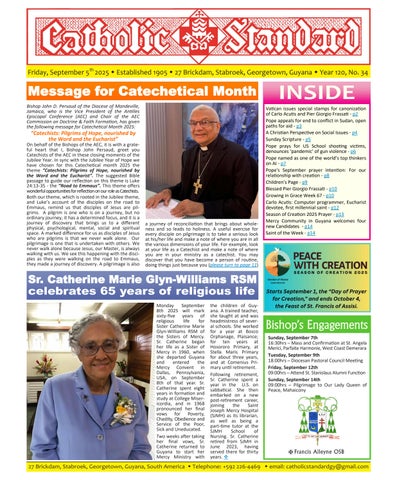

Message for Catechetical Month
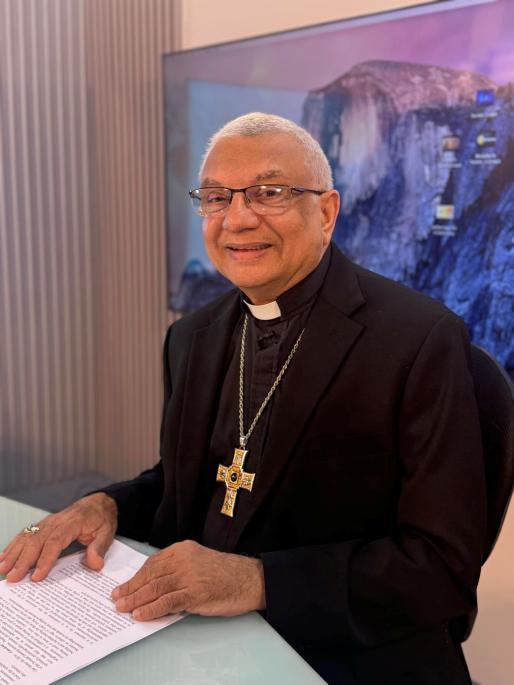
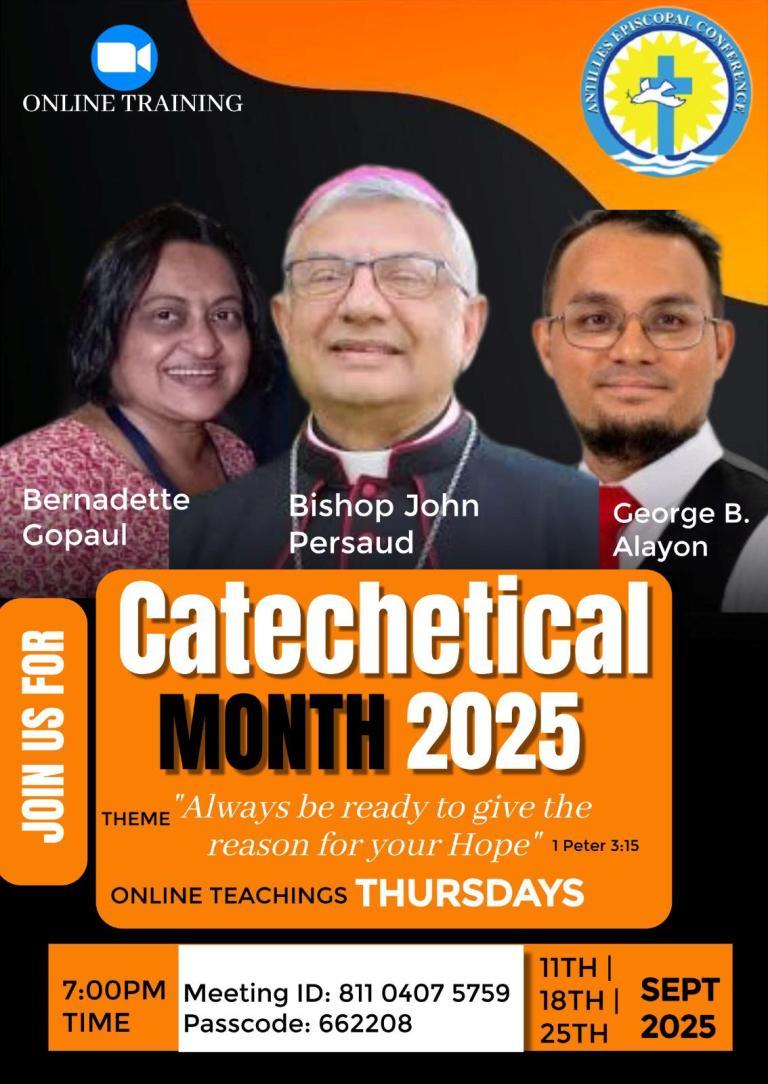
Bishop John D. Persaud of the Diocese of Mandeville, Jamaica, who is the Vice President of the Antilles Episcopal Conference (AEC) and Chair of the AEC Commission on Doctrine & Faith Formation, has given the following message for Catechetical Month 2025: “Catechists: Pilgrims of Hope, nourished by the Word and the Eucharist”
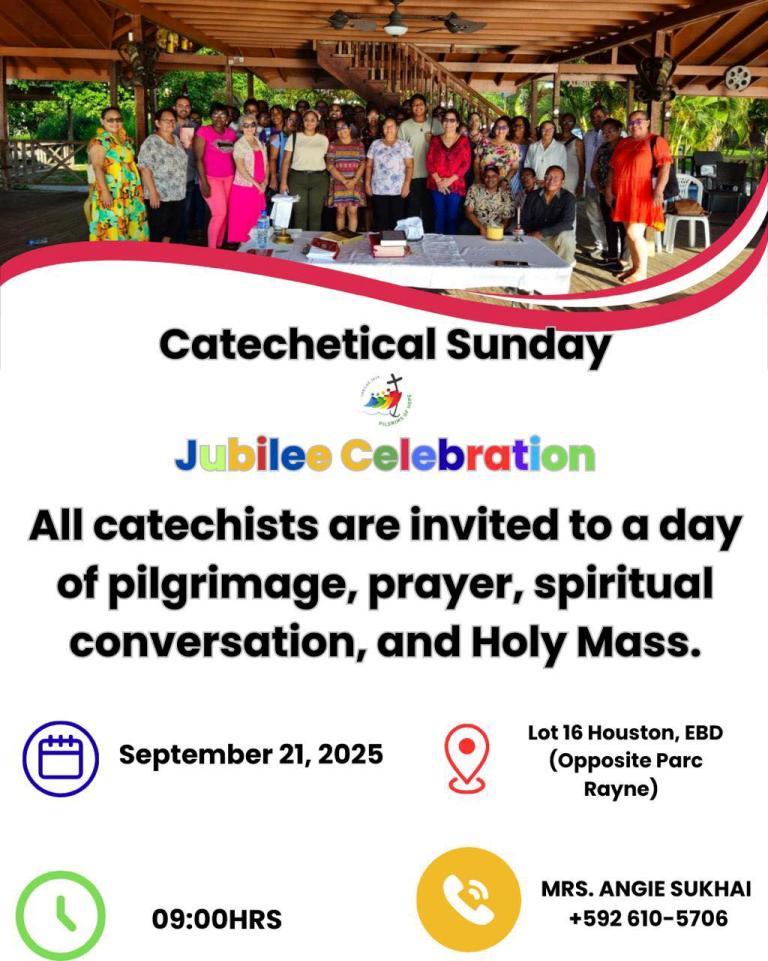
On behalf of the Bishops of the AEC, it is with a grateful heart that I, Bishop John Persaud, greet you Catechists of the AEC in these closing moments of the Jubilee Year. In sync with the Jubilee Year of Hope we have chosen for this Catechetical month 2025 the theme “Catechists: Pilgrims of Hope, nourished by the Word and the Eucharist”. The suggested Bible passage to guide our reflection on this theme is Luke 24:13-35 - the “Road to Emmaus”. This theme offers wonderfulopportunitiesforreflectiononourroleasCatechists
Both our theme, which is rooted in the Jubilee theme, and Luke’s account of the disciples on the road to Emmaus, remind us that disciples of Jesus are pilgrims. A pilgrim is one who is on a journey, but no ordinary journey, it has a determined focus, and it is a journey of discovery that brings us to a different physical, psychological, mental, social and spiritual space. A marked difference for us as disciples of Jesus who are pilgrims is that we never walk alone. Our pilgrimage is one that is undertaken with others. We never walk alone because Jesus, our Master, is always walking with us. We see this happening with the disciples as they were walking on the road to Emmaus, they made a journey of discovery. A pilgrimage is also
a journey of reconciliation that brings about wholeness and so leads to holiness. A useful exercise for every disciple on pilgrimage is to take a serious look at his/her life and make a note of where you are in all the various dimensions of your life. For example, look at your life as a Catechist and make a note of where you are in your ministry as a catechist. You may discover that you have become a person of routine, doing things just because you (please turn to page 11)
Sr. Catherine Marie Glyn-Williams RSM
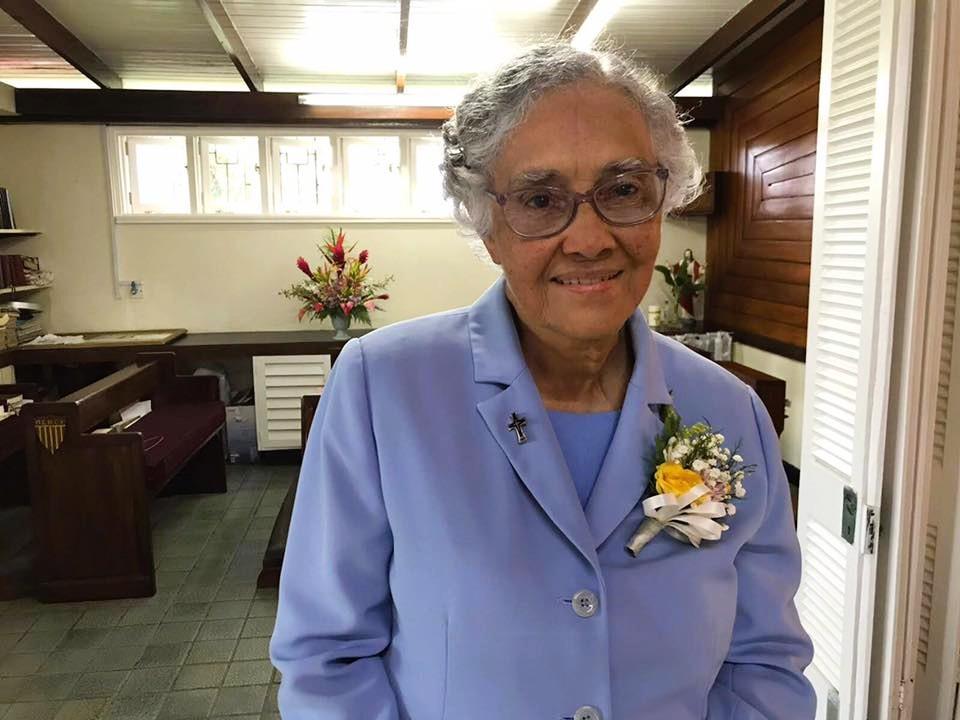
Monday September 8th 2025 will mark five years of religious life for Sister Catherine Marie Williams RSM of the Sisters of Mercy. Sr. Catherine began her life as a Sister of Mercy in 1960, when she departed Guyana and entered the Mercy Convent in Dallas, Pennsylvania, USA, on September 8th of that year. Sr. Catherine spent eight years in formation and study at College Miserin 1968 pronounced her final vows for Poverty, Chastity, Obedience and Service of the Poor, Sick and Uneducated.
Two weeks after taking her final vows, Sr. Catherine returned to Guyana to start her Mercy Ministry with
the children of Guyana. A trained teacher, she taught at and was headmistress of several schools. She worked for a year at Bosco Orphanage, Plaisance; for ten years at Hosororo Primary, at Stella Maris Primary for about three years, and at Comenius Primary until retirement. Following retirement, Sr. Catherine spent a year in the U.S. on sabbatical. She then embarked on a new post-retirement career, joining the Saint Joseph Mercy Hospital (SJMH) as its librarian, as well as being a part-time tutor at the SJMH School of Nursing. Sr. Catherine retired from SJMH in June 2023, having served there for thirty years. ❖
Vatican issues special stamps for canonization of Carlo Acutis and Pier Giorgio Frassati - p2
Pope appeals for end to conflict in Sudan, open paths for aid - p3
A Christian Perspective on Social Issues - p4
Sunday Scripture - p5
Pope prays for US School shooting victims, denounces ‘pandemic’ of gun violence - p6
Pope named as one of the world’s top thinkers on AI - p7
Pope's September prayer intention: For our relationship with creation - p8
Children’s Page - p9
Blessed Pier Giorgio Frassati - p10
Growing in Grace Week 67 - p10
Carlo Acutis: Computer programmer, Eucharist devotee, first millennial saint - p12
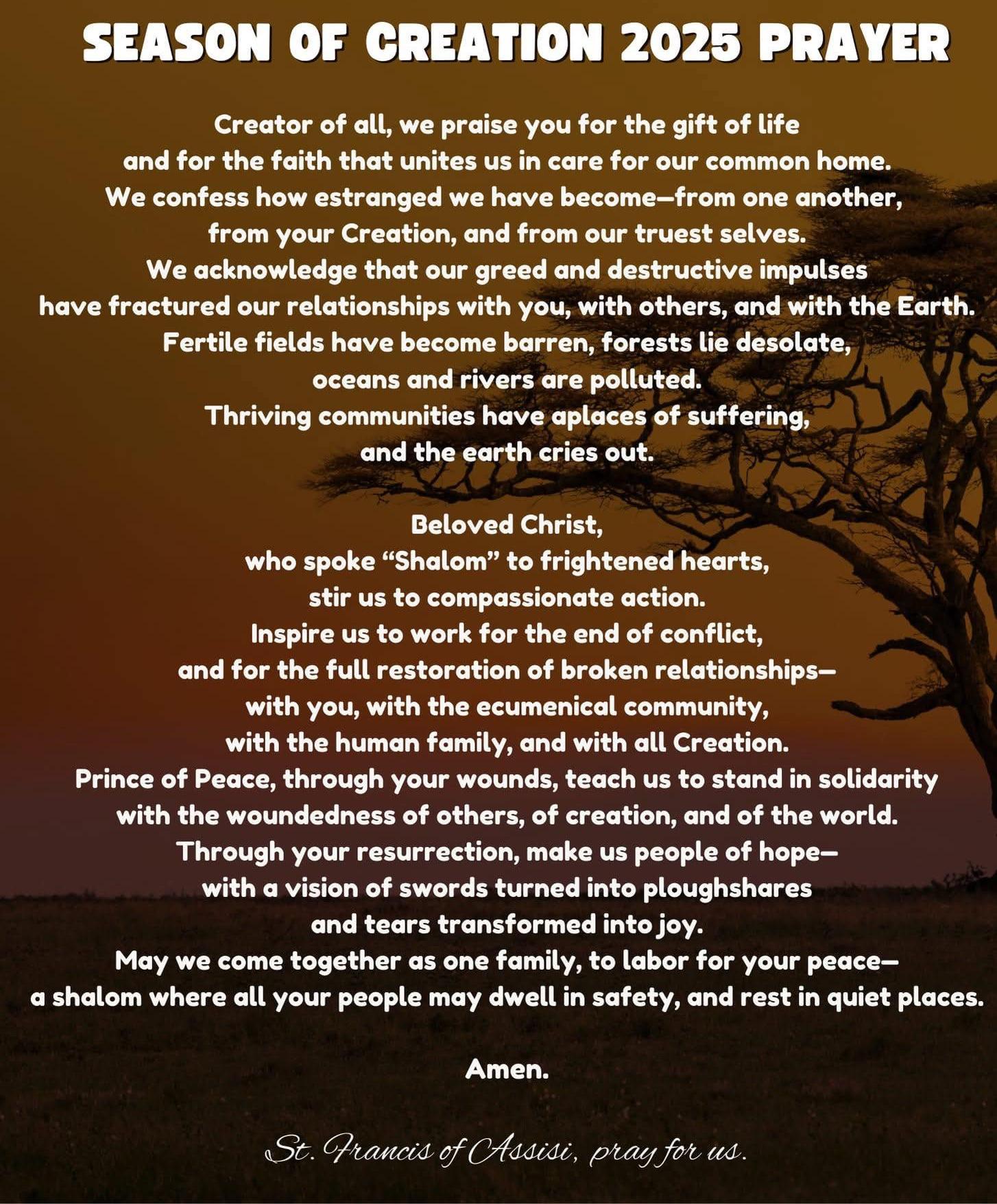
Season of Creation 2025 Prayer - p13
Mercy Community in Guyana welcomes four new Candidates - p14
Saint of the Week - p14
Sunday, September 7th
16:30hrs – Mass and Confirmation at St. Angela Merici,ParfaiteHarmonie,WestCoastDemerara
Tuesday, September 9th
18:00hrs– Diocesan Pastoral CouncilMeeting
Friday, September 12th
09:00hrs–AttendSt.StanislausAlumniFunction
Sunday, September 14th
09:00hrs – Pilgrimage to Our Lady Queen of Peace,Mahaicony
Francis Alleyne OSB
Vatican issues special stamps for Sep. 7 canonization of Carlo Acutis and Pier Giorgio Frassati
The Jubilee Prayer
Father in heaven, may the faith you have given us in your son, Jesus Christ, our brother, and the flame of charity enkindled in our hearts by the Holy Spirit, reawaken in us the blessed hope for the coming of your Kingdom.
May your grace transform us into tireless cultivators of the seeds of the Gospel.
May those seeds transform from within both humanity and the whole cosmos in the sure expectation of a new heaven and a new earth, when, with the powers of Evil vanquished, your glory will shine eternally.
May the grace of the Jubilee reawaken in us, Pilgrims of Hope, a yearning for the treasures of heaven. May that same grace spread the joy and peace of our Redeemer throughout the earth.
To you our God, eternally blessed, be glory and praise for ever.
Amen


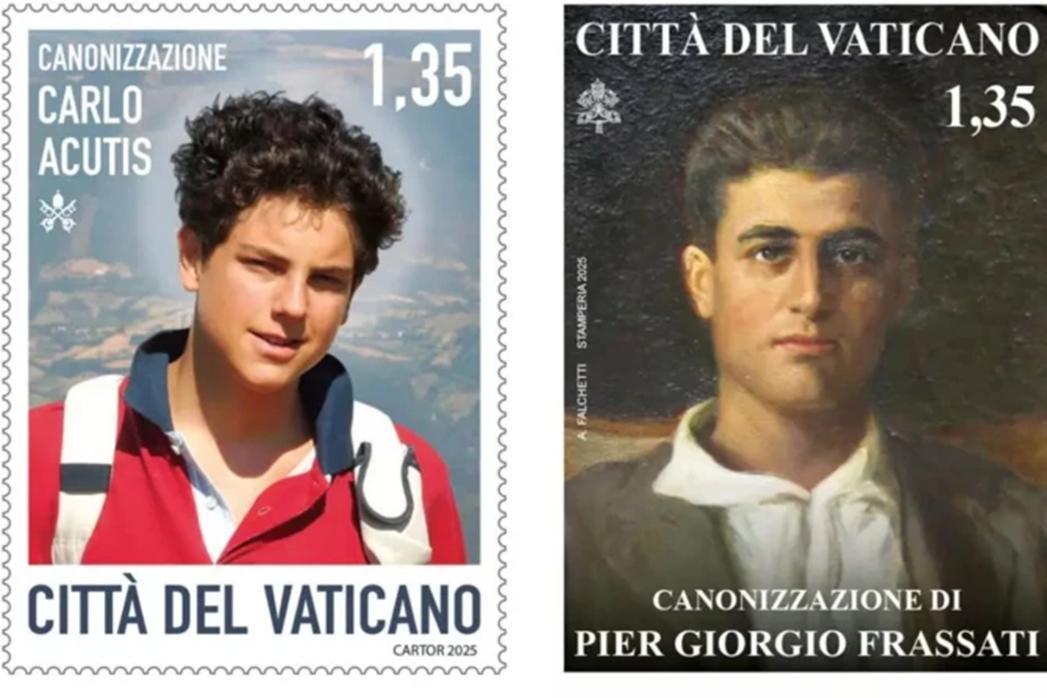
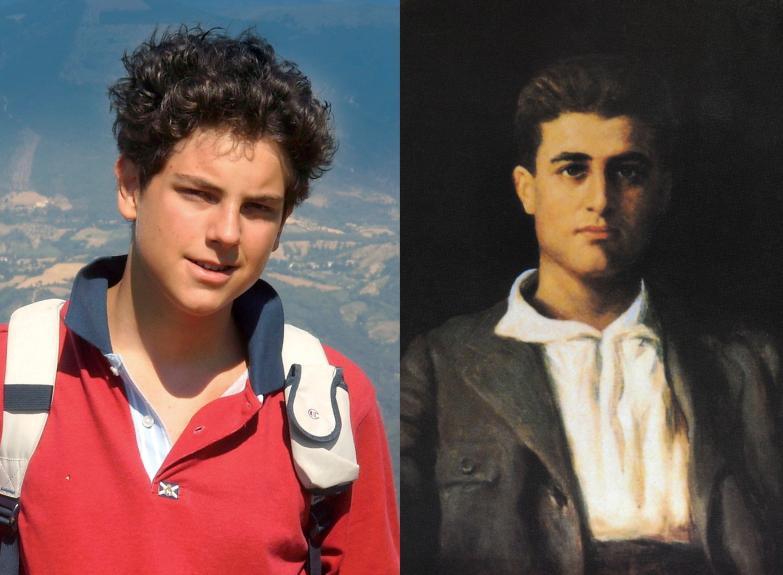
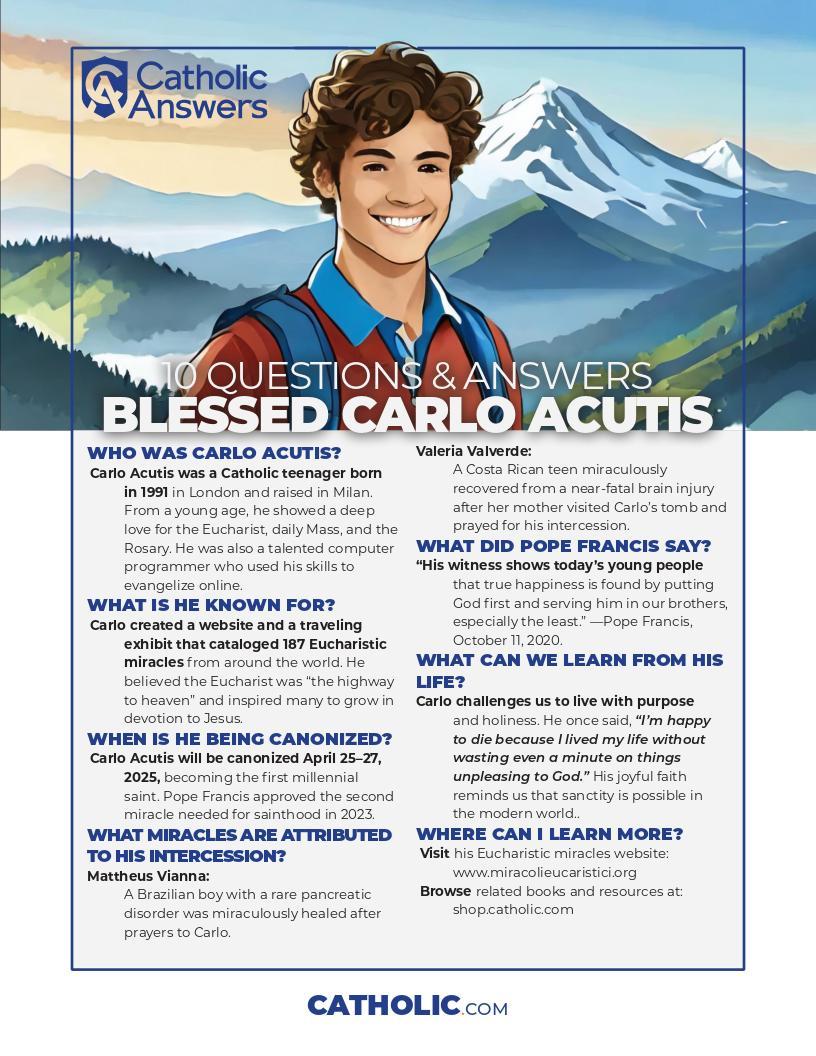
(CNA) - The young faces of Blessed Carlo Acutis (1991–2006) and Blessed Pier Giorgio Frassati (1901–1925) will be immortalized in special stamps issued on the occasion of their canonization. The canonization ceremony will be presided over by Pope Leo XIV on the morning of Sunday, Sept. 7, in St. Peter’s Square.
To pay tribute to these two young witnesses of the Gospel, the Postal and Philatelic Service of the Governorate of Vatican City State, in collaboration with the postal authorities of Italy, the Republic of San Marino, and the Sovereign Military Order of Malta, have prepared a special issue of commemorative stamps, according to the service’s website.
One of the stamps depicts the portrait of Pier Giorgio Frassati painted by artist Alberto Falchetti (1878–1951), a member of the Frassati family The other shows a photograph of Carlo Acutis wearing a red shirt and carrying a backpack, taken during a school trip to Mount Subasio, near Assisi, shortly before his untimely death from fulminant leukemia.
The Vatican Postal and Philatelic Service will issue 60,000 of the Acutis stamp and 50,000 of the Frassati stamp in collaboration with the Ministry of Enterprises, the San Marino Post Office, and the official postal service of the Sovereign Military Order of Malta, with a face value of 1.35 euros ($1.60) each.
Special postmarks
In addition, two postmarks have been created to commemorate the canonization, reflecting the saintly
lives of these two young men. The postmark for Acutis graphically reproduces the photo on the stamp, along with the symbol of the Eucharist with the monogram of Christ.
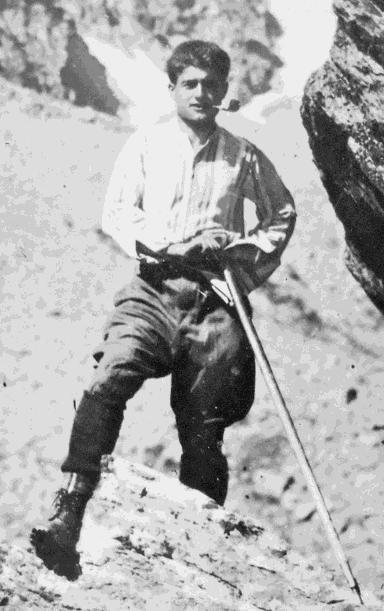
The Frassati postmark features his signature and the inscription “Verso l’alto” (“to the heights”), which he wrote on a photo of himself scaling a mountain a month before his death.
For Acutis, in addition to the stamp, a special commemorative folder has
also been issued as well as official first-day envelopes and the postmark from the “day of issue” at a cost of 10 euros ($11.66).
The new stamps and folder will be available for sale immediately after the canonization at the post office on St. Peter’s Square and at all Vatican post offices the following day.
The issuing of the new stamps seeks to underscore the power of the two young men’s Christian witness. ❖
Pope appeals for end to conflict
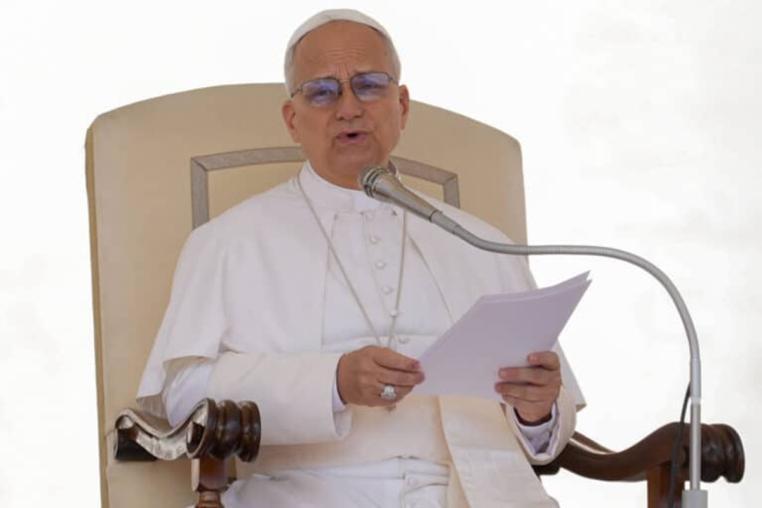
VATICAN CITY (CNS) Pope Leo XIV publicly called on the leaders of Sudan’s warring factions to negotiate an end to the violence and to ensure aid can reach desperate civilians.
A day after sending a telegram of condolence for people who died when heavy rains triggered a landslide in a remote area of Sudan, the pope publicly called for peace and for prayers Sept. 3 at the end of his weekly general audience.
“Dramatic news is coming from Sudan, particularly from Darfur,” Pope Leo said. “In el-Fasher many civilians are
trapped in the city, victims of famine and violence. In Tarasin, a devastating landslide has caused numerous deaths, leaving behind pain and despair. And as if that weren’t enough, the spread of cholera is threatening hundreds of thousands of people who are already exhausted.”
“I make a heartfelt appeal to those in positions of responsibility and to the international community to ensure humanitarian corridors are open and to implement a coordinated response to stop this humanitarian catastrophe,” the pope said.
A statement from the U.N. Commission on the Status of Women Sept. 2 said that with a standoff between warring factions surrounding el-Fasher for 500 days already, women and girls “have borne the brunt of a relentless siege. Cut off from humanitarian aid and protection, they face a daily risk of starvation as a weapon of war, and indiscriminate bombardment leading to deaths and sexual violence.”
“With food stocks depleted and efforts by the United Nations and its partners to move in with supplies hampered by attacks, families are now surviving on animal feed and tree leaves,” the commission said. “There have been repeated attacks on humanitarian personnel and assets in North Darfur over recent months.”
In his appeal, Pope Leo said that “it is time to begin a serious, sincere and inclusive dialogue among the parties, to put an end to the conflict and to restore hope, dignity and peace to the people of Sudan.”
Sudan has been in the throes of armed conflict since April 2023 when the Sudan Armed Forces and the paramilitary Rapid Support Forces started fighting.
The day before the pope’s general audience, Cardinal Pietro Parolin, Vatican secretary of state, sent a telegram to Bishop Yunan Tombe Trille Kuku Andali of El Obeid.
“His Holiness Pope Leo XIV was deeply saddened to learn of the devastation caused by the landslide in the village of Tarasin in Sudan’s Central Darfur region, and he assures everyone affected by this disaster of his spiritual closeness,” the telegram said.
Late Sept. 1 the Sudan Liberation Movement-Army, a rebel group controlling the area, reported that the entire village of Tarasin had been buried in the landslide Aug. 31 and that up to 1,000 people were dead. The group said only one person had survived, The Associated Press reported.
The BBC later quoted the U.N.’s deputy humanitarian coordinator for Sudan as saying at least 370 people had died in the landslide in the village, which is in the remote Marrah Mountains in western Sudan.
Antoine Gérard, the U.N. official, told the BBC that it was hard to assess the scale of the incident or the exact death toll as the area was very hard to reach.
Cardinal Parolin assured Bishop Andali that Pope Leo was “praying especially for the eternal rest of the dead, for those who mourn their loss, and for the rescue of the many persons still missing.”
Pope Leo also “offers encouragement to the civil authorities and emergency personnel in their ongoing relief efforts,” the cardinal said.❖
A Christian Perspective on Social Elections 2025: A thought or two
By GHK Lall
The Guyana Elections of 2025 are over. Though there will be questions and controversies, and suspicions and uncertainties will form part of the ongoing national conversation, the elections are done, with not much that can be done to change the outcome. I congratulate the winners, who return to govern for another five years. It has been a tough time for many Guyanese in the last five years. What is in store for the next five? By the grace of God Almighty, hopefully better. Plenty that is better for the ordinary Guyanese in a country blessed with so much abundant natural resources.
No Guyanese should be left behind, with his hand extended and wondering how come he or she is being ignored, left to manage however they can. Most of all, no Guyanese should know what it is to feel the pangs of hunger. There was too much of that in the past five years. There are too many sharp differences, too many hard resentments, that surfaced during the elections campaign. Voting
Day itself was smooth as silk, and as rough as a headache. Smooth because so few turned up to vote; rough due to so many staying away. The latter must represent an alarming development when a mere 58% of Guyanese exercised the franchise. Two out of five sitting on their hands is more an expression of negativity than of individual negligence.
Negativity in regard to the field of political contestants. Negative interest relative to the sea of promises, all of which were rich and had something to recommend them. The voters that stayed away bears some examination. What else could be at work, other than acute distrust for politicians and all that they promise? In a country with so much wealth, and so few citizens, the low voter turnout resonates with messages. Voter fatigue. Voter distaste. Voter apathy. Voter sickness. I believe that those are only the tip of the iceberg of dissatisfaction. When there was so much at stake, two of five Guyanese shook their heads from left to right: count me out.
What am I hearing, and I do not think that I am overreading, was that eligible voters felt that they have been fooled once too often, and that this time (this most crucial of all national elections), they will have their say. Two out five certainly wasted no time in doing so, and sent one message that can’t be denied, that will not go away in the months and years to come: we don’t believe. We don’t care. Why all of sudden, all this interest, all these promises? What happened all those years before, when it was such a grind to get from day to
day?
Right in the pages of this paper, I have repeatedly pleaded the cause of poor and needy Guyanese. Those with the power didn abused. On Monday, September 1st, those without power and without the basic provisions for daily life retaliated in the way that they know best: we don’t care for the promises. We don believe in the solemn commitments. Now that there is a new government, essentially the previous government, back in the halls of power, it has its work cut out for it. How will it be? Will it be the same, or will it have learned from the errors of the last five years?
It has a lease of five more years, and there is opportunity to do much more to inspire Guyanese. All Guyanese, not just a few insiders. That has been one of the albatrosses that hung around the old government was for primarily the rich and its own circle of self now has a golden opportunity to rebuild its credentials. Government has to be expansive, with the poor prioritized. Government must be inclusive with no demographic feeling targeted and weakened. I believe that the sharing of the economic pie was a major element in the low voter turnout. There is nothing for me, was what I heard and absorbed.
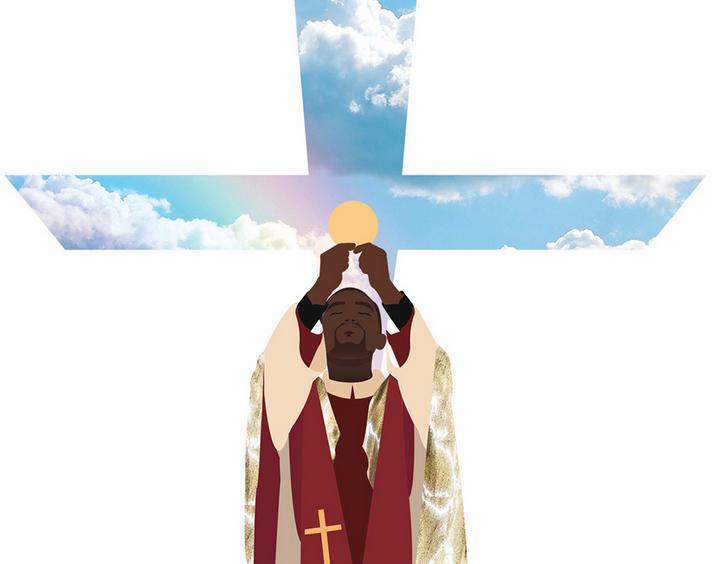
Gracious and loving God, we thank your for the gift of our priests. Through them, we experience your presence in the sacraments.
Help our priests to be strong in their vocation.
Set their souls on fire with love for your people.
The government needs to hear clearer than me, and absorb more quickly than I did. Then it must act. For the better. For the common good. For a Guyana that inspires. I say a silent prayer.❖

Grant them the wisdom, understanding, and strength they need to follow in the footsteps of Jesus. Inspire them with the vision of your Kingdom.
Give them the words they need to spread the Gospel.
Allow them to experience joy in their ministry.
Help them to become instruments
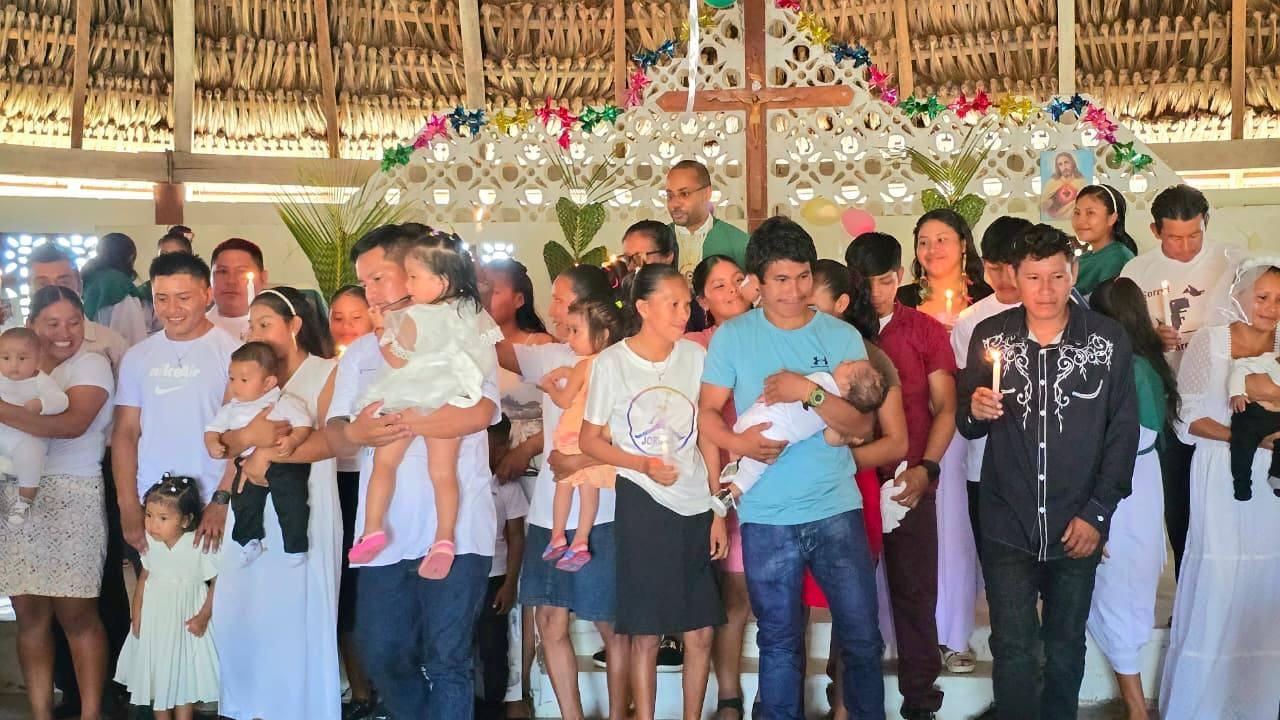
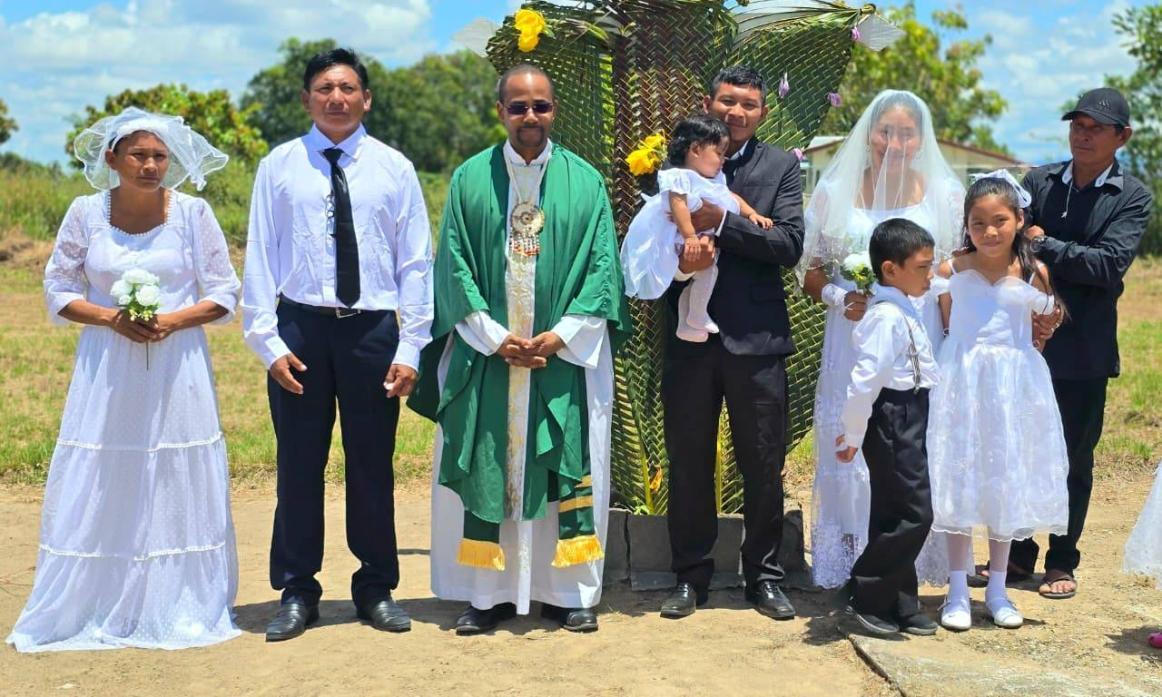
Last Sunday August 31st, two couples were married at St John Berchman Church, Sawariwau, South Rupununi, Region 9, Essequibo, Guyana. (St. Ignatius Mission Facebook Page)

FIRST READING: Wisdom 9:13-18
Who can divine the will of God?
‘What man indeed can know the intentions of God?
Who can divine the will of the Lord?
The reasonings of mortals are unsure and our intentions unstable; for a perishable body presses down the soul, and this tent of clay weighs down the teeming mind.
It is hard enough for us to work out what is on earth, laborious to know what lies within our reach; who, then, can discover what is in the heavens?
As for your intention, who could have learnt it, had you not granted Wisdom and sent your holy spirit from above?
Thus have the paths of those on earth been straightened and men been taught what pleases you, and saved, by Wisdom.’
RESPONSORIAL PSALM: Psalm 89:3-6, 12-14, 17
Response : O Lord, you have been our refuge from one generation to the next.
1. You turn men back into dust and say: ‘Go back, sons of men.’
To your eyes a thousand years are like yesterday, come and gone, no more than a watch in the night. Response
2. You sweep men away like a dream, like grass which springs up in the morning. In the morning it springs up and flowers: by evening it withers and fades. Response
3. Make us know the shortness of our life that we may gain wisdom of heart. Lord, relent! Is your anger for ever? Show pity to your servants. Response 4. In the morning, fill us with your love; we shall exult and rejoice all our days. Let the favour of the Lord be upon us: give success to the work of our hands. Response
SECOND READING: Philomon 1:9-10. 12-17
Have him back, not as a slave anymore but as a dear brother.
This is Paul writing, an old man now and, what is more, still a prisoner of Christ Jesus. I am appealing
Today’s readings make very clear the demands that will be made of those wanting to be called disciples of Christ. We must be prepared to give our all to Him. But in the end, the life of discipleship the stewardship way of life is the only life that can truly satisfy.
my own self. I should have liked to keep him with me; he could have been a substitute for you, to help me while I am in the chains that the Good News has brought me. However, I did not want to do anything without your consent; it would have been forcing your act of kindness, which should be spontaneous. I know you have been deprived of Onesimus for a time, but it was only so that you could have him back for ever, not as a slave any more, but something much better than a slave, a dear brother; especially dear to me, but how much more to you, as a blood-brother as well as a brother in the Lord. So if all that we have in common means anything to you, welcome him as you would me.
GOSPEL: Luke 14:25-33
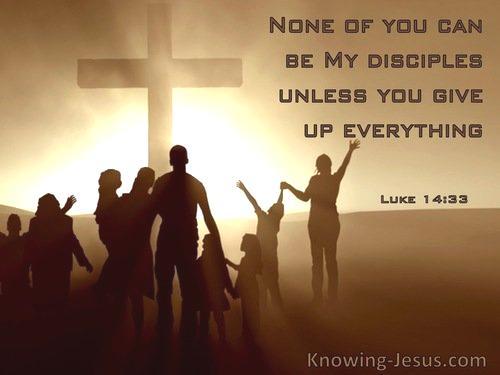
None of you can be my disciple unless he gives up all his possessions.
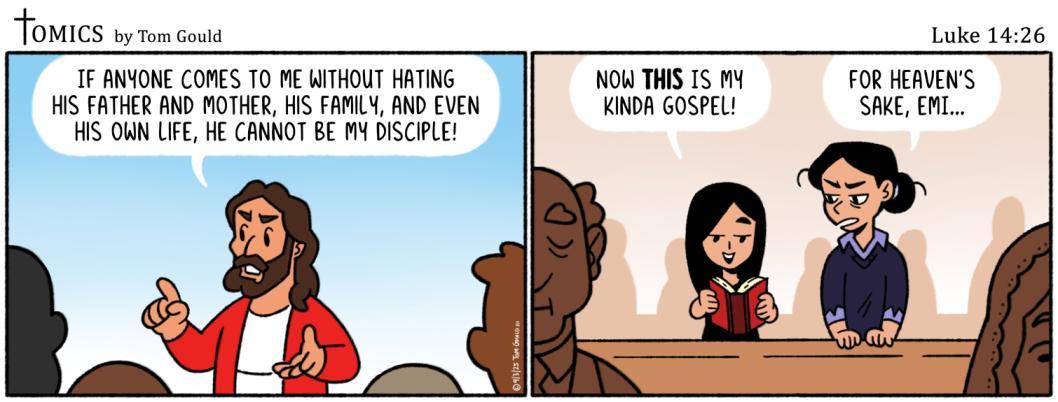
In the Gospel passage from Luke, Christ says, “If anyone comes to me without hating his father and mother, wife and children, brothers and sisters, and even his own life, he cannot be my disciple.” Our Lord is speaking here not of emotions but rather of priorities. He must come first in all aspects of our lives. Period.
He goes on. “Whoever does not carry his own cross and come after me cannot be my disciple.” In other words, it’s all or nothing. Compromise is simply not possible. Christ wants us to give all
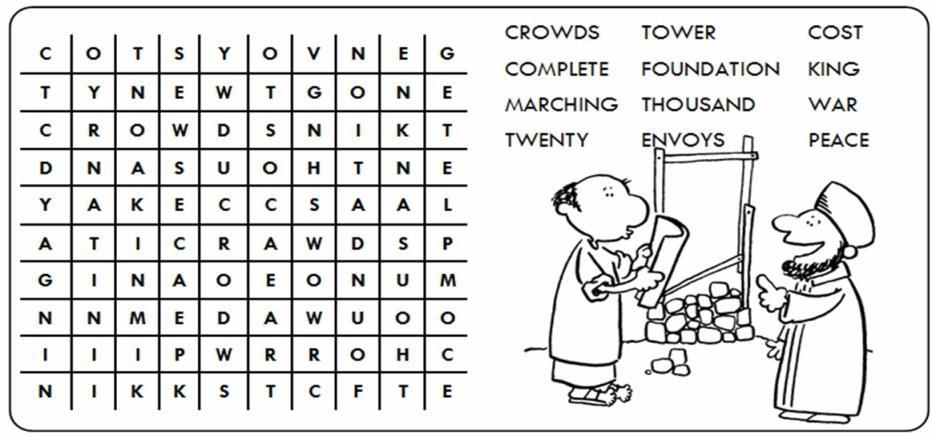
Anyone who does not carry his cross and come after me cannot be my disciple. ‘And indeed, which of you here, intending to build a tower, would not first sit down and work out the cost to see if he had enough to complete it? Otherwise, if he laid the foundation and then found himself unable to finish the work, the onlookers would all start making fun of him and saying, ‘Here is a man who started to build and was unable to finish’. Or again, what king marching to war against another king would not first sit down and consider whether with ten thousand men he could stand up to the other who advanced against him with twenty thousand? If not, then while the other king was still a long way off, he would send envoys to sue for peace. So in the same way, none of you can be my disciple unless he gives up all his possessions.”❖
of ourselves, all aspects of our individual lives, our family life, our parish over to Him and to the pursuit of His kingdom.
And just when we think our Lord might soften His message to make it a little more palatable, He goes further! “Anyone of you who does not renounce all his possessions cannot be my disciple.” Why is our Lord being so demanding? Only because He knows us so well and loves us so much.
He knows that if we do not live by putting Him first before all else, we will easily be swallowed up by the earthly cares that weigh us down our material things, our status, and our egos. He knows these things cannot satisfy us. He knows this because He is our Maker, and He made us for more. We are made to be His disciples, to seek after Him and His Kingdom. Embracing stewardship as a way life allows us to count the cost, and then run after Him with all our might.❖
[www.catholicsteward.com/blog/ ]
me without hating his father, mother, wife,
Pope Leo prays for US Catholic Gospel Reflection
Today’s Gospel passage is one of the most difficult to read. It actually sounds contrary to the Commandment that asks us to honour our mother and father. With its reference to turning our backs on father and mother, husband and wife, brother and sister, we recall the Gospel of the 20th Sunday in which Jesus talks of bringing division rather than peace on earth. His message has the potential for doing just that. It concerns discovering and understanding what Christian discipleship is all about especially in a society where the prevailing values are contrary to those of the Gospel. We are challenged to turn our backs on our very selves, to become as selfless as Jesus was.
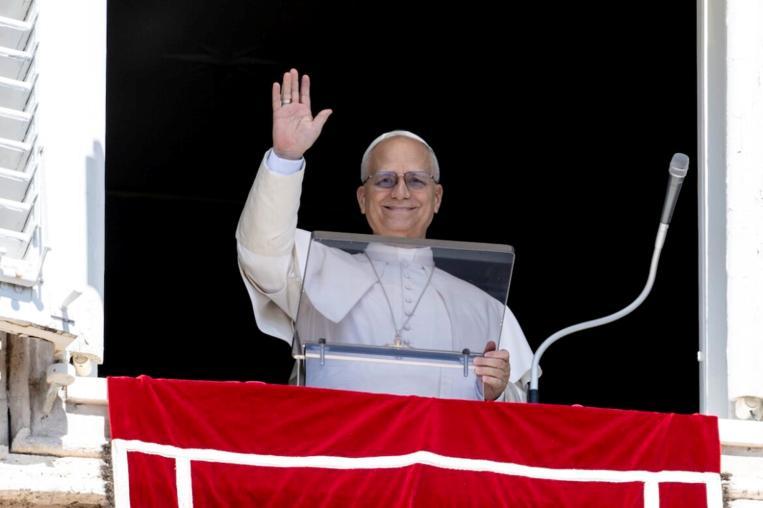
Pope Leo XIV waves to visitors and pilgrims in St. Peter's Square at the Vatican Aug. 31, 2025, before leading the recitation of the Angelus prayer. (CNS photo/ Vatican Media)
VATICAN CITY (CNS) Pope Leo XIV, praying publicly for the victims of the school shooting in Minneapolis, also prayed for an end to the “pandemic” of gun violence.
After reciting the Angelus prayer with visitors in St. Peter’s Square Aug. 31, Pope Leo switched from Italian to English when he led the prayers for the community of Annunciation Catholic School in Minneapolis where two children were killed during Mass Aug. 27 and 18 other people were injured.
In remembering “the victims of the tragic shooting during a school Mass in the American state of Minnesota,” the pope said, “we include in our prayers
the countless children killed and injured every day around theworld.”
“Let us plead God to stop the pandemic of arms, large and small, which infects our world,” he said. “May our mother, Mary, the Queen of Peace, help us to fulfill the prophecy of Isaiah: ‘They shall beat their swords into plowshares and their spears into pruning hooks.'”
Pope Leo also called again for an end to Russia’s war on Ukraine, decrying renewed attacks on various Ukrainian cities, including Kyiv.
“Unfortunately, the war in Ukraine continues to sow death and destruction,” the pope told thousands of people gathered for the midday prayer.
“I renew my closeness to the Ukrainian people and to all the wounded families,” he said, calling on everyone “not to give in to indifference but to draw near (to the Ukrainian people) through prayer and concrete acts ofcharity.”
“I strongly reiterate my urgent appeal for an immediate ceasefire and for a serious commitment to dialogue,” he said. “It is time for leaders to abandon the logic of weapons and to take up the path of negotiation and peace, with the support of the international community. The voice of weapons must be silenced, while the voice of fraternity and justice must be raised.”
Pope Leo also prayed for migrants from Africa who drowned Aug. 26 when their boat capsized off the coast of Mauritania as they were trying to reach Spain’s Canary Islands.
“Our hearts are also wounded by the more than 50 people who died and around 100 still missing in the shipwreck of a vessel carrying migrants who were attempting the 1,100kilometer (about 680-mile) journey to the Canary Islands, which capsized off the Atlantic coast of Mauritania,” the pope said.
“This deadly tragedy is repeated every day around the world,” Pope Leo said. “Let us pray that the Lord may teach us, as individuals and as a society, to fully put into practice his word: ‘I was a stranger, and you welcomed me.'”
Speaking in both English and Italian, the pope entrusted all the “injured, missing and dead everywhere to our Savior’s loving embrace.” ❖
Many have struggled with Jesus’ words in today’s Gospel: “Anyone who does not carry his [or her] cross and come after me cannot be my disciple.” Our cross may be the discomforts of a bad day, an injustice we are undergoing or a misunderstanding we have witnessed and feel powerless to change. It can be the pain of physical or mental suffering, ours or someone else’s. Jesus invites us to take up crosses like these so that we might experience him. He said that there is a price to be paid by all who wish to follow him, and it can be a high price at that. We must expect to pay dearly for what is worthwhile in life. This is why Jesus advised that we should sit down and think it out carefully to see if we are ready to pay the price. Following Jesus is serious business and should be undertaken with both eyes wide open. ❖
[From: Journeying with the Word of God, The Religious Education Department, Diocese of Georgetown, Guyana ]
Pope named as one of the world’s top thinkers on AI
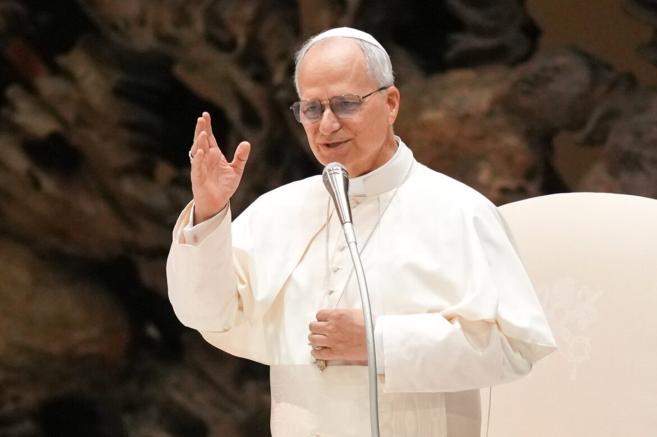
(OSV News) Pope Leo XIV has been named to Time magazine’s “Time 100 AI” list for 2025, recognized as one of the world’s top “thinkers” shaping how humanity confronts artificial intelligence.
Time magazine said he has chosen a name “in part to meet a revolution: that of AI.” The list includes “leaders,” “innovators,” “shapers” and the group Pope Leo has been listed in “thinkers.”
“His name choice is a tribute to Leo XIII, who served during the Industrial Revolution at the close of the 19th century, and railed against the new machine-driven economic systems converting workers into commodities,” Time wrote, presenting Pope Leo as part of the list.
The list is an “annual look at the most influential people in artificial intelligence,” Time said. Launched in 2023, “in the wake of OpenAI’s release of ChatGPT, the moment many becameaware of AI’s potential to compete with and exceed the capabilities of humans,” the aim of the list is “to show how the direction AI travels will be determined not by machines but by people innovators, advocates, artists, and everyone with a stake in the future of this technology.”
If Leo XIV continues to marshal the world’s Catholics against AI’s alienating potential, Time said, “Silicon Valley faces a formidable and unexpected spiritual counterweight.”
“Upon assuming the papacy in May, Leo XIV told the world that as artificial intelligence ushered in a ‘new industrial revolution,’ the technology would require the ‘defense of human dignity, justice and labor.'”
Time underlined the influence and magnitude of the institution Pope Leo is a leader of the Catholic Church, saying, “The Catholic Church comprises 1.4 billion believers; were it a nation, the church would be the world’s third-largest” presenting the pontiff as someone who, in terms of AI, is “already making good on his vow.”
The magazine said that when the Vatican hosted a convening in June on AI, ethics and corporate governance, Leo XIV’s keynote speech underlined AI’s potential as a force for good, particularly in health care and scientific discovery. But AI “raises troubling questions on its possible repercussions on humanity’s openness to truth and beauty, on our distinctive ability to grasp and process reality,” headded.
Time underlined that Pope Leo “warned that the technology
could be misused” for “selfish gain at the expense of others, or worse, to foment conflict and aggression.”
The list, published Aug. 29, includes tech CEOs, lawmakers, researchers and artists those who create AI engines, those who teach how to use them and research and those who flag about its consequences for humanity.
Bishop Paul Tighe, a top official at the Vatican’s Dicastery for Culture and Education, speaking in Dublin Aug. 23, cautioned on artificial intelligence warning that its hidden environmental costs, impact on jobs and broader social risks can’t be overlooked.
According to Bishop Tighe, who was ordained for the Archdiocese of Dublin in 1983, AI and the social issues that it gives rise to will be a priority for Pope Leo XIV.
“He has very clearly put it at the top of the agenda in terms of his choice of name and the link with ‘Rerum Novarum,’ and he explicitly said that reading the signs of the times this is something that we need to engage with,” the bishop said.
Under Pope Francis, Time reminded, “the Vatican
Journeying with the Word of God
had pushed for a binding international treaty on artificial intelligence, sending the world’s tech CEOs into a defensive crouch.”
Bishop Tighe confirmed that the dialogue with tech companies has been “intensifying” now under Pope Leo, and that “an element of trust has emerged which means that people know we are trying to search together for the best outcomes and for the best possibilities. In that context, the trust itself permits a more open dialogue.
” There is “still a commitment and a desire to have that conversation,” which has involved Vatican departments such as the Pontifical Academy for Life, the Pontifical Academy of Social Sciences, and the Dicastery for Culture and Education, he underlined.❖
MAKING THE WORD OF GOD YOUR OWN
Step 1: Lookattoday’sReadingsprayerfully.
1st Reading: Our human minds are not capable of taking in all the great mysteries of life. But God does not leave us in our ignorance. We are given the gift of wisdom and knowledge.
2nd Reading: Philemon was a Colossian who was converted by Paul. His slave ran away and somehow reached Paul in prison. Here Paul writes to Philemon urging him to take back the young man, not as a slave but as a brother.
Gospel: Jesus invites us to take up the cross, but also to be realistic in reckoning the cost involved in following his way.
Step2:ApplyingthevaluesoftheReadings toyourdailylife.
1.What is the image of God you had as a child? Has that image changed over the years? Do you think your understanding of God has changed over the years as you grew in wisdom and understanding?
2.What fears, anxieties or concerns do you feel the Gospel’s call to discipleship can raise?
3.Have you ever experienced feeling uncomfortable speaking about your religion or living your faith among your friends and family? Why is this was so?
4.What, in your opinion, is the challenge of the Second Reading? Do you really believe that our baptism makes us all equal?
Step 3: Accepting the message of God’s Wordinyourlifeoffaith
To follow Jesus calls for total renunciation of all that stands in the way of discipleship, for self-giving, for placing God’s kingdom before all else and to persevere on the journey.
Discipleship calls on us to abandon all the possessions and relationships that keep us from focussing on Christ and his message. This will mean recognising the values of society that are opposed to Gospel values and taking a stand against them when necessary.
Step 4: Somethingtothink&prayabout
1.List the things you need to do, to let go of, or to change in order to live the Gospel this coming week.
2.Think about and discuss with another person, the cost discipleship will place (or has placed) on you.
3.Do something special this week that will highlight your mission of discipleship that results from your baptism .❖
[From: Journeying with the Word of God, The Religious Education Department, Diocese of Georgetown, Guyana ]
(CNS photo/Lola Gomez)
Pope's September prayer intention:
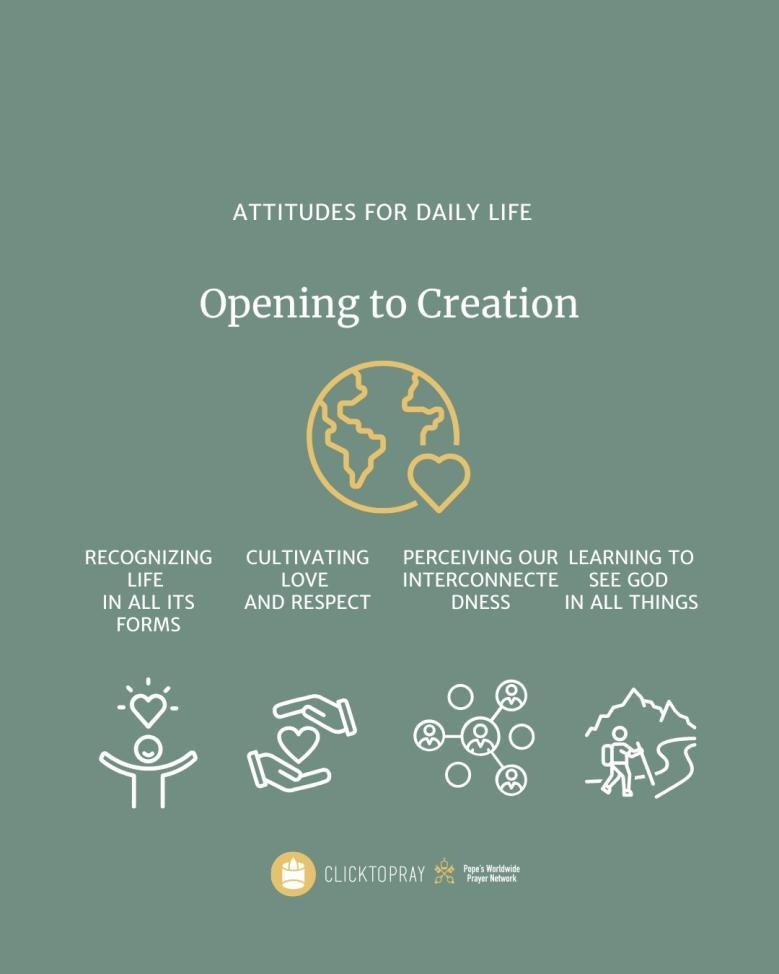
(Vatican News) - Pope Leo XIV’s prayer intention for September 2025 is for “our relationship with all of creation.”
In this month’s Pope Video, the Holy Father invites us to pray that “inspired by Saint Francis, we might experience our interdependence with all creatures who are loved by God and worthy of love and respect.”
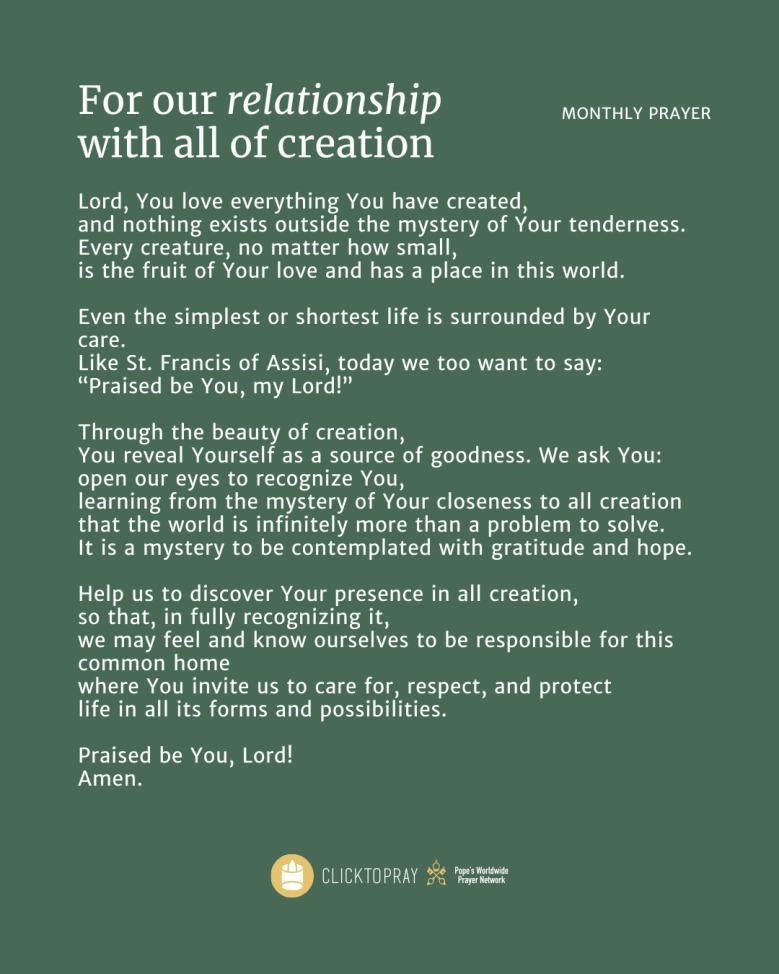
The prayer that follows emphasizes God’s love for all of creation, noting that “nothing exists outside” of His “tenderness” and recalling God’s care for “even the simplest or shortest life.”
“Like St Francis of Assisi, today we too want to say, ‘Praised be You, my Lord” – alluding, too, to Pope Francis’ landmark encyclical on the care of creation which begins with those very words.
Pope Leo’s prayer goes on speak of “the beauty of creation” as a revelation of God “as the source of goodness,” and asks Him to “open our eyes to recognize you, learning from the mystery of your closeness to all creation that the world is infinitely more than a problem to solve.”
Instead, the Pope says, “It is a mystery to be contemplated with gratitude.”
The Holy Father concludes his prayer with a plea to God to “help us discover Your presence in all creation, so that, in fully recognizing it, we may feel and know ourselves to be responsible for our common home where You invite us to care for, respect, and protect life in all its forms and possibilities.”
Living a moment of gratitude
In a press release accompanying the prayer, the Pope’s Worldwide Prayer Network – which is responsible for preparing each month’s intention –notes that “the video comes out within the context of the Season of Creation,
1 to October 4 (the Feast of Saint Francis of Assisi) that unites Christians from various denominations in prayer and action for thecare of the earth.” This year’s Season of Creation takes place as the Church marks both the 800th anniversary of Saint Francis’ “Canticle of Creation” and the 10th anniversary of Pope Francis’ encyclical Laudato sí
“The Jubilee of Hope and the 10th anniversary of the Encyclical Laudato Si’ invite us to live a moment of gratitude, commitment to and care for our common home,” says Cardinal Michael Czerny, the Prefect of the Dicastery for Promoting Integral Development, which supported the production of this month’sPope Video.
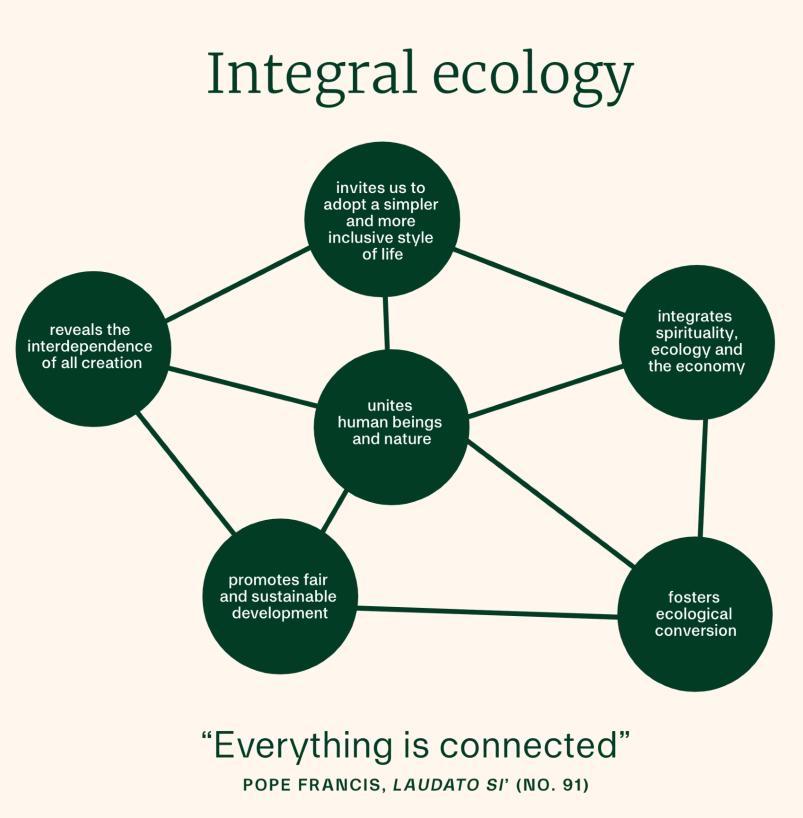
An interconnected world
Commenting on this month’s intention, the International Director of the Prayer Netword, Father Cristóbal Fones, S.J., explains that this month’s prayer intention “reminds us how interconnected our world is. Our wellbeing cannot be separated from other creatures living on earth, or from the ‘state of health’ of our planet.” “This month,” Father Fones continues, “the Pope invites us to reflect on how our actions affect nature, God’s work, and to seek ways of living that foster the restoration and natural balance and harmony between human beings and the environment. In the midst of such a competitive, hectic world, dominated by consumerism, a large part of humanity deeply longs to live well, closer to and more respectful of nature – a style of life that would allow us to contemplate it in an attentive silence that leads to an encounter with ourselves, with God and with others.”
Dear Boys and Girls,
We hope that you enjoyed your August holidays and are now excited to start the new School Year!
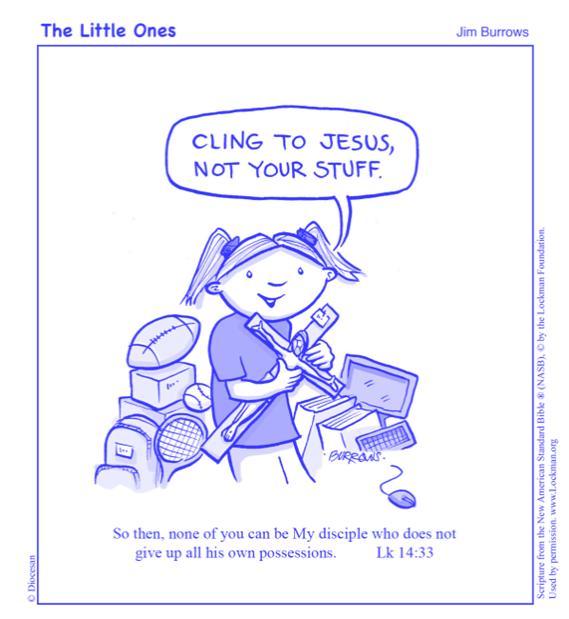
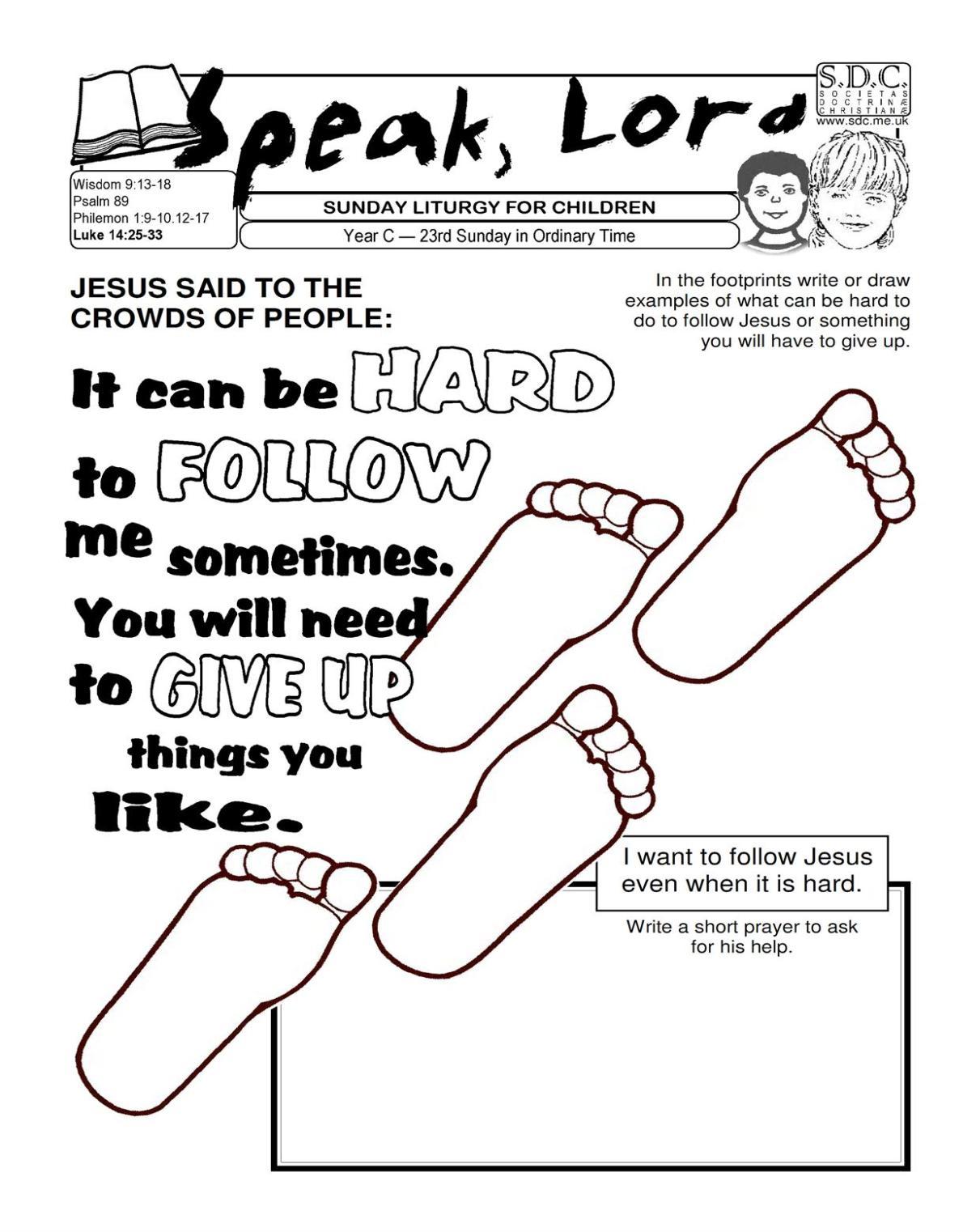
Today’s gospel speaks about following Jesus. We all face important decisions in life. The most important decision we face is whether we will follow Jesus or not. Perhaps you might say, "Oh, that is an easy decision. Of course I will follow Jesus," but Jesus warned that it isn't always easy to follow him. He said that we should sit down and count the cost. Will we choose to follow him if it means giving up friends who are making bad choices? Will we choose to follow him if it means we will never live in a big house or drive a fancy car?
Jesus said, "Anyone who does not carry his cross and follow me cannot be my disciple." Where did Jesus carry his cross? He carried it to Calvary. It was on that cross that Jesus gave his life so that we could have everlasting life. When we choose to carry our cross, it means that we are willing to give up everything to follow Jesus. It is a choice we have to make.
Dear Jesus, we thank you for being willing to carry your cross to Calvary. Help us to make the choice to take our cross and follow you. Amen. ❖
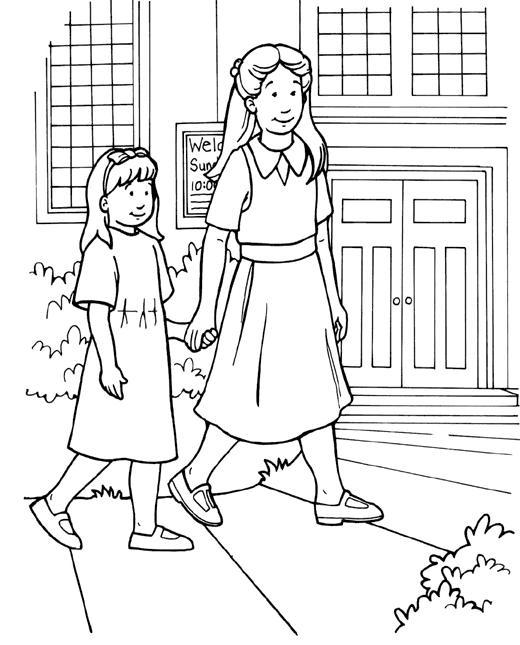
I will follow Jesus, God's Son
Blessed Pier Giorgio Frassati
Blessed Pier Giorgio Frassati is a saint for the modern world, and especially for the young people of our time. Born in 1901 in Turin, Italy, his time on earth was short-only 24 years-but he filled it passionately with holy living. Pier Giorgio was a model of virtue, a "man of the beatitudes," as Pope John Paul II called him at the saint's beatification ceremony in Rome on May 20, 1990. He was described by friends as "an explosion of joy." As Pier Giorgio's sister, Luciana, says of her brother in her biography of him, "He represented the finest in Christian youth: pure, happy, enthusiastic about everything that is good and beautiful."
To our modern world which is often burdened by cynicism and angst, Pier Giorgio's life offers a brilliant contrast, a life rich in meaning, purpose, and peace derived from faith in God. From the earliest age, and despite two unreligious parents who misunderstood and disapproved of his piety and intense interest in Catholicism, Pier Giorgio placed Christ first in all that he did. These parental misunderstandings, which were very painful to him, persisted until the day of his sudden death of polio. However, he bore this treatment patiently, silently, and with great love.
Pier Giorgio prayed daily, offering, among other prayers, a daily rosary on his knees by his bedside. Often his agnostic father would find him asleep in
this position. "He gave his whole self, both in prayer and in action, in service to Christ," Luciana Frassati writes. After Pier Giorgio began to attend Jesuit school as a boy, he received a rare permission in those days to take communion daily. "Sometimes he passed whole nights in Eucharistic adoration." For Pier Giorgio, Christ was the answer. Therefore, all of his action was oriented toward Christ and began first in contemplation of Him. With this interest in the balance of contemplation and action, it is no wonder why Pier Giorgio was drawn in 1922 at the age of 21 to the Fraternities of St. Dominic. In becoming a tertiary, Pier Giorgio chose the name "Girolamo" (Jerome) after his personal hero, Girolamo Savonarola, the fiery Dominican preacher and reformer during the Renaissance in Florence. Pier Giorgio once wrote to a friend, "I am a fervent admirer of this friar (Savonarola), who died as a saintat the stake."
Pier Giorgio was handsome, vibrant, and natural. These attractive characteristics drew people to him. He had many good friends and he shared his faith with them with ease and openness. He engaged himself in many different apostolates. Pier Giorgio also loved sports. He was an avid outdoorsman and loved hiking, riding horses, skiing, and mountain climbing. He was never one to pass on playing a practical joke, either. He relished laughter and good humor.
As Luciana points out, "Catholic social teaching could never remain simply a theory with [Pier Giorgio]." He set his faith concretely into action through spirited political activism during the Fascist period in World War I Italy. He lived his faith, too, through discipline with his school work, which was a tremendous cross for him as he was a poor student.
Most notably, however, Pier Giorgio (like the Dominican St. Martin de Porres) lived his faith through his constant, humble, mostly hidden service to the poorest of Turin. Although Pier Giorgio grew up in a privileged environment, he never lorded over anyone the wealth and prestige of his family. Instead, he lived simply and gave away food, money, or anything that anyone asked of him. It is suspected that he contracted from the very people to whom he was ministering in the slums the polio that would kill him.
Even as Pier Giorgio lay dying, his final week of rapid physical deterioration was an exercise in heroic virtue. His attention was turned outward toward the needs of others and he never drew attention to his anguish, especially since his own grandmother was dying at the same time he was. Pier Giorgio's heart was surrendered completely to God's will for him. His last concern was for the poor. On the eve of his death, with a paralyzed hand, he scribbled a message to a friend, reminding the friend not to forget the injections for Converso, a poormanPierGiorgiohadbeenassisting When news of Pier Giorgio's death on July 4, 1925 reached the neighborhood and city, the Frassati parents, who had no idea about the generous selfdonation of their young son, were astonished by the sight of thousands of people crowded outside their mansion on the day of their son's funeral Mass and burial. The poor, the lonely, and those who had been touched by Pier Giorgio's love and faithful example had come to pay homage to this luminous model of Christian living.
Pier Giorgio's mortal remains were found incorrupt in 1981 and were transferred from the family tomb in the cemetery of Pollone to the Cathedral of Turin. ❖ https://www.ewtn.com/catholicism/saints/
By Renika Anand
Forgiveness for the future
Paul Lewis Boese, a motivational speaker and author once said “Forgiveness does not change the past but it does enlarge the future.”
Our world is a complex web of intricate interactions. We meet new people every day and affect each other in small and large ways. Sometimes, these interactions lead to moments where we hurt others or are hurt by others. Misunderstandings and conflict are a natural part of learning to navigate the world. However, a true mark of growth lies in being able to forgive one another in moments when we are wronged.
Forgiveness is an abstract concept to understand, and an even more difficult one to master. It is especially difficult to forgive someone when their negative actions have been constant and unregretted. Nevertheless, learning to forgive others does not only lessen the emotional burdens that you carry, but it also opens doors in our futures. Forgiveness can change a foe into a friend, pain into peace and hatred into love. It is a gift that we give ourselves as a reward for the compassion we have for other human beings.
“Be kind and compassionate to one another, forgiving each other, just as in Christ God forgave you.” Ephesians 4:32❖


have to, or you may have become a person that spends less time in prayer, or that social outreach is lacking. Sometimes the demands of life do this to us and so it is important to set aside periods of serious reflection. I invite you to make this month of September 2025 that period of reflection.
I invite and challenge you, Catechists, to let this Catechetical month be a means of recapturing what pilgrimage offers and develop this dimension of our discipleship as a constitutive dimension of our life in Christ. Let it take you places where you can discover new dimensions of your life in new light. Jesus is a companion who helps you make wonderful discoveries and makes life exciting. Note how he journeyed with the two disciples and brought them from disillusionment and despair to clarity and light: from moving deeper into darkness to a return to Jerusalem and the community. As our theme states, we are not just pilgrims but pilgrims of HOPE. Hope is probably the most misunderstood and abused virtue in Christian consciousness. Very often it is practiced as the last resort virtue: after we have tried everything else then we turn to hope. BUT that is not Christian Hope. Christian hope is born of a relationship of trust and love that allows one to know God as a faithful God who never abandons his people. Thus, during trials, difficulties and challenges disciples never despair but live hope that all is well for all is in God. People of hope are people of Faith and though they may not have the answers, see the light and goodness in all things. This kind of hope is not based on selfreliance but in the infinite goodness of our Triune God.
Our theme this year offers two dimensions through which we can grow in our discipleship as ‘Catechists: Pilgrims of Hope’. The Eucharist and the Word of God are both sources of nourishment and means of deepening our relationship with God that allow us to be authentic cultivators of the seeds of the Gospel. As often as we approach the table of the Word of God and the table of the Eucharist, we experience refreshment and nourishment through the abundant grace of God to be transformed and become missionary disciples in the vineyard of the Lord.
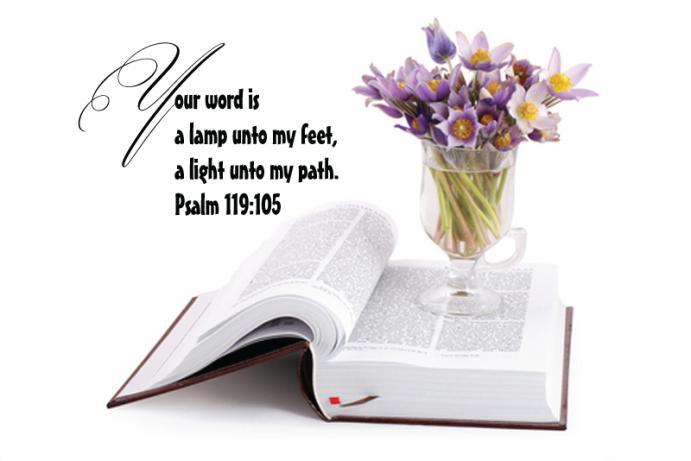
“The Word of God is a lamp unto my feet, and a light unto my path.” (Ps. 119:105), and it instructs our lives.
The Word of God, an expression of God’s creative action, which from the dawn of creation brought life into being, became flesh in Jesus of Nazareth.
Pope Benedict XVI writes in Verbum Domini # 72
With the Synod Fathers I express my heartfelt hope for the flowering of ‘a new season of greater love for Sacred Scripture on the part of every member of the People of God, so that their prayerful and faith-filled reading of the Bible will, with time, deepen their personal relationship with Jesus. And again, the biblical dimension of catechesis is underlined in Verbum Domini # 74
An important aspect of the Church’s pastoral work which, if used wisely, can help in rediscovering the centrality of God’s word is catechesis, which in
its various forms and levels must constantly accompany the journey of the People of God. Luke’s description (cf. Lk 24:13-35) of the disciples who meet Jesus on the road to Emmaus represents, in some sense, the model of a catechesis centered on “the explanation of the Scriptures”, an explanation which Christ alone can give (cf. Lk 24:27-28), as he shows that they are fulfilled in his person. The hope which triumphs over every failure was thus reborn, and made those disciples convinced and credible witnesses of the Risen Lord.
Each day, I urge you catechists to develop the discipline of prayer that integrates Sacred Scripture. This may take the form of Lectio Divina or imaginative contemplation or simply allow the Word of God to resonate inside of you and make a home in your heart.
The Church teaches that the EUCHARIST is the source and summit of the Christian life. It is the beginning and foundation from which Christian life and mission emerge. At the table of the Eucharist the faithful are invited to become one with Jesus in his offering on the cross. Their participation in the Eucharist allows them to experience an encounter with the living Lord that heals, transforms, and empowers them to be the body of the Lord in the world. Frequent participation in the Eucharist allows the catechist to be nourished by the Body and Blood of Christ, and to become the Body of Christ, broken and shared, for others. This is the greatest place of grace and so we must commit ourselves to being present.
The Eucharistic celebration is a communal worship that transcends our individual relationship with God, it molds us into the Eucharist itself, making us the body of Christ in the world. We are then sent to love and serve the world. In the Eucharistic celebration we become companions and pilgrims on the journey to heaven. We must not fool ourselves that any of us can attain heaven without others. We need others to companion us as we make this lifelong journey. Remember we are pilgrims on this earth destined for heaven. That is the hope we hold dear to us as Christians.
As we celebrate catechetical Month 2025 and reflect on our lives as Catechists let us re-commit ourselves to be nourished by the Word of God and the Eucharist. Through these, we would become pilgrims of hope, equipped to be hope to all we encounter. By allowing the Word and Eucharist to nourish us we would become a Eucharistic people living as the Body of Christ.
My dear Catechists, on behalf of the Bishops of the AEC, I thank you once again for your service to the Church of our region and though we face many challenges, you stand committed to form the People of God. Your service is of paramount importance to the sustenance of our Church, and I pray God’s blessings upon each one of you and your family.
May God bless and keep you.
May he let his face shine upon you and be gracious to you.
May he lift up his countenance and give you, his peace.❖
Eucharist devotee, first millennial saint
(OSV News)
a PlayStation. He made awkward videos with his friends. His favorite cartoon was
On Feb. 22, 2020, Pope Francis approved a miracle attributed to Carlo Acutis, paving the way for his beatification. Acutis’ intercession helped to heal a Brazilian child suffering from a rare condition of the pancreas in 2013. In May 2024, Pope Francis approved a second miracle attributed to Carlo: the unlikely recovery in 2022 of a Costa Rican woman who suffered a traumatic head injury in a bicycle accident. That miracle cleared thepath to his canonization.
Young Carlo’s deep love for Jesus Acutis’ mother, Antonia, doesn’t know how he came to love Jesus. He’d been baptized as a baby, but the family didn’t practice the faith. Perhaps it was their Polish nanny who told Carlo about Jesus. Regardless of the source, Carlo had a deep love for Jesus even as a preschooler, asking his bemused mother if they could stop in to see Jesus when they walked past churches in their Milan neighborhood and even insisting on taking flowers to place at the feetof theBlessed Mother. Antonia wasn’t sure what to do with this piety in her young son, and she wasn’t prepared to answer his many questions. But as he asked, she began to wonder as well. His curiosity eventually prompted her to take theology classes; beyond just being back at Mass, Antonia was diving into her faith, and all because of Carlo. “He was like a little savior for me,” she said in an interview published in 2019. Carlo’s longing for the Eucharist drove him to ask permission to receive earlier than was customary. At 7, Carlo received his first Communion and never missed Mass again. Not just Sunday Mass, either. Every day of his life, Carlo went to Mass. Every day, he stole a few minutes to pray in silence before the tabernacle. And while his parents sometimes went with him, Carlo often went alone. When they traveled, Carlo’s first order of business was to find a church and figure out Mass times. Whether or not his parents joined him, Carlo would be there. Every day.
And they traveled quite a bit. Carlo’s deep love of Mary (whom he called “the only woman in my life”) led the family to Marian apparition sites all
over Europe. But their pilgrimages became more intentional when Carlo
After receiving his first Communion, Carlo had begun to lament the many, t go to Mass. ll stand in line for hours to go to but won’t stay even a moment before the Eager to do something to draw souls to Jesus, young Carlo began
He was convinced thatpeople wouldn’t be able to stay away from the holy Mass if they knew about the miracles of Lanciano and Poznan and the dozens of others recognized by the church. So Carlo began to research, dragging his parents from one shrine to another in order to take pictures for the website
An ordinary, modern kid who wanted holiness with all his heart
This was only 2002, but Carlo was something of a prodigy when it came to technology. When he was only 8 or 9, he had gotten a hold of a universitylevel computer science textbook, using it to teach himself to code. From there, he moved into animation and video editing, making videos with his friends and dubbing voice-overs on videos of his dogs. Carlo had the tech savvy, the information and the drive the resulting website documenting nearly 150 miracles eventually developed into an exhibit that has traveled the world. But Carlo was no computer geek closeted in a back bedroom. For all his technological skill, Carlo was a friendly, outgoing kid. He was so friendly that his family was reluctant to go on walks with him; Carlo knew everybody, it seemed, and couldn’t help but stop to talk to every person he passed. He had a sensitive heart and was always looking out for those who were suffering: classmates whose parents were going through a divorce, kids who were being bullied.
Carlo’s approach was always friendship. And through that friendship, people were always drawn to Jesus. As pure and as pious as he was, nobody felt judged by the young saint. His uncle says that being with Carlo filled your heart. And that joy left people seeking and wondering, as Carlo’s mother had years before. A young Hindu man who worked for Carlo’s family was baptized as a direct result of his friendship with Carlo, manyothersreturnedtothefaith Carlo was particularly close to the homeless people in his neighborhood, packing up food most days to take out to his friends on the street. Though his family was wealthy, Carlo had no patience for excess. He saved up his pocket money to buy a sleeping bag for a homeless friend, and when his mother suggested they buy Carlo such “luxuries” as a second pair of shoes, he revolted. Technology, though, wasn luxury. It was an important part of his apostolate, and Carlo had no qualms about using three computers when building his website.
Through all this, every day: Mass, the
rosary, silent time before the tabernacle. Carlo insisted that holiness was impossible otherwise. “The Eucharist is my highway to heaven,” he would say, and nothing could get between him and his daily appointment with the Lord. “The more we receive the Eucharist, the more we will become like Jesus,” Carlo said. How did he have the time? In between teaching himself to code, playing soccer, riding his bike around Milan to visit the poor, teaching himself the saxophone, patiently explaining technology to his older relatives and making one movie after another? According to his mother, Carlo didn’t waste time on useless things. He limited himself to an hour a week of video games (because, he said, he didn’t want to become a slave to them) and focused the rest of his time on things that were valuable. But that didn’t exclude silly animations or videos of his dogs Carlo knew that something doesn’t need to be catechetical to be valuable, and he enjoyed leisure all the more because its greatest value was in being fun.
Carlo hungered for heaven. “We have always been awaited in heaven,” he said, and throughout his life his eyes were fixed on eternity. So when, at 15, he went to the hospital with the flu
acute and untreatable leukemia, Carlo wasn’t upset. He was ready to go home. “I can die happy,” he told his mother, “because I haven’t wasted even a minute on things that aren’t pleasing to God.”
Within three days,Carlo was dead. He was a remarkable young man, but he was an ordinary man. He had no visions. He didn’t levitate when he prayed. He just lived like heaven was real. He was completely himself, video games and computer programming and all, but entirely Christ’s.
On his website, Carlo wrote a list of instructions for becoming holy, encouraging people to go to Mass daily and confession weekly. But his very first rule for becoming holy was this: “You must want it with all your heart.”
This is the legacy of Blessed soon Saint Carlo Acutis: an ordinary, modern kid who watched cartoons and used the internet and wanted holiness with all his heart. This is why the world loves him. Because he shows us that holiness is possible. For every one of us. Even if you have an Instagram account. Even if you’re a gamer.
Carlo Acutis was born in 1991. That fact alone is a testimony: Holiness is possible. For you. Right now.
But you have to want it. ❖
September 7
welcomes four new Candidates
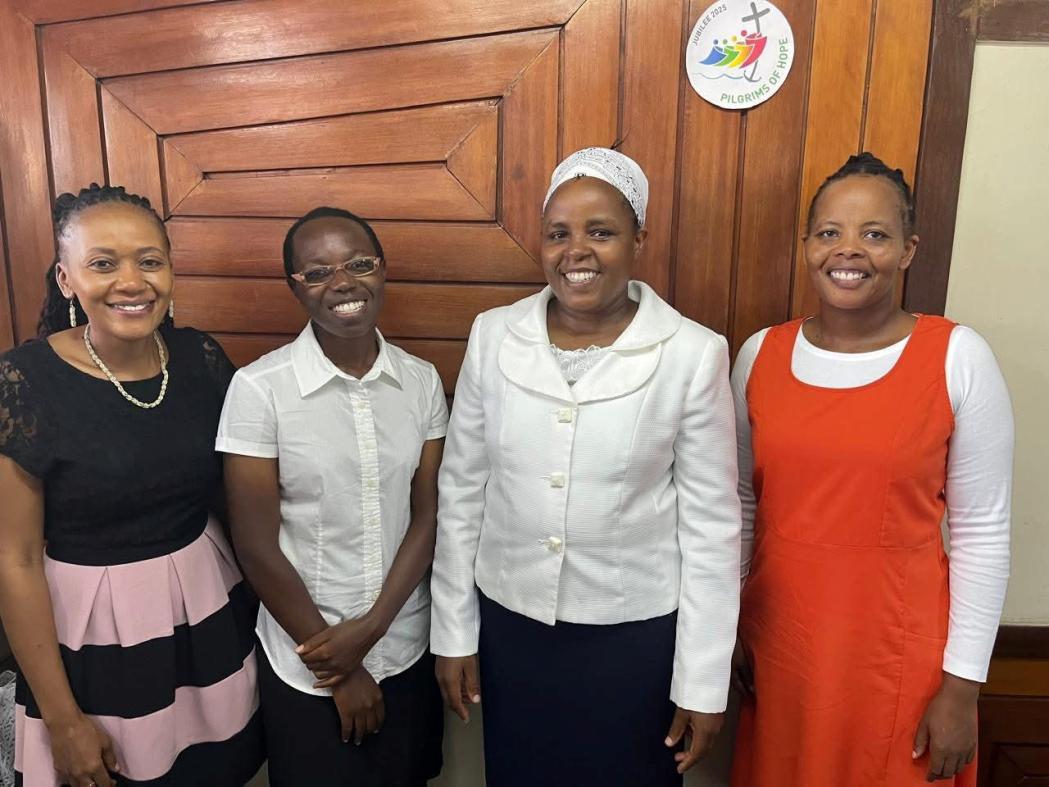
With great joy, the Mercy community in Guyana welcomed four new Candidates on Sunday, August 31st: Mary Kariuki, Damaris Kitili, Lydiah Waruguru, and Loise Waithaka.
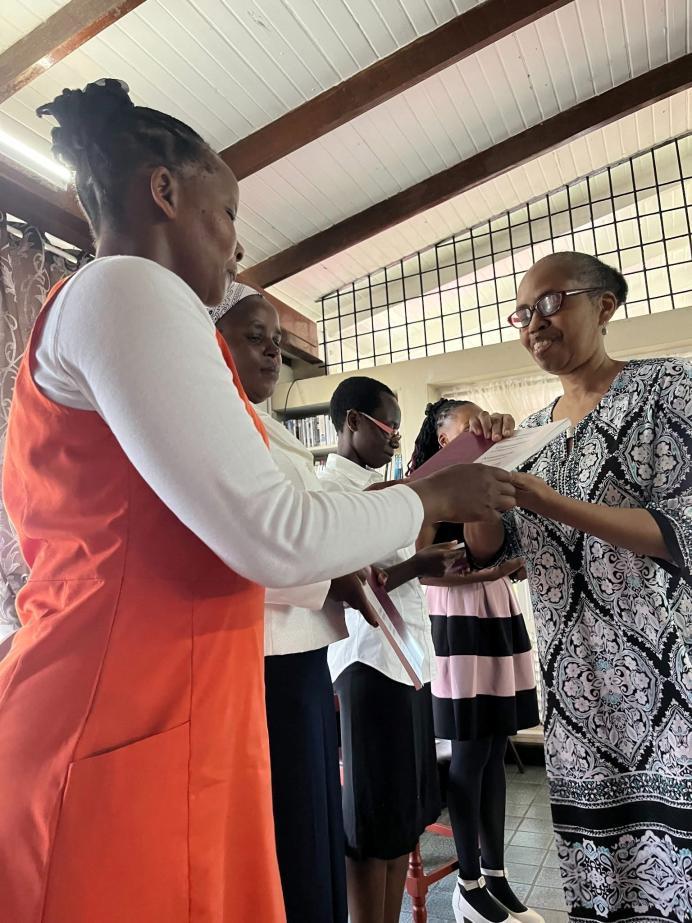
Originally from Kenya, these four women have spent the past year living with the Sisters of Mercy in Guyana and serving in various ministries. Their candidacy began with a simple but meaningful ritual at the Meadow Brook Convent, where they “knocked at the door of Mercy” as a sign of their desire to grow closer to God and to the Mercy community.
Presented by Sister Anna Gakuhi, RSM, and formally received by Sister Julie Matthews, RSM, Institute Minister, the new Candidates were warmly embraced by the sisters, women in discernment, and Mercy Volunteers. The celebration ended in true Mercy spirit with refreshments, conversation, and joyful cultural dancing.
Let us hold Mary, Damaris, Lydiah, and Loise in prayer as they continue their journey of discernment.❖
Saint of the Week
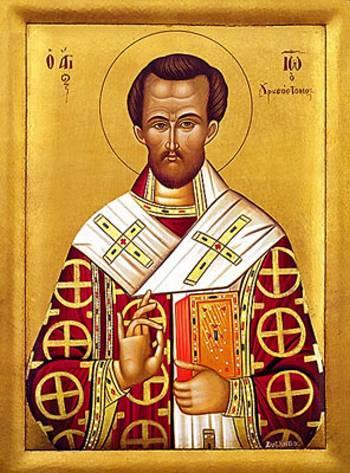
September 13th
St John Chrysostom
John was given the name Chrysostom (Golden-Mouth) because of his excellent preaching, and the many exhortations and catecheses he produced. He was born in Antioch in 349 and after a glowing career as priest was made Bishop of Constantinople in 397. Here, because of his preaching and care for justice he faced opposition from the Imperial court and was twice exiled. He died in exile in 407.❖ [salfordliturgy.org]