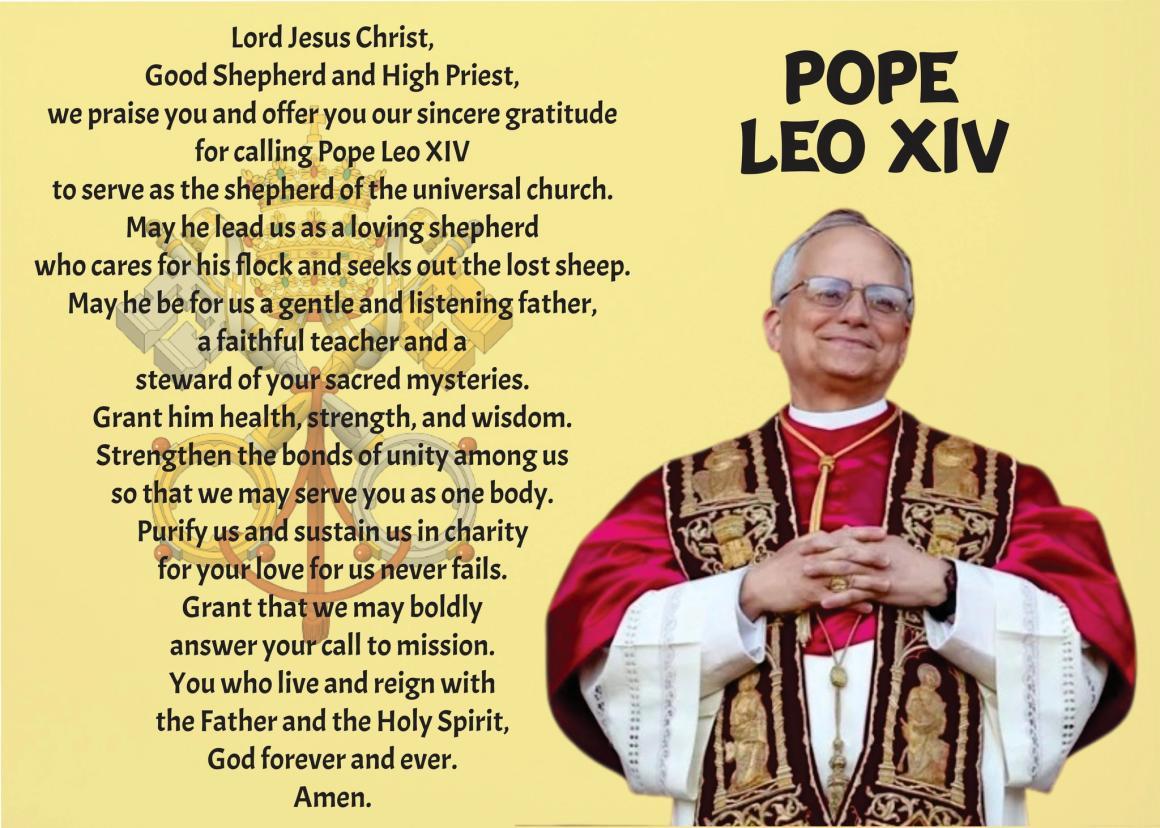
VATICAN CITY (CNS) - Cardinal Robert Francis Prevost, the Chicago-born prefect of the Dicastery for Bishops under Pope Francis, was elected the 267th pope May 8 and took the name Pope Leo XIV.
He is the first North American to be elected pope and, before the conclave, was the U.S. cardinal most mentioned as a potential successor of St. Peter.
The white smoke poured from the chimney on the roof of the Sistine Chapel at 6:07 p.m. Rome time and a few minutes later the bells of St. Peter's Basilica began to ring.
About 20 minutes later the Vatican police band and two dozen members of the Pontifical Swiss Guard marched into St. Peter's Square. They soon were joined by the marching band of the Italian Carabinieri, a branch of military police, and by units of the other branches of the Italian military. As soon as news began to spread, people from all over Rome ran to join the tens of thousands who were already in the square for the smoke watch. Rome Mayor Roberto Gualtieri was among them. (pleaseturntopage8)
The following is a press release from the Antilles Episcopal Conference (AEC), given May 8th, 2025:

Father in heaven, may the faith you have given us in your son, Jesus Christ, our brother, and the flame of charity enkindled in our hearts by the Holy Spirit, reawaken in us the blessed hope for the coming of your Kingdom.
May your grace transform us into tireless cultivators of the seeds of the Gospel.
May those seeds transform from within both humanity and the whole cosmos in the sure expectation of a new heaven and a new earth, when, with the powers of Evil vanquished, your glory will shine eternally.
May the grace of the Jubilee reawaken in us, Pilgrims of Hope a yearning for the treasures of heaven. May that same grace spread the joy and peace of our Redeemer throughout the earth.
To you our God, eternally blessed, be glory and praise for ever.
Amen


The election of Pope Leo XIV signals not just continuity but also a new tone of quiet strength and missionary fidelity one that speaks directly to the heart of the Caribbean Church. His deep roots in the Global South, formed by decades of missionary service in Peru, ensure that he understands the realities of poverty, cultural hybridity, and resilient faith that shape our region.
Leo XIV is not a pope of spectacle but rather one of pastoral patience and principled discernment. His agenda rooted in Augustinian spirituality, episcopal integrity, and a deep listening Church calls us to become more authentically who we are: a Church of the people, close to the soil, steeped in song, and born from struggle.
His experience forming local clergy and leaders in the Peruvian Andes resonates with our own call to raise up a new generation of Caribbean leaders bishops, priests, religious, and laypeople who are formed in our context, speak our languages, and understand the cries and hopes of our people. We must not wait for answers from Rome. Pope Leo XIV invites us to build local structures of synodality and holiness to become a Church that walks forward, not one that waits passively.
Leo XIV’s keen eye for bishop appointments as Prefect of the Dicastery for Bishops signals a focus on pastoral credibility. His vision is clear: the Church must be led by servants who live with the people, not by princes who live above them. For the Caribbean, this is a summons to deepen our pastoral accompaniment especially with young people, migrants, and those hurt or alienated by the Church.
Our region is characterised by diverse culture, language, and liturgical expression. Leo XIV’s Augustinian spirituality centred on communion and interior conversion can guide us away from the traps of ideological division and instead foster unity grounded in truth, humility, and grace. The temptation to polarise over issues like the Latin Mass or cultural morality is real.
However, Leo XIV directs us instead to the centre of Christ, where love and truth meet.
Pope Leo XIV inherits the synodal vision of Pope Francis, yet he introduces a missionary realism and discernment-focused leadership. His voice may be quieter, but it is no less prophetic. For us, this means continuing to invest in pastoral councils, diocesan synods, and regional collaboration not as occasional events but as our enduring way of being Church. In a region often buffeted by storms literal and metaphorical Leo XIV’s leadership provides a calm, steadying presence. He does not promise immediate answers, but offers us space to breathe, discern, and act.
His voice reminds us: “The Church grows by witness, by love, and by walking together step by step.” In this new papal era, the Caribbean Church is called to rise confidently, formed in our faith, rooted in our soil, and open to the Spirit’s movement. Under Pope Leo XIV, we are invited to walk forward with humble boldness, trusting that God is already at work among us, shaping a future of deeper communion and hope.
In Gratitude, Most Reverend Charles Jason Gordon President Antilles Episcopal Conference ❖
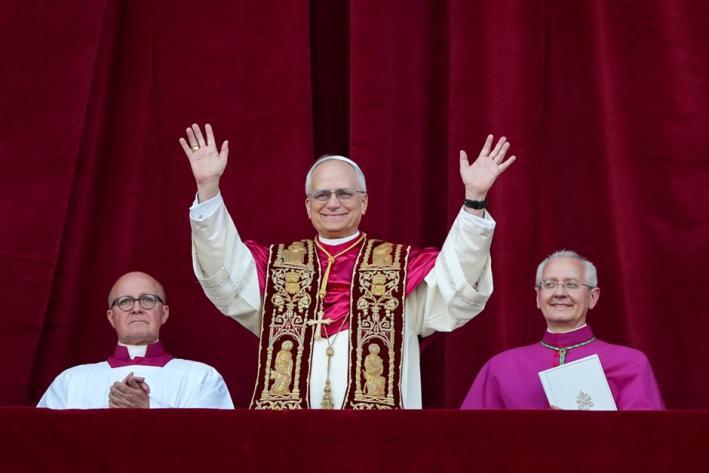
a bishop, with you, I am a Christian.” In this sense we can all walk together toward that homeland that God has prepared.
To the Church of Rome, a special greeting! We must seek together how to be a missionary Church, a Church that builds bridges, dialogue, always open to receive, like this square, with open arms. Everyone, everyone who needs our charity, our presence, dialogue and love.
[In Spanish]:
(OSV News)
the city of Rome and the world with these words at his first appearance as the Successor of Peter from the Central Loggia of St Peter's Basilica: [In Italian]:
‘Peace be with you all!’
Beloved brothers and sisters, this is the first greeting of the Risen Christ, the Good Shepherd who has given his life for the flock of God. I, too, would like this greeting of peace to enter your hearts, reach your families, to all people, wherever they may be, to all peoples, to all the earth.
“Peace be with you!”
This is the peace of the Risen Christ, a disarmed peace and a disarming peace, humble and persevering. It comes from God, God who loves us all unconditionally. We still retain in our ears that weak but always courageous voice of Pope Francis blessing Rome!
The pope blessing Rome gave his blessing to the world, to the whole
world, that morning of Easter Day. Let me follow up on that same blessing: God loves us, God loves you all, and evil will not prevail! We are all in God’s hands. Therefore, without fear, united hand in hand with God and each other let us go forward. We are disciples of Christ. Christ goes before us.
The world needs His light. Humanity needs Him as the bridge to be reached by God and his love. Help us also, and then help each other to build bridges, with dialogue, with encounter, uniting us all to be one people always at peace. Thank you Pope Francis!
I also want to thank all my brother cardinals who have chosen me to be Successor of Peter and walk together with you, as a united Church always seeking peace, justice, always seeking to work as men and women faithful to Jesus Christ, without fear, to proclaim the Gospel, to be missionaries.
I am a son of St. Augustine, an Augustinian, who said, “For you I am
And if you allow me a word, a greeting to everyone and especially to my dear Diocese of Chiclayo, Peru, where a faithful people have accompanied their bishop, shared their faith and has given so much, so much to continue to be a faithful Church of Jesus Christ.
[Returning to Italian]:
To all of you, brothers and sisters from Rome, from Italy, from all over the world, we want to be a synodal Church, a church that walks, a church that always seeks peace, that always seeks charity, that always seeks to be close especially to those who suffer.
Today is the day of Supplication to Our Lady of Pompeii. Our Mother Mary always wants to walk with us, be close, help us with her intercession and love.
So I would like to pray together with you. Let us pray together for this new mission, for the whole church, for peace in the world, and let us ask Mary, our Mother, for this special grace.
Ave Maria ❖
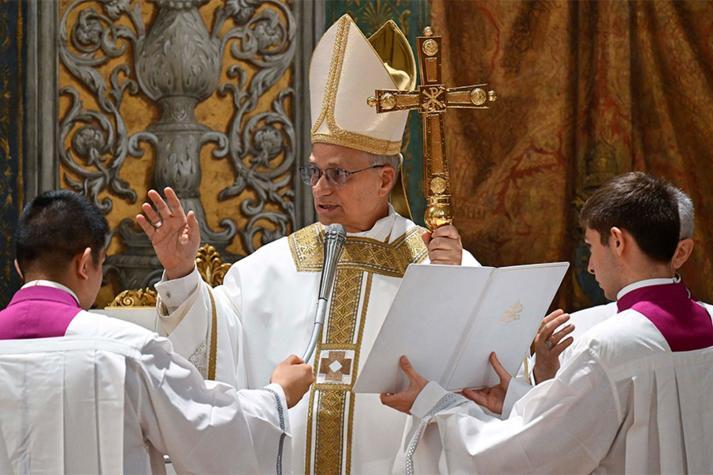
Pope Leo XIV offers a blessing during his first Mass as pope with the cardinals who elected him in the Sistine Chapel at the Vatican May 9, 2025. (CNS photo/Vatican Media)
VATICAN CITY (CNS) Where Christians are “mocked, opposed, despised or at best tolerated and pitied” is where the Catholic Church’s “missionary outreach is most desperately needed,” Pope Leo XIV said in his first homily as
leader of the world’s 1.4 billion Catholics. Today, “there are many settings in which the Christian faith is considered absurd, meant for the weak and unintelligent, settings where other securities are preferred, like technology, money, success, power or pleasure,” the
new pope told cardinals May 9 during Mass in the Sistine Chapel.
“This is the world that has been entrusted to us, a world in which, as Pope Francis taught us so many times, we are called to bear witness to our joyful faith in Jesus the savior,” he said.
The day after his election, the new pope returned to the chapel where his fellow 132 cardinals elected him pope the first U.S. citizen, first Peruvian citizen, first Augustinian friar and likely the first Chicago White Sox fan to become pope to celebrate his first Mass with the College of Cardinals.
Wearing black shoes instead of the traditional red associated with the papacy and walking into the Sistine Chapel carrying Pope Benedict XIV’s papal ferula, or staff, the pope processed into the chapel.
After two women read the Mass readings in English and Spanish a possible nod to the new pope’s U.S. and Peruvian background he greeted the cardinals in English, marking his first public use of the language. (please turn to page 10)

Pope Saint Pius X (1835-1914) was a very humble man who had a saintly mother, Margarita Sanson. Because they were so poor, she worked as a washerwoman and a school janitor to earn enough money so that he could go to the seminary (in those days, the family had to pay for the seminarian’s education).
When he was installed as Pope, his mother was present and as was the custom, she kissed his large papal ring. She then presented her tiny hand with her wedding ring and said “Now you kiss my ring for without it you never would have received yours!” ❖ [https://worlddayofprayerforvocations.com/ ]
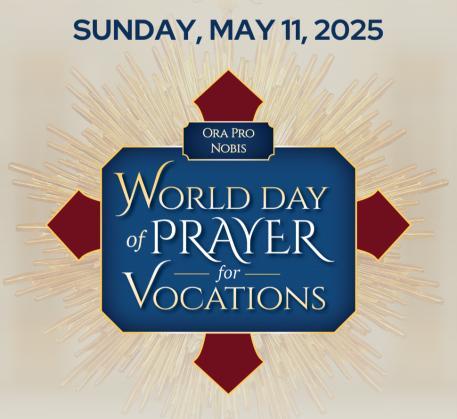
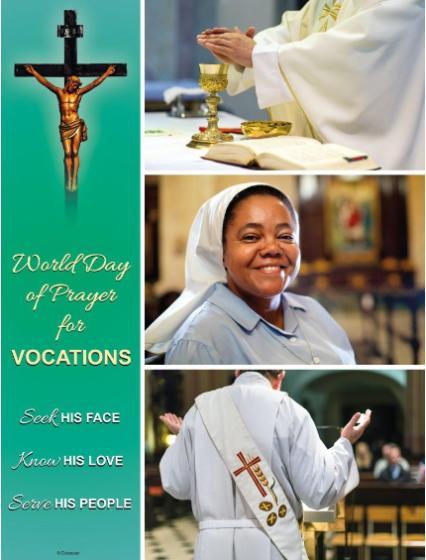
‘Every priestly vocation passes through the heart of a mother’ – Pope Pius X
Sunday, May 11th to Friday, May 16th
Attend Antilles
Episcopal Conference Annual Plenary Meeting
Saturday, May 17th
Return to Guyana
As mentioned, I will be attending the Eucharist Congress
in Port of Spain, after which I will travel to Kingston, Jamaica to attend the Annual Plenary Meeting of the Bishops of the Antilles.
During my absence, Monsignor Terrence Montrose, CCH will attend to matters on my behalf.
Francis Alleyne OSB
By GHK Lall
Jesus gave us everything. His dignity stripped to bits. His humanity wrenched and ripped apart. But there is that other element, the love that cannot be conquered, because it conquers all that comes before it. From the thunder and tumults of Holy Week, there is now the soothing calm of the octave of Easter. It is a good time for each one of us, those who bear the name Christian, to manifest how much of Christ is in us.
We live in a world that is tormented by trials. Small matters are allowed to grow into big ones. Meanwhile, the already existing big ones get blown out of all consideration, control, and the rest follows. God has to be unhappy. Jesus has to be disappointed, wounded by those who say that they love him, for all that he did for them. It is a joyless world, this one of 2025. Humankind gives every indication of going out its way to plaster and to slander in efforts to weaken and bring down. There is an environment, many of such across the globe, where the priority is to cripple and to control. It
is of a time of lesser hopes and greater disillusionment and despair. Our now glittering world of Guyana is not an exception. It should have been, but it is not. The spirit of Easter, in the Season of Easter, has fled. Where is the love? Whither the love for Jesus? If Christians-devout, practicing, people of learning-can’t, cannot bring themselves to go the extra effort of the extra mile, then there is not much that should be expected from the wilderness of unbelievers.
Yet, as Jesus taught us in that timeless parable, it is the detested stranger, the unloved neighbor, who turns out to be the good neighbor. When the man of God, and the man of a higher calling, refused to respond to the cry of a man in trouble, then some may say that it is justified to give up hope. Then is when that there ought to be remembrance of the miraculous ways of God. A Samaritan comes, the Samaritan stops. And he doesn’t stop there empty hearted and emptyhanded. It is why hope must not depart from us; or we abandon the hope that is founded on faith, belief, and the love of the Risen Christ. Holy Week reinforced in us that even when all appears to be lost, that is when our faith and our hopes must deepen and rise to the heights.
To my fellow believers, to all citizens of the world, all a brother and a sister, there is no time like now when the graces of Easter must be lived to its finest. The cornerstone of our joy, which comes from our renewed hope, is the Risen Jesus. He walks and talks with the apostles. He breathes on them, and clasps them to his chest, when they need reassurance that he is near. When they are given that charge to represent the profoundness of what
his time on earth, and his sacrifice, was all about. Go tell the Good News of the Kingdom. To the mountains. To the ends of the earth. To all people, for they have the potential to be among God
If we can only grasp the parables alone, there are so many teachings there. So much wisdom of a divine origin, standard. And, if only we could do our best to apply those parables to our lives, and live them in steadfast devotion, then a state of grace could be within grasp. There is so much more beyond the red clothes, and white apparels, and those moments of high chants: Hosanna! Hosanna in the highest! When there is coming to that place as rendered in the hymn me stand behind you, Lord Let me stand behind you, Lord Let me wash your feet
When we are ready to wash the feet of Jesus, we have conditioned ourselves to wash the feet of anyone. Washing feet has a powerful humility to it, to surrender dignity in the joy of love, because the light of Christ is inside. The worst could come from the worst of places in the worst of times, but that is when the unruffled peace of Christ must be given the freedom and room to sweep over us.
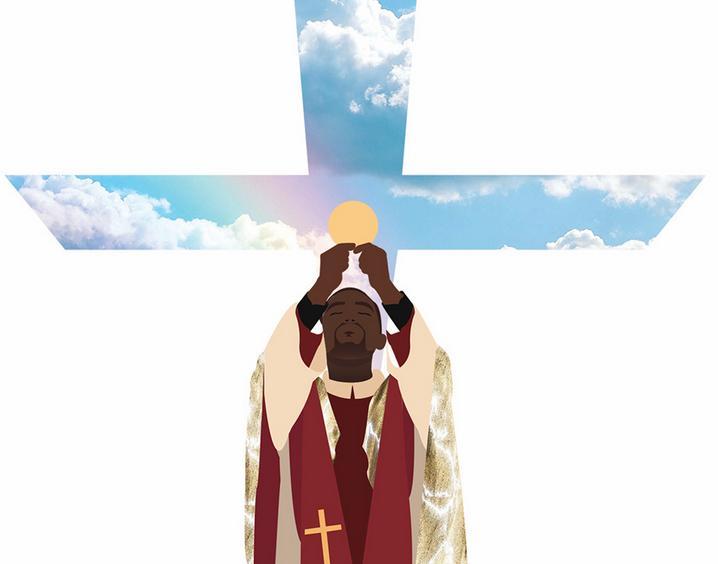
Gracious and loving God, we thank your for the gift of our priests.
Through them, we experience your presence in the sacraments.
If there is anything that was grasped at the core of its righteous substance during the days of Lent, the hours of Holy Week, and the day of the Risen Christ is that love is supreme. Love for one another, love for stranger, love for tormentor, is the deepest expression of Easter. And of love for God and Savior. May the serenity of the Easter Season, and Easter spirit, be with everyone.❖
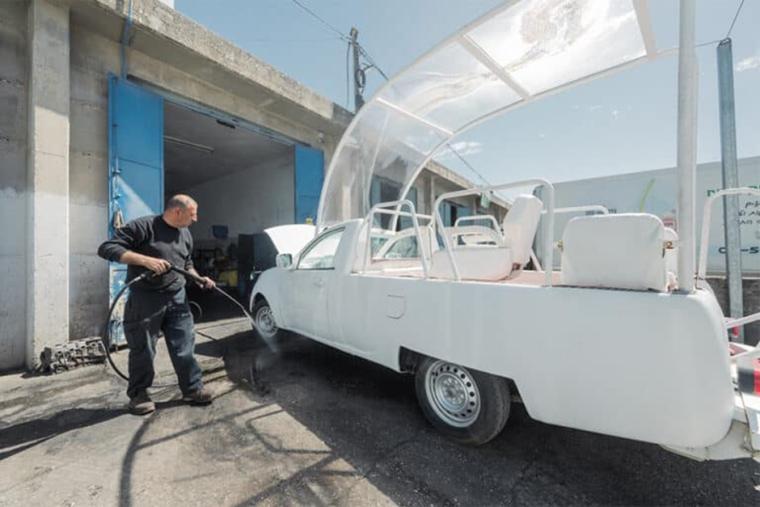
Final work is being carried out to transform the popemobile used by Pope Francis during his 2014 Holy Land pilgrimage into a mobile health unit for the children of Gaza which will be ready for use once the humanitarian corridor is opened. In his final months, before his death April 21, 2025, the pope approved and blessed the project. (OSV News photo/courtesy Caritas Jerusalem)
(OSV News) With the declining situation
Gaza always
final months, Pope
directed the agency to turn it into a mobile health station for the children in Gaza.
Preparation of the new health station is to be completed by mid-May, said
Peter Brune, secretary general of Caritas Sweden, who together with Caritas Jerusalem’s Anton Asfar developed the idea in February. Upon Asfar’s suggestion, Brune visited Bethlehem in February to view the popemobile that had been stored in Bethlehem since it was used by Pope Francis on his pilgrimage to the Holy Land in 2014.
Pope Francis readily agreed to the idea after Swedish Cardinal Anders Arborelius of Stockholm, Sweden, approached him, Brune told OSV News in a phone interview.
“There is an urgency in the need to help children in Gaza. There has been a full blockage of aid since March 2,” Brune said. “This is not the way we should treat our children.”
When access to food, water and health care is cut off, children are often the first and hardest hit, with infection and other preventable conditions putting their lives at risk, Caritas Sweden and Caritas Jerusalem said in a press release. Brune said in the release that the mobile clinic will be a “concrete, life-saving intervention at a time when the health system in Gaza has almost completely collapsed.”
The vehicle will be staffed by a driver and medical doctors and is currently being fitted with equipment for diagnoses, examination and treatment, including rapid tests for infections, suture kits, syringes and needles, oxygen supply, vaccines and a refrigerator for medicines, and will be ready for use once the humanitarian corridor to Gaza reopens.
“This vehicle represents the love, care and closeness shown by His Holiness for the most vulnerable, which he expressed throughout the crisis,” Asfar
Help our priests to be strong in their vocation.
Set their souls on fire with love for your people.
Grant them the wisdom, understanding, and strength they need to follow in the footsteps of Jesus. Inspire them with the vision of your Kingdom.
Give them the words they need to spread the Gospel.
Allow them to experience joy in their ministry.
Help them to become instruments of your divine grace.
We ask this through Jesus Christ, who lives and reigns as our Eternal Priest. Amen
said in the press release.
Since the outbreak of the war Pope Francis called the Catholic Holy Family Parish every night and spoke with the parish priests including parish pastor, Father Gabriel Romanelli, to express his support of the parish community sheltering at the compound. In his last “urbi et orbi” blessing on Easter, April 20, the pope called for a ceasefire and the release of the 59 hostages still held by Hamas, up to 24 of who are believed to still be alive, and aid for “a starving people who aspire to a future of peace.”
The main message of the new health mobile is to assure that the children of Gaza are not forgotten, said Brune. The unit will be called “Vehicle of Hope,” he said. ❖

FIRST READING Acts 13:14, 43-52
We must turn to the pagans.
Paul and Barnabas carried on from Perga till they reached Antioch in Pisidia. Here they went to synagogue on the sabbath and took their seats.
When the meeting broke up, many Jews and devout converts joined Paul and Barnabas, and in their talks with them Paul and Barnabas urged them to remain faithful to the grace God had given them. The next sabbath almost the whole town assembled to hear the Word of God. When they saw the crowds, the Jews, prompted by jealousy, used blasphemies and contradicted everything Paul said. Then Paul and Barnabas spoke out boldly. “We had to proclaim the Word of God to you first, but since you have rejected it, since you do not think yourselves worthy of eternal life, we must turn to the pagans. For this is what the Lord commanded us to do when he said:
“I have made you a light for the nations, so that my salvation may reach the ends of the earth.”
It made the pagans very happy to hear this and they thanked the Lord for his message; all who were destined for eternal life became believers. Thus the word of the Lord spread through the countryside. But the Jews worked upon some the devout women of the upper classes and the leading men of the city and persuaded them to turn against Paul and Barnabas and expel them from their territory. So
Throughout the Easter season, our readings have given us glimpses into the life of the newborn Church and the bold witness of the early disciples in spreading the Good News of Jesus
they shook the dust from their feet in defiance and went off to Iconium; but the disciples were filled with joy and the Holy Spirit.
RESPONSORIAL PSALM Psalm 99
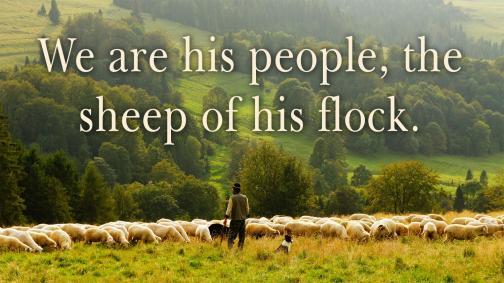
Response: We are his people, the sheep of his flock.
1. Cry out with joy to the Lord, all the earth. Serve the Lord with gladness. Come before him,singing for joy. Response
2. Know that he, the Lord, is God. He made us, we belong to him, we are his people, the sheep of his flock. Resp.
3. Indeed, how good is the Lord, eternal his merciful love.
He is faithful from age to age. Response
Christ to all who would listen. These disciples were the first to live a stewardship way of life and their example is as relevant today as it was 2,000 years ago.
In the First Reading, from the Acts of the Apostles, we catch up with Paul and Barnabas in Antioch. While they certainly have some success in reaching many people there with the message of salvation, others are downright infuriated by their words and send them packing. Yet, we read that “the disciples were filled with joy and the Holy Spirit.” Overall, it seems as if Paul and Barnabas had failed in
SECOND READING
Apocalypse 7:9, 14-17
The Lamb will be their shepherd and will lead them to springs of living water.
I, John, saw a huge number, impossible to count, of people from every nation, race, tribe and language; they were standing in front of the throne and in front of the Lamb, dressed in white robes and holding palms in their hands. One of the elders said to me, “These are the people who have been through the great persecution, and because they have washed their robes white again in the blood of the Lamb, they now stand in front of God’s throne and serve him day and night in his sanctuary; and the One who sits on the throne will spread his tent over them. They will never hunger or thirst again; neither the sun nor scorching wind will ever plague them, because the Lamb who is at the throne will be their shepherd and will lead them to springs of living water; and God will wipe away all tears from their eyes.”
Gospel Acclamation Jn 10: 14
Alleluia, alleluia!
I am the good shepherd; I know my own and my own know me Alleluia!
GOSPEL John 10: 27-30
I give eternal life to the sheep that belong to us.
Jesus said:
“The sheep that belong to me listen to my voice; I know them and they follow me.
I give them eternal life; they will never be lost and no one will ever steal them from me.
The Father who gave them to me is greater than anyone and no one can steal from the Father. The Father and I are one.”❖
Antioch. But this seeing failure has not robbed them of their joy. What’s more, they are filled to the brim with the abundant gifts of the Holy Spirit. How is this possible?
It is only possible because Paul and Barnabas saw themselves as nothing more and nothing less than stewards of Christ and His Good News. This realization brought them freedom to offer themselves and their lives to others for the sake of the Gospel. The “results” of their efforts were up to God.
This Spirit-filled, joy-filled life is available to all of us, all these years later. It can be achieved when we recognize, like Paul and Barnabas, that all we have and all we are is a gift from God, meant to be shared with others for His glory. Of course, living as God’s stewards does not mean a life of ease or a life free of sacrifice. Sometimes the steward’s life involves great challenges, requiring all the strength and love one has to give. But in the end there is simply no more satisfying way to live.❖
[www.catholicsteward.com/blog/ ]
In the Gospel Readings since Easter we hear how Jesus went about preparing his disciples for life without his presence. Little by little we learn of what he expects from those he leaves behind. His followers are to believe wholeheartedly in him, listen attentively to his words, love and forgive one another unconditionally and trust even in what we cannot see. And those who love him are to serve others. When we really hear his words and make them a part of our lives, we experience changes in ways we hardly imagined possible. We just cannot continue to live as we used to. The passage from the Acts of the Apostles tells us that Paul and Barnabas felt compelled to preach the Good News they had heard. We will never know beforehand where our journey with Jesus will lead us. Therefore we have to be prepared for whatever we meet along the way. It may not be an easy road but once we enter into that relationship there will be changes.
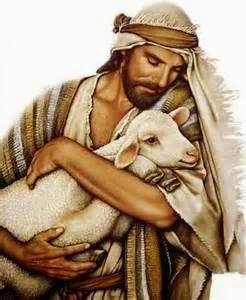
Jesus promised that those who belong to him would never be lost. No one would take any sheep from his flock for he is the Good Shepherd who knows his sheep and his sheep listen to his voice and follow him. It should be a great comfort knowing that we belong to Jesus, that he knows us intimately and that we can depend on him to keep us safe. Believing in Jesus leads naturally to wanting to listen to his voice. To listen to his voice is to understand his teachings and how they affect our lives. And when we come to listen to his voice and believe in him, we will follow him. As Christians we follow him, not as individuals, but as community. The flock is an image for the community in which we find support, encouragement and companionship. Belonging to God’s community is a privilege and a gift. The question we have to ask ourselves is if we really want it and what we are prepared to do to have it. ❖
[From: Journeying with the Word of God, The Religious Education Department, Diocese of Georgetown, Guyana ]
VATICAN CITY (CNS) Even before he stepped out on the balcony of St. Peter’s Basilica and spoke May 8, Pope Leo XIV’s choice of a name was a powerful statement.
Following Pope Francis, who chose a completely new name in church history, Pope Leo opted for a name steeped in tradition that also conveys an openness to engaging with the modern world.
The pope’s choice of name is a “direct recall of the social doctrine of the church and of the pope that initiated the modern social doctrine of the church,” Matteo Bruni, director Vatican press office told reporters after the election of the new pope.
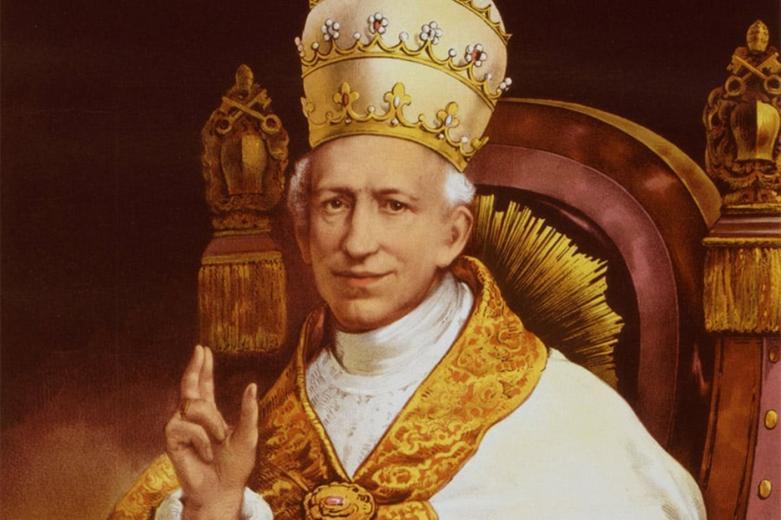
Pope Leo XIII, who was pope from 1878 -1903, is known for publishing the encyclical “Rerum Novarum” on worker’s rights considered the foundational document for the church’s social teaching. The document emphasized the dignity of workers and condemned the dangers of unchecked capitalism and socialism.
The name Leo is a “direct” reference to “men and women and their work, also in the time of artificial intelligence,” Bruni said.
Pope Leo XIII also opened the Vatican secret archives to scholars, founded the Vatican observatory to demonstrate the church’s openness to science and was the first pope to be filmed on a motion picture camera.
Tied to the new pope’s first words to the faithful: “May peace be with you all,” his namesake Pope Leo XIII was also a peacemaker who reconciled the church with the governments of France, Russia, Germany and Great Britain
during his pontificate.
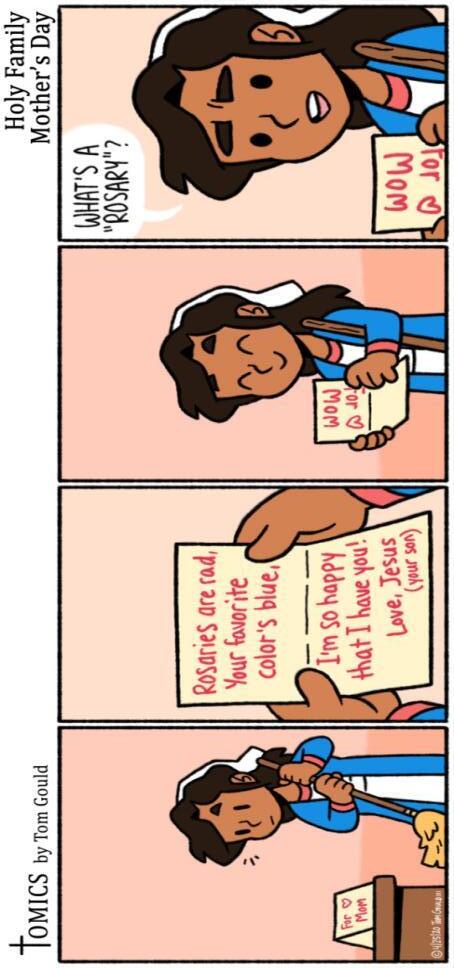
Pope Leo’s name also has a Marian significance, since Pope Leo XIII wrote 11 encyclicals on the rosary and was also the first pope to embrace the concept of Mary as mediatrix, which holds that Mary helps distribute Christ’s grace through her intercession.
The first pope who took the name Leo became pope in 440. Known as “Leo the Great,” he promoted the doctrine of papal primacy based on succession from St. Peter and was a peacemaker who convinced Atilla the Hun to turn back from invading Italy in 452.
Pope Leo X, pope from 1513-1521, was
the last pope to not have been a priest atthetimeofhiselectiontothepapacy
The new pope’s predecessor, Pope Francis, was the first pontiff since Pope Lando in 913 to choose an entirely new papal name. Before him, Pope John Paul I, elected in 1978, also broke with tradition by forgoing a numeral, though his name was a blend of his two immediate predecessors’ names.
By contrast, Leo is among the most frequently taken names by a pope, with only Benedict, Gregory and John having been chosen more often. Of the 13 previous popes named Leo, five are canonized as saints. ❖
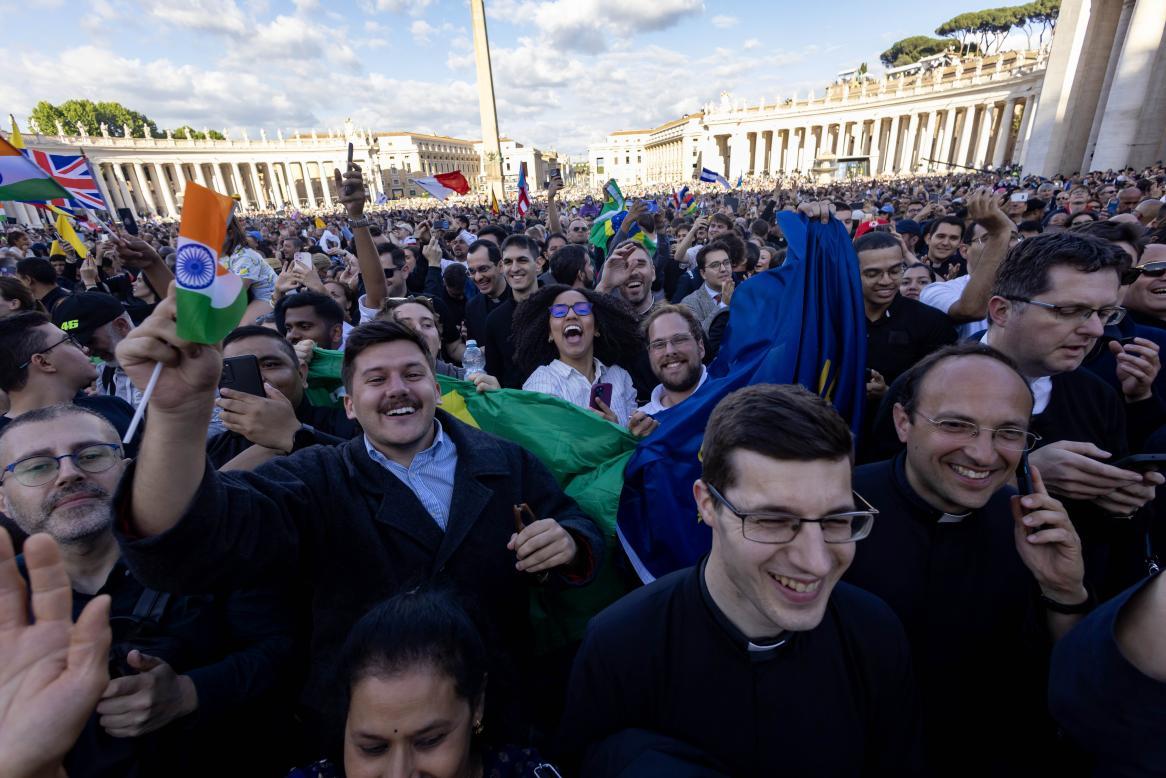
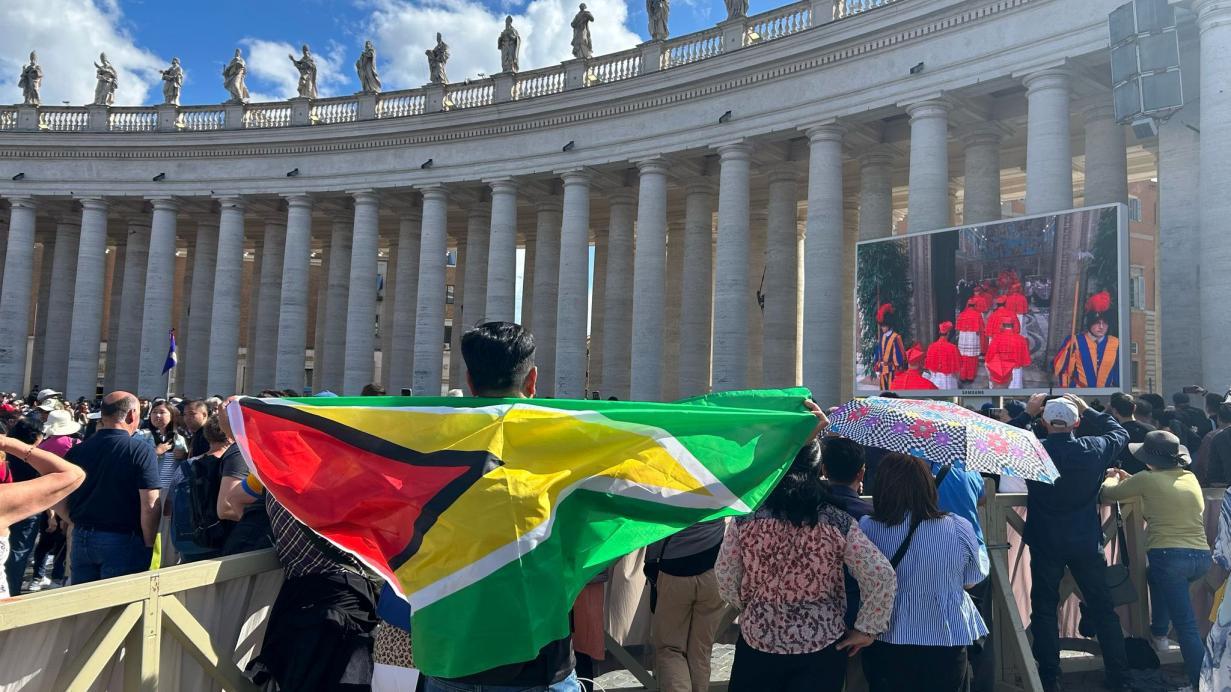
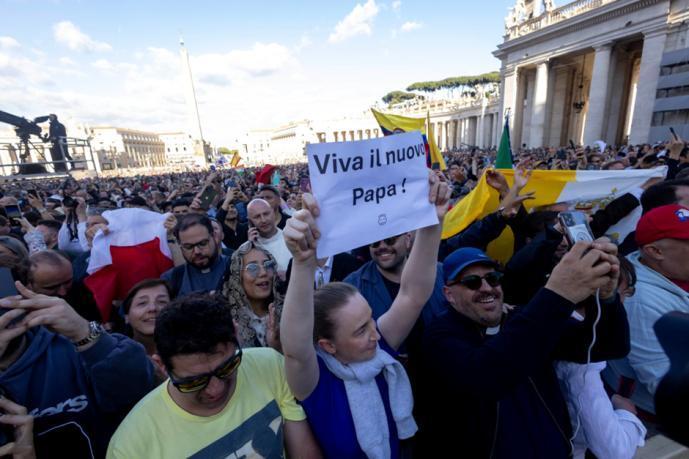
VATICAN CITY (CNS) When white smoke came pouring out of the Sistine Chapel chimney and the bells of St. Peter’s Basilica started pealing, people who had been relaxing at cafes or sitting in the shade went running or quickly walking toward St. Peter’s Square.
“Hurry! Get over here! It’s happening!” one young man shouted into his phone, smiling as he sprinted down the street.
“Who knows who it will be,” a mom said to her young child squirming in a stroller.
Hundreds of pilgrims who had been prayerfully processing toward the basilica’s Holy Door stopped dead in their tracks, cameras and phones out, filming the smoking chimney and the bells.
A group of German students from Berlin who were in Rome for a Latin course were on a tour inside the dome of the basilica when their teacher said, “It’s white smoke; we have to go back downstairs,” Oliva Held told Catholic
News Service May 8.
“But here we are with the best seat in the house,” her classmate, Friederike Guckes said, glancing at their position in the very front of St. Peter’s Square.
Vatican employees and officials, even several cardinals over the age of 80 therefore not part of the conclave that elected Pope Leo XIV gathered in a large section in the front of the square. Even the Italian woman who always brought Pope Francis yellow flowers was given a spot in the VIP section.
For the hour that passed from the time the smoke ended, and the new pope was announced to the world, people in the square chanted “Habemus papam” and “Via il papa” (“Long live the pope”).
Some even started shouting the last name of the cardinal they thought had been chosen, such as “Viva Parolin!” and Viva Zuppi!” two Italians who were considered favorites.
When Vatican cameras zoomed in on a group of people or on the myriad color-
ful flags on display, the people cheered with excitement. One camera on a crane even caught folks on “the peripheries,” those who were still on the far end of the square.
When the curtain behind the central balcony parted at 7:13 p.m., the crowd erupted into cheers then quickly hushed to hear French Cardinal Dominique Mamberti announce the name.
While most did not recognize the U.S. cardinal’s name: Robert Francis Prevost, people loved his choice of Pope Leo.
When the new pope appeared at the balcony, he was welcomed by chants and cheers of his new name in Italian, “Leone! Leone!” The pope was visibly moved and tears showed in his eyes on the big screens. “Is he crying? He’s crying! Such a dear!” one woman said.
“We are so happy to have a Pope Leo the 14th,” Carlo Distante told CNS. “After having (please turn to page 14)
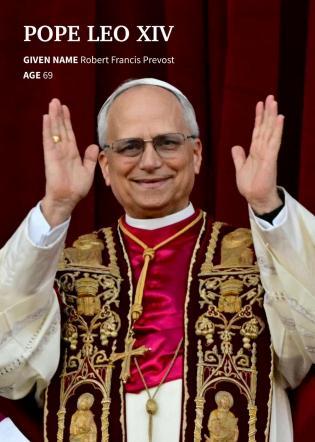
(Vatican News) - The first Augustinian Pope, Leo XIV is the second Roman Pontiff - after Pope Francis - from the Americas. Unlike Jorge Mario Bergoglio, however, the 69-yearold Robert Francis Prevost is from the northern part of the continent, though he spent many years as a missionary in Peru before being elected head of the Augustinians for two consecutive terms.
The new Bishop of Rome was born on September 14, 1955, in Chicago, Illinois, to Louis Marius Prevost, of French and Italian descent, and Mildred Martínez, of Spanish descent. He has two brothers, Louis Martín and John Joseph.
He spent his childhood and adolescence with his family and studied first at the Minor Seminary of the Augustinian Fathers and then at Villanova University in Pennsylvania, where in 1977 he earned a Degree in Mathematics and also studied Philosophy.
On September 1 of the same year, Prevost entered the novitiate of the Order of Saint Augustine (O.S.A.) in Saint Louis, in the Province of Our Lady of Good Counsel of Chicago, and made his first profession on September 2, 1978. On August 29, 1981, he made his solemn vows.
The future Pontiff received his theological education at the Catholic Theological Union in Chicago. At the age of 27, he was sent by his superiors to Rome to study Canon Law at the Pontifical University of Saint Thomas Aquinas (Angelicum).
In Rome, he was ordained a priest on June 19, 1982, at the Augustinian College of Saint Monica by Archbishop Jean Jadot, then pro-president of the Secretariat for Non-Christians, which later became the Pontifical Council for Interreligious Dialogue and then the Dicastery for Interreligious Dialogue. Prevost obtained his licentiate in 1984 and the following year, while preparing his doctoral thesis, was sent to the Augustinian mission in Chulucanas, Piura, Peru (1985–1986). In 1987, he defended his doctoral thesis on "The Role of the Local Prior in the Order of Saint Augustine" and was appointed vocation director and missions director of the Augustinian Province of “Mother of Good Counsel” in Olympia Fields, Illinois (USA).
Mission in Peru
The following year, he joined the mission in Trujillo, also in Peru, as director of the joint formation project for Augustinian candidates from the vicariates of
Chulucanas, Iquitos, and Apurímac.
Over the course of eleven years, he served as prior of the community (1988–1992), formation director (1988–1998), and instructor for professed members (1992 –1998), and in the Archdiocese of Trujillo as judicial vicar (1989–1998) and professor of Canon Law, Patristics, and Moral Theology at the Major Seminary “San Carlos y San Marcelo.” At the same time, he was also entrusted with the pastoral care of Our Lady Mother of the Church, later established as the parish of Saint Rita (1988–1999), in a poor suburb of the city, and was parish administrator of Our Lady of Monserrat from 1992 to 1999.
In 1999, he was elected Provincial Prior of the Augustinian Province of “Mother of Good Counsel” in Chicago, and two and a half years later, the ordinary General Chapter of the Order of Saint Augustine, elected him as Prior General, confirming him in 2007 for a second term.
In October 2013, he returned to his Augustinian Province in Chicago, serving as director of formation at the Saint Augustine Convent, first councilor, and provincial vicar roles he held until Pope Francis appointed him on November 3, 2014, as Apostolic Administrator of the Peruvian Diocese of Chiclayo, elevating him to the episcopal dignity as Titular Bishop of Sufar. He entered the Diocese on November 7, in the presence of Apostolic Nuncio James Patrick Green, who ordained him Bishop just over a month later, on December 12, the Feast of Our Lady of Guadalupe, in the Cathedral of Saint Mary. His episcopal motto is “In Illo uno unum” words pronounced by Saint Augustine in a sermon on Psalm 127 to explain that “although we Christians are many, in the one Christ we are one.”
Bishop of Chiclayo, Peru, from 2015 to 2023
On September 26, 2015, he was appointed Bishop of Chiclayo by Pope Francis. In March 2018, he was elected second vice president of the Peruvian Episcopal Conference, where he also served as a member of the Economic Council and president of the Commission for Culture and Education.
In 2019, Pope Francis appointed him a member of the Congregation for the Clergy (July 13, 2019), and in 2020, a member of the Congregation for Bishops (November 21). Meanwhile, on April 15, 2020, he was also appointed Apostolic Administrator ofthePeruvianDioceseofCallao
On January 30, 2023, the Pope called him to Rome as Prefect of the Dicastery for Bishops and President of the Pontifical Commission for Latin America, promoting him to the rank of Archbishop.
Created Cardinal in 2024
Pope Francis created him Cardinal in the Consistory of September 30 that year and assigned him the Diaconate of Saint Monica. He officially took possession of it on January 28, 2024.
As head of the Dicastery, he participated in the Pope’s most recent Apostolic Journeys and in both the first and second sessions of the 16th Ordinary General Assembly of the Synod of Bishops on synodality, held in Rome from October 4 to 29, 2023, and from October 2 to 27, 2024, respectively.
Meanwhile, on October 4, 2023, Pope Francis appointed him as a member of the Dicasteries for Evangelization (Section for First Evangelization and New Particular Churches), for the Doctrine of the Faith, for the Eastern Churches, for the Clergy, for Institutes of Consecrated Life and Societies of Apostolic Life, for Culture and Education, for Legislative Texts, and of the Pontifical Commission for the Vatican City State.
Finally, on February 6 of this year, the Argentine Pope promoted him to the Order of Bishops, granting him the title of the Suburbicarian Church of Albano.
Three days later, on February 9, he celebrated the Mass presided over by Pope Francis in St. Peter's Square for the Jubilee of the Armed Forces, the second major event of the Holy Year of Hope.
During the most recent hospitalization of his predecessor at the “Gemelli” hospital, Prevost presided over the Rosary for Pope Francis’s health in Saint Peter’s Square on March 3. ❖
MAKING THE WORD OF GOD YOUR OWN
Step 1: Lookattoday’sReadingsprayerfully.
1st Reading: Paul and Barnabas preached the Gospel to the Gentiles when the Jews reject the message of the resurrected Christ.
2nd Reading: John’s vision shows that many will share in Jesus’ glory in heaven after coming through times of persecution.
Gospel: Jesus, the Good Shepherd, will not allow anyone to steal any of the sheep in his care. The Father has put us in his care.
Step 2: ApplyingthevaluesoftheReadings toyourdailylife.
1.Jesus tells us that he is the shepherd who knows and takes care of his sheep. In what way do we need a good shepherd to care for us even today?
2.Belief in Jesus calls for letting go of old habits and ways of living and demands a change in behaviour. What can tempt people to turn their backs on Jesus’ invitation to enter into relationship with him?
3.Jesus says that his sheep listen to his voice and follow him. How do we hear his voice? What has been your experience in your community of following him?
4.The challenge for us today is to experience the voice of our God promising his life-giving presence and love in the midst of our troubles, concerns and daily struggles.
Step 3: Accepting the message of God’s Wordinyourlifeoffaith.
The world today is in dire need of the Good Shepherd who can speak to people of their value as human beings and as children of God. As disciples, we are called to be shepherds to those who are in need, in ways that best suit our God-given gifts and talents.
Step 4: Somethingtothink&prayabout
1.Each of us has an image of God. Today’s Gospel gives an image of God as a shepherd who will never allow his flock to come to harm. What is the image of God that you like best? Why do you prefer this image?
2.When you examine your values, the way you use your time, the kind of relationships you maintain, can you say you are changing any part of your life in response to Jesus’ invitation to follow him? ❖
[From: Journeying with the Word of God, The Religious Education Department, Diocese of Georgetown, Guyana ]
French Cardinal Dominique Mamberti, protodeacon of the College of Cardinals, appeared on the central balcony of St. Peter's Basilica at 7:12 p.m. He told the crowd: "I announce to you a great joy. We have a pope ('Habemus papam')," saying the cardinal's name in Latin and announcing the name by which he will be called.
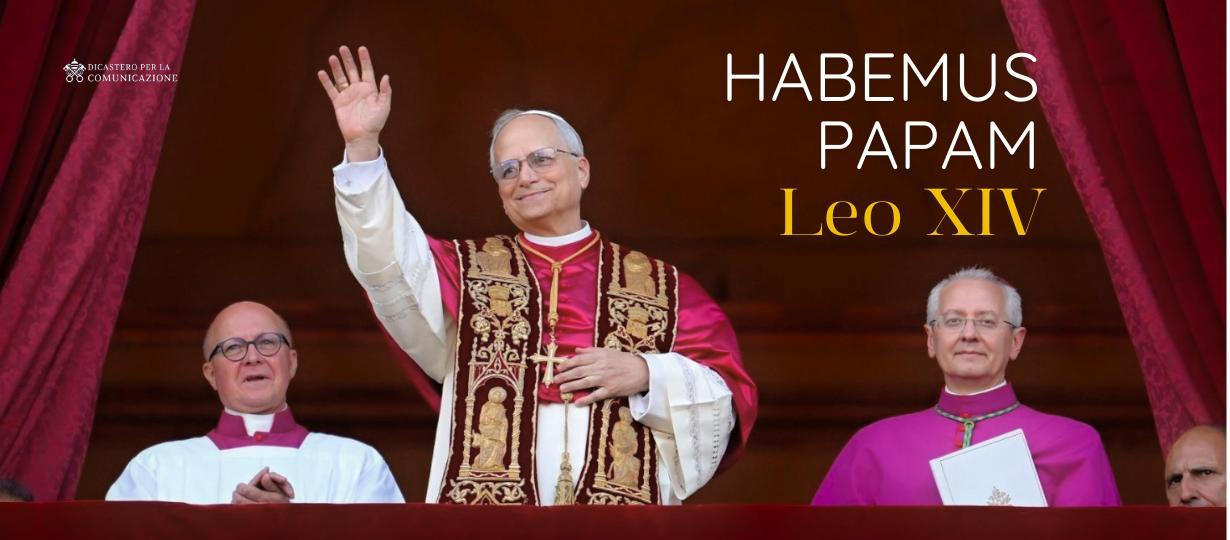
Twenty minutes later, the new Pope Leo came out onto the balcony, smiling and waving to the crowd wearing the white papal cassock, a red mozzetta or cape and a red stole to give his first public blessing "urbi et orbi" (to the city and the world).
The crowd shouted repeatedly, "Viva il papa" or "Long live the pope" as Pope Leo's eyes appeared to tear up.
"Peace be with you," were Pope Leo's first words to the crowd.
"My dear brothers and sisters, this is the first greeting of the risen Christ, the good shepherd who gave his life for God's flock," he said, praying that Christ's peace would enter people's hearts, their families and "the whole earth."
The peace of the risen Lord, he said, is "a peace that is unarmed and disarming."
Signaling strong continuity with the papacy of Pope Francis, Pope Leo told the crowd that God "loves all of us unconditionally" and that the church must be open to everyone.
"We are all in God's hands," he said, so "without fear, united, hand in hand with God and with each other, let us go forward."
He thanked the cardinals who elected him, apparently on the fourth ballot of the conclave, "to be the successor of Peter and to walk with you as a united church always seeking peace, justice" and together being missionary disciples of Christ.
Telling the crowd that he was an Augustinian, he quoted St. Augustine, who said, "With you I am a Christian and for you a bishop."
"Together we must try to be a missionary church, a church that builds bridges and always dialogues, that is always open to receiving everyone like this square with its arms open to everyone, everyone in need," he said.
The new bishop of Rome told the people of his diocese and of the whole Catholic Church, "We want to be a synodal church, a church that journeys, a church that seeks peace always, that always seeks charity, that wants to be close to people, especially those who are suffering."
After asking the crowd to recite the Hail Mary with him, Pope Leo gave his first solemn blessing.
Cardinals over the age of 80, who were not eligible to enter the conclave, joined the crowd in the square.
A longtime missionary in Peru, the 69-year-old pope holds both U.S. and Peruvian citizenship.
La Repubblica, the major Italian daily, described him April 25 as "cosmopolitan and shy," but also said he was "appreciated by conservatives and progressives. He has global visibility in a conclave in which few (cardinals) know each other."
That visibility comes from the fact that as prefect of the Dicastery for Bishops for the past two years, he was instrumental in helping Pope Francis choose bishops for many Latin-rite dioceses, he met hundreds of bishops during their "ad limina" visits to Rome and was called to assist the world's Latinrite bishops "in all matters concerning the correct and fruitful exercise of the pastoral office entrusted to them."
The new pope was serving as bishop of Chiclayo, Peru, when Pope Francis called him to the Vatican in January 2023.
During a talk at St. Jude Parish in Chicago in August, the then-cardinal said Pope Francis nominated him "specifically because he did not want someone from the Roman Curia to take on this role. He wanted a missionary; he wanted someone from outside; he wanted someone who would come in with a different perspective."
In a March 2024 interview with Catholic News Service, he said Pope Francis' decision in 2022 to name three women as full members of the dicastery, giving them input on the selection of bishops "contributes significantly to the process of discernment in looking for who we hope are the best candidates to serve the church in episcopal ministry."
To deter attitudes of clericalism among bishops, he said, "it's important to find men who are truly interested in
serving, in preaching the Gospel, not just with eloquent words, but rather withtheexampleandwitnesstheygive."
In fact, the cardinal said, Pope Francis' "most effective and important" bulwark against clericalism was his being "a pastor who preaches by gesture."
In an interview in 2023 with Vatican News, then-Cardinal Prevost spoke about the essential leadership quality of a bishop.
"Pope Francis has spoken of four types of closeness: closeness to God, to brother bishops, to priests and to all God's people," he said. "One must not give in to the temptation to live isolated, separated in a palace, satisfied with a certain social level or a certain level within the church."
"And we must not hide behind an idea of authority that no longer makes sense today," he said. "The authority we have is to serve, to accompany priests, to be pastors and teachers."
As prefect of the dicastery then-Cardinal Prevost also served as president of the Pontifical Commission for Latin America, where nearly 40% of the world's Catholics reside.
A Chicago native, he also served as prior general of the Augustinians and spent more than two decades serving in Peru, first as an Augustinian missionary and later as bishop of Chiclayo.
Soon after coming to Rome to head the dicastery, he told Vatican News that bishops have a special mission of promoting the unity of the church.
"The lack of unity is a wound that the church suffers, a very painful one," he said in May 2023. "Divisions and polemics in the church do not help
anything. We bishops especially must accelerate this movement toward unity, toward communion in the church."
In September, a television program in Peru reported on the allegations of three women who said that thenBishop Prevost failed to act against a priest who sexually abused them as minors. The diocese strongly denied the accusation, pointing out that he personally met with the victims in April 2022, removed the priest from his parish, suspended him from ministry and conducted a local investigation that was then forwarded to the Vatican. The Vatican said there was insufficient evidence to proceed, as did the local prosecutor's office.
Pope Leo was born Sept. 14, 1955, in Chicago, Illinois. He holds a bachelor's degree in mathematics from the Augustinian-run Villanova University in Pennsylvania and joined the order in 1977, making his solemn vows in 1981. He holds a degree in theology from the Catholic Theological Union in Chicago and a doctorate from the Pontifical University of St. Thomas Aquinas in Rome.
He joined the Augustinian mission in Peru in 1985 and largely worked in the country until 1999 when he was elected head of the Augustinians' Chicago-based province. From 2001 to 2013, he served as prior general of the worldwide order. In 2014, Pope Francis named him bishop of Chiclayo, in northern Peru, and the pope asked him also to be apostolic administrator of Callao, Peru, from April 2020 to May 2021.
The new pope speaks English, Spanish, Italian, French, Portuguese and can read Latin and German. ❖
Dear Boys and Girls,
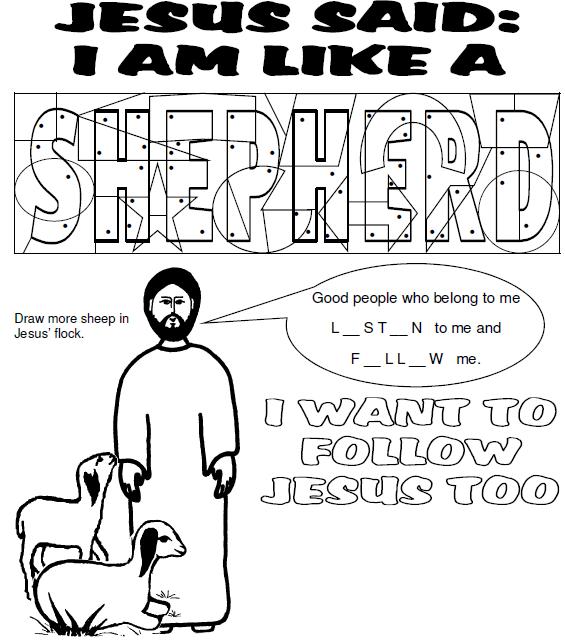
One day, some people asked Jesus to tell them plainly if he was the Christ. He answered them saying, "I told you, but you did not believe me because you are not my sheep. My sheep listen to my voice and they follow me. I give them eternal life, and they will never perish; no one can snatch them out of my hand."
When you give your heart to Jesus and place your life in his hands, you have his promise that you are safe and that nothing can steal you from his hand. Oh, you may have your "ups and downs." You may even stray away at times, but just a little tug will pull you right back into His hand. Even if you really mess up, he picks you up and places you right back where you belong in the palm of his hand. What a wonderful promise! Jesus has you in the palm of his hand and nothing can take you from his hand!
Father, we are thankful that Jesus holds us safely in the palm of his hand and that nothing can snatch us from his hand. In Jesus' name we pray, Amen. ❖
Dear Girls and Boys,
As you know, today is Mother's Day. Did you give your mother a card or a present for Mother's Day? Do you think your mother likes to hear you tell her that you love her? Of course she does! But do you know what your mother would like even more? She would like for you to show her that you love her. What are some ways you can show your mother that you love her? Well, you might help out around the house. You could show her that you love her by obeying her when she tells you to do something. You can show her you love her by getting along with your brothers and sisters. It is easy to tell your mother that you love her, but if you really love her, your actions will show it!


Dear Editor,
The empty tomb was the beginning of this process of faith. Faith in the resurrection came progressively, culminating on the lake at Tiberias when John declares, "It is the Lord!" (John 21:7).
We progress in faith too, in the divine gradual way when the Spirit was poured out. Peter, the chief disciple, proclaimed with confident joy that Jesus, the Crucified One, was risen from the
dead. Our Lord Jesus Christ's death liberated us from sin and death. His resurrection gives us newlife - thelifeoftheHolySpirit.
Just as Jesus was raised from the dead by the power of the Father, we too come to walk in newness of life.
Our dignity and destiny rest in the glory of the Risen Lord who shapes all that we try to do each day. We unite ourselves more fully to the Lord, sharing in His sacrifice on the cross, praying that we experience anew the power of His resurrection and
the gift of new life at our baptism. We receive new life at our baptism. We enter the Church through baptism. And we should often put to ourselves the question of Nicodemus: "How can a grown man be born? Can he go back into his mother's womb and be born again?" Jesus replied, "I tell you most solemnly, unless a man is born through water and the Spirit, he cannot enter the kingdom of God.” (Jn. 3:45) Baptism is necessary in order to enter the kingdom of God. Leon Jeetlall
“Through the ministry of Peter, you have called me to carry that cross and to be blessed with that mission,” he said, “and I know I can rely on each and every one of you to walk with me as we continue as a church, as a community of friends of Jesus, as believers, to announce the good news, to announce the Gospel.”
The Mass, largely in Latin, was celebrated at a portable altar brought into the Sistine Chapel, as opposed to the fixed altar which requires the celebrant to face East, away from the congregation.
In his homily, spoken in Italian, Pope Leo said God had called him to be a “faithful administrator” of the church so that she may be “a beacon that illumines the dark nights of this world.”
“And this, not so much through the magnificence of her structures or the grandeur of her buildings, like the monuments among which we find ourselves, but rather through the holiness of her members,” he said, standing before Michelangelo’s “The Last Judgment” in the Sistine Chapel.
Reflecting on Jesus’ question to the apostle Peter in St. Matthew’s Gospel “Who do people say the Son of Man is?” Pope Leo said one might find two possible responses: the world’s, which
considers Jesus “a completely insignificant person” who becomes “irksome because of his demands for honesty and his stern moral requirements,” and that of ordinary people, who see him as an “upright man, one who has courage, who speaks well and says the right things.”
“Even today, there are many settings in which the Christian faith is considered absurd, meant for the weak and unintelligent,” he said. In these settings, “a lack of faith is often tragically accompanied by the loss of meaning in life, the neglect of mercy, appalling violations of human dignity, the crisis of the family and so many other wounds that afflict our society,” the pope said.
And in many settings in which Jesus is appreciated, the pope said, he can be “reduced to a kind of charismatic leader or superman.”
“This is true not only among nonbelievers but also among many baptized Christians, who thus end up living, at this level, in a state of practical atheism,” he said.
“Therefore, it is essential that we too repeat, with Peter: ‘You are the Christ, the Son of the living God.'”
“I say this first of all to myself, as the successor of Peter, as I begin my mission as bishop of Rome,”
he said. Referencing St. Ignatius of Antioch, he said the commitment for all who exercise authority in the church is “to move aside so that Christ may remain, to make oneself small so that he may be known and glorified, to spend oneself to the utmost so that all may have the opportunity to know and love him.”
Before the Mass, video footage of the pope’s first hours in office circulated online. A video released by the Vatican showed him greeting the cardinals who elected him, praying alone in the Pauline Chapel of the Apostolic Palace and wearing black, not red, shoes.
After his election and presentation to the faithful May 8, a video posted online showed Pope Leo returning to the Vatican residence where he had briefly lived as a cardinal before entering the conclave that elected him pope. Greeting people who lived in the building, he posed for selfies and gave his blessing.
A girl asked the new pope to bless and sign a book; with a smile he replied: “I need to practice the signature! That old one is no good anymore.” And while signing, he asked, “Today is?” to a roar of laughs to those around him.❖
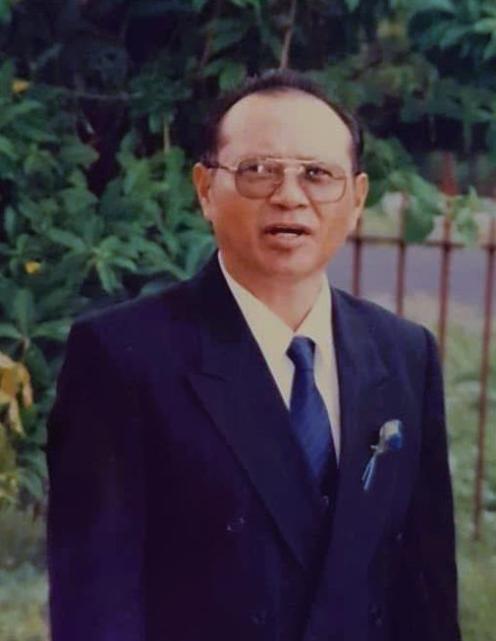
In Loving and Sacred Memory of a devoted husband, cherished father, beloved grandfather, and dear friend
26 September 1948 – 7 May 2019
Six years have passed since you left us, but your love, wisdom, and quiet strength remain with us always. Your presence lives on in our hearts and memories but especially in your grandchildren. You taught us by example with humility, kindness, and grace.
Forever missed, forever loved.
Inserted by your loving wife Eleanor; children Bonita, Michael, Divina, Alaric, Michella, John, Anna, and Angela; sons-in-law Ryan, Brad, Shameer, and Peter; daughters-in-law Lyn and Mary; your grandchildren, extended family, and friends.
Continue to rest peacefully in God’s care


His ancestry, traced to a historic enclave of AfroCaribbeanculture,linksLeoXIVtotherichand
By Richard Fausset and Robert Chiarito – The New York Times
Robert Francis Prevost, the Chicagoborn cardinal selected on Thursday as the new pope, is descended from Creole people of color from New Orleans.
The pope’s maternal grandparents, both of whom are described as Black or mulatto in various historical records, lived in the city’s Seventh Ward, an area that is traditionally Catholic and a melting pot of people with African, Caribbean and European roots.
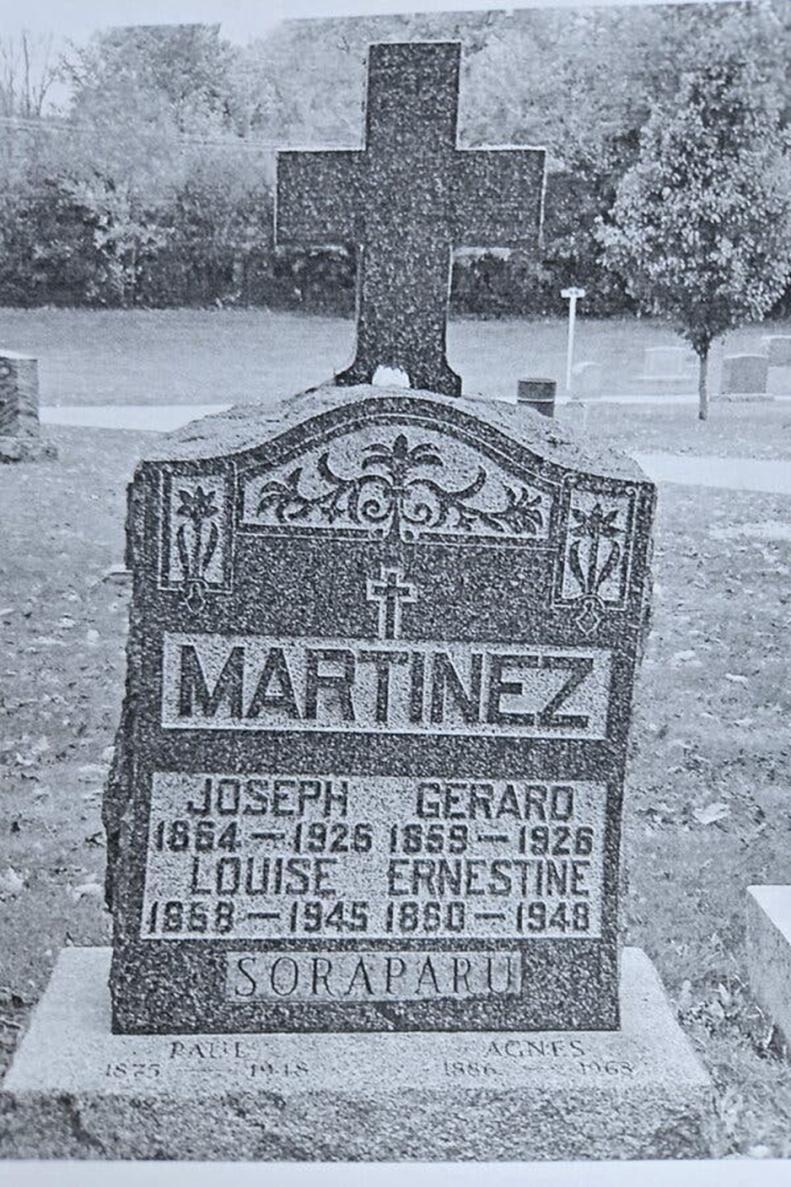
The grandparents, Joseph Martinez and Louise Baquié, eventually moved to Chicago in the early 20th century
and had a daughter: Mildred Martinez, the pope’s mother.
The discovery means that Leo XIV, as the pope will be known, is not only breaking ground as the first U.S.-born pontiff. He also comes from a family that reflects the many threads that make up the complicated and rich fabric of the American story.
The pope’s background was unearthed Thursday by a New Orleans genealogist, Jari C. Honora, and confirmed to The New York Times by the pope’s older brother, John Prevost, 71, who lives in the Chicago suburbs.
“This discovery is just an additional reminder of how interwoven we are as Americans,” Mr. Honora said in a text message late Thursday. “I hope that it
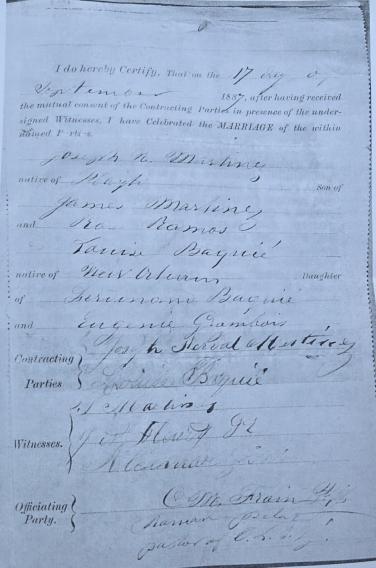
will highlight the long history of Black Catholics, both free and enslaved, in this country, which includes the Holy Father’s family.”
It’s unclear whether the new pope has ever addressed his Creole ancestry in public, and his brother said that the family did not identify as Black. The announcement of his election in Rome focused on his early life in Chicago and decades of service in Peru.
Mr. Honora, who works at the Historic New Orleans Collection, a museum in the French Quarter, began investigating the pope’s background because of his French-sounding name, Prevost, but quickly found connections to the South instead.
His trail of evidence linking Leo to New Orleans includes the grandparents’ marriage certificate from their Seventh Ward wedding in 1887, a photo of the Martinez family grave marker in Chicago, and an electronic birth record of Mildred Martinez that shows she was born in Chicago in 1912.
The birth record lists Joseph Martinez and “Louis Baquiex” as Mildred’s parents. The father’s birthplace is listed as the Dominican Republic; the mother’s, New Orleans.
Mr. Honora also found records from the 1900 Census that list Mr. Martinez as “Black,” his place of birth as “Hayti,” and his occupation as “cigar maker.” Mr. Martinez’s details appear on the sixth line of a page of the census that Mr. Honora shared with The Times.
“Both Joseph Norval Martinez and Louise Baquié were people of color, no doubt about it,” Mr. Honora said.
Joseph Martinez’s exact place of birth remains a bit of a mystery Mr. Honora also found an 1870 Census
record that says the pope’s maternal grandfather was born in Louisiana. But he said it was not uncommon for people to change their responses on officials records.
Joseph Martinez and Louise Baquié married at Our Lady of the Sacred Heart in New Orleans. Until it was destroyed by a hurricane in 1915, the church building was on Annette Street in the city’s Seventh Ward, a historic center of Afro-Creole culture.
Creoles, also known as “Creole people of color,” have a history almost as old as Louisiana. While the word Creole can refer to people of European descent who were born in the Americas, it commonly describes mixed-race people of color.
Many Louisiana Creoles were known in the 18th and 19th centuries as “gens de couleur libres,” or free people of color. Many were well educated, French-speaking and Roman Catholic. Over the decades, they established a foothold in business, the building trades and the arts, particularly music, with significant contributions to the development of jazz. They continue to be an important strand in the city’s famously heterogeneous culture.
The revelation of the new pope’s heritage is a tremendous moment for the history of Louisiana Creoles, said Lolita Villavasso Cherrie, a co-founder with Mr. Honora of The Creole Genealogical and Historical Association “I hate to say it, but we feel, many of us, that our history was hidden from us,” said Ms. Villavasso Cherrie, 79, a retired teacher. In part, she said, that’s because many Creoles have been able to “pass” as white over the years.
It was only with the advent of the internet, she said, that many people began to research their family history and became aware of their Creole roots. She noted that a significant number of Louisiana Creoles migrated to the Chicago area in the 20th century.
John Prevost, the pope’s brother, said that their paternal grandparents were from France, and that his father had been born in the United States. He said he and his brothers didn’t discuss their Creole roots.
“It was never an issue,” John Prevost said.
What all of this means, when it comes to the pope’s racial identity, touches on some of the thorniest questions in U.S. society, but also reflects the rich diversity of the American experience.
“We are all just a few degrees (or less than a few degrees) removed from each other,” said Mr. Honora, the genealogist.❖
Message of His Holiness Pope Francis for the 62nd World Day of Prayer for Vocations
Pilgrims of Hope: the Gift of Life
Dear sisters and brothers,
On this, the 62nd World Day of Prayer for Vocations, I wish to extend to you a joyful and encouraging invitation to become pilgrims of hope by generously offering your lives as a gift.
A vocation is a precious gift that God sows in our heart, a call to leave ourselves behind and embark on a journey of love and service. Every vocation in the Church, whether lay, ordained or consecrated, is a sign of the hope that God has for this world and for each of his children.
Nowadays, many young people feel dismayed as they look to the future. Often they experience insecurity about their prospects of employment and a profound identity crisis, a crisis of meaning and values, which the confused messages of the digital world only aggravate. The unjust treatment of the poor and vulnerable, the indifference of a complacent and self-centred society, and the brutality of war all threaten the hopes for a fulfilling life that young people cherish in their hearts. Yet the Lord, who knows the human heart, does not abandon us in our uncertainty. He wants us to know that we are loved, called and sent as pilgrims of hope.
We, the adult members of the Church, and priests in particular, are called to acknowledge, discern and accompany the young on their vocational path. You, young people, for your part, are called to set out on that path, together with the Holy Spirit, who awakens in you the desire to make your lives a gift of love.
Embracing our specific vocation
Dear young people, “your youth is not an ‘in-between time.’ You are the now of God” (Christus Vivit, 178).
Realize that the gift of life calls for a generous and faithful response. Look to the young saints and blesseds who responded joyfully to the Lord’s call: Saint Rose of Lima, Saint Dominic Savio, Saint Therese of the Child Jesus, Saint Gabriel of Our Lady of Sorrows, the soon-to-be Saints Carlo Acutis and Pier Giorgio Frassati, and many others. They experienced their vocation as a path towards true happiness through friendship with the risen Lord. Whenever we listen to Jesus’ words, our hearts burn within us (cf. Lk 24:32) and we feel the desire to consecrate our lives to God. Naturally, we want to find the way of life that will best allow us to return the love with which he loved us first.
Every vocation, once perceived in the depths of the heart, gives rise to an impulse to love and service, as an expression of hope and charity, rather than a means of self-promotion. Vocation and hope go together in God’s plan for the happiness of each man and woman, all of whom are called by name to give their lives for others (cf. Evangelii Gaudium, 268). Many young people seek to know the path God is calling them to take. Some find, often to their surprise, that they are called to the priesthood or to the consecrated life. Others discover the beauty of the call to marriage and family life, to the pursuit of the common good and to a life of witness to the faith among their friends and acquaintances.
Every vocation is inspired by hope, marked by confident trust in God’s providence. For Christians, hope is more than mere human optimism: it is a certainty based on our faith in God, who is at work in each of our lives.
social and professional commitments. Accompanying vocations
Consequently, pastoral ministers and vocation directors, especially spiritual directors, should readily accompany young people with the hope, patience and trust that reflect God’s own “pedagogy.” They should be capable of listening to them respectfully and sympathetically, and show themselves trustworthy, wise and helpful guides, ever attentive to discerning the signs of God’s presence in their journey.
I urge that every effort be made to foster vocations in the various spheres of human life and activity, and to help individuals to be spiritually open to the Lord’s voice. It is important, then, that adequate space be given to the accompaniment of vocations in educational and pastoral planning.
Vocations mature through the daily effort to be faithful to the Gospel, and through prayer, discernment and service.
Dear young friends, hope in God does not disappoint, because at every step of the way he accompanies those who entrust their lives to him. Our world needs young people who are pilgrims of hope, who courageously devote their lives to Christ and rejoice in being his disciples and missionaries. Discerning our vocational path The discovery of our vocation comes about as the result of a journey of discernment. That journey is never solitary, but develops within a Christian community and as a part of that community.
Dear friends, the world pushes you to make hasty decisions and bombards you with a constant blare that prevents you from experiencing a silence that is open to God who speaks to the heart. Have the courage to pause, to listen to what your heart tells you, and to ask God about his dreams for you. The silence of prayer is indispensable if we are to learn how to hear God’s call amid the specific circumstances of our lives and to respond consciously and freely.
Prayerful recollection helps us to realize that all of us can be pilgrims of hope if we make our lives a gift, above all by placing ourselves at the service of those who live on the world’s material and existential peripheries. Those who heed God’s call cannot turn a deaf ear to the cry of so many of our brothers and sisters who feel excluded, wounded and abandoned. Every vocation confirms us in our mission of being Christ’s presence wherever light and consolation are most needed. In a particular way, the lay faithful are called to be the “salt, light and leaven” of the Kingdom of God through their
The Church needs pastors, religious, missionaries and spouses capable of saying “yes” to the Lord with trust and hope. A vocation is never a treasure stored away in the heart; rather, it grows and is strengthened within a community that believes, loves and hopes. No one can respond to God’s call alone, for all of us need the prayers and support of our brothers and sisters.
Dearly beloved, the Church is alive and fruitful when she generates new vocations. Our world looks, often unknowingly, for witnesses of hope who proclaim with their lives that following Christ is a source of true joy. Let us never tire, then, of asking the Lord for new labourers for his harvest, certain that with great love he continues to call them. Dear young people, I entrust your efforts to follow the Lord to the intercession of Mary, Mother of the Church and Mother of vocations. Keep walking as pilgrims of hope on the path of the Gospel! I accompany you with my blessing and I ask you, please, to pray for me.
Rome, Gemelli Hospital, 19 March 2025.❖
By Fr. Donald Chambers
The election of Pope Leo XIV signifies a crucial moment for the Catholic Church, combining humility, continuity, and a renewed focus on social justice. His first public appearance was marked by evident vulnerability tears in his eyes, a quiver in his voice, and a face showing both wonder and anxiety. Does this humanity symbolise his pastoral authenticity? In his inaugural address, he referenced St. Augustine’s words: “For you I am a bishop. With you I am a Christian,” anchoring his mission in collective humanity rather than hierarchical separation. This humility resonates with Pope Francis’s vision of a “Church that is poor and for the poor,” prioritisingunityover division. Leo XIV’s choice of name intentionally connects him to his predecessor, Leo XIII, who laid the groundwork for Catholic Social Teaching with the 1891 encyclical Rerum Novarum, defending workers’ rights and criticising unregulated capitalism in an age of growing industrialisation and capitalism. By referencing Leo XIII, he reinforces the Church’s responsibility to confront contemporary issues such as climate injustice, migrant crises, and economic inequality. His focus on “building bridges, not walls” reflects Pope Francis’s commitment to encouraging dialogue across political and ideological boundaries.
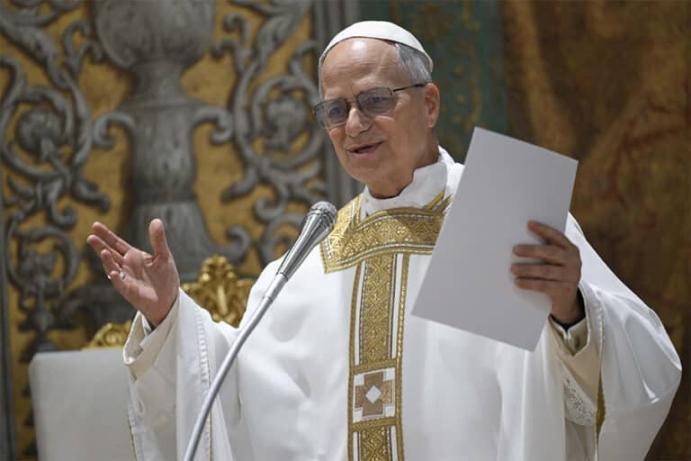
Pope Leo XIV gives his homily while celebrating his first Mass as pope with the cardinals who elected him in the Sistine Chapel at the Vatican May 9, 2025. (CNS photo/Vatican Media)
Significantly, Leo XIV’s Augustinian spirituality seems to shape his vision. Augustine’s thoughts on justice, rooted in love, “True justice begins with the love of God and extends to love of others,” echo the pope’s appeal for systemic change. Like Augustine, who emphasised that private property should benefit the common good, Leo XIV has criticised greed-driven structures while promoting distributive justice. His tears during his initial blessing may symbolise Augustine’s sorrow over a world where “lust for domination” endures. Yet, we hope his expected determination reflects the Saint’s aspiration for a society where “charityandjusticeareinseparable.”
By honouring Pope Francis’s
Pope Francis, we feel confirmed in the faith, and to hear the new pope talk about building bridges and peace and synodality, we are so moved.”
Emiliano Rios from Guadalajara, Mexico, told CNS, “I am so excited. I really liked his speech and being a church for everyone.”
“I have really high hopes for this pope. And it’s another one from
our continent!” of the Americas, he said.
Thomas Evans from Libertyville, Illinois, was thrilled the new pope was from Chicago.
“He was very involved with a lot of the Catholic churches around the Chicago area,” he told CNS. “I’m from the suburbs, and so he’d be very generous and come to a lot of the Masses around the area. I wish
legacy, Leo XIV connects tradition with innovation. Francis’s emphasis on caring for the environment and supporting marginalised communities may be revived within an Augustinian context that values communal dignity over individualism. The new pope’s quivering voice may reflect not weakness but deep empathy a confirmation, as Augustine stated, that “the earth groans in travail, “and the Church is called to act with compassion and purpose.” With Pope Leo XIV at the helm, the Church appears to find a leader whose openness is disarming, whose eloquence fosters unity, and whose vision for justice resonates with the African St. Augustine of Hippo.❖
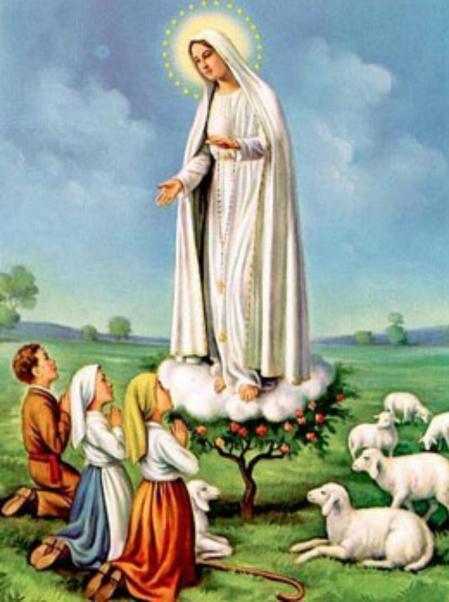
May 13th: Our Lady of Fatima
The Blessed Virgin appeared six times to threeshepherdchildren,Lucia,Francisco,and Jacinta, between May 13 and October 13, 1917 in the little village of Fatima (Portugal). The message given at Fatima is one of repentance, so that the world may be transformed into the place of grace and peace willed by Almighty God.❖
[www.salfordliturgy.org.uk ]
I knew him personally, but I don’t. But I’m just very, very, very happy that he’s from Chicago and I’m here to witness this.
”
Guilaine, a young woman from France, was happy to hear Pope Leo’s emphasis on peace, “especially in these times where the world’s a bit confusing. I liked what he said, and he is giving good hope.
”
Brazilian seminarian Brother Caíto, who is studying at Rome’s Pontifical Regina Apostolorum University, told CNS that because the pope is an Augustinian, “we know that he has the experience of community life.”
“We know that he has passed through many countries, speaks many languages and that he is a man who is going to give continuity to Francis,” Brother Caíto said. “And we know that he would look after the good of the church and peace in the world as he said in his message.”
“We hope and pray very much for him so that he may be a shepherd according to the heart of Jesus,” the seminarian added. ❖