
says Bishop Francis in message
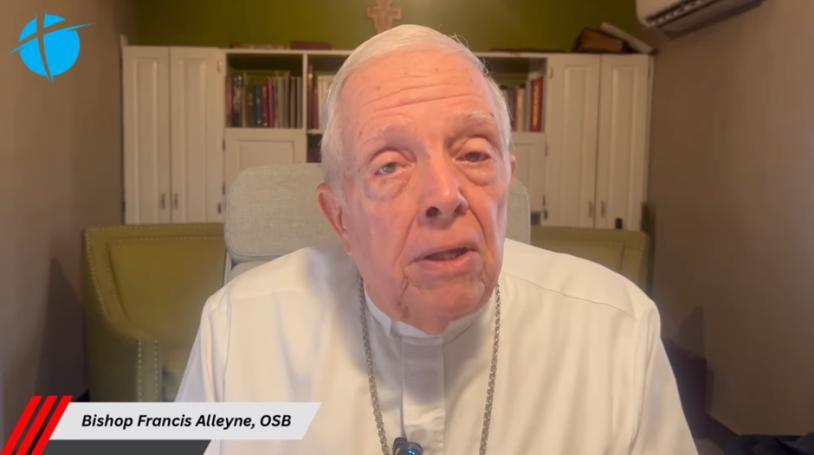
message, first released as a video on Catholic Media Guyana’s Facebook page on Wednesday, April 30th:
Peace be with you.
Brothers and Sisters, through Catholic Media I am offering a few words to all persons of faith, every child of God in this Dear Land of Guyana.
One of the things that has always held my attention and admiration, one of the things that says so much about the people of Guyana is their faith. The National Census shows that over 90% of Guyanese
identify themselves with a faith tradition. Faith traditions, all of them, and we are blessed in Guyana to have a rich presence of a number of faith traditions, these faith traditions speak clearly and emphatically about human dignity and integrity with the promptings and clear instruction to live that dignity and to nurture it in our lives and relationships
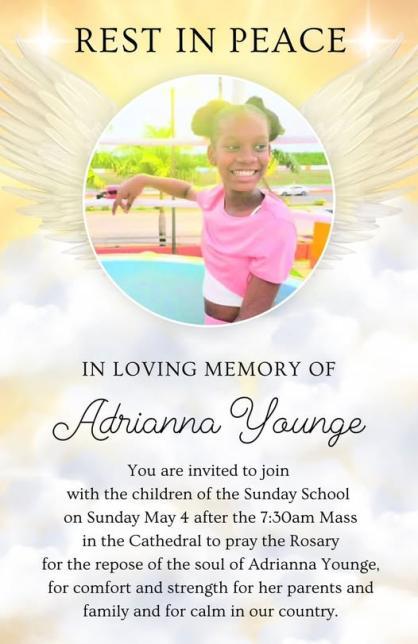
Recent events in Guyana have resulted in tragic loss of life; two young men in Linden, a family along the Soesdyke Highway, a child, Adrianna, at Tushen. I register my own deep concern and sympathy for the families and loved ones of these victims; the families and loved ones who must now bear the brunt of the loss. There ought to be indignation and pain in the face of such desecration of human life. But over and above our pain and indignation let us bring to the fore the teachings of our respective faiths; let us bring expressions of human goodness, respect for self and others, protection of the vulnerable - these are the attributes that will open ways for peace and Justice, freedom, restoration of order, the building of trust and stewardship, accompanying and looking after one another.
The teachings of each of our faith traditions, in their unique way, call people to protect the sanctity of life, to nurture it and bring it to a stature where every person is safe and has access to opportunities. This is our faith, this is the faith of our rich traditions. Let us claim it, own it, profess it, sustain it and become what we believe. ❖
A splendid Requiem Mass for Pope Francis - p2
Pope Francis’ funeral: A global farewell to a humble shepherd - p3
A Christian Perspective on Social Issues - p4
Sunday Scripture - p5
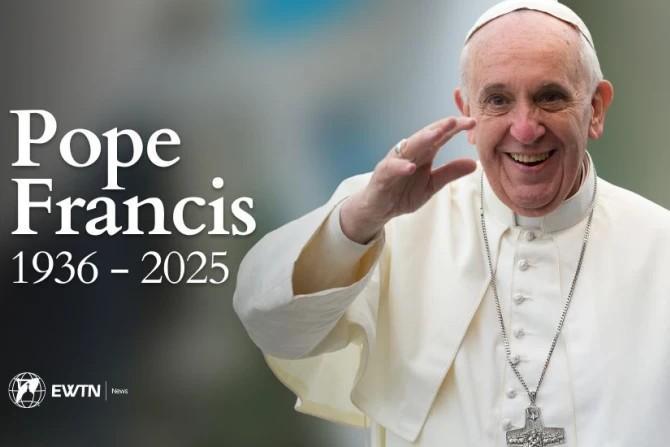
Messages on the passing of Pope Francis - p6
Regional bishops, political leaders pay tribute to Pope Francis - p7
Pope said Mary picked his burial place - p8
Pope left all the money in his bank account to prisoners - p8
Children’s Page - p9
In final public appearance, Pope Francis delivered Easter blessing - p10
Growing in Grace Week 58 - p10
Conclave to begin May 7th - p11
A new social media generation prepares to elect the pope - p12
Easter Hats at St Pius X - p13
SacredHeart&FriendsYouthGroupRetreat - p14

Sunday, May 4th
07:30hrs - Mass at the Cathedral of the Immaculate Conception, Brickdam
Travel to Port of Spain to attend Eucharist Congress (continued on page 8)
The Jubilee Prayer
A splendid Requiem Mass for Pope Francis
By GHK Lall
Father in heaven, may the faith you have given us in your son, Jesus Christ, our brother, and the flame of charity enkindled in our hearts by the Holy Spirit, reawaken in us the blessed hope for the coming of your Kingdom.
May your grace transform us into tireless cultivators of the seeds of the Gospel.
May those seeds transform from within both humanity and the whole cosmos in the sure expectation of a new heaven and a new earth, when, with the powers of Evil vanquished, your glory will shine eternally.
May the grace of the Jubilee reawaken in us, Pilgrims of Hope, a yearning for the treasures of heaven. May that same grace spread the joy and peace of our Redeemer throughout the earth.
To you our God, eternally blessed, be glory and praise for ever.
Amen



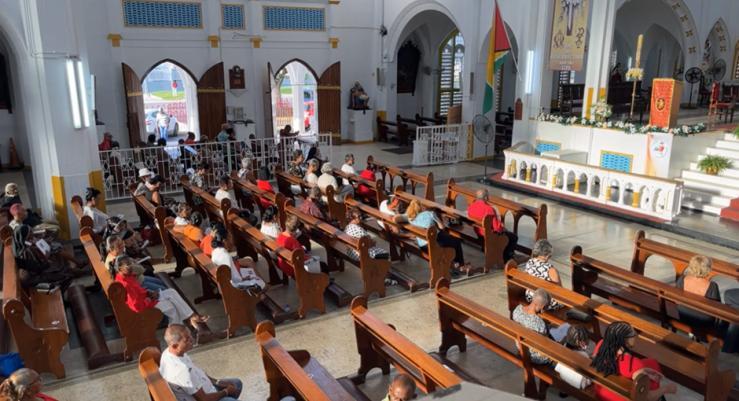
Hundreds of Guyanese came out to pay tribute to Pope Francis on Friday, April 25th at the Cathedral of the Immaculate Conception, Brickdam, Georgetown. It was an evening that reminded parishioners and wellwishers that the long, hot season is here, beginning to come into full bloom. Inside, the proceedings, led by His Lordship Bishop Francis Alleyne, OSB were graced with just the right blend of solemnity and quiet dignity. It was fitting for the man recollected in a memorial to his attributes, his works, his record of discipleship, his place in the vicarage of Christ. Jorge Mario Bergoglio of the barrios of Buenos Airesserved his God, and his Church well. He was remembered,cherished.
The hushed congregation, filled to just around three-quarters of its maximum capacity, heard well-read passages from the Bible, with Peter, the first Vicar of Christ leading the way in Acts of the Apostles, and Peter again on the move in St John’s Gospel. Mrs. Shelly Woodruff was crisp and clear with the reading from Acts of the Apostles, and Fr. Joseph of St Theresa by way of Nigeria brought an intriguing strain of sound to the

DearEditor,
As the world reflects on Pope Francis' passing, it is imperative to examine the essence of his leadership style, which transcended mere promises and sought to enact meaningful change. A transformational leader, as epitomised by Pope Francis, articulates a shared vision that empowers individuals across diverse backgrounds to contribute to a collective purpose.
Pope Francis’s landmark encyclical, The Joy of the Gospel (2013), is a profound blueprint for his leadership. Init,heassertsthattheGospelbrings joy to all who encounter Christ, thereby calling upon every member of the Church, not solely the clergy, to embrace their role as evangelisers. This inclusive approach challenges the traditional hierarchical structure, urging laypeople and women to actively foster spiritual growth and
Gospel reading. Aside from the slightest of tangles, the choir was in good form with its harmonies and crescendos, while the soloist did sweet justice to the responsorial psalm. Pope Francis must be nodding in approval somewhere, wearing thatwarm smile of his that lit up the world when he first took the chair of Peter 12 years ago. According to most reports, inside and outside of the Roman Catholic Church, he filled that chair andthoseyearswell,very well.
This was what Bishop Francis made the centerpiece of his homily. A man, a leader, a server. A mover in the manner of a true pilgrim. So much hope he instilled in so many hearts. Like Peter, a fisher of men. With women not left out at all. Like Peter before and under the intense scrutiny of the powers of his time, Pope Francis was one who did not wilt, but took some issues to the hilt. Not everyone received his messages well, nor his actions hospitably. To cure is to bring a curse. To move things and people along, away from where they have always been, that’s the work of a pilgrim. A pilgrim in the mold of Jesus Christ brings hope, fosters hope, and lives in that hope. Where there is hope, that means that Jesus has taken hold. Bishop Francis was
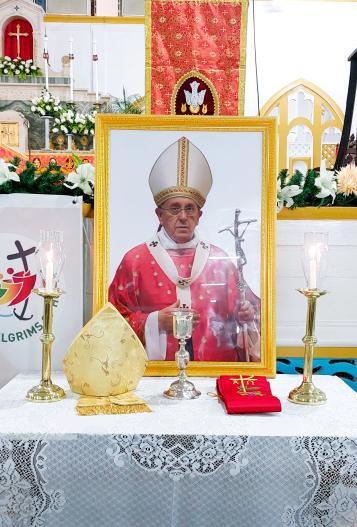
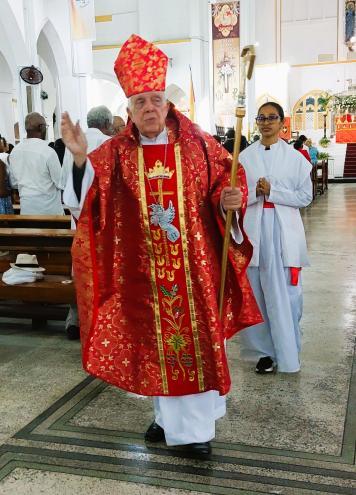
appropriately subdued in his lived. He was pointed and appealing at points, which set just the right tone, shed righteous light on the life of Jorge Mario Bergoglio, Pope Francis. It was a quiet goodbye that garlanded his life, as lived. No frills, no excesses. Just truths; plain and simple. It was a properly splendid Requiem Mass for a man who tried his best to follow in Jesus’sfootsteps.
In a gathering flecked with red, Guyanese Roman Catholics came out and honored their now departed leader. Pope Francis is held by many as a role model of what a true worker of Christ is, one to the glory of God. Mayhissoulrestinpeaceeternally.❖
The enduring legacy of Pope’s transformational leadership model
community engagement. Moreover, Pope Francis’s critique of a “throwaway culture” sheds light on pressing societal issues, such as inequality and unbridled capitalism. His insistence that the Church prioritises the marginalised resonates deeply in today’s socio-economic landscape, where the needs of the vulnerable often go overlooked. By advocating for economic systems that uphold human dignity rather than exploit it, he has redefined what itmeanstoleadethically.
Pope Francis’ leadership was a call for “Action, not a Bag of Mouth” (NadineSutherland). He lived simply among priests, drove a small Fiat car, kept the issues of the Global South alive, fearlessly challenged religious and political leaders who failed to uphold human dignity, and called for the embodiment of Christ’s merciful inclusion of all peoples, and prayed constantly for victims of war, migration, and natural disasters.
Wheneverhemadeoverseaspastoral visits, he insisted on meeting the marginalised.
These examples highlight his commitment to those on the fringes of society, reinforcing the notion that true leadership involves walking alongside the oppressed. His ritual of washing the feet of prisoners illustrated his belief in humility and service, challenging the conventional perceptions ofauthority.
As we mourn his death, we also celebrate the enduring legacy of his transformational leadership model. In a time of leadership crisis globally and in the Caribbean, where leaders place their self-centred desires first, Pope Francis’ leadership legacy is a model for religious and political leaders who aspire to create a more just and compassionate world. Let us, therefore, heed his call to move beyond rhetoric and engage in actionsthatuplifthumanity.
Rev. Fr. Donald Chambers
Pope Francis’ funeral: A global farewell to a humble shepherd
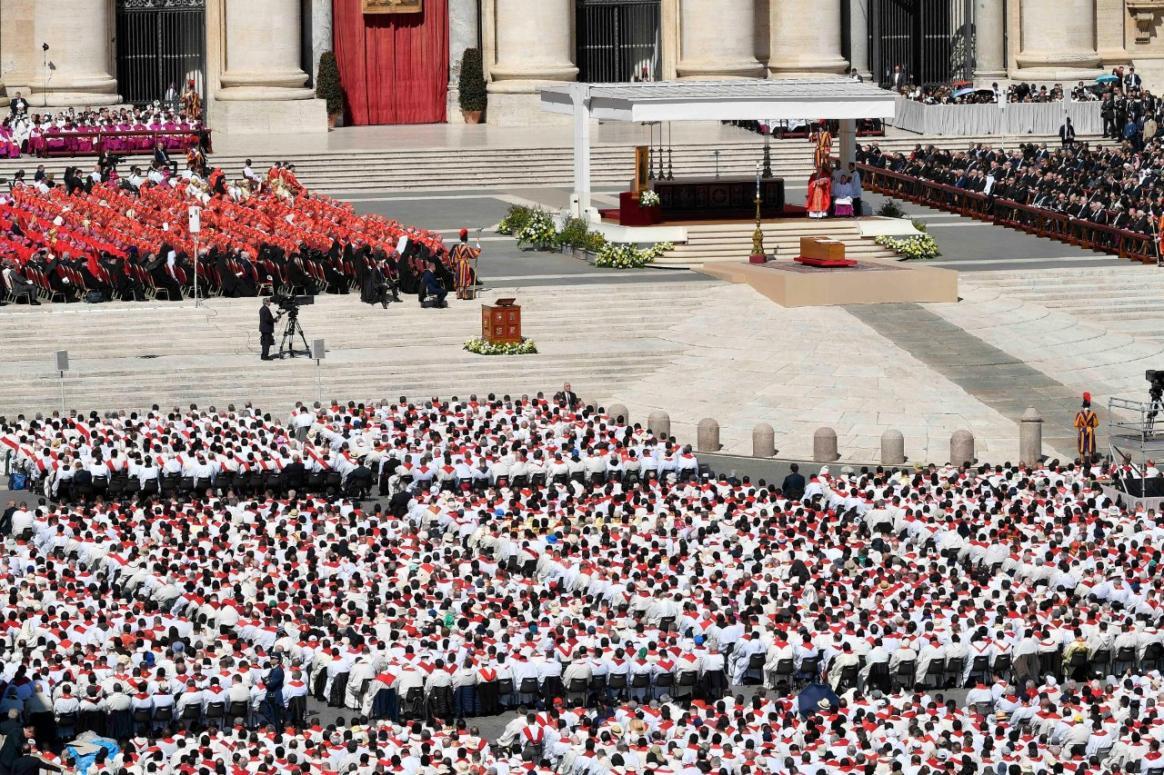
(CNA) - More than 400,000 people filled St. Peter’s Square for the funeral of Pope Francis on Saturday April 26 as the world said goodbye to the first Latin American pope who led the Catholic Church for the past 12 years.
Under the bright Roman sun and amid crowds extending down the Via della Conciliazione, the funeral Mass unfolded within the great colonnade of St. Peter’s Basilica. Heads of state, religious leaders, and pilgrims from across the globe gathered for the historic farewell.
Cardinal Giovanni Battista Re, the dean of the College of Cardinals, presided over the Mass, delivering a homily that paid tribute to Francis’ missionary vision, human warmth, spontaneity, witness to mercy, and “charisma of welcome and listening.”
“Evangelization was the guiding principle of his pontificate,” Re said.
Pope Francis “often used the image of the Church as a ‘field hospital’ after a battle in which many were wounded; a Church determined to take care of the problems of people and the great anxieties that tear the contemporary world apart; a Church capable of bending down to every person, regardless of their beliefs or condition, and healing their wounds.”
As bells tolled solemnly, the funeral rite began with the intonation of the entrance antiphon: “Eternal rest grant unto him, O Lord, and let perpetual light shine upon him.”
The late pope’s closed plain wooden coffin lay in front of the altar throughout the Mass.
“In this majestic St. Peter’s Square, where Pope Francis celebrated the Eucharist so many times and presided over great gatherings over the past 12 years, we are gathered with sad hearts in prayer around his mortal remains,” Re said.
“With our prayers, we now entrust the soul of our beloved pontiff to God, that he may grant him eternal happiness in the bright and glorious gaze of his immense love,” he added.
Among the more than 50 heads of state present were U.S. President Donald Trump and First Lady Melania Trump, alongside former President Joe Biden. Also in attendance were Ukrainian President Volodymyr Zelenskyy, Argentine President Javier Milei, Italian Prime Minister Giorgia Meloni, French President Emmanuel Macron, and European Commission President Ursula von der Leyen.
Philippine President Ferdinand Marcos Jr. and Brazilian President Luiz Inácio Lula da Silva joined the throng of international dignitaries along with representatives of religious traditions from around the world.
Royal families also paid their respects, with Prince William representing King Charles III and Spanish King Felipe VI and Queen Letizia seated near the altar.
Pilgrims arrived before sunrise to claim their spots in St. Peter’s Square for the Mass with the first in line camping out the night before.
The funeral followed the Ordo Exsequiarum Romani Pontificis, the official liturgical order for papal funerals, which was updated at Pope Francis’ own request in 2024. Scripture readings included Acts 10:34 -43, Philippians 3:20–4:1, Psalm 22, and the Gospel of John 21:15-19 a passage in which the risen Christ tells Peter: “Feed my sheep.”
More than 200 cardinals and 750 bishops and priests concelebrated the funeral Mass. More than 4,000 journalists representing 1,800 media outlets reported on the event. All told, the Holy See said more than 250,000 mourners attended.
In his homily, Re reflected on key moments in Pope Francis’ pontificate, from his risk-defying trip to Iraq to visit Christians communities persecuted by the Islamic State to his Mass on the border between Mexico and the United States during his journey to Mexico.
“Faced with the raging wars of recent years, with their inhuman horrors and countless deaths and destruction, Pope Francis incessantly raised his
voice imploring peace and calling for reason and honest negotiation to find possible solutions,” the cardinal said, causing the crowd to erupt in spontaneous applause.
“Pope Francis always placed the Gospel of mercy at the center, repeatedly emphasizing that God never tires of forgiving us. He forgives, whatever the situation might be of the person who asks for forgiveness and returns to the right path,” Re reflected.
“Mercy and the joy of the Gospel are two key words for Pope Francis.”
The cardinal presided over the final commendation and farewell for Pope Francis, praying: “Dear brothers and sisters, let us commend to God’s tender mercy the soul of Pope Francis, bishop of the Catholic Church, who confirmed his brothers and sisters in the faith of the Resurrection.”
“Let us pray to God Our Father through Jesus Christ and in the Holy Spirit; may he deliver him from death, welcome him to eternal peace, and raise up him on the last day,” he said.
After the crowd chanted the Litany of Saints in Latin, Cardinal Baldassare Reina, vicar general of the Diocese of Rome, offered a final prayer: “O God, faithful rewarder of souls, grant that your departed servant and our bishop, Pope Francis, whom you made successor of Peter and shepherd of your Church, may happily enjoy forever in your presence in heaven the mysteries of your grace and compassion, which
he faithfully ministered on earth.”
A poignant moment followed as Eastern Catholic patriarchs, major archbishops, and metropolitans from the “sui iuris” Churches approached the coffin while a choir chanted a Greek prayer from the Byzantine Funeral Office.
Re blessed the coffin with holy water and incense as the choir sang in Latin: “I know that my Redeemer lives: On the last day I shall rise again.”
At the end of the Mass, the traditional antiphon “In Paradisum” was sung in Latin, asking for the angels to guide the pope’s soul to heaven.
“May the angels lead you into paradise; may the martyrs come and welcome you and take you to the holy city, the new and eternal Jerusalem. May choirs of angels welcome you and with Lazarus, who is poor no longer, may you have eternal rest.”
In keeping with his wishes, Pope Francis was not buried in the Vatican grottoes alongside his predecessors. Instead, his body was taken in procession through the streets of Rome in a vehicle to the Basilica of St. Mary Major, a church he visited over 100 times in his lifetime to pray before an icon of the Virgin Mary, “Salus Populi Romani,” particularly before and after his papal journeys.
In Rome’s most important Marian basilica, Pope Francis was laid to rest in a simple tomb marked with a single word: Franciscus. ❖
View of the funeral Mass of Pope Francis in St. Peter’s Square at the Vatican April 26, 2025. (Vatican Media)
By GHK Lall
A Christian Perspective on Social Issues Pope Francisa Holy Father, indeed
If ever there was a man that I recognizeasa trueHolyFather,PopeFrancis was that one. Like my biological father, there were some wrinkles, a wart here and there, but they all paled into the greater portrait of the man. When the Roman Catholic Church needed a pioneering leader,Godgaveitone.
The last several pontificates have been held by somereally remarkable men of the cloth, of the Holy See, of Almighty God. There was Pope John Paul XXIII and Pope John Paul II. Church leaders of distinction, before whom I curtsy. But Pope Francis came in for closer personal identification. I felt that I could relate to the pontiff, and not just on one level. A man of God, and of the people. A man of courage, but one who knew that, having planted seeds, he must leave the rest to God’s will and God’s time. Priests and celibacy. The uplift of women to places of greater responsibility. The doctrines held onto so ferociously by many, but to whichIwillnotgonear.
But areas that previously languished from disinterest, or contempt, he did venture to make a difference with heart and arms open wide. The ostracized and outcasts. Those that the world, and many in the Church of Christ itself, look upon as unnatural, if not inhuman. They are the lepers of this 21st century, which many shun, hurriedly distance from, but to whom Pope Francis rolled out a welcoming mat. When condemnation and rejection start with orientation, then it is just a matter of time before that culture, that mindset, comes to its fullest flower in the matter of complexion. Who belongs, and who shouldn’t. Who shouldn’t be allowed, for fear of contaminating the pool. It is a savage world that is inhabited. One that is hard and unforgiving, one that is cold and chills to the bone. Pope Francis made it a standard, his own, to be warm and receptive to the lowest of the low, with an eye for the lost and the hopeless. He must have lived with that closest of Biblical command, that
spiritual reminder, ‘in that this was done to the least of my brothers, then itwasdonetome.’
Do these things, timeless and priceless teachings, mean as much as they used to do? Do they matter at all, are what believers give much thought? Deep reflection that turns the wheels of conviction. I must do this; I must live this way. Pope Francis did, and because I come from the wrong side of the tracks, I view this brother, this leader, this follower of Christ, a little differently. A man who lived scripture, one who is worthy of copying a few things from, and making them my own. Not everything, but those ones about love, the others that were about care and compassion.Andaboutpeace.
In a time, in a season, in a world of grand quarrels and unending distress and still deeper despair, Pope Francis was a leader who stood out by saying: ‘I care. So, I share. And it should not be this way.’ Boat people and people from places dismissed as banana republicsanddarkcontinentsarenotthe most welcomed of guests, of neighbors. They drain resources, they damage the landscape. And, of course, they offend the sensibilities. But no one dares to utter the latter in public. Conveniently forgotten are how those
same people, yearning for a place of rest, had their own homes and spaces and riches damaged, invaded, and drained away respectively. The prizes of people that once beckoned with compelling power now count for nothing when they are condemned to the ranks of the despised. Don’t come here. There is no welcome here. There is where Pope Francis left another of his large footprints. If he wore a size 14 sandal, it was too large and too untimely. Still, he plugged away like some 1st century missionary. Tireless and fearless. A man and servant, who gave the world what is peerless. Whoever heard of a servant still toiling, still engaging, in the ripeness of 88 years, and after what he had been through, a mere matter of a handful of weeks before. He was blessed and we are. He must have heard some calling to which he just had to respond. Be for the weak and hopeful. Build their trust and faith in theRisen Christ. Give them one more look, and look at them one more time, before it was time to go. Hedid,tothegrandeurofGod,and we are all better for it. May God grant blissful rest to one of a kind, a servant of class and rare distinction, Jorge Mario Bergoglio, Pope Francis. A Holy Father,indeed.❖
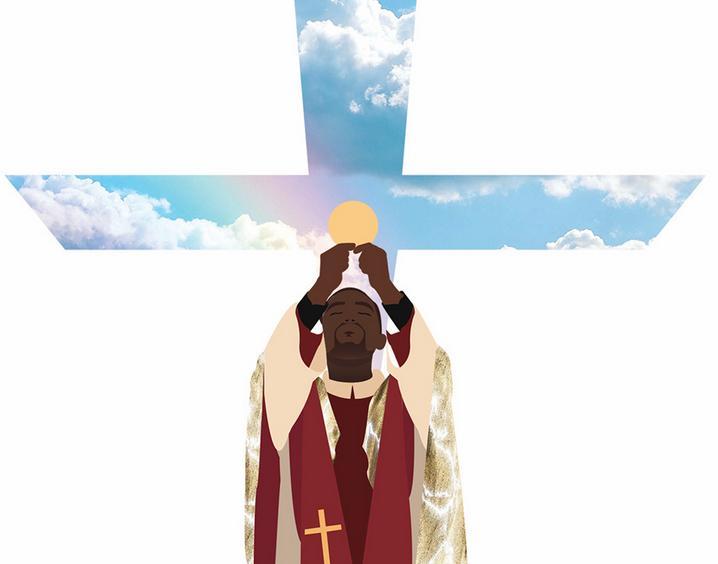
Gracious and loving God, we thank your for the gift of our priests.
Through them, we experience your presence in the sacraments.
Help our priests to be strong in their vocation.
Cluster parishioners baptized/
Set their souls on fire with love for your people.
By Sally Farinha North Cluster RCIA Catechist
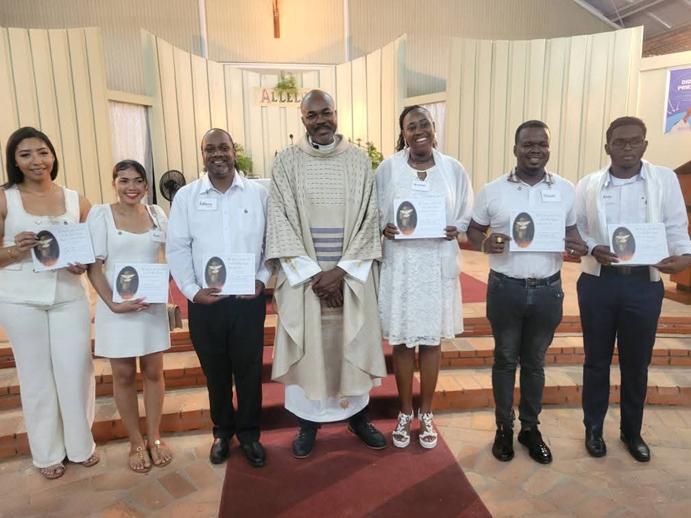
Parishioners of the North Georgetown Cluster (St. Teresa and Holy Rosary, Kitty) congratulate the six members of their RCIA process who were baptized and/or confirmed during the Easter Vigil Mass at Holy Rosary church, Kitty, on Saturday, April 19th. Rhonda Vieira and Moses Blackman received the sacraments of Adult Initiation, and Nikel Narine,
mystagogy phase of the RCIA process. Special thanks to Fr. Joseph Uchenna Oguejiofor our Celebrant, and all those who made this Easter Vigil Mass special. ❖

Grant them the wisdom, understanding, and strength they need to follow in the footsteps of Jesus. Inspire them with the vision of your Kingdom.
Give them the words they need to spread the Gospel.
Allow them to experience joy in their ministry.
Help them to become instruments of your divine grace.
We ask this through Jesus Christ, who lives and reigns as our Eternal Priest. Amen

FIRST READING Acts 5: 27-32; 40-41
We are witnesses of all this, we and the Holy Spirit. The high priest demanded an explanation of the apostles. “We gave you a formal warning,” he said “not to preach in this name, and what have you done? You have filled Jerusalem with your teaching, and seem determined to fix the guilt of this man’s death on us.” In reply Peter and the apostles said, “Obedience to God comes before obedience to men; it was the God of our ancestors who raised up Jesus, but it was you who had him executed by hanging on a tree. By his own right hand God has now raised him up to be leader and saviour, to give repentance and forgiveness of sins through him to Israel. We are witnesses to all this, we and the Holy Spirit whom God has given to those who obey him.” They warned the apostles not to speak in the name of Jesus and released them. And so they left the presence of the Sanhedrin glad to have had the honour of suffering humiliation for the sake of the name.
RESPONSORIAL PSALM Psalm 29
Resp: I will praise you, Lord, you have rescued me.
1. I will praise you, Lord, you have rescued me and have not let my enemies rejoice over me.
O Lord, you have raised my soul from the dead, restored me to life from those who sink into the grave. Response
2. Sing psalms to the Lord, you who love him, give thanks to his holy name.
His anger lasts but a moment; his favour through life.
At night there are tears, but joy comes with dawn. Response
3. The Lord listened and had pity. The Lord came to my help.
For me you have changed my mourning into dancing,
O Lord my God, I will thank you for ever. Resp.
SECOND READING Apocalypse 5: 11-14
The Lamb that was sacrificed is worthy to be given riches and power.
In my vision, I, John, heard the sound of an immense number of angels gathered round the throne and the animals and the elders; there were
In today’s Gospel, we find the Apostles dejected and discouraged following the death of our Lord. Poor Peter decides to throw in the towel on the whole disciple thing and go back to his
ten thousand times ten thousand of them and thousands upon thousands, shouting, “The Lamb that is sacrificed is worthy to be given power, riches, wisdom, strength, honour, glory and blessing.”
Then I heard all the living things in creation – everything that lives in the air, and on the ground, and under the ground, and in the sea, crying, “To the One who is sitting on the throne and to the Lamb, be all praise, honour, glory and power, for ever and ever.” And the four animals said, “Amen”; and the
GOSPEL
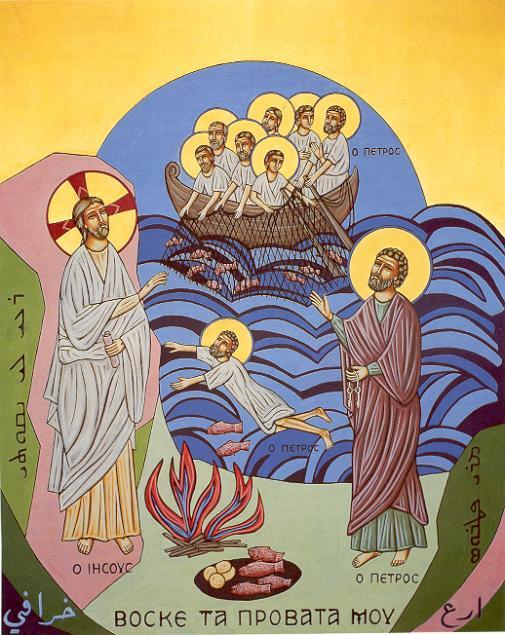
John 21:1-19
Jesus stepped forward, took the bread and gave it to them, and the same with the fish.
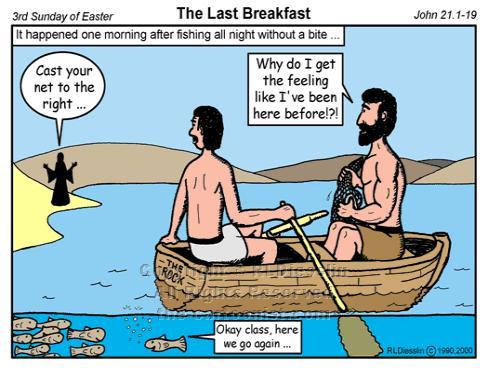
Jesus showed himself again to the disciples. It was by the sea of Tiberias, and it happened like this: Simon Peter, Thomas called the Twin, Nathanael from Cana in Galilee, the sons of Zebedee and two more of his disciples were together. Simon Peter said, “I’m going fishing,” They replied, “We’ll come with you.” They went out and got into the boat but caught nothing that night.
It was light by now and there stood Jesus on the shore, though the disciples did not realise that it
old way of life, declaring, “I’m going fishing.” Upon hearing this, the other disciples follow him.
How easy it is for all of us to backslide on changes we have made in our lives, especially when it comes to our spiritual lives. But look how Jesus treats the disciples during their “backslide.” He is right there with them in the midst of it, already waiting for them on the shore when they come back from their unsuccessful return to the fishing business (after
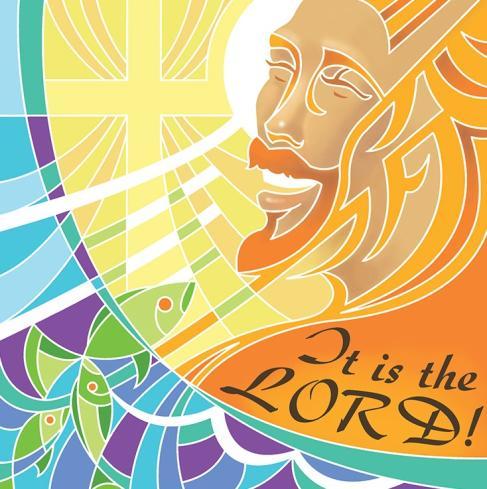
was Jesus. Jesus called out, “Have you caught anything, friends?” And when they answered. “No”, he said, “Throw the net out to starboard and you’ll find something.” So they dropped the net, and there were so many fish that they could not haul it in. The disciple Jesus loved said to Peter, “It is the Lord.” At these words “It is the Lord”, Simon Peter, who had practically nothing on, wrapped his cloak round him and jumped into the water. The other disciples came on in the boat, towing the net and the fish; they were only about a hundred yards from land.
As soon as they came ashore they saw that there was some bread there, and a charcoal fire with fish cooking on it. Jesus said, “Bring some of the fish you have just caught.” Simon Peter went aboard and dragged the net to the shore, full of big fish, one hundred and fifty-three of them; and in spite of there being so many the net was not broken. Jesus said to them, “Come and have breakfast.” None of the disciples was bold enough to ask, “Who are you?”; they knew quite well it was the Lord. Jesus then stepped forward, took the bread and gave it to them, and the same with the fish. This was the third time that Jesus showed himself to the disciples after rising from the dead.
After the meal Jesus said to Simon Peter, ‘Simon son of John, do you love me more than these others do?’ He answered, ‘Yes Lord, you know I love you.’ Jesus said to him, ‘Feed my lambs.’ A second time he said to him, ‘Simon son of John, do you love me?’ He replied, ‘Yes, Lord, you know I love you.’ Jesus said to him, ‘Look after my sheep.’ Then he said to him a third time, ‘Simon son of John, do you love me?’ Peter was upset that he asked him the third time, ‘Do you love me?’ and said, ‘Lord, you know everything; you know I love you,’ Jesus said to him, ‘Feed my sheep.
‘I tell you most solemnly, when you were young you put on your own belt and walked where you liked; but when you grow old you will stretch out your hands, and somebody else will put a belt round you and take you where you would rather not go.’ In these words he indicated the kind of death by which Peter would give glory to God. After this he said, ‘Follow me.’❖
abandoning their mission as disciples).
Our Lord greets them tenderly, gives them some fishing pointers, and then prepares their breakfast. How gracious He is to them!
He is just as gracious today. When we find ourselves “out at sea” discouraged by our failures or for squandering the gifts God has given us, or simply by a lack of progress in our faith life, Jesus is with us! He is calling to us from the shore to come back to Him without shame or embar-
rassment, but with hope-filled trust in His steadfast love. He never tires of offering “do-overs” if we just keep returning to Him.
This constant process of turning back to the Lord, of re-evaluating our goals and priorities as we aim for Heaven, is the essence of a stewardship way of life. Let us take heart as we continue our journey today, secure in the knowledge that Jesus is beside us every step of the way.❖
[www.catholicsteward.com/blog/ ]
Gospel Reflection
It is now two weeks since Easter Sunday and things are getting back to normal. The Alleluias have lost their Easter joyfulness. The memories of the water of baptism and the renewal of vows are slowing becoming fading memories. We feel that it is business as usual. For the apostles it must have felt this way. So they returned to work, to their boats and nets and the sea at night. It was the only thing they knew how to do. But it is never business as usual when we are truly touched by Jesus. There is no going back but only forward into a life of faith and service, a life that will not be easy sailing all the time but which will present many wonderful challenges that make going back to the usual unsatisfying. It is a response to Jesus’ call to “follow me” into a life of compassion, reconciliation and mission that leads into directions we cannot know beforehand and with which we may not agree. But there is no turning back.
The Easter season reminds us that we are disciples of Jesus. The baptismal vows we renew every Easter point this out with great clarity. It is easy to believe in God and to make vows when life is good and we are down on our knees in Church praying with eyes closed, away from the noise, misery and pain of the world out there. But those vows are important because Jesus depends on his disciples to make him present in the world today. We are his hands and eyes and ears and feet as we go about making a difference in a world that can be so uncaring and unconcerned. What we say and do may not always be what the world expects and we will suffer because of this. But this is the price of discipleship. No one, including Jesus, ever said it would be easy.❖
[From: Journeying with the Word of God, The Religious Education Department, Diocese ofGeorgetown, Guyana ]
Message from Most Rev. Francis Alleyne, OSB, Bishop of Georgetown on the passingof Pope Francis
Yesterday morning, Monday 21st, April we woke up to the news of the passing of Pope Francis. Over the last 24 hours I have received numerous expressions of sympathy and condolences offered to the Church expressing the sadness at the loss, gratitude for his life and ministry and well-being of the Church as a process will now begin to elect a successor to Pope Francis. I am very grateful, moved, by the outpouring of these sentiments.
The Leadership of Pope Francis was exemplary as he clearly articulated the ways that we are called to be church in the world in this time. His writings, his encyclicals are rich and profound as he addressed realities of our times and, particularly from Gospel teaching, he described clearly and in practical terms appropriate and fitting and very often challenging faith responses to these realities. The methodology, content and inclusivity that he brought to recent Synods: Synod on Family, Synod on the Amazon, Synod on Synodality prompted new and fuller ways of listening, discerning and coming to the truth. I believe that his writings and teachings will continue to serve the
Message of Condolence on the passing of His Holiness Pope Francis from His Excellency
President Irfaan
Ali
A shepherd of compassion and conscience
I join the multitudes across the world in mourning the passing of His Holiness Pope Francis. As the spiritual head of more than 1.3 billion Roman Catholics, his death will be deeply felt across all continents. On behalf of the government and people of Guyana, I extend my heartfelt condolences to the global Catholic community and especially the Faithful of our local diocese.
Pope Francis’s election to the papacy twelve years ago generated a wave of excitement, especially considering that he was the first person from the Americas to become Pope. His papacy sparked important conversations about acceptance and belonging with-
AEC Statement on the Death ofHis Holiness Pope Francis
It is with deep sorrow that we receive the news of the death of His Holiness Pope Francis, the Bishop of Rome and Supreme Pontiff of the Holy Catholic Church.
We have lost a true shepherd-a man of incomparable depth and unwavering commitment to Christ. He was a faithful disciple who kept the joy of the Gospel alive in the hearts of the faithful, even as he called us to a deeper love: within the family, for our
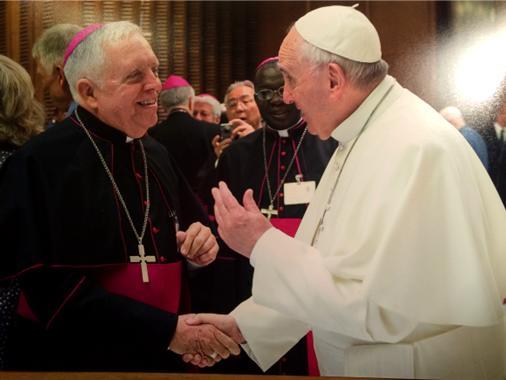
Pope Francis and Bishop Francis Alleyne OSB chat during one of the morning breaks in a Synod on the Family session of Friday, October 9th 2015.
Church and the world in wonderful ways for many years to come.
I had the privilege to meet Pope Francis on a few occasions as I was able to attend two Synods and the Ad Limina visit of the AEC Bishops. I remember his humility and simplicity shown in his lifestyle (anecdotes) and
in the Church. The recent synod that he convened has laid the foundational stones for a new way of being Church.
Apart from his religious legacy, he will long be remembered for the simplicity of his lifestyle, his enlightened stance on global concerns such as climate change, inequality and migration, and his role in fostering improved inter-faith dialogue and relations.
The environment was close to his heart. In his encyclical letter, Laudato Si, Pope Francis called for shared responsibility for protecting the environment. Referring to the planet as “our common home”, His Holiness said: We need to strengthen the conviction that we are one single family. There are no frontiers or barriers, political or social, behind which we can hide, still less is there room for the globalisation of indifference.
He highlighted the plight of migrants
common home, for the poor and marginalised, and for one another across every boundary and division.
Pope Francis showed us how to walk together toward Christ in one of the most challenging and complex periods of human history. He made synodalitywalking together in communion, participation, and mission-constitutive of the Church's very identity. Through his life, his ministry, and his courageous witness, he called the Church to become ever more the field hospital of mercy and the sacrament or sign of hope in the world.
his manner and demeanor was always cordial and encouraging.
Here in the Diocese, we will celebrate a requiem Mass for Pope Francis on Friday 25th April at the Cathedral at 5:00pm giving thanks for his life and ministry and ushering him to that place of peace, rest and fulfillment. ❖
and refugees, reminding us that “[They] are not pawns on the chessboard of humanity. They are children, women, and men who leave or who are forced to leave their homes for various reasons, who share a legitimate desire for knowing and having, but above all for being more."
He was a tireless advocate for addressing inequality, often framing this need as a moral and social imperative rooted in the principles of human dignity,solidarity,andthecommongood.
Pope Francis was a shepherd of compassion and conscience. His pontificate has had far-reaching impacts and assures him of a revered place in the history of the papacy and the course of human history. May he rest in eternal splendour!
Dr. Mohamed Irfaan Ali President of the Co-operative Republic of Guyana April 21, 2025 ❖
We give thanks to God for the gift of his papacy, for his example of humility and strength, and for his unwavering devotion to the Gospel of Jesus Christ. Well done, good and faithful servant. Eternal rest grant unto him, O Lord, and let perpetual light shine upon him. May he rest in peace. Amen.
With Gratitude
Most Reverend Charles Jason Gordon President Antilles Episcopal Conference ❖
Journeying with the Word of God
Regional leaders and bishops of the Antilles Episcopal Conference have offered statements on the passing of PopeFrancis, who died on Easter Monday, April 21, at theageof88.
Bishop Clyde Harvey of St George’s-in-Grenada called on the faithful to reflect on and “treasure the legacy” left by the latePope.
In a video message via Good News Catholic Communications, Bishop Harveydescribed the pontiff as “one of the greatest popes” who had been entrusted witha “tremendoustask.”
“He was called to the office when the world was changing rapidly and Church had to respond with the joy of Christ, the joy of the Gospel as he called it,” Bishop Harveyrecalled.
He added that Pope Francis did “a lot of work” over his 12 years in office and emphasised that Catholics “must treasure the legacy he leaves us.”
Bishop Harvey also noted a difficult decision made in light of the Pope’s death: all Easter celebrations in the diocese would be postponed “untilfurthernotice.”
“I’m simply asking you to be considerate in this regard because if you were preparing a birthday party for your father and your mother died you would cancel theparty,” hesaid.
He urged faithful to pray for Pope Francis’ eternal repose and added, “Everyonefrompopetopeasant is in need of the mercy of God we also pray that God might raise up the leader we need for these difficult times in ourChurch.”
Bishop Kendrick Forbes of Roseau, Dominica joined the Universal Church in mourning “a man of humility and compassion” who left “a record ofadvocacy on behalf of the poor, the forgotten, the marginalised and the weak.” “He modelled strength in
practicalterms.”
He highlighted the Pope approach to recent synods: “ methodology, content and inclusivity that he brought to recent synods: I think of the Synod on Family, the Synod on the Amazon, the Synod on Synodality, promptednew and fuller ways of listening, of discerning together as a church, coming to the truths.”
Bishop Alleyne added, “I believe that his writings and teachings will continue to serve the Church and the world in wonderful ways intheyearstocome.”
Barbados Prime Minister Mia Amor Mottley shared that the world feels like “a lonely place with the Pope’s passing. For her, Pope Francis was the beacon of global, moral, strategic leadership.
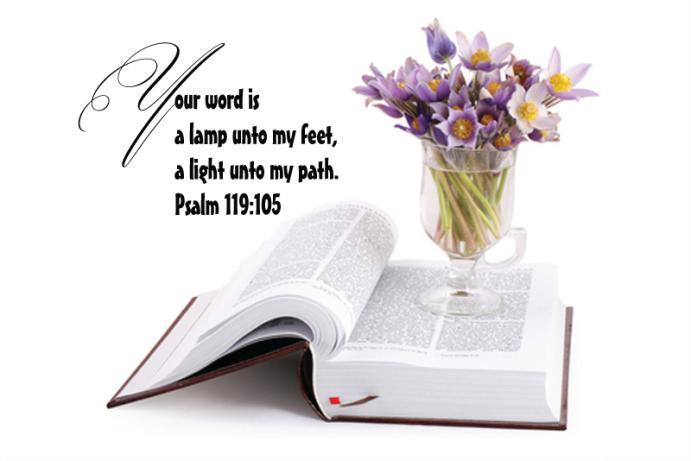
MAKING THE WORD OF GOD YOUR OWN
Step 1: Lookattoday’sReadingsprayerfully.
simplicity,” Bishop Forbes stated inhisannouncement.
He praised the Pope’s faithfulness to his calling, saying, “Pope Francis exercised the Petrine Office in fidelity to the example ofChrist,theGoodShepherd.”
Pope Francis, Bishop Forbes underscored, was a constant voice urging nations and peoples to foster peace. He recalled in his Apostolic Blessing on Easter Sunday, just a day before his passing, the Pope had once again calledforpeace.
“Pope Francis was a cultivator of the seeds of the Gospel and a tireless missionary disciple. His life radiated with the joy of the Gospel. He was a true pilgrim of hope, holding firm to the hope that does not disappoint,” Bishop Forbes said. He expressed hope that the witness of his faith be an inspiration to all and the Easter faith of the Church, “be our source of consolation and comfort.”
Bishop Francis Alleyne OSB of Georgetown, Guyana, in a video shared via the Catholic Media Guyana Facebook page, remembered the pontiff’s “humility” and “simplicity,” especially evident in his lifestyle.
“His manner and demeanour was always cordial and encouraging,” hesaid.
He called Pope Francis’ leadership “exemplary”, noting the Pope “clearly articulated the ways we are called to be church in the world in our time.”
Describing the Pope’s writings and encyclicals as “rich, profound”, Bishop Alleyne said the Holy Father addressed modern realities “in
“… it was Pope Francis’ writings and teachings that guided and inspired me during the dark and desolate days of the Covid-19 pandemic, as I worked with others to lead Barbados through that period of grave uncertainty. He was, in every sense, my hero,” Mottleysaid.
She shared she was later “humbled” to have spent time with him late last year, where he reinforced in her the importance of always aligning one’s hearts, heads,andhandswithfaith.
“His voice comforted and inspiredmany.Hishandsledhimto places where others dared not go, and his heart knew no boundaries. His humour and his laughter were not only infectious but calming,” shesaid.
The PM commented if we dare to live with heart, to serve with courage, humility, and to love without borders then Pope Francis “stillwalksamongus.” (The Catholic News of T&T) ❖
1st Reading: Even though they suffer at the hands of the authorities, the apostles boldly preach about the resurrection of Jesus.
2nd Reading: There is nothing but praise for the crucified and risen Christ.
Gospel: Again, after his resurrection, Jesus appears to some of the disciples. It happened by the sea while they were fishing. This event is built around Peter.
Step 2: ApplyingthevaluesoftheReadings toyourdailylife.
1.Simon Peter’s three denials on Holy Thursday are replaced by his three declarations of love for Jesus. In what ways do we as individuals and as community deny Jesus and how do we show our love for him?
2.Jesus told the disciples where to throw their net to catch fish. He calls on us to do the same today. What fish are we expected to catch?
3.How is it that the same apostles who were at one time so frightened could be so brave as to witness to the resurrected Christ in the face of such opposition? What does this tell you about discipleship?
4.The incident in today’s Gospel passage was the third time Jesus appeared to the apostles after the resurrection and still they did not recognise him at first. We too sometimes fail to recognise him when he comes to us. What can we do to ensure we are aware of him whenever and in whatever form he comes to us?
Step 3: Accepting the message of God’s Wordinyourlifeoffaith.
One characteristic of the post-resurrection appearances is that Jesus is not recognised at first by the disciples. It is only after some word or familiar action from him that he is recognised. As disciples we have to be ready to recognise him whenever he appears to us.
Step 4: Somethingtothink&prayabout
1.Peter’s story is one of calling, falling and calling again. This means that Jesus’ call to follow him does not rule out falling. Would you say that this is your story too?
2.Our parish communities must be places that welcome and care for others regardless of who they are. Ours is not a religion that excludes people. What part do you think you can play in making your community an inclusive one?❖
[From: Journeying with the Word of God, The Religious Education Department, Diocese of Georgetown, Guyana ]
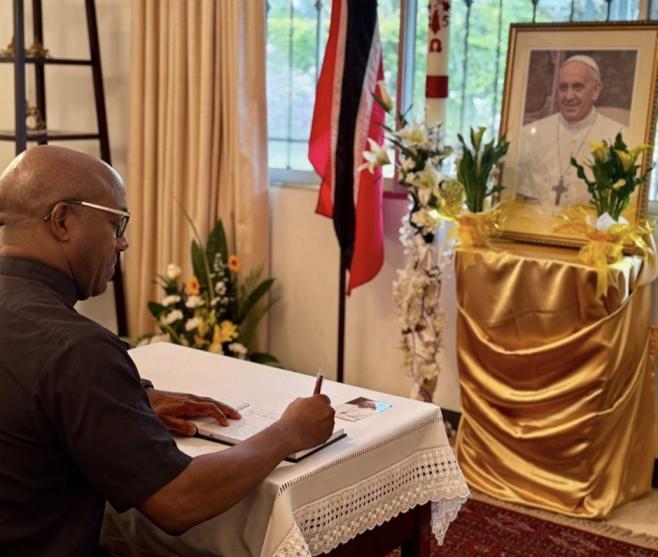
Chambers signs a book of condolence at the Apostolic Nunciature, St Clair, Port of Spain, Trinidad. Photo: AEC Facebook page
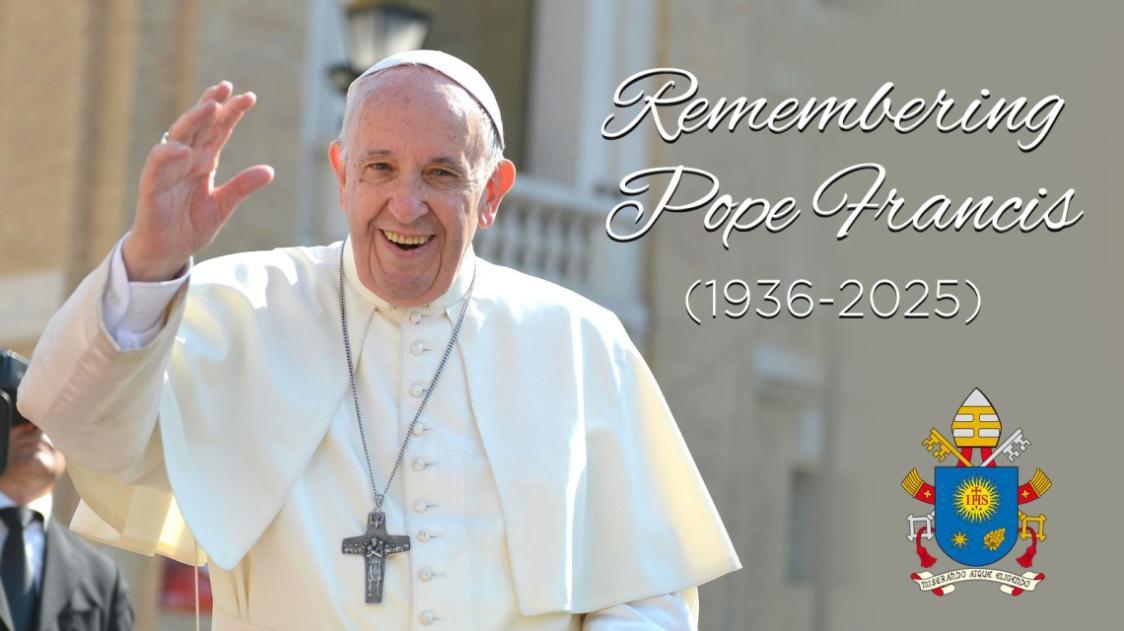
(CNA) - Jorge Mario Bergoglio was born on Dec. 17, 1936, in Buenos Aires, Argentina, and entered the Society of Jesus at age 21. Following his ordination in 1969, he served as a Jesuit provincial, seminary rector, and professor before St. John Paul II appointed him auxiliary bishop of Buenos Aires in 1992. He became archbishop of the Argentine capital in 1998andwascreatedcardinalin2001.
The surprise election of Cardinal Bergoglio on March 13, 2013, at age 76 marked several historic firsts: He became the first Jesuit pope, the first from the Americas, and the first to choose the name Francis, inspired by St. Francis of Assisi’s devotion to poverty,peace,and creation.
His 12-year pontificate was characterized by a focus on mercy, care for creation, and attention to what he called the “peripheries” of both the Church and society. He made 47 apostolic journeys outside Italy, though he never visited his
nativeArgentina.
During his tenure, Pope Francis canonized 942 saints more than any other pope in history including his predecessors John XXIII, Paul VI, and John Paul II. He published four encyclicals and seven apostolic exhortations while promulgating 75 motupropriodocuments.
Throughout his papacy, Francis significantly reshaped the College of Cardinals through 10 consistories, creating 163 new cardinals. His appointments reflected his vision of a global Church, elevating prelates from the peripheries and creating cardinals in places that had never before had one, including Mongolia and South Sudan.
Health challenges marked the pope’s final years. He underwent surgery in July 2021 and in June 2023. In November 2023, he suffered from pulmonary inflammation, and in February 2025, he was hospitalized at Rome’s Gemelli Hospital for bronchitis
anda respiratoryinfection.
said Mary picked
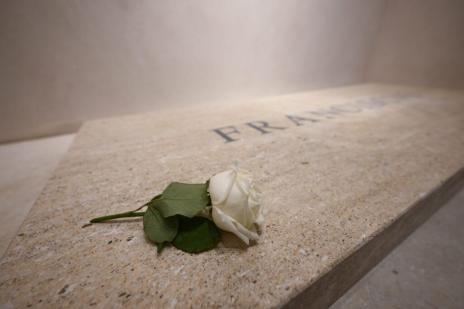
of Pope Francis in Rome’s Basilica of St. Mary Major early April 27, 2025. (CNS photo/ Vatican Media)
His papacy faced unprecedented challenges, including the global COVID-19 pandemic, during which he offered historic moments of prayer for humanity, notably the extraordinary urbi et orbi blessing in an empty St. Peter’s Square in March 2020. He also repeatedly called for peace amid conflicts in Ukraine and theHolyLand.
Francis convoked four synods, including the Synod on Synodality, whose second session concluded in October 2024. He implemented significant reforms of the Roman Curia and took several steps to address the clergy abuse crisis, including the 2019 motu proprio Vos Estis LuxMundi
Pope Francis’ funeral marked the first day in the Catholic Church’s traditional nine-day mourning period that will include nine days of requiem Masses to be offered for the repose ofhissoul.❖
Pope left all the money in his bank account to prisoners
(CathNews) - At the end of his life, Pope Francis made one last symbolic gesture: he emptied his personal bank account to donate 200,000 euros ($A356,000) to the prisonershehadlong championed.Source: NCR Online
It was a final act of love toward those he had called his “brothers and sisters behind bars”, an act that Bishop Benoni Ambarus, auxiliary Bishop of Rome and director of the Office for Prison Pastoral Care, said captures the very essenceofFrancis’ pontificate.
Bishop Ambarus has witnessed firsthand the Pope commitment to the incarcerated. Even as his strength visibly declined, Francis refused to abandon the most forgotten members of societyduring HolyWeek.
“A few days ago, the Holy Father dragged his body to Regina Coeli,” Bishop Ambarus told the Italian daily Repubblica, referring to thePope’s last visit to thehistoric Romanprisonon HolyThursday,April17.
ROME (CNS) “The Virgin Mary told me, ‘Prepare the tomb.'” That is what Pope Francis said Mary told him when he was discerning whether to be buried in the historic Marian church where his body was laid torestApril26.
Cardinal Rolandas Makrickas, coadjutor archpriest of Rome’s Basilica of St. Mary Major, discussed the pope’s decision to be buried at the papal basilica some three miles outside the Vatican during a news conference April 25. The cardinal said that during a meeting with the pope in 2022 to discuss a remodeling project in the basilica, he asked the pope if he wanted to be buried there given his devotion to the Marian icon “Salus Populi Romani” (“health of the Roman people”), which is housed in the church. “In that moment he said no, because the popes are buried in St. Peter’s Basilica,” Cardinal Makrickas said, but after a week the pope called him to his Vatican residenceand shared whatMarytoldhim. In that conversation the pope added, “I am happy that Our Lady hasn’t forgotten about me,” the cardinal told reporters, and he was asked tobeginpreparingthetomb.
The basilica is the first and oldest Marian basilica in the West it began construction in 432, though it was completed in its presentstatein 1743.
Pope Francis specified that he did not want his tomb placed in the Pauline Chapel, where the Marian icon is on display, in this chapel people must pray to the Lord, venerate Our Lady, not look at the CardinalMakrickassaid.
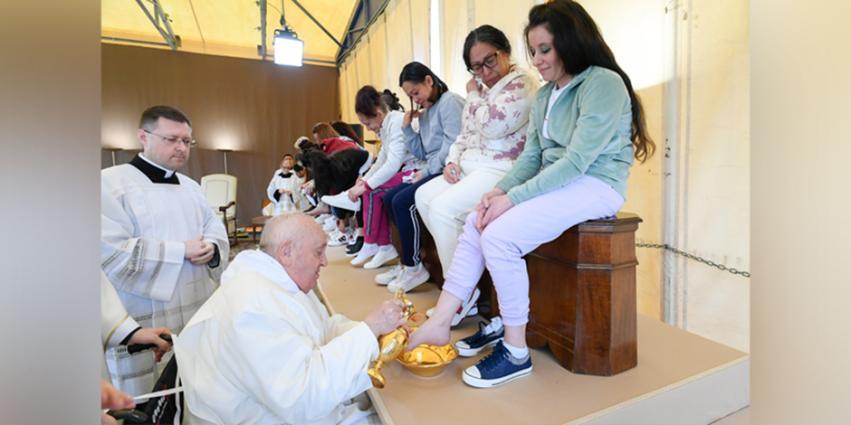
Francis’s bond with the prison population was a core feature of his ministry. From the start of his papacy, he made headlines by washing the feet of inmates on Holy Thursdays and calling for greater compassion within justicesystems.
But Bishop Ambarus said the Pope’s heartfelt appeals for prisoners often fell on deaf ears. Institutions, he said, “did nothing to give even a small signal” in response to Francis’s call for action. In his final months, Francis pushed even harder for symbolic and concrete gestures tobring hope totheincarcerated.
One of the most significant achievements was the
opening of a Holy Door at the Rebibbia prison. The idea, born from the inmates themselves, was enthusiastically embraced by Francis as a powerful way to “reignite the light” withinprison walls.
The Holy Door at Rebibbia sparked a broader pastoral movement, where groups of volunteers, priests and religious sisters now regularly enter the prison to join the prisoners inMass and in momentsofreflection.❖
A photo of Pope Francis’ tomb released by the Vatican April 24 showed it to be simple, adorned with an enlarged rendering of his pectoral cross and made of white Ligurian a nod to the land of his Italian while bearing only the ” ❖
Bishop’s Engagements From Front Page)
Sunday, May 11th to Friday, May 16th
Attend Antilles Episcopal Conference Annual Plenary Meeting
Saturday, May 17th
Return to Guyana
As mentioned, I will be attending the Eucharist Congress in Port of Spain, after which I will travel to Kingston, Jamaica to attend the Annual Plenary Meeting of the Bishops of the Antilles. During my absence, Monsignor Terrence Montrose, CCH will attend to matters on my behalf.
A single white rose sits on the tomb
Pope Francis washes the feet of an inmate at Rome’s Rebibbia women’s prison in 2024 (CNS/Vatican Media)
Dear Girls and Boys,
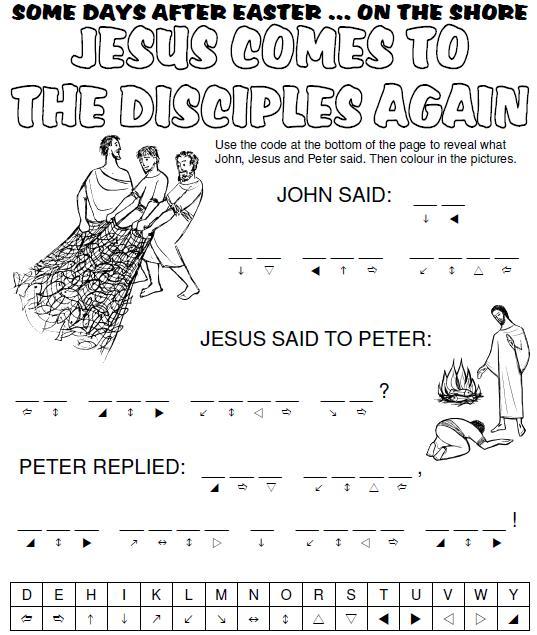
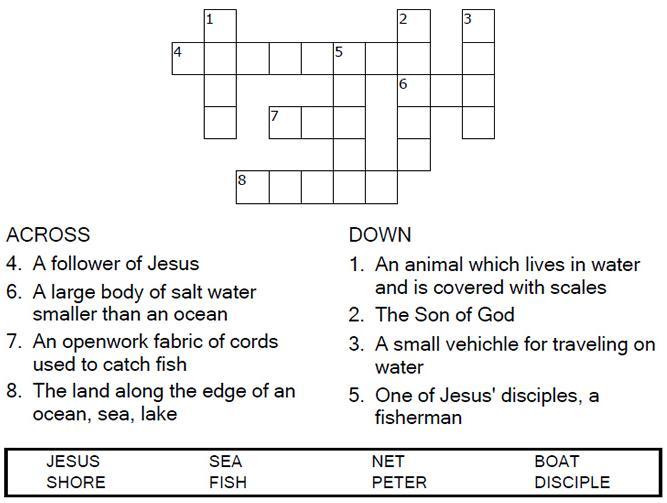
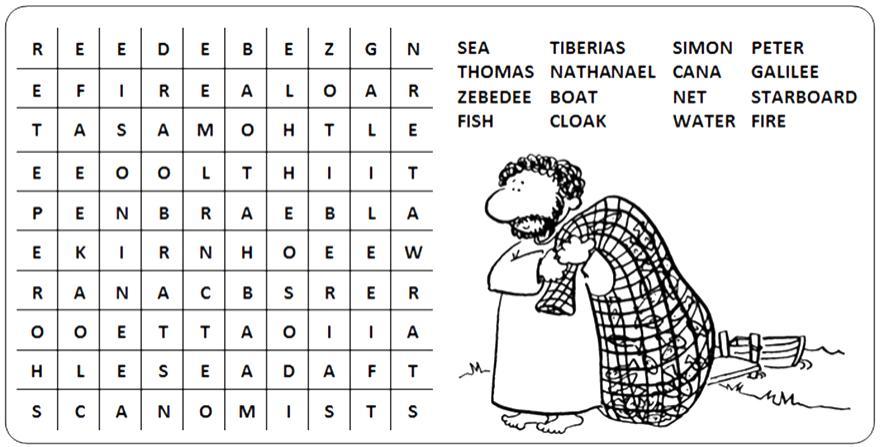
In today’s Gospel, we read that several of Jesus' disciples were gathered beside the Sea of Galilee. The group included Simon Peter, Thomas, Nathaniel, and James and John, the sons of Zebedee.
Suddenly, Peter said, "I'm going fishing." "We'll come too," the others said. So they got in the boat and they fished all night, but caught nothing."
As the sun came up, Jesus was standing on the beach, but the disciples couldn't make out who it was. Jesus called out to them, "Have you caught any fish?"
"Not a thing," the disciples called back. "Throw your nets on the right-hand side of the boat and you'll catch some!"
Did they do it? Yes they did! Did they catch any fish? They caught so many fish that they couldn't even pull the net into the boat!
Then the disciple that Jesus loved said to Peter, "It's the Lord!" When Peter heard that, he jumped into the water and headed for shore. The others stayed with the boat and dragged the loaded net to the shore. When they got there, they found Jesus cooking breakfast fish over a charcoal fire and some bread.
"Bring some of the fish you've just caught," Jesus said. Peter dragged the net to the shore and there were 153 large fish. "Now, come and have some breakfast," Jesus said. Then Jesus served them fish and bread. Oh my! It just doesn't get any better than that. Breakfast on the beach with the risen Lord! What would have happened if the disciples had refused to throw their nets on the right-hand side of the boat? They would have missed out on a wonderful breakfast on the beach with Jesus. What happens when we refuse to do the things Jesus has called us to do? We miss out on the wonderful blessings that he wants for us!

Father, we know that you have wonderful blessings in store for us when we faithfully follow our Lord and Saviour, Jesus Christ. Our prayer is that we will always be obedient disciples. In Jesus' name we pray
In final public appearance, Pope Francis delivered Easter blessing
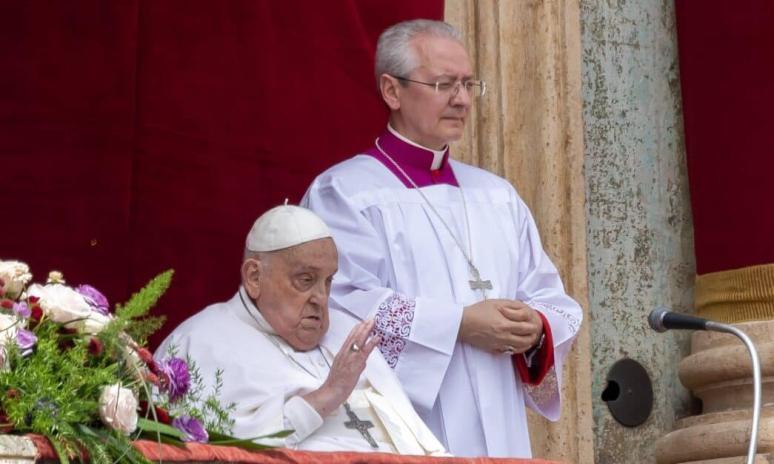
Pope Francis appears on the central balcony of St. Peter’s Basilica to deliver his Easter blessing “urbi et orbi” (to the city and the world) at the Vatican April 20, 2025. Pope Francis died the next day, April 21 (Easter Monday) at age 88, after suffering a stroke and heart failure. (CNS photo/Pablo Esparza)
(CathNews) - In his final public appearance on Easter Sunday, Pope Francis delivered his Easter blessing “urbi et orbi” (to the city and the world).
Source:CNS.
Pope Francis wished the crowd gathered below his balcony in St Peter’s Square a happy Easter and then asked his master of liturgical ceremonies, Archbishop Diego Ravelli, to read his Easter message, which insisted that “Easteristhecelebrationoflife!”
The Pope wrote in his Easter message that the hope Christians have is not a sign ofavoidingrealitybutoftrustingin the power of God to defeat sin and death, as the resurrection of Jesus clearlyshows.
“All those who put their hope in God place their feeble hands in his strong and mighty hand; they let themselves be raised up and set out on a journey,” themessagesaid.
The Pope’s voice was weak, as it had been since he was released from the hospital on March 23, and he barely raised his arms as he made the sign of the cross, but the tens of thousands of people in St Peter’s Square were appreciative and clapped loudly after saying, “Amen”.
“Together with the risen Jesus,” he wrote in his message, those who trust in God “become pilgrims of hope, witnesses of the victory of love and of thedisarmedpoweroflife.”
“God created us for life and wants the human family to rise again,” he wrote.
“In his eyes, every life is precious! The life of a child in the mother’s womb, as well as the lives of the elderly and the sick, who in more and more countries are looked upon as people to be discarded.”
Pope Francis condemned the “great thirst for death” seen in violence and wars around the world and in the “contempt” people, including government leaders, direct toward “the vulnerable, the marginalised and migrants!”
As is traditional for the message, the Pope also prayed for peace in war-torn nations, mentioning by name: Israel, Palestine, Ukraine, Yemen, Sudan, South Sudan,CongoandMyanmar.
Pope Francis condemned “the growing climate of antisemitism throughout the world.” But he also called attention to “the people of Gaza, and its Christian community in particular, where the terrible conflict continues to cause death and destruction and to create a
dramatic and deplorable humanitarian situation.”
After the Easter blessing, Pope Francis rode around St Peter’s Square in the popemobile, waving to the crowd and blessing babies.❖
elect new Pope begins May 7th
(From Page 11)
The Dean of the College, Cardinal Giovanni Battista Re, speaking on behalf of all the electors, asks for the elected candidate’s consent with the following words: “Do you accept your canonical election as Supreme Pontiff?
”
Upon receiving consent, he then asks:
“What name do you wish to be called?
”
The functions of a notary, with two Ceremonial Officers as witnesses, are carried out by the Master of Pontifical Liturgical Celebrations, who drafts the document of acceptance and records thechosenname.
From this moment, the newly-elected Pope acquires full and supreme authority over the universal Church. The Conclave ends immediately at this point.
The Cardinal electors then pay homage and pledge obedience to the new Pope, and thanks are given to God.
The Cardinal Proto-Deacon then announces to the faithful the election and the name of the new Pontiff with the famous line: “Annuntio vobis gaudium magnum;Habemus Papam.” Immediately afterward, the new Pope gives the Apostolic Blessing Urbi et Orbi from the Loggia of St. Peter’s Basilica.
The final step required is that, after the solemn inauguration ceremony of the Pontificate and within a suitable time, the new Pope formally takes possession of the Patriarchal Archbasilica ofSt.JohnLateran.❖
By Renika Anand
Happiness takes practice
John Wooden, an American basketball coach once said “It’s the little details that are vital. Little things make big things happen.”
As we grow up, we learn that many of the important things that we seek in our lives only come after much work and patience. We learn that in order to find success, we must spend enough of our time and energy in order to meet our goals. At the same time that we gain this understanding, we often mistake ourselves into believing that many similar things in life come naturally and do not require any work.
One such goal that we believe to be met naturally, is happiness. Happiness is to some extent natural. However, as we grow up, it becomes a goal that we must work to achieve. Our work, in this case, is not done in the form of labour but rather in the form of introspection and growth. Our practice is not done in classrooms or stages, but in every moment of every day. Happiness takes practice, and it involves the art of finding joy in the small things in our life. Teaching ourselves to feel joy when the sun is shining or when you listen to a song you like may seem like small, meaningless choices.
Yet, ultimately these habits build into the extraordinary ability to remain optimistic and hopeful even when life is not going as planned. They can help us build a life where happiness and joy are constantly present with us.
“The Lord has done it this very day; let us rejoice today and be glad.” - Psalm 118:24 ❖


Conclave to elect new Pope to begin on May 7th
(Vatican News) - The Cardinals present in Rome have agreed to begin the conclaveonMay7th,2025.
The date was set on Monday morning by the approximately 180 cardinals present (just over a hundred of whom are electors) gathered for the fifth GeneralCongregationintheVatican.
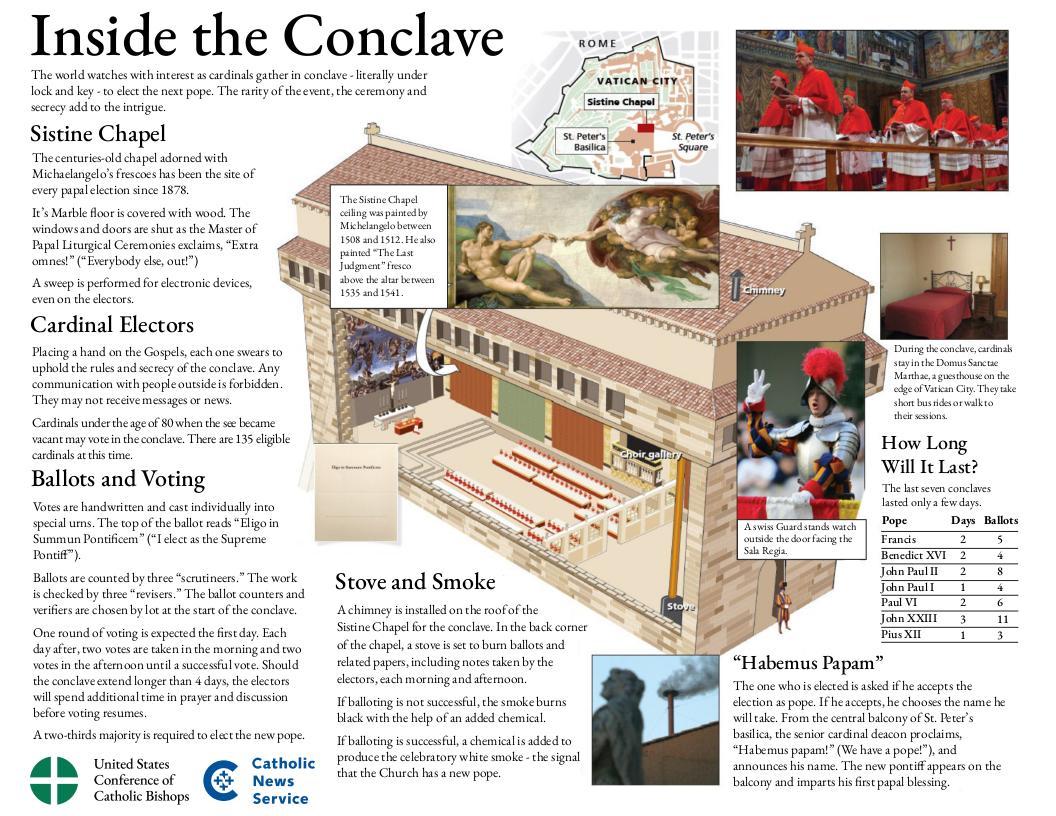
The conclave will take place in the Vatican’s Sistine Chapel, which will remain closed to visitors during those days.
What happens during the conclave?
The conclave will be preceded by a solemn Eucharistic celebration with the votive Mass Pro Eligendo Papa, attendedbytheCardinalelectors.
In the afternoon, the Cardinal electors proceed in a solemn procession to the Sistine Chapel, where the Conclave beginstoelectthenewPope.
At the end of the procession inside the Sistine Chapel, each Cardinal elector takes the oath as prescribed in paragraph 53 of Universi Dominici Gregis
Through this oath, they commit, if elected, to faithfully fulfill the Munus Petrinum as Pastor of the Universal Church.
They also pledge to maintain absolute secrecy regarding everything related to the election of the Roman Pontiff and to refrain from supporting any attempts ofexternal interference in the election.
At this point, the Master of Pontifical Liturgical Celebrations proclaims extra omnes, meaning that all individuals who are not part of the Conclave must leavetheSistineChapel.
Only the Master himself and the ecclesiastic designated to deliver the second meditation remain.
This meditation focuses on the grave responsibility that rests upon the electors and the necessity of acting with pure intentions for the good of the Universal Church, keeping only God beforetheireyes.
Once the meditation is delivered, both the ecclesiastic and the Master of PontificalLiturgicalCelebrationsleave.
The Cardinal electors then recite
prayers according to the Ordo Sacrorum Rituum Conclavis and listen to the Cardinal Dean, who asks whether they are ready to proceed with voting or if any clarifications regardingtherulesandprocedures.
All election procedures take place exclusively in the Sistine Chapel within the Vatican Apostolic Palace, which remains completely sealed off until the election isconcluded.
Throughout the election process, the Cardinal electors must refrain from sending letters or engaging in conversations, including phone calls, exceptincasesofextremeurgency.
Theyarenotallowedtosend orreceive messages of any kind, receive newspapers or magazines of any nature, or follow radio or television broadcasts.
How many votes are requiredtoelectaPope?
To validly elect a new Pope, a two-thirds majority of the electors presentisrequired.
If the total number of electors is not evenly divisible by three, an additional
vote is necessary.
If voting begins on the afternoon of the first day, there will be only one ballot. On subsequent days, two ballots are held in the morning and two in the afternoon.
After the votes are counted, all ballots are burned. If the ballot was inconclusive, a chimney positioned over the Sistine Chapel emits black smoke. If a Pope is elected, white smokewillbillowoutofthechimney.
If the electors fail to reach an agreement on a candidate after three days of inconclusive voting, a break of up to one day is allowed for prayer, free discussion among voters, and a brief spiritual exhortation by the Cardinal Proto-Deacon (Cardinal DominiqueMamberti).
What happens immediately afteranewPopeiselected?
Once the Cardinals have elected a new Pope, the last of the Cardinal Deacons calls the Secretary of the College of Cardinals and the Master of Pontifical Liturgical Celebrations into the Sistine Chapel.(please turn to page 10)
Between the sheep and secrecy: A new social
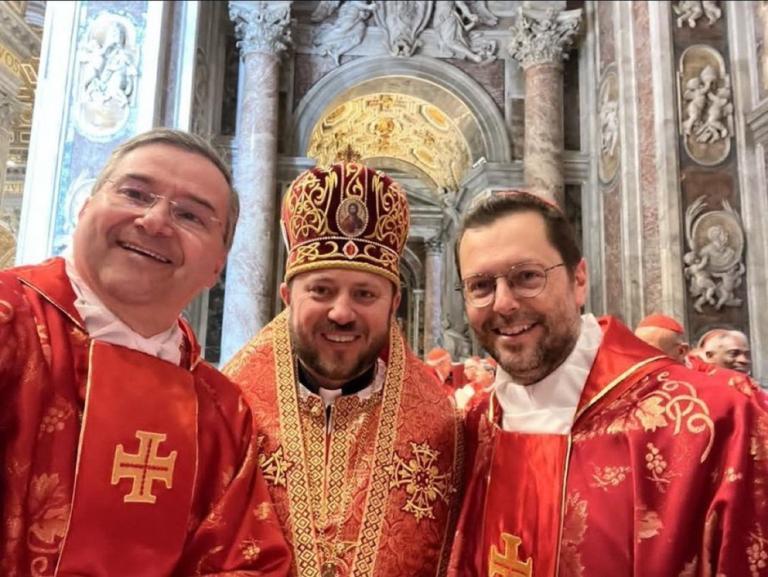
Portuguese Cardinal Américo Aguiar, 51, who led World Youth Day Lisbon, Cardinal Mykola Bychok, 45, a Ukrainian Greek Catholic bishop serving in Australia, and Italian Cardinal Giorgio Marengo, a 50-year-old missionary in Mongolia, are pictured in a selfie taken in St. Peter's Basilica on April 26, 2025, the day of Pope Francis' funeral. (OSV News photo/Facebook of Cardinal Américo Aguiar)
ROME (OSV News) The College of Cardinals preparing to elect a new pope includes a visible group of Generation X and millennial electors leaders shaped not just by the Second Vatican Council but by globalization, digital media and a rapidly changing world.
Several cardinals under the age of 60, including some born in the 1970s and 1980s, are bringing new pastoral and communicative sensibilities to the conclave. Among them are Italian Cardinal Giorgio Marengo, a 50-yearold missionary in Mongolia; Portuguese Cardinal Américo Aguiar, 51, who led World Youth Day Lisbon; and Cardinal Mykola Bychok, 45, a Ukrainian Greek Catholic bishop serving inAustralia.
There are at least 15 cardinals who were born after 1965 the year Vatican II ended and the beginning ofGeneration X.
SocialMedia ‘Influencers’
“Many cardinals today are not just church leaders or newsmakers they are also content creators, influencers on social media,” said Gustavo Entrala, the Spanish communications expert who helpedlaunchPopeBenedict XVI’s Twitter account. “Compared to 2013, there has been a major cultural shift: Many figures in the church now share extensively online, making it possible to scrutinize what they have said or writtenacrosssocialplatforms.”
But the shift isn’t just generational it’s technological. Many prelates now share updates directly on social media, often without a communications manager curating the content. Cardinal Aguiar posted a selfie with Cardinals Marengo and Bychok, taken in St. Peter’s Basilica, that briefly “broke” Catholic social media on Pope’s Francis’ funeral day April 26. Japanese Cardinal Tarcisio Isao Kikuchi of Tokyo, who heads Caritas Internationalis,
University of the Holy Cross, observed, communication today touches not only techniques but the heart of pastoral life. For many cardinals, communication is no longer merely an option it has become a space where proximity tothepeopleofGodisexpressed.
“It is not simply a matter of technique, but of pastoral style,” Tridente said. Some cardinals maintain a living bond with their communities through small, thoughtful gestures: a carefully chosen word, a measured public sign, a shared photo. Others, however, prefer complete discretion. “Both paths deserverespect,” headded.
SafeguardingtheEssential
Yet, Tridente noted, the real challenge lies elsewhere: how to safeguard the essential when everything around demands visibility, immediacy and storytelling?
beforehand, are inevitably influenced by fragmented narratives, preconceived perceptions and external pressures.
Precisely for this reason, Tridente told OSV News, Pope Francis’ invitation to “slow the pace” and create spaces for silence, listening and discernment becomesevenmoreurgent.
“Faced with the excess,” he added, “we, too, can do our part.” One simple but essential response is prayer: “Praying for the cardinals in these days is a concrete way to accompany them, entrusting to the Holy Spirit what we cannot foresee or control, and trusting in their spiritual intelligence, interior freedom, and sense of responsibility so that they may choose what truly servesthechurchandhumanity.”
Secrecy Serves Canonical Purposes
posted on Facebook a bus selfie with fellow cardinals en route to pray at St. MaryMajor.
These new forms of engagement show a College of Cardinals increasingly fluent in social media raising new questions about transparency, discretion and the evolving role of cardinalsin thedigitalage.
Posting Conclave Date on X
Singapore
’s only red hat, Cardinal William Goh, born in 1957, posted on X the conclave date only minutes after the Vatican spokesperson had confirmed it, noted that the cardinals are meeting daily in general congregations, and shared, in very general terms,whatishappening.
“Hence, it is urgent and important that you all pray for us so that we can discern what kind of Pope the Church needs in this present day, because every Pope brings with himself his own charisms,” he posted. “Please pray that we will choose the right candidate to be the successor of St. Peter to lead theChurch in thiscomplexworld.”
The same message was also shared on hisTelegramchannel.
Caught Between Canon Law,SmelloftheSheep
Pope Francis was a strong advocate for clergy to stay close to their flock. Many prelates have found that social media, “the digital continent,” offers one more way to leave the sacristy and be part of a church that “goes out,” as the late Argentinepontiffliked tosay.
While the church’s legal norms demand strict secrecy during the conclave, the broader challenge posed by the digital age is not merely legal butdeeplyspiritual.
As Giovanni Tridente, journalist and professor at Rome’s Pontifical
“The conclave has always been a different kind of time,” he said. “It is not about isolating oneself from the world, but about setting it aside for a moment in order to look inward with greater clarity and freedom.” In this sense, he suggests, silence itself can become a profound form of communication.
“There is a real tension between the pastoral closeness many cardinals show online and the radical discretion thata conclavedemands,” Entrala said.
“In 2013, American cardinals were holding daily press briefings before the conclave until they were ordered to stop. We are seeing a historical echo of that now, as the camerlengo, Cardinal Kevin Farrell, has requested cardinals not to speak publicly. It will be interesting to see how they manage theirphones.”
Ensuring Vatican Runs Smoothly
The camerlengo is responsible for verifying the pope’s death, overseeing preparations for the conclave and ensuring the smooth running of the Vaticanduringthe “sedevacante.”
Even a traditionally private event like the conclave is now exposed to a constant flow of images, voices and analyses the mark of an era shaped by disintermediation, social media and artificialintelligence.
“People are consuming content as never before, and due to Pope Francis, the Vatican is generating even more interest now than in 2013, following the historical resignation of Pope BenedictXVI,” Entrala said.
“And the more we know about the reality that surrounds us, the more engaged with it we want tobe.”
A Reality that ‘Connects, Informs
’
This reality, Tridente argued, “is one that connects and informs, but that often overwhelms and distracts as well.” In this context, many cardinals, who may know little of each other
Canon law expert Kurt Martens, a professor at The Catholic University of America in Washington, emphasized that secrecy around the conclave is not simply a matter of tradition, but serves a crucial canonical and pastoral purpose: safeguarding the liberty of thecardinals.
“We are drawn to the drama of secrecy some of it encouraged by novels like Dan Brown’s but secrecy, and all the rules that surround it, have an important role to play,” Martens told OSVNews.
“At all times, the goal is to protect the freedom of the cardinals from outside pressure.”
’
‘UniversiDominiciGregis
He recalled how, after a political veto influenced the 1903 conclave, Pope Pius X revised the law to excommunicate anyone attempting to interfere in a papal election a principle expanded bySt. John Paul II to prohibit all outside influence, including that of groups or movements, under “Universi Dominici Gregis” (“Shepherd of the Lord’s WholeFlock”).
Today, Martens noted, social media presents new challenges. “In 2013, social media was already present, but now it is far more pervasive,” he said. “Some cardinals miss opportunity after opportunity to remain silent and avoid influencing theconclave.” Public posts, comments, and speculation, even outside the Sistine Chapel, risk undermining the very spirit of secrecy that canon law seeks to protect.
“Social media is a form of influence,” Martenswarned.
“Talking publicly, even in subtle ways, risks violating ‘Universi Dominici Gregis.’ Fortunately, there are a number of cardinals who are staying very quiet, not revealing what they are thinking and that is exactly what theyshouldbedoing.”❖
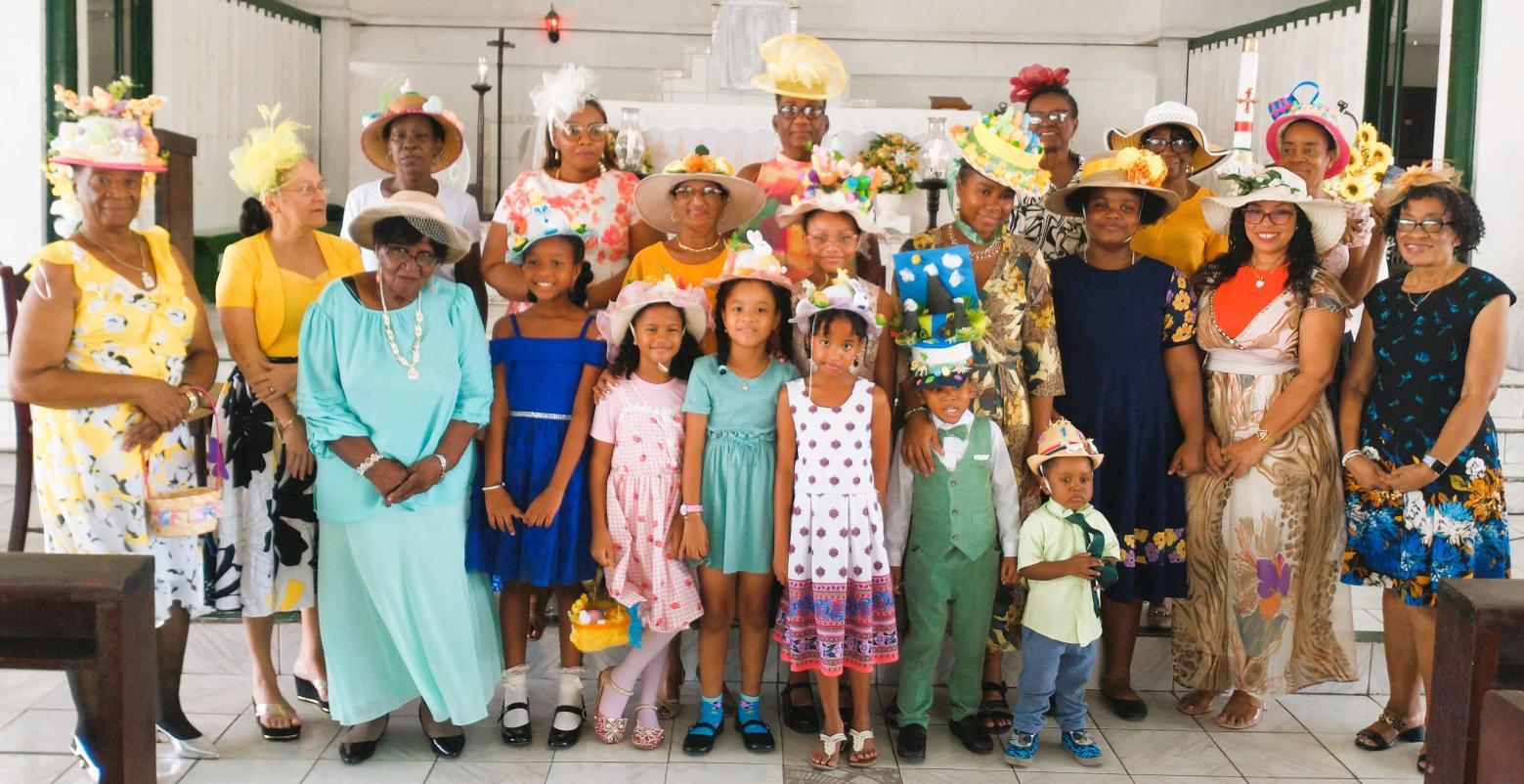
Parishioners of St. Pius X church, West Ruimveldt, Georgetown, all adorned in their Easter hats last Sunday, April 27th.
Sacred Heart and Friends Youth Group holds Divine Mercy Retreat
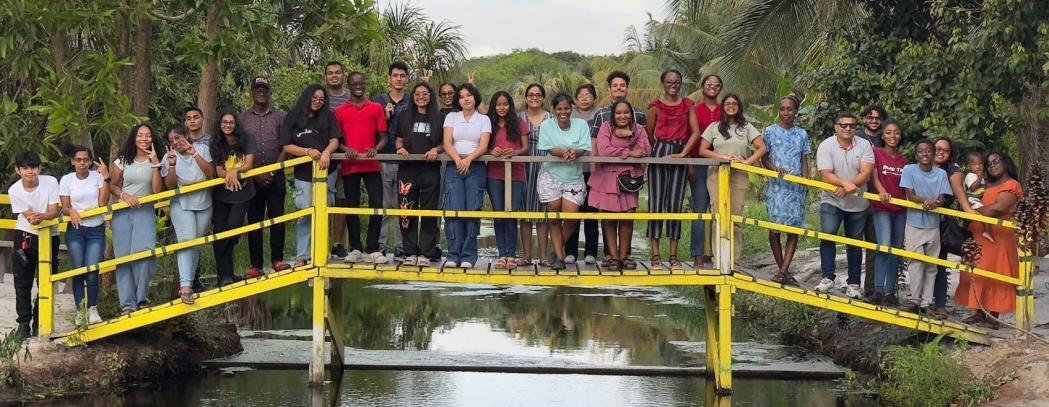
On 27 April Divine Mercy Sunday - a group of about 30 youths went on a retreat. This retreat was hosted by the Sacred Heart and Friends Youth Group and facilitated by Fr. Ronald (Ronnie) Fernandes, SJ. The 30 youths also included groups from St. Joseph, Husband of Mary, Diamond; and St. Catherine’s, Kuru Kururu. Because the Sacred Heart and Friends Youth Group has members from across the diocese, as many as 7 parishes /communities were representedatthisretreat!
The day began with the Divine Mercy Feast Mass at St. Catherine’s, animated by the various Divine Mercy groups of the Diocese. Specially, it was also the parish’s celebration of their patron saint! It was a vibrant Eucharistic celebrationjoinedbypersonsfrom allaround thediocese.
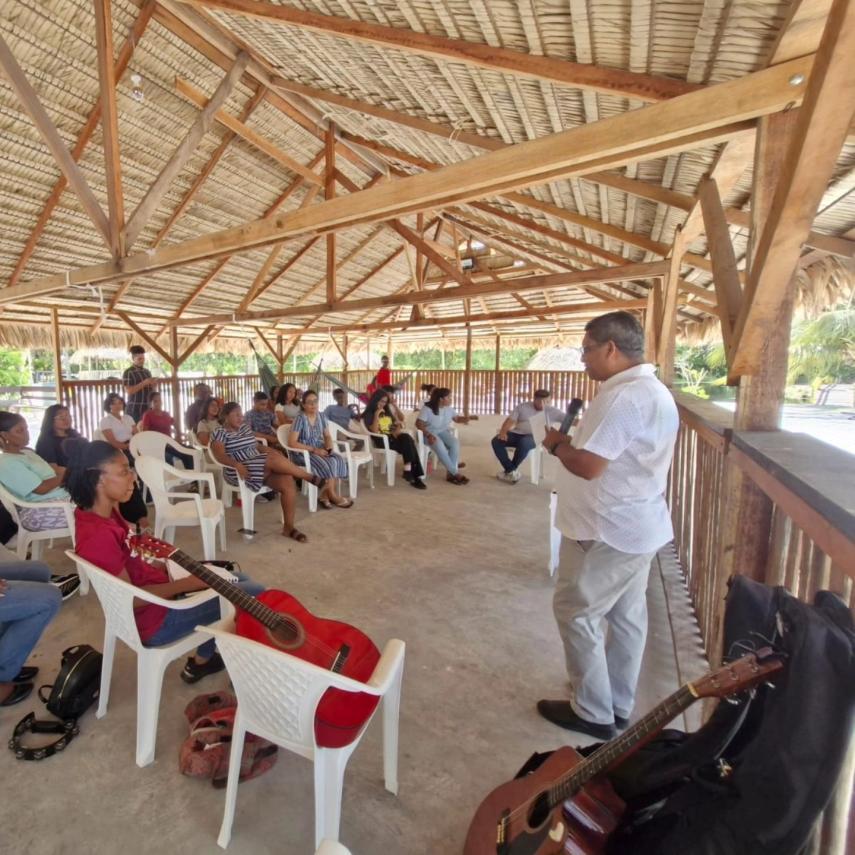
The youths then left for a creek resort for retreat. This began with praise songs and hymns followed by a talk by Fr. Ronnie on Divine Mercy during this Jubilee Year. Two young people then shared moving testimonies on their own experience of God’s mercy after which there was a Holy Hour before the Blessed Sacrament. This was a wonderful time of prayer and reflection with many persons intimately experiencing God’s mercy in the Sacrament of Reconciliation. The remainder of the day was spent in recreation and fellowship, playing games and doingvariousoutdooractivities.
with His people. Below are testimonies from a few young peoplewhoattendedthisretreat:
“It was a beautiful and wholesome setting. It was wonderful seeing youths so involved and reverent, not only for the short talk with Fr Ronnie but also during adoration. I hope more youths will participate if we get the chance to do this again. I had fun, and I felt at peace with my Lord and my peers.” –
Jada Gonsalves, Sacred Heart “My experience was one that
helped me to reconnect with my faith away from the daily hustle. It was good participating in prayer, reflection, and spiritual discussion. The retreat helped us to foster deeper bonds with one another and with God. The day served as a backdrop for providing me with a good opportunity to strengthen my relationship with God.” –
Zenella Marks, Our Lady of the ImmaculateConception, Victoria
The Sacred Heart and Friends Youth Group wishes to thank all those who joined the retreat and who contributed in various ways to make it possible. Praise God for
Saint of the Week
May 10th
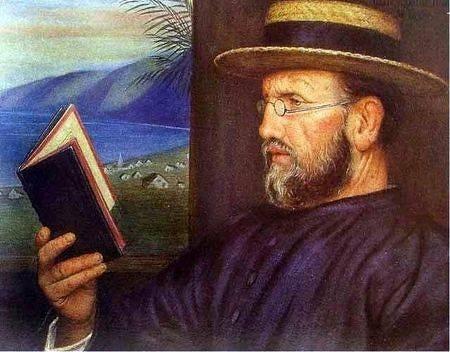
St. Damien de Veuster of Moloka'i (1840-1889)
When Joseph de Veuster was born in Tremelo, Belgium,in1840,fewpeopleinEuropehadany firsthand knowledge of leprosy (Hansen's disease). By the time he died at the age of 49, people all over the world knew about this disease because of him. They knew that human compassion could soften the ravages of this disease.
Joseph entered the Congregation of the Sacred Hearts of Jesus and Mary, taking the name of a fourth-century physician and martyr, Damien. In May 1864 he was ordained a priest and assignedtotheisland ofHawaii.
In 1873, he went to the Hawaiiangovernment's leper colony on the island of Molokai. Part of a team of four chaplains taking that assignment for three months each year, Damien soon volunteered toremain permanently, caring for the people's physical, medical and spiritual needs. In time, he became their most effective advocatetoobtainpromisedgovernmentsupport. Soon the settlement had new houses and a new church, school and orphanage. Morale improved considerably. A few years later he succeeded in getting the Franciscan Sisters of Syracusetohelpstaffthiscolonyin Kalaupapa. Damien contracted Hansen's disease and died of its complications. As requested, he was buried in Kalaupapa, but in 1936 the Belgian government succeeded in having his body moved to Belgium. Part of Damien's body was returned to his beloved Hawaiian brothers and sisters after his beatification in 1995. He was canonized by Pope Benedict XVI on October [From: http://www.americancatholic.org/ ]
On the Lighter Side
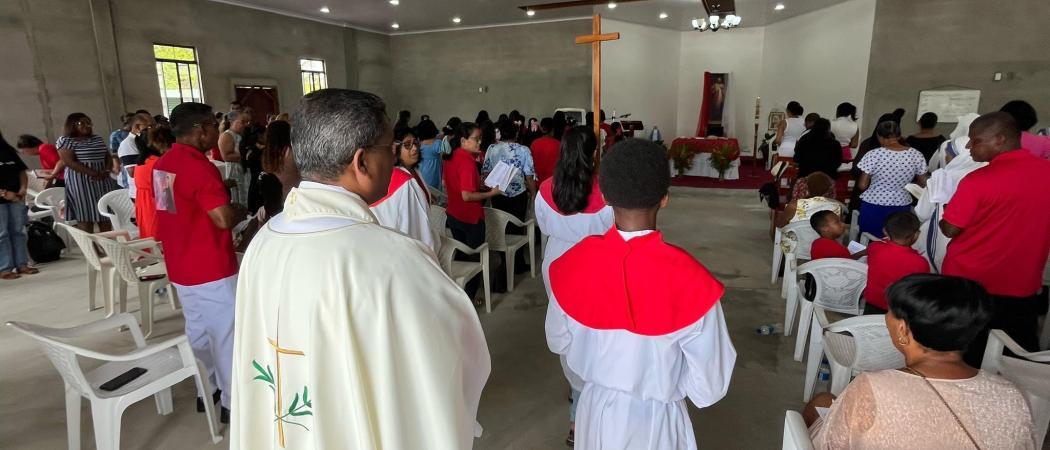
Feast Day Mass at St. Catherine s, Kuru Kururu on the Soesdyke-Linden Highway, April 27th - Divine Mercy Sunday.