120, No. 19
120, No. 19
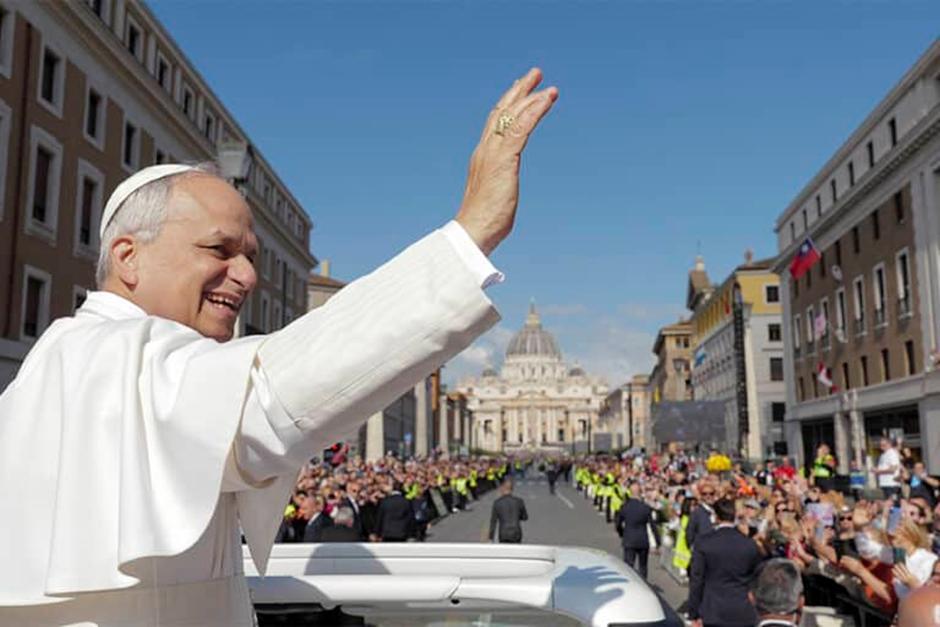
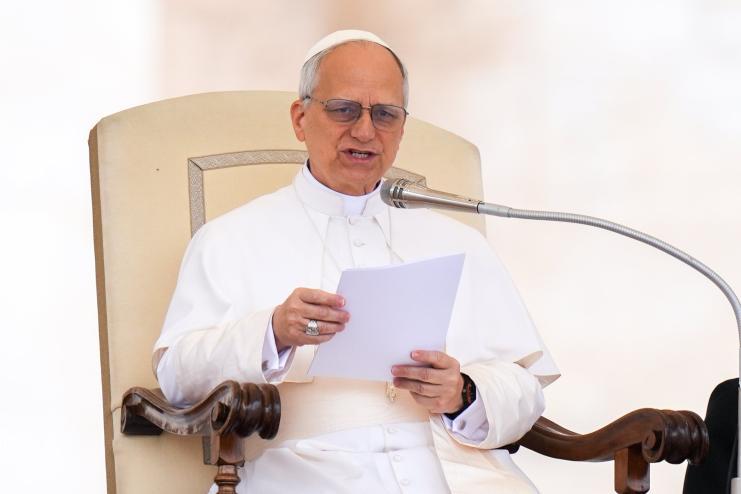
VATICAN CITY (CNS) Launching his papacy with a call for reconciliation and communion, Pope Leo XIV formally began his ministry as the successor of St. Peter by calling for “a united church, a sign of unity and communion, which becomes a leaven for a reconciled world.” “In this our time, we still see too much discord, too many wounds caused by hatred, violence, prejudice, the fear of
difference and an economic paradigm that exploits the Earth resources and marginalizes the poorest,” homily during his inauguration Mass May 18. (
Vaticanwarnsaboutfakepopequotes,videos - p2
U.S. bishops release updated pastoral letter on pornography amidriseinsexualexploitation - p3
A Christian Perspective on Social Issues - p4
Sunday Scripture - p5
AEC’s 69th Annual Plenary Meeting - p6
Pope reaffirms commitment to ecumenical, interreligious dialogue - p7
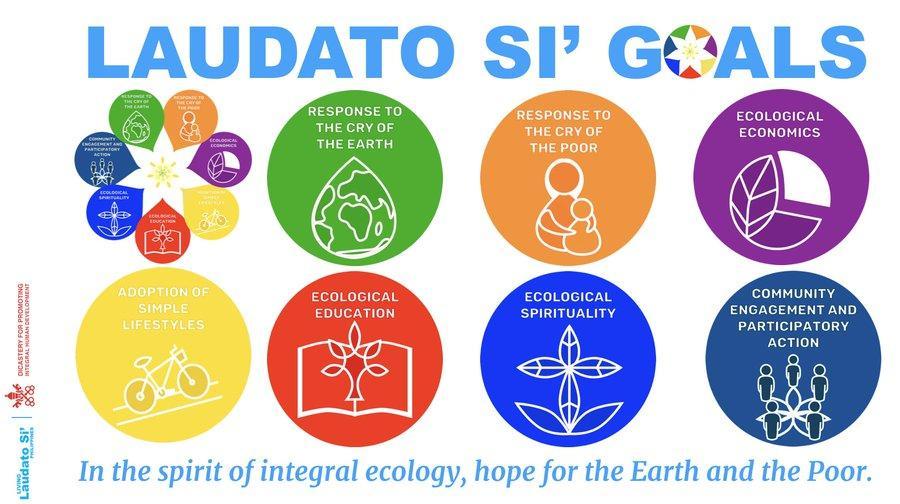
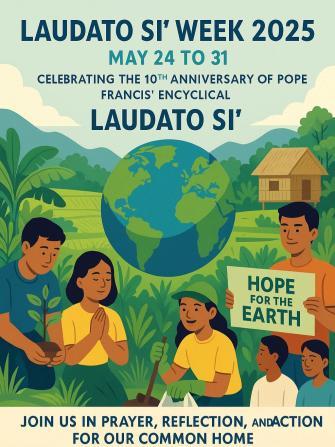
Laudato Si' goals - p8
Children’s Page - p9
Pope marks 10th anniversary of Laudato Si' with message to university network - p10
Bishop’s Engagements - p10
With Laudato Si’, Pope Francis firmly planted ecology into Catholic social teaching - p12
1,700th Anniversary of Council of Nicaea - p13
Laudato Si’ Week: May 24-31, 2025
Father in heaven, may the faith you have given us in your son, Jesus Christ, our brother, and the flame of charity enkindled in our hearts by the Holy Spirit, reawaken in us the blessed hope for the coming of your Kingdom.
May your grace transform us into tireless cultivators of the seeds of the Gospel.
May those seeds transform from within both humanity and the whole cosmos in the sure expectation of a new heaven and a new earth, when, with the powers of Evil vanquished, your glory will shine eternally.
May the grace of the Jubilee reawaken in us, Pilgrims of Hope, a yearning for the treasures of heaven. May that same grace spread the joy and peace of our Redeemer throughout the earth.
To you our God, eternally blessed, be glory and praise for ever.
Amen


VATICAN CITY (CNS) All the speeches and messages Pope Leo XIV has given since becoming pope May 8 are available on the Vatican website, which should be checked before sharing supposed quotes and videos, Vatican News said.
The Vatican News site published the warning in several languages May 21 after a 36-minute “deep fake” generated video was posted on
YouTube.
The post, which used manipulated video of Pope Leo and an AI-generated voice with an accent that is not Pope Leo’s, praises Ibrahim Traoré, the military ruler of Burkina Faso.
Vatican News said the post was “produced using footage from Pope Leo XIV’s audience with journalists
on Monday, May 12. A ‘morphing’ technique was used that is, transforming the image so that the movement of the lips matches the AI-generated words.”
The video is only the latest example of social media fakes attributed to the new pope.
A popular meme circulating on Facebook, Instagram and other social media features a photo of Pope Leo from May 8 and the fake quote: “You cannot follow both Christ and the cruelty of kings. A leader who mocks the weak, exalts himself, and preys on the innocent is not sent by God. He is sent to test you. And many are failing.”
According to snopes.com, the fact-checking website, the earliest posting of the supposed quote was May 14, but there is no evidence anywhere that the pope said it.
The Vatican website www.vatican.va offers papal texts, including the texts of video messages, in multiple languages, often including Italian, English, French, Spanish, Portuguese, German, Polish, Arabic, Chinese and Latin.❖


(OSV News) - The U.S. bishops recently released an updated version of their 2015 pastoral letter on the dangers of pornography, a document they said is “still needed today” amid increased social acceptance of and addiction to such material.
“Create in Me a Pure Heart: A Pastoral Response to Pornography,” prepared by the U.S. Conference of Catholic Bishops’ Committee on Laity, Marriage, Family Life and Youth, is now available for download from the U.S. Conference of Catholic Bishops’ website. It was approved by the full body of bishops at their fall plenary assembly in November 2015.
The document with a title, slightly modified for its 10th anniversary, evoking Psalm 51 has a new preface with numerous action steps for parents, clergy, educators, and lay and civil leaders.
However, the bishops offer an unchanged message that denounces pornography as “gravely wrong,” and “a mortal sin if it is committed with full knowledge and deliberate consent.”
Another constant stressed by the bishops: “The Lord’s mercy and forgiveness are abundant.”
“God’s grace and concrete help are always available,” the bishops wrote. “Healing is always possible.”
They noted that many turn to pornography defined in the Catechism of the Catholic Church as “removing real or simulated sexual acts from the intimacy of the partners, in order to display them deliberately to third parties” due to “deep personal wounds,” such as loneliness and isolation.
Pornography itself is based on a “distorted view of the human person and sexuality,” said the bishops, and offends against chastity by perverting the conjugal act, which is reserved for spouses and ordered to the good of marriage and children.
Despite proponents’ claims to the contrary, pornography “harms countless men, women, children, marriages, and families,” with its prevalence creating a “structure of sin” that exploits and degrades human dignity, the bishops said.
“There are many victims of pornography. Every person portrayed in it is beloved by God our Father and is someone’s daughter or son,” they wrote. “Their dignity is abused as they are used for others’ pleasure and profit.”
The bishops also underscored pornography’s “connections to sex trafficking and commercial sexual exploitation.” Women and girls made up 61 percent
of those trafficked in 2022, with most enslaved for sexual exploitation, and the number of child victims in particular girls is surging, according to the 2024 Global Report on Trafficking in Persons, published by the United Nations’ Office on Drugs and Crimes. The internet and artificial intelligence have accelerated the creation and distribution of pornography, the bishops observed.
Research has also shown that pornography, usually combined with masturbation which church teaching holds is “an intrinsically and gravely disordered action” (CCC 2352) directly impacts the brain’s reward system, with effects similar to those from drugs or alcohol.
A 2022 study in the Journal of Psychosexual Health has stressed a “paradigm shift” in the understanding of behavioral addictions, including compulsive pornography use, noting that “any source or experience capable of stimulating an individual has addictive potential.”
The bishops clarified that “the moral culpability of an addicted person may be lessened depending on the circumstances,” but stressed that “the situation is particularly grave.”
“Addictions are very hard to overcome, and help is needed to regain one’s freedom,” they wrote. “We invite the many good men and women who suffer from addiction to pornography to trust in the Lord’s mercy and seek appropriate help, support, and resources.”
At the same time, the bishops noted that despite pornography’s devastating consequences, more Americans have normalized such material.
The bishops cited a 2022 Gallup poll noting that 41 percent of Americans deemed pornography morally acceptable, a 34 percent increase over 2015. In 2016, the Barna Group found that only 32 percent of teens and young adults ages 13-24 said viewing pornography was wrong.
The industry as a whole is projected to grow by some $30 billion over the fiveyear period 2024-2029, having been accelerated in part by the COVID-19 pandemic.
The bishops proposed a number of specific ways to counter pornography and replace its use with a life-affirming understanding of human sexuality. They encouraged parents to strengthen their own faith formation, “especially in the realm of family and sexuality,” and to impart that formation to their children through regular, age-appropriate discussions of chastity and sexuality, “instead of waiting to have one difficult ‘talk’ with them.”
Bishops also advised parents to model temperance and discretion in the use of digital media, teaching their children to do the same and to cultivate healthy relationships.
The pastoral letter instructed clergy to proclaim the transformative power of the Gospel “as it relates to technology,
sexuality, and community,” while providing faithful with pastoral support and practical resources among them, informational materials warning about the dangers of pornography, as well as mental health resources.
The bishops urged educators to ban “all use of mobile devices during school hours, or at least prohibit their use for non-emergency purposes in the classroom,” and to teach the importance of chastity, using resources such as ageadapted versions of the Theology of the Body curriculum, which is based on St. John Paul II’s articulation of church teaching on marriage and family life.
Civil leaders and authorities “should prevent the production and distribution of pornographic materials,” the bishops declared, directing legislators to “address the scourge of pornography and the lack of meaningful safeguards against it.”
Given the rise of artificial intelligence and other technologies that have facilitated pornography, the bishops put forth several specific recommendations, such as:
Age verification requirements on pornographic websites.
Support for parents seeking to protect their children online.
Safeguards on social media platforms to prevent abuse by predators and erosion of parental rights.
The bishops also vigorously stressed
the need for accountability regarding those who, either in secular society or the church, “allow minors and other vulnerable people to be sexually exploited.”
“It is cooperation with profound evil to allow abusers and their accomplices to evade justice and continue in influential roles to preserve reputations,” wrote the bishops. “The words of our Lord hold just as true for those who shelter abusers as they do for those who get youths addicted to pornography: ‘Whoever causes one of these little ones who believe in me to sin, it would be better for him to have a great millstone hung around his neck and to be drowned in the depths of the sea.’ (Mt 18:6)”
The bishops concluded the updated pastoral letter with a message of hope.
“We assure all who are struggling with the sin of pornography and striving to cultivate chastity that you are not alone in your struggle,” they said. “Jesus is with you, and the Church offers you love and support. Trust in and be led by the Holy Spirit.”
“Create in Me a Pure Heart: A Pastoral Response to Pornography,” prepared by the USCCB’s Committee on Laity, Marriage, Family Life and Youth, is now available for download from the U.S. Conference of Catholic Bishops’ website at: www.usccb.org/resources/ Create-in-Me-a-Pure-Heart-Statementon-Pornography-2025_0.pdf. ❖
By GHK Lall
Guyanese had an alarming visitation on Monday, April 28th. Anger and frustrations boiled over, the matches came out, and so did the fires. Citizens ran for safety, the mob took over, and the police had their hands full. One chase after another, many stores ransacked and stripped bare. In the aftermath, a vacuum was noticed. I did. Few were the religious voices that came out and said what had to be said. Fewer were the Roman Catholic voices that stood up and stood out. Perhaps, they were too occupied guarding their interests. When elusive mobs take control, voices of reason must rise above them. When tensions rise, the role of the Christian is to defuse. Like Jesus did, the truth must be spoken, even when doing so leads to the loss of friends. One of the gaping holes in this society is its lack of a vibrant, ethical middle. One that is immersed in the spiritual. The middle serves as a buffer, that soothing presence between the extremes that now hold most citizens in an iron grip. The first friend of the Roman Catholic is the Risen Christ. All others are secondary, and in whom the placing of trust must be limited, conditional. When men do what is right, what is just, those are conditions that stir trust, but it must not be absolute. Thus, when there is a development along the lines of Monday, April 28, the Roman Catholic believer - man and woman - must be able to speak frankly and fearlessly. When there is refusal to do so, then there is letting down of the standards set by the Good Shepherd, distancing from the social teachings of the Church.
When everybody is quarreling, and picking a side, the Christian should firmly stand by the side of Jesus. What would Jesus do, if he were here a few weeks ago? Join the crowd pulling one way, or identify with another crowd pulling in the opposite direction? This the weakness of Guyana that Guyanese just don’t seem to be able to overcome, despite the teachings of scripture and the Church.
A child dies in troubling circumstances, the distrusts spiral, and the furies are let loose. The only result of conflict is destruction. For when conflict is not seen as a path to a solution, then all that is achieved is some momentary venting, and reinforcement of all the old stereotypes, all the old animosities. It is surprising that this country partakes of some peace, holds together. I believe that everyone citizen, and every Catholic, has a duty to be responsible. The Catholic has a bigger load to carry. To separate from the pack. To stand for the values and virtues that Jesus lived so
outstandingly. To be truth seekers and peacemakers.
Catholics should not reward themselves with the luxury of taking sides, for there is only the side of righteousness. Man struggles to grasp it. And the higher that they rise, the less the use that they have for what is righteous. Would the Good Shepherdoutspoken and direct, and deliverer of revolutionary truths-keep the company of those who disdain righteousness? One of his revolutionary truths resonates in all places and before all men: love thine enemy. This has been a minefield for Guyanese, include those who call themselves Christians, Romans Catholics.
Grudges are held too long, gain a life of their own. Prejudices widen and deepen, with every instance like Monday, April 28. And memories, forever rattling, like the tail of a snake, take control of thinking, banish the energies needed to rise above what continues to devastate this easily manipulated society. When the Guyanese who could make a difference, starting with Christian believers and worshippers, allow themselves to be trapped by divisive developments in the world before them, they lose sight of who they are. They have allowed themselves to be swayed too quickly, to respond too reflexively.
It takes a person of special genius to pretend that all is well in Guyana. Far from it. And when Christians hesitate to speak out against wrongdoing,
regardless of its owner, then they are condoning, part of the problem. They are adding to the litany of wrongs. None is helped. Not family. Not community. Not country. There must be the marks that distinguish the Roman Catholic, as they were before when things were not right. The readiness to identify with the poor, make their cause one worthy of involvement. When there is injustice, to be in the forefront for justice and peace. Guyana is in a worrying place. A country with everything going for it, yet so little to lead it higher. Prayers help. The grace to be about what is prayed canmake Guyanaabetterplac
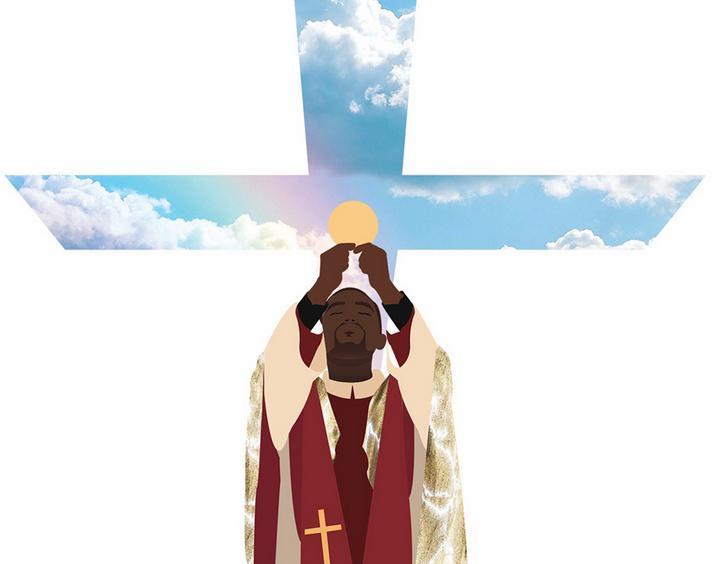
Gracious and loving God, we thank your for the gift of our priests. Through them, we experience your presence in the sacraments.
Help our priests to be strong in their vocation.
Set their souls on fire with love for your people.
Grant them the wisdom, understanding, and strength they need to follow in the footsteps of Jesus. Inspire them with the vision of your Kingdom.
Give them the words they need to spread the Gospel.
Allow them to experience joy in their ministry.
Help them to become instruments of your divine grace.
We ask this through Jesus Christ, who lives and reigns as our Eternal Priest. Amen

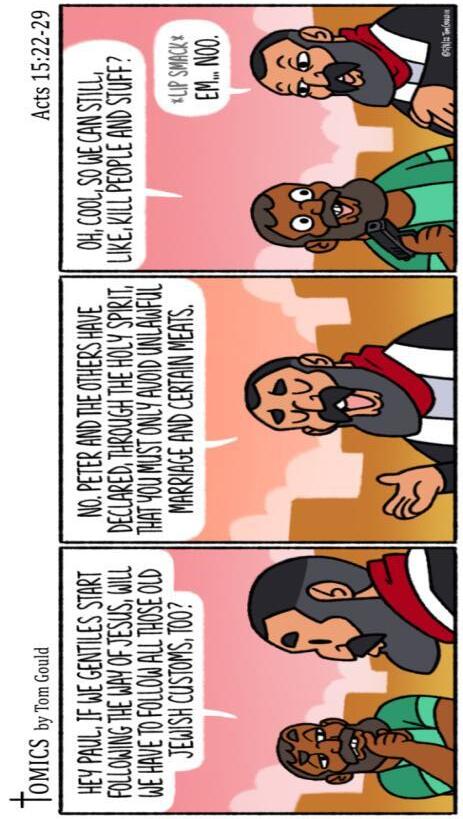
FIRST READING Acts 15:1-2; 22-29
It has been decided by the Holy Spirit and by ourselves not to saddle you with any burden beyond these essentials.
Some men came down from Judaea and taught the brothers, “Unless you have yourselves circumcised in the tradition of Moses you cannot be saved.” This led to disagreement, and after Paul and Barnabas had had a long argument with these men it was arranged that Paul and Barnabas and others of the church should go up to Jerusalem and discuss the problem with the apostles and elders.
Then the apostles and elders decided to choose delegates to send to Antioch with Paul and Barnabas; the whole church concurred with this. They chose Judas known as Barsabbas and Silas, both leading men in the brotherhood, and gave them this letter to take with them:
“The apostles and elders, your brothers, send greetings to those of pagan birth in Antioch, Syria and Cilicia. We hear that some of our members have disturbed you with their demands and have unsettled your minds. They acted without any authority from us, and so we have decided unanimously to elect delegates and to send them to you with Barnabas and Paul, men we highly respect who have dedicated their lives to the name of our Lord Jesus Christ. Accordingly we are sending you Judas and Silas, who will confirm by word of mouth what we have written in this letter. It has been decided by the Holy Spirit and by ourselves not to saddle you with any burden beyond these essentials: you are to abstain from food sacrificed to idols, from blood, from the meat of strangled animals and from fornication. Avoid these, and you will do what is right. Farewell.”
RESPONSORIAL PSALM Psalm 66:2-3,5-6,8
Response: Let the peoples praise you, O God; let all the peoples praise you.
1. O God, be gracious and bless us and let your face shed its light upon us. So will your ways be known upon earth and all nations learn your saving help. Response
The concept of hospitality is fundamental to a stewardship way of life. When we envision hospitality, we naturally think of offering a sincere and warm welcome

2. Let the nations be glad and exult for you rule the world with justice. With fairness you rule the peoples, you guide the nations on earth. Response
3. Let the peoples praise you, O God; let all the peoples praise you, May God still give us his blessing till the ends of the earth revere him. Response
SECOND READING Apocalypse 21:10-14; 22-23
He showed me the holy city coming down out of heaven.
In the spirit, the angel took me to the top of an enormous high mountain and showed me Jerusalem, the holy city, coming down from God out of heaven. It had all the radiant glory of God and glittered like some precious jewel of crystal-clear diamond. The walls of it were of a great height, and had twelve gates; at each of the twelve gates there was an angel, and over the gates were written the names of the twelve tribes of Israel; and on the east there were three gates, on the north three gates, on the south three gates, and on the west three gates. The city walls stood on twelve foundation
to those new to our parishes, for instance. We picture inviting them in and making them feel at home and at ease in our presence, communicating to them that they are highly valued.
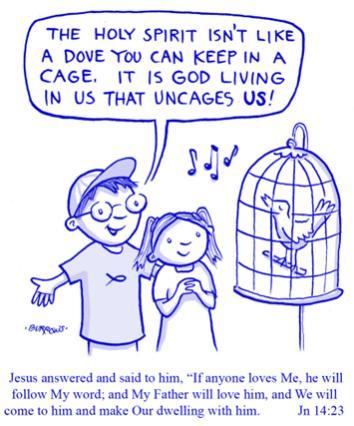
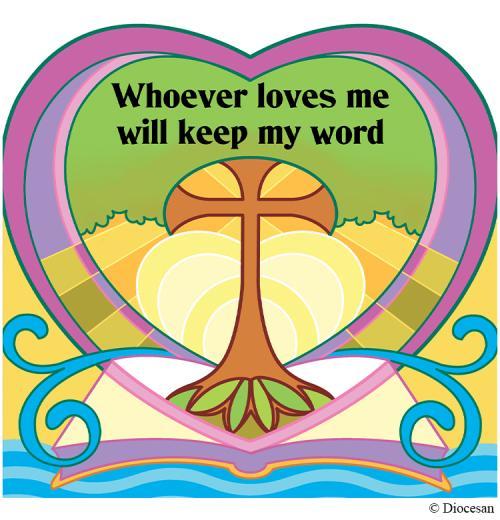
Today’s Gospel reading from John invites us to think of hospitality in a slightly different way. In it, we hear Jesus speaking this to his disciples: “Whoever loves me will keep my word, and my Father will love him, and we will come to him and make our home with him.”
Jesus is asking that we permit the Blessed Trinity to come and dwell with-
stones, each one of which bore the name of one of the twelve apostles of the Lamb.
I saw that there was no temple in the city since the Lord God Almighty and the Lamb were themselves the temple, and the city did not need the sun or the moon for light, since it was lit by the radiant glory of God and the Lamb was a lighted torch for it.
Gospel Acclamation Jn 14: 23
Alleluia, alleluia!
Jesus said: ‘If anyone loves me he will keep my word, and my Father will love him, and we shall come to him. Alleluia!
GOSPEL
John 14:23-29
The Holy Spirit will remind you of all I have said to you.
Jesus said to his disciples:
“If anyone loves me he will keep my word, and my Father will love him, and we shall come to him and make our home with him. Those who do not love me do not keep my words. And my word is not my own: it is the word of the one who sent me. I have said these things to you while still with you; but the Advocate, the Holy Spirit, whom the Father will send in my name, will teach you everything and remind you of all I have said to you. Peace I bequeath to you, my own peace I give you, a peace the world cannot give, this is my gift to you. Do not let your hearts be troubled or afraid. You heard me say:
I am going away, and shall return.
If you loved me you would have been glad to know that I am going to the Father, for the Father is greater than I.
I have told you this now before it happens, so that when it does happen you may believe.”❖
in us. This is a stunning request. It tells us that our first and most privileged form of hospitality should be directed towards God Himself.
How does one show hospitality to God? How do we make God “at home and at ease” within us? How can we communicate to God that He is “highly valued” by us?
Jesus tells us how: we are to keep His word, to follow His teachings. In order to keep His word, we must know His word. This takes discipline and effort on our part. We must make
study of Scripture and Church teaching a priority in our daily lives.
If we want our parishes to be places of genuine Christian hospitality, we must be sure that our own hearts are hospitable dwelling places for the Blessed Trinity. Then, our smiles and words, our greetings and ministries, will radiate with the warmth of God’s love. And, our parish family will become at least a little bit like Heaven on earth. This is the simplicity and glory of a stewardship way of life. ❖
[www.catholicsteward.com/blog/]
We all experience some degree of sadness in saying goodbye to someone. This is especially so when we are not sure if we shall ever see the person again. The tone of the Gospel passage is one of sadness. Jesus knew that his parting would leave his disciples anxious and afraid, especially considering the manner of his leaving (there can be no greater finality in parting than through death). This is why Jesus spends time consoling his friends. Naturally, they do not want him to go but he has to. So he gives them his peace, a peace the world cannot give. They are not to be afraid or troubled even as their world is about to fall apart. But his greatest promise to them is the pledge to send the Holy Spirit who will teach them all they need to know. So while there is sadness, there are also comforting words. In faith we too can find comfort in the presence of the Holy Spirit whenever anxiety and fear overtake us.
Jesus gave the disciples the gift of his peace. We all know how much we need peace in our families, in our country, in the world, and most of all, in ourselves. With the state we are in as individuals and as a nation it is no wonder Jesus says that the world cannot give the kind of peace he brings to those who loves him. There is so much anxiety and fear of what is going on that many people dread watching or reading the news. We need the peace that Christ brings. We gain his peace as we strive to know him better through listening to his Word and doing what he asks of us. And we must be his instruments for spreading that peace. Our Christian communities must be places where the peace of Christ can radiate into society. In the midst of all the anxiety caused by injustices, drug abuse, domestic violence, unemployment, crime and murders, our communities must stand out like a beacon calling all to the peace of Christ. But what is certain is that it would be impossible to bring the peace of Christ to the world if we, as individuals and as community, are not at peace with ourselves . ❖
[From: Journeying with the Word of God, The Religious Education Department,DioceseofGeorgetown, Guyana ]
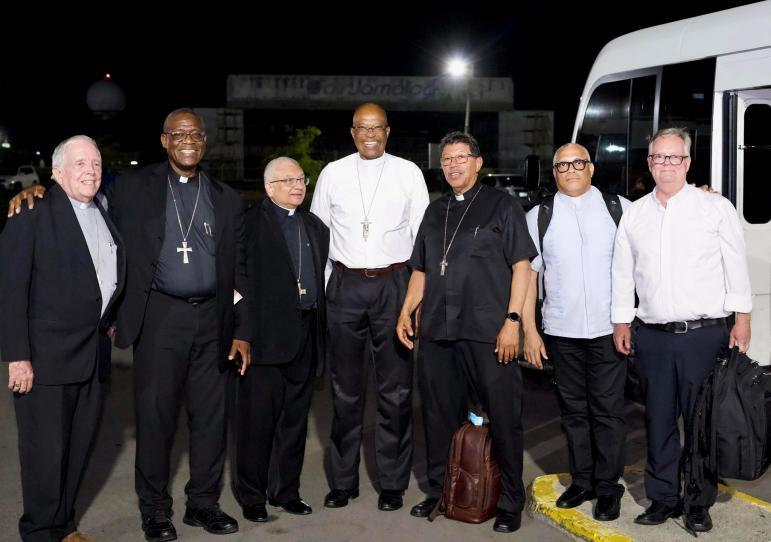
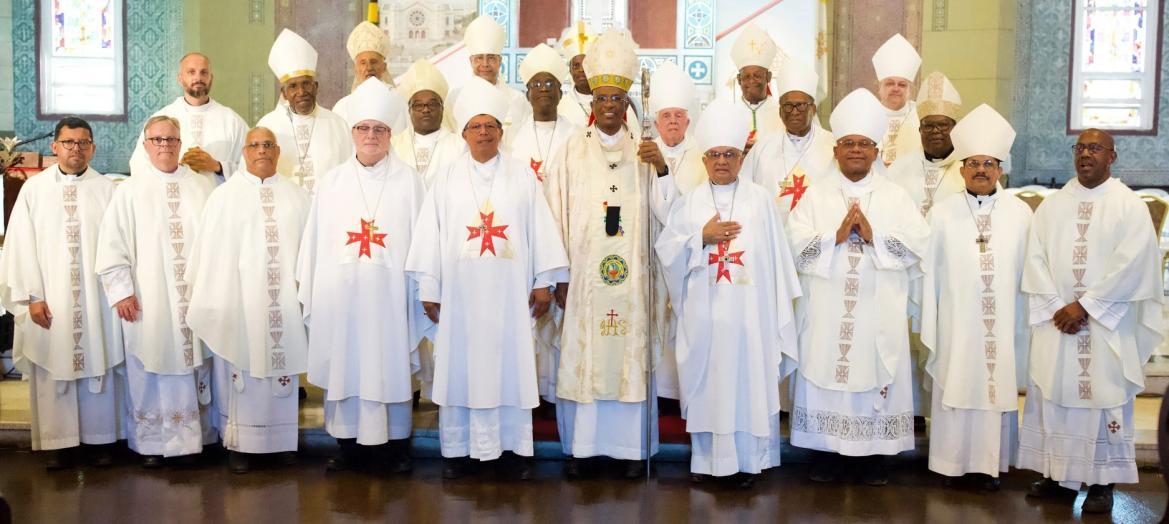
The Antilles Episcopal Conference held its 69th Annual Plenary Meeting in Jamaica from May 11-16. Below is the Press Release from the AEC:
Antilles Episcopal Conference 69th Annual Plenary Meeting
Archdiocese of Kingston, Jamaica May 11 -16, 2025
On Good Shepherd Sunday, the Archdiocese of Kingston, Jamaica, proudly hosted the Opening Mass for the 69th Annual Plenary Meeting of the Antilles Episcopal Conference (AEC) at the Cathedral of the Most Holy Trinity. The mass featured a profound homily delivered by Bishop Kendrick Forbes of the Diocese of Roseau, Dominica, who encouraged the congregation to recognise and listen to the voice of Jesus, the Good Shepherd.
In his address, Archbishop Gordon, President of the Conference, urged the congregation to tackle the socioeconomic challenges faced by the Caribbean with visionary leadership and prophetic courage. He remarked, “We must lead not with anxiety but with vision as a regional communion of pastors, walking together with our people, listening to the Spirit, and proclaiming that God’s love is the strongest force for change and community development.”
From May 12 to 14, a spiritual retreat commenced with Archbishop Gordon’s address setting the spiritual tone for the retreat. He utilised John 20:1-10 as a Spiritual Compass to navigate the contemporary challenges highlighted during the Opening Mass. He implored the bishops to remain attentive to the presence of the Risen Christ, fostering a spirit of communal discernment among Church leaders. Fr. Peter McIsaac, the Spiritual Director, accompanied the bishops in learning the spiritual underpinnings and mechanics of “Conversation in the Spirit” as a communal tool to listen to the voice of the Good Shepherd in this “changing era.”
During the business sessions, critical discussions ensued on various matters, including the financial report of the AEC, the establishment of a Catholic Directory for the region, guidelines for
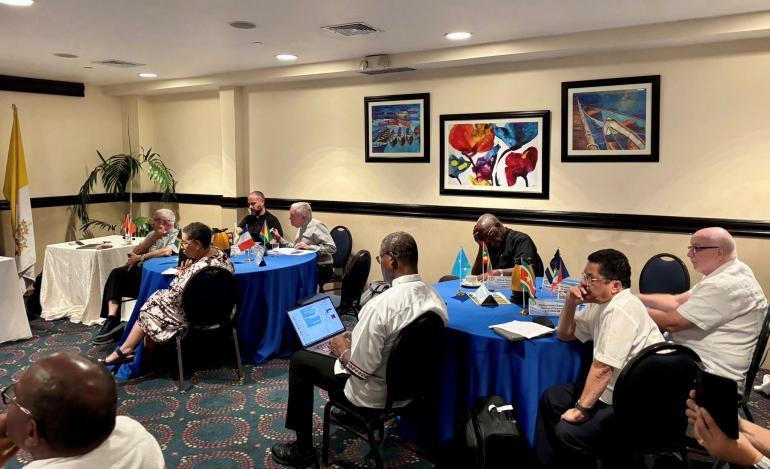
the dispensing of Church properties, and the AEC Youth Formation Programme scheduled for July 2025. Additionally, the bishops deliberated on guidelines for the Protection of Minors and Vulnerable Adults.
A focal point of the meeting was the examination of a Pastoral Letter titled “In the Eye of the Hurricane: Living the Rhythm of the Caribbean with Faith, Solidarity, and Hope.” This document aims to provide practical guidance on disaster preparedness and response, accentuating the essential role of faith in fostering resilience and service to those affected. Furthermore, progress was made on a Pastoral Letter addressing Human Relationships and Sexuality, which is intended to serve as a vital resource for Christian leaders navigating contemporary familial and societal issues.
In alignment with the week’s theme of active listening to the Good Shepherd, a panel discussion featured contributions from Professor Anna Perkins, a laywoman and theologian; Sr. Maxine McIntosh, a religious sister; Deacon David Chambers; and Fr. Richard Brown, a parish priest. Their insights illuminated critical pastoral matters, leading to the identification of five primary areas of concern: Youth Engagement, Vocations, Digital Media, Ongoing Formation, Inculturation, and the onboarding of missionaries from diverse cultural backgrounds.
The AEC Bishops concluded the meeting with a collective prayer for Pope Leo XIV. They expressed their heartfelt wishes for the swift recovery of Most Rev. Santiago de Wit Guzman, the Nuncio who was absent due to medical surgery. ❖
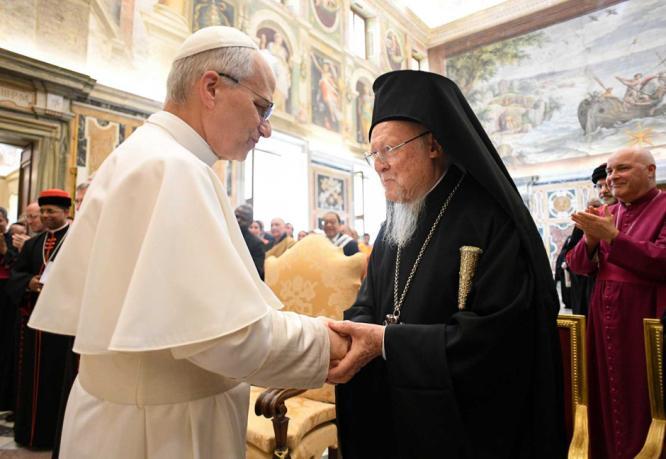
Pope Leo XIV greets Orthodox Ecumenical Patriarch Bartholomew of Constantinople during a meeting with religious leaders at the Vatican, May 19, 2025. The leaders had come to Rome for the pope's inauguration Mass. (CNS photo/Vatican Media)
VATICAN CITY (CNS) During a special audience with religious leaders who came to Rome for the inauguration of his papal ministry, Pope Leo XIV vowed to continue working toward Christian unity and promoting dialogue among all religions.
“Now is the time for dialogue and building bridges,” the pope said May 19 as he met with the leaders in the Clementine Hall of the Apostolic Palace.
His guests included Orthodox Ecumenical Patriarch Bartholomew of Constantinople, Orthodox Patriarch Theophilos III of Jerusalem and Catholicos Awa III, patriarch of the Assyrian Church of the East, as well as Anglican, Methodist and Lutheran leaders.
Representatives of the Jewish, Muslim, Hindu, Buddhist, Sikh and Jain communities also attended.
“As bishop of Rome,” Pope Leo told them, “I consider one of my priorities to be that of seeking the reestablishment of full and visible communion among all those who profess the same faith in God the Father, the Son and the Holy Spirit.”
Full Christian unity must be based on unity in faith, he said, noting how his election took place in the year that Christians are celebrating the 1,700th anniversary of the Council of Nicaea, which “represents a milestone in the formulation of the Creed shared by all churches and ecclesial communities.”
The late Pope Francis had been planning to travel to Iznik, Turkey, site of the ancient city of Nicaea, to commemorate the anniversary with Patriarch Bartholomew. A Vatican official said planning is underway for Pope Leo to make the trip.
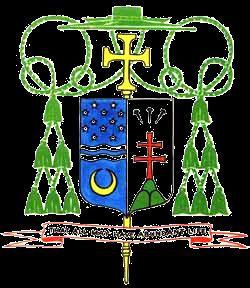
“Unity has always been a constant concern of mine,” the new pope told his guests, pointing to the motto he chose when he became a bishop in 2014: “‘In Illo uno unum,’ an expression of St. Augustine of Hippo that reminds us how we, too, although we are
a more peaceful world, something that all men and women of goodwill desire in their hearts, thepopetoldthereligiousleaders
“In a world wounded by violence and conflict,” he said, “each of the communities represented here brings its own contribution of wisdom, compassion and commitment to the good of humanity and the preservation of our common home.
” Working together “and free from ideological and political conditioning,” he said, “we can be effective in saying ‘no’ to war and ‘yes’ to peace, ‘no’ to the arms race and ‘yes’ to disarmament, ‘no’ to an economy that impoverishes peoples and the Earth and ‘yes’ to integral development.”
many, ‘in the One that is Christ we are one.'”
Pope Leo told the Christian leaders that “the more faithful and obedient we are” to Jesus, “the more united we are among ourselves. We Christians, then, are all called to pray and work together to reach this goal, step by step, which is and remains the work of the Holy Spirit.”
“Aware, moreover, that synodality and ecumenism are closely linked, I would like to assure you of my intention to continue Pope Francis’ commitment to promoting the synodal nature of the Catholic Church and developing new and concrete forms for an ever stronger synodality in ecumenical relations,” he said.
Pope Francis and many ecumenical leaders focused on how synodality literally “walking together,” listening to one another and valuing the gifts and talents of all could help Christians see how much they have in common and how they must work together to bring the Gospel to world.
Pope Leo also praised Pope Francis’ emphasis on how, since everyone is a child of God, they are brothers and sisters to each other.
“The witness of our fraternity, which I hope we will be able to show with effective gestures, will certainly contribute to building
Pope Leo had special words of gratitude for the Jewish and Muslim representatives and pledged to continue the dialogue that began with their communities 60 years ago with the publication of the Second Vatican Council’s document, “Nostra Aetate,” on relations with other religions. The document, the pope said, “emphasizes the greatness of the spiritual heritage shared by Christians and Jews, encouraging mutual knowledge and esteem.”
“The theological dialogue between Christians and Jews remains ever important and close to my heart,” he said. “Even in these difficult times, marked by conflicts and misunderstandings, it is necessary to continue the momentum of this precious dialogue of ours.”
The “growing commitment to dialogue and fraternity” between Christians and Muslims also is important, he said. The dialogue, “based on mutual respect and freedom of conscience, is a solid foundation for building bridges between our communities.”❖
MAKING THE WORD OF GOD YOUR OWN
Step 1: Lookattoday’sReadingsprayerfully.
1st Reading: Being aware of the guidance of the Holy Spirit the leaders of the Church issue a statement on the receiving of non-Jewish converts into the Church.
2nd Reading: John gives us a picture of the new Jerusalem where God’s Kingdom will come in all its glory.
Gospel: Jesus is about to leave his friends so he speaks to them with sadness in his heart. He promises to send the Holy Spirit and he gives them his peace.
Step 2: ApplyingthevaluesoftheReadings toyourdailylife.
1.Jesus says that anyone who loves him keeps his word. As a community of believers, what is Jesus’ word telling us? How are we making sure we keep his word?
2.In what way is the gift of peace that Christ brings different from the peace of the world?
3.The First Reading shows that there was disagreement in the early Church but they settled the matter with the help of the Holy Spirit. What disagreements do you see existing in your community and how do you as a group go about settling them?
4.Living and sharing in the peace of Christ is a community project. It is the responsibility of the members who live in peace among themselves. How does your community live out this project?
Step 3: Accepting the message of God’s Wordinyourlifeoffaith.
Jesus gives us, as individuals and as community, the gift of his peace so that we may enjoy fullness and wholeness of life. This gift is not to be hoarded selfishly but shared with all humanity. In this way we will be continuing Christ’s work of bringing unity and healing to the world.
Step 4: Somethingtothink&prayabout
1.The early Church came to realise that faith does not depend on rigidly keeping laws and commands. Our faith has its roots in a personal relationship with God. And it is the Holy Spirit that gives direction to our journey. The one law Jesus gives us is to love as he loves us. We cannot go wrong if we follow the law of love.
2.Pray that you will enjoy and share the peace that Jesus gives.❖
[From: Journeying with the Word of God, The Religious Education Department, Diocese of Georgetown, Guyana ]
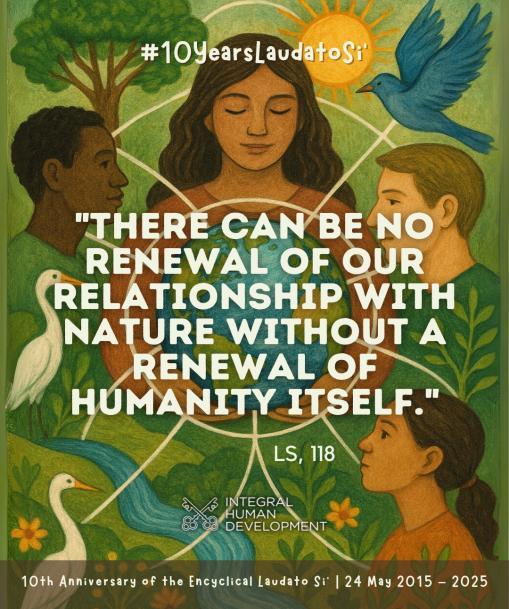
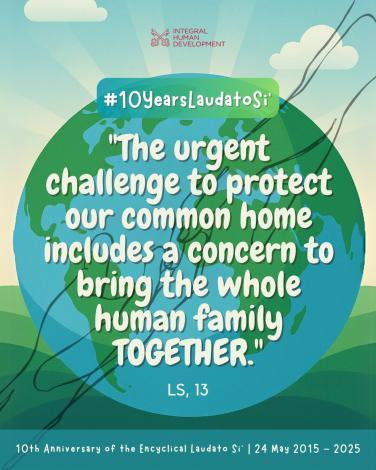
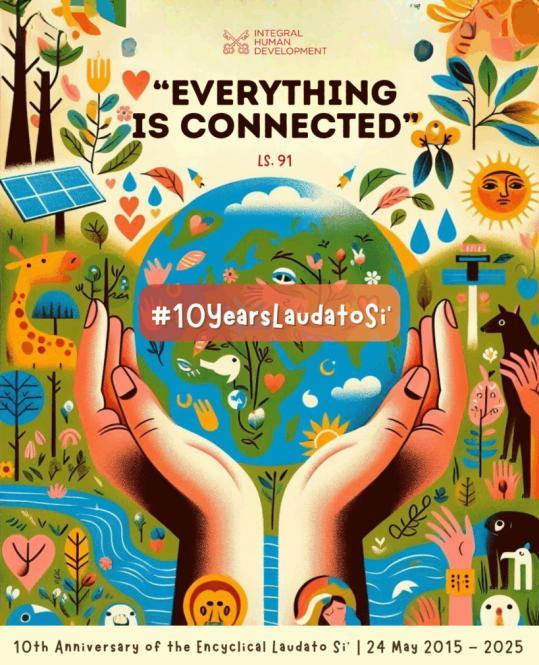
On 24 May we celebrate the 10th anniversary of the encyclical Laudato Si', the text with which Pope Francis called humanity to care for the common home, interweaving ecology, social justice and spirituality. Thisencyclicalhashadan unprecedentedimpacton the global collective consciousness, drawing the attention of the civil world to the urgency of an integral ecological conversion. Ten years after its publication, the Church around the world is mobilizing withevents, moments of prayer, concrete actions and awareness-raising initiatives to celebrate this important anniversaryandrenewits commitment to urgent andprofoundchange.
As Cardinal Michael Czerny, Prefect of the Dicastery for the Service of Integral Human Development said in a recent interview: "In the context of the Jubilee of Hope 2025, this tenth anniversary will be a time to celebrate what has been achieved and to give thanks to God. A time to promote the encyclical among Catholics and people of all faiths who donotknowit. A time to mourn - and strugglewith those who suffer, marginalised or impoverished, because of the damage inflicted on the Earthandunjusteconomicmechanisms."
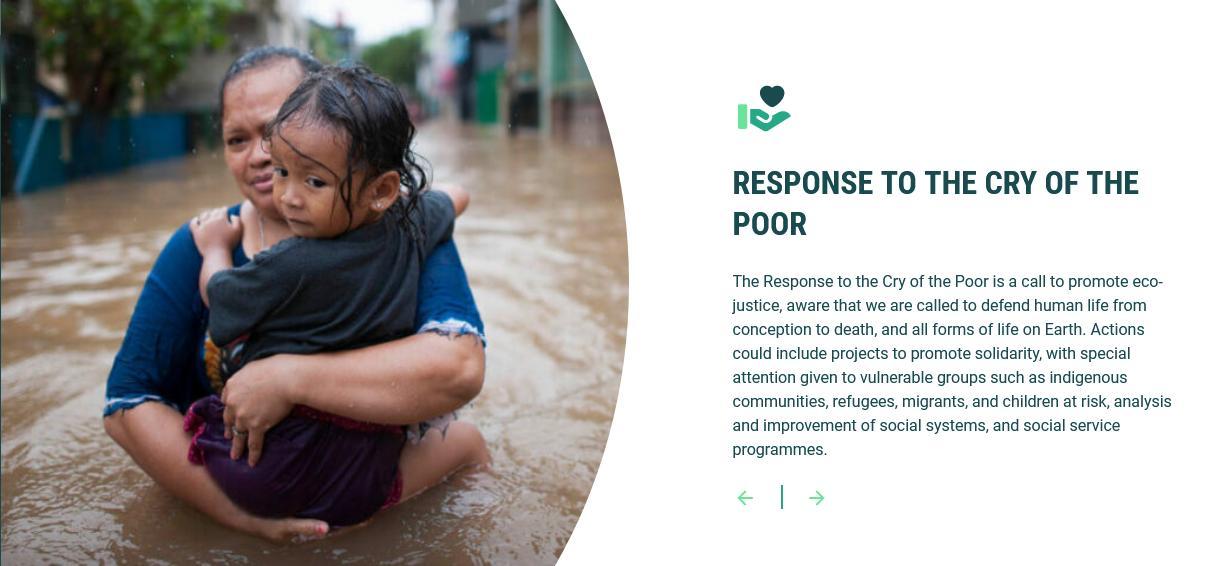
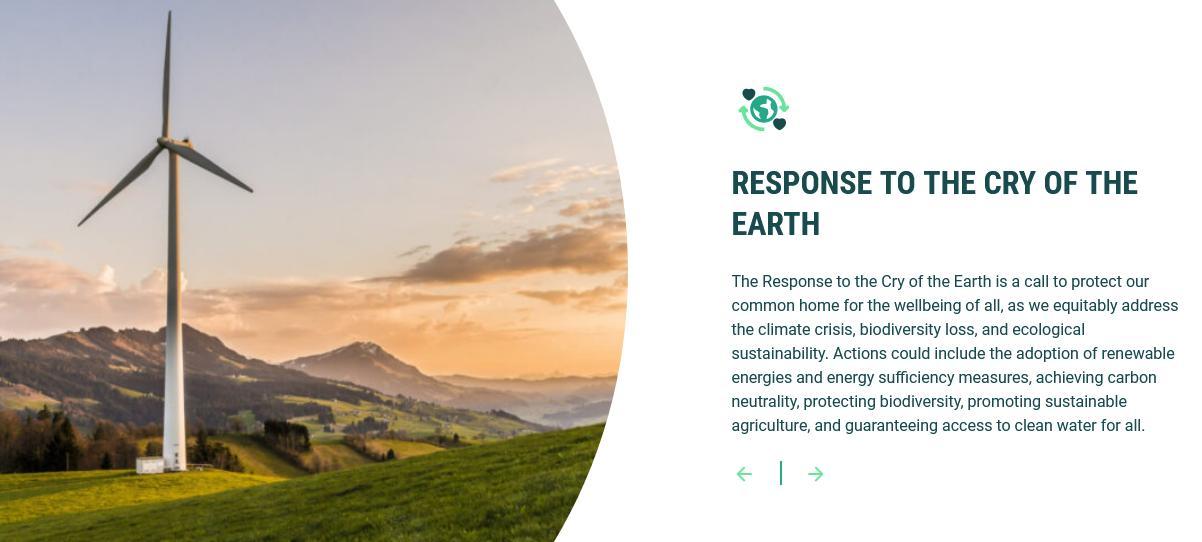
initiatives, such as the Laudato Si’ Movement,a network of Catholics walking together in synodality and communion with the universal church towardsapathofecological conversion. Guided by the spirit of subsidiarity, they pursue the mission: to care for our common home. In this same vein, the Dicastery for the Service of Integral Human Development launchedin2021 the Laudato Si’ Action Platform, to concretely accompany participants on a sustainable path through goals inspired by the encyclical. The platform offers Catholic institutions and organisations numerous resources, good practices and pathways to implement the principles of integral ecologyonadailybasis.
The 10th anniversary is therefore a unique opportunity to relaunch the commitment to our common home, a mission in whichwe are allcalledto actively participate. Visit the Raisinghope website to participate and share the initiatives launched on the occasion of the 10th anniversary, or register your ecological project on the Laudato Si’ Action Platform, to continue building together a morejustandsustainable future in the light of LaudatoSi'
Issued in 2015 by Pope Francis, the Encyclical Laudato Si' is still very relevant, denouncing environmental degradation, loss of biodiversity, pollution and climate change, as well as the looming social crisis. The need for the immediate and active useofa sustainable model, that is both innovative and supportive, resonatesstrongerthanever.
This decade has seen the birth of many global
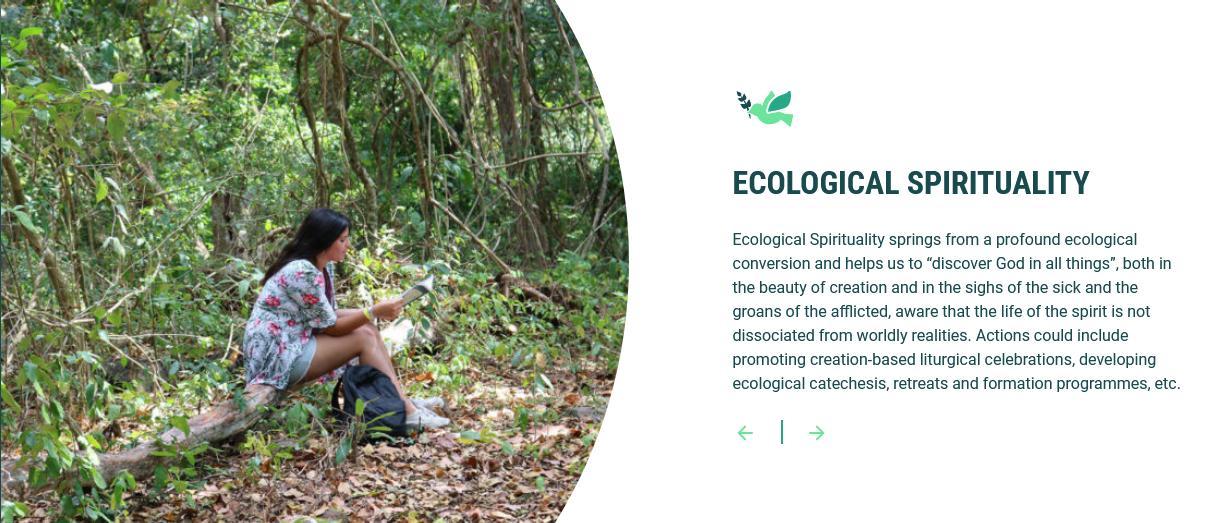
Among the initiatives to celebrate the 10th anniversary of Laudato Si', we also highlight a webinar organised by the Laudato Si’ Action Platform in collaboration with UISG/USG entitled “Raising Hope for a Reconciled Creation” , on 29 May at 3 p.m. (CET).❖
[From Dicastery for the Service of Integral Human Development: https:// www.humandevelopment.va/ en/news/2025/laudato-si-10years-Pope-Francisencyclical.html ]
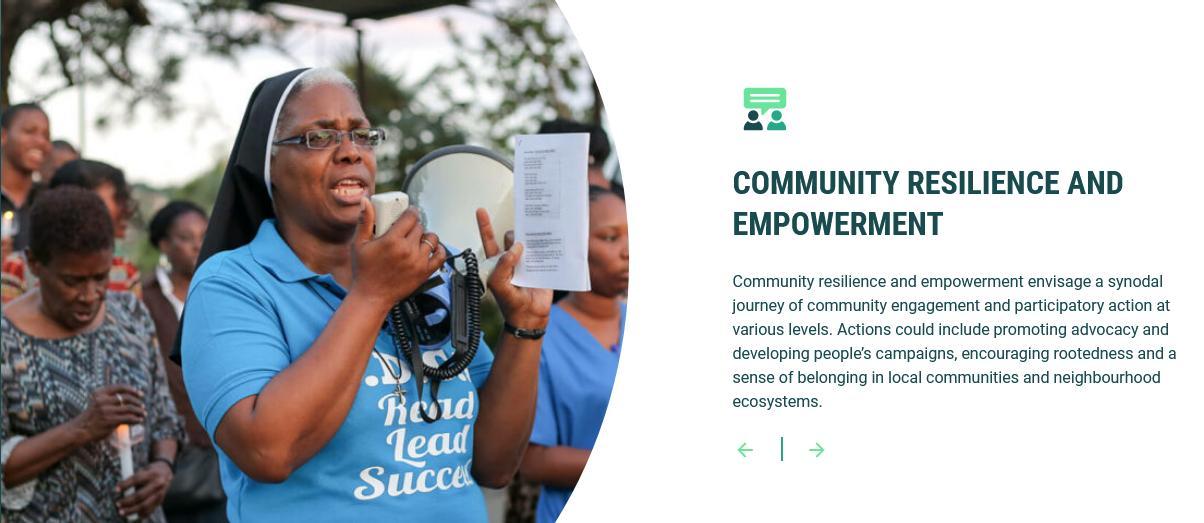
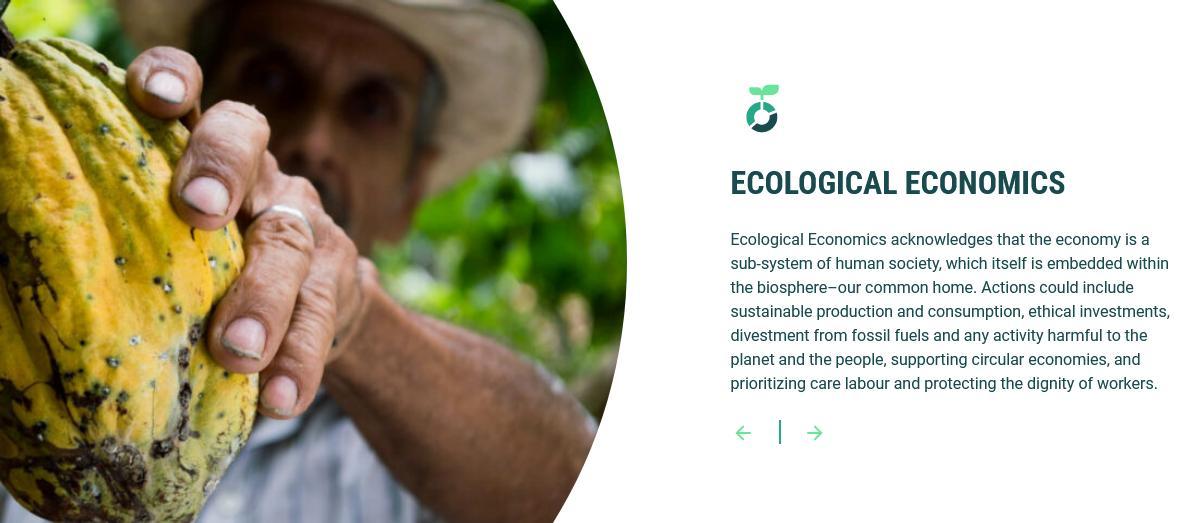
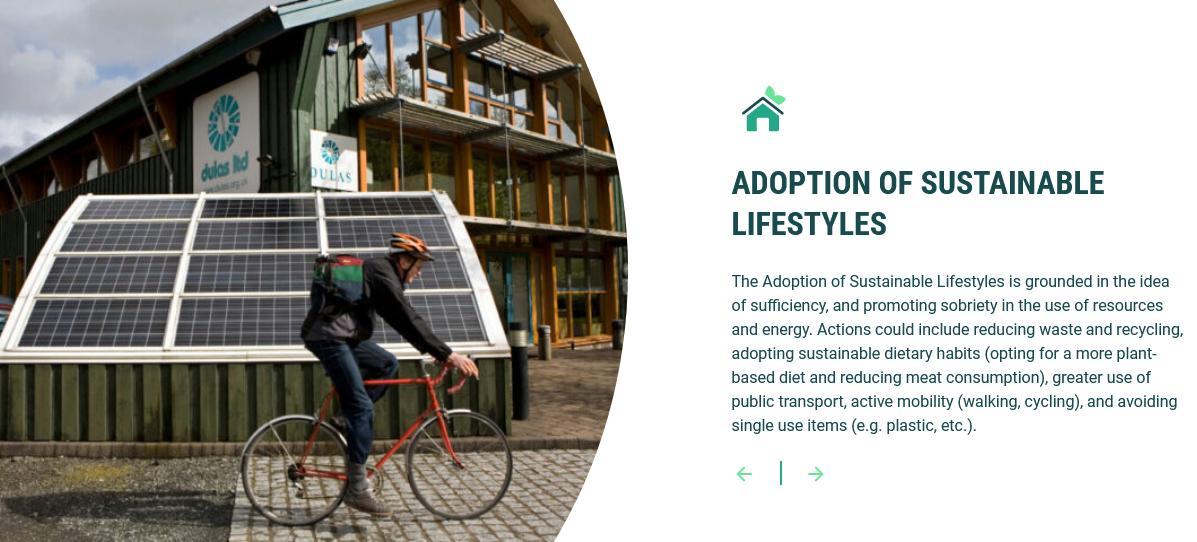
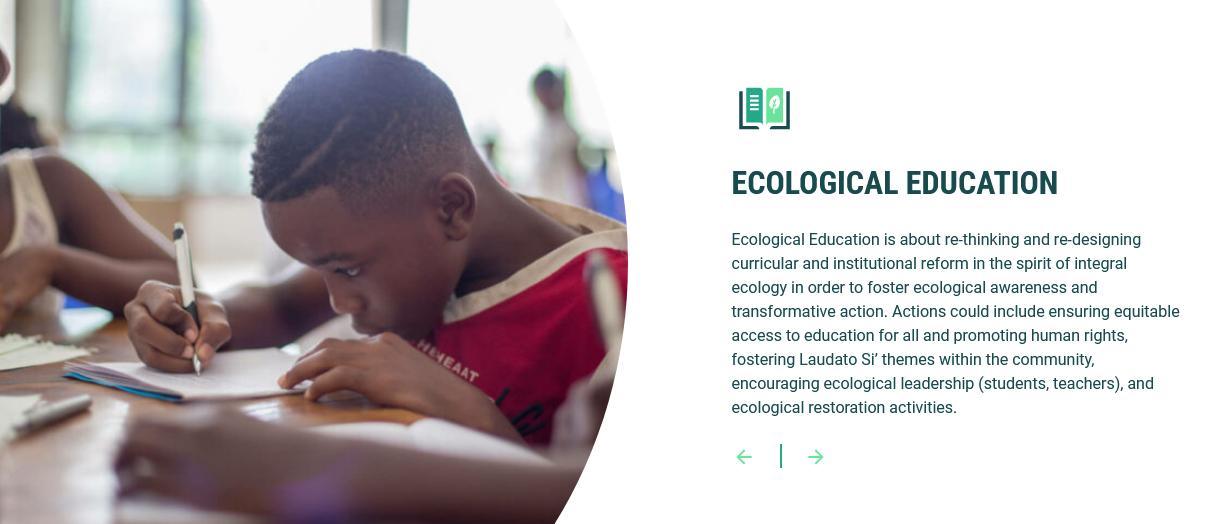
Discerning a response to the ecological crisis is a profound act of care. At this kairos moment, action is needed. The Laudato Si’ Goals guide our actions. They redefine and rebuild our relationship with each other and our common home. Their holistic approach acknowledges the planetary limits of all socio-economic systems and the human roots of the ecological crisis. They call for a spiritual and cultural revolution to realise integral ecology.
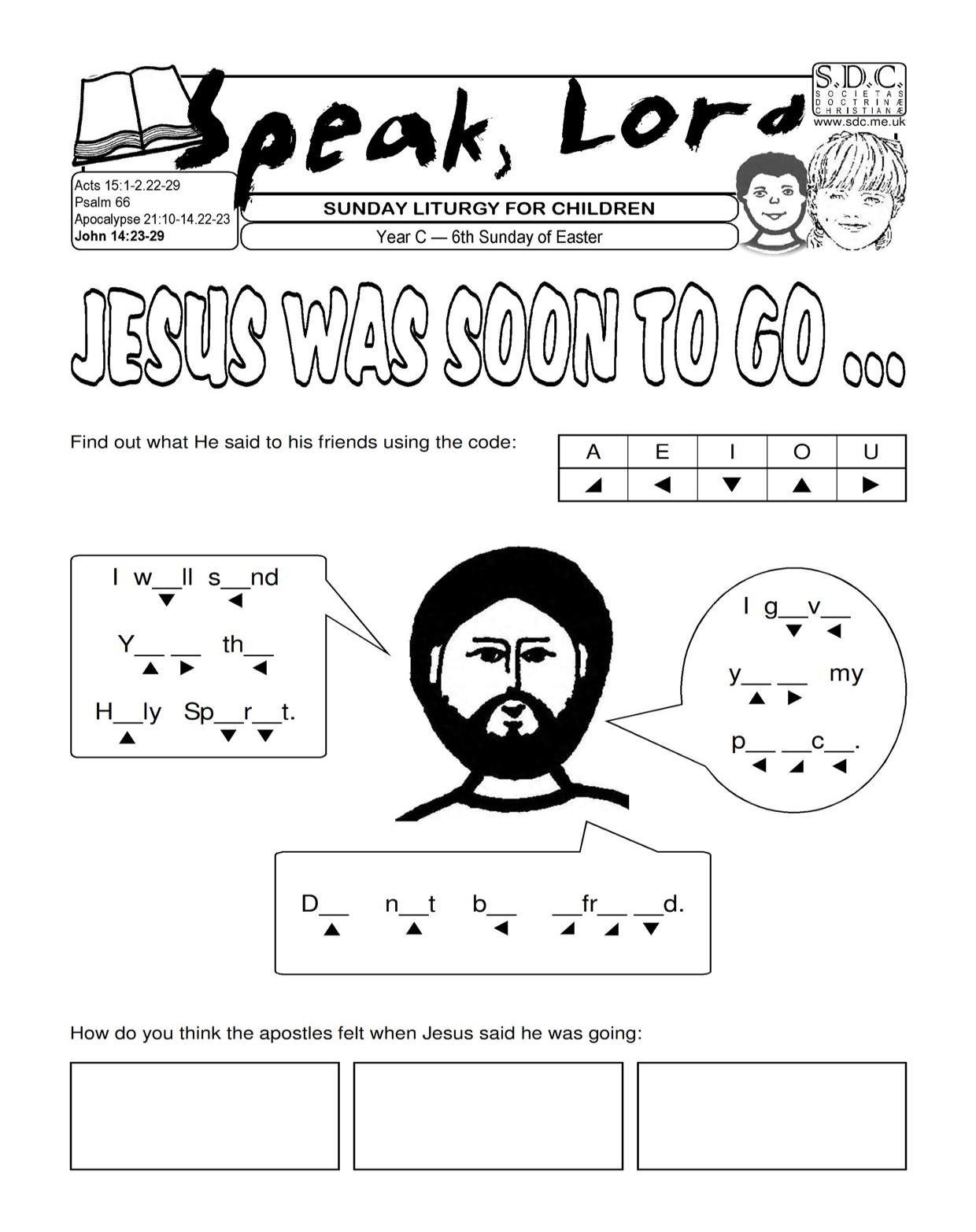
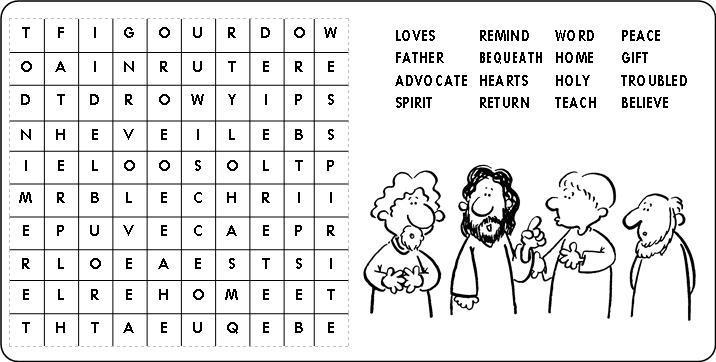
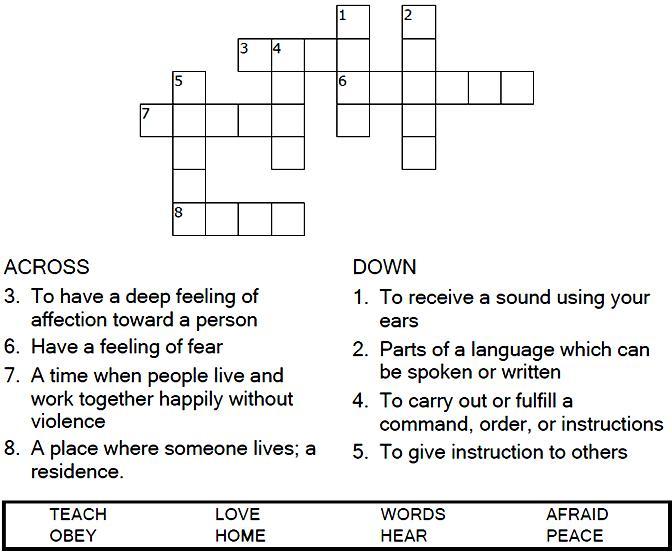
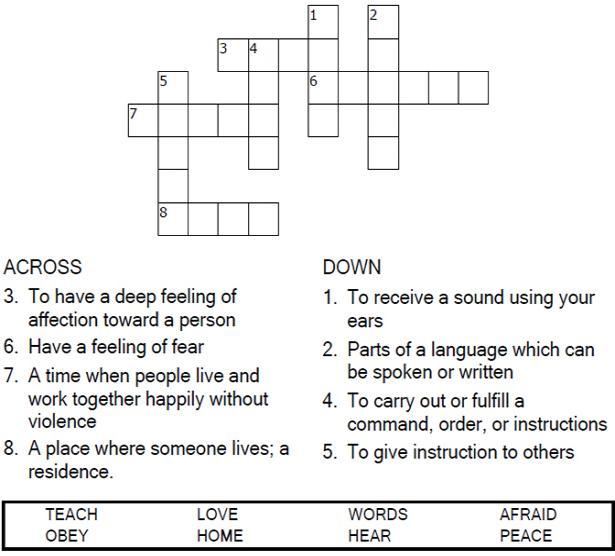
Dear Girls and Boys,
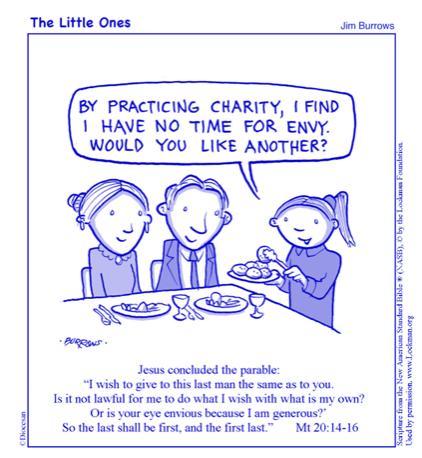
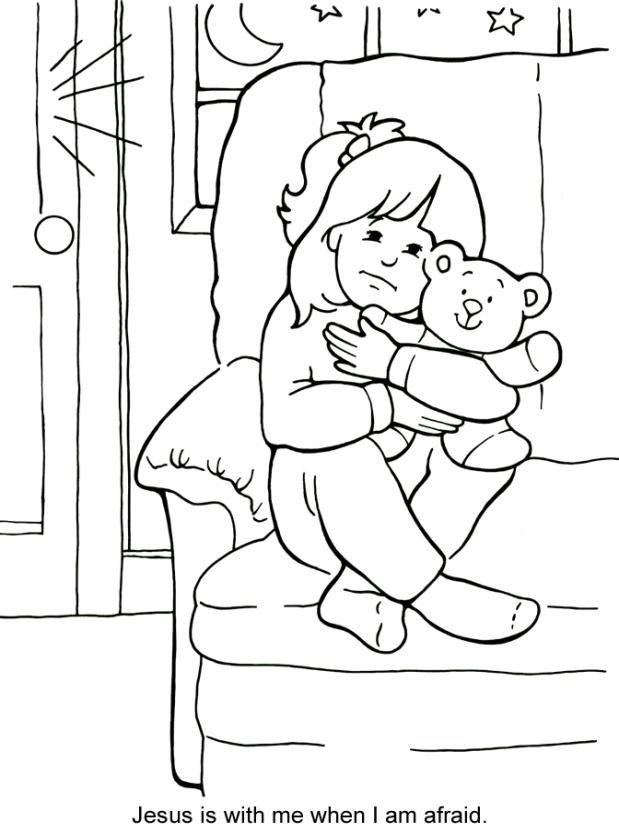
Have you ever been afraid? Of course you have. We are all afraid at times. It is nothing to be ashamed of even adults are sometimes afraid. When Jesus told his disciples that he was going to return to his Father, they were afraid. What would happen to them? Would the enemies recognize them as his followers and try to harm them?
Jesus knew that his disciples were afraid and he offered these words to comfort them. "I am leaving you with a gift peace of mind and heart. Don't be troubled or afraid. Remember what I have told you: 'I am going away, but I will come back to you again. I will come and get you, so that you will always be with me.'"
These words were a great comfort to his disciples and they are a great comfort to us today. When Jesus returned to his Father heaven, he asked the Father to send the Holy Spirit to comfort his disciples until the day when he returned. That includes us! What a wonderful gift Jesus has given us peace of mind and heart. We no longer have anything to fear. Whenever we find ourselves in the dark or in the storms of
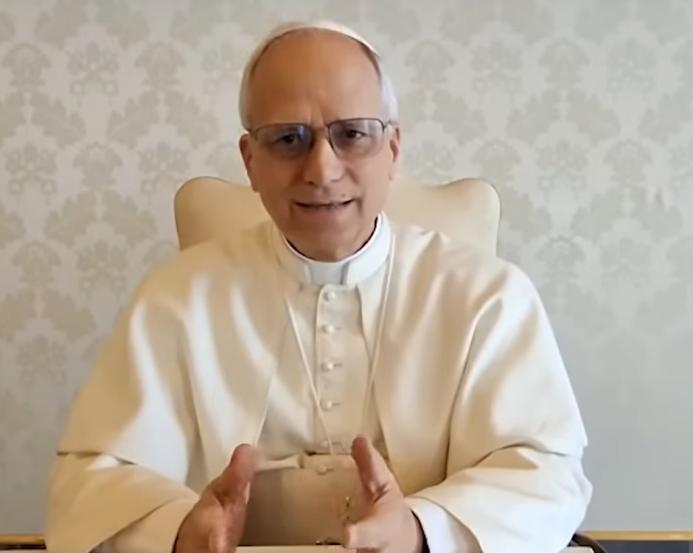
(ICN) - Ahead of the tenth anniversary of Pope Francis' encyclical Laudato Si', Pope Leo XIV has sent a video message to the Network of Universities for the Care of Our Common Home, gathered at the Pontifical Catholic University of Rio de Janeiro.
The Holy Father began by expressing his joy at the Network's commitment to "engaging in a synodal work of discernment in preparation

Dear Editor,
God so loved the world that He gave his only begotten Son, Jesus, and His Son Jesus too, so loved the world that He gave himself up to death for it.
So pure and so profound is His love, it is divine love, fully operative in Him, that as it were. It does not know when or how to cease. Even when He is betrayed, and
for COP30". He acknowledged the universities' efforts to reflect on "a possible reconciliation between public debt and ecological debt" - a theme recently highlighted in the message released for World Day of Peace.
"This Jubilee Year is a year of hope", he said, inviting the young people to pursue their endeavours with hope.
Addressing university rectors
directly, Pope Leo XIV said: "To you, university rectors, I want to offer encouragement in the mission you have embraced: to be builders of bridges of integration between the Americas and with the Iberian Peninsula, working for ecological, social, and environmental justice".
Bringing his video message to a close, Pope Leo expressed his gratitude to all those present for their dedication and service, thanking them "for all your efforts and your work."
Finally he encouraged each and every person, to continue as they "keep building bridges."❖
deserted by those nearest to Him, and is crowned in mockery with thorns, and spat upon He still loves. Even when the fury of the mob cry for His crucifixion, and for the release of a brigand, He still loves. In love incredible, He prays for forgiveness for those who crucify him.
God our Heavenly Father loves us unconditionally not because we are good children, but because we are His children. Let us ask ourselves, why did our parents love us? Why do we love our own children? Do we love them with
strings attached, on condition that they please us first, or do we love them for nothing, freely, just for being our children?
The answer every good parent will give, is that he or she loves their children for nothing. In most cases the more disappointing a child turns out to be, the more the parents love him or her. You have to pray and trust in God, that the child will change. Similarly, God loves us quite freely, for nothing, good or bad, the way good parents love their children.
Leon Jeetlall
Sunday May 25th
07:30hrs – Mass at Malgre Tout 10:00hrs – Mass at Hague
13:00hrs – Meet participants of Bible Quiz to present trophies.
15:00hrs – Attend 210th Anniversary of Trinity Methodist Church, High & Leopold Streets
Sunday June 1st
07:30hrs – Mass at Cathedral
09:30hrs – Meet Cathedral Confirmation Candidates.


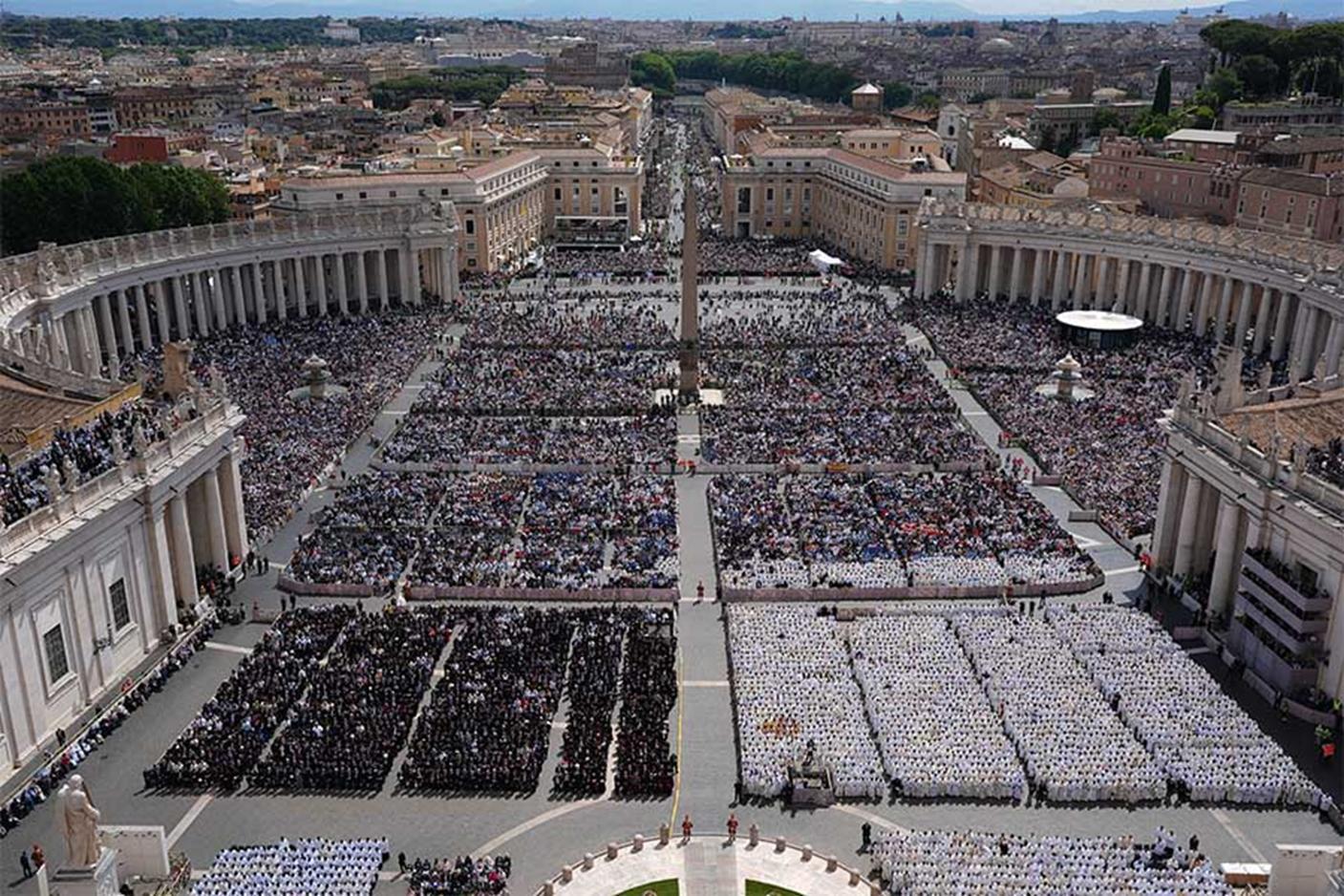
“For our part, we want to be a small leaven of unity, communion and fraternity within the world,” he told the estimated 150,000 people gathered in and around St. Peter’s Square. “We want to say to the world, with humility and joy: Look to Christ! Come closer to him! Welcome his word that enlightens and consoles! Listen to his offer of love and become his one family: ‘In the one Christ, we are one.'”
A version of the quote from St. Augustine is the pope’s episcopal motto and is featured on his coat of arms.
Ecumenical and interreligious guests and more than 100 government delegations joined the new pope for Mass in St. Peter’s Square. The United States was represented by Vice President JD Vance and Secretary of State Marco Rubio, accompanied by their spouses and senior White House aides.
Among the Christian leaders present was Orthodox Ecumenical Patriarch Bartholomew of Constantinople, along with other delegations from the Orthodox churches, the Anglican Communion, the Lutheran World Federation, the World Methodist Council, the World Communion of Reformed Churches and various evangelical and Pentecostal communities. Representatives of the Jewish
community as well as Muslim, Hindu, Buddhist, Sikh, Zoroastrian and Jain traditions also were in attendance.
Before the Mass began, Pope Leo rode through the square in the popemobile for the first time since his election May 8, greeting the faithful as cheers of “Viva il papa!” (“Long live the pope!’) poured out from the crowd. He then entered the basilica to pray at the tomb of St. Peter, accompanied by patriarchs of the Eastern Catholic churches.
Following the Gospel reading, three cardinals from the different orders within the College of Cardinals took part in the formal beginning of the Petrine ministry: Italian Cardinal Mario Zenari placed the woolen pallium on the pope’s shoulders, symbolizing his role as shepherd of the universal church; Filipino Cardinal Luis Antonio Tagle presented him with the fisherman’s ring, evoking St. Peter’s mission to draw people into Christ’s net; and Congolese Cardinal Fridolin Ambongo offered a prayer invoking the strength of the Holy Spirit for the new pontificate.
Representing the universal church, 12 people clergy, religious and laity from around the world then came forward to offer their obedience to the
new pope.
Reflecting on the Gospel reading from St. John in which Jesus asks St. Peter three times to tend to his sheep Pope Leo said in his homily that the ministry of Peter is rooted not in authority for its own sake, but in love that serves and unites.
“Peter is thus entrusted with the task of ‘loving more’ and giving his life for the flock,” he said. “The ministry of Peter is distinguished precisely by this self-sacrificing love, because the church of Rome presides in charity and its true authority is the charity of Christ.”
The successor of St. Peter, he said, “must shepherd the flock without ever yielding to the temptation to be an autocrat, lording it over those entrusted to him.” Instead, “he is called to serve the faith of his brothers and sisters, and to walk alongside them.”
Pope Leo also recalled the period of mourning following the death of Pope Francis, and he said that the conclave that followed the late pope’s death was “a moment of grace.”
“I was chosen, without any merit of my own, and now, with fear and trembling, I come to you as a brother, who desires to be the servant of your faith
and your joy, walking with you on the path of God’s love, for he wants us all to be united in one family,” he said.
“With the light and the strength of the Holy Spirit, let us build a church founded on God’s love, a sign of unity, a missionary church that opens its arms to the world,” he said, calling for a church that “proclaims the word, allows itself to be made ‘restless’ by history and becomes a leaven of harmony for humanity.”
At the end of Mass, the pope called for prayers for regions afflicted by war: Gaza, Myanmar and Ukraine, which “finally awaits negotiations for a just and lasting peace.”
Ukrainian President Volodymyr Zelenskyy was present for the Mass and had a private meeting with the pope later in the day, the Vatican press office said.
Immediately after the Mass, Pope Leo met with several government representatives including Vance and Rubio, as well as Peruvian President Dina Boluarte. The pope had spent more than 20 years in Peru as a missionary priest and bishop and has Peruvian citizenship ❖
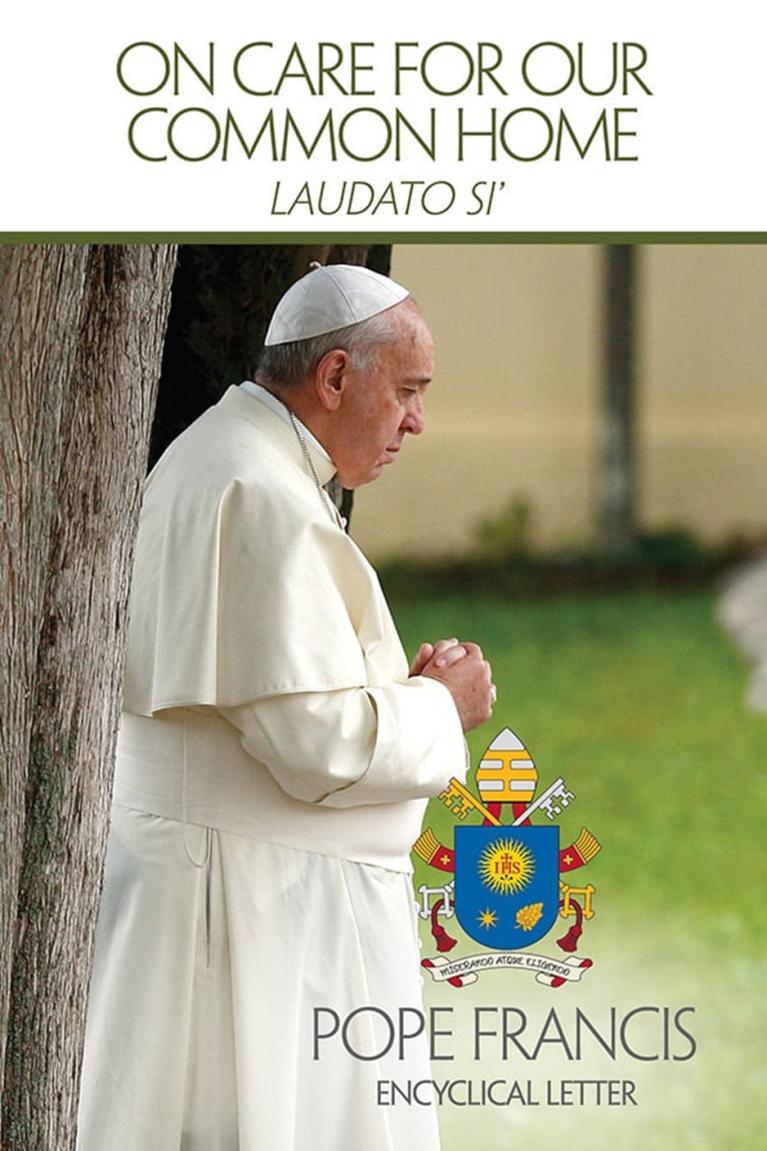
VATICAN CITY (CNS) Pope Francis, who took his name from the patron saint of ecology St. Francis of Assisi died the day before Earth Day and about five weeks before the 10th anniversary of his landmark encyclical on care for creation.
Dated May 24, the solemnity of Pentecost in 2015, the document, “Laudato Si’, on Care for Our Common Home,” presented the core of his teachings on integral ecology, its principles and practical applications.
Integral ecology recognizes the interconnectedness and interdependence between human beings and the earth, he said, and how the values, mindsets and actions of people affect all human endeavors and the planet.
Pope Francis insisted social, economic, political and environmental issues are not separate problems, but are the many dimensions of one overarching crisis. The flora and fauna, the heavens and seas and all human beings are not objects to be used and controlled, but are wondrous reflections of the divine; they are God’s creations and are gifts to be protected, loved and shared.
Pope Francis, with his long experience in the global South, also brought a unique perspective that propelled him to embrace the topic of environmentalism, which had been “marginalized as a fringe concern of the left,” and to link it with social justice, Erin Lothes, a theologian and climate educator, told Catholic News Service in late April.
“His own conversion to ecology, I believe, is born out of the soil of Latin America and him being a pope for the poor,” who saw the impact ecological crises had on the people there, said Lothes, who is a visiting scholar at the Center for Earth Ethics in New York and an “ecclesial affiliate” at the Laudato Si’ Research Institute.
Many of the main themes of his pontificate, including the need to address the looming ecological crisis can be found in the 2007 Aparecida document then-Cardinal Jorge Bergoglio of Buenos Aires helped draft with bishops from Latin America in Aparecida, Brazil the home of the Amazon and the “lungs” of the Earth.
“We can see the seeds of Laudato Si’ in Aparecida,” Lothes said, including the need for an “alternate development model, a new ethic based on justice and solidarity and attention to the cry of the earth and the cry of the poor. I think that was very influential and that led him to focus” on the issue in a major papal document.
At the same time, she said, “the global world was seeing more ecological crises,” and many in civil society were pushing for action, especially at international conferences sponsored by the United Nations, showing “there was that readiness for these seeds of his teaching to take root.”
Climate Change Conference in the United Arab Emirates. The exhortation presented an even stronger critique of global inaction and indifference to climate change.
Deane-Drummond said it wasn’t because Laudato Si’ was not enough or had gaps to fill. Laudate Deum was “much more blunt in terms of telling people what they need to do and also pointing the finger, really, at Catholics and others who still denied climate change.”
“It was as if the message of Laudato Si’ hadn’t been absorbed sufficiently and it was another cry of anguish,” as well as “saying what needed to happen in Dubai in a way that wasn’t quite as clear in Laudato Si’,” she said.
Both Deane-Drummond and Lothes believe the message and appeals of Laudato Si’ are here to stay and did not die with Pope Francis’ death April 21.
“I think it’s a little bit like Vatican II,” Deane-Drummond said. Even if some people in the church have tried to push back against Vatican II, the council made changes “that are irreversible.”
“It’s similar with Laudato Si’. Those changes have come in; they’re part of Catholic social thought,” she said.
It was the first papal encyclical on the environment; however, it came out of a long theological tradition that sees the natural world as a form of divine revelation that “must also lead us to rediscover our fraternity with the earth, to which we have been linked since creation,” as St. John Paul II said.
Pope Francis “built on ‘integral human development’ from Benedict XVI and ‘human ecology’ from John Paul II,” Celia Deane-Drummond, director of the Laudato Si’ Research Institute at Campion Hall at England’s Oxford University, told Catholic News Service in late April.
So while his 2015 document “wasn’t dropping out of the sky,” she said, there was a notable “change of tone and a change of emphasis and a much greater stress on dialogue with people from other traditions and openness to the world.
”
Laudato Si’ also showed “a pastoral heart” with a clear awareness of the suffering of people and the world “that we need to incorporate in how we live and act as Christians,” DeaneDrummond said.
With Laudato Si’, Deane-Drummond said, Pope Francis “appealed to the world in a way that was incredibly ambitious,” and, consequently, the encyclical had an “astonishing” influence on the world of science.
Deane-Drummond first worked as a scientist and then as a theologian, and she has been connecting ecology and theology since the late 1980s. She said she knew scientists and others who had never read an encyclical before, “but they read Laudato Si’.” An article about Laudato Si’ in one biological journal garnered “more hits that year than any other article.”
“I’ve really never seen anything quite like it,” she said. “Suddenly he’s blown open Catholic social teaching to the globe and in a remarkable kind of way that’s completely fearless.”
Also, “it wasn’t a passive recipient document,” Deane-Drummond said, since it fostered networking and action on multiple levels.
The encyclical even influenced the U.N. Climate Change Conference that was held several months later, and the resulting Paris Agreement “may not have happened if he hadn’t released it then,” she said.
Eight years later, on St. Francis of Assisi’s feast day, Pope Francis released a follow-up document, “Laudate Deum” (“Praise God”), ahead of the U.N.
Lothes said, “I think it’s absolutely embedded in the global church” so that “this mission will go forward and flourish,” especially with so many initiatives and institutions supporting it “And in those places where that conversion is still ongoing,” she said, “I believe that the people of God know that we are facing an ecological crisis and are looking for that guidance, and they sense the dissonance when we are not bringing it into our liturgical life, our catechetical life, our ethical life.”
In his two weeks as pope, Pope Leo XIV repeatedly has mentioned the same themes of climate change, exploitation of the poor and of Earth’s resources, and the importance of protecting the planet.
Lothes said the only thing missing in Laudato Si’ and Laudate Deum is “a clear guide” for how everyone can concretely live out their message.
Pope Francis “invited us, in a very beautiful and spiritual way to ecological conversion, to proclaim and live the Gospel of creation,” and to respond immediately “via governmental action, via policy responses, via our civic and consumer life to the scale of the crisis because our responses have not been adequate.”
“What’s needed now for the person in the pews is a clear expression of what each of us absolutely needs to do: A sort of ‘Ten Commandments’ for care of creation,” she said.
“We have the intellectual message, we have the spiritual message,” Lothes said. “Now we need to break it down for the life of the church and I think that’s what the next wave of magisterial teaching can really offer to allow this seed and the beautiful tree of Laudato Si’ to just reforest throughout the world.”❖
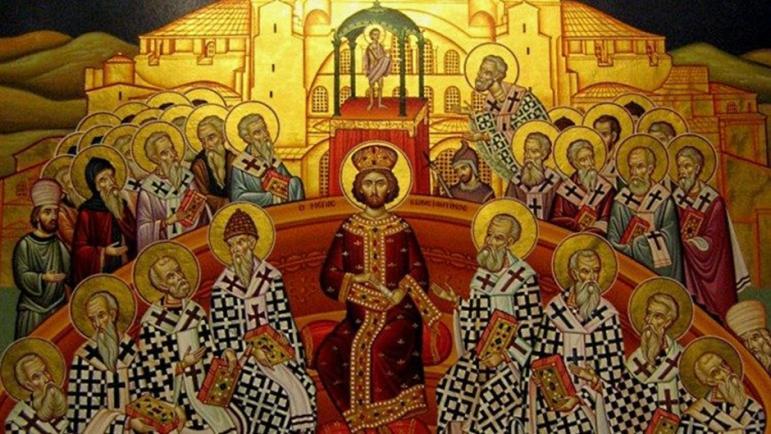
(Vatican News)“Nicaea was an ecumenical council in the original sense of the term, in which bishops from all parts of the world were to participate,” said Cardinal Víctor Manuel Fernández, Prefect of the Dicastery for the Doctrine of the Faith and President of the International Theological Commission.
The Prefect was speaking at a conference for the presentation of the ITC’s document “Jesus Christ, Son of God, Saviour: 1,700th Anniversary of the Ecumenical Council of Nicaea.”
The conference, hosted by the Pontifical Urban University known as the Urbaniana began on May 20, the same date that the Nicene Council had opened 17 centuries earlier.
“The choice of Nicaea had a geographical reason, namely, ease of access,” Cardinal Fernández said. “Nicaea then becomes a call to internal communion, so that unity in the essentials brings us joy and strengthens us.”
"Jesus Christ, Son of God, Saviour" is the fruit of several years of work by the International Theological Commission, and is intended not only to celebrate the anniversary of the Nicene Council, but also to highlight the resources that the Creed born of the Council preserves and proposes to this very day.
Among the international experts and theologians taking part in the conference are Monsignor Piero Coda, secretary general of the International Theological Commission; Bishop Antônio Luiz Catelan Ferreira, auxiliary bishop of the archdiocese of São Sebastião do Rio de Janeiro; Father Philippe Vallin, doctor of theology in France; Monsignor Mario Ángel Flores Ramos, Mexican priest and theologian; Austrian theology professor Marianne Schlosser; Bishop Etienne Emmanuel
Vetö, auxiliary bishop of the French archdiocese of Reims; German theologian Father Karl-Heinz Menke; and Lebanese theologian Father Gaby Alfred Hachem.
Summarizing comments made by Pope Francis about the document, the Prefect of the Dicastery for the Doctrine of the Faith recalled that the first reason that had prompted the late Pope's desire “to undertake a trip to Nicaea for the anniversary celebration is that [the Council of] Nicaea signifies a strong ecumenical moment, a sign of unity for Christians of the most diverse confessions, a shared heritage, which is made present every Sunday when the profession of faith that unites all Christians is pronounced.”
Cardinal Fernández added, “We know that Pope Leo XIV is also strongly attached to this sign of communion".
The Cardinal noted that, in addition to the anniversary of Nicaea, we are also celebrating the 30th anniversary of the Ut unum sint, Pope John Paul II’s encyclical on the Church’s commitment to ecumenism.
“And returning to this point, Pope Francis said that although we cannot say that with all Christians we form the same Church, out of respect for them, we can in any case rediscover ourselves as the one “Community of Christ's disciples.”
In the self-awareness of the Catholic Church, there is the conviction that it is the original Church founded by Christ, which subsists in it. But this conviction does not exclude the idea, from another point of view, that we can speak of one “Community of Christ's disciples” that we form together with all those who accept and love Him as true man and as the homoousios [consubstantial] Son of the Father.”
Remembering the Council of Nicaea in a complex context where polycrises are severely testing the whole world, which often seems to be going down paths of no return, is a grace and an appeal for the Church, explained Msgr. Coda, Secretary General of the International Theological Commission, during his speech.
The document drawn up by the Inter-
national Theological Commission offers a convinced contribution precisely in this direction, he added, highlighting that the text proposes “starting from its specific competence and highlighting the extraordinary and unmissable ‘resources’ concentrated in the Nicene-Constantinopolitan Symbol, a precise direction in response to the many solicitations that are addressed to theology from many quarters in relation to what humanity is experiencing today. These solicitations, in the final instance, can be seen summed up in the ‘desire’ that Pope Francis confided to the participants at the International Congress on the future of theology, last 9 December, on the initiative of the Dicastery for Culture and Education: namely, that theology help to rethink thought.”
The work of the intense day of study, which was kicked off in the morning by a brief greeting from Professor Vincenzo Bonomo, Rector Magnificus of the Pontifical Urbanian University, unfolded with several papers on topics that generated deep reflection, such as those on the in-depth study of the letters sent by Eusebius of Nicomedia to Arius on questions of synodality in the context of the Council of Nicaea; on the relevance of Origen's theology in the Christology of Nicaea; and on the protection of the kenotic selfrevelation of the God of Jesus-Christ in the protection of the faith of the little ones, to name a few.
As the International Theological Commission itself had recently had occasion to reiterate, the document presented at this study day “is certainly not intended to be a simple text of academic theology, but is proposed as a valuable and timely synthesis that can usefully accompany the deepening of faith and its witness in the life of the Christian community.”❖
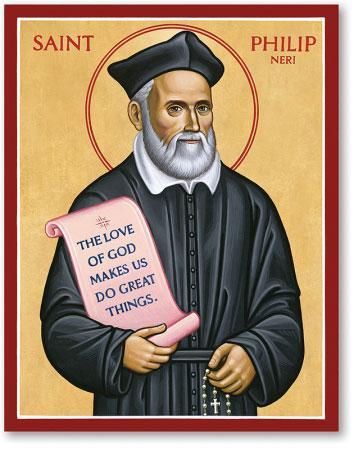
Renowned for his prayerfulness and sense of fun and humour, Philip was born in Florence, Italy in 1515. Philip’s appealing personality was winning him friends from all levels of society, from beggars to cardinals. He gathered a community of friends to look after the sick, which eventually became the Oratory.
At the urging of his confessor, Philip was ordained a priest and soon became an outstanding confessor himself, gifted with the knack of piercing the pretenses and illusions of others, though always in a charitable manner and often with a joke. He arranged talks, discussions, and prayers for his penitents in a room above the church. He sometimes led “excursions” to other churches, often with music and a picnic on the way.❖ [franciscanmedia.org & salfordliturgy.org.uk ]