Friday, May 16th 2025 Established 1905 27 Brickdam, Stabroek, Georgetown, Guyana Year 120, No. 18
Friday, May 16th 2025 Established 1905 27 Brickdam, Stabroek, Georgetown, Guyana Year 120, No. 18
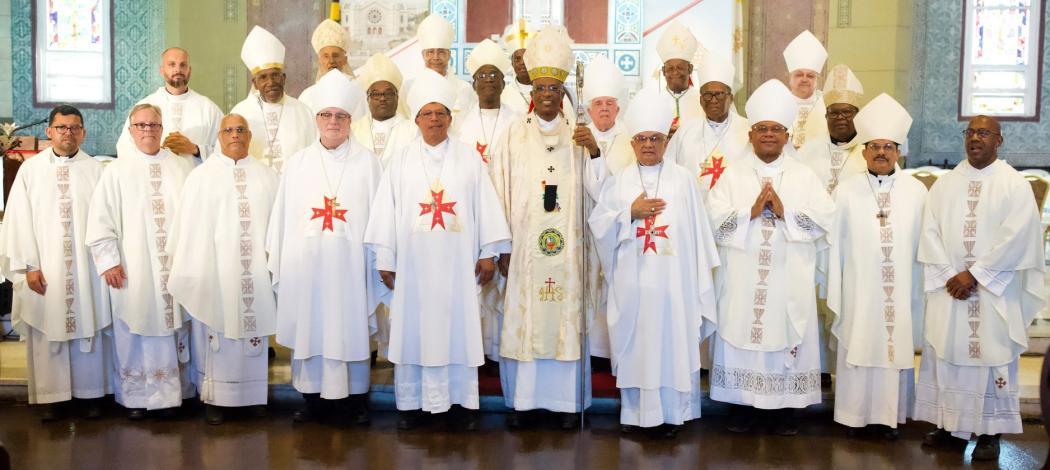
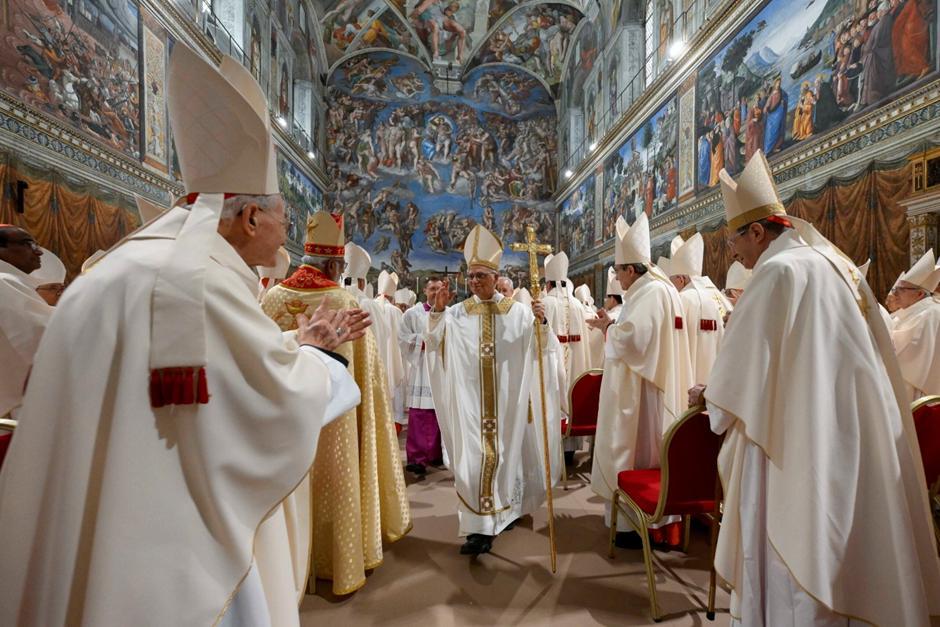
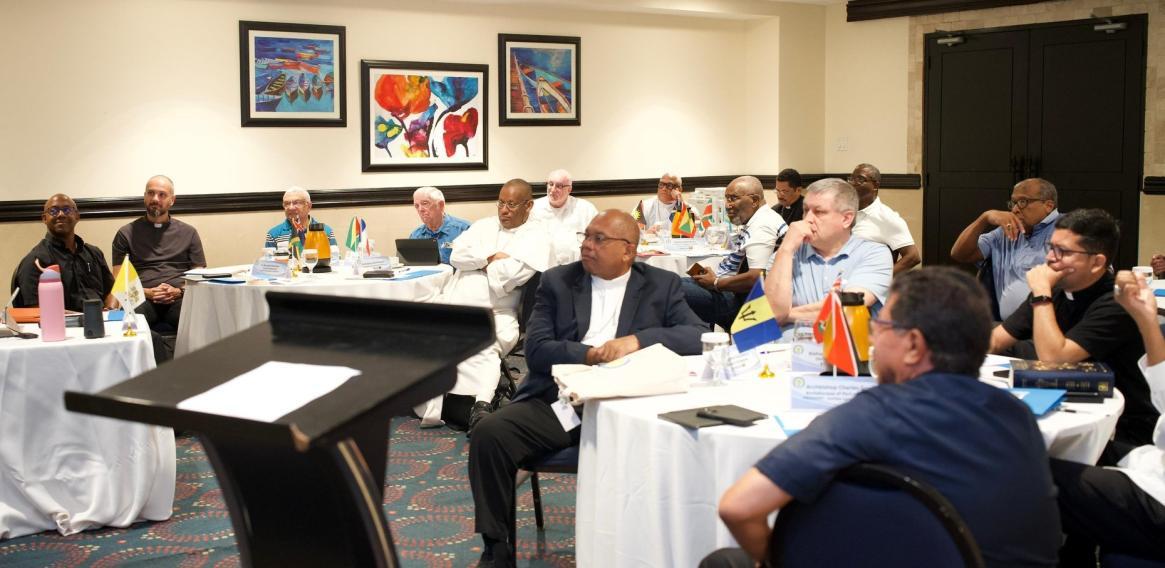
Bishops and Clergy of the Antilles Episcopal Conference (AEC) at the Cathedral of the Most Holy Trinity, Kingston, Jamaica, for the Opening Mass of the 62nd Annual Plenary Meeting, May 11th, 2025.
The Antilles Episcopal Conference held its 62nd Annual Plenary Meeting in the Archdiocese of Kingston,JamaicafromMay11th - 16th
The following is the message from the president of the AEC, Archbishop Charles Jason Gordon, at the opening of the Annual Plenary Meeting:
My brothers in Christ, “Early on the first day of the week, while it was still dark, Mary Magdalene came to the tomb…” (Jn 20:1)
We begin our reflection in the dark not only because the times we live in are overshadowed by
global economic uncertainty and social and economic distress, but because the gospel itself leads us to that place of uncertainty where faith must rise. Like Mary Magdalene in the garden, the Caribbean Church stands at the edge of loss, surrounded by signs of global (please turn to page 11)
Pope’sInaugurationMasstobeheldMay18 - p2
Pope Leo: A pope is nothing more than a humble servant - p3
A Christian Perspective on Social Issues - p4
Sunday Scripture - p5
LetterstotheEditor- p6
Meeting Eastern Catholics, pope pledges to be peacemaker - p6
Pope Leo’s motto, coat of arms pay homage to St. Augustine - p7
Peruvians claim Pope Leo XIV as a local- p8
Pope meets world’s No. 1 Tennis player - p8
Children’s Page - p9
Pope’sInstagramandXaccountsup&growing- p10
Growing in Grace Week 59 - p10
Pope Leo to diplomats: Church will always speak truth, work for justice - p12
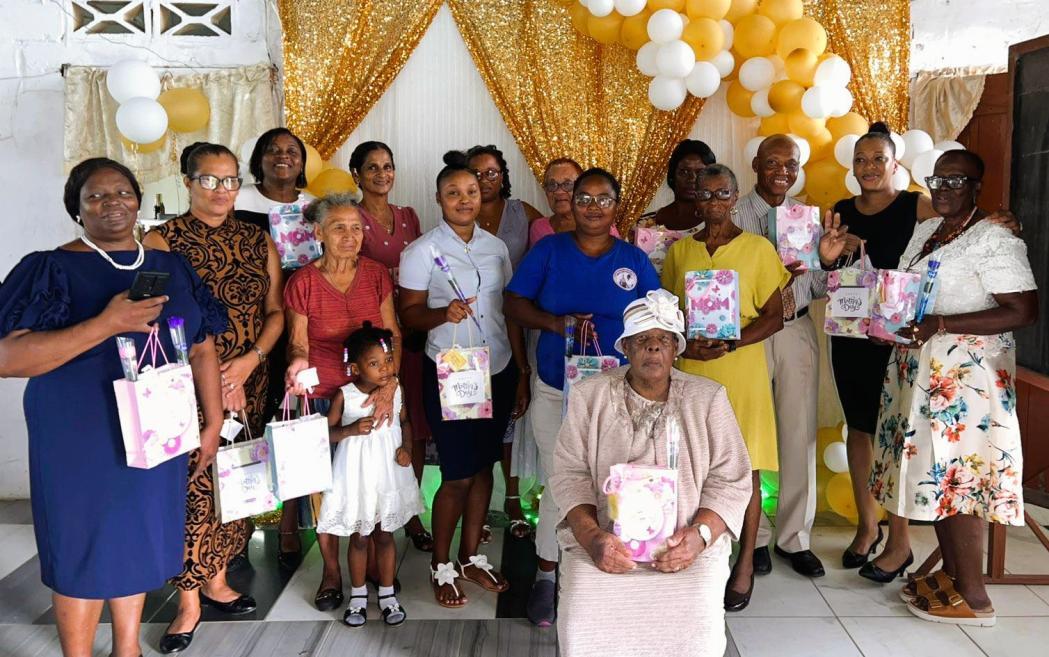
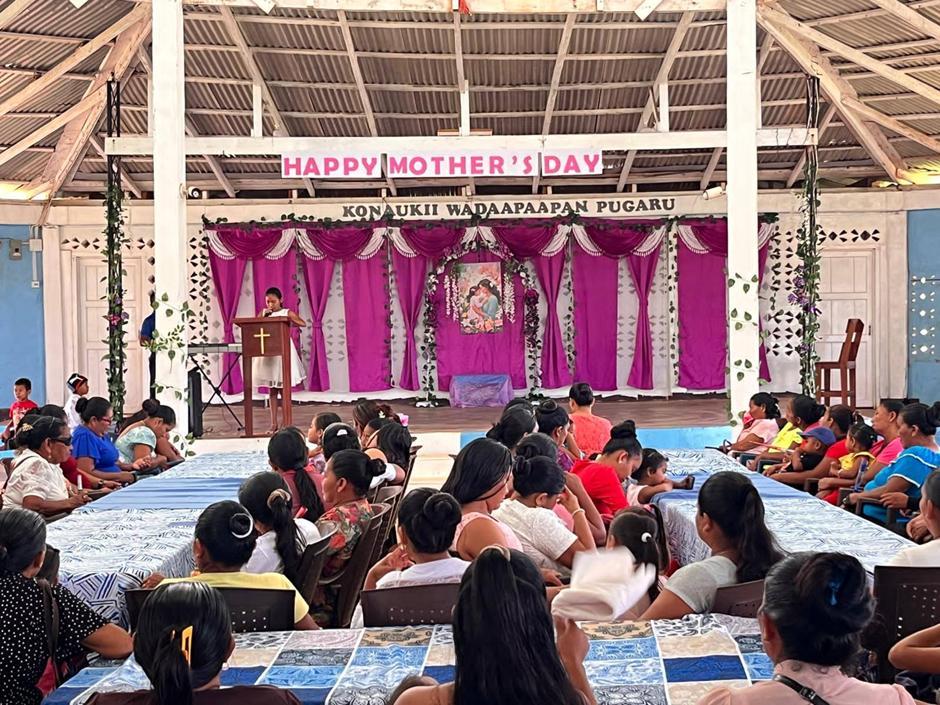
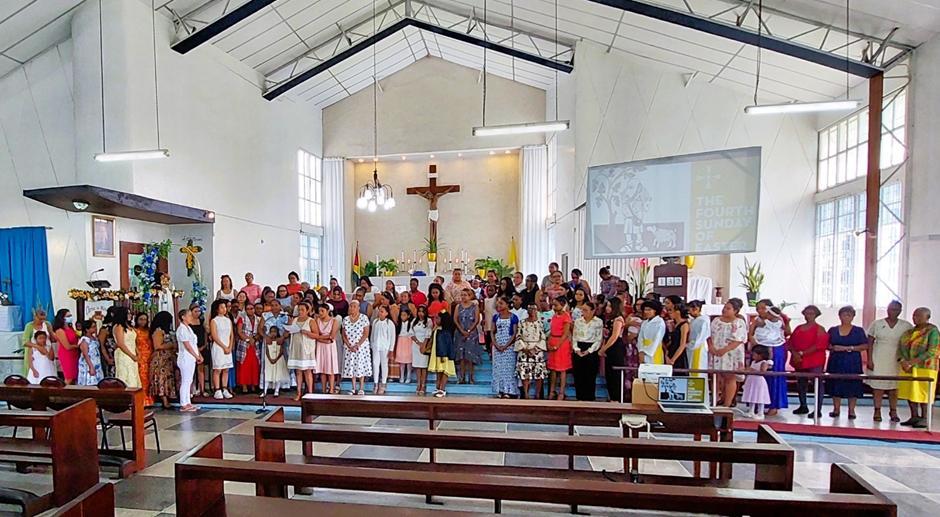
Mother’s Day photos - p13
Jubilee Youth Convention 2025 - p14
Sunday, May 18th
Return to Guyana
Monday May 19th
17:00hrs – Meeting with Diocesan Communication Council
Tuesday May 20th
09:00hrs – Meeting with visitingRegional Jesuits
18:00hrs - MeetingwithDiocesanPastoralCouncil
Friday May 23rd
17:00hrs – Social with Regional Jesuits
Sunday, May 25th
07:30hrs – Mass at the Cathedral of the Immaculate Conception, Brickdam
15:00hrs – Attend 210th Anniversary of Trinity Methodist Church, High & Leopold Streets
Father in heaven, may the faith you have given us in your son, Jesus Christ, our brother, and the flame of charity enkindled in our hearts by the Holy Spirit, reawaken in us the blessed hope for the coming of your Kingdom.
May your grace transform us into tireless cultivators of the seeds of the Gospel.
May those seeds transform from within both humanity and the whole cosmos in the sure expectation of a new heaven and a new earth, when, with the powers of Evil vanquished, your glory will shine eternally.
May the grace of the Jubilee reawaken in us, Pilgrims of Hope, a yearning for the treasures of heaven. May that same grace spread the joy and peace of our Redeemer throughout the earth.
To you our God, eternally blessed, be glory and praise for ever.
Amen



will formally begin his ministry as bishop of Rome with a liturgy steeped in tradition and rich in symbolism May 18.
The “Mass for the Inauguration of the Petrine Ministry,” to be held in St. Peter’s Square, will mark the visible and public start of his pontificate while grounding it in the Catholic Church’s apostolic continuity.
Although the pope’s canonical authority began the moment he accepted his election in the Sistine Chapel May 8, the installation Mass offers the universal church a moment of shared prayer and liturgical celebration to begin the pontificate.
Popemobile in St. Peter’s Square
The morning Mass will begin with a ride through St. Peter’s Square in the popemobile. But then the pope will enter the St. Peter’s Basilica and proceed to the tomb of St. Peter, where, joined by the patriarchs of the Eastern Catholic churches, he will pause for prayer.
The symbols of the papal office the pallium, the fisherman’s ring and the Book of the Gospels will have been placed there in advance, close to the remains of the apostle whose faith and martyrdom consecrated the church of Rome. Deacons then carry the objects into the square as part of the procession.
After the moment of prayer, the pope will join the main procession outside, and the liturgical celebration will begin at the altar set up on the steps of the basilica. The Mass will feature the singing of the “Laudes Regiae,” an ancient litany invoking the assistance of Christ and the saints. The chant, together with the readings and prayers, frame the new pope’s ministry within the
continuity of faith.
St. Peter’s Call and Mission
The Liturgy of the Word will include readings that recall St. Peter’s call and mission, culminating in the account from St. John’s Gospel in which the risen Christ tells St. Peter three times to tend to his sheep.
After the proclamation of the Gospel and before the pope’s homily are the formal rites of installation, which take place in full view of the gathered faithful.
The rites include the imposition of the pallium, conferred by a cardinal deacon, and the presentation of the fisherman’s ring, given to the new pope by a cardinal bishop. A third cardinal, from the order of cardinal priests, will offer a solemn prayer invoking the Holy Spirit’s strength for the pope’s mission.
The pallium, a white woolen band embroidered with black crosses, represents the Good Shepherd who carries his sheep. It is worn by metropolitan archbishops and, in a particular way, by the bishop of Rome as a sign of his pastoral responsibility over the universal church. The fisherman’s ring, bearing the image of St. Peter casting his nets, symbolizes the pope’s role as successor to St. Peter and herald of the Gospel.
Gesture of Obedience
Following these rites, the pope will receive the gesture of obedience from 12 representatives of the people of God both clergy and laypeople from various parts of the world who reflect the diversity and unity of the church.
According to the liturgical program for the Mass released by the Vatican, the rites specific to the Petrine office
have been carefully structured to precede the Eucharistic prayer, in keeping with reforms introduced under Pope Benedict XVI in 2013. This structure allows the distinctive symbols of the papal office to be celebrated in a dedicated moment, without interrupting the central structure of the Mass.
The Eucharistic prayer will follow, and the faithful will offer intercessions in multiple languages for the pope, the church, civil authorities, the suffering and the entire world. The Mass will conclude with the “Regina Coeli,” prayed publicly in the square.
After the liturgy, Pope Leo XIV is expected to return inside the basilica to greet the heads of state and religious delegations assembled for the occasion. This greeting, conducted in the nave of the basilica in front of the Altar of the Confession, is not part of the liturgy but is an act of diplomatic and ecumenical respect. No bilateral meetings are expected to follow. The pope is not expected to pass among the faithful in the popemobile after the Mass.
While the specific guests and delegations had not all been announced as of May 16, representatives of Christian churches, other religions and government leaders were expected to attend the Mass.
In the days following the installation Mass, Pope Leo will visit the major papal basilicas of Rome. He is scheduled to take possession of the Basilica of St. Paul Outside the Walls May 20; on May 25 he will take possession of the Basilica of St. Mary Major and the Basilica of St. John Lateran, the cathedral of the Diocese of Rome.❖
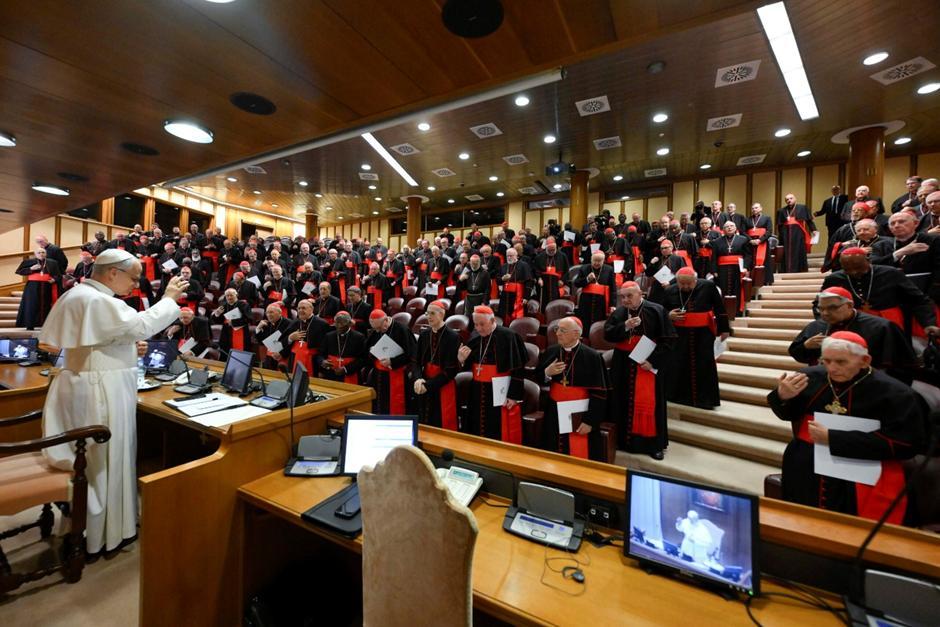
Pope Leo XIV prays with the College of Cardinals in the New Synod Hall at the Vatican May 10, 2025, during his first formal address to the college since his election May 8. (CNS photo/Vatican Media)
VATICAN CITY (CNS) The Catholic community is alive, beautiful and strong, and it is up to its pastors to protect and nourish the faithful and to help bring God’s hope to the whole world, Pope Leo XIV said.
For that reason, the pope invited the cardinals “to renew together today our complete commitment to the path that the universal church has now followed for decades in the wake of the Second Vatican Council,” and that “Pope Francis masterfully and concretely set it forth in the apostolic exhortation Evangelii Gaudium” (“The Joy of the Gospel”), he said May 10, in his first formal speech to the College of Cardinals.
He also said that he chose his name in homage to Pope Leo XIII, recognizing the need to renew Catholic social teaching to face today’s new industrial revolution and the developments of artificial intelligence “that pose new challenges for the defense of human dignity, justice and labor.”
The pope, who was elected in a conclave of 133 cardinal electors on the fourth ballot May 8, met with members of the college, including nonelectors, in the New Synod Hall at the Vatican.
‘Short Talk With Some Reflections’ Pope Leo told the cardinals that after his “short talk with some reflections,” which the Vatican press office published, they would have “a sort of
dialogue,” which many of them had asked for, “to hear what advice, suggestions, proposals, concrete things, which have already been discussed in the days leading up to the conclave.” Those discussions in the closed-door meeting were not published.
In the text that was released, the pope said the events of the past three weeks, beginning with Pope Francis’ final days, his death and funeral, have allowed them “to see the beauty and feelthestrengthofthisimmensecommunity, which with such affection and devotion has greeted and mourned its shepherd, accompanying him with faith and prayer at the time of his final encounter with the Lord.”
“We have seen the true grandeur of the church, which is alive in the rich variety of her members in union with her one head, Christ,” Pope Leo said.
‘Entrusted to Us to Protect’
The Catholic Church is “the womb from which we were born and at the same time the flock, the field entrusted to us to protect and cultivate, to nourish with the sacraments of salvation and to make fruitful by our sowing the seed of the Word, so that, steadfast in one accord and enthusiastic in mission, she may press forward, like the Israelites in the desert, in the shadow of the cloud and in the light of God’s fire,” he said.
Because of that, the pope asked the cardinals to renew together their “complete commitment” to the
church’s post-Vatican II journey, which was detailed in Pope Francis’ 2013 apostolic exhortation on the proclamation of the Gospel in today’s world.
“I would like to highlight several fundamental points” from the document, he said: “the return to the primacy of Christ in proclamation; the missionary conversion of the entire Christian community; growth in collegiality and synodality; attention to the ‘sensus fidei’ (the people of God’s sense of the faith), especially in its most authentic and inclusive forms, such as popular piety; loving care for the least and the rejected; courageous and trusting dialogue with the contemporary world in its various components and realities.”
Pope Leo XIII and ‘Rerum Novarum’
“Sensing myself called to continue in this same path, I chose to take the name Leo XIV” for several reasons, he said, but mainly because Pope Leo XIII, “in his historic encyclical ‘Rerum Novarum’ addressed the social question in the context of the first greatindustrialrevolution.”
Today, the church continues to offer “everyone the treasury of her social teaching in response to another industrial revolution and to developments in the field of artificial intelligence that pose new challenges for the defense of human dignity, justice and labor,” he added.
Pope Leo XIV, the first pope from the United States, said that, “beginning with St. Peter and up to myself, his unworthy successor, the pope has been a humble servant of God and of his brothers and sisters, and nothing more than this.”
Many popes, and most recently Pope Francis, demonstrated this with his “complete dedication to service and to sober simplicity of life, his abandonment to God throughout his ministry and his serene trust at the moment of his return to the Father’s house,” he said.
A ‘Precious Legacy’
“Let us take up this precious legacy and continue on the journey, inspired by the same hope that is born of faith,” he said, reminding the cardinals that it is “the risen Lord, present among us, who protects and guides the church, and continues to fill her with hope.
”
“It is up to us to be docile listeners to his voice and faithful ministers of his plan of salvation, mindful that God loves to communicate himself, not in the roar of thunder and earthquakes, but in the ‘whisper of a gentle breeze’ or, as some translate it, in a ‘sound of sheer silence,'” he said.
“It is this essential and important encounter to which we must guide and accompany all the holy people of God entrusted to our care,” he said.
Cardinals’ Presence a ‘Great Comfort’
Thanking the cardinals for their role as the pope’s closest collaborators, he said their presence has proven to be “a great comfort to me in accepting a yoke clearly far beyond my own limited powers, as it would be for any of us.”
God, too, “will not leave me alone in bearing its responsibility,” he said, and he knew he would also be able to count on the closeness of “so many of our brothers and sisters throughout the world who believe in God, love the church and support the vicar of Christ by their prayers and good works.”
He concluded his remarks by embracing the hope St. Paul VI expressed at the inauguration of his Petrine ministry in 1963 and he invited them to do the same.
St. Paul prayed that hope “pass over the whole world like a great flame of faith and love kindled in all men and women of goodwill. May it shed light on paths of mutual cooperation and bless humanity abundantly, now and always, with the very strength of God, without whose help nothing is valid, nothing is holy,” he said, quoting the saint. ❖
By GHK Lall
Guyana is in a shaky place. It’s a statement of the obvious, but worth repeating, if only to underscore the fragility of this society. Amid all the glitter, and there is plenty of that, there is the grimness. Monday, April 28 was when the balloon of indifference leaked in spots. There weren’t huge punctures, but what was experienced, was more than most of Guyana can stomach. There was a sense that this was seen before, lived through at different times and to different degrees. The older in many communities know from the blessing of age; younger adults have had their traces of the wrong kind of fellowship that deteriorates and diminishes all of us. Whether older or younger, whether newcomer to the world of Guyana or an established presence, what was absorbed was that Guyana underneath its silvery seas is one sick place. Tension, turmoil, and terror can breakout in an uncontrollable rash. One that spreads and scars. One that brings the most talked about, probably the most watched small country into severe scrutiny. What is found is not to the liking. How can it be?
I see a society, one made up of many different communities-skeptical and animated, hostile and resentfulexisting somehow, with no one really knowing how, and why it has managed to do so. From time to time, the tensions below the surface are palpable and touchable, and when they do erupt, they burn into the memory and tear apart the pretenses. In a flash, Guyana can go from placid to the brink. The brink of madness. Driven there by perceptions of injustice. And with injustice held as an ever-present companion. Simply ask a question about justice and a level field of consideration, and all the bottled-up bitterness flares to the top. This was what was seen and sifted through on Monday, April 28th. The light of day registered the tension; the dark of night released all the demons that lurked inside, with the one called terror running amok.
When the ethics of those with the responsibility to provide protection for all citizens are doubted and doubted and dismissed, then the Guyana Constitution is just a piece of paper, a
collection of pages that don’t apply, for some. It is a dark and dangerous place for any country to be, when citizens live with anxiety, a constant feeling of insecurity. I go further, and it doesn’t get any better. When the integrity of medical professionals is looked upon in a distrusting light, then it is not how much of such distrusts exists. The issue is if there is any trust at all with the systems in place, and the people who put them together, or stand as leaders over them. Now, it gets still worse, for I go high. When national leaders have little standing, are believed to be woven into the problems, even the driving forces behind them, then Guyana is a society that manages to get by on its fingertips. What society can be comfortable living like that, which one can grow when such is the case? All the material riches in the world fade to nothing, when the spirit is so troubled, so much on edge so much of the time. In the blink of an eye, the unsolved issues of the day build on the traditional tensions, and lead to episodes of turmoil, and descend into terror. A few hours of such, and Guyanese just received an infusion of a few more
years to freshen their memories, rekindle their prejudices, and gain new energy from their shame and sorrows. It is in raging furnaces like these that the believer and follower must lead the way forward, be a distinctive voice that insists there is a different way, and that the one traveled is farthest from it. I haven so, pointing to the way of Jesus. When they do, the challenge is to decipher how genuine they are. When Catholics and Christians are caught up, and trapped, by the push and pull of serving different masters, one has to suffer, be shoved into a secondary priority. I don been done well, with uninspiring results. Because when this country needs the children of God to practice what he taught them through Jesus, they are too busy playing their deceptive, self
The calming voices, the credible presences, are conspicuous by their absence. To speak truth would offend, jeopardize chances, relationships. So, silence reigns, injustices multiply. And then, there was Monday 4/28.
(Continued next week
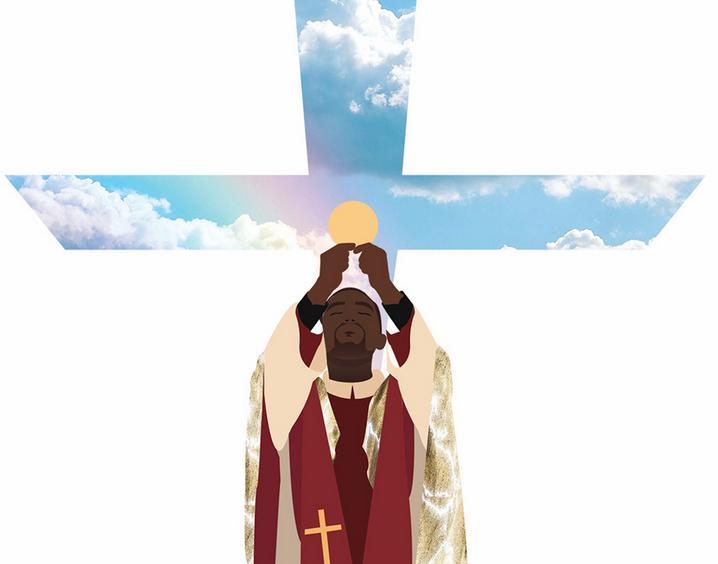

Gracious and loving God, we thank your for the gift of our priests. Through them, we experience your presence in the sacraments. Help our priests to be strong in their vocation.
Set their souls on fire with love for your people.
Grant them the wisdom, understanding, and strength they need to follow in the footsteps of Jesus. Inspire them with the vision of your Kingdom.
Give them the words they need to spread the Gospel.
Allow them to experience joy in their ministry.



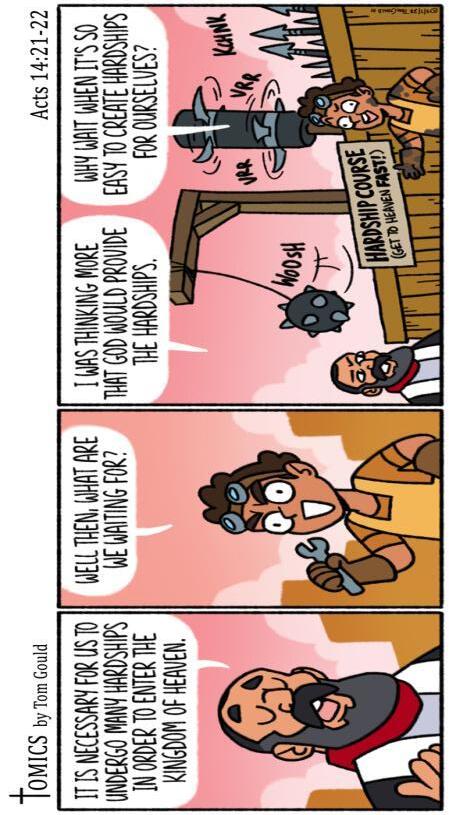
FIRST READING Acts of the Apostles 14:21-27
They gave an account of all that God had done with them.
Paul and Barnabas went back through Lystra and Iconium to Antioch. They put fresh heart into the disciples, encouraging them to persevere in the faith. ‘We all have to experience many hardships’ they said ‘before we enter the kingdom of God.’ In each of these churches they appointed elders, and with prayer and fasting they commended them to the Lord in whom they had come to believe. They passed through Pisidia and reached Pamphylia. Then after proclaiming the word at Perga they went down to Attalia and from there sailed for Antioch, where they had originally been commended to the grace of God for the work they had now completed.
On their arrival they assembled the church and gave an account of all that God had done with them, and how he had opened the door of faith to the pagans.
Responsorial Psalm
Psalm144
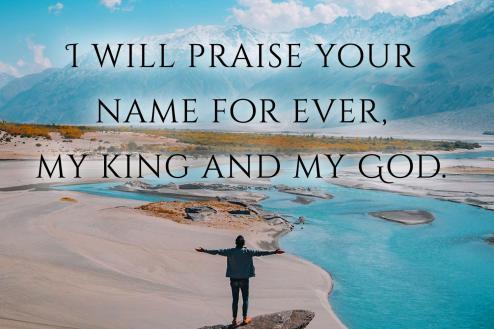
Response: I will bless your name for ever, O God my King.
1. The Lord is kind and full of compassion, slow to anger, abounding in love. How good is the Lord to all, compassionate to all his creatures. Response
2. All your creatures shall thank you, O Lord, and your friends shall repeat their blessing. They shall speak of the glory of your reign and declare your might, O God, to make known to men your mighty deeds and the glorious splendour of your reign. Response
3. Yours is an everlasting kingdom; your rule lasts from age to age. Response
SECOND READING
Apocalypse21:1-5
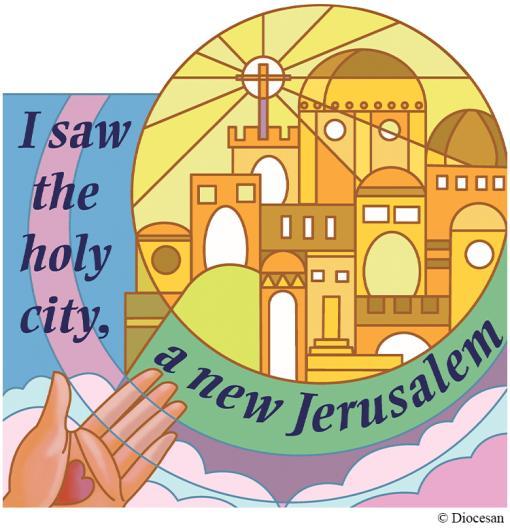
God will wipe away all tears from their eyes. I, John saw a new heaven and a new earth ; the first heaven and the first earth had disappeared now, and there was no longer any sea. I saw the holy city, and the new Jerusalem, coming down from God out of heaven, as beautiful as a bride all dressed for her husband. Then I heard a loud voice call from the throne, ‘You see this city? Here God lives among men. He will make his home among them; they shall be his people, and he will be their God; his name is God-with-them. He will wipe away all tears from their eyes; there will be no more death, and no more mourning or sadness. The world of the past has gone.’
Then the One sitting on the throne spoke: ‘Now I am making the whole of creation new.’
THE GOSPEL
John 13:31-35
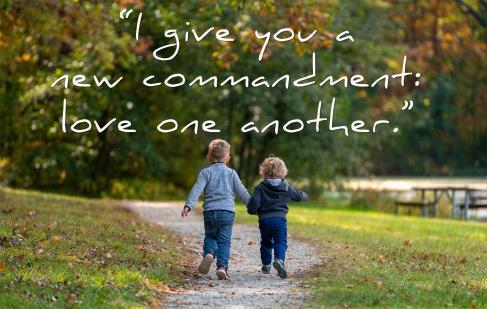
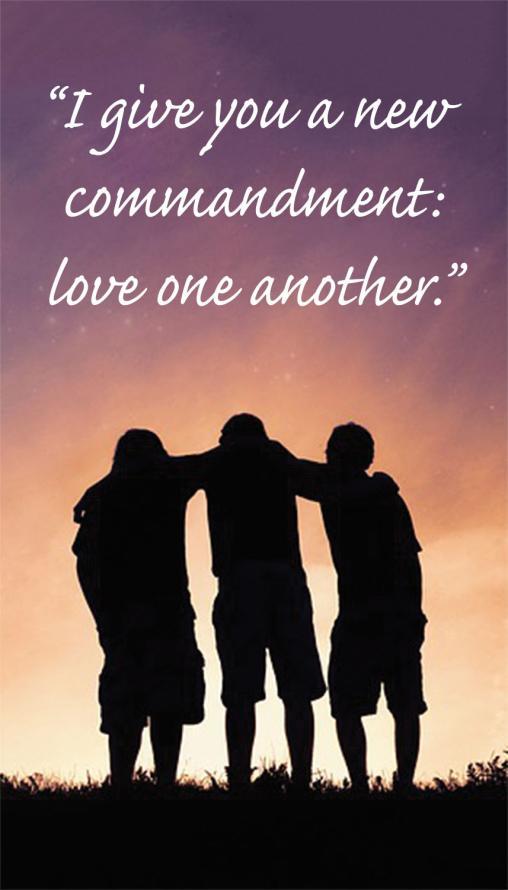
I give you a new commandment: love one another. When Judas had gone Jesus said: ‘Now has the Son of Man been glorified, and in him God has been glorified. If God has been glorified in him, God will in turn glorify him in himself, and will glorify him very soon. My little children, I shall not be with you much longer.
I give you a new commandment: love one another; just as I have loved you, you also must love one another. By this love you have for one another, everyone will know that you are my disciples.’ ❖
Today’s readings on this fifth Sunday of Easter contain inspiring but challenging messages for us as Christian stewards.
The Gospel from John includes this well-known verse: “My children… I give you a new commandment: love one another. As I have loved you, so you also should love one another.” What a succinct description of a stewardship way of life. It sounds so
simple. But simple does not necessarilymeaneasy.
How exactly is Jesus Calling us to love?
As He Himself loved. Jesus loved (and loves) by serving us and by making a sacrifice of His very life for us. That is a tall order.
Living a life of service and self-sacrifice is not easy because it requires us to continuously fight against our selfish inclinations. But the more we empty
ourselves of “self” by serving others, the more room we make in our hearts for God pour His grace into us.
As we face the hardships that come with living as Christian stewards, we can continue to rejoice in the wonder of the Resurrection this Easter season, finding great joy in following in our Lord’s own footsteps and in loving as He loves.❖ [www.catholicsteward.com/blog/ ]
How do we measure our success as Christians? Many people feel that wealth is the main yardstick for measuring how good we are as a follower of Jesus. We see this every day on television where the preachers tell us that having money is a mark of God’s blessing. And, they say, all that is required to receive this financial blessing is to give money to the church. The danger here is that we can easily acquire an attitude that we can buy God’s blessings due to our ability to give money and the more the better. On the other hand, what we must do is really very simple, at least in theory. Jesus says we just have to love one another. It is by this love that people will know that we are Christians and not by the amount of money we have. People like Mother Teresa lived her Christianity in her own special way, not for financial blessings, but out of a love for God. This is what living out our faith means.
It is easy to say we love God. We can walk around talking about being Christian and loving God and this is easy to do. The hardest part to being a disciple, though, is living out our faith. Today’s Gospel poses a challenge to us: is there anything about me that will cause people to know that I am a disciple? We tend to go after the successes of the world – wealth, a nice home, a good job, a new car – and many of us have made a success of it. This is good because it shows drive and ambition and the need to better oneself. But, at the same time, we forget the one thing Jesus expects from uslove. Love is what makes us want to bring God into the lives of others. It is useless saying that we are disciples and that we love God when we do not produce the fruits that come out of that relationship. ❖
[From: Journeying with the Word of God, The Religious Education Department, Diocese of Georgetown,Guyana ]

Dear Editor,
The early Church had the mother of Jesus in its midst.
As the apostolic times go on, the Church speaks more and more about her, the Church, of which she is thus the image consists of all of us. But the Church is also a mother for each of us.
And in this sense, Mary is our mother, since she is the living personification of
the Church.
We can address her with confidence. If this helps us to see Jesus with new eyes and reach Him more easily, the life of the people of God in the East and in the West has, in fact, shown that this has been a way to the Lord.
We know from the fourth gospel that our Lord looked towards John and then said to his mother, "Woman, behold your son!" and that he said to John, "Behold your mother!" After this, the disciple took her to his own home. Since the Gospel of John is highly charged with symbols, we should not
see in the gesture merely a sign of Jesus' filial love, an effort to make provision for the mother who would otherwise be left solitary. He is bestowing a new Eve on believers, who are represented by “the disciple whom Jesus loved”.
At the moment, new life is coming into the world, men are given another mother, a new mother of all the living. Mary cherishes the children of the Church. Our salvation is not only sublimer but also more human than we think.
Leon Jeetlall
Dear Editor,
The Guyana Human Rights Association (GHRA) remains gravely concerned over the unresolved circumstances surrounding the death of Adriana Younge and the rising public distrust it continues to provoke. The dominant theme driving national unrest is not merely the tragic nature of the death itself, but the deepening disbelief in statements and actions issued by the police and government officials. This trust vacuum has been filled by social media narrativeswithfluctuatinglevelsofcredibility. The Government's stated strategy of limiting its response to “known facts” offers little reassurance. This approach has proven circular, as the missing facts lie within the purview of the very agencies namely the police and government that claim to be restrained by them. From evasive conduct surrounding events at the hotel, misleading interpretations of CCTV footage, curbing public and press access to autopsy results, the government's handling of the case has been marked by obstruction, rather than transparency.
This pattern raises questions about political motives. With national elections on the horizon, Afro-Guyaneseled street unrest inevitably triggers a return to party loyalty among elements of the ruling party’s traditional support base. Linking such unrest to electoral concerns without hard evidence would be reckless. However, administrative ineptitude in not providing reliable information could encourage such thinking. International diplomatic missions including those of the UK, US, and the EU have urged calm and reaffirmed their commitment to democracy and peace in Guyana. However, such calls, while welcome, fall short of addressing the core issue: namely public trust in national institutions, such as the Guyana Police Force, the publicly-owned media and public spokespersons. In response to this reality the GHRA urges diplomatic partners to give equal priority to ensuring the technical recommendations of any international investigative support are made directly available to the Guyanese public.
The current case must not repeat the failures of the 2020 initiative to resolve the West Coast Berbice murders of the Henry boys and young Haresh Singh. In that case, cooperation between the
GPF, the GHRA, the families of the murdered boys and their lawyer saw the Director of the highly respected Buenos Aires-based Latin American Forensic Anthropology Team (EAAF) brought to Guyana. However, the non-cooperation of the Ministry of Home Affairs prevented the CID from meeting or benefitting from this visit by the same institution that years earlier had identified Che Guevara’s remains in Bolivia. The ‘commitment to democracy’ dimension of that initiative, i.e. keeping the public informed, took the form of a public lecture by the EAAF Director in the Catholic Cathedral attended also by the Heads of all the Latin American diplomatic missions based in Guyana. With respect to the current case, since the public cannot be expected to accept conclusions delivered solely by an institution that has thus far relied on
evasion, misinformation, and selective enforcement, a similar form of flexible and imaginative cooperation over information-sharing is required involving all sectors – Parliament, civil society, the diplomatic community, the media and the affected family.
Adriana Younge’s family – and indeed the nation as a whole - has a right to a transparent investigation of their daughter’s death. Secondly, the nation also needs to feel confident that the results of such an intervention are communicated to them fully and directly by the experts involved. Such an approach ensures both the necessary technical expertise and the political will to truth, justice, and public trust are upheld.
Executive Committee
Guyana Human Rights Association May 13, 2025
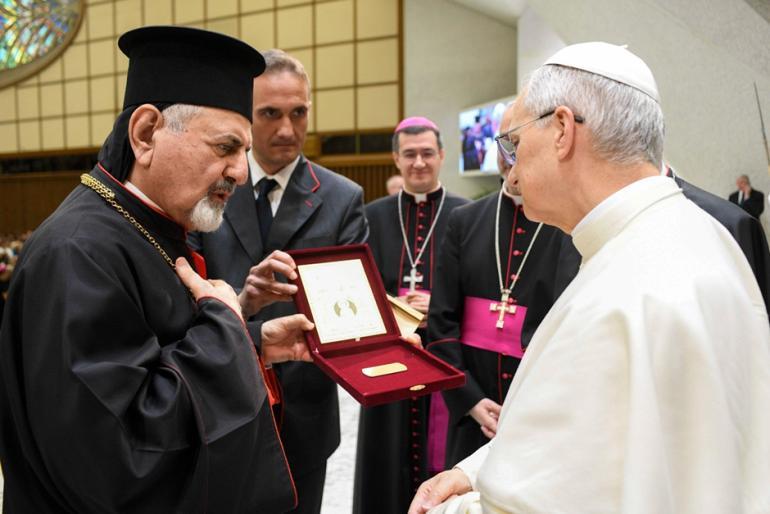
Pope Leo XIV greets Syriac Catholic Patriarch Ignace Joseph III Younan during a meeting with participants in the Jubilee of the Eastern Churches in the Paul VI Audience Hall at the Vatican May 14, 2025. (CNS photo/Vatican Media)
VATICAN CITY (CNS) During a meeting with Eastern Catholics, many of whom come from war-torn regions of the world, Pope Leo XIV pledged the Vatican’s full commitment to promoting peace and reconciliation.
“The peoples of our world desire
peace, and to their leaders I appeal with all my heart: Let us meet, let us talk, let us negotiate!” the pope said May 14 during an audience in the Paul VI Hall with thousands of Eastern Catholics participating in their Jubilee pilgrimage to Rome. (Please turn to p7)
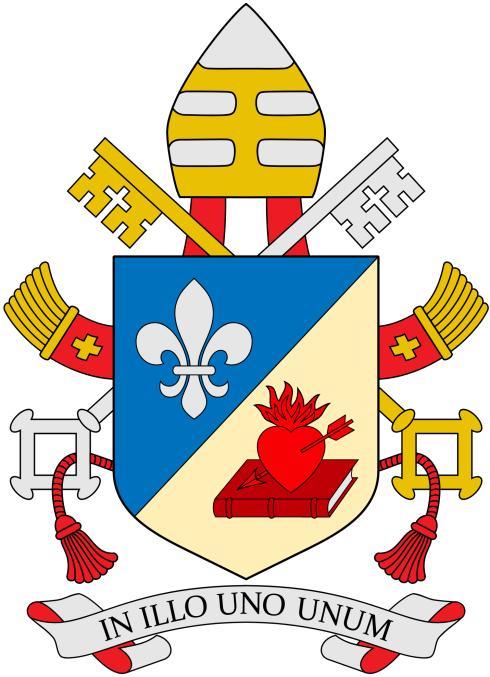
VATICAN CITY (CNS) Pope Leo XIV’s devotion to St. Augustine, his life and ministry as a member of the Augustinian order and his focus on the unity of the church are reflected in his episcopal motto and coat ofarms.
When he appeared on the balcony of St. Peter’s Basilica shortly after his election May 8, he introduced himself as “an Augustinian, a son of St. Augustine.”
And he explained that the cardinals who elected him “have chosen me to be the Successor of Peter and to walk together with you as a Church, united, ever pursuing peace and justice, ever seeking to act as men and women faithful to Jesus Christ, in order to proclaimtheGospelwithoutfear,tobemissionaries. His episcopal motto is, “In Illo uno unum,” or literally “In the One, we are one.” Vatican News explained that the phrase is taken from St. Augustine’s “Exposition on Psalm 127,” where he explains that “although we Christians are many, in the one Christ we are one.”
As a cardinal, he told Vatican News in 2023, “As can be seen from my episcopal motto, unity and communion are truly part of the charism of the Order of St. Augustine, and also of my way of acting and thinking.”
“I believe it is very important to promote communion in the church, and we know well that communion, participation and mission are the three keywords of the Synod” of Bishops on synodality, he said. “So, as an Augustinian, for me promoting unity and communion is fundamental.”
His shield, now topped by a miter instead of the red galero hat on the shield of cardinals, is divided diagonally into two. The upper half features a blue background with a white lily or fleur-de-lis, symbolizing the Virgin Mary, but also his French heritage. The lower half of the shield has a light background and displays an image common to the religious orders named after and inspired by St. Augustine: a closed book with a heart pierced by an arrow.
Vatican News said, “This is a direct reference to the conversion experience of St. Augustine himself, who described his personal encounter with God’s word using the phrase: ‘Vulnerasti cor meum verbo tuo’ ‘You have pierced my heart with your Word.'”❖
“War is never inevitable,” the pope told them. “Weapons can and must be silenced, for they do not resolve problems but only increase them.”
The audience was the culmination of a multi-day Jubilee celebration that included liturgies in the diverse rites of the Eastern Catholic Churches from the Syro-Malabar and Armenian traditions to the Byzantine and Coptic rites held in Rome’s major basilicas.
Before the pope’s arrival, a vibrant atmosphere filled the hall as pilgrims waved flags from Ukraine, India, Iran, Lebanon and other nations; many were dressed in traditional attire vividly expressing the Eastern churches’ global presence and the deep pride in the faith despite centuries of hardship and persecution.
“Who, better than you, can sing a song of hope even amid the abyss of violence?” Pope Leo asked them, citing the lived experience of communities from the Holy Land to Ukraine, from Syria and Lebanon to Tigray and the Caucasus.
On the stage alongside the pope were leaders of the Eastern Catholic churches, including: Major
Archbishop Sviatoslav Shevchuk of Kyiv-Halych, head of the Ukrainian Greek Catholic Church; Cardinal Louis Sako, the Iraqbased patriarch of the Chaldean Catholic Church; Indian Cardinal Baselios Cleemis Thottunkal, major archbishop of Trivandrum and head of the Syro-Malankara Catholic Church; as well as Cardinal Claudio Gugerotti, prefect of the Dicastery for Eastern Churches.
Pope Leo offered strong support for peacebuilding efforts across the globe and reiterated the Vatican’s role as a neutral ground for diplomacy.
“The Holy See is always ready to help bring enemies together, face to face, to talk to one another, so that peoples everywhere may once more find hope and recover the dignity they deserve the dignity of peace,” he said.
The pope also thanked Eastern Catholics for their perseverance and witness, referring to their churches as “martyr churches,” and affirming their importance to the universal church.
“You are precious in God’s eyes,” he said. “Truly, you have a unique and privileged role as the original setting where the church was born.”
The pope warned that war and
migration have placed many Eastern Catholics at risk of losing not only their homes, but their identity, calling on the Dicastery for the Eastern Churches to work with Latin-rite bishops to support the faithful in the diaspora.
“There is a need to promote greater awareness among Latin Christians” of the Eastern Catholic communities, he said, asking bishops to help Eastern Catholics preserve their traditions and “enrich the communities in which they live.”
He also asked Eastern Catholic leaders to remain rooted in Gospel values and resist worldly temptations.
“Continue to be outstanding for your faith, hope and charity, and nothing else,” he urged them.
The universal church, the pope said, needs the traditions, liturgies and spiritualities of the Eastern Christians.
“We have great need to recover the sense of mystery that remains alive in your liturgies, liturgies that engage the human person in his or her entirety, that sing of the beauty of salvation and evoke a sense of wonder at how God’s majesty embraces our human frailty!”❖
MAKING THE WORD OF GOD YOUR OWN
Step 1: Lookattoday’sReadingsprayerfully.
1st Reading: Paul and Barnabas visit the Christian communities in Antioch and encourage the believers to persist in the faith.
2nd Reading: John describes his vision of the new order of things brought about by Christ, the One sitting on the throne.
Gospel: After having a last meal with the apostles, Jesus gives them a new commandment – to love oneanotherashehaslovedthem.
Step 2: ApplyingthevaluesoftheReadings toyourdailylife.
1.People will know that we are disciples of Christ by the way we behave towards one another and towards them. Would you say that the discipleship of your community is clearly visible for all to see?
2.Paul and Barnabas found it necessary to encourage the community in their faith. When in your daily life do you feel the need for encouragement? What do you do at such times?
3.What is it that drives you when you get involved in “church work”? Could you honestly say it is done out of love for God or for recognition from others?
4.With all the violence in the world, even in our neighbourhood and homes, it is easy for the Good News to become less clear and believable. At times life hardly reflects God’s kingdom. In the light of all this, how does the image of “no more mourning or sadness” from the Second Reading strike you?
Step 3: Accepting the message of God’s Wordinyourlifeoffaith.
Love takes on new meaning and demands when we listen to the God’s Word as revealed in Jesus Christ. Love demands the best from us and brings out the best in us. It means being able to love others while struggling to remove selfishness from our hearts.
Step 4: Somethingtothink&prayabout
1.How can you speak of the vision in the Second Reading to homeless people living in shelters or to young people who feel a lack of love in their lives? How can you believe in it in the light of the world we live in today?
2.Pray for the strength and the wisdom to speak of God’s Good News, especially to those experiencing loneliness, rejection, injustice and illness.❖
[From: Journeying with the Word of God, The Religious Education Department, Diocese of Georgetown, Guyana ]
like Pope Francis had done in St. Peter’s Square during that historic blessing to the world in March 2020, made it clear that all his charitable endeavors were rooted in Christ, she said. Steady Hands, Balanced Heart
Unlike more confrontational church figures, Leo XIV built a reputation as a calm, balanced and deeply pastoral leader. “He is not one for public clashes or flashy gestures,” said Llanos. “If he had a hard truth to share, or a correction to make, he did it in private.”
According to the anthropologist in a region infested by corruption, illegal mining and organized crime “we know” of several harsh letters in which he chastised the locals.
His ability to navigate conflicting political and ecclesial positions with diplomacy led to him being appointed second vice president of Peru’s bishops’ conference in 2018 and later his appointment to Rome as prefect of the Dicastery for Bishops.
or with (President Donald) Trump tariffs,” Llanos said. “But beyond that, he has a very delicate way with people, and if he has to correct someone, he will do so in private.
Though his social convictions were clear rejecting gender ideology and the redefinition of marriage he avoided extremes.
“He’ll always find a way to make his point,” said Llanos, “but without condemning anyone on camera. That’s what makes him so effective.”
in Spirit
“Had he stayed in his native country, I think his sense of the church would’ve been very different,” Llanos reflected.
“But he came to Peru in 1985 a country in crisis and was changed by it. That experience left a mark.”
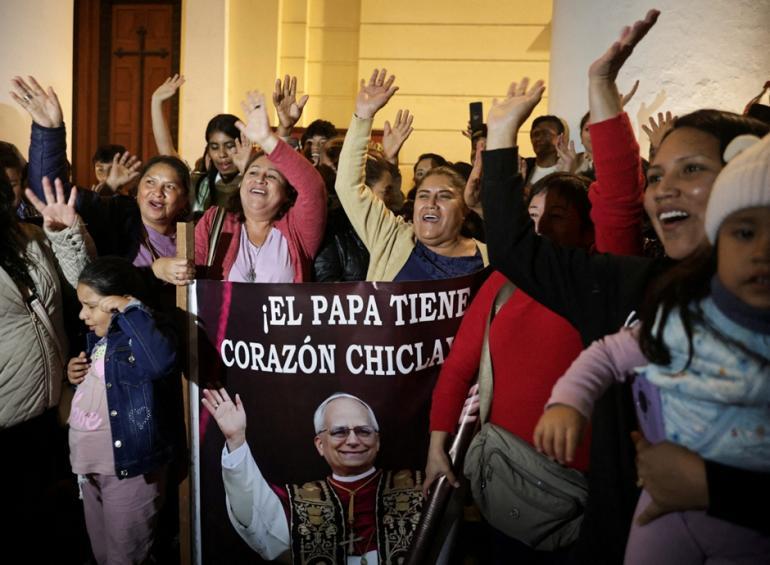
ROME (OSV News) In a country where over 90% of the population identifies as Christian and nearly three-quarters as Catholic the election of a new pope is more than a Vatican affair. It’s personal.
On May 8, when white smoke rose over St. Peter’s Square, signaling the election of Leo XIV, Peru seemed to hold its breath. Schools went silent. Restaurants turned up their televisions. Taxi drivers, hairdressers and shopkeepers paused mid-conversation.
And then, as the name of Chicago-born Robert Francis Prevost, a former bishop of a dusty northern diocese of a country called “Poland of South America” because of its Catholicism and a naturalized Peruvian citizen, rang out, the country erupted.
‘Like a World Cup Goal’
“We screamed,” said Aldo Llanos, a professor of philosophy and anthropology in the University of Piura. “It was like a World Cup goal.”
During his first address as pontiff, Leo XIV formerly Cardinal Robert Francis Prevost paused to greet “my dear Diocese of Chiclayo, Peru, where a faithful people have accompanied their bishop, shared their faith and has given so much, so much to continue to be a faithful Church of Jesus Christ.”
That “faithful people” includes Llanos, who recalled meeting then-Bishop Prevost in the course of his work with Opus Dei.
“In Chiclayo, Opus Dei runs programs for family and youth formation. Bishop Prevost knew us, trusted us. When he left, during an informal meeting we had with him, he told us that he had never met people who worked so hard and who were so obedient to their bishop.”
A Shepherd in the Storm
Between 2015 and 2023, then-Bishop Prevost shepherded the Diocese of Chiclayo through some of its most
difficult times. Most notably, he was at the forefront of the church’s response to the catastrophic 2017 El Niño Costero, which brought record flooding, destroyed homes and cut off entire communities from vital resources.
“Bishop Prevost was never the kind of bishop who gave orders from behind a desk,” said Janinna Sesa Córdova, who led Caritas Chiclayo from 2014 to 2024. “He was the face of Christ, the one who went out into the mud to help his people.”
When the La Leche River overflowed, cutting off roads and displacing entire neighborhoods, the future pope mobilized the church. “He always made sure the church stood on its feet,” Sesa said. “He coordinated with local businesses for donations, and with the help of civilian volunteers and the armed forces, we were able to airlift aid into isolated areas.”
An Indelible Mark
His legacy in Lambayeque, the region encompassing Chiclayo, was further sealed during the COVID-19 pandemic.
Amid the oxygen shortages that cost countless lives across Peru, Bishop Prevost spearheaded one of the region’s most important charitable initiatives: the Oxygen of Hope campaign.
“There was no oxygen. Families were dying,” Sesa recalled. “Thanks to Msgr. Prevost, we were able to purchase two medicinal oxygen plants and provide free care to hundreds of families. His human sensitivity, especially in moments of crisis, won him the heart of every Chiclayano.”
He was a hands-on bishop, ready to “come out in boots and a poncho,” Llanos said,while “when it was time for Mass, he was impeccably vested a symbol of his ecclesial balance and reverence.”
The fact that as the country was locking down, he walked across the city carrying the Blessed Sacrament, much
“I don’t know if he will maintain the same style, but opposite to some more confrontational bishops, always ready to give a statement to a camera or publicly denounce something, he would make his criticism known through social media, as he did with (Vice President) JD Vance on migration,
Now, as pope, Leo XIV embodies the Peruvian church: fervently Catholic, socially engaged and close to the people. And when he returns to Peru, Llanos said, it will be “apotheotic” overwhelming, jubilant, unforgettable.
“He has left an indelible mark on the hearts of Chiclayo,” Sesa, who worked in Caritas, added. “Because he was always there in the floods, the pandemic, the celebrations, and the sorrows. A bishop of the people. A true shepherd.”❖
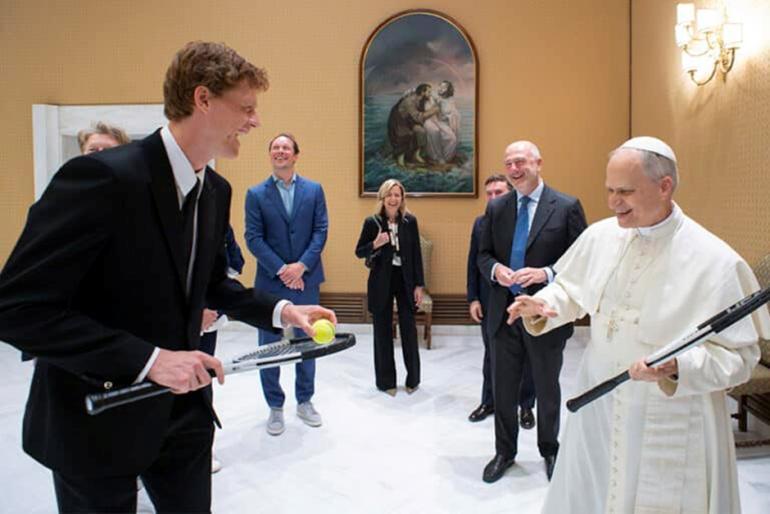
VATICAN CITY (CNS) advancing to the semi Italian Open, Jannik Sinner paid a visit to a fan.
While in Rome for the tournament May 14, the world’s highest-ranked tennis player walked into the halls of the Vatican and met with Pope Leo XIV, who proved to be a well-informed spectator of the young champion.
“Last night you won,” the pope said while shaking his hand, referencing the Italian’s straight-sets victory over 17thseeded Francisco Cerùndolo 7-6, 6-3 in just over two hours.
Sinner presented the pope with a custom-made white tennis racket, matching the papal cassock. Pope Leo, clearly enjoying the moment, gestured to his white cassock and quipped that Wimbledon would let him play referencing the tournament’s famous
The encounter took a playful turn when Sinner, holding up a tennis ball, asked the pope if he wanted to play.
“Here we’ll break something,” the pope responded with a laugh, looking around at the room’s antique furniture.
”
“Better not.
Before posing for photos with Sinner’s parents and the Italian Open trophy, the two discussed the tournament Sinner’s first after a three-month break.
“Now we’re in the game,” Sinner told the pope, acknowledging a shaky start.
“With three games (gone), we’ve gotten a bit of rhythm.” Meeting the press after the game May 12, Sinner responded to news that the new pope was a tennis fan.
“I think it’s a good thing for us tennis players to have a pope who likes this sport that we’re playing,” he said.❖
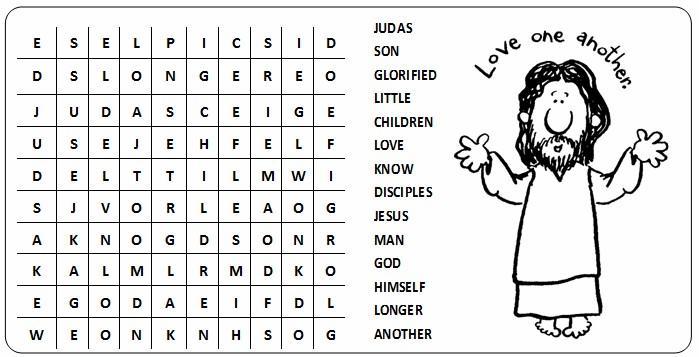
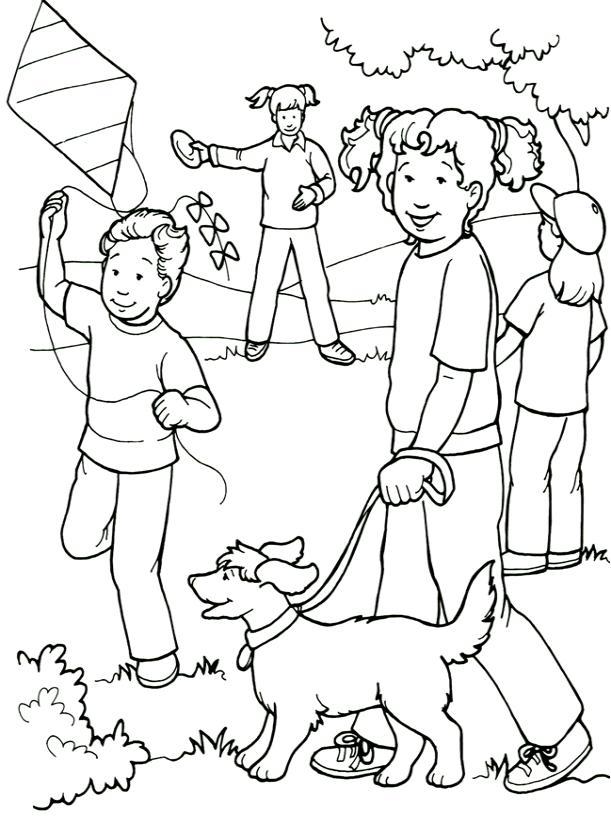
Dear Girls and Boys,
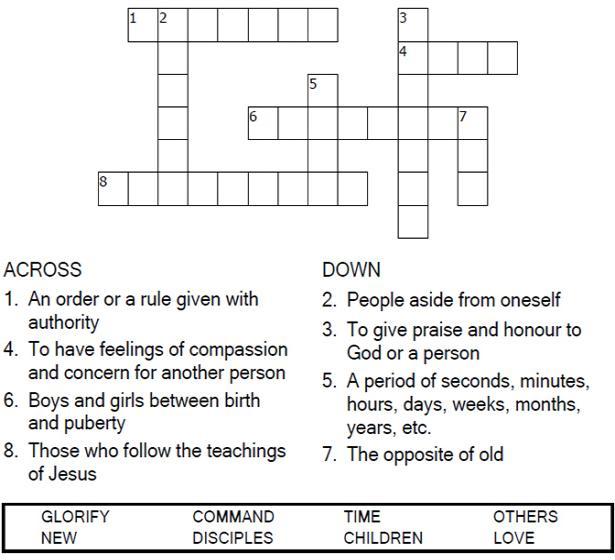
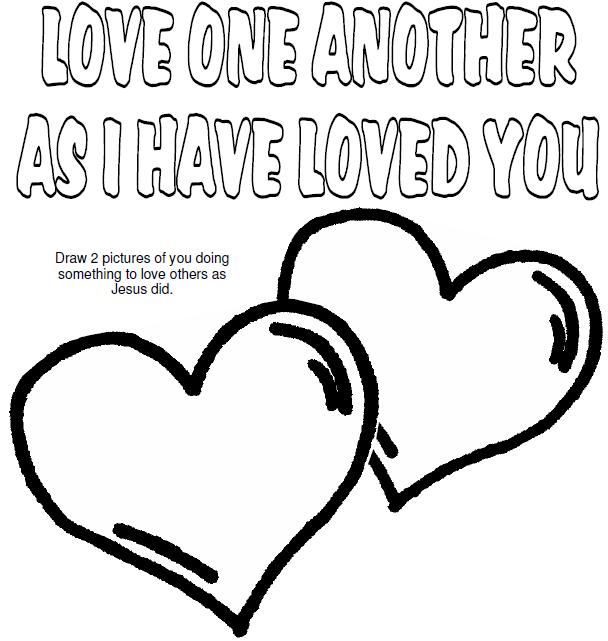
One day Jesus was talking to his disciples. He knew that the day was coming when he would return to heaven, and he was trying to prepare his disciples for the day when he would no longer be with them. He wanted to leave them with something that would help them to live in such a way that other people would see them and know that they were his disciples.
"I will be with you only a little while longer," Jesus said. "Then you will look for me, but you won't find me because you cannot go where I am going. I give you a new commandment. You must love each other just as I have loved you. If you love each other, everyone will know that you are my disciples."
Would you like for people to look at the way you live and know that you are a follower of Jesus? Well, then obey his command, "Love one another as I have loved you."
Jesus, we thank you that you loved us so much that you gave your life for us. Help us to love one another as you have loved us. Amen. ❖

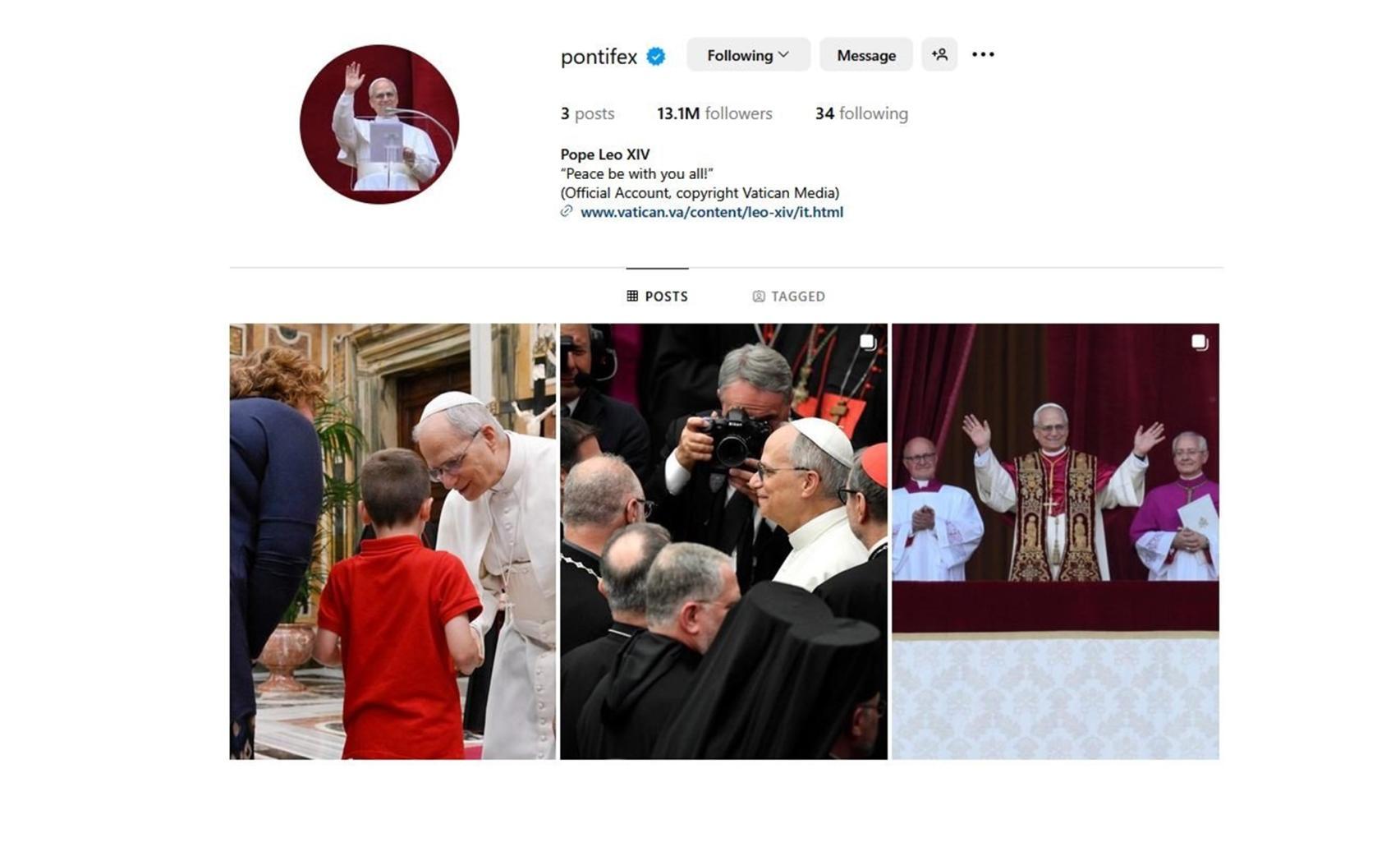
ence through the official papal accounts on X and Instagram,” said the Dicastery for Communication.
The first post on the “Pope Leo XIV @Pontifex” account on X was released May 14 and was a quote from his inaugural greeting to the public May 8 when he was elected:
“Peace be with you all! This is the first greeting spoken by the Risen Christ, the Good Shepherd. I would like this greeting of peace to resound in your hearts, in your families, and among all people, wherever they may be, in every nation and throughout the world.”
His first papal Instagram post featured the same quotation in seven languages alongside a photo of him
million followers by May 16.
The number of followers on the English language X account had reached 18.6 million by May 16.
The Dicastery for Communication, which runs the accounts for the pope, said May 13 that while the Instagram account was new, Pope Leo “inherited the @Pontifex accounts on X that were used by Pope Francis, and before that by Pope Benedict XVI.”
The nine X accounts in English, Spanish, Portuguese, Italian, French, German, Polish, Arabic and Latin have more than 52 million followers when combined.
The dicastery said the @Franciscus Instagram account would remain
gram account, @Franciscus, was added in 2016.
“Pope Francis’ presence on social media was significant. Around 50,000 posts were published across the @Pontifex and @Franciscus accounts, offering near -daily accompaniment throughout Pope Francis’ pontificate with short messages of an evangelical nature and exhortations in favor of peace, social justice and care for creation,” the dicastery said.
“The papal accounts stimulated widespread interaction, especially in difficult times,” the dicastery said. “In 2020, a year with exceptional data due to the pandemic, the late Pope’s messages were viewed 27 billion times.”❖
By Renika Anand
Mark Twain, an American writer and humorist, once Independence is loyalty s best self and
As we grow, one of the most important milestones that we hope to achieve is independence. However, the definition of independence can be different for everyone. This means two people who are equally independent may find themselves leading extraordinarily different lives. Perhaps, discovering our own definition of independence is more important than becoming independent at all!
Independence begins with complete honesty. It is the ability to define your own boundaries, values and identity. It is the strength to refuse any circumstance or individual from forcing you to forsake the things which define who you are. Independence is knowing what is right and making the right choices even when the entire world seems to be against you.
After all, the most valuable form of freedom and independence is the ability to live freely, and express yourself without being limited by other’s opinions. To be free is to be truly and wholly you. It is for freedom that Christ has set us free. Stand firm, then, and do not let yourselves be burdened again by a yoke of slavery.
- Galatians 5:1❖


and regional crisis, and yet drawn toward a mystery we cannot yet fully comprehend.
This is the spirit in which we must approach our time: not as an era of change, but a change of era. This signals a profound shift in the rhythms and rules of our global, regional, and ecclesial life.
The tomb is empty. The old world with its certainties, its systems, its securities has passed. A new reality has dawned, and we, like Peter and John, are called to run toward it, to enter in, to see, and to believe even while it is still dark.
And yet, it is precisely in such moments that the Church is called to deepen its listening, strengthen its witness, and become again the servant and sacrament of hope.
Discerning the change of era:approachingthetomb
The economic and social shift is not an abstract theory but a daily struggle. Our region is marked by profound dislocation. Across the Caribbean, 28 per cent of households experience food insecurity. Unemployment among our youth exceeds 18 per cent. The region’s external debt averages over 82 per cent of GDP. In education, only 4.9 per cent of our Caribbean Secondary students passed five or more subjects in 2024. Just 36 per cent passed mathematics.
Behind each percentage point lies a face a mother skipping meals, a graduate without work, a child robbed of a future. These signs of the times cry out for a discerning and unified response from the Church.
These numbers are like grave clothes signs of death, of systems that no longer serve life. But just as Peter and John saw the linen wrappings folded in the tomb, we too must learn to interpret what these signs reveal: not only loss, but transition; not only disruption, but invitation.
The old economic models built on deregulation, privatisation, and profit without ethics are failing. But something new is stirring. The global shift back toward regulatory systems, focused on the common good, presents a kairos moment for the Caribbean.
It is time to reimagine how we walk with our people especially the poor in a way that is spiritually anchored and socially responsive. This historical realignment is more than political or economic; it is spiritual. God is drawing humanity back toward communion, justice, and care for the least.
into stories of hope: seeingandbelieving
John tells us that Peter entered the tomb first, but it was the beloved disciple who “saw and believed.” To
see differently to read the signs of the times through the eyes of faith is the task of pastoral leadership. We are called not only to analyse statistics, but to transform them into stories of hope. Behind every percentage is a face; behind every policy failure, a wounded child of God. In every community where the Church responds with food, education, accompaniment, or advocacy, we are writing a new Gospel for our region. Just as Mary Magdalene’s encounter turned mourning into mission, so too our encounter with the poor can become the site of resurrection hope.
Cardinal (Luis Antonio) Tagle has reminded us: hope is not optimism. It is the quiet, stubborn conviction that even where death seems to reign, God is at work. In this way, our parishes, schools, and diocesan ministries must become places where the folded grave clothes are noticed places where we proclaim not only the hardship, but the hidden grace.
Peter and the beloved disciple ran together toward the tomb. Each brought their own pace, their own response. Yet they ran toward the same mystery, and they arrived in communion.
So must we, as bishops across the English, French, and Dutch Caribbean, run together forging unified and practical pathways for our people. Though we speak different languages and shepherd distinct contexts, we share the same mission: to make our local Churches centres of hope.
This calls us to:
• Create regional strategies for food security, youth employment, and sustainable development;
• Reimagine Catholic education as our most valuable gift to the region, shaping both the integral development and faith formation of our young;
• Develop shared formation programmes in Catholic Social Teaching and integral human development;
• Collaborate on communication platforms to tell our stories and witness together;
• Strengthen inter-diocesan solidarity, especially for smaller or more vulnerable communities.
The tomb is empty not only in Jerusalem, but in our own paradigms. This is not about standardisation, but about solidarity the kind that builds capacity across borders, languages, and cultures. Our unity can become a signpost for regional renewal.
Synodality is the Church’s way of entering the tomb. It is a journey of listening, of mutual discernment, of shared tears and shared faith. In a time when centralised solutions have failed and technocratic fixes have fallen short, synodality invites us to walk humbly and courageously with our people, trusting that the Spirit speaks in the margins as well as the centre.
As Caribbean bishops, we are being called to model this synodal conversion:
• To listen to the cries of the poor as the voice of the Spirit;
• To engage men, women, youth, and the marginalised as coprotagonists in mission;
• To read the signs of the times not with fear, but with faith.
Synodality is how we move from institutional survival to missionary creativity. It is how we renew our pastoral imagination and re-root ourselves in the gospel.
Like Mary Magdalene, the apostle to the apostles, many of our faithful especially women, young people, the men on the fringes and the marginalised are already standing near the tomb, weeping and waiting.
The question is not whether the risen Lord will speak. The question is whether we will hear Him call us by name, and whether we will allow those on the periphery to lead us toward new life.
Synodality is not a process we manage. It is a conversion we undergo.
Conclusion: while it is still dark
“Early in the morning, while it was still dark…” The Gospel is honest about the darkness but it is more insistent about the light.
We live in a change of era. But we are not without guidance. The grave clothes are folded. The stone is rolled away. The dawn has begun.
My brothers, let us not linger in fear. Let us run toward the future together carrying not only the wounds of our people, but the promise of the Resurrection.
Let us lead not with anxiety but with vision. Not with nostalgia but with prophetic courage. And not in isolation but as a regional communion of pastors walking with our people, listening to the Spirit, and proclaiming together that God’s love is the strongest force for change and for community development.
The change in the global economy has given us new rules rules now in our favour. These are the same conditions that brought us to independence and the emergence of a local Church. The wind is now at our back.
Let us make our dioceses and our Episcopal Conference a field hospital of mercy, a school of discipleship, and a beacon of hope.
Let us enter this change of era, not with anxiety, but with apostolic hope.
The tomb is empty.
The Lord is risen.
And we are being sent.
Thank you. (
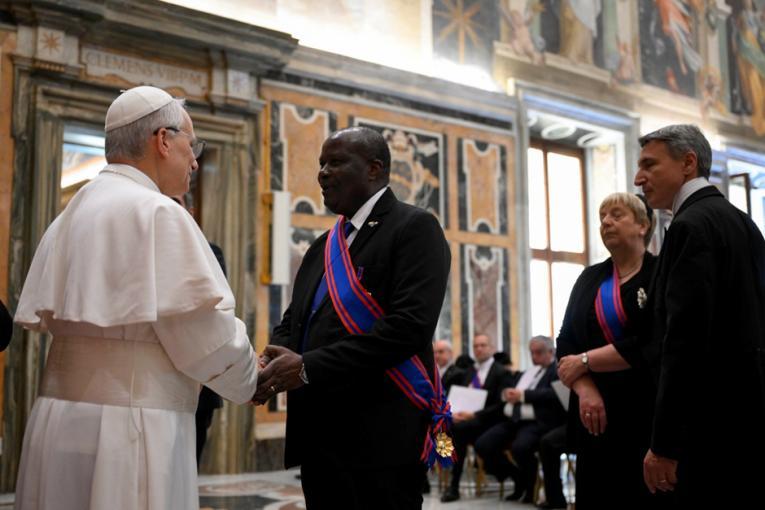
VATICAN CITY (CNS) The Catholic Church wants to reach out and embrace all people who need and yearn for truth, justice and peace, Pope Leo XIV said in his first meeting with the diplomatic corps accredited to the Holy See.
“The church can never be exempted from speaking the truth about humanity and the world, resorting whenever necessary to blunt language that may initially create misunderstanding,” he said. “Yet truth can never be separated from charity, which always has at its root a concern for the life and wellbeing of every man and woman.”
Because truth is an encounter with the person of Christ who is “alive in the midst of the community of believers,” he said, “truth then, does not create division, but rather enables us to confront all the more resolutely the challenges of our time, such as migration, the ethical use of artificial intelligence and the protection of our beloved planet Earth.”
‘FosteringaClimateofPeace’
In his May 16 speech to diplomats in the Clementine Hall, Pope Leo said, “Religions and interreligious dialogue can make a fundamental contribution to fostering a climate of peace.” Therefore, “full respect for religious freedom in every country” is necessary since “it is difficult, if not impossible, to bring about the purification of the heart necessary for building peaceful relationships” without religious experience, he said.
Every person is called to “begin to eliminate the root causes of all conflicts and every destructive urge for conquest,” he said. “It demands a genuine willingness to engage in dialogue, inspired by the desire to communicate rather than clash.”
So, “new life” must be given to multilateral diplomacy and international institutions tasked with remedying disputes within the international community, he said. There must also be a move to stop the production of “instrumentsofdestructionanddeath.”
‘At the Service of Humanity’
The pope highlighted the purpose of “papal diplomacy,” saying, “The Holy See is inspired by a pastoral outreach that leads it not to seek privileges but
to strengthen its evangelical mission at the service of humanity.”
“Resisting all forms of indifference, it appeals to consciences, as witnessed by the constant efforts of my venerable predecessor, ever attentive to the cry of the poor, the needy and the marginalized, as well as to contemporary challenges, ranging from the protection of creation to artificial intelligence,” he said.
“The pillars of the church’s missionary activity and the aim of the Holy See’s diplomacy,” he said, are peace, justice and truth.
Peace is “an active and demanding gift” that “engages and challenges each of us,” startingwithworkingononeself,hesaid
‘PeaceIsBuiltintheHeart’
“Peace is built in the heart and from the heart, by eliminating pride and vindictiveness and carefully choosing our words. For words too, not only weapons, can wound and even kill,” Pope Leo said.
“Working for peace requires acting
justly,” he said, and the Vatican will not fail “to make its voice heard in the face of the many imbalances and injustices that lead, not least, to unworthy working conditions and increasingly fragmented and conflict-ridden societies.”
“It is the responsibility of government leaders to work to build harmonious and peaceful civil societies,” he said.
“This can be achieved above all by investing in the family, founded upon the stable union between a man and a woman.”
Also, he said, “no one is exempted from striving to ensure respect for the dignity of every person, especially the most frail and vulnerable, from the unborn to the elderly, from the sick to the unemployed,citizensandimmigrantsalike.”
Human Dignity ‘Remains Unchanged’
Pope Leo, the first pope from the United States, said he is “a citizen, the descendant of immigrants, who in turn chose to emigrate.” Anyone can end up being “healthy or sick, employed or unemployed, living in our native land or in a foreign country” in life, and yet their human dignity always remains unchanged.
The third “pillar” of the church’s mission, he said, is truth. “Truly peaceful relationships cannot be built, also within the international community, apart from truth,” he said. Where “ambiguous and ambivalent” words and “the virtual world, with its altered perception of reality, takes over unchecked, it is difficult to build authentic relationships, since the objective and real premises of communication are lacking.”
The Catholic Church will always seek to speak the truth and dedicate itself to lovingly serving others and protecting
the life and well-being of everyone, he said.
Currently, 184 countries have full diplomatic relations with the Holy See. ‘A Gift’ to See Nations’ Representatives
Pope Leo said it was “a gift” to see representatives from so many different nations attending the audience, demonstrating “a visible sign of your countries’ respectfortheApostolicSee.”
“It allows me to renew the church’s aspiration and my own to reach out and embrace all individuals and peoples on the Earth, who need and yearn for truth, justice and peace!” he said.
“I intend to strengthen understanding and dialogue with you and with your countries, many of which I have already had the grace to visit, especially during my time as prior general of the Augustinians,” Pope Leo said.
He said he hoped there would be more occasions to get to know their countries and “to confirm in the faith our many brothers and sisters throughout the world and to build new bridges with all people of goodwill.”
The Jubilee Year dedicated to hope, he said, “is a time of conversion and renewal and, above all, an opportunity to leave conflicts behind and embark on a new path, confident that, by working together,” each person can help “build a world in which everyone can lead an authentically human life in truth, justice and peace.”
“It is my hope that this will be the case everywhere, starting with those places that suffer most grievously, like Ukraine and the Holy Land,” he said, thanking the diplomats for the work they do “to build bridges between your countries and the Holy See.”❖
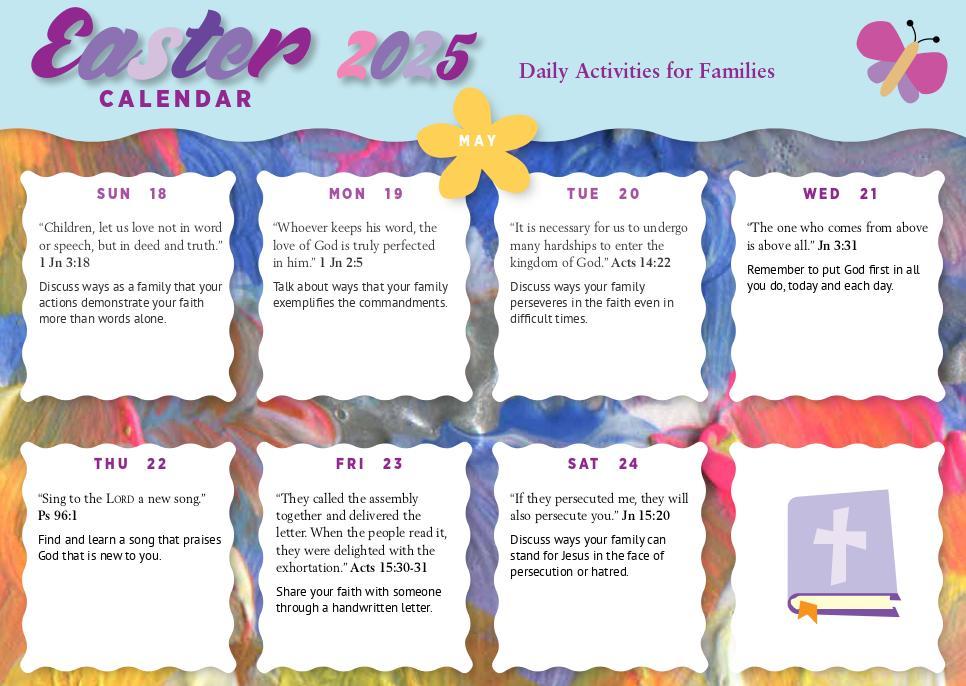
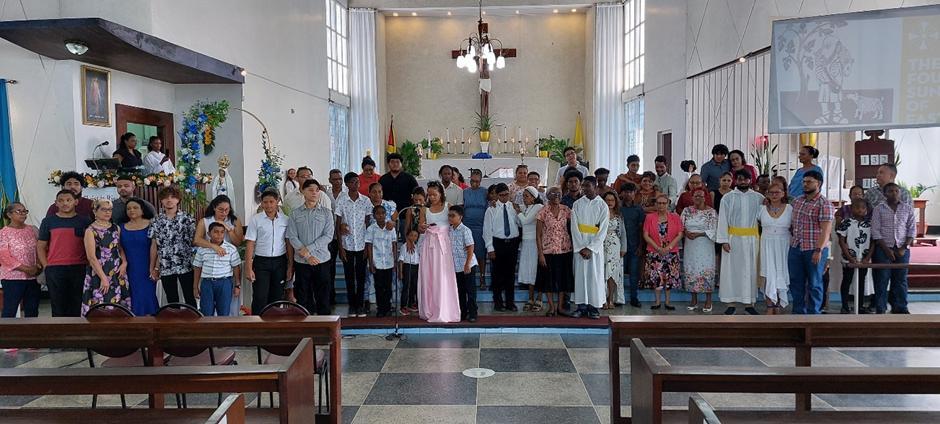
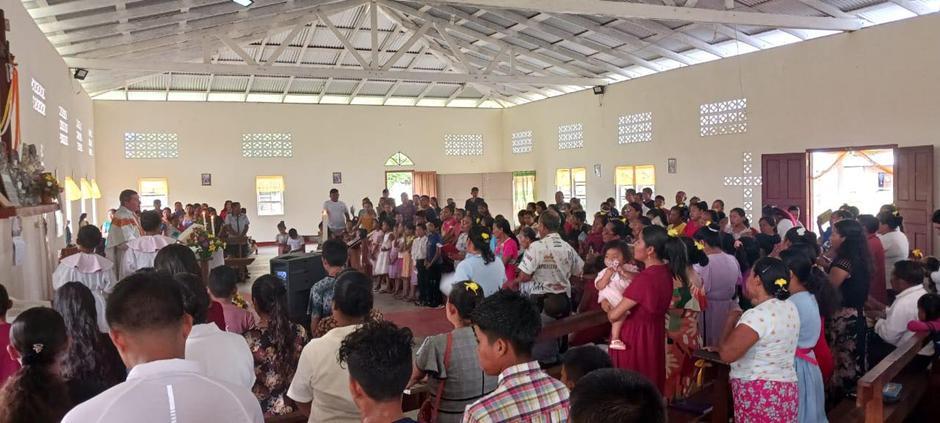
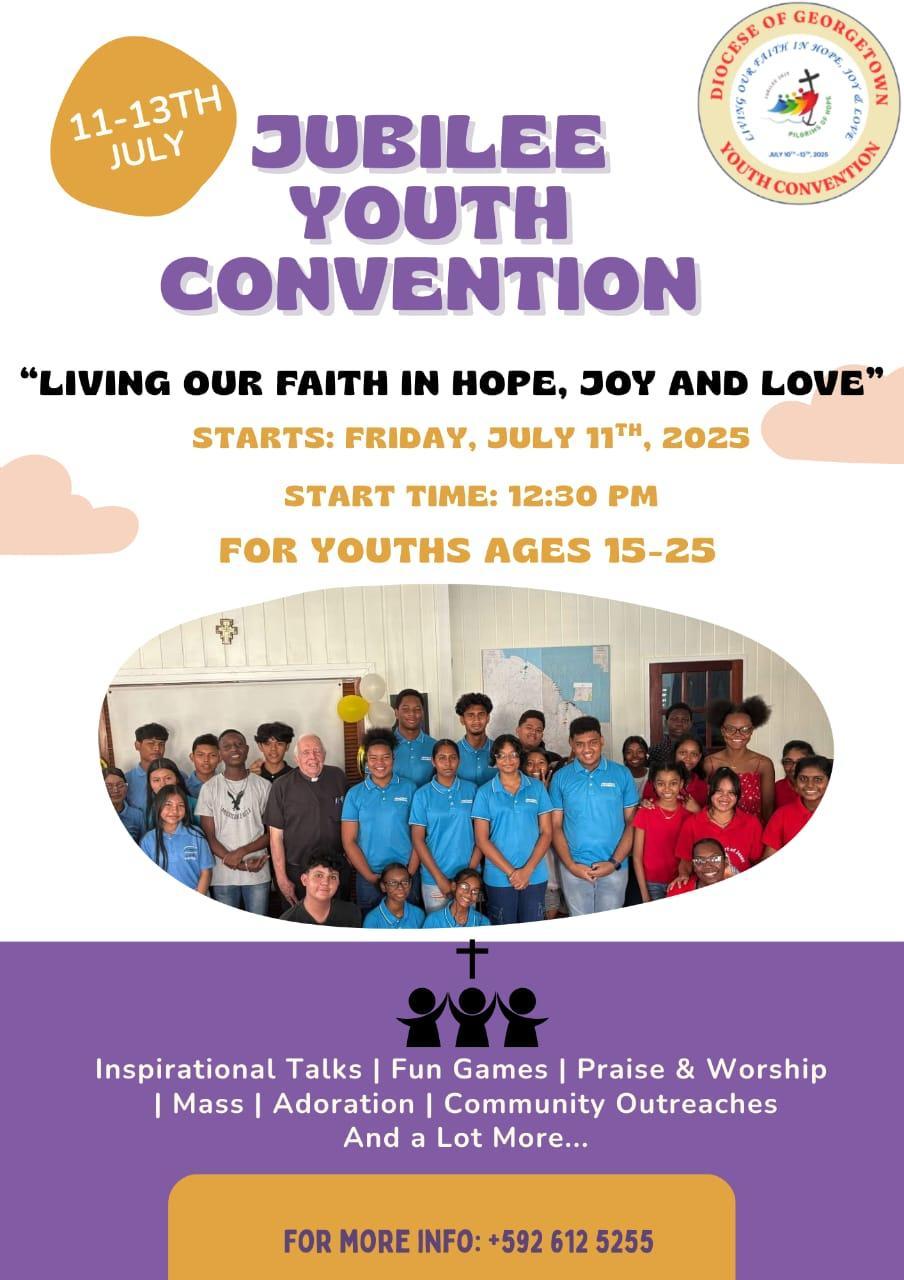
The Diocese of Georgetown is pleased to announce our upcoming Jubilee Youth Convention 2025, a diocese-wide in-person gathering of Catholic Youths under the theme: "Living our Faith in Hope, Joy, and Love."
This three-day convention begins on Friday July 11th 2025 at 12:30pm, and concludes on Sunday July 13th. The convention will include sessions of praise and worship, dynamic talks, small group discussions, community and environmental outreaches, cultural presentations, and Eucharistic celebrations. It promises to be a vibrant and spiritually uplifting event for all participants.
All parishes across the country are invited to send youth representatives between the ages of 15-25 to be part of this diocese-wide celebration of faith.
A registration fee of $2,000 per participant is requested for parishes located within Georgetown, East and West Bank Demerara, East and West Coast Demerara, and Essequibo.
Out-of-town parishes are asked to assist in organizing and funding transportation to and from Georgetown. If your parish faces challenges in this area, please contact the Jubilee Youth Convention Committee early so we can explore possible arrangements together. For the closer areas,
parishes are asked to arrange transportation to and from the venue. Basic accommodation will be made available for out-of-town youth as well as transportation to and from the venue. Lunches, snacks and beverages will be provided forall participants.
Registration forms and fees are to be submitted by June 24th, 2025.
Registration link: https:// docs.google.com/forms/d/ e/1FAIpQLSe_9zJbPcfrSmfrExeLvZv qx_gNAq7J7oswbty6mLRBcLmaRg /viewform?usp=dialog
For further information, please contact the Jubilee Youth Convention Committee on +592-612-5255 or +592-635-7901 ❖
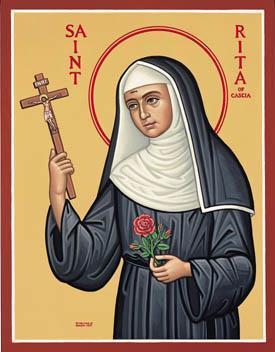
Born at Roccaporena in central Italy, Rita wanted to become a nun but was pressured at a young age into marrying a harsh and abusive man. During her 18-year marriage, she bore and raised two sons. After her husband was killed in a brawl and her sons had died, Rita tried to join the Augustinian nuns in Cascia. Unsuccessful at first because she was a widow, Rita eventually succeeded.
Over the years, her austerity, prayerfulness, and charity became legendary. When she developed wounds on her forehead, people quickly associated them with the wounds from Christ’s crown of thorns. She meditated frequently on Christ’s passion. Her care for the sick nuns was especially loving. She also counseled lay people who came to her monastery.
Rita lived as a wife, mother, widow and nun, buried her family, helped bring peace to her city - and never lost her faith in God, or her desire to be with Him.❖[franciscanmedia.org & salfordliturgy.org.uk ]