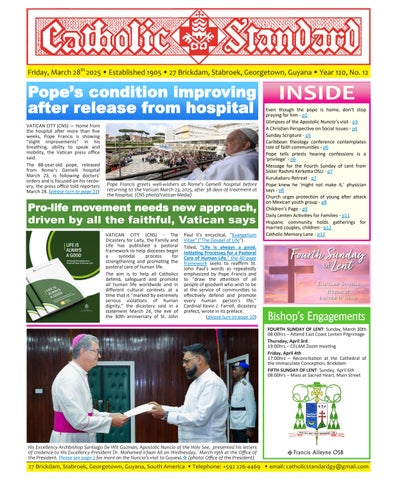

Pope’s condition improving after release from hospital
VATICAN CITY (CNS) Home from the hospital after more than five weeks, Pope Francis is showing “slight improvements” in his breathing, ability to speak and mobility, the Vatican press office said.
The 88-year-old pope, released from Rome’s Gemelli hospital March 23, is following doctors’ orders and is focused on his recovery, the press office told reporters March28. (please turn to page 11)
Pro-life movement needs new approach,
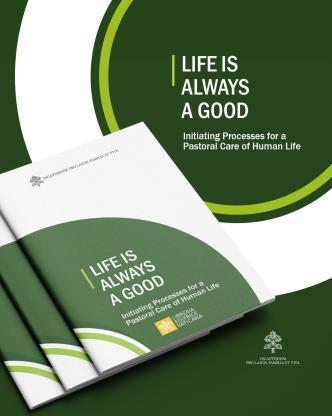
VATICAN CITY (CNS) - The Dicastery for Laity, the Family and Life has published a pastoral framework to help dioceses begin a synodal process for strengthening and promoting the pastoral care of humanlife.
The aim is to help all Catholics defend, safeguard and promote all human life worldwide and in different cultural contexts at a time that is "marked by extremely serious violations of human dignity," the dicastery said in a statement March 24, the eve of
Paul II's encyclical, "Evangelium Vitae" ("The Gospel of Life").
Titled, "Life is always a good. Initiating Processes for a Pastoral Care of Human Life," the 40-page framework seeks to reaffirm St. John Paul's words as repeatedly emphasized by Pope Francis and to "draw the attention of all people of goodwill who wishto be at the service of communities to effectively defend and promote every human person's life," Cardinal Kevin J. Farrell, dicastery prefect,wrote inits preface.
Year 120, No. 12
Even though the pope is home, don’t stop prayingfor him - p2
Glimpses of the Apostolic Nuncio’s visit - p3
AChristianPerspective on Social Issues - p4
Sunday Scripture - p5
Caribbean theology conference contemplates role of faithcommunities - p6
Pope tells priests hearing confessions is a ‘privilege’ - p6
Message for the Fourth Sunday of Lent from Sister Rashmi Kerketta OSU - p7
KurukabaruRetreat - p7
Pope knew he ‘might not make it,’ physician says - p8
Church urges protection of young after attack onMexicanyouthgroup - p8
Children’s Page - p9
Daily LentenActivities for Families - p11
Hispanic community holds gatherings for married couples, children - p12
Catholic Memory Lane - p12
FOURTH SUNDAY OF LENT: Sunday, March 30th
08:00hrs – Attend East Coast Lenten Pilgrimage
Thursday, April 3rd
19:00hrs – CELAM Zoom meeting
Friday, April 4th
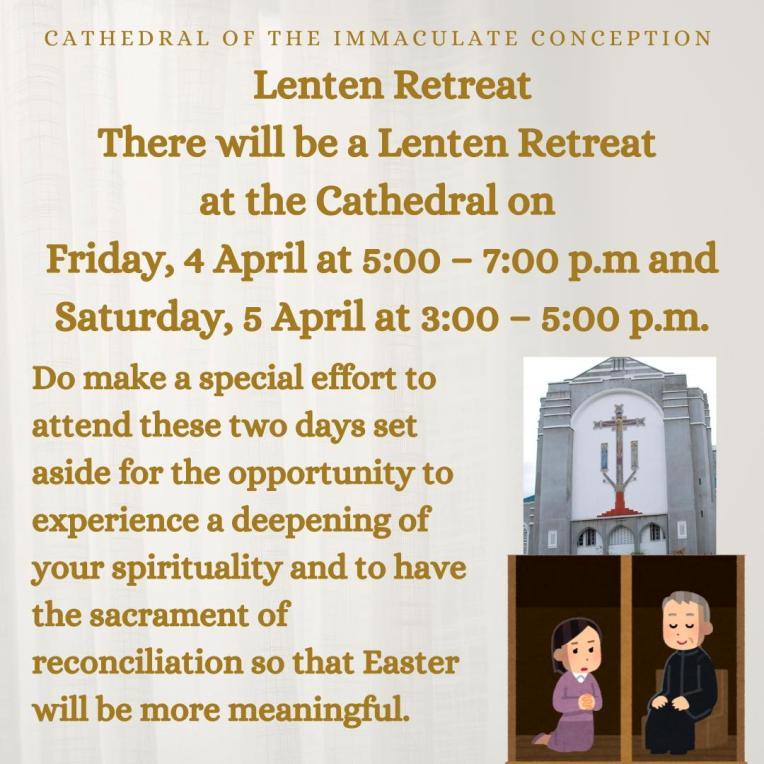
17:00hrs – Reconciliation at the Cathedral of the Immaculate Conception, Brickdam
FIFTH SUNDAY OF LENT: Sunday, April 6th
08:00hrs – Mass at Sacred Heart, Main Street
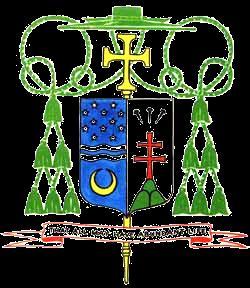
His Excellency Archbishop Santiago De Wit Guzmán, Apostolic Nuncio of the Holy See, presented his letters of credence to His Excellency President Dr. Mohamed Irfaan Ali on Wednesday, March 19th at the Office of the President. Please see page 3 for more on the Nuncio’s visit to Guyana.❖ (photo: Office of the President)
Francis Alleyne OSB
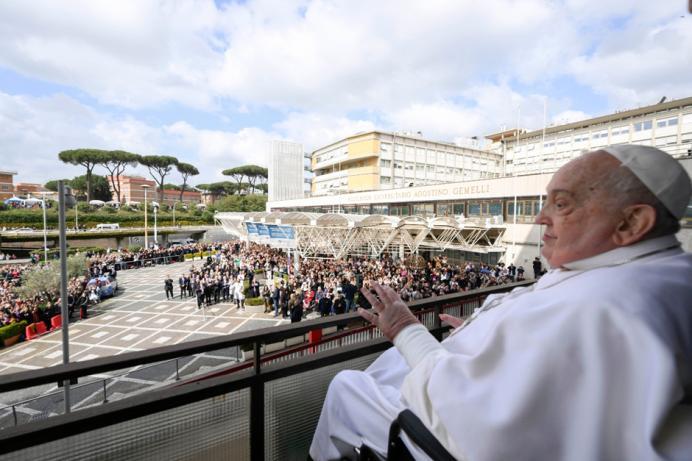
Pope Francis greets well-wishers at Rome's Gemelli hospital before returning to the Vatican March 23, 2025, after 38 days of treatment at the hospital. (CNS photo/Vatican Media)

Even though the pope is home,
The Jubilee Prayer

Father in heaven, may the faith you have given us in your son, Jesus Christ, our brother, and the flame of charity enkindled in our hearts by the Holy Spirit, reawaken in us the blessed hope for the coming of your Kingdom.
May your grace transform us into tireless cultivators of the seeds of the Gospel.
May those seeds transform from within both humanity and the whole cosmos in the sure expectation of a new heaven and a new earth, when, with the powers of Evil vanquished, your glory will shine eternally.
May the grace of the Jubilee reawaken in us, Pilgrims of Hope, a yearning for the treasures of heaven. May that same grace spread the joy and peace of our Redeemer throughout the earth.
To you our God, eternally blessed, be glory and praise for ever.
Amen



By OSV Editorial Board (OSV News) The world rejoiced March 23 when Pope Francis was released from Gemelli University Hospital in Rome after 38 days. God be praised, he seems to be making slow, incremental improvements, though his doctors caution the Holy Father will need a rest period of at least two months before he resumes any additional work activities.
As we breathe a sigh of relief that Pope Francis no longer seems in immediate danger of death, it is worth pausing to reflect on the profound effect that the pope’s hospital stay had on Catholics and non-Catholics alike aroundthe world.
Let’s begin in Italy, where Italians gave a moving sign of their connection to the Holy Father through their daily praying of the rosary at the Vatican and by their presence outside his hospital window. Pope Francis has worked hard to underscore his role as the bishop of Rome, and so it is fitting that a great number of Italians showed up day after day to pray, especially as less than 18% of the Italian population attends Mass regularly in what was until very recently a very Catholic country.
A week before Pope Francis was released, a crowd of schoolchildren gathered outside his window to pray in solidarity with the pontiff. Though Pope Francis did not greet them, he wrote a message in response: “I know that many children are praying for me; some of them came here today to Gemelli as a sign of closeness. Thank you, dearest children! The pope loves you and is always waiting to meet you.”
Such a display of affection and attention among the people of Italy is deeply moving and indicative of the enduring cultural influence of the church and particularly its leader even in the country’s highly secularized society.
But Italians weren’t the only people keeping Pope Francis in prayer while he was hospitalized. Catholics and other people around the globe have
more than 12 years and one who, with his unique personality and way of life, has captured the imagination and attention of many. Pope Francis is not without his critics, and his pontificate is not without its mistakes. Yet, he is the successor of St. Peter the Apostle, and he has an almost singular ability to bring people together. This unity personifies the natural longing that people have for something greater than themselves. They desire Jesus Christ, and Pope Francis is his vicar on earth.
been united in prayer for the wellbeing of the church’s pontiff. Cards, letters, videos and social media posts poured in a touching demonstration of affection and gratitude for Pope Francis’ person, his pastoral presence and ministry in our world. The demonstration of such universal concern serves as a reminder if one was needed of the great role the pope and the Catholic Church play around the world. Pope Francis is not just any leader. He has been the spiritual leader of the world for
Five years ago, on March 27, 2020, Pope Francis engaged in what many consider to be the most moving moment of his pontificate when he blessed the city of Rome and the world with the Blessed Sacrament during a time of great uncertainty and fear at the start of the COVID-19 pandemic. His actions brought people around the world to their knees in a stunning and greatly needed moment of prayer and unity.
It is no surprise that when Pope Francis was hospitalized, facing a time of great uncertainty himself, the world responded with their prayers. But while we rejoice that he has been well enough to return to his residence at the Vatican, we must not stop praying for him. He is better but not yet recovered. Our prayers in Italy, in the United States, and around the world for his well-being must continue.❖

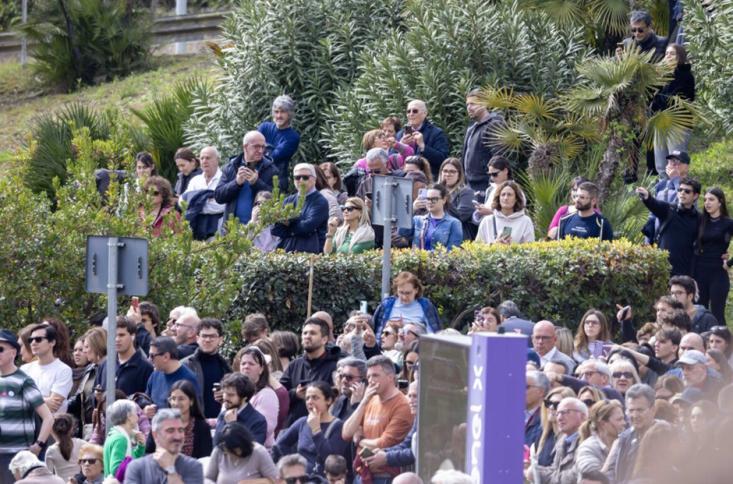
People watch and take photos as Pope Francis waves to a crowd of wellwishers at Rome's Gemelli hospital before returning to the Vatican March 23, 2025, after 38 days of treatment at the hospital. (CNS photo/Pablo Esparza)
Glimpses of the Apostolic Nuncio s visit to Guyana
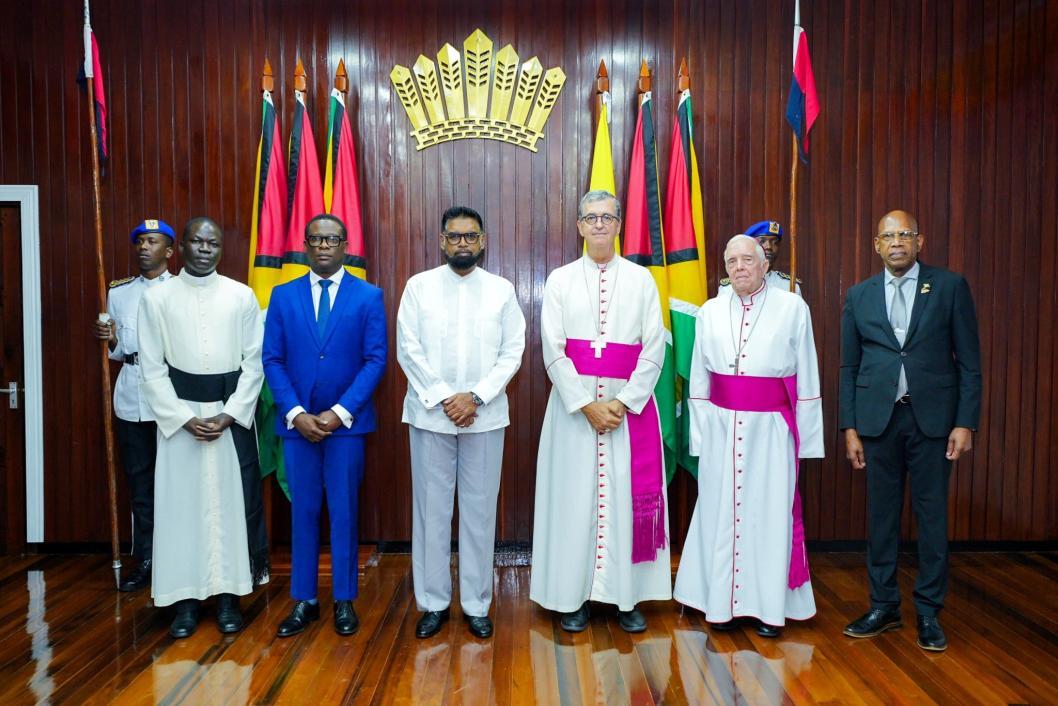
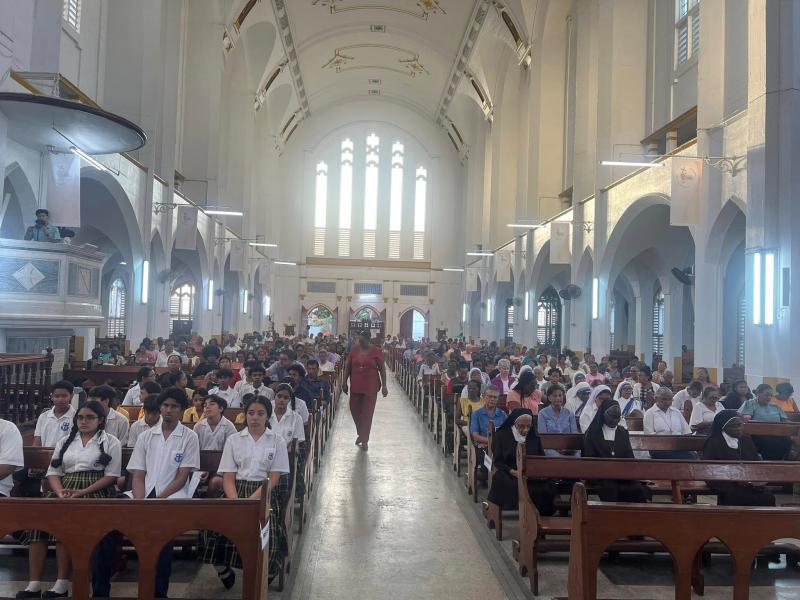
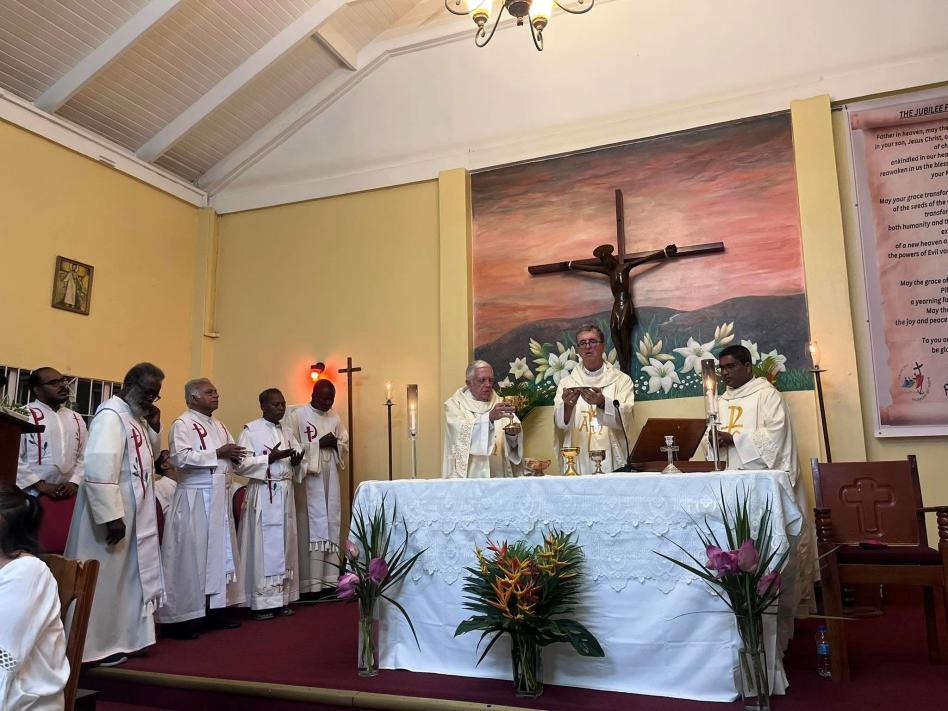
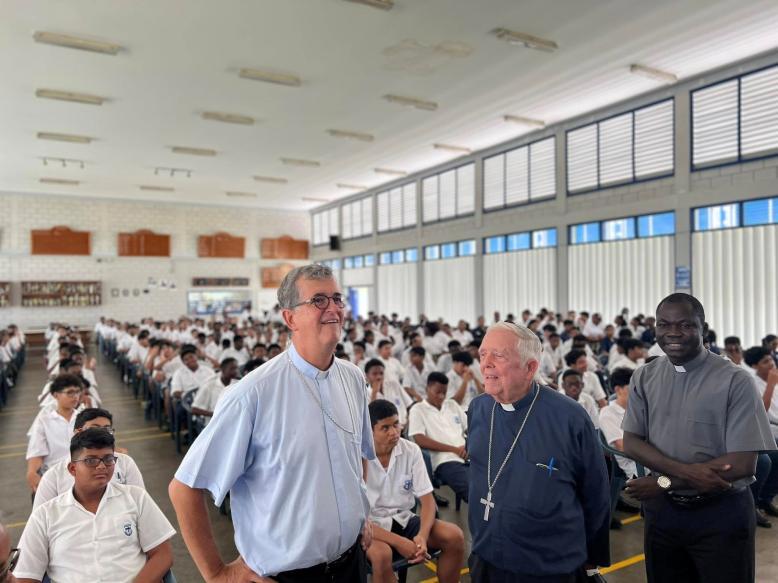
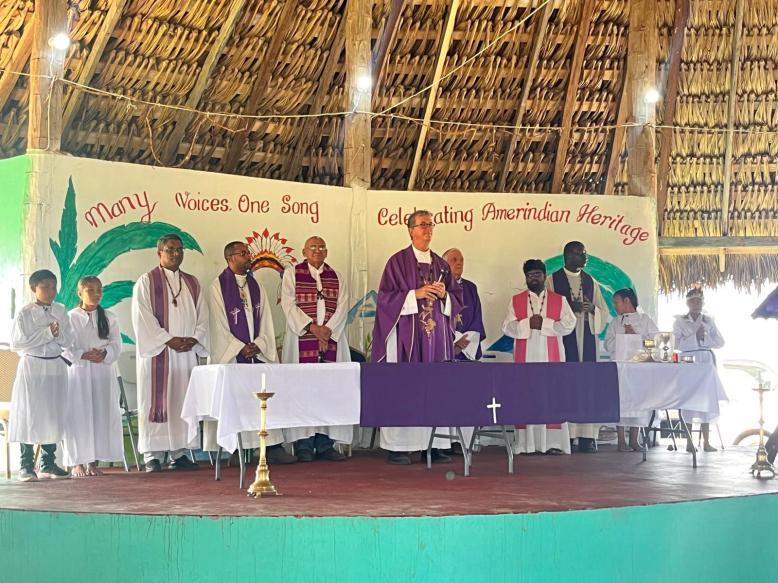
His Excellency Archbishop Santiago De Wit Guzmán, the Apostolic Nuncio to the Antilles, visited the Diocese of Georgetown from Tuesday March 18th to Sunday March 23rd, 2025.
An Apostolic Nuncio is a diplomatic representative of the Vatican to a foreign country. This role is equivalent to that of an ambassador, but specifically for the Holy See. The Nuncio represents the Pope and the Vatican's interests in the host country and is responsible for maintaining diplomatic relations between the Vatican and the government of that country.
On July 30, 2022, Archbishop De Wit Guzmán was appointed Apostolic Nuncio to Trinidad and Tobago, Antigua and Barbuda, Belize, Grenada, Guyana, St. Vincent and the Grenadines, Suriname, and Apostolic Delegate to the Antilles. On November 12, 2022, he was also appointed Apostolic Nuncio to the Bahamas, Barbados, Dominica, Jamaica and St. Lucia.
Archbishop De Wit Guzmán was accompanied on his visit to Guyana by Fr. Josue Frederic Ilboudo, Secretary to the Nunciature and Deputy Head of Mission.
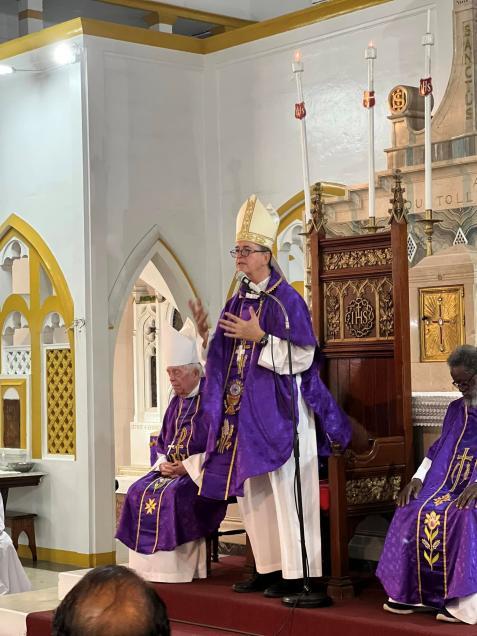
On Tuesday, March 18th, a Welcome Mass for Archbishop De Wit Guzmán was celebrated at the Cathedral of the Immaculate Conception, Brickdam, Georgetown.
On Wednesday, March 19th, His Excellency Archbishop De Wit Guzmán presented his letters of credence to His Excellency President Dr. Mohamed Irfaan Ali on at the Office of the President. Guyana formally established
diplomatic relations with the Holy See on June 9, 1997.
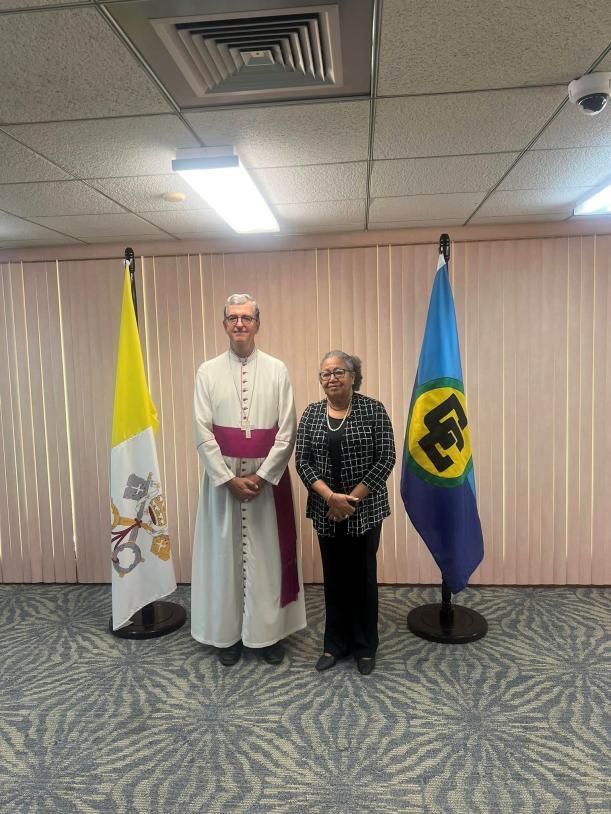
Also on Wednesday, His Excellency Archbishop de Wit Guzmán presented his letters of credence to Her Excellency Dr. Carla Barnett, Secretary-General of the Caribbean Community (CARICOM), at the CARICOM Secretariat, Turkeyen, GreaterGeorgetown.
On Wednesday evening, His Excellency celebrated the Feast Day Mass of St. Joseph, Husband of Mary church, Little Diamond, East Bank Demerara.
On Thursday, March 20th, Archbishop de Wit Guzmán visited the Catholic Migrant Office, where he interacted with the staff. Later that day, he visited Marian Academy, a Catholic school managed by the Ursuline Sisters. During his visit, he met with Principal Sr. Shelly Jhetto, OSU, as well as the staff and students of Marian Academy.
On Friday, March 21st, His Excellency visited Region 9. Arriving at St. Ignatius, Central Rupununi, he interacted with the faithful and celebrated Holy Mass.
Before Mass, he and Fr. Josue were welcomed by the Toshao, followed by a traditional welcome dance.
The Mass on Friday afternoon at St. Francis Borgia church, Potarinau, South Central Rupununi, Region 9, was well attended, with Catholics from Meriwau, Shulinab, Katuur, Baitoon and St. Ignatius joining in the celebration.
On Saturday, His Excellency returned to Georgetown. On Sunday, March 23rd, before his departure, His Excellency celebrated Mass at Our Lady of the Annunciation church, Malgre Tout, West Bank Demerara, Region 3.❖

A Christian Perspective on Social Issues From the pillars of Lent to the power of reform
By GHK Lall
The journey has been long, continues. Though there is still a way to go, spirits soar in anticipation. For there is Palm Sunday coming from over the horizon, taking shape in the vision, and right next to it, the grace of Holy Week. In this season of Lent, prior learning has been reinforced: repentance, prayer, fasting, the giving of a hand to those in need. After that, there comes that most crucial of Christian questions: what follows? It is the question that each of us should ask of ourselves. Because if repentance is going to mean anything, there must be the readiness to reform our lives in whatever area(s) that we may be lacking.
In the coinciding of this Jubilee Year 2025 with the Lenten Season of 2025, the theme of the former is HOPE. Hope for what? God’s merciful graces stand as a start. Have we been merciful to others, whether they did us wrong, or are complete strangers? The Bible is always talking about widows and orphans, and the impoverished and afflicted, and in the ranks of those rest our challenges, our answers. Mercy has a thick strain of kindness and compassion coursing through it. And, if I may be permitted the liberty, a little bit of love, then bigger.
We live in a loveless time, a time of considerable self-love. When there is so much self-love being made a priority, actually flourishing, I think it is fair to say that loving neighbor doesn’t have much room to generate interest and effort. I go further. With so much happening at such a rapid rate in this country, loving God is something that may not be held close by many Christians. If I or you cannot find that love for God, who has been so good to us, on the front burner of our priorities, then what has taken his place? Money? Being prominent among earthly princes? Having a good time? Being consumed in building up a storehouse of treasure? Earthly treasures, I may add. I am hearing the faint, then stronger, echoes of one of those eyeopening parables from Jesus. My hope is that others are also hearing his cautionary words from the parable of the rich fool (LK 12:16-21). There isn’t much time for God and building that loving relationship with him, when the accumulation of riches is our preoccupation. And, if not God, then man stands almost no chance.
Here is the gut check: repentance without personal reform only goes so far. Repentance and prayer have their virtues in the sight of God, but they are left hanging, incomplete, when the necessary personal reform that should (must) follow still prove to elusive. Elusive because it is not faced up to, shrunk from, at every turn, every reminder about how half-filled we may be. We can be generosity itself with alms to those desperately needing it, but if the deficits in our lives, whatever
they are, are not addressed, then there is a brick wall ahead. Meaning, that for all of Lent’s great blessings, we are squandering the substance of the journey of fasting and penance. The selfsacrificing is a wonderful development, one that is likely to attract the smile of God. But if the selfish interests and pursuits are not fully dealt with, then we could be on a treadmill that doesn’t move an inch.
Reform at the personal level contributes heavily to making Lent complete. It goes without saying that the merciful guidance of God has a key role in helping that to be possible. Reform that is genuine and lasting. Sometimes, it is just a little thorn in the flesh that nags and weakens. Other times, it could be a big deficiency, or a combination of such, that drags us down, renders our faith and offerings less than satisfactory
in the eyes of the Lord. Personal reform is the natural complement of repentance and other pillars of Lent. It is a humble manifestation before God of our sincere interest to banish our own selfish pursuits, and to let his way takeover o derful state to be in, which by my thinking must be a major objective of Lent. One of the byproducts of repentance and reform is that that there would be so much less to be contrite about, that calls for confession, coming next year Lenten Season. If we have been diligent in hearing God taking the fullest remorseful advantage of it, even the thorn in the flesh could be better managed. There may be nothing at all to be repentant about. Now there thought, one that is a grand blessing.
Gracious and loving God, we thank your for the gift of our priests.
Through them, we experience your presence in the sacraments.
Help our priests to be strong in their vocation.
Set their souls on fire with love for your people.
Grant them the wisdom, understanding, and strength they need to follow in the footsteps of Jesus. Inspire them with the vision of your Kingdom.
Give them the words they need to spread the Gospel.
Allow them to experience joy in their ministry.
Help them to become instruments of your divine grace.
We ask this through Jesus Christ, who lives and reigns as our Eternal Priest. Amen



(Note: If the Scrutinies are to be celebrated on the Third, Fourth and Fifth Sundays of Lent, then Year A Readings for those Sundays are used)
FIRST READING Joshua 5:9-12
The People of God keep the Passover on their entry into the promised land.
The Lord said to Joshua, “Today I have taken the shameof Egypt away from you.”
The Israelites pitched their camp at Gilgal and kept the Passover there on the fourteenth day of the month, at evening in the plain of Jericho. On the morrow of the Passover they tasted the produce of that country, unleavened bread and roasted ears of corn, that same day. From that time, from their first eating of the produce of that country, the manna stopped falling. And having manna no longer, the Israelites fed from that year onwards on what the landof Canaanyielded.
RESPONSORIAL PSALM Psalm 33
Response: Taste and see that the Lord is good.
1. I will bless the Lordatall times, his praise always onmy lips; inthe Lordmy soul shall make its boast.
The humble shall hear and be glad. Response
2. Glorify the Lordwithme. Together let us praise his name.
I soughtthe Lord and he answeredme; from all my terrors he set me free. Response
3. Look towards himandbe radiant; letyour faces not be abashed.
This poor mancalled; the Lord heard him and rescued him from all his distress. Response
SECOND READING 2 Corinthians 5:17-21
God reconciled us to himself through Christ.
And for anyone who is in Christ, there is a new creation; the old creation has gone, and now the new one is here. It is all God’s work. It was God who reconciled us to himself through Christ and gave us the work of handing on this reconciliation. In other words, God in Christ was reconciling the world to himself, not holding men’s faults against them, and he has entrusted to us the news that they are reconciled. So we are ambassadors for Christ; it is as
For too many of us, Lent is a season of doom and gloom, a time to feel bad about all the ways we are not “measuring up” in our spiritual lives. But this view could not be further from the truth. Lent is a season of refreshment and love, of awakening and
though God were appealing through us, and the appeal that we make in Christ's name is: be reconciled to God. For our sake God made the sinless one into sin, so that in him we might become the goodness of God.
GOSPEL
Luke 15:1-3;11-32
Your brother here was dead and has come to life.
The tax collectors and the sinners were all seeking the company of Jesus to hear what he had to say, and the Pharisees and the scribes complained.
“This man” they said “welcomes sinners and eats with them.” So he spoke this parable to them:
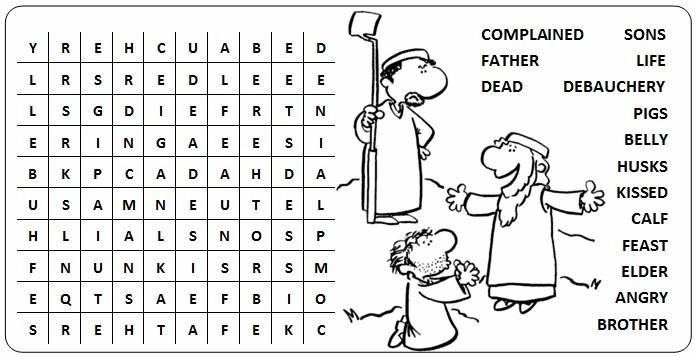
“A man had two sons. The younger said to his father, ‘Father, let me have the share of the estate that would come to me.’ So the father divided the property between them. A few days later, the younger son got together everything he had and left for a distant country where he squandered his money ona life of debauchery.
“When he had spent it all, that country experienced a severe famine, and now he began to feel
rebirth. The Gospel Reading, the parable of the Prodigal Son, is filled with this theme of awakening and the extravagant, life-changing love that the Father has for each one of us.
We are all familiar with this amazing story the bratty younger son who has the audacity to ask his dad for his inheritance early, only to squander it sinfully away. It makes us bristle instinctively at his nerve when we read it. But isn’t that exactly what we do when we selfishly turn away from God (in big or small ways) in our own
the pinch, so he hired himself out to one of the local inhabitants who put him on his farm to feed the pigs. And he would willingly have filled his belly with the husks the pigs were eating but no one offered him anything. Then he came to his senses and said, ‘How many of my father’s paid servants have more food than they want, and here am I dying of hunger! I will leave this place and go to my father and say; Father, I have sinned against heaven and against you; I no longer deserve to be called your son; treat me as one of your paid servants.’ So he left the place andwent back to his father.
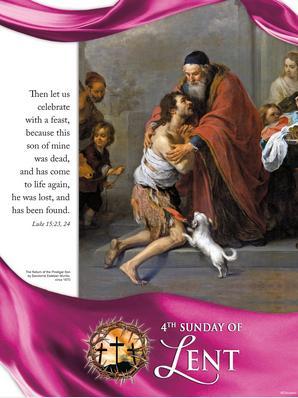
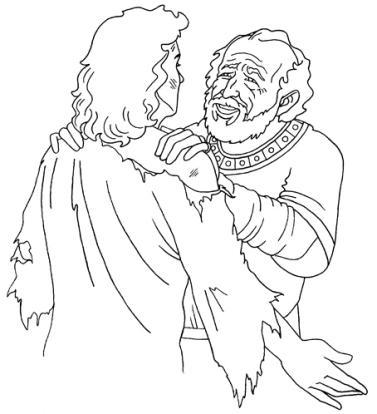
“While he was still a long way off, his father saw him and was moved with pity. He ran to the boy, clasped him in his arms and kissed him tenderly. Then his son said, ‘Father, I have sinned against heaven and against you. I no longer deserve to be called your son.’ But the father said to his servants, ‘Quick! Bring out the best robe and put it on him; put a ring on his finger and sandals on his feet. Bring the calf we have been fattening, and kill it; we are going to have a feast, a celebration, because this son of mine was dead and has come back to life; he was lost and is found.’ And they began to celebrate.
“Now the elder son was out in the fields, andon his way back, as he drew near the house, he could hear music and dancing. Calling one of the servants he asked what it was all about. ‘Your brother has come’ replied the servant and your father has killed the calf we have fattened because he has got him back safe and sound.’ He was angry then and refused to go in, and his father came out to plead with him; but he answered his father, ‘Look, all these years I have slaved for you and never once disobeyed your orders, yet you never offered me so much as a kid for me to celebrate with my friends. But, for this son of yours, when he comes back after swallowing up your property - he and his womenyoukill the calf we had beenfattening.’
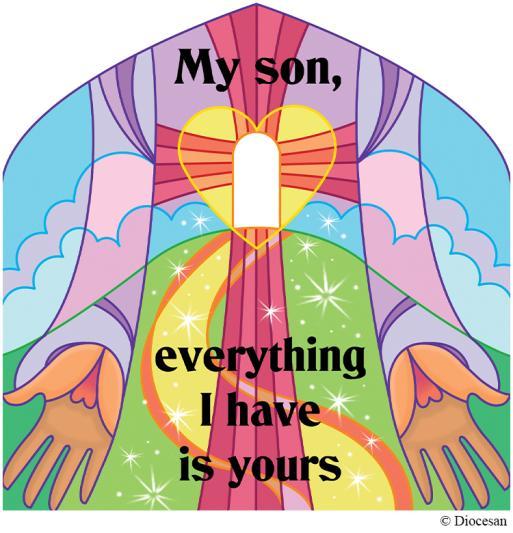
“The father said, ‘My son, you are with me always and all I have is yours. But it is only right we should celebrate and rejoice, because your brother here was dead and has come to life; he was lost and is found.”❖
lives? We squander away the inheritance of grace He has givenus. In desperation from the mess he had made of his life, the son finally “comes to his senses” awakening to the truth that he is a beloved son of a loving and merciful father and decides to return home. His contrition is faltering and imperfect and seems motivated in large part by his growling stomach. But it is enough for the lovingfather.
In fact, as soon as the father catches sight of his son he is “filled with compassion for him” and immediately
sets about preparing a feast and fine clothes for this son. What an extravagance of love! Whata beautiful picture Jesus gives us of our Father’s love and mercy. Oh, how this should fill us with gratitude for sucha Father! And how it should inspire us with just the tiniest bit of spiritual “spring cleaning” we can be sure we will be swept up in our Father’s loving embrace and find ourselves feasting in His presence. That is what Lent is all about. ❖ [www.catholicsteward.com/blog/ ]
Gospel Reflection
Today’s Gospel presents us with what is without doubt the bestknown and best-loved of the parables of Jesus - the story of the prodigal son. He tells this story in response to complaints about the kind of company he is keeping. Poor, sick and distressed people flocked to his side to listen to him and to be helped by him. These were the people who were considered sinful in the society. He tells of a son who leaves home with his inheritance and leads a wasteful life. The son decides to return home after falling into hard times and finds unconditional welcome from his merciful father. His years of wandering in sin are over. Lent is our time to think of our wandering. It is our time for self-examination, to see how much we are slaves to sinful behaviour and to look forward to, and celebrate, our coming home again. The Lenten season calls on us to leave our wandering days behind and to look forward the bright future thatlies ahead.
contemplates role of faith communities

The Conference on Theology in the Caribbean Today (CTCT) is calling on Caribbean thinkers, activists, artists, laity, pastoral workers, academics, clergy and theologians to submit abstracts on the theme Prophetic Responses to Contemporary Challenges for its 23rdBiennial Conference.
The Conference is set to take place July 7-11, in Barbados, marking its 32nd year. This event will also collaborate with the Catholic Diocese of Bridgetown and the Anglican Dioceses of Barbados, Jamaica, and the Cayman Islands in their 200th anniversary celebrations.
The 2025 conference will explore the essential role faith communities play in responding to the significant issues facing the Caribbean today. Participants will be invited to reflect, prepare and present on how churches and persons of faith can respond to challenges like violence, mental health, trauma, vulnerabilities of the youth, persons with disabilities, women, the aged, sustainability, justice and more. Submissions of no more than 200 words are to be submitted to the CTCT Secretariat via email: ctctcfp@gmail.com Feedback will be provided by April 25. Interdisciplinary contributions are also welcome.
Inspired by the understanding of prophetic witness in the Gospel, particularly Luke 4:18-19, “the Spirit of the Lord is upon me because he has anointed me to bring good news to the poor. He has sent me to proclaim release to the captives and recovery of sight to the blind, to set free those who are oppressed, to proclaim the year of the Lord’s favour”, participants are asked to consider the call to prophetic witness–that is, to be a sign of God’s presence.
CTCT encourages participants to engage in various forms of prophetic witness,including:
• Dreams and vision: Re-imagining a better future for Caribbean churches andsocieties
• Oracles of judgement: Holding authorities accountable and offering social/anthropological/cultural/ philosophical analysis of complex, systemic issues
• Oracles against the nations: Addressing contemporary forms of imperialism/colonialism from outside and within.
• Prophetic symbolism: Exploring music, dance, drama, art, poetry, digital/graphic art as expressions of prophetic witness.
Conference contribution is US$50 for non-members and US$40 for paid-up members. Active members over 75 years of age and students with ID are exemptfrompayingfees.
For more information, contact ctctcfp@gmail.com, or visit Facebook @ctct1994 and YouTube: CTCT YouTube.❖(The Catholic News of T&T)
The attitude of the older brother to the entire situation is a mirror image of our general attitude to people we consider to be sinners. Many of us would rather see a sinner damned than saved. And we consider ourselves to be good and religious people. Yet religion is supposed to make us more compassionate towards people who fall. After all, we are all capable of falling. The brother who stayed home, then, is a key character in the story. Jesus includes him to force us to examine our own willingness or reluctance to forgive and to celebrate the reconciliation of others. The question his character raises is this: are we part of a loving community that is always willing to welcome back straying members or do we push them further away? ❖
[From: Journeying with the Word of God, The Religious Education Department,Dioceseof Georgetown, Guyana ]
Pope tells priests hearing confessions is a ‘privilege’
VATICAN (CNS) nize that it is a privilege to administer the sacrament of reconciliation and grant absolution, Pope Francis wrote.
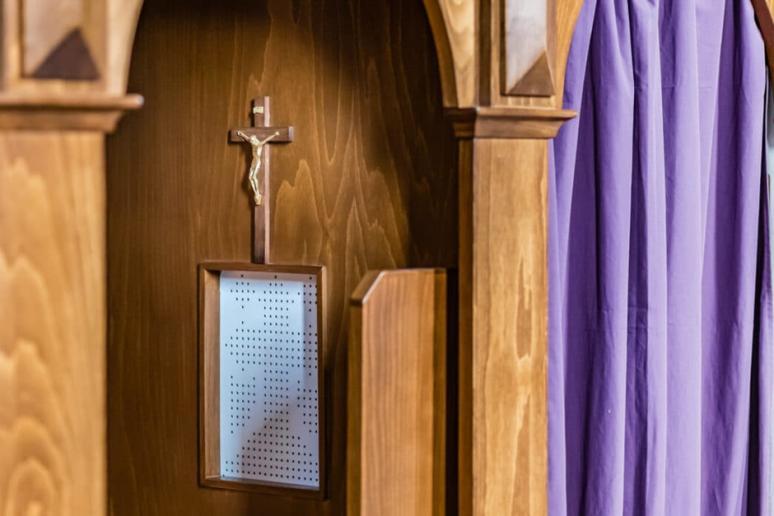
“Celebrating mercy, especially with Jubilee pilgrims, is a privilege: God has made us ministers of mercy by his grace, a gift we welcome because we were, and are, the first objects of his forgiveness,” the pope wrote in the message dated and released March 27.
Pope Francis, who is convalescing after more than a month in the hospital, sent his brief message to seminarians and priests participating in a Vatican course on the Sacrament of Reconciliation and on matters of conscience.
The pope usually would meet with participants in the annual course offered by the Apostolic Penitentiary, a Vatican court focused on the forgiveness of sins, the lifting of censures for those
who repent of their wrongdoing and indulgences.
Being ‘men of prayer’
In his message, Pope Francis asked the priests and seminarians to be “men of prayer” because that is the basis for their ministry, “by which you prolong the work of Jesus, who still and always repeats, ‘Neither do I condemn you. Go, and from now on do not sin any more.'”
“May this liberating word of the Lord echo throughout the Church in the Jubilee Year for the renewal of hearts, which flows from reconciliation with God and opens one to new fraternal relationships,” the pope wrote.
The peace that the world desires, he said, also “springs from mercy, like the hope that does not disappoint.”
Thanking the priests for their “indispensable sacramental ministry,” Pope Francis offered his blessing and said, “I ask you to please pray for me.”❖
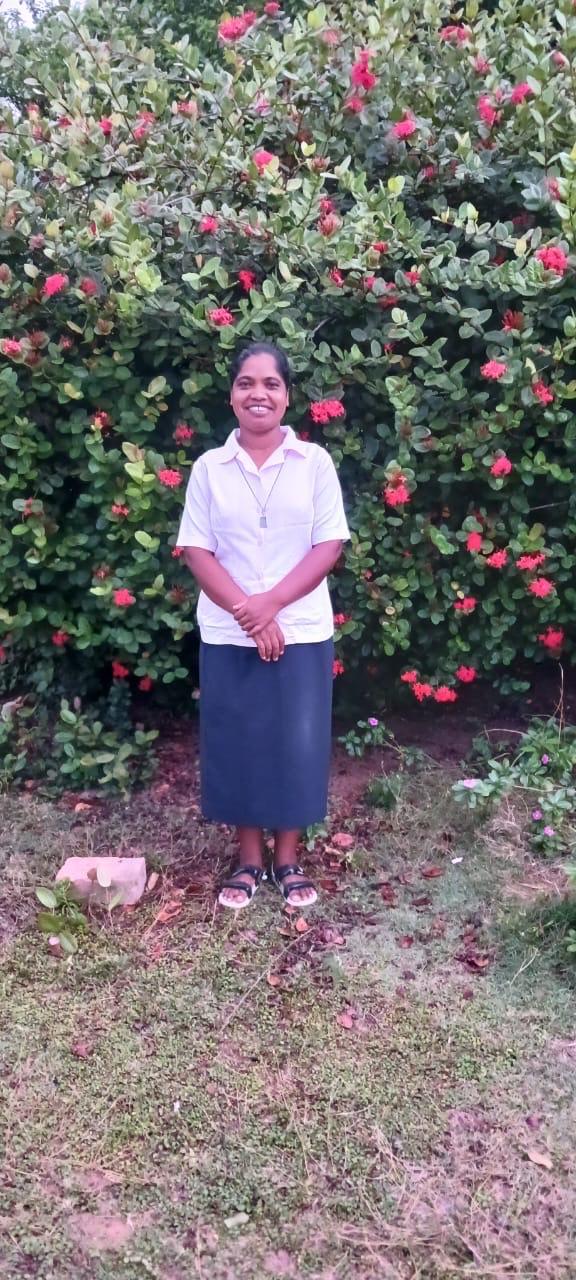
Message for the Fourth Sunday of Lent from by Sr. Rashmi Kerketta OSU
and of growth. Just like the ancient pilgrims who traveled far and wide with hope in their hearts, we too are on a pilgrima pilgrimage toward a deeper relationship with God.
The word "pilgrim" speaks of someone who is on a journey, not to a physical destination, but to a place of spiritual transformation. This journey is not always easy. The road can be long, the terrain difficult, and the challenges many. But as pilgrims of hope, we walk with the trust that God is with us every step of the way, guiding us toward something greater.
In the Gospel of Mark, Jesus tells us that "with God, all things are possible." During Lent, we are called to embrace that hope, evenin our struggles and difficulties. We may feel burdened by our sins, or weighed down by the trials of life, but Lent reminds us that there is always the possibility of renewal, redemption, and a fresh start.
Just as the pilgrims of old had their sights set on a sacred destination, we too are heading toward the ultimate destination of eternal life with God.
Hope is not a passive feeling; it is anactive trustin God's promises.
As we fast, pray, and give alms during Lent, we are actively engaging in hope. We choose to turn away from distractions and
sin, and to draw nearer to God. Every act of sacrifice, every prayer, every act of charity, is a step along our pilgrimage of hope, guiding us closer to the heartof Christ.
But what does it mean to be a pilgrim of hope in a world that can sometimes feel hopeless? It means that, even in the face of suffering, injustice, and uncertainty, we cling to the hope that Christ’s resurrection brings. We remember that no matter how dark the path may seem, the light of Easter is always ahead. We are a people of hope because we believe that Christ has conquered death, and through Him, we too have the promise of new life.
Journeying with the Word of God
As we walk this Lenten journey, let us be intentional in how we live out our hope. Let us pray for those who are struggling, offer our help to those in need, and live with a spirit of faith that even in the hardest moments, there is always something to look forward to – a deeper relationship with God, the love of Christ, and the hope of eternal life.
May this Lenten season renew our hope, strengthen our faith, and guide us as we continue our pilgrimage toward the glory of the resurrection.
Godbless youall.❖
Kurukabaru Retreat
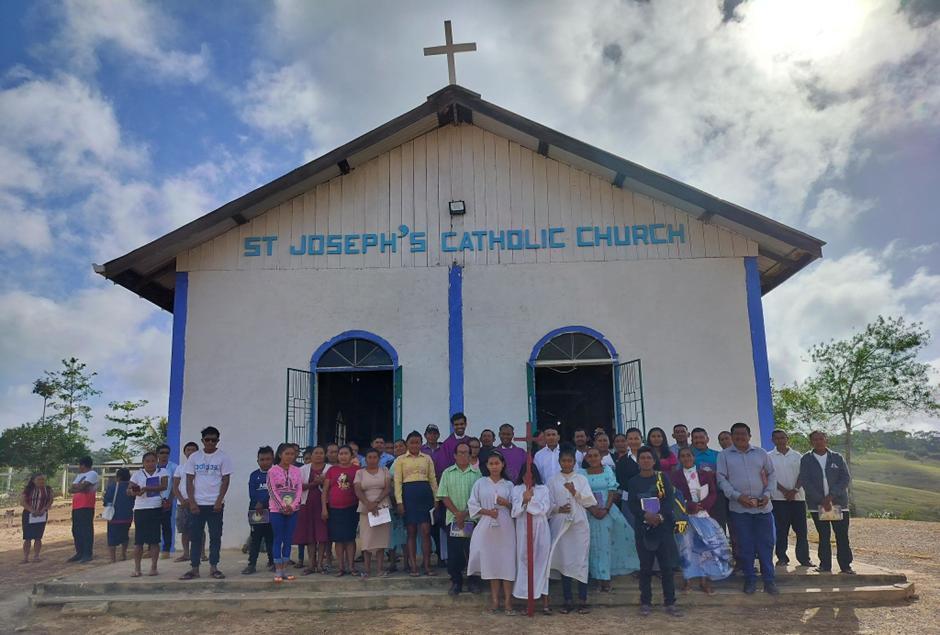
youths coming together to grow in faith and strengthen their bond with God.
and 26
It started on Saturday March 22nd and will end on Monday
March 31st. We ask that the you keep them in your prayers as they continue this journey.❖ (Adapted from Catholic Media Guyana Facebook
MAKING THE WORD OF GOD YOUR OWN
Step 1: Lookattoday’sReadingsprayerfully.
1st Reading: At the feast of the Passover at a place calledGilgal, God’s people celebrate their arrival in the land that Godhad promisedthem,
2nd Reading: God has restored relationship with himself through Christ. The task of carrying God’s mercy and reconciliation to all people is at the heartof the Church’s ministry.
Gospel: A loving father unconditionally welcomes home a wasteful but repentant son. This presents us with a picture of how God deals with his people.
Step 2: ApplyingthevaluesoftheReadings toyourdailylife.
1.What would you say Jesus is telling us about God the Father withthe parable of the wasteful son?
2.“It is in and through our sins that we experience the goodness and mercy of God.” Considering the parable in the Gospel, what do you think this statement means?
3.Reconciliation is an attitude that shapes our life with regards to openness, welcome and acceptance. How open are you to offering and accepting reconciliation?
4.With which character of the story do you most identify, the father, the young son or the older son? Why do you feel this way?
Step 3: Accepting the message of God’s Wordinyourlifeoffaith
Jesus’ parable in today’s Gospel shows us just how loyal and trustworthy God is in dealing with his people. God never shuts out any of his children. No matter how far from home they may wander, not matter what they may do, if they come home and ask for forgiveness, the one thing they can be sure of is a warm and generous welcome. This fact does not mean we should sin freely and easily but it is very reassuring to know that we can return home and be welcomed.
Step 4: Somethingtothink&prayabout
1.Reflect honestly on your attitude and the attitude of your parish community to people whom you consider to be sinners. Do you prefer to see them damned rather than saved? Do you ever try to show such people the right path? Do you treat people, regardless of who they are, exactly how youwouldlike them to treatyou?
2.Pray for those parents who never give up on their children but patiently wait for them to find their way home.❖
[From: Journeying with the Word of God, The Religious Education Department, Diocese of Georgetown, Guyana ]
An 8-day retreat is currently underway at St. Joseph’s Mission, Kurukabaru, North Pakaraimas, Region 8, Essequibo, Guyana, with 45 PLAs
Pope knew he ‘might not make it,’ physician says
ROME (CNS)
medical team at Rome hospital, Feb. 28 was the worst day.
“ eyes of some of the people around him, of his medical team, told the Italian newspaper Corriere della Sera.
“We were all aware that the situation had deteriorated further and there was a risk that he might not make it,” Dr. Alfieri said in the interview published
led to him inhaling some and a sudden ”
The doctors aspirated his airways and put him on noninvasive mechanical ventilation, a machine that delivers air with added oxygen through a tightly fitted face mask and using positive pressure to assist breathing. Dr. Alfieri and Vatican officials have said several times that Pope Francis was never intubated and that he always remained “alert and aware.”
But he added that Pope Francis had “delegated all kinds of health care decisions to Massimiliano Strappetti, his personal health care assistant who knowsperfectlywellthepontiff’swishes.” Strappetti, a nurse who worked in intensive care at the Gemelli, joined the Vatican health service in 2002 and has become Pope Francis’ primary health care provider, working in consultation with the pope’s physicians. Strappetti advised, “Try everything, don’t give up,” Dr. Alfieri said. “That’s what we all thought too. And nobody gave up.” Corriere also asked Dr. Alfieri if Pope Francis was aware of the danger he was in. “Yes,” he responded, “because he was always alert. Even when his condition worsened, he was fully conscious. That night was terrible; he knew, as we did, that he might not make it through the night. We saw the man in pain. However, from the first day he asked us to tell him the truth and wanted us to be honest about his condition.”
After 38 days in the hospital, Pope Francis returned to the Vatican, but Dr/ Alfieri and the other members of his medical team have said he will need two months to recuperate.
Cardinal Pietro Parolin, Vatican secretary of state, spoke to reporters March 24 outside a meeting near the Vatican. He said he had not visited the pope yet because he wanted to allow him to rest.
The Secretariat of State and all Vatican offices keep working as normal, he said.
“I think that for the moment only the most important issues will be submitted to the pope, issues that require a decision on his part also so as not to tire him too much,” Cardinal Parolin said. “Then as he recovers, we will return to the normal rhythm.”
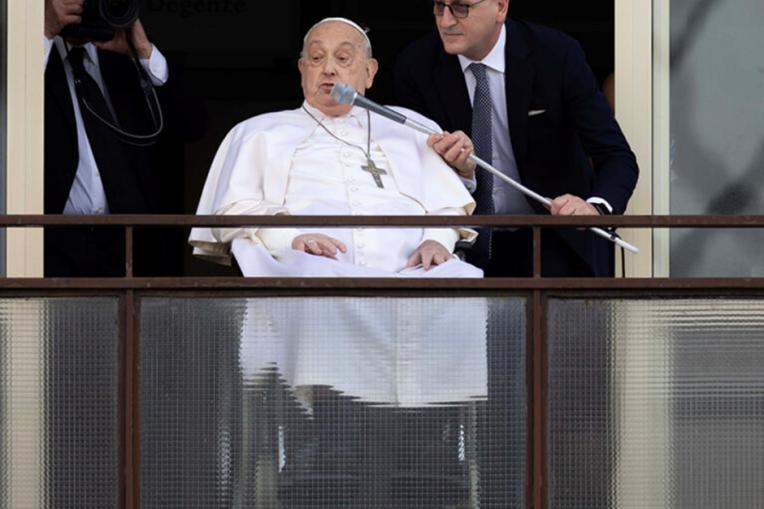
Greeting people gathered outside the Gemelli hospital before leaving March 23, Pope Francis was obviously weak, and his voice was barely audible.
While his doctors have urged him to avoid meetings with large groups, Cardinal Parolin said he hoped the pope would be able to at least briefly greet Britain’s King Charles III, who was scheduled to make a state visit to the Vatican April 8.
The pope’s first days back home had a rhythm of rest, work, prayer and therapy, both respiratory and physical therapy, the Vatican press office said. A nurse was present 24 hours a day, and the pope was alternating between using high-flow oxygen, oxygen mixed with ambient air and not using the nasal cannula at all.
Pope Francis concelebrated Mass March 25, the feast of the Annunciation, in the small chapel near his room on the second floor of the residence, the press office added. It did not say who the other concelebrants were.❖
Church urges protection of young after attack on Mexican youth group
Violence has been rife in Guanajuato considered one of Mexico’s most Catholic states as drug cartels battle over an illegal business of stealing gasne from pipelines operated by staterun oil company Pemex. A December 2023 massacre at a Christmas party in a community served by the Diocese of Irapuato killed 11 young people and left 14 injured.
Michoacán state, where drug cartels dispute territories and run extortion rackets, and says some there see organized crime as a path to prosperity due to limited social mobility.
He said that young people there have told him: “I want to be a narco, because narcos have the best trucks and soldiers and the police do everything for him. They practically don’t work.”
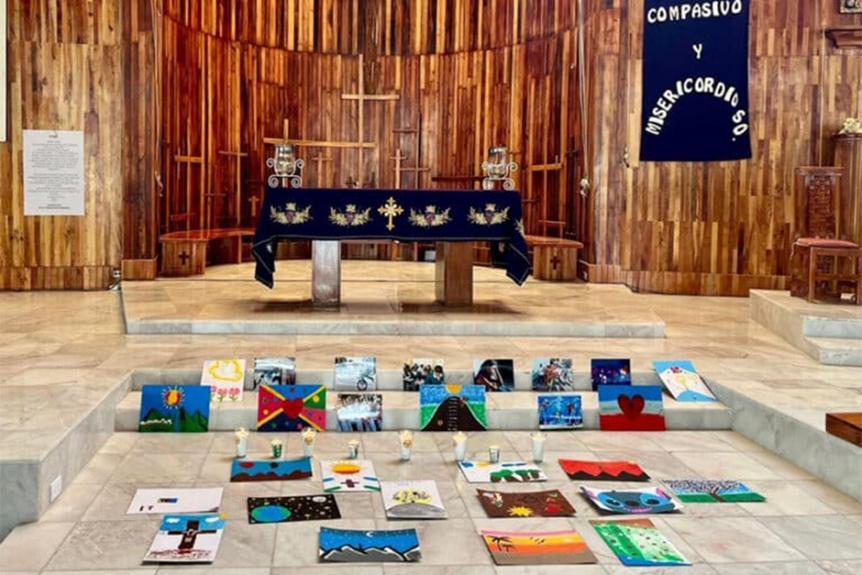
(OSV News) - Mexican parishioners placed eight candles on church altars in memory of the eight young people shot dead in an attack outside a parish church.
Catholic leaders called for action on insecurity and urged reflection on how violence is scandalously claiming the lives of many young people.
Masses were celebrated around the country March 23 as Catholics prayed for the victims of the attack, which claimed eight lives and left five injured, in the city of Salamanca in western Guanajuato state March 16.
Details are still unclear, but Bishop Enrique Díaz Díaz said in a March 18 statement, “They were talking and socializing after the celebration of holy Mass, (then) at approximately 7:30 pm, armedmenarrived andopenedfire.”
Investigators found 50 shell casings from high-powered weapons, along with bullet holes in the wall of the San José Mendoza Church, according to Mexican media.
“This act makes us reflect on the violence plaguing our nation, which has become a cancer for our society. Criminals flaunt their impunity, manifest contempt for life, and make insecurity
prevail in our community spaces,” the Mexican bishops’ conference said in a March 18 statement.
“This reality wounds the hearts of all Mexicans; no one can feel excluded from it. It’s time to unite and for us to assume our commitment to peace in our country,” the statement continued.
“Let us form a common front, living the solidarity that has so often characterized us in the face of the tragedies we confront, and fight crime and the lack of justice that bleeds our country and thwarts the dreams of thousands of our young people.”
The attack on the young people came as violence continues to convulse Mexico. Stories of horror routinely make the headlines including the recent discovery of what appears to be an extermination site, where searchers looking for their missing loved ones found bone fragments, clothing and ovens used to cremate victims.
Mexico has stepped up its enforcement against drug cartels under U.S. pressure since President Claudia Sheinbaum took office Oct. 1. But her administration continues to downplay atrocities such as the discovery of the apparent extermination site.
The attack on the church youth highlighted the tragedy of young Mexicans losing their lives amid the violence. Young people are also falling into lives of crime with teenage boys being recruited as drug cartel gunmen and young women claimed as girlfriends by cartel bosses.
“Adolescents and young people are the most affected by this wave of violence in Mexico, and each death calls us to protect their lives and take steps to protect them from the evil that seeks to trap them and lead them into darkness,” said a statement from the National Dialogue for Peace, an initiative to pacify Mexico sponsored by the bishops’ conference, the Jesuits and the Conference of Religious Superiors of Mexico.
“For many authorities, (the eight slain young people) will be a normalized part of Mexico’s violence statistics and the tragedy that saddens the country and has touched thousands of anonymous families,” the Catholic Multimedia Center, which tracks violence against clergy and religious, said in an editorial.
Father Andrés Larios has worked with young people in the conflict-ridden Tierra Caliente region of western
“That’s what motivates them, unfortunately, living in a somewhat limited and impoverished situation, and also seeing injustice, corruption and impunity,” he added in comments to OSV News. “At the end of the day, drug trafficking is what solves that problem.”
Life expectancy is short for drug cartel hitmen. But Father Larios said a mentality exists in which “many of these young people say, ‘I prefer to live without limits for a month, a year or two rather live poor all the time.'”
Father Larios also spoke disappointingly of church efforts at keeping young people from the clutches of drug cartels. “It’s about raising awareness of the reality our people are experiencing, trying to educate ourselves, from morals, religion to be good citizens,” he said.
“We’re neglecting a lot of pastoral care,” he added. “Sometimes we exhaust ourselves training children for the sacraments of baptism or confirmation, first Communions, weddings, and that’s where our time ends up, unfortunately, on purely sacramental training.”❖
Massimiliano Strappetti, the nurse who is Pope Francis' primary medical caregiver at the wishers at Rome's

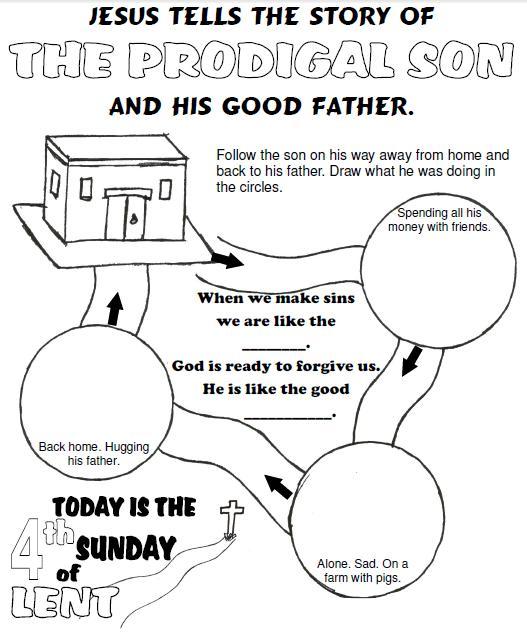
Dear Girls and Boys,
Have you ever lost something that was very precious to you? How did you feel? Have you ever found something that you had lost? If so, how did you feel when you found it? In our Gospel reading today, Jesus told a story about a man who lost something that was very precious to him. The story also told of the man's joy when that which he had lost was found. This is the story that Jesus told. A man had two sons. The younger son asked his father to give him his share of the inheritance that he had coming to him. The father gave it to him, and the boy left home to go out and see the world and have some fun. The father was broken-hearted. He had lost one of his sons.
It wasn't long before the boy had wasted all of his money on wild living. He had no money to buy anything to eat, so he got a job feeding pigs. It was the worst job you can imagine, but he was so hungry that even the food that he was feeding the pigs looked good to him.
The boy looked around at the situation he had gotten himself into and said to himself, "My father's servants live better than this! I will return home and beg for the forgiveness of my father and ask him to take me back as a hired servant." As the boy approached his father's house, his loving father, who had been watching and hoping for his son's return, saw him coming and ran to meet him. He threw his arms around him and hugged him and kissed him.
The father was so happy that his son had returned, that he gave him a robe and placed a ring on his finger. He ordered his servants to prepare a feast. "My son was dead and now he is alive. He was lost, but now he is found."
Jesus told this story to show the kind of love God has for his children. When one of God's children strays away, He always welcomes him with open arms when he returns home. Aren't you glad that you have a heavenly Father who loves you?
Dear Father, we thank you for your unfailing love. We are thankful that even when we stray, you welcome us home with open arms. In Jesus' name we pray, Amen.❖

Pro-life movement needs new approach
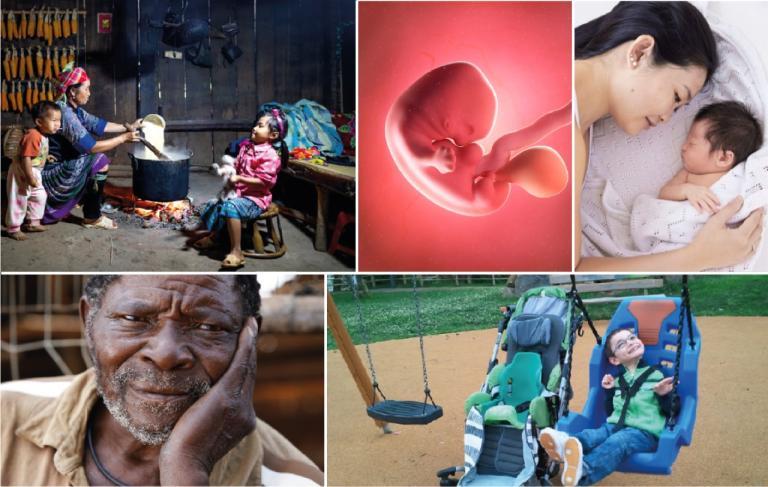
Many countries are afflicted by wars and all sorts of violence, "especially against women, children before and after birth, adolescents, people with disabilities, the elderly, the poor and migrants," he wrote.
"We must forge a genuine pastoral care of human life to put into practice what is also reiterated in the recent declaration, 'Dignitas Infinita' ('Infinite Dignity'), of the Dicastery for the Doctrine of the Faith," he added.
The principle that every person's life should always be respected, safeguarded and defended, which is evident in church teaching and recognizable even by reason, must be "implemented inevery country, village and household" with special emphasis on helping young people understand and welcome the value of life, the cardinal wrote.
However, he wrote, the framework does not provide local churches "with preset and ready-to-use 'recipes.' Instead, it offers ways to initiate 'processes'" that involve the entire body of the Catholic Church, reflective
of the synodal process begunin 2021. Through dialogue, listening, prayer and discernment, all the faithful with the guidance of the Holy Spirit can work "to create the conditions to welcome and accompany life anywhere and anytime," Cardinal Farrell wrote.
According to the framework, the foundation of the pro-life mission is to move from a "logic of performing activities to achieve objectives" to a "logic of co-responsibility and transformative discipleship." That is, where pastoral plans are no longer developed alone since they are not effective.
The church must build and tap into its "ecclesial intelligence," where all members active and aware of the reality on the ground come together as disciples, not to have "a project," but to respond to a call, like the Good Samaritan coming to the aid of a personinneed,it said.
"In many countries, attention to life issues is kept high by pro-life
marked the 30th Anniversary of
For this occasion, the Dicastery for Laity,
and Life published a Pastoral Framework on how to initiate ecclesial processes to promote a Pastoral Care of Human Life, with the aim of defending, safeguarding, and promoting it in different geographical areas and cultural contexts, in a time marked by extremely serious violations of human dignity.
movements, but many of them mainly focus on civil and political action," the framework said.
"Pastoral care is an ecclesial action of the Christian community, laypeople and pastors together, which cannot be delegated and is called to address every situation in which human dignity is threatened, without confining itself to specific areas," itsaid.
There is also a need to "look beyond beginning and end-of-life issues, which still remain a priority," and include other serious violations of humanlife,itsaid.
"We need situational intelligence, empathy, intuition, and practical wisdom" to implement pastoral action, the framework said. "This is why the proposed planning model is formative and transformative not only in terms of results but also in terms of the people who plan."
Bishop Dario Gervasi, adjunct secretary of the dicastery, said in a press release that the framework came out of an ongoing dialogue with the world's bishops.
"The primary recipients of this
pastoral framework are the bishops who, during their frequent 'ad limina' visits to the Holy See, have always emphasized the urgency of a renewed commitment to safeguard and promote the life and dignity of every human being," he said.
It is a way to support every diocese's journey "so that they can invest the necessary resources for a more effective formation of the laity and raise awareness among younger generations about the value of human life," BishopGervasi said.
The framework is available on the dicastery's website at laityfamilylife.va in English, Portuguese and Italian, and Spanish and French versions will be available "soon," the press release said.
Cardinal Farrell encouraged "every bishop, priest, religious man and woman and layperson to read this pastoral framework and strive to develop an organic and structured pastoral care of human life, which can provide workers, educators, teachers, parents, young people and children the right formation to respect the value of life."❖


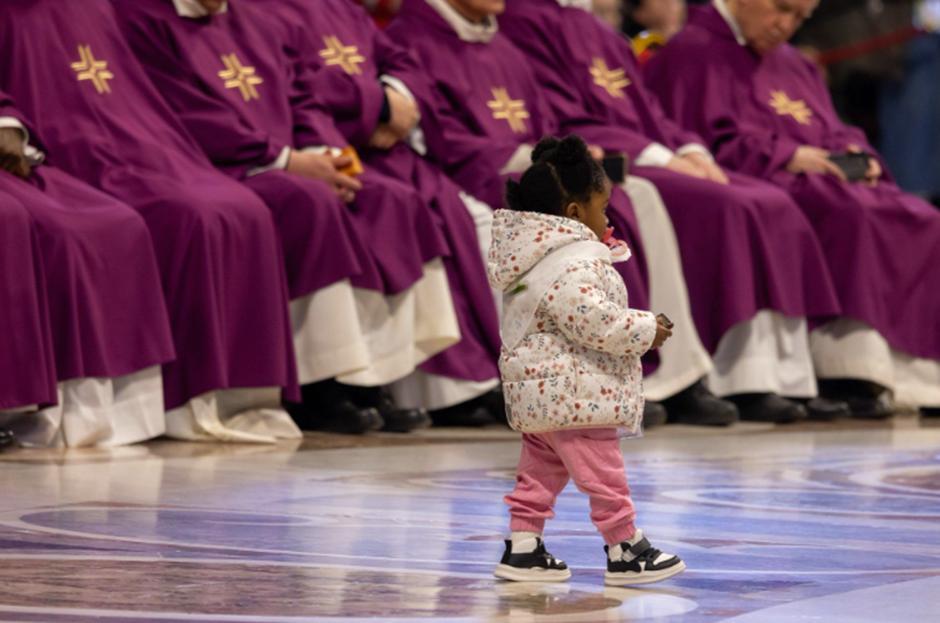
A little girl walks in front of the concelebrants during a Mass marking the 50th anniversary of Italy's Movement for Life in St. Peter's Basilica at the Vatican March 8, 2025. (CNS photo/Pablo Esparza)
Tuesday March 25th 2025,
the Encyclical Letter Evangelium vitae.
Family
His days are devoted to prayer, breathing exercises, physical therapy, rest and handling paperwork sent from Vatican offices to his residence,
the Domus Sanctae Marthae.
Each morning, he concelebrates Mass in the small chapel down the hall from his bedroom and private office, the
press office said.
Pope Francis has not received any visitors, it said. He spends each day with members of his medical team one of whom is on duty 24 hours a day and with his private secretaries.
The pope was praying March 28 for victims of a massive earthquake that caused death and destruction in Myanmar and Thailand, the press office said.
In a telegram sent to civil and church authorities in the two countries, Cardinal Pietro Parolin, Vatican secretary of state, said the pope was “deeply saddened by the loss of life and widespread devastation.”
“Pope Francis offers heartfelt prayers for the souls of the deceased and the assurance of his spiritual closeness to all affected by this tragedy,” the message said. The pope also prayed that emergency workers would be given “the divine gifts of fortitude and perseverance.”
The pope was hospitalized Feb. 14March 23 after a case of bronchitis worsened, making it difficult for him
to breathe. He was diagnosed with multiple infections and then with double pneumonia, resulting in several life-threatening breathingcrises.
The Vatican press office said that since the pope was released from the hospital, he has had a reduced need for supplemental oxygen and is using high -flow oxygen through a nasal cannula during only partof the night.
The results of blood tests performed March 26 were within the normal range, the press office said. Before they discharged the pope, his doctors said he would continue drug therapy at home to deal with mycosis, a fungal infection, and the press office said he was continuing that medication.
Pope Francis watched the livestream March 28 of the Lenten meditation for cardinals and senior members of the Roman Curia offered by Capuchin Father Roberto Pasolini, preacher of the papal household.
While the Vatican published a schedule of major Holy Week and Easter liturgies March 27, the press office said it was too soon to know if the pope would be in attendance.❖

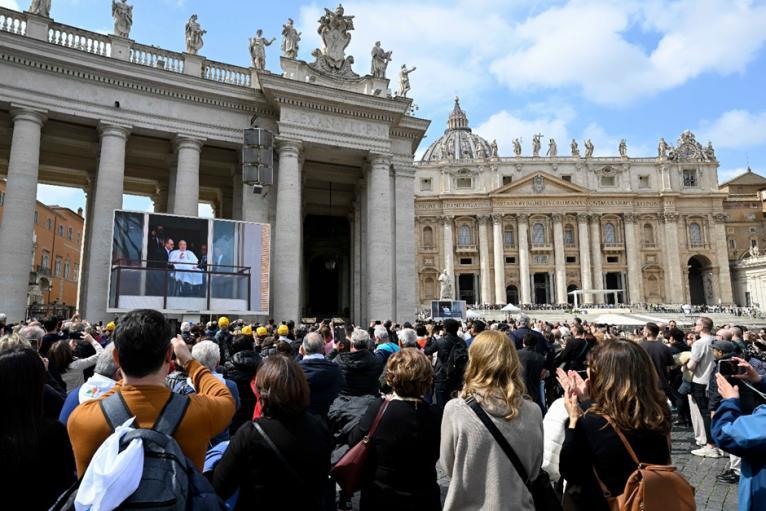
Visitors and pilgrims in St. Peter's Square at the Vatican gather in front of a video screen to see Pope Francis greet well-wishers at Rome's Gemelli hospital before returning to the Vatican March 23, 2025, after 38 days of treatment at the hospital. (CNS photo/Vatican Media)
Hispanic community holds gather-
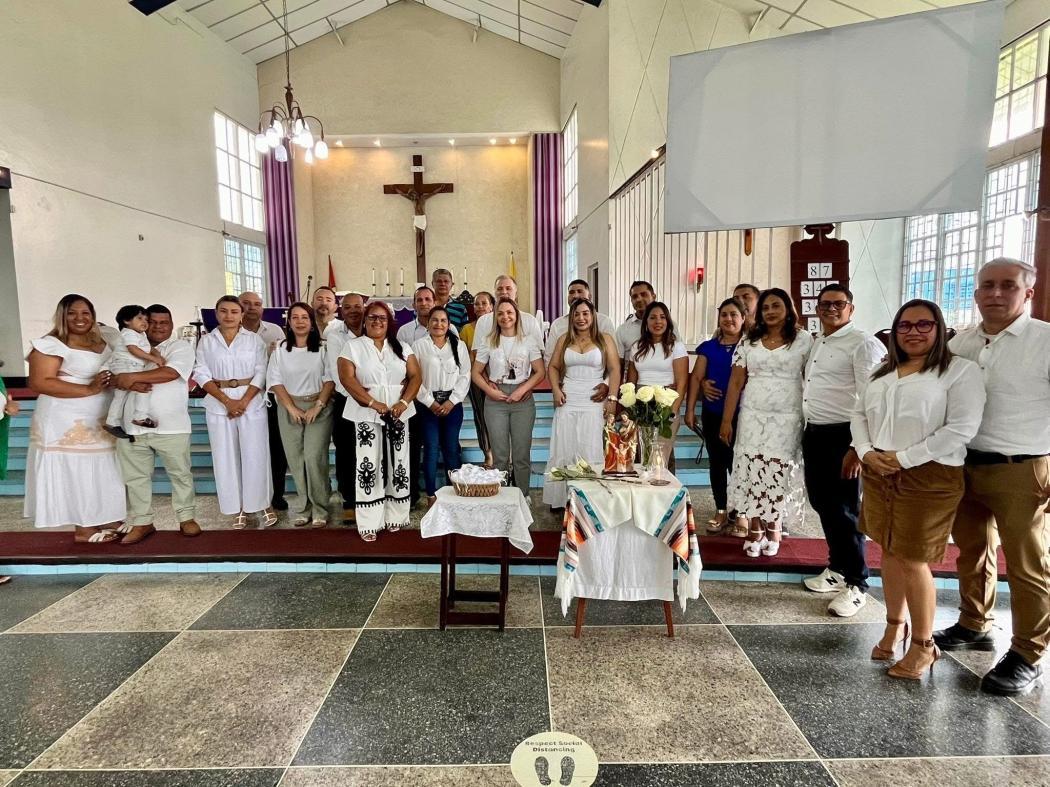
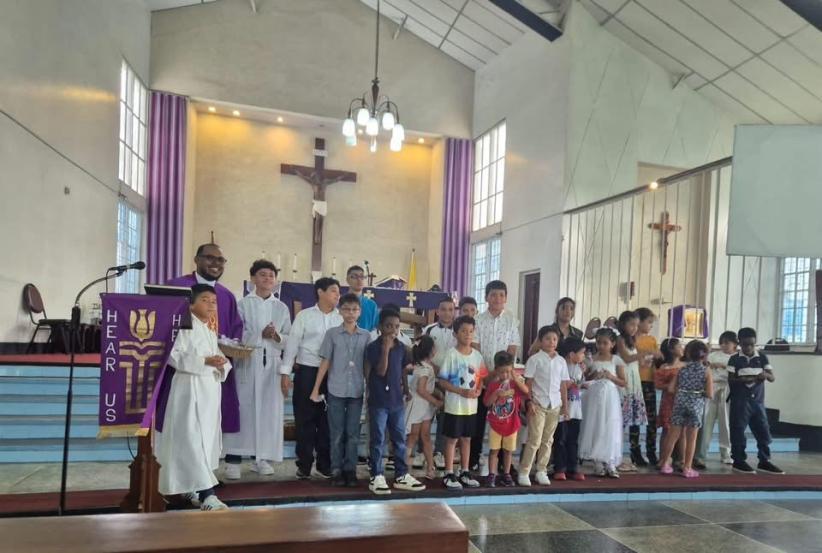
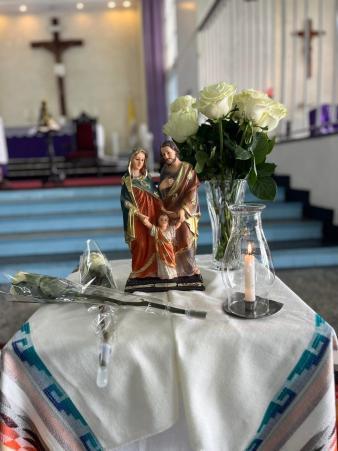
On Sunday, March 23, 2025, the Hispanic Community of Our Lady
During this heartfelt celebration, 23 couples renewed their marriage vows, reaffirming the “yes” they once gave to each other before the Lord. May He, who united them in His love, continue to sustain and bless their union.
called Infancia Misionera. This event aimed to deepen the children’s knowledge and understanding of Jesus’ life and Catholic teachings, helping them grow in faithandmission.❖

Port Mourant’s long history
The Church of St. Francis Xavier at Port Mourant on the Corentyne was opened in 1883, even though the first baptismal entry was only registered in 1889. The Catholics in Port Mourant, Rose Hall and neighboring districts as well as
after by a priest from New Amsterdam.
Fr. John Victorine, a Guyanese Diocesan Priest for a long number of years, had responsibility as the Priest for New Amsterdam along with Port Mourant. As the Catholic community was growing, Fr. Victorine proposed that the church be enlarged in 1935. Indications are that the church at
Saint of the Week
Port Mourant was established as a Parish in February 1925, making this year 100 years as aParish.
In addition to Fr. Victorine, a number of Jesuit Priests served there. In 1953 the Scarboro Fathers (SFM) were appointed to the parish where they stayed until 1972, after which the Jesuits returned. In 1995 and beyond 2000, the Parish was administered by Fathers from the Institute of the Incarnate Word (IVE) after which the Jesuits returned.
Like many other Catholic parishes, there were chapters of the St. Vincent De Paul Society, Legion of Mary, Charismatic Renewal and a Youth Group, among others.
The St. Francis Xavier Youth Club was reestablished in 1986, becoming very active in community work. Their activities in the Commonwealth Youth Programme won them the Commonwealth Youth Award in 1992, 1995 and1998.❖
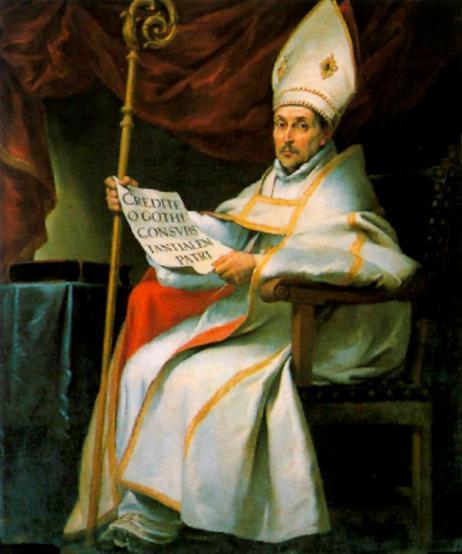
April 4th: Saint Isidore of Seville Patron Saint of the Internet and Computers
s life were a time of
half earlier, and shortly before Isidore they set up their own capital. They were Arians Christians who said Christ was not God. Thus, Spain was split in two: One people (Catholic Romans) struggled with another (Arian Goths).
Isidore reunited Spain, making it a center of culture and learning. The country served as a teacher and guide for other European countries whose culture was also threatened by barbarian invaders.
Born in Cartagena of a family that included three other sibling saints–Leander, Fulgentius and Florentina–he was educated by his elder brother, whom he succeeded as bishop of Seville.
An amazingly learned man, he was sometimes called “The Schoolmaster of the Middle Ages” because the encyclopedia he wrote was used as a textbook for nine centuries. He required seminaries to be built in every diocese, wrote a Rule for religious orders, and founded schools that taught every branch of learning. Isidore wrote numerous books, including a dictionary, an encyclopedia, a history of Goths, and a history of the world beginning with creation! He completed the Mozarabic liturgy, which is still in use in Toledo, Spain. For all these reasons, Isidore is a patron saint of the Internet.❖