
Pope celebrates 12th anniversary with
VATICAN CITY (CNS) Pope
Francis spent the 12th anniversary of his election to the papacy undergoing physiotherapy at Rome’s Gemelli hospital, but he was well enough to celebrate it in little ways.
Along with the health care workers treating him, the pope who has been hospitalized for nearly a month had a small celebration to mark the anniversary of his election, complete with a cake and candles, the Vatican press office said March 13. Hundreds of cards sent from children all (please turn to page 10)
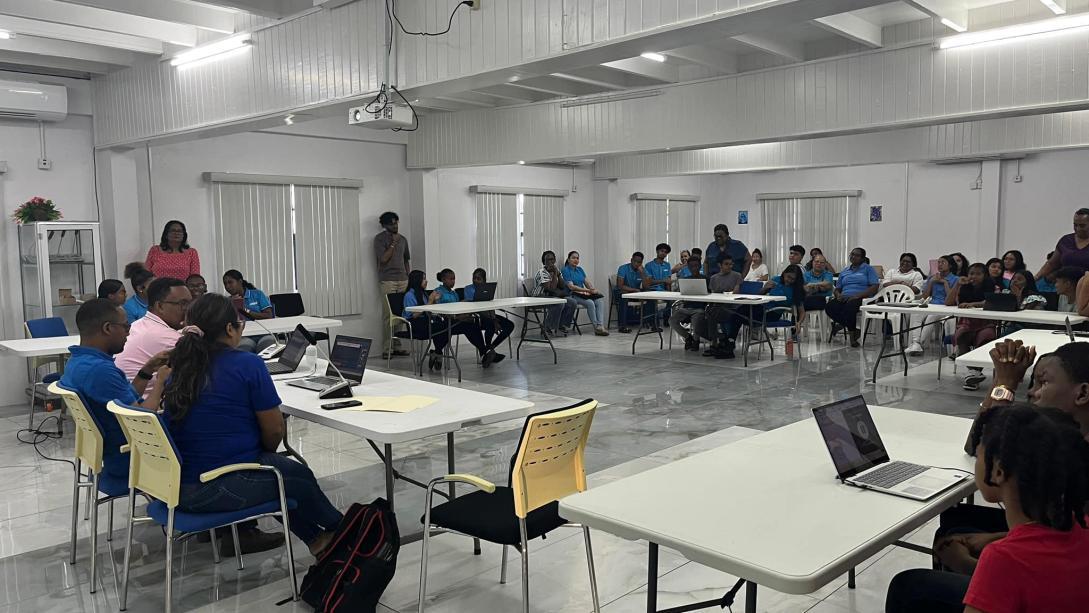
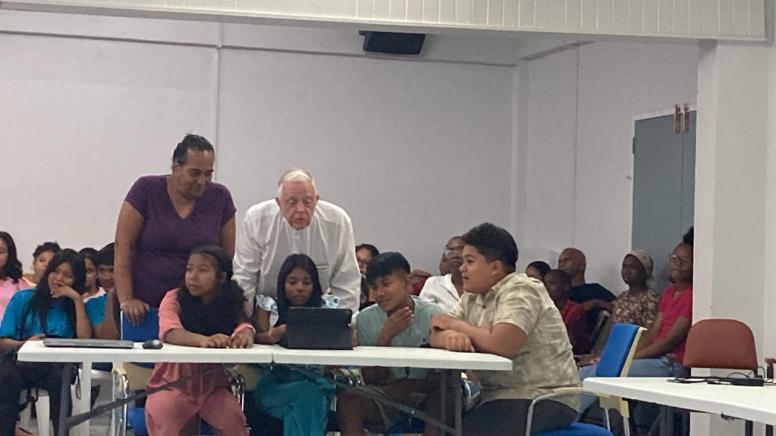
The first round of the 20th Annual Bible Quiz was held last Sunday March 9th at the Catholic Life Centre, Brickdam. Participants were asked to study the Gospel of Luke and the Youth Catechism of the Catholic Church (YOUCAT).
Over 21 faith communities participated, both in-person and virtually, including the South, North, and Central Georgetown Clusters; St. John the Baptist, Plaisance; Hosororo (Region 1); Essequibo joint teams, (Region 2); New Amsterdam (Region 6), Kurukabaru, (Region 8); and the North Pakaraimas, South Pakaraimas, Central and South Rupununi (Region 9).
The second round of the quiz will be held on Sunday March 23rd. We ask that you continue to keep
Formation workshop for Catechists and Service Leaders held at Aishalton - p2
Mexican bishops decry ‘cruellest’ expression of violence as extermination camp discovered- p3
A Christian Perspective on Social Issues - p4
Sunday Scripture - p5
Ask Me About Jubilee! - p6
Message for the Second Sunday of Lent from Sr. Marie Harper, OSU - p7
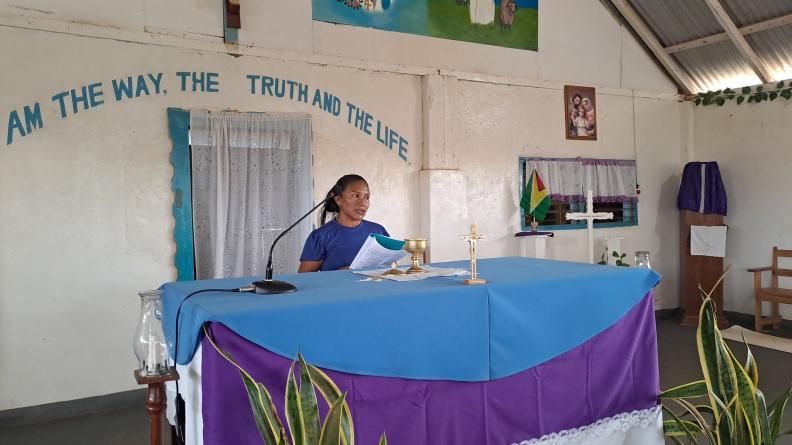
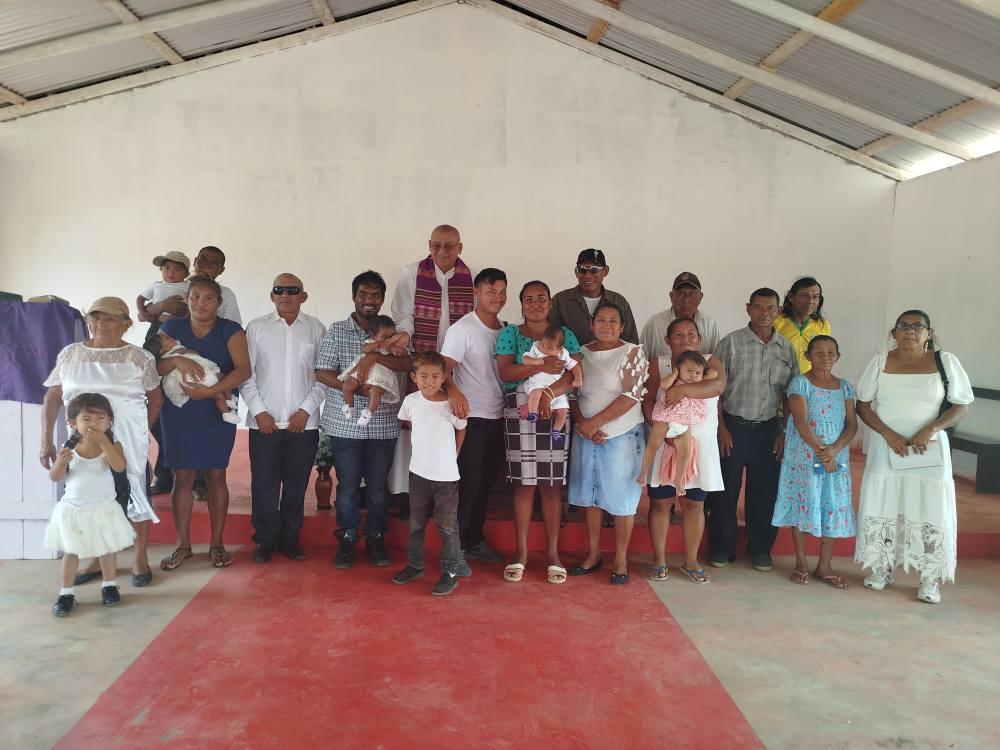
Baptism at Moco Moco - p7
In 12 years since election, Pope Francis shows papacy is a mission, not a job - p8
Children’s Page - p9
Pope's March prayer intention: 'For families in crisis' - p11
Catholic Memory Lane - p12
Bishop’s Engagements
SECOND SUNDAY OF LENT: SundayMarch16th
07:30hrs - MassatSt.JosephtheWorker,Linden
10:00hrs - Mass at Our Lady of Mount Carmel, Wismar
15:00hrs - Mass at Our Lady of Lourdes, Silver Hill
Tuesday, March 18th
13:00hrs – Arrival of His Excellency, Archbishop Santiago de Wit Guzmán, JDC
17:00hrs – Welcome Mass for His Excellency at the Cathedral of the Immaculate Conception, Brickdam.
Wednesday, March 19th
09:00hrs – Attend presentation of Credentials of His Excellency at Office of the President
18:00hrs – Mass at St. Joseph, Husband of Mary, Little Diamond.
Thursday, March 20th
14:30hrs - Attend presentation of Credentials of His Excellency at Caricom
Friday, March 21st
05:00hrs – Travel to Lethem
15:00hrs – Mass at St. Francis Borgia, Potaranau, Region 9
Saturday, March 22nd
09:30hrs – Return to Georgetown
THIRD SUNDAY OF LENT: Sunday, March 23rd
07:30hrs – Mass at Church of the Annunciation, Malgre Tout, West Coast Demerara. 12:45hrs – Departure of the Nuncio
Francis Alleyne OSB
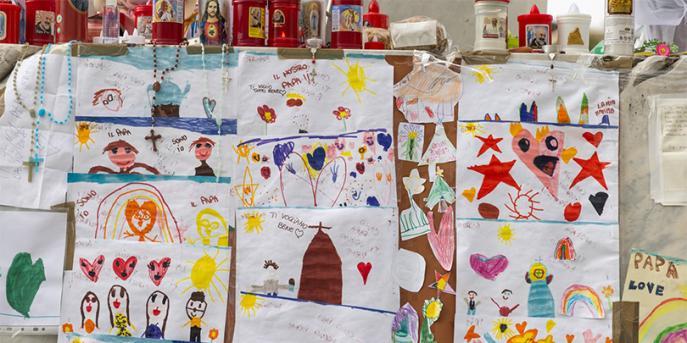
Drawings for Pope Francis cover the base of a statue of St. John Paul II outside Rome's Gemelli hospital March 8, 2025. (CNS photo by Pablo Esparza)

The Jubilee Prayer

Dear Editor,
Temptation is the most insidious weapon our enemy has. It isn’t manipulation or force; it’s just an offer that hovers at the edge of our awareness and distracts us from everything else. Giving in to temptation is like taking a getaway drug, and then a few months later you don’t even recognize yourself. It is never satisfied, once you give in, you have to give in again and again, with no one to blame but yourself. It is

Father in heaven, may the faith you have given us in your son, Jesus Christ, our brother, and the flame of charity enkindled in our hearts by the Holy Spirit, reawaken in us the blessed hope for the coming of your Kingdom.
May your grace transform us into tireless cultivators of the seeds of the Gospel. May those seeds transform from within both humanity and the whole cosmos in the sure expectation of a new heaven and a new earth, when, with the powers of Evil vanquished, your glory will shine eternally.
May the grace of the Jubilee reawaken in us, Pilgrims of Hope, a yearning for the treasures of heaven. May that same grace spread the joy and peace of our Redeemer throughout the earth.
To you our God, eternally blessed, be glory and praise for ever.
Amen



Temptation
not unique to anyone. We all may be tempted over different things, but we are all tempted. And if we give in, we all eventually find ourselves in the same place. It is vicious, it is malicious, and it never lets you go on its own. It doesn’t even matter why you do it, the result is always the same.
Everyone who has ever walked the earth has faced temptation, and our failure to resist it is why we’re in the mess we’re in. The very first sin was disobedience, yes, but it was also failure to resist temptation. Samson failed to resist temptation, and it robbed him of his strength. David failed to resist temptation, and his kingdom was torn apart.
Yet, for us many failures there are to resist temptation, there are just as many examples of God stretching out His hand in forgiveness. That is not to say there are no consequences, but He never fails to restore us if we offer up heartfelt repentance. We should resolve to obey God when tempted, as we are called to do. But at least we know that when we fail, as we all have at least once, it is not the end.
With God by our side, we become better persons. A better son, husband, father, brother, wife, mother and friend.
Leon Jeetlall
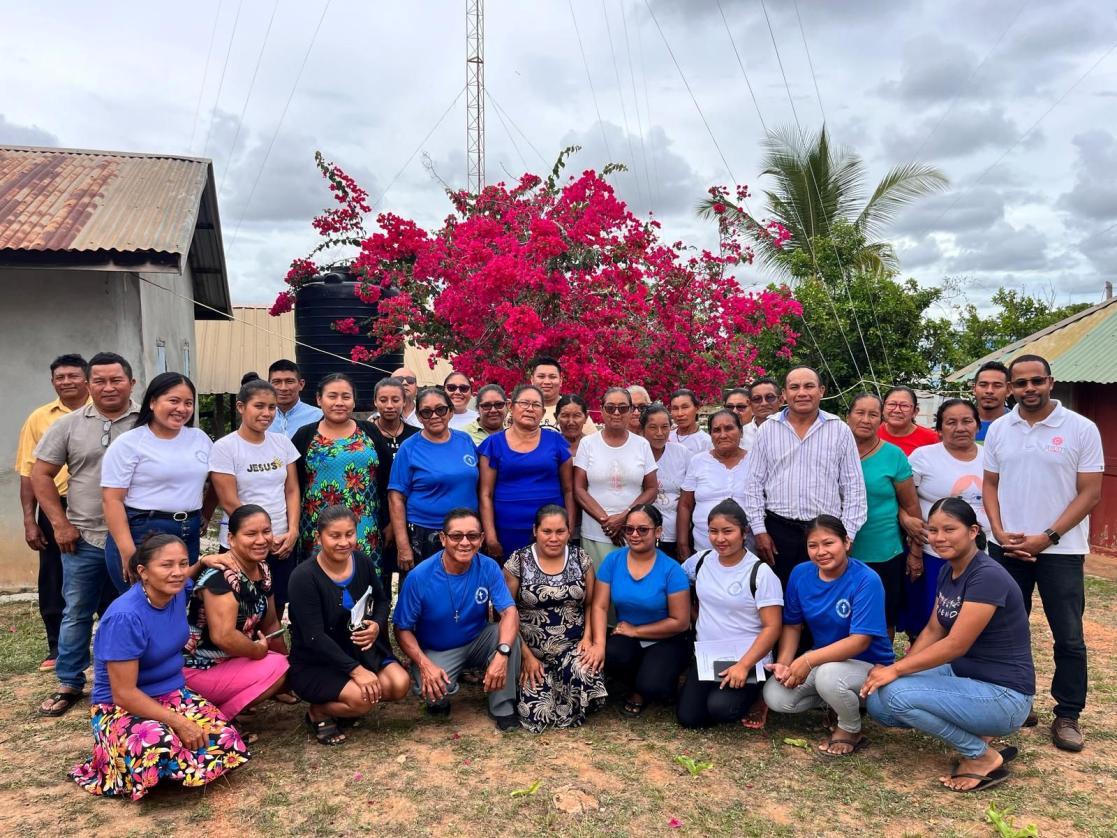
On March 8-9, 35 Catechists and Service Leaders from Churikadnau, Aishalton, Karaudarnau, Achawib and Bashaizon participated in a formation workshop at St. Robert Bellarmine Church, Aishalton, Deep South Rupununi, Region 9, Essequibo, Guyana.
The workshop focused on leading Sunday Services in the absence of a priest and on leading liturgies such as the Morning Prayer, Adoration, and the Rosary. Catechists were given guidelines on making lessons more interactive.❖
(Adapted from Robert Bellarmine R.C Church Aishalton Facebook page)
Mexican bishops decry ‘cruelest’ expression of violence as cartel extermination camp discovered
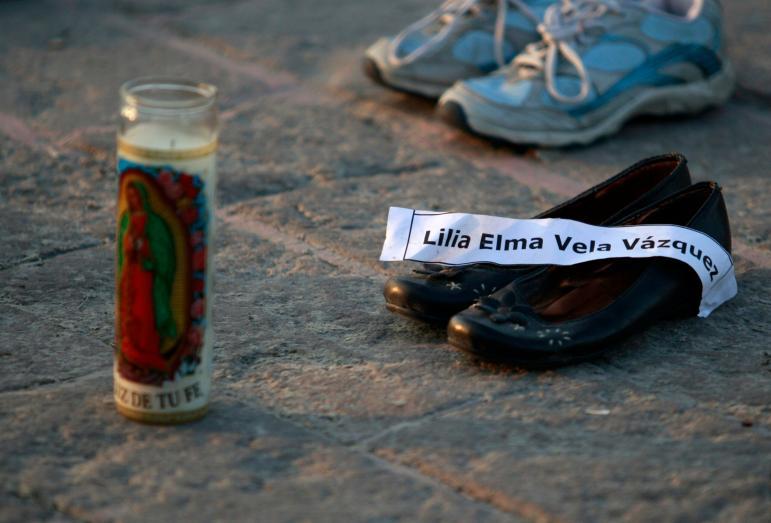
A file photo in Monterrey, Mexico, shows a candle with an image of Our Lady of Guadalupe and pairs of shoes with a name tag of its owner, a victim of the drug war. In a statement shared March 12, 2025 the Mexican bishops' conference expressed outrage over the discovery of an extermination camp operated by a drug cartel, calling it "one of the cruelest expressions of evil and human misery that we've seen in the country," and alleging such sites exist in other parts of Mexico. (OSV News photo/Daniel Becerril, Reuters)
(OSV News) The Mexican bishops’ conference expressed outrage over the discovery of an extermination camp operated by a drug cartel, calling it “one of the cruelest expressions of evil and human misery that we’ve seen in the country,” and alleging such sites exist in other parts of Mexico.
“We denounce with deep concern that many places like this exist in our nation, sites where the most serious crimes against humanity have been committed,” the bishops said in a March 12 statement signed by the conference’s president, Bishop Ramón Castro of Cuernavaca and secretarygeneral, Auxiliary Bishop Héctor Pérez of Mexico City.
“These acts directly violate the sacred dignity of the human person created in the image and likeness of God,” the bishops said.
A group known as Warrior Searchers of Jalisco one of the collectives of families, who scour the country looking for their kin discovered the camp in Teuchitlán, approximately 40 miles west of Guadalajara. They found ovens for cremating victims, along with bone fragments, clothing and more than 200 pairs of shoes.
“This isn’t just a recruitment camp, it’s a place of extermination. We can no longer remain silent,” the searchers’ leader, Indira Navarro, told Aristegui Noticias.
The discovery of the extermination camp used as a training center by the Jalisco New Generation Cartel since 2012, Mexican media reported offered a grim reminder of the tragedy of the more than 120,000 Mexicans missing, according to a federal registry that records cases dating to the 1960s.
Sheinbaum presented statistics on March 11 showing a 15% drop in homicides since her inauguration. She called the discovery of the site “terrible.” The country’s top prosecutor, Alejandro Gertz Manero said on March 11, “it’s not credible that this kind of situation was not known by local authorities.”
Disappearance of people is one ofthemostcriticalproblems
The bishops’ conference responded to the presidents’ claim, stating, “We express our astonishment that while intentional homicides are supposedly down 15%, attempts are being made to conceal the fact that disappearances are up 40%. Unfortunately, the majority of these victims are our young people.”
The statement continued, “These findings highlight the irresponsible failure of government authorities at all three levels to address one of the most critical problems facing the country: the disappearance of persons. This reality demands an immediate, decisive and coordinated response from the Mexican state.”
Families
searching for their missing kin
The horror of missing persons has haunted Mexico over the past two decades as drug cartels have battled over crime territories the length of the country and preyed on local populations.
Some 40 people disappeared daily during the first 100 days after President Claudia Sheinbaum took office on Oct. 1, a 60% increase from the 2018 to 2024 administration of her predecessor, former President Andrés Manuel López Obrador, according to the news organization A Donde Van Los Desaparecidos, which tracks the tragedy of Mexico’s missing.
Families often form search parties to find their missing kin. They often act on anonymous tips such as the recent case in Jalisco. They also encounter harassment from drug cartels, wanting to keep their activities hidden. They were even treated with indifference sometimes hostility from Mexican politicians, including López Obrador, who considered the missing persons’ registry inflated and alleged it was used as a “campaign against us.”
Mexico’s bishops recognized the families’ efforts saying of the groups known in Mexico as “Madres Buscadoras” saying, “Driven by their pain, courage and tenacity, they are truly making progress in the search for their loved ones and making decisive discoveries that keep the cry for justice alive. Their testimony challenges us all as a society.”
Sheinbaum responded to the bishops’ statement during a March 13 press conference by stating, “They don’t have the correct information, the episcopal conference.” She continued, ‘There’s this idea that there are more disappearances than homicides. That’s not true.”
Jalisco state officials visited the site of the extermination camp in September 2024, but didn’t find anything unusual, according to Mexican media.
“If they found evidence of violence in that area, then I believe they should have inspected the entire area at the very least. The authorities should be able to explain why they didn’t do so,” Cardinal Francisco Robles Ortega of Guadalajara said at a March 9 press conference, according to the newspaper El Occidental.
The cardinal added, “Finding clandestine graves is nothing new. It’s sadly a phenomenon seen in our state and many other states across the country. Here, it seems that what’s being found betrays or denotes a very serious practice regarding the cremation of bodies.”❖
A Christian Perspective on Social Issues
By GHK Lall
Lent
and Jubilee 2025
What is the season of Lent if not the reinforcing of faith, the rekindling of hope? What is Pope Francis’s Year of Jubilee 2025, if not having the spreading and strengthening of hope, as one of its main pillars? Lent is that time for all Christians, all Catholics (me and you) to strive to live the theme of Jubilee 2025. Pilgrims of Hope, it is. When we confess our sins with all genuineness, there is a broad streak of hope present inside each one of us. It is that God will hear our repentance, look with favor upon it, and help us to get back on our feet. To be reconciled to him is bundled in our prayers, is part of the hope that stirs in our hearts: all will be well before a merciful Father. The hope that I will be a better person cannot be separated from that effort of repentance, that I will be stronger in resisting temptation and the enchantments of the world. When there is care and kindness for others during Lent, through a helping hand extended, then the objective is for a world where one less person is hungry, or is bogged down by crying need. My hope is lived, on the move, when there is that type of generosity, not for the appearance of it, but the quiet practice of what is right in the sight of the Lord. Then, we are all Pilgrims of Hope. A pilgrim does not stay in one place, is not an armchair helper, teacher, and inspiration. Commitment to pilgrimage infers a readiness to move, to go out and spread the Good News of the Kingdom in a world riddled with uncertainties and despair.
Despair, that emptiness of the spirit, indicates that hopelessness has gained the upper hand in lives that are grim. Lives that are wretched, continually plagued with one challenge after another. Lent is about fighting against that kind of condition, that state of the mind. There is hope in Jesus. There is Jubilee 2025, and all that it projects into a world that is racked by tension and turmoil, conflict and a heavy dose of callousness. Jubilee 2025 seeks a renewal of hope, even in the face of what looks like a losing battle. To give up is to give up on life. To give up is to let go of the promise of Jesus. To give up is to open wide the door that allows the wrong kind of surrender to enter into our lives. Though circumstances can be overwhelming for many lots of times, it is during those most trying of times that hope must advance, and not retreat.
Hope is vested in belief. Belief, in turn, fosters a strong and growing faith. And, to come full circle, faith is
what fuels hope. In the worst of times, God is near. When I may have given up on myself, God has not given up on me. So, there is that willingness to go the extra mile and sacrifice. Jesus absorbed countless blows for a dark world. It was thought that his light was snuffed out, gone for good, and good riddance. Whose light shines today, and in a way that is beyond human comprehension? Out of the lowlands of Bethlehem and Nazareth, there emerged that extraordinary someone that has gripped the world, and gave it a rare grace.
One of the mysteries of faith is that sometimes, there is belief that grows deeper and stronger, and we ourselves don’t know how that came about. It is just there, and it is not going anywhere, for such is the firmness of the foundation of the home that belief has found inside of us. Lent helps us to solidify what is inside of us to that point where it is
unbreakable. There is God. He cared so much for the condition of man that he gave a sacred part of himself. Jesus came as the answer, that incomparable torchbearer of hope. And that divinely sourced hope present all with an opportunity to trust in heaven, draw closer and closer to God. Obedience and faith. Increase them, O Lord. In a world of test, O God, bless the hope that we place in you alone. Amen.
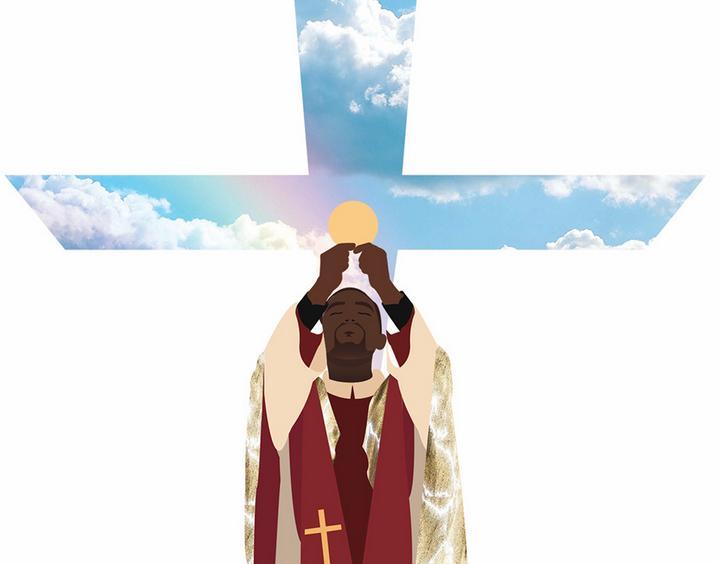
Gracious and loving God, we thank your for the gift of our priests. Through them, we experience your presence inthe sacraments. Help our priests to be strong in their vocation.
Set their souls on fire with love for your people.
Grant them the wisdom, understanding, and strength they need tofollow inthe footsteps ofJesus. Inspire them with the vision of your Kingdom.
Give them the words they need to spreadthe Gospel.
Allow them to experience joy in their ministry.
Help them to become instruments ofyour divine grace.
We ask this through Jesus Christ, who lives and reigns as our EternalPriest. Amen
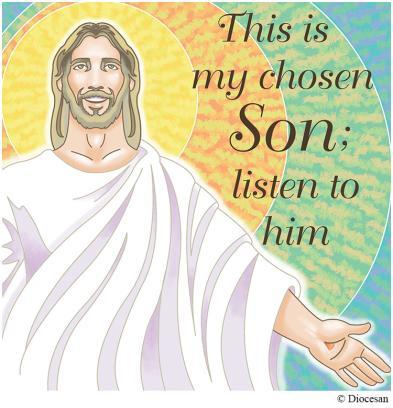



FIRST READING Genesis 15:5-12; 17-18
God enters into a Covenant with Abraham, the man of faith.
Taking Abram outside the Lord said, “Look up to heaven and count the stars if you can. Such will be your descendants” he told him. Abram put his faith in the Lord, who counted this as making him justified.
“I am the Lord” he said to him “who brought you out of Ur of the Chaldaeans to make you heir to this land.” “My Lord, the Lord” Abram replied “how am I to know that I shall inherit it?” He said to him, “Get me a three-year-old heifer, a three-year-old goat, a three-year-old ram, a turtledove and a young pigeon.” He brought him all these, cut them in half and put half on one side and half facing it on the other; but the birds he did not cut in half. Birds of prey came down on the carcasses but Abram drove them off.
Now as the sun was setting Abram fell into a deep sleep, and terror seized him. When the sun had set and darkness had fallen, there appeared a smoking furnace and a fire-brand that went between the halves. That day the Lord made a Covenant with Abram in these terms:
“To your descendants I give this land, from the wadi of Egypt to the Great River.”
RESPONSORIAL PSALM Psalm 26
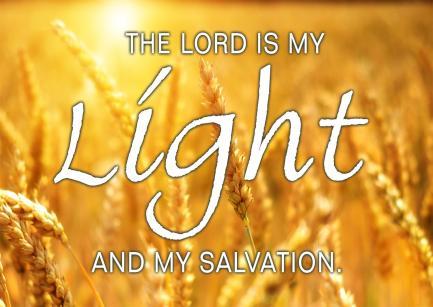
Response: The Lord is my light and my help.
1. The Lord is my light and my help; whom shall I fear?
The Lord is the stronghold of my life; before whom shall I shrink? Response
2. O Lord, hear my voice when I call; have mercy and answer.
Of you my heart has spoken:
“Seek his face.” Response
3. It is your face, O Lord, that I seek: hide not your face.
Dismiss not your servant in anger; you have been my help. Response
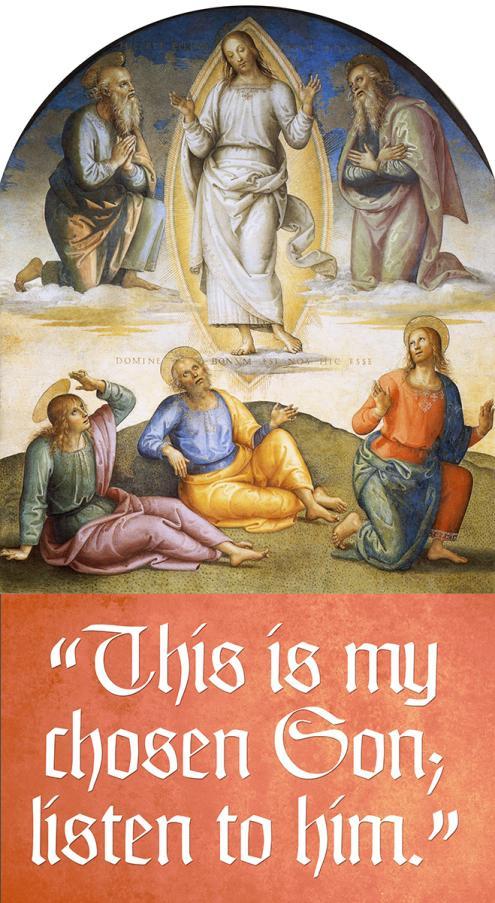
In last week’s Gospel, we followed Jesus into the desert where He fasted and prayed. This week, He leads us up a mountain to witness His Transfiguration. Why both of these experiences?
He is preparing us to go with Him in a few short weeks to a hilltop
4. I am sure I shall see the Lord's goodness in the land of the living.
Hope in him, hold firm and take heart. Hope in the Lord! Response
Golgatha where He will lay down His life for our sake, and then finally to take us to an empty cave where He triumphed over sin and death once and for all.
Jesus perfectly understands our humanity. He knows we need desert experiences times of self-denial and testing in order to arrive at mountain-top moments when we see and feel His glorious presence in our lives. The purpose of these two types of experiences is summed up in the description of the Apostles who were with Jesus at that mountain-top
SECOND READING Philippians 3:17; 4:1
Christ will transfigure our bodies into copies of this glorious body.
My brothers, be united in following my rule of life. Take as your models everybody who is already doing that and study them as you used to study us. I have told you often, and I repeat it today with tears, there are many who are behaving as the enemies of the cross of Christ. They are destined to be lost. They make foods into their gods and they are proudest of something they ought to think shameful; the things they think important are earthly things.
For us, our homeland is in heaven, and from heaven comes the saviour we are waiting for, the Lord Jesus Christ, and he will transfigure these wretched bodies of ours into copies of his glorious body. He will do that by the same power with which he can subdue the whole universe.
So then, my brothers and dear friends, do not give way but remain faithful to the Lord. I miss you very much, dear friends; you are my joy and my crown.
GOSPEL
Luke 9:28-36
As Jesus prayed, the aspect of his face was changed. Jesus took with him Peter and John and James and went up the mountain to pray. As he prayed, the aspect of his face was changed and his clothing became brilliant as lightning. Suddenly there were two men there talking to him; they were Moses and Elijah appearing in glory, and they were speaking of his passing which he was to accomplish in Jerusalem. Peter and his companions were heavy with sleep, but they kept awake and saw his glory and the two men standing with him. As these were leaving him, Peter said to Jesus, “Master, it is wonderful for us to be here; so let us make three tents, one for you, one for Moses and one for Elijah.” He did not know what he was saying. As he spoke, a cloud came and covered them with shadow; and when they went into the cloud the disciples were afraid. And a voice came from the cloud saying, “This is my Son, the Chosen One. Listen to him.” And after the voice had spoken, Jesus was found alone. The disciples kept silence and, at that time, told no one what they had seen.❖
experience in today’s Gospel: “Peter and his companions had been overcome by sleep, but becoming fully awake, they saw his glory….”
The reason for all of our fasting and prayer and almsgiving during Lent is to be reawakened to all God has done for humanity, and to all that He has done for each of us personally. It is all too easy to get lulled into complacency in our daily routines, to “sleepwalk” through life, getting up and getting ourselves out the door, going to work, returning home for dinner and dishes, meetings or sports activities, and
finally flopping on the couch to watch TV until bedtime. While there is nothing inherently sinful in this routine, as Christian stewards, we are called to so much more!
This Lent, let us train ourselves, or more precisely, allow Him to train us to say “Yes” to His will and to offer our lives back to Him in gratitude. In so doing, we, too, will become “transfigured.” This is what it means to live fully awake; this is a stewardship way of life and it is glorious indeed ❖
AskMeAboutJubilee! Gospel Reflection
The word “transfiguration” is so powerful and related to the experience we read of in the Gospels that we tend not to associate it with our own lives. Yet we are called to experience personal and spiritual transfiguration, especially during this Lenten season. It is a time to pause for reflection on our lives and the values we hold dear, to evaluate where we are at the moment and where we are heading for in the future, to ponder on our spiritual growth and our commitment to the values of the Gospel and to strive to make the required changes. This is a necessary exercise because we can easily slip into patterns of behaviour that are contrary to what the Gospels stand for, without even realising it. And as we open ourselves to an awareness of God’s presence and action in our lives, we discover God in all that is around us. We experience our own transfiguration.
We too have our own moments of transfiguration and they help to strengthen us in our everyday lives so that we may face the challenges of the cross in whatever form or shape it comes to us. Religion and prayer are therefore not meant to be avenues for escape from what life throws at us. They help us face life with all its difficulties and challenges, so that we can cope with both the high and low moments in life. As Jesus was transformed through his relationship with the Father, so we too are called to enter into a spiritual transformation and a relationship with God that leads to repentance and conversion and a life of prayer and love.❖
[From: Journeying with the Word of God, The Religious Education Department,Dioceseof Georgetown, Guyana ]
T&T
Q: What is a Jubilee? Where does the word come from?
A: The word ‘jubilee’ comes from the Hebrew ‘yovel’ meaning ram’s horn. In ancient Israel, a ram’s horn announced the start of the Jubilee Year (Lev 25).
Imagine a conch blowing across the village. That’s how loud the announcement of Jubilee was!
Q: Where did Jubilee start in the Bible, and what was its purpose?
A: Jubilee was first mentioned in Leviticus 25 and was celebrated every 50 years. It was a time to forgive debts, free slaves, and rest the land.
Jubilee was like hitting reset on society. Imagine pressing factory reset on your phone everything goes back to original settings. That’s what Jubilee did for people and the land!
Q: Who had the authority to declare a Jubilee in the Old Testament?
A: The high priest and king proclaimed Jubilee, blowing the ram’s horn on the Day of Atonement.
Just like a president can declare a public holiday, Jubilee was officially proclaimed by those in authority like Pope Francis in this case.
Q: How is Jubilee celebrated today?
A: Jubilee is a time of grace and renewal. All are encouraged to make a pilgrimage, forgive others/ debts, seek indulgences, and help the poor.
Jubilee is like a spiritual car wash. Jubilee is a chance to let God wash away all the dirt of sin and start fresh!
Q: What are indulgences, and how do they work in the Jubilee Year?
A: An indulgence is a grace that removes the temporal punishment due to sin. It’s not forgiveness of sin itself that’s what the Sacrament of Reconciliation is for.
indulgence per day.
• You can offer it for yourself or a deceased soul.
• You cannot store indulgences for future use.
Think of indulgences like a spiritual lotto. You can cash in one big prize a day, but you can’t save up tickets.
Q: Can you pray for indulgences for another living person?
A: No, indulgences apply only to yourself or souls in purgatory.
You can share food with a friend, but you can’t eat for them same with indulgences.
Q: What are the requirements for gaining a Jubilee indulgence?
A:
• Confession(withinabout 20days)
• Receive Holy Communion
• Pray for the Pope’s intentions
• Perform a Jubilee act (pilgrimage, charity, mercy)
• Detach from all sin even venial sin
Imagine you want to enter a party. You need a ticket. Confession, Communion, and prayer are your entry passes into God’s grace.
Q: When is Jubilee, and where can I go?
A: The Ordinary Jubilee is in 2025. Four Holy Doors exist in Rome and approved sacred sites exist in the various dioceses worldwide If you can’t go to Rome, don’t worry. God is not limited by geography.
Q: Does the spirit of Jubilee continue after the year ends?
A: Yes! The Holy Doors close, but the call to mercy, forgiveness, and renewal never ends.
Jubilee is like Easter: the joy lives on. It keeps us moving closer to God.
Q: Do you have to enter a physical door to receive the graces of Jubilee?
A: No. Passing through a Holy Door is a powerful sign, but those unable to travel can still receive indulgences through works of mercy and prayer.
Q: Where does the Church get the power to remit the temporal punishment of sin? What are these treasures of the Church?
A: The treasury of the Church” is the infinite merit of Christ, Mary, and the saints. Christ gave the Church the authority to apply these merits (Mt 16:19).
Imagine a bank account where Jesus deposited infinite grace. The Church can withdraw and apply it for those in need.
Q: Can non-Catholics participate in Jubilee?
A: Non-Catholics can experience renewal through mercy, prayer, and seeking God but they cannot receive the sacraments.
Jubilee is like a feast, everyone is invited, but only some can receive the full meal. Even if you’re not a baptised Catholic, you can still experience God’s love – just like you can still enjoy a Parang without drinking ponche de crème!
Q: What’s a good image to symbolise Jubilee?
A: •Resetting a phone–Cleansing your soul of spiritual viruses
• Wiping a whiteboard clean – A freshstart infaith.
Recapping, Jubilee is like hitting the refresh button on your life –indulgences, new grace, new mercy, new beginnings!
Are you, in this one-in-a-lifetime (for some), ready for an encounter and to step into God’s renewal? ❖
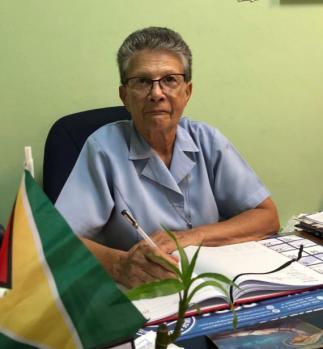
Message for the Second Sunday of Lent from Sr. Marie Harper, OSU
Each week during the season of Lent, the Interim Evangelization Commission will share a short message of encouragement from one of our Religious Sisters. This week’s message is by Sr. Marie Harper, OSU :
In this season of Lent, many Christians are trying to find ways to improve themselves and their relationship with God and neighbour. Many Churches were filled with parishioners on Ash Wednesday, an indication that we live in hope that our lives here on earth has a greater meaning and purpose. We hope for the life to come after we end this earthly pilgrimage.
When we were signed with the cross on our foreheads on Ash Wednesday we heard the words “ From dust you came and dust you shall return.” Or” Repent and, believe in the Gospel”. The ashes are a reminder of our sinfulness and the need for penance. Also we are reminded of our fears: fears of fragility, weakness, and the brevity of life, as Pope Francis reminded us. We
will die and our bodies will return to dust. But we are more than dust and our souls return to God, who is the author of life.
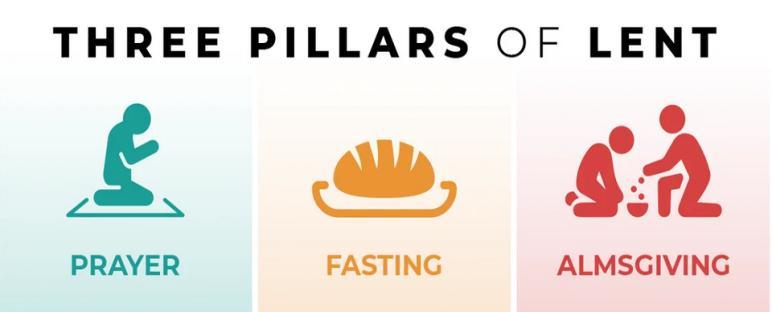
On Ash Wednesday we are reminded of our Lenten pilgrimage of Prayer, Fasting and Alms giving, a practice we should live out all the time.
We are called to reflect on our fragility and pray and fast from all the things that take us away from God and distract us from hearing his call to respond in love, mercy and compassion. Alms giving helps up to be charitable to our neighbours in every way and stop to pay attention. So often we are on the fast track, so to speak, that we do not notice the other who could do with our attention. Can I offer tangible signs of not only material things, but reaching out in kind words, in love and giving words of hope.
During this period of forty days of Lent, we are reminded of the Israelites in the desert and Jesus in the wilderness grappling with the temptations of Satan. What are the demons we face? What is it am I grappling with? Can I do it alone? Jesus relied on His Father God. We are reminded that Jesus responded to Satan by quoting Scriptures in all three temptations.
His first response was: Man does not live on bread alone but on every word that comes from the mouth of God
The Second was: You must not put the Lord your God to the test
And the third was: You must Worship the Lord your God and serve him alone
How do we deal with our demons? Do we rely on God? And on His holy word? This period of Lent leads us through this journey of observing our three Lenten practices which the Church in its wisdom laid out for us, to Pray, Fast and give Alms. During Holy week we see the passion of Christ – his suffering and death which leads us to His resurrection on Easter Sunday. St Paul reminds us in 1 Corinthians 15:14,” If Christ has not been raised, then our preaching is vain, and your faith is also vain St. Paul is saying that if Christ had not been raised from the dead, then preaching and faith are futile, hopeless. If there was no Resurrection our life would be meaningless. The Bible also emphasizes that hope and faith are only effective when placed in the Lord. The prophet Jeremiah says “ For I know what plans I have for you, declares the Lord, plans to prosper you and not to harm you, plans to give you hope and a future. This Jubilee Year reminds us greatly of the hope of the Resurrection. Indeed, our hope in Jesus Christ ultimately overcomes fears of fragility, weakness, and the brevity of life. This is what gives meaning and purpose to our lives, our belief in the communion of saints, the forgiveness of sins, the resurrection of the dead and the life everlasting. May the God of hope fill you with all joy and peace as you trust in Him (Romans 15:13) ❖
Journeying with the Word of God
MAKING THE WORD OF GOD YOUR OWN
Step 1: Lookattoday’sReadingsprayerfully.
1st Reading: We hear of the solemn covenant God made with Abraham. This covenant became the foundation of God’s relationship with the people of Israel. Through Jesus we are the inheritors of this covenant.
2nd Reading: Paul urges the Christians at Philippi to remain faithful to Christ. He promises them that one day they will share in his glory.
Gospel: The Transfiguration gives the disciples a glimpse of Jesus’ glory. It is meant to strengthen their faith and give them courage for the experiences that lie ahead.
Step 2: ApplyingthevaluesoftheReadings toyourdailylife.
1.Lent is the season that calls for reflection and change. How is the Gospel story of the transfiguration relevant to this season?
2.The covenant between God and us, his people, involves more that God laying down the law for us to obey. What else do you think is involved?
Baptism at Moco Moco
3.Peter wanted to stay on the mountain top because the experience was too good to let go of. How do your own “mountain top” transforming experiences prepare you for your ordinary life ?
4.The voice from the cloud said: “This is my Son, the Chosen One. Listen to him.” Would you say you are good at listening to Jesus at this time of your lives? What do you feel Jesus is saying to you personally now in your life of faith? Do you find his words demanding?
Step 3: Accepting the message of God’s Wordinyourlifeoffaith.
The Transfiguration experience on the mountain top was intended to reassure the disciples in the face of the suffering ahead. The message that accompanied the experience is clear: listen to the Beloved Son. We know that in these challenging times Jesus will continue to inspire us and that we will face our fears and follow him wherever he leads. It is impossible to remain on the mountain top forever.
Step 4: Somethingtothink&prayabout
1.Reflect on your life. What transfiguration events have you had? Was it the beginning (or ending) of a relationship, the birth of a child, the death of a close one, a deep religious experience? How were you changed by the experiences? Was the change permanentor was it just brief and passing?
2.Thank God for the “top of the world” experiences you occasionally have that let you realise how good it is to be alive and to be a child of God.❖
[From: Journeying with the Word of God, The Religious Education Department, Diocese of Georgetown, Guyana ]
In 12 years since election, Pope Francis demonstrates
(OSV News) - As Pope Francis celebrates 12th anniversary of his election in the hospital, the papal biographer told OSV News that the pontiff has “given a very significant witness these last few years which in many ways is comparable to the witness that John Paul II gave demonstrating or communicating that the papacy is for life, that it’s a mission, not a job.”
Austen Ivereigh, papal biographer and author of “The Great Reformer” and “The Wounded Shepherd,” said that Pope Francis, hospitalized in the Gemelli hospital since Feb. 14 has shown in the last years that “he’s willing to be pope in a wheelchair, frail, sometimes unable to readhisspeechesbecauseofhisbronchitis.”
While “we’re at the moment facing a situation of enormous uncertainty in respect of his long term prognosis” and “we also don’t know what his short term prognosis is,” he continued, the pope gives the world a lesson “of docility and humble acceptance” and “an important example of the centrality of mission and vocation.”
Ivereigh recently wrote “First Belong to God: On Retreat with Pope Francis” a homage to the pope and his spirituality, the author said.
“The purpose of the book was to provide a workable instrument for ordinary people in parishes and religious communities who could enter into the spiritual dynamic of the pontificate and the path of conversion to which the pontificate is calling us through an eight-day (program of) spiritual exercises, which in practice can be given over eight weeks.”
The book is based on the collection of talks Father Jorge Mario Bergoglio gave between the 1970s and early 1990s.
“What you see is somebody who is actually profoundly shaped by the (Ignatian) spiritual exercises and who at the heart of the exercises is putting Christ at the center. And when you put Christ at the center of your life, and you choose to reorganize your life around the Christ priorities rather than your own, then it’s profoundly transformative,” Ivereigh said. “In fact, I think his whole pontificate has been about putting Christ at the center of the church, and the reforms and the changes flow from that choice.”
Ivereigh said that in the hospital, Pope Francis hasn’t lost his sense of humor, which also teaches us a lot about the pope.
When Italian Prime Minister Giorgia Meloni visited the pontiff Feb. 19, Ivereigh said, the pope supposedly told her:
“There are people praying for me to go to paradise. But the Lord of the vineyard seems to prefer me to stay put.”
Ivereigh said that “even though it was funny, I actually said to a lot of people: That is basically his view. That is essentially his view of his life, of the pontificate. He has this freedom, this serenity,” which “is the result of that choice that he’s made,” to put Christ in the center. Referring to critics of Francis, Ivereigh said that “the idea that a pope should do things and say things that are acceptable to all Catholics is, of course, absurd. Every pope has been opposed,” he said, adding that it’s part of “the loneliness of the papacy.”
“A pope who doesn’t offend and scandalize some Catholics is not putting Christ at the center, because, of course, Christ does exactly that. The Christian
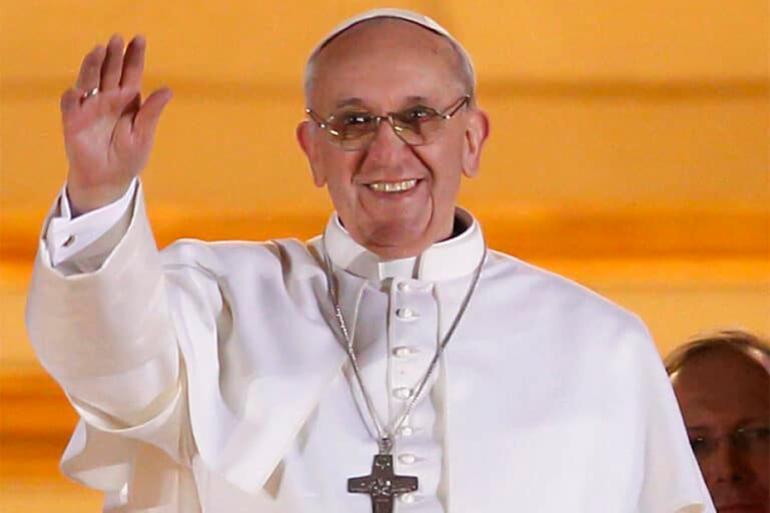
Pope Francis appears for the first time on the central balcony of St. Peter's Basilica at the Vatican March 13, 2013, the evening he was elected the 266th Roman Catholic pontiff and the first of many occasions when he referred to himself as the bishop of Rome.
(CNS photo/Paul Haring)
choice is a scandalous choice because it’s unworldly. And I think so much of the criticism of Francis is understandable, but it’s also ignorant because it starts from a framework theologians call it a hermeneutic a way of seeing which is essentially worldly.”
He said that with documents dubbed controversial such as “Amoris Laetitia,” the post-synodal apostolic exhortation published in 2016, “there’s a sort of worldly assumption that what Francis was setting out to do was to liberalize Catholic doctrine on marriage. But he wasn’t ever trying to do that.”
“There was never, ever a moment where Francis sought to liberalize either the doctrine or the law on either of those things,” Ivereigh emphasized. “What he was trying to do, or what he felt was necessary for the church to look at (was) how the doctrine and the law are applied in the circumstances of today’s world in such a way that we hold intention, truth and mercy, which is a Christ-like choice.”
Controversies surrounding the document concerned the part where the pope said that in certain conditions and in certain circumstances, some divorced and remarried people may receive the Eucharist.
More recent controversy regarded the December 2023 document “Fiducia Supplicans” (‘Supplicating Trust”) subtitled “On the pastoral meaning of blessings” which stated that Catholic priests could bless a same-sex or other unmarried couple. However, it cannot be a formal liturgical blessing, nor give the impression that the church is blessing the union as if it were a marriage. Ivereigh said that “it didn’t change Catholic doctrine on marriage at all” and that “there’s nothing doctrinally liberal about it. What it said very simply and clearly was that even though the church cannot bless, that is to say, approve” blessing same-sex or other irregular relationships, “it can bless the people in them if they are seeking God’s grace.”
Both “Amoris Laetitia” and “Fiducia Supplicans” “in a very Christ like way” Ivereigh said “understand that there are people in difficult, irregular, problematic situations who might be trying very hard within limited circumstances to do the right thing.”
“And the church, I think, in both of those documents,” he continued, “is being pastoral, is allowing the church to walk with those people, reassure them that God loves them, and that you know they are not closed off from God’s grace, while at the same time obviously calling them to grow, which is the path we’re all called to.”
Asked what kind of church Pope Francis shaped in the last 12 years, Ivereigh said that the answer lies in “Dilexit Nos,” his latest encyclical, released in October 2024, on the human and divine love of the heart of Jesus, which is “a kind of hermeneutic key to the whole papacy, because of the idea that we need to recover the heart as the place from which to view and to act.”
Pope Francis “has talked a lot about God’s style” in the last 12 years, Ivereigh said. “The church needs to embody God’s style, and God’s style is the heart of the good Shepherd that looks and walks with and accompanies her. It’s the way Jesus interacts with people walks with them, creates space for them, asks them questions. There’s a graciousness.
That’s God’s style. And the church needs to embrace that style.”
The pope’s biographer said that “the singular greatest achievement of the pope has been to foster that style and that culture within the church” that encourages pastoral attitude “in respect of people in difficult situations.”
Also to be highlighted in Francis’ legacy, he added, are the reform of the Curia and putting spotlight on synodality “where the community is constantly gathering to discuss, dialogue, discern and decide together with the Holy Spirit as the protagonist” but where “the bishop or whoever the authority is, still takes the decision.”
“There’s no challenge to the authority structure, but the whole people of God, the baptized, are involved in the decision making processes.”
Ivereigh underscored that in today’s turbulent world, “it’s a profound witness that the church is called to give now, in this time, in this world, where we have the fragmentation of politics, where we have the breakdown of civil society, where differences are used as weapons and it becomes a power struggle.
“One wins, the other loses. In that context, the church is called to recover what is actually its own culture.”
“Changing structures and changing people are the easy part,” the papal biographer said. “The hardest thing to change in any organization is the culture. And I think that’s what he’s done,” he stressed.
Asked whether we’ll see a different kind of papacy now that the Holy Father may not be physically capable to be as present as before in official duties, Ivereigh said: “I think for him, the papacy is full on. It’s a total commitment. It’s a total service. It’s a mission that he’s been given by God. He knows that he can carry that out in a number of different ways, and that you can have … an extrovert pope who’s out there constantly meeting people.”
But as happened during the COVID-19 pandemic, “he was essentially locked away for a year, so the papacy isn’t dependent on any of these particular models,” Ivereigh said.
“On the other hand, I think he would not want a papacy in which he would be unable, essentially, to have regular contact with people. I think for him, it would make the proclamation of the Gospel very hard. And in those circumstances, I think he would consider resigning.”
While “it’s OK that the pope is ill,” Ivereigh said something that may cause Pope Francis to consider resignation is that if in a long-term prognosis “he’s somebody who’s going to need a lot of nursing care, regular risk of hospitalization in which the risk is that the health then becomes the focus point, I think he would hate that, actually,” Ivereigh pointed out.
“I honestly don’t know,” he said, on the question of possible papal resignation. “It’s very hard to talk about this question in the abstract, because it really doesdependonthatlongtermprognosis.”
Asked what particularly stayed with him from the many personal conversations he had with Pope Francis is “that he thinks that this is a time for a Holy Saturday spirituality,” where faced with the transformations in society and in the church, “we look ahead with hope but with no triumphalism. I just thought that that was a brilliant summary, in a way, of him and his pontificate, that the one thing that you’ve never had with Francis is triumphalism. … He sees triumphalism as a real temptation, particularly for the church, as kind of spiritual worldliness.”
Rather than “putting your faith in sort of particular programs of renewal or evangelization,” Ivereigh said, Pope Francis thinks the “spirituality we need is much more one of patient opening to what the spirit is trying to teach us at this time … as the option to discern and reform rather than to lament and condemn.
“He’s the church’s spiritual director, leading us on a kind of a retreat, a journey of conversion,” Ivereigh concluded. “And he’s there with us, sitting with us, walking with us, accompanying us, pointing out the obstacles, the temptations, the resistances, and helping to guide us through to the horizon beyond.
“And I think that’s his great achievement as a man, as a Jesuit, as a church leader and, of course, as a pope.”❖

Dear Girls and Boys,
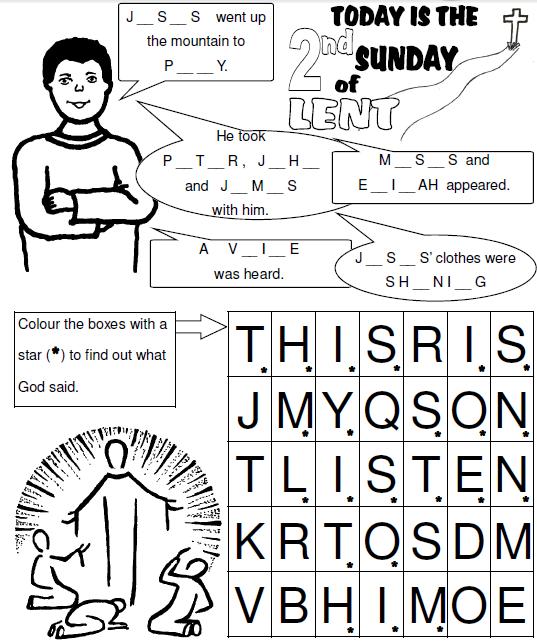
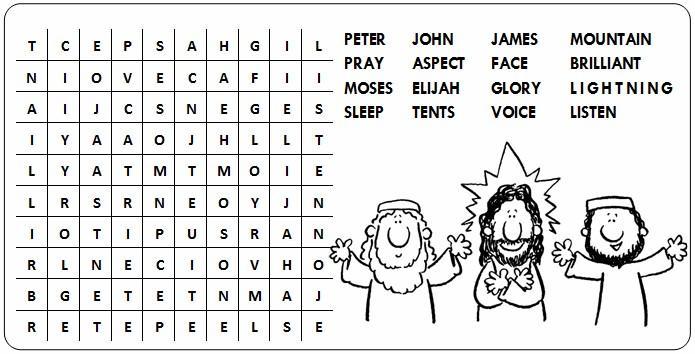
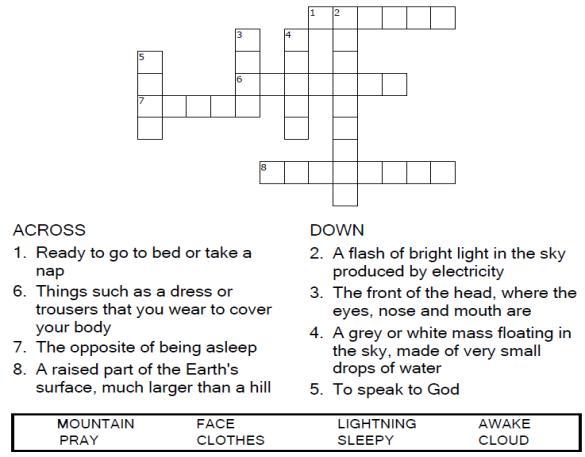
One day Jesus took three of his disciples, Peter, James, and John and went up on a mountain to pray. As Jesus was praying, his face was changed and his clothes became a dazzling white. Suddenly, two men appeared and began talking to him. Do you know who the two men were? It was Moses and Elijah.
Peter and the others had fallen asleep and when they woke up, they saw Jesus and the other two talking. They were amazed at that wonderful sight! As Moses and Elijah were starting to leave, Peter said to Jesus. "Master, it is wonderful for us to be here! Let's build three shelters one for you, one for Moses, and one for Elijah."
At the very moment Peter said that, a cloud appeared and cast a shadow over them and a voice came from the cloud saying, "This is my Son, listen to him." When the voice had spoken, Moses and Elijah were gone and the disciples were once again alone with Jesus on the mountain.
What an experience! Do you know what caused the face of Jesus to be changed and his clothes to become dazzling white? It was because they were in the presence of God! Did you know that God wants our faces to shine brightly just as the face of Jesus did on that very special day? The apostle Paul said in a letter he wrote to the church at Corinth, "For God, who said, 'Let there be light in the darkness,' has made this light shine in our hearts so we could know the glory of God that is seen in the face of Jesus Christ." (2 Corinthians 4:6)
We have many wonderful experiences in our daily walk with Jesus. Others should see that we have the love of Jesus in our heart by seeing his reflection our bright shining faces!
Heavenly Father, we thank you for the joy we experience in Jesus Christ. Help us reflect that joy in our bright, shining faces. In Jesus' name we pray. Amen.❖

around the world also were delivered to Pope Francis, wishing him a happy anniversary as well as a speedy recovery, the press office added.
The 88-year-old pope continued the therapies prescribed, including pharmacological treatment and physical therapy, it said.
A chest X-ray had confirmed continued improvements in his condition, the Vatican said the previous day, though doctors did not state that his double pneumonia had fully cleared.
The pope has been following the Roman Curia’s Lenten retreat by video, listening to the daily meditations led by Capuchin Father Roberto Pasolini, preacher of the papal household. While retreat participants gathered in the Vatican’s Paul VI Audience Hall could not see the pope, Father Pasolini opened his March 13 reflection with a direct message for him.
“Good morning, and a greeting with deep affection and gratitude to our Holy Father on this very special day: the 12th anniversary of his election,” he said.
Since 12 is a number associated with completeness or fullness in the Bible, he said, “we can truly thank God because the gift of Pope Francis to the church and the world is complete. And certainly, in these 12 years, he has had the opportunity to express himself in fullness.”
Before their evening meditation,
healthcare
Archbishop Vittorio Francesco Viola, secretary of the Dicastery for Divine Worship and the Discipline of the Sacraments, read a message from the Curia sent to Pope Francis to mark his anniversary.
From the Vatican and from many other places around the world, he said, “the prayer of the people of God rises unceasingly, and we join ourselves in spiritual communion.”
“Holy Father, in this Jubilee year, we grow in hope that the message of peace and fraternity, to which we are constantly called by your magisterium, may spread among nations and among all people of goodwill,” he said, “and that in everyone the desire to be disciples of the Lord, witnesses of the Gospel, and builders of the kingdom of God may grow.”
Archbishop Filippo Iannone, prefect of the Dicastery for Legislative Texts, led the recitation of the rosary for Pope Francis which has been taking place every night since shortly after his hospitalization.
“With the recitation of the rosary, let us invoke Mary, health of the sick, for the health of the Holy Father Francis,” he said.
After taking place at 6 p.m. Rome time in the St. Paul VI Audience Hall to coincide with the Curia’s retreat, the nightly rosary for Pope Francis returns to St. Peter’s Square March 14 at 7:30 p.m. local time. ❖



Pope's March prayer intention: 'For families in crisis'
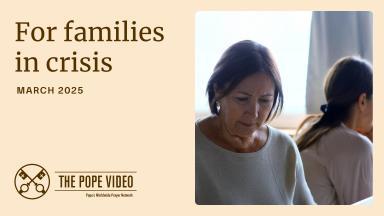
(Vatican News) - Pope Francis' monthly prayer intention this March is for "families in crisis."
The Pope invited the Church to pray for this intention in this month's The Pope Video, which is entrusted to the entire Catholic Church through the Pope’s Worldwide Prayer Network.
The images and audio in the video were prepared prior to the Holy Father's arrival at Rome's Gemelli Hospital on 14 February, where he continues his treatment for bilateral pneumonia.
In The Pope Video for March, the Holy Father acknowledged the great difficulties facing familiies.
'Nosuchthingasaperfectfamily'
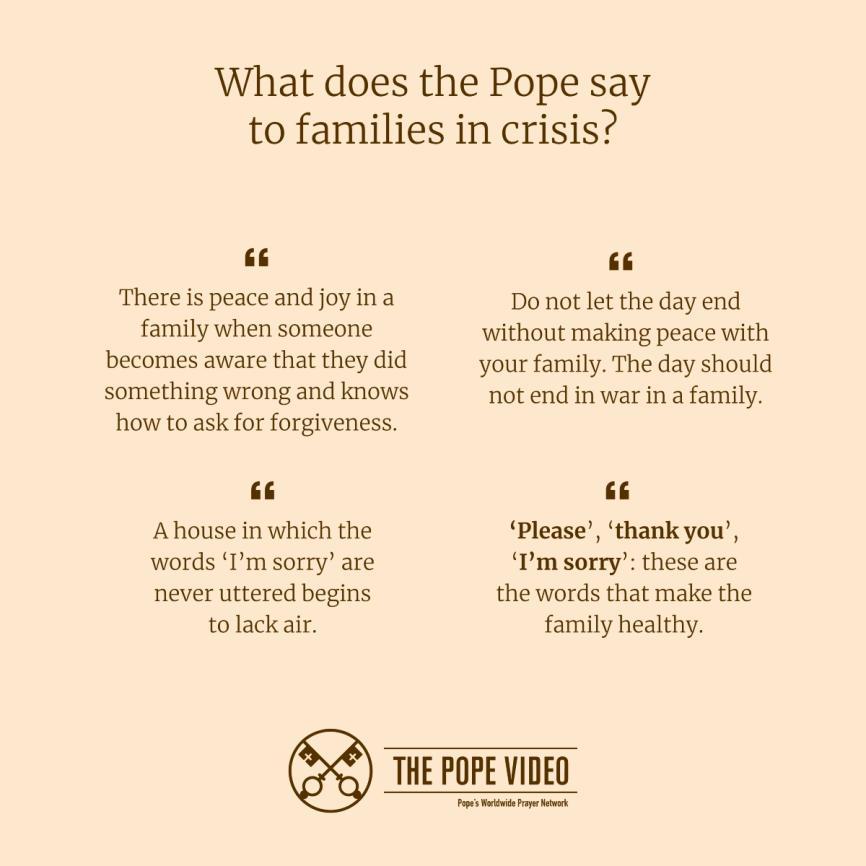
"We all dream about a beautiful, perfect family. But," Pope Francis
recognized, "there’s no such thing as a perfect family," for each family "has its own problems," "as well as its tremendous joys."
While every member of the family is important because each is unique, the Pope lamented how often their differences cause conflict and painful wounds, as he suggests a solution.
"The best medicine to heal the pain of a wounded family," he stressed, "is forgiveness," adding that forgiveness requires giving our family members "another chance."
"God," Pope Francis pointed out, "does this with us all the time." Reminding that God’s patience is infinite, the Holy Father reminded how He "forgives us, lifts us up, and gives us a new start."
Renewing the family through forgiveness
In the same way, the Pope suggested, pardoning one another "always renews the family" and makes "it look forward with hope."
Even when there’s no possibility of the “happy ending” we’d like, he noted, God’s grace gives us the strength to forgive.
Doing so, he explained, "brings peace," because "it frees us from sadness, and, above all, from resentment."
"Let us pray that broken families might discover the cure for their wounds through forgiveness, rediscovering each other’s gifts, even in their
Thank You for visiting Saint of the Week
March 19th
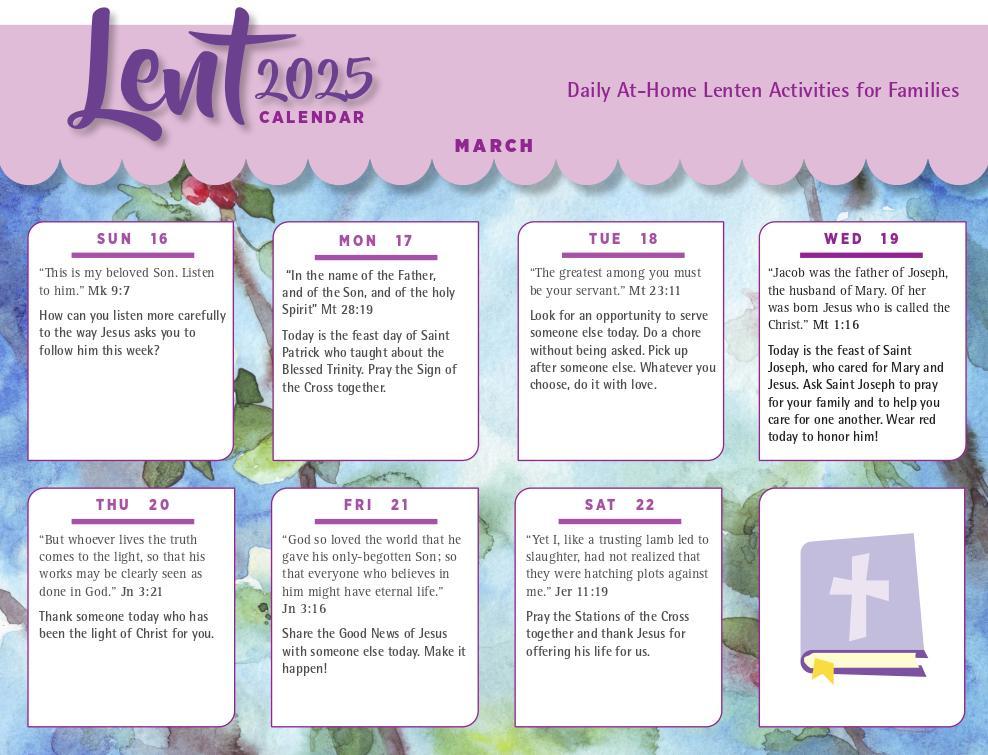
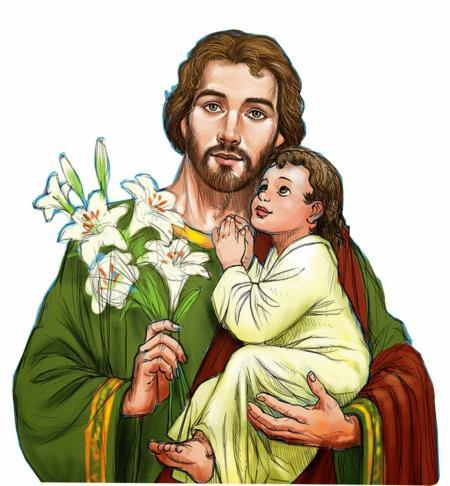
Saint Joseph, Husband of Mary
By Francis Canzius
Last December, Our Lady of Fatima Parish, Georgetown, celebrated 67 years since the opening of the church with Mass and a Parish social.
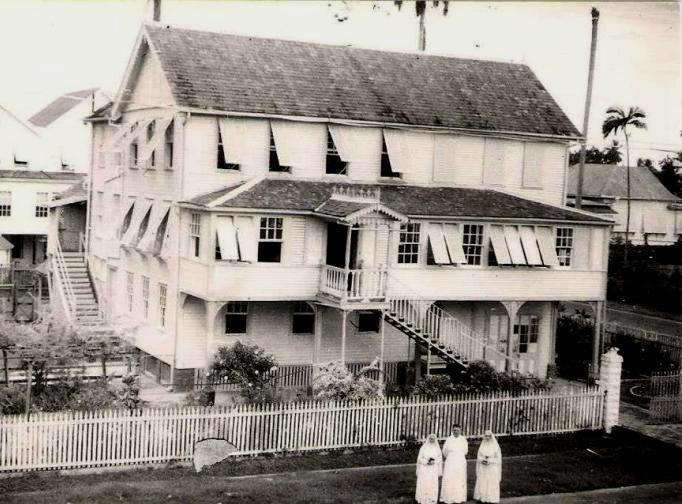
Our Lady of Fatima Church - the beginnings
Bishop George Weld S.J. had invited the priests of the Scarboro Foreign Mission (SFM) in Canada to come to British Guiana to help in the work of the Catholic Church here.
The first four priests arrived on October 8th 1953 - at the very end of Bishop Weld’s term of office. A building at Robb and New Garden streets, Georgetown (a former private home) was chosen for their temporary accommodation. They then set up a chapel on the ground floor marking the start of their work in this country.
They were also given charge of the parishes at New Amsterdam and Port Mourant.
Bishop Weld then set up the new
parish of Our Lady of Fatima in which the Scarboro priests were asked to take charge. In due course they moved to the current presbytery which was a former radio station and before that, a private residence. During that time the church was built.
A huge congregation witnessed the blessing and opening of the church by Bishop R.L. Guilly S.J. in December of 1957. The church is bordered by three streets, Robb & New Garden Streets and North Road in the district of Bourda. ❖
The Bible pays Joseph the highest compliment: he was a “just” man. When the Bible speaks of God “justifying” someone, it means that God, the all-holy or “righteous” one, so transforms a person that the individual shares somehow in God’s own holiness, and hence it is really “right” for God to love him or her. By saying Joseph was “just,” the Bible means that he was one who was completely open to all that God wanted to do for him. He became holy by openinghimselftotallytoGod.
The rest we can easily surmise. Think of the kind of love with which he wooed and won Mary, and the depth of the love they shared during their marriage.
It is no contradiction of Joseph’s manly holiness that he decided to divorce Mary when she was found to be with child. The important words of the Bible are that he planned to do this “quietly” because he was “a righteous man, yet unwilling to expose her to shame” (Matthew 1:19).
The just man was simply, joyfully, wholeheartedly obedient to God in marrying Mary, in naming Jesus, in shepherding the precious pair to Egypt, in bringing them to Nazareth, in the undetermined number of years of quiet faith and courage.❖ [www.franciscanmedia.org ]

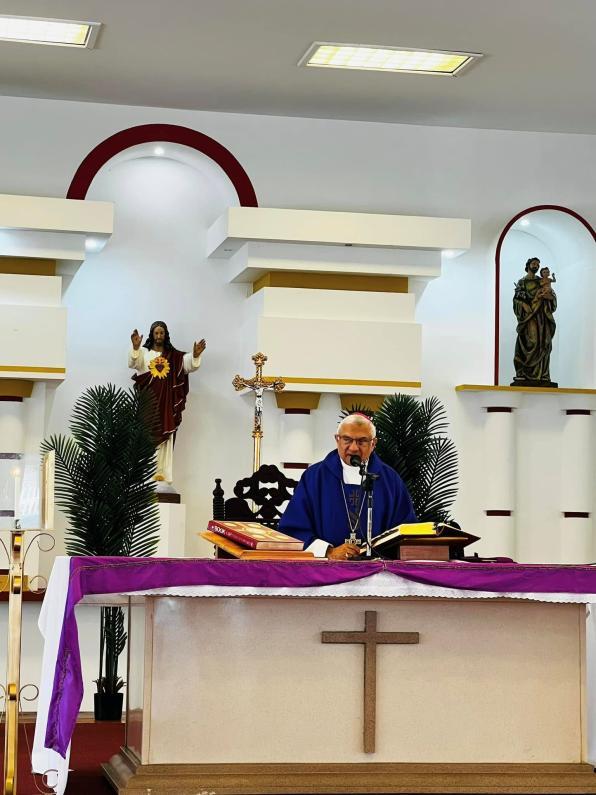
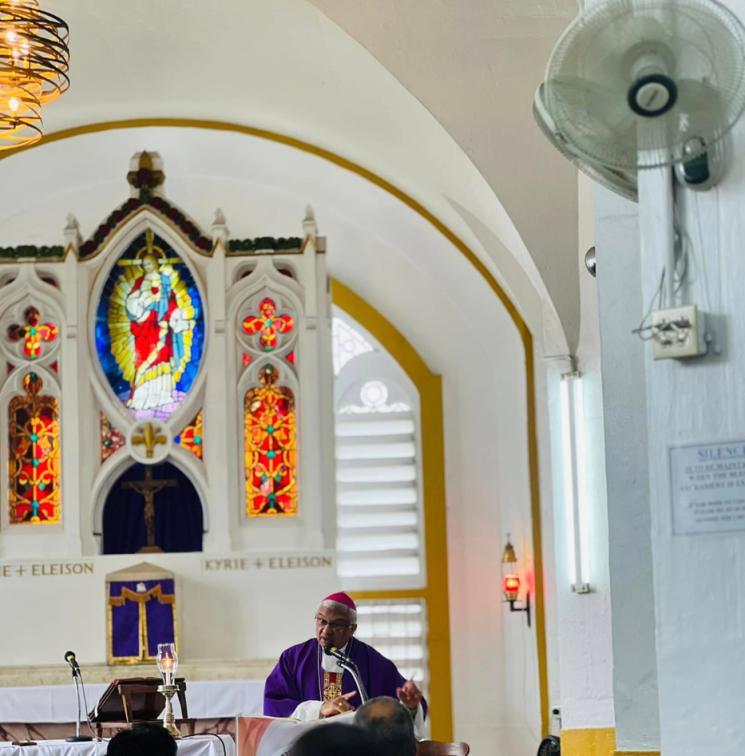
Bishop John at Sacred Heart, Sunday, March 9th