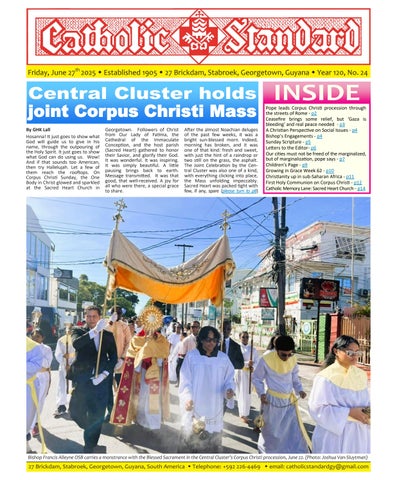

joint Corpus Christi Mass
By GHK Lall
Hosanna!Itjustgoestoshowwhat
God will guide us to give in his name, through the outpouring of the Holy Spirit. It just goes to show what God can do using us. Wow! And if that sounds too American, then try Hallelujah. Let a few of them reach the rooftops. On Corpus Christi Sunday, the One Body in Christ glowed and sparkled at the Sacred Heart Church in
Georgetown. Followers of Christ from Our Lady of Fatima, the Cathedral of the Immaculate Conception, and the host parish (Sacred Heart) gathered to honor their Savior, and glorify their God. It was wonderful. It was inspiring. It was simply beautiful. A little pausing brings back to earth. Message transmitted. It was that good, that well-received. A joy for all who were there, a special grace to share.
After the almost Noachian deluges of the past few weeks, it was a bright sun-blessed morn. Indeed, morning has broken, and it was one of that kind: fresh and sweet, with just the hint of a raindrop or two still on the grass, the asphalt. The Joint Celebration by the Central Cluster was also one of a kind, with everything clicking into place, the Mass unfolding impeccably. Sacred Heart was packed tight with few, if any, spare (pleaseturntop8)
Pope leads Corpus Christi procession through the streets of Rome - p2
Ceasefire brings some relief, but ‘Gaza is bleeding’ and real peace needed - p3
A Christian Perspective on Social Issues - p4
Bishop’s Engagements - p4
Sunday Scripture - p5
Letters to the Editor- p6
Our cities must not be freed of the marginalized, but of marginalization, pope says - p7
Children’s Page - p9
Growing in Grace Week 62 - p10
Christianity up in sub-Saharan Africa - p11
First Holy Communion on Corpus Christi - p12
CatholicMemoryLane:SacredHeartChurch - p14
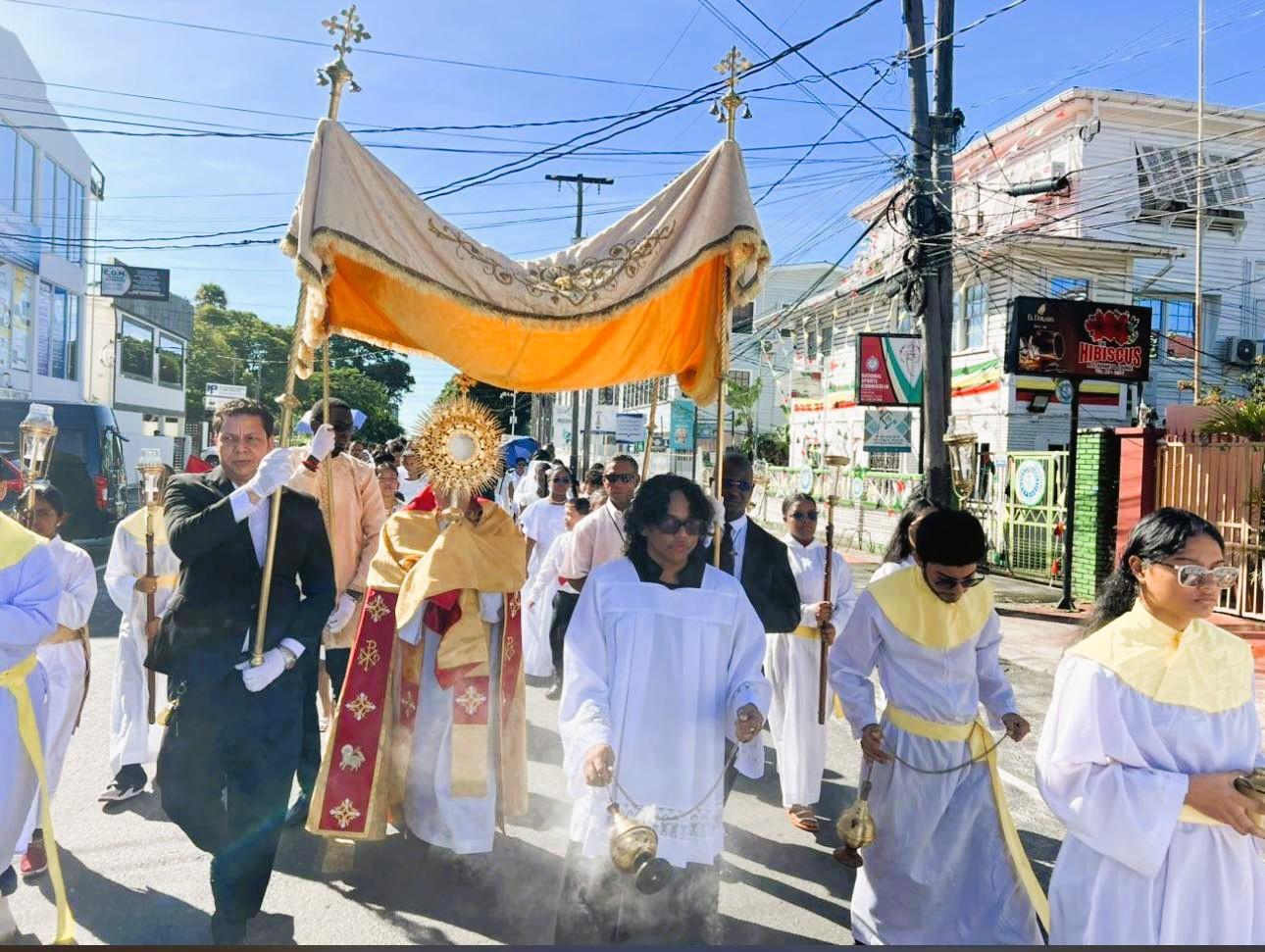
Bishop Francis Alleyne OSB carries a monstrance with the Blessed Sacrament in the Central Cluster’s Corpus Christi procession, June 22. (Photo: Joshua Van-Sluytman)
procession through the streets of Rome
The Jubilee Prayer
Father in heaven, may the faith you have given us in your son, Jesus Christ, our brother, and the flame of charity enkindled in our hearts by the Holy Spirit, reawaken in us the blessed hope for the coming of your Kingdom.
May your grace transform us into tireless cultivators of the seeds of the Gospel.
May those seeds transform from within both humanity and the whole cosmos in the sure expectation of a new heaven and a new earth, when, with the powers of Evil vanquished, your glory will shine eternally.
May the grace of the Jubilee reawaken in us, Pilgrims of Hope, a yearning for the treasures of heaven. May that same grace spread the joy and peace of our Redeemer throughout the earth.
To you our God, eternally blessed, be glory and praise for ever.
Amen


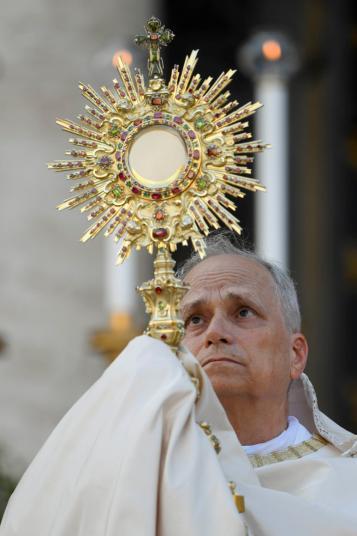
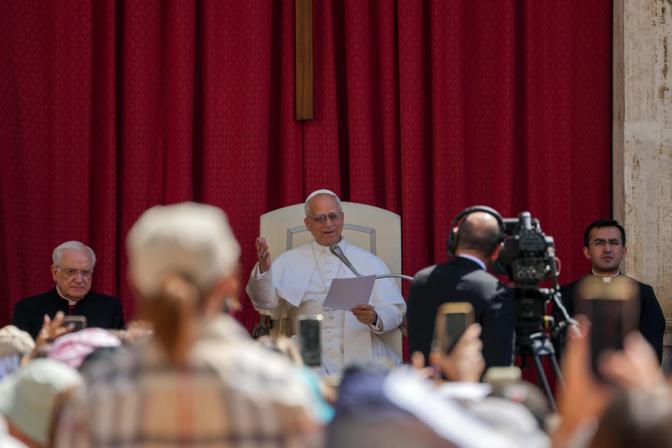
Pope Leo XIV looks at the Blessed Sacrament in the monstrance as he leads Benediction outside Rome's Basilica of St. Mary Major after a Corpus Christi procession from the Basilica of St. John Lateran June 22, 2025. (CNSphoto/VaticanMedia)
ROME (CNS) In carrying Jesus through the city streets in a Corpus Christi procession, Christians are called to be witnesses of his love, sharing both their material and spiritual gifts, Pope Leo XIV said.
A procession with the Eucharist is a way to present Jesus “to the hearts of those who believe, so that they may believe more firmly” and “to the hearts of those who do not believe, so that they may reflect on the hunger present within them and the bread that alone can satisfy it,” the pope said in hishomily June 22.
Pope Leo celebrated an early evening Mass outside Rome’s Basilica of St.
John Lateran for the feast of the Body and Blood of the Lord before joining thousands of people including children who had recently received their first Communion for the Corpus Christi procession to the Basilica of St. Mary Major, about a mile away.
Pope Leo carried the monstrance with the consecrated host under a golden canopy held by eight members of the Equestrian Order of the Holy Sepulchre of Jerusalem. When he reached the Marian basilica about 45 minutes later, he presided over Benediction.
The Gospel reading for the Mass was St. Luke’s account of Jesus multiplying five loaves of bread and two fish to feed a crowd of thousands.
“Jesus responds to the appeal of hunger with the sign of sharing: he raises his eyes, recites the blessing, breaks the bread and feeds all present,” the pope said.
“The Lord’s actions are not some complicated magical rite,” he said. Rather, “they simply show his gratitude to the Father, his filial prayer and the fraternal communion sustained by the Holy Spirit.”
“Jesus multiplies the loaves and the fish by sharing what is available. As a result, there is enough for everyone,” Pope Leo said. “In fact, more than enough. After all had eaten their fill 12 baskets-full were gathered up.”
The Gospel account speaks to people’s hunger for meaning, for God and for eternal life all of which are fulfilled when Jesus gives himself for the salvation of all, the pope said. But, he said, the miracle also is a response of compassion to the physical hunger of the crowd.
“Today, in place of the crowds mentioned in the Gospel, entire peoples are suffering more as a result of the
greed of others than from their own hunger,” the pope said. “In stark contrast to the dire poverty of many, the amassing of wealth by a few is the sign of an arrogant indifference that produces pain and injustice.”
“Especially in this Jubilee Year,” he said, “the Lord’s example is a yardstick that should guide our actions and our service: we are called to share our bread, to multiply hope and to proclaim the coming of God’s kingdom.”
The Eucharist, the pope said, is the pledge that Jesus not only sates physical hunger, but he can save everyone from death “because his body is the bread of eternal life.”
“By offering himself completely, the crucified and risen Lord delivers himself into our hands, and we realize that we were made to partake of God,” he said. “When we partake of Jesus, the living and true bread, we live for him.
”
The grace of the Eucharist satisfies the deepest human hunger, he said.
Pope Leo quoted St. Augustine: “Christ is truly ‘panis qui reficit, et non deficit; panis qui sumi potest, consumi non potest’ he is ‘bread that restores and does not run short; bread that can be eaten but not exhausted.'
”
In the Corpus Christi procession, the pope said, all those involved give witness to how Jesus’ real presence in the Eucharist transforms them and leads them to become his body, united in the church.
“Together, as shepherds and flock, we will feed on the Blessed Sacrament, adore him and carry him through the streets. In doing so, we will present him before the eyes, the consciences and the hearts of thepeople.”❖
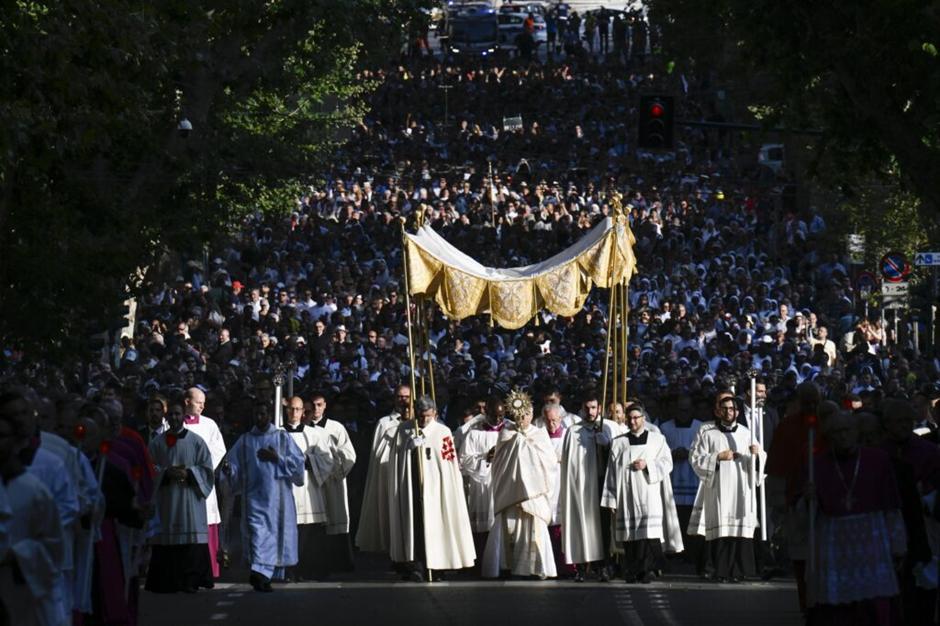
sion from Rome’s Basilica of St. John Lateran to the Basilica of St. Mary Major June 22. (CNS photo/Vatican Media)
bleeding’ and real peace needed, say experts
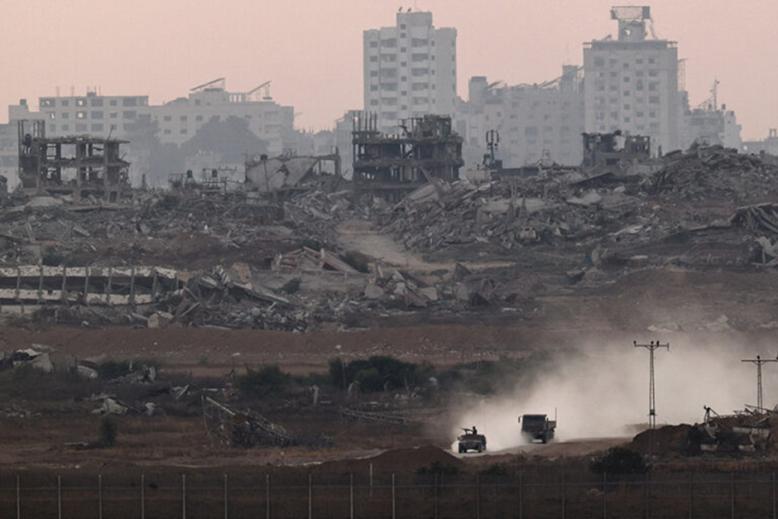
Israeli military vehicles maneuver inside the Gaza Strip as seen from Israel June 25, 2025. (OSV News photo/Amir Cohen, Reuters)
(OSV News) - A ceasefire between Israel and Iran is bringing a measure of relief to the Holy Land, but Catholic humanitarians there told OSV News that real and lasting peace must ultimately beachieved.
Recent strikes exchanged by Israel and Iran, accompanied by June 21 U.S. attacks on three Iranian nuclear facilities, sparked fears of a wider regional war in the Middle East.
A fragile ceasefire between Israel and Iran, announced June 23 by U.S. President Donald Trump, was interrupted by additional bilateral attacks before resuming.
Amid the ongoing Israel-Hamas war launched after the latter’s Oct. 7, 2023, attack on Israel that respite has been a welcome one
“We had the first full night of sleep since the war started,” said Sami ElYousef, CEO of the Latin Patriarchate of Jerusalem.
“At least, the children now can try to get back to normal and enjoy the time during the summer vacation,” said Joseph Hazboun, regional director for the Catholic Near East Welfare AssociationPontificalMission’s Jerusalem office.
“Hearing the sirens go off every now and then, the tension among the family members, hearing the explosions that shake the windows and oftentimes, even the whole building, was an experience that no child should experience,” said Hazboun.
He noted those stranded abroad by flight cancellations amid the Israel-Iran exchanges among them, his own daughter could “return safely home.”
Ahead of the ceasefire, Hazboun had described the situation as “very dangerous,” one in which “everything could go wrong.” Hazboun said the toll has been especially heavy on the region’s children, who have been “afraid” and “terrorized.”
distribution centers,” said Hazboun. “It is chaos and deadly.”
El-Yousef agreed, saying he hoped Israel would allow international aid agencies to deliver food into Gaza, where residents are “so desperate.”
Hazboun said his organization, which purchases available supplies in Gaza for distribution, expects in the coming days to hand out “flour to hundreds of families in Gaza, a small intervention that we hope at least will help these families survive another month.”
El-Yousefsaidthepatriarchatehas “not been able to send anything to Gaza since March 2,” when Israel suspended the entry of goods there.
Despite the GHF distributions, “nothing filters through” to Holy Family Parish in Gaza, where some 450 are sheltering, said El-Yousef.
to be able to buy (supplies), even at incredible prices on the market, is depleted. So it’s extremely, extremely difficult.”
So far, the parish has sufficient sacramental wine and the ability to make Communion hosts for Mass, he said.
El-Yousef estimated those at Holy Family Parish could hold out “several weeks, maybe a month or so,” but warned that “it’s getting low” and that the parish has to “ration” food.
He said the church in the Holy Land “has truly done heroic” work amid the Israel-Hamas war.
“We’ve been receiving these emergency alerts on our phones,” which “all the kids have,” he said. “So their phones, at midnight or 4 a.m., give this very strange, very scary beep.”
The sight of missiles “crossing through the skies of Jerusalem” had become “normal,” saidEl-Yousef.
“You see them going by, especially the ones heading towards Tel Aviv. And then (you hear) the big bangs,” he explained. “By now you can tell basically which missiles are being intercepted. And that’s a different sound than a missile that hits the ground,” discernible by “the severity of the noise, the severity of the shaking.”
But despite the Israel-Iran ceasefire, said El-Yousef, “Gaza remains bleeding, and unless that war stops, we are only in a pause.”
“We hope that President Trump will put an end to the crazy inhumane war in Gaza, where people are starving, unable to find food or clean water; and where tens of starving family members were shot dead simply because they seek a bit of flour or canned food from the newly established distribution points,” said Hazboun, who in a previous call with OSV News had noted the second anniversary of the Israel-Hamas war is rapidly approaching.
According to the Hamas-run health ministry, the death toll has passed 56,000 in Gaza. Aid distribution has been limited to troubled efforts by a U.S.-based contractor, Gaza Humanitarian Fund, following a nearly threemonth-long blockade by Israel, which said assistance to Gaza was being diverted to Hamas.
The GHF response has been criticized by the United Nations and other humanitarian agencies as disorganized and dangerous, with reports of several Palestinians killed by Israeli forces as they queued for food.
“Only four distribution points replaced the hundreds of UNRWA (the United Nations’ Palestinian relief agency) run
Now, “what they use basically is the remains of the stock that they have, which is dwindling low,” he said. “So they’re in a very critical condition basically, and they’re also running out of cash, because the banks are still non -operational. Whatever cash they have
“We’re not leaving the people behind,” he said. “The church continues to bring hope to people. The only sane voice that you hear in our region is that of the church, (which) calls for love, peace, understanding and mutual recognition at a time when others call to kill, seek revenge, bomb. We need that sane voice of the church to be the voice of reconciliation for our region. It’s much needed today, more than any day in the past.”❖
Israeli settlers attack Christian village in West Bank, leaving
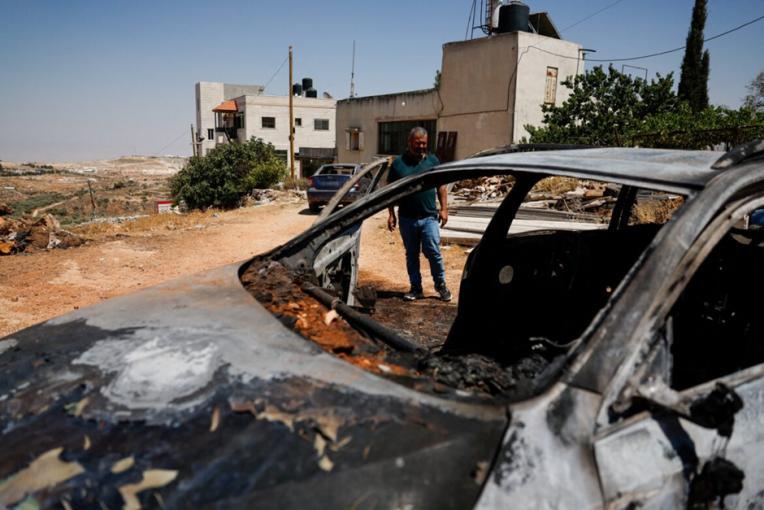
A Palestinian man stands next to a burned car after an attack by Israeli settlers in Kafr Malik, in the Israeli-occupied West Bank, June 26, 2025. (OSV News photo/Ammar Awad, Reuters)
JERUSALEM (OSV News) Israeli settlers attacked homes and lit a fire at the eastern entrance of the Christian West Bank village of Taybeh on June 26, as they rampaged through the neighboring village of Kafr Malik. The rampage resulted in the deaths of three people from Kafr Malik, the Palestinian health ministry said, and the burning of several homes and vehicles. No injuries were reported in Taybeh.
‘Barbarism and Brutality’
“These days, we are living under the fire, barbarism and brutality of the settlers and under the direct protection of the Israeli occupation army,” Father Bashar Basiel, priest at Christ the Redeemer Parish, wrote in a post he sent out to journalists. “We will win with hope. We are Palestinian Christians. We resist with our faith.” On June 25, a Palestinian boy was shot dead by the Israeli army during a raid on Al-Yamun, a West Bank town west of Jenin, the (please turn to page 4)
A Christian Perspective on Social Issues When saints march resolutely
By GHK Lall
Talk about leadership, and there was St Peter, a man of much voice, rising from the ashes of failing Jesus in his hour of great need, and becoming the first vicar of Christ. He was a good one; a humble man of failings, who reflected that the unlettered and unhailed can still rise, through the grace of God, to be the unusual. And to talk about leadership, there was St Paul, one who was wrenched from maniacal Saul of Tarsus to being, also by divine calling, to be Paul, apostle to the Gentiles. A follower of rare fortitude, exceptional drive; a man who did nothing by half measures. For St Paul, it was always a hundred miles an hour, and a hundred counsels a minute to his audiences. Two men, two disciples of Jesus, two tireless workers in the vineyards of God. And, when the sum of their works is measured, two saints of extraordinary virtues.
Peter was impulsive, a man who had a tendency to speak on the spur of the moment, say whatever flew to his head, then rushed out of his mouth even more quickly. When Jesus ascended above the clouds and to
heaven, Peter had to lead the charge to spread the Good News of the Kingdom. The old enemies of Jesus were laying in wait for him and his companions. Their rage rose, for their thought was that they had gotten rid of Jesus, once and for all time, only for these followers of his to return and draw crowds to their teachings. Worse still, they refused to be intimidated, with the once denying and retreating Peter in the forefront of spirited resistance. God must be obeyed before man. Did they get their share of blows! Answering Jesus’s call, following in his shadow, is not for the faint of heart. Just study the life of the manhunter who became a saint.
“I speak as a fool I am more: in labors more abundant, in stripes above measure, in prisons more frequently, in deaths often. From the Jews five times I received forty stripes minus one. Three times I was beaten with rods; once I was stoned; three times I was shipwrecked; a night and a day I have been in the deep; in journeys often, in perils of waters, in perils of robbers, in perils of my own countrymen, in perils of the Gentiles, in perils in the city, in perils in the wilderness, in perils in the sea, in perils among false brethren; in weariness and toil, in sleeplessness often, in hunger and thirst, in fastings often, in cold and nakedness besides the other things, what comes upon me daily: my deep concern for all the churches. Who is weak, and I am not weak? Who is made to stumble, and I do not burn with indignation?” (2 Cor 11: 23-29).
Who can say that better? Who has had it harder? Who has a greater
right to sainthood? If it was not Paul, then there are few others who could qualify for that highest dignity. Then, think of Peter in those post resurrection days with the Sanhedrin breathing down his neck every step of the way. He had to watch as some of those who were with him in that original group around Jesus got picked off one by one. And in one gruesome, hair-raising death after another, at which the Romans were the best. Peter was there from the beginning, and he endured the trials in faithful obedience to the Master. If ever there were those who measured up under great duress, and with little to recommend them, it was Saints Peter and Paul, whose journeys in Christ are remembered and celebrated today. It is the greatness of God given a glimpse in the lives of ordinary men. Men who failed and fell, only for them to rise and fly high.
I gather a few things of compelling strength from the examples of these two Christian champions and heroes. When a man or woman believes that they are doing the work of God, there is the blessing of having no fear. There is no flinching, no retreating. The knowledge is that men with much to hide, and more turf to protect, will smear and slander, will lash and try to derail from the path taken. They may even kill sometimes, when the moon is inclined at certain angles, or the worst of the devil takes over them. What the persecutors fail to realize is that trial strengthens beliefs. Ordeals by fire inspire to greater faith. In adversity there is peace, there is joy. Money cannot buy that, bring to that state. There is a power there, and it is one that men cannot give. To God be the glory. To all men, goodwill. ❖
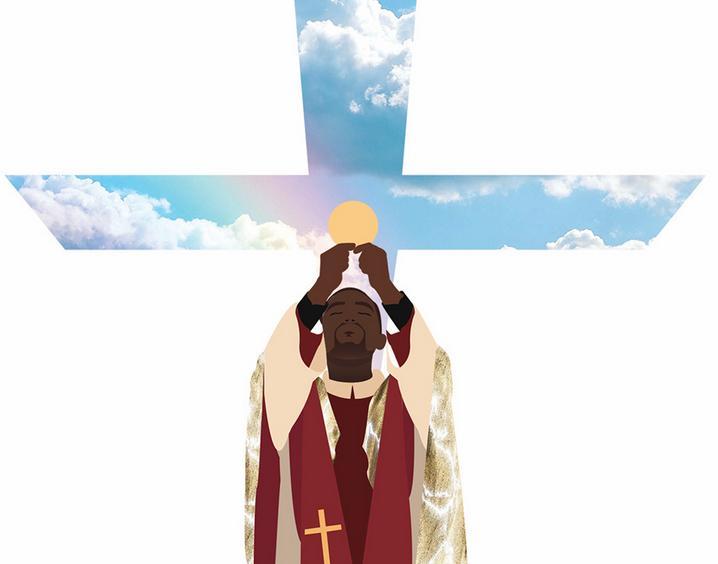
Gracious and loving God, we thank your for the gift of our priests.
Through them, we experience your presence in the sacraments.
Help our priests to be strong in their vocation.
Set their souls on fire with love for your people.
Grant them the wisdom, understanding, and strength they need to follow in the footsteps of Jesus. Inspire them with the vision of your Kingdom.
Give them the words they need to spread the Gospel.
Allow them to experience joy in their ministry.
Israeli settlers attack Christian village in West Bank, leaving 3 dead, homes burned (From Page 3)
Palestinian Red Crescent said, as reported by Reuters.
Hussein al-Sheikh, the deputy to Palestinian President Mahmoud Abbas, posted on X: “The government of Israel, with its behavior and decisions, is pushing the region to explode.”
“We call on the international community to intervene urgently to protect our Palestinian people,” he said, Reuters reported.
Setting Fire to Property
In a statement, the Israeli Defense Forces said dozens of Israeli civilians set fire to property in Kafr Malik, and after a confrontation between the Israelis and Palestinian developed including “mutual rock-hurling,” the IDF and Israeli police were dispatched to the scene.
The statement said several people whom the IDF termed “terrorists” from within the village fired toward the forces who returned fire, with fatalities reported. Five Israeli suspects were apprehended and transferred to the Israeli Police for further processing, IDF said.
Settler violence in the West Bank, including Taybeh, has grown in
severity over the past year and five months since the war in Gaza has continued, said Taybeh resident Nadim Khoury, owner of the well-known Taybeh Brewery and Winery, with settlers encroaching on Taybeh agricultural land with their sheep and cows, preventing farmers from reaching their crops.
‘No One Is Stopping Them’
“Settlers have been coming to Taybeh property and grazing their sheep and cows on the wheat and barley crops the people of Taybeh have planted. No one is stopping them,” he told OSV News.
“Last night they started fighting with the Arab Bedouin and then they made it to the entrance of Taybeh. We can’t do anything. Everybody is afraid and panicked but don’t know what to do. Taybeh depends on its agriculture and olive trees. People don’t know what to do or who to complain to if the government is with them, what can we do?”
Palestinian shepherds and Israel activists maintain that soldiers and police who are deployed to such incidents rarely do anything to stop the settlers and in fact seem to be
supporting them, noting that the situation has gotten worse since the war as attention is placed on Gaza.
In May the Israeli government, the most extreme right-wing government in its history, said it would establish 22 new settlements throughout the West Bank. Most of the settlers who clash with Palestinian shepherds and farmers are from small illegal sheep and goat homesteads who use their animals as a way to encroach on Palestinian land.
Khoury said earlier in June settlers entered land belonging to his cousin and let the sheep eat all the new crops he had planted and took his water tank so he would not be able to water any new crops he planted. ❖
Help them to become instruments of your divine grace.
We ask this through Jesus Christ, who lives and reigns as our Eternal Priest. Amen
Sunday, June 29th
09:00hrs – 150th Anniversary Mass at St. Peter’s, BV, ECD
Tuesday, July 1st
09:00hrs – Presbyteral Council Meeting, Bishop’s House
Sunday, July 6th
07:30hrs – Mass at St. Thomas the Apostle, Enmore
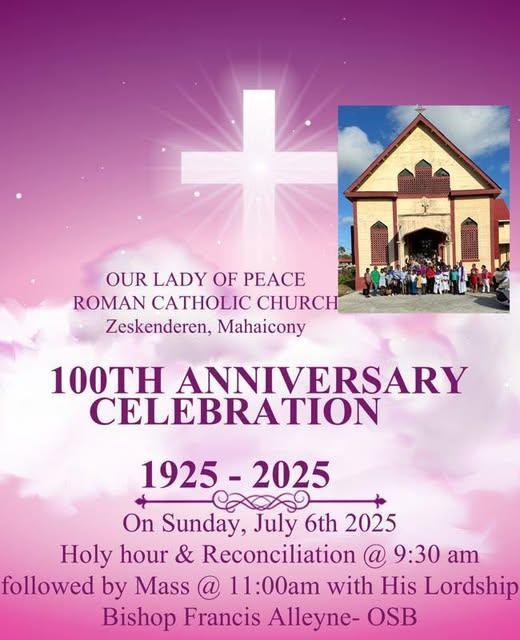
11:00hrs - 100th Anniversary Mass at Our Lady of Peace, Zeskenderen, Mahaicony


FIRST READING Acts 12:1-11
Now I know the Lord really did save me from Herod. Kind Herod started persecuting certain members of the Church. He beheaded James the brother of John, and when he saw that this pleased the Jews he decided to arrest Peter as well. This was during the days of Unleavened Bread, and he put Peter in prison, assigned four squads of four soldiers each to guard him in turns. Herod meant to try Peter in public after the end of Passover week. All the time Peter was under guard the Church prayed to God for him unremittingly.
On the night before Herod was to try him, Peter was sleeping between two soldiers, fastened with double chains, while guards kept watch at the main entrance to the prison. Then suddenly the angel of the Lord stood there, and the cell was filled with light. He tapped Peter on the side and woke him. “Get up!” he said, “Hurry!” – and the chains fell from his hands. The angel then said, “Put on your belt and sandals.” After he had done this, the angel next said, “Wrap your cloak round you and follow me.” Peter followed him, but had no idea that what the angel did was all happening in reality; he thought he was seeing a vision. They passed through two guard posts one after the other, and reached the iron gate leading to the city. This opened of its own accord; they went through it and had walked the whole length of one street when suddenly the angel left him. It was only then that Peter came to himself. “Now I know it is all true,” he said. “The Lord really did send his angel and has saved me from Herod and from all that the Jewish people were so certain would happen to me.”
RESPONSORIAL PSALM Psalm 33
Response: The angel of the Lord rescues those who revere him.
1. I will bless the Lord at all times, his praise always on my lips; in the Lord my soul shall make its boast. The humble shall hear and be glad. Response
During June, we have celebrated key moments in the life of the Church Pentecost, the Most Holy Trinity, Corpus Christi culminating today with the Solemnity of Sts. Peter and Paul. Though very different men, they are
2. Glorify the Lord with me. Together let us praise his name. I sought the Lord and he answered me; from all my terrors he set me free. Response
3. Look towards him and be radiant; let your faces not be abashed. This poor man called; the Lord heard him andrescued himfromallhisdistress. Response
4. The angel of the Lord is encamped around those who revere him, to rescue them. Taste and see that the Lord is good. He is happy who seeks refuge in him. Response
united in faith, mission, and martyrdom, and the Church has honored them together since the third century.
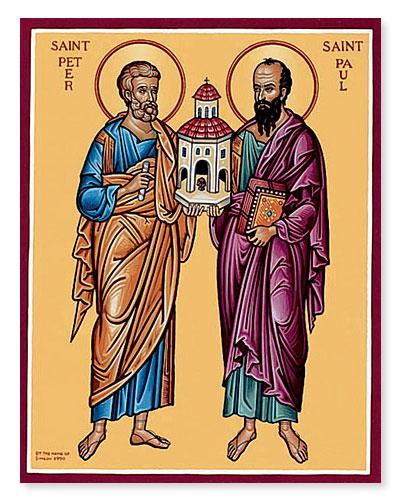
St. Peter, the first Pope, was chosen by Christ as the rock on which the Church would be built. The Catechism tells us that because of the faith he professed, Peter remains the “unshakeable rock of the Church.” Despite his human weaknesses, Peter's loyalty, repentance, and leadership make him a powerful model of stewardship.
St. Paul, once a persecutor of Christians, became one of the
SECOND READING 2 Timothy 4: 6-8;17-18
All there is to come now is the crown of righteousness reserved for me.
As for me, my life is already being poured away as a libation, and the time has come for me to be gone. I have fought the good fight to the end; I have run the race to the finish; I have kept the faith; all there is to come now is the crown of righteousness reserved for me, which the Lord, the righteous judge, will give to me on that Day; and not only to me but to all those who have longed for his Appearing.
But the Lord stood by me and gave me power, so that through me the whole message might be proclaimed for all the pagans to hear; and so I was rescued from the lion’s mouth. The Lord will rescue me from all evil attempts on me, and bring me safely to his heavenly kingdom. To him be glory for ever and ever. Amen.
GOSPEL Matthew 16: 13-19
You are Peter and I will give you the keys of the kingdom of heaven.
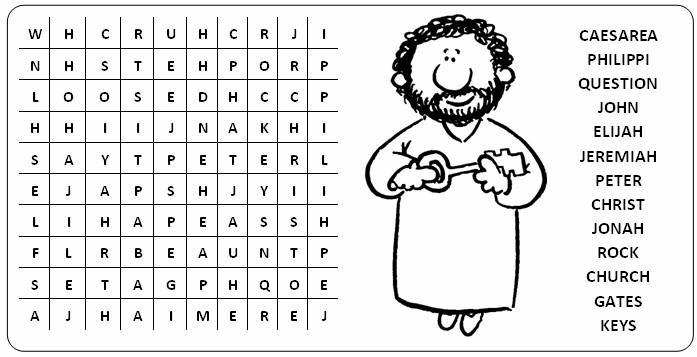
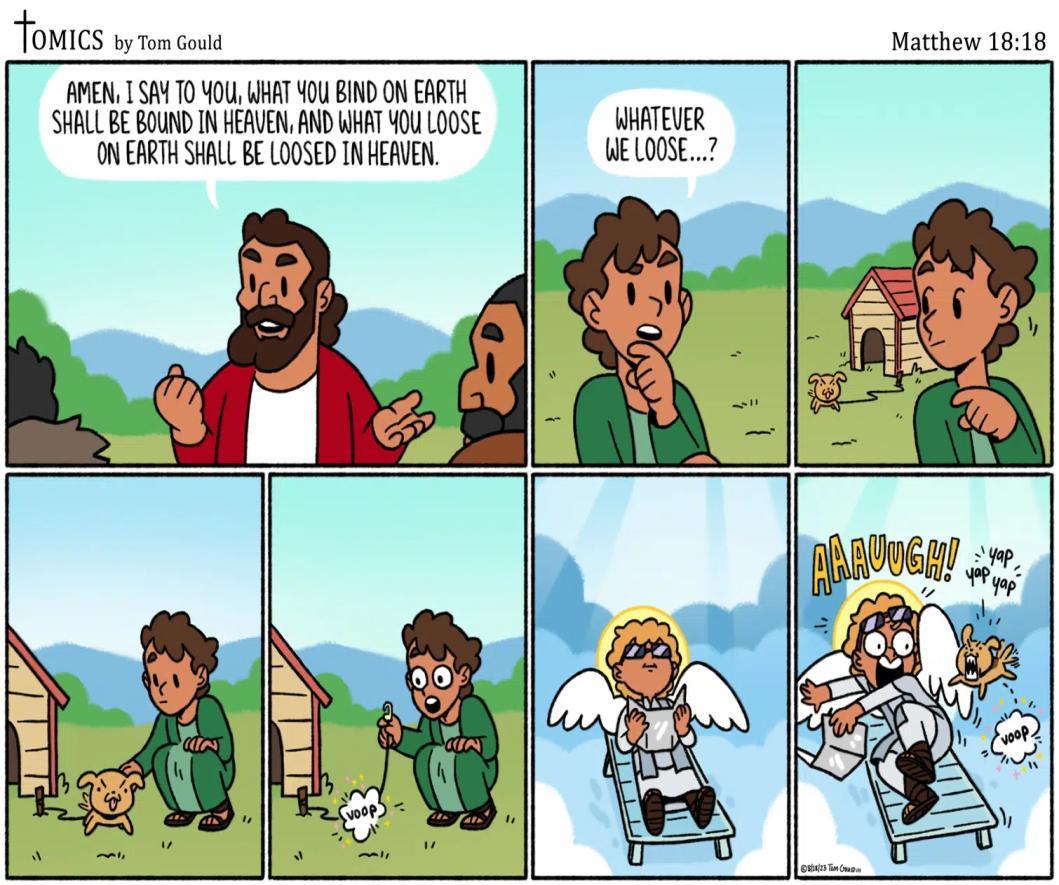
When Jesus came to the region of Caesarea Philippi he put this question to his disciples, “Who do people say the Son of Man is?” And they said, “Some say he is John the Baptist, some Elijah, and others Jeremiah or one of the prophets.” “But you,” he said, “who do you say I am?” Then Simon Peter spoke up. “You are the Christ, “ he said “the Son of the living God.” Jesus replied, “Simon son of Jonah, you are a happy man! Because it was not flesh and blood that revealed this to you but my Father in heaven. So I now say to you: You are Peter and on this rock I will build my Church. And the gates of the underworld can never hold out against it. I will give you the keys of the kingdom of heaven: whatever you bind on earth shall be considered bound in heaven; whatever you loose on earth shall be considered loosed in heaven.” ❖
Church’s greatest evangelists. In today’s second reading, Paul reflects on his mission, saying, “I have finished the race… the crown of righteousness awaits me.” The Greek word he used for “crown” stephanos refers to a victor’s crown, not a royal one, showing his view of faith as a race well -run for the sake of Christ.
Though they were martyred separately, tradition holds that Peter and Paul were in Rome at the same time, and their shared witness and sacrifice tie them closely together in Church history. They embody two vital
aspects of stewardship Peter in his faith and leadership, and Paul in his zeal and wisdom.
As stewards, we are called to follow their example to build the Church through our commitment, to overcome our failures through God’s mercy, and to proclaim the Gospel with courage. Like Peter and Paul, we are invited to give all we have for the sake of Christ and His Church. ❖
[www.catholicsteward.com ]
Gospel Reflection
Today’s celebration in honour St Peter and St Paul serves to remind us of the apostolic tradition of the Church. Our Church is apostolic because the Apostles took up the challenge Jesus left with them to spread the Good News of God’s love for all creation and to “make disciples of all nations”. Without their commitment to the cause of Jesus and the Church, we would not have been the people we are today. They left us a rich tradition of service, dedication, commitment and perseverance. And through baptism and confirmation, we have been commissioned to follow in this tradition. Today is therefore a suitable time for all the baptised to reflect on how faithful they have been to our tradition. And it is a time for those preparing for baptism to consider the life that lay ahead of them as a member of the Church. The believer cannot just be satisfied with being called a Christian; he or she must BE Christian and lead people to Christ by the manner of their lives.
There is a comforting note in today’s Gospel passage. Reading the promise of Jesus to Peter that nothing will ever destroy the Church is encouraging to us especially in the light of all the pressures and difficulties facing the people of God. At various times in its history, the Church has faced many difficulties that threatened to destroy it but it has always survived. And not only has it survived but it has grown stronger and has become a symbol of unity and a voice of reason in a world that cries out for unity and reason. This could only have been possible because Jesus promised Peter that the Church will prevail. When all is said and done and regardless of how some people behave, it is clear that people do not own the Church; it is God’s Church.
God gave to each of his creation special gifts and talents. The problem here is that while many of us recognise these special gifts and talents we have, we feel that they are to be used for our own personal good rather than in service to others. The typical attitude towards gifts and talents is to use them for personal advancement and for domination of others. But Jesus pointed out a new way. The disciple is not to dominate and control but to serve. Peter and Paul were leaders of the Church who used their talents and gifts in the service of others. ❖
[

Dear Editor,
We are all children of God, we are brilliant. Our playing small doesn’t serve the world. There is nothing enlightened about shrinking so that other people won’t feel secure around us. We are born to make manifest the glory of God that is within us, each one of us. God does not make junk. We shall do his work, we shall do good, we shall place our trust in him. When I
Yearning for God
read the Bible, it strikes me with alarming importance that in the course of the entire Gospels, the disciples make only one request of Jesus as a group: "Lord teach us to pray" (Lk11:1).
The people of every age yearn for God. I yearn for God, though for the longest time I did not recognize it as such. Even now I often confuse my yearning for God, with a yearning for other things. I suspect you have also come to recognize your yearning for God. We all have a longing to draw nearer to God, a desire to be in communion with Him. The desire for God is written in the human heart, because man is created
by God and for God, and God never ceases to draw man to himself. Only in God will we find the truth and happiness we never stop searching for.
The Lord is my shepherd, the Good Shepherd. Search and you will find him. Stop trying to put together a master plan for your life and for your happiness. Instead, seek out the Master’s plan for your life and for your happiness. Allow Him to lead you, to guide you, to be your companion, your friend, your coach and mentor.
To God be the glory, praise the Lord.
party’s obsession with suppressing critics
Dear Editor,
Under the dictatorial phase of the Burnham Presidency subordination of the State to the whims and wishes of the ruling party was symbolized by the flying of the PNC party flag over the Court of Appeal. Similar levels of control over the administration of justice are pursued by the current Government. Rather than the flag, however, control is symbolized in the refusal to confirm the appointments of the Chief Justice and the Chancellor and the interference at all levels of the Guyana Police Force (GPF).
A direct consequence of reducing these institutions to arms of the ruling party has become evident over the past week in a variety of alarming ways: fatuous charges of ‘criminal libel’, ‘inciting racial tension’ and ‘blasphemy’ against opposition figures along with remand to prison and indictable charges of a youth for broadcasting an especially objectionable song. The persons affected include a former Mayor of Georgetown and a long-standing critic of the ruling party based for decades in New York.
Meddling in the affairs of the GPF extended tothevindictive transferofa rank from one end of the country to the other for what appeared to be a routine handshake with a visiting opposition presidential candidate for the upcoming elections.
Chief Justice Roxanne George, who together with Chancellor of the Judiciary are themselves victims of paramountcy in the persistent refusal by the President to confirm them in their posts launched a withering broadside against the Attorney-General’s Chambers, in particular, for small-minded nonsense the Judiciary has to deal with. She complained about resurrecting obsolete laws. Not only were the charges inappropriate, she said, they should never have been laid in the first place. The Chief Justice described the jaunt to New York by a Guyana police officer to serve the charges on Rickford Burke as a ‘frolic’ at tax-payers’ expense.
The Chief Justices’ comments reinforce concern over the persistent assault on freedom of expression in today’s Guyana. The resort to criminal
defamation to protect individual reputation is “unnecessary, disproportionately excessive, and not justified,” she stated, ‘particularly in a democratic society where civil remedies exist”. She also held that Section 113 of the Criminal Law (Offences) Act, Chapter 8:01, which criminalizes defamatory libel, violates Article 146 of the Constitution, which guarantees freedom of expression.
‘Blasphemous libel’ charges for which Skello was charged indictably and remanded to prison were absurd, no matter how offensive the ‘song’ he authored. Attempting to use the law as an instrument for addressing public morality ought to be a last resort. To this extent the Ethnic Relations Commission in addition to its rebuke to him could have usefully treated it as a teaching opportunity on what “public morality” means in the Guyanese context.
Skello and others might be forgiven, for example, for misinterpreting what is acceptable public morality given the recent State Ball hosted by the President and his wife where attendees were treated to scantilydressed girls swinging from the ceiling without apparent consideration for the sensibilities of unprepared guests..
Every society has limitations on individual freedoms. Ours are to be found in (Article146(5)(a) of the Constitution modelled on the International Covenant on Civil and Political Rights which permits restrictions deemed “necessary to protect national security, public order, public health ormoralsand the rights and freedoms of others.
It should also be noted that the Guyana Constitution is littered with inappropriate limitations of all kinds. They are
mostly colonial hang-overs which, were the long-promised constitutional reform process to finally materialize, should be simply thrown out. As long as hang-overs such as Clause 38F “no person’s religion or religious belief shall be vilified” remain, they will continue to be used to create mischief and political vindictiveness .At the same time the Institutions of State and civil society should vocally and vigorously protest the reckless degradation of all arms of the legal process. The current shambles contrasts sharply with memories of an era shaped by legendary Guyanese legal practitioners such as Professor J.O.F. Haynes, Rex McKay, Sonny Ramphal, Dr. Mohamed Shahabudeen, Doodnauth Singh, Sir Lionel Alfred Luckhoo, Desiree Bernard, Sir Fenton Ramsahoye, Clarence Hughes, and Dr. Claude Denbow. Executive Committee Guyana Human Rights Association

From: Journeying with the Word of God, The Religious Education Department, Diocese of Georgetown, Guyana ]
Leon Jeetlall
us and is more intimate to me than I am to myself made us to be together,” he said.
“Of course, there are also bonds that hurt and human groups where freedom is lacking. But these, too, can only be overcome together, trusting those who do not profit from our suffering, those whom we can meet and who meet us with selfless attention,” the pope said.
‘Called to freedom’
“Drugs and addiction are an invisible prison that you, in different ways, have known and fought, but we are all called to freedom,” Pope Leo told his audience.
Journeying with the Word of God
VATICAN CITY (CNS) Too often, in the name of security, war is waged against the poor, Pope Leo XIV said.
The Holy Year instead indicates that safety is found in the culture of encounter, he said. The Jubilee “asks of us the restitution and redistribution of unjustly accumulated wealth, as the way to personal and civil reconciliation.”
The pope made his comments during a meeting marking the International Day Against Drug Abuse and Illicit Trafficking June 26. Dozens of guests attended the gathering in the San Damaso Courtyard at the Vatican, including Italian government officials, individuals in recovery for substance abuse and those who assist them.
Battle against addiction
“Today, brothers and sisters, we are engaged in a battle that cannot be abandoned as long as, around us, anyone is still imprisoned in the various forms of addiction,” Pope Leo said.
“Our fight is against those who make their immense business out of drugs and every other addiction think of alcohol or gambling,” he said. “There are huge concentrations of interest and extensive criminal organizations that states have a duty to dismantle.” However, he said, “it is easier to fight against their victims.”
“Too often, in the name of security, war is waged against the poor, filling prisons with those who are merely the final link in a chain of death. Those who hold the chain in their hands instead manage to gain influence and impunity,” he said.
“Our cities must not be freed of the marginalized, but of marginalization; they must be cleared not of the desperate, but of
desperation,” he said.
Culture of encounter as a way to safety
“The fight against drug trafficking, educational commitment among the poor, the defense of Indigenous communities and migrants, and fidelity to the social doctrine of the church are in many places considered subversive,” he said.
“The Jubilee indicates the culture of encounter as the way to safety,” he said, and challenges must be tackled together.
“We conquer evil together. Joy is found together. Injustice is fought together. The God who created and knows each one of
“St. Augustine confessed that only in Christ did the restlessness of his heart find peace. We seek peace and joy, we thirst for them. And many deceptions can delude and even imprison us in this quest,” he said.
“The church needs you. Humanity needs you. Education and politics need you. Together, we will make the infinite dignity imprinted on each person prevail over every degrading addiction,” the pope said.
“Let us go forward together, then, multiplying the places of healing, encounter and education: pastoral paths and social policies that start from the street and never give anyone up for lost,” he said. ❖
MAKING THE WORD OF GOD YOUR OWN
Step 1: Lookattoday’sReadingsprayerfully.
1st Reading: We read of the persecuted Church united in prayer. They come to a greater understanding of God being with them and helping them with their mission.
2nd Reading: Towards the end of his life, Paul comments on how everything he has done was only possible with the help of God.
Gospel: Peter shows faith in Jesus as the Son of God and this is the basis of his role as leader in the Church.
Step 2: ApplyingthevaluesoftheReadings toyourdailylife.
1.It is said that being a Christian is not a benefit or an honour to possess, but a duty to perform. What is this statement saying to you?
2.What would you say are the gifts and talents needed today among believers in order to help in building up the Church?
3.What would you say are some of the great difficulties facing the Church today?
4.We can make a distinction between the Church as a great institution and the Church which is the People of God. Whatis the difference?
Step 3: Accepting the message of God’s Wordinyourlifeoffaith
In spite of all their flaws and weaknesses, God called Peter and Paul to use their skills and personalities to build up the young Church and spread the Good News of God’s love and forgiveness. This is a reminder that God can call us to mission in spite of our shortcomings. We don’t have to be perfect for God to work through us.
Step 4: Somethingtothink&prayabout
1.God sees in people what others may find difficult to see. What do you feel God sees in you? What do you think are your God-given gifts and talents to be used in the service of others?
2.Many people consider themselves as being “unworthy” to take up ministries in their Church communities. But today’s celebration shows that our human understanding of what is “unworthy” doesn’t count. Is there anything in your life that makes you feel that you may be unsuitable for ministry? On the other hand, how are you suitable for ministry in your Church community? ❖
[From: Journeying with the Word of God, The Religious Education Department, Diocese of Georgetown, Guyana ]
Pope Leo XIV marks the International Day Against Drug Abuse and Illicit Trafficking with a meeting in the San Damaso Courtyard at the Vatican June 26, 2025. (CNS photo/Lola Gomez)
Central Cluster holds joint Corpus Christi Mass (From P1)
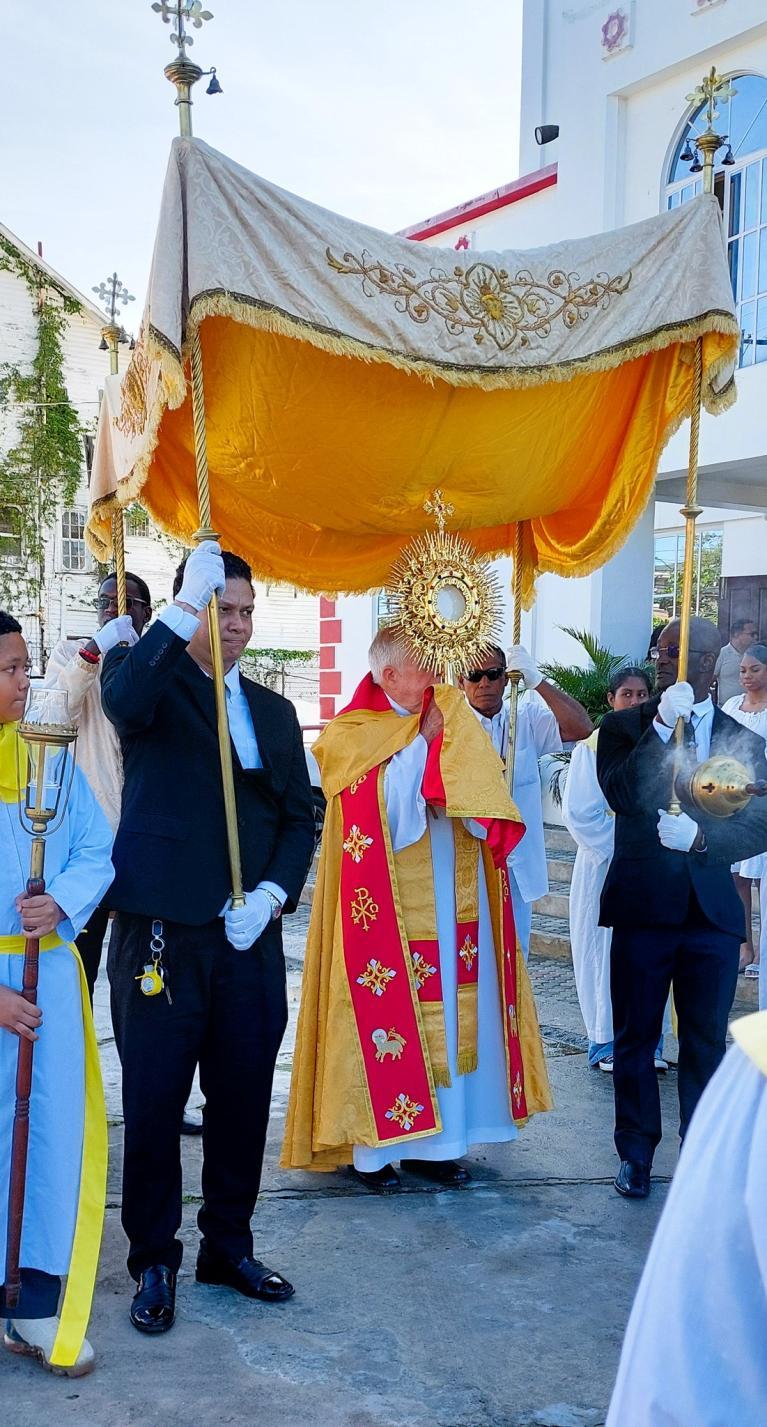
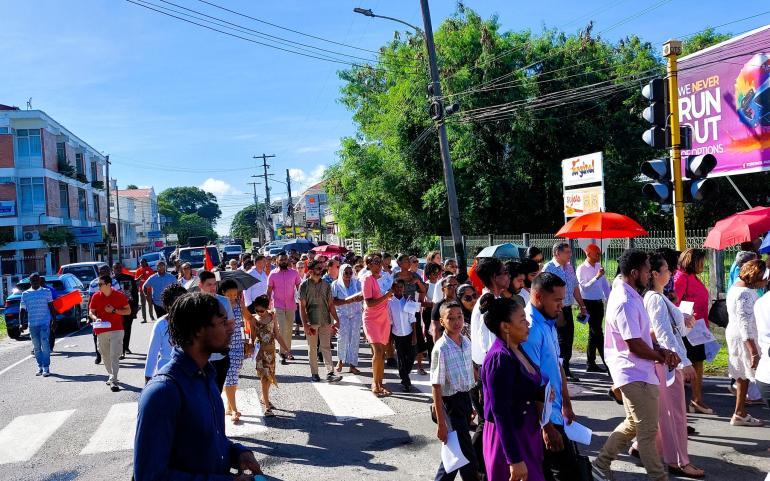
Carmichael to Middle and back to Main Street was completed, with Bishop Francis Alleyne and Fr. Santiago leading the way. The children for First Communion walked close behind him, and the singing echoed and reechoed along the streets. It was good to see over two dozen young ones ready and inspired to receive Jesus. The praying of the Rosary ushered worshippers back into the church, with spacious tents to complement on the outside. The readers of the Word were smooth, and the choir was in glorious form, with the high notes touching and surrounding in a cloud of delight. It was a treat, with the little ones all ready and all dressed in their white shirts and red bowties (or ties), and the little ladies in all-white. Bishop Francis delivered a homily centered on the Multiplication of the Loaves, and he quickly warmed to the essence of the Gospel reading
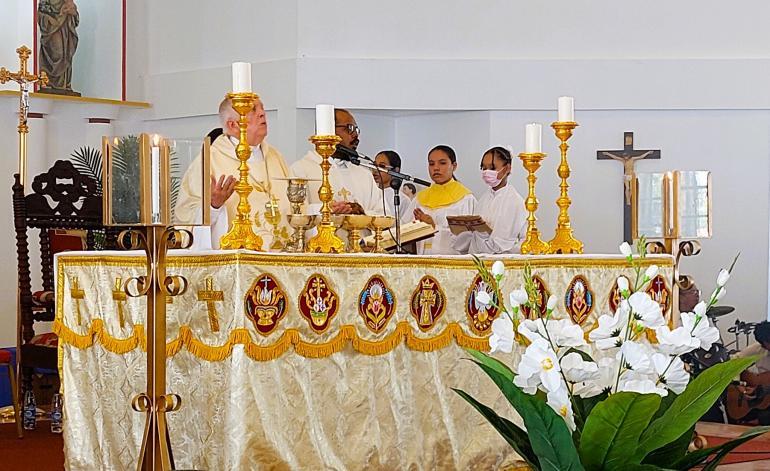
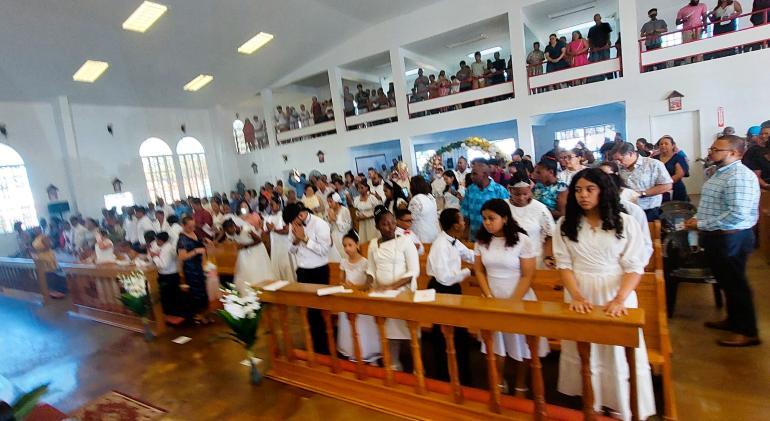
from St Luke. The significance of food in the first century in Jewish culture, and the care taken in what was accepted, eaten. One point that stirred was the giving by those with the five loaves and two fish, and the miraculous sharing that followed. The breaking of bread, the sharing and partaking of bread, now divinely blessed, all resonated deeply. In the bread, in the One Body, in the One Savior, through the One Spirit. A pin could be heard, except that no one dropped any. The smaller children were also remarkably restrained, given the length of the proceedings. Perhaps, they were suitably awed. It was a blessed celebration. One of sharing, stepping aside, letting others participate, in a spirit of true Christian fellowship.
I sensed and saw what could be done, once there is the will. And, of course, when God smiles on the efforts of his faithful. Smile he did, and thanks be to him through Jesus.
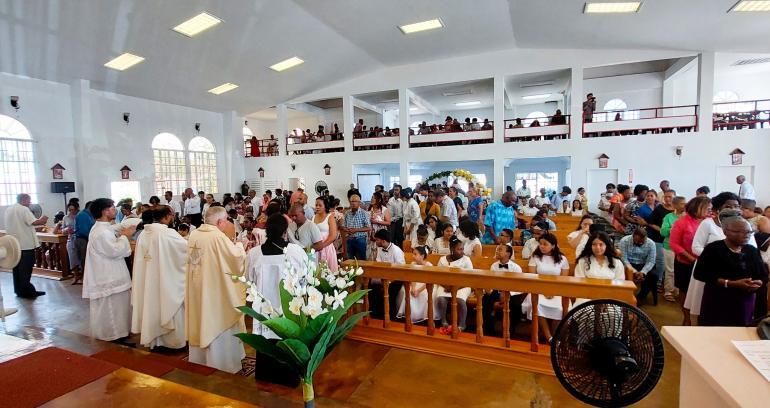
organizers, to the contributors on Corpus Christi Sunday, it was a testimony of how the works of our hands can and will be blessed. Special commendations and thanks to the sisters and brothers of Sacred Heart for being prepared and inspired hosts on what, by grace, was a spirit-filled Corpus Christi Sunday. The supporting teams from Brickdam Cathedral and Our Lady of Fatima also manifested a can-do spirit. A pure heart, give to each one of all, O Lord. A willing spirit, O Divine
Jesus, may that grace of yours be ours also. May the little ones receiving the Body of Jesus for the first time, live a life that honors the one with whom theyarenowinseparable. Now, it is on to Christ the King and Our Lady of Fatima for the next joint celebration in the Jubilee Year 2025. Hope Does Not Disappoint (Spes Non Confundit). Let each one of us commit to be a Pilgrim of Hope, and with the blessing of the Holy Spirit embody that standard. Thanksbe to God.❖
Dear Girls and Boys,
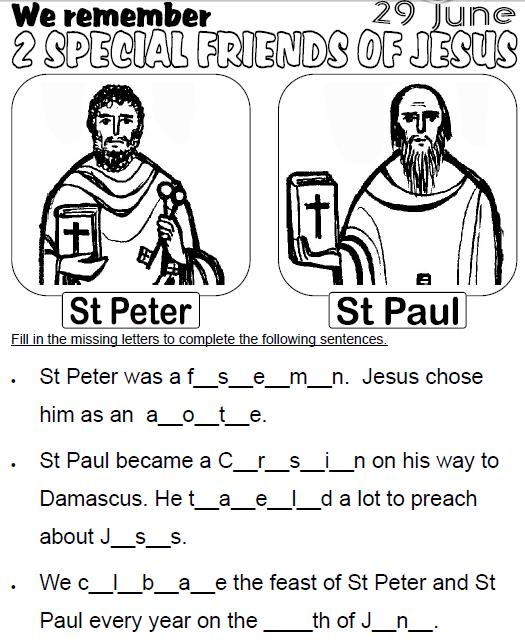
Today we celebrate the Solemnity of Saints Peter and Paul, Apostles. In today`s Gospel, we hear how Jesus was so impressed with Simon that he gave him a new name –Peter – and said that he would build his church upon him. Jesus also gave Peter the keys to the kingdom of Heaven.
Why did Jesus give Simon Peter a new name and the keys to the kingdom?
Simon Peter recognised and believed that Jesus was the Son of God. He had great faith and was willing to put that faith into words but also into actions.
Because of Peter’s great faith, Jesus gave him the keys to the kingdom of Heaven. What are keys usually used for?
That’s right, keys lock doors, but they also open them. As a disciple, Peter spent his time sharing Jesus’ message with other people. He opened their hearts to God’s love, just like a key opens a door. How can we open the doors in our hearts to welcome Jesus in and to try to show our faith in him in all that we do?
We can open our hearts by taking some time to stop and listen, to pray and to try to hear what Jesus is asking us to do. We can show our faith in our prayers and in our actions. We can try to follow Jesus’ commandments to love God and to love our neighbour. We can be kind and generous to others and we can try to make the world a fairer place where all people get what they need.
This week let’s try to be more loving, more forgiving and more generous to others. And let’s try to open our hearts to welcome Jesus in.
What will you do this week to show your faith in Jesus and to welcome him into your heart?
Living God, help us to live by the keys to your kingdom – love, faith, generosity and fairness – so that all people may live together in peace in a world without poverty. We ask this through Christ, our Lord, Amen. ❖
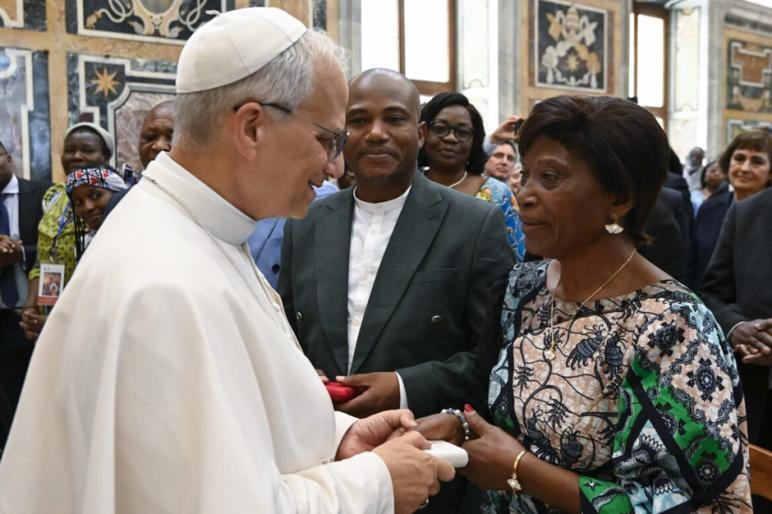
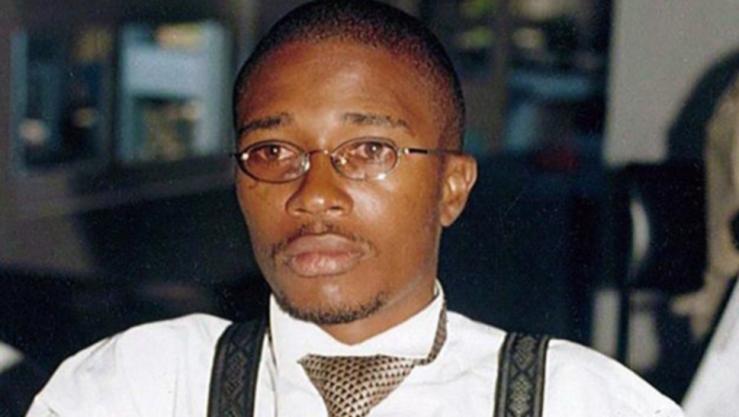
Pope Leo XIV greets Gertrude Kamara Ntawiha, mother of the newly beatified Congolese martyr Blessed Floribert Bwana Chui, during an audience in the Clementine Hall at the Vatican June 16, 2025. Blessed Bwana Chui's brother Tresor looks on. (CNS photo/Vatican Media)
VATICAN CITY (CNS) In the presence of the mother of the newly beatified martyr, Pope Leo XIV prayed that Blessed Floribert Bwana Chui would intercede to finally bring peace to Congo.
“This African martyr, on a continent rich in young people, shows how they can be a ferment of ‘unarmed and disarming’ peace,” the pope said June 16 during a meeting with people who had attended the 26-year-old’s beatification the previous evening.
Gertrude Kamara Ntawiha, Bwana Chui’s mother, and his two brothers, Tresor and Jean-Claude, were among the pilgrims at the audience with Pope Leo in the Clementine Hall of the Apostolic Palace. The pope greeted the three as he entered the hall and gave them special rosaries.
Saying no to the filth of corruption
Bwana Chui was a member of the Congolese branch of the Community of Sant’Egidio, which described him as “a martyr of corruption” in the violencetorn Kivu region of eastern Congo.
After graduating with a law degree in 2006, he became a customs officer known for his repeated refusals to accept bribes to allow harmful and spoiled food into the country. Kidnapped July 7, 2007, his body was discovered two days later with evident signs of torture.
Pope Leo, reading his text in French, quoted what Pope Francis said about the martyr when he visited Congo in 2023: “He could easily have turned a blind eye; nobody would have found out, and he might even have gotten ahead as a result. But, since he was a Christian, he prayed. He thought of others, and he chose to be honest, saying no to the filth of corruption. That is what it means to keep your hands clean, for hands that traffic in easy money get stained with blood.”
Cardinal Marcello Semeraro, prefect of the Dicastery for the Causes of Saints, presided over the beatification ceremony and Mass June 15 atRome’s Basilica of St. Paul Outside the Walls.
Pope Leo told the pilgrims that Bwana Chui’s decision to resist corruption
Congolese martyr Blessed Floribert Bwana Chui. He was a customs officer who was killed because he repeatedly refused to accept bribes to allow harmful and spoiled food into the country.
“matured in a conscience formed by prayer, listening to the Word of God, and in communion with his brothers and sisters.
”
The young man “lived the spirituality of the Community of Sant’Egidio, which Pope Francis summed up with three ‘P’s’: prayer, poor, peace.”
His service to the poor focused particularly on the children who were driven by the war to live on the streets of Goma, the pope said. “He loved them with the charity of Christ: he was interested in them and concerned about their human and Christian formation.”
‘He Was a Man of Peace’
“He was a man of peace,” Pope Leo said. “In a region suffering as much as Kivu, torn by violence, he carried on his battle for peace with meekness, serving the poor, practicing friendship and encounter in a lacerated society.”
“This Congolese layman highlights the precious value of the witness of lay people and young people,” the pope said.
“Through the intercession of the Virgin Mary and Blessed Floribert, may the longed-for peace in Kivu, Congo and all of Africa be realized soon,” Pope Leo prayed. ❖
By Renika Anand
A Promise of Peace
Albert Einstein, the great physicist once said “Peace cannot be kept by force; it can only be achieved by understanding.”
As we grow up and encounter new experiences, we all gradually come to the realisation that despite how different we are, almost all of us aspire to similar ambitions. Although we may see ourselves taking different paths, our goals almost always involve happiness and peace. Peace is the pillar of our world. It is a beacon towards which we travel - it is one of the ultimate goals of life. Yet, it is often the very thing that eludes the lives of people and leaves them feeling incomplete and unaccomplished. In our world, peace has become quite fickle, where it can be real during one day and a feeble hope during the next. As such, it has become our moral duty to ensure that we create these precious moments of peace whenever we can and wherever we can.
A state of peace takes sacrifice and understanding. It is not something that is experienced, but something that is crafted and maintained with patience. Let us choose to traverse this world with the promise of peace in our hearts.
Blessed are the peacemakers, for they will be called children of God. - Matthew 5:9. ❖


Christianity up in sub-Saharan Africa, down
(OSV News) Sub-Saharan Africa has replaced Europe as the locus for the world’s Christians, due to both higher birthrates and Western Europe’s “widespread Christian disaffiliation” with Christians declining as a share of the world’s population due to adherents leaving the faith, according to new research by the Pew Research Center.
Christians, tallied across denominations, remain the world’s largest religious group a majority in all regions except the Asia-Pacific, Middle East and North Africa areas but “they are shrinking as a share of the global population, as large numbers of Christians around the world ‘switch’ out of religion to become religiously unaffiliated,” said Pew.
On June 9, the center released “How the Global Religious Landscape Changed from 2010 to 2020,” surveying the religious makeup of 99.98% of the world’s population of just under 8 billion. The data drawn from more than 2,700 sources, including national censuses, large-scale demographic and population surveys as well as population registers represents 201 countries and territories with populations of at least 100,000.
The report is the most recent in a series on global religious change, produced by Pew in collaboration with the John Templeton Foundation.
The data relies on self-identification with a religion, and does not indicate any level of belief or practice, or lack thereof.
Seven broad categories are named in the report: Christians, Muslims, Hindus, Buddhists, Jews, other religions which include, among others, Baha’is, Sikhs, Zoroastrians and Wiccans and those who are religiously unaffiliated.
While the total number of Christians in the world increased from 2.1 billion to 2.3 billion during the decade from
adult years, said Pew, citing various studies.
Religiously unaffiliated persons made for the third largest category among the global population, behind Christians and Muslims, said Pew.
As of 2020, Christians remained a majority in 120 countries and territories, down from 124 in 2010.
Among the nations where Christians represent less than half the population are the United Kingdom (49%), Australia (47%), France (46%) and Uruguay (44%) all of which now have 40% or more residents identifying themselves as religiously unaffiliated.
Australia saw the greatest drop in its Christian population during the report period, declining by just over 20 points from 67.1% to 46.8% and counting 2.83 million fewer Christians by 2020.
Also experiencing notable 2010-2020 downturns in their respective selfidentified Christians were Chile (86% to 68.3%), Uruguay (61% to 44.5%), the United States (78.3% to 64%), Canada (67.2% to 53.3%) and the United Kingdom (62.4% to 49.4%).
(each with over 92 million).
However, Dmitry Dubrovskiy, a researcher from the Institute for International Studies at Charles University in Prague, recently told OSV News that despite its majority-Orthodox populace and amid a government crackdown on non-Russian orthodox faith communities Russian society as a whole is not especially religious.
Instead, “a substantial amount of Russians definitely consider their Orthodoxy as a cultural identity,” he said, noting that just “approximately 3-7% of the Russian population regularly visit a church.”
Pew noted in its new report that “while media stories in the 2010s often suggested that China was on the cusp of having the largest Christian population in the world, surveys indicate that China’s Christian population remains outside the 10 largest in the world.
“Based on religious self-identification measured in surveys, we estimate there were roughly 25 million Chinese Christians in 2020,” said Pew, citing its 2023 report on “Measuring Religion in China.”
2010-2020, the total population of non -Christians concurrently grew by 15% to 5.6 billion.
“As a result, Christians shrank as a percentage of the global population, with their share falling from 31% to 29%,” Pew said.
A number of factors influence religious demographics, such as fertility, mortality, migration and religious switching which Pew defines as changing in adulthood from a childhood religious group to another, or disaffiliating from religion altogether.
Ultimately, fertility and religious switching have proven decisive in shaping global religious demographics, Pew said, noting that migration cannot change the size of the global population of a given religious group, and that migrants tend to settle in nations where their religious identity is prevalent.
In sub-Saharan Africa, the overall population grew 31% to 1.1 billion from 2010-2020, with most people (62%) in the region identifying as Christians, said Pew.
The report also noted that the region’s younger demographics and higher fertility rates drove religious growth among all groups except for Jews, with the entire region accounting for “most of the increase in Christian numbers, globally.”
A previous Pew study estimated that Muslims had the highest fertility rates, an average of 3.1 children from 20102015. The same research found Christians followed, with 2.7 children. In the new study, Pew said that while “Christians have a high fertility rate they have been losing adherents as people switch out of Christianity to become religiously unaffiliated.”
Religious switching is generally completed by the end of a person’s young
While a number of nations worldwide saw drops in their Christian populations, Pew said that “many are in Europe and other Western or Englishspeaking places where Christian majorities havebeen shrinking for decades
“This change is largely driven by high rates of Christian disaffiliation i.e., by people becoming religiously unaffiliated as adults after having been raised as Christians in childhood,” said Pew. Overall, Christians and Buddhists saw the greatest losses due to religious switching, with Christianity experiencing a net loss of 11.6 adults for every 100 adults raised as Christians, due to religious switching.
An outlier was the East African nation of Mozambique, which experienced a substantial increase in its Christian population, up 5% to reach 61% in 2020. Pew noted that a governmental anti-religious campaign launched by the ruling socialist Frelimo party which came to power following the country’s independence from Portugal in 1975 had officially ended in the 1980s, “and the share of “Christians in that country has been increasing since.”
That increase comes amid renewed persecution, with Open Doors which aids persecuted Christians in more than 70 countries finding that Mozambique’s government is “still repressive,” while Islamic extremists, organized crime networks and clan leaders also pose threats to the nation’sChristians.
The U.S. counts more Christian residents than any other country, with more than 217 million or 9.6% of the world’s Christians identifying themselves as such.
Following the U.S. are Brazil (over 168 million), Mexico (over 113 million), the Philippines and Russia (more than 102 million), and Nigeria and the Congo
In its new report, Pew noted that for some two dozen countries among them North Korea, which has consistently topped Open Doors’ list as the most dangerous nation for Christians the only source for numbers is Boston University’s World Religion Database.
The database itself notes that “there are a number of areas of religious life where it is impossible to obtain accurate statistics, usually because of state opposition” to faith traditions, and so “reasonable and conservative estimatesare made.”
A multiyear decline in Christianity in the U.S. may have leveled off, according to Pew in its 2023-2024 Religious Landscape Survey, released in February.
However, the survey found Catholics are seeing the greatest net losses of believers compared to other religions in the U.S.
The data indicated that for every one person received into the Catholic Church, another 8.4 individuals have left the faith, either altogether or for another worship tradition. This increases the trend Pew found in 2014, when 6.5 Catholics left the faith for every person who entered.
That survey also showed just 29% of the nation’s Catholics attend religious services weekly or more often. Altogether four in 10 Catholics attend religious services monthly or more.
In addition, support among U.S. Catholics for legalized abortion, homosexuality and other stances at odds with church teaching has increased over the past decade and a half.❖
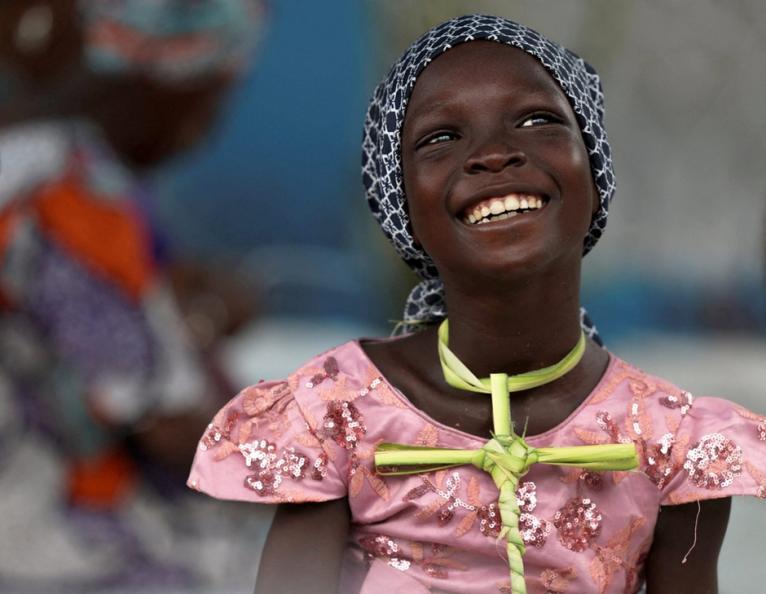
A girl smiles while holding a palm frond cross during Palm Sunday Mass at the Regina Mundi Catholic Church in Lagos, Nigeria, April 13, 2025. (OSV News photo/Sodiq Adelakun, Reuters)
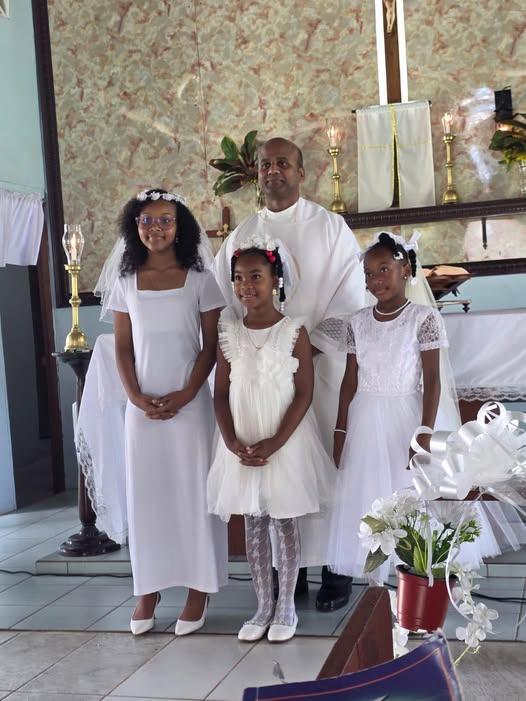
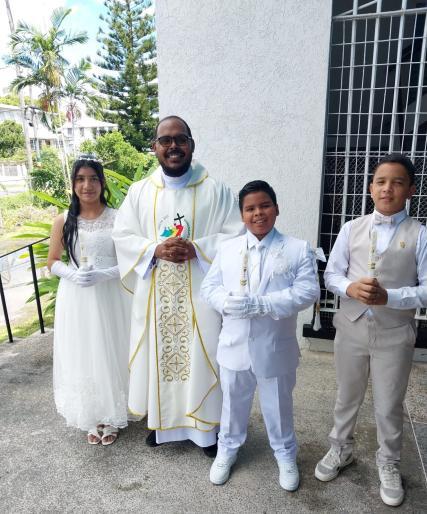
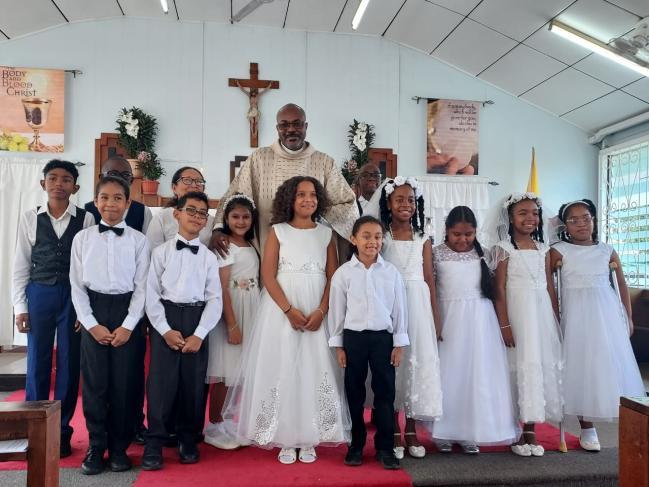
First Holy Communion on Corpus Christi
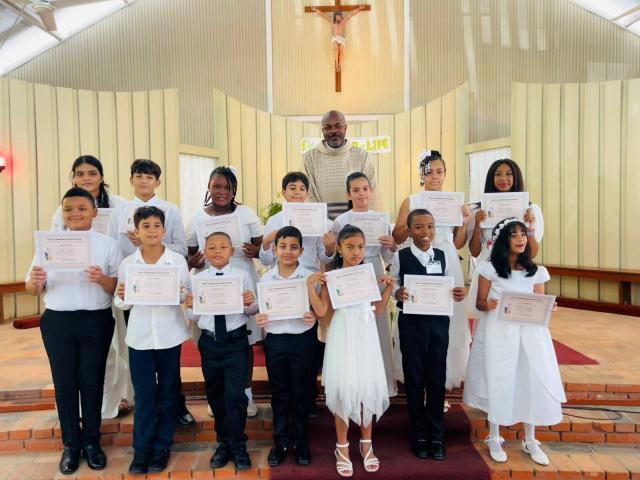
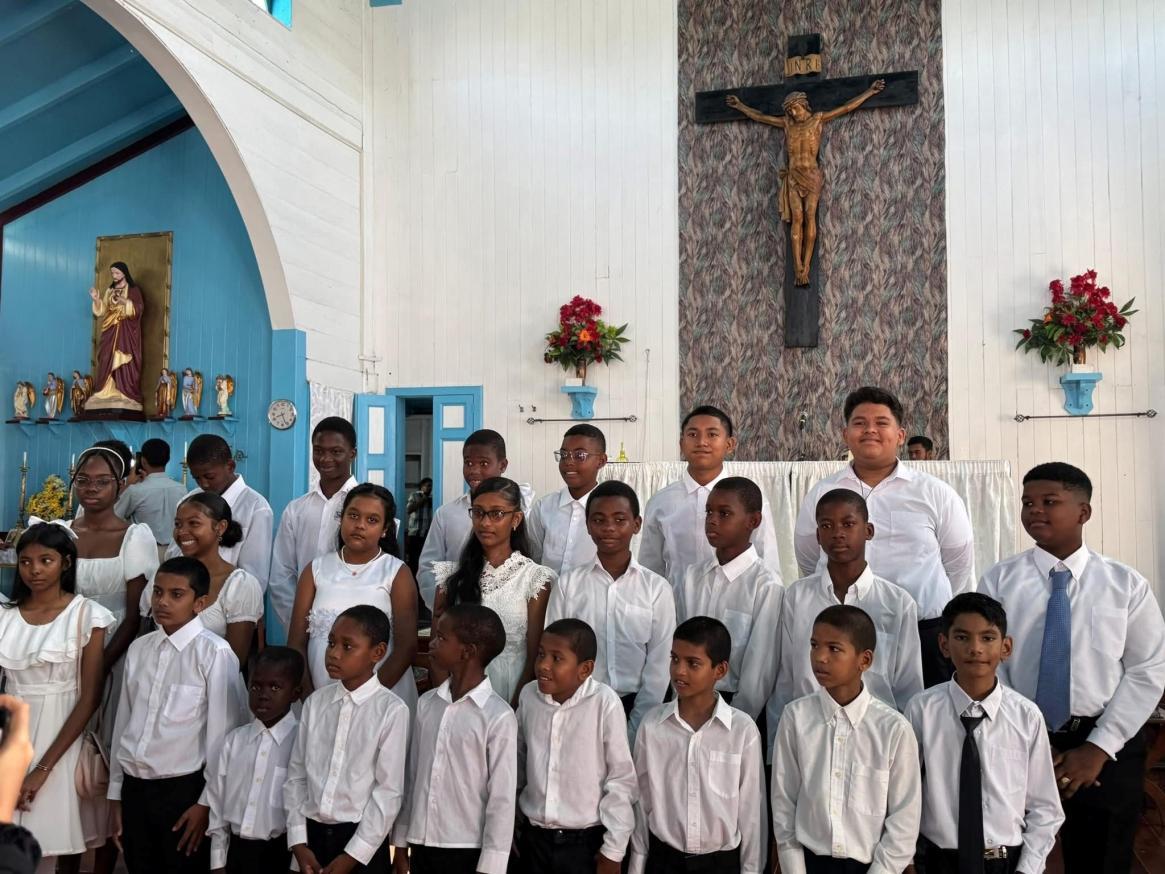
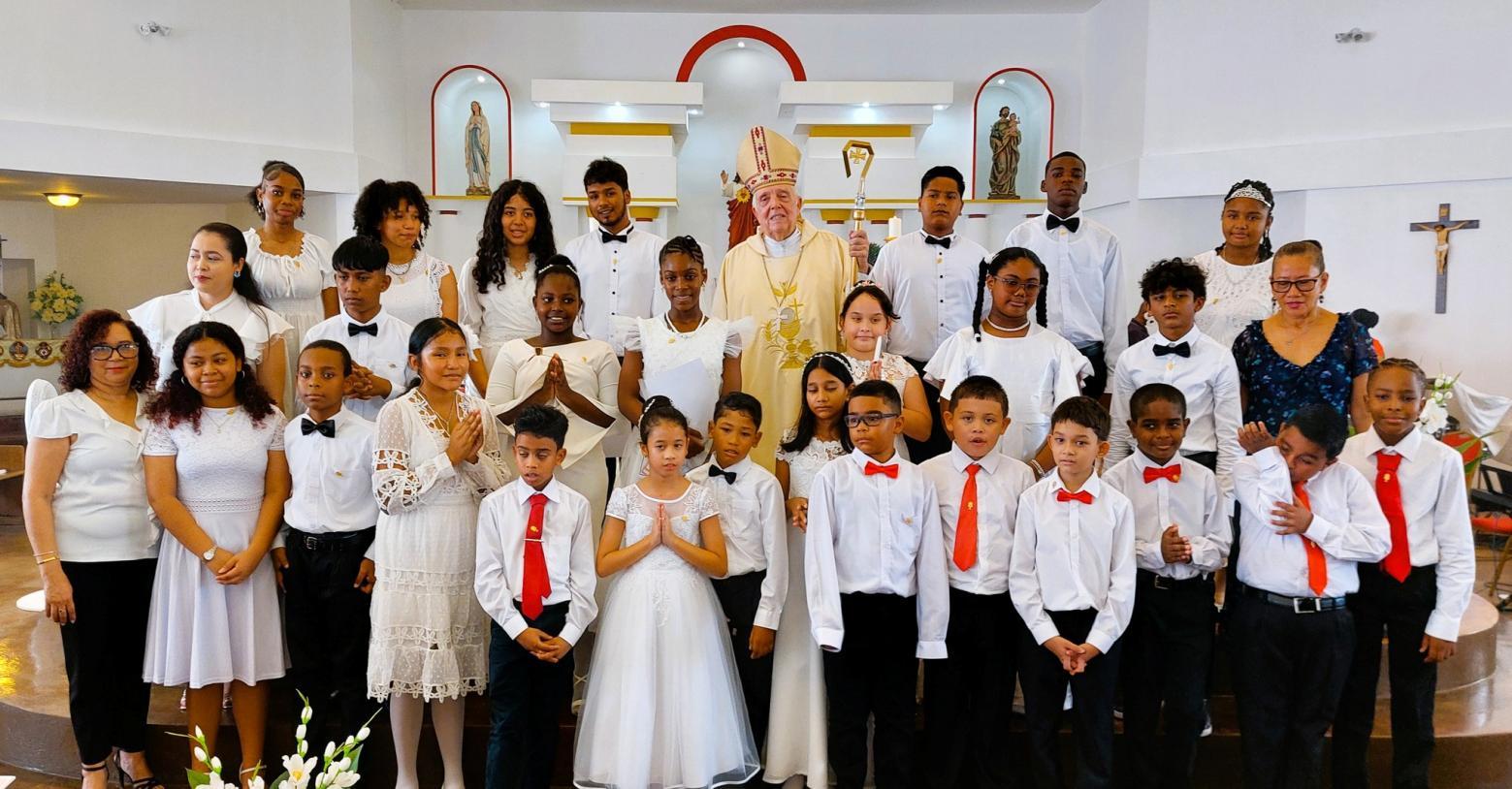
Central Cluster
Plaisance
Holy Rosary
St. Teresa's
Linden
Latin community




By Francis Canzius
Sacred Heart Church
– National Shrine
February 1960 – In an address to the annual conference of Catholic Societies of British Guiana, His Lordship Bishop Richard Lester Guilly S.J. informed that a
requesthadbeenputto himthat the Church of the Sacred Heart on Main Street be made a National Shrine of the Sacred Heart. The formal proposal was made by Mr. Edward De Freitas on behalf of the Sword of the Spirit movement (a group of lay persons).
The reason was to foster greater devotion to the Sacred Heart of Jesus through the Apostleship of Prayer whose intentions were mainly on the recommendations of the Pope. On the establishment of the church that year as the National Shrine for the Sacred Heart in this country, a registerofnamesoffamilieswho were consecrated to the Sacred Heart was kept at the shrine. Candles were often lit and prayerssaidattheshrine.
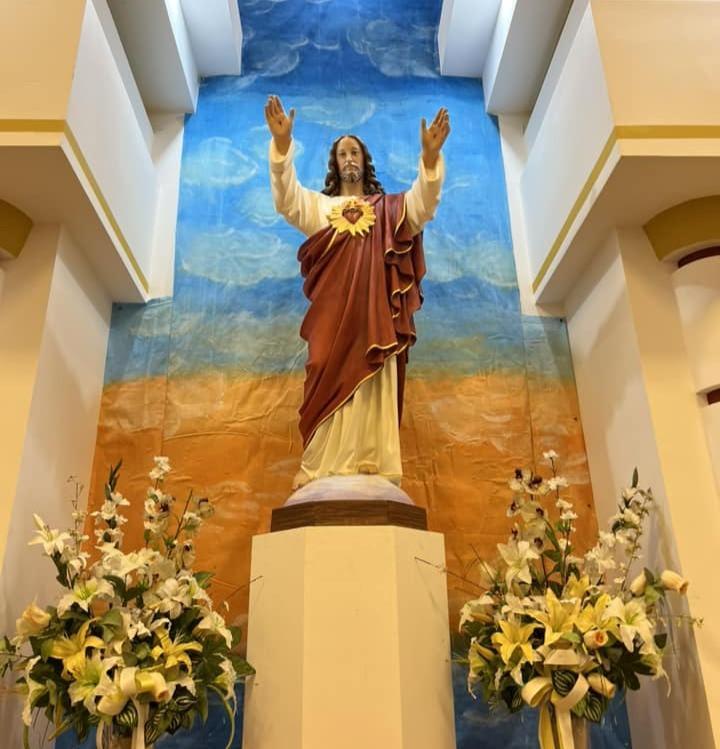
Thehistoryofthedevotiontothe Sacred Heart is derived from Sr. Margaret Mary, a French nun who received a series of apparitions from Jesus between the years 1673 to 1675. The picture above shows the statue of the Sacred Heart of Jesus in the present Sacred Heart Church.❖
June 29th
Saints Peter and Paul (d. 64 & 67)
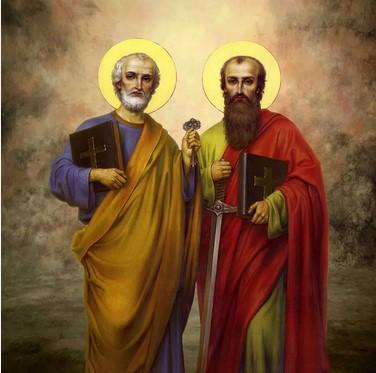
On June 29th the Church celebrates the feast day of Saints Peter & Paul. As early as the year 258, there is evidence of an already lengthy tradition of celebrating the solemnities of both Saint Peter and Saint Paul on the same day. Together, the two saints are the founders of the See of Rome, through their preaching, ministry and martyrdom there.
Saint Peter was the first to recognize that Jesus was “the Messiah, the Son of the living God,” The Acts of the Apostles illustrates his role as head of the Church after the Resurrection and Ascension of Christ. Peter led the Apostles as the first Pope and ensured that the disciples kept the true faith.
Saint Paul was the Apostle of the Gentiles. His letters are included in the writings of the New Testament, and through them we learn much about his life and the faith of the early Church.
Historical accounts cite Saint Peter being martyred in 64 AD and Saint Paul in 67 AD.
Reflection
We would probably go to confession to Peter sooner than to any of the other apostles. He is perhaps a more striking example of the simple fact of holiness. Jesus says to us as he said, in effect, to Peter: “It is not you who have chosen me, but I who have chosen you. Peter, it is not human wisdom that makes it possible for you to believe, but my Father’s revelation. I, not you, build my Church.”
Paul’s experience of the risen Jesus on the road to Damascus was the driving force that made him one of the most zealous, dynamic, and courageous ambassadors of Christ the Church has ever had. But persecution, humiliation, and weakness became his day-by-day carrying of the cross, material for further transformation. The dying Christ was in him; the living Christ was his life. ❖
[franciscanmedia.org]