
beauty & promise of marriage -saysBishopFrancisinmessage
Diocese welcomes members of Obra de Maria Community - p2
Pope Leo denounces human trafficking as a crime against humanity - p3
Prayer to end Human Trafficking - p3
MESSAGE FOR WORLD DAY OF MARRIAGE
A quick Google search of “World Day” celebrations reveals a very long list of topics that have been identified as worthy of attention. Issues related to the environment, the protection of children, concerns about violence, and many more fill that list. Marking a “World Day” helps us to recall and
renew what is vital about a particular concern, but it also invites us to recognize the threats, neglect, or decay that concern may be facing in our world today.
The idea of a World Day of Marriage came from married couples themselves, who shared their vision with Church and civic leaders. They proposed that Valentine’s Day be named “We Believe in Marriage Day.” The Marriage Encounter Movement adopted the idea, and it quickly resonated (please turn to page 2)
pope says in message for world
A Christian Perspective on Social Issues - p4
Sunday Scripture - p5
Pope’s February prayer intention: For children with incurable diseases - p6
SaintIgnatius Youths visit Fair View - p7
World Day of the Sick Prayer - p8
Children’s Page - p9
Faith in Practice - p10
Growing in Grace Week 78 - p10
Sport is important for humanity, respect Olympic truce, pope says - p11
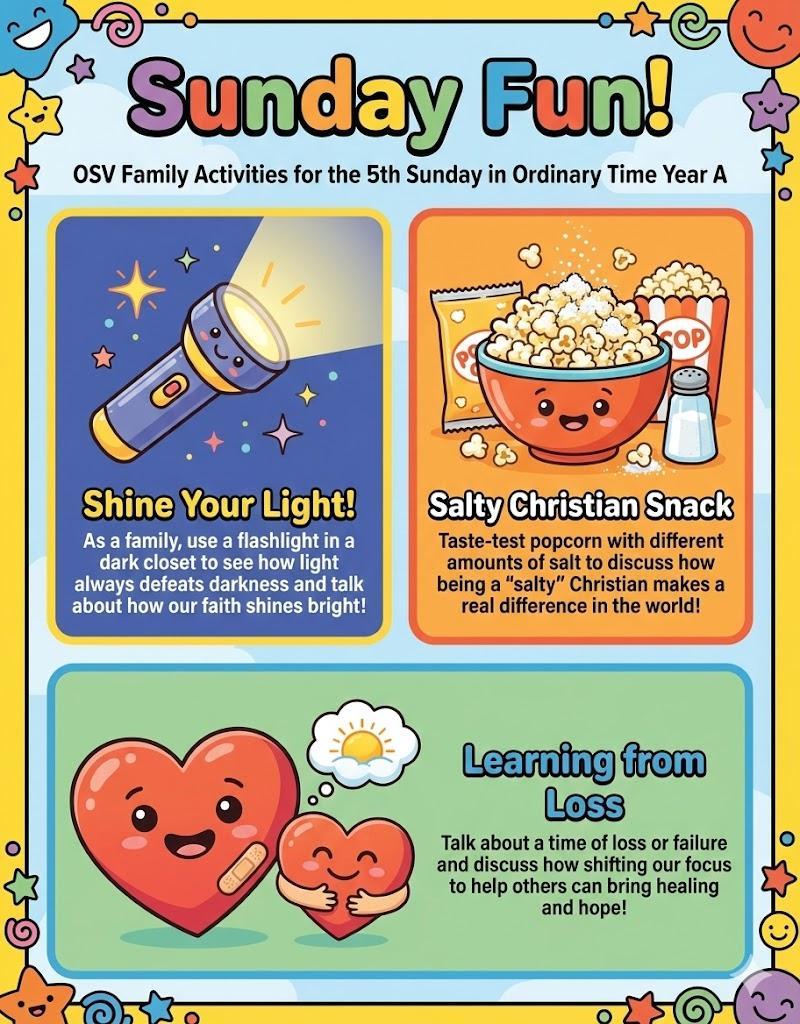
Sunday Fun Family Activities - p12
Diocesan Study Session for Service Leaders held - p14
Saintof the Week - p14
People of faith and goodwill need to take time to acknowledge the needs

February 8th 2026
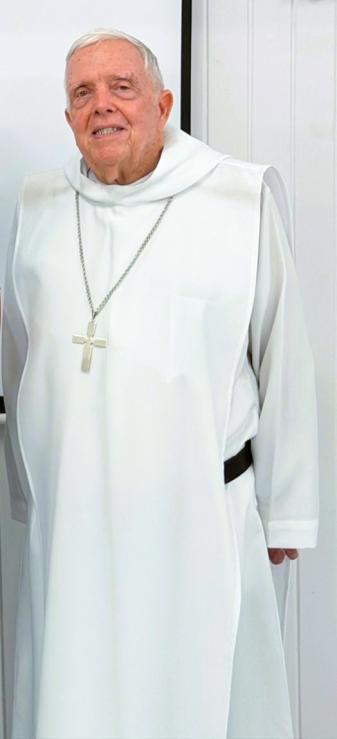
His Lordship Bishop Francis Alleyne OSB has given the following message for World Marriage Day:

Sunday February 8th 2026
Prayers for Married Couples
Lord God,
You are the author of love and the source of all life.
We thank You for the gift of marriage. Pour out Your Holy Spirit upon these couples.
Renew in them the grace of their sacrament.
Help them to grow in love, patience, and mutual respect.
May their homes be places of faith, peace, and joy. Through Christ our Lord. Amen
Almighty and eternal God, You blessed the union of married couples so that they might reflect the union of Christ with his Church: look with kindness on them.
Renew their marriage covenant, increase your love in them, and strengthen their bond of peace so that, with their children, they may always rejoice in the gift of your blessing.
We ask this through Christ our Lord. Amen (USCCB)
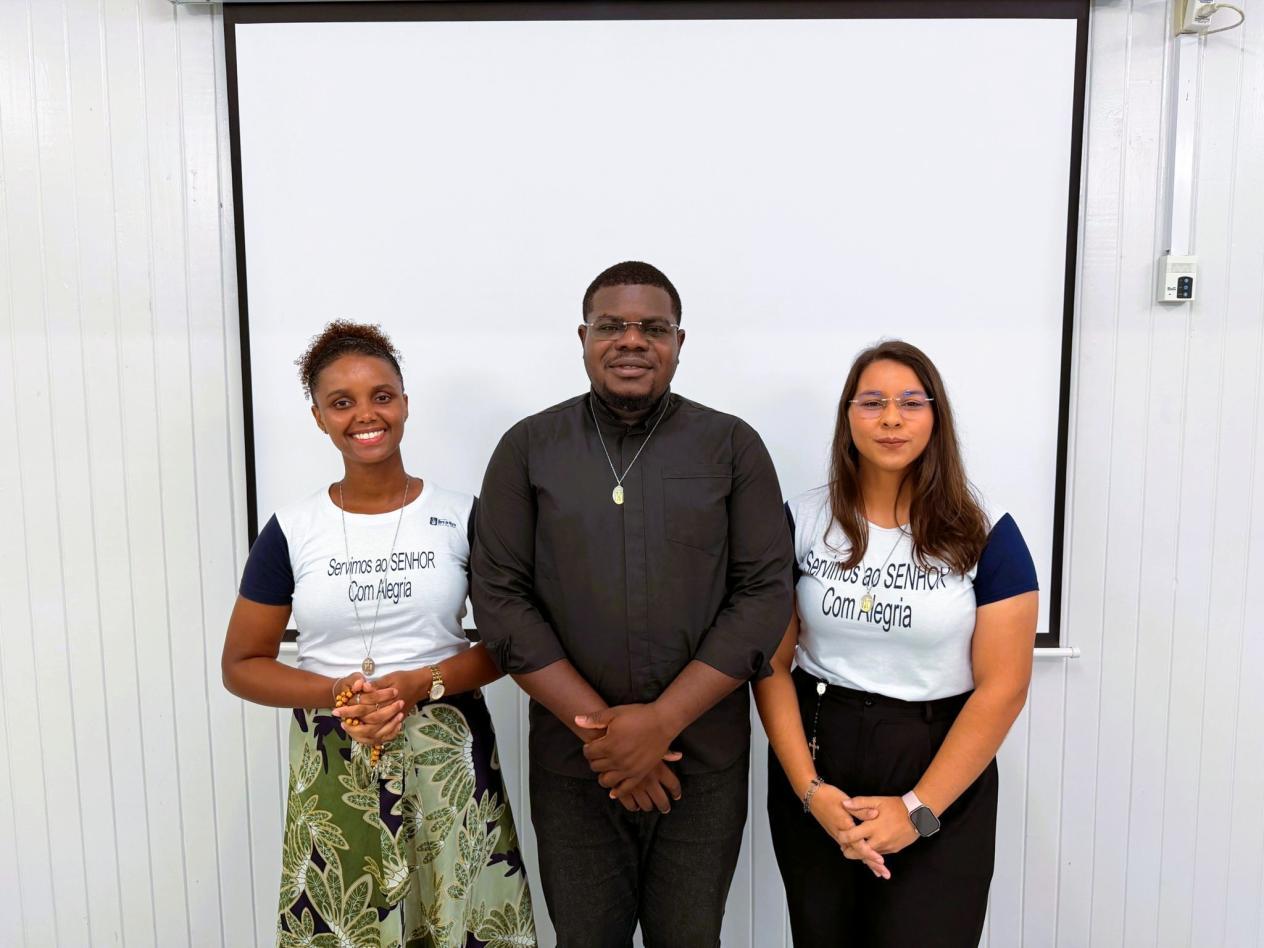
The Diocese warmly welcomes Fr. Careme Couassi Nazi Boni Eglo, Ms. Gisele Da Silva Barbosa, and Ms. Samira Salete Oliveira Dos Reis, members of the Obra de Maria Community.
Fr. Eglo, who hails from Benin, West Africa, entered religious life with the Obra de Maria Community in 2015. He pursued studies in Philosophy and Theology at the Catholic Institute of West Africa (CIWA). He also undertook formation in Digital Marketing at The Catholic University of West Africa (UCAO), University Unit based in Abidjan, Ivory Coast.
Fr. Eglo was ordained to the priesthood on July 19, 2025, in Brazil.
Ms. Barbosa, from Brazil, and Ms. Dos Reis, from Cape Verde, are lay members of the Obra de Maria Community.
The Obra de Maria Community is a Catholic missionary community founded on March 25, 1990, by Gilberto Gomes Barbosa, together with co-founder Maria Salomé. Born from a deep love for the Church and a desire to serve the People of God, the community has grown steadily over the past 35 years.
Today, the Obra de Maria Community is present in 59 countries world-
wide, with approximately 5,100 missionaries engaged in evangelization and pastoral service. Through prayer, formation, social outreach, and missionary work, members of the community dedicate their lives to proclaiming the Gospel in diverse cultural and social contexts.
Fr. Eglo, Ms. Barbosa and Ms. Dos Reis will be missioned to Hosororo, Region One, Essequibo, Guyana.
We ask that you keep them in your prayers as they labour in the Lord’s vineyard.❖
(Adapted from Catholic Media Guyana)

with many couples both within and beyond the movement. Eventually, the second Sunday of February was designated as World Day of Marriage a day when people across the world are invited to pause, reflect, evaluate, and renew the institution, the tradition, and, from our faith perspective, the Sacrament of Marriage.
The theme for this year’s World Day of Marriage is “Love One Another,” taken from the Gospel of St. John (15:12). I would like to add the rest of that verse: “As I have loved you.” The context is Jesus speaking to his disciples at the Last Supper. Those disciples would have recalled the many ways Jesus showed love his deep compassion as he healed, comforted, challenged, affirmed, and restored the people he encountered. In every encounter, Jesus left individuals and communities in a better state than he found them.
What the disciples had not yet witnessed was the crucifixion, and the ultimate meaning of Jesus ’words: “No one has greater love than this, to lay down one’s life for one’s friends” (John 15:13).
On this World Day of Marriage We Believe in Marriage Day my word and wish go out to all married couples, to those preparing for marriage, and to those now widowed. Like the disciples, each of you has
had some share in that love of which Jesus speaks: a love that gives of itself, that creates communion, and that allows life to expand and flourish. May you continue to grow in that love, to witness to it through your lives, and to renew your belief in the beauty and promise of marriage. ❖
Worldwide Marriage Encounter (Guyana) wishes all Married Couples a Happy World Marriage Day 2026
World Marriage Day Message
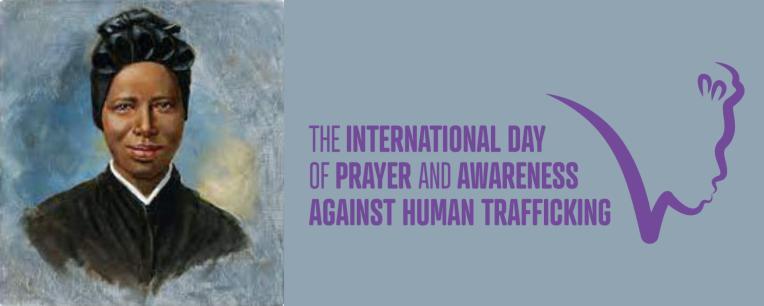
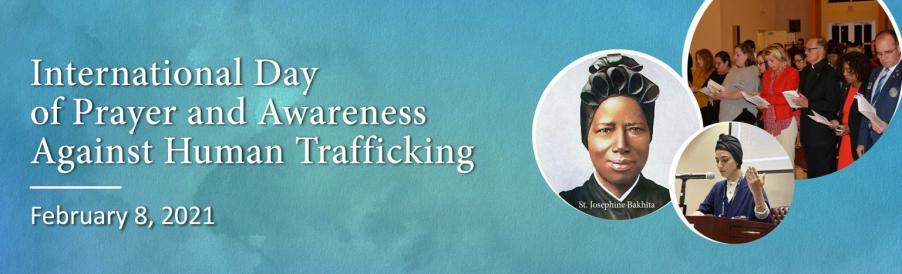
VATICAN CITY (Vatican News) Ahead of the 12th World Day of Prayer and Awareness against Human Trafficking, Pope Leo XIV has condemned the scourge of modern slavery, which has taken even more disturbing forms in our online societies.
In his message for the day, which will be marked Feb. 8, the pope renewed the Church’s “urgent call to confront and bring an end to this grave crime against humanity.” He focused on the Risen Christ’s greeting “Peace be with you,” saying these words offer “a path toward a renewed humanity.”
“True peace begins with the recognition and protection of the God-given dignity of every person,” he said. “Yet, in an age marked by escalating violence, many are tempted to seek peace through weapons as a condition for asserting one’s own dominion.”
Human beings, he lamented, are often considered mere collateral damage in
Sunday February 8th 2026
war as they are sacrificed for political oreconomicinterests.
Disregard for human life fuels human trafficking
Pope Leo said the same disregard for human life fuels human trafficking, since armed conflict and geopolitical instability create opportunities for traffickers to exploit people on the move.
“Within this broken paradigm, women and children are the most impacted by this heinous trade,” he said.
The pope went on to note the rise in “cyber slavery,” which sees people lured into online schemes and criminal activities like drug smuggling and fraud. “The victim is coerced into assuming the role of perpetrator, exacerbating their spiritual wounds,” he said. “These forms of violence are not isolated incidents, but symptoms of a culture that has forgotten how to
trafficking can be overcome only through a renewed vision that beholds every individual as a beloved childofGod,” hesaid.
Gratitude toward those who work to assist survivors of human trafficking
Pope Leo XIV expressed his gratitude to the many people and networks that work to assist victims of human trafficking, some of whom are themselves survivors of the scourge.
In conclusion, the pope entrusted the World Day of Prayer and Awareness against Human Trafficking to the intercession of St. Josephine Bakhita, whose life, he said, stands “as a powerful witness of hope in the Lord who loved her to the end.”
“Let us all join the journey toward a world where peace is not merely the absence of war, but is ‘unarmed and disarming,’ rooted in full respect for the dignity of all.”❖
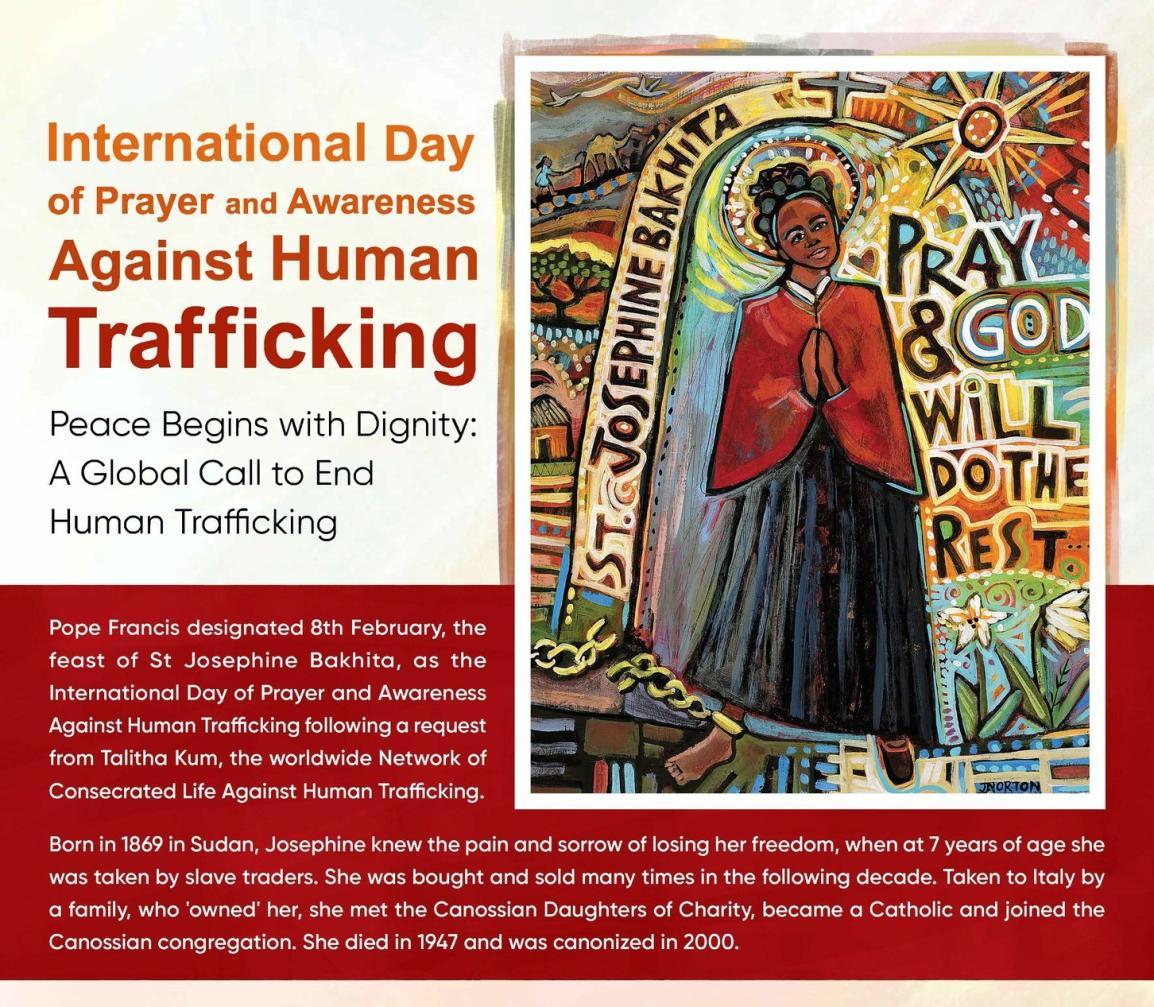
Prayer to end Human Trafficking Loving Father,
We seek your divine protection for all who are exploited and enslaved.
For those forced into labor, trafficked intosexualslavery,anddeniedfreedom
We beseech you to release them from their chains.
Grant them protection, safety, and empowerment.
Restore their dignity and provide them a new beginning.
Show us how we might end exploitation by addressing its causes.
Help us reach out in support of victims and survivors of human trafficking.
Make us instruments of your spirit for their liberation.
For this we pray throughour Lord Jesus Christ, who lives and reigns with you in the unity of the Holy Spirit, one God, forever and ever. Amen [USCCB ]
Bishop’s Engagements
Sunday February 8th
07:30hrs –Mass at Cathedral
Tuesday February 10th
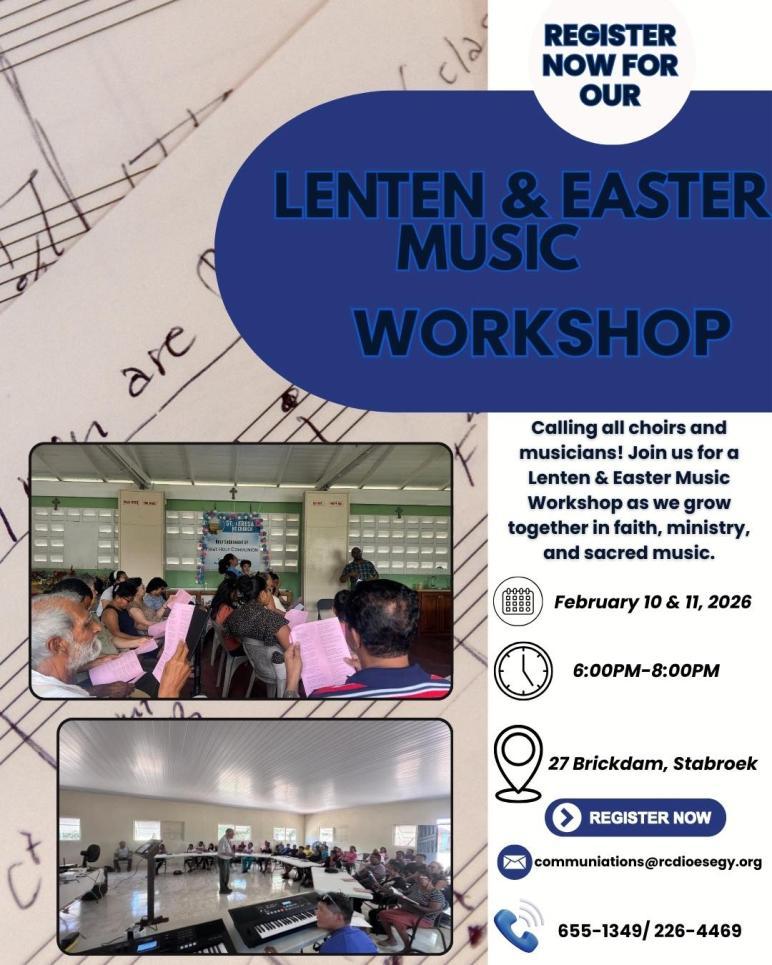
18:00hrs – Music Workshop at Bishop’s House
Wednesday February 11th
18:00hrs – Music Workshop at Bishop’s House
Friday February 13th
08:30hrs - Travel to Charity, Pomeroon
Saturday February 14th
11:00hrs – Priestly Ordination of Deacon Damion Gonsalves, IVE at St. Francis Xavier, Charity, Pomeroon.
Sunday February 15th 15:00hrs –Return to Georgetown.
love as Christ loves.”
Francis Alleyne OSB
By GHK Lall
A Christian Perspective on Social Issues Staring into the abyss
A reasonable estimate is that half of the citizens of this country find themselves in the frightening position of staring into the abyss. Though it is not of a Biblical strain, the elements of near apocalyptic dread are palpable. Reputable studies indicate that 50 percent or more citizens don’t have enough. The irony is that this is an abundantly blessed country, and its riches are genuine, not of any imagined or pretended kind. The richness of Guyana is real. Now the irony is compounded by the tragedy that is the 2026 budget. It is a study in negligence, a blueprint of calculated callousness.
In the past two years, and continuing in this one, the language of Guyana’s national budgets has a new word in its dictionary. Today, as in 2024 and 2025, the talk is of a trillion. Guyana has come a long way and has risen high when a trillion rolls off the lips so smoothly and casually. It is almost as if it was always around. Other countries knew the language of trillions, for they have lived with those for an extended period. Now, budgets here have progressed from hundreds of billions, and are over that once unthought-of, what seemed to be a mirage threshold that is a trillion. A trillion it is, and here for three years in succession now, so all Guyanese should be in an exciting place. Whoever harbored that reasonable idea, took that position, has it wrong.
All Guyanese, whether 800,000 or closer to a million citizens, are not at the table of fair participation in the fruits of this land. A few do, and in many more multiples of what they are due. Then there are the stragglers, and they are not a small fraction or percentage of the total population. They are, by some authoritative counts, at least half of the population, who are stretched to the limit, often beyond, by the pressures of living in this country. They are the citizens neighbor, family relationship,
colleague or friend who lose ground daily in the struggle to hold themselves and home together. The means are not in their grasp; and whatever is there is swallowed up and gone before they know it. In one of the richest countries in the world per individual citizen, half of this nation doesn’t have enough, doesn’t get a fair share, is perched on the precipice of local life, and stares nervously into the abyss.
Fears multiply. The spirit fades. Knees quiver and buckle.
The expectation was of a record budget. Another one. It is. The expectation was of generous, and noticeably fair, provisions made for the sections in Guyana’s population that are dragged down, and down on the ground. Expectation devastated. The provisions made are pitiful, so negligible that they are insulting, can only leave citizens who most need help from the budget gasping more painfully for breath. The budget is peppered with big money announced for areas heavily favored, and which usually involves big sums of money. Think of hundreds of billions, and the evidence is in the 2026 budget. The emphasis is to get more steel and concrete works springing up from the ground. Meanwhile, there is the stark contrast
of hundreds of thousands of Guyanese stuck on the ground, and nothing that can compare to those hundred billion for them in another record budget. For years running, this is the situation that pushed already struggling Guyanese on the coastlands and the remote interior to the edge. They stare into an abyss that promises more poverty, since they cannot catch up, and more misery, because they in no position to cope. Official statistics may be hidden from the public for whatever reason. But what cannot be hidden is the extent to which Guyanese are hard many clusters of them dotted all across the local landscape.
Sincere caring for the poor and those who are in no position to take care of their needs should have prompted more thoughtful consideration of the plight of anguished citizens and the blighted conditions that suffocate them. With so much to be withdrawn from the Oil Fund, so many billions set to be borrowed, better (far better) could have and should have been done for Guyanese trapped in a bad place. The 2026 budget did not cater to the circumstances of suffering citizens. It is too little, far too little, from their budget.❖
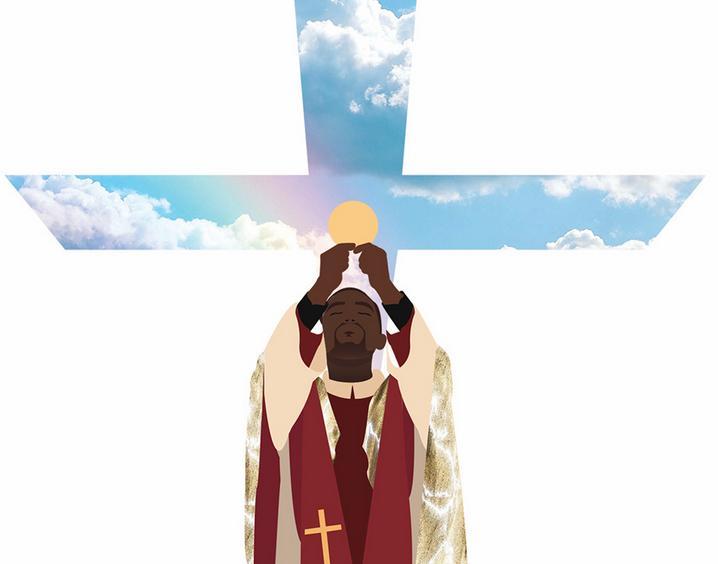

Gracious and loving God, we thank your for the gift of our priests. Through them, we experience your presence in the sacraments. Help our priests to be strong in their vocation.
Set their souls on fire with love for your people.
Grant them the wisdom, understanding, and strength they need to follow in the footsteps of Jesus. Inspire them with the vision of your Kingdom.
Give them the words they need to spread the Gospel.
Allow them to experience joy in their ministry.
Help them to become instruments of your divine grace.
We ask this through Jesus Christ, who lives and reigns as our Eternal Priest. Amen



First Reading Isaiah 58:7-10
Then will your light shine like the dawn
Thus says the Lord:
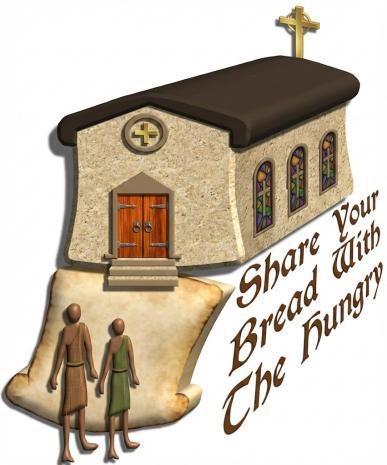
Share your bread with the hungry, and shelter the homeless poor, clothe the man you see to be naked and turn not from your own kin. Then will your light shine like the dawn and your wound be quickly healed over. Your integrity will go before you and the glory of the Lord behind you. Cry, and the Lord will answer; call, and he will say, ‘I am here’.
If you do away with the yoke, the clenched fist, the wicked word, if you give your bread to the hungry, and relief to the oppressed, your light will rise in the darkness, and your shadows become like noon.
Responsorial Psalm Psalm 111
Response: The good man is a light in the darkness for the upright.
1. He is a light in the darkness for the upright: he is generous, merciful and just. The good man takes pity and lends, he conducts his affairs with honour. Response
2. The just man will never waver: he will be remembered for ever. He has no fear of evil news; with a firm heart he trusts in the Lord. Response
3. With a steadfast heart he will not fear; open-handed, he gives to the poor; his justice stands firm for ever. His head will be raised in glory. Response
Second Reading 1 Corinthians 2:1-5
During my stay with you, the only knowledge I claimed to have was about Jesus, and only about him as the crucified Christ.
When I came to you, brothers, it was not with any show of oratory or philosophy, but simply to tell you what God had guaranteed. During my stay with
Today’s readings are part pep talk and part marching orders for us Christian stewards. They offer wonderfully clear guidance on what matters most to God in the way we prioritize our lives
about Jesus, and only about him as the crucified Christ. Far from relying on any power of my own, I came among you in great ‘fear and trembling’ and in my speeches and the sermons that I gave, there were none of the arguments that belong to philosophy; only a demonstration of the power of the Spirit. And I did this so that your faith should not depend on human philosophy but on the power of God.
Gospel Acclamation Jn 8:12 Alleluia, alleluia!
I am the light of the world, says the Lord, anyone who follows me will have the light of life. Alleluia!
and the way He intends for us to use the gifts He has given us.
The first reading, from the prophet Isaiah, gives us very straightforward instructions: “Thus says the Lord: Share your bread with the hungry, shelter the oppressed and the homeless; clothe the naked when you see them, and do not turn your back on your own.” The Lord gives no wiggle room here care for our brothers and sisters in need is a “must do” for the Christian steward.
You are the light of the world.
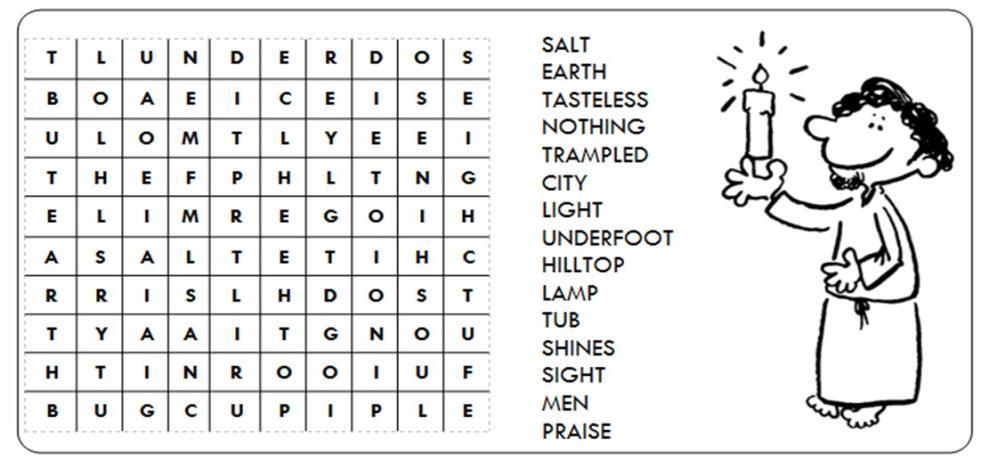
Jesus said to his disciples: ‘You are the salt of the earth. But if salt becomes tasteless, what can make it salty again? It is good for nothing, and can only be thrown out to be trampled underfoot by men.
‘You are the light of the world. A city built on a hill-top cannot be hidden. No one lights a lamp to put it under a tub; they put it on the lamp-stand where it shines for everyone in the house.
In the same way your light must shine in the sight of men, so that, seeing your good works, they may give the praise to your Father in heaven.’❖
But note how generous our God is to us when we do these things. “Then your light shall break forth like the dawn and your wound shall quickly be healed.” The more we give ourselves away the more we will find ourselves, and “light shall rise” for us in the form of more of God’s grace in our lives and more joy and peace in our hearts. Our Gospel passage, from Matthew sends us out on our stewardship way with a bang as Jesus declares to us, His disciples, that we are the “salt of the earth” and the “light of the
world.” But, He adds, salt no longer gives flavour if allowed to go stale light cannot bring its blessed brightness if left hidden. Therefore, we must act! We must live our lives so that others will see the things that we do the ways that we serve others, care for the vulnerable, prioritize our family relationships and above all, our love for God and then give Him glory.
This is the stewardship way of life. Let’s give it our all! ❖
[www.catholicsteward.com/blog/ ]
Gospel Reflection
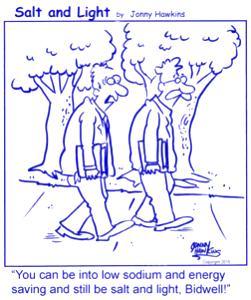
Jesus tells his disciples that they are the salt of the earth and the light of the world. We don’t have to do much reflection to understand why Jesus uses these images. Salt is a very useful product which we use to flavour dishes, to preserve food and to clean things. Those of us who are made to follow a salt-free diet know how tasteless food can be without salt. In the ancient world salt was so valuable that it was even used as money. Light too is vital to life. Even a single candle flame can bring comfort when we find ourselves in total darkness. That same little flame would serve no purpose if it is hidden away in a room. By telling his followers that they are salt and light, Jesus is telling them that they have a vital and active role to play in the world. They are not to be hidden from the world.
When our religious practice is disconnected from the way we live, something vital is missing. Our religion becomes like salt that has lost its taste or a lamp that can no longer give light. It serves no practical purpose. However, if our religious practice forces us to act in a positive way towards others in our daily life, then we add flavour and light, not only to our own lives, but also to the lives of others. Our deeds do not have to be fantastic to be effective. Generally, what we do are simple, everyday things. And by the way we do these things we will be practicing our Christianity, not just in church, but out in the world in whatever situation we happen to find ourselves. For example, if I am an employee then I have to know my job and do it to the best of my ability. If I am an employer then I have to pay my workers fairly and create decent working conditions for them. ❖
[From: Journeying with the Word of God, The Religious Education Department, Diocese of Georgetown, Guyana ]
Forchildrenwithincurablediseases
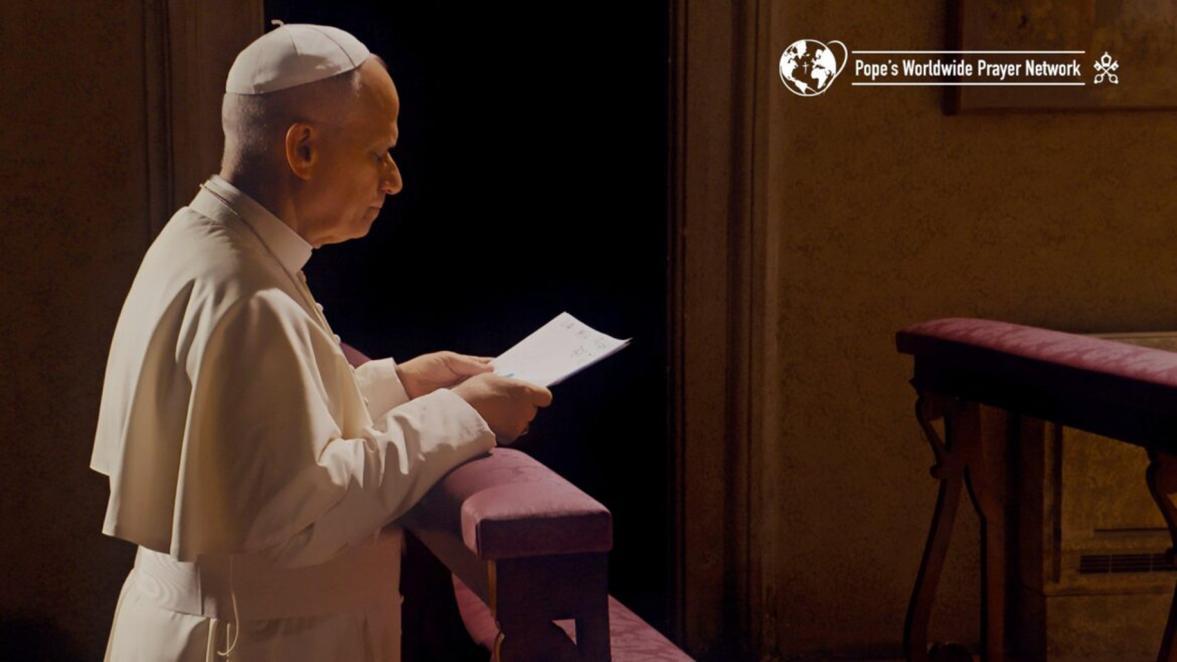
Pope Leo XIV kneels in prayer in the Church of San Pellegrino at the Vatican in a video released on Feb. 5, 2026, by the Pope's Worldwide Prayer Network for his prayer intention for February: for children with incurable diseases. (OSV News screenshot/Pope's Worldwide Prayer Network)
ROME (OSV News) Pope Leo XIV has called on people around the world to pray for children living with incurable diseases in a video message released by the Vatican Feb. 5.
The four-minute video, published by the Pope’s Worldwide Prayer Network for the pope’s February prayer intention, shows Pope Leo kneeling in prayer inside the Church of San Pellegrino in Vatican City while looking at drawings made by children being treated at Rome’s Bambino Gesù Hospital for Children.
“Lord Jesus, who welcomed the little ones in your arms and blessed them tenderly, today we bring before you the children living with incurable illnesses,” the pope prayed.
“Sustain their families in hope, in the midst of weariness and uncertainty, and make of them witnesses of a faith that grows stronger through trial,” he added.
At the start of each month, the pope releases a video in which he offers a prayer for a specific intention, inviting


Message us giving your name & number at +592 701-7639. Send us an email at catholicstandardgy@gmail.com under the heading
people to join him in praying it regularly. February’s intention is for children living with incurable illnesses. On Feb. 11, the feast of Our Lady of Lourdes, the Church will celebrate the World Day of the Sick.
“Lord, teach us to recognize your face in every suffering child,” Pope Leo prayed. “May their vulnerability awaken our compassion, and move us to care, accompany, and love with concrete gestures of solidarity.”
Many incurable diseases affecting children are rare genetic or chronic conditions that require lifelong treatment and monitoring. These include certain pediatric cancers, severe neurological disorders, heart defects and rare metabolic diseases. While medical advances have improved survival rates and quality of life for some children, many conditions remain without a cure and can involve ongoing pain, disability or progressive decline. Among the more than 6,000 identified rare diseases, 70% start in childhood.

According to UNICEF, more than 2.1 billion children and adolescents under the age of 20 worldwide are affected by chronic illnesses or long-term health conditions, including cancer, Type 1 diabetes, and heart and respiratory diseases. Each year, around 1 million children under 20 die from these illnesses, many of which could be treated or effectively prevented with adequate access to health care.
In his prayer, Pope Leo asked that sick children “may never lack proper medical care, human and compassionate attention, and the support of a community that accompanies them with love.”
He also asked the Lord to “bless the hands of doctors, nurses, and caregivers, so that their work may always be an expression of active compassion.” “May your Spirit enlighten them in every difficult decision, and grant them patience and tenderness to serve with dignity,” he said.❖
For 121 years, the Catholic Standard has been sharing the Gospel of Jesus Christ.
Now reaching 10,000+ followers on Catholic Media Guyana Facebook plus going straight to your inbox and WhatsApp, our vibrant weekly e-paper is a trusted source which delivers informative and inspiring stories from across the diocese and around the world.
Want to promote your business or event? Advertise with us! Call 675-4542 or email catholicstandardgy@gmail.com ❖
Saint Ignatius Youths visit Fair View Journeying with the Word of God
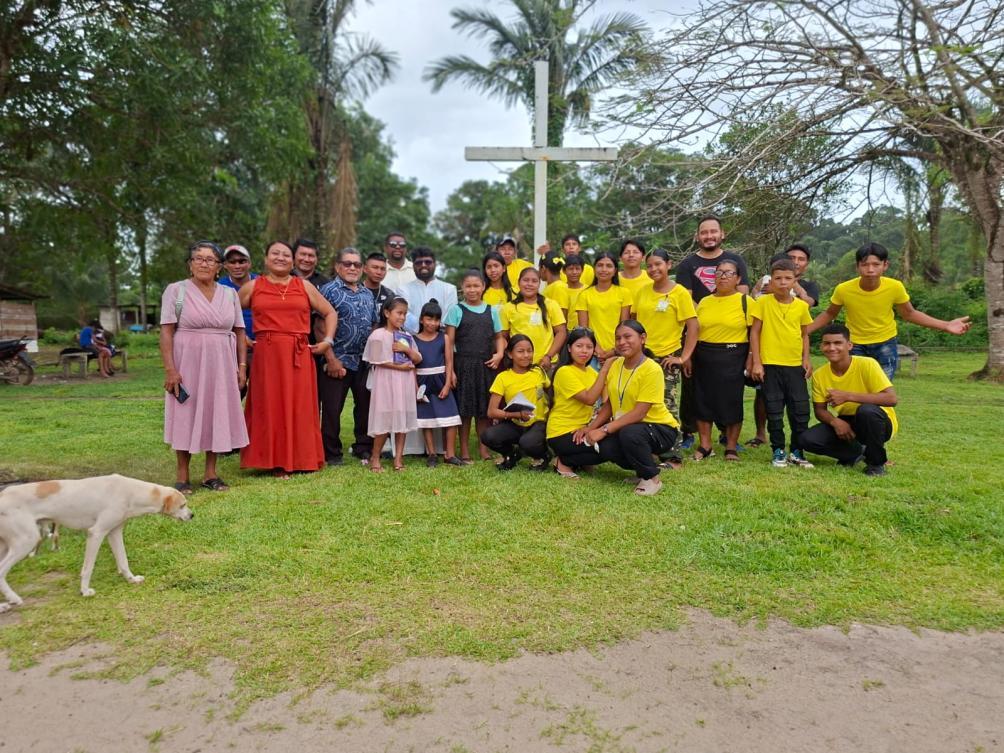
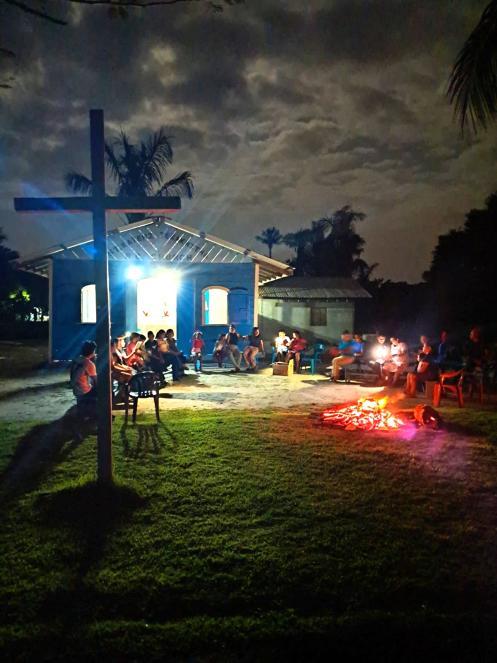
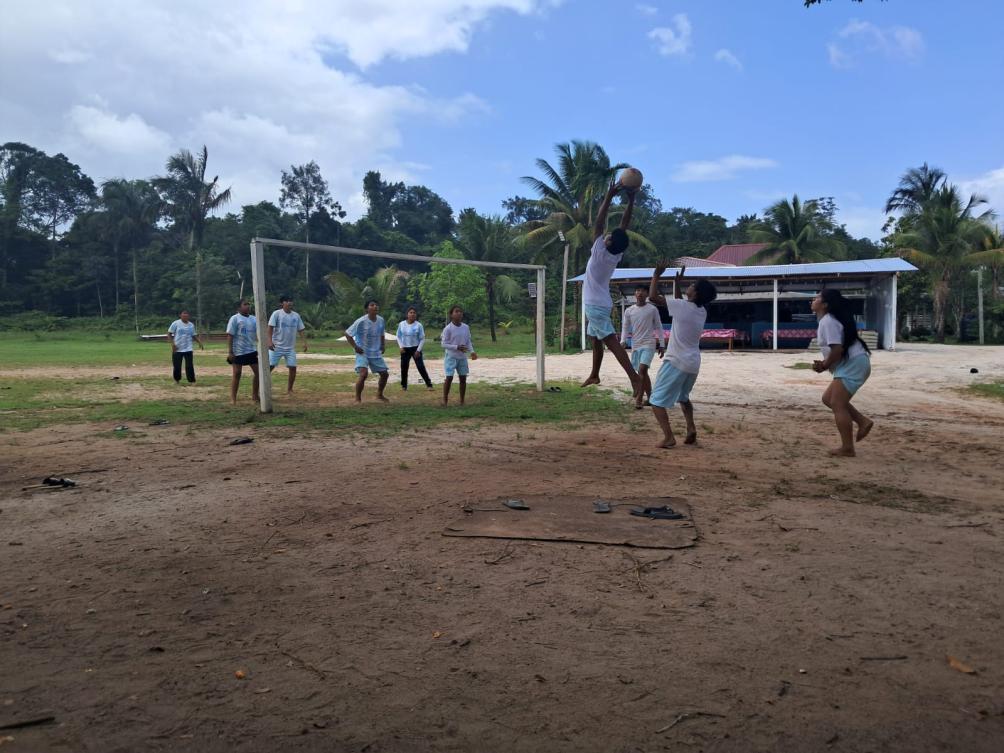
This past weekend, the young people of Saint Ignatius Village Parish, Central Rupununi, Region 9, Essequibo, Guyana, accompanied by Father Edwin Anthony SJ, Brother Javier Rodríguez SJ and the Chairperson of Saint Ignatius, lived a rich pastoral experience during their visit to the community of Fair View Village, the farthest community within the parish territory. During these days, they had the opportunity to share in fellowship with the
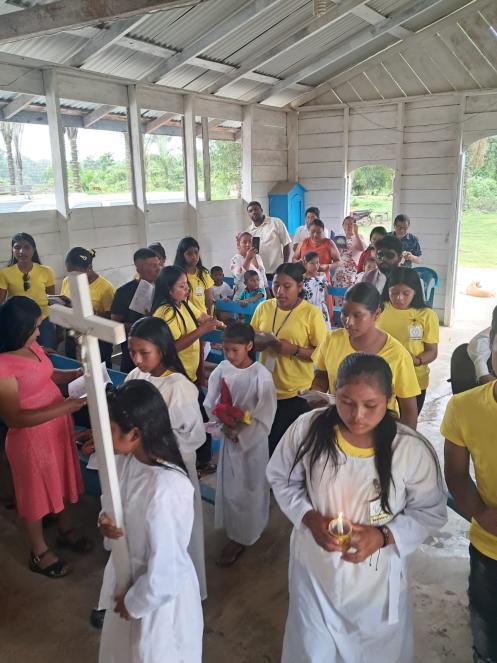
young people and members of this beloved community.
The Holy Eucharist was celebrated by Fr. Edwin. Among the activities carried out were volleyball and football competitions, as well as a special campfire gathering, where cultural dances were performed and songs were shared, strengthening the bonds of friendship, faith, and unity between the two communities.
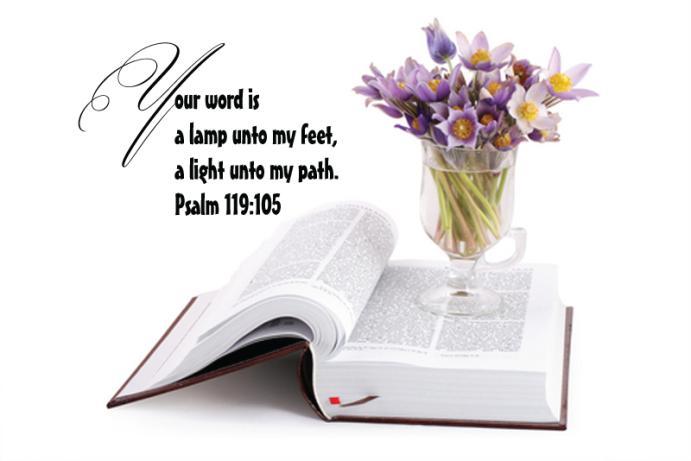
MAKING THE WORD OF GOD YOUR OWN
Step 1: Lookattoday’sReadingsprayerfully.
1st Reading: Long before the coming of Christ, the prophet reminds God’s people that they have a mission to be light to the world. They are to prove this by their concern for the weak and the neglected.
2nd Reading: Paul reminds us that the strength of our faith comes from God’s grace and not from human reasoning.
Gospel: In his Sermon on the Mount, Jesus teaches that his followers are salt that gives flavour to the world and light which gives warmth and brightness.
Step 2: ApplyingthevaluesoftheReadings toyourdailylife.
1.In the First Reading we hear some interesting ideas on how we are expected to live as God’s children. Do you, in any way find these expectations too demanding?
Sincere gratitude is extended to the community of Fair View Village for their warm welcome, and to all the young people, leaders, and companions who made this beautiful experience of encounter and communion possible.
May the Lord continue to bless and strengthen the parish and its communities.❖
(Adapted from St Ignatius Mission Facebook)
2.Jesus says that we are the light of the world. What does this mean to you personally in your relationship with other people? What do you feel you can do if you are to be a light to the world?
3.Like salt, disciples of Christ can help give better taste and joy to life. How do you feel you can be salt by giving taste and joy to the life of others?
4.Often we think we are good simply because we are not conscious of doing any great evil. Do you consider yourself a good person? Why do you think so?
Step 3: Accepting the message of God’s Wordinyourlifeoffaith.
We all have the capacity for goodness. We can be a source of light for others. We have hands that can care, tongues that can speak encouraging words, eyes that can see, ears that can listen to others and hearts that can love. We cannot let our light grow dim through laziness, indifference, and selfishness.
Step 4: Somethingtothink&prayabout
1.It is easy for me to let the light shine in the comfort and safety of my own home. But this is a selfishness because I will be keeping the light to myself and this is not where the light is needed. It is needed in the hustle and bustle of the outside world. This is where I am called to be salt of the earth and light of the world.
2.Pray that the Lord will help us believe in our own goodness and to let our light of goodness shine so that others can find the way to God. ❖
[From: Journeying with the Word of God, The Religious Education Department, Diocese of Georgetown, Guyana ]
Everyone can be a good Samaritan, pope says in message for world’s sick (From Page 1)
‘A member of our own body’
“The pain that moves us to compassion is not the pain of a stranger; it is the pain of a member of our own body, to whom Christ, our head, commands us attend, for the good of all,” the pope wrote in the message released Jan. 20.
The theme chosen for the 2026 observance is inspired by the parable of the good Samaritan and Pope Francis’ encyclical on human fraternity, “Fratelli Tutti.”
Titled, “The compassion of the Samaritan: Loving by bearing the pain of the other,” the message focuses on the importance of: encountering and listening to others; being moved by compassion; and loving God through concrete action in solidarity with others.
Message is offered to everyone
While traditionally addressed to Catholic health care and pastoral workers, this year’s message is offered to everyone, Cardinal Michael Czerny, prefect of the Dicastery for Promoting Integral Human Development, said at a Vatican news conference to present the message Jan. 20.
The message is offered to everyone because “we’re one body, one humanity of brothers and sisters, and when someone’s sick and suffering, all the other categories which tend to divide fade away into insignificance,” the cardinal said.
Asked to comment about how people in the United States should best respond when witnessing violence toward immigrants, Cardinal Czerny said, “I don’t know what to say about the larger picture,” but he said it would be helpful to focus on “the underview” or what should or is happening on the ground.
Extend a hand or lend support
“There are many situations in which the individual Christian, the individual citizen, can extend their hand or lend their support. And that’s extremely important,” he said. “I suppose we could all hope that those many gestures, many Samaritan gestures, can also translate into better politics.”
The Catholic “struggle for justice,” he told Catholic News Service, gets “its real depth and its real meaning” from daily lived experience helping real people.
Advocacy work, for example, should “evolve out of real experience,” he said. “When, let’s say, your visits to the sick reveal, for example, the injustice of inaccessibility to health care, well then you take it up as an issue, but on the basis of your lived and indeed pastoral and Christian experience.”
‘We are all in a position to respond’
The good Samaritan shows that “we are all in a position to respond” to anyone in need, he said. “And the
mystery, which you can discover whether you are a Christian or not, is that by responding, in a sense, your own suffering is also addressed.”
“Since the major suffering for so many today, young and not so young, is loneliness and hopelessness, by worrying about it less and reaching out to someone who needs you, you will discover that there’s more life than you imagined,” he added.
In his message, Pope Leo said, “To serve one’s neighbor is to love God through deeds.”
‘Proper place before God and neighbor’
In fact, the “true meaning of loving ourselves,” he wrote, involves “setting aside any attempt to base our selfesteem or sense of dignity on worldly stereotypes such as success, career, status or family background and recovering our proper place before God and neighbor.”
“I genuinely hope that our Christian lifestyle will always reflect this fraternal, ‘Samaritan’ spirit one that
is welcoming, courageous, committed and supportive, rooted in our union with God and our faith in Jesus Christ,” Pope Leo wrote.
“Enkindled by this divine love, we will surely be able to give of ourselves for the good of all who suffer, especially our brothers and sisters who are sick, elderly or afflicted,” he wrote. ❖
The pope’s full message can be found here: https://www.vatican.va/ content/leo-xiv/en/messages/sick/ documents/20260113-messaggiogiornata-malato.html
Dear Boys and Girls,
In our Gospel reading today, Jesus tells us that ‘You are the salt of the earth’ and ‘You are the light of the world’.
We are sure you all know that many foods taste much better with a little salt. It doesn't take much. In fact, when you are cooking, a recipe often calls for "a pinch of salt." Not much, just a pinch, but that little pinch of salt makes a big difference in the flavour.
Jesus said to his disciples, "You are the salt of the earth." What do you think that means? Jesus means that he wants us to improve the quality of life of those we meet each day. How can we do that? We can do that by introducing them to Jesus and by showing them that having Jesus in our life is like having salt on our food. Everything is better when we have Jesus in our life.
There is a lot of hatred and bitterness in our world today. If we will show the love of Jesus in all that we do, we can be the salt of the earth like Jesus called us to be. Just a pinch of salt can do much to reduce bitterness and bring peace to our world.
‘You are the light of the world’

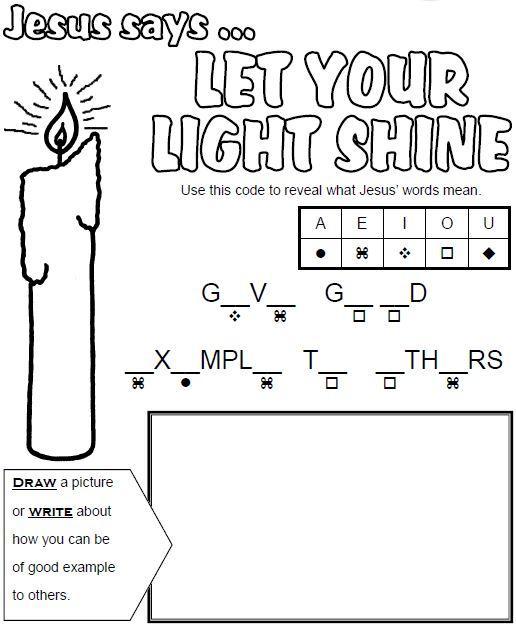
Today’s Gospel reading also tells us that we should let our light shine. Before our light will shine, we must be plugged in and turned on. We must be plugged in to God’s power supply and we must be turned on for Jesus. When we invite Jesus into our heart, we have the power. When we come to Church to worship and praise Him and study His Word, we get turned on for Jesus. When we are plugged in and turned on, our light will shine.
Heavenly Father, our prayer is that we may be the salt of the earth by showing the love of Jesus in all that we do. We also want our light to shine. We ask you to help us to remember that we need to be plugged in to your power and we need to be turned on for Jesus. In Jesus' name we pray. Amen.❖
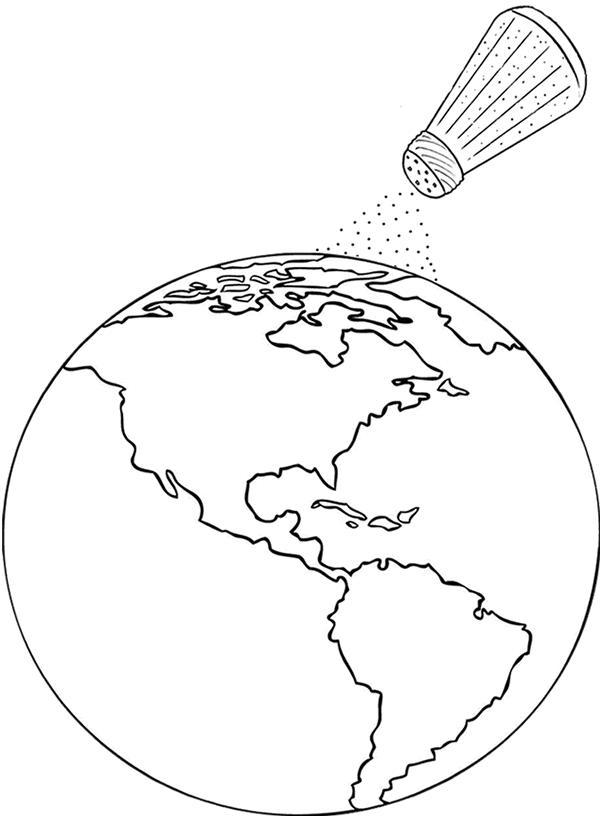
You are the salt of the earth.
Matthew 5:13
FaithinPractice:LivingandKnowingourFaith
The following is the first article in a new series - Faith in Practice: Living and Knowing Our Faith, by Fr. Joel Thompson SJ. In this series, Fr. Joel will explore what the Church teaches, why it matters, and how we can live our faith more deeply in daily life: Gather Christians! Why we gather:
Keeping the Lord’s Day Holy
By Fr. Joel Thompson SJ
Church attendance on Sundays is not what it should and could be. Gathering on Sundays with a faith community is sometimes taken as a thing of the past. Our article this week encourages weekly gatherings on Sunday and explores the Church’s teaching and guidance on the topic.
One of the Ten Commandments given to Moses remains clear:
“Remember the Sabbath day and keep it holy.” (Exodus 20:8)
For Christians, this commandment finds its fulfillment in Sunday, the day of Christ’s Resurrection. From the very beginning of the Church, believers gathered on this day to listen to the Word of God and to break bread together. Sunday worship is therefore not simply a Church rule or later tradition; it is rooted in Scripture and the lived practice of the earliest Christians.
Lived Practice
distributiontoeach.” (FirstApology,ch.67)
St Justin adds that Christians gather on Sunday because it is the day of creation and, more importantly, the day Christ rose from the dead. This shows that Sunday worship with Scripture, prayer, and the Eucharist was already firmly established very close to the time of the Apostles.
Scripture
The Bible confirms this practice.
In the Acts of the Apostles, we read: “On the first day of the week, when we were gathered together to break bread…” (Acts 20:7). Saint Paul also assumes regular Sunday gatherings when he writes: “On the first day of every week, each of you is to put something aside.” (1 Corinthians 16:2)
The Catechism states: “The Sunday Eucharist is the foundation and confirmation of all Christian practice.” (CCC 2181). The Church teaches that deliberately missing Sunday worship without a serious reason is a sin,notto condemnus,butto remindus howvitalworshipisforourspirituallife
Why Does This Matter?
First, we gather to praise and thank God. God gives us six days for work and one day to remember who we are and whose we are. Sunday reminds us that life is more than productivity and chores. It is a day to strengthen our relationship with God and others.
Second, we gather to be strengthened by God’s Word and the Eucharist. In the Eucharist, Christ feeds us in a way that cannot be replaced elsewhere.
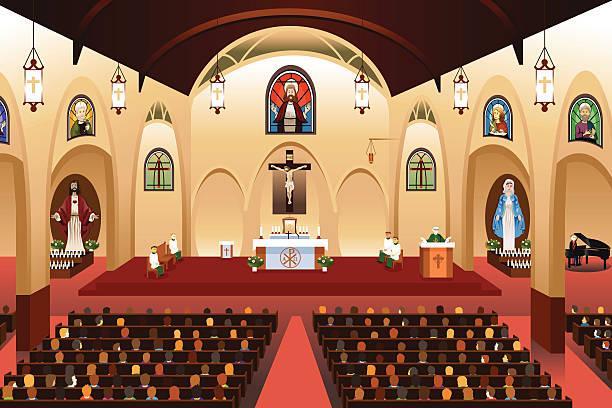
In the second century, St Justin Martyr describes Christian worship. Writing around AD155, he explains:
“On the day called Sunday, all who live in cities or in the country gather together in one place the writings of the apostles are read then bread and wine are brought, prayers and thanksgiving are offered, and there is a
Christians are also encouraged not to drift into isolation: “Do not neglect to meet together but encourage one another.” (Hebrews 10:25). And Jesus promises his presence when believers gather: “Where two or three are gathered in my name, there am I in the midst of them.” (Matthew 18:20)
For this reason, the Church teaches clearly that the faithful are obliged to worship on Sundays, unless prevented by a serious reason (e.g., illness, the care of the elderly/children).
Third, we gather because faith is communal. Human beings have a deep longing for belonging and encouragement. When we worship together, we pray with and for one another, and we experience being part of something greater than ourselves.
“Can’t I just pray at home?”
Personal prayer is essential, but Christianity is not a private religion. At home we pray as individuals; in church we worship as a community and receive the Eucharist. Online worship is a blessing for the sick and homebound, but when we are healthy and able, it cannot replace physical gathering.
Let us not see Sunday as just another day for errands and work. Let us reclaim it as a holy day which begins with worship, followed by rest, family, and renewal. Rain or shine, good choir or not, Mass or Service, inspiring preacher or not, the Lord still gathers his people. Gather, Christians, Let’s now celebrate! ❖
By Renika Anand
Facing Regret
William Rogers, an American actor, once said “Don’t let yesterday use up too much of today.”
Have you ever done something you deeply regret? Do you wish that you could relive that moment and redo the choice that you made? If you have, then you are not alone. You have experienced the very same emotions that every other person on earth has felt at least once in their lifetimes. One other thing you have in common with everyone else is the fact that you will never truly get to relive a day that has already passed, or redo a decision that has already been made. Although it may not feel like it at times, this fact makes life marvellously beautiful! We are constantly growing, even when we make mistakes. We are pushed forward into new eras of our lives, even when we are afraid to let go of the past. Nevertheless, if you still find yourself worrying about the past, then simply choose to believe that the regrets of the past will play a role in shaping a better tomorrow for you, consisting of extraordinary things you may never see if you keep dwelling on yesterday.
Brothers, I do not consider that I have made it my own. But one thing I do: forgetting what lies behind and straining forward to what lies ahead.
- Philippians 3:13 ❖


respect Olympic truce, pope says
VATICAN CITY (CNS) Just as the 2026 Olympic Winter Games in Milan Cortina were about to begin, Pope Leo XIV called on the Catholic Church to recognize sport as an opportunity to offer much-needed human and spiritual guidance.
With so many dangers and distortions threatening the integrity of athletics and the dignity of players, the Church can help strengthen the needed harmony between people’s physical and spiritual development, he wrote, helping sport become a place “for athletes to learn to take care of themselves without falling prey to vanity, to push themselves to their limits without harming themselves and to compete without losing sight of fraternity.”
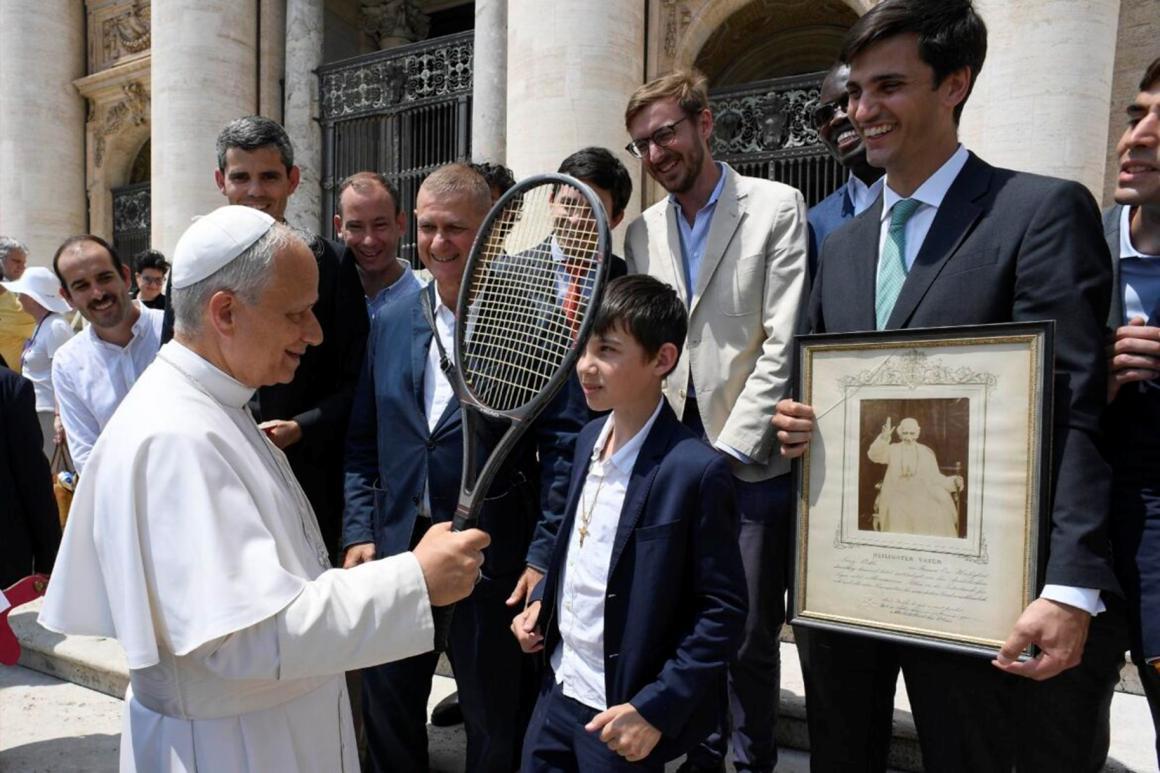
‘A decent amateur tennis player’ Pope Leo, who considers himself “a decent amateur tennis player,” issued a letter on “the value of sport,” Feb. 6, titled “Life in Abundance,” from Jesus’ declaration, “I came so that they might have life and have it more abundantly,” from the Gospel according to St. John (10:10).
The need for holistic, integral human development is critical, he wrote, because “the danger of narcissism permeates the entire sporting culture today. Athletes can become obsessed with their physical image and with their own success, measured by visibility and approval.”
And sometimes sports can take on a “quasi-religious dimension” with athletes perceived as “saviors,” he wrote. “When sport claims to replace religion, it loses its character as a game that benefits our lives, becoming instead aggrandized, all-encompassing and absolute.”
Letter released on opening day of Games
The pope dated and released the eightpage letter the same day the XXV Winter Olympic Games in Milan and Cortina d’Ampezzo began Feb. 6. Set to run until Feb. 22, the international sporting event will be followed by the XIV Paralympic Games March 6-15.
Offering his “greeting and good wishes to those who are directly involved” in the Games, the pope also encouraged all the world’s nations to “rediscover and respect” the Olympic Truce as a symbol and promise of hope and reconciliation in “a world thirsting for peace.”
“We need tools that can put an end to the abuse of power, displays of force and indifference to the rule of law,” he wrote, decrying the “radicalization of conflict and a refusal to cooperate” as well as a “culture of death.”
Quoting St. John Paul II
The world is witnessing “lives broken, dreams shattered, survivors’ trauma, cities destroyed as if human coexistence were superficially reduced to a video game scenario,” he wrote, repeating St. John Paul II’s warning that aggression, violence and war are “always a defeat for humanity.”
The Olympic Truce is built on the belief that participating in public sport with a spirit of “virtue and excellence” promotes greater fraternity, solidarity and the common good, he wrote.
“International competitions offer a privileged opportunity to experience our shared humanity in all its rich diversity,” he wrote. “Indeed, there is something deeply moving about the opening and closing ceremonies of the
He also criticized “pay-to-play” programs, which often require costly fees for children to participate, when organized sports should be accessible to everyone.
Diversity, fraternity in sports
“In other societies, girls and women are not allowed to participate in sports. Sometimes, in religious formation, especially of women, there is a mistrust and fear of physical activity and sport,” he wrote in the letter, encouraging greater efforts to make sport more accessible to diversity and fraternity, too.
He also warned against “transhumanism” or technologies, including AI, being applied to enhance performance, artificially separating body and mind, and “transforming the athlete into an optimized, controlled product, enhanced beyond natural limits.”
“Finally, we must question the growing assimilation of sport into the logic of video games,” Pope Leo wrote, pointing to the “extreme gamification of sport,” turning it into “simply a device for consumers” and disconnecting it from “concrete relationships.”
‘Care of the human person’
Olympic Games, when we see the athletes parade with their national flags and in the traditional garments of their countries.”
‘Called to form one human family’ These global gatherings “can inspire us and remind us that we are called to form one human family” and that “the values promoted by sport such as loyalty, sharing, hospitality, dialogue, and trust in others are common to every person, regardless of ethnic origin, culture or religious belief,” he wrote.
While the pope praised the power and potential of the Olympics, the bulk of the letter was dedicated to all levels of sport, from those engaged in informal fun to serious athleticism.
Like his predecessors, Pope Leo highlighted the virtues of engaging in physical activity and competition as well as warned against current risks that threaten healthy values.
Criticism of using sports as platform
He criticized the perennial problems of using sports as a platform to push political or ideological interests, doping and seeking profits or winning at all costs, warning against the “dictatorship of performance.”
“When financial incentives become the sole criterion, individuals and teams may also fall prey to subjecting their performance to the corruption and influence of the gambling industry,” he wrote. “Such dishonesty not only corrupts sporting activities themselves, but also demoralizes the general public and undermines the positive contribution of sport to society as a whole.”
The pope said, “There is an urgent need to reaffirm integral care of the human person; physical well-being cannot be separated from inner balance, ethical responsibility and openness to others,” calling on the Church “to recognize sport as an opportunity for discernment and accompaniment and to offer human and spiritual guidance.” He asked that every national bishops’ conference have an office or commission dedicated to sport and help unite parishes, schools, universities, oratories, associations and neighborhoods in a “shared vision.”
“Pastoral accompaniment of sport is not limited to moments of celebration, but takes place over time through sharing the efforts, expectations, disappointments and hopes of those who play daily on the field, in the gym or on the street,” he added.
Example of St. Pier Giorgio Frassati
He called for seeking out those “who have combined passion for sports, sensitivity to social issues and holiness,” such as St. Pier Giorgio Frassati, who “perfectly combined faith, prayer, social commitment and sport.” Pope Leo canonized the 24-year-old Italian Sept. 7 at the Vatican.
The fullness of life “integrates our bodies, relationships and interior lives,” the pope wrote. “In this way, sport can truly become a school of life, where all can learn that abundance does not come from victory at any cost, but from sharing, from respecting others and from the joy of walking together.”❖
The pope’s complete letter can be found here: https://www.vatican.va/ content/leo-xiv/en/letters/2026/ documents/20260206-lettera-giochiolimpici.html
Pope Leo XIV is given a tennis racket and presented with a photo of Pope Leo XIII as he greets visitors in St. Peter's Square after his general audience at the Vatican June 18, 2025. (CNS photo/Vatican Media)

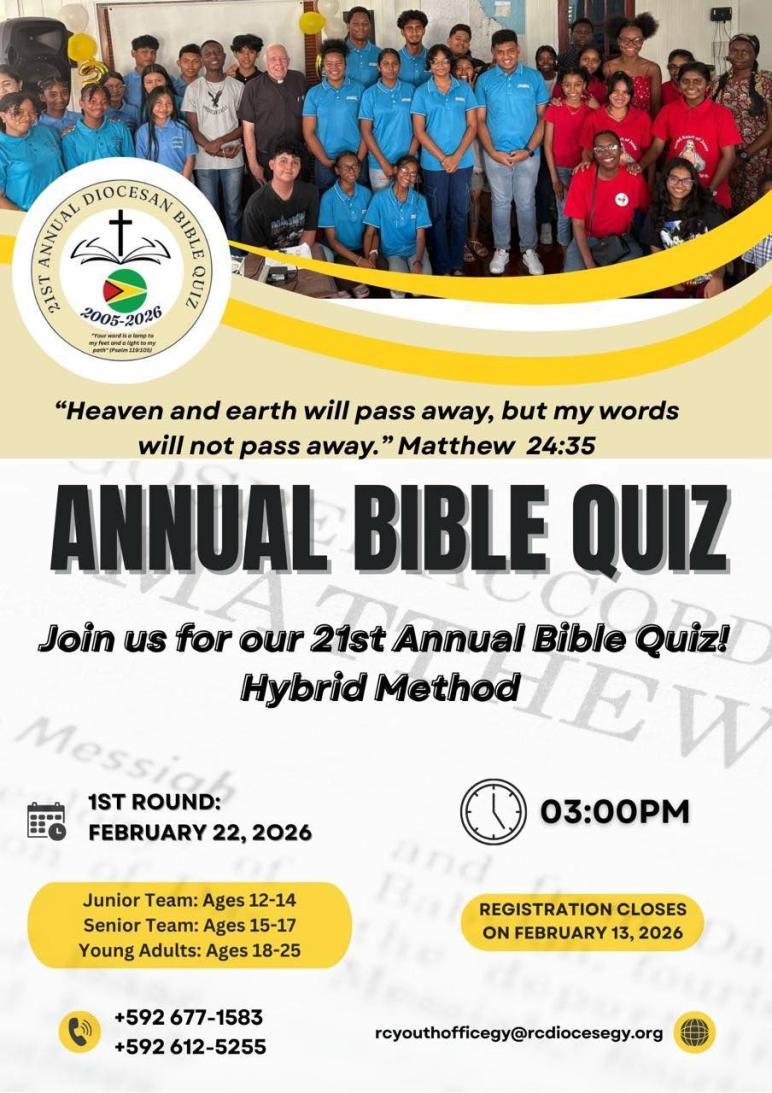

for Service Leaders held
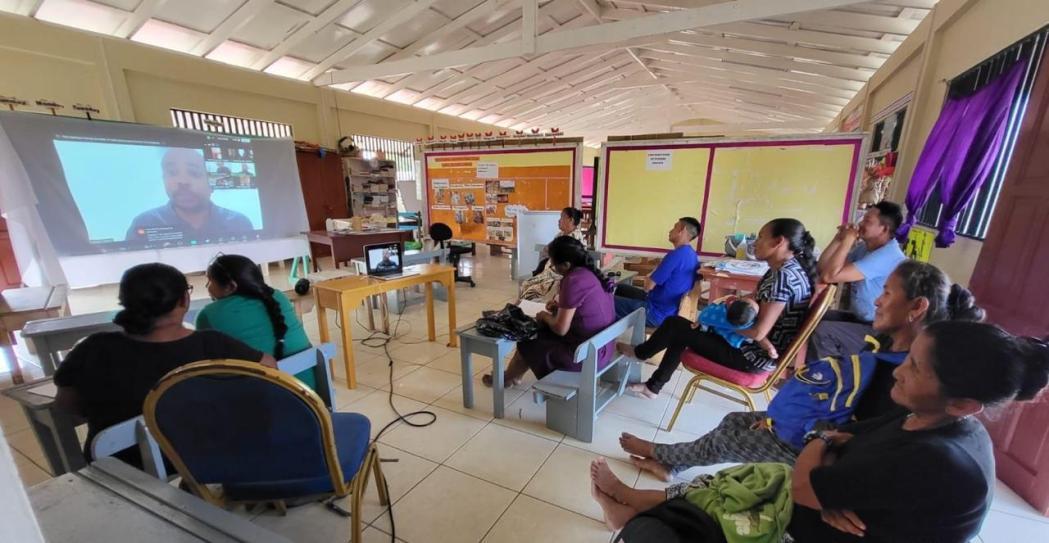
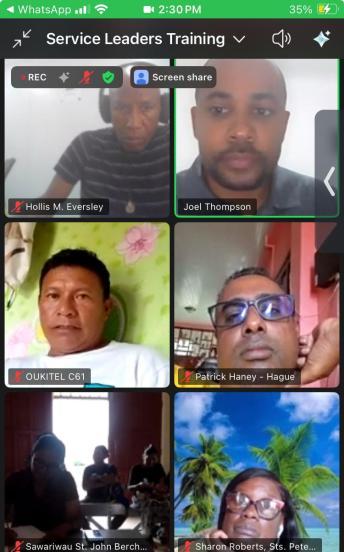
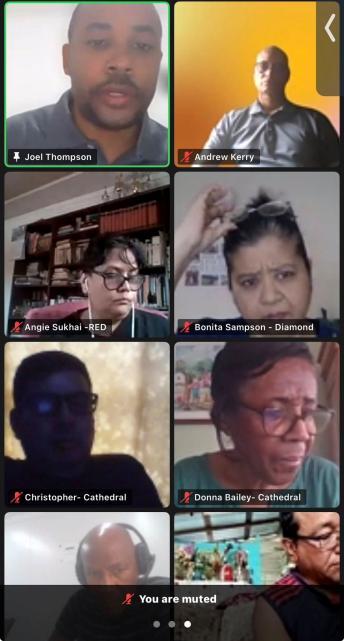
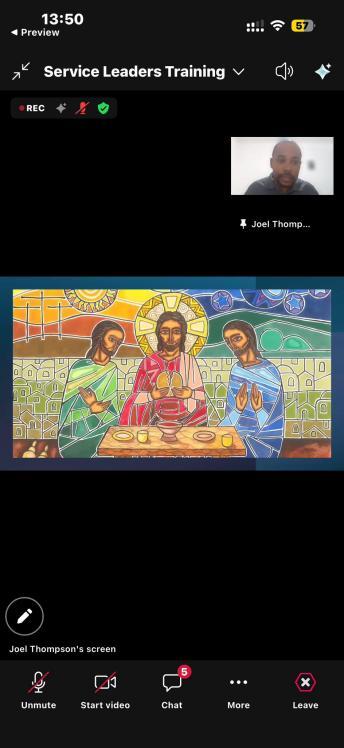
from across the Diocese. The session brought together 75 Service Leaders from all regions, making it a truly enriching and unifying moment for the Diocese.
The level of participation, interaction, and thoughtful questions reflected a genuine desire among leaders to deepen their understanding and to serve their communities more effectively.
The session was facilitated by Fr Joel Thompson SJ, under the theme “Serving God’s People with Reverence and Joy.” His engaging, clear, and pastoral approach greatly enriched the experience and encouraged participants to continue their ministry with renewed confidence and commitment.
Joel’s presentation explored several key themes, including: Why Do We Gather to Worship?, How Did the First Christians Worship?, Why Does the Church Have a Set Format?, The Purpose of Liturgy and Worship, Practices for Leading Well, and Resources for Service Leaders. He emphasized that, as Christians, gathering for worship on Sunday is a central tenet of our faith. We do not gather only when a priest is present, or only when there is good music or preaching. Rather, we gather because the Lord gathers us as a people to give praise and thanks to God and to be nourished by Word and Sacrament.
The session also included a practical exploration of the elements of a Sunday Service led in the absence of a priest, helping leaders better understand both the richness and the limits of lay-led worship. Participants were reminded that the Piety Shop currently carries a Service Leaders’ Guide (cost: $2000), compiled by Fr Joel, which provides clear guidance for leading various services, including Sunday and weekday services, funerals, and taking Holy Communion to the sick.
Members of the Faith Formation and Liturgical Commission include Bishop Francis Alleyne OSB, Mrs. Angie Sukhai, Mr. Andrew Kerry, Mr. Justin Thompson, Mr. Paul Braam, Mrs. Melcita Bovell, Mrs. Anneda Bacchus, Br. Paschal Jordan OSB, and Fr. Joel Thompson SJ.
Service Leaders are encouraged to contact the Religious Education Department on 610-5706 for information about future training and formation opportunities. ❖
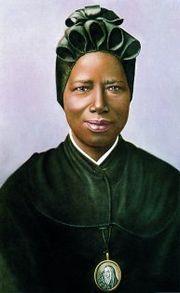
February 8th: St. Josephine Bakhita Patron Saint of all who suffer from DomesticViolenceand Human Trafficking
Born in Olgossa in the Darfur region of South Sudan in 1869, our saint had a loving family and happy childhood. At age seven, however, she was abducted by slave traders; the trauma of which caused her to forget her own name. A slaver sarcastically named her Bakhita, Arabic for lucky. She experienced the cruelties, humiliations and sufferings of slavery, including severe emotional abuse, beatings and indescribable mutilations.
In 1883, at age 14, Bakhita was sold to an Italian consul. Two years later he took Bakhita to Italy and gave her to an Italian couple - she would become nanny to their infant daughter. Needing to leave the country on business in late 1888, the couple entrusted their daughter and Bakhita to the care of a Venetian convent of the Canossian Daughters of Charity. When they returned from SudanandwantedtotaketheirdaughterandBakhita back with them, the future saint refused to go. During the ensuing court case, the Canossian sisters and the patriarch of Venice intervened on Josephine's behalf. An Italian court ruled that because Sudan had outlawed slavery even before Bakhita’s birth and because in any case Italian law did not recognize slavery, Bakhita had never legally been a slave, could not be considered property, and having reached majority age, could make her own decisions. Bakhita chose to remain with the religious community.
In 1890, Bakhita received the sacraments of Christian initiation, and embraced the name Josephine. Josephine entered the Institute of St. Magdalene of Canossa in 1893 and made her profession three years later. In 1902, Sister Josephine was assigned to the convent in Schio, in the Italian Alps. Sister Josephine happily served her community as sacristan, cook, and portress (the community member appointed to interact with the public and provide hospitality to guests). She was a model of forgiveness and service.
Sister Josephine died on February 8th, 1947,and was canonized in 2000. Many have sought her prayerful intercession, especially those who experience any form of slavery, and those who need to find peace, forgiveness and reconciliation in their lives. ❖
Fr