
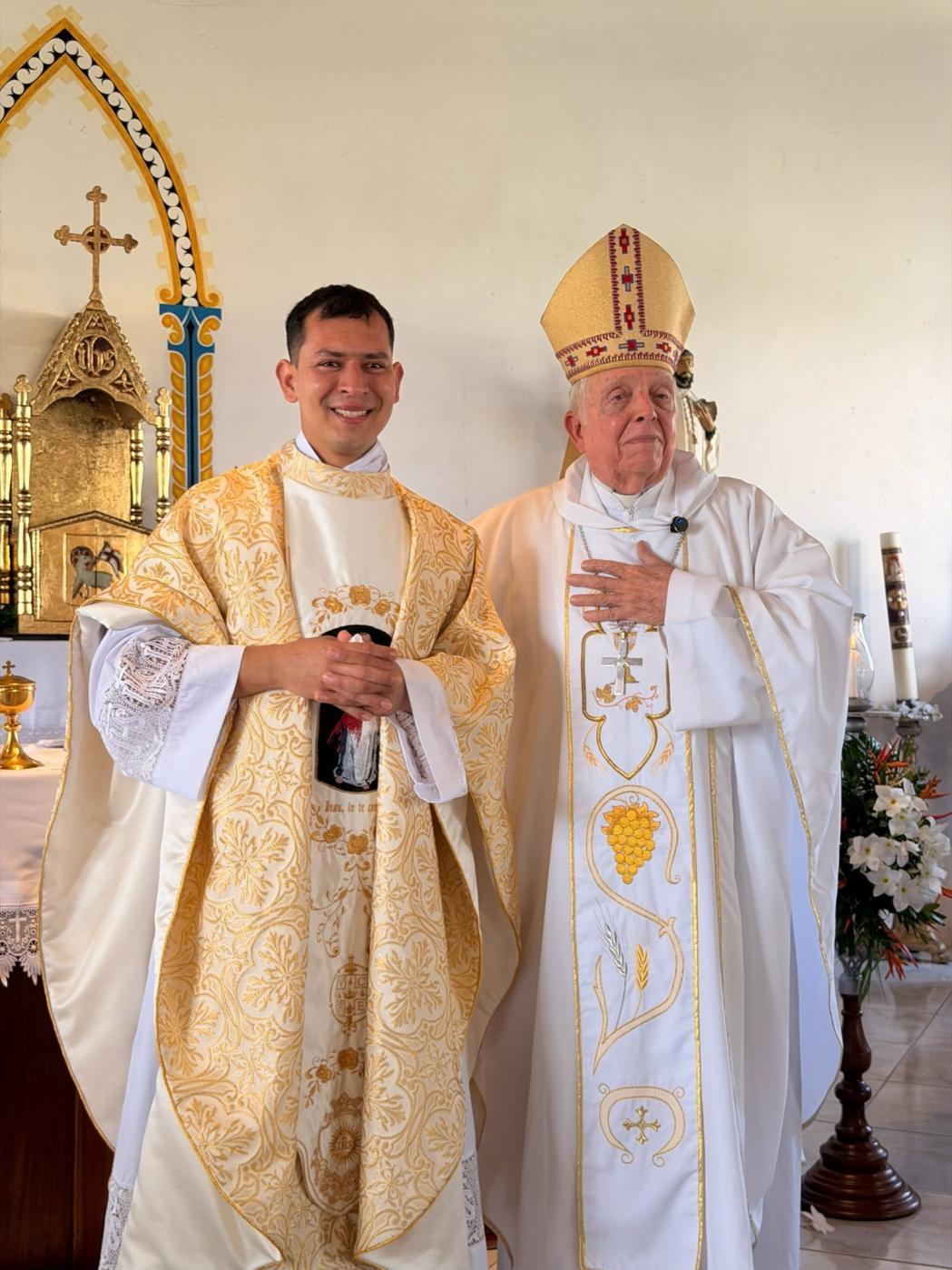
I present to you Fr. Damian Gonsalves!
Ash Wednesday 2026 - p2
US-led Board of Peace for Gaza a ‘colonialist operation,’ Cardinal Pizzaballa says - p3
Holy See will not join Trump’s ‘Board of Peace’ for Gaza,Cardinal Parolin says - p3
AChristian Perspective on Social Issues - p4
Sunday Scripture - p5
The Word and the World - p6
Pope on Ash Wednesday: Ask the Lord for the gift of true conversion this Lent - p7
Youth Office holds Lenten Webinar - p8
Children’s Page - p9
A true parish welcomes everyone, spreads respect,harmony, pope says - p10
Growingin Grace Week 79 - p10
Faith in Practice Week 3 - p11
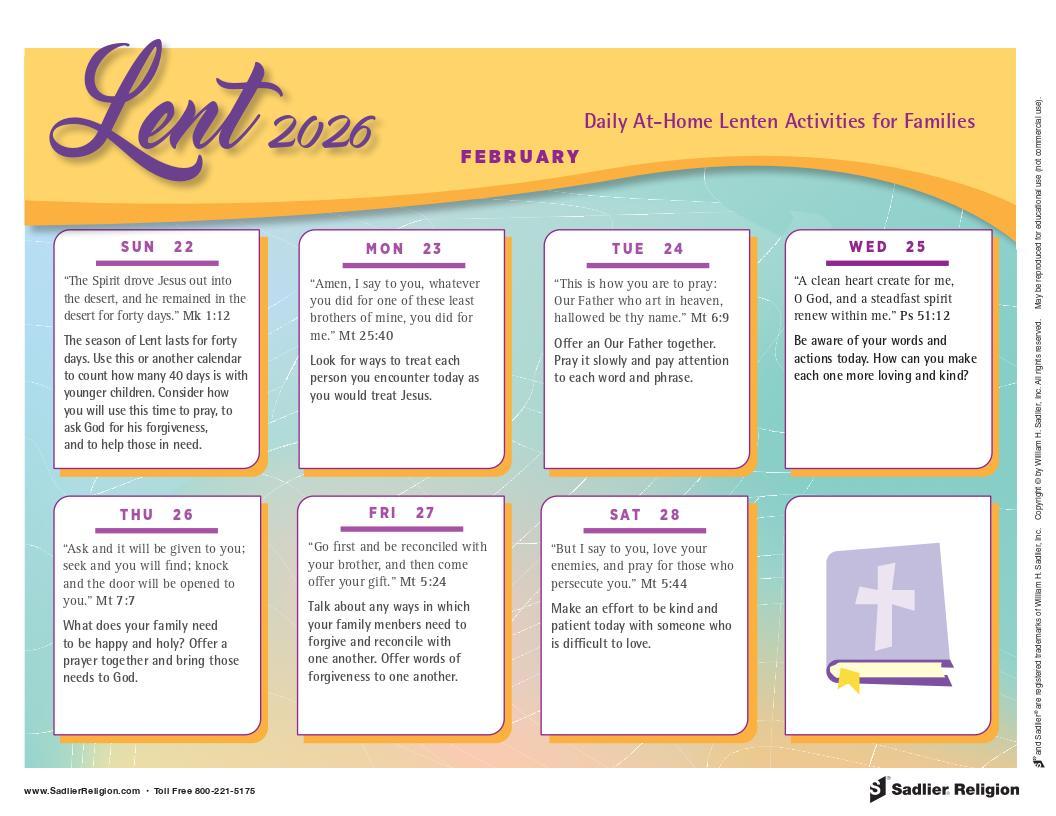
Daily Lenten Activities for Families - p12
SouthernClusterLentenRetreatupcoming - p13
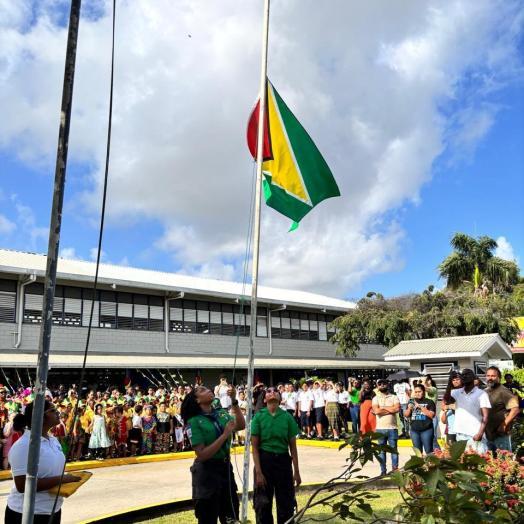
RepublicDaycelebrationsatMarianAcademy - p16
Saintof the Week - p16
56th Republic Anniversary

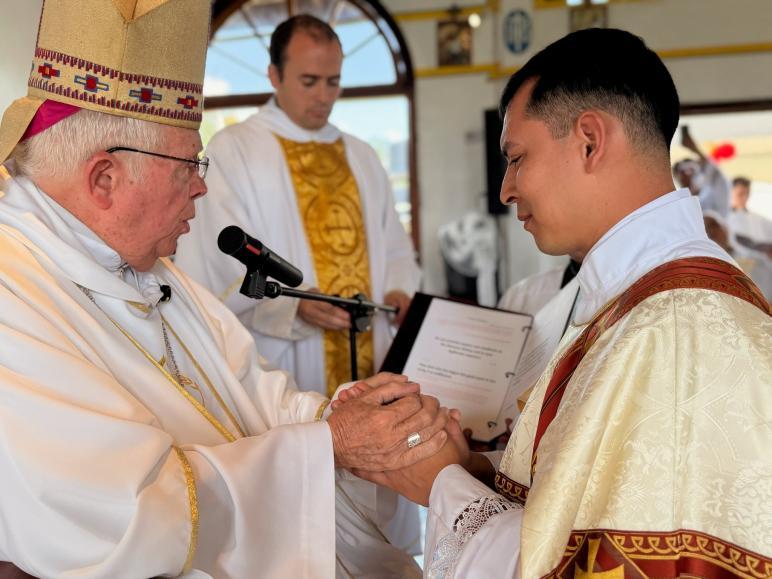
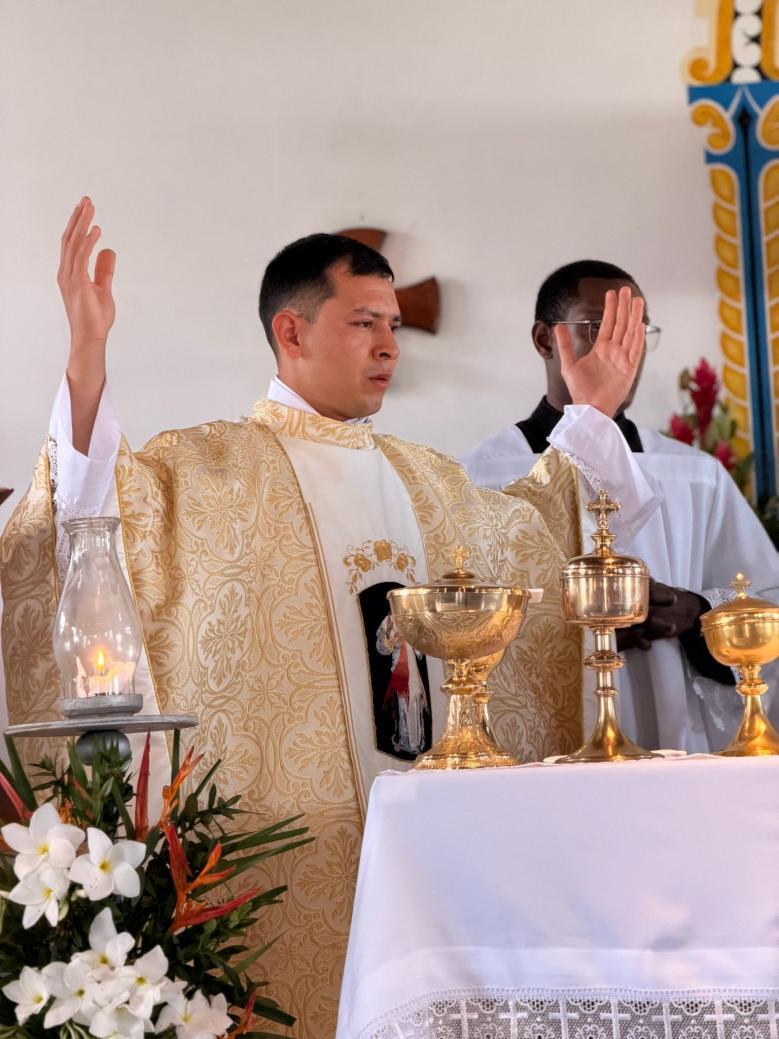
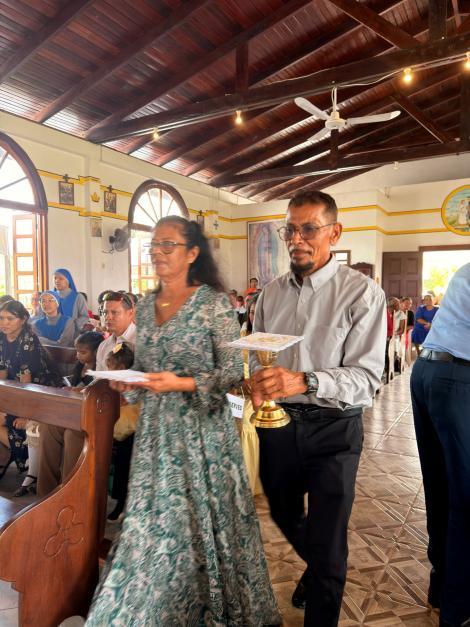
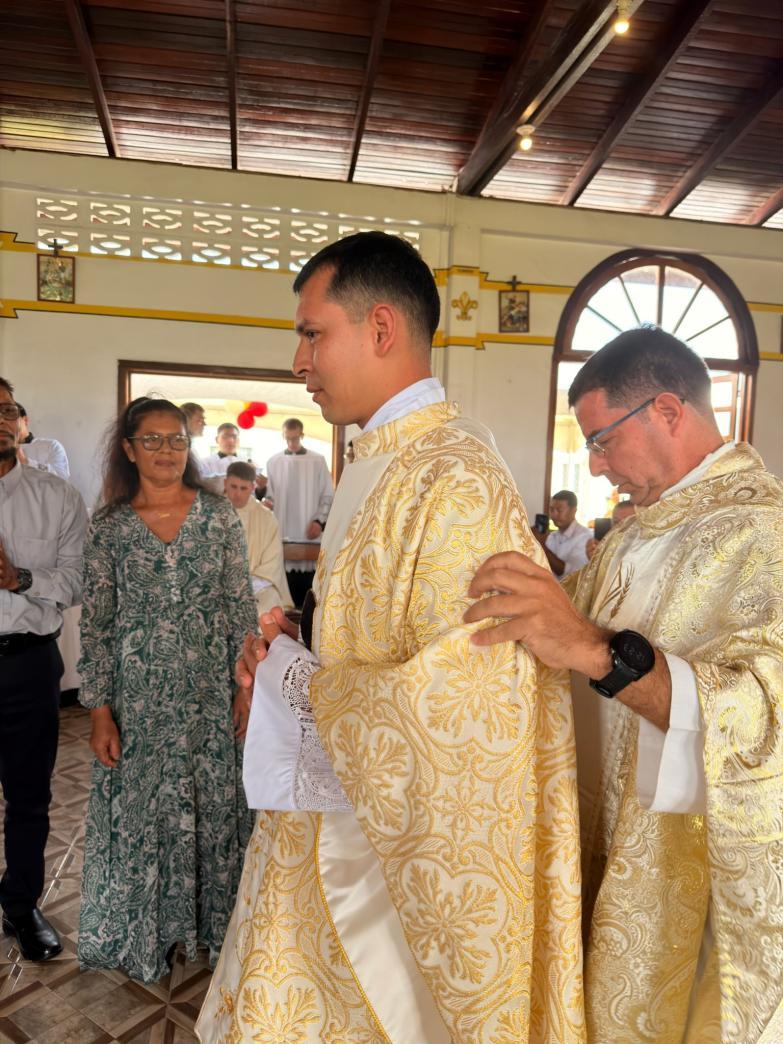
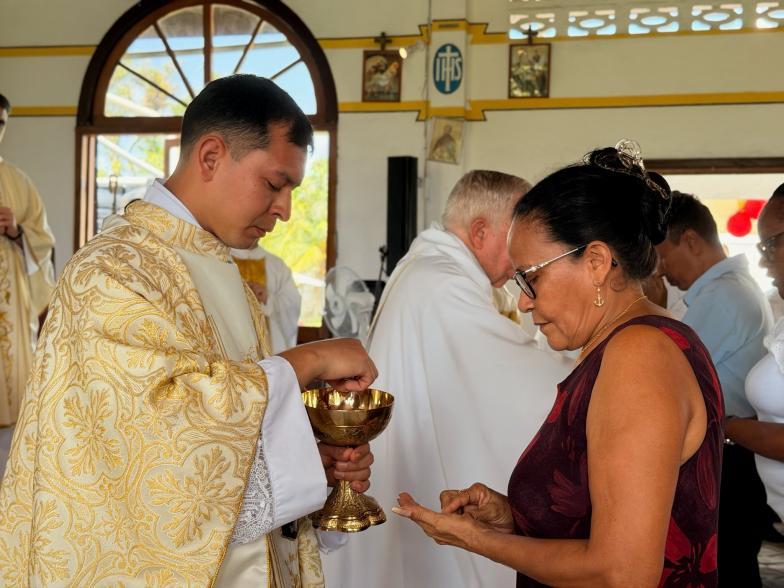
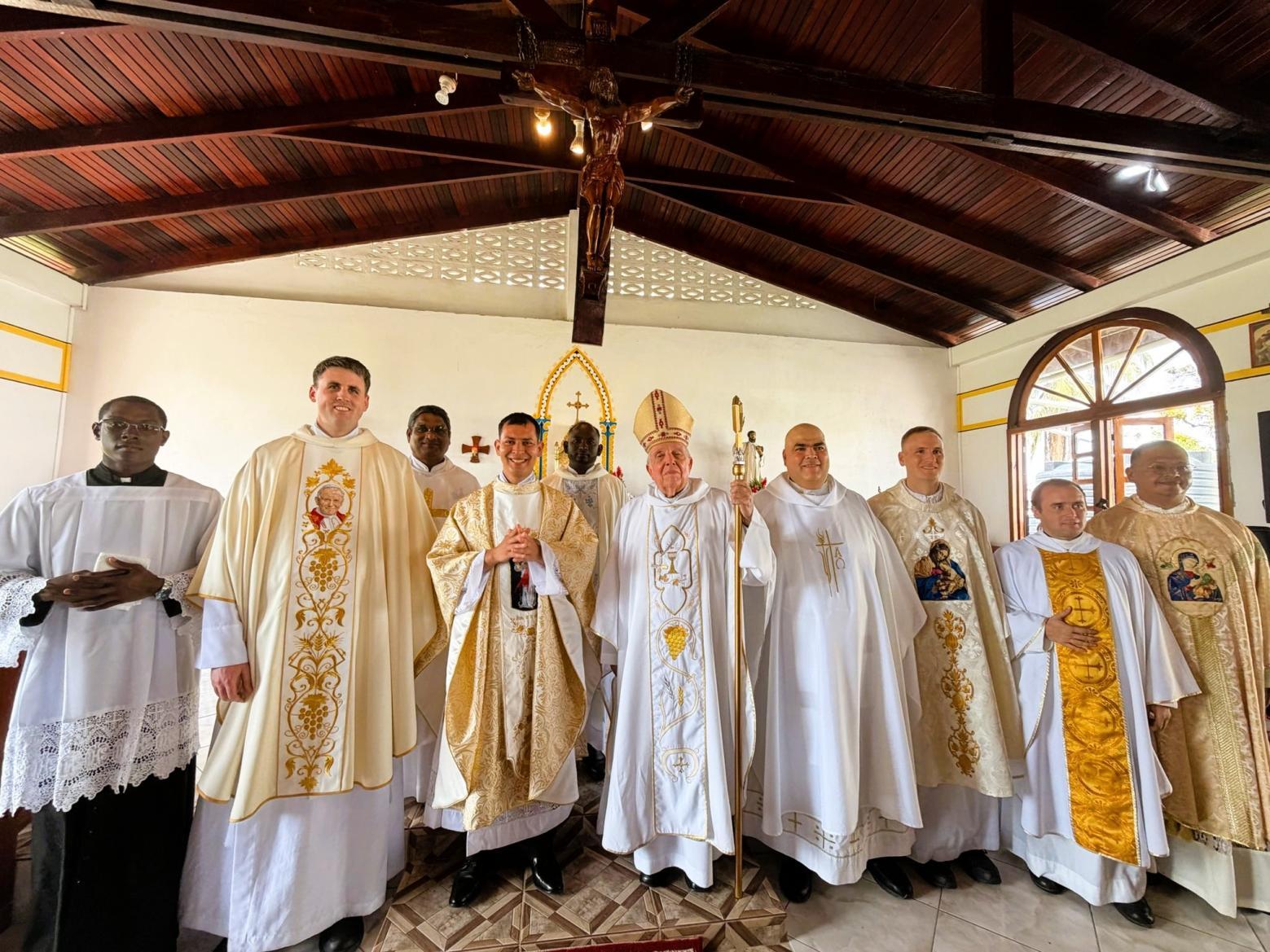
Bishop Francis Alleyne OSB presents the newly-ordained Fr. Damian Gonsalves IVE to the congregation during the ordination ceremony at St. Francis Xavier Church, Charity, Pomeroon, Region 2, Essequibo, Guyana, on Saturday, February 14th 2026. (Please see article on pages 14 and 15)
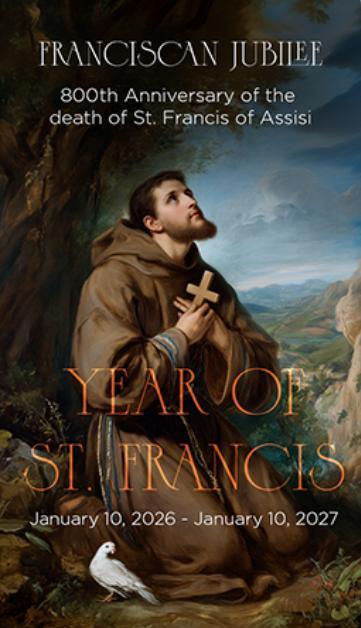
Year of St. Francis
Jubilee Prayer
Saint Francis, our brother, you who eight hundred years ago went to meet Sister Death as a man at peace, intercede for us before the Lord.
You recognized true peace in the Crucifix of San Damiano, teach us to seek in Him the source of all reconciliation that breaks down every wall.
You who, unarmed, crossed the lines of war and misunderstanding, give us the courage to build bridges where the world raises up boundaries.
In this time afflicted by conflict and division, intercede for us so that we may become peacemakers: unarmed and disarming witnesses of the peace that comes from Christ.
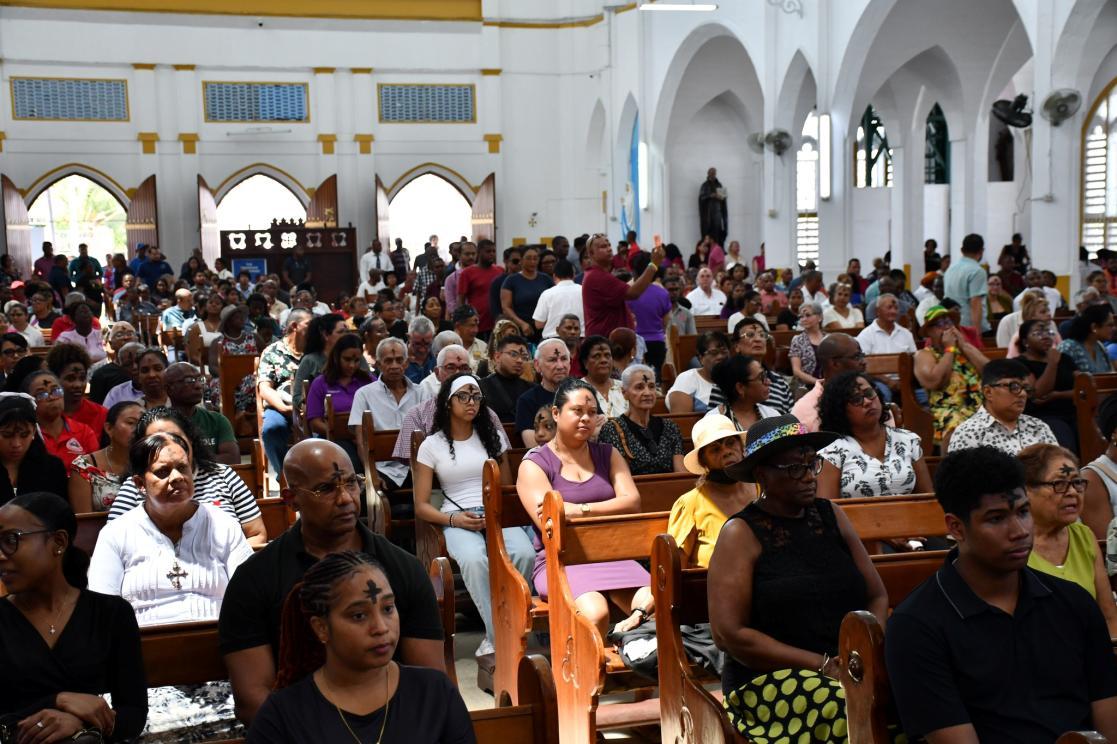
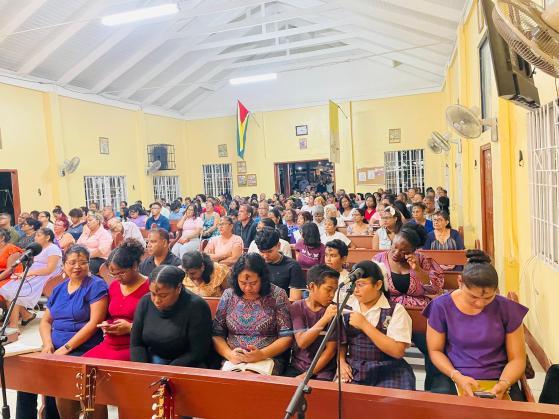
Ash Wednesday 2026
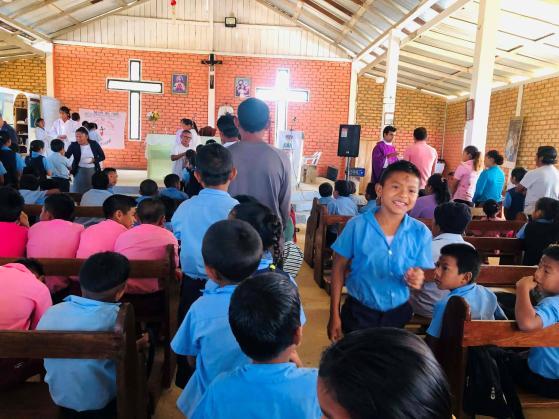
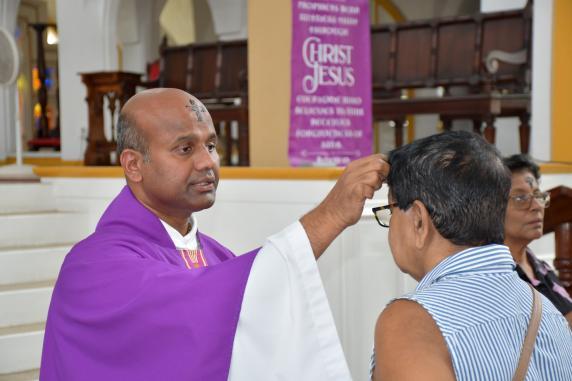

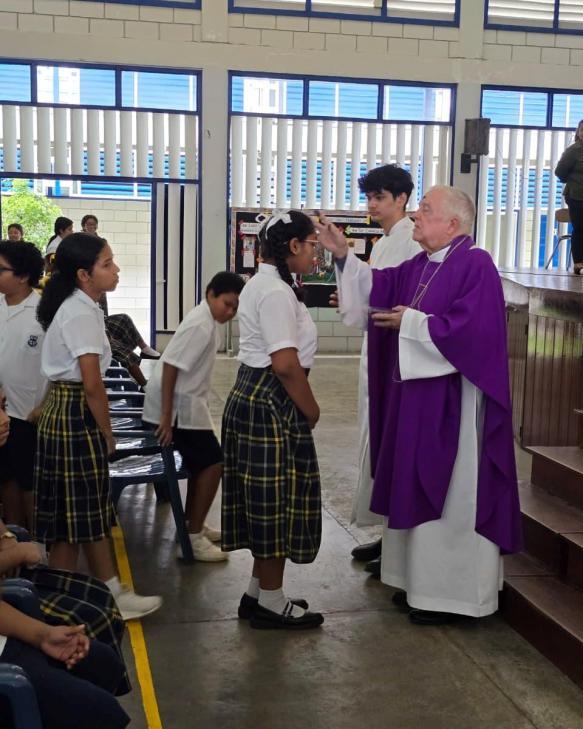
Amen - Pope Leo XIV
Cathedral
Bartica
Diamond
Marian Academy
Kurukabaru
Cathedral
(OSV News) Cardinal Pierbattista Pizzaballa, Latin patriarch of Jerusalem, strongly criticized the U.S.led Board of Peace, an international body chaired by President Donald Trump to oversee the governance and reconstruction of Gaza.
At a Feb. 6 event at the Roman parish of San Francesco a Ripa Grande, Cardinal Pizzaballa was asked by moderator Maria Gianniti, Rome correspondent for the Italian news channel RAI, about his thoughts on the Board of Peace.
‘Others’ are ‘deciding’ for Palestinians
“What do I think of the Board of Peace? I think it is a colonialist operation: others deciding for the Palestinians,” Cardinal Pizzaballa said, according to a report by Italian newspaper Il Sole 24 Ore.
The cardinal also commented on the invitation extended to the Vatican to join the international body and its $1 billion price tag for a permanent seat on the board.
“I would answer very candidly,” he added. “They asked us to enter. I’ve never had a billion (dollars), but above all, this is not the Church’s task: It is the sacraments, the dignity of the person.”
‘Disastrous situation’ in Gaza
In an interview with OSV News Feb. 16, Issa Kassissieh, the Palestinian ambassador to the Holy See, said the cardinal has seen firsthand “the destruction, the miseries and the disastrous situation” in Gaza, which is “part of the future Palestinian state.”
“Cardinal Pizzaballa wanted to make a point that any initiative cannot fly without the engagement of the Palestinian people themselves and their representatives,” Kassissieh said.
“He’s trying to make a point that to succeed and not to fail, as every time, from the very beginning, to put the right foundation for a constructive and credible process.”
Main point of his message
“In the end, I believe that he meant to say that you cannot have the wedding without the groom. That is the main point of his message,” he told OSV News.
The board, which was formally announced by the White House Jan. 16, will serve as an oversight mechanism for the second phase of the Trump administration’s “Comprehensive Plan to End the Gaza Conflict.”
While more than 25 countries have joined, traditional U.S. allies, including
France, Germany, the United Kingdom, Poland and Italy, have declined to join.
Could undermine the U.N.
Among the concerns raised was that the board could undermine the United Nations, as well as the fact that Gaza is notmentioned in the body’s charter.
Kassissieh told OSV News that Cardinal Pizzaballa spoke “out of a moral
Holy See will not join Trump’s ‘Board of
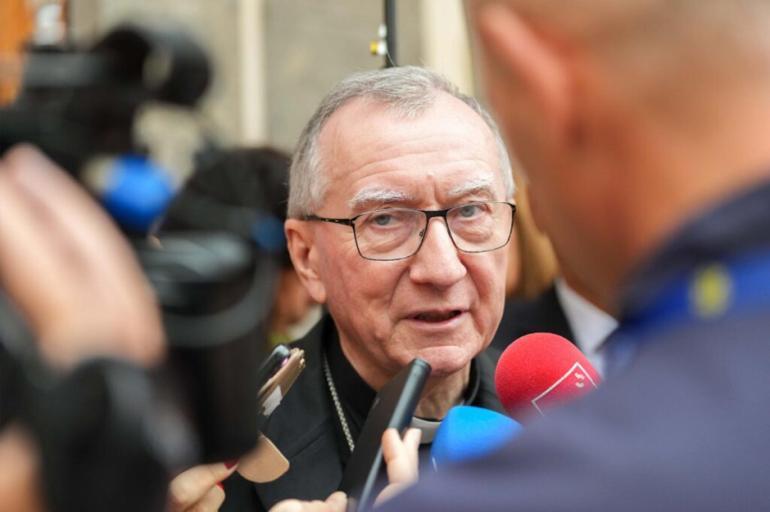
WASHINGTON (OSV News) The Holy See “will not participate” in President Donald Trump’s “Board of Peace” for Gaza, Cardinal Pietro Parolin, the Vatican’s secretary of state, said Feb. 17, citing “points that leave us somewhat perplexed.”
In comments to reporters at a bilateral meeting in Rome with the Italian government at Palazzo Borromeo, seat of the Embassy of Italy to the Holy See,
Cardinal Parolin confirmed the Holy See “will not participate in the Board of Peace because of its particular nature, which is evidently not that of other States.”
“There are points that leave us somewhat perplexed” about the board, and “some critical points that would need to find explanations,” he said.
“The important thing,” he said, “is that an attempt is being made to provide a
response. However, for us, there are certain critical issues that should be resolved.”“One concern,” he continued, “is that at the international level it should above all be the U.N. that manages these crisis situations. This is one ofthepointsonwhichwehaveinsisted.”
Board of Peace inaugural meeting
The board was part of Trump’s peace plan for Gaza, which he announced in September, in which he said he would establish “a new international transitional body” headed and chaired by himself, “with other members and heads of State to be announced, including FormerPrimeMinisterTonyBlair.”
Trump was scheduled to host the board’s inaugural meeting in Washington on Feb. 19 at the U.S. Institute of Peace, which the Trump administration renamed the “Donald J. Trump Institute of Peace” in December.
More than two dozen countries have accepted Trump’s invitation to join the Board of Peace, including Israel as well as Qatar, Saudi Arabia, Turkey and Egypt. However, like the Holy See, key U.S. allies in Europe have declined to join the board, with some expressing concern it would undercut the United Nations. Trump sought a one billion dollar membership fee to become a member nation. ❖
responsibility toward his community and his people,” and that it should be taken as a “credible message” that seeks to ensure that “we don’t go in the wrong direction.”
He also noted that the cardinal sought to defend all people in the region, as evidenced by his offer to take the place of hostages taken by Hamas during its Oct. 7, 2023, attack on Israel.❖
Bishop’s Engagements
Sunday February 22nd 7:30hrs – Mass at Cathedral RCIARite of Election 15:00hrs –21stAnnual Bible Quiz
Tuesday February 24th
19:00hrs – Synod Team Meeting (Virtual)
Wednesday February 25th
09:00hrs –AEC Meeting (Virtual) 17:00hrs – SJMH Government Meeting(Virtual)
Thursday February 26th
Travel to Hosororo
Saturday February 28th
Return from Hosororo
Sunday March 1st
07:00hrs – East Coast Lenten Pilgrimage at St. Paul’s RC Church, Beterverwagting
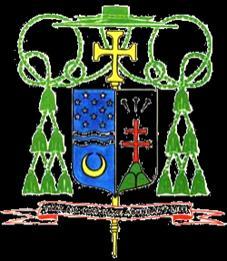
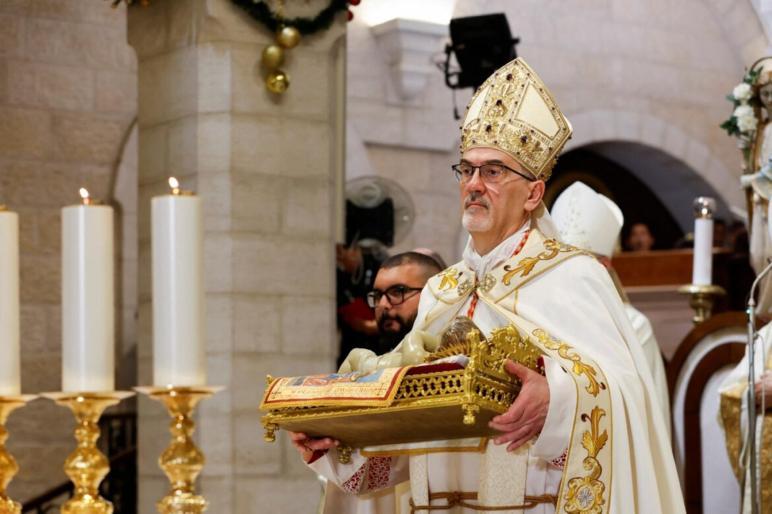
Cardinal Pierbattista Pizzaballa, the Latin patriarch of Jerusalem, delivers the homily as he celebrates Christmas Eve Mass at the Church of the Nativity in Bethlehem, West Bank, Dec. 24, 2025. (OSV News photo/Ammar Awad, Reuters)
A Christian Perspective on Social Issues
Hope and disappointment
By GHK Lall
Every citizen has a right to hope. Every Guyanese has a right to a fair share of his or her birthright, a hand in the grace of divine providence. What makes this country the envy of the world has to be felt, come to mean something. Because it encourages a sense of citizenship, of belonging, of counting and participating. What does local reality indicate? How much does it comfort? To what degree does it condemn to the edges of consideration, to despair? It is early in the year, and in the early days of the Lenten Season. The kneeling and petitioning and hoping should be before God. God gives of his love, his kindness, his grace. Men give what reduces to crawling on the ground. And weeping. Recall that admonition: put not thine trust inearthly princes Lent calls for fasting. Some are forced to live in that state of Lent for more than the days in the season. Each day of fasting ends with a twist. A state of semi-fasting has to be observed. It is not voluntary. There is just not enough to quell the pangs of hunger now at fever pitch. The long hours of fasting can lead there. Bowing heads in prayer, lifting hearts in appeal to the heavens, are profound statements of faith. Now here’s a thought to consider: Jesus spent significant time in prayer. But he was always on the move, engaged and extending, pressing forward on his mission. Of peace. Of a future kingdom that is loaded with promises for widows, orphans, the mocked, and those cast out. Jesus was never still, nor passive. Prince of Peace, indeed; but never was he passive in the face of what weighed heavily on the people, and put them through endless trials.
Jesus was a liberator. The Liberator, with a capital L; perhaps all the letters in that word should be. Liberating from fear, from loss of the body, from what men can do. He stood up to a world power, and shook it by the foundations. One man, with not even one follower in his hour of supreme test. One man without an army, or one soldier or horse, and he sits
astride the world. He didn’t return slap for slap, counseled turning the cheek. But his face didn’t turn one inch away from the challenges and pressures of his time and environment. He fasted and in his weakened state stood up to Satan at his trickiest, and still prevailed against him. For centuries, the captive Israelites were mauled and weakened, beaten into the ground. Yet they never lost faith, didn’t give up. God gave them Moses and a path out of Egypt, away from an increasingly tyrannical Pharaoh. Unceasing faith and steadfast hope were rewarded atlonglast.
The times are bitter here in Guyana. The nectar coming from under the sea, the God-given provision, should have provided the way to freedom, out of economic captivity. This captivity, this quicksand that has trapped many a Guyanese generation, should have been over. Except that it isn’t. In this Season of Lent in 2026, hope has yielded to disappointment, impatience with the way matters have evolved. Another year of riches, another year of those being channeled elsewhere, where the bigger priorities
are. Lent is part of preparation. Like Advent, it calls for focusing the mind on God and the promises he made through his son, Jesus. Surrendering. Believing. Depending. When men are depended on, they disappoint sooner than later. When men see themselves as gods, or are held as gods by other men, then the place that God occupies is reduced to the secondary. May this not be the case for any of us. May this Lent guide all believers and observers to work sincerely and diligently to get their order of priorities right, their worship to the right place, and their relationship with God on the proper footing. Depend on God Almighty; he doesn disappoint. Don disappoints. This should be familiar territory for citizens and Christians, especially Roman Catholics. They have been through hard, flooring disappointments before. Justlike before,all must get off the ground, and creep through the dark days to find the light. The light of God. Lent reminds and restores. Lent aids us, helping the light of Jesus to shine through the times. Simply search for it.❖

Gracious and loving God, we thank your for the gift of our priests. Through them, we experience your presence in the sacraments.
Help our priests to be strong in their vocation.
Set their souls on fire with love for your people.
Grant them the wisdom, understanding, and strength they need to follow in the footsteps of Jesus. Inspire them with the vision of your Kingdom.
Give them the words they need to spread the Gospel.
Allow them to experience joy in their ministry.
Help them to become instruments of your divine grace.
We ask this through Jesus Christ, who lives and reigns as our Eternal Priest. Amen
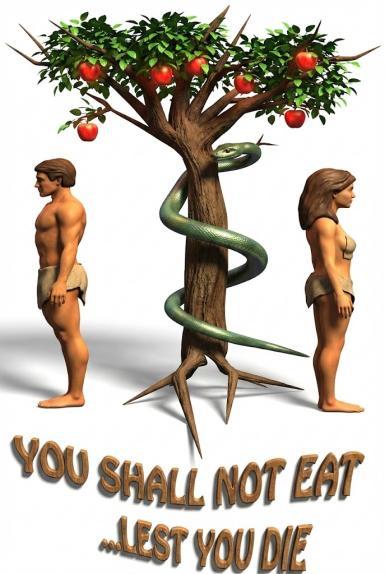


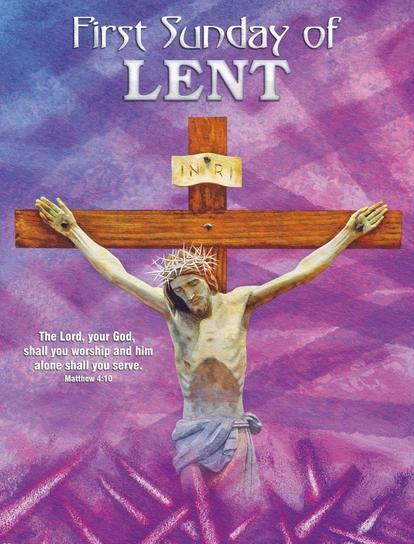
FIRST READING Genesis 2:7-9; 3:1-7
The creation and fall of our first parents.
The Lord God fashioned man of dust from the soil. Then he breathed into his nostrils a breath of life, and thus man became a living being.
The Lord God planted a garden in Eden which is in the east, and there he put the man he had fashioned. The Lord God caused to spring up from the soil every kind of tree enticing to look at and good to eat, with the tree of life and the tree of the knowledge of good and evil in the middle of the garden.
The serpent was the most subtle of all the wild beasts that the Lord God had made. It asked the woman, “Did God really say you were not to eat from any of the trees in the garden?” The woman answered the serpent, “We may eat the fruit of the trees in the garden. But of the fruit of the tree in the middle of the garden God said, ‘You must not eat it, nor touch it, under pain of death.’” Then the serpent said to the woman: “No! You will not die! God knows in fact that on the day you eat it your eyes will be opened and you will be like gods, knowing good and evil.” The woman saw that the tree was good to eat and pleasing to the eye, and that it was desirable for the knowledge that it could give. So she took some of its fruit and ate it. She gave some also to her husband who was with her, and he ate it. Then the eyes of both of them were opened and they realised that they were naked. So they sewed fig-leaves together to make themselves loin-cloths.
RESPONSORIALPSALM
Psalm 50
Response: Have mercy on us, O Lord, for we have sinned
1. Have mercy on me, God, in your kindness. In your compassion blot out my offence. O wash me more and more from my guilt and cleanse me from my sin. Response
2. My offences truly I know them; my sin is always before me. Against you, you alone, have I sinned; what is evil in your sight I have done.
3. A pure heart create for me, O God, put a steadfast spirit within me. Do not cast me away from your presence, nor deprive me of your holy spirit. Response
4. Give me again the joy of your help; with a spirit of fervour sustain me.
O Lord, open my lips and my mouth shall declare your praise. Response
As we begin the beautiful and challenging season of Lent, our readings this week remind us why we need these 40 days so much. They also suggest a particular strategy we
SECONDREADING Romans 5:12-19
However great the number of sins committed, grace was even greater.
Sin entered the world through one man, and through sin death, and thus death has spread through the whole human race because everyone has sinned. Sin existed in the world long before the Law was given. There was no law and so no one
Christian stewards might take as we make the journey towards Easter.
Our first reading takes us back to Genesis, reminding us of our Creator and the loving care and lavish gifts He gave to our ancestors, Adam and Eve. He created them out of pure love and provided abundantly for them.
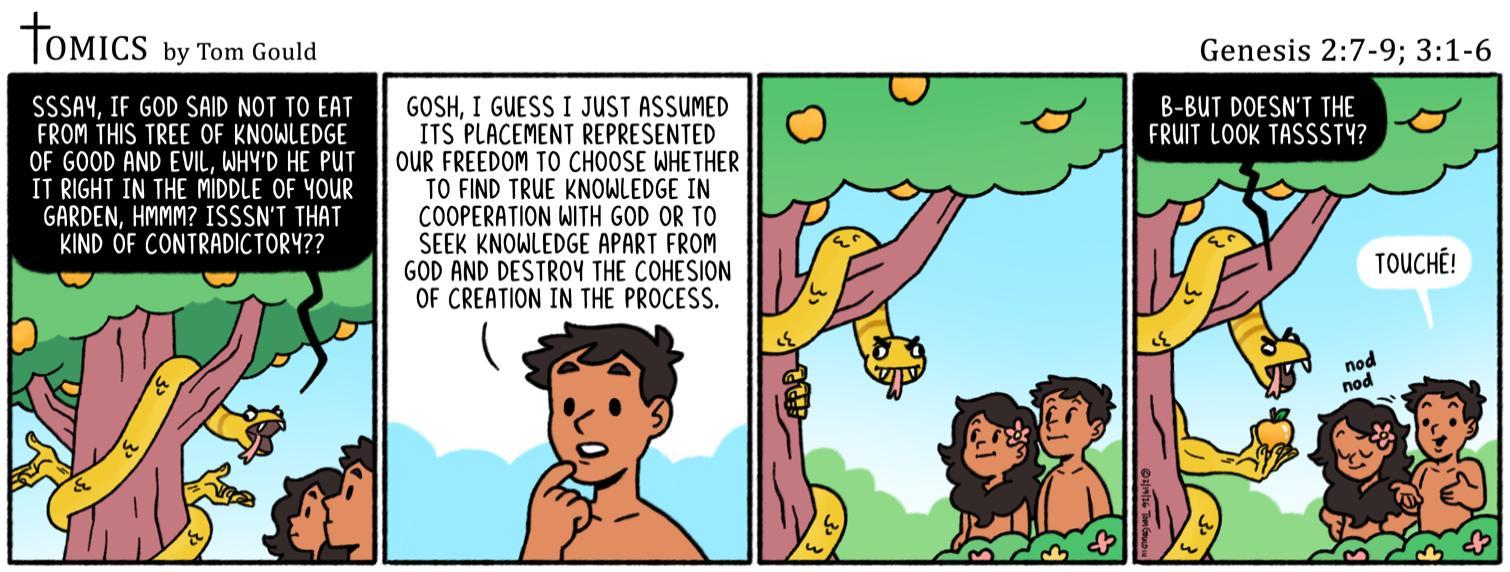
Life was good in the Garden! Until the first couple allowed just a sliver of doubt in the goodness of God to enter their minds. Swayed by the words of the serpent, they became ungrateful and distrustful despite God’s great
could be accused of the sin of “law-breaking”, yet death reigned over all from Adam to Moses, even though their sin, unlike that of Adam, was not a matter of breaking the law. Adam prefigured the One to come, but the gift itself considerably outweighed the fall. If it is certain that through one man’s fall so many died, it is even more certain that divine grace, coming through the one man, Jesus Christ, came to so many as an abundant free gift. The results of the gift also outweigh the results of one man’s sin: for after one single fall came judgement with a verdict of condemnation, now after many falls comes grace with its verdict of acquittal. If it is certain that death reigned over everyone as the consequence of one man's fall, it is even more certain that one man, Jesus Christ, will cause everyone to reign in life who receives the free gift that he does not deserve, of being made righteous. Again, as one man’s fall brought condemnation on everyone, so the good act of one man brings everyone life and makes them justified. As by one man’s disobedience many were made sinners, so by one man’s obedience many will be made righteous.
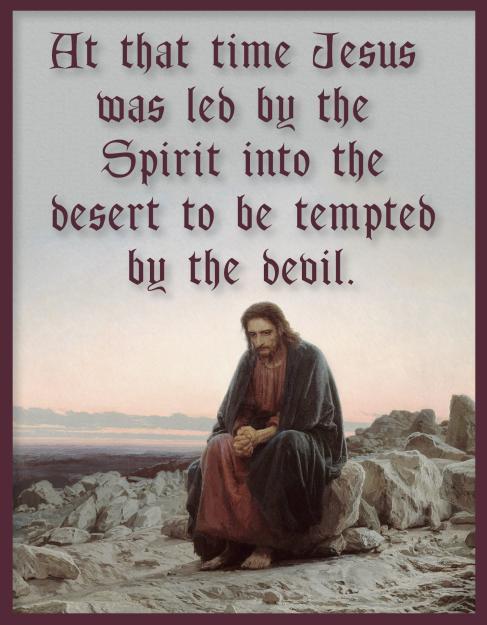
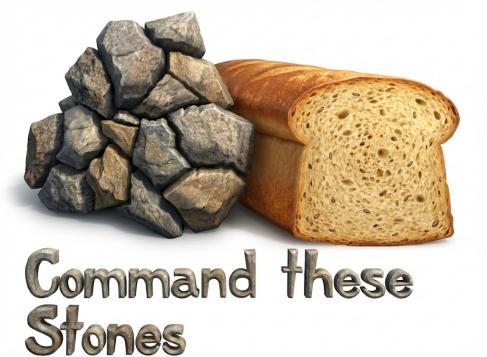
GOSPEL Matthew 4:1-11 Jesus fasted for forty days and the tempter came. Then Jesus was led by the Spirit out into the wilderness to be tempted by the devil. He fasted for forty days and forty nights, after which he was very hungry, and the tempter came and said to him, “If you are the Son of God, tell these stones to turn into loaves”. But he replied, “Scripture says: Man does not live on bread alone but on every word that comes from the mouth of God.”
The devil then took him to the holy city and made him stand on the parapet of the Temple. “If you are the Son of God,” he said, “throw yourself down; for scripture says: He will put you in his angels’ charge, and they will support you on their hands in case you hurt your foot against a stone”. Jesus said to him, “Scripture also says: You must not put the Lord your God to the test”.
Next, taking him to a very high mountain, the devil showed him all the kingdoms of the world and their splendour. “I will give you all these,” he said, “if you fall at my feet and worship me.” Then Jesus replied, “Be off, Satan! For Scripture says: You must worship the Lord your God, and serve him alone.”
Then the devil left him, and angels appeared and looked after him ❖
love and all the gifts of creation He had provided. Sound familiar? These same temptations threaten to pull us away from God today.
Our Gospel passage, from Matthew, shows us by the example of Jesus Himself one way that we can attain spiritual strength and grow to become more effective disciples and stewards. In this passage, we find our Lord in the desert, fasting for 40 days and 40 nights. Like Adam and Eve, He is confronted by the evil one. But unlike our fallen parents, our Lord triumphs
definitively over the devil’s lies and sends him slithering away.
How did He do it? By knowing the Scriptures and by proclaiming them confidently. And by His perfect trust in the Father.
This Lent, let us embrace this 40-day spiritual reset. Let us prioritize our use of time by committing to prayerful study of the Scriptures and trusting more deeply in the Father’s love. We will surely be better stewards by Easter.❖ [www.catholicsteward.com/blog/ ]
Gospel Reflection
Lent recalls the forty days Jesus spent in the desert after his baptism. He went into the desert to find a quiet place to fast, to pray and reflect so as to prepare himself for the mission he was to begin. Lent is our desert time too – a quiet time to fast, to pray and to think. It is a time for us to seek our true selves for we often live foolish, shallow and unspiritual lives, spurred on by our desires and habits. We are surrounded by noise and constant activity and so we easily lose ourselves, our priorities, what should really be important to us – family, true friends, work, play, a quiet moment for prayer and reflection, to have a word with God. And we often wonder why we are not always happy, why we don’t get on with others, why we can’t pray.
Lent is one of the important seasons in our Church’s calendar. At this time we are asked to face up to our capacity for sinfulness and the need for a sense of repentance. God created the human race as male and female and gave them the gift of freedom of choice. This is the freedom to make decisions based on right and wrong. Unfortunately, we sometimes choose to make wrong choices - like the couple in the First Reading - and have to pay the consequences. We all have to make choices. Some choices are relatively easy to make, like what to eat for dinner, what to wear today, what time to go to bed, what movie to see. Human life is filled with choices that make our existence exciting and vibrant. Animals make choices based on instinct, and the urge to survive. Human choices are different because men and women can reflect on the choices to be made and so make responsible decisions. ❖
[From: Journeying with the Word of God, The Religious Education Department, Diocese of Georgetown, Guyana ]
TODAY IS GOING TO BE MY PEACEFUL DAY
BY MIKE JAMES
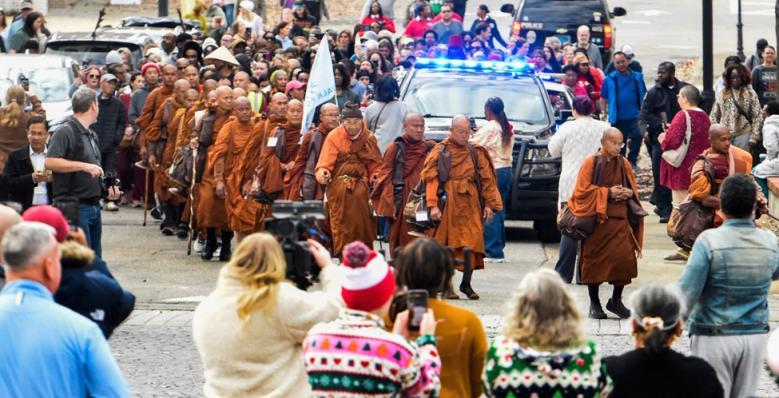
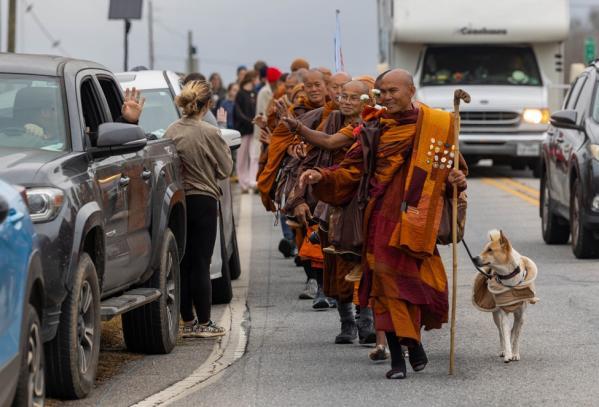
In late October 20 Buddhist monks and a stray dog began a Walk for Peace from their monastery near Fort Worth, Texas. it is not surprising that little note was taken by the media of a group of Buddhists who represent less that 1 percent of the US population.
In the 108 days that followed, the 20 monks, at times barefooted were soon reduced to 19 after one of them was struck by accident by a passing pickup truck outside Houston and had to have a leg amputated. But they were accompanied by growing crowds in solidarity along the way through the traditionally conservative evangelical South. On February 10 after a 2,300 mile pilgrimage, they reached the nation’s capital Washington, where they were joined by hundreds of other monks and tens of thousands of ordinary citizens of all walks of life and political views echoing who prayed with them for “national healing, unity and compassion."
As a Vietnamese American reporter described pilgrimage:
“Black, Brown and White folks of all ages turned up in communities big and small to greet these pilgrims, hooting, hollering and clapping. Many offer flowers, water bottles, fruits or lip balm; others play musical instruments.
In Selma, Alabama, thousand followed them across a bridge, site of the 1965 Bloody Sunday beatings of Civil Rights marchers, and watched the monks release flower petals into the river from the bridge as they chanted and prayed in remembrance of those who has lost their lives.
In Georgia, thousands of the curious lined the roads and showed up for the talks at the monks' daily lunch stops and nightly resting sessions. These people ‒ many of them Christian and surprised that these Buddhists weren't trying to convert anyone ‒ were as astounded by their own reaction as I was.”
One person commented, "I found myself standing in the cold for hours, feet aching, waiting to see monks pass by. Why? ... For so many of us, these Buddhist monks became the only living image of Christ we’ve encountered. ... I don’t know anyone who would walk a mile barefoot for me, much less 2,300 miles. Yet here they were ‒ embodying the humility, grace, humanity, and


compassion I’ve studied in scripture. Despite being surrounded by hundreds of churches, this is the first time in my life I’ve witnessed these virtues in such profound action."
On arrival in Washington, the monks were greeted at the Anglican (Episcopal) National Cathedral by dozens of Christian Clergy and a crowd of thousands for an interfaith service. The leader of the monks, Vietnamese American monk Bhikkhu Pannakara in his address highlighted the following:
• Interfaith Unity: The significance of different faith leaders working together for a common goal, stating, "There's no need to be separate or any division at all whatsoever".
• Peace as a Practice: He urged attendees to continue the work of peace beyond the 108-day journey, saying, "May we help peace bloom more in the world, one step at a time".
• Gratitude and Mindfulness: He expressed deep gratitude for the support received during the 15 trek, urging a continuation of mindfulness to find lasting peace.
• A Message of Love: focused on compassion, urging people to carry the spirit of the walk into their daily lives.
• Actionable Mindfulness: need to do is just practice mindfulness to unlock that box where you have kept peace and happiness inside... You're the only one who can do this, not the venerable monks, not the reverends, nor anybody else, but you".

• Daily Practice: He advised against immediately checking cell phones upon waking, encouraging a more mindful start to the day.
• The Power of Choice: Instead of "throwing hatred and anger and delusion and greed to the universe," he urged, "now we only throw loving kindness and compassion and peace to it".
Beyond the Walk: He emphasized that the walk for peace continues within each person, stating, "My hope is, when this walk ends, the people we met will continue practicing mindfulness and find peace".
To the thousands gathered to nostalgically bid them farewell as the monks prepared to return to their temple, Pannakara reminded: You are not alone. We will still walk together in spirit. Get up every morning and make a choice ‒ today is going to be our peacefulday.❖
For 121 years, the Catholic Standard has been sharing the Gospel of Jesus Christ.
Now reaching 10,000+ followers on Catholic Media Guyana Facebook plus going straight to your inbox and WhatsApp, our vibrant weekly e-paper is a trusted source which delivers informative and inspiringstories from across the diocese and around the world.
Want to promote your business or event? Advertise with us! Call 675-4542 or email catholicstandardgy@gmail.com ❖
Buddhist monks and several hundred local community members took part in the Walk for Peace in Montgomery, Alabama, on Dec. 23, 2025. Walk for Peace
:
Ask the Lord for the gift of
ROME (OSV News) On Ash Wednesday, Pope Leo XIV encouraged Catholics to ask the Lord for “the gift of true conversion” at the start of the 40 -day penitential season of Lent.
Speaking to English-speaking pilgrims at his Wednesday general audience in St. Peter’s Square Feb. 18, the pope encouraged people to approach Lent as a time of “conversion of heart” so that “we may better respond to his love for us and share that love with those around us.”
Pope Leo: live this liturgical season with an intense spirit of prayer
“At the beginning of Lent, I urge you to live this liturgical season with an intense spirit of prayer so that you may arrive, inwardly renewed, at the celebration of the great mystery of Christ’s Resurrection, the supreme revelation of God’s merciful love,” Pope Leo added in Italian at the close of the audience on a sunny winter day inRome.
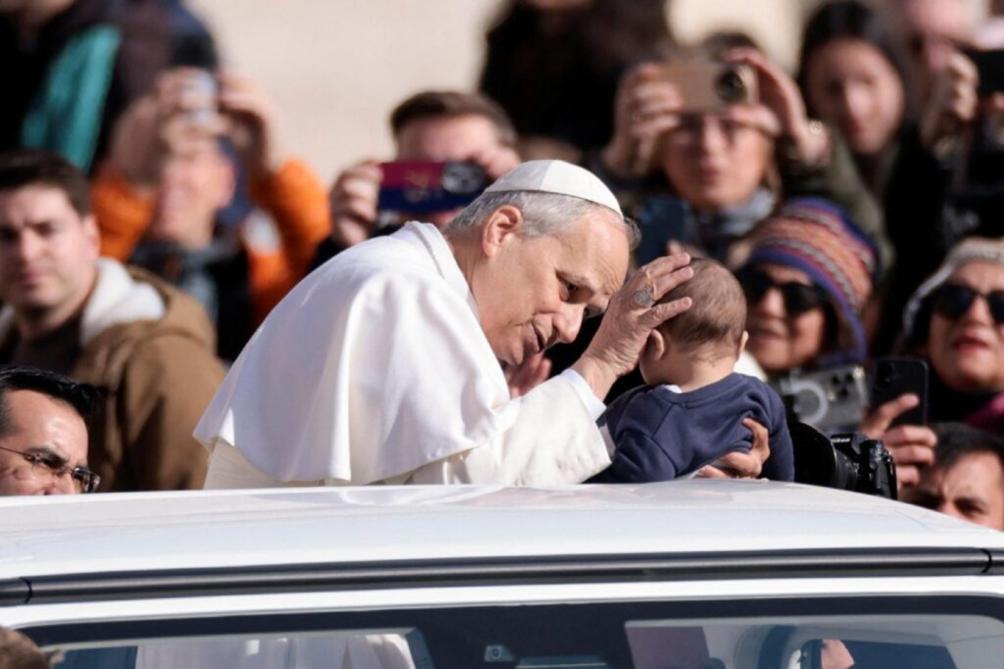
Before the audience, the pope greeted pilgrims from the popemobile, frequently stopping to bless babies as he made his way through the square.
Continuing his weekly catechesis on the documents of the Second Vatican Council, Pope Leo offered a reflection on “Lumen Gentium,” the Dogmatic Constitution on the Church, which he
explained “presents the Church as both a sign and an instrument of this plan of salvation.”
He said the Church is a sign “because the Church community makes the unity established by Christ through his Cross and Resurrection visible to the world today” and an instrument as “It is through the Church that God achieves the aim of bringing people to him and uniting them with one another.”
“As we journey through a world still marked by division, let us ask the Lord to continue to guide his Church in the mission of sanctification and reconciliation,” he said.
The pontiff’s encouragement to embrace fasting
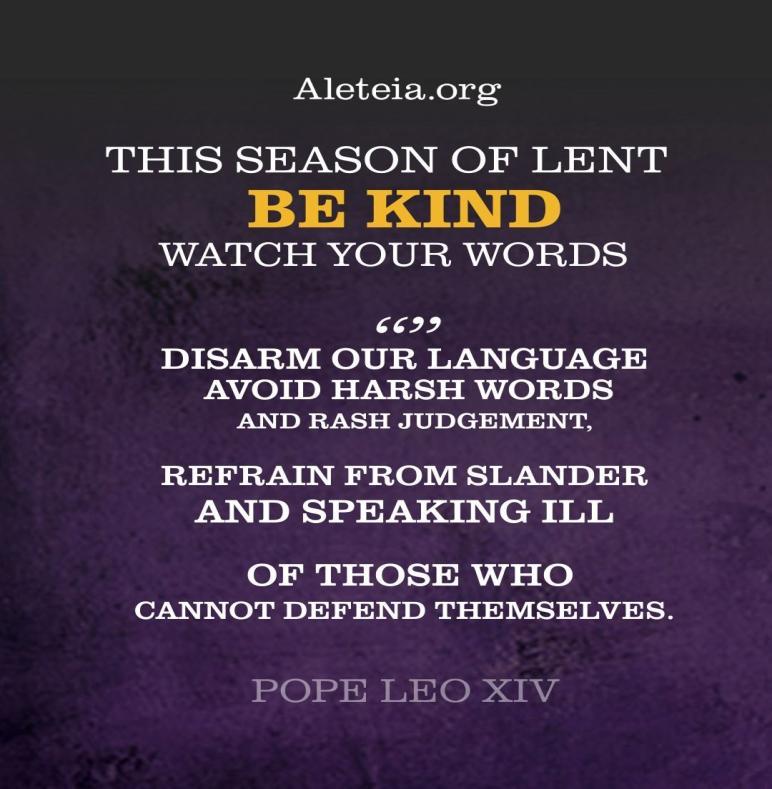
In his message for Lent this year, Pope Leo encouraged the faithful to embrace the “ancient ascetic practice” of fasting, as well as “refraining from words that offendand hurt our neighbor.”
Lent is a liturgical season of penance stretching from Ash Wednesday to Holy Thursday, during which Christians are encouraged to undertake voluntary acts of self-denial such as fasting and almsgiving, along with charitable and missionary works.
On Wednesday afternoon, Pope Leo led a solemn procession on Rome’s Aventine Hill from the Benedictine Basilica of Sant’Anselmo to the Dominican Basilica
Journeying with the Word of God
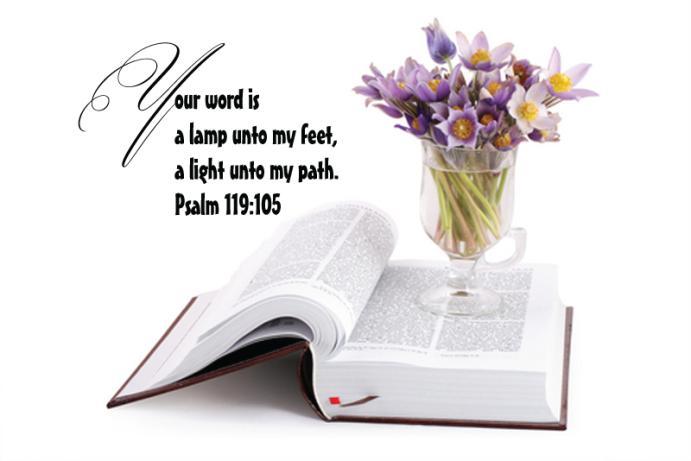
MAKING THE WORD OF GOD YOUR OWN
Step 1: Look at today’s Readings prayerfully.
1st Reading: We hear the story of the creation of the human race and how our great temptation is to act like God – the sin of pride. When we realise our sinfulness we become aware of our need for God.
2nd Reading: St. Paul shows how by his obedience to God, Jesus undid the harm done by the disobedience of Adam.
Gospel: The Gospel passage shows that, like us, Jesus had to struggle against evil. He was tempted in the same way we are but he did not give in.
of Santa Sabina, retracing a papal procession route that dates back centuries.
Ash Wednesday’s procession
The procession culminated with the pope offering Ash Wednesday Mass at Santa Sabina, one of the oldest surviving Christian basilicas in Rome. Built in 422 A.D., the ancient church is the first stop in the Lenten Station Church pilgrimage, a tradition rooted in the early practice of the Bishop of Rome celebrating the liturgies of the church year at various churches throughout the city. By the latter half of the fifth century, a fairly fixed calendar had developed, with Mass held at different churches throughout Rome each day of the Lenten season.
The station church tradition has experienced something of an Anglophonic revival in recent decades, spearheaded by the Pontifical North American College, which has offered a 7 a.m. English-language Mass at the station churches each day of Lentinrecentyears.
On Feb. 18, hundreds of people, including many American college students and seminarians, attended an English-language Ash Wednesday Mass at Santa Sabina organized by the seminary.❖
Step 2: ApplyingthevaluesoftheReadings toyourdailylife.
1.In the Gospel, the Tempter is calling on Jesus to make false choices based on power, influence and self-control. In what way are you tempted to make the same sort of false choices in your life?
2.Even though the desert is understood as being a difficult place to live in, why do you think it was necessary for Jesus to go there?
3.In what way do we make the season of Lent our time in the desert?
4.“Temptation is not necessarily a bad thing, especiallywhenitforcesustochoosebetweengoodand evil.” Doyouagreewiththisstatement? Why?
Step 3: Accepting the message of God’s Wordinyourlifeoffaith.
God made human beings with the ability to know right from wrong and so to make the correct choices. We cannot blame God for evil. We humans must accept our share of responsibility for the sins of the world.
Every human being is faced with a choice between good and evil. This choice is sometimes very difficult to make. The battle to overcome evil will never be over as long as we live on this earth. However, every right choice made makes the next right choice easier to arrive at.
Step 4: Somethingtothink&prayabout
1.During the season of Lent you are called on to fast and abstain, not just from food and drink, but from selfishness, greed, disinterest and those attitudes that make us less than human.
2.In the lightof my Christian commitment, what kind of a person would I like to be? To be that kind of person, what changes would I have to make in my life?
3.Pray that in the face of suffering and disappointment you may not lose hope but rather be encouraged to begin again. ❖
[From: Journeying with the Word of God, The Religious Education Department, Diocese of Georgetown, Guyana ]
Pope Leo XIV blesses a baby as he arrives to hold the weekly general audience in St. Peter’s Square at the Vatican, Feb. 18, 2026. (OSV News photo/Remo Casilli, Reuters)
Youth Office holds Lenten Webinar
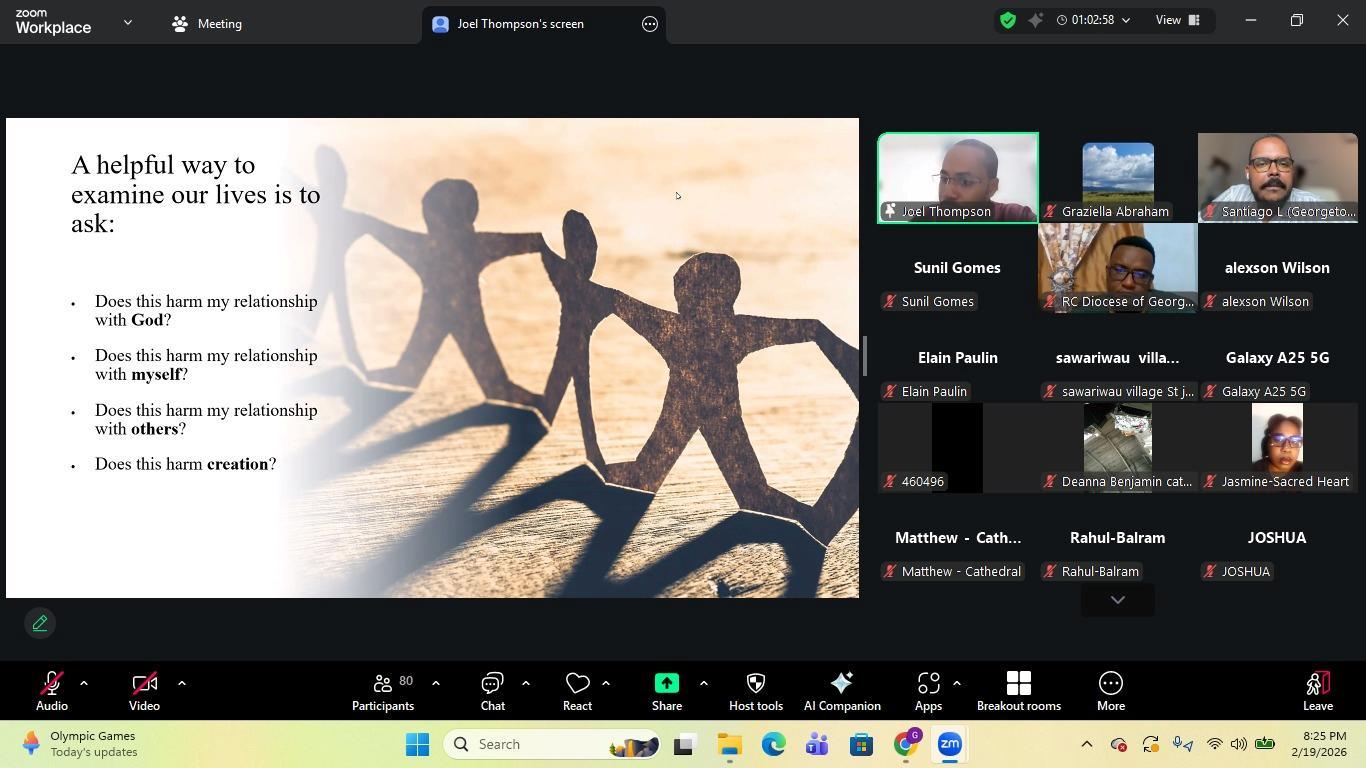
Youth Called to Conversion and Reconciliation: RCYO Hosts Lenten Webinar
By Joshua Van-Sluytman
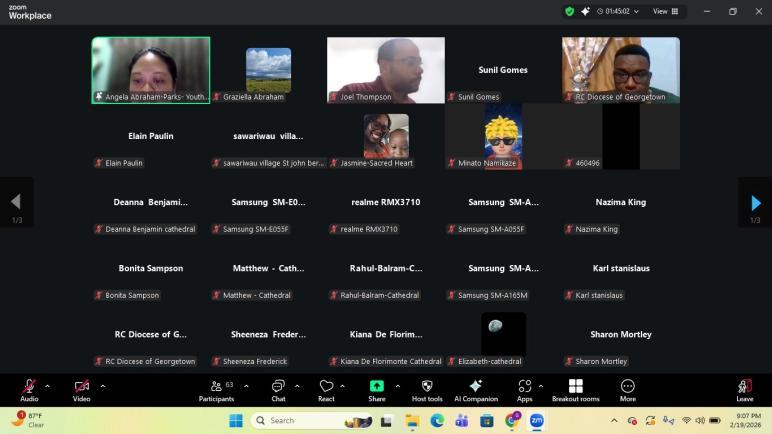
On Thursday, February 19, 2026, the Roman Catholic Youth Office (RCYO) hosted a Lenten webinar under the theme “Youth: Called to Conversion and Reconciliation.” The online session brought together more than 80 young people from across the Diocese of Georgetown, offering a space for reflection, learning, and dialogue as the Church journeys through the Lenten season.
The webinar was facilitated by Fr. Santiago Lantigua, SJ and Fr. Joel Thompson, SJ who guided participants through rich reflections on conversion, reconciliation, and the daily choices thatshape Christianlife.
In his presentation, Fr. Santiago emphasized that conversion is a process, not a one-time event. He explained that true conversion unfolds over time and involves both letting go
of harmful habits and intentionally adopting new, life-giving practices. This process, he noted, takes place on two levels:
• Personal, in how individuals live out their Christian faith and witness to others; and
• Communal, in how Church communities become more welcoming, inclusive,and centered on the Gospel.
Reflecting on Lent, Fr. Santiago described the season as a 40-day journey of grace, a form of “penitential pedagogy” that prepares hearts for renewal. He encouraged youth to see Lent not only as a time of sacrifice, but also as an opportunity to add spiritual practices such as reading Scripture, praying daily, attending Mass more regularly, and speaking openly about God in everyday life.
On reconciliation, he reminded participants that it is both a sacrament and an attitude. While confession is central, reconciliation also means becoming someone who actively works to unite and heal the community. Fr. Santiago stressed that
perfection is not required to approach the sacrament, only a sincere desire to change. He concluded with a challenge to young people not to be ashamed of their Catholic faith, noting that while some Catholics hide their identity, others proudly witness to Christwithout hesitation.
Fr. Joel centered his reflection on the idea that faith is fundamentally about choice, drawing from Scripture’s call to choose life over death. He reminded participants that each day presents hundreds of choices, both small and significant, and that Lent invites greater awareness of how those choices shape one’s relationship with God.
Addressing temptation, Fr. Joel emphasized that everyone is tempted including priests, parents, and even Jesus Himself. Temptation, he explained, is personal and tailored to individual weaknesses. He encouraged youth to focus on their own struggles rather than judging others, and reminded them never to feel trapped by sin or resigned to the belief that
“this is just who I am.” Every moment, he said, offers a new opportunity to choose life and turn away from evil.
Using examples from the Gospels - the Woman Caught in Adultery (John 8:1–11), Zacchaeus (Luke 19:1–10), and the Prodigal Son (Luke 15:11–32), Fr. Joel highlighted God’s immense mercy and readiness to forgive. He also invited participants to use Lent as a time to examine four key relationships: with God, with others, with creation, and with oneself. As a practical discernment tool, he noted that peace often signals the right choice, while persistent anxiety can indicate the need for reassessment.
The session concluded with an open forum for questions and discussion, allowing participants to engage more deeply with the themes presented.
The Roman Catholic Youth Office expressed gratitude to all who participated and reaffirmed its commitment to accompanying young people as they grow in faith, conversion, and reconciliation during Lentand beyond. ❖
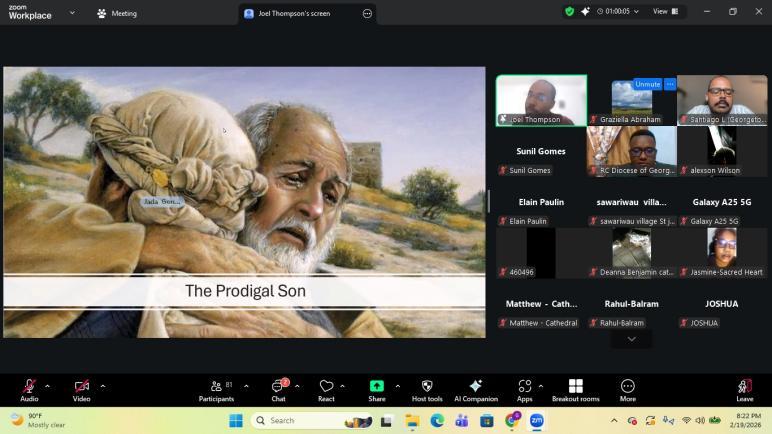

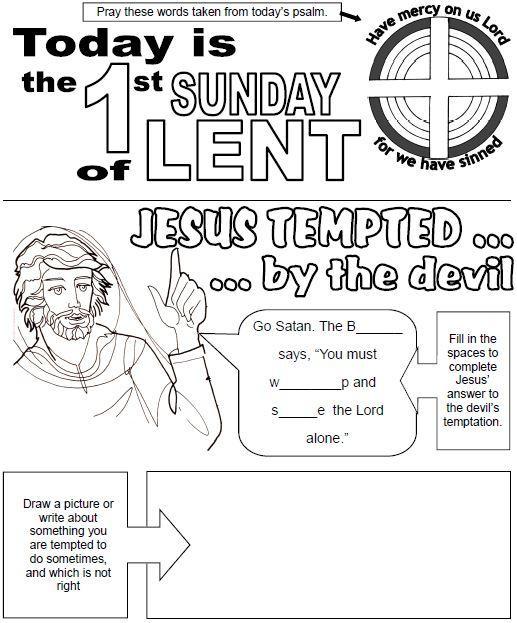
When You Are Tempted
Dear Boys and Girls, Temptation we all face temptation. What is temptation? Temptation is wanting to do something which we know we should not do. For example, you have some homework that is due tomorrow, but this is the day your favourite programme is on television. It is easy to convince yourself that you will have time to do your homework after your show is over.
Do you think that Jesus ever faced temptation? The Bible tells us that Jesus "was tempted in every way, just as we are yet he did not sin." (Hebrews 4:15) In our Gospel today, we will learn about a time when Jesus was tempted and what he did to overcome that temptation.
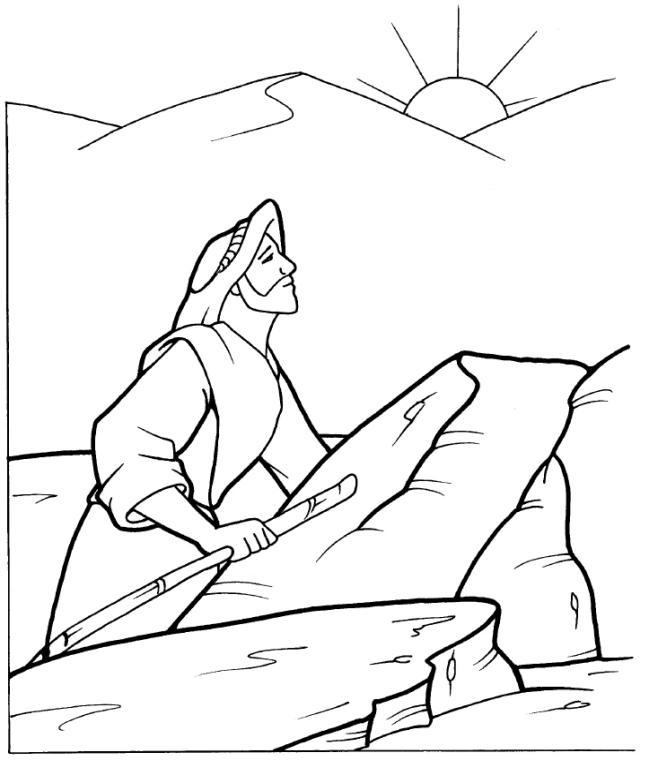
After Jesus was baptized, he went out into the desert to pray. He stayed there a long time and got very hungry. He had not eaten anything because He was trying to listen to God and do what he said. We’re sure that his tummy must have been rumbling from hunger!
Suddenly, the devil came along and said to Jesus, "There is no reason for you to be hungry. If you are the Son of God, you could take one of these stones and turn it into bread." Jesus was hungry, it must have been tempting, but he did not listen to the devil. He knew that the devil was trying to get Him to do something wrong. Instead, Jesus answered the devil with Scripture. He said, "It is written: 'Man shall not live by bread alone, but by every word that comes from the mouth of God.'"
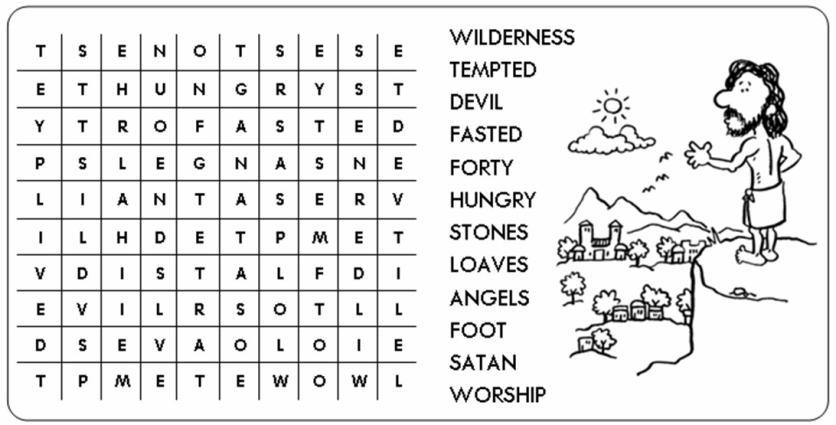
Next, the devil took Jesus to the holy city up to the highest part of the temple. "If you are the Son of God, jump off of here and God will send his angels to save you." Jesus knew that it was wrong to test God, so he answered the devil saying, "It is also written: 'Do not put the Lord your God to the test.'" Finally, the devil took Jesus to a very high mountain. He showed Jesus all the world below. "All of this can be yours. I will give it to you if you will bow down and worship me." Jesus answered, "Go away from me Satan! It is written: 'Worship the Lord your God, and serve him only.'"
Three times the devil tempted Jesus and tried to get him to sin. Did He? NO! Jesus did the right thing each time. He remembered what the Scriptures said and it helped him to resist the devil's temptation.
Sometimes we may be tempted to do the wrong thing. It will help us to do what Jesus did and call on the Scripture to help us resist temptation! Let's pray and thank God for giving us the Bible to help us live the way He wants us to live.
Our Father, we are thankful for your Holy Word. Help us to study and learn what it teaches so that we will be able to resist the temptation to do wrong that we face each day. In Jesus' name we pray, Amen. ❖ The Temptation of
, spreads respect, harmony, pope says
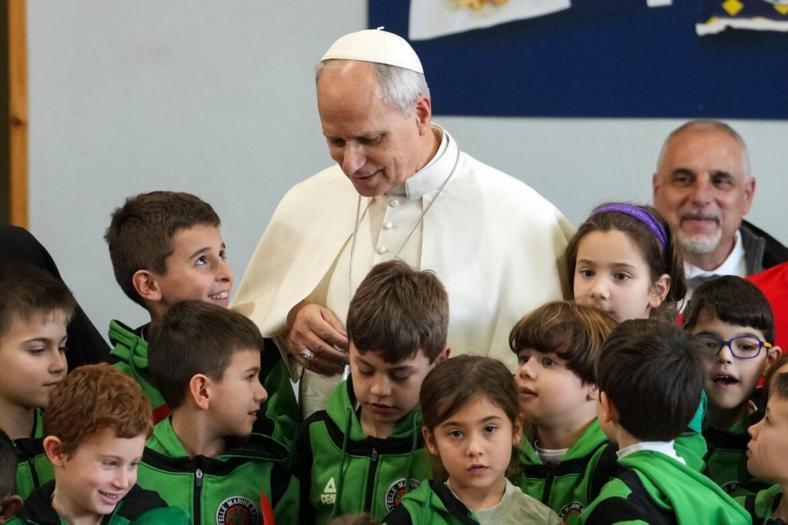
OSTIA LIDO, Italy (CNS) An authentic Christian community knows how to sincerely and joyfully welcome everyone: Catholics, non-Catholics and people of no faith at all, Pope Leo XIV said.
“A true parish” is where “we all learn to say ‘Welcome,’ not only with words, but with a spirit of hospitality, opening the door and welcoming everyone,” he said, speaking to members of the community during his first visit to a parish in his Diocese of Rome.
The pope also celebrated Mass during which he encouraged the faithful to cultivate humble and peaceful hearts that are open to Christ, because “the evil we see in the world has its roots precisely there, where the heart becomes cold, hard and lacking in mercy.”
The pope’s early evening visit Feb. 15 was to the Roman parish of Santa Maria Regina Pacis in Ostia Lido a seaside community 16 miles southwest of Rome.
Although it was his first visit to Ostia as pope, he had been to the area many times as an Augustinian friar because of the port town’s close connection to the story of St. Augustine and, especially, his mother, St. Monica, who died there in 387; her remains were moved to Rome in the 15th century.
Pope Leo emphasized the need to
convert one’s heart for there to be peace in the world, in his homily during Mass inside the large 20th-century church of Santa Maria Regina Pacis.
The path to human fulfillment is fidelity to God based on respect and care for others, he said. But that has to be “cultivated first and foremost in the heart, even before in gestures and words.”
The heart is home to noble feelings and “painful profanations: closedmindedness, envy, jealousy,” he said.
“Those who think badly of their brother, harboring evil feelings toward him, are as if they were already killing him in their hearts.”
He recalled some of the difficulties facing residents in Ostia, including violence, substance abuse and criminal organizations.
He encouraged the parish community to continue its courageous efforts with other organizations “to spread the good seed of the Gospel in your streets and in your homes.”
“Do not resign yourselves to the culture of abuse and injustice. On the contrary, spread respect and harmony, beginning by disarming language and then investing energy and resources in education, especially for children and young people,” he said.
“Unfortunately, even today, many clouds still darken the world, with the spread of ideas contrary to the Gospel, which exalt the supremacy of the strongest, encourage arrogance, and fuel the seduction of victory at all costs, deaf to the cries of those who suffer and those who are defenseless,” the pope said.
“Let us oppose this tendency with the disarming power of meekness, continuing to ask for peace, and to welcome and cultivate its gift with tenacity and humility,” he said.
Pope Leo began the visit by greeting young people and families gathered behind the church. A clutch of gold mylar balloons depicting a smiling lion and the numbers “one” and “four” bopped and twisted in the strong breeze coming in off the Mediterranean Sea.
“You are the hope! And you must recognize that in your hearts, in your lives, in your youth, there is hope for today and tomorrow. Hope already begins here, because Jesus walks with us,” he told the small enthusiastic crowd outside.
Inside a nearby gym, home of the local
“Starfish” basketball team, the pope thanked the community for their warm welcome. “This is one of the many signs of an authentic Christian community, of a true parish,” he said, emphasizing the need to receive “anyone who comes: Catholic, non-Catholic, believer, nonbeliever.”
Speaking to the young people, the elderly, people with disabilities, Caritas volunteers and the people they serve, the pope told those gathered that “Everyone is part of this parish family, and everyone has something to say, something to give, something to share.” “May you have the courage to say ‘yes’ to the Lord!” he said. “Each person’s life has great value: whether I am young, whether I am old, whether I have difficulties or not, human life is a gift from God.”
Speaking to members of the parish’s pastoral council, the pope thanked them for generously offering their time and talent, helping the local clergy, church and faithful. However, “I also encourageyoutogo outand seek others.”
“Do not remain inside the church and say, ‘It’s OK, those who come are enough.’ It is never enough. Invite, welcome, accompany,” Pope Leo said.❖
By Renika Anand
Being the Best
The Dalai Lama once said “The goal is not to be better than the other man, but your previous self.”
The most beautiful parts of our lives often come from our interactions with other people. The dynamic nature of the world, and our passion for the things we do often rise from the people who surround us. Strangely enough, the very people who bring out the best from within us can also bring out the worst. Wherever there is admiration, there is competition; wherever there is love, there is envy, and wherever there is forgiveness,there is guilt.
In our process of growth, we seek the ability to become better people. Unfortunately, we often forget that becoming the best version of ourselves is not about competing with others and trying to beat them in a race. Instead, it is about improvingour own selves. It is important to grow at our own pace and in our own way, rather than comparing ourselves with others and choosing to adopt their standards. Perhaps doing so may lead us closer to becoming the best version of ourselves.
Do not conform to the pattern of this world, but be transformed by the renewing of your mind. Then you will be able to test and approve what God’s will is his good, pleasing and perfect will - Romans 12:2❖


Pope Leo XIV chats with children before posing for a group photo during his pastoral visit to the Parish of Santa Maria Regina Pacis in Ostia Lido, Italy, Feb. 15, 2026. (CNS photo/Lola Gomez)
your heart and return to God this Lent
Fr Joel Thompson SJ
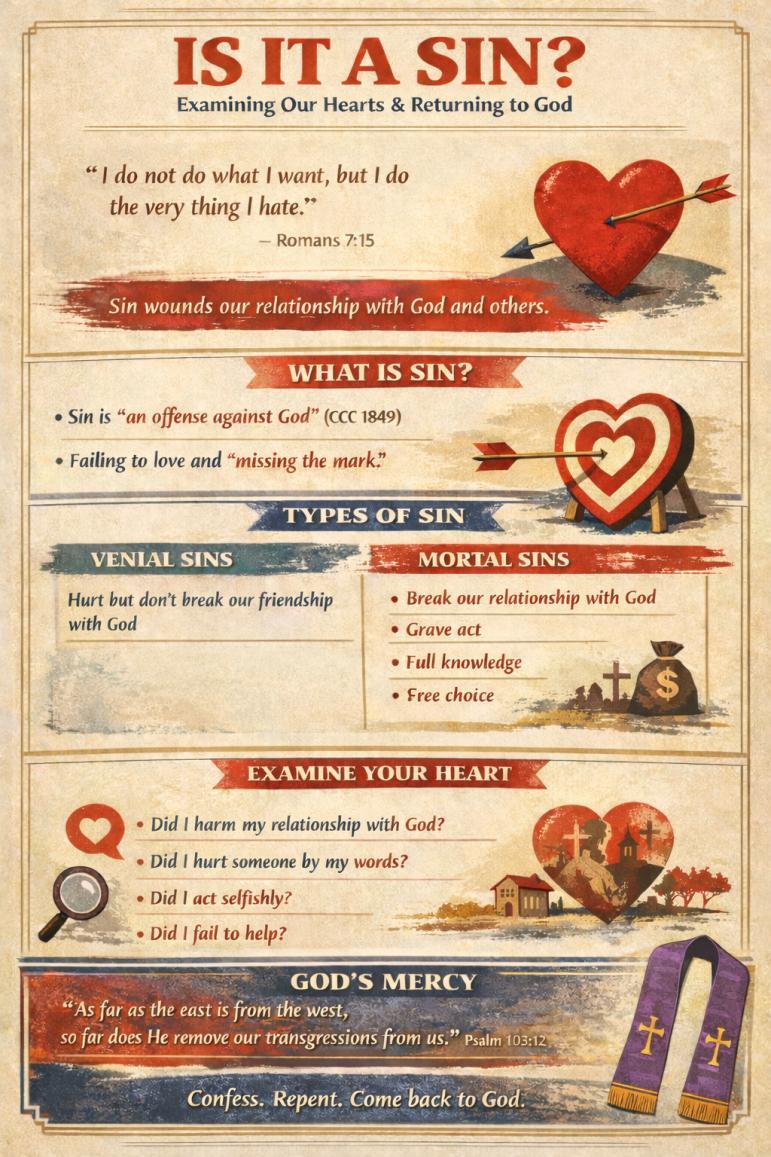
This week we explore the “mystery of sin”. A healthy sense of sin develops when we reflect honestly on our relationships and ask how well love is present within them.
We all struggle with sin. St Paul expresses this struggle well: “I do not understand my own actions. For I do not do what I want, but I do the very thing I hate” (Romans 7:15). In other words, even when we know what is good, we often struggle to do it. Harmful habits form quickly; good habits usually take time. Why is this so?
This spiritual struggle is part of the human condition. Human nature was wounded by original sin, and even after Baptism erases original sin, we still experience a tendency toward selfishness and sin.
What is sin?
The Catechism defines sin as “an offense against God” (CCC 1849). Sin is not simply “breaking a list of rules or bad behaviour.” It is a failure to love, and a turning away from the God who created us. Sin wounds our relationship with God, harms our relationships with others, and damages creation. Sin is traditionally described as “missing the mark.” Like an arrow that falls short of its target, sin is anything that falls short of love and against God’s law.
That is why many modern questions can be clarified quickly. People sometimes ask: Is getting a tattoo sinful? Is drinking alcohol or eating pork a sin? These questions often come from sincere people who want to do what is right. But sin is not about random external actions. Sin is about what damages love and relationships.
A helpful way to examine sin is to ask:
• Does this harm my relationship with God?
• Does this harm my relationship with myself?
• Does this harm my relationship with others?
• Does this harm creation?
God has not left us guessing. One of the fundamental guides is the Ten Commandments (Exodus 20:1–17). Jesus did not abolish them: “I have not come to abolish the Law but to fulfill” (Matthew 5:17). The commandments express what is required in love of God and love of neighbour (CCC 2072). They guide us to freedom. “If you love me, you will keep my commandments.” (John 14:15).
Two Extremes
People often fall into two opposite extremes. Some have little sense of
sin, as if nothing matters. But Scripture warns us: “If we say we have no sin, we deceive ourselves, and the truth is not in us” (1 John 1:8). Others become overly scrupulous, seeing sin everywhere and living in fear. A healthy conscience is not an anxious one. Conscience is not just a feeling, it must be formed by Scripture, the Church’s teaching, and prayer.
Jesus Goes Deeper: The Heart
In the Sermon on the Mount (Matthew 5–7), Jesus teaches that sin is not only in outward actions, but also in the heart. Violence often begins with anger or envy. Adultery is often fed by lustful thoughts. Greed leads to stealing. Pride leads to cruelty. Jealousy leads to gossip. However, God’s grace can help us form holy habits: patience, honesty, generosity, self-control, forgiveness, prayerfulness,and compassion.
Are All Sins the Same?
Is there a difference between stealing a pen and murder? Yes. The Church distinguishes between venial sin (less serious) which damages the relationship with God and mortal sin which destroys it. (CCC 1863). “Venial sin is like a fight between spouses; mortal sin is like a divorce.”(Peter Kreeft). Venial sins are those we commit due to ignorance, fear, addiction, or pressure.
A mortal sin, however,is a seriousand deliberate choice that breaks our friendship with God because it turns the heart away from love. For a sin to be mortal, three things must be present: it must involve grave matter (i.e. the 10 commandments), the person must know it is gravely wrong, and the person must freely choose it anyway (CCC 1857). Premeditated murder and serious theft are examples of mortal sin when they are freely chosen with full knowledge of the consequences. Alcohol abuse can be gravely sinful, though addiction may lessen guilt.
Returning to God
A healthy sense of sin comes from regularly examining our relationships. Daily, we can ask: Where did I fail to love? Who did I hurt? Who could I have helped? What attitudes/actions led me away from God?
Scripture assures us that God’s mercy is real: “As far as the east is from the west, so far does he remove our transgressions from us” (Psalm 103:12). God forgives more quickly than we forgive ourselves and others. Let Lent be a time of healing relationships, going to confession, and learning again the joy of aclean heart.❖
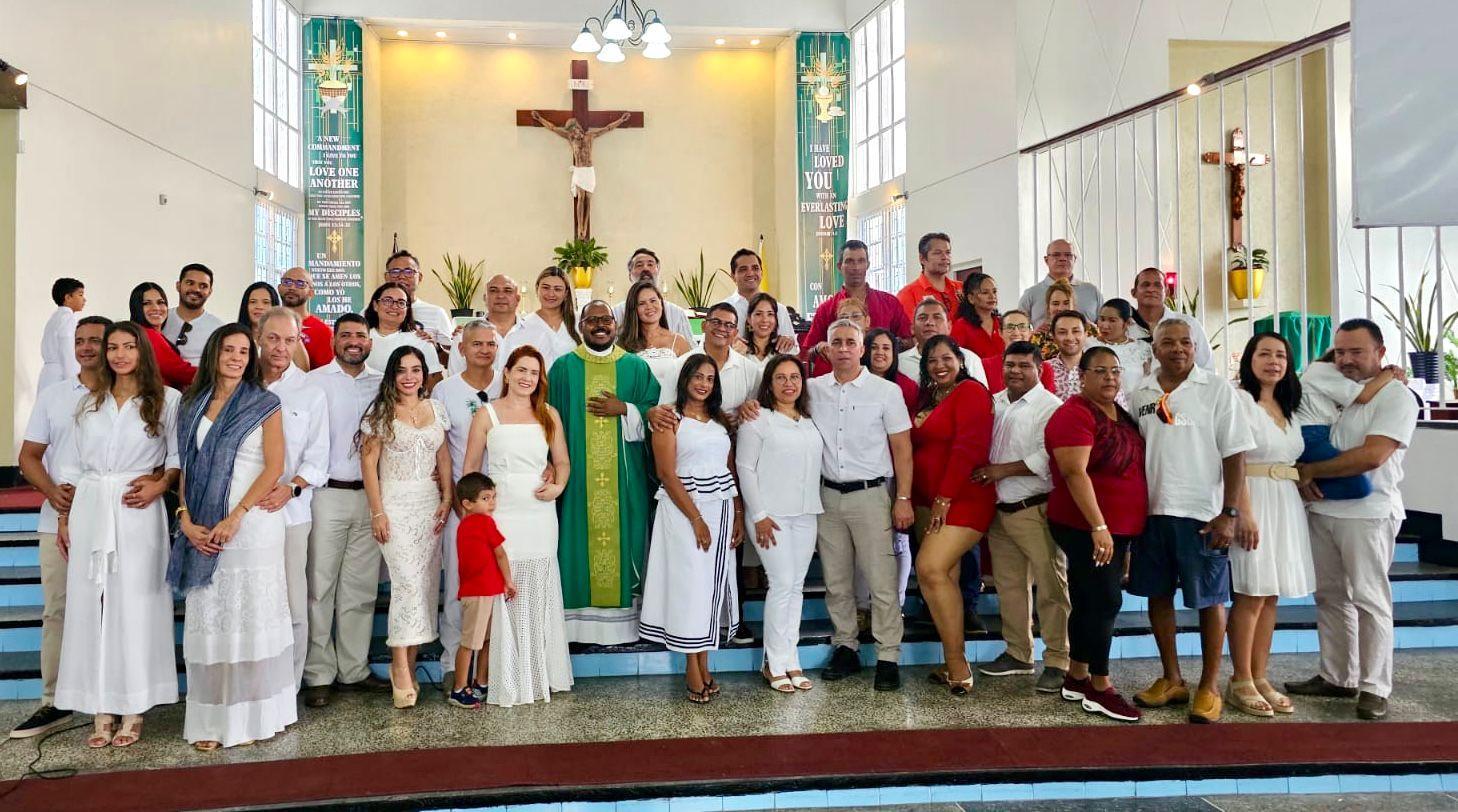

Renewal of marriage vows in the Hispanic Community last Sunday, February 15th at Our Lady of Fatima Church, Bourda, Georgetown.
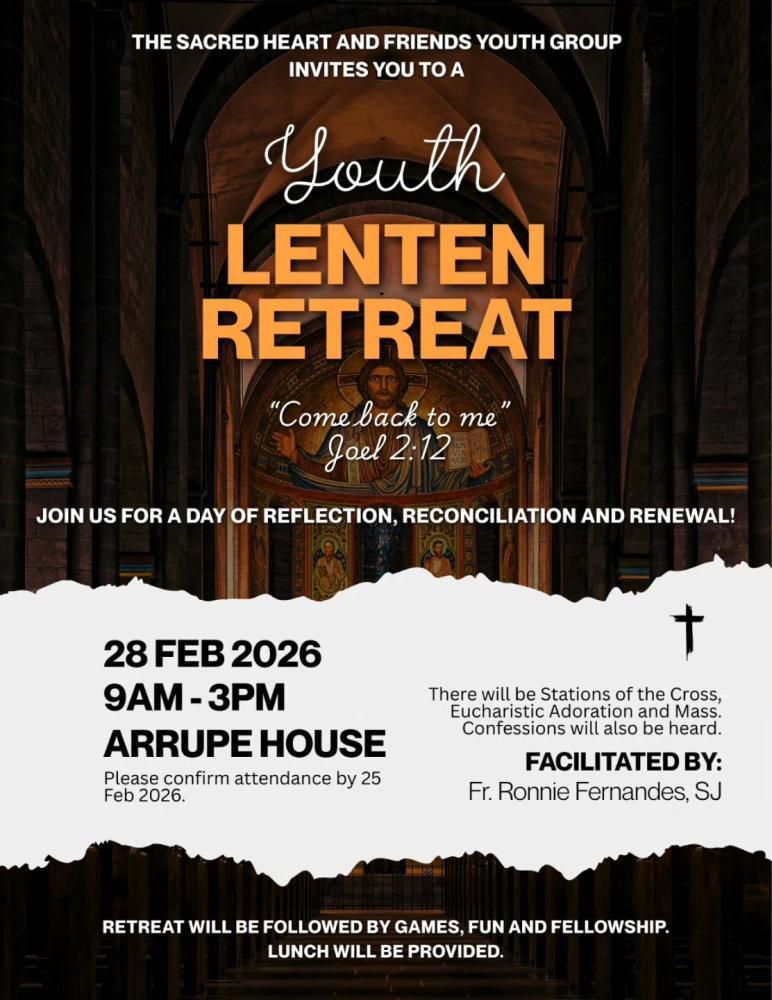
Southern Cluster Lenten Retreat
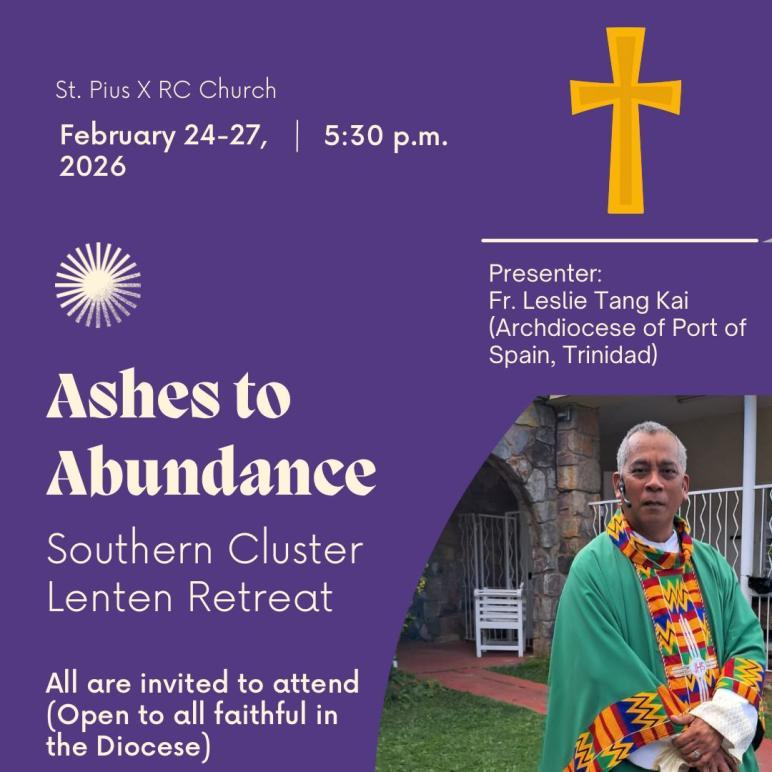
The Southern Georgetown Cluster of parishes will hold a Lenten Retreat at St. Pius X church, West La Penitence, Georgetown from Tuesday February 24th to Friday 27th from 5:30pm daily
The retreat will be conducted by Fr. Leslie Tang Kai of the Archdiocese of Port of Spain, Trinidad & Tobago. The theme is: Ashes to Abundance: Faith that Repents. Forgiveness that Frees.
Generosity that Overflows. This Lenten retreat invites us to journey from ashes to the abundance of God’s mercy through repentance, forgiveness, and a renewed spirit of generosity. Come, reflect, renew your heart, and prepare more deeply for Easter. It will be a time of grace, healing, and spiritual renewal. ALL ARE INVITED. ❖
present in you - Bishop Francis Alleyne
By Joshua Van-Sluytman
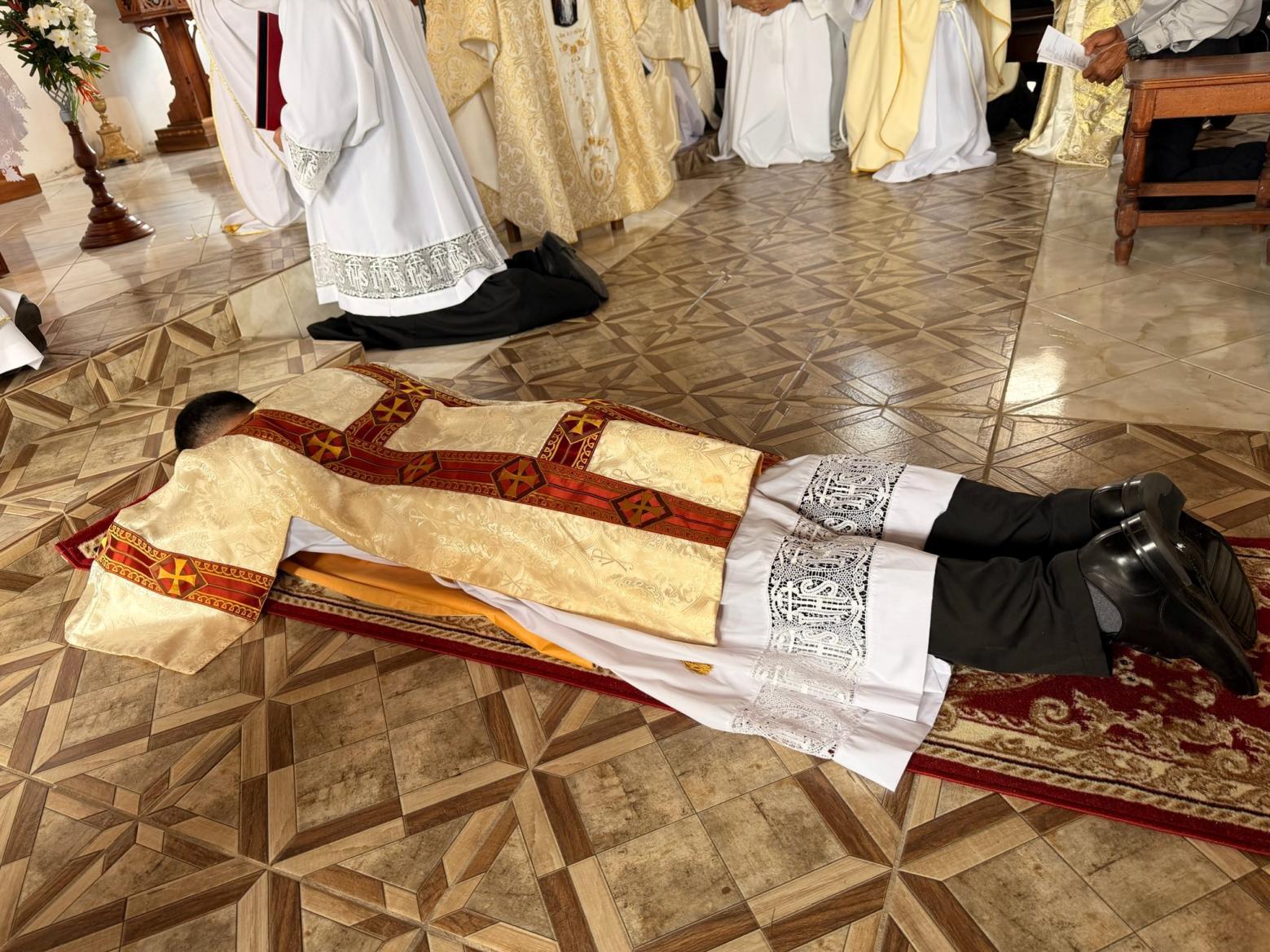
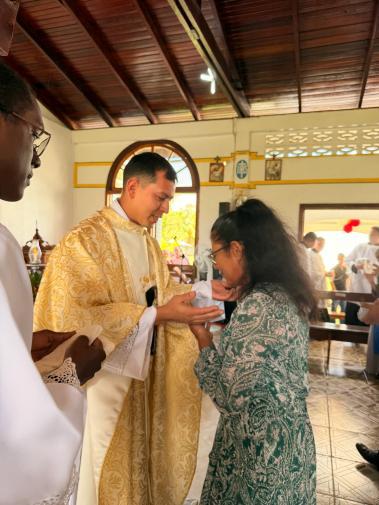
Saturday, February 14, 2026, will go down as a historic day for our Diocese, especially for the people of Region 2, as Deacon Damian Sebastian Gonsalves, IVE was ordained to sacred office of the priesthood at St. Francis Xavier Church, Charity. He is the first Guyanese to be ordained in the Institute of the Incarnate Word. Wellwishers journeyed from as far as Santa Rosa, the Pomeroon River, Essequibo Coast and Georgetown to witness this sacred and joyful moment.
The church was filled to capacity, with tents and additional seating arranged at the back and along both sides to accommodate the large congregation. The celebration began solemnly with the entrance hymn, tains, Deacon Damian, and the Principal Celebrant, Most Rev. Francis Alleyne, OSB, processed reverently into the church. During the Liturgy of the Word, family members proclaimed the readings. The First Reading was taken from Jeremiah 1:4 prophet that before he was formed in the womb, he was known and chosen
by God. This was a powerful reminder of divine calling and mission. The Responsorial Psalm was sung by a seminarian of the IVE. The Second Reading, from Acts of the Apostles (20:17–18a, 28–32, 36), recounted St. Paul’s heartfelt exhortation to shepherd God’s flock faithfully, encouraging vigilance, courage, and trust in God’s grace. The Gospel, from St. Luke’s account of the Last Supper, was sung reverently by Deacon Damian himself. This was followed by the Rite of Ordi-
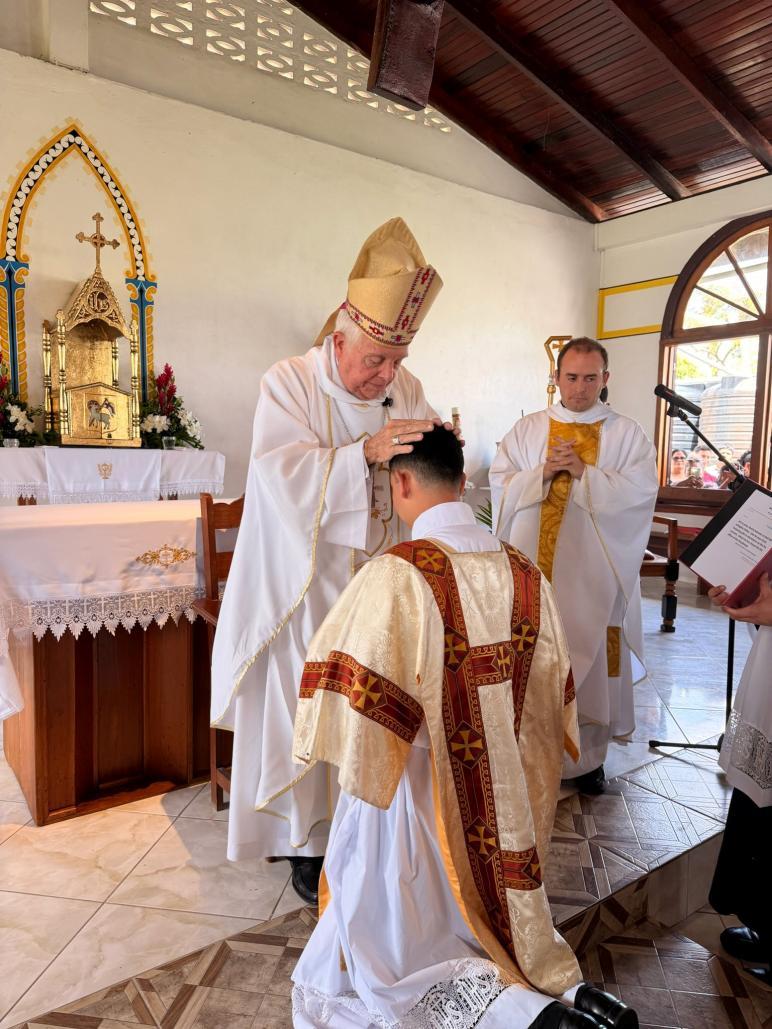
He concluded by praying that all the gifts nurtured within him would flourish, that the face of Christ would
signifying his priestly consecration, and he received the bread and wine as symbols of the Eucharistic sacrifice he
At that sacred moment, Fr. Damian could not hold back his tears, tears of gratitude, surrender, and overwhelming joy a visible sign of a heart fully given to God. The congregation erupted in a standing ovation when Bishop I pre-
Fr. Damian Gonsalves, IVE, was then invited to concelebrate at the altar of the Eucharist for the first time as a
The Ordination Mass was a profound celebration of faith, vocation, and hope for our Diocese. As we give thanks to God for this precious gift, we extend heartfelt congratulations to Fr. Damian Gonsalves, IVE. May his priesthood be filled with grace, courage, and unwavering love for Christ and His Church. May he always be a shepherd after the

Republic Day celebrations at Marian Academy Saint of the Week

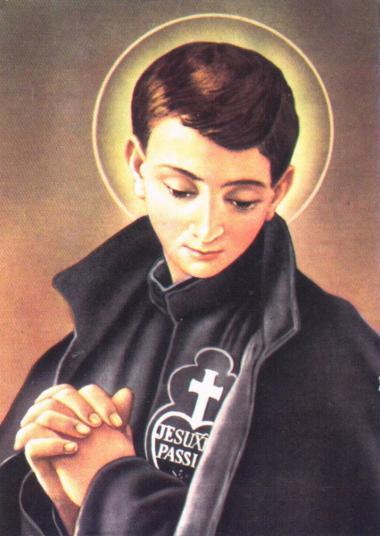
February 27th: Saint Gabriel of Our Lady of Sorrows
Born in 1838 in Italy into a large family and baptized Francis, Saint Gabriel lost his mother when he was only four years old. He was educated by the Jesuits and, having been cured twice of serious illnesses, came to believe that God was calling him to the religious life. Young Francis wished to join the Jesuits but was turned down, probably because of his age, not yet 17. Following the death of a sister to cholera, his resolve to enter religious life became even stronger and he was accepted by the Passionists. Upon entering the novitiate he was given the name Gabriel of Our Lady of Sorrows. Ever popular and cheerful, Gabriel quickly was successful in his effort to be faithful in little things. His spirit of prayer, love for the poor, consideration of the feelings of others, exact observance of the Passionist Rule as well as his bodily penances always subject to the will of his wise superiors made a deep impression on everyone.
His superiors had great expectations of Gabriel as he prepared for the priesthood, but after only four years of religious life symptoms of tuberculosis appeared. Ever obedient, he patiently bore the painful effects of the disease and the restrictions it required, seeking no special notice. He died peacefully on February 27, 1862, at age 24, having been an example to both young and old.❖ [www.franciscanmedia.org ]