Caritas Internationalis warns sudden USAID cuts will kill millions - p3
A Christian Perspective on Social Issues - p4 p5
Pope hospitalized for bronchitis treatment - p6
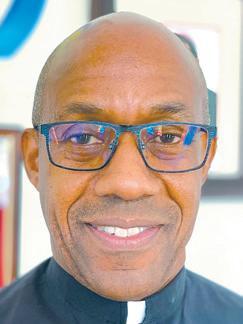
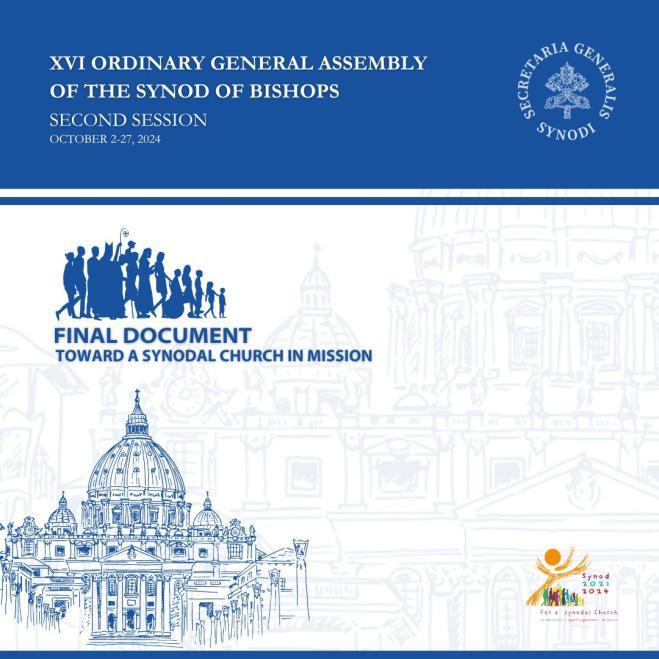
Synodal graces in alignment - p7
Journeying with the Word of God - p7
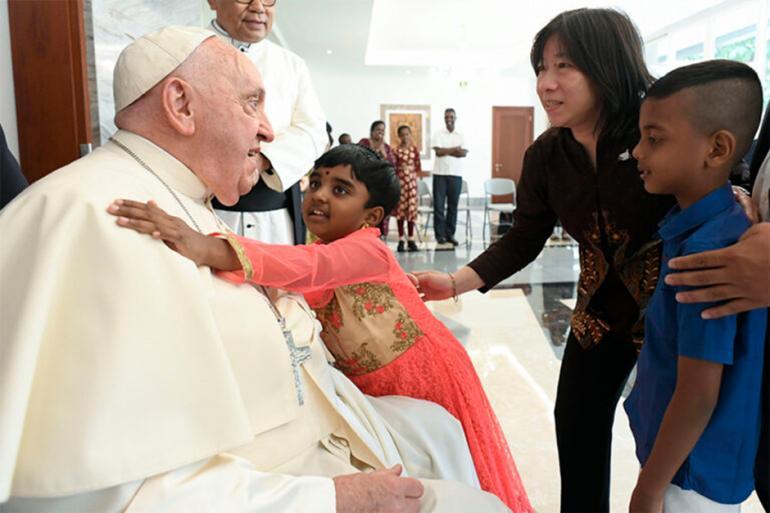
Pope to U.S.: Migration policies built on force, will end badly’ - p8 p9
Nicene Creed unites Christians, overcoming division through faith - p11
AI must serve, not replace, teacher-student relationship, Vatican says - p11
Vocation of military and police is to defend life, peace and justice, says pope - p12
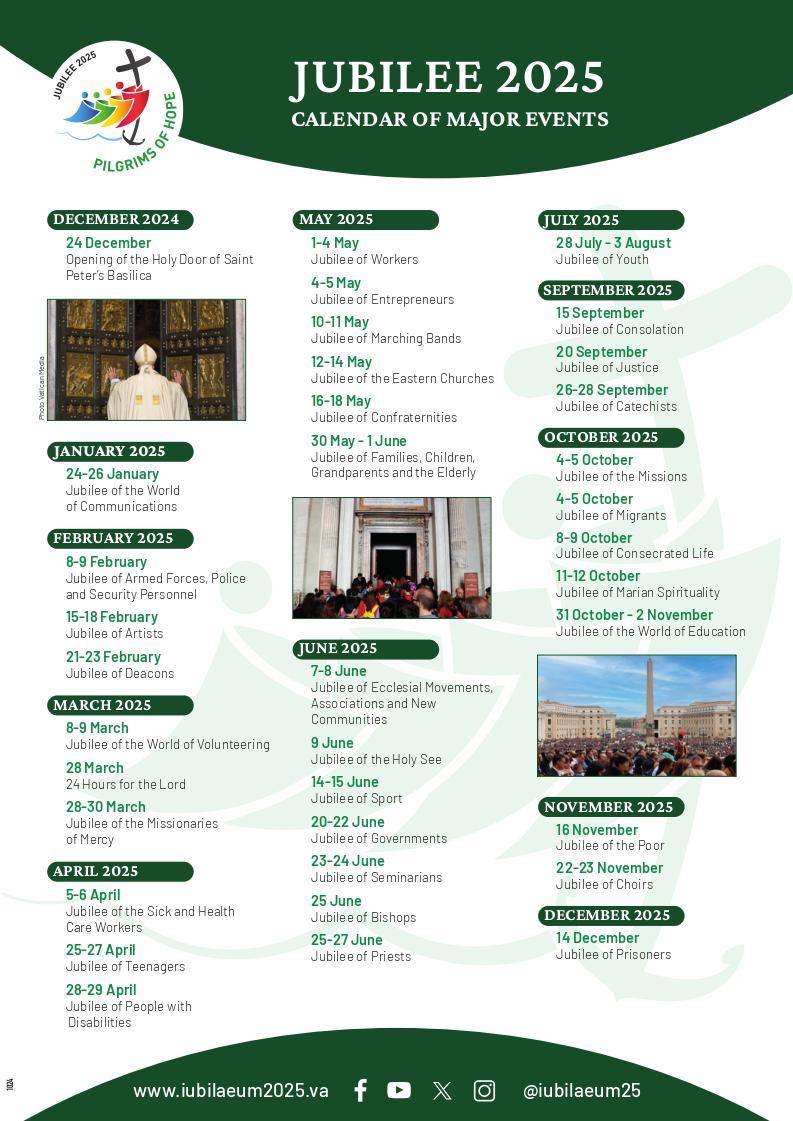
Jubilee 2025 Calendar of major events - p13
Catholic Memory Lane - p14
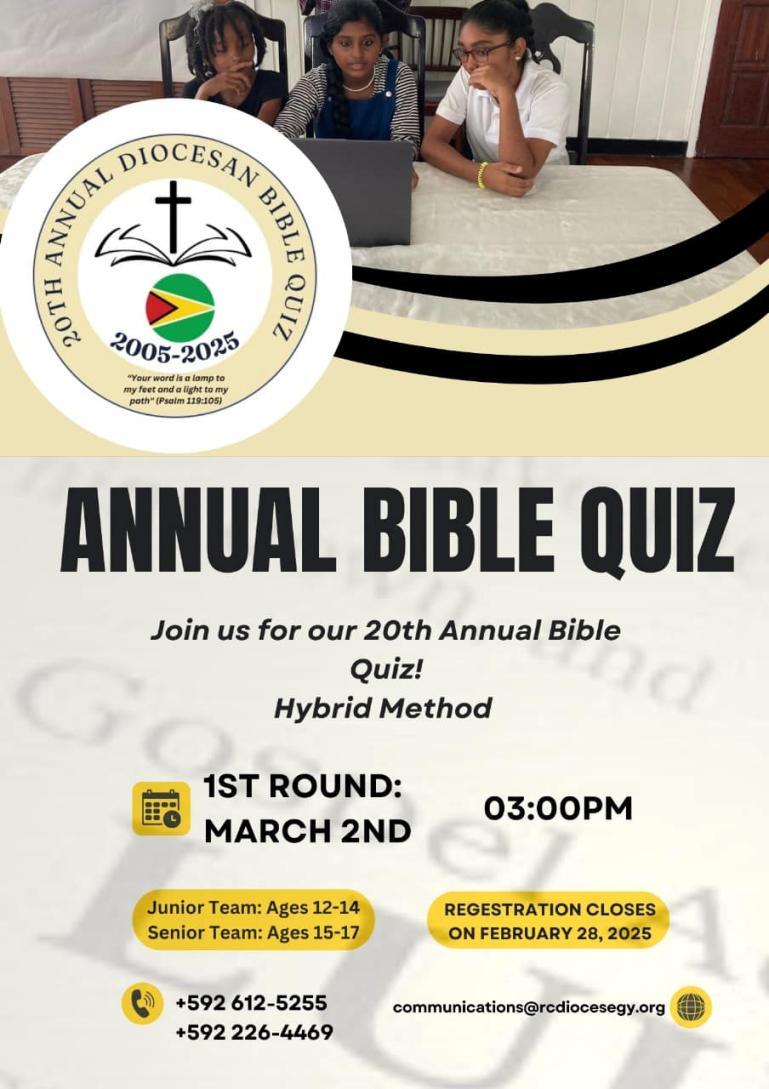
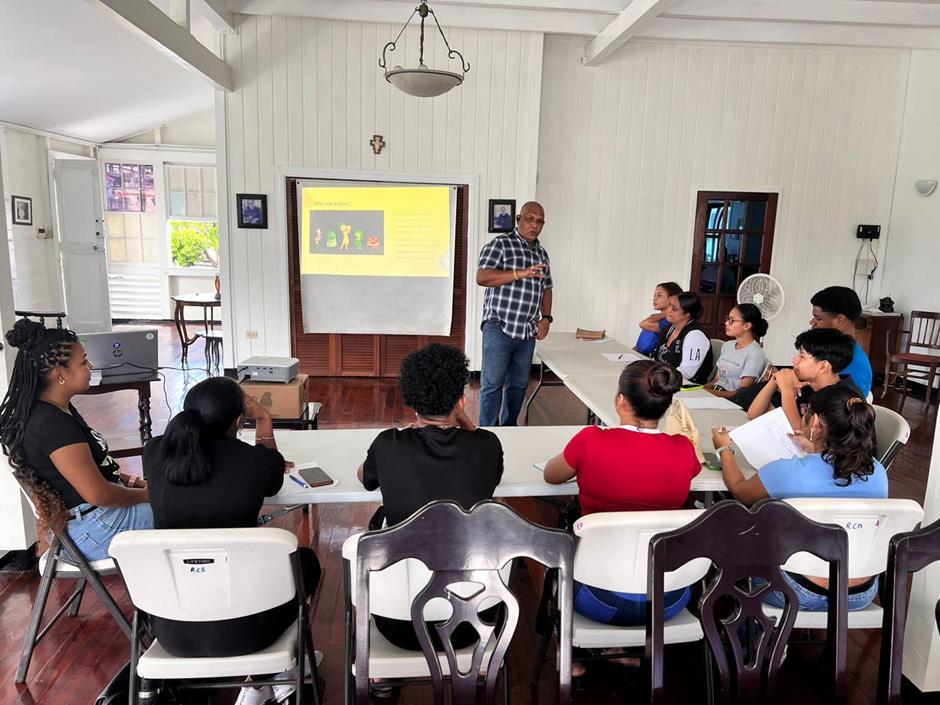
Youth Mental Health Training - p14
Bishop’s Engagements
Saturday, February 15th
Return to Guyana
Wednesday, February 19th
17:00hrs – Diocesan Finance Council Meeting
Saturday, February 22nd
Travel to Suriname to attend Diocesan Provincial Meeting
Friday, February 28th
Return to Guyana
I will be away from the Diocese during the period February 22nd to 28th and in my absence Reverend Ronald Fernandes, SJ, Vicar General will attend to matters on my behalf.
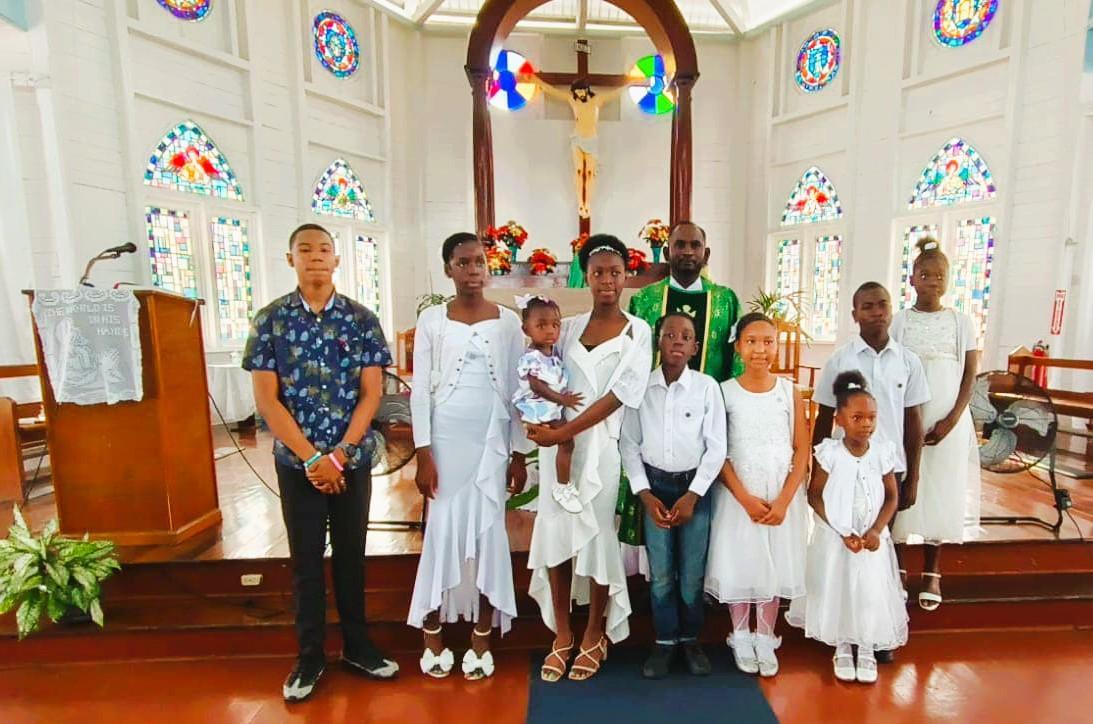
On Sunday February 9th, Our Lady of the Annunciation Church, Malgre Tout, WBD, welcomed eight members to the Catholic community through the sacrament of Baptism. ❖ (Catholic Media Guyana FB page)
The Jubilee Prayer
Dear Editor,
You don’t become a great athlete by training only when you feel like it. You don’t become a great writer only when you feel inspired to write. The Saints did not become such fine ambassadors of God on Earth by praying only when they feel like praying. In each case, a daily discipline is required. To become a great
Prayer
athlete, you need to train every day. Prayer is similar in many ways. Most people fail to establish a daily habit of prayer in their lives. If you neglect daily prayer, you will have less patience and you are less focused. If we are going to walk with God we need to build an inner strength, or density that will allow us to resist the cultural pressure, to abandon our values, our true selves and God. This inner density is not something we can attain for ourselves; it is a gift God freely gives us when we cooper-
ate with His plan for our lives. When we have this density within us, we will have a Christian effect on our environment. When we don’t have this density, our environment has an effect on us.
The most powerful way to build this density, this inner strength, is through prayer and the sacraments. We need this density to survive and thrive in a culture that is often hostile and sometimes violent toward what is good and true and noble.
Leon Jeetlall
Pope calls for respect for Indig-
enous peoples’ land, water, food
Father in heaven, may the faith you have given us in your son, Jesus Christ, our brother, and the flame of charity enkindled in our hearts by the Holy Spirit, reawaken in us the blessed hope for the coming of your Kingdom.
May your grace transform us into tireless cultivators of the seeds of the Gospel.
May those seeds transform from within both humanity and the whole cosmos in the sure expectation of a new heaven and a new earth, when, with the powers of Evil vanquished, your glory will shine eternally.
May the grace of the Jubilee reawaken in us, Pilgrims of Hope, a yearning for the treasures of heaven. May that same grace spread the joy and peace of our Redeemer throughout the earth.
To you our God, eternally blessed, be glory and praise for ever.
Amen
VATICAN CITY (CNS)
nous communities around the world, “ commodities, but the very basis of life and of these peoples nature, So, defending their rights to land,
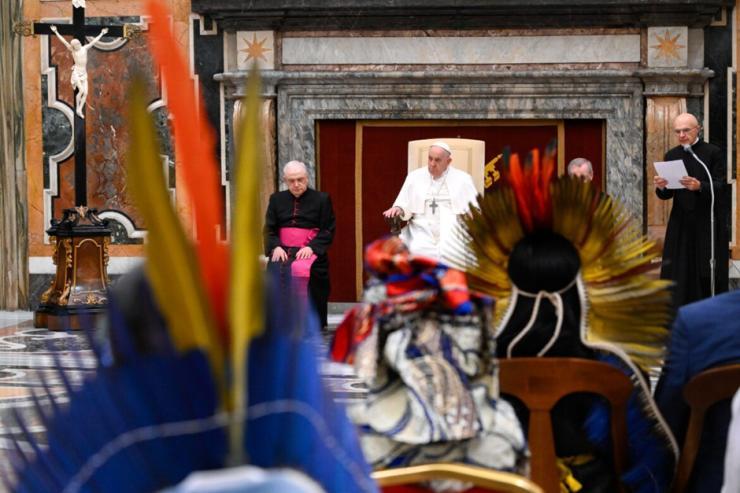
The forum, meeting in Rome Feb. 1011, brought together representatives of Indigenous communities in every region of the world with government representatives and agriculture experts to focus on “Indigenous peoples’ right to self-determination” and how that would provide “a pathway for food security and sovereignty.”
Defending the right of Indigenous communities to preserve their culture and identity “necessarily passes through the recognition of the value of their contribution to society and the preservation of their existence and the natural resources they need to live,” the pope wrote.
But their traditional land, water and food are “seriously threatened by the growth of the grabbing of arable land by multinational corporations, large investors and states,” Pope Francis said. “These are practices that cause harm by jeopardizing the right
The goal, the pope said, should be to learn from the Indigenous communities and return to practices a world in harmony with the beauty and goodness that
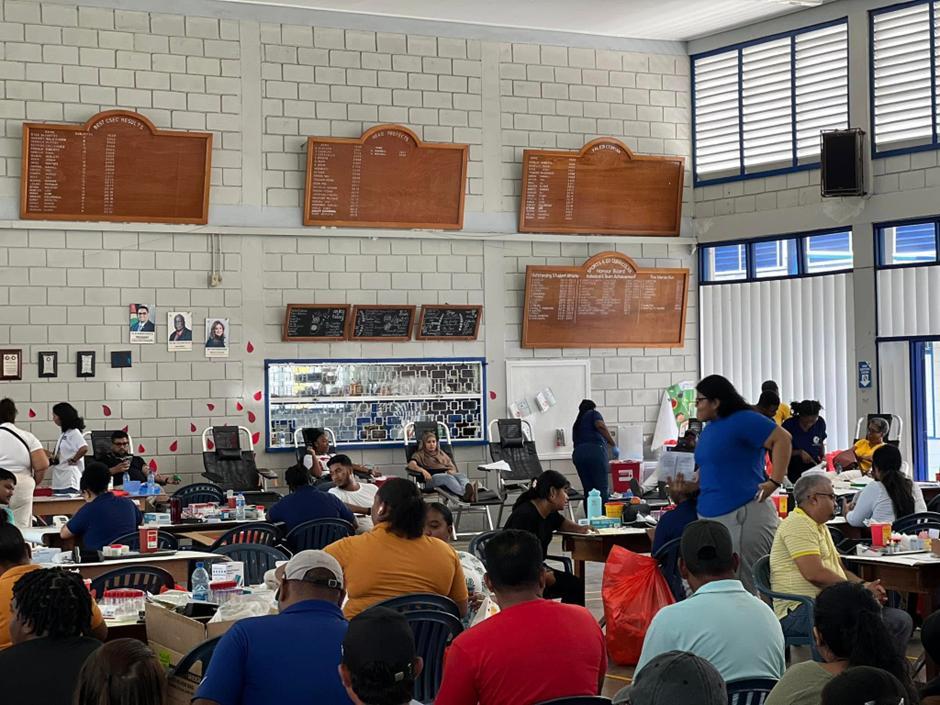
Marian Academy, Carifesta Avenue, Georgetown, held its Annual Valentine Blood Drive last Saturday, February 8th.❖ (Adapted from Catholic Media Guyana Facebook page)
Pope Francis meets with people taking part in a workshop jointly sponsored by the Pontifical Academies of Sciences and of Social Sciences on the knowledge of Indigenous peoples and research carried out in the sciences during an audience at the Vatican March 14, 2024. The audience with the pope included members of Indigenous communities. (CNS photo/Vatican Media)
Marian Academy’s Annual Blood Drive
Caritas warns sudden USAID cuts will kill millions
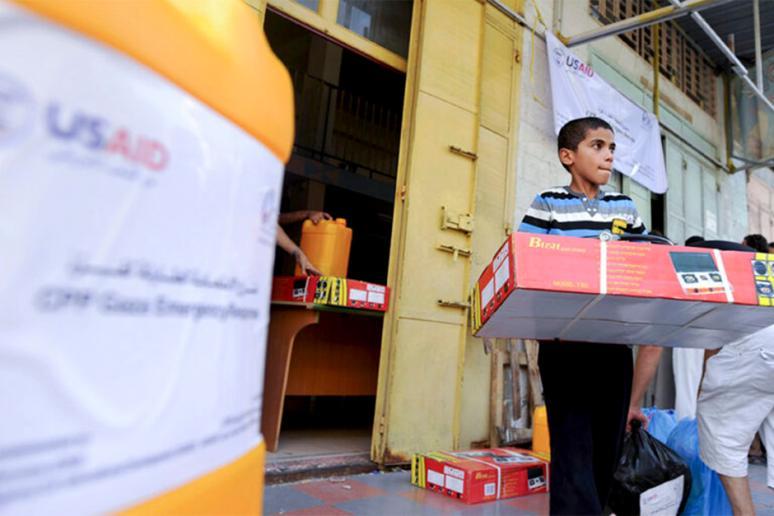
A boy is seen in a file photo with relief goods at a U.S. Agency for International Development (USAID) distribution center in Gaza City. The future of USAID has been called into question amid reports President Donald Trump had agreed to "shut down" the agency, which could have dramatic impacts on the poor and the groups assisting them. (OSV News photo/Shareef Sarhan, for Catholic Relief Services)
(ICN) - Caritas Internationalis' Secretary General, Alistair Dutton, has voiced grave concern over the decision to close USAID-funded programmes and offices around the world, saying the sudden shutdown "will kill millions of people and condemn hundreds of millions more
to lives of dehumanising poverty."
With an annual budget of more than 40 billion dollars, USAID has funded humanitarian and development aid in some 120 countries, especially the world's poorest.
In a statement issued today, Monday 10 February, Alistair Dutton said the
decision marks a grave threat "to people's God-given human dignity" and "will cause immense suffering." He also noted the result "presents massive challenges for all of us in the global humanitarian community, who will have to completely reassess whom we can continue to serve and how." He warned: "the resulting harm to people, particularly the poorest, will be catastrophic, threatening the lives and dignity of millions."
Speaking from Burkina Faso, Alistair Dutton said the very real consequences of this suspension of aid is causing "complete uncertainty for the humanitarian system worldwide." He said: "ships are arriving in ports with cargo, but we can't pay to unload them, store their contents or transport them to the people who need them."
In West Africa, for example, more than six million people will not receive their medicines. The same applies to 750,000 people facing starvation in Sudan or refugees in camps in Syria, where essential supplies of water are provided, without which "critical health problems immediately arise, which can kill millions of people...the people who need help are going to suffer enormously, if they don't simply die."
The new US administration is in the process of downsizing the US government, with foreign aid provided
through the USAID agency being greatly reduced.
Since Saturday 8 February all the agency's staff have been on administrative leave and funding has been cut for 90 days. The US Secretary of State, Marco Rubio, announced that this suspension precedes an evaluation of the programmes.
Caritas Internationalis said it recognises the right of any country to review its aid policies, but warns that chaos could ensue due to the abrupt stop, because the United States provides around 40% of the world's total humanitarian aid budget.
USAID has been an "essential partner" of Catholic relief efforts for over 60 years. Faced with this financial but also human deficit in meeting the massive humanitarian needs worldwide, Caritas Internationalis has appealed for a reconsideration of the cuts and for governments, international agencies, and stakeholders to work together to reaffirm the "commitment to compassion and peace by supporting the most vulnerable people around the world."
Immediate efforts are underway to reduce the impact of the freeze and ensure continued support for as many vulnerable people as possible since, as Alistair Dutton says, "the lives and dignity of millions hang in the balance."❖
US bishops forced to lay off a third of
(CathNews) - The United States Conference of Catholic Bishops issued layoff notices to about a third of the staff in its Migration and Refugee
Services Office on Friday after it stopped receiving reimbursements from the Trump Administration. Source: OSV News
The move comes as the Trump administration suspended a federal refugee resettlement program as part of its broader effort to enforce its hardline immigration policies.
First reported by The Pillar, USCCB general secretary Fr Michael Fuller wrote in a memo on Friday to members of the conference that executive orders recently signed by Mr Trump “are causing confusion both within various agencies and with those who interact with them”.
“This is true for the USCCB regarding cooperative agreements for both Refugee Resettlement Programs and our Children Services, which help care for unaccompanied children,” the memo said.
It added the cuts would impact Catholic Relief Services, the overseas relief and development arm of the Catholic Church in the US, “even more harshly”.
The layoffs impact 50 individuals, the memo said.
The USCCB website states that its Migration and Refugee Services “is the largest refugee resettlement agency in the world,” and that in partnership
with its affiliates, it resettles approximately 18 per cent of the refugees that arrive in the US each year.
Fr Fuller wrote in the memo that the USCCB provides the staff to organise and administer its federal agreements to assist refugee populations that qualify for federal assistance “with local Catholic Charities and other agencies who care for the refugees directly”.
They expect these agreements to fluctuate with each administration, the memo said, and therefore so will the number of staff.
But while “we expected we might have a reduction in force with the new administration, actions this significant and this immediate were not anticipated,” it said.
Reimbursements from the federal government for its work stopped on January 15 for services completed in November, the memo said, meaning they are “awaiting reimbursement for services completed in December, an amount close to $US20 million.”❖
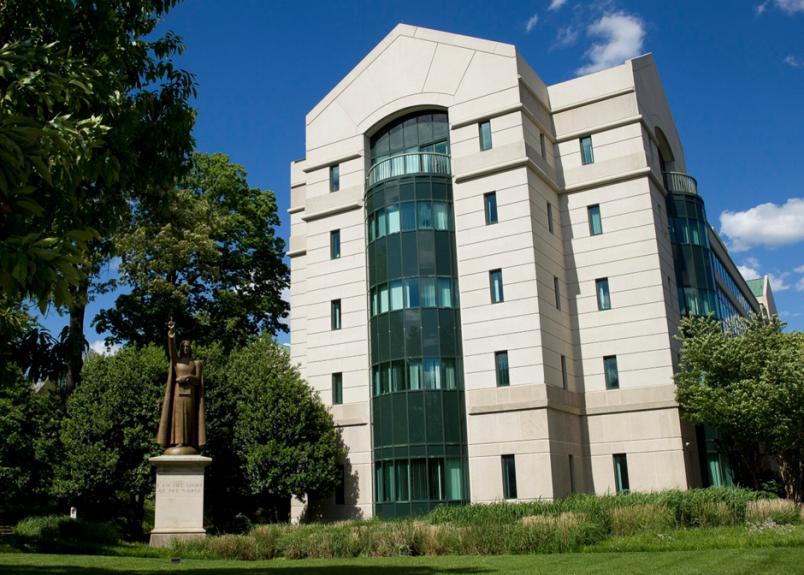
The headquarters of the U.S. Conference of Catholic Bishops is seen in Washington in this file photo. (OSV News photo/Tyler Orsburn, CNS file)
A Christian Perspective on Social Issues
By GHK Lall
How do the unequipped and uncertain manage
In one of the richest countries in the world, there is that other side, the poor one. It can be lengthy, troublesome to navigate in Guyana. In a time of loss and trial, there are those other traumas. A careful sketch is outlined for the benefit of citizens, with one question shared. Why do things of this significance have to be this way, particularly at certain times? I squeeze in another to emphasize the disturbance: where is the thoughtfulness that should accompany certain events in life? What follows is more than A Christian Social Perspective. It is a public service. May minds be moved, eyes opened.
Someone dies at home. It was a sick person, with medical records enough to fill up a small filing cabinet in an office. A protocol has to be followed: the police have to be the first called, followed by a Funeral Home engaged, once the green light has been given by the overseeing police rank to move the body at the soonest to the nearest government medical facility. Done, with the body received and pronounced as gone from this earthly vale. So far, so good. But now there are those requirements that must be followed, as needed by the Funeral Home. Papers have to be filled, processed, signed, and stamped by officials. The first stirrings of trouble start right here.
The government medical institution that received the body and pronounced that person dead, now sends the grieving relative (a daughter) for papers and signatures from the professionals who last attended to the now deceased patient. The record is that a week prior to passing, the departed was a patient for one week at a private hospital, one of the newer ones across the river. It is some distance away. It was found out that the private attending physician was only too ready to sign and provide one of the two signatures required by the Funeral Home, as part of their standing protocol, probably official State policy. He, a doctor of foreign heritage, was all care and compassion, a considerate pro. The trouble was that he couldn’t do anything until completed and signed documents from the receiving and pronouncing (dead) government facility did its part first. Hence, it was back to that State facility last Saturday, only to be told that the doctor who pronounced couldn’t be found. The routine of Saturday, which was fouled up earlier, now had to be dealt with on Monday. An inquiry is made for the first time at this juncture: how do the unlettered, the unequipped, and the uncertain in this country manage? Hold that question, for it is going to return.
The proper documents were obtained on Monday. But there was a cremation involved, so the Ministry of Health had to come into the picture. Another set of papers for the Funeral Home, the involved police precincts, and whoever else had to know. Information needed was provided to the Ministry of Health on Monday afternoon, with supporting documents. Thankfully, that intake process was simple and relatively seamless. Come back on Tuesday at 9. At 08:58hrs on Tuesday, the word from a Ministry of Health official was ‘there will be a half hour wait.’ At 09:30hrs, the next bulletin (upon inquiry) was ‘a few more minutes.’ What was required was received at 10:30hrs, one and a half hours later. It was neither a time nor anofficeoverrunbyacrowdofcitizensin need of a service. Let that be said. So why did what happen have to be?
Somebody died, somebody is mourning, and somehow and somewhere in the Ministry of Health, there is something like this that could be called a standard. In a time of death, there is death by the ordeal of bureaucracy stuck in an era and a gear that trap it
in its own version of anemia. If in death, how do Guyanese live in this country? Where is the care and concern? To be a good public service partner, a neighbor in an hour of wretchedness? How do those who do not know how to work with and through the system manage? Those who are fearful of having anything to do with a government building and government people? It costs dearly to live, it doesn
I believe that Guyana can do better, aim much higher, produce what is mindful of special circumstances. I regret that this was not the experience of the last few days. The police were prompt and professional. The Funeral Home knew its business, efficient. The private hospital was ready to do its part. Unfortunately, the public hospital was not at its best. And, neither, also, was the Ministry of Health. One place could be understood. Perhaps. But two? And in circumstances where there is that final passage, where the best is called for from all, there was failing. Remember: less about social perspective, more of a public service.
Gracious and loving God, we thank your for the gift of our priests.
Through them, we experience your presence in the sacraments. Help our priests to be strong in their vocation.
Set their souls on fire with love for your people.
Grant them the wisdom, understanding, and strength they need to follow in the footsteps of Jesus. Inspire them with the vision of your Kingdom.
Give them the words they need to spread the Gospel.
FIRST READING Jeremiah 17:5-8
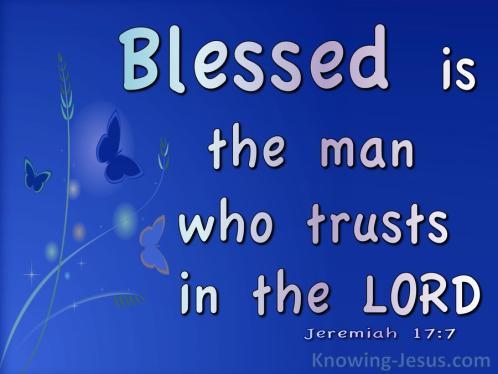
A curse on the man who puts his trust in man, a blessing on the man who puts his trust in the Lord.
The Lord says this:
“A curse on the man who puts his trust in man, who relies on things of flesh, whose heart turns from the Lord. He is like dry scrub in the wastelands: if good come, he has no eyes for it, he settles in the parched places of the wilderness, a salt land, uninhabited.
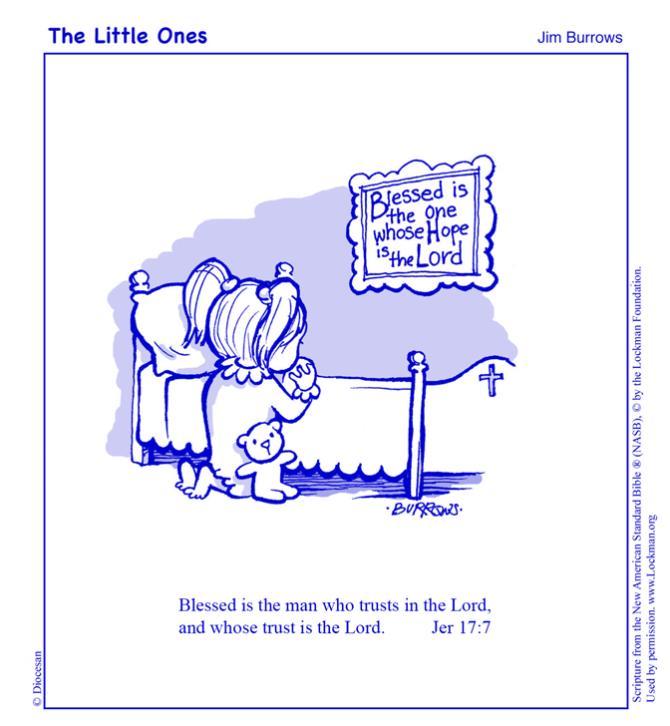
“A blessing on the man who puts his trust in the Lord, with the Lord for his hope. He is like a tree by the waterside that thrusts its roots to the stream: when the heat comes it feels no alarm, its foliage stays green; it has no worries in a year of drought, and never ceases to bear fruit."
RESPONSORIAL PSALM Psalm 1
Response: Happy the man who has placed his trust in the Lord.
1. Happy indeed is the man who follows not the counsel of the wicked; nor lingers in the way of sinners nor sits in the company of scorners, but whose delight is the law of the Lord and who ponders his law day and night. Response
Today’s readings speak of an essential quality for the Christian steward hope. According to the Catechism of the Catholic Church, “Hope is the theo-
2. He is like a tree that is planted beside the flowing waters, that yields its fruit in due season and whose leaves shall never fade; and all that he does shall prosper. Response
3. Not so are the wicked, not so! For they like winnowed chaff shall be driven away by the wind. For the Lord guards the way of the just but the way of the wicked leads to doom. Resp.
SECOND READING 1 Corinthians 15:12; 16-20
If Christ has not been raised, your believing is useless.
If Christ raised from the dead is what has been preached, how can some of you be saying that there is no resurrection of the dead? For if the dead are not raised, Christ has not been raised, and if Christ has not been raised, you are still in your sins. And what is more serious, all who have died in Christ have perished. If our hope in Christ has been for this life only, we are the most unfortunate of all people.
But Christ has in fact been raised from the dead, the first-fruits of all who have fallen asleep.
GOSPEL
Gospel Acclamation Mt 11: 25
Alleluia, alleluia!
Blessed are you, Father, Lord of heaven and earth, for revealing the mysteries of the kingdom to mere children. Alleluia!
or Lk 6: 23
Alleluia, alleluia!
Rejoice and be glad: your reward will be great in heaven Alleluia!
logical virtue by which we desire the kingdom of heaven and eternal life as our happiness, placing our trust in Christ’s promises and relying not on our own strength but on the help of the grace of the Holy Spirit (CCC 1817).” In many ways this is the very definition of a stewardship way of life focusing on eternity as we live our daily lives and relying on God to provide for our needs and satisfy our
Luke 6:17; 20-26
How happy are you who are poor. Alas for you who are rich.
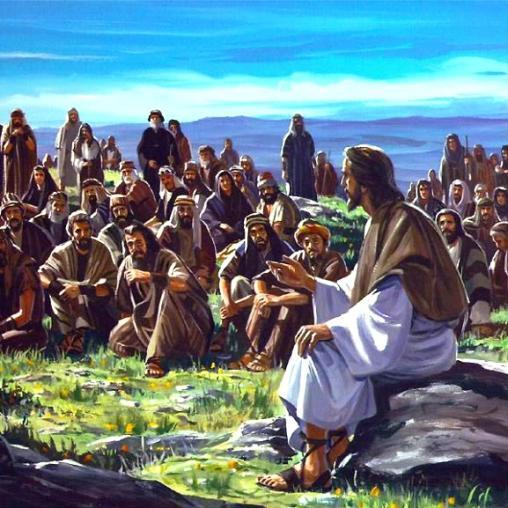
Jesus came down with the Twelve and stopped at a piece of level ground where there was a large gathering of his disciples with a great crowd of people from all parts of Judaea and from Jerusalem and from the coastal region of Tyre and Sidon who had come to hear him and to be cured of their diseases.
Then fixing his eyes on his disciples he said:
“How happy are you who are poor: yours is the kingdom of God. Happy are you who are hungry now: you shall be satisfied. Happy you who weep now: you shall laugh.
“Happy are you when people hate you, drive you out, abuse you, denounce your name as criminal, on account of the Son of Man. Rejoice when that day comes and dance for joy, for then your reward will be great in heaven. This was the way their ancestors treated the prophets.
“But alas for you who are rich: you are having your consolation now. Alas for you who have your fill now: you shall go hungry. Alas for you who laugh now: you shall mourn and weep.
“Alas for you when the world speaks well of you!
deepest longings for meaning and happiness right now.
In today’s Gospel from Luke, Jesus describes the true richness of life that is possible for those of us who are willing to live as his hope-filled disciples. We are all familiar with this passage in which Jesus reveals the Beatitudes: blessed are the poor; they have the kingdom of God. Blessed are those now hungry because they will be satisfied. Blessed are those who
weep because they will laugh. Blessed are those who are hated, excluded and insulted because they are disciples of Jesus; they will be greatly rewarded in heaven. Jesus is describing here the character of one who is living a life of hope – the life of a Christian steward whose trust is firmly rooted in God and who is focused on others and eternity. It is not always an easy life, but it is a deeply meaningful life and one that leads to eternal reward. ❖ [www.catholicsteward.com/blog/ ]
Pope Francis hospitalized for Gospel Reflection
In today’s Gospel story crowds of people come to listen to Jesus. They flock to him because of some need they feel he could satisfy. The people desperately want physical and spiritual healing and they are hungry for his teaching. It is a fact that only very rarely do people turn to Jesus because of the good fortune they are experiencing. It is when we are faced with sorrow, illness, misfortune or the death of a loved one that we turn to God. We should always examine our feelings to understand the hunger or fear or grief within that drives us to want to meet Jesus. It may be a child on drugs that causes us sleepless nights or a life-threatening illness in the family or the husband whose attitude to the family has changed. Whatever it is, we can be sure that Jesus has the power to touch and to heal.
When you are rich and have influence in society, you are never really oppressed. If you find yourself in difficulty you can easily find someone to help. One phone call or a visit is enough to fix things up. When you are poor and have no friends, you can hardly defend yourself. Such are the sick, the handicapped, minorities, those who have no voice in society. They are quickly and easily oppressed. There are many oppressed people in our society, those without work, those who struggle to live on miserable wages, those living from day to day in unbearable conditions. We have all met them (if you aren’t one yourself) because they are all around us. They were the ones who flocked to Jesus’ side to find comfort and healing. As disciples of Jesus, can they turn to us in their moment of need?❖
[From: Journeying with the Word of God, The Religious Education Department,Dioceseof Georgetown, Guyana ]
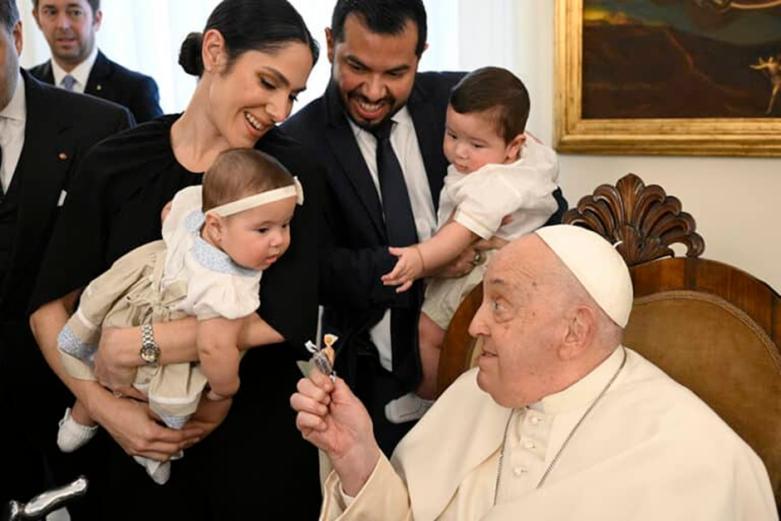
Pope Francis hands candy to a child at the end of a meeting with members of the Spanish "Gaudium et Spes" Foundation at his residence, the Domus Sanctae Marthae, before checking into Rome's Gemelli hospital Feb. 14, 2025, for tests and treatment of bronchitis. (CNS photo/Vatican Media)
VATICAN CITY (CNS) After suffering from bronchitis for more than a week and having obvious difficulty breathing, the 88-year-old Pope Francis was admittedtoRome’sGemellihospitalFeb.14.
“This morning, at the end of his audiences, Pope Francis will be admitted to the Agostino Gemelli Polyclinic for some necessary diagnostic tests and to continue, in a hospital setting, treatment for bronchitis that is still ongoing,” the Vatican press office told reporters. The pope was expected to stay in the hospital several days.
Before leaving the Vatican for the hospital, the pope held private meetings with Slovak Prime Minister Robert Fico and with Mark Thompson, chairman and CEO of CNN, and held a group meeting with members of the Gaudium et Spes Foundation.
Christopher Lamb, the CNN Vatican correspondent, was present at the beginning of the pope Thompson and said that mentally alert but struggling to speak for extended periods due to breathing difficulties,” CNN reported.
In a second statement Feb. 14, the Vatican press office said the Jubilee general audience with Pope Francis scheduled for Feb. 15 was canceled and that Cardinal José Tolentino de Mendonça, prefect of the Dicastery for Culture and Education, will celebrate the Mass Pope Francis was scheduled to preside over in St. Peter’s Basilica Feb. 16 with pilgrims attending the Jubilee of Artists and the World of Culture. The pope planned visit to Cinecittà, the Rome film studio, to meet actors and other artists Feb. 17 also was canceled. The pope, who underwent surgery in 1957 to remove part of one of his lungs after suffering a severe respiratory infection, has been susceptible to colds and bouts of bronchitis.
Beginning with his weekly general audience Feb. 5, Pope Francis has had an aide read the bulk of his homilies and prepared speeches at public Masses and audiences.
me to speak,”
at the audience Feb. 5 before handing off his text.
At Mass Feb. 9 for the Jubilee of the Armed Services, Police and Security Personnel, he apologized, saying he was having “difficulty breathing.”
At his general audience Feb. 12, he apologized for not delivering the main talk himself, saying it was “because I still can’t with my bronchitis. I hope next time I can.”
But on all those public occasions, he took the microphone to urge prayers for peace and to give his blessing.
Also, from Feb. 6 to the morning he entered the hospital, Pope Francis kept his schedule of meetings with individuals and small groups but held the meetings in the Domus Sanctae Marthae, his residence, rather than in the library or ornate halls of the Apostolic Palace.
Pope Francis has been an inpatient at the Gemelli hospital several times.
In March 2023, he was hospitalized for three days for what doctors said was a “respiratory infection.” He tested negative for COVID-19.
He was back June 7, 2023, when he underwent a three-hour surgery to repair a hernia and spent nine days at the hospital, where St. John Paul II had been hospitalized multiple times. The procedure on Pope Francis, under general anesthesia, was performed using a surgical mesh to strengthen the repair and prevent the recurrence of a hernia. Surgeons also removed several adhesions or bands of scar tissue that his doctors said had formed after previous surgeries decades ago.
Prior to that, the pope had spent seven days in the hospital in July 2021 after undergoing colon surgery to treat diverticulitis, an inflammation of bulges in the intestine. ❖
Baptism at Kumu
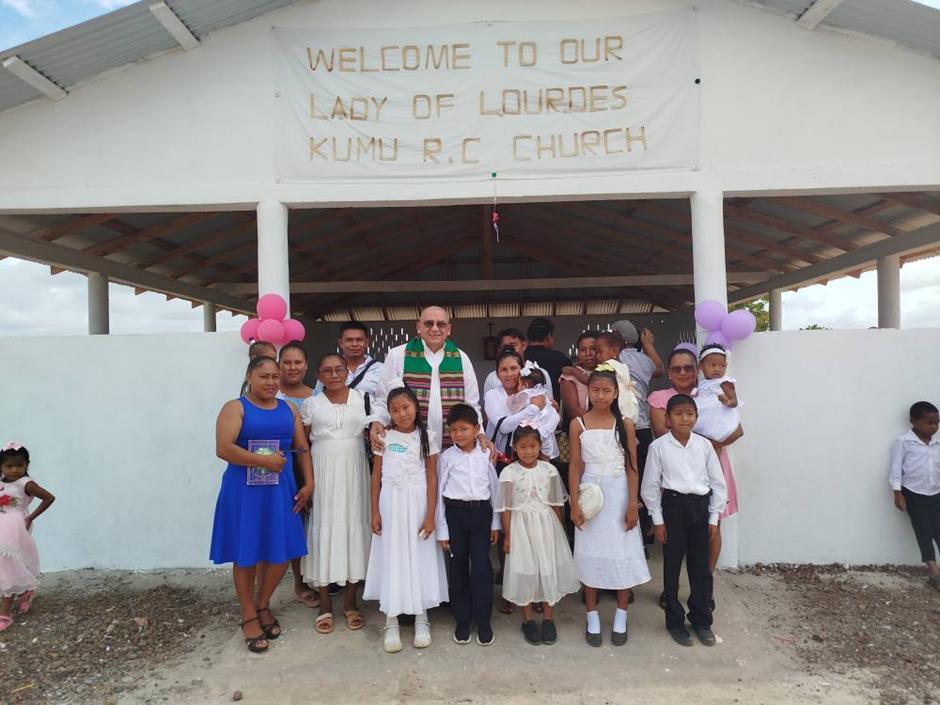
Baptism at Our Lady of Lourdes church, Kumu, Central Rupununi, Region 9, Essequibo, Guyana, last Sunday, February 9th. (St Ignatius Mission FB page)
Synodal graces in alignment
By Fr Donald Chambers
In October 2021, Pope Francis invited the Church on a synodal journey to listen to “what the Spirit is saying to the Churches” (Rev. 2:7). This three-year journey culminated at the Synodal Assembly in October 2024, and, like farmers, the Church gathered the fruits of the journey in the basket of the Final Document.
Fundamentally, synodality is a journey of prayerful discernment that involves mutual listening, dialogue, and communal discernment as the Church walks together with Christ towards the Kingdom of God. In the book Walking Together, Fr. Peter McIsaac states, "Discernment is simply attentiveness to and awareness of God in our prayer, our daily activities, and our diverse networks of relationships.”
Throughout the three-stage journey (diocesan, regional, and universal), the Church experienced God’s grace, which was encapsulated in the various syntheses (diocesan, Antilles Episcopal Conference, and Regional) that formed the basis for the final discernment at the October 2024 Synod Assembly in Rome. At the conclusion of the Assembly, the graces were once more gathered like fruits in a Final Document. In this article, I share some of the graces from the regional Church’s discernment that are affirmed in the Final Document. This affirmation reflects the Church’s belief embodied in the term sensus fidei, that “all believers . . . possess an instinct for the truth of the Gospel.” This “instinct” was essential throughout the synodal journey.
Section two of the Final Document, “On the Boat Together – Conversion of Relationships”, mentions that the synodal journey discerned the call to develop the Church’s capacity to nurture relationships with the Lord, among ourselves, in the family, local community social groups and religions, and with all of creation. The AEC synthesis also states, “The Spirit asks us to renew our parishes to create a caring, hospitable, and
non-judgmental parish family. This renewal involves welcoming, caring for and accompanying those on our margins, such as the poor, the elderly, youths, and LGBTQIA+ persons. Caring for each other is a key tenet of lived communion and the key to creating and sustaining community.” To confirm this grace, one AEC participant wrote, “Accepting the other in my life can be uncomfortable, but it is a way to become more human. The other takes me out of myself; it opens me to relationship, and God is relationship.”
Section three, “Cast the Net: Conversion of Processes,” identifies three interconnected ecclesial practices of the synodal journey: community discernment, decision-making, and a culture of transparency, accountability and evaluation through which we respond to the Word that shows us the paths of mission. In the AEC Synthesis, the people discerned that “There is a demand for co-responsibility, transparency, accountability, and updates to keep stakeholders in the loop. Thus, the laity desires participation in pastoral planning. . .”.
Quoting from one AEC participant, “Increased representation in decision-making policies conjointly within the Church should be done responsibly. Every member should have a voice.”
Section four, “Abundant Catch –Conversion of Bonds”, addresses how to cultivate new forms of exchanging gifts and renew the interconnecting bonds that unite us when Church members experience dislocation due to uncontrollable external factors. It expresses the belief that “a synodal Church is grounded in bonds of communion with space for all peoples and culture. There is a need to cultivate new forms of
Journeying with the Word of God
MAKING THE WORD OF GOD YOUR OWN
Step 1: Lookattoday’sReadingsprayerfully.
exchanging gifts and network of bonds that unite us.”
The AEC synthesis demonstrates the regional Church’s dream: “This aspiration would require a different model of church grounded on the belief in a God who creates, redeems, and calls each of us to his/her unique vocation. Formation needs first to prepare all members of this family to answer God’s call and to accept co-responsibility for the mission to proclaim, govern and sanctify. This requires a comprehensive formation approach not just the content of faith, but the capacity to relate with active empathic listening to God and the other. This will demand ongoing and dynamic conversion for all members of the family.”
The fifth section, “So I Send You – Forming for Missionary Discipleship,” looks at a particular movement needed to form the People of God to be synodal missionaries. The AEC Synthesis aligns with this grace. “The laity warn[s] of the danger of organizing the Church primarily on commercial principles . . . The structure and governance of the Church must be infused with spiritual foundations and language. Pre-eminence must be given to the Eucharist as “the heart of ecclesial communion,” which also provides the principles for living the Christian faith, including conversion and forgiveness. Flowing from the liturgical experience, we must form bonds and partnerships to support each other to give Christian witness in professional and socio -political life.”
The graces reflected in the Final Document align with the AEC Synthesis. Hopefully, this confirmation will inspire us to “small up yourself” and embark on the synodal bus.❖
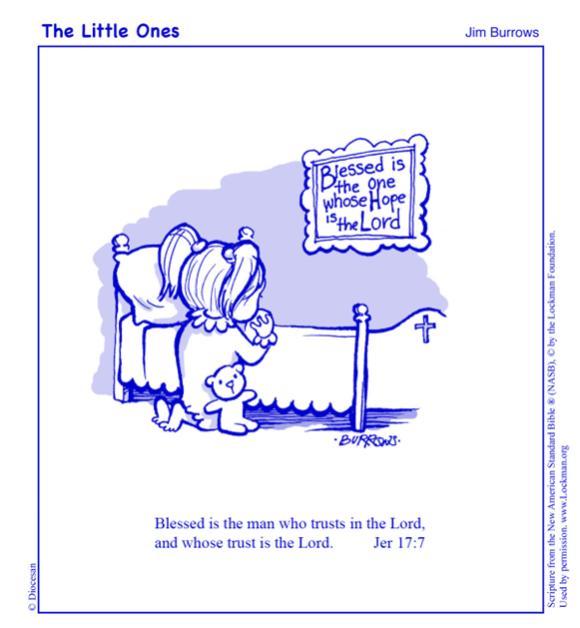
1st Reading: The prophet Jeremiah reminds us that it is always better to place our trust in God. He contrasts a God-centred life with a life centred on the things of this world.
2nd Reading: St. Paul stresses that the bodily resurrection of Jesus is a reality and the meaning his resurrection has for all Christians.
Gospel: Jesus offers a word of consolation and hope to the poor and those suffering in miserable conditions. He also gives a warning to the rich and comfortable.
1.Why do you think it is that in our moments of happiness God is often the last one we turn to rather than the first?
2.When Jesus says, “How happy are you who are poor,” do you think he is giving a blessing on hunger and misery?
3.It is said that we need a spiritual awakening before we can understand what Jesus is talking about in the Gospel passage. Why do you think this is so?
4.What would you consider to be a blessing from God? Does today’s Gospel passage change your understandingofwhatablessingfromGodmightbe?
Step 3: Accepting the message of God’s Wordinyourlifeoffaith
In the eyes of the world the rich seems to be blessed by God while the poor suffer because they seem cursed. Jesus however turns this world upside down. He presents us with a clear choice of either following the ways of the world and its values that stress the pursuit of wealth and comfort or taking his way and the values of the kingdom like compassion, forgiveness and charity.
Step 4: Somethingtothink&prayabout
1.Reflect on your life. What would you say are your basic values, that is, the things and ideas you believe in that direct the way you live. How much is Jesus a part of your value system?
2.Consider the blessing and woes in the Gospel. Which of these do you find most consoling and which do you find most challenging to the values that form your life? How can they contribute to a vision for your family, school, workplace and church community?
3.Pray that you will never heap hatred and abuse on others nor join with people who treat others with contempt and hatred because of their race or appearance.❖
[From: Journeying with the Word of God, The Religious Education Department, Diocese of Georgetown, Guyana ]
Pope to U.S.: Migration policies built
Pope Francis receives a hug from a child as he meets migrants, refugees, orphans, the elderly and the sick at the apostolic nunciature in Jakarta, Indonesia, Sept. 3, 2024. The people the pope met are assisted by the Community of Sant'Egidio, the Dominican sisters and Jesuit Refugee Service. (CNS photo/Vatican Media)
VATICAN CITY (CNS) Pope Francis has urged U.S. Catholics and people of goodwill to not give in to “narratives” thatdiscriminateagainstandcauseunnecessarysufferingtomigrantsandrefugees
“I recognize your valuable efforts, dear brother bishops of the United States, as you work closely with migrants and refugees, proclaiming Jesus Christ and promoting fundamental human rights,” he said in a letter to the U.S. bishops published by the Vatican Feb. 11.
Pope Francis said he was writing because of “the major crisis that is taking place in the United States” with the start of President Donald J. Trump’s “program of mass deportations.”
In his presidential executive order, “Protecting the American people against invasion,” released Jan. 20, Trump said, “Many of these aliens unlawfully within the United States present significant threats to national security and public safety, committing vile and heinous acts against innocent Americans.”
Pope Francis said, “The rightly formed conscience cannot fail to make a critical judgment and express its disagreement with any measure that tacitly or
explicitly identifies the illegal status of some migrants with criminality.”
He also applauded the efforts of the U.S. bishops’ to assist migrants and refugees and to counter the arguments of the Trump administration, saying that “God will richly reward all that you do for the protection and defense of those who are considered less valuable, less important or less human!”
“I exhort all the faithful of the Catholic Church, and all men and women of goodwill, not to give in to narratives that discriminate against and cause unnecessary suffering to our migrant and refugee brothers and sisters,” he wrote.
“With charity and clarity we are all called to live in solidarity and fraternity, to build bridges that bring us ever closer together, to avoid walls of ignominy and to learn to give our lives as Jesus Christ gave his for the salvation of all,” the pope wrote.
In his letter to the bishops, the pope said every nation has the right to defend itself and keep its communities safe “from those who have committed violent or serious crimes while in the country or prior to arrival.”
However, he continued, “the act of deporting people who in many cases have left their own land for reasons of extreme poverty, insecurity, exploitation, persecution or serious deterioration of the environment, damages the dignity of many men and women, and of entire families, and places them in a state of particular vulnerability and defenselessness.”
“This is not a minor issue,” he wrote.
“An authentic rule of law is verified precisely in the dignified treatment that all people deserve, especially the poorest and most marginalized.”
Pope Francis also used the letter to respond to an assertion U.S. Vice President JD Vance, who is Catholic, made in a late January television interview about the Catholic concept of “ordo amoris” (the order of love or charity).
The concept, Vance said, teaches that “you love your family, and then you love your neighbor, and then you love your community, and then you love your fellow citizens in your own country. And then after that, you can focus and prioritize the rest of the world.”
However, the pope said, “Christian love is not a concentric expansion of interests that little by little extend to other persons and groups. In other words: the human person is not a mere individual, relatively expansive, with some philanthropic feelings!”
“The true ordo amoris that must be promoted is that which we discover by meditating constantly on the parable of the ‘Good Samaritan,’ that is, by meditating on the love that builds a fraternity open to all, without exception,” the pope wrote.
The pope wrote that “worrying about personal, community or national identity, apart from these considerations (of human fraternity), easily introduces an ideological criterion that distorts social life and imposes the will of the strongest as the criterion of truth.”
“The true common good is promoted when society and government, with creativity and strict respect for the rights of all as I have affirmed on numerous occasions welcomes, protects, promotes and integrates the most fragile, unprotected and vulnerable,” he wrote.
That does not prevent or hamper the development of policies that regulate “orderly and legal migration,” he wrote. “However, this development cannot come about through the privilege of some and the sacrifice of others.”
“What is built on the basis of force, and not on the truth about the equal dignity of every human being, begins badly and will end badly,” the pope warned. While the pope did not name specific U.S. policies, his letter emphasized the Catholic Church’s longstanding closeness to and support of migrants and refugees.
The U.S. bishops’ conference had recently faced unfounded claims that it profited from its partnership with the U.S. government in assisting refugees who qualified for federal assistance. Vance questioned the bishops’ motives for criticizing new immigration policies in a Jan. 26 interview, asking whether the bishops were just concerned about receiving federal resettlement funding. At a time that is “so clearly marked by the phenomenon of migration,” the pope reaffirmed “not only our faith in a God who is always close, incarnate, migrant and refugee, but also the infinite and transcendent dignity of every human person.”
These words, he said, “are not an artificial construct.” Even a quick look at the church’s social doctrine over the centuries clearly shows Jesus Christ “did not live apart from the difficult experience of being expelled from his own land because of an imminent risk to his life and from the experience of having to take refuge in a society and a culture foreign to his own.”
“The Son of God, in becoming man, also chose to live the drama of immigration,” he wrote. Therefore, “all the Christian faithful and people of goodwill are called upon to consider the legitimacy of norms and public policies in the light of the dignity of the person and his or her fundamental rights, not vice versa.”
“Let us ask Our Lady of Guadalupe to protect individuals and families who live in fear or pain due to migration and/or deportation,” he wrote. ❖
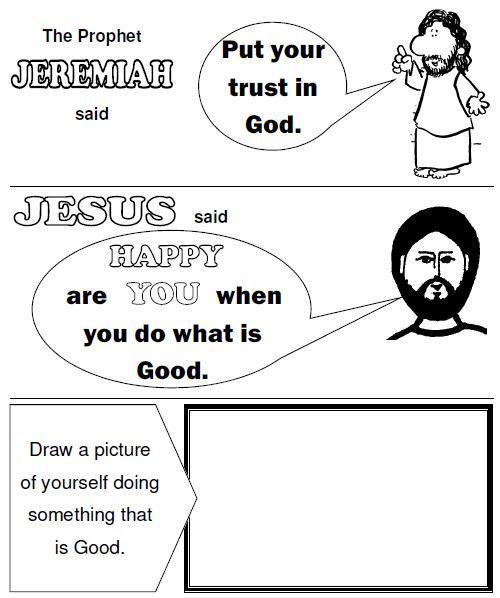
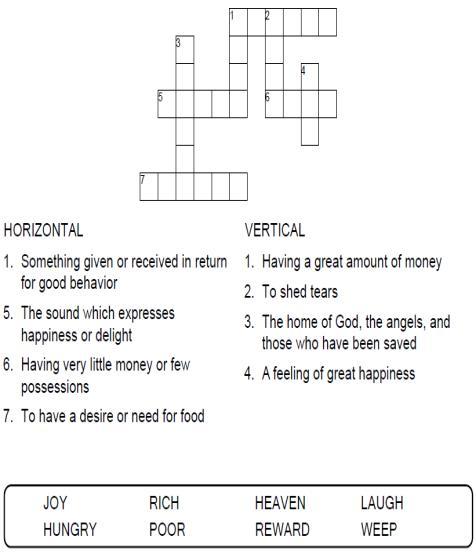
Dear Girls and Boys, Jesus had something to say about being happy. Our Gospel reading today is one of those times. The reading begins with Jesus surrounded by a huge crowd of people. Have you ever noticed that wherever Jesus went, he drew large crowds of people? Why do you suppose that was? Maybe it was because many of them were sick, crippled, or injured and wanted Jesus to heal them. Perhaps some of them had a troubled mind and they had heard that Jesus was able to cast out demons and evil spirits just by just speaking a word. In other words, many people came to Jesus because they had heard what he could do for them, and that is exactly what happens in today's Bible lesson. The Bible says that people crowded around Jesus and tried to touch him because power was coming from him and healed them all. Do you think that made the people happy? It sure did!
Jesus then turned to his disciples and said: "God blesses you who are poor, for the Kingdom of God is yours. God blesses you who are hungry now, for you will be satisfied. God blesses you who weep now, for in due time you will laugh. Blessed are you when people hate you, when they exclude you and insult you and reject your name as evil, because of the Son of Man.
When that happens, be happy! Yes, leap for joy! For a great reward awaits you in heaven. And remember, their ancestors treated the ancient prophets that same way."
Notice that Jesus didn't say, "Happy are they who have a lot of money" or "Happy are they who have plenty to eat and dine in fancy restaurants." What he did say was, "When you follow me, happiness will come. Leap for joy! A great reward awaits you in heaven."
Dear Father, help us to remember that we can never find happiness by seeking the things this world has to offer. True happiness can only be ours by following Jesus. In the name of Jesus we pray
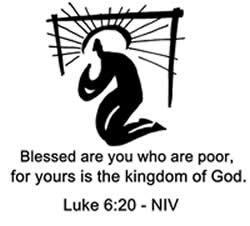
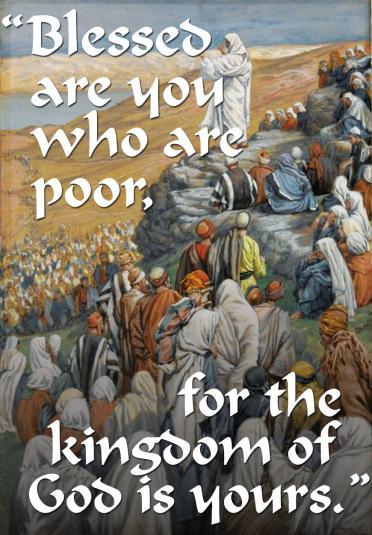
“
are you who are poor, for yours is the kingdom of God”. Luke 6:20
Blessed
Meeting between Catholics with political responsibilities and pastors: Dialoguetostrengthenfraternity&socialfriendship
, together with the organizing team of Celam and CAL.
Reflection on Fratelli Tutti and thePoliticalRealityoftheRegion
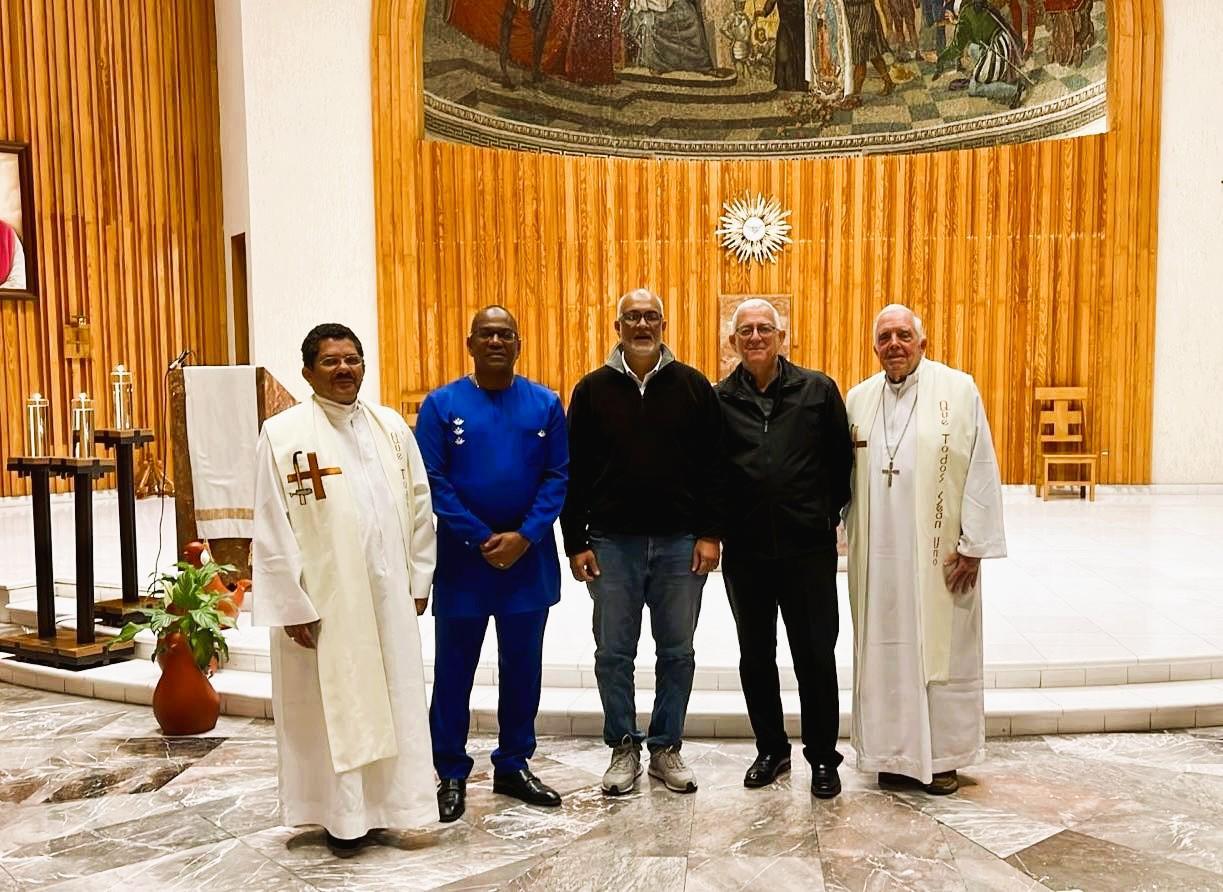
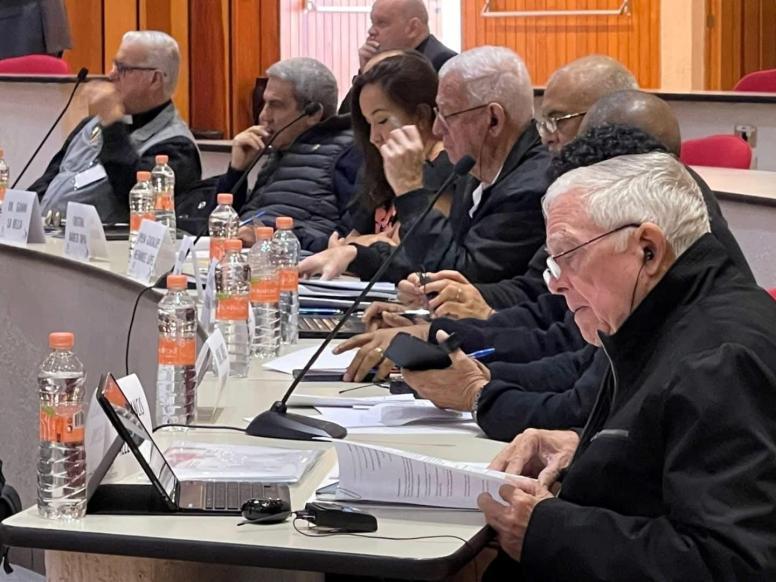
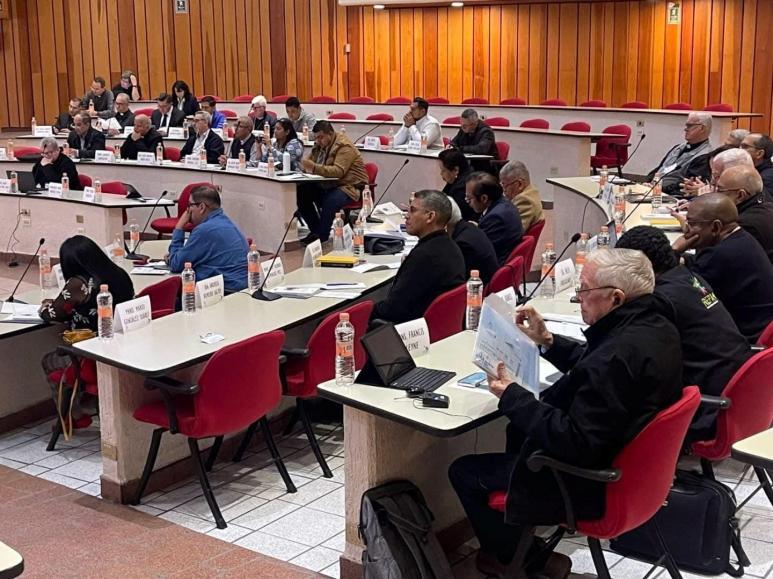
(ADN CELAM) - Catholics with political responsibilities and pastors from Mexico, Central America and the Caribbean are meeting in Casa Lago, the venue of the Mexican Episcopate Conference (CEM), from February 10 to 14, 2025, at an event organized by the Latin American and Caribbean Episcopal Council (Celam) and the Pontifical Commission for Latin America (CAL).
The meeting, entitled "Fratelli tutti: politics, dialogue and social friendship," aims to promote the culture of encounter and reduce polarization in the region, in line with the principles of Pope Francis' encyclical.
According to the organizers, the aim is to promote the emergence of "sowers of dialogue" who contribute to the reconstruction of the social fabric and fraternity among peoples.
Listening to synodal and social fraternity
The methodology of the event is based on spiritual conversation, a process in which participants reflect in small groups on the social and political challenges of their countries, in the light of the Church's teaching.
Among the specific objectives are: To listening synodally to the expectations of Catholics with political responsibilities on the role of the Church in the region; also, to reflect on the challenges of political and social life from the encyclical "Fratelli tutti"; and to seek concrete ways to foster social friendship and the common good.
This space of dialogue is exclusive to invited politicians and bishops from Mexico, Guatemala, El Salvador, Honduras, Costa Rica, Panama, the
The program of the meeting is structured around the chapters of Fratelli tutti, taking on topics such as polarization, universal fraternity and the best policy. On Tuesday, February 11, participants reflected on The Shadows of a closed World, addressing the growing social and political divide in their countries. In the afternoon, they discussed A stranger on the way, illuminated by the parable of the Good Samaritan, to analyze the commitment to the most vulnerable.
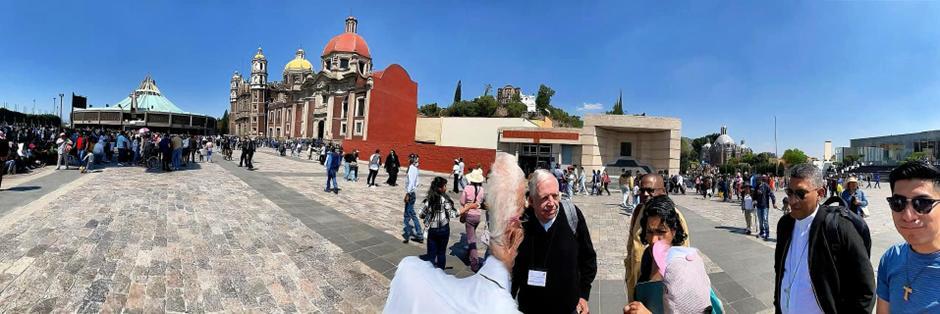
On Wednesday 12, the group visited the Basilica of Guadalupe, where they celebrated the Eucharist, presided over by Cardinal Carlos Aguiar Retes. Subsequently, the dialogue with the theme "Thinking and gestating an open world" resumed, highlighting the need for more inclusive and supportive societies.
On Thursday, they shared on the chapters Dialogue and social friendship" and Religions at the service of fraternity, highlighting the role of the Church in the construction of more just and peaceful societies. Finally, on Friday 14 the conclusions and commitments of the meeting were to be presented, with the aim of generating a common work agenda among the participants.
Policy in the service of the commongood
Pope Francis, in his encyclical Fratelli tutti, insists on the importance of a policy based on solidarity and the common good, and warns of the dangers of populism and the instrumentalization of the people.
During the event, discussions were held on how politics can be an instrument of service and transformation, moving away from partisan interests or confrontational strategies.
In this regard, the conference entitled "The best policy," held on Wednesday, sought to generate reflection on the ethical responsibility of politicians today. ❖
Bishop Francis Alleyne OSB and the other AEC delegates can be seen during a session of the Fratelli tutti: politics, dialogue and social friendship conference, held in Mexico February 10-14. (Photo: CELAM )
,
overcoming division through faith
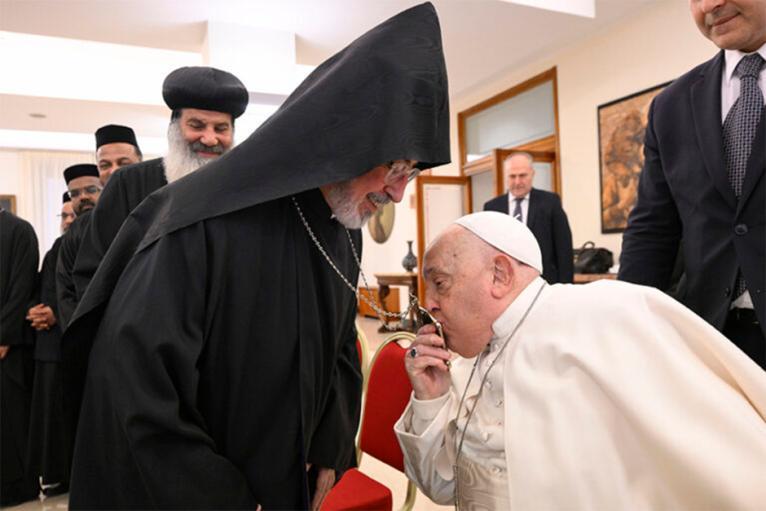
VATICAN CITY (CNS) The Nicene Creed is more than a statement of faith it is a powerful sign of unity among Christians, Pope Francis said as he welcomed young priests and monks from Oriental Orthodox
Churches to the Vatican.
“Whereas the devil divides, the symbol unites!” the pope told the group taking part in a study visit to Rome promoted by the Dicastery for Promoting Christian Unity. He
explained that the Creed is called a “symbol” because it not only summarizes the core truths of Christianity but also serves as a sign of identity and communion among believers.
“How beautiful it would be if, each time we proclaim the Creed, we felt united with Christians of all traditions,” he said.
The delegation included representatives from the Armenian Apostolic Church, the Coptic Orthodox Church, the Ethiopian Orthodox Tewahedo Church, the Eritrean Orthodox Tewahedo Church, the Malankara Orthodox Syrian Church, and the Syriac Orthodox Church.
The pope noted that the group’s visit was particularly meaningful as 2025 marks the 1,700th anniversary of the Council of Nicaea, the first ecumenical council where bishops from across the Christian world came together to define the faith. He emphasized that the Nicene Creed, born from that historic gathering, continues to serve as a bridge between divided Christian traditions and a reminder of their shared foundation.
‘We believe’
“The Nicene Symbol, in its original form, uses the plural: ‘We believe.’ It reminds us that faith is not an individual possession but something we confess together as one body,” the pope said, likening divided Christians to “shards” that must be brought together to restore the unity that Christ desired for his followers.
Pope Francis and Orthodox Ecumenical Patriarch Bartholomew of Constantinople have expressed hope to mark the occasion together in May in Iznik, Turkey the site of the ancient city of Nicaea, where the council first convened in 325.
In the meeting, the pope encouraged the participants to let their study visit be a sign of growing communion between the churches, not just through theological dialogue but through deepened relationships and mutual understanding. “Union with God necessarily takes place through unity among us Christians who proclaim the same faith,” he said.
At the conclusion of the meeting, Pope Francis invited everyone present to recite the Nicene Creed together, each in his own language, as a sign of their shared faith.❖
AI must serve, not replace, teacher
VATICAN CITY (CNS) The use of artificial intelligence in schools must not threaten “the indispensable relationship between teacher and student” that lies at the heart of education, the Vatican said.
“The physical presence of a teacher creates a relational dynamic that AI
cannot replicate,” the Vatican said in a document presenting guidance on AI development and application.
The document, titled “Antiqua et Nova (ancient and new): Note on the Relationship Between Artificial Intelligence and Human Intelligence,” was prepared by the dicasteries for the
Doctrine of the Faith and for Culture and Education, approved by Pope Francis and released Jan. 28.
In addition to analyzing the role of AI in interpersonal relationships, law, work, art, health care and warfare, the document offered reflections on the role of AI in educational settings.
If used in a prudent manner, AI can become “a valuable educational resource by enhancing access to education, offering tailored support and providing immediate feedback to students,” it said. “These benefits could enhance the learning experience, especially in cases where individualized attention is needed, or educational resources are otherwise scarce.”
Still, the dicasteries warned that “extensive use of AI in education could lead to the students’ increased reliance on technology, eroding their ability to perform some skills independently and worsening their dependence on screens.”
Many AI systems, the document said, “merely provide answers instead of prompting students to arrive at answers themselves or write text for themselves.” Education should encourage people to intelligently face challenges for themselves rather than train young people
“to amass information and generate quick responses,” it continued.
Citing Pope Francis’ message on artificial intelligence for the World Day of Peace 2024, the document said that young people must learn how to discern the data and content produced by AI, and the schools and universities that train them “are challenged to help students and professionals grasp the social and ethical aspects of the development and uses of technology.”
The document also acknowledged that AI programs can provide biased or fabricated information “which can lead students to trust inaccurate content” and “undermines the educational process itself.” As a guideline, it suggested that the use of AI in educational settings “should always be transparent and never misrepresented.”
At a time of such rapid technological developments, Catholic universities “are urged to be present as great laboratories of hope at this crossroads of history,” the dicasteries said. By developing a cross-disciplinary approach, they must pursue “ethically sound applications” for AI “that clearly serve the cohesion of our societies and the common good, reaching new frontiers in the dialogue between faith and reason.”❖
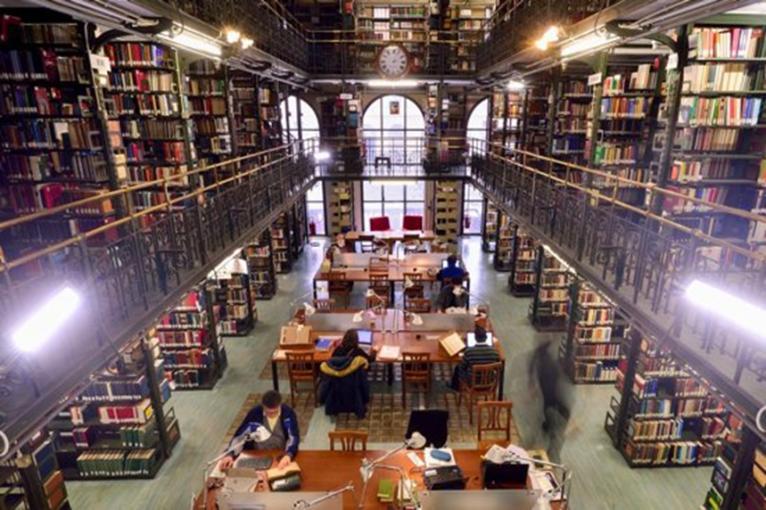
Students study in the library of the Pontifical Biblical Institute, part of the Gregorian University in Rome, in this undated file photo. CNS photo/courtesy Pontifical Gregorian University
Pope Francis kisses the encolpion of Archbishop Khajag Barsamian, the representative of the Armenian Orthodox Church to the Holy See, during a meeting with young priests and monks from Oriental Orthodox Churches at the Vatican Feb. 6, 2025. (CNS photo/Vatican Media)
defend life, peace and justice, says pope
VATICAN CITY (CNS) Thanking members of the military and the police for their service, Pope Francis asked them to be on guard against seeing other people as enemies and instead dedicate their lives to defending life, peace and justice.
“Be vigilant lest you be poisoned by propaganda that instills hatred (and) divides the world into friends to be defended and foes to fight,” the pope wrote in his homily for the Mass Feb. 9 for the Jubilee of the Armed Services, Police and Security Personnel.
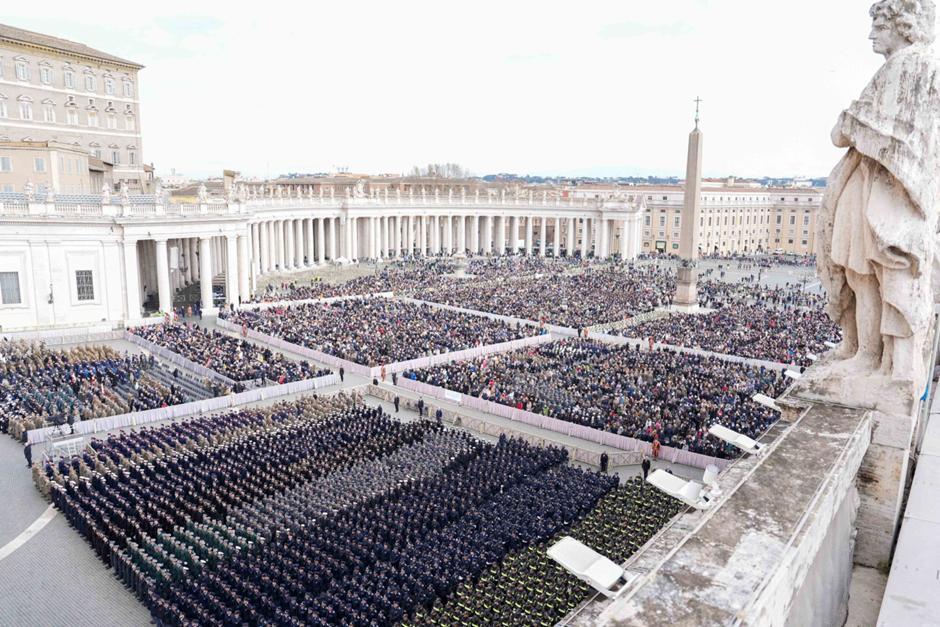
The Vatican said some 30,000 active and retired members of the military and police from 100 countries registered as pilgrims for the jubilee celebration.
Pope Francis, who has been suffering from what the Vatican said was bronchitis, presided over the liturgy in St. Peter’s Square with a weak and hoarse voice. U.S.-born Cardinal Robert F. Prevost, prefect of the Dicastery for Bishops, was the main celebrant at the altar.
The pope read the first paragraph of his prepared homily, ad-libbing a bit
about remembering how God is always close by, but then asked his master of liturgical ceremonies, Archbishop Diego Ravelli, to continue reading the text because he was having “difficulty breathing.”
In the text, the pope asked the military and police to “be courageous witnesses of the love of God our Father, who wants us all to be brothers and sisters” and to be “artisans of a new era of peace, justice and fraternity.”
“I would encourage you never to lose sight of the purpose of your service and all your activity, which is to promote life, to save lives, to be a constant defender of life,” the pope wrote in his text.
Pope Francis also thanked police and prison guards who are “at the forefront of the fight against crime and violence” and all those who, in the name of their nations, are “engaged in relief work in the wake of natural disasters, the safeguarding of the environment, rescue efforts at sea, the protection of the vulnerable and the promotion of peace.”
Pope Francis took the microphone at the end of Mass to lead the recitation of the Angelus but also to insist that “armed service should be exercised only for legitimate self-defense and never to impose dominion over another nation.”
“May weapons everywhere be silenced, and the cries of the people asking for peace be heard,” he said.
The pilgrims were formally welcomed to Rome Feb. 8 with an outdoor concert in Piazza del Popolo under a steady rain.
Jesuit Father Andriy Zelinskyy, coordinator of chaplains for the Ukrainian Greek Catholic Church, was there with a retired Ukrainian bishop and three other Ukrainian chaplains.
“The goal of a pilgrimage is always to go back to your roots, to find where you are and why you are here. For Christians, it is to love and serve our Lord Jesus Christ, who was crucified, died and rose for us,” he told Catholic News Service. “And this is true for war -wounded humanity as well.”
The Jubilee gathering of military and police from about 100 countries “is already a sign of hope,” he said. “We come together to pray, to stand against evil and to renew our commitment to peace and defending human dignity.”❖
Thousands of members of the military and police forces from close to 100 countries gather in St. Peter’s Square for Mass with Pope Francis celebrating the Jubilee of the Armed Services, Police, and Security Personnel at the Vatican Feb. 9, 2025. (CNS photo/Lola Gomez)
By Francis Canzius
Its Hundredth Year
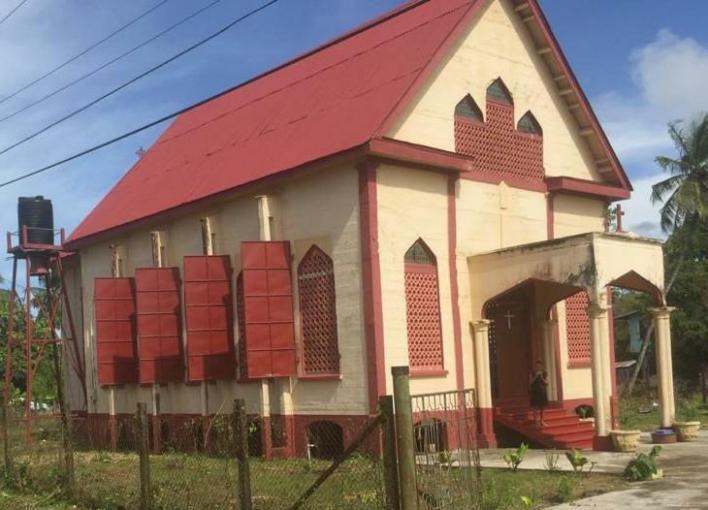
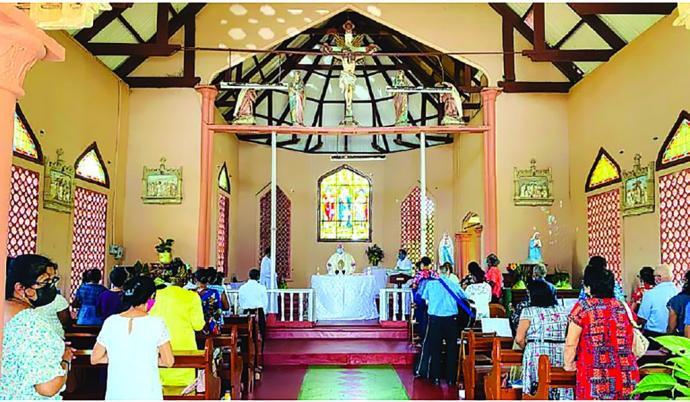
Our Lady Queen of Peace church at Mahaicony is 100 years this year.
Reopened in 2015, the church was built in 1925 through the personal efforts of Fr. John Purcell, a Diocesan Priest who was Jamaican by birth. Fr. Purcell had requested to do his priestly ministry in British Guiana. He undertook to raise funds for the construction of the church (in concrete) which would cost $22,000. The church was consecrated upon completion in 1925 by Bishop Compton Theodore Galton S.J.
Fr. Purcell became the first priest at Buxton in 1892, after short spells in Morawhanna and Henrietta. Fr. Purcell also made monthly visits to Bartica. He also served at Victoria where he was manager of the Catholic school. Fr. Purcell was largely responsible (with the help of the Bishop) for the building of the Sacred Heart chapel in the Mahaica Hospital compound. He was the second Editor of the Catholic Standard from 1908 to 1939. Fr. Purcell died on the fourth of March 1939 and is buried in the eastern compound of the church he built at Mahaicony. The street east of the church is also named after him.❖
Youth Mental Health Training
February 18th
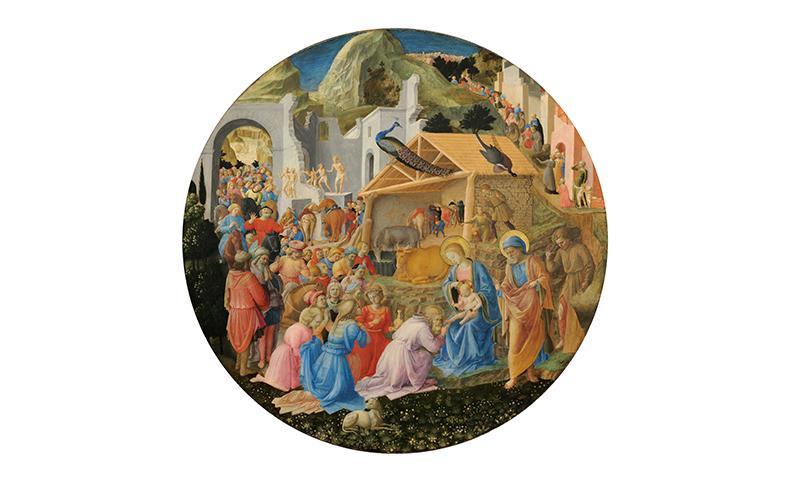
Blessed John of Fiesole (Fra Angelico) (1387 – February 18, 1455)
The patron of Christian artists was born around 1400 in Italy in a village overlooking Florence. He took up painting as a young boy and studied under the watchful eye of a local painting master. He joined the Dominicans at about age 20, taking the name Fra Giovanni. He eventually came to be known as Fra Angelico, perhaps a tribute to his own angelic qualities or maybe the devotional tone of hisworks. He continued to study painting and perfect his own techniques, which included broad-brush strokes, vivid colours and generous, lifelike figures. Michelangelo once said of Fra Angelico: “One has to believe that this good monk has visited paradise and been allowed to choose his models there.” Whatever his subject matter, Fra Angelico sought to generate feelings of religious devotion in response to his paintings. Among his most famous works are the Annunciation and Descent from the Cross as well as frescoes in the monastery of San Marco in Florence.
He also served in leadership positions within the Dominican Order. At one point, Pope Eugenius approached him about serving as archbishop of Florence. Fra Angelico declined, preferring a simpler life. He died in 1455.❖ [www.franciscanmedia.org]