Pope Leo’s message for the World Day of PrayerfortheCare ofCreation 2025 - p3
A Christian Perspective on Social Issues - p4
Sunday Scripture - p5
The Word and the World - p6
Live, act on faith; avoid ‘split’ personality, pope tellspoliticians - p7
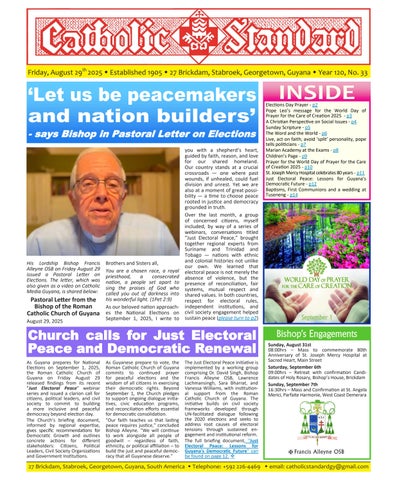
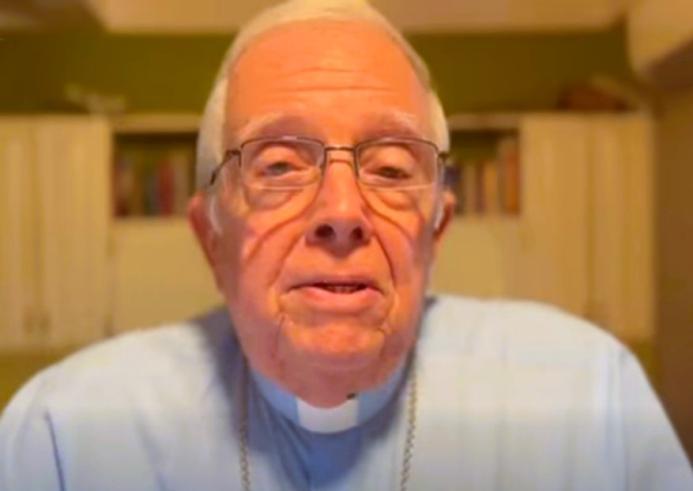
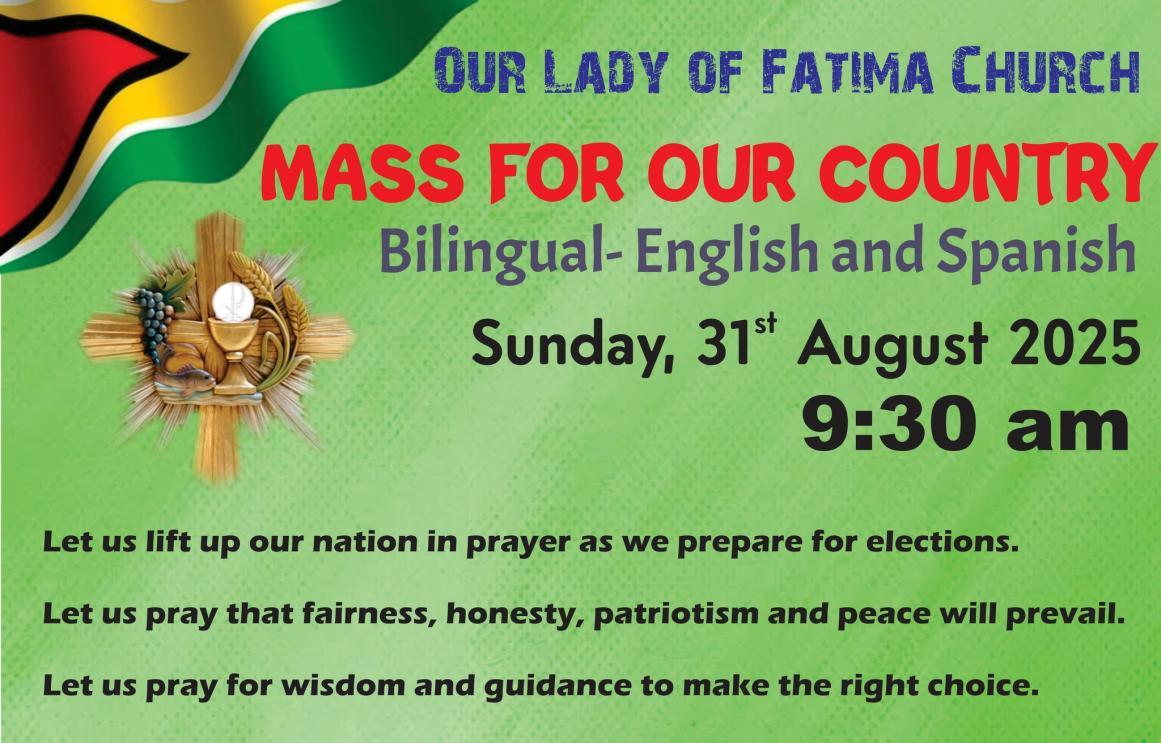
His Lordship Bishop Francis Alleyne OSB on Friday August 29 issued a Pastoral Letter on Elections. The letter, which was also given as a video on Catholic MediaGuyana,issharedbelow:
Pastoral Letter from the Bishop of the Roman Catholic Church of Guyana August 29, 2025
BrothersandSistersall,
You are a chosen race, a royal priesthood, a consecrated nation, a people set apart to sing the praises of God who called you out of darkness into hiswonderfullight.(1Pet2:9)
Asourbelovednationapproaches the National Elections on September 1, 2025, I write to
you with a shepherd’s heart, guidedbyfaith,reason,andlove for our shared homeland. Our country stands at a crucial crossroads one where past wounds, if unhealed, could fuel division and unrest. Yet we are alsoat amoment ofgreatpossibility a time to choose peace rooted in justice and democracy groundedintruth.
Over the last month, a group of concerned citizens, myself included, by way of a series of webinars, conversations titled “Just Electoral Peace,” brought together regional experts from Suriname and Trinidad and Tobago nations with ethnic and colonial histories not unlike our own. We learned that electoralpeaceisnotmerelythe absence of violence, but the presence of reconciliation, fair systems, mutual respect and sharedvalues.Inbothcountries, respect for electoral rules, independent institutions, and civil society engagement helped sustainpeace(please turntop2)
Church calls for Just Electoral Peace and Democratic Renewal
As Guyana prepares for National Elections on September 1, 2025, the Roman Catholic Church of Guyana on Friday August 29 released findings from its recent "Just Electoral Peace" webinar series and issued a clarion call for citizens, political leaders, and civil society to commit to building a more inclusive and peaceful democracy beyond election day. The Church's briefing document, informed by regional expertise, gives specific recommendations for Democratic Growth and outlines concrete actions for different stakeholders: Citizens, Political Leaders, Civil Society Organizations and Government Institutions.
As Guyanese prepare to vote, the Roman Catholic Church of Guyana commits to continued prayer for peaceful elections and the wisdom of all citizens in exercising their democratic rights. Beyond September 1, the Church pledges to support ongoing dialogue initiatives, civic education programs, and reconciliation efforts essential fordemocratic consolidation.
"Our faith teaches us that lasting peace requires justice," concluded Bishop Alleyne. "We will continue to work alongside all people of goodwill – regardless of faith, ethnicity, or political affiliation – to build the just and peaceful democracy that allGuyanesedeserve."
The Just Electoral Peace initiativeis implemented by a working group comprising Dr. David Singh, Bishop Francis Alleyne OSB, Lawrence Lachmansingh, Sara Bharrat, and Vanessa Williams, with institutional support from the Roman Catholic Church of Guyana. The initiative builds on civil society frameworks developed through UN-facilitated dialogue following the 2020 elections and seeks to address root causes of electoral tensions through sustained engagement and institutional reform.
The full briefing document, "Just Electoral Peace: Lessons for Guyana's Democratic Future" can be found on page 12. ❖
Marian Academy at theExams - p8
Children’sPage - p9
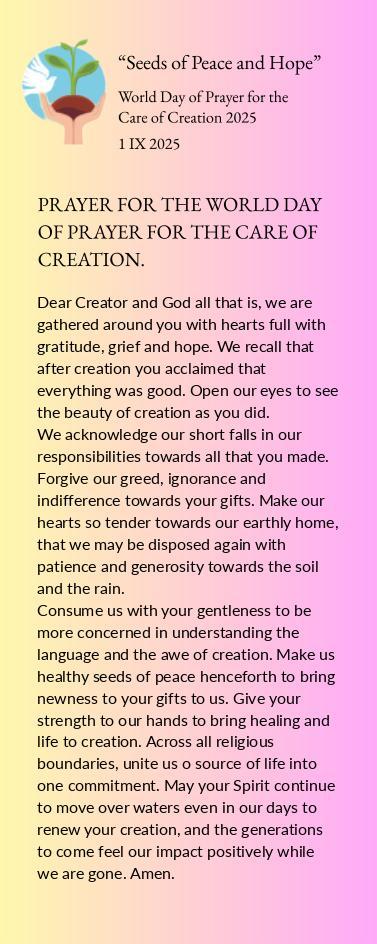
Prayer for the World Day of Prayer for the Care ofCreation 2025 - p10
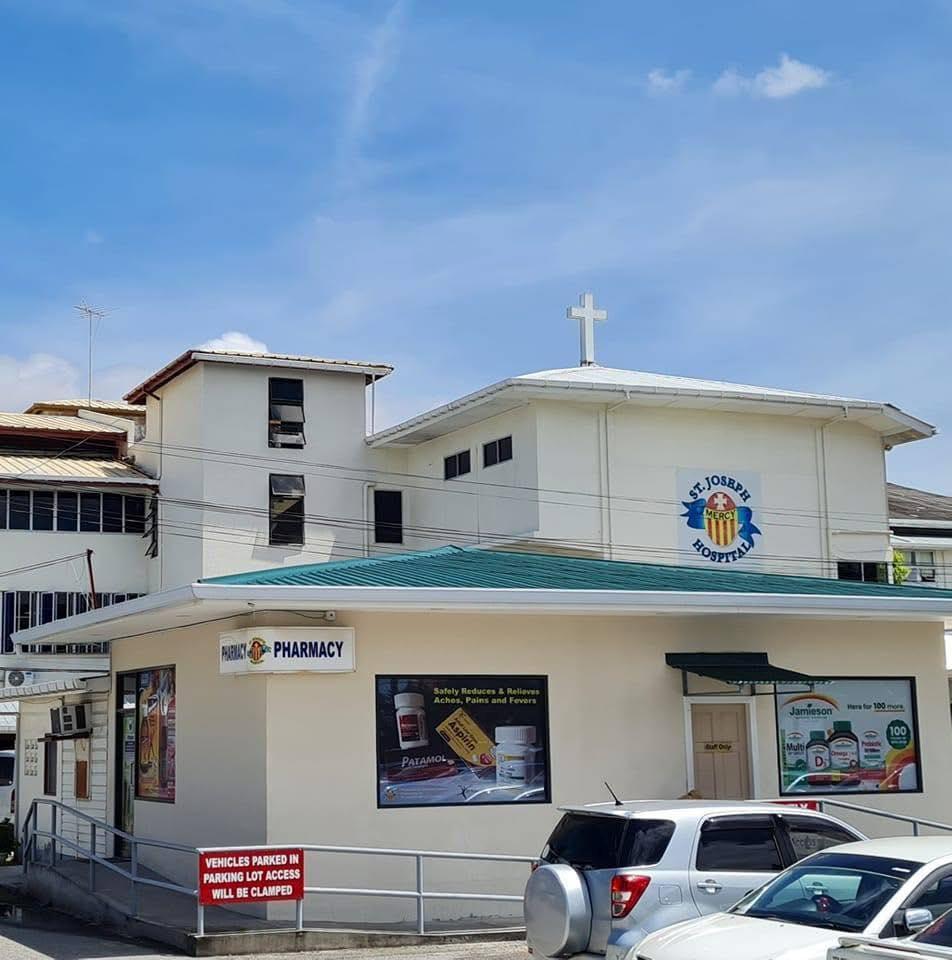
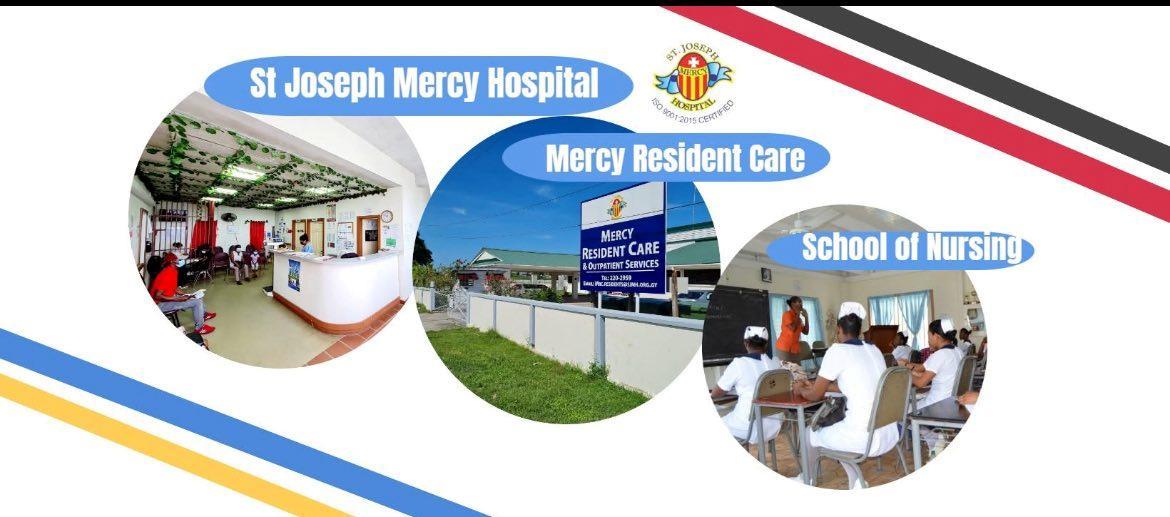
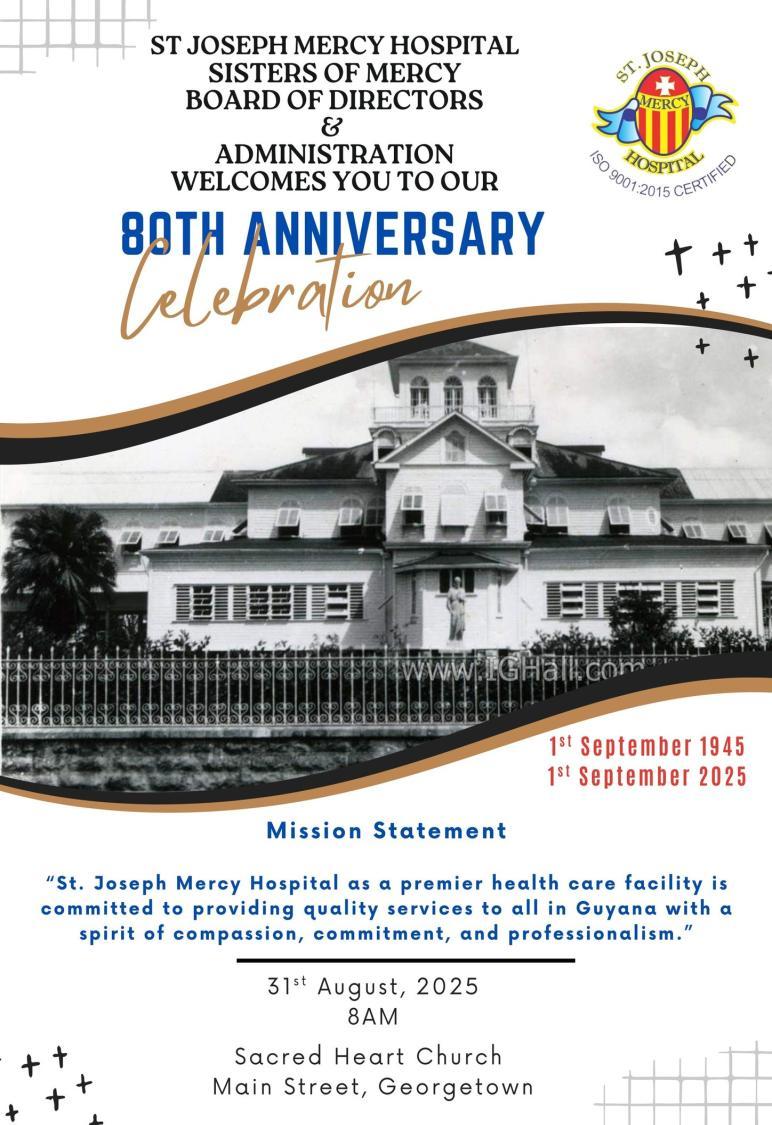
St.JosephMercyHospitalcelebrates80years - p11
Just Electoral Peace: Lessons for Guyana's Democratic Future - p12
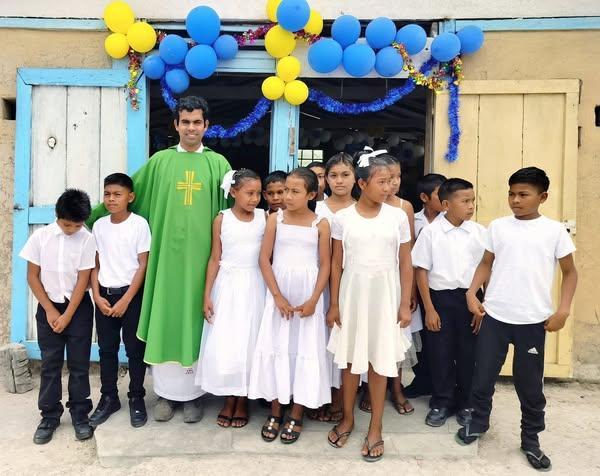
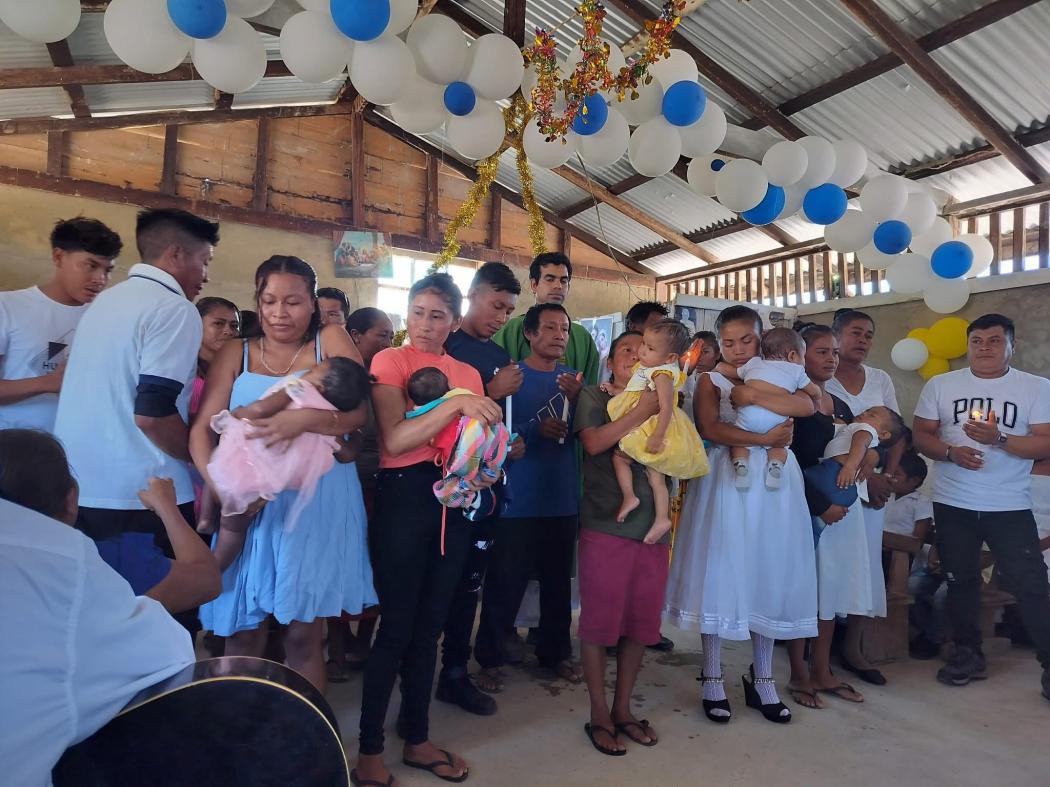
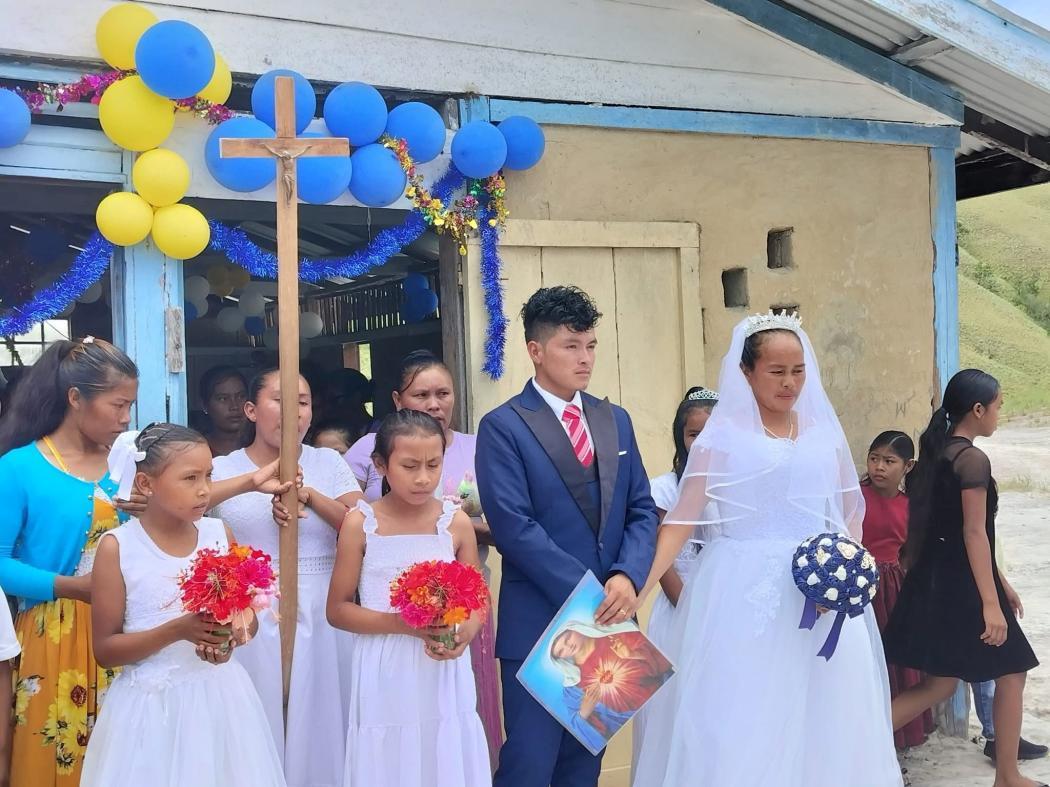
Baptisms, First Communions and a wedding at Tuseneng - p14
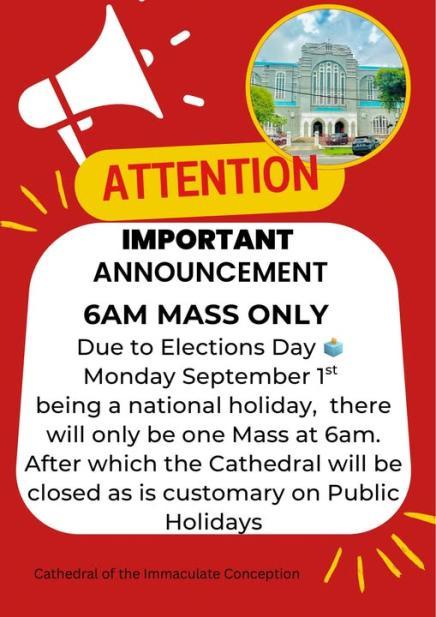
September 1
Bishop’s Engagements
Sunday, August 31st
08:00hrs – Mass to commemorate 80th Anniversary of St. Joseph Mercy Hospital at SacredHeart,Main Street
Saturday, September 6th
09:00hrs – Retreat with confirmation CandidatesofHolyRosary,Bishop’sHouse,Brickdam
Sunday, September 7th
16:30hrs– Mass and Confirmation at St.Angela Merici,ParfaiteHarmonie,WestCoastDemerara
Francis Alleyne OSB
The Jubilee Prayer
Father in heaven, may the faith you have given us in your son, Jesus Christ, our brother, and the flame of charity enkindled in our hearts by the Holy Spirit, reawaken in us the blessed hope for the coming of your Kingdom.
May your grace transform us into tireless cultivators of the seeds of the Gospel.
May those seeds transform from within both humanity and the whole cosmos in the sure expectation of a new heaven and a new earth, when, with the powers of Evil vanquished, your glory will shine eternally.
May the grace of the Jubilee reawaken in us, Pilgrims of Hope, a yearning for the treasures of heaven. May that same grace spread the joy and peace of our Redeemer throughout the earth.
To you our God, eternally blessed, be glory and praise for ever.
Pastoral
Letter on Elections (From Page 1)
Amen amid ethnic and political differences. Guyana, too, can walk this path.
Message us giving your name & number at +592 701-7639. Send us an email at
But peace must be cultivated. It requires trust in our systems, in one another, and most importantly, in the values of justice, equality, and truth. We must speak honestly about our history and commit to healing. Let us support institutions that are transparent and fair and let us encouragecivilsociety including
the Church to educate, advocate, and bridge our differences.
Our youth are especially important. Many are disillusioned, yet they carry the hope of a new political culture free from ethnic division. Let us listen to them, empower them, and walk beside them.
Therefore, I urge everyone, every citizen of goodwill, to engage peacefully and faithfully in these
elections not as partisan followers, but as bearers of light and life that emanates from faith. Vote with conscience. Reject division. Support justice. And pray withoutceasingforournation. Let us be peacemakers and nation builders Witheveryblessing, + Francis Alleyne OSB BishopofGeorgetown.❖
Message of His Holiness Pope Leo XIV for the 10th World Day of Prayer for the Care of Creation
Seeds of Peace and Hope
Dear Brothers and Sisters!
The theme of this World Day of Prayer for the Care of Creation, chosen by our beloved Pope Francis, is “Seeds of Peace and Hope”. On the tenth anniversary of the establishment of this Day of Prayer, which coincided with the publication of the Encyclical Laudato Si’, we find ourselves celebrating the present Jubilee as “Pilgrims of Hope ” This year’s theme thus appears most timely.
In proclaiming the Kingdom of God, Jesus often used the image of the seed. As the time of his Passion drew near, he applied that image to himself, comparing himself to the grain of wheat that must die in order to bear fruit (cf. Jn 12:24). Seeds are buried in the earth, and there, to our wonder, life springs up, even in the most unexpected places, pointing to the promise of new beginnings. We can think, for example, of flowers springing up on our roadsides from seeds that landed up there almost by chance. As those flowers grow, they brighten the gray tarmac and even manage to break through itshard surface.
In Christ, we too are seeds, and indeed, “seeds of peace and hope.”
The prophet Isaiah tells us that the Spirit of God can make an arid and parched desert into a garden, a place of rest and serenity. In his words, “a spirit from on high will be poured out on us, and the wilderness will become a fruitful field, and the fruitful field a forest. Then justice will dwell in the wilderness, and righteousness abide in the fruitful field. The work of righteousness will be peace, and the work of righteousness, quietness and trust forever. My people will abide in a peaceful habitation, in secure dwellings, and in quiet resting places” (Is 32:15-18).
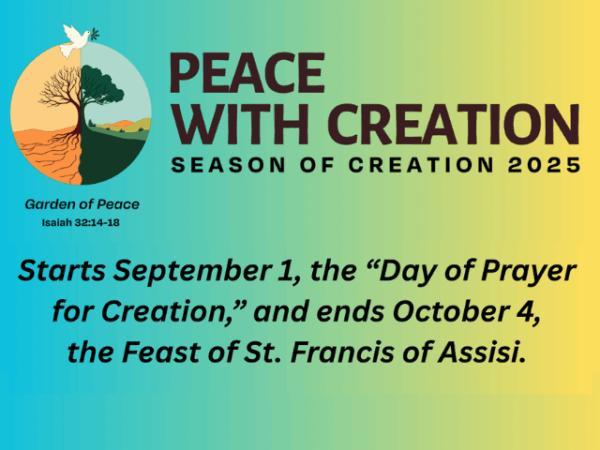
These words of the prophet will accompany the “Season of Creation,” an ecumenical initiative to be celebrated from 1 September to 4
contrary, “the biblical texts are to be read in their context, with an appropriate hermeneutic, recognizing that they tell us to ‘till and keep’ the garden of the world [cf. Gen 2:15]. ‘Tilling’ refers to cultivating, ploughing or working, while ‘keeping’ means caring, protecting, overseeing and preserving. This implies a relationship of mutual responsibility between human beingsand nature” (ibid., 67).
Season of Creation, an ecumenical initiative promoting integral ecology
October 2025. They remind us that, together with prayer, determination and concreteactions are necessary if this “caress of God” is to become visible to our world (cf. Laudato Si’ , 84). The prophet contrasts justice and law with the desolation of the desert. His message is extraordinarily timely, given the evidence in various parts of the world that our earth is being ravaged. On all sides, injustice, violations of international law and the rights of peoples, grave inequalities and the greed that fuels them are spawning deforestation, pollution and the loss of biodiversity. Extreme natural phenomena caused by climate changes provoked by human activity are growing in intensity and frequency (cf. Laudato Deum, 5), to say nothing of the medium and long-term effects of the human and ecological devastation being wrought by armed conflicts.
As yet, we seem incapable of recognizing that the destruction of nature does not affect everyone in the same way. When justice and peace are trampled underfoot, those who are most hurt are the poor, the marginalized and the excluded. The suffering of indigenous communities isemblematicin thisregard.
That is not all. Nature itself is reduced at times to a bargaining chip, a commodity to be bartered for economic or political gain. As a result, God’s creation turns into a battleground for the control of vital resources. We see this in agricultural areas and forests peppered with landmines, “scorched earth” policies, [1] conflicts over water sources, and the unequal distribution of raw materials, which penalizes the poorer nations and undermines socialstability itself. These various wounds are the effect of sin. This is surely not what God had in mind when he entrusted the earth to the men and women whom he created in his image (cf. Gen 1:24 -29). The Bible provides no justification for us to exercise “tyranny over creation” (Laudato Si’, 200). On the
Environmental justice – implicitly proclaimed by the prophets – can no longer be regarded as an abstract concept or a distant goal. It is an urgent need that involves much more than simply protecting the environment. For it is a matter of justice – social, economic and human. For believers it is also a duty born of faith, since the universe reflects the face of Jesus Christ, in whom all things were created and redeemed. In a world where the most vulnerable of our brothers and sisters are the first to suffer the devastating effects of climate change, deforestation and pollution, care for creation becomes an expression ofour faith and humanity. Now is the timeto follow words with deeds. “Living our vocation to be protectors of God’s handiwork is essential to a life of virtue; it is not an optional or a secondary aspect of our Christian experience” (Laudato Si’, 217). By working with love and perseverance, we can sow many seeds of justice and thus contribute to the growth of peace and the renewal of hope. It may well take years for this plant to bear its first fruits, years that, for their part, involve an entire ecosystem made up of continuity, fidelity, cooperation and love, especially if that love mirrors the Lord’s own self -sacrificing Love.
Among the Church’s initiatives that are like seeds sown in this field, I would mention the Borgo Laudato Si’ project that Pope Francis bequeathed to us at Castel Gandolfo. It is a seed that promises to bear fruits of justice and peace, and an educationalproject in integral ecology that can serve as an example of how people can live, work and build community by applying the principles of the Encyclical Laudato Si’ I pray that Almighty God will send us in abundance his “Spirit from on high” (Is 32:15), so that these seeds, and others like them, may bring forth an abundant harvest of peace and hope.
The Encyclical Laudato Si’ has now guided the Catholic Church and many people of good will for ten years. May it continue to inspire us and may integral ecology be increasingly accepted as the right path to follow. In this way, seeds of hope will multiply, to be “tilled and kept” by the grace of our great and unfailing Hope, who is the risen Christ. In his name, I offer all of you my blessing.
LEO PP.XIV ❖
Recognizing the importance of authentic human ecology, the Season of Creation is an opportunity to join the many efforts of Christians and of people of good will around the world who are workingfor ecological conversion.
The Season of Creation is an ecumenical initiative celebrated every year from September 1 to October 4 (Feast of St. Francis of Assisi) and promoted and supported by various organizations, including the Laudato Si’ Movement, the World Council of Churches, the Lutheran World Federation, and the Anglican Communion.
The theme of the Season of Creation 2025 is “Peace with Creation” and, as every year, the Laudato Si’ Movement has prepared aCelebrationGuide
History of the Season of Creation
In 1989, Ecumenical Patriarch Dimitrios I proclaimed September 1 as the Day of Prayer for Creation for Orthodox Christians.
Subsequently, the World Council of Churches (WCC) extended the celebration until October 4, the feast day of St. Francis of Assisi.
In recent years, the Catholic Church has encouraged all people to embrace ecological conversion and to participate in the initiatives of this ecumenical season.
World Day of Prayer for the Care of Creation
In 2015, Pope Francis published the encyclical Laudato Si’ and soon after instituted in the Catholic Church the “World Day of Prayer for the Care of Creation”.
Since then, the Holy Father has published a message for this World Day every year. The theme for 2025 is: “Seeds of Peace and Hope”.
Continuing in this vein, Pope Leo XIV approved the Mass for the Care of Creation (Missa pro custodia creationis) and celebrated this votive Mass himself on July 9 at Borgo Laudato Si’ in Castel Gandolfo. ❖
[The Dicastery for Promoting Integral Human Development]
A Christian Perspective on Social It's the hour
By GHK Lall
It is Sunday, August 31st, and all Guyanese know what tomorrow, Monday, September 1st is. A blessed day, may it be. One of which all Guyana can be proud. Clean. Constructive. Neat. Straight. True. Progressive. Citizens deserve such standards. Hopefully, the quarrels and trials of past years will not revisit, stain the grace of Monday. This perspective is written on Sunday, July 20th, the eternity of six weeks prior. I peer past this date and ask how Guyanese have done? What Guyana will be? What kind of day Monday, September 1 will be? And where do Guyanese go from there, whatever it was?
We owe ourselves alittle space. I may be John the Baptist crying from deep in the wilderness. Nobody listens. No one hears. None are interested. Almighty God has been good to Guyana. Gifts of nature. Gifts of treasure. Gifts of vast lands and abundant waters. Gifts of people. Guyanese should be not just among the richest in the world, but in the top row of the calmest, the strongest. Yes, I know that we aren’t and that elections succeed in unleashing the worst beasts in our nature. Against the odds, against my better judgment, I hope that tomorrow, September 1st , and especially the times beyond reflectsome growth, help reveal some truth, and guide to untangle the knots thathave always heldprisoner.
I urge my fellow Catholics, all who are reading these few lines, to go out and deliver on that right of a citizen.
Catholic social teachings emphasize a responsibility to contribute to the system of governance that is wished for, under which it is desired to be lived. One that is about compassion and justice. One that is for the poor widow and the orphaned child. One that is for a fair distribution of this nation’s God-given wealth. I will never say who to vote for, or which group is preferred over the other. And though I am still working through my own handicaps about whether to cast a ballot or not, I still strongly encourage all of my fellow citizens and Christians to go out and vote. Vote wisely. Vote peacefully. Do not allow self to be ensnared in the arguments and passions of the day. Just try to be the best Catholic and citizen. Think only of how the Messiahwould prefer us to be.
I do not know if I am guilty of being over optimistic, and also unrealistic, considering that it is Guyana and the time is of elections. There is no vision of what the next six weeks will bring, again with the reminder that this is written on July 20th, the same number of weeks from August 31-September 1st. On this last Sunday before the polls, I trust, I hope, that tomorrow, Monday, will be more than a day of voting. More than a time of counting and tabulating and sharing the reckoning of the 2025 elections. I hope and pray that Monday, September 1st will prove to be a day of reflection, an hour for connection to our beliefs, a time of surrender to the will of God. His way and His time are not the same as ours. But of this, it must always be remembered: the arc of the moral universe is long, but it bends towards justice.
The power of God always prevails. Light overpowers darkness. The truths of Jesus must be held fast to, treasured. Not those of frail, mortal man. But those of God Almighty himself.
In knowing them, I must live them. Each one of us. I will be lesser, if one, only one, were not to love that truth, and my response is that it is not my concern. Whether through elections, or under the umbrella of a heavenly hand, a better society is sought, a better people to live side and in Christian harmony. Guyanese have been given so much, yet have so little. In the things that matter. Every development deteriorates into a crisis. Every neighbor is viewed through the lens reserved for enemies. We can do better,and we must be better. I don’t know if I have done my part, or did it well. The record of either, and report on both, is best left to the verdict of others. I have tried to serve God, live the teachings, speak like Paul. Hopefully, the powers of heaven nod ever so slightly. So must each one of us give our best, be of what is righteous, and the way of the Lord. Go out and vote. Leave the rest to the one who determines the way the worldturns. Amen.❖
Gracious and loving God, we thank your for the gift of our priests. Through them, we experience your presence in the sacraments.
Help our priests to be strong in their vocation.
Set their souls on fire with love for your people.
Grant them the wisdom, understanding, and strength they need to follow in the footsteps of Jesus. Inspire them with the vision of your Kingdom.
Give them the words they need to spread the Gospel.
Allow them to experience joy in their ministry.
Help them to become instruments of your divine grace.
FIRSTREADING: Ecclesiasticus 3:17-20. 28-29
Behave humbly, and then you will find favour with the Lord.
My son, be gentle incarryingoutyour business, andyou will be better lovedthan alavish giver. The greater youare,the more youshouldbehave humbly, and thenyouwill find favour withthe Lord; for greatthough the power of the Lordis, he accepts the homage of the humble. There is no cure for the proudman’s malady, since anevil growth has takenrootinhim. The heart of asensible manwill reflectonparables, anattentive ear is the sage’s dream.
ResponsorialPsalm:
Psalm 67
Response: In your goodness, O God, you prepared a home for the poor.
1. The justshall rejoice at the presence of God, they shall exultand dance for joy.
Osing to the Lord,make music to his name; rejoice inthe Lord,exultathis presence. Response
2. Father of the orphan,defender of the widow, suchis Godinhis holy place.
Godgives the lonely ahome to live in; he leads the prisoners forthinto freedom. Resp.
3. Youpoured down,O God,a generous rain: whenyour people were starvedyougave them new life.
Itwas there thatyour people founda home, preparedin your goodness,O God, for the poor. Resp.
SECONDREADING: Hebrews 12:18-19. 22-24
You have to come to Mount Zion, and to the city of the living God
What you have come to is nothing known to the senses: not a blazing fire, or a gloom turning to total darkness, or a storm; or trumpeting thunder or the great voice speaking which made everyone that heard it beg that no more should be said to them. But what you have come to is Mount Zion and the city of the living God, the heavenly Jerusalem where the millions of angels have gathered for the festival, with the whole Church in which every-
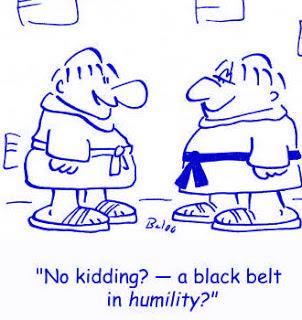
Today’s readings remind us of a chief virtue that characterizes the Christian steward: humility. This is a virtue that is widely thought of as a form of self-abasement. That understanding, however, is off the mark. Humility is simply the awareness of who (and Whose) we truly are.
one is a first-born son’ and a citizen of heaven. You have come to God himself, the supreme Judge, and been placed with spirits of the saints who have been made perfect; and to Jesus, the mediator who brings a new covenant.
Gospel Acclamation Jn 14: 23
Alleluia,alleluia!
If anyone loves me he will keepmy word, and my Father will love him, and we shall come to him. Alleluia!
or Mt 11: 27
Alleluia, alleluia!
Shoulder my yoke and learn from me, for I amgentle and humble inheart. Alleluia!
GOSPEL: Luke 14:1. 7-14
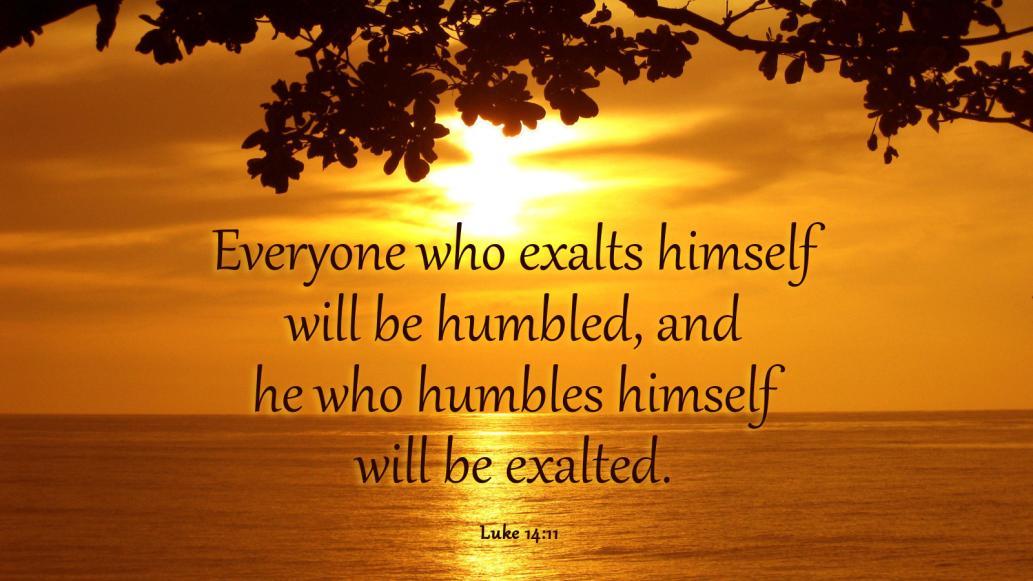
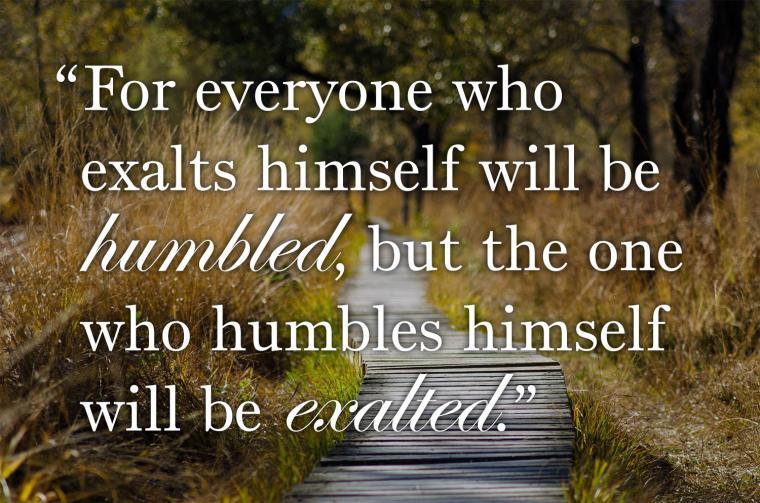
Everyone who exalts himself will be humbled, and the man who humbles himself will be exalted .
On a sabbath day Jesus had gone for a meal to the house of one of the leading Pharisees; and they watched him closely. He then told the guests a
On one hand, we are children of the Most High God who loved us into existence and who, by virtue of our Baptism, have the Holy Trinity dwelling within us. On the other hand, we are children who are completely dependent on God for our existence andfor every breath we take.
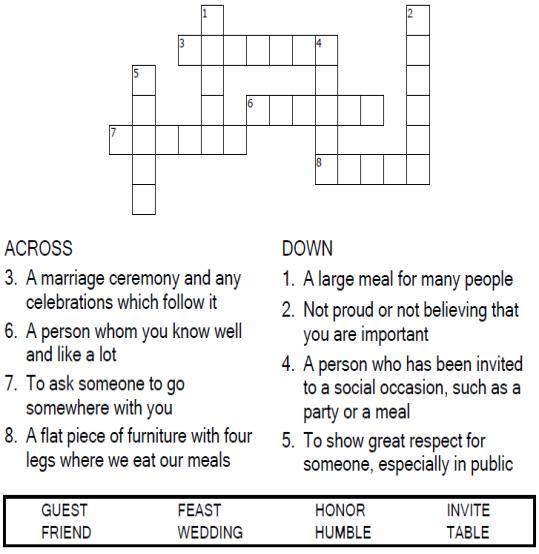
Our Lord speaks of true humility in our Gospel passage from Luke, telling the parable of the guests invited to a wedding banquet and instructing us not to seek a place of honour at the banquet table, lest a more
parable, because he had noticed how they picked the places of honour. He said this, ‘When someone invites you to a wedding feast, do not take your seat in the place of honour. A more distinguished person than you may have been invited, and the person who invited you both may come and say, “Give up your place to this man”. And then, to your embarrassment, you would have to go and take the lowest place. No; when you are a guest, make your way to the lowest place and sit there, so that, when your host comes, he may say, “My friend, move up higher”. In that way, everyone with you at the table will see you honoured. For everyone who exalts himself will be humbled, and the man who humbles himself will be exalted.’
Then he said to his host, ‘When you give a lunch or a dinner, do not ask your friends,brothers,relations or rich neighbours, for fear they repay your courtesy by inviting you in return. No; when you have a party,invite the poor,the crippled, the lame, the blind; that they cannot pay you back means that you are fortunate, because repayment will be made to youwhenthe virtuous rise again.’ ❖
distinguished guest arrives and we are askedto move to alower place.
Jesus has much more in mind here than an etiquette lesson. He is reminding us that all glory belongs to God. The visual image He offers in having to slink down to a lower seat at the table points out how silly we are when we forget to give God the credit for our blessings and talents.
On the other hand, when we live in humility recognizing that all we have is a gift from God and using those gifts to serve Him and others then God “exalts” us by filling us with even
more of Himself and His grace. Jesus goes on to encourage us to serve and share our blessings with people facing circumstances that would make it impossible for them offer us any worldly advantage or prestige “the poor, the crippled, the lame.”
Our attitude and the way in which we serve and share should be centred on true humility recognizing that we are all “little” ones in the eyes of God. We are all His children; brothers and sisters invited to our Father’s heavenly banquet. ❖
[www.catholicsteward.com/blog/ ]
Gospel Reflection
Humility is a word that does not mean much in our society today. It gives the impression of being meek and timid. Many people feel that you cannot succeed in the world while being humble because it means putting aside your own interest in favour of that of another person. It seems to go against the way of modern society – one does not sacrifice one’s own interest for the sake others. Does it mean that most people are out to benefit at the expense of others? On the other hand, we notice that today’s First Reading suggests that a humble person is more open to God and so is more likely to find favour with the Almighty. This is because in order to humble ourselves, we have to let go of those things that give us a false sense of importance and superiority and which separate us from others.
Generosity in giving has always been considered an important part of being a Christian. In fact, you can tell a true Christian from those who pretend to be one by the presence or absence of generosity in giving, even if it is only some of your time. But giving by itself is not all. We hardly ever think of the quality of our giving. It is the way we give and the spirit in which we give, that is important. Today’s Gospel sets a very high standard for us in our act of giving. Jesus points outthattruegiving happens whennothingisexpectedinreturn.
We knowthattheLord isnot like we are when it comes to giving. The Lord is the greatest giver of all. For one thing, he gives to those who are at times most undeserving of his gifts. We are invited to the banquet of God’s love and we take our places as children of our loving Father, neither grasping for a place of honour nor holding back out of fear. We answer God’s loving invitation with our own loving response. God calls us, welcomes us and puts us to sit down where we belong, in the company of those who pay attention to God’s Word, who listen with open hearts for God’s wisdom. Remember it is not the place that honours the guest, but the guest that honours the place.
[From: Journeying
TheWordandtheWorld
The last shall be first
BYMIKEJAMES
Judicial history has been made in Mexico. For the first time in the world, an entire Supreme Court of a nation has been directedly elected by the votes of the population. Some state judges and magistrates are currently elected by popular vote in the USA, Japan, and Switzerland, but nowhere has such a comprehensive transfer of judicial power directly to the population been tried. 850 magistrates nationwide and all state judges voted for in the June 1, 2025 judicial election will also take office.
All existing members of the judiciary and other legally qualified candidates were able to compete in the election and publicise their records and merits for being elected, but POLITICAL PARTIES WERE NOT PERMITTED TO PROPOSE, ENDORSE OR CANVASS FOR CANDIDATES. The top polling 5 female and 4 male candidates would form the Supreme Court and the highest polling of either sex would become the President of the Supreme Court. The population vote results were a stunning surprise to the entire country. With 6.1 million votes (more than those received by the opposition PRI party in the 2024 general elections)
maintained uninterrupted rule for 75 years by a combination of oppression and massive electoral fraud.
Hugo Aguilar Ortíz, an indigenous lawyer from a poor Mixtec indigenous village San Agustín Tlacotepec in the rural state of Oaxaca topped the list and has become the first directly elected Indigenous president of Mexico’s Supreme Court. Indigenous people comprise 19% of the population according to the 2020 census. The corresponding indigenous population percentage from Guyana’s 2012 census is 10.5% (The corresponding data for the 2022 Guyana census is yet to be publicly released)
Hugo Aguilar is a lawyer and holds a master's degree in Constitutional Law from the Benito Juárez Autonomous University of Oaxaca. He gained prominence in the 1990s as legal advisor to the Zapatista Army of National Liberation (EZLN) - an indigenous guerrilla group which staged a short-lived uprising in southern Chiapas state in 1994 against the corrupt PRI government that had then
Later, he entered government service, serving as Subsecretary of Indigenous Rights and as General Coordinator of Indigenous Rights at the National Institute of Indigenous Peoples (INPI). Aguilar was also a consultant on indigenous lands for the United Nations High Commissioner for Human Rights, and worked at the Oaxaca State Institute for CitizenParticipation, After being the most voted for as future Supreme Court Justice, Hugo Aguilar addressed the people of Mexico thanking them for their supportand beginning with a message in his native Mixtec indigenous language. “To our sisters and brothers who are all Mexican, I tell you that we are children of the same people; we are all here, so we must be equal and united. I will work for everyone,” saidAguilar Ortiz. The future Chief Justice of the Supreme Court celebrated the arrival of the time when the people of Mexico have decided who will represent them in the courts. He also emphasized that the electoral process of June 1st will help to transform the lives of Indigenous peoples, as well as Afro-Mexicans who make up 3% of the national population. “Today we have a Supreme Court that emerged from a popular mandate... And with this, it strengthens the separation of powers and judicial independence. We also have a multicultural Supreme Court; the voice and thought of Mexico's depths will be present every day and will be a fundamental part of decisionmaking.
On September 1, the new Supreme Court and hundreds of judges and magistrates with a direct popular
mandate will begin administering justice for a Mexican population that had been oppressed by corrupt governments in alliance with legislators and judges while leaving millions of poorer Mexicans inpoverty.
The date coincides with election day in Guyana. Hotly contested election results in Mexico since the introduction of universal adult suffrage have often been resolved in the courts with corrupt judges endorsing massive election fraud by former ruling parties. Guyana post independence judicial history has been similar. More recently the Caribbean Court of Appeal has had to be asked to rescue the electoral process after the local judiciary was unable to deliver satisfactory electoral justice to the Guyanese people. It would not surprise many if next month’s Guyana election results are again referred to the nation’s judiciary for resolution and confirmation of the collective will of the people.
Many around the world following the Mexican Judicial experiment at direct popular participation in the election of judges will be hoping that the experiment under the leadership of a representative of the most marginalized and oppressed group in Mexico will indeed lead to greater genuine justice for all. Countries like Guyana with a judiciary in process of consolidating its national credibility, especially in electoral matters, may do well to follow the progress of the Mexican experiment.
And will “the last coming first” in the Mexican judicial system be the prelude to any learning from and imitating the message and example of He who first preached and lived the promise that in His Kingdom, “The first will be last,and the last,first? ❖
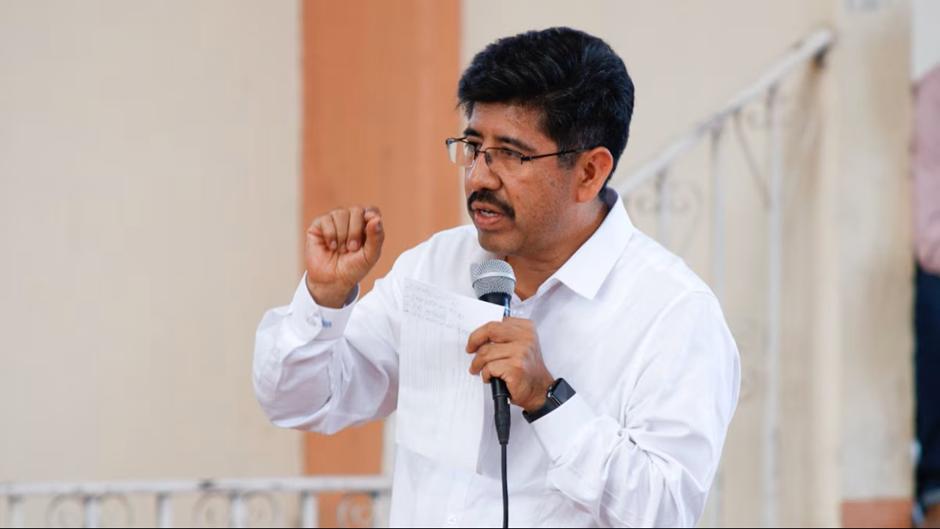
Hugo Aguilar Ortíz, the first directly elected Indigenous president of Mexico’s Supreme Court
Live, act on faith; avoid ‘split’ personality, Pope
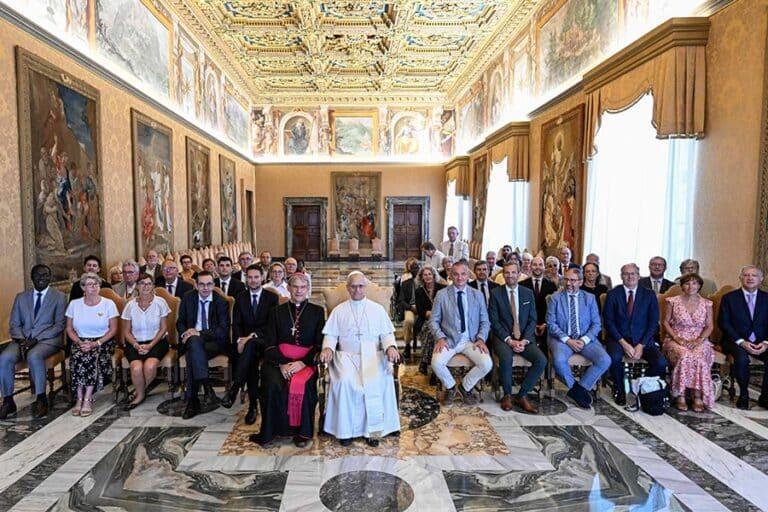
VATICAN CITY (CNS) Even in countries with the strictest separation of church and state, being a Christian means living and acting like one, Pope Leo XIV told a group of politicians and civic leaders fromFrance.
“Christianity cannot be reduced to a merely private devotion, for it entails a way of living in society marked by loving God and neighbor, who in Christ is no longer an enemy but a brother,” the pope said Aug. 28 to members of the group from the Diocese of Créteil, who were making a pilgrimage with their bishop, Bishop Dominique Blanchet.
Pope Leo began the audience by telling the delegation that while he assumed many of them spoke English, “I am going to attempt to speak French, counting on your benevolence!”
Faith in Jesus has implications for “every dimension of human life, such as culture, the economy and work, family and marriage, respect for human dignity and for life, and health care, along with communication, education and politics,” the pope said.
“Unite yourself more and more to Jesus live in him and bear witness to him,” Pope Leo told the group. There should be no “split in the personality of a public figure; there is not the
Journeying with the Word of God
MAKING THE WORD OF GOD YOUR OWN
Step 1: Lookattoday’sReadingsprayerfully.
1st Reading: Praise is given to the person who is humble. A humble person is open to God and never rejects wisdom, no matter where itcomes from.
2nd Reading: While Mount Sinai was the place where the old covenant was made, Mount Zion stands for the heavenly Jerusalem. There all those of the newcovenant are equal in dignity.
Gospel: In today’s Gospel, Jesus urges his followers not to covet places of honour but to always act unselfishly.
politician on one side and the Christian on the other. Rather, there is the politician who, under the gaze of God and guided by his conscience, lives out his commitments and responsibilities as a Christian!”
The pope encouraged the politicians and civic leaders to grow in their faith and study Catholic doctrine, particularly the social teaching of the church, and “apply it in the exercise of your duties and in the drafting of laws.”
“Its foundations are profoundly in harmony with human nature and the natural law that all can
recognize, including nonChristians and nonbelievers,” he said. “So, do not be afraid to propose and defend it with conviction: it is a doctrine of salvation aimed at the good of every human being, and at building peaceful, harmonious, prosperous andreconciledsocieties.” Pope Leo prayed that the Jubilee Year pilgrimage would help the pilgrims “return to your daily commitments strengthened in hope, more firmly grounded to work toward the building of a more just, more humane, more fraternal world which can only be a world more deeply imbued with the Gospel.”❖
1.What do you think is the wisdom in the advice to “be gentle in carrying out your business and you will be better loved than a lavish giver”? Is this the way the worldthinks today?
2.Jesus tells us to invite the beggars, the crippled, the lame and the blind. Whom do you consider to be the beggar, the crippled, the lame and the blind in your neighbourhood, your workplace, andyour churchcommunity?
3.How does the Gospel challenge whom you welcome into your life, in your family, in your workplace,inyour parish community?
4.What do you consider to be the things that give you a false sense of importance and superiority and whichseparate youfromothers?
Step 3: Accepting the message of God’s Wordinyourlifeoffaith
To give is not a luxury for a Christian. It is our first and basic duty as followers of Christ. It is something so obvious that we shouldn’t even have to talk about it. The Christian idea of giving is when the giver doesn’t know to whom he or she is giving and when the receiver doesn’t know from whom he or she is receiving.
Step 4: Somethingtothink&prayabout
List all the things you need to do, to let go of, to change or to put in order of priority in your life in order to live the Gospel this coming week.
Write out what you consider to be the characteristics of Christian giving. Talk to someone (a friend, a spouse, a fellow worker, your children) about these characteristics.
Make a great effort to let humility be your motto indealingwithothers,startingthiscomingweek.❖
From: Journeying with the Word of God, The Religious Education Department, Diocese of Georgetown, Guyana ]
Pope Leo XIV poses for a photo with Catholic politicians and civic leaders from the Diocese of Créteil, France, at the Vatican Aug. 28, 2025. (CNS photo/Vatican Media)
Marian Academy at the Exams
From GHK Lall
The young CSEC and CAPE students of Guyana delivered and thrilled this year, with improvements noted in distressed subject areas. Students from schools outside of the capital city Georgetown made it into the headlines. Congratulations are again extended to those who overachieved and those who made the mark in the public school system. From the children to the professionals to the politicians, two words -well done. Now it is time that I commend the students of The Marian Academy who soared high at CSEC and CAPE, and all those others who did well, made all of us proud. A few spots ofindividualrecognitionarefirstinline
Leading the 2024-2025 cohort of CSEC top performers at Marian are: Amya Insanally (13 subjects, 11 Grade 1s, 2 Grade 2s); Angelina Khan (14 subjects, 11 Grade1s, 1 Grade 2, 2 Grade 3s); and Brandon Ramjit (12 subjects, 8 Grade 1s, 3 Grade 2s, 1 Grade 3).
Three out of many, which is about as much that can be managed in the public space. A hand is given to those who toiled away while their companions slept and reaped their just rewards. Thanks, and congratulations.
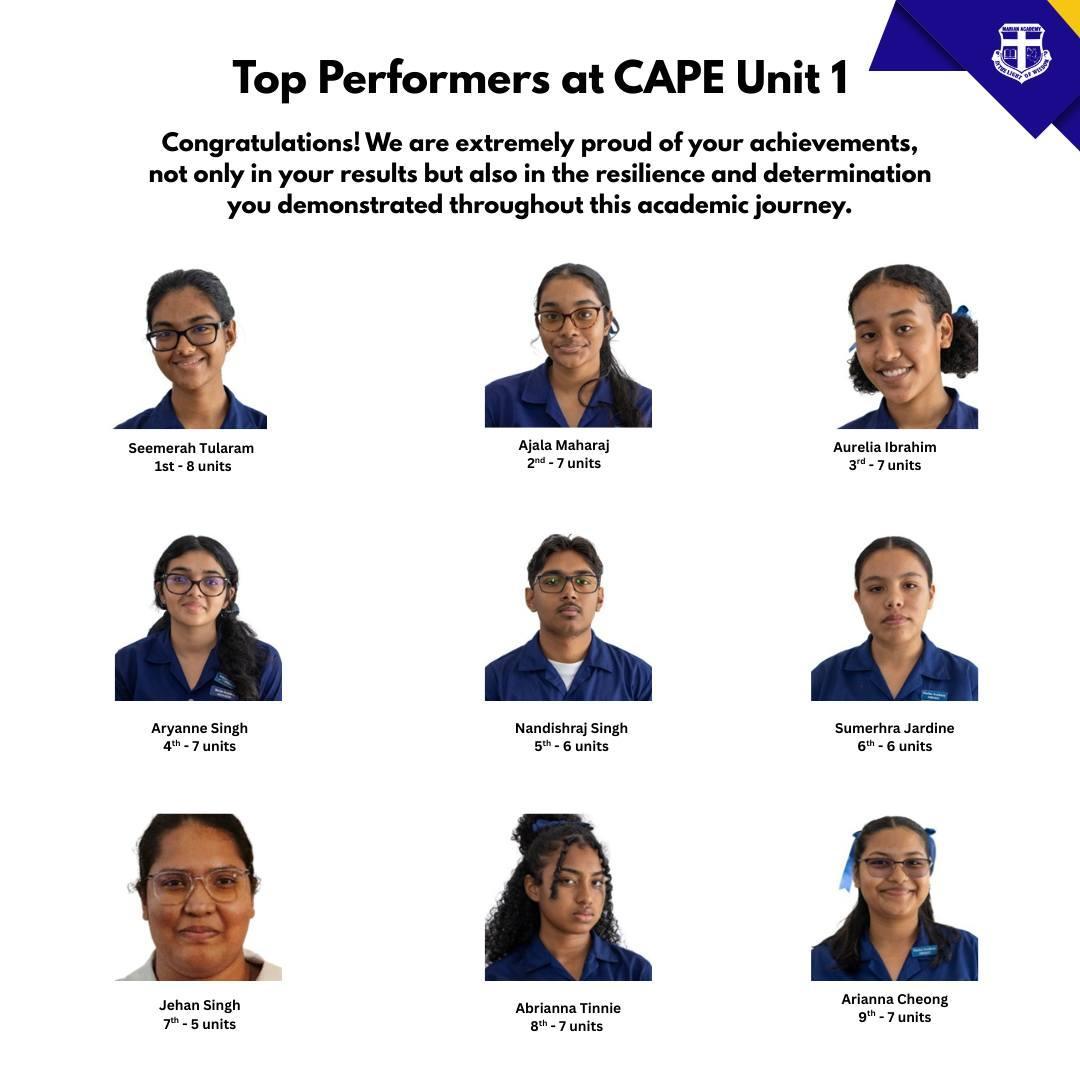
To move from the individual to the overall, the achievements of The Marian Academy students were steady, and in keeping with the levels of past educational journeys, the wondrous flights of past years. The overall pass rate at CSEC for the Marian Academy stood at 93.8%, with a mere 32 grades out of 518 falling outside that narrow fence of Grades 1 to 3. At the individual subject level, English A, Biology, and Caribbean History all recorded 100% passes. There were 13 other subject areas that hit that perfect score. English B (formerly Literature) checked in at 95.6%, Economics at 95.5%, Geography at 93.3%, and Mathematics at 81.8%, a tad of a dip for Marian. There is only one way that this year’s results can be viewed, and it is said straight and clear. The Marian Academy scorecard for the 2024-25 CSEC cohort of students has its own special gleams. I see, along with their peers from the public school system, some jewels in the making of Guyana’s still unfinished crown. It is that big and impressive of a national treasure, as encircled by all of these children, including the ones not mentioned. They all make us proud. Go forth, O young ones of Guyana, and hold that Golden Arrowhead aloft. Be different! Be contributors to a Republic that will be remembered in awed tones, at sometime in the future. Then, there were the CAPE highfliers. Here are the names that corralled the top three slots at Unit 1: Sumeerah Tularam (8 units); Ajala Maharaj (7 units); and Aurelia Ibrahim (7 units). Copping the first two spaces are: Caleb Mendoza (4 units); and Kayla Persaud (4 units). For sure, the number of units taken may be relatively small, but they represent big hearts and big dreams. And if I may say so, big achievements, too. May the endeavors that are ahead be graced with similar, if not higher efforts and the highest accolades. This
country can use each one that it can rightfully claim.
CSEC and CAPE, what do they incorporate in the numbers that drive narratives, such as this puny one? Naturally, the focus and devotion of students come in for first reckoning. Then, there is that silent brigade operating outside of the public view, but which makes so much happen, so many grand returns for the hours of supporting and cajoling and mentoring and coaching. The patience of teachers; the sacrifices of parents; and those mop-and-broom salt of the earth Guyanese that keep the plant neat and running. I salute them all. For the children’s successes are their blessings. And when the last word has been written, and there comes those quiet moments of reflection, there still is, and must always be, a minute left for that one conversation that matters the most. Thanks be to God. To God be the glory for these students and their supporting cast at the Marian Academy, and those beyond its long classes, corridors, communities.
Dear Girls andBoys,
In today’s gospel reading we learn about humility. Jesus says: Everyone who exalts himself will be humbled, and the man who humbles himself will be exalted. To exalt oneself is to be filled with pride. We can sometimes get all puffed up like a balloon with our own importance. We think we are great and we expect everyone else to think so too. Maybe it is because we are so good looking, or maybe it is because we are so smart. Maybe we are really good in sports, or perhaps we are the best singer in the choir. Sooner or later, if we keep getting puffed up with our own importance, something will happen to burst our balloon.
Jesus warned us that this would happen. The Bible teaches us that if we are too proud and think too highly of ourselves, we are headed for a fall. On the other hand, if we are humble, and realize that it is through God's strength that we are able to do great things, we will be given a place of honour in the kingdomof God.
Jesus, help us to be humble. Remind us that whatever abilities we have are a gift from you and that you are the one who deserves the praise! Amen. ❖
Happy are those people who are fair, who do what is right at all times. Psalm 106:3
St. Joseph Mercy Hospital stands healthy at 80
On September 1st 2025, the prestigious St. Joseph Mercy Hospital will celebrate 80 years of dedicated service. Conveniently located on Parade Street, Kingston, Georgetown, the hospital remains a beacon of compassionate, high-quality healthcare in Guyana.
The idea for the hospital began in 1943 with the Sword of the Spirit – a group of Catholic lay people. They recognized the need for a premier healthcare facility that would serve all people regardless of race, religion, or social status. Discussions for its establishment brought together the Sisters of Mercy, the Bishop of Georgetown, prominent businesspersons, and the executives of the Sword of the Spirit. Through donations, the Colona House nursing home was acquired and renovated to serve as the hospital. The facility was equipped with essential departments, including an admissions office, X laboratory, operating theatre, and maternity ward.
A nursing school was also established to train nurses before the hospital official opening. This school later became a recognized institution and continues to operate today, producing skilled nurses who serve not only in Guyana but across the Caribbean and internationally.
Over the years, additional properties were acquired, and new three wings were built to accommodate more patients.
On March 19th 1945, the Feast of St. Joseph, the institution was dedicated to its patron saint. It was officially blessed on August 15th 1945, the Feast of the Assumption of Mary, and just weeks later, on September 1st 1945, the hospital welcomed its first birth, officially openingits doors to the public.
institution committed to serving all in need.
recovery room, and relocated ICU and admissions offices.
The hospital quickly gained a reputation for excellence. In 1963, during a time of national unrest, it played a crucial role alongside the Georgetown Hospital in providing care to citizens. Founding doctors such as Dr. Romiti, Dr. Bettencourt, Sir Maly Gomes, Dr. Fredericks, and Dr. Honnet Searwar were among the pioneers who offered medical and surgical care. From the very beginning, St. Joseph Mercy Hospital has been a faith-based, nonprofit
A major setback came in 2010, when a devastating fire destroyed the hospital’s old wing. Critical areas including doctors’ offices, admissions, records, the emergency room, private wards, the operating theatre, and the ICU were lost. Yet, through generous donations from local and overseas supporters, the hospital rebuilt. New facilities were established, including two modern operating theatres, a
In the latter years the administration of the hospital shifted to laypersons. However, the Sisters of Mercy, together with the Bishop and the Board of Directors, continue to guide and oversee the institution. Fundraising efforts remain strong through the Friends of Mercy, an auxiliary support group that continues the missionof service.
Today, St. Joseph Mercy Hospital continues to stand as a pillar of healthcare in Guyana. With the
implementation of a new Hospital Management Information System (HMIS) and the expansion of advanced medical services, the hospital now offers life-saving procedures that once required travel abroad including brain surgery, kidney transplants, and total hipandknee replacements.
As it celebrates 80 years, St. Joseph Mercy Hospital remains committed to its founding vision: to provide compassionate, high-quality healthcare to all who needit. ❖
(Catholic Media Guyana Facebook Page)
Just Electoral Peace: Lessons for Guyana's Democratic Future
This briefing note is prepared to encourage renewed civil society dialogue and engagement toward just electoral peace in Guyana. It draws on insights from regional experts and experiences to provide practical guidance for building a more inclusive, peaceful, and democratic society.
I. Background
As Guyana approaches its National Elections on September 1, 2025, the nation stands at a critical juncture. Historical wounds rooted in ethnic and class divisions may fuel electoral tensions, threatening to manifest in violence or prolonged court litigation that could undermine democratic stability. While we hope for greater maturity and acknowledge that steps have been taken to respond to some of the issues that arose from the 2020 elections, the Roman Catholic Church of Guyana took note of this challenge. Inspired by the late Pope Francis's encouragement of political dialogue, the Church organised a three-part webinar series titled "Just Electoral Peace."
This series brought together experts from Suriname and Trinidad and Tobago - two neighbouring countries that have successfully maintained peaceful electoral processes despite facing similar ethnic divisions and colonial legacies. In addition to these attributes, Guyana shares a similarly small population that relies on a natural resource-based economy, increasingly reliant on the oil and gas industry.
The webinars explored three critical dimensions of electoral peace: reconciliation and trust-building, system strengthening, and the promotion of shared constitutional rights and values. These three dimensions were inspired by a framework that civil society groups developed in 2020/2021 through a UN-facilitated dialogue that took place in the wake of the post-2020 election conflicts, and which sought to identify and address the root causes of the post-2020 electionviolence. The concept of "Just Electoral Peace" extends beyond the mere absence of violence. It encompasses social justice, equality, and human rights as foundational elements of sustainable democracy. This briefing synthesises insights from regional experts to provide actionable guidance for Guyana's civil society, political leaders, and citizens committed to nation-building.
The webinar series was structured around three thematic areas:
• Reconciliation and Trust: Addressing historical grievances that fuel electoral tensions
• System Strengthening: Building legitimate and effective electoral institutions
• RightsandValues: Fostering shared principles for peaceful political engagement
II. Key Insights from Regional Experience
a. Historical Context and Ongoing Challenges
Both Suriname and Trinidad and Tobago demonstrate that countries with deep ethnic and class divisions can achieve electoral peace through deliberate institutional development and civil society engagement. However, their experiences also reveal that peaceful elections alone do not guarantee democratic consolidation or social cohesion.
Suriname's Experience: Despite ethnic divisions between Afro- and Indo-Surinamese populations dating to the 1950s, and the trauma of the 1980 military coup, Suriname has maintained electoral stability since 1949 without post-election violence. This success stems from political parties' consistent adherence to electoral rules and constitutional procedures, even amid coalition shifts and political rivalries.
Trinidad and Tobago's Lessons: Similarly divided along AfroTrinidadian and Indo-Trinidadian lines, this nation has achieved peaceful power transitions through strong institutions, including an independent judiciary and credible Elections and Boundaries Commission. Trade unions have played a crucial role in bridging ethnic divides, while civil society organisations provide platforms for cross ethnic dialogue.
b. Critical Success Factors
Institutional Trust and Independence: Both countries maintain electoral management bodies that enjoy broad-based trust. The legitimacy of institutions like Trinidad and Tobago's Elections and Boundaries Commission and Suriname's Independent Electoral Council depends on perceived impartiality, independent funding, and inclusive appointment processes involving opposition representatives.
Rule Adherence over Perfect Unity:
A key insight from Suriname is that while perfect shared values may be
elusive, disciplined observance of agreed-upon electoral rules by political actors serves as a foundational pillar for democratic peace. Political parties must commit to "playing by the rule book," accepting results and following established constitutional procedures.
ElectoralSystemDesign: Suriname's recent transition to proportional representation has helped reduce ethnic polarisation and promote coalition-building, while Trinidad and Tobago's first-past-the post system provides clarity but can create disparities between popular vote and legislative representation. Both systems can support peaceful transitions when coupled with strong institutions.
c. Persistent Challenges
Voter Apathy and Disconnect: Both countries face significant voter apathy, with turnout rates of 30- 55% in Trinidad and Tobago and declining participation in Suriname (from 73% to 53% in recent elections). This reflects public resignation and a perception that elections don't impact daily life, weakening democracy's foundation.
Political Culture Deficits: Despite peaceful elections, both countries suffer from divisive political cultures marked by aggressive partisanship, money-driven politics, and frequent coalition shifts that erode voter trust. Pre-election rhetoric and unfulfilled promises consistently undermine democratic values.
EconomicInequalityasTensionDriver: Resource wealth, particularly from oil and gas, raises stakes in political competition, with groups vying for access to economic benefits. Unequal distribution of resources exacerbates ethnic tensions, underscoring the need for equitable governance andinclusive economic policies.
d. The Role of Civil Society
Essential but Underutilised: Independent civil society organisations are crucial for voter education, political accountability, and promoting constitutional values. However, many remain under-resourced and politically co-opted. In Trinidad and Tobago, the absence of a fully effective human rights body highlights gaps thatcivil society mustfill.
YouthasAgentsofChange: Younger generations in both countries show less attachment to historical ethnic animosities and more fluid political allegiances. This presents both challenges and opportunities to redefine political participation beyond ethnic lines, but requires meaningful engagement that goes beyondsymbolic outreach.
Media and Information Environment: Independent media plays a vital role in maintaining electoral integrity, but faces challenges from political pressures and resource constraints. Digital platforms offer new opportunities for civic education and engagement, though they also presentrisks of misinformation.
III. Summary and Conclusions
The experiences of Suriname and Trinidad and Tobago demonstrate that electoral peace is achievable even in societies with deep historical, political, and economic divisions, but it requires sustained commitment to institutional development, civil society strengthening, and cultural transformation. Several critical conclusions emerge:
Peaceful Elections Require Comprehensive Approaches: Surface-level calm during elections does not automatically reflect deep democratic culture or shared constitutional values. True electoral peace demands attention to reconciliation, system legitimacy,andvalues alignment.
Institutional Legitimacy is Paramount: Electoral management bodies must maintain independence, transparency, and cross-sectional trust. This requires secure funding, inclusive appointment processes, and consistent adherence to professional standards.
CivilSocietyshouldLeadDemocratic Education: Since political parties often lack incentives for deep civic education, independent civil society organisations must take primary responsibility for voter education, accountability mechanisms, and promotingconstitutional values.
EconomicJusticecannotbeIgnored: Electoral tensions are often rooted in economic inequalities and competition for resources. Sustainable peace requires equitable development policies and transparent resource management.
Youth Engagement is Critical: The disengagement of young voters represents both a crisis and an opportunity. Meaningful youth participation requires moving beyond traditional communication methods to embrace new forms of political engagement that transcend ethnic divisions.
Colonial Legacies require Active Attention: Historical wounds and colonial institutional legacies continue to shape political behaviour. Deliberate reconciliation efforts and constitutional reforms are necessary to build truly inclusive governance systems. (please turn to page 13)
Democratic Future (From P12)
The path forward for Guyana requires learning from these regional experiences while adapting solutions to local contexts andconditions.
IV. Recommendations
a.ForCivilSocietyOrganisations
Strengthen Independent Civic Education: Develop comprehensive voter education programs that focus on constitutional values, democratic processes, and citizens' rights and responsibilities. These programs should be independent of political party influence and reach diverse communities, including youth, indigenous populations,andinterior regions.
Build Cross-Ethnic Dialogue Platforms: Create sustained opportunities for cross-ethnic interaction that focus on shared community interests rather than divisive identities. Religious organisations, trade unions, and professional associations can play key roles in fostering these connections.
Monitor and Advocate for Electoral Integrity: Establish robust election monitoring systems and advocate for transparent, accountable electoral processes. This includes pushing for independent funding of electoral commissions and inclusive appointment processes.
DevelopYouthLeadershipPrograms: Create meaningful opportunities for young people to engage in democratic processes beyond traditional party politics. This should include civic education adapted to contemporary communication styles and platforms for youth to contribute to policy discussions.
StrengthenCivilSocietyCapacity:The lack of financial and human resources constrains civil society actions,suchas those recommended above. Civil society may tap into national sympathy for civic education, dialogue, electoral system integrity and youth leadership. Efforts may also be made to strengthen the legitimacy of civil society groups.
b. For Political Leaders and Parties
CommittoConstitutionalRuleAdherence: Political parties must publicly commit to accepting electoral outcomes and following established constitutional procedures, regardless of results. This includes respectful campaign conduct and post-election behaviour that strengthens rather than undermines democratic norms.
Separate Party Interests from Government Functions: Establish clear boundaries between party activities and state functions to build public trust and encourage broader citizen participation in democratic processes.
Practice Internal Democracy: Implement transparent, democratic processes within political parties to
ensure credible leadership selection and reduce manipulation risks. This includes involving diverse voices in party decision-making and candidate selection.
EngageinTruth-TellingandReconciliation: Support comprehensive efforts to address historical grievances and ethnic tensions through structured dialogue, truth-telling processes, and reconciliation initiatives that acknowledge past hurts while building sharedfuture vision.
c. For Government and State Institutions
Strengthen Electoral System
Independence: Ensure electoral commissions have secure, independent funding and appointment processes that involve the opposition. Implement transparent voter registration andresultdissemination systems.
Invest in Comprehensive Civic Education: Integrate civic education into school curricula and community programs, with particular attention to constitutional values, democratic processes, and citizens' rights. Provide adequate resources for reachingunderserved populations.
Promote Economic Justice and Inclusion: Develop equitable resource management policies that reduce ethnic tensions and promote social cohesion. This includes transparent governance of natural resource revenues and inclusive economic developmentstrategies.
Support Constitutional and Institutional Reform: Undertake necessary reforms to dismantle colonial-era structures and embed participatory democracy and social justice principles in governance systems. This includes local government reform and enhancedaccountability mechanisms.
d.ForCitizensandCommunities
Engage Actively in Democratic Processes: Move beyond ethnic voting patterns to evaluate candidates and parties based on their commitment to democratic values, policy platforms, and track records of service to all communities.
Hold Leaders Accountable: Demand transparency, integrity, and followthrough on campaign promises from political leaders. Support civil society organisations working to monitor government performance and electoral integrity.
Foster Community Dialogue: Participate in cross-community initiatives and dialogue forums that build understanding and shared vision for national development. Challenge divisive rhetoric and promote inclusive narratives aboutGuyana's future.
Support Youth Political Engagement: Mentor young people in democratic participation and create opportunities for inter-generational dialogue about political values and nationbuilding priorities.❖
and a wedding at Tuseneng
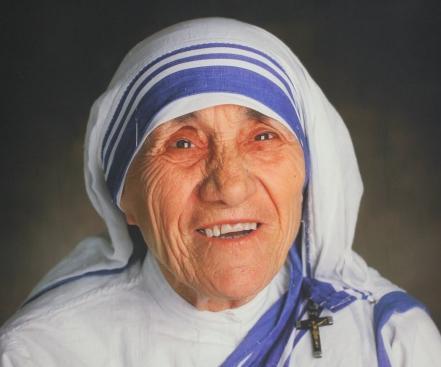
September 5th
Gonxha (Agnes) Bojaxhiu was born on August 26th 1910 to Albanian parents in what is now Skopje, Macedonia. At age 18 she entered the Loreto Sisters of Dublin. In 1929 she was sent to the Loreto novitiate in Darjeeling, India. There she chose the name Teresa and prepared for a life of service. She was assigned to a high school for girls in Kolkata, where she taught the daughters of the wealthy. But she could not escape the realities around her the poverty, the suffering, the overwhelming numbers of destitute people.
In 1946 Sister Teresa heard “a call within a call” - to leave the convent and help the poor while living among them. After receiving permission to leave Loreto, establish a new religious community and undertake her new work, she took a nursing course for several months. She returned to Kolkata, where she lived in the slums and opened a school for poor children. Dressed in a white sari and sandals she soon began getting to know her neighbours especially the poor and sick and getting to know their needs throughvisits. Volunteers who came to join her in the work became the core of the Missionaries of Charity. Others helped by donating food, clothing, supplies, the use of buildings. In 1952 the city of Kolkata gave Mother Teresa a former hostel, which became a home for the dying and the destitute. As the order expanded, services were also offered to orphans, abandoned children, alcoholics, the aging, and street people.
For the next four decades Mother Teresa worked tirelessly on behalf of the poor. In 1979 she was awarded the Nobel Peace Prize. She died on September 5th, 1997 and was canonisedonSeptember 4th2016. ❖ [http://www.americancatholic.org]
On Friday August 29th at St. Peter’s Church, Tuseneng, North Pakaraima mountains, Region 8, Essequibo, Guyana, the faithful
rejoiced as thirteen children received their First Holy Communion, five persons were baptized, and a couple was united in the
Sacrament of Matrimony.❖ (Adapted from Catholic Media Guyana Facebook page)