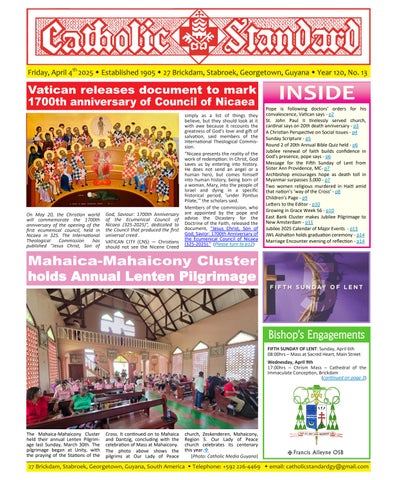
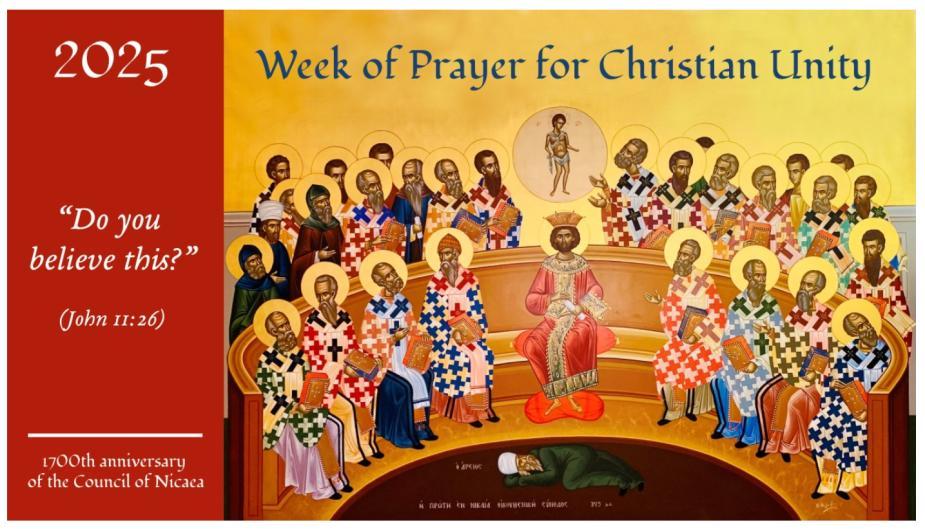
On May 20, the Christian world will commemorate the 1700th anniversary of the opening of the first ecumenical council, held in Nicaea in 325. The International Theological Commission has published “Jesus Christ, Son of
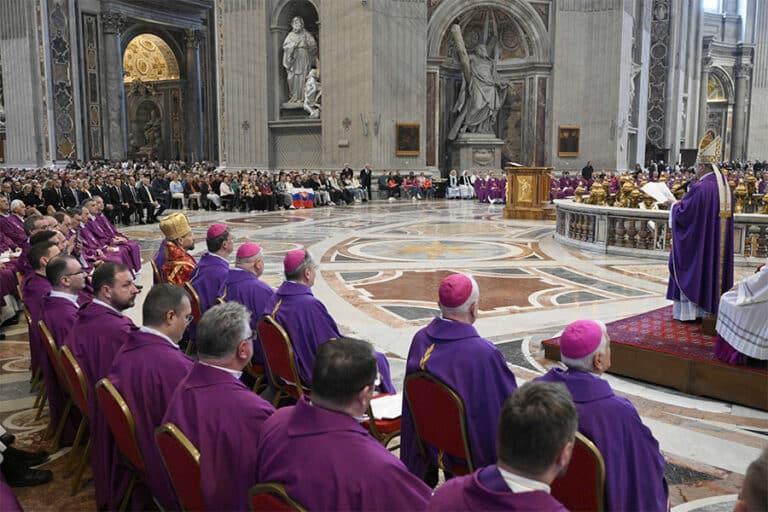
God, Saviour: 1700th Anniversary of the Ecumenical Council of Nicaea (325-2025)”, dedicated to the Council that produced the first universal creed .
VATICAN CITY (CNS) Christians should not see the Nicene Creed
simply as a list of things they believe, but they should look at it with awe because it recounts the greatness of God’s love and gift of salvation, said members of the International Theological Commission.
“Nicaea presents the reality of the work of redemption: In Christ, God saves us by entering into history. He does not send an angel or a human hero, but comes himself into human history, being born of a woman, Mary, into the people of Israel and dying in a specific historical period, ‘under Pontius Pilate,'” the scholars said.
Members of the commission, who are appointed by the pope and advise the Dicastery for the Doctrine of the Faith, released the document, “Jesus Christ, Son of God, Savior: 1700th Anniversary of the Ecumenical Council of Nicaea (325-2025).” (Please turn to p12)
holds Annual Lenten Pilgrimage
Year 120, No. 13
Pope is following doctors’ orders for his convalescence, Vatican says - p2
St. John Paul II tirelessly served church, cardinal says on 20th death anniversary - p3
A Christian Perspective on Social Issues - p4
Sunday Scripture - p5
Round 2 of 20th Annual Bible Quiz held - p6
Jubilee renewal of faith builds confidence in God’s presence, pope says - p6
Message for the Fifth Sunday of Lent from Sister Ann Providence, MC- p7
Archbishop encourages hope as death toll in Myanmar surpasses 3,000 - p7
Two women religious murdered in Haiti amid that nation’s ‘way of the Cross’ - p8
Children’s Page - p9
Letters to the Editor - p10
Growing in Grace Week 56 - p10
East Bank Cluster makes Jubilee Pilgrimage to New Amsterdam - p11
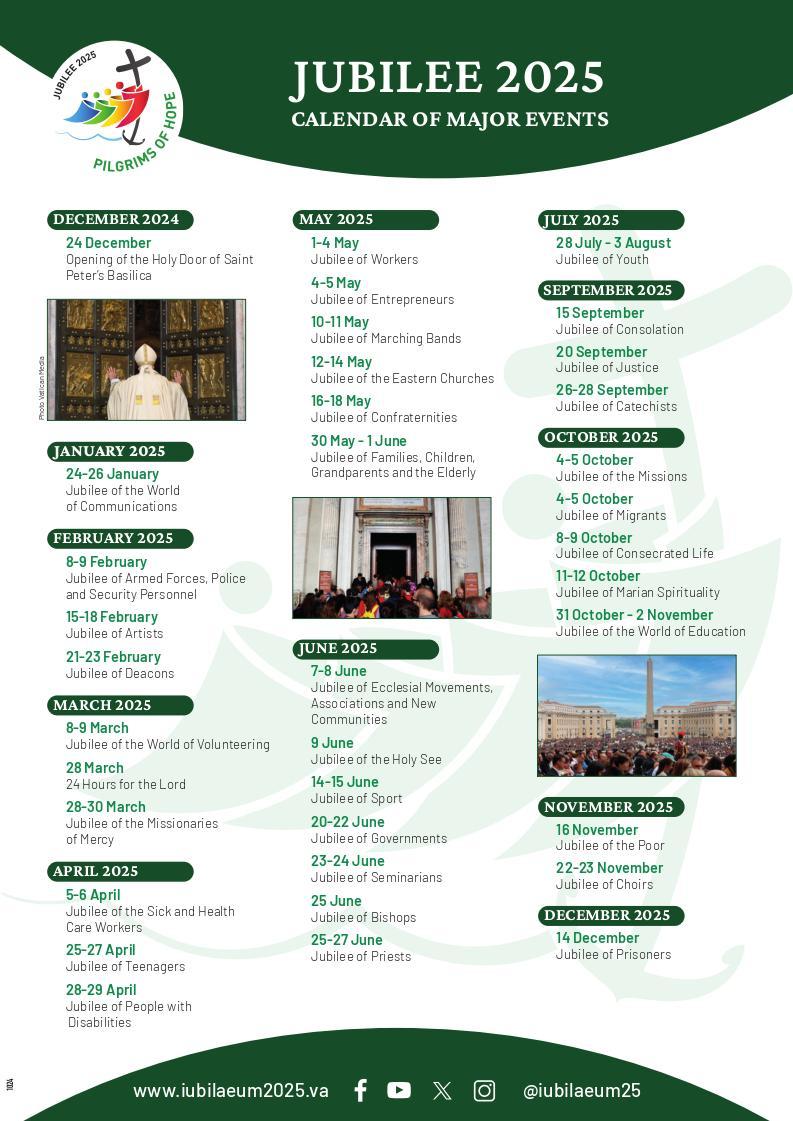
Jubilee 2025Calendarof MajorEvents - p13
JWLAishalton holds graduationceremony - p14
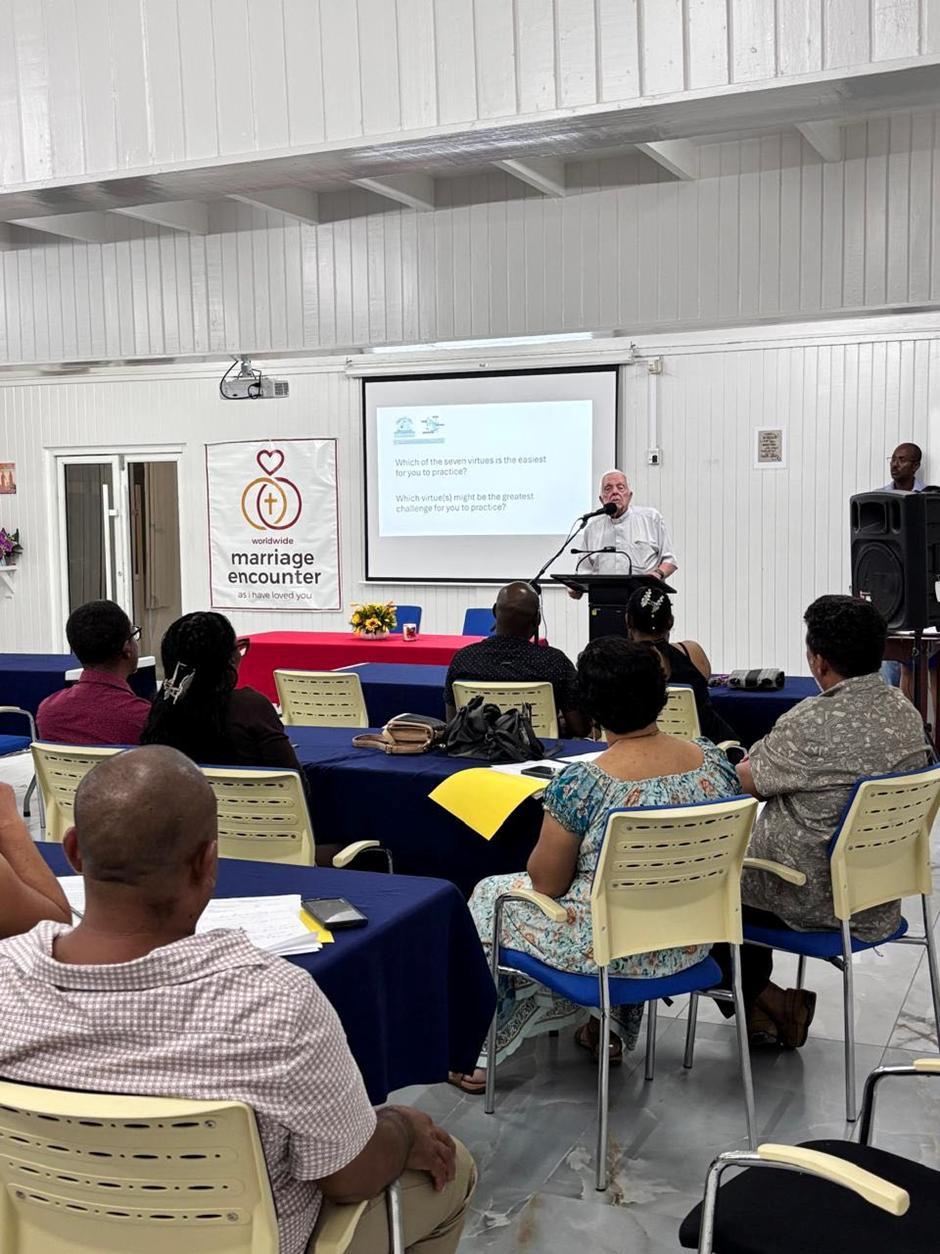
Marriage Encounter evening of reflection - p14
Bishop’s Engagements
FIFTH SUNDAY OF LENT: Sunday, April 6th
08:00hrs – Mass at SacredHeart,MainStreet Wednesday, April 9th
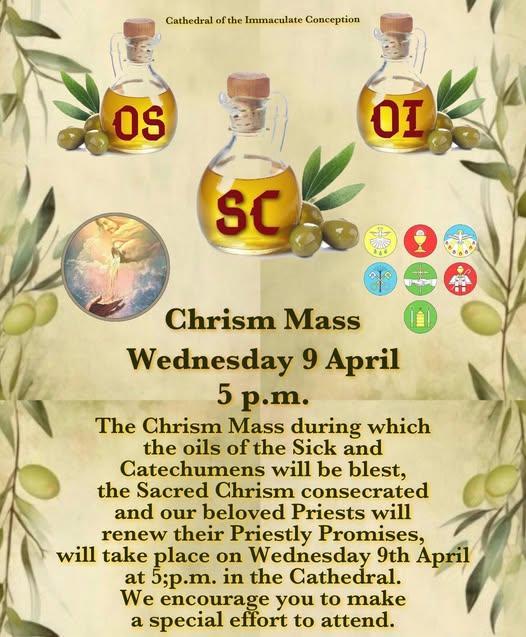
17:00hrs – Chrism Mass – Cathedral of the ImmaculateConception,Brickdam (continued on page 3)
Francis Alleyne OSB
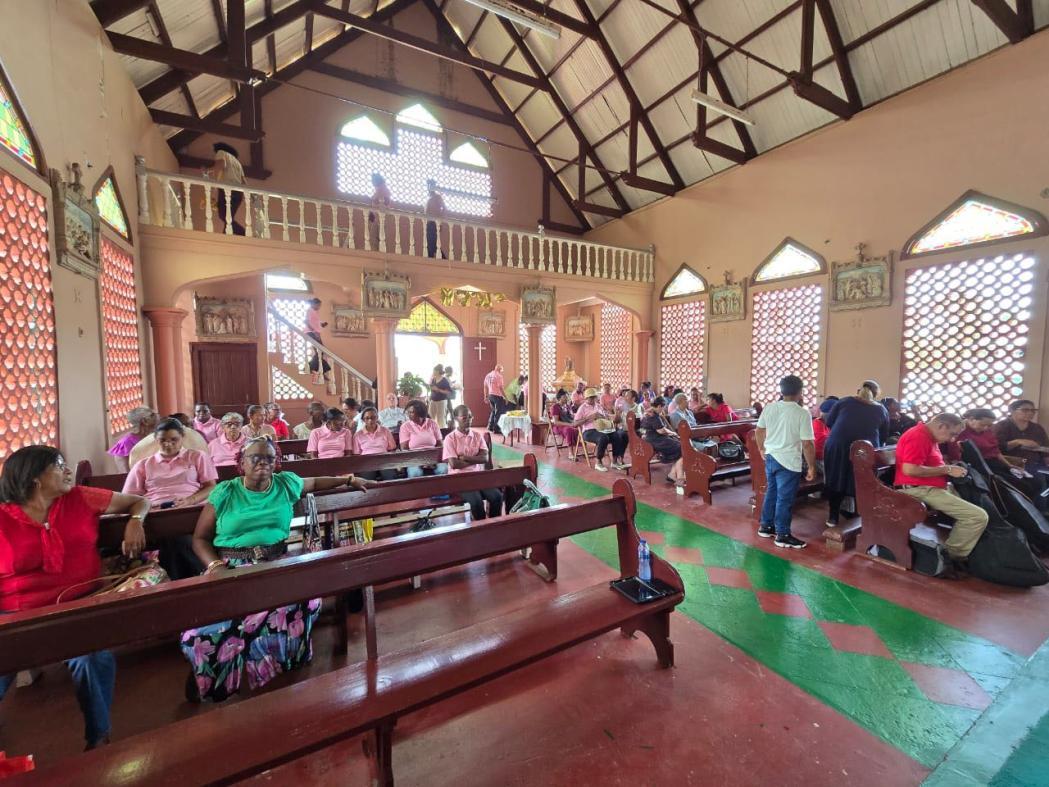
The Mahaica-Mahaicony Cluster held their annual Lenten Pilgrimage last Sunday, March 30th. The pilgrimage began at Unity, with the praying of the Stations of the
Cross. It continued on to Mahaica and Dantzig, concluding with the celebration of Mass at Mahaicony. The photo above shows the pilgrims at Our Lady of Peace
church, Zeskenderen, Mahaicony, Region 5. Our Lady of Peace church celebrates its centenary this year.❖
(Photo: Catholic Media Guyana)
The Jubilee Prayer
for his convalescence, Vatican says
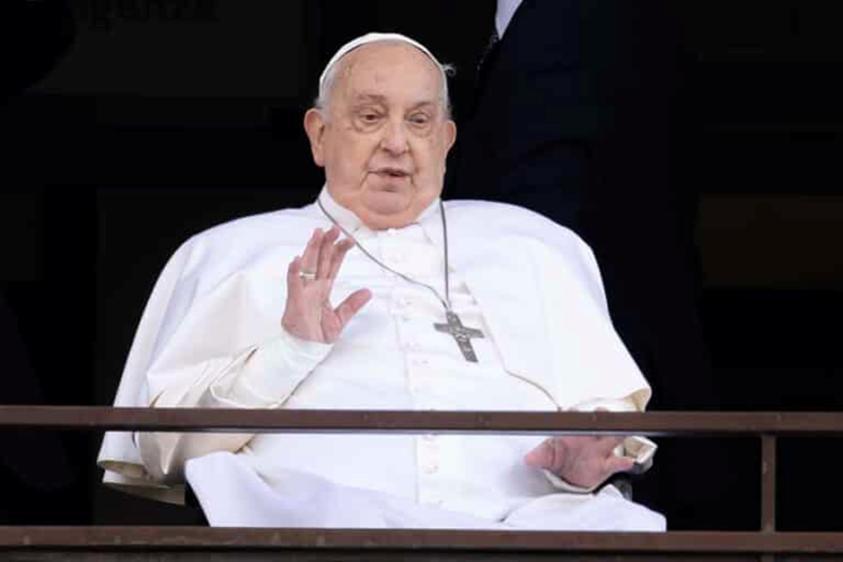
VATICAN CITY (CNS) During his second week back at the Vatican after a long hospitalization, Pope Francis continued to follow his doctors’ orders to stay home, avoid visitors and keep up with respiratory and physical therapy, the Vatican press office said.
The 88-year-old pope prayed as he watched the memorial Mass celebrated in St. Peter’s Basilica on the 20th anniversary of the death of St. John Paul II April 2, the press office told reporters April 4. And he watched the livestream that morning of the Lenten meditation offered to the Roman Curia by Capuchin Father Roberto Pasolini, preacher of the papal household.
Father in heaven, may the faith you have given us in your son, Jesus Christ, our brother, and the flame of charity enkindled in our hearts by the Holy Spirit, reawaken in us the blessed hope for the coming of your Kingdom.
May your grace transform us into tireless cultivators of the seeds of the Gospel.
May those seeds transform from within both humanity and the whole cosmos in the sure expectation of a new heaven and a new earth, when, with the powers of Evil vanquished, your glory will shine eternally.
May the grace of the Jubilee reawaken in us, Pilgrims of Hope, a yearning for the treasures of heaven. May that same grace spread the joy and peace of our Redeemer throughout the earth.
To you our God, eternally blessed, be glory and praise for ever.
Amen
Pope Francis was released from Rome’s Gemelli hospital March 23 after more than five weeks of treatment for breathing difficulties, double pneumonia and a polymicrobial infection in his airways. His doctors had said he would need two months to convalesce following his release.
New blood tests indicated a “slight improvement” in the infection, the press office said. Just before releasing the pope, his doctors had said that the fungal infection would take time to clear up.
Each day the pope was increasing the amount of time he spent on respiratory therapy, which has led to some improvement in the strength of his voice, and on physical therapy, the press office said. Appearing in public just before leaving the hospital March 23, the pope’s voice was weak, and he seemed to have a limited range of motion in his arms.
Pope Francis also was dedicating more time to work each day, according to the press office, although that involved mainly handling paperwork with his secretaries and not meeting with Vatican officials.
The press office insisted it was “premature” to discuss whether the pope would attend any of the Holy Week and Easter liturgies. Palm ❖
Pope Francis waves to a crowd of well-wishers at Rome's Gemelli hospital before returning to the Vatican March 23, 2025, after 38 days of treatment at the hospital. (CNS photo/Pablo Esparza)
St. John Paul II tirelessly served church, embraced world, cardinal
VATICAN CITY (CNS) During his long and fruitful pontificate, St. John Paul II embraced the entire world, which stands yet again in need of his blessing, Cardinal Pietro Parolin said.
“Bless us, Holy Father John Paul II. Bless the Lord’s church on its journey, that it may be a pilgrim of hope. Bless this lacerated and disoriented humanity, that it may find the way back to its dignity and its highest vocation, that it may know the riches of God’s mercy and love,” the cardinal said during a memorial Mass in St. Peter’s Basilica April 2, the 20th anniversary of the late Polish pope’s death.
Hundreds of faithful attended the Mass, including Italian Prime Minister Giorgia Meloni, a small government delegation representing Poland as well as cardinals and bishops living in Rome and diplomats accredited to the Vatican.
Retired Polish Cardinal Stanislaw Dziwisz, who served as St. John Paul’s personal secretary from 1966 until the pope’s death in 2005, greeted and thanked all those who were present.
“Our hearts go out to the Holy Father Francis,” who could not attend as he continues to recover in his residence, the Polish cardinal said. “We know that right now, he is spiritually united with us.”
“We pray for his health, that the Lord will give him the strength he needs to lead the pilgrim church in this Jubilee Year, under the banner of hope in these difficult times for the church and also for the world,” the cardinal said.
Pope Francis had sent Cardinal Dziwisz a letter before his hospitalization Feb. 14, expressing his wishes for a peaceful Holy Year lived in a spirit of hope and offering his blessings to all those taking part in events April 2.
Cardinal Parolin, who began serving in the Vatican Secretariat of State under the late pope starting in 1986, gave the
Like the “countless pilgrims who continually come to this basilica and ask for his intercession at the altar where his body rests,” Cardinal Parolin prayed the saint would continue to bless all the faithful, the church and humanity so that everyone would know God’s mercy and love.
After the Mass, dignitaries processed to St. John Paul’s tomb to pray. Cardinal Dzivisz placed a lit white candle on the altar and four representatives of Poland set a large red and white roses, the colors of the Polish flag, next to the tomb, which was adorned with many flowers.
Cardinal Baldassare Reina, the papal vicar of Rome, read a prayer, asking for the saint to bless the world people and the faithful so they would be “tireless missionaries of the Gospel today.”
Bishop’s Engagements
(From Front Page)
Friday, April 11th
Attend Holy Spirt Community’s 40th Anniversary commemoration at Holy Spirit, North Ruimveldt
Saturday, April 12th
09:00hrs – Prayer Breakfast at Marian Academy
12:00hrs – Meet Cathedral RCIA candidates
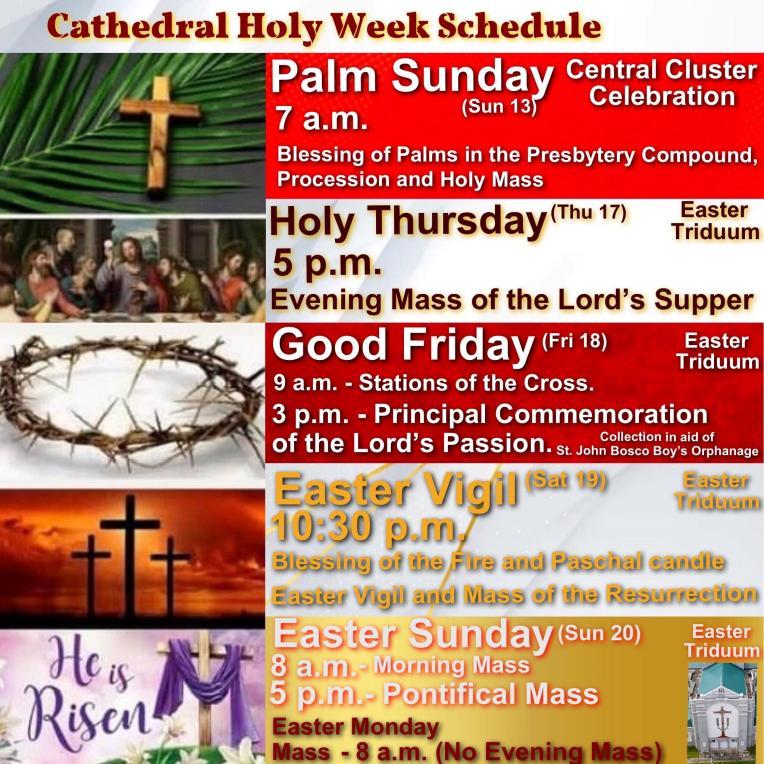
PALM SUNDAY: Sunday, April 13th
07:00hrs – Blessing of the Palms at Cathedral Presbytery,then a short procession followed by Mass at the
homily, which recalled the legacy and spirituality of the Polish pope, whose pontificate of more than 26 years was the third longest in history.
Pope John Paul exclaimed “with impressive force from the very first unforgettable homily at the inauguration of his pontificate, ‘Do not be afraid. Open wide the doors for Christ,'” who knows what humanity is meant to be and points the way to eternal life, the cardinal said.
Because of that conviction, the late pope “could address with authority and firmness not only the Catholic faithful, but also peoples and government leaders,” urging them to “be aware of their responsibility to defend justice, the dignity of human persons and peace,” he said.
“We remember with gratitude and admiration his tireless service of peace, his passionate warnings, his diplomatic initiatives trying to avert wars” even when he was experiencing difficult moments in his life and “the fragility of physical strength was already evident,” Cardinal Parolin said.
St. John Paul never gave up, he said, even while “many of his appeals remained unfortunately unheeded, as happens even to great prophets.”
Another unforgettable hallmark of Pope John Paul’s legacy, he said, was the great Holy Year of 2000 and his ushering the church and the world into the third millennium.
The pope invited the church to confidently set out to sea and cast wide its nets with the new evangelization, he said.
“His words continue to inspire us and are echoed today by his successor, Francis, in this new jubilee,” which also sees the church’s faithful as setting out into “troubled waters, but still pilgrims of hope,” he said, “guided by Peter’s successor and assisted by the Holy Spirit.”
“Bless every family,” he said, underlining how the pope warned against “Satan’s assault against this precious spark of heaven that God has lit on earth. Make us strong and courageous in defending the family.”
“Pray for the whole world, scarred by so many injustices and lacerated by absurd wars, which turn the world into a bloody battlefield, deliver us from war, which is always a defeat for everyone,” Cardinal Reina said.❖
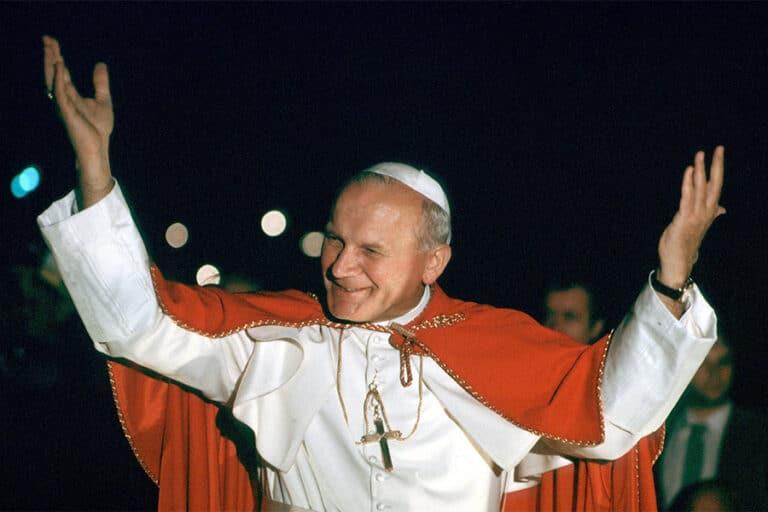
St. John Paul II smiles during a 1980 visit to Paris in this file photo. (OSV News photo/Giancarlo Giuliani, CPP)
A Christian Perspective on Social Issues
By GHK Lall
Light always prevails, hope does not disappoint
When times are difficult, circumstances are at their gravest, that little spark in us must still flutter. If it can be so then, it will be stronger later. The dark of the dawn gives way to light. Even when the outcome is not one that is desired, hope springs anew. It is why we (you and I) must never give up. We must never surrender to despair due to the grimness of an unbelievably grim hour. Pope Francis was there, at the very edge of that precipice, that final human frontier. Today he is still here. What does this say? What do I think of all this? I seek kind indulgence of those who may think that I am delving too much into the spiritual in a secular setting, even a nuanced political one.
Unambiguously, I say, as is my practice, to call matters as I interpret them. I am Roman Catholic, which is somewhat known. Now here is something not known: there were some Popes that I would not have in my home, if such were my choice. Their record, their life of shepherding was of the worst, one that would make the worst politicians cringe in horror. In Pope Francis, I sensed an honest and caring shepherd. Despite his human flaws. Despite the forces arrayed against him deep inside some of the higher elevations of the Holy See, the wider, universal Church. He has tried to make a difference for those who have been cast out, those who don’t count because they don’t amount to much, either in the pocket, or in their holdings. A leader who wanted to live a humble life, walk with the afflicted and feel their pain, but which the powers in Rome decided was not befitting the Pontifex Maximus I would visit the hearth of such a man, a shepherd, a leader, if that were still in the cards. I look around for any other with whom I can make such a connection in today’s world. I am still looking, which should say everything to all who are interested.
According to the medical experts, and he would have had the best, Pope Francis was at death’s door. When the hour is at its darkest, we must still cling to the slenderest tendril of hope. I must; and I must not give up, not yield an inch, not one precious breath, to all the misgivings and uncertainties, and dreadful unknowns that flourish in such moments. Spes non confundit (hope does not disappoint). Nor does it leave without armor, but equips with those most impenetrable of rare substances: unflagging belief and faith. The barbarians and vandals may be on the doorstep, but there must be no bowing, no retreating. There must be going on, ever onward. Hopefully, it is upward also. Guyanese have had their front row seats, which make them eyewitnesses to the dismal that comes from their secular leaders. Neither class nor quality, neither integrity nor any dedication to honest duty. Those represent a different kind of darkness. Deep and damaging, instilling fear in many. Curiously, those are what give the energy and the kind of mentality that whisper and then shout: go on. Keep going. When I think of the miraculous recovery of Pope Francis, what do I think of this, that he weathered this adversity? There is unfinished work for him to do. His cord is still intact, his cup still not yet fully drunk. The multitudes should be encouraged, even inspired, no matter what their circumstances are. There is a path ahead that still has to be traveled. Regardless of where it ends, it still must be traveled, for that is part of the work waiting to be done. When we press on-in spite of the elements, perhaps because of themthings happen. Things great and small. Don’t ask me how, but by some great mystery they do. For those who say that this is more
of the spiritual, I say this little something. Look at real life. Look at own life. What I exhort of others, I start first with myself.
I think that this public service work, and other volunteer work, that I do are of origins outside of me. I am only the messenger, the middleman. Why some things are done, there is no knowledge, other than it is done. But when one heart is touched, when one citizen is made to think, then a seed has been planted. Perhaps, some gracious work was done well, which was the privilege given. In thinking of the remarkable recovery of Pope Francis, this frail human being christened Jorge Mario Bergoglio, I recall that evergreen Guyanese saying time hasn small tidbit: his work is not done. His earthly journey continues. May it be the harbinger of a new time to come. It is why I close with this. Regardless of the turbulence in the atmosphere, the storminess in the environment, the occasional faltering in the spirit, we must press on. Things happen. Change gon come. Oh yes, it will.❖
Gracious and loving God, we thank your for the gift of our priests. Through them, we experience your presence in the sacraments.
Help our priests to be strong in their vocation.
Set their souls on fire with love for your people.
Grant them the wisdom, understanding, and strength they need to follow in the footsteps of Jesus. Inspire them with the vision of your Kingdom.
Give them the words they need to spread the Gospel.
Allow them to experience joy in their ministry.
Help them to become instruments of your divine grace.
We ask this through Jesus Christ, who lives and reigns as our Eternal Priest. Amen
(Note: If the Scrutinies are to be celebrated on the Third, Fourth and Fifth Sundays of Lent, then Year A Readings for those Sundays are used)
FIRST READING Isaiah 43:16-21
See, I am doing a new deed, and I will give my chosen people drink.
Thus says the Lord, who made a way through the sea, a path in the great waters; who put chariots and horses in the field and a powerful army, which lay there never to rise again, snuffed out, put out like a wick.
No need to recall the past, no need to think about what was done before. See, I am doing a new deed, even now it comes to light; can you not see it? Yes, I am making a road in the wilderness, paths in the wilds.
The wild beasts will honour me, jackals and ostriches, because I am putting water in the wilderness (rivers in the wild) to give my chosen people drink.
The people I have formed for myself will sing my praises.
RESPONSORIAL PSALM Psalm 125
Response: What marvels the Lord worked for us! Indeed we were glad.
1. When the Lord delivered Zion from bondage, it seemed like a dream. Then was our mouth filled with laughter, on our lips there were songs.
Once again this week we are reminded of what a loving and merciful God we serve. The theme of the readings for this fifth Sunday of Lent are summed up beautifully in today’s Gospel passage from Luke which recounts the
2. The heathens themselves said: “What marvels the Lord worked for them!” What marvels the Lord worked for us! Indeed we were glad.
3. Deliver us, O Lord, from our bondage as streams in dry land. Those who are sowing in tears will sing when they reap.
4. They go out, they go our, full of tears, carrying seed for the sowing: they come back, they come back, full of song, carrying their sheaves.
SECOND READING Philippians 3:8-14
Reproducing the pattern of his death, I have accepted the loss of everything for Christ.
I believe nothing can happen that will outweigh the supreme advantage of knowing Christ Jesus my Lord. For him I have accepted the loss of everything, and I look on everything as so much rubbish if only I can have Christ and be given a place in him. I am no longer trying for perfection by my own efforts, the perfection that comes from the Law, but I want only the perfection that comes through faith in Christ, and is from God and based on faith. All I want is to know Christ and the power of his resurrection and to share his sufferings by reproducing the pattern of his death. That is the way I can hope to take my place in the resurrection of the dead. Not that I have become perfect yet: I have not yet won, but I am still running, trying to capture the prize for which Christ Jesus captured me. I can assure you my brothers and sisters, I am far from thinking that I have already won. All I can say is that I forget the past and I strain ahead for what is still to come; I am racing for the finish, for the prize to which God calls us upwards to receive in Christ Jesus.
GOSPEL
John 8:1-11
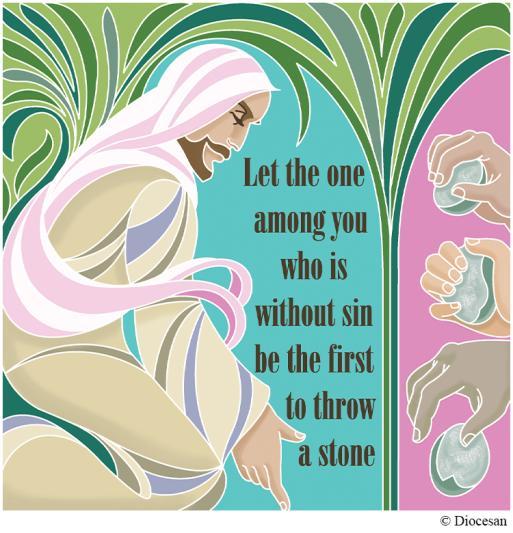
If there is one of you who has not sinned, let him be the first to throw a stone at her.
Jesus went to the Mount of Olives. At daybreak he appeared in the Temple again; and as all the people
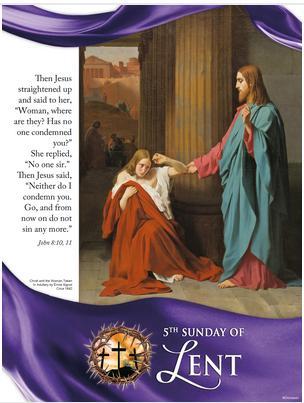
story of the woman caught in adultery. After all those who would have stoned this woman leave the scene Christ says to her, “Neither do I condemn you. Go, and from now on do not sin anymore.”
When we turn to God for forgiveness, He is indeed gracious and merciful. So much so, that not only will He forgive our sins without condemnation, He will make us completely new creations in Christ.
What is more amazing is that this all-perfect and holy God of ours draws
came to him, he sat down and began to teach them.
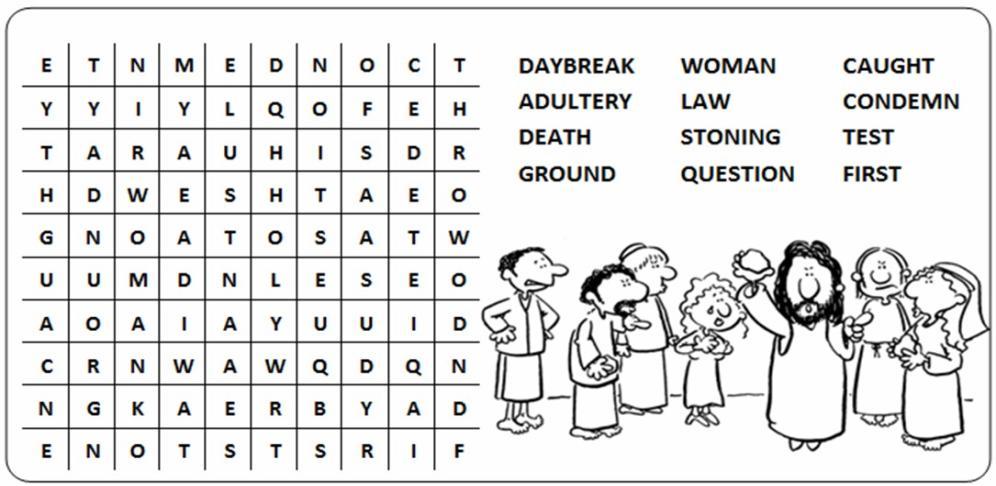
The scribes and Pharisees brought a woman along who had been caught committing adultery; and making her stand there in full view of everybody, they said to Jesus, “Master, this woman was caught in the very act of committing adultery, and Moses has ordered us in the Law to condemn women like this to death by stoning. What have you to say?” They asked him this as a test, looking for something to use against him. But Jesus bent down and started writing on the ground with his finger. As they persisted with their question, he looked up and said, “If there is one of you who has not sinned, let him be the first to throw a stone at her.” Then he bent down and wrote on the ground again. When they heard this they went away one by one, beginning with the eldest, until Jesus was left alone with the woman, who remained standing there. He looked up and said, “Woman, where are they? Has no one condemned you?” “No one, sir,” she replied. “Neither do I condemn you,” said Jesus “go away, and don’t sin any more.”❖
so very near to us. Our sins do not drive Him from us, but rather to us so that He can set us free from them. Look carefully at Christ’s actions and posture in the Gospel reading as He deals with both the crowd of people, the Scribes and Pharisees, and the adulterous woman. “All the people started coming to Him and he sat down and taught them.” “He bent down and began to write with His finger.” He “straightened up” when He confronted the Scribes and Pharisees about their own sins. And he
“straightened up” when He assured the woman that He did not condemn her for her past. Like a skilled teacher, or loving “big brother,” Christ bends down to where we are, He sits among us, He stands to confront us when needed and He stands to look us in the eye to remind us of our true dignity.
We’re all unworthy of the great privilege of serving Him. But that is simply cause for greater joy in serving Him with all our hearts.❖ [www.catholicsteward.com/blog/]
Gospel Reflection
In the Gospel today we read one of the many entrapment stories we find in the Gospels (the question of paying taxes or not to Caesar is another). With few words and simple actions, Jesus teaches us about forgiveness, honesty and compassion. The Scribes and Pharisees wanted to catch Jesus encouraging people to break the Law of Moses. If he encouraged stoning of the woman as the Law demands, he would be going against all he stood for and his teaching on the need for mercy and reconciliation (as we see in last week’s Gospel). But Jesus turned the tables on them. He asked them (and us) to look at our own sins before we can even think of looking at the sins of others. This is a clear warning to us all against taking the moral high ground because, if we are really willing to admit it, which one of us has truly never sinned? This does not mean that we must turn a blind eye to sin. Rather, we must condemn sin while showing mercy, compassion and forgiveness to the sinner.
Sin matters very much because it affects everyone. We note that Jesus didn’t deny the woman’s sin. He did tell her to “sin no more”. All sinners must own up and take full responsibility for their sins. This is the first step towards making a change. After her encounter with Jesus, the woman went away free to change her behaviour. We don’t know if she did but this is a reminder that anyone can make a change in his or her life if given a chance. This shows that compassion and forgiveness are life-giving while condemnation and quick judgement can take away life. Patterning ourselves on Jesus, our communities must be places of forgiveness and reconciliation so that all who fall short and sin (which means all of us) may experience the love and compassion of people who refused to condemn others. ❖
[From: Journeying with the Word of God, The Religious Education Department, Diocese of Georgetown, Guyana ]
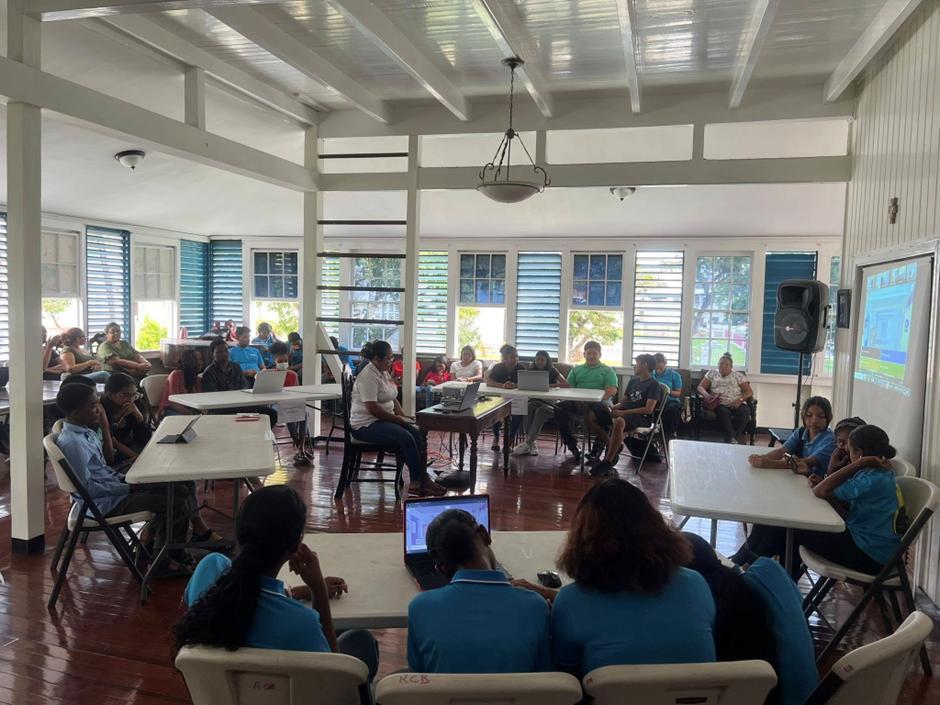
The second round of the 20th Annual Bible Quiz was held on Sunday March 30th at the Bishop’s House, Brickdam. As is the norm, the quiz was hybrid, with some teams participating remotely. This round featured participants from Regions 1, 2, 4, 6, 8, and 9.
Over the past few weeks, participants between the ages of 12 and 17 have been preparing by studying the Gospel of St. Luke, the Youth Catechism of the
Catholic Church (YOUCAT)and various hymns.
The Bible Quiz was founded by Fr. Dominic Toumesni, SJ, with the goal of bringing young people together to study the Word of God and to help them live out Christ’s message. Now, 20 years later, the Quiz remains active, with this year seeing the highest number of participants ever.
Special thanks to Quiz Producer Fr. Joel Thompson, SJ, the coordinating team, the catechists, and all the participants. Let us continue to pray for our young people, that they may grow in Christ’s love and become His ambassadors.
The final round of the Quiz will take place on Sunday April 13th at 15:00 hrs.❖
(Adapted from Catholic Media Guyana)
Jubilee renewal of faith builds confidence in God’s presence, pope says
Archbishop Bernard Bober of Košice, president of the Slovak bishops' conference, presides at a Mass in St. Peter's Basilica at the Vatican with about 4,300 Holy Year pilgrims from Slovakia April 4, 2025. (CNS photo/Vatican Media)
VATICAN CITY (CNS) –- Saying “yes” to God’s plan for one’s life does not mean everything will be easy, but it does mean knowing that God is there and will help, Pope Francis said.
Writing to some 4,300 people participating in Slovakia’s national pilgrimage to the Vatican for the Holy Year 2025, the pope told them, “I would very much have liked to be present with you to share this moment of faith and
communion, but I am still in convalescence and so I will join you through prayer and with all my affection.”
He offered special greetings to Archbishop Bernard Bober of Košice, president of the Slovak bishops’ conference and principal celebrant of a Mass for the group in St. Peter’s Basilica April 4, and to Slovak President Peter Pellegrini, who joined the pilgrims for the Mass.
In his message, Pope Francis told the pilgrims that faith is “a treasure to be shared with joy.”
Everyone faces challenges and hardships, he said, “but also opportunities to grow in confidence and in abandonment to God. And like the Virgin Mary, who with her humble and courageous ‘yes’ opened the door to the redemption of the world, our ‘yes,’ simple and sincere, also can become a tool in the hands of God to achieve something great.”
Welcoming God’s plan for one’s life “does not mean having all the answers, but trusting that, wherever he leads us, he precedes us also with his grace.” Pope Francis prayed that the Slovaks, renewing their faith during the pilgrimage, would open themselves to God’s grace and to “new horizons of faith, hope and peace” for themselves and everyone they encounter.❖
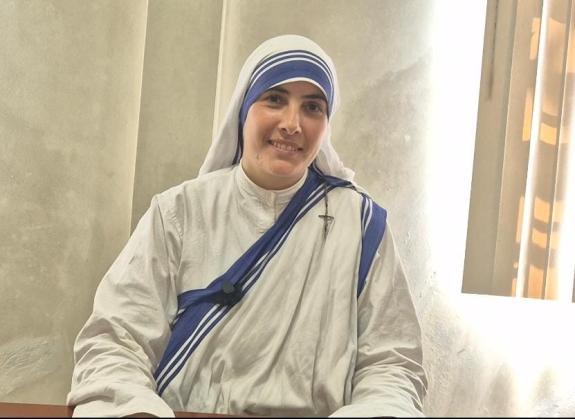
Message for the Fifth Sunday of Lent from Sr. Ann Providence, MC
Each week during the season of Lent, the Interim Evangelization Commission is sharing a short message of encouragement from one of our Religious Sisters. This week’s message is by Sr. Ann Providence, MC:
Today, as we are approaching Holy Week, the church invites us to reflect once more in the mystery of God’s mercy. Lent is a time of grace in which God calls us to REPENT and BELIEVE. WHY? Because to receive the immense gift of his love, the gift of himself, which he gives to us on the cross, first we need to acknowledge what’s in our hearts and get rid of all obstacles that he can possess our hearts.
s Gospel we see a beautiful image of the extreme s love for each one of us. When the woman caught in adultery is accused, she remained standing, and Jesus This is a powerful image. God himself bends down to us, and yet we doubt his love. This is what we must repent, for the times that we don’t accept his forgiveness, we remain in our
sin because it’s too shameful and we are too proud to accept his forgiveness. Pope Francis once said that “God never tires of forgiving us, we are the ones who get tired of seeking his mercy”. Once we experience his forgiveness, we experience the immense joy of knowing him and we realize that nothing and no one can separate us from his love, not even our sins... the greater our sins the greater is his mercy.
In this Jubilee year of hope let us prepare our hearts to sing full of faith and hope at the Easter Vigil, O happy faith that earned so great, so glorious a redeemer. This is our hope that our sins can become the doorway through which we meet our father... only if we repent and believe in his love for us.❖
Journeying with the Word of God
MAKING THE WORD OF GOD YOUR OWN
Step1: Look at today’s Readings prayerfully.
Archbishop encourages hope as death
A rescue worker stands in front of a destroyed building in Mandalay, Myanmar, April 3, 2025. A 7.7 magnitude earthquake hit Myanmar midday March 28, with the death toll reaching 3,145 as of April 3. Another 4,589 are wounded and 221 are still missing. Burmese Archbishop Marco Tin Win of Mandalay said that the suffering of his people has brought them closer to God and that "today, our people have hope in God's mercy, in the certainty of his love." (OSV News photo/Reuters)
(OSV News) - Burmese Archbishop Marco Tin Win of Mandalay said that despite the suffering caused by the deadly earthquake, the people of Myanmar are clinging to hope in God’s mercy.
In an interview published April 3 with Fides, the news agency of the Dicastery for Evangelization, Archbishop Win said that the suffering of his people has brought them closer to God and that “today, our people have hope in God’s mercy, in the certainty of his love.” “There is a divine message that transcends our human intelligence and understanding,” he said. “Our only way is to entrust
ourselves to his merciful love and reaffirm our hope in God’s plan of salvation,” he said.
The epicenter of the 7.7 magnitude earthquake struck Mandalay, the country’s second largest city, March 28, destroying roads, buildings and religious sites. According to the governing military junta, as of April 3, the death toll stood at 3,145, with 4,589 others wounded and 221 still missing.
The earthquake struck at a time of uncertainty due to the ongoing civil war between resistance groups and Myanmar’s governing military junta, which overthrew the previous democratically elected government in 2021. Resistance groups, according to
several reports, have accused the military-led government of continuing its bombing of rebel-controlled areas and not prioritizing relief efforts. While it had rejected initial calls for a pause in military operations from resistance groups, the government declared a ceasefire from April 3-22, The Associated Press reported.
However, according to AP, the military government warned it would take “necessary” action if resistance groups trained new recruits or launched an attack.
Archbishop Win told Fides that as soon as the earthquake began, the city’s priests and religious “raised the alarm and brought people to safety” in churches, monasteries and the local seminary.
“We made sure no one was injured. We encouraged and comforted frightened children and people on the streets. Many sought refuge in the church complexes that are still accessible. With our modest means, we share water, food and shelter with them while we await further external assistance,” he said.
The archbishop also said three of the 40 churches in the Archdiocese of Mandalay collapsed, while others “all have minor or major cracks.
”
“About 25 churches are no longer suitable for the safe celebration of services. The intermediate seminary in the city of Mandalay is also severely damaged, and the minor seminary in Pyin Oo Lwin has cracks in its building structure,” the Burmese archbishop said. (pleaseturntop8)
1st Reading: The prophet promises that the Lord will protect his people just as was done during the Exodus from Egypt.
2nd Reading: For Paul everything pales in comparison with knowing Jesus Christ, the Lord. His attitude is not to look back but to race forward to the prize.
Gospel: We learn a great lesson from Jesus on what it means to be compassionate and merciful.
Step 2: Applying the values of the Readings to your daily life.
1.If the woman in the Gospel story was stoned to death for her sin of adultery, who would have benefited from such a punishment?
2.Why do you think feelings like resentment, jealousy, hatred and spite seem more common in human beings than are feelings like mercy, forgiveness and compassion?
3.It is said that the very act of condemning another person for their sin involves another sin. How can this be so?
4.What do you think is the danger from making quick moral judgement of others?
Step 3: Accepting the message of God’s Word in your life of faith
Jesus shows us that what God wants is not the death of a sinner but that there be life and conversion in the person. In wisdom God understands our weakness and in mercy God forgives our sins. God not only helps us to put our sins behind but to draw some good from them. The fact that we have all sinned and therefore continually stand in need of God’s mercy and forgiveness will make us refrain from casting the stone of judgement and condemnation at others.
Step4: Something to think & pray about
1.Mercy is a wonderful gift, something we all stand in need of at one time or another. It is therefore something we have to extend to others.
2.Think seriously of your community. Would you consider it to be a community of grace which is never rash in judgement or quick to condemn but which shows love and compassion, mercy and concern? What do you think needs to be done to make your community more life-giving?
3.Pray that you will always try to know your own weaknesses so that you will have compassion for others and try to help them.❖
[From: Journeying with the Word of God, The Religious Education Department, Diocese of Georgetown, Guyana ]
Two women religious murdered in Haiti
(OSV News) - Two women religious were murdered March 31 by armed gangs in the city of Mirebalais, Haiti, as long-standing violence continues to further destabilize that nation.
Sister Evanette Onezaire and Sister Jeanne Voltaire of the Congregation of the Little Sisters of St. Thérèse of the Child Jesus were in Mirebalais located some 30 miles from the capital, Port-au-Prince when armed gangs launched an attack.
The sisters, who had been on a mission to the city, took refuge with other civilians but were discovered by gang members and slain.
The gangs also seized control of the city’s prison, releasing at least 530 prisoners, according to Arnel Remy, an attorney and general coordinator for Haiti’s Collective of Lawyers for the Defense of Human Rights.
Local media reported that gangs also launched a March 31 attack on the town of Saut-d’Eau, some five miles west of Mirebalais and a destination for a popular annual Vodou-Catholic pilgrimage attracting thousands.
The deaths of Sister Evanette and Sister Jeanne were reported by Aid to the Church in Need, which since 1947 has worked under papal guidance to serve persecuted Catholics.
ACN communicated directly with Archbishop Max Leroy Mésidor of Port -au-Prince, who told the organization in an April 2 message that Mirebalais is now “controlled by bandits.”
Port-au-Prince has for the past few years been the locus of the nation’s armed gang conflict.
However, the Mirebalais attack, along with the October 2024 gang-led massacre in the town of Pont-Sondé, shows that violence is increasingly extending into Haiti’s heartland.
The Pont-Sondé attack ranks as the worst in Haiti’s recent history, which has been plagued by multiple, sustained crises such as political instability, natural disasters, foreign intervention and international debt.
Some 5.4 million Haitians face “high levels of acute food insecurity” due to the armed gang violence, with 6,000 residents experiencing “catastrophic levels of hunger and a collapse of their livelihoods,” according to a report released in August by the Integrated Food Security Phase Classification.
In his exclusive statement to ACN, Archbishop Mésidor said the nation’s entrenched violence is constraining the Church’s ability to serve.
“Twenty-eight parishes in the Archdiocese of Port-au-Prince are closed, while around 40 are operating at minimum levels because the neighborhoods are controlled by gangs,” the archbishop said. “The priests have been forced to flee, finding refuge with their families or with other clerics.
They need help. The archdiocese is also in difficulty.”
The archbishop also addressed the archdiocese’s men and women religious in a March 30 letter, telling them, “We are going through one of the worst periods in our history as a people.”
While noting that he did not wish to “add insult to injury by enumerating all that we are suffering because of the general insecurity that has affected our compatriots for several years,” Archbishop Mésidor said he felt compelled to report recent threats to the church’s activities.
He noted that “religious communities have been displaced, many schools are closed, elderly and sick religious sisters have had to be evacuated in the middle of the night, and entire congregations had to leave their nursing homes, with nowhere to place the sick sisters.” “The list of religious congregations in difficulty is very long. I have no words to describe what is currently happening in Port-au-Prince,” he wrote in his letter. “It is an unbelievable situation. Our consecrated brothers and sisters are actively taking part in the suffering of our people.”
ACN director of projects Marco Mencaglia, who had previously visited the congregation founded in Haiti in 1948 also lamented the sisters’ deaths and the violence plaguing the Caribbean nation.
“We ask that God grant them eternal rest, and we pray for their families and the safety of the congregation,” Mencaglia said in a statement released April 3 by ACN. “Aid to the Church in Need would like to stress its continued support for and solidarity with the Haitian Church and issue an urgent call for prayer in the face of the increased violence and its devastating impact on the community.”
Mencaglia added that the sisters’ killings marked “a sad confirmation of the terrible suffering that the congregations are going through.”
The crisis in Haiti requires “concrete gestures of solidarity,” said Mencaglia. He stressed that “ACN also calls on the international community not to abandon the Haitian Church and people in this time of extreme suffering.”
“The Church in Haiti is suffering, but has not lost the faith,” Mencaglia said.
In his message to ACN, Archbishop Mésidor said, “Here in Haiti our Lent has become a true Way of the Cross, but we offer it up in communion with the suffering of Christ.”
The archbishop added, “Haiti is burning and requires urgent help. Who will come to our aid?”❖
approximately 30 miles northeast of the Haitian capital, Port-au-Prince. (OSV News photo/courtesy Aid to the Church in Need)
Death toll in Myanmar surpasses
According to Mission Newswire, the news service of the Salesian Missions, the St. John Paul II Chapel belonging to the Salesian community in Mandalay “suffered extensive damage, with its facade and parts of the walls collapsing.”
Two parishioners praying at the chapel, as well as a young boy, were injured, while the Salesian-run building housing street children “sustained significant damage.”
As the community continues to assess the damage, the Salesian Missions launched an emergency appeal for donations to provide emergency
3,000 (From P7)
assistance to those in need. Archbishop Win told Fides he saw how the tragic earthquake in Myanmar has united people “regardless of ethnicity, faith, or social class” and that witnessing the solidarity and charity toward one another was “a beautiful sign.” “It consoles us to see that the entire church does not abandon us, neither nationally nor universally,” he said. “Even the pope prays for us and gives us comfort and hope. Easter is just around the corner: we are in God’s hands and will rise with Christ. In the year of the Jubilee, we renew our hope in Christ.”❖
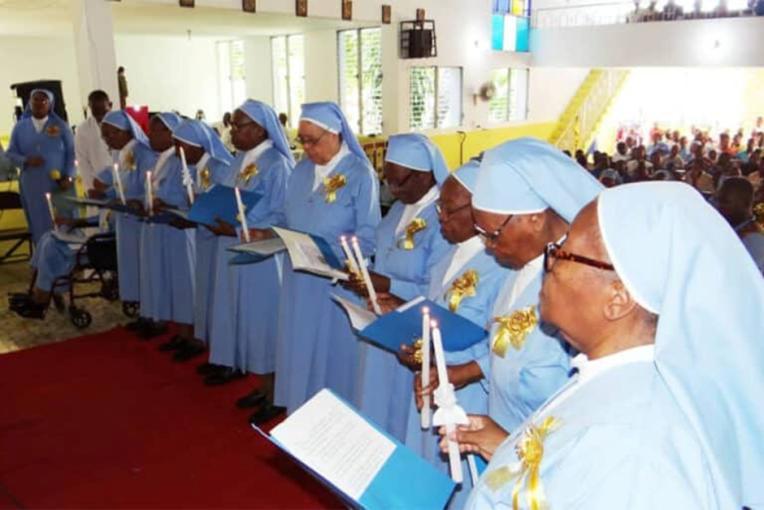
Members of the congregation of St. Therese of the Child Jesus are pictured during a 2021 Mass in Port-au-Prince, Haiti. On March 31, 2025, two congregation members, Sisters Evanette Onezaire and Jeanne Voltaire, were murdered during an attack by armed gang members in Mirebalais,
Dear Boys and Girls,
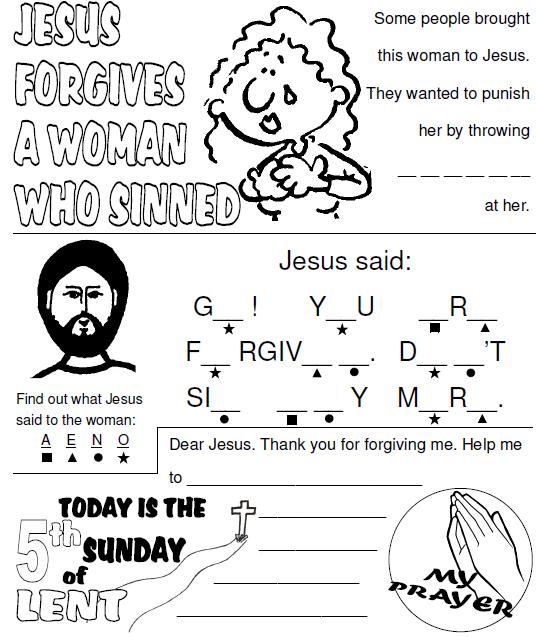
One day, some teachers of the law brought a woman who had been living a sinful life and made her stand before Jesus. "Teacher," they said, "this woman was caught in a terrible act of sin. The law of Moses says that she should be punished by stoning. What do you say?" The Bible tells us that they were trying to trap Jesus into saying something against their laws so that they could bring charges against him.
Jesus bent down and began writing with his finger in the dirt. The men kept questioning Jesus trying to get him to say something. Finally, Jesus stood and said to them, "Whoever is without sin, let him be the first to throw a stone at her," then he bent down and continued writing in the dirt. The men who had accused the woman looked at one another and walked away.
Jesus stood and spoke to the woman. "Where are your accusers? Did no one condemn you?" he asked." No one," the woman answered. "Neither do I. Go and sin no more."
Have you ever seen someone doing something wrong and you pointed an accusing finger at them? Remember, when you point your finger at someone, there are three fingers pointing back at you. Try it, point your finger at someone and then look at your hand. Three fingers are pointing back at you! That is the point of Jesus' teaching in today’s Gospel. Not one of us is perfect and we should remember that when we want to point fingers or throw stones at someone else.
Our Father, help us to have the forgiving attitude that Jesus taught us today. It is in Jesus' name that we pray, Amen.❖
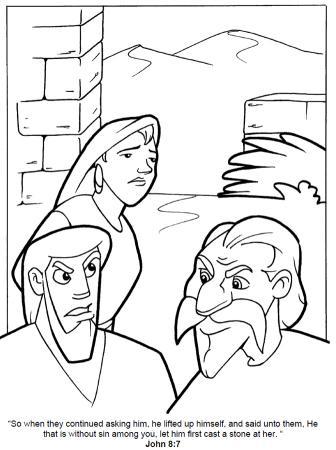
If there is one of you who has not sinned, let him be the first to throw a stone at her. - John 8:7
Dear Editor,
To contemplate is to ponder something deeply. As Christians, we are called to think on a deeper level, and to live on a deeper level. Daily prayer makes this possible. It is in our prayer that we move beyond the fleeting thoughts of life and begin to lead meaningful lives of contemplation.
Thought determines action
Contemplation is not just for monks and nuns. In truth, we all lead lives of contemplation, but we spend our lives contemplating very different things. What do you contemplate? Is it the riches of the world? Is it every woman who passes you in the street? Do you ponder the latest fashions? The local gossip? Or do you contemplate the wonders of God, the glory of his creation, and joys of the spiritual life? It is not necessary to go away to a monastery to live a life of contemplation. We are all contemplatives because we
are all thinking all the time, and what you contemplate will play a very significant role in the life you have. The reason prayer and contemplation are so integral to the Christian life is because thought determines action. If you send your thoughts down one road, your actions will follow your thoughts. Thought determines action, and so the actions of your life are determined by your most dominant thoughts. Human thought is creative. What we think becomes.
Leon Jeetlall
By Renika Anand
Knowing when the path is right
Ralph Waldo Emerson, an American writer, once said “Do not go where the path may lead, go instead where there is no path and leave a trail.”
True growth is marked by the discovery of a purpose. As we experience the journey of youth, we constantly find ourselves looking for the path which we believe we must take to reach our purpose. After all, what is the purpose of life if not to fulfil our destiny?
What we may soon discover is that the ‘right path’ is not something that is easily apparent. Life is quite similar to an unwritten book. As we make choices during each moment, we add a page to our unique stories. If the pages were already filled, then there would be nothing meaningful for us to add. The path that we are meant to be taking will only be revealed to us when we are brave enough to start exploring the possibilities that life has to offer. Your path is not something that is meant to guide you. Instead, it must be entirely created by you with the guidance of God.
You make known to me the path of life; you will fill me with joy in your presence, with eternal pleasures at your right hand Psalm 16:11❖
East Bank Cluster makes Jubilee
The East Bank Cluster, which consists of seven communities on the East Bank of the Demerara River and along the Linden-Soesdyke highway - Peter's Hall, Little Diamond, Supply, Land of Canaan, Timehri, Kurukururu and Yarrowkabra – on Sunday March 16th made a Jubilee Pilgrimage to the Church of the Ascension, New Amsterdam,Berbice.
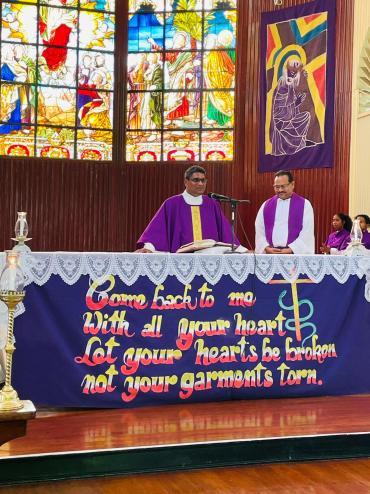
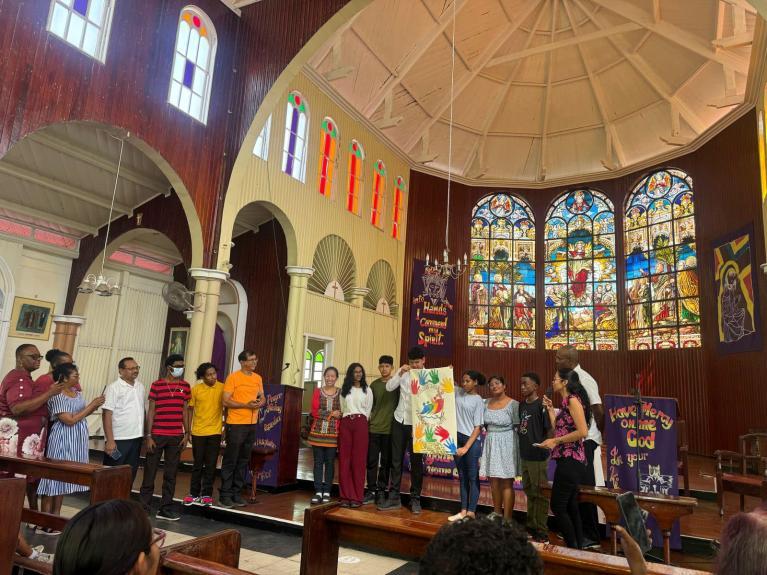
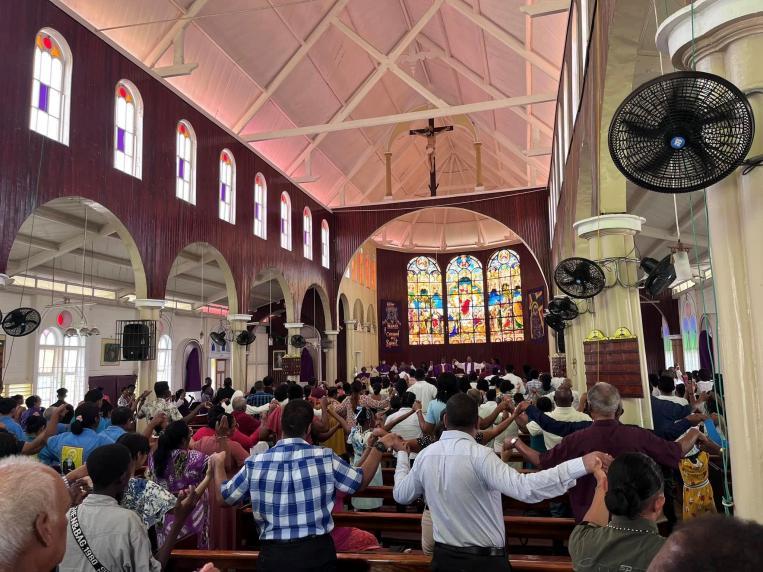
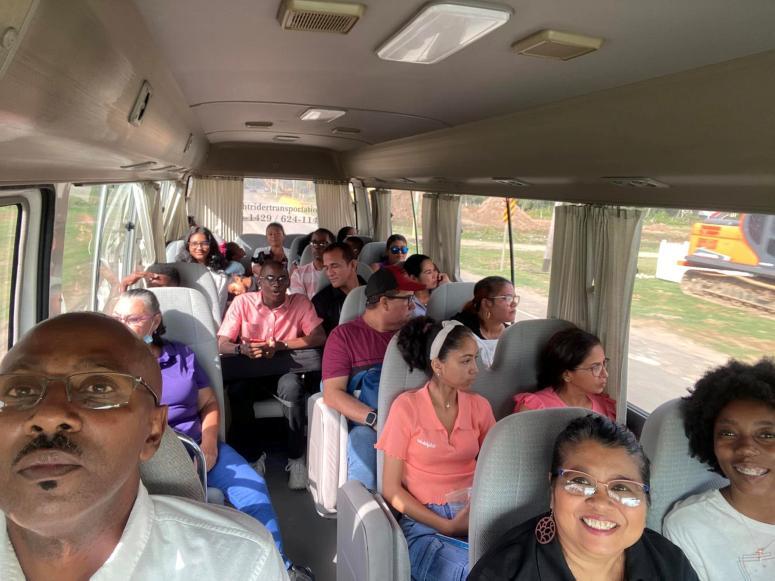
It was a spirit-filled occasion as the pilgrims made their way to Berbice. God was present in the totality of the day – in the travelling, the sharings on hope, and the meditations on the rosary. Mass at the Church of the Ascension was celebrated by Fr Amar and Fr Ronnie. The final stop of the pilgrimage was at Hopetown Parish to prayadecadeoftherosary.
At right are sharings from two young
Walking with the Lord
By Jonathan Robinson
My name is Jonathan, and I am eighteen years old. I attend Marian Academy. As a Roman Catholic, I would like to share a story about how I walked on the path with the Lord. As a young lad, I didn’t believe anything in the Bible until my grandmother sat down and spoke to me deeply. Fun fact: that was when I started going to church; however, growing up, I experienced a lot of pain lately. I bore the pain of the deaths of both my grandparents, as well as depression, fear, and loneliness. One day, I went to my school counselor, and she asked me, “Have you ever tried praying or doing the rosary?” I replied, “No.” So, I listened to her lecture about praying for an hour straight. However, I asked her, “Will he hear my voice?” She said, “Jesus is always there to hear you, no matter where you go or what you do; he is always there.” In my mind, I was stunned. As I started praying, I was overwhelmed to hear his voice and feel his hand on my shoulder saying, “PEACE BE WITH YOU.”
As I followed the pilgrimage, my experience was overwhelming and joyful as I chose to follow Jesus and not turn back on him. From my reflections, I realized that God is with you at all times, even in good times and bad, and that PRAYER is the most critical aspect of having a relationship with God. You need to pray so that he can hear your pain and help and protect you from all sins. GOD IS
Pilgrimage of Hope
By Jyotishma Henry
Whatever you do, do it for the Glory of God. What is it I do? My mom asked last Sunday if I am going to the pilgrimage for her or because I wanted to go. I looked at her surprised and answered “for myself, because I want to go”. Now, as an individual, I never believe in forcing someone to do something. You have to be willing enough, and I have always taken the Virgin Mary as a role model, the way she said ‘Yes’ to God. I went to the Pilgrimage not knowing what to expect. From the beginning of our journey, I thought I would be sleeping for the entire bus trip. However, the Lord had his own plans for me. I had the opportunity of Praying the Holy Rosary with my fellow parishioners, singing and having fruitful conversations in the bus journey to go. That is simply an experience of the Holy Spirit, surrendering myself to the Lord and letting him take control, we should all definitely try. That feeling of not knowing exactly where you are but experiencing the fondness of peace, calmness, the sense of joy that comes from within, that pure and true happiness is how I felt.
The Holy Father said “Through our witness, may hope spread to all those who anxiously seek it”, upon hearing this I had already decided that I was not sure what to expect but what I did know for sure is that whatever the Lord had in store for me, Let it be done. And as I currently think about what to write, I realized that I may have felt the Lord’s presence on the pilgrimage, but what about those who do not know about God, what about those who have no hope, those who are uncertain of where they stand in their faith? I may have my experience but how is it that I go about “spreading hope to all those who anxiously seek it”. Prayer, we pray for ourselves to be strong enough, asking God for that Grace so that we can go out there giving a little advice, living in hope, embracing God’s love and sharing that with others, seeking con-
already paid for by his blood. As we are in the Lenten season, being on a pilgrimage gave me so much courage and inspiration, and I was definitely motivated by various activities. Singing with other young people, praising and worshipping - Yes sign me up again! It is simple things like these that bring me closer to God and at the same time strengthen my mindset of being promising, positive and trusting. Placing my trust in God has made me the individual I am today.
Praying the Rosary, not just by myself or with my family but with my parish, yes, that is where hope spreads. Encouraging and reassuring others that the feelings and the results are that of where life is full of peace, love and HOPE. However, you have to learn to put your hope in God - for me, I try to surrender my life to him, submitting my thoughts to the will of God, keep praying, ignoring that temptation of selfishness; this I can sincerely attest. Moreover, conversing with the Sisters of Charity, listening to the things they do, observing how much use they make of what they have, following Mother Theresa’s footsteps, it makes me question myself at times. Because look at how they spread hope, through their works of charity, how amazing that is, how can I as an individual spread my hope? Meeting, eating and interacting with strangers, feeling that sense of care, love, and generosity in the atmosphere convinces me to want more. Can IgobackorcantherebemorePilgrimages of Hope? Yes, that is what we need. As a 21-year-old who was brought up in such a way of my Catholic Faith being instilled in me, there is absolutely nothing that can draw me away from my God once I keep trusting in him, and trying my best to experience his love and sharing it with others. What my intentions are, you may wonder, is to live in a society where God’s love has been so richly cultivated that his love grows, to see the younger generation growing up knowing God and his love. It is through love that I increase my hope, whether it may be family, friends, parishioners or even strangers. Love brings about hope, and as we go through this Jubilee Year of Hope, my pilgrimage experience has most definitely reassured me of the hope that was there, the hope that is here and the hope that will be there. As Romans Be joyful in hope, patient in
Vatican releases document to mark
The document was approved by Cardinal Víctor Manuel Fernández, prefect of the dicastery and president of the commission, and its publication was authorized by Pope Francis.
The document was released April 3 in French, German, Italian, Portuguese and Spanish. An English translation is being prepared.
The Council of Nicaea met in 325 in what is now Iznik, Turkey. It was the first of the “ecumenical” councils that gathered bishops from all Christian communities.
“Its profession of faith and canonical decisions were promulgated as normative for the whole church,” the theological commission members said.
“The unprecedented communion and unity aroused in the church by the Jesus Christ event are made visible and effective in a new way by a structure of universal scope, and the proclamation of the good news of Christ in all its immensity also receives an instrument of unprecedented authority and scope.”
Creed confesses transcendent Truth
While the wording of the Creed was refined at the Council of Constantinople in 381, the commission said, its basic affirmations were defined at Nicaea and continue to form the essential profession of faith for all Christians.
In reciting what technically is the Nicene-Constantinopolitan Creed, “we confess that the transcendent Truth is written in history and acts in history,” the document said. “That is why Jesus’ message cannot be disassociated from his person: he is ‘the way, the truth and the life’ for everyone and not just one teacher of wisdom among others.”
Celebrating the 1,700th anniversary of the council should give new energy to evangelization efforts, the document said. To use the Creed as the starting point for proclaiming Jesus as savior, it said, means first “to be amazed” by the immensity of Christ’s love and obedience “so that all may be amazed” and “to revive the fire of our love for the Lord Jesus, so that all may burn with love for him.”
“Proclaiming Jesus as our salvation from the faith expressed at Nicaea does not lead to ignoring the reality of humanity,” it said. “It does not distract from the sufferings and shocks that torment the world and today seem to undermine all hope.”
“Rather,” it said, “it confronts these difficulties by confessing the only redemption possible, purchased by the one who has known in the very depths of his being the violence of sin and rejection, the loneliness of abandonment and death and who, from the abyss of evil, has risen to carry us, in his victory, to the glory of the resurrection.”
What is more, the theologians said, “the faith of Nicaea, in its beauty and grandeur, is the common faith of all
Christians. All are united in the profession of the Symbol of NicaeaConstantinople, even if not all give an identical status to this council and its decisions.”
Still, they said, celebrating the anniversary together is “an invaluable opportunity to emphasize that what we have in common is much stronger, quantitatively and qualitatively, than what divides us: all together, we believe in the triune God; in Christ true man and true God; in salvation in Jesus Christ, according to the Scriptures read in the Church and under the guidance of the Holy Spirit; together, we believe in the Church, baptism, the resurrection of the dead and eternal life.”
The Creed also should inspire hope among individuals as they recognize in various lines how God created them, loves them, saves them and will bring them to him at the end of time, the document said.
“Moreover,” it said, “hope in ‘the resurrection of the dead and the life of the world to come’ attests to the immense value of the individual person, who is not destined to disappear into nothingness or into the whole but is called to an eternal relationship with that God who chose each person before the foundation of the world.”
‘The Church is one beyond its visible divisions’
The International Theological Commission also asked people to consider their affirmation that the church is “one, holy, catholic and apostolic.”
Christians profess and believe, the commission said, that “the Church is one beyond its visible divisions, holy beyond the sins of its members and the errors committed by its institutional structures,” as well as universal and apostolic in a way that goes beyond cultural and national tensions that have plagueditatdifferenttimesinitshistory
One goal of the council was to establish a common date for Easter to express the unity of the church, the document said. Unfortunately, since the reform of the calendar in the late 1500s, Easter on the Julian calendar used by some Orthodox churches coincides only occasionally with Easter on the Gregorian calendar used throughout the West and by many Eastern Christians.
The different dates for celebrating “the most important feast” on the Christian calendar “creates pastoral discomfort within communities, to the point of dividing families, and causing scandal among non-Christians, thus damaging the witness given to the Gospel,” the document said.
In 2025, however, the calendars coincide, which the theologians said should give more energy to the dialogue aimed at finding agreement.
In late January, Pope Francis affirmed again the Catholic position, officially taken by St. Paul VI in the 1960s: if Eastern Christians agree on a way to determine a common date for Easter, the Catholic Church will accept it.❖
location, lack of opportunity, so all can contribute their knowledge and voices to a global community of learners and together foster hope to create a
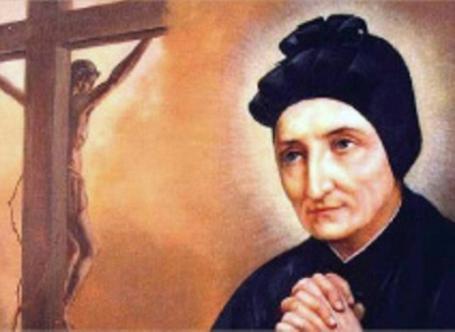
(March 1, 1774 – April 10, 1835)
Wealth and privilege did nothing to prevent today’s saint from following her calling to serve Christ in the poor. Nor did the protests of her relatives, concerned that such work was beneath her.
Adapted
Learn more about the courses
from Robert Bellarmine
Marriage Encounter Guyana
Born in northern Italy in 1774, Magdalene knew her mind and spoke it. At age 15 she announced she wished to become a nun. After trying out her vocation with the cloistered Carmelites, she realized her desire was to serve the needy without restriction. For years she worked among the poor and sick in hospitals and in their homes, and also among delinquent and abandoned girls.
In her mid-20s, Magdalene began offering lodging to poor girls in her own home. In time she opened a school, which offered practical training and religious instruction. As other women joined her in the work, the new Congregation of the Canossian Daughters of Charity or Canossian Sisters emerged. Over time, houses were opened throughout Italy. Members of the new religious congregation focused on the educational and spiritual needs of women. Magdalene also founded a smaller congregation for priests and brothers. Both groups continue to this day.
Magdalene died in 1835. Pope John Paul II canonized her in 1988.❖
[www.franciscanmedia.org ]
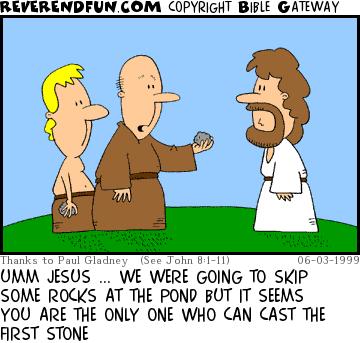
On the Lighter Side
Umm Jesus we were going to skip some rocks at the pond but it seems you are the only one who can cast the first stone
On Saturday March 29th, Marriage Encounter Guyana held an evening of reflection at the Catholic Life