The first Sunday of Lent featured a special occasion for those preparing to enter the Church this Easter
Cathedral celebrates Rite of Election
Also: City leaders gather for annual Civic Mass | Young people lead appeal for refugees In this issue:


The first Sunday of Lent featured a special occasion for those preparing to enter the Church this Easter
Also: City leaders gather for annual Civic Mass | Young people lead appeal for refugees In this issue:
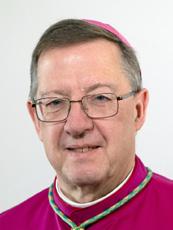
We are already well into our Lenten journey towards the joy of Easter. We continue to pray for all the catechumens and candidates, as well as those who accompany them, who are preparing to receive the sacraments of initiation at Easter. I was very encouraged and inspired to welcome such a large number of them at my first celebration of the Rite of Election here in Liverpool.
The Fourth Week of Lent, beginning on 15 March, opens with a wonderful number of feasts which interrupt Lent. In the Gospel of the Sunday, Jesus heals the blind man and restores his sight. We pray that during Lent, the Lord Jesus may help us to see others with the gaze of Jesus and show them compassion and love. The Fourth Sunday of Lent is also, of course, Mothering Sunday. We give thanks for the gift of our mothers and their special maternal care in families. We also recognise their unique gifts in professional life and especially in education. Most of us can remember our women teachers, sometimes religious sisters, who helped us to learn and discover the mystery of the world. We pray for our mothers, living and dead. Please make this a special day in your families.
A few days later we celebrate St Patrick on 17 March. It was Bishop James McGuinness of Nottingham who sent me to seminary at All Hallows College in Dublin. I had never been to Ireland, and so there began a good journey to prepare for priesthood, make lifelong friends and begin to understand better the complex relationship between England and Ireland. Over this last summer, I visited Strokestown National Famine Museum in Co. Roscommon. After finding records hidden away in the house of the landowner during the famine, Major Denis Mahon, the museum was able to recreate the tragedy of the famine for families, and the poverty and desperation that led to emigration. The museum marks ‘An Gorta Mór’: the Great Hunger. From Strokestown, many of the tenants with their stricken families struggled to walk east to Dublin and then sailed to Liverpool. Some settled into poverty on Scotland Road in Liverpool, most travelled on the coffin ships to a new settlement on Grosse Isle, Quebec. The visit to the museum was important for me to make a link to the history of this archdiocese and remember and pray for so many families who have made the journey east and settled here.
A few days later, we celebrate St Joseph, the patron of the Church and the patron of the dying. I remember that Pope Francis told us that he had a statue of a sleeping St Joseph by his bed and that at the end of the day he said, “Thank you St Joseph, please look after the Church, I have done what I can today.” It is a good prayer for a bishop. I treasure the statue of St Joseph which I bought in Lourdes.
Then we celebrate the wonderful Feast of the Annunciation. Mary is our Mother and the Mother of Christ. The visit of the angel Gabriel to Our Blessed Lady, so beautifully depicted in art, invites us to listen to the voice of God whispering in our hearts and to say, with Our Lady, ‘Yes, Your will be done.’ We meditate on the Incarnation, and the mystery of the Word made flesh.
May St Patrick, St Joseph, and Our Blessed Lady pray for you and lead you towards Easter. Archbishop John Sherrington Archbishop of Liverpool
For disarmament and peace. Let us pray that nations move toward effective disarmament, particularly nuclear disarmament,and that world leaders choose the path
Editorial Catholic Pictorial Magazine, St Margaret Clitherow Centre, Liverpool Archdiocesan Office, Croxteth Drive, Liverpool L17 1AA
Tel: 0151 522 1007 Email: CatholicPic@rcaol.org.uk
Advertising Sales team 0151 709 7567 sales@cpmmmedia.com
Contributor Katie Parry
Pictures Nick Fairhurst (www.nickfairhurstphotographer.com)
Martin Cahill (cahill-photography.com)
Website: www.catholicpic.co.uk
Twitter: @PicCatholic
Youtube: CPMM Media
Contents:
4 Main Feature Cathedral hosts celebration of our ‘green shoots’
7 Sunday Reflections
8 From the Archives A fragment of devotion
9 News News from around the archdiocese
14 What’s On What’s happening in the archdiocese
15 Cathedral Record
16 Pastoral Ponderings
17 Profile Jo Henney
18 Catholic Life
26 Youth Ministry
28 Pic Extras Mum’s the word News from the KSC
29 Dialogue and Unity
We pray for those adults who are preparing to be baptised, confirmed, and receive
Holy
at the Easter Vigil
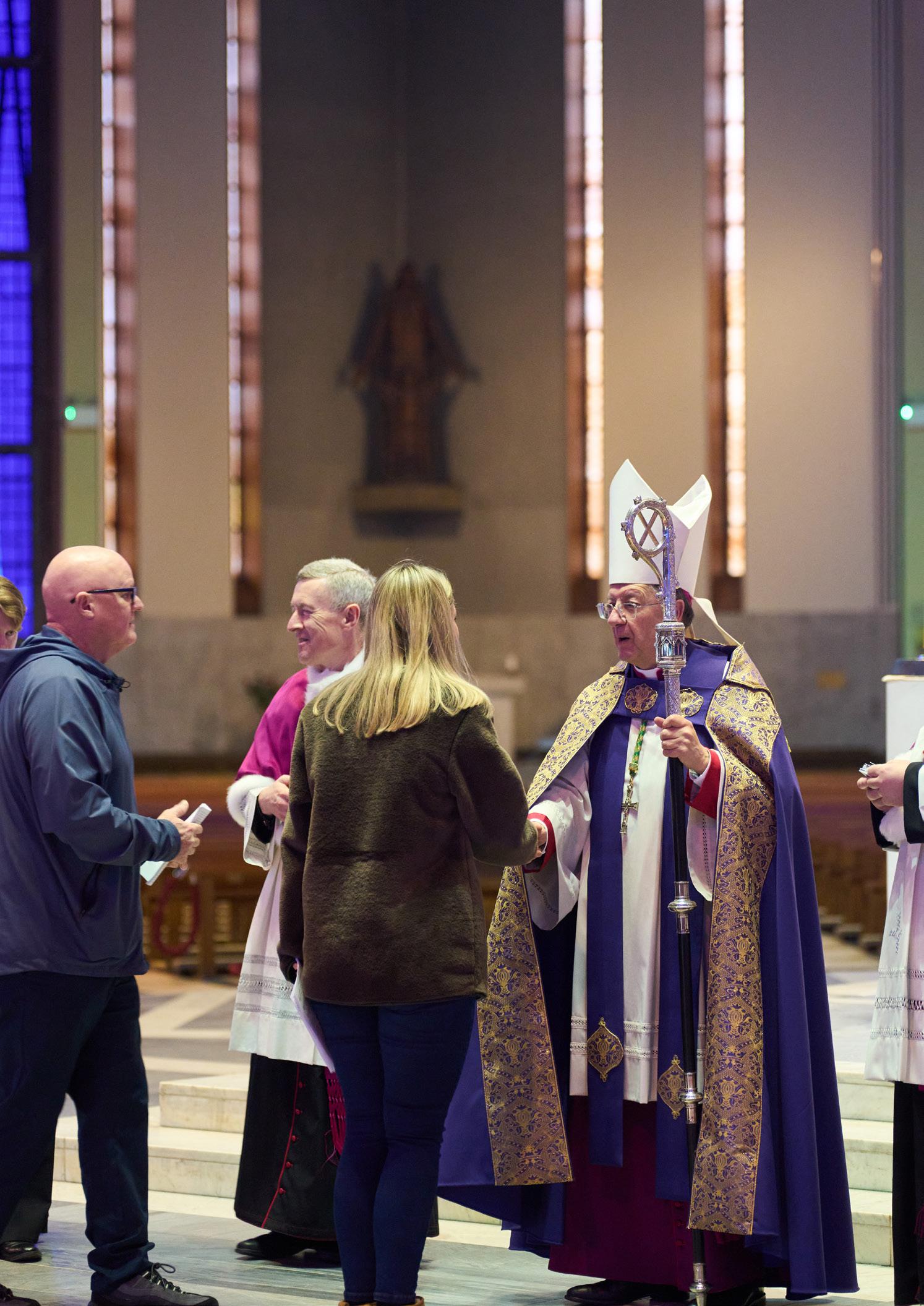
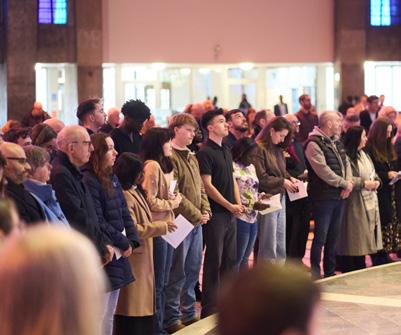
The first Sunday of Lent featured a special occasion for those preparing to enter the Church this Easter with a service celebrating the ‘Rite of Election and the Call to Continuing Conversion’.
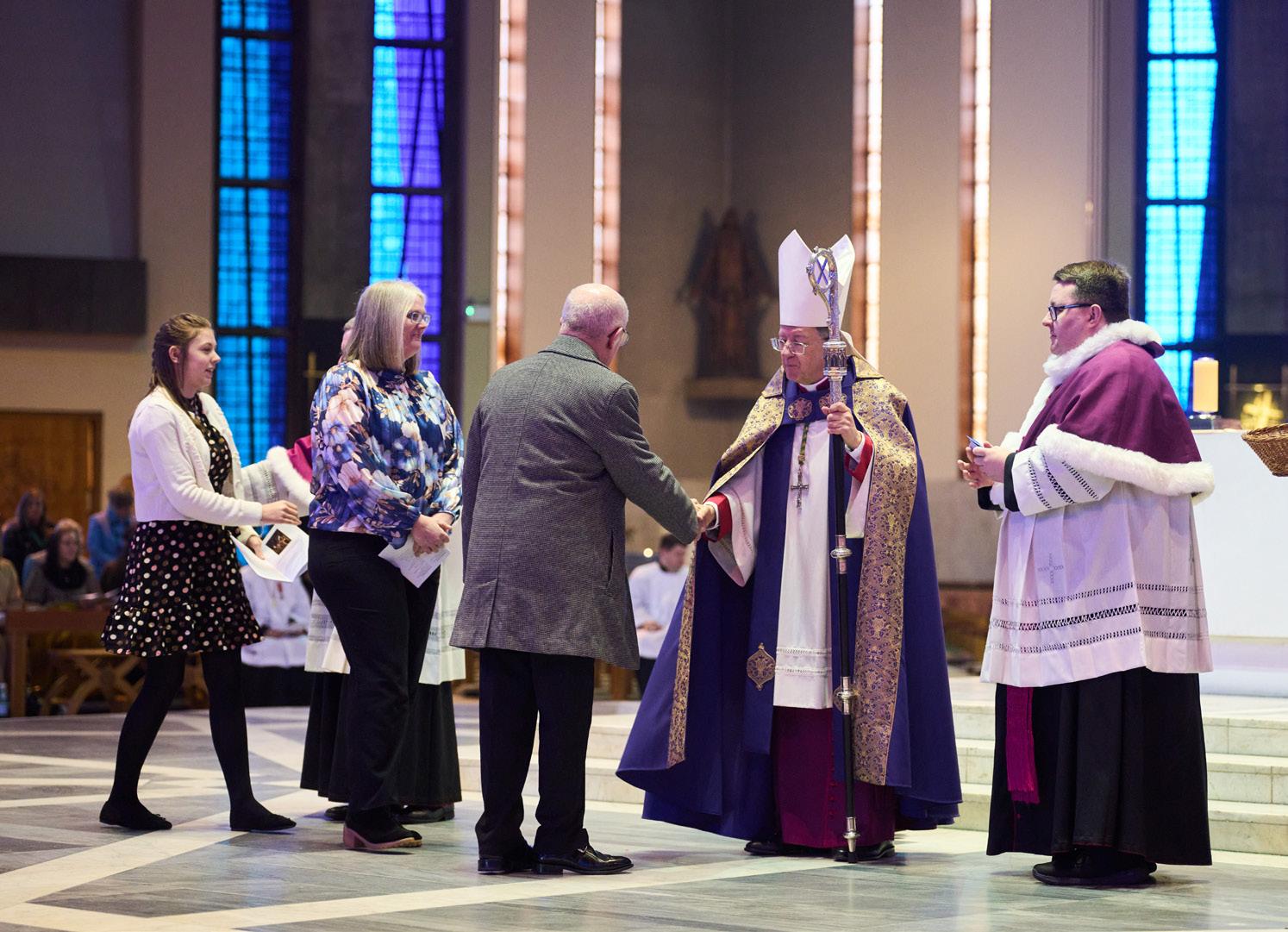
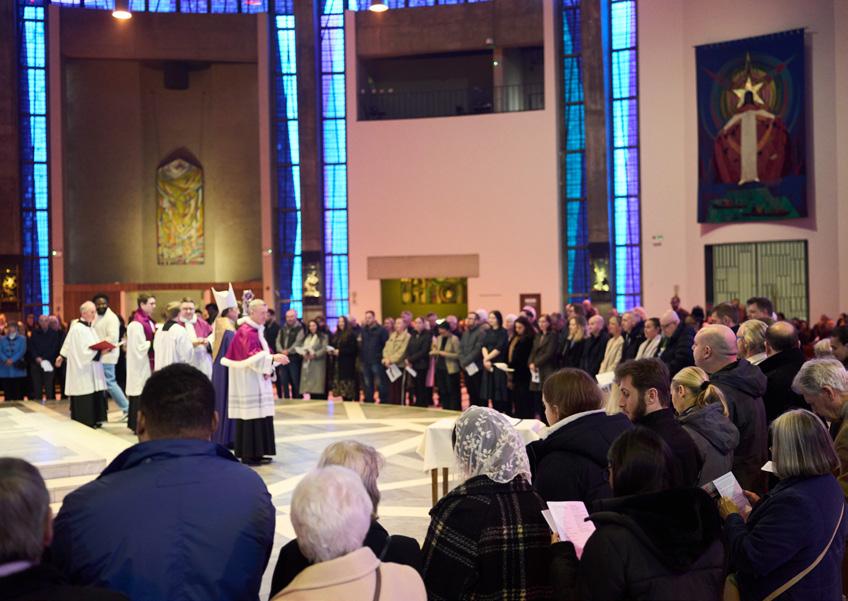
More than two hundred catechumens and candidates from parishes across the Archdiocese of Liverpool gathered at the Metropolitan Cathedral on 23 February for a significant step on their journey towards Catholicism.
The Rite of Election and Call to Continuing Conversion marked a key moment for those preparing either for Baptism or to complete their initiation through Confession and Holy Communion at the Easter Vigil.
“I welcome you to the Metropolitan Cathedral this afternoon on the First Sunday of Lent. Along with bishops across the world, we welcome you to either join the Church by Baptism at Easter or deepen your relationship with the Church by the other sacraments of initiation.”
Those were the words of Archbishop John Sherrington as he addressed more than two hundred catechumens and candidates from parishes around the Archdiocese of Liverpool, at a special service at the Metropolitan Cathedral celebrating the ‘Rite of Election and the Call to Continuing Conversion’.
The 3pm service at the cathedral on the First Sunday of Lent provided a significant staging post for the catechumens and candidates –respectively, those preparing for
Baptism and those preparing for their first Confession and Communion – for whom the process will conclude at the Easter Vigil.
“For many, perhaps this is first visit to the Cathedral,” Archbishop Sherrington added. “Enjoy and savour the beauty on this sunny afternoon. It is your home. “My dear brothers and sisters to be baptised, our catechumens, today you become the ‘elect’ to walk together to Baptism. Today the Church rejoices with you as we see the Church increase in members. Today we pray for you and promise to accompany you towards the great celebration of Easter and the rising of Christ from the dead after his suffering and passion.”
‘Green shoots in our communities’ There were similar services in dioceses across the country – and indeed the world – on that weekend. Archbishop Sherrington had highlighted the importance of the service at our cathedral when speaking on BBC Radio 4’s ‘Sunday Worship’ on that same morning.
“We pray for those adults who are preparing to be baptised, confirmed, and receive Holy Communion at the Easter Vigil,” he said. “They are a sign that the living Christ continues to call disciples to follow him and be His presence in the world through the power of the Holy Spirit. Later this afternoon, like bishops around the
world, I will welcome these chosen ones to the Metropolitan Cathedral in Liverpool. I will remind them that the whole Church will be praying for them during Lent. It is a beautiful moment and very encouraging, as I hear each person’s journey to faith, which is always very moving. They are the new green shoots in our communities.” In his homily during the service, Archbishop Sherrington also referred to the reading, taken from the First Book of Samuel. In it, Samuel heard a voice calling him but thought it was his priest and teacher, Eli.
The Archbishop said: “Eli recognises that it is the voice of the Lord. He tells Samuel to go and listen and to say in response, ‘Speak, Lord, for your servant hears.’ Samuel needs his teacher Eli to help him discern the voice of God. I thank those who have helped our catechumens and candidates to discern the call of the Lord Jesus in your lives. I invite you now during this season of Lent to listen to the Lord
speaking to you in prayer, in the word of the scriptures, at Mass.
“Just as it took three attempts for Samuel to hear the voice of the Lord, so too we need to attune ourselves and persevere. For this, we need space and time and a quiet place. We might find beautiful music helpful, but then we must listen and pray, ‘Speak, Lord, your servant is listening’. Ask Jesus for the grace that you need.
“Dear friends, at your Baptism you will be called ‘The beloved of the Lord’. Ponder this title and rejoice in it. My brothers and sisters who prepare for Confirmation and the Eucharist, you are the beloved of the Lord. Listen deeply to this title and know how much you are loved by God. Your names are written in letters of love on the heart of Jesus.”
As the centrepiece of the service, each catechumen had their name read out and stepped forward to the front of the altar –together with their godparents, family and
parish supporters – to sign the Book of the Elect, for those being baptised.
A similar process then took place for the candidates who, parish by parish, had their names read out and processed to the altar with their sponsor, family and parish supporters. As with the catechumens, each received a welcome from the Archbishop and the Vicars General, Bishop Tom Neylon and Canon Aidan Prescott, together with a copy of the Archbishop’s Lenten prayer card.
The Archbishop added: “By Baptism we are members of the Church, the Body of Christ. Baptism is a call to love and the service of others, as we heard in the Gospel passage. Jesus says, ‘This is my commandment, that you love one another as I have loved you.’ You are called to live out this love in your daily life. It is a call to a vocation in Christ which is led and strengthened by the Holy Spirit. Pray daily for the help of the Holy Spirit. I have given you this prayer on the prayer card.”
‘All are welcome in this house’
According to Deacon Paul Mannings, who is permanent deacon to the Metropolitan Cathedral, the service was “an opportunity to come together to let people realise that here is the archdiocese at work”, with so many different parishes represented. Indeed, the sight of all the catechumens circling the altar with their godparents and, in turn, the candidates doing likewise with their sponsors underlined the impressive numbers involved this year.
Deacon Paul is part of the team at the cathedral which has been preparing both catechumens and candidates since the start of October, meeting on Monday evenings along with his assistants Mark Vowles and Dee Di Matteo. The cathedral is not just the mother church of the archdiocese, but a parish in its own right, and his group have what he calls an “old-fashioned parish identity” – and that sense of community is an important part of the process of any RCIA (Rite of Christian Initiation of Adults) course.
He explained: “It’s a process of discerning. People will come to us in October when we start and the first thing we set about doing is establishing a community – a temporary community where all are together, where we have a safe space to talk and to work.
“With regards to the process itself, there’s the acquisition of knowledge and understanding, but there’s also space for people to talk and to share and to ask questions about the faith.”
Among Deacon Paul’s group of candidates is Cos Zinonos, 50, who as a child was baptised into the Greek Orthodox Church but is now preparing to become a Catholic. Cos, whose wife is a Catholic, explained: “I felt a closer relationship to God through the Catholic Church, and so have gone through the course over the last six months to truly understand the Church and to have that deeper relationship with God, and every session that I’ve gone to has been illuminating.”
He gives the example of a session on the Holy Trinity – ‘Father, Son and Holy Spirit’ – given by Father Faustinus Ugwuanyi. “The breakdown of the Holy Trinity, presented by Father Faustinus, was very inspiring,” he noted. And the service on 23 February even more so. “It was a very joyful event,” he said. “The cathedral was absolutely packed.”
Anybody interested in learning more about the Metropolitan Cathedral’s RCIA course for 2026/27 should email: enquiries@metcathedral.org.uk
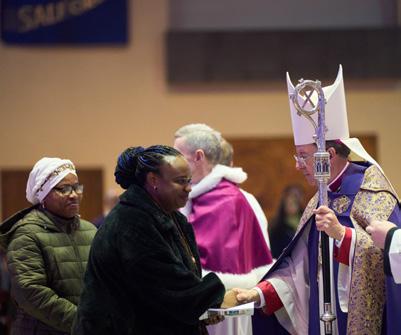

“It’s a process of discerning. People will come to us in October when we start and the first thing we set about doing is establishing a community.”


On 25 March – which this year is a Wednesday – we solemnly keep the remembrance of the Annunciation of the Lord, the visit of the Angel Gabriel to Mary at Nazareth. Of course, it is no accident that the gap between 25 March and 25 December is nine months – the time of a ‘textbook’ pregnancy.
In this way, the Annunciation celebrates both the visit of the angel and the openness and obedience of Mary, and, also, the conception of the Child Jesus. As it is put in the Catechism, Jesus “was conceived through the Holy Spirit and born of the Virgin.”
The Annunciation – or Lady Day as it was known in Medieval England –had great civic significance as well because it marked the beginning of a New Year, just as it marked the outset, or the beginning, of the Christian era with Mary’s “fiat”: “let it be done to me according to God’s Word”. It was not until 1752 that England changed from the Julian to the Gregorian calendar – and 11 ‘lost’ days were added, thus giving us 6 April, which even today is the beginning of the new tax year.
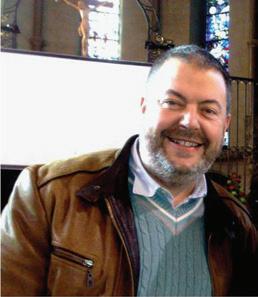
Returning from a ten-year absence on the Isle of Man, I’m reconnecting with the ecumenical and interfaith scene in Liverpool. Today I joined a group of Muslim, Jewish and Christian members in a sharing of our sacred texts.
We began with a passage from the Book of Genesis in which Abraham and Sarah give hospitality to three strangers. There followed a discussion about the centrality of hospitality in the worship and culture of Muslims and Jews and even Christians (though tea and biscuits are no match for the more lavish hospitality of Jewish and Muslim gatherings).
We next considered the account from Luke’s Gospel when two disciples press a stranger to stay and eat with them at the end of the road to Emmaus. It was only in the ‘breaking of bread’ that they recognised Jesus in the stranger who had accompanied them on the road.
The final passage we looked at was taken from the Qur’an, the Muslim sacred scripture. The prophet Mohammed and his followers flee persecution and seek refuge in Medina. They are welcomed with open arms. Their hosts offer these immigrants shared ownership of
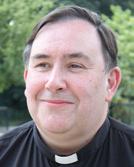
Canon Philip Gillespie
So you could say that within a 12-month period we have three beginnings to the year: in the Liturgical calendar, it is the first Sunday of Advent; for the civil year, it is 1 January; while, for the tax year, it is not until April.
At the heart of it all stands the proclamation of Christ, the Alpha and Omega – the first and final letters of the Greek alphabet, and the beginning and end of all things and of every year; as we will pray when the Paschal Candle is prepared and blessed at the Easter Vigil:
Christ yesterday and today, the beginning and the end, the Alpha and the Omega. All time belongs to him and all the ages. To him be glory and power through every age, for ever. Amen.
Our prayer with and for each other is also drawn from the Liturgy of the Easter Vigil:
May the light of Christ, rising in glory, dispel the darkness of hearts and minds.
Mgr John Devine OBE
their land and produce and, in time, recognise Mohammed as their leader. Our discussion flowed into consideration of the current immigration crisis in Europe and North America. We agreed that given our shared belief in the centrality of hospitality to strangers, our faith communities must unite in challenging the xenophobia of populist leaders who pander to our basest tribal instincts and encourage us to turn against each other.
Some years ago, I led a mission in a high school. One of the teachers was a very dramatic, wonderful woman who expected a huge amount from the children. Most of the children were terrified of her. One day there was a message for me to go to the deputy head’s office. When I arrived, the teacher was there with the deputy head and a very distressed young man called Toby. Toby was about 15 and had been caught in the act of throwing paint over the teacher’s car. The deputy head was reading the riot act. Eventually the teacher stood up and the boy looked really worried. She sat down next to him and began to share her story.
Yet hospitality is embedded in our secular society. We speak of hospitals and hospices where the stranger is not only fed but healed and nursed - as was the case with the Good Samaritan. Jews, Christians and Muslims are known as the three Abrahamic faiths.
The First Eucharistic Prayer in the Mass refers to Abraham as “our father in faith”. I left behind in the Isle of Man a reproduction of a painting of Abraham by the German priest-artist Sieger Köder. It depicts Abraham at prayer looking up to the starlit heavens. He was the father of many nations. Each of us is represented by one of those billions of stars. I’ve recently acquired another copy of that picture. It hangs in the living room of my new home.
She had been brought up in care because of her mother’s drug problem. Her father had been absent for many years and didn’t want to know about his daughter. Toby sat there with his mouth open as she shared with him her experience of having had a teacher at school who believed in her. That teacher had gone out of her way to help our teacher deal with her brokenness. She looked at Toby and said, “If you let me, I’d like to do the same for you.” Her willingness to share her vulnerability and her brokenness was, I hope, a catalyst for Toby to turn his life around.
Vulnerability is not a popular word in today’s society. Yet it’s part of the human condition. The way of the kingdom is about discovery and mystery and being led into the depths of our vulnerable self. When that happens, we begin to realise that the Church was never meant to be a stale, bureaucratic institution obsessed with numbers, property, rules and regulations.
Instead, because of vulnerability we become a spiritled Church that talks more about mercy than sin, a Church that isn’t locked into the past, but sees the potential of what it can become, a Church in which vulnerability, openness and journeying are key to understanding.
Vulnerability always compels us beyond ourselves. Whenever we see real pain, most people find a depth of compassion within that causes them to act for the one who is in need. When we reach out to the broken and the needy, we are reaching out to the God who suffers in our midst.
Through the doors of our centre come many suffering people. We meet those seeking asylum, those who have no language to communicate their need other than the pain in their eyes. We meet those caught in addictions and we meet the lonely, the frightened, the poverty-stricken. Vulnerability pushes us beyond the safe boundaries we create for ourselves into ministry. Usually, it’s only when we are vulnerable that God can reveal to us His tenderness and desire to be in an intimate, vulnerable relationship with us. We are drawn into the mystery because of vulnerability.
This kingdom, which we are called to build within ourselves and within the world, is a kingdom that is marked by a vulnerability always accompanied by grace, and grace will ultimately work its miracle as the kingdom is born within us and among us. So this Lent, get in touch with your vulnerability and build the Kingdom of God.
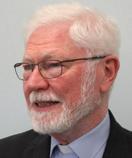
Father
Chris Thomas
by Neil Sayer, Archdiocesan Archivist
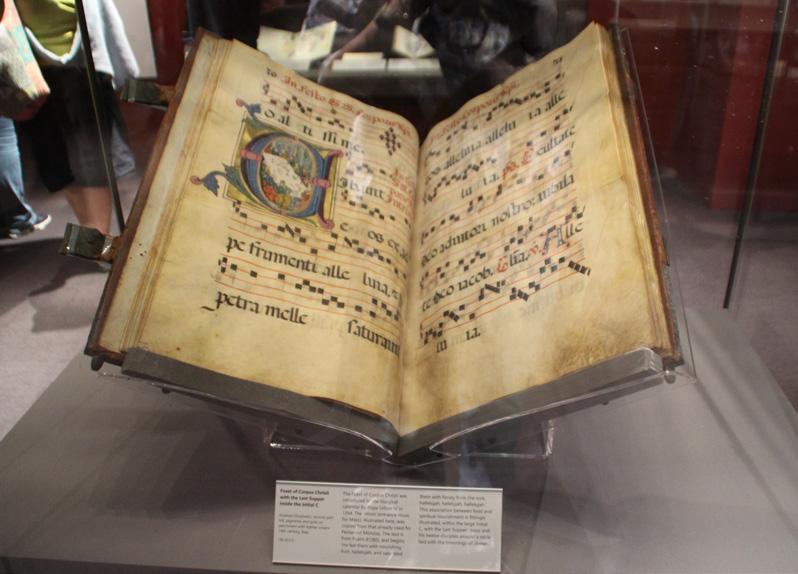
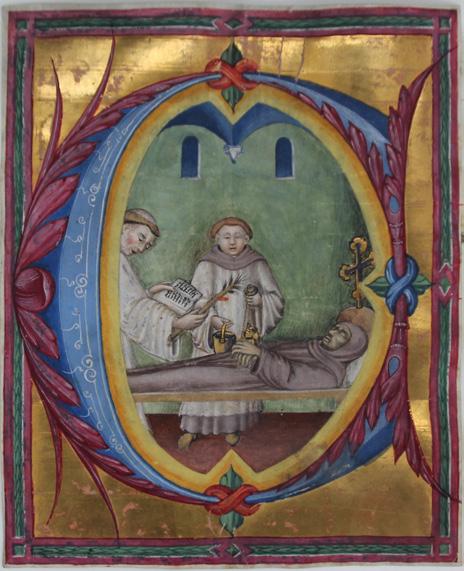
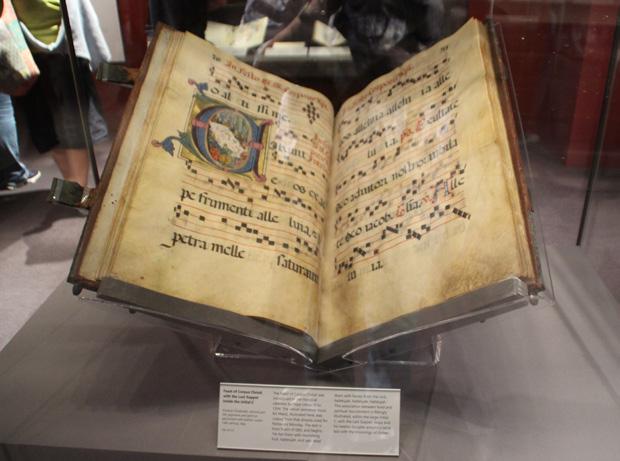
Visitors to the archives are usually surprised to discover the age of the oldest document in our collections. It’s true that as the archdiocese wasn’t established until 1850, most of our records are from the 19th and 20th centuries. But we are privileged to have a small medieval work of art, roughly 8 inches square, in the archive of the former seminary at Upholland..
It’s an illuminated initial letter taken from a much bigger manuscript, and it seems to illustrate the Last Rites being performed over a monk’s body. Other monks are sprinkling holy oil or water and reading, presumably, from the Bible. The grey cowl on the body might suggest that the illustration represents the death of St Francis of Assisi. Certainly, the illuminated letter would have been part of a document that was created in a monastery, such as might have been founded by the Franciscan Greyfriars. Its colours – the lapis lazuli, green and red, with painstakingly applied gold leaf – and the style of decoration have allowed medieval scholars to locate its origin in the Lombardy region of northern Italy, possibly in Milan, and to date it to around 1450.
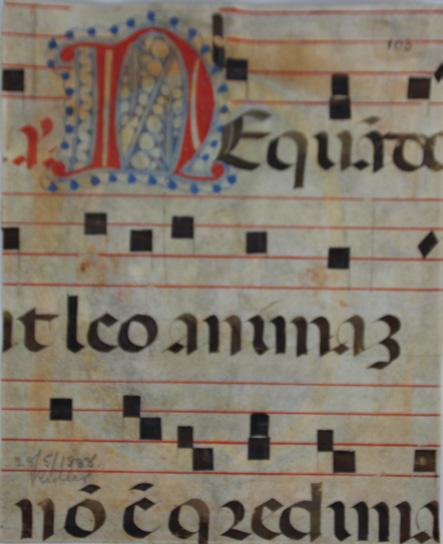
Because it has not been on public display, it remains closer to its original condition than most medieval artworks that you will see in national art galleries today. Its creator, though, is not known. He would of course have been known to the people for whom he designed it, as the illustration in fact served a communal purpose, connecting the artist with his audience in a very immediate way. It is clear from the reverse of the parchment that it was part of a music manuscript, an Antiphoner, and one has to imagine it as a large bound volume resting on a lectern, its large print meaning that a small choir could form facing it, singing as the pages were turned. An example could be seen at the excellent Chester Beatty Library and Gallery in Dublin recently: their exhibition “The Arts of the Book” included another music manuscript from Italy, a 14th Century Gradual, which puts our own illuminated letter in context. The exhibition, which can still be seen online, shows the manuscript open at a page illustrating an initial letter “C”, which has a miniaturised depiction of The Last Supper.
Unfortunately, there was a Victorian fad for collecting such miniature works of art, not valuing the manuscript as a whole, and
that led to our letter being hacked out of the original parchment sheet. There is a pencil notation on the document that indicates it was purchased in 1888 from a London bookseller, William Ridler, whose premises were on The Strand. Probably it was soon after that that it was donated to the museum at St Joseph’s College, the diocesan seminary opened in 1883. The museum had many objects intended for the education of the boys boarding there. They included relics, manuscripts and vessels of historic religious significance, as well as more prosaic items that might have been intended for the broader education of the schoolboys. As the college became more expensive to maintain, many of the collections with financial value – the coins, stamps, porcelain and paintings – were sold off in an attempt to keep it going. There were some medieval treasures, including illustrated Books of Hours and rare books, that would have attracted scholars and other interested visitors to our doors today, but that are now recorded only in the pages of auction catalogues from the 1980s and 1990s. The tiny masterpiece we still have encapsulates so many histories, of medieval art, of religious devotion, of a mania for collecting, of priestly education…
Reverse side of parchment fragment from the archives of St Joseph’s College, showing it to be a music manuscript
If you’ve got any news from your parish that you’d like featured e-mail us with the details at: CatholicPic@rcaol.org.uk
On Sunday 8 February, the Archdiocese of Liverpool celebrated its annual Marriage and Family Life Mass, welcoming around 500 people to the Metropolitan Cathedral. The service brought married couples from across the region together to give thanks for the gift of married life.
Archbishop John Sherrington invited all couples to renew their vows and blessed each marriage with words of encouragement and faith. Around 70 couples had signed up to receive a certificate marking their commitment, while couples celebrating significant anniversaries were specially recognised.
As part of the service, couples were also invited to commemorate a loved one by writing a message on a tag and attaching it to a white rose. These roses were included in the offertory as a tribute to those held dear.
In his homily, Archbishop John reflected on the importance of marriage as a sacrament and a gift from God. He spoke of couples as the “salt of the earth” and the “light of the world,” highlighting the ways in which their love preserves relationships, nurtures families, and shines as a witness to others.
He reminded couples that their names are written in the heart of Jesus and reflected on the joys, sacrifices, and losses experienced throughout married life. The archbishop’s blessing encouraged couples to continue bringing love and kindness to the world around them.
On leaving, couples who had signed up received their certificate, and everyone was given a rose as a reminder of their commitment. The celebration continued in the Gibberd Room, where everyone was invited to enjoy tea, coffee, and cake together.
One attendee shared their appreciation afterwards: “Thank you all. What a beautiful service. The certificate is lovely, the organisation brilliant, and my photographs with the archbishop are lovely. Thank you all so much.”
Photos from the event are available to view and download on the Archdiocese of Liverpool’s Flickr account.
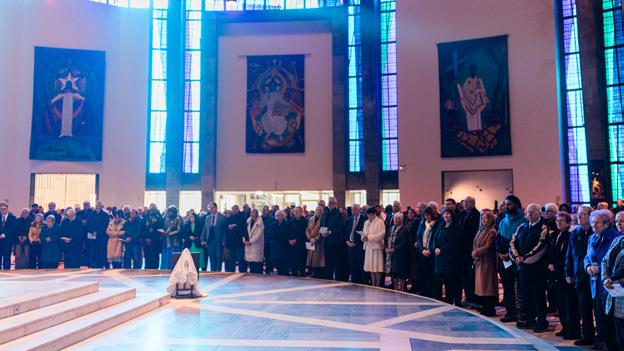
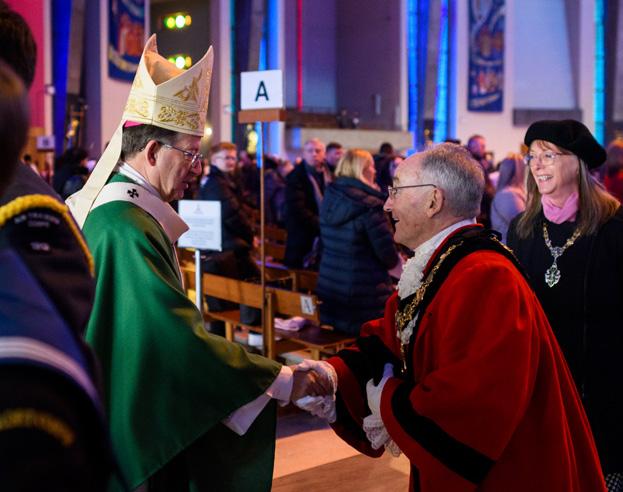
The annual Civic Mass was celebrated on Sunday 15 February at the Metropolitan Cathedral, marking Archbishop John Sherrington’s first Civic Mass since his installation.
He welcomed the Lord Lieutenant of Merseyside, Peter Oliver OBE; the Honorary Recorder of Liverpool, Judge Andrew Menary KC; the High Sheriff of Merseyside Billy Hui BEM DL; and the Lord Mayor of Liverpool, Cllr Barbara Murray - for several of whom it was also a first Civic Mass.
In his welcome, Archbishop John described the occasion as “a special moment in the life of our city” - an opportunity to pause from the busyness of civic duty and reflect on why we serve, and whom we serve. He reminded the congregation that public service must be “rooted in compassion and guided in hope”, a message that resonates deeply in a city known for warmth and solidarity. Along Hope Street, between the two cathedrals, unity is not simply an ideal, but something lived out through cooperation and shared purpose.
In his homily, he called civic and religious leaders to “recommit ourselves to working together for the good of all people in our city and region”, acknowledging that structural poverty and inequality remain entrenched. Echoing the recent Manifesto for Hope, he urged all present to pursue the common good so that individuals and families may “flourish”.
Representatives from across the archdiocese attended, including Catholic associations such as CAFOD, UCM and Friends of the
and Cardinal
After Mass, civic guests met the Cathedral choristers, while others gathered in the Gibberd Room for refreshments. Despite the cold, the occasion renewed a shared spirit of service, generosity and hope for the year ahead.
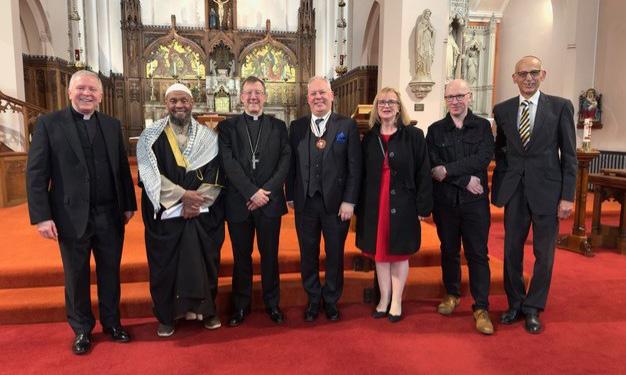
Archbishop John Sherrington delivered a keynote lecture to Southport’s Interfaith Group titled “A Pathway from Nostra Aetate to Fratelli Tutti to Pope Leo XIV.”
The interfaith group, consisting of several different faith groups, met for their annual lecture in February at Holy Family Church. The group has continued to grow in strength and unity following the tragic events that affected the town in 2024. Faith leaders came together in the aftermath to support the wider community as well as the local mosque, which was impacted by the riots.
Archbishop John Sherrington said: “It was an honour to lecture at Southport’s Interfaith Group. As the town has witnessed such tragedy in recent years, the unity of faith communities is essential.”
Dr Selwyn Goldthorpe, secretary to the Southport Interfaith Group, said: “Archbishop John truly promoted his Catholic faith with regards to how his Church is working to enhance interfaith relationships. I thought his lecture was thoughtful and informative. “Our thanks go to Archbishop John for coming to Southport to deliver his message with such clarity.”
Parish priest at Holy Family Church, Canon Kevin McLoughlin, added: “It was a wonderful lecture by Archbishop John. He took
us on a brief sixty-year journey of development from the Second Vatican Council through to our current Pope Leo XIV.
“It was a truly thought-provoking and informative journey which concluded with a powerful confirmation of our need to continue to develop and build mutual friendships and respect for one another regardless of our faith and belief.”
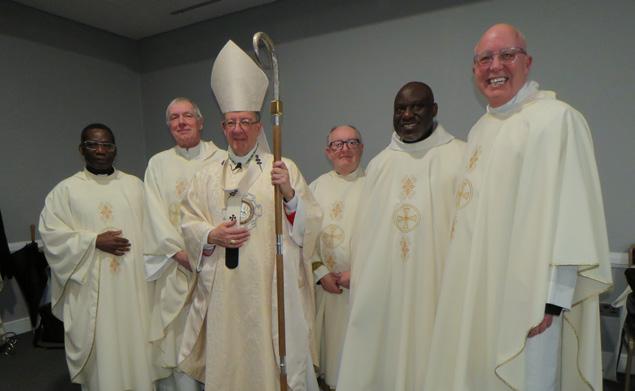
St Helens Catenian Circle No. 21 marked a remarkable double milestone on Saturday 7 February, celebrating 111 years since its inauguration in 1914 and holding its 1250th Circle Meeting.
The celebration took place at the Mercure St Helens Hotel and began with Holy Mass at 6.30pm, celebrated by Archbishop John Sherrington, together with five concelebrating priests. Around 130 Catenians, wives and guests gathered for the liturgy, including the Mayor of St Helens, Councillor Severiano Gomez-Aspron MBE, and the Catenian National President, Gerry McCormack.
A short 1250th Circle Meeting followed, chaired by Acting President Stephen Whitehouse. Sixty-six Catenians attended the meeting, with members travelling from Scotland, Ascot, Berkshire, Manchester, Lincoln, North Wales, Liverpool, Wigan and St Helens. Prayers were offered for vocations, for the Catenian Association, for deceased members and their families, and for the Holy Father.
The celebrations continued with a three-course dinner, joined by additional clergy who were unable to attend the earlier Mass due to parish commitments. The evening concluded with a toast to the King and a number of speeches honouring the Circle’s long history of faith, friendship and service.
The 1250th meeting is just one moment of more than a century of commitment to faith, community and charity in the town.
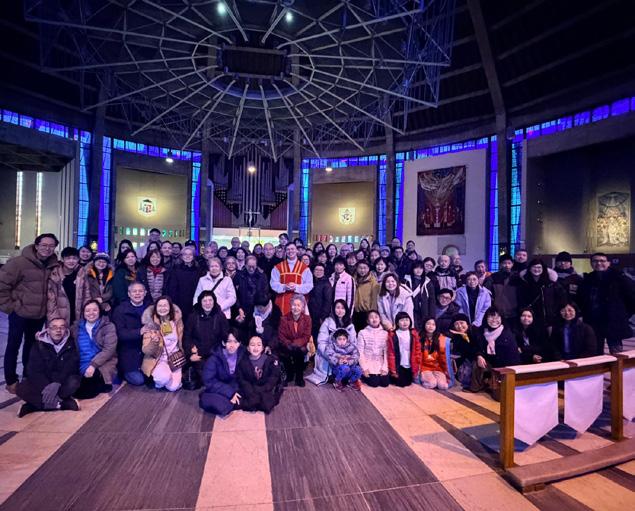
On Saturday, 14 February, Fr Hugh Donleavy celebrated Mass in Cantonese for about 100 faithful, gathered not just from Liverpool but also from Warrington, Manchester, Northwich, Sheffield and even Glasgow, who had settled in the UK from Hong Kong.
Fr Hugh celebrated the entire Mass in Cantonese - a joyful surprise for all who took part - at the Metropolitan Cathedral. Participants described the moment as deeply moving and inspiring; one even likened the touching scene to Pentecost made present again. It was especially meaningful for Cantonese-speaking Catholics to hear the prayers of the Mass in their own tongue.
We were very moved when Fr Hugh humbly said, “It was very stressful, but I was also glad to do it, particularly because people seemed so grateful, even with my broken Cantonese. Beginning to learn the language was difficult, but it’s been worthwhile, so I found it easy to keep going.”
Our community offers tremendous thanks to Fr Hugh, while also giving thanks to God for blessing us with such a gifted priest, full of care and a willing heart to walk alongside us.
(Article contributed by The Hong Kong Catholic Community in Liverpool.)
During the Octave of Prayer for Christian Unity, St Wilfrid’s Parish, Widnes welcomed local Christian leaders and their congregations for a sung Evening Prayer on 21 January.
The ecumenical liturgy brought together members of the Catholic, Anglican and Methodist communities in Widnes in shared faith and unity in Christ. Rev Linda Reilly-Dawkin of the Church of England proclaimed the scripture reading, while Rev Mark Harwood of the Methodist Church led the intercessions.
Father Peter Ross expressed his gratitude for the occasion, noting the joy of welcoming fellow Christian leaders and worshippers to the parish. The service offered an opportunity not only for prayer, but also for strengthening relationships between local churches and deepening mutual understanding. “It was a particular joy to hear St. Wilfrid’s Parish Choir and the Little Church Choir from the Anglican Community in Widnes singing together,” he commented.
The Week of Prayer for Christian Unity, observed annually from 18–25 January, encourages Christians of all traditions to pray together for the unity that Christ desires for his Church. In Widnes, the gathering at St Wilfrid’s was a hopeful reminder that, even amid differences, shared prayer and fellowship continue to build bonds of friendship and faith.
“We are afraid for our children’s future.”
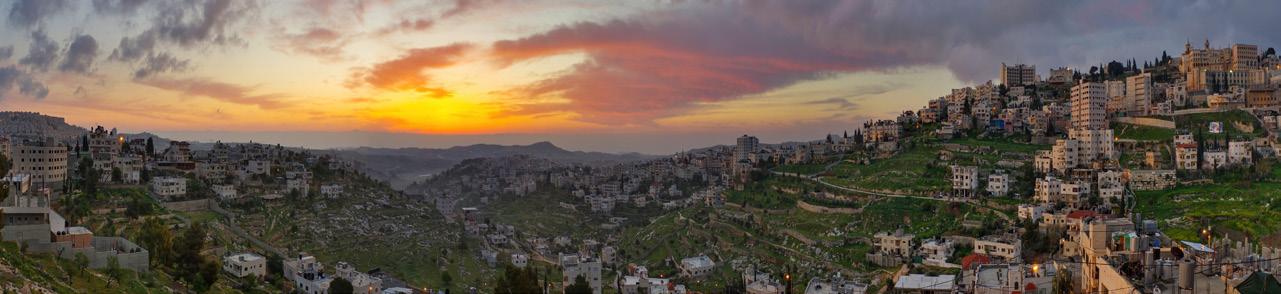
Those words, spoken quietly in Taybeh, the only entirely Christian town in Palestine, have stayed with me since this year’s Bishops’ Holy Land Co-ordination meeting. They were not spoken in anger, nor in despair, but in weary honesty.
At the heart of the annual International Meeting of Bishops was a simple Gospel line: “You are the salt of the earth. You are the light of the world.” Words that today feel less like poetry and more like a summons.
We travelled to a land deeply scarred by trauma. Since October 2023, grief and fear have intensified across every community. Since then, according to the Latin Patriarchate of Jerusalem, more than 71,000 people in Gaza have been killed, 170,000 injured, 2.1 million displaced, around 70% of homes destroyed, and hundreds of thousands of children left without stable education; of over 1,000 Christians before 2023, only about 570 remain.
The wider Christian presence across the region is fragile. Today, approximately 46,000 Christians remain in Palestine (about 1% of the population) and 188,000 in Israel (around 1.8%). These are not abstract statistics. They represent families discerning whether to leave, young people questioning if there is a future for them in the land of Christ’s birth, and parishes striving to hold communities together under immense strain.
Yet suffering is not the whole story.
Across communities - Jewish, Muslim and Christianwe encountered resilience and courage. Many refuse to surrender hope.
Among the Bedouin, the Church’s presence is quiet but transformative. The Comboni Missionary Sisters run five desert kindergartens, train over 200 women in practical skills, and provide healthcare and humanitarian support. Their witness is not dramatic, but it is faithful and constant.
Christian institutions continue to serve far beyond their own communities. In Israel, Christian schools educate 33,000 students. In Palestine, Church-run schools, health centres and social services serve nearly half the population, Christian and Muslim alike. Despite small numbers, Christians contribute disproportionately to education, healthcare and social cohesion.
We also met courageous voices within Israeli society - rabbis defending human rights, Hebrew-speaking Catholic communities navigating mistrust, and interreligious organisations working for dialogue in an increasingly polarised climate. Many face criticism and pressure, yet they persevere because they believe faith must defend human dignity for all.
The message we heard repeatedly was simple: do not forget us. Prayer matters. Advocacy matters. And people long for pilgrims to return. Pilgrimage is not religious tourism; it is a concrete act of solidarity, a sign that the Church has not turned away.
As we enter Lent, this cannot remain a distant concern. Lent calls us to prayer, fasting and almsgiving - to draw closer to Christ and to those suffering where He walked. To focus our prayer on the Holy Land this season is not political; it is profoundly Christian.
The Holy Land is wounded, but it is not without hope. Light still shines there - in classrooms, in parishes, in quiet acts of courage, and in families who choose to remain.
This Lent, may we stand with them in prayer, solidarity and hope.
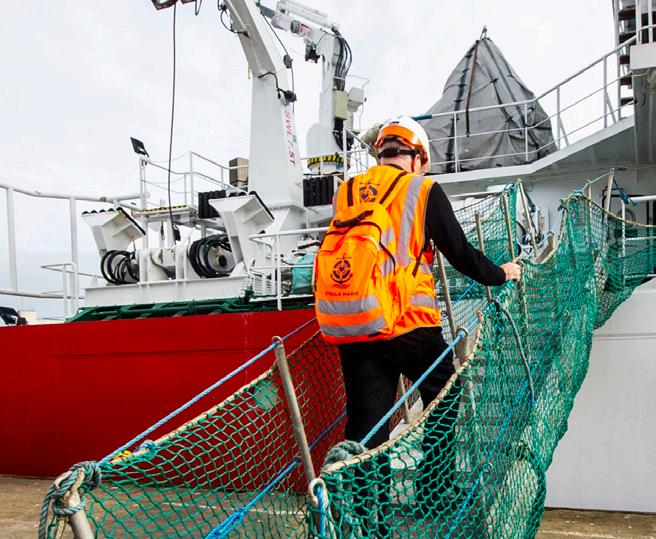
It is no exaggeration to say that seafaring runs in the blood of Liverpool with its rich maritime history. However, the popular image of life at sea - travelling the world, visiting exotic destinations, and spending weeks in ports - bears little resemblance to reality.
Today’s seafarers are recruited on contracts lasting 6-to-9months. They have strict work shifts, often with minimal rest. Due to modernisation and shipping schedules, most vessels spend less than a day in port, leaving seafarers with very little time to step ashore for a much-needed break.
Being a seafarer or a fisher can be a dangerous and difficult job. Cases of seafarer abandonment are rising year on year, leaving crew stranded in foreign ports without pay. Serious injuries, bullying, piracy, human rights abuses and non-payment of wages are a grim reality for some. Shore leave can be refused. Contact with family can be limited. When a death occurs on board, crewmates must continue working in the same confined space while carrying their grief. The mental health crisis in the shipping industry is worsening; tragically, there are now more suicides at sea than accidental deaths.
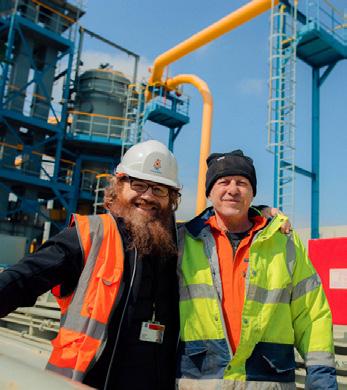
Feelings of isolation and loneliness can get overwhelming and worsen when they feel there is no one to turn to in times of crisis. This is where Stella Maris stands alongside them. Through its ministry, and the work of its chaplains and volunteer ship visitors, seafarers and fishers know they can get assistance, support and solace when crisis hits.
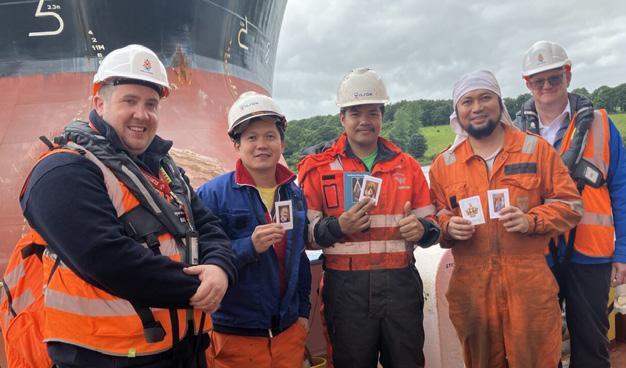
In Liverpool, Stella Maris chaplain Christopher Reynolds provides a warm welcome, friendly face, and source of strength to the many seafarers and fishers he meets in ports in and around the city. The support that Chris and other Stella Maris chaplains across the UK provide can be a lifeline for seafarers and fishers who are facing crisis – when help is needed urgently.
In such cases, the chaplains can apply for a grant through Stella Maris’ Centenary Emergency Fund, set up in 2020 to provide emergency help to seafarers, fishers and their families in times of crisis.
These could mean helping a seafarer who needs to return to work after a serious accident or helping a retired fisherman with the cost of fixing a broken boiler, or a struggling young cadet pay their rent when no other help is available.
In desperate situations like these, the emergency fund is a last hope. Grants can fund anything from food, accommodation and medical care to legal help and livelihood training – all provided through the local Stella Maris chaplain.
This life-saving support is made possible through donations towards the centenary fund. Last year, demand was so great that the fund was exhausted by August. This year Stella Maris aims to raise £100,000 to ensure they can support any seafarer or fisher who needs it.
This Lent, Stella Maris invites you to be a light and bring hope to a seafarer, fisher or their family members who is desperate and at breaking point. Your generosity can be life-transforming. It will help Stella Maris chaplains and ship visitors continue to provide critical help.
Please also keep in prayer the many seafarers, fishers and their families during this holy season.
Visit www.stellamaris.org.uk/lent/ to see how you can help.
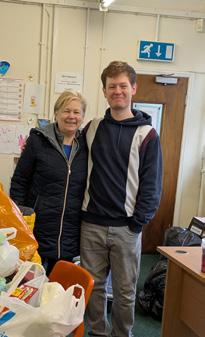
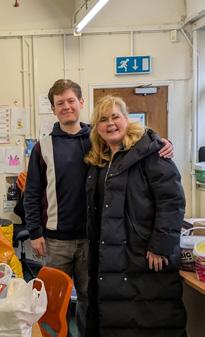
Members of the Justice and Peace Youth Group at Our Lady of the Annunciation, Bishop Eton and St Mary’s, Woolton have been praised for their efforts in supporting refugees and asylum seekers through a parish toiletries appeal.
The initiative began after Pablo Guidi from SHARe Knowsley visited the group to speak about the charity’s work with refugees and people seeking asylum. Inspired by what they heard, the young people decided to take action, organising a collection of essential toiletries to help provide comfort and dignity to those in need.
They appealed to parishioners at both churches, speaking passionately about the importance of practical support for vulnerable families. The response was overwhelming.
Sarah McGeehan, Youth Ministry Coordinator at the Archdiocese of Liverpool, said: “We were overwhelmed by the generosity of our parishioners. They really engaged with the young people who spoke so passionately about the need to give people in need comfort and dignity. We received over twenty large bags full of lovely items which were delivered to SHARe Knowsley to distribute. Pablo said it was their biggest donation of toiletries yet!”
The generous donations - including shampoo, shower gel, toothpaste, and other everyday essentials - were delivered to the charity for distribution to those most in need.
The project offered the young people a powerful opportunity to put their faith into action, demonstrating how even simple acts of kindness can make a significant difference in the lives of others.


Tuesday 3 March
Pilgrimage through Lent
7:00pm at The Irenaeus Project, 32 Great Georges Road, Waterloo, L22 1RD
The Irenaeus Project will be holding a series of reflections during Lent. All are very welcome to attend. If you cannot attend in person, email jenny@irenaeus.co.uk for a Zoom link.
Wednesday 4 March
Blessed are You: Scripture Mornings exploring Matthew and the Beatitudes 10:30am – 12:00pm at The Irenaeus Project, 32 Great Georges Road, Waterloo, L22 1RD
The Irenaeus Project are hosting a series of Scripture Mornings on Matthew and Beatitudes. All are very welcome to attend. For more information, please email centreirenaeus@gmail.com.
Saturday 7 March
Archdiocesan Young Adult Group: Lent Retreat Day
10:00am – 4:00pm at Carmelite Monastery, Maryton Grange, Allerton Road, Liverpool, L18 3NU
The archdiocese have organised a Lenten Retreat Day for Young Adults (aged 18 to 35). Fr Peter McGrail will speak on baptismal priesthood. This Retreat Day is free of charge, but please bring your packed lunch. If you’re interested, please sign up here: archdioceseofliverpool.org/lentretreatday or contact Moses Mui for more information at m.mui@rcaol.org.uk.
Saturday 7 March
Come and See Day March 26 10:30am – 4:00pm at The Irenaeus Project, 32 Great Georges Road, Waterloo, L22 1RD
The latest Come and See Day at The Irenaeus Project will feature a talk from Ronan and Joanne Johnston called Lord Teach us to Pray. All are very welcome to attend. You are asked to bring a packed lunch, and a suggested donation is £10.
Monday 9 March
From Ashes to Eggs: What does Lent really mean?
7:00pm – 8:00pm at St Francis Xavier, Salisbury Street, Everton, L3 8DR
The first of three Lenten talks hosted at St Francis Xavier Church in Everton. Each session will include a talk by Fr Chris McCoy, followed by prayer, poems, music, and refreshments. All are welcome.
Tuesday 10 March
Pilgrimage through Lent
7:00pm at The Irenaeus Project, 32 Great Georges Road, Waterloo, L22 1RD
Throughout Lent, the Irenaeus Project will be holding a series of reflections during Lent. All are very welcome to attend. If you cannot attend in person, email jenny@irenaeus.co.uk for a Zoom link.
Wednesday 11 March
Online Discernment Workshops
7:30pm – 9:00pm (Online)
With the facilitation of Sr Lynne Baron FCJ, the archdiocese is organising a series of online workshops looking at principles of Ignatian discernment, becoming free, and making value-based choices. You can attend one or all of the workshops. If you’re interested, please sign up here: archdioceseofliverpool.org/onlinediscernment
Wednesday 11 March
Blessed are You: Scripture Mornings exploring Matthew and the Beatitudes 10:30am – 12:00pm at The Irenaeus Project, 32 Great Georges Road, Waterloo, L22 1RD
The Irenaeus Project are hosting a series of Scripture Mornings on Matthew and the Beatitudes. All are very welcome to attend. For more information, please email centreirenaeus@gmail.com.
Saturday 14 March
Retreat Day for RCIA Catechumens
9:45am – 3:00pm at Carmelite Monastery, Maryton Grange, Allerton Road, Liverpool, L18 3NU
All RCIA catechumens, candidates, sponsors and catechists are most welcome to join this retreat day. If you’re interested, please contact Moses Mui on m.mui@rcaol.org.uk.
Monday 16 March
Running the wrong way: Making sense of Holy Week
7:00pm – 8:00pm at St Francis Xavier, Salisbury Street, Everton, L3 8DR
The second of three Lenten talks hosted at St Francis Xavier church in Everton. Each session includes a talk by Fr Chris McCoy followed by prayer and refreshments. All are welcome.
Tuesday 17 March
Pilgrimage through Lent
7:00pm at The Irenaeus Project, 32 Great Georges Road, Waterloo, L22 1RD
Throughout Lent, the Irenaeus Project will be holding a series of reflections. All are very welcome to attend. If you cannot attend in person, email jenny@irenaeus.co.uk for a Zoom link.
Wednesday 18 March
Online Discernment Workshops
7:30pm – 9:00pm (Online)
A continuation of the online workshops on Ignatian discernment facilitated by Sr Lynne Baron FCJ. You can come to just one of the workshops, or join for all of them. Sign up here if interested: archdioceseofliverpool.org/ onlinediscernment
Thursday 19 March
Newman Association Talk: Adventurous Accompaniment – the Universal Call 7:30pm at St Helen, Alexandra Road, Crosby, L23 7TG
Kate Wilkinson, CEO of Million Minutes, will lead the latest Newman Association Talk. All are very welcome to attend.
Saturday 21 March
Centring Prayer Day
10:00am – 4:00pm at St Teresa of the Child Jesus, Sedgemoor Road, Norris Green, L11 3BW
Teaching and practice of this beautiful way of silent, simple meditation prayer in the presence of God. Led by Fr Richard Sloan. A simple lunch is included and it is free to attend. Please contact st.teresasng@rcaol. org.uk to book your place.
Monday 23 March
Standing up: What about the Resurrection?
7:00pm – 8:00pm at St Francis Xavier, Salisbury Street, Everton, L3 8DR
The final of three Lenten talks hosted at St Francis Xavier church in Everton. Each session in the parish meeting room will have a 20-minute talk by Fr Chris McCoy, followed by a short period of prayer, poems and music, and then a time for coffee and chat. All are welcome.
Tuesday 24 March
Pilgrimage through Lent
7:00pm at The Irenaeus Project, 32 Great Georges Road, Waterloo, L22 1RD
A further reflection in the Lenten series. Email jenny@irenaeus.co.uk for a Zoom link if you cannot attend in person.
Wednesday 25 March
Online Discernment Workshops 7:30pm – 9:00pm (Online)
A continuation of the online workshops on Ignatian discernment facilitated by Sr Lynne Baron FCJ. You can come to just one of the workshops, or join for all of them. Sign up here if interested: archdioceseofliverpool.org/ onlinediscernment
Thursday 26 March
South Sefton Deanery Women’s Faith & Friendship Group
7:00pm at St Helen’s Parish Centre, Crosby The South Sefton Deanery Faith & Friendship group for women will meet at St Helen’s Parish Centre, Crosby. For further details contact Mpmmurphypat@aol.com.
Saturday 28 March
Missionaries of Charity Annual Carrying of the Cross 2:00pm (meeting at 1:45pm) at the corner of Church Street and Lord Street, Liverpool City Centre
The annual Carrying of the Cross will take place in Liverpool City Centre, led by Fr Peter Ross. It will begin at Church Street and conclude at the Bombed Out Church (St Luke’s), followed by a short service. Stewards are needed – please contact Jim Ross on jimmy.ross7@gmail.com.
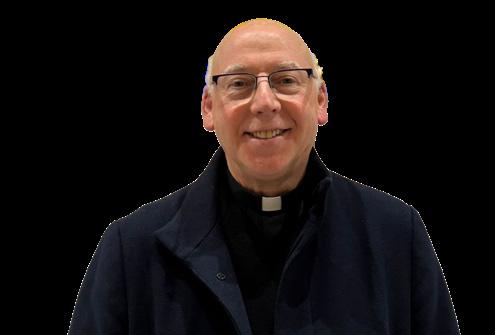
Canon Anthony O’Brien –Cathedral Dean
Here at the Cathedral, we have shivered our way through January and February - the onset of cold weather was accompanied by constant boiler problems. Hopefully, as we journey this month through Lent, we will not only experience new beginnings and an enlivening of our spiritual lives, but also a gradual end to the chill and a relatively warmer place of worship for Holy week and Easter.
Despite the cold, large numbers of adults attended services on Ash Wednesday, and there seems to be more catechumens and candidates than ever, who are preparing to be baptised and received into the Church, who have signed up for the welcome service on the First Sunday of Lent. We can each be a great encouragement to one another on our Lenten journey.
Along with the Lenten Sunday Masses, there will be a series of devotional choral meditations at 3pm each Sunday afternoon. Beginning with the Lenten sections of Handels Messiah on 1 March, then on to The Seven Last Words of Christ by Caesar Franck, the Pergolesi Stabat Mater for Mothers Day, and Lamentations for the Fifth Sunday.
On the 25 March, the Solemnity of the Annunciation, there will be a Mass of Thanksgiving to mark 175 years of Notre Dame Education throughout England and Wales. The sisters of Notre Dame hadand still have - a considerable presence throughout our archdiocese in primary, secondary and higher education, and many past and present young people, myself included, will have benefited from the formation they received from the schools and colleges they attended which were run by the order of sisters. Archbishop Sherrington will preside at the Mass of Thanksgiving, which will be at 1pm.
At the end of the month we enter into Holy Week, with the celebrations on Palm Sunday marked by the procession of Palms and the Solemn sung Proclamation of the Passion of St Matthew. Later that evening at 7:30pm, as darkness descends, there is a sung celebration of Tenebrae.
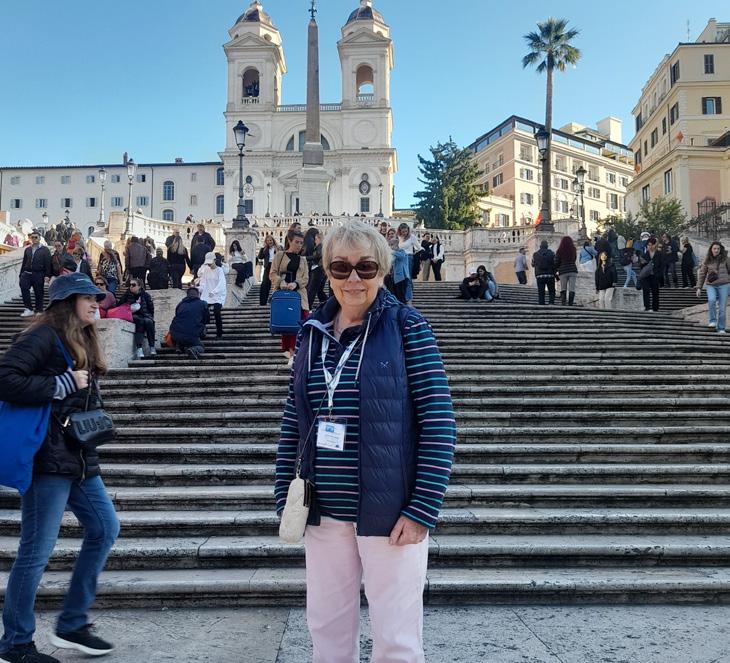
By Pat Murphy
If you have visited Rome as a pilgrim, or even had a brief visit to take in the sights, you will have been aware of the heavy traffic in the city.
The drivers often make up their own rules, such as parking across a zebra crossing, or fully on a pavement. One of the major basilicas in the city, St John Lateran, is a couple of miles from Vatican City, and is quite accessible by public transport, either bus or metro. However, there are three or four of the busiest and most complicated roads to cross from the metro station - 10 lanes of busy traffic I believe. You certainly say your pilgrim prayers, and maybe a decade of the rosary as you dodge in and out of the traffic.
It’s well worth a visit though. It is the Papal Basilica, the seat of the Bishop of Rome. Indeed, during the Middle Ages it was the Papal residence, and a number of Popes have chosen the basilica as their place of rest. Founded in 324 AD, it’s the oldest church in Rome, and the oldest basilica in the world, although, as ever, very little of the original building now remains due to a couple of fires over the centuries.
As you enter the basilica, the façade alone is larger than a number of parish churches. The interior, the body of the building, was designed by Borromini, so active in Rome in the 17th century. The vast area always impresses me, but also the 12 alcoves that were created for the statues of the 12 Apostles. Each of these larger-than-life statues was sponsored by a wealthy merchant or friend of the Pope, who himself funded the statue of St Peter, who traditionally takes the place of Judas (yes, the Pope tended to be a man of means centuries ago!).
There is so much energy and strength in each of these statues; they never cease to take my breath away while I try to imagine the lives these great men must have led. I always try to make time when in the city to visit this basilica and enjoy 15 minutes or so sitting and just working my eyes around the statues. The size and movement in each statue make you realise the power that was - and still is - in Rome.
The high altar and side altars are equally interesting, and often rather quiet compared to the usual bustle of the city. Then it’s time to look in the small shop, that so many of the churches in Rome have in order to bring a little bit of extra income, and then dodge the traffic again for the gentleness of the Scala Santa church, “the church of the steps”. I will include this in a later jotting.
by Dominic Redcliffe
Hello from Rome to all of you at home.
Recently, I had a couple of lovely evenings catching up with friends visiting Rome from our archdiocese. It’s always great fun to see familiar faces from home, just in a different setting. On both evenings we met up in Trastevere, a lively part of Rome that really comes alive after dark. Its cobbled streets, quirky shops, and bustling bars and restaurants make it a wonderful place to wander.
To meet up with everyone, I made my way to the beautiful Piazza di Santa Maria, where people gather around the fountain in the centre. With one group, we ate right on the piazza itself. With the other, we headed down a side street to a busy trattoria recommended by Stanley Tucci (of the movie “Conclave”) - and I have to say, it was worth it! But Trastevere isn’t just about a great evening out. The Basilica of Santa Maria in Trastevere dominates the piazza. The basilica dates from the twelfth century, though it goes back as far as the third century, making it one of the oldest churches dedicated to Our Lady. We have just celebrated a Holy Year and back in the Jubilee year of 1300, mosaics were commissioned for the basilica to tell Mary’s story to pilgrims. One of these mosaics shows the Annunciation, which we celebrate on 25 March. Gabriel is depicted, striding toward Mary, robes flowing, eyes full of purpose as he delivers God’s message. What strikes me most isn’t just Gabriel’s determination - it’s Mary’s response.
Before she says her yes, she listens. She’s still, attentive, and open to God’s word. That moment of listening is where everything begins. When I saw the mosaic, I was reminded that in addition to us speaking to, God it’s important for us to listen to God. It’s in everyday moments of our lives, and also in prayer and reflection, that we can hear Him. Mary’s listening isn’t passive; it’s full of trust and attention. Only after she has listened to God’s message does her “yes” come - joyful, brave, and life-changing. Lent is an opportunity to try listening, perhaps by allowing more time for prayer than we might normally do.
By visiting Santa Maria in Trastevere, I was inspired by Mary’s quiet courage. During this Lenten season, may her example encourage each of us to slow down, listen and then say “yes,” ready to follow wherever God leads. Santa Maria in Trastevere, pray for us. Until next time…
Dominic
By Fr Anton Fernandopulle and Lucy Rauer
Between the Catholic and Anglican cathedrals of Liverpool, on a street named ‘Hope’, stands a sculpture of two iconic figures in the city’s story: Bishop David Sheppard and Archbishop Derek Worlock. Their friendship is captured in bronze, symbolising unity in times of division and the shared mission of Christians to overcome tension through reconciliation.
For those who did not live through it, it is difficult to imagine the depth of division that marked Liverpool in the 1980s. Years of hardship had hardened identities and deepened mistrust. Race relations were at a low point, with communities in Toxteth and the wider L8 area bearing the brunt of violence, discrimination, and economic neglect.
Throughout these challenges, Sheppard and Worlock recognised the responsibility of the Church. Breaking through historic divides between Catholics and Anglicans, they forged a partnership that crossed long established boundaries. Their leadership was felt most strongly after the 1981 Toxteth uprising. Whilst the mainstream national debate focused on disorder, Sheppard and Worlock insisted on addressing deeper causes: discriminatory policing, chronic unemployment, and the exclusion of black voices from civic life.
Their approach shifted the Church’s posture from distant charity to genuine accompaniment. Working on the ground in areas of high tension, they amplified the voices of black community leaders and demonstrated that the Church has a vital role in advocating for those pushed to the margins. They brought lived experience into dialogue with clergy and civic leaders, ensuring it shaped decisions at every level. Their partnership reshaped ecumenical relations and modelled a new way for faith communities to pursue justice in humility with a willingness to confront uncomfortable truths.
More than forty years after the Toxteth uprising, audits of faith communities in the Liverpool City Region show that although progress has been made, inequality persists. The recent Churches Together Merseyside Region Manifesto for Hope highlighted
the urgent need for harmony and cohesion.
Archbishop Malcolm McMahon, the Archbishop Emeritus reminded us in a pastoral letter in 2025 that racial justice must be lived out through visible, ongoing action. A year after the publication of this letter, we might be prompted to ask what has changed in our own communities.
Has the letter inspired your community to develop a racial justice action plan? Have you appointed parish representatives to ensure racial justice work continues throughout the year? Do your leaders speak openly about racial justice? Do you encourage inclusive leadership, or networking among parishes to help sustain momentum?
Church leadership at every level remains essential, and concrete steps are needed to ensure that everyone who enters a parish - regardless of race or background - feels welcome. We can follow the example of the increasing number of our parishes who are making a crucial effort to pay attention to symbols within our churches, ensuring representation of saints from a diversity of racial backgrounds, such as St Martin de Porres and St Josephine Bakhita. At a parish level, something as simple as an international table, where communities share food and culture, can be a powerful antidote to racism.
Today, we have opportunities that Sheppard and Worlock could only have imagined. Within our Catholic parishes, racial justice can be embraced more visibly - not only through liturgy, but through social action. Initiatives that bring people of different racial backgrounds together through faith, ritual, and shared experience can foster unity.
The Catholic Association for Racial Justice (CARJ) reminds us that the legacy of racial justice work in the archdiocese is not a closed chapter but a responsibility we inherit, and that calls us to look both outwardly and inwardly.
To learn more or get involved with CARJ Merseyside, you can contact: carjmerseyside@gmail.com.
By Simon Hart
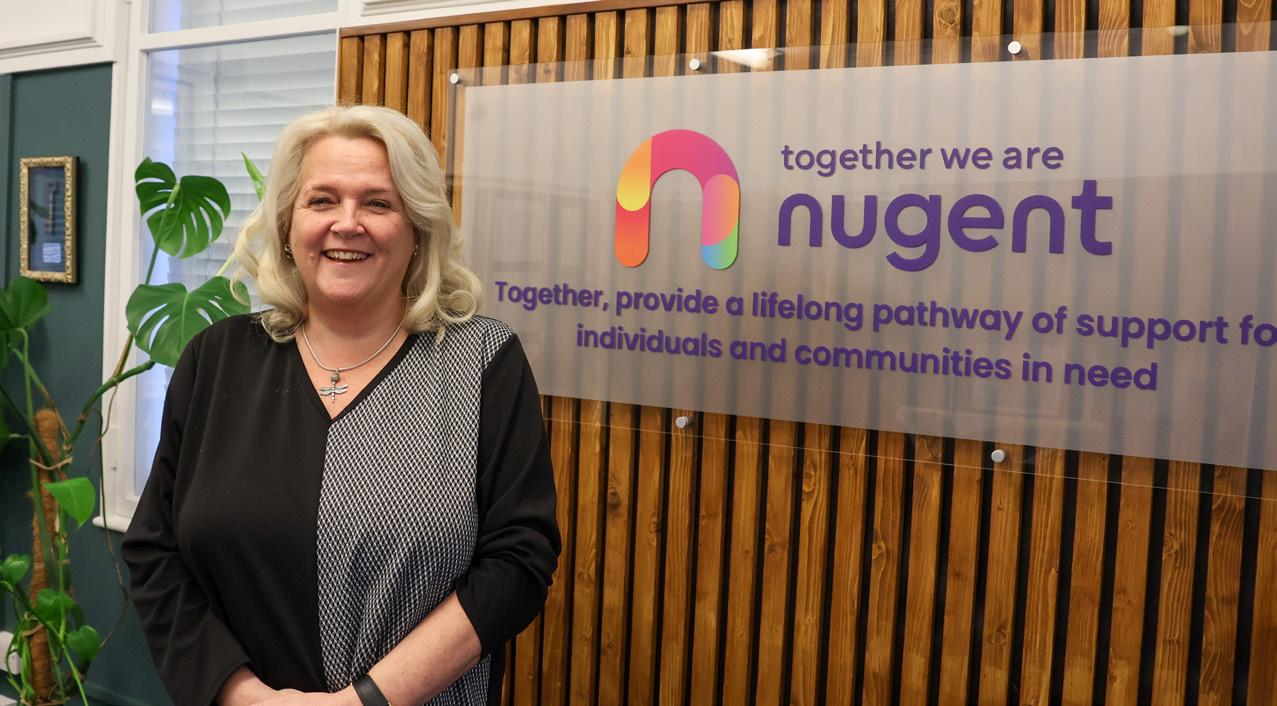
Jo Henney is, by her admission, not an academic. Indeed, she left school in 1986 with two GCSEs. What she had in abundance, though, was a desire to make a difference. “I just want to be known for having made a difference to somebody, someplace, somewhere,” says Jo, who today is chief executive of the Liverpool-based charity Nugent.
At the 145-year-old charity, she believes she has found the perfect place to do just that. A visit to Hope University to examine the charity’s archives reinforced the point to her, as she examined the papers of founder Father James Nugent and his biographer, Monsignor John Bennett. “I was reading the speeches of both Father Nugent and Canon Bennett and nothing has changed. We’re needed now as much as we were then.
“I’m the eleventh chief executive of Nugent, which is not bad for a charity that is 145 years old. When I read the speeches and read about the poverty then, we have got similar poverty today, so our mission is still strong. We still have got to provide as Father Nugent did.”
Jo arrived at Nugent in February 2019, originally as chief governance officer, before becoming chief executive in May 2023. Last April, she oversaw the launch of its new mission statement, the ‘Imagine Our World’ strategic plan. Nugent’s diverse range of support for the individuals and communities in need on Merseyside was extended to include acting as a housing provider. Moreover, as a response to the challenging financial landscape for charities today, ‘Imagine Our World’ conceived a pathway alliance with other charities and partner organisations within the social care sector. It has already brought together a significant number of organisations – including Emmaus Merseyside, of which Jo is the chair of trustees. “My hope is we have created a lifelong pathway of support for the vulnerable people of this region,” she affirms.
Jo’s commitment to the region is strong. Born in Southport, she was raised in east London, where she was educated by the Ursuline Sisters, before returning to the northwest aged 17. It was at the then newly established Altcourse Prison in Fazakerley that she had her career’s crucial formative moment.
She applied for a prison officer’s job there in 1997. Within three months she had become governor of its young offenders’ unit. “That taught me everything,” she explains. “Young offenders taught me everything I needed to know very, very quickly. It was a wonderful jail to work in. And it was described as the ‘jewel in the crown’ of the prison service by HMIP.”
A few years ago, an encounter with a window cleaner – who stopped her and called her ‘Miss’ – offered an illustration of the impact she made there.
She recalls: “I said, ‘Where do I know you from?’ and he said, ‘Altcourse’. I said, ‘Oh, I don’t remember you. You must have been well-behaved.’ And he said, ‘I remember you. You were the only one who’d let me phone my mum on Mothers’ Day’.”
Jo’s subsequent professional challenges have included a period running the Home Office’s immigration removal centre at Heathrow Airport. “People sometimes frown at me for doing those jobs,” she reflects, “but I’ve done those jobs so that people are treated with dignity and respect, with my role now enabling me to influence policy.” By way of example, she describes her efforts to help ensure that one elderly Indian man, suffering from dementia, was allowed to remain here in the UK, where he had long lived with his children who were his carers. “My whole life has been about championing the most vulnerable people really – the voiceless, as Father Nugent would have put it.”
Which brings us back to the current focus of her efforts to make a difference. She is grateful to Archbishop John Sherrington and the Archbishop Emeritus Malcolm McMahon for their guidance and also to Canon Michael Fitzsimons – with whom she has common ground, both having worked within a prison environment – as well as all Nugent trustees for their support as a sounding board. She explains that working for a Catholic charity has helped reconnect her with her own faith too. As such, she is looking forward to going on pilgrimages to Lourdes and Rome later this year. “I have lent back into my faith, and I am going there to continue that reconnection,” says Jo. After all, even the best motors need maintenance sometimes.
Credit: Google Maps
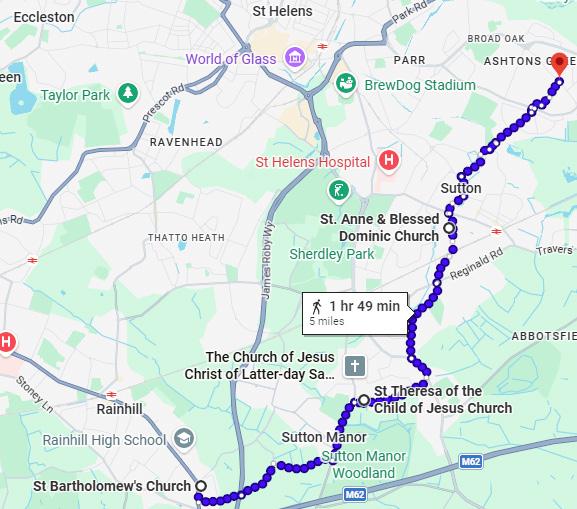
Start: St Bartholomew, Rainhill
A good place to begin is the church of St Bartholomew in Rainhill, part of Prescot, Knowsley.
This is one of two parishes under the pastoral care of Fr Philip Swanson KCHS. If you would like to begin your pilgrimage with Mass, you can attend either Saturday evening Mass at 5:50pm, or Sunday morning at 9:30am. You can use the time to place your intentions before your walk gets underway.
Stop 1: St Theresa of the Child Jesus, Sutton Manor
The first stop is the church of St Theresa of the Child Jesus in Sutton Manor - the second church under the pastoral care of Fr Philip Swanson KCHS. Take the route through James Roby Way (formerly the St Helens Linkway) and into Sutton Manor to get to the church. This building has stood for just over 100 years, offering a fitting place to pray for the future of the parish and reflect on the century that has gone before.
Distance: 1.7 miles Time: 37 minutes
Our next Families of Parishes pilgrimage walk includes St Anne and Blessed Dominic, one of the Jubilee Churches –five designated churches named for the Jubilee Year 2025 where pilgrims could get a plenary indulgence. This is a particularly scenic walk, leading you into the more suburban areas of St Helens, away from the town centre. It follows a straightforward route and is exactly five miles long.
Stop 2: St Anne and Blessed Dominic, Sutton
Stop two is to the church of St Anne and Blessed Dominic in Sutton, one of the designated Jubilee churches during the Jubilee Year last year. It is the resting place of Blessed Dominic Barberi, and Venerables Elizabeth Prout and Ignatius Spencer. From Sutton Manor, head onto Leach Lane for a straightforward walk to the church. When you get there, you may wish to ask for the intercession of those who were laid to rest there. The mission was established in 1849, and the church has stood in its current location since 1850 - a lasting testament to their legacy.
Distance: 1.8 miles Time: 38 minutes
Stop 3: St Vincent de Paul, Sutton
The final stop is the church of St Vincent de Paul, which is also in the parish of St Anne and Blessed Dominic. The church has stood for over 120 years, and is under the care of Fr Jean Paul Ilunga.
As you reach the end of your journey, take a quiet moment to reflect on what you have achieved as you have completed this spiritually uplifting Families of Parishes walk.
Total distance: 5 miles Total time: 1 hour 49 minutes
Blessed Lawrence Richardson
At meetings of our Deanery Synodal Council (DSC), time is always set aside to reflect on the Pastoral Plan using Conversations in the Spirit. These reflections help shape our discernment about how best to serve our deanery. Recently, our focus has been on lay ministries, which reflects one aspect of the Plan’s second area of development: becoming a Church that honours the vocation of the baptised.
We recognised a need to help our parishes deepen their baptismal identity, particularly through the lay ministries already active among us—Ministers of the Word, Ministers of the Eucharist, and Catechists. While many serve faithfully week by week, we questioned whether these ministries are always understood as an expression of baptismal vocation.
In response, the DSC organised a Day of Reflection for Ministers of the Word on Saturday 31 January, held in the parish hall of Our Lady Help of Christians, Portico. The day was led by Chris Higgins, Archdiocesan Parish and Deanery Development Adviser, and was attended by 27 participants from across the deanery. With the warm hospitality of our Dean, Fr Andrew, the day offered a rich programme including Lectio Divina, reflection on Church teaching on Scripture and liturgy, engagement with Scripture through art and music, a light-hearted Bible quiz (there were lots of high scores!) and practical guidance on proclaiming the Word as distinct from simply reading it.
A particularly powerful moment came during silent reflection on a passage from the General Instruction of the Roman Missal: “When the Sacred Scriptures are read in the Church, God himself speaks to his people...” Many were deeply moved by the realisation that, in proclaiming the Word, God speaks through them. It was a real “Wow” moment, a true awakening for many in the room. This insight left a lasting impression, with participants expressing renewed gratitude for both the privilege and responsibility of their ministry.
A follow-up session is planned, and the Knowsley DSC looks forward to continuing this work across the deanery.
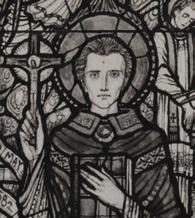
Born in Great Crosby, Blessed Lawrence Richardson, born Lawrence Johnson, was ordained as a priest in 1577, where he took the name Richardson. He worked in his native Lancashire for some time before being arrested on his way to London. He was martyred alongside a fellow northern priest, Luke Kirby, at Tyburn in 1582. His feast day is 30 May.
by Dr Jennifer Jones, Scientist and nature writer
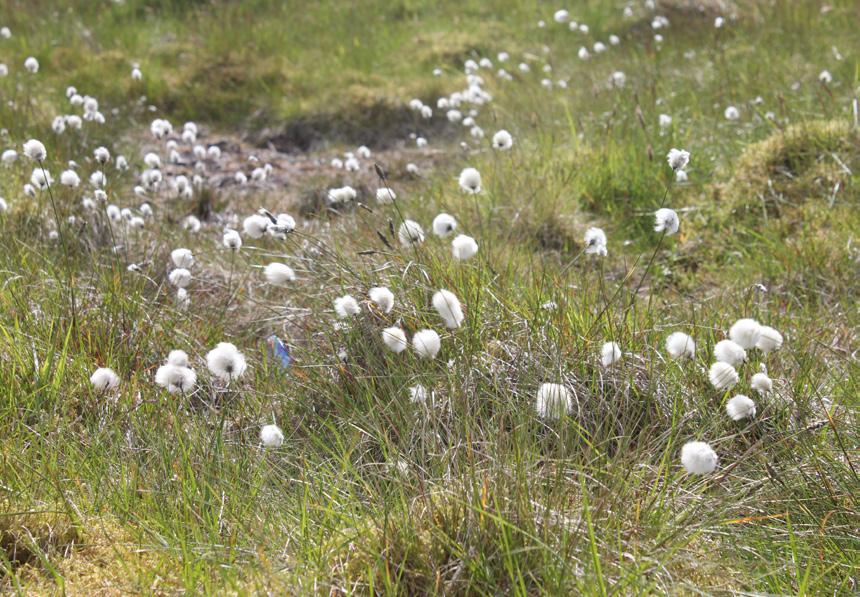
Days are lengthening, spirits dampened by the tail end of winter are rising, and for many, thoughts are turning to their gardens. Plans are made for garden centre visits, seeds to be sown, and compost to be bought. And it’s the compost I am concerned with today – or at least peat that might lurk there.
My passion for peat began on a cold, windswept Pennine moor, when I watched a professor coring through a bog. As he withdrew the core, we were looking at 500 years of history. The peat at the bottom of the core was there at the end of the Middle Ages, while nearer the surface the peat had captured the pollutants of the Industrial Revolution. I was beguiled. Since then, I have gazed on many moorlands with their bobbing heads of cotton grass, or green lawns of Sphagnum mosses, the so-called bog mosses.
Much later, I visited a peatland owned by a compost-making company. In contrast to the beauty of that Pennine moorland, here I was gazing on a black desert. All the surface peat had been mined to provide peat-based compost for both amateur gardeners and professional horticulturalists. It felt like an assault.
Why should we care about peat? It’s just black, wet stuff, isn’t it? No! It’s much more than that. Peat bogs are important habitats, stores of specialised biodiversity, from
dragonflies through to the carnivorous sundew plant. Nowadays, peat has a greater role to play. Firstly, it captures carbon, and lots of it - peatlands store one-third of the world’s soil carbon. Peat is also an archive. You may remember the discovery of a bog body on Lindow Bog in Cheshire in 1984. It was challenging to date Lindow Man, but it is believed that he was thrown into the bog sometime between 2BC and 119AD. The peat had preserved him until his body was exposed by peat diggers.
I am not the only one inspired by peat. The poet Seamus Heaney wrote eloquently about it; the writer Alys Fowler’s book Peatlands has been short-listed for the Richard Jeffreys prize; and peat was the main character in the Scottish writer Donald Murray’s memoir The Dark Stuff. Peat also features in the craft of artists with Bob Speers, Northern Irish musician and artist, actually painting with peat.
Peatlands are found around the world, predominantly in the Northern hemisphere, but also occur in tropical areas. The largest tropical peatland found to date is in the Congo Basin. The peat is 7 metres thick, covers an area the size of England, and is believed to be 42,000 years old! The bog locks in 30 billion tonnes of carbon, making the region one of the most carbon-rich ecosystems on Earth. This is equivalent to three years’ worth of global fossil fuel emissions.

We have not been good at caring for our peat bogs. In 2024, it was reported that peatlands were degrading in 177 countries around the world. Various factors account for this, but mainly drainage for agriculture, urbanisation, deforestation and diverse industrial activities. Not only is this destruction of an important habitat, it also represents a tremendous loss of carbon, putting climate goals at risk. The problem with peat is that it grows slowly, very slowlyin fact, it grows at about 1mm per year – so if we destroy peat, it takes an age to regrow.
The UK government recognises the risk to our peatlands, so, since 2024, no compost sold in England and Wales should contain peat. Unfortunately, the picture is less clear with respect to the use of peat by professional horticulturalists. Successive governments have put back the date by which horticulturalists should stop using peat. Last October, the current government stated that it was committed to ending the sale of peat, but they have yet to set a date. The horticultural industry uses a massive 760,000 cubic meters of peat per year: that’s enough to fill 300 Olympic swimming pools.
Fortunately, there is good news, both at home and overseas. Here in the UK, many projects are dedicated to restoring degraded peatlands or to granting those designations which should help to protect them. Here in the north-west, last year a new National Nature Reserve was established. This was the Risley, Holcroft and Chat Moss National Nature Reserve. The sites will be restored to provide habitat for important species such as curlew, lapwings, sundew and adders. Risley is the nearest to the archdiocese. Why not pay a visit to this important ecosystem?
Historically, bogs have been associated with memory and spirituality, thin places linking the physical with the transcendent, of uniting the past with the present. I, too, find them places of deep contemplation, of somewhere that connects me with Creation, places of prayer. On the Day of Prayer for Care of Creation in 2022 Pope Francis spoke of Mother Earth: “she weeps and implores us to put an end to our abuses and to her destruction”. He may not have meant peatlands specifically, but it is vital that we conserve them.
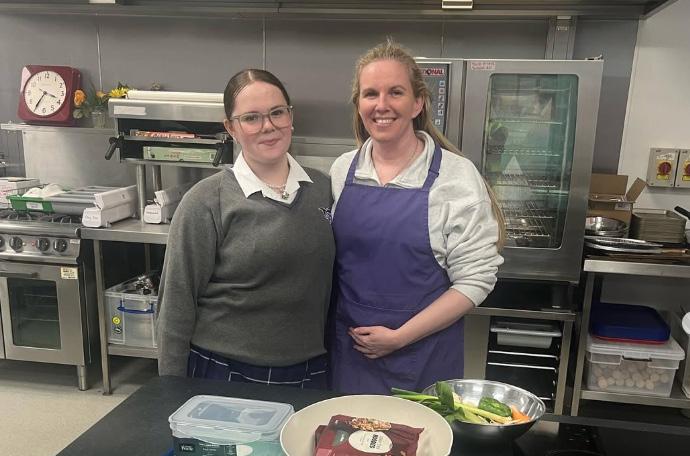
The Academy of St Nicholas in Garston recently welcomed families into school for a free cooking lesson, designed to build confidence in the kitchen while developing valuable life skills.
The session offered 10 places to parents and students from Years 7 to 13, with each student attending alongside a family member. Working together, families prepared a dish to take home while learning a range of practical culinary techniques.
To celebrate the Lunar New Year, the menu was based around Chinese-inspired dishes. Participants prepared marinated chicken with soy sauce, honey and garlic, and combined noodles, pak choi, and a selection of vegetables.
The lesson focused on essential kitchen skills, including chopping and knife techniques, hygiene, adapting recipes, budgeting for food, and creating high-flavour dishes.
Beyond cooking, the session also created an opportunity for families to connect and share experiences. Conversations centred on students’ learning in school, future aspirations, and how newly developed skills could be applied at home.
Lasting one hour and thirty minutes, the lesson concluded with each family leaving with a container filled with the meal they had prepared together.
Parent Lorraine Wildman Duckworth, who attended the event, shared: “It was a really enjoyable experience.”
Miss Katie Bell, head of design and technology at The Academy of St Nicholas, said: “Cooking is a wonderful way to bring
people together, and it was fantastic to see families learning side-by-side. The session was not just about preparing a meal, but about building confidence, sharing skills, and showing how simple, affordable dishes can be recreated at home.”
Headteacher, Mr Gary Lloyd, added: “We were delighted to host this session and see families cooking, learning, and enjoying the experience together. It was a brilliant example of how schools can support practical life skills while building meaningful connections in our community.”
Later this year, the school will also be offering ‘sew and mend’ sessions, as well as basic woodwork skills lessons that families can use at home.
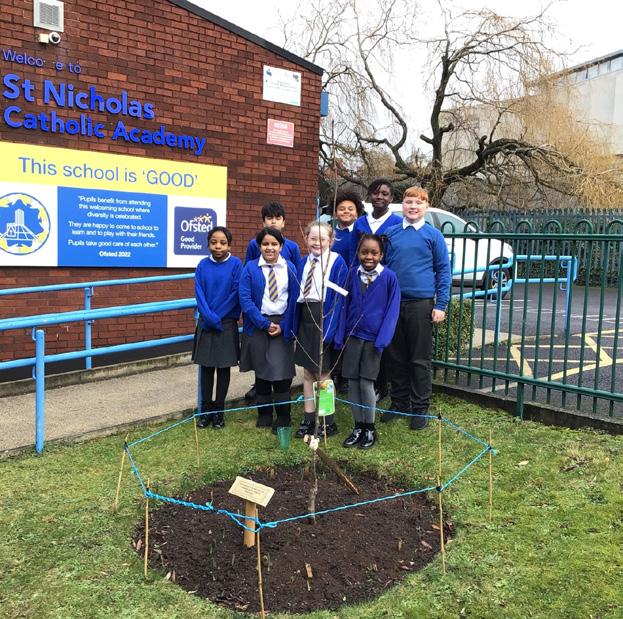
To mark the end of the Jubilee Year of Hope, proclaimed by Pope Francis, pupils across St Joseph CMAT gathered at a special Epiphany service to reflect on the accomplishments of the past year and receive news of a new shared symbol: a tree for every school to plant in its grounds.
Carefully chosen by the trust to represent its ethos and shared mission, the aptly named Joseph Rock tree carries the colours of the Jubilee through the seasons, with green leaves and white flowers in summer, and red leaves and yellow berries in autumn.
This vibrant transformation mirrors the consistent rhythm of growth and renewal that defines St Joseph CMAT, which has been on a remarkable journey since 2021, and is continuing to flourish.
Commenting on this meaningful initiative, director of Catholic education, Michelle Forrest, said: “Last year, our St Joseph CMAT Jubilee candle made its own pilgrimage around all of our academies. Each academy then devised their own workshops around the Year of Hope and added their reflections to a large book, before passing it on. This was such a special activity that really brought our pupils, staff and families together in faith. We wanted to find a way to mark our participation in this Jubilee Year.”
As Michelle shared, the Joseph Rock tree is not the first symbol to unite the Trust’s pupils and diverse communities.
To celebrate the previous Year of Hope, all academies in the trust worked closely with each other to pass on the Jubilee Candle, letting its light inspire faith and hope in every school community.
“We’re looking forward to watching the trees blossom and grow along with St Joseph CMAT,” Michelle added. As these trees take root across the Trust’s 10 academies, they stand as a symbol of unity and hope.
“Consider yourself…” To have a hit show on your hands!
Talented young performers at St Mary’s College in Crosby recently staged a production of the classic Dickensian musical, Oliver.
Families and friends turned out in force for the two performances which took place in the school hall.
It was the first time in 16 years that St Mary’s had performed the show, and the school’s first full-scale musical theatre production since 2019’s equally successful take on gangster comedy Bugsy Malone.
This time round, Oliver featured a cast of 22, including some innovative casting with a female Fagin in the form of 14-year-old Martha Last, and fellow 14-year-old Hollie Maddocks playing the Artful Dodger. Other lead roles were taken by 13-yearold Benjamin Baker (Oliver), 16-yearold Michael Neophytou (Bill Sikes) and
15-year-old Daisy Soo (Nancy).
There were also excellent performances by three members of staff (Colin Johnston, Peter Ravenscroft and Wendy Stroud), plus a fantastic live band consisting of students and staff, conducted by the school’s director of music, Andrew Byers.
The production was directed by Peter Ravenscroft with the support of assistant director Wendy Stroud. The show was produced by Anna Smith.
Peter Ravenscroft commented: “When you take everyone into account on stage and back stage it took a team of more than 50 people to make this production a reality.
“They all did incredibly well to make this challenging show the success it was, and I would like to thank everyone involved for all their hard work and commitment over many weeks of rehearsals.”
St Mary’s headteacher, Mike Kennedy, added: “Oliver is a fabulous show, full of memorable songs and colourful characters, and our students did a brilliant job in bringing 19th-century London to life in such a vivid way.
“The energy and enjoyment of the performers was clear for everyone to see, and it was no surprise that the show received such a warm reception from the audience.”

The RE Department at St Gregory’s Catholic High School has been inspiring students this year with a series of themed essay writing competitions, introduced each half term to encourage deeper thinking and intellectual curiosity.
Students were challenged to ‘Think Deeply. Write Boldly. Challenge Ideas.’ and they more than delivered. The department was deeply impressed by the passion, creativity and confidence that shone through every submission.
The essays reflected exceptional quality across the board, demonstrating insightful references and meaningful links to current affairs as well as clear, thoughtful arguments that were engaging and well structured. They highlighted impressive cross curricular knowledge, with students drawing on learning from
a range of subjects. Personal reflections and strong values also allowed each writer’s individual voice to stand out.
Miss Hanrahan, head of RE, expressed her pride in the students’ achievements, saying: “Reading the students’ philosophy and ethics essays has been a genuine pleasure. Each submission reflects intellectual depth, curiosity, and thoughtful engagement with complex moral questions. We are incredibly proud of their insight, originality, and the confidence with which they explore challenging ideas.”
Mrs Johnstone echoed this sentiment, adding: “We have been so deeply impressed with our pupils. They have used their beliefs and knowledge to create some truly amazing essays.
A huge congratulations goes to all
students who took part. Their hard work, insight, and willingness to tackle challenging ideas head on is something they should be incredibly proud of.”
St Gregory’s looks forward to seeing even more bold thinking and powerful writing from its young philosophers in the months ahead.
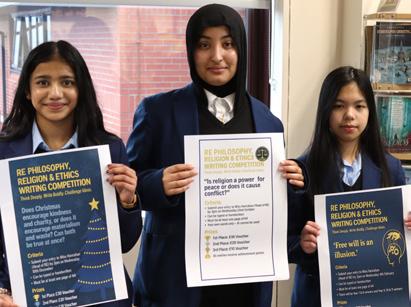
In November 2025, Holy Family Catholic Primary School in Southport underwent its CSI inspection. It was a rigorous and intense two days, but it was also a time for the school to showcase all of its hard work. Staff at Holy Family had been preparing for the visit for a long time and its perseverance and determination were rewarded with an ‘outstanding’ report.
Headteacher, Miss Hilton, said: “We are absolutely thrilled with this outcome! It is a fantastic and positive affirmation of all of the hard work and dedication from our fantastic staff, leaders, governors and parents… not forgetting our children, who were absolute stars!”
Rev Canon, Kevin McLoughlin, shared Miss Hilton’s excitement for the school’s report. He added: “As the Parish Priest of Holy Family Parish and School, I am absolutely delighted with the outcome of our RE inspection. Outstanding is what every school hopes to achieve and it is testament to the wonderful work carried out by whole school team under the leadership of our wonderful head and deputy head.”
“In a world where faith and religion are often viewed as irrelevant, for our school to be so affirmed by this inspection result is a wonderful sign of hope for our children and their future as children of God. Congratulations to all involved,” he added.
Mrs Pickup said: “The governors are very proud that the hard work of the staff and the children has been recognised as outstanding. We love seeing the impact of religious education on the children and the way they are clearly enjoying their faith.”
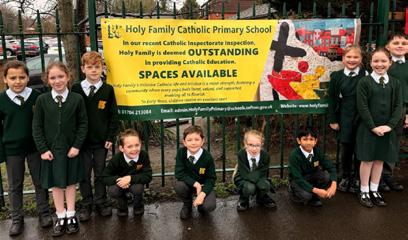
In school, growth rarely happens instantly. Learning requires patience, practice, and perseverance. Similarly, Lent invites us into a journey of gradual transformation. Just as students work steadily toward academic improvement, Lent calls us to steady spiritual and personal growth.
There are no shortcuts in education. Mastery takes time. Character formation requires intention. Lent reminds us that meaningful changewhether in knowledge, habits, or relationships - comes through consistent effort and faithful commitment.
As Scripture reminds us:
“Let us run with perseverance the race that is set before us.” - Epistle to the Hebrews 12:1
Both education and faith call us to remain steady, even when the journey requires patience.
Schools are places where students encounter challenge: complex assignments, new responsibilities, social conflicts, and moments of uncertainty. These experiences build resilience and character.
Lent mirrors this reality. Through prayer, fasting, and almsgiving, we are invited to stretch beyond our comfort. Choosing sacrifice, making time for reflection, or serving others can feel demanding. Yet these practices strengthen discipline, empathy, and compassion - virtues we strive to nurture in our classrooms each day.
Growth often emerges from challenge.
Reflection, too, is essential in education. Students review their work.
Teachers assess progress. Administrators evaluate programs. Growth depends on honest self-examination.
Lent is a season of reflection for the heart. It invites us to ask:
• How are we treating others?
• Where can we improve?
• What habits need to change?
• How can we contribute more positively to our community?
This mirrors the reflective culture we encourage in our schools - one grounded in accountability, responsibility, and integrity.
Schools are communities built on relationships. Success depends on mutual respect, kindness, and support. When one member struggles, others respond with care.
Lent emphasizes almsgiving - acts of service and generosity.
In our schools, this is reflected through food drives, charitable initiatives, peer mentoring, and daily acts of kindness. Lent reminds us that education is not solely about personal achievement; it is about building a community where all are valued and supported.
Perhaps the most powerful parallel between Lent and school life is hope. A school year moves toward milestones - exams, celebrations, accomplishments. Lent moves toward Easter, a celebration of renewal and new life.
Both journeys teach us that effort leads to growth and that challenges are not the end of the story. There is always the possibility of a fresh start, a deeper understanding, and a restored relationship.
As St. John Paul II reminds us: “Do not be afraid.” Lent calls us forward with courage - trusting that renewal is always possible. May this Lenten season truly be a time of renewal for our whole school community - for every classroom, every family, and every student entrusted to our care.
Joan McCarthy Director of Education, Archdiocese
of Liverpool
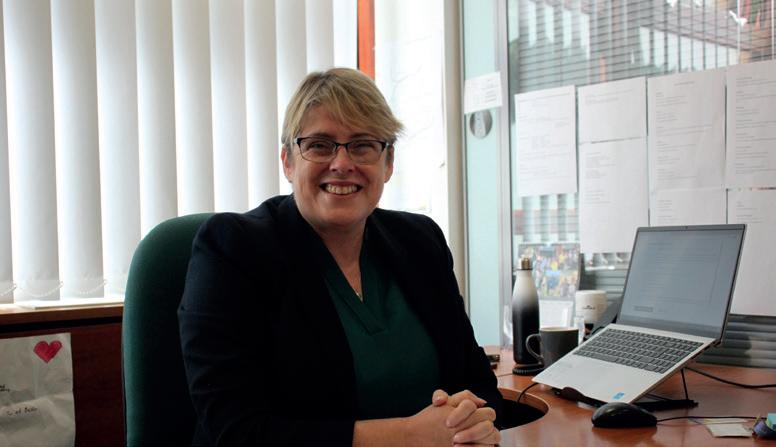
Two Widnes schools, Saints Peter and Paul Catholic High School and St Gerard’s Catholic Primary School, took home top honours at the second annual Halton Borough Council Aiming High Halton Education Awards, hosted by Cronton Sixth Form College.
Charlotte Coffey, a Year 6 pupil at St Gerard’s Catholic Primary School, was named Inspirational Young Person of the Year.
She said: “I’m so, so happy to win an award, I can’t believe it, it was such a surprise. I love my school and I want to say thank you to all my friends and teachers for being there for me this year. I think I’ll put my trophy up in our living room.”
Matthew Lorne, English teacher and chaplain at Saints Peter and Paul Catholic High School, received the Inspirational Teacher of the Year award.
He said: “I am deeply honoured to receive this award, and to share this celebration with Charlotte makes it even more special. It reflects the strength of our parish community and the shared mission we have to support young people in achieving their goals and dreams.”
Mrs Danielle Scott, principal of Saints Peter and Paul Catholic High School, praised both winners: “These awards highlight the depth of talent, dedication, and quality that exists across Catholic primary and secondary education in Halton, as well as the commitment of local families.”
Mr Karl Landrum, headteacher at St Gerard’s Catholic Primary School, added: “Charlotte’s award is a testament to her remarkable strength through adversity and her resilience in the face of challenges.”
Saints Peter and Paul Catholic High School also celebrated further success. Ethan Wang was shortlisted for Incredible Student Achievement, Benji Hidayat for Sports and Culture Student of the Year, and the school’s Expressive Arts Team for Team of the Year.
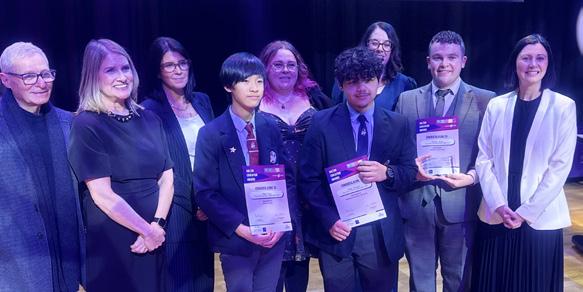
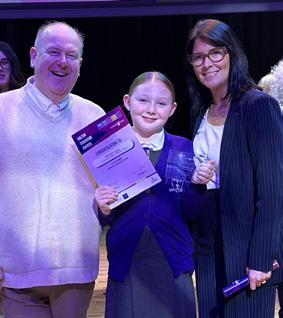
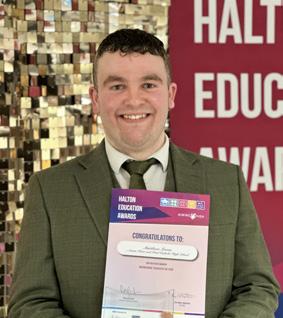
Educate Awards has announced that entries for 2026 are now open, marking a milestone fifteenth year of shining a spotlight on education.
Founded by Kim O’Brien in 2012, Educate Awards is the largest education awards in the North West, and celebrates the achievements of schools, colleges, multi academy trusts (MATs), and their teaching and non-teaching staff.
With 21 categories to choose from, Educate Awards is open to all nurseries, primary and secondary schools, colleges, academies and MATs across the Liverpool City Region, Cheshire, Cumbria, Greater Manchester and Lancashire. It is also open to independent private educational establishments, further education providers, and specialist schools and provisions.
New for 2026, Educate Awards has introduced the Most Inspirational Nursery category to showcase the exceptional achievements of early years providers. The award celebrates nurseries that support children between the ages of 0 and 4, and is open to private, voluntary and independent (PVI) nurseries, maintained nursery schools and school-based nurseries.
With the addition of Most Inspirational Nursery, all 21 categories provide a unique opportunity to celebrate every aspect of school life, from exceptional teachers, remarkable support staff, and inspirational settings to the promotion of sport, arts, STEM, careers, and the environment.
St Edward’s College in West Derby was the winner of the Most Impactful Communications Award, sponsored by CPMM Media Group, at last year’s awards. Principal, Mr Lee Anthony Fabia, said: “Winning the award was a tremendous honour for St Edward’s College, and being named a finalist for Most Inspirational Secondary School was equally rewarding. This recognition affirmed that our strategic and purposeful approach to engaging with our college community truly reflects and reinforces the values at the heart of our mission: ‘Let all that you do be done in love’ (1 Corinthians 16:14).
“We would strongly encourage other schools to enter the Educate Awards. The process provides a valuable opportunity to reflect on your practice, celebrate your achievements, and showcase the positive difference your school makes within its community.”
It is free to enter the Educate Awards and there is no category limit, however, entries must be different and relate to the individual category’s criteria. Submissions should be 800 words maximum and accompanied by a 200-word summary. The deadline for entries is Thursday, 16 July 2026.
Kim O’Brien, founder of Educate Awards, said: “For 15 years, Educate Awards has been shining a spotlight on the remarkable achievements within education across the region, and I’m delighted to announce that entries for this year are now open.
“The awards are completely free to enter, and we encourage all Catholic nurseries, schools, colleges and MATs to take part, whether it’s their first or fifteenth year of entering. The Archdiocese of Liverpool’s schools have a tremendous trackrecord at Educate Awards and we cannot wait to celebrate their achievements this year.
“Educate Awards 2025 saw an exceptional standard of entries, with our judges noting how difficult it was to select a shortlist due to the calibre of standout entries, and we anticipate 2026 will be just as good, if not better!”
Joining Educate Awards’ independent judging panel this year is Helen Stevenson, co-founder of Satis Education, the sector’s leading executive recruitment organisation that provides expert support to trusts on the recruitment of CEOs, operational leaders, principals, headteachers, and staff at all levels.
Born and bred in St Helens, Helen’s journey in education began when she trained as a modern foreign languages teacher. Since this time, she has been involved in academies and free schools programmes, and worked extensively across the MAT sector, holding positions within the Department for Education, local authorities and MATs. She co-founded Satis Education in 2017, before returning to her roots and taking up the position of CEO at Transforming Lives Educational Trust last year.
Helen said: “I am thrilled to join the Educate Awards’ judging panel and look forward to reading this year’s outstanding entries. Alongside my executive leadership roles, I have served as chair of a trust board, local advisory group and an outstanding Catholic sixth form college, and believe my experience and commitment to educational excellence will truly support my new role as Educate Awards judge.”
Alongside the esteemed judging panel, supporting Educate Awards 2026 is its valued associate sponsors: All About Futures, Angel Solutions, Apprenticeships at Liverpool Hope University, CER, CPMM Media Group, Frank Field Education Trust, Liverpool City Region Combined Authority Careers Hub, LJMU, LSSP, Portakabin, Satis Education and SENDSCOPE.
The glittering Educate Awards ceremony will return to the iconic Liverpool Anglican Cathedral on Friday, 13 November 2026 with a dazzling programme befitting its fifteenth anniversary.
Director of Education at the Archdiocese of Liverpool, Joan McCarthy, added: “The Archdiocese of Liverpool is delighted to support Educate Awards 2026. It is a wonderful opportunity for us to celebrate the achievement, hard work, and dedication of the people working in our schools.
“I would strongly encourage all schools to consider entering. It is fantastic to be shortlisted, and the event is always a great evening. Thank you to the team at the Educate Awards for their excellent work.”
A full list of this year’s categories, as well as entry forms and supporting guidance can be found on the website: educateawards.co.uk

What started with a belief in the power of music has grown into 18 years of Christine unlocking students’ potential, inspiring creativity and building confidence.
Having originally worked as a trained musician, Christine found herself increasingly drawn to working with young people. She said: “After spending time leading workshops and supporting youth performance groups, I realised teaching was where I could make the biggest impact. So, I completed my teacher training and have loved it ever since.”
Ensuring music is inclusive for all is a key priority within Christine’s practice and she is deeply committed to creating welcoming environments for her students. She commented: “An inclusive music classroom is a warm, flexible space where every learner, regardless of ability or background, can participate meaningfully through varied pathways like singing, playing, composing, or using technology.”
Christine’s dedication saw her most recent GCSE students all achieve Grade 6s or above, an achievement she is particularly proud of as it reflects her students’ “hard work, progress, and love for music.”
Outside of academic achievements, Christine leads a vibrant extra curricular music programme, including St John Bosco’s choir which was named Catholic Schools’ Choir of the Year last April. She is also part of the award-winning team whose work supported St John Bosco to win Outstanding Arts in Secondary School at Educate Awards 2025.
Christine’s students have taken part in an impressive range of performances, workshops and partnerships, including interdisciplinary arts events, DJ sessions with Gaia from Girls Don’t Sync, piano masterclasses with Richard Meyrick, and opportunities with the Liverpool Youth Philharmonic Orchestra.
Reflecting on her career, Christine said: “What I enjoy most is seeing students grow - musically, personally, and creatively. Those ‘lightbulb moments’ in the classroom, the buzz after a great rehearsal, or the pride on a student’s face after a performance are what make the job truly special.”
Looking ahead, Christine’s ambitions remain rooted in joy, inclusivity and aspiration. She said: “My long term goals for the music department are to continue building a vibrant, inclusive musical culture where every student feels confident, creative, and valued. I hope to ensure that music remains a joyful, accessible, and aspirational part of school life for all learners.”
Sixth form students at St John Bosco Arts College recently visited the USA to explore the country’s history and global influence.
20 students from St John Bosco Arts College Sixth Form travelled to New York and followed an action-packed itinerary designed to broaden their cultural awareness and understanding of the city as a global centre of culture, politics and economics.
During their visit to the ‘Big Apple’, students participated in a range of activities and visited world-famous sites and landmarks that shape the city’s iconic identity.
Arriving late afternoon on day one, students headed out to Times Square and visited Summit One to take in the bright lights and atmosphere of the city.
The following day, sixth formers explored the Federal Reserve Bank before taking a guided tour of the United Nations Headquarters, gaining insight into one of the world’s most important international institutions. Following this, they had the opportunity to visit the Statue of Liberty and Brooklyn Bridge.
On day three, students clocked up 30,000 steps whilst taking part in a walking tour of Downtown Manhattan which included visiting one of the most pivotal sites in modern American history, the World Trade Center and 9/11 Memorial.
Year 13 student, Rachel, said: “Visiting Ground Zero was a really powerful moment for all of us. It was quiet and reflective, and you could feel the weight of history there. It made us stop and think, and was one of the most meaningful parts of the whole trip.”
The following morning, students had a final chance to visit the ‘Breakfast at Tiffany’s’ display and the Louis Vuitton building, to take inspiration for their fashion course.
Miss Charlotte Lyon, head of sixth form, said: “This trip was an incredible experience for our sixth formers, and it was fantastic to see them fully embrace everything New York has to offer. Throughout the various visits and tours, students engaged thoughtfully and enthusiastically which only helped to broaden their cultural capital and understanding of the world.”
Headteacher, Mr Darren Gidman, added: “Experiences like this are so important as they reflect our school’s Salesian ethos of developing students morally and socially, as well as academically. By taking learning beyond the classroom, our students have been able to broaden their horizons and gain first-hand experiences of global culture.”
Applications to St John Bosco Arts College Sixth Form are currently open for September 2026. More information: www.stjohnboscoartscollege.com/sixth-form
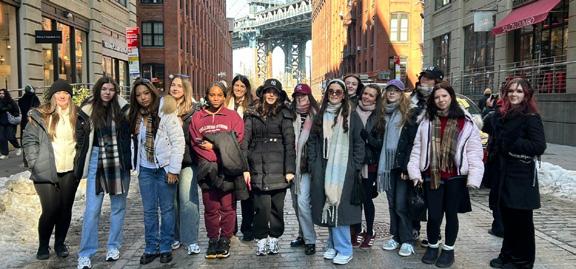
Earlier this year, 40 Year 9 students from All Hallows Catholic High School took part in an annual retreat to Savio House Salesian Retreat Centre, set in the beautiful Cheshire countryside.
The three-day visit gave students valuable time away from everyday routines to reflect, grow and strengthen relationships. The sign at the entrance, ‘Savio House – a place to be’, perfectly captured the welcoming and reflective spirit of the experience.
The Savio House retreat team led students in a range of engaging icebreaker, trust and team-building activities. There was also time to enjoy the excellent facilities, including the games room and 4G football pitch.
Small group sessions formed a key part of the retreat, with students guided in thoughtful discussions based on the theme of ‘water’. These sessions encouraged reflection on faith, relationships and personal identity, helping students to consider their own strengths, challenges and hopes.
After lunch on the first day, students enjoyed a countryside walk to the viewpoint, White Nancy, offering impressive views over Bollington and the surrounding area. Later, they took part in a ‘well drawing’ activity, reflecting on aspects of their lives such as school, family and faith, and thinking carefully about both positive and challenging experiences. Each evening concluded with journal writing and the traditional Salesian ‘Goodnight’, including prayer, reflection and a blessing.
The second day focused on reconciliation and renewal. Students had the opportunity to receive the Sacrament of Reconciliation in the chapel before working together to plan and lead a vibrant Mass, contributing through drama, dance, artwork, prayers and music.
The retreat concluded with a closing liturgy and time for students to affirm one another by writing positive messages in their journals. The trip left many students feeling inspired, supported and already looking forward to returning.
Carmel College in St Helens is celebrating an exceptional year of university success after nine students secured offers from the University of Oxford and the University of Cambridge for September 2026 entry.
Gaining a place at Oxbridge is widely recognised as a significant academic achievement, requiring outstanding grades, a rigorous application process and challenging interviews. The offers reflect both the dedication of the students and the strength of the college’s academic support.
Six students received offers from Oxford: Stephen Higginson (Wade Deacon High School) – law at New College; Kofi Holden (The Liverpool Blue Coat School) – biomedical science at St John’s College; Tobias McWilliams (St Gregory’s Catholic High School) – mathematics and statistics at Christ Church; Stephen Pennington (De La Salle School) – engineering at Hertford College; Libby Pye (St Cuthbert’s Catholic High School) –classics at Christ Church; and Matthew Sharma (Tower College) – engineering at Oriel College.
Offers from Cambridge were awarded to: Ava Boylan (Archbishop Blanch High School) – classics at Peterhouse; Isla Ebbrell (Rainhill High School) – English literature at Newnham College; and Anais Wood (The Prescot School) – medicine at Newnham College.
Students praised the support they received at Carmel, particularly through the High Achievers+ Programme, which provides tailored guidance, mock interviews and opportunities to develop advanced academic skills.
Stephen Higginson said the programme helped him realise what was possible after college, while Ava Boylan added that her teachers gave her the confidence to apply to Cambridge.
The High Achievers+ Programme supports ambitious students aiming for Oxbridge, Russell Group and other leading universities through specialist tutoring, one-to-one guidance and enrichment opportunities including the extended project qualification.
Dan Saunders, head of the High Achievers+ Programme, said: “We are incredibly proud of all the students who have secured Oxbridge offers this year. They have worked hard for many months and made the most of the support available to them. It is a fantastic achievement.”
The college has congratulated all offer-holders and thanked staff and families who supported them throughout the process.
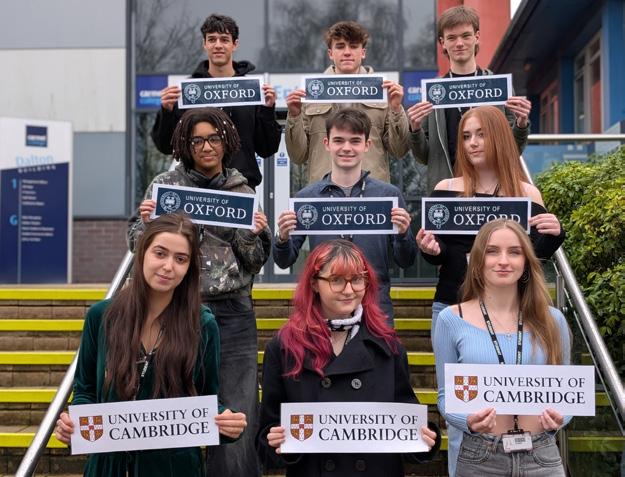
By Father Simon Gore, Animate Youth Ministries
It is that time of year when much of our work is focused on the Sacrament of Confirmation. As you may know, the website for young people to register for the sacrament opened on Youth Sunday last year and closed during February halfterm. I am pleased to report that we have had over 1,500 young people sign up. As Sarah noted in her article last month, we can often see green shoots if we look for them, and seeing so many young people wanting to be confirmed can only be a positive thing.
Since Christmas, we have been visiting our diocesan schools to work with the Year 8 cohort who are invited to receive the sacrament this year. In some ways, speaking about Confirmation can be more difficult than with other sacraments. We always start our sessions by asking the young people what they think they know about Confirmation, and then we contrast this with what we might know about the other sacraments. More often than not, the response is that Confirmation ‘confirms’ our faith, or our baptism, or our desire to be a member of the Church; and we get a new name. Yet when we ask about baptism or marriage, the young people perhaps understand those sacraments more readily. Therefore, it could be easy for any youngster sitting in front of us to think that if nothing really seems to change and nothing is different afterwards, what is the point? After all, they have said that Confirmation ‘confirms’ something that happened before: it is not giving them something new. And though they receive a new name, they know that is not the name they’ll be known by. So, what is changing?
We have mentioned before how we try to offer some thoughts as to why Confirmation is important at the stage of life that Year 8s are at. This year, we wanted to offer a different way of highlighting that importance, so we used a short film clip from “Finding Nemo”! If you know the film, you’ll know that it is based around a small fish called Nemo getting lost. His dad goes on a quest to find him. Ergo the title.
At the end of the film (spoiler alert!), the dad finds his son, and they can go off and live happily ever after. But just as Nemo can escape, he sees a large catch of fish being dragged onto a boat. And now he has a choice. He can let them be caught and experience the difficulties he has endured. Or he can try to help. Of course, he decides to help. Not that long ago, he might have just focused on himself. But his life has changed. He has been forced to see the world around him differently. And so, his actions change.
This little snippet helps demonstrate what Confirmation can offer us. As we grow older, we face questions and choices. Even though it is only a film, Nemo shows some element of judgement regarding how his actions could affect others. He shows courage by not leaving them to fend for themselves. He shows some awe and wonder, in realising that the fish would be better living free rather than caught in the net. He shows the understanding that he is lucky to have been saved, but who will save those fish caught in the net now? And then some wisdom in working out a plan to help.
Ultimately, Nemo is changed by his experiences and acts differently than he might have done only a few days before. Something in him has been changed. He is no longer the child who was lost. Therefore, to come back to what Confirmation offers us, it can seem that it does not change us in the way Baptism might with a new baptismal name, or marriage with a change in legal status. Confirmation does not change the outside; it changes who we are inside – it changes us. After all, who does not want to live out their potential and be who we are created to be and who God knows we can be?
That is always the last point for the Year 8 groups we work with. Who do you want to be? And is it not also the question for all of us, really? Who is God calling us to be? For those of us who have received the sacrament, maybe it is the grace of the Holy Spirit helping us be that person. And for those in Year 8 or those being received into the Church this year, maybe we can pray that the same grace will be alive and active in their lives too.
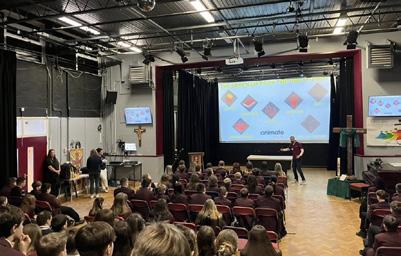
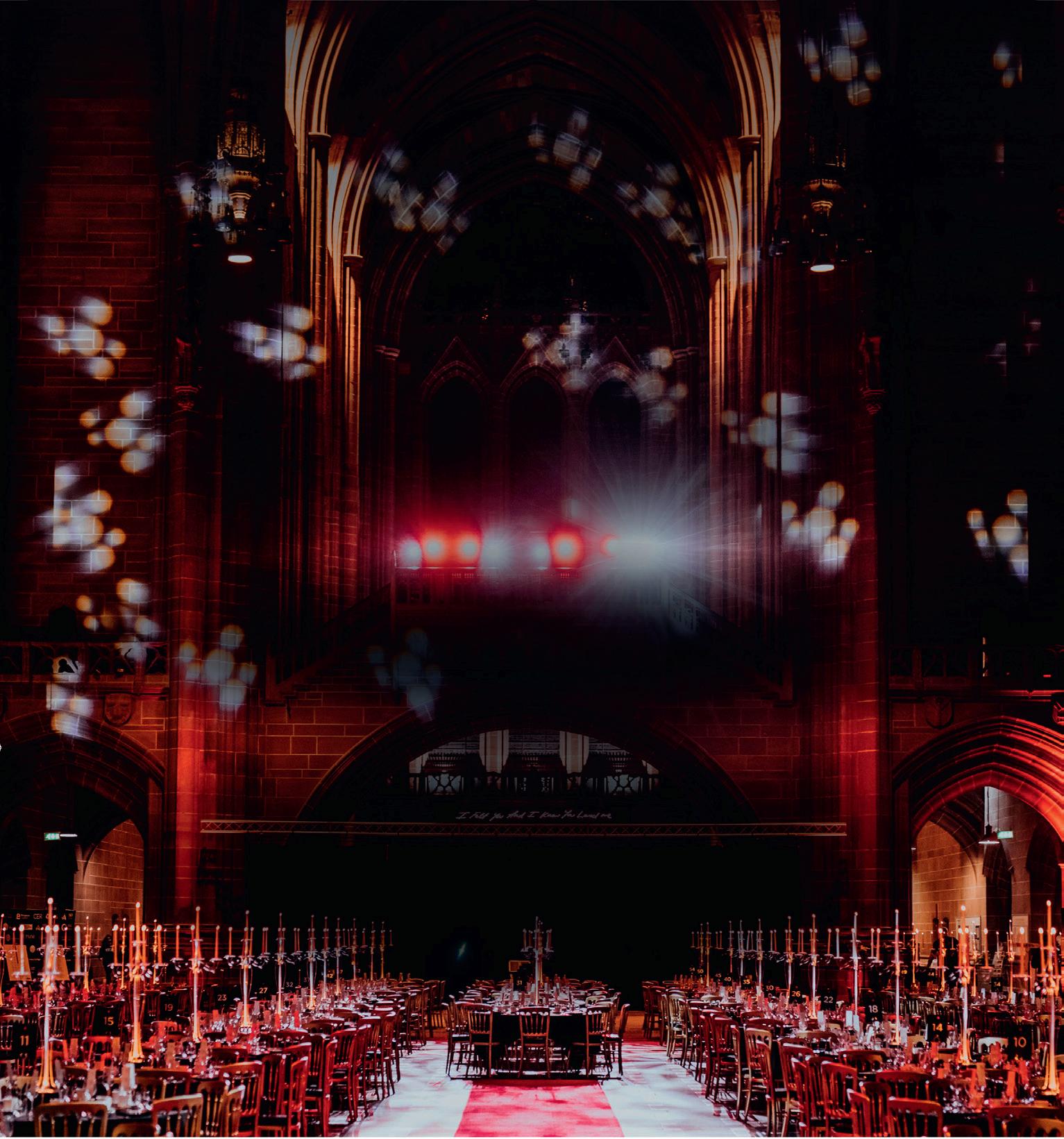

One of the many gifts I was fortunate to receive at Christmas was a beautiful, leather-bound book entitled ‘A Treasury of Novenas’ by Revd
Lawrence
G Lovasik, SVD.
Given that we are now into Lent, which concludes on 2 April with Maundy Thursday, I turned to my novena book and found a novena specifically for this holy season. It contains passages from the Gospels that trace the life of Jesus leading up to His Crucifixion, accompanied by meditations to help us reflect more deeply and gain understanding.
Moses remained on Mount Sinai for 40 days to receive the Law of the Covenant, and Jesus fasted for 40 days in the desert before beginning His public ministry. In the same way, we prepare ourselves to celebrate the Paschal Mystery of our Lord’s Death and Resurrection through a penitential season of 40 days, marked by prayer, fasting and abstinence.
During Lent, we are also encouraged to pray the Stations of the Cross as often as possible. Each station represents a moment in the Passion of Jesus, and we show our love for Him by remembering how much He suffered for us. As Scripture reminds us: “No one has greater love than this, to lay down one’s life for one’s friends” (John 15:13).
If you choose to pray the stations as a group in your UCM, I would suggest using Mary’s Way of the Cross. In this devotion, each station is viewed through the eyes of Mary, the Mother of Jesus, allowing us, especially as mothers, to reflect more deeply on her sorrow, faith and love.
• Our next bi-monthly Mass is on 11 March at St Anne’s, Ormskirk.
Maureen Finnegan, Archdiocesan vice-president
The Knights of St Columba continue their long tradition of service across Liverpool and the wider region, with local councils supporting a wide variety of charitable causes. From parish based initiatives to regional and national appeals, our work reflects our mission to serve God by serving others.
One figure whose life continues to inspire our charitable commitment is Blessed Lawrence Johnson (also known as Lawrence Richardson), a native of Great Crosby and a powerful witness to faith during the Reformation.
Johnson was born into a family deeply rooted in the Catholic faith. His early years were spent at Moorside Farm, land which would later become Moorside Park. Gifted academically, he became a Fellow of Brasenose College, Oxford, before discerning a deeper calling to the Catholic priesthood during a period of intense religious unrest in England. Seeking formation free from persecution, he entered the English College at Douai, France, in 1573 and was ordained a priest on 23 March 1577.
Returning to England under the name “Richardson”, he devoted himself to ministering to the hidden Catholic community in Lancashire. This was a dangerous mission –priests were hunted, Mass was outlawed, and potentially fabricated accusations, such as the so called “Rheims and Rome Plot”, were used to justify arrests.
In 1581, while attempting to travel to France, Johnson was arrested in London. He suffered harsh imprisonment in both Newgate and the Tower of London, enduring chains, deprivation, and repeated interrogations. Despite this cruelty, witnesses later recalled his serenity, courage and unwavering faith. Condemned to death on 17 November 1581, he was executed at Tyburn on 30 May 1582. His martyrdom –alongside fellow priests – became a profound testament to the endurance of Catholic faith during persecution. He was beatified by Pope Leo XIII in 1886, and his feast is kept on 30 May.
Today a lasting reminder of Blessed Lawrence Johnson’s legacy stands in Moorside Park, close to the very ground where he grew up. The Lawrence Johnson Memorial, located in the Moorside Road area of the park, is a tribute to his priestly ministry and martyrdom. The memorial connects modern-day Crosby with its Catholic heritage, reminding visitors of the courage shown by those who held fast to the faith during one of the most difficult chapters in English religious history.
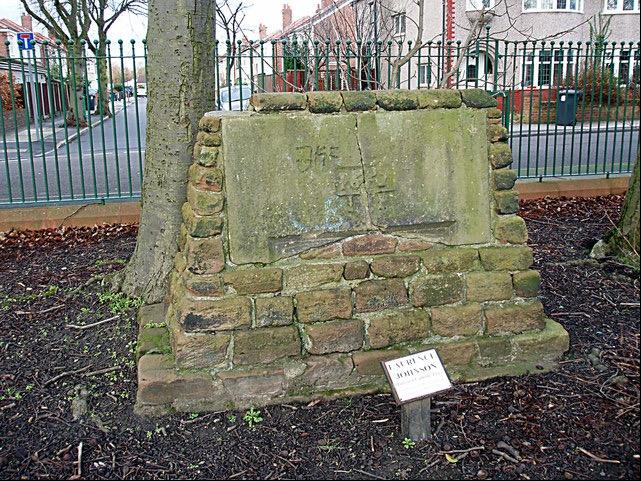
The KSC’s provincial council is currently in discussion with Sefton Council’s Parks Department about refurbishing the monument. We look forward to sharing more news on this project as it progresses.
If you would like to learn more about the Knights of St Columba, or if you are interested in visiting your local council, please feel free to get in touch.
Phil Woods, Provincial Grand Knight - Province 2 Email: Philonline2@btinternet.com Website: www.ksc.org.uk Facebook: The Knights of St Columba Instagram: @knightsofstcolumba
By Ultan Russell, Archdiocesan ecumenical officer
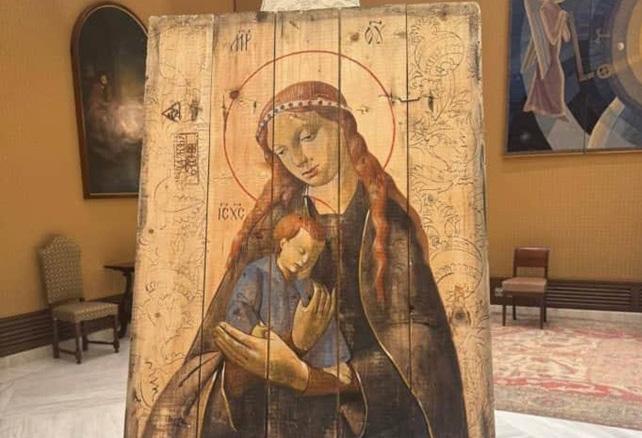
The annual Week of Prayer for Christian Unity forum, organised by Churches Together in the Merseyside Region (CTMR), took place on 19 January at the St Margaret Clitherow Centre.
Its theme was ‘Interculturalism and Unity’ and one obvious challenge thrown to our churches currently, by politicians who stress that we have a diverse society which seems to be increasingly divided, is: what should we be doing about it?
Rev Phil Jump, chair of CTMR, provided the welcome and introduced Archbishop John Sherrington and Bishop Ruth Worsley, who had both arrived in Liverpool since last year’s forum.
‘One Body – One Spirit’ was the theme of the opening act of worship. This included the following:
• Rev Clement Matariano, a Methodist minister from the Zimbabwean community, told a tale about unity whereby each of ten brothers had two sticks and each broke one in two, but threaded the others into a strong board, showing the strength we have when we work in unity.
• Lidia Wolos from the Polish community showed the beautifully decorated palm ornaments used on Palm Sunday by Polish Catholics (beside which our palms look limp and lifeless!). She highlighted the kindness and sensitivity of her new parish priest who had integrated their Polish Palm Sunday tradition into a Mass.
• Fr Dagmawi Worku from the Ethiopian Orthodox Church in Liverpool, which meets at the Anglican Parish Church of St Agnes and St Pancras on Ullet Road, sang a prayer from the Ethiopian Orthodox Liturgy in English and Ge’ez (the ancient liturgical language of the Ethiopian Orthodox).
• Rev Dr Taras Khomych, the Ukrainian chaplain here and at St Edward’s College, led us in a stimulating reflection on the Spirituality of Time from an Eastern perspective, underlining what we can learn from Eastern European spirituality.
The story of the raising of Lazarus was used for a reflection. Jesus took time to arrive after Lazarus had died; is this a challenge to our very linear concept of time and different from God’s time? Father Taras also spoke of the role of icons, which are regarded as written rather than painted, and reminded us of the importance of art in our prayer and worship. He showed some moving icons, including one of the Virgin Mary written on a cartridge case – thus reminding us of the faith, resilience and suffering of the Ukrainian people.
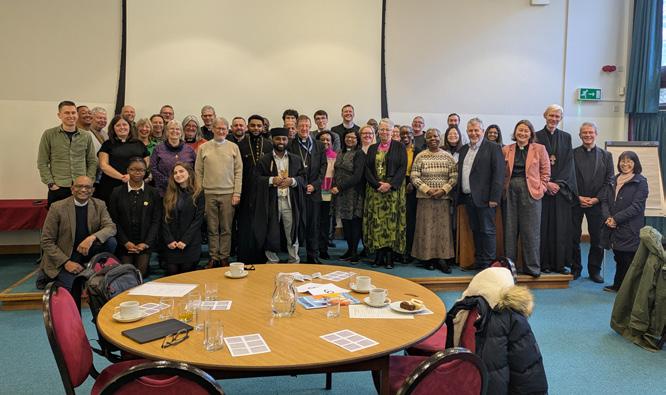
Discussions emphasised the need to work with each other. Hospitality for new arrivals in our churches was recognised, as was the need to welcome new linguistic groupings in our own traditions and new denominations. It was underlined that we were often insensitive to people who do things differently.
In our archdiocese alone, we have Hong Kong, Polish and Portuguese Catholics, as well as Greek-Catholic (Ukrainian) Rite and Syro-Malabar Rite Catholics.
Think too of the variety of other Churches on Merseyside: Coptic Orthodox, German Lutherans, Scandinavian Lutherans, Greek Orthodox, Welsh-speaking and English-speaking Welsh Presbyterians, the Chinese Christian Disciples Church, Malankara Syrian Orthodox Church from India, the Iranian Anglican Seepas Church (which meets in Liverpool Cathedral), to name a few. There are also churches whose membership is mainly AfroCaribbean – the New Testament Church of God, Christ Apostolic Church, Redeemed Christian Church of God and others that are large, vibrant independent churches like Love and Joy Ministries. Recently it has been agreed that the Georgian Orthodox community will be using St Nicholas and Our Lady, Liverpool Parish Church for their worship.
And remember the churches well-established here also: Church of England, Baptist, Methodist, United Reformed, Salvation Army, Society of Friends, Assemblies of God, Liverpool Iranian Free Methodist Church, Independent Methodist, Elim Pentecostal, Congregational, Brethren, Independent Evangelical. To that, we can add new churches like Hillsong and Apostolic.
If you have a Churches Together group in your neighbourhood, has it made real efforts to ensure all the local Christian churches are invited to join and made to feel welcome? Does your UCM branch link with women’s groups in neighbouring churches? Does your school invite priests and ministers of other denominations to visit and speak to pupils in Unity Week?
Our schools are great examples of welcoming people of different cultures, denominations and faiths; and consider too the highly regarded work of the Catholic Association for Racial Justice (CARJ), which was underlined at the forum. Their website is here: www.carj.org.uk
Finally, if you have a church of another denomination near you that is not listed above, then please let me know by emailing u.russell@rcaol.org.uk.


Nugent is delighted to launch the Good Shepherd Appeal 2026, inviting schools, parishes and communities across the Archdiocese of Liverpool to unite in faith, generosity and service. This year’s appeal centres on the powerful theme “Love the Neighbour”, calling us to live out Christ’s command to care for one another, especially the most vulnerable in our midst.
Rooted in the values of Catholic Social Teaching and inspired by the Good Shepherd who seeks, protects and nurtures each one of us, the appeal encourages everyone from schools to parish communities to put their faith into action through compassion, prayer and practical support.
A call to compassionate action
The Good Shepherd Appeal is one of Nugent’s longest standing and most cherished appeals. For generations, schools and parishes across the archdiocese have stood alongside Nugent to support any of our neighbours facing difficulty.
In 2025, the kindness of schools, pupils, and teachers helped Nugent provide food and essentials to families and individuals in crisis. We provided funding for furniture, hygiene products, school uniforms and respite breaks. The 2026 appeal aims to build upon this important work at a time when many in our local neighbourhoods continue to face financial pressure, loneliness, and hardship.
‘Love the Neighbour’
This year’s theme, Love the Neighbour, invites our communities to reflect deeply on who their neighbour is, and how even the smallest act of kindness can bring hope, dignity and joy.
Schools across the archdiocese are encouraged to take part through fundraising, social action projects, themed assemblies, reflective prayers and class challenges that celebrate the importance of caring for others and getting to know our neighbours. Parishes are invited to support the appeal through special collections, community activities, and holding the people Nugent serves in their prayers.
We will be holding two services in 2026 to celebrate the Good Shepherd Appeal. The first will take place on 25 June starting at 10:30am at the Liverpool Metropolitan Cathedral and will be led by Archbishop Sherrington. The second will take place on 30 June starting at 2pm at St Mary’s Church in Leyland and will be led by Father Joe Bibby.
A message from Nugent
Joanne Dobbie, Caritas and Community Engagement Manager at Nugent, said:
“The Good Shepherd Appeal reminds us that when we choose to love our neighbour, we are choosing to walk in the footsteps of Christ. Year after year, our young people astonish us with their generosity of spirit and their commitment to helping those who are struggling. In 2026, we hope even more schools and parishes will join us as we continue to build communities rooted in compassion, hope and love.”
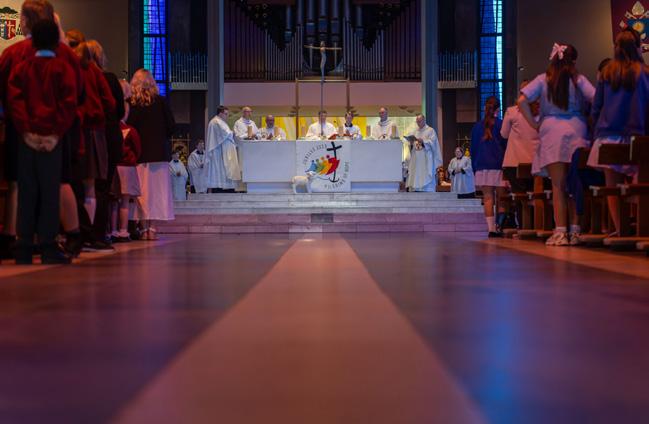
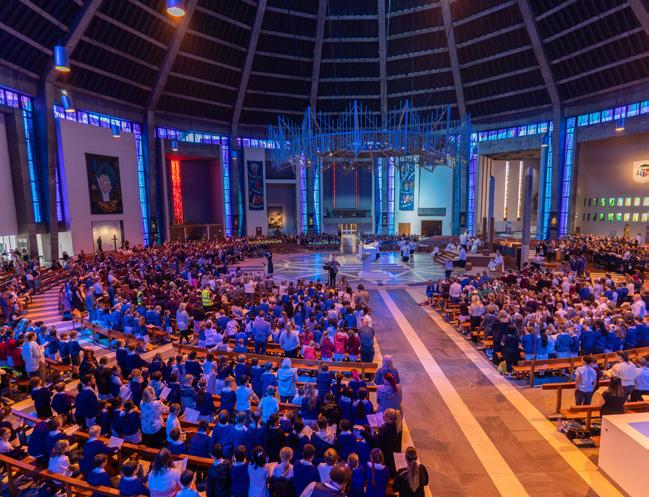
Funds raised through the appeal directly support Nugent’s work, including:
• Food pantries and crisis support for families experiencing hardship
• Support for care experienced children and young people
• Community projects that strengthen relationships and build belonging
Each contribution, large or small, helps Nugent continue offering life-changing support to those who need it most.
Get involved
Schools, parishes and individuals can access all Good Shepherd Appeal 2026 resources at: www.wearenugent.org Or contact: fundraising@wearenugent.org 0151 261 2000