What’s Inside



As a result of Bishop Marcus being appointed Apostolic Administrator of the Diocese of Hallam on March 20, our consultation journey now includes the dioceses of Middlesbrough, Leeds and Hallam...
The Holy See has invited the dioceses of Middlesbrough, Hallam and Leeds to enter a period of consultation to consider the possibility of the three dioceses working more closely together under the pastoral leadership of one bishop.
For many, the word consultation may sound administrative or procedural. Yet in the life of the Church it carries a much deeper meaning. Consultation is not simply a management exercise; it is part of the Church’s long tradition of communal discernment under the guidance of the Holy Spirit.
This moment, therefore, invites us not only to reflect on possible structures for the future but also to understand more deeply how the Church listens, discerns and journeys together.
Consultation in the life of the Church
Consultation has always been part of the Church’s way of making decisions. From the earliest days of Christianity, the Church gathered to listen, reflect and discern together.
One of the most important examples is found in the Acts of the Apostles, when the early Christian community met in Jerusalem to address questions that affected the life of the Church. After discussion, prayer and reflection, the apostles concluded with the words: “It is the decision of the Holy Spirit and of us” (Acts 15:28).
This phrase reveals something essential about consultation in the Church. It is not simply the exchange of opinions, nor is it a political process aimed at achieving consensus. Rather, it is an act of ecclesial discernment, seeking to recognise how the Holy Spirit is guiding the Church in a particular moment.
In this sense, consultation is a way of listening to the experience and wisdom of the faithful, trusting that through the whole People of God the Spirit continues to speak.
Synodality: Walking together
In recent years, the Church has spoken increasingly about synodality – a word that comes from the Greek syn-hodos, meaning walking together. Synodality expresses the understanding that the Church is a pilgrim people journeying together in faith, listening to one another while remaining attentive to the voice of the Spirit.
Consultation is, therefore, an expression of synodality. It invites priests, deacons, religious and lay faithful to share their experiences of parish life, pastoral challenges and hopes for the future.
This listening does not replace the responsibility of those who exercise leadership in the Church. Bishops remain entrusted with the task of discernment and decision-making in communion with the wider Church. Yet their
discernment is enriched by hearing the voices of the faithful whose lives form the daily reality of the Church’s mission.
Synodality reminds us that the Church is not simply a structure but a living communion of believers, united in baptism and called to participate in the mission of Christ.
Because consultation involves careful listening and reflection, it naturally requires time. However, the purpose of consultation is not to prolong uncertainty. Rather, it exists to illuminate the path forward.
When consultation becomes overly extended, it can unintentionally create confusion or anxiety. The Church’s mission – to proclaim the Gospel, celebrate the sacraments and serve those in need – cannot remain suspended while structures are endlessly debated.
The goal of consultation is, therefore, discernment, leading to clarity. Once the realities have been heard and prayerfully considered, the Church must be ready to move forward with trust in God’s guidance.
Any process of consultation invites us first to recognise the gifts that already exist. All three dioceses each carry rich traditions of faith, shaped by generations of clergy, religious and lay faithful. All are home to vibrant parish communities, strong educational institutions and many dedicated ministries serving the poor, the young and the vulnerable.
Bringing three dioceses into closer collaboration could allow these gifts to be shared more widely. Pastoral initiatives, formation programmes and resources might be strengthened through cooperation across a wider region.
In this sense, the consultation process is not merely about addressing difficulties but also about recognising opportunities for growth.
At the same time, consultation must also acknowledge genuine concerns. Each diocese has its own identity, history and pastoral character. Parishioners may naturally wonder how closer collaboration could affect their sense of belonging and connection to the local Church.


• Continued from Page 1
Synodality encourages us not to avoid these questions but to address them openly and respectfully. Honest dialogue allows the Church to recognise challenges while seeking creative ways to respond to them.
Ultimately, the consultation process is not primarily about structures but about mission. Across many parts of the Church today, bishops and dioceses are reflecting on how best to sustain pastoral life in changing circumstances. Questions about resources, clergy numbers and shifting demographics are prompting new ways of thinking about collaboration and leadership.
The possibility of the three dioceses working more closely together is one example of this wider discernment. It reflects a desire to ensure that the Church remains capable of serving the faithful and proclaiming the Gospel effectively in the years ahead.
A future guided by the Holy Spirit Consultation invites all members of the Church to approach the future with faith rather than fear. It reminds us that the Church has faced many moments of change throughout history yet has always trusted in the guidance of the Holy Spirit.
The purpose of this process is, therefore, not simply to examine organisational questions,
but to listen together for how God may be calling the Church in our region to grow and adapt.
If consultation is carried out with openness, honesty and prayer, it can become more than a practical exercise. It can be an expression of the Church’s deepest identity as a community that walks together, listens together and seeks together the will of God.
In this way, the consultation can become not only a reflection on the present but a hopeful step toward the future mission of the Church.
At each of the consultation meetings we are essentially looking at two questions:
How could bringing the Diocese of Middlesbrough, the Diocese of Hallam and the Diocese of Leeds and under one bishop strengthen or challenge our shared mission and pastoral care across the region?
What practical, spiritual and structural implications would working under one bishop have for the clergy, parishes, schools and diocesan services?
I warmly encourage all the faithful to take part in this important consultation concerning the future of our dioceses. Your views, as the People of God, are invaluable in helping us discern the path ahead.
The clergy and faithful of the Diocese of Middlesbrough are warmly invited to gather on Friday May 15 at 7pm to celebrate the ruby jubilee of St Mary’s Cathedral, marking 40 years since the dedication of the building that serves as the mother church of the diocese.
Bishop Marcus will celebrate Mass on the Feast of the Dedication of the Cathedral and refreshments will be served afterwards.
The cathedral holds a special place in the life of the diocese. It is the seat of the bishop and the centre of diocesan worship, where the faithful gather for major liturgies, ordinations and celebrations that unite parishes as one family.
It is from here that the bishop exercises his ministry of teaching, sanctifying and guiding the people entrusted to his care.
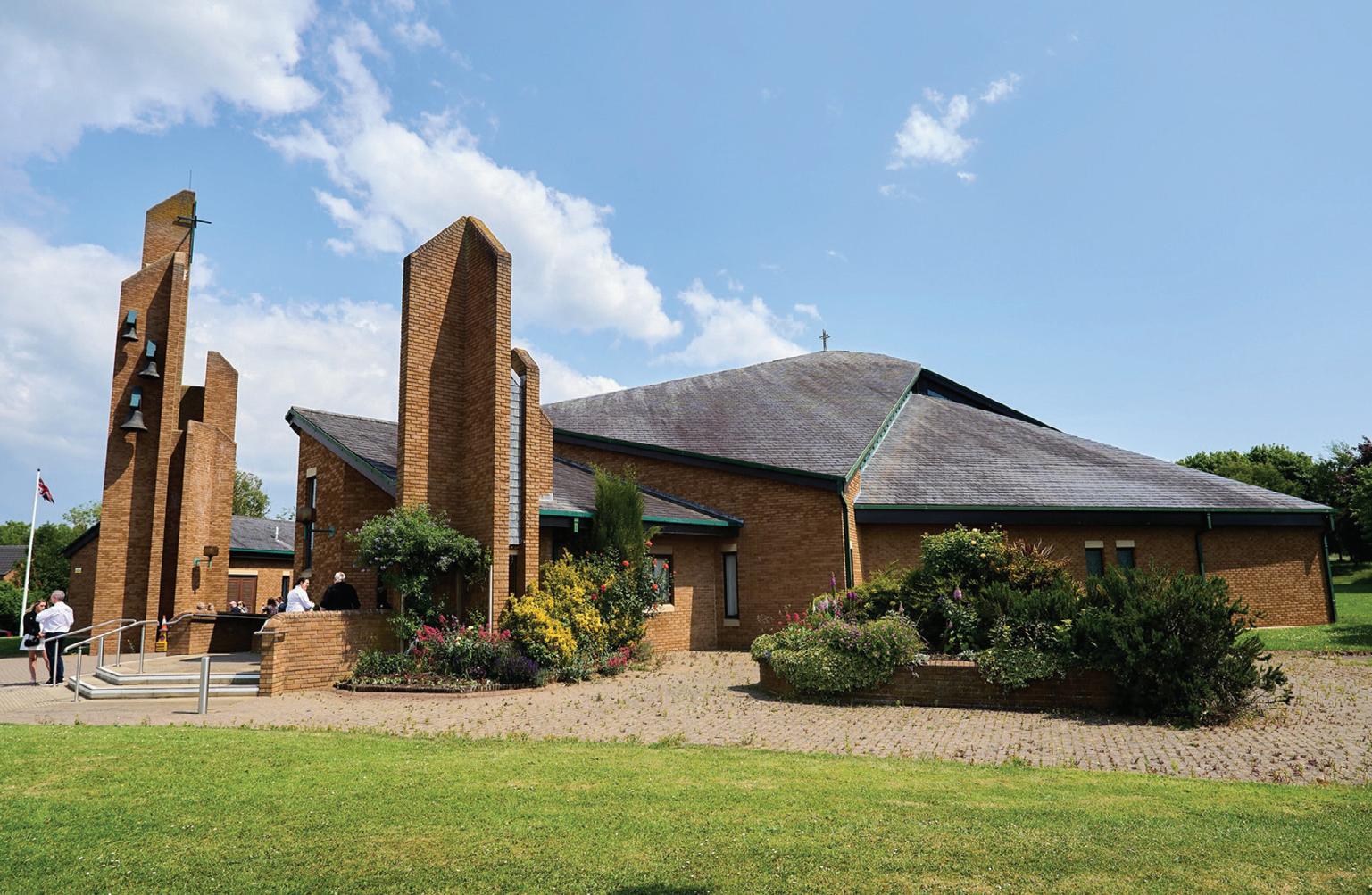
Opened in 1986, St Mary’s was built as a “Cathedral of the People” and a Church of the
Second Vatican Council. Its distinctive design reflects a spirit of openness and assembly, bringing clergy and laity together around the altar in prayer and worship.
The Jubilee Mass will be a joyful moment of thanksgiving for four decades of faith, prayer and service. Clergy, parish groups and parishioners from across the diocese are warmly encouraged to attend and take part in this significant diocesan celebration.
To further mark the ruby jubilee, Middlesbrough artist Philip Meadows has been commissioned to produce a special painting, which we hope to feature soon, and on Tuesday May 19 an archive film of the dedication liturgy will be shown in the cathedral.
For more information about any of these events, please contact the cathedral directly.
Canon Paul Farrer
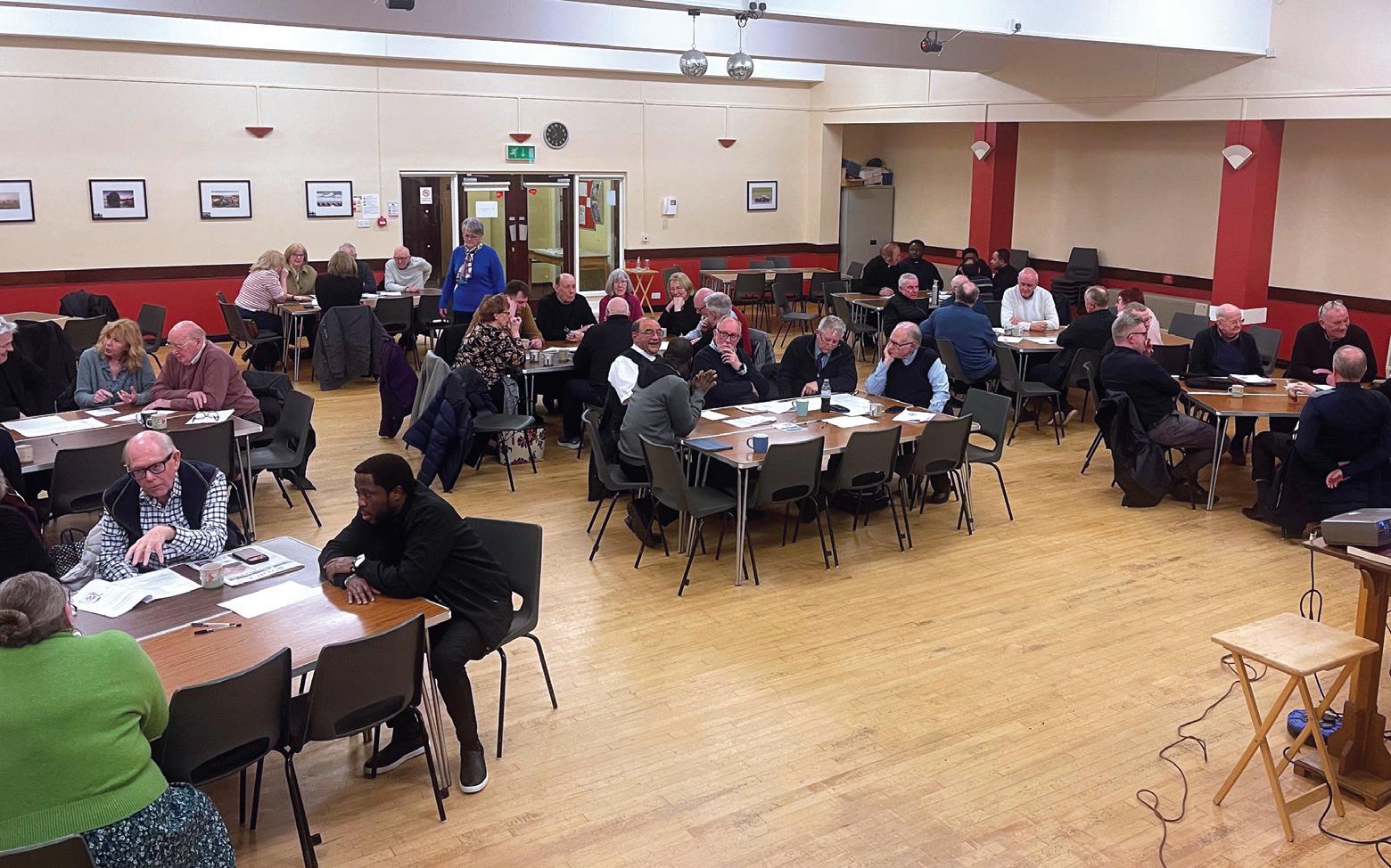
You are invited either to gather with a parish group or to reflect individually, prayerfully considering the questions that have been prepared.
To support this process, a presentation and prayer resources are available on the diocesan website to help guide your reflection and ensure that this time of discernment is fruitful. Responses may be submitted online and will contribute to a report that will be sent to Rome,
assisting the Holy Father in making a decision regarding the future of our dioceses. Kindly ensure that your responses are submitted by Friday May 22 2026.
Thank you for the time, prayer and commitment you offer to this important task entrusted to us by the Holy Father.
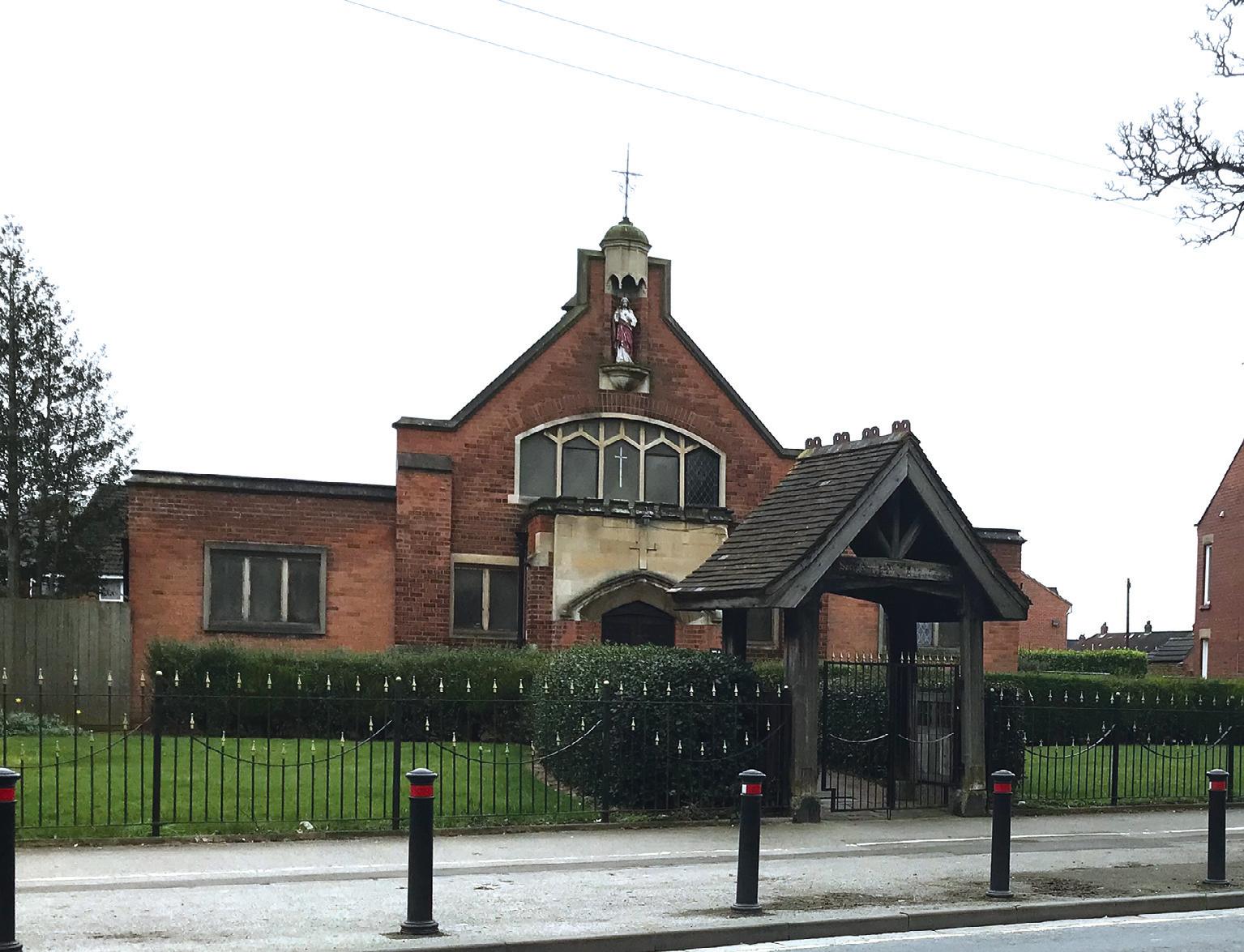
The Sacred Heart Parish in Hull is planning several celebrations and events to mark its centenary in June.
Among them, a special celebration Mass will be held on Saturday June 13 at 11am – you can read further details in next month’s Voice
Could you help by contributing your memories of the parish? Were you or your parents married here? Did you have a connection with the school or any of the clergy who served here, or maybe you took part in the Young Wives or Mother and Toddler group, played badminton or attended the Youth Club?
Do you remember events that took place in
the parish hall? Were you swinging a stein at an oompah band evening, supporting Gracie at our celebration of VE night in 1995 or dancing the night away welcoming in the millennium?
We would love to have your comments and any photographs if available. As we may be unable to return them, photocopies would be preferred.
For further information please call me on 01482 782052, email margaretmoxon@yahoo.com or email Eileen France at emfrance1948@gmail.com.
Margaret Moxon
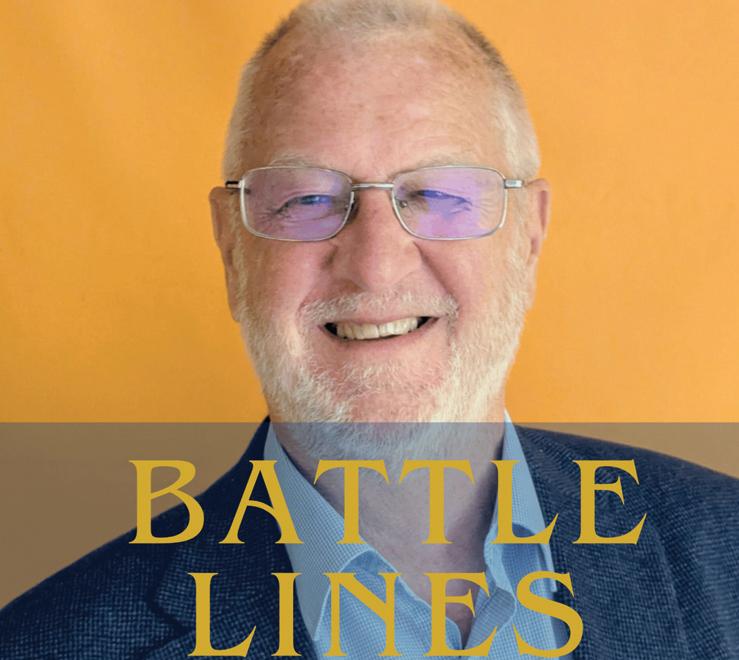
SIR JOHN BATTLE, MP for Leeds West from 1987 to 2010 and a minister in Tony Blair’s government, has kindly agreed to contribute a new regular column in SIR JOHN BATTLE, MP for Leeds West from 1987 to 2010 and a minister in Tony Blair’s government, has kindly agreed to contribute a new regular column in the Voice. Sir John, who was made a Knight Commander of the Order of St Gregory the Great by Pope Benedict and was knighted in the 2022 New Year Honours, is chair of the Diocese of Leeds Justice & Peace Commission and has a deep commitment to Catholic Social Teaching.
Talk of living in turbulent times seems an understatement in the current circumstances, which some declare as “apocalyptic”, as if the four horsemen are visible round the next corner.
Increasingly, people can’t face the constant violent conflicts on TV news and far too many are struggling to just hold things together.
Nor is it only a matter of balancing bills. A lasting “long tail” of Covid has led to a real destabilisation and crisis of mental health challenges in young people, hard hit as babies and children isolated in lockdown. Young people are now the new poor in our society, unsettled, dislocated, unsure about future study, work and relationships, and often unable to afford to leave home, which imposes late family strains.
A politics of despair is leeching through to everyday lives. A young man with mental health challenges who occasionally comes along to our weekly local community men’s health walking group had moved into living in a tent on wasteland as he feared attending his DWP regular “check” interview, worried they would sign him up to the army. His benefit was stopped, including rent. So he lost his flat.
So where do we now find hope when trying to “read the signs of the times” is so bleakly depressing?
In a much-neglected encyclical letter, Spe Salvi, Pope Benedict XVI wrote: “Christianity…has to a large extent restricted its attention to the individual and his salvation. In doing so, it has limited the horizon of its hope and has failed to recognise sufficiently the greatness of its task.”
The Middlesbrough-born Dominican preacher Father Herbert McCabe OP wrote of
hope: “We are not optimists; we do not present a lovely vision of a world which everyone is expected to fall in love with. We simply have wherever we are some small local task to do on the side of justice for the poor.”
Reading the signs of the times is not just reading the newspapers, watching the TV news or scrolling a live feed on a mobile. It is certainly not astrological horoscopes. Rather, it is a serious, careful reflection, tuning into the Gospel message through the Holy Spirit and best done with others not least the excluded and ignored and written off. The philosopher of hope Ernst Bloch stressed that hope cannot flourish without reason: “Hope engages reason more deeply than other modes of desire because its ends must be feasible and such feasibility calls for fine judgement.” In other words, hope involves reason and imagination and practical careful planning and construction of our future.
Moreover, as Catholics, we believe that hope is much more. It is a key “theological virtue”, so we are not left on our own trying to generate it. It is a gift from God, “a divinely given disposition by which we respond to and cooperate with God’s providence and by hope we are confident that God’s plans to bring mankind to the Kingdom in Christ”. Hope for us then comes not through a feeling of optimism on the morning the sun shines
through, opening the curtains. It is about prayer and service to others, especially the poor.
Nor are we left as a Church without encouraging and inspiring leadership. Pope Benedict XVI in Caritas Deus Est leads us further, calling for radical re-planning, reminding us we need to “rediscover fundamental values in which to build a better future”.
He writes: “The current crisis obliges us to replan our journey, to set new rules and to discover new forms of commitment, to build a positive experience and reject negative ones.” In other words, through discernment, to shape together a new vision for the future. Locally, our Church in the Diocese of Leeds and the Diocese of Middlesbrough has now been called with the prayerful and pastoral leadership of Bishop Marcus to develop a new regional vision and practice and organisational arrangement together; a real opportunity of hope to rediscover our deepening sense of Church in our region in our time now in prayer and practice.
Hope depends on the Holy Spirit, that gift given in response to prayer and in what we give to others in daily service especially to the least.
We now have an opportunity to share faith and charity experiences in these turbulent times a new start, by sharing our “Good News” stories.
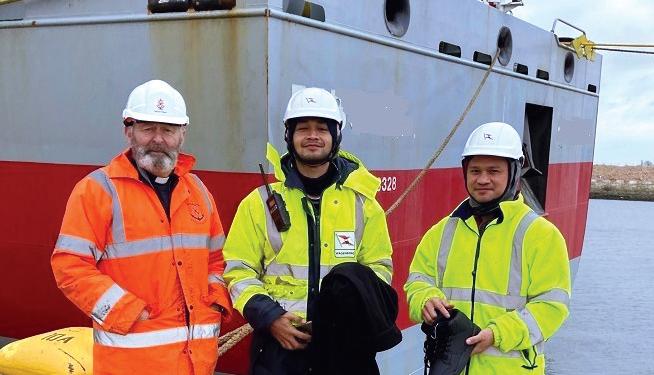
Being a seafarer or a fisher can be a dangerous and difficult job. When crisis strikes, the consequences can often be devastating, especially if there is no one to turn to for help.
When the worst happens, Stella Maris stands alongside seafarers and fishers. Through its ministry, and the work of its chaplains and volunteer ship visitors, seafarers and fishers can get support when they are most vulnerable.
The support Stella Maris provides can be a lifeline when help is needed urgently. This could mean assisting a seafarer who needs to return to work after a serious accident or supporting a retired fisherman with the cost of fixing a broken boiler or a struggling young cadet pay their rent when no other help is available.
The charity’s Centenary Emergency Fund, established in 2020, provides help for seafarers, fishers and their families in urgent need. Grants can fund anything from food, accommodation and medical care to legal help and livelihood training.
Often it’s a last hope when no other support is available. Every grant is distributed through a local Stella Maris chaplain, ensuring help reaches those who need it quickly and personally.
In one example, after a serious accident at sea, full-time fisherman Matthew was trying to rebuild his livelihood. But repairing his fishing vessel used all his wages – and Matthew relied on food banks to survive.
The Stella Maris grant meant Matthew could buy a fridge freezer to store his catch and return to fishing faster, and his dignity and income were restored.
In another example, army veteran John wanted to return to work as a fisherman but could not afford the five-day mandatory safety training course for working at sea.
A Stella Maris grant covered the fee – and John sent this message once he passed: “I really can’t thank you enough. This will
literally change my life. I can finally look forward rather than dwelling on the past.”
This life-saving support provided by Stella Maris is made possible through donations towards the Centenary Fund. Last year, demand was so great that the fund was exhausted by August. This year Stella Maris aims to raise £100,000 to ensure they can support any seafarer or fisher who needs it.
This Easter, Stella Maris invites you to be a light and bring hope to a seafarer, fisher or their family members who are desperate and at breaking point. Your generosity can be lifetransforming. It will help Stella Maris chaplains and ship visitors continue to provide critical help.
Please also keep in prayer the many seafarers, fishers and their families during this holy season.
Visit stellamaris.org.uk/lent/ to donate or find out how you can help.
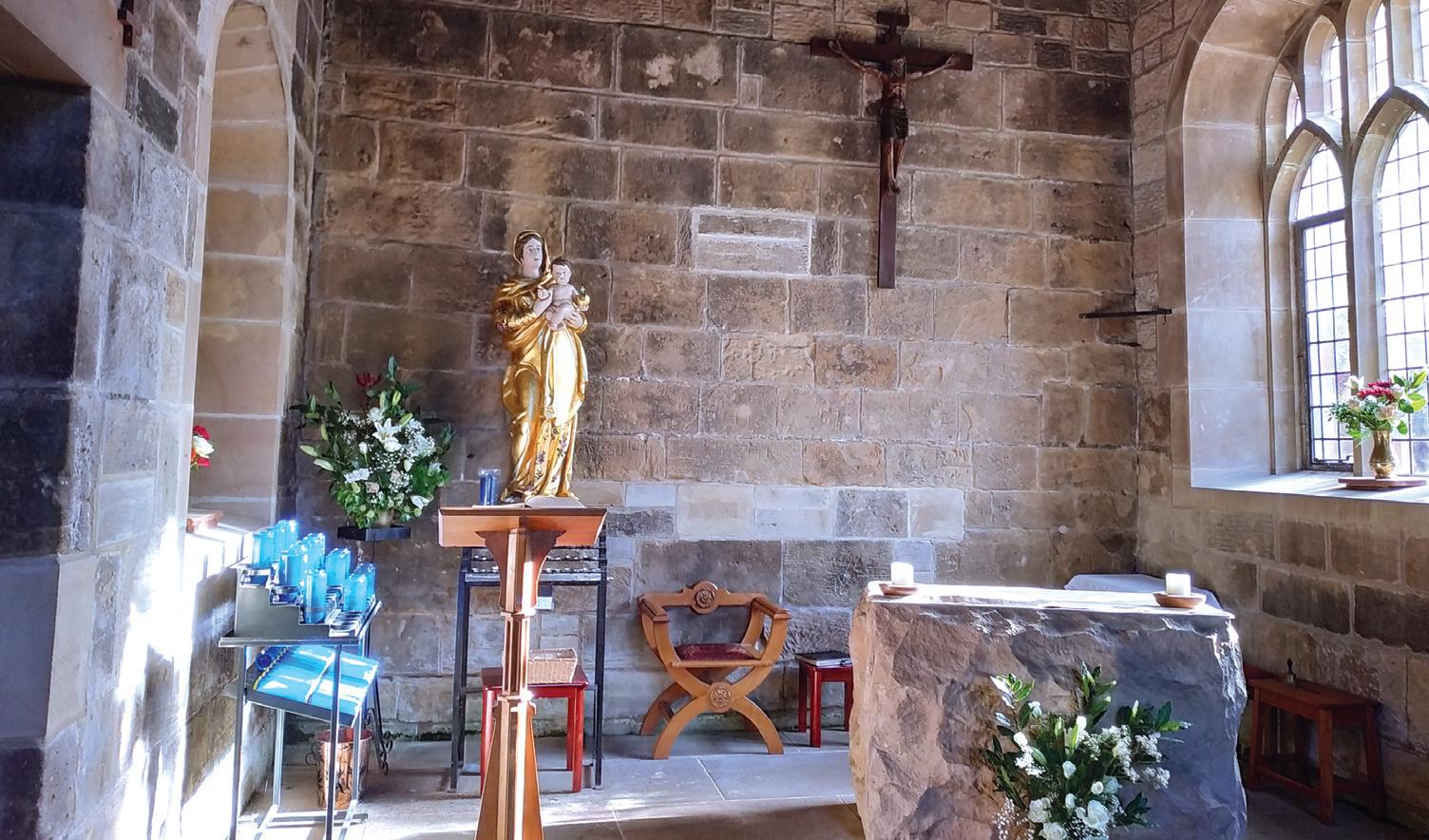
Monsignor Gerard Robinson will celebrate the annual Mass for the Friends of the Lady Chapel at Mount Grace on Saturday September 5 at 3pm.
Friends of the Lady Chapel members are united in the spirituality of the Lady Chapel through this annual Mass and daily prayers and also receive newsletters and invitations to events.
A suggested membership donation is £10 a year for an individual or a family group. Schools are also welcome to join. Visit ladychapel.org.uk/friends for more information.
Have you ever thought about leaving a legacy to the Friends of the Lady Chapel in your will? By doing so you will be helping to preserve this important shrine to Our Lady for future generations and bequests are free of inheritance tax.
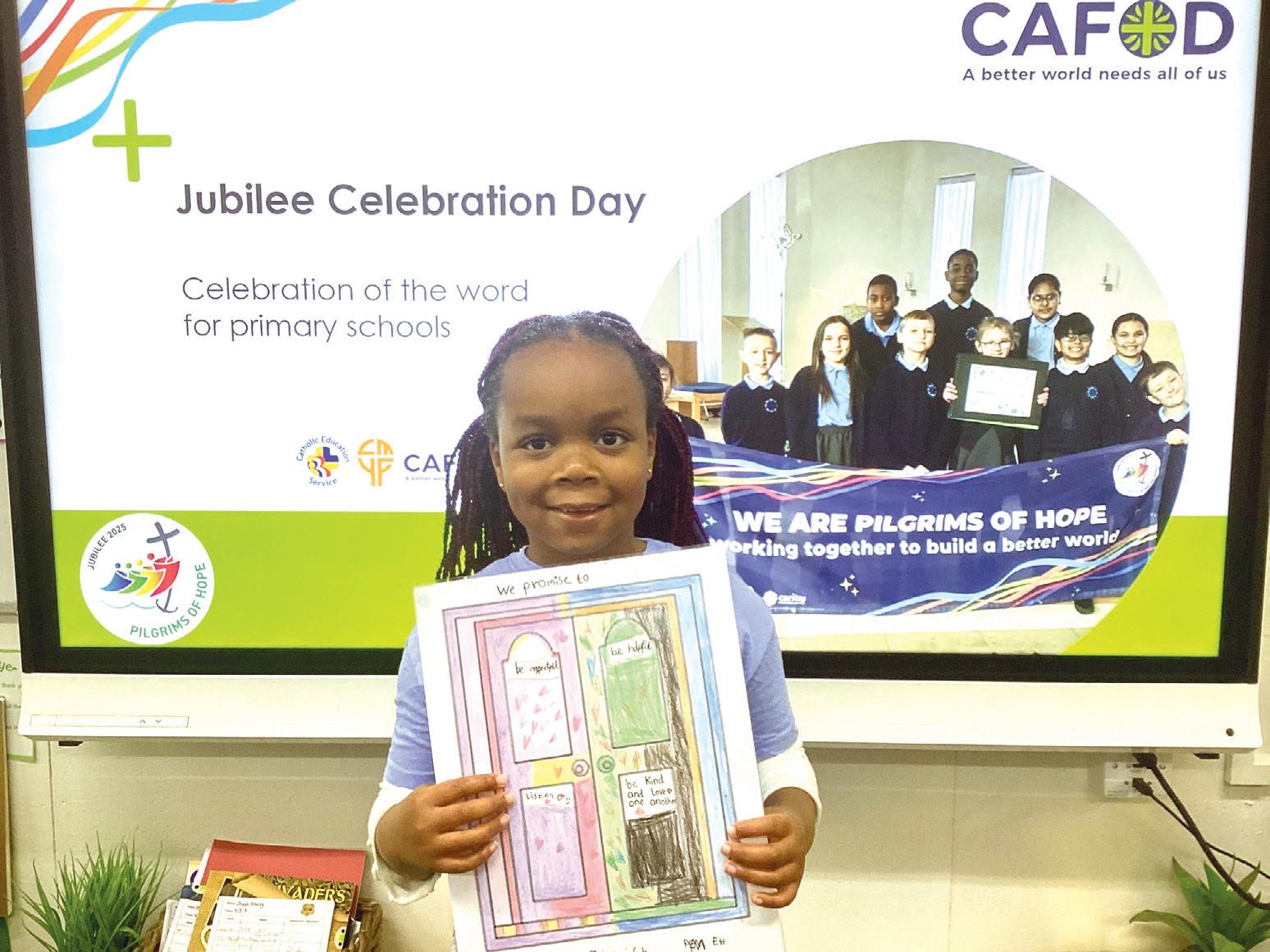
Catholic schools across England and Wales have been praised nationally and internationally for their extraordinary contribution to the 2025 Jubilee Year –Pilgrims of Hope.
In a year marked by creativity, compassion and action, school communities embraced Pope Francis’ call to celebrate the Jubilee with “deep faith, lively hope and active charity”.
Bishop Marcus, who is chair of the Catholic Education Service, said: “The Jubilee has been a time of great grace and has brought to many of those in our Catholic schools, colleges and universities a renewal of their faith through prayer and charitable works as ‘Pilgrims of Hope’.”
Faith into action
Catholic schools stepped forward as Pilgrims of Hope, with hundreds of thousands of small acts coming together to generate a transformational journey.
More than 1,200 schools made the Jubilee Pledge, a long-term, whole-school commitment to standing in solidarity with our global family, particularly those in the world’s poorest communities, living out Catholic Social Teaching now and in the future.
More than 2,000 Jubilee banners were displayed on school gates, sharing a positive message of hope and unity with local communities.
Around 50,000 pupils deepened their understanding of global debt, spoke up for



Tel: 01642 765639
Email: enquiries@ctking.npcat.org.uk
the vulnerable and took action on global justice.
And 600,000 Jubilee prayer cards were shared with pupils and their families, uniting school communities on their journey of faith. Creative celebrations, liturgies, prayer trails and assemblies brought the Jubilee theme to life in classrooms and playgrounds.
In several dioceses, pupils and staff gathered in prayer during a celebration of hope, presenting their Jubilee Pledges to their bishop.
Elsewhere, some multi-academy trusts marked this occasion together and many more schools celebrated making their pledges in other ways.
One pupil said: “The Jubilee helped me put my faith into action… it encouraged me to hope more than doubt.”
School communities honoured at the Vatican
The remarkable witness of our schools drew attention from the global Church. In October, representatives were invited to the Jubilee of the World of Education in Rome.
There, the delegation highlighted pupils’ Jubilee actions through a presentation and a display featuring the Jubilee Pledge Map and other examples of Jubilee participation at the Constellation of Education Networks exhibition.
Attending papal audiences and the historic Mass at which St John Henry Newman was declared a Doctor of the Church, one unforgettable moment came when Pope Leo blessed the Pilgrims of Hope banner held aloft by the students.
A year to remember – and a future built on hope
Across England and Wales, the Jubilee Year
and vibrant impact Catholic schools make every day. Through a continual commitment to living out the Jubilee Pledge, Catholic schools will continue to be living signs of hope, reaching out to their communities and the global family too.
We are proud to have resourced, guided and supported schools throughout their Jubilee journey – a journey they have embraced this year and one they have committed to carrying forward in the years to come.
CAFOD chair Christine Allen said: “It’s been fantastic to see how so many schools across England and Wales have responded to the opportunities of this Jubilee Year.
“Children and young people have embraced
compassion, and a deep commitment to Catholic Social Teaching.
“The Jubilee theme, ‘A Year of Hope’, set by Pope Francis, empowered young people to see themselves as global citizens and agents of change, with the power to shape a more just and loving world.
“Being a pilgrim of hope is part of everything we do at CAFOD, and it doesn’t stop at the end of the year – it is something we can do every day.”
Visit cafod.org.uk/jubilee-schools to watch a celebration film.
Rachel Blaylock
CAFOD Community Participation Coordinator
Year 9 students at All Saints School in York were given the opportunity to reflect on the question “What is God calling you to do?” when they took part in a vocations retreat.
To help them do this, we were delighted to welcome a range of visitors who shared personal stories of how their faith has guided their choices, influenced their careers and inspired their commitment to supporting others.
Speakers including Canon Michael Loughlin, Father Phil Cunnah and Sister Ann Stafford spoke about responding to a calling to ordained and religious life. Their stories highlighted courage, trust and a deep desire to serve God and community. Students were particularly inspired by hearing how this vocation is lived out in joyful, practical service each day.
Others shared how their faith has shaped different paths of service. We heard from Bob Lavery, whose commitment to Catholic education is significant, having been a school governor for 30-plus years and a support to young people and pilgrims in Lourdes. He described how a highlight of his life of service was leading the St Bernadette Relic Tour in 2022.
Mark Dias, who is chair of the Nicholas Postgate Catholic Academy Trust board and currently in training for the diaconate, and Deacon Tom Rolfe spoke of their ministry within the Church and the privilege of serving both parish and wider community. We also welcomed parents, students, former staff and members of our local parishes who are professionals and volunteers working in education and in the NHS.
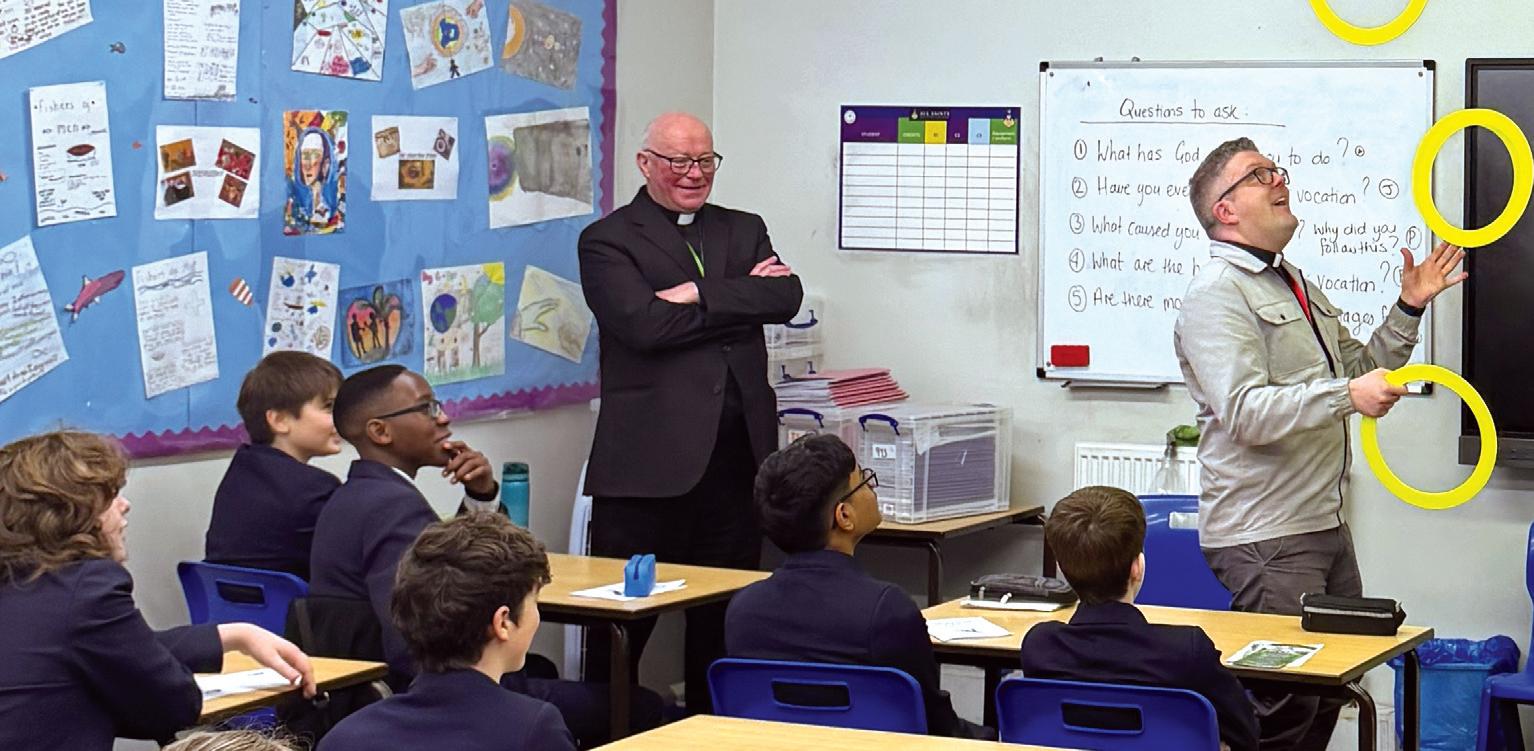
They reflected on how their faith underpins their commitment to dignity, compassion and justice in their daily work. Their examples showed that vocation is not only about religious life, but about living out Gospel values in every career.
Others described their involvement with environmental charities, explaining how caring for creation is a vital expression of their faith in action.
Throughout the morning, students were encouraged to ask questions and reflect on their own gifts to consider how they might use them in service of others.
The message was clear: a vocation is not simply about what job you do, but about who you are called to be. Whether through ministry, healthcare, teaching, volunteering or caring for our common home, faith can be a powerful foundation for a life lived
generously for others.
The event was organised by Kath Humphrey, subject leader for RE, who also led the students and visitors in a short closing liturgy where they reflected on the wisdom and example of our Form Saints, including St Oscar Romero’s instruction to “aspire not to have more, but to be more”.
Our visitors certainly exemplified this message, and they praised the interest and engagement of our students who made the most of the opportunity to ask important and searching questions.
As ever, we are immensely proud of our students and we hope that they can take inspiration from the morning so that they, in the words of St Catherine of Siena, can “be what God means them to be, and set the world on fire!”
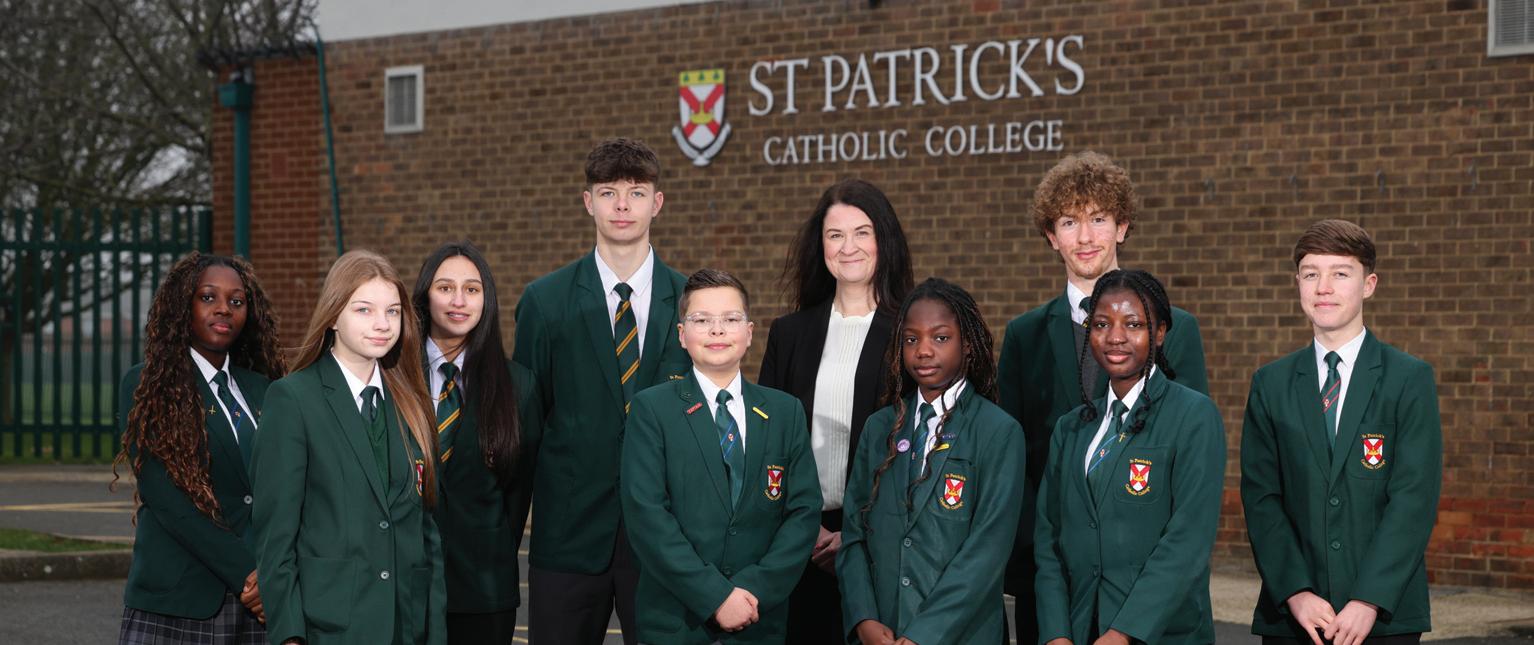
St Patrick’s Catholic College in Thornaby is celebrating a positive Ofsted report that recognises the strong progress made across the school and confirms that improvements seen in recent years are continuing.
Inspectors praised the school’s calm and respectful environment, high expectations for behaviour and the strong relationships between staff and pupils.
The report also highlights the school’s inclusive ethos and the strong sense of community that runs through daily life at St Patrick’s, which is part of Nicholas Postgate Catholic Academy Trust (NPCAT).
One of the first schools in the area to be inspected under the new Ofsted framework, St Patrick’s reached “expected standard” in four out of five areas, with attendance and behaviour highlighted as reaching a “strong standard”.
Ofsted found that pupils feel safe, supported and proud to be part of the school community.
Attendance is above the national average and pupils have positive attitudes to learning, working hard in lessons and showing respect for their teachers and peers.
Inspectors also recognised the sustained improvements made by school leaders in recent years, particularly in strengthening behaviour systems, improving attendance and ensuring pupils achieve well.
Inspectors said: “St Patrick’s school motto, ‘Faith, family, future’, is at the heart of this school and lived out every day. Pupils feel a deep sense of belonging here. The school is a close community where pupils feel safe.
“Leaders have improved the school since the
previous inspection. This is reflected notably in pupils’ behaviour, attendance and the improved rates of progress that pupils make relative to their starting points.
“St Patrick’s is an inclusive school where there are high expectations for all pupils. With support from the trust, leaders have developed systems to ensure that, typically, pupils’ needs are accurately identified, especially for those with special educational needs and/or disabilities (SEND) and those known to social care.”
Headteacher Deborah Law said the report reflects the dedication of the whole school community.
“I am incredibly proud that Ofsted has recognised the high expectations and deeply respectful culture that define St Patrick’s Catholic College,” she said.
“Our pupils work hard, support one another and feel a real sense of belonging here. This report reflects the dedication of our staff, the strong partnership we have with families, and our commitment to ensuring every child — including those who face additional challenges — receives the support they need to succeed and prepare confidently for their future.
“While we are proud of this recognition, we remain focused on improving even further so that every child at St Patrick’s continues to flourish.”
Executive head Michael Burns said the report recognises the sustained progress of recent years.
“This report is a testament to the exceptional leadership of Miss Law, the dedication of our staff and the outstanding character of our
pupils,” he said.
“Since joining NPCAT and under the leadership of the trust, Miss Law and I, our school has undergone a remarkable transformation. We moved from Special Measures in 2019 to achieving a Good judgement in 2021, and this latest report confirms that the school continues to build on that progress.
“This improvement reflects the strength of the partnership between the trust, school leaders, governors, staff, pupils and families, all working together to provide the very best opportunities for young people in our community.”
NPCAT interim CEO Karen Siedle said: “I am incredibly proud of our pupils, who demonstrate such excellent manners and a genuine commitment to their learning.
“To see our leaders described as tenacious in their support for families and to have our ‘robust’ attendance systems recognised is a
testament to the hard work happening behind the scenes.
“This report celebrates a school that truly understands its community, and I want to personally thank executive headteacher Mr Burns, headteacher Miss Law and all our staff, parents and students for making St Patrick’s such a special place to belong.”
Mark Dias, chair of the NPCAT board, added:
“Ofsted’s recognition of the continued progress at St Patrick’s is a testament to the school’s strong Catholic life and mission.
“The calm, respectful and inclusive culture highlighted in the report reflects our shared commitment to forming young people in faith, dignity and aspiration.
“The board are immensely proud of the leadership, staff and pupils whose dedication ensures that the Gospel values at the heart of NPCAT are lived out each day.”
April has special significance for those of us in the St Vincent de Paul Society (SVP), since this is the month both St Vincent and Blessed Frédéric were both born.
Vincent de Paul was born to peasant farmers in the small French village of Pouy on April 24 1581. There was a stream named the “Paul” in the vicinity, and it is believed this might have been the derivation of the family name. He trained as a priest to escape his humble origins but dedicated himself to serving the poor. During Mass one Sunday in 1617, Father Vincent called on his parishioners to help a sick family in great need. Many women responded, bringing them food, fuel and bedding. As Father Vincent marvelled at this great generosity, he realised some form of organisation was needed to help make it more effective and long-lasting. Thus, in December of that year, began the Confraternity of Charity, a group of women with the aim of providing spiritual and material help to those most in need. The organisation exists to this day as the International Association of Charities.
In 1633, Father Vincent co-founded what is now the Company of the Daughters of Charity of St Vincent de Paul, a society of apostolic life for women. Its members are devoted to corporal and spiritual service of the poor and they make annual vows throughout their lives, which leaves them always free to leave without the need of ecclesiastical permission.
However, Father Vincent did not begin the SVP; that was done by a group of French students led by Blessed Frédéric Ozanam. A Catholic literary scholar, lawyer, journalist and equal rights advocate, he was born Antoine-Frédéric Ozanam on April 23 1813. While studying at the Sorbonne, Frédéric Ozanam and his friends revived a discussion group called a Society of Good Studies and formed it into a Conference of History. This quickly became a forum for large and lively discussions among students and their attention frequently turned to the social teachings of the Gospel. At one meeting during a heated debate, a student issued the challenge: “What is your Church doing now? What is she doing for the poor of Paris? Show us your works and we will believe you!”
As a consequence, in May 1833, Frédéric and a group of other young students founded the Conference of Charity, later known as the Society of St Vincent de Paul. By the time of his death at just 40, the society had upwards of 2,000 members. The founding members were guided by Sister Rosalie Rendu, a member of the Congregation of Daughters of Charity of St Vincent de Paul, who was prominent in serving the poor in the slums of Paris.
Frédéric's first act of charity was to take his supply of winter firewood and bring it to a widow whose husband had died of cholera. Today’s SVP members continue to work in the
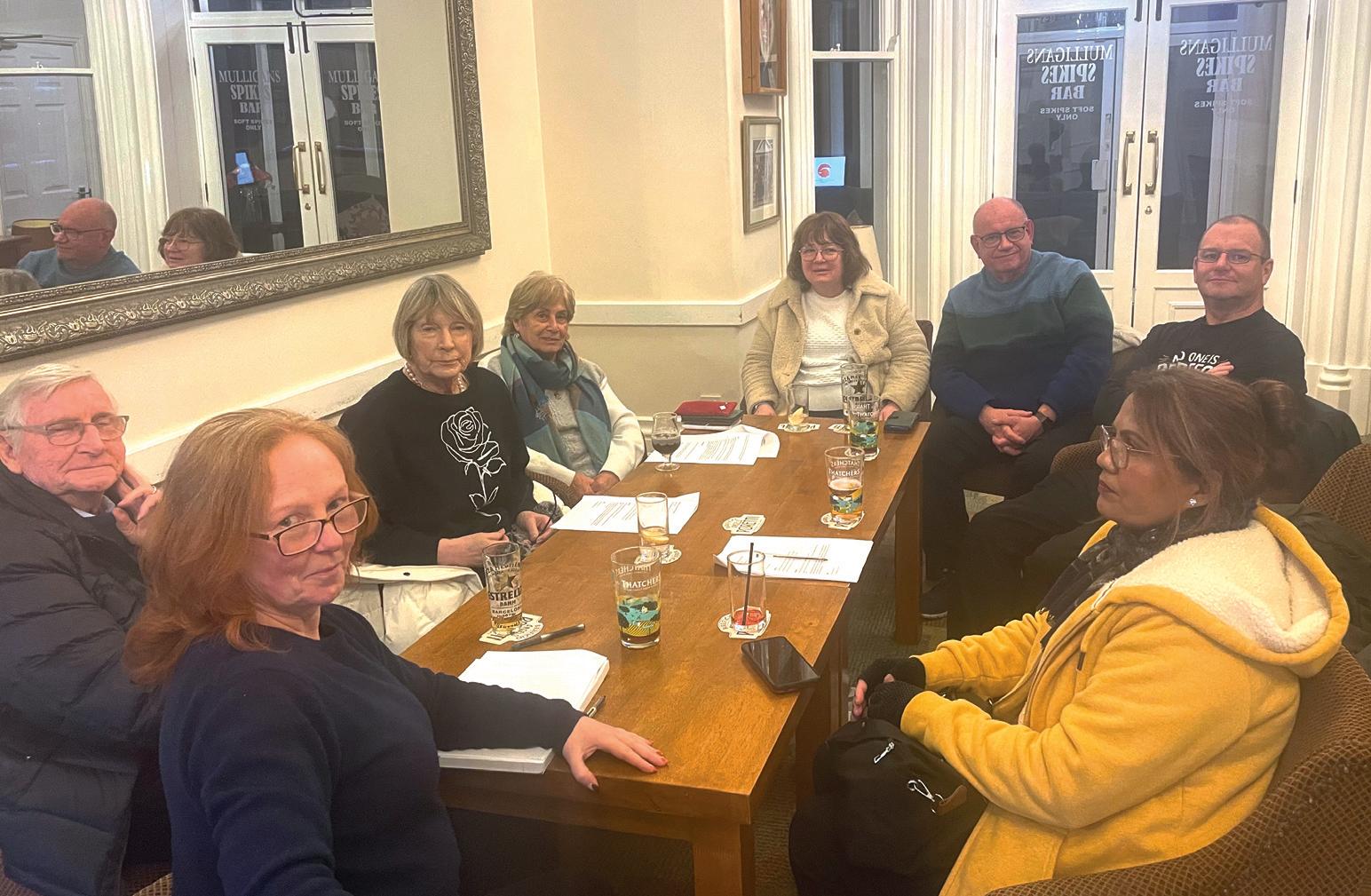
The essence of our work is person-to-person contact, which we call befriending. Volunteers visit to understand and assess the material needs of each individual or family, but also to give people a sense of belonging. However, as Father Vincent discovered, to meet the needs of these new-found friends effectively takes organisation. So in addition to members who feel comfortable visiting and befriending new people, the SVP also needs
organise activities, keep up-to-date contact lists, take minutes and manage accounts. If after reading this article you feel inspired to offer your unique skills to SVP, please contact your parish group or email Middlesbrough SVP membership support officer Teresa O’Hagan at teresao@svp.org.uk.
Patricia Nobbs Middlesbrough SVP Central Council President
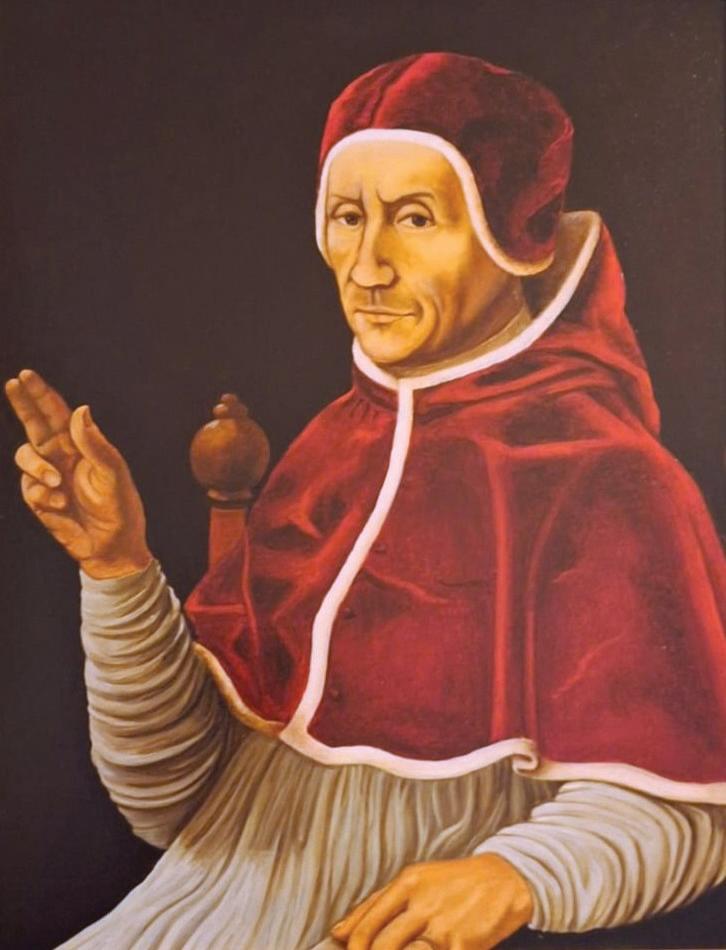
SHAWN RAS, a Dutch-born historian and parishioner of Our Lady of Lourdes and St Peter Chanel in Hull, continues his series of articles about Church history with the story of the man who became the last non-Italian pope for more than 450 years… In Utrecht, folk still around this stranger’s house roam, And call it by its name, Pope Adrian’s home Yet still, his bust, though lowered, adorns its front,
The ancestral home of its pope, a boatbuilder’s runt
His name is still praised, by a thousand tongues abound, For briefly, though with grace, as Pope, he was crowned.
Eighteenth-century school rhyme about famous Dutch men and women – translated.
The 16th century was one of difficulty for the Church. In rapid succession, the throne of Peter was occupied by three of its most infamous pontiffs.
Alexander VI (1492-1503) – better known as Rodrigo Borgia; Julius II (1503-1513) – the infamous “Warrior Pope” and Leo X (15131521) – whose policies and sales of indulgences had inspired Martin Luther’s 95 Theses.
In the light of these controversial pontiffs, the college of cardinals had their work cut out for them. The job required a sensible, calm leader. A favourite had been Cardinal Giulio de Medici, the nephew of Pope Leo X and the future Pope Clement VII.
The election, however, was soon deadlocked between cardinals supporting the King of Spain and those supporting the King of France.
To try to end the deadlock, the cardinals chose the Grand Inquisitor of the Spanish Kingdoms, Adrian of Utrecht. The now 63year-old Adrian had been the private tutor of the King of Spain, Emperor Charles V.
In a rather clever effort to avoid another antipapacy, Adrian accepted the position and rushed to Rome, being crowned in a small ceremony with little pomp and circumstance. This financial sobriety was a warm welcome in the eyes of the clergy, who had just witnessed Leo X spend hundreds of thousands of ducats on art, warfare, pets and the construction of St Peter’s Basilica.
Born into a boat builder’s family in Utrecht in 1459, the young Adrian Boeyens grew up with moderate means. On a scholarship from the Duchess of Burgundy, Margaret of York (the aunt of King Richard III), Adrian attended the University of Leuven and would excel there.
In 1490 he was ordained a priest and finished his studies of canon law, philosophy and theology the following year. That same year, due to his academic merit, intellect and rhetorical skill, he was appointed the vice-chancellor of the university and dean of the nearby St Peter’s Church.
In 1502, he offered the very promising student, one Desiderius Erasmus, a professorship, which Erasmus refused.
Adrian’s name was soon mentioned in the circles of the Habsburg family, with the governor, Margaret of Austria and her father, the Emperor Maximilian, asking him to tutor the young Charles, future king and Emperor Charles V.
In this capacity Adrian travelled to Aragon, where he would soon become Grand Inquisitor and Cardinal Regent for Spain. By the time of his 1522 election, the tide of Protestantism was rising rapidly, not least in his own home country. Adrian realised the problems the Church was facing and tried to take decisive action.
He tried to lower the number of sacramental dispensations offered to the nobility of Europe and to tackle the rampant issues of the sale of indulgences, but time and again,
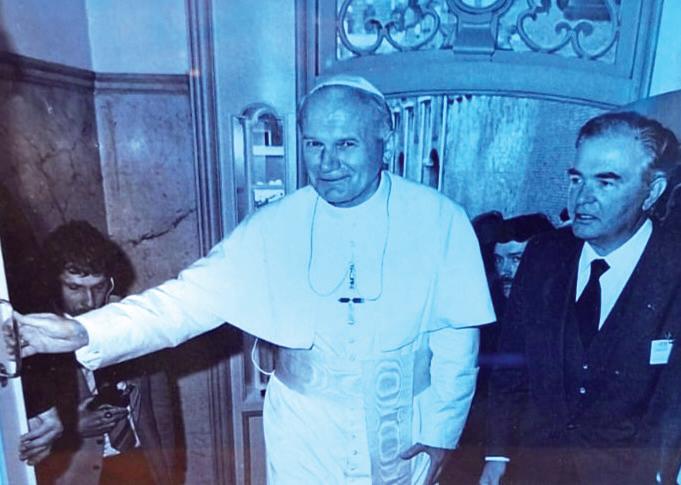
he was countered by his cardinals. He was frustrated immensely by the many large-scale wars the European powers fought against each other, especially in the face of rising Ottoman power in Europe and the Mediterranean. His efforts at reform were halted by his clergy and his advancing age. And after a year and eight months, Pope Adrian VI passed away, aged 64. Adrian’s legacy is one of frustration, with many scholars having theorised that he may have been able to halt the Protestant Reformation, and others considering him another symptom of an ailing Church. After his death, in the face of Spanish and French meddling in the Curia, consecutively Italian cardinals were raised to the pontificate, starting with Clement VII in 1524, and ultimately ending in 1978, when Cardinal Karol Wojtyła, the Archbishop of Krakow became Pope John Paul II.
After 454 years, a non-Italian was elected to the papacy, a fact Pope John Paul II acknowledged on his visit to the “Paushuize” (Pope-house) in Utrecht, where I too, earlier this month, walked in the footsteps of Pope Adrian VI and where its custodians graciously allowed me to take the photos in this article.
Finally, in 2015 on the Pausdam in Utrecht, in the shadow of the largest church tower in the Netherlands, a humble bronze statue was erected, right by Adrian’s old house.
Easter is not the end of the story – it’s the beginning.
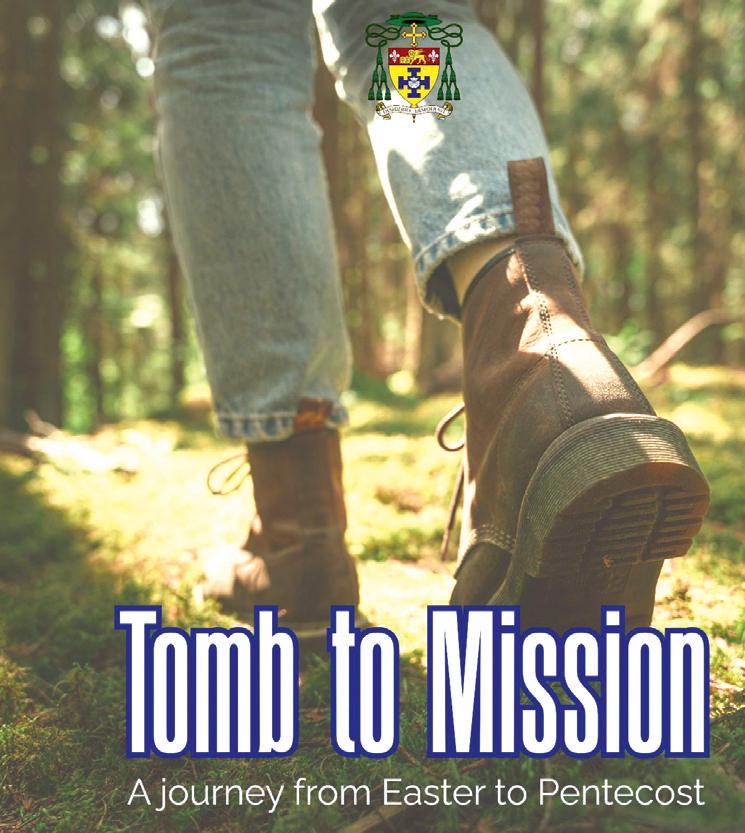
After the long days of Lent and the profound celebrations of Holy Week, it can be tempting to think that life has simply returned to normal. But this is not the case. The Church now invites us into 50 days of celebration, a season of rejoicing in life conquering death, good overcoming evil and hearts filled with resurrection joy.
During these 50 days, the first disciples embarked on a journey that was something of a rollercoaster. After the horrific events of the crucifixion, they experienced the deep joy of encountering the risen Jesus, yet also the lingering fear that they might suffer as he did. Eastertide reaches its climax in the great feast of Pentecost, when, filled with the power of the Holy Spirit, the disciples embrace their mission to proclaim the Good News to the ends of the earth. That mission remains the same for the Church today.
Pope Francis reminds us: “Every Christian is a missionary to the extent that he or she has encountered the love of God in Christ Jesus;
we no longer say that we are ‘disciples’ and ‘missionaries’, but rather that we are always ‘missionary disciples’.” (Evangelii Gaudium, 120)
For many of us, the journey from becoming a believer to being missionary disciples can take longer than 50 days.
It begins with honest reflection: Have we truly encountered the risen Jesus? Perhaps we have met him many times – in prayer, in the sacraments, in the people around us – but were we open to a personal, life-changing encounter?
God desires closeness with each of us. He longs for us to experience his love personally and to allow the Holy Spirit to work powerfully within our lives.
The first disciples were galvanised into mission when they received the Holy Spirit at Pentecost. The Holy Spirit transforms believers into missionary disciples. The scriptural accounts we read are not merely historical records; they are living testimony to what the Holy Spirit longs to do in and through us today.
St Elena Guerra, often called the Apostle of the Holy Spirit, wrote: “Pentecost is not over. In fact, it is continually going on in every time and in every place, because the Holy Spirit desired to give himself to all people. All who want him can always receive him; so we do not have to envy the apostles and the first believers. We only have to dispose ourselves like them to receive him well, and he will come to us as he did to them.”
Let us not allow the gifts of the Holy Spirit to lie dormant. Eastertide is an opportunity to open ourselves to all the graces the Lord wishes to give.
Like the disciples, we can move from the sorrow of the tomb to the joy of the resurrection and, empowered by the Holy Spirit, step boldly into our mission.
During Eastertide, we will be sharing a series of reflections, short teachings and prayers to help us journey from the tomb to the mission.
This is a joint initiative of the Adult Formation teams of the Dioceses of Middlesbrough and Leeds.
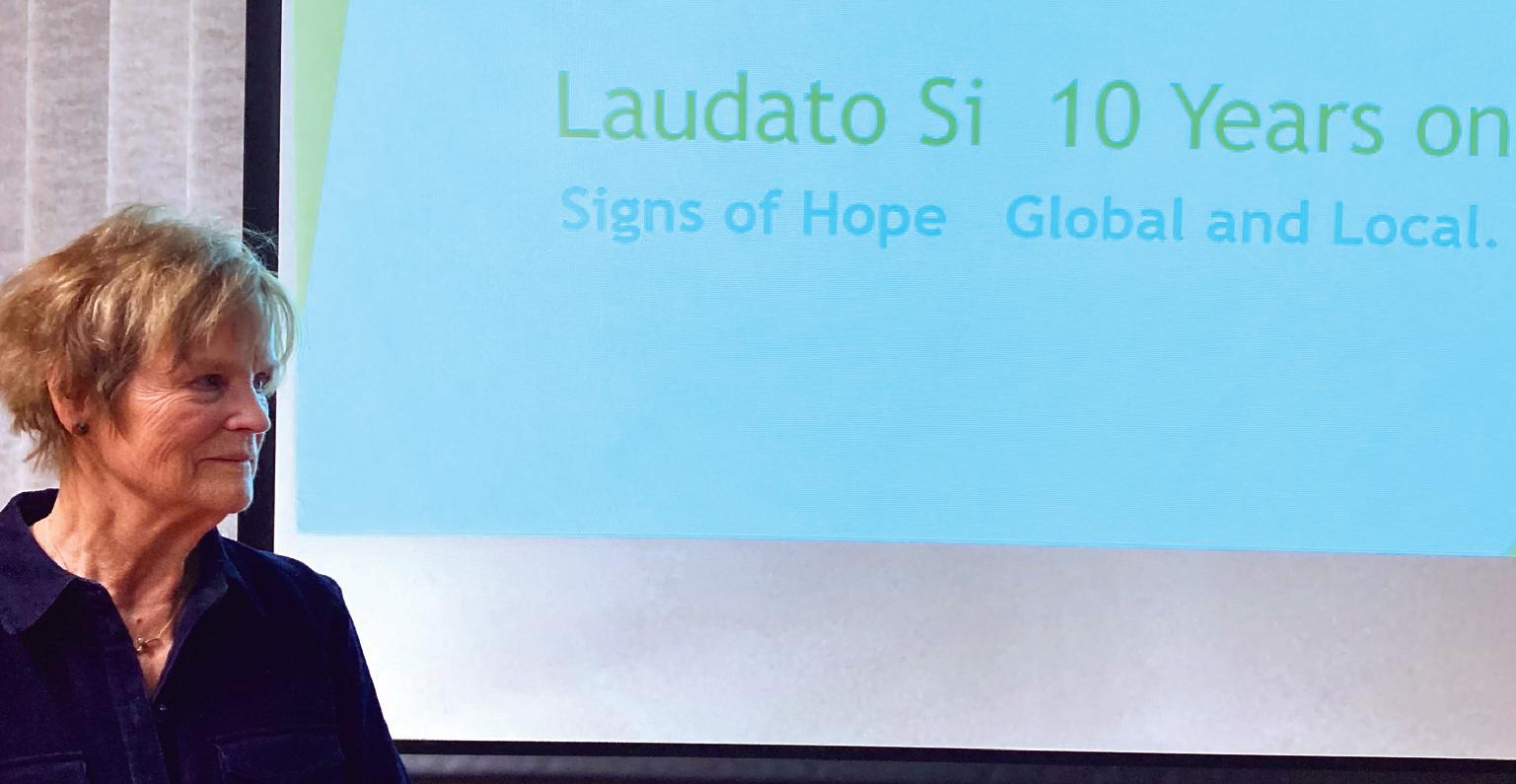
The Cleveland Newman Circle heard an inspirational talk by Barbara Hungin on Pope Francis’ widely read letter on the care of creation, Laudato Si’.
Having written a regular environmental column in the Voice for many years, Barbara was well placed to brief us on how it has been put into practice both locally and further afield.
She reminded us that Laudato Si’ had been addressed “to all the people on the planet” and was studied closely by a wide range of people within and well beyond the Catholic Church.
We heard how it had influenced the COP21 talks in December 2015, which produced the Paris Agreement on limiting climate change. A more recent example of its international influence was last year’s UN High Seas Treaty aimed at protecting marine life in international waters.
We heard also about the international Laudato Si’ Movement (laudatosianimators.org) whose aim is to “animate local parishes and communities to engage in ecological spirituality, sustainable lifestyles and advocacy for climate and ecological justice”.
More locally, we heard about the work of environmental surveyor Glenn Melvin appointed by the Diocese of Middlesbrough three years ago to collate data on the energy performance of all churches and presbyteries, identifying opportunities for improvement.
Barbara told us about the Laudato Si’ Centre in the diocese of Salford (laudatosicentre.org.uk), whose educational and outreach activities inspire its visitors with environmental hope, encouraging lifestyle change.
We learnt that every diocese now has an environmental lead and that they meet to share thoughts on problems and opportunities – often with influential supporters in attendance.
It was heartening to hear how seminaries and schools are now covering care of the environment, helping to bring about a cultural shift.
A lively question-and-answer session followed, covering problem areas such as the effect of agrochemicals on insects and the wildlife that depend on them, and the sweatshops that produce many of the goods we buy.
We discussed the need to become better at communicating environmental issues in plain
English without over-simplifying. We also heard about recent developments such as facilities in some parishes for charging up electric vehicles from solar panels at Mass. We came away with a reminder that God’s creation is not just raw material for our wanton consumption and a clear sense that there are signs of hope within our troubled world.
Christ is risen! Truly, he is risen! Truly at Easter we know life wants to live.
Yes, despite all appearances to the contrary, life goes marching on. Self-preservation is still, as always, the most powerful primordial life force, driving us on to independence as well as interdependence as, for example, when we learn to associate with others, God, and his Church. Society mitigates the primordial-ness of the individual, partly by our accommodating the weak and vulnerable among us who need care and unconditional love.
But since Covid 19, there has been a spike in the “looking out for number one” mantra. And I fear that some of that selfishness lingers on right up to this very day. After all, the state and Church are really not as fully in control of safeguarding life as one once thought. And therefore we hearken back to our roots – the family, where our lives began. Now, more than ever, our love for the poor must be reestablished and reinforced, to return to our former state of stability and
security that we knew in our collective, recent past.
Life wants to live, too, in a procreative way, with a “divine” totality, until death: total love for the spouse, total love for new life and total love for the rearing of that new life
And also, life wants to live in a restorative way; through the resilience unto the restoration of the individual (we are built to “bounce back”).
This is no small thing. Christianity can be summed up in one word: “Resurrection”. That is why Easter is our biggest high holy feast day – spanning eight days in fact. Catherine Doherty, foundress of Madonna House, said that life deals us small “c” crucifixion after crucifixion after crucifixion. But that does not mean that we are dead, more dead and then more dead. On the contrary, it means we rise to new life and rise again and again; until that great entrance –one day – into Eternal Life with God – where
For further information about the programme of the Cleveland Newman Circle, email p.egerton123@gmail.com or call 01642 645732. Talks are held in St Mary’s Cathedral Hall, Coulby Newham, TS8 0TW.
The next talk is Dr Liam Temple on “A Mission for the North – The Capuchin Franciscans in Thirsk, 1923–1960”, on Wednesday April 15 from 7.30pm. All are welcome!
Dermot Roddy
self-preservation will be of no concern to us; where procreation will be replaced with the Beatific Vision; and where restoration will be complete – we will see the Father and live!
The Church talks beautifully of this same restorative hope, with poignant tenderness even. For example, from Gaudium et Spes: “Above all, the Church knows that her message is in harmony with the most secret desires of the human heart, when she champions the dignity of the human vocation, restoring hope to those who have despaired of anything higher than their present lot.”
And so, the culture of death (assisted dying, abortion, euthanasia) rages on; led by the Prince of this World, who seems to have the upper hand at times, but whose head is crushed – thanks to Our Lady and Our Lord. And therefore “life wants to live” has the first word and the last – Christ is risen indeed!
Peter Anzlin
Ampleforth Abbey
St Laurence’s Abbey Church
Maundy Thursday
8.30pm Solemn Mass of the Lord’s Supper
Good Friday
3pm Solemn Liturgy of the Passion
Holy Saturday
9pm Easter Vigil
Easter Sunday
9.30am Mass of Easter Sunday
Our Lady & St Benedict
Holy Thursday
7.30pm Solemn Mass of the Lord’s Supper
Good Friday
3pm Solemn Liturgy of the Passion Holy Saturday
8pm Easter Vigil
Easter Sunday
10am Mass of Easter Sunday
Cottingham
Holy Cross
Holy Thursday
7pm Mass of the Lord's Supper
Good Friday
10am & 7pm Stations of the Cross
3pm Liturgy of the Lord's Passion
Holy Saturday
8pm Easter Vigil
Easter Sunday
10am Easter Day Mass
Hessle
Our Lady of Lourdes
Holy Thursday 2nd April
10.00am Morning Prayer
7.30pm Mass of the Lord's Supper and watching until 10.00pm
Good Friday 3rd April
10.00am Office of Readings & Morning Prayer
11.00am Stations of the Cross led by First Communion Children with Parishioners, followed by Ecumenical Service in the Square.
3.00pm Liturgy of the Lord's Passion
Holy Saturday 4th April
9.30am Office of Readings & Morning Prayer
Easter Vigil 4th April
8pm Easter Vigil Celebrations
Easter Sunday 5th April
8.30am Mass
10.30am Mass and No evening Mass
Hull
OUR LADY OF LOURDES & ST PETER CHANEL, with Hull University
Catholic Chaplaincy
Cottingham Road
HOLY THURSDAY 2nd April
8pm MASS OF THE LORD’S SUPPER
GOOD FRIDAY 3rd April
8:45am Office of Readings & Morning Prayer
3pm SOLEMN LITURGY OF THE LORD’S PASSION
7.30pm Stations of the Cross
HOLY SATURDAY 4th April
8:45am Office of Readings & Morning Prayer
7pm EASTER VIGIL – FIRST MASS OF EASTER 10.30pm Polish Easter Vigil
EASTER SUNDAY 5th April 10am EASTER MASS 6.30pm EVENING MASS
Teesville
St. Andrew's
Palm Sunday
Mass 9.30am
Monday of Holy Week
Mass 6.30pm
Tuesday of Holy Week
Mass 9.30am
Holy Thursday
Mass of the Lord’s Supper 7.00pm followed by watching at the Altar of Repose until 9.00pm.
Good Friday
Solemn Celebration of the Passion of Our Lord 3.00pm Stations of the Cross 6.30pm
Holy Saturday
Vigil 6.30pm
Easter Sunday
Vigil 6.30pm
St. Anne’s Eston
Palm Sunday
Mass 11.00am
Wednesday of Holy Week
Mass 10.00am
Easter Sunday Mass 11.00am
Details of the Easter Vigil will be on the Newsletter for Palm Sunday
Lealholm, Egton Bridge, Ugthorpe
Our Lady, Lealholm
St Hedda, Egton Bridge St Anne, Ugthorpe
Palm Sunday
6.30pm (Saturday) Vigil - Lealholm
9.30am Mass - Egton Bridge 11.00am Mass - Ugthorpe
Holy Thursday
7.00pm Mass of the Last Supper and watch until 9.00pm - Egton Bridge
Good Friday
9.00am Stations of the CrossLealholm
10.00am Stations of the CrossUgthorpe
3.00pm Liturgy of the PassionEgton Bridge
Holy Saturday
7.30pm Easter Vigil MassLealholm
Easter Day
9.30am Mass - Egton Bridge 11.00am Mass - Ugthorpe
York
English Martyrs Church
HOLY THURSDAY
Mass of the Lords Supper 7pm
GOOD FRIDAY
Solemn Liturgy of the Lords Passion 3pm Stations of the Cross 7pm
HOLY SATURDAY Easter Vigil 8pm
EASTER SUNDAY
10.30am Morning Mass

York
The York Oratory
PALM SUNDAY - 29th March
Saturday 5pm: Vigil Mass
8.30am: Low Mass
9.30am: Mass at St Joseph’s 10am: Procession & Sung English Mass 12 noon: Procession & Sung Latin Mass 4pm: Vespers & Benediction
MONDAY, TUESDAY, WEDNESDAY
30th, 31st March, 1st April
8.15am: Latin Low Mass
12.10pm: English Low Mass Weds, 9.15am: Mass at St Joseph’s
WEDNESDAY 1st April 7pm: Tenebrae
MAUNDY THURSDAY - 2nd April
Confessions 11.30am - 12.30pm
6pm: Mass of the Lord’s Supper until 12: Watching at the Altar of Repose 11.45pm: Compline
GOOD FRIDAY - 3rd April
Confessions 11.30am - 12.30pm 9am: Matins & Lauds
11am: Children’s Stations of the Cross 12 noon: Stations of the Cross at St Joseph’s 3pm: Solemn Liturgy of the Passion 6pm: Stations of the Cross
HOLY SATURDAY - 4th April
Confessions 12 noon - 4pm 9am: Matins & Lauds 9pm: The Easter Vigil
EASTER SUNDAY - 5th April 8.30am: Low Mass 9.30am: Mass at St Joseph’s 10.30am: Sung English Mass 12 noon: Sung Latin Mass 4pm: Vespers & Benediction

“Let us continue to pray for peace in Iran and throughout the Middle East, especially for the many civilian victims, including many innocent children. May our prayer be a comfort for those who suffer and a seed of hope for the future.”
Pope Leo XIV made this appeal at his weekly general audience in the Vatican on the day the funeral of Father Pierre al-Rahi was celebrated in Qlayaa, Lebanon.
Father al-Rahi was the Maronite rite Catholic parish priest of one of the Christian villages in southern Lebanon, which, in these days, “are once again experiencing the tragedy of war”.
“I am close to all the Lebanese people at this moment of grave trial,” he said.
The 50-year-old from the Diocese of Tyre was killed as he tried to assist parishioners whose house had been fired upon by an Israeli tank, according to Lebanese media reports.
Father El-Rahi rushed to the house in the mountainous area of his parish with several young people but the tank struck the house again, wounding him. He was taken to a local hospital, where he died from his injuries.
The Pope acknowledged that in Arabic, al-Rahi means “shepherd.”
“Father Pierre was a true shepherd who always remained beside his people with the
love and sacrifice of Jesus the Good Shepherd.”
The Pope recalled that as soon as the priest heard that some parishioners had been wounded by a bombardment, he ran to help them without hesitation.
“May the Lord grant that the blood he shed may be a seed of peace for beloved Lebanon.”
Father al-Rahi was a project partner of Catholic charity Aid to the Church in Need (ACN) and was supporting pastoral outreach in Klayaa Parish, in Tyre, which serves around 3,000 parishioners.
Lebanon has appealed to the Holy See for help to preserve the presence of Christians in the south of the country. Since the outbreak of renewed conflict in the Middle East, Christians near the border with Israel have endured relentless bombardments and evacuation orders, triggering a massive humanitarian crisis.
ACN said despite the growing insecurity, many priests and religious sisters have chosen to remain alongside Christian families who have stayed in their villages, unwilling to abandon their homes, land and livelihoods.
Deborah
Castellano Lubov Vatican News

HOLY THURSDAY 2nd April
Mass of the Lord's Supper 7pm
GOOD FRIDAY 3rd April
Stations of the Cross 12 noon
Solemn Liturgy of the Lord’s Passion 3pm
HOLY SATURDAY 4th April
EASTER VIGIL
First Mass of Easter 8pm
EASTER SUNDAY 5th April
EASTER MASS
8.30am & 10am
Saint Gabriel's Church
Sacred Triduum Maundy Thursday
7pm Mass of the Lord's Supper Good Friday
3pm The Passion of the Lord Holy Saturday 8.30pm The Easter Vigil
Corpus Christi Church
Easter Sunday 9.30am Mass of the Day of Resurrection
Saint Gabriel's Church
Easter Sunday 11am Mass of the Day of Resurrection
(Divine Mercy Sunday is celebrated at all the following weekend’s Masses) website - ourladymbro.org
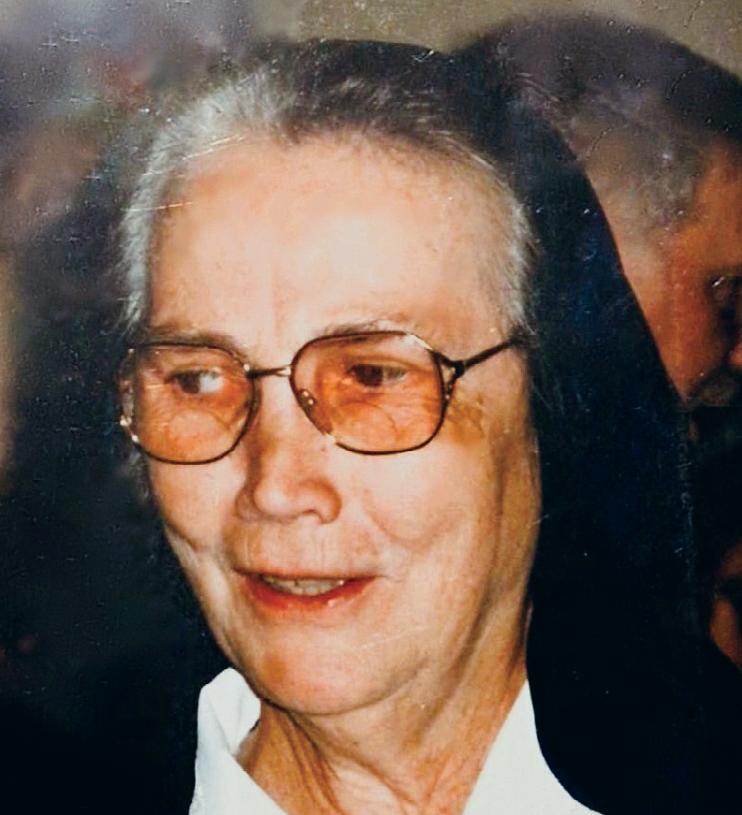
Former pupils are among those paying warm tributes to Sister Dymphna Dineen, who has died aged 93.
Born Mary Theresa Dineen in Ballymore, County Cork, on April 23 1932, Sister Dymphna was a member of the Daughters of Mary and Joseph for 75 years. In 2017 she retired to West Wickham DMJ Convent in Kent, where she passed away on February 20 2026.
Sister Dymphna served for 30 years, from 1961 to 1991, in the Convent of the Ladies of Mary in Queen Street, Scarborough, and was a much-loved and respected teacher in the old St Peter’s School on Auborough Street, where she was known for the support she gave to the families of the children.
She also served as a parish and hospital sister in St Thomas More Parish, Middlesbrough, from 1992 to 2017.
The Daughters of Mary and Joseph are an international community of women called to make visible the merciful love of God in the world.
Their founder’s prayer calls each sister to: “Be there for the whole Church, be there as a pardoned sinner who has found peace and rejoices in the merciful love of God.”
Photographs of Sister Dymphna reflect that charism of compassion, radiating in the calm joy of her smile.
The many tributes on the parish Facebook page from former St Peter’s pupils speak for themselves, including: “An amazing teacher”, “a very sympathetic nun with a heart of gold” and “a gentle, sweet lady with a great spirit.”
St Dymphna was the daughter of a seventhcentury Irish king and she took a vow of chastity at the age of 14. After her mother’s death, her father turned cruel and Dymphna ran away to the continent. The king pursued her but she refused to return and her mentally unstable father drew his sword and cut off her head.
Many pilgrims continue to visit her shrine at Geel, Belgium, seeking healing, especially for mental and spiritual suffering.
It was a fitting name for a teacher who helped so many children and families through her joyful witness over the years, and later
through her work as a hospital sister in Middlesbrough.
We give thanks for her life and service. May she rest in peace and rise in glory.
Parishioners and Friends gathered in St Thomas More’s, Beechwood, to celebrate Sister Dymphna’s life.
During the Mass, which was held for those unable to attend Sister Dymphna’s funeral in Kent on March 10, a tribute was read that detailed her life, work and commitment to the faith and the people of Middlesbrough.
Father Pat Keogh, who celebrated Mass, recalled how he had spoken to Sister Dymphna just days before her passing and that the main topic of conversation was Middlesbrough and the people of St Thomas More’s Parish.
Sister Dymphna and her fellow sisters at the Daughters of Mary and Joseph Convent were an important part of the parish family and the wider community, and after the Mass there
was time to chat and share stories and memories. A small tribute was also placed in the James Cook University Hospital Chapel in thanksgiving for Sister Dymphna and for the lives and hearts she touched.
Reverend Lisa Opala, a member of the hospital’s chaplaincy team, said: “Sister loved visiting and taking Holy Communion to the sick in James Cook. She will be fondly remembered by many in Middlesbrough, especially St Thomas More Parish.
“She had an infectious laugh and was a friend to all. We thank God for her life and 75 years of faithful service.”
Sister Dymphna’s funeral Mass is available to stream on the DMJ youtube channel, dmjcontact.
Mark Gallagher
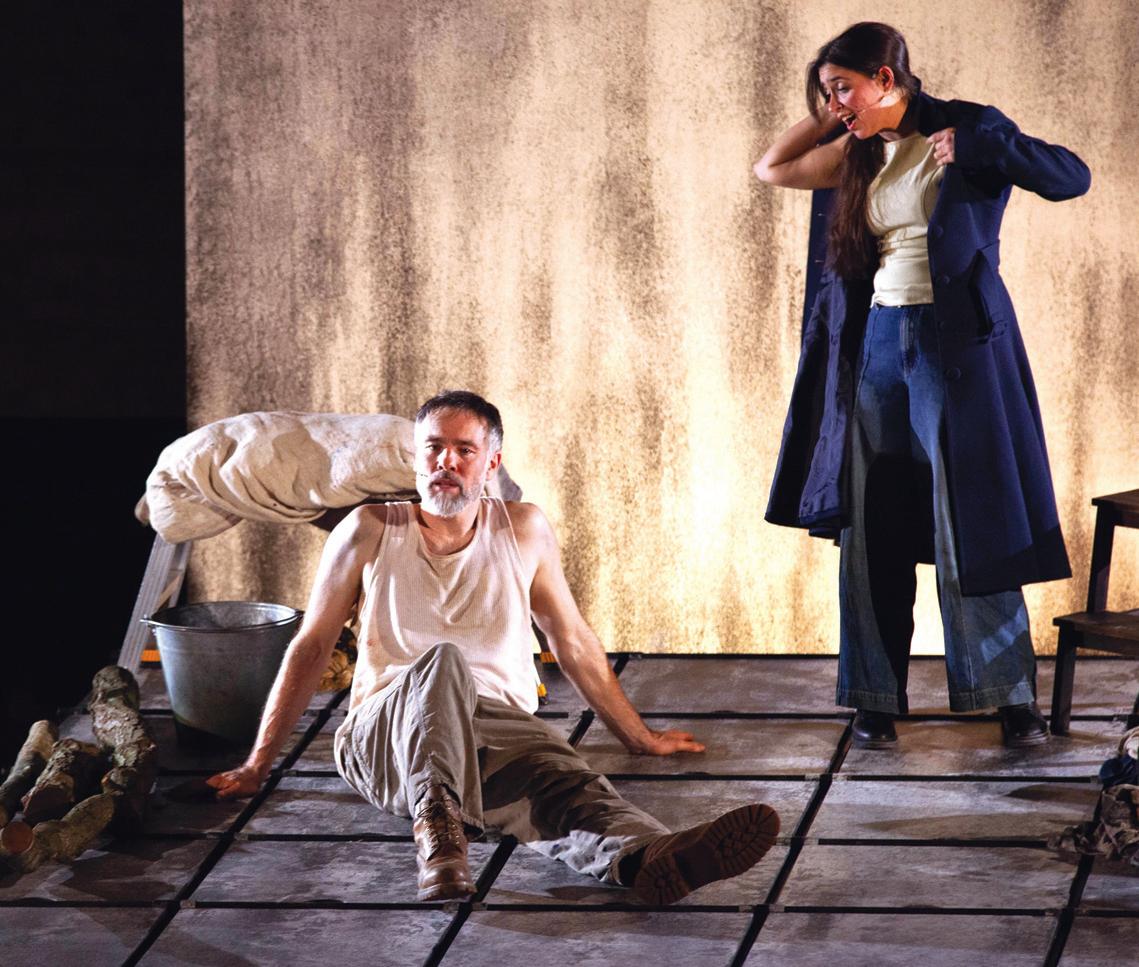
Night Falls, presented by Riding Lights Theatre at St Mary’s Cathedral during Lent, proved to be a deeply moving and beautifully crafted piece of Christian theatre.
The powerful production used the cathedral to remarkable effect, allowing the spiritual themes to resonate deeply with the 220strong audience.
Lazarus and Jairus’ daughter, both raised from the dead by Jesus, led us through the last week in the life of Jesus, exploring their own doubts and fears, hopes and beliefs and asking us to explore ours.
Actors Esther Atkinson and Matthew Rutherford delivered impressive performances, drawing the audience into the unfolding drama.
The imaginative staging made good use of the cathedral’s architecture. We really were transported to the rooftop of Lazarus’ barn! Lighting and sound design helped enormously. The result was theatre that felt both prayerful and dramatic. It was a wonderfully blessed addition to our Lenten journey.
The evening formed part of the cathedral’s ongoing cultural programme.
What members of the Night Falls audience said…
It was a great piece of drama. Well written. Well performed. Thanks for bringing it to St Mary’s
Cathedral! – Joe Harrison
It was amazing! Very thought provoking and very emotional. I laughed, I cried, I sat absolutely mesmerised by the two performers who gave such a brilliant interpretation of the passion play we all know so well. The hour and a half play passed so quickly. I thoroughly enjoyed every minute. Bravo! –Janice Slater
What a fantastic performance! Impressive acting, wonderful to see at St Mary’s RC Cathedral. – Angela Graham
It was a very emotive performance. Great actors. Big thank you to the team for the wellorganised evening. – Colin Grant
It was a very innovative way to portray the events and thought provoking – Frances Gilchrist
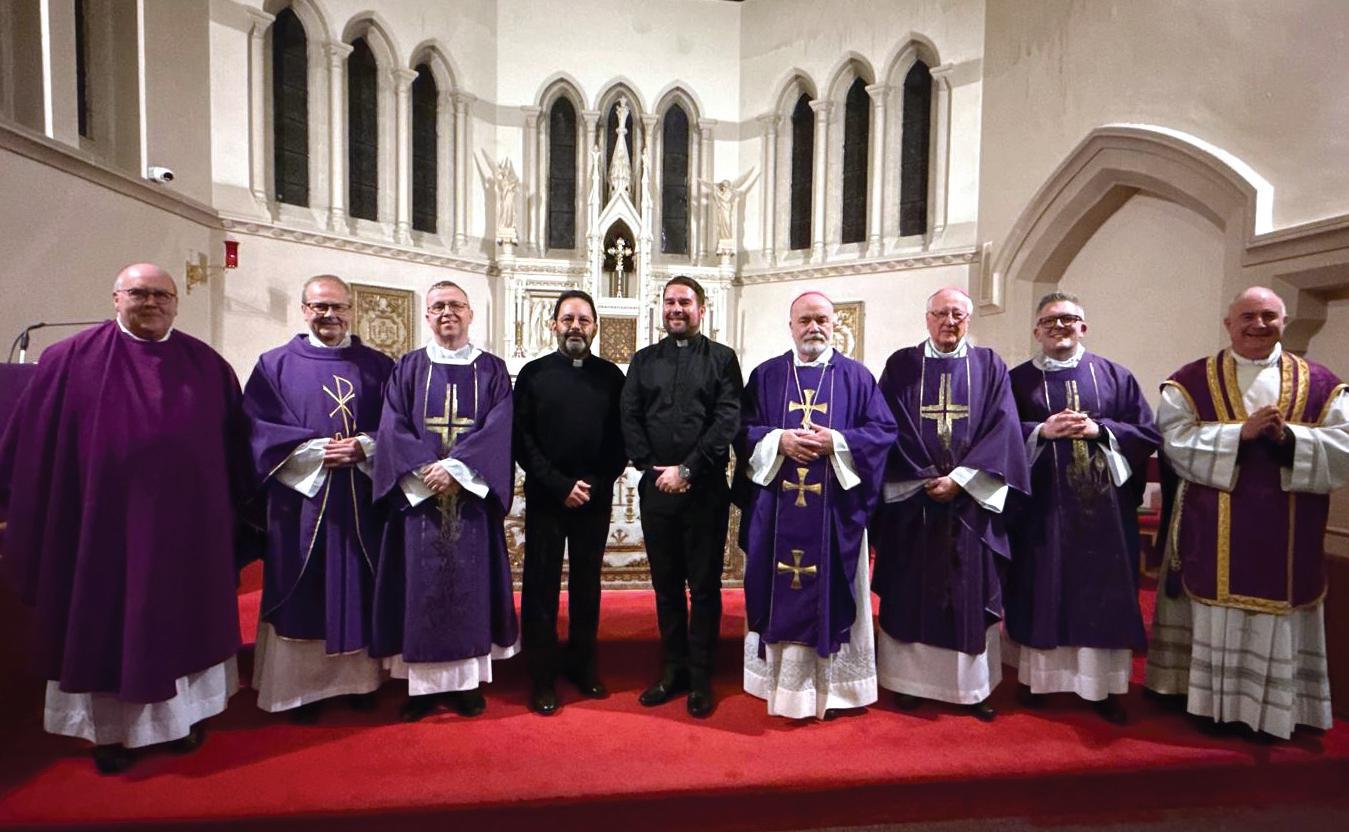
Thank you to everyone who attended in person and virtually the beautiful Mass at St Mary & St Romuald in Yarm with Bishop Marcus.
It was a grace filled celebration for the parishes of St Mary & St Romuald in Yarm and St Thérèse of Lisieux in Ingleby Barwick and for the wider Diocese of Middlesbrough, marked by prayer, joy and a deep sense of communion.
The evening was especially blessed as we witnessed two significant steps in the journeys of our brothers in formation: Mark Good was admitted as a candidate for ordination to the permanent diaconate and Mark J Dias was conferred with the ministry of lector.
These moments are not only milestones for Mark and Mark but also signs of hope and renewal for our parish communities. Their generosity in responding to God’s call is a reminder that vocations grow where faith is lived, encouraged and supported.
Presence, prayers and encouragement made the evening truly special. The warmth and unity felt in the church – and later at the parish buffet – reflected the strength of our shared faith and the vibrant life of our parish family.
Gatherings such as this remind us that the Church flourishes when we come together to pray, celebrate and support one another. Please continue to keep Mark and Mark in your prayers as they deepen their formation and discernment. May God bless them abundantly as they grow in service to his
Church. And may the parishes of St Mary & St
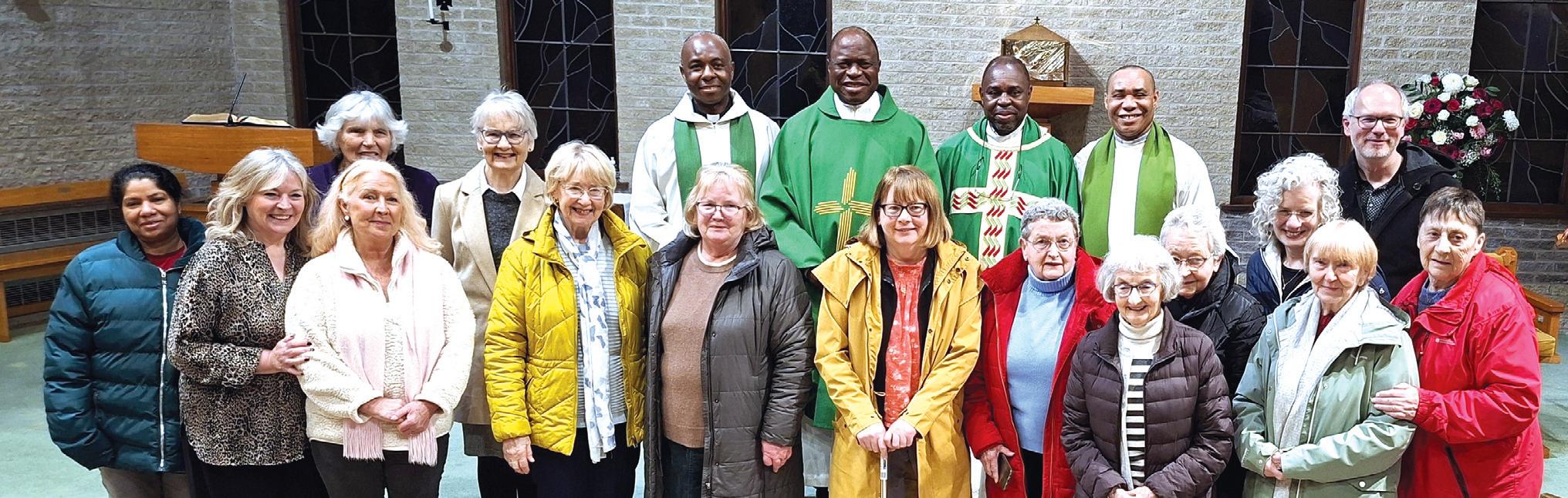
St Margaret Clitherow’s Parish in Haxby welcomed a special pastoral visit from Father Dominique Iyolo CM, assistant general superior from Rome, and Father Damian Nwankwo CM, provincial superior of the Vincentians in Nigeria. They were warmly received by Father Nicholas Ikpeme CM, parish priest, and Father Sixtus Njoku CM, priest in residence.
During their visit, Father Sixtus
accompanied the visiting priests to Full Sutton Prison, where he serves as chaplain.
Father Nicholas then hosted them at the presbytery before the group concelebrated Mass together in the evening.
The Mass was followed by light refreshments, offering a wonderful opportunity for the visiting priests to meet SVP members and parishioners actively involved in charitable works within the community.
Kath Campbell

1 Wednesday
5.30pm Sung Evening Prayer and Benediction at St Mary’s Cathedral. Join us every Wednesday for a time of prayer and quiet reflection before the Blessed Sacrament (term-time only).
3 Friday
Events, articles and photographs for the May edition of the Voice are due by this day.
4 Saturday
11am Catholic women are invited to share an hour of feminine communion including meditation, via Zoom. Text Barbara on 07796 117704 with your mobile number and email address to be added you to the WhatsApp group, or email catholicwomenmdl@ gmail.com for Zoom link.
6pm Mass in Italian in the Father Kelly Room, Our Lady, Acomb, York, followed by refreshments. All welcome.
6 Monday
9.45am-10.25am Beverley Christian Meditation Group meets online. Further information from christianmeditation.beverley@gmail.com. This takes place every Monday.
7pm Catholic charismatic prayer group meets on first Monday each month at St Bede’s Pastoral Centre, Blossom Street, York. For more information, contact Sharon on cdscsmiddlesbrough@gmail.com or 07932 420809.
7 Tuesday
10am Coffee at the Cathedral. Tea, coffee and treats every Tuesday after 9.30am Mass. A warm welcome and friendly atmosphere. Make new friends and enjoy some fellowship. Those who are alone especially welcome.
10am Christian Meditation Group meets online. Further information from Terry Doyle terry-doyle@live.co.uk. This takes place every Tuesday.
7pm Knights of St Columba Council 29 meets at St Mary’s Cathedral, beginning with Mass at 7pm in the cathedral chapel.
9 Thursday
7.45pm Middlesbrough Catenians meet at Middlesbrough Cricket Club, Green Lane, TS5 7SL. Contact Peter Carey on 01642 317772 or Chris Rhodes on 01642 319161.
10 Friday
7pm Annual Hull Catenians dinner dance at the Lazaat Hotel. Email Charles Cseh at hullcirclesecretary@gmail.com for further information.
11 Saturday
7.30pm Irish dance with Brian Mann at the Erimus Club, Cumberland Road, Middlesbrough TS5 6JB. Contact John Brown on 07871 958412.
12 Sunday
3pm Mass for LGBT+ community, family and friends at the Chapel of the Bar Convent. Doors open from 2.30pm.
13 Monday
2pm Music for the Mind, an hour of fun and music for people living with dementia, their friends and carers with Trish McLean. All welcome.
14 Tuesday
12.45pm Catholic Women's Luncheon Club meets every second Tuesday of the month at the Kingston Theatre Hotel, Kingston Square, Hull. Gather at 12.45pm, lunch at 1pm. All ladies in the Hull and East Riding area welcome. Call 01482 446565 or email jayne.wilson24@ymail.com.
15 Wednesday
7pm Hull Circle of the Catenian Association’s AGM at the Lazaat Hotel. Email Charles Cseh at hullcirclesecretary@gmail.com.
7.30pm for 7.45pm Cleveland Newman Circle meets at St Mary’s Cathedral Hall for a talk by Dr Liam Temple, assistant professor in the History of Catholicism at Durham University, “A Mission for the North: The Capuchin Franciscans in Thirsk, 1923-1960”.
19 Sunday
3pm Catholic Fellowship Mass at St Bernadette’s, Nunthorpe, celebrated by Canon John Lumley.
24 Friday
7.30pm The Music of Whitney – The Candlelight Concert, St Mary’s Cathedral. For tickets for this and other St Mary's Cathedral events, visit ticketsource.co.uk/middlesbroughcathedral.
25 Saturday
Noon LGBT+ social gathering at the Bar Convent, York. All welcome.
7.30pm The Band of the Royal Yorkshire Regiment at St Mary’s Cathedral.
If you have any events that you would like to include in the Out and About section, please email heidi.cummins@rcdmidd.org.uk.
A report has been released on women’s participation in the life and leadership of the Church, commissioned after the first session of the XVI Ordinary General Assembly of the Synod of Bishops.
Pope Leo XIV directed the publication of this and other reports in a spirit of transparency and accountability. The study group listened to the experiences of women who hold positions of responsibility in the Church to discern what the Holy Spirit is accomplishing and inspiring.
Copy and photographs for inclusion in the Catholic Voice should be sent to: The Editor, Middlesbrough Diocesan Catholic Voice, Curial Offices, 50a The Avenue, Linthorpe, Middlesbrough, TS5 6QT. Tel (01642) 850505, email catholicvoice@rcdmidd.org.uk Deadline Friday April 3 for May edition.
Where possible please send articles in Word and photographs as jpegs. Please confirm when you send in your photographs that those who appear in them have given their permission for publication.

Key themes include recognising women’s roles as an important sign of our times, showing how the Holy Spirit is speaking to the Church.
The focus is on listening to local Churches and their unique cultures, highlighting the special role women play in Church life.
The report, which is to be understood as a working document, also reflects on the leadership decisions by Pope Francis and Pope Leo XIII, who appointed women to key roles
in the Roman Curia, setting an example for the whole Church. Pope Leo has requested the relevant dicasteries and the General Secretariat of the Synod to draw up proposals based on all the final reports submitted. These will be submitted to the Holy Father, who will evaluate and may approve them. The report is available on the website of the General Secretariat of the Synod, synod.va.

The Diocese of Middlesbrough
Sometimes
On February 24 2022, Russian President Vladimir Putin launched a full-scale invasion of Ukraine, hoping to seize Kyiv “in three days” and enshrine a pro-Russian government in the capital.
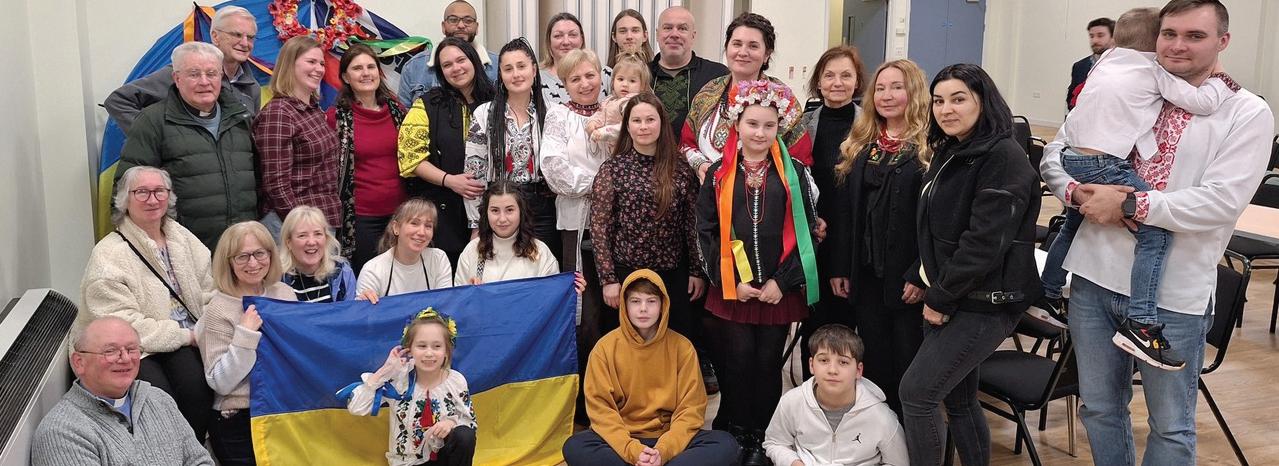
Four years on Ukraine is exhausted but not defeated. To mark the occasion and to stand in solidarity with Ukrainian families who were forced to find safety in the United Kingdom and here in the Diocese of Middlesbrough, a special gathering was held in the International Centre on Abingdon Road.
The event was organised by Investing in People and Culture Middlesbrough and among invited guests were Father Pat Keogh and Reverend Dr Robert Adam Opala, the vicar of St Cuthbert’s, Ormesby, who was among many who came to support and help families when they first arrived in our region. Ukrainian hosts and members of our local councils and charities came to support the event.
Many families gathered, mostly women, grandmothers and young children in national costume, to pray and to share Ukrainian food and companionship and to watch a recent video about the effects of the invasion upon school-age children.
The film outlined Russia’s policy of destroying the identity of children in the temporarily occupied territories of Ukraine. Although
some Ukrainians have returned home, new families have had to seek refuge and are integrating into local schools, the most recent being Corpus Christi Catholic Primary.
During the evening, those gathered prayed in their Ukrainian language and Father Pat Keogh and Rev Robert led prayers for families back in Ukraine, prayers for peace and for those who lost their lives and still suffer the effects of war.
The event was full of gratitude for the
kindness of people in our region, but we must not forget the pain of separation from family and friends back home in war torn Ukraine in a desperately cold winter.
Let us continue to pray for a lasting peace and be ever mindful of our brothers and sisters in their need.
• Pope Leo issued a plea for peace, saying: “Every war is truly a wound inflicted upon the entire human family; it leaves in its wake death, devastation and a trail of pain that marks generations. Let the weapons fall silent, let the bombings cease, let an immediate ceasefire be reached, and let dialogue be strengthened to pave the way toward peace.”
Reverend Lisa Opala, Chaplain, South Tees Hospitals NHS Foundation Trust
LUCA SETTIMO (Professor of Theology at the University of Nottingham) continues the series of reflections on the meaning of some key biblical words.
This month we continue our exploration of biblical words by examining the biblical notion of heart.
The word heart is expressed with the Greek term kardia and with the Hebrew word leb (also pronounced lev). In the Bible, the heart is synonymous with conscience and the soul of existence. Leb is a term found 853 times in the Old Testament.
For the Bible, the heart also encompasses intelligence: “The mind [(leb) - heart] of one who has understanding seeks knowledge.”
(Proverbs 15:14), so much so that the expression “to steal the heart” means “to deceive or cause one to lose their mind”.
The heart is also, of course, a bodily organ that can malfunction and fail, leading to death, as happened to Nabal. For example, we read in 1 Samuel 25:37: “In the morning, when the wine had gone out of Nabal, his wife told him these things, and his heart died within him; he became like a stone.”
But above all, the heart is the centre of
psychological, moral and spiritual life. The man in the Song of Songs addresses his beloved woman in this way: “You have ravished my heart, my sister, my bride, you have ravished my heart with a glance of your eyes, with one jewel of your necklace” (4:9).
The heart, therefore, represents the emotional and passionate dimension of human beings. This dimension includes also fear, as Isaiah affirms when describing the fear experienced by King Ahaz of Judah and his people: “When the house of David heard that Aram had allied itself with Ephraim, the heart of Ahaz and the heart of his people shook as the trees of the forest shake before the wind” (7:2).
Moreover, in the Book of Proverbs we read: “Do not desire her beauty in your heart, and do not let her capture you with her eyelashes” with regard to your neighbour’s wife (6:25); “Hope deferred makes the heart sick, but a desire fulfilled is a tree of life” (13:12) and someone who is drunk ultimately has the heart/mind which “utter[s] perverse things” (23:33).
From an ethical point of view, it’s striking how the human heart can become desensitised to evil, hardened by obstinacy and stubbornly refuses to change “a heart that devises wicked plans” (6:18).
At the same time, the psalmist wishes for the Hebrew king: “May he grant you your heart’s desire, and fulfil all your plans” (Psalm 20:4). The prophet Nathan had already urged David: “Go, do all that you have in mind [heart]; for the Lord is with you” (2 Samuel 7:3). Concerning the religious dimension of the heart, Solomon, on the eve of his enthronement, literally asks God for “an understanding mind [heart] to govern your people, able to discern between good and evil” (1 Kings 3:9).
It is a heart docile to the Lord’s law and to his word, as is required of every true believer: “Hear, O Israel: The Lord is our God, the Lord alone. You shall love the Lord your God with all your heart [leb], and with all your soul, and with all your might” (Deuteronomy 6:4-5; cf. Matthew 22:36-37).
The prophet Ezekiel announces the divine grace of a heart open to goodness, instead of a “heart of stone”, which follows perverse choices: “I will give them one heart, and put a new spirit within them; I will remove the heart of stone from their flesh and give them a heart of flesh” (Ezekiel 11:19). The heart is, therefore, synonymous with conscience; it is the soul of existence, the source of love but also of sin, of rationality and sentiment. Additionally, we can affirm that within the Bible, God has a paternal heart. The prophet Hosea attests to this, putting these words into the mouth of the Lord: “How can I hand you over, O Israel? … My heart recoils within me; my compassion grows warm and tender” (Hosea 11:8).
The goodness of heart found in God the Father is, of course, present in God the Son (Christ) who affirms: “Take my yoke upon you, and learn from me; for I am gentle and humble in heart [kardia], and you will find rest for your souls” (Matthew 11:29).
Finally, I want to comment on the symbolic meaning of the allegorical picture representing the heart in this article. The heart at the centre, split into stone and fiery flesh, represents the dual nature of the human heart: fragile and capable of hardening – petrified and deaf to the voice of God — but also able to melt and, with God’s help, shine with divine light.
Even a hardened heart can be transformed by divine grace when we accept, listen to, and embrace the teachings of the Gospel.
The glowing Hebrew word Leb at the core emphasises that this is more than a physical organ — it is also the seat of intelligence, emotion, conscience and the spiritual life.
Surrounding the heart are representations of different key biblical themes. On the top left there is a representation of wisdom and law: wisdom is represented by Solomon and the “understanding heart” (1 Kings 3:9), while Moses, holding the tablets of the law, symbolises the law written into the heart, guiding moral action and obedience (see Jeremiah 31:31–34 and Romans 2:14–15).
The top right and bottom right of the picture

depict desire and love according to the Song of Songs, which describes the heart as emotional, responsive and capable of deep desire and devotion. In the middle left we can see a representation of a heart experiencing fear, mental distress and confusion (see Isaiah 7:2). On the bottom left there is a depiction of prayer and a heart aligned with God’s will (see Psalm 20:4).
I wish to acknowledge Cardinal Gianfranco Ravasi, former President of the Pontifical Council for Culture, for granting me permission to use his material (originally published in Italian).
A YouTube video entitled “The Biblical Notion of Heart,” which explores this biblical concept in greater detail, is available on my YouTube channel at the following link: youtube.com/@LucaSettimo-7 (this video also explains how to pronounce the Hebrew and Greek terms mentioned above).
The most spectacular Arma Christi medieval scroll in the world will be on view as part of a special display at York’s Bar Convent this Easter.
Bring the whole family to discover how this remarkable scroll would have been used to mark Easter 500 years ago and take inspiration from its striking imagery to create your own masterpiece in the crafts corner. With a fascinating exhibition on Catholic history in York, family-friendly interactive features and a café and chapel, the Bar Convent is the perfect place to celebrate and discover more about Easter.
Entry is included in museum admission. Closed Sundays and the Easter bank holiday. Display ends April 11.
On Thursday April 2 at 2pm, guests will gather by candlelight for an atmospheric, immersive reading of the Arma Christi that will bring the Passion of Christ to life.
Experience a Middle English recital of this traditional Easter prayer as it would have been spoken 500 years ago.
Set within the intimate surroundings of the historic library, a space rarely open to the public, and with an introduction to the Arma Christi prayer scroll in the exhibition, this is a rare opportunity.
Tickets are £15 per person and can be booked via barconvent.co.uk.
Vicar General Monsignor Gerard Robinson thanked John Walton for his many years of service as our diocesan financial secretary at a gathering to mark his retirement. Colleagues presented John with gifts, including a bottle of his favourite tipple, gin. We send our very best wishes for his retirement.
Patricia Thomas joined us last year as head of finance, as one of several changes to the finance team.
Jack Pickering has been taken on as a financial accountant permanently after working in the role for several months. We also welcome George Lawler, who has joined the finance department as an apprentice on a part-time basis.
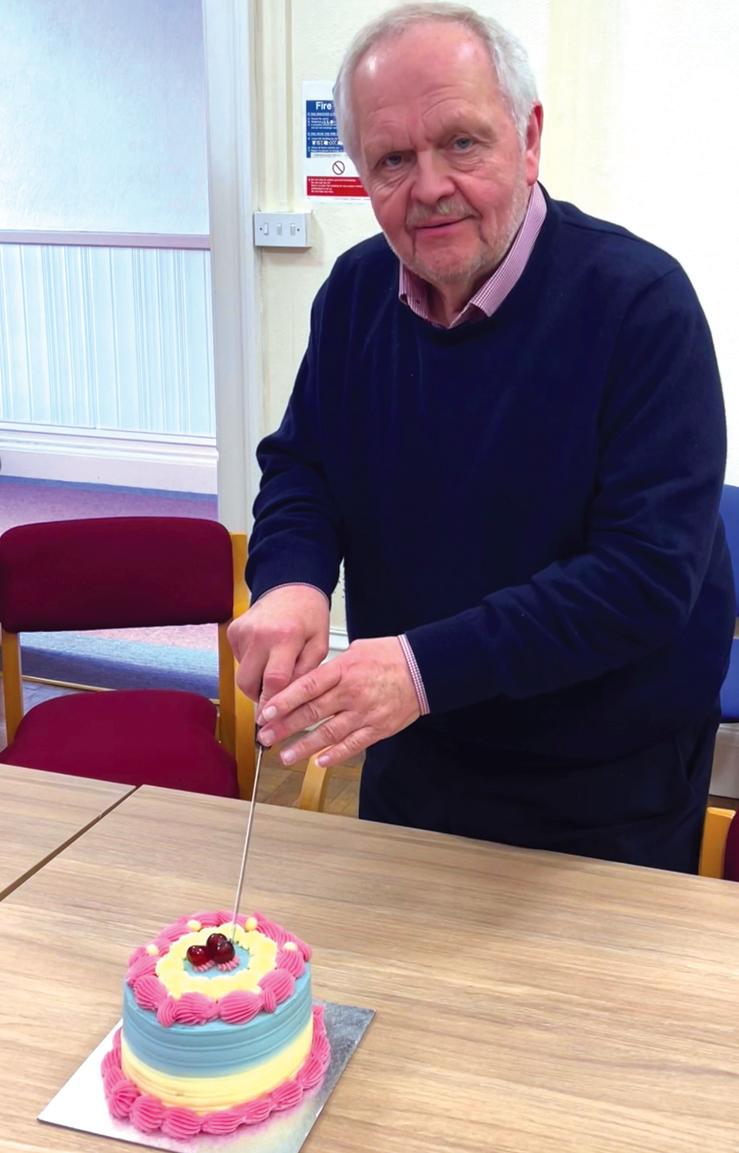
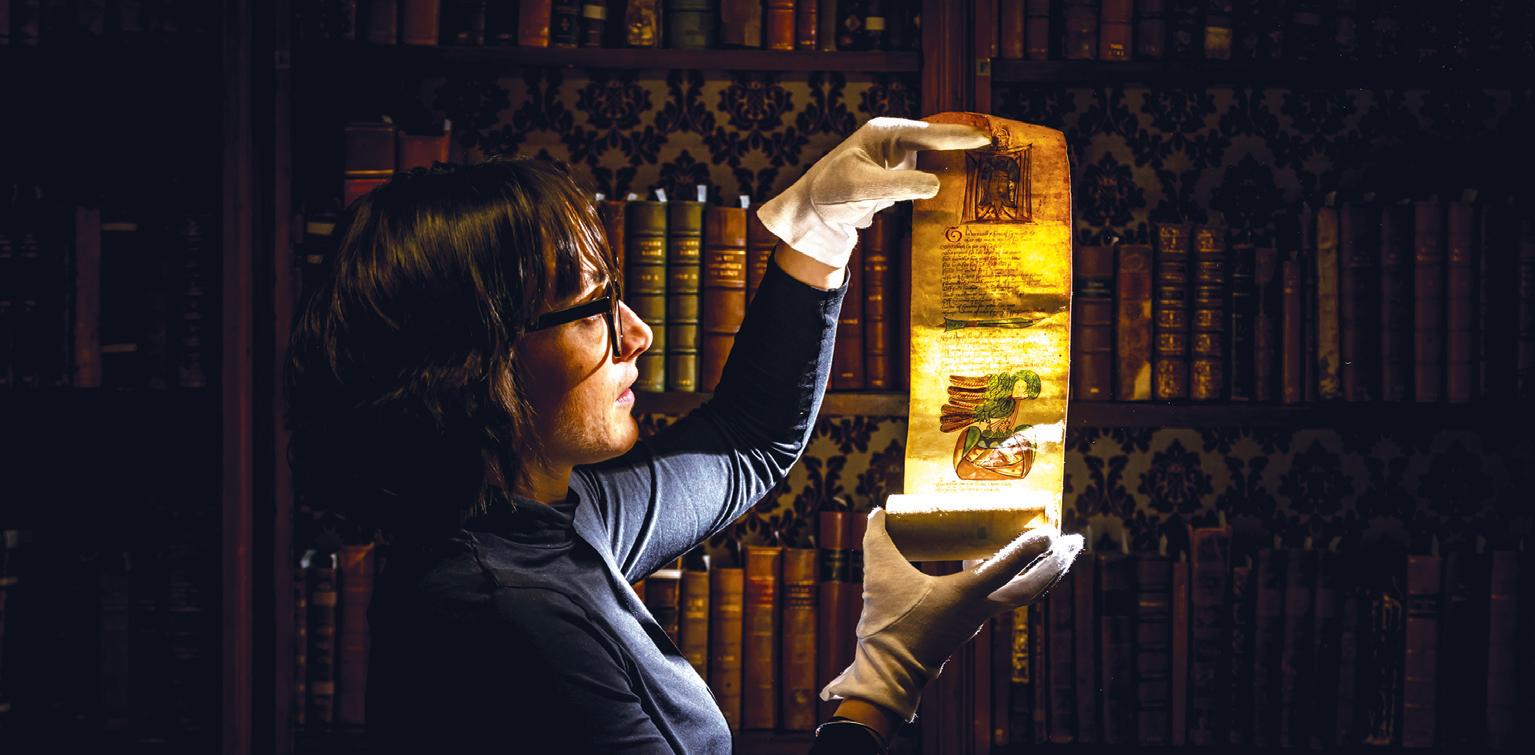
The Diocesan Justice and Peace Commission is delighted to welcome Sir John Battle as this year’s speaker for the Anthony Storey Memorial Lecture.
John was MP for Leeds West for more than 20 years until he retired in 2010. Since then, he has remained committed to the city and has gone on to be an active part of several community projects.
He is a leading anti-poverty campaigner and a trustee of Caritas Social Action Network as well as local Leeds charities. He currently chairs the Leeds Diocesan Justice & Peace Commission.
This is a wonderful opportunity for people to experience John’s energy and enthusiasm and to benefit from his insight and wisdom and his commitment to the common good. The title, Hope in Turbulent Times, comes from recognition of the current turbulent times we are living in and the importance of finding hope, both within our communities and in wider society.
The lecture will be on Zoom and we are repeating the timing of a weekday evening, Wednesday May 13 at 7pm, which seems to work well. To register for the lecture, please email bhungin@yahoo.co.uk.
This month, from April 24 to 29, will see the first Conference on Transitioning Away from Fossil Fuels. Co-hosted by the governments of Colombia and the Netherlands, it will be the first global diplomatic conference dedicated specifically to planning a managed phase-out of fossil fuels.
This landmark meeting takes place in the port city of Santa Marta, Colombia, which plays a significant role in coal exports.
Hosting it in this location sends a powerful message to the international community.
Fossil-fuel-dependent nations want to end their reliance on oil, gas and coal extraction, but doing so fairly requires unprecedented international cooperation so that no one is left behind.
The conference also aligns with the recent statement from the International
Court of Justice, which confirmed that states have a legal obligation to protect the climate, including by addressing fossil fuel production, licensing and subsidies.
At a recent meeting of the diocesan environmental leads, there was an agreement to encourage our dioceses, parishes, community groups, workplaces and individual people to endorse the Fossil Fuel Treaty Proposal. This can be found on the Fossil Fuel Treaty Initiative website, fossilfueltreaty.org.
The momentum is building towards a robust and binding plan to protect people and the planet from the threats posed by fossil fuels – a treaty that would complement the Paris Agreement of 2015 – carrying forward so much of what Pope Francis encapsulated within Laudato Si’.
Barbara Hungin
• See Sir John’s new Voice
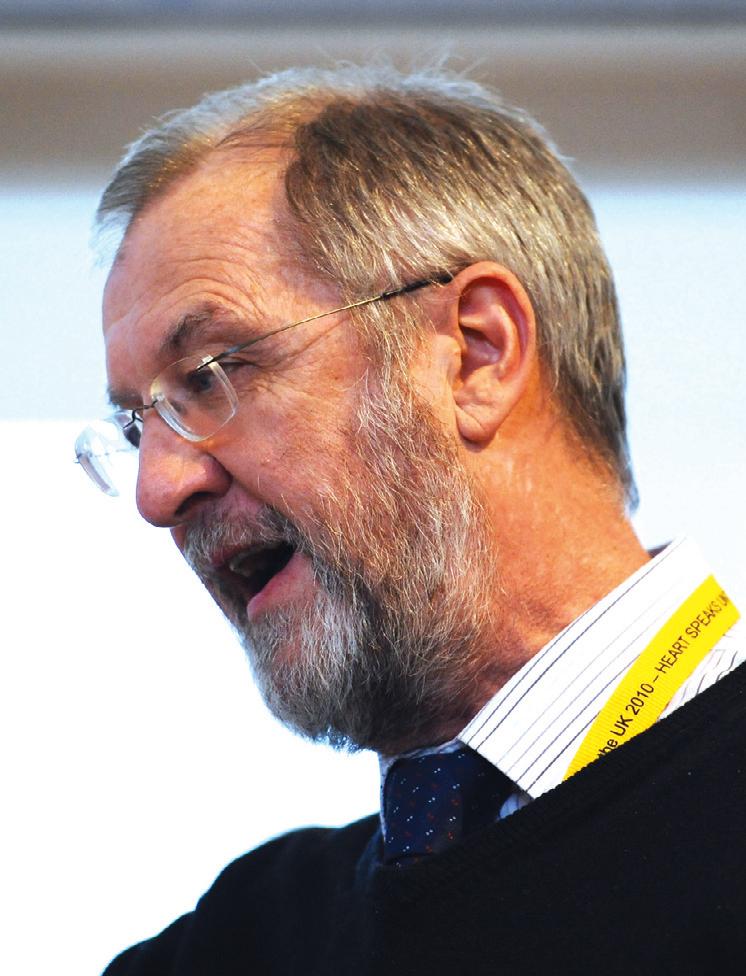

Members of our Lourdes Hospitalité gathered from all over the diocese for our Formation Day at Trinity Catholic College in Middlesbrough.
Monsignor Gerard Robinson opened the day with a prayer and a reflection on his own Lourdes experiences.
Volunteers then refreshed their wheelchairpushing skills and saw presentations on care, fire and safety and giving emergency assistance, including CPR.
They also learned more about the young people who will be joining us this year, from youth coordinators Nicky and Micky Coyle.
Supported pilgrims Karen Kelly and Dave Quigley came along to talk about Lourdes from their point of view, offering advice on how we can help them enjoy their pilgrimage to the full.
The day ended with a prayer led by our chaplain to the sick, Father Pat Keogh.
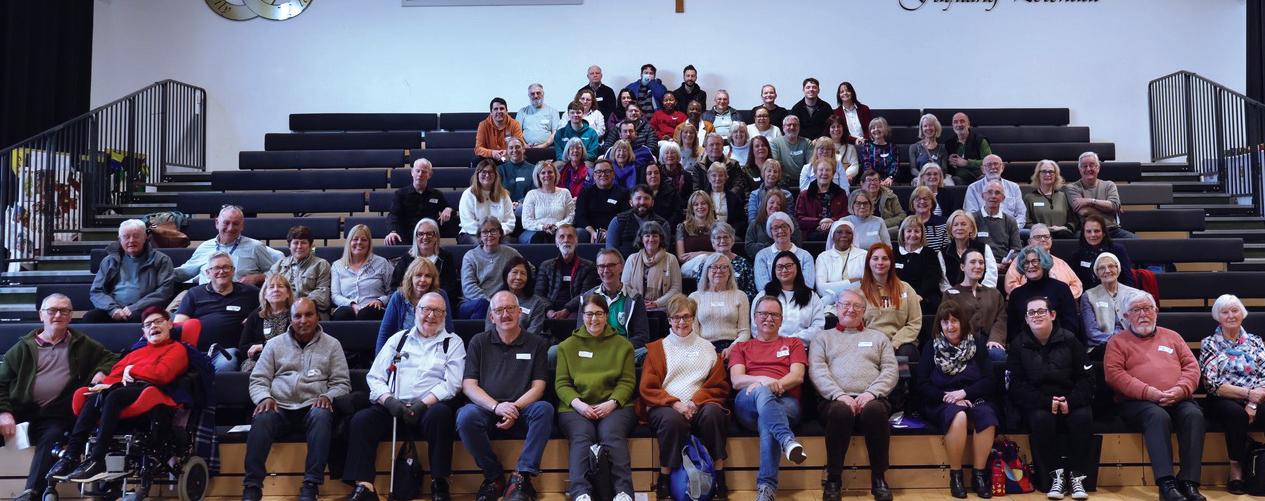
Friends and colleagues gathered to say farewell to Dom Jones as he retired from his voluntary role with the award-winning therapeutic care team at James Cook University Hospital in Middlesbrough.
Dom is also an altar server at St Joseph’s in Middlesbrough, a legendary member of Middlesbrough Catholic Fellowship and a much-loved regular on our Lourdes pilgrimage.
His role involved chatting to patients and making sure they felt relaxed and cared for during their hospital stay.
Debi Bowen, who runs the therapeutic care team and is also a Lourdes nurse, said: “Dom has been a therapeutic care volunteer since the beginning – in fact, Dom is the true definition of therapeutic care.
“He has had a profound impact on the lives of countless patients and staff. He has so willingly given his time, warmth and commitment to making a real difference. “He will be truly missed by his friends in therapeutic care and the wider South Tees Hospitals NHS Foundation Trust family.”
Congratulations to Dom on all his worthwhile work with patients over the years.
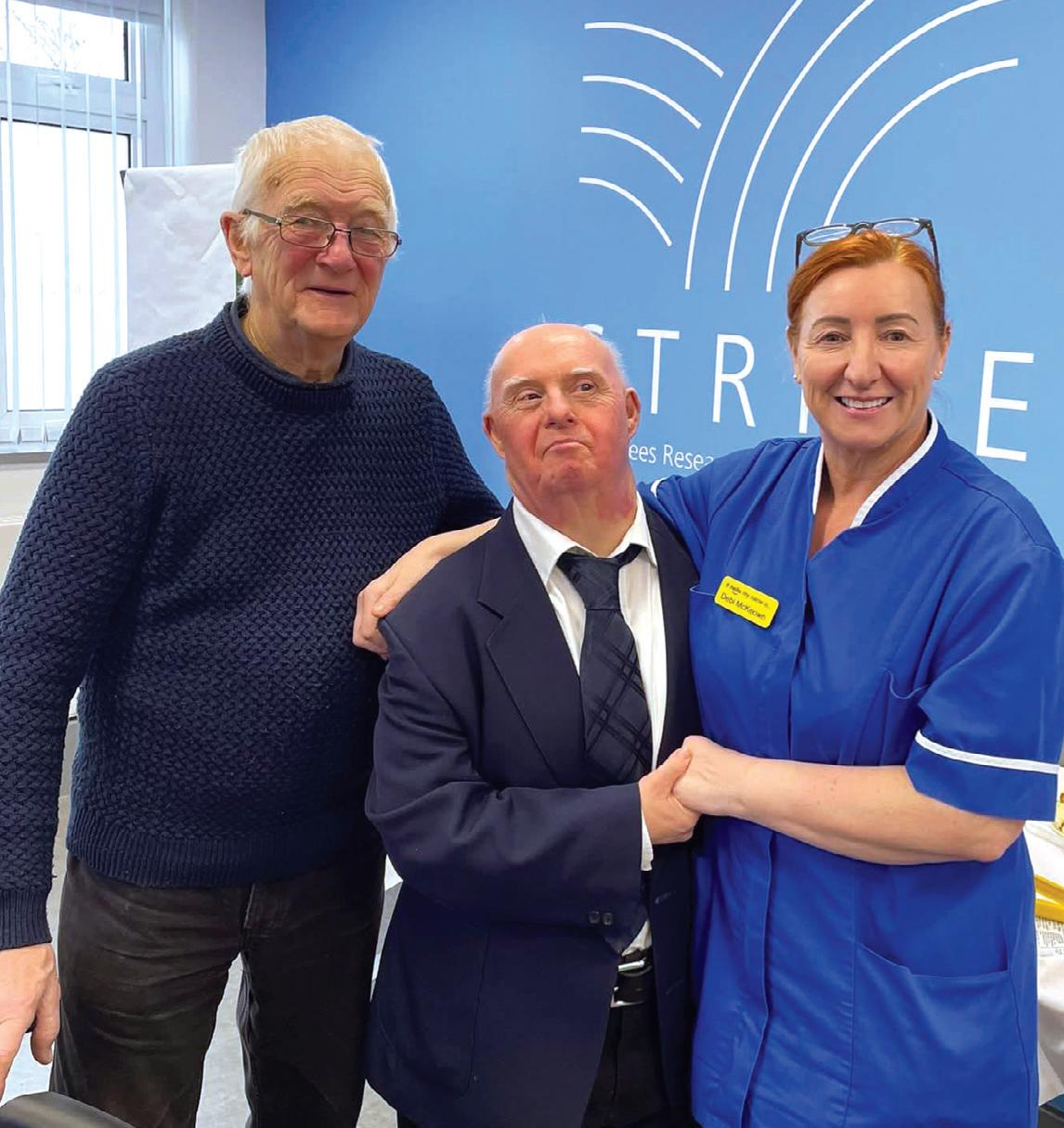
The Abbot of Ampleforth, the Right Reverend Robert Igo OSB, has appointed Father Raphael Jones OSB as parish priest of St Mary’s Parish, Helmsley, & Our Lady and St Chad Parish, Kirbymoorside.
Bishop Marcus thanked Father Christopher Gorst OSB for his many years of faithful service in those parishes and gave his very best wishes for his retirement.
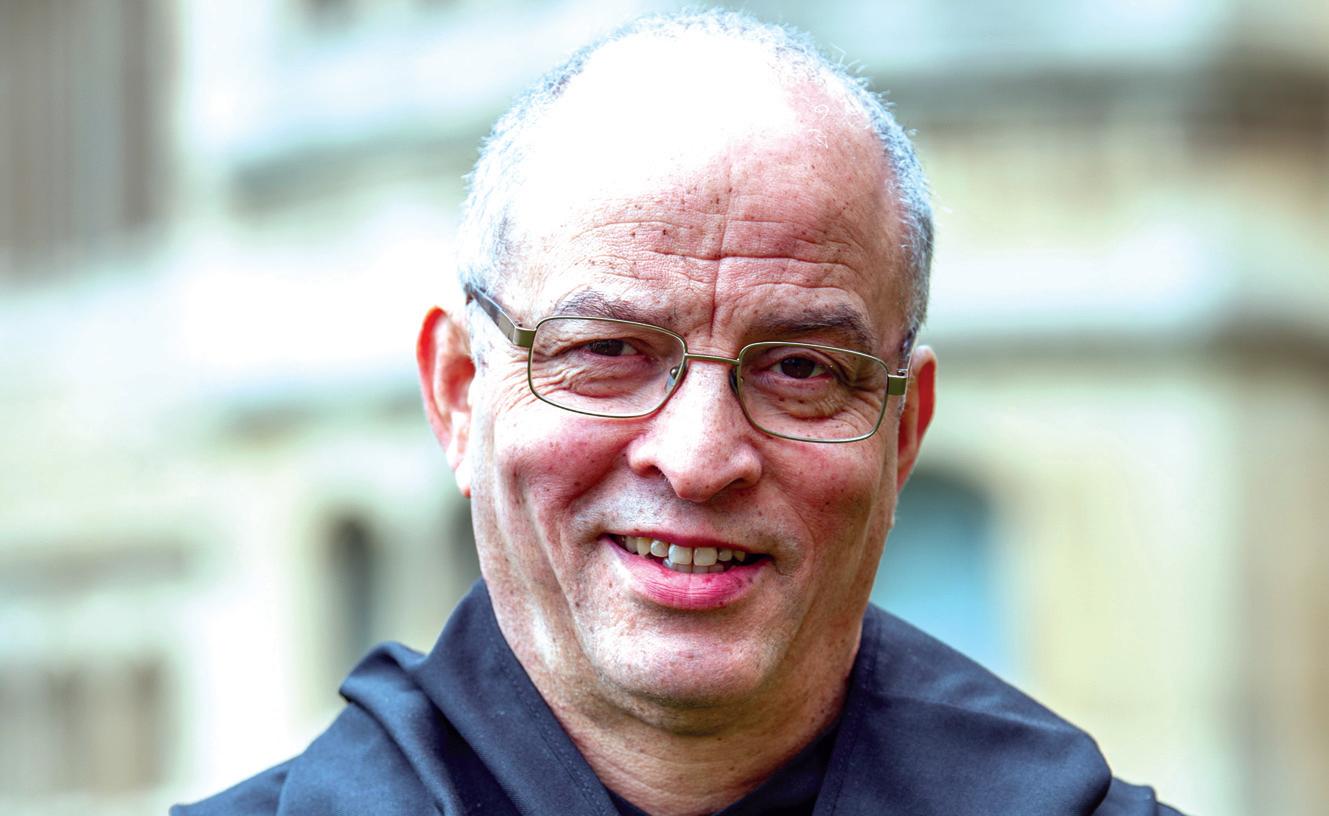
Bishop Marcus was due to ordain Deacon Douglas McKittrick to the sacred priesthood at St Mary’s Cathedral on Saturday March 28.
Please keep Deacon Douglas in your prayers as he embarks on this new stage in his life, continuing to serve in St Leonard & St Mary, Malton, and St Joseph, Pickering, alongside Father Timothy Bywater. We’ll have more details and photographs from the ordination in May’s Voice
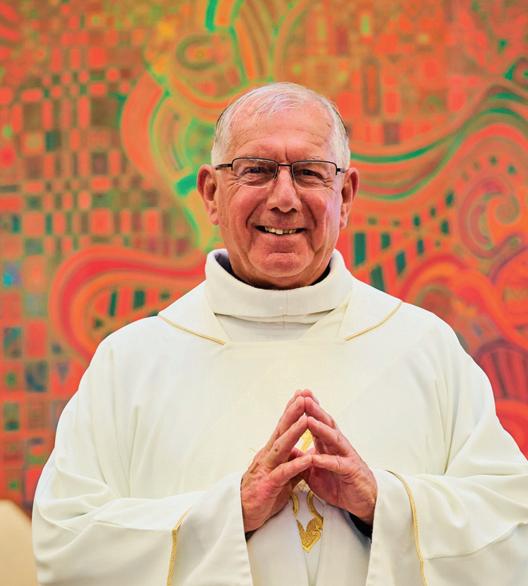
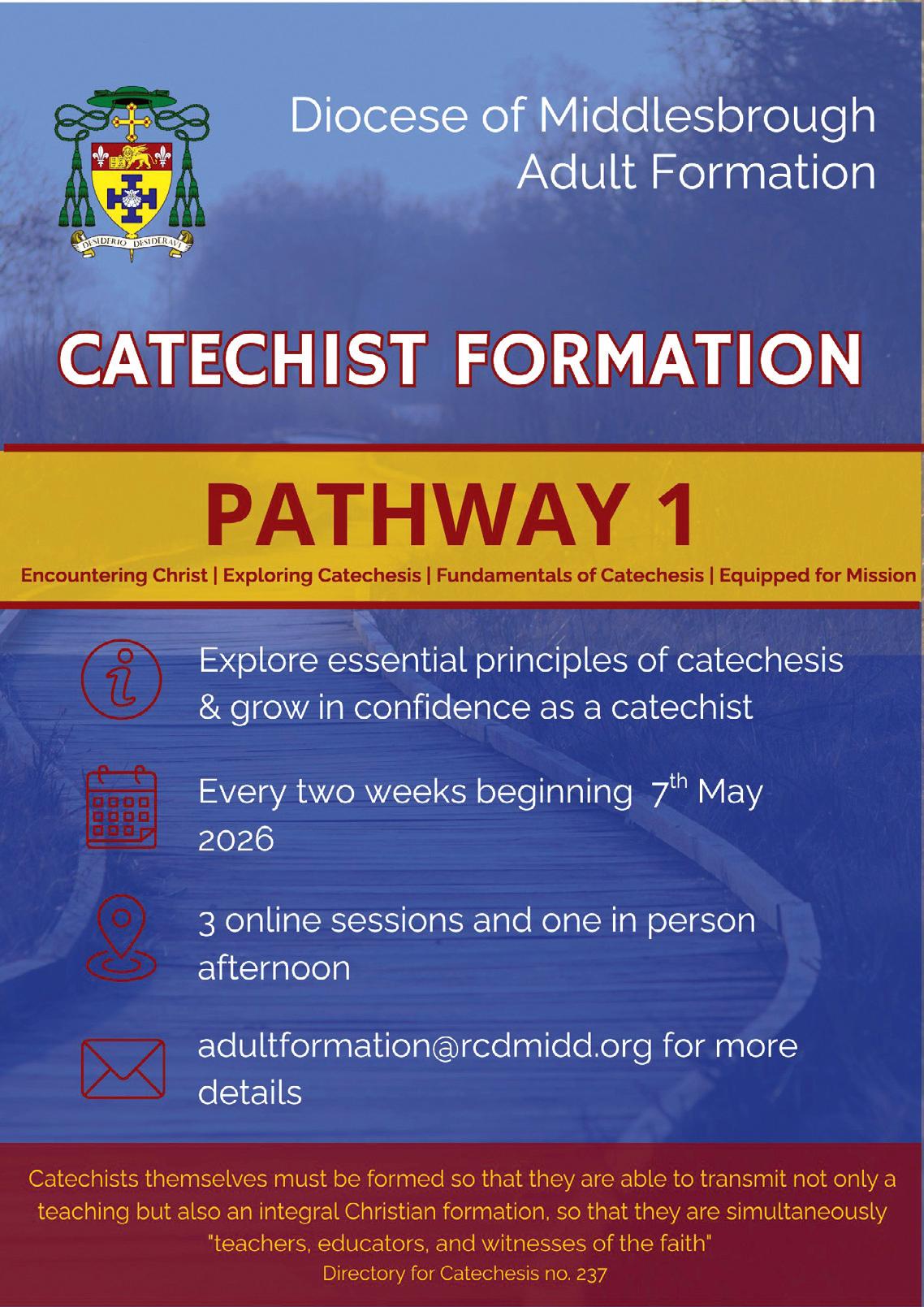
The 99th World Day of Prayer (WDP) was celebrated throughout the world, including services in the dioceses of Middlesbrough and Leeds.
A powerful wave of prayer began in Samoa and travelled as day broke in regions including the United States and Canada before finally reaching our shores.
A global ecumenical movement, the event takes place on the first Friday of March, with 120 countries taking part and prayers written by a different country each year.
This year, a beautiful service written by the women of Nigeria, with the theme: “I will give you rest, come” (Matthew 11: 28-30)”.
Members of Middlesbrough Community Church were among those who gathered at St Mary’s Cathedral.
“A heartfelt thank you to all who supported and took part in this year’s service,” said
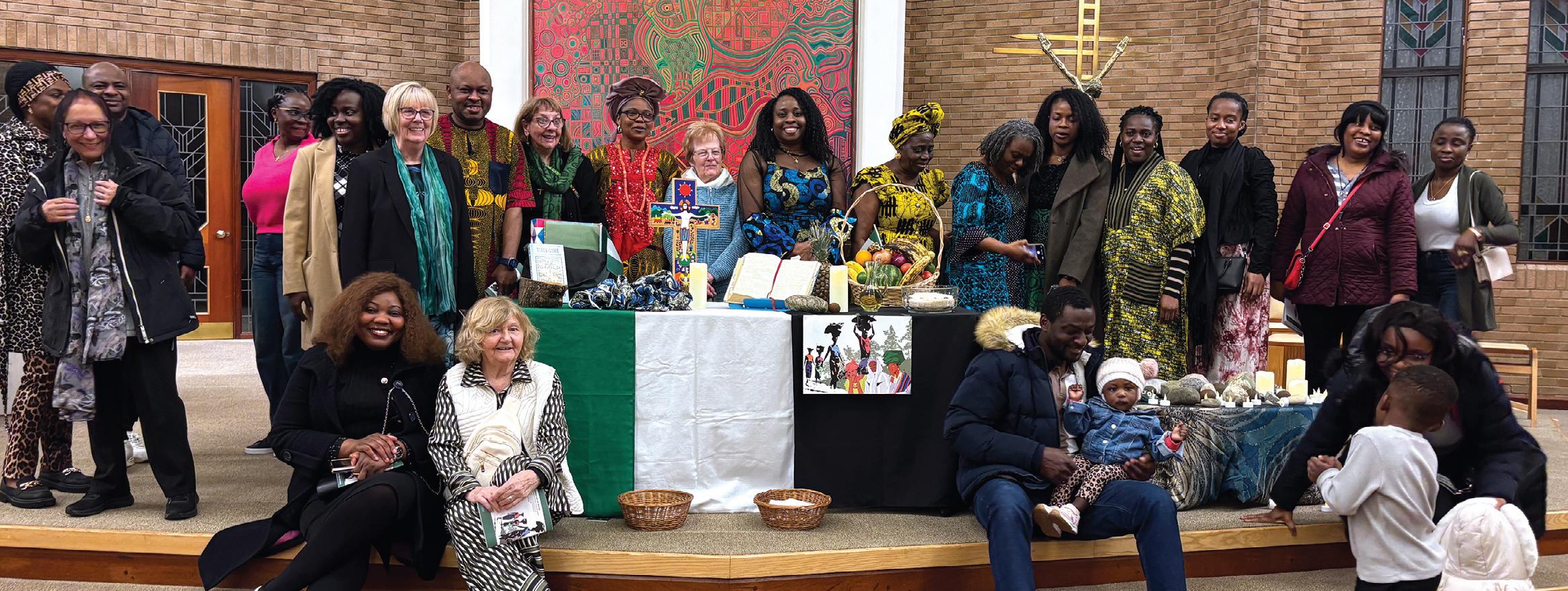
organiser Margaret Clark.
“It was wonderful to see Christian faiths unite in prayer, supported by our Nigerian community.
“We remember Nigeria throughout this year along with all who need our prayers in our damaged world.”
About 80 people attended a separate service at Yarm School’s Princess Alexandra Auditorium, including members of the
Catholic, Church of England and Methodist congregations.
Girls from the school read the personal stories, and Joan, a Nigerian currently living in the area, provided narration.
Another service took place at St Wilfrid’s Catholic Church in Ripon, in the Diocese of Leeds.
The WDP logo design comprises arrows converging from the four points of the
compass, four figures kneeling in prayer, the Celtic cross and a circle representing the world and our unity through all our diversity.
Next year’s centenary service, on Friday March 5 2027, will be written by the WDP International Committee in New York, with the theme “United in Prayer for Justice and Peace”. For more information, visit wwdp.org.uk or text or call 07710 280652.