


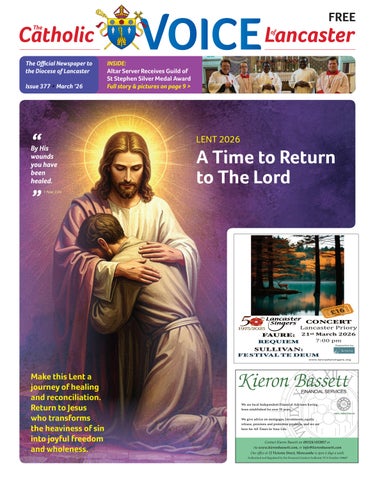
The Catholic Voice of Lancaster is published on the last Sunday of the month previous to publication date.
The Catholic Voice of Lancaster is published by its owners. The Trustees of the Roman Catholic Diocese of Lancaster, a registered charity, (No. 234331), and is wholly independent of and separate from any previous newspaper published by or on behalf of the diocese.
EDITOR: Pearl Mina 07901 696 490 CatholicVoiceNews@lrcd.org.uk
EDITORIAL TEAM
Frances Wygladala
Distribution & Editorial Contributor Andrew Wygladala
Distribution & Assistant Editor
ADVERTISING: Charlotte Rosbrooke / CathCom Ltd. 01440 730399 charlotter@cathcom.org www.cathcom.org
PUBLISHED BY:
CathCom Ltd. N2 Blois Meadow Business Centre, Blois Road, Steeple Bumpstead, Haverhill, Su昀olk CB9 7BN 020 7112 6710 www.cathcom.org
Articles & Letters to: CatholicVoiceNews@lrcd.org.uk
POSTAL ADDRESS:
FAO Father Stephen Pearson
The Catholic Voice of Lancaster C/o Holy Family Catholic Church 1 Lytham Road Freckleton Preston PR4 1AD
Please send articles for publication on CD or by email, supplying any photos separate to the text (i.e. in jpeg format). Otherwise please type double spacing or write very clearly. Last date for copy is the LAST DAY of the month prior to publication. Photographs will be returned if you remember to put your name and address on the back of each and enclose suitable stamped and self-addressed packaging.

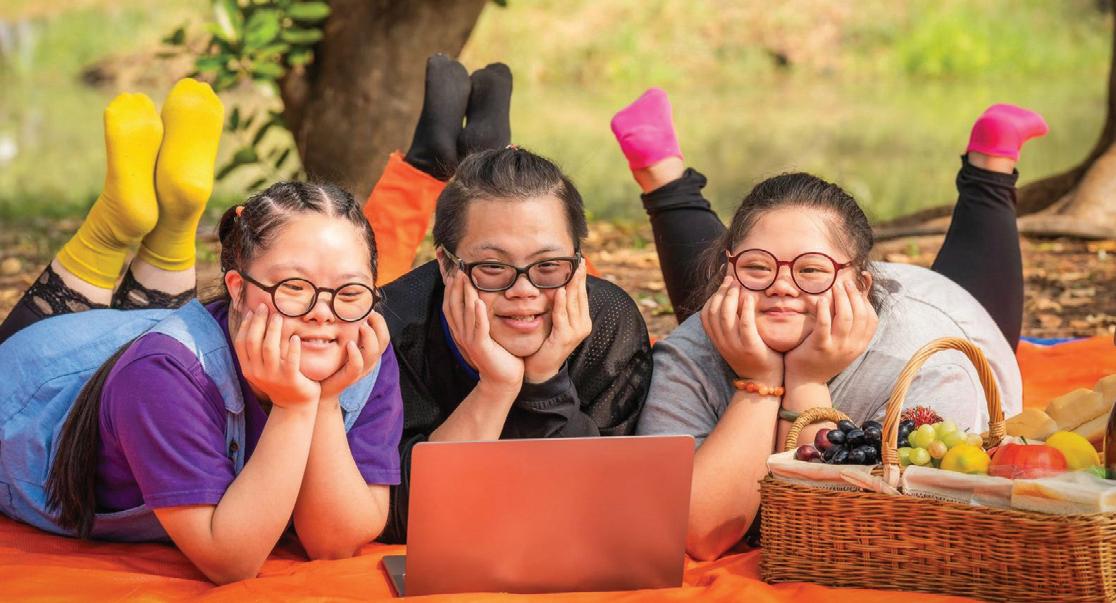
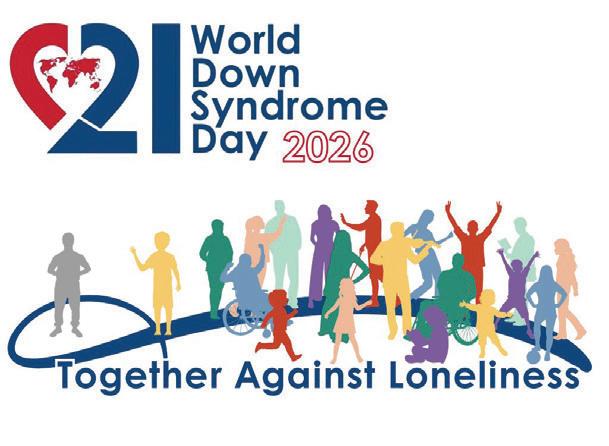
F or World Down Syndrome Day 2026, we are calling on everyone around the world to stand Together Against Loneliness.
We mark this day by wearing odd socks! We are asking supporters to talk about Down Syndrome on and around World Down Syndrome Day, 21st March 2026.
Down Syndrome (or Trisomy 21) is a condition in which a person has an extra chromosome. Most people have 23 pairs of chromosomes – 46 in total. People with Down syndrome have an extra chromosome added onto the 21st pair – 47 in total. Chromosomes act like an instruction manual that de昀nes how our bodies look and how they work. Around 1 in every 800 babies will be born with Down syndrome.
Down syndrome occurs naturally –there is no known cause. People who have Down syndrome usually have an intellectual disability. This varies from person to person. Some health conditions are more common in people with Down syndrome.
Just like you, people with Down Syndrome have an inherent right to be accepted and included as valued and equal members of the community.
Faith and Light is a Christian association that includes people with learning disabilities or learning diculties, their families and friends, and is made up of local Faith and Light communities. They meet regularly, usually every month, for Friendship, Worship, Celebration.
Most groups meet in churches. Faith and Light is Catholic founded but is ecumenical. Our communities are based in di昀erent churches - Anglican, Catholic, Methodist, Church of Scotland and others. Our diocese groups meet at St. Patrick’s Catholic Church in Morecambe, usually on the 昀rst Sunday of each month.
Here in Barrow our community is led by our Deacon Steve and his wife Karen, who is also Provincial Co-ordinator for the North. They are joined each month by Sean, Stuart and Robert for an afternoon in Morecambe where they meet up with other groups from around the Diocese.
Very sadly, with the exception of L’arche in Preston, our learning disabled sons and daughters have no Catholic and Christian place to live in our diocese once they can no longer live at home. They have to be left in the care of Social Services, and their faith community is usually lost to them.
Venerable Professor Jerome Lejeune, ‘Apostle of the vulnerable’
Dr. Jerome Lejeune, the Catholic scientist who, in 1958, discovered the Chromosome which causes Down Syndrome, ‘Trisomy 21’ bravely defended the dignity and value of all human life, especially “his” Down Syndrome children. In 1974 he was awarded the prestigious William Allan Memorial Award. During his acceptance speech he spoke out passionately against its use for selective abortion. He stated that even those “disinherited” members of our race deserve our compassion and care:
“But should we capitulate in the face of our own ignorance and propose to eliminate those we cannot help?... For millennia, medicine has striven to 昀ght for life and health and against disease and death… Our duty has always been not to in昀ict the sentence but to try to commute the pain.”
He returned home and told his wife Berthe; “Today, I lost my Nobel Prize in Medicine” His prediction turned out to be true. To his regret, his discovery was used to end the life of many Down Syndrome children. Today, almost 100% of babies diagnosed with Down Syndrome have their lives ended before birth. Dr. Lejeune’s work opened up investigations into the genetic sources of disease.
A deeply committed Catholic, in 1967 he had a mystical experience in the Holy Land. He felt the presence of God with intensity and, at the same time, he realized that success and the opinion of others mattered little in comparison with the pursuit of truth. He was a great friend of Pope St. John Paul II who called him an “apostle of the vulnerable” and appointed him to the Ponti昀cal Academy for Life in 1994, a new bioethics advisory commission, and he became its 昀rst president. The two men bonded over their commitment to the defence of human life, a cause to which Lejeune dedicated himself after his discovery.
Jerome Lejeune is now Venerable. His cause for Canonisation is underway. Our Down Syndrome brothers and sisters have a new advocate in heaven.
Antony Millar, St Mary of Furness Church Barrow-in-Furness
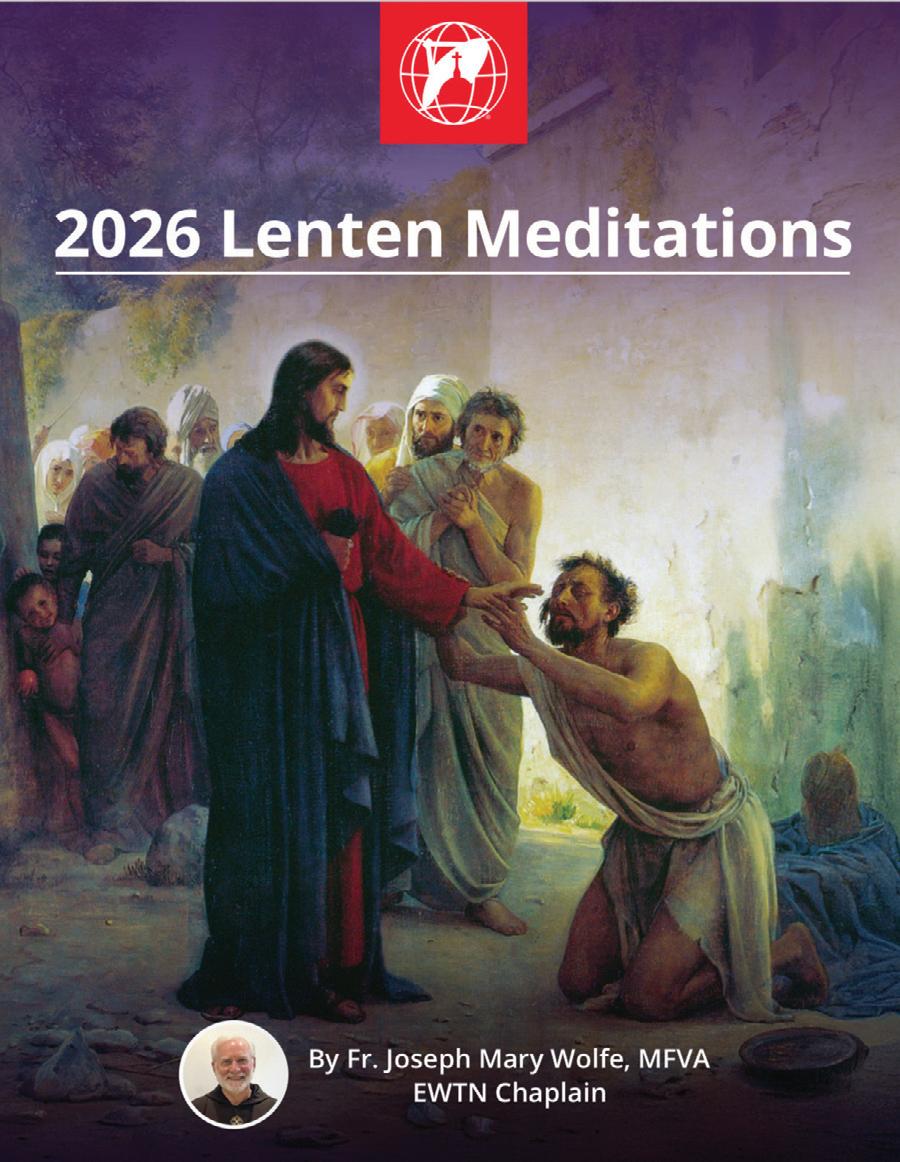
Prepare your soul for the glorious Resurrection with free weekly prayers and re昀ections from EWTN Chaplain Fr. Joseph Mary Wolfe, MFVA— exploring the healing power of Christ’s love.
You will discover the di昀erent types of healing we 昀nd in Jesus. You’ll also receive weekly emails from Fr. Joseph continuing each Sunday of Lent and Easter Sunday.
Draw closer to Our Lord as you pause, meditate, and return to Him with your whole heart.
Go and wash ... and your 昀esh will heal. (2 Kings 5:10)
Lenten Action
Forgive one who has betrayed you and ask forgiveness from one you have betrayed.
Prayer
Jesus, may we know that when a person is forgiven and begins to walk in the path of righteousness he will go on to become the recipient of many spiritual blessings. May this be the inheritance of every true believer. Fr Joseph Mary Wolfe, MFVA
For daily Lenten Re昀ection videos and to download your Free Lenten Meditation e-booklet visit: www.ewtn.com/lent
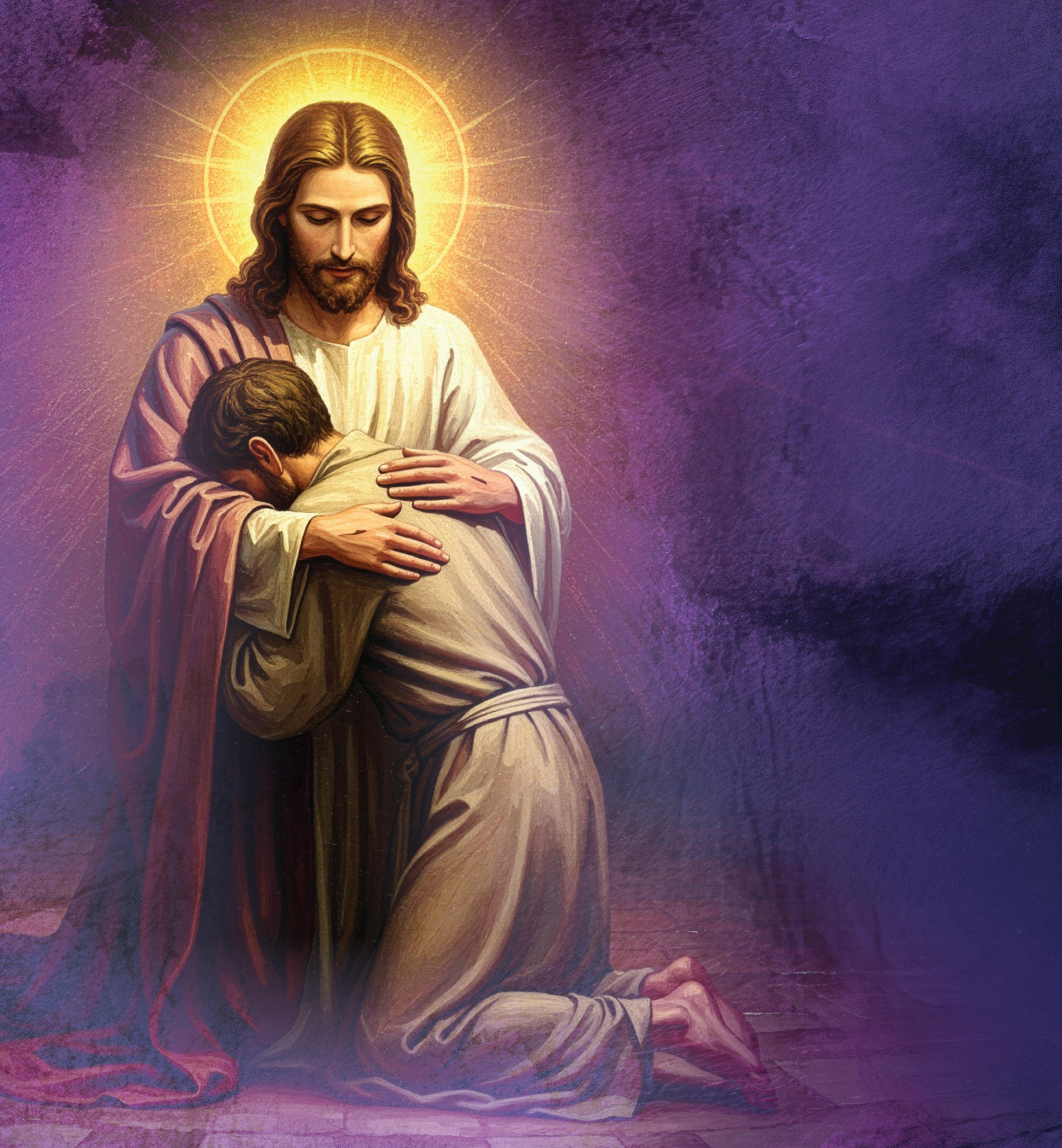
As March unfolds, the Church journeys through the season of Lent — a time of renewal, hope, and preparation for the great celebration of Easter.
Lent is often associated with sacri昀ce, yet its deeper purpose is positive and life-giving: to help us return to the Lord and make space for his grace. Prayer, fasting, and almsgiving shape our hearts during these weeks, but Lent is also a privileged time to encounter God’s mercy in the Sacrament of Reconciliation. Many parishes o昀er special Reconciliation Services during Lent, providing a prayerful and welcoming opportunity to pause, re昀ect, and receive forgiveness. Confession is not about fear or judgement, but about healing, restoration, and a fresh beginning. In celebrating this sacrament, we allow Christ to lift burdens, restore peace, and renew our relationship with God and one another. Alongside this, the Stations of the Cross, prayed in many churches throughout Lent, help us walk with Jesus on the way to Calvary, uniting our own struggles with his self-giving love.
Holy Week begins with:
Palm Sunday on 29 March, followed by Holy Monday (30 March)
Holy Thursday (2 April)
Good Friday (3 April), and
Holy Saturday (4 April), before the joy of Easter Sunday on 5 April.
This Lent, all are encouraged to visit their local church, take part in Reconciliation, and allow God’s mercy to prepare their hearts for the joy of Easter.
Heating - Electrical - Drainage
Andrew Wygladala



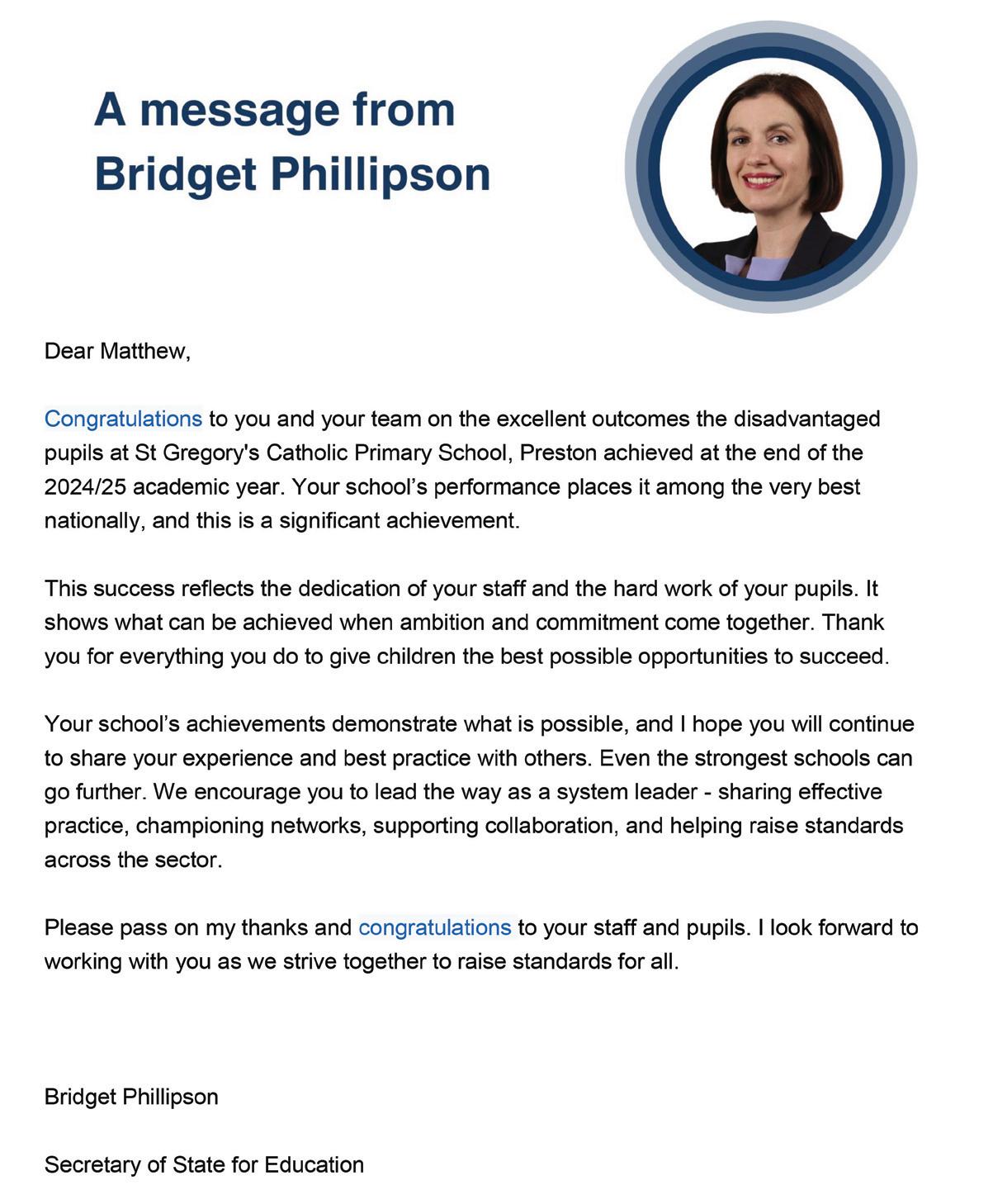
The Secretary of State for Education writes:
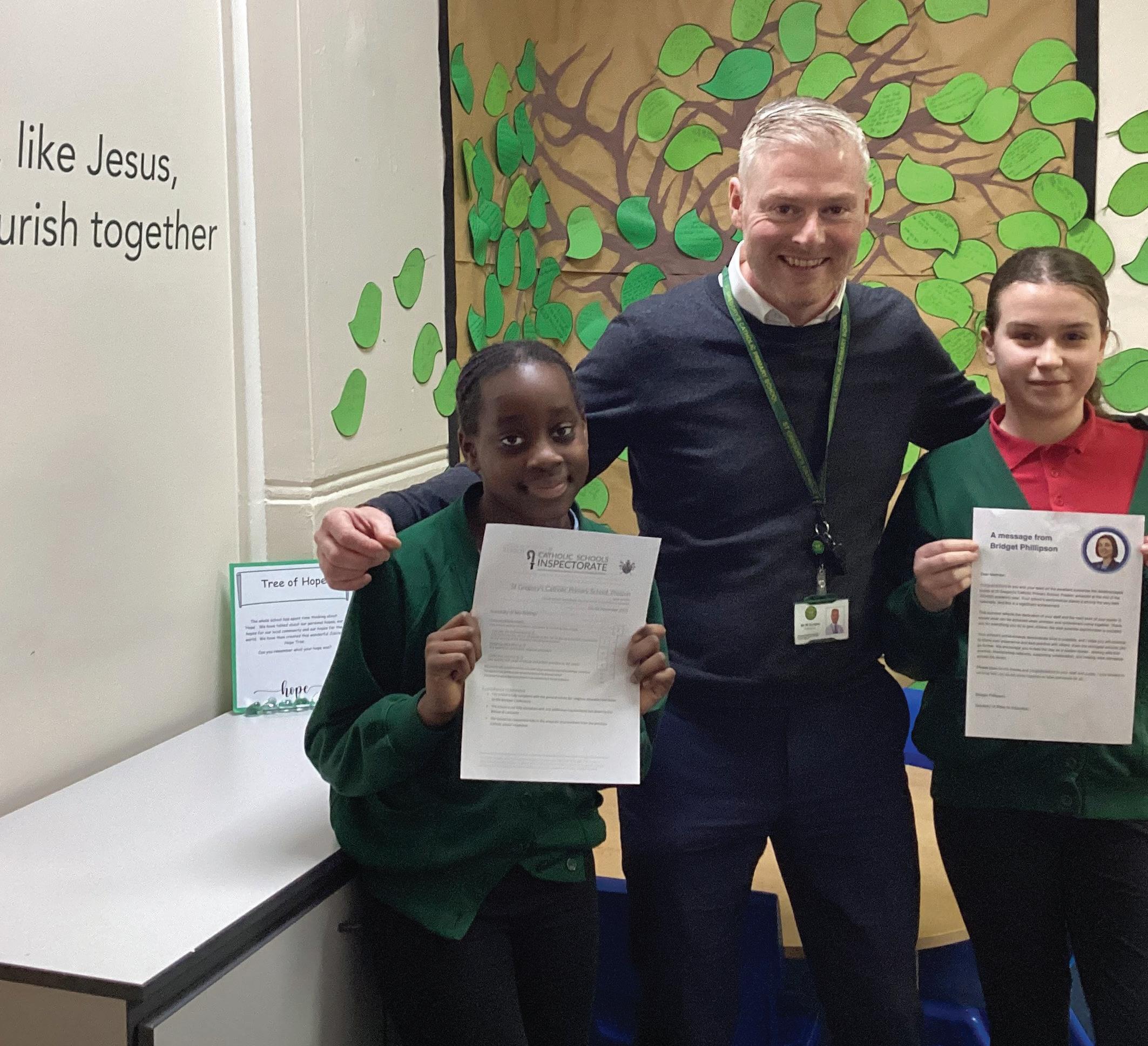
Mand National Recognition to St Gregory’s Catholic High School Preston as they celebrate success!
atthew Quigley, Headteacher at St Gregory’s Catholic Primary School, Preston has received prestigious national recognition and a letter of thanks and congratulations from Bridget Phillipson, the UK Secretary of State, for the outstanding achievements at the school relating to the school’s successful track record for disadvantaged children.
St Gregory’s was inspected recently by the Diocese and received a very favourable report. Amongst other nice things, inspectors commented:
St Gregory’s is a fully inclusive school where pupils are happy, feel safe and are supported pastorally alongside their families.
Pupils are proud to belong to their school. Their participation in school life is a strength of the school and behaviour is exemplary.
There are e昀ective and productive relationships between home, school and parish where the children and families bene昀t.
The strong vision of leaders and governors has guided the school through changing times and circumstances. Parents and carers are very supportive.
They appreciate and work with school sta昀 to allow their children to 昀ourish.
All pupils show respect for each other and for the adults in school. More Good News for St Gregory’s!
To read the full report, visit: https://www.stgregorysps.co.uk/ diocesan-section-48-inspectionofsted-and-performa/
“See… I have come to do your will, O God”
By
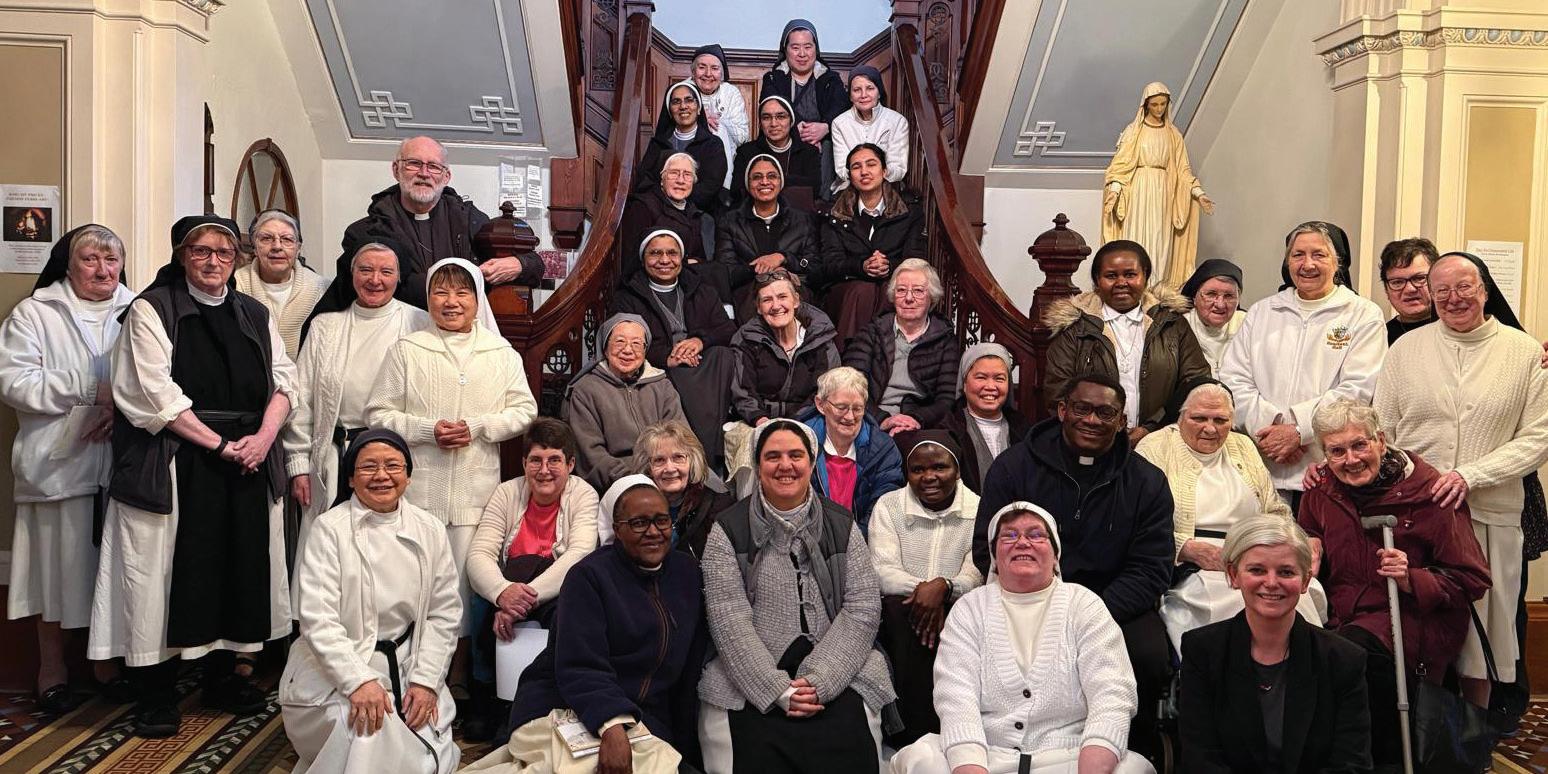
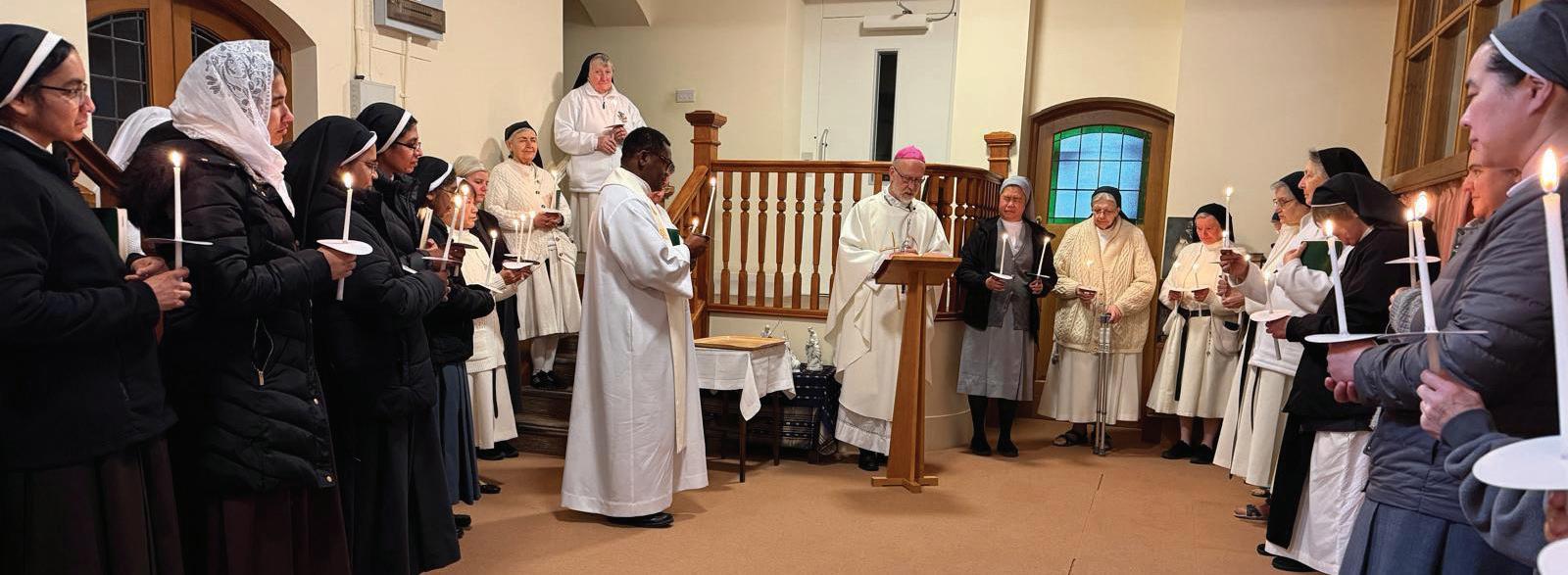
F ebruary 2nd this year marked the 30th World Day for Consecrated Life. We celebrated this in our diocese by a gathering of at least 40 of us, religious from di昀erent congregations and women in Consecrated Life, together with Bishop Paul, in the Convent of Our Lady of Lourdes, Boarbank.
The Augustinian community there gave us such a warm welcome on a cold day and o昀ered us wonderful hospitality. The day was organised by the diocesan team for Consecrated Life.
They invited Donna Worthington, an experienced retreat giver and spiritual director, to explore with us THE BOOK OF RUTH. In both her morning talk and in the afternoon re昀ection she truly “opened the scriptures” for us and gave us treasures and insights
to take away to ponder more deeply. At noon we celebrated the Liturgy of Candlemas and the midday Prayer of the Church.
There was time over the bu昀et lunch for people to reconnect with each other and at the end of the afternoon session we shared news and developments and hopes for the future. Sadly Father Richard Simons, OSB, who had been our Vicar for Religious, has left the Workington parish, so is no longer able to be with us. Bishop Paul warmly thanked us all for our contribution to the life of our diocese and promised us a new appointment to succeed Father Richard.
Our special day then ended with the Evening Prayer of the Church.
Arranging and conducting funerals in the Catholic Diocese of Lancaster since 1986
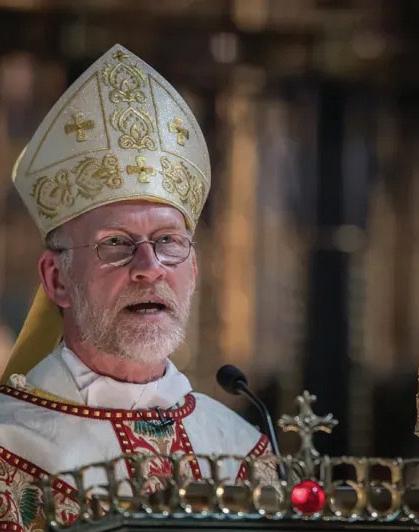
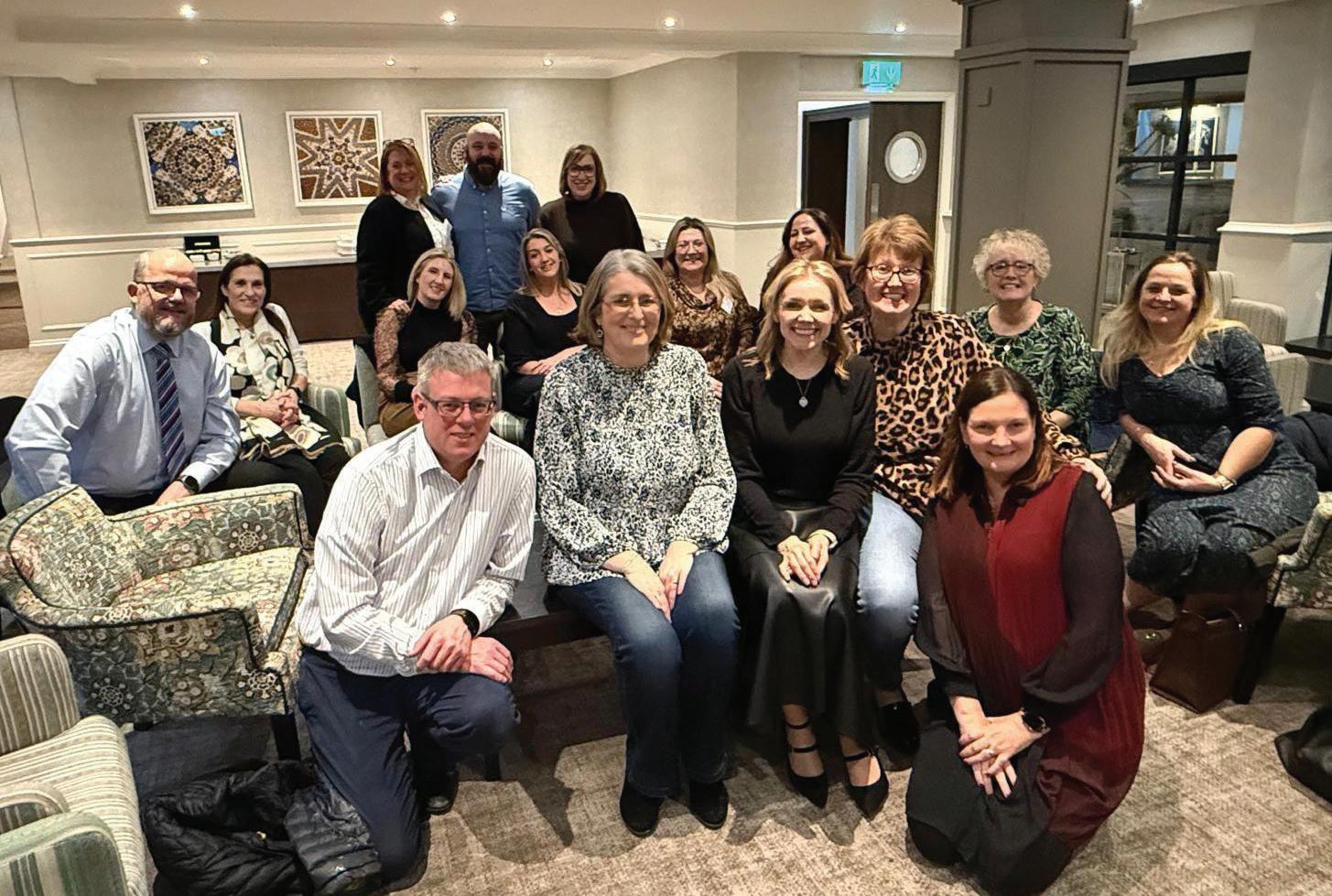
Twelve Headteachers and four central team members from the Blessed Edward Bamber Catholic Multi Academy Trust joined with Headteachers from across Liverpool, Salford and Shrewsbury dioceses at a conference organised by the North West Catholic Dioceses Training Partnership.
It was led by David Wells and the focus was: ‘Drawing a Map of Hope – School Leadership in the Era of Pope Leo XIV’
In October 2025, Pope Leo XIV issued an Apostolic Letter on Education to mark the 60th anniversary of Gravissimum Educationis, the Second Vatican Council’s Declaration on Catholic Education. Addressing the realities of a complex, fragmented and increasingly digitalised world, the Holy Father calls for a renewed commitment by the Church to o昀er an education that is both authentically Christian and fully integral.
The letter o昀ers rich material for re昀ection for all those involved in Catholic education. Central to Pope Leo’s vision is the dignity of the human person — both teacher and student — and the vital role of relationships in the educational process. Rooted in Catholic Social Teaching, the letter emphasises formation in virtue, reminding us that education is about far more than academic achievement; it is about shaping lives grounded in faith, service and hope.
!"#$%&'(%)*+,"-#.%/0*10(2,#3%40*5% !"#$$#%&'%()*%&!)+,#*&-)./0"12&34".1&52)%#+6 7*4
=#)%.#)2/#*$&).>
? @.&A0/9 B1)99#6&-)./0"12&C*1+)*6 @2/00"D&!")28;00"& &-"0$19: <).#> FG!" 3)*2/&GHGI
J9.#*K1#($> GL!"
).#> FR!" 5;*1" GHGI
J9.#*K1#($> L!" M N!" 3)6 GHGI ONEOFF
P#&(#"20+#&);;"12).109$&S*0+&1
20++1..#%&.0&209.*1,4.19:&.0&./#&$2/00"T$&$.*).#:12&"#)%#*$/1;D&)9%&20++491.6	:):#+#9. 7/1$&1$&)
As we re昀ect on the mission of our schools — within our trusts, diocese and the wider Church — this Apostolic Letter helps to crystallise both the purpose and the meaning of our work. Pope Leo o昀ers a striking image of the Catholic educational world as a global “constellation”: “The world of Catholic education is a living and pluralistic network: parish schools and colleges, universities and institutes of higher education, professional training centres, movements, digital platforms, service-learning initiatives and school, university and cultural pastoral programmes. Each ‘star’ has its own brightness, but together they chart a course.”
This image resonates deeply with our experience. As a trust, we share a collective vision of strengthening Catholic life and mission in our schools. While each school has its own identity and gifts, together we are united by faith, purpose and a shared responsibility to serve our communities. It is in this unity, that we 昀nd strength.
Pope Leo also speaks directly to those who work in Catholic education, reminding us that teaching is a vocation as well as a profession. “Those who teach in a Catholic institution,” he writes, “are called to a responsibility that goes beyond the employment contract: their witness is worth as much as their lesson.”
The example set by educators — in faith, integrity and compassion — is therefore central to the mission of Catholic schools.
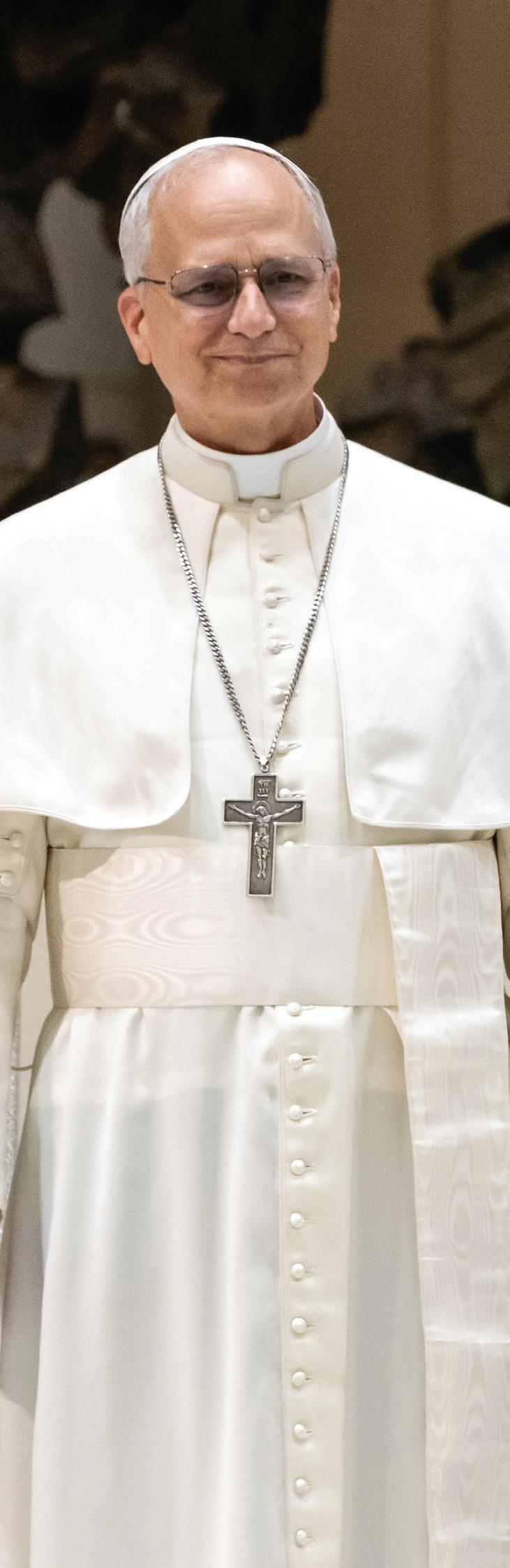
While the human person remains at the heart of all educational initiatives, the Holy Father stresses that education must lead beyond the self. Its purpose is to help young people “discover the meaning of life, inalienable dignity and responsibility toward others.”
As Pope Leo states:
“Education is not merely the transmission of content but an apprenticeship in virtue. It forms citizens capable of serving and believers capable of bearing witness.”
The letter also challenges Catholic schools to be signs of social and environmental justice. Pope Leo calls for simplicity, sustainable lifestyles and care for creation.
Finally, the Holy Father rearms the Church’s commitment to the poor.
“Wherever access to education remains a privilege,” he writes, “the Church must push open doors and invent new pathways, because to ‘lose the poor’ is to lose the very meaning of the school.”
In doing so, Pope Leo o昀ers Catholic education a clear and hopeful path forward — one rooted in faith, solidarity and the Gospel mission.
Helen O’Neill, CEO, The Blessed Edward Bamber Catholic Multi Academy Trust







God is calling all of us to be active in the church, but how can we discern what God is asking us to do?
We talk about “discerning a vocation” – particularly when speaking about the consecrated life, the religious life, priesthood, or the diaconate, although this also applies to marriage, to careers, and to other roles in the Church. In modern Western culture, however, unnecessary indecision and anxiety is commonplace.
The problem for us is often with our mindset. All too often we are so ‘shaped’ by the consumer culture’s obsession with the ‘pursuit of happiness’, all too often we think too about ourselves and our preferences. We end up looking for the wrong things in any given vocation, and we approach the discernment of God’s call to each of us in a correspondingly incorrect way.
We all too often think that discernment consists in 昀guring out whether our expectations will be met, and then we become frustrated when none of the available options appear to 昀t the bill. Sadly, our expectations are often wrong.
Consciously or not, we think a vocation may resolve all our problems, answer all
our questions, and satisfy all our desires. But these are not the purposes of a vocation in the Church. Discernment of God’s will for us does not usually consist in discovering a path that will meet all those expectations.
In fact, vocations almost never live up to these unrealistic hopes, and God’s call is often a surprise to us! Nothing in this world can answer all those questions, solve all those problems, or satisfy all those desires. These are usually impossible, immature ambitions, and recognising God’s call involves realizing that these are impossible and immature.
The purpose of life is the unitive devotional service of God, which includes the love of our neighbour in whom God dwells. This is the real purpose of any vocation. Some forms of life, such as monasticism, are ordered directly to this end; other states of life are oriented towards it indirectly. But these are only di昀erent versions of the one human vocation: that of loving and serving God, and becoming one with him in Christ.
Our vocation tends to be the means by which our self-serving ego dies in order for us to be resurrected as the servant and lover of God. This is everything – the meaning of life, all that there really is.
Our vocation, our call from God Himself, is where we learn to let go of our questions, carry the cross of our problems, and be mysteriously ful昀lled - even when we do not feel happy. This is the attitude we need to bring to discernment. We are not choosing between makes and models in a shop, looking for the perfect 昀t, or seeking the best value.
The question we must ask ourselves is this: How do I lose my life, in order to save it? (Luke 9:24)
Of all the wrong expectations that we bring to vocational discernment, perhaps the most pernicious is the expectation that “everything will 昀nally make sense.” We imagine that our true calling, when we 昀nd it, will bring a kind of total coherence and resolution to our often fragmentary, broken, or unresolved lives.
Of course, a true vocation will have a certain coherence about it: we will understand our task, our direction, in a new way. We will have a degree of clarity, at least regarding which route we are to take on our pilgrimage toward our ultimate destination. No matter what calling we embrace, our vocation must be our means of letting Jesus into our lives completely, learning to love God more than ourselves.
Ask yourself:
How shall I die with Christ, to rise with him?
How will I lose my life to 昀nd it?
What will bring me to the point where I can say, with St. Paul: “It is no longer I who live, but Christ who lives in me”?
Such thinking is more than countercultural; it goes beyond our natural inclinations. But this is the perspective of the Gospel, the selfemptying attitude of Christ that should also be in us.
Soon in our Diocese we shall be holding ‘Come and See’ days. Open days when anyone interested in discovering which vocation in the Church they are being called to, in particular the consecrated life, the religious life, the diaconate, the priesthood, and of course, marriage, can chat and be helped.
In the next edition of the Catholic Voice details of the 昀rst of these days will be announced. For more information in the meantime contact me, Deacon Bernard, at: vocations@lrcd.org.uk
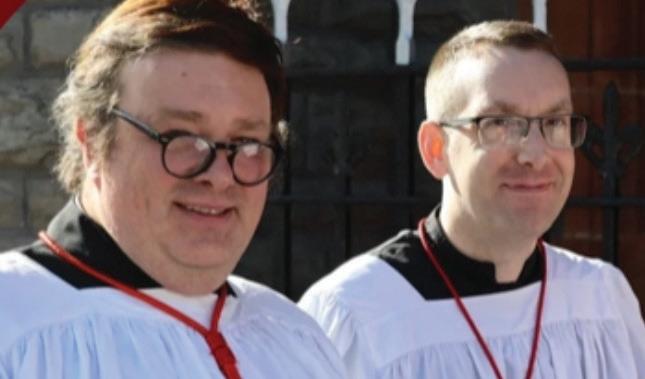
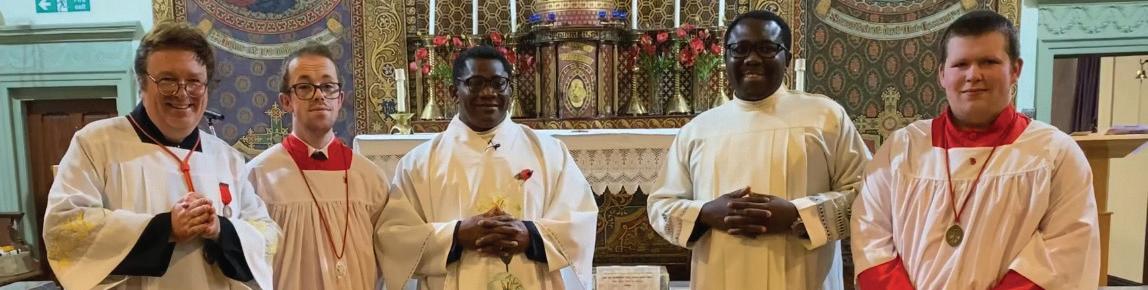
Our wonderful altar servers are a credit to our parishes and keeping the Catholic faith alive.
As we re昀ect on their recent activities, President of the Guild of St Stephen Paul Briers sends a message of hope for the new year ahead:
“2025 was truly a Jubilee Year of Hope for the Guild of St Stephen.
“We marked 120 years since the foundation of the Guild, and 100 years since the establishment of the Central Councilremarkable milestones in our shared history
“Over the years, the Guild has continued to grow and 昀ourish. One of the highlights of the year was the National Mass in Lancaster in May. It was a wonderful success, with members attending from many dioceses. It
was a joyful day, full of friendship, mutual support, and encouragement - a real celebration of who we are as a Guild.
“What a year it has been - a year of great milestones, meaningful change, and renewed hope.
“As we look ahead to 2026, we will celebrate yet another signi昀cant moment in our history: 120 years since the Guild was raised to an Archconfraternity by Pope Pius X, now a saint.
“This allowed parishes not only across the UK but also around the world to aliate with Westminster - a powerful reminder that we are part of a global family, united in our service at the altar for the greater glory of God.”
Highlights from across the Diocese of Lancaster include:
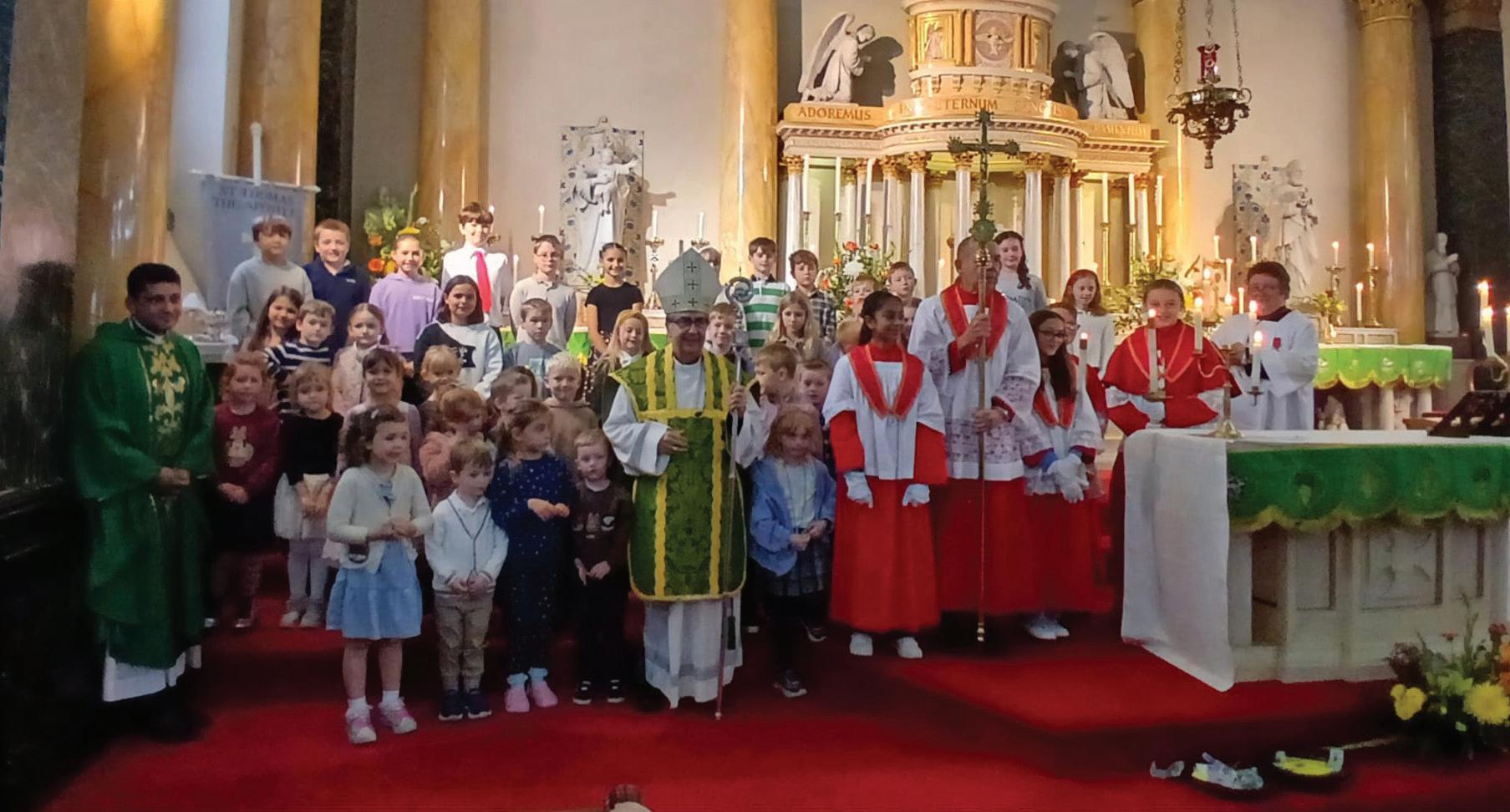
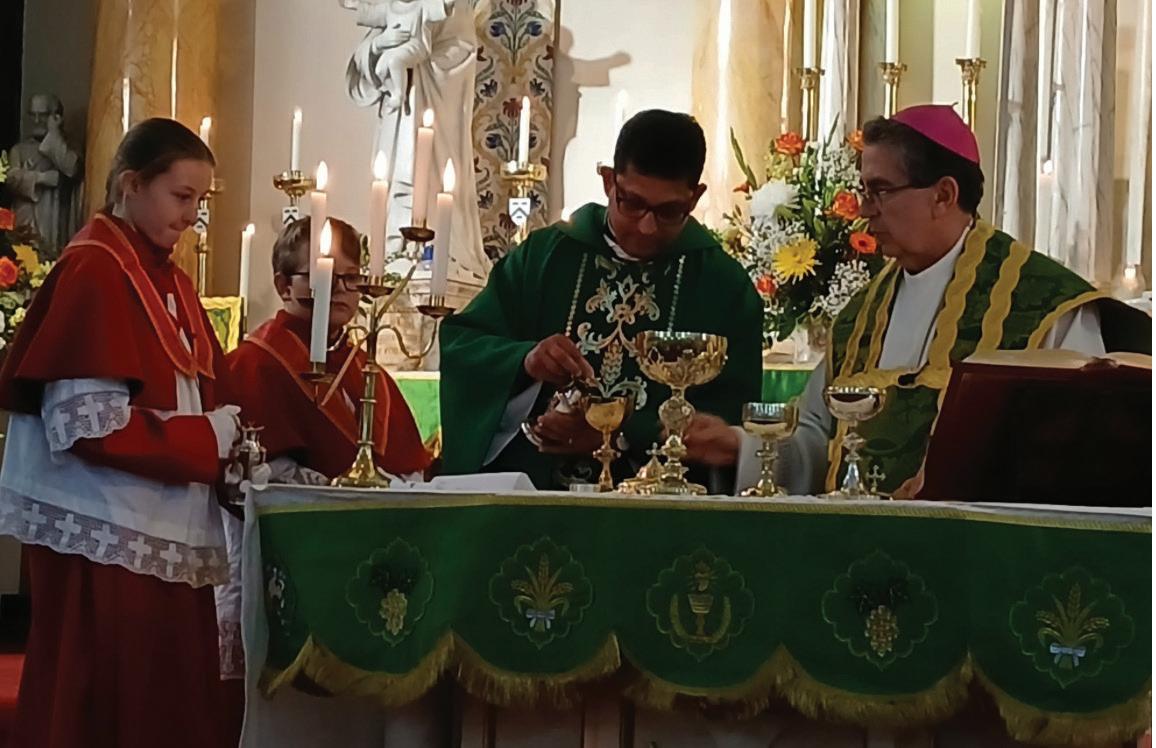
On Sunday 19th October, 2025 the Papal Nuncio, Archbishop Miguel Maury Buendía came to Claughton-on-Brock to celebrate Mass. The Parishioners of St. Thomas The Apostle, Claughton and St. Francis Hill Chapel, Goosnargh and both Parish Schools came together for the special occasion.
The Children read the readings for the Mass, the Prayers of the Faithful and also brought up the gifts in the o昀ertory procession. Following the Apostolic Blessing at the end of Mass, the Children from the Primary Schools sang, He’s got the whole world in his hands, in Spanish to the delight of the Apostolic Nuncio.
Many thanks need to be recorded for the people from both Parishes who worked
to make the occasion such a success including Fr Sony Joseph, Francis and Jenny Fitzherbert -Brockholes for their hospitality, the sta昀 and pupils from St Mary’s Primary School and St. Francis Hill Chapel Primary School, altar servers, 昀ower arrangers, the organist and choir, cleaners, sacristans, welcomers and those providing refreshments. A special day for both Parishes which will live long in the memory.
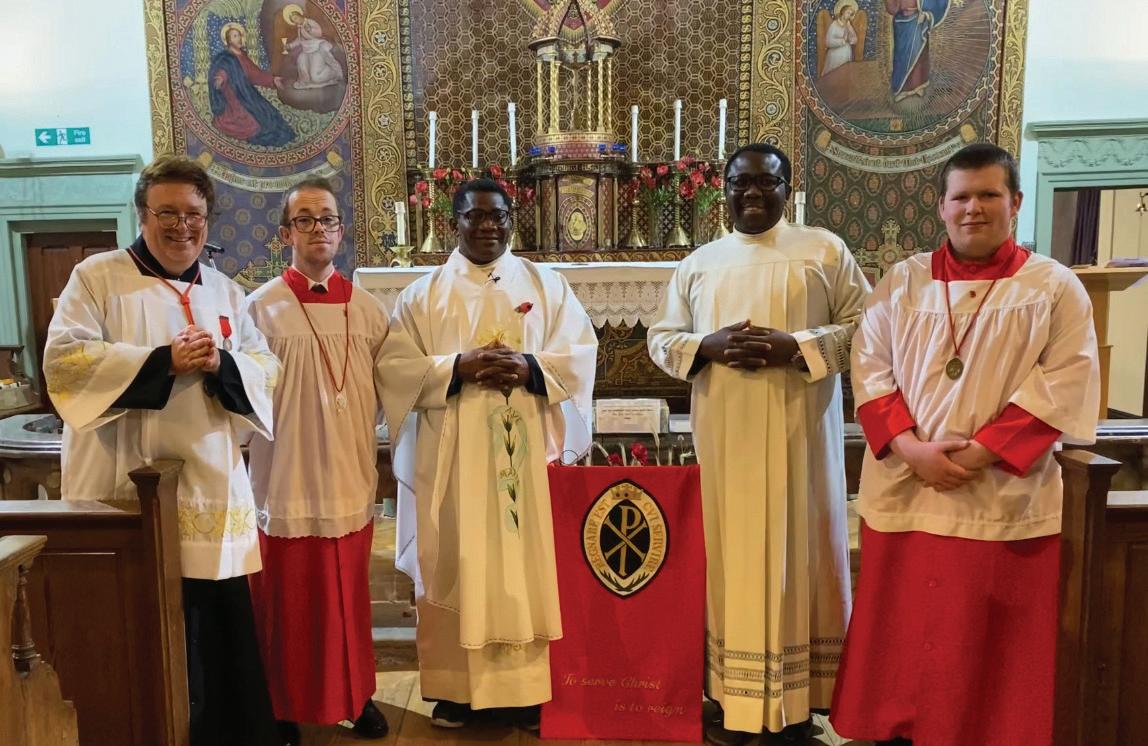
Ian Ramsay receives St Stephen’s Silver Medal
On Sunday 9th November, 2025 Ian Ramsay of St. Mary’s Church, Fernyhalgh was awarded the Archconfraternity of St. Stephen silver medal for altar serving. This was awarded during Mass by Ian Mulholland as Diocesan Director with the assistance of Fr. Francisco. Congratulations to Ian Ramsay. Ian Mulholland
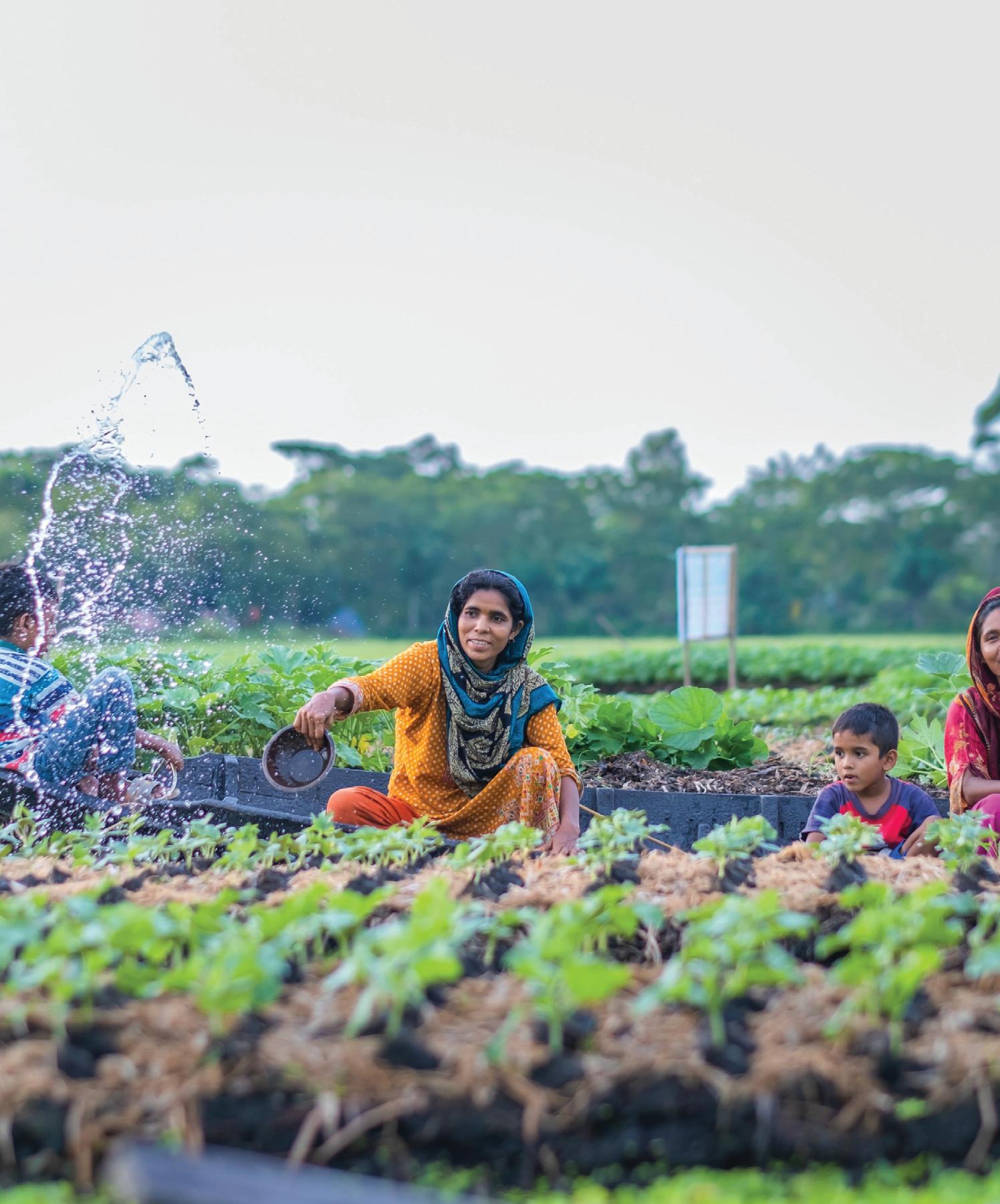
The word Lent 昀nds its roots in the Old English word lencten, meaning “spring.” It describes that quiet, persistent season when the days begin to lengthen and the earth slowly wakes from its winter sleep.
We began this journey with a stark reminder: “Remember that you are dust.”
While these words can feel bleak, they contain an invitation to wonder. We are intimately connected with the earth and everything on it – we are all members of one human family sharing one common home, all beloved creations of God. As we acknowledge our interconnectedness and reliance on God, we create space for new growth. In the 昀eld and garden, this is a vulnerable, expectant time.
Seeds are sown in an act of quiet trust— that a tiny grain, buried in the cold, dark earth, carries within it the potential for new life. Our Lent springtime calls us to such faith: that the seeds of hope and love that we plant even in the hardest soil will take root and blossom.
Across the world our neighbours are also planting seeds. Yet climate change is making it harder for them to grow enough to eat.
In parts of Zimbabwe there is too little rain. In parts of Bangladesh and South Sudan, there is too much. The result is the same – seeds fail to grow, plants die, and families go hungry.
Our fasting, giving and prayer in this season remind us of our dependence on God and our longing for a world in which all people 昀ourish.
This Lent, as the light lengthens, may we stand in solidarity with our sisters and brothers throughout the world, knowing that God can work through us to bring new life.
Find out more about how CAFOD’s Lent appeal is helping our global neighbours grow food in climate-resilient gardens: https://cafod.org.uk/lent
Patrick Gardner, Community Participation Co-Ordinator, CAFOD Lancaster

ood progress has been made on the forthcoming Centenary and Commemorative book currently in production. The exciting new publication has been developed to celebrate our Lancaster Dioceses achievements in propagating the Catholic Faith across Cumbria and Lancashire over the last 100 years.
The talented creative writing and research team involved hope to have this unique and special book available within the next couple of months.
A spokesperson on the team is looking forward to launching the new book very soon:
“The Centenary book team are hugely excited to announce further progress with the wonderful new publication to the Catholic Voice of Lancaster readers.
The Manuscript has been completed, photographs gathered, style agreed, a publisher approached, and shortly all
you will have to do is buy a copy and make a space on your bookshelf. That is when you have of course read it! Subsequent to that, a “photo book” is also being prepared to complement the above.
To help us further, if any readers have a Parish History which you would like to let us know about, it will be most helpful, as clearly, in such an auspicious publication we would like to include a comment or two.
We would be delighted to hear from you so please let the Catholic Voice of Lancaster know by email and they can share with us the details and contact.
We will keep you all posted of further developments in the next edition. Thank you to all who have been involved from day one in making this historic publication so special.”
Please email any Parish History information you feel would be relevant and of interest to: CatholicVoiceNews @lrcd.org.uk
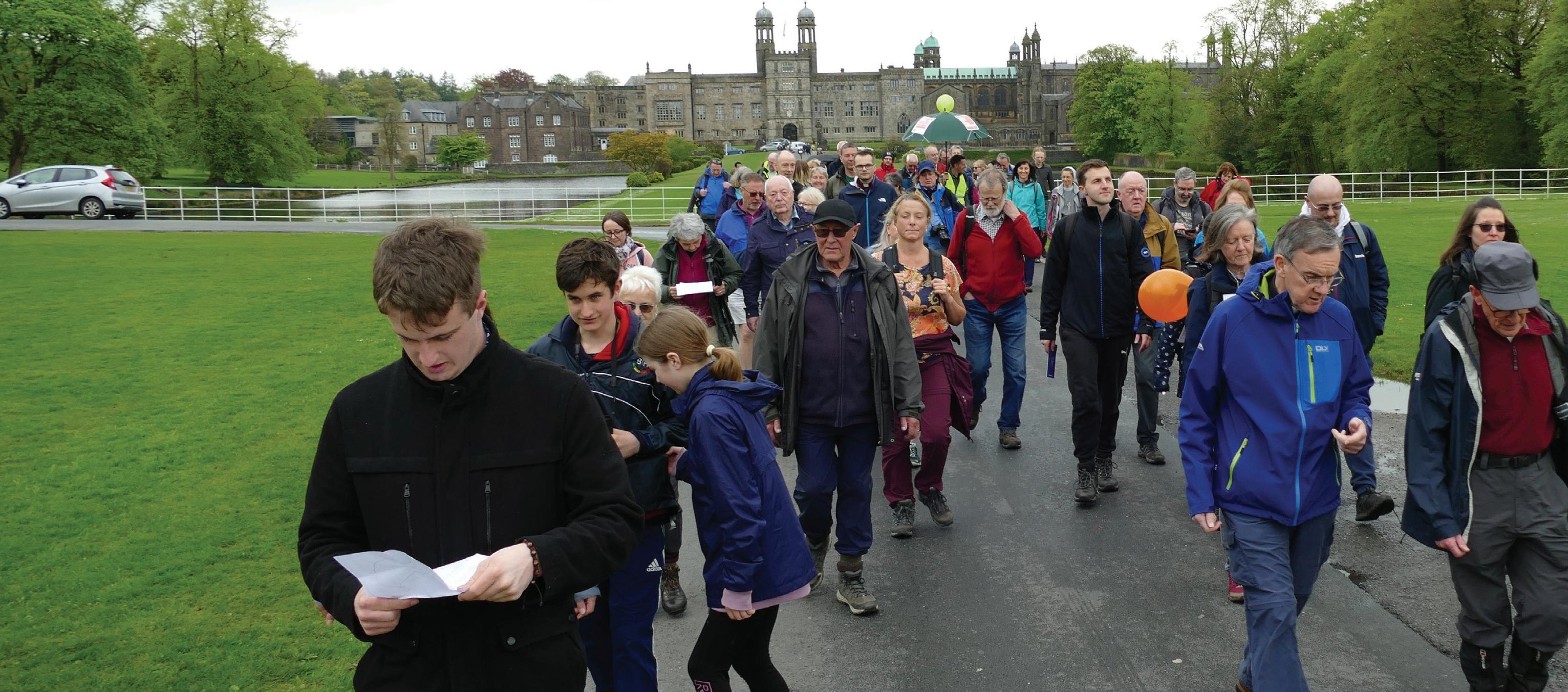
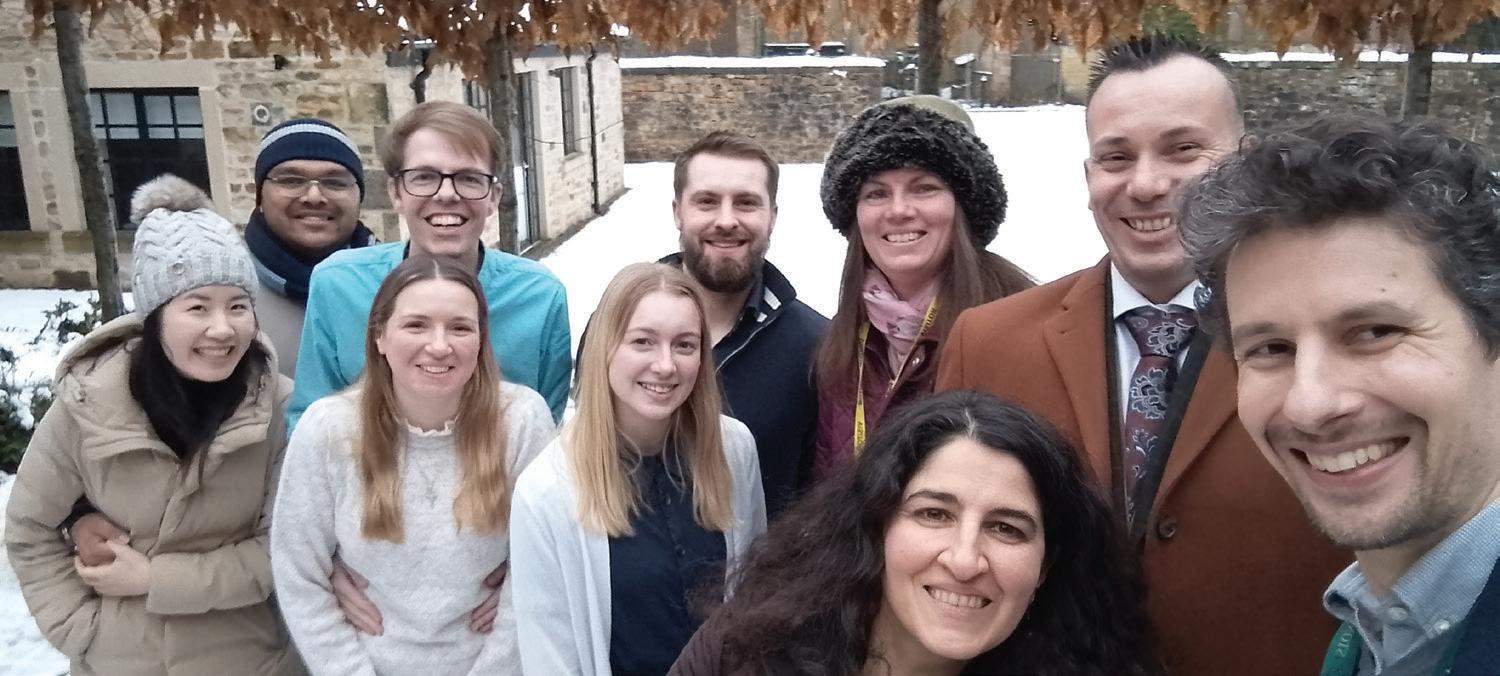
Although it lies just beyond the boundaries of the Diocese of Lancaster, Stonyhurst feels unmistakably part of our Catholic landscape. Set within the County Palatine, its story is deeply woven into the history of Lancashire Catholicism and the quiet perseverance of faith in dicult times. To stand at Stonyhurst is to sense a place shaped by prayer, sacri昀ce and continuity.
Yet Stonyhurst’s signi昀cance reaches far beyond our county. The Jesuit presence on this site for over 230 years represents a Catholic story that stretches across England and Europe, shaped by exile, return and renewal. When the Jesuits arrived at Stonyhurst in 1794, having previously been based in Liège, Bruges and St Omer, they brought with them not just a school, but a living inheritance of faith carried through centuries of persecution.
That return was made possible by the generosity of Thomas Weld of Lulworth Castle, himself a former pupil of the Jesuits. His gift ensured the survival of what is now the oldest continuously operating Catholic school in England, and helped restore a visible Catholic presence at a time when such faith was still fragile and contested.
One of Stonyhurst’s greatest treasures is its remarkable collection of relics and religious objects. These items were gathered with great care—and often at great risk—by Catholics determined to preserve the material signs of their faith during the penal years. Today, they tell stories not only of martyrs who gave their lives for Christ, but also of countless ordinary believers who quietly kept the faith alive in their homes, prayers and daily routines.
When the Christian Heritage Centre at Stonyhurst was founded in 2012, it adopted Christ’s words from the Sermon on the Mount: “For where your treasure is, there will your heart be also” (Matthew 6:21). These words help us understand the true purpose of relics and sacred objects. They are not valuable because of age, rarity or monetary worth, but because they point beyond themselves— to lives transformed by grace and now ful昀lled in heaven.
Relics remind us that holiness is lived in the body, in ordinary places, through faithful endurance. They call us to lift our hearts from what is temporary and set them on what lasts. In this sense, they are deeply pastoral objects: silent teachers inviting us to deeper faith and hope.
As Lent approaches, Christ’s words take on particular urgency. They come in the midst of his teaching on prayer, fasting and almsgiving—the three practices that shape the season.
Lent is a time to simplify, to listen more attentively to God, and to loosen our grip on what distracts us from him.
Prayer deepens our trust in God’s presence. Fasting teaches us that we do not live by bread alone. Almsgiving opens our hearts in love for others. Together, these practices gently re-orient our lives toward heaven.
Helping people to rediscover this orientation of the heart—through prayer, re昀ection, learning and encounter—remains at the heart of the Christian Heritage Centre’s mission, especially as we journey together towards Easter.
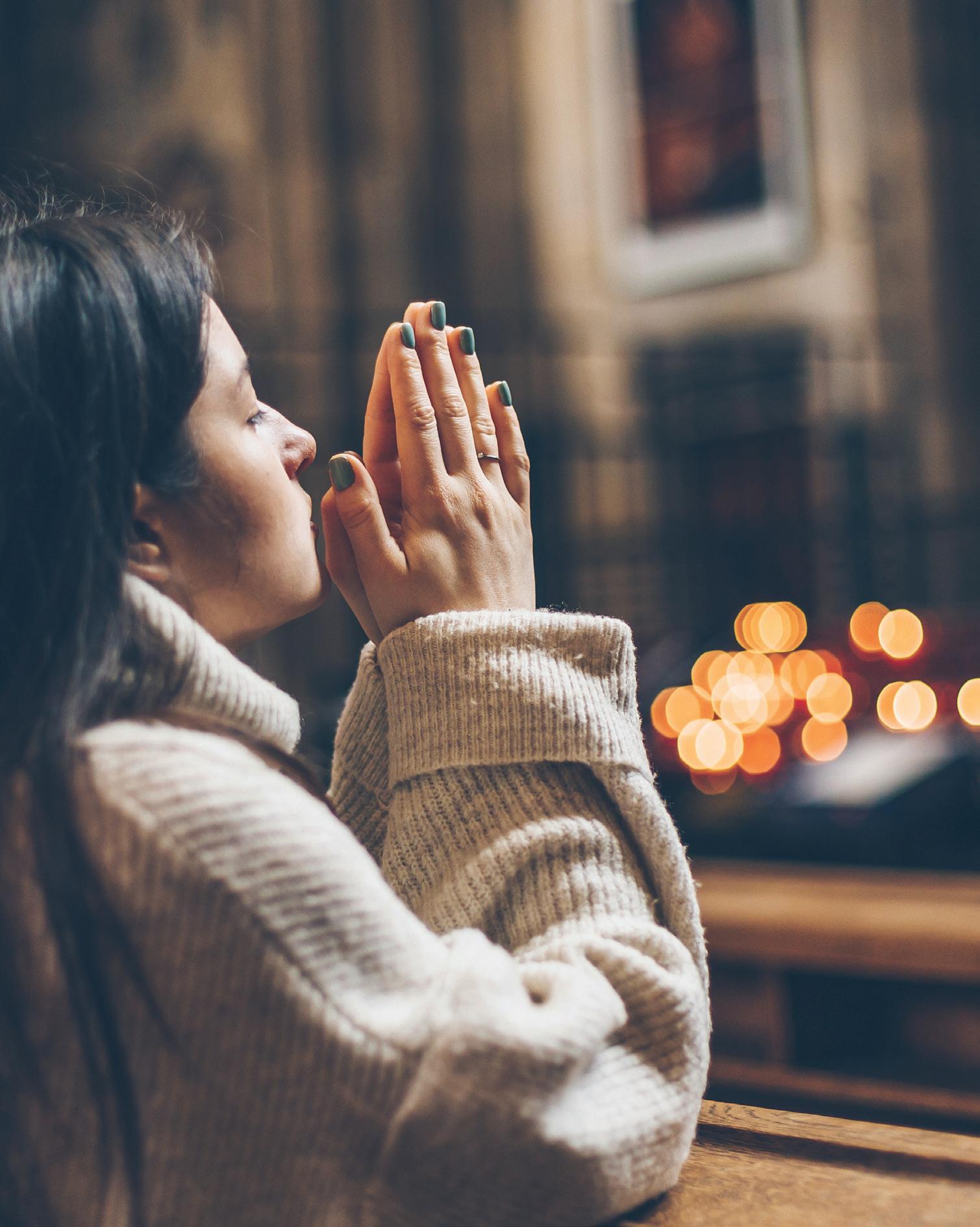
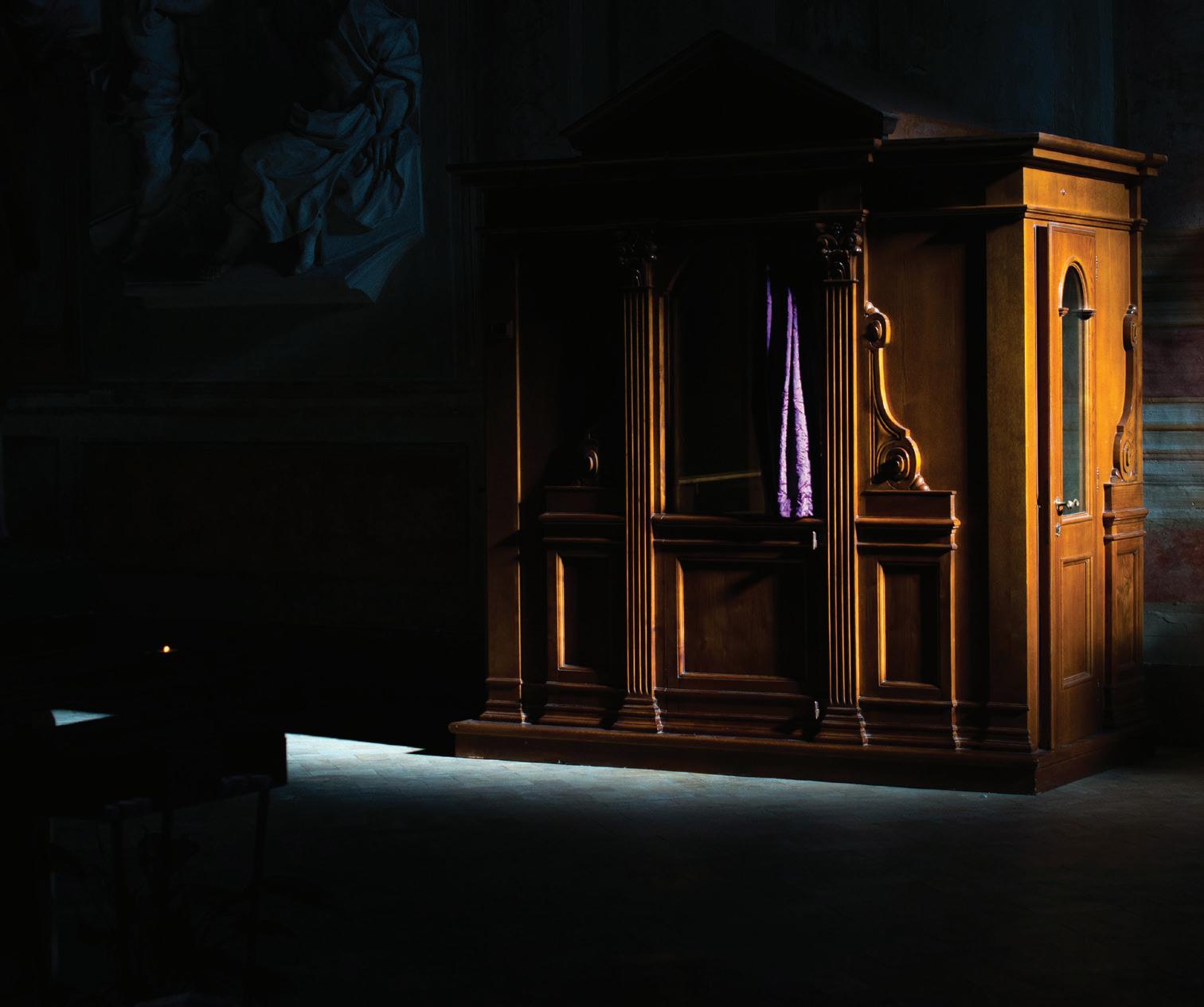

Why have a Sacrament of Reconciliation after Baptism? In simple terms – because we have a broken relationship with God. “The new life (of Baptism) within us does not abolish the frailty and weakness of human nature, nor the inclination to sin that tradition calls concupiscence.” (CCC 1426) Therefore we need to be continually aware of our relationship with God our Father. We know when we have “fallen out” with our friends and the feelings of hurt, sorrow, pain and resentment that these can cause.
We are aware that things are not right between us and we feel upset and want to put this right. The relationship plays on our mind. “What can I do to put it right; what will help?” We become anxious and worry about it. When we are back “in” with our friends (after we have “made up” and done something to bring the relationship back together) and everything is great again, we rejoice and say “Sorry, I was a fool, I shouldn’t have done/said …… whatever it was.” Life is good again and we are happy because we have been forgiven and the incident is forgotten about.
In the upper room after his resurrection Jesus said to his Apostles, “As the Father sent me, so am I sending you.”
After saying this He breathed on them and said: “Receive the Holy Spirit. For those whose sins you forgive, they are forgiven; for those whose sins you retain they are retained.” (John 20:21-23).
He gives the Apostles the gift to forgive sins. He is instituting a new kind of priesthood and he desires that this priesthood should extend His true and full forgiveness. It follows from Jesus’ ministry of forgiving sins.
We could go straight to God and say we are “sorry” and this is good. We should have a relationship with Jesus where we can say we are sorry, like we would with any friend. However, Jesus gave his Apostles, and those that follow on
from them, the gift to forgive sins and when Jesus gives us a gift He wants us to use it. He uses the priest to mediate His forgiveness. It is not the priest who forgives but Jesus.
There was a tendency or practice of confessing your sins to the priest in the early Church – “If anyone of you is ill, he should call for the elders (priest) of the church …….. and if he has committed any sins, he will be forgiven.” (James 5:14-16) This is where our practice of going to a priest for the Sacrament originates from.
He gave us this Sacrament so we could receive His grace/strength/healing to forgive those who hurt us. We are constantly striving to follow Jesus’ commandment to love Him and one another. In this Sacrament we are given the help we need to do this. We try; we fail; we pick ourselves up; say we are sorry and carry on trying. Each time we receive strength and healing to carry on. To be able to forgive seventy times seven.
When we are not at one with each other we are at enmity with God too. Going to this Sacrament brings us back to oneness with God, it heals that broken relationship. Wow! What a gift, to be reconciled, at one with God again!
Why do more people not want this?
I went to Reconciliation before Christmas and had a conversation with the priest about this and he said, “Look, I have buckets full of grace to give away but nobody wants them” and as he said this he made a sweeping movement over imaginary buckets on the 昀oor in front of him.
We are now in Lent, why not use this opportunity to come back to God and to receive His great love and grace for you? He is waiting with open arms to receive you.
Wishing you a very blessed Lent, Ursula Walker, Spiritual Rep for the Diocese 07312 129900 / uwalker@uwclub.net
Over the years this Sacrament has had many titles and each re昀ects a particular aspect
Reconciliation – because it shows the love of God the Father to the sinner. The Latin for this word comes from 2 words – re meaning “back” or “again” and conciliare meaning “to bring together” or “unite in feeling.” So literally, reconciliation means “to bring together again.”
Confession
– since the disclosure of sins to a priest is an essential element. It can also be seen as a ‘confession’ of acknowledging and praise of the holiness of God and his mercy towards sinful man.
Conversion
– because it makes present Jesus’ call to conversion, the 昀rst step in returning to the Father from whom one has betrayed by sin.
Penance
– we need to show that we are sorry for what we’ve done and the consequences of our actions have on others.
I think what we call this Sacrament re昀ects how we see it and says something about our relationship with God our heavenly Father.

he Catenian Association National Public Speaking Competition o昀ers young people a unique opportunity to step forward, speak with con昀dence, and make a real di昀erence. Open to students aged 16–18, the competition invites entrants to deliver a fourminute speech on a topic that matters to them, encouraging thoughtful re昀ection, clear expression and personal conviction.
Young people in the Lancaster Diocese are warmly encouraged to take part, supported by the local Catenian community within Province 10. Province 10 includes 昀ve active Catenian circles in the Preston area, as well as the circle serving Lytham St Annes, all committed to supporting initiatives that help young people grow in con昀dence, leadership and communication skills.
Public speaking is a skill that serves young people well throughout life. Whether in education, employment or leadership, the ability to communicate
Boost your Prayer Time with the Lord this Lent with a new online School of Prayer! Lord, Teach Us To Pray – A Week of Retreat and a School of Prayer
March 9th - 13th (7pm - 8.30pm) plus day retreat (10am-3pm) on Saturday 14th March. If you feel you need help with prayer, you are in good company; so did the 昀rst disciples. During this week in mid-lent we will introduce a variety of ways of praying each evening and do the same again on Saturday.
Come to any or all of the online evening meetings or the Saturday. If you want a double dose, come to both! Free – no cost. All the sessions are online. No need to register. To receive the zoom link, email Ursula, Diocesan Spirituality Rep at: uwalker@uwclub.net
Card Making Day
Tuesday 17th March Card Making Day.
Individually Guided Retreat in Ignatian Tradition
Friday 24th April – 3 May (8 Day) or Saturday 25th April – Sat 2nd May (6 day).
Prayer is for Everyone May 9th – Saturday 9.30 Co昀ee/Arrivals – Finish at 4.00. More details to follow.
Contact Sr Mary Bernard for more information – hyningbookings@yahoo.co.uk Website – www.hyning.org
clearly and con昀dently opens doors. This competition provides a supportive environment in which young speakers can grow in con昀dence, discover their potential and learn the value of preparation and perseverance.
There is also a meaningful incentive. The overall competition winner receives £200 for themselves, plus £100 for the school’s chosen charity and the 昀rst prize at the regional level is £100 for the winner, plus £50 for their school’s chosen charity, ensuring that their e昀ort bene昀ts not only themselves but also the wider community. All participants gain valuable experience with 昀nalists receiving recognition at a national level.
You don’t need to be an experienced speaker to take part. Some of the most powerful contributions come from students who simply decide to be brave and give it a go. If you’re interested please contact Robert Thompson by email: candr.thompson@btinternet.com Be bold. Speak up. Make your voice count.


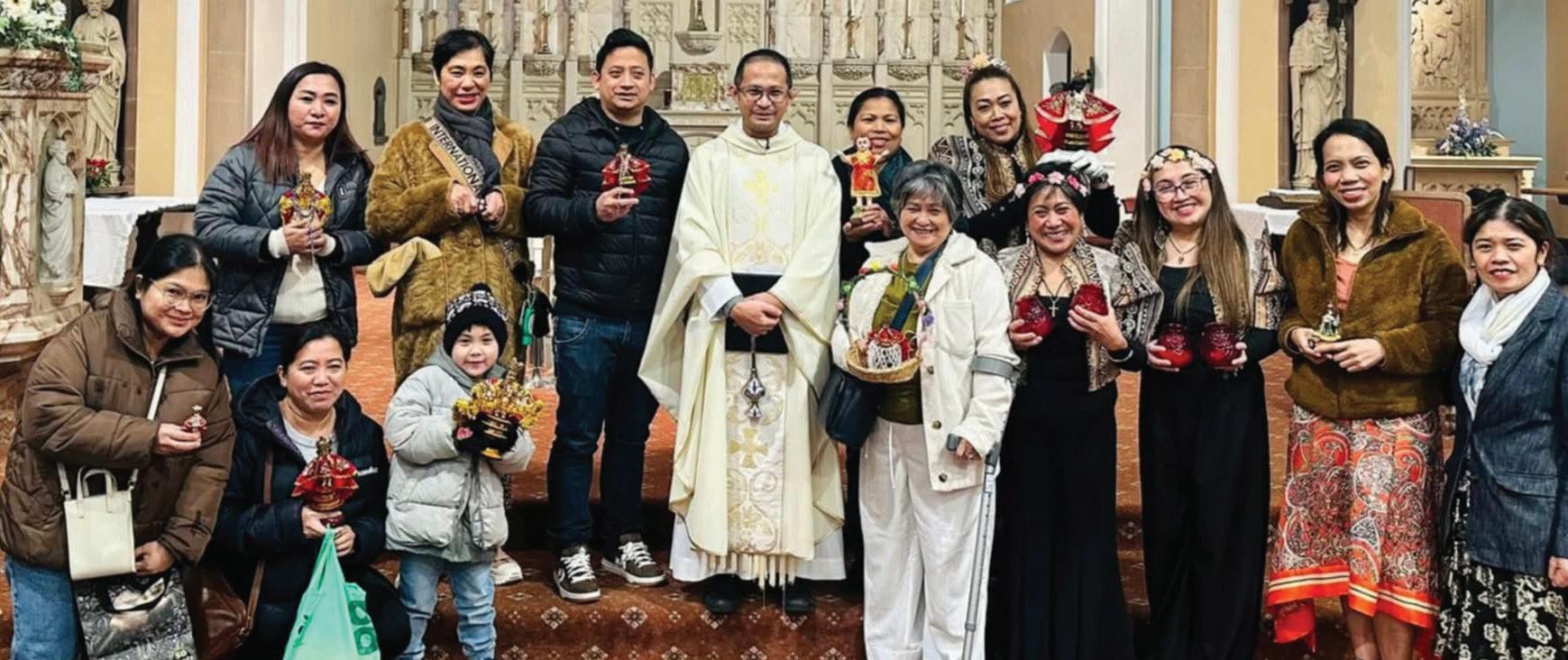
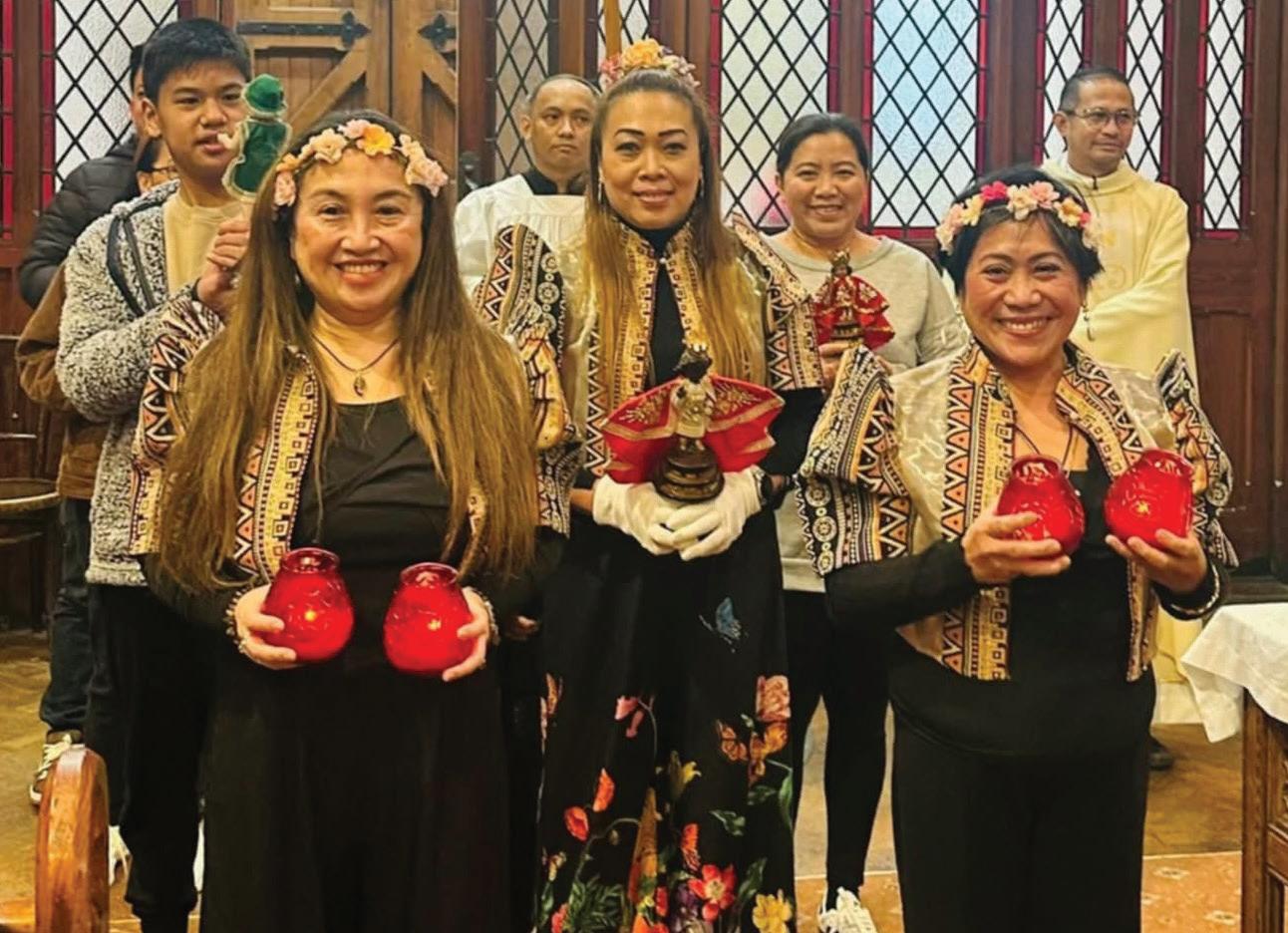
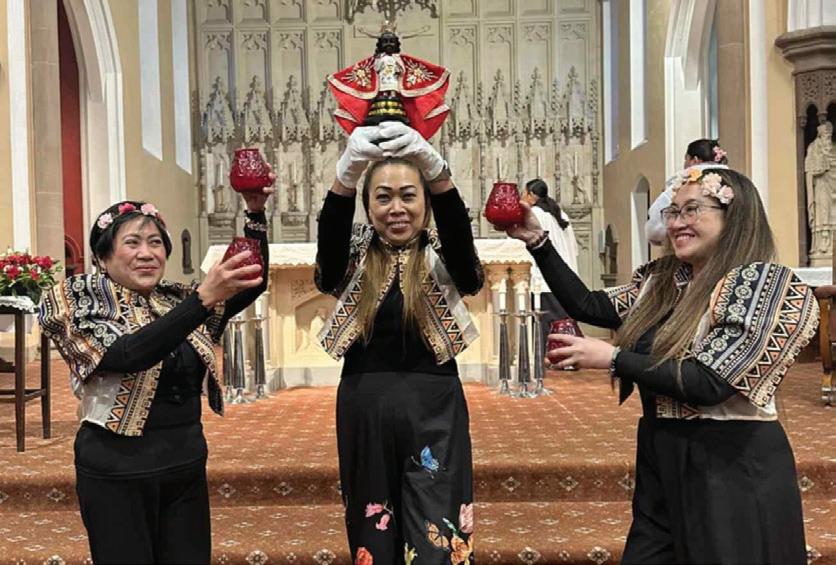
During the Filipino Tagalog Mass at St Kentigern’s RC Church, Blackpool, the local Filipino Catholic Community celebrated the Feast of Santo Niño.
Fr. Edson encouraged us to be like the Child Jesus—trusting, humble, and dependent on Mary and Joseph. In the same way, we are invited to stay close to God and rely on Him always.
The Santo Niño de Cebu tradition is a symbol of the birth of Catholicism in the Philippines more than 500 years ago, when Ferdinand Magellan gifted an image of the Baby Jesus to a Filipino ruler’s wife after he and his wife converted to Christianity.
A procession takes place with people in elaborate traditional dress holding their Señor Santo Niños. They move down the aisle doing the Sinulog dance — two steps forward, one step back — mimicking the movement of a water current (the word “Sinulog”
originates from the Cebuano word “sulog,” which roughly translates to “like water current movement”)
According to Filipino tradition, Queen Juana, the main consort of Rajah Humabon, danced with joy when given the image of the child Jesus. Others joined her in the 昀rst Sinulog dance.
Another story relays that the Sinulog dance steps originate from Rajah Humabon’s adviser, Baladhay, who became sick. Humabon ordered that he be brought into a special room where Santo Niño was kept. Later Baladhay was found shouting and dancing, saying that baby Jesus was tickling him. Baladhay said his dance was the movement of the river.
During the Mass at St Kentigern’s, candles were passed to the faithful, and the popular song “Batobalani sa Gugma (Magnet of Love)” was sung in devotion to the Child Jesus. The song is a powerful prayer of thanks and petition and gives a historical account of how the Christian faith was brought to the islands. Mary Demegillo, Filipino Catholic Community Blackpool
If any readers are thinking of going on an interesting pilgrimage this year, Jenny Phillips has just the journey to refresh mind, body & soul.
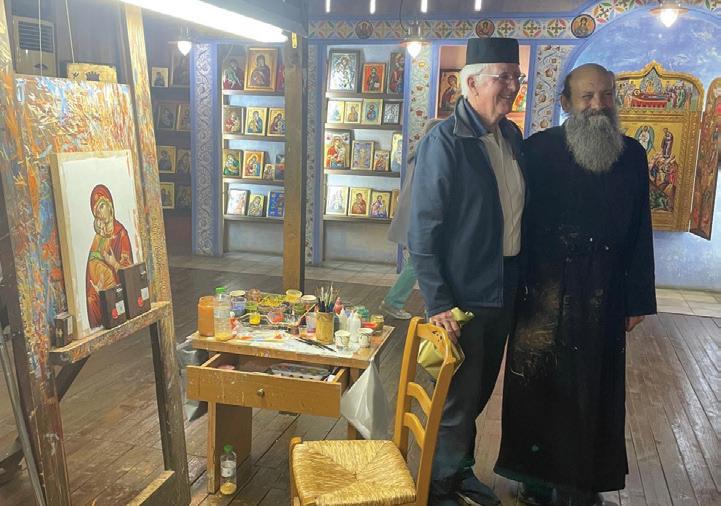
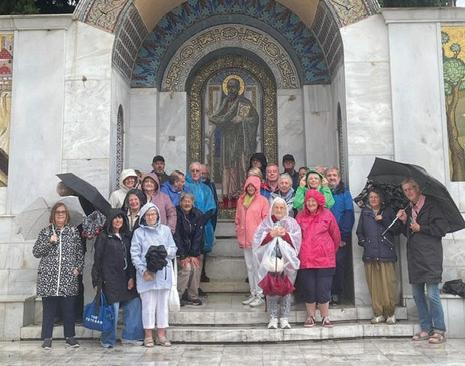
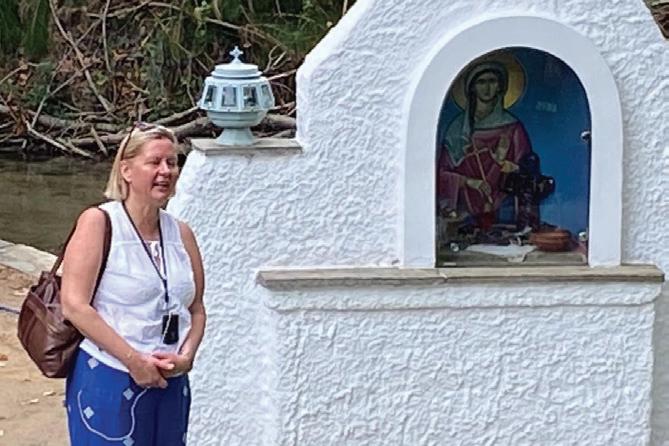
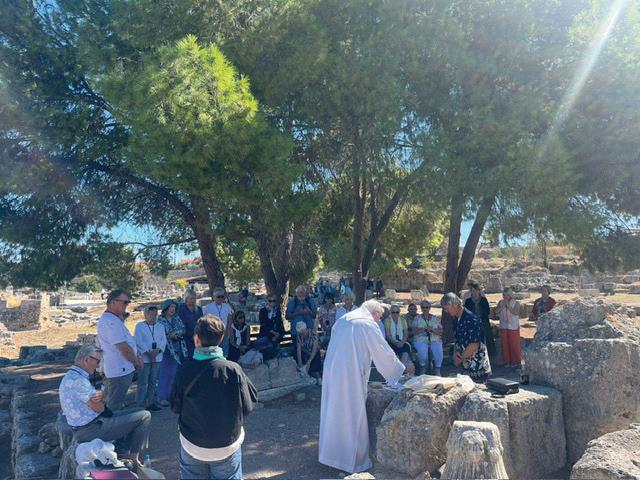
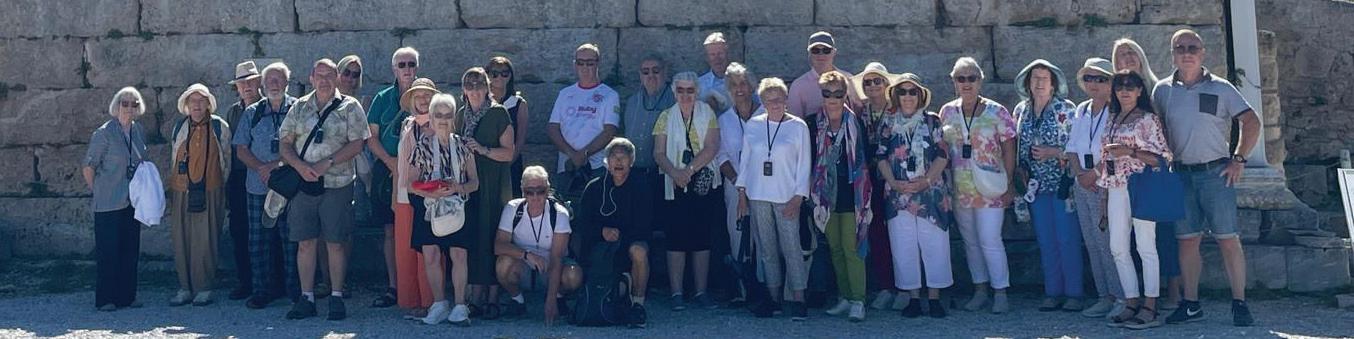
(Top left) Canon Alf with the orthodox priest who presented him with his sku昀a. (Middle left) At St Paul’s Podium the place where he preached in Veria. (Main) Canon Alf preparing for the outdoor Mass in Corinth. (Main inset) At the shrine to Lydia near Philippi. (Below) At the Berna in Corinth where Paul preached.
I
t was in early October that Canon Alf Hayes and a group of pilgrims from St Wulstan’s, Fleetwood, set out on their latest pilgrimage — this time to Greece, in the footsteps of St Paul.
This journey felt like part of a continuing story of faith and friendship. In recent years the group has travelled together to Rome, to Poland, and in 2022 to the Holy Land — a pilgrimage that remains vivid in memory and conversation. We are still in regular contact, through our WhatsApp group, with John, our Palestinian guide, who continues to be remembered fondly and prayerfully by us all.
There was a real sense of excitement as we prepared to follow part of the missionary journey of St Paul — a towering 昀gure of faith whose courage and perseverance shaped the early Church. Canon Alf had asked us to bring our New Testaments, and as passages from the Acts of the Apostles were read aloud while travelling between sites, Scripture came alive in a new way. The words we know so well were suddenly rooted in real places, landscapes and communities.
Travelling once again with Northern Star Travel, who have supported us faithfully on previous pilgrimages, we 昀ew from Manchester to Thessalonica. Our 昀rst full day included a guided visit to the Basilica of St Demetrius, dedicated to the city’s patron saint and martyr. Built on the site of a Roman bath where St Demetrius was killed, the basilica is a UNESCO World Heritage site and retains beautiful seventh-century mosaics and a moving crypt. We also visited the city’s museum, which houses remarkable treasures, including remains associated with Philip II of Macedon. Our Greek guide, Artemis, an archaeologist, enriched the entire pilgrimage with her exceptional knowledge and insight.
The following day we travelled to Philippi, where Paul was imprisoned and where his jailer was converted. We walked
through the remains of the forum where Paul was arrested and visited the river where Lydia of Thyatira was baptised — traditionally regarded as the 昀rst Christian baptism in Europe. Her faith and generosity played a vital role in the spread of Christianity. Nearby, we spent time in Kavala, the picturesque town where Paul and Silas 昀rst landed following Paul’s Macedonian vision.
Paul’s 昀nal stop before Athens was Veria, where he preached the Gospel. The site known as the Apostle Paul’s Podium now stands as an imposing monument to his fearless proclamation of Christ.
Our journey also took us to Vergina, where we marvelled at the royal tombs of Philip II, and to Meteora, with its dramatic monasteries perched high on towering rock formations. These sacred places speak powerfully of prayer, solitude and trust in God. A visit to an icon workshop introduced us to the ancient Byzantine egg tempera technique, and the warmth of our welcome there was deeply moving.
In Athens, daily Mass was celebrated at the Cathedral Basilica of St Dionysius, dedicated to a disciple of St Paul and the city’s 昀rst bishop. We visited the Acropolis, re昀ecting on Paul’s sermon about the “unknown God,” preached nearby. Our pilgrimage concluded in Corinth, where Paul spent eighteen months building one of the earliest Christian communities. Celebrating Mass outdoors among the ruins was a moment of profound grace.
Throughout the pilgrimage, there was a strong sense that St Paul was accompanying us on the journey. We are deeply grateful to Canon Alf for his spiritual guidance, wisdom and good humour, to all who helped with the arrangements, and to our fellow pilgrims, whose shared faith made this journey truly special. Jenny Phillips, St Wulstan’s RC Parish, Fleetwood
If your parish or school has any news or if you would personally like to submit an article for publication, please send us what you have. Contact details can be found on page 2.
Funeral Directors 186-188 Tulketh Brow, Ashton-on-Ribble, Preston PR2 2JJ Tel: 01772-733007
1 Stonebridge Parade, Preston Road, Longridge PR3 3AP Tel: 01772-782121
Windy Nook House Garstang Road, Fulwood, Preston, PR2 8JY Tel: 01772 500830
Proprietor W. Martin Wooton Dedicated and Blessed Chapels of Rest

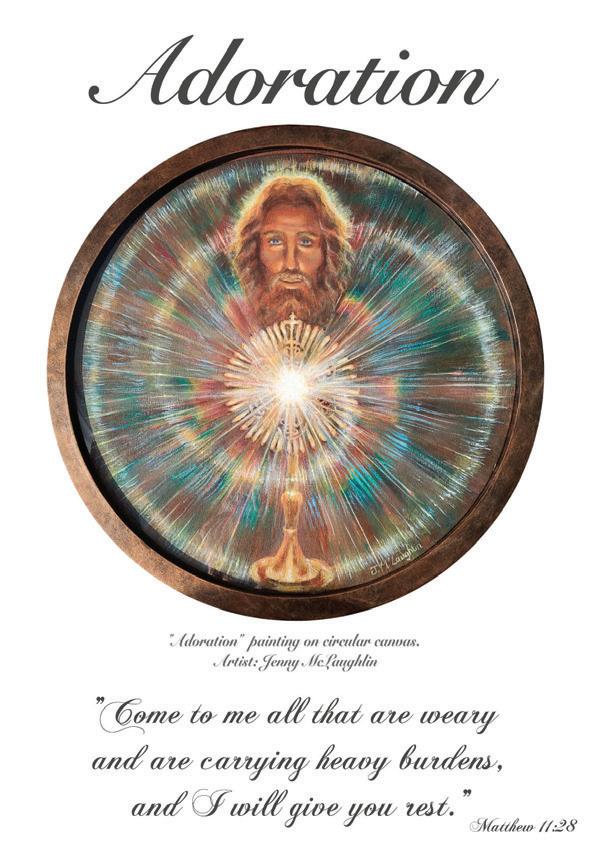
Catholic Artist and parishioner at The Guardian Angels Parish in Blackpool, Jenny McLaughlin has been painting faith inspired Artworks since 2015, as a way to express her faith.
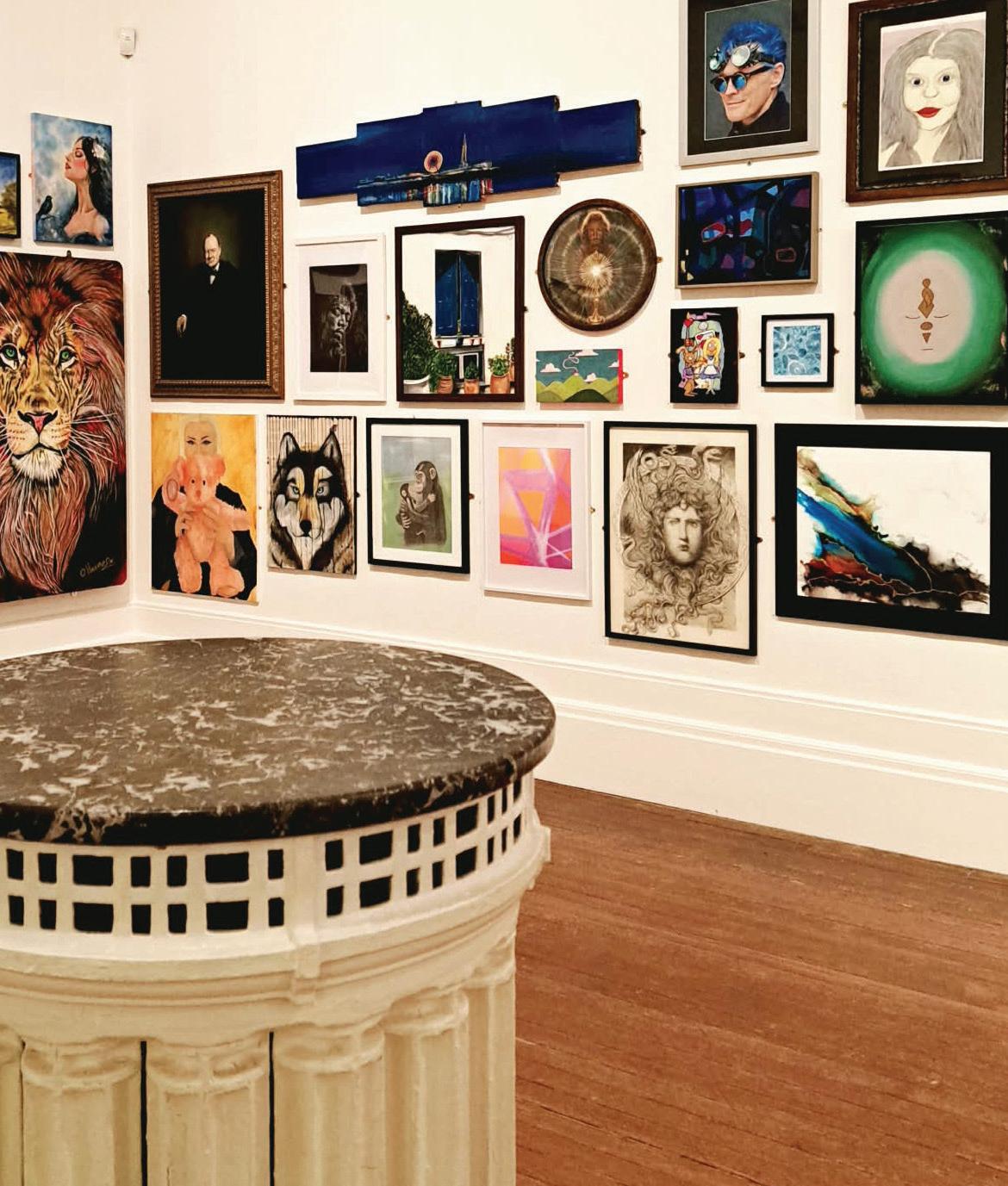
Now Jenny is delighted that her recent painting, entitled “Adoration” is currently featured in the prestigious Grundy Art Gallery, Open Exhibition 2026, in Blackpool.
“Adoration” is Jenny’s attempt to express the spiritual reality and intense beauty of Adoration. The proportions of Our Lord’s face within the painting were inspired by the Turin Shroud and The Holy Face.
Jenny says:
“I am very grateful for this opportunity to showcase my new painting, ‘Adoration’.
“It is quite unique and eye catching as it is a circular painting and it really stands out.
There are many wonderful artworks in the exhibition and it is really lovely to see all the art and the variety.
“There are many di昀erent subjects and media, artworks and exhibits on display - the Open Exhibition is a real treat! All are welcome to come along and see the exhibition and the “Adoration” painting on display.”
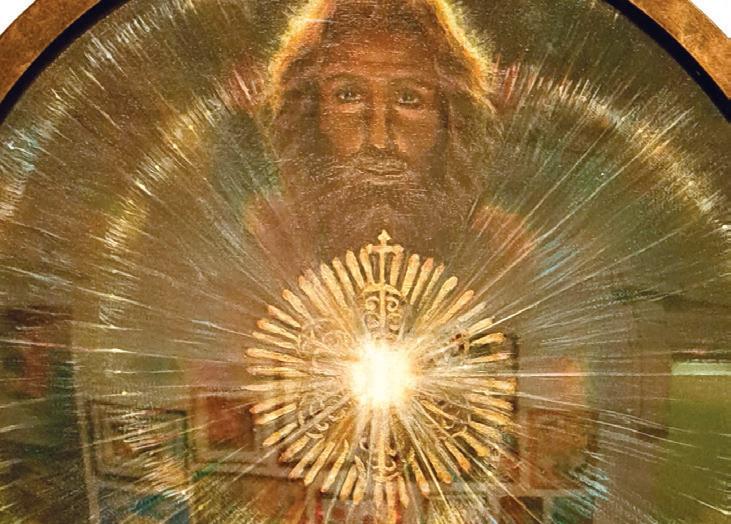
The Grundy Art Gallery Blackpool, Open Exhibition 2026 lasts until the 7th of March and features a wonderful variety of artworks, many subjects and di昀erent media.
You can also follow Jenny’s artwork collections, illustrations and paintings on her website: jenniferillustrations.co.uk