Catholic South West is a monthly newspaper for Catholics in the Plymouth, Clifton and Portsmouth Dioceses It is published by Bellcourt Ltd
AIMS
To build community in the South West by sharing stories relating to Catholic life around the South West
To encourage readers to get more involved in - or start - projects and initiatives in the local area
To provide thought-provoking articles to help readers deepen their Faith
GET INVOLVED
We need your help! Articles: We need your local articleswe can only include what we get So if you have an article or just a photo with a short description - please send it in Ideas: We need your ideas for the paper and we need your ideas in the paper If you have any thoughts on what we should include - or if you are thinking about starting a new initiativeget in touch - we’d love to support it!
Readers: If you can encourage other readers in your parish please do so Advertising: We rely on advertising - if you know of anyone that would benefit from promoting their business, event or anything else to parishioners throughout the South West, do let us know.
SUBMITTING
EDITORIAL
To send in editorial or to get in touch please contact us at: CSW - Bellcourt Ltd
N2 Blois Meadow Business Centre Steeple Bumpstead
Haverhill, Suffolk CB9 7BN
csw@cathcom org 01440 730399
ADVERTISING
To advertise in Catholic South West please contact us on 01440 730399 ads@cathcom.org
DATES
Catholic South West goes to parishes on the last full weekend of the month It is printed around the middle of the month - so if you would like to advertise or send in editorial please do it as early as possible
Wanted Parish Correspondents
The Catholic South West is looking for a Parish Correspondent in your parish to send in local news for publication in this newspaper. All items to be emailed to csw@cathcom org before 10th of the month
In the Image and Likeness of God
In the Image and Likeness of God
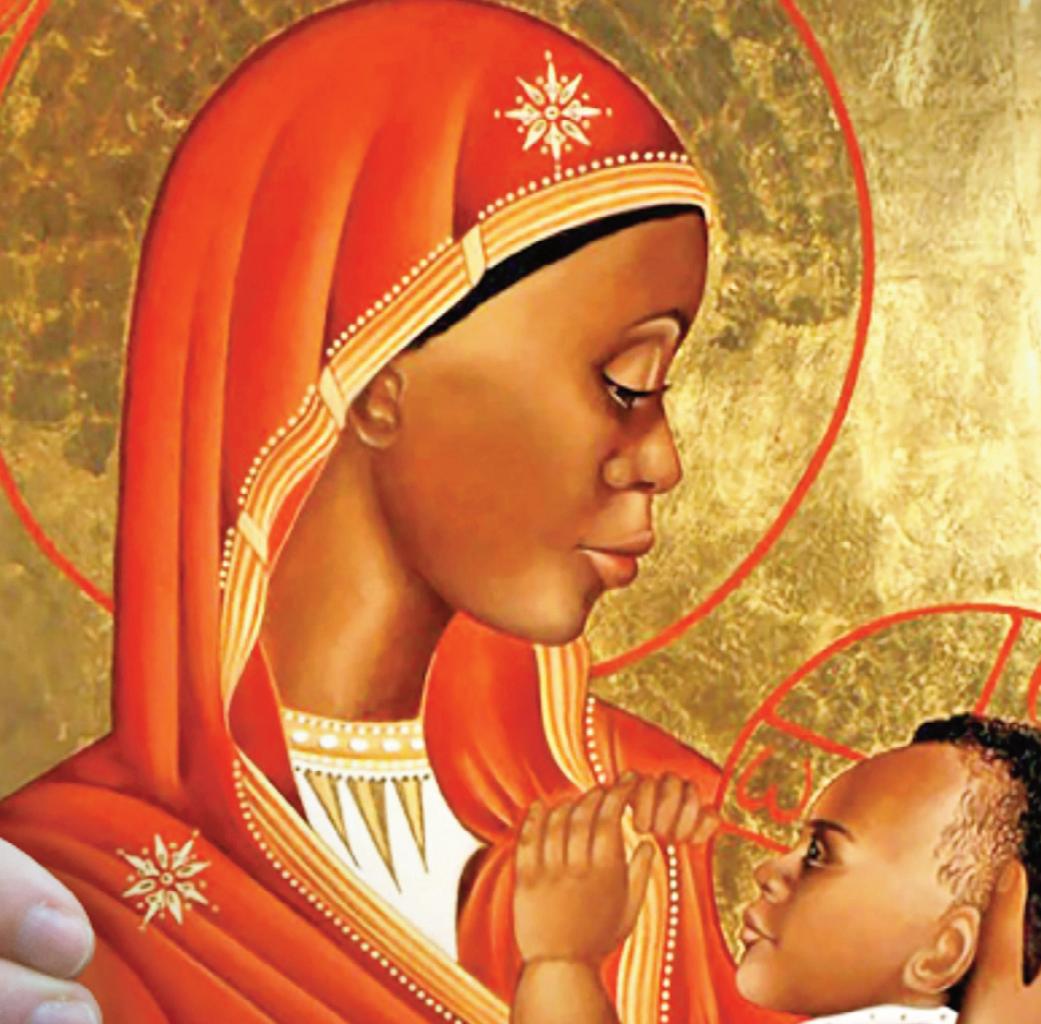
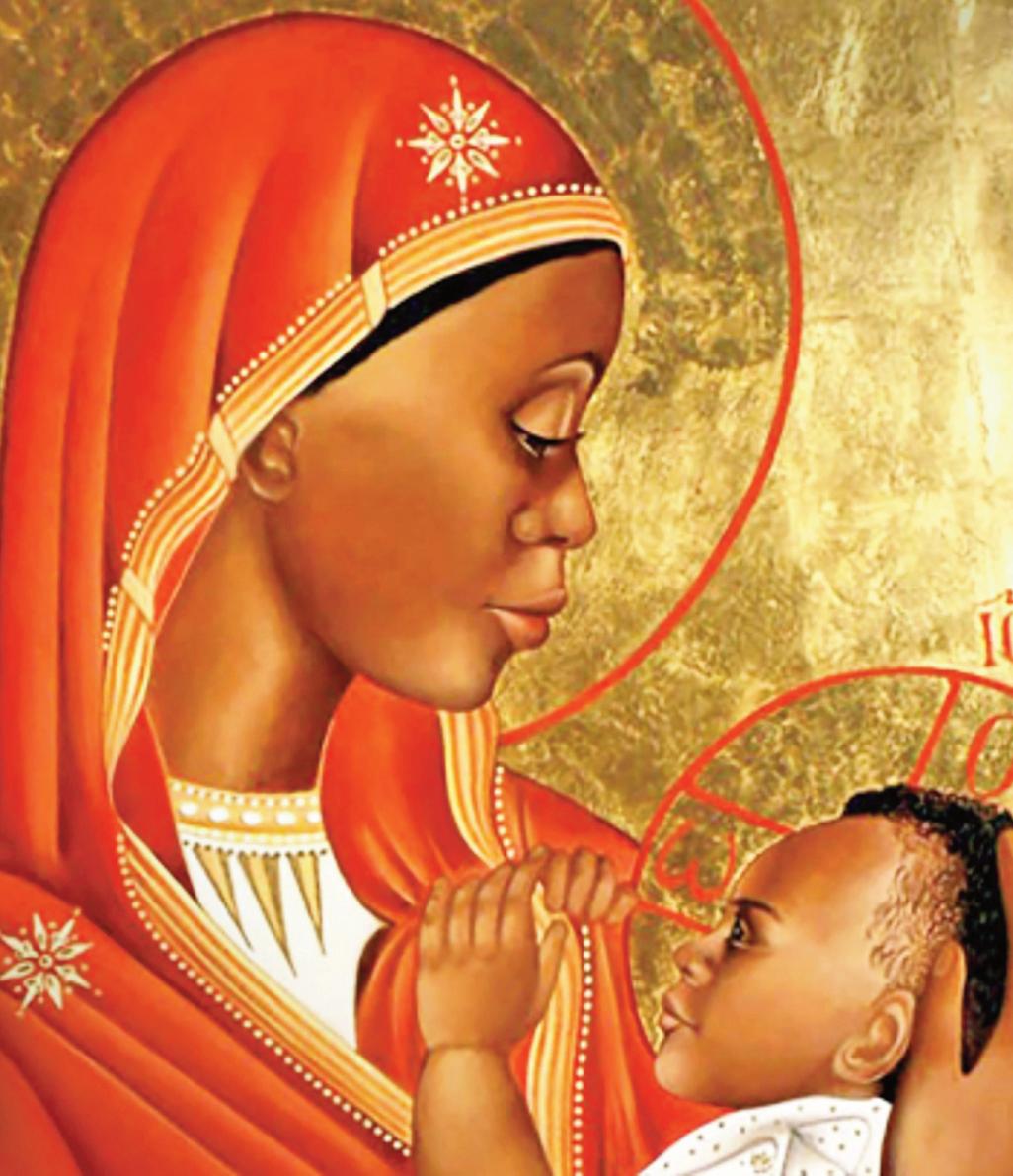
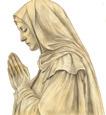
The Catholic Bishopis Conference of England and Wales (CBCEW) have produced a series of A4 PDF posters, that individuals or parishes can download, featuring Our Lady and the Child Jesus from a diverse cross-section of countries and cultures. Although by no means exhaustive, the Bishops hope this series highlights the rich diversity of our Catholic community and encourages reflection on how we are all made in the image of God. The posters also carry a prayer taken from Pope Francis’ document Fratelli Tutti. The posters are produced in English but in some cases, where possible, a suitable translation has been added.
To view all of the posters, use the QR code at the end of this article. The set of posters features images from: Brazil - The icon from Brazil is a depiction of Our Lady of Aparecida and can be found in the Brazilian Catholic Chaplaincy.
Caribbean - The icon is a depiction of Our Lady of Mercy, on display at the Episcopal Ordination of Monsignor David Macaire as Archbishop of Saint Pierre and Fort-deFrance in Martinique,
Middle East - The image of the icon of Our Lady and the Child Jesus depicted was taken in the Middle East.
Missio #1 - The photograph of this icon of Our Lady and the Child Jesus was taken at the offices of Missio in England and Wales – the Church’s official agency for overseas mission.
Missio #2 - Another beautiful icon of Our Lady and the Child Jesus photographed at the offices of Missio in England and Wales – the Church’s official agency for overseas mission.
Philippines - The image of the icon of Our Lady and the Child Jesus is Our Lady of the Philippines.
Vietnam - Rather than a 2D icon, this is a statue of Our Lady and the Child Jesus photographed at the Vietnamese Catholic Chaplaincy in East London.
EDITORIAL GUIDELINES
1) Think of the readers: If you are writing about an event, think about the readers that don’t know anything about it Outline what happened, but focus on why people go, why it is important to them, or some teaching that was given Make sure readers learn something from your article - they don t just want
PrayerWhen turning our hearts to racial justice we’d encourage Catholics to pray the words of Pope Francis taken from his encyclical letter Fratelli Tutti – on fraternity and social friendship:
Come, Holy Spirit, show us your beauty, reflected in all the peoples of the earth, so that we may discover anew that all are important and all are necessary, different faces of the one humanity that God so loves. Amen.
to know who was there and what snacks were available!
2) Keep it brief: Make sure you make your point - but keep it brief and punchy
3) Pictures: Send pictures as they are - even if they are very big to email Don’t reduce them in size or put them inside a Word document They look fine on the screen but terrible in the paper!
LEGAL INFORMATION
Please note that opinions expressed in this paper and on any linked sites or publications are not necessarily those of the Publishers, Editor, any Diocese or the wider Roman Catholic Church Every reasonable effort is
made to ensure that due acknowledgement, when appropriate, is made to the originator of any image submitted for publication It is understood that those submitting material for publication in CSW either hold the copyright or have arranged for publication with the appropriate authority
Syon Celebrates Centenary
A hundred years ago in 1925, the large estate of Marley House in South Devon was up for sale by auction after the last of the Carew family had died: Bessie and Beatrice who were benefactors to St Mary’s Rattery.
The religious community of Syon Abbey were the only English monastic community to return after 300 years exile abroad and had settled in their convent at Chudleigh from 1887. The community was latterly expanding fast with no room for those wanting to join, so they sought larger accommodation with more land to run a farm.
The Lady Abbess, Mother Teresa Jocelyn OSsS*, had a representative bid at the auction in the Seymour Hotel in Totnes. So it was that the Bridgettine Sisters of Syon secured the property with the great assistance of a lady benefactor, Dora Martin.
Abbey Farm
Numbers grew in the depression and with help from local farmers they ran a large
farm with cattle and sheep as well as keeping their very productive fruit and vegetable garden.
The enclosed Order* was founded in the 14th century by St Bridget of Sweden and they prayed their devotions to Our Lady in their chapel seven times a day as well as daily Mass, singing in chant.
They worked very hard looking after each other cleaning the huge house and caring for goats, sheep, chickens and their garden. Their vows were humility, poverty and chastity and they wore long grey habits, white black veils and the characteristic Bridgettine crowns with five red dots representing the wounds of Jesus Christ.
A camp was set up in wartime in the grounds for Polish and Italian POWs who helped them and attended Mass.
Vatican II brought changes so their prayers were in English not Latin and local villagers were able to join them for carol singing at Christmas. The Sisters
were well in touch with local and international needs for prayers and received many requests by letter, and were by no means cut off from the outside world.
Syon Closes
Numbers eventually dropped and in 1990 just nine Sisters moved to their converted stable block, called New Syon, on the east side of Marley House with their chaplain Father Robinson. The Georgian mansion itself was eventually sold and converted to private apartments after addition of the Dower House and painted from grey stucco to dark red terracotta.
It was in 2011 that the last public Mass was celebrated by Father Abbot David Charlesworth OSB from Buckfast Abbey after which Abbess Mother Anna Maria OSsS left with the two remaining Sisters to live in Plymouth. So ended nearly 600 years of England’s oldest monastery.
On Saturday October 25 last, at 2pm the fascinating history of Marley House in the time of Syon Abbey was presented to a
packed audience by the archivist Stephanie Bradley in the Old School Centre at South Brent with video recordings of Sister Anne Smyth OSsS the last Abbess Anna Maria. There was a Timeline exhibition of 600 years of Syon and Syon’s former monastic gardener, Joy Hanson, also provided reminiscences on video and displays of photographs.
Joy Hanson monastic gardener, cofounder St Bridget’s Friends Facebook group
(*O.Ss.S. – Ordinis Sanctissimi Salvatoris: Order of the Most Holy Saviour) Visit Syon Abbey’s 600-year Timeline slideshow display at… https://www.syonbreviary.co.uk/introducti on/syon-timeline-display or scan the QR code.
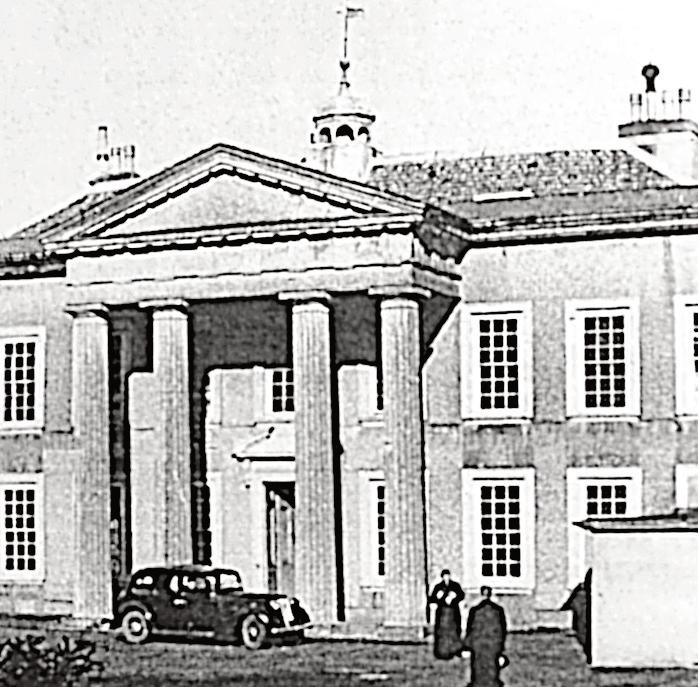
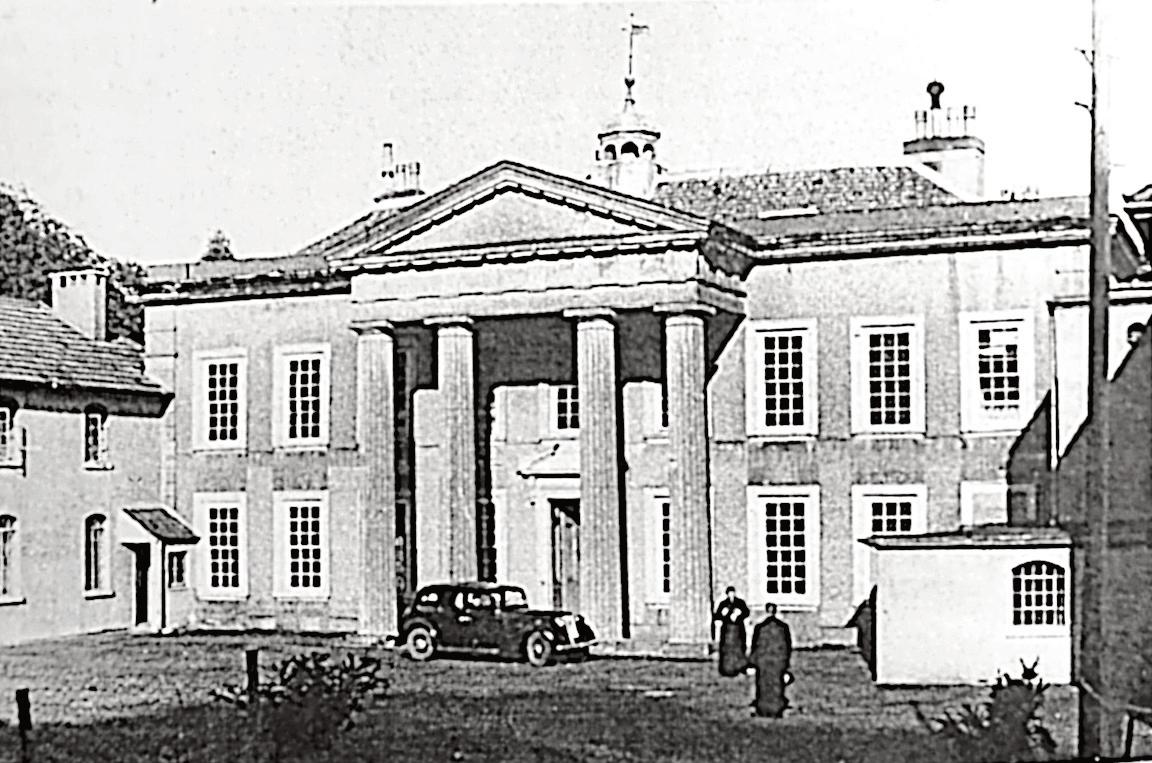
Marley House in 1950, the home of Syon Abbey (Exeter University Library MS 389/3704)
Bishop Nicholas Hudson's visit of encounter and hope to the Holy Land
The Holy Land Co-ordination of Episcopal Conferences in support of the Church of the Holy Land, the Holy Land Coordination, took place in and around Jerusalem from Saturday, 17 January to Wednesday, 21 January 2026.
The theme for the visit, inspired by the Church’s recent Jubilee Year, was: A Land of Promise: Encounter and Dialogue with People of Hope.
The Holy Land Co-ordination is a pastoral and ecclesial gathering, rooted in prayer, reflection, and attentive listening to the Christian communities and peoples of the Holy Land. The celebration of Mass is central to each day and shapes the rhythm of the meeting.
Bishops attending represented the Episcopal Conferences of England and Wales, Italy, Germany, the Nordic countries, Ireland, France, the United States, Scotland, Canada, and Spain.
Delegates from the Commission of the Bishops’ Conferences of the European Community (COMECE) and the Anglican Church also attended, alongside representatives of Catholic organisations working to support the region’s people.
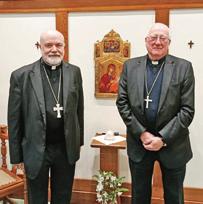
The meeting was moderated by Bishop Nicholas Hudson, Bishop of Plymouth and Chair of the International Department of the Catholic Bishops’ Conference of England and Wales.
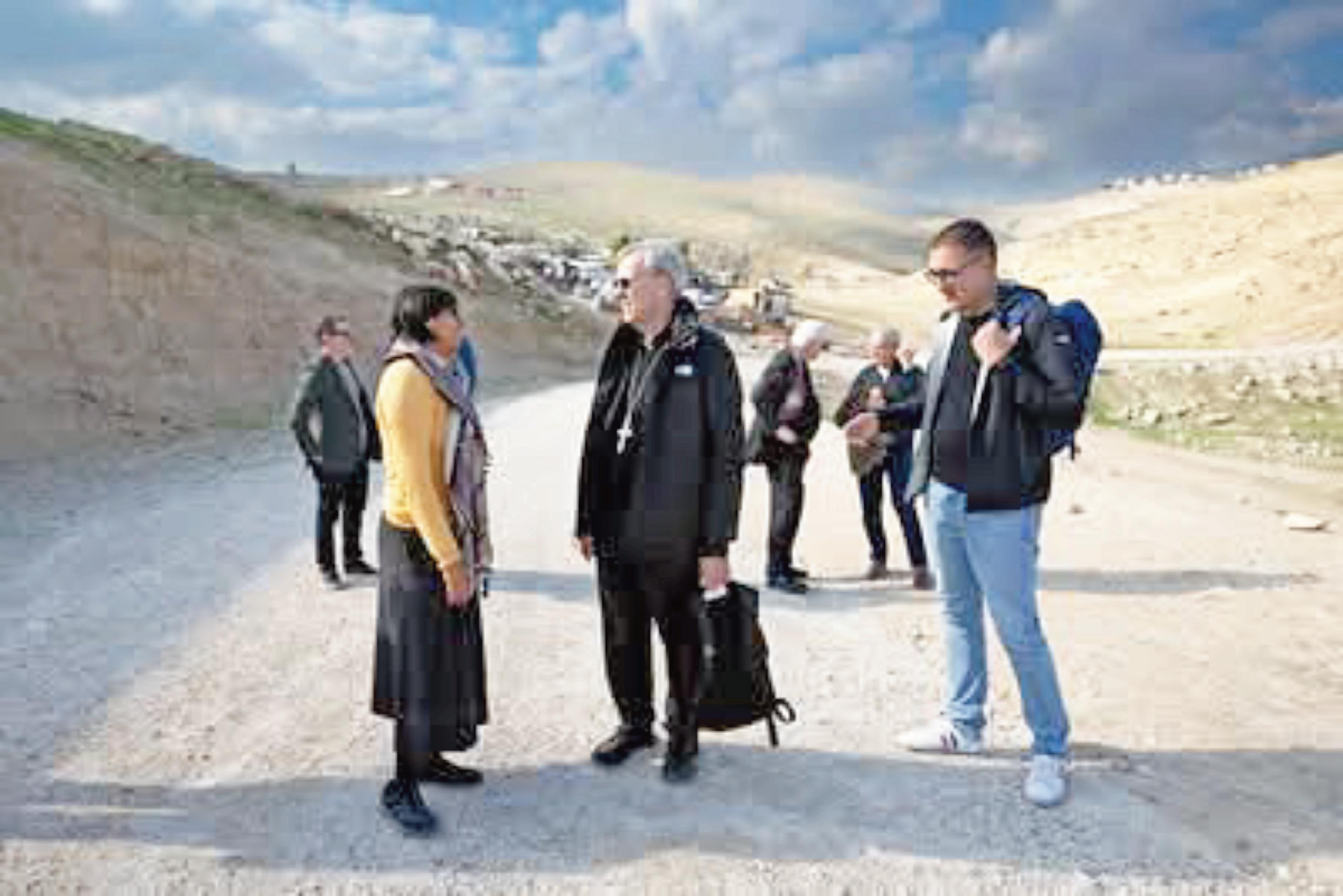
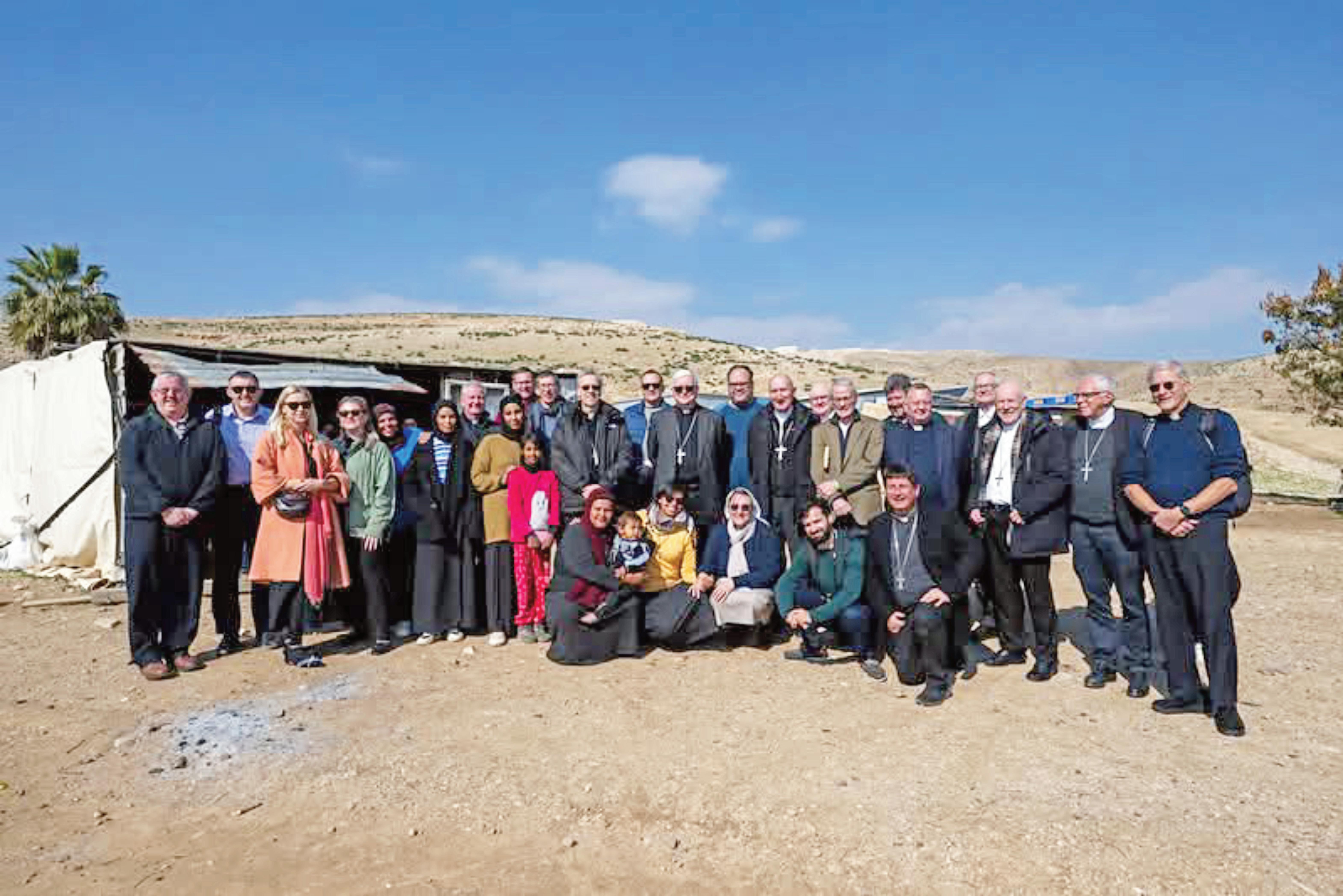
The visit combined meetings with representatives of the local Church with pastoral visits and encounter with local communities. A particular emphasis was placed on support, solidarity and care for the Living Stones – the Christians of the region.
Programme
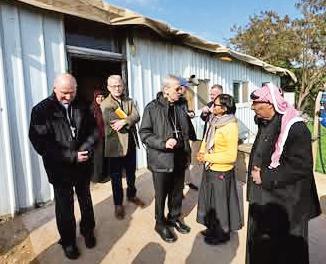
A busy programme included a visit to the Comboni Sisters to witness their pastoral and humanitarian ministry among Bedouin communities, marked by longterm presence, care for families, and a quiet commitment to dignity and justice at the margins of society. The Sisters’ work supporting Bedouin women was recently recognised with a Caritas Internationalis ‘Weavers of Hope’ award.
The local Church features prominently in the programme. The bishops met with the Latin Patriarch of Jerusalem, His Beatitude Cardinal Pierbattista Pizzaballa and the Apostolic Nuncio to Israel, His Excellency Archbishop Yilana, who is also Apostolic Delegate to Jerusalem and Palestine.
They also participated in an online meeting with Fr Gabriel Romanelli, parish priest serving the small Catholic community in Gaza that sheltered hundreds who lost their homes during the conflict.
Further meetings took place with the Saint James Vicariate, with members of the Rossing Center for Education and Dialogue, and with Rabbis for Human Rights. Delegates also heard about the work and ministry of the John Paul II Foundation, which focuses on human and
community advancement. Additional pastoral visits included the Ephpheta Paul VI Institute in Bethlehem, which provides rehabilitation and education for deaf children from across the Palestinian Territories, and the Taybeh Elderly Home.
The delegation visited the Latin Patriarchal Seminary which forms the future pastoral life of the local Church through prayer, study, and service,
Continued on next page
supporting both ordained ministry and Lay Adult Formation for service across the Holy Land in demanding circumstances.
Finally, a meeting took place with the Parents Circle – Families Forum, a joint Israeli–Palestinian organisation of more than 800 bereaved families, all of whom have lost an immediate family member to the ongoing conflict. In the midst of profound personal loss, members of the Parents Circle have chosen a courageous
path: to transform their grief into a commitment to reconciliation, dialogue, and peace.
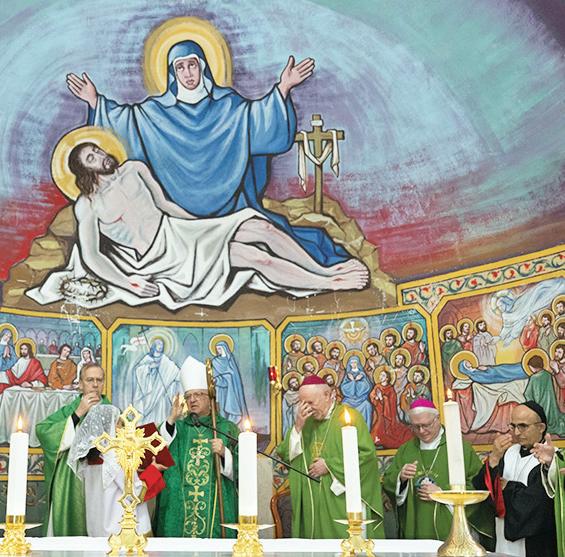
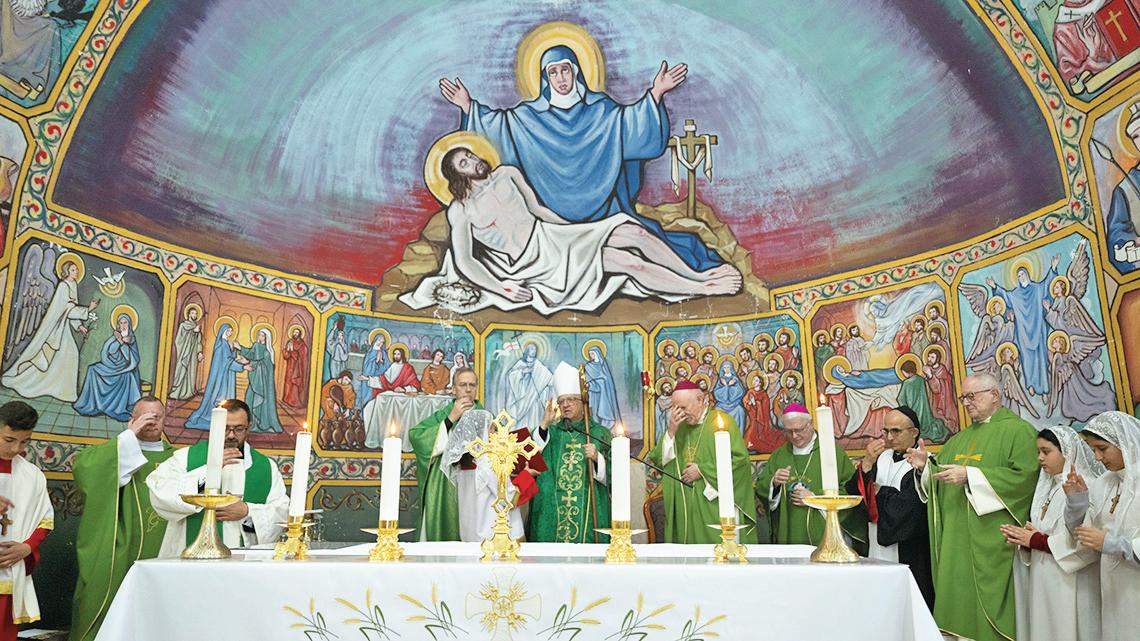
A vital element of every Co-ordination meeting is celebrating Sunday Mass with a local community. This year, the bishops celebrated Mass with the parishioners of Christ the Redeemer in Taybeh, spending the day in the village to listen, to share life, and to hear directly of the challenges faced by its people.
The Year of Francis
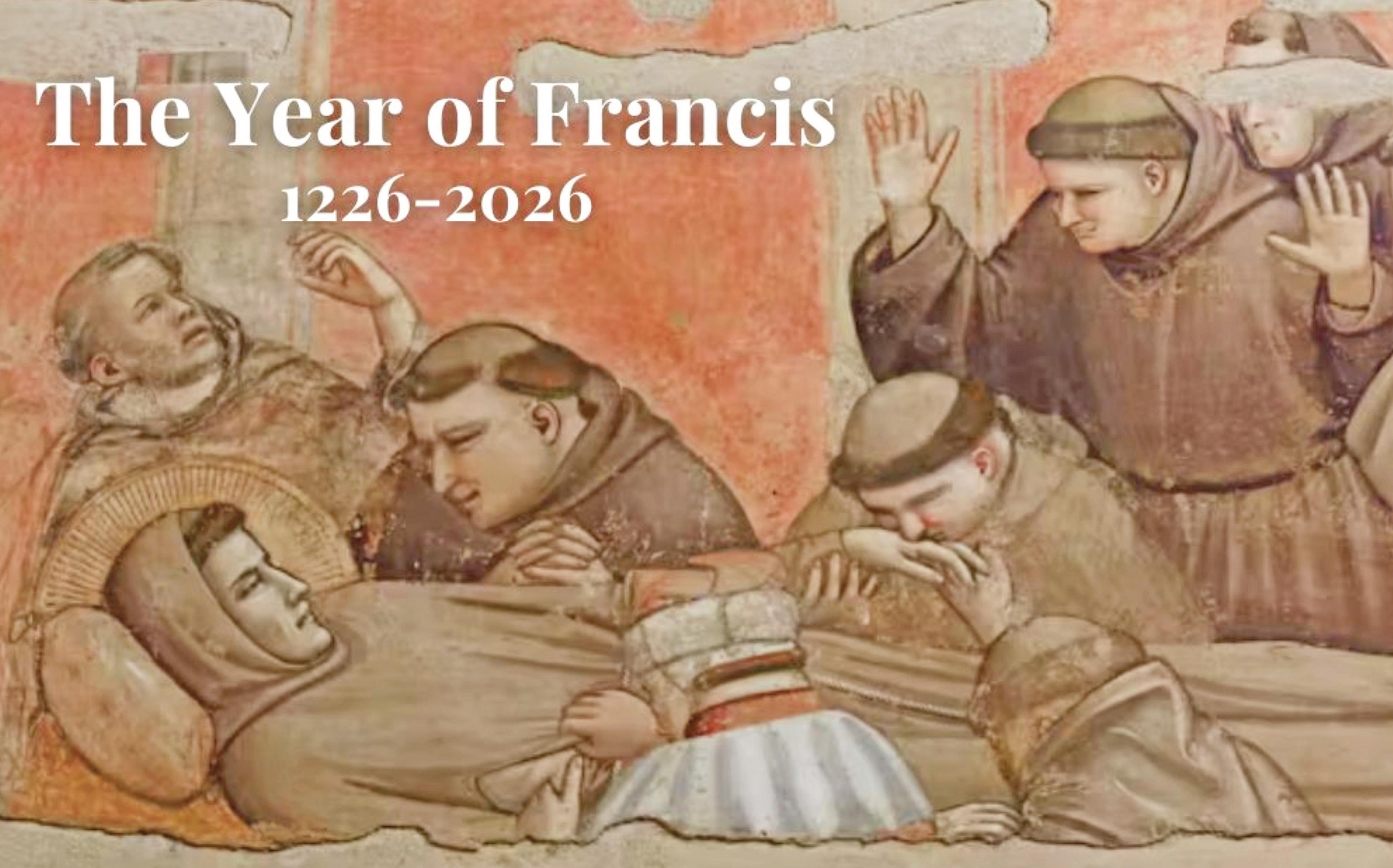
Saint Francis of Assisi died on 3 October 1226, near the small chapel he loved most.
He did not die in a grand church or monastery. He asked to be laid naked on the bare earth. He asked for the Passion of Christ according to the Gospel of John to be read to him. He sang psalms. And then, quietly, he went home to God.
Near the end of his life, broken in body, nearly blind, and exhausted by years of severe fasting, Francis did not fear death. He welcomed her as a sister: “Sister Bodily Death.” His final moments were an act of complete surrender, a last imitation of Christ who had given everything on the Cross.
How a person dies often reveals how they have lived. Francis died as he lived: poor, free, trusting, and wholly abandoned to God.
Eight Hundred Years Later
On 10 January 2026, the Franciscan family across the world, together with the Church in Assisi, gathered in prayer at the Basilica of Santa Maria degli Angeli to open the Eighth Centenary of the death of St Francis.
The world Francis knew was marked by violence, division, and deep inequality. Our modern world may appear very different on the surface, and yet in many ways it remains painfully similar. Eight hundred years after his death, in a fractured and restless world, his witness still calls us back to the essentials. The faithful from every corner of the globe continue to be drawn by the life of this small, unlikely man. But why?
Francis refused to dilute the demands of the Gospel. He embraced it without reserve, choosing poverty over comfort, peace over power, and humility over status. The Gospel was not simply something he believed; it was the pattern of his entire life, shaping every choice he made.
So completely did Francis give himself to Christ that he prayed to share both the physical suffering of the Cross and the burning love with which Christ offered himself. This prayer was answered. Two years before his death, Francis received
the wounds of Christ on his hands, feet, and side, becoming the first recorded saint to bear the stigmata.
From this radical conformity to Christ flowed a life that could not be contained. Francis founded a worldwide family of friars, sisters, and lay people, now spread across every continent. Yet his influence reaches far beyond those who wear a habit.
The Franciscan Jubilee
In the context of this centenary year, Pope Leo XIV has proclaimed 2026 a Franciscan
Jubilee, inviting the whole Church to rediscover the heart of the Gospel through the life and witness of St Francis.
A particular grace of the Year of St Francis is the plenary indulgence attached to this Jubilee, addressed in a special way to the members of the Franciscan families of the First, Second, and Third Orders, Regular and Secular, as well as to Institutes of Consecrated Life, Societies of Apostolic Life, and associations that observe the Rule of St Francis or draw inspiration from his spirituality.
At the same time, this grace is extended to all the faithful, who, with hearts detached from sin, participate in the Jubilee by making a pilgrimage to any Franciscan conventual church or place of worship dedicated to St Francis of Assisi anywhere in the world. With particular tenderness, the Church has ensured that the sick and the elderly, and those unable to leave their homes for serious reasons may also obtain the plenary indulgence by uniting themselves spiritually to the Jubilee celebrations and offering to God their prayers, sufferings, and the daily difficulties of life. In this way, the mercy proclaimed by St Francis is made accessible to all, regardless of circumstance.
Most dioceses across the UK have a parish or church explicitly named after St Francis of Assisi, and every diocese has at least one church or place of worship connected to the Franciscan charism. This includes Franciscan friaries,
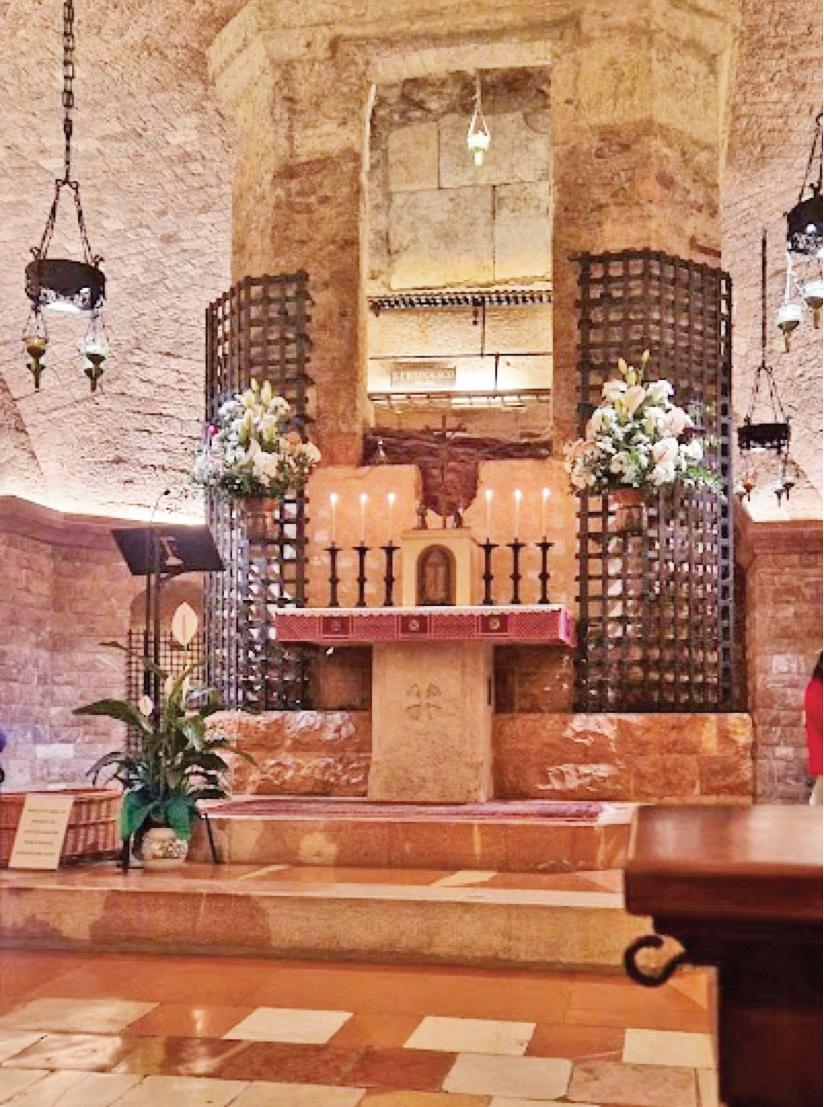
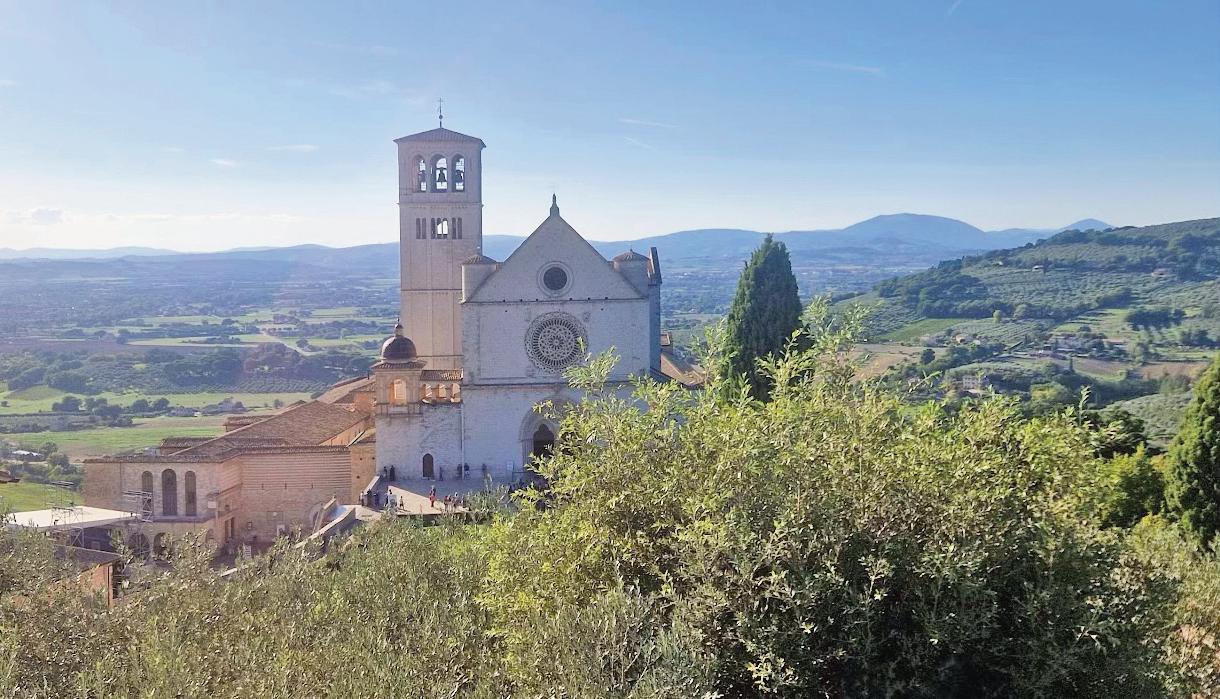
Basilica of Saint Francis, Assisi. Italy
Franciscan and Poor Clare convents, shrines and chapels, as well as churches dedicated to other great Franciscan saints such as St Clare of Assisi, St Anthony of Padua, St Bonaventure, and St Maximilian Kolbe. In the spirit of the Jubilee decree, these places are natural local points of pilgrimage, ensuring that the grace of the Year of St Francis is accessible to all the faithful, including those unable to travel to Assisi.
Ask your priest how the Year of Francis will be lived in your parish and diocese.
Veneration of the Mortal Remains of Saint Francis
As part of the centenary celebrations, pilgrims are invited to venerate the mortal remains, the bones of St Francis. After his death, and out of fear of medieval relic hunters, Francis’s body was hidden.
Almost six hundred years later, in 1818, Pope Pius VII ordered a search for the tomb, which was successfully rediscovered beneath the altar of the Lower Basilica of St Francis.
The tomb was last opened in 1978 under Pope Paul VI for inspection, at which time the remains were placed in a sealed protective container to ensure their preservation. Now, in 2026, Francis’s body will be exposed for public veneration for the very first time.
Public veneration will take place during the season of Lent, from 22 February to 22 March. Due to the large number of pilgrims expected to travel to Assisi for this extraordinary event, an online booking system has been introduced to manage access. Further information is available at www.sanfrancescovive.org.
A Year to Walk Alongside Francis
While praying before the crucifix in the ruined church of San Damiano, Francis heard Christ say: “Francis, go and rebuild my Church.”
At first, he understood this literally. He rebuilt ruined chapels with his own hands, before slowly realising that Christ was calling him to something deeper, not the rebuilding of stone walls, but the rebuilding of hearts and lives.
This year, the same invitation is extended to us.
Go and rebuild what God desires to restore within you.
Go and rebuild the places where trust and relationships have weakened.
Go and rebuild holiness in the ordinary details of daily life.
Eight hundred years after Francis met Sister Death, his life still points us to Christ and calls us to live the Gospel without compromise.
The journey with Francis begins today.
The Franciscan Year runs from 10 January 2026 to 10 January 2027. Gwen Wiseman
For pilgrimages, retreats or visits to Assisi, contact Gwen Wiseman: gwen@viaassisi.com | www.viaassisi.com
International Day of Prayer and Awareness Against Human Trafficking
Sunday 8th Feb was the 12th International Day of Prayer and Awareness Against Human Trafficking, on the Feast of St Josephine Bakhita, the patron saint of victims and survivors of Human Trafficking and Modern Slavery.
Each year people of faith and goodwill from around the world are invited to join a global movement of prayer, reflection and action against the injustice of human trafficking.
This year’s theme, “Peace Begins with Dignity: A Global Call to End Human Trafficking,” draws inspiration from Pope Leo XIV’s powerful reminder that true peace is gentle and humble, born of love, and sustained where human dignity is upheld. The exploitation and objectification of people through trafficking fundamentally destroys the foundations of peace and justice, making its eradication essential to building a just world. Let us respond with open hands, open eyes and ears, open hearts and open communities, promoting a spirit of encounter where every vulnerable person is seen, heard and welcomed.
Through prayer, we open our hearts; through reflection, we deepen our commitment; and through action, we bring Christ’s peace and freedom to those who need it most.
Modern Slavery is happening in our villages and cities, hidden in plain sight. Caritas has produced posters for every church in the Diocese to help people spot the signs of Modern Slavery and how to report concerns.
Scripture Focus
By Fr Jeremy Corley
The Story of our Salvation
During the Lenten season, the Sunday Old Testament readings give us some highlights from the story of our salvation.
On the First Sunday of Lent (22 February) we heard the Genesis story of the creation of our first parents, followed by their sin. Even if we understand the Garden of Eden story as a symbolic description of the human condition, it points to an important truth. Although we were made by God, we are liable to sin and need redemption.
The figure of Abraham is the focus on the Second Sunday of Lent (1 March).
We hear God’s call to him to leave his homeland and travel to a place that God would show him. God promised him that all the families of the earth would be blessed through him.
St Paul later says that God’s promise to Abraham looks ahead to Christ, a descendant of Abraham, who brings blessings to all the nations on earth. And we call Abraham our father in faith because he obeyed faithfully when God called him.
We move to the Book of Exodus on the Third Sunday of Lent (8 March). Just as Abraham once set out in obedience to God’s call, so the Israelites were now journeying out of Egypt towards the Promised Land, led by Moses.
In such a hot climate, they experienced severe thirst and were afraid of dying in the wilderness. But God told Moses to take his stick and strike the rock, so that water would pour down to give the people drink.
Some of the early church fathers drew a parallel with St John’s Passion Story, where Jesus’ side is pierced with a lance, causing water and blood to flow out. Here they saw the water as symbolising Baptism and the blood as symbolising the Eucharist.
King David is the centre of attention in our first reading on the Fourth Sunday of Lent (15 March). When the Israelites are in the Promised Land, they demand a king. After the failure of Saul, God chooses for them an inspired leader, David, yet originally, he was not even considered a possible candidate.
When the prophet Samuel comes to Jesse’s household to anoint one of his sons, David is not even included in the gathering. Instead, as the youngest son, he has been left minding the sheep in the fields, yet David turns out to be the chosen one.
Much later, when the Messiah came, descended from David, some asked: “Can anything good come from Nazareth?” He was born in a stable and died on a cross, yet we believe that he is the Saviour of the world.
We move ahead on the Fifth Sunday of Lent (22 March) to the time when the Israelites had been taken into Babylonian exile. Though they were the chosen people, they had seriously sinned, so God decided to teach them a lesson and call them back to himself.
But while they were in exile, God sent them the prophet Ezekiel to renew their hope. At the end of the vision of the valley of dry bones, God tells the people: “I will put my Spirit within you, and you shall live, and I will place you back in your own land.”
God was telling the Israelites that their moribund nation would be revived and allowed once again to return to its own territory—which happened a few years later. The Church sees Ezekiel’s vision as pointing forward to the greater miracle of Christ’s resurrection, and indeed to the resurrection of all who believe in him.
During Lent we can meditate on these past events and learn from them. Just as God called Abraham, so he calls us. Just as God provided water for the thirsty Israelites at the time of Moses, so he provides for our material and spiritual needs.
Just as God chose the unlikely figure of David to lead the Israelite people, so God can work in unlikely ways in our own lives. And just as God revived the moribund nation of Israel when it was in exile, so God can give us new life when we have sinned. Thus, these readings can encourage us on our Lenten journey, through challenges to the resurrection.
View from the Pew
By Dr Jay Kettle-Williams
Mighty oaks from little acorns grow …
‘Mighty oaks from little acorns grow’ is a 14th-century English proverb coined by Geoffrey Chaucer in his epic poem ‘Troilus and Criseyde’ (circa 1374) which, set during the potentially legendary decadelong Trojan War (12th or 13th century BC) between the Achaeans (Greeks) and the city of Troy (in modern-day Turkey), focuses on the doomed romance between Troilus, a Trojan prince, and Criseyde, a beautiful woman caught in a web of loyalty and betrayal.
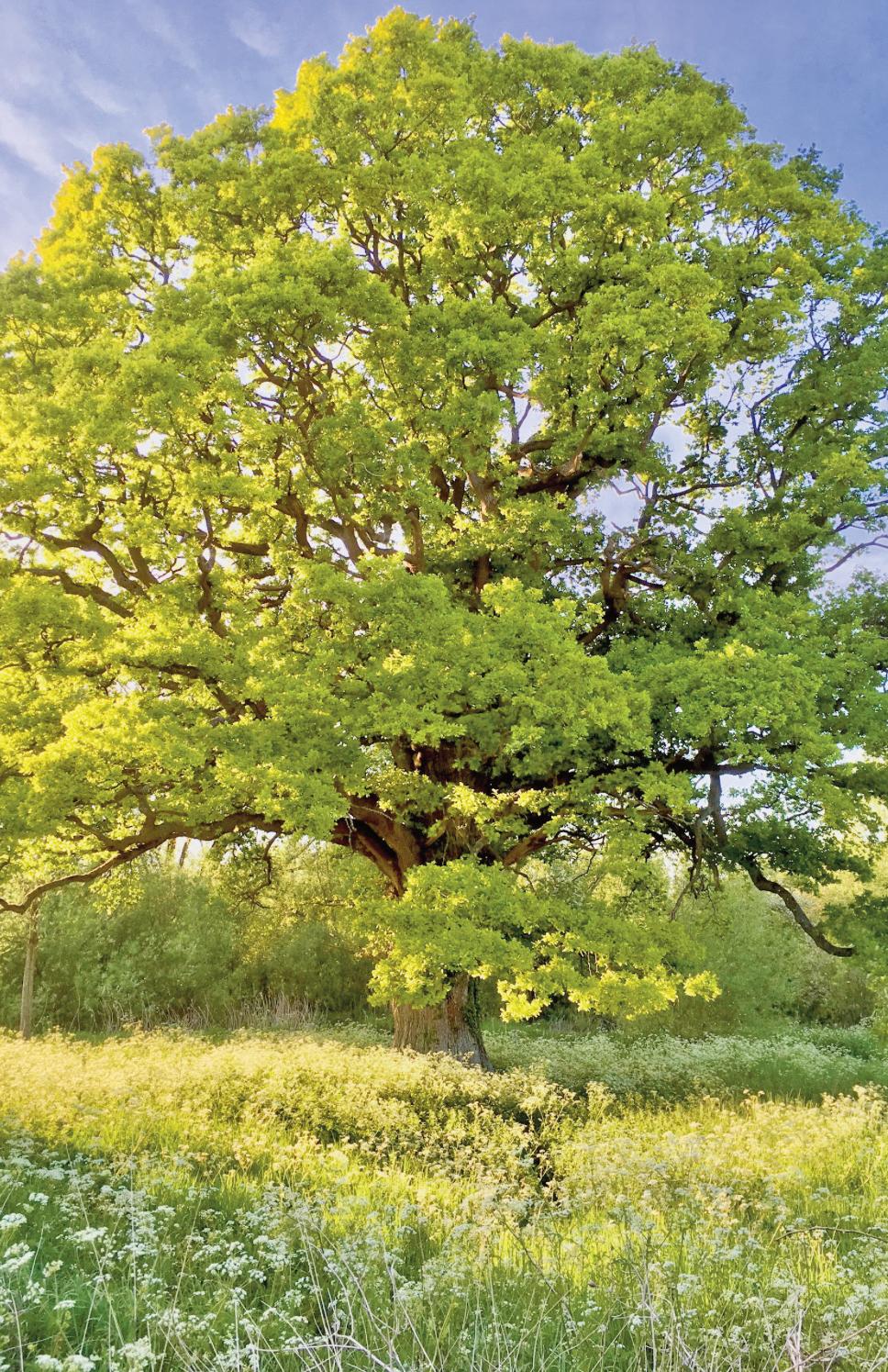
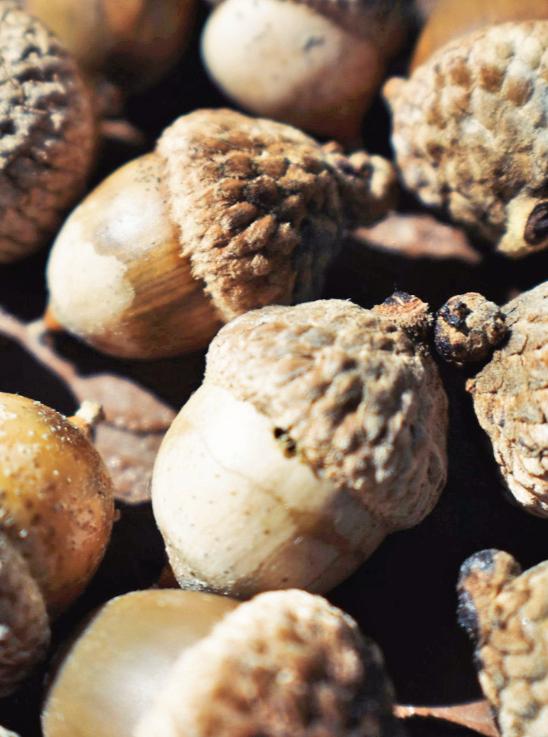
I like to imagine that there were no oaks mightier than those at Mamre, where Abraham, a man of resolve and conviction, settled circa 2000-1500 BC and built an altar to the Lord. That ancient site in the Judean hill country near Hebron had been specifically associated with oak trees, the acorns of which symbolise strength, growth, potential, perseverance and all manner of related qualities. The small, hardy acorn reminds us that great things can come from the smallest, the humblest of beginnings. For such reasons, throughout time and over space, acorns have had a multicultural or even pancultural association with life, rebirth and even divine blessing.
In order to flourish, the acorn needs to fall by no will of its own onto fertile ground, to take root and then be nurtured and brought forth. That ‘nature-cum-nurture’ element to the acorn’s ‘quercine situation’ (Latin ‘quercus’ meaning ‘oak’) could be taken to apply just as well to the development of our own young.
The resolve and conviction we attribute to Abraham strike me as rather like those will-o'-the-wisps of folklore, typically attributed as ghosts, fairies or elemental spirits meant to reveal (or conceal) a path or direction, as difficult to concretise as the early-morning mists. I freely admit that the older I get – or perhaps it’s the more mature I become - the more my conviction or assuredness does wane in the face of an increasing number of topics. I don’t see things as black and white as I used to. There are so many more hues, more nuances, more shades to be taken into account. But on those points where I remain sure, you will never shake my conviction. One such topic is the role of the family unit, as important for us as for all creatures great and small.
The Mystics, we recognise, drew on the images and the realities of secular life in order to convey their convictions, to explain and spread their message to the commoners of their day. A prime example of such ‘worldliness’ in the language of the Mystics is the depiction by St Teresa of Avila (1515-1582) of our human soul as a castle with many rooms, yet made out of a single diamond. A potential example, had the Mystics chosen to use it, could well have been the image of the acorn to expound on parenting within the family unit.
Tragically it has been widely reported these days that preparedness for the role of parenthood can be lacking to such an extent that responsibilities traditionally addressed by the family unit need to be picked up by other sectors beyond the home.
I listen to the call from child psychologists, from educationalists and I agree: families make the bricks on which society is built and rests. The role of the family unit is to prepare the child for society beyond the home, to function responsibly within and in support of society at large. The role of the parents, among their many responsibilities, is to prepare the child to comply but without sacrifice of individuality. Education, the ‘leading forth’ of the child (Latin ‘educare’ meaning ‘to lead/bring forth’), should be to liberate, to release the child’s talents, never to straightjacket them.
So my thoughts return to Chaucer and those little acorns.
Had Abraham known of those words coming from Chaucer, he would surely have responded with a wry, knowing smile when he raised that altar among the oak trees at Mamre. Of that I’m convinced. -o0o-
Postscript: The Spanish mystics are major figures in the Catholic Reformation who lived primarily in the 16th- and 17thcenturies dedicated to reforming the Church structurally and to renewing it spiritually. They sought to express in worldly terms their experience of a mystical communion with Christ.
Notes, Acknowledgements and Attribution: Accompanying image (Statue with Blowing Horn) after the sculpture Exultate Jubilate by Philip Jackson; Texts/References adapted and/or adopted from http://en.wikipedia.org under the terms of the Creative Commons AttributionShareAlike License 4.0: /; Photographs (Unsplash): Acorns by Lesli Whitecotton; The Oaktree by Blake Ludwig.
Attending the diocesan residential for teens
A full day of hearing migration stories
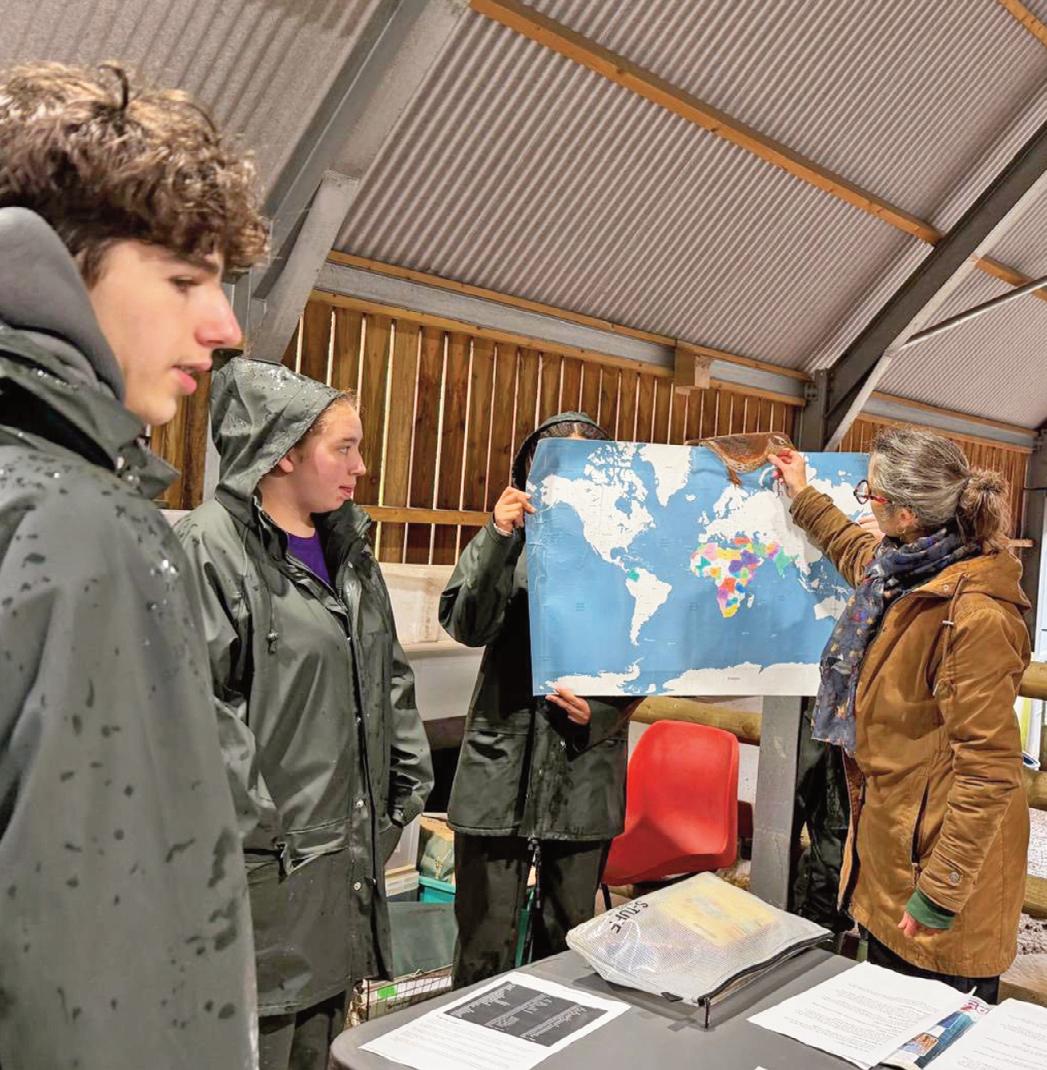
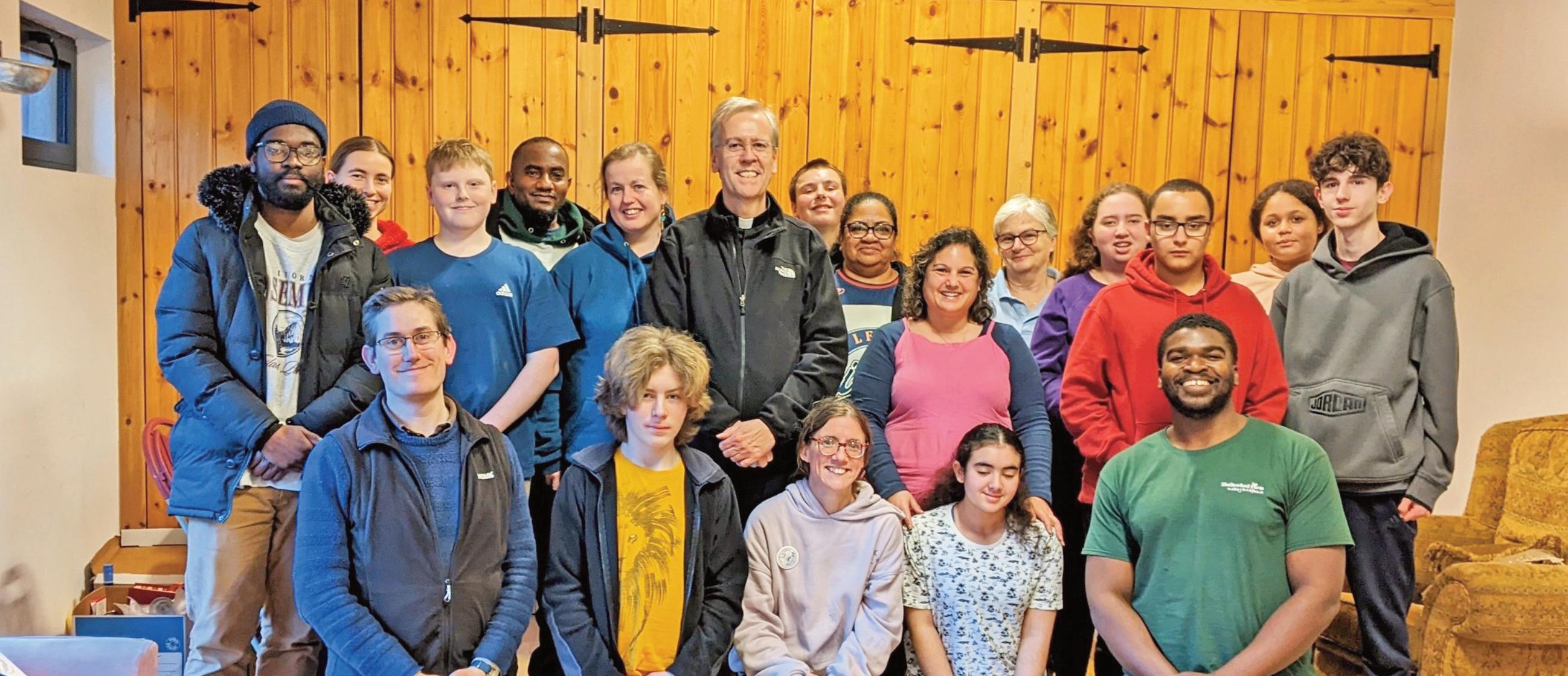
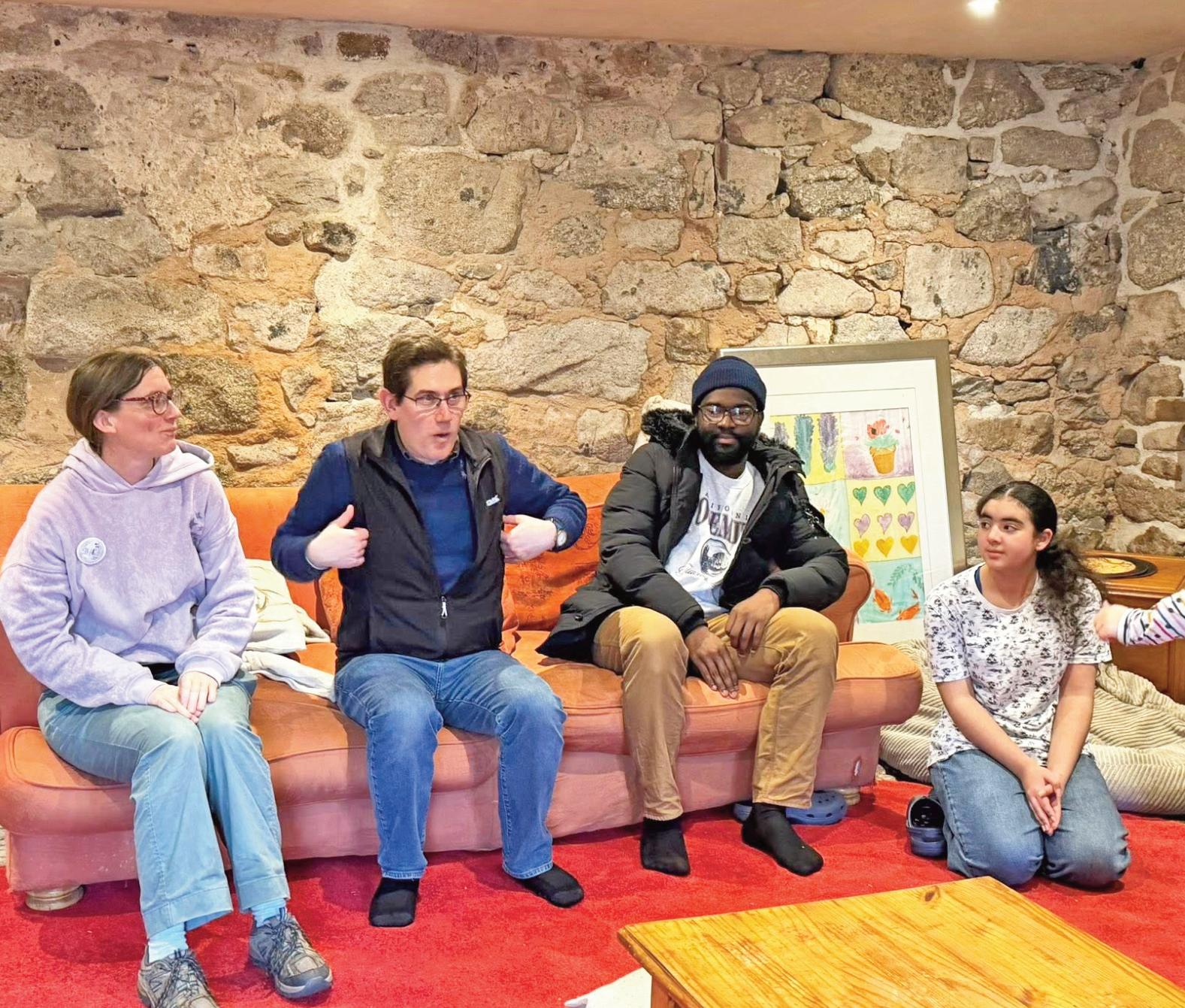
Bishop Nicholas celebrated Mass recently with a wonderful group attending the diocesan residential for teens at East Shallowford Farm on Dartmoor. The young people met refugees and people who are seeking asylum to hear their stories. Let us pray for our young people as living witnesses to hope.
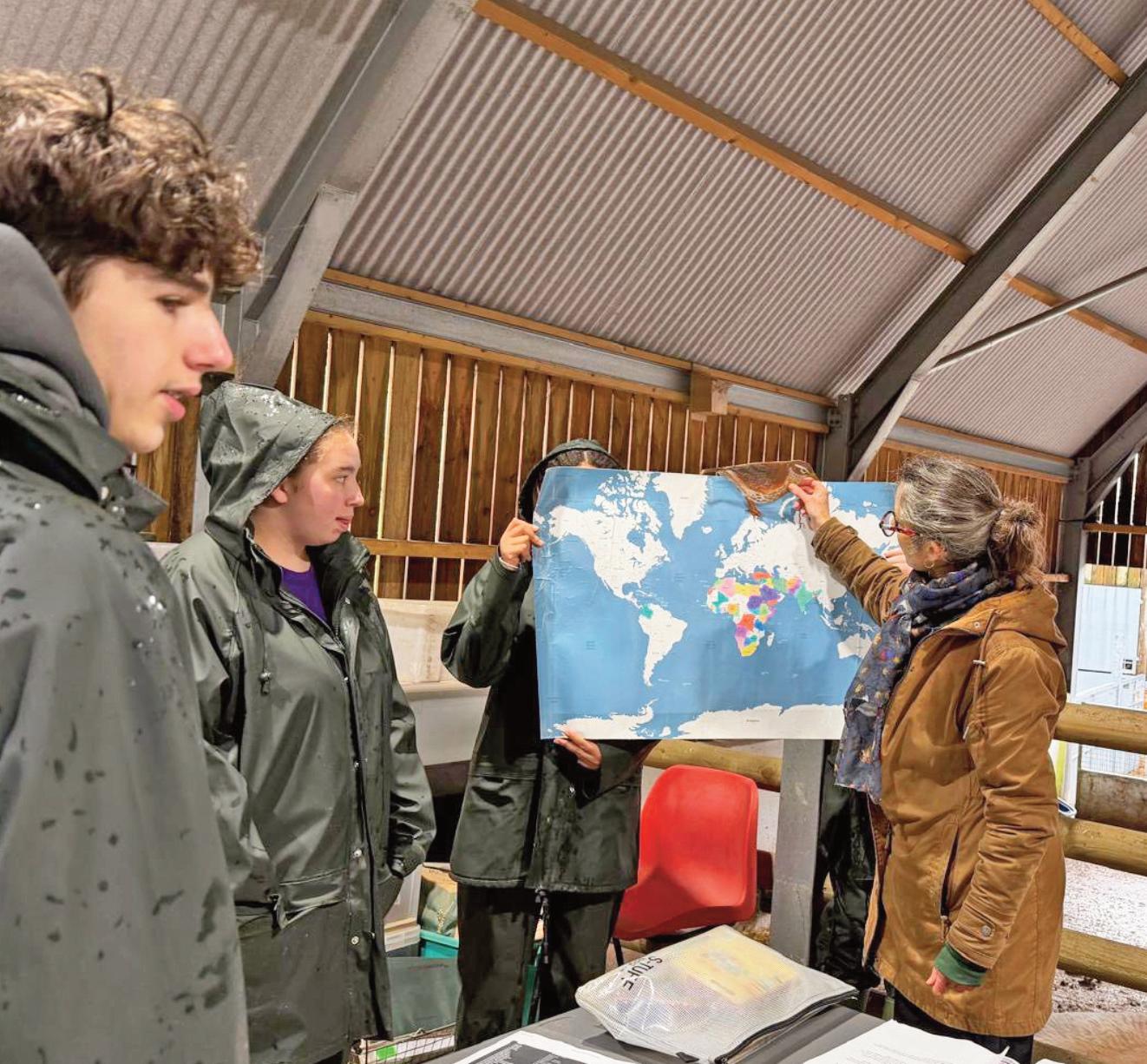
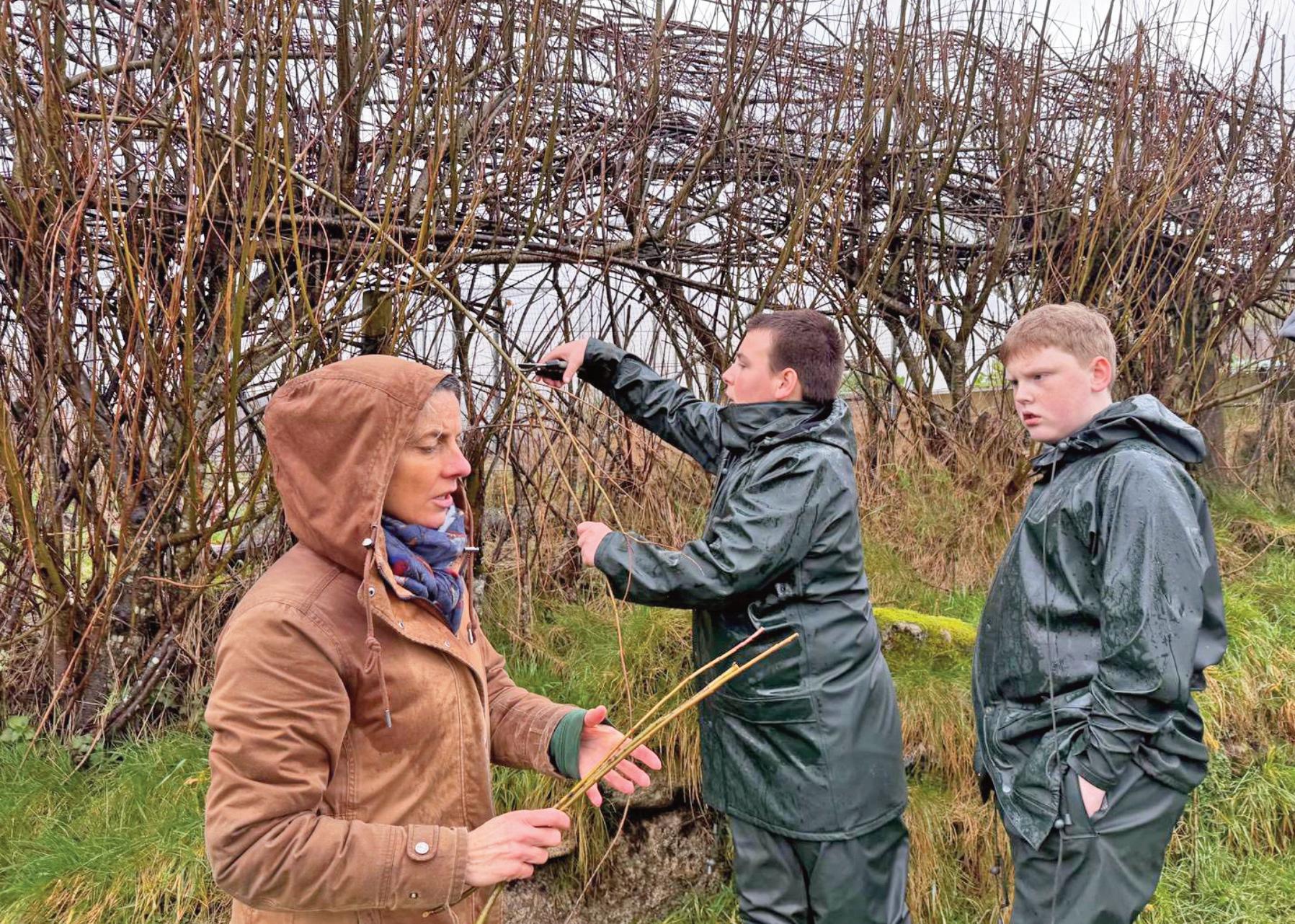
A full day of hearing migration stories, including migration of birds. After hearing more about the stories of our refugee and asylum seekers visitors, we made bird feeders and drew pictures of birds. Migration bingo gave us all food for thought.
Our young people took a walk to see the stars. We are thankful to Bishop Nicholas saying Mass.
The Fool’s Pilgrimage – The Juggler
I have always loved synchronicity - the quiet power of coincidence that feels anything but accidental. I experienced it recently in two small but connected moments.
First, an Instagram reel appeared from a friend speaking about the Tarot card The Two of Pentacles: a medieval court jester, arms outstretched, juggling two golden coins. Then, not long after, a PT client shared a story about her son, who works for a large bank. On a training course, the facilitator spoke about how we all juggle life - work, family, responsibility, expectation, hope, worry.
And of course, that rings true.
Life is rarely one thing at a time. It is many things, held imperfectly, all at once.
But it made me pause - are all the balls the same?
What actually happens if we drop them?
The truth is, some will bounce. Some may roll away for a while and be picked up later, or replaced without too much consequence. But others… others are made of glass. And if we drop those, they can crack - sometimes in ways that can never be restored to what they once were.
Part of the pilgrimage - this long walk through life, towards that sacred place - is discernment: learning to recognise which balls are glass.
That recognition looks different for each of us. What is fragile and irreplaceable in one life may not carry the same weight in another. There is no comparison here, no hierarchy of importance. Only the quiet, honest work of awareness.
And yet, here is something deeper still.
Not all glass begins as precious.
Some of the most fragile things we carry start small, vulnerable, almost breakable by design - like a newborn child, a fledgling relationship, a tender calling, a fragile faith. In their early days, they require constant attention, two hands, unwavering care. They must be held gently.
But with time… with love… with intention… something remarkable happens.
What was once fragile can become precious.
And what is truly precious, when tended well, does not remain weak. Like carbon under pressure becoming diamond, these things can lose their fragility without losing their value. They become resilient. Enduring. Almost unbreakable - not despite pressure, but because of it.
The juggler’s temptation is always the same: to keep everything moving. To prioritise what shouts the loudest. To mistake urgency for importance. We can become very skilled at juggling, while slowly neglecting what matters mostbusy, capable, and subtly misaligned.
Faith calls the pilgrim into a different way of holding life - not as a performance to be managed, but as a trust to be stewarded.
Some things are not ours to handle casually. They are entrusted to us: our relationships, our integrity, our health, our inner life, our attention to God and to one another. These may begin as glassfragile not because they are weak, but because they matter.
And pilgrimage does not promise safety.
Hands still tremble. Steps still falter. Drops still happen.
But something shifts when we walk with integrity of spirit, humility of self, and purity of heart. When our intentions are honest and our lives aligned with who we truly are, even the fragile things seem to gain strength - not by becoming harder or less precious, but by being held with care, supported by truth, and carried at the right pace.
Alignment does not prevent cracks. But it often prevents shattering.
So I ask you: What glass balls are you carrying on this Fool’s Pilgrimage?
Which ones deserve both hands - your full attention and your gentlest care?
And where might a small realignment
allow what is fragile not merely to survive, but to endure… and perhaps even become something unbreakable?
May the light you carry be gently protected.
And may you learn - as all fools mustwhat is truly worth holding. Namaste
GATHER 26 –Journeying
The annual GATHER conference will be taking place from 20th-22nd March at Livermead Cliff Hotel, Torquay. This year’s theme is ‘I will put my spirit within you, and you shall live’.
Avril Baigent from the School for Synodality will open the conference by speaking about the power of synodality and introduce participants to Conversations in the Spirit. Fleur Dorrell (The God who Speaks) will be using the Book of Tobit to talk about journeying and accompaniment.
Pauline Books will be bringing a selection of their excellent range for people to peruse and buy, and you can expect a warm welcome and a wonderful weekend of faith, formation and friendship.
Gather will also be joined by Bishop Nicholas.
Booking forms are available from parish offices or by emailing plymouthgather@yahoo.com.
Erratum: We apologise for omission of standard acknowledgements incl. to The British Library for imaging ref: View from the Pew (Feb, 2026).
Dan Sobey
You can use both sets of clues to solve the puzzle: the solutions are the same. CRYPTIC Across
5 God invites in accountant, about to have tea with the taxman (9)
8 Cliff in Edom drinks, backsliding (4)
9 With Capone's acceptance into church official, it's almost Babylonian (8)
10 Old Archbishop of Canterbury could be Brown's double (7)
12 Golden cloud, virtually, is seen to the west of Canaanite city (5)
14 He wrote masses; marginally down after book fair (5)
15 Song uncle's preferred to old capital (7)
17 Jude Hunt is an alias for David's Levite (8)
18 Other half of Jezebel is primarily as hard and brazen (4)
19 16 mostly responsible for this festival? (9) CRYPTIC Down
1 Get a mug over here for the wine miracle (4)
2 Scots chap supporting two accounts leads to a schism (7)
3 British king's framed in the style of an OT monarch (5)
4 Sikhs meet here to condemn a drug war (8)
6 James' rule to rewrite the Bible? (9)
7 Hours in church after weird icon appears during passage (9)
11 Cleric's in front, ahead of the leading Essene Jew (8)
13 Canaanite city's discovered thanks to an article on a church (7)
16 Caucasian Carmelite cleric's gone missing (5)
18 Blunder losing front part of the church (4)
QUICK Across
5 Jericho 'sinner' who, having Jesus to his house, subsequently gave half his property to the poor (9)
8 Rocky plateau at the foot of which the Nabataeans carved the city of Petra (4)
9 Of people from an ancient part of Babylonia, home to Abraham (8)
10 Abbot of Glastonbury, and Archbishop of Canterbury from 959 (7)
12 Canaanite city rebuilt by Solomon, along with Megiddo and Gezer (5)
6 Holy city for Jews, Christians and Muslims (9)
7 Conforming to the recognized rules of cathedral clergy (9)
14 Composer brothers (Franz) Josef and Michael (5)
15 Capital of the biblical Northern Kingdom of Israel (7)
17 Levite David appointed as a leader of the Temple music (8)
18 Pagan king of Israel and husband of Jezebel (4)
19 Seventh Sunday after Easter (9)
QUICK Down
1 Town in the Bible, the scene of the water-intowine miracle (4)
2 Schism between Rome and the East, 482-519, named after the Patriarch of Constantinople (7)
3 Moabite king who hired Balaam to curse Israel (5)
4 Place of assembly and worship for Sikhs (8)
11 Member of an ancient Jewish sect denying the resurrection and the existence of angels (8)
13 Canaanite city; later one of the cities of the Levites (7)
16 Link between Carmelites, Magdalenes, Cistercian Monks, Premonstratensians – and Christmas! (5)
18 Angular or round section often found in the western part of a church (4)