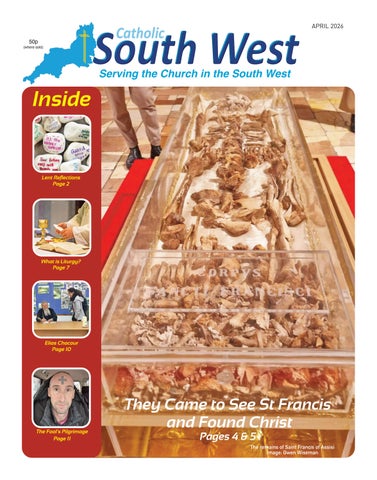
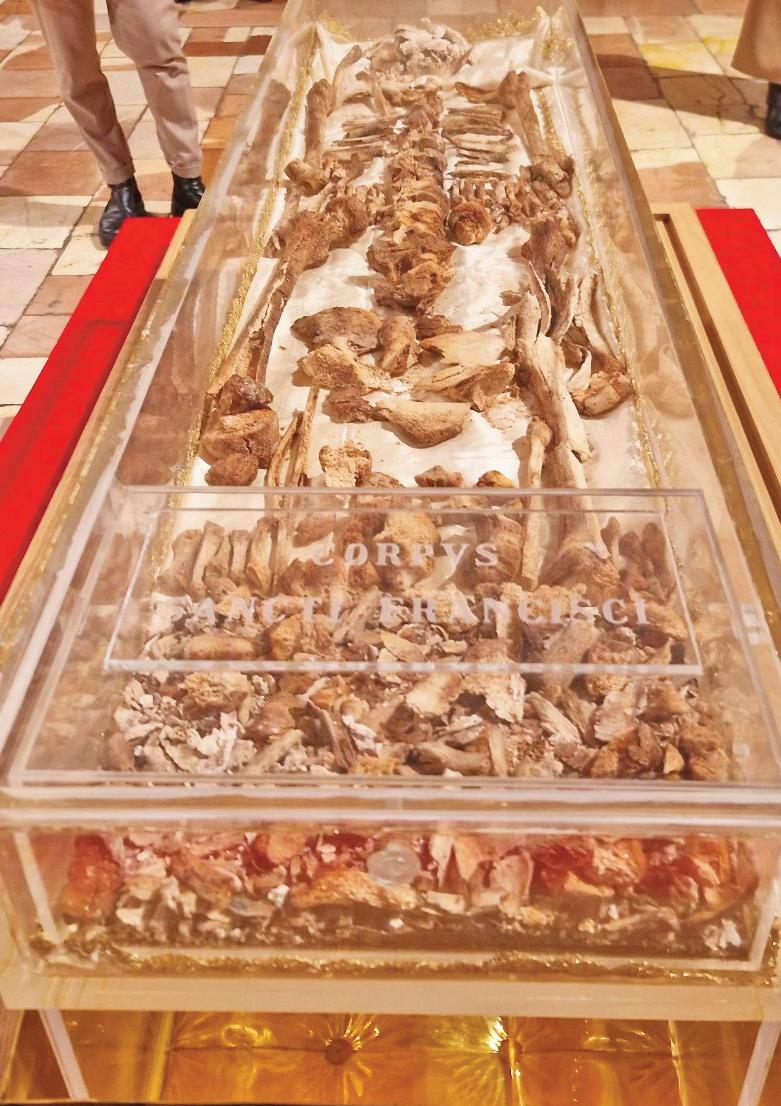
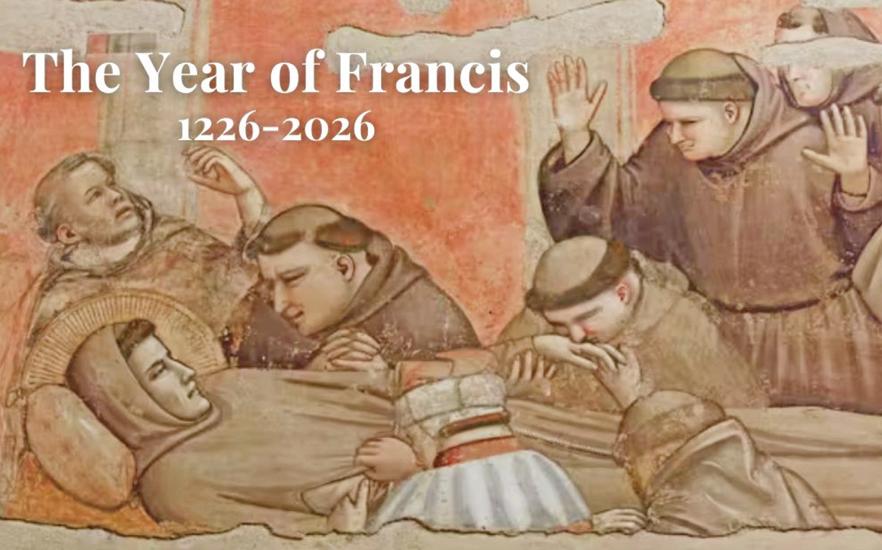
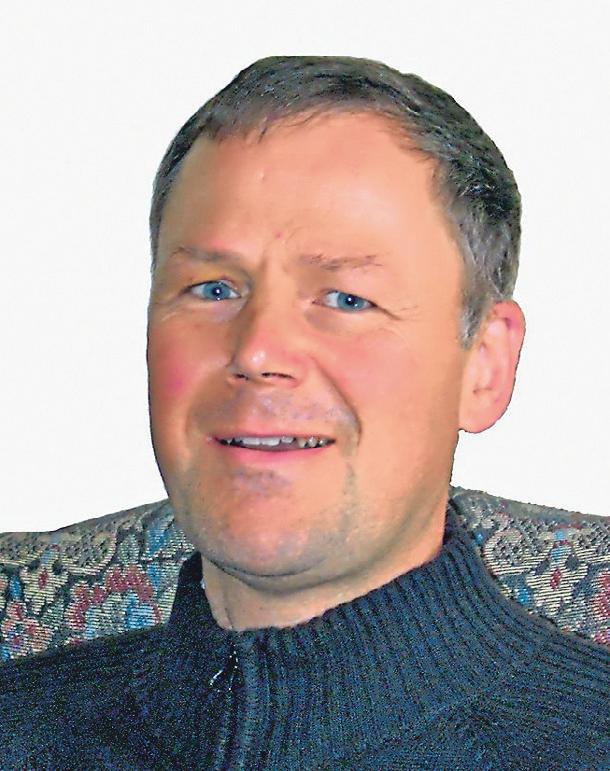
The remains of Saint Francis of Assisi Image: Gwen Wiseman
CONTACTS & DETAILS
Catholic South West is a monthly newspaper for Catholics in the Plymouth, Clifton and Portsmouth Dioceses It is published by Bellcourt Ltd
AIMS
To build community in the South West by sharing stories relating to Catholic life around the South West
To encourage readers to get more involved in - or start - projects and initiatives in the local area
To provide thought-provoking articles to help readers deepen their Faith
GET INVOLVED
We need your help! Articles: We need your local articleswe can only include what we get So if you have an article or just a photo with a short description - please send it in Ideas: We need your ideas for the paper and we need your ideas in the paper If you have any thoughts on what we should include - or if you are thinking about starting a new initiativeget in touch - we’d love to support it!
Readers: If you can encourage other readers in your parish please do so Advertising: We rely on advertising - if you know of anyone that would benefit from promoting their business, event or anything else to parishioners throughout the South West, do let us know.
SUBMITTING
EDITORIAL
To send in editorial or to get in touch please contact us at: CSW - Bellcourt Ltd
N2 Blois Meadow Business Centre Steeple Bumpstead
Haverhill, Suffolk CB9 7BN
csw@cathcom org 01440 730399
ADVERTISING
To advertise in Catholic South West please contact us on 01440 730399 ads@cathcom.org
DATES
Catholic South West goes to parishes on the last full weekend of the month It is printed around the middle of the month - so if you would like to advertise or send in editorial please do it as early as possible
Wanted Parish Correspondents
The Catholic South West is looking for a Parish Correspondent in your parish to send in local news for publication in this newspaper. All items to be emailed to csw@cathcom org before 10th of the month
A Lent Reflection from Pupils at Leweston School
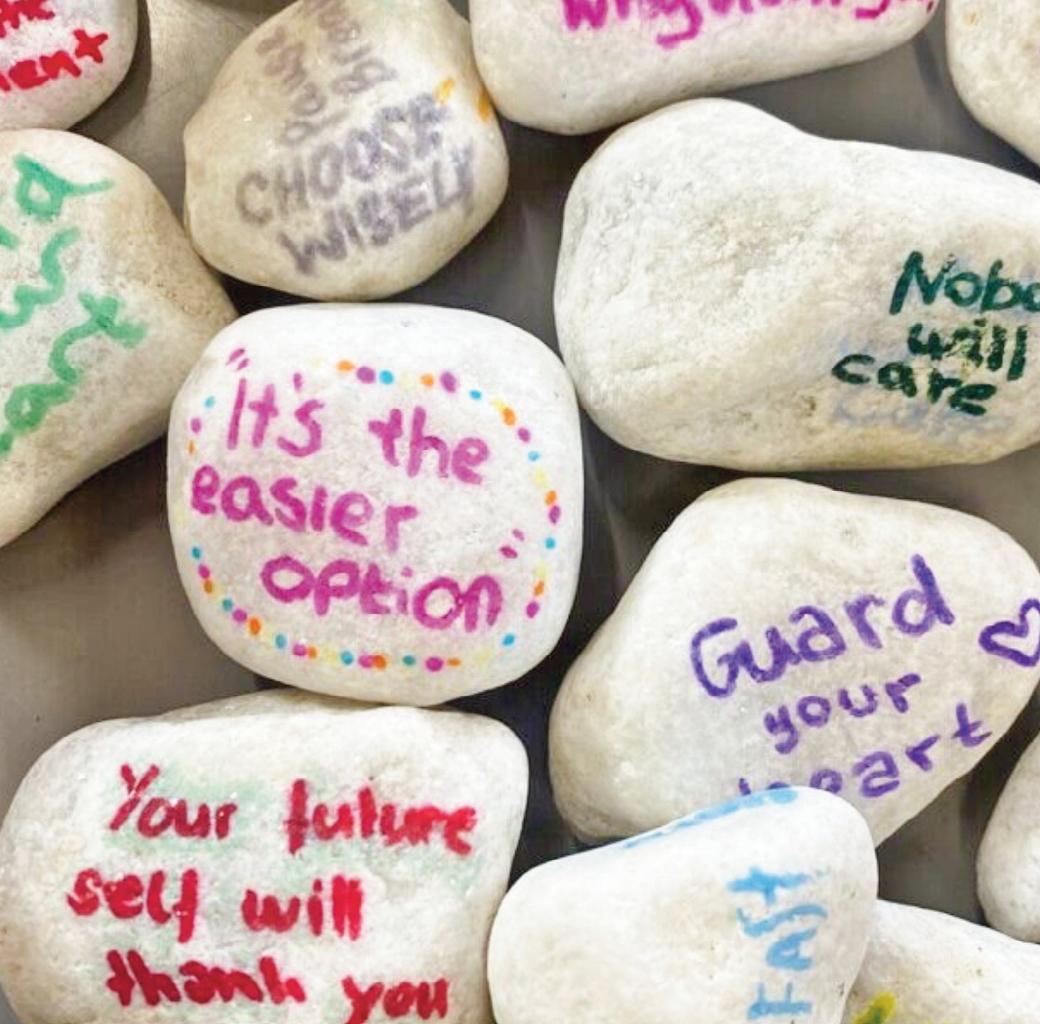
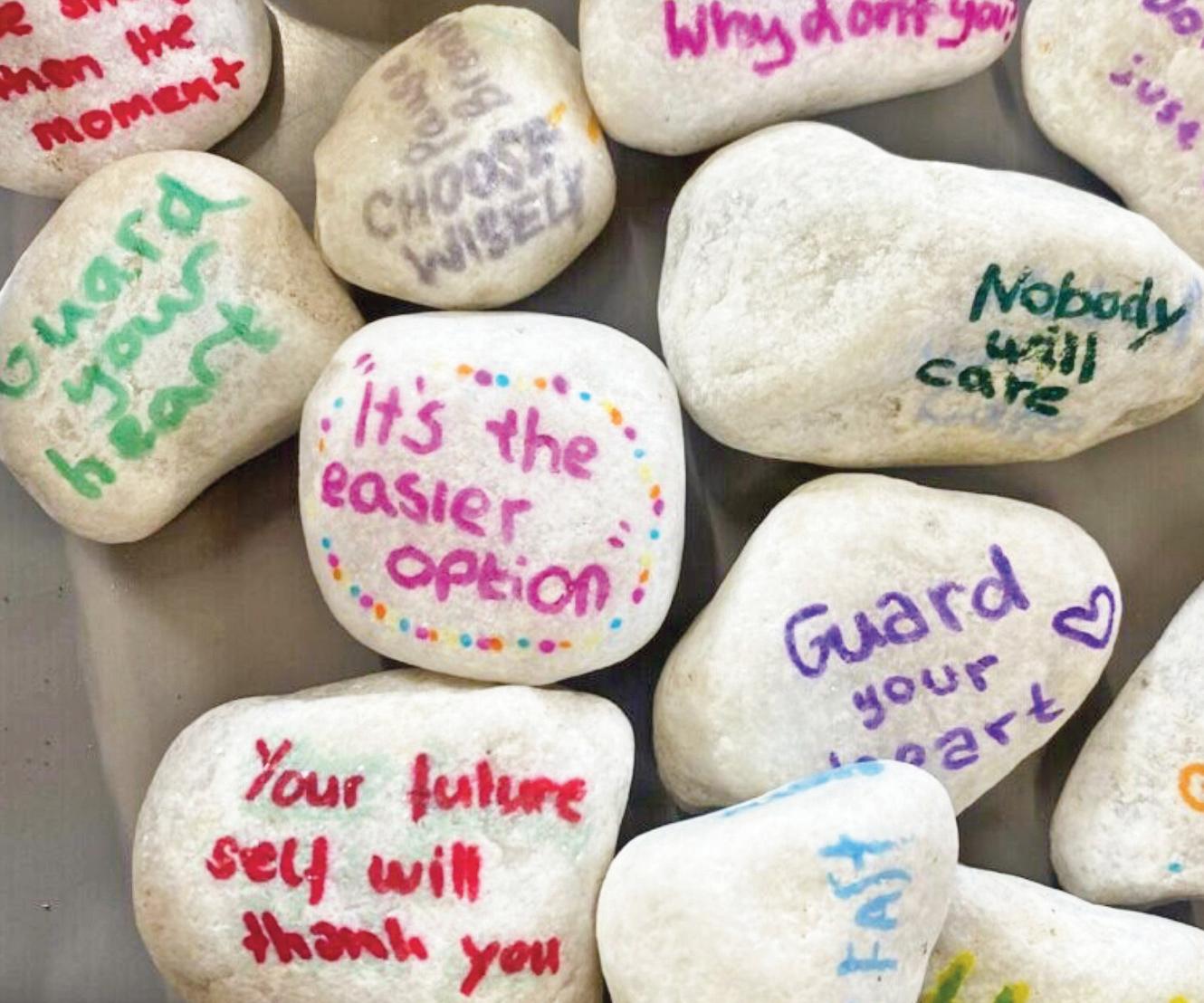
Young people at Leweston School in Dorset were asked to create reflections for the first week in Lent on the theme of temptation. They reflected on the choices we make every day. We have included some of the images here but you will be able to see more on our website and Facebook page.
The Sixth Form reflected on Jesus’ temptation in the desert by exploring how temptations can appear attractive. Students decorated stones with words and phrases that help them resist these pressures and choose integrity, compassion, and faith. A powerful reminder to choose the better path. Year 8 explored the difference between what we show on
EDITORIAL GUIDELINES
1) Think of the readers: If you are writing about an event, think about the readers that don’t know anything about it Outline what happened, but focus on why people go, why it is important to them, or some teaching that was given Make sure readers learn something from your article - they don t just want
the outside and the struggles we keep hidden. They created two-sided “Temptation Masks” revealing the public face on one side and the pressures they face on the other. A thoughtful activity reminding us that everyone carries unseen challenges.
Year 12 took part in “Conscience Alley,” hearing the competing voices that guide moral decisions. One side encouraged integrity and compassion; the other echoed peer pressure and the temptation to take the easy path. A powerful lesson in recognising which voices shape the choices we make. In Prayer Group, led by the brilliant GIFT Sixth Form students, Prep students created “Chains of Temptation” to show
to know who was there and what snacks were available!
2) Keep it brief: Make sure you make your point - but keep it brief and punchy
3) Pictures: Send pictures as they are - even if they are very big to email Don’t reduce them in size or put them inside a Word document They look fine on the screen but terrible in the paper!
LEGAL INFORMATION
how small unhelpful choices can build up and hold us back. They then broke the chain together, choosing kindness, courage, honesty, and freedom. This creative activity offered Prep students a simple but meaningful way to reflect on the power of their choices and the freedom that comes from choosing good.
Year 10 explored the idea of temptation and the freedom we gain when we make choices rooted in honesty and self control. Excellent insights from the whole year group!
Thank you to the pupils for sharing their thoughts for the Season of Lent.
Please note that opinions expressed in this paper and on any linked sites or publications are not necessarily those of the Publishers, Editor, any Diocese or the wider Roman Catholic Church Every reasonable effort is
made to ensure that due acknowledgement, when appropriate, is made to the originator of any image submitted for publication It is understood that those submitting material for publication in CSW either hold the copyright or have arranged for publication with the appropriate authority
Dilexi Te Event:
Love of the Poorest; the Burning Heart of the Church’s Mission
Pope Leo XIV’s First Apostolic Exhortation: Dilexi Te (“I have loved you”) emphasises the essential Christian duty of loving and serving the poor.
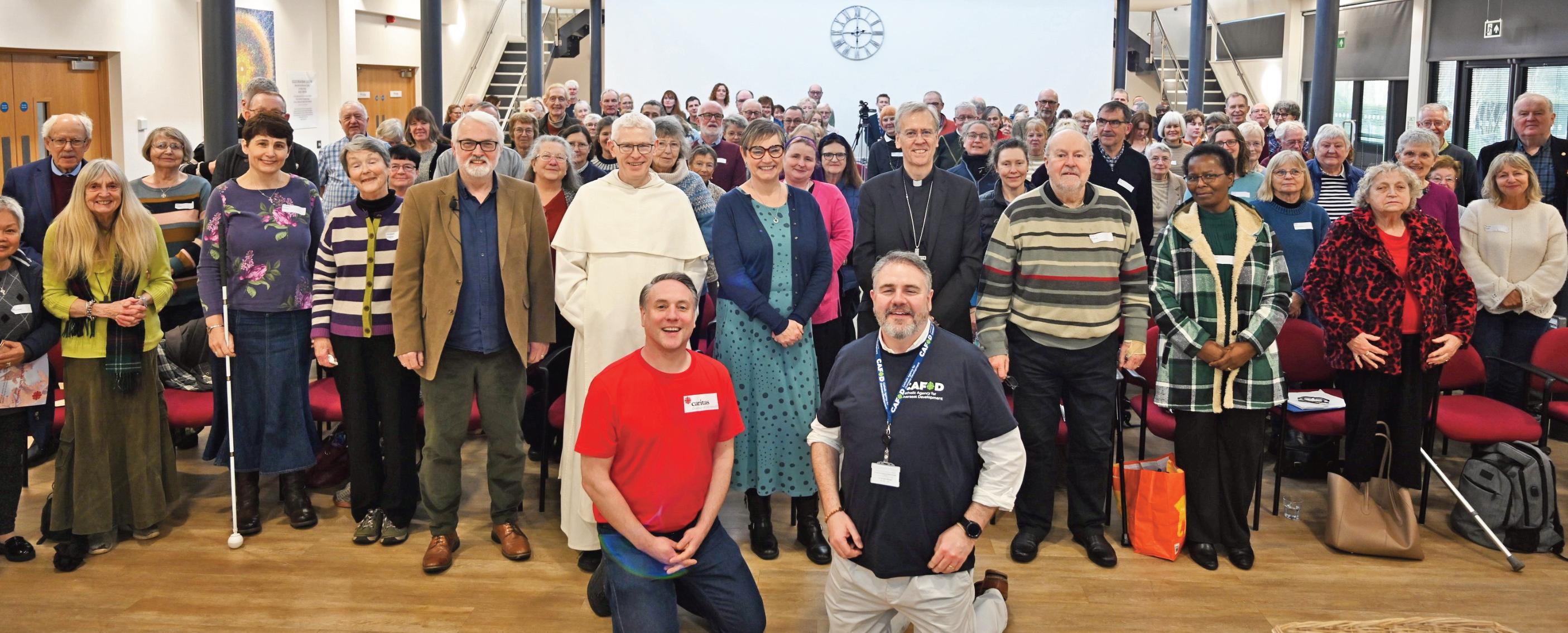
On Friday 20th (clergy) and Saturday the 21st February, over 145 people from across the diocese attended an event at Buckfast Abbey Conference Centre, for days of reflection hosted by Caritas Diocese of Plymouth and CAFOD, to reflect and understand more deeply, the Holy Father’s message. We were grateful to be joined by Bishop Nicholas Hudson and three inspirational speakers to help us act on Pope Leo’s message.
Rev Dr Richard Finn spoke of the ‘theological heart of the document’ and explained the structure of the document; how we should read it, who it addresses and how we should act upon it. He broke open the Pope’s document to help us understand the exhortation’s place in Church history and what Pope Leo is asking us to do. Quoting Dilexi Te, he said: ‘Love for the Lord, then, is one with love for the poor’ (#5), or put the other way round, there’s no genuine love for the Lord without love for the poor.’ Fr Richard’s brilliant input steeped all present in the history of the “burning heart of the Church’s mission”, love for the poorest of our sisters and brothers.
Christine Allen, CAFOD’s Executive Director, delivered a passionate exploration of the international expression of Dilexi Te, and how CAFOD was founded from it’s outset in the love and solidarity of the Church here with the communities around the world. She said: ‘Responding to the needs of those who are poor, marginalised and vulnerable is very much the everyday of the Church.’ Christine elaborated using the powerful programmes of CAFOD around the world. Her talk also highlighted that Pope Leo recognised poverty in many forms: ‘marginalization—such as lack of rights, dignity, or freedom’ and how he ‘calls Christians to defend immigrants, prisoners, victims of exploitation, and those harmed by environmental degradation.’
Raymond Friel OBE, CEO of Caritas Social Action Network, brilliantly concluded the talks to help understand Dilexi Te through the lens of the Church’s work here in the diocese and across the nation, as well as looking at previous papal exhortations and
the Second Vatican Council. He drew attention to Pope Leo’s emphasis on how we must walk alongside the poor, to listen to the voice of those in poverty and how the Holy Father calls us to be advocates for change: “We need to be increasingly committed to resolving the structural causes of poverty….’(Dilexi te, 94) emphasising the need to work for the relief, defence and liberation of those in poverty.
Abbey.
Caritas Diocese of Plymouth will be preparing the video recordings of the day to be used as community refection sessions and is also happy to organise events at Deanery and parish level to help us to reflect as a Diocese how we are
responding to Dilexi Te. Please get in touch if you would like to invite us to run an event or we can help in some other way. Please contact caritas@prcdtr.org.uk
“A Church that sets no limits to love, that knows no enemies to fight but only men & women to love, is the Church that the world needs today.”
Pope Leo XIV Dilexi Te #20
Parish Welcome Pack Launch
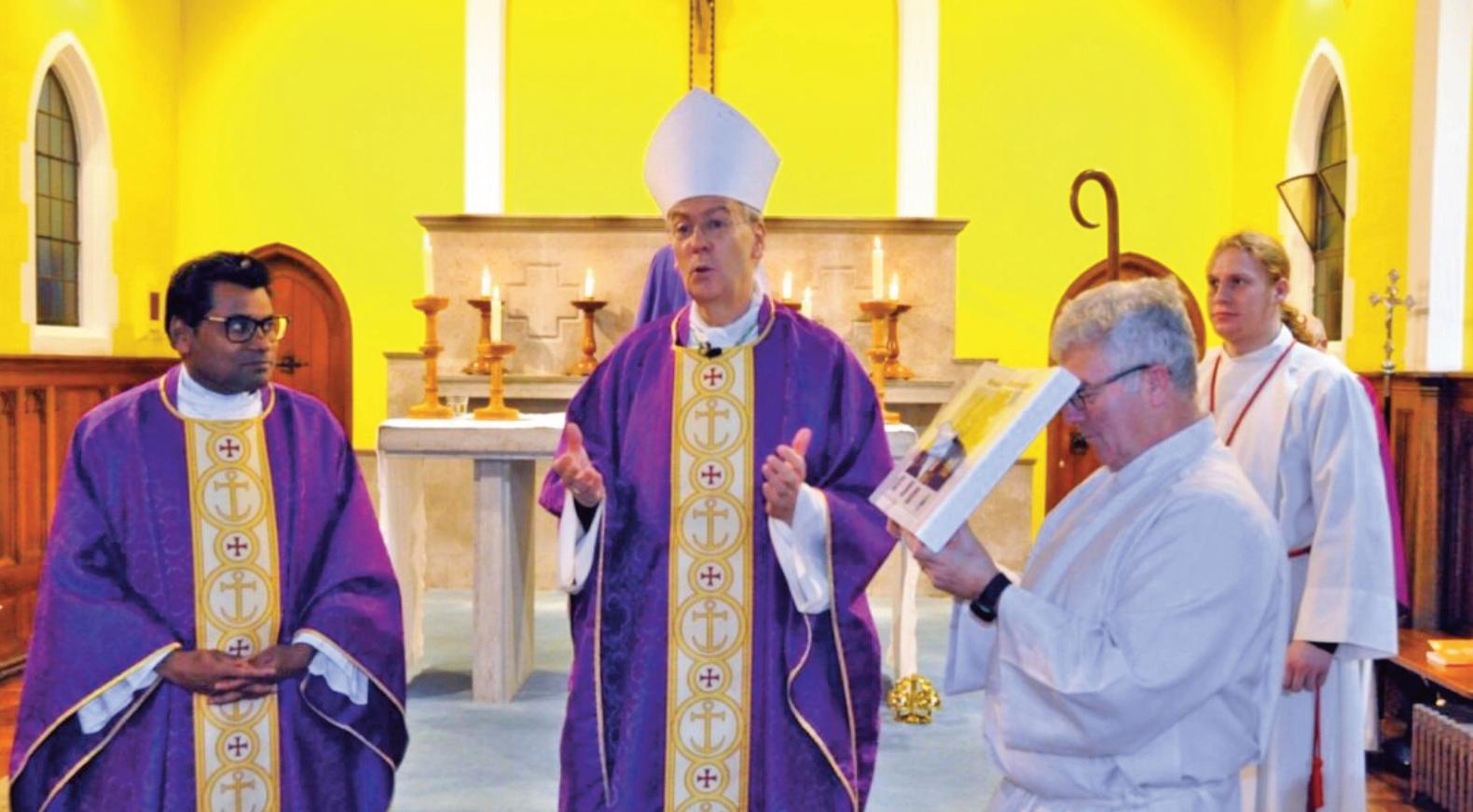
Fr Darline Joseph shares the launch of a new parish welcome pack: “St Catherine’s Parish, Wimborne, long recognised as one of the Diocese’s most vibrant and welcoming communities, marked another significant moment in its life on Saturday 7th March, 2026 with the release of a new Parish Welcome Pack by Bishop Nicholas.
The parish has flourished for many years through the dedication of its clergy and people, and special appreciation was expressed for the lasting contributions of former parish priests Fr Paul Keys and Canon Kenneth Noakes, whose leadership helped shape the strong, outward looking parish that exists today. The newly launched Welcome Pack gathers in one place the essential information every parishioner might need, offering particular support to those who are new to the community and seeking a sense of belonging. It highlights the remarkable breadth of parish life at St Catherine’s, where
more than 40 different groups provide opportunities for spiritual growth, social connection and emotional wellbeing. From prayer and liturgy to outreach, fellowship and pastoral support, these groups reflect a parish deeply committed to nurturing the whole person.
The initiative has already drawn interest from neighbouring communities, and St Catherine’s warmly encourages any
parish considering a similar project to get in touch with Fr Darline Joseph (darline.joseph@prcdtr.org.uk) or Lucy (wimborne@prcdtr.org.uk) for guidance and collaboration. The Welcome Pack stands as a testament to the parish’s ongoing mission: to be a place where faith is lived, friendships are formed and every person is received with generosity and joy.”
The day closed with a simple and moving mass, celebrated by Bishop Nicholas in the Blessed Sacrament chapel in Buckfast
They Came to See St Francis and Found Christ
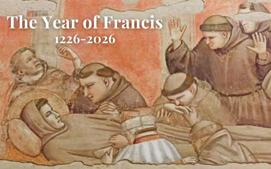
This year marked the 800th anniversary of the death of Saint Francis of Assisi. For one extraordinary month, from 22 February to 22 March, the mortal remains of the saint were placed on public veneration, drawing pilgrims from across the world to Assisi.
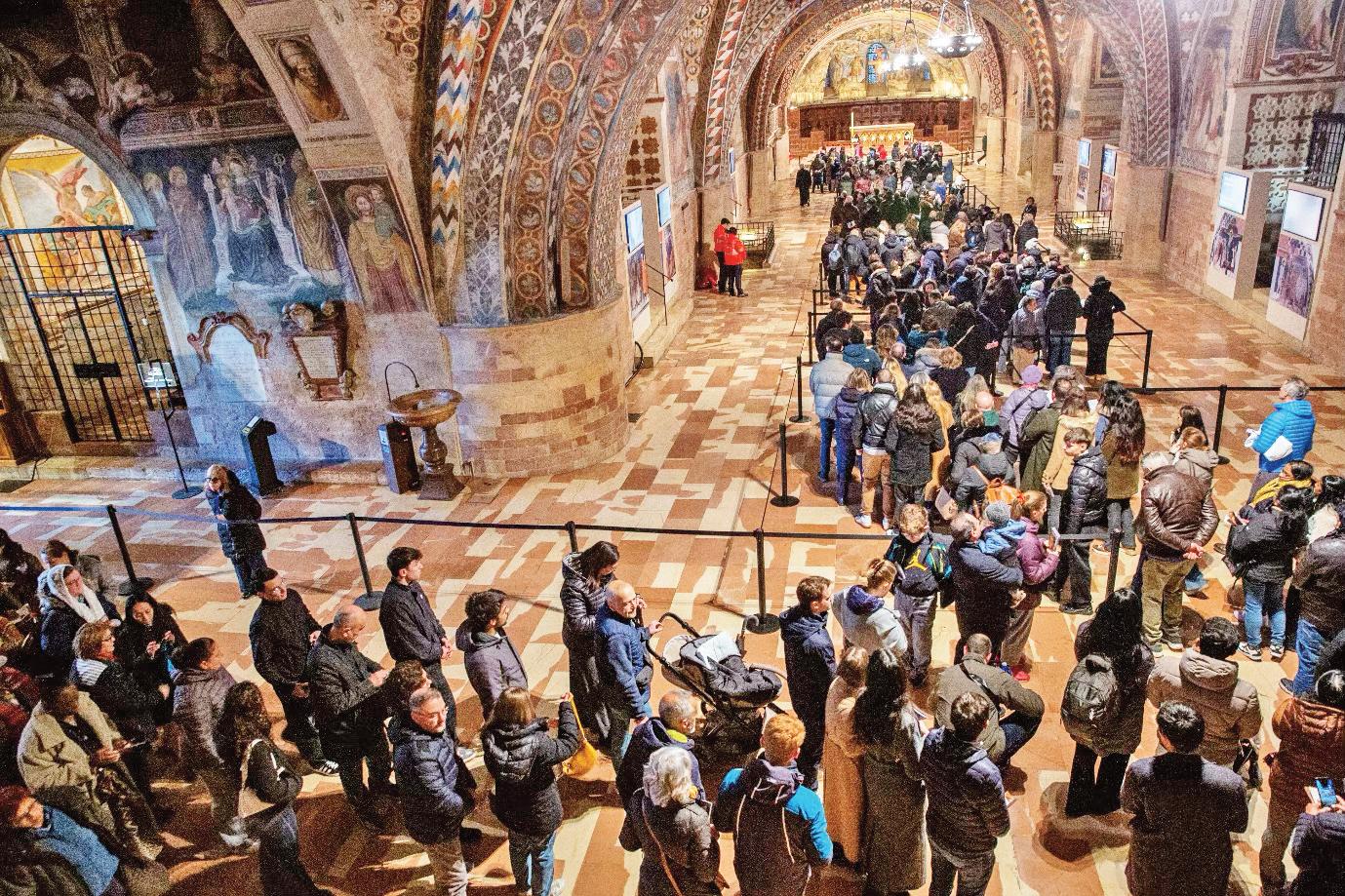
During that time, hundreds of thousands passed through the Basilica, many travelling hundreds, even thousands of miles for the chance to spend just a few brief moments before the remains of the humble friar who once called himself “the little poor one.”
At first glance, it might have seemed that pilgrims had simply come to see the bones of a medieval saint. Yet the friars serving at the Basilica say something far deeper was unfolding. What began as an act of devotion became something more personal: a moment of prayer, reflection and, for many, a renewed encounter with faith.
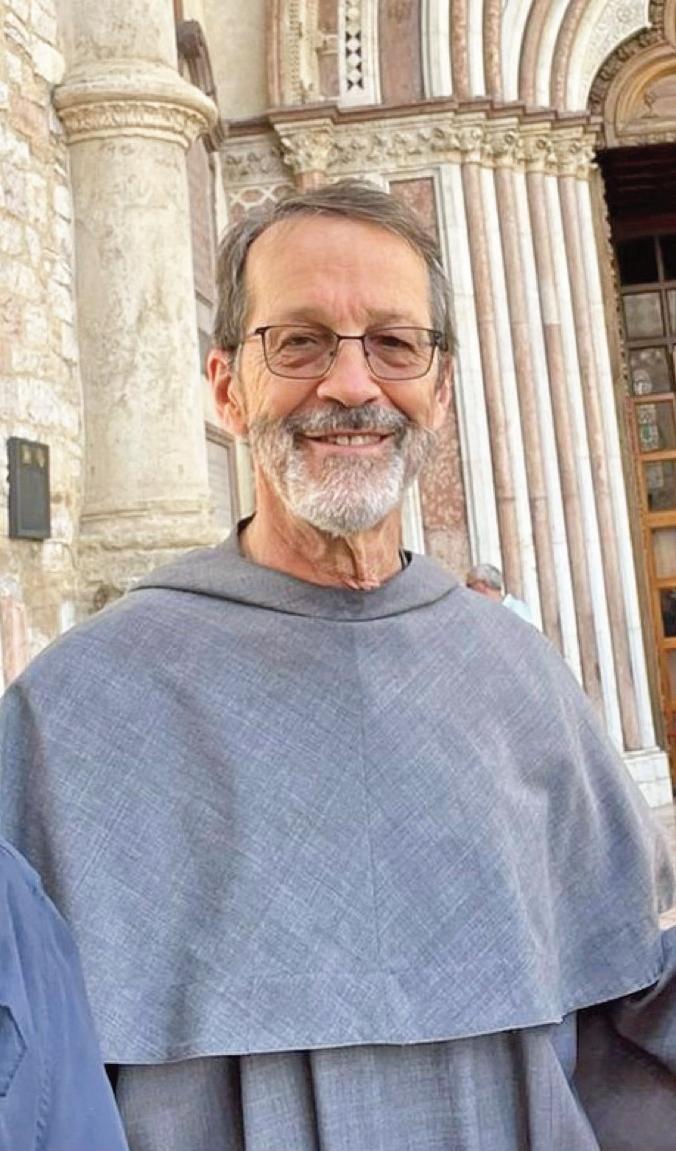
“It is startling to see the crowds” Among those welcoming pilgrims to Assisi was Fr Daniel Mary Quackenbush, OFM Conv., an American friar from upstate New York who serves at the
Basilica and is responsible for the English-language Mass celebrated each Sunday morning.
“It is startling to see the crowds,” Fr Quackenbush said. “The fact that Francis still has this appeal after eight hundred years proclaims something about his holiness.” For Fr Quackenbush, the explanation lies in the depth of Francis’ interior life. “He had no enemies,” he said. “The only battle he fought was within himself, against anything that stood between him and Christ.” The saint’s holiness was not built on outward drama alone but on an interior struggle, a constant effort to surrender everything to God. “He was constantly trying to put to death whatever wasn’t love or truth,” Fr Quackenbush explained. This daily dying to pride, ambition and self-will became the hidden path of Francis’ sanctity. He was canonised only two years after his death by Pope Gregory IX, who described him as one of the greatest imitators of
Christ the Church had ever known. For Fr Quackenbush, the veneration of Francis’ remains was not about death. “The emphasis we’re trying to make is that this isn’t about death,” he said. “It’s about life.”
The grain of wheat
Many pilgrims arrived with curiosity or devotion. But as they moved through the experience something deeper began to stir within them. Standing before the remains of the saint, they encountered not only the memory of a holy man from the past but the question that shaped Francis’ life: “Lord, what do you want me to do?”
This was the question Francis once asked before the crucifix of San Damiano, when he was still a restless young man searching for direction.
After venerating the remains, pilgrims were led into a nearby chapel to renew their baptismal promises, shifting the focus from the life of Francis to their own.
The friars framed this moment through
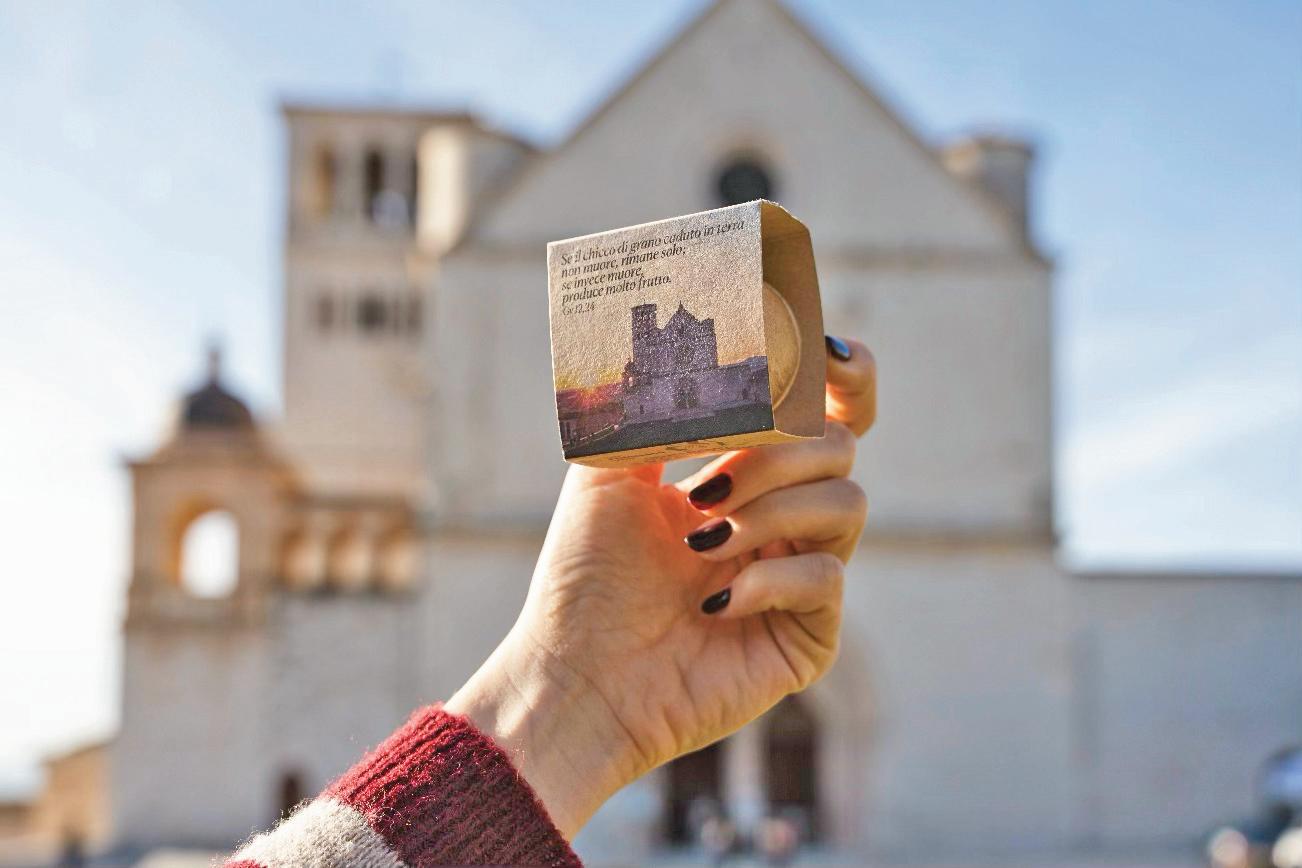
the words of Christ in the Gospel of John: “Unless a grain of wheat falls into the earth and dies, it remains just a grain; but if it dies, it bears much fruit.” (John 12:24)
For the friars, the life of Francis is a living example of that Gospel truth. Like the grain of wheat that falls into the earth, Francis surrendered his life completely to God. In letting go of wealth, ambition and reputation, he discovered a freedom that transformed not only his own life but the lives of countless others.
Francis spoke of death not with fear but with trust, referring to it in the Canticle of the Creatures as “Sister Death.” “The enthusiasm Francis still generates among the people of God is a sign he isn’t dead,” Fr Quackenbush said. “He’s very much alive.”
The harvest in the confessional Eight centuries later, the fruit of Francis’ life continues to appear in quiet but unmistakable ways.
Continued on next page
Pilgrims in line to venerate Saint Francis in the Lower Basilica of Saint Francis Image: Basilica of Saint Francis, Assisi
Fr Daniel Quackenbush, OFM Conv. Image: Gwen Wiseman
“The question isn’t how many people have come,” Fr Quackenbush reflected. “The question is: how has this experience impacted their relationship with Jesus?” Nowhere was that question more visible than in the confessional.
Among those assisting during the veneration was Fr David Zimmer, a retired priest of the Diocese of Bismarck in North Dakota, USA, who had come to Assisi as a volunteer to hear confessions in English. Since his first visit in 1989, Fr Zimmer had returned again and again, drawn by what he describes as the unmistakable spiritual atmosphere of the place. Yet even after decades of priestly ministry, he was unprepared for what he encountered in the confessional during these weeks. “It was astounding,” he said. “The sincerity, the honesty, the authentic experience of reconciliation.”
For many pilgrims, the decision to step into the confessional came unexpectedly.
“I would say about half the people who came to me were surprised themselves that they were there,” Fr Zimmer said. “They would say, ‘I didn’t think this would be part of the experience, but I’m glad it is.’” Some had not been to confession for years. Others had come simply out of curiosity, not expecting the experience to lead them toward the sacrament. Yet something about the encounter with Francis, the brief moment before the saint’s remains, the renewal of baptismal promises and the atmosphere of prayer seemed to open hearts. “I was convinced something was happening to them as they passed by the bones of Saint Francis,” Fr Zimmer said. “Something was moving their hearts toward reconciliation.”
From the confessional he heard the stories of pilgrims from Indonesia, South Korea, Iran, the Philippines, Ireland, England and the United States. “You become aware of how big our Catholic Church really is,” he said. Despite the diversity of cultures, the struggles people brought were often strikingly similar. “Relationships are complicated,” Fr Zimmer said. “Many people struggle to forgive.” He shared a wisdom given to
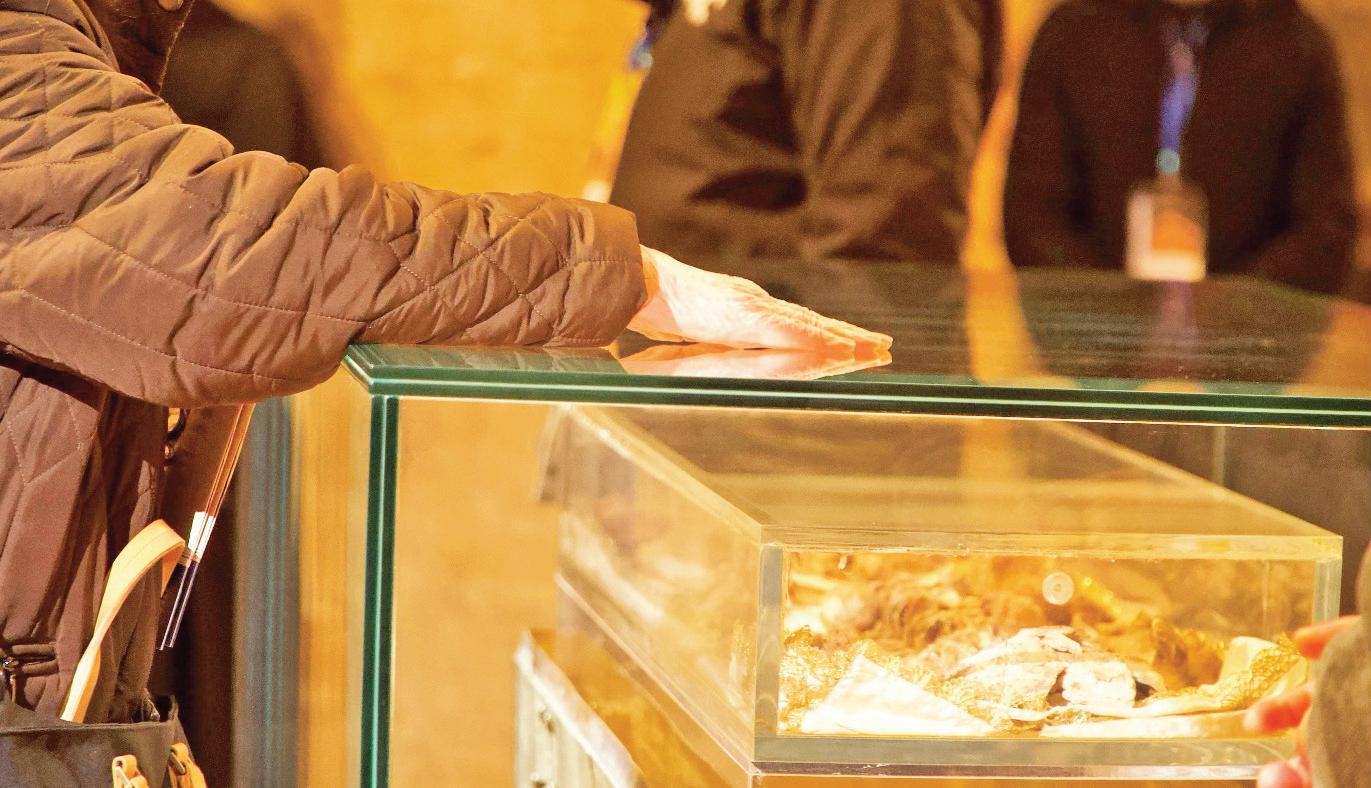
A pilgrim venerating the mortal remains of Saint Francis
him by a Trappist monk: that forgiveness frequently requires an earlier step many people overlook, the need for inner healing. “When the hurt begins to be healed,” he said, “forgiveness often comes naturally.”
For Fr Zimmer, witnessing these encounters has been one of the most humbling experiences of his priesthood. “The story of Francis is a story of conversion,” he said. “And that story is timeless.” Like the conversion of Saint Paul, Francis’ encounter with Christ changed the course of his life and helped renew the life of the Church. “We all need conversion,” Fr Zimmer said. “At every stage of life.”
Hearing confessions in Assisi during this extraordinary moment, he said, renewed his own sense of vocation. “It reminds me why I said yes to the priesthood in the first place.”
The harvest continues Like the grain of wheat that falls into the earth and bears fruit, Francis’ life continues to invite others to conversion -
dying to self, being reconciled with God and rising renewed through grace. Eight centuries after his death, the question Francis once asked before the crucifix of San Damiano still echoes: “Lord, what do you want me to do?” The faithful discovered that the answer lies where Francis himself began through prayer, repentance and the sacraments of the Church. What started as a visit quietly became something closer to a retreat,
where many encountered three of the Church’s sacraments: baptism renewed, sins forgiven and Christ received in the Eucharist.
The Gospel words chosen by the friars have come alive before their eyes: “Unless a grain of wheat falls into the earth and dies, it remains just a grain; but if it dies, it bears much fruit.”
Gwen Wiseman
Pilgrims receive a gift of grains of wheat Image: Basilica of Saint Francis, Assisi
St Boniface Catholic Parish Church : continually providing opportunities to help parishioners deepen their faith through a season of devotions and spiritual activities
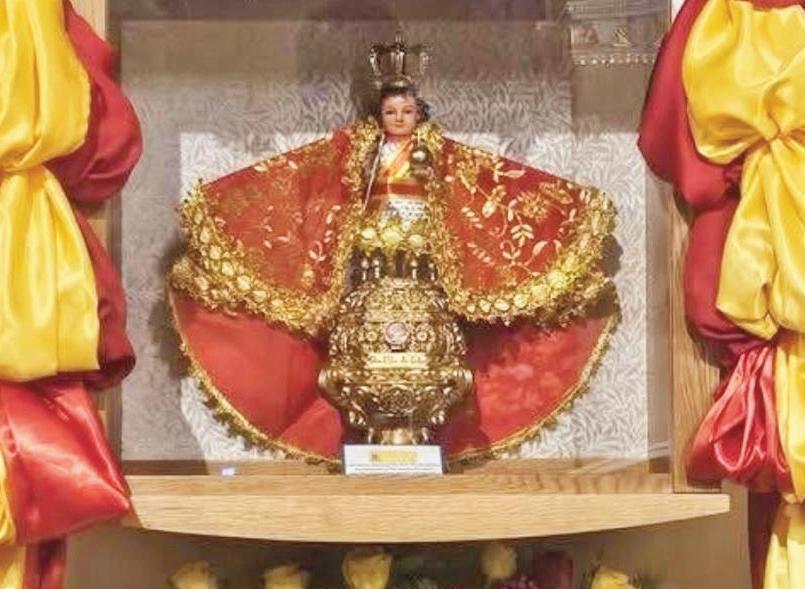
The Holy Child Jesus (Sr. Sto Nino) is
finally
home at St. Boniface Catholic Parish Church
The Santo Niño de Cebú is a Catholic title of the Child Jesus associated with a religious image. The image of the Santo Niño is linked to the arrival of Christianity in the Philippines through the Spanish colonial period. It is considered one of the oldest Christian relics in the country, with a rich history dating back to the 16th century.
This Sto. Nino de Cebu is the oldest and miraculous religious icon in the Philippines. The image is under the care of the Augustinians since its finding in 1565. Pope John Paul VI issues a canonical coronation of the image on the 28th April 1965. St. Pope John Paul II and Pope Francis also made papal endorsements of the image. The devotion originated more than 500 years ago and is a solemn celebration honouring the Child Jesus. It reminds us of the closeness of God to the children because of their pure joy, honesty and care. God has sent His Son to the world as a child and dressed like a king to conquer hearts so that people will propagate faith and love , and to be an inspiration to others.
Bishop Ruperto Santos said “Our devotion to the Child Jesus must also inspire us to take good care of the least, the last and the lost in our society. To love the Santo Nino is to make the lives of children peaceful , safe and fruitful.
This rich tradition has found a new and significant home here at Saint Boniface Church in Southampton, where the first replica of the Santo Niño in the United Kingdom has been enshrined. For the Filipino community, the parishioners, and the wider parish, this replica is far more than a cultural emblem; it is a sacred focus of prayer and unity. Its presence affirms the contribution of Filipino Catholics and the devotees of the Santo Niño to the life of the Church in Britain and offers all parishioners an invitation to encounter Christ through the gentle image of the Child.
The enshrinement of the Santo Niño at Saint Boniface speaks powerfully of a faith that crosses oceans and generations. From the shores of Cebu, a premier maritime city of the Philippines to the heart of Southampton, an international maritime city, the Child Jesus continues
to draw people into deeper communion with God and one another. For every Filipino, and for all who venerate Him, the Santo Niño reminds the faithful that God chose to come among us in humility and love. In embracing the Child Jesus, the community is called anew to live the Gospel with trust, simplicity, and joy, bearing witness to a faith that is truly universal.
The Feast is celebrated every 3rd Sunday of January, and the celebration is organised by The Filipino Catholic Community in Southampton with Rev. Fr. Jufel Baldado, OMV as their spiritual director. Yearly, we have a team lead that coordinates planning which was the Couples for Christ group and the Hermano/Hermana who were Mr. Noel and Mrs. Monette Lopez.
The devotees are now meeting regularly every third Monday of the month for the devotion and prayers to Sr. Sto Nino.
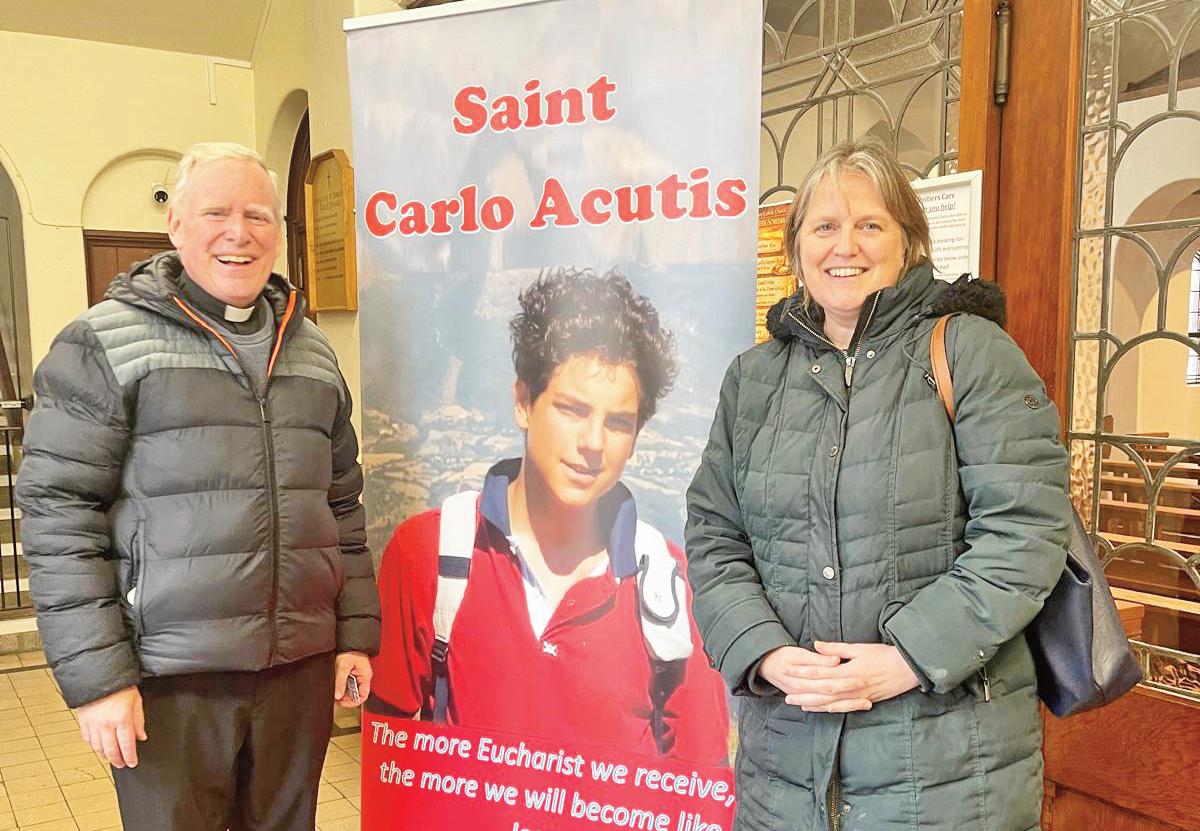
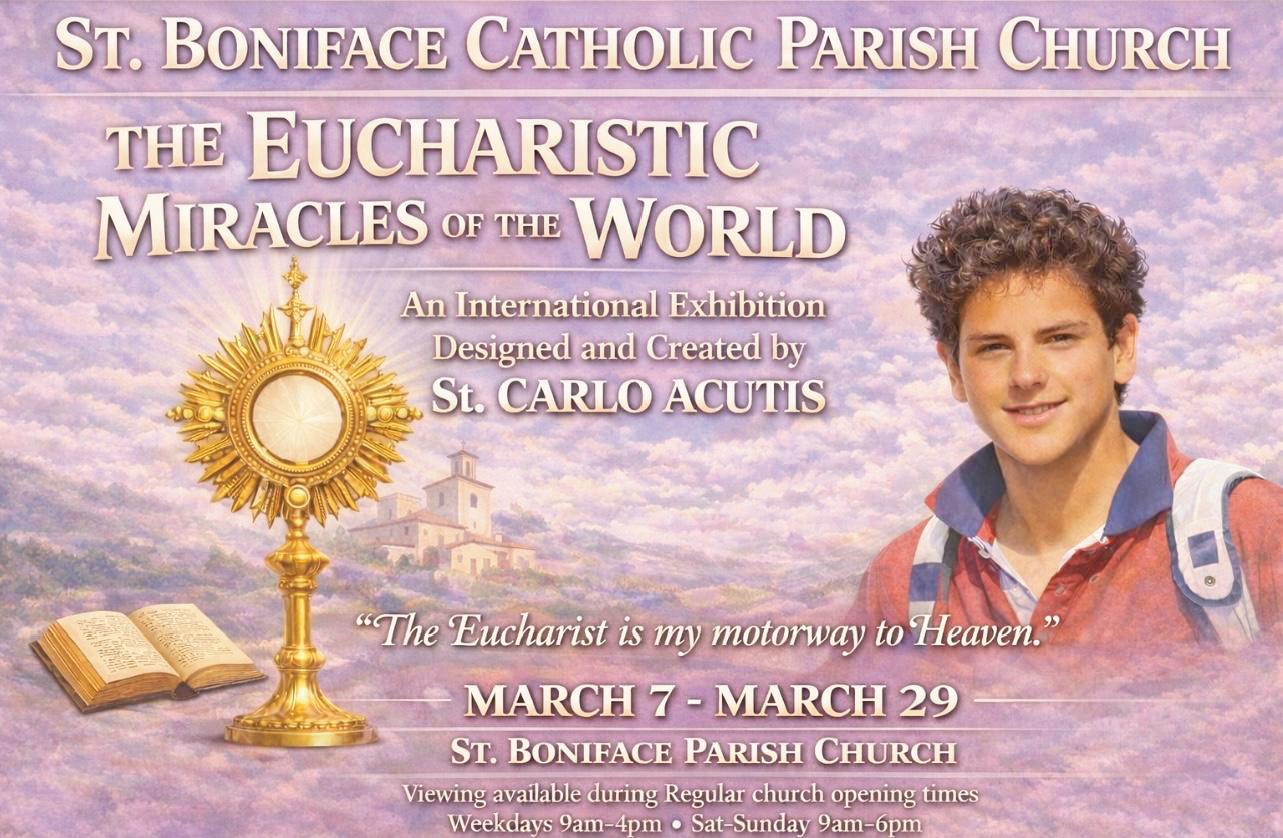
St. Carlo Acutis Eucharistic MiraclesAn International Exhibition
Saint Carlo Acutis first great mission was to explain that our Lord Jesus Christ is truly present in the Blessed Sacrament of the Catholic Church. The Exhibition of Eucharistic Miracles is his great life's work. That he was able to conceive and accomplish so great a project is a testament to his spirituality, his 'abiding in Christ,' as one of our Lord's Beloved Disciples.
St Boniface Parish held an exhibition of 30 panels of the Eucharistic Miracles from March 7-March 29th. The display was in the parish Church and was available for viewing during regular church opening times. The exhibition was in collaboration with www.ukmiracles.com created by Anna Johnstone, a family friend of the Acutis
Our very own parish priest Rev. Fr. Tom Kleinschimdt, OMV and Anne Johnstone from UKMiracles family, and the Governess, for three years, (2015-2018), to the brother and sister and Saint Carlo. Since 2017 Anna has given presentations on the life and spirituality of Saint Carlo Acutis, facilitated missions, and helped new Saint Carlo apostolates, across the UK.
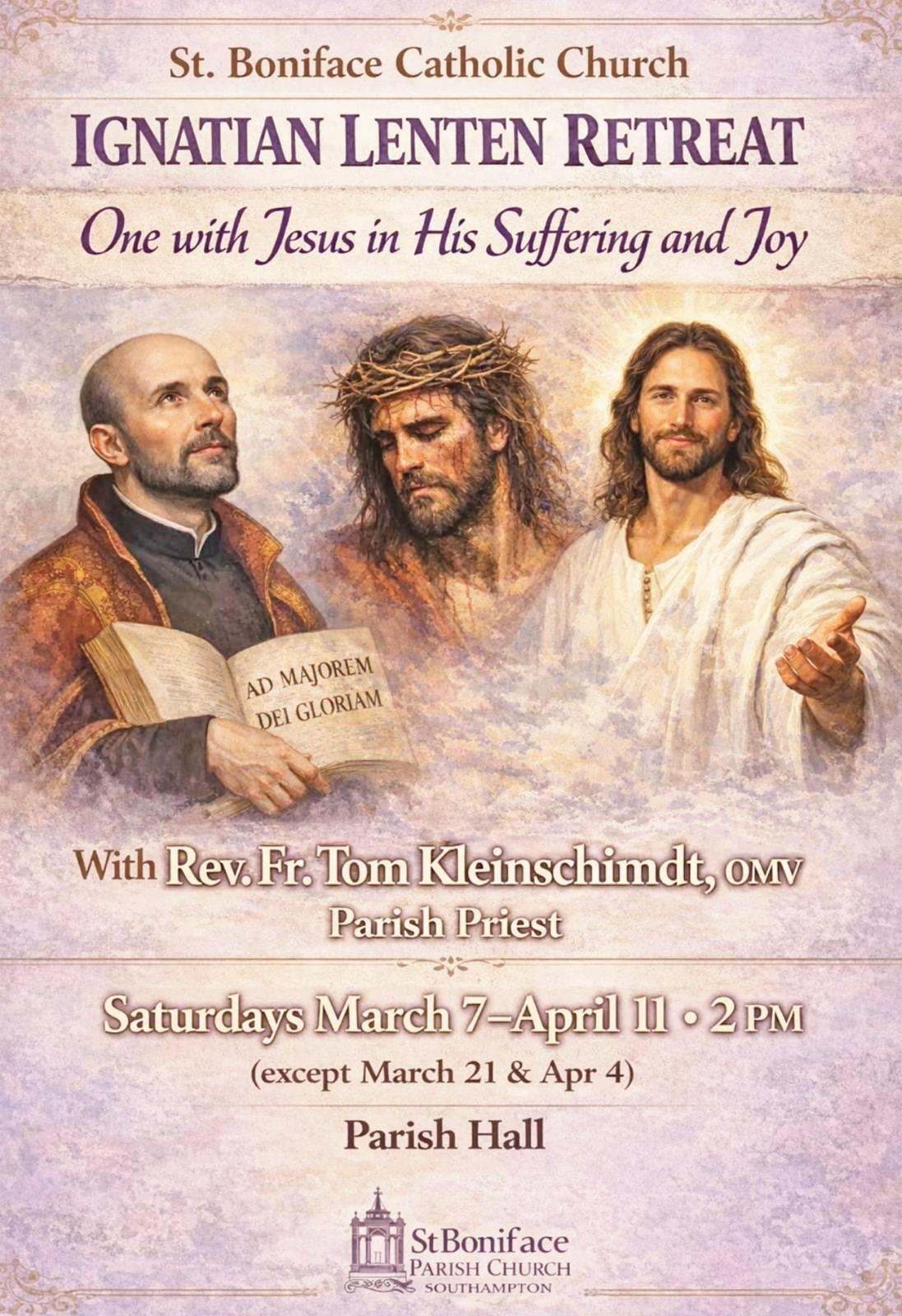
Ignatian Lenten Retreat
In observance of Lent, Rev. Fr. Tom Kelinschimdt, OMV delivered in-person retreat with the theme: One with Jesus in His Suffering and Joy. It has been well attended by parishioners, who came in on most Saturdays of the Lenten season where they had spiritual guidance on meditation and contemplation.
The participants have been provided with daily scriptures and reflections which helped them to be more intentionally engaged with this sacred season.
The Ignation Lenten Retreat will be held at St Boniface Catholic Church Parish Hall, Southampton
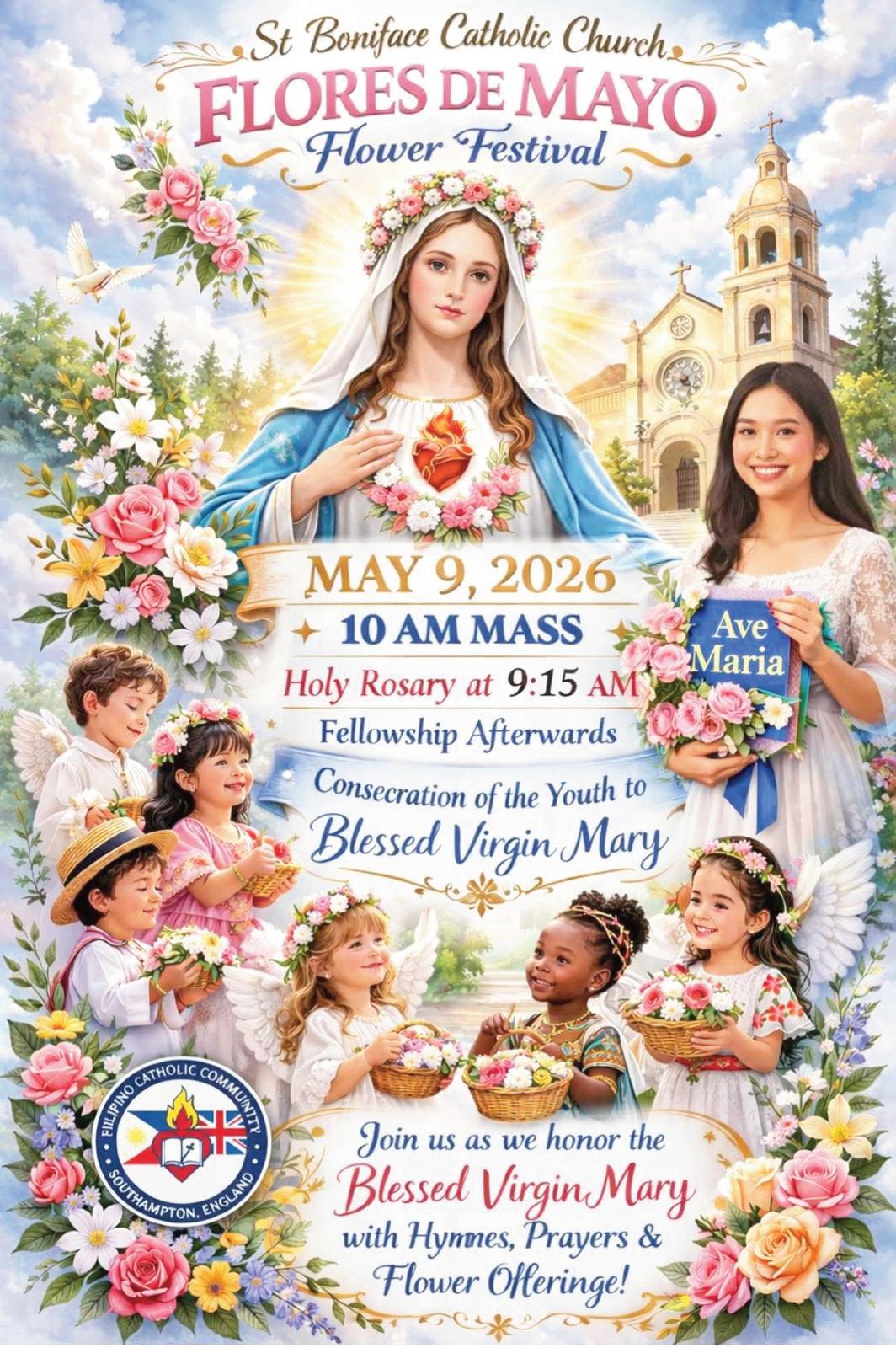
What’s Coming up in May
Mae Felongco with special thanks to Rev Fr. Jufel Baldado for Sto Nino article
What is Liturgy?
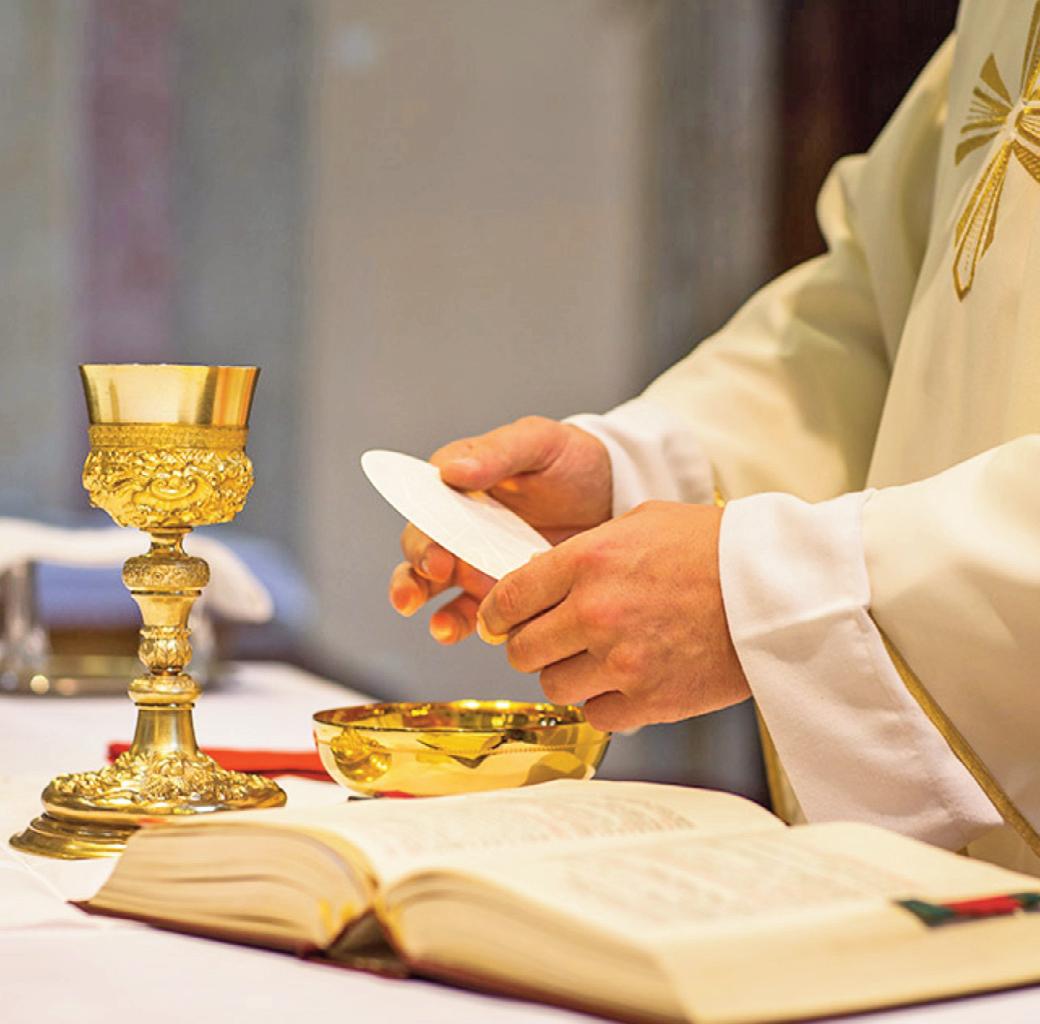
Rituals are part of being human. Some of them are mundane while others are fascinating. Take for the example the Hamar Cow Jumping ritual. A man in Ethiopia, before getting married, must jump over a row of four castrated male cows four times without falling, symbolizing leaving childhood behind. All of us have different waking, eating, and sleeping rituals. Even how we make our cup of tea is a form of a ritual. Traditionally, we used the term ‘ritual’ to describe a religious or ceremonial event with a series of prescribed actions. The opening of parliament is a spectacular civil ritual. At times, Catholics have been accused of being very ritualistic – all that standing, seating, kneeling, genuflecting, crossing ourselves, let alone all those bells and smells! Sounds like we go to aerobics class!
Yes, the celebration of the liturgy is very ritualistic, but is there something more with the liturgy – what exactly is the liturgy? If we were to ask this question some hundred years ago, the Church would understand the liturgy in terms of external sacred ceremonies and ritual, involving set prayers, formulas, readings, and gestures. Although there is truth in understanding the liturgy in this manner, the liturgy is far deeper than this. The Church, through Sacrosanctum Concilium, the Second Vatican Council’s document of the Sacred Liturgy, provides us with some key understandings of the liturgy.
Liturgy involves those official public forms of worship such as baptism, confirmation, the eucharist, reconciliation, anointing of sick, ordination, and marriage. But it also includes the Rite of Initiation for children and adults, funeral rites, blessings, Dedication of a Church and Altar, and the Liturgy of the Hours. By its very nature, liturgy is public, and never a private affair. Through the Liturgy, the Church, the body of Christ, gives praise and thanks to God, and we are made ‘whole’ or holy. Liturgy is never a clerical hobby or interest but involves all the faithful. Everyone is involved in the celebration of the liturgy. Participation is a key element.
Something unique happens during the celebration of the liturgy - the work of our redemption is accomplished. Pope Leo the Great beautifully remarked “what was visible in our Saviour has passed over into his mysteries.” The celebration of the liturgy is a unique space where we encounter Christ. The Paschal Mystery –
the life, death, and resurrection of Jesusis made present for us, under words and signs. In such a way the liturgy is a place of exchange of life with the lifesaving and life-giving God. Pope St Paul VI said, the liturgy is “the primary source of the divine exchange in which the life of God is communicated to us; it’s the first school of our soul.” This divine exchange goes to the heart of what liturgy is all about. In a sense, we could understand this as an extension of the Incarnation – God becoming man. There is a prayer during the celebration of the eucharist, which perfectly summarises this reality - “by the mystery of this water in wine, may we come to share in the divinity of Christ, who humbled himself to share in our humanity.”
To summarise, the liturgy provides us structure in our worship through words and gestures, it deeply connects us with the mystery of God and with each other, it includes everyone, transforms us, and it keeps us anchored in faith, hope, and charity. So, the next time we are at Sunday Mass, realise the great mystery we celebrate, and approach it with faith, gratitude, and love.
Fr Anthony Fyk
Scripture Focus
By Fr Jeremy Corley
Easter Explosion
Bang! It was as if the stone was blown away from the tomb, when Jesus rose again from the dead. Death could not hold him captive. On Easter morning he was seen alive by the earliest witnesses, setting off a chain reaction, described in the Acts of the Apostles.
The first reading on Easter Sunday morning (5th April) gives us St Peter’s testimony. After Jesus had been put to death by being hanged on a tree, God raised him on the third day and revealed him to the chosen witnesses. Peter declares: “We ate and drank with him after he rose from the dead.”
This was not fake news or a made-up story. His closest friends saw Jesus alive again. That is why Peter was utterly convinced that Jesus had risen from the dead. Later he was even willing to die for this conviction, suffering as a martyr in Rome during Nero’s persecution.
Peter’s message was that everyone who believes in Christ receives the
forgiveness of sins. And Peter himself was the first to receive this forgiveness, when Jesus said: “Peace be with you,” indicating that Peter was pardoned after denying Jesus three times.
On Easter Wednesday (8th April) we hear one result of the Easter explosion. When Peter and John encounter a lame man begging at the temple gate, they have no money to give him, but they have something better for him. Peter tells him through the power of Jesus to walk. And the incapacitated man leaps up, cured of his lameness. The explosive energy of the risen Christ has given him the strength to walk.
Another result of the Easter explosion is told in the first reading on the Second Sunday of Eastertide (12th April). After Peter’s earliest preaching in Jerusalem, three thousand people are converted, and some of them feel the impulse to join together as a community with the apostles. These believers bond together, inspired by the presence of the risen Lord
among them. They are united in the breaking of bread and join in praying together, inspired by Jesus’ powerful love.
The first reading on the Third Sunday of Eastertide (19th April) offers Peter’s explanation of the Easter explosion, presented to the crowds on Pentecost morning. He began by saying that people had heard of the miracles and signs worked by Jesus—and naturally he himself could give full details about many of them. But then Jesus was arrested and nailed to a cross—yet somehow this was part of God’s saving plan.
Now Peter announces the good news: “God raised him up.” Peter sees this as fulfilling God’s promise made long ago in one of the Psalms: “You will not abandon my soul to Hades or let your Holy One see corruption.” That is why Jesus did not remain in the tomb but rose again.
Ripples from the Easter explosion reach as far as Africa, as narrated in the first reading assigned for Thursday of the third
week of Eastertide. An Ethiopian eunuch, returning from a pilgrimage to Jerusalem, encounters St Philip, one of the earliest deacons. He is reading Isaiah’s prophecy about the Suffering Servant, led like a lamb to the slaughter, but he cannot understand its meaning.
Philip tells him that Jesus has fulfilled this text through his crucifixion. Full of enthusiasm, the man asks to be baptised. Afterwards, filled with joy, he goes off on his journey, bringing the good news to his people in Africa. The effects of the Easter explosion are expanding.
In Eastertide we also feel the effects of the Easter explosion. After his terrible suffering, Christ has overcome sin and death, offering us new life. We are invited to let his power into our lives, renewing us in hope and transforming us into his vibrant witnesses. As Pope John Paul II once said: “We are the Easter people and alleluia is our song!”
View from the Pew
By Dr Jay Kettle-Williams
Happy Eostre!
A keyhole view can never give a broad vision of what lies beyond. That’s why I always say I’m amused, but really mean I’m ‘spitting feathers’, when celebrities and the like - such as those who may be well practised in the art of reading others’ words to camera, or for swinging their boot behind a ball in self-deification. lauded from among the terraces, or for shouting against deafening musical accompaniment or whatever – when they reach the Damascene moment of deluded self-recognition to pronounce with assumed authority on whatever random subject of their choice. Perhaps they are that other half Robert Frost was thinking about when he said: ‘Half the world is composed of people who have something to say and can’t, and the other half [empty vessels] who have nothing to say and keep on saying it’.
You only need to add incompetence to the mix of arrogance and ignorance to reach acute toxicity.
Be that as it may, celebrity status confers an entitlement. The price of entitlement, be you prince or pauper, must be responsibility to the society from which you draw that entitlement. But it’s if and when that accountability collapses that things really go awry. That pushmi-pullyu, entitlement and responsibility in the one being, can no more pull away in one direction than it can pull away in the other. Perhaps I’m a bit quirky, maybe even totally out on my own, when it comes to the idea of entitlement and responsibility. And I’m certainly no theologian. But the way I see it is that our responsibility as Christians is ably summed up by those two tablets Moses brought down from Mount Sinai, the mountain to which Moses had to go. The mountain wasn’t going to come to Moses. The Ten Commandments rest at the fundamental core of Jewish law (Halakha) as being divinely authoritative and basic to moral living.
Then, somewhere between 13 and 16 centuries later, Jesus, widely considered the ‘New Moses’ and recognised descendant of his namesake, gave his sermon from the Mount outlining the enrichments, the entitlements to be accorded to various emblematic factions within society.
An emblem can perhaps be best described as a symbolic object, image or design that represents a specific person, organization, group or abstract concept (e.g., a dove for peace, a crown for royalty, a butterfly, a cross …). And this time of the year, Eastertide abounds with symbols. According to Scripture, Easter falls around the time of Passover (Matthew 26:2, The Jerusalem Bible), Passover this year being 1st – 9th April. Easter Sunday falls on 5th April.
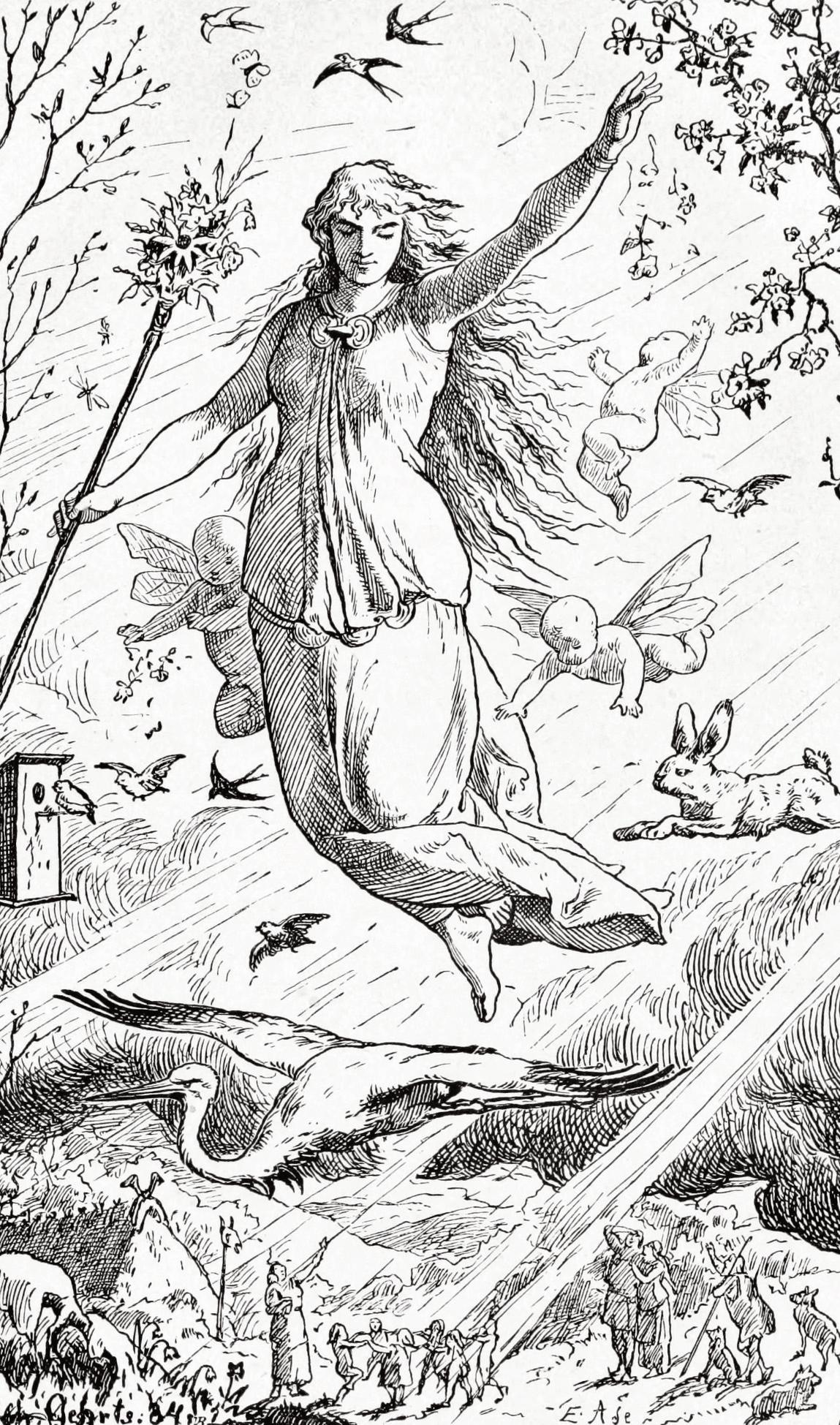
The very term ‘Easter’ may well derive from ‘Eostre’, the pagan goddess often symbolised by bunnies or eggs in association with fertility, new life, dawn, spring, flowers and an end to the darkness of winter. Indeed it’s from pagan celebrations and traditions that we diarise many Christian holidays.
As for where and when Eostre, also referred to as Ostara, first appeared on the scene, we don’t really know. She has close associations with Anglo-Saxon religions and myths but her name eludes literature until De Temporum Ratione written in 725 AD by the Venerable Bede (672/3-735 AD) in which he states that April (Eosturmonath i.e. ‘The month of Eostre’) was named after that goddess. That prompted a tradition which was later replaced by the Christan Paschal month
celebrating the resurrection and granting us rebirth and new life (2 Corinthians 5:17, JB).
There is little or no evidence to suggest that the tradition of Easter eggs is in any way associated with Eostre. Eggs, as a symbol in Christianity, have been associated with rebirth as early as the 1st century AD via the iconography of the Phoenix egg. The legendary phoenix bird with roots in various mythologiesincluding Greek, Roman, Egyptian and Chinese - symbolises rebirth, immortality and renewal. The phoenix is credited with rising from its ashes after death, making it a powerful metaphor for overcoming challenges and the triumph of life over destruction.
One theory is that it was not until the Middle Ages, the period between 476 AD and the late 15th century, that eggs became associated with Easter in Europe. During Lent it was generally forbidden across England to eat eggs.
Putting all symbols, emblems and metaphors to one side, we find Easter's true, clear and unequivocably Christian meaning in 1 Corinthians 15:3-4 (JB): ‘Christ died for our sins, in accordance with the scriptures; that he was buried; and that he was raised to life on the third day, in accordance with the scriptures’ sacrificing Himself for victory over sin and death.
Notes, Acknowledgements and Attribution: Accompanying image (Statue with Blowing Horn) after the sculpture Exultate Jubilate by Philip Jackson; Texts/References adapted and/or adopted from http://en.wikipedia.org under the terms of the Creative Commons Attribution-ShareAlike License 4.0/; Drawing: Ostara (1884) by Johannes Gehrts. The goddess flies through the heavens surrounded by Romaninspired putti, beams of light, and animals. Germanic people look up at the goddess from the realm below.
Dr J L Kettle-Williams is an experienced business communications consultant and wordsmith (tutor, writer, translator).
‘Eostre’, the pagan goddess
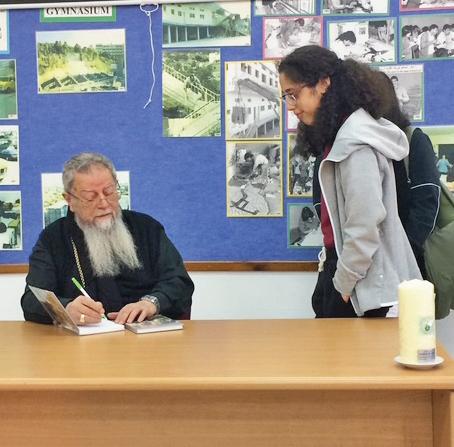
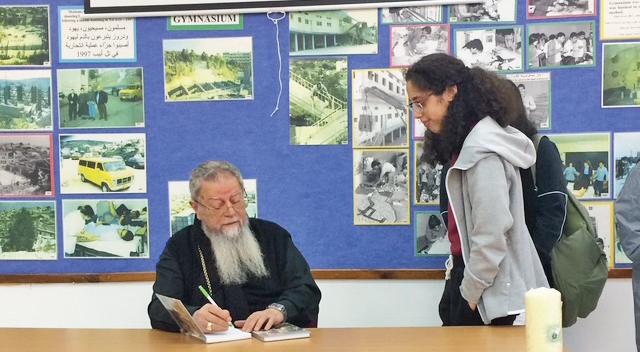
Archbishop Elias Chacour: a witness to peace and reconciliation
Readers may or may not be familiar with the name of Elias Chacour, a PalestinianArab-Israeli priest, educator and peace advocate whose life’s work has been devoted to reconciliation between peoples of the Holy Land. Describing himself as a “Palestinian Arab Christian Israeli”, he says that this complex heritage is not a division but a “beautiful mosaic” that can help build bridges between communities.
Often affectionately known simply as “Abuna” — the Arabic word for father — Archbishop Chacour served for many years in the Melkite Greek Catholic Church and was appointed Archbishop of Galilee. In doing so, he became the first Israeli citizen to be appointed a bishop in that Church.
Throughout his ministry he has consistently promoted non-violence, dialogue and mutual understanding between Palestinians and Israelis. His efforts have received international recognition, including nominations for the Nobel Peace Prize in 1986, 1989 and 1994. Among other honours, he has received the Methodist World Peace Award and the Niwano Peace Prize, recognising his commitment to peacebuilding and interfaith cooperation. In 2001 he was Israel’s Man of the Year.
Education for peace
A central part of Archbishop Chacour’s mission has been education. He founded the Mar Elias Educational Institutions in Ibillin in the Galilee — a network of schools which today educates thousands of young people from a wide variety of backgrounds, including Christian, Muslim, Jewish and Druze students.
The aim is simple but profound: that children growing up and learning together might build a future marked by respect, understanding and peaceful coexistence.
Despite considerable challenges in recent years, the schools continue to achieve remarkable academic results. The Mar Elias schools rank among the topperforming schools in Israel and recently placed fourth out of more than a thousand schools for English examination results in the national Bagrut examinations.
Writing for peace
Archbishop Chacour is also widely known through his writing. His best-selling book Blood Brothers, first published in 1983 and now translated into many languages,
recounts his experiences growing up as a Palestinian Christian in Galilee and reflects on the power of forgiveness and non-violence. His subsequent books have been We Belong to the Land and Faith Beyond Despair.
Desktops for Peace
There is hope that Archbishop Chacour may visit Devon in early May as a guest of Desktops for Peace, a charitable organisation based in Kingsbridge which supports peace and educational initiatives.
During this visit, there may be opportunities for people to meet him and hear about the work of the Mar Elias
schools and his lifelong commitment to reconciliation. Further information about possible events will be published on the Desktops for Peace website including any postponements given the current situation in Israel/Lebanon/Iran.
Use this QR code for the Desktops for Peace website.
The Fool’s Pilgrimage –Stardust
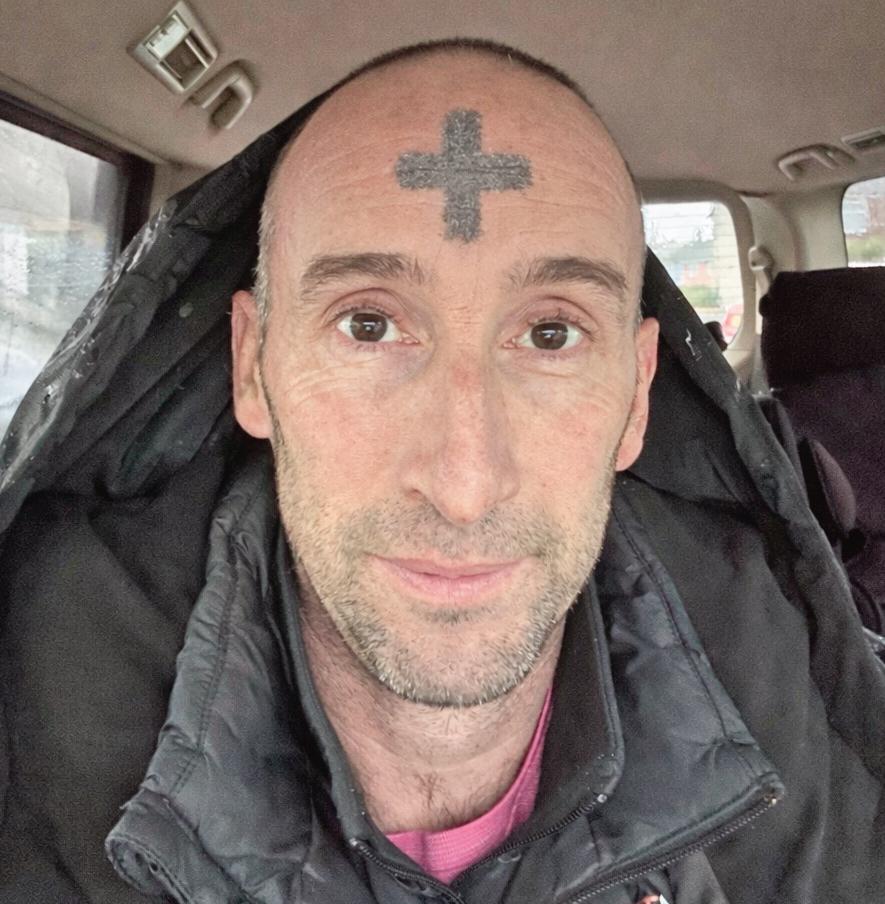
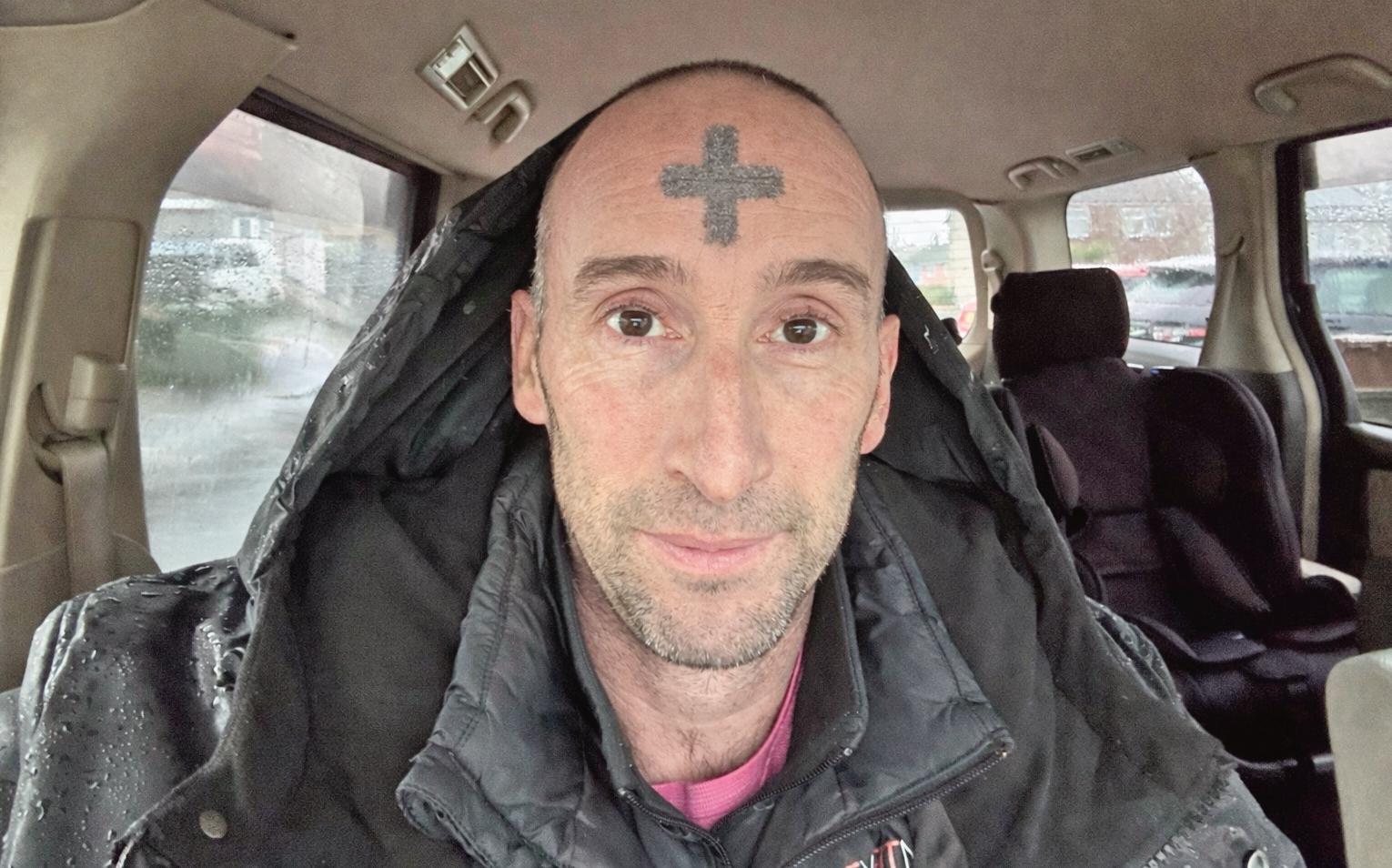
“Remember you are dust, and to dust you shall return.”
These were the words of Fr Daniel as he traced the sign of the cross on my forehead on Ash Wednesday. Found in the book of Genesis, they are a reminder of our mortality — and of our humility.
I’ve been to Mass on Ash Wednesday before. I’ve listened to podcasts and homilies about symbolism, repentance, and human frailty. But this time, as I returned to my pew and later knelt after Communion, I found myself not reciting prayers so much as entering into conversation.
A colloquy — the kind you’d have with your closest friend.
With Jesus.
With God.
And maybe, if I’m honest… with myself.
Whenever I question whether it’s “just me” talking to myself, I’m reminded of my old Nan.
Nanny Christina.
She was an Irish woman who ran a full commentary on whatever she was doing — out loud. By the time I knew her, she had lived alone for many years as a widow. During school holidays I’d spend days helping her with jobs, usually gardening, my payment a homemade pasty (she’d married a Cornishman… and they were good!).
One day I walked into the kitchen and there she was in the larder, deep in animated conversation — with herself.
“You alright, Nan?” I asked.
“Of course I am, Danny-boy,” she replied in her southern Irish accent.
“So… who were you talking to?”
She paused.
“In order for an Irishman to find their equal, they have to talk to themselves — or converse with the Almighty.”
And that was that.
So as I knelt there on Ash Wednesday, dust marked on my forehead, I entered my own conversation — with myself or with the Almighty — and a thought came to mind: The atoms running through my body were formed in an exploding star billions of years ago.
Literally.
Physically speaking, my body is made of matter that has existed since before the Earth began. Dust — stardust. Ancient. Recycled through time and space.
Which means, in a sense… I am older than I look.
The “stuff” I am made of has been here since the beginning and will continue long after this particular arrangement of it is gone.
It’s a reflection I’ve had before, but Ash Wednesday invites me to sit with it more deeply.
The weather here in Plymouth lately has been relentless — rain, floods, grey skies — and yet I love it. Walking or cycling in full wet-weather kit, I feel cocooned in a bubble of my own making. It allows space for movement and meditation to merge.
On one such morning ride, I diverted off the roads and into the wooded areas Plymouth has to offer. The rain had eased. The air was cold and crisp. A few others were out — walking dogs, getting their steps in while it was momentarily dry.
Then the sun appeared.
I stopped cycling, closed my eyes, and felt its warmth on my face. I listened to leaves rustling as a breeze moved through them. Then higher — birdsong overhead, and
the honking call of Canada geese echoing across the pond beside me.
And it struck me again.
Everything here — the trees, the birds, the water, the geese, me — is made of the same ancient substance.
Stardust.
I remembered: I am dust. And like me, everything within my sight and hearing will one day return to dust.
There is something deeply humbling about that.
A smile crept across my face at the whim of nature that means I exist in this body, right now — rather than in the squirrel that darted away when it decided my bike was getting a little too close.
One of my favourite psalms is Psalm 139: “You knit me together in my mother’s womb…
For I am fearfully and wonderfully made.” Formed in a womb. Forged in a star. Held in grace.
If we are all shaped from the same dust — the same exploded star — then we are not separate.
We are connected.
We are, each of us, wondrously made.
And that makes suffering harder to ignore.
When I see someone struggling, something in me responds. Because at the most fundamental level there is no true “them” and “me” — only different expressions of the same ancient matter, animated for a while.
My Dad used to say: “There, but for the grace of God, go I.”
These days I gently shift it to: “There, because of the grace of God, go I.”
We are all pilgrims on this sacred journey of life. I’ve wandered off the path before. I’ve needed help before. I will likely need help again.
If we are all embodiments of the same stardust, then perhaps grace is simply recognising that — and choosing to help, to respect, to value whatever form that dust has taken in front of us.
Ash Wednesday reminds us we are dust. Science reminds us we are stardust.
Faith invites us to live like that matters.
Namaste Have a beautiful day.
Dan Sobey
You can use both sets of clues to solve the puzzle: the solutions are the same.
CRYPTIC Across
7 Henry tracks Tolkien's mine to reach Solomon's temple (6)
8 Awful creature! (6)
9 Acre in Alaska's fine, in retrospect, for Hebrew port (4)
10 He came back after nudge, one by a spirited lass (8)
11 This book's dull...also cut (7)
13 Irish saint's oddly evoking good old Exodus (5)
15 She, unfaithful to the prophet, married raver, it's going round (5)
16 Occupation Ulster's withdrawn from, coming to an end (7)
18 Psalm setting, before/after? – a tight one (8)
19 Spring fast with hospital department appeal ending (4)
21 One of Cain's descendants turned bad in Paris, taking 17's heart (6)
22 Unwanted buildup of swabbies, one on top of the other (6)
CRYPTIC Down
1 City that's ultimately shabby, on the other hand is the capital of Kosovo (4)
2 Some versions have this chap meeting Jesus in hero's temple in error (5,3,5)
3 Guy retired after return of writer's block (7)
4 Doctor regularly looks into muscles – they used to read a lot from them (5)
5 Hear old priest's moving 'Hallelujah' (6,3,4)
6 Someone Paul addressed after show, one decked in brown (8)
12 Oxford guy, a leading chap, who's been to Mecca to get David's boy (8)
14 Graduate is, with anger over race, wearing a clerical head covering (7)
17 New report supports pharaoh who killed Josiah (5)
20 Arkwright's circle is embraced by revolutionary dynasty (4) QUICK Across
7 Mountains where Abraham was told to sacrifice Isaac (6)
8 Deadly; subject to death (6)
9 Variation in spelling of Acre in the OT (4)
10 Infamous son as described in Jesus' parable (8)
11 One of the Synoptic Gospels (7)
3 Meeting of a knightly order (7)
13 St ----- of Glendalough, Co Wicklow, d 618? (5)
15 Son of Japheth and wife of Hosea bearing the same name [Gen] (5)
16 Occupation of the apostle brothers Andrew and Simon Peter (7)
18 Common designation of Psalm 51, set to music by Allegri and others (8) 19 Post-Shrovetide fast (4)
21 Descendant of Cain: 20's father (6)
22 Fearsome person: kind of sauce (6)
QUICK Down
1 Archbishopric second only to Canterbury in importance in the C of E (4)
2 Popular name of a Pharisee, possibly, who hosted Jesus in Bethany (5,3,5)
4 Pulpits or reading desks in early Christian churches (5) 5 English translation of 'Hallelujah!' (6,3,4)