


Gwen Wiseman
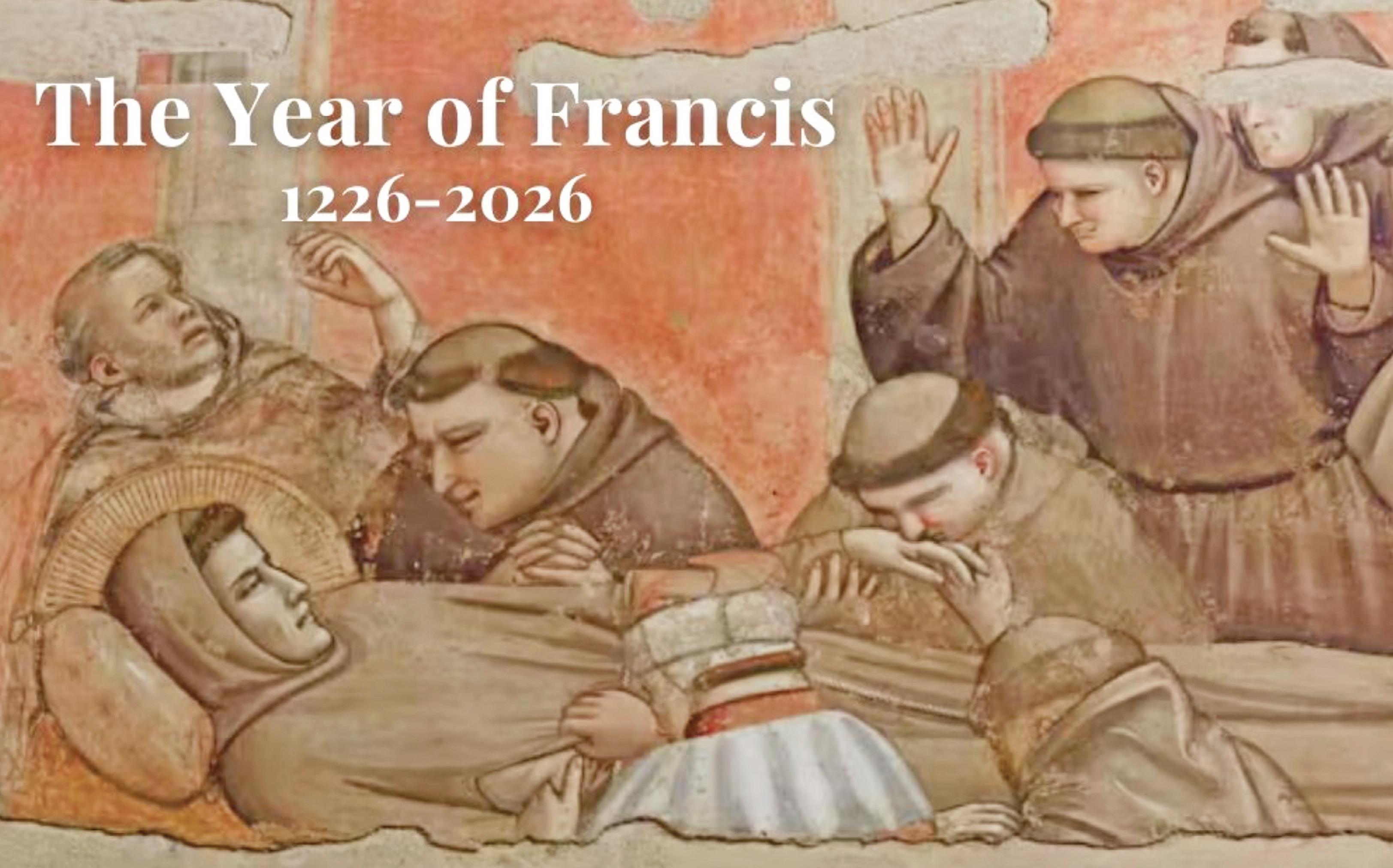
Saint Francis of Assisi died on 3 October 1226, near the small chapel he loved most.
He did not die in a grand church or monastery. He asked to be laid naked on the bare earth. He asked for the Passion of Christ according to the Gospel of John to be read to him. He sang psalms. And then, quietly, he went home to God.
Near the end of his life, broken in body, nearly blind, and exhausted by years of severe fasting, Francis did not fear death. He welcomed her as a sister: “Sister Bodily Death.” His final moments were an act of complete surrender, a last imitation of Christ who had given everything on the Cross.
How a person dies often reveals how they have lived. Francis died as he lived: poor, free, trusting, and wholly abandoned to God.
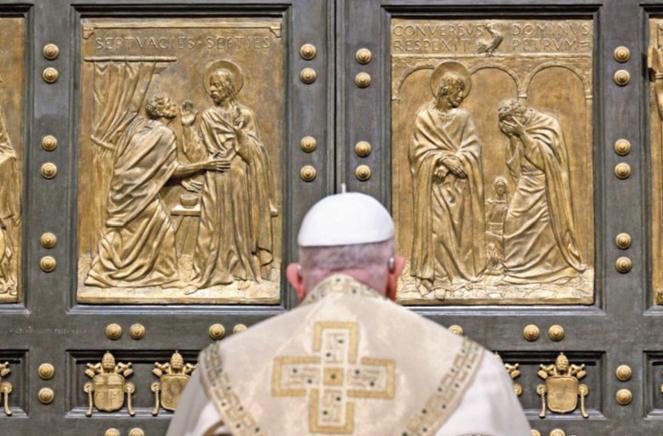
On 10 January 2026, the Franciscan family across the world, together with the Church in Assisi, gathered in prayer at the Basilica of Santa Maria degli Angeli to open the Eighth Centenary of the death of St Francis.
The world Francis knew was marked by violence, division, and deep inequality. Our modern world may appear very different on the surface, and yet in many ways it remains painfully similar. Eight hundred years after his death, in a fractured and restless world, his witness still calls us back to the essentials. The faithful from every corner of the globe continue to be drawn by the life of this small, unlikely man. But why?
Francis refused to dilute the demands of the Gospel. He embraced it without reserve, choosing poverty over comfort, peace over power, and humility over status. The Gospel was not simply something he believed; it was the pattern of his entire life, shaping every choice he made.
So completely did Francis give himself to Christ that he prayed to share both the physical suffering of the Cross and the burning love with which Christ offered himself. This prayer
was answered. Two years before his death, Francis received the wounds of Christ on his hands, feet, and side, becoming the first recorded saint to bear the stigmata. From this radical conformity to Christ flowed a life that could not be contained. Francis founded a worldwide family of friars, sisters, and lay people, now spread across every continent. Yet his influence reaches far beyond those who wear a habit.
The Franciscan Jubilee
In the context of this centenary year, Pope Leo XIV has proclaimed 2026 a Franciscan Jubilee, inviting the whole Church to rediscover the heart of the Gospel through the life and witness of St Francis.
A particular grace of the Year of St Francis is the plenary indulgence attached to this Jubilee, addressed in a special way to the members of the Franciscan families of the First, Second, and Third Orders, Regular and Secular, as well as to Institutes of Consecrated Life, Societies of Apostolic Life, and associations that observe the Rule of St Francis or draw inspiration from his spirituality.
At the same time, this grace is extended to all the faithful, who, with hearts detached from sin, participate in the Jubilee by making a pilgrimage to any Franciscan conventual church or place of worship dedicated to St Francis of Assisi anywhere in the world. With particular tenderness, the Church has ensured that the sick and the elderly, and those unable to leave their homes for serious reasons may also obtain the plenary indulgence by uniting themselves spiritually to the Jubilee celebrations and offering to God their prayers, sufferings, and the daily difficulties of life. In this way, the mercy proclaimed by St Francis is made accessible to all, regardless of circumstance.
Most dioceses across the UK have a parish or church explicitly named after St Francis of Assisi, and every diocese has at least one church or place of worship connected to the Franciscan charism. This includes Franciscan friaries, Franciscan and Poor Clare convents, shrines and chapels, as well as churches
dedicated to other great Franciscan saints such as St Clare of Assisi, St Anthony of Padua, St Bonaventure, and St Maximilian Kolbe. In the spirit of the Jubilee decree, these places are natural local points of pilgrimage, ensuring that the grace of the Year of St Francis is accessible to all the faithful, including those unable to travel to Assisi.
Ask your priest how the Year of Francis will be lived in your parish and diocese.
Veneration of
As part of the centenary celebrations, pilgrims are invited to venerate the mortal remains, the bones of St Francis. After his death, and out of fear of medieval relic hunters, Francis’s body was hidden. Almost six hundred years later, in 1818, Pope Pius VII ordered a search for the tomb, which was successfully rediscovered beneath the altar of the Lower Basilica of St Francis.
The tomb was last opened in 1978 under Pope Paul VI for inspection, at which time the remains were placed in a sealed protective container to ensure their preservation. Now, in 2026, Francis’s body will be exposed for public veneration for the very first time.
Public veneration will take place during the season of Lent, from 22 February to 22 March. Due to the large number of pilgrims expected to travel to Assisi for this extraordinary event,
an online booking system has been introduced to manage access. Further information is available at www.sanfrancescovive.org.
While praying before the crucifix in the ruined church of San Damiano, Francis heard Christ say: “Francis, go and rebuild my Church.”
At first, he understood this literally. He rebuilt ruined chapels with his own hands, before slowly realising that Christ was calling him to something deeper, not the rebuilding of stone walls, but the rebuilding of hearts and lives. This year, the same invitation is extended to us.
Go and rebuild what God desires to restore within you.
Go and rebuild the places where trust and relationships have weakened.
Go and rebuild holiness in the ordinary details of daily life.
Eight hundred years after Francis met Sister Death, his life still points us to Christ and calls us to live the Gospel without compromise.
The journey with Francis begins today. The Franciscan Year runs from 10 January 2026 to 10 January 2027.
For pilgrimages, retreats or visits to Assisi, contact Gwen Wiseman: gwen@viaassisi.com | www.viaassisi.com

CONTaCT US:
The Catholic Post is published by its owners CathCom Limited and is wholly independent of and separate from any previous newspaper.
The Catholic Post is published on the last Sunday of the month previous to publication date.
EDITOr:
Nick Layton email: editor@catholicpost.co.uk
aDVErTISING: Charlotte / CathCom Ltd. 01440 730399
charlotter@cathcom.org
DESIGN & LaYOUT:
David Lodge, davidl@cathcom.org
PUBLIShED BY: CathCom Ltd. N2 Blois Meadow Business Centre, Blois Road, Steeple Bumpstead, Haverhill, Suffolk CB9 7BN 01440 730399
arTICLES TO:
The Catholic Post email: editor@catholicpost.co.uk or davidl@cathcom.org
Please send articles for publication by email, supplying any photos separate to the text We welcome contributions
Here are answers to some basic questions about writing for The Catholic Post
How long should articles be?
Usually it seems to work out best if contributors simply say what they have to say and let us worry about finding a spot for it in the paper.
What is the submission procedure?
Please send as a Word file attached to an e-mail. To submit articles for publication, send to editor@catholicpost.co.uk
Charts, graphs, and photos should be submitted as separate PDFs. Electronic photos should not be embedded or pasted into a Word document as this reduces their quality.
Photographs and Illustrations
Photographs and Illustrations should be supplied electronically as high resolution JPEG (*.JPG) files).
Photographs and illustrations should be sent in colour with a resolution of 300 dpi and a minimum size of 100 mm x 100 mm when printed (approx. 1200 pixels wide onscreen).
Computer print-outs are not acceptable. Screen captures are not ideal as they are usually not very high
Parental permission should be sought before submitting photographs of minors.
Source information -
DW = Diocesan Website.
ICN = Independent Catholic News
Views expressed in The Catholic Post are not necessarily those of the editor Last date for copy is the LAST DAY of the month prior to publication.
Dr Paul Jerome Bryant
Some people know how to listen. They get it. But they are rare. If you’ve ever been upset, anxious, or just had too much on your mind to know what to do about anything, you’ll know what it feels like to need someone who knows how to listen to you. When we feel at our wits end, as if God has abandoned us, and the world and everyone in it has turned against us, it can be hard to know what to do, how to find a way out of the darkness. At times like these, we need someone to listen to us. Not just nod along and offer platitudes, but someone who knows how to listen.
Real listening is an act of the most profound love; this is especially so in our hurried and chaotic day and age, when so many of us feel as though we have too much to do, and not enough time to do it - incidentally, our bad smartphone habits, significantly exacerbate this problem - it is astonishing how often we have time for our phones, but not for other people.
Listening is not only an act of love; it is an act of faith and hope and a serious ascetic discipline. The noise, the chatter, and all those things we are certain we must attend to – and many of them are important – must be put aside while we give our attention whole heartedly to the person who needs our attention. Listening requires discipline because we must resist the urge to butt in, to give advice and to offer solutions; we must put our internal narrative on hold and be silent; giving the other person centre stage.
Panic grips most people who are suffering from mental anguish and desperation. It can feel like swimming against a tide that is too strong; the thoughts, the emotions, the questions, and more besides, are all just tumbling around inside, it can feel like drowning. People who can listen from a place of silence offer us steady ground on which to rest and take stock, to find a way back to shore, back to safety.
I first encountered the value of real listening about a decade ago when I was teaching a lesson about listening using a resource made by the Samaritans. It was an audio file with three different responses to the same situation. There were two young men in a bar, one had been dumped by his girlfriend and was deeply upset and hurt, he was talking to his friend about it. In the first response, the friend came out with some common, trite platitudes, ‘Plenty more fish in the sea’, ‘She doesn’t know what she’s missing’ That sort of thing. In the second response, the friend interrupts with lots of advice, not even giving his grieving friend the chance to share his feelings; in effect, shutting the conversation down before it has begun. In the final response, the friend just listens from a place of stillness and silence, asking a few helpful questions to open up the conversation, showing sympathy, compassion and understanding.

When you do the exercise in class, everyone understands which response is the helpful one. It is just too obvious when you think about it. And yet, in real life, it is so easy to forget, or not notice, when we are not really listening; when instead of attending to the needs of someone else, we let our own preoccupations and thoughts get in the way.
In the Rule of St Benedict, the first word is listen, ‘Listen carefully, child of God, to the Master’s instructions and attend to them with the ear of your heart’ (RB Prologue 1). The Latin in which the Rule was originally written uses the word osculta which means obedience as much as it does listening; an important insight into the need for true listening to be grounded in mutual obedience. Such obedience is not slavish, but mutual attentiveness. St Benedict uses osculta to encourage his monks and nuns to listen closely to each other, to be attentive, ready to respond; it implies engagement, not just passive listening. St Benedict wants his monks and nuns to listen with the ear of the heart, receive what they hear inwardly, and allow what is heard to shape their action.
Later in the Rule, St Benedict teaches his monks that their first priority must be care of the sick: ‘care of the sick must rank above and before all else, so that they may truly be served as Christ, for He said: I was sick, and you visited me (cf. Matt 25.36) and what you did for one of these least brothers you did for me (cf. Matt 25.40)’ (RB 36.1-3). In his commentary on chapter thirty-six of the Rule of Saint Benedict, Blessed Alfredo Idelfonso Cardinal Schuster, a Benedictine monk and Archbishop of Milan, explains that Benedictine care for the sick is, ‘inspired by a twofold criterion: by the supernatural and the evangelical one that serves and adores very Person of Jesus the Saviour in the infirm man, and at the same time by an understanding of wise hygienic provisions that recommend isolating the infirm from the community so as to care for them
apart and in conditions better for the appropriate health care’ (Schuster 1945:161). Such love for the sick is known as the witness of charity.
Prioritising the well-being of the sick, vulnerable and weak has Biblical precedent; indeed, at the heart of the Bible we are taught that care for those in need, whatever the exact nature of their circumstances, is one of God’s most important commands: ‘If there is among you anyone in need, a member of your community in any of your towns within the land that the Lord your God is giving you, do not be hard-hearted or tight-fisted towards your needy neighbour’ (Deuteronomy 15:7-8.) Furthermore, in the parable of the Good Samaritan, Jesus teaches that our love ought to transcend even the hatred of enmity (cf. Luke 10.25-37). Such is the witness of charity.
If we bring these two priorities together, listening and care of the sick, we have something of significant importance for society. At a time when increasing numbers of people are struggling, the more of us who can learn how to really listen, from a place of stillness and silence, as an act of faith, hope and love, the better chance we have of creating a society in which people feel valued and loved. In the words of St James, everyone should be quick to listen and slow to speak (cf. James 1.19).
When people were in the presence of Jesus, they knew that he was listening to them. Not just hearing their words, but listening to their body language, searching out their suffering, finding their deepest yearnings and their darkest fears. Jesus was attentive to other people; he didn’t hurry off to be somewhere else, to do something more important. Jesus was rooted and grounded in the present moment; lovingly attentive to the person before him.

In his message for the 60th World Day of Social Communications, Pope Leo XIV highlights the importance of ensuring that technological innovation, particularly artificial intelligence, serves the human person rather than replacing or diminishing human dignity
Face and voice are unique traits of every person and form the foundation of human identity and relationships. Reflecting on this truth, Pope Leo XIV introduces his Message for the 60th World Day of Social Communications, which will be celebrated on 17 May 2026, with a focus on digital communication and artificial intelligence, highlighting the need to protect human dignity in an age increasingly shaped by technological innovation.
Human beings, the Pope recalls, are created in the image and likeness of God and called into relationship through the Word. Preserving human faces and voices, therefore, means preserving the divine imprint present in each person and upholding the irreplaceable vocation of every human life.
“Preserving human faces and voices, therefore, means preserving this mark, this indelible reflection of God’s love. We are not a species composed of predefined biochemical formulas. Each of us possesses an irreplaceable and inimitable vocation, that originates from our own lived experience and becomes manifest through interaction with others,” he writes.
The anthropological challenge of technology
The Pope warns that digital technologies, especially artificial intelligence systems capable of simulating voices, faces, and emotions, risk altering essential dimensions of human communication.
The challenge, he stresses, is not primarily technological but anthropological; it is a matter of protecting human identity and authentic relationships.
He draws attention to the impact of social media algorithms that prioritise rapid emotional reactions over reflection, weakening critical thinking and fostering social polarisation.
“By grouping people into bubbles of easy consensus and easy outrage, these algorithms reduce our ability to listen and think critically, and increase social polarisation,” the Pope explains.
The growing reliance on artificial intelligence for information, creativity, and decisionmaking, he adds, also risks diminishing analytical skills, imagination, and personal responsibility.
Reality, simulation, and social impact
Pope Leo highlights the difficulty of distinguishing between reality and simulation in digital environments, where automated agents and chatbots can influence public debate and individual choices, shaping emotional responses and personal interactions.
Such dynamics, he notes, may affect not only individuals but also social and cultural life.
Responsibility, cooperation, and education
To address these challenges, the Pope identifies responsibility, cooperation, and education as essential pillars. Technology developers, political authorities, media professionals, and educators are called to promote transparency, safeguard human dignity, and ensure the integrity of information. “The task laid before us is not to stop digital
innovation, but rather to guide it and to be aware of its ambivalent nature. It is up to each of us to raise our voice in defence of human persons, so that we can truly assimilate these tools as allies,” Pope Leo says. Collaboration among institutions and sectors, he writes, is required to guide digital innovation toward the common good.
“No sector can tackle the challenge of steering digital innovation and AI governance alone. Safeguards must therefore be put in place. All stakeholders — from the tech industry to legislators, from creative companies to academia, from artists to journalists and educators — must be involved in building and implementing informed and responsible digital citizenship,” the Pope insists.
Media literacy and digital awareness
Finally, Pope Leo underlines the importance of education in media, information, and artificial intelligence literacy, fostering critical awareness, protecting personal identity, and supporting a responsible culture of communication.
“Just as the industrial revolution called for basic literacy to enable people to respond to new developments, so too does the digital revolution require digital literacy (along with humanistic and cultural education) to understand how algorithms shape our perception of reality, how AI biases work, what mechanisms determine the presence of certain content in our feeds, what the economic principles and models of the AI economy are and how they might change,” he writes.
Renewed care for face and voice, he concludes, remains central to preserving the human dimension of communication and orienting technological progress to the service of the human person.
“We need faces and voices to speak for people again. We need to cherish the gift of communication as the deepest truth of humanity, to which all technological innovation should also be oriented,” the Pope concludes.
The following prayer was pinned up in the kitchen in the house I grew up in. It gave my mother comfort and a realisation that it was the small things in life that were important and which needed to be done well, no matter how repetitive or boring. This prayer made sense of all that she did. Difficult work was done not just for the family, but for God. In so doing, she had the fortitude to care not just for us, but for her aging parents who came to live nearby. With this prayer she re-set her bearings and offered her difficulties to God.
Whatever our work, whatever our duties in life, however much we struggle with tasks, we too can gain strength by turning our chores into ‘practical prayer’, doing the work as well as we can, for God. In return, being gifted the strength to carry on.
Kitchen Prayer
Lord of all pots and pans and things… since I’ve no time to be A saint by doing lovely things, or watching late with Thee… Or dreaming in the dawn light, or storming Heaven’s gates… Make me a saint by setting meals and washing up the plates! Although I must have Martha’s hands, I have a Mary mind, and when I black the boots and shoes, Thy sandals, Lord I find. I think of how they trod the earth each time I scrub the floor -
Accept this meditation Lord, I haven’t time for more.
Warm all the kitchen with Thy love, and light it with Thy peace… Forgive me for my worrying and make my grumbling cease.
Thou who dist love to give men food, in room or by the seaAccept this service that I do, I do it unto Thee.
(Kiara Munkres)
www.crownofthorns.org.uk
email: office@crownofthorns.org.uk
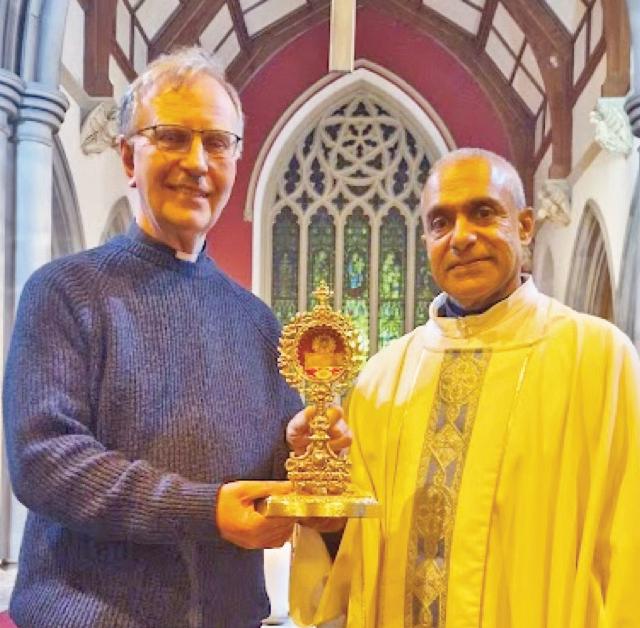
“Wherever the saints are present, miracles break out.” This simple statement came to sum up the experience of many during the recent visit of the relics of Saint Carlo Acutis to the Diocese of Salford, from 28 January to 1 February. The five-day relic mission included Masses, Eucharistic adoration, confessions, rosary, school liturgies, and opportunities for veneration, offering a renewed pastoral invitation to faith.
From the outset, it was clear that this was more than a programme of scheduled events. Rather, it was an invitation to encounter Christ through the witness of a saint who lived his faith with joy, simplicity, and conviction. The relic mission opened in Burnley at The Good Samaritan RC Parish, led by Rev. Fr David Featherstone and Rev. Fr Theo Sharrock, with an opening Mass celebrated by Bishop John Arnold. Monsignor Anthony Figueiredo, custodian of the official heart relic from the Sanctuary of the Renunciation in Assisi, where the body of Saint Carlo resides, explained that Carlo “chooses where he needs to visit.” Fr Featherstone spoke of being deeply humbled by the visit of a saint to his parish, recognising that holiness often arrives quietly, as a grace given to those who welcome it.
That the mission coincided with the Feast of Saint Thomas Aquinas, whose theology profoundly shaped the Church’s understanding of the Real Presence, was no accident. Moved by a deep love for Jesus and a firm belief in the Eucharist, Saint Carlo researched and documented 108 Eucharistic miracles and 44 accounts of saints and
Gwen Wiseman
mystics, gathering more than 150 witnesses to Christ truly present in the Blessed Sacrament. During Eucharistic adoration, Carlo’s words “When we stand in the sun, we get a suntan, but when we stand before Jesus in the Eucharist, we become saints” became a call for all the faithful to renew their own faith in the Real Presence.
The relics were then welcomed at St Patrick’s Church, Collyhurst, by Canon Paul Daly and Fr Jose Netto. For the past three years, St Patrick’s has served as an overflow church for Salford Cathedral during major renovation works. Canon Paul noted that during this time the parish has hosted a diaconate, ordinations and welcomed bishops, archbishops, a cardinal, and a Papal Nuncio, quipping: “Who could be the next esteemed visitor? No better than a saint!”
The presence of Saint Carlo’s relics on the Feast of Saint John Bosco was also especially fitting, uniting two saints whose lives proclaim that holiness is possible for the young. Fr Frankie Mulgrew, Cathedral Precentor for the Diocese of Salford, reflected on what many were experiencing, reminding the faithful that “wherever the saints are present, miracles break out.” The mission concluded on Sunday 1 February with a Closing Thanksgiving Mass celebrated again by Bishop John Arnold.
A particularly powerful aspect of the visit was its engagement with schools from across the diocese. Representatives from every Catholic school gathered at either St Mary’s in Burnley or St Patrick’s in Collyhurst for Liturgies of the
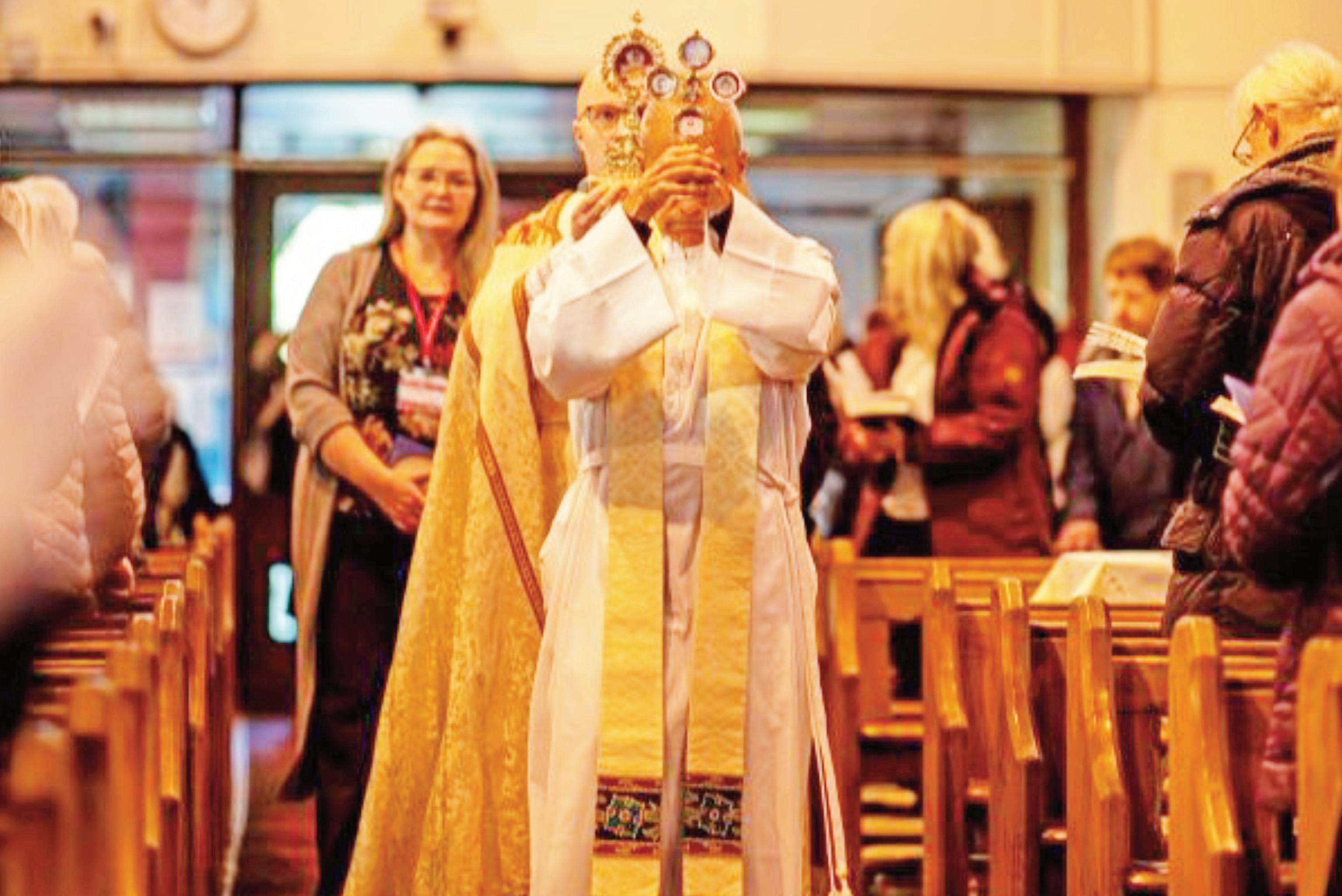
During one such gathering, Monsignor Anthony shared Carlo’s school report card, which often described him as “disruptive” not through misbehaviour, but through joy. With gentle humour, he made a deal with the pupils: “Don’t tell your teachers I said this, but you too can disrupt your classes! But only if, like Carlo, you desire to be a saint.”
For one twelve-year-old boy, that desire became immediate and real. After the liturgy, he quietly approached Monsignor Anthony and said simply: “Now, I want to be baptised.” In that moment, many recognised the deeper purpose of the relic mission: that the greatest miracles are often the most hidden.
Monsignor Anthony, author of the Catholic Truth Society bestseller Five Steps to Being a Saint, often reminds us that holiness is practical and attainable. Saint Carlo lived these “steps” with remarkable consistency: daily Mass, prayer before the Blessed Sacrament, regular confession, devotion to the Rosary, and acts of charity with all he came into contact with. These practices form the foundations of Catholic life. What is extraordinary is Carlo’s fidelity to them in these modern times for one so young and his message remains clear: “You too can be a saint.”
Fr Theo Sharrock, the youngest priest in the diocese at the age of 31, offered a personal reflection. Asking the congregation, “Where were you when…?” he recalled major moments in history before sharing the date of Saint Carlo’s death, 12 October 2006. For Fr Theo, he was celebrating his 12th birthday. From now on, that date will forever link his life with Carlo’s feast day, a reminder that saints continue to enter our lives long after their earthly journey ends.
Priests from across the diocese made themselves available throughout the week, and devotees travelled from Scotland, Wales,
As Monsignor Anthony often reminds the faithful, “Carlo reads all of your prayers.” Thousands of petitions were later placed at Carlo’s tomb in Assisi and entrusted to God through a Mass offered for those intentions in the Sanctuary of the Renunciation in Assisi. And as Monsignor Anthony reminded the congregation, it was through such a petition that the Vatican-approved miracle leading to Saint Carlo’s canonisation was granted.
Wherever the saints are present, miracles do indeed break out: sometimes quietly, sometimes unexpectedly, but always drawing hearts back to Christ.
Saint Carlo Acutis, pray for us.
Dioceses wishing to host the relics of Saint Carlo Acutis may contact Monsignor Anthony, Sanctuary of the Renunciation: figueian@gmail.com.
For the Eucharistic Miracles Exhibition or school visits, contact Jacquie Stacey, Carlo Acutis National Apostolate: jacquiestacey@gmail.com
Relic Tour of Saint Carlo Acutis –March & April
8–10 March: St Gregory the Great Church, Cheltenham (programme and free tickets: stgregorys.org.uk/relics)
11–12 March: St John’s Cathedral, Portsmouth. https://www.portsmouthcatholiccathedral.org.uk/news/ 13–15 March: Bournemouth Oratory https://www.bournemouthoratory.org.uk/ 18–19 April: Knock Shrine, County Mayo. Ireland
20–21 April: St. Aidan's Cathedral, Enniscorthy, County Wexford. Ireland
Vatican Media
During his weekly General Audience, held in the Paul VI Hall, Pope Leo XIV warned against "fundamentalist or spiritualist readings" of Scripture, and spoke of the Church's mission to proclaim the Word of God in language that touches human hearts
Scripture reveals God's desire to be close to His people, Pope Leo said as he continued his catechesis series on the Second Vatican Council. He focused again this week on the Dogmatic Constitution Dei Verbum on Divine Revelation, which the Pope has called "one of the most beautiful and important" documents of the Council.
The Pope recalled that the Conciliar Constitution indicates that, in Sacred Scripture, the faithful find a "privileged space for encounter where God continues to speak to the men and women of every time, so that, by listening, they can know Him and love Him."
The biblical texts, Pope Leo pointed out, "were not written in a heavenly or superhuman language, suggesting that God, out of great love, chooses to speak using human languages, and thus, various authors, inspired by the Holy Spirit, have written the texts of Sacred Scripture."
Dei Verbum, the Pope said, reiterates that "the words of God, expressed in human language, have been made like human discourse, just as the word of the eternal Father, when He took to Himself the flesh of human weakness, was in every way made like men."
Therefore, the Holy Father observed, not only in its content, but also in its language, "Scripture reveals God's merciful condescension towards human beings, and His desire to be close to them."
The Pope acknowledged that throughout the course of Church history, the relationship between the divine Author and the human authors of the sacred texts has been studied. "A correct interpretation of the sacred texts cannot dispense with the historic environment in which they developed and the literary forms that were used," he said. "On the contrary, to renounce the study of the human words that God used risks leading to fundamentalist or spiritualist readings of Scripture, which betray its meaning."
He also noted this principle also applies to the proclamation of the Word of God.
"If it loses touch with reality, with human hopes and sufferings, if an incomprehensible language is used, or if it is uncommunicative or anachronistic," Pope Leo warned, "it is ineffective."
Moreover, he reaffirmed, "In every age, the Church is called to repropose the Word of God in a language capable of being embodied in history and reaching hearts."
Especially when proclaimed in the context of the liturgy, the Pope insisted, "Scripture is intended to speak to today's believers, to touch their present lives with their problems, to enlighten the steps to be taken and the decisions to be made."
"Scripture serves to nurture the life and charity of believers."
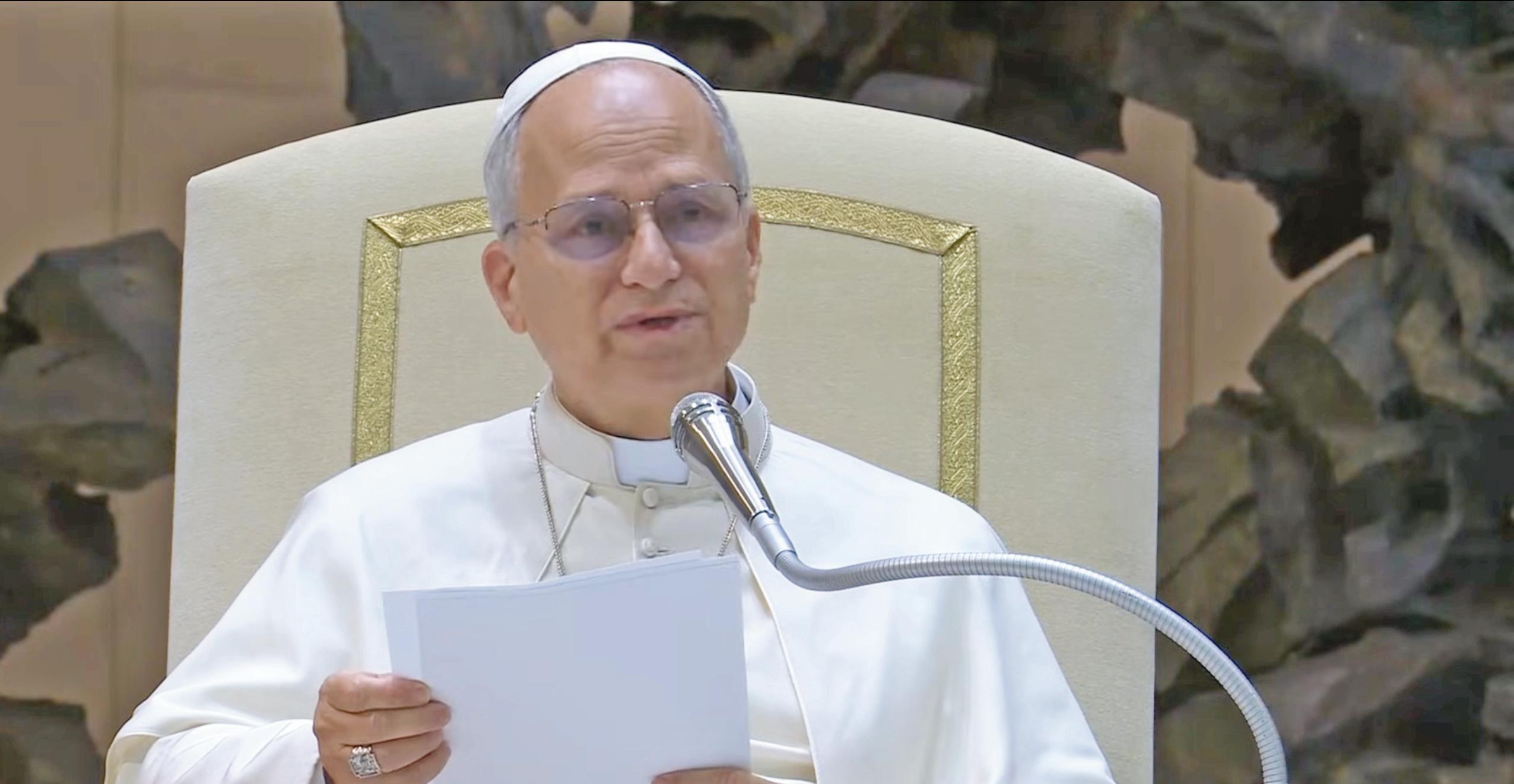
He reiterated that the divine origin of the Scripture also recalls that the Gospel, entrusted to the witness of the baptized, despite embracing all the dimensions of life and reality, transcends them.
Scripture, Pope Leo stressed, "cannot be reduced to a mere philanthropic or social message, but is the joyful proclamation of the
full and eternal life that God has given to us in Jesus."
Finally, Pope Leo encouraged the faithful to "thank the Lord because, in His goodness, He ensures our lives do not lack the essential nourishment of His Word, and let us pray that our words, and even more so our lives, do not obscure the love of God that is narrated in them."
In last month's Catholic Post we included details of new resources written for parishes and schools to help them communicate better with autistic parishioners. With an estimated 1.2 million autistic adults in the country, there are likely to be tens of thousands of people with autism in our parishes. We asked Deacon Mark to explain what can be done to make autistic people not just feel 'welcome' but 'at home'.
1. Most importantly - Ask us what may help us. Is there a means by which parishioners can make their particular needs known? If not, why not?
2. Is there someone there to greet parishioners, provide them with a Mass sheet, hymn book etc? Think about how someone new to the parish would find it navigating the building or understanding what was going on. A brief introductory leaflet, with photographs of key people, a building layout and basic information, would be a great help.
3. Place the information in 2 above on the parish website.
4. Consider noise and light levels – if possible, provide an alternative place or activity if there are going to be loud noises, bright lights etc. Avoid the use of fluorescent bulbs, as they can appear to
flicker to Autistic people. In addition, avoid bright spotlights, particularly without warning.
5. Think about smell – if you are using incense, let people know so that they can decide where they are going to sit.
6. Is the Mass sheet clear about what to do, what to say and when to do it? Could a simple card or sheet with the basics of the Mass explained help?
7. Allow people to make a verbal ‘Sign of Peace’.
8. If you using Holy Water, let people know in advance and explain what you are going to do.
9. A great opportunity to explain symbols and why they matter to us Catholics. If someone is standing on the fringes of a parish social, engage with them. They may choose not to engage back but this should not be perceived as rudeness. Do not push people into socialising. Body language is important – avoid forming tight circles or groups; physically open out to include everyone even if they choose to remain silent.
10. Say what you mean and mean what you say. We are often very literal and sarcasm can go over our heads. Consider the clarity of sermons – nuance and metaphor are great but some Autistic people will struggle to understand them.
11. We take everything in, all at once, in what can be a sensory and mental overload. Avoid ‘too much’, be it liturgical, verbal, physical,
auditory. An Autistic person can literally not know where to look, what to listen to or what to do if there is a lot going on.
12. Have someone in the parish who understands the needs of Autistic people and who can provide support as needed e.g. watching out for signs of distress.
13. Look at parish social events and consider how some, if possible, could be made Autism friendly.
14. Model acceptance of difference – if someone is being loud or stimming or in any way ‘inappropriate’, do not tut, stare or invite the person/family to leave. Ignore the behaviour at the time and then make sure that the person/their family does not leave the building feeling unwelcome. This happens all of the time.
15. Ensure that parish committees, groups etc represent the full spectrum of parishioners – Catholic young people and adults with disabilities have to be part of the decision making and /or consultation process. If disabled people are not represent, ask yourself why and do whatever is required to rectify the situation.
The above is not exhaustive and individual parishes will need to modify the recommendations to suit their circumstances.
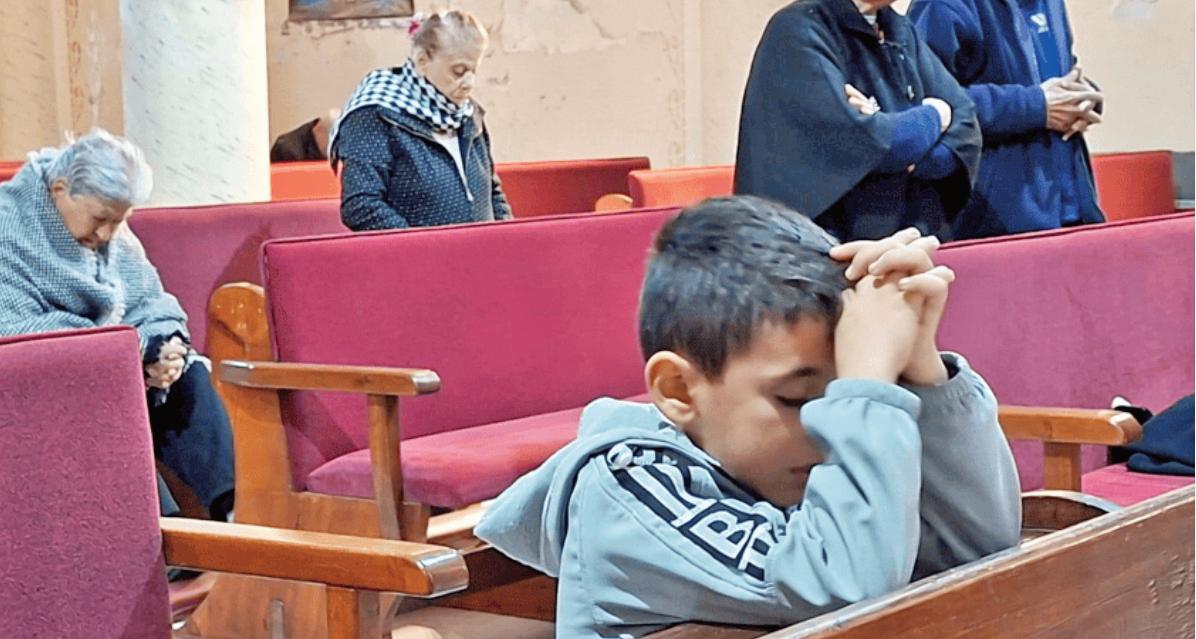
A Catholic priest in Gaza is pleading for the war to stop as the strip continues to sink into a deeper humanitarian and health crisis.
Gaza's only Roman Catholic parish priest, Father Gabriel Romanelli, told Aid to the Church in Need (ACN) about the "very serious" situation caused by dire living conditions and ongoing violence.
Despite the ceasefire called on 10th October 2025, authorities in the Gaza Strip say more than 500 Palestinians have died since then. Israel Defence Forces have defended military action, saying it has been responding to Hamas violations or attacks.
The renewed strikes on Gaza on the morning of 4 February 2026 have killed at least 20, most of them women and children according to hospital officials. Among the dead were five children, including a five-month-old and a 10day-old baby.
Speaking before these attacks, Fr Romanelli said: "The war is not over. Some bombing
continues notably behind the Yellow Line. Houses have been destroyed, deaths and injuries continue to be recorded."
The Yellow Line designates the military frontier established at the time of the ceasefire on 10th October 2025. The line separates the zones controlled by Israel, in the east and the south, from the zone controlled by Hamas in
ACN the west. The latter includes Gaza City where the Holy Family Roman Catholic Church is situated.
Fr Romanelli said thousands of people continue to suffer and there were few signs of hope - with many people living in tents that get drenched when it rains. Borders have been closed, and the electricity and water
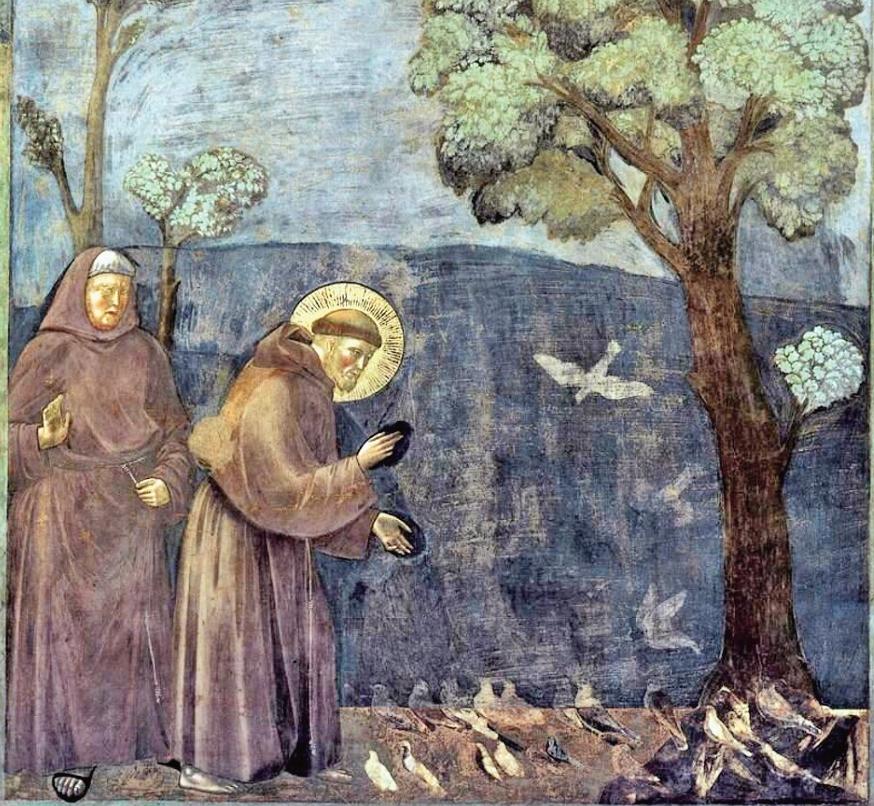
The 800th anniversary of the death of St Francis of Assisi takes place this year. Pope Leo XIV has declared 2026 a special Year of St Francis.
Saint Francis was a pilgrim who undertook significant journeys to Rome and Santiago de Compostela and attempted to go on pilgrimage to the Holy Land. He embodied the pilgrim spirit of humility, peace building and seeking God.
You could, like Eddie Gilmore, walk the Way of St Francis in Italy from La Verna to Assisi and Rome. You could also walk to a church dedicated to St Francis of Assisi in England or Wales, either alone or in a group. You can find details of Catholic churches dedicated to St Francis of Assisi via link below.
For more information scan the QR code.

infrastructure are in ruins. Water is poorly treated, badly stored or contaminated during transport and distribution, facilitating the spread of disease.
The parish priest added: "It is absolutely essential that the war stops. It seems that no one in the world is really involving themselves in an effective way. The 2.3 million inhabitants of Gaza need at the very least to have the minimum human conditions to rebuild their lives.
"There are very many sick and wounded people without access to suitable medical care or who are waiting to be able to leave the enclave for treatment because the hospital system has become a phantom."
According to UNICEF, 100 children in Gaza have died since the beginning of the ceasefire, almost one child per day.
Fr Romanelli said: "They did not die of natural causes. Respiratory and digestive diseases are multiplying. We have all fallen ill more than once. The epidemics are taking a turn for the worse because of the lack of heating, proper shelter and medicine."
Recent torrential rain caused buildings to collapse and those that are still standing are very fragile. The priest said one school teacher lost five family members this way.
The Catholic priest said thanks to the Latin Patriarchate of Jerusalem and organisations including ACN, aid has been able to enter.
He added "The Patriarchate continues to do an enormous amount of good for thousands of families in Gaza."
Christophe Lafontaine
“I wrap my baby in a blanket... and when it gets extremely cold, I try to carry her in my arms more often, so she can warm up from my body heat."
- Mariana, Ukrainian mother
Life for Ukrainians, in sub-zero temperatures, has been made harder by unrelenting attacks. The one-week reprieve by Russia, announced by President Trump in Washington, came to almost nothing. A day ahead of the rescheduled talks, Russia launched its biggest drone and missile attack so far this year.
Already 2026 has been brutal. Over 3,000 drones attacked Ukraine in the first three weeks of January. More than in the whole of 2023.
Hundreds of thousands of people are without heat or light, in temperatures below -20C. Power cuts are a matter of life and death. In a recent attack, Russian ballistic missiles and drones targeted vital power supplies again, just as utility services had begun rebuilding after the previous strike 10 days earlier.
Twice a week, Caritas-Spes Ukraine, supplies hot meals to 200 people in Kyiv. The aid agency is providing mobile kitchens and
working in cooperation with the State Emergency Service, connecting with volunteers to strengthen the response on the ground.
In Kharkiv, a social kitchen and 'warm hub' provide places for people to receive humanitarian assistance, clothing, and footwear. Caritas vehicles are helping those with limited mobility to relocate to areas with easier living conditions.
When the power is on Ukrainians do what they can: charging devices, running heaters, and warming up water to wash with.
But the logistics required just to stay alive are exhausting.
Emergency food kits are being distributed, to provide fast nutrition without the need to set up a field kitchen. In some locations new 'ecoflow' systems provide spaces where people

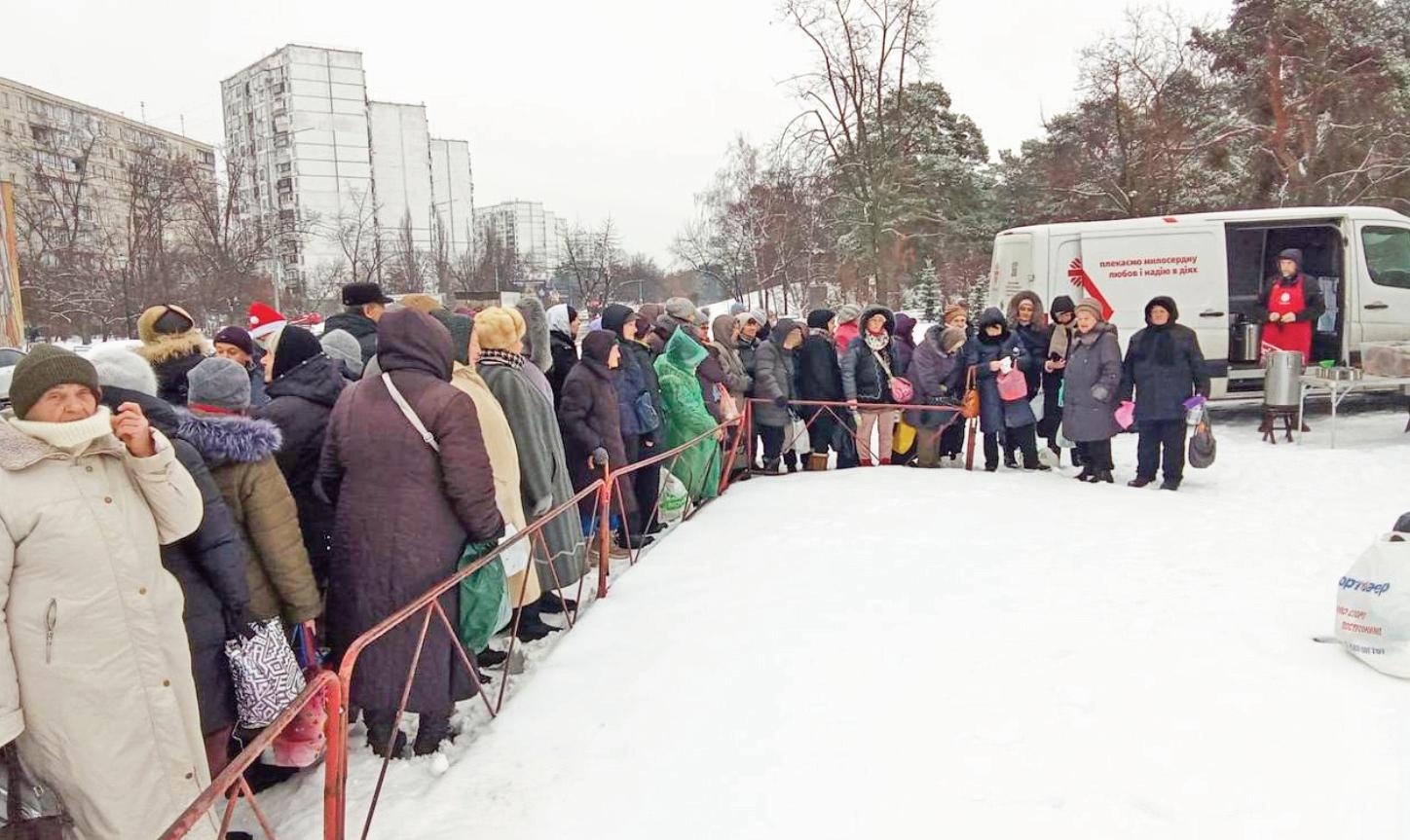
Freezing cold queues for basic food supplies
can gather, get warm and charge essential household gadgets.
Tetiana Stawnychy, head of Caritas Ukraine, says the country is on the brink of a humanitarian catastrophe, and creating the conditions for a peace that will last, is fundamental to any future: "At Caritas Ukraine we focus on humanitarian aid, and on
strengthening social cohesion. Because, as we know, peace is not just a moment in time; peace comes as a process.
"It is a state of being, and it's one of the things that we work on: to make sure that we are building a society that will be ready for peace, and ready to handle the challenges that will come, even after a ceasefire."
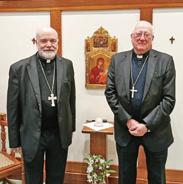

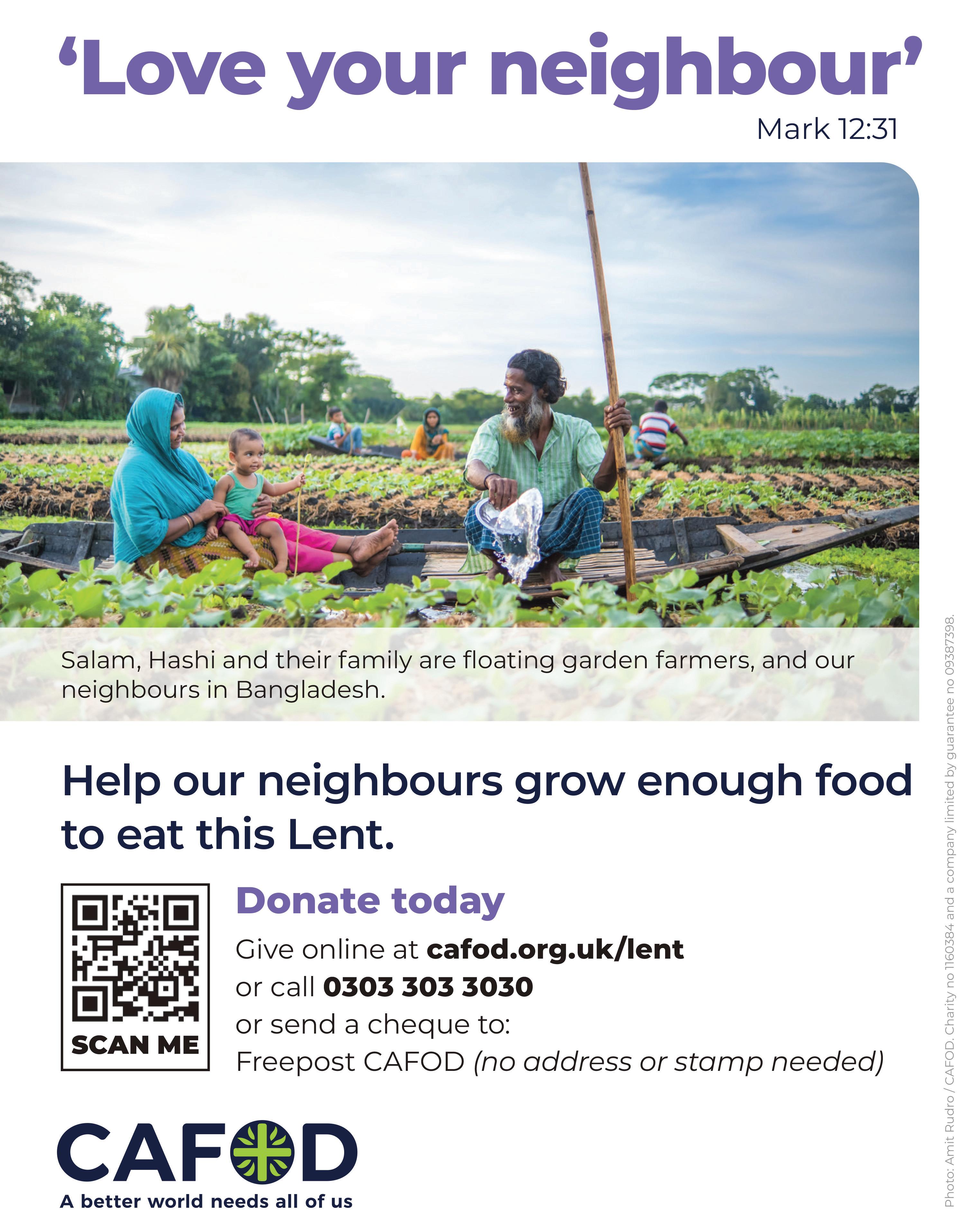
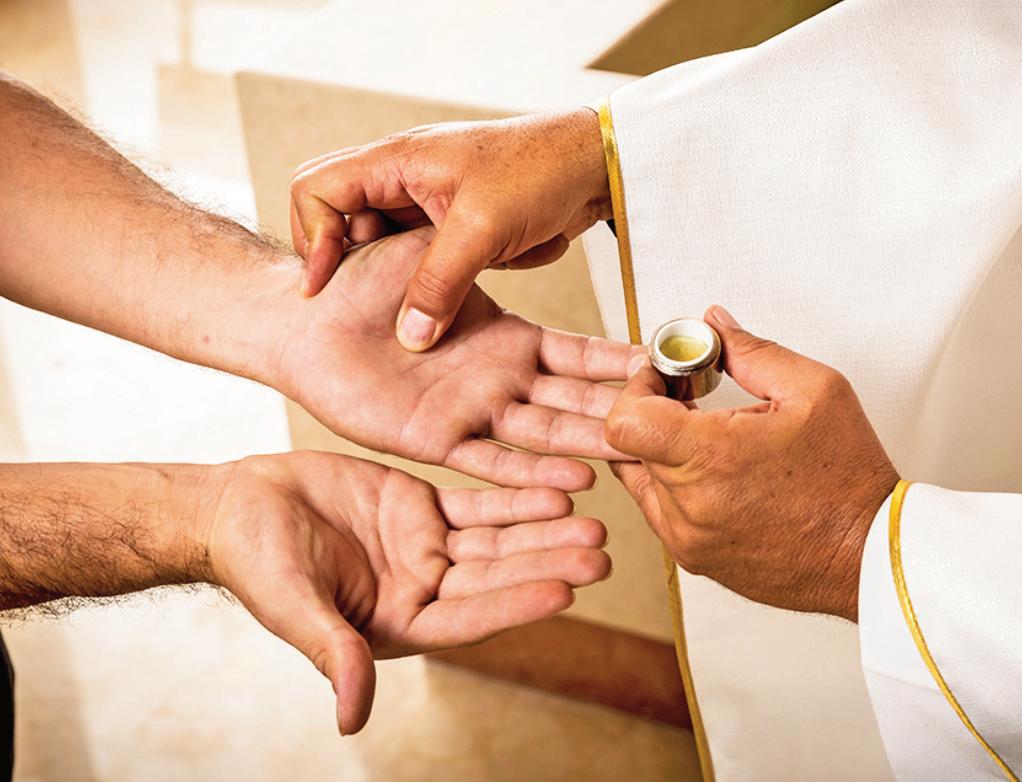
Bishop Paul Mason, Lead Bishop for Healthcare, has offered a reflection on this year’s theme for the World Day of the Sick, “The compassion of the Samaritan: loving by bearing another’s pain”.
The World Day of the Sick is celebrated every year on 11 February. It was established by St. John Paul II in 1992, and is a privileged moment of prayer, spiritual closeness, and reflection for the entire Church and for civil society, who are all called to recognise the face of Christ in our sick and vulnerable brothers and sisters.
In his message, Bishop Mason reminds us that care for the sick is first and foremost an encounter which can transform both the caregiver and the one being cared for. Reflecting on the Pope’s message for the day, Bishop Mason says: “Caring for the sick is never limited to treatment or the easing of physical suffering. It is a relationship, an encounter that embraces the whole person. It is also an expression of fraternal love which, as Pope Leo teaches, is never passive but always ‘goes out to meet the other’.”
The read Bishop Mason’s homily scan the QR code.

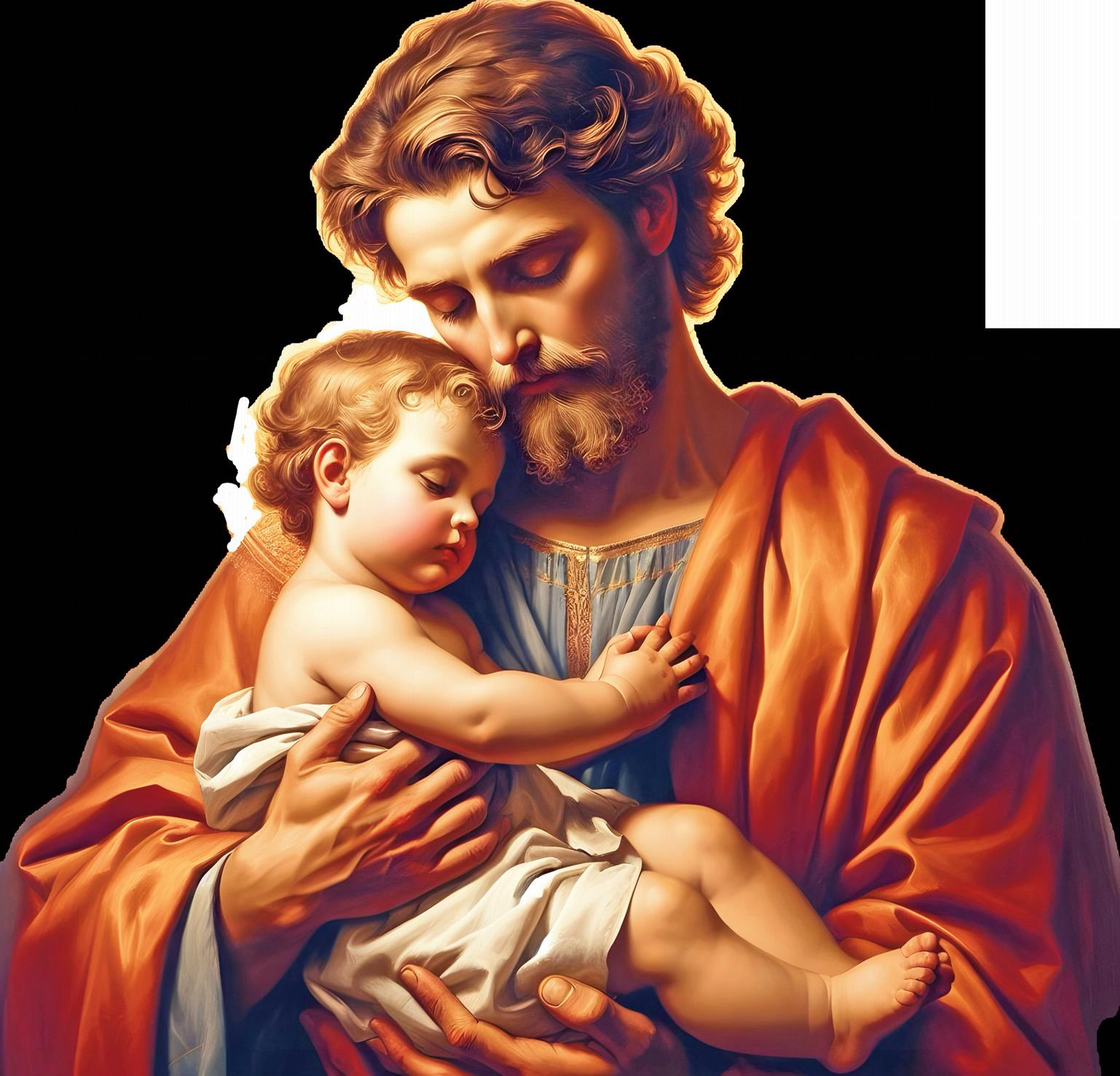
March 19 honours St. Joseph, a man who never speaks a single recorded word in Scripture, yet whose life speaks volumes. In a world that often celebrates loud achievement and public recognition, St. Joseph stands as a powerful reminder that faithfulness, humility, and quiet courage can shape history.
Joseph was an ordinary working man—a carpenter in Nazareth—when God entrusted him with an extraordinary mission: to be the foster father of Jesus Christ and the spouse of the Virgin Mary. This calling did not come with applause or clarity. It came with confusion, risk, and sacrifice. When Joseph learned that Mary was with child, he faced a moment of profound personal crisis. Yet rather than act out of fear or pride, he listened. He trusted God’s message delivered through a dream and chose love over reputation, obedience over comfort.
What makes St. Joseph so inspiring is not dramatic heroics, but steadfast presence. He
protected Mary and Jesus from danger, fleeing to Egypt under cover of night. He worked with his hands to provide for the Holy Family. He taught Jesus how to pray, how to work, how to live faithfully within the rhythms of daily life. Through Joseph, Jesus learned what it meant to be human in a home shaped by love, discipline, and trust in God.
St. Joseph reminds us that holiness is often hidden. Most of our lives are made up of ordinary moments—work, family responsibilities, worries about the future. Joseph sanctified these moments by offering them to God. He shows that being righteous does not require perfection, but willingness: willingness to listen, to act, and to trust even when the path forward is unclear.
For anyone who feels unseen, overwhelmed, or unsure of their purpose, St. Joseph is a gentle but powerful companion. He is the patron saint of workers, fathers, and the universal Church because he understands responsibility and quiet endurance. He teaches
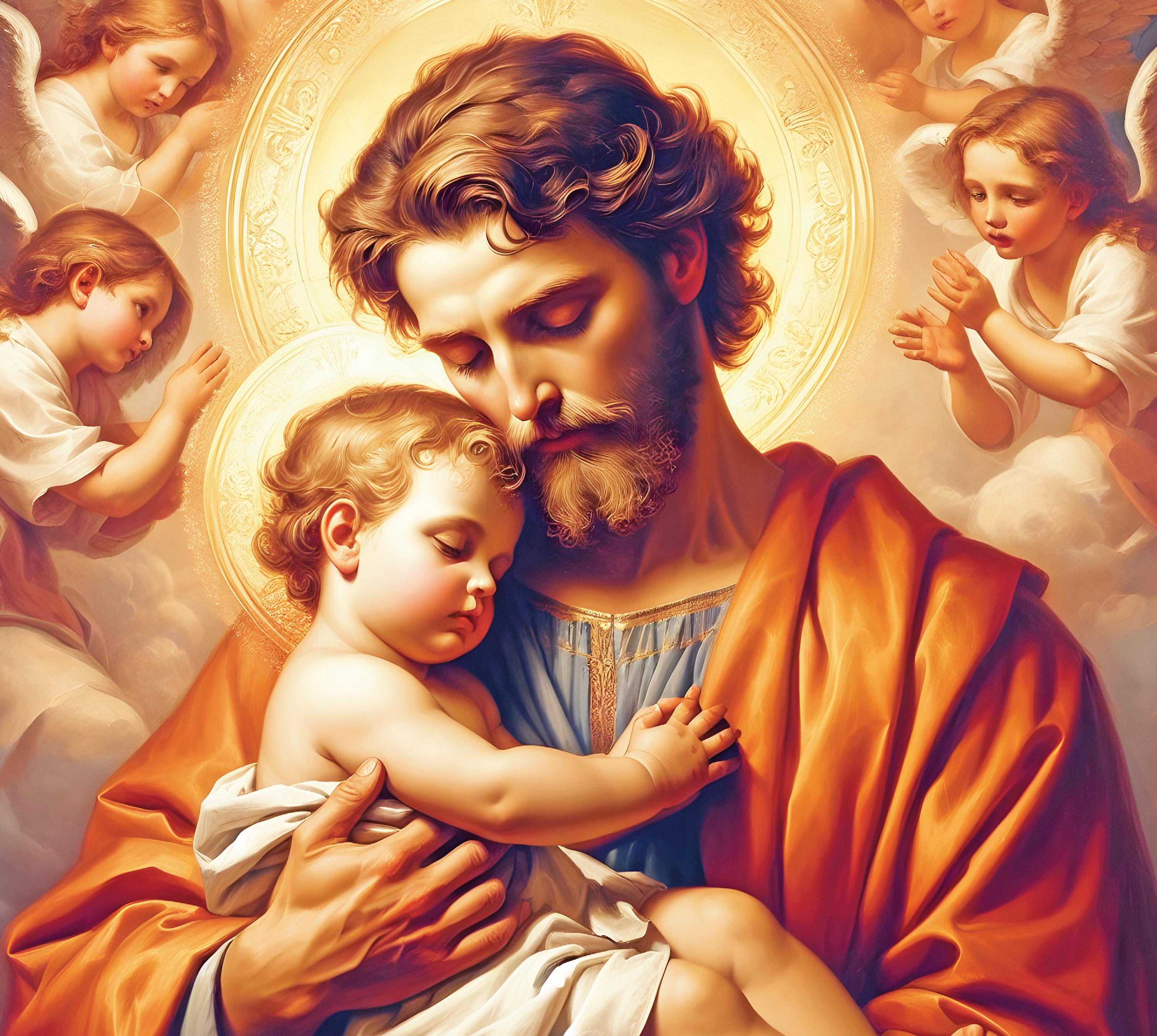
us that strength can be silent, leadership can be humble, and faith can be lived without recognition.
As we celebrate St. Joseph in March, we are invited to follow his example: to listen
attentively to God, to protect what is sacred in our lives, and to serve with love even when no one is watching. In doing so, we may discover—as Joseph did—that God does His greatest work through hearts that are humble and faithful.
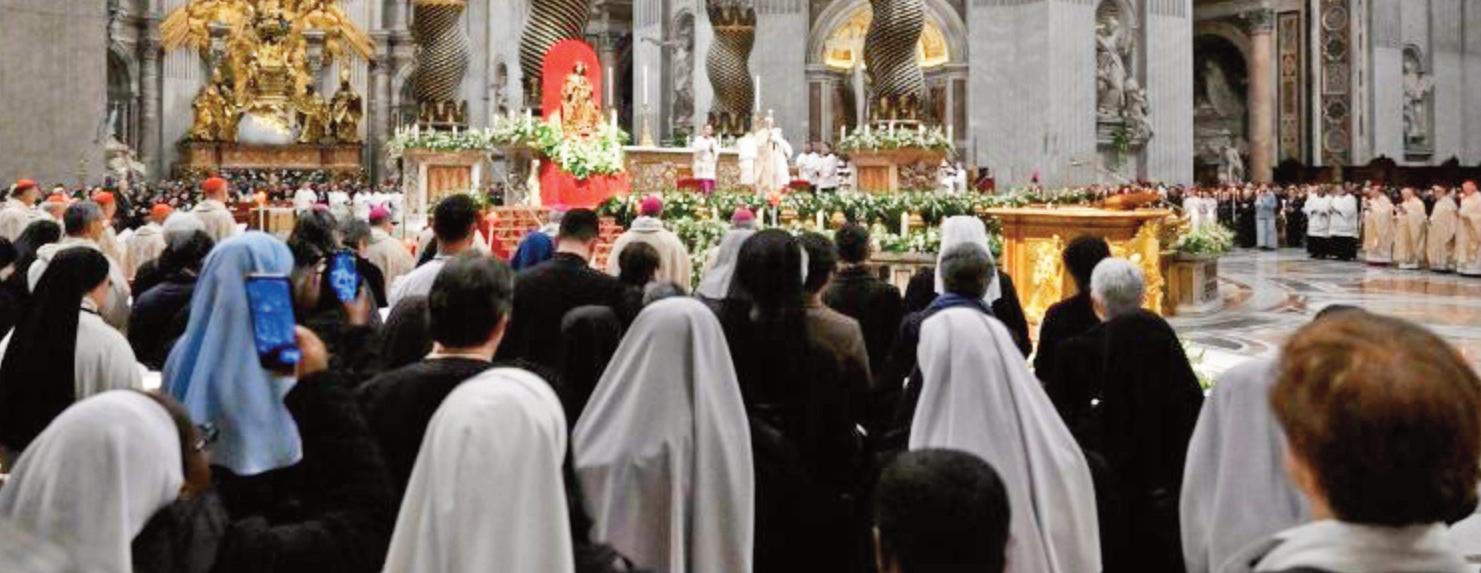
Pope Leo XIV celebrated Mass on the 30th World Day for Consecrated Life recently, praising consecrated men and women for living out their faith even in the most difficult of circumstances, and inviting them to be 'leavens of peace' and 'signs of hope.'
“Through your commitment to follow Christ more closely - sharing in his self-emptying and in his life in the Spirit - you can show the world the way to overcome conflict, sowing fraternity through the freedom of those who love and forgive without measure."
In his remarks, Pope Leo recalled that on this Feast of the Presentation of the Lord, St Luke's Gospel recounts how Simeon and Anna recognized and proclaimed Jesus as the Messiah in the Temple, noting, "What unfolds before us is a meeting between two movements of love: that of God, who comes to save his people, and that of humanity, which awaits his coming with vigilant faith."
He said that as we celebrate the 30th World Day of Consecrated Life with this scene in mind, consecrated persons are meant to recognize it as an image of the mission of religious men and women in the Church and in the world.
Your founders and foundresses, docile to the action of the Holy Spirit, offer you wonderful models of how to fulfil this mandate faithfully and effectively.
Living in constant tension between earth and heaven, Pope Leo marvelled how "they allowed themselves to be guided with faith and courage."
"Setting out from the Eucharistic table, some were led to the silence of the cloister, others to the demands of the apostolate; some to the classrooms of schools, others to the destitution of the streets or the toil of the missions."
This same faith, he said, moved them to return, "time and again, humbly and wisely," to the foot of the Cross and to the Tabernacle, "where they offered everything and discovered in God both the source and the goal of all their actions."
Through the power of grace, he said, they also embarked on perilous undertakings. "They became a prayerful presence in hostile or indifferent environments; a generous hand and a friendly shoulder amid degradation and abandonment; and witnesses of peace and reconciliation in situations marked by violence and hatred."
"They were ready to bear the consequences of going against the current, becoming, in Christ, a 'sign of contradiction,' sometimes even to the point of martyrdom."
The Holy Father recalled that Pope Benedict XVI had written in his post-Synodal Apostolic
Exhortation Verbum Domini that "the interpretation of sacred Scripture would remain incomplete were it not to include listening to those who have truly lived the word of God."
With this in mind, Pope Leo said, "Today, we honour our brothers and sisters who have gone before us as protagonists of this 'prophetic tradition,' and do so above all by carrying forward their legacy."
The Holy Father acknowledged that even today, through their profession of the evangelical counsels and the many works of charity they carry out, they "are called to bear witness to God's saving presence in history for all peoples, even within a society in which false and reductive understandings of the human person increasingly widen the gap between faith and life."
"You are called to testify that the young, the elderly, the poor, the sick and the imprisoned hold a sacred place above all else on God's altar and in his heart," the Pope said, while observing, "At the same time, each of them is an inviolable sanctuary of God's presence, before whom we must bend our knee, in order to encounter him, adore him and give him glory."
He pointed out that evidence of this can be seen in the many "outposts of the Gospel" that their communities have established in a wide variety of challenging contexts, even in the midst of conflict.
"These communities," he underscored, "do not abandon their people, nor do they flee; they
remain, often stripped of all security, as a living reminder - more eloquent than words - of the inviolable sacredness of life in its most vulnerable conditions."
"Even where weapons roar and arrogance, self-interest and violence seem to prevail," Pope Leo observed, "their presence proclaims the words of Jesus: 'Take care that you do not despise one of these little ones, for... in heaven their angels continually see the face of my Father.'"
The Pope recalled that the Second Vatican Council reminds us that "the Church... will receive its perfection only in the glory of heaven... At that time, together with the human race, the universe itself... will be perfectly established in Christ."
He said that this prophetic vision concerns them as well, as "men and women firmly rooted in the realities of the present, yet 'always attentive to the things that are above' Christ died and rose in order to 'free those who all their lives were held in slavery by the fear of death.'"
Pope Leo concluded by reiterating the Church's gratitude to the Lord for the presence of consecrated men and women, saying, "She encourages you to be leaven of peace and signs of hope wherever Providence may lead you. "
"As we renew the offering of our lives to God upon the altar," he prayed, "we entrust your work to the intercession of Mary Most Holy, together with all your holy founders and foundresses..."
‘Mighty oaks from little acorns grow’ is a 14thcentury English proverb coined by Geoffrey Chaucer in his epic poem ‘Troilus and Criseyde’ (circa 1374) which, set during the potentially legendary decade-long Trojan War (12th or 13th century BC) between the Achaeans (Greeks) and the city of Troy (in modern-day Turkey), focuses on the doomed romance between Troilus, a Trojan prince, and Criseyde, a beautiful woman caught in a web of loyalty and betrayal.










I like to imagine that there were no oaks mightier than those at Mamre, where Abraham, a man of resolve and conviction, settled circa 2000-1500 BC and built an altar to the Lord. That ancient site in the Judean hill country near Hebron had been specifically associated with oak trees, the acorns of which symbolise strength, growth, potential, perseverance and all manner of related qualities. The small, hardy acorn reminds us that great things can come from the smallest, the humblest of beginnings. For such reasons, throughout time and over space, acorns have had a multicultural or even pancultural association with life, rebirth and even divine blessing.
In order to flourish, the acorn needs to fall by no will of its own onto fertile ground, to take root and then be nurtured and brought forth. That ‘nature-cum-nurture’ element to the acorn’s ‘quercine situation’ (Latin ‘quercus’ meaning ‘oak’) could be taken to apply just as well to the development of our own young.

The Mystics, we recognise, drew on the images and the realities of secular life in order to convey their convictions, to explain and spread their message to the commoners of their day. A prime example of such ‘worldliness’ in the language of the Mystics is the depiction by St Teresa of Avila (1515-1582) of our human soul as a castle with many rooms, yet made out of a single diamond. A potential example, had the Mystics chosen to use it, could well have been the image of the acorn to expound on parenting within the family unit.

So my thoughts return to Chaucer and those little acorns.
Had Abraham known of those words coming from Chaucer, he would surely have responded with a wry, knowing smile when he raised that altar among the oak trees at Mamre. Of that I’m convinced.
-o0o-

The resolve and conviction we attribute to Abraham strike me as rather like those will-o'the-wisps of folklore, typically attributed as ghosts, fairies or elemental spirits meant to reveal (or conceal) a path or direction, as difficult to concretise as the early-morning mists. I freely admit that the older I get – or perhaps it’s the more mature I become - the more my conviction or assuredness does wane in the face of an increasing number of topics. I don’t see things as black and white as I used to. There are so many more hues, more nuances, more shades to be taken into account. But on those points where I remain sure, you will never shake my conviction. One such topic is the role of the family unit, as important for us as for all creatures great and small.
Tragically it has been widely reported these days that preparedness for the role of parenthood can be lacking to such an extent that responsibilities traditionally addressed by the family unit need to be picked up by other sectors beyond the home.
I listen to the call from child psychologists, from educationalists and I agree: families make the bricks on which society is built and rests. The role of the family unit is to prepare the child for society beyond the home, to function responsibly within and in support of society at large. The role of the parents, among their many responsibilities, is to prepare the child to comply but without sacrifice of individuality. Education, the ‘leading forth’ of the child (Latin ‘educare’ meaning ‘to lead/bring forth’), should be to liberate, to release the child’s talents, never to straightjacket them.
Postscript: The Spanish mystics are major figures in the Catholic Reformation who lived primarily in the 16th- and 17th-centuries dedicated to reforming the Church structurally and to renewing it spiritually. They sought to express in worldly terms their experience of a mystical communion with Christ.
Notes, Acknowledgements and Attribution: Accompanying image (Statue with Blowing Horn) after the sculpture Exultate Jubilate by Philip Jackson; Texts/References adapted and/or adopted from http://en.wikipedia.org under the terms of the Creative Commons AttributionShareAlike License 4.0: /; Photographs (Unsplash): Acorns by Lesli Whitecotton; The Oaktree by Blake Ludwig.
Dr J L Kettle-Williams is an experienced business communications consultant and wordsmith (tutor, writer, translator).
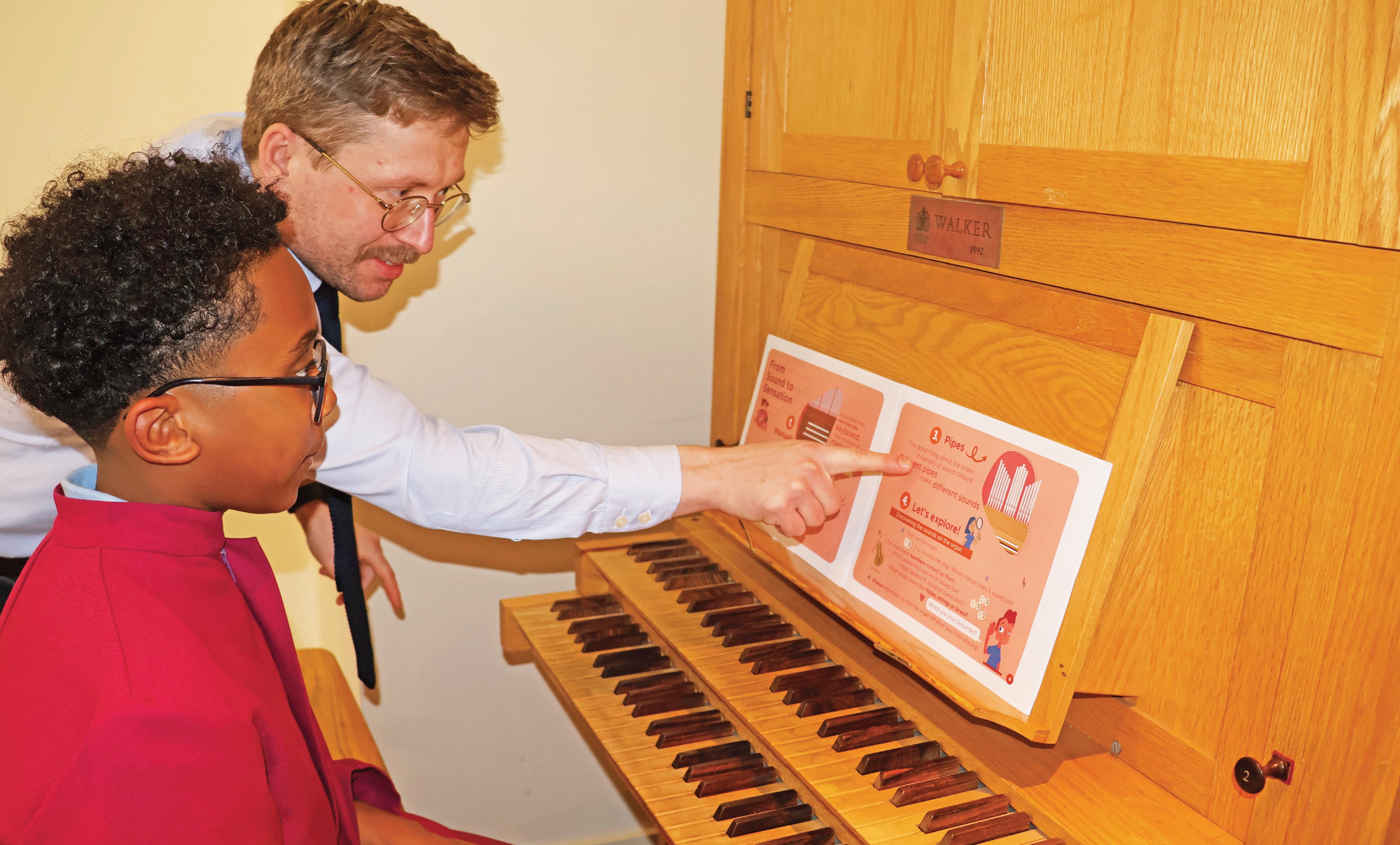
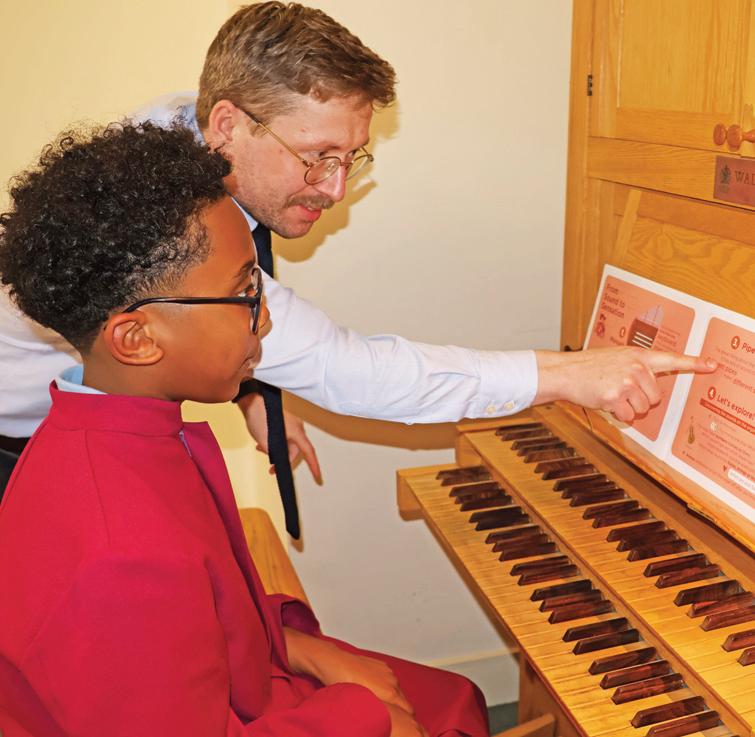
The Diocese of Leeds and the Royal College of Organists have launched a new website as the First Stop! for beginner organists to ‘dip their toes in’ before taking their next steps with Fingers and Feet – a tutor book to engage and encourage anyone with no previous musical experience to learn the pipe organ!
Fingers and Feet: A Journey to the Organ Bench is a major new organ tutor book created specifically to support learners starting the organ as their very first instrument. It is the brainchild of the Diocese of Leeds Keyboard Studies Programme, with support from the Royal College of Organists (RCO), and with funding from the Vinehill Trust. It was edited by Diocese of Leeds Organ Tutor David Pipe, with content devised by organists Drew Cantrill-Fenwick and Robin Harrison.
Unlike traditional organ tutors — which typically assume prior piano experience — Fingers and Feet is designed specifically for those starting the organ from scratch, including learners with no previous keyboard background. It also comes with a suite of 34 short films that guide learners through posture, movement, and first musical steps.
Benjamin Newlove, Leeds Cathedral Organist and Organ Tutor in the Diocese of Leeds said: ‘The future of the organ depends on giving
dioceseofleeds.org.uk
young people the opportunity, confidence, and tools to begin. This book is designed to make learning feel clear, rewarding, and inviting, and will be a particularly valuable resource for primary school children studying through the Diocese of Leeds Keyboard Studies Programme.’
Editor David Pipe said: ‘We wanted to create a tutor that feels genuinely welcoming — something that says to a complete beginner: “Yes, this instrument is for you!” The organ can seem intimidating at first glance, but it shouldn’t be. Fingers and Feet strips away the fear factor, focusing instead on joyful discovery, musical curiosity, and physical confidence, with a clear pathway that enables learners to grow naturally as they develop more formal technique.’
The Fingers and Feet book, accompanied by 34 short tutorial videos, is now on sale, but is also being made available as one of the many free resources on the RCO’s new First Stop! website – a major online resource designed to welcome complete newcomers interested in exploring the organ, whether through its music, its cultural history, or the many roles it plays in modern life. Instead of duplicating content that already exists online, First Stop! serves as a carefully structured gateway to the very best materials produced by organists and
organisations around the world. Visitors can browse films, interviews, lesson guides, digital learning tools and curated playlists. A powerful search tool enables users to explore by topic, content type or free text, making the platform a flexible companion for learning, teaching, and independent discovery.
Tom Bell, RCO Director North, said: ‘First Stop! has been created to give anyone — absolutely anyone — a clear and confident first step into the organ world. There is an extraordinary amount of superb material out there, but for a newcomer it can be hard to know where to begin. First Stop! solves that problem. It brings the best content together in one welcoming space, organised so that learners, teachers, and explorers can find exactly what they need and feel inspired to take the next step. In addition, it provides a focus and a platform for projects such as the Fingers and Feet tutor.’
RCO Chief Executive Sir Andrew Parmley said: ‘The enthusiastic response to last year’s Play the Organ Year initiative demonstrated yet again the enduring appeal of the organ to musicians, would-be musicians, and music lovers of all ages. By creating dedicated print and online resources for those coming fresh to the instrument we are continuing to lower barriers, widen access, and give more people the chance to share the remarkable experiences that the organ offers.’


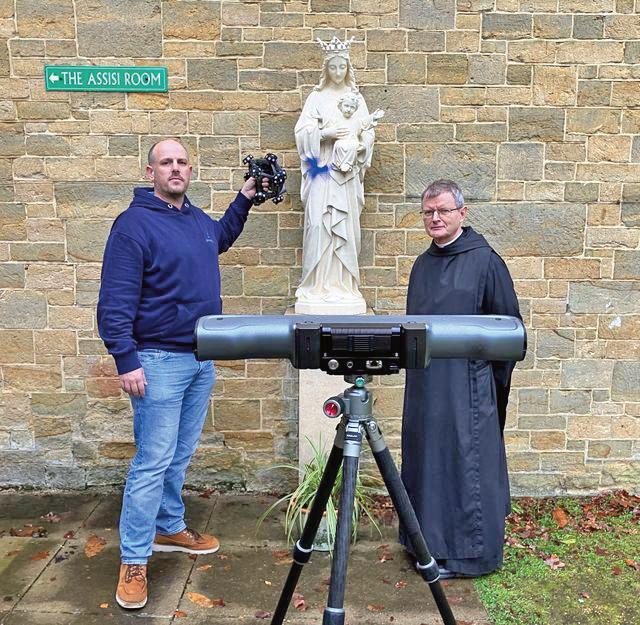
A touching collaboration between two Roman Catholic institutions has brought together a monastic community in the United Kingdom and a rural school in Australia to restore a cherished statue of Our Lady and the Child Jesus.
Benedictine monks of St Augustine's Abbey, Chilworth responded generously when Michael Green, Principal of Mt Carmel School in Yass, New South Wales, sought help to repair his school's damaged statue. The figure, deeply loved by pupils and staff, had lost its hands and feet after many years of wear.
Mr Green discovered online the story of a similar statue lovingly restored at the Chilworth monastery and, having exhausted options in Australia, reached out to ask whether the monks' restored statue could serve as a model for recreating the missing parts.
Moved by the school's dedication and the devotional significance of the statue, the
monks agreed at once. With the support of specialist 3D scanning company Surfacescan of Ramsgate, UK, a detailed digital scan of the Chilworth statue was produced. This high resolution model will allow precise replicas of the missing hands and feet to be crafted in Australia, ensuring the restoration remains faithful to the original design and tradition.
Alongside the technical assistance, the monks offered their prayers and blessing for the project, remembering Mt Carmel School in their liturgy and asking God's guidance for all involved.
For the school community in Yass, the restoration has become more than a practical repair. It stands as a living sign of the Church's unity across continents, linking a small Australian school with a contemplative Benedictine community in Britain.
Once completed, the restored statue will continue to inspire prayer and devotion - now enriched by a story of faith, generosity and international cooperation.
For resources on how to Pray with the Pope, either on your own or in groups, use this QR code.

Lord Jesus, who welcomed the little ones in your arms and blessed them tenderly, today we bring before you the children living with incurable illnesses. Their fragile bodies are a sign of your presence, and their smiles, even in the midst of pain, are a testimony of your Kingdom. We ask you, Lord, that they may never lack proper medical care, human and compassionate attention, and the support of a community that accompanies them with love. Sustain their families in hope, in the midst of weariness and uncertainty, and make of them witnesses of a faith that grows stronger through trial. Bless the hands of doctors, nurses, and caregivers, so that their work may always be an expression of active compassion. May your Spirit enlighten them in every difficult decision, and grant them patience and tenderness to serve with dignity. Lord, teach us to recognize your face in every suffering child. May their vulnerability awaken our compassion, and move us to care, accompany, and love with concrete gestures of solidarity. Make of us a Church that, animated by the feelings of your Heart and moved by prayer and service, knows how to uphold fragility, and in the midst of suffering, becomes a source of comfort, a seed of hope, and a proclamation of new life. Amen.
'extraordinary' young student from
Church authorities are currently studying the life of Pedro Ballester and interviewing his relatives and friends, to ascertain whether he achieved a life of 'heroic virtue' - living a living a life of faith, hope and love surpassing ordinary human capabilities.
One of three brothers, their Spanish -born father, is a surgeon working in Huddersfield. Pedro died on 13 January 2018, at the age of 21 of an aggressive cancer. He had only recently begun studying Chemical Engineering at Imperial College in London.
During his short life he made a great impression on many people through his cheerfulness, kindness to others, capacity for friendship and many other virtues. During his illness, he made friends with other cancer patients and got them to sign a card to Pope Francis - then managed to deliver it to him in person.
In an interview with the BBC his father said: "Pedro took that card to the Pope and then he told him 'I just wanted to let you know that I got cancer, and I offer all the sufferings for you and for the Church.'"
His family were stunned when more than 500 people attended his funeral at the Holy Name Church in Manchester. Mourners included the future Cardinal Arthur Roche, who flew over from the Vatican.
Pedro was buried in Southern Cemetery Manchester, where several other famous Catholics including former Manchester United manager Sir Matt Busby and music mogul Tony Wilson are resting. His father said his grave is already attracting "pilgrims".
A friend wrote: "He was both a very normal and very good young man, serious but joyful, and with a character that revealed both his Spanish background and his upbringing in the North of England. He had a Latin sociable character mixed with Northern grit. He was therefore both sociable and straightforward, eschewing all fuss and sentimentality, but he greatly enjoyed company and was a great friend to his friends. His faith went deep and he was happy to share it with others, but in a very natural way."
Jack Valero from Opus Dei, which is promoting Pedro's cause, told ICN: "Devotion to Pedro is growing all over the world. In the website dedicated to Pedro by one of his friends there are reports of over 150 favours that people have obtained from God through Pedro's
intercession. The prayer card asking for his intercession has been translated into 28 languages including Chinese, Arabic and Vietnamese."
The first canonisations of Pope Leo XIV's papacy, in September 2025, were of Pier Giorgio Frassati and Carlo Acutis. In his homily, Pope Leo said the "extraordinary witnesses of these two young Saints invites all of us, especially young people, to direct our lives upwards to God and make them masterpieces of holiness, service, and joy."
Jack Valero said devotees of Pedro see him as a close friend whose example and prayers help them. He added: "We see in the Church more and more young people like St Carlo Acutis and Pedro who can help people of their generation find God and happiness in their lives."
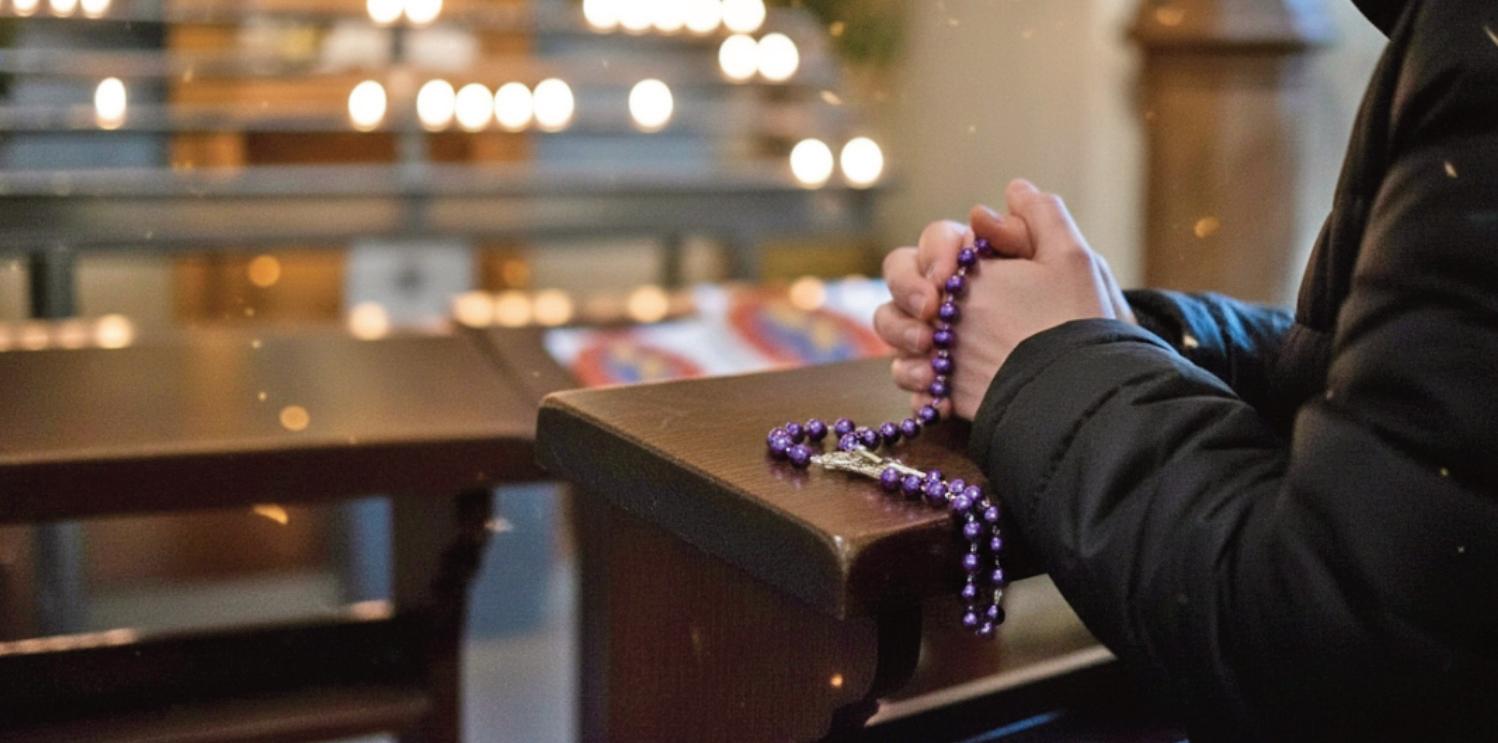
The recent Crown of Advent Novena, led locally by Janet Northing at Our Lady of Walsingham Catholic Church, Corby, has been widely celebrated as a moment of grace, renewal and shared prayer across the Diocese. For the first time, this muchloved devotion was amplified by a diocesan-wide virtual novena, enabling people to participate both in their parishes and online.
The response was remarkable. Across the three churches in Corby, 129 Novena Packs were purchased, with a further 48 packs at St Gregory’s, Northampton, clear evidence of a deep hunger for prayerful, accessible devotion in the life of the Church. Online engagement echoed this enthusiasm, with the Crown of Advent Novena webpage welcoming over 2,000 visitors during the Novena, many accessing daily prayers and resources digitally.
Reflecting on the experience, Janet Northing said: “These numbers are quite incredible and demonstrate that there is a real desire for this type of spiritual devotion
or ‘popular piety’, to use Pope Leo’s terminology.”
The Novena was prayerfully rooted in the O Antiphons, guiding participants through the final days of Advent as they prepared their hearts for the coming of Christ. Its success highlights the growing impact of blending traditional parish devotion with accessible digital outreach—allowing prayer to reach far beyond church walls.
After the Crown of Advent came the Holy Face of Jesus Novena which ran from 9-17 February
(Shrove Tuesday). This historic devotion, approved by Pope Leo XIII and later given a feast day by Pope Pius XII, was offered especially for the intentions of the clergy and religious of the Diocese.
The success of the Crown of Advent Novena stands as a powerful sign of what is possible when prayer, parish life and digital mission come together – nourishing faith, fostering unity, and opening hearts to Christ.
cbcew.org.uk
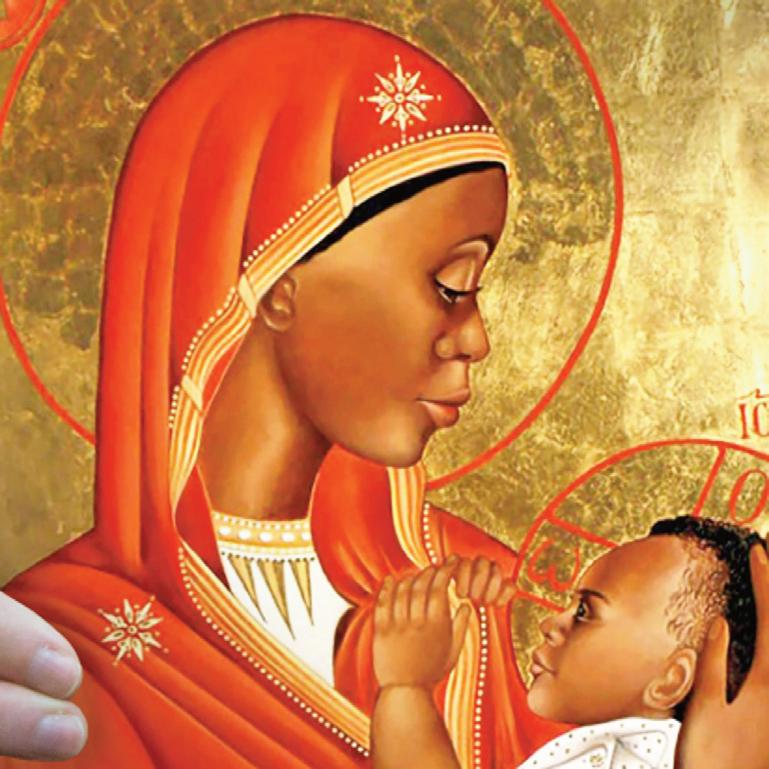
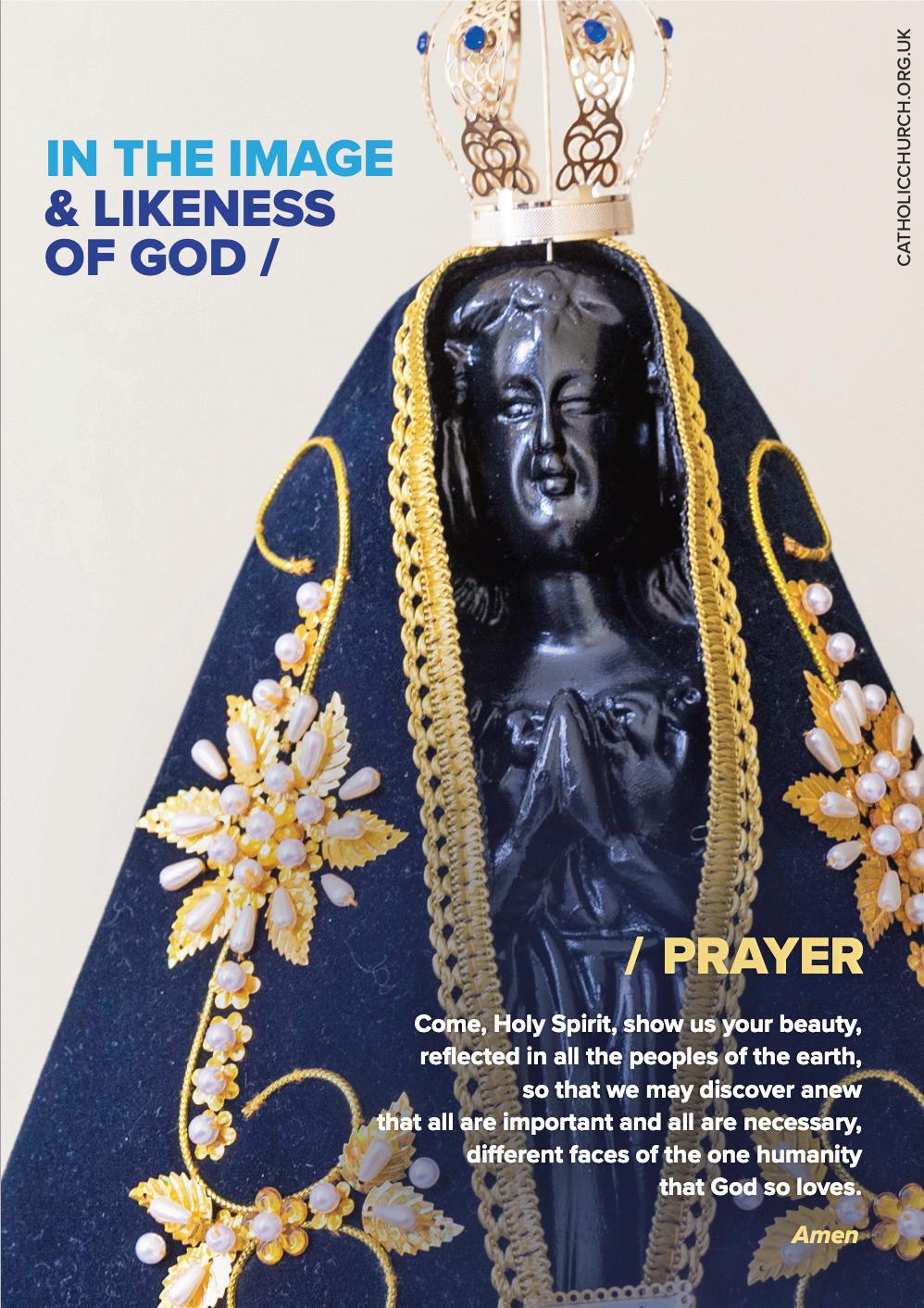
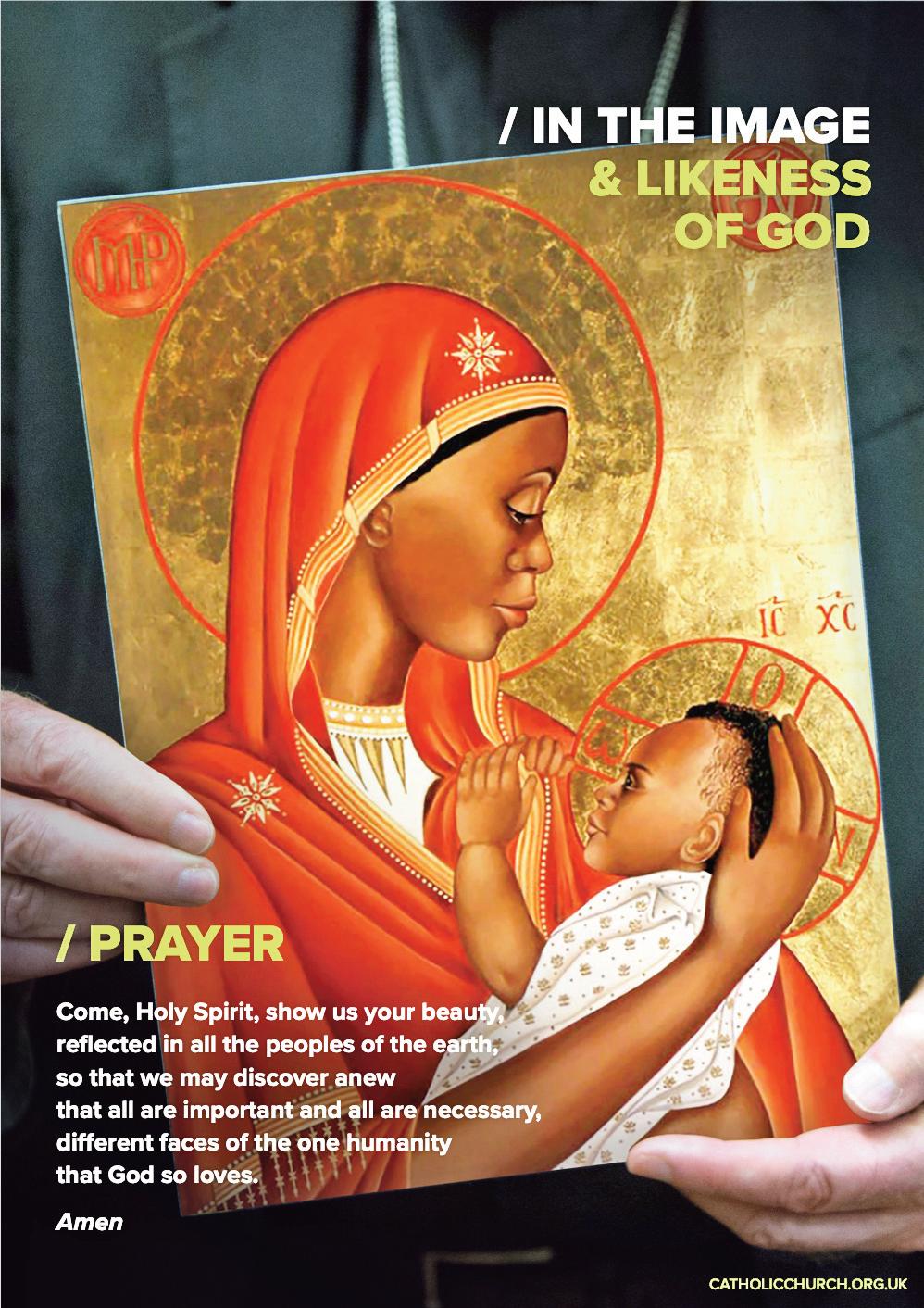
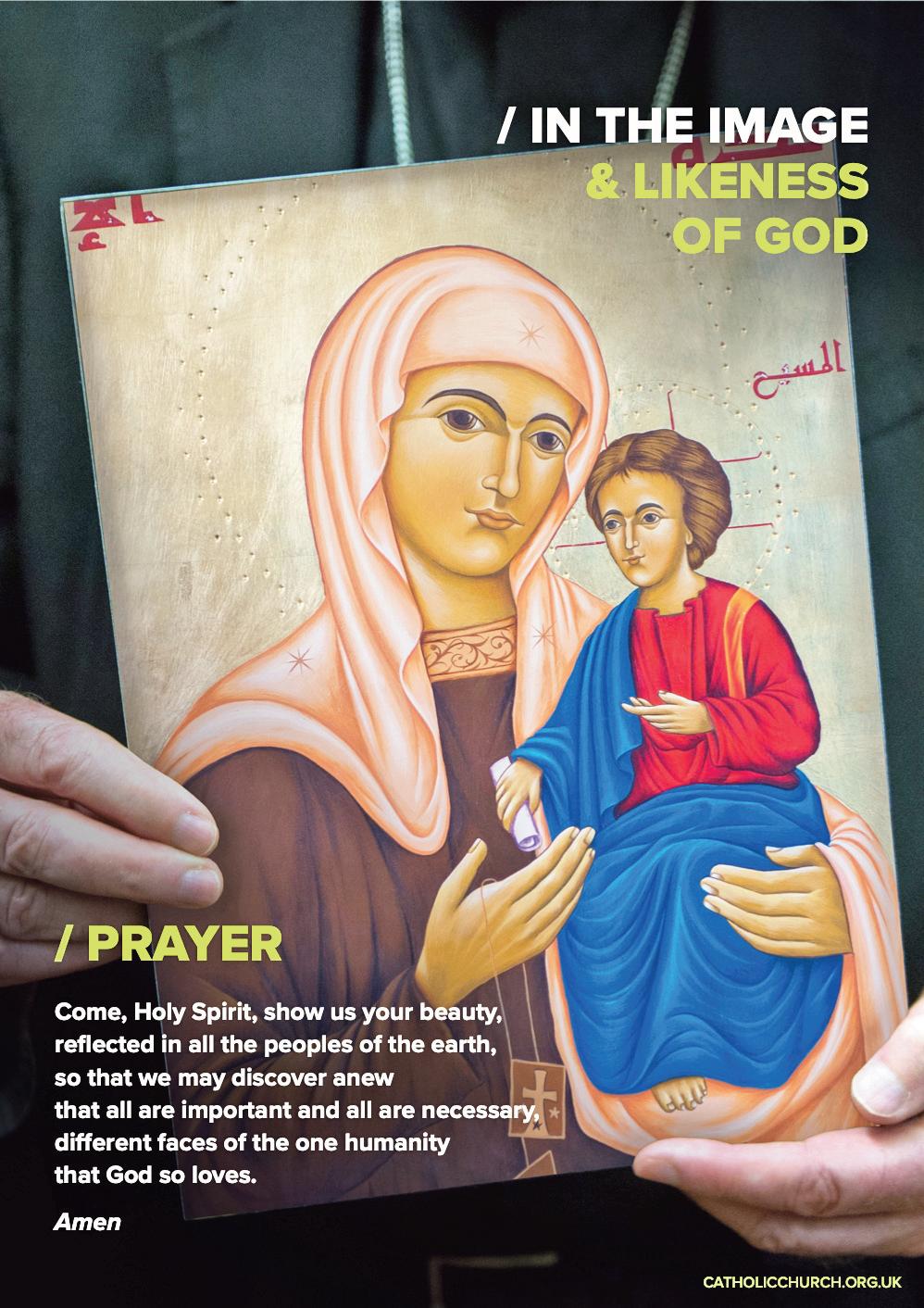
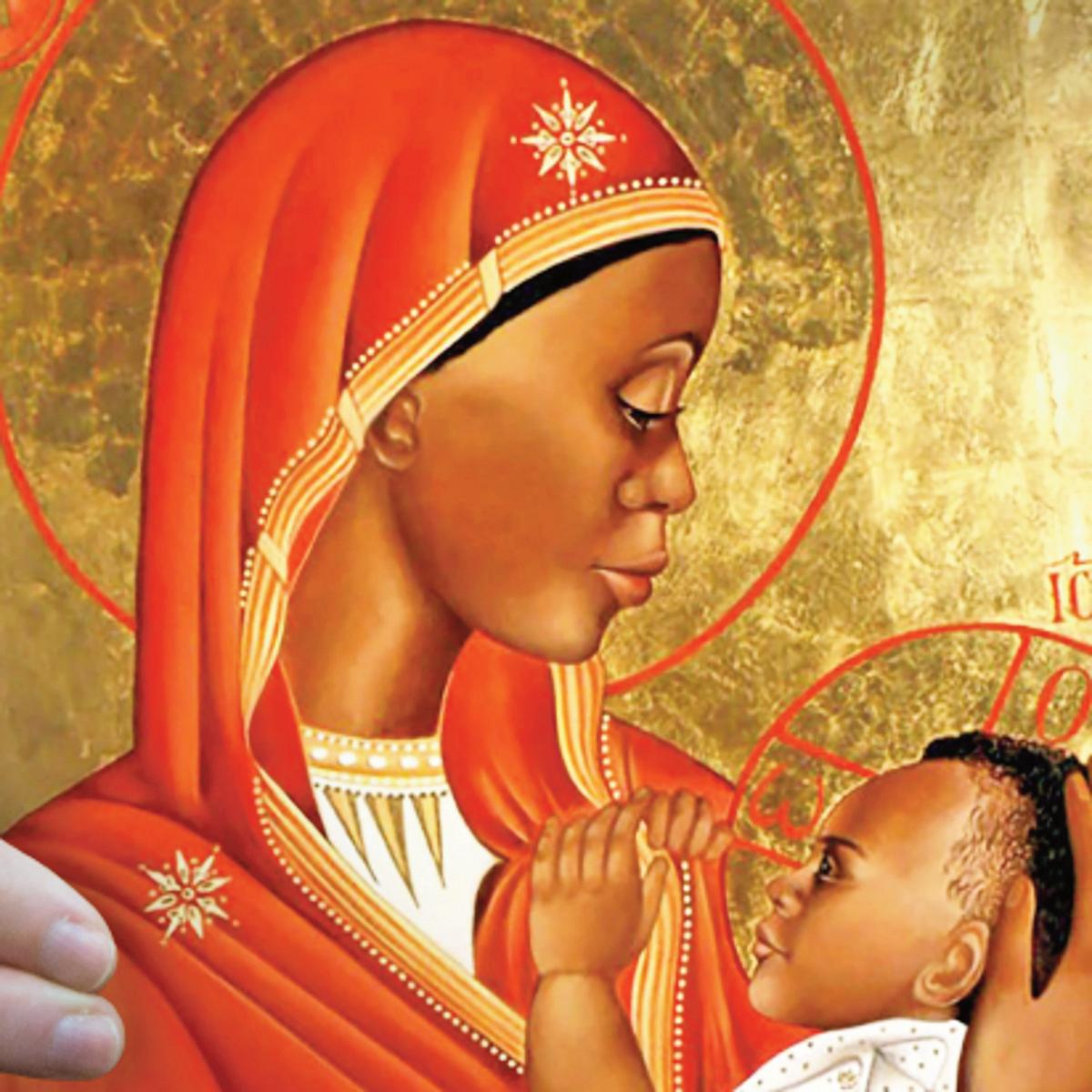
A series of A4 pdf posters featuring Our Lady and the Child Jesus from a diverse crosssection of countries and cultures, have been made available by the Catholic Bishops' Conference.
The resources can be downloaded by individuals or parishes. Although by no means exhaustive, the Bishops hope this series highlights the rich diversity of our Catholic community and encourages reflection on how we are all made in the image of God. The posters also carry a prayer taken from Pope Francis’ document Fratelli Tutti. The posters are produced in English but, in some cases, The posters are produced in English but in some cases, where it has been possible, a suitable translation has been added
To view all of the posters, use the QR code at the end of this article. The set of posters features images from:
Brazil - The icon from Brazil is a depiction of Our Lady of Aparecida and can be found in the Brazilian Catholic Chaplaincy.
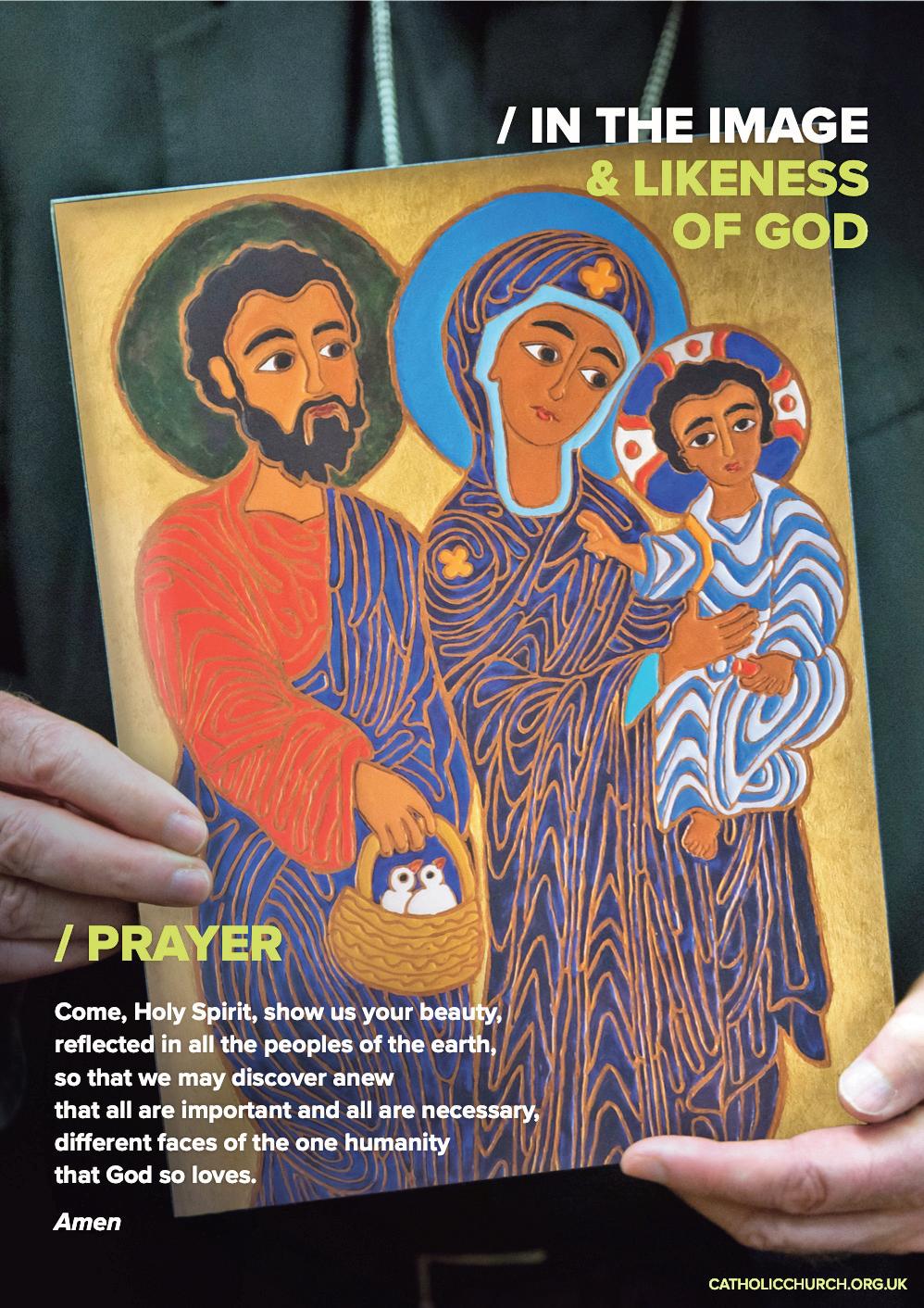
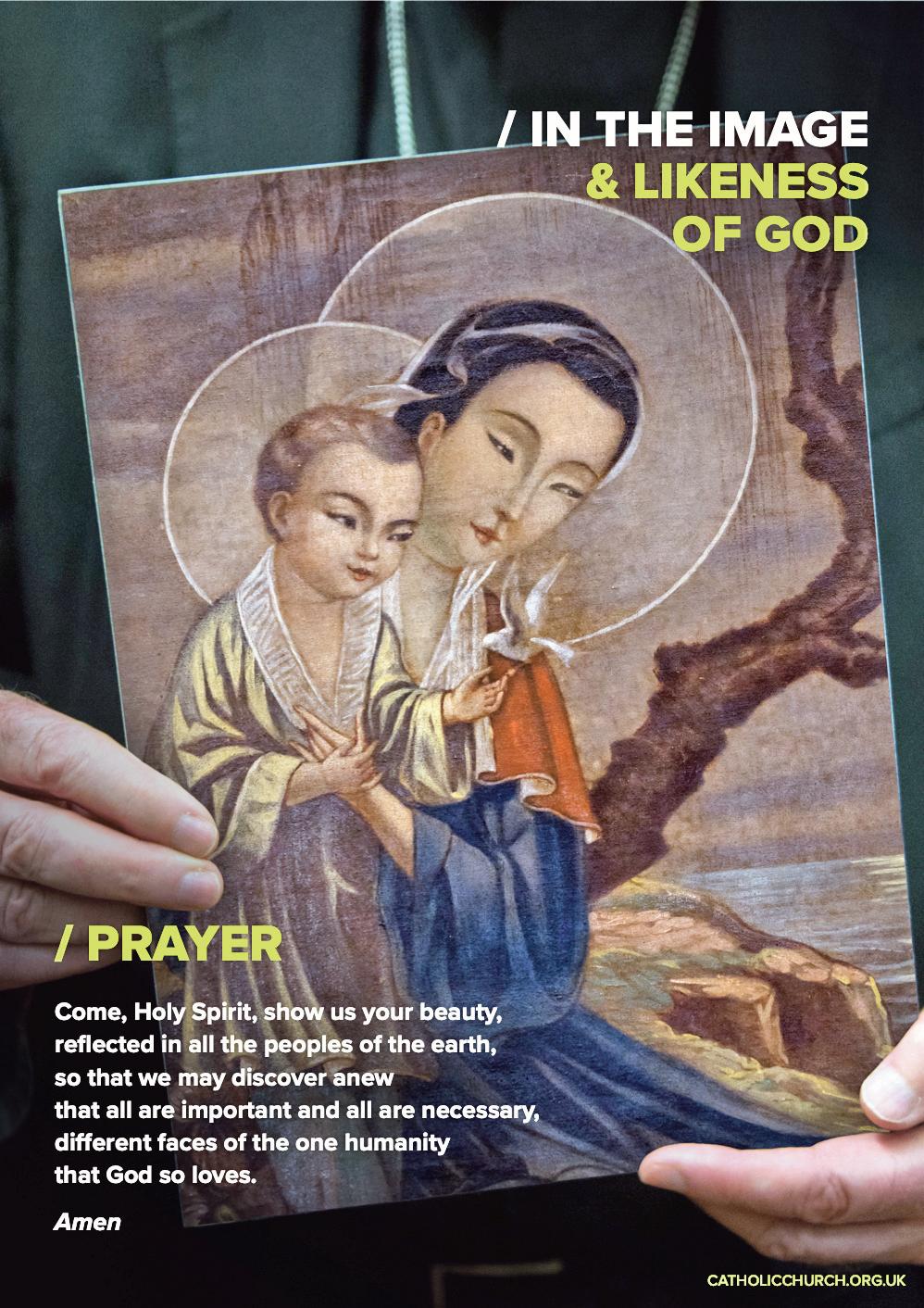
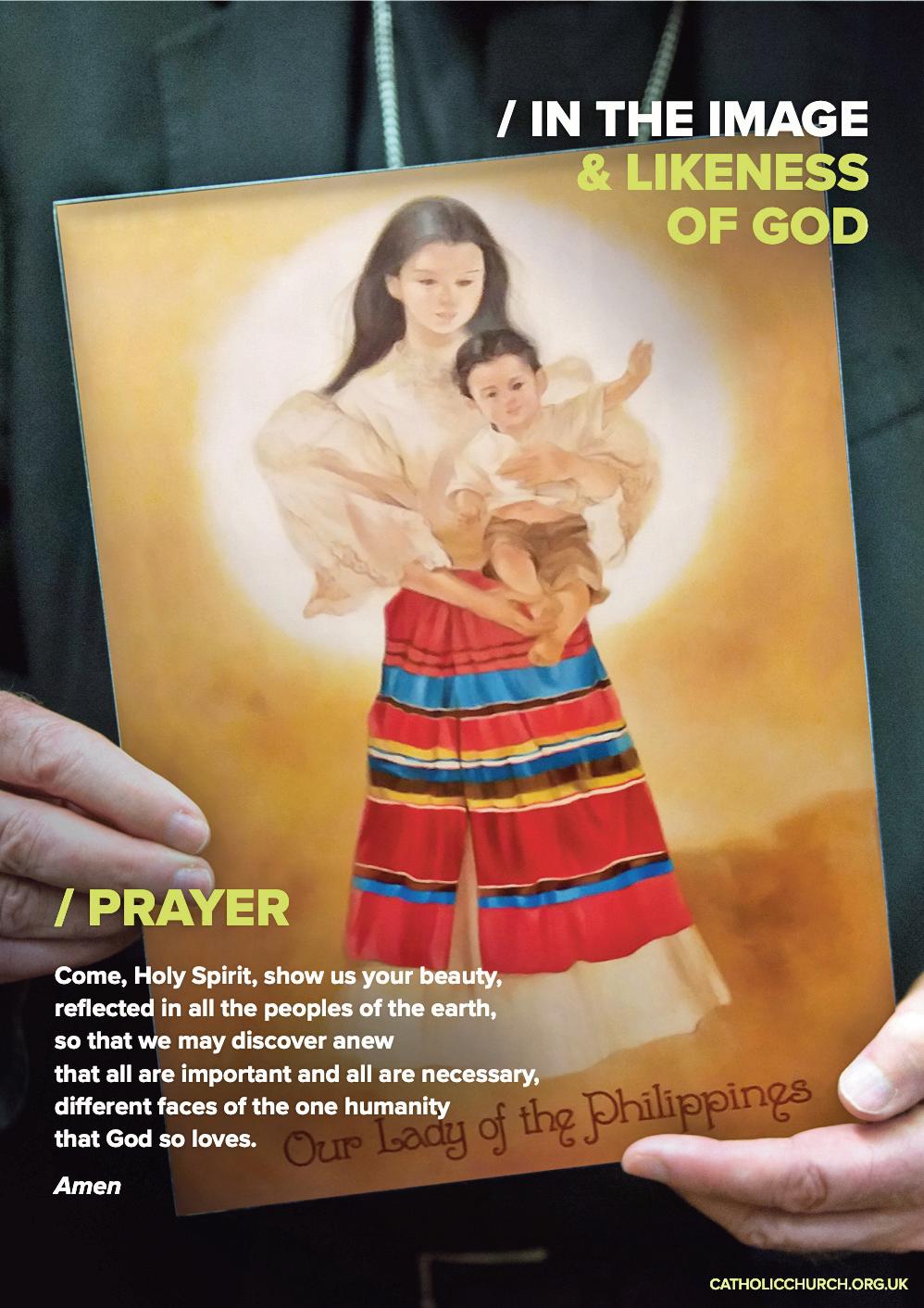
When turning our
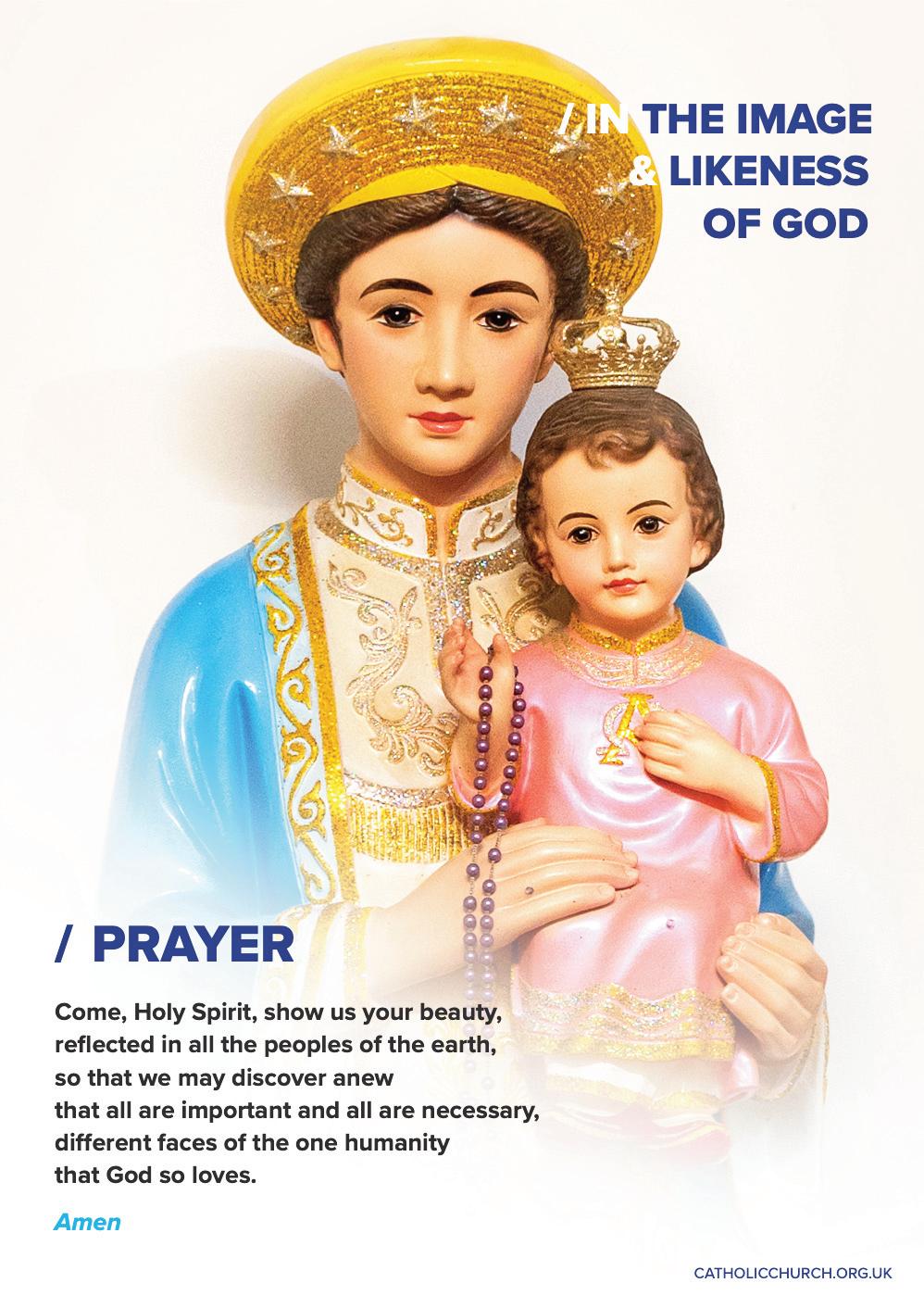
Prayer
encourage
Come, Holy Spirit, show us your beauty, reflected in all the peoples of the earth, so that we may discover anew that all are important and all are necessary, different faces of the one humanity that God so loves. Amen.

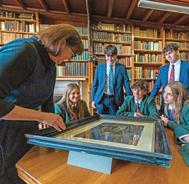
Erratum: We apologise for omission of standard acknowledgements incl. to The British Library for imaging ref: View from the
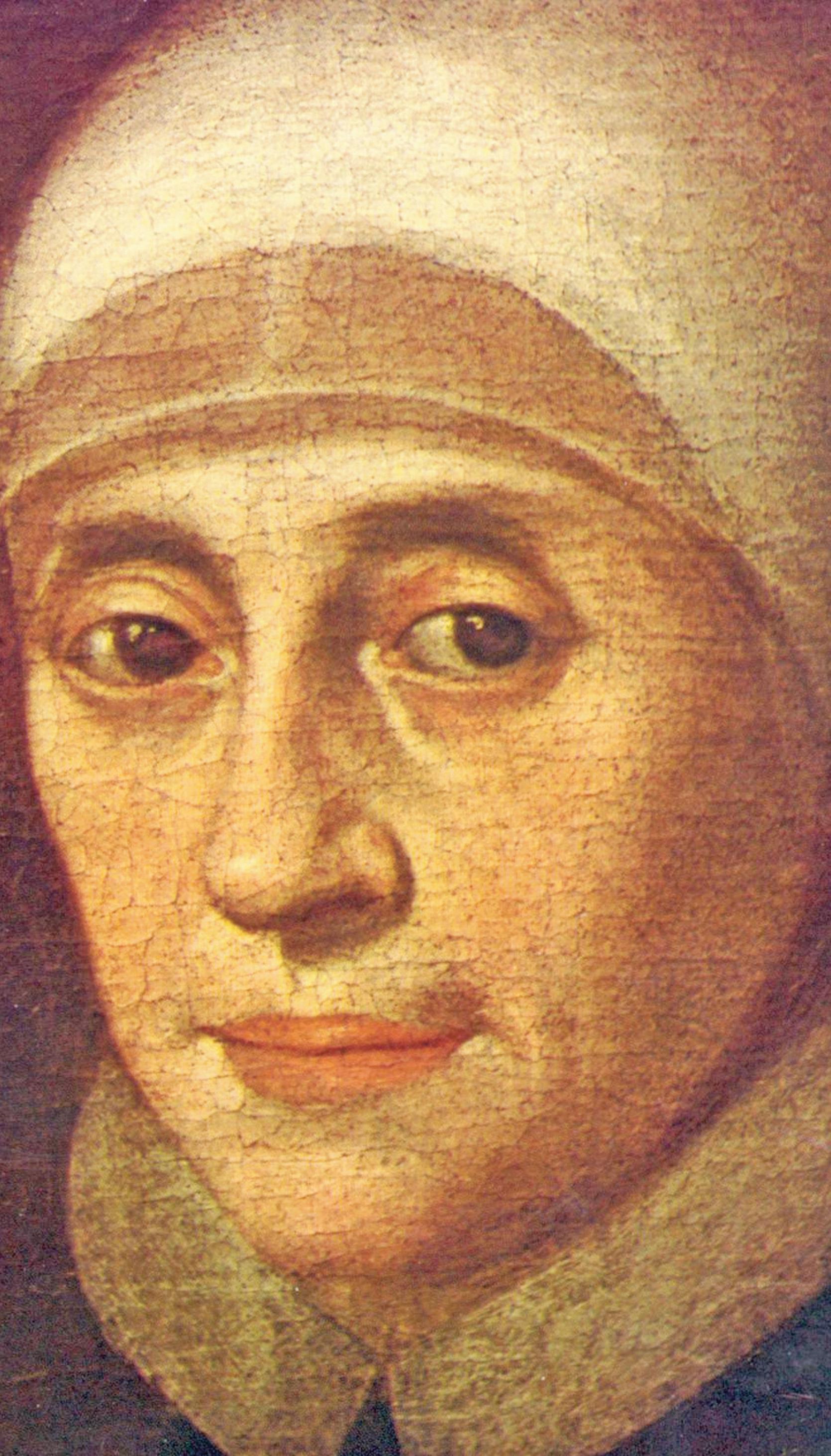
A pioneer for women’s equality, she founded the Congregation of Jesus and inspired an international following who are now campaigning for her sainthood.
Celebrations will take place around the world over the week which marks the anniversaries of her birth (23 January 1585) and death (30 January 1645). Mary Ward spent her final years in York and she is buried in Osbaldwick. Her legacy is celebrated at The Bar Convent Living Heritage Centre where members of her order still reside today and an exhibition tells her fascinating story. From 23 January- 14 March visitors can enjoy a programme of special events to discover more about Mary Ward and why she is still significant today.
Sister Ann, Sister in charge at The Bar Convent, said: “This year is a particularly important time for Mary Ward and her vision for women. In November her two branches of followers officially merged. Joined as one we are in the strongest position that we have ever been in seeing this vision more fully realised and in achieving our huge desire to have Mary Ward declared a Saint.
“At a time when Pope Leo XIV is urging stronger roles for women within the Church, Mary Ward is a prime role model for future generations.
“We would like to say a huge thank you for the support we have received and to those who have already signed the petition- more than ten thousand signatures is incredible. We hope to keep up this momentum, please do sign and share and help our case to have Mary Ward declared a Saint as she so deserves to be.
“We hope that the upcoming events provide people with the opportunity to get to know her, to take inspiration from her and for the people of York to embrace and champion this truly remarkable local woman.”
Sister Elizabeth Cotter, CJ, Canon Lawyer, Postulator for the Cause of Venerable Mary Ward said: “As part of our case, we need to provide evidence that Mary Ward remains relevant today.
“Key to this was her passionate belief that "women in time to come will do much" which has always been the driving force of followers who brought her vision to 42 countries from her time and up to the present day.
“Recognition by the Church would provide the women of our time with a fine example of the Church's willingness to promote the dignity of women in a world which badly needs such witness.
“For the hundreds of thousands of Mary Ward followers worldwide, recognition by the Church would validate the belief that Mary Ward is a Saint for the modern world; she is needed as much by our 21st century world as she was in those dark days of opposition to women in the 17th century.
“Support for and belief in Mary Ward has never waned in more than 400 years and her beatification and canonisation by the Church is long overdue.”
Events:
Ongoing: Mary Ward For Saint!
Visit the website to sign the petition to have Mary Ward declared a Saint!
Until 14 March: Becoming One Exhibition
Special exhibition marking the momentous coming together of the two branches of Mary Ward’s global family: the Congregation of Jesus and the IBVM (Institute of the Blessed Virgin Mary). Included in admission to the exhibition.
23 January–14 March (including February Half Term):
In the Footsteps of Mary Ward
An exciting family-friendly activity trail. Included in admission to the exhibition.
Thursday 5 March. 1pm-1:30pm: Who is Mary Ward?
A free talk with Dr Hannah Thomas. No booking required. Part of York International Women’s Week. www.yorkwomen.org.uk





You can use both sets of clues to solve the puzzle: the solutions are the same.
CRYPTIC Across
5 God invites in accountant, about to have tea with the taxman (9)
8 Cliff in Edom drinks, backsliding (4)
9 With Capone's acceptance into church official, it's almost Babylonian (8)
10 Old Archbishop of Canterbury could be Brown's double (7)
12 Golden cloud, virtually, is seen to the west of Canaanite city (5)
14 He wrote masses; marginally down after book fair (5)
15 Song uncle's preferred to old capital (7)
17 Jude Hunt is an alias for David's Levite (8)
18 Other half of Jezebel is primarily as hard and brazen (4)
19 16 mostly responsible for this festival? (9) CRYPTIC Down
1 Get a mug over here for the wine miracle (4)
2 Scots chap supporting two accounts leads to a schism (7)
3 British king's framed in the style of an OT monarch (5)
4 Sikhs meet here to condemn a drug war (8)
6 James' rule to rewrite the Bible? (9)
7 Hours in church after weird icon appears during passage (9)
11 Cleric's in front, ahead of the leading Essene Jew (8)
13 Canaanite city's discovered thanks to an article on a church (7)
16 Caucasian Carmelite cleric's gone missing (5)
18 Blunder losing front part of the church (4)
QUICK Across
5 Jericho 'sinner' who, having Jesus to his house, subsequently gave half his property to the poor (9)
8 Rocky plateau at the foot of which the Nabataeans carved the city of Petra (4)
9 Of people from an ancient part of Babylonia, home to Abraham (8)
10 Abbot of Glastonbury, and Archbishop of Canterbury from 959 (7)
12 Canaanite city rebuilt by Solomon, along with Megiddo and Gezer (5)
14 Composer brothers (Franz) Josef and Michael (5)
15 Capital of the biblical Northern Kingdom of Israel (7)
17 Levite David appointed as a leader of the Temple music (8)
18 Pagan king of Israel and husband of Jezebel (4)
19 Seventh Sunday after Easter (9)
QUICK Down
1 Town in the Bible, the scene of the water-intowine miracle (4)
2 Schism between Rome and the East, 482-519, named after the Patriarch of Constantinople (7)
3 Moabite king who hired Balaam to curse Israel (5)
4 Place of assembly and worship for Sikhs (8)

6 Holy city for Jews, Christians and Muslims (9)
7 Conforming to the recognized rules of cathedral clergy (9)
11 Member of an ancient Jewish sect denying the resurrection and the existence of angels (8)
13 Canaanite city; later one of the cities of the Levites (7)
16 Link between Carmelites, Magdalenes, Cistercian Monks, Premonstratensians – and Christmas! (5)
18 Angular or round section often found in the western part of a church (4) SOLUTION