Published
Published
Published
Published
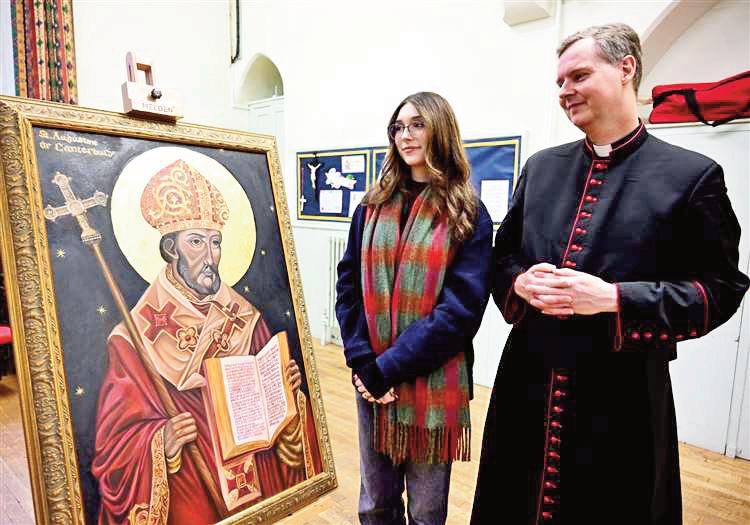
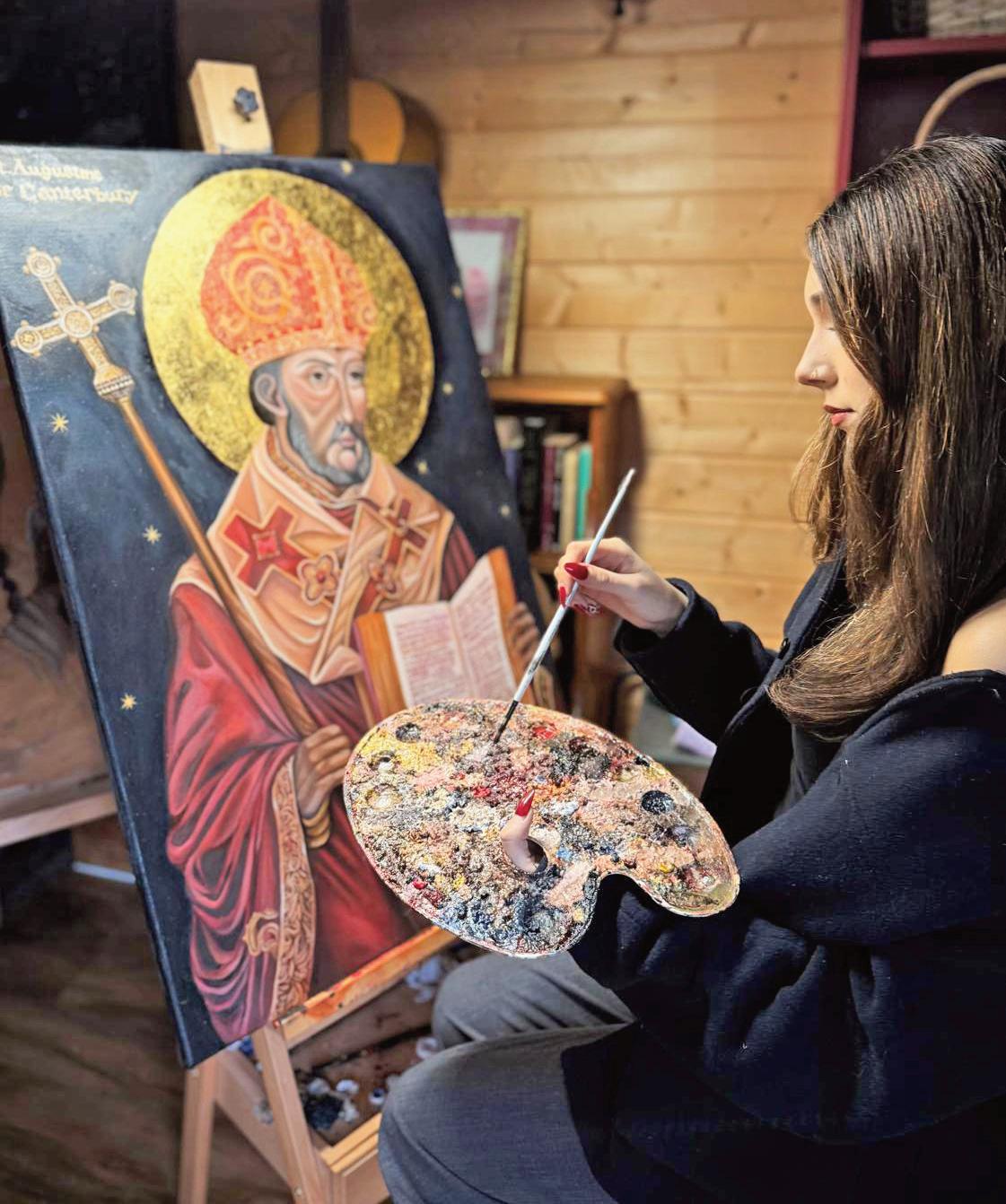
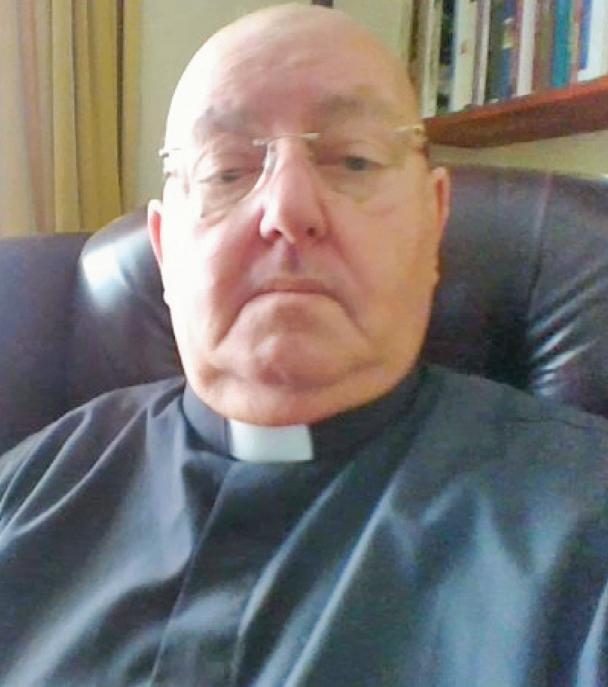
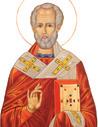
A striking oil painting of St Augustine of Canterbury, created by local young artist Seraphina Kopliku, has been unveiled at St Mary's and St Augustine's Church in Stamford.
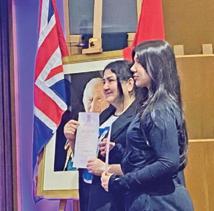
The unveiling took place in the church hall at after the Sunday services, before the painting is permanently installed in the church.
A Remarkable Commission
Eighteen-year-old Seraphina, who lives just outside Grantham, was commissioned by Canon Peter Velocott to create the 36 x 24 inch (90cm x 60cm) oil painting after he witnessed her talent during a presentation
of another work in the church hall. The church, despite bearing St Augustine's name, had never possessed a painting of its patron saint.
"Canon Peter approached me to paint St Augustine for the church," explains Seraphina. "He requested it be produced in an Eastern Orthodox iconography style, something I was very unfamiliar with, and a style not commonly done at all with oil paint."
The young artist rose to the challenge, spending approximately 1.5 years on the project while completing her college studies in Graphic Design. She conducted
extensive research into both St Augustine of Canterbury and the demanding iconographic technique, even meeting with local experts in that technique.
Rich Symbolism and Historical Detail
The painting depicts St Augustine in the scarlet red robes associated with highranking church officials. In the late Middle Ages, this colour came to symbolise cardinals' readiness to defend the faith even to martyrdom. As the first Bishop of Canterbury and a key figure in converting the Anglo-Saxons to Christianity, St Augustine is shown with the symbols of his episcopal authority: the crozier (staff) in his
hand and the mitre
"The book in his hand is symbolic of his influence in the conversion of the AngloSaxons," Seraphina notes. "He taught and evangelised the Christian faith in England."
From Childhood Artist to Church Painter
Seraphina has been painting her entire life and started her small art business at just 13 years old during the 2020 lockdown, selling digital prints, and taking some private art commissions.
Continued on page 3
MORE THAN 26 YEARS OF MORE THAN 26 YEARS OF BRINGING THE BRINGING THE NOTTINGHAM DIOCESE NOTTINGHAM DIOCESE TOGETHER TOGETHER

Editor: Nick Layton
Editorial Office: CathCom Ltd, N2 Blois Meadow Business Centre, Steeple Bumpstead, Haverhill, Suffolk, CB9 7BN
Telephone: 01440 730399
email: cn@cathcom.org or davidl@cathcom.org
Website: www.cathcom.org
Distribution enquiries: cn@cathcom.org
CathCom Ltd,
Publication date: Fourth Sunday of the month for the following month. Opinions expressed by contributors are not necessarily those of the Editor or the Diocese.
Publishers and Owners: CathCom Ltd, N2 Blois Meadow Business Centre, Steeple Bumpstead, Haverhill, Suffolk, CB9 7BN
Advertising: tel: 01440 730399
Parental permission should be sought before submitting photographs of minors.
Views expressed in The Catholic News are not necessarily those of the editor.
The Catholic News is looking for a Parish Correspondent in your parish to send in local news for publication in this newspaper. All items to be emailed to cn@cathcom.org before 10th of the month



Our thanks once again to Jon Cornwall for this thought-provoking reflection.
As you read this, we will be well into Lent. This is the time when we try to be ‘better’ by giving up something, taking up something or making a commitment to live our faith more actively. This is not only true for Vincentians but all of us. When SVP members work to make a difference, they frequently refer to the support of the Holy Spirit.

SVP members often speak about that Holy Spirit moment, when Vincentianism becomes its most tangible. It is a moment when the veil between Heaven and Earth is quite literally at its most thin. This moment can be likened to when you learned to swim by walking ever deeper into a pool of water before you trust and believe that you are floating, or when you are having a perfect lucid dream which you desperately do not wish to wake from. We know how to find these moments: we notice, respond, we take time to actively love. But today let’s also give some mind to how to stay in that moment, avoid panicking, forgetting God’s power, and letting it become permanent. If we were to pick a Gospel moment rather than consider Peter’s failure to walk on water, let’s instead be comforted by that split second that he didn’t overthink. Despite an Old Testament with 613 different commandments, we like the Thou Shalt Nots the best. So, in that spirit, here follows ten commandments to prolong, deepen,
and make permanent Vincentian Moments.
1. Thou shalt not be driven by ego; our service must not become an exercise in validation.
2.Thou shalt not answer before listening. What kind of help are we being asked for? How is our friendship personal to the person? One size never fits all, so what help are we really being asked for?
3.Thou shalt not become numb. While there is comfort to be found knowing that a person has been helped by a food bank, we must constantly remind ourselves that it is outrageous that, in the year 2026, they are still a necessity.
4.Thou shalt not romanticise poverty. We may seek to embrace simplicity in our own lives to be blessed by poverty, but if it is not a choice, it is a torture without a silver lining.
5.Thou shalt not separate our prayer from our actions. Prayer without service is not as fruit-filled spirituality as it could be. Service without prayer becomes an unpaid chore, and we will often have experiences while missing the meaning.
6.Thou shalt not work alone. We work with a collaborator God, with those who are trying to help themselves, and with brothers and sisters serving alongside us. When our work becomes me, it loses most of its value and impact.
7.Thou shalt not be too efficient. We aren’t to hurry, work a conveyor belt, fix problems, and move on. We are here to build relationships, waste time together, to offer comfort with solutions. If we make our help look too easy, it embarrasses
rather than brings healing.
8.Thou shalt avoid replacing faithfulness with busyness. We should seek to be here for a long time, not a hard time. There is little virtue in burning out, oversacrifice, and constant rush. Instead, let’s seek moments of stillness and refreshment together. If people think you are rushed, they may not ask for help.
9.Thou shalt not forget who you serve. You are caring for the face of Christ in a person; you may well represent a Conference, a parish, a Vincentian SVP, but you are not here to prop up an institution, a programme, a reputation. You are here to be the face of Christ to someone in sore need of it.
10.Thou shalt not lose kindness. Be careful not to fall to cynicism, flippancy, defeatism, or hardness.

Whether you are a Vincentian or not I hope these ‘Shalt Not’ commandments resonate with you and offer some guidance on your journey through Lent and beyond. I pray your moments in the Holy Spirit may be sustained, may be deepened, and made constant. Love deeply, generously, patiently, gently, joyously, collectively, and with a closeness to God. Let’s dream that dream for longer, float more easily, and enjoy it.







By Frank Goulding


Catholic news and stories from across the nation and beyond to build the Catholic community and deepen Faith Monthly National Catholic Newspaper
On Tuesday 1 January we commenced the New Year with the World Day of Prayer for Peace. Writing this article on February 1, I am in no doubt that at times this year peace seems a long way off, When you see this column 4 long years will have passed since the conflict in Ukraine commenced but the tragic loss of life, injury and fear continues. Gaza as I write there is yet another dispute over the allocation of much needed aid to those in greatest need. Sadly the rest of the Middle Easy could be drawn into a regional danger zone if the “serious discussions” between Iran and America fail.
In last months edition our sister paper The Catholic Post reported on 1,000 days of war in Sudan. The British parliamentarian Lord Alton told the readers that “there is a lack of
concentrated diplomatic engagement and no end to the suffering of Sudanese civilians in sight. This tragic conflict is the world’s largest humanitarian crisis and to make matters worse, churches have been subject to closure and harassment for decades. Human rights groups estimate that at least 150,000 lives have been lost during these 1,000 days.
Sadly there seem few who raise the plight of world issues like Lord Alton has. David Alton had already given distinguished service to the city of Liverpool when he won a sensational By-Election in 1979 and was elected into Parliament. These days he is much respected in the House of Lords for his great concern of humanitarian conflict victims.
Britain has twice reduced our foreign aid in recent years. Some in Parliament want
even more cuts. Our defence budget should not further be financed in this way.
In our country until a General Election probably 3 years away the struggle to gain future power never seemed to stop throughout January. The counter claims about Britain being broken or not seemed to totally forget to encourage the community spirit that we all need. A few years ago another greatly respected Catholic Peer Lord Peter Hennessy was asked about his personal faith. The immediate answer was to speak about The Beatitudes. The extract from Saint Matthew’s Gospel was a clear message to all of us on the first Sunday in February. These words of wisdom and compassion also need to be heard and acted upon by all political leaders.
More than forty young people from across the Diocese of Nottingham, gathered for an evening of prayer and fellowship.
The Dominican Friars at Holy Cross Church in Leicester, members of Jesus Youth Ministry, Leicester Universities’ Catholic Societies and other young adults from the diocese, joined together on Wednesday January 28th, beginning with Mass at the parish of the Holy Cross.
Mass was followed by Eucharistic Adoration, Confession and Benediction, with Benediction beginning later than planned, due to the long line for Confessions.
Refreshments were then served in the parish’s new Frassati Centre, which is named after the recently canonised Pier Giorgio Frassati, who was a lay Dominican.
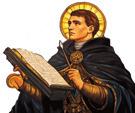
As it was also the Feast Day of the Dominican priest, St Thomas Aquinas, Fr John Church and Fr Benedict Jonak, delivered a talk on the great saint, sharing his philosophy on how to find the sacred and how to really learn, through undivided attention for ones subject. Fr John
Continued from page 1
The St Augustine commission represents her largest and most significant work to date.
A regular attendee at St Mary's and St Augustine's for the past five years, and an alto in the church choir for four years, Seraphina works from a converted summer house studio in her family's garden.
Despite her artistic accomplishments, Seraphina's interests extend beyond the canvas. Having just completed her college studies, she plans to pursue law in York University this year, driven by a growing passion for politics and legal studies.
Seraphina commented: In early 2024, I was approached by a member of our parish choir with a commission to create an icon of Saint Anna, the mother of the Blessed Virgin Mary. I finished the icon, organised a small unveiling in our church hall, where Father Peter, among others, saw my work for the first time, then later that same day asked if I would be willing to create an icon of Saint Augustine of Canterbury for St. Mary’s & St. Augustine’s Catholic Church in Stamford.
At the age of eighteen, as a devout Catholic and artist, I was truly flattered by
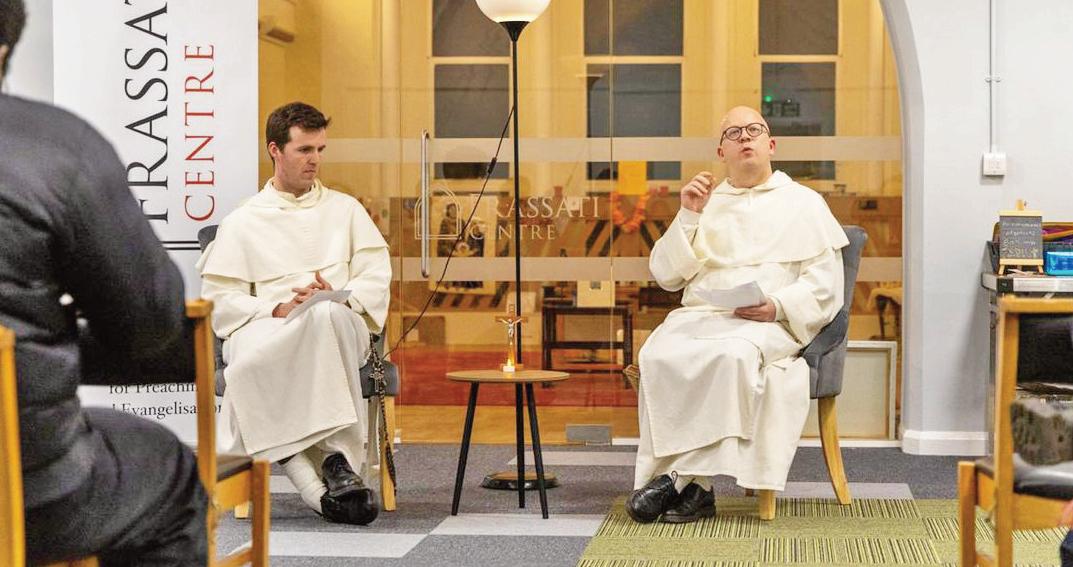
commented on the day: “The evening was immensely blessed, and we give thanks for the intercession of St Thomas Aquinas who brought so many young people together on his feast day!” After some group discussion about Aquinas, the evening concluded with Compline.
the offer. Saint Augustine is such an important part of the history of the Church, and to be commissioned to paint him in my own church of choice was both exhilarating and daunting.
The artwork I created draws on the theme of Eastern icon paintings, although my approach to the artwork was different from the conventional method. I painted this artwork using oil paint, which requires more time compared to egg tempura, as in conventional icon paintings. To paint, I would have to wait until the paint dried, hence taking a significantly longer time to create the artwork, which would take at least a year and a half to complete, while also undertaking college.
During the process, I wanted my studio to be a quiet and prayerful atmosphere so that I could work diligently and reverently while painting this icon. Gregorian chant often accompanied my work there.
I am deeply thankful for the trust that has been placed in me by my parish and for being able to contribute to the Church through my work. Moving forward, I hope to develop my talents further, taking on more commissions so I can develop my skills further while being a witness in my faith through my work.
“It was a joy to see the birth of a small new community,” said Charles Archer who leads the Young Adult Ministry in the Diocese of Nottingham. “Jesus Youth and the students from across the Leicester area, had already been meeting on the last Wednesday of every month at Holy Cross.
The Diocesan Young Adult group usually meet every Thursday but trying this new arrangement has birthed a new network of people who are all passionate about their faith. We look forward to meeting like this again, soon.”
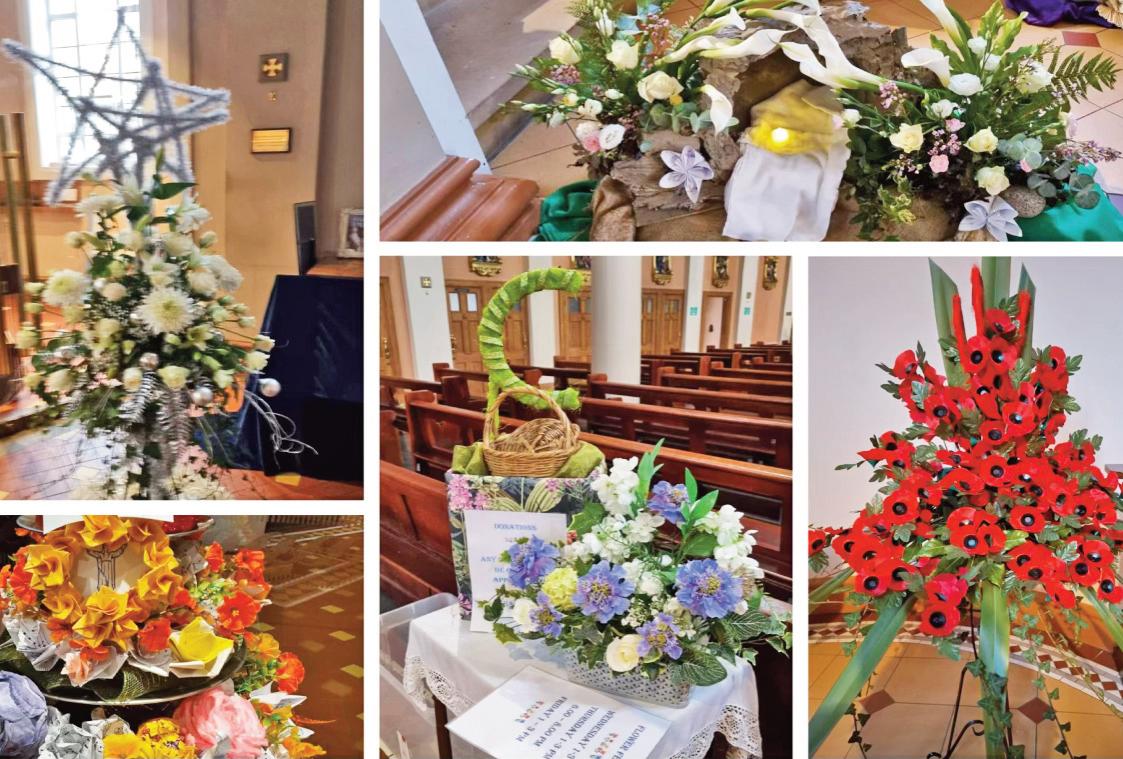
St Philip Neri’s RC Church in the parish of Our Lady and All Saints in Mansfield, celebrated their Centenary with a spectacular Flower Festival stretching through into the third week of October. It was open to the public. The title was “All Things Bright and Beautiful” and there was an arrangement to celebrate all the Church’s liturgical year beginning with Advent, followed by Christmas, The Baptism of Our Lord, The Sacred Heart, Palm Sunday, Maunday Thursday, Good Friday, Easter Sunday, St Philip Neri, Patron Saint, Holy Trinity and Whitsuntide, Harvest Festival, All Saints and Remembrance, and Christ the King.
The children of St Philip Neri with St Bede Voluntary Academy and the Polish Scouting Association all contributed to their displays, together with the ladies of St Philip’s parish and St Theresa’s, Warsop.
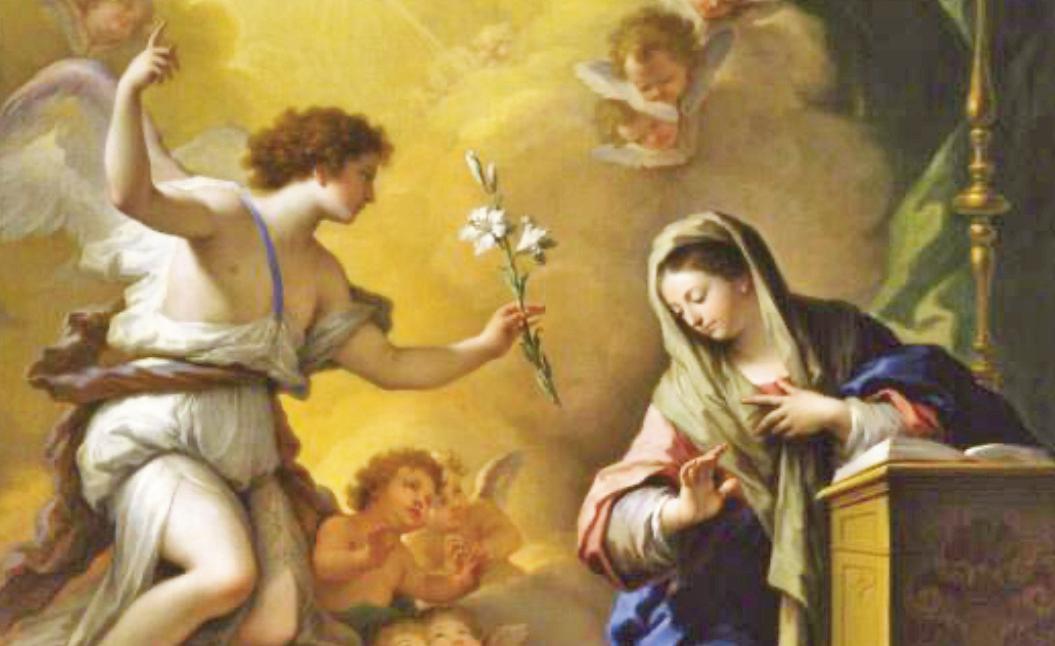
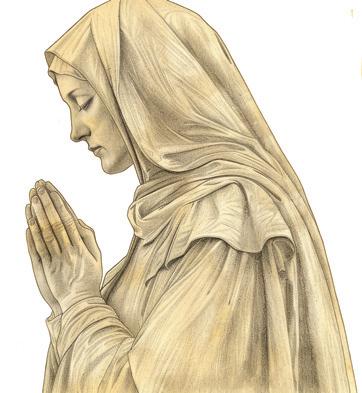
This month on 25th March we celebrate a great feast day in the life of the Church The Annunciation. In the heart of God’s mystery before the beginning of time, always in God’s mind and heart was the announcement of the Archangel Gabriel, that God would become incarnate in Mary’s womb.
As confusing as it may seem liturgically, the Solemnity of the Annunciation is really a good feast to celebrate during Lent. It reminds us that our reflections during Lent are possible because Mary responded ‘yes’ to the Archangel Gabriel’s interruption into her own life, becoming pregnant, giving birth to the Saviour, and forever changing the course of history.
Her ‘yes’ led us to Good Friday, Jesus’ ‘yes’ led us to God. Our faith, our observance of the liturgical calendar, our prayer lives are all elements of evangelization, all elements of our missionary discipleship, spreading the Good News of Jesus. Mary Jesus’ mother was then the first to receive this good news. She heard and received God’s word in her heart before she accepted the incarnation of that Word in her womb. ThisLent each of us receives that same
invitation, both to hear and receive God’s word so that it may become incarnate and more productive in our own lives.
And so Mary’s ‘yes’ to God at the Annunciation was harmonised by her son’s ‘yes’ to God on the cross, and this yes becomes real for us every time we celebrate the Eucharist.
The Annunciation was a quiet, modest glimpse into the incredible beginning of God’s active presence and engagement with humanity.
The Solemnity of the Annunciation is an invitation for us to pause, reflect and imagine Mary’s humanity as a prelude to Jesus’. Mary’s initial response of trepidation and bewilderment to Gabriel’s message is understandable. What was being said was physically impossible, yet Gabriel shows Mary that with God anything and everything is possible. Mary’s ‘yes’ reflects faith, trust, and a willingness to participate in God’s plan, even if sense cannot be made of the situation.
The Gospel account of Mary’s ‘yes’ to God comes to us at a time during Lent when we might already be feeling that there is not much more in us to give and we are
beginning to feel empty. Perhaps at this point of our Lenten journey we can reflect on the emptiness we feel as an opportunity to be like Mary and say ‘yes’ to the joy and the possibility of being filled with God’s promise, allowing ‘’the power of the Most High’’ to overshadow us.
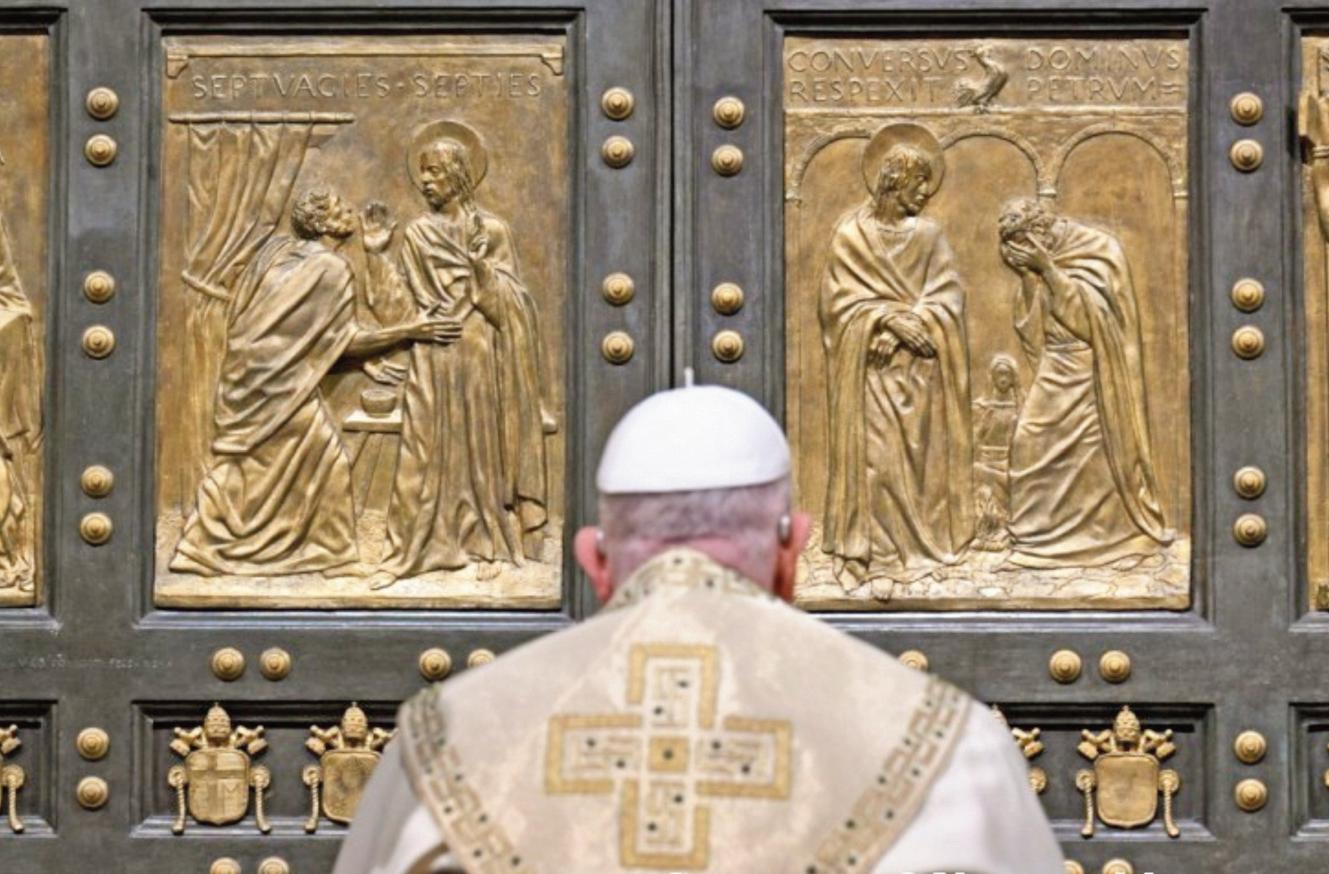
We too are called to give birth to Christ and like Mary we do so through the path of learning to be responsive, receptive and obedient to the Holy Spirit. Just as Mary’s ‘yes’ opened up the door of our salvation, so too our ‘yes’ to God opens up the gate
which leads to an ever-deeper experience of living a life in the power of the Holy Spirit.
As we continue to reflect on Bishop Patrick’s five year plan for our diocese, for our parishes, our schools and religious houses, reflecting together how we may become more missionary and Go out and make disciples. Then may the incarnate WORD and presence of God continue Mary’s ‘yes’ in each and every one of our lives.


By Fr Jeremy Corley
During the Lenten season, the Sunday Old Testament readings give us some highlights from the story of our salvation.
On the First Sunday of Lent (22 February) we heard the Genesis story of the creation of our first parents, followed by their sin. Even if we understand the Garden of Eden story as a symbolic description of the human condition, it points to an important truth. Although we were made by God, we are liable to sin and need redemption.
The figure of Abraham is the focus on the Second Sunday of Lent (1 March). We hear God’s call to him to leave his homeland and travel to a place that God would show him. God promised him that all the families of the earth would be blessed through him.
St Paul later says that God’s promise to Abraham looks ahead to Christ, a descendant of Abraham, who brings blessings to all the nations on earth. And we call Abraham our father in faith
because he obeyed faithfully when God called him.
We move to the Book of Exodus on the Third Sunday of Lent (8 March). Just as Abraham once set out in obedience to God’s call, so the Israelites were now journeying out of Egypt towards the Promised Land, led by Moses.
In such a hot climate, they experienced severe thirst and were afraid of dying in the wilderness. But God told Moses to take his stick and strike the rock, so that water would pour down to give the people drink.
Some of the early church fathers drew a parallel with St John’s Passion Story, where Jesus’ side is pierced with a lance, causing water and blood to flow out. Here they saw the water as symbolising Baptism and the blood as symbolising the Eucharist.
King David is the centre of attention in our first reading on the Fourth Sunday of Lent (15 March). When the Israelites are in the Promised Land, they demand a king. After the failure of Saul, God chooses for them an inspired leader, David, yet originally, he
was not even considered a possible candidate.
When the prophet Samuel comes to Jesse’s household to anoint one of his sons, David is not even included in the gathering. Instead, as the youngest son, he has been left minding the sheep in the fields, yet David turns out to be the chosen one.
Much later, when the Messiah came, descended from David, some asked: “Can anything good come from Nazareth?” He was born in a stable and died on a cross, yet we believe that he is the Saviour of the world.
We move ahead on the Fifth Sunday of Lent (22 March) to the time when the Israelites had been taken into Babylonian exile. Though they were the chosen people, they had seriously sinned, so God decided to teach them a lesson and call them back to himself.
But while they were in exile, God sent them the prophet Ezekiel to renew their hope. At the end of the vision of the valley of dry bones, God tells the people: “I will put my
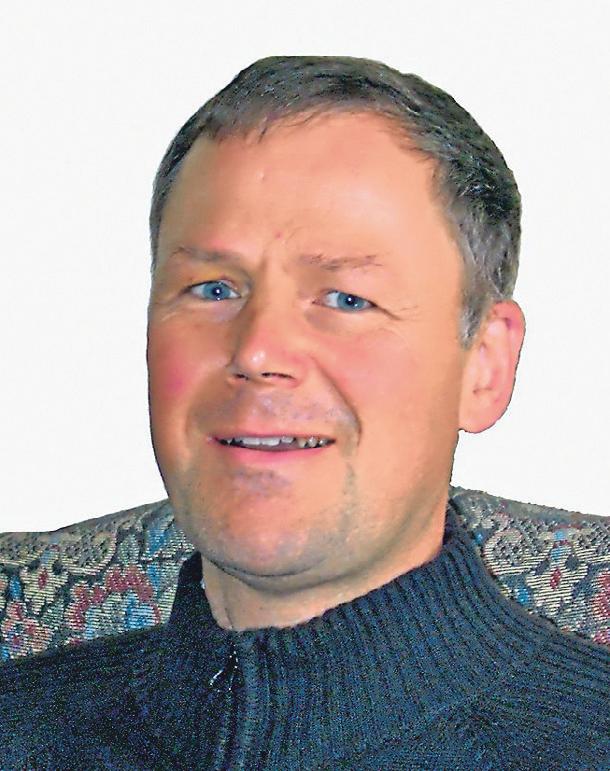



Spirit within you, and you shall live, and I will place you back in your own land.”
God was telling the Israelites that their moribund nation would be revived and allowed once again to return to its own territory—which happened a few years later. The Church sees Ezekiel’s vision as pointing forward to the greater miracle of Christ’s resurrection, and indeed to the resurrection of all who believe in him.
During Lent we can meditate on these past events and learn from them. Just as God called Abraham, so he calls us. Just as God provided water for the thirsty Israelites at the time of Moses, so he provides for our material and spiritual needs.
Just as God chose the unlikely figure of David to lead the Israelite people, so God can work in unlikely ways in our own lives. And just as God revived the moribund nation of Israel when it was in exile, so God can give us new life when we have sinned. Thus, these readings can encourage us on our Lenten journey, through challenges to the resurrection.
“Go out & teach all nations”
“Go make disciples of all nations!” – The Great Commission. It is some years since Bishop Patrick encouraged the then Good Shepherd Parish to embark on a programme following the “Divine Renovation” vision of developing and promoting this vision in parish life. Since then, the parish has become broader and enriched under a new title of St John Paul II, Nottingham with the welcome addition of the lively community of St Anthony, Calverton. The new parish was created on the First Sunday of Advent, AD 2024.
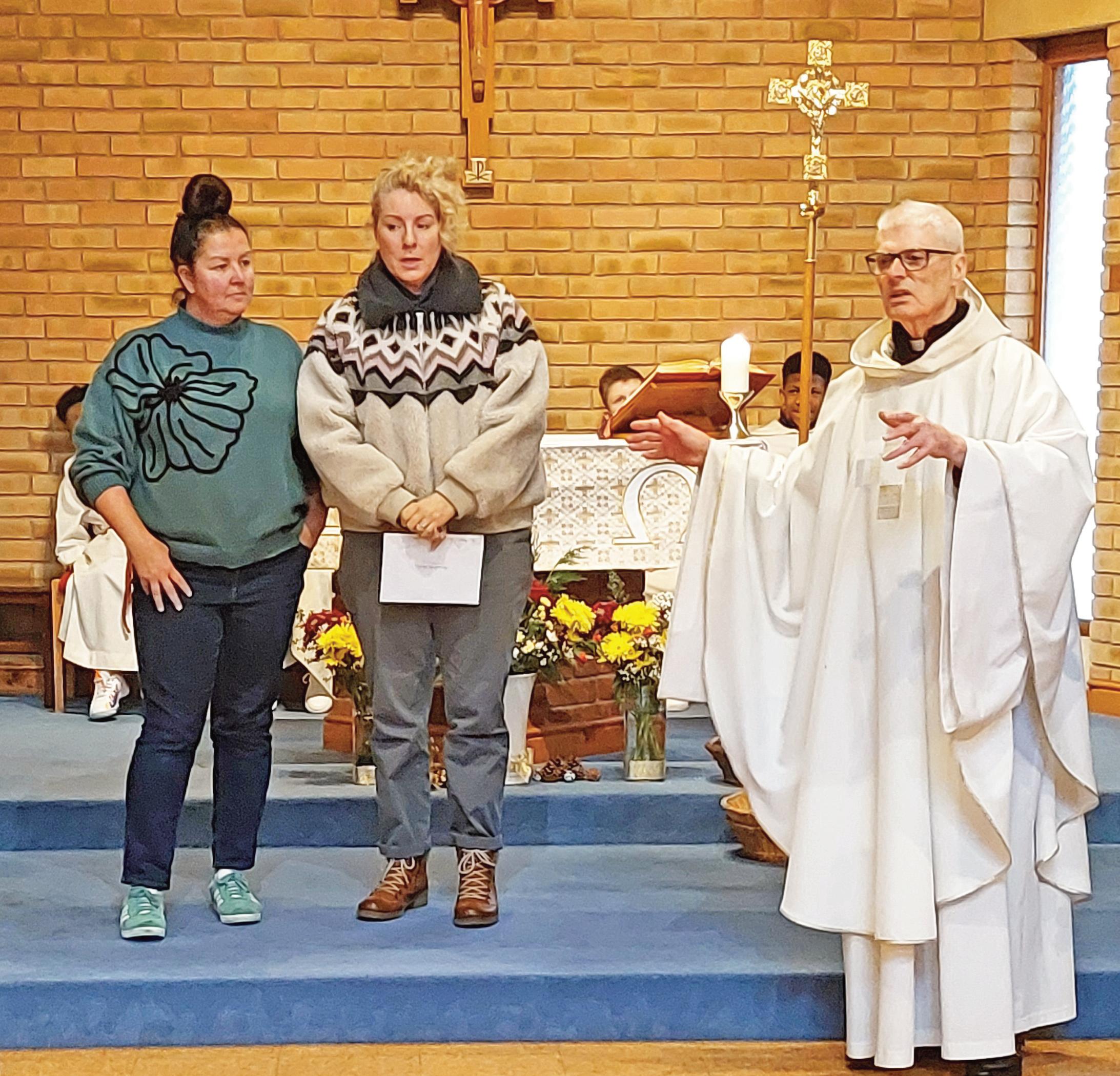
The parish now operates within a number of areas in which Parishioners are asked to participate and develop their ideas to create a new vision. A Pastoral Team meets monthly to support the parish priest by affirmation, advice and to receive report from the Parishioner Forum (sometimes understood as a Parish Council), a bimonthly opportunity to review experience, celebrate good practice and continue to develop new ideas in response to any perceived gaps in parish life. The Parishioner Forum has tried to involve representation from our two Primary and Senior Academies in the parish as well as further develop links with other ecclesial communities, and the local community. This has borne fruit in creating relationships with the current Civic leadership, as for five years (and with this year, four consecutive ones) Canon Philipp has been asked to be Mayor’s Chaplain, supporting the Spiritual needs of Gedling Borough Council.
We continue our outreach to support the local community, as many groups “Singing for the Brain”, “The Women’s Institute”, “Alzheimer’s Society”, “Little Lambs Parent and toddler Group”, all use our excellent facilities. Each year the Loughborough Children’s Hospice and “MaggiesSupporting Cancer patients” make a Presentation in the Church and Social in the Parish Assembly Rooms during December, supported by our Primary Schools raising £1000’s for their respective charities. This year “Maggies” raised over £5000 in the evening. At St. Anthony’s Community £500 raised was donated to a local charity, The Core Centre, which offers many activities in the village ranging from “Memory Café”, careers & job advice, Citizens, Advice and Gedling borough outreach as well as many other facilities.
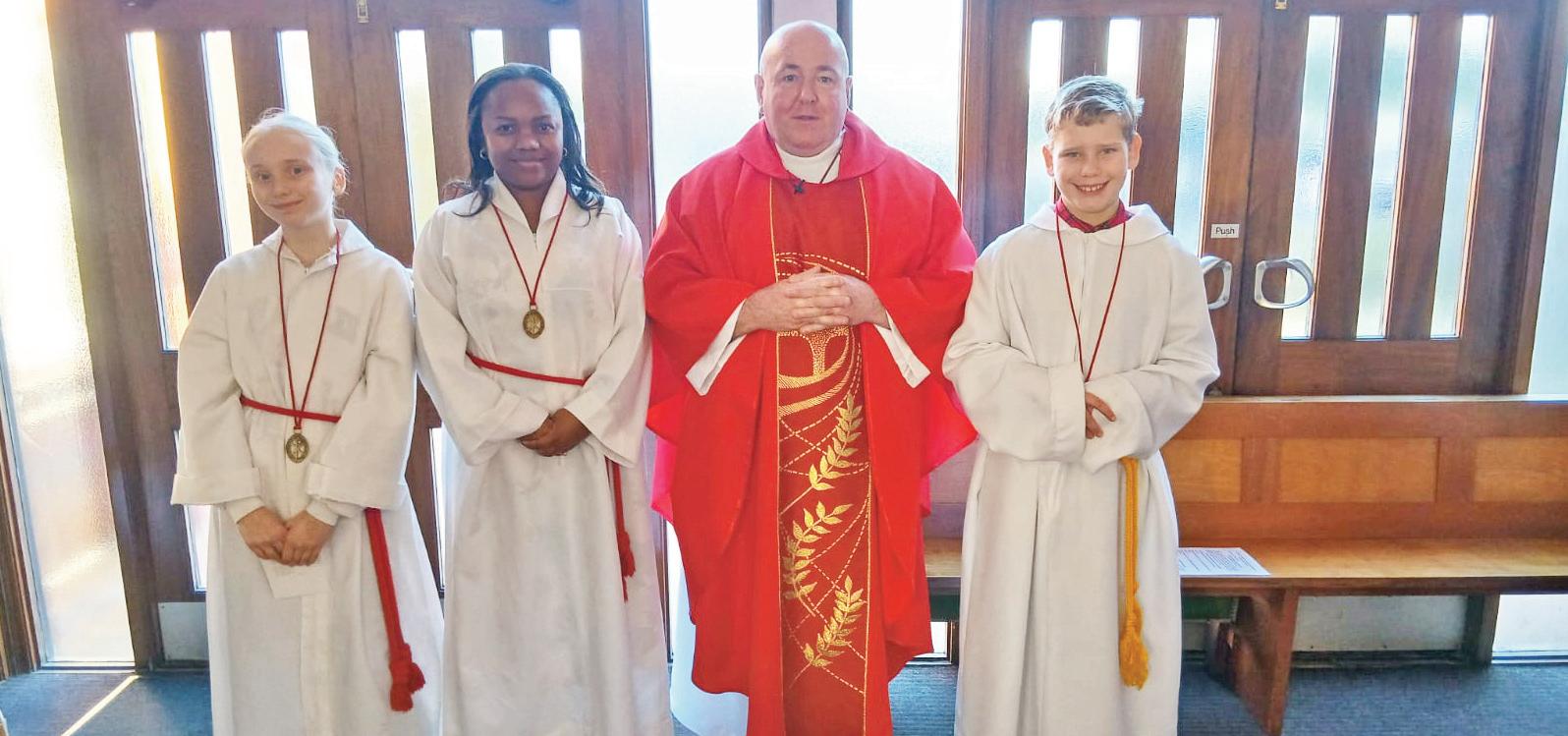
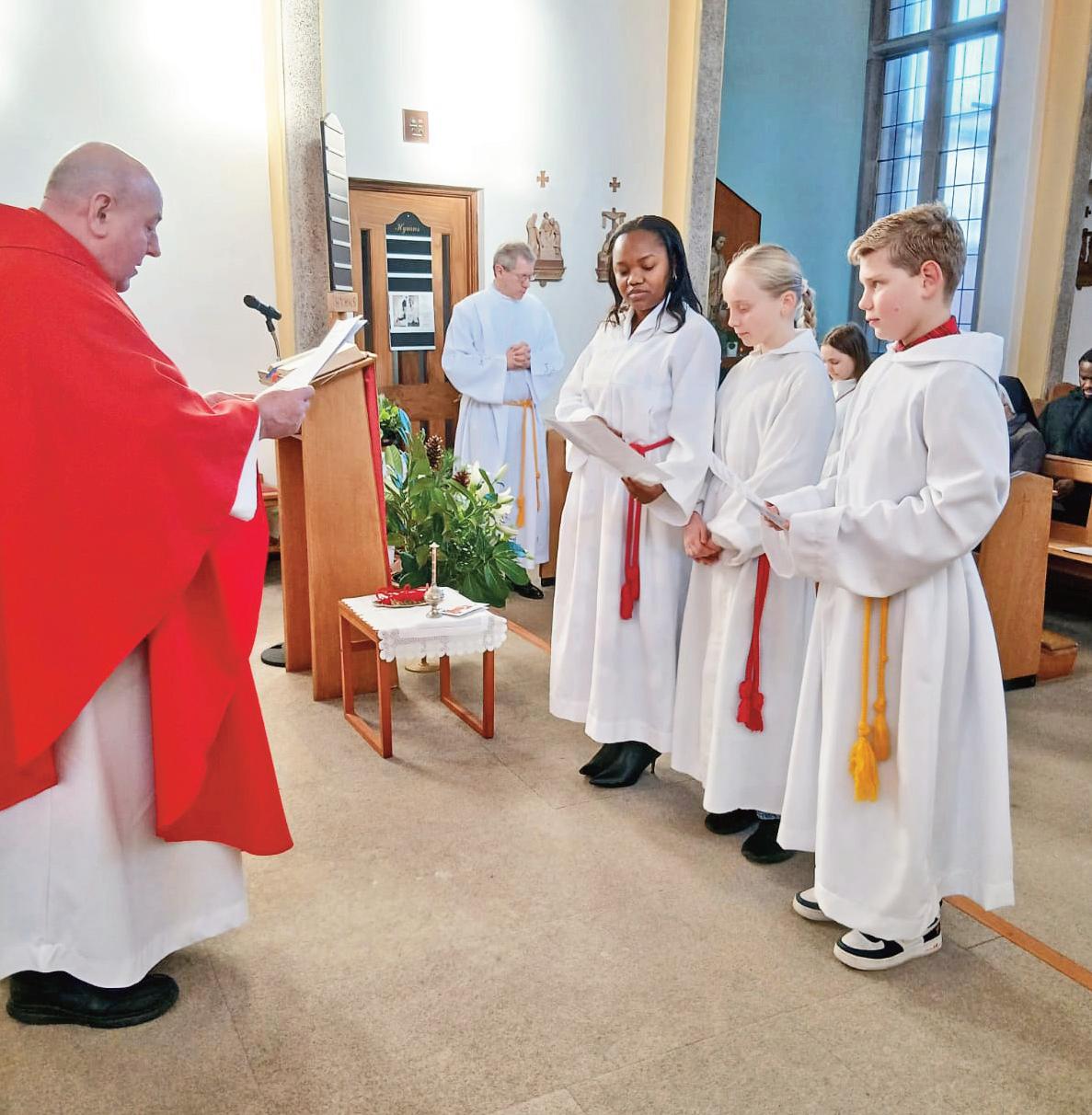
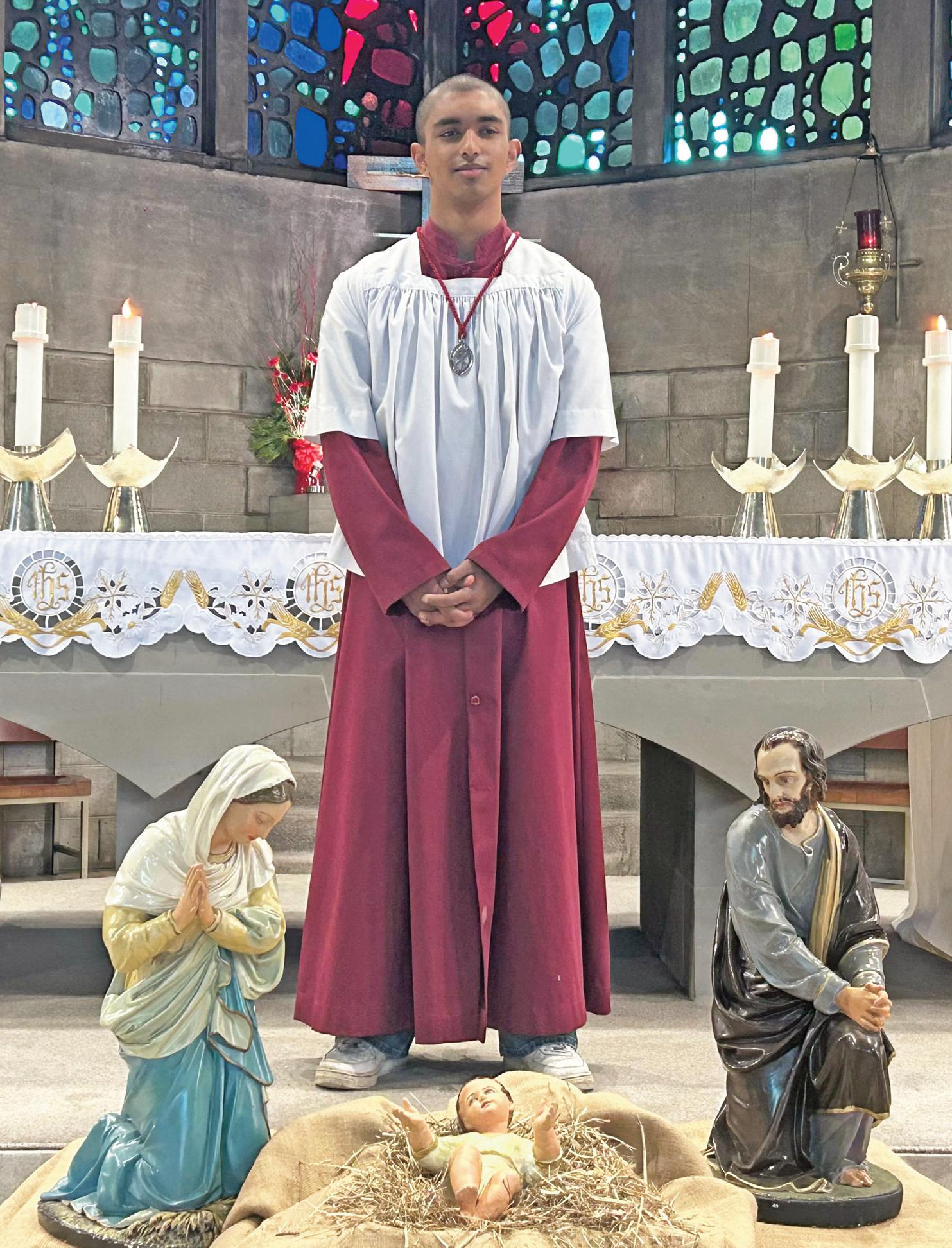
Our youth now enjoy their own very active club meeting on a Friday night, and we are singularly blessed to now have 35+ Altar Servers between our two Churches, with a number achieving the Silver Medal of the
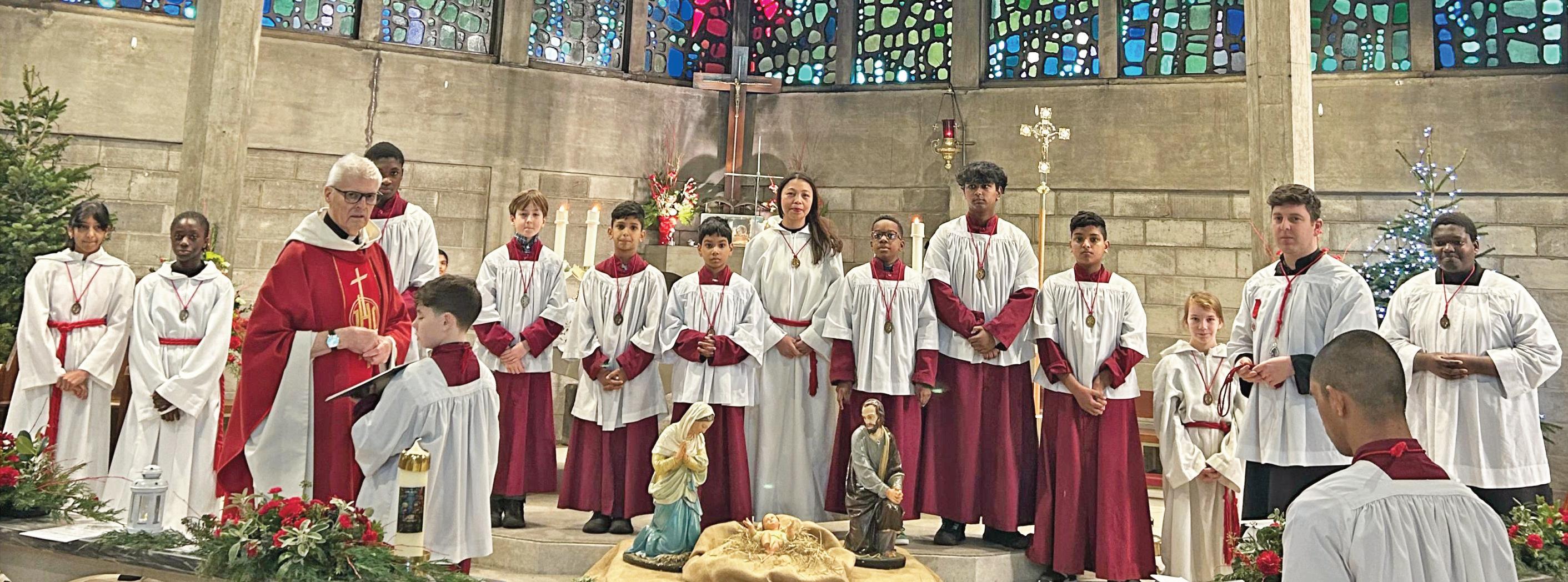
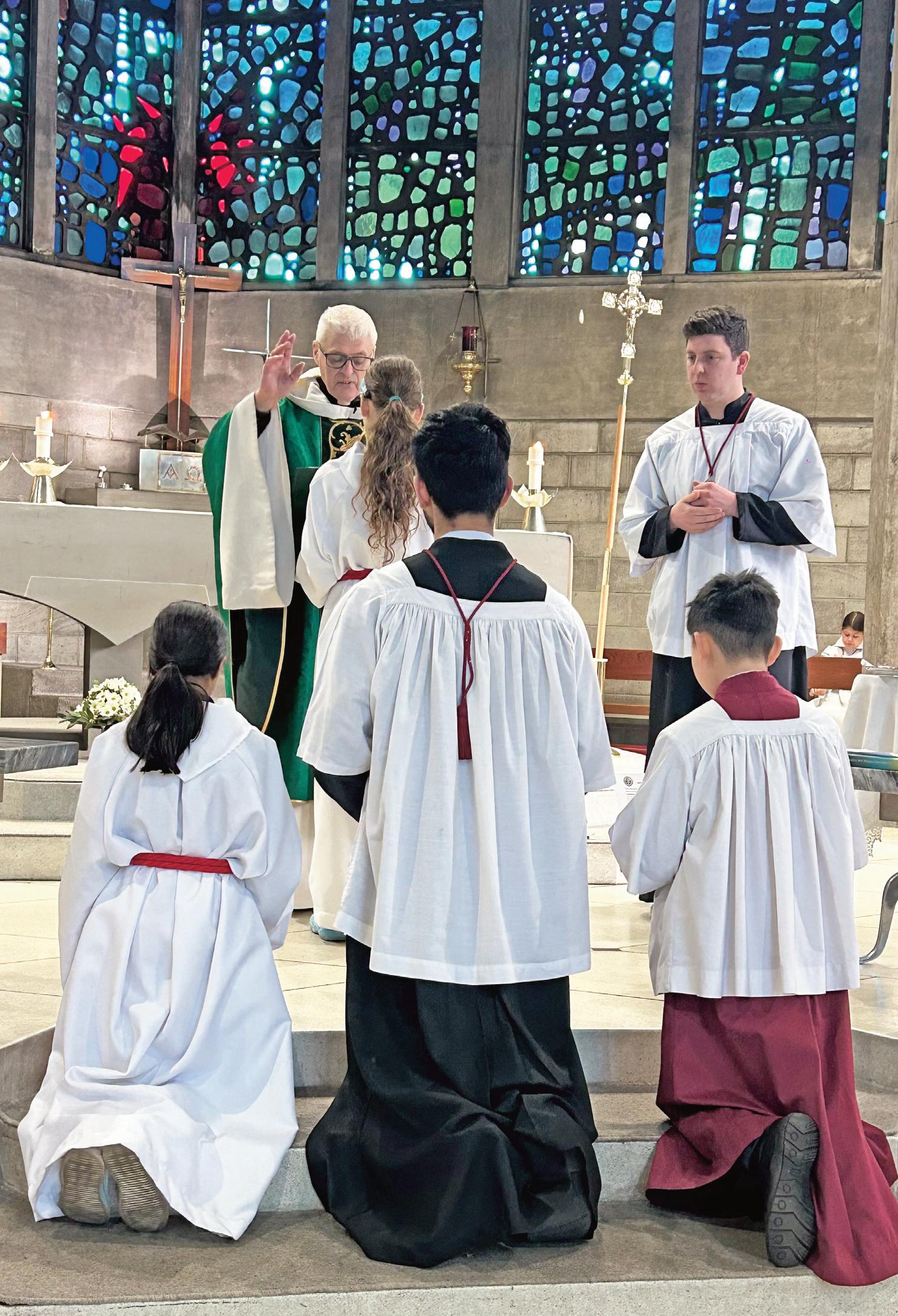
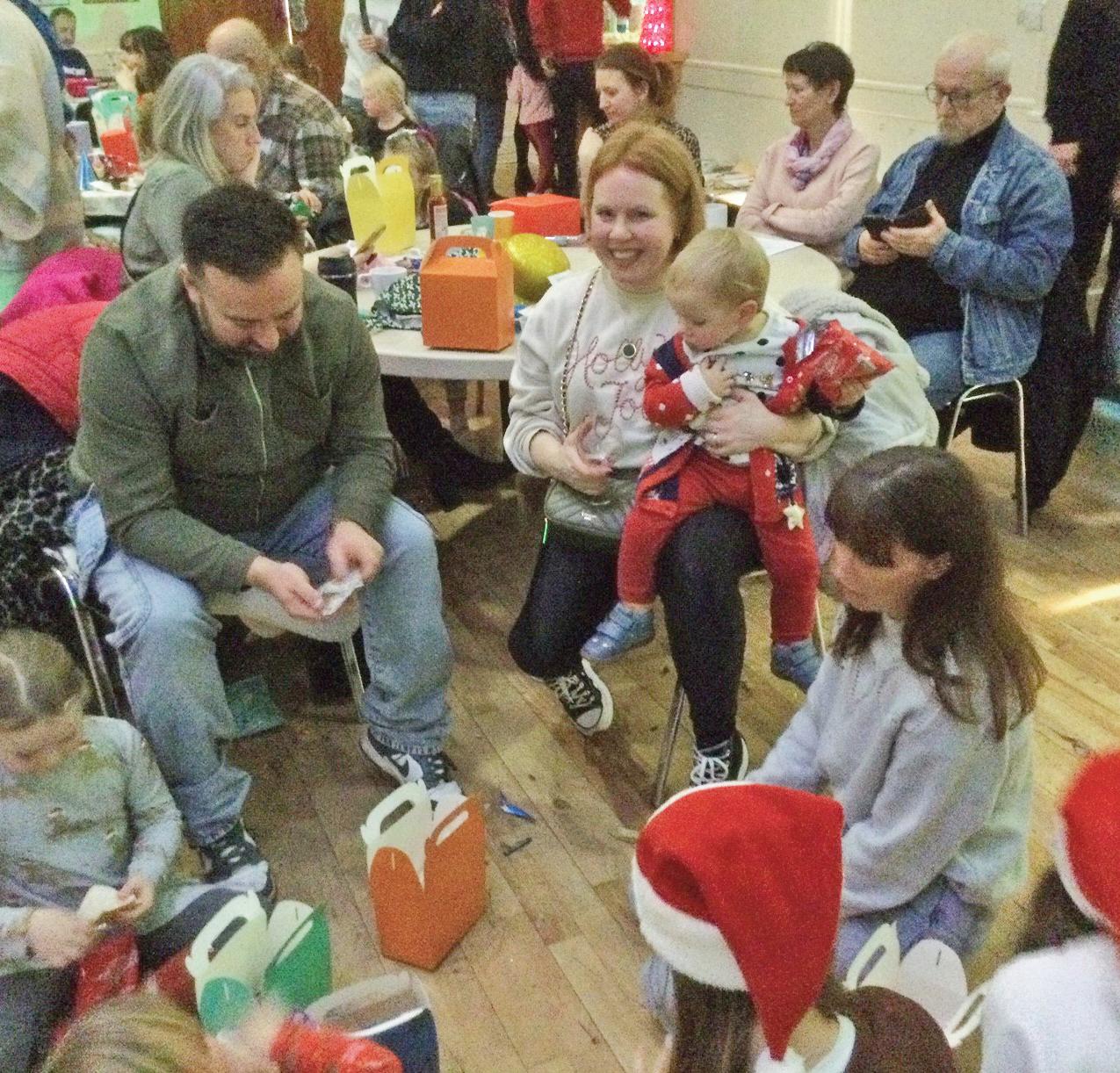
Guild of St Stephen for ten years constant service. Apart from all regular social and catechetical activities we have celebrated two successful afternoon teas with invitation to 500 homes in the local
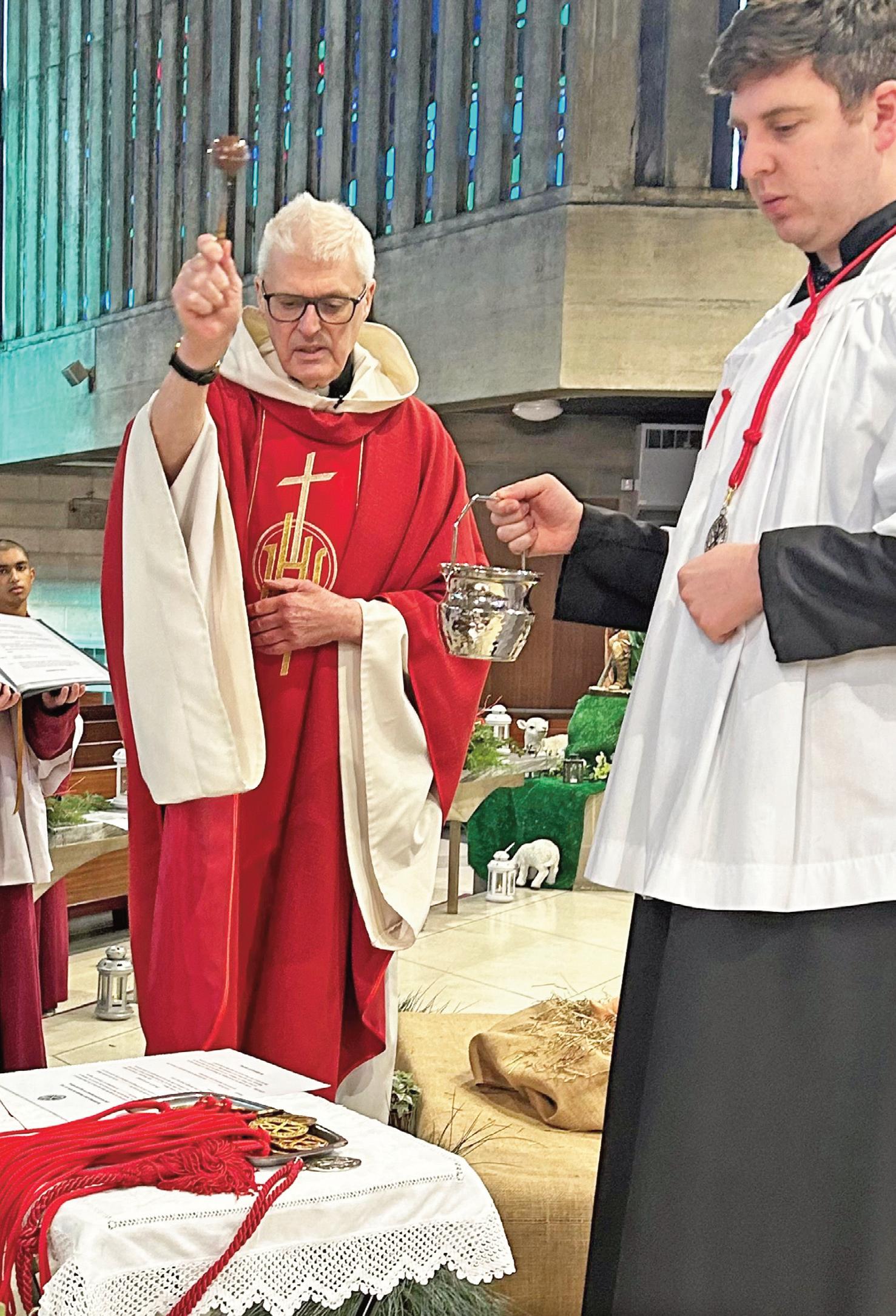
community to encourage their welcome into our facilities and activity.
St John Paul II, Nottingham parish looks to the future with confidence as we develop a
series of open evenings to digest the Diocesan Pastoral Plan that through Parishioner Forum and the Pastoral Team the Parish will continue its mission and outreach to “Go out and teach all nations”.
In China, many come to faith without God’s Word.
You can help today.


By Dr Jay Kettle-Williams
‘Mighty oaks from little acorns grow’ is a 14th-century English proverb coined by Geoffrey Chaucer in his epic poem ‘Troilus and Criseyde’ (circa 1374) which, set during the potentially legendary decade-long Trojan War (12th or 13th century BC) between the Achaeans (Greeks) and the city of Troy (in modern-day Turkey), focuses on the doomed romance between Troilus, a Trojan prince, and Criseyde, a beautiful woman caught in a web of loyalty and betrayal.
family unit, as important for us as for all creatures great and small.
the Catholic community and deepen Faith


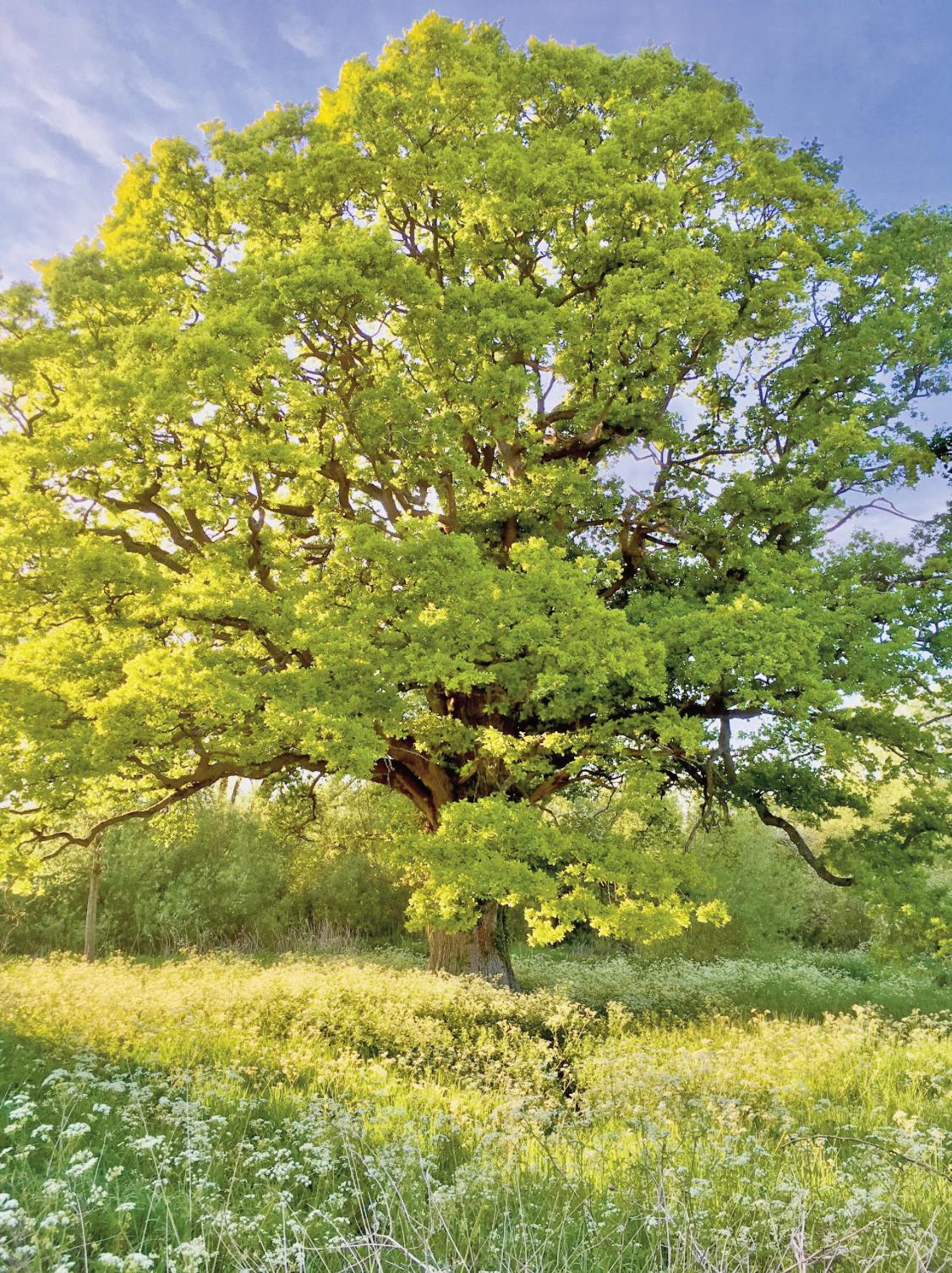
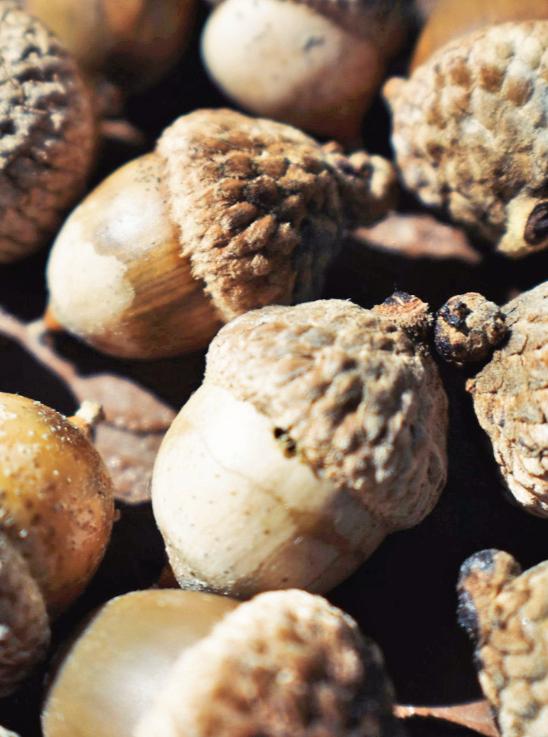
I like to imagine that there were no oaks mightier than those at Mamre, where Abraham, a man of resolve and conviction, settled circa 2000-1500 BC and built an altar to the Lord. That ancient site in the Judean hill country near Hebron had been specifically associated with oak trees, the acorns of which symbolise strength, growth, potential, perseverance and all manner of related qualities. The small, hardy acorn reminds us that great things can come from the smallest, the humblest of beginnings. For such reasons, throughout time and over space, acorns have had a multicultural or even pancultural association with life, rebirth and even divine blessing.
In order to flourish, the acorn needs to fall by no will of its own onto fertile ground, to take root and then be nurtured and brought forth. That ‘nature-cum-nurture’ element to the acorn’s ‘quercine situation’ (Latin ‘quercus’ meaning ‘oak’) could be taken to apply just as well to the development of our own young.
The Mystics, we recognise, drew on the images and the realities of secular life in order to convey their convictions, to explain and spread their message to the commoners of their day. A prime example of such ‘worldliness’ in the language of the Mystics is the depiction by St Teresa of Avila (1515-1582) of our human soul as a castle with many rooms, yet made out of a single diamond. A potential example, had the Mystics chosen to use it, could well have been the image of the acorn to expound on parenting within the family unit.
Tragically it has been widely reported these days that preparedness for the role of parenthood can be lacking to such an extent that responsibilities traditionally addressed by the family unit need to be picked up by other sectors beyond the home.
I listen to the call from child psychologists, from educationalists and I agree: families make the bricks on which society is built and rests. The role of the family unit is to prepare the child for society beyond the home, to function responsibly within and in support of society at large. The role of the parents, among their many responsibilities, is to prepare the child to comply but without sacrifice of individuality. Education, the ‘leading forth’ of the child (Latin ‘educare’ meaning ‘to lead/bring forth’), should be to liberate, to release the child’s talents, never to straightjacket them.

The resolve and conviction we attribute to Abraham strike me as rather like those will-o'-the-wisps of folklore, typically attributed as ghosts, fairies or elemental spirits meant to reveal (or conceal) a path or direction, as difficult to concretise as the early-morning mists. I freely admit that the older I get – or perhaps it’s the more mature I become - the more my conviction or assuredness does wane in the face of an increasing number of topics. I don’t see things as black and white as I used to. There are so many more hues, more nuances, more shades to be taken into account. But on those points where I remain sure, you will never shake my conviction. One such topic is the role of the
So my thoughts return to Chaucer and those little acorns.
Had Abraham known of those words coming from Chaucer, he would surely have responded with a wry, knowing smile when he raised that altar among the oak trees at Mamre. Of that I’m convinced.
-o0o-
Postscript: The Spanish mystics are major figures in the Catholic Reformation who lived primarily in the 16th- and 17thcenturies dedicated to reforming the Church structurally and to renewing it spiritually. They sought to express in worldly terms their experience of a mystical communion with Christ.
Notes, Acknowledgements and Attribution: Accompanying image (Statue with Blowing Horn) after the sculpture Exultate Jubilate by Philip Jackson; Texts/References adapted and/or adopted from http://en.wikipedia.org under the terms of the Creative Commons AttributionShareAlike License 4.0: /; Photographs (Unsplash): Acorns by Lesli Whitecotton; The Oaktree by Blake Ludwig.

Diocese Unveils Five-Year Mission Plan on the Sunday of the Word of God
On this weekend when the Church celebrates the Sunday of the Word of Goda day dedicated to the celebration of Sacred Scripture—the Bishop has announced a transformative new roadmap for the future of the diocese: a Five-Year Diocesan Mission Plan entitled ‘Go, make disciples’.
Since the beginning of his tenure, Bishop Patrick has frequently been asked for a plan to help the diocese face its current challenges. Like many other dioceses, Nottingham faces both numerical and financial decline, alongside a significant reduction in the number of priests available to provide pastoral care across a geographically large area.
However, following extensive consultation with laity, clergy, and religious, the Bishop emphasized that a clear consensus has emerged: “Our aim must never be just to manage decline,” he stated. Rather, the goal is to reshape diocesan structures to foster renewal, growth, and mission.
A Journey of Listening and Hope
This new plan is the fruit of years of shared reflection. Through Lenten Roadshows in 2022 and 2024, and recent county gatherings in 2025, the diocese has faced hard truths together. Bishop Patrick acknowledged the difficult decisions regarding parish amalgamations—moving toward a target of 54 large parishes by Pentecost 2026—but highlighted that these changes are designed to allow communities to become more outwardlooking.
Beyond structural changes, the Bishop pointed to a deeper need to better respond to the Lord’s commission to “go, make disciples”. He expressed that these honest conversations have revealed not despair, but a renewed sense of hope, visible in the generosity of clergy and laity working together in new ways, the adaptability of the Curia and the creativity of the Youth Service, to name just a few examples.
The Plan: Spiritual and Practical ‘Go, make disciples’ is described as both a spiritual and a practical framework. It is built on three themes that have characterized the Church throughout the ages: Encounter, Discipleship, and Mission, all inspired by the Holy Spirit and nourished by the Eucharist.
The plan offers a vision for the next five years, outlining priorities and practical insights on how to bear fruit in local communities. It is a direct response to Jesus' words in Matthew 28: "Go, therefore, and make disciples of all nations... and
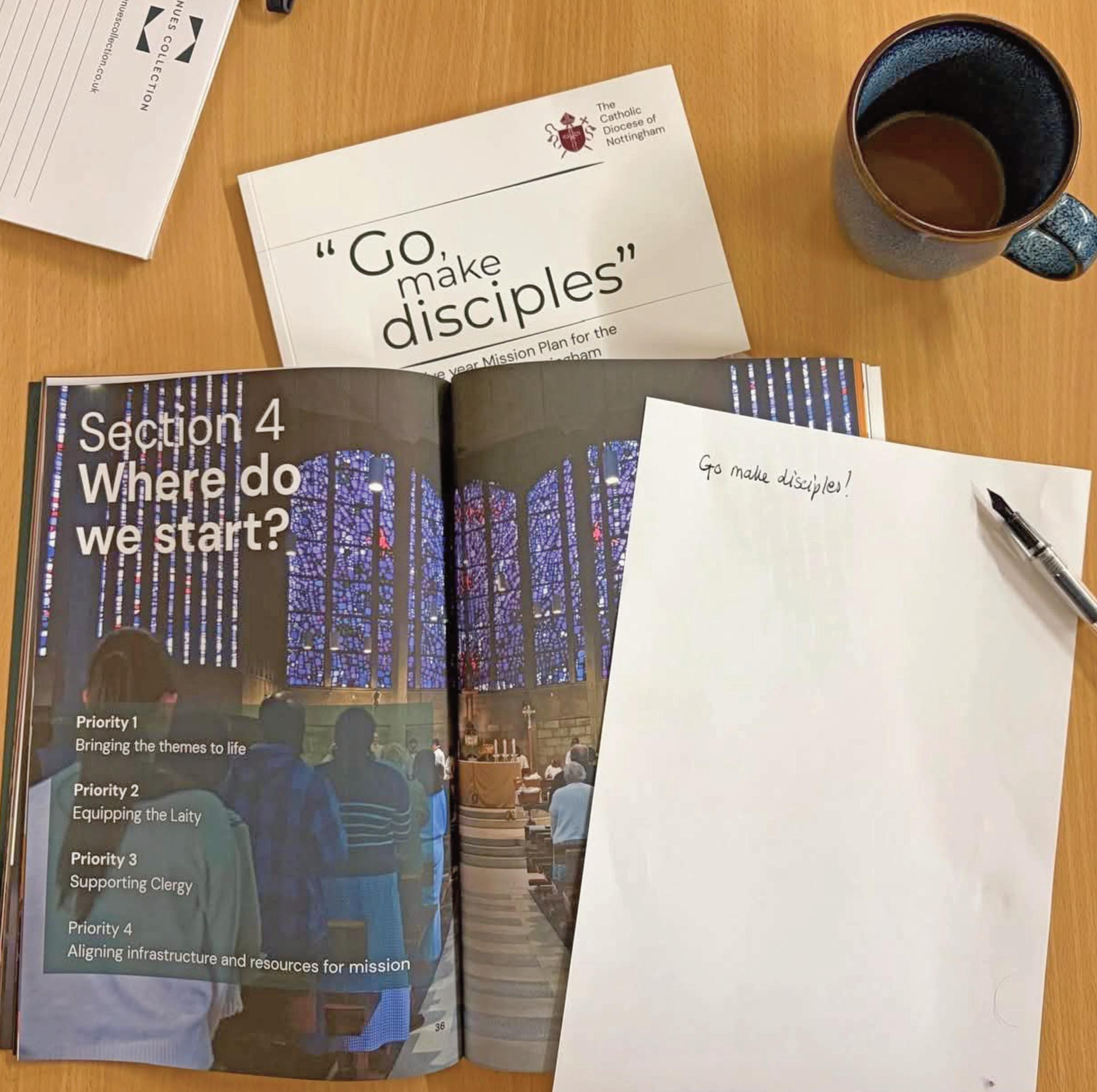
behold, I am with you always, to the end of the age."
A Call to Every Catholic
Bishop Patrick stressed that the implementation of this plan cannot be left solely to the clergy, certain parishioners or central offices. It requires the active participation of everyone in the diocese, without exception. Quoting Saint John Henry Newman, the Bishop reminded the faithful that they each have a specific role to play:
"God has created me to do Him some definite service... I have my mission... He has not created me for naught. I shall do good, I shall do His work."
The Mission Plan is an invitation for all Catholics in the Diocese of Nottingham to place their unique, God-given gifts in the service of Christ and to humbly share with others the positive difference that knowing Jesus makes in their lives.
The Diocesan Mission Plan is available now on the diocesan website.
• Roadshows: Starting Monday, January 26th, 2026, the Bishop will present the plan in a series of area Roadshows. Printed copies will be available at these events.




• Parish Action: Parishes are asked to determine their "first few steps" for the coming year and share these with the Bishop by 15th June 2026.
• Personal Reflection: We warmly invite everyone to prayerfully read the plan and reflect on how they might personally participate in this shared vision.
The Bishop noted that while some parishes are already well underway, others— particularly those involved in amalgamations—may need to walk at a slower pace. The important thing is every parish commits to take a ‘first few steps’ in the next twelve months, and then to making substantial progress on the journey to becoming more missionary by 2030.
As the diocese sets out on this five-year journey, the Bishop invited the faithful to pray that the Lord will make these efforts fruitful, citing the humble prayer of Cardinal Prevost, when he realised he was about to be named Pope:
"Here we go, Lord, you’re in charge, you lead the way."
The Bishop concluded with an invitation for everyone to read the plan, pray for its success, and actively look for opportunities to contribute their talents to its implementation.











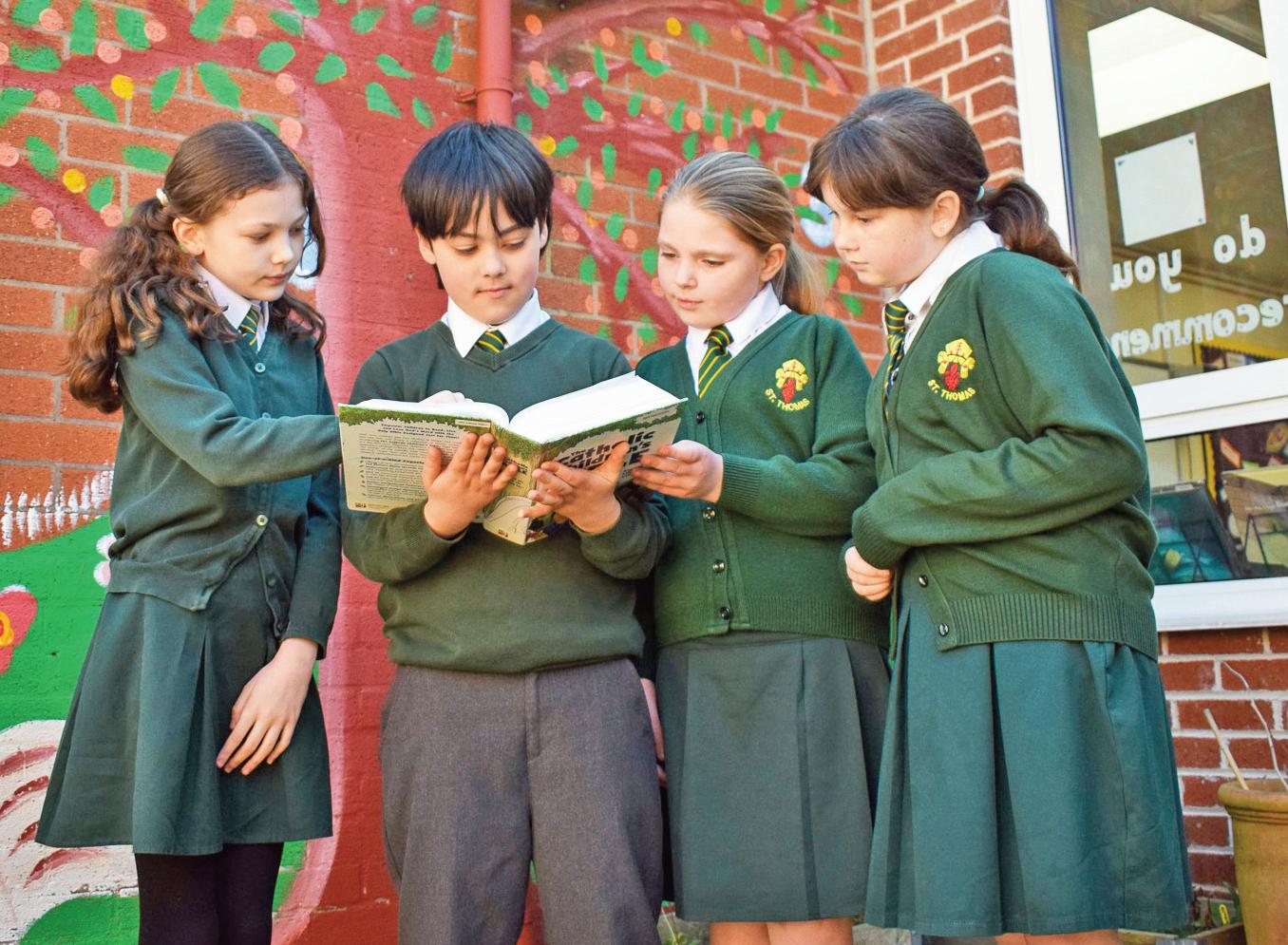
St Thomas’ Catholic Voluntary Academy has been graded Outstanding by Catholic schools’ inspectors.
The school, in Ilkeston, underwent its Catholic Schools Inspectorate inspection, which is the national framework for the inspection of Catholic schools, over two days in November 2025.
The overall quality of Catholic education provided by the school, Catholic life and mission, religious education and collective worship were all graded Outstanding.
Inspectors said: “There is outstanding leadership of this Catholic school, which inspires and motivates all within the community to live out the mission, ‘We serve God when we work and play together’.”
The report said that pupils are very proud of their school and their sense of worth, and respect for each other, is shown in their exemplary behaviour, manners and courtesy.
The report said: “Pupils state that ‘we are all really kind’ and ‘we feel special and included’, and also remark that ‘not one person is alone’, demonstrating that they
are ‘friendly, positive, safe and secure’, as one pupil summed it up.”
Inspectors highlighted the strong sense of belonging among staff, and said this translates to the pupils.
“‘It’s a blessing to be part of the St Thomas community’ and ‘We are like a family here’ are typical comments. The nurture, care, and pastoral support ensures all are included and supported, extending to pupils, families and staff alike,” they said.
Pupils were said to be fully engaged with the religious education curriculum, and have a pride and satisfaction in showing what they have learned, particularly in longer, more open tasks. Behaviour in learning is exemplary. They know how well they are doing, and how to improve, the report said.
Teachers were praised for demonstrating very good subject knowledge and a strong commitment to the value of religious education.
Inspectors said: “Predominantly, they have high expectations of all pupils. Their lessons are well planned, following the school’s agreed lesson structure. This
ensures a consistency of approach that gives confidence to teachers and pupils.”
The report said that leaders and governors ensure that Christ is at the heart of the school, confirmed by the views of both staff and parents. ‘Our faith is the focal point of our school’ and ‘This school is filled with love’ are two typical comments that evidence this.
Michael Sellors, Headteacher, said: “We are incredibly proud of this Outstanding judgement, which reflects the strong faith, care and sense of family at the heart of St Thomas’. It recognises the dedication of our staff, the support of our governors and families, and, of course, the kindness and respect shown by our pupils every day.”
All parishioners are encouraged through the various parish newsletters etc... in the Nottingham Deanery to advise their parish administration of their entry to either the Queen’s Medical Centre or the City Hospitals, both part of the Nottingham University Hospitals Trust. Sadly, with the loss of the Late Fr. Slavic RIP, and financial cutbacks, a further Catholic Chaplain hasn’t been appointed. In response the Deanery is once again developing, the system in place before the COVID epidemic, with our tremendous teams of Eucharistic Ministers visiting known patients with the Blessed Sacrament and a system of “On Call” chaplains from the various parishes of the Deanery to support end of life patients with the Sacrament of Anointing. Priests often visit their own parishioners if they know of their hospitalisation.
Recently the Chapel, now known as “The Sanctuary,” on the main corridor of the City Hospital has been completely refurbished to provide a warm and welcoming space for prayer, meditation and availability of an ecumenical chaplain for conversation and prayerful
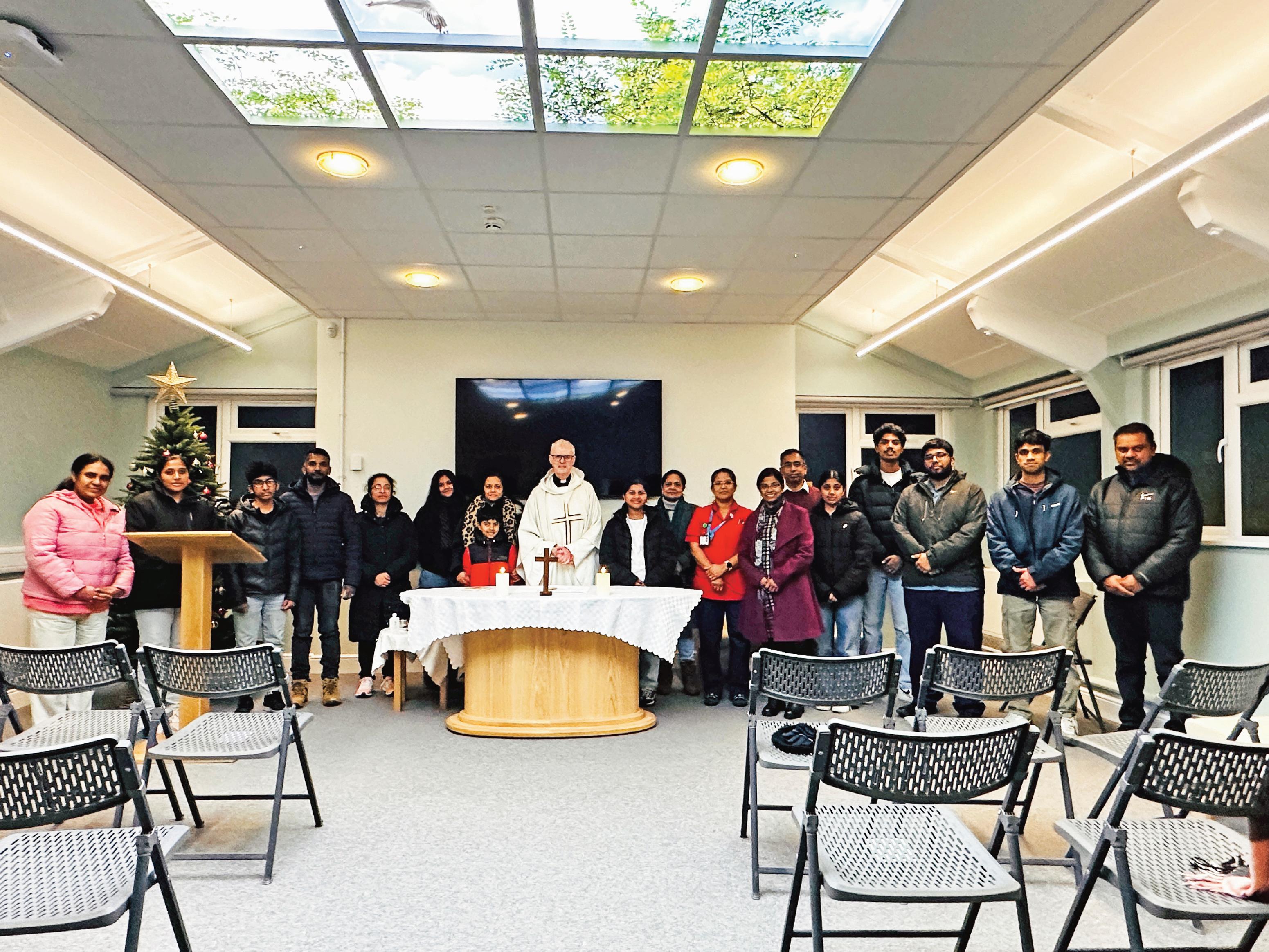
support. By permission of Bishop Patrick, both chapels now have a suitable tabernacle and reserve the Blessed Sacrament and each month (The First Wednesday of the Month at 1:00 pm in the Queen’s Medical Centre Chapel & the Second Friday of the month at 6:00 pm in
the City Hospital Chapel) Holy Mass is now celebrated for Staff and patients if they are able to attend. A full set of Mass requirements, chalice, paten, cruets etc... at the City Hospital were the gift of the Syro-Malabar community, many of whom are hospital staff.
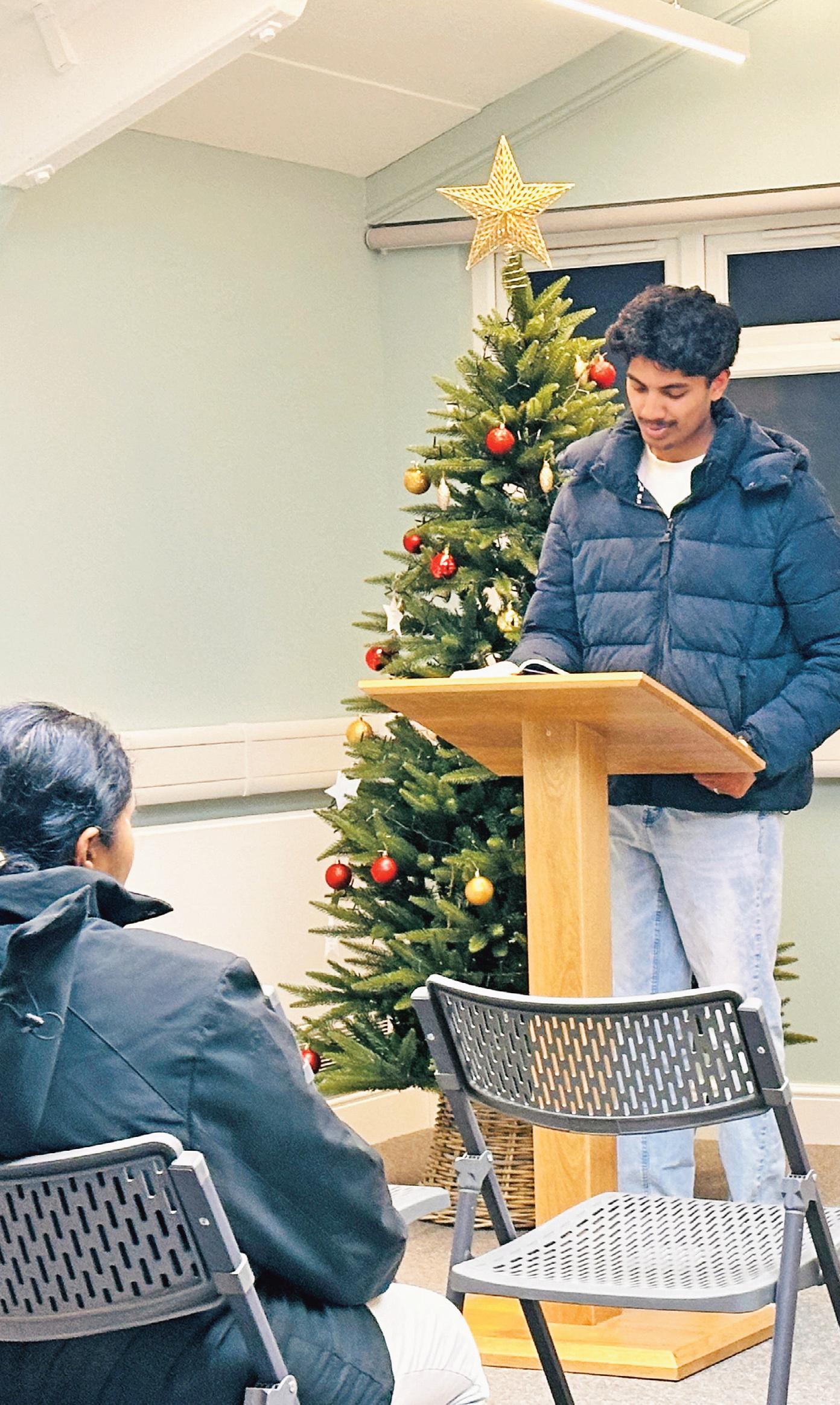
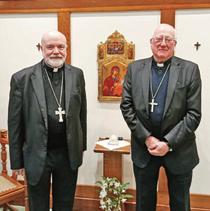
The accompanying photographs show the refurbished chapel, known as The Sanctuary at the City Hospital, Nottingham.
St John Paul II Parish Roving Reporter
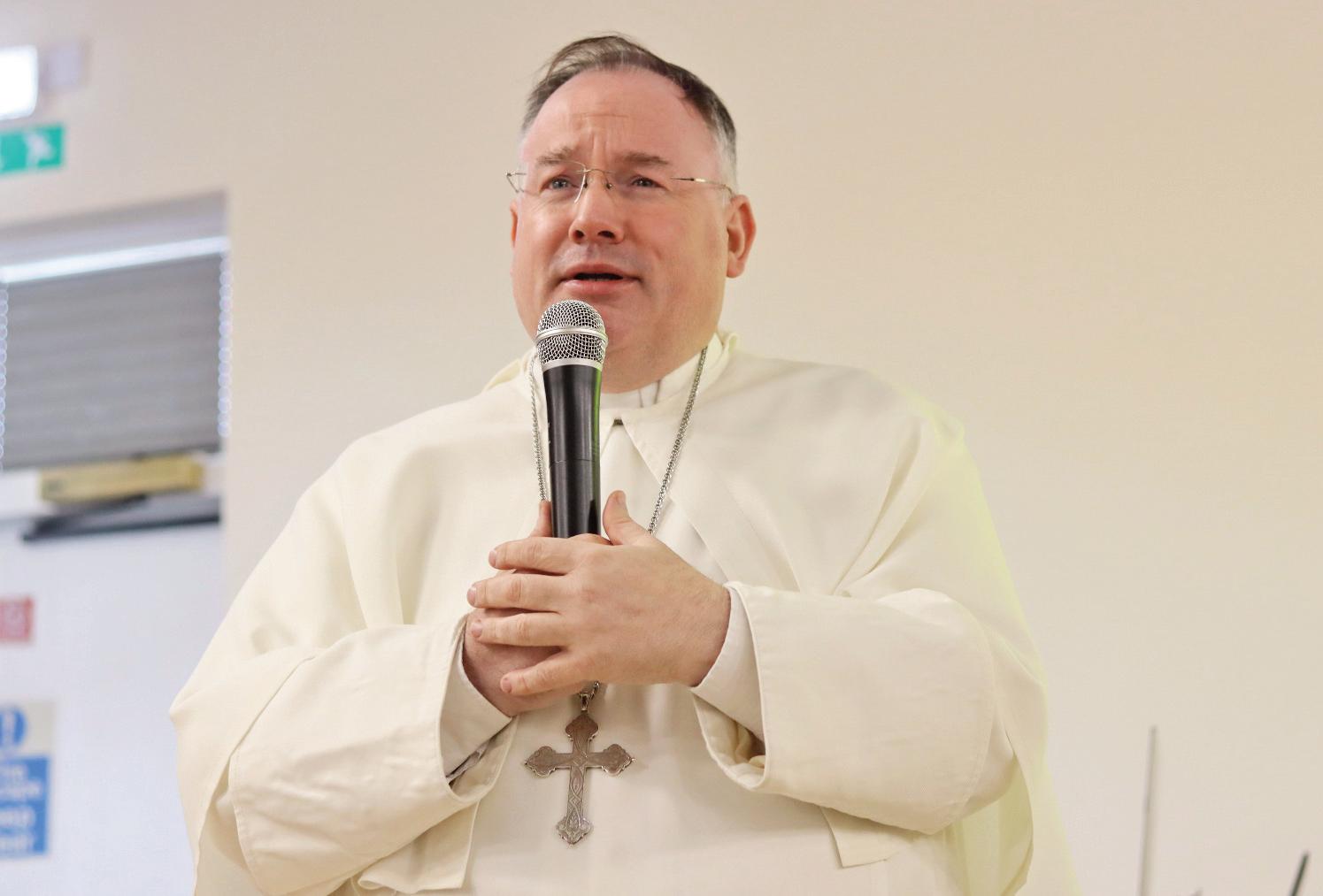
Around 50 Catholics gathered this Saturday 31st January at St Mary's Church in Derby for the "I Have My Mission" event, which started with Mass led by Canon Andrew Cole. This event was a day of reflection and encouragement on living out one's baptismal call to evangelise. Organised by the Diocese of Nottingham, the event featured keynote speaker Abbot Hugh Allan, Mission Director of the Bishops' Conference of England and Wales.
Joe Hopkins, Mission Director of the Diocese of Nottingham, opened the conference by defining evangelisation simply: "Talking to a person about a third person—and that third person is Jesus." He urged attendees to move from abstract prayer to concrete action, inviting everyone to message a friend or loved one with a simple offer: "I have been thinking about you today; is there anything I can pray about for you?"
Lived Faith, Not a Fabricated One Abbot Hugh Allan drew on his fourteen years as a parish priest and his extraordinary experiences as the Apostolic Prefect of the Falkland Islands, Abbot Hugh spoke of the "great adventure" that begins at Baptism.
"Faith is never automatic; it must be lived," the Abbot insisted, echoing the words of Pope Benedict XVI. He warned against a faith "fabricated at a desk," noting that people can instinctively sense when a person’s words spring from a genuine life of prayer.
"In Baptism, when we say 'I believe,' we are also saying 'I belong,'" Abbot Hugh explained. "If you are not happy to talk to God, then everything else is volatile. Our mission is to ensure that the truth of the Creed—which we often recite dryly on Sundays—becomes a lived experience that we are desperate to share."
Abbot Hugh shared captivating stories from his time serving one of the largest geographical dioceses in the world, covering one-sixth of the earth's surface. He spoke of the "heroic" faith found in the most isolated places. He told the story of a single Irish maid on Tristan da Cunha who, despite being pressured to abandon her faith, raised eighteen children in the Catholic tradition. When a priest finally reached the island years later, he was met by seventy Catholics—a community grown from the seeds planted by one woman.
Abbot Hugh reminded the congregation that while talents and circumstances vary, the "duty and joy of loving Jesus Christ" is a gift available to everyone.
"You cannot hope to leave the world a better place," he concluded, "you can only hope to leave the world a better person. It is in doing that—by looking in the mirror and asking what we can do—that the world truly changes."
The speaker left attendees with a clear mandate: to listen to the experiences of others, to be firm in their own belief, and to never underestimate the difference one person can make when walking with Christ.
Group focused workshops
The day continued with two break out rooms. Georgia Clarke, from Alpha, taught the group about Relationally Evangelisation. She shared her journey from law aspirations to leading a thriving youth ministry (now over 100 young people weekly). Clarke advocated Alpha for the curious, stressing invitation as evangelisation: "Go and make disciples, not just be disciples." Overcoming fears of offence or awkwardness, she called for hospitality – treating parishes as homes where newcomers are hosted, not guests pandering to consumer preferences.
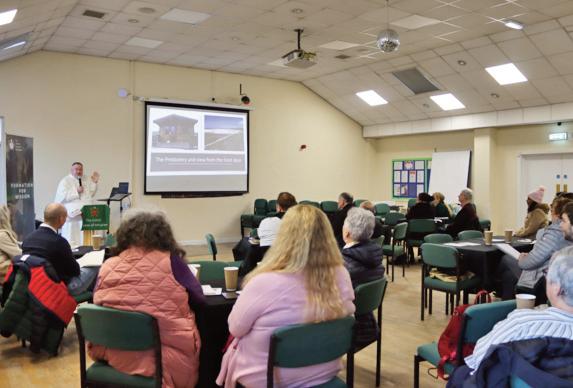
While, Fran Hazel and Joe Hopkins spoke about Spontaneous Evangelisation, ways to talk to people and invite them to church. An example of this would be hosting a Night of Light and invite passers-by to light candles in the church.
P.S. The Diocesan Mission Plan requires the engagement of every baptised person—
it is a shared responsibility, not just one for the clergy and curia. You have a unique call to serve the Mission and to evangelise in the East Midlands. Download the plan today to learn more about your part, and stay tuned for upcoming opportunities: https://gomakedisciples.uk
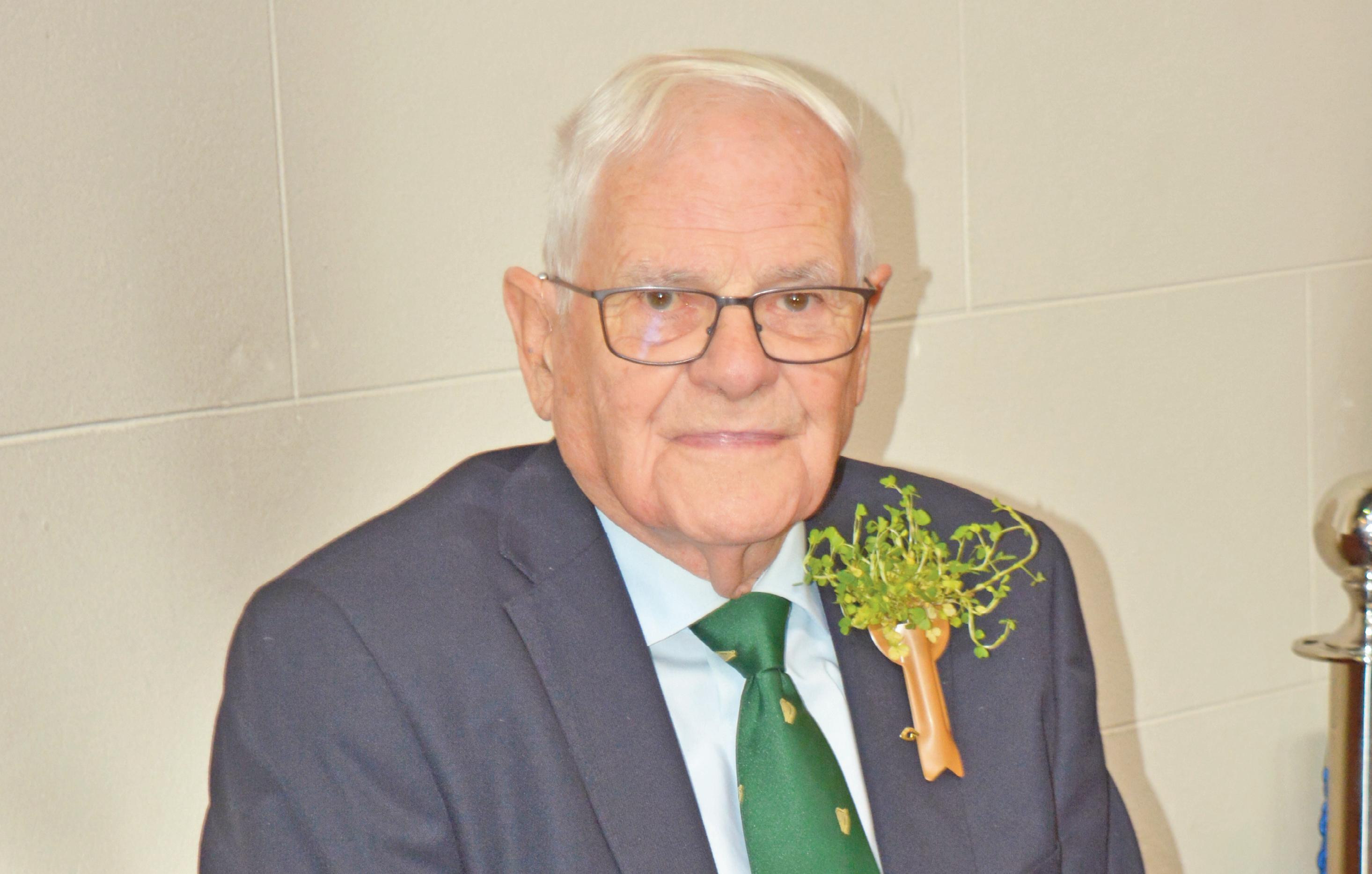
Seán's annual appearance at Derby Irish Mass 2026, St. Patrick's Weekend. He sang the O' Riada Mass, composed by his mentor Seán O' Riada.
The venue for years has been the Pugin church of St Mary's, Derby. The legendary singer, storyteller and keeper of the
traditions Seán O' Sé was also a very popular primary school headteacher.
He has been a long term friend of Father Tim O'Sullivan priest of Nottingham Diocese for over sixty years.
Gerry Molumby

You can use both sets of clues to solve the puzzle: the solutions are the same. CRYPTIC Across
5 God invites in accountant, about to have tea with the taxman (9)
8 Cliff in Edom drinks, backsliding (4)
9 With Capone's acceptance into church official, it's almost Babylonian (8)
10 Old Archbishop of Canterbury could be Brown's double (7)
12 Golden cloud, virtually, is seen to the west of Canaanite city (5)
14 He wrote masses; marginally down after book fair (5)
15 Song uncle's preferred to old capital (7)
17 Jude Hunt is an alias for David's Levite (8)
18 Other half of Jezebel is primarily as hard and brazen (4)
19 16 mostly responsible for this festival? (9) CRYPTIC Down
1 Get a mug over here for the wine miracle (4)
2 Scots chap supporting two accounts leads to a schism (7)
3 British king's framed in the style of an OT monarch (5)
4 Sikhs meet here to condemn a drug war (8)
6 James' rule to rewrite the Bible? (9)
7 Hours in church after weird icon appears during passage (9)
11 Cleric's in front, ahead of the leading Essene Jew (8)
13 Canaanite city's discovered thanks to an article on a church (7)
16 Caucasian Carmelite cleric's gone missing (5)
18 Blunder losing front part of the church (4)
QUICK Across
5 Jericho 'sinner' who, having Jesus to his house, subsequently gave half his property to the poor (9)
8 Rocky plateau at the foot of which the Nabataeans carved the city of Petra (4)
9 Of people from an ancient part of Babylonia, home to Abraham (8)
10 Abbot of Glastonbury, and Archbishop of Canterbury from 959 (7)
12 Canaanite city rebuilt by Solomon, along with Megiddo and Gezer (5)

6 Holy city for Jews, Christians and Muslims (9)
7 Conforming to the recognized rules of cathedral clergy (9)
14 Composer brothers (Franz) Josef and Michael (5)
15 Capital of the biblical Northern Kingdom of Israel (7)
17 Levite David appointed as a leader of the Temple music (8)
18 Pagan king of Israel and husband of Jezebel (4)
19 Seventh Sunday after Easter (9)
QUICK Down
1 Town in the Bible, the scene of the water-intowine miracle (4)
2 Schism between Rome and the East, 482-519, named after the Patriarch of Constantinople (7)
3 Moabite king who hired Balaam to curse Israel (5)
4 Place of assembly and worship for Sikhs (8)
11 Member of an ancient Jewish sect denying the resurrection and the existence of angels (8)
13 Canaanite city; later one of the cities of the Levites (7)
16 Link between Carmelites, Magdalenes, Cistercian Monks, Premonstratensians – and Christmas! (5)
18 Angular or round section often found in the western part of a church (4)
SOLUTION