







HEAD OF SCHOOL
Alexandra Lockett
EDITOR
Avani Patel Shah
COPY EDITORS
Guille Gil-Reynoso
Lindsay Newlove P'25,'28
GRAPHIC DESIGNER
Mya Cubero
PHOTOGRAPHER
Freddy Randall
ARCHIVIST
Judy Savage
COMMUNICATIONS OFFICE
Avani Patel Shah
Freddy Randall
HEAD OF ADVANCEMENT
Andrew MacDonnell
MISSION STATEMENT
Through commitment, scholarship, companionship, and service, each member of the Cate community contributes to what our founder called “... the spirit of this place ... all compounded of beauty and virtue, quiet study, vigorous play, and hard work.”
Notice of Corrections:
The 2025 Summer Bulletin inadvertently misspelled Charlie McConney '71’s last name in the Baccalaureate speech write-up. The correction has been made in the digital version of the Bulletin. We apologize for the oversight.

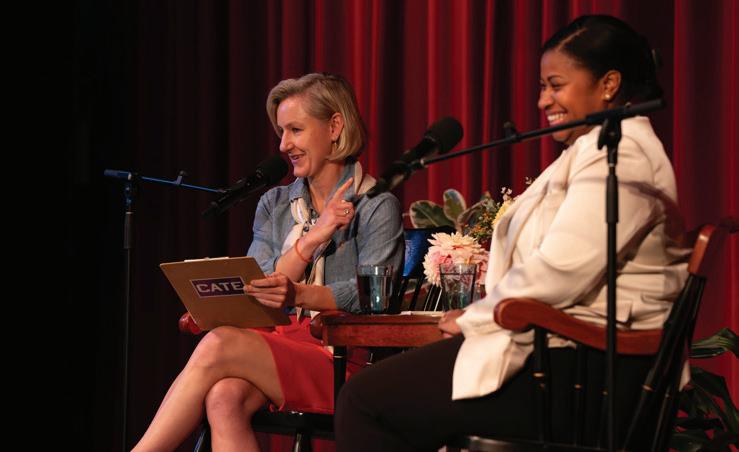
Head of School Alexandra Lockett reflects on lessons in leadership, sparked by conversations with two former Student Body Presidents.
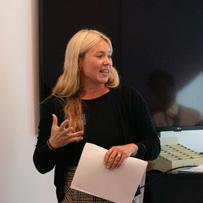
Dive into the 11th Grade History classroom as students explore the relationship between Indigenous History and capitalism through the lens of inquiry.
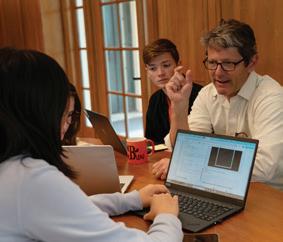
Three Cate teachers share how their lifelong pursuit of education continues to drive the evolution of their learning, inside and beyond the classroom.















Seasoned coach and new Assistant Director of Athletics for Program Jesse Morrison provides an inside look into how character and leadership drive captains on Cate athletic teams.


Power of Leading Well
Through the lens of leadership, read about what it means to lead with integrity, question with courage, and find grounding in a community that values excellence and health in equal measure. 12 Power of Excellence
Explore how the values of commitment, companionship, scholarship, and service have anchored Cate through generations of excellence, and how they continue to influence the work of students and teachers on the Mesa today.
Power of Play
Discover how the vitality and spontaneity of campus life goes beyond the classroom at Cate. Learn about the new Captain's Council in Athletics and see how we are never too big to play at Cate.

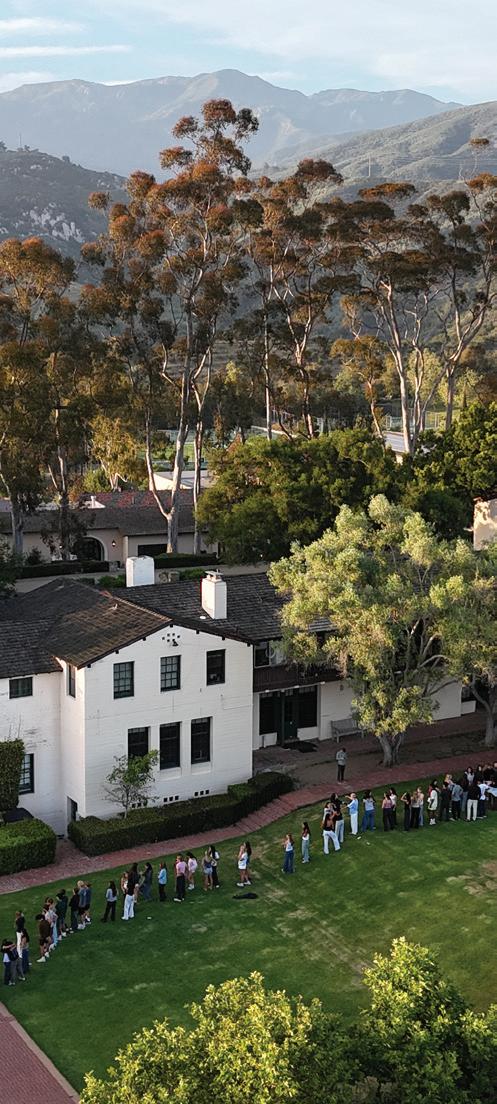
Each day, when I look out over the Mesa from my office window, I observe how energy moves here. The wind that comes off the ocean reshapes itself as it climbs across the hillside, carrying voices from the playing fields, the laughter from the dorms, and the rhythms of footsteps walking to and from class. The Mesa, in its own way, is power in motion – not something to be owned, but rather to be shared.
This year’s inquiry question, How does power work?, has invited us to look closely at that motion. We tend to equate power with possession, something to be earned or wielded. But, on the Mesa, power looks different. It moves through relationships, attention, and learning. It is a kinetic force, charged by connection, and shaped by the rhythms of our daily life. The more we explore this question, the clearer it becomes: power at Cate is not concentrated at the top, but rather distributed and circulated through trust, curiosity, and care.
It is evident in the History classroom, where students wrestle with who gets to tell the story and why. Power comes from listening rather than persuading, grounded in the courage to examine narratives we inherit and the grace to revisit them together.
You see it in the ways teachers model inquiry as a lived practice. They are comfortable expressing the limits of their understanding and model learning as skillfully as they do teaching, often in tandem with our students. This reciprocity, of learning in both directions, turns knowledge into a shared, communal resource rather than a private, hoarded store.
In our Athletics program, seasoned coach Jesse Morrison invites student-athletes to see captainship as a practice in stewardship. Athletes reflect on more than just their practice on the field; they consider the character of their leadership and how their principles of companionship, trust, and belonging on the field are reflected in the power that they inhabit.
Their influence and learned leadership mirror the principles that guide the leadership of Cate each day as well. The best structures are those that give people room to act from their highest and best selves, ever in service of our shared commitment to students. In this way, power is generative, multiplying as it moves.












Fundamentally, our work at Cate has always been to transform potential into impact, most powerfully through connection and care. When a ninth grade student finds their voice or a teacher attempts something innovative, we are reminded that wisdom begins with wonder and that strength often reveals itself through service. Just as the wind gathers, shifts, and then passes on, our community moves, shapes, and evolves, energy flowing from student to teacher in a living exchange of our shared ethos of servons
As you read this issue, I hope you feel these movements, the quiet but unmistakable reverberations of shared purpose that are central to Cate. The stories that follow remind us that power, at its best, is not about moving others but about being moved, by our work, by one another, and by the enduring spirit of this place.



Servons, Alexandra Lockett Head of School



This year’s inquiry question, How does power work?, has invited us to look closely at that motion. We tend to equate power with possession, something to be earned or wielded. But, on the Mesa, power looks different.
“
Following the completion of the new, state-of-the-art Meldman Field and Whiting Family Track at Cate, the School has entered a new era, poised for growth and no longer under construction. In this section, explore what it means to lead with integrity, question with courage, and find grounding in a community that values excellence and health in equal measure. From generational conversations to thoughtful leadership appointments, these stories demonstrate how Cate continues to grow while keeping its essential values at the forefront: a commitment to people, purpose, and the spirit of this place.

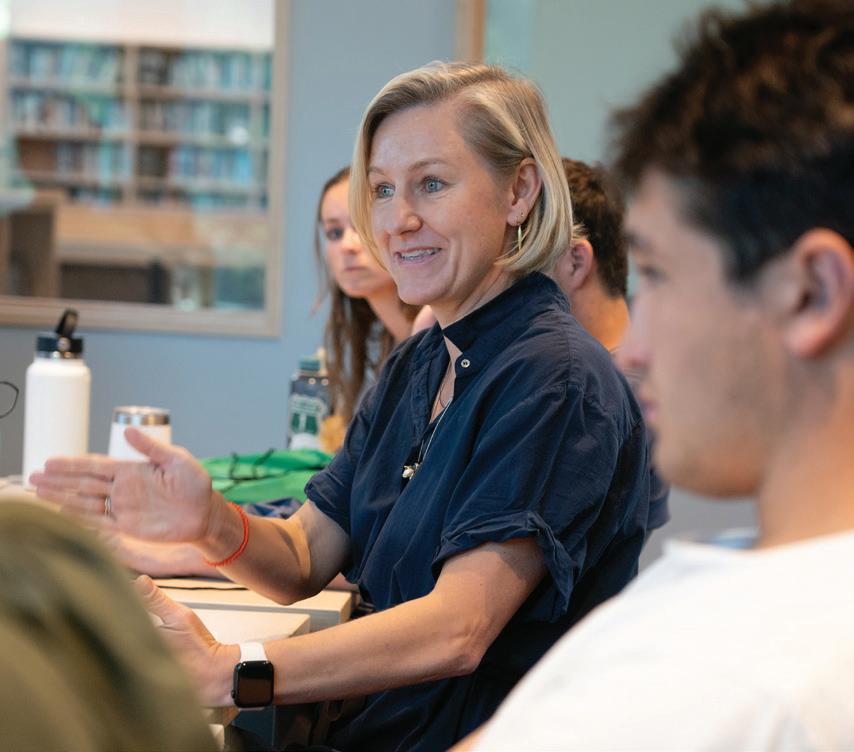
How Does Power Work (Well)?
How
does power work? This year’s inquiry question was intentionally chosen as a place to return—again and again—as we consider a wide range of issues, from democracy and artificial intelligence to climate change and global interdependence.
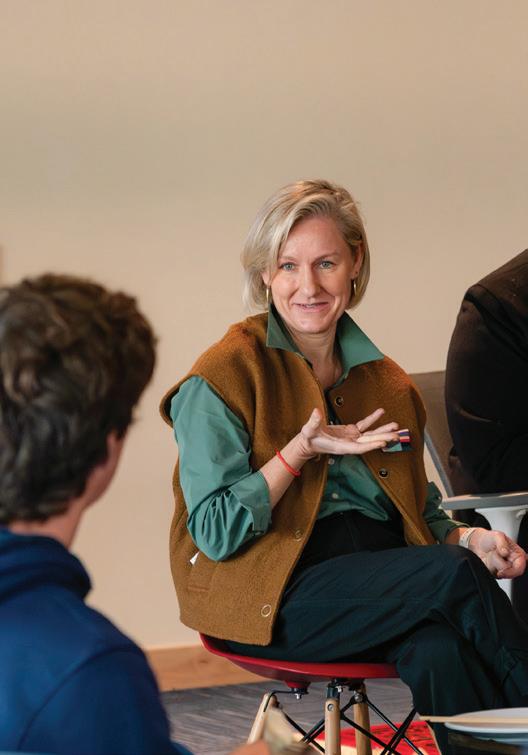
As is so often the case, it can be easy to feel overwhelmed—or even powerless—in the face of such vast forces, particularly when they appear to have power over our lives. While it is important, and even essential, for students to understand the darker sides of power, I believe we owe them something more: the tools to imagine how they might play a role in shaping the greater good, beginning with themselves, here at Cate.
With that aim in mind, I reached out to two young alumni—Flora Hamilton ’17 and Josh Han ’09—to ask how their understanding of how power works well was shaped during their years at Cate, particularly during their service as Student Body President, and how their thinking about power has evolved since graduating.
Beginning with my Convocation address at the start of the year, I have been reflecting on this question and how my own understanding of power has shaped key moments in my life and leadership. The following insights continue to serve as touchstones for me, especially in moments when the way forward feels uncertain.
My lifelong love of math and science continues to inform how I understand the world. In physics, power is defined as the rate at which work is accomplished over time. What makes this definition compelling from a leadership perspective is the question it raises: what do we mean by work?
At its core, work is the result of investing energy to influence change. What makes our work powerful is the enduring capacity to sustain the energy required and create lasting, positive impact. This requires either a renewable energy source or a highly efficient system—and ideally, both.
What I find most fascinating, particularly in my role as Head of School, is how relationships both sustain and are sustained by power working well. The more I come to know the Cate community on the Mesa and beyond, the more motivated I am to honor those relationships through my work. The power of connection has and will always be Cate’s greatest strength.
In my conversation with Josh, he reflected on his leadership at Cate and beyond and offered this deceptively simple reframing: “Power is not something that you hold yourself. It’s what other people give you, and you give back in return.”
Power, in this sense, is not something to hoard or protect. It must be continually earned and shared through trust, care, and example. As Josh put it:
“ Power isn’t about telling people what to do. It’s about leading by example—doing the work yourself and inspiring others to do better.”
Flora echoed this insight from a different angle, describing leadership as an act of service: “It was less a feeling of power, but more a feeling of responsibility to demonstrate care.”
Together, their reflections point toward the same theme: power works well when it moves through people, not over them.
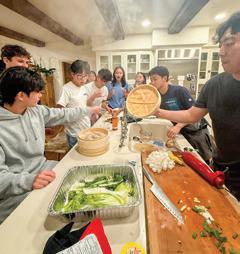
This lesson came alive for me during my first trip to Asia this fall, where I was moved by the creativity, vitality, and generosity of our Cate families abroad. I returned home with a renewed curiosity about the experiences of our international students and soon had the opportunity to meet with the Asian Student Union. In that conversation, senior Philip Choi ’26 shared a long-held dream of hosting a traditional Korean kimjang—a communal gathering centered on making kimchi together.
After experiencing the warmth and hospitality of Philip’s family, as well as so many others during the trip, I was eager to open Mesa House for the event. In this case, power did not come from directing an outcome, but from creating the conditions for something meaningful
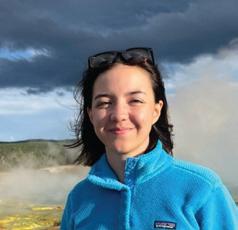
Flora is an ecological data scientist at the Natural Resource Ecology Laboratory in Colorado, where she uses environmental data and machine learning to study forests, wildfire impacts, and rangeland systems—helping land managers and conservation organizations make informed, science-based decisions. Prior to her current role, she held various data-based positions at the National Aeronautics and Space Administration (NASA), the Cary Institute of Ecosystem Studies, and a Taiwan-based investment firm called SOSV.
to emerge. The energy generated by connection and belonging translated into a new tradition—one I hope we will be able to sustain over time.
That, to me, is power working well: influence exercised not as control, but as invitation.
If power moves through people, then its true measure is not effort, visibility, or intensity—but impact, especially impact that lasts.
Both Josh and Flora were quick to dismantle a familiar but misleading equation: that working harder automatically means leading better. Flora articulated a clear and grounded definition:
“ My ideal sense of power would be seeing the good imparted on a community—being actually able to experience or measure that.”
Power, in this sense, is not abstract. It is tangible. It can be felt, observed, and sustained.
Josh’s professional journey added an important counterpoint. Early in his
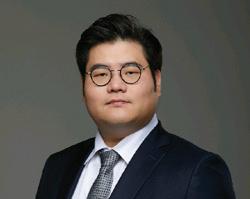
Josh is a General Manager at the Taco Bell sub-division of KFC Korea, where he leads the charge in bringing the American franchise to South Korea. Previously, he has held consulting roles at several companies in mergers and acquisitions, healthcare, and consumer goods, among other fields. He also worked for Procter & Gamble in operations and purchasing.
career, he equated excellence with relentless output:
“ For five years, my definition of excellence was 120% of my client’s expectations—triple-checking everything, endless nights. It came at a real cost.”
That version of power—driven by overextension and fear of falling short— ultimately proved unsustainable: “If I go down, everyone around me goes down. That kind of excellence isn’t sustainable—and it isn’t leadership. I learned that power works well when people show up as their real selves—not their perfect selves—and when you love something more than your place in it.”
Here, power reveals a deeper truth: what exhausts the individual eventually weakens the whole. Power that burns brightly but briefly is not power working well. Both alumni described learning to evaluate their work not by how much energy it required, but by what remained after the effort was complete. Enduring impact asks harder, more generative questions: What continues after I step back? Who is stronger because of this work? What can sustain itself without constant force?
Through each aspect of Cate life—the residential program, community service initiatives, and, most notably, the classroom—we ask our students to consider the framework of sustainable
excellence, not just how much energy they are investing, but also how the impact of their work both sustains them and influences others, for good. In this way, enduring impact—work that empowers others while sustaining ourselves—is a clear signal that power is working well.
Perhaps the most quietly radical insight to emerge from both conversations was this: power cannot work well if the person wielding it is not well themselves. Josh described a turning point when a mentor challenged his understanding of professionalism: “How can you call yourself a professional if you can’t even take care of yourself?”
That question reframed care not as indulgence, but as responsibility:
“ If I want to do good in the world, I need to be good inside.”
Flora approached the same truth from the inside out, emphasizing congruence and self-trust:
“To do something well, you might have to step out of your comfort zone—but you can’t step so far away from it that you lose yourself.”
Both spoke about leadership becoming more authentic—and more effective— when it is grounded in self-knowledge, calm, and care. Power that ignores well-being eventually collapses inward. Power rooted in wholeness, by contrast, creates space for others to flourish.
This insight feels especially important in a culture that often celebrates intensity, speed, and constant achievement. At Cate, we strive to model a different equation: that living well, learning well, and working well are not separate pursuits, but mutually reinforcing ones.
How does power work well? We are discovering each day that it works best when it is shared, measured by what endures rather than exhausts, and is rooted in the well-being of the people who carry it. These practices are strengthened each time we return to them, particularly through our inquiry, relationships, and fundamental ethos of service – servons. As our world continues to equate power with force and control, I feel grateful to lead a community that is learning how to exercise influence with humanity, courage, and care, ever in service of something bigger than ourselves.

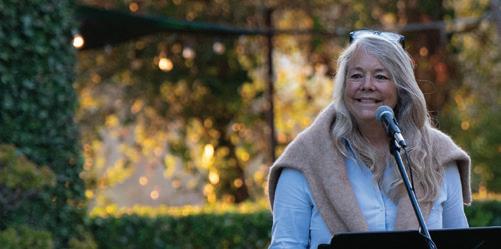
Longtime Cate administrator Sandi Pierce has been named Assistant Head of School, and a new administrative role, Head of Finance and Operations, has been introduced this fall with the appointment of Alysa Gerlach.
"My vision for the school is to be known as a leading institution in our capacity to live, learn, and work well together," shared Head of School Alexandra Lockett. "Leading well requires the right structures and systems being in place to support the highest and best use of our individual and collective time and talents."
Sandi Pierce, the former Assistant Head of School for Finance and Operations, is a pillar of the Cate community. A beloved administrator and trusted colleague, Sandi has guided the School through tremendous growth, change, and increasing complexity. During her tenure at Cate, Sandi has overseen the construction of more than 100,000 square feet of campus facilities, increased student enrollment from 255 to 310 students, supported the increase in employees from 90 to 140, stewarded an operating budget in support of program from $5.5M to more than $35M and countless cultural shifts that are a testament to her decades of service.
Sandi’s new role encompasses schoolwide leadership, coordination, program integration, and support for all employees.
• Holds a comprehensive, integrated view of both the school program (academic, residential, campus life, and co-curricular programs) and operations (financial, facilities, admissions, advancement, diversity, equity, and inclusion, and people operations).
• Leads faculty contracting, compensation, and housing assignment process in partnership with key school administrators.
• Serves as a senior partner to the Head of School and steps in as needed.
Cate is a place that continually asks questions in its ongoing focus serving the needs of its students and adults in support of the excellent academic, residential, and human environment we strive to create. “ “
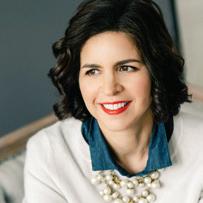
The new Head of Finance and Operations role, filled by Alysa Gerlach, connects the philosophical underpinnings of a Cate education with the fiscal framework for appropriate resourcing.
Alysa stood out among a competitive national pool of candidates for her strategic financial acumen, operational leadership, and commitment to aligning fiscal stewardship with mission. She is known for cultivating strong teams, fostering long-term sustainability, and leading with integrity and care. With more than two decades of leadership experience across higher education, nonprofit, and private sector institutions, Alysa has managed financial operations for organizations ranging from $25 million to $3.5 billion. Her expertise spans finance, investment management, facilities, technology, and risk management.
"With the school finance and operations now in the talented hands of Alysa Gerlach, this transition to Assistant Head of School provides the opportunity to focus on broader areas in partnership with my colleagues," said Sandi. "It allows me to collaborate across all areas of school operation as we collectively work to achieve excellence in all aspects of our program through deeper exploration of possibilities, understanding the changing educational landscape, and making sure a Cate education is as relevant for the students of today as it is for the future."
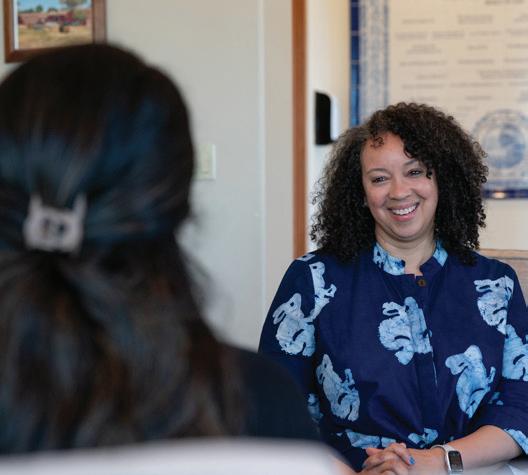
In an innovative approach, Maude Bond, former Director of College Counseling, now leads both the Admission and College Counseling teams under one unified strategy as Head of Admissions and College Counseling. Known for her nationally recognized, student-centered college counseling program, Maude now influences the full arc of a Cate student’s journey - from first inquiry to Commencement.
"My role stands at the forefront of how we live our mission on the Mesa," shared Maude. "For students, this means a more cohesive experience as they discover the unique attributes of our community and how scholarship and service underpin our academic program. The same values that draw them to Cate are the ones that will guide them throughout their time here and toward their next academic home. For families, this integration signifies a deeper partnership with parents and guardians. It fosters a clearer understanding of how students are supported every step of the way—cultivating lives steeped in companionship and commitment. And for the School, this is a chance to tell a truer, fuller story of what Cate offers—one that connects our students’
transformative experiences to the kind of graduates we send into the world, ready to live lives of purpose and impact."
This dual leadership role is innovative in the education landscape, but at Cate, it reflects a deliberate decision to elevate relationships. Maude’s prior experience at the university level, coupled with her deep understanding of Cate’s distinct program, enables her to sustain meaningful engagement with students and families throughout their Cate journey.
“I'm always asking the question about what does the institution need and what is the highest and best use of the resources we have—whether that is time, people, or capacity,” shared Head of School Alexandra Lockett.
“In thinking about Maude's role specifically, that’s a good example of aligning Maude’s rich admissions experience at Columbia, her college counseling work at Harvard-Westlake, her understanding of Cate students, and her talent for seeing the unique strengths and gifts in our students.”
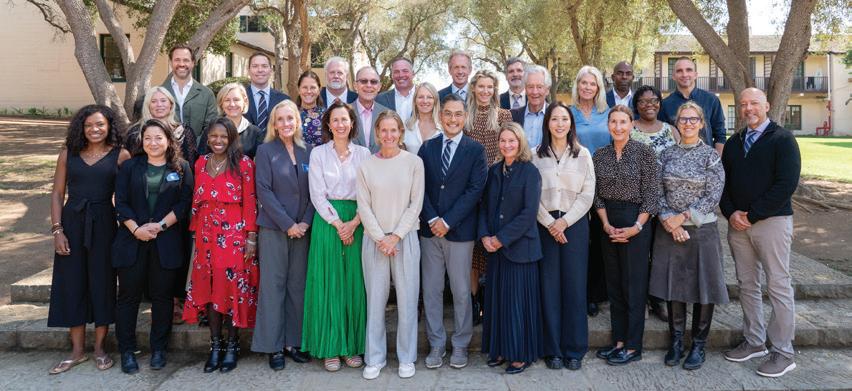
The Board of Trustees plays an integral role in the shaping of the School’s future. This year, Cate welcomed four new trustees, all of whom are current parents.
“Trustees are unpaid professionals,” shared Head of School Alexandra Lockett. “What they bring in terms of sustained expertise, love, and vision is extraordinary. Our new trustees bring new perspectives and a shared commitment to our purpose.”
These appointments broaden the collective efficacy of Cate's leadership team, strengthening its capacity to lead with integrity, innovative perspectives, and a commitment to community.

Ben Goldhirsh P'28
Ben Goldhirsh is the chairman and co-founder of Matter Neuroscience.
An entrepreneur, investor, and philanthropist, Goldhirsh has held leadership roles at GOOD, Upworthy, and Collaborative Fund. At Goldhirsh Foundation, Ben supports social entrepreneurs pushing the world forward across key areas of societal health. Ben graduated from Brown University. He currently lives in California and has a daughter who attends Cate.

Bryan Schreier, P'27, '29
Bryan Schreier is a graduate of Princeton University, where he earned his degree in computer science and currently serves in the President’s Circle. Bryan began his career at Morgan Stanley in the Technology Investment Banking Group before joining Google, where he held leadership roles across sales, operations, and engineering. In 2008, Bryan joined Sequoia Capital, where he is a Partner focused on working with technology companies serving both businesses and consumers — Dropbox, Front, Listen, Qualtrics, Retool, Thumbtack, and Zum, among others.
Bryan also manages his family’s diversified holding company, which includes hospitality businesses, investments, and real estate. He spends his spare time surfing and playing music with his family and friends. Bryan lives in Montecito with his wife and his two daughters, both of whom currently attend Cate.

Vineet Mitera P'28
Originally from the Toronto area, Vineet Mitera moved to Hong Kong 27 years ago two years post-graduating Queens University with a Bachelor’s in Commerce Honours.
Vineet is Chief Investment Officer at WFM Asia. In his role, Vineet invests in companies across Asia for institutional clients and family offices with a unique lens that connects India, East Asia, and South East Asia. Prior to joining WFM Asia in 2005, Vineet spent his career in private equity and management consulting in Asia and North America. Vineet enjoys tennis, skiing, mountain biking, music, and the arts. Vineet is also on the board of Asia Art Archive.
He now calls Hong Kong home, where he and his wife have two children, one of whom attends Cate.

Amy Wendel P '25, '27 (CPO President)
Amy Wendel earned her B.A. in History and Japanese Studies from Cornell University before moving to Kyoto to study at the Stanford Japan Center. After returning to the U.S., she joined Teach for America, continuing to teach while earning a Master’s in Educational Leadership from Stanford University.
After her years in education, Amy traveled the world – a journey that ultimately led her to pursue the arts and earn an MFA from NYU’s Tisch School of the Arts. Her award-winning short films – Weightless, Covered Girls, and Bodies – aired nationally on IFC and Showtime. Amy is currently in production on a feature film she wrote and will direct – a story set during the COVID-19 pandemic.
She lives in Santa Barbara with her husband and their three sons, one of whom currently attends Cate.
While some things at Cate have changed through the generations, many have only become more rooted. This section explores how the values of commitment, companionship, scholarship, and service continue to anchor Cate as we work to foster each student's distinct expression of excellence. Original samples of student work, inquiry in the history classroom, and archival images from Cate through the years demonstrate how Cate’s ideals continue to guide how we live, learn, and work well together.
By: Leslie Turnbull '85
Curiosity is a current that never stops moving on the Mesa. Cate faculty are constantly learning, testing, and revising what it means to teach. English Teacher and Dean for Campus Life Erin Hansen, Science Instructor Dr. Jamie Kellogg, and English, Humanities, and Performing Arts Instructor Michael Szanyi embody that restless pursuit of growth. In different disciplines and through very different paths, all three demonstrate that lifelong learning is, quite literally, a source of power.
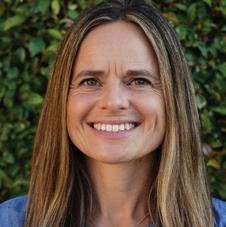
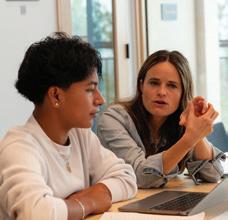
Erin Hansen’s work sits at the intersection of culture, curriculum, and care. As Dean of Campus Life, she oversees the development and implementation of daily systems that teach as surely as any seminar: the ways students gather, the habits they practice, and the responsibilities they shoulder. On the Mesa, “student life” isn’t ancillary to learning, it’s one of its most durable classrooms.
“In four short years, ‘campus life’ becomes ‘real life,’” Erin notes. “We don’t have long to help our kids grow into informed, capable young adults.”
In order to build that kind of independence, Erin champions a “scaffolding” of experiences through which students progress, age-appropriately, from structured rules and expectations and the relative security of 9th grade year to the self-discipline, accountability and, eventually, leadership that is expected of all seniors.
Erin cites Cate’s carefully developed policies around the use of devices on the Mesa as an excellent example of this approach. The simplicity of existing policy belies the long, thoughtful, and intense decision making-process that led up to it. Erin laughs as she recalls early conversations about student phone use. ”There are a lot of strong feelings around technology. Devices tend to provoke
extremes; some people see them as inherently harmful while others see them as inevitable.”
Guided by the inquiry method that is central to the Cate educational experience, Erin and her colleagues on the Student Experience Team dove into the subject, sought high-quality research, listened to anecdotes, and considered a wide range of community perspectives.
The resulting policies around cell phones are, like much of the programming on the Mesa, scaffolded. That is, protections against misuse are built most robustly around younger, less experienced and developed students. Freshmen and first-trimester new sophomores are required to put their phones into lockers at lights-out.
Over time, as they learn to manage their time and sleep hygiene, students are given more agency over device use. They also are actively taught about the addictive properties of games, social media, and handheld devices in general.
“By senior year, we expect our students to be well-informed and responsible enough to make good choices around their use of devices. And we want that, because as adults, they are going to need to rely on their own judgement, not ours.”
This might worry some parents. Erin emphasizes the fact that Cate parents “never need to worry alone,” noting that parents are kept informed every step of the way as policies evolve and are implemented. She cites the excellent work of Cate’s Director of Parent Engagement Lindsay Newlove as an example of this kind of community-wide dissemination of information and education.
“Through these channels, Alex Lockett has created forums where parents can listen, discuss, and develop their own understanding around important issues. We do carefully receive and respond to all kinds of feedback.”
Other examples of programmatic scaffolding are the campus servons program and the Human Development curriculum, both of which translate Cate’s values into habitual learning, a practice that begins with structure but becomes internalized over time. The chore program asks students to care for both people and place in age-appropriate ways: ninth graders rotate through Kitchen Crew; sophomores steward the campus via Green Team and Campus Care; juniors mentor ninth graders as Big Sibs; and seniors model distributed leadership … in Erin’s words, “inspiring a shared vision,” and “enabling others to act.”
Similarly, the Human Development sequence scaffolds four years of growth in
“By senior year, we expect our students to be well-informed and responsible enough to make good choices around their use of devices. And we want that, because as adults, they are going to need to rely on their own judgement, not ours.”
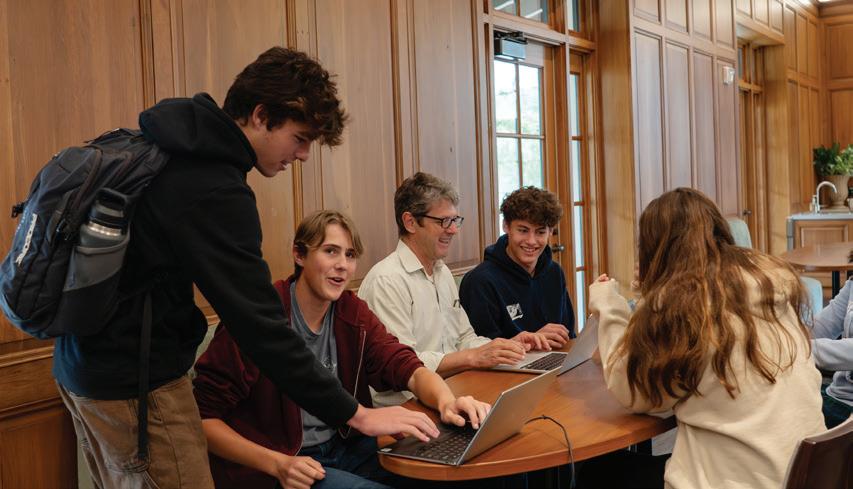
identity, leadership, wellness, and service, moving from ninth-grade orientation and organization to sophomore awareness and responsibility, to junior connection and purpose, and finally to senior mastery, self-determination, and leadership.
If this sounds like culture-by-design, that’s because it is. Erin’s passion for lifelong learning informs it. After joining the Cate faculty in 2015, she completed a master’s in Independent School Leadership at Columbia University. She reads voraciously (a current recommendation is David Brooks’ The Second Mountain), attends conferences (sometimes as a presenter) and listens to podcasts themed around education and adolescent development. She singles out one Ask Lisa by psychologist and expert in adolescent brain development Dr. Lisa d’Amour as one favorite.
“Knowledge is power,” Erin asserts.
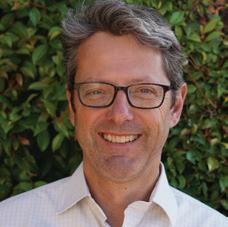
DR. JAMIE KELLOGG
“I love learning,” says Dr. Jamie Kellogg, who has been on the Mesa for 18 years and has held the Colin Day Teaching Chair for Cross-Curricular Studies for six of those. “That’s what drives me. I love learning, and I love sharing knowledge.”
After two decades of teaching, Jamie still describes discovery as his “happy place.” When generative artificial intelligence (AI) entered the public consciousness, his first instinct was skepticism. “My knee-jerk response was, oh my gosh, we’re done … and that’s the end of humanity.”
However, Jamie soon reframed that fear into inquiry. A TED Talk by Sal Khan showing AI’s potential to scale individualized instruction changed his outlook. “I would still not describe myself as an AI fan,” he says. “I don’t think this is the answer to all our problems, but I think there’s some really powerful things in there that we can use to make our teaching better.”
For Jamie, the turning point was seeing his students using AI to generate preexam practice problems for themselves. “They could be self-sufficient in testing themselves the way we tell them they should to support their learning.” He calls that a “great use case,” a moment when the tool served the learner rather than the other way around.
Most of Jamie’s AI experimentation happens in computer science courses, where, he admits, “My entire thinking has changed completely in the last year.” Last spring, he taught a pilot AI and machinelearning course based on materials from Harvard’s CS50 program, available online through the nonprofit educational platform EdEx.
“It was really fun,” Jamie recalls. “And that really got me into both the theory and the coding around it.” He found himself
learning about AI alongside his students at a rapid rate “ … in order to keep up!”
That humility is deliberate. “I know personally that I am not comfortable with people who tell me they know everything,” he explains. “When I was in grad school at Harvard, people with big titles and huge awards would say, ‘I have never understood this thing—will you explain it to me like I’m stupid?’”
“I am way more comfortable with people who communicate the limits of their understanding,” Jamie concludes. Cate, he adds, “... is a safe place to say ‘I don’t know.’ There is great power in opening yourself up to more information.” Jamie’s latest courses show what that openness looks like in practice. “Through the course of all my coding last year, I realized that I was using GitHub Copilot, which meant I was starting to do this thing
called ‘vibe coding’ – coding with an AI assistant.” Now Jamie wants his students to learn the same way.
“My desired outcome for students became: I want you to learn how to effectively use this … so that you’re a hyper-empowered coder.” Instead of signaling “the death of coding,” he says, AI has made it possible to do really powerful things. Jamie now notices that when students ask questions of AI and then re-frame responses that indicate they are reading critically and actually formulating new ideas.
“This was a completely different experience. The energy my kids bring to this process – the. ‘Ooh, I’ve discovered something!’ – was really dynamic in a way I haven’t had access to before.” That spark, he says, “Is really exciting. It’s powerful.”
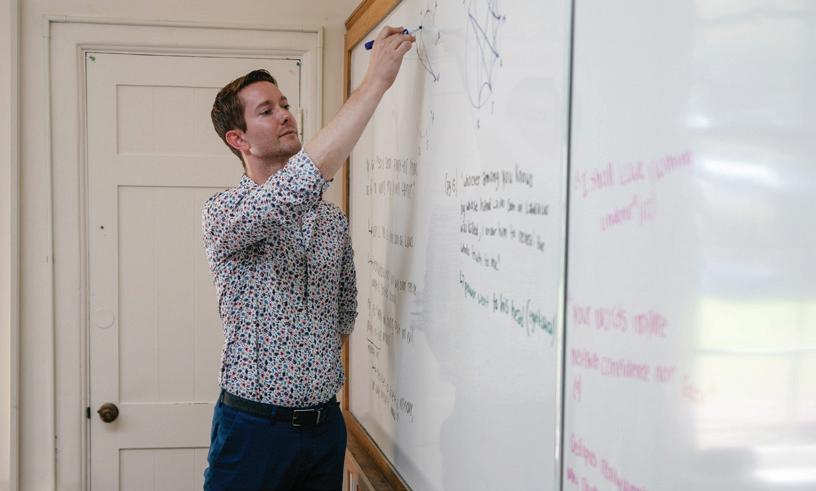
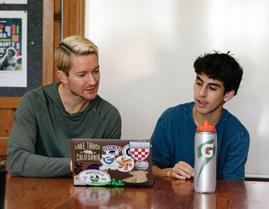
Humanities and English Instructor Michael Szanyi maps out a concept at the board this fall.

“I definitely feel like I identify as a lifelong learner,” says Michael Szanyi as he undertakes his third year on the Mesa. He describes himself as an avid reader and conference attendee. “I’m always excited to get the newest PD (professional development) book.” For him, knowledge isn’t static. It’s a network of relationships and responsibilities.
“That idea of knowledge as power, information as power; using that power to have the best classrooms and offer the best experience to our students really resonates.”
Last year, Michael completed the Fulbright Teachers for Global Classrooms Fellowship that immersed him in international education.
“The first part is a course on global competence and global education,” he explains. “This is followed by a symposium in Washington, D.C. The third part is the field experience.”
Michael’s cohort traveled to Peru, where they visited schools in Lima and beyond. “We ended up having similar conversations about student motivation, about grading, about AI, about belonging and relationships. It was nice to have that universal connection about these big, thorny issues in education that we are all
facing.” That universality, he believes, is the heart of global education.
“It was fascinating to talk to folks across the country. Some of them are facing very different circumstances (from Cate’s),” he says. “Some were from rural schools or economically disadvantaged schools. I found those conversations most interesting.” The contrast between these schools and Cate made Michael appreciate the resources on the Mesa all the more.
“Here on the Mesa, we’re empowered to focus on relationships and what we’re doing in the classroom. I believe that comes with a responsibility, too.”
Wanting to recognize this responsibility and “pay forward” from his Fulbright experience, upon his return to the Mesa Michael developed an online resource he calls The Global Education Guide, rooted in the concept of “glocal” learning.
“How do you make global issues local?” he asks. “We can and should consider what’s going on in the entire world, but maybe the most logical step, the place where our students can best learn about these bigger issues, is really to investigate our immediate surroundings.”
For Cate students, this might be looking to Carpinteria, Ventura, and Santa Barbara; an example might be considering the impacts of worldwide plastic over-use and disposal through the lens of a local beach clean-up and immediate analysis of the impacts of beach trash on the ecosystem.
He expounds on the deeper learning experience that can come from the abovementioned beach cleanup, which might in and of itself have little impact beyond a temporarily clean beach.
“But if you bring all that plastic back up into the lab and analyze it; trace the currents that might have brought a certain kind of trash to this particular beach … then, suddenly, you’re getting science education with some sort of impact.” That, he adds, is “ … authentic assessment—that’s real.”
Within Cate’s faculty, Michael finds receptivity to these ideas in small, everyday moments. “I get lots of positive feedback from folks about the Fulbright,” he says. “Lots of lunchtime conversations about it, lots of interest. And I learn from others, as well.”
Through those daily conversations, Michael believes, culture shifts.
For Michael, lifelong learning means to go out into the world, learn something new, and bring it back home to plan on the Mesa. In his classroom, as it is across campus, curiosity is a collective act. And lifelong learning, as he, Jamie and Erin all prove, confers a power shared by everyone in our community.
“ Here on the Mesa, we’re empowered to focus on relationships and what we’re doing in the classroom. I believe that comes with a responsibility, too.”
In the Cate classroom, inquiry drives meaningful learning. These original pieces from 11th grade students reflect the depth, complexity, and personal voices that emerge when students are invited to create with purpose and explore what their distinct expressions of excellence look like.
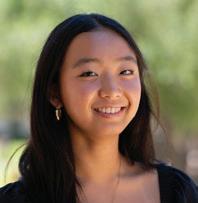
'27
Students in Advanced English 11 were asked to write an essay on an abstraction and communicate their relationship to it through different vignettes.
She begins from the top down. It caves around her nail, rough, bumpy skin giving way to the tip of her thumb. She presses further, sinking until she grazes the fat flesh. It is the same shade as persimmons and poison dart frogs, but just beneath it, there is a tender, offwhite grain. It hisses softly as she breaks it. She separates its skin from its body to reveal the cocoon of spindly white fibers crisscrossing exposed flesh. Again, she peels.
A single droplet of juice balloons, bulging and distended, from beneath her fingernail, shivering in its birth. Pierced membrane. Disgust falls to disappointment—a ruined fruit for her mother, corrupted by her own clumsiness. She resumes. The ribbon of wasted skin drops limp onto the dining table.
She begins from one. She imagines her lungs swelling inside the bleach white bone cage of her ribs, swimming in the murk, fattening in her chest, then contracting, the air rushing from her nearly pursed lips and into the darkness of her bedroom. Expand, contract; two. Expand, contract; three.
She shifts onto her side, shoulder indenting into the mattress, pillow scorching her cheek. Her legs are entangled in the linen ocean of sheets, the waves of which chafe and rasp against her legs and stomach with each breath and motion. She closes her eyes, tries to think about the crisp night dancing in through her open balcony door, tries not to think about her eyelids, which are now twitching and fluttering as though maddened by their own restlessness. Her father, who also often cannot sleep, has told her to count her breaths until she reaches one hundred. Count, he says, and you will drift away before you even reach thirty.
She thinks now about her father, fast asleep, as she approaches sixty. She thinks about her heart thudding in her chest. She thinks about her lungs pressing into her heart. She thinks about the two nestled together in the thoracic cavity, thudding and pressing and thudding in tandem. She thinks about breath broadening into her stomach, straining against her skin. She counts. She waits. Time fades into the sheer white curtains that swing and swish in a light draft, into the ceaseless chirping of the crickets. There is a metronome here, and she thinks that if she can match its beat, it will stop.
Expand, contract; seventy-one. Expand, contract; seventy-two. Expand, contract; seventy-three.
She does not lose track—she is far too meticulous for that. She is good with numbers. She thinks about how now that she has started, she may never stop counting. She imagines herself lying in bed, swathed in the infinite night, counting herself to oblivion. Eighty. Her parents and friends will wonder where she has gone—unbeknownst to them, she is here, in her bedroom, counting to bottomless one hundreds. Eighty-one. She feels a wide-awakeness that buzzes from her fingertips to her pumping lungs to her thumping heart, and she knows that what separates her from darkness is a ravine. Eighty-two. What comes at the end?
She reaches one hundred. She begins again from one.
Believing it to be a mosquito, she kills it swiftly.
The moth twitches, shuddering, waxy furs bristling as it dies. It’s weedy, crushed legs cling to her arm, slick with the mugginess of the night. Smeared across her skin, it seems as though the sound of the stark clap of her palm
breaking its body has shattered it. She can still feel it creeping tenderly along her, can still see it like a white pockmark in her periphery. She sits there on the park bench, watching the moth sputter, pearly wings reflecting the moon in severed fragments, and shudders as a cavern of disgust yawns in her ribcage.
Why kill it?
She nudges its broken body onto the tip of her fingernail in an attempt to piece together its carcass, dusty remains crumbling onto her lap. Her breath catches in her lungs like the sleeve of a sweater on a doorknob. She thinks of how an old friend once told her that moths are wandering spirits come to visit from the dead. She thinks about this friend and this moth, chasing the tepid luminescence of the moon. She sees it now, crumpled on her finger.
There is that strange stone that sometimes materializes at the base of her throat, inexplicably immovable. Here it is, now, and she drinks in the night in gasps to wash it down.
She lifts the moth to her face and blows gently. It clings to her sweat, and she flicks her wrist once.
Like seeds of a wildflower peppering the twilight, its remains flutter away.
She drives her thumb between flesh and skin. Her hands are clammy with the insides of the broken orange.
She strips it, its scent curdling around her, a cloying, almost bitter acidity that makes her think about how its pungence will cling beneath her nails and on her fingertips and beneath her breath like cobwebs.
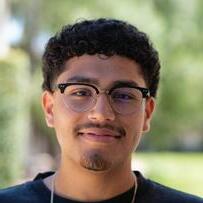
Students in English 11 were asked to write about something from now but 40 years into the future, and were asked to select from a list of possible topics.
Thousands of water droplets crash onto the thick metal steel above my head as I walk through the heavily crowded Canal Street. The crowd seems to press on me, and all I see are smiles fading and murmurs rising. The bystanders begin to whisper with one another, and the stares of sharp blades given by the people in the suits are inevitable. The wind that was just rushing and loud suddenly felt still and contained. Goosebumps crawled down my spine like a bug going up my leg. As those in suits began to reach for their cell phones, my instincts kicked in, and I quickly yanked my drenched Nike hoodie above my head and started speedwalking toward the subway. The facial expressions of those watching me turn into faces of disgust and extreme sourness, like fermented vinegar. Their pale faces are wrinkled, and their squinted eyes are cold, reflecting a dark, bottomless lake. There is no sense of empathy in them. Not even for a drowning kid.
Just like Canal Street, the subway is no better. Legions of suits are gathered inside the train; it’s so jam-packed. My lungs feel like they’re being squeezed from the overwhelmingly packed train, and if just one of the suits spots me, my life would be over. All I can do is make sure there are no visible openings on my clothes that can uncover my skin. Avoiding eye contact with the suits is crucial; if they see my big brown eyes and dark brown skin, they wouldn’t hesitate. The transporters are only one call away. Sweat begins to trickle down my back like a melting icicle, feeling my humanity evaporate slowly.
As I look for a seat in the back of the cart to escape the crowd, a frail lady with drooping skin and a massive grin across her face is sitting alone. Just from the split second she saw my face, she seemed to turn from a kind, old lady to a complete monster, fueled with rage and disgust, glaring at me like a hawk preying upon a helpless baby squirrel. Her large grin faded in an instant. The lone old lady got up and preferred to stand on her shaky walking stick and hold onto the weary hand grip rather than sit next to me.
“The next stop is the South Bronx,” said the intercom. My cousin Geovani has been hiding out there for the past week, waiting for my arrival. “There haven’t been many transporters spotted over here recently,” was the last text I received from Geovani. All I can hope for is that they haven’t gotten to him before I did. Tears fill my eyes, thinking back on our innocent smiles while swaying on the kids’ swings with no worries. My life hasn’t been the same since I turned five years old. My life hasn’t been the same ever since they took my love. “Mommy and Daddy are taking care of me from above,” was a sentence I replayed for years.
I try not to stand out, but the holes in my hoodie and shoes make me stand out like Daniel in the pit of voracious lions. My knees begin to shiver like a rocking boat stranded in the eye of a thunderstorm. I feel my head slowly crashing into my left shoulder, and my eyes feel extremely heavy, like Sisyphus rolling up a boulder eternally. I haven’t slept in two days. Not since Newark. Not since the eviction. Not since the whole world changed.
By Josie Goldhirsh '28 and Serena Zhang '28
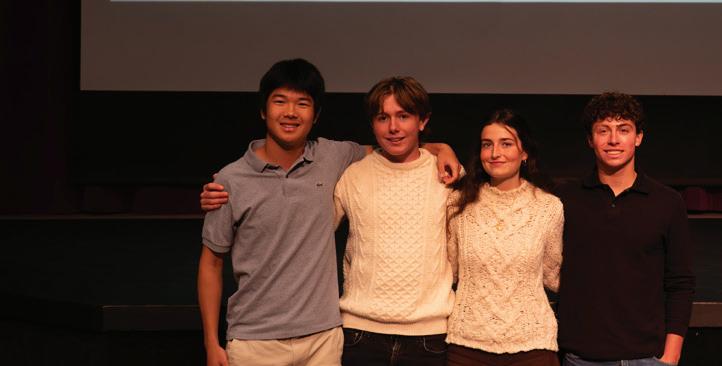
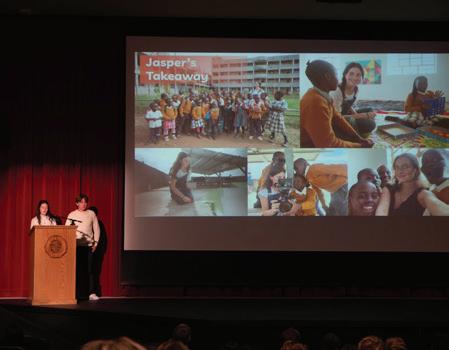
Each summer, Cate students bring the spirit of servons beyond the Mesa with the Mark Metherell '87 Memorial Service Challenge. Established in honor of Mark Metherell '87, who embodied the values of compassion, service, and vision, the grant enables students to design and implement projects that strengthen communities both near and far. This year’s projects ranged from providing lights for students in Kenya to constructing a community well and water tower in Ghana, to executing a plan to mitigate the impacts of the 2024 Lake Fire in the Los Padres National Forest.
For his project, Kiy Barry '26 visited Ghana, working with Changing Lives GH, a non-profit founded by Cate alumnus Daniel Boateng '22. In an interview, Kiy explained that it wasn’t until he was made aware of the organization that his intentions for the Metherell Challenge application became clear. From there, he began working with Changing Lives GH and designed a two-part project that involved drilling a borehole and constructing a water tower, bringing drinkable water to Olebu, Ablekuma, Ghana. In addition to the construction, Kiy filmed a five minute documentary highlighting the experience and promoting the organization’s work. He recalls a multitude of high points from his trip,
one of which was witnessing the direct impact his project had on the people of the community. Kiy recalls the final day of construction as a buzzer-beater moment, describing, “we got to see the fresh clean water come out, but more importantly, we got to see people come with buckets on their heads.” In this moment, he was able to see all his hard work pay off and understand the impact the water tower had on the community. Finally, Kiy ended the interview with a lesson he learned from his experience living in the town. He highlights the importance of “supporting as a foreigner, rather than trying to steer your experience” and how this exemplification of respect helped him find a place in a new environment.
The Metherell Challenge typically awards two grants of $4,500–$5,000 each for service projects, in the U.S. or abroad. This opportunity is open to all Cate students, and applicants may apply individually or as a pair.
Lawrence Zhang '26 implemented his project a little closer to home. Inspired by past Metherell projects but wary of the expense of travel, he chose to focus his project on environmental restoration. Working alongside Mauricio Gomez, father of Marco Gomez '25 and in collaboration with the Los Padres Forest Association, they developed a three-pronged approach to positively impact the environment and enhance the hiker experience. The three project components included
the restoration of a trail and campsite that had been damaged by a summer fire, revegetating a nearby creek, and installing citizen science phone attachments where pedestrians could take photos. While Lawrence’s project experienced a delay due to a fire, he is excited to see his project come to life and learn more about environmental conservation. He explains, “I am looking forward to learning more about environmentalism and working with experts and Cate students to get this job done.” Lawrence’s Metherell project demonstrates how people can make meaningful impacts from home, and he is excited to see the difference it makes for the land and the people who enjoy it.
Samuel Young '26 and Jasper Shelmerdine '26 traveled to Kenya, where they collaborated with Unite to Light, an organization in Santa Barbara, to increase access to education in rural areas with limited electricity. As Samuel explains, “kids are expected to help their families during the day, but in the evening, when they had homework, they were unable to do it without electricity.” To address this challenge, Jasper and Samuel partnered with Zawadi Yetu Mogotio, a boarding school, to create a solar-powered light library and a mural emphasizing the power of light. The library allows students to “read, do their homework, or find their way to the bathroom,” Samuel explained. He reveals that they chose this project due to their “passion for


The work of Kiy, Lawrence, Samuel, and Jasper reflect not only the reach of the Mark Metherell '87 Memorial Service Challenge but also the creativity and commitment of Cate students to serve communities all over the world. “ “
on energy poverty in Eastern Africa. When asked for the highlight of the trip, Samuel shared his experience working with the children and how passionate they are: “It’s really incredible how much they love to learn.” He also describes their enthusiasm, proclaiming, “They were so excited and ended up doing 50% of the construction work.” Jasper worked on the mural with the kids, and she describes her favorite moment being the final reveal of the mural. She expresses, “They held the solar-powered lights up to the mural that we painted together, and it was just a beautiful experience.”
The work of Kiy, Lawrence, Samuel, and Jasper reflect not only the reach of the Mark Metherell '87 Memorial Service Challenge, but also the creativity and commitment of Cate students to serve communities all over the world. Each project embodies the spirit of servons and honors the legacy of Mark Metherell '87.
As we continue the school year, the Cate community will carry this Servons spirit into our own lives.




reading, light, and literacy.”




they discovered


Jasper adds that this school through their research








Started in 2009, the history of the Metherell Service Challenge is relatively new, but the impact is global. Here, Frank Song '11, one of the first recipients of the grant, builds a playground in Buson, Korea. See a full list of recipients as well recordings of recent project presentations on the Cate website.


By: Avani Patel Shah, Director of Communications & Marketing
“In 1981, Mattel, the corporation that runs Barbie, released its first doll depicting Indigenous people, known as 'Eskimo Barbie.’ While the company received a lot of backlash for the name and its appearance, they continued to release Barbies that were inaccurate depictions of Native American culture and the diaspora. This led me to consider: How does corporate America accurately or inaccurately portray Native American women through their dolls, and how does that portrayal affect women’s reclaiming of history and identity?”
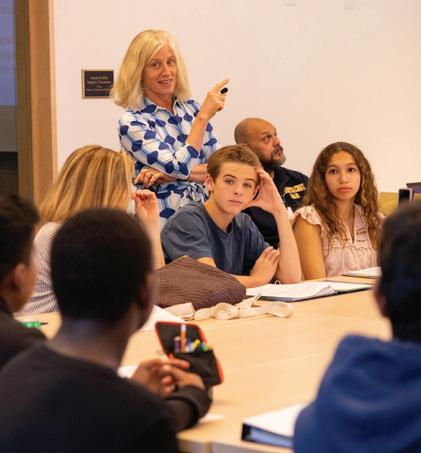
This was the question 11th-grade student Fiona Pan '27 posed as she began her first major history assignment of the year. Explored through a thoughtfully curated lens by teachers Dr. Laura Moore, Lisa Holmes, and Dr. Clair Dahm, this year’s Indigenous Peoples Inquiry Project invited students to explore the complex history of place, identity, and representation, bringing their own curiosity to bear.
“This entire unit is theirs to make what they want of it,” shared Dr. Moore. “I think it’s really inquiry at its best. We’re creating students who are asking the right questions, who are thinking—and who are prepared to be consensus builders in a polarized world.”
Through a combination of deliberations, hearty classroom discussions, strong primary and secondary sources, and engaging assignments like the history inquiry paper, students become architects of their learning with skilled guidance. This project, in particular, gave students the opportunity to pose questions that examined Native American history with incredible sophistication and encouraged them to find the
intersection of their own interests and Indegenous history.
Fiona began her research thinking she might explore fashion, but eventually focused on how Barbie dolls have historically misrepresented Indigenous identity. In her words, “What defines an Indigenous woman, and how do Western corporations such as Mattel contribute to historical stereotypes?”
“I myself have felt misrepresented through the media sometimes, as someone with a mixed identity,” Fiona shared. “So I try to put myself into someone else’s shoes, to think of the implications of these challenges now.”
Dr. Moore noted, “What was incredible about Fiona’s process is once she had finalized her topic and her question, she went and read four graduate school–level historical articles on it.” Fiona’s research process, which included both academic analysis and primary source reflection, exemplified how Cate students are encouraged to go deep, think expansively, and interrogate narratives with care.
The topics students explored were complex and versatile. This year, the schoolwide inquiry question folded into this assignment with ease and was reflected in the student-selected topics. While Fiona explored the portrayal of Native American women by corporatized America, Arelic Rodriguez '27 considered how the United States government’s control over sacred lands in Hawaii affected Native Americans in their fight to regain control of their land, and Kakeru Hirofuji '27 researched how casinos revitalized Chumash culture.
“I chose this topic because I am interested in finance and economics in general,” said Kakeru. “Casinos were something we covered in class, which made me want to go deeper and look at their impacts. To make the topic more specific, I chose to look at the Chumash people in particular, due to their ties to Cate.”
His paper explored the revitalization of Chumash language and culture through casino revenue, challenging the assumption that capitalism and cultural preservation are incompatible. “The

Fiona Pan '27
Excerpts from Fiona’s Paper
“What defines an Indigenous woman, and how do Western corporations such as Mattel contribute to historical stereotypes?”
“As someone with a mixed identity, I try to put myself into someone else’s shoes, to think of the implications of these challenges now.”
“As an observer, it is so challenging not to continue the stereotypes in writing.”
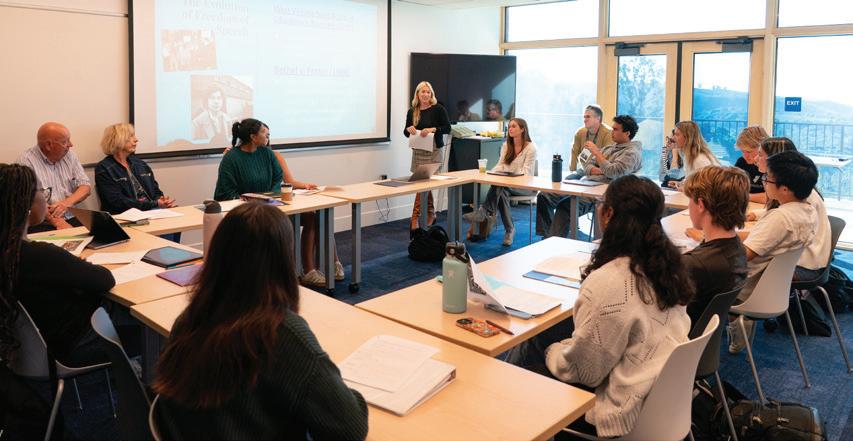
“ This entire unit is theirs to make what they want of it. I think it’s really inquiry at its best. We’re creating students who are asking the right questions, who are thinking — and who are prepared to be consensus builders in a polarized world.”
Chumash brought a new way to adapt to society while maintaining their traditions,” Kakeru wrote. “They fueled their revitalization of culture by fitting into the mold of capitalism.”
For Arelic, the assignment became a space to confront historical and environmental injustices. She examined military land occupation in Hawaii and its devastating impacts on Native Hawaiian identity and ecology. “To me, the most rewarding part was being able to formulate all my thoughts and ideas, and being able to concisely hit all my
points in an argument,” she shared. “It’s so satisfying watching all my work come together.”
Dr. Moore sees this kind of independent inquiry as transformative. “The assignment highlights how the students have power to be the interpreters — not just asking the questions, but also coming up with the answers and the way forward.”
Students are reclaiming history in the Cate classroom, shaping it, and understanding how it shapes them. Dr. Moore sees this as the true purpose of her classroom:

Arelic Rodriguez '27
Excerpts from Arelic’s Paper
“Native Hawaiians see a reciprocal relationship between the gods, the land, and the people... the āina is not a mere physical reality.”
“The U.S. military has effectively exploited Native Hawaiians by creating hazardous environments... in exchange for safety.”
“What would happen to those lands if Native Hawaiians were to reclaim them?”

Kakeru Hirofuji '27
Excerpts from Kakeru’s Paper
“The Chumash brought a new way to adapt to society while maintaining their traditions. They fueled their revitalization of culture by fitting into the mold of capitalism.”
“It gave me a new perspective that I never had before — how capitalism and preservation of Native American culture can coexist.”
“Casinos gave Native American tribes like the Chumash a higher income... and also allowed the Chumash to further celebrate their culture.”
“I think we, as educators, also have the power to model hope. I don’t want to create cynical students, but grounded, critical thinkers who believe something better can come.”
At Cate, history is a lens for empowerment, a place where young minds learn to question, connect, and create a better future. It is, in every sense, history as power.
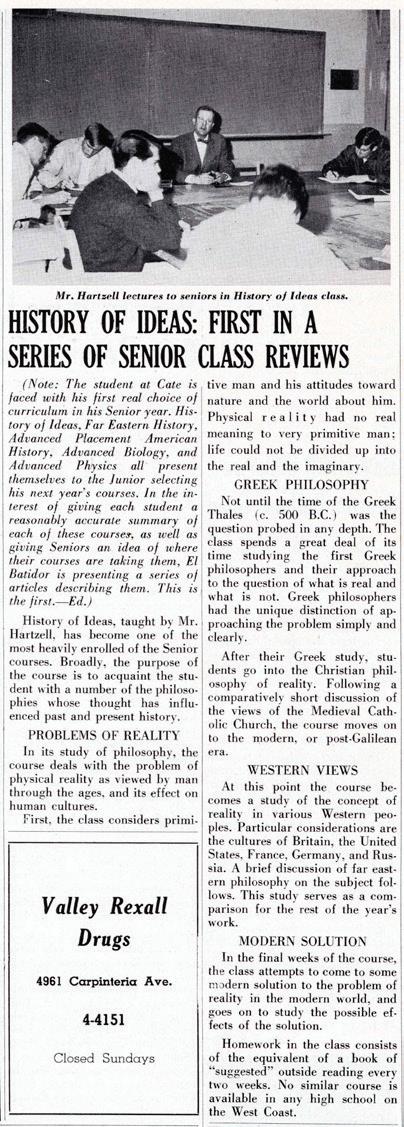
The History classroom at Cate has evolved over the decades, but our discussion-based approach and exploration of history through a the lens of inquiry remain constant. Here Mr. Hartzell teaches one of the first "History of Ideas" classes at Cate in 1964, a popular elective that invited students to explore philosophies that have influenced history from the primitive age to the modern era.
Exploration and discovery are essential ingredients for living and learning well at Cate. Intention, companionship, and creativity guide our students as they engage in what our mission calls “vigorous play.” In this section, the stories reflect the vitality and spontaneity of campus life beyond the classroom. Play at Cate builds character, is grounded in connection, and even offers opportunity for resilience.
BY: LESLIE TURNBULL '85
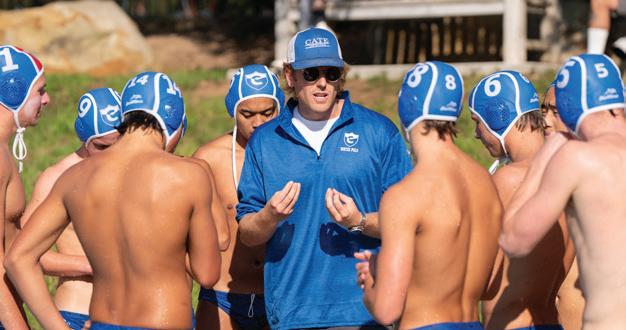
Anew Captains’ Council positions student leaders at the head of a promising, positive culture of athletics. As he began this, his first year as an administrator, longtime coach and newly appointed Cate Assistant Athletic Director for Program Jesse Morrison was faced with a new set of responsibilities … and this year’s inquiry question:
How does power work?
Many of us might think this is an easy answer for someone in Jesse’s position. Say the words “power” and “athletics” in the same breath, and the thoughts that follow run a pretty standard course: we picture strong, young people. We think of the physical agility, explosive speed, intellectual focus and mental toughness that add up to “Ws” in the win-loss columns in any given season. And winning equates success … right?
“That’s one definition of success,” Jesse muses. “It’s not the only one. A big part of what we do here on the Mesa is help students learn what it actually means to be successful.”
Of course, Coach Morrison does appreciate a good victory. He selfdescribes as “hyper-competetive,” and he is no stranger to favorable final scores. A third-generation athlete-educator (his paternal grandfather Stan was a legendary men’s college basketball coach
and University of California Athletic Director), Jesse’s early promise as a water polo player propelled him through both club and high school success to a coveted spot on UC Santa Barbara Division I men’s team as an undergraduate, where he was named an Academic All-American.
Jesse flirted with the idea of a career as a professional; however, he couldn’t shake the feeling he was just treading water. Since his teens, he’d suspected he might have a more substantive calling outside the pool.
“I have always been inspired by my grandfather. When I was about 15 or 16, a coach I really respected told me I’d make a great coach if I ever wanted to go in that direction.
“That was always in the back of my mind,” Jesse recalls. “Even when I was still playing, I started coaching on the local club circuit. I owe much of my own development to those programs. It felt good to be working with kids and giving back.”
“Then I was approached about Cate.” Cate Water Polo was in an interesting place immediately following the pandemic. After a decade of positive development in the state-of-the-art Emmett Horowitz Aquatic Center constructed during the School’s Centennial Campaign, “WaPo” (like all sports) had been temporarily sidelined. The Rams had been underwater for a little too long, and they needed to come up for air.
Athletic Director Wade Ransom heard of Jesse Morrison’s growing reputation, and believed the young man could help. He invited Jesse to come up to the Mesa. The mutual needs and alignments were immediately clear.
Jesse recalls those initial meetings. “Wade Ransom, Athletic Director and Matt Drew, Assistant Athletic Director are people who do things the right way. They believe the value of sport is more than what’s up on the scoreboard. It is not ‘win at all costs.’
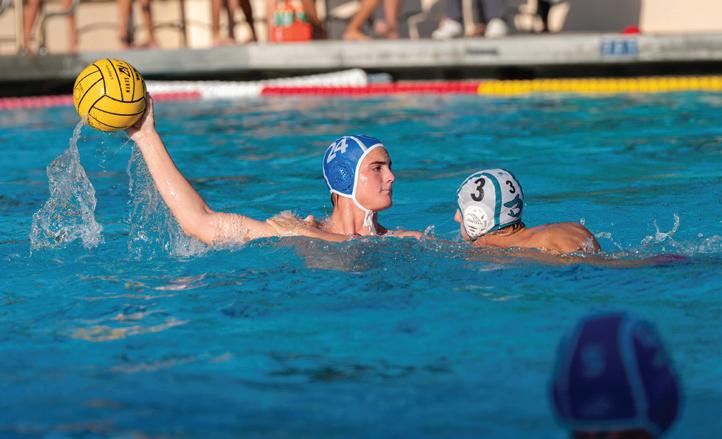

“That felt like a breath of fresh air, and I knew right away I wanted to be part of this community.”
That first year, Jesse Morrison was named Tri-Valley League Coach of the Year. Two more such accolades have followed, in 2022 and 2024. Jesse began coaching the women and swimming, as well. He moved onto the Mesa as a resident dormitory parent.
“That was when I knew what I wanted to do with my life,” Jesse confirms.
Jesse enrolled in Concordia University’s respected masters degree program in Coaching and Athletic Administration and delivered an intriguing thesis entitled Building a Successful Athletics Culture linking a deliberately constructed set of shared positive habits, values, and traditions to high achievement and longterm success. This highly readable case study centers on Cate School’s Water Polo program past and present and hints at some promising potential long term gains in the future … not just for water polo, but for Cate Athletics in general and, by extension, the entire community.
The Athletic Director recognized Jesse’s vision as aligned with his own – and that of the School –so Wade did what good leaders do. After conducting a search, he promoted the young coach to Assistant Director of Athletics for Program with the mandate to prove Jesse's theory of position transformation. Thus Jesse Morrison began this year with a charge – and that question: How does power work? Cate’s newest athletic administrator wanted to look beyond the obvious, consider his personal passion for sport in context, and contribute his own perspective to what will ultimately become a collective answer.
During his first years at Cate, Jesse had observed the rich interconnectedness of life on the Mesa. He saw how the academic curriculum develops basic skills into scholarship and how the residential framework turns newly independent freshmen into responsible campus leaders. He wondered if the athletic program could be similarly scaffolded.
“How can we align athletics in delivering our integrated academic, residential, and co-curricular program so we can have wraparound, consistent messaging?”
Jesse believes in transformational coaching – a form of leadership that doesn’t just get results but, through listening, education, collaboration, and research-based training turns a young athlete into the best possible version of themselves.
Inspired by this ethos and his thesis research, Jesse imagined the entire Cate athletic program taking this transformational approach. What if every athlete on the Mesa followed a codified progression of growth and maturity from freshman to senior year? A new Cate system would support communication and mentorship between older and younger athletes and dancers that would eventually result in a campus-wide culture of shared goals, mutual respect, and positive reinforcement. In theory, this could eventually lead to maximal performance and successful outcomes for the entire program. All Jesse needed was buy-in from those who had the power to put such a system in place. So he started at the top.



Jesse knew he had full encouragement and support from Cate administration and could expect the same from missionaligned School coaches. That led him to focus on student leaders – specifically, athletic captains. Most of us would agree that in the hierarchy of high school sports, student captains are second only to coaches in regard to their power. By the time they are juniors or seniors, these young people have been singled out for their skill and athletic achievements. They are recognized by their coaches as leaders. They are deeply respected and usually well-liked by their peers.
“The influence of a captain is never neutral,” Jesse asserts. “To me, the question then becomes, ‘How do we leverage that power in a positive direction?’”
The answer? A new, structured Cate “Captain’s Council.” Meeting every other week during lunch on Wednesdays,
Captain, Girls Varsity Volleyball
the “CC” launched at the beginning of this school year. All the Mesa’s team and dance captains are invited to pick up lunch and head to the upper level of Booth Commons; participation is (and will continue to be) completely voluntary. From the first, well-attended meeting, participants knew why they were there. They signed on to a mission statement: The Cate School Captain’s Council unites and empowers student-athlete leaders from various athletic programs, equipping them with skills, support, and practical tools to model integrity, foster positive relationships, and elevate the standard of leadership across our School.
And a purpose, as shared by Coach Morrison: To give you the confidence to inspire, set the tone, strengthen group performance, and leave a lasting legacy of stewardship in athletics.
Over the course of each year, members of the Captains’ Council will learn about
leadership types and styles, self-reflection, give and receive feedback from peers, learn how to model effective behaviors, and dive deep into relevant topics like social media and conflict resolution.
So far, response from the captains who’ve taken part in the Captains’ Council has been uniformly positive. Jesse has received similar feedback from his colleagues.
Jesse Morrison expects the council will continue to grow and help athletics integrate even more powerfully into life on the Mesa … and beyond. Because “success” in Cate athletics, like the entire Cate experience, is not determined by the usual external metrics.
“We are a School where ‘success’ is not determined by the outcome of contests,” Jesse asserts. “We take the longer view.” For those of us who no longer live on the Mesa but continue to hold Cate in our hearts, that progress will be fascinating to follow.
I’ve been a captain since my junior year and have really enjoyed being part of the Captains’ Council. I think it’s a great initiative to bring together captains from different sports to communicate and support one another. One piece of advice I’ve learned is that a good captain doesn’t have to be perfect, but should be able to recognize their own mistakes. I try to lead by example in this way: taking accountability not only for myself but for the team also. I’ve noticed that this helps the underclassmen feel less afraid to mess up. When I was younger, I was always intimidated by people who seemed perfect in their sport. However, when my teammates see me make mistakes and I can own up to them, it humanizes me and makes me more relatable to them.

Captain, Varsity Football
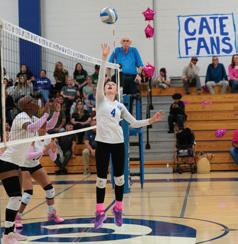
The Captains’ Council has allowed me to understand the true meaning of being a captain for a sports team. At Cate, because you live on campus, your impact is felt on the field and sometimes more importantly, off of it. It can be hard to be perfect at all times as a captain, and it is important to address by showing that mistakes are normal on the field. The Captains’ Council has been a place in which you can express the difficulties of being a captain with people who are experiencing similar problems. It has also been a place where we can promote all of the good things that are happening as well.











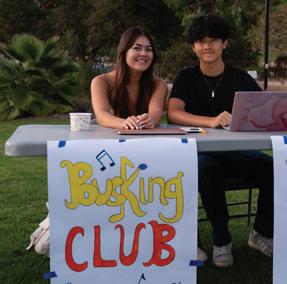

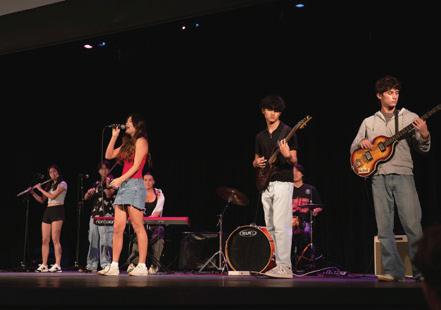


What started as a spontaneous moment turned into one of the year’s most heartwarming student-led initiatives. The Busking Club is a student-run performance group dedicated to sharing live music with the broader community – no auditions, no experience required. The word “busking” is believed to come from the Spanish word “buscar,” meaning to seek or wander. The term was first used to describe street performers seeking tips from the public. “I just happened to walk into the studio at the same time they were rehearsing,” says Claire Ziebart '26, who soon found herself singing six songs and performing at Fall Family Weekend. Since then, the group has grown, performing at GranVida Senior Center and the Carpinteria Arts Center. “The seniors love it… they literally are singing along with us,” Claire says. Beyond music, Busking Club is about making space. “All the other bands at Cate, you have to audition for or take a class for,” she explains. “I don’t want that to mean you can’t perform in a musical group.” With new members joining regularly, Claire sees the club as a way to create community through art and accessibility. “I think the best part about Busking Club is that you don’t need to have any experience to join.”
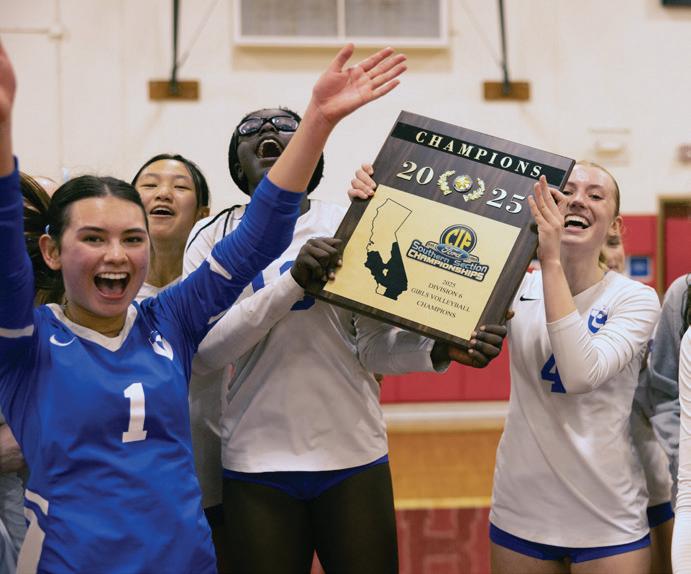
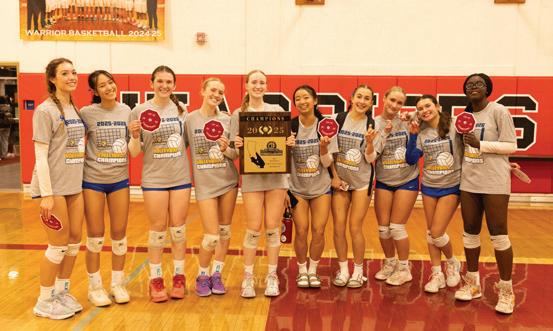
Girls Varsity Volleyball claimed the CIF-SS Division 7 title this season in a thrilling 3-2 victory against West Valley in November. Powered by a strong bench of players and a powerful community presence at home and away games, the team played with joy, led with heart, and grew stronger together.
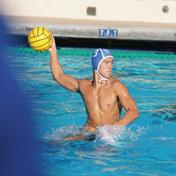
In its most competitive season in program history, Boys Varsity Water Polo earned an undefeated league title and stepped into Division 2 CIF playoffs with strength, a significant leap from last year’s D4 run. Driven, disciplined, and historic, this team was unafraid to reach and grow for more this fall.
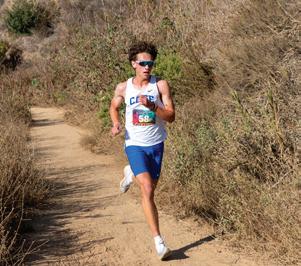
During the CIF-SS finals, Cate runners on the Cross Country team met mud and rain with resilience, with nearly every athlete setting a personal best record. Standout finishes by Ati Zwieback ’27 (17th overall; 15:23), Jordan Ryan ’26 (45th overall; 16:06), and Sophie Blank ’27 (9th overall; 18:19) highlighted a season of steady effort and grit.
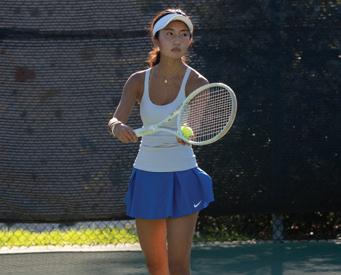
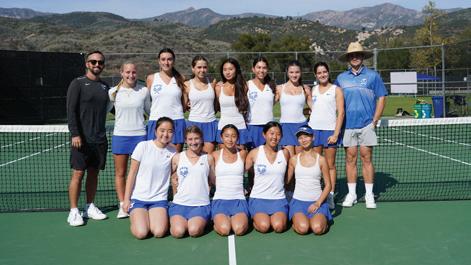
Cate Girls Tennis finished a standout fall season with a 15-1 season, a top-50 Southern California ranking, and a fourth consecutive league title. Nine varsity players will return next season, continuing the team’s tradition of excellence on the court.
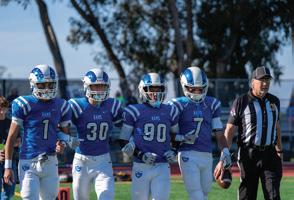
Cate Football reached a Division 2 CIF-SS championship with equal parts heart and humility. Though the final score fell short, the season was marked by an unshakable team bond and tireless coaching from veteran coaches Wade Ransom, Juarez Newsome, and Ben Soto. Coach Soto’s “Cate Football Family” is a living lesson in loyalty, gratitude, and wholehearted play.
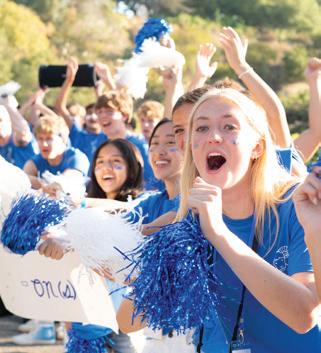
During Move-In Day, senior Fallon Erickson '26 welcomes new students to the Mesa with enthusiasm and joy, along with her classmates.
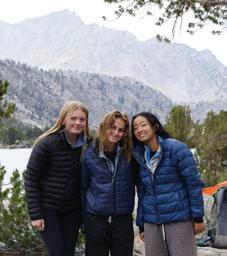
Maddie Kollock '27, Valentina Selmoni '27, and Tori Kim '27 enjoy a moment together at Rae Lakes during Outings Week
Head of School
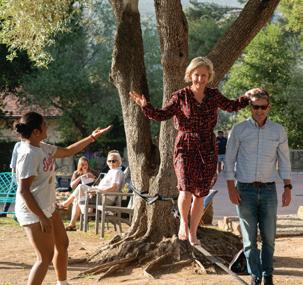
Alexandra Lockett takes a turn on the slackline as Ramya Bangaru '26 and Dr. Jamie Kellogg offer a helping hand.
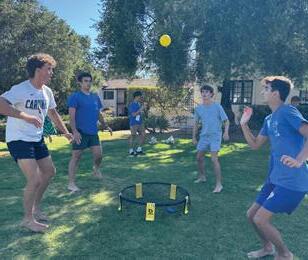
High House residents Chase Meyer '26, Lucian Tann '26, Tres Davidson '26, and Ashwin Patel '26 play a game of Spikeball on Senior Lawn.
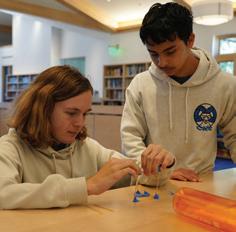
During the inaugural PlaceService-Inquiry Day at Cate this December, Holden Caylor '29 and Felipe Molina '29 collaborate as part of the spaghetti architecture talent.
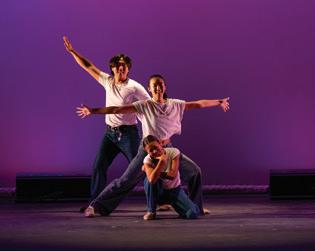
and
strike a pose during their spirited performance at the annual International Convocation
By Jin Sun '28
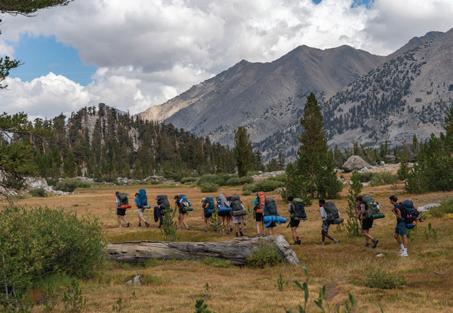
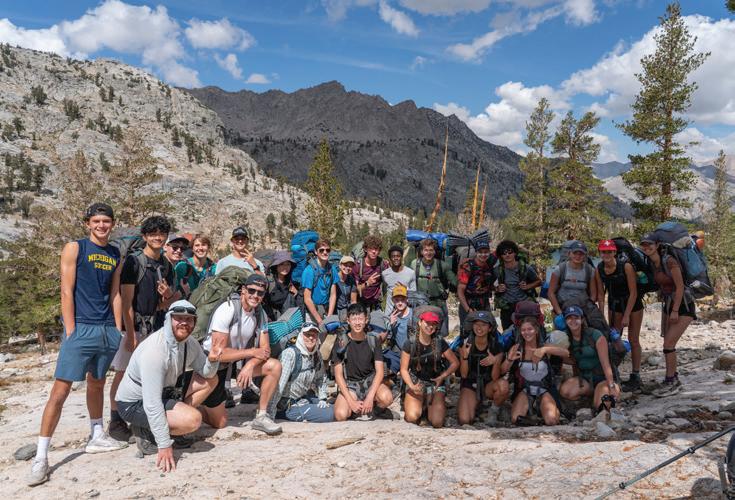
Every September, Cate students shoulder more than just backpacks; they carry a lesson of responsibility, through the meadows of Yosemite, across the rivers of Kern, and upon the peaks of San Jacinto. Outings Week, the traditional start to a school year, is a lesson in what it means to carry weight both literally and figuratively.
For freshmen, there are no physical packs during their five-day journey at Pyles Boys Camp, a camp in Sequoia National Forest. The real load, however, is the uncertainty of beginning high school in a brand new environment, one that is at times far from home. As Vihaan Prabhakar '29 recalled, “The first day, I was really nervous, not really sure where I was or what I should do.” This uncertainty is followed by the challenge of stepping into a new community, learning how to open up, connect, and be vulnerable in front of their peers, who will make Cate truly feel like a home away from home over the next four years here. That transformation was perfectly encapsulated for Vihaan during the Pinecone Ceremony. “Many came

forward to share their deepest feelings and most impactful experiences. The night was cold, but my heart felt warm.” For ninth graders, their emotional journey from quiet wariness to warm empathy is the lasting weight of Pyles, their doorway to a new home.
Sophomores enter Yosemite National Park, where their pods embark on backpacking trips through iconic landmarks such as May Lake and Half Dome. Here, each student carries a bear can, a hard and heavy container for the purpose of preventing bears from coming for the food at night, along with their two liters of water and a share of group gear like tents and stoves. The heavy weight leads to shared efforts: trading loads, adjusting straps, and learning the rhythm of making space for each other, to be caring and understanding, to foster harmony that the group can work in. Sofia Wang '28 reflected, “The packs are heavy at first, but after a while, you realize everybody’s carrying the same thing. It makes you feel stronger together.” The
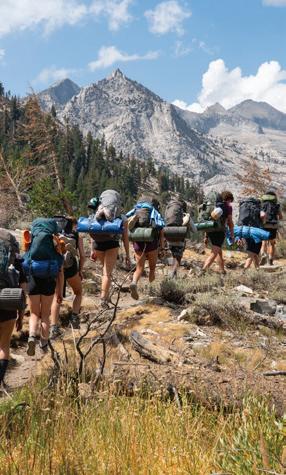
packs in Yosemite test not only physical strength, but the resilience of students’ bonds as well.
For juniors, the trip breaks into three unique challenges: the 40+ miles of Rae Lakes, the tranquility of San Jacinto, and the rugged terrain of the Kern River. For Kenny Wang '27, embarking on the Kern was a real testing ground for his pod. “Even though the lack of bear cans lightened our packs, the extra mileage made up for it. Being a team was really important,” Kenny explained. “The route forces teamwork; if one person falls behind, everyone falls behind, as the trails are long, and a broken pod risks getting lost.” This fosters an environment of support, where words of encouragement are constantly shared, and looks over shoulders to check on everyone occur regularly.
Seniors can go on college trips or choose to return as leaders, shouldering responsibility not for themselves but for others. They guide freshmen through their first nights under the stars, teach sophomores life lessons by May Lake, and encourage juniors as they face long
trails. Eric Jin '26, leader of a Yosemite pod, reflected, “The sophomores were super responsible, they took charge and had a great team spirit.” For Eric, this leadership opportunity also reshaped his own worldview. After summiting Mount Hoffmann, the view left him thinking: “Everyone seems to think we constantly try to make reality beautiful. However, I think material reality is beautiful; it’s good to be beautiful.” In that moment, he was rewarded by beauty for the physical effort of the climb, a lesson he is now determined to pass on. Their weight is therefore less about their packs, but the trust placed in them by countless younger students, to pass on the spirit of Cate, to model resilience, and to keep the tradition of Outings Week alive.
Each year, when the buses roll back on campus and the smell of campfires fades, students bring back not just dirty hiking boots and tired smiles, but also the lesson of what it means to carry weight: not as a burden, but as a bond.
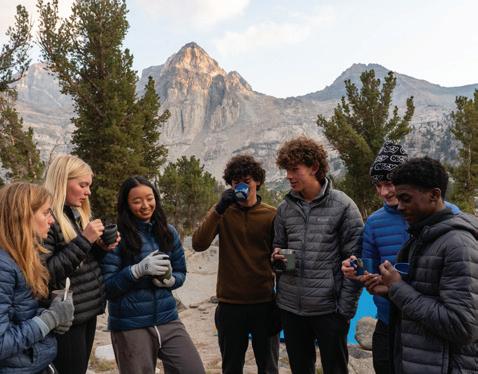
“ “ The packs are heavy at first, but after a while, you realize everybody’s carrying the same thing. It makes you feel stronger together.
2002
Sally Semegen to Michael de L’Arbre '04 September 20, 2025
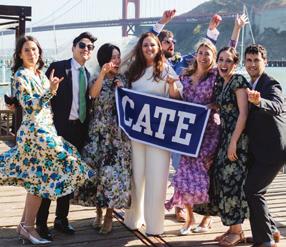
2008
Lizzy Roberts to Fletcher Stucky May 24, 2025

2013
Maddie Schrager to Brice Larson August 23, 2025

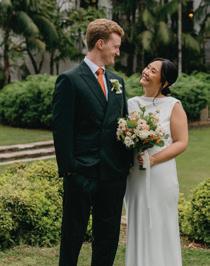
2010
Ivy Kim to Paul Leutheuser May 1, 2025
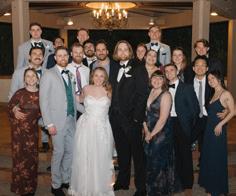
2015
Erin McGee to James Armstrong February 16, 2025

Aurora Santangelo to Michael Cvetich July 12, 2025
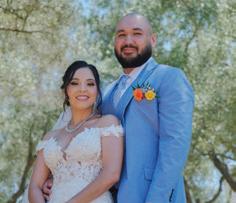
2012
Vanessa Lizárraga to Roberto Arias August 9, 2025

2016
Scarlet Van Damme to Jacob Meyer February 15, 2025

2001
Luke to Christopher Hwang and Monica Hwang
June 25, 2024
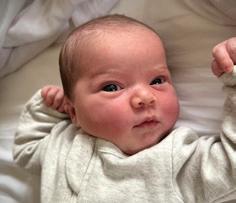
2005
June Louise to Ashwin Atre and Olivia Sparkuhl '06
June 9, 2025
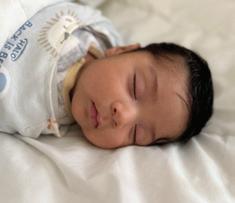
2006
Camilo Manuel to Vanessa Cruz Santana and Julio Monterroso
August 7, 2025

2012
Clay Elliott to Lela Puckett and Sean Murphy
March 5, 2025

Kern James Hamilton to Kern and Mikayla Ducote
May 19, 2025


2013
Margot Reece to Caitlin Cain and Alexander Trivette
February 25, 2025
2012
Marie Faith to Kel and Katie Mitchel
November 5, 2025

Lucy Lovel to Troy and Ellen Shapiro
April 1, 2025
Winslow to Elana Stone and Amy Sharp

September 9, 2025

Eleanore Frances Carson Bottoms to Dr. Loretta and Bodie Bottoms
October 18, 2025
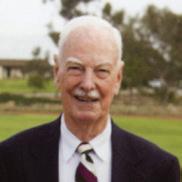
David M. Yager '48
July 15, 1930 - May 31, 2025
David M. Yager, former Santa Barbara County First District Supervisor, passed away at the age of 94. Born on July 15, 1930, in the Fleischmann Wing of Cottage Hospital, he was the first baby delivered there to parents Jesse and Helen Yager. A graduate of Cate School, Pomona College, and Harvard Law School, David also served as a naval line-duty officer from 1956 to 1958 before beginning his long legal career in Santa Barbara , Calif.. Elected Supervisor in 1976 and re-elected twice, he played a key role in shaping county policy during his tenure. Among his most notable actions were supporting the creation of the Santa Barbara County Arts Commission, approving key hotel developments, and casting the decisive vote requiring Exxon to process offshore oil at Las Flores Canyon rather than at sea — a move that sparked controversy but reflected his willingness to take bold stands. Beyond public office, David was deeply involved in civic life, serving on the Santa Barbara Airport Commission, Old Spanish Days, the Santa Barbara Medical Foundation, the Montecito Community Foundation, and as a founder of the Westmont Foundation. He also led organizations, including the Junior Chamber of Commerce, the Montecito Association, and Casa Dorinda. In 1960, he married Wendy Kratz, with whom he shared more than two decades of marriage and a lifelong friendship. David’s three sons attended Cate: Brian Yager '86, Christopher Yager '85, and Craig Yager '81. David was deeply committed to Cate during his lifetime. As a member of the great Class of 1948, he rarely missed a reunion. He attended the first-ever Camp Cate in 1993, celebrating his class’s 45th reunion. A loyal supporter of the Cate Fund, David contributed to the annual fund for nearly four decades. A member of the Cate Legacy Society, David’s commitment to the School will live on forever.
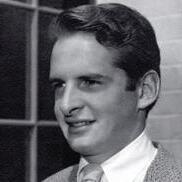
Robert S. Douglas '51
March 18, 1932 - April 23, 2025
Robert S. Douglas, founder of the iconic Black Dog Tavern on Martha’s Vineyard, died at 93 at his island home. Born in Chicago in 1932, Douglas spent summers on Martha’s Vineyard and moved there permanently in 1960, drawn by its maritime culture. After serving in the U.S. Air Force and sailing aboard historical vessels, he designed and launched the schooner Shenandoah in 1964, which became a beloved fixture. For over 50 years, Robert was captain on the Shenandoah and its sister ship, Alabama, teaching generations of children about sailing and seamanship. In 1971, he opened the Black Dog Tavern, named after a character in Treasure Island and his own rescue dog. The tavern, envisioned as a year-round gathering place for hearty New England fare, soon inspired a global brand. By the late 1970s, the tavern’s black dog logo — drawn by artist Stephanie Phelan — gained national fame and appeared on T-shirts, sweatshirts, and hats that became must-have souvenirs for island visitors. Robert’s nautical passion and entrepreneurial spirit made the Black Dog emblem synonymous with Martha’s Vineyard’s coastal charm. “Captain Douglas” left behind a legacy of seafaring adventure and community spirit.
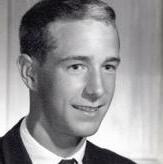
Carl B. Cramer '64
July 14, 1946 - April 10, 2025
Carl Cramer, 78, of South Portland, Maine, died on April 10, 2025, at Gosnell Memorial Hospice House, with his wife, Melissa Wood, and dog, Muttley, by his side. He was born in Hollywood in 1946 and raised in Santa Barbara, Calif. After Cate, Carl moved to Maine in 1964 to attend Bowdoin College. His adventurous spirit took him to Vietnam, Sweden, the Netherlands, and Nova Scotia, but his life ultimately centered around boats, publishing, and the Maine coast. Over the years, he worked as a yacht designer, boatyard hand, bookstore owner, and even Portland’s last taxi driver during the Great Blizzard of 1978. In 1987, after years of persistence, Carl joined WoodenBoat magazine, becoming publisher in 1989 and leading the enterprise until his retirement in 2014. He also founded Professional BoatBuilder magazine and launched the International Boatbuilder’s Exhibition and Conference, shaping the marine publishing world with his collaborative and generous leadership style. A passionate sailor and voracious reader, Carl was known for his love of conversation, his ability to connect with people across cultures, and his unique blend of wit, intellect, and charm. He delighted in sharing books, ideas, and spirited debates, often delivered with humor and grace. Though modest in stature, Carl’s presence was larger than life — marked by his gallantry, twinkling humor, and devotion to friends and family. Carl’s family supported Cate School in multiple ways. His father, Ambrose Cramer '35, was a member of the faculty from 1958 to 1960 and served on the Board of Trustees from 1965 to 1967. Ambrose and his wife, Rachel, established a Scholarship and Faculty Fund, designated for the professional development of administrators and staff, including sabbaticals for members of the community.
Brian James Brazier '98 March 11, 1980 - August 11, 2025
Brian Brazier arrived at Cate School in the fall of 1994 from Huntington Beach, and from the moment he stepped onto the Mesa, he began to make his mark. He was curious about everything — history, geography, languages, literature — and he had a way of pulling others into that curiosity with him. Whether you were a classmate, teacher, or friend, Brian made you think more deeply, ask better questions, and see the world with wider eyes. He didn’t just love learning — he loved sharing it. Brian made conversations richer and funnier, and he had an easy way of connecting with people. One of the many ways he lived out that spirit was on a service trip to Thailand with Cate classmates, where they helped build the Brian Brazier Computer Lab — a small but lasting symbol of Brian’s philanthropy. After Cate, Brian went on to Columbia University and then law school at UC Hastings. He started his legal career at Gonzalez & Leigh LLP in San Francisco. After a stint in Hawaii and more recently Scottsdale, Ariz., he found deep purpose in water law and conservation, dedicating himself to protecting the Colorado River. That commitment represented classic Brian: thoughtful, progressive, and rooted in care for something bigger than himself. Brian will be remembered for his brilliant mind, his dry sense of humor, epic stories, and huge heart. Brian attended many Cate receptions and reunions, making a difference in both big and small ways; his presence will be deeply missed by many who knew and loved him.

Sidney (Sid) Eaton
Former Cate Faculty
January 27, 1933 - September 16, 2025
Sid Eaton was a former teacher at Cate who began his tenure as an educator in 1954. Born and educated in New England, Sid joined Cate in 1954 after graduating from Princeton University. He taught ancient history and geography, coached, explored the greater Santa Barbara area, and made lifelong friends along the way. His work led him north to Tacoma, Wash. at Charles Wright Academy, where he met his wife, Meg, a teacher at Catlin Gabel School. They were married in 1964, and their sons, Stuart and Bruce, came along soon after. In 1971, Sid and his family moved south to Portland, where they planted roots at Catlin Gabel (CG) in the city. He taught English, coached, and worked in admission at CG for 30 years. In the late 1980s, he helped CG start a baseball program and began a grassroots fundraising campaign to start and fund a financial assistance endowment at the school. After retirement, Sid volunteered at Minds Matter Portland, founded by Graham Covington '60, where he provided writing instruction to low-income students. In 2023, he relocated to Bend, Oreg. to be closer to his sons, who had cared for him in his final years. Sid loved good writing, jazz music, the Boston Red Sox, the Oregon Coast, oysters on the half shell, a dirty gin martini, and his family. He taught many Cate trustees during his tenure, and always remained wellconnected to classmates and faculty. Sid was a dedicated Cate supporter for many years, well-versed in the School’s history, and a member of the Cate Legacy Society, which supports the Curtis W. Cate Endowment Fund. This fund provides ongoing financial assistance to students in need.
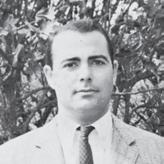
Patricia Collins
Former Cate Staff
May 23, 1952June 23, 2025
Reflections by Patrick Collins, Former Cate Faculty
Patricia Collins passed away quietly, painlessly, and peacefully after having breast cancer. She was supposedly in remission, but the cancer returned very aggressively. Doctors initially thought it was a muscle strain or tear — and one week later, the cancer had thoroughly invaded her spine. The cancer spread to the liver and other organs, and was starting to show in her brain. The excruciating pain yielded to medication, so her last days were free of pain and anxiety. As Patricia’s consciousness ebbed, she was still able to recognize her family when they were present, and their voices over the phone. She would slowly and quietly say their name. On the night Patricia passed, I was holding her hand and could feel her body slow down gradually, and I became aware that her pulse had quietly quit.
A mere week before this all took place, we had been doing some late-life planning. I said something, and Patricia looked at me and laughed, “I cannot believe you do not know this! I have had the life I wanted and hoped for. I have loved my life. I am not waiting for something else.” That was her gift and her genius, put into words. She lived in the present, doing the tasks, big and small, that were possible each day, making the best of each one and letting the future take care of itself, as it did.
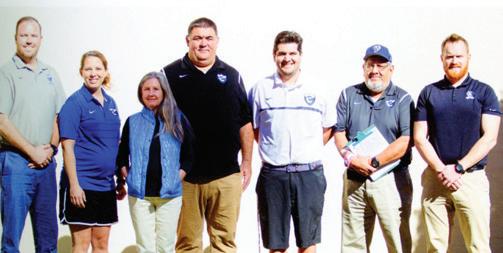
Patricia and I met when we were thirteen and became friends. We experienced other relationships, but always returned to each other with greater knowledge and appreciation. We had the opportunity to help each other grow in the world and in our lives. Two summers ago, we celebrated our 50th anniversary.
I have a picture in a box with a few things I love to see from time to time. This box was a birthday gift from Patricia during our summer in Italy, on a National Endowment for the Humanities program that traced and studied the earliest images of St. Francis. The picture is of Patricia relatively early in our Cate days, in the yard with our
son Kevin, a remarkably pudgy kid. Patricia held various titles at the School between 1983 and 2022. She coached cross country, track, and girls soccer. Her actions always spoke for themselves, and she loved people, not attention.
Our post-Cate life together was wonderful. We love Cate and the Cate community.
scan to donate to the Cate Fund

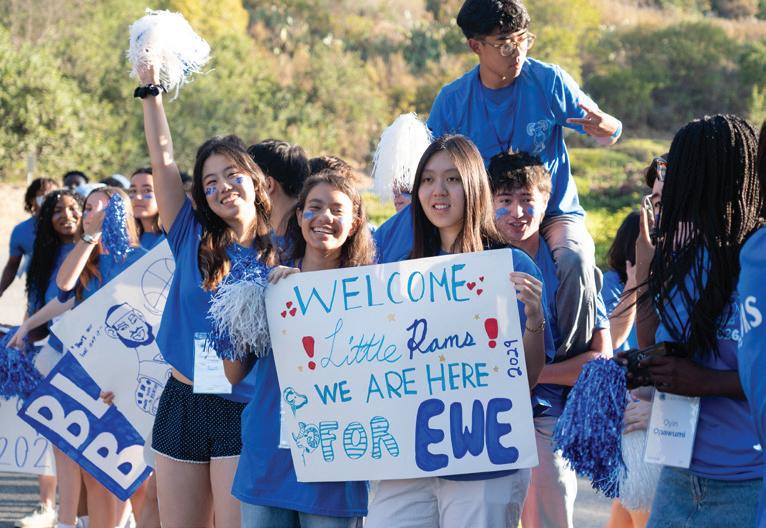
CONNECT WITH US
Alison Boris, Cate Fund Director alison_boris@cate.org
Andrew MacDonnell, Head of Advancement andrew_macdonnell@cate.org
Sarah Preston, Director of Major Gifts sarah_preston@cate.org
CHECKS
Advancement Office
Cate School
1960 Cate Mesa Road Carpinteria, Calif., 93014-5005
Please make checks made payable to “Cate School.”
CREDIT CARD cate.org/donate
Cate accepts Visa, MasterCard, and American Express
CRYPTO, APPLE/GOOGLE PAY, ALIPAY, PAYPAL, AND MORE
Visit cate.org/giving/ways-to-give VENMO
Search “Cate School” under Charities or @CateSchool
MATCHING GIFTS
Many employers match charitable donations. This is an easy way to double or triple your gift. Simply complete your company’s online matching form to get started.
Donating appreciated stock may offer tax benefits and maximize the impact of your gift. For details on giving stock or via wire transfer, please contact Michael Lee, Manager of Advancement Services, at (805) 684-4127, ext. 211, or michael_lee@cate.org.
1960 Cate Mesa Road
Carpinteria, CA 93014-5005