




Dhamecha analyses buying behaviour to deliver targeted offers

SOLVING THE SKILLS GAP

Sysco calls for removal of barriers to entry


Dhamecha analyses buying behaviour to deliver targeted offers
Sysco calls for removal of barriers to entry
Ramadan is observed by 3.9M people in the UK*










































































AF Blakemore & Son saw its revenue decline by 8.1% to £1.09 billion in the year ending 27 April 2025. EBITDA was £18.5 million.
Following strong trading for the year ending April 2024, the family-owned business traded in a more challenging environment as prolonged food inflation, declining demand in traditional categories of tobacco, vapes and alcohol, and continued labour and energy cost pressures impacted performance.
In response, the group strengthened its foundations for growth.
Grocery retail performance improved in the second half, with growth in chilled and frozen sales. This included successful store trials with Iceland, which is now scaling the arrangement across the store estate.
Blakemore serves over 800 SPAR convenience stores, and it signed a new

partnership with EGOTM, which now supports over 80 petrol forecourt stores, with further growth anticipated.
The launch of Blakemore Partner Plus, Blakemore’s new independent trade terms, introduced increasingly competitive pricing and market-leading rebates.
The Food Solutions business secured several major new contracts, including branded goods supply to M&S Food from August 2025. It also secured long-
term contract extensions with Marston’s and Moto, alongside wins across travel, leisure and education.
The group delivered improved operating cash flow of £7.6 million and undertook a significant transformation programme. This included reducing overhead costs through the consolidation of its foodservice network, introducing the Relex AI platform to improve stock control, and reallocating support office resources.
In addition, the standalone Philpotts sandwich stores were integrated into the SPAR estate.
Exceptional costs of £8.8 million were incurred in connection with these transformation initiatives.
The group ended the year with a strong, asset-backed balance sheet, with £82 million of net assets including a substantial freehold property estate. AF Blakemore retains access of up to £80 million of committed lender funding extending to April 2028.
Peter Blakemore, chairman, said: “While performance softened compared to an exceptionally strong prior year, the actions we have taken have strengthened our foundations and are already beginning to show positive momentum, particularly across wholesale and food solutions. We remain committed to reinvesting for the long term.”
Holdsworth Foods will join Caterforce on 1 March, boosting the buying group’s turnover to £1 billion.
Founded in 1969, Holdsworth Foods is a family-run independent foodservice wholesaler supplying a wide range of chilled, ambient and frozen goods to caterers across the UK. Its headquarters are in Derbyshire and it has nine depots in the UK.
Gary Mullineux, managing director of Caterforce, said: “As a family-run wholesaler that prides itself on delivering truly exceptional service levels, Holdsworth’s decades of experience make them a perfect fit for Caterforce.
“We pride ourselves on our group’s collaborative approach, and we look forward to working closely with the Holdsworth team.”
Rupert Holdsworth, MD
of Holdsworth Foods, said: “We are thrilled to be joining Caterforce. The group stood out as a foodservice specialist buying group that genuinely represents independent

family-run businesses such as ours.
“The values of the group, and its impressive members, align perfectly with our own, making them the perfect partner to support us to reach our ambitious goals for the future.”
In other news, Gary Mullineux has taken on an additional role as joint CEO of European Catering Distributors (ECD).
ECD is a buying and development consortium that brings together independent foodservice distributors across 18 European markets, with a group turnover of 11 billion euros. Its members include Caterforce.
Tributes have been paid to Younus Sheikh, co-founder of Bestway, who has died.
Sheikh (right) played a defining role in shaping Bestway Group into one of the UK’s most successful and values-led organisations.
Working alongside Sir Anwar Pervez, he helped build Bestway from its earliest beginnings into a major international enterprise, rooted in hard work, integrity, entrepreneurship and a deep commitment to independent retail.
Having originally moved to the UK from Pakistan to study, Mohammed Younus Sheikh went on to join Sir Anwar in his early retail venture and is credited with coining the name ‘Bestway’.
He became a cornerstone of Bestway Wholesale from its inception, serving initially as trading director before leading the business for two decades as managing director. He later assumed the role of chairman of Bestway Wholesale, alongside his

position as a director of Bestway Cement and Bestway Group.
Under his leadership, Bestway Wholesale grew significantly in scale, capability and reputation, becoming the UK’s largest independent wholesaler. He was widely admired across the industry for his commercial insight, quiet authority and deep understanding of both customers and colleagues.
In recognition of his lifetime contribution to the sector, he received an Outstanding Achievement Award from the Federation of Wholesale Distributors.
Beyond his business
Tony Boyle, former head of Lynas Foodservice Scotland, has been appointed commercial director of Food Options, a wholesaler based in Livingston, West Lothian.
Boyle (right) previously spent eight-and-a-half years at Lynas Foodservice and before that he was managing director and commercial director of JB Foods. He has also previously worked for Ice Cream World, Lyons Seafoods and Bidfood.
Formed in 2002, Food Options is a multi-temperature foodservice distributor offering more than 2,500

frozen, chilled and ambient products. It also has its own meat processing plant, which enables it to provide a full catering butchery range.
Food Options is a member of The Wholesale Group.
career, Sheikh was committed to philanthropy and social responsibility. He was a founding trustee of the Bestway Foundation in both the UK and Pakistan and supported a wide range of charitable causes.
Speaking of his longstanding friend and colleague, Sir Anwar said: “Younus stood beside me from the very beginning of our journey. He believed deeply in hard work, fairness and looking after people, and those values helped shape Bestway into what it is today. I will always remember his loyalty, humility and quiet strength, and be grateful for the years we worked side by side.”
Lord Choudrey CBE SI Pk, chairman of Bestway Group, said: “Younus was a principled leader, a trusted colleague and a devoted family man. His contribution to Bestway and to the wholesale sector was immense, and his legacy will endure through the business and
values he helped to build. He will be deeply missed by all of us across the Bestway family.”
Martin Race, former managing director of Bestway Wholesale and now chairman of Parfetts Employee Trust, said: “I was fortunate to work with, and for, Younus having first met him on FWD Council.
“He will be sorely missed as a legend of wholesale but I will always remember him as a gentleman through and through who was always fair to both colleagues and suppliers (notwithstanding being an outstanding and tough negotiator) – very driven but a true human side. His legacy is there for all to see.”
Steve Parfett, former MD of Parfetts, said: “An absolute legend of the wholesale sector – along with Charles Wilson one of the two most impressive businessmen I have had the privilege of working with. I don’t think it is a coincidence that both are/were considerate, thoughtful, modest people.”
Booker has appointed Neville Irani as managing director for foodservice and SME.
Irani (pictured) will be part of the Booker executive team – reporting to Booker Group CEO Andrew Yaxley – and will be responsible for leading and growing the business’s foodservice and catering arm in the UK.
Formerly director of independent foodservice at Sysco and Brakes, Irani will join Booker later in the spring. He has also previously worked for B&Q, Homebase, Argos, Iceland

Foods and Welcome Break.
Irani’s appointment follows the promotion last summer of Stuart Hyslop from managing director – catering & small businesses to chief operations officer.
A free introductory webinar series is being introduced to help businesses prepare for the Deposit Return Scheme’s introduction in October 2027.
The series is being hosted by Exchange for Change, the not-for-profit organisation delivering the DRS in England, Scotland and Northern Ireland.
‘DRS 101’ webinars will run on nine dates in February and March, with more dates to be announced.
Each 45-minute webinar offers an introduction to the scheme and includes a live Q&A session.

Castell Howell Foods has opened a 14,000 sq ft cold store in Merthyr Tydfil.
The opening marks the completion of the Welsh wholesaler’s latest expansion plan, which will strengthen its capacity to service schools, hospitals and independent businesses along the M4 corridor.
The new premises has 3,000 pallet capacity, five dock levellers, new refrigeration systems and racking, plus 14 offices and a service yard. The depot manager is Gavin Harry, who has worked at Castell Howell since 2009.
Managing director Matt Lewis said: “Our business plan has always encouraged steady, strategic growth and this latest development highlights our continuous investment in the areas that we service by providing local employment and the ability to support our customers to even higher levels.
“The Merthyr depot is

very important strategically as it offers us a solid base between our headquarters in Cross Hands and depot in Avonmouth.”
Group maintenance manager Luke Harris, who led the project, said: “The Merthyr cold store project has been our operational focus for the past 12 months. Completion was delivered in good time, ready to support our projected growth for 2026.”
Bidfood’s Yarde Farm ice cream business has introduced new industrially compostable ice cream mini tubs.
In what is claimed to be a first-to-market move within the foodservice sector, the new tubs are being introduced alongside two new flavours.
Available from Bidfood, Cherry Cola Sorbet becomes the fifth vegan flavour in the Yarde Farm mini tub range, meaning that almost 30% of its mini tubs are now vegan. The second new variant is Unicorn Ice Cream.

Unitas Wholesale outperformed the market in both retail and foodservice during 2025: in retail it was up by 2.4% versus the market, and in hospitality it was up by 11%.
At the Unitas Supplier Partner Directors’ Luncheon, which attracted more than 110 food and drink suppliers, chief operating officer David Cooke shared the group’s strategic direction for 2026.
With the theme ‘Think Bigger, Win Together’, he said: “Unitas is the UK’s largest buying group, and while scale matters, performance matters even more.

David Cooke: ‘Building the capabilities to win together.’
This is why we are choosing to focus on what we can genuinely do better together to leverage the scale and power of our group.”
Cooke outlined a raft of
new central initiatives planned in partnership with suppliers and members. These include a review of membership categories; product launch partnerships to deliver execution, compliance and transparent return on investment; and a centralised network model built with strategic partners.
He also announced an acceleration of supplier activations in more than 5,000 convenience retail stores across the Unitas membership, and a revamp of both the retail club and Plan for Profit programme.
“Our next chapter is about
working together in a way that’s simpler, more scalable and commercially effective,” he said. “In the coming months Unitas will focus on fewer isolated initiatives and more scalable programmes, with measurable return on investment and better execution across members with stronger, more consistent activation. We are building the capabilities to win together across distribution, data and retail acceleration.”
He added: “This isn’t about being the loudest group, but about being the most effective group to partner with.”
SPAR Scotland wholesaler and retailer CJ Lang & Son has named Eoin McGettigan as non-executive chair.
McGettigan (right) succeeds Jim Hepburn, who stood down from the role when his tenure came to an end in December.
McGettigan has over 35 years’ senior executive leadership experience in retail, wholesale and consumerfacing businesses, including CEO roles at Musgrave, Budgens-Londis, Co-op Retail and Lifestyle Sports.
Alongside his executive career, in 2008 McGettigan founded DriveChain, a consulting and interim management practice supporting

businesses through strategic and operational change.
CJ Lang CEO Colin McLean said: “The team at CJ Lang is very much looking forward to working closely with Eoin to help shape and deliver our ongoing transformation programme.”
Parfetts has extended its own-brand range with the launch of Go Local Tuna Chunks in Brine.
The new dolphin-friendly product is available in a 145g can, supplied in cases of 12 and price-marked at £1.29.
Parfetts says the launch reflects the continued momentum of its Go Local own-brand range, which is growing as retailers seek dependable products that balance quality, accessibility and strong store performance.
Mike Kerrigan, own brand manager at Parfetts, said: “Every product we add to Go Local has to earn its place on the shelf. Tuna is an essential
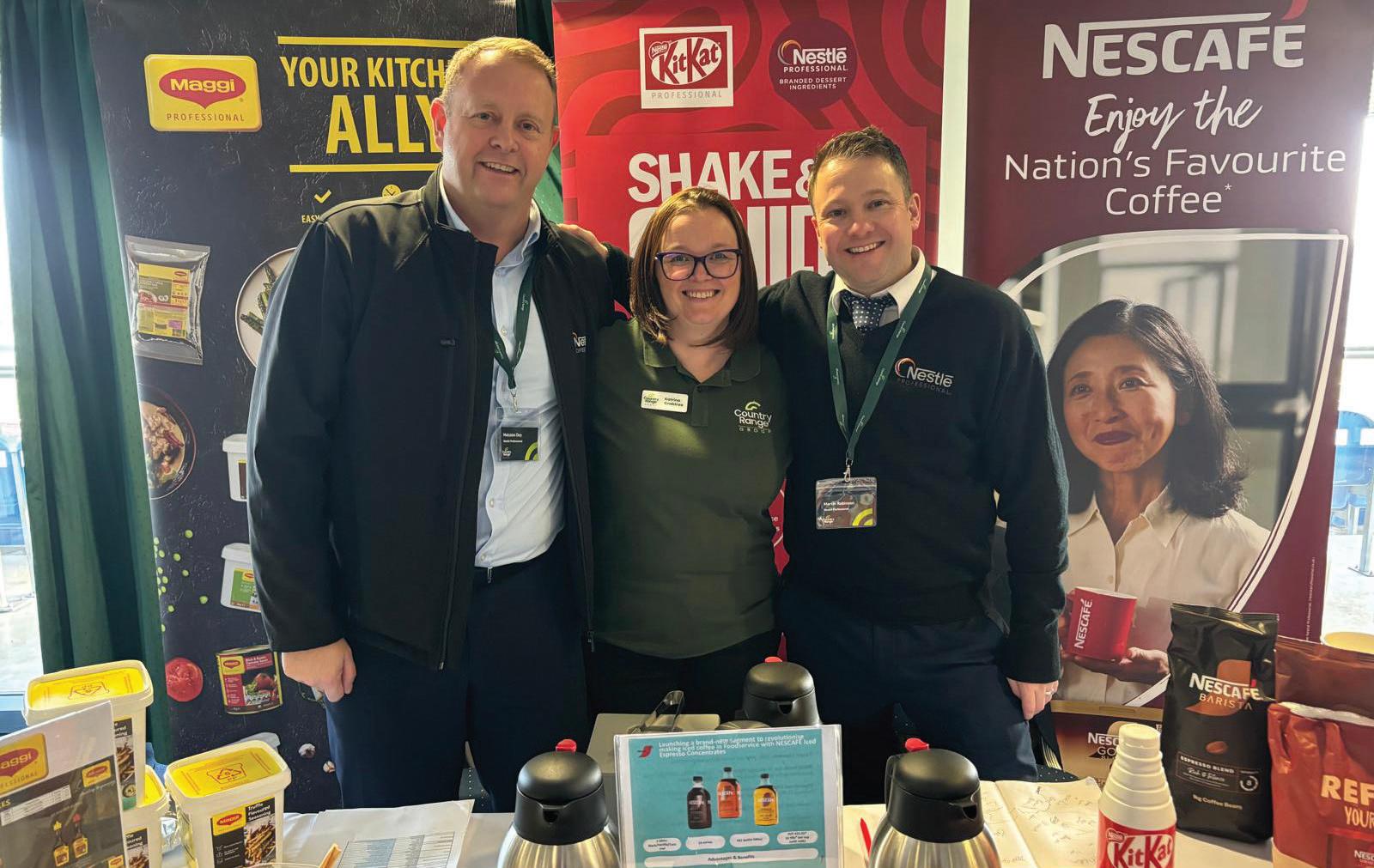
Country Range Group (CRG) has relaunched its ownbrand cleaning range under the new Clean Range Pro name.
The 40 existing professional cleaning products are joined by four new lines: Purple Beerline Cleaner (fivelitre), Oven & Hob Cleaner (750ml), Machine Dishwash Detergent (20-litre), and Bactericidal Washing Up Liquid (five-litre).
The development takes the packaging more in line with the Country Range brand following its refresh in 2024.
The new packaging is colour co-ordinated, adhering to the British Institute of Cleaning Science’s colour coding system, and includes QR codes on the product labels that link directly to safety data sheets.
For ease of use and clarity, the Clean Range Pro brand is split into four areas:

Washroom (including bleach and toilet cleaner), Food & Bar (including hygiene products and dish detergent), Low Risk (including laundry detergent and hand wash) and Tools of the Trade (including mops, cloths, and tea towels).
The brand’s new mascot – the Clean Ranger – will provide extra visibility, character and marketing potential.
A range of marketing resources to support Clean Range Pro were shared with CRG members at its recent Business Development Days (BDDs).
Held at Doncaster Racecourse, the event enabled suppliers to have face-toface meetings, build relationships and engage in product sampling and live demonstrations with key decisionmakers from the group’s member wholesalers.
The group also showcased a number of products from its three-tiered ownbrand portfolio, including a range of spring/summer desserts such as Signature by Country Range Sicilian Lemon Tiramisu Dessert.
Commenting on the BDDs, buying director Dean Pendlebury said: “It was incredible to see the excitement and innovation in the room and it’s filled me full of hope that 2026 will be an even bigger and better year for CRG.”
The organisation’s next Business Development Days will take place on 23 and 24 September.
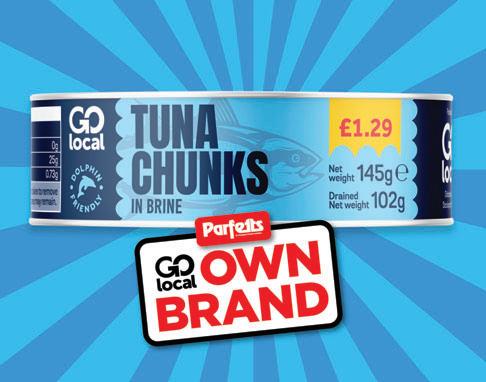
for many households, so it was important that our new tuna chunks deliver on quality and consistency, backed up with strong margins.
“Our own-brand range continues to grow because it helps retailers meet everyday consumer demand, while strengthening their offer in key categories.”
Parfetts’ own-brand range now spans over 250 lines.
JW Filshill has appointed Matthew Howie as business development manager.
He replaces Roy Williams, who will retire at the end of March after nine years with the Filshill business.
Howie (below) joins Filshill from Morrisons where he headed up the Morrisons Daily franchise operation across Scotland.
In total, he has nearly 25 years’ experience in both the retail and wholesale sectors. He started his career at the Co-op at the age of 16, beginning in the fruit & veg department and working his way up to business development manager at Nisa/Co-op.

Sysco GB has called on the Government to take greater action to address the significant employment challenges facing the wholesale sector.
Launching its paper, A Skills Strategy for the Wholesale Sector, Katrina Simpson-Haines, human resources director of Sysco GB, said: “The wholesale sector is facing unprecedented challenges.
“We play a vital role in supporting communities across the country, but the skills crisis means that it is becoming increasingly difficult to recruit and train the next generation of workers.
“Our paper provides some very practical solutions that can be easily adopted to pave the way for a profitable future for the sector and those working within it.”
According to Sysco GB’s paper, key to solving the issues facing the sector is
Sugro UK has announced a partnership with Procure Partners, a UK-based Group Purchasing Organisation (GPO), which supports businesses in reducing costs and improving efficiency.
Sugro members will gain access to centralised group pricing, supplier audits, and dedicated category support covering parcel delivery & courier services, third-party logistics & chilled warehouse solutions, packaging & consumables, and waste management.
Emma Senior, Sugro MD, said: “Our wholesalers are navigating constant overhead challenges, so anything we can provide to support them in cutting costs and time is an advantage.”

removing barriers to engaging new talent by allowing levy funding to support onboarding, work-readiness initiatives, and the wider costs associated with bringing new entrants into the workforce – not just the qualification itself.
In addition, the report highlights the need to empower businesses to tackle critical skills gaps by enabling levy funding and short courses to support
proven, business-led training programmes, such as Sysco’s ‘Changing Gears’ HGV driver programme.
The company is also lobbying for action to futureproof the workforce and drive long-term growth by unlocking funding for modular upskilling, digital and AIfocused training, and specialist and leadership development, ensuring people can progress throughout their careers.
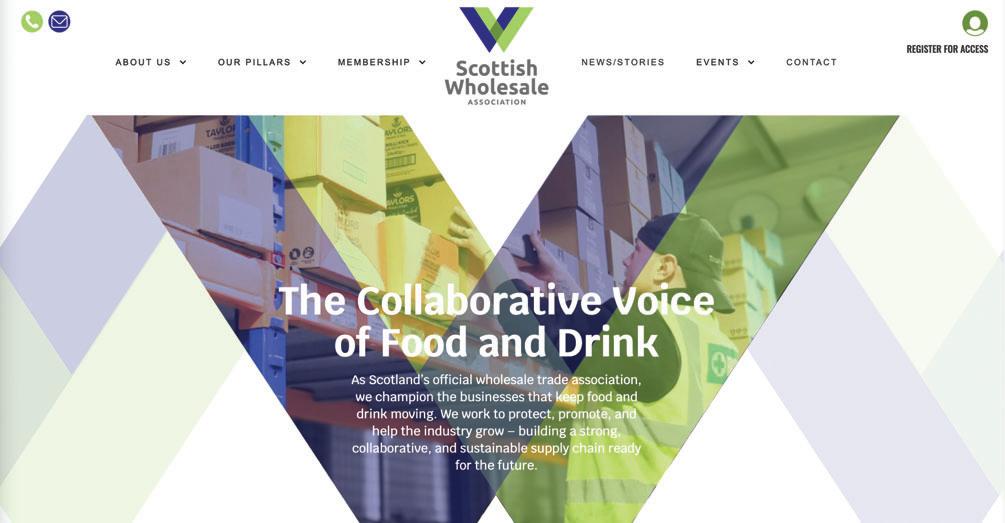
T he Scottish Wholesale Association has launched a new website.
The new website marks the final step of the SWA’s rebranding journey, which aims to better reflect the nature of wholesale within the Scottish food and drink supply chain, and the collaborative and inclusive values of the association.
Simpson-Haines added: “We believe the changes we are proposing will help boost productivity, strengthen social mobility, and build a more resilient workforce across the wholesale and foodservice sectors.”
In other news, Sysco GB has signed a new deal with Shell Energy Europe to harness 20 gigawatt hours of wind power a year until 2035 as it delivers on its commitment to use only renewable energy by 2030.
The new agreement will see Sysco GB secure the equivalent of around a third of its expected energy use by 2030. The electricity is generated by the Race Bank offshore wind farm off the North Norfolk coast.
Sysco claims to be the first wholesaler to set science-based targets to cut scope 1 and 2 carbon emissions by 27.5% by 2030.
‘Real value’
Sterling Supergroup has hosted its first Sterling CONNECT event.
Held at Walton Hall in Warwick, the event featured a dinner and a full day of meetings between members and suppliers.
Colin Smith, SWA chief executive, said: “This new hub for members, suppliers, partners and stakeholders is a dynamic platform to share ideas and best practice, showcase the best of the industry, and signpost support.”
The easy-to-navigate site is designed to better reflect the wide range of work carried out by the SWA.
Chief commercial officer Daniel Larkin said: “Sterling CONNECT was introduced to add another option to how we support engagement between members and suppliers. Alongside our larger events, the one-to-one format created space for discussion, and the feedback suggests it delivered real value.”

National Buying Consortium (NBC) has announced that Kevin Jopson, co-owner and managing director of Northern Retail Group, and Joe Marlow, managing director of Spectrum Foodservice, are becoming member directors of the organisation.
The announcement was made at the group’s recent AGM and the move followed the resignations of David Longfellow and James Granville as member directors.
NBC’s managing director David Lunt said: “This is an important role for the member shareholders to ensure that the members’ needs are both recognised and met –not always an easy task. A further position is currently being recruited for.”
Jopson said: “I have always been impressed with the way in which the group have pulled together a proposition that truly supports both members and suppliers and I am looking forward to making my own contribution in the role.”

David Lunt: ‘We fully expect to beat the 2025 budget.’
Marlow said: “NBC has enabled me to develop my own business into the foodservice operation that it is today – without it the challenges of getting access to brands that my own customers require would have been incredibly difficult.”
Also at the AGM, Lunt reported on the group’s performance: “Both 2024 and 2025 have been a bit of a rollercoaster for the industry as we continue to deal with economic challenges and further consolidation.
“Despite this, the NBC group of companies have continued to show revenue growth and we fully expect to beat the 2025 budget.”
The Wholesale Group expects to be the largest buying group in UK wholesale by the end of 2026, and is targeting growth of 15% in retail and 10% in foodservice this year.
At a recent senior supplier briefing, 186 suppliers heard that The Wholesale Group now has buying power of more than £4.5 billion and represents around 14% of the UK wholesale market.
The organisation supports 225 members, who collectively serve nearly 350,000 customers across the UK.
Delegates were told that significant growth was achieved in 2025 in retail through members’ diversification, with greater engagement as members worked with more suppliers.
Meanwhile, the foodservice element of the organisation increased members by 56% and achieved 30% sales growth in 2025.
The Wholesale Group also recently held Development &
Innovation Days, where 20 independent foodservice wholesalers and 60 suppliers discussed purchasing strategy and accessed exclusive deals. There was also a networking dinner.
In other news, the organisation has launched CORE Juices as part of its ongoing strategy to enhance ownbrand capability and support member competitiveness across retail and foodservice channels.

There are three variants –Orange, Apple and Cranberry – packed in one-litre slimline Tetra cartons. They have an ambient shelf life of eight to nine months. The format and specification have been designed to perform across multiple routes to market.
JJ Foodservice has launched a new Healthier Catering microsite, designed to make it easier for restaurants to choose healthier, local and more sustainable ingredients.
To help promote the site and encourage uptake, JJ has partnered with the Healthier Catering Commitment (HCC) for London to offer a 10% discount on selected products in the range for HCC Award holders.
The new site includes wholemeal and high-fibre products, vegetarian and vegan options, grains and pulses, MSC-certified and

locally sourced fish, Omega3 rich seafood, free-from alternatives, healthier cooking oils, and eco-friendly packaging.
Baris Kacar, chief sales officer at JJ, said: “We want to make it easier for businesses to choose nutritious, loca, and fresh options –that’s why we’ve put them all in one place.
“We’re excited to partner with the HCC to promote these products to restaurants and caterers in London.”
The Healthier Catering Commitment London plays a role in tackling obesity across the capital by supporting food businesses to offer healthier options.
In other news, JJ
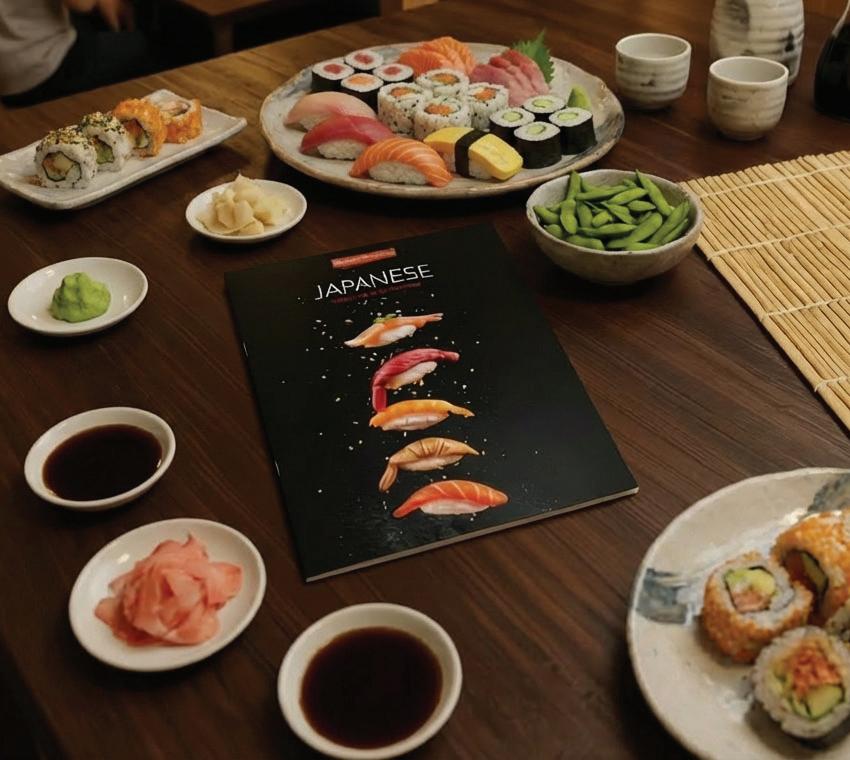
Foodservice has introduced a new range of authentic Japanese ingredients.
Building on the success of its Thai and Southeast Asian lines, the new range is designed to offer Japanese businesses everything they need under one roof.
“Great sushi begins with exceptional ingredients,” said Sezer Ozkul, chief product officer at JJ Foodservice.
“Our new range brings everything together – sushigrade fish, award-winning rice, crisp nori, and trusted brands like Kikkoman and Asahi – all under one roof.”
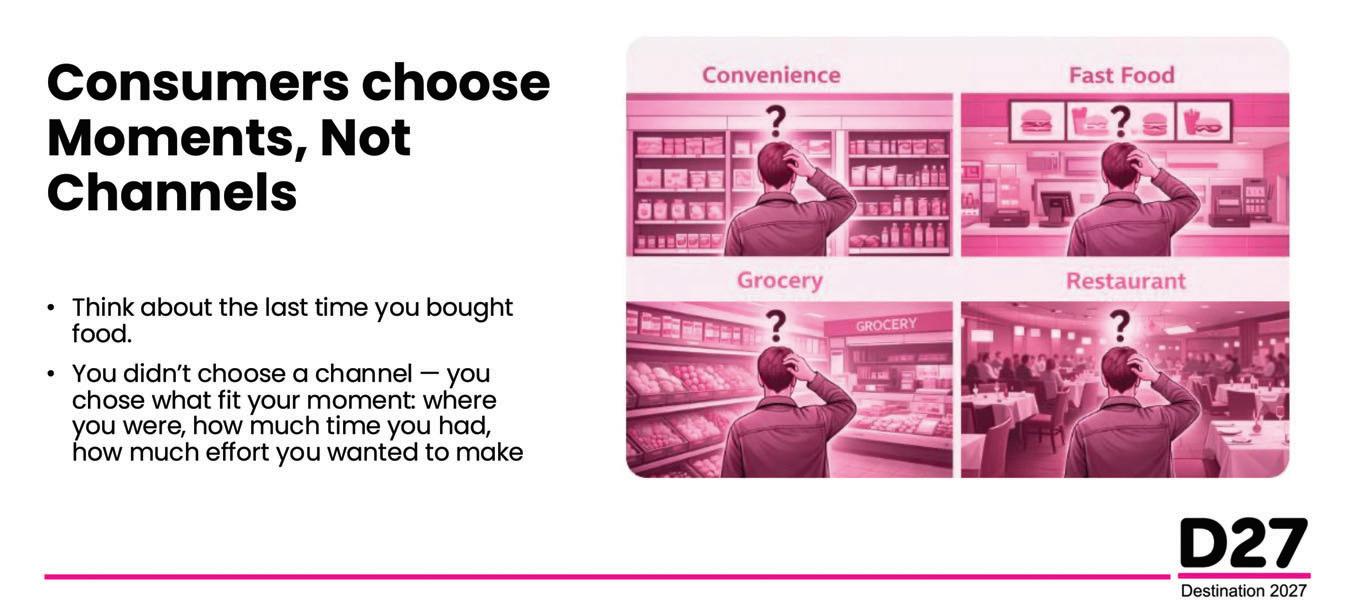
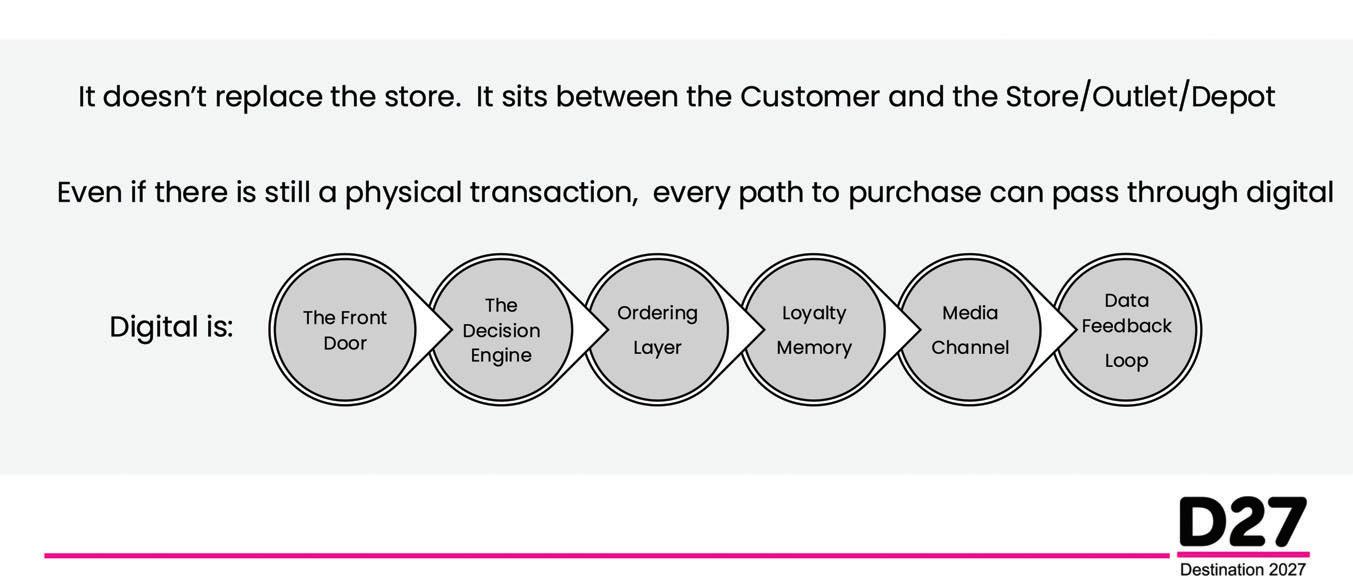
Delegates at the Destination 2027 conference heard from industry executives on addressing challenges and maximising opportunities in the next 12-18 months.
The Destination 2027 conference, held earlier this month, brought together more than 175 executives from wholesale, retail and foodservice for a day of insight and discussion and raised over £65,000 for Mines Advisory Group (MAG).
Speakers considered the importance of collaboration and adaptability as the industry navigates continued economic pressure, consolidation and rapid technological change.
The event was created and coordinated by Clare Bocking, managing director of Immediate Impact, who encouraged delegates to think about a growth mindset linked to marginal

gains. “Huge change is difficult to create, but marginal gains are possible,” she pointed out. “It’s those small things that we do differently every day, the small ways that we help each other every day, that create significant change.”
Andrew Selley, CEO of Bidcorp UK, which has 14 businesses including Bidfood, Oliver Kay and Direct Seafoods, agreed that looking at the small things and whether they contribute to business success can make a difference to wholesalers and their customers.
“Everything we do is about making the boat go faster,” he said.
“The next 12 to 18 months are going to be really tricky, so we want to empower everyone in the business to be able to look at their role, look at their responsibilities, look at what they do, and have that ability to change direction.
“It’s about every small decision every day. Is it helping? Is it adding value? Is it driving the bottom line or is it a waste of time?”
Selley noted five key lessons that he associates with the ‘Does the boat go faster?’ analogy:
a Clarity beats complexity. “Keep people moving forward, keep people focused on improvement and you will find that there’s a lot less development of complexity because complacency and inertia breed complexity,” he said. a Discipline beats motivation. “Discipline is about our values and our integrity as a business – it’s not an optional thing. By having that discipline – having the KPIs and the transparent reporting –that’s far better than just relying on having to motivate people every day.”


a Focus beats talent. “Focusing your teams on the little incremental goals that then get compounded is going to give you far more success over the next 12 to 18 months than recruiting for success or training for success. Ideally you can do both. But I would say if you can’t do both, you’ve got to focus on the short-term wins.”
a Everyone rows. “It’s about showing your face, getting involved, and working alongside your teams. You’ve got to lead and direct as well; you’re trying to see where you’re going, trying to make sure you’re in the right direction.”
a Purpose turns passion into power.
“When everyone’s working really hard, quite often you’ve got to make sure that everyone understands why. What’s the purpose? The purpose of your business is far more motivational for a lot of your employees than the what,” said Selley.
He added that the purpose of Bidcorp UK’s overall business is to bring joy and success to its customers through great food, strong values and fantastic service.
He continued: “Our mission is to make our customers’ lives easier and help them to grow. We like winning new business, but actually it’s better to win by growing existing customers. If you can add five cases on to every delivery you make to a customer, that’s a far more profitable way to grow than by going out and winning new customers.
“So how do we help our customers grow faster? We need to work with them and say, ‘What are the five things
that you want to achieve this year and how can we help you do that?’
“The closer your decision-making is to the customer, the more nimble you can be, and the more successful you’ll be over the next 12 to 18 months.”
He added: “Don’t worry about anyone else’s business. Sysco or Booker doing stuff is irrelevant to us. That’s not to be arrogant: it’s to say that in 12 months’ time we’ll have a look at how we got on, we’ll have a look at how our competitors got on, and we’ll see where we won, we’ll see where they won, and we’ll adapt our plans for next year.”
John Kinney, CEO of Unitas Wholesale, explored some of the challenges and opportunities facing wholesalers that service retailers.
“The consumer has now adjusted to a value proposition, and this is the way the market’s going to be going forward,” he insisted.
“You can’t just fight on price alone. That’s going to happen in the multiples; recovery will be based on price. We can’t afford that, but we have to be competitive in the market place. We’ve got to offer value.”
Kinney added that, over the last 18 months, suppliers have experienced massive cost increases but have not passed all those on to the consumer. However, companies cannot keep absorbing these cost increases, he acknowledged.
“So we are going see suppliers looking at their supply chain and routes to market and saying, ‘I’m going to raise the minimum order quantities, I want fuller vehicles going out, I want less direct accounts’.
“That’s where buying groups can help smaller wholesalers and give them access to those deals, promotions and support.”
Kinney asked suppliers to look at their price-marked packs. “In some cases, price marks are potentially higher than they need to be – in comparison to
“AI is going to introduce massive transparency. Wholesale, historically, is not the most transparent channel. Everything will become far more transparent in terms of route to market and pricing and provenance. How can we use AI to help us get better deals out of suppliers? Customers will look at using AI to get a better deal out of wholesalers. So every good side has a bad side and we need to work out how to use AI constructively to help us hit our goals.”
Andrew Selley, CEO, Bidcorp UK
“My suggestion would be to train your people first in using ChatGPT, train them in some basic fundamentals of AI. And if you still need to bring in
consultants later, you’ll have a workforce that will embrace AI, will be able to do the things they’re suggesting, and won’t put the barriers up, won’t see AI as a threat to them.”
John Kinney, CEO, Unitas Wholesale.
“AI is an enabler. It will drive efficiency in businesses but it will not detract from the personal touch and the relationships that are being built up. Those personal connections matter even more than an AI in my opinion. Technology can support efficiency, but it can’t replace the trust, the judgement or the problem-solving experience through human relationships.”
Cathal Geoghegan, MD, Henderson Foodservice
some of the mults, that differentiation is probably too big,” he argued. “How you can help us out is to make sure that price marks are appropriate. Obviously the margin has got to work but there is no point having a massive price mark on the shelf. It doesn’t help this channel.”
Other challenges that Kinney highlighted included the forthcoming deposit return scheme. “Small stores are going to be disadvantaged. They won’t have room for big reverse vending machines.
“If consumers don’t take that bottle back to that convenience store, they may not then be buying the next bottle – but it’s not just the bottle, it’s also the bag of crisps, it might be the tobacco, it might be the newspaper. It’s a footfall issue,” he said. “Make sure you consider how your products may or may not be impacted.”
On a positive note, Kinney said that working with independent wholesalers is particularly beneficial when times are tough. “Independents don’t have the cost base of the multiples. Their priorities are
to grow, which is great for suppliers because independents are now looking for any opportunity to go into new markets, new geographical areas, new channels.”
In closing, Kinney said: “I think this year we will see a lot of challenges. I think we will see failures in both retail and wholesale – the market cannot sustain the amount of wholesalers and retailers we have. I think we’ll also see suppliers consolidating.
“But it’s not all doom and gloom. I think there are opportunities – of working together with suppliers, of working on joint business plans and looking at supply and logistics opportunities.”
Cathal Geoghegan, managing director of Henderson Foodservice, agreed that collaboration is important: “It’s not easy out there so we need to collaborate,” he said. “If we can keep sharing, supporting and challenging each other, this sector will stay one of the most resilient.
“Collaboration can be many forms –
it could be supplier collaboration, it could be service collaboration, or it could be industry collaboration.
“It’s about the value suppliers want to invest in our business to grow collectively; it’s about customer retention, and ensuring you have customer loyalty that drives the respective businesses together profitably; it’s about service levels that will eliminate any issues prior to them happening; it’s about team engagement from the right people to deliver the right product. And it’s about retention – keeping your best people in the business.”
Geoghegan maintained that collaboration in the right way leads to efficient and proper service, and service ‘done well’ leads to quality.
‘Quality is served’ is a strapline used by Henderson Foodservice and it runs through the business. “Quality is served through our people. It’s served through our products, and it’s served through our service daily,” he explained.
“We all strive to be the best and we all strive for that perfect shot. We don’t hit it every time but if we’re
‘Smarter data, smarter promotions, better outcomes for everyone’
Dhamecha’s focus is clear: how to serve its customers better, said Anand Dhamecha, director of the family-run wholesaler.
“We know our retailers want three things above all else: competitive pricing, a complete range, and firstclass customer service,” he noted.
“A key enabler of this is technology. Our approach is a practical one. We understand the importance of data and we’re working hard internally to improve our quality of data so we can create genuinely actionable insights. That’s step one, because the reality is if your data is poor, AI doesn’t make it clever, it just makes mistakes faster.
“We’re also using technology to better support our depots,” he continued. “Head office, in our view, is a support function. Our depots are where the real work happens. So we’ve been asking ourselves a simple question: what can we do to make life easier for the people on the ground?
“One of our initiatives has been developing a toolkit for our general

managers, helping them to manage daily tasks and teams, freeing up time to focus on what really matters – the customer.”
Dhamecha is also looking at how it can work smarter with its suppliers. “Every single week we have tens of thousands of retailers walking through our depot. These are real retailers, real decision-makers, and real eyeballs in depots. That access is incredibly valuable. We want to work with our suppliers
who want to engage directly with retailers, whether that’s to gain feedback, test products, improve ranging, or get products onto shelves,” he said.
Dhamecha pointed out that, traditionally, data tells you what customers are buying. “What we’re increasingly focusing on is something that’s just as important: what are customers not buying? By analysing purchasing behaviour, we can identify gaps. This allows us to have much more meaningful conversations with suppliers,” he explained.
“We’re also using this insight to deliver targeted promotions through our app. Rather than increasing the number of blanket promotions that hit everyone and resonate with no-one, we can work with suppliers to target specific retailers with relevant offers based on their buying behaviour.
“Our goal is simple: smarter data, smarter promotions, better outcomes for everyone.”
He concluded: “When Dhamecha grows, our retailers grow, and when our retailers grow, our suppliers grow.”
























consistent and always try to swing the right way again and again and again, it does help in getting that hole in one, or from a business perspective, it reduces friction, it provides expertise, and you become more reliable.”
Geoghegan continued: “As leaders if we continue to create the environment for people to thrive, to challenge, to innovate, to partner, then the future of our industry is in very good hands.”
He concluded: “Quality isn’t a badge, it’s a behaviour. Service isn’t a metric, it’s a promise we make every single day. And collaboration isn’t a strategy, it’s a mindset.”
The future demands creativity, argued Coral Rose, managing director for foodservice at The Wholesale Group.
“The challenges we’re facing – supply chain disruption, rising costs, change in consumer behaviour – they can’t be solved with yesterday’s thinking,” she said.
“Breakthroughs happen when ideas cross-pollinate – when someone from foodservice talks to someone from retail, when a tech idea meets a sustainability challenge, when diverse perspectives collide.
“Innovation grows through sharing, not hoarding and not competing in isolation, but sharing insights, sharing data, sharing best practices,” she added.
“Ultimately we thrive through collaboration. That’s the power of buying groups like ours. We’re stronger together than we could ever be apart.
“The wholesale landscape is changing, but when we innovate together, share openly and support each other’s growth, we don’t just survive that change, we lead it.”
Jess Douglas, managing director for people and operations, said that the formation last year of The Wholesale Group was “the ultimate collaboration”.
She added that the organisation has since welcomed 29 new members, bringing its total to 225. In addition, it has gained 198 new supplier partners to take the total to over 400.
“This synergy has resulted in
impressive figures,” she added. “Our retail sales are up 18.2%, foodservice is up 30%, and in a market where convenience is declining and pressure is everywhere, The Wholesale Group really is growing.”
Rose explained that the organisation has achieved these numbers through stronger ranging and category expansion; by building strategic relationships with suppliers; by utilising data and AI effectively; and by ensuring that central services remove friction so that suppliers can get their products to every one of the group’s members.
She concluded: “At The Wholesale Group we choose to lead, we choose to innovate boldly, share openly and thrive collectively.”
a The Destination 2027 conference also spotlighted the ongoing efforts of Bikes Against Bombs, with founders Neil Turton and Tom Fender sharing the story behind the initiative.
In March, the team will take on a cycle challenge across Sri Lanka to continue raising funds and awareness for MAG.
For more information and to support the campaign, go to: https://www.justgiving.com/campaign/srilanka-cyclechallenge-2026 CCM



Nine in 10 people eat breakfast daily (Kantar). It’s a shopper mission that offers healthy sales for wholesalers and retailers whose range reflects evolving consumer demands.
Avital part of the day for so many households, breakfast occasions have risen by 56 million in the last year (Kantar). According to Lorraine Rothwell, head of marketing at Weetabix, the opportunity is clear, but the way people approach breakfast is shifting. “It’s no longer just about routine; it’s about health, enjoyment, and, increasingly, cultural relevance,” she says.
“At Weetabix, we’re always thinking about how we can evolve with the breakfast occasion. Our focus is on creating standout moments at fixture through smart merchandising, meaningful promotions and added-value on-pack campaigns.”
Weetabix All-Stars celebrates stories from inspiring athletes, and the company has also partnered with Roblox to connect with younger audiences in a fun, interactive way.

Weetabix Original is the UK’s No.1 branded cereal, with value up 4.7% and volume up 3.8%, while Weetabix Crispy Minis is worth £33 million (Nielsen). The latest addition to the range is HFSScompliant Weetabix Crispy Minis Caramelised Biscuit.
The importance of breakfast to convenience retail remains constant, according to Louise Reynard, customer development director UK at St Pierre Groupe. “What has changed is how shoppers view breakfast,” she says. “No longer purely functional, it has become an occasion where consumers are willing to trade up, recreate café-style experiences at home and seek out small, affordable indulgences.
“Ultimately, the wholesalers best placed to capitalise on breakfast growth are those that focus on availability, simplicity and relevance. By prioritising premium, high-performing brands and supporting retailers with clear ranging and merchandising strategies, wholesalers can play a central role in driving value growth across the breakfast bakery category.”
St Pierre is the UK’s fastest-growing brand in the breakfast bakery top 10 and holds two of the top five branded SKUs in croissants and pains au chocolat (Circana).

Hamlyns of Scotland has continued to strengthen its position in the breakfast category. Following the relaunch of its core range in recyclable paper packs last year, demand for Hamlyns Scottish Porridge Oats, Scottish Oatmeal, and Scottish Porridge Oats & Bran has remained strong.
Feedback from the trade has been positive, with the new shelf-ready cases of 10 helping to improve on-shelf visibility while supporting retailers’ sustainability goals.
Alongside this, Hamlyns has invested heavily in brandbuilding activity that reinforces both its heritage and the versatility of its product range.
“We’ve seen a real uplift in engagement and brand awareness through a diverse range of exciting partnerships,” says managing director Alan Meikle. These partnerships include consumer-facing initiatives like its sponsorship of the World Porridge Making Championship, along with its work with C&C/wholesalers and retailers to cement relationships. CCM
As shoppers continue to prioritise taste, value and quality in their breakfast choices, Refresco is aiming to help wholesalers and retailers capitalise on the breakfast sales opportunity in 2026.
With bold plans for Just Juice, impactful new point-ofsale support and strong promotional activation, the brand is doubling down on visibility, availability and category growth at what it describes as a crucial time for the juice and juice drinks sector.

Volume sales of total juice and juice drinks are down by 2.5% year on year (Circana). “With volume under pressure, it’s more important than ever for wholesalers to back brands that offer reliability, strong shopper recognition and consistent repeat purchase,” says a company spokesperson.
“Just Juice delivers exactly that – providing 100% taste and quality across popular breakfast staples such as Orange, Apple, Pineapple and other leading SKUs.”
A new Just Juice point-of-sale tool kit has been created specifically for cash & carry/wholesalers. It includes wobblers, posters, car park banners and digital assets designed to spotlight the brand’s strong value proposition and quality credentials.
In addition, the full Just Juice range is on promotion in most major C&C/wholesalers in February and March.










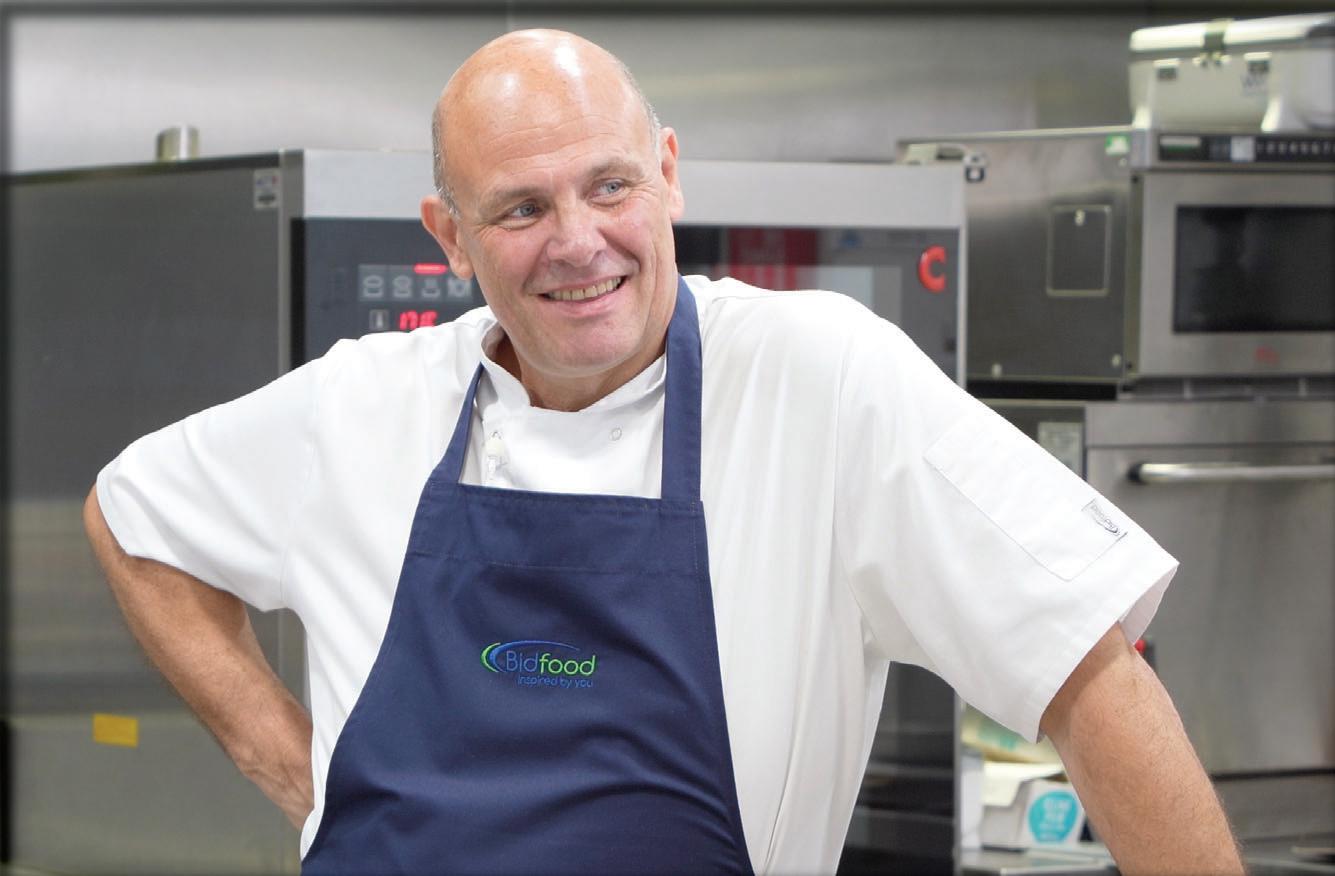
What have been your biggest achievements?
It’s hard to pick just one achievement because different things have felt important at different stages of my life. At work, highlights include creating the Hotel Magazine Awards menu – that involved designing and executing a three-course meal for some of the most influential in the hotel sector.
One of the most satisfying moments is seeing products I’ve developed still on retail shelves! It’s a real sign that the ranges I’ve created have stood the test of time. And, of course, my promotion [to culinary director of Bidfood last year] was a proud milestone.
Who has been the biggest inspiration to you?
Inspiration comes from many places –family, colleagues, friends and life experiences. I find that I’m constantly motivated by the people around me and by learning from different situations.
What were your ambitions when you were growing up?
As a child, I was really drawn to music and wanted to join the forces bands, though that didn’t pan out. Like most
kids, I imagined myself as a pilot or an astronaut at some point, but I also loved cooking from an early age, something I discovered I was quite handy at.
What are your interests outside work and how do you maintain a work-life balance?
Work-life balance has become much more important to me over the years. Early in my career, work dominated my life, but now I make time for travel, taking short breaks to explore different countries, their cultures, and of course their food. Spending time with my
grandchildren and family is equally important and really helps me recharge (sometimes).
How would you describe your personality and what approach do you take in business (and in life)?
I think I’m approachable, calm and caring. I try to keep things concise and low drama, while staying self-aware and interested in others. Understanding my own needs alongside those of the people around me is something I value highly in both life and business.
What is your favourite film, book and song?
Book: The Millennium Trilogy by Stieg Larsson. Music: My Spotify playlist is all over the place, from London Grammar to The Black Keys, Måneskin, and Halestorm. Film: I love action films, but horror isn’t really my thing.
If you won a holiday, where would you go and who would you take with you? I’d love to take a full tour of Italy, going solo so I could fully immerse myself in the culture, food and history.
What would people be surprised to know about you?
Before my catering career, I played the tuba competitively, winning several solo awards and performing with the Youth National & European Brass Band Champions in Desford and Coalville in Leicestershire. CCM
Martin Eshelby’s career began at catering college, where he spent three years learning the fundamentals of becoming a chef. During this time, he completed placements at Swallow Hotels, which opened his eyes to the realities of the profession, and Thomas Cook, preparing food for staff. Eshelby later worked at various hotels and restaurants before securing a position in the kitchen at The
Lanesborough at Hyde Park, London, working under the guidance of renowned chefs Paul Gayler and Chris Galvin which he said proved invaluable to his development.
Eventually, Eshelby decided to step away from the fast-paced demands of the kitchen and transition into product development. He began at Oscar Mayer then moved to Bidfood, where he has just celebrated his 10-year anniversary.











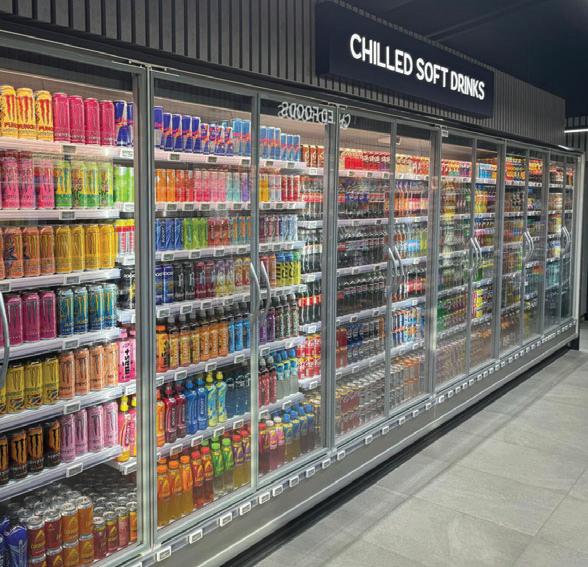
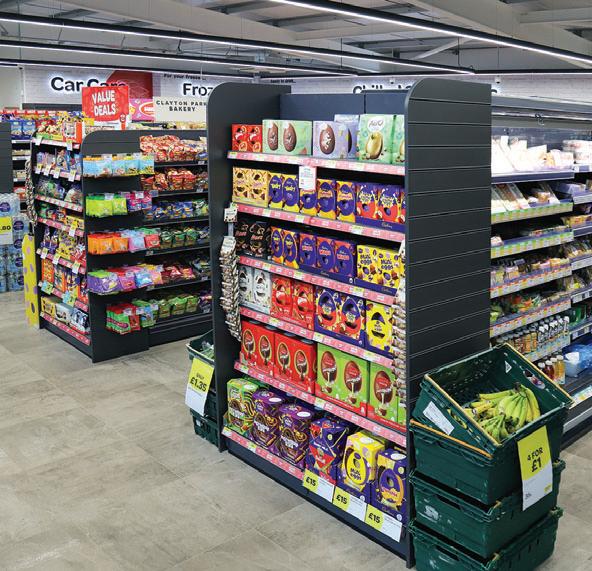

Wholesalers continue to work hard to offer their customers category management guidance that recognises not only current shopper behaviour but also emerging trends.
Data-led category management advice from wholesalers and buying groups can help retailers to unlock the full sales and profit potential of their stores.
Unitas Wholesale continues to provide category and core range recommendations for symbol and independent retailers through its ‘Plan for Profit’ programme.
“No one knows a store’s customer base better than the team behind the counter. It’s those everyday interactions – the requests for variety and value, and seeing what’s in every single basket –that help each individual retailer provide an unbeatable, unique local service,” says category controller Mark Langohr.
“What they may not see is what’s coming down the line – the way economic, social, health and taste trends are influencing that basket spend, and how suppliers are meeting anticipated demand even before the consumers are aware of it.”

The advice in Plan for Profit is based on insight and data from leading suppliers and Unitas wholesalers, underpinned by TWC’s SmartView Convenience, which is described as the most representative EPoS data set for symbol and independent retailers.
“The crucial partner in this, and the one we are going to be focusing on in the year ahead, is the retailer themselves,” says Langohr.
“We are currently conducting market research into retailers’ needs from their supply chain, and the results of this ongoing consultation with the people at the coalface will be the basis of a complete transformation of the Plan for Profit offer over the coming months.”
In 2026, there will be three Plan for Profit core range guides: Impulse in

March, Licensed & Tobacco in July, and Grocery & Non-Food in October. Together, these publications will provide independent retailers with up-to-date market insight, regionally relevant planograms and a clearly defined core range designed to drive sales and simplify ranging decisions.
Unitas will also publish 36 ‘Focus On‘ guides, delivering targeted support across key categories and selling occasions. With five new additions – including Health & Nutrition Drinks and a Summer of Sport aligned to the 2026 World Cup – the programme helps retailers capitalise on emerging trends and major moments that matter to shoppers.
According to Langohr, Plan for Profit also plays a central role in supporting wholesale members to recruit new retailers and grow their symbol estates, with the core range merchandised in every new and refreshed store.
“Despite the disruption caused by Covid, our members’ symbol estate has grown by an impressive 17% over the past four years,” he says. “With a strong pipeline of activity across the membership in 2026 – including UWS expanding its London footprint – there is clear momentum for continued growth.”
On the wholesale side, 43 depots are now part of the Plan for Profit compliance scheme, backed by formal audits, detailed gap analysis and strong indepot execution, including clear core range shelf signposting. “This disciplined approach is delivering tangible results, with in-depot core range compliance now at an impressive 97%,” Langohr reports.
At retail level, Unitas uses Inspire Field Marketing to support both symbol and retail club stores through regular core range audits and gap analysis. Around 2,125 audit visits are completed annually, identifying compliance levels and unlocking opportunities to improve in-store execution. The programme continues to scale, with audit visits increasing by 255 since 2025 as more stores are brought into the scheme.
Unitas also recognises that closing distribution gaps can be complex and costly for suppliers. To address this, it has partnered with Inspire Field Marketing to develop a cost-effective retail activations programme that keeps wholesale members at its core.
The programme provides singlepoint stock delivery targeting 1,000 retail club and symbol stores, producing over 550 new distribution points per brand supported by robust data reporting and photographic evidence of instore execution.
The Wholesale Group recently launched Retail Bites, a digital magazine that provides industry intelligence, retail tips, and category insights, hosted on a dedicated website which is open to all.

“The next phase will be to roll out Retail Bites so that the site is hosted on our key retail

members’ websites too, adding value to their service and providing better access for their customers,” reports retail controller Kirsty Winkel.
The Wholesale Group will also be hosting category sessions for its key retail members, with a focus on soft drinks, crisps & snacks, and confectionery. At these sessions, the category teams from key suppliers will give advice on how members can win in 2026.
The group draws on a variety of data sources to support its wholesaler members and their customers, including ACS (Association of Convenience Stores) and its suppliers, who in turn draw on insights from Nielsen and Kantar.
The Wholesale Group also refers to its own data from its digital platform partner TWC and continues to invest in AI to support decision-making and forecasting, including the development of Jake Ai, its internal AI business intelligence solution.
“We believe it’s important to gather information from as many broad sources as possible, to support more informed decision-making at every step,” says Winkel.
She believes that while all categories benefit from category management, the greatest impact is seen in high-volume, high frequency, and complex-to-shop categories.
“For example, soft drinks and alcohol benefit from structured segmentation (instant consumption versus take home, alcohol versus low/no alcohol), rapid changing trends (zero sugar, functional, RTDs) and disciplined SKU rationalisation to avoid duplication.
“Crisps, snacks and confectionery are often impulse-led, location-sensitive
and margin-rich so these benefit heavily from superior in-store positioning and strategic promotions,” she adds.
According to Winkel, when it comes to maximising sales and profits, wholesalers and retailers should focus on product categories driven by health, functional nutrition and premiumisation, which offer higher margins and faster sales growth due to viral trends and changing lifestyles.
“With the rise of weight-loss medications, there is now also an urgent demand for nutrient-dense, portioncontrolled meals and snacks,” she points out.
Category management delivers the strongest results in soft drinks, confectionery, beers, wines & spirits, chilled food, and food to go, where space, ranging and execution have the greatest impact, maintains Iain Main, category range planner at Glasgow-based wholesaler JW Filshill.
“We also see untapped potential in functional products, chilled impulse, and evening meal missions chilled and frozen, where better focus and visibility can significantly improve both sales and margin,” he says.
“With the decline of cigarettes, tobacco products and the disposable vape ban, there has been an increased focus on the vaping category to how the market is reacting to the disposable ban and which products are replacing them together with the strong growth of nicotine pouches,” he adds.
Filshill provides category management advice to KeyStore retailers through a multi-channel approach, combining digital tools, printed materials, and in-store support from its retail development managers (RDMs) and category range manager.
They offer tailored, face-to-face category reviews, range optimisation and space-to-sales advice based on each store’s shopper profile. This is supported by planograms and seasonal toolkits, together with before and after sales analysis to show category performance/growth.

Filshill also provides updated product information based on pack changes, supplier deletes, NPD or any other supplier issues, keeping the RDM team at the forefront of what’s happening within the business.
This year, the wholesaler is refreshing guidance in several core growth categories, including food to go, impulse soft drinks, crisps and snacks, confectionery, and ready-to-drink alcohol (RTDs).
In addition, it is providing updated planograms/guidance on some of the slower moving categories such as savoury grocery, household, and red, white & rose wines.
Main adds: “We’re also introducing new advice in areas we haven’t
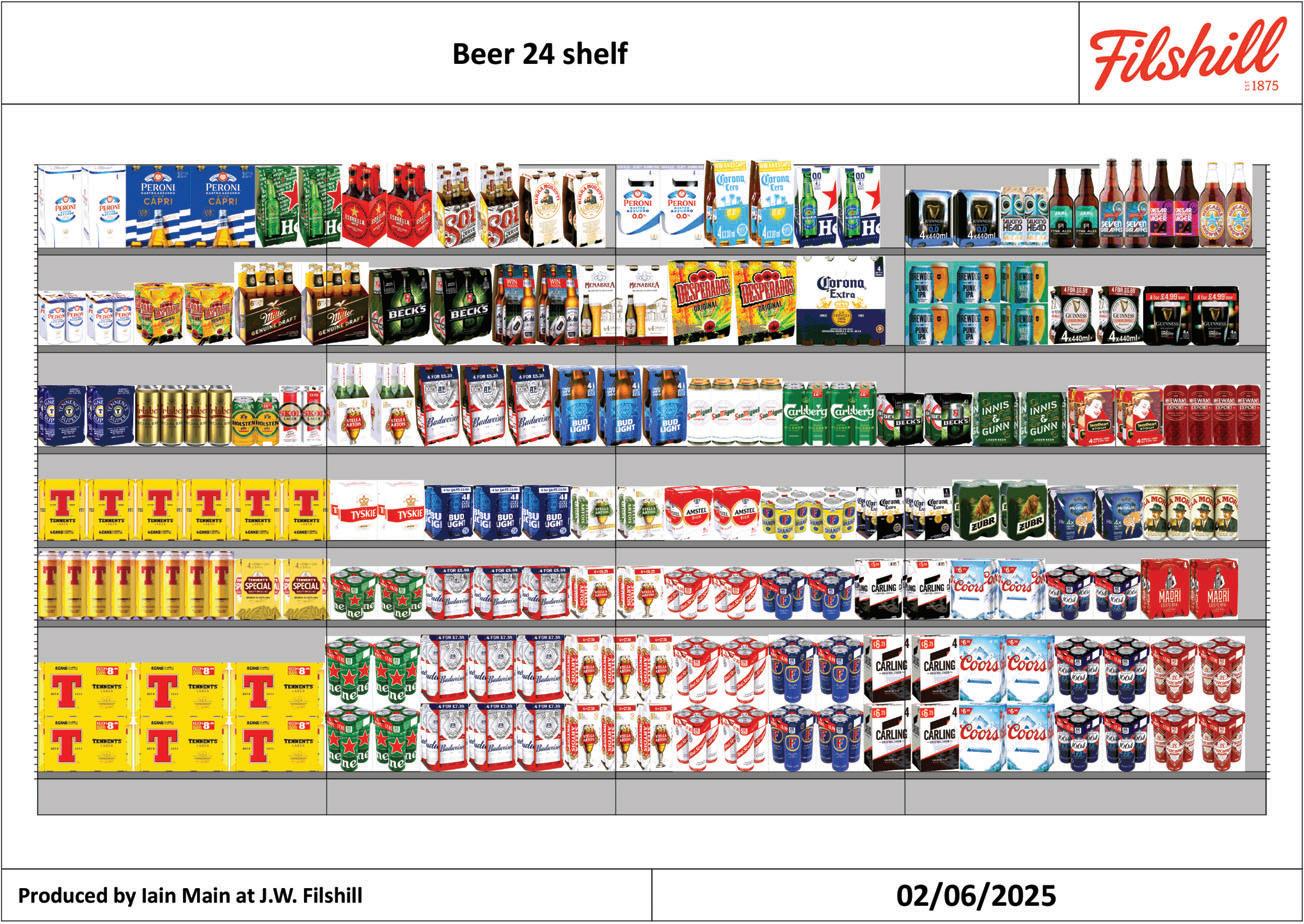
previously featured in depth, such as functional and wellbeing drinks, and low and no alcohol ranges, as they emerge within the Scottish convenience market following the success in the south of England.”
Filshill’s category management advice is informed by a blend of data sources, including its own wholesale sales data, retailers’ sales out data, and supplier and market insight.
“Retailer and group-level sales performance ultimately drive decisionmaking, with supplier insight used to provide wider market context. Supplier insight is a massive part of future-proofing our planograms and keeping them credible, especially within the slower moving categories,” Main tells Cash & Carry Management.
FIlshill has found that retailers are most receptive to clear, practical guidance that links directly to sales and profitability. This includes core range recommendations, simple whole category planograms, and clear advice on what to delist.
“Guidance that saves time and simplifies decision-making consistently resonates most,” says Main. “Having the ability to analyse any changes made and show data to back up those changes is a massive part of the buy-in for future guidance.”
Over at Parfetts, trading director Cheryl Hope explains that the C&C/wholesaler does not allow any single data source to dominate its category management advice.
“The retailer always benefits from a rounded view that reflects what actually sells in stores like theirs,” she says. “We combine independent market data from trusted sources such as TWC, IGD and Lumina with supplier insight and our own wholesale and retail sales data.

“Our own EPoS and wholesale data bring insight into real-world performance.
Balancing these sources results in recommendations that are commercially sound, channel-specific and independently validated.”
This year, Parfetts will be refreshing and expanding several core category guides to reflect changing shopper missions and stronger local demand. Key updates include impulse, licensed, and food to go, all driven by clear rate-of-
sale evidence and evolving convenience behaviours.
“We are also strengthening event-led guidance around seasonal trading moments such as summer socialising, Christmas, Easter and major sporting occasions, like the World Cup,” says Hope. “These are not treated as addons but as integrated sales drivers, with ranging, space and promotional mechanics clearly mapped out.”
Where new opportunities emerge, such as premium soft drinks, low and no alcohol, or locally relevant food missions, Parfetts will introduce focused guidance only where there is proven demand and margin opportunity for retailers. “If it does not earn its space, it does not make the guide,” she says.
Own brand is treated exactly the same as branded innovation, Hope adds. “We do not introduce lines to fill gaps or chase volume. Each product must prove its value to the category and the retailer.
“Before launch, we establish an expected rate of sale and test performance. Only once a line is established does it earn a place in core ranges and planograms. A disciplined approach protects margins, avoids duplication and ensures the own brand strengthens categories rather than diluting them.
“For retailers, this means confidence
‘Our buying team are always ready with the latest NPD’
JW Filshill prides itself on its ability to react quickly to trends and produce up-to-date and credible planogram ranges to suit most convenience stores, with the added ability to create bespoke localised planograms if required.
According to category range planner Iain Main, ready-to-drink products (RTDs) are showing strong growth within the beers, wines & spirits sector in Scotland, with NPD being introduced constantly to help maintain momentum.
“Last year saw the re-emergence of Bacardi Breezer and Au Vodka drinks playing a significant role in the growth. This year it’s the emergence of Tetra Paks, especially of high abv ‘enhanced’ RTD,” he reports. Ambient ready meals is another
category
which has seen major changes over the last 18 months in Scotland, says Main.

The social media trend for different noodle brands and flavours has resulted in increasing popularity of pack and cup noodles, with probably the biggest growth coming from multipacks, he reports.
“Brands such as Koka, Soba, Buldak, Shin, and Ko-Lee have led the way and caused a growth in space allocation. Noodles now account for around 40% of the category sales,” he notes.
“Our buying team are always ready with the latest NPD, and our ability to turn around new products quickly is the lifeblood of convenience,” says Main.
“Staying close to limited-edition flavours helps steer our retailers in the right direction and minimises impact of the rogue few that appear.”
that every own-brand line has a clear role and a clear commercial return.”
Parfetts’ retail development advisors (RDAs) are central to turning insight into action. They have access to the most up-to-date market data, category insights and performance benchmarks on every store visit.
John O’Neill, retail sales controller, says: “Because the platform is regularly updated, conversations with retailers are current, relevant and specific to their store. Advice is not generic. It reflects actual sales, local opportunity and achievable growth.”
Parfetts’ merchandising team also supports refits and store development across Go Local, Go Local Extra, Shop & Go and The Local formats, using core and best-in-class planograms tailored to each model.
In addition to supporting its own symbol retailers, Parfetts shares best practice in print, online and via its app.

“Our smart planograms allow retailers to order directly from the planogram using add-to-basket and add-to-order functionality. This removes friction and makes it easier to implement good ranging decisions. It is a practical system designed for busy retailers,” O’Neill points out.
O’Neill maintains that all categories benefit from structured guidance, but fast-moving areas such as impulse and licensed see the greatest impact. “These categories change frequently, driven by NPD, trends and shifting shopper behaviour, and require constant review,” he says.
“Through dedicated category zones, retailers receive advice on range, NPD, trends and growth opportunities, underpinned by EPoS data and wider market performance. This allows advice to be tailored store by store, not applied as a one-size-fits-all solution.
“We also place strong emphasis on identifying emerging missions early, helping retailers stay ahead of change rather than reacting late. The principle is straightforward: the right range for the right store, every time.”
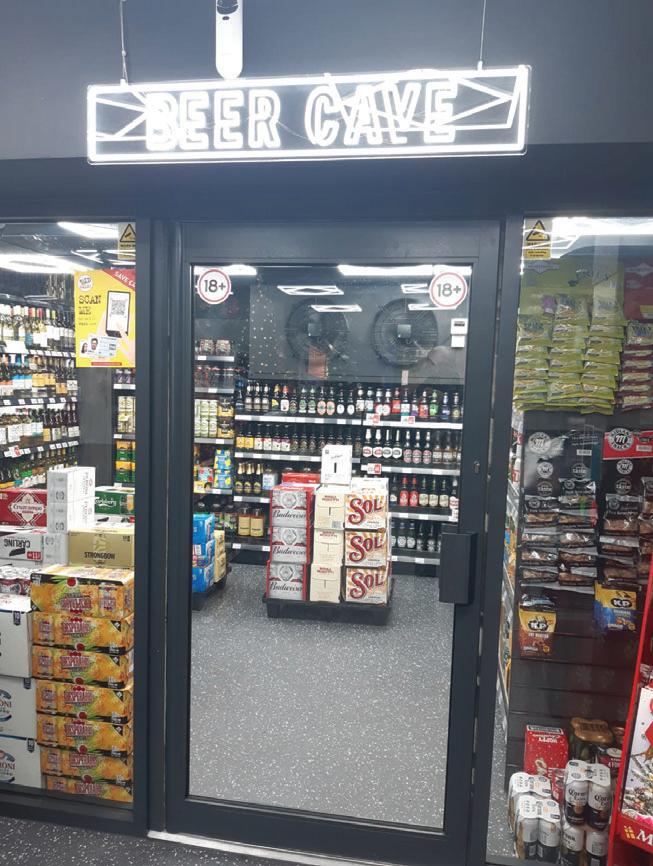
‘Constant focus needed’
Sugro believes that all categories need constant focus to ensure the latest category data is being used effectively and consumer trends are being recognised by its members and retailers.
“Consumer trends change quite regularly so we make sure the advice we produce is up to date,” says trading controller Imran Ambalia. “It’s important that the correct ranges are stocked and planograms implemented as this drives sales for our members.”
Sugro works closely with its supplier partners to provide members and their customers with the latest category and industry insights through its educational ‘Drive Your Sales’ magazine and digital portal, available online and via WhatsApp.
Drive Your Sales includes category advice, planograms, best-selling products, and sustainability insights.
The group gives core range advice for all the categories its members trade in as it wants to ensure the correct ranges are being stocked. This year it will also be giving guidance on the household and toiletries categories via Drive Your Sales.

The information it receives from suppliers is based on data sources such as IRI and Nielsen to provide a balanced view.
SPAR UK’s category management guidance is informed by a combination of retailer and wholesaler sales-out data, wider market insight and relevant supplier data.
“The focus is always on applying this insight in a way that works for convenience retailing, rather than following national trends alone,” says Ian Taylor, retail & brand development director.
The group’s category management advice concentrates on building profitable, well-balanced ranges. This includes tailored planograms, pricing and promotional guidance and advice on space optimisation.
“Retailers are highly receptive to this support, particularly as it is grounded in real sales data and local shopper insight, helping them clearly see the impact on sales and margins,” says Taylor.

All five SPAR regional wholesale partners (AF Blakemore, CJ Lang & Son, James Hall & Co, Appleby Westward and Henderson Group) provide category management support to retailers. This is delivered through faceto-face support from business development managers, alongside printed and digital category guides and wider communications.
The category guides are regularly refreshed to reflect changing shopper behaviour and emerging trends. This year, the group is updating several core categories while strengthening guidance around food to go, own label, value-led ranges and key seasonal and event-based opportunities.
“Fast-moving and space-sensitive categories such as food to go, impulse, chilled, soft drinks, confectionery and own label benefit most from structured category management, where small changes can deliver significant commercial gains,” Taylor maintains.
“Meal solutions and value-led ranges also warrant increased focus as shoppers look for convenience without compromising on affordability.”
































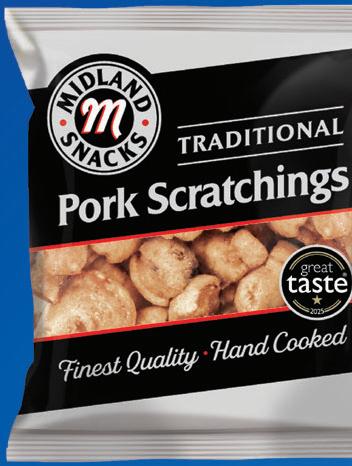








































































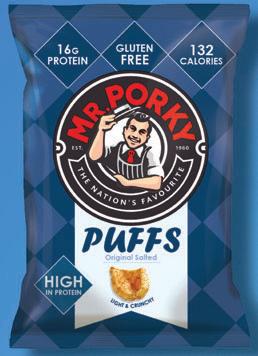






































































































































Sharing PMPs (£1+): 58%6
- Worth over half of all snack sales
- Golden Wonder’s £1 PMPs are outperforming the market and growing at +24.2% vs. +0.4%7






30% of convenience retailers who sell crisps and snacks don’t sell pork snacks, missing out on a slice of a £45m














Impulse PMPs (<£1): 26%8
• Ridges £1 PMP In best-selling flavours. Available APRIL. DON’T MISS OUT ON PORK SNACKS




- Significant footfall driver
- Over 20 million Golden Wonder impulse packs sold per year9







• Oinks £1 PMP Best-selling Impulse Product.10 Available NOW.





• Saucers Sour Cream & Onion £1 PMP Back by popular demand. Available NOW.

• Bikers Cheese & Onion 35p PMP New nHFSS addition to range. Available APRIL.




































































































1.Availability
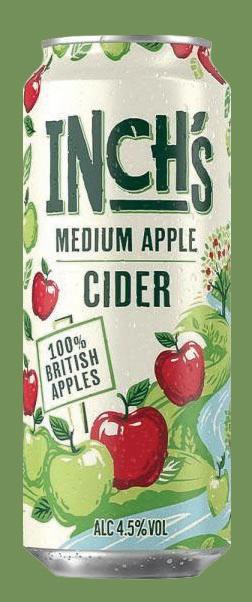
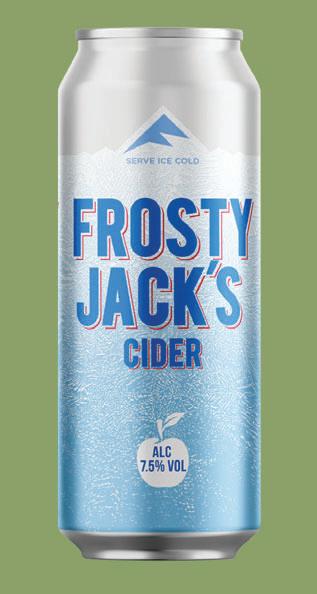
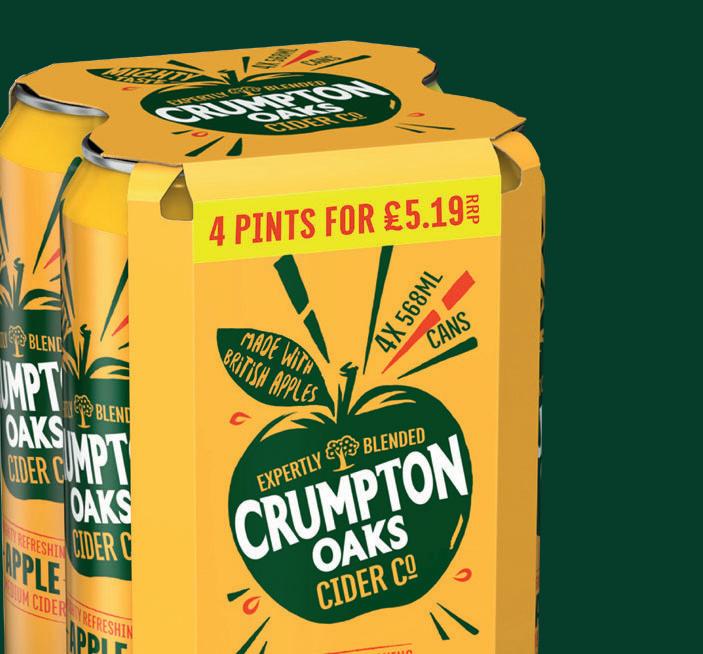
Affordability for the customer is the #1 factor retailers consider when stocking a cider brand (51%)... ...Even above retail margin (48%) and wholesale promotions (also 48%)*3





























Dee Sedani, One Stop Packmoor, Stoke-on-Trent
“We stock Frosty Jack’s as it’s one of the only formats that is available in a 2.5l option - which is critical for our business. We stock cans as well and both bottle formats in the chiller as part of our planogram from One Stop. Offering cider chilled and ready to drink is where we really excel as a store.
A lot of our cider range, including Frosty Jack’s, is typically for consumption within the next few hours. Frosty Jack’s has a dedicated and loyal shopper base, which really helps sales.”













Paresh Vyas, Jack Link’s Convenience Store, Greater Manchester
“We sell Crumpton Oaks, Knights and Frosty Jack’s, and they are all strong sellers. People buy Crumpton Oaks more for social occasions in our area, specifically during the summer when they’ll buy more than just one bottle. We stock the range in cans and bottles, but we find the bottles range is a much bigger seller.
If you don’t stock these lines, I recommend buying a case of each flavour and trialling it. We sell around 20-25 cases a month.”






















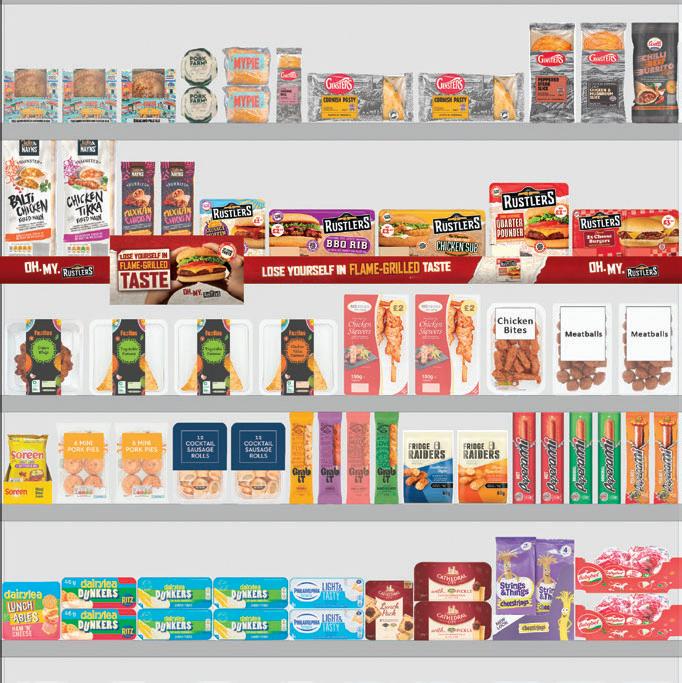




















































It’s no surprise that lager continues to be the most popular style of beer, delivering 83%* of total beer growth within the channel, so should make up the majority of space in the chiller.
However, beer is no longer defined by lager. Shoppers’ tastes are changing and they are becoming more open to trying different styles and flavours, so it’s important to cater to this demand and offer choice through growing sub sectors, such as craft beer, helping to provide a point of difference to your range.

PUNK IPA IS THE UK’S BEST SELLING CRAFT BEER BRAND
Within craft beer, IPA is the most popular and best-performing style of beer all year round in Convenience, and IPA is worth 66.9% of total craft in convenience**. The heartland of craft is Punk IPA, the #1 craft beer brand and BrewDog’s best seller**.
This recognition means it acts as a signpost for the category, so something that shoppers will look for when browsing the chiller.
We recommend this as an initial craft offering, supported by Hazy Jane New England IPA 4 can multi-packs, which continues to see a lot of love from shoppers for its bold, tropical flavours. BrewDog Mixed packs are growing at +15.1% vs YA**.
Punk IPA and Hazy Jane, along with BrewDog Mixed Packs are the top three skus in the craft beer market, making up 54% of sales***.


However, the craft consumer does enjoy NPD and the variety that craft beer has to offer. We therefore recommend rotating your range twice a year, alongside your core range of Punk IPA and Hazy Jane, to drive excitement, and trial whilst also reflecting weather conditions and seasonality.

The beer category is vital to the success of the convenience channel.
Worth £1.7Bn and growing +5.1%* vs YA, which is ahead of grocery – and it all starts with range.

With Craft Beer still a relatively new category to the impulse channel, selling prices vary significantly as retailers explore its positioning. This has potentially been a barrier to purchase, with shoppers looking for value and stores struggling to compete with supermarkets.
BrewDog has recognised the opportunity to help retailers drive ROS with a consistent price across its bestsellers, whilst also delivering value to the end consumer, by introducing price marked packs on BrewDog’s top-selling skus, Punk IPA and Hazy Jane.
Promotional 4 x 330ml-can multipacks are priced at £6.99, and available now exclusively to wholesale and convenience customers.
With 88%** of total beer 4-packs sold at under £7 , £6.99 is a compelling price for both stores and shoppers, which will encourage more retailers to pick it up in depot and ultimately more people to try craft beer for the first time.
Price marked packs are growing ahead of beer +28% in value sales, vs just 4% for total beer, and are now worth 27% of total beer in the convenience channel, increasing to 52%** of the 4-pack category. This indicates that stocking price-marked packs of best-selling beer products, presents a huge opportunity for retailers to drive category sales.


RRP:













For more category advice, information on the full BrewDog range and details of where to buy BrewDog, visit the trade website: drink.brewdog.com/uk/enquiry
SELL SMARTER AND FASTER WITH:
GROWTH HACKS
TOP TRENDS AND INSIGHTS
EXCLUSIVE SUPPORT


Optimise your store, grow your sales and give yourself the competitive edge as we navigate the challenges of modern convenience retail to keep you in pole position.
WHY? Because the soft drink landscape is shifting, get ready to maximise the growing shopper demand for performance drinks.
GROWTH HACKS:
Tried and tested, for fast incremental sales
TOP TRENDS AND INSIGHTS:
Stay ahead of shopper shifts and category performance
EXCLUSIVE SUPPORT:
Join the WhatsApp group for real-time updates and expert advice to drive business forward
VS 2 YEARS AGO -36M
SIGN UP TO THE CO-DRIVER WHATSAPP GROUP FOR MORE













STOCK THE KITCHE N

















, KEEP THE PEACE.


















































































Water has been a real driver of growth in Symbols and Independents for the second-year running, with growth of +24.0% since 2023, that’s almost twice Sports and Energy and 10 times the growth of Cola1.
In the total market water delivers 14.3% of total soft drinks sales, but only 10.2% in Symbols and Independents so there is still a huge growth opportunity in the channel2.
Don’t forget to drive impulse sales and maximise uplift during the summer months: 45% of people prefer to drink water at room temperature3 so use floor stacks and till displays to drive sales when the chiller is empty.
Helping shoppers by stocking water brands that they know will encourage impulse sales and Nestlé Pure Life is the right choice – not only does it have the number one SKU in soft drinks, more than 1 million bottles4 are sold every day and it’s the bestselling 500ml SKU in Symbols and Independents5. Look out for the 1.5L bottle which is perfect for customers who want a great value brand to take home.
















World Foods is rapidly becoming one of the most significant and rapidly expanding categories in UK grocery retail, driven by changing demographics, and the continued mainstreaming of global cuisines. With 90% of UK adults now eating world cuisines at home*, engagement with the category is close to universal.
As the UK’s leading specialist suppliers and distributors of ethnic cuisines, Wanis International Foods is uniquely placed to support retailers at every stage of their World Foods journey. Here is our guide to maximising sales in 2026:
Bulk purchasing of larger pack sizes have contributed to an additional 11.5 million kilos of rice sales. A destination product, it can influence where both retailers and consumers choose to shop. Golden Sella is gaining rapid momentum and industry forecasting points to further growth for the parboiled, easy-cook format. Its sales rose by 31%**, with Tropical Sun emerging as the standout performer.
Key to success in rice:
•Clear segmentation by type (long grain, basmati, jasmine)
•Strong availability in larger pack sizes
•Stock brands that shoppers recognise and actively seek out
•Competitive pricing and price-marked packs





































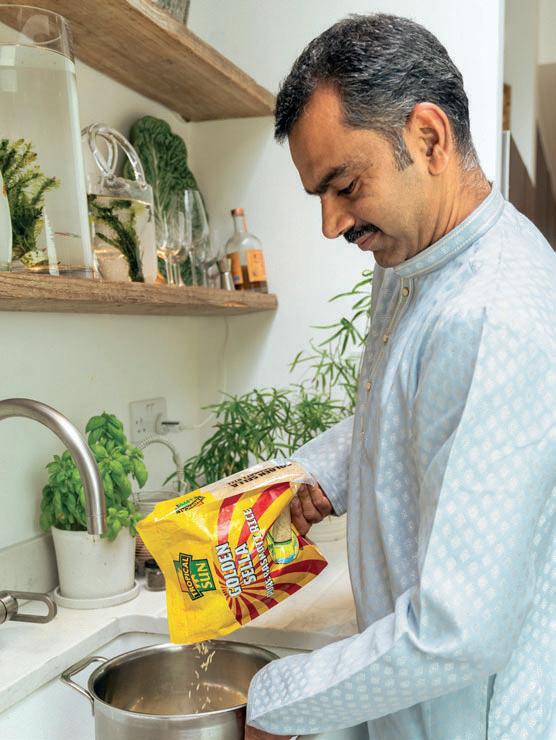










Milk powder’s versatility across hot drinks, cooking and baking in addition to its long shelf life is appealing to shoppers. Challenger brand Tropical Sun Milk Powder continues to gain ground thanks to quality at competitive pricing and retailerfriendly formats, while established brands such as Nido and Peak also remain strong performers.






























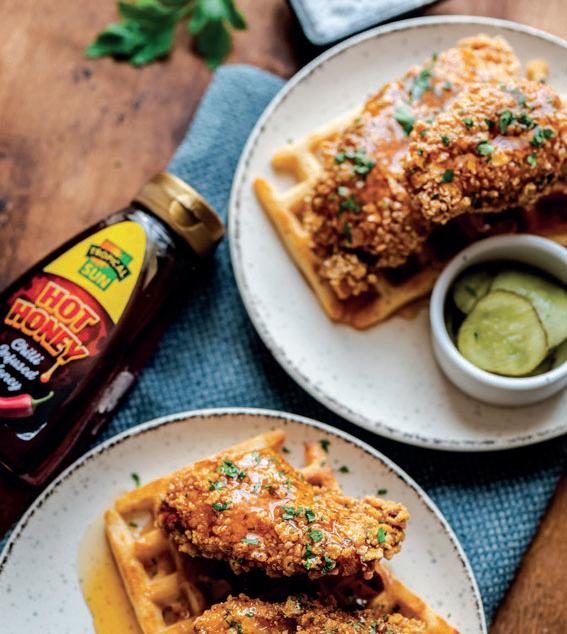
Honey is enjoying a surge in popularity, with Brits buying an extra 2.5 million kilos last year. The rise of hot honey and strong demand for natural, minimally processed foods seems to have fuelled this growth. Honey sales at Wanis were up 43%** led by specialist lines such as Tropical Sun’s Hot Honey and Turmeric & Ginger Honey. A varied honey range encourages incremental spend and cross-category purchasing.

























World teas like moringa, soursop and sorrel (hibiscus) are long established within African, Caribbean and Asian communities, however, these teas are now attracting wider interest as consumers seek functional, natural alternatives with wellness benefits. Sales of Tropical Sun’s 30-strong teas of the world range at Wanis are up by 26%** thanks to the brand’s strong investment in NPD and a category wide rebrand. Demand for hot chocolate and malted drinks also remains high within the World Food space, however, shoppers seem to be seeking out more pocket friendly brands.












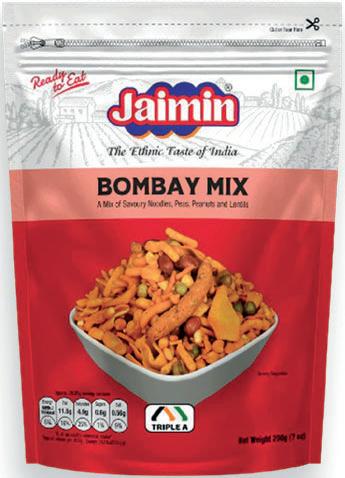










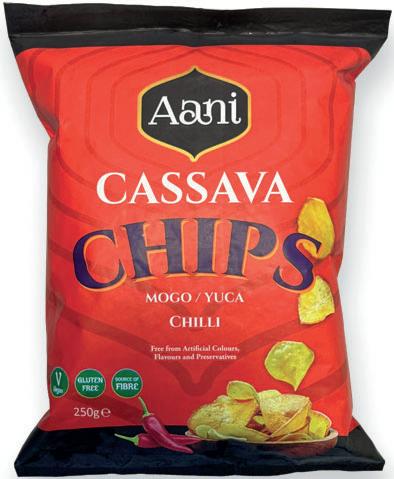

World Foods works best when treated as a core category, rather than as an add-on. Here are our top 5 tips for success!
1.Tailor your product range based on your local customers.
2.Remove product duplication. Remember: 20% of SKUs typically contribute to 80% of sales.
3.Stock trusted brands that are driving category growth to attract a broader customer base.
4.Range price-marked packs where possible.
5.Group and merchandise products by country of cuisine.
World snacks are no longer confined to specialist shoppers. Plantain chips, cassava snacks and flavoured nuts are now firmly part of the mainstream snacking conversation, offering a credible alternative to traditional crisps.
•Clear differentiation
•Strong margins
•Mainstream appeal



House


0208 988 8450