MASTER PLAN UPDATE
Board of Commissioners
Keith Frangiamore
President
Mike Renner Vice President
Jill Carasso Commissioner
Phil Stanko Commissioner
Melissa Victor Commissioner
Project Team
Hitchcock Design Group Planning and Landscape Architecture
Williams Architects Architecture and Facilities
Recreation Results
Program Assessment Lauterbach and
Chapter 1: Envision and Prioritize: Alternative and Preferred Strategies
Chapter 2: Prioritize: Preferred Strategies
Chapter 3: Analyze: Inventory & Analysis
Chapter 4: Connect: Needs Assessment
Chapter 5: Appendix
Introduction
The
Cary Park District developed this Comprehensive Master Plan, shaped by community input, to guide park, facility, and program development decisions over the next five years.
Purpose
The purpose of this Comprehensive Master Plan is to:
• Assess existing parks, facilities, and programs
• Determine community opinion about services and facilities
• Identify park, facility, and program needs
• Define strategic, measurable goals and objectives
• Provide an action plan to implement strategies over the next five years
Planning Process
The comprehensive planning process consisted of four key phases: Analyze, Connect, Envision, and Prioritize. The planning process began in the Fall of 2024 with an extensive inventory and analysis of the Cary Park District’s park and open space assets, indoor facilities, and community context.
During the Connect Phase, the Park Board, staff, stakeholders, and community residents shared their opinions about the District’s parks, facilities, programs, services, and future needs.
Upon completion of the Analyze and Connect Phases, the Planning Team met to develop alternative strategies. With input from the Park Board and staff, the Planning Team prioritized and incorporated these strategies into an action plan that will be implemented over the next five years.
How to Use the Plan
This Comprehensive Master Plan will be used by the Park District as a guide to implement action items over the next five years. The first two chapters provide recommendations for the District’s next five years while the following two chapters provide supporting evidence of those recommendations gained through the Analyze and Connect Phases. The Action Plan in Chapter Two is a working list that will be updated annually as funding opportunities and project priorities change.
STRUCTURE OF THE DOCUMENT
Chapter One
Envision and Prioritize: Alternative and Preferred Strategies
Chapter One outlines the takeaways that arose during the Analyze and Connect Phases. It provides the background of those takeaways, synthesizing the results from the previous phases into justification and background for future action items and the strategies to achieve them.
Chapter Four
Connect: Needs Assessment
Chapter Four includes national, state, and local parks and recreation trends. It also includes summaries of the community and online surveys, stakeholder interviews and focus group meetings, and community and staff workshops.
Chapter Two
Implement: Action Plan
Chapter Two outlines the highest priority strategies in a Five-Year Action Plan that designates when strategies will occur and how to accomplish them.
Chapter Three
Analyze: Inventory & Analysis
Chapter Three provides a detailed inventory of parkland, open space, District facilities, schools, relevant adjacent land uses, and program offerings. Park and facility assets are quantified by standards, size, location, and amenities. The chapter concludes with an assessment of the District’s program portfolio.
Chapter Five
Appendix
Chapter Five contains additional resources referenced and reports developed as part of the comprehensive master plan process. These documents include the Village of Cary zoning map, Illinois Department of Natural Resources Useful Life Criteria, Cary Park District Indoor Facility Assessment Report, a blank copy of the statistically valid survey issued during the Connect phase, the chart and graph results from that same statistically valid survey, the open-ended responses and comments from the online survey issued during the Connect phase, a list of the stakeholder interview questions, the staff workshop results summary, and the community workshop results summary.
District Profile
The Cary Park District’s mission is “Providing exceptional recreation, parks, and open space opportunities.”
Vision
1. Recreation
Provide non-discriminatory leisure opportunities for the region to participate in active and passive, supervised and non-supervised, for-fee and free, parks and recreation programs, facilities, and services
2. Preservation, Heritage and Community Character
Lead the community in efforts to maintain and preserve the open space, natural and historical heritage, and “ruralsuburban” character of the communities that we serve
3. Service, Meeting the Needs of the Community
Provide services that are proactive where possible that meet or exceed the current and future needs of the community
4. Excellence and Value
Work with a commitment toward excellence and value as recognized by the community
5. Cooperation
Accomplish more for the community than our own individual efforts may allow, through cooperation with other governmental, non-profit and private sector agencies
6. Progressive Innovation
Lead the field in parks and recreation for communities our size through progressive and innovative practices
Long Range Goals
The Long Range Goals of the Cary Park District are to provide exceptional services in the following area:
• Park & Open Space Operations. Provide park maintenance and open space preservation services to the community
• Recreation Programs & Facilities Operations. Provide recreation programs, facilities, and services to the community
• Community Information. Provide communications, information, and public relations services to the community
• Administration. Provide support services in administration, finance, personnel, technology, risk management, planning, and development to the agency
Geographic Profile
The Cary Park District is located in McHenry County and covers approximately 12 square miles. The Park District includes residents from the Villages of Oakwood Hills,
Cary, Trout Valley, and Lake in the Hills. The City of Crystal Lake is located west of the District. The Fox River largely defines the Park District’s southern border, which directly across lies the Village of Fox River Grove.
The Northwest Tollway (Interstate 90) is 15 miles south of Cary, with ingress and egress ramps located between Dundee and Elgin. U.S. Route 14 (Northwest Highway) bisects the Park District on northwest/southeast axis. McHenry County Route V36 (Cary-Algonquin/Silver Lake Road) is the principle north/south route through the Park District. Illinois Route 31 forms a portion of the Park District’s western boundary at Hoffman Park. West Main Street, Three Oaks Road, Crystal Lake Road and Rawson Bridge Road are other major roadways that link Park District facilities.
In its assessment of existing conditions, the McHenry County Transit Plan notes the county is a fast growing area in terms of population and employment but has relatively low densities, that transportation and land use planning are being looked at in tandem, as evidenced by the County’s 2020 Unified Plan, and that growth is concentrating in emerging corridors, a pattern that is expected to continue.
History
(The following written history of the Cary Park District, from inception to 2006, is revised from the book titled, Cary Me Back, ©1993 and updated information from Commissioner Phil Stanko, the Planning Team, and the Cary Park District website.)
The formation of the Cary Park District traces its origins back to 1963 when an interest survey by the Jaycees indicated a strong community desire for a swimming pool. The Jaycees concluded that the only way that a community swimming pool could be developed was with the formation of a park district. In the late ’60s, a Pool Feasibility Study by the Cary Village trustees and a Citizens Committee for Recreational Expansion survey had similar results and came to a conclusion for the establishment of a park district.
In January, 1971, the Mayor of Cary distributed his annual report and the possible role the Village would play in organizing a referendum for the establishment of a park district. Over the next several months, meetings were held to discuss the formation of a park district and its boundaries. On September 14, 1971, a public hearing was held for the referendum, and on October 30 the community voted on the referendum. The vote was 457 for, and 363 against.
On October 30, 1971 the community voted in favor of forming the Cary Park District.
Currently, there are no major state or county roadway improvements planned for the Park District service area, however, the completed Rakow Road widening in Crystal Lake and West AlgonquinIllinois Route 31 bypass helped to improve regional access to the District.
Voters elected five park commissioners when the Park District was formed. The charter commissioners were T. Larry Phalin, President; Michael D. Collins, Vice President; James F. Hollahan, Secretary; Paul W. Dianis, Treasurer; and Robert M. Skallerup. Jay Adler
was the first employee of the Park District serving as a part-time director from the spring of 1972 until September of 1973. The Board hired Thomas E. Connolly as the first full-time employee and director of the Park District. The Park District’s first expansion of services came in 1976 when the Northern Illinois Special Recreation Association (NISRA) was created to meet the recreational needs of residents with disabilities. The Park District is a charter member of the association that has provided recreational programs for many residents for over 50 years.
The first Park District office was in a room rented from the Village. The office was on the second floor of the Cary Village Hall on West Main Street that previously housed a school, and, until recently served as the Kraus Senior Center. The first annual Budget and Appropriation Ordinance was approved on May 9, 1972 for $67,210. The Park District had to borrow $10,000 until June of 1973, when the first taxes were received. The anticipated taxes were to be approximately $52,000. The Village of Cary had a population of 4,500, while the Park District’s population had expanded to 8,000.
In 1972, the Village of Cary transferred several parks, totaling 54 acres, to the Cary Park District: Lions Park with 39 acres and later expanded to 105 acres; Jamesway Park with 3 acres; Deveron Circle with 1/4 acre; Val Budd Nature Park with 1/2 acre; Greenfields Park with 6 acres; and Water Tower Prairie Park with 5 acres. In 1980, Cary Park with 6 acres was transferred to the Park District and later rededicated as Cary Veterans Park. Today, the Park District operates over 40 parks, approximately 9 miles of bike trails, an 18-hole golf course, and over 800 acres of open space.
Beginning in 1973, the Park District rented the Thunderbird Farm swimming pool at Three Oaks Road and Route 14 for $6,000 a summer. Bill Meyer, a teacher at Cary Junior High School, was hired
to run the swimming pool program, and the pool continued to be used until 1978, when the current Community Center pool opened.
The Park District held a referendum to sell $760,000 of bonds to build the current Community Center and pool in 1976. The referendum was successful with 845 ‘yes’ votes and 529 ‘no’ votes. With this referendum, the Park District was able to fulfill one goal of its creation; meeting the need for a swimming pool in Cary.
In January, 1991, the Park District acquired 80 acres called the Sands Main Street Prairie, which included a house, garage, barn, and chicken coop. Sixteen acres were acquired from doctors who were
agreement with the Village. The pavilion at the south end of the park was completed in September, 1990. The Jaycees, sharing expenses with the Park District, installed the original structure.
About the time Route 14 was expanded to four lanes, the Park District received a state grant to help it convert the pavilion into a warming shelter and add restrooms. The completion of the park’s improvements, finished in 1999, took longer than expected when Route 14 road construction caused a leak in the pond. The underground storm sewers were resealed, which stopped the infiltration of underground water into the stormwater system and returned the pond to its normal water levels.
After more than 40 years of service, the Community Center Pool closed with the opening of Sunburst Bay Aquatic Center.
keeping the land as investment property, and the remaining 64 acres were donated by Mr. Sands to the Park District. The 16 acres represented virgin gravel hill prairie identified on a survey done by the State of Illinois to inventory the last of its native landscape still in pre-settlement condition. Two houses built in the 1860s comprise Wallace Farm, the farmhouse on Sands Main Street Prairie. With the construction of East Main Street in 1886, the houses were combined. The back portion of the house was moved south to its present location from its original site where a pole barn now sits on what is known today as the Swanson property.
Jaycee Park was originally part of the Seebert Farm. Originally a swamp with a creek running through it, a developer in 1980 began excavating the property to drain the land and convert it into a pond for stormwater detention. In September, 1981, the developer deeded the property and the pond to the Cary Park District as part of the annexation
The Village of Cary obtained the original 38 acres of Lions Park in October 1966 for $20,300. The money for the park came from a contribution of the Cary Lions Club and a HUD Grant. The parcel started at Three Oaks Road and went north to what is now the entrance road to Lions Park. The Park District began development of the park in 1979 with the construction of a maintenance garage, which was funded through the first developer contribution ordinance passed by the Village in 1978. In January 1981, the Park District received a grant for $229,000 from the U.S. Department of Heritage and Conservation Service to acquire land adjacent to Lions Park. With an additional $40,000 of Park District funds, the District was able to acquire 66 acres. The grant funded the purchase and the development of a new parking lot, bathrooms, softball fields, and playground equipment.
Throughout the ’80s and ’90s the Cary area experienced explosive growth. The Park District,
along with the villages and unincorporated areas it served, also grew. The boundaries of the Park District include the entire villages of Cary and Trout Valley, which became an incorporated village during the ’90s. The Park District also includes parts of the villages of Lake in the Hills, Oakwood Hills, and areas of unincorporated McHenry County. The population served by the Park District is now over 20,500 people.
Based on the Park District’s Comprehensive Plan, the District discovered that it had growing areas within the District that lacked parks and open space. The Park District began the acquisition of Cary-Grove Park in the mid-90s by attempting to purchase it from a developer who wanted to build a 200-home subdivision on the property. The 80 acres, formally known as Reiber Farm, was acquired after a long contested purchase for $3.3 million in September, 2000. Cary-Grove Park is contiguous with Cary-Grove High School, for which it is named, with the Foxford Hills Golf Club, and with the Cary Junior High School. Cary-Grove Park is also centrally located within the Park District and an area where open space was needed. The park offers many benefits. First Street was extended to permit access to both the high school and the park. Soccer fields, multipurpose trails, a playground, and a parking lot were created with the first phase of development.
One of the most unique park acquisitions was the purchase of Hoffman Park for $11.5 million in December, 1999. The property had been planned for development in the Village of Cary for many years. Unable to reach an agreement with the Village of Cary, the developer decided to annex the property into Lake in the Hills and seek a development agreement with that village. The Village of Lake in the Hills considered a plan that included a large area for gravel mining that would be surrounded by residences. At this point a group of concerned Cary citizens formed and
approached the Park District to consider the purchase of the property. Since the Park District’s comprehensive plan indicated a need for land in the area and with the strong backing of citizens to acquire the land, the Park District went to referendum to increase the Corporate Tax rate to provide funding to purchase the land. With the successful referendum and an agreement reached with the developer for purchase, the land was acquired and named after the parents of the developer as part of the purchase agreement. In 2000, a consent agreement was reached with the Village of Lake in the Hills to determine development, annexation, and other land use disputes regarding Hoffman Park. The Park District used a $400,000 grant to develop the first legs of the internal trail system planned for the park.
In January of 2004, the Park District purchased Foxford Hills Golf Club for $4.5 million. Nestled among the rolling hills of an old mink farm and the houses of the Foxford Hills subdivision, the golf course is one of the area’s premier courses. The Nugent-designed course is a championship 18-hole golf course and laid out on 195 beautiful acres. The golf course includes a full service golf club that meets the needs of its patrons as well as anyone interested in a quick lunch, a cold beverage, or an interest in purchasing golf merchandise. Foxford Hills is intended to be a regional, upscale, premier public golf course with a par-72 layout totaling over 7,000 yards. The five sets of tees offer the perfect challenge for the full spectrum of golfers from novice to experienced. The Park District is thrilled to offer this public facility as a recreational opportunity to our residents and golf patrons of the surrounding area.
In 2005 the Cary-Grove Park (1.83 acres) property was dedicated to the Village of Cary as roadway and intersection at First Street and Three Oaks Road. The Park District also received a Conservation & Native Landscaping Award from the United States Environmental Protection Agency and the Chicago Wilderness Society for the Jaycee Park renovation.
In 2006, Decker Park’s (0.10 acres) adjacent land was acquired by subdivision development ordinance. The Community Center lobby underwent a facelift to better serve the needs of both those who use the facility and those who work within the space. Improvements included more flat space for guests to write upon, more storage space, and improved accessibility to the area for those with disabilities. Cary Woods Park was developed. The Illinois Distinguished Park & Recreation Agency Award is presented to the Park District for the second time. The Park District received two Programming Our World awards at the 2006 Programming Our World Conference in Michigan—Best Family Program: Monkey Bars and Best Environmental Program: IPRA Canoe Trip. The Cary Park District Board of Commissioners approved the 2006 Master Plan and Strategic Plan.
In 2007, the Park District launched a new and improved website with several interactive features including a park and trail map, events calendar, athletic league organizer, and many other features. The Park District purchased and installed an electronic message sign in Jaycee Park on the corner of Silver Lake and Three Oaks Roads. Wentworth Park development was completed. A referendum asking voters for permission to sell up to 80 acres of the westernmost portion of Hoffman Park failed by a margin of 140 votes.
The Park District won “Best Website” and “Most Improved Marketing Piece” in the Illinois Park and Recreation Association Agency Showcase Competition in January of 2008. This competition is the premier communication and marketing competition for park and recreation agencies in Illinois. WiFi was installed both in the Community Center and Foxford Hills Golf Club. Chalet Hills Park was developed and Greenfields Park playground was renovated. Lyons Ridge out lot, Phase IV was accepted. New skate park opened at Lions Park. The Park District attempted a second referendum asking voters permission to sell up to 80 acres of the westernmost portion of Hoffman Park. The referendum passed.
The renovation of the Cary Park District Community Center began in June of 2009 and was completed in December. The racquetball courts were removed and replaced with program/meeting rooms, a large meeting space, and fully equipped kitchen. All equipment was replaced in the Fitness Center, as well as all flooring, lighting, and decor. An OSLAD grant of $391,000 was obtained to help with the Hoffman Park development of a dog park. West Lake Park was accepted and dedicated in September.
Construction of the Cary Community Trail began in the spring of 2010. The nearly 2 mile trail links and provides nearly 6 miles of trail throughout the northeast section of the Cary community. The trail links two elementary schools, the high school, the junior high, the library, two subdivisions, two Cary Park District properties, and a McHenry County Conservation District property. The Cary Community Trail opened November 2010. Construction began on the Hoffman Park Phase I Development in the Fall of 2010. The plans included an off-leash dog play area, accessible fishing pier, a native prairie habitat and wildlife seed plots, nature observation shelter, accessible community garden plots, demonstration worm-farm, picnic shelter, public support facilities, 4,000 linear feet of trail, and alternative energy generation sources using wind and solar technologies. Rapid Reg, an easy and convenient online registration option, launched in the summer of 2011. Hoffman Park Phase I development was completed. Amenities included an accessible fishing pier, shelters, parking, restrooms, open dog play area, and 0.7 miles of trail segment.
In 2012, the Community Garden Plots at Hoffman Park were opened for use. Renovation of employee spaces at the Maintenance Garage was completed. The Americans with Disabilities (ADA) Transition Plan for the Park District was approved by the Board of Commissioners.
The Park District entered into a shared project with the Village of Cary for the paving of the Community Center parking lot with added amenities for the safety of the
patrons in 2013. The Comprehensive Master Plan also underwent a historical update.
In 2014, the Park District reached an agreement with Lake in the Hills for a shared maintenance of the Route 31 Trail. Resolution R-2013-14-03 offered support to Com Ed for the Green Regions Grant. Lions Park was the site of a new multi-use trail. The Cary Park District voted by resolution R-2014-15-01, to support the Silver Creek Watershed. Plans were made and public hearings held for the redesign of Candlewood and Hillside playgrounds. The Preschool went through an RFQ, investigated options, and began the process with an architectural firm to seek a site and build a new Preschool. Pool improvements to the deck and locker room entries were completed prior to the 2014 pool season. The Park District received recognition at the IAPD/IPRA annual conference as an Illinois Distinguished Accredited Agency for the third time.
In 2015 and 2016, the Park District launched a mobile-friendly website, completed the Hillside Prairie Park and Candlewood playground projects, and approved the 2016 Comprehensive Master Plan Update. Jamesway Park reopened with a new playground, a new online registration system was implemented, and the tennis courts at Cary Veterans Park were removed.
zoning classifications. Design and development of the Kaper and Lions Park revitalization projects began, Timbertown was removed from Kaper Park to allow for construction of an accessible playground and splash pad, and the Walnut Hollow Disc Golf Course opened at Hoffman Park. Hampton Park received a playground renovation, an Indoor Recreation and Aquatic Feasibility Study was completed, a $1.4 million ITEP grant was awarded for the Hoffman Park Trail Extension, the Thor Guard Lightning Prediction System was installed throughout the park system, and the Park District received recognition as an Illinois Distinguished Accredited Agency.
From 2019 through 2021, Lions Park reopened with renovated athletic fields, expanded support facilities, and plaza improvements, and Kaper Park reopened with a universally accessible playground, splash pad, restrooms, shelters, and site amenities. A new preschool facility was purchased and opened for programming, Cary-Grove Park was annexed into the Village of Cary, design and construction began on the Outdoor Aquatic Center at CaryGrove Park, the Community Center Pool completed its final season after more than 40 years of service, and the Hoffman Park Trail Extension opened to the public. The Park District celebrated its 50th Anniversary in 2021.
Policy-making and legislative authority are vested in the Cary Park District Board of Commissioners, which consists of five commissioners.
In 2017 and 2018, development of a disc golf course at Hoffman Park began, updates to the Cary-Grove Park site master plan were approved, and Kaper and Lions Parks were rezoned to Park and Open Space
Between 2022 and 2024, Sunburst Bay Aquatic Center opened at Cary-Grove Park, playground replacements were completed at Fox Trail Park, Knotty Pines Park, Bristol Park, and Brittany Park, demolition of the Community Center
Pool began, and the 2023 ADA Transition Plan Update was approved. The Park District received multiple regional awards, including Best of the Fox recognitions for Foxford Hills Golf Club and Sunburst Bay Aquatic Center and as an Illinois Distinguished Accredited Agency. The Park District is very proud of its history, its parks, its stewardship of natural heritage, and its recreational programs. Our continuing mission is to serve the communities through providing exceptional recreation, parks, and open space opportunities.
Organizational Structure
Policy-making and legislative authority are vested in the Cary Park District Board of Commissioners, which consists of five Commissioners. The Board is elected on a nonpartisan, at-large basis. Commissioners are elected to staggered six-year terms. This governing body is responsible, among other things, for passing ordinances, adopting the budget, appointing committees, and hiring the Park District Executive Director. The Executive Director is responsible for carrying out the policies and ordinances of the Board, for overseeing the day-to-day operations of the Park District, and for hiring qualified and professional employees. The Executive Director is charged with overseeing four departments – Finance and Administration, Operations, Communications and Marketing, and Planning and Development.
Important Acquisitions, Grants, and Milestones
1971
October 30, Cary Park District created by referendum, 457 yes, 363 no.
1974
March, Property acquired by agreement with the Village of Cary:
• Water Tower Prairie Park (5.70 acres)
• Jamesway Park (3.10 acres)
• Deveron Circle (0.20 acres)
• Val Budd Park (0.70 acre)
July, Lions Park (39 acres) acquired by agreement with the Village of Cary.
1976
August, Bond ($760,000) Referendum to build a community pool and center passed by vote of 845 yes to 529 no.
1977
February, Greenfields Park (6.10 acres) acquired by agreement with the Village of Cary.
May, Community Center Building Parcels acquired by agreement with the Village of Cary.
1978
June, Community Center and Pool opened to the public.
1980
July, Candlewood Park (4.90 acres) acquired by developer donation.
December, Cary Veterans Park (6.20 acres) acquired by agreement with the Village of Cary by Warranty Deed.
1982
July, Jaycee Park (15.49 acres) acquired by developer donation. Lions Park (66.36 acres) acquired by purchase for $290,000; Federal HCRS Grant in amount of $229,030 received for acquisition.
1985
March, Federal LWCF Grant received in the amount of $110,000 for field development and playground equipment at Lions Park.
1986
August, Hillhurst Open Space/Detention (3.35 acres) acquired by developer donation.
1988
February, Hillside Prairie Park (7.65 acres) acquired by developer donation.
November, Three Oaks Park (2.20 acres) acquired by developer donation.
1989
May, Sands Main Street Prairie (16.00 acres) acquired by condemnation and final judgment order in the amount of $220,000.
June, Hampton Park (1.73 acres) acquired by developer donation.
1990
October, Patriot Meadows Subdivision Outlots A/B (0.31 acres) acquired by developer donation. November, Knotty Pines Park (1.1 acres) acquired by developer donation.
December, Sands Main Street Prairie (64.23 acres) acquired by purchase for $570,000. Grant from The Nature Conservancy received in amount of $500,000.
1992
January, Kaper Park (15.5 acres) acquired by developer donation. Cimarron Open Space/ Detention (3.4 acres) acquired by developer donation.
1994
March, Fox Trails Park (11 acres) Lease Agreement with SD26 established (terminated in November, 2003).
August, Comprehensive Master Plan adopted. September, Brittany Park (2.3 acres) acquired by developer donation.Kiwanis Park & Outlots (3.6 acres) acquired by developer donation. Cary-Grove Park (4.9 acres) acquired by developer donation.
1995
January, Bristol Park (0.5 acres) and Lyons Ridge Greenway Trail Outlots A/B (0.67 acres) acquired by developer donation.
1996
September, Timbertown community-built playground development completed at Kaper Park.
1997
January, Community Center renovation completed, adding a conference room, multi-purpose room, dance room and fitness component, plus office space. State of Illinois OSLAD Grant ($165,700) awarded for Jaycees Park renovation project.
1999
April, Corporate Rate Increase (0.25/$100 EAV) Referendum passed by vote of 1,838 yes to 1,378 no.
July, Cary Oaks Park (4.3 acres) acquired by developer donation.
1981
October, Montana Open Space/Detention (0.53 acres) acquired by developer donation.
1991
July, Community Center Park parcels (3.5 acres) acquired by purchase for $310,000.00.
September, Jaycee Park renovation completed. December, Hoffman Park (258 acres) acquired by purchase for $11,586,960; Illinois First Funds grant received in amount of $400,000 for development purposes of the site.
2000
February, Consent agreement reached with Lake in the Hills to end condemnation dispute over Hoffman Park parcel. Up to 20-year agreement is put in place regarding disconnection, annexation, property uses and fees, land exchange and security.
March, Decker Park & Trails (8.85 acres) acquired by developer donation.
May, Saddle Oaks Park (1 acre) acquired by developer donation.
September, Cary-Grove Park (additional 78 acres) acquired by condemnation and subsequent court order for $3,304,626.
October, Sale of 0.68 acres of Candlewood Park to School District #26.
November, Illinois Distinguished Park & Recreation Agency Award presented to Cary Park District, the first designated agency in McHenry County.
2001
February, Hoffman Park (additional 80 acres) acquired by agreement with Lake in the Hills (2/2000).
April, The Park Foundation of Southeast McHenry County officially created to provide financial assistance to the Cary Park District.
2002
January, White Oaks Park (0.52 acres) & White Oaks Subdivision Outlot B (0.40 acres) acquired by developer donation.
September, Chalet Hills Park (0.67 acre) acquired by purchase for $117,500.
2003
July, Jamesway Park (additional 0.5 acres) acquired by purchase for $50,000.
November, Foxford Hills Park (0.62 acres) acquired by developer donation. Wentworth Park (0.40 acres) acquired by developer donation. Trail connection between CaryGrove Park and Sterling Ridge Linear Park completed on School District 26 property by easement agreement.
2004
January, Foxford Hills Golf Club (194.87 acres) acquired by purchase for $4,500,000.
April, Fox Trails Park (1 acre) acquired by purchase for $72,000. Cary-Grove Park (0.2074 acres) additional property acquired by purchase for $22,000.
June, Sterling Ridge Linear Park/Trailway (1.63 acres) acquired by developer donation.
July, Cambria Park (1.527 acres) acquired by developer donation. Cambria Park OSD (8.828 acres) acquired by developer donation. Hoffman Park (7.274 acres) adjacent land acquired by developer donation. New Haven Park & OSD (5.48 acres) acquired by developer donation. Cary Woods Park (0.50 acres) acquired by developer donation.
2005
February, Cary-Grove Park (1.83 acres) property dedicated to the Village of Cary as roadway and intersection at First Street and Three Oaks Road.
2006
February, Decker Park (0.10 acres) adjacent land acquired by developer donation. West Lake Park (1.62 acres) acquired by developer donation. Lyons Ridge Phase IV Trail Extension (.16 acres) acquired by agreement with Village of Cary and developer.
Decker Park (0.10 acres) adjacent land acquired by subdivision development ordinance.
Community Center lobby underwent a renovation. Cary Woods Park was developed.
The Illinois Distinguished Park & Recreation Agency Award was presented to the Park District for the second time.
The Park District received two Programming Our World awards at the 2006 Programming Our World Conference in Michigan. Best Family Program: Monkey Bars; Best Environmental Program: IPRA Canoe Trip.
The Board of Commissioners approved the 2006 Master Plan and Strategic Plan.
2007
The Park District launched a new interactive website. The Park District received the Certificate of Achievement in Financial Reporting.
The Park District purchased and installed an electronic message sign in Jaycee Park on the corner of Silver Lake and Three Oaks Roads.
Wentworth Park development completed.
Referendum asking voters permission to sell up to 80 acres of the westernmost portion of Hoffman Park failed by a margin of 140 votes.
2008
The Park District won “Best Website” and “Most Improved Marketing Piece” in the Illinois Park and Recreation Association Agency Showcase Competition.
The Park District received a second Certificate of Achievement in Financial Reporting.
WiFi was installed both in the Community Center and Foxford Hills Golf Club.
Chalet Hills Park was developed.
Greenfields Park playground was renovated. Lyons Ridge outlot, Phase IV was accepted.
New skate park opened at Lions Park.
The Park District attempted a second referendum to sell up to 80-acres of the westernmost portion of Hoffman Park. The referendum passes.
2009
The renovation of the Cary Park District Community Center began in June and was completed in December. An OSLAD grant of $391,000 was obtained to help with the Hoffman Park development of a dog park.
West Lake Park was accepted and dedicated in September. The Park District received the Certificate of Achievement in Financial Reporting.
2010
Construction of the Cary Community Trail began in the spring. Trail opened November 2010.
Construction on the Hoffman Park Phase 1 Development began in the summer.
The Park District received the Certificate of Achievement in Financial Reporting.
2011
Rapid Reg, an easy and convenient online registration option, launched in the summer. Hoffman Park Phase I development completed including the dog park and multi-use trail.
The Park District received the Certificate of Achievement in Financial Reporting.
2012
The Community Garden Plots at Hoffman Park were opened for use.
Renovation of employee spaces at the Maintenance Garage was completed.
The Americans with Disabilities Transition Plan for the Park District was approved by the Board of Commissioners.
The Park District received the Certificate of Achievement in Financial Reporting.
The Park District received recognition at the IAPD/ IPRA annual conference as an Illinois Distinguished Accredited Agency for the third time.
2013
The Park District entered into a shared project with the Village of Cary for the paving of the Community Center parking lot with added amenities for the safety of the patrons.
The Comprehensive Master Plan underwent a historical update.
Illinois Government Finance Officers’ Association presented an award for achievement for excellence in financial reporting.
2014
The Park District reached an agreement with Lake in the Hills for a shared maintenance of the Route 31 Trail.
Resolution R-2013-14-03 offered support to Com Ed for the Green Regions Grant.
Lions Park was the site of a new multi-use trail.
The Cary Park District voted by resolution R-201415-01, to support the Silver Creek Watershed. Plans were made for the redesign of Candlewood and Hillside playgrounds.
Pool improvements to the deck and locker room entries were completed prior to the 2014 pool season.
Illinois Government Finance Officers’ Association presented an award for achievement for excellence in financial reporting.
2015
The Park District launched a new and improved mobile-friendly website.
Hillside Prairie Park and Candlewood playground were completed.
The 2016 Comprehensive Master Plan Update begins.
The Park District was awarded a Certificate of Achievement for Excellence in Financial Reporting.
2016
The Park Board approved an update to the Comprehensive Master Plan.
Jamesway Park reopened with a brand new playground design.
A new and improved online registration system was launched.
Tennis courts at Cary Veterans Park were removed.
The Park District was awarded a Certificate of Achievement for Excellence in Financial Reporting.
2017
Development of a Disc Golf Course at Hoffman Park began.
The Park Board approved an update to the site master plan for Cary-Grove Park. Both Kaper and Lions Parks were rezoned from residential zoning to Park and Open Space zoning classification with the Village of Cary. Design and development of both Kaper and Lions
Parks revitalization projects began.
Received 2017 Loss Control Award from PDRMA for maintaining a current Level A accreditation statusthe District scored a 99.43%.
The Park District was awarded a Certificate of Achievement for Excellence in Financial Reporting.
2018
Timbertown, a beloved wooden play structure closed and was removed from Kaper Park to make way for an accessible playground and splash pad. Revitalization of Kaper and Lions Parks begins.
The Sands E. Main Street Prairie Advancement Opportunity Plan is approved.
Walnut Hollow Disc Golf course at Hoffman Park opened.
Hampton Park receives a playground renovation. The lease on the Administrative Annex begins.
The Park Board and Staff began an Indoor Recreation and Aquatic Feasibility Study to determine the needs and desires of the community and provide valuable information for the Park Board to make informed decisions going forward.
Park Board completed the 2018 Action Plan Update. Received a $1.4 million ITEP grant for the Hoffman Park Trail Extension.
Thorguard Lightning Prediction System was installed throughout the community at different park and facility site.
The Park District received recognition at the IAPD/ IPRA annual conference as an Illinois Distinguished Accredited Agency for the fourth time.
The Park District was awarded a Certificate of Achievement for Excellence in Financial Reporting.
2019
The Feasibility Study for an Indoor Recreation or Outdoor Aquatic Center was approved.
The Thor Guard Lighting Prediction System was installed at Cary-Grove Park, Hoffman Park, Jaycee Park, Kaper Park, Lions Park, and Foxford Hills Golf Club.
Lions Park ball fields reopened with renovated baseball fields, lacrosse and football field improvements, a refurbished plaza with picnic shelter, benches, spectator bleachers, and the renovation and expansion of restrooms and concession building.
Kaper Park reopened with a brand new universally designed accessible playground, splash pad, restrooms and storage building, picnic shelter, charging stations, Timbertown history sign, and a new walkway from the parking lot to the playground.
A new building for the Preschool program was purchased at 100 Cary-Algonquin Road.
The Carl & Claire Marie Sands Main Street Prairie Nature Preserve Vegetation Enhancement & Management Plan was accepted by the Park Board. Park Board approves the development of an Outdoor Aquatic Facility at Cary-Grove Park. The Park District was awarded a Certificate of Achievement for Excellence in Financial Reporting.
2020
Design of the Outdoor Aquatic Center began. Cary-Grove Park annexed into the Village of Cary. The Preschool welcomed it’s first students at it’s new location for the 2020/2021 school year. The Park District was awarded a Certificate of Achievement for Excellence in Financial Reporting.
2021
The Park District broke ground at Cary-Grove Park, officially starting the construction of the Outdoor Aquatic Center.
The Community Center Pool welcomed guests for its final season and retired after 40+ years. The Hoffman Park Trail extension opened to the public.
The Park District celebrated it’s 50th Anniversary with a year of different activities.
The Park District was awarded a Certificate of Achievement for Excellence in Financial Reporting.
2022
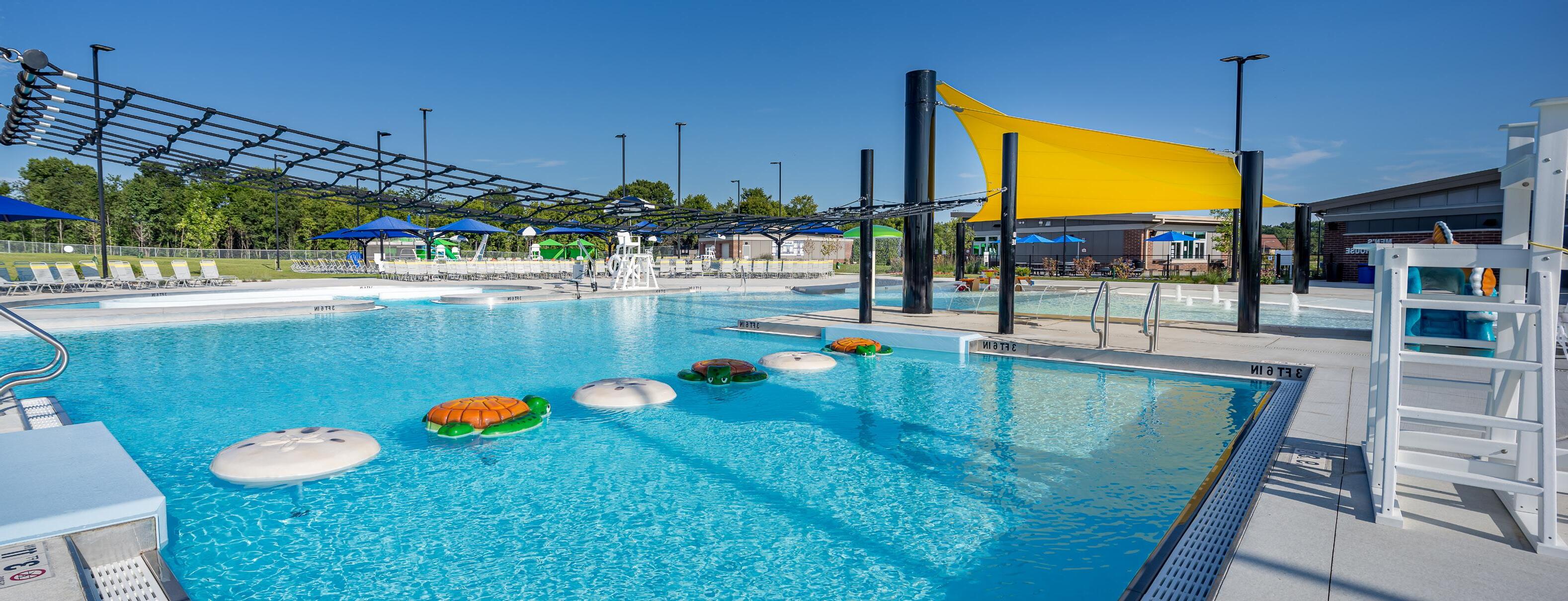
Sunburst Bay Aquatic Center opened at Cary-Grove Park.
Fox Trail Park and Knotty Pines Park received new playground equipment.
The Park District was awarded a Certificate of Achievement for Excellence in Financial Reporting.
2023
The Community Center Pool demolition project began.
Bristol Park and Brittany Park received new playground equipment.
The 2023 ADA Transition Plan Update was approved.
The Park District received two Best of the Fox Awards.
Foxford Hill Golf Club received One of the Best Public Golf Courses in McHenry County.
Sunburst Bay Aquatic Center received One of the Best Swim Lesson Programs in McHenry County.
2024
The Park District received recognition at the IAPD/ IPRA annual conference as an Illinois Distinguished Accredited Agency for the fifth time.
Related Plans
Related documents referenced during the master planning process included the:
• Go to 2040, Chicago Metropolitan Agency for Planning (CMAP)
• McHenry County 2020 Unified Plan
• McHenry County Long Range Transportation Plan
• McHenry County Conservation District (MCCD) Conceptual Framework 2010-2030
• Village of Cary Comprehensive Plan (2015)
• 2016 Cary Park District Comprehensive Master Plan
• 2021 Algonquin-Cary Subarea Plan
PRIORITIZE
Overview
This Chapter documents the Envision & Prioritize: Alternative and Preferred Strategies of the comprehensive master planning process by outlining the key takeaways determined during the planning process and resulting strategies developed to address the needs and desires of the community.
Purpose
The purpose of the Envision & Prioritize: Alternative and Preferred Strategies Phase is to develop actionable items for the Park District to accomplish over the next five years.
The project team conducted a visioning workshop to explore opportunities, establish shared goals, and identify a range of potential strategies responding to the needs and interests identified during the analysis and engagement phases. Following the workshop, the project team met with Park District staff members to review the workshop findings and develop a series of key takeaways that summarize the most important themes and priorities that emerged.
Key takeaways were then refined into clearly defined goals and organized into themes. Each goal includes background information, supporting data, and preferred strategies to address each takeaway over the next five years.
Themes are:
• Facilities
• Programs and Events
• Parks
High-priority strategies are planned for implementation over the next five years, with the timing and sequencing of these strategies outlined in the following chapter (Chapter 2). Lower-priority strategies are planned for implementation beyond the initial five-year period or are represented in the ongoing items list as they reflect ongoing efforts.
Facilities
Takeaway (A.1)
KEY TAKEAWAYS AND GOALS
A number of ADA compliance issues exist at the Community Center, Maintenance Facility, and Preschool
Goal (A.1)
Update indoor facilities to correct ADA compliance issues
Takeaway (A.2)
There is a need for additional and improved staff work zone improvements and additions to improve efficiency and accommodate staffing capacity with a desire for centralized staff work zone space
Goal (A.2)
Improve and expand staff work zones, focusing on the creation of a centralized staff work area
Takeaway (A.3)
There is a desire to update existing facilities and replace aging facility systems
Goal (A.3)
Update existing facilities and replace aging facility systems
Takeaway (A.4)
Indoor recreation space and indoor aquatics are below benchmarking standards as compared to similar sized communities
Goal (A.4)
Evaluate indoor recreation space and indoor aquatics as they relate to community need
Takeaway (A.5)
There is a desire for expanded program spaces including multi-purpose rooms and gym / court space
Goal (A.5)
Explore expanding program spaces including multipurpose rooms and gym / court space
Takeaway (A.6)
There is a desire for dedicated senior space
Goal (A.6)
Explore options for dedicated senior space
Programs and Events
Takeaway (B.1)
There is a desire by the organization and a need expressed by the community to expand certain program types, especially adult fitness and wellness and special events
Goal (B.1)
Evaluate opportunities to expand certain program types
Takeaway (B.2)
Evaluation of the District’s current program offerings identified opportunities to optimize the overall portfolio to align with agency’s direction and lessen operational and/or participation barriers
Goal (B.2)
Optimize the overall program portfolio to align with agency’s direction and lessen operational and/or participation barriers
Takeaway (B.3)
There are opportunities for the organization to strengthen their online presence and related marketing and engagement Goal (B.3)
Strengthen the District’s online presence and related marketing and engagement
Parks
Takeaway (C.1)
There is a desire for outdoor courts in the District Goal (C.1)
Provide additional sport court options to the community Takeaway (C.2)
There is a desire for additional athletic fields and improved maintenance of existing fields
Goal (C.2)
Provide additional athletic fields and improve maintenance for key fields
Takeaway (C.3)
There is a desire for more trails throughout the District
Goal (C.3)
Provide more trails with good connections and access
Takeaway (C.4)
A number of playgrounds, shelters, and rectangular fields are beyond their useful lifespan as defined by IDNR standards
Goal (C.4)
Update park components that are beyond useful lifespan as defined by IDNR standards
Takeaway (C.5)
There are park and amenity service gaps in several areas, notably in the eastern portion of the District Goal (C.5)
Evaluate opportunities to acquire land or add amenities to areas with a service gap
Takeaway (C.6)
There is a desire for more small support amenities in parks
Goal (C.6)
Implement more support amenities at parks (notably shade and seating)
Takeaway (C.7)
There are action plan items from the 2016 comprehensive master plan (CMP) that have not been completed, either due to community changes, time constraints, or funding allocation challenges Goal (C.7)
Evaluate, update, and implement relevant action plan items from the 2016 CMP
Facilities
Addressing indoor facility needs through evaluation, reinvestment, and long-term planning considerations.
This theme addresses indoor facility needs and opportunities identified through the analysis, engagement, and visioning phases of the planning process. Community input, staff feedback, and system evaluation highlighted the importance of maintaining and improving indoor environments that support a wide range of recreational, wellness, and programmatic activities, while also ensuring facilities function efficiently for daily operations. Key takeaways reflect priorities related to indoor recreation space, fitness and wellness amenities, aquatics, and the overall capacity of existing facilities to accommodate current and anticipated demand.
In addition to program and user needs, this section considers the operational requirements necessary to support high-quality service delivery. These include staff work zones, administrative and support spaces, storage, and facility systems that contribute to safe, efficient, and functional buildings. Ensuring that indoor facilities meet accessibility standards and provide flexible, adaptable spaces was identified as a critical consideration for both users and staff.
The preferred strategies outlined in this section emphasize evaluating existing facilities, understanding where deficiencies and opportunities exist, and exploring a range of options to meet future indoor recreation and operational needs. Rather than prescribing a single facility solution, the strategies focus on establishing a framework for informed decision-making—one that responds to community priorities, aligns with financial capacity, and supports long-term sustainability.
Together, these strategies are intended to guide future planning, investment, and partnership decisions related to indoor facilities. By maintaining flexibility and grounding decisions in ongoing evaluation and community input, the District can adapt to changing conditions while continuing to provide indoor spaces that support recreation, wellness, and organizational effectiveness over time.
(A.1) UPDATE INDOOR FACILITIES TO CORRECT ADA COMPLIANCE ISSUES
Supporting Data:
• Analyze – Facility assessment: The facility assessment identified existing compliance issues at the Community Center, maintenance facility, and preschool. Staff confirmed prior knowledge of several of the issues and confirmed inclusion of those issues with solutions in the current ADA transition plan.
Preferred Strategies:
1. Continue to review, refine, and update the District’s ADA Transition Plan to address identified accessibility deficiencies.
a. Address accessibility issues identified at the Community Center, Maintenance Facility, and Preschool
b. Coordinate accessibility improvements with other planned facility reinvestment efforts
c. Evaluate accessibility related to building access, circulation, restrooms, program spaces, and staff areas
d. Use accessibility improvements as opportunities to enhance overall user experience beyond minimum compliance
(A.2) IMPROVE AND EXPAND STAFF WORK ZONES, FOCUSING ON THE CREATION OF A CENTRALIZED STAFF WORK AREA
Supporting Data:
• Separate project scope – Administrative space needs assessment: This assessment identified a 58% deficiency of administrative space (including leased space). When leased space is removed from the total, CPD has a 76% (-9,046 square feet) deficiency of administrative/staff space. This deficiency will continue to grow if CPD continues to grow its staff per the current plan of 7 full-time and 4 year-round, part-time staff over the next decade.
• Connect – Staff workshop: Office space identified as a priority as 4th highest voted category with 11.5% of votes
• Connect – Staff workshop: Separately, the Community Center category contained a specific item noting that current office space was not adequate and more is needed
• Connect – Staff leadership conversations
Strategies:
1. Evaluate facility-based solutions that consolidate administrative and staff work zones to improve operational efficiency and collaboration
a. Improve staff work zones at the Community Center and Maintenance Facility
b. Reconfigure existing space to improve collaboration, storage, and staff support functions
c. Consider centralized administrative space to reduce fragmentation and inefficiencies
d. Evaluate non-program spaces such as meeting rooms, break rooms, and shared support areas
2. Explore opportunities to repurpose underutilized space within existing facilities to support staff work areas
3. Consider facility expansions or new facilities that accommodate long-term administrative and staffing needs
4. Evaluate interim solutions, including leased space, to address ongoing staff space deficiencies
(A.3) UPDATE EXISTING FACILITIES AND REPLACE AGING FACILITY SYSTEMS
Supporting Data:
• Analyze – Existing document review: review of existing Capital Projects Financial Projections revealed some improvements already projected through 2033 (including parks projects)
• Connect – Staff workshop:
• Maintenance Facility was highest voted category with 19.2% of votes, with primary comments centering around a larger or entirely new maintenance facility
• Community Center was the second highest voted category with 17.3% of votes, with primary comments centering around updating and expanding the existing facility
• Connect – Staff leadership conversations
Strategies:
1. Continue to update 10-year Capital Improvement Plan for existing facilities updates.
a. Update the Community Center to address aging systems, functionality, and program support needs
b. Evaluate maintenance facility operations, storage, and workflow to improve efficiency
c. Coordinate facility system replacements with broader renovation or expansion projects
d. Align facility reinvestment with available funding and long-term planning efforts
2. Identify opportunities to improve internal layouts, storage, and support spaces as part of facility reinvestment efforts
3. Evaluate options to renovate, expand, or replace maintenance-related facilities to improve operational efficiency and functionality
4. Explore implementation process required to meet existing and future recreation facility needs, considering the following facility options:
a. Legacy facility
b. Community center
c. Combination option
d. Other
(A.4) EVALUATE INDOOR RECREATION SPACE AND INDOOR AQUATICS AS THEY RELATE TO COMMUNITY NEED
Supporting Data:
• Analyze - Benchmarking: CPD is below the Chicagoland benchmark for indoor recreation space by 9,371 square feet
• Analyze - Benchmarking: CPD is below the Chicagoland benchmark for indoor aquatic space by 3,307 square feet
• Connect – Community and staff workshops:
• Indoor facilities was the highest voted category at the community workshop with 26.3% of votes. There were over 42 comments in this category, with a majority calling for an indoor pool or an indoor sports complex or practice fields and courts
• Community Center was second highest voted category in the staff workshop with 17.3% of votes
• Indoor Recreation was the third highest voted category in the staff workshop with 15.4% of votes with specific comments requesting an indoor pool, indoor athletic fields, open gym space striped for various sport courts, and an indoor walking track
• Connect – Stakeholder interviews: indoor recreation facilities was identified as a need by all stakeholder groups with the education and sports affiliate groups providing more specific reasoning including:
• Reducing scheduling conflicts
• Keep Cary-based sports organizations in Cary
• Providing practice and game space during inclement weather
• Increased community partnership opportunities
• Connect – Statistically Valid Survey: Indoor aquatics identified as #3 facility investment priority (Priority Investment Rating = 133.2)
Strategies:
1. Revisit the recreation center feasibility study performed in 2020 to assess its relevance to current community needs
2. Explore partnership opportunities that may help address indoor recreation needs
a. Consider partnerships with school districts, adjacent park districts, healthcare providers, or fitness organizations
b. Evaluate indoor recreation needs related to court sports, practice fields, walking tracks, and flexible program space
c. Assess opportunities to reduce scheduling conflicts and increase year-round programming capacity
3. Evaluate indoor aquatic needs as part of long-term facility planning
4. Explore partnership opportunities that may help address indoor aquatic needs
5. Explore implementation process required to meet existing and future recreation facility needs, considering the following facility options:
a. Legacy facility
b. Community center
c. Combination option
d. Other
(A.5) EXPLORE EXPANDING PROGRAM SPACES INCLUDING MULTI-PURPOSE ROOMS AND GYM / COURT SPACE
Supporting Data:
• Connect – Community workshop: expanded space for programs and courts highlighted under “Indoor Facilities” category at community workshop (highest voted category)
• Connect – Stakeholder interviews: expanded program space and courts noted by all groups
• Connect – Online survey:
• Gymnasium with courts was ranked as second most important indoor facility improvement with a weighted score of 2.36 (highest possible weight of 3.0)
• Additional space for other programs (multi-use rooms) was ranked as seventh most important indoor facility improvement with a weighted score of 1.97
• Connect – Statistically Valid Survey: indoor sport courts identified as #4 facility investment priority (Priority Investment Rating = 123.3)
Strategies:
1. Evaluate opportunities to expand flexible program space within existing facilities
a. Repurpose underutilized space within the Community Center for additional multi-purpose rooms
b. Expand fitness, gymnasium, and court capacity to support program demand
2. Consider facility expansions or new facilities that incorporate adaptable multi-purpose rooms and court space
3. Explore leasing or shared-use arrangements to supplement program space where appropriate
4. Explore implementation process required to meet existing and future recreation facility needs, considering the following facility options:
a. Legacy facility
b. Community center
c. Combination option
d. Other
(A.6) EXPLORE OPTIONS FOR DEDICATED SENIOR SPACE
Supporting Data:
• Connect – Community Input Workshop: noted under “Indoor Facilities” category (highest voted category)
• Connect – Focus Group: various senior space improvements and request for dedicated space for senior programming noted during discussion:
• Improved accessibility was a heavily discussed topic with requests to go beyond minimum “ADA compliance”
• Dedicated entrance for senior space if included in mixed-use facility was suggested
• Connect – Statistically Valid Survey: senior programs was identified as the #4 program investment priority (Priority Investment Rating = 112.1)
Strategies:
1. Identify opportunities to better accommodate senior programming within existing facilities
a. Repurpose or reconfigure space within the Community Center to better serve senior users
b. Evaluate accessibility, comfort, and program identity for senior-focused spaces
2. Evaluate options to dedicate or reconfigure space to better support senior-focused programming
3. Consider long-term facility scenarios that allow existing facilities to evolve to better serve senior users
4. Explore implementation process required to meet existing and future recreation facility needs, considering the following facility options:
a. Legacy facility
b. Community center
c. Combination option
d. Other
Programs and Events
Understanding recreation programs and events as core services that respond to community needs, participation trends,
and operational capacity.
This theme focuses on recreation programs, special events, and services offered by the Park District, as informed by community input, participation data, and staff engagement during the planning process. Analysis and engagement efforts highlighted the importance of maintaining a diverse and balanced program portfolio that serves residents across age groups, interests, and abilities, while remaining accessible, responsive, and financially sustainable.
Key takeaways related to programs and events reflect opportunities to expand and refine offerings, address participation barriers, and respond to evolving demographic and lifestyle trends. Community feedback emphasized interest in adult fitness and wellness programs, family-oriented activities, and special events that encourage social connection and use of parks and facilities. At the same time, staff input and operational review identified opportunities to improve scheduling, program delivery, and internal processes that support efficient program management.
The preferred strategies outlined in this section focus on optimizing the overall health of the District’s program portfolio through ongoing evaluation, targeted expansion, and strategic partnerships. Strategies emphasize enhancing program diversity, improving marketing and communication, leveraging technology and operational systems, and continuing to assess program performance and customer feedback.
Together, these strategies are intended to guide how programs and events are planned, delivered, and evaluated over time. By aligning offerings with community interests and operational capacity, the District can continue to provide high-quality programs and events that adapt to changing needs while supporting long-term organizational effectiveness.
(B.1) EVALUATE OPPORTUNITIES TO EXPAND CERTAIN PROGRAM TYPES
Supporting Data:
• Analyze – Program assessment: A review of the existing program portfolio and program participation shows fewer adult options and adult participation compared to youth and seniors, as well as very few programs geared towards families/household groups.
• Analyze – Program assessment: The review also showed that the District is not currently offering many programs with an outdoor/environmental or cultural focus, both of which were rated as “medium priority” in the community survey.
• Connect – Statistically Valid Survey: The community survey rated Adult Fitness & Wellness as the #1 priority investment for programming (PIR = 200). It also had the highest unmet need and importance scores.
• Connect – Statistically Valid Survey: Pickleball and tennis lessons and leagues ranked #2 in unmet program needs and #3 in importance (PIR = 133.0) in the community survey. Public input in both survey comments and national and regional recreation trends support expanding leagues and instruction.
• Connect – Statistically Valid Survey: Special events ranked #2 in unmet need and #3 in program investment priority (PIR = 126.2).
Strategies:
1. Identify opportunities to meet community needs for adult fitness and wellness programs through District offerings, partnerships, and/or contracted services
a. Create and promote pickleball instruction and leagues, pending availability of facilities
b. Evaluate demand for early morning fitness programs and other non-traditional scheduling options
c. Identify opportunities for adult programs that incorporate other aspects of wellness beyond traditional physical fitness, including programs typically held outside of a fitness studio
d. Evaluate opportunities for fitness program partnerships to expand offerings and help engage and promote programs (e.g., Silver Sneakers® or similar models)
2. Identify opportunities for new or refreshed special event offerings that help fill other programming gaps
a. Increase adult and family-focused special events
b. Expand events with outdoor, environmental, or cultural components
c. Increase family and adult/child programming that encourages co-participation, such as outdoor scavenger hunts, family fitness nights, or similar experiences
d. Consider opportunities for multigenerational programming that also supports senior engagement
(B.2) OPTIMIZE THE OVERALL PROGRAM PORTFOLIO TO ALIGN WITH AGENCY’S DIRECTION AND LESSEN OPERATIONAL AND/OR
PARTICIPATION BARRIERS
Supporting Data:
• Analyze – Program assessment: An analysis of program scheduled showed a strong concentration of offerings on weekdays before 6:30pm, with minimal late event or weekend programs, which may limit participation for adults with traditional work schedules.
• Analyze – Program assessment: Results from the staff program assessment revealed that while the District has many core “Performing” programs, it is lacking in newer programs in the “Introductory” and “Gaining Traction” stages. As recreation trends shift, or if a facility/staffing/weather event were to interrupt some of that set of core programs, the District may not have enough new programming in the works to take its place.
• Analyze – Program assessment: About one quarter of current programming is delivered through contract instructors, which is a typical level, but increased use may allow for program expansion while providing access to specialized or unique knowledge and facilities without as high of a demand on staff workload.
• Analyze – Program assessment: Recreation staff expressed that available facility space was a major challenge in expanding or growing programming, in addition to staff capacity concerns.
• Analyze – Program assessment: Recreation staff cited frustrations and inefficiencies with some operational systems and paper-based processes.
• Connect – Online survey: 27% of residents say “program times are not convenient,” making it the highest barrier to program participation.
Strategies:
1. Evaluate timing of programs to offer greater flexibility and convenience for participants
a. Evaluate demand for weekday evening and weekend programming for adults and families
b. Identify opportunities to adjust scheduling to better utilize available facility space
2. Identify opportunities to deliver more niche programs and unique program settings through partnerships with local businesses, organizations, and independent contractors
3. Work toward optimizing the overall health of the current program portfolio
a. Make a concerted effort to introduce, pilot, and nurture new programs
b. Maintain a balanced mix of introductory, gaining-traction, and performing programs
4. Continue to develop and optimize internal processes and systems related to the planning, operation, and evaluation of recreation programs and services
a. Continue streamlining operations through increased use of paperless systems and technology
b. Develop consistent processes and tools to evaluate programs and collect customer feedback
5. Continue to identify opportunities to better serve specific age groups, particularly seniors and teens
a. Expand senior programming to include additional life-skills, wellness, volunteer, and enrichment opportunities
b. Continue to explore dedicated offerings for teens and tweens, such as special events, co-op trips, or leadership programs
c. Continue highlighting engagement with teens and tweens through social media and other communication channels
(B.3) STRENGTHEN THE DISTRICT’S ONLINE PRESENCE AND RELATED MARKETING AND ENGAGEMENT
Supporting Data:
• Analyze: Upon review, Google Business and Yelp search results could be higher in ranking and an outdated Yelp listing remains unclaimed.
• Connect – SVS: Online registration issues (e.g., “not user friendly” and “difficult to use”) were reported by 11% of non-participants in the community survey.
• Analyze: A review of the website found that most customer-facing forms were PDF based, which are not mobile friendly and cause barriers for customers compared to web forms. Moving toward paperless workflows is also a stated recreation program staff priority.
• Connect – Online survey: 60% of residents rely on the website to keep up with the District, making it the highest used resource.
• Connect – Statistically Valid Survey: 22% of residents say they “don’t know what is offered,” making it the third-highest barrier to program participation.
Strategies:
1. Identify opportunities to better market and package programs to increase awareness and participation
a. Use more dynamic imagery and video to promote programs, facilities, and events
b. Cross-promote related programs (e.g., fitness and aquatics) to highlight the full range of offerings
2. Continue to evaluate and update the District’s website to improve usability, accessibility, and effectiveness
a. Replace PDF-based forms with mobile-friendly web forms where feasible
b. Improve clarity and visibility of high-demand programs and special events
3. Optimize search engine and local review platform results to improve discoverability
a. Claim and manage online listings for District facilities and programs
b. Encourage and respond to customer reviews to increase engagement
4. Evaluate opportunities to invest in capacity and resources that support marketing and community engagement
a. Consider a mix of staffing adjustments, contracted services, and technology tools to support ongoing communication needs
Parks
Understanding park system needs and opportunities to support outdoor recreation, access, and long-term stewardship across the District.
This theme focuses on parks, open space, and outdoor recreation opportunities throughout the Park District, as informed by system analysis, community input, and staff engagement. The planning process identified the importance of maintaining a high-quality park system that balances neighborhood access, recreational function, and long-term reinvestment. Key takeaways reflect community priorities related to the condition, distribution, and usability of park amenities, as well as opportunities to enhance comfort, connectivity, and overall park experience.
Community feedback emphasized the value of existing parks and the desire to see continued reinvestment in amenities that support a wide range of activities, from casual use and social gathering to athletics and trail-based recreation. Analysis also highlighted the need to address aging infrastructure, amenities that have exceeded their useful lifespan, and gaps in service or access across different planning areas. Together, these findings underscore the importance of system-wide park planning rather than isolated improvements.
The preferred strategies outlined in this section emphasize maintaining and improving existing parks, replacing amenities as they reach the end of their useful life, and guiding future enhancements through master planning and prioritization efforts. Strategies also address opportunities to improve trail connectivity, expand outdoor recreation options, and incorporate support amenities such as shade, seating, and accessibility improvements that enhance usability for all users.
Collectively, these strategies are intended to guide future park planning, capital investment, and partnerships in a coordinated and deliberate manner. By focusing on reinvestment, access, and long-term stewardship, the District can continue to manage a balanced park system that responds to community needs while supporting sustainability and operational efficiency over time.
(C.1) PROVIDE ADDITIONAL SPORT COURT OPTIONS TO THE COMMUNITY
Supporting Data:
• Analyze- Benchmarking: below SCORP and Park Metrics benchmarks for the following:
• Basketball courts: -5.2 courts (SCORP), -3.7 courts (Park Metrics)
• Volleyball courts: -1.6 courts (SCORP), above benchmark by 0.9 courts compared to Park Metrics benchmark
• Pickleball courts: (not measured by SCORP), -4.3 courts (Park Metrics)
• Tennis courts: -10.2 courts (SCORP), -3.4 courts (Park Metrics
• Tennis courts with pickleball striping: (not measured by SCORP), -3.0 courts (Park Metrics)
• Connect – Staff Workshop: Outdoor courts was fifth highest voted category with 9.6% of votes and all comments noted the lack of courts, specifically basketball and pickleball
• Connect – Statistically Valid Survey: Pickleball and tennis lessons and leagues were identified as #2 program investment priority (Priority Investment Rating = 133.0) – additional courts needed to support new/expanded programs
• Connect – Online Survey: Court sports ranked fifth most important park improvement with a weighted average of 2.42 (highest possible weight of 3.0)
• Connect – Community Input Workshop:
• Pickleball was the sixth highest voted category with 5.3% of votes
• Pickleball and tennis courts as a specific item also received a vote (0.08% of total votes)
• Three of the items under the “Park Improvements” category asked for outdoor sport courts
• Connect – Stakeholder Interviews: Development of pickleball courts was called for by two of the four groups (municipal and environmental/special groups)
Strategies:
1. Explore locations for pickleball, tennis, and basketball courts, considering the following locations:
a. Evaluate Cary-Grove Park master plan
b. Community Center Park
c. Lions Park
d. Hoffman Park
e. Kaper Park
2. Seek grant and other funding opportunities for court-specific opportunities, considering but not limited to:
a. OSLAD (as part of a larger park development / renovation project)
b. USTA (U.S. Tennis Association)
c. USA Pickleball Serves
d. Cary Park Foundation funds
(C.1) PROVIDE ADDITIONAL SPORT COURT OPTIONS TO THE COMMUNITY (CONT.)
3. Conduct pickleball court feasibility study to explore:
a. Quantity
b. Location
c. Supporting amenities
d. Other providers
4. Evaluate courts provided by other agencies and potential expansion of shared use/partnerships
(C.2) PROVIDE ADDITIONAL ATHLETIC FIELDS AND IMPROVE MAINTENANCE FOR KEY FIELDS
Supporting Data:
• Analyze – Benchmarking: The Park District is below the SCORP and Park Metrics benchmarking for the following fields (Note: Park Metrics combines fields into the broader categories of diamond fields and rectangular fields, while SCORP keeps individual sport field types separate)
• Baseball fields: -2.4 fields (SCORP), above benchmark for diamond fields as measured by Park Metrics
• Soccer fields: -3.7 fields (SCORP), -1.0 rectangular fields (Park Metrics)
• Connect – Online Survey: Field renovations were identified as the seventh most important park improvement with a weighted average of 2.12. Additionally, 14.2% of the open-ended comments on the same question specifically called for more ballfields. Several other comments reiterated the need to renovate existing fields.
• Connect – Community Input Workshop: Sports Fields was the second highest voted category with 21.9% of votes with most comments requesting more fields for all field sports and several comments also requesting synthetic turf fields for both diamond sports and rectangular field sports
• Connect – Stakeholder Interviews: Two of the four groups discussed the need for additional outdoor fields, with the municipal group calling for the development of a regional sports facility in the area
Strategies:
1. Re-confirm and implement future phases of Cary-Grove Park master plan as funding or partnerships allows
2. Perform athletic field study to evaluate maintenance needs, capacity limits, and assess condition of existing fields in more detail for prioritization a. Include skate park in study
3. Review existing maintenance schedule of existing fields and update to address priority fields
4. Continue evaluating / expanding partnership opportunities to utilize other agency fields
5. Convert one or more fields to synthetic turf in order to increase usability of field(s) for additional sports and decrease maintenance needs
(C.3) PROVIDE MORE TRAILS WITH GOOD CONNECTIONS AND ACCESS
Supporting Data:
• Connect – Statistically Valid Survey: Walking, hiking, and biking trails was identified as the #2 facility investment priority (Priority Investment Rating = 139.9)
• Connect – Online survey: Multi-use (walking & biking) trails was the highest ranked park improvement
• Connect – Community workshop: The trails category was the 7th highest voted item and included specific items such as more trails, add interval workouts stations along trails, and increase neighborhood interconnectivity via bike paths
Strategies:
1. Expand trail offerings at existing parks, considering:
a. Closed loop paths
b. Trail support amenities, such as benches and shade offerings
2. Improve park interconnectivity, considering:
a. Signage and wayfinding
b. Trail and pathway infrastructure (e.g., dedicated bike lanes, sidewalks improvements, etc.), working with other agencies (Village, County, etc.) as required
c. Accessibility upgrades as identified in the ADA transition plan
(C.4) UPDATE PARK COMPONENTS THAT ARE BEYOND USEFUL LIFESPAN AS DEFINED BY IDNR STANDARDS
Note: the following amenities are beyond useful life expectancy according to the state benchmark for their categories: playgrounds, shelters, and rectangular fields. The Park District does, however, have a playground replacement cycle of 25 years.
Supporting Data:
• Analyze – Inventory: IDNR useful life criteria for various amenities is as follows:
• Playgrounds: 15 years; CPD has 13 beyond useful life
• Shelters: 25 years; CPD has 3 beyond useful life
• Rectangular fields: 10 years; CPD has 11 soccer fields beyond useful life
Strategies:
1. Develop/update and implement park master plans for key park locations to coordinate amenity replacements with park wide planning, considering:
a. Cary Veterans Park:
i. When funding becomes available, develop master plan in coordination with Village TIF district opportunities for park improvements and replacements including:
1. Implement a community engagement process to define community needs/preferences
2. Add amenities to address key deficiencies and community preferences, consider:
a. Shelter
b. Picnic amenities
c. Playground
d. Fitness equipment
e. Trails
3. Improved connections to downtown and within the park
a. Explore partnerships for implementation
b. Community Center Park
i. When funding becomes available, develop master plan for park improvements and replacements including:
1. Implement a community engagement process to define community needs/preferences
2. Add amenities to address key deficiencies and community preferences, consider:
a. Shelter
b. Picnic amenities
c. Fitness equipment
d. Trails
(C.4) UPDATE PARK COMPONENTS THAT ARE BEYOND USEFUL LIFESPAN AS DEFINED BY IDNR STANDARDS (CONT.)
c. Jaycee Park
i. When funding becomes available, develop master plan for park improvements and replacements including:
1. Implement a community engagement process to define community needs/preferences
2. Update existing amenities to address useful life status, including:
a. Shelter
b. Trail
c. Site furnishings
3. Add amenities to address key deficiencies and community preferences, consider:
a. Additional shelter
b. Additional picnic amenities
c. Fitness equipment
d. Additional fishing access
4. Improved connections to downtown and within the park
a. Explore partnerships for implementation
d. Lions Park
i. When funding becomes available, develop master plan for park improvements and replacements including:
1. Implement a community engagement process to define community needs/preferences
2. Update amenities to address useful life status, including:
a. Shelters
b. Picnic amenities
c. Playgrounds
d. Trails
e. Skate park (accounted for in existing capital projects plan)
3. Review opportunities for improved accessibility to existing amenities
2. Evaluate existing amenities from Cary-Grove Park Phase one for potential updates in tandem with re-confirming the master plan
3. Continue to identify and prioritize annual park(s) improvements to address aging amenities and align with on-going capital improvement planning:
a. Align amenity replacements with master plan implementation for each park as much as possible to minimize park closures and interruptions to the public’s access to amenities
4. Explore grant funding opportunities for park improvements and amenity replacements
(C.5) EVALUATE OPPORTUNITIES TO
ACQUIRE
LAND
OR ADD AMENITIES TO AREAS WITH A SERVICE GAP
Supporting Data:
• Analyze – Level of Service: Park distribution level of service maps show no walkable park access (mini or neighborhood) within Planning Areas A2, G, or H
• Analyze – Inventory: The existing “Special Use” properties within Planning Areas G and H lack traditional active recreation amenities found in mini, neighborhood, and community parks
Strategies:
1. Short Term Strategy - Add additional amenities in the existing parks within Planning Area G and H
2. Evaluate opportunities to purchase or trade land with School, Village, or MCCD for a Neighborhood Park in Planning Area A2, G, or H
(C.6) IMPLEMENT MORE SUPPORT AMENITIES AT PARKS (NOTABLY SHADE AND SEATING)
Supporting Data:
• Connect – Statistically Valid Survey:
• Identified “lack of shade” as #3 reason for not visiting parks with 14% respondents citing this reason
• Identified “shade and trees” as the #3 unmet facility/amenity need for households, however it was identified as the #6 facility/amenity priority investment (Priority Investment Rating = 92.3), making it a “medium priority”
Strategies:
1. Install additional benches along trails
2. Plant more trees along trails
3. Provide more shade structures (hard roof or fabric canopies) in high-use areas of parks (at playgrounds, field & court spectator areas, and large gathering/ seating areas):
a. Utilize the ADA transition plan to evaluate various factors such as visibility/monitoring, accessibility, and maintenance/upkeep needed for each, and update ADA plan as needed
(C.7) EVALUATE, UPDATE, AND IMPLEMENT RELEVANT ACTION PLAN ITEMS FROM THE 2016 CMP
Supporting Data:
• Connect – Staff leadership: identified action plan items from previous master plan that do not have plans already in progress
Strategies:
1. Evaluate opportunities for minor enhancements at Sands Main Street Prairie
2. Develop program and market analysis, schematic design, and design & engineer Indoor Recreation Center. Consider senior programming and fitness space.
a. Develop community engagement strategy around development of new facility
b. Consider Cary-Grove for location
c. Explore partnership opportunity with Crystal Lake Park District to develop a facility for residents of both districts
d. Incorporate rental/event spaces into new multi-purpose/recreation center facility
e. As funds become available for a new multi-purpose/recreation center, include additional indoor fitness space
3. Identify and implement funding source for indoor recreational center
4. Master plan Sands Main Street Prairie site and facilities for improvements, considering:
a. Indoor and outdoor educational/history programs
b. Amenities and improvements on the five acres available outside of the nature preserve limits to increase utilization, recreation, and event opportunities, such as:
i. Picnic shelter(s) and amenities
ii. Trails
iii. Seating areas
5. Evaluate expansion of Foxford Hills Golf Club to accommodate larger rental or outing groups and increase revenue opportunities
6. Include fitness space as part of exploring opportunities to purchase/lease available school, commercial, or industrial space for providing more recreation space as an option to constructing a new multi-purpose/recreation center
7. (Ongoing) Implement outdoor fitness equipment within park spaces in accordance with resident interests and explore opportunities to host fitness programming in parks
8. (Ongoing) As parks are developed or upgraded, consider expanding outdoor recreation activities and amenities that appeal to multiple age groups including active and aging adults. Consider fitness stations, shelters, picnic amenities, pickleball, ninja/obstacle courses, fishing stations, nature overlooks, low-impact ropes courses, community gardens, trails, and trail support amenities where appropriate
9. (Ongoing) Establish formal measurement of satisfaction and review annually
a. Develop best practice approaches to the recreation program process, including additional use of standards, identification of customer requirements, performance measures, and cost recovery calculations by core program area
b. The age segment analysis showed that 45% of programs are offered for youth 13 and under, 37% are geared toward adults, and 17% for all ages. As the community ages, this percentage ratio should be tracked on an annual basis to ensure there are a sufficient number of programs offered for adults, active adults, and seniors
c. Continue monitoring the lifecycle of programs. The current distribution is 24% introductory and gaining traction in programs, 65% performing, and
(C.7) EVALUATE, UPDATE, AND IMPLEMENT RELEVANT ACTION PLAN ITEMS FROM THE 2016 CMP (CONT.)
11% at end of life. Benchmark percentage is 40% introductory and gaining traction, 50% performing, and 10% end of life stages. This can be done on an annual basis
d. Continuously track program cancellation rates to achieve best practice performance rate of 20% or less
10. (Ongoing) Track customer retention and try to build customer loyalty through a formalized customer loyalty program
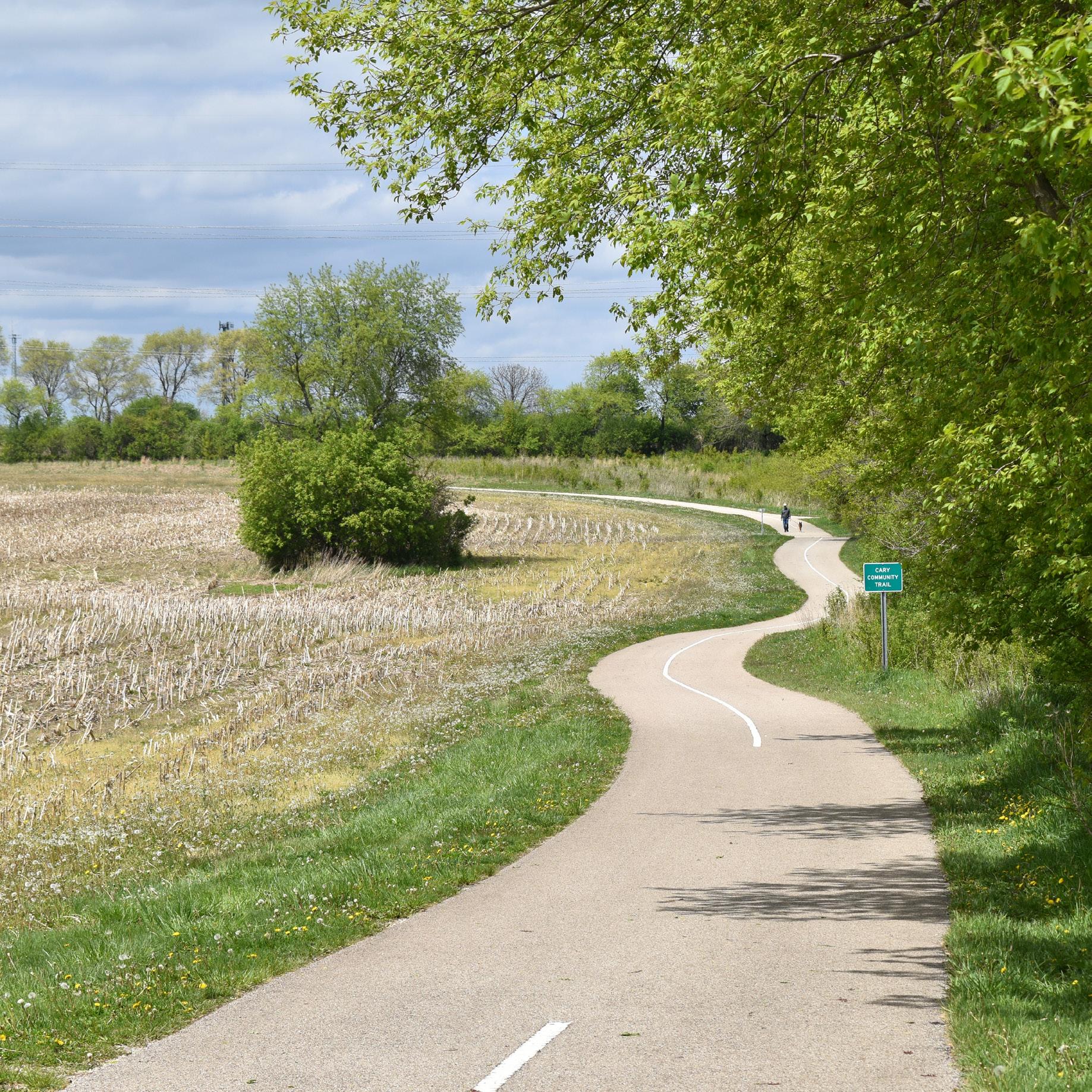
Chapter Two IMPLEMENT Action Plan
Overview
Implement: Action Plan Chapter outlines the proposed tasks and projects for the Cary Park District (CPD) over the next five years.
Purpose
This chapter outlines the steps and potential timeline for implementing the Comprehensive Master Plan strategies identified in the Envision phase as described in the previous chapter. They were further refined and finalized through workshops with the Cary Park District staff task force and Board of Commissioners to develop the action plan. The action plan will guide CPD in implementing the strategies over the next five years and will be periodically re-evaluated and adjusted to reflect completed projects and the community’s changing needs. The action plan is organized as follows:
• A detailed summary of the action items, provided in a year-by-year list in chronological order from 2025/2026 to 2031+ with tags for which goal the Action Plan item aligns with
• An at-a-glance Action Plan timeline with each year divided into quarters (Q1, Q2, Q3, and Q4) to provide a general idea of when each action or action item step might start or stop within a given year
• The action items are further organized within each year based on four overarching themes:
• Facilities
• Programs and Events
• Parks
• Capital Improvements*
*Capital Improvements represent projects that were identified prior to or outside of the Envision & Prioritize phase and are included in the Action Plan to provide a comprehensive view of anticipated capital investments. These projects are organized as a separate theme for clarity and do not represent a new system theme.
Cary Park District follows a May to April fiscal year.
Current Year (2025/2026)
Design Community Center/ Maintenance staff work zone improvements/additions (A.2)
Select Website Redesign/ Refresh Vendor (B.3)
Select ERP/Budget Software Vendor (B.3)
Develop concepts and gather public input for Saddle Oaks Park playground replacement (C.4)
Complete final design and bid Saddle Oaks Park playground replacement (C.4)
Complete final design and bid preschool accessibility improvements (A.1)
Year 1 (2026/2027)
(Continue) Design Community Center/Maintenance staff work zone improvements/additions (A.2)
Revisit recreation center feasibility study (2020)/overall recreation space and program needs (new and current facilities) (A.4)
Bid staff work zone improvements and additions (A.2)
Exploration Process, How To Meet Recreation Facility Needs (Legacy Facility, Comm Center, combo, other) (A.4)
Perform athletic field, sport/hard court, and skate park feasibility study and prioritization plan (C.1, C.2)
Evaluate existing amenities from Cary-Grove Park Phase One for potential updates and re-confirm the master plan (C.4)
(Grant Candidate) Determine phasing and potential funding opportunities for Cary-Grove Park master plan (C.4)
Implement Website Redesign/Refresh (B.3)
Implement ERP/Budget Software (B.3)
(Continue) Complete final design and bid Saddle Oaks Park playground replacement (C.4)
Construct Saddle Oaks Park playground replacement (C.4)
Develop concepts and gather public input for Foxford Hills Park playground replacement (C.4)
Complete final design and bid Foxford Hills Park playground replacement (C.4)
Construct preschool accessibility improvements (A.1)
Develop concepts and gather public input for Cambria Park playground replacement (C.4)
Complete final design and bid Cambria Park playground replacement (C.4)
Year 2 (2027/2028)
Construct renovate/expand Community Center staff work zone improvements (A.2)
Construct renovate/expand park maintenance building staff work zone improvements (A.2)
(Conitnue) Exploration Process, How To Meet Recreation Facility Needs (Legacy Facility, Comm Center, combo, other) (A.4)
Post Exploration Process, potential referendum if appropriate (A.4)
Evaluate success of dance program in current facility and extend lease if feasible
Evaluate expansion of Foxford Hills Golf Club clubhouse, support amenities, ADA Transition Plan (C.7)
Bid expansion improvements Foxford Hills Golf Club (C.7)
Evaluate/identify funding resources to support/hard courts implementation (C.1)
Complete final design and bid sport/hard courts (C.1)
(Continue) Complete final design and bid Foxford Hills Park playground replacement (C.4)
Construct Foxford Hills Park
playground replacement (C.4)
(Continue) Complete final design and bid Cambria Park playground replacement (C.4)
Construct Cambria Park playground replacement (C.4)
(Grant Candidate) Develop concepts and gather public input for Skate Park replacement (C.2)
Complete final design and bid Skate Park replacement (C.2)
Construct Skate Park replacement (C.2)
(Grant Candidate) Develop concepts and gather public input for Cary-Grove Park playground replacement (C.4)
Complete final design and bid Cary-Grove Park playground replacement (C.4)
Construct Cary-Grove Park playground replacement (C.4)
Develop concepts and gather public input for New Haven Park playground replacement (C.4)
Complete final design and bid New Haven Park playground replacement (C.4)
Develop concepts and gather public input for Cary Woods Park playground replacement (C.4)
Complete final design and bid Cary Woods Park playground replacement (C.4)
Year 3 (2028/2029)
Plan, bid, and construct Legacy Facility/existing Community Center (pending referendum results) (A.4)
Post Exploration Process, potential referendum if appropriate (A.4)
Plan, bid, and construct Legacy Facility/existing Community Center (pending referendum results) (A.4)
(Continue) Implement expansion of Foxford Hills Golf Club clubhouse and amenities (pending exploration results) (C.7)
Construct sport/hard courts (C.1)
Evaluate revitalization (order) of Community Parks (Sands, Veterans, Jaycee, Comm Ctr) (C.4, C.7)
Develop grant strategies to incorporate amenities into future park master plans (C.4)
Develop concepts and gather public input for White Oaks Park playground replacement (C.4)
Complete final design and bid White Oaks Park playground replacement (C.4)
(Continue) Construct Skate Park replacement (C.2)
(Continue) Construct Cary-Grove Park playground replacement (C.4)
Construct New Haven Park playground replacement (C.4)
Construct Cary Woods Park playground replacement (C.4)
Year 4 (2029/2030)
(Continue) Plan, bid, and construct Legacy Facility/existing Community Center (pending referendum results) (A.4)
(Grant Candidate) Develop master plan and fund for Community Park Revitalization (C.4)
Design, engineer, and bid master plan for Community Park Revitalization (C.4)
Design, engineer, and bid master plan for Community Park Revitalization (C.4)
Construct White Oaks Park playground replacement (C.4)
(Grant Candidate) Revisit and update Lions Park master plan during Lions Park playground renovations (ballfields and picnic grove) (C.4)
Complete final design and bid Lions Park master plan and playground renovations (C.4)
Year 5 (2030/2031)
(Continue) Plan, bid, and construct Legacy Facility/existing Community Center
Construct master plan for Community Park Revitalization (C.4)
(Grant Candidate) Develop master plan and fund for Community Park Revitalization (C.4)Design, engineer, and bid master plan for Community Park Revitalization (C.4)
Design, engineer, and bid master plan for Community Park Revitalization (C.4)
(Continue) Complete final design and bid Lions Park master plan and playground renovations (C.4)
Construct Lions Park master plan and playground renovations (C.4)
Beyond Year 5 (2031+)
Construct master plan for Community Park Revitalization (C.4)
Add additional amenities in the existing parks within Planning Areas G and H (C.5)
Implement remaining Cary-Grove Park master plan improvements based on phasing identified in FY26–27 (C.4)
Improve park interconnectivity (C.3)
Convert one or more fields to synthetic turf (C.2)
(Grant Candidate) Secure funding, design and engineer, bid, and construct Community Park Revitalization (x2) (C.4)
(Grant Candidate) Develop master plan, secure funding, design and engineer, bid, and construct Lions Park (x2) (C.4)
Ongoing Items
Explore partnerships or opportunities to address community desire for indoor recreation (A.4)
Explore partnerships or opportunities to address community desire for indoor aquatics (A.4)
Review and update ADA transition plan (A.1)
Review and update 10-year Capital Improvement Plan (A.3)
Include fitness space as part of exploring opportunities to purchase/ lease space for recreation (C.7)
Identify opportunities to meet community needs for adult fitness and wellness programs (B.1)
Evaluate opportunities for fitness program partnerships to expand offerings (B.1)
Identify opportunities for adult programs that incorporate other aspects of wellness (B.1)
Identify opportunities to better market and/or package programs to increase awareness (B.3)
Evaluate timing of programs (B.2)
Continue to develop and optimize internal process and systems related to programs (B.2)
Continue to streamline operations through implementation of paperless systems and other technology (B.3)
Continue to identify opportunities to better serve specific age groups (B.2)
Continue to develop senior programming opportunities (B.2)
Continue to look for opportunities to offer dedicated offerings for teens and tweens (B.2)
Continue to highlight District’s engagement with residents through social media (B.3)
Evaluate staffing needs to incorporate suggested marketing-related strategies (B.3)
Evaluate demand for early morning fitness programs and update offerings as needed (B.1, B.2)
Identify opportunities to develop more niche programs (B.2)
Track customer retention and try to build customer loyalty through a formalized customer loyalty program (B.3)
Establish formal measurement of program satisfaction and review annually (B.3)
Create and promote pickleball instruction and leagues based on identification of current and anticipated court capacity (B.1)
Work towards optimizing the overall health of the current program portfolio (B.2)
Evaluate and make plan to invest in opportunities to promote community engagement (B.3)
Develop a process and tools to evaluate programs and collect customer feedback (B.2)
Optimize search engine and local review platform results (B.3)
Review and update website as needed (B.3)
Increase family and adult/child programming that encourages co-participation (B.1)
Identify opportunities for new or refreshed special events offerings (B.1)
Continue to identify and prioritize annual park improvements to address aging amenities (C.4)
Explore/Apply grant funding opportunities for park improvements and amenity replacements (C.4)
Evaluate opportunities to purchase or trade land for a Neighborhood Park in Planning Areas A2, G, or H (C.5)
Implement outdoor fitness equipment within park spaces (C.7)
Consider expanding outdoor recreation activities and amenities that appeal to multiple age groups (C.7)
Evaluate and update master plan for Hoffman Park (C.4)
Install additional benches along trails (C.6)
Expand trail offerings at existing parks (C.3)
Provide more shade structures in high-use areas of parks (C.6)
Plant more trees along trails (C.6)
Review action plan and update items as needed on a bi-annual basis
Beyond Year 5: 2031+
Ongoing Items
Explore partnerships opportunities to address community desire for indoor recreation Explore partnerships opportunities to address community desire for indoor aquatics
Include fitness space as part of exploring opportunities to purchase/lease space for recreation
Identify opportunities to meet community needs for adult fitness and wellness programs
Evaluate opportunities for fitness program partnerships to expand offerings
Evaluate timing of programs
Continue to develop and optimize internal process and systems related to programs
and update ADA transition plan
and update 10 year Capital Improvement Plan
Continue to develop senior programming opportunities
Evaluate demand for early morning fitness programs and update offerings as needed
Create and promote pickleball instruction and leagues pending results of pickleball court study and construction of courts
Optimize search engine and local review platform results
Continue to identify and prioritize annual park(s) improvements to address aging amenities
expanding outdoor recreation activities
Continue to look for opportunities to offer dedicated offerings for teens and tweens
Identify opportunities to deliver more niche programs
Work towards optimizing the overall health of the current program portfolio
Review and update website as needed
Explore/Apply grant funding opportunities for park improvements and amenity replacements
Identify opportunities for adult programs that incorporate other aspects of wellness
Continue to streamline operations through implementation of paperless systems and other technology
Continue to highlight District’s engagement with tweens and teens through social media
Track customer retention and try to build customer loyalty through a formalized customer loyalty program
Evaluate and make a plan to invest in opportunities to promote community engagement
Increase family and adult/child programming that encourages co-participation
Evaluate opportunities to purchase or trade land for a Neighborhood Park in Planning Area A2, G, or H
Identify opportunities to better market and/or package programs to increase awareness
Continue to identify opportunities to better serve specific age groups
Evaluate staffing need to incorporate suggested marketing-related strategies
Establish formal measurement of program satisfaction and review annually
Develop a process and tools to evaluate programs and collect customer feedback
Identify opportunities for new or refreshed special events offerings
outdoor fitness equipment within park spaces
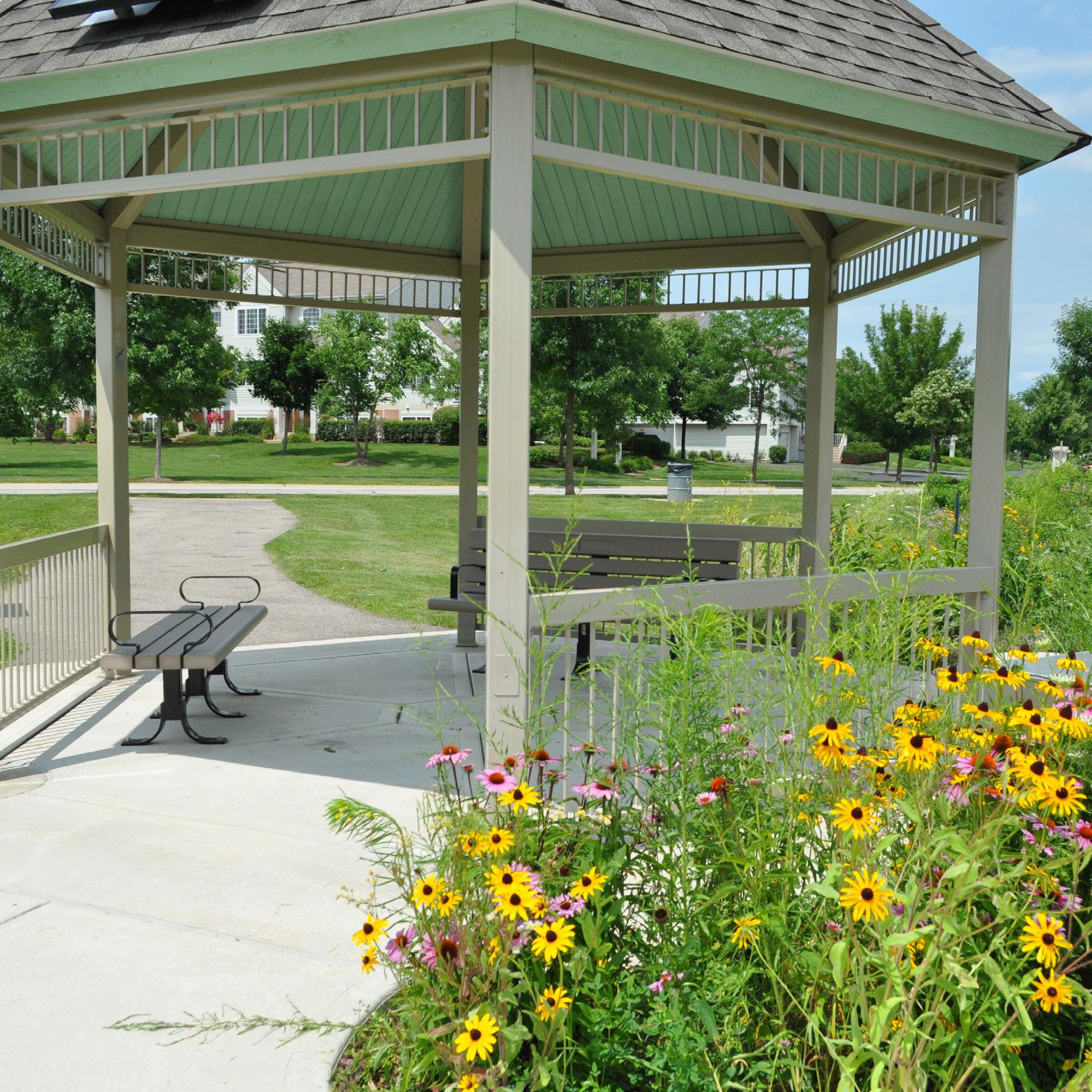
Chapter Three ANALYZE Inventory and Analysis
Overview
The Analyze: Inventory and Analysis Chapter of the report describes and illustrates the existing conditions of the Park District. The information in this chapter helps to develop a base-line understanding of the Park District’s assets and programs.
Purpose
This chapter documents the inventory and analysis accomplished during the Analyze phase of the master planning process. This phase describes the context in which the Park District’s recreation service operates, the services they provide, and the patrons that utilize the parks, programs, and facilities.
This chapter defines the community’s demographic context and provides detailed maps of the Cary Park District that identify parks, open space, trails, and other relevant land uses. It also includes the level of service analysis for parks and amenities, benchmarking the District’s total acreage of parks and open recreation space, and compares a number of amenities to local, state, and national benchmarks. A distribution mapping analysis of the geographic location of parks and amenities is also found in this chapter along with an assessment of
the District’s recreation programs and an analysis of the indoor facilities maintained by the Park District.
This information provides insight into potential surpluses or deficiencies the District has in terms of parks, open spaces, trails, amenities, facilities, and programs based on the various metrics noted within this chapter.
Chapter Outline
• Demographics
• Existing Conditions
• Asset Inventory
• Trail Corridors
• Park Classifications
• Parks & Open Space Inventory Matrix
• Indoor Facilities Matrix
• Level of Service Analysis
• Acreage
• Distribution
• Mini Park Distribution Analysis
• Neighborhood Park Distribution Analysis
• Community Park Distribution Analysis
• Overall Park Distribution Analysis
• Special Demographics
• Amenities
• Indoor Facility Inventory and Analysis
• Program Assessment
• Analyze: Inventory and Analysis Summary
Demographics
This demographics review utilized the Environmental Systems Research Institute (ESRI) Business Analyst Online (BAO) software to gather up-to-date demographic data necessary to gain an understanding of the District and its context.
Summary
According to 2024 estimates, the Cary Park District has a population of 20,914. Census population numbers from 2020 indicate the population is decreasing at an annual rate of 1.20% and is expected to continue decreasing into 2029. The District’s population decrease is consistent with the decline in state population of -0.38% and is contrary to the national population growth rate of +0.38%.
There are an estimated 7,572 households within the Park District. According to the U.S. Census, a household includes “all the persons who occupy a housing unit as their usual place of residence.” Out of these households, 77.0% (5,827) are families. A family is defined as a household in which one or more people are related to the householder by birth, marriage, or adoption. The average household size in Cary is 2.75 people. This is expected to remain consistent over the next five years.
Age Distribution
The median age of Cary residents is 41 with the population generally aging in place. According to 2024 estimates, 31.6% of the population is over the age of 55. This is projected to increase to 32.9% of the population by 2029, entirely due to growth in the 65+ age group. The increase in active adult and senior population growth mirrors that of the state and national trends and these
populations will continue to be a major demographic for the District. Additionally, there is projected growth in the 25-35 and 35-44 adult categories, indicating that young adults are settling in Cary.
Race and Ethnicity
According to ESRI, the Cary Park District has a diversity index of 47.1. The Diversity Index captures the racial and ethnic diversity of a geographic area in a single number (0 to 100) and allows for efficient analysis of diversity throughout the U.S. The Diversity Index is “the likelihood that two persons, selected at random from the same area, would belong to a different race or ethnic group.” According to demographic estimates, 82.3% of District residents indicate their race as White, which results in a moderate diversity index. The largest minority group within the District are those that identify as two or more races (8.4% of the population). Additionally, 5.2% reported as “Some Other Race”. 12.8% of the population identifies as Hispanic in addition to the race they reported as. “Hispanic” refers to a place or origin and is not considered race so it is reported separately.


Income
The median household income for Cary residents in 2024 is substantially higher than both the state and national median. It is expected that median household income in the District will increase at a rate of about 1.9% per year, which is relatively consistent with the projected growth for the state and the nation (2.0% and 2.4%) and is expected to remain above the state and national median in 2029. Overall, Cary residents are above the state and national median household incomes with approximately 61% of the households making over $100,000. About 6.5% of the District population is at or below the Federal Poverty Level (FPL). In 2024, the FPL was defined by Healthcare.gov as an annual household income of $25,820 for a family of three, with thresholds varying by household size.
Existing Conditions
The first step in the comprehensive planning process is to understand the Cary Park District’s surroundings and the existing conditions of the District’s assets including land use, open space, and trail resources.
Land Use
The majority of the Cary Park District land uses are single or multi-family residential. Industry and manufacturing land uses are concentrated along the railroad corridor. Major commercial and business districts are located along the railroad, off of Crystal Street. In addition to Crystal Street, Cary-Algonquin Road also serves as a major commercial corridor. Most school and institutional uses are centrally located within the District. Finally, a large percentage of the District is Conservation District, Park District, or private open space, with the majority of the open space concentrated north of Three Oaks Road.
Open Space Providers
The Park District is one of many open space and outdoor recreation providers within the community. Forest Preserve Districts and/or Conservation Districts provide regional active and passive recreation opportunities as well as preserve significant open space assets. School Districts also provide outdoor recreation opportunities at elementary, middle, and high school properties, and private agencies provide pay-to-play opportunities such as golf courses.
The map to the right displays all public and private open spaces within the Cary Park District, as well as all institutional assets.
Public Open Space
Park District, Municipal, Conservation District, State and Federal
The Park District provides approximately 855 acres of open space, and the McHenry County Conservation District (MCCD) provides 1,391 acres of open space. A number of MCCD properties are adjacent to District open space which provides opportunities for trail connections. The Cary Park District also utilizes MCCD land for camps and other programming.
Institutional Open Space
Elementary, Middle, and Senior High Schools, Colleges and Universities
School Districts 26, 47, and 300 provide Elementary and Middle Schools, while School Districts 155 and 300 provide Senior High Schools. In all, these sites provide 280 acres of open space for public use.
Private/Quasi-Public Open Space
HOAs, Cemeteries, Golf Courses
Private open space within the Cary Park District is primarily in the form of private golf clubs and HOAs including the Cary Country Club and Chalet Hills Golf Club.
According to the latest GIS information, there are 350 acres of private / quasi-public open space.
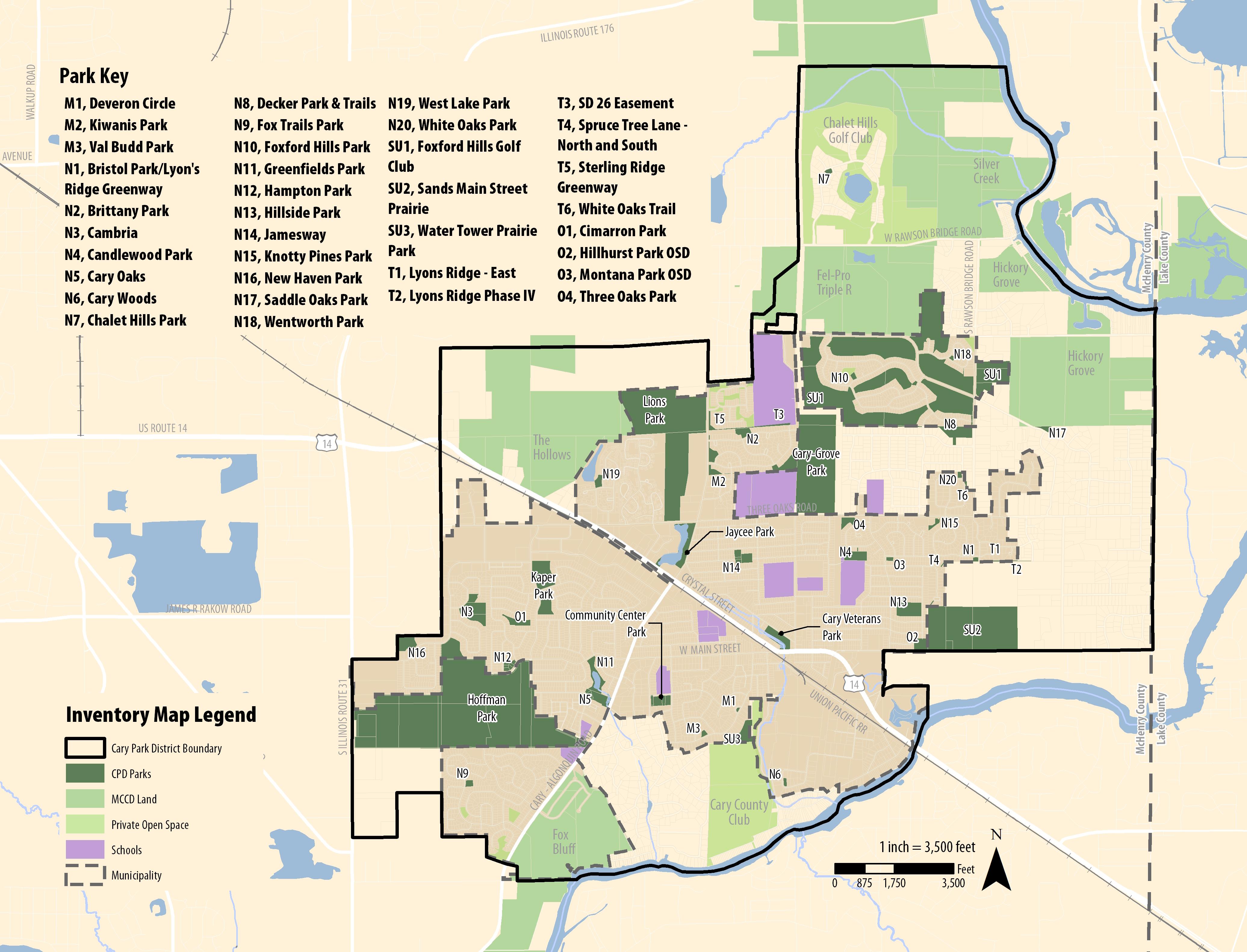
Trail Corridors
The trail inventory map illustrates the existing trail corridors and walking or biking opportunities within the District. This map was created referring to the Cary Park District 2016 CMP and coordination with the Cary Park District Staff.
Introduction
The Cary community has a long history of thoughtful planning and implementation of trails and greenways to meet resident interests and recreational needs. Since 1996, the Cary Park District (CPD) has developed and currently maintains over 5.5 miles of trails, many of which connect to routes owned and maintained by the Village of Cary (VOC) and School District 26. The District’s first trail plan was created as part of the 1994 Comprehensive Master Plan (CMP). Completed community trails and future trail corridors were further refined and adopted into the 2006 CMP Trail Plan, and the Village of Cary’s 2014 CMP update also highlighted a trail plan based on built segments and future opportunities. Building on this foundation, the District advanced several significant trail initiatives between 2015 and 2023, one of which was securing a $1.4 million Illinois Transportation Enhancement Program (ITEP) grant in 2018 for the Hoffman Park Trail Extension and opening the completed extension to the public in 2021.
Regional Trails and Bikeways
The Union Pacific Corridor is located along the Union Pacific rail line. Currently, only limited portions of this trail are constructed, but once complete, this trail will connect the District to the Prairie Trail. The Prairie Trail is a 28-mile trail that runs from Genoa City, Wisconsin, to
Algonquin, Illinois, where it then turns into the Fox River Trail. The Valley View Trail is located in the northern part of the District along Fell Pro Triple Rd. and Hickory Grove. The Cary Algonquin trail is located along Cary Algonquin Road with a few sections remaining to be completed within Cary between W. Main Street and the Union Pacific Railroad line.
The 2021 Algonquin-Cary Subarea planning effort emphasized the long-term importance of enhancing connectivity between community open spaces, recreational lands, and regional trail systems. This plan identifies opportunities for future shared-use paths, greenway corridors, and linkages that could strengthen connections between Cary, Algonquin, and the greater Fox River region.
Water Trails
The Fox River water trail is located to the east and southeast of the District. It is currently monitored and maintained by the Illinois Water Trail Keepers. There are two designated launch areas near the Park District, one at Riverfront Park and one at Fox River Forest Preserve (fee ramp). Adjacent Map and Data Source: Openlands.
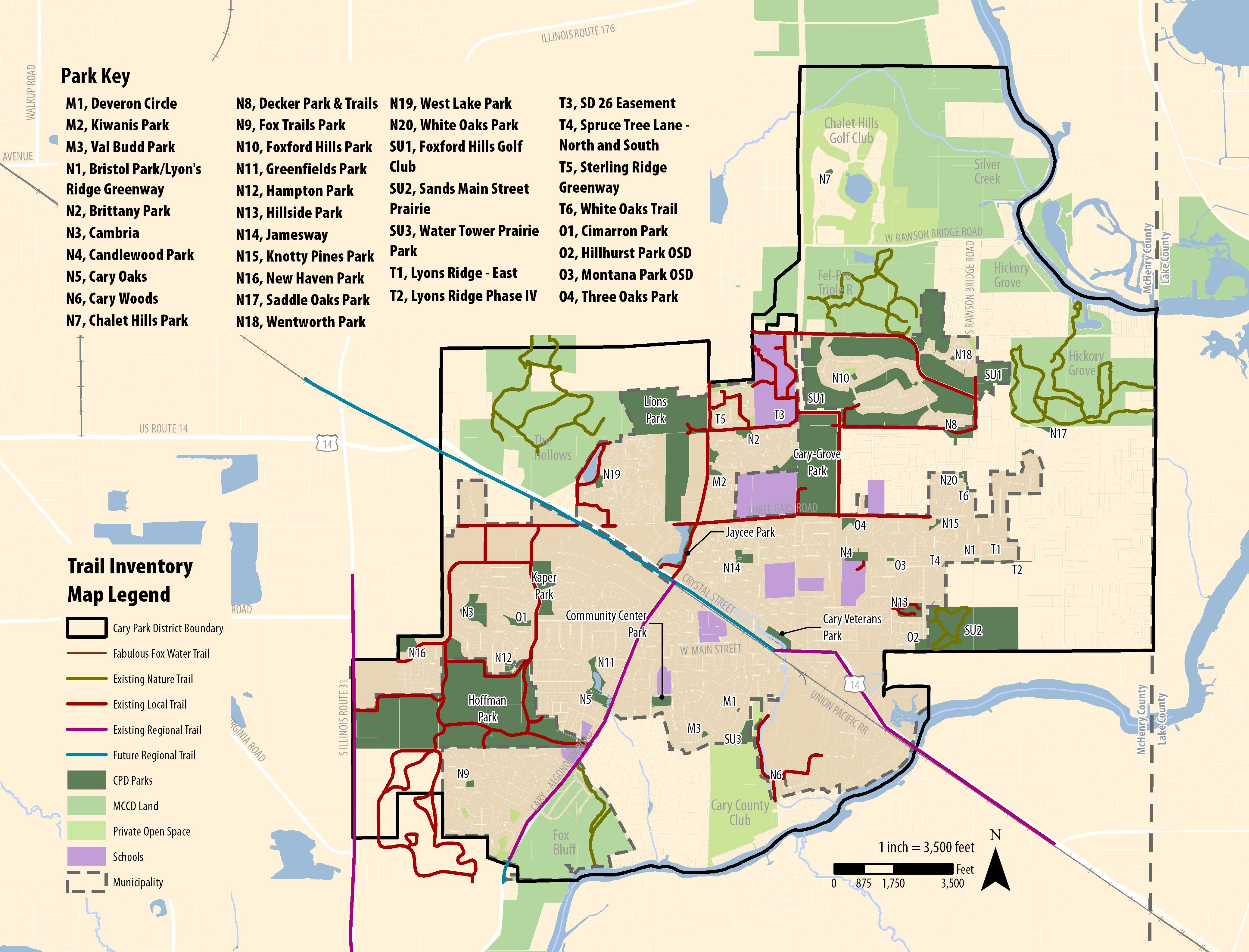
Trail Map
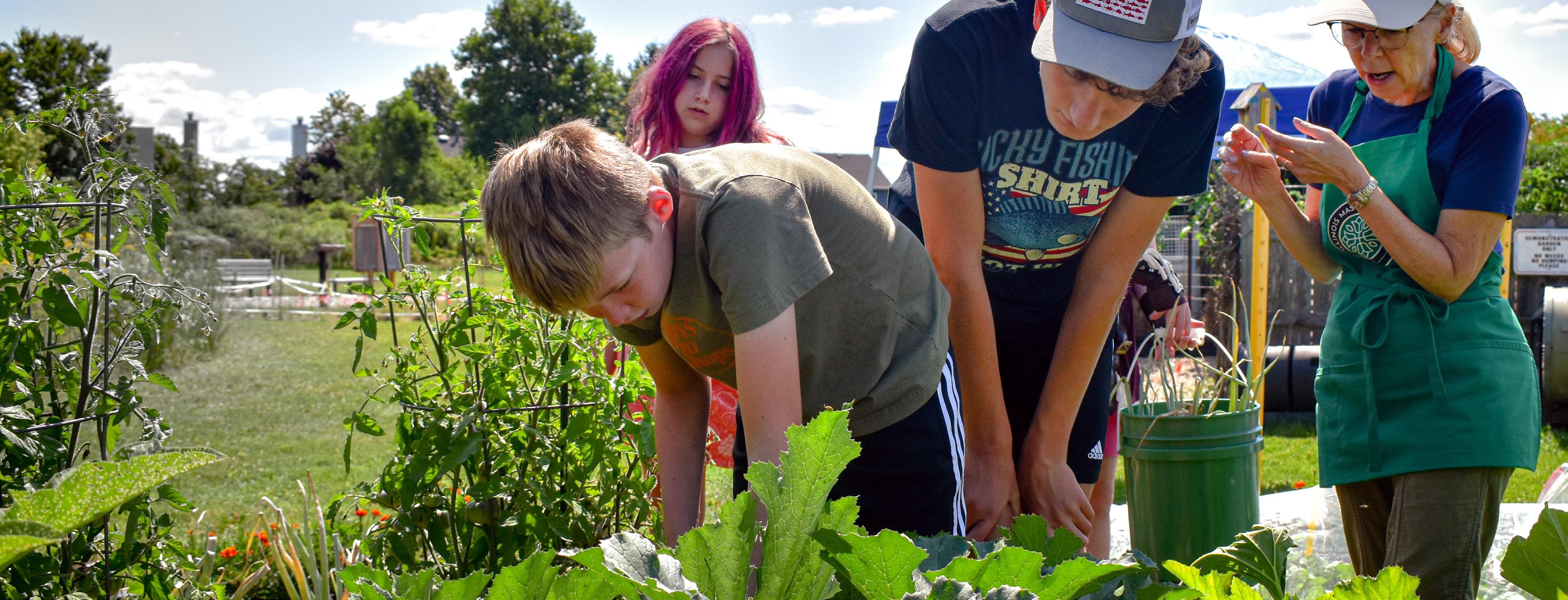
Asset Inventory
As a part of the planning process, the Planning Team references the guidelines outlined by the National Recreation and Parks Association (NRPA) - Park, Recreation, Open Space, and Greenway Guidelines Manual.
NRPA recommends creating a park classification system to serve as a guide for organizing an agency’s parks. Park, Recreation, and Greenway Classification Guidelines are expressions of the amount of land a community determines should constitute the minimum acreage and development criteria for different classifications or types of parks, open space, and greenways.
Mini Park, Neighborhood Park, School Park, Community Park, Large Urban Park, and Sports Complexes are the six classifications for parks recognized by the NRPA. Commonly, School Parks are included into the Neighborhood Park category and Large Urban Parks and Sports Complexes are included in the Community Park category.
These categories are based on size, function, and use. Mini Parks are the smallest size and most limited in function and use while Community Parks
are typically the largest parks of a system and serve a variety of functions for the community. Other open space categories recognized by the NRPA are Natural Areas, Trails, Corridors or Linear Parks, and Special Use. Open Space Detention Areas are sites not yet developed for meaningful public access. This category is recognized for planning purposes but is not an NRPA designated category.
These classifications are vital to a comprehensive Level of Service analysis. In the park and open space matrix on the following pages, amenities were quantified to understand the District’s total recreational offerings. The numbers in red text indicate an amenity is beyond its useful life, per the IDNR Useful Life Criteria (found in the Appendix). However, the Cary Park District follows its own equipment replacement schedule, which may differ from IDNR recommendations. The District’s indoor space was also categorized by the type of facility
and/or programming. The facility matrix follows the park and open space matrix.
Active Parks
In addition to these park classification, NRPA provides additional recommendations based on type of park use. Mini, neighborhood, and community parks are considered active parks due to the variety and types of recreation amenities they typically provide. These active parks are designed to meet day-to-day resident recreation needs compared to the other park types which are more specialized or have more limited functions.
These classifications are vital to a comprehensive level of service analysis. In the park and open space matrix on the following pages, amenities were quantified to understand the Park District’s total recreational offerings.
Classification General Description
Mini Park*
Neighborhood Park*
PARK CLASSIFICATIONS
Mini Parks meet the need for a walkable, drop-in recreation experience. Appropriate elements in these parks include playgrounds, picnic areas, and seating. These parks usually do not include parking. Used to address limited, isolated, or unique recreational needs.
Neighborhood Parks remain the basic unit of the park system and are generally designed for informal active and passive recreation and community gathering spaces. Elements in these parks often include playgrounds, picnic areas, sports fields, and trail systems. Neighborhood Parks serve as the recreational and social focus of the neighborhood.
Service Area
Less than 0.25 mile distance in a residential setting.
Criteria Cary Park District Parks and Facilities
Between 2,500 SF and one acre in size.
0.25 to 0.5 mile distance and uninterrupted by nonresidential roads and other physical barriers. 1 to 5 acres in size is typical.
Deveron Circle, Kiwanis Park, Val Budd Park
Community Park* Community Parks focus on meeting community-wide recreation needs. These parks preserve unique landscapes, and often serve the community as gathering places and general athletics. Elements in these parks include playgrounds, pavilions, trails and path systems, multiple sport courts and fields. Serves broader purpose than neighborhood park. Focus is on meeting community based recreation needs, as well as preserving unique landscapes and open spaces.
Natural Area* Conservation and wildlife areas, wooded areas, and waterways that are maintained for the most part in their natural state.
Special Use* Special use facilities focus on meeting community-wide recreation needs. Often, these spaces, both indoor and outdoor, are designed as single-use recreation activities. Examples of special use facilities include golf courses, nature centers, recreation centers, and museums. Areas for specialized or single purpose recreational activities. Generally designed for active recreation and focus on meeting community based recreation needs.
Trails, Corridors, and Linear Parks* Effectively tie park system components together to form a continuous park environment.
Open Space Detention Lands owned by the agency for the purpose of providing temporary storm water detention.
* from NRPA’s Park, Recreation, Open Space and Greenway Guidelines.
Determined by the quality and suitability of the site. Usually serves two or more neighborhoods and 0.5 to 3 mile distance.
As needed to accommodate desired uses. Usually a minimum of 20 acres.
Service radius is unlimited.
No applicable standard.
Bristol Park, Brittany Park, Cambria Park, Candlewood Park, Cary Oaks Park, Cary Woods Park, Chalet Hills Park, Decker Park and Trails, Fox Trails Park, Foxford Hills Park, Greenfields Park, Hampton Park, Hillside Prairie Park, Jamesway Park, Knotty Pines Park, New Haven Park, Saddle Oaks Park, Wentworth Park, West Lake Park, White Oaks Park
Cary-Grove Park, Cary Veterans Park, Community Center Park, Hoffman Park, Jaycee Park, Kaper Park, Lions Park
No applicable standard. Included in Special Use
Variable, depending on desired amenity.
Foxford Hills Golf Club, Sands Main Street Prairie, Water Tower Prairie Park
Resource availability and opportunity.
No applicable standard.
No applicable standard.
Lyons Ridge Phase I-IV, SD 26 Easement, Spruce Tree Lane Parcels, Sterling Ridge Greenway, White Oaks Easement
Variable. Cimarron Park, Hillhurst Park, Montana Park, Three Oaks Detention
Park & Open Space Matrix
Park & Open Space Matrix
Acreage information was derived from GIS data obtained from the District's recognized park acreage standards.
park
*all text in red indicates an amenity is beyond its useful life per INDR Useful Life Criteria. The Cary Park District follows its own equipment replacement schedule, which may differ from IDNR recommendations.
*Basketball courts are counted as 0.5 for half-courts and 1.0 for full-courts
*all text in red indicates an amenity is beyond its useful life per INDR Useful Life Criteria. The Cary Park District follows its own equipment replacement schedule, which may differ from IDNR recommendations. *Basketball
Indoor Facility Matrix
Level of Service Analysis
This Level of Service analysis evaluates how well the Cary Park District’s parks, facilities, and amenities are serving the current needs of the community. Level of Service is evaluated through four different avenues.
The development of a Level of Service standard for parks and recreation began in the 1980s with the development of Levels of Service for other infrastructure such as water, stormwater drainage, sewer systems, and transportation. These benchmarks provide agency officials with the ability to respond to growing communities, evolving demographics, and changing needs. However, it is important to note that these benchmarks are not strict rules that all communities should follow. These Level of Service benchmarks are simply another gauge for agencies to use when determining future needs and services.
According to the National Recreation and Parks Association (NRPA), the Level of Service is a quantification of the park and recreation delivery philosophy and policy of a community. Its basic utility is in meeting a legal and/ or economic requirement of quality service and equity. As a basic rule, a Level of Service benchmark should:
1. Be practical and achievable
2. Provide for an equitable allocation of park and recreation resources throughout a community; there should be equal opportunity access for all citizens
3. Reflect the real-time demand of the citizens for park and recreation opportunities
There are four different Level of Service measurements that help a community understand how equitable and comprehensive their current park and recreation offerings are. These are:
Acreage:
A calculation of the minimum amount of land required to provide all of the recreation activities, and facilities required to support such activities
Distribution:
An evaluation of how equitably park and open space sites are placed throughout the community, as well as how accessible existing sites are to residents
Amenities:
A calculation of the minimum number of amenities and facilities required to meet state and/or national averages.
Square Footage:
A calculation of the minimum amount of indoor square footage required to provide all of the recreation programs and services.
Level of Service guidelines are developed by state and national agencies, including the NRPA. Historically, a Level of Service analysis has been limited to total park and open space acreage alone, and did not include
distribution, amenities, or indoor square footage. The national standard for acreage Level of Service was 10 acres per 1,000 population, but as park and recreation planning developed, professionals saw the need to develop a more comprehensive benchmarking tool that could be adjusted for and specific to each community.
Because one size does not fit all, the NRPA recommends using community-specific benchmarks. Park Metrics is the NRPA’s online management tool, designed for public park and recreation agencies.
This tool is a replacement for the NRPA standards that have guided land acquisition and development for the past 45 years. Through this tool, agencies have the ability to compare themselves and their offerings with departments and agencies in their state or region. Agencies can also compare themselves to others based on factors such as total population, operating budget, and number of full-time technical equivalent employees. These reports calculate actual numbers, based on real, similar agencies. Now, agencies can plan and benchmark with more applicable data than generic national averages.
Park Metrics has thousands of data points and more than 600 completed profiles. It is now the largest and most comprehensive collection of detailed municipal, county, state, and special district data. As more agencies add their data to the database, trends and patterns begin to emerge that help agencies plan and benchmark. From comprehensive jurisdictional planning to business and revenue-generating planning, Park Metrics offers tools that provide agencies the justification they need to get things done.
The following Level of Service analyses reference national NRPA standards, Park Metrics benchmarks, and local and regional-specific standards set by the State of Illinois and the Planning Team.
Acreage
Acreage Level of Service benchmarks are calculations of the recommended amount of land required to provide all of the recreation activities and the facilities required to support such activities.
The NRPA’s population ratio method (acres/1,000 population) emphasizes the direct relationship between recreation spaces and people. It is the most common method of estimating an agency’s level of service for parkland and open space. In addition to the baseline of 10 acres/1,000 population used in this analysis, Park Metrics benchmarks are also used to understand how the recreation services compare to agencies of similar population size and region.
Based on the NRPA benchmark of 10 acres/1,000 population applied to the District’s 2024 population of 20,914, the total amount of mini, neighborhood, and community park space recommended for the Cary Park District is 209.1 acres. With 506.8 acres of open space dedicated to mini, neighborhood, and community park uses, the District has a 351.7-acre surplus compared to this benchmark, with the only calculated acreage deficiency in mini parks. The District has a level of service of 26.8 acres per 1,000 population, which is also above the NRPA’s benchmark.
The following Park District acreage may differ from other reported open space sources. Acreage was determined at the time of the inventory as under the jurisdiction of the District and utilized or reserved for recreation purposes. Other District-owned open space not dedicated to recreation uses are omitted per NRPA reccomendations.
When all District-owned and maintained recreation open space is added to the Level of Service analysis, the District is 636.0 acres above the NRPA recommendation. This Level of Service gauge includes special use parks, trails, corridors, and linear parks, and open space detention, in addition to mini, neighborhood, and community parks. When including all of these properties, the Park District has an overall level of service of 40.4 acres per 1,000 population.
The Park Metrics database was referenced to understand how the Cary Park District compares to agencies across the nation with similar population sizes. The Cary Park District has a population of 20,914. Out of over 670 agencies reporting, there were 15 agencies located in the Midwest with populations between 15,000 and 25,000. Park Metrics provided information on the following level of service benchmarks:
• Total Number of Parks
• Total Acres Maintained
• Acres of Parks per 1,000 Residents
The Cary Park District owns and/or maintains 43 park and open space sites that total 845.1 acres. This is significantly higher than the reported median of 15.0 parks and also higher than the median of 215.0 acres for comparable agencies as reported by Park Metrics.


Level of Service Analysis
Date: March 21, 2025
Community: Cary Park District
Population: 20,914
Level of Service Analysis: 10
/ 1,000
Park Metrics Benchmarks - Parks and Open Spaces
Distribution
Planning areas are used to analyze park distribution, land acquisition, and park facility redevelopment needs more clearly. Planning areas are delineated by major pedestrian barriers, including major roads or highways, railroad corridors, and extreme natural features.
Not only is the quantity of park and open space important, but the location and geographic distribution of the parks themselves also offer an indication of how well a parks and recreation agency is serving its residents. By understanding where parks are located in relationship to residential development, we are able to understand who is underserved. This analysis may reveal the need for acquisition in underserved areas of the District, or may reveal that the District is serving the residents well and should focus on maintaining or updating existing assets.
Methodology
In the Cary Park District, arterial roads and railroads serve as the main pedestrian barriers. These pedestrian barriers created ten planning areas within the District.
After dividing the District into planning areas, the geographic distribution of the parks and open spaces was analyzed. A service area, illustrated in the following maps with an orange halo, was created around each individual park. The shape of each service area is determined by analyzing the real distance – a quarter-mile, half-mile, or one-mile distance – one has to travel to access the park. The size of the service area is dependent upon the park classification.
The table on page 65 notes the various service area distances for Mini, Neighborhood, and Community Parks. Per NRPA reccomendations, Natural Areas, Special Use Sites, and Open Space Detention Sites are not included in this analysis. Service area buffers for Mini and Neighborhood Parks were clipped to the planning area boundaries in which the park is located. Planning Area boundaries are considered barriers to safe or comfortable pedestrian access and Mini and Neighborhood Parks are walk-to or walkable destinations. For Community Parks, the boundaries were not clipped because these parks are seen as drive-to destinations.
Finally, overlaying service area maps and other related maps reveals which areas are most and least served by the existing park system. The most served areas are illustrated by the dark orange while the least served areas are illustrated by the lack of orange. The orange service area buffers overlap to form a gradient that illustrates the degree to which residents are served. The darker the orange, the better these residents are served. Residents who fall within the darker or opaque orange areas are served by multiple parks and their amenities. Demographics for each planning and service area further informed the level of service analysis.
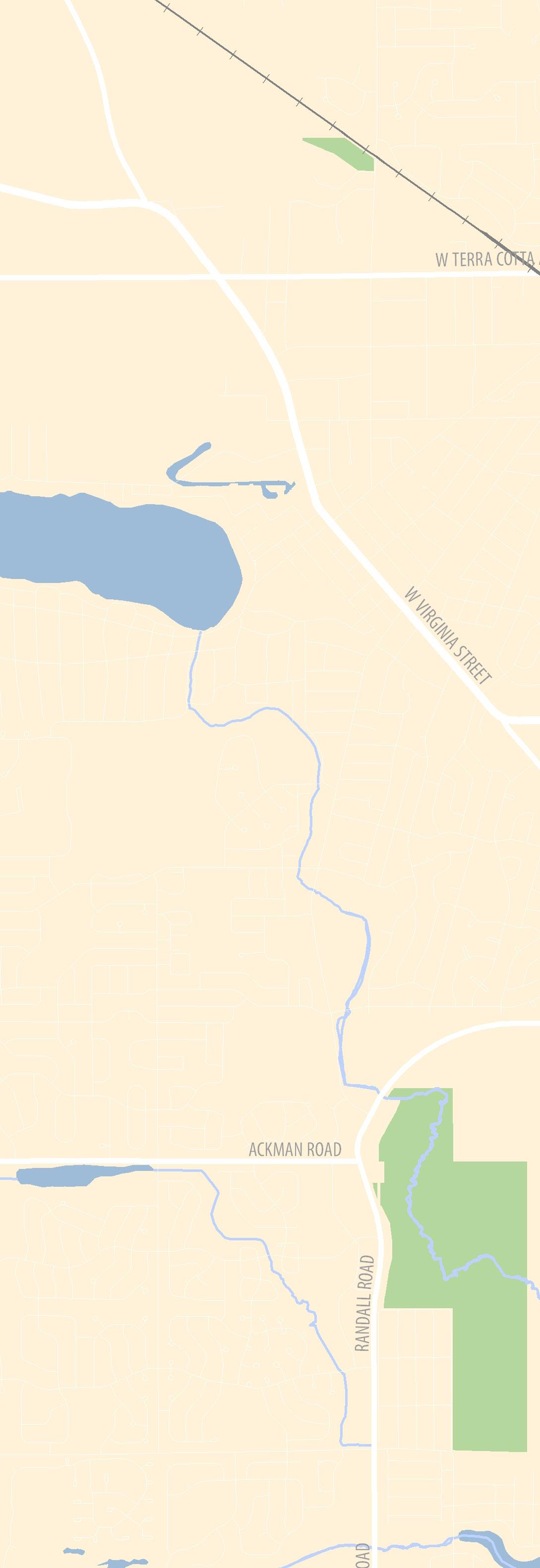
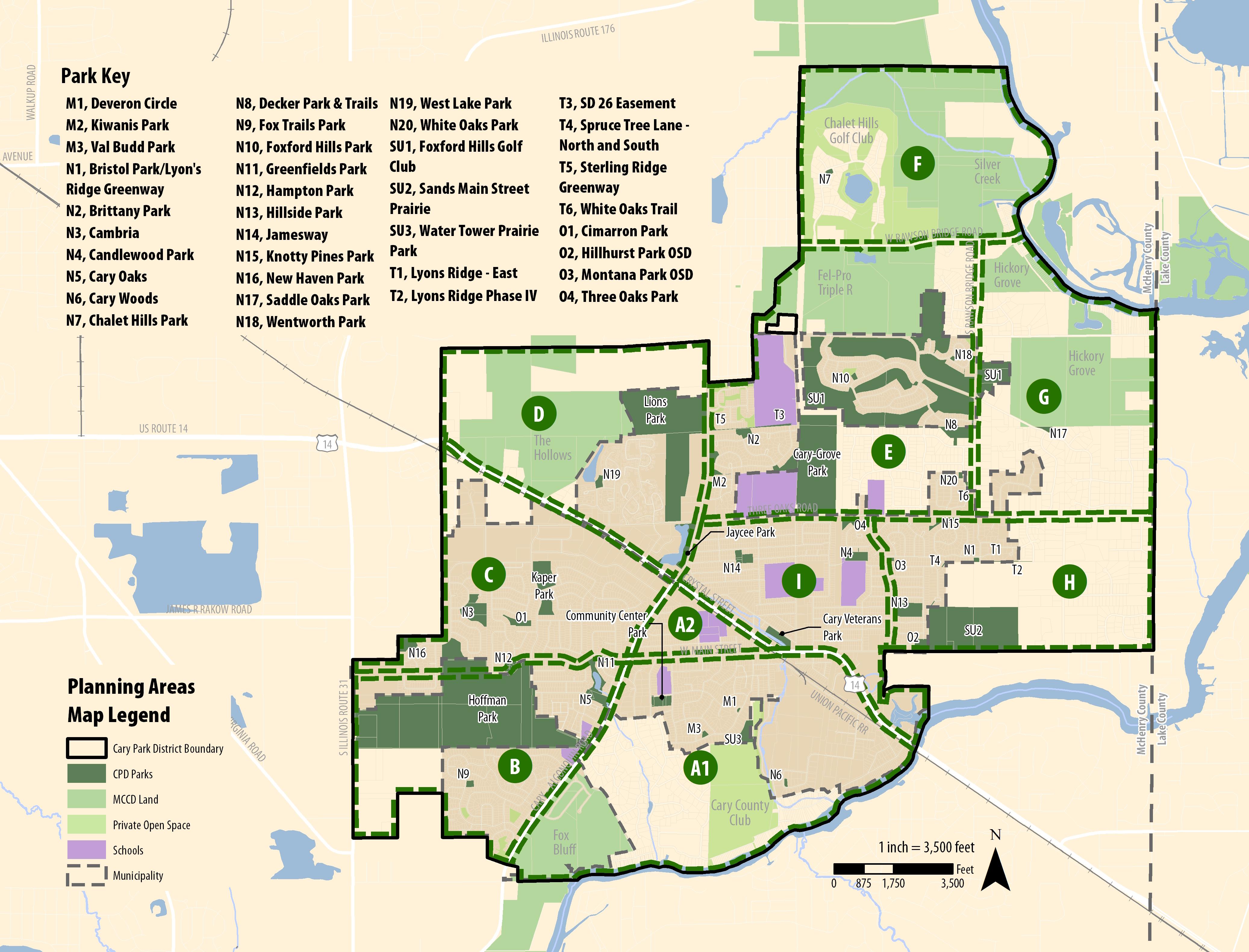
Mini Park Distribution Analysis
Mini Parks meet the need for a walkable, drop-in recreation experience. Appropriate elements in these parks include playgrounds, picnic areas, and seating opportunities.

The purpose of the Mini Park Distribution Analysis is to determine which planning areas are under-served by the District’s existing Mini Park land holdings. Currently, the District has three Mini Parks that range from 0.2 acres to 3.5 acres in size.
The Mini Park service area map illustrates a 0.25-mile walkable service area (shown in dark orange) around each existing Mini Park.
This plan also illustrates a 0.25-mile service area (shown in light orange) for Neighborhood and Community Parks as these parks can also serve the function of a Mini Park for those residents within a 0.25-mile distance from the park. According to NRPA’s Park, Recreation, Open Space, and Greenway Guidelines, Mini Park service areas do not include residents who must cross a planning area boundary to reach the park. Service areas are truncated at all planning area boundaries. The map to the right illustrates the 0.25-mile service area reach for Mini, Neighborhood, and Community Parks. While the Mini Parks are concentrated in Planning Areas A1 and E, all planning areas have some amount of coverage except for A2, where no residents in the Planning Area have access to a Mini Park. Planning Areas C (74.0% served), E (76.8% served), and I (75.7% served) have the most coverage. Planning Area A2 and G have the highest need, or lowest Level of Service, with 1,300 residents in total without access to a park asset within 0.25-mile walking distance.
Overall, 61.0% of the Cary Park District’s population has access to a park asset within 0.25-mile walking distance.



Neighborhood Park Distribution Analysis
Neighborhood Parks remain the basic unit of the park system and are generally designed for informal active and passive recreation and as community gathering spaces.

The purpose of the Neighborhood Park Distribution Analysis is to determine which planning areas are underserved by the District’s existing Neighborhood Park land holdings. Currently, the District has 20 Neighborhood Parks that range from 0.6 acres to 10.3 acres in size.
The Neighborhood Park service area map illustrates a 0.5-mile walkable service area (shown in dark orange) around each existing Neighborhood Park.
This plan also illustrates a 0.5-mile service area (shown in light orange) for Community Parks as these parks can also serve the function of a Neighborhood Park for those residents within a 0.5-mile distance from the park. According to NRPA’s Park, Recreation, Open Space, and Greenway Guidelines, Neighborhood Park service areas do not include residents who must cross a planning area boundary to reach the park. Service areas are truncated to all planning area boundaries.
The map to the right illustrates the 0.5-mile service area reach for Neighborhood and Community Parks. With 20 neighborhood parks throughout the Park District, all planning areas, except for Planning Area A2, have some amount of coverage. Planning Areas C (94.3% served), F (89.3% served), and I (95.4% served) have the most coverage. Planning Area A2 has the highest need, or lowest Level of Service. 646 residents do not have access to a Neighborhood Park asset within 0.5-mile walking distance.
Overall, 78.5% of the Cary Park District’s population has access to a park asset within 0.5-mile walking distance.



Community Park Distribution Analysis
Community Parks focus on meeting community-wide recreation needs. These parks preserve unique landscape and often serve the community as event and recreation team sport spaces.
The purpose of the Community Park Distribution Analysis is to determine the location of gaps in Community Park service area coverage. Currently, the District has seven Community Parks that range from 5.9 acres to 263.5 acres in size.
The Community Park service area map illustrates a 1.0-mile service area (shown in dark orange) around each existing Community Park.
Unlike Mini and Neighborhood Parks, Community Parks are considered drive-to recreation destinations. Service areas are not limited to the boundary of the planning area in which they are located. These drive-to destinations cover multiple planning areas and are regional destinations for Park District residents.
Overall, 85.1% of the District has access to a Community Park asset within a 1.0-mile drive from where they live. The largest gaps occur in Planning Areas F and G. While no Park District owned or managed Community Park asset is present within areas F and G, these two planning areas have Conservation District open space available to residents. Planning Area F has 403 acres of MCCD open space and Planning Area G has 240 acres of MCCD open space.




Overall Park Distribution Analysis
The Overall Distribution Analysis illustrates the District-wide service area coverage and deficiencies for Mini, Neighborhood, and Community park assets.

The purpose of the Overall Park Distribution Analysis is to develop a District-wide understanding of the location, distribution, and Level of Service for all existing Mini, Neighborhood, and Community Parks. Natural Areas, Special Use facilities, Parkways, and Open Space Detention land holdings are not included in this analysis.
The overall service area map illustrates the service areas for all Mini (0.25-mile), Neighborhood (0.5-mile), and Community Parks (1.0-mile).
Per NRPA Guidelines, the Mini and Neighborhood Park service areas are truncated at the boundaries of the individual planning areas in which they reside. Community Parks are considered drive-to destinations and service areas are not truncated to the planning area boundaries.
Overall, 90.9% of Cary Park District residents have access to a Mini, Neighborhood, and/or Community Park resource within one mile of where they live. The largest coverage gaps are present in Planning Areas G, with Planning Areas B, D, F, and H also having notable gaps. However, Planning Areas D, F, and G have Conservation Area open space resources within their boundaries for residents to access. While residents in Planning Areas D, F, and G have access to Conservation District open space, those residents living within Planning Area B and H do not. Additionally, approximately 2,317 residents outside of the Park District are also served by Cary Park District Parks.



Additional Demographics
The Planning Team also took a deeper look at more specific demographic groups overlaid with the 0.5-mile service area map to see how well these groups are served by current Cary Park District park assets.
The three demographic groups include the Hispanic population, households with one or more persons with a disability, and households falling under the poverty level. The maps on the page to the right show the concentration of these populations with the 0.5-mile service area overlaid to illustrate level of service coverages.
Hispanic Population
Cary Park District’s Hispanic population is scattered across the Park District, with planning areas housing concentrations from 7.0% all the way up to 26.4% of the population. The highest concentrations of the Hispanic population are located in Planning Areas A2 and I. When the neighborhood park level of service is overlaid onto this map, it can be seen that although Planning Area I serves 95% of its residents, Planning Area A2 has no service coverage. In terms of population number, with a population of 646, Planning Area A2 has the highest need of park assets.
Households with a Disability
Of the nearly 7,600 households in the Park District, 16.0% (1,222 households) include at least one member with a disability. The U.S. Census Bureau defines disability broadly as “difficulty with one of the following six basic areas of function: ambulation, cognition, hearing, independent living, self-care, and vision.” All planning areas contain at least one household with a disability, and only one planning area (Planning Area G) contains a less than 5% concentration of households with a disability. Similar to the Hispanic population, the concentration is spread across the District. Planning Areas A1, A2, B, C, D, E, F, H, and I all have a concentration of 11% to 25% of households with a disability. However, Planning Areas A2, F, and G and contain less than 50 households in this category. In terms of population, Planning Areas I, C, and B have the highest number, all greater than 190. However, once the 0.5-mile service map is overlaid, it can be observed that these three planning areas are well served by parks. The apparent highest need shifts to Planning Areas A2 and D.
Households Below the Poverty Level
As defined previously in this chapter, the poverty level in Illinois is an household income of $25,820 or less. Cary Park District has a relatively low poverty rate of 6.5%. The concentration of poverty within the individual planning areas range anywhere from 0% to 16.4%. Planning Areas C, D, F, and I all have concentrations over 9%. With population number factored in, Planning Areas C, D, and I have the highest need. However, much like the population with a disability analysis, once the neighborhood park level of service area is overlaid, we see most portions of those planning areas have access to a park within a 0.5-mile. As a result, only Planning Area D appears to have a notable need.
Combined Additional Population Concentration
Once all three concentration maps are overlaid, it becomes evident that there is a relatively heavy concentration of these additional demographic groups across the central and west portions of the District. The existing 0.5-mile level of service range covers much of this area. The heaviest unserved concentrations appear to be in Planning Area I followed by A2, B, C, D, and F .

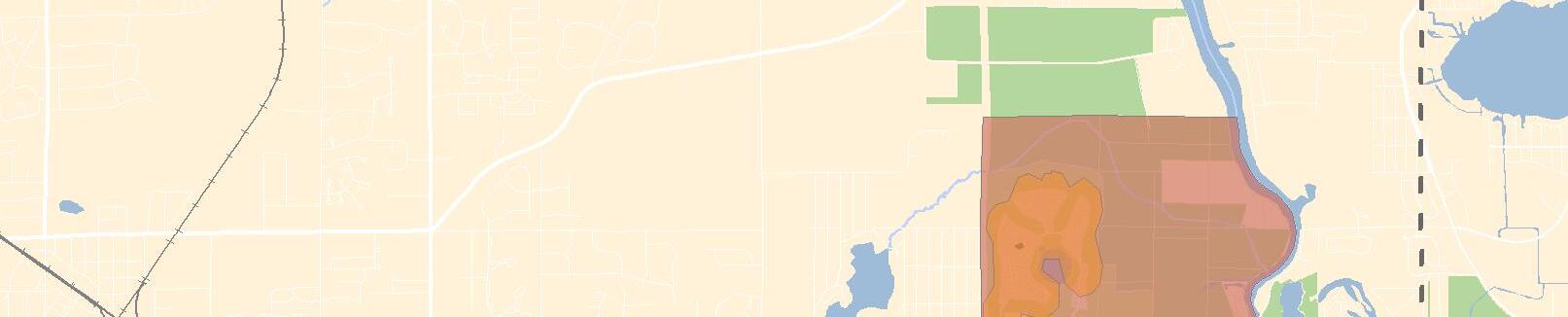
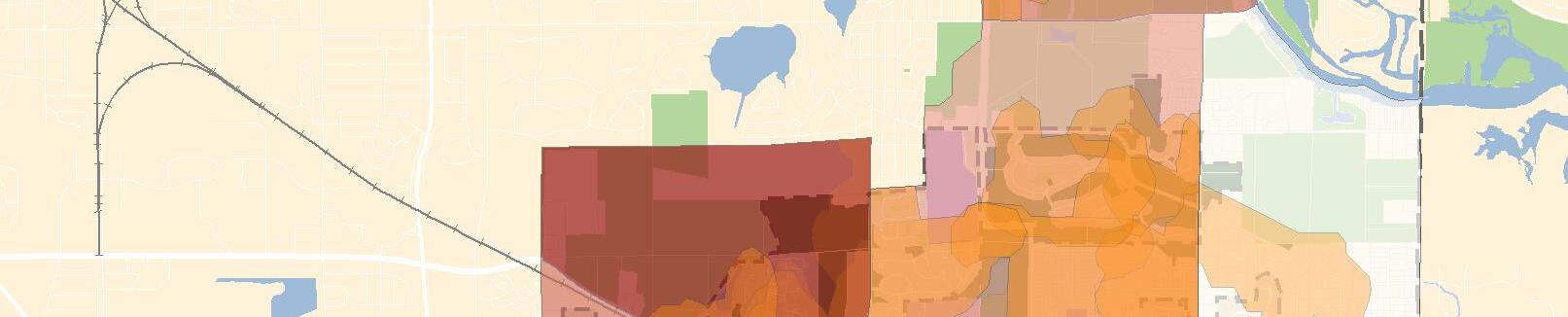
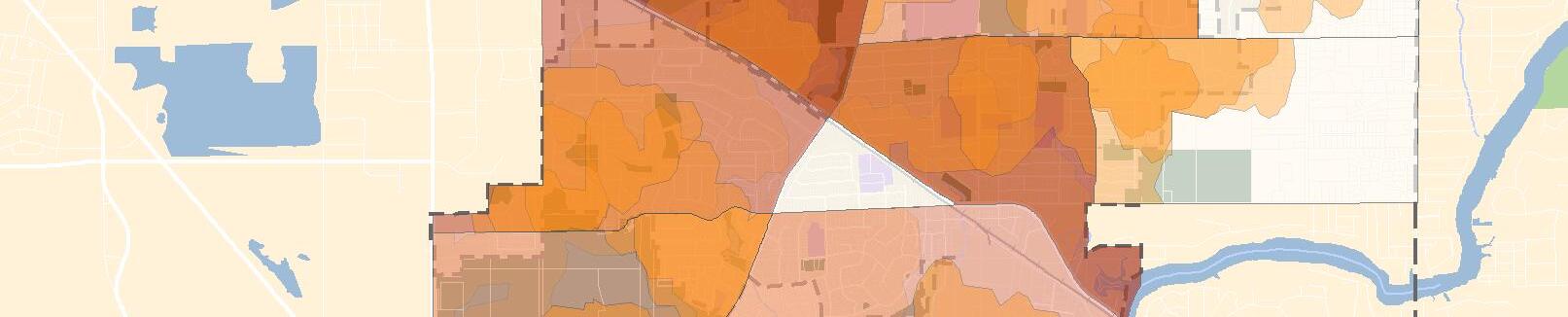



Amenities
In addition to park acreage and distribution, another measure of Level of Service is the total recreation amenities available to residents. These benchmarks come from the Illinois Statewide Comprehensive Outdoor Recreation Plan (SCORP) and NRPA’s Park Metrics.
SCORP Comparison
Based on the Illinois SCORP, the Cary Park District meets or exceeds the recommended number of amenities for 15 of the 30 amenities outlined in the chart to the right (excluding non-priority items and pickleball). Amenities that meet or exceed the recommendation are identified by black or green text in the “Surplus / Deficit” column.
Items shown in red in the “Surplus / Deficit” column indicate deficiencies. Based on a comparison with SCORP averages, the five amenities with the greatest deficiencies most applicable to the Cary Park District are:
• Tennis Courts: -10.2
• Basketball Courts: -5.2
• Fishing Pier / Docks / Access: -4.5
• Soccer Fields: -3.7
• Baseball Fields: -2.4
Additionally, the last column on the right prioritizes the amenities most in need according to the SCORP benchmarking where 1 represents the lowest priority. This surplus/deficit analysis only counts District amenities that are at current standards per IDNR Useful Life Criteria. By replacing aged assets, the District may be able to meet or exceed some of these recommendations.
The School Districts, Conservation District, Village owned open space, and private golf clubs within the Park District also provide recreational amenities for the community. While these assets are not included in the analysis, they may be providing additional recreation opportunities for Cary Park District residents who have access to them.

Park Metrics Comparison
In addition to the SCORP averages, the Planning Team referenced NRPA’s Park Metrics to identify how the District compares to other agencies in the Midwest with populations between 15,000 and 25,000. Park Metrics provided information about the total population per amenity for 30 different recreation outdoor amenity types for the 14 agencies within this population range.
The table below compares the total number of Districtowned and managed facilities to agencies with similar populations.
Park Metrics Amenity Needs Analysis
Because Park Metrics is a collection of self-reported data rather than a recommendation of number of amenities, this benchmark compares the District to averages without prioritizing specific amenities. While these benchmarks provide numerical comparisons between the Cary Park District and other recreation providers, they are not considered recommendations. Not all recreation amenities are appropriate or feasible for every community. Each amenity noted as a surplus or deficit should be considered in conjunction with local context such as actual usage records and community input to determine if meeting these benchmarks is in alignment with community interests.
SCORP - Park Metrics Key Comparison Graphics - All Amenities Level of Service (LOS)
*Amenities identified as beyond useful life are based on IDNR Useful Life Criteria. Actual replacement timing is determined by the Cary Park District’s internal equipment replacement schedule, which may differ from IDNR recommendations.
Amenity Distribution Analysis
The location and distribution of amenities is an important factor in an agency’s level of service. Just as parks themselves should be equally distributed, so should the recreational amenities available to residents.
The NRPA established service areas for each park classification and individual recreation amenity in its 1990 and 1996 publications of the Park, Recreation, Open Space and Greenway Guidelines.
The amenity service area table describes the recommended service area per NRPA recommendations for each amenity and lists the number of each amenity owned and operated by the Cary Park District. The graphics on the following pages illustrate the service area coverage for various individual amenities. Each dot represents an individual amenity and the surrounding orange halo illustrates that amenity’s service area. The darkest shades of orange indicate the overlap of multiple amenity service areas while the lightest shade of orange represents coverage by a single amenity only.
NRPA does not offer service area recommendations for all park amenities offered by the District. These amenities are shown in the graphic titled “Other Amenities” on the following pages. The individual amenity types are listed in the map legend.
*Service area determined by the Planning Team, as there are no NRPA suggested outdoor development standards for these amenities
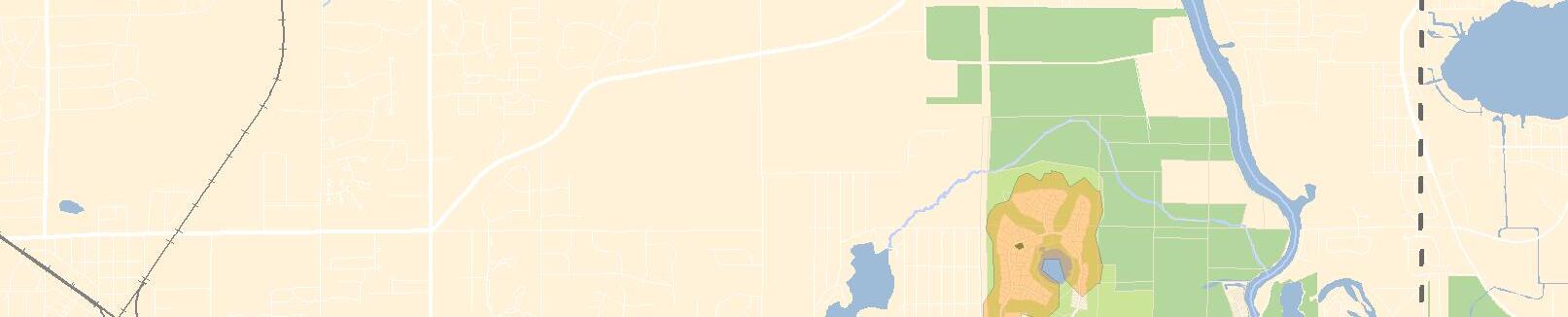
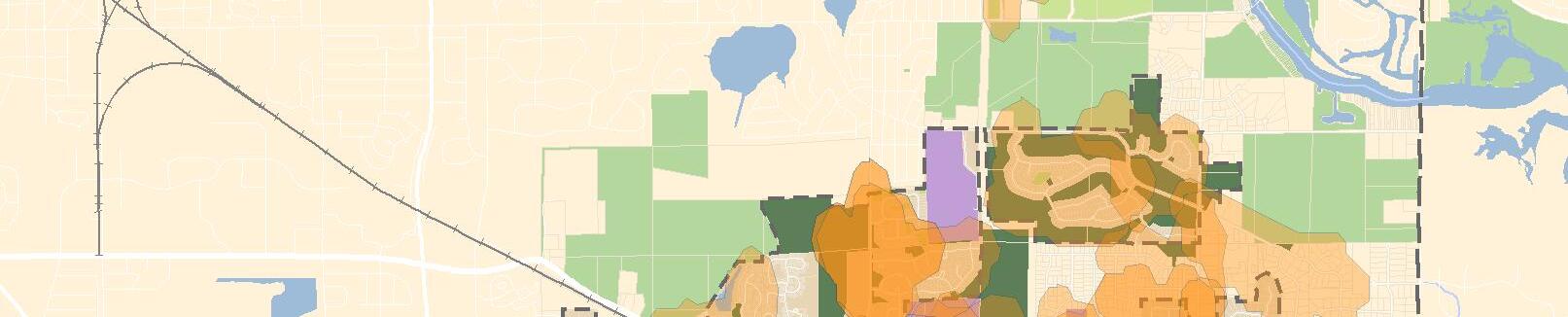
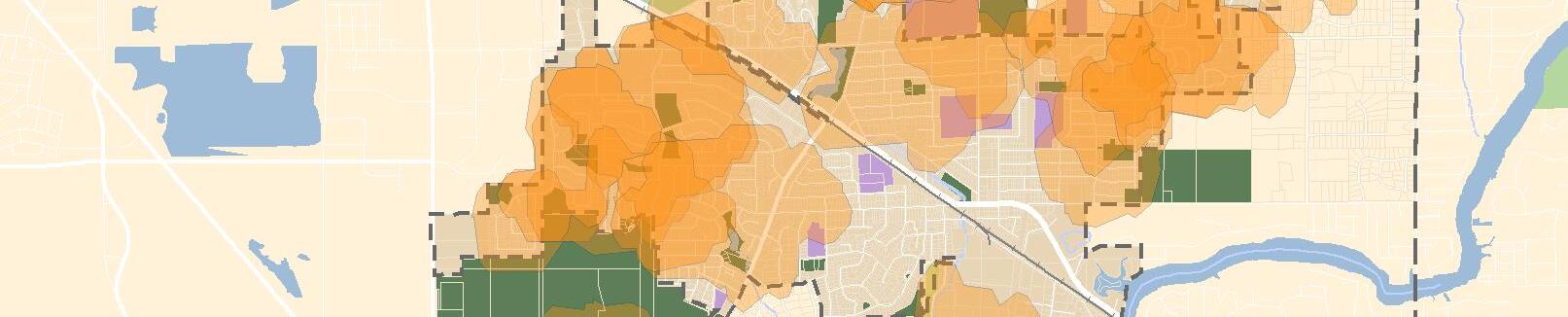

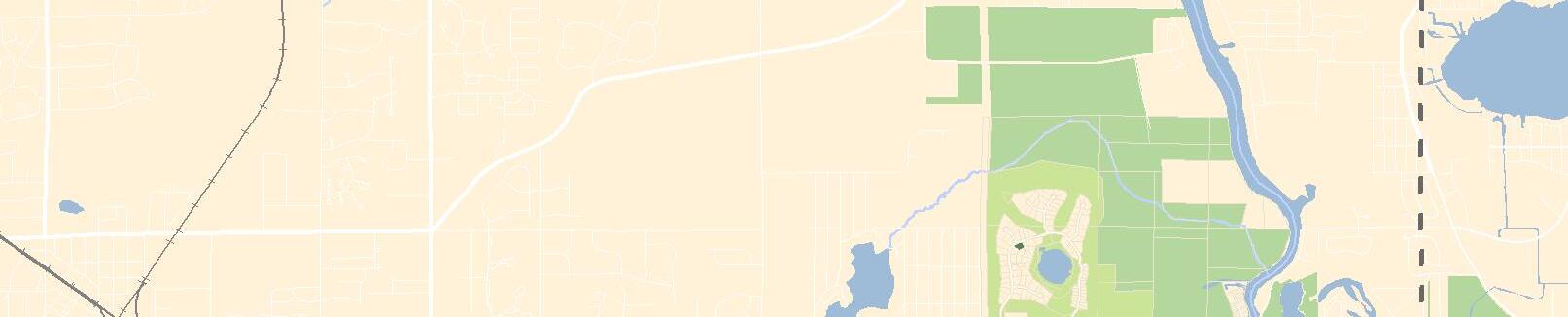
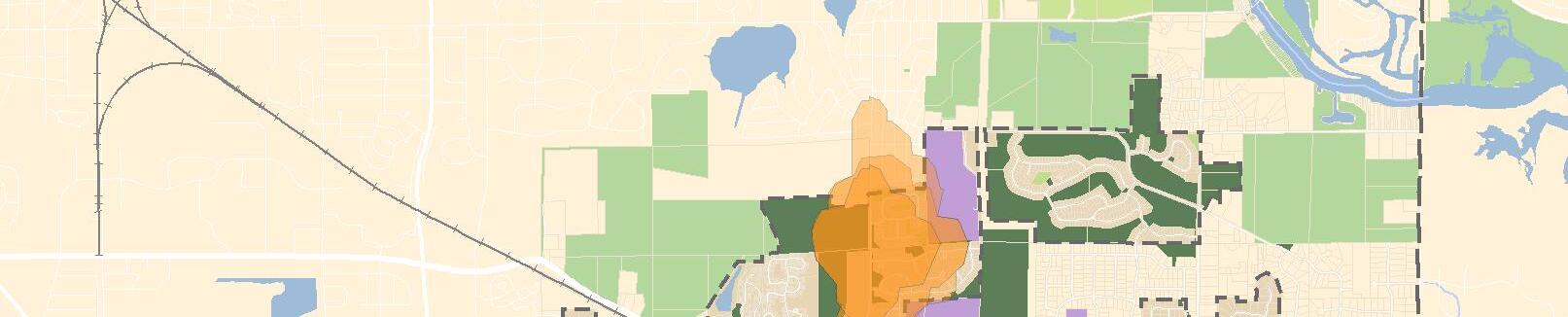
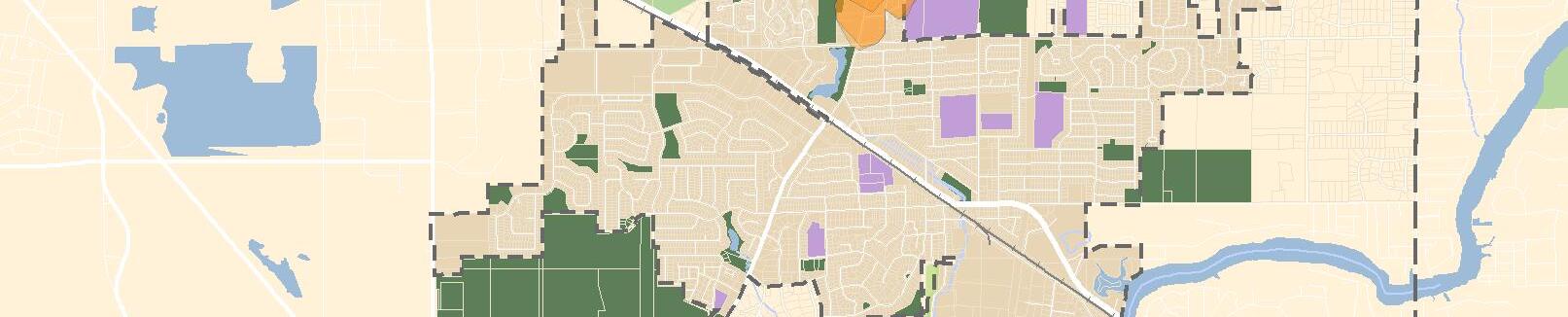

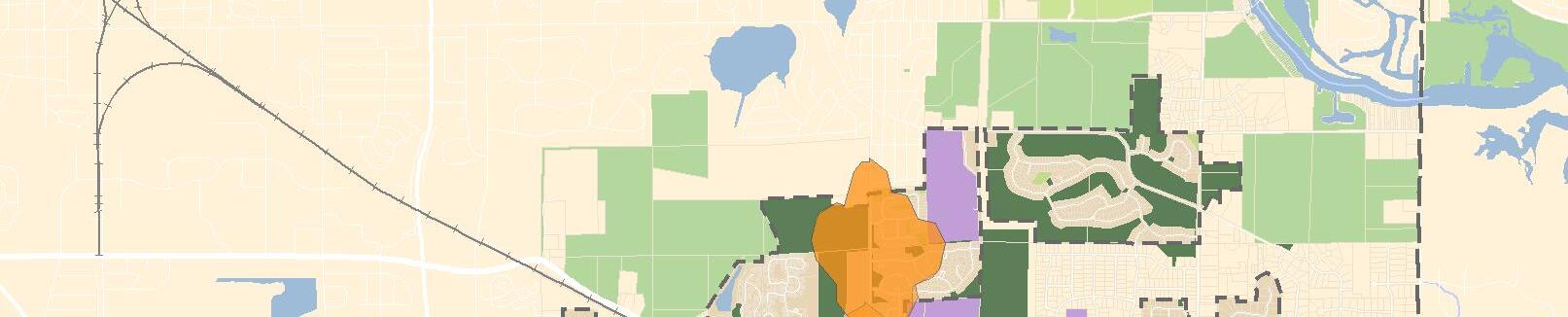
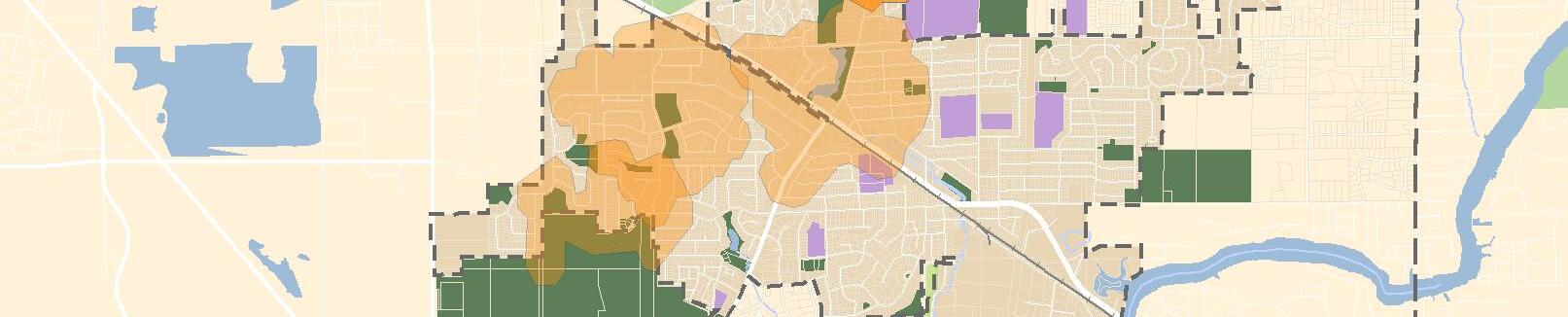
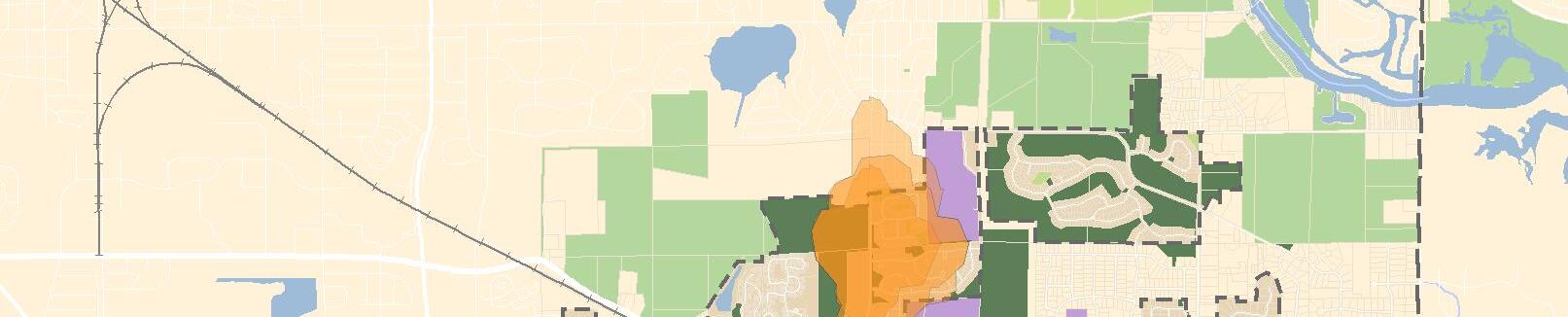
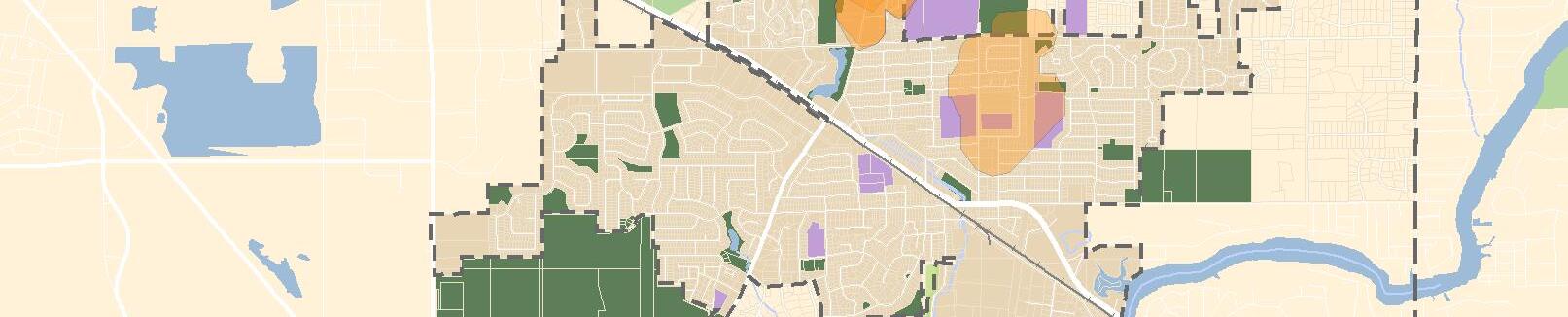
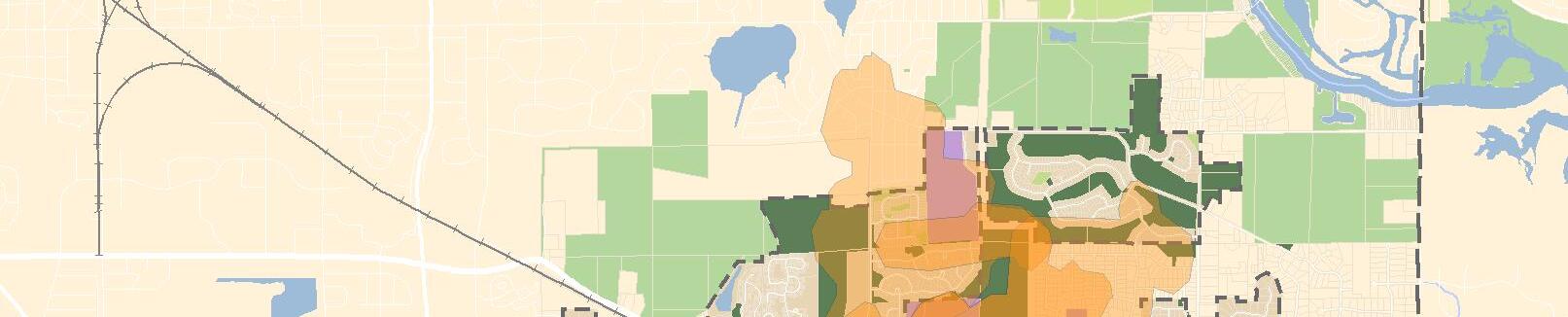
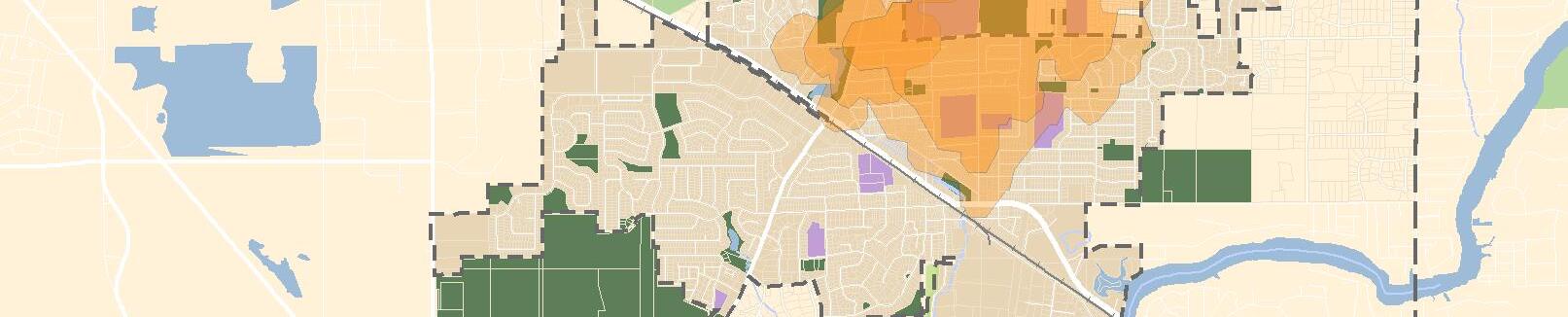







Facility Square Footage
Square Footage Level of Service benchmarks are calculations of the minimum amount of indoor space recommended to provide for all of the indoor recreation activities offered by the District. It also includes considerations for specific facilities recommended to support programs and activities.
Level of Service (LOS) guidelines for indoor space are less established than the guidelines for park and open space, but the Planning Team utilizes a Chicagoland Benchmark of 2 square feet per person with 1.5 square feet consisting of indoor classroom-based or active recreation space and one-half square feet consisting of indoor aquatics.
Cary Park District has a total of 14,993 square feet of indoor recreational space and 0 square feet of indoor aquatics. Non-programmable spaces, such as offices, restrooms, and mechanical rooms within the recreation facilities are not included in the level of service benchmarking. While the District does provide indoor support facilities at the Sunburst Bay Aquatic Center, these spaces do not function as indoor recreation or aquatic facilities and are therefore not counted toward the indoor aquatics level of service. As a result, the District does not meet the benchmark for indoor aquatics space and is also below the benchmark for overall indoor recreational space.
Level of Service Analysis
Date: January 16, 2026
Community: Cary Park District
Population:20,914
NRPA does not collect square footage data for indoor facilities, so the Planning Team relies solely on the Chicagoland Benchmarking metric for indoor recreation facility comparisons.
Level of Service Analysis: Chicagoland Benchmark
Indoor Recreational Space
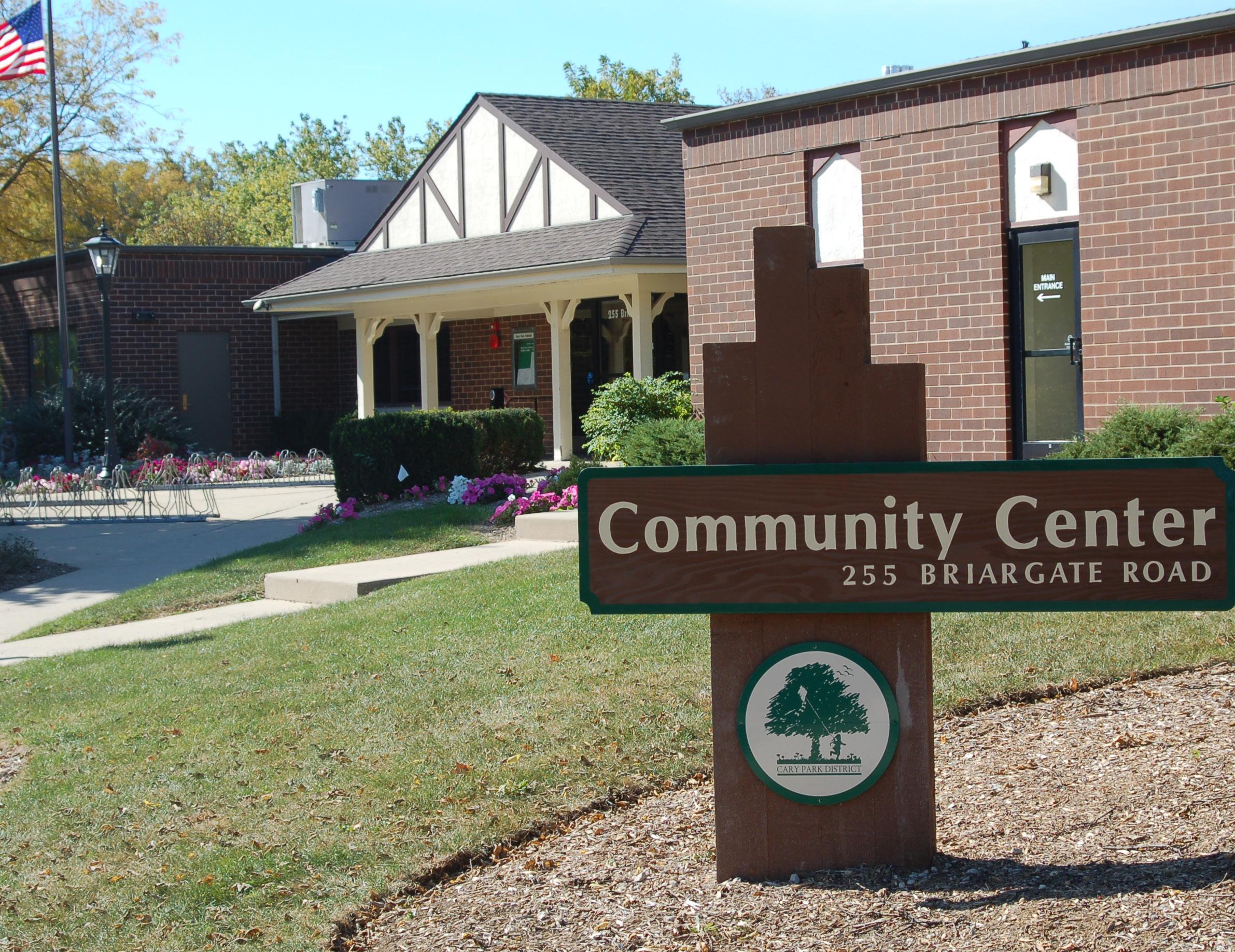
Facility Assessment
Williams Architects conducted facility assessments and initial program analyses of Cary Park District’s indoor facilities as part of the Comprehensive Master Planning process.
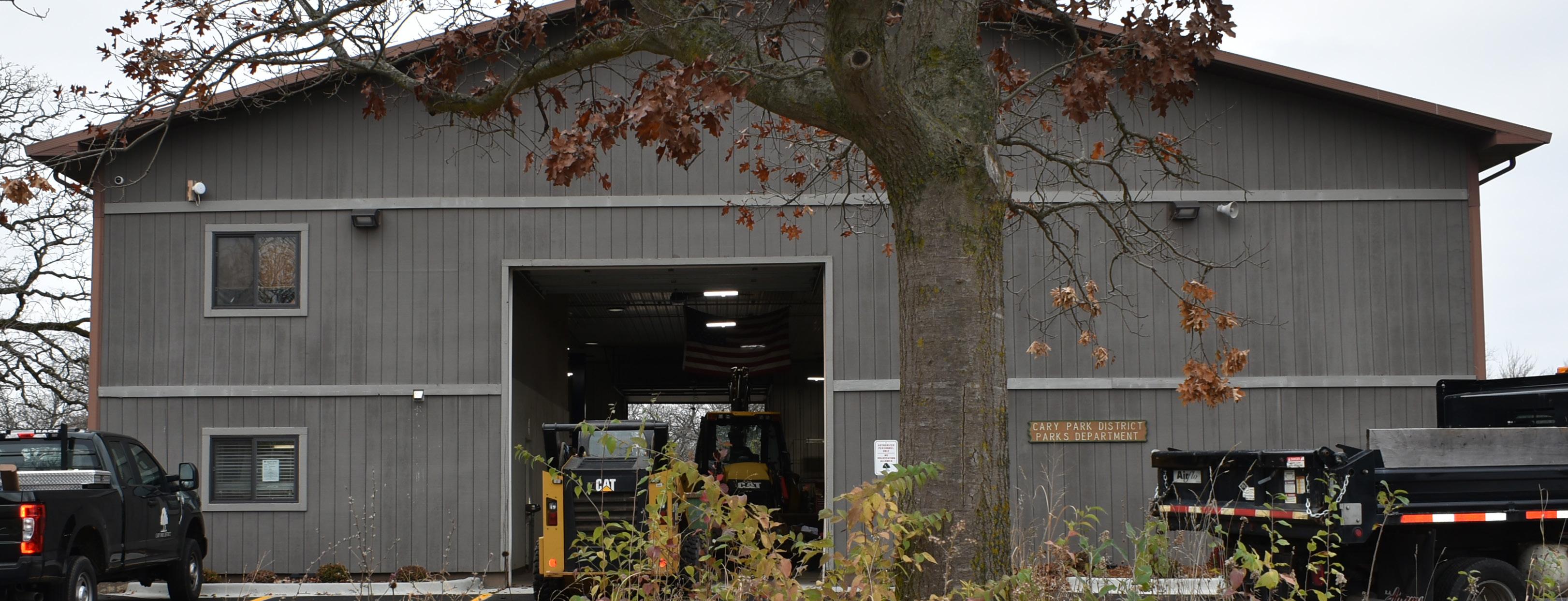
Overview
The following facilities were reviewed:
• Community Center
• Maintenance Facility
• Foxford Hills Golf Club
• Cary Park District Preschool
• Sunburst Bay Aquatics Center
Photos taken during the facility evaluations can be found in the appendix. Recommendations identified for each facility are included in the strategies developed during the Envision phase and outlined in Chapter 1.
Analysis Criteria
The Williams Architects team provided visual observation of the facilities with information gathered by the Park District with maintenance / operational input on each facility. The assessment
describes the property at the time of the visit. No testing, commissioning, or exploratory investigation was conducted. The analysis is limited to architectural observation.
Community Center
The Community Center was constructed in 1978. Renovations to the center include the racquetball conversion to program rooms completed in 2010. Most recently, the pool was demolished since the opening of Sunburst Bay Aquatics in 2022. Repairs and regular maintenance may be required due to normal usage. The Administration roof was replaced in January 1996, the asphalt roofing was replaced in 1998, and the renovation roof was replaced in 2010.
Observations
The Administration Building is in fair-togood condition. The roofing assembly on the Administration Building and the asphalt shingle roofing have met or exceeded the life expectancy. The interior finishes throughout the facility are well maintained and in good-to-fair condition, meeting client expectations. The ventilation in the shower/ locker room may be inadequate.
Due to the age of the facility, the men’s communal showers do not comply with current plumbing code. The drainage of waste water should be isolated between patrons.
Certain amenities in the facility, including but not limited to the restroom, lockers, and stairs do not comply with current ADA standards. The District has identified that an ADA transition plan is in place for the facility.
The lower level mechanical room houses some pool equipment systems. Rusting was observed on galvanized piping.
Maintenance Facility
The Parks Maintenance Facilities is composed of several buildings, including a yard and storage containers. The current main facility was built circa 1995. It serves as the primary parks maintenance facility, housing equipment, mechanics bay, storage, locker room, office and lunch room. The secondary building, originally the District’s main maintenance facility prior to its transition to a preschool in 1995, now serves as equipment maintenance and storage for smaller equipment.
Observations
The secondary maintenance building is in fair condition, marginally meeting client expectation. The main, overhead door elevation was partially reclad. The remaining metal siding was painted and is in poor condition with peeling paint and aging caulking. The District identified a low spot on the inside of ponding water due to a lack of drainage. The District has identified various roof leaks.
condition. The concrete slab in the main bay is pitted from usage. The slab has radiant heating but lacks adequate ventilation.
Due to the facilities’ age, the facilities do not comply with ADA accessibility standards. Examples including, but not limited to access to the second floor office and the storage mezzanine. Accessible facilities are available in the toilet rooms on the main level, implemented in a renovations from 2010.
The maintenance building is equipped with a fire alarm but no sprinkler system.
Foxford Hills Golf Club
The Foxford Hills Golf Club was acquired by the Park District in 2004. In 2025 the facility underwent a roofing replacement of the cedar shingles to asphalt shingles. The facility is in good condition, meeting client expectations.
Observations
The interior finishes of the facility are in good condition.
Cary Park District Preschool
The preschool facility recently completed an interior renovation. The facility is in good condition meeting client expectations. The District recently prepared an ADA transition plan identifying the preschool toilet rooms as non-conforming to current standards. The District is currently implementing the plan.
Sunburst Bay Aquatic Center
The main maintenance building is in fair condition, marginally meeting client expectations. The exterior of the facility is in good condition. The interior of the facility has aging finishes and are in fair-to-poor
The District opened the Sunburst Bay Aquatic Facility in 2022. The facility is in good condition, meeting the client’s expectations. No issues were identified on the facility other than normal maintenance and operations.
Program Assessment
This assessment includes an analysis of the Cary Park District’s program and service offerings. The report offers a detailed perspective of recreation programs and events and helps to identify the strengths, weaknesses, and opportunities for future program direction.
Introduction
Recreation Results conducted a series of individual analyses in the fall of 2024 to better understand and assess Cary Park District’s recreation program offerings. This report offers a comprehensive look at the results of those analyses and insights into the size, scope, and health of the District’s recreation programs. Information from this report, combined with other community stakeholder feedback, will help shape recommendations for future recreation program offerings and operations.
Information Utilized
This recreation program assessment reflects information and data collected from a variety of sources, including:
• Recreation Program Offering, Registration, and Participant Data from the District’s program, membership, and facility reservation software*
• Recreation Program Evaluations completed by recreation programming staff
• Internal workshop with District recreation programming staff
• Review of District program guides, website, and social media
• Demographic and trends information from Environmental Systems Research Institute, Inc. (ESRI)
*Because the data collected from the recreation software typically only included programs that required registration, some programs, such as special events and some drop-in activities, and their participation data, were excluded from those results.
Program Offerings
Recreation Activity Offerings and Benefits
As part of the input collected from staff about the activities that they offered, they were asked to share the primary and secondary benefits programs offered by the Cary Park District. Results indicated that many of the District’s programs emphasize social, fun, and relaxation benefits which are often important with programming that centers around youth and seniors, and with physical activity and development, creativity and personal expression, and health and wellness following closely behind.
Benefits such as “Nature, Outdoors, & Environment” and “Cultural” appeared much less frequently. While all of these benefits are valuable, the District is encouraged to find ways, either through new recreation programs, or inclusion in current programming to create opportunities to emphasize cultural and nature-based activities, especially if community input indicates a need for more programming in these areas. For example, cultural benefits can be added to current programming through the selection of new trip destinations, highlighting other cultures through cooking classes and art programs, or celebrating other cultures at special events.
several outdoor sites, including Lions Park and Fel-Pro RRR Conservation Area were also popular options. The remaining 13% of programs were held in parks, schools, at neighboring park district, or other at non-District off-site spaces.
Program Scheduling
Recreation Progam Locations
Cary Park District offers programs across a wide number of locations, with the District’s Community Center serving as the main hub where over 56% of programs take place, along with programs at Sunburst Bay Aquatic Center, the Cary Gymnastics Center, the Preschool, and Foxford Hills Golf Club. In addition,
Recreation Program Offerings Throughout the Year
The District plans its programming schedule around three seasons – Winter/ Spring, Summer, and Fall – all of which are fairly balanced in the number unique activities, with the summer season being slightly higher. In addition, the District offers several school year preschool and before/afterschool programs for youth, which although smaller in number when accounted for in the results below, are substantial programs in their own right.
Recreation Program Days and Times
Programs offered by the District were mainly scheduled on weekdays in the morning and afternoon/early evening hours. Although there were also examples of programs taking place at other times of day (with Sunday evenings being the only period lacking programming throughout the year), there were noticeable gaps in late evening and weekends, and even, to some extent, a preference towards Monday and Wednesday evening programs versus the same time on Tuesdays and Thursdays.
Program Days & Times Heatmap
Highest Program Occurrence | Lowest Program Occurrence
Before 8 am 8:00 - 10:30 am 10:30 am - 1:30 pm 1:30 pm - 4:00 pm 4:00 pm - 6:30 pm After 6:30 pm
While these program timeframes align well with the youth and senior markets, they may cause challenges for those working traditional weekday (9am-5pm) hours, especially for adults looking to take recreation programs after dinner or on weekends.
Length of Recreation Programs
Recreation programs often vary in length due to several factors, including the time needed to instruct the specific activity, the scheduling needs of the participants, the program’s attractiveness to potential customers in terms of commitment level and pricing, and the park and recreation organization’s facility and staff availability.
Program Audience Age Groups Offerings
As was already established with data shared earlier in this report, Cary Park District offers a variety of programs. When taking a broad look at program offerings by age group, almost every area offers programming for multiple age groups. The heatmap on the following pages shows the age distribution of programs offered in 2024 as categorized by staff as part of their assessment.
A few expected gaps exist for program categories geared towards specific age groups, such as preschool and out-of-school programs. However, there are other areas worth calling attention to, including:
• Very few programs were categorized by staff as being explicitly geared towards family/household groups (so few that they were not included in the data below), but additional family and adult/child programming in the areas of general recreation, nature, arts and crafts, and athletics may present some new programming opportunities.
In general, Cary Park District offers a nice mix of program lengths to its community. Even within that balance, just over half of programs are two weeks or shorter, which offers customers quite a bit of flexibility to align with their calendars and also likely many lower-priced options for those who may not be able to commit to longer activities.
• While tweens and teens have programs available to them, they are often not programs specifically targeting those age groups. For example, tween/ teen program options include fitness classes that are geared towards adults, as well as recreation programs geared towards elementary school students (some even with “Kid” or “Little” in the program name). An example of a way to serve this age group without completely new programming may be to expand trip offerings to offer trips for tweens/teens on days off school, possibly working with cooperatively neighboring park districts to get them off the ground.
Heatmap of Programs by Categories and Age Groups
Highest Program Occurrence in Green (Lowest / None in White)
Aquatics
Arts & Culture
Athletics & Martial Arts
Day Camps
Early Childhood & Preschool
Education / Academic
Events & Experiences
Fitness & Wellness
General Recreation
Nature & Outdoors
Out of School
Rentals & Parties
Tours & Trips
When comparing the ages of program participants against overall registrations, we can see that one area where a gap in actual participation exists is with the teenage and adult populations. Cary Park District is like most park and recreation organizations in that most of its program registrations come from youth participants, with the District experiencing the next highest level of registration from older adults.
It is worth noting that these numbers only reflect participation from recreation programs requiring registrations and do not include adults (or any person of any age group) who utilize Cary Park District facilities and parks through memberships, daily passes, or drop-in programs and special events that don’t require advance registration. However, this data can still be important to consider when evaluating current program offerings and future plans.
Results from the community survey indicated a strong need for additional adult and senior programming, but not from the tween/teen age group.
Program Portfolio Health & Performance
Although the metrics previously mentioned in this report can provide some insight into the current state of the District’s recreation programs, they alone do not tell the whole story. To capture a fuller picture, Recreation Results worked with recreation staff to conduct an additional analysis of the health of the program portfolio (slate of programs offered).
To complete this analysis, programming staff answered a series of questions about a random sample of 99 recreation programs offered in the past year. These questions concerned current program performance, operations, audience, and benefits, as well as staff’s perspective about each program’s future direction. Recreation Results then compiled and analyzed their responses to share insights about the health of the District’s recreation program portfolio.
Program Operational and Service Alignment
Measuring the health of a recreation program portfolio can be difficult as park and recreation organizations are often tasked with meeting specific operational or business-related outcomes and work to serve the community and fulfill their mission. Sometimes these two interests can even compete against each other. Using staff program assessment responses, programs were rated from both a service/mission perspective as well as an operational/business perspective.
The highest performing programs (the 10% of programs falling in the righthand corner) include examples such as Adaptive Dance, Community Gardens, ET Kidzone, Senior Parties & Events, Cary Canaries Glee Club, and Hayrides. Besides meeting operational goals, they also serve an important market, align well with District programming priorities, and offer unique options within the community. If the demand exists, these programs and others like them are likely worthy of expansion or should inspire the District to create spin-offs.
The District did not have any programs that received unsatisfactory ratings from both a service and operational perspective. However, a small set of programs were identified as not meeting operational expectations (the 6% in the left middle circle). Examples of programs falling into these categories included Crafting with Miss Carol, Forest Bathing Walk, Neurographic Art, Pumpkin Roll Pumpkin Smash, Personal Training, and Job Fairs.
Some of these programs may be just getting off the ground, often requiring more effort and resources with less payoff (participation and/or revenue) initially. However, if any of these programs have been offered multiple times in the current format and are still struggling to meet operational expectations, it may be helpful to consider any changes necessary to refresh the programs or determine whether it makes sense to continue to offer them in the future.
Program Life Cycle Analysis
Another avenue used to evaluate the health of the District’s overall program offerings is to understand where programs fall on the program life cycle, which begins when a program is first introduced and continues until it reaches the end of its life. Looking at programs from this angle can help guide recommendations about current program offerings and future program development strategies.
A summary of the life cycle stages used in this analysis are shared below:
• Introduction: Recreation programs in this stage are new or somewhat new recreation opportunities that are still working to gain a foothold. They require extra effort and attention to get off the ground and are not quite meeting participation or financial goals yet but still hold potential for success in this early stage. However, if their performance does not improve, they may skip the next two stages and move straight towards “End of Life.”
As illustrated in the chart above, the District’s current programs seem to be a good fit overall, with 94% of programs rating satisfactorily or higher from both a service and operational perspective based on staff input.
• Gaining Traction: Recreation programs falling into this stage have picked up steam. They are the immediate successes or somewhat newer programs showing growth and may soon become consistently well-performing.
• Performing: Recreation programs that have run long enough and successfully enough to be considered consistent performers fall into this stage. They no longer require the same amount of attention and effort to meet participation and financial goals as they did when they were initially offered. Some programs may stay in this category for several years, while core recreation programs that the community may always look to the District for (such as summer camps and swimming lessons) can remain in this category much longer as long as the quality and pricing are a good value in customers’ eyes.
• End of Life: Recreation programs falling into this stage are ones with declining participation, or ones that now need extra attention to get back to the participation and financial performance levels that they once had. They need to be renewed in some way to get them back on track, or they are likely to die out. Programs that have never really taken off, such as those that moved straight from the “Introductory” stage to this stage are likely the first that should be cut.
The chart to the right shows the overall results of this analysis. The District has a large slate of “Performing” programs and has also done a good job of keeping the number of programs in the “End of Life” stage small and near recommended levels. However, staff should be encouraged to continue developing new programs in program areas that currently perform well for the District and in those new areas identified through community feedback. While this will require some effort and may present some challenges, such as finding space for additional programming, having a larger pool of new programs will ensure that they always have enough programs to replace those that inevitably reach the end of their life.
Program Life Cycle Distribution
Introductory Gaining Traction Performing End of Life
New programs / services that are still trying to gain their foothold.
Newer or revamped programs that are showing positive signs.
Established programs and services that are performing at or above expectations. Programs that are in decline and likely require a refresh or rejuvenation to move back to performing.
Examples include: Examples include: Examples include: Examples include:
Stars N’ Stripes Fest
Wilderness Medicine
Dance Programs
Adaptive Dance
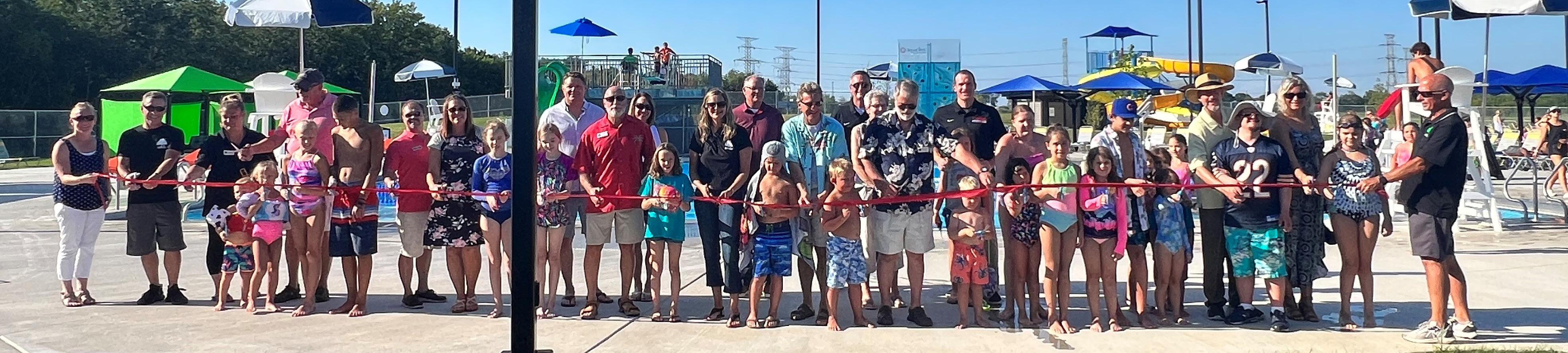
Float Night at Sunburst Bay
Little Vet School - Dog Camp
Snowman Building Contest
Aqua Strut, Strength, and Stretch
Breakfast with the Bunny Camp Echo
Gardens
My Way to Kindergarten
Studio for Kids
The following chart shows the life cycle distribution for each program area. As expected, based on the overall results, many of the program areas traditionally offered by a parks and recreation agency are primarily in the “Performing” stage. While this steady, well-performing base of programs is important, it does highlight opportunities to offer some new options for customers, especially in General Recreation, where the percentage of programs at the “End of Life” stage is higher than recommended.
The results also showcase several program areas where the District is beginning to offer and develop newer programming that is seeing some success, especially in Aquatics, Arts & Culture, Events and Experiences, Early Childhood & Preschool, and Nature & Outdoors, while Education/Academic programs are struggling to stick.
Program Participation Trends
Reviewing program and registration trends provides important data to understand how well the District is performing as it works to meet its mission of providing recreation opportunities to the community. Cary Park District programs are performing well in each of the areas reviewed, with consistent increases in the following metrics over the past three years:
Program Operations
Program Instruction
Although District staff is responsible for overseeing each program mentioned in this report, park and recreation organizations can utilize a variety of approaches toward securing instructors and facilitators to produce the program experience for participants. At Cary Park District, most (70%) recreation programs are led by District employees, with another 24% utilizing independent contractors or outside companies to lead much of the rest.
In addition to these two main approaches, there were some examples of the District partnering with partners and volunteers to offer a program. While they are not included in this data, it is important to note that Cary Park District is a
member of Northern Illinois Special Recreation Association (NISRA), which offers additional specialized programming to Cary Park District residents with special needs and supports inclusion needs in the District’s own programs.
• Growing programs areas
Current and Future Challenges:
• By far, facility space (and associated challenges such as coordination of space, funding for new facilities, etc.) was mentioned as the biggest hurdle for continued program development and success.
• Struggles in reaching the tween/teen market
• Lack of awareness of Cary community members of park district boundaries
• Need for additional programming administrative support, citing the example of the Preschool Director who also must teach classes
• Need for more consistent and improved tools and systems to collect feedback from customers and program participants
• An outdated website with some features that are difficult to use
• Too many processes still require paper forms
The results of this program instruction analysis are not uncommon for park and recreation organizations from communities similar in size to Cary Park District. Although any new programs offered, including by independent contractors, will still require oversight by District staff, this could be an effective solution to expand program options without placing quite as heavy of a burden on the District as staffing the programs themselves would, assuming quality contractual instructors can be found. When facility space is also a limitation to adding new programs, sometimes working with business owners who already have a retail or facility space (such as a chef or an art studio owner) as independent contractors can also be a creative solution.
Staff Perspectives on Program Operations
During a workshop with District staff, discussions and activities took place to uncover their perspectives about efforts to offer recreation programs to the community. Information from that workshop is used to inform the results of this analysis and guide plan recommendations.
Some of the themes regarding the District’s strengths and challenges related to program operations are highlighted below.
Strengths:
• Quality customer service
• District is inclusive and very accommodating to customers
• Program variety that reaches multiple age groups
• Well-used outdoor spaces that provide access to nature
• Staff recognized the opportunities that grants and sponsorships could provide recreation programs and events, but also that additional resources are needed to secure and fulfill the requirements of those types of programs
Future Program-Related Priorities and Goals:
• Increased space to offer programs and support program operations, including spaces for gymnasiums, fitness, dedicated dance programs, athletic fields, as well as more general program space and back-up indoor options in case of inclement weather. It was additionally noted that additional space for staff offices and operational work are also needed.
• Increasing fitness and wellness initiatives, both for external customers and internal staff
• Moving towards more paperless and digital forms and processes in a variety of areas, including financial reporting, inspections, and staffing
• Fully implementing ePact in youth childcare-related programs
Program Marketing & Online Presence
Participants often learn about program offerings from their local park and recreation providers through various avenues available online. A review was completed of several of those key methods with a summary shared on the following page.
Online Searches and Reviews
When searching Google, the District had 19 reviews and a 4.6-star rating within its Google Business Profile. While this is a very positive rating, interaction or response to these Google reviews will help improve overall search rankings. Encouraging more reviews from participants will also help improve the District’s visibility in community members’ search results.
When searching for key terms related to District programs in Cary, Illinois, the District performed well in general Google webpage search results but was often listed lower when searching through Google Business (maps) and did not appear at all on Yelp for many of these key terms.
Online Presence Social Media
Cary Park District has a strong presence on Facebook and Instagram, with daily posts regarding events, classes, and general park district news, along with some postings on YouTube. As with the recommendation for search results, the District should consider responding to Facebook reviews and continue diversifying the types of social media posts to increase engagement with followers. Some suggestions include continuing to highlight a higher percentage of photos and videos from programs and events (within the overall mix of graphics advertising upcoming programs), highlighting staff and unique or interesting aspects of park district operations, and encouraging community participation by asking them to share photos, participate in polls, etc.
Website
1st 4th 4th
Summer Camp / Day Camp 1st 23rd Did Not Appear
Before & After School 1st 18th Did Not Appear
Dance Lessons 1st Did Not Appear Did Not Appear
Swim Lessons 1st 4th Did Not Appear
While conducting this review, Cary Park District had one unclaimed Yelp listing displaying outdated information. It is recommended that the District take ownership and update this listing. Online visibilities are crucial to customer experience, and it is helpful to residents and visitors to ensure that all Google listings are updated as well.
To further improve the online visibility of key programs, the District should consider creating Google business profiles (or claiming those that already exist such as with the Cary Park District preschool programs). This will allow the District to update operating information and provide facility photos more specific to the programs for those searching for information online and will place those key programs on an equal footing with other area providers.
Creating Google and Yelp listings for all parks and facilities within the District’s system will also help ensure accuracy for all patrons searching for information about the District. Cary Park District can link these listings together within the District’s main Google Business Profile to help ensure correct information to the community, improve website traffic, and increase search results.
Overall, the information on Cary Park District’s website is up-to-date and relatively easy for users to navigate. The main menu at the top of the page and its drop-down menus are well organized and feature the District’s core service offerings. Connecting to the District’s social media and e-newsletter channels is encouraged with icons at the top of the page. And while it is generally good practice to encourage users to sign up for an email list and make that as visible as possible, the initial pop-up that appears once the website has loaded can sometimes negatively impact the user experience.
The website’s style does look a bit out of date, something acknowledged by recreation staff during the staff workshop. Along with the style, there are other features of the website that can also be updated to provide a better experience for customers.
For example, the District may consider adding links to Google map locations for the parks and facility addresses listed in the footer, and “click to call” links to phone numbers to improve the experience for website visitors, especially those on mobile devices. In general, when viewing individual park and facility pages on the website, it is also recommended to link to specific Google profiles for each park and facility to make it easier for website visitors to find directions and information about each site (such as more photos, reviews, lists of amenities, hours, etc.) than the website currently provides.
Additional photos of parks and facilities, both exterior and interior, and ones that highlight the amenities would be helpful for website visitors searching for more information, especially those interested in renting or participating in a program at specific locations. Videos and interactive walkthroughs of key sites are also becoming popular.
Cary Park District should also look into optimizing more of the forms that it currently has on its website to improve customer experience. For example, many of the forms required for permits, rentals, suggestions, and other requests lead to a fillable PDF, which can sometimes be problematic on some browsers and difficult for many mobile users to navigate. Updating them to web-based forms (even using the District’s current survey tools as a form builder if another solution hasn’t yet been identified) may increase accessibility and use of those forms.
Financial Assessment
In September 2025, the Park Board and Staff completed a financial assessment that categorized funding as present, prospective, and potential to guide strategy prioritization and implementation timing.
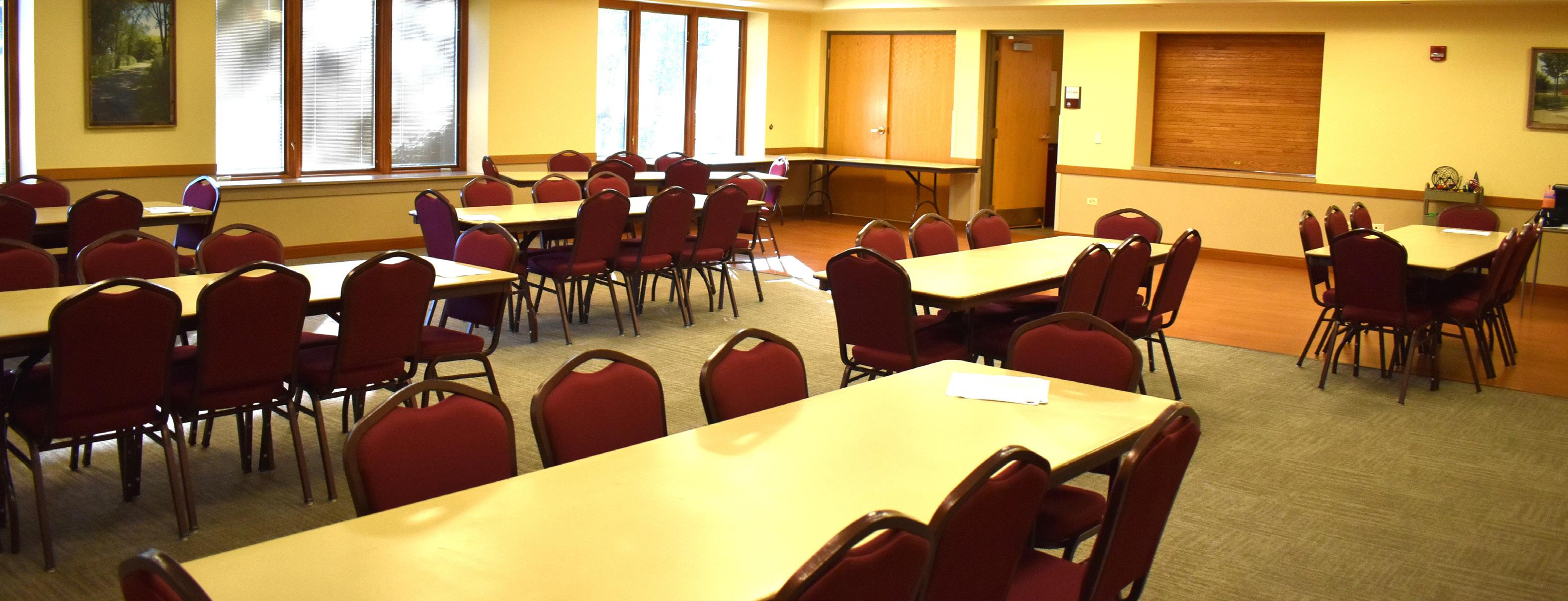
Overview
In September 2025, the Park Board and Staff worked through prioritizing the various strategies by categorizing financial resources as present, prospective, and potential.
Present funding included existing fund balances, annual budget transfers, and excess special recreation fund revenues that are currently available or reasonably expected to continue, and also those that are largely designated for existing obligations with implementation of the updated comprehensive master plan.
Prospective funding reflected anticipated future resources such as bond retirements, grant opportunities, and developer donations tied to on-going or planned development, all of which carry timing uncertainties and, in some cases, use limitations.
Lastly, potential funding represented the District’s longer-term capacity to generate resources through non-referendum and referendum debt authority and future bond retirements, while acknowledging that these options depend on legal limits, repayment capacity, market conditions, and, in the case of a referendum, significant advance planning and community support. From the key takeaways and discussion coming out of this workshop, the Park Board and the planning team were able to better place the various strategies in the next five years to then finalize the action plan.
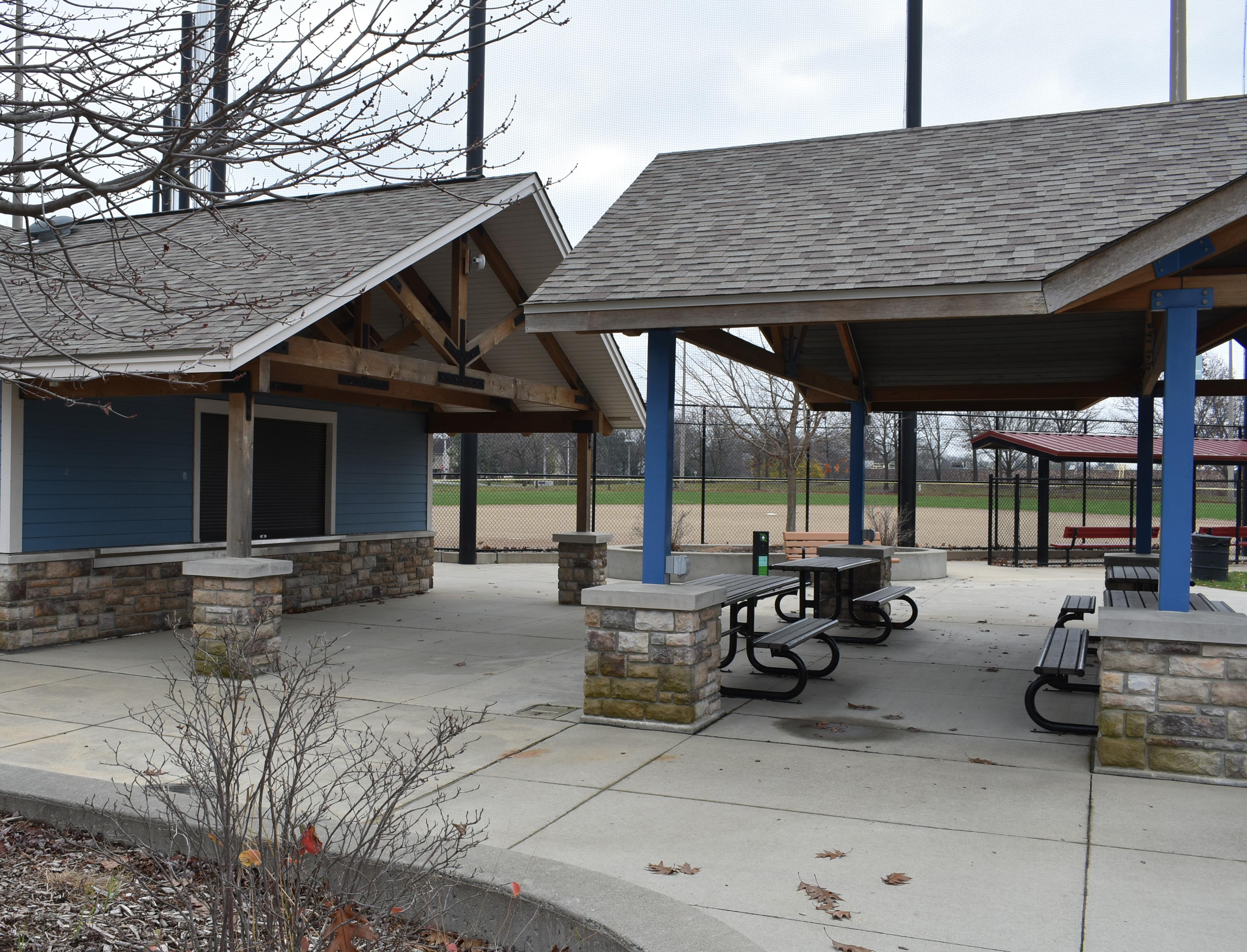
Analyze Phase Summary
The following themes revealed themselves through the various inventories and analyses during the Analyze Phase of the comprehensive master planning process.
Shifting Population and Aging-in-Place Trends
Like many communities in Illinois, the Cary Park District is experiencing a gradual population decline, projected to continue through 2029. Despite this overall decrease, the District’s age composition is changing in ways that will significantly influence future recreation needs. Adults ages 55 and older currently represent nearly one-third of the total population, and this share will continue to grow as the 65+ cohort expands. Younger adult groups, particularly ages 25–44, are also expected to see modest increases.
These demographic trends reinforce the need for a continued commitment to multigenerational programming. Expanding active adult and senior offerings, while ensuring adequate opportunities for families and working-age adults, will be critical for maintaining strong engagement across all age groups.
Moderate but Increasing Diversity
The District exhibits a moderate level of racial and ethnic diversity, reflected in a Diversity Index of 47.1. While the population is predominantly White, residents identifying as two or more races and “Some Other Race” represent meaningful portions of the community, and 12.8% of residents identify as Hispanic. As this diversity continues to increase, the Park District has an opportunity to enhance cultural and community-building programming. Reviewing existing offerings and introducing culturally inclusive programs, events, and partnerships can help broaden participation and strengthen community cohesion.
Extensive Open Space Network with Strong Regional Connections
The Cary Park District benefits from a substantial amount of open space, both through Districtowned properties and through significant regional holdings provided by the McHenry County Conservation District. This combined open space network creates a strong foundation for recreation, conservation, and trail connectivity.
The District maintains over 5.5 miles of trails, many of which link to Village of Cary, School District 26, and regional trail systems such as the Prairie Trail and Fox River Trail. Recent investments, such as the ITEP-funded Hoffman Park Trail Extension, illustrate the District’s long-standing commitment to trail development. Continued coordination with regional partners will enhance future access to community destinations.
Well-Distributed Park System with Opportunities for Amenity Renewal
The District manages an extensive and generally geographically balanced collection of mini, neighborhood, and community parks. However, the amenity inventory highlights needs for modernization. Many recreation elements, especially courts, fields, and playgrounds, are beyond their useful life as defined by IDNR Useful Life Criteria. Strategic reinvestment in these assets will improve safety, accessibility, and overall user experience. As older features are replaced, the District can also evaluate opportunities to incorporate emerging amenities that reflect current recreation trends and community expectations.
Indoor Facilities Support Core Needs but Will Require Ongoing Evaluation
Indoor recreation and support facilities play an important role in the District’s service delivery, particularly at the Community Center. While these facilities generally meet current program needs, several buildings show signs of aging, functional limitations, and varying levels of ADA noncompliance that will require attention in the coming years. Routine maintenance remains essential, especially for older systems such as roofing, HVAC units, and worn interior components.
Looking ahead, the District will need to balance ongoing upkeep with long-term facility improvements as community expectations and program participation evolve. Targeted upgrades, including accessibility enhancements, modernization of building systems, and evaluation of underutilized spaces, will help ensure that the District’s indoor facilities continue to support operations effectively and efficiently.
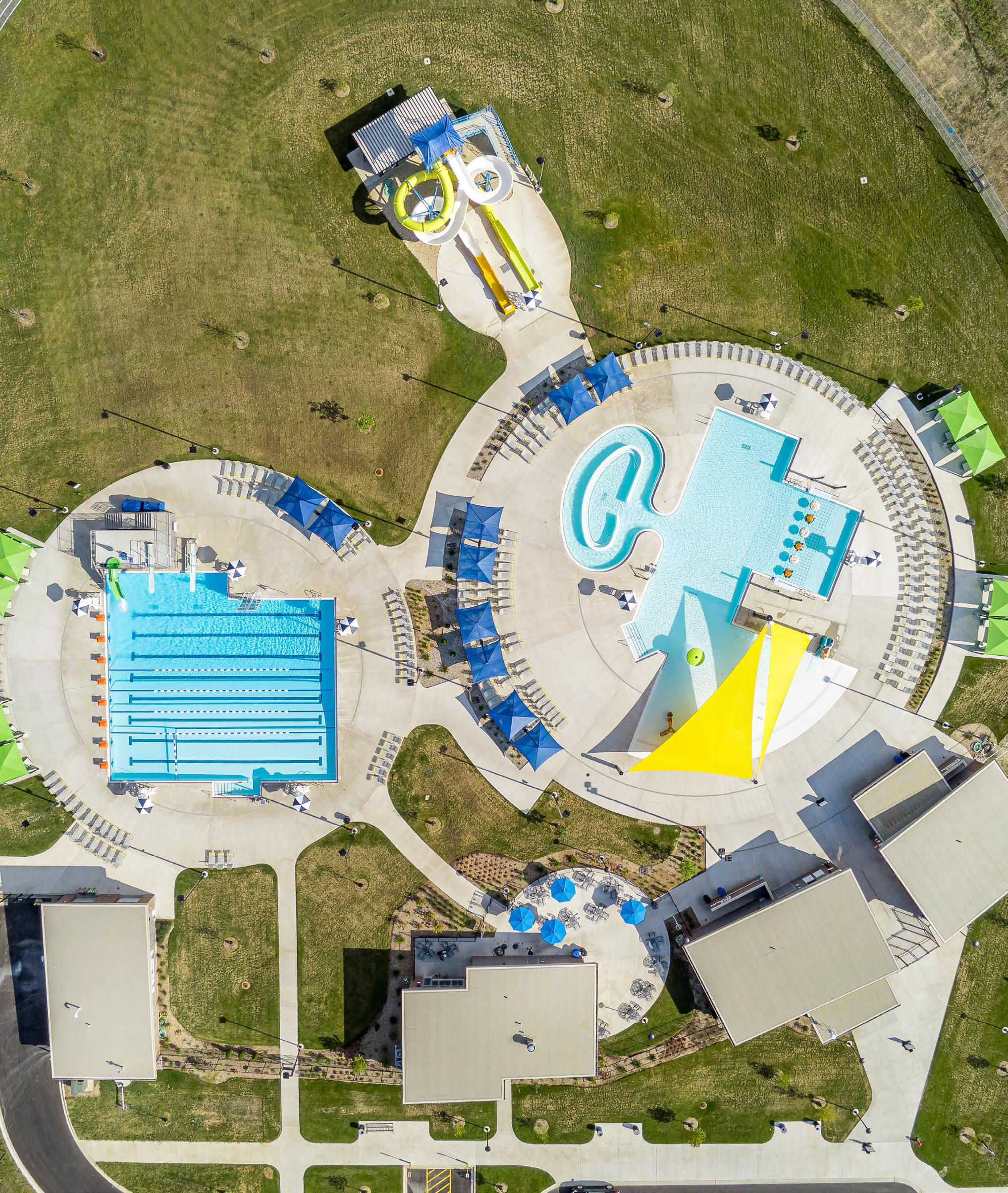
Chapter Four
CONNECT Needs Assessment
Overview
The Connect: Needs Assessment chapter outlines the recognized national, state, and local trends in the recreation industry. The chapter also includes summaries of all input from District staff, residents, and stakeholders.
Purpose
During the Connect: Needs Assessment Phase of the master planning process, the Planning Team reviewed trends, facilitated a community meeting and two community pop-up events, hosted stakeholder interviews and focus group meetings, workshopped ideas with staff, and gathered input from the Board of Commissioners. Along with an online survey that was available to all Cary residents, a community survey was distributed to a random sampling of households in the Park District to obtain statistically-valid results. Residents also provided input via email.
The purpose for understanding park and recreation trends is to determine probable demands for certain services and amenities. Recreation trend reports compiled from nationally-recognized sources to explore inactivity, spending, and participation are documented in this chapter.
In order to increase participation, knowing the trends and interests of various users groups is crucial. Significant changes in specific activities (both increases and decreases) over the past two years are summarized. Summaries of all engagement sessions follow the national, state, and local trends report.
The systematic approach to community engagement provided a multitude of avenues for residents to provide input on aspirations and needs while also defining problems and opportunities for the next five years.
Chapter Outline
• Trends Review
• State Trends
• Local Trends
• Community Survey
• Community Meeting
• Stakeholder Interviews and Focus Group Meetings
• Staff Workshop
• Board Input
• Online Survey
• Connect: Needs Assessment Summary
Review of Trends
National, State, and Local Trends
National trends were derived from the 2025 Sports, Fitness, and Recreational Activities Topline Participation Report facilitated by The Sports & Fitness Industry association, a top national researcher in the sports and fitness industry as well as The Outdoor Foundation’s Outdoor Recreation Participation Topline Report (2025). State trends were derived from the 2021-2025 Illinois Department of Natural Resources Statewide Comprehensive Outdoor Recreation Plan (SCORP). ESRI’s Business Analyst provided local recreation participation trends.
Community Recreation Needs Assessment
Statistically-valid, District-wide survey
Conducted by the ETC Institute in the winter of 2024-2025, the community survey was distributed to a random sample of households in the Cary Park District. The goal for completion was 300 completed surveys, but a total of 323 households completed the survey. The results for this sample have a 95% level of confidence with a precision rate of at least +/-5.4%. The results of the survey are considered “statistically-valid.
METHODOLOGY
Community Meeting
Public meetings to gather input from community members
A public meeting was held at the Community Center to gather input from the public at-large. More than 55 residents participated in a focus group activity to provide input on needs, desires, and priorities for the next five years.
Stakeholder Interviews and Focus Group Meetings
Individual discussions with key stakeholders about parks, programs, and facilities
Specific interest groups, or stakeholders, relevant to the District were invited to participate in small group interviews and meetings. These groups, facilitated independently of one another, were asked a series of questions about their goals, objectives, desires, and hopes for the next five years as well as their opinions on the current state of the District.
Staff Workshop
Focus group workshop with various full- and part-time staff members
Staff provided input about their goals, objectives, desires, and hopes for the next five years as well as their opinions on the current state of the District in a series of workshops. All departments participated.
Board Input Board meetings
Findings from the Analyze and Connect Phases were presented to the Board during a regular meeting on April 24, 2025. Commissioners reviewed summaries of park visits, demographic data, level of service analysis, inventory and benchmarking results, and community engagement efforts. Board feedback on priorities and areas of focus for the next five years was provided following the meeting and used to help inform subsequent planning efforts. Later in the planning process, the Board participated in additional meetings to discuss and confirm final details of the plan reflected in the Envision and Prioritize Chapterss.
Online Engagement Online survey
All District residents were invited to participate in an online survey composed of multiple-choice and open-ended questions. The survey asked about parks, programs, and facilities. In total, 595 people completed the survey. Because respondents were not randomly selected, the results of this survey are not considered statistically valid. Rather, the results are the collective opinion of the nearly 600 individuals who completed the survey. Participation was limited to one survey per device.
Connect Phase Summary
The following conclusions, combined with the information gathered in the Analyze Phase, directly influenced the strategies developed in the following phase of the Comprehensive Master Plan process.
Several themes were revealed through the various trends, reports, and engagement methods:
Improve and Expand Facilities
Indoor facilities were the most discussed topic across all avenues of community engagement, with points ranging from maintaining and updating existing facilities to building entirely new facilities that house amenities that do not currently exist in the District. There were two primary facility types discussed-operational facilities, which the public do not generally have access to, and recreational facilities, which the public utilizes on a daily basis.
Improve Maintenance Facility and Provide Centralized Office Space
Understandably, staff highly prioritized updates to the existing maintenance facility, which is the primary hub of Park District grounds operations.
Without a well-functioning maintenance facility, physical operations of the District suffer. Staff are calling for a larger or secondary maintenance facility to keep up with the current demands of the District.
Another top priority from the staff workshop was office space. The Park District does not currently own office space to house its staff force. Staff currently work from a leased office space or from the various recreation facilities. Current space is limited and proves a challenge to future growth. Staff desire to be located in a central location with room to grow. While not widely acknowledged by the public-at-large, sufficient staff working space is necessary for keeping the Park District operations running smoothly and important to park, facility, and program growth.
Update
and
Maintain
Existing Recreation Facilities while Exploring Feasibility of Building a New Recreation Facility
Recreation facility-related comments primarily called for renovation of the existing Community Center or the building of a brand new recreation center. Community Center renovation comments from the staff and community workshops and surveys typically included the expansion of the fitness space, renovated locker rooms, and improved program spaces.
An indoor walking track, pool, and synthetic turf fields were all presented as amenities in demand for an indoor facility across the surveys, stakeholder interviews, and staff and community workshops. While further study is needed to determine the feasibility of adding a new facility to the Park District’s assets, demand for more public indoor recreation space is clearly in demand.
Dedicated senior space bridged conversations between the two larger Community Center and new recreation center topics. Stakeholders, the senior focus group, and the online survey identified a desire for more, dedicated senior space, either in the existing Community Center or a new facility. Although serving a very specific demographic group, dedicated senior space will serve the District well in the future, due to strong existing senior programming and the projected growth of this age group as more residents are opting to age in place.
Update and Maintain Existing Park Amenities and Expand Sport Court and Field Offerings
Maintaining existing park and facility offerings was the second highest overall priority identified in the online survey. The Park District has an established replacement schedule for key amenities, such as playgrounds. Because these amenities have a known life cycle, it is important that the Park District continue to keep up with the replacement plan, while looking for opportunities to implement new features as these replacements occur.
While the community workshop and online survey comments did identify sport field maintenance as a need, far more comments were received requesting more, new fields. A field and court study would help identify how many new fields are needed, if any, where schedule adjustments can optimize use of existing fields, and potential opportunities for conversion of exiting fields to synthetic turf. Because the Park District currently has very limited hard court assets, the addition of any basketball, tennis, or pickleball courts would begin to fill the desire for those amenities. A field and court feasibility study would also assist with identifying ideal locations for these court assets.
Maintain Strength of Senior Programming
While Increasing Adult Fitness and Wellness Program Opportunities
Stakeholders and the senior focus group noted the strength of the existing senior programs offered by the Park District and stressed the importance of maintaining these programs and suggested exploring ways to implement to incorporate other age groups as a way to promote lifelong learning for younger residents.
The statistically valid survey identified adult fitness and wellness programming as the highest needed program type, as well as the most important to residents, making it a top priority investment. The online survey cited a number of athletic and fitness programs for adults that the public is craving. Expanding and improving program options was the top priority from the online survey. New and expanded program offerings was also the top voted reason people stated they would increase their participation.
National Trends
Derived from the statistically valid surveys facilitated by the Sports and Fitness Industry Association with the Physical Activity Council and The Outdoor Foundation, the following data will help inform the Planning Team’s recommendations.
The Physical Activity Council (PAC) is a partnership of seven major trade organizations in U.S. sports, fitness, and leisure activities. These organizations are the Sports & Fitness Industry Association (SFIA), the National Golf Foundation (NGF), Outdoor Industry Association (OIA), the International Health, Racquet, and Sports Club Association (IHRSA), the Tennis Industry Association (TIA), the United States Tennis Association (USTA), and Snowsports Industries America (SIA).
The PAC produces an annual Sport, Fitness, & Recreational Activities Topline Participation Report providing information on participation, inactivity, spending, aspirational participation, and projections. The 2025 report compiled and analyzed 18,000 online interviews collected in 2024. These surveys were then weighted against a total population of 308,888,845 ages 6 and older. The following variables were used: gender, age, income, household size, region, and population density.
Other research incorporated in this chapter references the Outdoor Recreation Participation Topline Report, created by the Outdoor Industry Association and Outdoor Foundation. These partner organizations research and publish the annual topline report which tracks American outdoor recreation trends with a focus on youth, diversity, and the future of the outdoors.
In addition to these studies, this chapter references Active Network, a national software company that utilizes recreation data to study market trends.
Sports and Fitness Participation
For the eleventh consecutive year, physical activity in the U.S. has increased, and for the first time since SFIA began tracking participation, the rate has reached 80%. This means about 247.1 million Americans participated in at least one activity during 2024. This is a 6.8% increase from 2019. Comparing participation rates from 2015 to 2024 shows the greatest percent of growth by participation
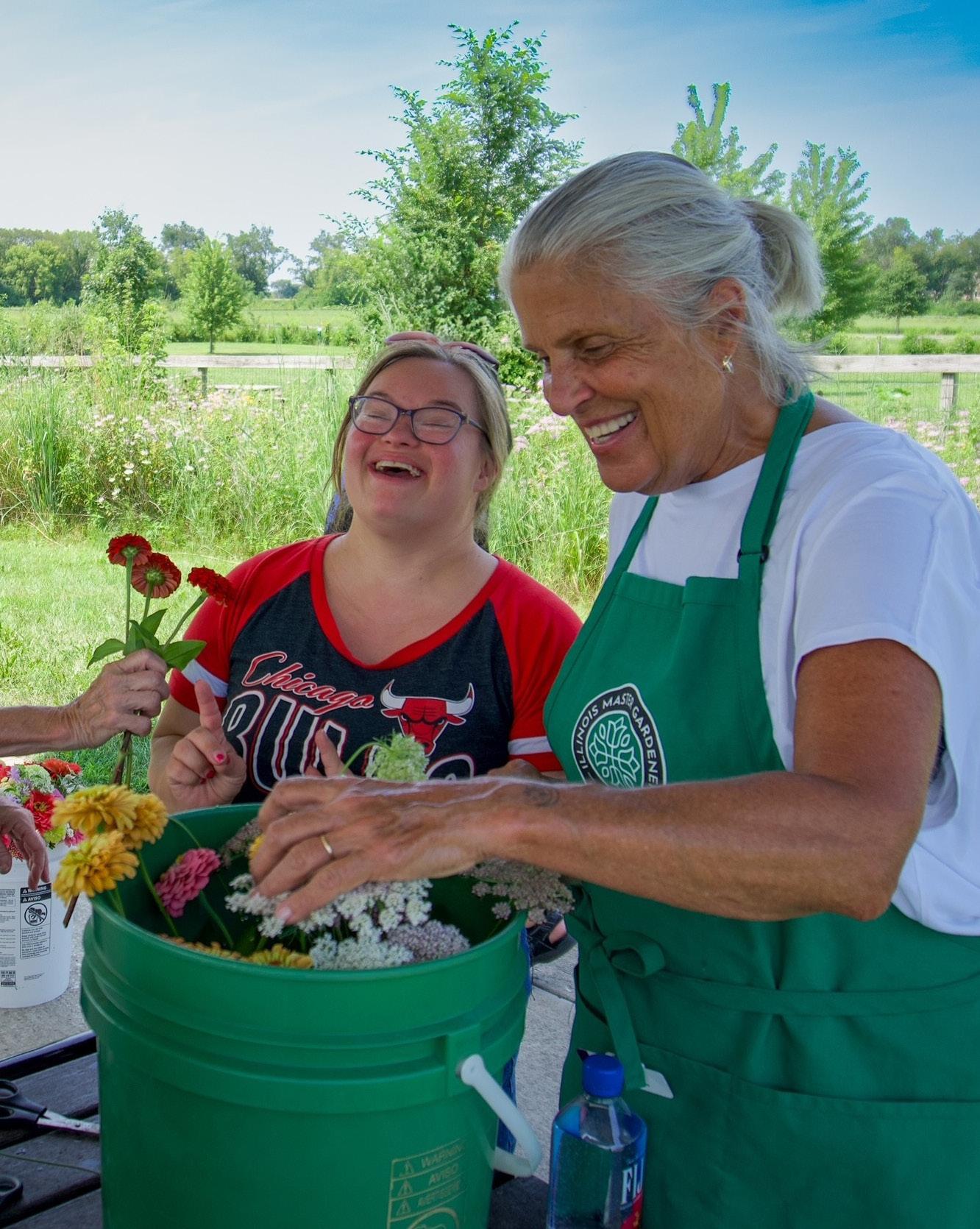
in outdoor sports (10.2%). Fitness sports (6.9%), racquet sports (6.6%), team sports (5.2%), winter sports (2.1%), and water sports (2.1%) all also increased in participation over the last ten years. While categories have generally grown or maintained participation from year to year, individual sports and team sports had participation decreases in the 2019 to 2022 year ranges. Participation in both has been increasing since 2021-2022 and team sports has exceeded the 2015 trend, experiencing a lower overall decline compared to individual sports. Individual sports saw a greater decrease in participation that started prior to 2019, and 2024 levels are still below 2015 and 2019 numbers despite the last two years of growth. The trend of all seven categories’ participation increases since 2022 indicates a growing prioritization of physical activity and healthy lifestyles amongst Americans.
The data collected suggests that Americans are continuing to add high calorie-burning exercise and outdoor activities to their existing routines. The most popular activity category continues to be fitness sports followed by outdoor sports, individual sports, team sports, racquet sports, water sports, and winter sports.
Core participation is active or organized participation in a sport or activity on a regular basis which indicates commitment and dedication to an activity compared to casual or intermittent participation. Core participation in 2024 was the highest it has been in the last five years, indicating a healthy and growing sports and recreation industry. The number of core participants increased to over 170 million Americans in 2024. The top ten activities in 2024 defined by core participation were:
1. Walking for Fitness (50+ times / year), 76,316,000
2. Free Weights (Dumbbells / Hand Weights) (50+ times / year), 29,684,000
3. Running / Jogging (50+ times / year), 24,005,000
4. Weight / Resistance Machines (50+ times / year), 17,967,000
5. Hiking (Day) (8+ times / year), 16,966,000
6. Stationary Cycling (Recumbent / Upright), 16,689,000
7. Free Weights (Barbell) (50+ times / year), 14,996,000
8. Yoga (50+ times / year), 13,907,000
9. Elliptical Motion/Cross-Trainer (50+ times / year), 12,716,000
10. Bodyweight Exercise & Bodyweight Accessory-Assisted Training (Calisthenics) (50+ times / year),11,804,000
In addition to referencing the current most popular activities by measuring core participation, the Overview Report also lists the growth of activities over one-, three-, and five-year periods. These predictions can be used to recognize ongoing recreation trends and predict future areas of growth.
Racquet sports had the largest growth from 2023 to 2024 at 9.4%, followed by team sports at 8.1%. Racquet sport growth can largely be attributed to unusually high growth in pickleball (45.8%) and tennis (8.0%). Pickleball continues to be the fastest growing sport for the fourth consecutive year with an estimated 19.8 million total participants. Growth trends in the team sports category included growth in 20 of the 24 included sports with a high growth rate in wrestling (8.6%). The top ten core growth activities over the past three years are:
1. Pickleball, 355.00%
2. Cardio Tennis, 29.10%
3. Rafting, 25.50%
4. Camping,17.70%
5. Climbing (Sport/Boulder), 16.20%
6. Hiking (Day),16.90%
7. Football (7-on-7),15.60%
8. Kettlebells, 6.00%
9. Cardio Kickboxing, 10.90%
10. Trail Running, 9.40%
As evidenced by the above lists, 2024 participation was concentrated in the fitness activity category (which included seven of the ten activities) and
outdoor sports category (two of ten activities). The remaining one activity is classified into both the fitness activity and outdoor sports categories. Growth trend activities represented a more diverse group of categories. Activities from outdoor activities (4), racquet sports (2), fitness activities (2), water activities (1), and team sports (1) are all represented in the top ten core growth activities.
These trends reveal that active people are increasingly looking for nontraditional health and recreation options that offer a fun physical, emotional, and mental experience. While the largest amount of growth is being seen in less traditional sectors, many class-based group fitness and exercise programs, as well as health clubbased activities and team sports have increased in popularity over the last three years, as almost all included activities have increased participation.
Of the 24 team sports activities, 20 increased in total participation from 2023 to 2024, with wrestling increasing the most at 8.6%. Basketball, Football (flag), Football (tackle), Football (7-on-7), Gymnastics, Softball (slow-pitch), and Track and Field all also saw significant growth, over 7% in each activity in the last year.
15 of the 17 individual activities saw increased participation in 2023. Trail Running experienced the greatest total participation growth, 8.5%, followed by Roller Skating (2x2 wheels) (7.4%) and Roller Skating (inline wheels) (7.3%).
2023-2024 total participation increased in 14 of the 23 outdoor activities. The greatest increases were for Bicycling (BMX) (5.8%) and Climbing (sport/ boulder) (5.1%).
Over the last year, total participation in racquet sports increased dramatically with five of the seven included activities seeing growth. The majority of
category growth can be attributed to pickleball which experiences a 45.8% increase in participation. In addition to the abnormally high pickleball growth, other racquet sports activities had growth rates consistent with other category high growers with the two highest being Tennis (8.0%) and Squash (6.4%).
13 of the 14 water activities saw an increase in total participation over the last year. The largest increases were in Stand Up Paddling (6.6%) followed by Surfing (5.9%).
Six of the nine winter sports increased in total participation from 2022 to 2023. The greatest growth was seen for Snowboarding (9.3%), then Sledding/Saucer Riding/Snow Tubing (6.6%), and Snowmobiling (5.9%).
The fitness activities category is further divided into three subcategories: aerobic activities, conditioning activities, and strength activities. Aerobics is the largest subcategory with 14 activities, 12 of which showed increased participation from 2023-2024. The greatest increase was in Stationary Cycling (group) (6.0%), followed by Running/Jogging (5.7%). Boot Camp Style Training, Swimming for Fitness, and Aquatic Exercise also all increased by over 4%. Four of the five conditioning activities have grown in the last year with the greatest increase in Yoga (9.9%), then Pilates Training (8.7%). The Strength Activities subcategory includes 4 activities which all increased in total participation. These are Kettlebells (7.7%) followed by Weight/ Resistance Machines (4.8%), Free Weights (dumbbells/hand weights) (4.4%), and Free Weights (barbell) (4.1%).
Three-year growth trends indicated that the following activities saw steady or increasing participation from 2021 to 2023 among participating ages 6+ and are likely to continue to provide opportunities to engage more people in the future:
• Pickleball, 265.20%
• Alpine Touring, 125.40%
• Winter Fat Biking, 79.30%
• Snowboard Touring, 57.20%
• Snowshoeing, 42.70%
• Horseback Riding, 24.00%
• Pilates Training, 23.60%
• Ice Skating, 21.00%
• Golf (on/off-course), 21.20%
• Trail Running, 20.50%
• Volleyball (Court),19.20%
• Swimming on a Team,18.60%
• Barre, 17.70%
• Tai Chi, 17.20%
• Bicycling (BMX, 16.50%
• Bowling, 15.00%
• Snowboarding, 13.90%
• Gymnastics, 12.30%
• Softball (Fast-Pitch), 12.10%
• Skiing (Cross-Country),19.40%
• Soccer (Outdoor), 12.50%
• Track and Field, 9.60%
• Squash, 11.70%
• Birdwatching, 11.20%
• Climbing (Sport/Boulder), 11.10%
• Wrestling, 10.30%
• Basketball, 10.20%
• Swimming for Fitness, 10.50%
• Rowing Machine, 10.40%
• Cheerleading, 9.90%
• Ice Hockey, 8.70%
• Cardio Kickboxing, 8.50%
• Football (7-on-7), 21.00%
• Baseball, 7.10%
• Kettlebells, 7.20%
• Camping, 7.50%
• Hunting (Bow), 7.50%
• Stair-Climbing Machine, 7.00%
• Football (Tackle), 8.00%
• Football (Flag), 5.90%
• Softball (Slow-Pitch) 6.10%
• Dance/Step/Choreographed Exercise 6.20%
• Soccer (Outdoor), 12.50%
• Aquatic Exercise, 9.10%
• Racquetball, 9.10%
• Fishing (Saltwater), 9.00%
• Volleyball (Court), 19.20%
• Hiking (Day), 4.90%
• Free Weights (Barbell), 4.10%
• Treadmill, 2.30%
• Free Weights (Dumbbells/Hand Weights), 2.50%
• Wildlife Viewing, 3.40%
These same growth trends also indicate which activities have been trending down in participation:
• Roller Hockey, -12.30%
• MMA for Competition, -12.60%
• Cardio Tennis, -12.00%
• Boxing/MMA for Fitness, -11.00%
• Rugby, 10.00%
• Bowling, -10.00%
• Boardsailing/Windsurfing, -11.40%
• Canoeing, -8.80%
• Fishing (Fly), -8.20%
• Badminton, -7.20%
• Bicycling (Mountain/Non-Paved Surface), -6.80%
• Volleyball (Beach/Sand), -6.60%
• Target Shooting (Rifle), -4.70%
• Ultimate Frisbee, -4.70%
• Target Shooting (Handgun), -4.30%
• Weight/Resistance Machines, -3.90%
• Cross-Training Style Workouts, -3.80%
• Elliptical Motion/Cross-Trainer, -1.90%
• High Impact/Intensity Training, -0.80%
• Walking for Fitness, -1.60%
• Lacrosse, -4.50%
• Adventure Racing, -1.00%
• Bodyweight Exercise/Calisthenics, -0.20%
• Climbing (Indoor), -11.70%
• Archery, -4.50%
• Hunting (Handgun, -1.10%
• Camping (RV), -0.30%
• Shooting (Trap/Skeet), -0.70%
• Hunting (Shotgun), -0.70%
• Roller Skating (Inline Wheels), -3.10%
Outdoor Sports & Participation
The Outdoor Industry Association is a collective of outdoor industry leaders which publishes an annual trends report, including data broken down by age, race, and household income. According to the most recent Outdoor Foundation Topline Report, published in 2025, over half the U.S. population (58.6%) participated in one or more outdoor sport or activity in 2024. A record number of people, 181.1 million, went on at least outdoor recreation outing over the course of one year. This represents an increase in participant base of about 32 million people, but frequency of individual participation is generally declining across the last thirteen years. 2025 recorded an average number of 65 outings per participant which is slightly higher than 2023, but still about 22 fewer outings than recorded in 2012. This trend of increasing overall participation but decreasing quantities of outings suggests a shift towards more casual participation.
Growth was most concentrated amongst the youth (6-12) and senior (65+) age groups (+5.6% and 7.4%) and participants identifying as black and Hispanic (12.8% and 11.8%). Households with high incomes over $100,000 also increased participation
(10.7%), as did non-college educated high school graduates (11.2%).
The Outdoor Foundation Topline Report identified the most popular activities as Walking for Fitness, 115 million participants, and Hiking, 63M participants. The activities most likely to attract new participants included Hiking, Camping, Fishing, Bicycling, and Running and it was determined that people who are participating in longer duration activities such as camping and backpacking are most likely to engage in multiple outdoor activities.
Engaging Inactives
An “inactive” person is defined by the Physical Activity Council as one who does not participate in any of the sports/activities covered in the PAC Overview Report. In 2024, 61.8 million (20%) Americans were inactive. This is the lowest inactivity has been since tracking began and the seventh consecutive year of inactivity decline. Inactivity went down for all eight age groups from 2024 to 2025 and inactivity at every age group was significantly lower in 2024 than it was in 2019, prepandemic. By age, the youngest groups , 6-12 and 13-17, recorded the greatest declines of over 10% each. While their overall activeness is increasing, Americans over 65 have the largest rate of inactivity, reflecting the trend that people generally become less active as they age.
In order to understand how to engage inactives in sports and activities, the PAC survey lists “aspirational” activities that inactives are interested in participating in. Aspirational activities are becoming more varied between age groups but swimming for fitness and camping made the top ten list for all age groups in 2024. Running / jogging made the list for all age groups except 55-64 and 65+. Working out with weights, working out using machines, or working out using weight resistance
machines made the list for all age groups except 6-12. All age groups show interest in some outdoor activities such as hiking, or fishing, in addition to camping.
Active adults, as well as inactives, also tend to be interested in social programs and sports leagues as well as active recreation. Active Network recommends the following activities for adult recreation programs:
• Sports – Broomball, Inner Tube Water Polo, Pickleball, Wallyball
• Exercise – Beyond Zumba, Dance Buffet (multiple styles of dance in a single program), Kettlebells, Outdoor Yoga, CrossFit
• Technology – Beginner’s Guide to iPad, Social Media, Digital Photography
• Entertainment – Karaoke, Improv, Murder Mystery Dinners, Speed Dating, Wii for Seniors
• Art – Cooking, Drawing/Painting, Jewelry Making, Mixed Media Arts, Pottery, Quilting
• Professional/Other – Languages, Estate Planning, Self-Publishing, Finances
• Other - Life skills, Brain Fitness, Writing, Backyard Agriculture
Many agencies are branding their active adult programs for younger populations instead of the traditional seniors to encourage long-term participation.
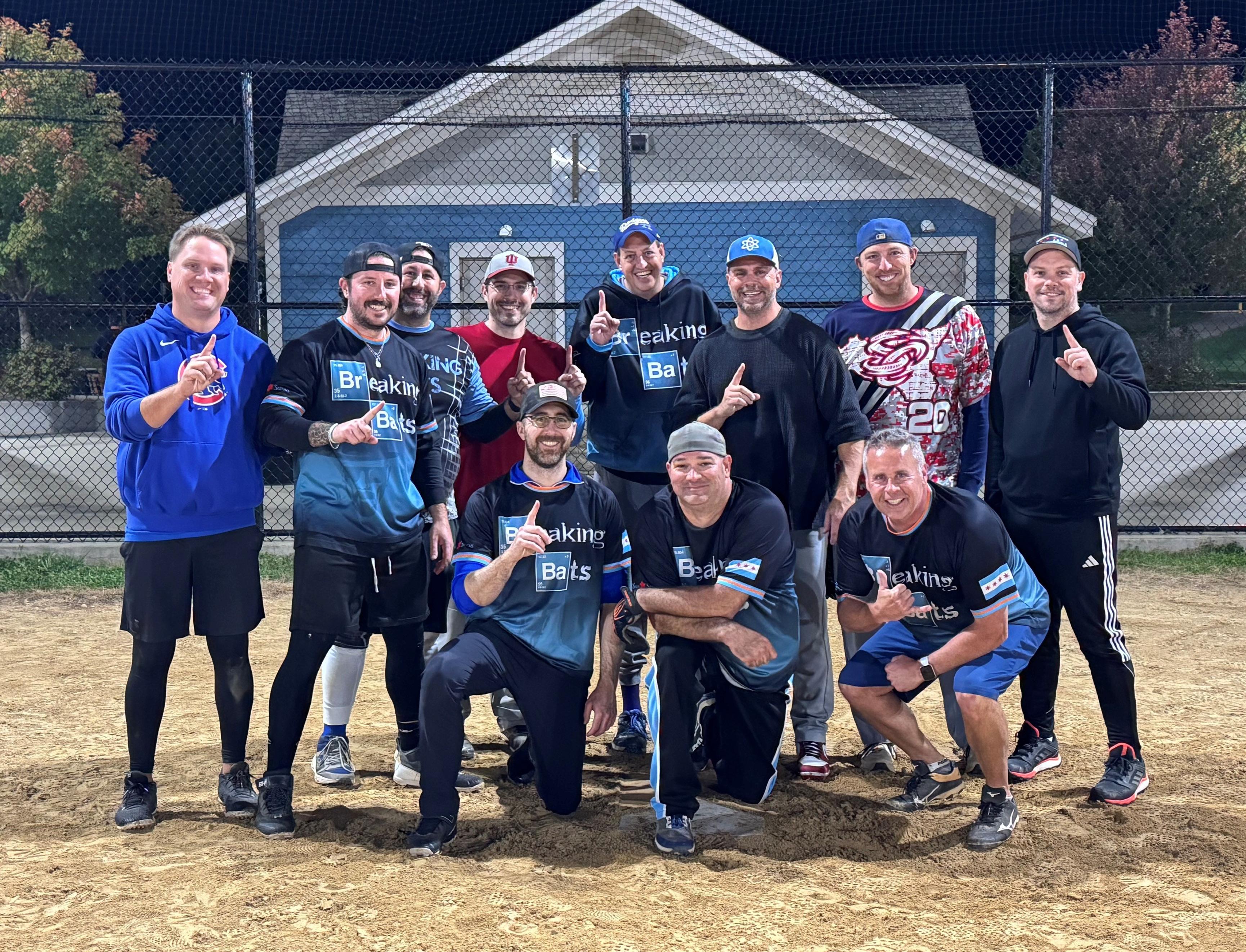
State Trends
Data from the Statewide Comprehensive Outdoor Recreation Plan (SCORP) is used to compare District/Department amenities to other Park Districts in the State of Illinois.
The Statewide Comprehensive Outdoor Recreation Plan (SCORP) is prepared as a five-year document by the Illinois Department of Natural Resources (IDNR) to maintain Illinois’ eligibility to participate in the Land Water Conservation Fund (LWCF) program. Its purpose is to “evaluate the outdoor recreation needs of Illinois citizens and determine how best to meet these needs, considering the state’s natural resources, recreational lands and facilities, and socioeconomic factors.”
The 2021-2025 SCORP identified Illinois’ continued low ranking of per capita supply of outdoor recreation land and facilities compared to the rest of the nation. As a result, park and recreation agencies throughout Illinois consistently plan for and achieve a high level of excellence with the recreation opportunities they provide to their communities and land acquisition remains a high priority where possible.
Recreation Facilities and Park Lands Inventory
There are about 1.5 million acres of outdoor recreation land in Illinois ranging from federal and state lands to schools and private commercial lands. Municipal agencies, which include park and recreation departments, park districts, forest preserve districts, conservation districts, and county-level park departments, provide an estimated total of 350,900 acres of parks. They also own 195,800 acres of natural areas and lease/manage another 15,600 acres of open space.
The state itself offers over 470,000 acres of open space throughout the state, through the IDNR. State lands include parks, fish and wildlife areas, conservation areas, and recreation areas to name a few. Federal lands include the 280,000-acre Shawnee National Forest and ten National Wildlife Refuges sites throughout the state. Other recreation providers include schools, non profits, and private entities that provide unique outdoor recreation opportunities for the people of Illinois. The lands managed by these providers were not included in the SCORP.
Top Activities
Based on the 2020 Illinois Community Recreation Facilities and Park Lands Inventory, the top five trends across the state by importance for activities to be made available to Illinois residents are pleasure walking, scenic drives, swimming in an outdoor pool, picnicking, and bicycling (road) as determined by the Illinois resident responses. These results align with the reported preference for investment in trail development and maintenance and the high participation in trail activities such as pleasure walking and running/jogging which had the highest frequency for median participation/year among resident responses. The continued and increasing popularity in pickleball and wildlife/bird watching as well as the decreasing participation in many categories from the 2014 results is likely due to the aging populations in communities across the state.

According to the survey, municipal parks or county preserves are used as critical, close-to-home outdoor recreation opportunities and provide a variety of activities for programming/events, sports, trail systems, and play. State parks are typically tourism destinations and are significant conservation sites mostly used for wildlife and water activities such as tent camping, vehicle camping, hiking, motor boating, and water skiing. Federal locations in Illinois consist mostly of water bodies and are primarily used for sailing, water skiing, and motor boating. Private recreation locations may offer a variety of activities such as athletic fields, walking tracks, playgrounds, campgrounds, and hunting areas.
The importance of providing outdoor recreation opportunities close to residents’ homes or neighborhoods has continued to increase with most of the surveyed activities reported to be taking a more localized form. While this may be partially attributed to the COVID-19 pandemic, previous surveys have also shown greater participation at localized locations for most activities.
Funding Priorities
Public recreation providers identified their top funding priorities for two categories: Outdoor Recreation and conservation efforts and Facilities. For outdoor recreation and conservation, the top three priorities were “maintain existing parks/recreation areas,” “provide environmental/ conservation programs,” and “develop/improve existing land/water open spaces.” The top facility priorities were “inclusive/ADA programs/facilities,” “community/regional parks,” and neighborhood parks.”
Attitudes about Outdoor Recreation
Respondents were asked to rate the various factors they considered to be important when making decisions about engaging in outdoor recreation opportunities. Top contributing factors to respondents’ decisions to participate in outdoor recreation activities include “to have fun,” “exercise/keep healthy,” “spend time with family and friends,” and “experience nature and/or the outdoors.”
Survey respondents indicated that “health and fitness,” “area inclusion /service for all people,” and “quality of life and economic development” are important aspects of parks and recreation. Additionally, over 70% of residents agreed with the importance of all of the other resources listed in the survey including “maintenance,” “health and fitness”, “area inclusion” (access for all people,) “quality of life and economic development,” “trails and greenway development,” “wildlife habitat protected and restored,” “conservation education,” “public access to lakes, rivers, and streams,” and “land acquisition - outdoor rec.” The top reported concerns regarding parks and recreation were “facilities are clean,” “parking available,” “increased accessibility,” and “educational activities needed.”
Outdoor Recreation Priorities
Priorities identified by the IDNR are listed in the 2021-2025 State of Illinois SCORP as:
• Improving Health and Wellness
• Access to Parks and Recreation
• Natural Resources and Conservation Management
• Funding and Economic Development
COVID-19 Pandemic
The COVID-19 pandemic has caused increased demand for recreation worldwide with a shift in participation towards localized opportunities. This trend was reflected nationally and in Illinois as participating agencies reported high park and trail use and Illinois resident survey participants reported a desire for equitable access to amenities and greater conservation of natural resources.
Local Trends
Local recreation participation trend information was derived from the Environmental Systems
Research Institute (ESRI) Sports and Market Leisure Potential and Recreation Expenditures
Report and applied to Cary Park District boundaries.
This data is based on national propensities to use various products and services, applied to the local demographic composition of The Cary Park District. Usage data was collected by Growth for Knowledge Mediamark Research and Intelligence, LLC (GfK MRI) in a national survey that was representative of U.S. households. Market Potential Index (MPI) measures the relative likelihood of the adults in the specified area to exhibit certain consumer behaviors or purchasing patterns compared to the U.S. population. An MPI of 100 represents the U.S. average.
Based on projected population, the top ten recreational activities Cary residents are most likely to participate in are:
1. Walking for exercise (6,178 adults/households; 38.1% of total CPD population)
2. Hiking (3,503 adults/households; 21.6%)
3. Swimming (3,007 adults/households; 18.5%)
4. Weight lifting (2,707 adults/households; 16.7%)
5. Bicycling - road (2,079 adults/households; 12.8%)
6. Jogging or Running (1,865 adults/households; 11.5%)
7. Yoga (1,815 adults/households; 11.2%)
8. Fishing - fresh water (1,768 adults/households; 10.9%)
9. Golf (1,613 adults/households; 9.9%)
10. Canoeing or Kayaking (1,460 adults/households; 9.0%)
The number of activities with an MPI over 100 is higher than the Planning Team typically finds, which speaks
to a very active community. Most communities have scores over 100 for approximately 12-15 activities, but The Cary Park District has 29 activities that score over 100. This bodes well for program expansion in the future, particularly in fitness and outdoor-related recreation activities.
Because the MPI indicates likely participation, these results indicate good potential for further expansion of both indoor and outdoor recreation activities, and there may be opportunities to grow some program areas in parks.
Compared to the last comprehensive master plan adopted in 2016, five of the top 10 activities based on participation have stayed on the top 10 list (golf, yoga, jogging/running, road bicycling, and weight lifting). Walking and hiking have surged to the top of the list, with swimming, fresh water fishing, and canoeing/kayaking making a new appearance.
Although the number of activities with an MPI over 100 is unchanged from a decade ago, the activities themselves have changed order, and five have been replaced completely. Many of the team athletic activities on the 2016 list for The Cary Park District have been replaced by hunting and shooting activities. Pickleball also makes an appearance in the number four spot (see chart on next page).

Sports and Leisure Market Potential
Community Survey
ETC Institute administered a statistically valid community survey for the Cary Park District during the winter of 2024-2025. The survey was administered as part of the District’s Comprehensive Master Planning Process.
Overview
ETC Institute administered a park district needs assessment survey for the Cary Park District, Illinois during the winter of 2024-2025. The purpose of the survey was to help determine park, facility and recreation priorities for the Community.
Methodology
ETC Institute mailed a survey packet to a random sample of households throughout the Cary Park District. Each survey packet contained a cover letter, a copy of the survey, and a postage-paid return envelope. Residents who received the survey were given the option of returning the survey by mail or completing it online.
After the surveys were mailed, ETC Institute followed up with residents to encourage participation. To prevent people who were
not residents of the Cary Park District from participating, everyone who completed the survey online was required to enter their home address prior to submitting their survey. ETC Institute then matched the addresses entered online with the addresses originally selected for the random sample. If the address from a survey completed online did not match one of the addresses selected for the sample, the online survey was not included in the final database for this report.
The goal was to receive 300 completed surveys from households within the Cary Park District service boundary. This goal was exceeded, with 323 completed surveys collected. The overall results for the sample of 323 residents have a precision of at least +/-5.4% at the 95% level of confidence.
The major findings of the survey are summarized in the following pages.
Facilities/Programs Use
Facilities Use: Eighty-six percent (86%) indicated that they have visited a facility in the past year. They rated the physical condition of the parks/facilities that they have visited. Thirty-five percent (35%) rated excellent, fifty-six percent (56%) rated good, and ten percent (10%) rated fair. They selected the reasons that prevent them from visiting facilities more often. The common reasons were: lack of amenities we want to use (29%), fees are too high (17%), and lack of shade (14%).
Programs Use: Forty-four percent (44%) indicated that they have participated in a program/event in the past year. They rated the overall quality of the programs/events they participated in. Thirty-five percent (35%) rated excellent, fifty-nine percent (59%) rated good, and seven percent (7%) rated fair. They selected reasons that prevent them from participating in programs/events more often.
The common reasons were: program times are not convenient (27%), too busy/not interested (26%), and I don’t know what is offered (22%).
Communication
Respondents selected the resources they used to keep up with the District’s parks, recreation facilities, programs, and events. The most used resources were: Cary Park District website (60%), emails/eNewsletters (51%), and seasonal program guide (50%). They rated the quality of the methods of communication used by the Park District to communicate about parks, recreation facilities, programs, and events. Nineteen percent (19%) rated excellent, fifty-seven percent (57%) rated good, nineteen percent (19%) rated fair, and five percent (5%) rated poor. Based on the sum of top three choices, the commonly used resources were: emails/e-newsletters (60%), Cary Park District website (47%), and social media (44%).
Outside Organizations
Respondents selected all the organizations they used for indoor/outdoor recreation activities in the past year. The common organizations used were: library (75%), Cary Park District (70%), and McHenry County Conservation District (MCCD) (39%).
Benefits, Importance, and Improvements to Parks and Recreation
Agreement: Respondents rated their level of agreement with the statements (listed in the survey) concerning some potential benefits of the District’s parks, facilities, and recreation programs/events. The most agreed statements were: preserves open space and protects the environment (83%), makes my community a more desirable place to live (79%), and meets the Park District’s mission to provide exceptional parks, recreation and open space opportunities (72%).
Support: Respondents rated their level of support for the actions (listed in the survey) that the District could take to improve parks and recreation amenities and facilities. The most supported actions were: developing new and/or connect existing multi-use trails (97%), maintain/upgrade existing multi-use trails (96%), and maintain/upgrade existing small neighborhood parks (95%). Based on the sum of top four choices, the actions that respondents would be most willing to fund with their Park District tax dollars: develop new and/or connect existing multi-use trails (51%), maintain/ upgrade existing multi-use trails (39%), and develop new community/recreation center with the types of program spaces (38%).
Importance: Respondents rated how important they felt it is for the District to provide high quality parks, recreation facilities, and programs. Eightysix percent (86%) felt it is very important, thirteen percent (13%) felt it is somewhat important, and one percent (1%) felt it is not important.
Recreation Facilities/Amenities Needs and Priorities
Facilities Needs: Respondents were asked to identify if their household had a need for 31 recreation facilities and to rate how well their needs for each were currently being met. Based on this analysis, ETC Institute was able to estimate the number of households in the community that had the greatest “unmet” need for various facilities.
The three facilities with the highest percentage of households that have an unmet need:
1. Walking, hiking, biking trails
2. Small neighborhood parks
3. Shade and trees
Facility Importance: In addition to assessing the needs for each facility, ETC Institute also assessed the importance that residents placed on each item. Based on the sum of respondents’ top four choices, these were the four facilities that ranked most important to residents:
1. Walking, hiking, biking trails
2. Community center/recreation center
3. Indoor aquatics
4. Playgrounds
Priorities for Facility Investments: The Priority Investment Rating (PIR) was developed by ETC Institute to provide organizations with an objective tool for evaluating the priority that should be placed on recreation and parks investments. The PIR equally weighs (1) the importance that residents place on facilities and (2) how many residents have unmet needs for the facilities.
Based on their PIR, the following facilities were rated as high priorities for investment:
• Indoor running/walking track (PIR=145.3)
• Walking, hiking, biking trails (PIR=139.9)
• Indoor aquatics (PIR=133.2)
• Indoor basketball/volleyball/pickleball courts (PIR=123.3)
The chart on the next page shows the Priority Investment Rating for each of the 31 facilities assessed in the survey.
Top Priorities for Investment for Facilities/Amenities Based on Priority
1: Priorities for Investment for Facilities/ Amenities Based on PIR
Recreation Programs/Activities Needs and Priorities
Programs Needs: Respondents were asked to identify if their household had a need for 31 recreation programs and to rate how well their needs for each were currently being met. Based on this analysis, ETC Institute was able to estimate the number of households in the community that had the greatest “unmet” need for various facilities.
The three programs with the highest percentage of households that have an unmet need:
1. Adult fitness and wellness programs
Special events
Water fitness programs/lap swimming
Program Importance: In addition to assessing the needs for each program, ETC Institute also assessed the importance that residents placed on each item. Based on the sum of respondents’ top four choices, these were the four facilities that ranked most important to residents:
Adult fitness and wellness programs 2. Special events
Pickleball/tennis lessons and leagues
Senior programs
Top Priorities for Investment for Programs/Activities Based on Priority Investment Rating
Adult fitness and wellness programs
Pickleball/tennis lessons and leagues Special events
Water fitness programs/lap swimming
Senior programs
Outdoor environmental/nature camps and programs
Cultural enrichment programs
Adult visual arts/crafts programs Adult athletic leagues
classes
Adult golf programs/lessons
lessons
Youth athletics programs and camps
Adult golf leagues
Adult performing arts programs
Teen/tween athletic programs and camps
Youth seasonal programs and camps
Teen/tween fitness and wellness programs
Preschool programs/early childhood education
Programs for people with disabilities
Youth fitness and wellness programs
Before and after school programs
Teen/tween performing arts programs
Cheer/gymnastics/tumbling programs
Youth visual arts/crafts programs
Teen/tween golf programs/lessons
EGaming/Esports
Teen/tween golf leagues
Youth golf programs/lessons
Youth performing arts programs
Youth golf leagues
2: Priorities for Investment for Programs/ Activities Based on PIR
Priorities for Program Investments: The Priority Investment Rating (PIR) was developed by ETC Institute to provide organizations with an objective tool for evaluating the priority that should be placed on recreation and parks investments. The PIR equally weighs (1) the importance that residents place on facilities and (2) how many residents have unmet needs for the programs.
Based on their PIR, the following programs were rated as high priorities for investment:
• Adult fitness and wellness programs (PIR=200.0)
• Pickleball/tennis lessons and leagues (PIR=133.0)
High Priority
Medium Priority
Lower Priority
• Special events (PIR=126.2)
• Water fitness programs/lap swimming (PIR=114.2)
• Senior programs (PIR=112.1)
The chart above shows the Priority Investment Rating for each of the 31 programs assessed in the survey.
Community Meeting
Members of the Cary Park District community were invited to attend an in-person community meeting on February 20, 2025. Fifty-five community members attended and participated in a workshopformat meeting.
During the workshop, participants were given note cards and asked to write down all their comments and suggestions for the Park District relating to parks, facilities, programs, and services. Participants were then asked to select the two items from their lists that were most important to them and to write them down on post-it notes. The Planning Team then organized the prioritized responses into categories with direction from the participants, with each participant then voting on the items most important to them. The following list is a record of their responses.
Pickleball
• Pickleball courts indoor/outdoor
• Outdoor pickleball courts ($45k each)
• Indoor pickleball courts
• Pickleball
• Pickleball courts
• Pickleball
• Pickleball and tennis courts
• Tennis/pickleball courts
• Pickleball and tennis courts
• Pickleball courts
Park Improvements
• Basketball courts and hoops (indoor and outdoor)
• Tennis courts at Veterans Park
• More shade at Sunburst Park
• Parking at Georgetown and Cimarron Drive
• Concession
• Concession stand by the Cary Grove Park soccer fields like Lions Park with better soccer fields with artificial turf
• Build table and chair seating and have different local restaurants sell food for events at Lions
Park (like at Hoffman Estates Hideaway Brew Garden)
• Outdoor basketball and pickleball facility comparable to Spoerl Park in Crystal Lake Playground in Brigadoon neighborhood
• Bike trail (over Route 31 to hook with center line of trail)
• Expanded splash pad
• Finish paving bike path at Hoffman Park
• More lighting at Lions Park
• Handicap access at bandshell
• Ropes/adventure course recreation area
• Make more space for pool
• Cary-only pool
• Sunburst pool
• Playground for the Frankie subdivision
• Sled hill with tow rope
• No playground for the Frankie subdivision for our kids
• Quality outdoor space for youth organizations
• Dog park needs an additional entrance/exit
• Open space at Park District where pool was removed (need to utilize this space)
• Sign and park improvements at Community Center Park green space
• Plant trees, clean up pond, and remove sewer line going into it at Veterans Park
• Security, parking, lighting, maintenance at neighborhood park
Indoor Facilities
• Utilize Maplewood for indoor facility
• Indoor gym/exercise facility
• Large recreation center
• Recreation center
• Indoor swimming pool complex
• Teen hangout
• Indoor sports complex
• Indoor walking track
• Indoor sports facility
• Indoor sports complex
• Indoor swimming pool
• Indoor/outdoor athletic recreation center/ complex
• Indoor sports complex
• Recreation center at Sunburst Park
• Indoor pitching machines and batting cages (baseball and softball)
• Indoor training space
• Cary Grove Park fieldhouse with more flat fields
• Indoor fieldhouse and training facility
• Training facility for youth indoor turf
• Indoor pool/larger health facility
• Indoor pool
• Indoor sports complex
• Open access track/field
• Indoor sports complex
• Indoor turf field and basketball
• Improved exercise facility (enlarged gym)
• Indoor sports complex
• Indoor recreation center at Community Center Park additions
• Add on to existing building
• Indoor space for outdoor sports in winter
• Indoor sports facility with basketball, turf soccer, baseball, pickleball, indoor pool, studio gyms, track
• Basketball courts (indoor)
• Better indoor facilities for Camp Echo
• Indoor sports training facility
• Recreational center with indoor workout, pickleball, and basketball
• Add recreation services aimed at active seasons, indoor pickleball/outdoor pickleball, other Park Districts have both indoor and outdoor facilities and/or co-op with local schools gyms
• Make room for permanent space for seniors
• Community arts center
• Recreation center
• Community center at old pool space (needs something)
• Update community center
• Production theater
• Remodel community center
• Parents have nowhere to sit while kids are in class
• Rooms too small
• Build off the back of the recreation center
Sports Fields
• More sports fields (all sports)
• Turf fields for football, lacrosse soccer
• Sports fields with turf striped for multiple sports
• Finish Cary Grove Park with more fields and recreation center
• Expanded field space at Lions Park
• More baseball and softball fields
• Softball fields (turf)
• Lighted sports fields (all sports)
• Multi-use sports fields
• Better baseball facilities (turf)
• Add baseball/softball fields at Lions Park
• Ensure input from all sports on plans
• Softball fields (turf)
• Softball baseball fields
• More outdoor sports fields
• Youth baseball fields
• Youth sports complex
• Focused baseball fields (not men’s softball)
• Turf sports fields
• Sports complex with more fields (Soccer, baseball, lacrosse, football, basketball)
• Multi-use turf fields sized for football, lacrosse, and soccer
• Take over baseball fields at Maplewood
• Multi-sport complex
• More baseball and softball fields
• Turf fields
Trails
• Continue linear parks for bike/pedestrian trails
• Maintain open space throughout the Park District
• More paths for walking
• More bike/walking paths
• Interval workouts and arm workouts along trails
• Neighborhood interconnection to more parks and forest preserves (bike paths)
Programs
• Bring baseball back
• Too many unrelated divergent programs
• Golf club
• Ski club
• More summer camps
• More variety in group fitness classes
• Senior luncheon
• Would like adult swim, 50+ without kids jumping on you
• Area behind this building for yoga and Pilates
Events
• Community clean up days
• Better event for July 4th
• Increased community collaboration i.e. the story walk with Cary Library and District 26
Communications
• Programming online regulation not userfriendly
• Locks up so if you come in-person, you may not get in
• Better sports program marketing
• Online maps of trails and paths
Operations
• Need to video record Board meetings and post to YouTube
• Take over ownership of Cary Lake at Rotary Park
• Conscious effort to preserve open spaces (oath taken Board members)
• Park District land plans
• Expansion/annex areas that are already parklike
• West Lake Park already has people fishing/ice fishing near the Hollows
• Community park in Frankie subdivision
• Sensory park
• Remove parks that are essentially a drainage ditch
Finance
• Reduce wasteful spending (i.e. renting offices off site versus renovating the community center and/or having remote employees
• Downsize/reduce tax burden
• Taxes are 65% higher than Crystal Lake
• Plan to reduce
• Get rid of wasteful spending (close office)
• Group exercise class pricing two times per week ($65) monthly and unlimited
• Local gyms are $30-$35
Natural Areas
• Conservation Center
• Community garden
• Water to gardens
• Vegetation
• Native plants
• Native plant education
• Native species with educational placards
• Designated wildflower planting areas with seed collection program for Library seed bank
• Native restoration areas
• Brigadoon Park
• Plant trees (don’t cut existing trees down instead)
• Tick management with controlled burns
• More plant material added
• Nature center and nature trails
Partnerships
• Intergovernmental agreements with Village and Schools
• Use schools for sports tournaments/travel sports (elementary age) instead of driving to Canlan or The Mac
• Work with other taxing bodies to optimize space/costs
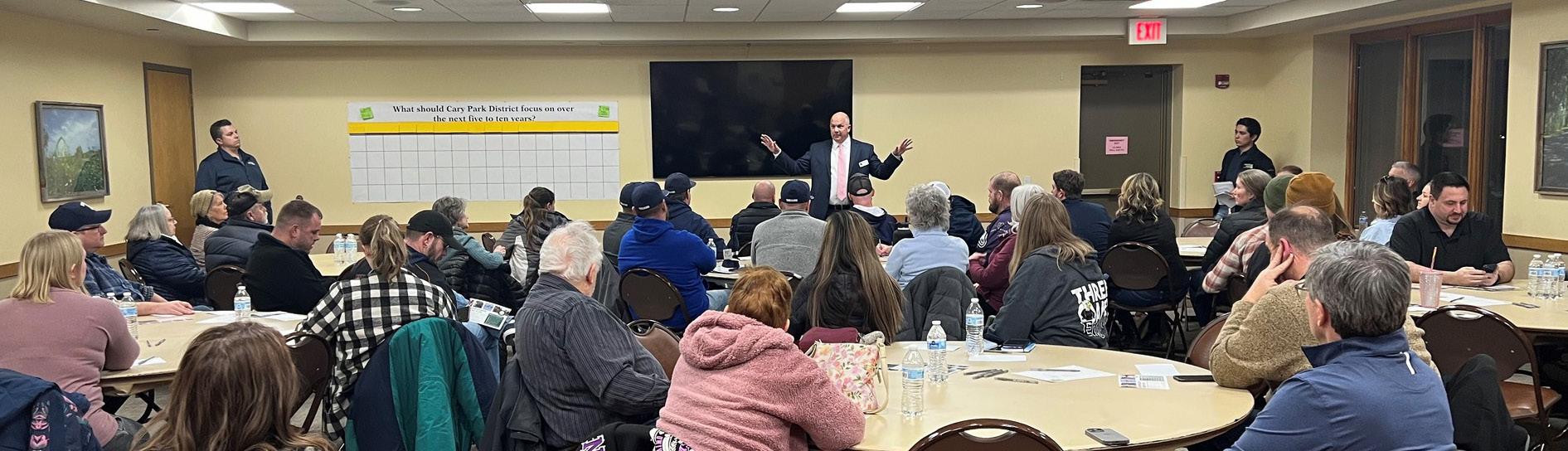
After the categories were established, attendees were given stickers to vote on the items most important to them. Categories are shown in blue and individual items are in green.
Stakeholder Input
The Planning Team conducted a series of stakeholder interviews on February 7, 2025 to gather perspectives from key community partners and organizational leaders. Representatives from local schools, municipalities, law enforcement, environmental and special-interest groups, and youth athletic organizations were invited to participate. Each interview focused on understanding current relationships with The Cary Park District, identifying what is going well and needs to be maintained, unmet needs, and opportunities for enhanced collaboration. These conversations provided valuable insight into how the Park District can better support partner agencies, expand and improve facilities, and strengthen program offerings. The following summarizes the major themes and ideas shared by participants.
Education
District 155, District 26, Cary Area Public Library
• Maintains positive relationship with CPD / feels supported
• Look to expand facilities and programs
• Addition of indoor facilities
• Avoid scheduling conflicts
• Avoid unpredictable weather conditions
• Lifelong learning program
• Program opportunities for youths and seniors – learn together
• Learn new skills and hobbies
• Expand senior programming – community age is increasing
• More pool passes into circulation
• Continue communication
• Between other agencies and community
• Let voices of community kids be deciding factor on some issues
• Set up systems and structures to gather ongoing feedback
Municipal / Business / Historical
Village of Cary, Crystal Lake Park District, McHenry County Sheriff’s Office, Village of Lake in the Hills, Village of Trout Valley
• Many agencies expressed being pleased with current relationships with CPD, others looking for partnership opportunities with CPD
• Growth opportunities
• Development of amenities
• Pedestrian and bike connections / amenities lacking along Route 31
• Add paved trails at Rotary Park
• Pickleball courts
• Regional sports facility / baseball fields –closer to home
• Indoor facilities – pool, sports fields
• Collaboration opportunities
• Expand senior programming
• Partnership with Conservation District
• Boat launch at Fox Bluff – lack of water access
Environmental and Special Groups
Cary Park Foundation, McHenry County Master Gardeners, McHenry County Conservation District
• Expressed positive comments regarding CPD
• Easy to communicate with
• Willing to collaborate with different agencies
• Expansion of amenities – non-sporting
• Attract wider audience to parks
• Addition of educational spaces
• Limited spaces for teaching classes / tours
• Lack of facilities
• Addition of nature center and trails
• Hoffman Park – Gardens
• Expansion of native plantings
• Composting area
• Expansion of amenities – sporting
• Need for indoor facilities
• Winter sports / basketball
• Pickleball courts noted as a potential deficiency
Athletics
Cary Grove Youth Baseball & Softball, Cary Jr. Trojans Football, Cary Soccer Association, Cary Basketball Association
• Group noted good communication with CPD
• Challenges with scheduling due to lack of space
• Need for additional indoor and outdoor spaces is very high
• Would like to grow programs, but stalled due to few facilities / fields
• Indoor facilities / field house
• New courts and turf fields
• Needed for soccer and basketball
• Organizations are having to use facilities in neighboring towns
• Poms and Cheer organization currently utilizing Holiday Inn space as needed
• Accommodate year round programs
• Outdoor facilities
• Prioritize additional baseball fields
• Loss of Maplewood Fields, ~6-7 ball fields
• Additional soccer fields
• Quality issues with current fields
• Parking challenges
Senior Focus Group
The Planning Team hosted a senior focus group on January 30, 2025. Participants were invited to share their experiences with The Cary Park District programs, facilities, and events, and to discuss how Park District services influence their quality of life. The conversation provided insight into the needs, priorities, and perspectives of older adults in the community—many of whom are longtime residents and highly engaged users of Park District offerings. Overall, attendees expressed strong appreciation for current programming and emphasized the importance of maintaining and expanding opportunities that support social connection, mental health, and accessibility. The following summarizes the key themes heard throughout the discussion.
Maintain Level of Programming
• Cary Park District offers more programs and events for its seniors than any neighboring agency.
• Many participants come from neighboring towns because their hometowns and park districts do not offer the same variety or quality of senior programming, if they offer it at all.
• The effort put into offerings is noticeable and appreciated – many thanks were given to the Park District and specifically to the Senior Coordinator, Missy Brezina.
Impact on Mental Health
• Opportunities for socialization are the most important aspect of programming. Field trips are nice, but small programs and the opportunity for socializing at the Community Center are just as fulfilling for most participants.
• Participants now realize how important senior programs are and understand why previous generations always asked that senior programs don’t get cut – these programs are sometimes the only opportunity some seniors have to get out of the house and socialize with others.
• Just as preschool is important to the development of young children and sports are important to children and teens, senior programs are vital for the older generation’s wellbeing and enjoyment.
• Many participants were raised to give back to the community. Opportunities to do that lessen as residents age. Reciprocal programs
with the Preschool and High School help fill that desire. Participants believe there are more opportunities to pass on knowledge and skills to the community at large.
• Events and programs build community. Resident status does not matter – participants who live outside of Cary felt immediately welcomed when they attended their first program and felt encouraged to keep coming back.
Accessibility
• Physical accessibility is a challenge at most facilities. ADA parking spaces are limited and ramps into buildings are often only on one side of an entry.
• Better transportation options are needed to get around – participants understand many of these options are outside of the Park District’s influence, but they are needed for residents to get to Park District programs and events.
• Physical accessibility benefits everyone, not just seniors. There are many people with mobility issues of all ages in the community.
• The Senior Room in the Community Center is
small, and accessibility is difficult (basement). The Park District should re-evaluate the space and use needs within the Community Center. Senior programs consistently have 40-50 participants.
• Variety of program and events types coupled with different levels of pricing adds to accessibility. Having no-cost and low-cost offerings allows lower income individuals to remain included.
• Morning and daytime programs are preferred –many seniors don’t like to go out after dark.
Male Participation
• Male participation in senior programs is low. Participants noted a desire to expand program appeal to more men in the community.
• More physical / health and wellness programs and events were suggested as men tend to bond over sports and active events (bowling, golf, walking/hiking, etc.).
• Current male participants would like to see increased male camaraderie, and current female participants welcome new social connections and a larger social network.
Communication
• Participants voiced a desire for increased communication with the community, especially in methods of outreach. Many seniors do not have social media accounts, and some do not utilize the internet at all. More traditional methods of outreach, such as paper mail and flyers in facilities, are preferred. However, they also recognize that younger generations prefer social media and email communication and will utilize these tools to research activities for their aging parents.
Other Comments
• Recent renovations / expansions at several parks (Hoffman and Cary-Grove) were noted as much appreciated by the community.
• Many Cary residents are life-long residents and desire to age in place. This further backs up the importance of senior programming.
• One participant suggested implementing an area-wide Senior Day, with involvement from the Village and local businesses as well as the Park District. It would give seniors
the opportunity to get out and explore new locations, as well as give other community members a chance to meet and interact with the older generation.
Top Priorities
• A dedicated, single-story Senior Center is desired.
• More facility space in general is needed.
• Senior program staff noted a need for the Park District to understand grant opportunities and increase grant program outreach.
• Staff desires to offer more free and low-cost opportunities, however they recognize the need to balance those offerings with events that generate revenue in order to keep programs running.
• Communication with the community about senior events and programs and their impact on mental health should be prioritized.
Staff Workshop
Members of the Cary Park District staff were invited to attend an in-person meeting on December 16, 2024. Twenty-seven staff members attended and participated in a workshop-format meeting.
During the workshop, participants were given note cards and asked to write down all their comments and suggestions for the Park District relating to parks, facilities, programs, and services. Participants were then asked to select the two items from their lists that were most important to them and to write them down on post-it notes. The Planning Team then organized the prioritized responses into categories with direction from the participants, with each participant then voting on the items most important to them. The following list is a record of their responses:
Maintenance Facility
• Bigger maintenance facility
• New maintenance facility
• Secondary shop/storage facility for parks and recreation departments
• Maintenance gate at Sunburst
Community Center
• New community center
• New or expanded community center
• Community center - expand or build
• Community center expansion/update
• Expand community center or build recreation center or both
• New community center with full gym and pickleball/basketball courts
• “Refresh” locker rooms and bathrooms on main levels of community center
• Program space - dance, athletics
• Programming space and offices - not adequate need more
Indoor Recreation
• Indoor pool
• Indoor athletic field with walking/running track
• Indoor/outdoor sports complex - irrigation/ garage
• Indoor recreation center
• Open gyms (pickleball, basketball, volleyball, adult & youth
Office Space
• All staff in one building/location
• Centralized office space
• More office spaces
• Allocated money to maintain facilities currently have
• Redesign front desk area
Staffing
• More park maintenance workers - full/part time
• More FT positions
• Park ambassador program
Outdoor Courts
• Basketball courts, pickleball courts, where the old pool was
• Lack of athletic courts - athletic courts
• Basketball courts
• Pickleball courts
Natural Areas
• Sensory park/sensory garden
• Expand community gardens
• Nature center
• Nature playground
• All natural areas - management plans
Park Improvements
• Build concession stand at Kaper Park
• Irrigation and lights Cary Grove Soccer and SBAC - Irrigation
• Off-road walking trails in woods
• Mini golf
Priorities
• Internal focus is needed
• Base - starting financial framework/ simultaneously
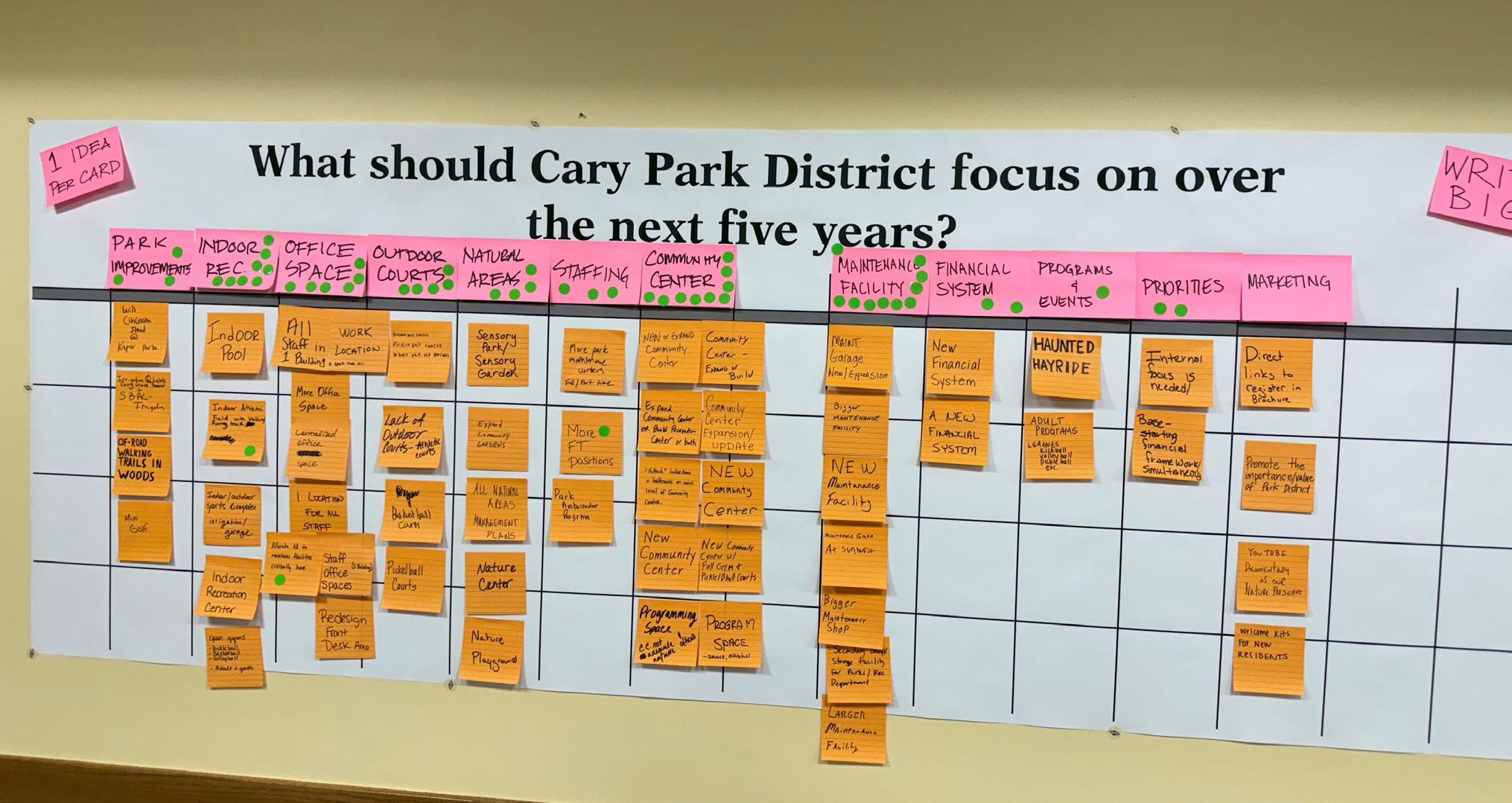
Financial System
• New financial system
Programs and Events
• Haunted hayride
• Adult programs - leagues (kickball, volleyball, pickleball, etc.)
Marketing
• Direct links to register in brochure
• Promote the importance/value of Park District
• YouTube documentary of our nature preserve
• Welcome kits for new residents
After the categories were established, attendees were given stickers to vote on the items most important to them. Categories are shown in blue and individual items are in green.
Board Input
After the presentation of the Analyze and Connect Phase findings at a regular Board meeting on April 24, 2025, members of the Cary Park District Board of Commissioners provided input on priorities, needs, and areas of focus for the next five years. Board input reflects a policy-level perspective on long-term planning, financial stewardship, and community needs, and helped inform how identified needs and opportunities should be evaluated moving forward. The following summarizes key themes and priorities expressed by the Board in response to a series of guiding questions that were provided by staff.
What main objectives are important to you for this plan to provide?
Board members emphasized the importance of a plan that clearly reflects resident priorities while promoting sustainability and responsible financial decision-making. There was strong interest in ensuring resources are allocated in a way that does not overburden staff or overlook office space needs. A key strategic consideration identified was whether the District should focus on addressing numerous smaller, accumulating needs or pursue larger capital investments, such as a new recreation center, while remaining mindful of current tax and debt constraints. Additional objectives included renovating and expanding the Community Center, improving parks, trails, conservation areas, and sports fields, and enhancing programming for seniors, teens, and camps. The Board also noted interest in exploring pickleball courts, partnerships with the School District, sponsorship opportunities, and establishing a clear financial roadmap to guide realistic, community-supported decision-making over the next five years and beyond.
Are there priorities uncompleted from your last plan that should continue as priorities going into the next 5 years?
Board members identified several ongoing priorities from the previous plan that should continue, including park and facility improvements such as adding quality turf ball fields at Lions Park, maintaining and updating Veterans and Jaycees Parks, advancing the Sands–Main Street natural areas management plan, and addressing infrastructure needs such as dredging the Veterans Park retention pond. Additional priorities included evaluating revenue and support opportunities through tournaments, sponsorships, and partnerships, including collaboration with neighboring park districts for indoor recreation space. Continued evaluation of community interest in a new recreation center, construction of new pickleball and tennis courts, identification of office space for staff, and a review of previously identified initiatives to determine which should continue, be revised, or be reprioritized were also emphasized.
What
new priorities or needs have come up that were not included in your last plan that need evaluation?
Board input identified several emerging priorities, including the need to expand planned park and facility improvements while aligning investments with long-term community needs and sustainable operations. Emphasis was placed on completing and enhancing athletic facilities, including turf ball fields at Lions Park, additional athletic fields, and expanded pickleball and tennis courts. Additional needs included updating Veterans, Jaycees, and Lions Parks, making accessibility improvements to the Lions Park band shell, and advancing natural area management and infrastructure projects such as retention pond dredging. There was also strong interest in evaluating the development of an indoor community or recreation center with an expanded fitness component to support additional programming, staff offices, and partnerships, as well as determining appropriate reuse of vacated spaces such as the former pool and office areas. Other emerging considerations included creating new open space in underserved areas such as the Brigadoon community, reinvesting Foxford Hills Golf Club revenues to support long-term sustainability, strengthening collaboration with legacy organizations, improving park and trail signage as part of a coordinated system-wide strategy, and formally reviewing recreation programming through ongoing staff analysis and community input.
What important issues are you seeing needing to be addressed from your understanding of resident concerns?
Board members highlighted the need to improve recreational facilities and multi-use spaces, including the addition of pickleball and tennis courts with dedicated programming, continued expansion of trail connections, and better accommodation of growing dance programs that are currently straining existing recreation space. Emerging issues included resolving park naming and designation concerns in the Brigadoon community, evaluating options for model aircraft flying fields limited to electric planes, and establishing clear policies and designated areas for drone use in parks. Additional priorities included expanding and assessing teen programming through surveys, exploring interest in a computer gaming room for recreational and competitive use (potentially extending to adults), and supporting natural areas management through collaboration with Friends of Illinois Nature Preserves and other community volunteers under Park District direction. The Board also identified a need to update meeting and facility spaces to include improved audio/visual technology to support expanded programming.
Anything else you wish to share related to the plan?
Board members emphasized the importance of strengthening governance, planning, and collaboration to support a successful comprehensive master plan update. Key themes included expanding partnerships with businesses, nonprofits, and other governmental entities; developing and annually implementing a five-year staffing plan; improving transparency through clearly articulated mission and vision statements accompanied by an annual executive summary; and establishing a commissioner recruitment program. Additional considerations included the need for realistic financial planning that clearly identifies available funding and affordable projects, addressing intergovernmental coordination issues such as cooperation with neighboring municipalities and potential boundary adjustments at Hoffman Park, and continued coordination with the Village of Cary on bike trail planning, grant opportunities, and park access improvements. The Board also stressed the importance of clearly outlining the decision-making process for seeking public input on funding options to ensure informed, meaningful community engagement.
General/Other:
Overall, Board input reflected a cautious approach to the comprehensive master plan update. While acknowledging the success of the previous plan in achieving significant goals, Board members expressed concern about the resulting longterm debt and a desire to focus future efforts on a more limited number of achievable, financially sustainable projects.
Online Survey
Over 590 participants shared their ideas for the Cary Park District services for the next five years via an online survey.
Methodology
The online engagement platform consisted of a webpage and survey. Both were available 24/7 to provide information on the planning process and allow participants the opportunity to give input on programs, parks, facilities, and Park District priorities at their leisure. The survey consisted of 24 multiple choice questions with opportunities for residents to add comments after several of the questions. The survey also included a final comment box for any additional feedback. Because the survey was open to everyone, the results are not considered statistically valid. Rather, they are the collective opinion of those who chose to respond.
Participation and Traffic
Launched on February 24, 2025, the online survey engaged District users about parks, programs, and facilities. Both the survey and project website remained active and available for one month until it closed on March 21, 2025. In total, 595 responses were collected. In addition to links on the project website, the survey was advertised in the local newspaper, through emails from the Park District, printouts at the Community Center, posts on the Park District’s Facebook account, and during two community pop-up events. Although open for anyone to take, the survey was set up to be taken only once per unique device.
Format
The survey questions were divided into four categories: parks and open space, facilities and indoor space, programs and events, and Park District priorities. Participants were also asked demographic questions about their household. All questions were optional and provided participants the opportunity to skip the question. The following results do not reflect the views of all respondents but are a brief summary of the multiple-choice and ranking questions and an overview of the most prevalent comments.
Parks and Open Space
Online survey results indicate generally positive perceptions of the District’s parks and open space system. Survey responses show that residents regularly use parks for a wide range of activities, including walking and trail use, informal recreation, organized sports, and social gatherings. Many respondents identified parks as an important part of daily routines and community life. Overall satisfaction levels suggest that the existing park system is meeting many current needs while continuing to serve a broad range of users.
How satisfied were you with the Cary Park District PARKS that you and/or members of your household visited in the last 12 months? (only answer for those that have been visited):
Results also identify specific park-related topics raised by respondents. Commonly cited issues include the condition and age of playground equipment, trail connectivity and maintenance, and the availability of support amenities such as lighting, shade, seating, and rest areas. Respondents frequently noted that these features influence comfort, safety, and how long they remain in park spaces. Feedback also reflects interest in a variety of outdoor recreation amenities, including trails, courts, athletic fields, and natural or passive-use areas.
Responses indicate that residents place greater emphasis on improving and maintaining existing park amenities than on adding new parkland. Survey comments and open-ended responses often referenced the condition, accessibility, and functionality of current parks as key factors influencing park use and satisfaction. Several respondents also noted that incremental upgrades to existing parks can have a meaningful impact on overall park experience. Respondents noted that parks with well-maintained amenities, accessible paths, and supportive features tend to attract more frequent use and accommodate a wider range of activities.
Results further suggest that residents value parks that support multiple types of use, including both active recreation and casual, everyday activities such as walking, relaxing, or gathering with family and friends. Feedback highlighted the importance of adaptable park spaces that can accommodate different age groups, abilities, and recreation preferences, as well as the role of ongoing maintenance and visibility in shaping overall park experiences.
About how many times have you and/or members of your household visited a Cary Park District PARK within the past 12 months (Select One):
Please tell us how important the following potential improvements to INDOOR FACILITIES would be to you and your family:
Facilities and Indoor Space
Online survey results indicate generally positive perceptions of the District’s indoor facilities, while also identifying limitations related to capacity, functionality, and availability. Survey responses show that residents use indoor facilities for a range of activities, including fitness, recreation programs, open gym use, and community events. Many respondents indicated that indoor facilities play an important role in supporting year-round recreation and program participation.
Results also highlight specific facility-related topics raised by respondents. Commonly cited issues include limited indoor space, lack of certain amenities, scheduling constraints, and the ability of existing facilities to accommodate growing or changing program demand. Respondents frequently noted that facility size, layout, and availability influence participation decisions, particularly for fitness, athletics, and multipurpose programming.
Input reflects interest in a variety of indoor recreation amenities, including fitness and wellness spaces, gymnasium or court space, aquatics, and flexible rooms that can support multiple program types. Open-ended responses often referenced the need for indoor spaces that can adapt to different activities and age groups. Several respondents noted that improved indoor capacity could expand program options and reduce scheduling conflicts.
Results also suggest that residents value indoor facilities that are accessible, comfortable, and capable of serving a wide range of users. Feedback referenced the importance of clear circulation, adequate storage, and support spaces that allow programs to operate efficiently. Respondents also noted that facility layout and organization can influence ease of use and overall experience.
How satisfied were you with the Cary Park District INDOOR FACILITIES that you and/or members of your household visited in the last 12 months? (only answer for those that have been visited):
Additional operational considerations included building condition, accessibility, and the adequacy of staff work areas and support spaces. Feedback indicates that these factors influence both user experience and day-to-day operations, particularly as facilities age or experience increased use.
About how many times have you and/or members of your household visited a Cary Park District INDOOR FACILITY within the past 12 months? (Select one):
Programs, Events, and Park District Priorities
Online survey results indicate generally positive perceptions of the Park District’s recreation programs and special events. Survey responses show that residents participate in a wide range of offerings, including youth programs, adult fitness and wellness activities, family programs, and seasonal events. Many respondents indicated that programs and events contribute to community connection and provide important recreational opportunities for residents of different ages and interests.
Results also identify specific program-related topics raised by respondents. Commonly cited issues include scheduling conflicts, limited awareness of available programs, program fees, and facility availability. Respondents frequently noted that these factors influence participation decisions and may limit involvement for certain households or age groups. Feedback suggests that clearer communication and improved access could increase participation across multiple program areas.
Input reflects interest in expanding and refining program offerings, particularly related to fitness and wellness, family-oriented activities, youth and teen programming, and community events. Open-ended responses often referenced a desire for programs that accommodate varying schedules, skill levels, and interests. Several respondents noted that having a diverse range of programs allows residents to remain engaged with the Park District.
Have you or a member of your household attended or participated in any of the following recreation PROGRAMS in the past 12 months? (Check all that apply):
Results also highlight broader Park District priorities. Respondents emphasized the importance of maintaining high-quality services, managing resources responsibly, and continuing to reinvest in existing assets. Feedback reflects an expectation that programs and events remain responsive to community needs.
From the following list, please select all the ways you learn about Cary Park District’s PROGRAMS:
What do you think should be the Cary Park District’s priority over the next 5-10 years? Please rank the following from most to least important:
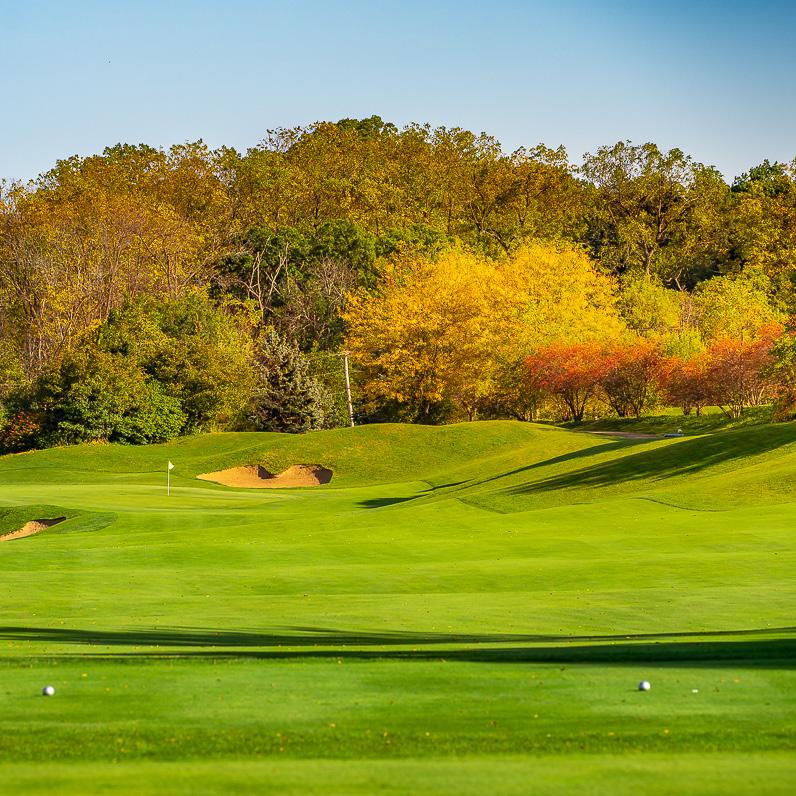
APPENDIX Chapter Five
Appendix Contents
Village of Cary Zoning Map
Illinois Department of Natural Resources (IDNR) Useful Life Criteria
Facility Assessment Report
Statistically Valid Survey Sample
Statistically Valid Survey Results: Charts and Graphs
Online Survey: Open-Ended Responses and Comments
Online Survey: Charts and Open Ended Response Summaries
Stakeholder Interview Questions
Staff Workshop Results Summary
Community Workshop Results Summary
Cary Zoning Map
IDNR Useful Life Criteria
IDNR Grant Administration Division
Per IPRA-Park & Natural Resource Management Section’s Recommendations
USEFUL LIFE CRITERIA
FACILITY
BB/Softball fields
BB/Softball Field Lighting
Expected useful life Evaluation Criteria – Factor
8-10 years # Games/week, # Practices/week
Grass infields?
Maintenance Procedure/Standards
Is site used for multiple uses, soccer, football?
Is space used for organized or programmed events?
Spectator considerations – bleachers
Concession stands
20 years Pole Type (wood, steel, concrete)
Wiring type (aluminum, copper)
HID or incandescent fixtures
Existing FC vs. new standards
Accepted grounding systems?
Panel Capabilities/Technology
Electrical Code compliance
Soccer Fields
Irrigation system
Tennis Courts
8-10 years
Usage rating A/B/C/D
# games/week, # weeks/year, time of year, age of user
20 years Irrigated Y/N
Usage # games per week
Drainage considerations
Maintenance standards/levels
Is site used for organized or programmed events? To what extent?
Is site used for multiple uses? Softball, BB or football
Lighted Y/N (Use BB Criteria)
Resurface 12-15 years Surface clay, asphalt, other
Total Renovation 20-25 years Color coat/overlay/rebuild
Frequency of color coating
Location – high water table
Fencing material/posts
Preventive maintenance
Tennis Courts
Resurface 12-15 years
Is site used for organized or programmed events? To what extent?
Is site used for multiple uses? Softball, BB or football
Lighted Y/N (Use BB Criteria)
Surface clay, asphalt, other
Total Renovation 20-25 years Color coat/overlay/rebuild
Frequency of color coating
Location – high water table
Fencing material/posts
Preventive maintenance
Location: Water table concerns
Is site used for organized or programmed events? To what extent?
Are courts used for making ice?
Basket Ball Courts
Resurface 12-15 years
Total Renovation 20-25 years
Volleyball Courts
Shuffleboard
Resurface 12-15 years
Total Renovation 20-25 years
Picnic Shelters
Playgrounds
Boat Launch Ramps
Same as tennis courts
Sand / Grass?
Lighted Y/N
Borders
Bleachers/spectator area
Same as tennis courts
25 years Support structures: masonry, steel, wood
Roof type: metal, asphalt, shingle, slate, cedar shake
Construction type: post & beam, frame
Historical value and consideration
Preventive maintenance record
Is site used for organized or programmed events? To what extent?
15 years metal Meet Standards? ASTM, CPSC, ADA 10 years plastic Daily usage by intended user group
8 – 12 years wood Location: school, or neighborhood park
Surfacing Material
Preventive maintenance record
Border construction material
Location: retention area/water?
15-20 years Construction materials, gravel, concrete
Location i.e. Lake Michigan
Annual Usage
Is
Boat Launch Ramps
Fishing Piers & Docks
Swimming Pools
Preventive maintenance record
Border construction material
Location: retention area/water?
15-20 years Construction materials, gravel, concrete
Location i.e. Lake Michigan
Annual Usage
Is facility fee generating?
Region
15-20 years Orginial construction materials plastic, wood, aluminum
Location i.e. Lake Michigan
Annual volume/usage
Winter removal and storage?
Preventive maintenance record
25 years Stand alone site?
Bathhouse 25 years Heated for winter?
Boathouse
Restrooms
10-15 years Attached to Community Center Y/N
Mechanical room connected?
ADA compliance Y/N
Local Code compliance?
Preventive Maintenance record
Location i.e. Lake Michigan
Same as pools Same as pools
Parking Lots Gravel, asphalt or concrete
Resurface
10-12 years Monthly volume and load use
Total Renovation 20-25 years i.e. delivery trucks or garbage
Spring use –heavy, moderate, light
Seal coating frequency
Preventive maintenance record
Original construction design loads
Location: flooding/water concerns
Snow removal or salt use?
Curbed or sheet drainage to edges
Bike Paths
Interpretive Center
Same as Parking lots Same as Parking lots
Same as Bathhouse Same as Bathhouse

I. EXECUTIVE SUMMARY
The Cary Park District in collaboration with Hitchcock Design Group is conducting a Comprehensive Master Plan for the District. Williams Architects was commissioned to conduct facilities assessments and initial program analysis of the Cary Park District indoor facilities. This report is prepared as an appendix to the overall Plan. The following facilities were reviewed.
II. ANALYSIS CRITERIA
The Williams Architects Team provided visual observation of the facilities with information gathered by the Park District with maintenance / operational input on each facility. The assessment describes the property at the time of the site visit. No testing, commissioning or exploratory investigation was conducted. The analysis is limited to architectural observation.
Due to the age of the facility, the men’s communal showers do not comply with current plumbing code. The drainage of waste water should be isolated between patrons.
Certain amenities in the facility, including but not limited to the restroom, locker, stairs do not comply with current ADA standard. The District has identified that an ADA transition plan is in place for the facility.
The lower level mechanical room house some pool equipment systems. Rusting was observed on galvanized piping.
Recommendations
1. Remediate ADA compliance of amenities with future improvements.
2. Remediate plumbing code drainage with future improvements.
3. Replace roofing nearing end of life expectancy.
4. Assess aging roof top units.
Program Recommendation/Strategy
1. Evaluate Administration spatial needs.
2. Evaluate underutilized locker room due to relocation of aquatics.
CENTER
The Community Center was constructed in 1978. Renovations to the center include the racquetball conversion to program rooms completed in 2010.
Most recently, the pool was demolished since the opening of Sunburst Bay Aquatics in 2022. Repairs and regular maintenance may be required due to normal usage. The Administration roof was replaced in January 1996. The renovation roof was replaced in 2010 and the asphalt roofing was replaced in 1998.
Observations
The Administration Building is in fair to good condition. The roofing assembly on the Administration Building and the asphalt shingle roofing have met or exceeded the life expectancy. The exterior stair exiting the lower level and the landing above has excessive rusting of the steel structural member. In addition, the access ramp to the exit may not comply with current ADA standards and has excessive rusting of the railings. The interior finishes throughout the facility are well maintained and in good to fair condition meeting client expectations. The District identified some HVAC balancing issues in the building. In addition, some roof top units are nearing their life expectancy requiring replacement. The ventilation in the shower/locker room may be inadequate.
Cary Park District Comprehensive Master Plan �
3. Due to the expanded operations and staff, assess staff needs for office space and support spaces, i.e. locker room.
C. FOXFORD HILLS GOLF CLUB
The Foxford Hills Golf Club was acquired by the Park District in 2004. The facility is currently undergoing a roofing replacement of the cedar shingles to asphalt shingles. The facility is in good condition, meeting client expectations.
Observations The interior finishes of the facility are in good condition.
Recommendation
1. Continue to assess and implement ADA compliance in conjunction with the transition plan.
D. CARY PARK DISTRICT PRESCHOOL
The preschool facility recently completed an interior renovation. The facility is in good condition meeting client expectation. The District recently prepared an ADA transition plan identifying the preschool toilet rooms as non-conforming to current standards. The District is considering options for implementation.
E. SUNBURST BAY AQUATIC FACILITY
The District recently opened the Sunburst Bay Aquatic Facility in 2022. The facility is in good condition, meeting the clients expectation. No issues were identified on the facility other than normal maintenance and operations.
ROAD )
B. MAINTENANCE CENTER ( 1180 SILVER LAKE
The Parks maintenance facilities is composed of several buildings including a yard and storage containers. The main facility was built circa 1995. It serves as the main parks maintenance facility, housing equipment, mechanics bay, storage, locker room, office and lunch room. The secondary building, originally the District’s preschool serves as equipment maintenance and storage for smaller equipment.
Observations
The secondary maintenance building is in fair condition marginally meeting client expectation. The main, overhead door elevation was partially reclad. The remaining metal siding was painted and is in poor condition with peeling paint and aging caulking. The district identified a low spot on the inside of ponding water due to a lack of drainage. The Owner identified various roof leaks.
The main maintenance building is in fair condition, marginally meeting client expectations. The exterior of the facility is in good condition. The interior of the facility have aging finishes and are in fair to poor condition. The concrete slab in the main bay is pitted from usage. The slab has radiant heating but lacks adequate ventilation. Due to the facilities age, the facility does not comply with ADA accessibility standards. Examples including, but not limited to access to the second floor office, the storage mezzanine. Accessible facilities are available in the toilet rooms on the main level, implemented in a renovation in the early 2000’s.
The maintenance building is equipped with fire alarm but no sprinkler system.
Recommendation
1. Remediate ADA compliance with future improvements.
2. Continue monitoring of slab with radiant flooring. Consideration for refinishing.
Program Recommendation/Strategy
1. Review operational efficiency of facilities in multiple locations.
2. District identified additional cold storage and The Sand Prairie Barn.
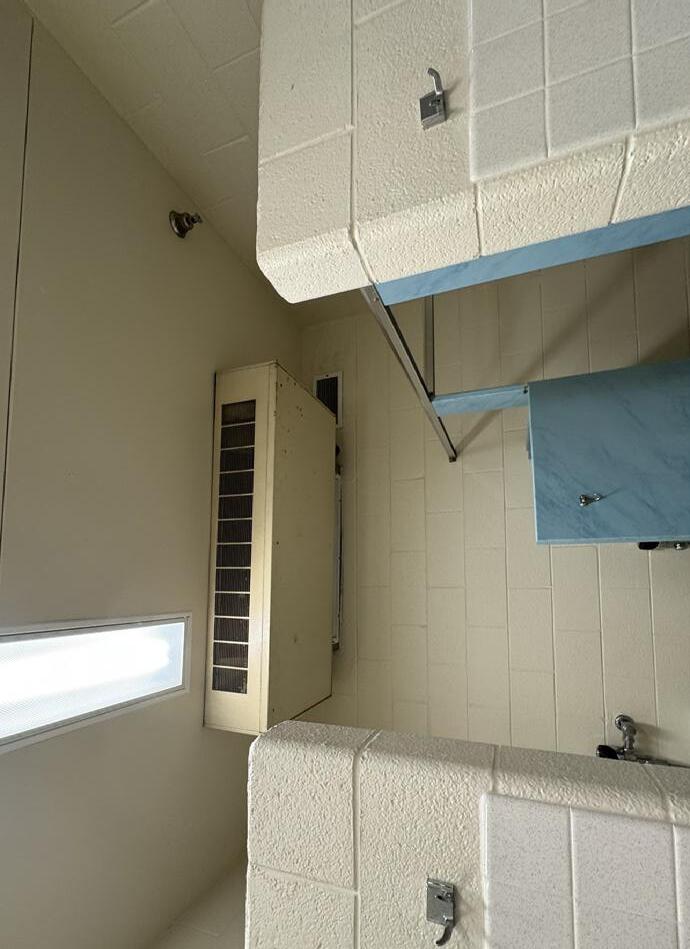
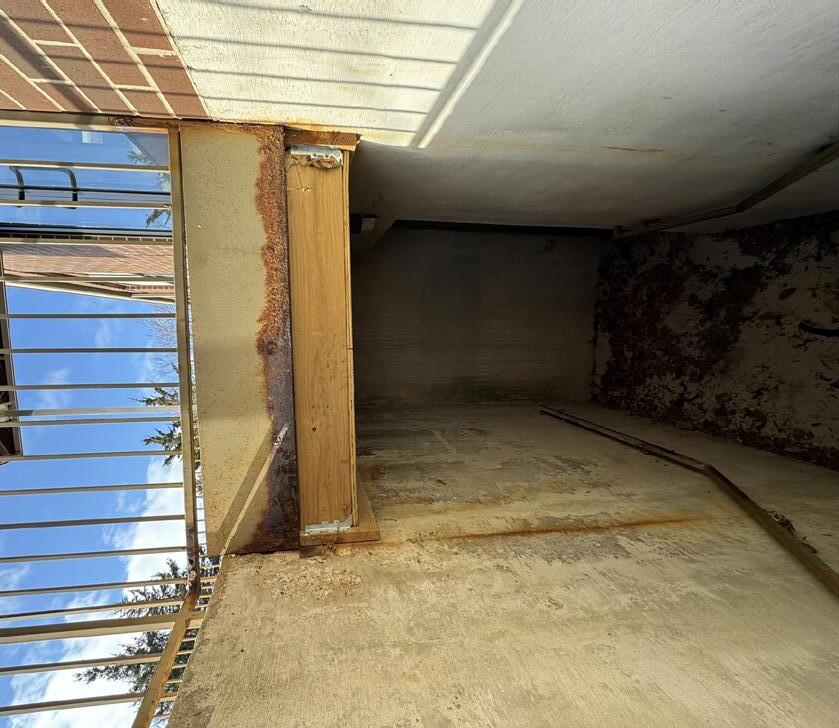
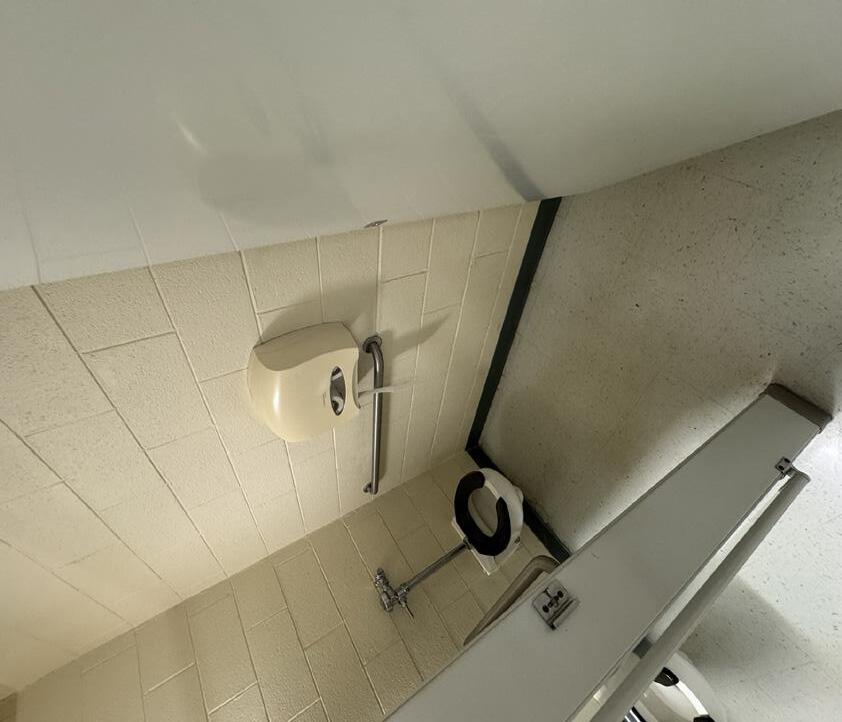
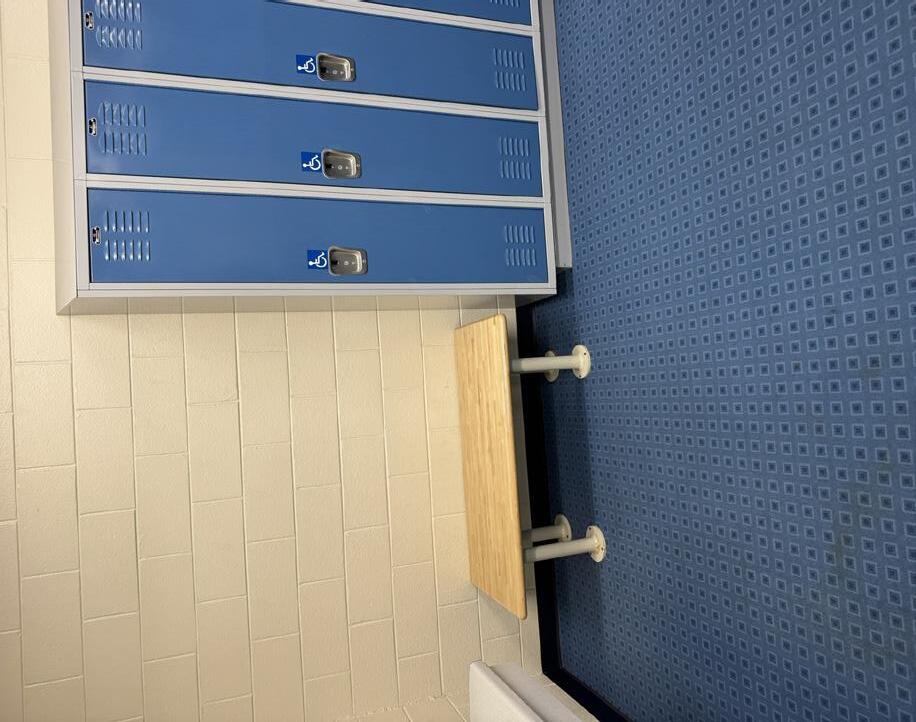
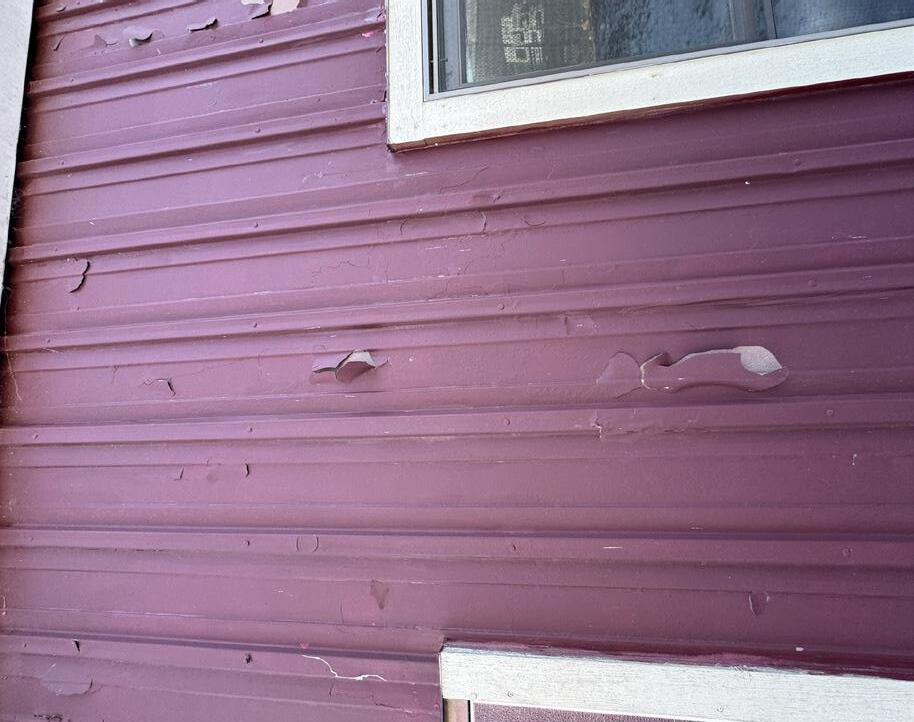
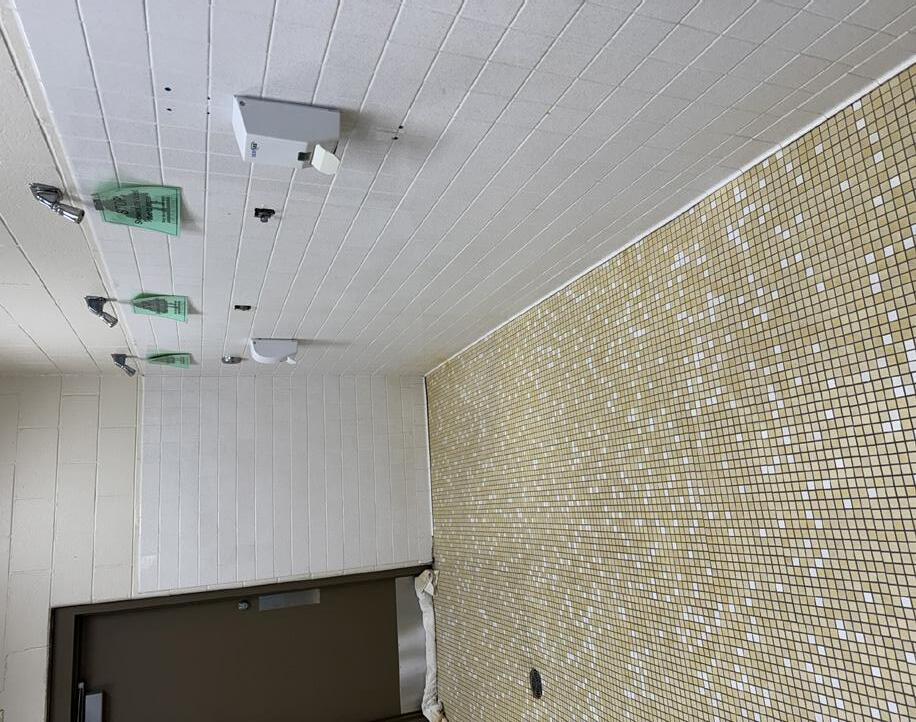
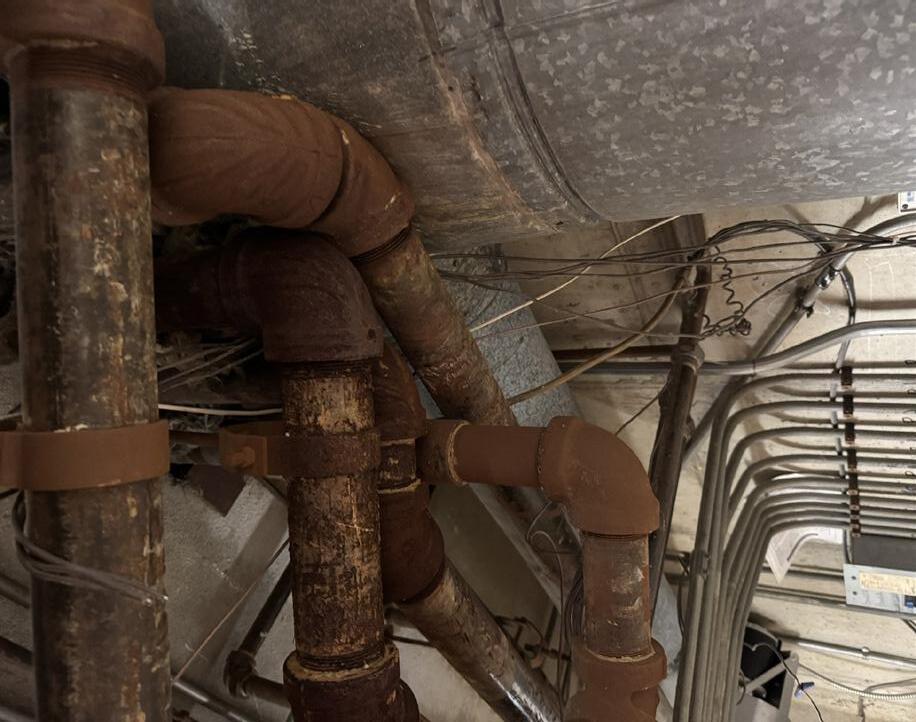
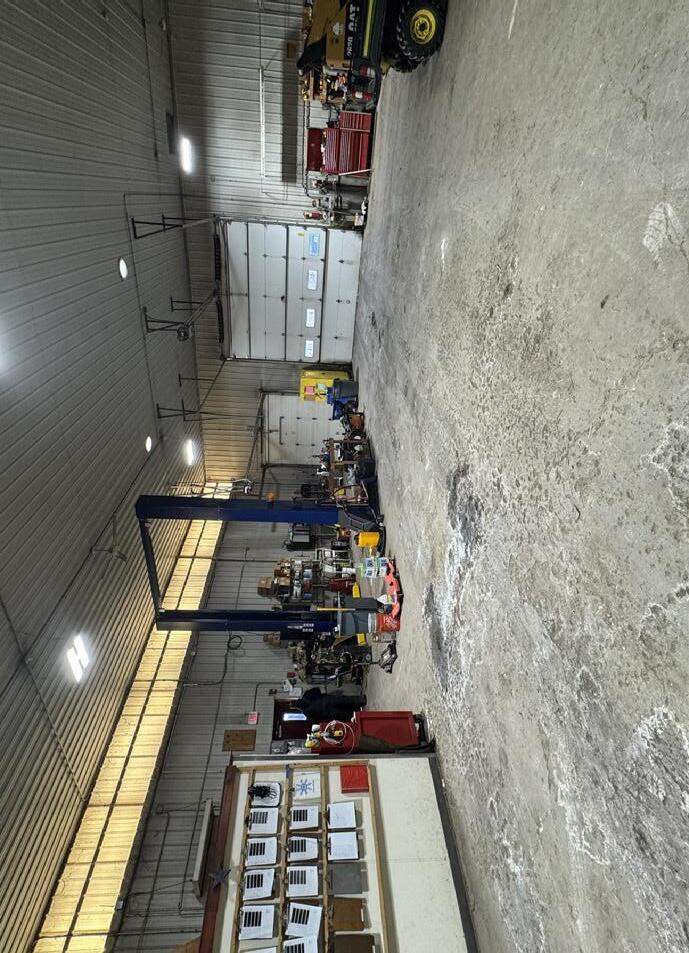
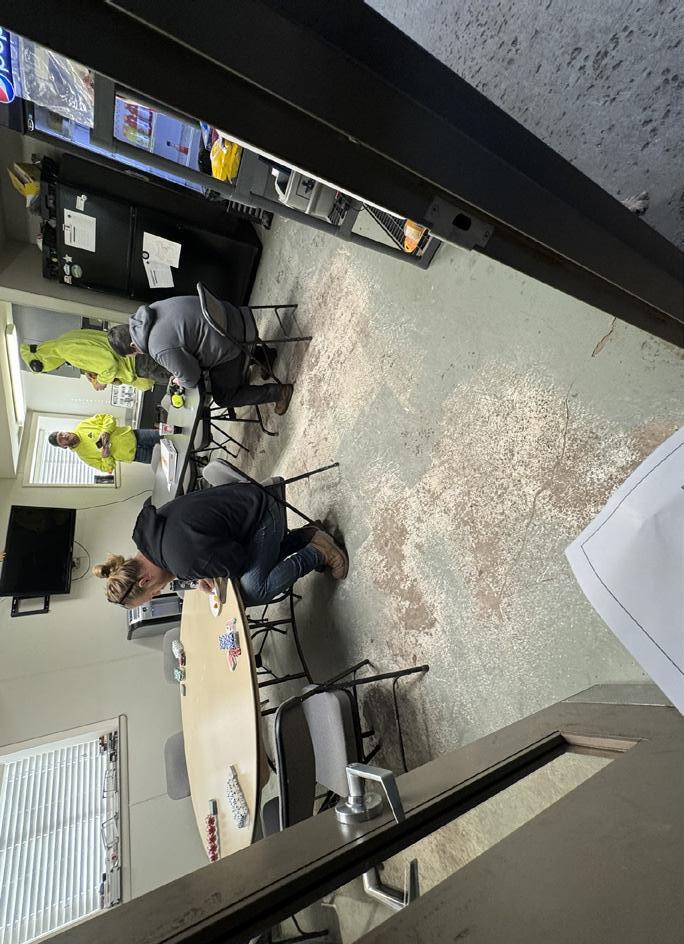
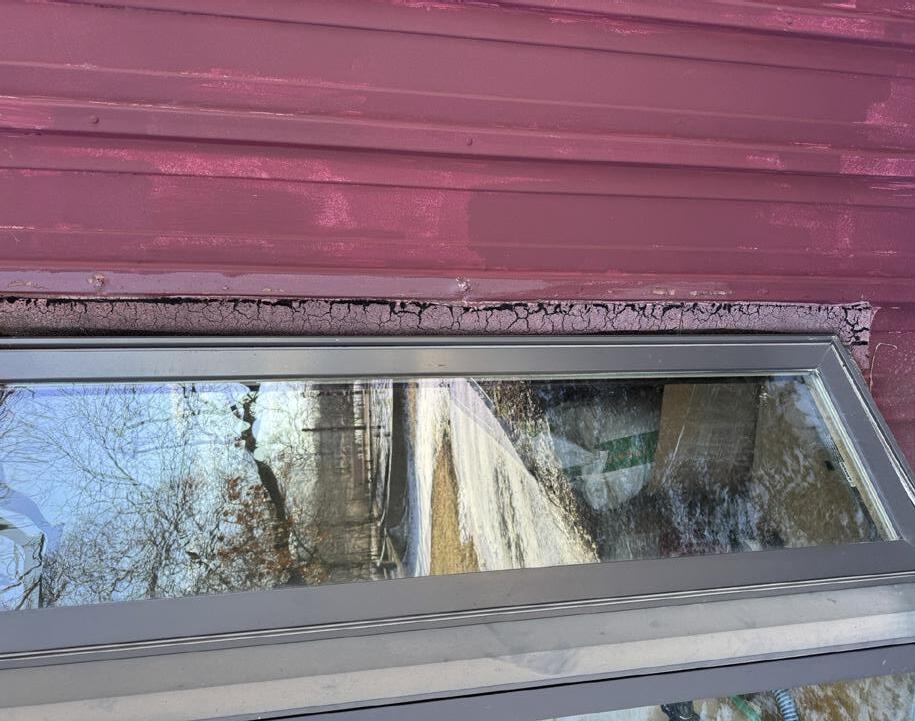
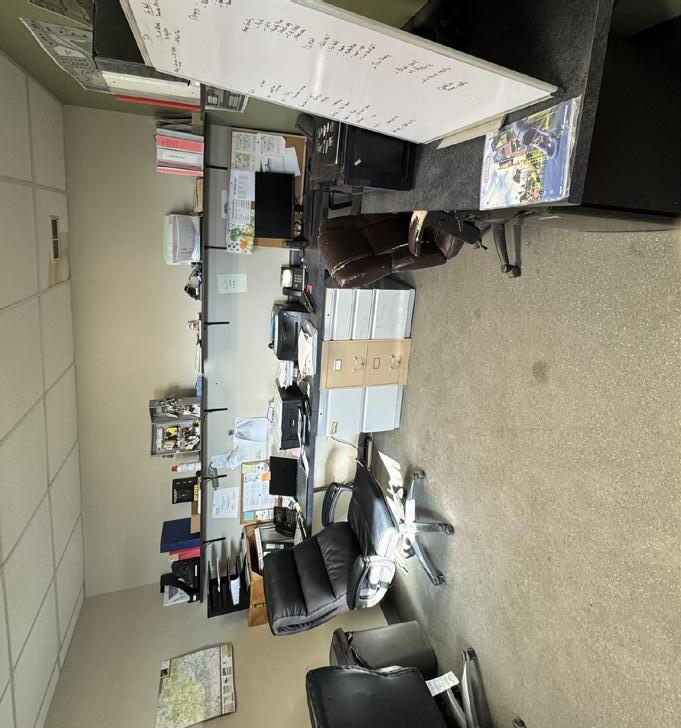
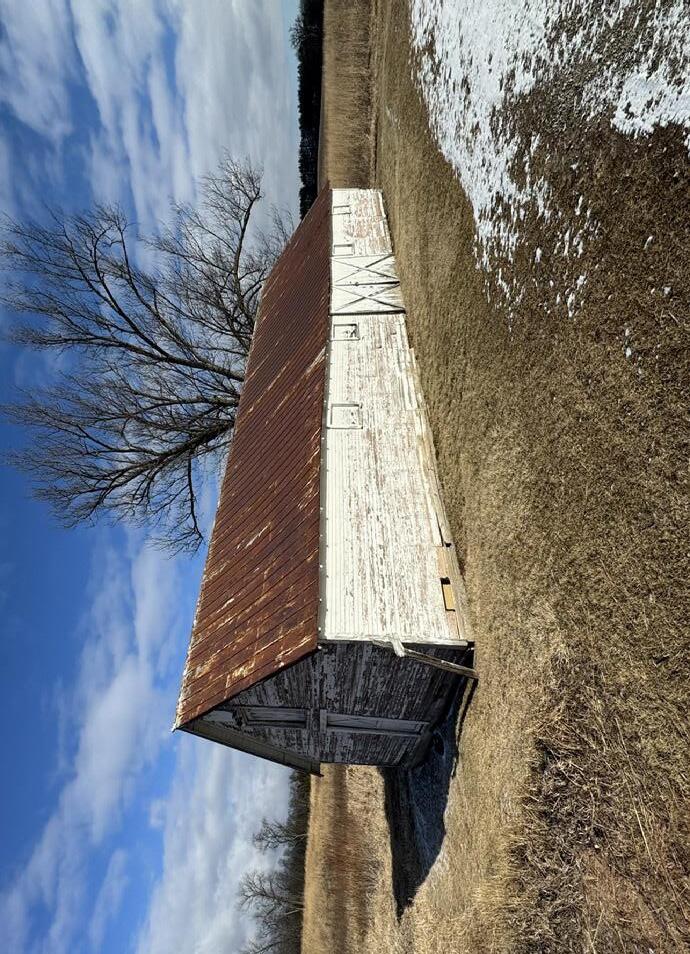
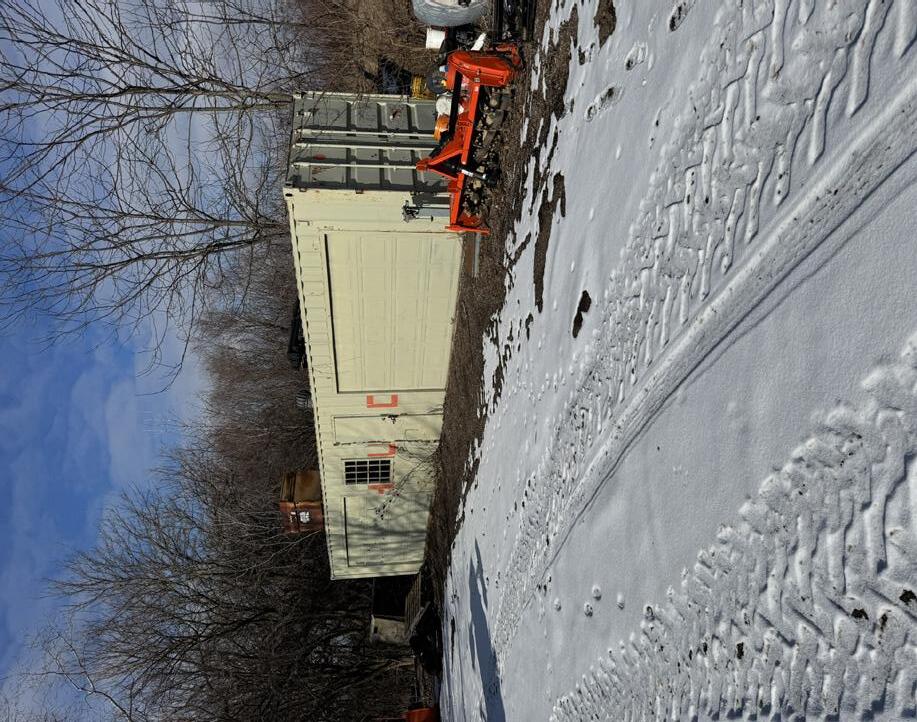
13. MAINTENANCE Shipping Containers
14. SAND PRAIRIE BARN Maintenance storage
February 2025 A Few Minutes of Your Time Will Help Make the Cary Park District a Better Place to Live, Work and Play!

Dear Cary Park District Resident:
Your response to the enclosed survey is extremely important…
The Cary Park District is conducting a Community Interest and Opinion Survey as a part of a longrange Comprehensive Master Plan Update to establish priorities for the future improvement of parks and recreation facilities, programs and services within the community. Your household was one of a limited number selected at random to receive this survey, therefore, it is very important that you participate.
We appreciate your time… We realize that this survey will take approximately 10-15 minutes to complete, but each question is important. The time you invest in completing this survey will aid the Cary Park District in taking a resident-driven approach to making decisions that will enrich the future of our community and positively affect the lives of its residents.
Please complete and return your survey within the next ten days… We have selected ETC Institute, an independent consulting company, as our partner to administer this survey. They will compile the data received and present the results to the Cary Park District. Your responses will remain confidential. Please return your completed survey in the enclosed postage-paid envelope addressed to ETC Institute, 725 W. Frontier Circle, Olathe, KS 66061. If you prefer to complete the survey by web, the address is caryparkdistrictsurvey.org
At the end of this survey you will have an opportunity to opt-in for a chance to win one of two (2)$250 prepaid Visa gift cards for fully completing your survey.
Should you have any questions regarding the community survey, please contact ETC Institute’s Project Manager, Ryan Murray, at ryan.murray@etcinstitute.com or 913-254-4598.
The Community Interest and Opinion Survey is a tool that will benefit all residents. Please take this opportunity to let your voice be heard!
Sincerely, The Cary Park District Board of Commissioners
2025 Cary Park District Needs Assessment Survey
The Cary Park District would like your input to help determine park, facility, and recreation priorities for the community. This survey will take 1015 minutes to complete. When you are finished, please return your completed survey in the enclosed postagepaid, returnreply envelope. If you prefer, you can complete the survey online at CaryParkDistrictSurvey.org We greatly appreciate your time! At the end of this survey you will have an opportunity to optin for a chance to win one of two (2) $250 prepaid Visa gift cards for fully completing your survey.
1. Including yourself, how many people in your household are ... Under age 5: Ages 59: Ages 1014: Ages 1519: Ages 2024: Ages 2534: Ages 3544: Ages 4554: Ages 5564: Ages 6574: Ages 7584: Ages 85+:
2. Have you or any member of your household visited any Cary Park District parks and/or recreation facilities during the past 12 months? ____(1) Yes [Answer Q2a.] ____(2) No [Skip to Q3.]
2a. Overall, how would you rate the physical condition of ALL the Cary Park District parks and recreation facilities you have visited? ____(4) Excellent ____(3) Good ____(2) Fair ____(1) Poor
3. Please CHECK ALL of the following reasons that prevent you or members of your households from visiting Cary Park District parks and recreation facilities more often.
____(08) Language/cultural barriers
____(09) Not aware of parks' or facilities' locations
____(10) Parks/facilities are not well maintained
____(11) Safety when using parks/facilities
____(12) Too far from our home ____(13) Use parks/facilities in other communities ____(14) Other:
____(01) Fees are too high ____(02) Lack of amenities we want to use ____(03) Lack of handicap (ADA) accessibility
____(04) Lack of parking to access parks/facilities
____(05) Lack of restrooms ____(06) Lack of shade ____(07) Lack of transportation
4. From the following list, please CHECK ALL the ways you learn about Cary Park District parks, recreation facilities, programs, and events.
____(07) Outdoor signage/electronic sign
____(08) Promotions at special events ____(09) Seasonal program guide
____(01) Cary Park District website ____(02) Conversations with Park District staff
____(03) Emails/ENewsletters
____(10) Social media
____(11) Word of mouth ____(12) Other:
____(04) Flyers/Newsletter ____(05) Materials at parks or recreation facilities
____(06) Newspaper
4a. Overall, how would you rate the quality of the methods of communication used by the Park District to communicate about parks, recreation facilities, programs and events? ____(4) Excellent ____(3) Good ____(2) Fair ____(1) Poor
5. From the list in Question 4, which THREE methods of communication would you MOST PREFER the Park District use to communicate with you about parks, recreation facilities, programs, and events? [Write in your answers below using the numbers from the list in Question 4, or circle "NONE."] 1st: ____ 2nd: ____ 3rd: ____ NONE
6. From the following list, please CHECK ALL of the organizations that you or members of your household have used for indoor and outdoor recreation activities during the last 12 months.
____(08) Private and nonprofit youth athletic associations
____(09) Private clubs (tennis, health, swim, fitness)
____(10) Private schools/charter schools
____(11) Private summer camps
____(12) Public schools
____(13) YMCA ____(14) Other:
____(01) Cary Park District
____(02) Library ____(03) Local colleges ____(04) McHenry County Conservation District (MCCD)
____(05) Municipality/City
____(06) Neighboring park districts ____(07) Places of worship (e.g., synagogues, churches)
7. Has your household participated in any programs or events offered by the Cary Park District during the past 12 months?
____(1) Yes [Answer Q7a.] ____(2) No [Skip to Q8 .]
7a. How would you rate the overall quality of the Cary Park District programs or events in which your household has participated? ____(4) Excellent ____(3) Good ____(2) Fair ____(1) Poor
Use programs of other agencies
Other:
8. Please CHECK ALL of the following reasons that prevent you or members of your household from participating in Cary Park District programs or events more often. ____(01) Fees are too high ____(02) I don't know what is offered ____(03) Lack of quality instructors ____(04) Lack of quality programs ____(05) Lack of right program equipment ____(06) Lack of transportation ____(07) Language/cultural barriers ____(08) Old and outdated facilities ____(09) Online registration is not user friendly ____(10) Poor customer service by staff ____(11) Programs are cancelled ____(12) Programs are full ____(13) Program not offered ____(14) Program times are not convenient ____(15) Registration is difficult ____(16) Safety when using parks/facilities ____(17) Too far from our home ____(18) Too busy/not interested
means "Strongly
and
9. Please indicate your level of agreement with the following statements concerning some potential benefits of the Cary Park District's parks, facilities, and recreation programs or events using a scale of 1 to 5, where 5 means "Strongly
10. Please indicate how well your needs are being met for each of the facilities/amenities listed below on a scale of 4 to 1, where 4 means your needs are "Fully Met," and 1 means your needs are "Not Met" at all. If you do not have a need for an item listed, please circle "9" for "No Need."
12. Please indicate how well your needs are being met for each of the programs/activities listed below on a scale of 4 to 1, where 4 means your needs are "Fully Met," and 1 means your needs are "Not Met" at all. If you do not have a need for an item listed, please circle "9" for "No Need."
14. Listed below are actions the Cary Park District could take to improve parks and recreation amenities and facilities. Please indicate your level of support for each item where 3 means "Very Supportive" and 1 means "Not Supportive ."
are you of having the
Which FOUR of the items listed in Question 14 would you be MOST WILLING to fund with your Park District tax dollars? [Write in your answers below using the numbers from the list in Question 14, or circle "NONE."]
16. How important do you feel it is for the Cary Park District to provide high quality parks, recreation facilities and programs? ____(3) Very important ____(2) Somewhat important ____(1) Not important ____(9) Not sure
17. Your gender identity: ____(1) Male ____(2) Female ____(3) Nonbinary ____(4) Prefer to selfdescribe: ____(5) Prefer not to disclose
18. How many years have you lived within the Cary Park District? years 19. Which of the following best describes your race/ethnicity? ____( 0 1) Asian or Asian Indian ____( 0 2) Black or African American ____( 0 3) American Indian or Alaska Native ____( 0 4) Wh i te or Caucasian ____( 0 5) Native Hawaiian or other Pacific Islander ____( 0 6) Hispanic or Latino ____(88 ) Prefer not to disclose ____(99 ) Other:
20. Would you like to be entered into a drawing for a chance to win one (1) of two (2) prepaid $250 Visa Gift Cards for fully completing your survey ? The gift card will be sent via email only and is limited to one entry per household. ____(1) Yes [Answer Q20a.] ____(2) No [END SURVEY.]
20a. Please provide your contact information. Mobile Phone Number: Email:
This concludes the survey. Thank you for your time! Please return your completed survey in the enclosed returnreply envelope addressed to: ETC Institute, 725 W. Frontier Circle, Olathe, KS 66061
Your responses will remain completely confidential. The information to the right will ONLY be used to help identify the level of need in your area. Thank you!
Statistically Valid Survey Charts

Charts and Graphs
Q1. Including yourself, how many people in your household are...
percentage of respondents
Under age 5
Ages 5-9
Ages 10-14
Ages 15-19
Ages 20-24
Ages 25-34
Ages 35-44
Ages 45-54
Ages 55-64
Ages 65-74
Ages 75-84
Ages 85+
Q2. Have you/your household visited any Cary Park District parks and/or recreation facilities during the past year?
by percentage of respondents
Q2a. Overall, how would you rate the physical condition of all the parks and recreation facilities you have visited? by percentage of respondents who responded “YES” to Q2
Q3. Please check all the following reasons that prevent you/your households from visiting parks and recreation facilities more often.
by percentage of respondents (multiple selections could be made)
Lack of amenities we want to use
Fees are too high
Lack of shade
Use parks/facilities in other communities
Not aware of parks' or facilities' locations
Lack of restrooms
Parks/facilities are not well maintained
Lack of parking to access parks/facilities
Too far from our home
Safety when using parks/facilities
Lack of handicap (ADA) accessibility
Lack of transportation
Language/cultural barriers
Q4. From the following list, please check all the ways you learn about Cary Park District parks, recreation facilities, programs, and events. by percentage of respondents (multiple selections could be made)
Cary Park District website
Emails/eNewsletters
Seasonal program guide
Word of mouth
Flyers/Newsletters
Social media
Outdoor signage/electronic sign
Promotions at special events
Materials at parks or recreation facilities
Conversations with Park District staff
Newspaper
Q4a. Overall, how would you rate the quality of the methods of communication used by the Park District to communicate about parks, recreation facilities, programs and events? by percentage of respondents (excluding “not provided”)
Q5. Which three methods of communication would you most prefer the Park District use to communicate with you about parks, recreation facilities, programs, and events? by percentage of respondents who selected the item as one of their top three choices
Emails/E-Newsletters
Cary Park District website
Social media
Seasonal program guide
Flyers/Newsletter
Outdoor signage/electronic sign
Word of mouth
Newspaper
Materials at parks or recreation facilities
Promotions at special events
Conversations with Park District staff
Q6. From the following list, please check all the organizations that you/your household have used for indoor/outdoor recreation activities during the last year. by percentage of respondents (multiple selections could be made)
Cary Park District
McHenry County Conservation District (MCCD)
Neighboring park districts
Places
Private & non-profit youth athletic associations
Municipality/City Local
Q7. Has your household participated in any programs/events during the past year?
by percentage of respondents
Q7a. How would you rate the overall quality of the programs/events in which your household has participated? by percentage of respondents who responded “YES” to Q7 (excluding “not provided”)
Q8. Please check all the following reasons that prevent you/your household from participating in programs/events more often.
by percentage of respondents (multiple selections could be made)
Program times are not convenient
Too busy/not interested
I don't know what is offered
Fees are too high
Program not offered
Lack of quality programs
Old & outdated facilities
Programs are full
Use programs of other agencies
Online registration is not user friendly
Lack of quality instructors
Lack of right program equipment
Registration is difficult
Programs are cancelled
Lack of transportation
Too far from our home
Language/cultural barriers
Poor customer service by staff
Safety when using parks/facilities
Q9. Please indicate your level of agreement with the following statements concerning some potential benefits of the Cary Park District's parks, facilities, and recreation programs/events. by percentage of respondents (excluding don’t know)
Preserves open space and protects the environment
Makes my community a more desirable place to live
Meets the Park District's mission to provide exceptional parks, recreation and open space opportunities
Provides jobs/professional development for teens/young adults
Improves my (my household's) physical health and fitness
Is age-friendly and accessible to all age groups
Provides positive social interactions for me (my household/family)
Improves my (my household's) mental health and reduces stress
Increases my (my household's) property value
Positively impacts economic/business development
Provides volunteer opportunities for the community
Q10. Households that have a need for various facilities/amenities.
Walking, hiking, biking trails
Small neighborhood parks
Shade and trees
Large community parks
Open space conservation areas
Picnic areas and shelters
Playgrounds
Outdoor aquatics
Splash pads or spray parks
Community center/Recreation center
Indoor running/walking track
Outdoor performing arts space
Indoor aquatics
Environmental/nature education center
Indoor basketball/volleyball/pickleball courts
Outdoor exercise/fitness area
Golf courses
Rectangular athletic fields
Mountain bike trails
Off-leash dog park
Outdoor basketball courts
Indoor turf field/spaces
Outdoor pickleball courts
Disc golf
Outdoor tennis courts
Performing arts theater
Diamond sports fields
Outdoor turf fields
Skateboarding parks
Parkour/Ninja Warrior course
Dance studio
Q10. Estimate number of households who have a need for facilities/amenities.
Walking, hiking, biking trails Small neighborhood parks
and trees
community parks
conservation areas Picnic areas and shelters
aquatics
Splash pads or spray parks
Community center/Recreation center
Indoor running/walking track
Outdoor performing arts space
Indoor aquatics
Environmental/nature education center
Indoor basketball/volleyball/pickleball courts
Outdoor exercise/fitness area
Golf courses
Rectangular athletic fields
Mountain bike trails
Off-leash dog park
Outdoor basketball courts
Indoor turf field/spaces
Outdoor pickleball courts Disc golf
Outdoor tennis courts
Performing arts theater
Diamond sports fields
Outdoor turf fields
Skateboarding parks
Parkour/Ninja Warrior course
Dance studio
Q10. How well needs are being met for various facilities/amenities.
“no
Playgrounds
Disc golf
Large community parks
Small neighborhood parks
aquatics
Splash pads or spray parks
Open space conservation areas
Walking, hiking, biking trails
Off-leash dog park
Shade and trees
Picnic areas and shelters
Rectangular athletic fields
Outdoor
Skateboarding parks
arts theater
Outdoor pickleball courts
Indoor basketball/volleyball/pickleball courts
Parkour/Ninja Warrior course
Indoor aquatics
Indoor turf field/spaces
Indoor running/walking track
Q10. Estimated number of households in Cary Park District whose facilities/amenities needs are only “partly met” or “not met.”
Indoor running/walking track
Indoor aquatics
Indoor basketball/volleyball/pickleball courts
Indoor turf field/spaces
Outdoor exercise/fitness area
Community center/Recreation center
Outdoor pickleball courts
Environmental/nature education center
Shade and trees
Outdoor tennis courts
Performing arts theater
Picnic areas and shelters
Mountain bike trails
Outdoor performing arts space
Walking, hiking, biking trails
Outdoor turf fields
Outdoor basketball courts
Open space conservation areas
Small neighborhood parks
Diamond sports fields
Parkour/Ninja Warrior course
Large community parks
Rectangular athletic fields
Splash pads or spray parks Outdoor aquatics
dog park
Skateboarding parks
studio
based on an estimated 6,342 households in Cary Park District
Q11. Which four facilities/amenities are most important to your
household? by percentage of respondents who selected the item as one of their top four choices
Walking, hiking, biking trails
Community center/Recreation center
Indoor aquatics
Playgrounds
Indoor basketball/volleyball/pickleball courts
Indoor running/walking track
Open space conservation areas Shade and trees
Small neighborhood parks Outdoor aquatics Large community parks Outdoor pickleball courts
dog park
Splash pads or spray parks
Picnic
Performing
Outdoor
Rectangular
Parkour/Ninja Warrior course
Skateboarding parks
Q12. Households that have a need for various programs/activities.
Adult fitness and wellness programs
Special events
Water fitness programs/lap swimming
Outdoor environmental/nature camps and programs
Pickleball/tennis lessons and leagues
Senior programs
Cultural enrichment programs
Swim lessons
Adult visual arts/crafts programs
Adult athletic leagues
Adult golf programs/lessons
STEAM classes
Youth athletics programs and camps
Adult golf leagues
Youth seasonal programs and camps
Adult performing arts programs
Preschool programs/early childhood education
Youth fitness and wellness programs
Teen/tween athletic programs and camps
Teen/tween fitness and wellness programs
Before and after school programs
Youth visual arts/crafts programs
Programs for people with disabilities
Cheer/gymnastics/tumbling programs
Teen/tween performing arts programs
Youth performing arts programs
Youth golf programs/lessons
Teen/tween golf programs/lessons
Teen/tween golf leagues
Youth golf leagues
EGaming/Esports
Q12. Estimate number of households who have a need for programs/activities. based on an estimated 6,342 households in Cary Park District
Walking/hiking trails
Picnic areas and shelters
Paved bike trails
Large community parks
Natural areas and wildlife habitats
River access
Playground equipment
Outdoor swimming pools
Small neighborhood parks
Indoor running/walking track
Multipurpose fields for practice and open play
Sledding hill
Youth baseball and softball fields
Golf courses
Outdoor splash pads
Outdoor basketball courts
Pickleball courts
Youth football fields
Indoor playground
Outdoor tennis courts
Off-leash dog parks
Indoor field house sports fields
Youth soccer/lacrosse fields
Outdoor fitness equipment
Community gardens
Disc golf courses
Camping
Adult softball fields
Rock climbing
Skate parks
Outdoor offices/kiosks
Adult soccer fields
Q12. How well needs are being met for various programs/activities.
Before and after school programs
Preschool programs/early childhood education
Youth performing arts programs
Youth seasonal programs and camps
Swim lessons
Youth athletics programs and camps
Youth golf leagues
Youth visual arts/crafts programs
Youth golf programs/lessons
Special events
Cheer/gymnastics/tumbling programs
Adult golf leagues
Youth fitness and wellness programs
Adult golf programs/lessons
Teen/tween golf programs/lessons
Teen/tween golf leagues
Outdoor environmental/nature camps and programs
Programs for people with disabilities
Teen/tween performing arts programs
Water fitness programs/lap swimming
Teen/tween athletic programs and camps
Adult performing arts programs
Senior programs
EGaming/Esports
Adult athletic leagues
Adult fitness and wellness programs
STEAM classes
Teen/tween fitness and wellness programs
Cultural enrichment programs
Adult visual arts/crafts programs
Pickleball/tennis lessons and leagues
Q12. Estimated number of households in Cary Park District whose program needs are only “partly met” or “not met.”
based on an estimated 6,342 households in Cary Park District
Indoor running/walking track
Indoor aquatics
Indoor basketball/volleyball/pickleball courts
Indoor turf field/spaces
Outdoor exercise/fitness area
Community center/Recreation center
Outdoor pickleball courts
Environmental/nature education center
Shade and trees
Outdoor tennis courts
Performing arts theater
Picnic areas and shelters
Mountain bike trails
Outdoor performing arts space
Walking, hiking, biking trails
Outdoor turf fields
Outdoor basketball courts
Open space conservation areas
Small neighborhood parks
Diamond sports fields
Parkour/Ninja Warrior course
Large community parks
Rectangular athletic fields
Splash pads or spray parks
Outdoor aquatics
dog park
Met
Skateboarding parks
studio
Q13. Which four programs/activities are most important to your household?
by percentage of respondents who selected the item as one of their top four choices
Adult fitness and wellness programs
Special events
Pickleball/tennis lessons and leagues
Senior programs
Outdoor environmental/nature camps and programs
Water fitness programs/lap swimming
Youth athletics programs and camps
Adult visual arts/crafts programs
Cultural enrichment programs
Swim lessons
Adult athletic leagues
Adult golf leagues
Adult golf programs/lessons
Youth seasonal programs and camps
Preschool programs/early childhood education
STEAM classes
Before and after school programs
Teen/tween athletic programs and camps
Adult performing arts programs
Programs for people with disabilities
Teen/tween fitness and wellness programs
Youth fitness and wellness programs
Cheer/gymnastics/tumbling programs
Youth visual arts/crafts programs
Youth performing arts programs
EGaming/Esports
Teen/tween performing arts programs
Youth golf programs/lessons
Youth golf leagues
Teen/tween golf programs/lessons
Teen/tween golf leagues
Q14. Listed below are actions the Cary Park District could take to improve parks and recreation amenities and facilities. Please indicate your level of support for each item. by percentage of respondents (excluding “not sure”)
Develop new and/or connect existing multi-use trails
Maintain/upgrade existing multi-use trails
Maintain/upgrade existing small neighborhood parks
Maintain/upgrade existing prairies and nature preserves
Maintain/upgrade existing large community parks
Develop new community/recreation center with the types of program spaces
Maintain/upgrade existing athletic fields
Maintain/upgrade existing Community Center
Develop new outdoor courts
Maintain/upgrade existing maintenance facility
Maintain/upgrade existing preschool
Develop new athletic fields
Maintain/upgrade existing Foxford Hills Golf Club
Maintain/upgrade existing administrative office spaces
Q15.
Which four of the items would you be most willing to fund with your Park District tax dollars?
by percentage of respondents who selected the item as one of their top four choices
Develop new and/or connect existing multi-use trails
Maintain/upgrade existing multi-use trails
Develop new community/recreation center with the types of program spaces that are most important to your household
Maintain/upgrade existing small neighborhood parks
Maintain/upgrade existing prairies and nature preserves
Develop new outdoor courts
Maintain/upgrade existing large community parks
Develop new athletic fields
Maintain/upgrade existing Community Center
Maintain/upgrade existing Foxford Hills Golf Club
Maintain/upgrade existing preschool
Maintain/upgrade existing athletic fields
Maintain/upgrade existing maintenance facility
Maintain/upgrade existing administrative office spaces
Q16. How important do you feel it is for the Cary Park District to provide high quality parks, recreation facilities and programs? by percentage of respondents (excluding “not sure”)
Demographics
Q17.
Your
gender identity:
by percentage of respondents (excluding “prefer not to disclose”)
Q18.
How many years have you lived within the Cary Park District? by percentage of respondents (excluding “not provided”)
Q19. Which of the following best describes your race/ethnicity? by percentage of respondents (excluding “prefer not to disclose”)
Have you/your household visited any parks or recreation facilities/amenities in your community during the past year?
Please rate the overall condition of all the parks and recreation facilities/amenities you/your household have visited over the past year.
Cary Park District vs. National Average (excluding “not provided”)
Please check all the reasons that prevent you from visiting parks and recreation facilities/amenities or what prevents you from visiting them more often.
Cary Park District vs. National Average (multiple selections could be made)
Lack of features we want to use
Fees are too high/lack of financial assistance
Use other city, state, private facilities
Not aware of park or facility locations
Lack of restrooms
Parks/Facilities are not well maintained
Lack of parking to access parks/facilities
Too far from home
Lack of ADA accessibility
Lack of transportation
Language/cultural barriers/age barriers
Have you/your household participated in any recreation programs offered in your community during the past year?
Cary Park District vs. National Average
Please rate the overall condition of all the recreation programs/events you/your household have visited over the past year. Cary Park District vs. National Average (excluding “not provided”)
If your household has not participated in any recreation programs in your community during the past year, please check all of the reasons that prevent you from participating.
Cary Park District vs. National Average (multiple selections could be made)
Program times are not convenient
Too busy/not interested
I don't know what is offered
Fees are too high/lack of financial assistance
Program not offered
Lack of quality programs
Classes are full
Use programs of other agencies
Lack of quality instructors
Registration is difficult
Lack of transportation
Too far from home
Safety concerns
Language/cultural/age barriers
Please check all the ways you currently use to learn about parks and recreation programs, activities, and events in your community.
Cary Park District vs. National Average (multiple selections could be made)
Overview
The Priority Investment Rating (PIR) was developed by ETC Institute to provide governments with an objective tool for evaluating the priority that should be placed on parks and recreation investments. The Priority Investment Rating was developed by ETC Institute to identify the facilities/programs residents think should receive the highest priority for investment. The Priority Investment Rating reflects the importance residents place on items (sum of top 4 choices) and the unmet needs ( doesn ’ t meet my needs ) for each facility/program relative to the facility/program that rated the highest overall. Since decisions related to future investments should consider both the level of unmet need and the importance of facilities/programs, the PIR weights each of these components equally.
The PIR reflects the sum of the Unmet Needs Ra ting and the Importance Rating as shown in the equation below:
PIR = UNR + IR
For example, suppose the Unmet Needs Rating for playgrounds is 26.5 (out of 100) and the Importance Rating for playgrounds is 52 (out of 100), the Priority Investment Rating for playgrounds would be 78.5 (out of 200).
How to Analyze the Charts:
• High Priority Areas are those with a PIR of at least 1 10 . A rating of 1 10 or above generally indicates there is a relatively high level of unmet need and residents generally think it is important to fund improvements in these areas. Improvements in this area are likely to have a positive impact on the greatest number of households.
• Medium Priority Areas are those with a PIR of 70109 . A rating in this range generally indicates there is a medium to high level of unmet need or a significant percentage of residents generally think it is important to fund improvements in these areas.
• Low Priority Areas are tho se with a PIR below 49 A rating in this range generally indicates there is a relatively low level of unmet need and residents do not think it is important to fund improvements in these areas. Improvements may be warranted if the needs of very specialized populations are being targeted.
The following pages show the Unmet Needs Rating, Importance Rating, and Priority Investment Rating for facilities and programs.
Performing
Unmet Needs Rating for Facilities/Amenities
The
Importance Rating for Facilities/Amenities
The rating for the item rated as the most important=100
The rating of all other items reflects the relative level of importance for each item compared to the item rated as the most important
Priorities for Investment for Facilities/Amenities Based on
Unmet Needs Rating for Programs/Activities
The rating for the item with the most unmet need=100
The rating of all other items reflects the relative amount of unmet need for each item compared to the item with the most unmet need
Adult fitness and wellness programs
Pickleball/tennis lessons and leagues
Water fitness programs/lap swimming
Special events
Cultural enrichment programs
Outdoor environmental/nature camps and programs
Adult visual arts/crafts programs
Senior programs
STEAM classes
Adult athletic leagues
Adult golf programs/lessons
Adult performing arts programs
Teen/tween fitness and wellness programs
Swim lessons
Teen/tween athletic programs and camps
Adult golf leagues
Youth athletics programs and camps
Youth fitness and wellness programs
Programs for people with disabilities
Teen/tween performing arts programs
Cheer/gymnastics/tumbling programs
Youth visual arts/crafts programs
Youth seasonal programs and camps
Teen/tween golf programs/lessons
Teen/tween golf leagues
Preschool programs/early childhood education
EGaming/Esports
Youth golf programs/lessons
Youth golf leagues
Youth performing arts programs
Before and after school programs
Importance Rating for Programs/Activities
The rating for the item rated as the most important=100
The rating of all other items reflects the relative level of importance for each item compared to the item rated as the most important
Adult fitness and wellness programs
Special events
Pickleball/tennis lessons and leagues
Senior programs
Outdoor environmental/nature camps and programs
Water fitness programs/lap swimming
Youth athletics programs and camps
Adult visual arts/crafts programs
Cultural enrichment programs
Swim lessons
Adult athletic leagues
Adult golf leagues
Adult golf programs/lessons
Youth seasonal programs and camps
Preschool programs/early childhood education STEAM classes
Before and after school programs
Teen/tween athletic programs and camps
Adult performing arts programs
Programs for people with disabilities
Teen/tween fitness and wellness programs
Youth fitness and wellness programs
Cheer/gymnastics/tumbling programs
Youth visual arts/crafts programs
Youth performing arts programs
Teen/tween performing arts programs
EGaming/Esports
Youth golf programs/lessons
Youth golf leagues
Teen/tween golf programs/lessons
Teen/tween golf leagues
Top Priorities for Investment for Programs/Activities Based on Priority Investment Rating
Youth
Teen/tween fitness and wellness programs
Preschool programs/early childhood education
Programs for people with disabilities
Youth fitness and wellness programs
Before and after school programs
Teen/tween performing arts programs
Cheer/gymnastics/tumbling programs
Youth visual arts/crafts programs
Teen/tween golf programs/lessons
EGaming/Esports
Teen/tween golf leagues
Youth golf programs/lessons
Youth performing arts programs
D e s i r e d a m e n i t i e s a r e n ’ t o f f e r e d I n c o n v e n i e n t l o c a t i o n
C a r y P a r k D i s t r i c t C o m p r e h e n s i v e M a s t e r P l a n S u r v e y M o n k e y 2 / 1 0 5 1 3 0 4 % 3 0 0 0 %
N o t i n t e r e s t e d P a r k s n e e d m a i n t e n a n c e o r i m p r o v e m e n t s S a f e t y a n d s e c u r i t y T o o b u s y U s e o t h e r a g e n c i e s ’ p a r k s O t h e r r e a s o n
Q 2 I f yo u d o n ’ t vi si t a n y o f t h e P a r k D i st r i ct ’ s P A R K S , w h y n o t ? ( S e l e ct a l l t h a t a p p l y) : A n s w e r e d : 2 3 S k i p p e d : 5 7 2 T o t a l R e s p o n d e n t s : 2 3 # O T H E R R E A S O N D A T E 1 N o t m e a n t f o r t o d d l e r s 3 / 1 9 / 2 0 2 5 1 : 2 1 P M 2 S o m e d o g s h a v e n o m a n n e r s a n d o w n e r d o e s n 't c o r r e c t 3 / 1 7 / 2 0 2 5 3 : 3 7 P M
T o t a l R e s p o n d e n t s : 2 3
# O T H E R R E A S O N D A T E
1 N o t m e a n t f o r t o d d l e r s 3 / 1 9 / 2 0 2 5 1 : 2 1 P M
2 S o m e d o g s h a v e n o m a n n e r s a n d o w n e r d o e s n 't c o r r e c t 3 / 1 7 / 2 0 2 5 3 : 3 7 P M
C a r y P a r k D i s t r i c t C o m p r e h e n s i v e M a s t e r P l a n S u r v e y M o n k e y
3 n e e d i n d o o r w a l k i n g a n d i n d o o r m i n i g o l f w e a t h e r k e e p s w e a t h e r k e e p s n e e d f o r i n d o o r 3 / 3 / 2 0 2 5 1 2 : 4 8 P M
4 N o c h i l d r e n y e t , w i l l b e u s i n g i n t h e f u t u r e 2 / 2 5 / 2 0 2 5 4 : 2 5 P M 5 N o k i d s 2 / 2 5 / 2 0 2 5 4 : 1 8 P M
D e s i r e d a m e n i t i e s a r e n ’ t o ff e r e d I n c o n v e n i e n t l o c a t i o n N o t i n t e r e s t e d P a r k s n e e d m a i n t e n a n c e o r i m p r o v e m e n t s S a f e t y a n d s e c u r i t y T o o b u s y U s e o t h e r a g e n c i e s ’ p a r k s O t h e r r e a s o n A N S W E R C H O I C E S R E S P O N S E S
T o o b u s y U s e o t h e r a g e n c i e s ’ p a r k s O t h e r r e a s o n 2 / 1 0 5
D e s i r e d a m e n i t i e s a r e n ’ t o f f e r e d I n c o n v e n i e n t l o c a t i o n N o t i n t e r e s t e d P a r k s n e e d m a i n t e n a n c e o r i m p r o v e m e n t s
S a f e t y a n d s e c u r i t y
3 n e e d i n d o o r w a l k i n g a n d i n d o o r m i n i g o l f w e a t h e r k e e p s w e a t h e r k e e p s n e e d f o r i n d o o r 3 / 3 / 2 0 2 5 1 2 : 4 8 P M
C a r y P a r k D i s t r i c t C o m p r e h e n s i v e M a s t e r P l a n S u r v e y M o n k e y
Q 3 H o w sa t i sf i e d w e r e yo u w i t h t h e C a r y P a r k D i st r i ct P A R K S t h a t yo u a n d / o r m e m b e r s o f yo u r h o u se h o l d vi si t e d i n t h e l a st 1 2 m o n t h s?
( o n l y a n sw e r f o r t h o se t h a t h a ve b e e n vi si t e d ) :
C a r y P a r k D i s t r i c t C o m p r e h e n s i v e M a s t e r P l a n S u r v e y M o n k e y
A n s w e r e d : 3 8 6 S k i p p e d : 2 0 9 ! W e 'r e s o r r y W e c a n n o t d i s p l a y a c h a r t f o r a q u e s t i o n w i t h t h i s m a n y o p t i o n s
I f y o u s e l e c t e d “ U n s a t i s f i e d w i t h t h e P A R K y o u ’ v e v i s i t e d , w h a t i s y o u r b i g g e s t c o n c e r n ?
1 V e t e r a n s p a r k n e e d s m o r ei t i s u s e d o n c e a y e a r a n d h a s n o t h i n g e l s e t o d r a w a n y o n e t o t h e p a r k 2 / 2 5 / 2 0 2 5 1 2 : 1 5 P M
2 I n g e n e r a l , m o s t p a r k s n e e d m o r e s h a d e a n d m o r e p i c n i c t a b l e s 2 / 2 5 / 2 0 2 5 1 : 2 1 P M
3 F i t n e s s C e n t e r a t C o m m u n i t y C e n t e r a n d S u n b u r s t B a y A q u a t i c 2 / 2 5 / 2 0 2 5 2 : 0 5 P M
4 M u l t iu s e t r a i l s : G o l f C a r t s o n t h e p a t h s c o n s t a n t l y a n d g a s p o w e r e d m o t o r b i k e s a n d q u a d s , a l l 2 / 2 5 / 2 0 2 5 2 : 2 0 P M
T h r e e O a k s D e t e n t i o n V a l B u d d P a r k W a t e r T o w e r P r a i r i e P a r k W e n t w o r t h P a r k W e s t L a k e P a r k W h i t e O a k s P a r k M u l t iu s e t r a i l s C a r y P a r k D i s t r i c t C o m p r e h e n s i v e M a s t e r P l a n S u r v e y M o n k e y t h e t i m e A l s o d o g s o f f l e a s h e s
5 T h e H o f f m a n d o g p a r k h a s s t i c k s a n d b r a n c h e s s t i c k i n g u p f r o m t h e g r o u n d t h a t i n j u r e d o u r d o g 2 / 2 5 / 2 0 2 5 2 : 1 0 P M
6 A s p h a l t p a t h a l o n g C a r yA l g o n q u i n R o a d n e e d s r e p a v i n g b e t w e e n M a i n S t r e e t a n d F o x T r a i l s s u b d i v i s i o n 2 / 2 5 / 2 0 2 5 2 : 1 6 P M
7 M o r e p u b l i c r e s t r o o m s o p e n a n d u n l o c k e d d u r i n g s p o r t i n g e v e n t s 2 / 2 5 / 2 0 2 5 2 : 2 9 P M
8 L i o n s p a r k b a l l f i e l d s n e e d r o c k s t a k e n o u t o f t h e m m o r e d e v e l o p m e n t a t C a r y g r o v e a n d H o f f m a n p a r k C o m m u n i t y c e n t e r n e e d s u p g r a d i n g 2 / 2 5 / 2 0 2 5 2 : 3 0 P M
9 T h e r e h a v e b e e n g r o u n d b e e s i n t h e s a n d t h a t i s n e v e r t a k e n c a r e o f T h e w e e d s a r e a w f u l i n t h e s u m m e r L a n d s c a p e m a i n t e n a n c e n e e d s t o b e i m p r o v e d 2 / 2 5 / 2 0 2 5 2 : 4 0 P M
1 0 P l e a s e a d d m o r e s o c c e r f i e l d s a n d b a s k e t b a l l c o u r t s 2 / 2 5 / 2 0 2 5 2 : 4 8 P M
T o o m a n y t h i n g s a r e g o i n g o n w i t h o u r p a r k s W h y d o w e n e e d a g o l f c o u r s e W e h a v e s e v e r a l g o l f c o u r s e b u y t h e p a r k s p a y n o t a x e s a n d b o r r o w m o n e y a t l o w i n t e r e s t W h e r e o t h e r g o l f c o u r s e h a v e t o t r y a n d c o m p e t e a n d p a y t a x e s , h a v e t o p a y h i g h e r i n t e r e s t t o h a v e l o a n s . P l u s t h e e m p l o y e e s a r e p a i d b y t h e p a r k d i s t r i c t H o w d o c o m p a n y s c o m p e t e w i t h p a r k d i s t r i c t S a m e f o r p r e s c h o o l O u r p a r k d i s t r i c t s w e r e m e a n f o r s w i n g s , m a r r i g o r o u n d s A n d l i t t l e l e a g u e Y o u a r e c r e a t i n g b u s i n e s s a n d o u r k i d s h a v e t o h a v e t h e r e p a r e n t s f l i p t h e b i l l T h e p a r k d i s t r i c t s a r e w a y o u t o f c o n t r o l S u c h a s t h e f a n c y b a l l p a r k w i t h l i g h t s t h a t I s e e v e r y f e w p e o p l e u s i n g t h i s e x p e n s i v e b a l l p a r k T h a t i s s e l d o m u s e d T h e n w e h a v e e x p e n s i v e d o g p a r k s T h e p a r k d i s t r i c t s h o u l d g o b a c k t o t h e b a s i c t h i n g s a n d s t o p r a i s i n g o u r t a x e s 2 / 2 5 / 2 0 2 5 3 : 2 6 P M
1 1
1 2 C a n d l e w o o d P a r k B A S E B A L L F i e l d s h o u l d b e w o r k e d o n a n d n e e d s b e n c h e s f o r t h e p l a y e r s C a r yG r o v e P a r k n e e d s f o u r B A S E B A L L F i e l d s w i t h C o n c e s s i o n s / R e s t r o o m s P l e a s e w o r k w i t h C Y B o r t a k e o v e r L i t t l e L e a g u e o p e r a t i o n s , M a p l e w o o d i s g o n e 2 / 2 5 / 2 0 2 5 4 : 2 1 P M
1 3 W h i t e O a k s P a r kl a c k o f w o o d c h i p s I t g e t s v e r y m u d d y t h e r e w i t h a l a c k o f w o o d c h i p s 2 / 2 5 / 2 0 2 5 4 : 2 8 P M
2 / 2 5 / 2 0 2 5 4 : 3 7 P M
1 4 L i o n s p a r k : e q u i p m e n t f o r 13 y e a r o l d s a n d b a t h r o o m m a i n t e n a n c e e s p e c i a l l y d u r i n g e v e n t s a n d k a p e r p a r k s s p l a s h p a d w a s a l m o s t u n u s a b l e w i t h m i s s i n g e q u i p m e n t
1 5 T h o m a s V i e w e g P a r kn e e d s m a i n t e n a n c e 2 / 2 5 / 2 0 2 5 4 : 4 4 P M
2 / 2 5 / 2 0 2 5 7 : 2 0 P M
1 6 W a t e r p a d a t K a p e r p a r k i s l a c k i n g f u n a n d n o t e v e r y t h i n g w o r k s T h e r e i s n o t h i n g a t D e c k e r p a r k
1 7 C o n n e c t i n g b i k e p a t h s a w a y f r o m r o a d s H o f f m a n p a r k i s O k b u t h a s b i k e p a t h s o n t h e r o a d s i d e 3 / 1 6 / 2 0 2 5 1 : 1 4 P M
1 8 J a y c e e : N e e d s p a v e d t r a i l s 2 / 2 5 / 2 0 2 5 9 : 0 5 P M
1 9 S u n b u r s t b a y n e e d s t o h a v e m o r e A d u l t t i m e s i n t h e p o o l a r e a 2 / 2 6 / 2 0 2 5 7 : 1 7 A M
2 0 C o n t i n u e p r a i r i e r e s t o r a t i o n p r o j e c t s a t S a n d s E M a i n a n d H i l l s i d e C a r y P r a i r i e P a r k s 2 / 2 6 / 2 0 2 5 7 : 5 4 A M
4 / 1 0 5
2 1 H o f f m a n P
2 / 2 6 / 2 0 2 5 8 : 5 7 A M
2 1 H o f f m a n P a r kW o u l d l o v e t o s e e p i c k e l b a l l p a r k s t h e r e
2 2 N e e d t o t a k e o v e r t r a i l s a t r o t a r y p a r k 2 / 2 6 / 2 0 2 5 9 : 1 9 A M
2 3 T h e l a c k o f r e a l p a r k s i n o u r a r e a s u c k s 2 / 2 6 / 2 0 2 5 1 0 : 2 3 A M
2 4 t h e n e w l y m a d e B r i g a d o o n p a r k , p l a n t t r e e s , q u i t c u t t i n g t h e m d o w n l e t i t g o n a t u r a l , g i v e t h e w i l d l i f e s o m e w e r e t o g o d o w n , l e a v e i t a s a n a t u r a l a r e a , a r e f u g e f o r w h a t 's l e f t o f t h e w i l d l i f e t o h a n g o u t L o w m a n t a i n 2 / 2 6 / 2 0 2 5 1 1 : 5 2 A M
2 5 W h i t e O a k s P a r kg a r b a g e n e e d s t o b e p i c k e d u p m o r e o f t e n ; I o f t e n s e e f l i e s s w a r m i n g a r o u n d a f u l l / o v e r f l o w i n g g a r b a g e b i n 2 / 2 6 / 2 0 2 5 1 2 : 2 6 P M
2 6 I s n 't C a r y l a k e a t r o t a r y p a r k a C a r y p a r k I t 's n o t l i s t e d 2 / 2 6 / 2 0 2 5 1 : 1 0 P M
2 / 2 6 / 2 0 2 5 2 : 2 7 P M
2 7 D o g p a r kg e t r i d o f t a l l g r a s s e s t h a t h o u s e t i c k s M o r e t r e e s a n d o l d c l e a n u p d e b r i s f r o m l a s t c u t t i n g T h e r e a r e s h a r p s h a r d s l e f t
C r y s t a l L a k e s o t h a t w e c o u l d t i e i n t o t h e b i k e p a t h t h r o u g h T h r e e O a k s R e c r e a t i o n A r e a 2 / 2 6 / 2 0 2 5 7 : 1 8 P M
2 8 I l o v e t h e a d d i t i o n a l p a t h w a y s a d d e d b u t w o u l d l i k e t o s e e e f f o r t s m a d e t o e x t e n d t o w a r d s
C a r y P a r k D i s t r i c t C o m p r e h e n s i v e M a s t e r P l a n S u r v e y M o n k e y
2 9 T h e p a r k d i s t r i c t n e e d s t o a d d P i c k l e b a l l c o u r t s 2 / 2 6 / 2 0 2 5 8 : 3 0 P M
9 / 1 0 5
3 0 A t J a y c e e P a r k , i t u s e d t o b e g r e a t f o r f i s h i n g , n o w i t h a s b e e n t e r r i b l e f o r a f e w y e a r s D u e t o t h e p r o x i m i t y o f h o m e s , a l o t o f p e o p l e l i k e t o b r i n g t h e i r k i d s t o f i s h t h e r e , a n d i t s e e m s t o b e s u c h a d i s s a p o i n t m e n t w h e n n o f i s h a r e c a u g h t w h 2 / 2 7 / 2 0 2 5 9 : 2 7 A M
3 1 P l e a s e a d d t e n n i s c o u r t s ! 3 / 1 / 2 0 2 5 4 : 0 4 P M
3 2 H i l l h u r s t p a r kt h e s m a l l t r a i l n e e d s l i g h t e n i n gv e r y d a n g e r o u s 3 / 1 / 2 0 2 5 6 : 0 7 P M
3 3 K a p e r p a r ku n s a f e h o w m a n y k i d s r u n o u t f r o m i n b e t w e e n s t r e e t p a r k i n g i n t o C i m a r r o n a n d G e o r g e t o w n , e s p e c i a l l y d u r i n g s o c c e r / l a c r o s s e s e a s o n 3 / 2 / 2 0 2 5 9 : 0 3 A M
3 4 W o u l d l i k e t h e l a k e a n d w a l k i n g t r a i l a r o u n d i t t o b e p a r t o f w e s t l a k e p a r k 3 / 3 / 2 0 2 5 1 1 : 5 4 A M
3 5 T r a i l s n e e d t o b e c o n n e c t e d s a f e l y o v e r 1 4 a n d t h r e e o a k s 3 / 3 / 2 0 2 5 1 2 : 1 2 P M
3 6 C a m b r i a p a r k i s m i s s i n g a n a c c e s s p a t h t o t h e p a r k a r e a f r o m G e n e v a l n 3 / 3 / 2 0 2 5 1 2 : 2 2 P M
3 7 M u l t iu s e t r a i l sm o r e c o n n e c t i v i t y b e t w e e n t r a i l s , e s p e c i a l l y a r o u n d j a y c e e p a r k a n d d o w n t o w n w o u l d b e g r e a t 3 / 3 / 2 0 2 5 1 2 : 5 8 P M
3 8 G r e e n f i e l d s P a r k h a s o u t d a t e d e q u i p m e n t 3 / 3 / 2 0 2 5 1 : 1 6 P M
3 9 A d d m o r e b e n c h e s t o t h e t r a i l s 3 / 3 / 2 0 2 5 3 : 0 8 P M
4 0 A d d s o m e l i m e s t o n e g r i n d i n g s o n t h e m u d t r a i l g o i n g t h r u 3 / 3 / 2 0 2 5 4 : 1 1 P M
4 1 K a p e r P a r k s e e m s t o h a v e r o o m f o r a b a s k e t b a l l c o u r t , b u t t h e r e i s n o n e t h e r e 3 / 3 / 2 0 2 5 7 : 3 2 P M
3 / 3 / 2 0 2 5 7 : 0 7 P M
4 2 H o f f m a n D o g P a r kl a c k o f t h o r o u g h c l e a nu p a f t e r c u t t i n g d o w n s h r u b b e r y
4 3 W h e r e y o u m a d e t h e g r a v e l p i t p a r k , t h e t r a i l n e e d s t o b e b l a c k t o p e d I t i s t e r r i b l e c o n d i t i o n s t o w a l k a n d b i k e o n V e r y b a d f o r a n k l e s a n d k n e e s o f y o u r r e s i d e n t s 3 / 4 / 2 0 2 5 7 : 5 3 A M
4 4 A t K a p e r P a r k , t h e c r o c o d i l e w a t e r s p r a y e r a t t h e s p l a s h p a d w a s n o t s p r a y i n g w a t e r c o r r e c t l y , a n d s h o u l d b e c o n s i d e r e d f o r r e p l a c e m e n t 3 / 5 / 2 0 2 5 2 : 3 8 P M
4 5 W o u l d l i k e t o s e e n a t i v e s r e s t o r a t i o n a t H o f f m a n , c l e a n u p a t V a l B u d d , h o p e f o r d e d i c a t i o n o f n a t u r a l p r e s e r v e a t C a r y W a t e r T o w e r 3 / 6 / 2 0 2 5 7 : 4 3 A M
4 6 T h e o l d p l a y g r o u n d s w e r e m o r e f u n f o r t h e k i d s T h e n e w o n e s a r e a l l t h e s a m e W e h a d v a r i e t y w i t h t h e o l d w o o d e n s t r u c t u r e s 3 / 9 / 2 0 2 5 1 2 : 3 5 P M
4 7 W e n t w o r t h p a r k n e e d s s o m e l a n d s c a p i n g , g e n e r a l l y o v e r g r o w n a n d w e e d y 3 / 1 0 / 2 0 2 5 9 : 1 4 A M
4 8 K a p e r p a r k ’ s b r i d g e i s u n s a f e I ’ v e s e e n s e v e r a l k i d s i n c l u d i n g m y o w n f a l l t h r o u g h s i d e s l a t s 3 / 1 0 / 2 0 2 5 1 0 : 0 4 A M
4 9 D o g p a r kw o n d e r f u l ! b u t c o u l d h a v e p l a s t i c p o o l w i t h w a t e r f o r s u m m e r ; c o m m u n i t y c e n t e r p a r k c o u l d h a v e p i c k l e b a l l c o u r t s 3 / 1 0 / 2 0 2 5 1 1 : 0 2 A M
5 0 M a n y i n v a s i v e s p i c e s a n d t h e d i s c g o l f c o u r s e n e e d s t h e n e t t l e s , H o n e y s u c k l e , r a s p b e r r y , a n d b u r r s r e m o v e d I n a d d i t i o n t h e f r i n g e s n e e d t o b e w i d e n e d 3 / 1 0 / 2 0 2 5 1 0 : 3 6 A M
5 1 R o t a r y P a r kd i f f e r e n t m a t e r i a l f o r t h e p a t h s t o e n c o u r a g e b i k i n g 3 / 1 0 / 2 0 2 5 1 2 : 1 9 P M
5 2 B i k e / w a l k i n g t r a i l s n e e d r e g u l a r t r e e & b u s h p r u n i n g 3 / 1 1 / 2 0 2 5 1 0 : 4 6 A M
5 3 W o u l d l i k e t o s e e s e n i o r o u t d o o r f i t n e s s e q u i p m e n t i n s t a l l e d 3 / 1 3 / 2 0 2 5 8 : 1 4 A M
5 4 C a r y V e t e r a n s P a r k I d o n t b e l i e v e h a s a n y t h i n g 3 / 1 4 / 2 0 2 5 1 2 : 3 5 P M
5 5 D o g p a r k r u l e s a r e r e g u l a r l y n o t f o l l o w e d , l o o s e d o g s i n p a r k i n g a n d n o np a r k a r e a s o f H o f f m a n P a r k N o n m e m b e r s h o p f e n c e t o l e t t h e m s e l v e s i n L o o s e d o g s i n d i s c g o l f c o u r s e 3 / 1 7 / 2 0 2 5 3 : 4 4 P M
5 6 B e a t i f i c a t i o n a r o u n d p a r k b e n c h e s s h o u l d b e c o n s i d e r e d 3 / 1 7 / 2 0 2 5 3 : 5 2 P M
5 7 W o u l d l i k e t o s e e m o r e M o u n t a i n B i k e t r a i l s o f f e r e d s o m e o f t h e p a r k s 3 / 1 7 / 2 0 2 5 7 : 1 8 P M 5 8 L i o n s P a r k b a s e b a l l f i e l d s n e e d i m p r o v e d i n f i e l d d i r t a n d t h e h o m e p l a t e o n o n e f
5 6 B e a t i f i c a t i o n a r o u n d p a r k b e n c h e s s h o u l d b e c o n s i d e r e d 3 / 1 7 / 2 0 2 5 3 : 5 2 P M 5 7 W o u l d l i k e t o s e e m o r e M o u n t a i n B i k e t r a i l s o f f e r e d s o m e o f t h e p a r k s 3 / 1 7 / 2 0 2 5 7 : 1 8 P M
5 8 L i o n s P a r k b a s e b a l l f i e l d s n e e d i m p r o v e d i n f i e l d d i r t a n d t h e h o m e p l a t e o n o n e f i e l d i s s u n k e n 3 / 1 7 / 2 0 2 5 9 : 2 6 P M
5 9 P e o p l e a r e r i d i c u l o u s w i t h k e e p i n g t h e i r d o g s i n c h e c k T h e y a r r i v e a t t h e d o g p a r k , o p e n t h e c a r d o o r a n d l e t t h e m r u n a r o u n d i m m e d i a t e l y A n d o n o n e o f t h e w a l k i n g t r a i l s a w o m a n a l l o w e d h e r d o g f u l l o u t o n e x t e n d e d l e a s h i n t o t h e o p p o s i t e l a n e M y s o n f e l l o f f h i s b i k e t o 3 / 1 7 / 2 0 2 5 1 0 : 1 0 P M
3 / 1 8 / 2 0 2 5 6 : 4 0 A M
3 / 1 8 / 2 0 2 5 2 : 0 2 P M
a v o i d h i t t i n g t h e d o g a n d b r o k e h i s c o l l a r b o n e . S h e t o o k o f f s o a s n o t t o b e h e l d l i a b l e .
0 / 1 0 5
T e r r i b l e P e o p l e d o N O T c o n t r o l t h e i r d o g s I s e e m a n y o f f l e a s h a n d l e a s e l a w s , p i c k i n g u p w a s t e , e t c , N O T b e i n g e n f o r c e d ! R u i n s i t f o r e v e r y o n e
6 0 D o g p a r kn e e d s m o r e s h a d e t r e e s a n d t h e b r u s h n e e d s t o b e c l e a n e d u p b e t t e r
3 / 1 9 / 2 0 2 5 1 0 : 2 0 A M
6 1 L o v e H o f f m a n p a r k a n d t r a i l s a n d d i s c g o l f B u t d i s c g o l f n e e d s b e t t e r m a i n t e n a n c e u t d i s c g o l f r e
6 2 L i o n s P a r ka s t h i s i s n o w t h e m a i n p l a c e f o r b a s e b a l l g a m e s , p l e a s e m a k e s u r e t h i s p a r k i s w e l l m a i n t a i n e d a n d s a f e f o r t h e e x t r a a m o u n t o f k i d s t h a t w i l l b e t h e r e t h i s s p r i n g a n d s u m m e r 3 / 1 9 / 2 0 2 5 8 : 3 9 A M
6 3 t h e b a s e b a l l f i e l d s a t L i o n s P a r k a r e b e a u t i f u l , b u t w o e f u l l y u n d e r u s e d W i t h t h e l o s s o f t h e f i e l d s a t M a p l e w o o d , t h e r e i s a n u r g e n t n e e d t o u t i l i z e t h e s e f i e l d s p r o p e r l y C P D i s l o s i n g o u t o n t o n s o f $ $ a s t e a m s g o t o B a r r i n g t o n , H u n t l e y , C r y s t a l L a k e , e t c t o p l a y t r a v e l g a m e s , a n d t h e r e i s n o r o o m f o r r e c l e v e l t e a m s W h y c a n 't w e h a v e g r e a t b a s e b a l l f i e l d s l i k e w e h a v e g r e a t s o c c e r f i e l d s ? A l s o w o u l d l i k e m o r e d e v e l o p m e n t o f t h e C a r yG r o v e p a r k , s e a t i n g , s u n c o v e r T h e w a l k i n g p a t h i s g r e a t , a s i s t h e n e w p o o l a r e a W h y c a n 't w e g e t b a s e b a l l f i e l d s n o r t h o f t h e p o o l ? ? w e c o u l d e a s i l y g e t t w o f i e l d s t h e r e , a l b e i t s h o r t o n e s , b u t f i e l d s
6 4 P a r k M o w t h e H o f f m a n P a r k p a t h s h o u l d e r s 3 / 1 9 / 2 0 2 5 3 : 5 7 P M
6 5 D o g p a r k s h o d d y m a i n t e n a n c e c a u s e s s a f e t y i s s u e s f o r d o g s 3 / 1 9 / 2 0 2 5 7 : 0 4 P M
6 6 K a p e r n e e d s r u b b e r m u l c hN o m o r e w o o d A l l p a r k s n e e d t h i s B a t h r o o m s a r e n o t a l w a y s c l e a n t h e r e 3 / 1 9 / 2 0 2 5 9 : 4 3 P M
6 7 i d o n t c o n s i d e r e v e r y g r e e n s p a c e a p a r k I d l i k e t o s e e t e n n i s a n d b a s k e t b a l l c o u r t s a d d e d b a c k t o v e t e r a n s p a r k I a l s o l i k e d w h e n t h e i c e s k a t i n g r i n k w a s a t v e t e r a n s p a r k i I f e e l i t w a s s a f e r t h a n a p o n d 3 / 2 0 / 2 0 2 5 9 : 1 3 A M
6 8 T h e d o g p a r k 3 / 2 0 / 2 0 2 5 1 : 0 7 P M
C a r y P a r k D i s t r i c t C o m p r e h e n s i v e M a s t e r P l a n S u r v e y M o n k e y 1 1 /
6 9 G r e e n f i e l d s p a r k , I ' d l o v e t o s e e m o r e n
d / q u i e t a r
d
R e s t r o o m s S e c l
S e l fg u i d e d e x p e r i e n c e s
S p l a s h p a d T r a i l s / t r a i l a c c e s s t h r o u g h p a r k s W iF i a v a i l a b i l i t y C a r y P a r k D i s t r i c t C o m p r e h e n s i v e M a s t e r P l a n S u r v e y M o n k e y
# O T H E R D A T E 1 B a s e b a l l f i e l d s ! ! ! 3 / 2 1 / 2 0 2 5 7 : 4 5 A M
2 P a r k i n t h e F r a n k e S u b d i v i s i o n 3 / 1 9 / 2 0 2 5 9 : 5 0 P M
3 P u t d o g c r a p b a g s a t K a p e r 3 / 1 9 / 2 0 2 5 4 : 0 1 P M
4 b a s e b a l l / s o f t b a l l f i e l d sC P D a n d i n p a r t n e r s h i p w i t h t h e s c h o o l d i s t r i c t s 2 6 / 1 5 5 ! ! ! 3 / 1 9 / 2 0 2 5 1 0 : 2 1 A M
5 W o u l d l o v e t h e c o n c r e t e t r a i l s t o b e f i n i s h e d a r o u n d t h e b i g l a k e a t H o f f m a n P a r k f o r b i k i n g a n d w o u l d s t i l l l o v e t o h a v e a C a r y p u b l i c p o o l i n H o f f m a n p a r k f o r a d u l t s a s w e l l a s t h e r e i s n o w h e r e f o r a d u l t s t o s w i m a t t h e n e w S u n b u r s t p o o l 3 / 1 9 / 2 0 2 5 1 0 : 1 4 A M
6 P r o v i d e b a s e b a l l f i e l d s f o r t h e k i d s t o p l a y o n a n d b u i l d o n c o m m u n i t y i n v o l v e m e n t a n d b e l o n g i n g 3 / 1 9 / 2 0 2 5 9 : 3 8 A M
7 W e d o n 't n e e d " a r t " t r a s h i n g u p t h e p a r k s / e n v i r o n m e n t K e e p i t s i m p l e L o o k s b e a u t i f u l b e i n g o u t i n n a t u r e a l l b y i t s e l f T h e p a r k p l a y g r o u n d e q u i p m e n t i s f a b u l o u s ! T h a n k y o u ! D o n 't k n o w h o w y o u w i l l g e t d o g o w n e r s t o c o m p l y E s p e c i a l l y w h e n t h e y l e t l a r g e b r e e d d o g s l i k e S h e p h e r d s , e t c , r u n f r e e I t 's a c t u a l l y s c a r y a n d m a k e s p e o p l e n o t w a n t t o v i s i t 3 / 1 7 / 2 0 2 5 1 0 : 4 6 P M
3 / 1 7 / 2 0 2 5 9 : 5 8 P M
8 R e s t r o o m w e r e l o c k e d t o d a y , i t w a s b e f o r e 5 p m I w a s n ’ t a b l e t o a c c e s s t h e r e s t r o o m a n d I n o t i c e d a y o u n g f a m i l y d a u g h t e r h a d t o u s e t h e b r u s h e s w h i l e h e r d a d s t o o d g u a r d
9 F e n c e s t o k e e p k i d s s a f e f r o m r o a d s 3 / 1 7 / 2 0 2 5 7 : 3 6 P M
1 0 I p u t F i e l d R e n o v a t i o n s a s s o m e w h a t i m p o r t a n t b u t I s a w a r t i f i c i a l t u r f i n t h e r e a n d t h a t i s n o t n e e d e d a s i t w i l l l e a d t o m o r e i n j u r i e s a n d t h a t s h o u l d n o t b e p u r s u e d I v e p l a y e d i n c o l l e g e o n a r t i f i c i a l t u r f a n d i t s v e r y h a r d o n t h e b o d y u n l e s s y o u p l a n o n u p d a t i n g t h e t u r f e v e r y 5 y e a r s I h a v e n o i n t e r e s t i n m e o r m y c h i l d r e n p l a y i n g o n a r t i f i c i a l t u r f 3 / 1 4 / 2 0 2 5 1 2 : 3 7 P M
1 1 T h e s p l a s h p a d i s n o t t h a t g o o d I t 's a l w a y s b r o k e n , y o u c a n g o t o o t h e r t o w n s w i t h f a r b e t t e r m a i n t e n a n c e o f t h e i r s p l a s h p a d 3 / 1 3 / 2 0 2 5 8 : 1 8 A M
1 2 O u r h o u s e b o r d e r s t h e p a r k , s o k e e p i n g a s i s v e r y i m p o r t a n t 3 / 1 2 / 2 0 2 5 9 : 5 4 A M
1 3 R C f l y i n g f i e l d f o r e l e c t r i c m o d e l a i r p l a n e s 3 / 1 1 / 2 0 2 5 1 2 : 3 4 P M
1 4 W e n e e d p i c k l e b a l l c o u r t s 3 / 1 0 / 2 0 2 5 6 : 0 2 P M
1 5 p i c k l e b a l l c o u r t s 3 / 1 0 / 2 0 2 5 1 2 : 2 0 P M
1 6 P l e a s e c l e a n u p / i m p r o v e t h e t r a i l s a t t h e d o g p a r kw h e n i t r a i n s i t ’ s a m u d d y m e s s O r p r o v i d e a p l a c e t o w a s h o f f t h e i r p a w s 3 / 1 0 / 2 0 2 5 9 : 1 8 A M
1 7 C P D n e e d s t o b e m o r e p r o a c t i v e i n p r e s e r v i n g o p e n s p a c e P l e a s e d o n o t s a y y o u a l r e a d y h a v e a n a b u n d a n c e , o n e t h e l a n d i s d e v e l o p e d , w e c a n 't g e t i t b a c k W e s h o u l d b e s a v i n g a s m u c h a s w e c a n H a v i n g t h e i d e a t o p u t a l l t h e f a c i l i t i e s b y S u n b u r s t B a y i s r i d i c u l o u s I t d o e s n 't m a t t e r i f i t i s s p r e a d o u t i n t h e c o m m u n i t y P e o p l e j u s t w a n t a c c e s s a n d B o a r d m e m b e r s a r e w a i t i n g t o m a k e a c a m p u s a r e a Y o u c o u l d h a v e h a d M a p l e w o o d p r o p e r t y , o r s o m e o f i t , s o y o u c a n p r o v i d e o p e n s p a c e a n d f a c i l i t i e s t o t h o s e w h o a r e u n d e r s e r v e d o n t h i s s i d e o f t o w n 3 / 9 / 2 0 2 5 1 2 : 3 8 P M
C a r y P a r k D i s t r i c t C o m p r e h e n s i v e M a s t e r P l a n S u r v e y M o n k e y 1 2 / 1 0 5 Q 4 P l e a se t e l l u s h o w i m p o r t a n t t h e f o l l o w i n g p o t e n t i a l o u t d o o r P A R K i m p r o ve m e n t s w o u l d b e t o yo u a n d yo u r f a m i l y: A n s w e r e d : 4 3 2 S k i p p e d : 1 6 3 A c c e s s t o p a r k A c c e s s i b i l i t y f e a t u r e s f o r i n d i v i d u a l s B a l l h o c k e y r i n k C o n c e r t a r e a s C o u r t s p o r t s ( b a s k e t b a l l , t e n n i s , F i e l d r e n o v a t i o n s ( u p d a t i n g ,
1 8 w h a t a b o u t d o g p a r k ? h o p e t h a t s o n a n o t h e r p a g e 3 / 5 / 2 0 2 5 3 : 4 2 P M
1 9 T r a i l s s h o u l d h a v e g r a v e l , s t r a w o r s o m e s u b s t a n c e o n t h e m T h e y a r e a l w a y s v e r y m u d d y a f t e r r a i n o r s n o w t h a w . 3 / 3 / 2 0 2 5 7 : 0 7 P M
2 0 M o r e c l a s s e s a n d a c c e s s f o r s e n i o r s 3 / 3 / 2 0 2 5 5 : 2 6 P M
2 1 I w o u l d l i k e t o s e e p i c k l e b a l l c o u r t s 3 / 3 / 2 0 2 5 2 : 5 8 P M
2 2 I f I h a v e o n e r e q u e s t , i t i s t o k e e p t h e n a t u r a l s h a d e a t C a m b r i a P a r k T h e l a r g e t r e e i n t h e c e n t e r o f t h e p a r k i s p e r f e c t f o r n a t
3 / 3 / 2 0 2 5 1 : 0 5 P M
c e n t e r o f t h e p a r k i s p e r f e c t f o r n a t u r a l s h a d e a n d h a s m a d e t h e p a r k p e r f e c t f o r t h e y o u n g f a m i l i e s w h o f r e q u e n t i t !
2 3 S h a d e d s e a t i n g
2 4 i n d o o r w a l k i n g a r e a 3 / 3 / 2 0 2 5 1 2 : 5 0 P M
2 5 C o n n e c t i o n t o f o x r i v e r b i k e t r a i l w o u l d b e g r e a t 3 / 3 / 2 0 2 5 1 1 : 5 6 A M
2 6 F i e l d s a r e e m b a r r a s s i n g a n d t h e r e c c e n t e r i s a h u g e d i s a p p o i n t m e n t 3 / 2 / 2 0 2 5 6 : 1 5 P M
3 / 2 / 2 0 2 5 1 : 5 4 P M
C a r y P a r k D i s t r i c t C o m p r e h e n s i v e M a s t e r P l a n S u r v e y M o n k e y
3 / 2 / 2 0 2 5 1 1 : 2 0 A M
2 7 I t i s v e r y i m p o r t a n t t o m e t o n o t s e l l p a r k l a n d f o r b u i l d i n g h o u s i n g o f a n y t y p e P a r k l a n d s h o u l d b e a l w a y s a g r e e n s p a c e f o r o u t d o o r e n j o y m e n t
2 8 A d d i t i o n o n e x i s t i n g c o m m u n i t y c e n t e r p a r k b u i l d i n g
1 7 / 1 0 5
2 9 W e n e e d m o r e a r e a s f o r s p o r t s 3 / 1 / 2 0 2 5 8 : 1 9 P M
3 0 T e n n i s a n d o u t d o o r s t r e n g t h e q u i p m e n t p l e a s e ! ! ! 3 / 1 / 2 0 2 5 4 : 0 6 P M
3 1 M a i n t a i n o p e n s p a c e s , n o n o i s e , n o A T V o r m o t o r i z e d a c c e s s 2 / 2 8 / 2 0 2 5 1 1 : 0 9 A M
3 2 T h e r e s h o u l d b e s o m e l a k e s / p o n d s t h a t a r e b u d g e t e d t o b e s t o c k e d w i t h f i s h A n d m a k e i t k n o w n t o t h e p u b l i c w h i c h o n e s t h o s e a r e 2 / 2 7 / 2 0 2 5 9 : 2 9 A M
3 3 P l e a s e a d d P i c k l e b a l l C o u r t s 2 / 2 7 / 2 0 2 5 8 : 3 2 A M
3 4 W o u l d l o v e t o h a v e p i c k l e b a l l c o u r t s o v e r b y S u n b u r s t B a y S c u l p t u r e g a r d e n / t r a i l w o u l d b e c o o l t o o i f w e h a v e l o c a l a r t i s t s t o f e a t u r e 2 / 2 6 / 2 0 2 5 5 : 2 0 P M
3 5 W e n e e d b a s e b a l l / s o f t b a l l f i e l d s f o r o u r c h i l d r e n ! 2 / 2 6 / 2 0 2 5 1 2 : 2 7 P M
3 6 W e d o n ’ t n e e d t u r f R e p u r p o s e a n d u p d a t e / r e n o v a t e a w a y , b u t t u r f i s a w a s t e o f m o n e y 2 / 2 6 / 2 0 2 5 1 0 : 2 7 A M
3 7 P l e a s e p l a n t o b u i l d d e d i c a t e d p i c k l e b a l l c o u r t s 2 / 2 5 / 2 0 2 5 9 : 0 0 P M
3 8 M o r e o p t i o n s f o r w i n t e r a n d c o l d w e a t h e r, s u c h a s i n d o o r f a c i l i t i e s 2 / 2 5 / 2 0 2 5 7 : 5 7 P M
3 9 A b s o l u t e l y d o n o t n e e d a r t i f i c i a l t u r f ! 2 / 2 5 / 2 0 2 5 7 : 2 3 P M
4 0 K i n d o f g o i e s a l o n g w i t h t h i s , b u t a s p o r t s c o m p l e x w i t h i n d o o r s p a c e a n d o u t d o o r f i e l d s w o u l d b e g r e a t 2 / 2 5 / 2 0 2 5 4 : 3 1 P M
4 1 I n d o o r S w i m m i n g , R a q u e t b a l l a n d G y m 2 / 2 5 / 2 0 2 5 4 : 2 4 P M
4 2 H a v e t o g e t p i c k l e b a l l c o u r t s i n t o w n 2 / 2 5 / 2 0 2 5 4 : 2 1 P M
c h a r g e d b y t h e p a r k d i s t r i c t g o i n g f i r w a r d t h i s s h o u l d b e p u t o n a b a l l e t f o r t h e p s r k d i s t r i c t t o a d d n e w t h i n g s o r n e w p r o g r a m s 2 / 2 5 / 2 0 2 5 3 : 3 2 P M
4 3 O u r p a r k d i s t r i c t a r e d o i n g w a y t o m u c h I f y o u w a n t a l l t h i s j o i n a c l u b W e a r e b e i n g w a y o v e r
4 4 D o g a c c e s s i b i l i t y 2 / 2 5 / 2 0 2 5 2 : 4 2 P M
4 5 B a s k e t b a l l c o u r t s a t p a r k s 2 / 2 5 / 2 0 2 5 2 : 2 9 P M
4 6 W o u l d l o v e f o r a l a r g e r, i n d o o r, c o m m u n i t y r e c r e a t i o n c e n t e r 2 / 2 5 / 2 0 2 5 2 : 1 9 P M
4 7 W o u l d b e g r e a t i f t h e r e w e r e e x p a n s i o n o f t h e f i t n e s s r o o m s a n d a c c e s s i b l e i n t o t h e e v e n i n g s A l s o n e e d a l o n g e r a d u l t s w i m o n l y t i m e w e e k d a y a f t e r n o o n s ( a f t e r w o r k h o u r s ) 2 / 2 5 / 2 0 2 5 2 : 0 7 P M
4 8 F i e l d h o u s e 2 / 2 5 / 2 0 2 5 2 : 0 4 P M
4 9 C r e a t i n g m o r e B a s e b a l l a n d s o f t b a l l f i e l d s 2 / 2 5 / 2 0 2 5 1 2 : 3 1 P M
1 8 / 1 0 5
1 7 1 6 % 2 3
’ s I N D O O R F A C I L I T I E S , w h y n o t ? ( S e l e ct a l l t h a t a p p l y) : A n s w e r e d : 1 3 4 S k i p p e d : 4 6 1
D e s i r e d a m e n i t i e s a r e n ’ t o f f e r e d I n c o n v e n i e n t l o c a t i o n N o t i n t e r e s t e d F a c i l i t i e s n e e d m a i n t e n a n c e o r i m p r o v e m e n t s
S a f e t y a n d s e c u r i t y
T o o b u s y
Q 6 I f yo u d o n ’ t vi si t a n y o f t h e P a r k D i st r i ct
3 / 1 7 / 2 0 2 5 5 : 0 6 P M
U s e o t h e r a g e n c i e s ’ f a c i l i t i e s O t h e r r e a s o n C a r y P a r k D i s t r i c t C o m p r e h e n s i v e M a s t e r P l a n S u r v e y M o n k e y
T o t a l R e s p o n d e n t s : 1 3 4
# O T H E R R E A S O N D A T E
1 I d o n o t l i k e p e o p l e 3 / 1 7 / 2 0 2 5 6 : 3 5 P M
2 W h a t i n d o o r f a c i l i t i e s ?
3 C o s t f o r F R G p a r t i c i p a t i o n 3 / 1 7 / 2 0 2 5 4 : 5 2 P M
4 G o t o Y M C A f o r c l a s s e s 3 / 1 7 / 2 0 2 5 4 : 4 6 P M
5 D o g a n d o w n e r n e e d m a n n e r s 3 / 1 7 / 2 0 2 5 3 : 4 4 P M
6 M a y b e c o s tp r o h i b i t i v e f o r u s 3 / 1 3 / 2 0 2 5 1 0 : 3 1 P M
7 I l i v e 2 m i n b u t I d r i v e 1 5 t o l i f e t i m e , t h e b u i l d i n g s v i b e i s s o d u l l , i t i s h a r d t o b e e n e r g i z e d 3 / 1 3 / 2 0 2 5 7 : 4 5 P M
8 C u r r e n t i n d o o r f a c i l i t i e s d o n ’ t f i t m y f a m i l y ’ s n e e d s 3 / 1 3 / 2 0 2 5 6 : 3 8 A M
9 n o t e v e n s u r e w h a t i s t h e r e a n d a v a i l a b l e 3 / 1 1 / 2 0 2 5 9 : 2 9 A M
1 0 T h e g y m d o e s n ’ t t a k e M e d i c a r e i n s u r a n c e a n d v e r y a n e m i c c o m p a r e d t o o t h e r g y m s i n t h e a r e a 3 / 1 0 / 2 0 2 5 1 0 : 4 0 A M
1 1 N o i n d o o r p o o l 3 / 3 / 2 0 2 5 7 : 3 2 P M
1 2 G e t t i n g o l d e r a n d h a r d t o g e t a r o u n d 3 / 3 / 2 0 2 5 5 : 3 5 P M
1 3 I p r o b a b l y n e e d t o d o a b e t t e r j o b s e e i n g w h a t ’ s a v a i l a b l e 3 / 3 / 2 0 2 5 4 : 1 4 P M
1 4 I d o n ’ t k n o w w h i c h l o c a t i o n s a r e i n d o o r o r w h a t i s o f f e r e d 3 / 3 / 2 0 2 5 3 : 1 0 P M
1 5 J u s t m o v e d h e r e a n d h a v e n ’ t h a d t h e c h a n c e t o u s e t h e m y e t 3 / 3 / 2 0 2 5 1 2 : 2 4 P M
D e s i r e d a m e n i t i e s a r e n ’ t o ff e r e d I n c o n v e n i e n t l o c a t i o n N o t i n t e r e s t e d F a c i l i t i e s n e e d m a i n t e n a n c e S a f e t y a n d s e c u r i t y T o o b u s y U s e o t h e r a g e n c i e s ’ f a c i l i t i e s O t h e r r e a s o n A N S W E R C H O I C E S R E S P O N S E S
1 6 H a v e a d e c e n t g y m / w o r k o u t a r e a i n m y b a s e m e n t 3 / 2 / 2 0 2 5 5 : 1 1 P M
1 7 I w o u l d c o n s i d e r u s i n g t h e w o r k o u t r o o m i f i t w a s i m p r o v e d F r o m t h e p i c t u r e s o n l i n e , i t l o o k s l i k e j u s t a r o o m w i t h e x c e r c i s e e q u i p m e n t s h o v e d i n i t 2 / 2 7 / 2 0 2 5 9 : 3 1 A M
D e s i r e d a m e n i t i e s a r e n ’ t o f f e r e d
1 8 N e e d b e t t e r p r o g r a m s 2 / 2 6 / 2 0 2 5 9 : 2 2 A M
1 9 T h e S e n i o r f i t n e s s c l a s s e s a r e m i dm o r n i n g a t a n i n c o n v e n i e n t t i m e I a m a n e a r l y r i s e r a n d 1 0 : 4 5 i s t h e m i d d l e o f m y d a y I p r e f e r e a r l y m o r n i n g w o r k o u t s 2 / 2 6 / 2 0 2 5 7 : 5 9 A M
2 0 H o u r s o f o p e r a t i o n d o n ’ t w o r k f o r m e 2 / 2 5 / 2 0 2 5 5 : 1 3 P M
2 1 N o t h i n g r e l a v e n t f o r m e 2 / 2 5 / 2 0 2 5 5 : 0 4 P M
2 2 T o o e x p e n s i v e , e v e n f o r p r o p e r t y o w n i n g t a x p a y i n g r e s i d e n t s 2 / 2 5 / 2 0 2 5 4 : 4 9 P M
2 3 N o c h i l d r e n y e t , w i l l u s e i n f u t u r e 2 / 2 5 / 2 0 2 5 4 : 2 6 P M
W h a t i
C a r y P a r k D i s t r i c t C o m p r e h e n s i v e M a s t e r P l a n S u r v e y M o n k e y 2 0 /
I n c o n v e n i e n t l o c a t i o n N o t i n t e r e s t e d F a c i l i t i e s n e e d m a i n t e n a n c e o r i m p r o v e m e n t s S a f e t y a n d s e c u r i t y T o o b u s y U s e o t h e r a g e n c i e s ’ f a c i l i t i e s O t h e r r e a s o n 2 0 / 1 0 5
P M 3 C o s t f o r F R G p a r t i c i p a t i o n 3 / 1 7 / 2 0
C a r y P a r k
D i s t r i c t C o m p r e h e n s i v e M a s t e r P l a n S u r v e y M o n k e y
C a r y P a r k
D i s t r i c t P r e s c h o o l
Q 7 H o w sa t i sf i e d w e r e yo u w i t h t h e C a r y P a r k D i st r i ct I N D O O R
F A C I L I T I E S t h a t yo u a n d / o r m e m b e r s o f yo u r h o u se h o l d vi si t e d i n t h e l a st
1 2 m o n t h s? ( o n l y a n sw e r f o r t h o se t h a t h a ve b e e n vi si t e d ) :
C o m m u n i t y C e n t e r F o x f o r d H i l l s G o l f C l u b S u n b u r s t
C a r y P a r k D i s t r i c t C o m p r e h e n s i v e M a s t e r P l a n S u r v e y M o n k e y
A n s w e r e d : 2 7 3 S k i p p e d : 3 2 2
I f y o u s e l e c t e d “ U n s a t i s f i e d w i t h t h e f a c i l i t y y o u ’ v e v i s i t e d , w h a t i s y o u r b i g g e s t c o n c e r n ?
P i c k O n e
1 C o m m u n i t y C e n t e r r e c s p a c el a c k o f g e n d e r n e u t r a l b a t h r o o m s o r c h a n g i n g r o o m s 2 / 2 5 / 2 0 2 5 1 : 3 6 P M
C a r y P a r k D i s t r i c t P r e s c h o o l
2 w o u l d l i k e i n d e p e n d e n t e n t r a n c e t o f i t n e s s r o o m s a c c e s s i b l e o u t s i d e c e n t e r h o u r s a n d w o u l d l i k e a l o n g e r a d u l t o n l y s w i m t i m e w e e k d a y s a f t e r w o r k f o r a d u l t s w h o w a n t t o g e t t o t h e p o o l f o r a q u a t i c w o r k o u t s 2 / 2 5 / 2 0 2 5 2 : 0 9 P M
3 W o u l d l o v e f o r a l a r g e r, i n d o o r, c o m m u n i t y r e c r e a t i o n c e n t e r 2 / 2 5 / 2 0 2 5 2 : 2 0 P M
4 S u n b u r s t b a yb e t t e r c o n t r o l / l i m i t c r o w d s 2 / 2 5 / 2 0 2 5 2 : 2 0 P M
5 T h e d a n c e p r o g r a m i s a m a z i n g a n d g r o w i n g b i g g e r T h e y n e e d t h e i r o w n c o h e s i v e s p a c e t h a t i s b i g e n o u g h f o r t h e p r o g r a m I t w o u l d a l s o b e g r e a t t o s e e a d d i t i o n s m a d e t o t h e a w e s o m e p o o l 2 / 2 5 / 2 0 2 5 2 : 2 2 P M
6 S u n b u r s t b a y b a t h r o o m s a r e d i r t y , n e e d s l o c k e r s o u t s i d e s o c h i l d r e n c a n s a f e l y a c c e s s t h e m w i t h o u t g o i n g a l o n e t o p u b l i c l o c k e r r o o m s 2 / 2 5 / 2 0 2 5 2 : 3 0 P M
7 N e e d a n e w c o m m u n i t y c e n t e r f o r i t s b e t t e r a m e n i t i e s 2 / 2 5 / 2 0 2 5 2 : 3 2 P M
8 P r o p e r D a n c e r o o m s n e e d e d t o a c c o m m o d a t e p o p u l a r p r o g r a m 2 / 2 5 / 2 0 2 5 2 : 3 4 P M
C o m m u n i t y C e n t e r F o x f o r d H i l l s G o l f C l u b S u n b u r s t B a y A q u a t i c C e n t e r
9 C o m m u n i t y C e n t e r i s o u t d a t e d a n d n e e d s b i g g e r s p a c e f o r e v e n t s a n d p a r k d i s t r i c t i n d o o r p r o g r a m s / s p o r t s 2 / 2 5 / 2 0 2 5 2 : 5 5 P M
1 0 N e e d b i g g e r b e t t e r d a n c e s p a c e 2 / 2 5 / 2 0 2 5 2 : 5 9 P M
2 / 2 5 / 2 0 2 5 3 : 3 7 P M
c h a r g i n g b i g f e e s t o u s e t h e m
S a t i s fi e d ( n U n s a t i s fi e d D i d n o t v i s i t
1 1 Y o u a r e t r y i n g t o b e e v e r y t h i n g t o e v e r y o n e b u t t h e p a r k d i s t r i c t w a s n e v e r m e a n t t o b e t h i s w a y A f e w p a r k s w i t h s w i n g s a n d s l i d e s s h o u l d b e e n o u g h t w e p s y t a x e s a n d y o u a r e
b a t h r o o m s o r c h a n g i n g r o o m s 2 / 2 5 / 2 0 2 5 1 : 3 6 P M 2 w o u l d l i k e i n d e p e n d e n t e n t r a n c e t o f i t n e s s r o o m s a c c e s s i b l e o u t s i d e c e n t e r h o u r s a n d w o u l d l i k e a l o n g e r a d u l t o n l y s w i m t i m e w e e k d a y s a f t e r w o r k f o r a d u l t s w h o w a n t t o g e t t o t h e p o o l f o r a q u a t i c w o r k o u t s 2 / 2 5 / 2 0 2 5 2 : 0 9 P M
1 2 T h e r e i s n o w h e r e t o d a n c e , T h e y n e e d e i t h e r p l e n t y m o r e c l a s s r o o m s o r t h e i r o w n f a c i l i t y T h i s i s r i d i c u l o u s 2 / 2 5 / 2 0 2 5 3 : 1 8 P M
3 W o u l d l o v e f o r a l a r g e r, i n d o o r, c o m m u n i t y r e c r e a t i o n c e n t e r 2 / 2 5 / 2 0 2 5 2 : 2 0 P M
I f y o u s e l e c t e d “ U n s a t i s fi e d w i t h t h e f a c i l i t y y o u ’ v e v i s i t e d , w h a t i s y o u r b i g g e s t c
1 3 C a r y l a c k s o u t d o o r c o u r t sb a s k e t b a l l , t e n n i s , p i c k l e a n d h a s n o i n d o o r s p o r t s e i t h e r T h e c l r a c k e t c l u b i s o v e r c a p a c i t y . 2 / 2 5 / 2 0 2 5 3 : 4 4 P M
2 / 2 5 / 2 0 2 5 4 : 3 2 P M
4 S u n b u r s t b a yb e t t e r c o n t r o l / l i m i t c r o w d s 2 / 2 5 / 2 0 2 5 2 : 2 0 P M
5 T h e d a n c e p r o g r a m i s a m a z i n g a n d g r o w i n g b i g g e r T h e y n e e d t h e i r o w n c o h e s i v e s p a c e t h a t i s b i g e n o u g h f o r t h e p r o g r a m I t w o u l d a l s o b e g r e a t t o s e e a d d i t i o n s m a d e t o t h e a w e s o m e p o o l 2 / 2 5 / 2 0 2 5 2 : 2 2 P M
1 4 B r i n g b a c k t h e R a q u e t b a l l c o u r t s E x t e n d p u b l i c s w i m m i n g h o u r s a t S u n b u r s t B a y t o 8 p m ( 1 0 p m o n F r i a n d S a t ) , a l s o p l e a s e c o n s t r u c t m o r e s e a t i n g a r e a a n d l o u n g e r s w i t h m o r e s h a d e C o n c e s s i o n s t a k e s w a y t o o l o n g f o r o r d e r t o b e p r e p a r e d / m a d e a n d p r i c e s t o o h i g h
6 S u n b u r s t b a y b a t h r o o m s a r e d i r t y , n e e d s l o c k e r s o u t s i d e s o c h i l d r e n c a n s a f e l y a c c e s s t h e m w i t h o u t g o i n g a l o n e t o p u b l i c l o c k e r r o o m s 2 / 2 5 / 2 0 2 5 2 : 3 0 P M
1 5 T h e P a r k D i s t r i c t C e n t e r n e e d s t o b e u p d a t e d 1 0 0 % 2 / 2 5 / 2 0 2 5 4 : 1 5 P M
7 N e e d a n e w c o m m u n i t y c e n t e r f o r i t s b e t t e r a m e n i t i e s 2 / 2 5 / 2 0 2 5 2 : 3 2 P M
B a y A q u a t i c C e n t e r C a r y P a r k D i s t i c t C o m p r e h e n s i v e M a s t e r P l a n S u r v e y M o n k e y
1 6 m a y b e m o r e l o u n g e c h a i r s I t g e t s r e a l l y c r o w d e d 2 / 2 5 / 2 0 2 5 5 : 0 3 P M
8 P r o p e r D a n c e r o o m s n e e d e d t o a c c o m m o d a t e p o p u l a r p r o g r a m 2 / 2 5 / 2 0 2 5 2 : 3 4 P M
2 / 2 5 / 2 0 2 5 2 : 5 5 P M
C a r y P a r k D i s t r i c t P r e s c h o o l
1 7 S u n b u r s t n e e d s t o h a v e m o r e s e c u r i t y c o m m u n i t y c e n t e r h a s n o t r e a l l y a n y u p d a t e s 2 / 2 5 / 2 0 2 5 5 : 1 9 P M
1 8 S u n b u r s t b a y p o s s i b l y a w i n t e r b u b b l e c o v e r f o r i n d o o r s w i m m i n g y e a r r o u n d 2 / 2 5 / 2 0 2 5 9 : 3 8 P M
9 C o m m u n i t y C e n t e r i s o u t d a t e d a n d n e e d s b i g g e r s p a c e f o r e v e n t s a n d p a r k d i s t r i c t i n d o o r p r o g r a m s / s p o r t s
1 9 M o r e d a n c e s p a c e i s n e c e s s a r y f o r t h e l o n g e v i t y o f t h e p r o g r a m , a n d t h e s u c c e s s o f t h e d a n c e r s a n d s t a f f A d d i t i o n a l l y , t h e s u c c e s s o f a l l f i t n e s s p r o g r a m s 2 / 2 5 / 2 0 2 5 1 1 : 5 6 P M
1 0 N e e d b i g g e r b e t t e r d a n c e s p a c e 2 / 2 5 / 2 0 2 5 2 : 5 9 P M
2 0 t o m a n y p e o p l e n o t f r o m C a r y u s i n g t h e p o o l P l u s e t h e p o o l i s a w e i r d s e t u p 2 / 2 6 / 2 0 2 5 1 1 : 5 9 A M
2 1 a q u a t i c c e n t e r n e e d s m o r e s h a d e d a r e a s 2 / 2 6 / 2 0 2 5 1 : 3 6 P M
1 1 Y o u a r e t r y i n g t o b e e v e r y t h i n g t o e v e r y o n e b u t t h e p a r k d i s t r i c t w a s n e v e r m e a n t t o b e t h i s w a y A f e w p a r k s w i t h s w i n g s a n d s l i d e s s h o u l d b e e n o u g h t w e p s y t a x e s a n d y o u a r e c h a r g i n g b i g f e e s t o u s e t h e m 2 / 2 5 / 2 0 2 5 3 : 3 7 P M
1 2 T h e r e i s n o w h e r e t o d a n c e , T h e y n e e d e i t h e r p l e n t y m o r e c l a s s r o o m s o r t h e i r o w n f a c i l i t y T h i s i s r i d i c u l o u s 2 / 2 5 / 2 0 2 5 3 : 1 8 P M
2 2 S u n b u r s t : s t i l l a l o t o f o p e n s p a c e 2 / 2 6 / 2 0 2 5 9 : 3 0 P M
2 3 N e e d s a d d i t i o n o n b a c k t h e y d r o p p e d t h e b a l l o n t a k i n g b u i l d i n g b e h i n d f o r 1 d o l l a r c o u l d b u i l d n i c e f i e l d h o u s e o n b a c k 3 / 2 / 2 0 2 5 1 1 : 2 4 A M
1 3 C a r y l a c k s o u t d o o r c o u r t sb a s k e t b a l l , t e n n i s , p i c k l e a n d h a s n o i n d o o r s p o r t
C o m m u n i t y
2 4 O u r i n d o o r f a c i l i t i e s a r e f o r s m a l l c h i l d r e n ( p r e s c h o o l ) n o t g r a d e s c h o o l o r t e e n s 3 / 1 / 2 0 2 5 8 : 2 1 P M
2 2 / 1 0 5
2 5 S u n b u r s t B a yv e r y l i t t l e s a f e t y m e a s u r e s e n f o r c e d b y s t a f f ( e x L i f e g u a r d s w a t c h i n g k i d s j u m i n g o f f d i v i n g b o a r d w i t h o u t p r e v i o u s k i d g e t t i n g o u t o f t h e w a y , k i d s
3 / 2 / 2 0 2 5 9 : 0 9 A M
2 5 S u n b u r s t B a yv e r y l i t t l e s a f e t y m e a s u r e s e n f o r c e d b y s t a f f ( e x L i f e g u a r d s w a t c h i n g k i d s j u m p i n g o f f d i v i n g b o a r d w i t h o u t p r e v i o u s k i d g e t t i n g o u t o f t h e w a y , k i d s r u n n i n g c o n s t a n t l y , 2 k i d s g o i n g o f f d i v i n g b o a r d a t o n c e o r c l i m b i n g r o c k w a l l )
2 6 N e e d f u l l s i z e c o u r t s , b e t t e r e q u i p m e n t , i n d o o r t r a c k , n e e d a n a c t u a l r e c c e n t e r, n o t r e d o n e b a s e m e n t s 3 / 2 / 2 0 2 5 6 : 1 7 P M
2 7 e x p a n s i o n o f f i t n e s s / s t r e n g t h r o o m a r e a 3 / 3 / 2 0 2 5 1 1 : 3 3 A M
3 / 3 / 2 0 2 5 1 1 : 3 9 A M
2 8 S u n b u r s t B a y n e e d s m o r e c h a i r s a n d a v a r i e t y o f c h a i r s T h e l o u n g e r s a r e d i f f i c u l t f o r o l d e r f o l k s t o g e t i n t o a n d o u t o f . T h e r e ’ s a l s o a s h o r t a g e o f c h a i r s .
3 / 3 / 2 0 2 5 1 : 1 9 P M
3 / 3 / 2 0 2 5 2 : 2 2 P M
3 / 3 / 2 0 2 5 5 : 2 8 P M
3 / 3 / 2 0 2 5 7 : 3 5 P M
3 / 3 / 2 0 2 5 8 : 3 0 P M
2 9 S u n b u r s t b a yp o o l a r e a s a r e e x c e l l e n t , h o w e v e r s l i d e s f o r k i d s a r e a j o k e A l s o w o u l d l i k e m o r e s h a d e d a r e a s e v e n i f t h e y a r e i n t h e g r a s s
3 0 I t ’ d b e n i c e t o g e t a f i e l d h o u s e f o r s p o r t s a n d e x e r c i s e
3 1 S u n b u r s t n e e d s e x t e n d e d h o u r s , m o r e a c t i v i t i e s f o r r e s i d e n t s a n d m e m b e r s
3 2 C o m m u n i t y C e n t e r s h o u l d h a v e g y m f o r b a s k e t b a l l a n d m o r e r o o m f o r d a n c e c l a s s e s , S u n b u r s t b a y s h o u l d h a v e m o r e s h a d e
3 3 C l e a n i n g a n d u p d a t i n g o f c o m m u n i t y c e n t e r b u i l d i n g
3 4 A t t h e C o m m u n i t y c e n t e r, t h e d o w n s t a i r s g r o u p w o r k o u t r o o m f l o o r n e e d s r e w a x i n g / r e f i n i s h i n g , a n d a t S u n b u r s t B a y , t h e t o d d l e r s l i d e i n t h e l i t t l e k i d s a r e a s h o u l d b e r e p l a c e d w i t h s o m e t h i n g m o r e a c c e s s i b l e , i t i s h a r d f o r t h e m t o c l i m b u p a n d u s e , a n d s l i p p e r y 3 / 5 / 2 0 2 5 2 : 4 1 P M
3 5 s u n b u r s t n e e d s a d u l t s w i m E V E R Y h o u r . p o o r l i g h t i n g i n n o r t h e n d p a r k i n g l o t c o m m u n i t y c e n t e r 3 / 5 / 2 0 2 5 3 : 4 4 P M
3 6 I n f o r m a t i o n a l a n d v o t i n g p u r p o s e s d i d n ’ t u t i l i z e t h e f a c i l i t y f o r f i t n e s s 3 / 6 / 2 0 2 5 7 : 4 2 A M
3 7 C o m m u n i t y c e n t e r n e e d s u p d a t i n g * b a d l y * a n d w e n e e d m o r e i n d o o r s p a c e f o r k i d s a t c a m p E C H O w h e n w e a t h e r i s b a d 3 / 6 / 2 0 2 5 5 : 0 0 P M
3 8 P r e s c h o o lt h e o l d o n e h a d t h e p l a y g r o u n d e q u i p m e n t a v a i l a b l e t o f a m i l e s a f t e r / b e f o r e t h e i r c l a s s e s s o r e l a t i o n s h i p s w e r e b e i n g b u i l t F a m i l i e s w o u l d b o n d w h i l e t h e i r k i d s p l a y e d T h e n e w f a c i l i t y h a s t h e e q u i p m e n t b l o c k e d o f f f o r f a m i l i e s a n d c a r p a r k i n g / a c c e s s i s l i m i t e d Y o u t o o k a w a y a b i g p a r t o f t h e c o m m u n i t y b u i l d i n g w h e n y o u m o v e d i t T h e C o m m C e n t e rt h e d a n c e r o o m s a r e t o o s m a l l , t h e f i t n e s s a r e a s s h o u l d b e c o n n e c t e d G o l f c l u bs h o u l d h a v e a m i n ig o l f c e n t e r f o r f a m i l i e s S u n b u r t B a ym i s s e d o u t o n t e e n s , w a y t o o o o o o m a n y k i d s a n d s m a l l k i d a r e a s T h e o l d p o o l h a d a l a r g e r s w i m a r e a f o r o l d e r k i d s a n d y o u n g a d u l t s W a y t o o m u c h m o n e y s p e n t o n s o m e t h i n g t h a t i s l o s i n g m o n e y y e a r a f t e r y e a r 3 / 9 / 2 0 2 5 1 2 : 4 7 P M
3 9 T h e p o o l s h o u l d h a v e b e e n a l o t b i g g e r 3 / 1 0 / 2 0 2 5 9 : 1 6 A M
4 0 C o m m u n i t y c e n t e ru p d a t i n g r e q u i r e d 3 / 1 0 / 2 0 2 5 2 : 1 9 P M
4 1 W e n e e d p i c k l e b a l l c o u r t s 3 / 1 0 / 2 0 2 5 6 : 0 3 P M
4 2 S u n b u r s t B a y n e e d s m o r e s h a d e 3 / 1 2 / 2 0 2 5 1 0 : 0 4 P M
4 3 d a n c e r o o m s a r e t o o s m a l l f o r s i z e o f c l a s s e s 3 / 1 7 / 2 0 2 5 1 : 3 2 P M
4 4 H V A C s y s t e m i n w e i g h t r o o m n e e d s a t t e n t i o n G e t s u n c o m f o r t a b l y h o t , m a k i n g w o r k i n g 3 / 1 7 / 2 0 2 5 3 : 4 6 P M
C a r y P a r k D i s t r i c t C o m p r e h e n s i v e M a s t e r P l a n S u r v e y M o n k e y u n p l e a s a n t a n d p o t e n t i a l l y d a n g e r o u s
2 5 / 1 0 5
4 5 F i t n e s s c l a s s e s a t t h e c o m m u n i t y c e n t e r a r e g r o w i n g , m a y b e o u t g r o w i n g t h e r o o m s i n t h e b a s e m e n t 3 / 1 7 / 2 0 2 5 5 : 2 7 P M
4 6 S u n b u r s t B a yt o o e x p e n s i v e f o r r e s i d e n t s 3 / 1 7 / 2 0 2 5 1 0 : 4 6 P M
4 7 N o t e n o u g h s p a c e f o r t h e a d u l t s t o s w i m 3 / 1 9 / 2 0 2 5 9 : 3 8 A M
4 8 n e e d m o r e a t t r a c t i o n s f o r k i d s 3 / 1 9 / 2 0 2 5 9 : 3 9 A M
4 9 N e w t r e a d m i l l s a r e h o r r i b l e 3 / 1 9 / 2 0 2 5 7 : 0 6 P M
5 0 S u n b u r s t n e e d s m o r e s h a d e M o r e c h a i r s T h e l a p p o o l d u r i n g p e a k h o u r s i s p o i n t l e s s T h e l a z y r i v e r i s N O T l a z y e v e r i t i s t h e s a d d e s t t h i n g e v e r 3 / 1 9 / 2 0 2 5 9 : 4 7 P M
5 1 I w o u l d l i k e t o s e e a n i n d o o r p o o l b u i l t a t t h e c o m m u n i t y c e n t e r w i t h d a i l y w a t e r e x e r c i s e c l a s s e s I c u r r e n t l y a t t e n d c l a s s e s a t a d i f f e r e n t p a r k d i s t r i c t 3 / 2 0 / 2 0 2 5 9 : 1 8 A M
5 2 N e e d i n d o o r s w i m m i n g p o o l 3 / 2 0 / 2 0 2 5 5 : 2 8 P M
9 A r e t h e r e I N D O O R r e cr e a t i o n o p p o r t u n i t i e s n o t cu r r e n t l y p r o vi d e d b y t h e C a r y P a r k D i st r i ct t h a t yo u w o u l d l i ke t o se e a d d e d ?
A n s w e r e d : 1 8 2 S k i p p e d : 4 1 3
# R E S P O N S E S D A T E
1 N o 3 / 2 1 / 2 0 2 5 2 : 1 3 P M
2 I n d o o r s w i m m i n g p o o l 3 / 2 0 / 2 0 2 5 5 : 3 0 P M
3 I w o u l d l i k e a n i n d o o r p o o l b u i l t w h e r e t h e o l d p o o l w a s r e m o v e d f r o m t h e c o m m u n i t y c e n t e r I t h i n k a n i n d o o r p o o l s e p a r a t e f r o m t h e o u t d o o r p o o l w o u l d m a k e s e n s e a n d k e e p a c c e s s a n d p a r k i n g i s s u e s t o a m i n i m u m 3 / 2 0 / 2 0 2 5 9 : 2 3 A M
4 A n i c e s p a c e f o r p e o p l e t o p l a y b a s k e t b a l l , p i c k l e b a l l , t e n n i s , w a l k i n g p a t h / t r a c k i n d o o r s M u n d e l e i n h a s g o r g e o u s f a c i l i t i e s a n d v e r y p r a c t i c a l T h i s i s o n e o f m a n y a r e a s t h a t h a v e n i c e s p a c e s , b u t g o c h e c k i t o u t T h e i r i n d o o r a n d o u t d o o r a r e a s a r e a m a z i n g 3 / 1 9 / 2 0 2 5 9 : 5 0 P M
5 P i c k l e b a l l 3 / 1 9 / 2 0 2 5 7 : 0 7 P M
6 S w i m m i n g p o o l f a c i l i t y 2 55 0 y a r d s 3 / 1 9 / 2 0 2 5 6 : 4 3 P M
7 Q u i t b l o w i n g d o u g h d u p l i c a t i n g s c h o o l g y m s a n d o t h e r s t u f f n o t n e e d e d 3 / 1 9 / 2 0 2 5 4 : 0 7 P M
8 M o r e t h i n g s f o r y o u n g e r c h i l d r e n 3 / 1 9 / 2 0 2 5 1 : 2 4 P M
9 I n d o o r f u l l r e c c e n t e r l i k e B a r r i n g t o n f i e l d h o u s e t h a t c a n b e u s e d f o r m u l t i t u d e o f s p o r t s a n d a c t i v i t i e s 3 / 1 9 / 2 0 2 5 1 2 : 3 9 P M
1 0 N o 3 / 1 9 / 2 0 2 5 1 0 : 2 4 A M
1 1 P a r t y f a c i l i t y a t t h e G o l f C o u r s e f o r o u t i n g s , s m a l l ( +1 0 0 ) w e d d i n g s 3 / 1 9 / 2 0 2 5 1 0 : 2 3 A M
1 2 B a s e b a l l a n d s o f t b a l l f i e l d s , P i c k l e b a l l , t e n n i s c o u r t s , a r e a s f o r t e a m s t o p r a c t i c e t h e i r s p o r t s 3 / 1 9 / 2 0 2 5 9 : 4 0 A M
1 3 I n d o o r w a l k i n g o r r u n n i n g t r a c k s 3 / 1 8 / 2 0 2 5 5 : 5 0 P M
1 4 I n d o o r w a l k i n g t r a c k , b i g g e r r o o m s f o r e x e r c i s e s c l a s s e s , b i g g e r a r e a f o r t r e a d m i l l s a n d e q u i p m e n t o u t d o o r m u s i c c o n c e r t s 3 / 1 8 / 2 0 2 5 2 : 0 7 P M
1 5 I n d o o r t u r f f i e l d f o r s o c c e r a n d l a c r o s s e 3 / 1 8 / 2 0 2 5 7 : 1 3 A M
1 6 P i c k l e a l l 3 / 1 7 / 2 0 2 5 9 : 4 0 P M
1 7 I n d o o r f i e l d h o u s e 3 / 1 7 / 2 0 2 5 9 : 2 9 P M
1 8 R a c q u e t b a l l C o u r t s 3 / 1 7 / 2 0 2 5 7 : 2 4 P M
1 9 N o n e 3 / 1 7 / 2 0 2 5 6 : 3 6 P M
2 0 S a u n a o r s t e a m r o o m 3 / 1 7 / 2 0 2 5 6 : 1 7 P M
2 1 U p g r a d e s o u n d e q u i p m e n t f o r f i t n e s s c l a s s e s 3 / 1 7 / 2 0 2 5 5 : 2 8 P M
2 2 P i c k l e b a l l 3 / 1 7 / 2 0 2 5 4 : 0 7 P M
2 3 H o c k e y R i n k 3 / 1 7 / 2 0 2 5 3 : 5 6 P M
2 4 I d o n 't s e e h o w a n y o f t h i s i s a v a l u e f o r m y t a x d o l l a r s a n d I d o N O T w a n t m y t a x e s r a i s e d f o r t h e s e i m p r o v e m e n t s 3 / 1 7 / 2 0 2 5 3 : 4 9 P M 2 5 N o 3 / 1 7 / 2 0 2 5 3 : 4 7 P M
2 6 i n d o o r a q u a t i c s 3 / 1 7 / 2 0 2 5 1 : 3 3 P M
2 7 n e e d t o a c c o m m o d a t e l a r g e r s e n i o r g r o u p s f o r l a r g e r e v e n t s s u c h a s b i n g o o r p a r t i e s 3 / 1 7 / 2 0 2 5 1 : 1 5 P M
C a r y P a r k D i s t r i c t C o m p r e h e n s i v e M a s t e r P l a n S u r v e y M o n k e y 3 1 / 1 0 5
2 8 I n d o o r w a l k i n g s p a c e 3 / 1 6 / 2 0 2 5 1 : 1 7 P M
2 9 I ’ d l o v e a n i n d o o r t r a c k 3 / 1 6 / 2 0 2 5 8 : 5 7 A M
3 0 S u a n a , i n d o o r p o o l , b i g c l a s s s p a c e f o r w o r k o u t s 3 / 1 3 / 2 0 2 5 7 : 4 6 P M
3 / 1 3 / 2 0 2 5 8 : 2 1 A M
3 1 A n i n d o o r w a l k i n g t r a c k w o u l d b e s o n i c e f o r t h e c o m m u n i t y A w a y b e t t e r f i t n e s s c e n t e r w o u l d b e n i c e b e c a u s e m a n y C a r y r e s i d e n t s g o t o o t h e r t o w n s f o r b e t t e r o p t i o n s I g o t o a n o t h e r t o w n , b u t e v e r y t i m e I d r o p m y k i d f o r d a n c e , I w i s h y o u h a d t h e f a c i l i t y f o r m e t o g o h e r e T h e d a n c e p r o g r a m i s a m a z i n g a n d c l e a r l y s u c c e s s f u l , y o u n e e d t o g i v e t h e m t h e s p a c e t h e y n e e d t o g r o w R o o m h o p p i n g i s n 't v e r y c o n s i s t e n t , t h e y n e e d t h e i r o w n s p a c e
3 2 B a s k e t b a l l c o u r t s / f a c i l i t y a r e d e s p e r a t e l y n e e d e d 3 / 1 3 / 2 0 2 5 6 : 4 0 A M
3 3 n o 3 / 1 2 / 2 0 2 5 4 : 0 0 P M
3 4 P i c k l e b a l l c o u r t s i n d o o r a n d o u t d o o r 3 / 1 2 / 2 0 2 5 2 : 3 4 P M
3 5 A w a l k i n g t r a c k w o u l d b e g r e a t s i n c e t h e F i t n e s s C e n t e r o n B r i a r g a t e R d d o e s n ’ t h a v e o n e 3 / 1 2 / 2 0 2 5 1 0 : 0 0 A M
3 6 P h y s i c a l f i t n e s s f a c i l i t i e s f o r s e n i o r s 3 / 1 1 / 2 0 2 5 1 2 : 3 8 P M
3 7 W o u l d l o v e t o s e e i n d o o r c o u r t s T e n n i s / P i c k l e b a l l / B a s k e t b a l l 3 / 1 1 / 2 0 2 5 9 : 3 0 A M
3 8 P i c k l e b a l l 3 / 1 0 / 2 0 2 5 6 : 3 7 P M
3 9 I n d o o r p i c k l e b a l l w o u l d b e a w e s o m e 3 / 1 0 / 2 0 2 5 6 : 0 5 P M
4 0 i n d o o r w a l k i n g t r a c k 3 / 1 0 / 2 0 2 5 1 : 4 8 P M
4 1 P i c k l e b a l l c o u r t s 3 / 1 0 / 2 0 2 5 1 2 : 4 5 P M
4 2 W e n e e d a r e c c e n t e r w i t h a n i n d o o r p o o l T h e Y M C A i s n o t i d e a l i n t e r m s o f s e r v i n g t h e a r e a 3 / 1 0 / 2 0 2 5 1 2 : 2 4 P M
4 3 P l e a s e r e t u r n t h e r a c k e t b a l l c o u r t s t h e c o m m u n i t y c e n t e r 3 / 1 0 / 2 0 2 5 1 2 : 2 4 P M
4 4 W a l k i n g t r a c k 3 / 1 0 / 2 0 2 5 1 1 : 2 2 A M
4 5 A l a r g e i n d o o r r e c r e a t i o n c e n t e r w o u l d b e a g r e a t a d d i t i o n t o t h e c o m m u n i t y I t s h o u l d h a v e m u l t i u s e a n d f i t n e s s o p p o r t u n i t i e s a n d i n c l u d e a f i e l d h o u s e a n d o t h e r s p o r t r e l a t e d r o o m s 3 / 1 0 / 2 0 2 5 1 0 : 2 9 A M
4 6 I n d o o r e x e r c i s e s p a c e l a r g e r t h a n c o m m u n i t y c e n t e r T r a c k , r e n t a b l e s p a c e s 3 / 1 0 / 2 0 2 5 1 0 : 0 6 A M
W i n t e r ! 3 / 1 0 / 2 0 2 5 1 0 : 0 4 A M
4 7 C i r c u i t c l a s s e s E a r l y m o r n i n g c l a s s e s I n d o o r p o o l f o r l a p s w i m m i n g i n S p r i n g , A u t u m n &
4 8 I n d o o r f i e l d h o u s e w i t h m u l t iu s e f i e l d s a n d c o u r t s w o u l d b e a n a m a z i n g a d d i t i o n t o o u r t o w n 3 / 1 0 / 2 0 2 5 9 : 3 1 A M
4 9 B a s k e t b a l l c o u r t n e a r K a p e r w o u l d b e a m a z i n g o r a p a r k a r e a f o r t h e m t o r i d e s c o o t e r s , b i k e s , s k a t e b o a r d i n g 3 / 1 0 / 2 0 2 5 9 : 2 1 A M
5 0 I n d o o r s p o r t s f a c i l i t i e s , w e h a v e n e e d e d t h i s f o r y e a r s a n d m y k i d s w i l l b e t o o o l d t o u t i l i z e b u t o u r c o m m u n i t y s p e n d s s o m u c h m o n e y g o i n g t o o t h e r c o m m u n i t i e s t o u s e t h e i r f a c i l i t i e s f o r o u r y o u t h s p o r t s 3 / 1 0 / 2 0 2 5 9 : 1 7 A M
5 1 I t w o u l d b e a m a z i n g t o h a v e a c o m m u n i t y r e c c e n t e r l i k e m a n y t o w n s h a v e w h e r e p e o p l e c a n g o t o a g y m a n d p a r t i c i p a t e i n r e c s p o r t s 3 / 9 / 2 0 2 5 7 : 5 6 P M
5 2 A q u a t i c e x e r c i s e 3 / 9 / 2 0 2 5 1 0 : 5 6 A M
5 3 n o t i f i t w i l l i n c r e a s e m y t a x e s 3 / 7 / 2 0 2 5 2 : 3 1 P M
5 4 I d o t h i n k t h a t i n d o o r s p a c e s f o r p i c k l e b a l l / o t h e r s p o r t s w o u l d b e w e l l r e c e i v e d b y t h e c o m m u n i t y 3 / 5 / 2 0 2 5 2 : 4 3 P M
i t y C e
e a t C
5 5 R a c q u
l l c o u r t s 3 / 5 / 2 0 2 5 1 0 : 2 3 A M 5 6 I d e a l l y a n i n d o o r w a l k i n g t r a c k w o u l d b e a h u g e b e n e f i t t o a l l 3 / 4 / 2 0 2 5 1 2 : 5 6 P M 5 7 R e c r e a t i
3 / 4 / 2 0 2 5 1 0 : 0 2 A M 5 8 p i c k l e b a l l 3 / 4 / 2 0 2 5 7 : 5 5 A M
5 9 P I C K L E B A L L ! ! ! 3 / 3 / 2 0 2 5 7 : 4 7 P M
C a r y P a r k D i s t r i c t C o m p r e h e n s i v e M a s t e r P l a n S u r v e y M o n k e y 3 2 / 1 0 5
C a r y P a r k D i s t r i c t C o m p r e h e n s i v e M a s t e r P l a n S u r v e y M o n k e y
3 / 3 / 2 0 2 5 7 : 3 7 P M
3 / 3 / 2 0 2 5 7 : 0 5 P M
6 0 K i d s ’ b a s k e t b a l l , k a r a t e a t c o m m u n i t y c e n t e r, v o l l e y b a l l , w a l k i n g t r a c k
6 1 W e h a v e l i t t l e t o n o i n d o o r f a c i l i t i e s f o r k i d s a g e s 51 4 t o u s e i n C a r y W e n e e d t o m a k e s u r e w e h a v e f a c i l i t i e s t o p r o v i d e s u p p o r t f o r t h e s e k i d s W e h a v e o r g a n i z a t i o n i n C a r y w i t h n o r o o m f o r k i d s t o p a r t i c i p a t e
6 2 P i c k l e b a l l c o u r t s , i n d o o r t r a c k 3 / 3 / 2 0 2 5 7 : 0 0 P M
6 3 M o r e c l a s s e s , t i m e s , a n d m o r e v a r i e t y f o r s e n i o r s 3 / 3 / 2 0 2 5 5 : 3 0 P M
6 4 T a b l e t e n n i s , s o c c e r f i e l d s , R o c k S t e a d y B o x i n g 3 / 3 / 2 0 2 5 4 : 4 9 P M
3 / 3 / 2 0 2 5 4 : 1 5 P M
6 5 I n e e d t o d o a b e t t e r j o b s e e i n g w h a t ’ s o f f e r e d
6 6 i n d o o r p i c k l e b a l l i n d o o r p o o l 3 / 3 / 2 0 2 5 3 : 0 3 P M
6 7 N o 3 / 3 / 2 0 2 5 2 : 3 8 P M
6 8 F i e l d h o u s e f o r y o u t h s p o r t s , a d u l t s a n d c o m m u n i t y 3 / 3 / 2 0 2 5 2 : 2 3 P M
6 9 Y e s , m o r e i n d o o r r e c s p a c e f o r k i d s B a s k e t b a l l c o u r t s , t e n n i s e t c 3 / 3 / 2 0 2 5 1 : 2 1 P M
7 0 w a l k i n g a r e a i n d o o r 3 / 3 / 2 0 2 5 1 : 0 1 P M
7 1 P i c k l e b a l l c o u r t s 3 / 3 / 2 0 2 5 1 2 : 5 2 P M
7 2 I n d o o r p l a y g r o u n d o r s i m i l a r w o u l d b e a m a z i n g f o r p e o p l e w i t h y o u n g c h i l d r e n i n t h e w i n t e r 3 / 3 / 2 0 2 5 1 2 : 2 5 P M
7 3 S o c c e r 3 / 3 / 2 0 2 5 1 2 : 1 8 P M
7 4 b i g g e r w o r k o u t r o o m s / a r e a 3 / 3 / 2 0 2 5 1 1 : 5 5 A M
7 5 T h e c o m m u n i t y d e s p e r a t e l y n e e d s i n d o o r s p o r t s s p a c e s A n i n d o o r t r a c k w o u l d b e n i c e a s w e l l 3 / 3 / 2 0 2 5 1 1 : 4 0 A M
s c h o o l s i n o u r c o n f e r e n c e t h a t h a v e s i g n i f i c a n t g y m s p a c e r e s t r i c t i o n s b e c a u s e w e o n l y h a v e 2 g y m s T h e y o u t h p r o g r a m s a l s o s t r u g g l e t o f i n d g y m s p a c e f o r a v e r y l a r g e p r o g r a m ( C B A ) t h a t p u l l s f r o m m u l t i p l e c o m m u n i t i e s T h e r e i s a s t r o n g p u b l i c n e e d a n d a r e v e n u e o p p o r t u n i t y f o r p r i v a t e r e n t a l f o r a f i e l d h o u s e 3 / 3 / 2 0 2 5 8 : 5 6 A M
7 6 I t h i n k a f i e l d h o u s e w i t h b a s k e t b a l l c o u r t s a n d t u r f f i e l d s i s a c r i t i c a l n e e d i n C a r y Y o u t h s p o r t s p r o g r a m s s p e n d t h o u s a n d s o f d o l l a r s a y e a r o n f a c i l i t i e s i n c o m m u n i t i e s o u t s i d e o f C a r y f o r t r a i n i n g I d e a l l y t h e r e c o u l d b e a p u b l i c / p r i v a t e u s e s u p p o r t e d w i t h C G H S f o r t h i s t y p e o f
f a c i l i t y U n d e r s t o o d t h a t d i s t r i c t 1 5 5 w i l l n o t a d d a f i e l d h o u s e t o t h e h i g h s c h o o l b e c a u s e a l l
D 1 5 5 h i g h s c h o o l s w o u l d h a v e t o h a v e f i e l d h o u s e s a d d e d s o I t h i n k w e h a v e t o t a k e a
d i f f e r e n t a p p r o a c h i n C a r y f o r t h i s d e s p e r a t e l y n e e d e d f a c i l i t y W e a r e o n e o f t h e f e w h i g h
7 7 T h e r e a r e n o i n d o o r r e c r e a t i o n s p o r t s o f f e r e d f o r e l e m e n t a r y a g e d c h i l d r e n o t h e r t h a n d a n c e 3 / 3 / 2 0 2 5 8 : 4 4 A M
7 8 A n i n d o o r w a l k i n g t r a c k 3 / 3 / 2 0 2 5 8 : 0 0 A M
7 9 I w a s r e l u c t a n t t o l i s t i m p r o v e a n y t h i n g W e n e e d C a r y G r o v e P a r k a n d a l l i t 's n e w f i e l d s T h i s t o w n t h r i v e s o n y o u t h s p o r t s T h e w a t e r p a r k i s f a n t a s t i c , w e l l d o n e N o w I w i l l b e h a p p y t o p a y m o r e i n t a x e s f o r a n e w R e c C e n t e r t h a t i s w e l l e q u i p p e d I t w o u l d p r o b a b l y s a v e m e a n d m y k i d s m o n e y o v e r w h a t I p a y f o r r e a l g y m m e m b e r s h i p s 3 / 2 / 2 0 2 5 6 : 2 0 P M
3 / 2 / 2 0 2 5 5 : 1 5 P M
8 0 M a y b e a n i n d o o r p i c k l e b a l l c o u r t m i g h t b e n i c e , i f I m o v e d t o a n a p a r t m e n t , I l i k e l y w o u l d u s e y o u r e x e r c i s e f a c i l i t i e s ( g y m )
8 1 P i c k l e b a l l c o u r t s 3 / 2 / 2 0 2 5 3 : 3 8 P M
8 2 Y o g a c l a s s e s , s t r e t c h i n g a n d s e n i o r f i t n e s s c l a s s e s 3 / 2 / 2 0 2 5 1 : 5 7 P M
8 3 F i e l d h o u s e o n b a c k o f e x i s t i n g c o m m u n i t y c e n t e r b u i l d i n g 3 / 2 / 2 0 2 5 1 1 : 2 8 A M
8 4 C o n s e r v a t i o n a n d n a t u r e c l a s s e s 3 / 2 / 2 0 2 5 9 : 1 3 A M
8 5 B A S E B A L L F I
8 8 B a s k e t b a l l c o u r t s 3 / 1 / 2 0 2 5 2 : 5 0 P M
C a r y P a r k D i s t r i c t C o m p r e h e n s i v e M a s t e r P l a n S u r v e y M o n k e y
8 9 I n d o o r p o o l 3 / 1 / 2 0 2 5 8 : 4 1 A M
9 0 P i c k l e b a l l 2 / 2 8 / 2 0 2 5 1 1 : 2 1 A M
9 1 G y m n a s i u m , i n d o o r t r a c k , t u r f f i e l d s 2 / 2 7 / 2 0 2 5 8 : 5 8 P M
9 2 B a s k e t b a l l c o u r t s ! A f a c i l i t y l i k e A c k e r m a n i n G l e n E l l y n w o u l d b e f a n t a s t i c 2 / 2 7 / 2 0 2 5 1 2 : 4 2 P M
9 3 t e n n i s , p i c k l e b a l l c o u r t s 2 / 2 7 / 2 0 2 5 1 1 : 1 6 A M
9 4 Y e s , b a s k e t b a l l , v o l l e y b a l l , p i c k l e b a l l , t r a c k s f o r w a l k i n g / r u n n i n g , b e t t e r i n d o o r w o r k o u t f a c i l i t y 2 / 2 7 / 2 0 2 5 1 0 : 1 7 A M
9 5 N o 2 / 2 7 / 2 0 2 5 9 : 3 5 A M
9 6 P i c k l e b a l l C o u r t s 2 / 2 7 / 2 0 2 5 8 : 3 3 A M
9 7 P i c k l e b a l l 2 / 2 7 / 2 0 2 5 7 : 4 9 A M
9 8 I n d o o r f i e l d h o u s e I n d o o r w a l k i n g t r a c k 2 / 2 7 / 2 0 2 5 6 : 3 8 A M
9 9 F i e l d h o u s e S p o r t s f a c i l i t i e s 2 / 2 6 / 2 0 2 5 9 : 3 4 P M
1 0 0 N o n e 2 / 2 6 / 2 0 2 5 9 : 0 8 P M
1 0 1 P i c k l e b a l l 2 / 2 6 / 2 0 2 5 8 : 3 2 P M
1 0 2 A n i n d o o r w a l k i n g t r a c k w o u l d b e g r e a t t o h a v e f o r t h e w i n t e r m o n t h s 2 / 2 6 / 2 0 2 5 7 : 2 2 P M
1 0 3 I n d o o r j o g g i n g t r a c k a n d r e s e r v a b l e i n d o o r c o u r t s f o r b a s k e t b a l l / p i c k l e b a l l / b a d m i n t o n w o u l d b e f a n t a s t i ce s p e c i a l l y i f p l a c e d o v e r b y S u n b u r s t B a y D i s p l a y / s e l l a r t f r o m l o c a l a r t i s t s i n c o m m u n i t y b u i l d i n g s ! 2 / 2 6 / 2 0 2 5 5 : 3 1 P M
1 0 4 F i e l d h o u s e f o r b a s e b a l l l a c r o s s e a n d f o o t b a l l E v e r y c o m m u n i t y s u r r o u n d i n g u s h a s f a r b e t t e r a c c o m m o d a t i o n s f o r y o u t h s p o r t s 2 / 2 6 / 2 0 2 5 4 : 4 2 P M
1 0 5 I n d o o r s w i m m i n g a r e a f o r a d u l t s o n l y a n d e x p a n d e d u s e o f o u t d o o r p o o l s f o r a d u l t s o n l y ( a s a h i g h t a x p a y i n g a d u l t s o n l y h o u s e h o l d , t h e r e i s v e r y l i t t l e a v a i l a b l e t o u s b y t h e p a r k d i s t r i c t ) 2 / 2 6 / 2 0 2 5 4 : 0 7 P M
1 0 6 P i c k l e b a l l c o u r t s 2 / 2 6 / 2 0 2 5 2 : 5 8 P M
1 0 7 m u l t i u s e i n d o o r f i e l d s f o r s p o r t s , d a n c e s t u d i o , 2 / 2 6 / 2 0 2 5 1 : 3 8 P M
1 0 8 n o 2 / 2 6 / 2 0 2 5 1 2 : 5 6 P M
1 0 9 F i e l d h o u s e f o r y o u t h s p o r t s p r o g r a m sb a s e b a l l 2 / 2 6 / 2 0 2 5 1 2 : 2 9 P M
1 1 0 i n d o o r p o o l 2 / 2 6 / 2 0 2 5 1 2 : 0 3 P M
1 1 1 T e n n i s c o u r t s a n d B a s k e t b a l l c o u r t s P L E A S E ! ! ! 2 / 2 6 / 2 0 2 5 1 1 : 2 4 A M
1 1 2 A c o m m u n i t y m a k e ’r s s p a c e w o u l d b e r e a l l y n e a t T e c h n o l o g y l a b , w o r k s h o p , s e l f a u t o r e p a i r 2 / 2 6 / 2 0 2 5 1 0 : 3 2 A M
1 1 3 i n d o o r e x e r c i s e 2 / 2 6 / 2 0 2 5 9 : 5 9 A M
1 1 4 c o m m u n i t y e v e n t s a n d c h a r i t i e s 2 / 2 6 / 2 0 2 5 9 : 2 5 A M
1 1 5 I n d o o r P i c k l e b a l l 2 / 2 6 / 2 0 2 5 9 : 0 1 A M
1 1 6 P i c e l b a l l / i n d o o r t r a c k / t e n n i s / b a s k e t b a l l / v o l l e y b a l l 2 / 2 6 / 2 0 2 5 7 : 5 9 A M
1 1 7 I n d o o r s p o r t s f a c i l i t i e s a n d i n d o o r p o o l 2 / 2 6 / 2 0 2 5 7 : 2 7 A M
1 1 8 P i c k l e b a l l 2 / 2 6 / 2 0 2 5 7 : 2 0 A M
1 1 9 T h e r e i s n o t h i n g f o r u s t o u s e W e n e e d t o b e p r o g r e s s i v e a n d g r o w w i t h t h e c o m m u n i t y W e h a v e t o n s o f a t h l e t e s a n d a c t i v e p e o p l e i n t h e c o m m u n i t y s e e k i n g t h i n g s l i k e , b a s k e t b a l l c o u r t s , t e n n i s a n d p i c k l e b a l l , v o l l e y b a l l W e a r e s p e n d i n g m o n e y i n o t h e r c o m m u n i t i e s b e c a u s e t h e y h a v e t h e r e s o u r c e s w e d o n ’ t 2 / 2 6 / 2 0 2 5 7 : 1 2 A M 1 2 0 P o o l 2 / 2 6 / 2 0 2 5 5 : 4 7 A M 1 2 1 M o r e s p a c e f o r t h e d a n c e p r o g r a m S p a c e i s c r u c i a l f o r t h e c o n t i n u i n g g r o w t h o f t h e p r o g r a m , s u c c e s s o f t h e d a n c e r s , a n d h a p p i n e s s w i t h w h a t s t u d e n t s a r e r e c e i v i n g f r o m t a k i n g a c l a s s 2 / 2 5 / 2 0 2 5 1 1 : 5 8 P M
1 2 2 I n d o o r p o o l 2 / 2 5 / 2 0 2 5 9 : 3 9 P M
1 2 3 B a s k e t b a l l c o u r t s , p i c k l e b a l l c o u r t s , t e n n i s c o u r t s 2 / 2 5 / 2 0 2 5 9 : 2 3 P M
1 2 4 W a l k i n g t r a c k 2 / 2 5 / 2 0 2 5 9 : 1 0 P M
1 2 5 M o r e p i c k l e b a l l f a c i l i t i e s ! 2 / 2 5 / 2 0 2 5 9 : 0 1 P M
1 2 6 A d u l t a r t s a n d c r a f t s a c t i v i t i e s , a d u l t b o a r d o r c a r d g a m e s 2 / 2 5 / 2 0 2 5 8 : 5 4 P M
2 / 2 5 / 2 0 2 5 8 : 3 9 P M
2 / 2 5 / 2 0 2 5 8 : 0 2 P M
2 / 2 5 / 2 0 2 5 7 : 2 8 P M
1 2 7 U p d a t e f i t n e s s c e n t e r
1 2 8 L a r g e r g y m a n d w e i g h t l i f t i n g s p a c e , i n d o o r c o u r t s f o r a l l a g e s , c o u r t s o r a c t i v i t i e s d u r i n g w i n t e r f o r y o u n g e r k i d s
1 2 9 I n d o o r p i c k l e b a l l c o u r t , i n d o o r r u n n i n g t r a c k , a n d i n d o o r b a d m i n t o n c o u r t
1 3 0 I n d o o r t u r f f i e l d s a r e u n n e c e s s a r y ! I e n j o y t h e s m a l l e r c o m m u n i t y c e n t e r g y m t h a t i s n o t o v e r c r o w d e d a n d t h e g y m e q u i p m e n t i s i n f i n e c o n d i t i o n 2 / 2 5 / 2 0 2 5 7 : 2 7 P M
1 3 1 P i c k l e b a l l 2 / 2 5 / 2 0 2 5 7 : 1 3 P M
1 3 2 I n d o o r s o c c e r f i e l d s 2 / 2 5 / 2 0 2 5 7 : 0 5 P M
2 / 2 5 / 2 0 2 5 6 : 4 4 P M
2 / 2 5 / 2 0 2 5 6 : 3 7 P M
1 3 3 P i c k l e b a l l W h y n o t p a r t n e r w i t h t h e s c h o o l s , l i k e t h e y d o i n M c H e n r y a n d e l s e w h e r e ?
1 3 4 I n d o o r t r a i n i n g f a c i l i t i e s f o r s p o r t s l i k e s o c c e r, f o o t b a l l , l a c r o s s e M a n y c o m m u n i t i e s a r e e x p a n d i n g t o i n c l u d e t h e s e f a c i l i t i e s a n d m a n y s p o r t s t e a m s / l e a g u e s h a v e t o t r a v e l a g o o d d i s t a n c e o r p a y a n e x p e n s i v e f e e i f t h e y h a v e s p a c e e v e n a v a i l a b l e
1 3 5 I n d o o r s p o r t s c o u r t s ( b a s k e t b a l l , v o l l e y b a l l , f u t s a l , f l o o r h o c k e y , r a q u e t b a l l ) 2 / 2 5 / 2 0 2 5 6 : 3 6 P M
1 3 6 U p d a t e d e q u i p m e n t i n t h e c o m m u n i t y c e n t e r 2 / 2 5 / 2 0 2 5 6 : 3 4 P M
1 3 7 I n d o o r p o o l f o r l a p / c o m p e t i t i o n s w i m m i n g d u r i n g t h e w i n t e r A p r o p e r f i t n e s s f a c i l i t y 2 / 2 5 / 2 0 2 5 6 : 2 4 P M
1 3 8 A p o o l 2 / 2 5 / 2 0 2 5 6 : 1 1 P M
1 3 9 p i c k l e b a l l c o u r t s 2 / 2 5 / 2 0 2 5 6 : 0 5 P M
1 4 0 T u r f 2 / 2 5 / 2 0 2 5 5 : 4 0 P M
1 4 1 I n d o o r b a t t i n g c a g e s a n d i n d o o r p o o l 2 / 2 5 / 2 0 2 5 5 : 3 7 P M
1 4 2 M o r e t y p e s o f e x e r c i s e c l a s s e s e g T a i C h i 2 / 2 5 / 2 0 2 5 5 : 2 5 P M
1 4 3 S w i m m i n g p o o l 2 / 2 5 / 2 0 2 5 5 : 2 4 P M
1 4 4 Y e s a s p o r t s f a c i l i t y p o o l , b a s k e t b a l l c o u r t s 2 / 2 5 / 2 0 2 5 5 : 2 1 P M
1 4 5 I n d o o r s w i m m i n g p o o l 2 / 2 5 / 2 0 2 5 5 : 1 9 P M
1 4 6 E a r l i e r d a i l y h o u r s f o r t h e g y m 2 / 2 5 / 2 0 2 5 5 : 1 4 P M
1 4 7 B a s k e t b a l l a n d p i c k l e b a l l c o u r t s S h a r e d f i e l d h o u s e w i t h t h e h i g h s c h o o l w i t h m u l t i t u r f f a c i l i t i e s 2 / 2 5 / 2 0 2 5 5 : 0 8 P M
1 4 8 S o c c e r f i e l d s , b a r / c o n c e s s i o n s 2 / 2 5 / 2 0 2 5 4 : 5 8 P M
1 4 9 B r i n g t h e r a q u e t b a l l c o u r t s b a c k , w i t h 3 6 5 d a y a y e a r i n d o o r l a p p o o l f o r c h i l d r e n l e s s o n s a n d s e n i o r e x e r c i s e 2 / 2 5 / 2 0 2 5 4 : 3 5 P M
1 5 0 I n d o o r s p o r t s f i e l d s , b a s k e t b a l l c o u r t s , t h a t c a n b e m u l t i u s e d f o r y o u t h p r o g r a m s 2 / 2 5 / 2 0 2 5 4 : 3 4 P M
1 5 1 W a l k i n g t r a c k T u r f f i e l d s f o r m i x e d s p o r t u s e B a s k e t b a l l c o u r t s F i t n e s s c e n t e r w i t h w e i g h t s a n d c a r d i o e q u i p m e n t 2 / 2 5 / 2 0 2 5 4 : 2 6 P M
C a r y P a r k D i s t r i c t C o m p r e h e n s i v e M a s t e r P l a n S u r v e y M o n k e y 3 5 /
C a r y P a r k D i s t r i c t C o m p r e h e n s i v e M a s t e r P l a n S u r v e y M o n k e y
2 / 2 5 / 2 0 2 5 4 : 1 1 P M
2 / 2 5 / 2 0 2 5 3 : 5 3 P M
2 / 2 5 / 2 0 2 5 3 : 4 6 P M
2 / 2 5 / 2 0 2 5 3 : 4 0 P M
2 / 2 5 / 2 0 2 5 3 : 3 1 P M
1 5 6 T e n n i s c o u r t s , t r a c k , b a s k e t b a l l c o u r t s , p o o l
1 5 7 P i c k l e b a l l
1 5 8 T e n n i s a n d b a s k e t b a l l C o u r t s , t u r f a r e a s , w a l k i n g a r e a s I n d o o r f i t n e s s c e n t e r n e e d s m u s i c I p e r s o n a l l y u s e t h i s f a c i l i t y u p t o 7 d a y s a w e e k .
1 5 9 N o n e
1 6 0 w e n e e d i n d o o r f i e l d s f o r L a C r o s s e , s o c c e r, a n d f o o t b a l l
1 6 1 A f f o r d a b l e p i c k l e b a l l c o u r t s w o u l d b e f a n t a s t i c ! ! N o t e n o u g h t o s u p p o r t a l l o f t h e p l a y e r s i n t h e a r e a 2 / 2 5 / 2 0 2 5 3 : 2 3 P M
2 / 2 5 / 2 0 2 5 2 : 4 5 P M
1 6 2 I n d o o r k i d s p l a y g r o u n d t y p e o f f e r i n g o r i n d o o r s w i m o f f e r i n g
1 6 3 A t e e n h a n g o u t i s v e r y m u c h n e e d e d i n t h i s c o m m u n i t y ! A n i n d o o r t r a c k w o u l d b e g r e a t t o o 2 / 2 5 / 2 0 2 5 2 : 4 0 P M
1 6 4 P i c k l e b a l l 2 / 2 5 / 2 0 2 5 2 : 4 0 P M
1 6 5 C a r y w o u l d b e n e f i t f r o m a r e c c e n t e r w i t h i n d o o r b a s k e t b a l l / s o c c e r c o u r t s 2 / 2 5 / 2 0 2 5 2 : 4 0 P M
1 6 6 P r o p e r d a n c e r o o m s f o r t h e d a n c e p r o g r a m 2 / 2 5 / 2 0 2 5 2 : 3 5 P M
1 6 7 I n d o o r b a s k e t b a l l c o u r t s a n d s p a c e I n d o o r s w i m m i n g p o o l I n d o o r r u n n i n g t r a c k L a g e r r e c r e a t i o n c e n t e r 2 / 2 5 / 2 0 2 5 2 : 3 4 P M
1 6 8 C o u r t s f o r v o l l e y b a l l , b a s k e t b a l l , a n d p i c k l e b a l l A n i n d o o r w a l k i n g / r u n n i n g t r a c k I f f e a s i b l e , t h e t r a c k c o u l d b e d o n e i n a w a y t h a t D 1 5 5 c o u l d u s e i t f o r i n d o o r t r a c k p r a c t i c e a n d m e e t s 2 / 2 5 / 2 0 2 5 2 : 3 3 P M
1 6 9 O p e n g y m f o r b a s k e t b a l l ( e l e m e n t a r y a g e ) , i n d o o r b a s e b a l l / s o f t b a l l b a t t i n g c a g e s w i t h p i t c h i n g m a c h i n e s 2 / 2 5 / 2 0 2 5 2 : 3 2 P M
1 7 0 I t w o u l d b e g o o d t o e x p a n d t h e c a r d i o a n d w e i g h t r o o m s t o h a v e a d d i t i o n a l e q u i p m e n t 2 / 2 5 / 2 0 2 5 2 : 2 2 P M
1 7 1 W o u l d l o v e f o r a l a r g e r, i n d o o r, c o m m u n i t y r e c r e a t i o n c e n t e r 2 / 2 5 / 2 0 2 5 2 : 2 2 P M
1 7 2 I n d o o r s o c c e r f i e l d s 2 / 2 5 / 2 0 2 5 2 : 1 5 P M
2 / 2 5 / 2 0 2 5 2 : 1 2 P M
1 7 3 I w o u l d l i k e t o s e e e x p a n d e d f i t n e s s r o o m s a s t h e w e i g h t r o o m g e t s c r o w d e d w e e k d a y s a f t e r w o r k , a s d o e s t h e c a r d i o r o o m W o u l d l i k e t o s e e h e a v y b a g a n d s p e e d b a g f o r b o x i n g b u t a l s o t h i n k t h a t w o u l d a l s o d r a w c r o w d s a n d b e d i f f i c u l t f o r a s e n i o r t o g e t a n i c e w o r k o u t
1 7 4 I n d o o r W a l k i n g t r a c k 2 / 2 5 / 2 0 2 5 2 : 1 0 P M
1 7 5 L a r g e m u l t i p u r p o s e f a c i l i t y w i t h v a r i o u s c o u r t s , t r a c k , e x e r c i s e a r e a 2 / 2 5 / 2 0 2 5 2 : 1 0 P M
1 7 6 O u r t o w n n e e d s a f i e l d h o u s e ! ! ! 2 / 2 5 / 2 0 2 5 2 : 0 8 P M
1 7 7 F i e l d h o u s e 2 / 2 5 / 2 0 2 5 2 : 0 7 P M
1 7 8 I n d o o r p o o l W a l k i n g t r a c k 2 / 2 5 / 2 0 2 5 2 : 0 6 P M
1 7 9 I n d o o r s p o r t s t r a i n i n g f a c i l i t y 2 / 2 5 / 2 0 2 5 1 : 4 2 P M
1 8 0 I n d o o r p o o l A t l e a s t 6 l a n e s 2 / 2 5 / 2 0 2 5 1 2 : 5 6 P M
1 8 1 B a t t i n g c a g e s , b a s e b a l l a n d s o f t b a l l i n d o o r t u r f f i e l d a n d p r a c t i c e s p a c e 2 / 2 5 / 2 0 2 5 1 2 : 3 4 P M
1 8 2 N e e d f i e l d h o u s e 2 / 2 5 / 2 0 2 5 1 2 : 2 5 P M
P r o g r a m s a r e f u l l P r o g r a m n o t o f f e r e d
P r o g r a m t i m e s a r e n o t c o n v e n i e n t
R e g i s t r a t i o n i s d i f f i c u l t
S a f e t y a n d s e c u r i t y w h e n u s i n g p a r k s / f a c i l i t i e s
Q 1 2 P l e a se se l e ct a l l o f t h e f o l l o w i n g r e a so n s t h a t p r e ve n t yo u o r
P R O G R A M S o r E V E N T S m o r e o f t e n :
A n s w e r e d : 3 6 3 S k i p p e d : 2 3 2
T o o f a r f r o m o u r h o m e
m e m b e r s o f yo u r h o u se h o l d f r o m p a r t i ci p a t i n g i n C a r y P a r k D i st r i ct
T o o b u s y / n o t i n t e r e s t e d U s e o f p r o g r a m s o f o t h e r a g e n c i e s O t h e r
T o t a l R e s p o n d e n t s : 3 6 3
# O T H E R D A T E 1 R e d u c e t a x e s E l i m i n a t e m o s t p r o g r a m s 3 / 1 9 / 2 0 2 5 4 : 1 4 P M
3 / 1 9 / 2 0 2 5 1 0 : 2 7 A M
2 I l i k e w o r k i n g o u t a l o n e b i k i n g b a s k e t b a l l s w i m m i n g n o t g r o u p f i t n e s s c l a s s e s 3 / 1 9 / 2 0 2 5 1 0 : 3 5 A M
3 B E T T E R P R F O R T H E F I R E W O R K S E V E N TI L I V E T H R E E B L O C K S A W A Y A N D S A W S I G N; N O N E O F M Y O T H E R F R I E N D S K N E W A B O U T I T
C a r y P a r k D i s t r i c t C o m p r e h e n s i v e M a s t e r P l a n S u r v e y M o n k e y
4 I h a v e a c c e s s w h e n n e e d e d 3 / 1 8 / 2 0 2 5 4 : 2 9 P M
5 s c h e d u l e 3 / 1 7 / 2 0 2 5 6 : 3 9 P M
6 C o m m u n i c a t i o n i s s u e s w h e n p r o g r a m s c a n c e l l e d , p r o g r a m d e t a i l s u n a v a i l a b l e a n d r e q u i r e c o m m u n i c a t i o n t o t e a s e o u t 3 / 1 7 / 2 0 2 5 4 : 4 4 P M
7 E l d e r l y 3 / 1 3 / 2 0 2 5 5 : 2 7 P M
8 O u t o f s t a t e c o m m i t m e n t s w h i c h j u s t e n d e d s o S u n b u r s t p o o l i n t e r e s t t h i s y e a r 3 / 1 2 / 2 0 2 5 1 0 : 1 0 A M
9 n o t i n t e r e s t e d i n w h a t 's o f f e r e d 3 / 1 0 / 2 0 2 5 1 : 5 2 P M 1 0 n o b a r r i e r s , p a r k s a r e w e l l r u n , j u s t m i s s i n g r a c k e t b a l l a n d p i c k l e b a l l 3 / 1 0 / 2 0 2 5 1 2 : 3 2 P M
1 1 D o e s n o t a p p l y 3 / 1 0 / 2 0 2 5 1 0 : 5 1 A M
1 2 H o n e s t l y l a c k o f m o t i v a t i o n 3 / 1 0 / 2 0 2 5 1 0 : 3 3 A M
1 3 N o t m a n y t o d d l e r a g e a c t i v i t i e s 3 / 1 0 / 2 0 2 5 9 : 3 4 A M
1 4 S o m e t i m e s c o n f u s e d b y p r i c i n g 3 / 6 / 2 0 2 5 7 : 4 4 P M
1 5 A l l l l l l l t h e m o n e y a n d p a r k s h a v e g o n e t o t h e n o r t h s i d e o f 1 4 / t h e t r a i n t r a c k s V e r y m i n i m a l n i c e a n d a c c e s s i b l e f a c i l i t i e s o n t h e o t h e r s i d e 3 / 6 / 2 0 2 5 5 : 0 2 P M
1 6 M a r k e t i n g n e e d s t o b e i m p r o v e d 3 / 4 / 2 0 2 5 6 : 3 1 P M
1 7 W e f u l l y u t i l i z e y o u r t r a i l s a n d d o g p a r k a n d l o v e t h e m 3 / 4 / 2 0 2 5 1 1 : 0 3 A M
1 8 R e s t r i c t i o n s t h a t a r e r i d i c u l o u s 3 / 4 / 2 0 2 5 9 : 1 7 A M
1 9 N e e d m o r e o f f e r i n g s & m o r e t i m e s 3 / 3 / 2 0 2 5 5 : 3 4 P M
2 0 S a g e Y h a s b e t t e r f a c i l i t i e s 3 / 3 / 2 0 2 5 3 : 0 8 P M
2 1 S m a l l c l a s s s i z e 3 / 3 / 2 0 2 5 1 : 3 5 P M
2 2 J u s t m o v e d l o o k i n g f o r w a r d t o j o i n i n g s o m e ! 3 / 3 / 2 0 2 5 1 2 : 2 9 P M
2 3 I n t e r e s t e d , b u t t o o b u s y 3 / 2 / 2 0 2 5 9 : 1 6 A M
2 4 F e e w a s t o o h i g h f o r s u m m e r f i t n e s s a t S u n b u r s t 2 / 2 8 / 2 0 2 5 1 1 : 2 6 A M
2 5 M y c h i l d r e n a r e a d u l t s a n d I a m N O T a s e n i o r ( y e t ) S o t h e r e a r e r e a l l y n o p r o g r a m s a v a i l a b l e t o m e I w o u l d l i k e t o s e e m o r e a d u l t t r i p s ( n o n e c e s s a r i l y " s e n i o r " t r i p s ) a n d o u t d o o r c o n c e r t s o n a F R I D A Y n i g h t a t L i o n s P a r k ( s i m i l a r t o w h a t C r y s t a l L a k e d o e s a t t h e b e a c h i n t h e s u m m e r ) 2 / 2 7 / 2 0 2 5 1 0 : 0 8 A M
2 6 C G Y B S w a s p o o r l y m a n a g e d 2 / 2 6 / 2 0 2 5 9 : 4 0 P M
2 7 W e p a r t i c i p a t e i n p r o g r a m s w e a r e i n t e r e s t e d i n 2 / 2 6 / 2 0 2 5 2 : 5 7 P M
C a r y P a r k D i s t r i c t C o m p r e h e n s i v e M a s t e r P l a n S u r v e y M o n k e y 6 6 / 1 0 5
F e e a r e t o o h i g h I d o n ’ t k n o w w h a t i s o ff e r e d L a c k o f q u a l i t y i n s t r u c t o r s L a c k o f q u a l i t y p r o g r a m s L a c k o f r i g h t p r o g r a m e q u i p m e n t L a c k o f t r a n s p o r t a t i o n L a n g u a g e / c u l t u r a l b a r r i e r s O l d a n d o u t d a t e d f a c i l i t i e s O n l i n e r e g i s t r a t i o n i s n o t u s e r P o o r c u s t o m e r s e r v i c e b y s t a ff P r o g r a m s a r e c a n c e l l e d P r o g r a m s a r e f u l l P r o g r a m n o t o ff e r e d P r o g r a m t i m e s a r e n o t c o n v e n i e n t R e g i s t r a t i o n i s d i ffi c u l t S a f e t y a n d s e c u r i t y w h e n u s i n g p a r k s T o o f a r f r o m o u r h o m e T o o b u s y / n o t 6 7 / 1 0 5
2 8 I h a v e a n a c c o u n t w i t h a c t i v e c o m m u n i t i e s , w h i c h I h a v e a n a c c o u n t f o r 2 / 2 6 / 2 0 2 5 1 2 : 2 1 P M
2 / 2 5 / 2 0 2 5 9 : 1 4 P M
3 0 C r y s t a l L a k e Y M C A 2 / 2 6 / 2 0 2 5 9 : 2 3 A M 3 1 H o n e s t l y f o r g e t a b o u t t h e o f f e r i n g s a n d b a v e n o t l o o k e d i n a w h i l e
2 / 2 5 / 2 0 2 5 8 : 2 3 P M
2 / 2 5 / 2 0 2 5 7 : 3 2 P M
2 / 2 5 / 2 0 2 5 7 : 0 6 P M
3 2 K i d s a r e g e t t i n g o l d e r
3 3 N o n e
3 4 I d o n ’ t l i k e t h e f e e s b e i n g s o h i g h f o r F R G f o l k s
3 5 N / A w e u s e y o u r p r o g r a m s , I d o f e e l t h a t b a s k e t b a l l , b a s e b a l l a n d s o c c e r d o g e t a g e d o u t i n t o p r i v a t e c l u b s 2 / 2 5 / 2 0 2 5 6 : 5 4 P M
3 6 N o t a p p e a l i n g t o m y k i d s i n t e r e s t s 2 / 2 5 / 2 0 2 5 6 : 3 9 P M
3 7 o n c e y o u r e g i s t e r y o u c a n 't c a n c e l a n d g e t y o u r m o n e y b a c k K i d s g e t s i c k s o o f t e n i t 's h a r d t o c o m m i t t o s o m e t h i n g f a r i n a d v a n c e 2 / 2 5 / 2 0 2 5 5 : 5 3 P M
C a r y P a r k D i s t r i c t C o m p r e h e n s i v e M a s t e r P l a n S u r v e y M o n k e y
3 8 T i m e s a r e n o t c o n v e n i e n t 2 / 2 5 / 2 0 2 5 5 : 3 0 P M
3 9 W o r k t o o m u c h t o e n g a g e 2 / 2 5 / 2 0 2 5 5 : 2 5 P M
6 8 / 1 0 5
4 0 N o t e n o u g h A d u l t p r o g r a m m i n g 2 / 2 5 / 2 0 2 5 5 : 2 2 P M
2 / 2 5 / 2 0 2 5 4 : 5 3 P M
4 1 G r o u p c l a s s r o o m s p a c e i s s m a l l a n d i f w e 'r e w a i t i n g f o r o u r k i d s t h e r e i s n o t a l w a y s a p l a c e t o
d i t
4 2 B u s y w i t h o t h e r o u t s i d e a c t i v i t i e s 2 / 2 5 / 2 0 2 5 4 : 3 6 P M
4 3 D o n t h a v e p i c k l e b a l l 2 / 2 5 / 2 0 2 5 4 : 2 4 P M
4 4 T o m a n y t h i n g s b e i n g d o n e b y o u r p a r k d i s t r i c y 2 / 2 5 / 2 0 2 5 3 : 4 6 P M
4 5 W i t h t h e a m o u n t w e p a y i n p r o p e r t y t a x e s t o t h e p a r k d i s t r i c t , r e s i d e n t s s h o u l d h a v e f r e e a d m i s s i o n t o a l l p r o g r a m s a n d l o c a t i o n s E x t e r n a l g r o u p s s h o u l d p a y t o u s e ( s u c h a s t h e s p l a s h p a d o n G e o r g e t o w n 2 / 2 5 / 2 0 2 5 3 : 1 1 P M
4 6 N o l a r g e m u l t i u s e f a c i l i t y 2 / 2 5 / 2 0 2 5 2 : 1 4 P M
4 7 N o t e n o u g h e x e r c i s e o p t i o n s 2 / 2 5 / 2 0 2 5 2 : 0 9 P M
2 M o r e p a v e d b i k e t r a i l s b a s k e t b a l l t e n n i s o r p i c k l e b a l l c o u r t s a n d b a s e b a l l f i e l d s f o r t h e k i d s 3 / 1 9 / 2 0 2 5 1 0 : 3 5 A M 3 A d d i t i o n a l b i k e t r a i l s 3 / 1 8 / 2 0 2 5 4 : 2 9 P M 4 M o r e p r o g r a m s g e a r e d t o a d u l t s o r f a m i l i e s w i t h o u t c h i l d r e n 3 / 1 8 / 2 0 2 5 7 : 5 8 A M I m p r o v e d p a r k i n g I m p r o v e d s a f e t y a n d s e c u r i t y
B e t t e r a c c e s s i b i l i t y f o r i n d i v i d u a l s w i t h d i s a b i l i t i e s
F r i e n d s / f a m i l y a l s o p a r t i c i p a t e d
C a r y P a r k D i s t r i c t C o m p r e h e n s i v e M a s t e r P l a n S u r v e y M o n k e y
A v a i l a b l e c h i l d c a r e I m p r o v e d t r a n s p o r t a t i o n / o p t i o n s t o g e t t o / f r o m p r o g r a m s T o o b u s y t o p a r t i c i p a t e i n r e c r e a t i o n p r o g r a m s a n d e v e n t s N o d e s i r e t o p a r t i c i p a t e i n r e c r e a t i o n p r o g r a m s a n d e v e n t s o f f e r e d b y t h e C a r y P a r k D i s t r i c t O t h e r
T o t a l R e s p o n d e n t s : 3 5 7
# O T H E R D A T E
1 R e d u c e T a x e s 3 / 1 9 / 2 0 2 5 4 : 1 4 P M
C a r y P a r k D i s t r i c t C o m p r e h e n s i v e M a s t e r P l a n S u r v e y M o n k e y
5 M o r e i n d o o r f i e l d h o u s e s t y l e f a c i l i t i e s o r p i c k l e b a l l f a c i l i t i e s 3 / 1 7 / 2 0 2 5 9 : 3 1 P M
6 D o g p a r k i m p r o v e m e n t 3 / 1 7 / 2 0 2 5 3 : 5 2 P M
7 T o u r s a n d t r i p s 3 / 1 3 / 2 0 2 5 5 : 2 7 P M
8 2 0 2 5 i n t e r e s t i n S u n b u r s t 3 / 1 2 / 2 0 2 5 1 0 : 1 0 A M
9 I w o u l d u s e a R C M o d e l A i r p l a n e f l y i n g f i e l d a s w e l l a s m a n y f r i e n d s w o u l d a l s o 3 / 1 1 / 2 0 2 5 1 2 : 4 8 P M
1 0 M o r e C o u r t s a g a i n M u l t i U s e t h i n k B a s k e t b a l lT e n n i sP i c k l eb a l l h o c k e y 3 / 1 1 / 2 0 2 5 9 : 3 4 A M
1 1 A d d p i c k l e b a l l c o u r t s 3 / 1 0 / 2 0 2 5 6 : 0 8 P M
1 2 n o p r o g r a m o r c u s t o m e r s a t i s s u e s , p a r k s a r e w e l l r u n , j u s t m i s s i n g r a c k e t b a l l a n d p i c k l e b a l l 3 / 1 0 / 2 0 2 5 1 2 : 3 2 P M
1 3 D o e s n o t a p p l y 3 / 1 0 / 2 0 2 5 1 0 : 5 1 A M
1 4 B u s y a t t h i s t i m e b u t l o o k i n g t o t h e f u t u r e 3 / 1 0 / 2 0 2 5 9 : 5 3 A M
1 5 P i c k l e b a l l c o u r t s 3 / 1 0 / 2 0 2 5 9 : 3 9 A M
1 6 I f t h e p o o l w a s n o t s o c r o w d e d , w e w o u l d g o O r i f p o o l w a s n o t a l l k i d a r e a s , n o t e n o u g h s w i m a r e a s 3 / 9 / 2 0 2 5 1 2 : 5 3 P M
1 7 y o u d o a g r e a t j o b j u s t d o n 't n e e d t h e m t o b e p r o v i d e d b y t h e d i s t r i c t O u r t a x d o l l a r s p a y f o r M C C, e t c w h e r e w e c a n g e t e d u c a t i o n a l p r o g r a m s i f w e ' d l i k e 3 / 4 / 2 0 2 5 1 1 : 0 3 A M
1 8 I w o u l d l i k e t o s e e a n e x p a n d e d f i t n e s s c e n t e r w i t h m o r e e q u i p m e n t a n d a d d i t i o n a l i n s t r u c t o r s f o r a s s i s t a n c e w i t h t h e u s e o f t h e e q u i p m e n t 3 / 4 / 2 0 2 5 1 1 : 0 3 A M
1 9 T e n n i s / P i c k l e b a l l c o u r t s 3 / 3 / 2 0 2 5 2 : 1 6 P M
2 0 I h a d a d u l t c h i l r e n a n d g r a n d c h i l d r e n a t t e n d M e r r y C a r y , a n d t h e y r e a l l y l i k e d t h a t e v e n t 2 / 2 7 / 2 0 2 5 1 0 : 0 8 A M
2 1 I h a v e a n a c t i v e c o m m u n i t i e s a c c o u n t t h r o u g h m c h e n r y c o u n t y c o n s e r v a t i o n a n d I w a s n o t a b l e t o r e g i s t e r f o r a n y o f y o u r p r o g r a m s t h r o u g h a c t i v e c o m m u n i t i e s 2 / 2 6 / 2 0 2 5 1 2 : 2 1 P M
2 2 P r o x i m i t y t o m y h o m e w o u l d b e g r e a t T h e r e i s n o t h i n g o n o u r s i d e o f t o w n e x c e p t t h e c o m m u n i t y c e n t e r w h i c h o f f e r s n o t h i n g w e ’ d b e i n t e r e s t e d i n 2 / 2 6 / 2 0 2 5 1 0 : 4 4 A M
2 3 N e e d t o b e a w a r e o f w h a t s o f f e r r e d 2 / 2 6 / 2 0 2 5 9 : 2 3 A M
2 4 W e n e e d p i c k l e b a l l 2 / 2 5 / 2 0 2 5 7 : 1 6 P M
2 5 T h e p r o g r a m s a r e l a m e N e e d m o r e u p d a t e d p r o g r a m s 2 / 2 5 / 2 0 2 5 6 : 4 8 P M
2 6 D i s c o u n t s 2 / 2 5 / 2 0 2 5 5 : 4 0 P M
2 7 T h e t i m e s w e r e n o t c o n v e n i e n t 2 / 2 5 / 2 0 2 5 5 : 3 0 P M
Q 1 4 W o u l d a n y o f t h e f o l l o w i n g i n cr e a se yo u o r yo u r h o u se h o l d ' s p a r t i ci p a t i o n i n t h e C a r y P a r k D i st r i ct ' s r e cr e a t i o n P R O G R A M S a n d E V E N T S ? ( S e l e ct a l l t h a t a p p l y) : A n s w e r e d : 3 5 7 S k i p p e d : 2 3 8 N e w o r e x p a n d e d p r o g r a m M o r e i n t e r m e d i a t e o r a d v a n c e d M o r e p r o g r a m s a n d e v e n t s f o r a s p e c i fi c a I m p r o v e d q u a l i t y o f p r o g r a m s M o r e c o n v e n i e n t p r o g r a m t i m e M o r e c o n v e n i e n t p r o g r a m L o w e r p r o g r a m f e e s B e t t e r m a i n t a i n e d f a c i l i t i e s I m p r o v e d c o m m u n i c a t i o n a b o u t p r o g r a I m p r o v e d c u s t o m e r s e r v i c e I m p r o v e d r e g i s t r a t i o n p r o c e s s I m p r o v e d p a r k i n g I m p r o v e d s a f e t y a n d s e c u r i t y B e t t e r a c c e s s i b i l i t y f o r i n d i v i d u F r i e n d s / f a m i l y a l s o p a r t i c i p a t e d A v a i l a b l e c h i l d c a r e I m p r o v e d t r a n s p o r t a t i o n / o p t i o n s t o g T o o b u s y t o i i i 7 4 / 1 0 5 1 1 2
2 8 I w a n t t o p a r t i c i p a t e a n d w i l l m a k e a n e f f o r t t o d o s o 2 / 2
7 3 / 1 0 5
A N S W E R C H O I C E S R
D o e s n o t f i t m y i n t e r e s t s
C a r y P a r k D i s t r i c t C o m p r e h e n s i v e M a s t e r P l a n S u r v e y M o n k e y
D o e s n o t f i t m y s c h e d u l e / i n c o n v e n i e n t t i m e s
I n c o n v e n i e n t l o c a t i o n s
1 5 I f yo u h a ve n o t p a r t i ci p a t e d i n a n y P R O G R A M S a n d E V E N T S i n t h e p a st 1 2m o n t h s, p l e a se sh a r e w h y t h a t m a y b e : ( O p t i o n a l Q u e st i o n –ca n b e ski p p e d )
A n s w e r e d : 2 2 9 S k i p p e d : 3 6 6
Q
F e e s a r e t o o h i g h D o n o t k n o w w h a t i s a v a i l a b l e
T o t a l R e s p o n d e n t s : 2 2 9
# O T H E R D A T E
1 L a c k o f n a t u r e p r o g r a m m i n g 3 / 2 1 / 2 0 2 5 2 : 2 0 P M
2 R e d u c e t a x e s M o w t h e l a w n 3 / 1 9 / 2 0 2 5 4 : 1 7 P M
O t h e r C a r y P a r k D i s t r i c t C o m p r e h e n s i v e M a s t e r P l a n S u r v e y M o n k e y t o g e t h e r s o y o u r P R r e a c h i s s u b s t a n t i a l l y l a r g e r ! D i g i t a l i s k i n g t o a l l e x c e p t b o o m e r su s e p r i n t a n d f a c e b o o k f o r t h e m ; X , I n s t a a n d t i k t o k f o r t h e 5 0 a n d b e l o w g r o u p s
3 T h e P R f o r y o u r e v e n t s i s i n a d e q u a t e Y o u n e e d a g o o d m a r k e t i n g t e a m t o g e t y o u r p r o g r a m s o n t a r g e t e da g e s i t e s ; p a p e r, f a c e b o o k , T i k t o k , i n s t a g r a m N o o n e k n o w s w h a t i s g o i n g o n C a n y o u p a r t n e r w i t h t h e C h a m b e r a n d V i l l a g e f o r p r o m o t i o n o f e v e n t s ? w h e r e t h e r e i s o n e l a r g e c a l e n d a r t h a t r e f l e c t s y o u r e v e n t s a n d t h e i r sw o u l d l e a d t o c o m m u n i t y b u i l d i n g a n d b e v e r y u s e f u l T a r g e t C P D a s t h e h e a r t o f t h e c o m m u n i t y t h a t b r i n g s a l l t h e s e d i f f e r e n t e n t i t i e s 3 / 1 9 / 2 0 2 5 1 0 : 3 1 A M
4 T o o b u s y 3 / 1 8 / 2 0 2 5 5 : 5 6 P M
5 F a c i l i t y i s n o t u p t o d a t e a n d l a r g e e n o u g h 3 / 1 8 / 2 0 2 5 2 : 1 1 P M
6 O t h e r a c t i v i t i e s 3 / 1 7 / 2 0 2 5 8 : 5 3 P M
7 H a v e n t e v e n l o o k e d a t t h e m 3 / 1 7 / 2 0 2 5 6 : 3 9 P M 8 T h e y w e r e c a n c e l l e d 3 / 1 7 / 2 0 2 5 4 : 4 5 P M
9 W e d o n 't p a r t i c i p a t e i n a l l p r o g r a m s a t t h e P D b e c a u s e o f t h e q u a l i t y o f i n s t r u c t i o n Y o u h a v e a t h i r d p a r t y t e e n a g e r w h o d o e s n 't c a r e a b o u t s a y N i n j a c l a s s , a n d i s l i t e r a l l y j u s t a w a r m b o d y W e s t o p p e d g o i n g t o c l a s s e s b e c a u s e i t w a s p o i n t l e s s 3 / 1 3 / 2 0 2 5 8 : 4 8 A M
3 / 1 2 / 2 0 2 5 1 0 : 1 2 A M
D o e s n o t fi t m y i n t e r e s t s D o e s n o t fi t m y s c h e d u l e / i n c o n v e n i e n t I n c o n v e n i e n t l o c a t i o n s F e e s a r e t o o h i g h D o n o t k n o w w h a t i s a v a i l a b l e O t h e r A N S W E R C H O I C E S R E S P O N S E S
1 0 N o t o f f e r e d o r a v a i l a b l e 3 / 1 3 / 2 0 2 5 6 : 4 3 A M
1 1 O u t o f s t a t e c o m m i t m e n t A p r i l t h r u O c t o b e r e n d e d O c t o b e r 2 0 2 4
1 2 C a r y P a r k D i s t r i c t h a s n o y o u t h l e a g u e s , A l l l e a g u e s a r e p r i v a t eC G B Y p o o r l y r a nC B A w e l l r a nF o o t b a l l W e l l R a n 3 / 1 1 / 2 0 2 5 9 : 3 5 A M
D o e s n o t f i t m y i n t e r e s t s
1 3 N o p i c k l e b a l l c o u r t s 3 / 1 0 / 2 0 2 5 6 : 0 8 P M
D o e s n o t f i t m y s c h e d u l e / i n c o n v e n i e n t t i m e s
1 4 B u s y w i t h t r a v e l s p o r t s H o w e v e r, i n t h e p a s t p r o g r a m s w e r e g i s t e r e d f o r w e r e c a n c e l l e d f o r n o t h a v i n g e n o u g h p e o p l e s i g n u p 3 / 1 0 / 2 0 2 5 1 1 : 0 5 A M
3 / 1 0 / 2 0 2 5 1 0 : 0 8 A M
D o n o t k n o w w h a t i s a v a i l a b l e O t h e r 7 6 / 1 0 5
I n c o n v e n i e n t l o c a t i o n s F e e s a r e t o o h i g h
1 5 D o e s n o t a p p l y 3 / 1 0 / 2 0 2 5 1 0 : 5 1 A M
1 6 N A
1 7 I n v o l v e d i n o t h e r t h i n g s a t t h i s t i m e 3 / 1 0 / 2 0 2 5 9 : 5 3 A M
1 8 n e e d a n a d u l t s o c c e r l e a g u e 3 / 5 / 2 0 2 5 3 : 5 0 P M
1 9 M a r k e t i n g o u t d a t e d 3 / 4 / 2 0 2 5 6 : 3 1 P M
2 0 v e r y l i m i t e d i n d o o r o p p o r t u n i t i e s s u c h a s w a l k i n g t r a c k 3 / 4 / 2 0 2 5 1 : 0 0 P M
T o t a l R e s p o n d e n t s : 2 2 9 # O T H E R D A T E
1 L a c k o f n a t u r e p r o g r a m m i n g 3 / 2 1 / 2 0 2 5 2 : 2 0 P M
2 1 W e a r e g o n e i n t h e w i n t e r m o n t h s w h i c h i s w h e n w e w o u l d m o s t u t i l i z e 3 / 4 / 2 0 2 5 1 1 : 0 4 A M
2 R e d u c e t a x e s M o w t h e l a w n 3 / 1 9 / 2 0 2 5 4 : 1 7 P M
2 2 t o o k p i c k l e b a l l c l a s s a t C L P a r k D i s t r i c t 3 / 3 / 2 0 2 5 3 : 0 9 P M
3 / 3 / 2 0 2 5 1 2 : 2 9 P M
2 3 J u s t m o v e d h e r e l o o k i n g f o r w a r d t o t r y i n g s o m e
2 4 P r o g r a m s a r e f o r l i t t l e k i d s n o t t e e n s 3 / 1 / 2 0 2 5 8 : 2 9 P M
2 5 P a r t i c i p a t i n g i n p r o g r a m s o u t s i d e p a r k d i s t r i c t 3 / 1 / 2 0 2 5 8 : 0 0 P M
3 T h e P R f o r y o u r e v e n t s i s i n a d e q u a t e Y o u n e e d a g o o d m a r k e t i n g t e a m t o g e t y o u r p r o g r a m s o n t a r g e t e da g e s i t e s ; p a p e r, f a c e b o o k , T i k t o k , i n s t a g r a m N o o n e k n o w s w h a t i s g o i n g o n C a n y o u p a r t n e r w i t h t h e C h a m b e r a n d V i l l a g e f o r p r o m o t i o n o f e v e n t s ? w h e r e t h e r e i s o n e l a r g e c a l e n d a r t h a t r e f l e c t s y o u r e v e n t s a n d t h e i r sw o u l d l e a d t o c o m m u n i t y b u i l d i n g a n d b e v e r y u s e f u l T a r g e t C P D a s t h e h e a r t o f t h e c o m m u n i t y t h a t b r i n g s a l l t h e s e d i f f e r e n t e n t i t i e s 3 / 1 9 / 2 0 2 5 1 0 : 3 1 A M
2 6 I n s t r u c t o r s n o t g r e a t 2 / 2 7 / 2 0 2 5 6 : 1 7 A M
2 7 T h e n e w p o o l n e g a t i v e l y i m p a c t e d a d u l t s w i m a n d c l a s s e v e n t s S p a c e w a s p o o r l y s e t u p a n d m a n a g e m e n t d i d n o t
7 6 / 1 0 5
2 8 W e u s e t h e p o o l a l l s u m m e r 2 / 2 5 / 2 0 2 5 7 : 1
2 7 T h e n e w p o o l n e g a t i v e l y i m p a c t e d a d u l t s w i m a n d c l a s s e v e n t s S p a c e w a s p o o r l y s e t u p a n d m a n a g e m e n t d i d n o t a c c o m m o d a t e 2 / 2 6 / 2 0 2 5 4 : 1 4 P M 2 8 W e u s e t h e p o o l a l l s u m m e r 2 / 2 5 / 2 0 2 5 7 : 1 7 P M 2 9 N / a 2 / 2 5 / 2 0 2 5 6 : 5 5 P M
2 / 2 5 / 2 0 2 5 5 : 3 7 P M
3 0 W e u s e d t o p a r t i c i p a t e m o r e , w h e n k i d s w e r e y o u n g e r . P r e s c h o o l , k i d r o c k , e t c . o l d e r k i d s d o n ’ t w a n t t o p a r t i c i p a t e i n p a r k d i s t r i c t a c t i v i t i e s W o u l d l o v e m o r e a d u l t a c t i v i t i e s / l e a g u e s A d u l t R e c i n d o o r v o l l e y b a l l l e a g u e w o u l d b e a m a z i n g
3 1 s u m m e r s p o r t s a c t i v i t e s f o r k i d s s h o u l d n o t o n l y b e o n s a t u r d a y m o r n i n g s F o r d i v o r c e d f a m i l i e s , i t m a k e i t i m p o s s i b l e f o r k i d s w h o a r e o n l y i n t o w n f o r e v e r y o t h e r w e e k e n d 2 / 2 5 / 2 0 2 5 4 : 2 8 P M
3 2 Y o u n e e d t o h a v e p a r k s f o r k i d s N o t a l l t h i s o t h e r s t u f f K e e p o u r t a x e s d o w n t h e y a r e w a y t o o h i g h w i t h o u t a d d i n g m o r e e x p e n s i v e s 2 / 2 5 / 2 0 2 5 3 : 4 9 P M
2 / 2 5 / 2 0 2 5 3 : 3 9 P M
3 3 I d a n c e e l s e w h e r e s i n c e d a n c e c l a s s e s f o r a d u l t s a r e n ’ t r e a l l y o f f e r e d
C a r y P a r k D i s t r i c t C o m p r e h e n s i v e M a s t e r P l a n S u r v e y M o n k e y
3 4 M y c h i l d 's a g e r a n g e d o e s n 't h a v e e n o u g h o f f e r i n g s1 y e a r o l d 2 / 2 5 / 2 0 2 5 2 : 4 8 P M
3 5 w e g o t h r o u g h N I S R A f o r a l l o f o u r p r o g r a m m i n g 2 / 2 5 / 2 0 2 5 2 : 1 6 P M
3 6 P r o g r a m s n o t o f f e r e d 2 / 2 5 / 2 0 2 5 1 2 : 3 0 P M
7 7 / 1 0 5
C a r y P a r k D i s t r i c t C o m p r e h e n s i v e M a s t e r P l a n S u r v e y M o n k e y
Q 1 7 A r e t h e r e P R O G R A M S o r E V E N T S n o t cu r r e n t l y p r o vi d e d b y t h e
D i st r i ct t h a t yo u w o u l d l i ke t o se e a d d e d ?
C a r y P a r k
A n s w e r e d : 1 5 9 S k i p p e d : 4 3 6
# R E S P O N S E S D A T E
3 / 2 1 / 2 0 2 5 2 : 2 2 P M
1 N a t u r e p r o g r a m m i n g : p r a i r i e w a l k s , b i r d w a t c h i n g w a l k s , p l a n t s t u d i e s , e t c
2 D o y o u r r e s e a r c h t h e r e a r e m a n y p r o g r a m s a n d e v e n t s o f f e r e d b y o t h e r p a r k d i s t r i c t s N o n e e d t o i n v e n t t h e w h e e l ! T h e y o f f e r m a n y g r e a t a c t i v i t i e s f o r a l l a g e s 3 / 1 9 / 2 0 2 5 9 : 5 8 P M
3 P i c k l e b a l l l e a g u e s 3 / 1 9 / 2 0 2 5 7 : 1 0 P M
4 Q u i t c h a r g i n g f o r f i r e w o r k s p a r k i n g 3 / 1 9 / 2 0 2 5 4 : 1 8 P M
5 M o r e a d u l t e v e n i n g p r o g r a m s 3 / 1 9 / 2 0 2 5 1 2 : 4 3 P M
6 M o v e b a s e b a l l a n d s o f t b a l l f i e l d s t o H o f f m a n p a r k f o r k i d s v e r y i m p o r t a n t i f w e c a n ’ t k e e p t h e f i e l d s a t m a p l e w o o d 3 / 1 9 / 2 0 2 5 1 0 : 3 7 A M
7 T h u r s d a y c o n c e r t s a r e f u n ; m a k e s o m e o n w e e k e n d f o r f a m i l i e s t o o a s w o r k d a y s a r e h a r d t o b r i n g k i d s ; a d d a f o o dt r u c k n i g h t w i t h o u t f i r e w o r k s a t C a r yG r o v e p a r t l i k e a s u m m e r k i c k o f f w i t h a D J s o i t 's c h e a p e rt i e t o p o o l o p e n i n g ( n e e d t o c h a n g e t h e a l c o h o l f e n c i n g p o l i c y f o r f i r e w o r k s e v e n t F i r e w o r k s f o o d t r u c k s w e r e g r e a ta d d 35 m o r e i n 2 0 2 6 ) K e e p u p t h e p a r k p a s s p o r t i d e a f o r t h e k i d s f r o m p a s t y e a r sa d d a d i g i t a l e l e m e n t t o o , a s k i d s l o v e t h a t 3 / 1 9 / 2 0 2 5 1 0 : 3 5 A M
8 F i e l d s f o r b a s e b a l l a n d s o f t b a l l , p i c k l e b a l l 3 / 1 9 / 2 0 2 5 9 : 4 4 A M
9 E x e r c i s e p r o g r a m s f o r s e n i o r s 3 / 1 9 / 2 0 2 5 9 : 2 1 A M
1 0 P i c k l e b a l l 3 / 1 8 / 2 0 2 5 8 : 0 5 P M
1 1 M o r e g e n e r a l i n t e r e s t , e x e r c i s e c l a s s e s , a n d c o n c e r t s 3 / 1 8 / 2 0 2 5 2 : 1 2 P M
1 2 M o r e a q u a t i c c l a s s e s f o r a d u l t s , a s i n o f f e r e d m o r e d a y s / w e e k 3 / 1 8 / 2 0 2 5 9 : 3 1 A M
1 3 A d u l t ( n o ns e n i o r ) g a m e n i g h t s , s e l fl e a d l i k e s o r t r a i l l i s t s 3 / 1 8 / 2 0 2 5 7 : 5 9 A M
1 4 C h e s s c a m p , L e g o c a m p f o r 8 a n d u p 3 / 1 8 / 2 0 2 5 7 : 2 3 A M
3 / 1 7 / 2 0 2 5 1 0 : 4 6 P M
1 5 B e t t e r s e n i o r e v e n t s a n d p r o g r a m s T h e o n e s o f f e r e d a r e p r e t t y m e d i o c r e
1 6 F r e e f o r s e n i o r s 3 / 1 7 / 2 0 2 5 1 0 : 0 1 P M
1 7 N o t s u r e 3 / 1 7 / 2 0 2 5 8 : 5 3 P M
3 / 1 7 / 2 0 2 5 7 : 3 8 P M
3 / 1 7 / 2 0 2 5 6 : 3 9 P M
1 8 I t w o u l d b e n i c e t o h a v e a s w i m t e a m o t h e r t h a n s u m m e r N o t c o n v e n i e n t t i m e s f o r w o r k i n g p a r e n t s A d d i t i o n a l l y , t h e r e c u r r e n t l y i s n o i n d o o r p o o l , w h i c h i s u n f o r t u n a t e
1 9 N o n e
2 0 M o r e t h i n g s f o r t e e n s 3 / 1 7 / 2 0 2 5 6 : 3 8 P M
2 1 T h e m e d e v e n t s C r y s t a l L a k e h a d a w e s t e r n s q u a r e d a n c i n g c l a s s t h a t w a s f u n 3 / 1 7 / 2 0 2 5 6 : 2 2 P M
2 2 P i c k l e b a l l 3 / 1 7 / 2 0 2 5 6 : 1 9 P M
2 3 M o r e Z u m b a , M i x x e d F i t , R e F i t , B o l l y X 3 / 1 7 / 2 0 2 5 5 : 4 2 P M 2 4 W a s t r y i n g t o f i n d t e eb a l l o r b a s e b a l l l a s t y e a r a n d w a s a v a i l a b l e f o r o n e a g e b u t n o t a n a g e 3 y e a r s o l d e r s o 5 y / o a n d 8 / y o 3 / 1 7 / 2 0 2 5 5 : 1 4 P M
2 5 H o c k e y p r o g r a m s f o r k i d s 3 / 1 7 / 2 0 2 5 4 : 0 2 P M
2 6 E v e n t s a n d p r o g r a m s s i m i l a r t o t h e S e n i o r o f f e r i n g s b u t f o r y o u n g e r a g e d a d u l t s n o t y e t a " S e n i o r " 3 / 1 7 / 2 0 2 5 3 : 5 8 P M
8 1 / 1 0 5
C a r y P a r k D i s t r i c t C o m p r e h e n s i v e M a s t e r P l a n S u r v e y M o n k e y
2 7 H 9 c k e y 3 / 1 7 / 2 0 2 5 3 : 4 3 P M
2 8 i n d o o r p o o l a n d i n d o o r s w i m m i n g l e s s o n s 3 / 1 7 / 2 0 2 5 1 : 3 7 P M
2 9 O u t d o o r s e n i o r f i t n e s s e q u i p m e n t o f f t r a i l s 3 / 1 3 / 2 0 2 5 8 : 4 6 A M
3 / 1 3 / 2 0 2 5 6 : 4 9 A M
3 0 B a s e b a l l a n d s o f t b a l l B a s k e t b a l l C a r y P a r k D i s t r i c t n e e d s t o w o r k m o r e a c t i v e l y w i t h C B A a n d C G Y B S T h e s e p r o g r a m s h a v e s u f f e r e d i n t h e p a s t a n d h a v e f o r c e d C a r y f a m i l i e s t o u s e n e i g h b o r i n g c o m m u n i t y s e r v i c e s b e c a u s e t h e C P D d i d n o t w o r k w i t h o u r o w n c o m m u n i t y o r g a n i z a t i o n s T h e c u r r e n t c o l l a b o r a t i o n w i t h C P D a n d C G Y B S i s n o t n e a r l y e n o u g h , a n d t h e y o u t h b a s e b a l l a n d s o f t b a l l p r o g r a m h e r e i s g r e a t l y s u f f e r i n g b e c a u s e o f t h e i n a b i l i t y t o w o r k t o g e t h e r i n t h e p a s t
3 1 i t s e e m s l i k e a g r e a t o f f e r i n g , e s p e c i a l l y f o r f a m i l i e s 3 / 1 2 / 2 0 2 5 4 : 0 5 P M
3 2 B a s e b a l l f o r a g e s 8 + 3 / 1 2 / 2 0 2 5 2 : 3 9 P M
3 3 N o 3 / 1 2 / 2 0 2 5 1 0 : 1 4 A M
3 4 A n R Cm o d e l a i r p l a n e f l y i n g f i e l d w i t h a d e q u a t e p a r k i n g a n d a s s e s s a b i l i t y I w o u l d b e p l e a s e d t o a c t a s a n a d v i s e r 3 / 1 1 / 2 0 2 5 1 2 : 5 2 P M
3 5 Y e s , Y o u t h s p o r t sN o t h i n g a v a i l a b l e o v e r T b a l l , w h y n o t L i o n s P a r k c o u l d b e a R e c B a s e b a l l p a r a d i s e s e e m s l i k e f o c u s i s n o t t h e r e W h e r e w o u l d a g r o u p o f k i d s g o p l a y p i c k u p b a s k e t b a l ln o w h e r e t h a t i k n o w o f i n T o w n S e e m s l i k e a e a s y t h i n g t o h a v e ? P r e m i e r f a c i l i t i e s d r a w s p e o p l e 3 / 1 1 / 2 0 2 5 9 : 3 9 A M
3 6 P i c k l e b a l l c o u r t s 3 / 1 0 / 2 0 2 5 1 0 : 1 4 P M
3 7 A d d p i c k l e b a l l c o u r t s 3 / 1 0 / 2 0 2 5 6 : 0 9 P M
3 8 N a t i v e p l a n t s 3 / 1 0 / 2 0 2 5 2 : 3 4 P M
3 9 P i c k l e b a l l c o u r t s 3 / 1 0 / 2 0 2 5 1 2 : 5 6 P M
4 0 s e n i o r t r i p s l i k e M C C u s e d t o o f f e r 3 / 1 0 / 2 0 2 5 1 2 : 5 5 P M
4 1 r eo p e n r a c k e t b a l l c o u r t s a d d p i c k l e b a l l c o u r t s c o n s i d e r a n i n d o o r p o o l a n d g y m ( b a s k e t b a l l ) f a c i l i t y 3 / 1 0 / 2 0 2 5 1 2 : 3 7 P M
4 2 M o r e a r t p r o g r a m s a v a i l a b l e t o t e e n a g e r s 3 / 1 0 / 2 0 2 5 1 1 : 3 8 A M
4 3 M o r e f u n a d u l t p r o g r a m s 3 / 1 0 / 2 0 2 5 1 1 : 0 7 A M
4 4 N o 3 / 1 0 / 2 0 2 5 1 0 : 5 2 A M
4 5 M o r e p r o g r a m s f o r p r e s c h o o l , y o u t h s u m m e r a n d l i b r a r y 3 / 1 0 / 2 0 2 5 1 0 : 0 9 A M
4 6 C i r c u i t c l a s s e s 3 / 1 0 / 2 0 2 5 1 0 : 0 9 A M
4 7 N o n e 3 / 1 0 / 2 0 2 5 9 : 4 4 A M
4 8 P i c k l e b a l l c o u r t s 3 / 1 0 / 2 0 2 5 9 : 4 0 A M
4 9 R u n n i n g c l u b P i c k l e b a l l c l u b s W a l k i n g c l u b 3 / 9 / 2 0 2 5 1 2 : 5 4 P M
5 0 G r o u p g o l f l e s s o n s o r a w o m e n 's g o l f l e a g u e o r s p e c i a l o u t i n g ( h o w a b o u t a 9 a n d w i n e / d i n e g i r l 's n i g h t o u t ? ) 3 / 7 / 2 0 2 5 2 : 3 7 P M
5 1 N a t u r e a c t i v i t i e s f o r s c h o o la g e d k i d s a n d t e e n s 3 / 6 / 2 0 2 5 5 : 0 3 P M
5 2 a d u l t s o c c e r l e a g u e p i c k l e b a l l c a n b e a d d e d b e h i n d t h e c o m m u n i t y c e n t e r h o t t u b a t s u n b u r s t d o g c l u b 3 / 5 / 2 0 2 5 3 : 5 2 P M
5 3 T e e n e v e n t s , y o u t h s p o r t s s h o u l d b e t h r u t h e p a r k d i s t r i c t 3 / 4 / 2 0 2 5 6 : 3 2 P M
5 4 n a t u r e r e l a t e d p r o g r a m s i n f o r m a t i o n o n t h e c o m m u n i t y g a r d e n ss p e a k e r s o n t h e s e t o p i c s o r c o l l a b o r a t e w i t h t h e C a r y l i b r a r y t o b r i n g a p r o g r a m t h e r e a b o u t w h a t i s a v a i l a b l e i n C a r y t h r o u g h t h e P a r k D i s t r i c t 3 / 4 / 2 0 2 5 1 : 0 2 P M
5 5 M o r e t h e a t r e p r o g r a m s f o r y o u n g e r k i d s 3 / 4 / 2 0 2 5 9 : 1 8 A M
5 6 I n d o o r r e c r e a t i o n f a c i l i t y t h a t p r o v i d e s w a l k i n g a n d l a r g e r f i t n e s s f a c i l i t i e s 3 / 4 / 2 0 2 5 9 : 0 2 A M
C a r y P a r k D i s t r i c t C o m p r e h e n s i v e M a s t e r P l a n S u r v e y M o n k e y
5 7 p i c k l e b a l l 3 / 4 / 2 0 2 5 7 : 5 8 A M
3 / 3 / 2 0 2 5 9 : 2 3 P M
3 / 3 / 2 0 2 5 7 : 5 1 P M
3 / 3 / 2 0 2 5 7 : 4 0 P M
5 8 F i t n e s s c l a s s e s i n t h e a f t e r n o o n o n t h e w e e k e n d A d u l t d a n c e c l a s s e s A d u l t b o o k c l u b s A r t c l a s s e s f o r a d u l t s s t a i n e d g l a s s , k n i t t i n g , c r o c h e t i n g , e p o x y e t c
5 9 P i c k l e b a l l
6 0 Y o u t h b a s k e t b a l l
6 1 W o u l d l i k e t o h a v e a c c e s s t o a n i n d o o r p o o l Y e a rr o u n d a v a i l a b i l i t y f o r s w i m m i n g , e x e r c i s e c l a s s e s a n d a h e a t e d t h e r a p y p o o l 3 / 3 / 2 0 2 5 7 : 1 5 P M
6 2 I b e l i e v e C a r y P a r k D i s t r i c t n e e d s t o s t r e n g t h r e l a t i o n s h i p s w i t h y o u s p o r t s t o p r o v i d e m o r e e x p e r i e n c e s f o r k i d s 3 / 3 / 2 0 2 5 7 : 0 8 P M
6 3 A d u l t w o m e n ’ s s o f t b a l l t e a m s I m p r o v e m e n t o f t h e s o f t b a l l f i e l d s C e n t r a l i z e d s p o r t s c o m p l e x b a s e b a l l a n d s o f t b a l l I n d o o r t r a i n i n g f a c i l i t i e s f o r b a s k e t b a l l a n d s o f t b a l l 3 / 3 / 2 0 2 5 6 : 0 3 P M
6 4 M o r e y o g a , m o r e z u u m b a , m o r e a d u l t s w i m c l a s s e s , m o r e t i m e s 3 / 3 / 2 0 2 5 5 : 3 7 P M
6 5 S e n i o r f i n a n c i a l s e m i n a r s T r e e i d e n t i f i c a t i o n 3 / 3 / 2 0 2 5 4 : 1 9 P M
6 6 p i c k l e b a l l c l a s s w a t e r a e r o b i c s d u r i n g d a y , n o t d i n n e r h o u r 3 / 3 / 2 0 2 5 3 : 1 1 P M
6 7 T e n n i s / P i c k l e b a l l c o u r t s n e x t t o c o m m u n i t y c e n t e r w h e r e o l d p o o l w a s 3 / 3 / 2 0 2 5 2 : 1 9 P M
6 8 N o 3 / 3 / 2 0 2 5 1 : 4 6 P M
6 9 S p o r t s f o r 38 t h g r a d e k i d s 3 / 3 / 2 0 2 5 1 : 2 4 P M
7 0 D i s c g o l f l e a g u e s P i c k l e b a l l l e a g u e s 3 / 3 / 2 0 2 5 1 2 : 5 6 P M
7 1 P l e a s e c o n s t r u c t a t r a i l t h a t c o n n e c t s t h e K i n g s b r i d g e n e i g h b o r h o o d s t o t h e t r a i l n e a r C r y s t a l L a k e a v e n u e I t w o u l d g o p a s t t h e p a r k d i s t r i c t a n d h e l p a l l o w r e s i d e n t s f r o m t h a t a r e a s a f e l y t r a v e l t o t h e t r a i l s f o r w a l k i n g / b i k e r i d i n g 3 / 3 / 2 0 2 5 1 2 : 2 4 P M
L e t t h e m u s e t h e l a n e s ! ! ! 3 / 3 / 2 0 2 5 1 1 : 4 4 A M
7 2 T h e s u m m e r s w i m t e a m s h o u l d b e a l l o w e d t o u s e t h e l a p s w i m l a n e s i f t h e y a r e n o t i n u s e I t ’ s r i d i c u l o u s y o u b u i l t a b i g g e r p o o l w i t h m o r e l a n e s , b u t l e t t h e m o n l y u s e 6 l a n e s ( s a m e a s t h e o l d p o o l )
7 3 R e c r e a t i o n s p o r t s f o r e l e m e n t a r y k i d s : b a s k e t b a l l , s o c c e r, b a s e b a l l , t r a c k a n d f i e l d 3 / 3 / 2 0 2 5 8 : 4 9 A M
7 4 F i e l d s a n d a r e c c e n t e r, h o w m a n y m o r e d o g p a r k s d o w e n e e d Q u i t a l i e n a t i n g a l l t h e y o u t h p r o g r a m s b e s i d e s s o c c e r T h a t B o a r d m e m b e r t h a t h a s g r a n d c h i l d r e n i n s o c c e r, r e a l l y s h o u l d r e c u s e h i m s e l f f r o m a n y v o t e s i n v o l v i n g f i e l d s 3 / 2 / 2 0 2 5 6 : 2 5 P M
7 5 N o t s u r e i f t h i s i s u p c o m i n g i n t h e s u r v e y , b u t n o t h i n g a s k e d a b o u t y o u r s w i m p a r k ( S u n b u r s t B a y ) I l i k e i t i n t h e s u m m e r, w i s h i t w a s o p e n e a r l i e r i n t h e s u m m e r a n d l a t e r i n t o t h e s u m m e r ( s e e m s t o b e o n l y o p e n 2 5 m o n t h s o f t h e y e a r ) 3 / 2 / 2 0 2 5 5 : 2 2 P M
7 6 P i c k l e b a l l , c o m m u n i t y t h e a t e r 3 / 2 / 2 0 2 5 3 : 4 4 P M
7 7 Y i n y o g a , y o g a s t r e t c h i n g c l a s s e s , m o r e s e n i o r f i t n e s s c l a s s e s 3 / 2 / 2 0 2 5 2 : 0 2 P M
7 8 N a t i v e p l a n t i n g e v e n t a n d s e e d c o l l e c t i o n e v e n t 3 / 2 / 2 0 2 5 9 : 1 8 A M
7 9 B a s e b a l l t h a t ’ s f o r t e e n s B a s k e t b a l l t h a t ’ s f o r t e e n s A N Y T H I N G T H A T S F O R O L D E R K I D S ! ! ! C o m e o n 3 / 1 / 2 0 2 5 8 : 3 1 P M
8 0 B a s k e t b a l l s k i l l s c a m p s r u n b y t r a i n e d p r o f e s s i o n a l s S a n d v o l l e y b a l l l e a g u e s d u r i n g t h e s u m m e r 3 / 1 / 2 0 2 5 2 : 5 4 P M
8 1 c o o k i n g c l a s s e s , g a r d e n i n g c l a s s e s 3 / 1 / 2 0 2 5 8 : 5 5 A M
8 2 I n d o o r p o o l w i t h l a p l a n e s f o r s w i m t e a m , l a p s w i m , s w i m l e s s o n s s o s w i m l e s s o n s c o u l d b e y e a r r o u n d t o k e e p u p p r o g r e s s a n d o p e n s w i m f o r a w i n t e r f u n a c t i v i t y a n d i n d o o r a q u a t i c s p e c i a l e v e n t s l i k e f l o a t i n g E a s t e r e g g h u n t , f l o a t i n g p u m p k i n p a t c h e t c t h i s a r e a c o u l d b e e x p a n d e d i f w e h a d a n i n d o o r p o o l a n d o n e i n t h e a r e a i s n e e d e d 3 / 1 / 2 0 2 5 8 : 4 5 A M
8 3 P i c k l e b a l l p r o g r a m s / l e a g u e s I n d o o r a n d / o r o u t d o o r 2 / 2 8 / 2 0 2 5 1 1 : 2 8 A M
8 4 M o r e n a t u r a l v e n u e s w i t h o u t t h e n o i s e , p l a s t i c c o n t r a p t i o n s , m o t o r i z e d v e h i c l e s H i k i n g p a t h s , o u t d o o r e x e r c i s e p a t h s , a n d g a r d e n s s h o u l d b e p r o v i d e d b y t h e p a r k d i s t r i c t 2 / 2 8 / 2 0 2 5 1 1 : 1 7 A M
C a r y P a r k D i s t r i c t C o m p r e h e n s i v e M a s t e r P l a n S u r v e y M o n k e y
2 / 2 7 / 2 0 2 5 2 : 2 1 P M
2 / 2 7 / 2 0 2 5 1 0 : 2 1 A M
2 / 2 7 / 2 0 2 5 1 0 : 1 1 A M
2 / 2 7 / 2 0 2 5 8 : 4 1 A M
2 / 2 7 / 2 0 2 5 8 : 3 7 A M
8 5 I r i s h s t e p d a n c e
8 6 P i c k l e b a l l , b a s k e t b a l l , v o l l e y b a l l ( l e a g u e s )
8 7 O u t d o o r c o n c e r t s o n F r i d a y o r S a t u r d a y e v e n i n g s ( n o t d u r i n g t h e w e e k ) A n o t h e r s u g g e s t i o n i s a a d u l t t r i p t o W r i g l e y F i e l d , N a v y P i e r, A i r S h o w e t c o n a C O A C H b u s T h a t w a y w e c a n r i d e c o m f o r t a b l y a n d n o t h a v e t o d e a l w i t h p a r k i n g I w o u l d b e w i l l i n g t o p a y f o r t h a t
8 8 P i c k l e b a l l D o g o b e d i e n c e c l a s s e s
8 9 P i c k l e b a l l
9 0 B e t t e r o u t d o o r c o n c e r t s a n d e v e n t s 2 / 2 7 / 2 0 2 5 7 : 5 8 A M
9 1 M o r e e v e n i n g y o g a , w a l k i n g o r a e r o b i c e x e r c i s e c l a s s 2 / 2 7 / 2 0 2 5 6 : 1 8 A M
9 2 M a p l e w o o d b a s e b a l l f i e l d s 2 / 2 6 / 2 0 2 5 9 : 4 2 P M
9 3 P i c k l e b a l l t o u r n a m e n t s 2 / 2 6 / 2 0 2 5 8 : 3 4 P M
9 4 P i c k l e b a l l a n d b a d m i n t o n o n c e y o u p u t i n t h e n e w c o u r t s : ) 2 / 2 6 / 2 0 2 5 5 : 4 0 P M
9 5 P a r t n e r w i t h c g y b s t o r u n b a s e b a l l t o l e s s e n f e e s r e q u i r e d t o u s e p a r k s 2 / 2 6 / 2 0 2 5 4 : 4 6 P M
9 6 M o r e a q u a a n d c l a s s r o o m w o r k o u t p r o g r a m s f o r w o r k i n g a d u l t s ( t i m e a f t e r 4 p m a n d s a t u r d a y / s u n d a y ) 2 / 2 6 / 2 0 2 5 4 : 1 6 P M
9 7 P i c k l e b a l l c o u r t s , l e s s o n s , l e a g u e s 2 / 2 6 / 2 0 2 5 3 : 0 1 P M
9 8 W e n e e d m o r e b a s e b a l l f i e l d s . O u r C G Y B S p r o g r a m h a s b e e n d e c i m a t e d b y t h e a b s e n c e o f M a p l e w o o d L i o n s P a r k i s n i c e , b u t t h e f i e l d s a r e f o r 1 3 U + T h e r e a r e h a r d l y a n y b a s e b a l l f i e l d o p t i o n s f o r k i d s 2 / 2 6 / 2 0 2 5 3 : 0 0 P M
9 9 N o 2 / 2 6 / 2 0 2 5 1 : 0 0 P M
1 0 0 I k n o w s o m a n y t e e n a g e r s i n t o w n w h o w o u l d L O V E t o s e e a n o u t d o o r b a s k e t b a l l c o u r t w i t h l i g h t s t o p l a y a t n i g h t T h e r e i s v e r y l i t t l e f o r o u r t e e n a g e r s t o d o i n o u r t o w n , e s p e c i a l l y a t n i g h t I w o u l d a l s o l o v e t o s e e t e n n i s c o u r t s ( e i t h e r i n d o o r o r o u t d o o r ) 2 / 2 6 / 2 0 2 5 1 1 : 3 7 A M
1 0 1 W h a t a b o u t s k i l l b u i l d e r p r o g r a m s ? S c h o o l s d o n ’ t o f f e r w o o d s h o p o r m e t a l s h o p o r a u t o s h o p a n y m o r e i t w o u l d b e g r e a t i f s o m e o n e d i d 2 / 2 6 / 2 0 2 5 1 0 : 4 7 A M
1 0 2 m u c h m o r e s e n i o r p r o g r a m s 2 / 2 6 / 2 0 2 5 1 0 : 0 5 A M
1 0 3 S e n i o r e v e n t s 2 / 2 6 / 2 0 2 5 9 : 2 9 A M
1 0 4 P i c k l e b a l l I n s t r u c t i o n s 2 / 2 6 / 2 0 2 5 9 : 0 3 A M
1 0 5 V o l u n t e e r w o r k d a y s a n d e d u c a t i o n t o h e l p w i t h n a t i v e p r a i r i e r e s t o r a t i o n a n d m a i n t e n a n c e 2 / 2 6 / 2 0 2 5 8 : 0 8 A M
1 0 6 P i c k e l b a l l / i n d o o r t r a c k / i n d o o r p o o l / b a s k e t b a l l a n d v o l l e y b a l l c o u r t s / t e n n i s c o u r t s 2 / 2 6 / 2 0 2 5 8 : 0 4 A M
2 / 2 6 / 2 0 2 5 7 : 3 2 A M
1 0 7 N o
1 0 8 Y e s 2 / 2 6 / 2 0 2 5 7 : 2 4 A M
1 0 9 F l a g f o o t b a l l A d u l t p o t t e r y P i c k l e b a l l 2 / 2 6 / 2 0 2 5 7 : 1 6 A M
1 1 0 B a l l e t , t e n n i s 2 / 2 5 / 2 0 2 5 9 : 4 7 P M
2 / 2 5 / 2 0 2 5 9 : 4 6 P M
1 1 1 I n d o o r s w i m m i n g
1 1 2 P i c k l e b a l l ! 2 / 2 5 / 2 0 2 5 9 : 1 2 P M
1 1 3 M o r e a d u l t a c t i v i t i e s s u c h a s a r t s a n d c r a f t s , p i c k l e b a l l , h o w t o p l a y b r i d g e N a t u r e / g a r d e n c e n t e r e d e d u c a t i o n a l p r o g r a m s a t H o f f m a n P a r k M o r e g a r d e n s a n d o p e n s p a c e s w i t h t r a i l s 2 / 2 5 / 2 0 2 5 9 : 0 0 P M
1 1 4 B o d y p u m p c l a s s
1 1 7 P i c k l e b a l l a n d b a d m i n t o n l e a g u e s 2 / 2 5 / 2 0 2 5 7 : 3 5 P M
1 1 8 B o y p r o g r a m s f o r t o d d l e r s T h e r e a r e 3 l i s t e d f o r g i r l t o d d l e r s a n d n o n e f o r b o y s S u p e r h e r o s , L e g o s , b l o c k s I n s t e a d o f a n e n t i r e d o c t o r c l a s s , w h a t a b o u t a c a r e e r s c l a s s 2 / 2 5 / 2 0 2 5 7 : 3 4 P M
2 / 2 5 / 2 0 2 5 7 : 0 6 P M
1 1 9 I t w o u l d b e n i c e t o h a v e s o m e t i m e s w h e n t h e r e i s c h i l d c a r e o r c h i l d r e n ’ s p r o g r a m s / a c t i v i t i e s a v a i l a b l e a t t h e c o m m u n i t y c e n t e r s o p a r e n t s / c a r e g i v e r s c a n u s e t h e f i t n e s s c e n t e r o r p a r t i c i p a t e i n c l a s s e s
1 2 0 P i c k l e b a l l , p i c k l e b a l l a n d m o r e p i c k l e b a l l c o u r t s c o u r t s a n d m o r e c o u r t s 2 / 2 5 / 2 0 2 5 6 : 4 9 P M
1 2 1 P i c k l e b a l l 2 / 2 5 / 2 0 2 5 6 : 4 8 P M
2 / 2 5 / 2 0 2 5 6 : 2 8 P M
2 / 2 5 / 2 0 2 5 5 : 5 6 P M
1 2 2 C a r y W i n t e r S w i m T e a m C a r y i n d o o r f o o t b a l l / f l a g f o o t b a l l f a c i l i t i e s f o r y e a rr o u n d o p t i o n s a n d t r a i n i n g
1 2 3 I ' d l i k e t o s e e m o r e f a m i l y e v e n t s o f f e r e df a m i l y y o g a , f a m i l y t e n n i s , f a m i l y c o o k i n g c l a s s , e t c w h e r e y o u c a n d o a n a c t i v i t y t o g e t h e r a n d e v e n l e a r n s o m e t h i n g n e w t o g e t h e r S o m a n y a c t i v i t i e s a r e g e a r e d f o r a v e r y s p e c i f i c a g e .
1 2 4 M o r e y o u t h a t h l e t i c p r o g r a m s l i k e w h a t T h e M a c o f f e r s f o r b a s k e t b a l l f o u n d a t i o n a l s k i l l s , o r y o u t h i n d o o r s p o r t s p r o g r a m s P r o b l e m i s , t h e c o m m u n i t y c e n t e r i s s m a l l C a r y n e e d s a n i n d o o r s p o r t s c o m p l e x 2 / 2 5 / 2 0 2 5 5 : 4 2 P M
1 2 5 A d u l t i n d o o r v o l l e y b a l l l e a g u e 2 / 2 5 / 2 0 2 5 5 : 3 8 P M
1 2 6 T a i C h i 2 / 2 5 / 2 0 2 5 5 : 2 9 P M
1 2 7 I n d o o r s p o r t f a c i l i t y 2 / 2 5 / 2 0 2 5 5 : 2 1 P M
1 2 8 S t a n d u p p a d d l e b o a r d r e n t a l a t K l a s e n 2 / 2 5 / 2 0 2 5 5 : 1 8 P M
1 2 9 D i s c G o l f l e a g u e s , p i c k l e b a l l l e a g u e s 2 / 2 5 / 2 0 2 5 5 : 1 0 P M
1 3 0 A d v a n c e d s o c c e r s k i l l s 2 / 2 5 / 2 0 2 5 5 : 0 0 P M
1 3 1 w a t e r c o l o r a r t c l a s s e s , m e t a l l u r g i c a l j e w e l r y m a k i n g ( s u p p l i e s c o u l d b e c h a l l e n g i n g ) 2 / 2 5 / 2 0 2 5 4 : 5 7 P M
1 3 2 M o r e b a s e b a l l / s o f t b a l l f i e l d s I n d o o r b a s k e t b a l l c o u r t s 2 / 2 5 / 2 0 2 5 4 : 5 0 P M
2 / 2 5 / 2 0 2 5 4 : 4 9 P M
2 / 2 5 / 2 0 2 5 4 : 3 9 P M
1 3 3 A f e w O u t d o o r m o v i e n i g h t s f o r f a m i l i e s i n t h e s u m m e r w i t h f o o d t r u c k s a n d g a m e s f o r k i d s P l e a s e b r i n g b a c k C a r y D a y s a t L y o n s P a r k ( p r o b a b l y f o r C i t y o f C a r y )
1 3 4 W e p a r t i c i p a t e i n b o t h s o c c e r a n d b a s k e t b a l l f o r e l e m e n t a r y a g e s t h r o u g h p r i v a t e C a r y o r g s I ' d
l o v e t o s e e t h o s e o f f e r e d i n s t e a d t h r o u g h t h e C P D
1 3 5 g o l f l e a g u e s l i k e p r a i r i e i s l e g o l f c o u r s e h a s 2 / 2 5 / 2 0 2 5 4 : 3 3 P M
1 3 6 C O e d s o f t b a l l 2 / 2 5 / 2 0 2 5 4 : 2 9 P M
1 3 7 P i c k l e b a l l 2 / 2 5 / 2 0 2 5 4 : 2 4 P M
1 3 8 S o m e t h i n g c a r s / t r u c k s r e l a t e d f o r y o u n g k i d s 2 / 2 5 / 2 0 2 5 3 : 5 7 P M
2 / 2 5 / 2 0 2 5 3 : 5 3 P M
1 3 9 F o r e i g n L a n g u a g e t h a t ’ s n o t o n l y o n Z o o m C h e s sa l w a y s c a n c e l l e d o r a t a n i n c o n v e n i e n t l o c a t i o n C a r d g a m e s ( e u k e r e , e t c ) f o r t h e y o u n g e r c r o w d B i n g o C r o c h e t i n g W a t e r c o l o r p a i n t i n g C o d i n g f o r k i d s ( a t a c o n v e n i e n t l o c a t i o n )
1 4 0 N o n e 2 / 2 5 / 2 0 2 5 3 : 5 1 P M
1 4 1 S u m m e r y o u t h s p o r t s 2 / 2 5 / 2 0 2 5 3 : 3 8 P M
1 4 2 M o r e s p a c e f o r t h e c a r y p a r k d i s t r i c t d a n c e p r o g r a m 2 / 2 5 / 2 0 2 5 3 : 2 5 P M
1 4 3 M o r e t o d d l e r o p t i o n s p l e a s e 2 / 2 5 / 2 0 2 5 2 : 4 9 P M
1 4 4 I n d o o r / O u t d o o r c r a f t f a i r / m a k e r s m a r k e t o n a r e g u l a r b a s i s B u t n o t i n t h e s m a l l r o o m s o f t h e P D b u i l d i n g ! N o i n s u r a n c e n e c e s s a r y l i k e t h e f a r m e r s m a r k e t ! W h a t a b o u t w h e r e t h e p o o l w a s ? W o u l d a l s o l o v e t o s e e a n o p e n a i r P a v i l l i o n o r p i c n i c a r e a o n t h e s i d e o f t o w n t h a t t h e P D b u i l d i n g i s i n 2 / 2 5 / 2 0 2 5 2 : 4 5 P M 1 4 5 P i c k l e b a l l 2 / 2 5 / 2 0 2 5 2 : 4 4 P M
C a r y P a r k D i s t r i c t C o m p r e h e n s i v e M a s t e r P l a n S u r v e y M o n k e y 8 5 / 1 0 5
C a r y P a r k D i s t r i c t C o m p r e h e n s i v e M a s t e r P l a n S u r v e y M o n k e y
2 / 2 5 / 2 0 2 5 2 : 4 4 P M
d i s t r i c t w o u l d m a n a g e t h o s e p r o g r a m s ( s o c c e r, b a s e b a l l , c h e e r, P o m s , e t c )
1 4 6 S o m a n y a t h l e t i c p r o g r a m s a r e r u n b y v o l u n t e e r s i n C a r y I w i s h t h e p a r k
2 / 2 5 / 2 0 2 5 2 : 4 1 P M
2 / 2 5 / 2 0 2 5 2 : 3 8 P M
1 4 7 A d u l t c o e d v o l l e y b a l l l e a g u e a n d o p e n g y m , t e e n o p e n g y m v o l l e y b a l l
1 4 8 P i c k l e b a l l c o u r t s s h o u l d b e a t h i g h p r i o r i t y Y o u t h s p o r t s a n d t e e n s p o r t s B e t t e r a d u l t f i t n e s s
1 4 9 B a s e b a l l a n d b a s k e t b a l l l e a g u e s 2 / 2 5 / 2 0 2 5 2 : 3 8 P M
2 / 2 5 / 2 0 2 5 2 : 2 9 P M
2 / 2 5 / 2 0 2 5 2 : 2 6 P M
1 5 0 n / a
1 5 1 N / A
1 5 2 J u s t n e e d a l o n g e r a d u l t o n l y s w i m t i m e a t S u n b u r s t b a y o n w e e k d a y s a f t e r w o r k h o u r s s a y f r o m 45 p m o r 56 p m i t 's h a r d t o g e t g o o d w o r k o u t s a n d / o r l a p s w h e n y o u c a n 't m o v e a r o u n d i n t h e p o o l f o r a l l t h e k i d s t h e r e 2 / 2 5 / 2 0 2 5 2 : 1 7 P M
1 5 3 P i c k l e b a l l c o u r t s , I n d o o r m u l t i p u r p o s e f a c i l i t y , n e w b a s e b a l l f i e l d s 2 / 2 5 / 2 0 2 5 2 : 1 6 P M
1 5 4 P i c k l e b a l l 2 / 2 5 / 2 0 2 5 2 : 1 4 P M
1 5 5 b a r t r i v i a n i g h t s f o r a d u l t s 2 / 2 5 / 2 0 2 5 2 : 1 3 P M
1 5 6 C u l i n a r y , m o r e t h e a t e r / d r a m a , c o m m u n i t y v o l u n t e e r i n g , m u s i c a l i n s t r u m e n t l e s s o n s , t e e n l i f e s k i l l s 2 / 2 5 / 2 0 2 5 2 : 1 3 P M
1 5 7 A d u l t k i c k b a l ls e e H u n t l e y P a r k D i s t r i c t ! W h i f f l e b a l l l e a g u e s f o r t w e e n s a n d t e e n s 2 / 2 5 / 2 0 2 5 1 2 : 3 8 P M
1 5 8 N o n e 2 / 2 5 / 2 0 2 5 1 2 : 3 0 P M
1 5 9 T a i C h i 2 / 2 5 / 2 0 2 5 1 2 : 0 4 P M
C a r y P a r k D i s t r i c t C o m p r e h e n s i v e M a s t e r P l a n S u r v e y M o n k e y
Q 2 2 W h a t l a n g u a g e s a r e sp o ke n i n yo u r h o u se h o l d ? ( O p t i o n a l Q u e st i o n –ca n b e ski p p e d ) A n s w e r e d : 3 5 8 S k i p p e d : 2 3 7
Q 2 4 T h a n k yo u f o r yo u r p a r t i ci p a t i o n ! P l e a se p r o vi d e a n y a d d i t i o n a l co m m e n t s h e r e : ( O p t i o n a l Q u e st i o n –ca n b e ski p p e d )
A n s w e r e d : 1 1 7 S k i p p e d : 4 7 8
# R E S P O N S E S D A T E
3 / 2 0 / 2 0 2 5 9 : 2 2 P M
1 T h a n k s f o r a s k i n g t h e s e i m p o r t a n t q u e s t i o n s o f y o u r c o m m u n i t y ! C a n 't w a i t t o l i v e h e r e , g r o w i n g m y f a m i l y i n a p l a c e I g r e w u p i n ! T h e p a r k s w e r e e v e r y t h i n g a s a k i d t o m e , a n d I k n o w t h e s e o p e n s p a c e s a n d c o m m u n i t y s p a c e s a n d p r o g r a m s a r e c r u c i a l t o e n h a n c e e v e r y o n e 's w e l l b e i n g a n d h e a l t h a n d c o n n e c t i o n t o a p l a c e
2 W o u l d l o v e t o s e e p i c k l e b a l l c o u r t s a d d e d a t C a r y G r o v e P a r k I t ’ s u n f o r t u n a t e t h a t w e h a v e n o t f i g u r e d o u t h o w t o m a k e t h i s h a p p e n , a n d t h e s p o r t c o n t i n u e s t o g r o w f o r a l l a g e g r o u p s 3 / 2 0 / 2 0 2 5 4 : 0 7 P M
3 3 t o p p r i o r i t i e s : I m p r o v e m a i n t e n a n c e a t d o g p a r k f o r t h e s a f e t y o f d o g s G e t r i d o f t h e h o r r i b l e n e w t r e a d m i l l s P i c k l e b a l l c o u r t s 3 / 1 9 / 2 0 2 5 7 : 1 4 P M
4 C a n y o u p l e a s e c u t t a x e s a n d s t o p t h e m i s s i o n c r e e p F u n d e s t a b l i s h e d C a r y y o u t h s p o r t s p r o g r a m s t h a t e x i s t C Y B , H O O P S , T R O J A N S , M A K E D O G P A R K F R E E F O R R E S I D E N T T A X P A Y E R S 3 / 1 9 / 2 0 2 5 4 : 3 0 P M 5 T h a n k y o u 3 / 1 9 / 2 0 2 5 1 2 : 4 6 P M
s i t u a t i o ni t c o u l d m e a n S O M U C H m o n e y a n d e x p o s u r e t o f a m i l i e s E n t r y f e e s f o r t e a m s , p e o p l e p a y e n t r y e a c h d a y , c o n c e s s i o n s , s o m u c h a n d P L E A S E G E T M O R E I N N O V A T I V E O N Y O U R P R N o o n e k n o w s w h a t y o u d o ! T e l l t h e m a n d m a k e t h e m w a n t t o b e p a r t o f C P D ! 3 / 1 9 / 2 0 2 5 1 0 : 3 9 A M
f i e l
6 W o u l d l o v e a n e w C a r y a d u l t p o o l o u t i n H o f f m a n p a r k a l o n g w i t h p i c k l e b a l l t e n n i s a n d b a s k e t b a l l c o u r t s 3 / 1 9 / 2 0 2
8 N e e d t o p r o v i d e b a s e b a l l a n d s o f t b a l l f i e l d s f o r o u r c h i l d r e n a n d c h a r g e m i n i m a l f o r u s e o f t h e f i e l d s 3 / 1 9 / 2 0 2 5 9 : 4 7 A M
9 F i n d a w a y t o o w n o r p a r t i a l l y c oo w n a n i n d o o r f a c i l i t y w h e r e t h e r e a r e t u r f f i e l d s a n d w a y s t o a l s o i n c r e a s e r e v e n u et e a m s c a n r e n t o u t s p a c e f o r p r a c t i c e s a n d t o u r n a m e n t s T h i n k C a n l a n o f B a r r i n g t o n b u t l o w e r s c a l e A n d s o m a n y s p r i n g t e a m s u s e y o u r f i e l d s b u t t h e n w h e n t h e p a r k d i s t r i c t d o e s n 't l e t t h e m p r a c t i c e o n t h e m f o r r a i n / m u d t h e s e t e a m s h a v e n o w h e r e e l s e t o g o H e l p p r o v i d e a s o l u t i o n f o r t h i s P l e a s e m a k e s u r e t h a t L i o n s P a r k b a t h r o o m s a r e t u r n e d o n i n t i m e f o r A p r i l b a s e b a l l g a m e sl a s t y e a r t h e y w e r e n 't a n d t h i s i s a b i g p r o b l e m f o r f a m i l i e s w i t h y o u n g e r k i d s a r e t h e f i e l d w a t c h i n g t h e i r s i b l i n g s 3 / 1 9 / 2 0 2 5 8 : 5 5 A M
1 0 W e h a v e c o n s i s t e n t l y b e e n i m p r e s s e d b y t h e p r o f e s s i o n a l i s m o f t h e C a r y P a r k D i s t r i c t W e a r e s o p r o u d t o l i v e i n t h i s c o m m u n i t y a n d u t i l i z e e v e r y t h i n g t h e p a r k d i s t r i c t h a s t o o f f e r P l e a s e k e e p u p t h e g r e a t w o r k ! 3 / 1 8 / 2 0 2 5 1 : 5 5 P M
3 / 1 7 / 2 0 2 5 1 0 : 5 2 P M
3 / 1 7 / 2 0 2 5 7 : 4 5 P M
1 1 I m o s t l y v i s i t t h e o t h e r p a r k s w h e r e m y f a m i l y ( g r a n d c h i l d r e n ) l i v e s
1 2 S o m e M o u n t a i n B i k e T r a i l s w o u l d b e w e l c o m e d T h e r e i s a w o n d e r f u l o r g a n i z a t i o n i n t h e C h i c a g o l a n d a r e a t h a t w o r k s t o d e s i g n a n d m a i n t a i n t r a i l s a n d p r o v i d e e x c e l l e n t s t e w a r d s h i p o f t h e T r a i l s T h a t o r g a n i z a t i o n i s c a l l e d C A M B R o r g
1 3 W o u l d l o v e t o u n d e r s t a n d w h e n o u r n e i g h b o r h o o d p a r k i s s c h e d u l e d t o b e r e d o n e a n d h o w t h o s e w h o l i v e t h e r e c a n b e i n v o l v e d F o r e x a m p l e , n o b o d y I h a v e s p o k e n t o w a n t s a s a n d b o x a n y m o r e H o w d o w e s h a r e t h a t n e w s o r s h a r e i n p u t i n t o w h a t i s c h o s e n a n d w h a t i s n ’ t ? 3 / 1 7 / 2 0 2 5 7 : 1 3 P M
1 4 T h e p a r k d i s t r i c t i s a n i m p o r t a n t p a r t o f t h e c o m m u n i t y I h o p e t h a t i t c o n t i n u e s t o p r o v i d e r o b u s t s e r v i c e t o C a r y 3 / 1 7 / 2 0 2 5 6 : 4 1 P M
1 5 P l e a s e m a l e s e v e r a l o u t d o o r p i c k l e b a l l c o u r t s W e h a v e p l e n t
1 6 I d o n 't e v e n k n o w w h a t h a l f t h e s e p a r k s a r e , s o i f t h e r e i s n 't a b a s i c m a p / d i r e c t o r y o f a l l t h e 3 / 1 7 / 2 0 2 5 5 : 1 8 P M
C a r y P a r k D i s t r i c t C o m p r e h e n s i v e M a s t e r P l a n S u r v e y M o n k e y 9 9 / 1 0 5
3 / 1 7 / 2 0 2 5 4 : 0 6 P M
s e r v i c e s a n d p a r k s o f f e r e d , t h e n t h a t ' d b e s o m e t h i n g t o a d d a n d m a k e i t e a s y t o s e e o n a s i n g l e p a g e I 'm i n t e r e s t e d i n s p o r t s a n d t h i n g s f o r 69 y / o k i d s , s o k n o w i n g h o w t o s e a r c h o n t h e w e b s i t e o r h o w t o s i g n u p f o r " a l e r t s " o n t h i n g s m i g h t b e u s e f u l
1 7 T h a n k y o u a n d u p t h e g r e a t w o r k !
1 8 D a n c e i n s t r u c t o r s a r e w o n d e r f u l a n d t h e p r o g r a m i s e x c e l l e n t ! t h e o n l y p r o b l e m i s t h e l a c k o f s p a c e i n t h e c u r r e n t d a n c e r o o m s T h e r o o m s a r e t o o s m a l l f o r t h e a m o u n t o f s t u d e n t s p e r c l a s s 3 / 1 7 / 2 0 2 5 1 : 4 0 P M
1 9 W e * l o v e * t h e p a r k d i s t r i c t a n d a l l t h e w e l l m a i n t a i n e d g r e e n s p a c e s ! I t ’ s o n e o f t h e m a j o r r e a s o n s w e ’ v e l i v e d h e r e 2 0 y e a r s ! W e u s e t h e m u l t i u s e t r a i l s a l m o s t e v e r y d a y a n d d i s c g o l f p a r k e v e r y w e e k W e a l s o h a v e u s e d t h e d o g p a r k d a i l y i n t h e p a s t , b u t a r e n ’ t c u r r e n t u s e r s Y o u a l l d o a f a n t a s t i c j o b ! 3 / 1 6 / 2 0 2 5 9 : 0 7 A M
2 0 L o v e t h e H o f f m a n t r a i l 3 / 1 5 / 2 0 2 5 1 : 2 3 P M
2 1 T h e p a r k d i s t r i c t d o e s a g o o d j o b b u t w h e n y o u h a v e B a r r i n g t o n n e x t d o o r o r C r y s t a l L a k e i t i s b e t t e r t o g o t o t h e i r p a r k s , s p l a s h p a d s , p r o g r a m s b e c a u s e t h e y j u s t o f f e r m o r e a n d b e t t e r a n d m o r e r e l e v a n t p r o g r a m s A p p a r e n t l y y o u c h a r g e e n o r m o u s f e e s t o b a s e b a l l t o p l a y o n o u r o w n t o w n s f i e l d s w h i c h i s r i d i c u l o u s T h e p a r k d i s t r i c t i s g r e a t f o r t h e e a r l y 2 0 0 0 s , b u t w e a r e i n 2 0 2 5 a n d t h e r e 's n o t h i n g i n n o v a t i v e g o i n g o n h e r e Y o u r g r o u p f i t n e s s c l a s s e s a r e n 't i n n o v a t i v e , a n d n e i t h e r i s t h e g y m Y o u r f a c i l i t i e s a r e s o o u t d a t e d T h e b e s t p a r t a b o u t y o u r p r o g r a m s i s D a n c e T h a t 's r e a l l y i t T h e y d o t h e b e s t j o b , b u t w e h a v e n 't j o i n e d a n o t h e r p r o g r a m t h a t e x c e l s l i k e t h e y d o W e g o o t h e r p l a c e s 3 / 1 3 / 2 0 2 5 8 : 5 4 A M
2 2 W e a p p r e c i a t e t h e w o r k o f t h e C a r y P a r k D i s t r i c t / B o a r d a n d t h i s o p p o r t u n i t y t o h a v e i n p u t i n t h e d e c i s i o n m a k i n g f o r t h e f u t u r e 3 / 1 3 / 2 0 2 5 8 : 5 3 A M
2 3 T h e k i d s i n o u r c o m m u n i t y n e e d m o r e s u p p o r t , e s p e c i a l l y t h o s e p l a y i n g s p o r t s 3 / 1 3 / 2 0 2 5 6 : 5 2 A M
o p t i o n s T h e p a r k s h a v e b e e n v e r y w e l l k e p t I e n j o y u s i n g t h e m 3 / 1 2 / 2 0 2 5 4 : 1 0 P M
2 4 E v e n t h o u g h I d o n 't c u r r e n t l y u s e a n y o f t h e p r o g r a m s , t h e p a r k d i s t r i c t d o e s h a v e g r e a t
2 5 I w o u l d b e w i l l i n g t o a d v i s e o n a n R C m o d e l a i r p l a n e f l y i n g f i e l d 3 / 1 1 / 2 0 2 5 1 2 : 5 8 P M
2 6 A d d p i c k l e b a l l c o u r t s 3 / 1 0 / 2 0 2 5 6 : 1 0 P M
3 / 1 0 / 2 0 2 5 2 : 5 3 P M
3 / 1 0 / 2 0 2 5 1 2 : 3 1 P M
2 7 C r o s s w a l k f r o m h o u s e s t o p a r k i n n e i g h b o r h o o d n e e d e d
2 8 W e l l r u n p a r k d i s t r i c t P r e t t y h a p p y w i t h i t E v e r y o n e w i l l s a y t h e y w a n t l o w e r t a x e s , b u t w h a t t h e y n e e d ( a n d u s e ) a r e o p e n s p a c e s a n d p a r k s T h a t w i l l c o n t i n u e t o i n c r e a s e o u r h o m e v a l u e s 3 / 1 0 / 2 0 2 5 1 2 : 4 6 P M
2 9 I m p r o v e t h e p a t h m a t e r i a l a t R o t a r y P a r k T h e g r a v e l m a k e s r i d i n g b i k e s h o r r i b l e , y o u c a n n o t t a k e a s t r o l l e r o n t h e p a t h s , a n d r u n n i n g o n t h e g r a v e l i s l e s s t h a n i d e a l
3 0 G r e a t p a r k s a n d p l a y g r o u n d sm y g r a n d k i d s a r e i n C a m p E c h o a n d p a r t i c i p a t e i n C a r y s p o r t s W e a l l b i k e t h e p a v e d t r a i l a t H o f f m a n P a r k . 3 / 1 0 / 2 0 2 5 1 1 : 2 3 A M
3 1 I n c r e a s i n g n a t i v e f l o r a l a n d f a u n a 3 / 1 0 / 2 0 2 5 1 0 : 5 8 A M
3 / 1 0 / 2 0 2 5 1 0 : 5 4 A M
3 2 W e L O V E C a r y ! T h a n k y o u f o r a l l t h e w o r k y o u 'r e d o i n g t o m a k e o u r c o m m u n i t y b e a u t i f u l a n d f u l l o f o p p o r t u n i t i e s !
3 3 O a k w o o d h i l l s r e s i d e n t h e r e P r i m a r i l y p a r t i c i p a t e s i n C a r y P a r k D i s t r i c t o f f e r i n g s 3 / 1 0 / 2 0 2 5 1 0 : 1 1 A M
3 4 P l e a s e w e n e e d p i c k l e b a l l c o u r t s 3 / 1 0 / 2 0 2 5 9 : 4 3 A M
3 / 1 0 / 2 0 2 5 9 : 3 5 A M
C a r y P a r k D i s t r i c t C o m p r e h e n s i v e M a s t e r P l a n S u r v e y M o n k e y 1 0 0 / 1 0 5
3 5 O v e r a l l , I t h i n k t h e C a r y P a r k D i s t r i c t d o e s a g r e a t j o b ! I h a v e j u s t a f e w c o m m e n t s S o m e o f t h e s m a l l e r p a r k s c o u l d u s e m o r e a t t e n t i o n a n d u p k e e p M a n y o f t h e s m a l l e r p a r k s a r e m o r e a p p r o p r i a t e f o r y o u n g e r c h i l d r e n . W h i l e K a p e r i s g r e a t , a l o t o f i t s e q u i p m e n t i s m o r e a p p r o p r i a t e f o r s c h o o l a g e d c h i l d r e n M y s o n l o v e s K a p e r, b u t t h e e q u i p m e n t m a k e s m e n e r v o u s s o w e o f t e n a v o i d i t P r o g r a m s s u c h a s t h e b r e a k f a s t w i t h t h e E a s t e r B u n n y a n d S a n t a c o u l d u s e s o m e i m p r o v e m e n t T h e a r t s a n d c r a f t s r o o m i s m u c h t o o s m a l l a n d c r o w d e d a n d v e r y u n c o m f o r t a b l e L a s t l y , I w o u l d l i k e t o s e e m o r e p r o g r a m s o f f e r e d a t m o r e c o n v e n i e n t t i m e s f o r p a r e n t s w h o w o r k d u r i n g t h e d a y T h a n k y o u !
3 6 I b e l i e v e C P
P l e a s e b e o u r v o i c e !
h i t u s h a r d H u m a n s a n d a n i m a l s n e e d s p a c e t o r e c h a r g e , s u r v i v e a n d T H R I V E
3 7 I f p e o p l e d o n o t c o m e t o m e e t i n g s , y o u m u s t a c t i v e l y s e e k o u t a d v i c e f r o m A L L n e i g h b o r h o o d s l i k e t h i s s u r v e y , n o t d e p e n d o n t h e f r i e n d s o f B o a r d m e m b e r s o n l y 3 / 9 / 2 0 2 5 1 : 0 1 P M
3 / 9 / 2 0 2 5 1 1 : 0 9 A M
3 / 7 / 2 0 2 5 2 : 4 1 P M
3 8 C o m m u n i t y C e n t e r p a r k h a s b e e n l e f t b e h i n d f o r t o o l o n g , e s p e c i a l l y w i t h t h e r e m o v a l o f t h e p o o l , w h i c h w o u l d h a v e b e e n a g r e a t s p o t f o r l o c a l s w h o d o n ’ t w a n t t o m a k e t h e t r i p t o S u n b u r s t B a y U p d a t i n g t h e p a t h s a n d e n c h a n t i n g t h e g r e e n s p a c e s w i l l h e l p b r i n g t h e p a r k b a c k t o l i f e , c r e a t i n g a w e l c o m i n g p l a c e f o r o u r c o m m u n i t y t o e n j o y f o r y e a r s t o c o m e
3 9 T h a n k y o u f o r g i v i n g r e s i d e n t s t h e o p p o r t u n i t y t o p r o v i d e i n p u t
s t r e e t t o t h e L a k e B a r r i n g t o n F i e l d h o u s e 3 / 6 / 2 0 2 5 5 : 0 6 P M
3 / 5 / 2 0 2 5 2 : 4 8 P M
3 / 5 / 2 0 2 5 7 : 1 9 A M
3 / 4 / 2 0 2 5 1 : 0 8 P M
4 0 W e d o N O T n e e d a t u r f f i e l di n s i d e o r o u t s i d e . I p e r s o n a l l y h a v e b e e n a p a r t o f y o u t h s p o r t s a c r o s s t h e n o r t h w e s t s u b u r b s f o r t h e l a s t 1 5 y e a r s a n d w e d o n o t h a v e t h o s e n e e d s N o t a l l k i d s w i l l p l a y f o o t b a l l o r b a s e b a l l / s o f t b a l l W e s h o u l d f o c u s o n p a r k s / a c t i v i t i e s t h a t w i l l b e n e f i t A L L m e m b e r s o f t h e c o m m u n i t y , n o t t h a t s p e c i f i c s u b s e t A l s o , i f t h e y w a n t t u r fg o d o w n t h e
4 1 O v e r a l l , w e a r e v e r y h a p p y w i t h t h e p a r k d i s t r i c t , m y m a i n s u g g e s t i o n s a r e r e p l a c i n g s p e c i f i c i t e m s / e q u i p m e n t i n p a r k s a n d f a c i l i t i e s t h a t h a v e d e g r a d e d o v e r t i m e
4 2 C a r y c o u l d b e n e f i t f r o m a n e w s t a t e o f t h e a r t r e c c e n t e r
4 3 P l e a s e k e e p i n m i n d o u r c o m m u n i t y d e m o g r a p h i c s w h e n p l a n n i n g a n d t h e c o n t i n u a l e n c r o a c h m e n t o f a p a r t m e n t c o m p l e x e s w i t h i n o u r c o m m u n i t y T h a n k y o u
G r e a t s t a f f a n d r e l a t i o n s h i p w i t h t h e c o m m u n i t y 3 / 4 / 2 0 2 5 1 1 : 1 0 A M
3 / 4 / 2 0 2 5 9 : 2 6 A M
4 4 p l e a s e c o r r e c t s p e l l i n g e r r o r s i n t h i s d o c u m e n ty o u a r e m o r e p r o f e s s i o n a l t h a n t h i s s h o w s y o u I t w a s n o t r e f e r e n c e d a t a l l , b u t p l e a s e g e t w a t e r t o t h e c o m m u n i t y g a r d e n s a t H o f f m a n P a r k T h e y a r e s u c h a g r e a t a m e n i t y a n d s e r v e s u c h a w o r t h w h i l e p u r p o s e f o r t h e c o m m u n i t y , b u t w a t e r n e e d s t o b e a v a i l a b l e t o t h e g a r d e n s A s w e l l , p l e a s e c o n t i n u e l i n e a r p a r k s t o
c o n n e c t o u r b i k e t r a i l s t o o t h e r c o m m u n i t i e s a n d o p e n s p a c e p r o v i d e d b y M C C D a n d t h e l i k e
C o n t i n u e t o p a r t n e r w i t h o t h e r t a x i n g b o d i e s t o o p t i m i z e o u r d o l l a r s T h a n k s f o r a l l t h a t y o u d o !
4 5 M y b i g g e s t p r o b l e m i s w i t h s u n b u r s t b a y . I t i s a b e a u t i f u l f a c i l i t y t h a t i s h a r d t o g o t o . W e h a v e a m e m b e r s h i p B u t t h e a m o u n t o f c a m p s t h a t a r e a l l o w e d t h e r e i s r i d i c u l o u s W e h a t e g o i n g w h e n c a m p s a r e t h e r e b e c a u s e i t i s a b s o l u t e l y p a c k e d , k i d s a r e n o t v e r y w e l l w a t c h e d T h e
f a c t t h a t k i d s a r e a l l o w e d t o t h r o w b a s k e t b a l l s a n d o t h e r l a r g e h e a v y o b j e c t s i s i n s a n e M y s o n h a s b e e n h i t m a n y t i m e s b y t h e m T h e l i f e g u a r d s a r e g r e a t b u t a l s o n e e d t o b e a b l e t o f o l l o w t h r o u g h w i t h d i s c i p l i n e o n u n r u l y p e o p l e T h e y b l o w t h e w h i s t l e b u t m o s t o f t h e t i m e t h e k i d s j u s t l a u g h a t t h e m b e c a u s e t h e y k n o w t h e l i f e g u a r d s w o n ’ t a c t u a l l y f o l l o w t h r o u g h w i t h a n y t h i n g W a t e r g u y s a n d w a t e r s q u i r r e l s s h o u l d n o t b e a l l o w e d i n t h e p o o l a s w e l l M y s o n h a s b e e n h i t w i t h t h e a c t u a l o b j e c t b u t a l s o d o e s n o t w a n t t o b e s p r a y e d i n t h e f a c e w h i l e e n j o y i n g h i s t i m e a t t h e p o o l T h e h e i g h t r e s t r i c t i o n f o r t h e s l i d e s i s r i d i c u l o u s I h a v e a s h o r t e r 6 y e a r o l d t h a t c a n s w i m o v e r t h e l e n g t h o f t h e p o o l b u t c a n ’ t g o o n t h e s l i d e s b e c a u s e h e i s s h o r t Y e t h e i s a b l e t o g o o f f t h e d i v i n g b o a r d i n t o 1 3 f e e t o f w a t e r ? ? ? T h e s l i d e s g o i n t o a f e w i n c h e s o f w a t e r I t ’ s r i d i c u l o u s H e w i l l b e 7 b y s u m m e r a n d p r o b a b l y s t i l l w o n ’ t b e t a l l e n o u g h , y e t h e i s a f a n t a s t i c s w i m m e r A l i f e g u a r d a l s o n e e d s t o b e m o v e d c l o s e r t o t h e t u r t l e s p a d t h i n g s P e o p l e c a n ’ t h e a r t h e m b l o w t h e i r w h i s t l e o r t a l k w h e n t h e y a r e h a l f w a y a c r o s s t h e p o o l S o i t i s b a s i c a l l y a f r e e f o r a l l w i t h n o a c t i o n t a k e n w h e n s o m e o n e i s d o i n g s o m e t h i n g w r o n g A l s o , t h e h o u r s a t s u n b u r s t b a y M y h u s b a n d c o u l d r a r e l y g o l a s t y e a r b e c a u s e i t w a s d e c i d e d t o a d d a b u n c h o f c l a s s e s i n t h e e v e n i n g s ; t h e r e f o r e c l o s i n g t h e p o o l t o E V E R Y O N E e l s e A n d y e t t h e m e m b e r s h i p f e e s n e v e r w e n t d o w n ? I t i s a l m o s t a r i p o f f a n y m o r e a n d v e r y d i s a p p o i n t i n g w i t h t h e h e i g h t r e s t r i c t i o n s A n d I k n o w i t i s n ’ t I l l i n o i s l a w b e c a u s e t h e r e a r e m a n y o t h e r f a c i l i t i e s t h a t d o n ’ t h a v e t h e o u t r a g e o u s h e i g h t r e q u i r e m e n t s
4 6 T h a n k y o u f o r a l l y o u d o ! W e l o v e t h e f a r m s a n d n a t u r e a r o u n d H o f f m a n P a r k , p l e a s e d o n ’ t c h a n g e a n y t h i n g t h e r e ! ! F o r a n y o f t h e p a r k s o r f a c i l i t i e s , w e w o u l d p r e f e r p r e s e r v i n g t r e e s a n d n a t u r e o v e r h a v i n g n e w f a c i l i t i e s o r b u i l d i n g s 3 / 3 / 2 0 2 5 7 : 5 8 P M
4 7 I f e e l w e a r e w a y b e h i n d o n t h e P i c k l e b a l l t r e n d V i r t u a l l y e v e r y c o m m u n i t y a r o u n d u s h a s i n d o o r a n d o u t d o o r P i c k l e b a l l W e n e e d b o t h ! 3 / 3 / 2 0 2 5 7 : 5 4 P M
4 8 W e n e e d t o f o c u s o n b u i l d i n g b a s e b a l l f i e l d s t o s u p p o r t C Y B w i t h t h e c l o s i n g o f M a p l e w o o d 3 / 3 / 2 0 2 5 7 : 1 1 P M 4 9 W e p r e f e r f i r e w o r k s a t C a r y G r o v e P a r k 3 / 3 / 2 0 2 5 3 : 1 7 P M
5 0 I w o u l d l i k e t o s e e t h e P a r k D i s t r i c t a c t i v e l y e n g a g e w i t h a l l o f t h e a t h l e t i c o r g a n i z a t i o n s t h a t 3 / 3 / 2 0 2 5 1 : 5 0 P M
C a r y P a r k D i s t r i c t C o m p r e h e n s i v e M a s t e r P l a n S u r v e y M o n k e y 1 0 1 / 1 0 5
a r e i n C a r y M a n y t i m e s t h e s e g r o u p s a r e u s i n g t h e s c h o o l s t o o f f e r p r o g r a m s t h a t c o u l d b e u s i n g t h e p a r k s P l e a s e h e l p t o r e m o v e b a r r i e r s t o w o r k t o g e t h e r w i t h t h e s e o r g a n i z a t i o n s e e m s l i k e t h e r e i s s o m u c h d u p l i c a t i o n o f e f f o r t s i n s o m e a r e a s
5 1 I w o u l d l o v e e x p a n s i o n o f t h e b i k e t r a i l s / a c c e s s s o m y k i d s c a n e v e n t u a l l y t a k e t h e m s e l v e s t o d i f f e r e n t p a r k s o n t h e i r o w n 3 / 3 / 2 0 2 5 1 : 3 5 P M
5 2 A p i c k l e f a c i l i t y s h o u l d h a v e a t l e a s t 6 c o u r t s I t h a s b e e n t h e f a s t e s t g r o w i n g s p o r t i n A m e r i c a f o r a n u m b e r o f y e a r s I t s e r v e s a l l d e m o g r a p h i c s 3 / 3 / 2 0 2 5 1 : 0 0 P M
3 / 3 / 2 0 2 5 1 2 : 2 6 P M
3 / 3 / 2 0 2 5 1 2 : 0 7 P M
5 3 A g a i np a v e a t r a i l f r o m K i n g s b r i d g e n e i g h b o r h o o d t o t h e c r y s t a l l a k e a v e n u e t r a i l
5 4 W e a r e v e r y i n t e r e s t e d i n b i k e t r a i l s E s p e c i a l l y i n t r a i l s c o n n e c t i n g t o e x i s t i n g l o n g e r t r a i l s
5 5 S e n i o r s s h o u l d b e a b l e t o l i c k a n d c h o o s e w h a t f o o d s t h e y w a n t o n t h i e r p l a t e T h e c u r r e n t p r o v i d e r p r e p l a t e s f o o d w h i c h m e a n s a l o t o f f o o d b e i n g t o s s e d o u t 3 / 3 / 2 0 2 5 1 2 : 0 3 P M
5 6 I w o u l d l o v e t o s e e m o r e b a s e b a l l a n d s o f t b a l l f i e l d s a n d o t h e r a m e n i t i e s l i k e p i c k l e b a l l c o u r t s I w o u l d a l s o j o i n a g r o u p f i t n e s s c l a s s , b u t i t i s d i f f i c u l t t o f i n d t i m e s s i n c e I w o r k f u l l t i m e 3 / 3 / 2 0 2 5 8 : 0 8 A M
5 7 B e m o r e t r a n s p a r e n t a b o u t f u n d i n g B e m o r e a g g r e s s i v e i n G r a n t A p p l i c a t i o n s a n d S p o n s o r s / D o n o r s H o w m u c h w a s m a d e f r o m t h e s a l e o f t h e R t 3 1 p r o p e r t y a n d w h a t d i d t h a t g o t o O u r y o u t h f i e l d s t h a t w e d o h a v e a r e a n e m b a r r a s s m e n t , b e s i d e s s o c c e r W e h a v e n o w h e r e o u t s i d e t o p l a y b a s k e t b a l l a n d t h e f i t n e s s c e n t e r m i g h t b e w e l l i n t e n t i o n e d , b u t i t 's i n a d e q u a t e C a r y i s a m a z i n g t o w n , w i s h t h e P a r k D i s t r i c t d i d t h e i r p a r t 3 / 2 / 2 0 2 5 6 : 3 0 P M
5 8 W h y n o q u e s t i o n s a b o u t S u n b u r s t B a y ? ? ? 3 / 2 / 2 0 2 5 5 : 2 6 P M
5 9 I l i v e i n b r i g a d o o n a n d w o u l d l i k e f o r t h i s n e i g h b o r h o o d t o h a v e a p a r k , p l a y a r e a f u n i n n o v a t i v e a r e a t h a t w e c o u l d w a l k t o , n o t d r i v e i n t h e l a n d a r e a b y B r i a r g a t e , N O n e w h o u s i n g t h e r e D o n o t s e l l a n d d e v e l o p e t h e l a n d k e e p i t g r e e n ! 3 / 2 / 2 0 2 5 2 : 1 0 P M
6 0 N e e d a t e n n i s c o u r t s u r f a c e b a s k e t b a l l b a l l c o u r t 3 / 2 / 2 0 2 5 1 1 : 4 4 A M
3 / 2 / 2 0 2 5 9 : 2 7 A M
3 / 1 / 2 0 2 5 8 : 3 4 P M
6 1 A v o i d s t r i c t l y t r e n d i n g r e q u e s t s , t h e y w i l l b e p r o f i t a b l e f o r a v e r y s h o r t p e r i o d o f t i m e , t h e n j u s t a n u n n e c e s s a r y e x p e n s e ( e x D o n 't i n s t a l l o n l y p i c k l e b a l l , c h o o s e f u l l g y m a n a s i u m i n s t e a d w i t h p i c k l e b a l l c o u r t m a r k i n g s T h i s w i l l m a k e s u r e t h e f a c i l i t y i s a d a p t a b l e w h i c h i n t u r n h e l p s i t r e m a i n s p r o f i t a b l e a n d r e l e v a n t t h r o u g h d i f f e r e n t t r e n d s )
6 2 P l e a s e b e b e t t e r f o r t h e c o m m u n i t y a n d w o r k w i t h t h e v i l l a g e
6 3 W o u l d b e n i c e t o h a v e a f i e l d h o u s e w i t h m u l t i p l e b a s k e t b a l l c o u r t s t h a t c a n b e u s e d f o r a r e c l e a g u e , s k i l l s c a m p s , o r j u s t a p l a c e f o r k i d s t o h a v e o p e n g y m d u r i n g t h e w i n t e r m o n t h s e s p e c i a l l y W e a l s o n e e d m o r e b a s e b a l l f i e l d s t o a c c o m m o d a t e t h e t r a v e l a n d r e c b a s e b a l l l e a g u e s i n t o w n N i c e o u t d o o r b a s k e t b a l l c o u r t s b y s u n b u r s t b a y w o u l d b e a g r e a t a d d i t i o n t o t h a t a r e a 3 / 1 / 2 0 2 5 2 : 5 9 P M
6 4 I l i v e o n M a i n S t n e a r t h e S e n i o r C e n t e r T h e r e a r e n o p l a y g r o u n d s / p a r k s n e a r u s t h a t c a n b e a c c e s s e d s a f e l y . T h e n e a r e s t p l a y g r o u n d i s a c r o s s C a r y A l g o q u i n R d . N o t h i n g i n t h e M a p l e w o o d ( F r a n k e ) n e i g h b o r h o o d a n d n o t h i n g i n B r i g a d o o n 2 / 2 8 / 2 0 2 5 1 2 : 0 9 P M
6 5 T h e P a r k D i s t r i c t n e e d s t o m a i n t a i n t h e C o m m u n i t y T r a i l I t h a s b e c o m e a n A T Vm o t o r i z e d v e h i c l e n i g h t m a r e ! T h e p a t h i s n o t d e s i g n e d f o r s u c h v e h i c l e s a n d t h e r e h a v e b e e n m a n y n e a r m i s s e s d u r i n g t h e y e a r s T h e g a r b a g e c a n s a r e n o t m a i n t a i n e d T h e r e i s v e r y l i t t l e o v e r s i g h t o f t h e t r a i l I t n e e d s t o b e m a i n t a i n e d , e x p a n d e d a n d m o n i t o r e d 2 / 2 8 / 2 0 2 5 1 1 : 2 3 A M
2 / 2 7 / 2 0 2 5 1 2 : 2 6 P M
6 6 W o u l d b e g r e a t l y a p p r e c i a t e d f o r t h e r e t o b e m o r e s h a d e a v a i l a b l e a t S u n b u r s t B a y p o o l 2 / 2 7 / 2 0 2 5 2 : 2 4 P M
6 7 W e l o v e C a r y P a r k D i s t r i c t ! Y o u a l l a r e d o i n g a f a n t a s t i c j o b ! K e e p t h i n k i n g c r e a t i v e l y t o e x p a n d f a c i l i t i e s a n d o f f e r i n g s i n a w a y t h a t c a n p a y f o r i t s e l f , p l e a s e : )
6 8 N e e d m o r e b a s e b a l l f i e l d s a n d t e n n i s c o u r t s P i c k l e b a l l t o o 2 / 2 7 / 2 0 2 5 1 1 : 2 3 A M
6 9 T h e C a r y P a r k D i s t r i c t i s i n B I G n e e d o f a n i n d o o r f a c i l i t y W e n e e d b a s k e t b a l l , v o l l e y b a l l , p i c k l e b a l l , b e t t e r w o r k o u t f a c i l i t i e s , m o r e o f f i c e s p a c e A o n e s i z e f i t s a l l p l a c e 2 / 2 7 / 2 0 2 5 1 0 : 2 5 A M 7 0 P l e a s e a d d p i c k l e b a l l c o u r t s 2 / 2 7 / 2 0 2 5 8 : 3 9 A M
/ 2 7 / 2
s
a l l c
C a r y P a r k D i s t r i c t C o m p r e h e n s i v e M a s t e r P l a n S u r v e y M o n k e y 1 0 2 / 1 0 5
7 1 N e e d o u t d o o r p i c k l
2 5 8 : 0 6 A M 7 2 S a v e a n d r e v a m p M a p l e w o o d ! A d d s i n g l e f a m i l y h o m e s a s n e e d e d , s t o p t h e d i s a s t e r b e i n g 2 / 2 6 / 2 0 2 5 9 : 5 6 P M
p l a n n e d M a p l e w o o d c o u l d ’ v e s a v e d C G Y B S a n d p r o v i d e d m u c h m o r e o p p o r t u n i t y t o r e s i d e n t s A h u g e c o m p l e x w i l l o n l y b r i n g i n t o o m a n y k i d s w h i l e o u r s c h o o l s a r e u n d e r s t a f f e d a s i t i s a n d m o r e t r a f f i c t h e t o w n c a n ’ t h a n d l e
7 3 C a r y n e e d s a p i c k l e b a l l f a c i l i t y N o o p t i o n s a r e a v a i l a b l e c l o s e b y 2 / 2 6 / 2 0 2 5 8 : 3 8 P M
2 / 2 6 / 2 0 2 5 4 : 5 5 P M
7 4 P l e a s e h e l p b a s e b a l l s u r v i v e K i d s n e e d t o g e t o f f t h e c o u c h a n d g e t a w a y f r o m s c r e e n s W e 'r e a f o o t b a l l t o w n b u t b a s e b a l l w i l l a l w a y s b e t h e s p o r t o f s u m m e r A l o t o f p e o p l e v o l u n t e e r A L o t o f t i m e t o e n s u r e t h e s e b o y s a n d g i r l s c a n p l a y b a s e b a l l a n d s o f t b a l l B u t w i t h r a p i d l y d i m i n i s h i n g f i e l d q u a n t i t y t h e 3 L i o n s p a r k m e n 's s o f t b a l l f i e l d s w o n 't b e e n o u g h W e n e e d t o g e t s o m e y o u t h B a s e b a l l f i e l d s m a y b e w i t h t u r f o r g r a s s i n f i e l d S o m e p l a c e f o r 8 y e a r o l d s t o p l a y w h e r e t h e y c a n p l a y o u t f i e l d i n g r a s s a s o p p o s e d t o t h e a d u l t b a s e l i n e O r m o r e a n d m o r e d o l l a r s w i l l c o n t i n u e t o e s c a p e t o o t h e r l o c a l p r o g r a m s T h a n k y o u
7 5 P l e a s e p u t i n p i c k l e b a l l c o u r t s ! 2 / 2 6 / 2 0 2 5 3 : 0 4 P M
7 6 W e a r e m o s t i n t e r e s t e d i n n a t u r e p r e s e r v a t i o n a n d i t s e n j o y m e n t 2 / 2 6 / 2 0 2 5 1 : 0 3 P M
7 7 W i t h M a p l e w o o d g o n e a n d t h e r e b e i n g n o p u b l i c s p a c e s i n c l u d e d i n t h e p l a n f o r t h e s a l e o f M a p l e w o o dt h e r e i s a h u g e g a p t h a t w e a r e h o p i n g t h e P a r k D i s t r i c t c a n h e l p f i l l w h e n i t c o m e s t o o u r b a s e b a l l a n d s o f t b a l l f a m i l i e s W e a s a c o m m u n i t y ( a n d a s p o r t s c o m m u n i t y ! ) d e s p e r a t e l y n e e d m o r e s p o r t s f i e l d s a n d a f i e l d h o u s e f o r o u r y o u t h s p o r t s p r o g r a m s L i o n s P a r k h a s h e l p e d t o a p o i n t b u t t h e f i e l d s a r e t o o b i g f o r o u r s m a l l e r a t h l e t e s a n d w e n e e d m o r e s p a c e T h a n k y o u f o r c o n s i d e r i n g t h i s l a r g e s t a k e h o l d e r p o p u l a t i o n i n t h e c o m m u n i t y i n n e e d o f r e s o u r c e s ! ! 2 / 2 6 / 2 0 2 5 1 2 : 3 6 P M
7 8 w e a r e i n d e s p e r a t e n e e d o f a t h l e t i c f i e l d s a n d i n d o o r f a c i l i t i e s f o r o u r a t h l e t e s 2 / 2 6 / 2 0 2 5 1 1 : 5 0 A M
7 9 I j u s t w a n t e d t o s a y t h a t I t h i n k t h e C a r y P a r k D i s t r i c t d o e s a g r e a t j o b S u n b u r s t B a y i s b e a u t i f u l a n d w e a r e v e r y h a p p y w i t h i t I r e c e n t l y s t a r t e d t a k i n g g r o u p f i t n e s s c l a s s e s a n d I l o v e t h o s e t o og r e a t i n s t r u c t o r s ! I d o f e e l l i k e t h e p a r k d i s t r i c t h a s m o r e o p t i o n s f o r y o u n g e r k i d s t h o u g h a n d l e s s f o r o u r t e e n s P l e a s e c o n s i d e r g i v i n g o u r t e e n s a n o u t d o o r b a s k e t b a l l c o u r t w i t h l i g h t s f o r e v e n i n g p l a y I n t h e m e a n t i m e , m y t e e n a g e s o n s a n d h i s f r i e n d s c u r r e n t l y s h o o t h o o p s i n t h e s u m m e r a t B r i a r g a t e a n d I h o p e t h e y c a n c o n t i n u e t o d o s o a s t h e r e r e a l l y i s n o w h e r e e l s e f o r t h e m t o p l a y 2 / 2 6 / 2 0 2 5 1 1 : 4 5 A M
2 / 2 6 / 2 0 2 5 1 0 : 5 4 A M
8 0 I a p p r e c i a t e y o u a l l r e a c h i n g o u t t o t h e c o m m u n i t y f o r o u r i n p u t I t h i n k i t ’ s i m p o r t a n t t o f o c u s o n t h e c o m m u n i t y w i d e p r o g r a m s , n o t j u s t t h e o r g a n i z e d s p o r t s a n d a t h l e t i c s W e d o n ’ t n e e d t u r f W e n e e d p l a y g r o u n d s W e d o n ’ t n e e d a n i n d o o r s p o r t s a r e n a , w e n e e d a p l a c e f o r k i d s t o g o w h e n i t ’ s r a i n i n g a n d g r o s s o u t s i d e t h e y ’ l l b e s a f e a n d s u p e r v i s e d
c o n s i d e r s a f e t y a n d f a c i l i t i e s f o r l a r g e a t t e n d a n c e 2 / 2 6 / 2 0 2 5 9 : 3 7 A M
8 1 H o f f m a n a n d R o t a r y p a r k h a s t h e m o s t p o t e n t i a l f o r o p p o r t u n i t y f o r g r o w t h S h o u l d b e l o o k e d a t a s a n a r e a f o r t r a i l s , c o m m u n i t y e v e n t s l i k e f u n r u n s , m u s i c a n d f o o d f e s t i v a l s D e s i g n n e e d t o
8 2 T h e r e a s o n I b e l i e v e B r i s t o l P a r k n e e d s a t t e n t i o n t o s a f e t y i s f o r t h e f o l l o w i n g r e a s o n s F o r s t t h e r e s h o u l d b e n i g h t l i g h t i n g a s t h e r e i s a c t i v i t y a f t e r d a r k a t t h e p a r k S e c o n d l y t h e e q u i p e m e n t t h a t t h e c h i l d r e n c a n t a l k i n t o a n d h e a r e a c h o t h e r a l w a y s h a s h o r n e t s n e s t s i n t h e m w h i c h i s o f c o n c e r n i n t h e w a r m e r w e a t h e r f o r t h e k i d s T h i r d l y I f e e l i t i s i n a p p r o p r i a t e f o r t h e p a r k d i s t r i c t t o u s e w e e d k i l l e r a t t h e p a r k i n t h e m o r n i n g k n o w i n g c h i l d r e n w i l l b e p l a y i n g t h e r e 2 / 2 6 / 2 0 2 5 9 : 2 9 A M
2 / 2 5 / 2 0 2 5 1 0 : 0 4 P M
2 / 2 5 / 2 0 2 5 9 : 1 7 P M
C a r y P a r k D i s t r i c t C o m p r e h e n s i v e M a s t e r P l a n S u r v e y M o n k e y 1 0 3 / 1 0 5
8 3 P l e a s e d o n o t r e p l a c e t h e o l d t r e a d m i l l s w i t h t h e n e w o n e s T h e r e i s n o f a n o r T V a n d t h e y a r e t o o h i g h e s p e c i a l l y f o r s e n i o r s I n t h e l a s t 5 d a y s I w a s t h e r e t h e o l d t r e a d m i l l s w e r e i n u s e T h e n e w t r e a d m i l l w a s u s e d o n c e
8 4 P l e a s e m a k e s o m e p i c k l e b a l l c o u r t s o n t h e H o f f m a n P a r k s i d e o f t o w n !
8 5 T h e c o m m u n i t y g a r d e n s a t H o f f m a n P a r k a r e a b e a u t i f u l a d d i t i o n t o o u r p a r k s I t w o u l d b e n i c e t o s e e m o r e e d u c a t i o n a l o p p o r t u n i t i e s a t t h a t s i t e f o r a d u l t s a n d c h i l d r e n C o u l d t h e r e b e e d u c a t i o n a l o u t r e a c h p r o g r a m s t o D 2 6 s c h o o l s a l o n g w i t h v i s i t s t o t h e s e g a r d e n s a n d e x p l a n a t i o n a b o u t t h e w o r m c o m p o s t i n g a n d h o w f o o d s f r o m t h e g a r d e n s a r e d o n a t e d t o o u r f o o d p a n t r y ? P l e a s e k e e p p l a n t i n g n a t i v e s a n d r e s t o r i n g p r a i r i e p l a n t s i n o p e n s p a c e s P r o v i d e m o r e c l a s s e s / a c t i v i t i e s f o r s e n i o r r e s i d e n t s 2 /
2 / 2 5 / 2 0 2 5 7 : 2 0 P M
2 / 2 5 / 2 0 2 5 7 : 0 2 P M
2 / 2 5 / 2 0 2 5 6 : 5 2 P M
2 / 2 5 / 2 0 2 5 6 : 5 2 P M
8 8 P l e a s e b r i n g p i c k l e b a l l t o C a r y ! ! A l s o c a n w e p l e a s e c r e a t e a s a f e w a y t o c r o s s 3 1 b y b i k e v i a H o f f m a n P a r k ?
8 9 I w o n d e r e d i f t h e r e c a n b e a s p a c e f o r c a m p e c h o i n t h e s u m m e r f o r e x t r e m e w e a t h e r d a y s ( h e a t a d v i s o r y o r r a i n ) f o r k i d s t o b e i n s i d e
9 0 T h e c u r r e n t p r o g r a m s o f f e r e d a r e n o t k e e p i n g u p w i t h t h e t i m e s T h e g o l f c o u r s e i s a n d t h e w a y
i t i s r u n i s a j o k e , s a m e w i t h t h e f e e s t o p l a y N o n e e d t o r a i s e t h e t a x e s !
9 1 P u t t i n g i n p i c k l e b a l l c o u r t s s h o u l d N O T b e p a r t o f a C o m p r e h e n s i v e M a s t e r P l a n t h a t t a k e s 1 0 y e a r s I t c o s t s a s l i t t l e a s $ 5 0 , 0 0 0 t o p u t i n a c o u r t a n d t h e r e i s p l e n t y o f s p a c e a v a i l a b l e t o d o i t w i t h i n 6 m o n t h s a s o t h e r p a r k d i s t r i c t s i n t h e a r e a h a v e d e m o n s t r a t e d .
9 2 I l o v e K a p e r P a r k a n d t h e a q u a t i c c e n t e r W e v i s i t t h e s e t w o p l a c e s m u l t i p l e t i m e s a m o n t h w h e n i t 's w a r m I a m g r a t e f u l f o r b o t h o f t h e m 2 / 2 5 / 2 0 2 5 5 : 5 9 P M
9 3 P L E A S E c r e a t e o u t d o o r s p o r t s c o m p l e x w i t h b a s e b a l l f i e l d s , b e t t e r s o c c e r f i e l d s , t e n n i s c o u r t s e t c f o r C a r y s p o r t s p r o g r a m s a n d p a r k d i s t r i c t t o u s e L y o n s p a r k f i e l d s a r e a t r o c i o u s I n d o o r f a c u l t y i s m u c h n e e d e d a s w e l l , a s C a r y t e a m s ( b a s e b a l l , s o c c e r ) g e t t r e a t e d l i k e t h i r d r a t e c i t i z e n s w h e n h a v i n g t o u s e o t h e r t o w n s f a c i l i t i e s W h e t h e r y o u l i k e / p l a y s p o r t s o r n o t , C a r y i s a s m a l l t o w n b u i l t o n o u r s m a l l b u t m i g h t y s p o r t s a n d a c a d e m i c p r o w e s s T h e s e p r o g r a m s a r e i n j e o p a r d y d u e t o l a c k o f f a c i l i t i e s a n d f a m i l i e s w o n ’ t c h o o s e C a r y w i t h o u t t h e m , a s t h e y d o n o w A l s o , i f C a r y c a n h o s t t o u r n a m e n t s ( b a s e b a l l , s o c c e r, l a c r o s s e , d a n c e , c h e e r, e t c ) i t w i l l b r i n g i n a t o n o f r e v e n u e 2 / 2 5 / 2 0 2 5 5 : 5 1 P M
9 4 P l e a s e b u i l d a n i n d o o r s p o r t s c o m p l e x s o w e d o n ’ t h a v e t o u s e T h e M A C o r C a n l a n f a c i l i t i e s 2 / 2 5 / 2 0 2 5 5 : 4 6 P M
9 5 W e w o u l d l i k e t o b e k e p t a p p r i s e d o f t h e C o m p r e h e n s i v e M a s t e r P l a n a s i t d e v e l o p s 2 / 2 5 / 2 0 2 5 5 : 0 3 P M
9 6 C u s t o m e r s e r v i c e , A d m i n i s t r a t i v e a n d p r o g r a m m i n g c a n b e d o n e u n d e r t h e g e n e r a l b o a r d a n d d o e s n o t h a v e t o b e p a r t o f a 1 0 y e a r p l a n F e e s f o r m a n t l e c l a s s e s a r e t o o h i g h i n c o m p a r i s o n t o o t h e r f a c i l i t i e s i n t h e a r e a S o m e t e a c h e r s c o u l d b e b e t t e r M o n e y w o u l d b e n e e d e d t o i m p r o v e r e g i s t r a t i o n p l a t f o r m s a n d s p a c e n e e d s 2 / 2 5 / 2 0 2 5 5 : 0 1 P M
9 7 P l e a s e b u i l d a m u l t i p l e B a s e b a l l / S o f t b a l l f i e l d c o m p l e x t o r e p l a c e t h e i n c r e d i b l e a t m o s p h e r e M a p l e w o o d p r o v i d e d f o r 7 0 y e a r s T h e k i d s d e s e r v e i t T h a n k s 2 / 2 5 / 2 0 2 5 4 : 5 7 P M
9 8 I n t h e 8 y e a r s I 'v e b e e n a C a r y r e s i d e n t I 'v e s e e n a m a z i n g i m p r o v e m e n t s ( S u n b u r s t B a y ! ) i n t h e C P D p r o g r a m s W e w e w e r e I n s p i r a t i o n s t u d i o b e f o r e i t i n t e g r a t e d a n d a r e S O a p p r e c i a t i v e o f t h a t o f f e r i n g T h a n k y o u f o r a l l y o u d o ! 2 / 2 5 / 2 0 2 5 4 : 4 1 P M
9 9 C a r y P a r k D i s t r i c t h a s n o t e n n i s c o u r t s , s o i f t h e h i g h s c h o o l l o c k s i t s c o u r t s , w h i c h o t h e r s c h o o l s d o , t h e r e a r e n o t e n n i s o p t i o n s D e d i c a t e d b a s k e t b a l l c o u r t s w o u l d b e n i c e T h e p a r k i n g l o t c o u r t s a t L i o n s a n d C a r y G r o v e a r e d i s m a l a t b e s t 2 / 2 5 / 2 0 2 5 4 : 2 1 P M
1 0 0 S o c c e r a n d b a s e b a l l f i e l d s i m p r o v e m e n t s f o r t h e l e a g u e s C o n s o l i d a t e e f f o r t s t o h e l p f a m i l i e s w a n t t o s t a y i n t o w n f o r t h e i r f o u r t h s p o r t s B e t t e r f a c i l i t i e s f o r t h i s w i l l k e e p p e o p l e i n t o w n f o r p r o g r a m s 2 / 2 5 / 2 0 2 5 4 : 0 6 P M
1 0 1 P l e a s e g o b a c k t o j u s t b e i n g a p a r k f o r k i d s I f o t h e r p e o p l e w a n t m o r e t h e y c a n j o i n t a c l u b o r f a n c y g o l f c o u s e 2 / 2 5 / 2 0 2 5 3 : 5 5 P M
1 0 2 I b e g , p l e a s e c o n s i d e r t u r n i n g V a l B u d p a r k i n t o s o m e t h i n g u s e a b l e i n a n y w a y I t 's j u s t a h o l e i n t h e g r o u n d , a s a f e t y h a z a r d , a n d u n u s a b l e W e ' d l o v e t o h a v e a r e a l p a r k a v a i l a b l e i n w a l k i n g d i s t a n c e a s o u r s i d e h a s n o w a l k a b l e p a r k s w i t h o u t c r o s s i n g m a j o r r o a d s 2 / 2 5 / 2 0 2 5 2 : 5 2 P M
1 0 3 I w o u l d l o v e t o s e e C a r y P a r k s b e c o m e a t o p t e a r d i s t r i c t W i t h t h e a m o u n t o f l a n d t h e d i s t r i c t h a s t o d e v e l o p o n , t h e r e i s n o r e a s o n C a r y c o u l d n ’ t b e a t o p d i s t r i c t I w o u l d l o v e t o s e e C a r y P a r k D i s t i n c t t h i n k m o r e p r o g r e s s i v e a n d g r o w a l o n g w i t h t h e c o m m u n i t y I b e l i e v e C a r y i s b e h i n d t h e t i m e s a n d d o e s n ’ t h a v e t h e d r i v e t o b e c o m e a t o p d i s t r i c t R e m e m b e r “ i f y o u b u i l d i t t h e y w i l l c o m e ” 2 / 2 5 / 2 0 2 5 2 : 4 6 P M
1 0 4 P r o p e r s a f e d a n c e a p p r o p r i a t e r o o m s t o a l s o a c c o m m o d a t e a m o u n t o f s t u d e n t s 2 / 2 5 / 2 0 2 5 2 : 4 3 P M
1 0 5 E T K i d Z o n e s i g n u p c a n b e i m p r o v e d b y a l l o w i n g p a r e n t s t o s e l fm a n a g e s c h e d u l e s o n l i n e 2 / 2 5 / 2 0 2 5 2 : 4 1 P M 1 0 6 W e l o v e t h e C a r y P a r k D i s t r i c t a n d e v e r y b o d y 's h a r d w o r k t o m a k e o u r C a r y c o m m u n i t y a s a w e s o m e a s i t i s ! K e e p u p t h e g o o d w o r k ! T h a n k s f o r a s k i n g f o r f e e d b a c k G o d b l e s s a l l o f 2 / 2 5 / 2 0 2 5 2 : 3 3 P M
C a r y P a r k D i s t r i c t C o m p r e h e n s i v e M a s t e r P l a n S u r v e y M o n k e y 1 0 4 /
0 5 w e l l
y o u !
2 / 2 5 / 2 0 2 5 2 : 3 1 P M
2 / 2 5 / 2 0 2 5 2 : 2 9 P M
2 / 2 5 / 2 0 2 5 2 : 2 4 P M
1 0 7 W e w o u l d l o v e t o s e e a n e w a n d l a r g e r d a n c e s t u d i o f o r t h e g r o w i n g p r o g r a m , a s w e l l a s a l a r g e R e c c e n t e r n e x t T o S u n b u r s t B a y
1 0 8 W o u l d l o v e f o r a l a r g e r, i n d o o r, c o m m u n i t y r e c r e a t i o n c e n t e r
1 0 9 I d o n 't u n d e r s t a n d w h y E T w e n t u p $ 2 p e r d a y t h i s y e a r, t h a t 's o v e r 2 0 % Y o u n e e d t o s t o p p r i c i n g u s o u t o f t h e p r o g r a m s , I p a y t a x e s t o t h e p a r k d i s t r i c t b u t t h e n g e t p r i c e d o u t o f t h e p r o g r a m s , l i k e d a n c e I 'm t e r r i f i e d o f h o w m u c h c a m p e c h o i s g o i n g t o c o s t t h i s s u m m e r P l e a s e , w e a r e a l l d y i n g o u t h e r e !
1 1 0 T h e m u s i c a t t h e w a t e r p a r k i s w a y t o o l o u d f o r t h e r e s i d e n c e t h a t l i v e n e a r b y 2 / 2 5 / 2 0 2 5 2 : 2 1 P M
1 1 1 I l o v e g o i n g t o t h e f i t n e s s c e n t e r d u r i n g t h e w i n t e r, b u t w e n e e d l a r g e r s p a c e a n d m o r e e q u i p m e n t a s i t c a n b e q u i t e c r o w d e d o n w e e k e n d s a n d e v e n i n g s a f t e r w o r k S u n b u r s t b a y i s a g e m b u t w o u l d l o v e t o s e e a d e d i c a t e d a d u l t o n l y s w i m t i m e a f t e r w o r k s a y f r o m 45 p m o r 56 p m 2 / 2 5 / 2 0 2 5 2 : 2 1 P M
1 1 2 W e d e s p e r a t e l y n e e d a n i n d o o r f i e l d h o u s e a n d m o r e o u t d o o r b a s e b a l l f i e l d s ! ! 2 / 2 5 / 2 0 2 5 2 : 1 6 P M
1 1 3 P l e a s e f i x t h e i n f i e l d s a t L i o n s P a r k . T h e y a r e d a n g e r o u s . 2 / 2 5 / 2 0 2 5 2 : 1 2 P M
1 1 4 W e 'v e o n l y r e c e n t l y b e g u n u s i n g C a r y P a r k D i s t r i c t s p a c e s s i n c e m o v i n g h e r e , b u t h a v e b e e n h a p p y w i t h t h i n g s t h u s f a r ! A s L G B T Q + c o m m u n i t y m e m b e r s , i t w o u l d m e a n a l o t t o s e e t h e d i s t r i c t w o r k t o w a r d a n d p r i o r i t i z e e q u i t y a n d i n c l u s i o n e v e n w i t h t h e c u r r e n t n a t i o n a l c l i m a t e T h a n k y o u f o r a l l y o u d o ! 2 / 2 5 / 2 0 2 5 1 : 4 0 P M
1 1 5 P l e a s e p r i n t a s m a l l a m o u n t o f t h e B r o c h u r e t o b e k e p t a t t h e C o m m u n i t y C e n t e r t o b e h a n d e d o u t I t i s a n i c e t h i n g t o h a v e t o g i v e t o n e w f a m i l i e s t h a t m a y s t o p i n o r a n y o n e r e a l l y S o m e p e o p l e l i k e t o h a v e a p h y s i c a l c o p y o r d o n o t h a v e a c c e s s t o t h e i n t e r n e t 1 0 01 5 0 w o u l d n o t b e a b i g d e a l 2 / 2 5 / 2 0 2 5 1 2 : 4 5 P M
C a r y P a r k D i s t r i c t C o m p r e h e n s i v e M a s t e r P l a n S u r v e y M o n k e y 1 0 5 / 1 0 5
1 1 6 T h e P a r k D i s t r i c t h a s t o o m a n y
1. About how many times have you and/or members of your household visited a Cary Park District PARK within the past 12 months (Select One):
Online Survey Charts
Answered: 592 Skipped: 3
2. If you don’t visit any of the Park District PARKS, why not? (Select all that apply):
Answered: 23 Skipped: 572 Only those who responded “Never” to Question 1 answered this question.
Five participants utilized the “Other” text box to provide additional comments: Two participants noted their reason being for not having kids. Individual responses included comments about the need for specific amenities (indoor walking track and indoor mini golf), ill-behaved dogs, and that the parks are not appropriate for toddlers.
3. How satisfied were you with the Cary Park District PARKS that you and/or members of your household visited in the last 12 months? (only answer for those that have been visited): Answered: 386 Skipped: 209
Participants who selected “Unsatisfied” for a park were then asked their reason for being unsatisfied with the park. Below is a record of their responses:
Additional
69 participants chose to write about other concerns they had with the parks they were dissatisfied with:
The most common concern focused on dog park maintenance and safety (10), including overgrown brush, tall grasses harboring ticks, debris, lack of shade, and off-leash dogs outside designated areas causing safety issues. Baseball fields were also frequently mentioned (6), with requests for improved infield conditions, rock removal, better maintenance, and increased use after losing Maplewood fields. General maintenance needs were noted across parks (7), including mowing, trash pickup, invasive species removal, and equipment repairs—specifically outdated playgrounds (2), broken splash pad features at Kaper Park (2), and unsafe structures like the Kaper bridge (1).
Several respondents requested better trail connections and maintenance (7), including safer crossings over Route 14 and Three Oaks, path repaving, and brush clearing. There were calls for added amenities like basketball and tennis courts (4), pickleball courts (3), mountain bike trails (1), senior fitness equipment (1), and more soccer fields (1). Others asked for more shade, seating, and picnic areas (3) throughout the parks.
Additional comments included desires for natural area restoration and native plantings (6), fishing improvements at Jaycee Park (1), safer paths and lighting at Hillhurst Park (1), and restroom access during events (2). One respondent criticized expensive Park District projects, preferring a return to basic amenities. Some respondents also asked for upgrades to the community center, aquatic facilities, and added programming space (3).
4. Please tell us how important the following potential outdoor PARK improvements would be to you and your family: Answered: 432 Skipped: 163 49 participants utilized the “Other” text box to provide additional comments:
The most common request was for additional or improved baseball and softball fields (7), with several emphasizing the need to partner with school districts and improve field quality. Pickleball courts were a frequent priority (7), with specific mentions of locating them near the aquatic center and creating dedicated spaces. Concerns about artificial turf were raised multiple times (4), with respondents opposing its use due to injury risks, maintenance costs, and preference for natural surfaces.
Other frequently mentioned improvements included better trail maintenance and surfaces (4), especially in muddy conditions and at the dog park, along with dog park upgrades and accessibility (3), such as waste stations and improved trails. Some respondents emphasized the need to preserve open space and prevent park land from being sold or overdeveloped (3).
Additional suggestions included shaded seating areas (2), a sports complex or fieldhouse with indoor space (2), expanded community center and fitness facilities (3), more options for seniors (2), winter and cold-weather activities (2), and improved restroom access (1). Other individual requests ranged from an RC flying field, connection to the Fox River Trail, outdoor fitness equipment, and fishing ponds stocked for public use, to maintaining natural shade at Cambria Park and adding basketball and tennis courts. Some responses expressed concern about overexpansion of Park District services, suggesting future additions to be voterapproved.
updates (equipment types / trends &…
(updating, expansion,…
5. About how many times have you and/or members of your household visited a Cary Park District INDOOR FACILITY within the past 12 months?
(Select one):
Answered: 432 Skipped: 163
6. If you don’t visit any of the Park District’s INDOOR FACILITIES, why not?
(Select all that apply):
Answered: 432 Skipped: 163
Only those who responded “Never” to Question 5 answered this question.
23 participants utilized the “Other” text box to provide additional comments:
Several respondents mentioned a lack of awareness or uncertainty about what indoor facilities are available (4), with one noting that they had not yet had the chance to explore the options due to recent relocation (1). Cost was also a major concern for many (4), while some respondents indicated that the facilities didn’t meet their needs (6) because of the hours of operation, lack of an indoor pool, or needing better program in general. Two (2) respondents commented on the dull nature of the facility, while two others (2) noted their home gym or the YMCA satisfy their needs. Individual responses included the difficulty due to age, lack of children, dog accessibility, and social avoidance.
7. How satisfied were you with the Cary Park District INDOOR FACILITIES that you and/or members of your household visited in the last 12 months? (only answer for those that have been visited):
Answered: 273 Skipped: 322
Participants who selected “Unsatisfied” for a facility were then asked their reason for being unsatisfied with the facility. Below is a record of their responses: 52 participants utilized the “Other” text box to provide additional comments:
Multiple respondents emphasized the need for facility upgrades and expanded indoor space (12), particularly updating the Community Center by enlarging fitness areas and adding a gym or indoor track. The dance program’s space constraints were frequently mentioned (7), with requests for dedicated rooms to support its growing popularity. Several respondents expressed interest in an indoor pool or year-round swimming options (4), including daily water exercise classes and a winter bubble for the aquatic center.
Concerns about the aquatic center included limited shade, seating, and poor layout (7), expensive fees or overuse by non-residents (2), overcrowding (2),
8. Please tell us how important the following potential improvements to INDOOR FACILITIES would be to you and your family:
Answered: 416 Skipped: 179
dirty bathrooms (1), poor safety enforcement (1), and a desire for extended hours and more adult swim times (2). Several mentioned general maintenance issues like HVAC problems, slippery surfaces, lighting, and flooring (4).
Respondents also requested more pickleball, basketball, tennis, racquetball, and outdoor courts (5). Other individual comments included the need for a field house, more indoor space for Camp ECHO, gender-neutral bathrooms and changing areas, and fitness room access outside regular hours. One respondent criticized the Park District’s attempt to serve too many interests, while another preferred simpler parks with fewer fees.
9. Are there INDOOR recreation opportunities not currently provided by the Cary Park District that you would like to see added?
Answered: 182 Skipped: 413
Many respondents emphasized the need for pickleball courts (41) to accommodate the growing popularity of the sport year-round. A good number also highlighted the need for indoor walking tracks (33), with many noting that this would provide an essential space for walking and running, especially during the winter months.
A significant number of people expressed interest in indoor field houses or turf fields (34), particularly for sports like soccer, lacrosse, and other youth sports. Some respondents specifically suggested that these spaces could be multipurpose, supporting a variety of activities, including community programs and sports leagues. There were also numerous calls for indoor aquatics (22), with respondents mentioning the importance of year-round swimming options, lap swimming, and aquatic exercise programs. Some respondents suggested repurposing the area where the old pool was located at the Community Center to house this facility.
Several people requested a new indoor recreation center (17), particularly one that could support a variety of activities like fitness classes, sports events, and community functions. This was often linked to the need for more space (8) for activities like dance classes and group exercise.
Along with other courts such as volleyball and racquetball, basketball courts (24) and tennis courts (10) were frequently mentioned, with respondents asking for more indoor facilities to accommodate these popular sports. In addition, many respondents highlighted the need for more activities and amenities for younger children (10), such as indoor play spaces and programs specifically
designed for younger age groups. Some respondents suggested that the existing facilities could benefit from upgrades or expansion (6), especially to make room for a wider variety of sports and programs that are currently limited due to space constraints.
10. From the following list, please select all the ways you learn about Cary Park District’s PROGRAMS:
Answered: 409 Skipped: 186
11. From the list in the previous question, which THREE methods of communication would you MOST PREFER the Park District use to communicate with you about parks, recreational facilities, programs, and events?
Answered: 329 Skipped: 266
12. Please select all of the following reasons that prevent you or members of your household from participating in Cary Park District PROGRAMS or EVENTS more often:
Answered: 363 Skipped: 232
47 participants utilized the “Other” text box to provide additional comments:
The most common barriers included scheduling conflicts (6), lack of interest in available programs (5), and high fees (5), particularly for non-residents and summer fitness at the aquatic center. Several respondents wanted more adult programming (4), especially for those not yet considered seniors. Marketing and
communication issues (4) were also noted, including unclear program details and poor event promotion.
Facility concerns included limited space and amenities (4), requests for a multiuse facility, racquetball, and pickleball courts, and complaints that resources are concentrated north of Route 14 (1). Other concerns included difficulty canceling registrations (2), dissatisfaction with CGYBS league management (1), and a preference for YMCA or Crystal Lake facilities (3). A few respondents cited Park District overreach and tax use (3), suggesting fewer programs or free resident admission. Some noted they were new to the area (2) and plan to participate in the future.
13. Have you or a member of your household attended or participated in any of the following recreation PROGRAMS in the past 12 months? (Check all that apply):
Answered: 388 Skipped: 207
14. Would any of the following increase you or your household’s participation in the Cary Park District’s recreation PROGRAMS and EVENTS? (Select all that apply):
Answered: 357 Skipped: 238
31 participants utilized the “Other” text box to provide additional comments:
The most frequently mentioned factor that would increase participation was more pickleball courts (6), along with additional multi-use courts (4) for basketball, tennis, and hockey (4). Several respondents requested expanded indoor facilities (4), including a field house, fitness center with more equipment and instructors, and an indoor walking track or swimming pool. More paved and connected bike trails (3) were also suggested.
Some respondents wanted more diverse program offerings (5), including more adult and family programs, tours and trips, and modernized options beyond existing activities. Others cited barriers like overcrowded pools (1), lack of nearby facilities on their side of town (2), and difficulty finding program information (1). Tax concerns were also raised (2), with one suggesting program reductions.
Individual requests included dog park improvements, an RC model airplane flying field, better facility accommodations for trans and nonbinary individuals, and discounts on programs. A few respondents stated they were currently too busy but interested in future participation (2) or were satisfied with park services (2).
15. If you have not participated in any PROGRAMS and EVENTS in the past 12-months, please share why that may be:(Optional Question – can be skipped):
Answered: 229 Skipped: 366
36 participants utilized the “Other” text box to provide additional comments:
The most common concerns related to program availability and quality (7), with some stating that programs are too limited for certain age groups, while others cited poor instruction or frequent program cancellations. Several respondents wanted more adult activities (3), including leagues for volleyball and soccer.
Marketing and outreach were also a major concern (4), with calls for better promotion through digital platforms and partnerships with the Chamber and Village for a shared event calendar. Limited indoor facilities (3), including the lack of a walking track and insufficient winter programming, were also noted.
Some respondents noted being too busy or engaged in other activities (6). Tax concerns were also raised (2), with suggestions to focus on basic park services rather than expanding offerings. Other requests included adding pickleball courts (2), improving youth sports leagues (2), and addressing issues with the new pool’s impact on adult swim programs (1). A couple respondents noted they had just moved to the area and were looking forward to participating (2).
16. Of the Cary Park District PROGRAMS and EVENTS that you or your family have participated in the last 12 months, how satisfied were you with each? Please skip the programs and events you and your family did not participate in:
Answered: 227 Skipped: 368
17. Are there PROGRAMS or EVENTS not currently provided by the Cary Park District that you would like to see added?
Answered: 159 Skipped: 436
The most frequently requested addition was pickleball (22), including new courts, leagues, instructional programs, and tournament opportunities. Youth and adult sports expansion (18) was also frequently mentioned, with calls for basketball, baseball, softball, volleyball, hockey, soccer, flag football, sand volleyball, and disc golf leagues, as well as a sports complex and better coordination with local leagues. Several respondents requested more adult recreation programs (14), including fitness classes, dance, art, theater, music, cooking, and social activities like bar trivia and book clubs. Senior programming (10) was also highlighted, with requests for trips, fitness classes, financial seminars, and social events.
Nature and outdoor recreation (12) were common requests, including prairie walks, birdwatching, native planting events, stand-up paddleboarding, and expanded hiking trails. Respondents also suggested more family-friendly events (9), such as outdoor movie nights, weekend concerts, and family yoga or cooking classes. Expanded aquatic options (8) were requested, including an indoor pool, more lap swim availability, water aerobics, and a year-round swim team.
Additional suggestions included better marketing and community outreach (5), an RC model airplane field (3), more preschool and toddler programs (4), and improved field availability for baseball, softball, and soccer (5). A number of responses indicated no additional programs were needed or were not applicable (11).
18. What do you think should be the Cary Park District’s priority over the next 5-10 years? Please rank the following from most to least important:
Answered: 370 Skipped: 225
Respondents ranked the following objectives from 1-11. Responses are averaged to determine overall support where the higher number indicates greater levels of support.
19. Which do you believe the Park District should focus on the most as it relates to these priorities?
Answered: 364 Skipped: 231
20. Are you a Cary Park District resident?
Answered: 375 Skipped: 220
21. How many people of each age group reside in your household?
(Optional Question – can be skipped)
Answered: 360 Skipped: 235
Results to this question were summarized by the Planning Team by using the following definitions:
Families with Children:
Household with Young Children - 1 or more adult and majority children under school age (0-4)
Household with School-Age Children - 1 or more adult and majority children in elementary - H.S. (5-19)
Household with Teens and Young Adult - 1 or more adult and majority children teens - young 20s (15-19 to 24)
Multi-Generational Household - 1 or more members of all three descriptors: children (0-19), adults (20-54), and 55+
Families with equal numbers of children in different categories were grouped into the older applicable range
Families without children:
Young Adult Household - 2 or more adults with all members aged 20-34
Adult Household - 2 or more adults with all members aged 35 - 54
Active Adult/Senior Household - 2 or more adults with all members aged 55+
Adult Two Generational Family - 2 or more adults with members in the adult (2054) and 55+ ranges
Single Person Households:
Single Adult Household - 1 adult aged 20-54
Single Active Adult/Senior Household - 1 adult aged 55+
22. What languages are spoken in your household? (Optional Question – can be skipped)
Answered: 358 Skipped: 237
23. What park do you live closest to? (Optional Question – can be skipped)
Answered: 341 Skipped: 254
24. Thank you for your participation! Please provide any additional comments here: (Optional Question – can be skipped) Answered: 117 Skipped: 478
One of the most frequently mentioned requests was for outdoor pickleball courts (9), particularly at Hoffman Park. Additionally, there is a significant demand for improved baseball and softball fields (10) to replace the loss of Maplewood, including a multi-field complex to accommodate youth sports. Many respondents also emphasized the need for an indoor recreation center or field house (7) to support baseball, soccer, and general athletic activities. Requests for additional basketball (4) and tennis courts (3) were also noted, with a specific desire for lighted outdoor basketball courts and public tennis options. Other park-specific improvements included calls to enhance Hoffman and Rotary Parks for community events and safety (3), address safety concerns at Bristol Park (3) with better lighting and maintenance, and redevelop Val Bud Park (2) into a functional space for families.
Beyond facility upgrades, the survey highlighted a desire for expanded recreational programs (6). There were multiple requests for more teen programming (4), including outdoor basketball courts, as well as additional senior-friendly activities and fitness options (3). The need for a larger, wellequipped dance studio (3) was also mentioned. Concerns were raised regarding the affordability of programs like ET KidZone and Camp Echo (4), with some residents feeling priced out. A few respondents also expressed issues with loud music at the aquatic center (2) affecting nearby homes. Additionally, there was interest in expanding community gardens and environmental education initiatives (3 responses), potentially in partnership with local schools. Calls for greater equity and inclusion efforts (2), particularly for LGBTQ+ residents, were also noted.
Several comments addressed concerns about customer service and administration (4). Some respondents felt that class fees were too high (3) compared to neighboring districts, while others criticized staff inefficiencies and outdated registration systems (2). Budget and spending concerns (3) were also raised, with calls to streamline staffing and redirect funds toward facility improvements.
Other miscellaneous suggestions included improving bike safety along Route 31 (2) near Hoffman Park, implementing adult-only swim hours at the aquatic center (2), expanding fitness center equipment and space (2), and addressing complaints about golf course fees and operations (2).
Memorandum
Date: January 21, 2025
To: Cary Park District (CPD) From: Hitchcock Design Group (HDG)
RE: Cary Park District –Comprehensive Master Plan Update ; Stakeholder Interview Focus Questions
1. H ow long have you lived in Cary and/ or the surrounding area?
2. How long have you visited and/or how often do you visit Cary parks and /or facilities?
o What activities have you participated in ?
3. Which programs and/or events are you affiliated with, or have you participated in?
4. In comparing other recreation providers, what do you prefer about Cary offerings and what have you preferred at the other locations?
5. In your experience working or coordinating with the Park District , what has worked well?
o What are some areas that could be improved?
6. How is your organization expecting to provide recreation over the next 5 years and how can the Parks and Recreation Department be in vol ved?
7. What service, facility, or amenity gaps do you feel exist in the region?
8. What programs do you currently participate in or have in the past that you feel are beneficial to the community? How could those be improved or expanded on?
o What additional programs, perhaps some that you don’t actively participate in, do you still support and feel benefit the community as a whole?
9. Based on today’s discussion, what do you think are the top priorities for the next five years?
C c: Dan Jones , CPD ; Becky Horn, CPD; Steve Konters, HDG; Doug Fair, HDG; Jenna Beck, HDG; Max Goettler , HDG; File –HDG

Meeting Summary
Date: December 16 , 20 2 4
Time: 1 : 0 0 PM
Location: Cary Park District 255 Briargate Rd
Attendees: See attached signin sheet Doug Fair , Hitchcock Design Group (HDG) Jenna Beck , HDG RE: Cary Park District Comprehensive Master Plan Update Staff Workshop
Purpose of Meeting: Staff Workshop
Items Discussed: Members of the Cary Park District staff were invited to attend an inperson meeting where ( 27 ) staff members participated in a workshop . Following introductions, the planning team from Hitchcock Design ran through a series of focus questions and instructed parti cipants to use the note cards they were g iven to write down all their comments and suggestions for the Cary Park District relating to parks, facilities, programs, and services. Participants were then asked to select the (2) item s from their lists that were most important to them and to write them down on postit notes as they were handed out . The planning team organized the prioritized responses into initial groupings based on similar cont ent and then confirmed, titled, and organized each category with direction from the participants . After the init ially establishing the ca tegories , participants discussed any remaining ideas and added some key categories that had not yet been represented. The following list is a record of their responses: 1. Maintenance Facility a. Bi gger maintenance facility b. New maintenance facility c. Secondary shop/storage facility for parks and recreation departments d. Maintenance gate at Sunburst 2. Community Center a. New community center b. New or expanded community center c. Community centerexpand or build d. Community center expansion/update e. Expand community center or build recreation center or both f. New community center with full gym and pickleball/basketball courts g. “Refresh” locker rooms and bathrooms on main levels of community center h. Program spacedance, athletics i. Programming space and officesnot adequate need more

3. Indoor Recreation a. Indoor pool b. Indoor athletic field with walking/running track c. Indoor/outdoor sports complexirrigation/garage d. Indoor recreation center e. Open gyms (pickleball, basketball, volleyball, adult & youth
4. Office Space a. All staff in one building/location b. Centralized office space c. More office spaces d. Allocated money to maintain facilities currently have e. Redesign front desk area
5. Outdoor Courts a. Basketball courts, pickleball courts, where the old pool was b. Lack of athletic courtsathletic courts c. Basketball courts d. Pickleball courts
6. Natural Areas a. Sensory park/sensory garden b. Expand community gardens c. Nature center d. Nature playground e. All natural areasmanagement plans
7. Staffing a. More park maintenance workersfull/part time b. More FT positions c. Park ambassador program
8. Park Improvements a. Build concession stand at Kaper Park b. Irrigation and lights Cary Grove Soccer and SBACIrrigation c. Offroad walking trails in woods d. Mini golf
9. Priorities a. Internal focus is needed b. Basestarting financial framework/simultaneously
10. Financial System a. New financial system
11. Programs and Events a. Haunted hayride b. Adult programsleagues (kickball, volleyball, pickleball, etc.)
12. Marketing a. Direct links to register in brochure b. Promote the importance/value of Park District c. YouTube documentary of our nature preserve d. Welcome kits for new residents

3
A fter the ideas were categorized , participants were given (2) stickers to vote on the items most important to them. Participants could vote on either a category (blue) or an individual idea (green) :
Staff Workshop Prioritization
eeting Summary
M
Date: February 2 0 , 202 5 Time: 6: 0 0 PM
Location: Cary Park District Community Center 255 Briargate Road , Cary , IL
Attendees: See attached signin sheet Doug Fair, (HDG) Christian Sanford , (HDG)
Attached: Meeting SignIn Sheets Notecards
Master Plan Update
RE: Cary Park District Comprehensive
Purpose of Meeting: Community Meeting
Items Discussed: Participants were given a notecard and asked to write down all their comments and suggestions for what the Cary Park District should focus on over the next 5 to 10 years relating to parks , facilities. They then selected their top t wo to write down on sticky notes. HDG facilitated organizing the responses into the following categories and had the participants vote on the items most important to them:
1. Pickleball a. Pickleball c ourt s indoor/outdoor b. Outdoor pickleball courts ($45k each) c. Indoor pickleball courts d. Pickleball e. Pickleball courts f. Pickleball g. Pickleball and tennis courts h. Tennis/pickleball courts i. Pickleball and tennis courts j. Pickleball courts
2. Park Improvements a. Basketball courts and hoops (indoor and outdoor) b. Tennis courts at Veterans Park c. More shade at Sunburst Park d. Parking at Georgetown and Cimarron Drive e. Concession f. Concession stand by the Cary Grove Park soccer fields like Lions Park with better soccer fields with artificial turf g. Build table and chair seating and have different local restaurants sell food for events at Lions Park (like at Hoffman Estates Hideaway Brew Garden) h. Outdoor basketball and pickleball facility comparable to Spoerl Park in Crystal Lake i. Playground in Brigadoon neighborhood

j. Bike trail (over Route 31 to hook with center line of trail) k. Expanded splash pad l. Finish paving bike path at Hoffman Park m. More lighting at Lions Park n. Handicap access at bandshell o. Ropes/adventure course recreation area p. Make more space for pool q. Caryonly pool r. Sunburst pool s. Playground for the Frankie subdivision t. Sled hill with tow rope u. No playground for the Frankie subdivision for our kids
v. Quality outdoor space for youth organizations
w. Dog park needs an additional entrance/exit x. Open space at Park District where pool was removed (need to utilize this space) y. Sign and park improvements at Community Center Park green space z. Plant trees, clean up pond, and remove sewer line going into it at Veterans Park aa. Security, parking, lighting, maintenance at neighborhood parks 3. Indoor Facilities
Utilize Maplewood for indoor facility
Indoor gym/exercise facility
Large recreation center
Recreation center
Indoor swimming pool complex
Teen hangout
Indoor sports complex
Indoor walking track
Indoor sports facility
Indoor sports complex
Indoor swimming pool l. Indoor/outdoor athletic recreation center/complex m. Indoor sports complex n. Recreation center at Sunburst Park
Indoor pitching machines and batting cages (baseball and softball)
Indoor training space q. Cary Grove Park fieldhouse with more flat fields
Indoor fieldhouse and training facility s. Training facility for youth indoor turf
Indoor pool/larger health facility
Indoor pool
Indoor sports complex
Open access track/field
Indoor sports complex
Indoor turf field and basketball
Improved exercise facility (enlarged gym)
aa. Indoor sports complex bb. Indoor space for outdoor sports in winter cc. Indoor recreation center at Community Center Park additions i. Add on to existing building dd. Indoor sports facility with basketball, turf soccer, baseball, pickleball, indoor pool, studio gyms, track ee. Basketball courts (indoor) ff. Better indoor facilities for Camp Echo gg. Indoor sports training facility hh. Recreational center with indoor workout, pickleball, and basketball ii. Add recreation services aimed at active seasons, indoor pickleball/outdoor pickleball, other Park Districts have both indoor and outdoor facilities and/or coop with local schools gyms jj. Make room for permanent space for seniors kk. Community arts center ll. Recreation center mm. Community center at old pool space (needs something) n n. Update community center oo. Production theater pp. Remodel community center i. Parents have nowhere to sit while kids are in class ii. Rooms too small iii. Build off the back of the recreation center
4. Sports Fields a. More sports fields (all sports) b. Turf fields for football, lacrosse soccer c. Sports fields with turf striped for multiple sports d. Finish Cary Grove Park with more fields and recreation center e. Expanded field space at Lions Park f. More baseball and softball fields g. Softball fields (turf) h. Lighted sports fields (all sports) i. Multiuse sports fields j. Better baseball facilities (turf) k. Add baseball/softball fields at Lions Park l. Ensure input from all sports on plans m. Softball fields (turf) n. Softball baseball fields o. More outdoor sports fields p. Youth baseball fields q. Youth sports complex r. Focused baseball fields (not men’s softball) s. Turf sports fields t. Sports complex with more fields (Soccer, baseball, lacrosse, football, basketball) u. Multiuse turf fields sized for football, lacrosse, and soccer v. Take over baseball fields at Maplewood
w. Multisport complex x. More baseball and softball fields y. Turf fields
5. Trails a. Continue linear parks for bike/pedestrian trails b. Maintain open space throughout the Park District c. More paths for walking d. More bike/walking paths e. Interval workouts and arm workouts along trails f. Neighborhood interconnection to more parks and forest preserves (bike paths)
6. Programs a. Bring baseball back b. Too many unrelated divergent programs c. Golf club d. Ski club e. More summer camps f. More variety in group fitness classes g. Senior luncheon h. Would like adult swim, 50+ without kids jumping on you i. Area behind this building for yoga and Pilates
7. Events a. Community clean up days b. Better event for July 4 th c. Increased community collaboration i.e. the story walk with Cary Library and District 26
8. Communications a. Programming online regulation not userfriendly i. Locks up so if you come inperson, you may not get in b. Better sports program marketing c. Online maps of trails and paths
9. Operations a. Need to video record Board meetings and post to YouTube b. Take over ownership of Cary Lake at Rotary Park c. Conscious effort to preserve open spaces (oath taken Board members) d. Park District land plans e. Expansion/annex areas that are already parklike i. West Lake Park already has people fishing/ice fishing near the Hollows f. Community park in Frankie subdivision g. Sensory park h. Remove parks that are essentially a drainage ditch
10. Finance a. Reduce wasteful spending (i.e. renting offices off site versus renovating the community center and/or having remote employees b. Downsize/reduce tax burden c. Taxes are 65% higher than Crystal Lake i. Plan to reduce d. Get rid of wasteful spending (close office) e. Group exercise class pricing two times per week ($65) monthly and unlimited i. Local gyms are $30$35
11. Natural Areas
a. Conservation Center b. Community garden i. Water to gardens c. Vegetation d. Native plants
e. Native plant education f. Native species with educational placards g. Designated wildflower planting areas with seed collection program for Library seed bank h. Native restoration areas i. Brigadoon Park i. Plant trees (don’t cut existing trees down instead)
j. Tick management with controlled burns k. More plant material added l. Nature center and nature trails
12. Partnerships a. Intergovernmental agreements with Village and Schools b. Use schools for sports tournaments/travel sports (elementary age) instead of driving to Canlan or The Mac c. Work with other taxing bodies to optimize space/costs
After the categories were established, attendees were given stickers to vote on the items most important to them. Categories are in green and category items are in blue.
See Next Page for additional summary
After the categories were established, attendees were given stickers to vote on the items most important to them. Categories are shown in green and individual items are in blue :