
CM
PORTFOLIO
YEAR 2, SEMESTER 2
Auburn University
College of Architecture, Design, and Construction
Caroline Morett
An Environmental and Wellness Focused Project
Martha Circle of Living
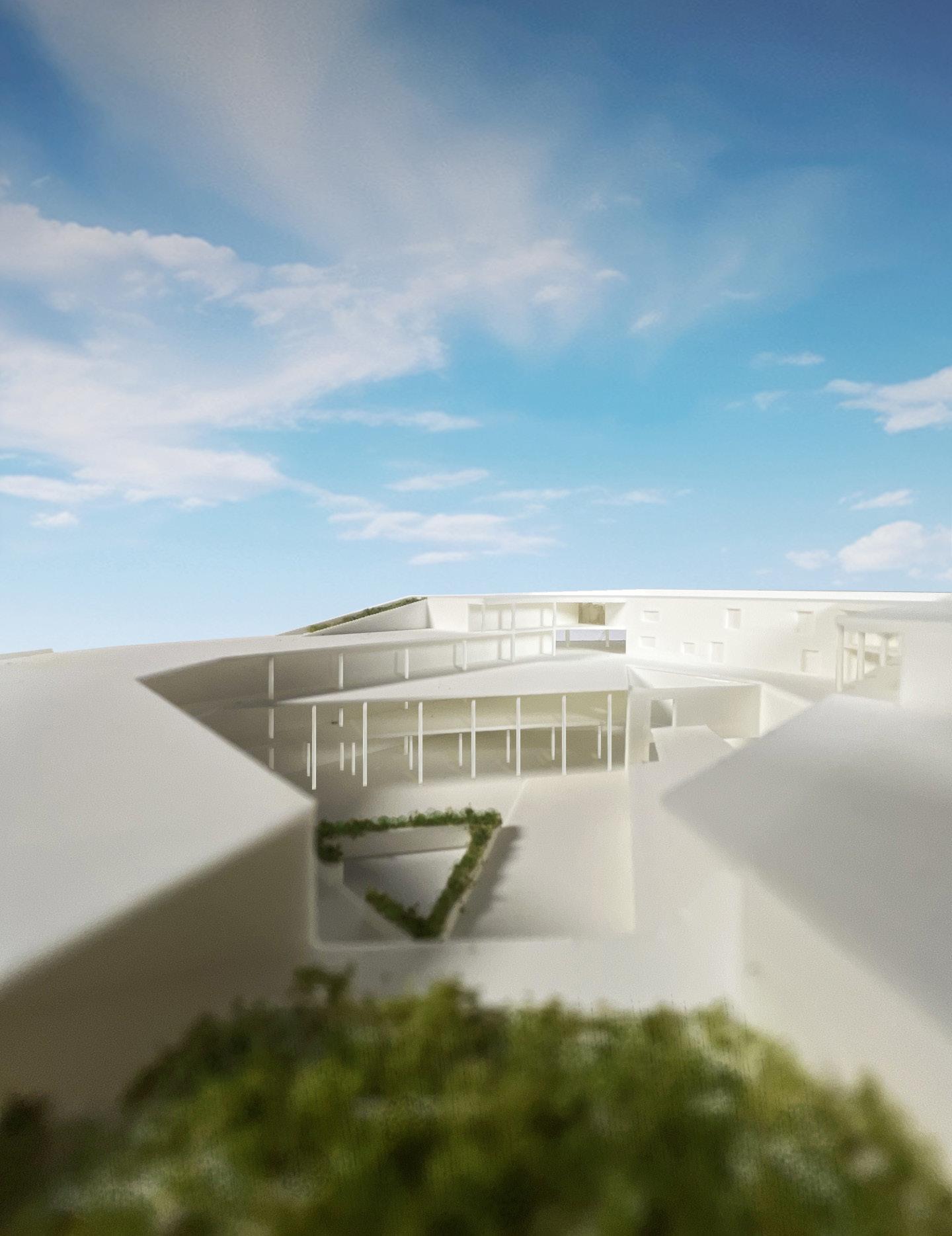
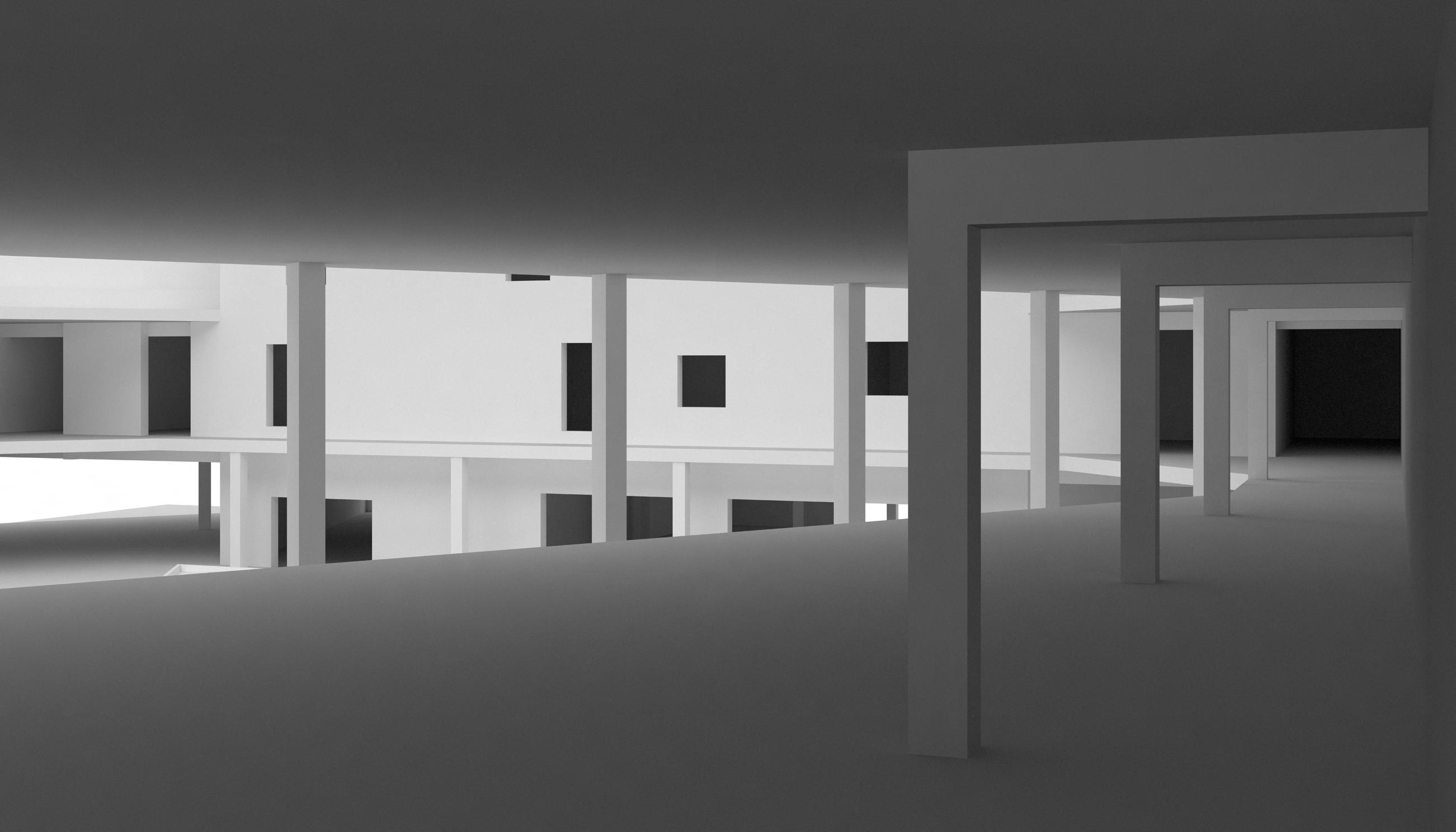
This project, titled Circle of Living, is a mixed-use multifamily housing development located on a sloped site in Montgomery, Alabama. The design responds directly to the topographic conditions of the site, which drops 30 feet from one end to the other. Using this natural terrain, the building is split into two interlocking U-shaped masses that step with the slope and create a central courtyard as a shared social core. Four chamfered corners anchor the massing, with diagonal lines drawn between them shaping the circulation, courtyard, and spatial organization of the project.
The concept of “circle of living” reflects both the physical form and the project’s deeper focus on community and wellness. Each corner holds a key communal function—gardens, gathering spaces, vertical circulation, active and quiet zones—so as residents move through the building, they pass through a continuous loop of shared spaces and experiences. The diagonals that connect each corner are not just visual—they become paths, view corridors, and transitional moments that encourage connection.
Green roofs serve as elevated community gardens, while under-deck spaces offer shaded gathering areas and flexible programs. These outdoor areas help bring a sense of wellness and openness to the living environment, even within a dense housing typology. Rather than separating living and social spaces, the project layers them, weaving moments of encounter and retreat throughout the site. Ultimately, Circle of Living aims to promote a balanced, communitycentered lifestyle rooted in rhythm, flow, and shared experience.
^Siteplan/Roofplan
ClaytonSt


^Ground floor
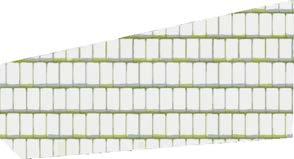
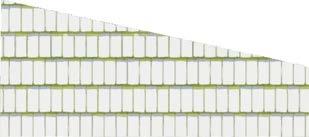
Partial louver system.
Typical floor plan: third floor
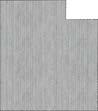
Shared space diagram. Structure diagram.

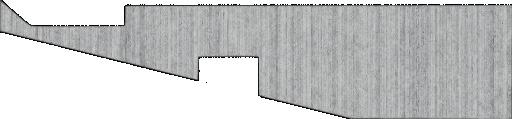














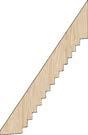


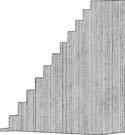


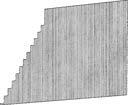
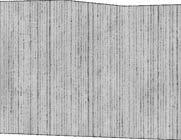

^Section A: Transverse
^Section B: Longitudinal
Caroline Morett
Weaving Light and Mass
Exploring Urban Identity Through Spatial Conditions
The project involves the design of a seven-story office building in Chicago’s historic Printers Row neighborhood, located at the intersection of Polk St and Dearborn. The design is guided by specific requirements, including the integration of a social stair, a fire stair, and daylighting strategies that optimize heating in the winter while providing shading in summer. The project investigates the interplay between solid and void conditions prevalent in Chicago’s urban fabric.
Public spaces such as parks, streets, and sidewalks are conceptualized as “voids,” while buildings are classified as “solids.” These urban conditions inform the spatial strategy of the design. Public areas within the building are conceived as extensions of the city’s voids, fostering a sense of connection and continuity with the surrounding urban environment. In contrast, the solid mass elements of the building are emphasized through their materiality and thickness, reinforcing a sense of enclosure and privacy. These private spaces are dedicated to meeting rooms, offices, and break rooms.
Building upon a previous project focused on carving solids with intersecting voids, this design shifts the focus to the creation and definition of void spaces in relation to solid forms. The intent is to explore innovative ways to form and contrast these conditions, resulting in a building that harmonizes with the dynamic, everevolving character of Chicago’s urban landscape.
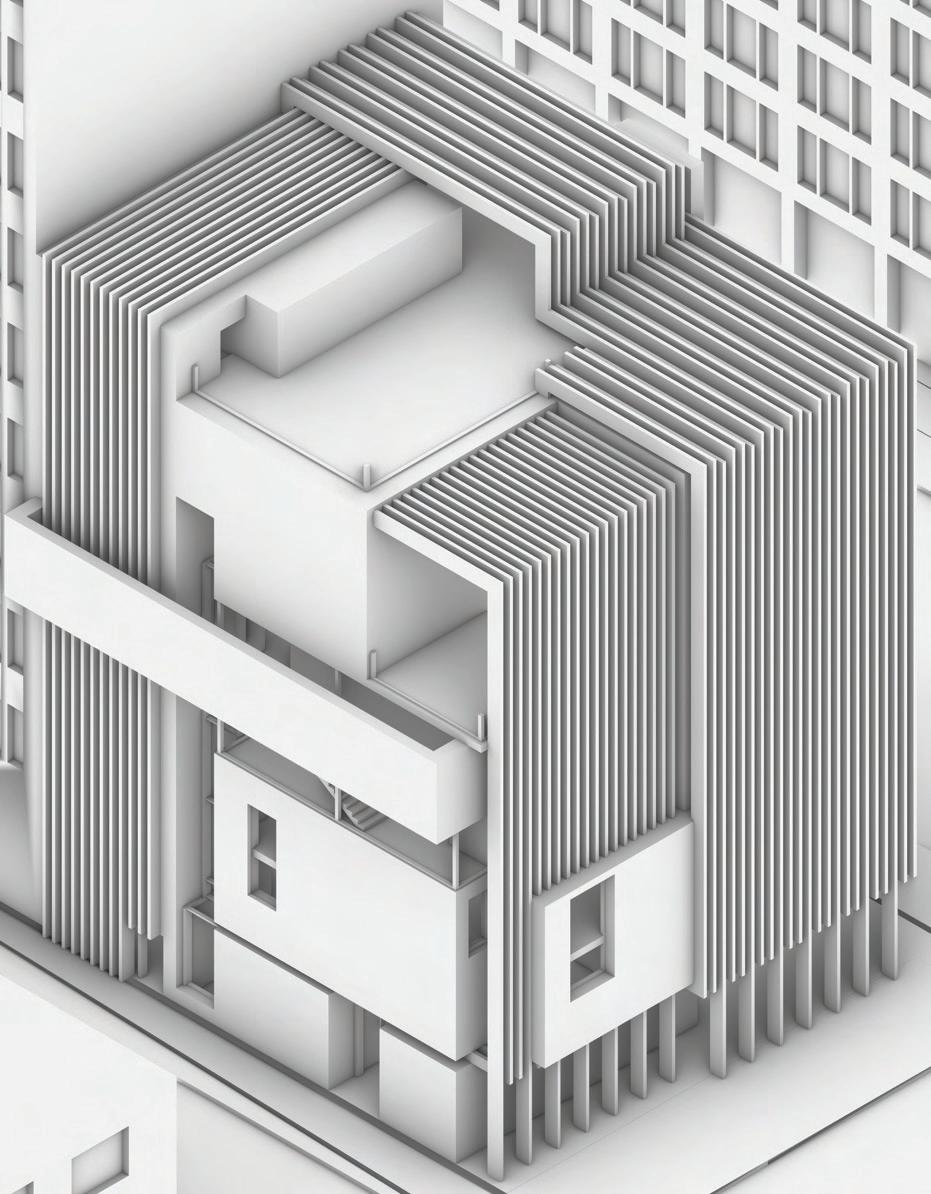
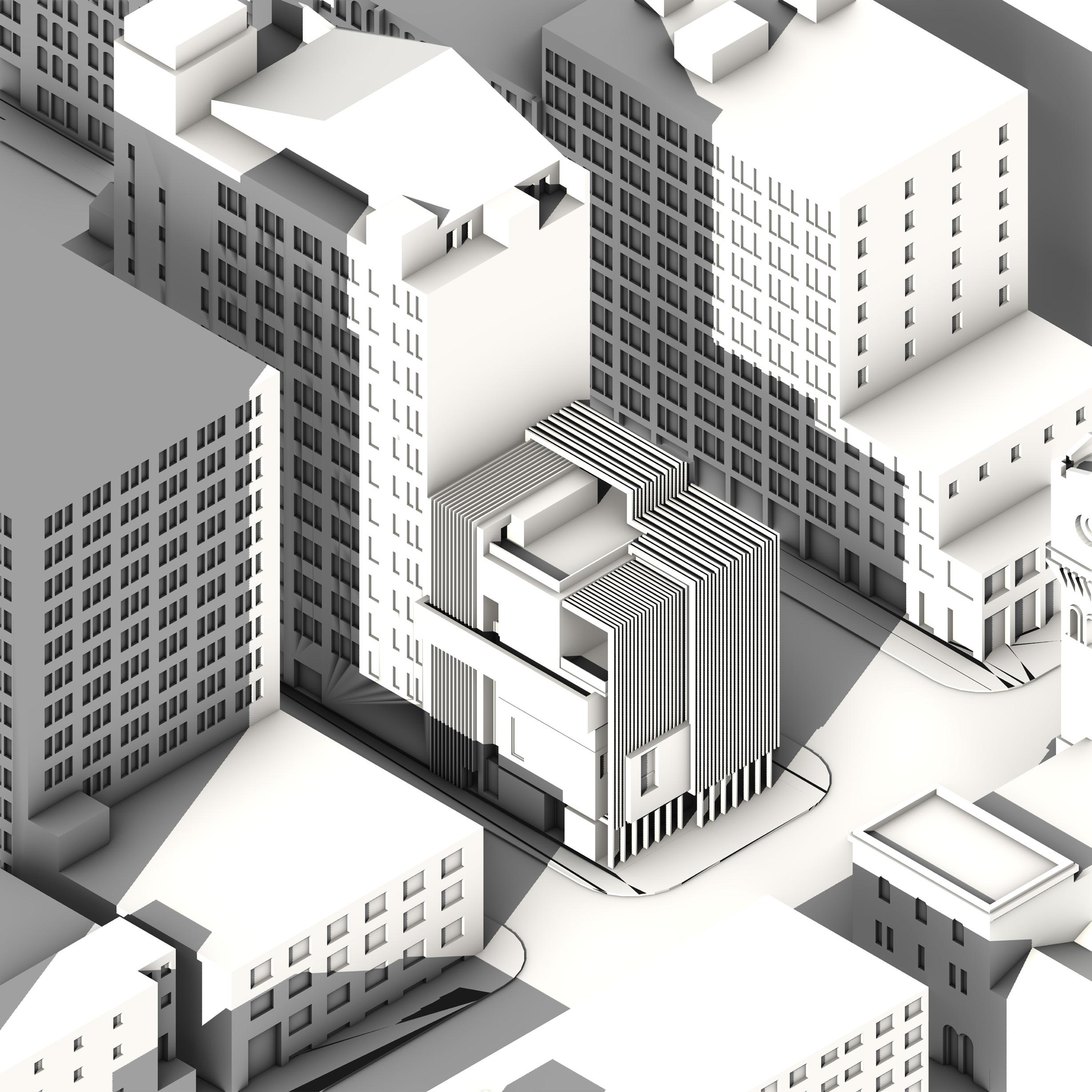
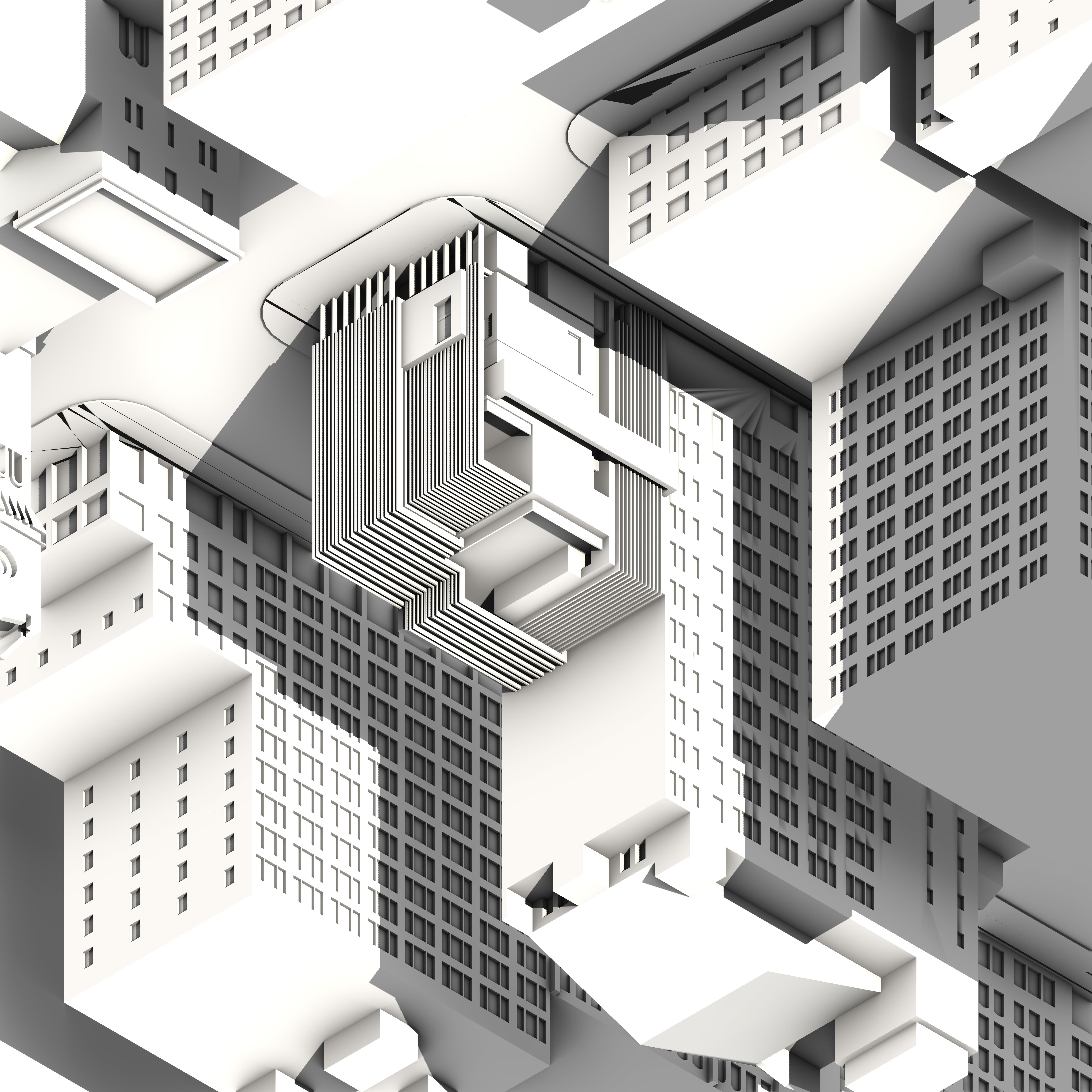
Populated axon from the southwest angle.
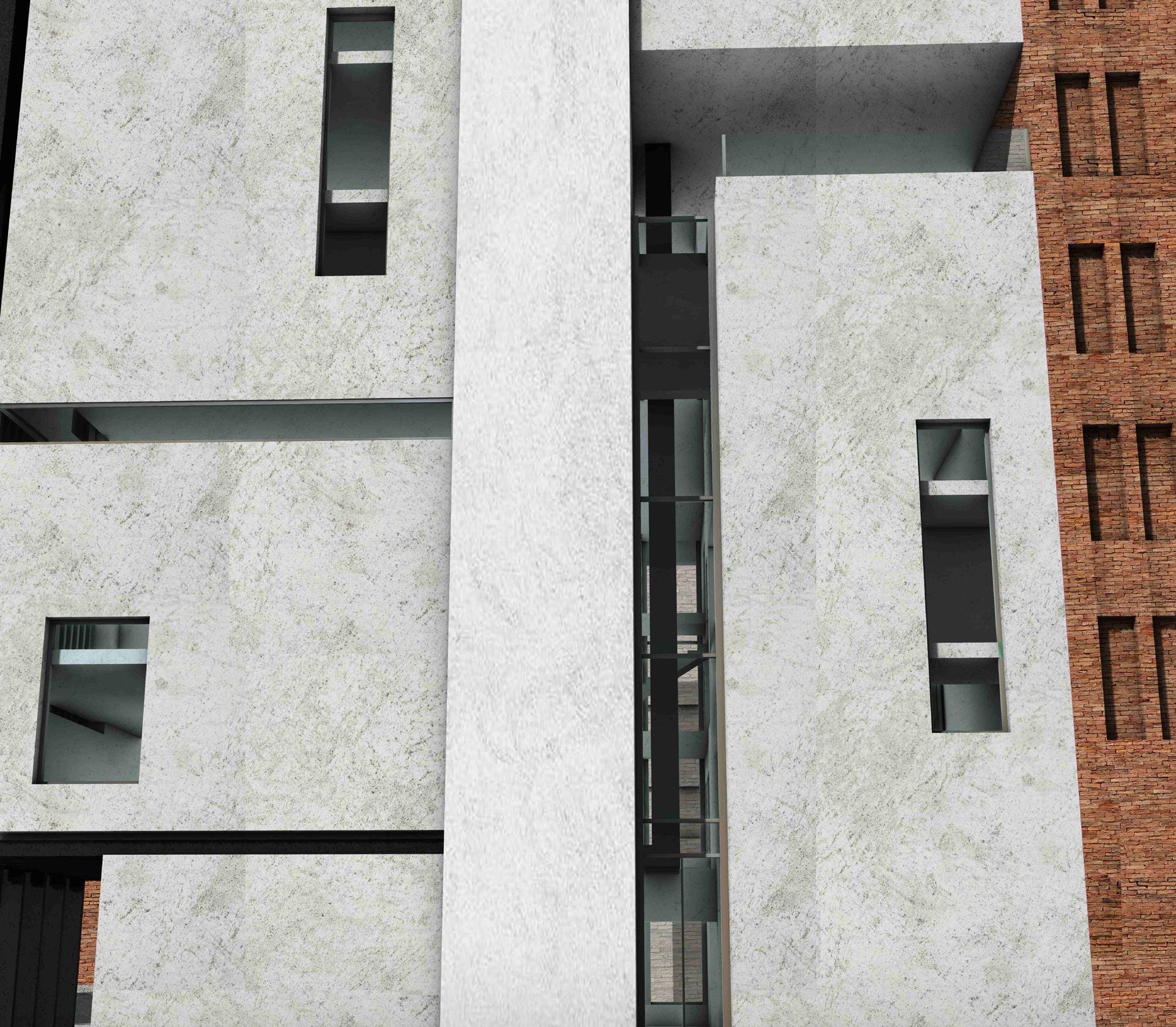
A prominent vertical void serves as the central circulation vestibule, designed as a dynamic and active space that mirrors the vitality and energy of the city. Additional voids throughout the building are strategically placed for circulation, collaboration, and exterior functions, offering a sense of lightness and openness. These voids are framed by louvers and incorporate glazing and double-height spaces, further enhancing their airy quality.
The design tackles the challenge of bringing natural light into the solid forms of the building. Large, multi-floor windows are strategically placed to allow for optimal daylight penetration while preserving a simplified façade, ensuring the solid elements remain visually cohesive. To address shading needs, layered elements are placed over windows, creating functional shading while offering visually engaging, overlapping experiences. The design process draws inspiration from the University of Michigan Museum of Art, particularly its use of structural elements to shape and wrap the building. Additionally, it draws from a previous project that experimented with horizontal layering or stacking, while this project explores this concept along the vertical axis. This approach informs the articulation of voids within the office building.
Caroline Morett
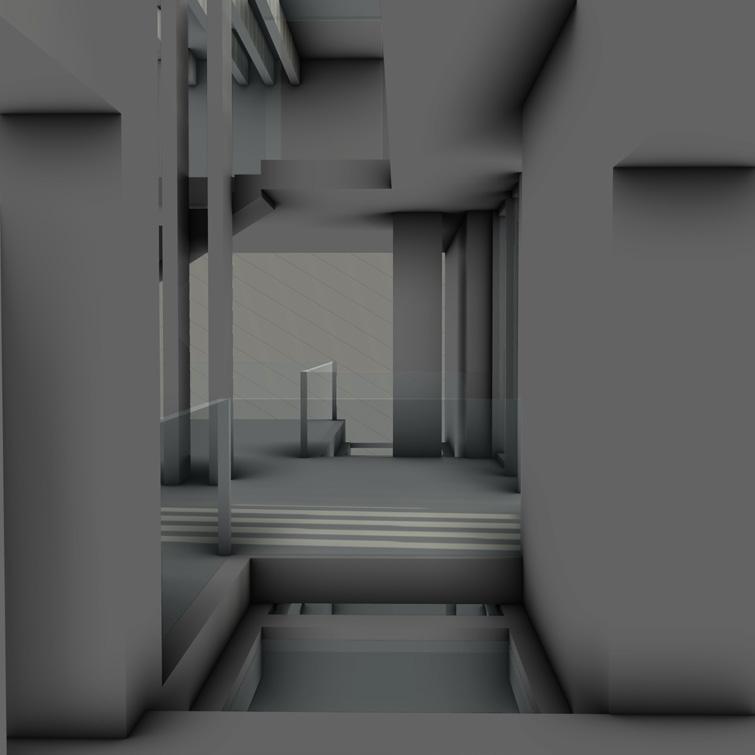
Sixth floor interior view of void bar.
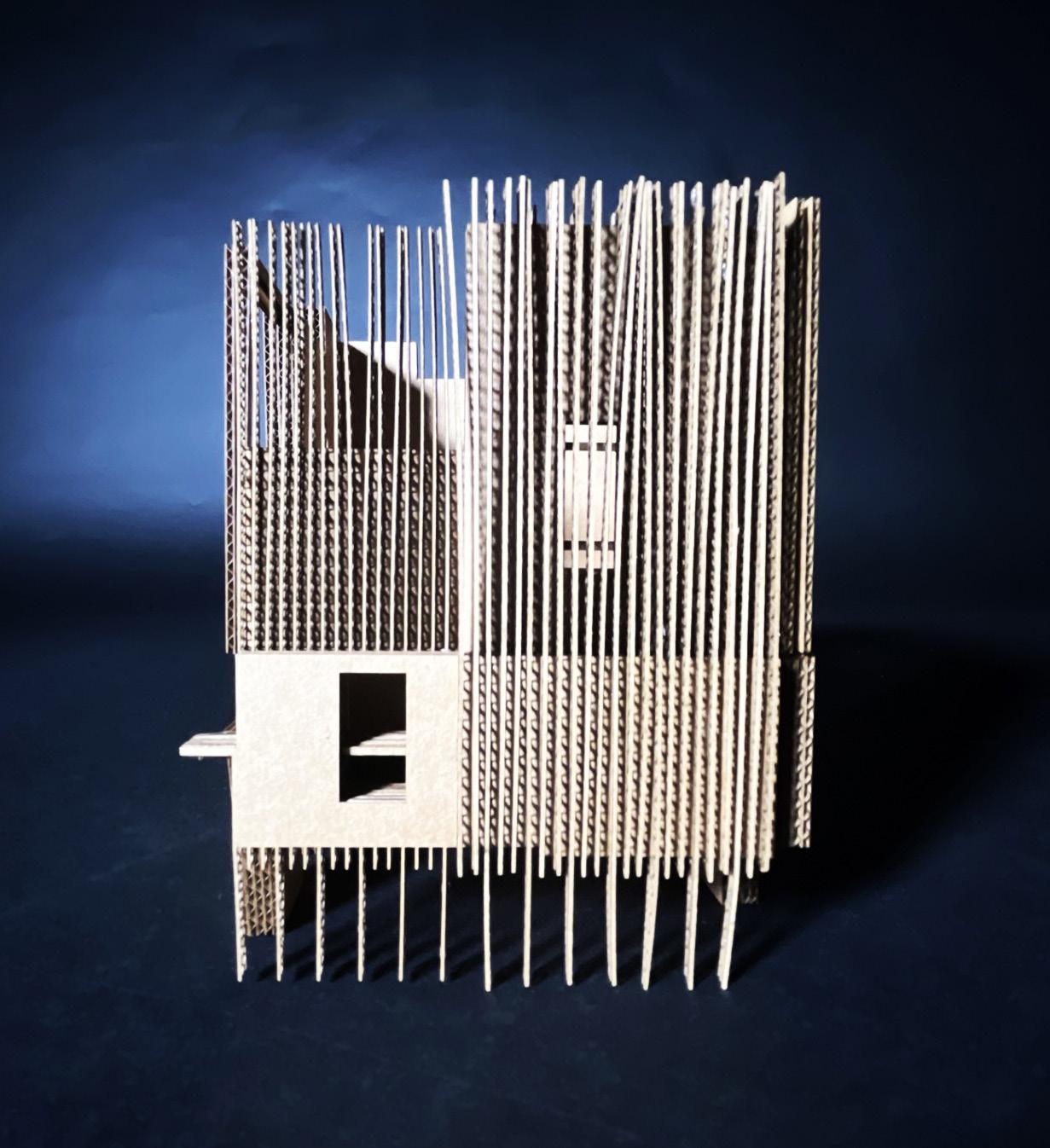
Facade study model.
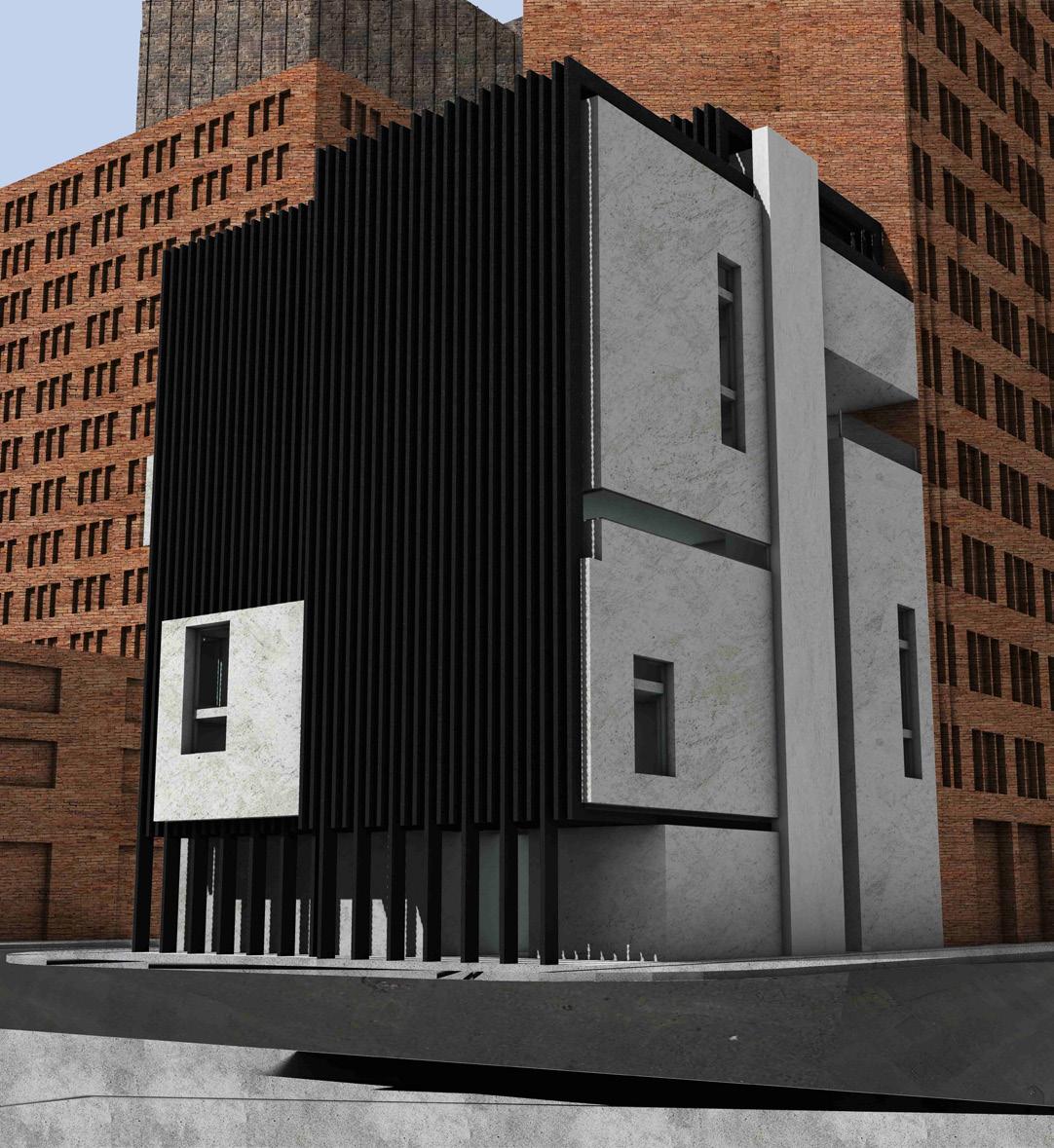
Facade digital photo.
Unrolled elevation.
Section A. 22ft cut from west site limit, looking east.
Section B. 8ft cut from north site limit, looking north.
Composite Mapping that explores the solid and void conditions of the city that surround the site.
Caroline Morett
Populated ground floor plan.
Each floor plan is unique, offering an immersive, head-turning experience as one moves through the building. Most floor plans feature a large open area on the northern side that spans the length of the site from east to west. Most floor plans share a large open area towards the North side that span the length of the site from East to West, interrupted on each floor by a form of circulation. Each floor has its own interpretation, with the floor plate cut to create rectangular visual scenes that frame views the city streets, parks, and other public spaces. The cuts are represented with an “X”, while shading techniques are used to indicate the area beyond the cut. The building also incorporates voids along both the x and y axes, as well as the z axis, resulting in double and tripleheight spaces.
Floor
Floor
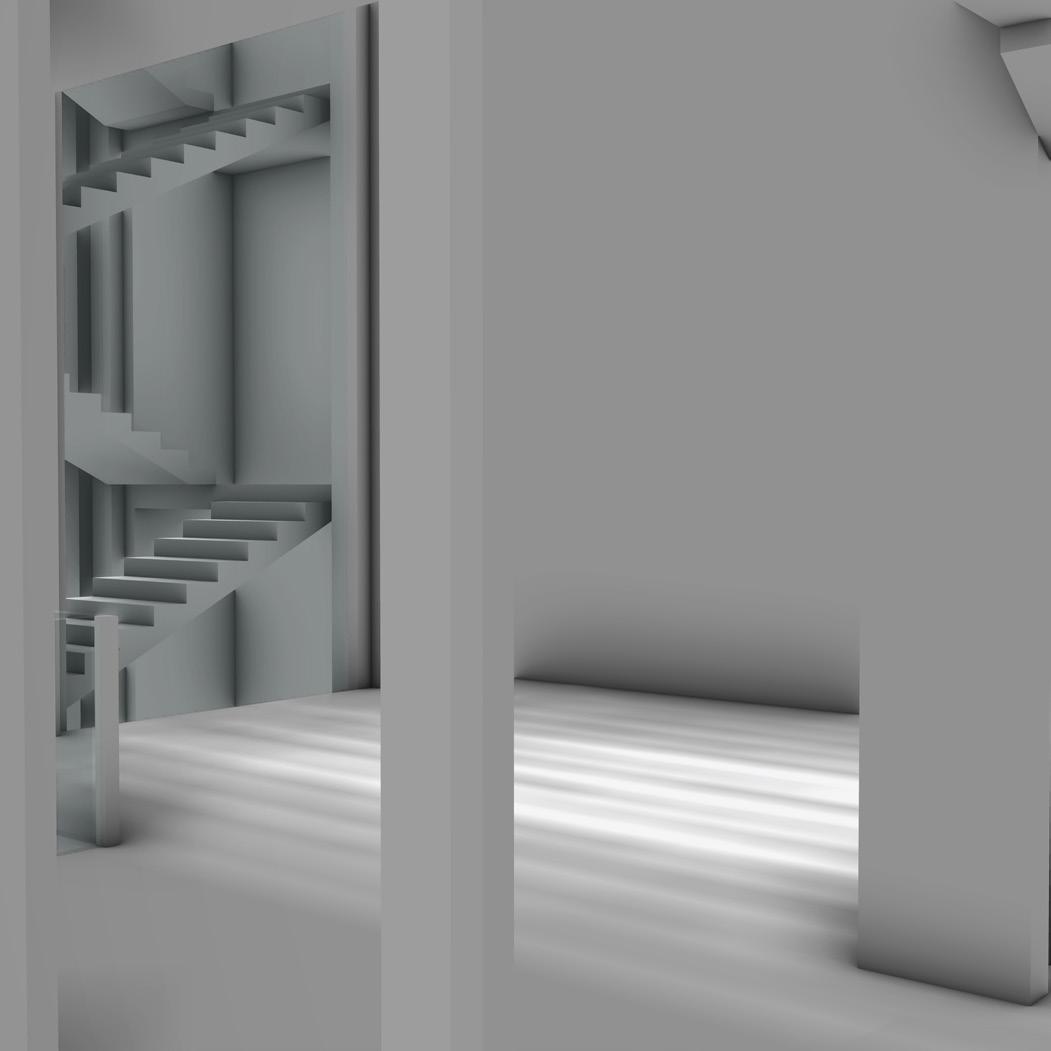
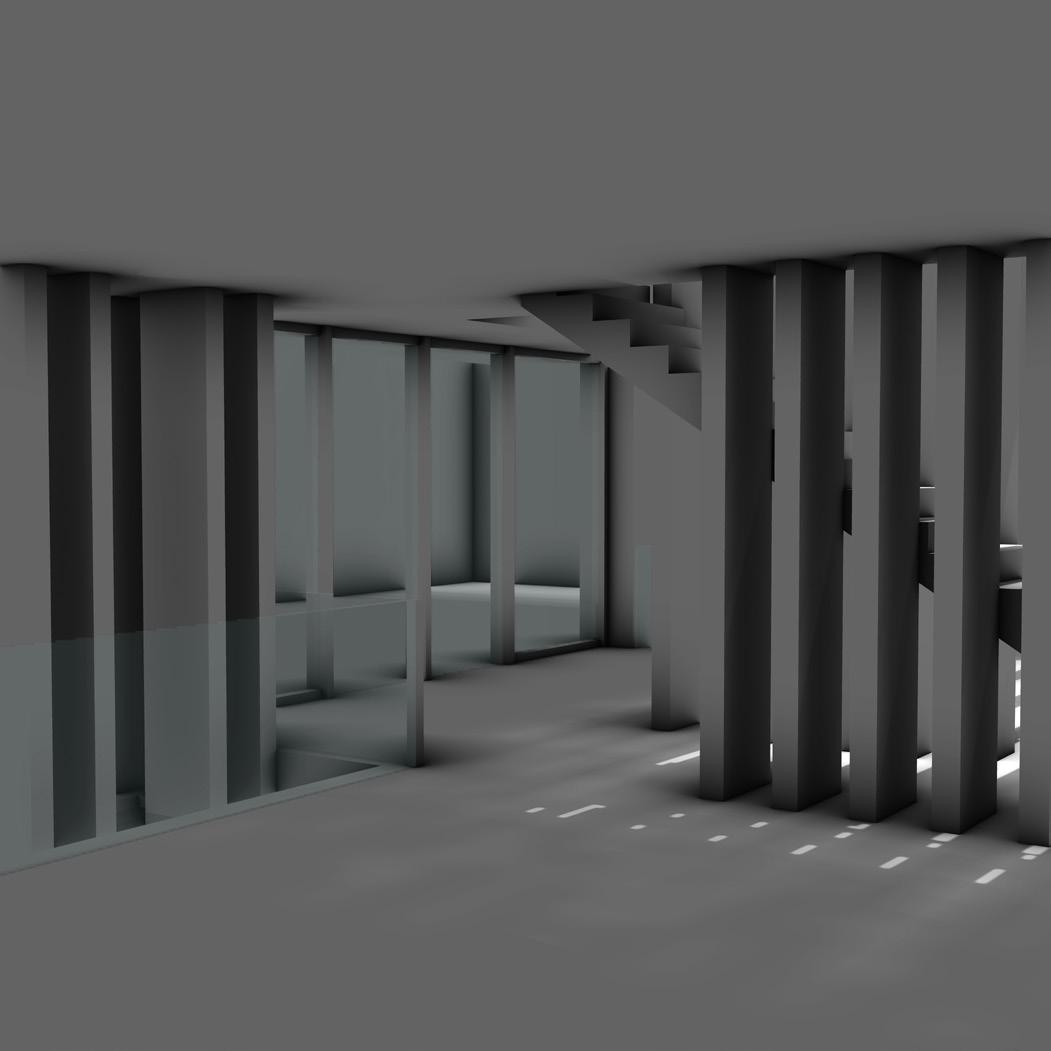
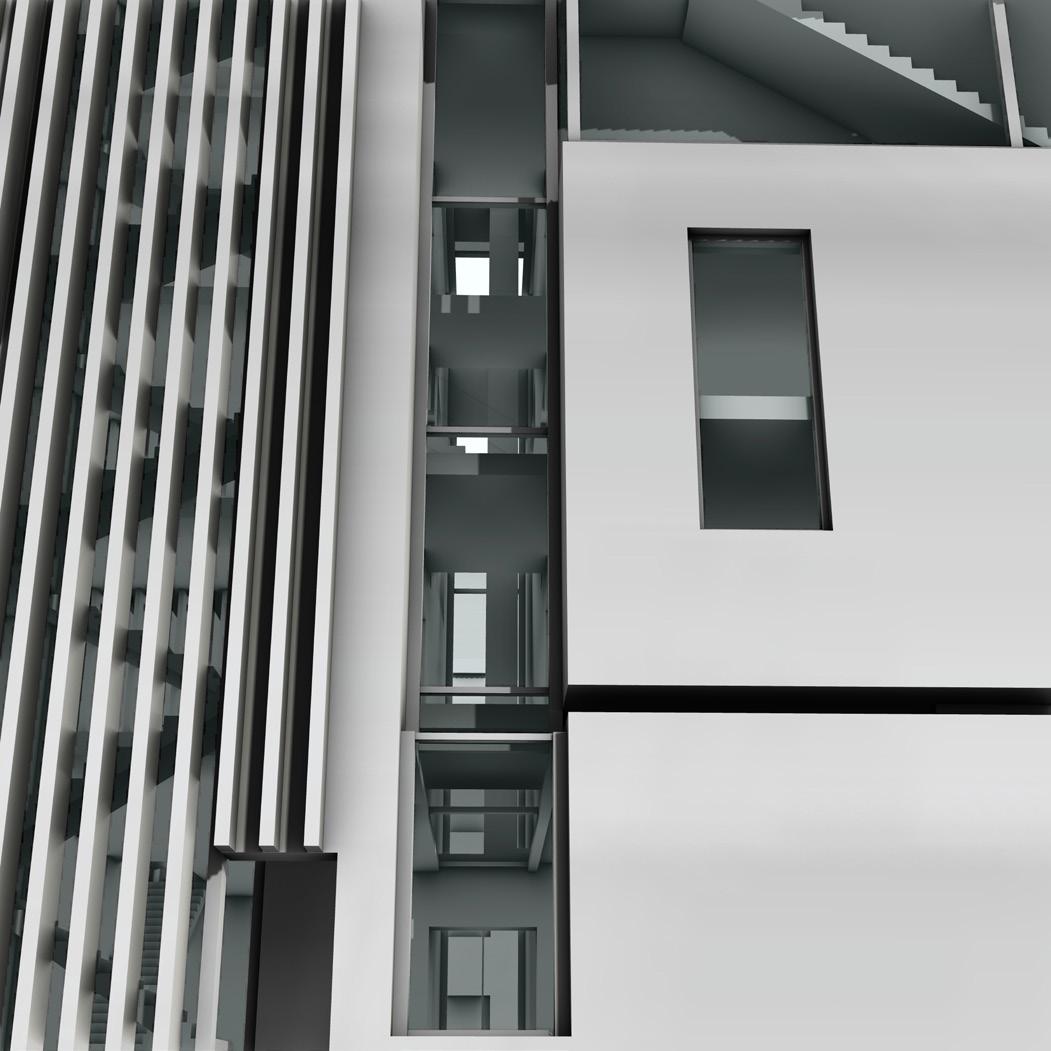
The west view showcases the void circulation bar, spanning the entire length from east to west, creating a continuous open pathway.
Caroline Morett
Sixth Floor triple-height space provides an interior view of the fire stair.
Sixth floor exterior Space offers a view of the interior, highlighting the experiential social stair from the outdoors.
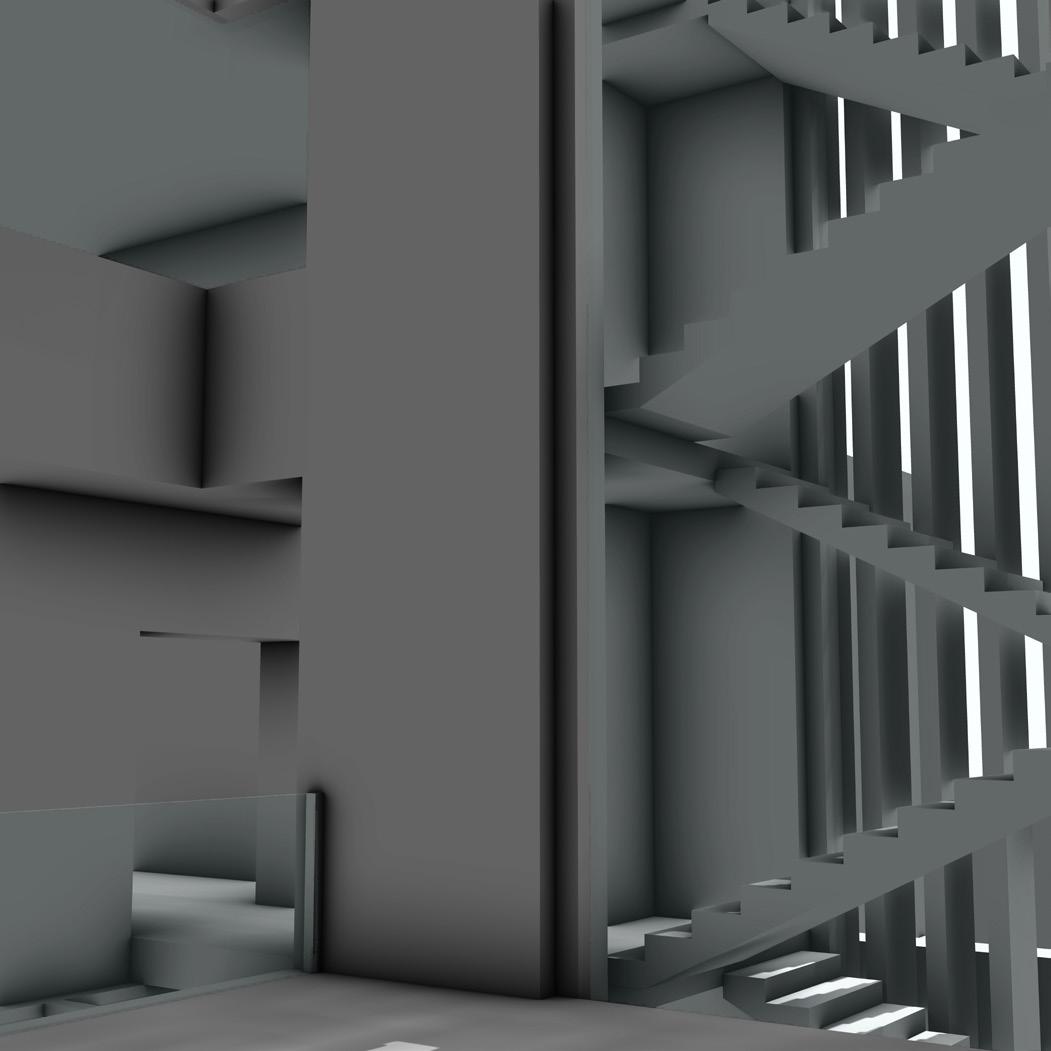
The view of the fire stair from the sixth floor triple-height space highlighting its vertical design. By exposing the circulation on the steps through the glass and hiding platforms by the thick concrete emphsizes the solid/void condition seen throughout.
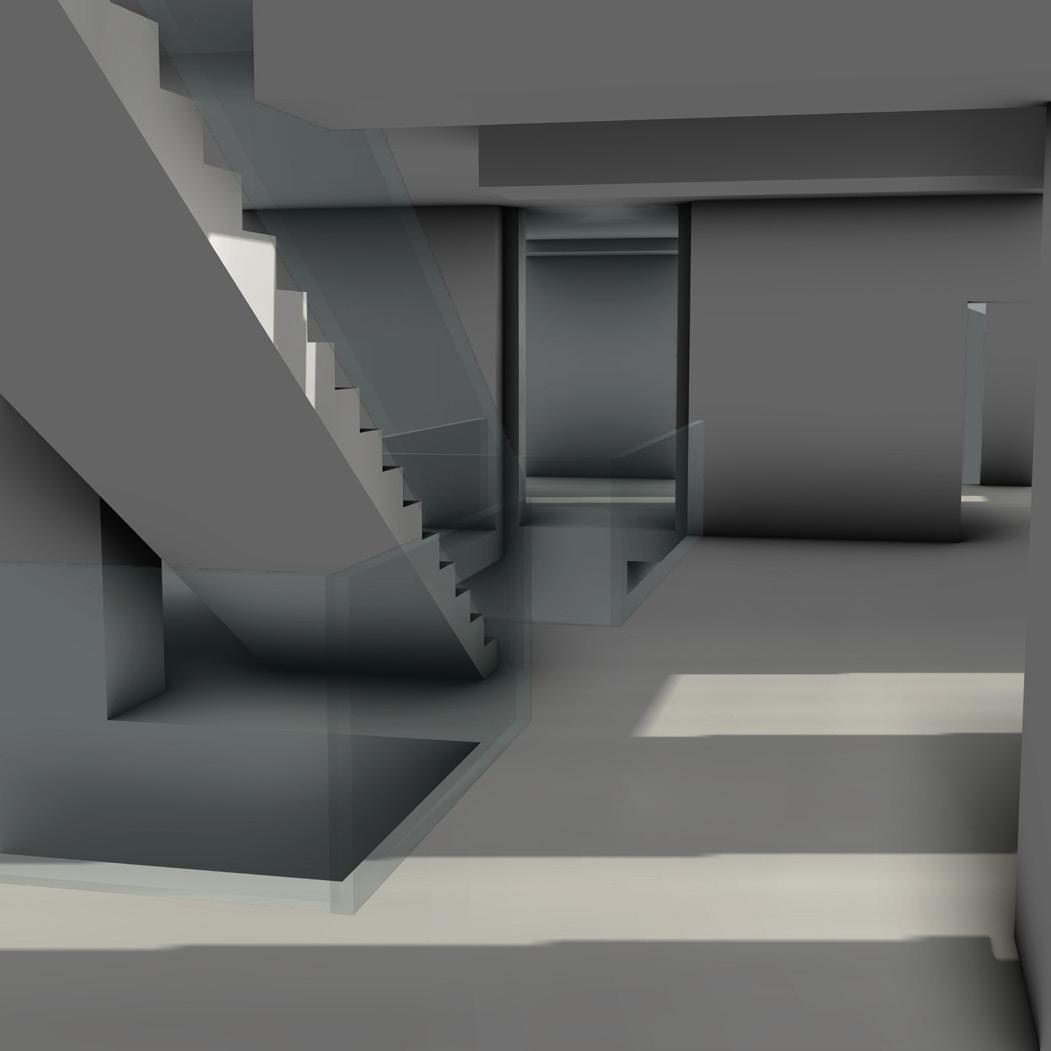
The third floor features a long rectangular void, with a social stair that leads to a double-height rectangular space. This is followed by a floor-to-ceiling window that opens into the meeting room, allowing natural light to flood the space.
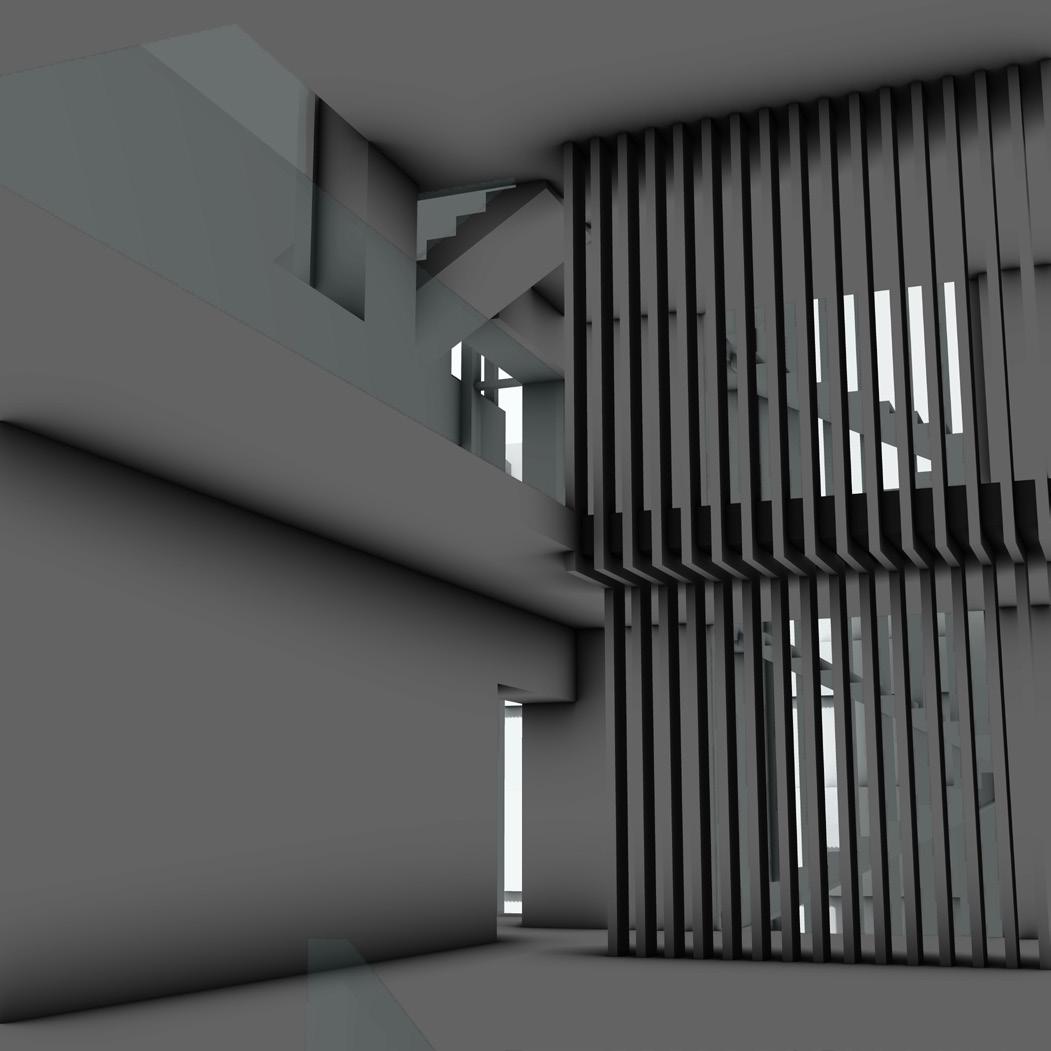
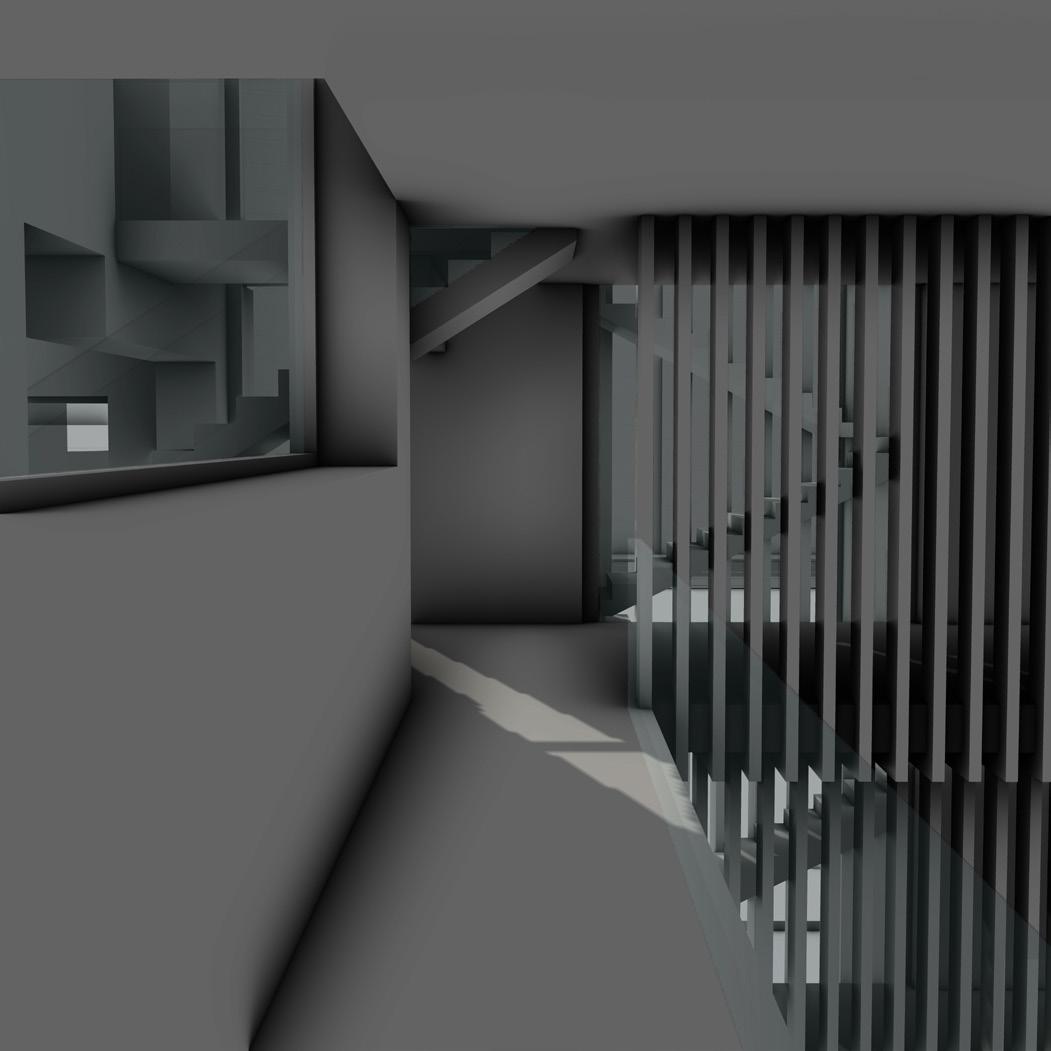
The third-floor view shows the transition from a private office space into a public double-height area, with a clear sightline of the circulation void bar. This layout emphasizes the shift from a more intimate environment to an open, social space.
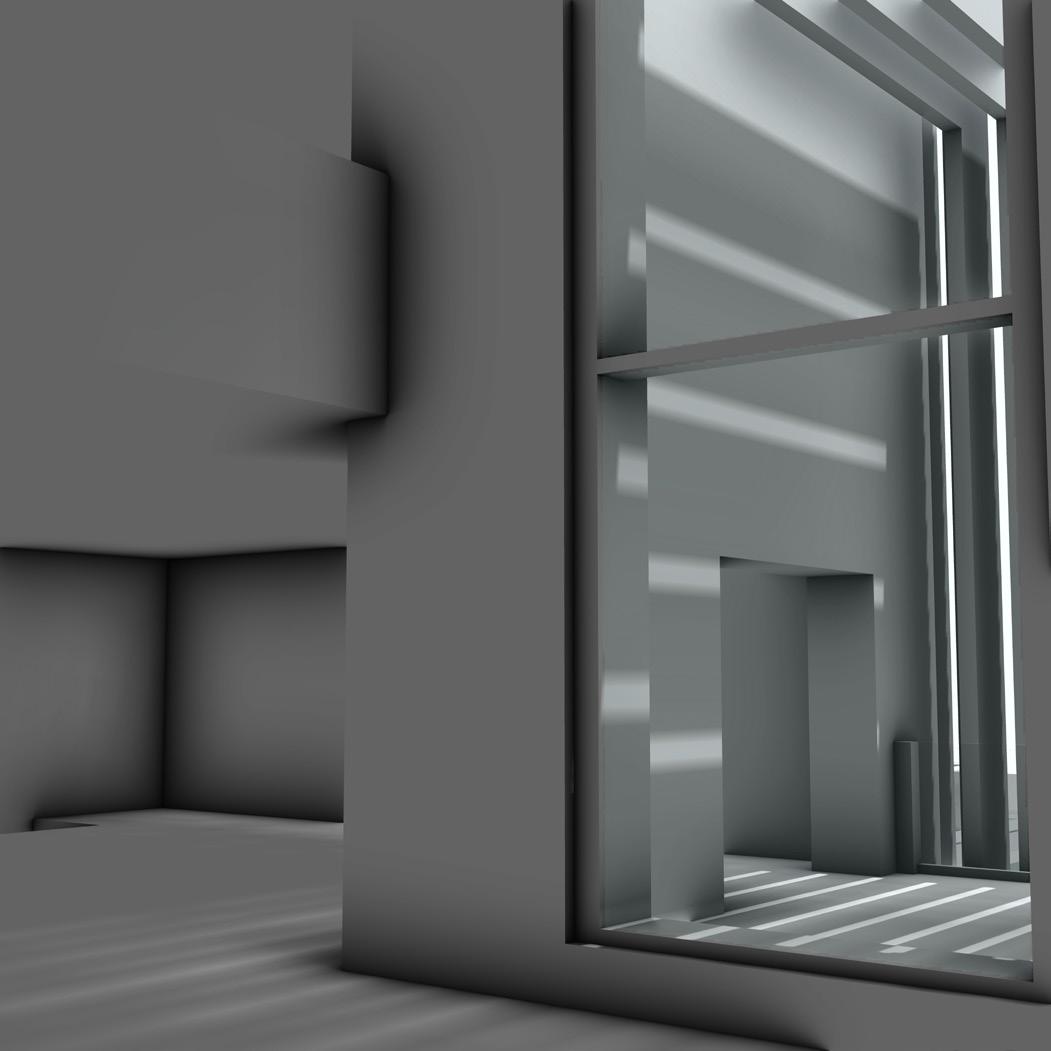
The second floor view of the public double-height space.
The interior of the sixth floor double-height space offers a view of the southern exterior, seamlessly connecting with the surrounding landscape. and Seventh Floor Gallery Space.
Caroline Morett
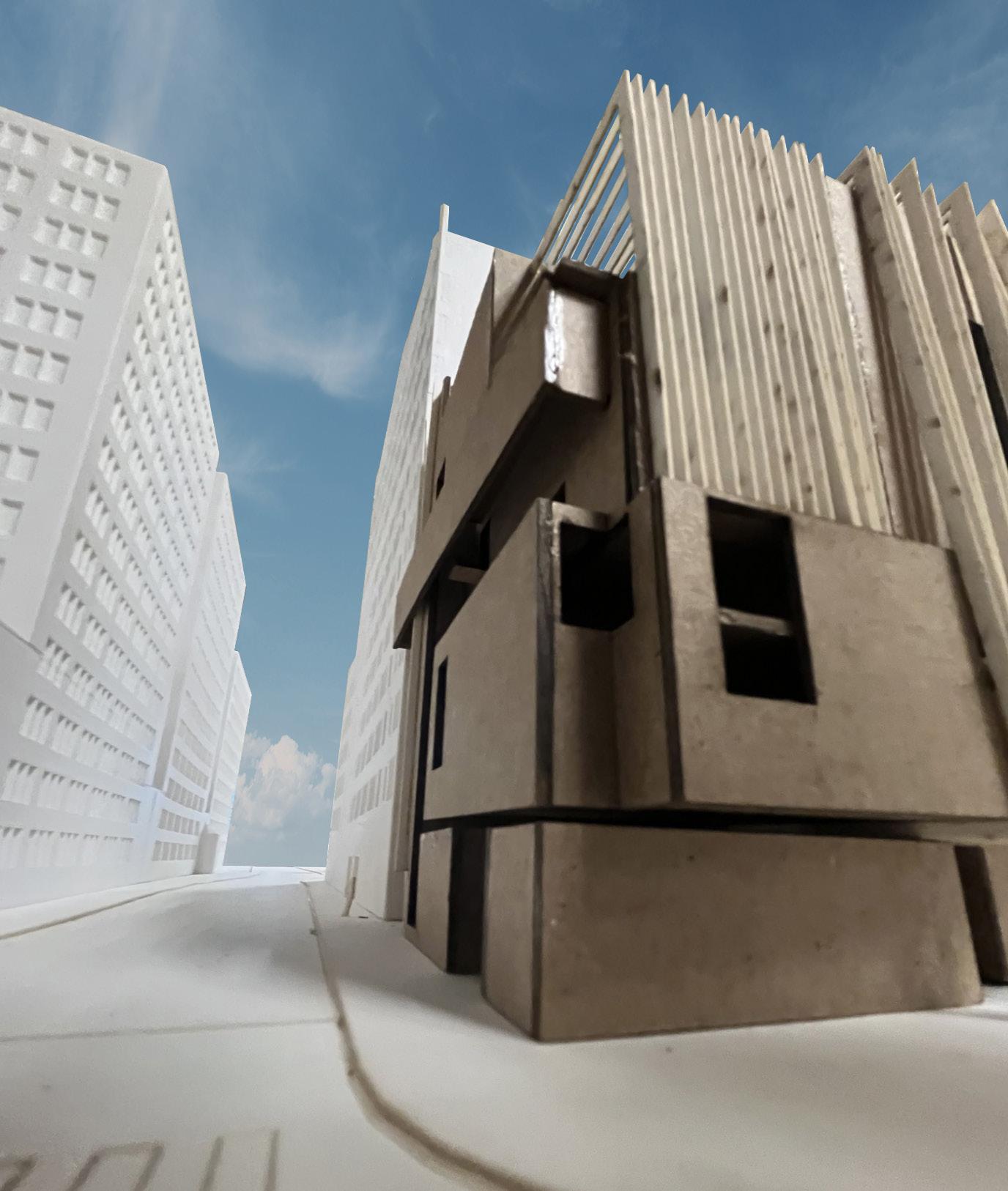
Experiential physical model photograph.
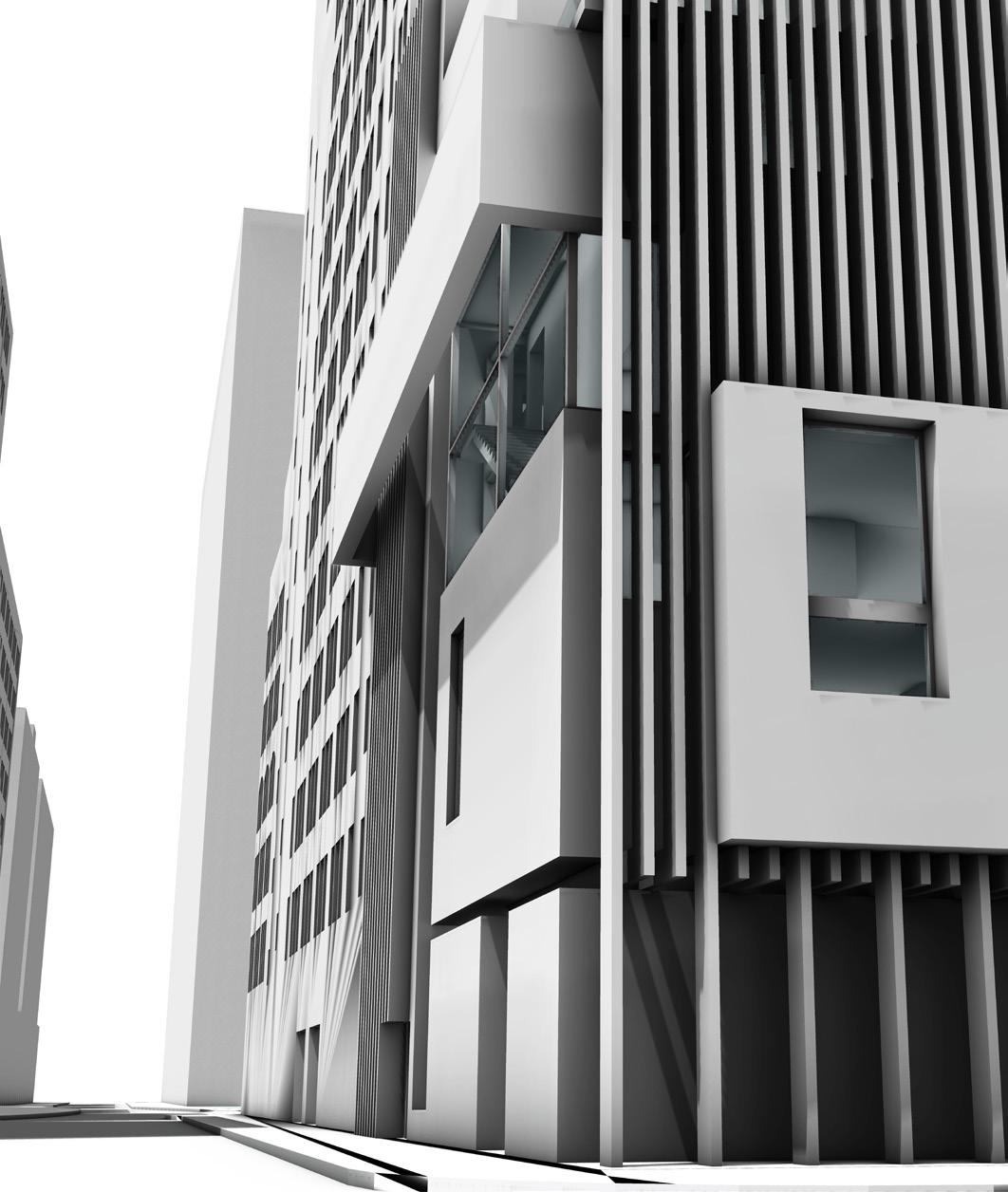
Glazed double-height space surrounds a social stair, appearing as both void and solid from afar due to the wrapping extrusion on western side, which contrasts with the transparency of the glass.
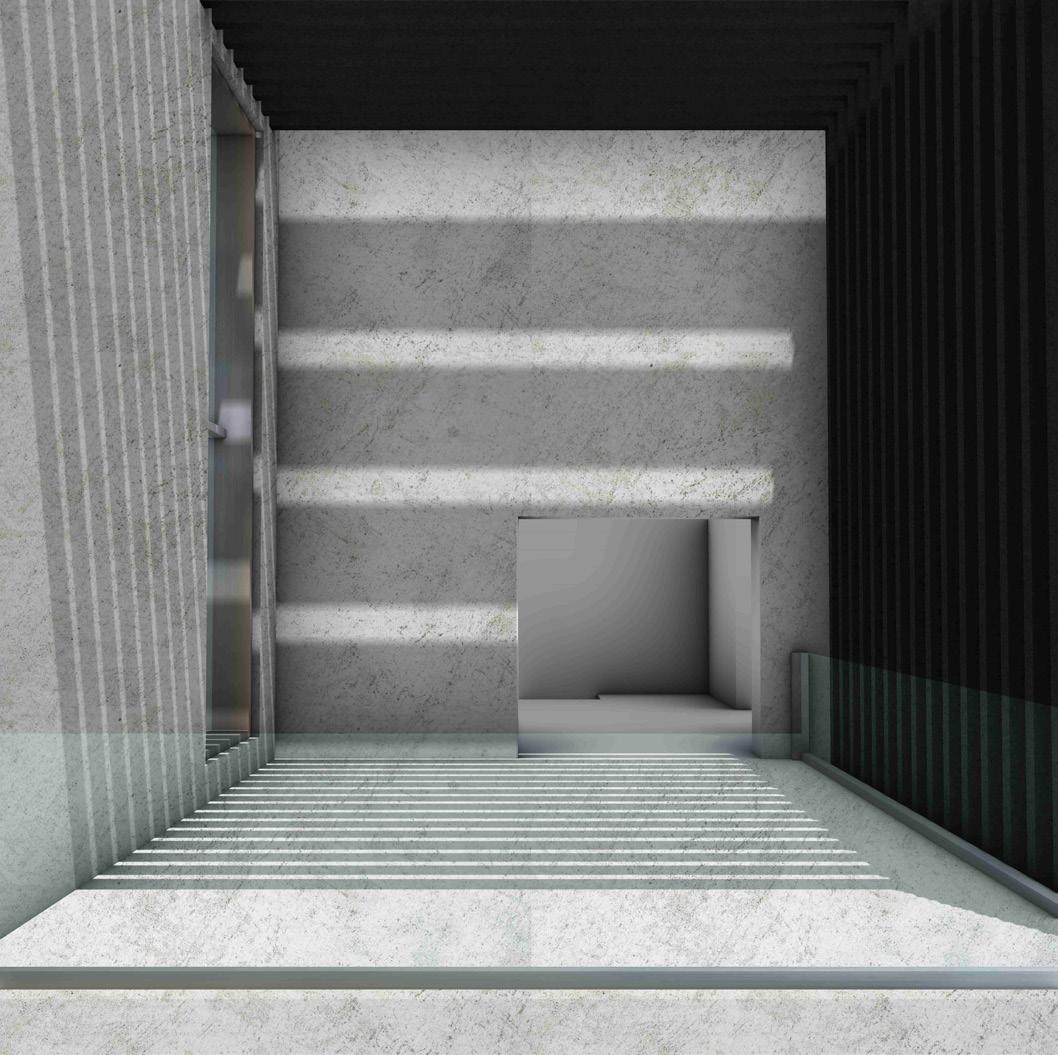
Digital photograph of the sixth floor exterior public space shaped by southern vertical wrapping fins.
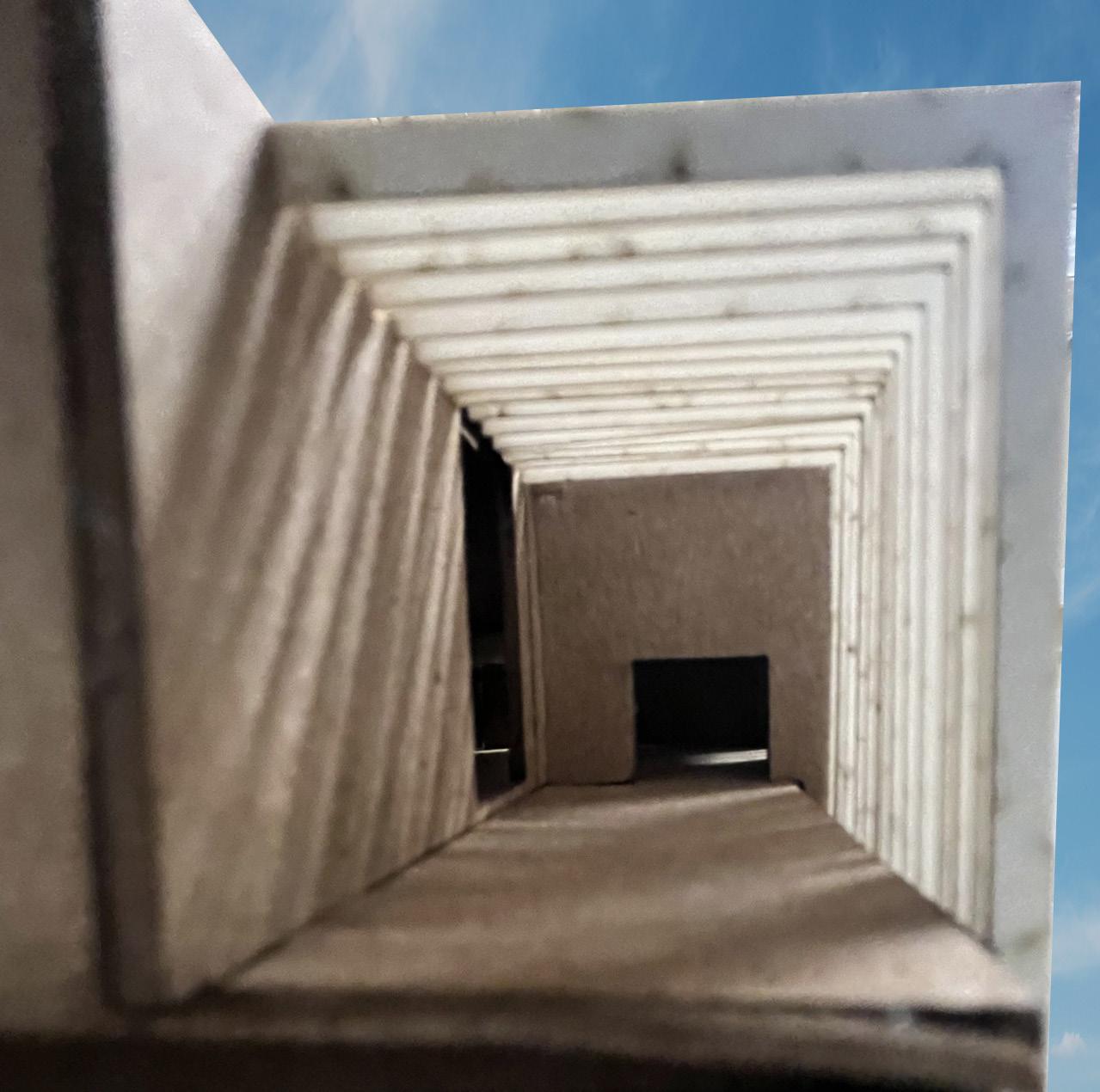
Physical model photograph of the sixth floor exterior public space shaped by southern vertical wrapping fins.
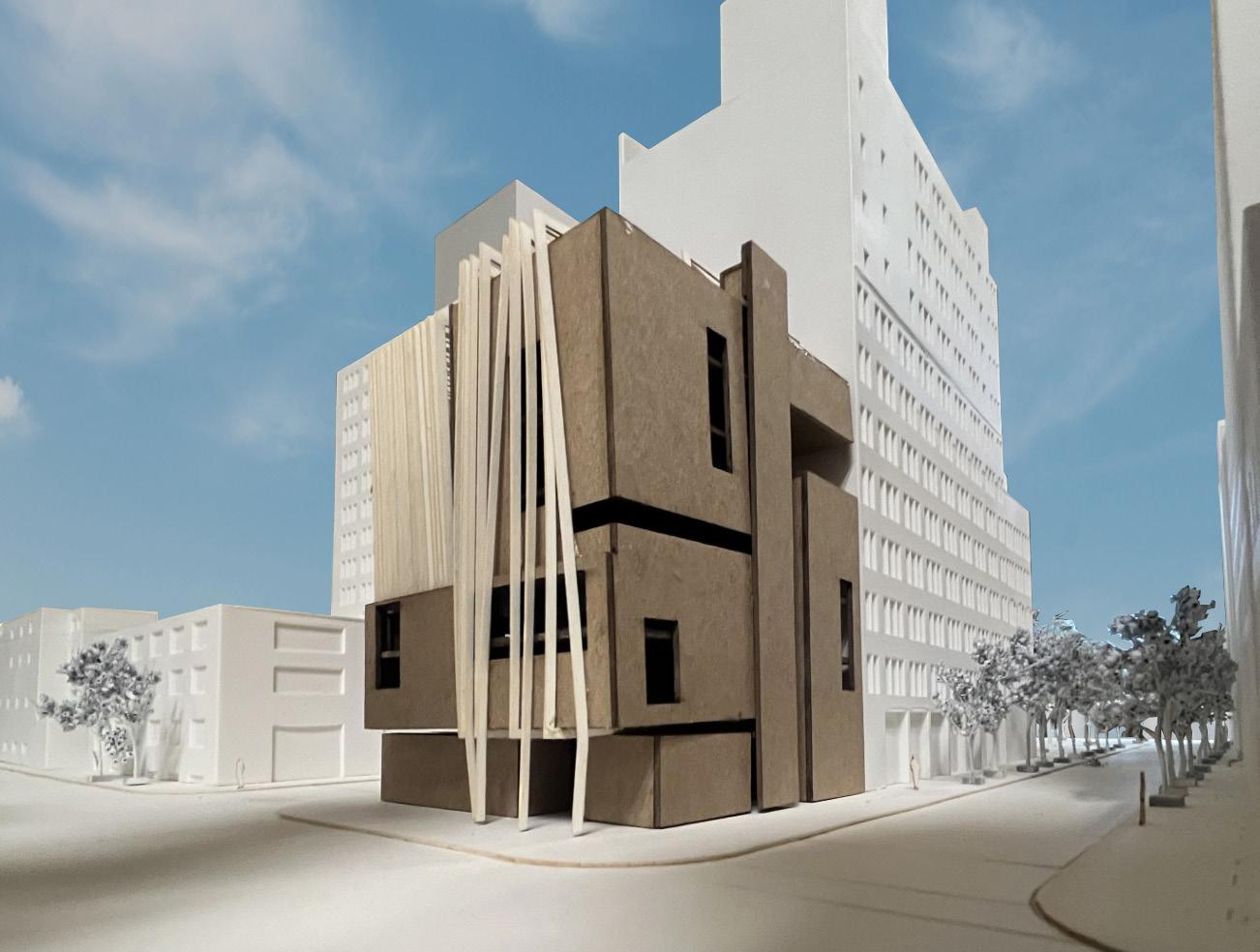
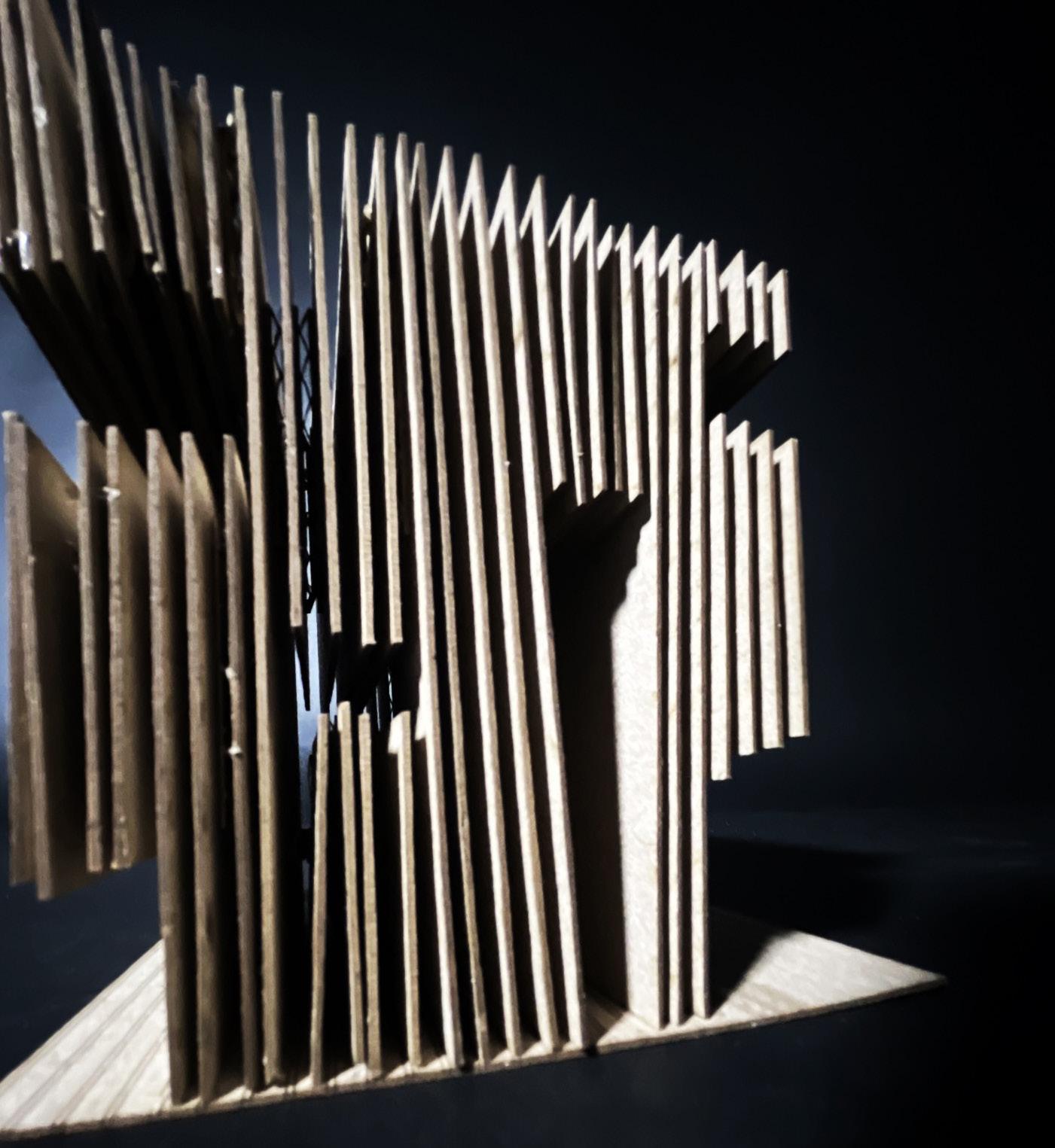
The study model experiment with solid/void conditions through vertical layering, creating an interplay between enclosed and open spaces.
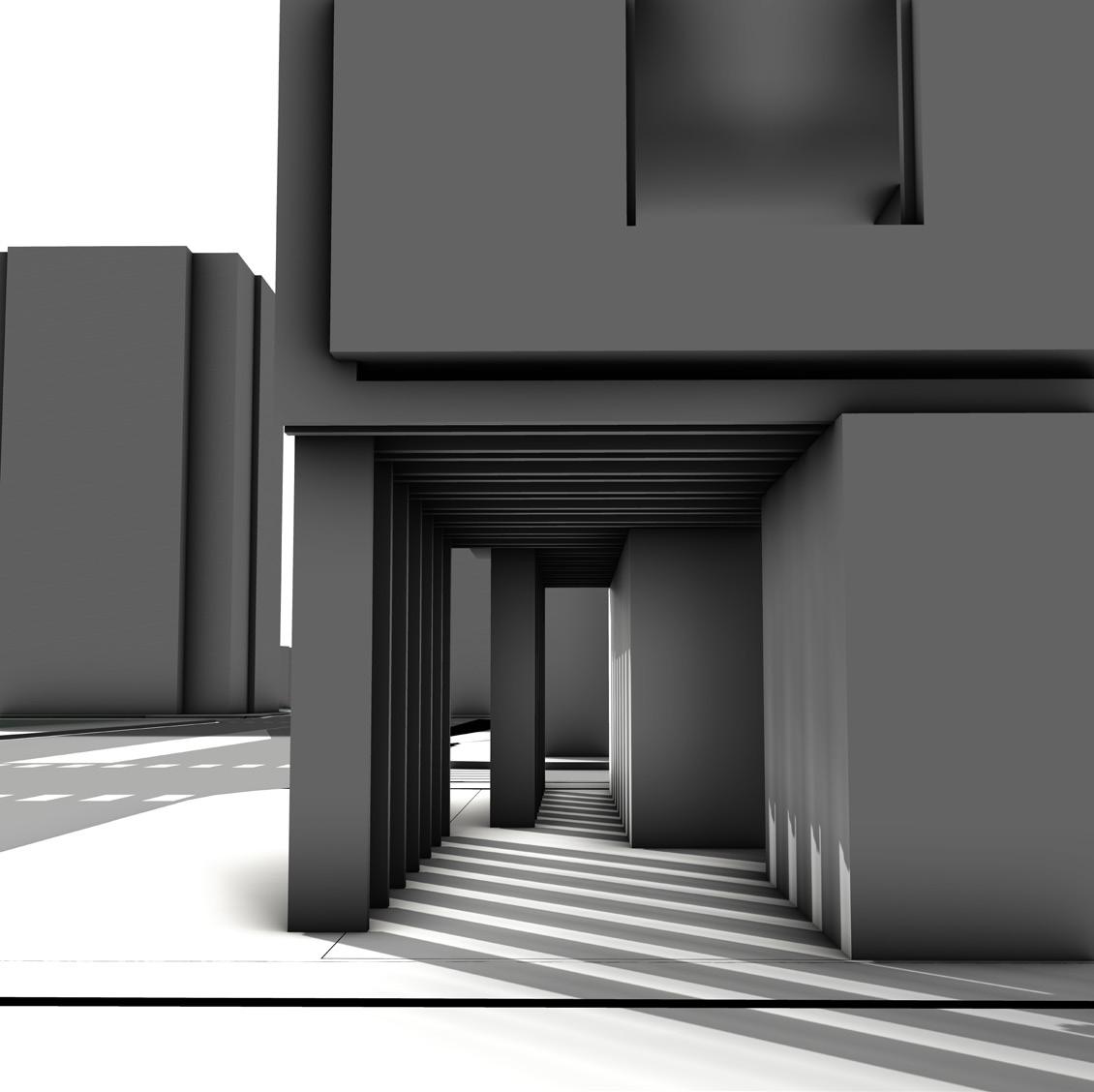
Vertical southern-facing louvers shape the distinctive ground-level entrance, creating a shaded space that enhances the building’s entry experience.
Physical model photographed from the southeast.