profile: Carlos Velásquez Rada https://carlosvelasquezrada.com/
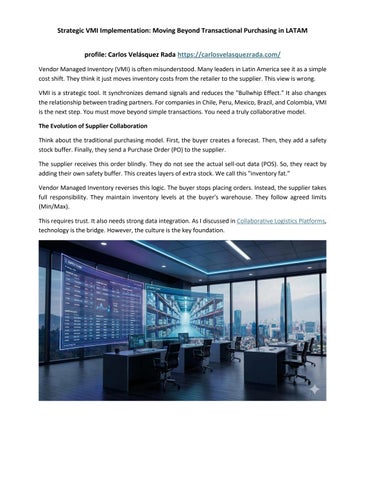
Vendor Managed Inventory (VMI) is often misunderstood. Many leaders in Latin America see it as a simple cost shift. They think it just moves inventory costs from the retailer to the supplier. This view is wrong.
VMI is a strategic tool. It synchronizes demand signals and reduces the "Bullwhip Effect." It also changes the relationship between trading partners. For companies in Chile, Peru, Mexico, Brazil, and Colombia, VMI is the next step. You must move beyond simple transactions. You need a truly collaborative model.
The Evolution of Supplier Collaboration
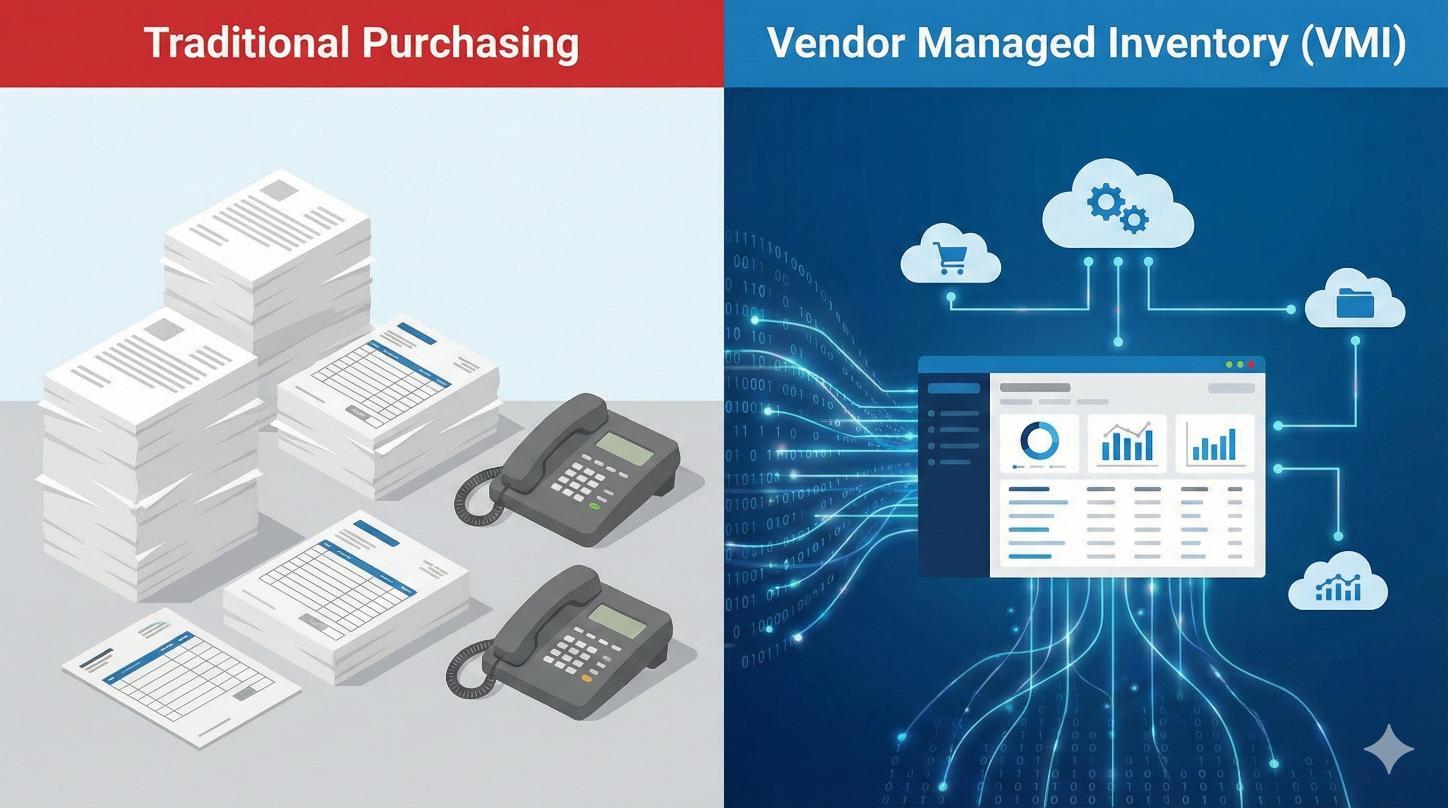
Think about the traditional purchasing model. First, the buyer creates a forecast. Then, they add a safety stock buffer. Finally, they send a Purchase Order (PO) to the supplier.
The supplier receives this order blindly. They do not see the actual sell-out data (POS). So, they react by adding their own safety buffer. This creates layers of extra stock. We call this "inventory fat."
Vendor Managed Inventory reverses this logic. The buyer stops placing orders. Instead, the supplier takes full responsibility. They maintain inventory levels at the buyer's warehouse. They follow agreed limits (Min/Max).
This requires trust. It also needs strong data integration. As I discussed in Collaborative Logistics Platforms, technology is the bridge. However, the culture is the key foundation.
The Mathematics of Trust: Why VMI Fails
VMI is not just a handshake. It is a mathematical contract. In markets like Mexico and Brazil, volatility is high. Suppliers often fear retailers will push excess stock on them. Retailers fear the opposite. They worry suppliers will prioritize their own factories over store availability.
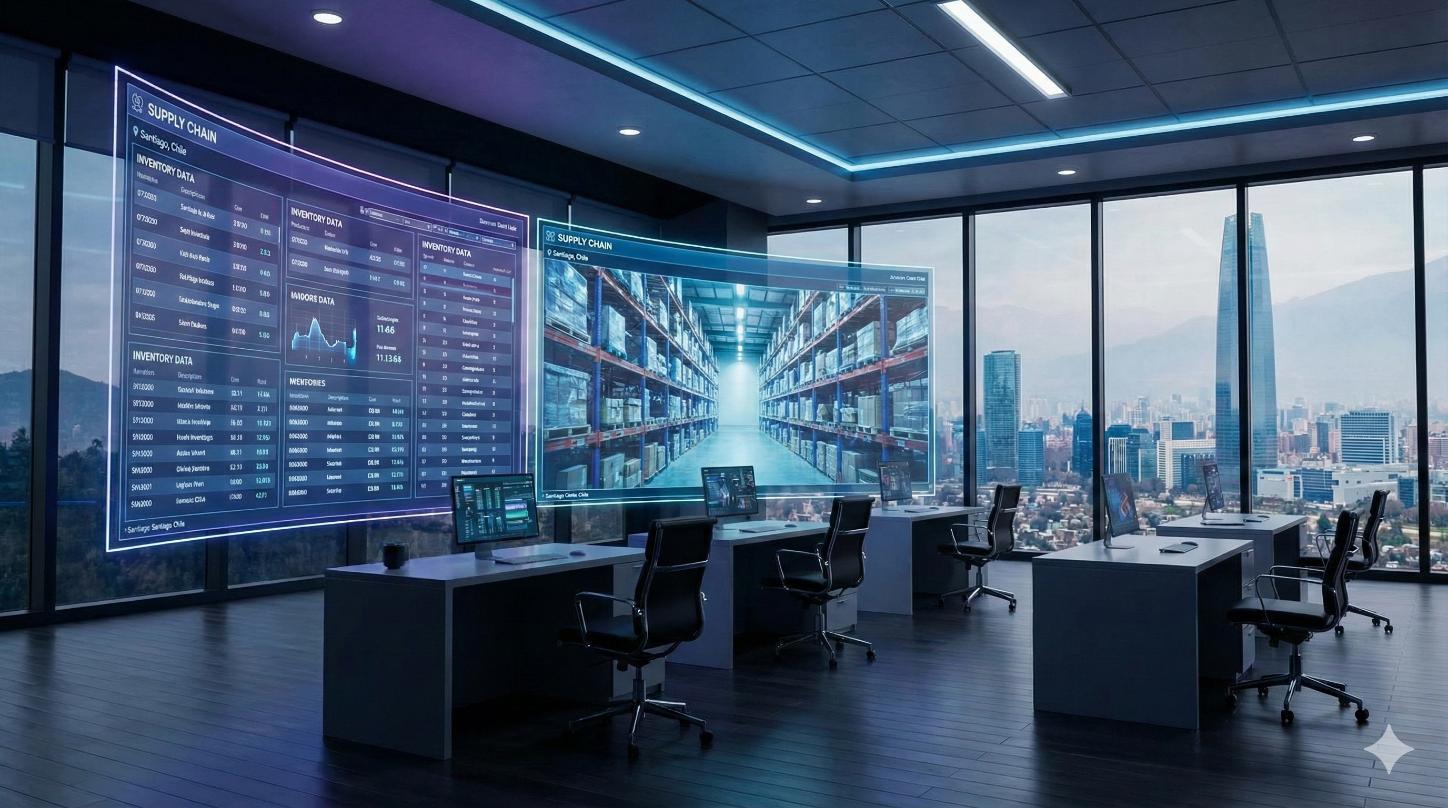
To fix this, you need data transparency. The supplier must see three things:
1. Gross Inventory: The stock currently on hand.
2. Intransit Inventory: The stock moving between nodes.
3. POS Data: The actual consumption rate.
Without these three variables, VMI fails. This aligns with Integrated Business Planning (IBP). We must move to a "One Number" truth. If the supplier is blind, they cannot optimize the plan.
Integrating VMI into the S&OE Cadence
VMI cannot work alone. It must be part of your weekly S&OE Cadence. VMI handles the math. However, the weekly S&OE meeting handles the exceptions.
For example, imagine a retailer in Bogota plans a big promotion. The VMI algorithm might miss this demand spike. The planner must adjust it manually during the S&OE review.
This integration keeps VMI agile. It stops the system from ordering products that are being delisted. As noted in my analysis of Change Management, the human element is critical. Humans guide the automated logic.
Segmentation: Not All SKUs Belong in VMI
A common strategic error is attempting to apply VMI to the entire portfolio. This is inefficient. VMI yields the highest ROI on products with:
• High Rotation (Fast Movers): Where stock-outs cause immediate revenue loss.
• Stable Demand (Low Coefficient of Variation): Where forecasting is reliable.
For "long tail" items with erratic demand, a standard Purchase Order or "On-Demand" model is often safer. This requires a robust Service Policy Engineering approach, segmenting the portfolio based on Cost-to-Serve and volatility. By focusing VMI efforts on the top 20% of SKUs that generate 80% of the volume, organizations can maximize impact without overwhelming their planning teams.
Technology as the Enabler
The execution of Vendor Managed Inventory requires a platform capable of processing daily inventory snapshots. Whether using SAP, Oracle, or specialized niche software, the system must be able to calculate the "Recommended Replenishment Quantity" (RRQ) instantly.
However, technology is useless without leadership. As I emphasized in Orchestrating Chaos, the leader's role is to foster a culture where the supplier is viewed as a partner, not a servant. In cross-border operations, such as a supplier in Peru replenishing a warehouse in Chile, this alignment helps navigate customs delays and lead time variability.
The Financial Impact: Cash Flow and Agility
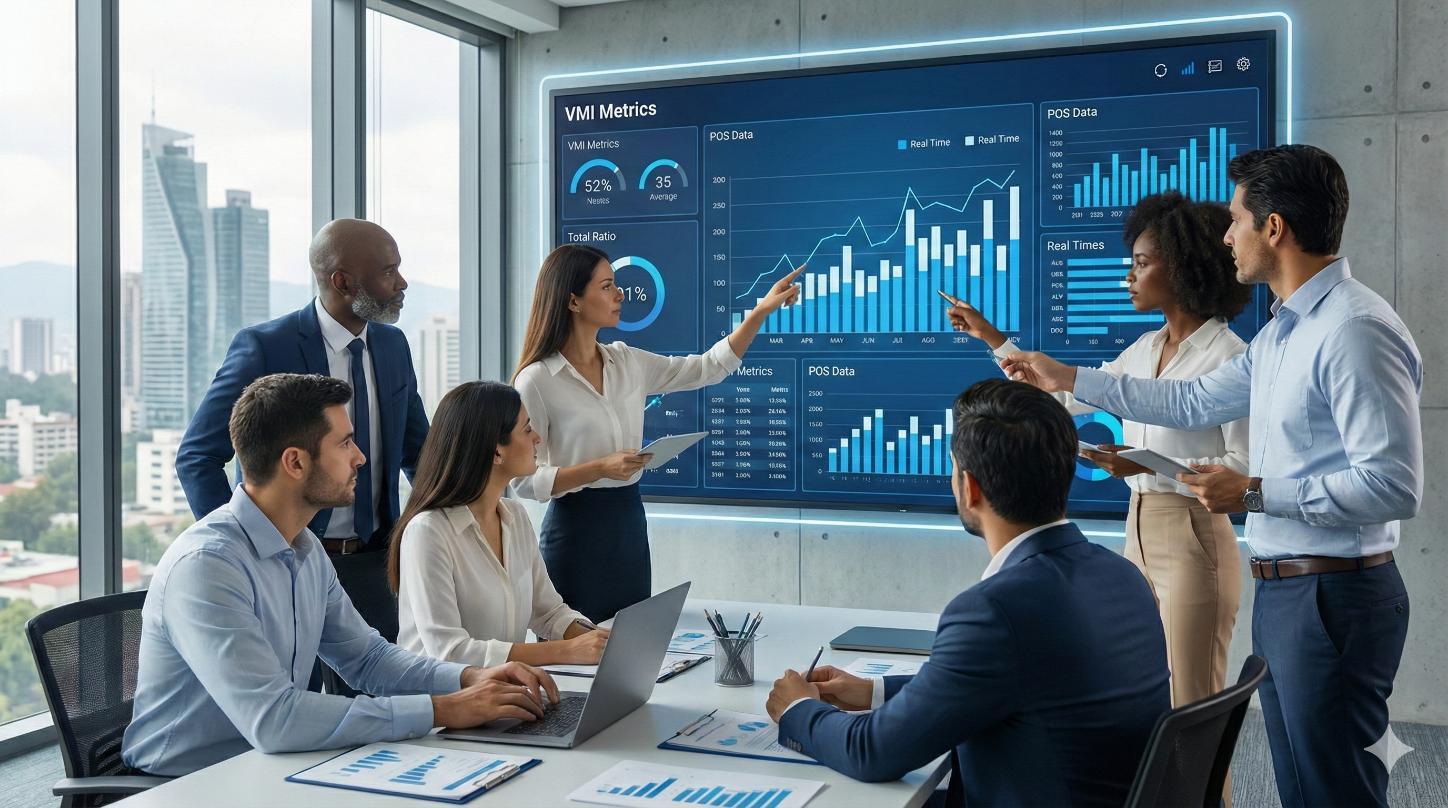
Ultimately, VMI is a financial strategy. For the retailer, it reduces working capital requirements (inventory assets). For the supplier, it smooths production schedules, allowing for longer, more efficient manufacturing runs. This mutual benefit is the core of the CPFR Model.
According to a study by Harvard Business Review, companies that successfully implement VMI see a 2030% reduction in inventory holding costs while improving in-stock availability. Similarly, Forbes highlights that in volatile economies, the agility provided by VMI can be the difference between capturing market share and losing it to a more nimble competitor.
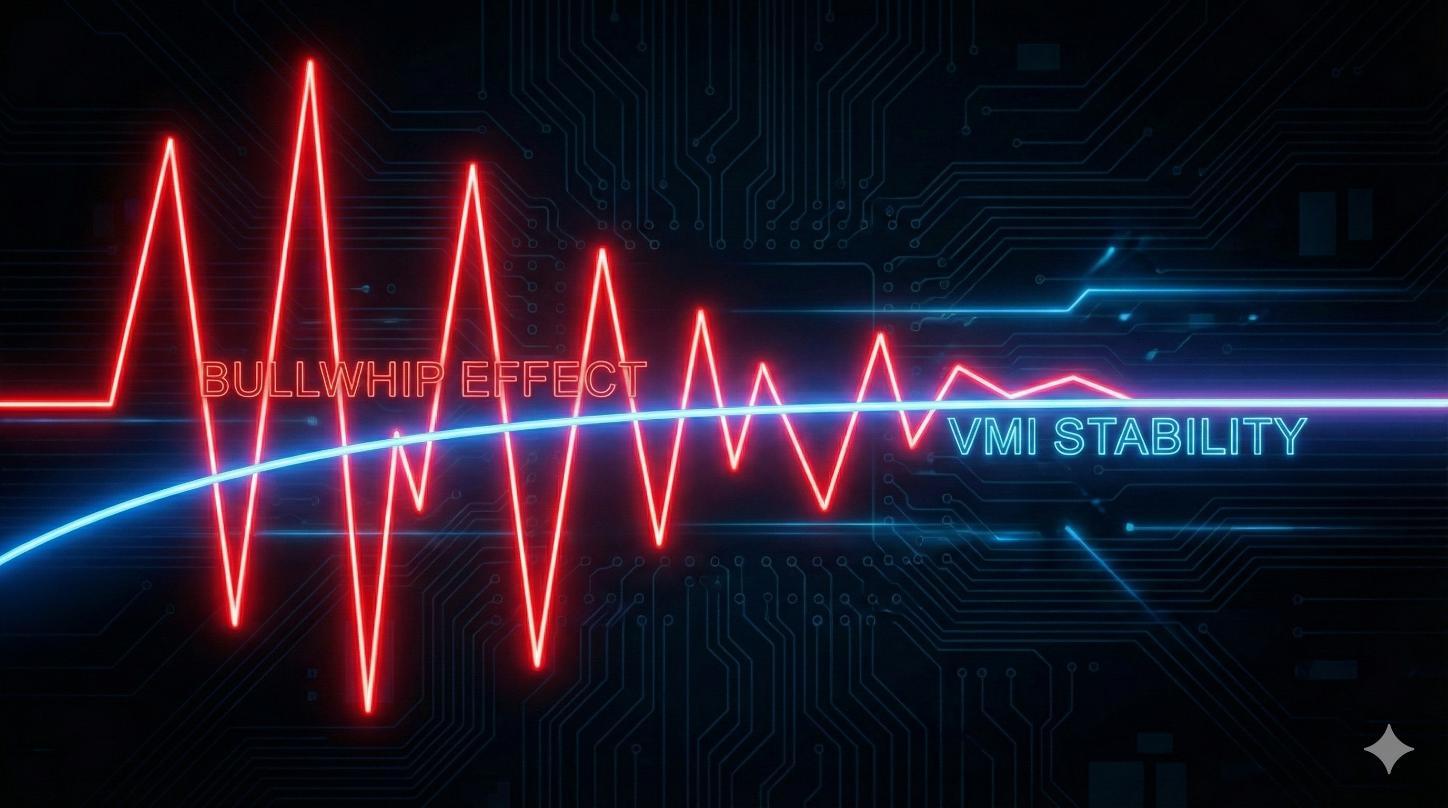
By adopting Vendor Managed Inventory, LATAM companies can break the cycle of the Bullwhip Effect. It requires moving beyond the transactional mindset of "buying and selling" to a strategic mindset of "sensing and responding."
Official profile: Carlos Velásquez Rada https://carlosvelasquezrada.com/
About.me: https://about.me/carlosvelasquezrada Google Site: https://sites.google.com/view/carlosvelasquez-rada/
Official versions of this article:
• �� WordPress
• Substack
• Medium
• Scribd
• Issuu
• Calameo
• SlideShare
• YouTube