
Brooks RCMP charge male with human trafficking after long investigation
Brooks RCMP has arrested and charged a 46-year-old male, a resident of Brooks, with human trafficking and other offences, stemming from allegations over the past five years.
The investigation began in February of 2025 when a female victim reported that she was in a relationship with a man who allegedly forced her to have multiple sexual encounters with random men for money, which he controlled and orchestrated.
Shortly following the report being received, Brooks RCMP General Investigation Section (GIS) took carriage of the file and worked in partnership with the RCMP Human Trafficking Coordinator, Alberta Law Enforcement Response Team (ALERT) Human Trafficking Unit, and the Alberta RCMP Interview Assistance Team (IAT).
On March 25, 2025, a search warrant was executed on a Brooks residence. Evidence was seized, including electronics, various illegal substances, and paraphernalia.
After a thorough investigation, on Jan. 8, 2026, Brooks RCMP arrested Chad Jensen (46), a resident of Brooks. He has been charged with the following offences:
• Distribute intimate image
• Administer noxious thing (x2)
• Assault
• Sexual assault (x2)
• Trafficking in persons
• Trafficking in persons and receive material benefit
After a judicial interim release hearing, Jensen was remanded into custody. He appeared in court and was released to appear in Alberta Court of Justice in Brooks on Feb. 11, 2026.
Staff Sergeant Rob Harms, Brooks RCMP Detachment Commander, stated; “Human trafficking and related offences such as this are serious in nature and always have lasting negative impacts on involved victims and
the community.
“The involved investigators in this case conducted a meticulous and timeconsuming investigation ensuring the offender was brought to justice and held accountable.
Sgt. Roland Misik, RCMP Human Trafficking Coordinator, stated; “Human trafficking can affect any community, regardless of the size or demographic. Perpetrators of this crime seek out the most vulnerable people in society and use that vulnerability against them to gain control, not just physically but psychologically making it extremely difficult for the victim to realize they are being manipulated and exploited.”
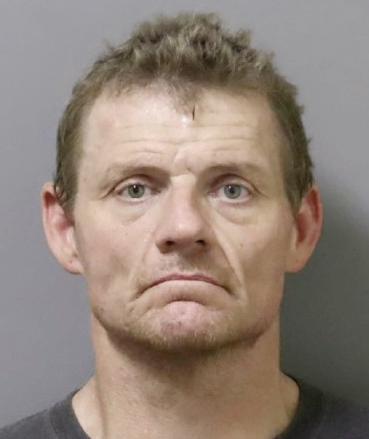
Brooks RCMP believe there may be more victims of Jensen. Included is a picture of him. If you believe you have been exploited or trafficked by Jensen, please come forward. We have resources available who can help you.
Anyone with information about these incidents is asked to contact the Brooks RCMP Detachment at 403362-5535. If you wish to remain anonymous, contact Crime Stoppers at 1-800-222-8477 (TIPS).
Cpl. Gina Slaney Public Information Officer - SAD Alberta RCMP Media Group

‘Blue Monday’ underscores tough time of year for many
This week started on a low note with Blue Monday, marketed as the most depressing day of the year.
Initially coined in 2005 by UK travel company, Sky Travel, it is thought that cold temperatures, short daylight hours and post-holiday stress all contribute to the feeling, though there is no scientific evidence to suggest the day is significantly worse than those surrounding it.
Regardless, many people do experience struggles with mental wellness on Blue Monday and in the month surrounding it, says group facilitation coordinator Krista Waddle with Medicine Hat Family Services. It can also be one of the harder months for those who experience Seasonal Affective Disorder.
“A lot of people are left with bills to pay, the expectation of Christmas is done. People haven’t had togetherness and now they’re kind of lonely.
January tends to be a very depressing month for a lot of people,” said Waddle. To help combat this, MHFS offers a wide variety of group workshops and groups centred around getting over the January slump, in addition to its regular programming.
Topics included setting aspirations and goals for the new year earlier this month, with upcoming programs including Beating The Winter Blues on Jan. 22 and Healing After The Holidays on Jan. 28 through the Recovery College.
“A lot of our courses in January are
focusing on things like beating the winter blues, shorter days, colder weather and how it can take a toll on their mood and energy,” said Waddle. “We offer practical ways to lift people’s spirits, help them get motivated and feel more like themselves through the winter months.”
These programs are free to attend and are offered as well as those less focused on the month of January, such as the caregiver connections support group for those balancing the needs of someone else on top of their own, burnout support for professionals and an upcoming online program simply titled, “Why Am I So Tired?”
The goal, says Waddle, is to provide low-barrier support to members of the community, be that through group programming or by individual counselling, which is available at affordable rates.
Those seeking support or merely curious about what MHFS or the Recovery College have to offer are encouraged to call 403-504-8026, or visit either mhfamilyservice.com or recoverycollegemedicinehat.ca, for more information on the various groups and programs available.
“We try to make it fun and we try to take the stigma out of mental health by creating safe spaces and fun environments” said Waddle. “Our goal is always that when a person walks out of the door, they feel lighter.”
Anna Smith Local Journalism Initiative Reporter Medicine Hat News
2025 the 10th most expensive for weather damage, exceeds $2.4 billion


Last year made the top 10 in insured weather damage, with costs exceeding $2.4 billion.
According to Catastrophe Indices and Quantification Inc, 2025 is the 10th costliest year on record for weather-related insured losses.
The most costly event was the lateMarch ice storm in Ontario and Quebec, at $490 million in losses, followed by the May wildfires in Flin Flon, Man. and La Ronge, Sask., which cost $300 million.
The prairie storms that caused significant damage in the Brooks area in August came in at third most costly at $235 million in losses, then that significant hail storm in Calgary in July at $160 million and finally the flooding in British Columbia at $90 million.
“Severe weather events continue to intensify. Two decades ago, insured losses seldom surpassed $500 million in a year,” said Celyeste Power, president and CEO, Insurance Bureau of Canada. “Today, annual costs exceeding $1 billion have become the norm. This shift demands that we fundamentally rethink how we build, plan and restore communities across our country.”
Power says the best way to keep communities safe and insurance widely available and affordable is to invest in resilience as means of prevention.
Between 2006 and 2015, Canada’s annual insured losses due to catastrophic weather events and wildfires totalled $14 billion, adjusted for inflation. Between 2016 and 2025 costs have nearly tripled, annual insured losses due to catastrophic weather events and wildfires totalled $37 billion.
Power urged the federal government to “stop putting Canadians in harm’s way.”
“As Canada embarks on a historic housing plan, investing in community and household resilience is significantly more cost-effective than paying to rebuild following every disaster,” said Power. “IBC and its members continue to urge governments at all levels to invest in infrastructure that defends against floods, adopt land-use planning rules that ensure homes are not built on flood plains, facilitate FireSmart initiatives in communities in high-risk wildfire zones and implement long-delayed changes to building codes that better protect homes and livelihoods.”
According to Catastrophe Indices and Quantification Inc, 2025 is the 10th costliest year on record for weather-related insured losses.
The most costly event was the lateMarch ice storm in Ontario and Quebec, at $490 million in losses, followed by the May wildfires in Flin Flon, Man. and La Ronge, Sask., which cost $300 million.
The prairie storms that caused significant damage in the Brooks area in August came in at third most costly at $235 million in losses, then that significant hail storm in Calgary in July at $160 million and finally the flooding in British Columbia at $90 million.
“Severe weather events continue to intensify. Two decades ago, insured losses seldom surpassed $500 million in a year,” said Celyeste Power, president and CEO, Insurance Bureau of Canada. “Today, annual costs exceeding $1 billion have become the norm. This shift demands that we fundamentally rethink how we build, plan and restore communities across our country.”
Power says the best way to keep communities safe and insurance widely available and affordable is to invest in resilience as means of prevention. Between 2006 and 2015, Canada’s annual insured losses due to catastrophic weather events and wildfires totalled $14 billion, adjusted for inflation. Between 2016 and 2025 costs have nearly tripled, annual insured losses due to catastrophic weather events and wildfires totalled $37 billion.
Power urged the federal government to “stop putting Canadians in harm’s way.”
“As Canada embarks on a historic housing plan, investing in community and household resilience is significantly more cost-effective than paying to rebuild following every disaster,” said Power. “IBC and its members continue to urge governments at all levels to invest in infrastructure that defends against floods, adopt land-use planning rules that ensure homes are not built on flood plains, facilitate FireSmart initiatives in communities in high-risk wildfire zones and implement long-delayed changes to building codes that better protect homes and livelihoods.”
Anna Smith
Hatchet incident at elementary school ends with arrest, no injuries
Cold Lake RCMP were called to St. Dominic Elementary School shortly before dismissal time after receiving a report of a man attempting to gain entry, while armed.
Cpl. Troy Savinkoff, public information officer for Alberta RCMP, said police were alerted just after 2:30 p.m. “On Jan. 13, right around 2:29 p.m., Cold Lake RCMP received a report of a man with a hatchet attempting to break into St. Dominic's School in Cold Lake.”
Alberta’s mandatory early reading screeners are showing strong results, but the expansion continues to clash with longstanding use of the Fountas and Pinnell system and concerns over workload and support for teachers.
The initiative began during the pandemic, when University of Alberta professor George K. Georgiou was among a group of professionals tasked by Alberta Education to help update the English language arts curriculum and standardize assessments.
“In 2020, I was seconded to Alberta Education to create a new English language arts curriculum for the province when COVID-19 started,” Georgiou said. “We were the only ones at that point who had any kind of data to estimate the impact of COVID19 on student achievement.”
He said divisions needed assessments that were quick, valid and free, since commercial systems would have cost millions. Georgiou and several international researchers secured permission for Alberta schools to use CASTLES, CC3, Letrasound and phonological awareness tasks, along with new Alberta-specific norms.
Those tools now form the bones of the province’s screening package for kindergarten to Grade 3. Grades 1 through 3 are screened in fall, winter and spring, while kindergarten is screened in winter. With that said, some divisions are still dealing with change. Even though the province removed Fountas and Pinnell — a popular guided-reading program that assesses students using levelled books instead of testing phonics or decoding — from its approved list, many divisions continue to use it.
Holy Spirit Catholic’s St. Francis Junior High in Lethbridge says it “relies heavily on the Fountas and Pinnell Levelled Literacy Program.” St. Paul Education, Horizon School Division, Peace River School Division, Prairie Land, Foothills and Northern Gateway also reference Fountas and Pinnell or Levelled Literacy Intervention in their literacy plans.
Alberta Education warns the tool misidentifies struggling readers because it measures performance on levelled books rather than decoding skills. Georgiou said resistance often stems from previous investment, not research.
“Some divisions protested when Fountas and Pinnell was removed because they had invested heavily in it and didn’t want to admit it was ineffective,” he said.
Divisions that replaced Fountas and Pinnell and fully adopted screening have seen sharp gains.
Georgiou said he found the Calgary Board of Education reduced struggling readers from about 32 per cent in 2023 to about 10 per cent two years later. He added Fort Vermilion School Division dropped from “more than 50 per cent” to “less than 20 per cent.”
A provincial survey found 73.6 per cent of 3,100 teachers believed the mandatory screeners did not provide meaningful instructional value without additional supports. ATA president Jason Schilling
Officers arrived within minutes and found the suspect still at the scene. Police were able to take him into custody without further incident.
Savinkoff said a 40-year-old man was charged.
“He's been charged with possession of a weapon for a dangerous purpose and mischief,” said Savinkoff.
The timing of the incident added to the concern, as parents were already gathered outside the school when police arrived.
said the province’s model limits teacher autonomy and does not reflect the realities of classroom practice.
“Teachers should be allowed to use their professional judgment to choose diagnostic tools that best suit the needs of their students,” he said.
Georgiou said standardized screening is necessary to ensure students are not overlooked. He said research shows teachers reliably recognize only the strongest and weakest readers, while many at-risk students fall in the middle.

Despite the public nature of the arrest and the seriousness of the situation, Savinkoff said the outcome could have been far worse.
“Fortunately, we were able to respond really quite quickly and there were no injuries to any students or parents.”
“The in-between group is where their estimations are not accurate,” he said.
He said early identification is essential because evidence-based intervention works consistently across regions.
“Ninety-five per cent of kids can learn to read,” Georgiou said. “The question is: why aren’t we doing the right things?”



Trent Wilkie
Local Journalism Initiative Reporter
St. Albert Gazette
Charges finally laid after tragic accident in Killam last spring
The Killam RCMP have advised this week that charges have now been laid in regards to an accident that occurred in early March last year outside Killam that changed the lives of a local family.
On March 28, 2025, around noon, Killam/Forestburg RCMP responded to a serious motor vehicle collision, involving two pickup trucks, white and grey, at the intersection of Highway 13 and Highway 36.
RCMP says that upon police arrival, emergency responders from Regional
You start your quest up Mount Kilimanjaro as one person, and you finish it as someone else.
A similar refrain leaves the lips of many who’ve trekked through four climatic zones and thinning oxygen to reach the summit of one of Earth’s most sacred and storied mountains.
But the calling goes beyond personal growth for two colleagues from the floor of the Alberta legislature.
Part of a group of 10 or so trekkers, Demetrios Nicolaides and Todd Loewen hope the journey dubbed Melanie’s Ascent improves the lives of countless Albertans, most of whom they’ll never meet — people forced to protect themselves and their families from domestic violence.
The project is deeply personal for Nicolaides, the event’s creator and the minister of education and childcare.
The climb begun earlier this week is named after his younger and only sister Melanie, who died two years ago at the hands of her estranged and rage-filled husband.
Nicolaides came up with the


Flagstaff County Fire Services and Alberta Emergency Medical Services, were on scene and treating the injured occupants of a pickup truck.
“Witnesses also remained on scene.
A nine-year-old girl in the white pickup truck was declared deceased on scene, and the other occupants, including a nine-year-old girl, a 12-year-old boy, a 14-year-old boy, and their 44year-old father, were taken to hospital with various injuries.”
All five were members of a local family.
Police say that their investigation determined the grey pickup truck travelling south on Highway 36, failed to stop at the posted stop sign, and subsequently collided into the side of the white pickup truck that was heading west on Highway 13.
As a result of this investigation, RCMP says that charges were sworn before a Justice of the Peace on Monday, Jan. 12.
Eric Shaffer (73), a resident of
Chemainus, BC, is facing several charges, including:
-Operate a motor vehicle dangerous to the public causing death;
-Operate a motor vehicle dangerous to the public causing bodily harm x 4; RCMP report that Shaffer is to appear in court on Tuesday, March 3, at the Alberta Court of Justice, in Killam.
Kilimanjaro idea after turning to the great outdoors for solace. Climbing and hiking helped him cope with the grief and anger that swept over him after Melanie’s death.
The fundraiser to protect others from domestic violence was a logical next step. And having a friend from the legislature at his side makes it even more special, he said.
Loewen is “a selfless person and I'm honoured to embark on this journey with him,” the member for Calgary-Bow said in an emailed statement before leaving for Tanzania.
For his part, hunter and outdoors enthusiast Loewen said choosing to join his friend was a no-brainer — nearly.
“Almost a year ago, he was talking about it and I was really intrigued,” said Loewen, the minister of forestry and parks. “So he just came right out with it and said, hey, would you go along on this?”
Loewen took a few weeks to make sure he could fit the climb into his life.
“Then I got back to him and said that I'm in,” the member from Central Peace-



Notley recounted in an interview with this reporter.
“It’s been great to go along with him during the planning and seeing everything come to fruition,” Loewen said a few days before his flight.
“He's done all the work on this; he’s really done a lot to make it all happen. And I've been all too happy to join in the experience and help where I can.”
So far, so good.
The hikers are nearing the final push to a spectacular view atop the world’s tallest free-standing mountain at 5,895 metres above sea level.
And the fundraising element of Melanie’s Ascent is reaching incredible heights, too. At the time of this writing, donations had ticked more than $10,000 past an updated goal of $250,000, which itself is two and a half times the original target.
Proceeds are earmarked for the creation of a new program to help people suffering from domestic abuse purchase personal and home security devices.
The supported charity is FearIsNotLove, a recent iteration of what used to be called the Calgary Women’s Shelter. The name change in 2022 reflects the group’s full scope of programming and resources for women, men and children.
Said Loewen: “I can't imagine what (Nicolaides) went through in the whole experience leading up to this. His idea to turn this tragedy into something good by bringing about awareness and fundraising to help victims of domestic violence, and how he’s held himself — it’s just been very inspirational to watch.”
Loewen has gone through nothing comparable.
“Everybody’s experience is different, and this stuff is foreign to me. I can't understand what goes through people's minds to think that (domestic violence) is OK. I can’t even imagine what he's been through.”
Many Albertans, however, can.
According to the Alberta Council of Women’s Shelters, about two-thirds of the province’s residents say they either know someone who’s been sexually or physically assaulted or have been themselves.
Most incidents are either domestic assaults or assaults committed by someone known to the person attacked.
It’s estimated that one in three people in Alberta will experience domestic assault in their lifetime.
Joining Loewen and Nicolaides to help
change those troubling statistics, one step at a time, are friends of Melanie’s, volunteers from past political campaigns, and even some folks Nicolaides doesn’t know.
They began their ascent in the rainforest. Next is a zone of heath and moorland, where tropical temperatures during the day and winter-like nights have created a landscape of scrubby, hardy and strange-looking plants.
After that is an alpine zone: barren, rocky and dusty with not much plant life. And finally comes the arctic zone of rock, scree, ice and snow, where the air’s oxygen content will be about 50 per cent of what it is at sea level.
Widely considered a moderately difficult climb, it’s that oxygen change that makes the Shining Mountain a challenge for even seasoned hikers.
Fitness work and prep climbs were essential, including a whirlwind trip to Colorado for “a bunch of climbs” over about three days, Loewen said.
“It was a bit of an eye opener at 10,000 feet to start hiking and feel that difference in oxygen,” he recalls.
Nicolaides said: “I want to thank Todd for joining me on the climb to take a stand against domestic violence. He's a great friend and has helped push me on many of our practice hikes.
“He's motivated me during training, including hitting the stairs between meetings in the legislature.”
For Loewen’s part, he said the experience will be life-changing while strengthening his friendship with Nicolaides.
“We were always pretty good friends. He’s spent time up in my area, stayed in my home. I’ve campaigned for him. So we’ve had that kind of connection,” he said. “But I think this will be good for us.”
Bonds were also built with the others, sometimes through video meetings as they shared ideas and research about the coming adventure.
“Everybody I've met and spent time with and chatted with has been fantastic, and everybody's got the same goal in mind. We want to climb the mountain. So there’s the physical part of it.
“But most importantly, and what’s going to make the difference down the road for society, is the awareness and the money we raise.”
To become a donor, visit melaniesascent.ca.
George Lee Local Journalism Initiative Reporter
Leslie Cholowsky The Community Press