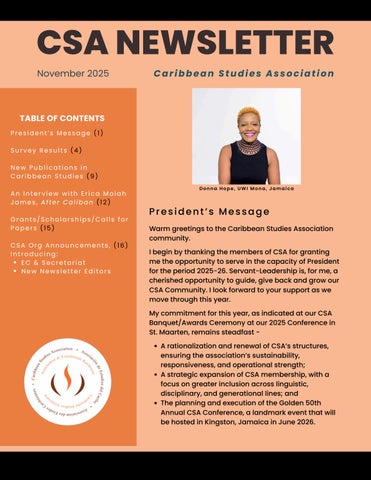
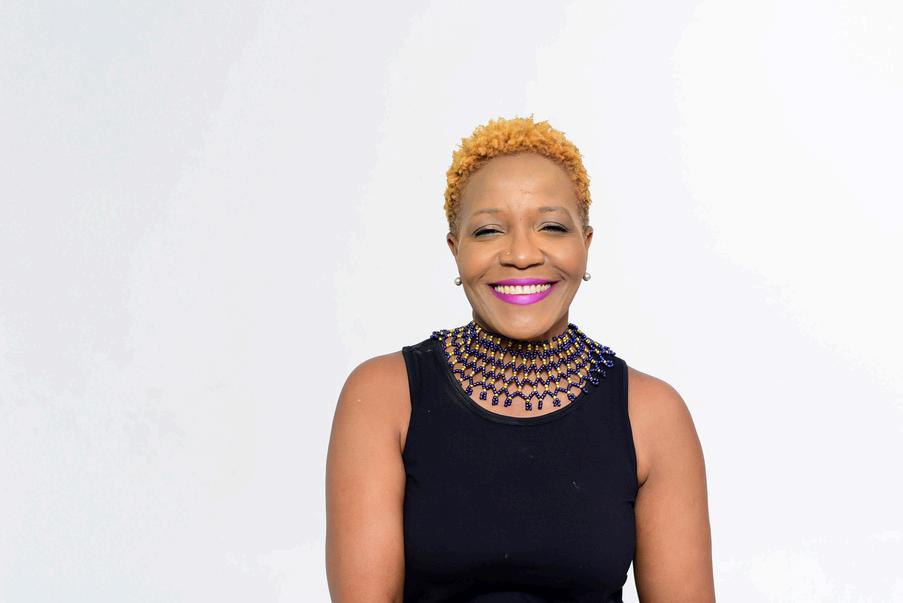
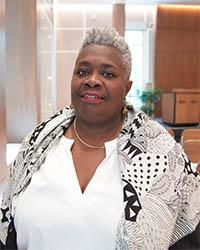
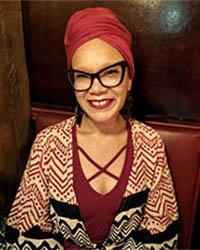
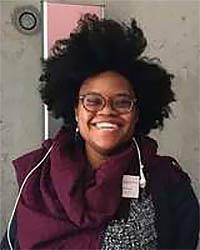
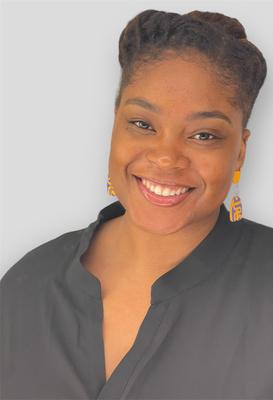
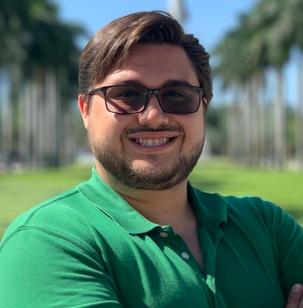
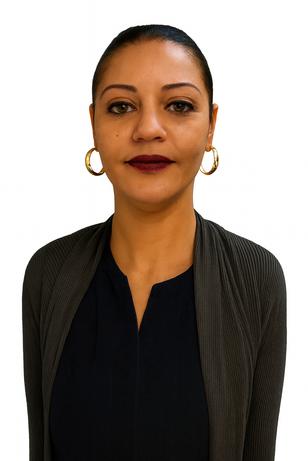
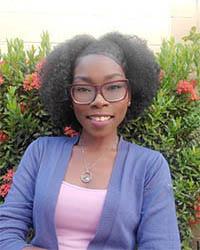
Patricia Saunders, VP Professor of English University of Miami
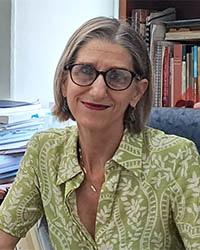
Janelle Rodriques Professor of English University of Washington, Seattle
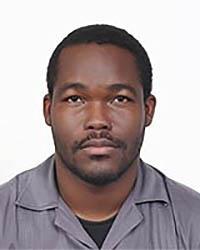
Maggie Shrimpton Masson Professor of Social Anthropology
Universidad Autonoma de Yucatan, Mexico
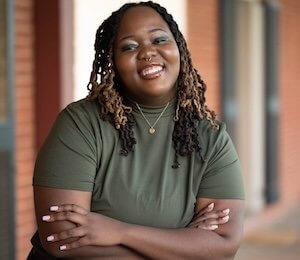
Rashana
Professor of Africana Studies
Georgia State University
Gabrielle
Jean-Louis PhD Candidate
English & Creative Writing
University of Miami
Michael
PhD Candidate
English & Creative Writing
University of Miami
Oneil Hall Full-Time Instructor
The Academy Charter School, Hempstead, New York
Angelique V Nixon Senior Lecturer UWI, St. Augustine
Semone Armorgan Graduate Student, ISER UWI, St. Augustine
Lydner
R. Soriano
Caroline M DesVallons CFO & Principal Owner DAS inc.
CSA 2025 Annual Survey Report
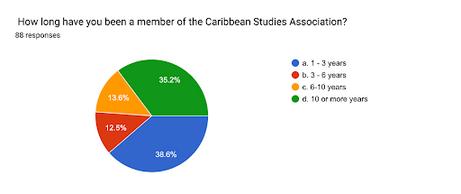
During CSA 2025, we invited attendees and members to participate in a survey via a link and QR code The survey was accessible to in-person and remote participants, as well as the broader CSA membership It remained open for the duration of the conference and for an additional month afterward (June 2025) to allow for broader participation. Responses were collected anonymously, though participants had the option to provide contact information if they wished to engage in volunteer or service opportunities.
The CSA survey shows that the community of scholars and independent researchers includes many long-standing members (over 10 years). At the same time, it reveals a growing group of newer scholars who are eager to engage and help shape the organization’s direction in the years ahead.We thank you for your candid feedback and want to share our responses:
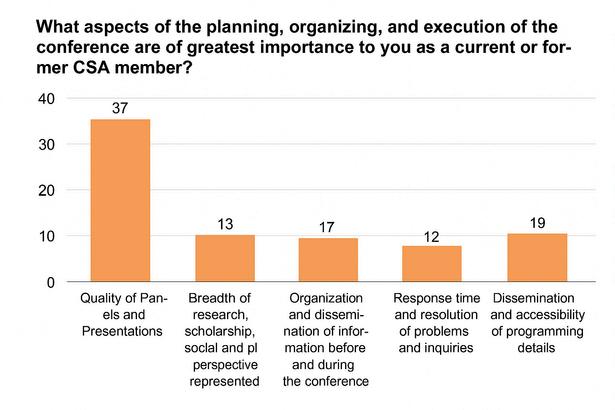
1 In light of your valuable feedback, we are implementing the following changes to improve the organization and communication of the conference:
Making printed copies of the program available to all registered participants.
Any updates to the conference program will be communicated via on-site signage and digital notice boards, where available.
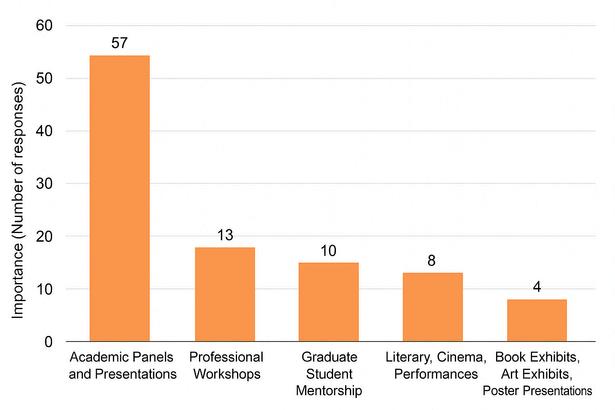
2 Given the size and scope of the CSA conference, creating shared spaces for discussion and networking can be challenging. While the week-long format allows us to showcase a wide range of academic presentations, dedicating additional time and space to networking would inevitably reduce the number of panels and research sessions
3 The Executive Committee is exploring creative ways to foster meaningful connections among participants without compromising opportunities for scholarly exchange Some possibilities we are considering include:
inviting journal editors and publishers to the graduate student breakfast hosting a meet and greet for conference attendees who arrive the day before the start of the conference reintroducing author salons which combine book launches with receptions (we will encourage sponsorship for these events)
4.Part of our effort to continue expanding the reach of this organization into wider disciplinary, public/private partnerships, independent researchers and scholars and emerging fields of critical engagement means that we will have to be more intentional in forming partnerships. Some of the things we are considering to this end include:
Disseminating our newsletters and calls for papers to other academic and non-academic organizations whose interests may not be squarely in the field of Caribbean studies, but whose research and scholarship is deeply impacted by what is taking place in the Caribbean region. A few organizations that come immediately to mind are:
The National Black Nurses Association
The Caribbean Association for Oncology and Hematology
Global Center for Climate Mobility
Museums Association of the Caribbean
There are numerous academic, professional, nonprofit, and community based organizations who, like us, would benefit from part of this community of interlocutors.
In the coming months, we will return to this survey to contact those of you who expressed an interest in getting more involved with CSA. We are looking forward to having you on board, to hear the new ideas and perspectives of our members. An organization is at its best, when it invites and welcomes new ideas and new perspectives from its community.
CSA Annual Conference 2026
Caribbean Studies Association (CSA) Call for Papers
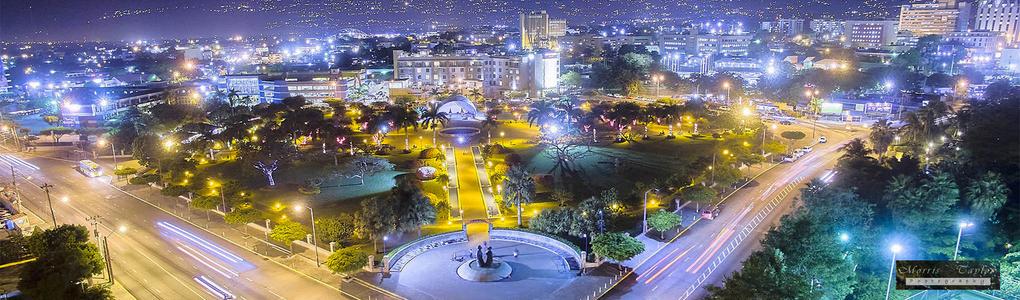
CSA 50th Annual Conference Kingston, Jamaica | June 1–5, 2026
Theme: Caribbean Vibes and Vibrations: Culture, Identity and Development in Transformative Times #CSA2026 | #CSA50 | #CSAKINGSTON | #CSAGOLD
Call for Papers Opens: October 2025
Submission Deadline: December 31, 2025 Notification of Acceptance: January 2026
Thème : Ambiances et vibrations caribéennes: culture, identité et développement à une époque en pleine transformation #CSA2026 | #CSA50 | #CSAKINGSTON | #CSAGOLD
Échéancier:
Ouverture de l'appel à contributions : octobre 2025
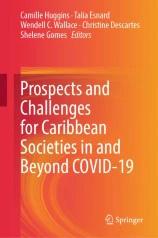
Editors: Camille Huggins,Talia Esnard,Wendell C Wallace,Christine Descartes,Shelene Gomes
This book presents contributions from a multidisciplinary team of researchers who analyzed the impact of the COVID-19 pandemic and prospects for the Caribbean region. This book examines experiences, and responses to the pandemic in the region as well as some of the lessons that can be leveraged on beyond the pandemic.
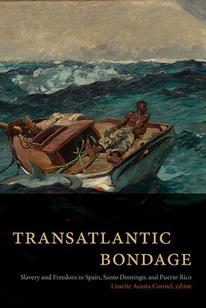
Transatlantic Bondage: Slavery and Freedom in Spain, Santo Domingo, and Puerto Rico (SUNY Press, 2024)
Edited by Lissette Acosta Corniel
This groundbreaking volume addresses the enslavement and experiences of Black Africans in Spain and the Spanish Caribbean, particularly La Española (or Hispaniola) and Puerto Rico, two of the earliest colonies. Spanning nearly four hundred years and rooted in extensive archival research, Transatlantic Bondage sheds light on a number of relatively underexamined topics in these locales, including the development and application of slavery laws, disobedience and its consequences, migration, gender, family, lifestyle, and community building among the free Black population and white allies In bringing together new and recent work by leading scholars, including two essays translated into English here for the first time, the book is also a call for further study of slavery in the Spanish Caribbean and its impact on the region
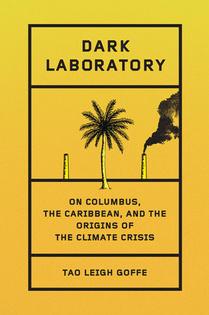
Dark Laboratory: On Columbus, the Caribbean, and the Origins of the Climate Crisis (Penguin Random House, 2025)
Tao Leigh Goffe
Through the lens of the Caribbean, both guide and warning of the man-made disasters that continue to plague our world, Goffe closely situates the origins of racism and climate catastrophe within a colonial context And in redressing these twin apocalypses, Dark Laboratory becomes a record of the violence that continues to shape the Caribbean today But it is also a declaration of hope, offering solutions toward a better future based on knowledge gleaned from island ecosystems, and an impassioned, urgent testament to the human capacity for change and renewal.
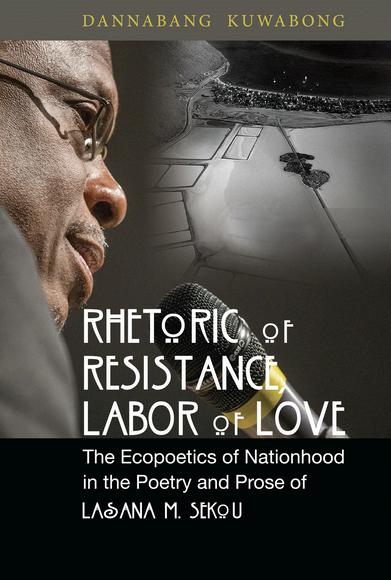
Rhetoric of Resistance, Labor of Love: The Ecopoetics of Nationhood in the Poetry and Prose of Lasana M. Sekou (House of Nehesi Publishers, 2025)
Dannabang Kuwabong
This work explores the powerful intersections of ecology, culture, gothic stories, trauma of St. Martiners as immigrants in other lands, and nationhood in the literary work of Lasana M. Sekou one of the Caribbean’s vital voices.
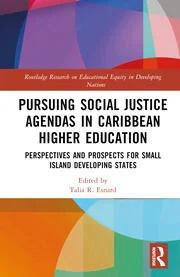
Pursuing Social Justice Agendas in Caribbean Higher Education Perspectives and Prospects for Small Island Developing States (Routledge, 2025)
Edited by Talia R. Esnard
This book offers a treatment of social justice and higher education within small island developing states like the Caribbean. This is a timely exploration of some of the global-local, structure-actor, policy-practice debates that connect directly to the promise and the challenges of pursuing social justice agendas within and beyond Caribbean institutions of higher education.
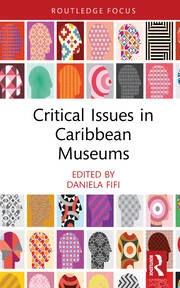
Critical Issues in Caribbean Museums (Routledge, 2025)
Edited by Daniela Fifi
This book helps to identify strategies within museology that can inspire meaningful collective engagement with these histories. In the process, it also identifies the hurdles museums in the Caribbean face when telling stories of ancestral oppression. Each chapter presents a new case study, written by five museum professionals and scholars fundamentally shaping conversations on cultural heritage spaces within the Caribbean and the diaspora of Caribbean nations Using their observations this book coalesces an understanding of the specific limitations Caribbean cultural heritage spaces face and deploys new strategies for maximising their engagement potential.
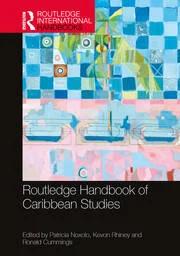
Routledge Handbook of Caribbean Studies (2025)
Edited by Patricia Noxolo, Kevon Rhiney, Ronald Cummings
Bringing together new and established voices on the Anglophone, Francophone, Spanish-speaking and Dutchspeaking Caribbean, the handbook explores the cultural and historical shapes and reach of the region, as well as the environmental, climatic and (geo)political challenges that it faces in the 21st century Each of its four parts – Environment, (Geo)politics, History and Culture – explores the region’s conceptual and material entanglements and disentanglements, its transnational and transregional connections and disconnections, and its historical wakes and posts
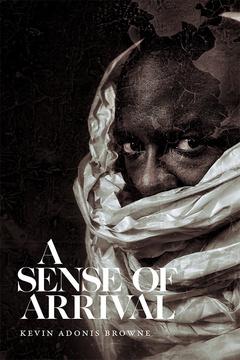
A Sense of Arrival (Duke
University Press, 2025)
In A Sense of Arrival, Kevin Adonis Browne blends literary, visual, and material forms to present a narrative of Caribbean blackness. Arguing that the story of Caribbeanness cannot be told through words alone, Browne interweaves essays, memoir, autotheory, and narrative verse with documentary photography, portraiture, Rorschach blots, and images of his own sculptures and art installations. Browne labels this multimodal approach and rhetorical form “Caribbean nonfiction,” and he uses it to conceptualize arrival as a theory of being
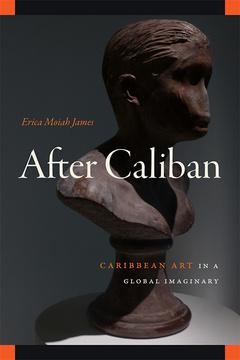
After Caliban: Caribbean Art in a Global Imaginary
Erica Moiah James
In After Caliban, Erica Moiah James examines the rise of global Caribbean artists in the 1990s and their production of a decolonized art history for the Caribbean She draws on Aimé Césaire’s rewriting of Shakespeare’s The Tempest, in which Caliban becomes the sole author of his own story, dissolving his fixed position as colonized in relation to Prospero as colonizer. James shows how visual artists such as Marc Latamie, Janine Antoni, Belkis Ayón, Edouard Duval-Carrié, and Christopher Cozier followed Césaire’s model by employing a range of practices and methodologies that refused marginalization Just as Césaire decolonized The Tempest, so too did these artists, who crafted a decolonial aesthetic that redefined their own cultural and historical narratives and positioned art as a key pathway toward a postcolonial future. By providing the foundation for a postcolonial, post-Caliban art world, these artists redefined the critical and popular notion of contemporary Caribbean art At the same time, James argues, they fulfilled Césaire’s dream for a postcolonial Caribbean while creating a nonhegemonic art historical practice that exists beyond modern binaries and borders
Kevin Adonis Browne
An Interview with Erica Moiah James, After Caliban
Erica Moiah James is an art historian, curator and Associate Professor at The University of Miami. Before arriving in Miami, she was the founding director and chief curator of the National Gallery of The Bahamas and an Assistant Professor of Art History and African American Studies at Yale University. Her research centers on indigenous, modern, and contemporary art of the Caribbean, Americas, and the African Diaspora James has been awarded several grants and fellowships in support of her work including the Warhol Foundation/Creative Time Art Writing Prize, and grants from the Terra and Mellon Foundations for The Geoffrey Holder Project Most recently, she curated the exhibitions Didier William: nou kite tout sa dèyè; Nari Ward: Home of the Brave and LaVaughn Belle: Of Being, Myth and Memory She is a senior research associate at VIAD, University of Johannesburg and a former ClarkOakley Fellow Her current book is entitled After Caliban: Caribbean Art in a Global Imaginary (DUP 2025)
MRS & GJL: What criteria did you use to select the particular artists featured Marc Latamie, Janine Antoni, Belkis Ayón, Edouard Duval-Carrié, Christopher Cozier, and Maurizio Cattelan given the vast range of Caribbean art practices?
EMJ: I name a bunch of folks of this newer generation in the introduction a lot of people, artists who I also could have written on, and have written on. I have a really good relationship with Ricardo Brey, a Cuban artist who lives in Brussels. He was one of the leaders of Volumen Uno, the big Cuban Art Movement that started the Cuban modernist movement with Juan Francisco Elso. I have written on three of those artists in that group: Rubén Torres Llorca, who lives here in Miami, Ricardo Brey and Juan Francisco Elso. I feel like I could write a chapter on each of them in the same mode as this. But Belkis Ayón was the Cuban artist I wanted to focus on, for so many reasons. Our birthdays are a day apart. I felt when I went to New York to visit her collectors, I was sitting at the dining room table, and they were like, “Oh my god, you remind me so much of her She was sitting right there ” I'm like, ooh, this is eerie But also, once again, what she was trying to do with the work how her work spoke to the story of the work with the Abakuá, what that said about the context, the social history that it engaged, and what she was trying to do with the work
And Chris Cozier I had a special relationship with him that I developed at the National Art Gallery of the Bahamas I talk about it at the end because that's a true story I talk about it at the end because that's a true story I made it really personal because he literally was someone I wanted to if you ' re responsible for cultivating a discourse in a post-colonial space, I wanted Bahamian artists to connect regionally and globally. I thought he would be an amazing person to start that conversation and cultivate a critical eye.
I wanted to bookend the book with Césaire for theorization and form, and with Chris. Because in many ways, he becomes a kind of Césaire was at every major meeting, every event, having to do with a Pan-Caribbean or African diasporic dimension. If you think about Présence Africaine in Paris, he was in Paris. If you think about the meetings in Havana, he's in Havana. If you think about CARIFESTA, he's in CARIFESTA. He didn't miss anything.
An Interview with Erica Moiah James, After Caliban
The same is true with Chris in terms of art He's either behind the scenes in terms of formation of all the major Caribbean art shows that have been developed in the last few years And he also, for me as an art historian, woke me up with that 1994 essay he wrote for the Massachusetts Review (“Searching for a Way Out,” Vol 35, No 3/4, Autumn 1994) he downplays it now, but it was important to me It really woke me up to something that set me on this path It gave me questions, and as long as I have a question, I'm going to keep going For me, he is a similar kind of figure, specifically in the arts, someone who's cultivated this conversation on Caribbean contemporary art, but also even though he wouldn't say it what I call the Global Caribbean. That phrase, “the Global Caribbean,” started with Edouard and I, in the show we did in 2009 here in Miami. I had just finished my dissertation, in which I introduced the concept (the Global Caribbean) because I wanted it to enter the lexicon. This is how I think about the Caribbean as not just a geographic space, but a thinking space, a place of possibility, all sorts of things that don't necessarily have to be grounded in that. For some reason, no matter where Caribbean artists are, they're still doing Caribbean work. They keep that place with them, they can be in Sweden and they're still doing work on the Caribbean. I wanted us to think about that and about ways we can bridge some of the antagonism between working outside the Caribbean and working in it all of these things that were dividing in that way
José Lezama Lima has also been important to me in my work He was writing about a 19th-century poet from Cuba who had been dismissed; people were like, "Ah, he's trying to be too European He's not Cuban enough, he's not Caribbean enough " Lezama Lima was defending him, in this beautiful essay he wrote, and I may interpret this differently from a literary person, but he says this, and this is an excerpt that I use in talks:
If we speak of criticism as creation, not production, then poetry adheres to the theory of knowledge… In the Caribbean, we must look for another approach. Finding creation, finding pain in everything. One culture, assimilated or unassimilated by another, is not comfort. Indeed, no one has given it away as gift. Instead, it is a painful act, one that is both creative and created.” (“Julián del Casal,” Small Axe, Vol. 23, No. 3, November 2019).
That idea of criticism as creation for me, art is critical. It feeds itself. That’s where the decolonial ethos, energy whatever you want to call it comes in. I think every work of art that a Caribbean person creates, every book that someone writes that's grounded in our culture, in this history, that affirms it as valuable, as epic, as monumental, as a source, is doing that work. It's creating something that counters the colonial narrative. Yes, it might be painful, but our criticism comes from what we create as scholars, as producers of knowledge, and from what you are as artists
In every artist that I chose, you see this desire to critique, to speak back to the Caribbean, to say that we aren't doing what we need to do, to say that we ' ve forgotten But also to say, this is how we can work This is what we can do This is what we can dream This is what we can architect
An Interview with Erica Moiah James, After Caliban
MRS & GJL: What do you hope readers and interviewers will take away from After Caliban not just about Caribbean art, but perhaps the critical impulses that we use to read Caribbean art? about a critical impulse to unify aesthetics?
EMJ: If there was something in my discipline that didn't accommodate me and my interests, there was something wrong with the discipline. This book is really a demand for my discipline to open up. There are a lot of people on board, but a lot of people are holding that line, and we need to move beyond. The discipline's organization is a complete discursive formation, and we need to understand when it's time for things to shift and move to remain relevant.
Brathwaite taught me to rethink and rewrite. I wanted to rewrite the ending of After Caliban I had so many thoughts; I wish I could say more, or I wanted it to end differently I was very fortunate as a graduate student to hear Brathwaite speak three or four times, very intimately At the same time I was reading "Caribbean Man, Space and Time," and I realized there were six versions I found that interesting He modeled organic thinking He gave himself permission to think and rethink Our work really is a thinking process We need to give ourselves permission to change our minds We need to give ourselves permission to become more informed so that when we write something, that may not be the end We're involved in the life of the mind, and that mind changes It expands I hope the book offers people still trying to do this academic thing, with all of its pressures, the space to give ourselves permission to rethink things, to change our minds, and to own it.
I want to continue rethinking After Caliban. Thinking isn't finite. It's like language in the Caribbean it's constantly alive.
Also, as a person who worked in the public and in the academy, I want the bridge between the academy and public to be shorter. I want academics in the public sphere. We should write for the public. When we curate and get to speak directly with the public, we need to stop thinking we need to sound intelligent. We can speak very complicated ideas and find a language to give those ideas to the public. That's why I changed my language at the end. I did so to bring it down home. My thinking is grounded in something that's quite real and not just out there.
Grants, Scholarships, Calls for Papers
Upcoming Conferences
Latin American & Caribbean
Digital Humanities Symposium
University of Havana 60
Years of the Tricontinental Conference: Context, Impact, Legacy, and Future
49th Annual Conference of the Society for Caribbean Studies
The 50th Annual Caribbean Studies Association (CSA) Conference
Upcoming Exhibitions
Call for Papers
Anthurium Issue
The Plantationocene: On Histories and Narratives of the Plantation
Hemispheric Confluences: Translation Across the Americas
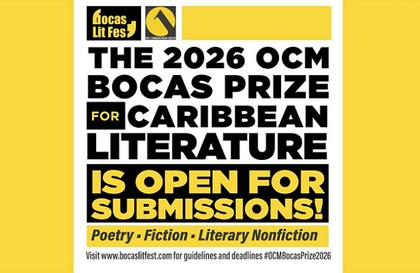
“The Literature of Climate Displacement,” Public Humanities
Call for Prizes
Festa Litéraria das Periferias (FLUP), 2025
CSA Organization Announcements
CSA MOVEMENTS
Dr. Meagan Sylvester’s long-standing Tenure as CSA Newsletter Editor ended in June 2025 Under her stewardship, Dr Sylvester invested significant time and effort in managing and producing the CSA Newsletter monthly CSA is grateful for all the work and time invested in our Newsletter over these many years. We congratulate Dr. Sylvester on completing her PhD in May 2025 and wish her a productive and rewarding academic career as she moves forward, even as we look forward to Dr Sylvester’s continued relationship with CSA
Professor Dwaine Plaza resigned as CSA Treasurer in August 2025 We salute Professor Plaza’s stewardship over CSA’s resources for more than 15 years and his selfless support of our CSA activities. As we move through this transition to finalize a new CSA Treasurer, Professor Plaza has continued his support of our CSA activities. We are truly grateful for his steadfast and unswerving guidance and support, and look forward to an unbroken and mutually rewarding relationship with Professor Plaza
Dr. Mala Jokhan resigned from the CSA Secretariat in August 2025 We are using this medium to express our gratitude to Dr Johkan for the many years spent working tirelessly in the CSA Secretariat and providing sage and cogent support to various CSA Presidents and Executive Councils, as well as her responsiveness to our CSA Members and external stakeholders. We wish Dr Jokhan continued success in all her endeavours and look forward to her continued participation in our CSA activities
Dr. Rhoda Arrindell resigned as CSA Immediate Past President on October 15, 2025 We recognize and salute her effervescent stewardship over CSA during the 2024-25 presidential year, as well as her planning, management, and execution of our memorable CSA 2025 Conference in St. Martin. We look forward to seeing Dr. Arrindell at our future CSA events and conferences
Dr. Nickesha Dawkins resigned as Program Co-Chair due to health issues in November 2025 Her contribution to the preparation of our CFP and early program draft, as well as her work with our Eventsforce Management Program, is truly commendable. We wish Dr. Dawkins renewed health as she continues on this journey, and we look forward to her ongoing contribution to CSA.
INCOMING
Mr. Michael Soriano and Miss Gabrielle Jean-Louis, both PhD candidates at the University of Miami, joined the CSA team as Co-Editors of our Newsletter in August 2025. We welcome them to CSA and are excited for the inspiration and creative updates that they will bring to the team.
Ms. Tanya Francis, who has been acting as the General Secretary in the CSA Secretariat since September 2025, has been officially ratified in this post by our CSA Executive Council (“EC”) We are grateful for her highly professional and very efficient work to date and look forward to her continued support of the EC, Conference activities, and the wider CSA body in this key role in the CSA Secretariat.
Ms. Caroline DesVallons joins the CSA as our incoming Treasurer effective November 25, 2025 Since July 2025, Ms Desvallons has been working closely with our President and Vice President, and consulting with our outgoing Treasurer and Secretary to rationalize CSA’s Fiscal Health and ensure accountability In her role as CSA Treasurer, Ms Desvallons will work with the Executive Council, particularly the President, Vice President, and Secretariat, to streamline CSA’s accounting systems, update CSA’s day-to-day accounting practices, and establish best practices for CSA’s fiscal health going forward We thank Ms Desvallons for her yeoman service to date and welcome her to our CSA Team as we look forward to her support as we move CSA forward