SEDAR 84 Puerto Rico
CFMC SSC Meeting
April 9, 2026

CFMC SSC Meeting
April 9, 2026
● SEDAR 84 was a Benchmark assessment and addresses the stocks of Caribbean Yellowtail Snapper in Puerto Rico and St. Thomas/St. John and Stoplight Parrotfish in St. Croix.
● The process consisted of an in-person Data Workshop in 2024, a series of assessment webinars, and a in-person Review Workshop in 2025.
● The Stock Assessment Report (SAR) for US Caribbean Spiny Lobster – Puerto Rico was disseminated to the public in August 2025.
● In September 2025, and in anticipation of a full CFMC SSC review of these stock assessments, the SSC and the SEFSC Caribbean Branch discussed additional model runs.
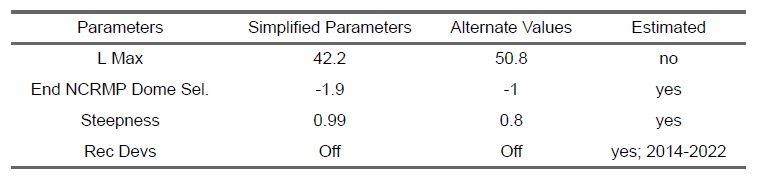
● The supplemental runs extend the terminal year from 2022 to 2024 and investigate alternative parameterizations for steepness, average length at maximum age, and the degree of dome-shaped selectivity for the NCRMP fishery-independent survey.
● The SSC is tasked with recommending whether the assessments represent Best Available Science, whether the results are useful for providing management advice and developing fishing level recommendations.
Island-based fishery management plans effective as of October 2022
● Puerto Rico Management Plan
● Annual Catch Limits for Stocks and Stock Complexes
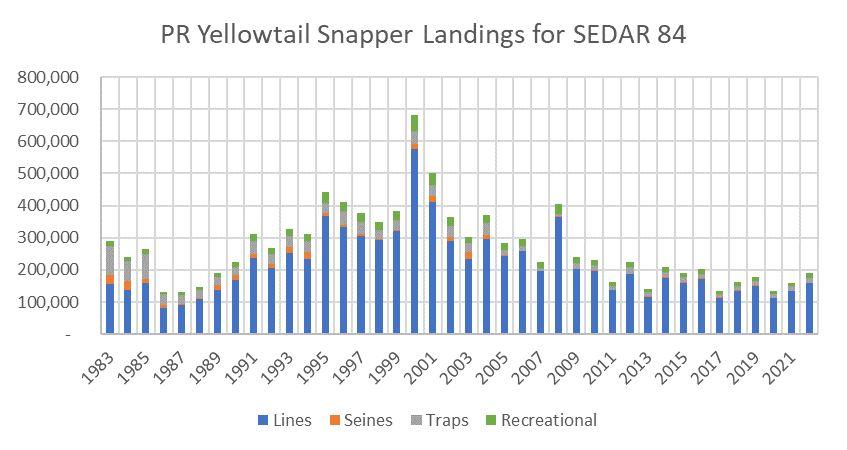
2022 ACL for Snapper 5 (Yellowtail Snapper)— 315,806 lbs
● 1988—2011 reference
● Based on commercial landings but applies to all harvest
● Accountability measures apply if ACL is exceeded
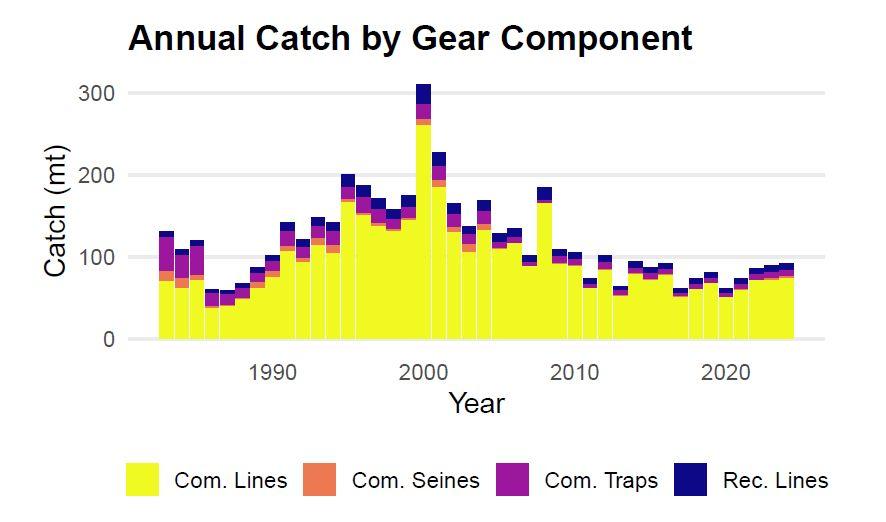
Recreational landings are calculated as 7.78% of the Commercial Lines landings, derived from 2012–2016 MRIPcomparisons
“The SYL represents a level of catch or yield that the Council’s SSC has confidence a stock can sustain through time based on historical trends in catch and the SSC’s evaluation of the best scientific information available, including life history information and analysis of the susceptibility of the stock to fishing pressure.”
Federal Size Limit
Size Limit ACL315,806 LBS SYL715,357 LBS ABC 357,678 LBS
● 1986 8-inches total length size limit; increased one inch per year
● 1989 12-inches total length size limit
● 1990 requirement for heads, fins, and tails to be landed intact
● 2005 FMP comprehensive amendment
● 2012 recreational bag limit 5 per person/day, and 15 per vessel/day
● 2012 ACL for Com. Puerto Rico Snapper 4 (Yellowtail Snapper) 373,295 lb (1999-2005 reference)
● 2012 ACL for Rec. Puerto Rico Snapper 4 (Yellowtail Snapper) 28,509 lb (2000-2005 reference)
● 2022 ACL for Snapper 5 (Yellowtail Snapper)— 315,806 lbs (1988-2011 reference)
● 1936 Law 83 banned the use of nets at river mouths
● 1998 Puerto Rico Fisheries Law Regulation 278 (amended in 2004, 2005, 2009, and 2010)
● 2004 10.5-inches fork length size limit
● 2004 beach seines were prohibited within PR inner waters and river mouths
● 2007 seines prohibited in jurisdictional waters
● 2010 seines prohibited only within PR inner waters and river mouths
1983-2003
2004-2010
2011-2023
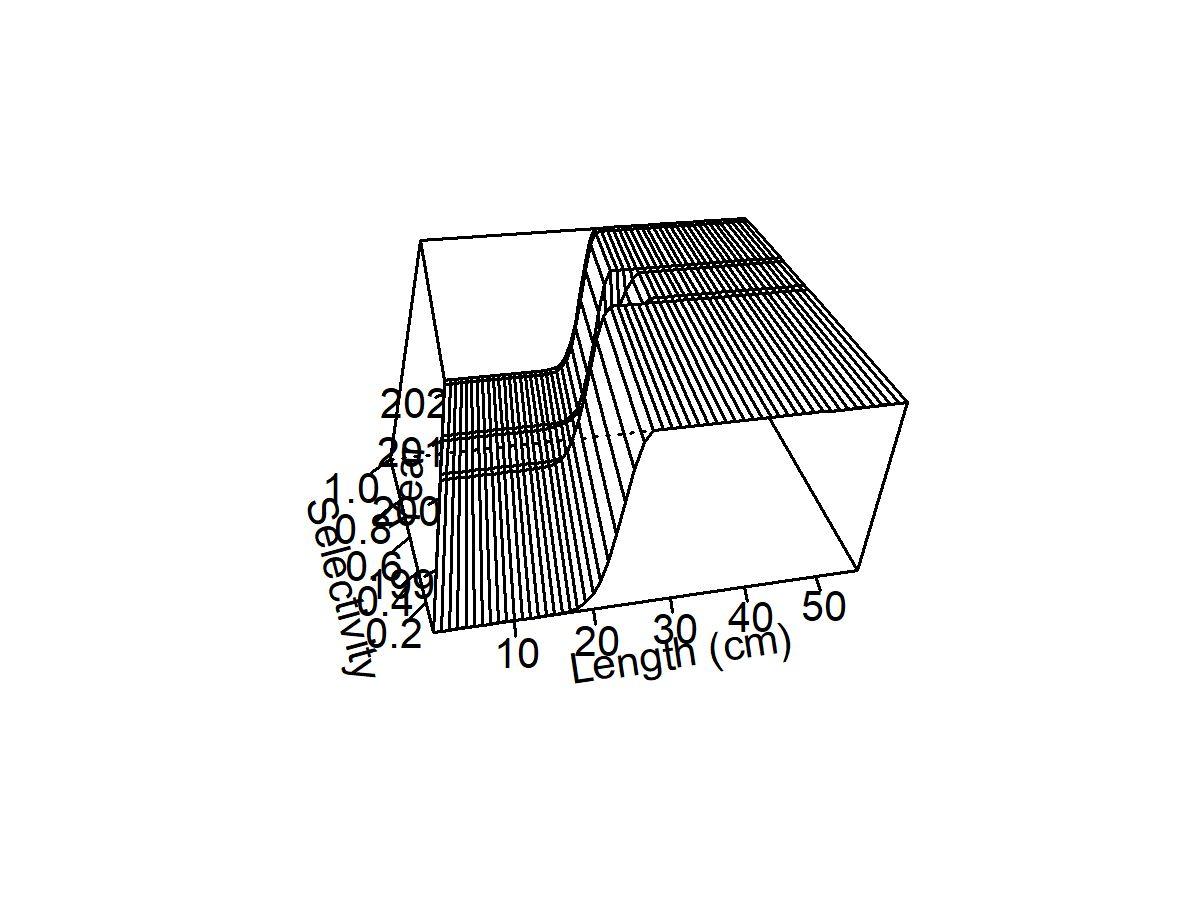
In 2004, a size limit of 10.5 inches fork length for yellowtail snapper was implemented under Regulation 6768 (DRNA, 2004). Additionally, in 2004, beach seines were prohibited within Puerto Rico inner waters and river mouths. The seines were also prohibited in jurisdictional waters beginning in 2007. In 2010, Puerto Rico DRNA issued Regulation 7949, which superseded Regulation 6768, and permitted beach seins except within Puerto Rico inner water and within 300 meters of rivers mouths (DRNA, 2010).
1992 Appeldoorn et al.
● Part of a broader reef fish assessment
● Used length frequency analyses
● Limited in scope and data resolution
● Explored CPUE trends and length frequency changes
● Insufficient data to reliably parameterize models
● Unable to determine stock status
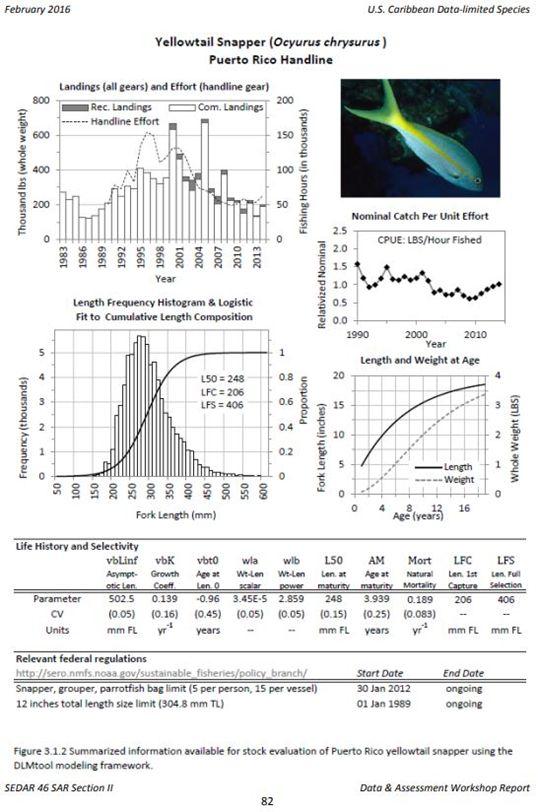
● Applied Data-Limited Methods Toolkit (Carruthers, 2018)
● Evaluated six species across island units
● Included Yellowtail Snapper in Puerto Rico
● Results ultimately not used for management advice
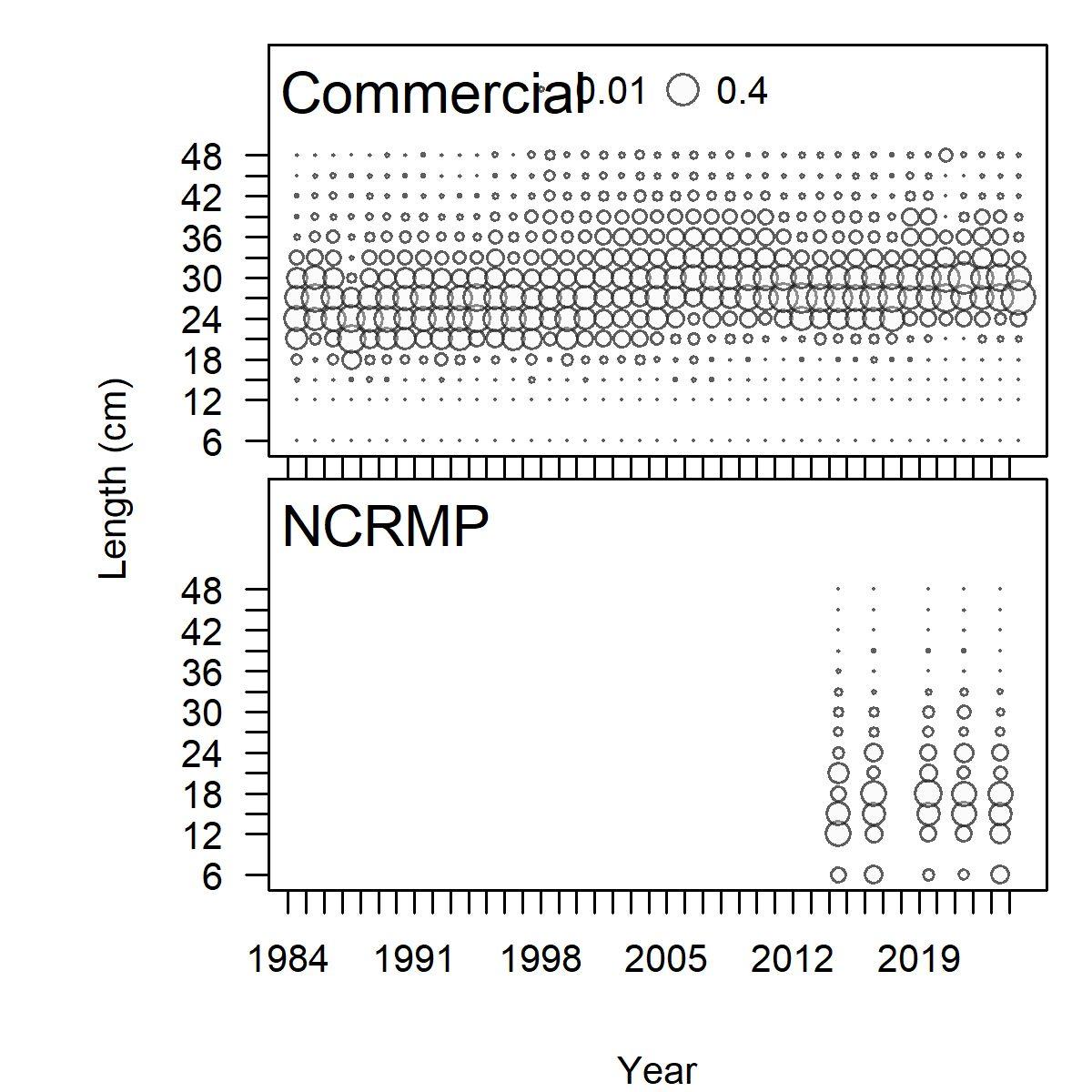
The Puerto Rico assessment models developed during S84 were fit to a catch time series for a single fleet, a fishery-independent index of abundance, and fishery dependent and independent length composition data using a data-limited to moderate implementation of SS3.
The Models presented in the Stock Assessment Report (SAR) were not found appropriate to use as a basis for advice by the CIE Reviewers.
● Models were deterministic and sensitive to fixed assumptions
● It was difficult to isolate and clearly identify the most influential sources of uncertainty
● Key uncertainties were identified, including: initial equilibrium catch, natural mortality (M), and steepness and population processes (growth, recruitment)
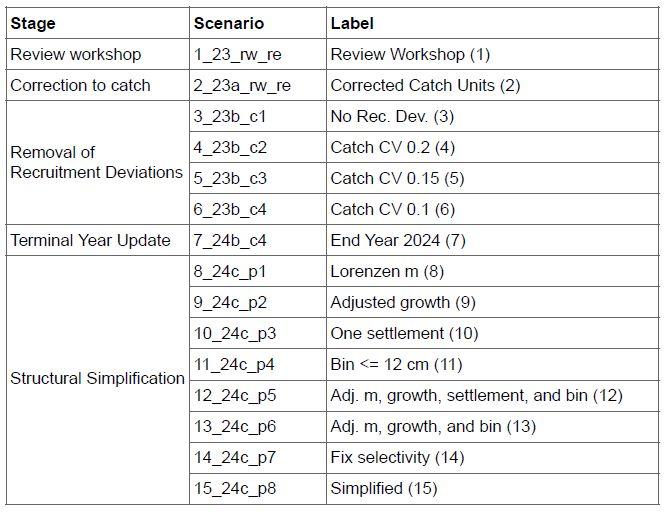
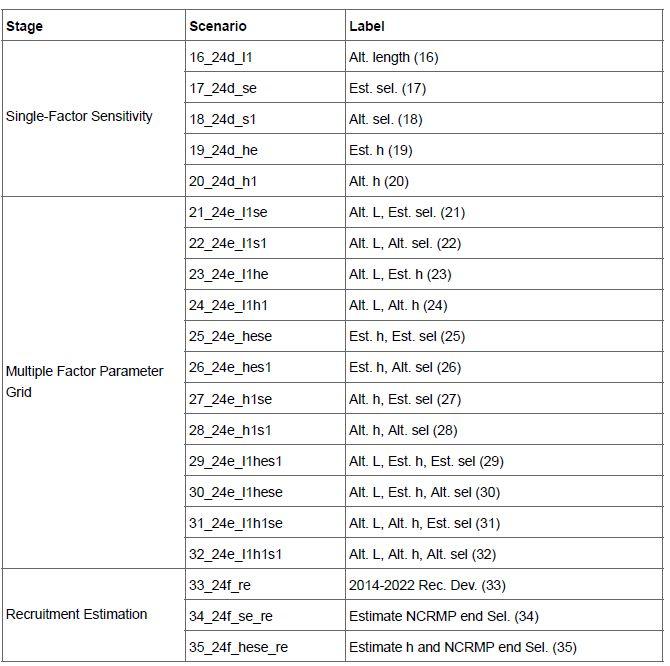
The SEFSC Caribbean Fisheries Branch conducted a phased exploration of the parameter space, and a data update through 2024.
● Landings from self-reported commercial fisher logbooks
● Length compositions from shore-based port sampling
● Length compositions from a fishery-independent survey of reef fish
● Index of abundance from a fishery-independent survey of reef fish
● Life history information from otolith analysis and gonad histology
● Use life history data made available in SEDAR working papers
● Use commercial landings data starting in 1983
● Use coast-specific expansion factors averaged across the years 2014-2019 as proxy expansion factors to calculate 2020-2022 commercial landings
● Consider uncertainty around the landings
● Identify and flag outliers
● Assume commercial discards are negligible
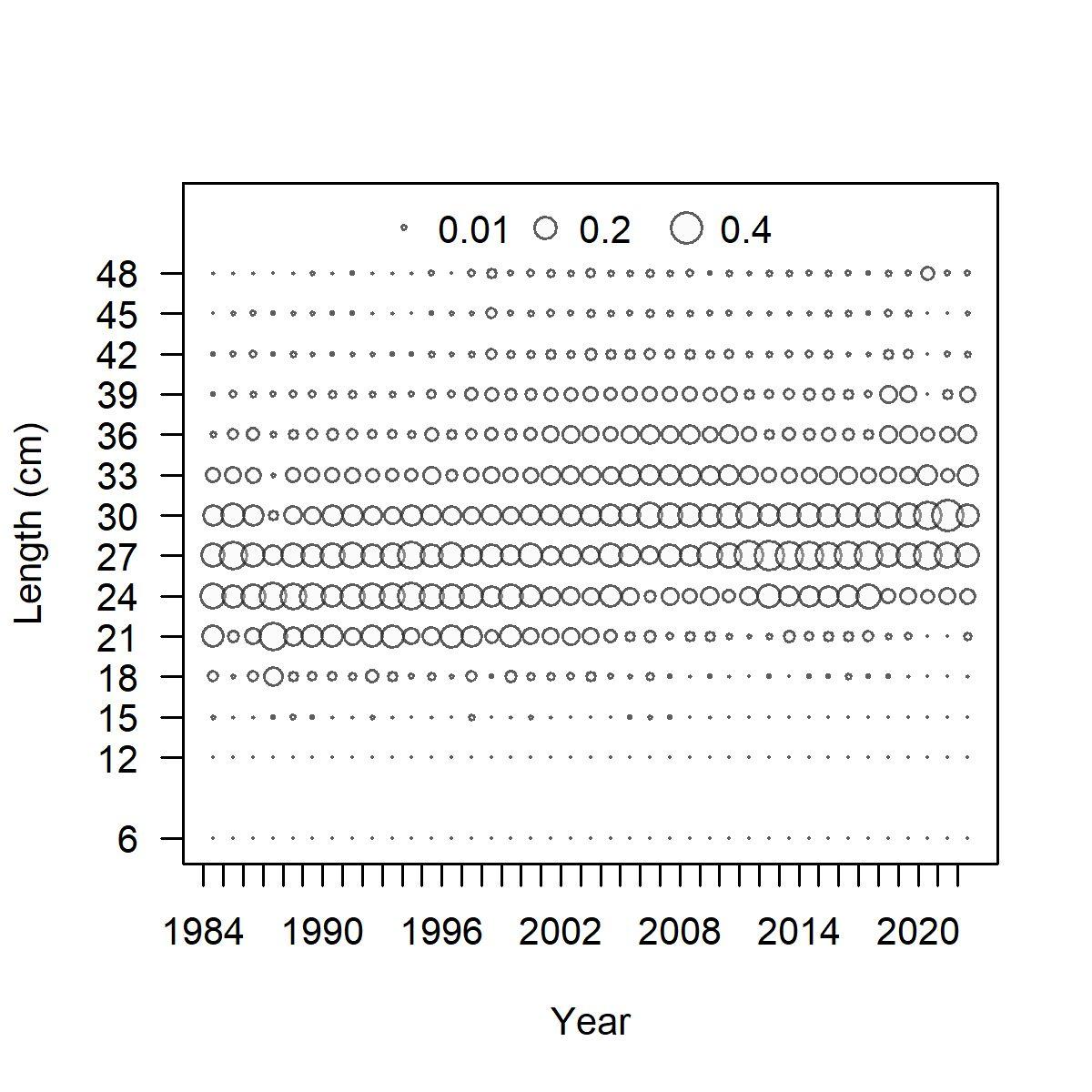
● Utilize TIP lengths from 1983-2022 to inform selectivity and annual population trends
● Use the NCRMP Yellowtail Snapper data for PR from 2014 to 2022
● Do not consider the fishery-dependent information for an abundance indices
● Assessment panel accepted landings outliers retained as valid trips
● Assessment panel accepted one combined commercial fleet configuration
● Stock Synthesis V3.30.22 was the modeling approach applied in the current SEDAR 84 assessment because of compatibility with the available data and consistency with standard practices. SS3 models configured with 1 area, 1 fleet, and 1 survey; 1983—2022; 40% SPR used as a proxy for MSY
Sensitivities tested using:
● Growth variability (CV on growth)
● Uncertainty in initial equilibrium catch
Diagnostics included:
● Gradients, residuals, likelihood profiles
● Retrospectives and jitter analyses
Began with data-limited models using super-period length compositions
● Steepness fixed at 0.99
● Sigma R fixed at 0.7
Model progression tracked biological/data complexities:
● Adjusted length at age zero
● Continuous recruitment
● Increased catch uncertainty
Progressed to data-moderate models incorporating:
● Abundance indices
● Annual fishery-independent length compositions
● Annual fishery-dependent length compositions
● Dome-shaped fishery-independent selectivity
● Time blocks
● Recruitment deviations
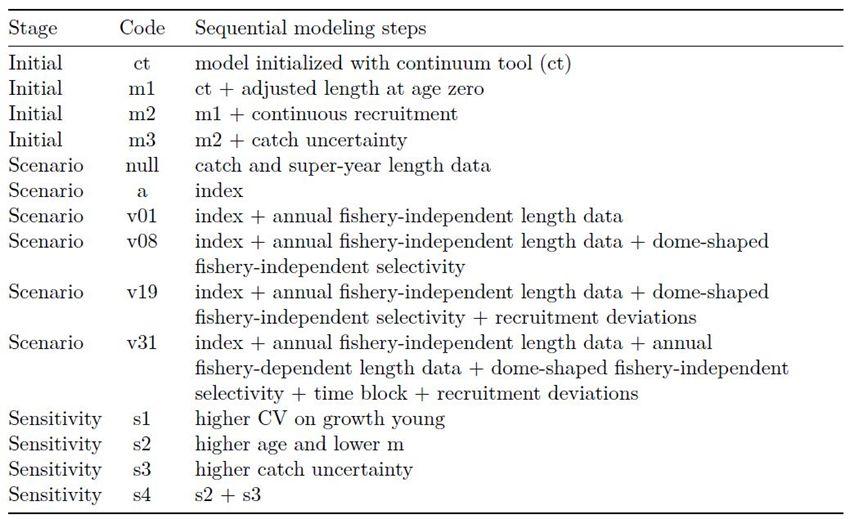
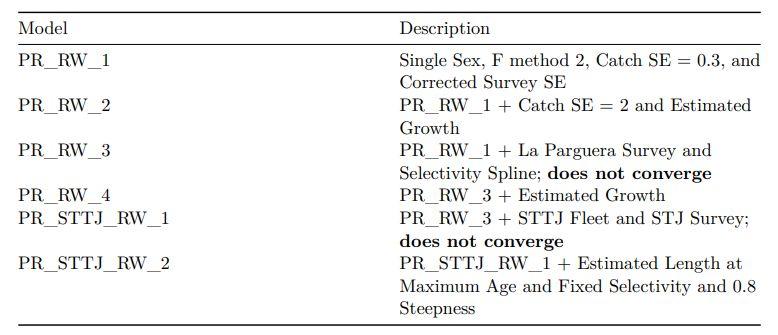
sensitivity runs
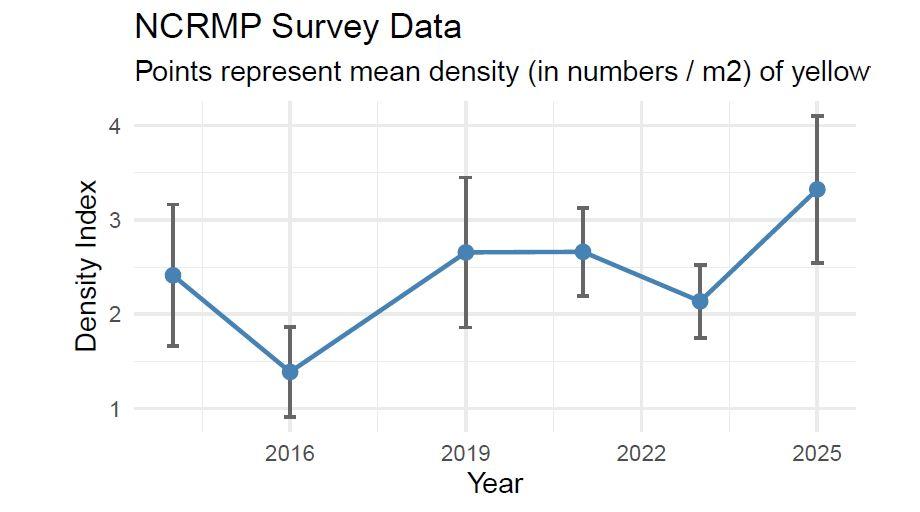
Points represent the mean annual density, with error bars indicating the 95% confidence interval. 2024 models do not include the NCRMP data for 2025.
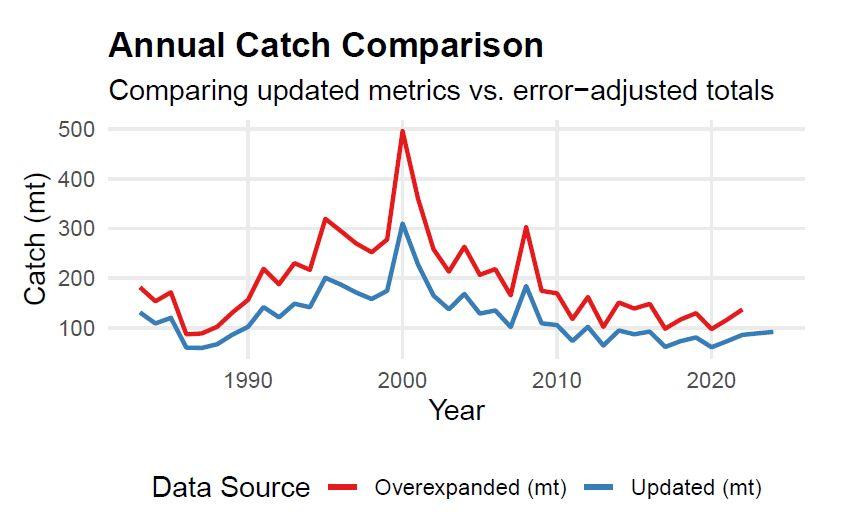
Landings Correction
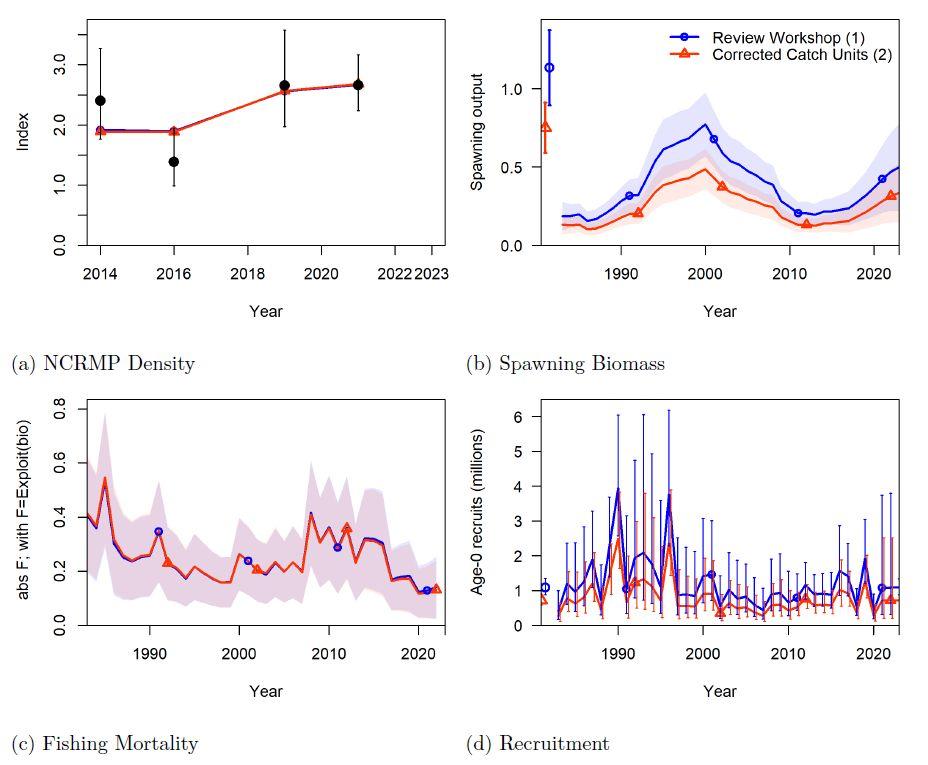
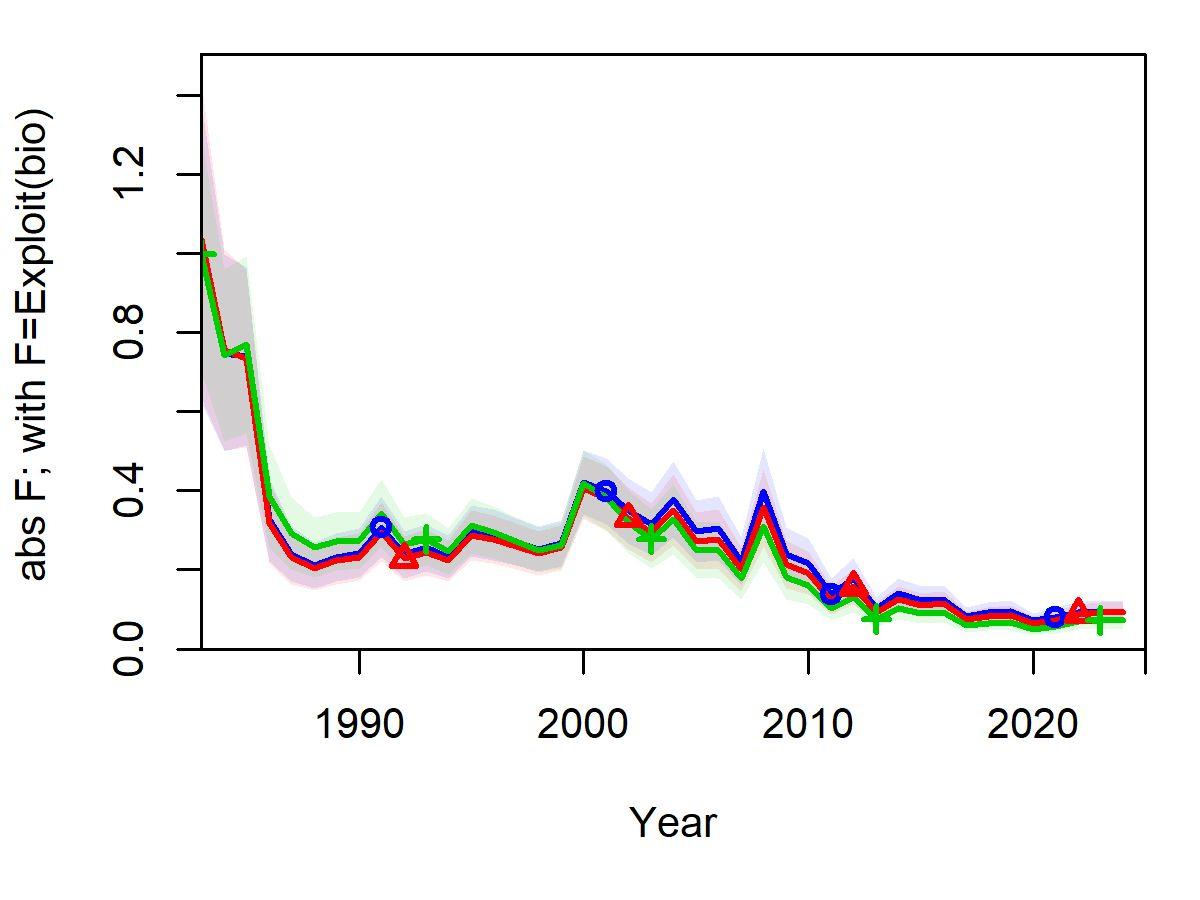
Puerto Rico Yellowtail Snapper derived quantity time series compared between the Review Workshop Model 1 (blue), as presented in the SEDAR 84 Stock Assessment Report Addendum, and of that model with corrected units for recreational catch (red).
Observed (dotted) and expected landings (solid) in metric tons.
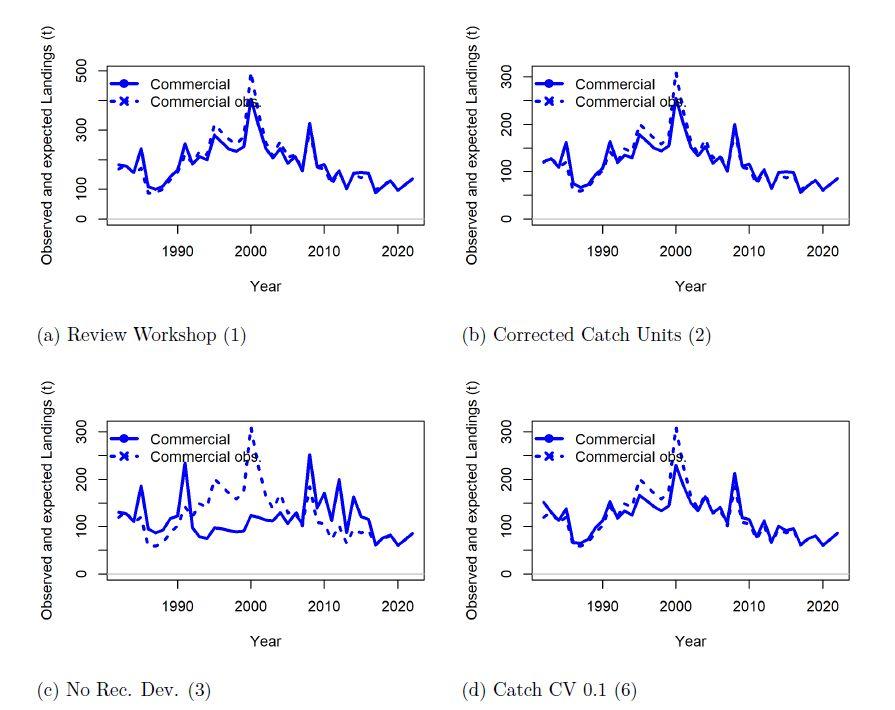
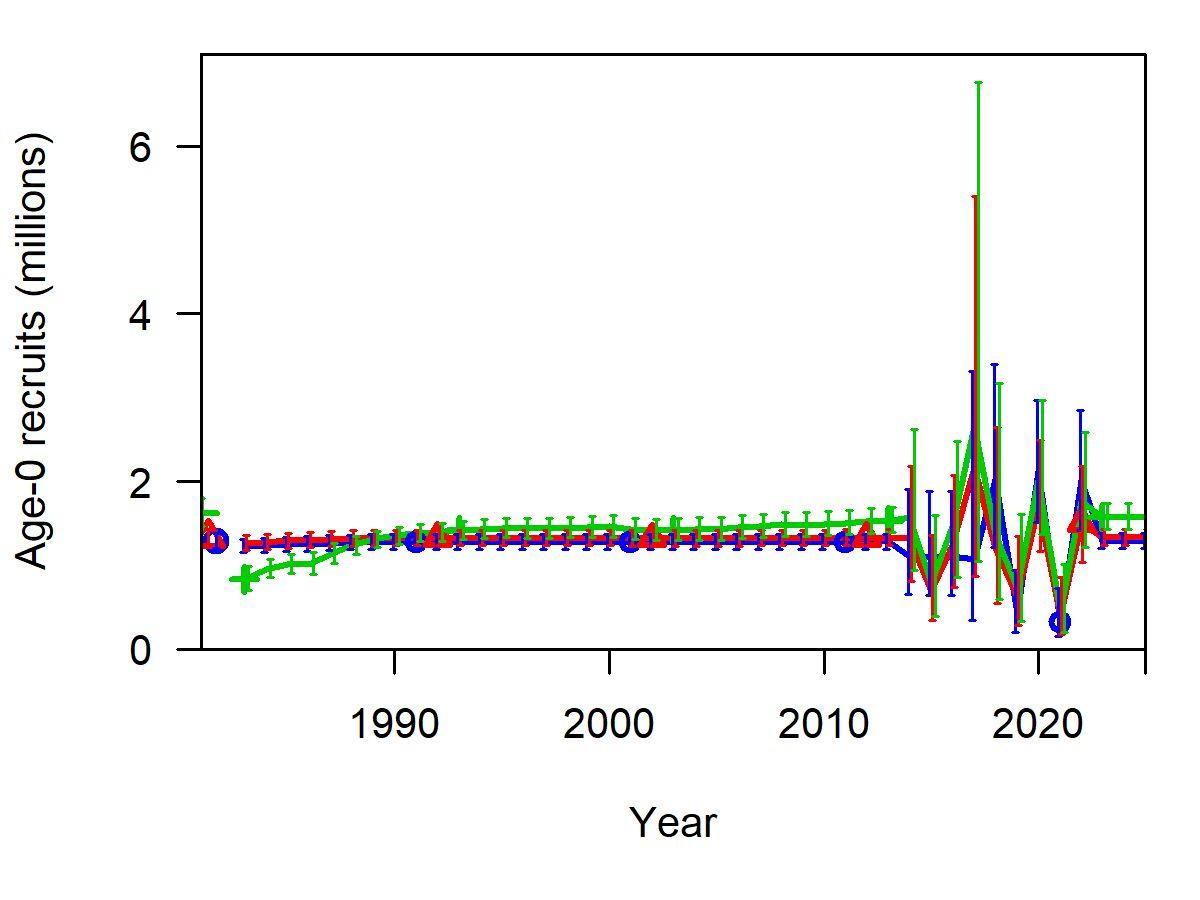
Deviations
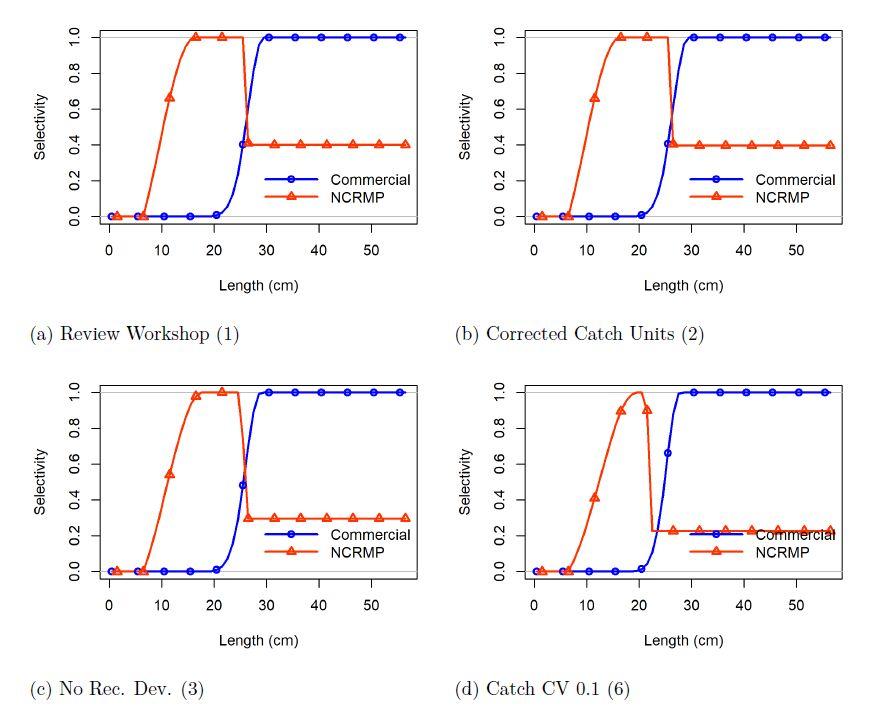
Selectivity at length for the commercial fleet (blue) and NCRMP (red)
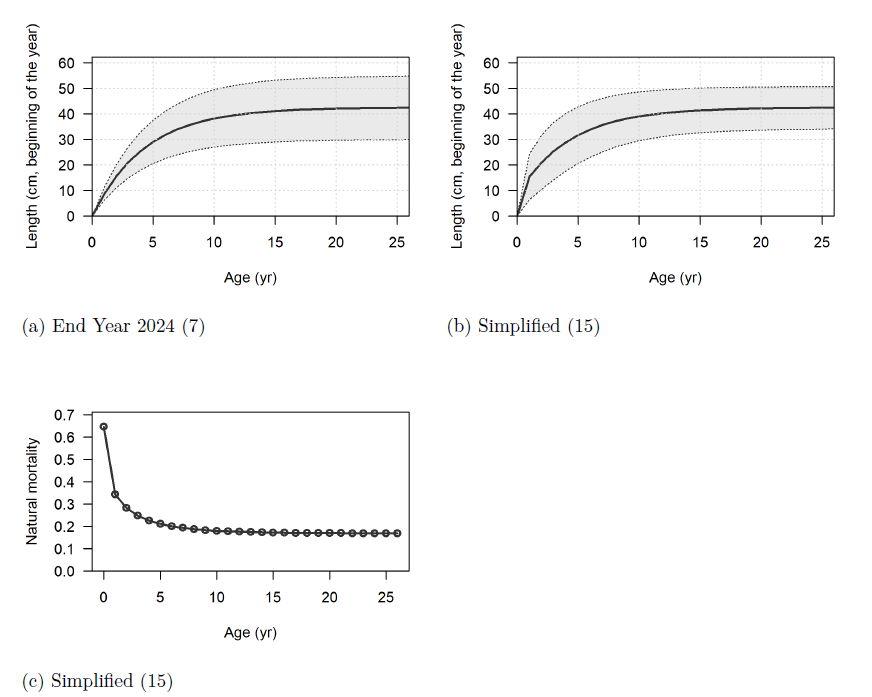
Length at age (top) and Natural mortality at age for all models after adopted changing from a single natural mortality applied equally to all ages, to a Lorenzen mortality curve that scales the overall natural mortality to be higher for younger ages.
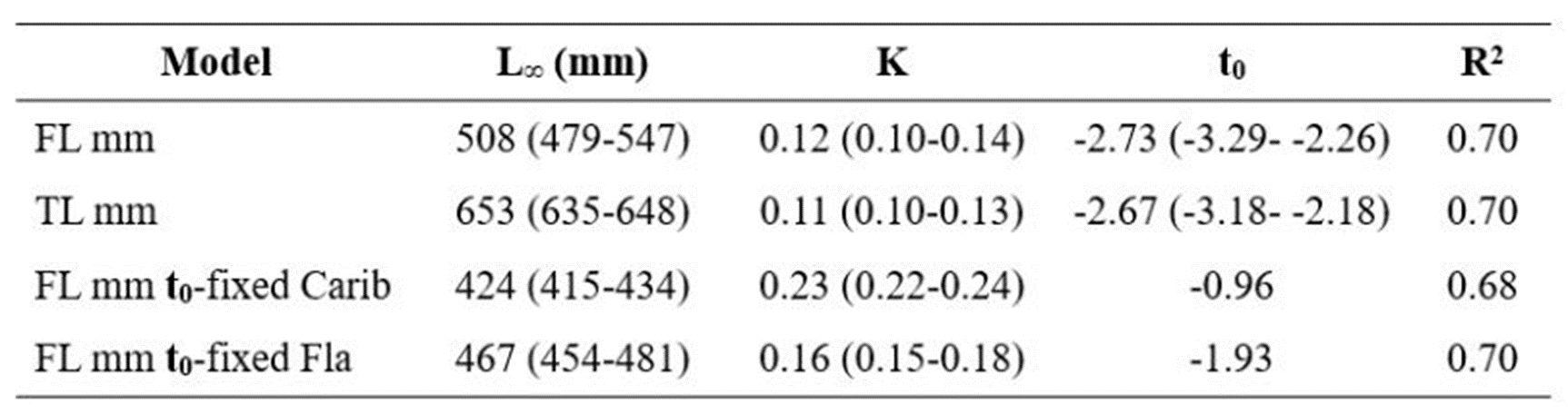
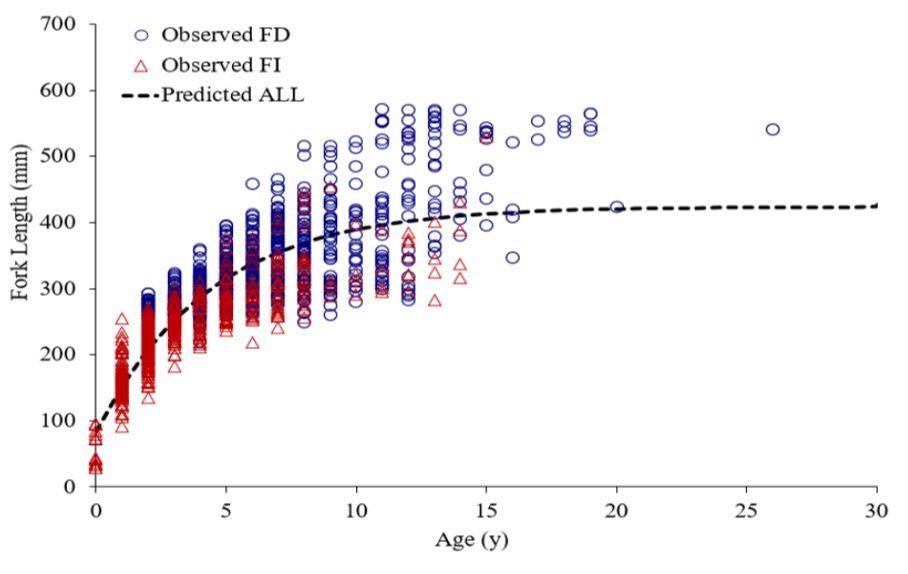
SEDAR 96 Southeastern USYellowtail Snapper reports a lower L-infinity of 42.3, k = 0.207 and t0 = -1.636 and a lower maximum age of 20
50.8 Lat a_max
42.4 Lat a_max
12” Fork Length Size Limit (30.5 cm)
Additional sensitivity runs
Terminal Year Update, Structural Simplification & Recruitment Estimation
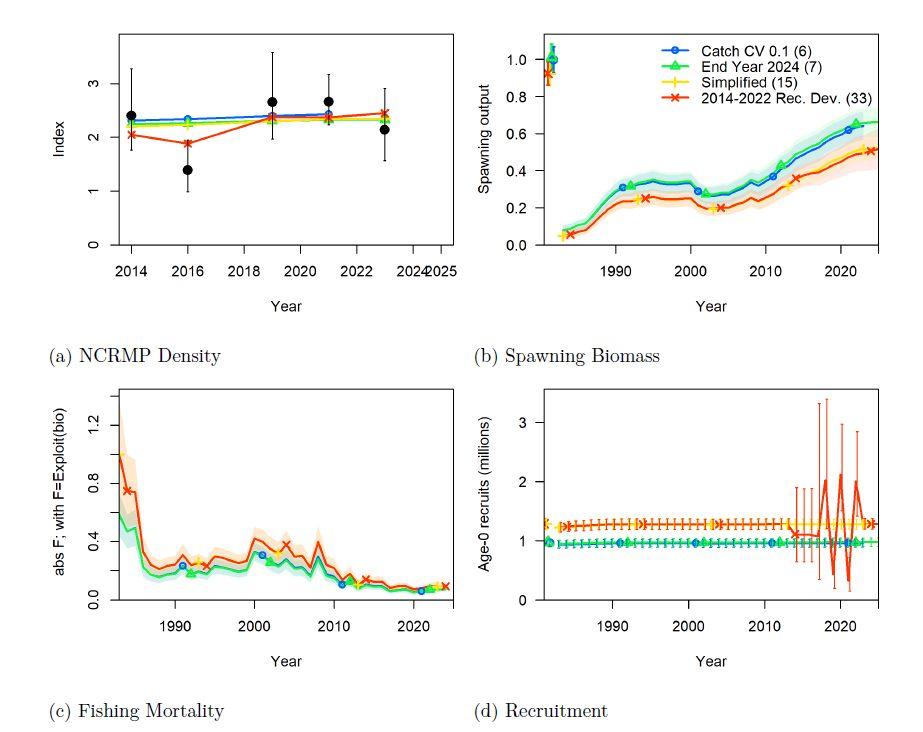
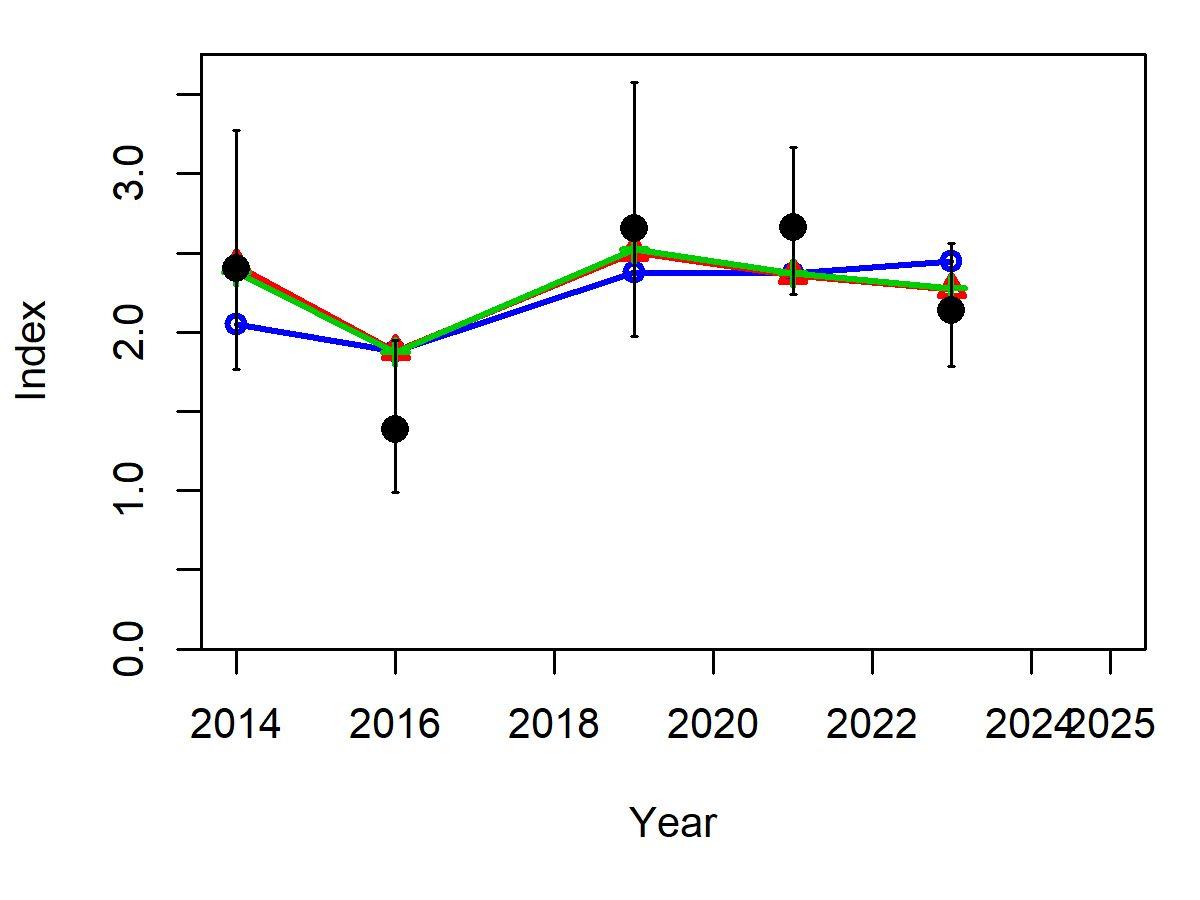
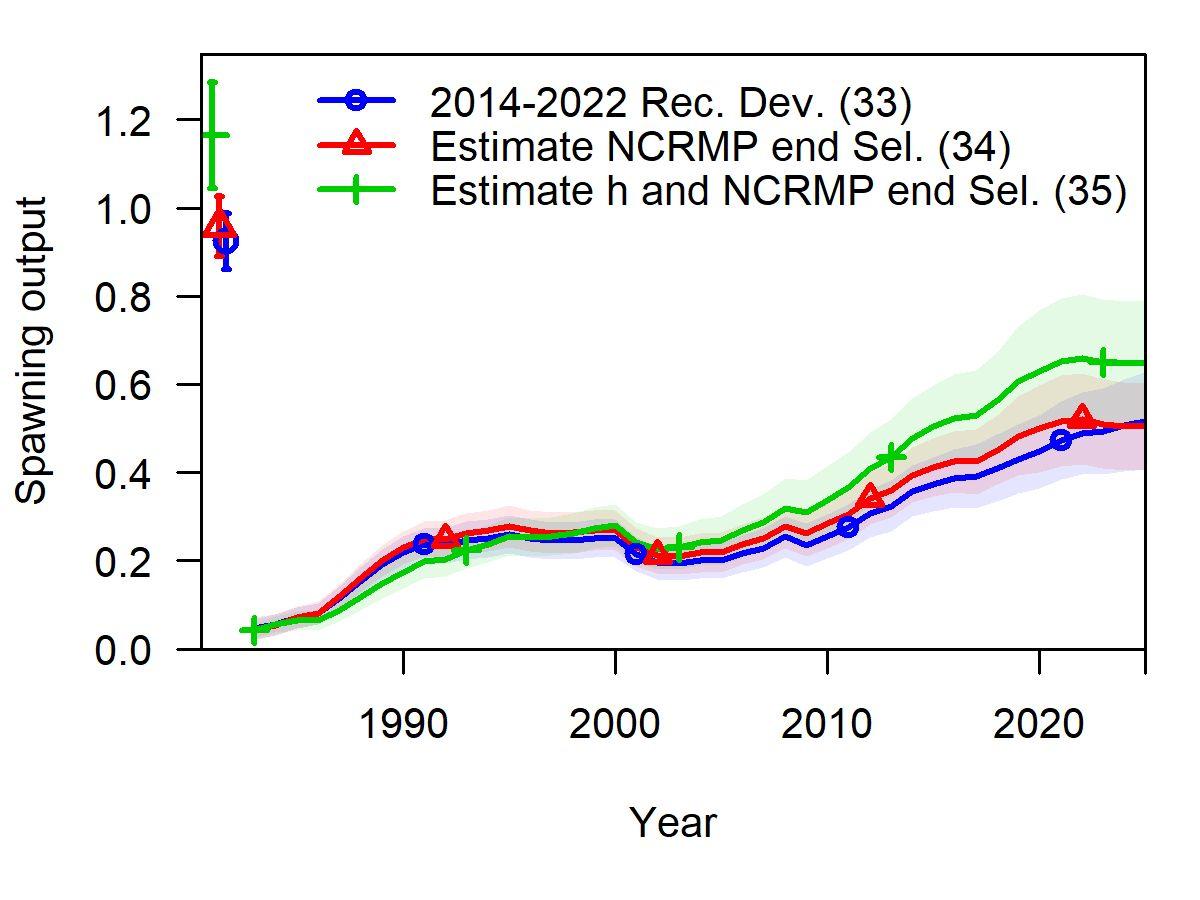
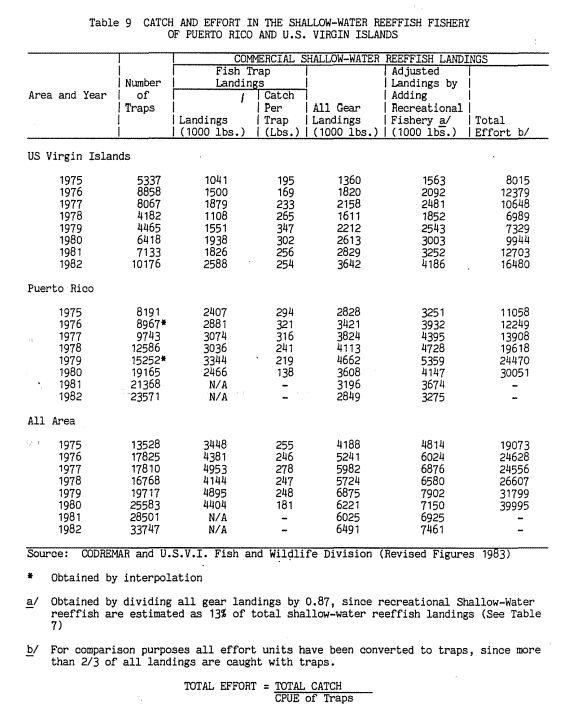
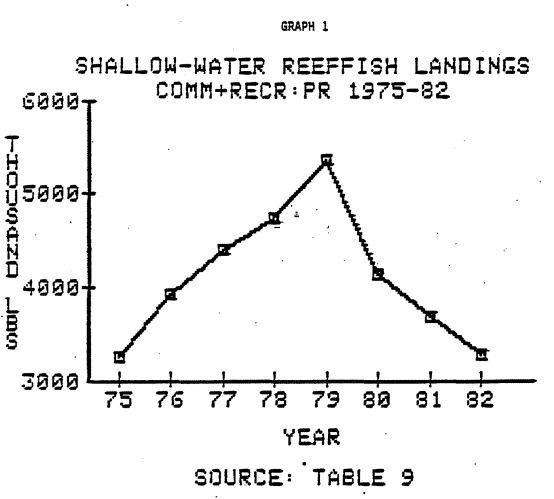
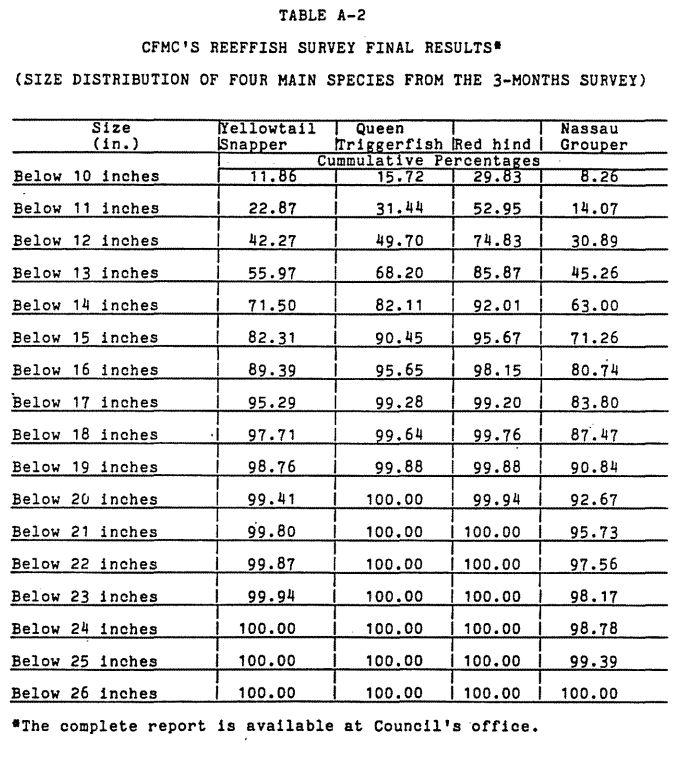
“According to fishermen interviewed in the fact-finding meetings, yellowtail snappers are being landed at a smaller size than in previous years. The survey conducted by the Council on length-weight frequencies shows that 42 percent of yellowtail snapper landings are less than 12 inches (Table A-2, Appendix I).” [Total Length]
Necessary assumptions for recent landings (2025 & 2026)
P* = 0.45 CFMC input for management uncertainty
σ = 0.5 SSC input scientific uncertainty