Modification of Accountability Measures for Pelagic Stocks under the IslandBased Fishery Management Plans
DRAFT Options Paper, April 2026
1.1 Background
Pelagic stocks under each of Puerto Rico, St. Croix, and St. Thomas/St. John Fishery Management Plans (Island-based FMPs) are relatively new to federal management (Tables 1-3) (CFMC 2019 a, b, c). The Council relied on existing landings data to develop management reference points for pelagic fish included in the FMPs. However, it is uncertain if this data fully represents the actual harvest. Because these stocks were not federally managed before and may not have been included on the commercial catch report forms, data on some stocks may have been less complete, likely missing key temporal and spatial variations in the fisheries.
Reflecting economic and cultural considerations guiding the harvest of pelagic stocks in all three islands, the Caribbean Fishery Management Council (Council) adopted a different approach to manage pelagic stocks until a more complete understanding of these important fisheries is obtained (CFMC 2019 a, b, c). As required under the Magnuson-Stevens Fishery Conservation and Management Act (Magnuson-Stevens Act), the Island-based FMPs established annual catch limits (ACLs) and accountability measures (AMs) for all pelagic stocks. However, instead of applying an AM in the event of an ACL overage that reduces the length of the fishing season to prevent the ACL from being again exceeded, as is done for reef fish and spiny lobster, the Council established an annual catch target (ACT) that would serve as the AM trigger, as described below, and specified that NMFS would consult with the Council to determine appropriate corrective action.
1.1.1 Current AMs applicable to Pelagic Stocks under the Island-based FMPs
AM trigger
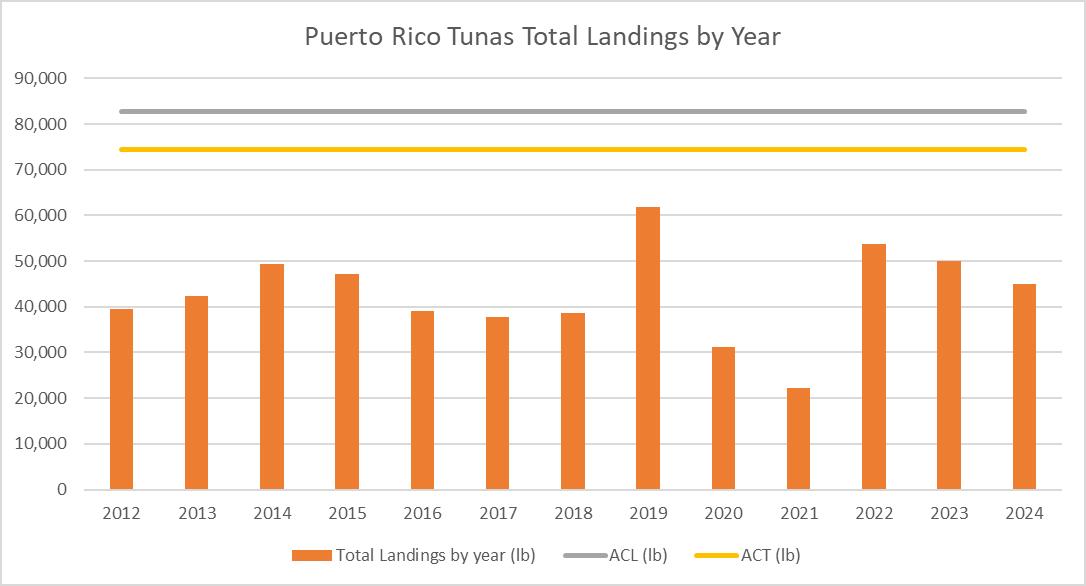
The ACTs were established to address uncertainty in the landings of these species, all of which were new to management under the Island-based FMPs. This use of an ACT is consistent with the Magnuson-Stevens Act National Standard 1 Guidelines. The ACT for each pelagic stock or stock complex serves as a target below the ACL, and is intended to provide stability for fisheries with variable catches. The ACT for each pelagic stock/stock complex in all three FMPs was set at 90% of the applicable ACL and serves as the AM trigger.
As discussed in the Island-based FMPs, an AM would be triggered if the applicable landings (e.g., sector landings, as available) exceed the applicable ACT for that stock/stock complex. For Puerto Rico, when landings for one sector are not available for comparison to that sector's ACL
and ACT, the ACL and ACT for the sector with available landings are compared against that sector’s ACL and ACT for the stock or stock complex to determine if corrective action is needed for both sectors (see process for applying AMs below). The St. Croix and St. Thomas/St. John FMPs do not establish sector-specific ACLs or ACTs.
Application of AMs for Pelagic Stocks (Puerto Rico, St. Croix, St. Thomas/St. John)
At or near the beginning of each fishing year, landings for each stock, stock complex, or indicator stock are evaluated relative to the applicable ACT(s) for the stock or stock complex based on a moving multi-year average of landings, as described in the FMP. If NMFS estimates that landings exceeded the applicable ACT for a stock or stock complex, NMFS in consultation with the Council determines the appropriate corrective action.
Under the Island-based FMPs, 2026 marks the first year that pelagic species were monitored against the ACT using a three- year average of commercial landings. This replaces use of a single year or two- year average during the initial years of management, and should better account for annual outliers and fluctuations in landings.
Annual Catch Monitoring Process
Step 1. As soon as landings are available each year, Southeast Regional Office (SERO) staff compares each pelagic stock/stock complex's landings to the applicable ACT.
➔ If landings < ACT, then no further action is required.
➔ If landings > ACT, then NMFS notifies the Council of the overage.
Step 2. Although not required by the AM, SERO staff sends a summary memo listing those pelagic stocks with ACT/ACL overages to the Southeast Fisheries Science Center (SEFSC) for review.
Step 3. NMFS and the Council discuss and determine appropriate corrective action.
1.1.2 Why is the Council proposing to modify Pelagic AMs?
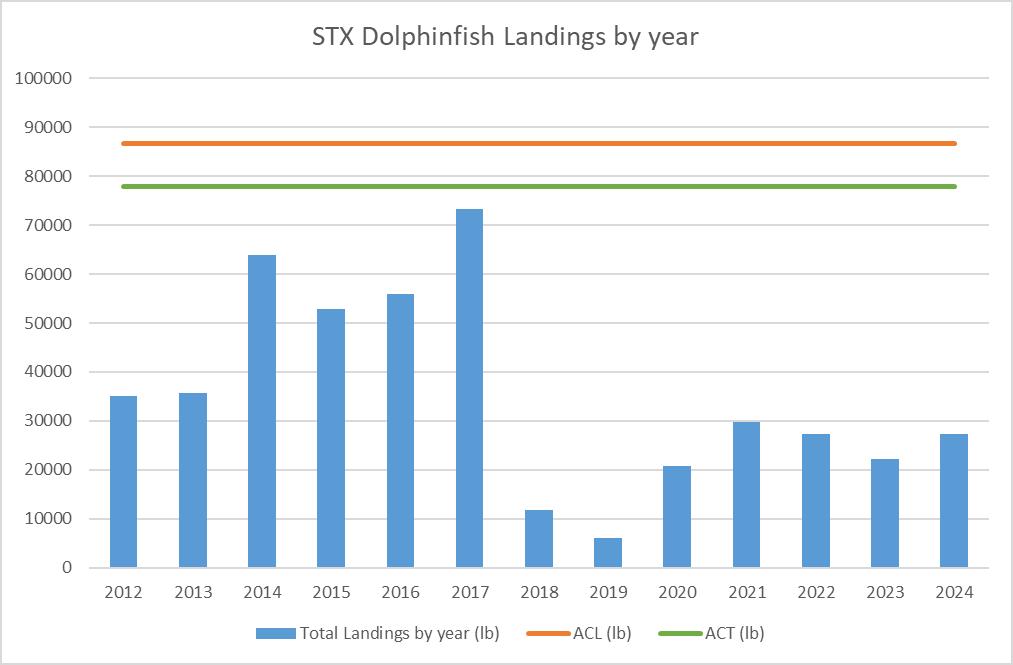
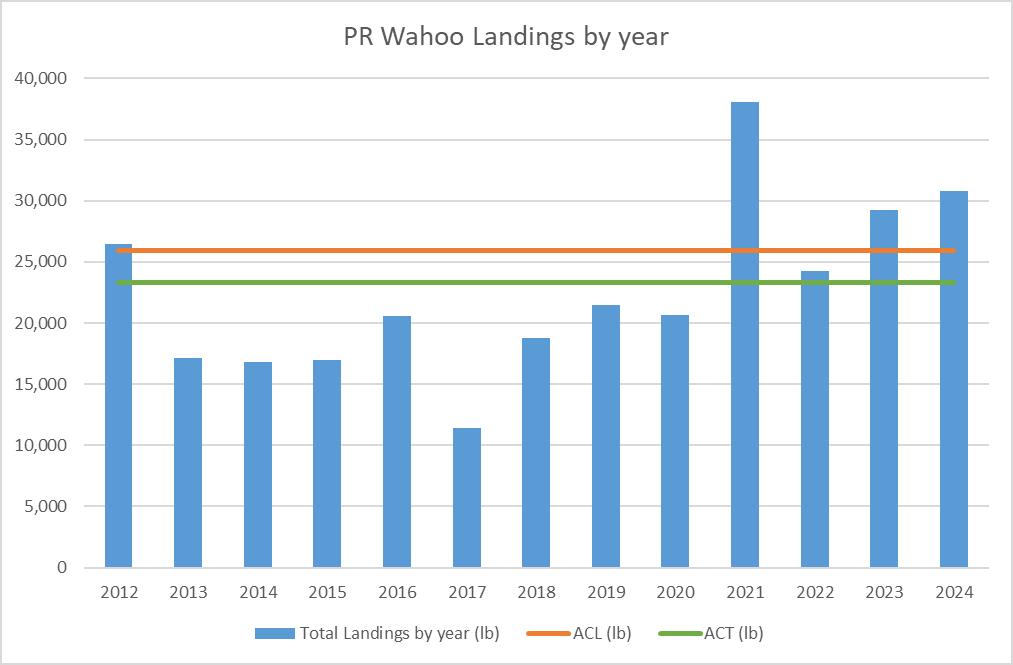
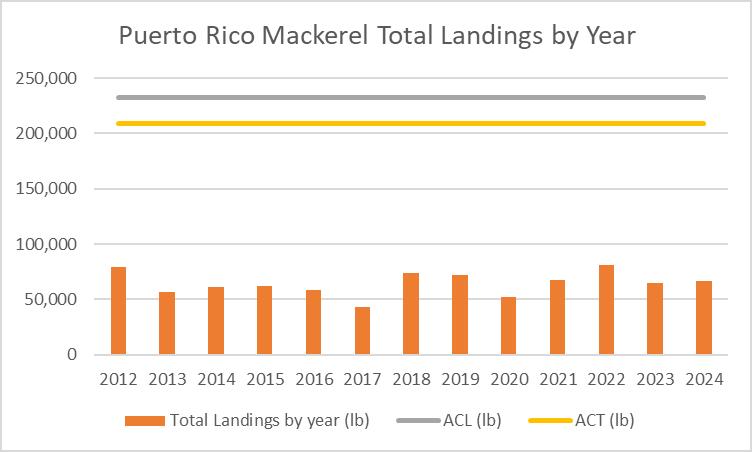
Landings exceeded the applicable ACT and ACL for some pelagic species in the three years since they have been federally managed (Tables 1-3), triggering the need for NMFS and the Council to discuss and determine appropriate corrective actions. No corrective action has been taken to date because specific AM actions are not currently identified in regulations and because the process requiring NMFS to consult with the Council to determine appropriate corrective action limits the ability to implement corrective actions in a timely manner. Also, given that the lag in the availability of landings data prevents the implementation of in-season corrective actions based on ACT overages, there is a need to review whether the ACT is effectively serving its purpose as a management buffer.
During the August and December 2025 Council meetings, the Council’s District Advisory Panel representatives expressed concern about the low ACLs and ACTs established for some species and the appropriateness of potential AM corrective actions due to the seasonal nature of pelagic fisheries. Council members also noted that in July 2025, NMFS implemented size limits for all dolphin and wahoo harvest, as well as recreational bag limits for both species, and the effects of these measures have yet to be fully observed. While these are proactive actions intended to limit or slow down harvest, they do not guarantee that an ACT/ACL will not be exceeded. Size limits are designed to protect juvenile fish and spawning potential, and likely reduce catch by a small percentage (i.e., the undersized portion). In contrast, bag limits may result in a higher number of discards and can have more severe, year-round socio-economic impacts, particularly on the charter industry (See CFMC 2024). Commercial trip limits, also under discussion, serve to slow the pace of harvest but may lead to regulatory discards and an increase in total trips. If the frequency of trips increases, the total catch could still exceed biological limits.
In conclusion, there was agreement among Council members that any corrective actions taken to address an ACL overage should be biologically beneficial, minimize adverse socio-economic impacts to the extent practicable, and be enforceable with the available resources while incentivizing compliance and ensuring it can be effectively monitored.
Due to the pelagic nature of these species, it is important for the Council to develop a trigger that adequately accounts for expected variability in catch rates, and to explore actions that would effectively correct ACL overages. For example, the trigger could incorporate additional consideration of trends in the landings over the three- year period to inform determinations.
● Proposed Action 1: Modify the AM trigger to provide greater confidence that corrective action is required.
● Proposed Action 2: Define one or more corrective actions that could be implemented to confidently constrain catches in those instances where ACLs for pelagic species are exceeded and corrective action is needed.
In summary, the goal of this action is to develop effective and practical management controls to prevent ACLs from being exceeded and to correct or mitigate overages when needed. Specific corrective actions should meet the following criteria:
● Minimize socio-economic impacts: Minimize socio-economic impacts on both commercial and recreational fishers as much as possible.
● Constrain catch: Effectively constrain catch to prevent future exceedances of the ACL.
● Ensure accountability and administrative practicality: Measures should be enforceable using currently available resources and not administratively burdensome or complex to ensure effective regulatory implementation.
Table 1. Summary of Current Management Measures for Puerto Rico Pelagic Species and recent ACL overages.
Dolphin (indicator) & pompano dolphin No Yes (for dolphin only Federal) No
Wahoo
King & Cero Mackerels
Great Barracuda No No No; also no sale is allowed in PR state waters No
Blackfin tuna & Little tunny No No No
1Note that although not specific to any of these species, seasonal area closures in Tourmaline Bank and Abrir La Sierra management areas off the west coast of Puerto Rico prohibit fishing for all species from December 1 through the last day of February, each year. These management areas are important fishing grounds for many of these pelagic species.
*Note that rainbow runner will be managed as a pelagic species under the Puerto Rico FMP after NMFS completes the rulemaking that implements Amendment 4 reclassifying the species.
Table 2. Summary of Current Management Measures for St. Croix Pelagic Species and recent ACL overages
Dolphin No
Wahoo No
only Federal No
No overages
1Note that although not specific to any of these species, seasonal area closures in Lang Bank and Mutton Snapper SPAG area in St. Croix prohibit fishing for all species from December 1 through the last day of February, each year in Lang Bank and from March 1 through June 30 in Mutton SPAG. These areas are important fishing grounds for these pelagic species.
Table 3. Summary of Current Management Measures for St. Thomas/St. John Pelagic Species
2022: 102% No overages: 2022-2023 avg 2022-2024 avg Wahoo No
only
No overages
& State)
1Note that although not specific to any of these species, the seasonal area closure in Grammanik Bank in St. Thomas prohibits fishing for all species from February 1 through April 30 each year. This area is an important fishing ground for these pelagic species.
2.1 Action 1: Options for modifying the AM Trigger
Option 1 (No action): Retain Current AM trigger: Evaluate landings relative to the applicable ACT based on a moving multi-year average of landings, as described in the FMP. If NMFS estimates that landings have exceeded the applicable ACT, NMFS in consultation with the Council will determine appropriate corrective action.
Option 2: Evaluate landings relative to the applicable ACL based on a moving three- year average of landings. If average landings, as estimated by NMFS, exceed the ACL, apply the AM.
Option 3: Evaluate landings relative to the applicable ACL based on a moving three- year average of landings. If average landings, as estimated by NMFS, exceed the ACL, NMFS will consider landings trends and any other best scientific information available (BSIA) in determining if corrective action is necessary to prevent another overage.
Table 4. Summary of Potential Options for Action 1 with a list of pros and cons.
Option
1. No Action - Retain Current AM; evaluate landings against ACT
Pros
● No administrative changes.
● Provides flexibility to determine case-specific corrective actions.
2. Evaluate average landings against ACL, without additional NMFS review process (e.g., no trends evaluation)
3. Evaluate average landings against ACL, with additional NMFS review process (e.g. trends evaluation).
● AM monitoring is based on the ACL, not the ACT.
Cons
● AM monitoring is based on the ACT, not the ACL, and ACT is not serving its intended purpose.
● Delayed implementation of corrective actions creates potential for adverse impacts to affected species.
● Absence of a trend-evaluation process increases the likelihood of corrective action being implemented.
● Administrative changes needed.
● AM monitoring is based on the ACL, not the ACT.
● Provides flexibility to consider additional data and information before determining if corrective action is needed versus triggering mandatory action.
● Provides flexibility to determine case-specific corrective actions.
● Administrative changes needed
● Delayed implementation of any needed corrective actions creates potential for long-term adverse impacts to affected species.
2.2 Action 2: Options for Specifying AM Corrective Actions for Pelagic Species (Table 5)
Option 1 (No action): Retain the current AM, which does not specify a corrective action.
Option 2 (Seasonal Closure): In the year following a determination that the ACL has been exceeded and corrective action is necessary, reduce the fishing season for all sectors by the amount necessary to constrain catch to the ACL. Any fishing season reductions would apply only during the year following an ACL overage.
Sub-options (Fixed Start Date/Variable Duration): Implement a closure of variable length based on the overage amount, starting on a fixed date (e.g. end on Dec 31, end on Sep 30, start on Jan 1, etc).
Notes on Option 2:
● The seasonal closure period could be the same for all species or vary by species.
● See Tables 5-6 below and Appendix A for information about seasonality and effects for all species.
○ For example, for dolphinfish in Puerto Rico, an August-October AM closure aligns with the biology of the species and protects recruits allowing them to mature before the winter "North Coast run." Since this period is a natural seasonal lull with lower availability, the economic impact may be minimal (fishers already shift to other species). Ultimately, this reduces early season-pressure supporting the later arrival of larger fish in the South from February to April. However, because these months have lower landings, depending on the overage amount, a closure during this time may be longer than a closure during a higher landings period.
Option 3 (Bag Limits and Trip Limits): Adjust or establish recreational daily bag limits and implement commercial trip limits (Dolphin/Wahoo in PR and/or USVI; all other species in PR) to constrain catch to the ACL following a determination. Any measures would apply only during the year following an ACL overage.
Sub-option 3a: Modify recreational bag limits and implement commercial trip limits for Dolphin and/or Wahoo (applicable to PR and USVI).
Sub-option 3b: Implement recreational bag limits and commercial trip limits for other pelagic species managed under the Puerto Rico FMP.
Notes on Option 3:
● This option would need to be applied to both commercial and recreational fishers for effectiveness and fairness.
● Commercial trip limits in general were rejected under Amendment 3 (CFMC 2024).
● Recreational bag limits were recently implemented for dolphin and wahoo, but not considered for other species.
Option 4 (Size Limits): Adjust existing size limits or implement new ones to constrain catch to the ACL for the year following a determination. Any adjusted/implemented size limit would apply only during the year following an ACL overage.
Sub-option 4a: Modify size limits for dolphin and/or wahoo (for PR and USVI).
Sub-option 4b: Implement size limits for the pelagic species that do not currently have one (i.e., great barracuda, blackfin tuna, little tunny, king mackerel, cero mackerel, tripletail) (Puerto Rico only).
Table 5. Summary of Potential Options for Specifying Corrective Actions in Action 2 with draft effects.
Criteria
Option 2: Seasonal Closure (fixed date/length; fixed start date/variable length)
Stock Protection
High - stops all directed mortality; effective in constraining total catch
Option 3a: Recreational Bag Limits (e.g., lowering current bag limits; implement new bag limits) and
Low - limits the harvest but increases discards (may not be recorded in landings); - does not constrain landings to ACL by itself (i.e., landings need to be constrained in both sectors)
Option 3b (Cont.): Implement a Commercial trip limit
Option 4: Size Limits (adjust or implement size limits)
Low - only slows harvest; - does not constrain landings to ACL by itself (i.e., landings would need to be constrained in both sectors)
Implementing a minimum size ensures every fish spawns at least once before harvest but will not correct an ACL overage by itself (Catch reduced by a small % (i.e., the undersized portion).
- Highly species dependent
Criteria
Option 2:
Seasonal Closure (fixed date/length; fixed start date/variable length)
Data Requirements and monitoring
Socioeconomic Impact
None - works without monitoring
Option 3a: Recreational Bag Limits (e.g., lowering current bag limits; implement new bag limits) and
High - requires catch estimation. - Without more robust recreational monitoring, it is challenging to show specific impact the bag limit has had on the population.
Option 3b (Cont.): Implement a Commercial trip limit
Option 4: Size Limits (adjust or implement size limits)
Enforcement tools and Enforceability
Lower impact
- Applies equally to all fishers - May preserve peak season value
- Socio-economic impacts to fishers could be concentrated in a slow period and be planned around
High - At-sea possession, easier to enforce
High impacts
- Affects yearround charter value, but can still fish, just catch less fish
Requires real time data
High - requires ongoing monitoring (length frequencies)
- May affect market orders - Short term revenue loss but long term gains - Regulatory confusion if changes are needed.
- Requires a quantity check at dockside or at sea; - Difficult to enforce
LowDifficult to enforce, requires quantity check at dockside; requires port agents
- Requires dockside intercepts by port samplers, info on discards or bycatch mortality
Table 6. Additional information on pelagic species seasonality and other biological information.
Pelagic Stock / Complex Notes
Dolphinfish Complex (PR and USVI)
- Complex AMs due to data limited (no stock assessments)
- Unique biology - rapid grow, short lifespan (~4 yrs), migrate across international borders (traditional AMs may fail)
- Puerto Rico: First wave of fall recruits enter the North Coast of PR in Sept (Nov-Jan run of smaller sized mahi in North PR; Feb-Apr, run of trophy sized fish in South PR). August–October coincides with the natural low abundance, when most vessels switch targets 1 .
- St. Croix: slow season: late summer and early fall (Aug-Oct). Local fishing fleet (rec) often shifts toward Blue Marlin, which peaks in the summer.
- St. Thomas/St. John: Low season: Aug-Sep (warm waters drives fish deeper, also quiet month due to hurricane activity). Peak 1 (Winter)- OctJan which is the primary run when large schools migrate South (South Drop); Peak 2: May-July- secondary run, calmer seas (North Drop).
Wahoo (PR and USVI) - Seasonality: Peak runs in the cool water months (Oct - March). Full and new moons.
- The lull is when landings drop significantly from May through Aug as water temps rise.
- Aug – Sept: Hottest months when wahoo are least active.
- Puerto Rico: Late fall through winter months (Nov- Feb); Large migrations start appearing in late Oct or Nov. Off peak: summer months (focus shifts to blue marlin and mahi) (Jun -Aug).
- St. Croix: Peak season generally aligns with the cooler water temperatures of late fall through early spring. Peak Season: October through February (Nov and Dec: high months); Off peak: sporadic. Residents remain, but the "bite" is slower as waters warm. Most offshore efforts (rec) shift toward Blue Marlin during this time.
- St. Thomas/St. John: Peak season: Oct - Dec (bigger fish (often 40-60lbs) arrive. Jan - May good fishing season, fluctuation based on lunar cycles. Low season: June - Aug (rec fishing shifts to blue marlin). Most caught along the North Drop and the South Drop.
1 Dolphinfish landings in Puerto Rico are highly cyclical. According to research from the Dolphinfish Research Program and the Caribbean Fishery Management Council (CFMC): The North Coast Run: Peaks in November through January (typically smaller "bailer" fish). The South Coast Run: Peaks in February through May (typically larger "gaffer" trophy fish). The Summer "Lull": From July to September, the availability of Mahi drops significantly as the fish migrate further north toward the US East Coast and the Sargasso Sea.
Pelagic Stock / Complex Notes
Mackerel Complex (King/Cero) (PR)
Tuna Complex (Blackfin/Little Tunny) (PR)
- Associated with baitfish. Peak season Nov through May. King mackerel: Nov-Apr (when baitfish move closer to shore). Cero: Nov - May. Slow season: peak of summer- June-Aug and Sep-Oct (hurricane).
- Consider compatible size limits at federal level first for biological sustainability and to prevent regulatory loopholes.
Blackfin peaks in Feb through May (aligning with the Mahi run). Summer June-Aug peak.
Little tunny historically used for bait.
Often caught alongside mahi, wahoo and king mackerel; can be bycatch
Low: Aug – Sept: Deep-water tuna are harder to find in summer.
Great Barracuda (PR)
- Risk of ACL overage (exceeded ACT in 2023)
- Considered for changes to management in 2026 (TBD).
- Sept – Oct: lowest chance of incidental bycatch.
Tripletail (PR)
- Highly associated with Sargassum and floating debris; pulse-driven by Sargassum movements.
- Jan – Feb: Lowest abundance of floating Sargassum mats.
- Found off the coast while fishing for mahi because of association with Sargassum and debris. Most landings in Nov and Dec which coincides with the more abundant dolphin run.
- Considered for changes to management in 2026 (TBD)
Appendix A. Landing trends of pelagic species managed under each FMP.
St. Croix
Table A1. St. Croix Dolphinfish
Season Activity Level Context
Feb – May Peak
June – July Moderate
Aug – Oct Low
Nov – Jan High (Secondary peak)
Spring migration of large trophy fish (High season)
Trailing end of the spring run; shifting to Marlin.
Fewest large fish; primary recreational focus is on Billfish. This is also peak hurricane season. Water is at its warmest; mahi numbers are at their lowest for the year.
Arrival of the winter run and "winter trade winds" schools.
See Figures 1-2 below for average monthly landings.
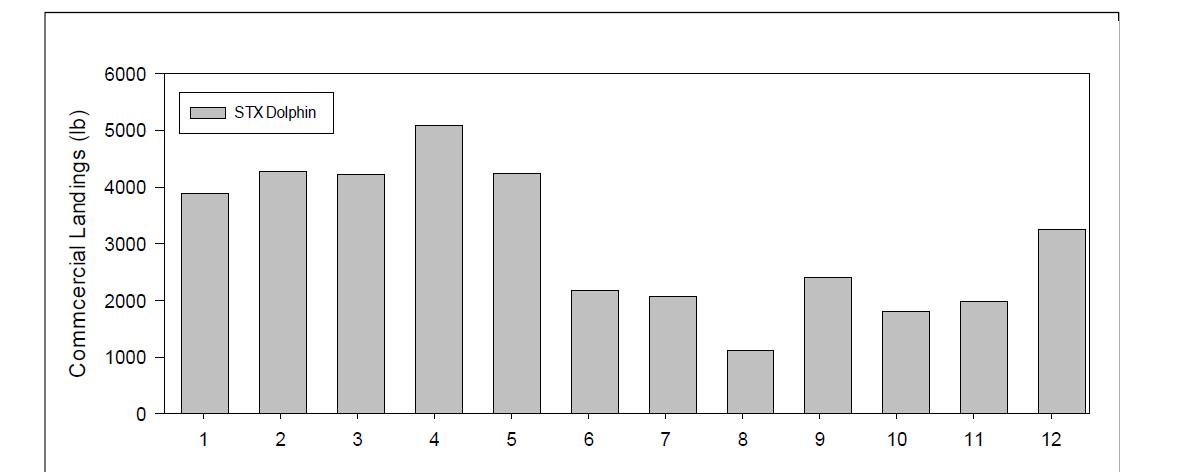
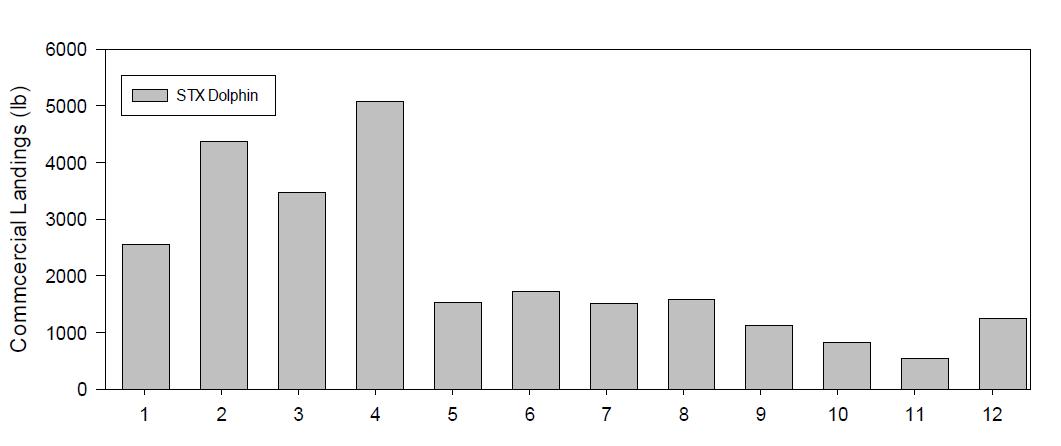
Table A2. St. Croix Wahoo
Season
October – February Peak
September, March –May High
June – August Off-Peak
Prime Time. Large migratory Wahoo (30–60+ lbs) arrive. November and December are historically the most productive months, especially around the full moon.
Consistent. Good numbers of fish remain. In spring, Wahoo can be found mixed in with the early Mahi-Mahi runs.
Sporadic. Residents remain, but slower as waters warm. Most offshore efforts shift toward Blue Marlin during this time.
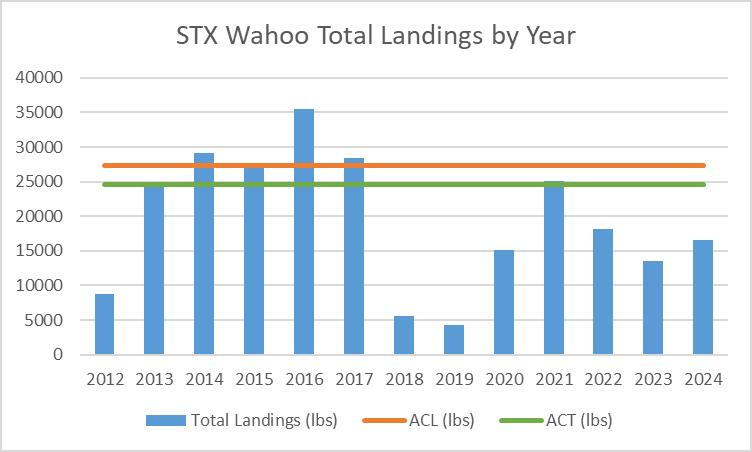
See Figures 3-4 below for average monthly landings.
3. St.
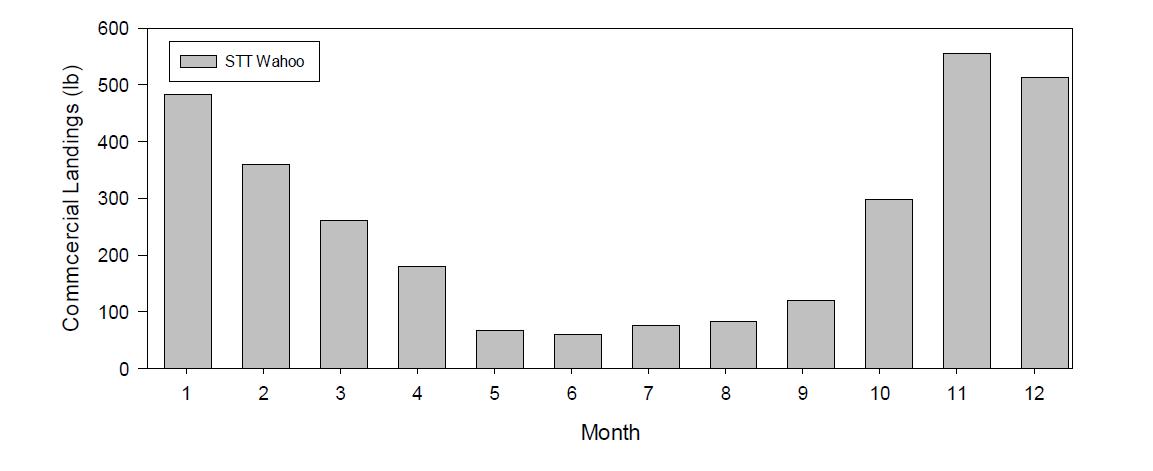
average monthly landings from 2012-2024.
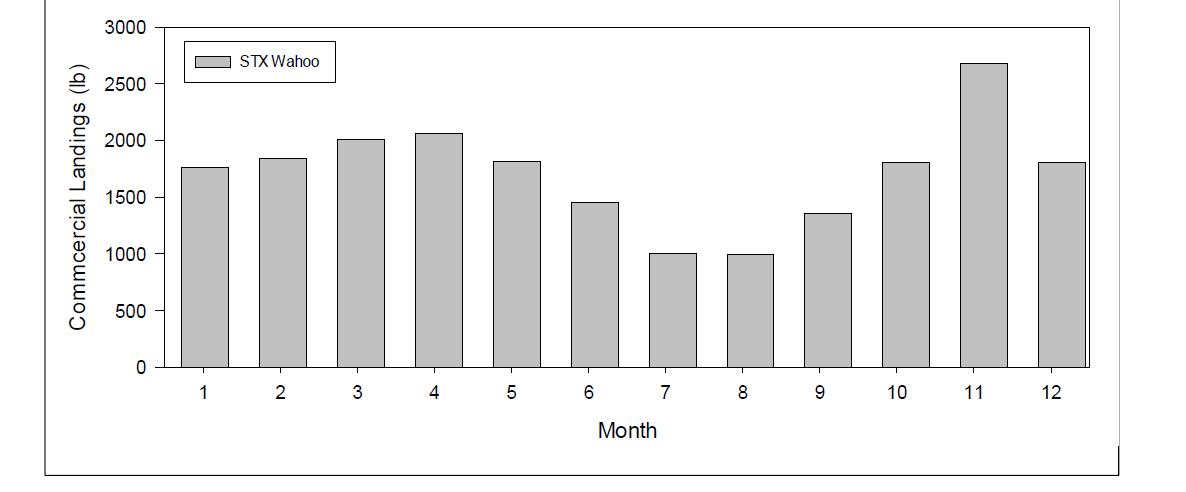
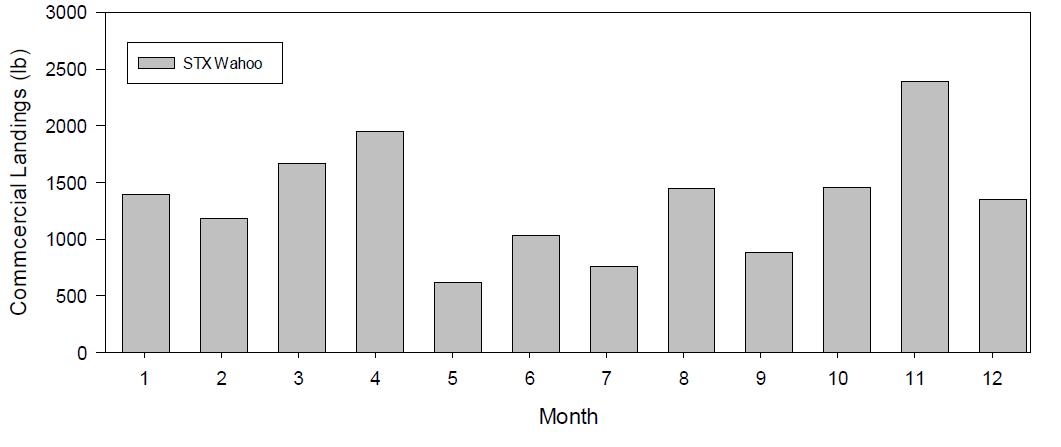
4. St.
average monthly landings from 2022-2024.
St. Thomas/St. John
Table A3. St. Thomas/St. John Dolphin Season
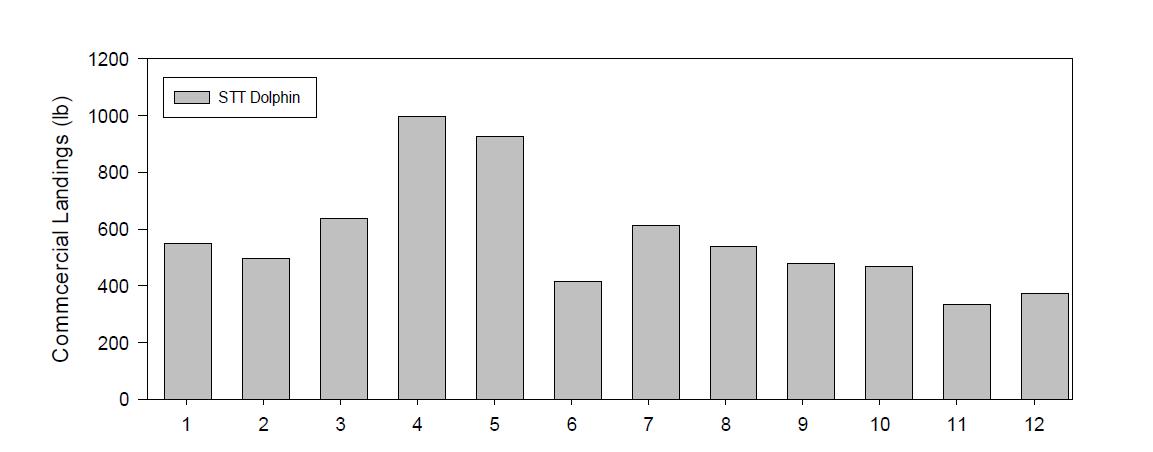
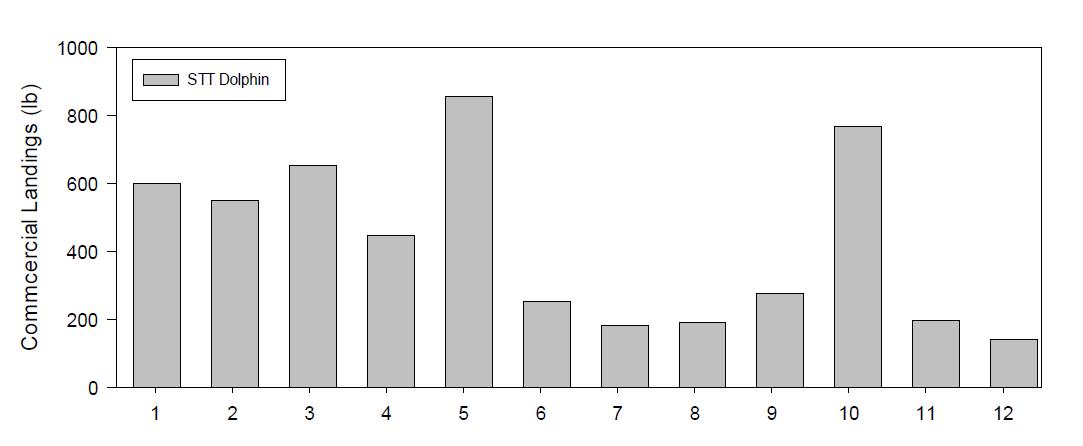
October – January Peak (Winter)
May – July Peak (Spring)
February – April Mid-Season
August –September Low Season
This is the primary run. Large schools migrate south; focus is on the South Drop.
This is the secondary run. Seas are calmer; focus is on North Drop weed lines and FADs.
The winter run tapers off. More smaller fish found near the shelf.
Warm waters drive fish deeper. Usually the quietest months due to hurricane activity.
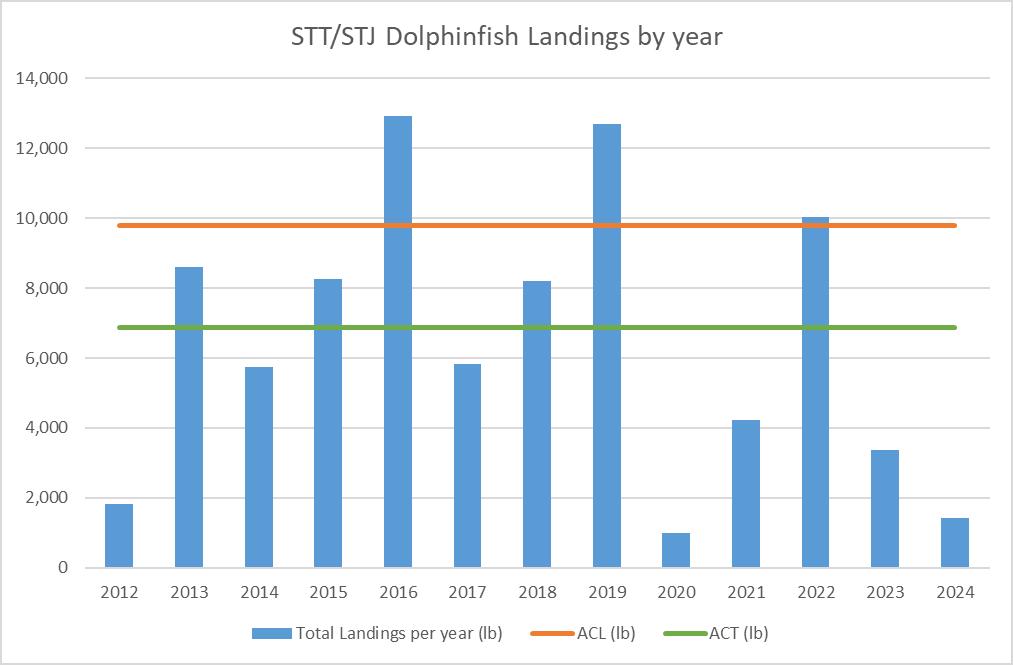
See Figures 5 and 6 below for average monthly landings.
Figure 5. STT/STJ Dolphin Average monthly landings from 2012-2024.
Month
Figure 6. STT/STJ Dolphin Average monthly landings from 2022-2024.
Month
Table A4. St. Thomas/St. John Wahoo
Season Activity Context
October – December Peak Season
January – May Shoulder Season
June – August Off-Season
September Transition
This is the high run. Usually trophy fish (50+ lbs).
Consistent action; often caught as part of a "mixed bag" with Mahi-Mahi and Tuna.
Sparse catches; most offshore effort shifts toward targeting Blue Marlin (rec).
The "Early Run" begins as fish return to the shelf for the autumn peak.
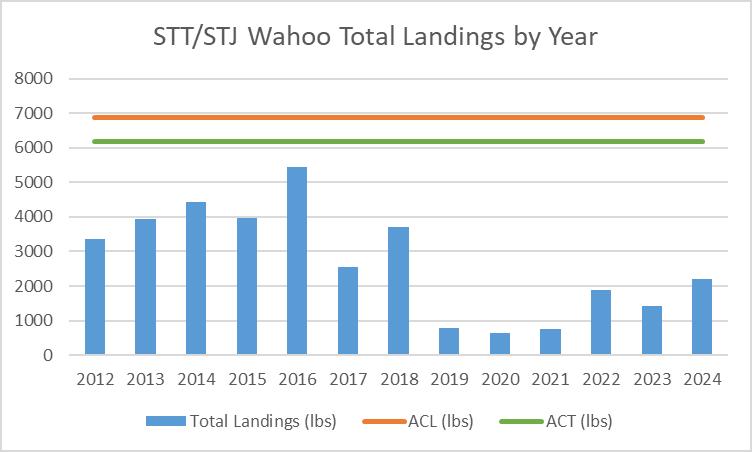
See Figures 7-8 below for average monthly landings.
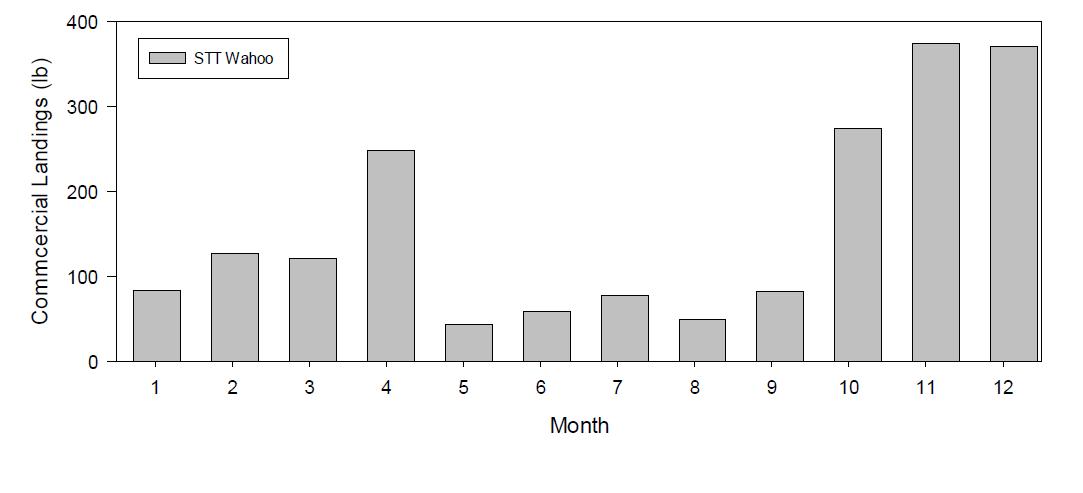
Puerto
Rico
Table A5. Puerto Rico Dolphinfish
Puerto Rico experiences two distinct migratory waves.
Season Activity Region Focus Context
November – January Peak (Winter)
February –May Peak (Spring)
North Coast (San Juan, Fajardo)
South & West Coast (Parguera, Cabo Rojo)
June – July Moderate All Coasts
Primary North Run: Characterized by high volumes of smaller "peanuts" or "bailers" (5–15 lbs). Fishing is usually done closer to shore.
Largest Mahi-Mahi (20–60+ lbs) migrate through the Mona Passage and southern waters. Peak months are March & April.
Transition period. Smaller numbers but consistent catches around offshore FADs and weed lines.
August –October Low Season All Coasts Slowest period for Mahi-Mahi. Most offshore fishing (rec) shifts focus toward Blue Marlin (peak season for billfish).
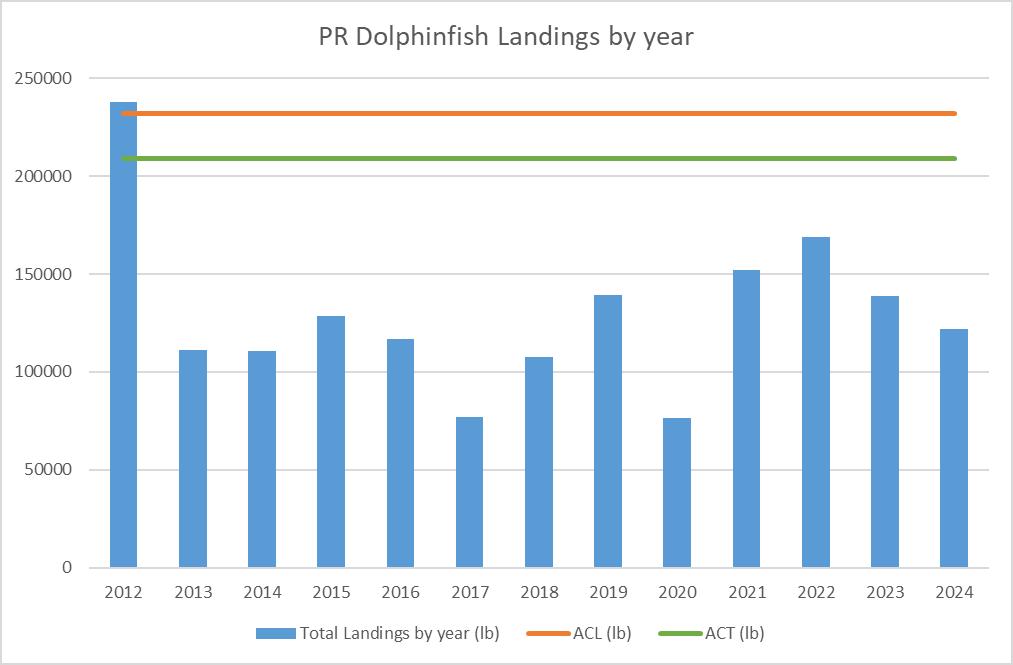
See Figures 9 and 10 below for average monthly adjusted landings.
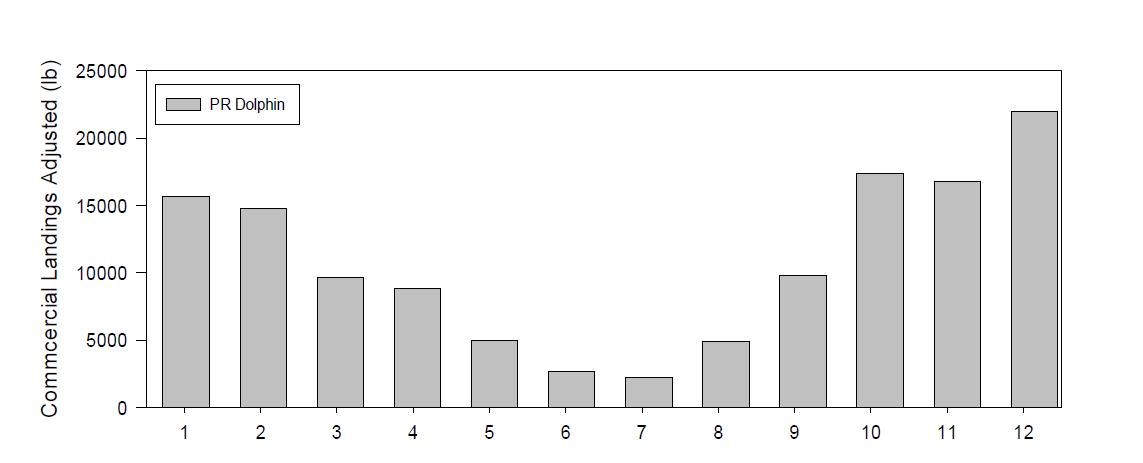
Figure 9. Puerto Rico Dolphinfish average monthly adjusted landings from 2012-2024. Month
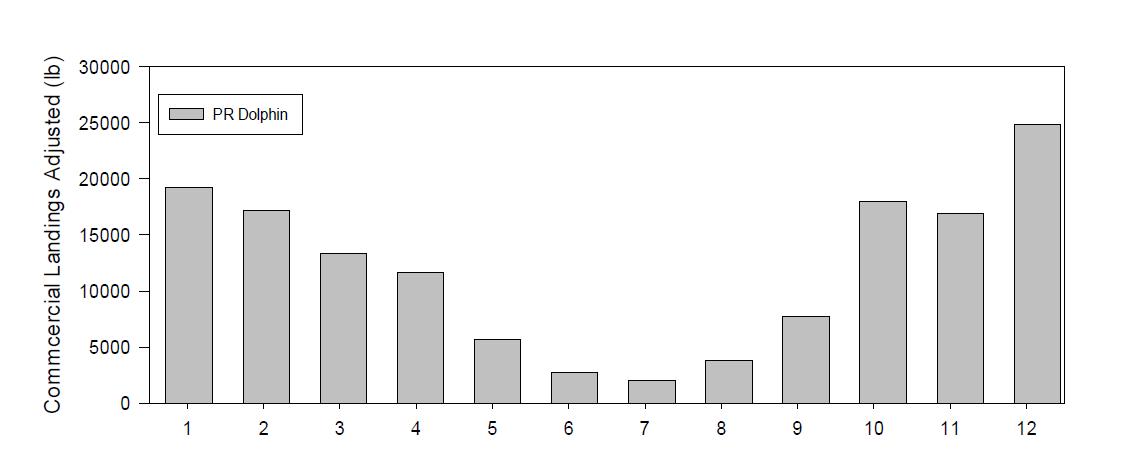
Figure 10. Puerto Rico dolphinfish average monthly adjusted landings from 2022-2024. Month
Table A6. Puerto Rico Wahoo
Season Activity Context
November –February Peak Season Winter run (cooler waters): prime window for wahoo.
March – May Moderate Spring transition: large "trophy" Wahoo (80 lbs+) available, but schools begin to disperse as the water warms.
June – August Low Season Summer: Most fish move to deeper, cooler water.
September – October Building Fall: As the first cold fronts approach, activity begins to ramp up again.
See Figures 11 and 12 for average monthly adjusted landings.
Figure 11. Puerto Rico Wahoo average monthly adjusted landings from 2012-2024.
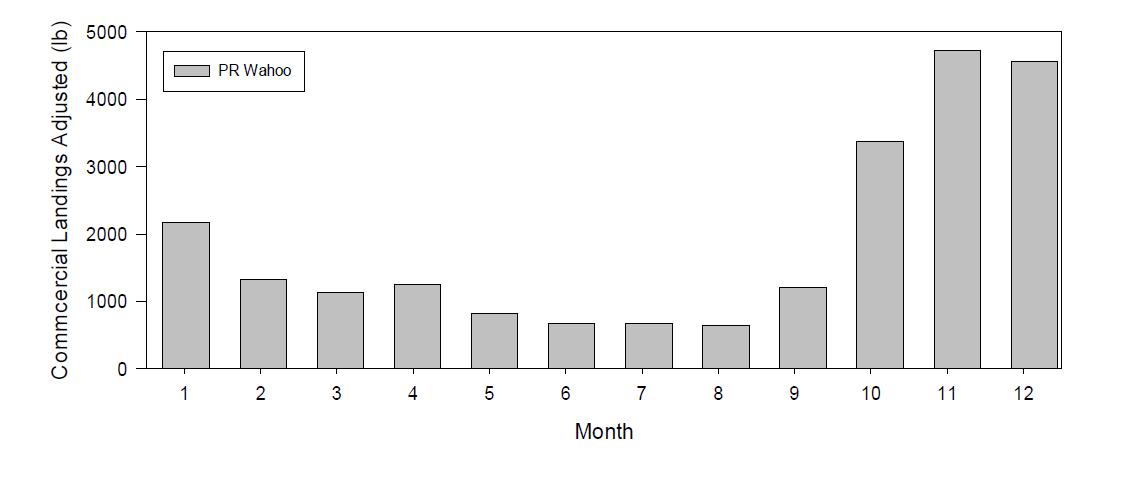
Figure 12. Puerto Rico Wahoo average monthly adjusted landings from 2022-2024.
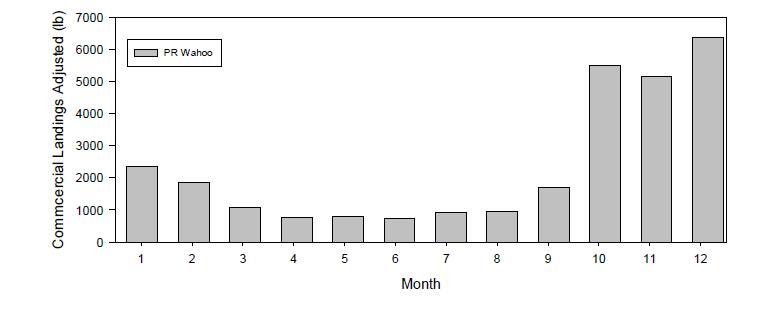
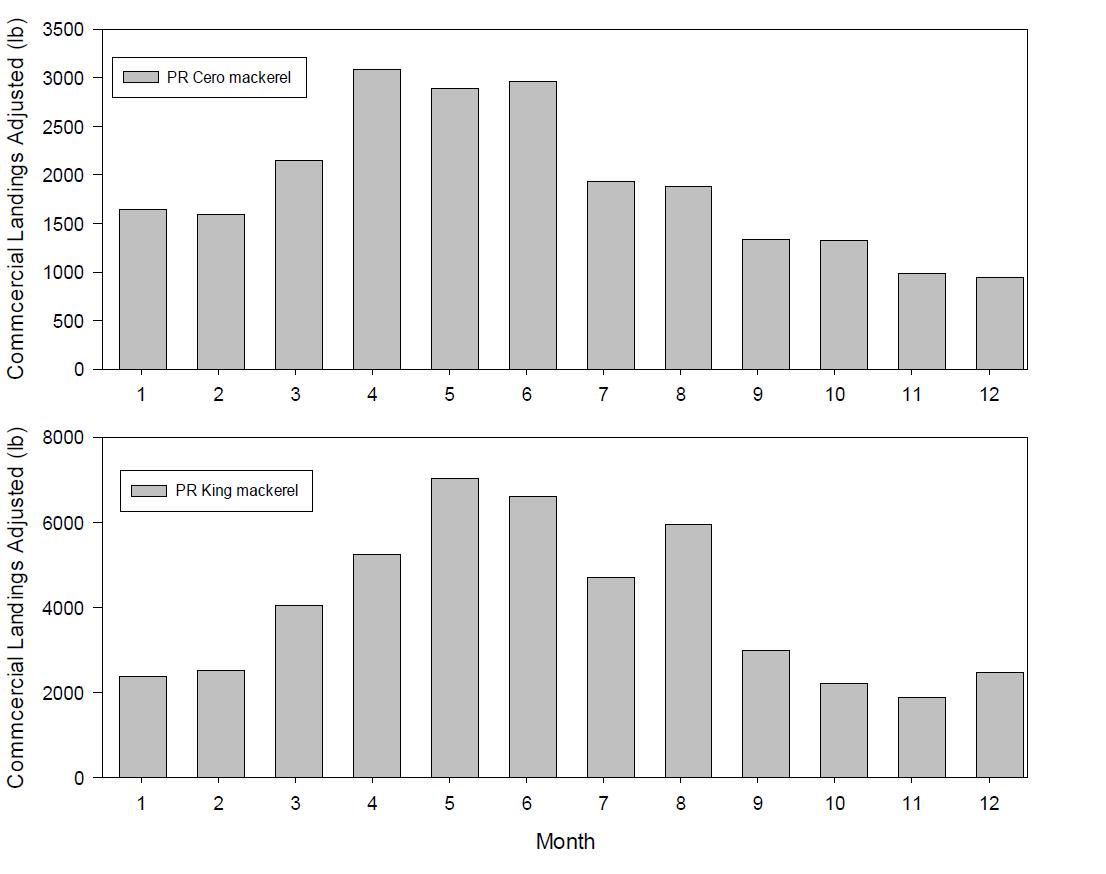
Table A7. Puerto Rico Mackerel Complex (adjusted landings)
Season Activity
Context
Winter (Dec –Feb) Peak
Spring (Mar –May)
Excellent
Summer (Jun –Aug) Fair
Fall (Sept –Nov)
Larger fish move into shallower reef areas (20–60 feet). This is the best time for sierras near the coast.
High activity levels; often found in feeding frenzies near the surface.
They move slightly deeper or further offshore to find cooler water.
Improving Activity picks up as the hurricane season winds down and baitfish migrations begin.
See Figures 13 and 14 below for average monthly landings.
Figure 13. Average monthly cero and king mackerel landings (adjusted) from 2012-2024
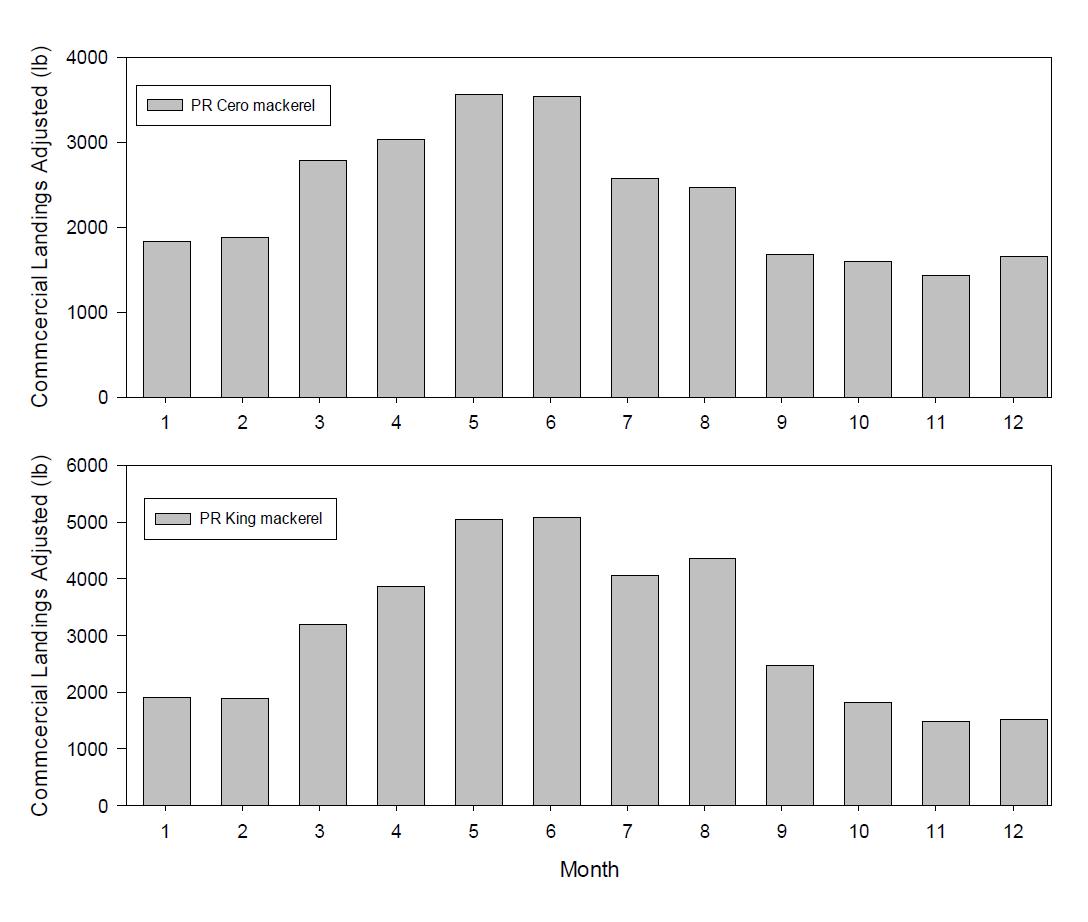
Figure 14. Average monthly cero and king mackerel landings (adjusted) from 2022-2024
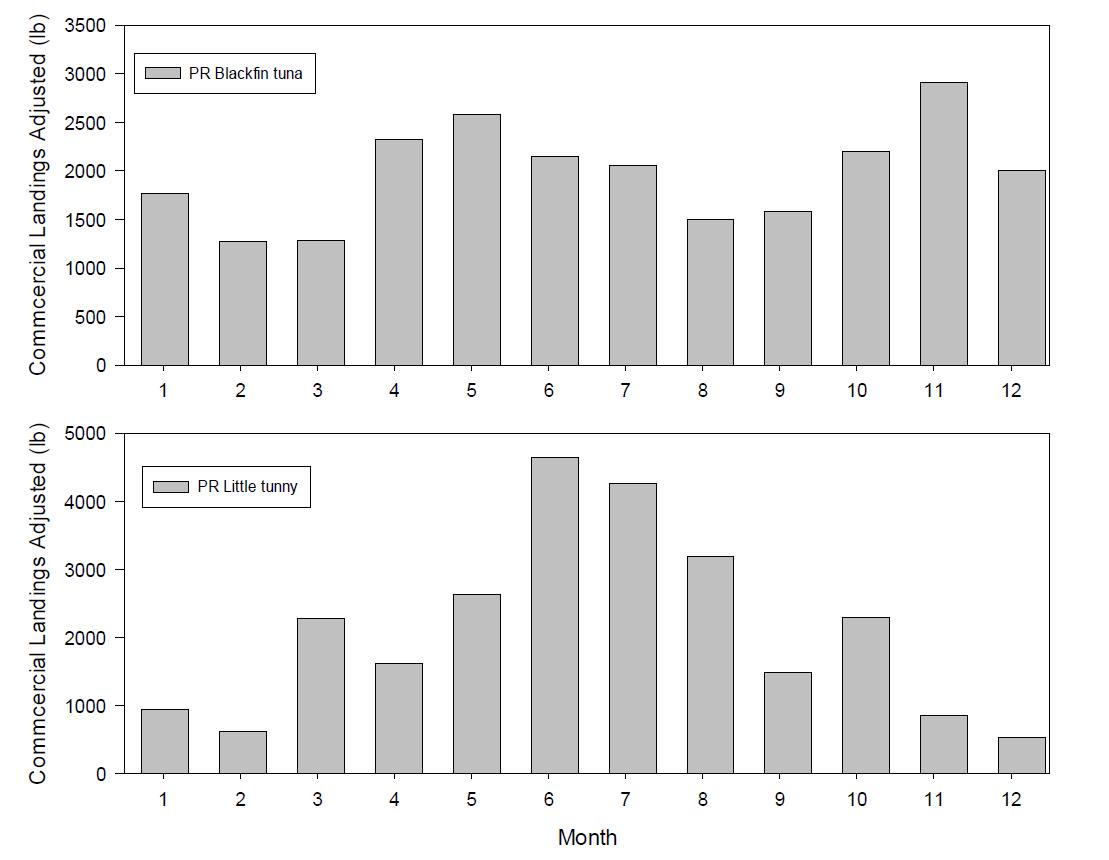
Puerto Rico Tunas Complex (Blackfin tuna and little tunny) (adjusted landings)
See Figures 15 and 16 for average monthly adjusted landings.
Figure 15. Average monthly blackfin tuna and little tunny landings (adjusted) from 2012-2024
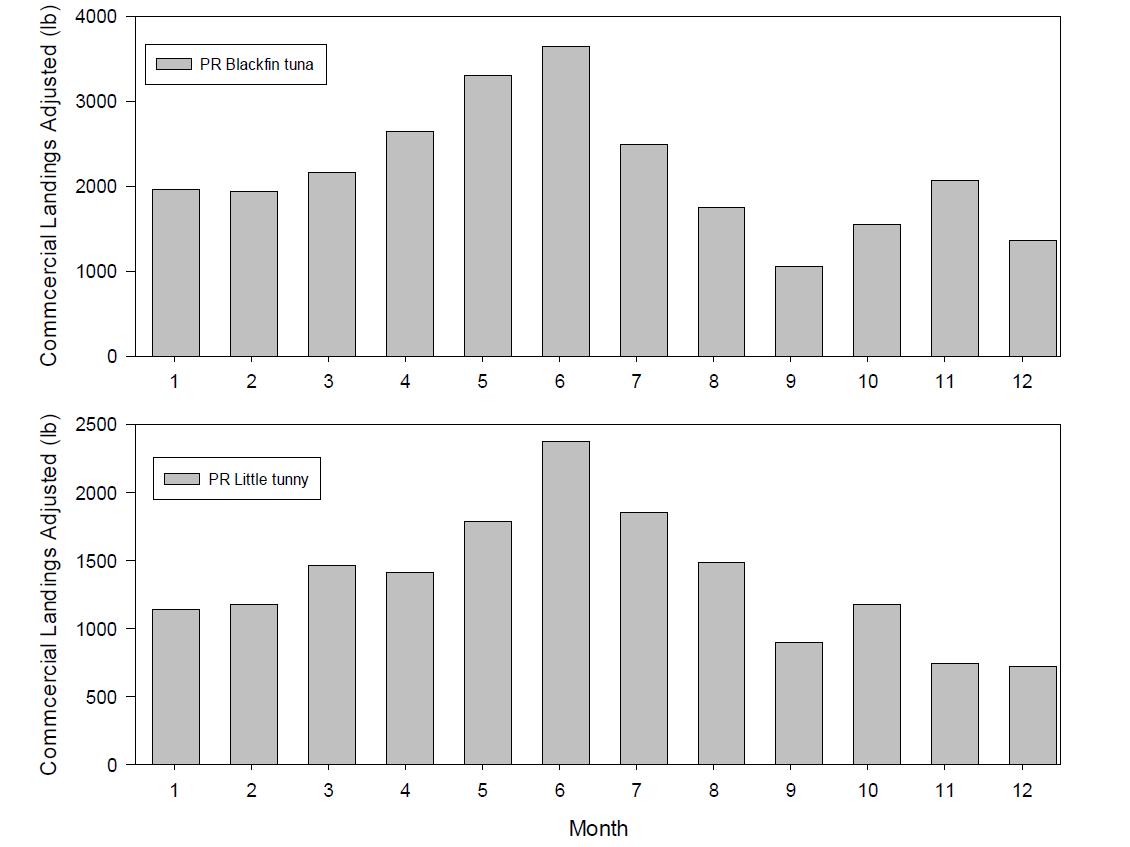
Figure 16. Average monthly blackfin tuna and little tunny landings (adjusted) from 2022-2024
Puerto
Rico Barracuda
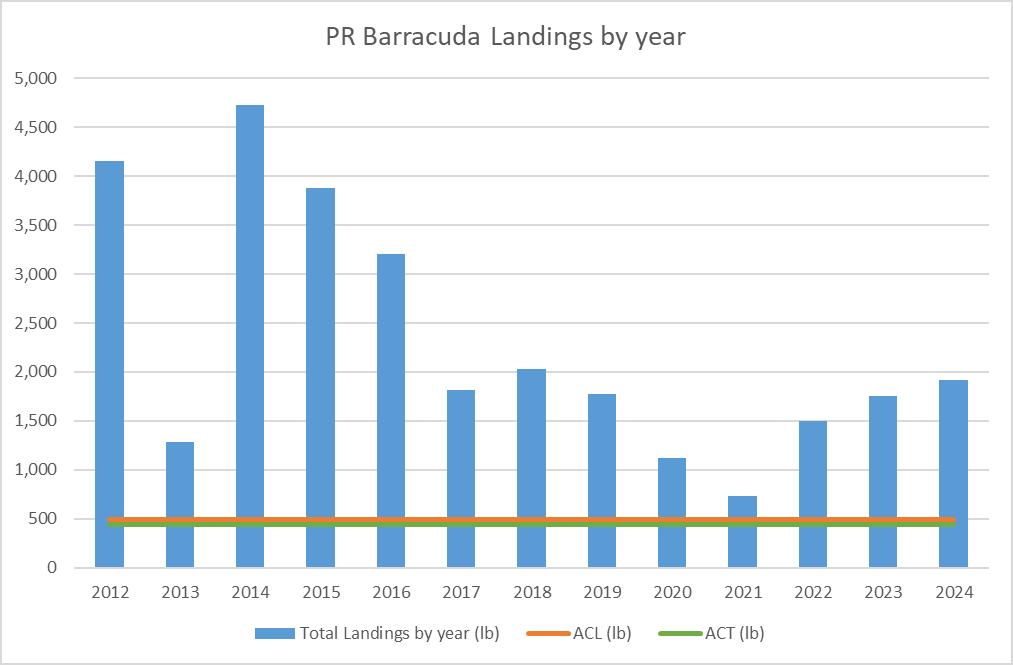
*2024 landings need to be revised
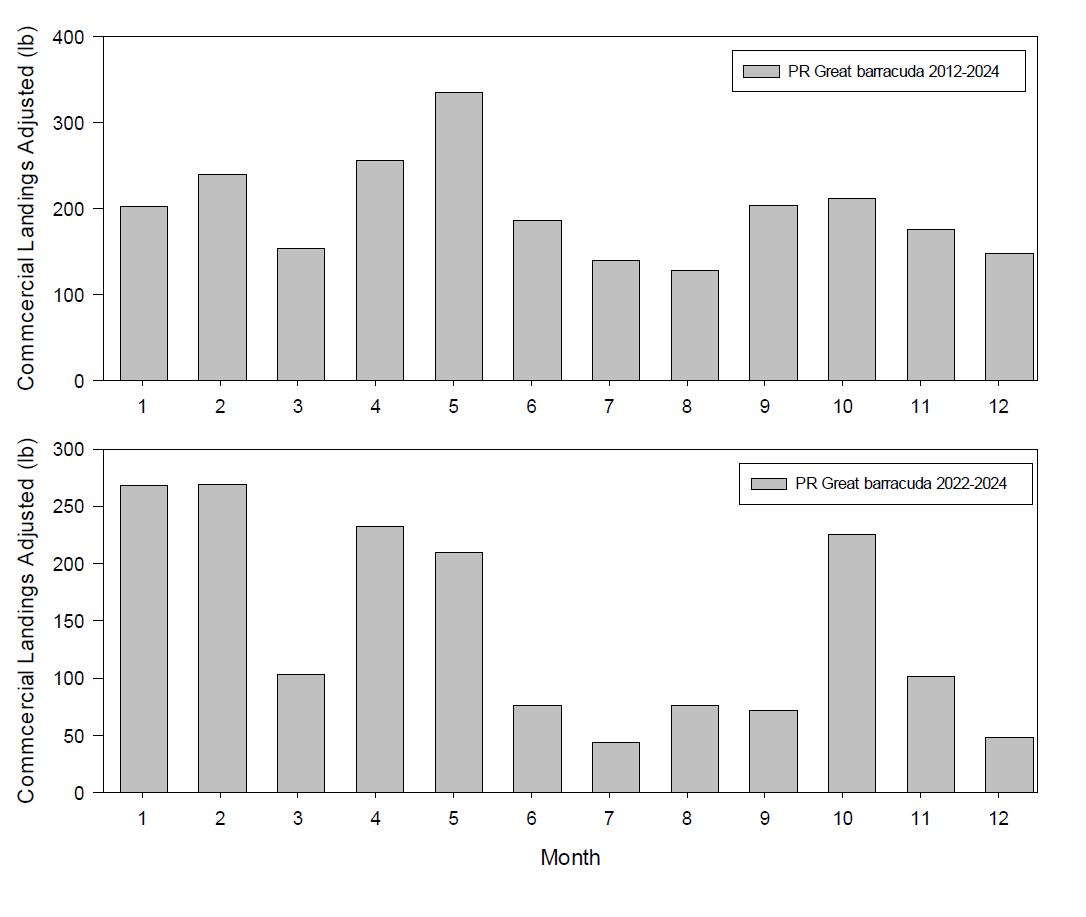
See Figure 17 below for average monthly adjusted landings.
Figure 17. Average monthly great barracuda adjusted landings from 2012-2024 and 2022-2024
References
*Additional references will be added in a next iteration of the document. https://www.fishingchartersrincon.com/the-catch
https://www.charterfishingpr.com/top-game-fish-puerto-rico/tuna https://www.simplycaughtcharters.com/tarpon-fishing-1
Gulf States Marine Fisheries Commission. 2016. Biological Profile for Tripletail in the Gulf of Mexico and the Western Central Atlantic
Dolphinfish St. Croix
VInow (Virgin Islands Now) - Fishing Seasonality Guides
USVI Department of Planning and Natural Resources (DPNR) - Marine Resources Data
Ocean Surfari & Local St. Croix Charter Reports
Sport Fishing Magazine - Caribbean Regional Deep-dives
FishBrain & Captain Experiences - Real-time Catch Data