

Promoting accessible and inclusive infrastructure development across the region
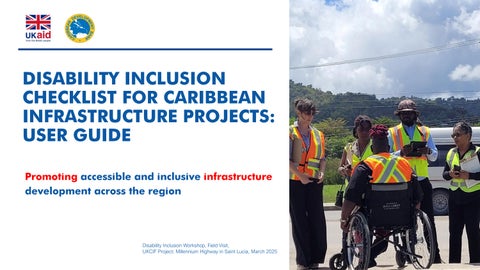
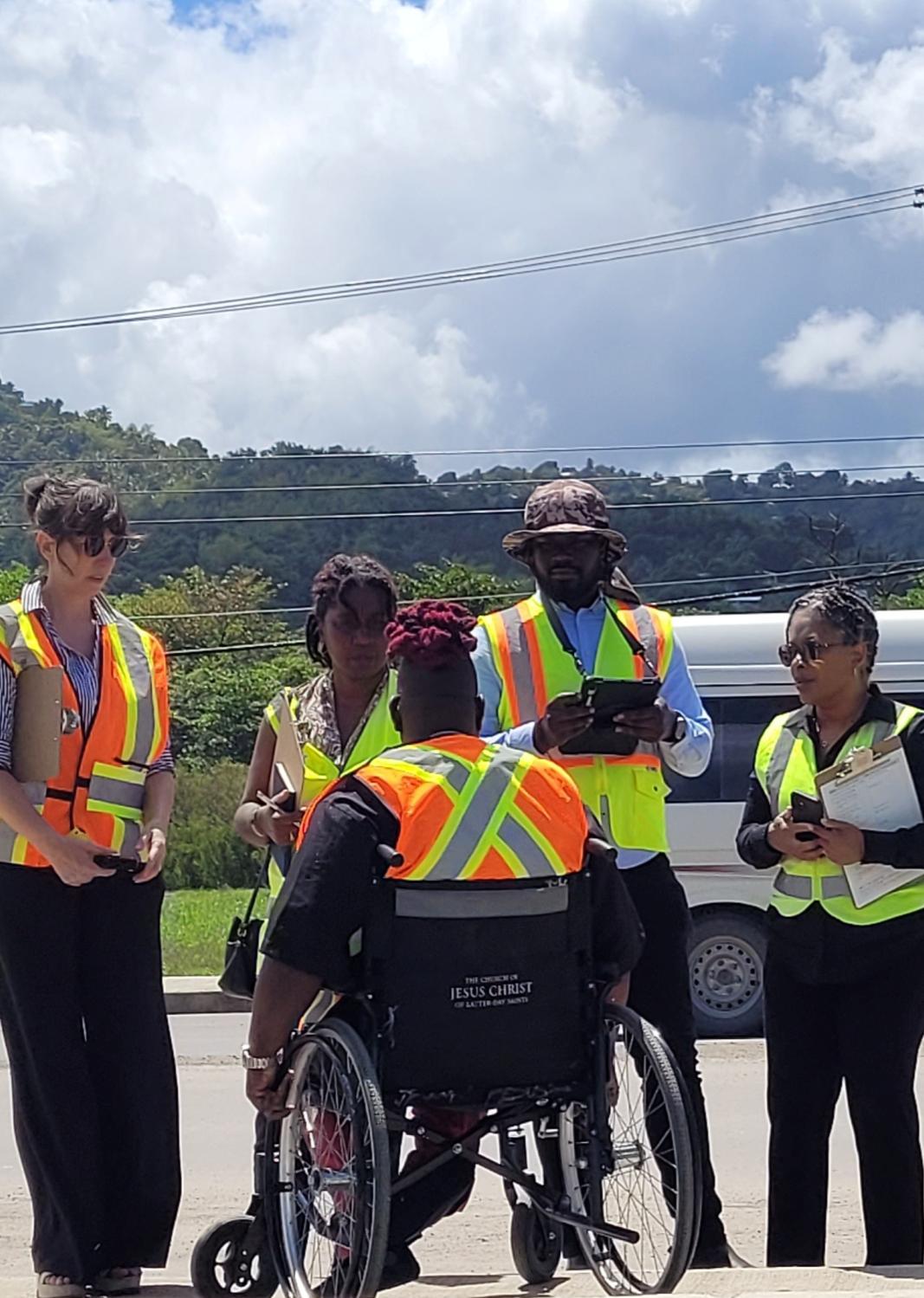
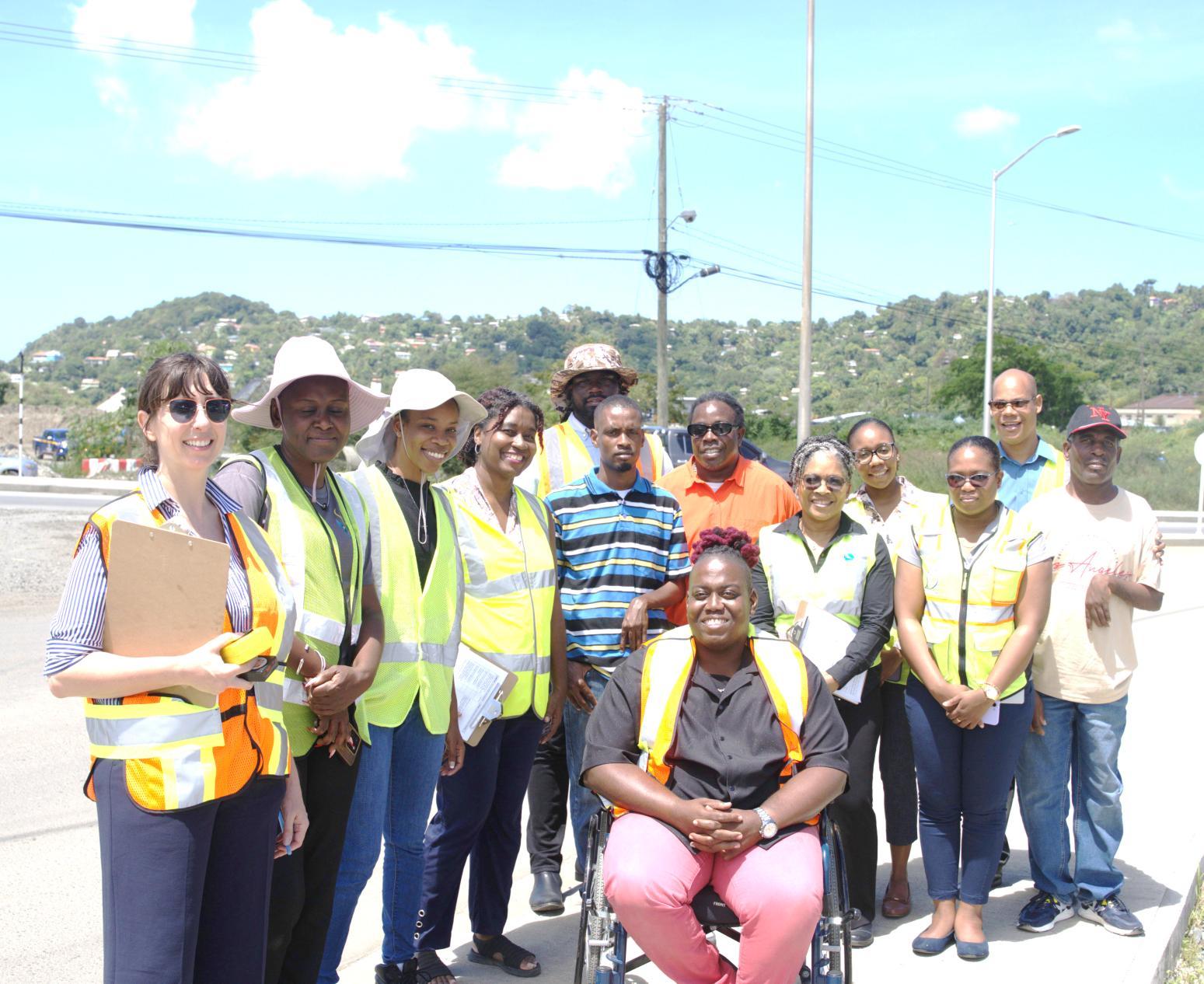
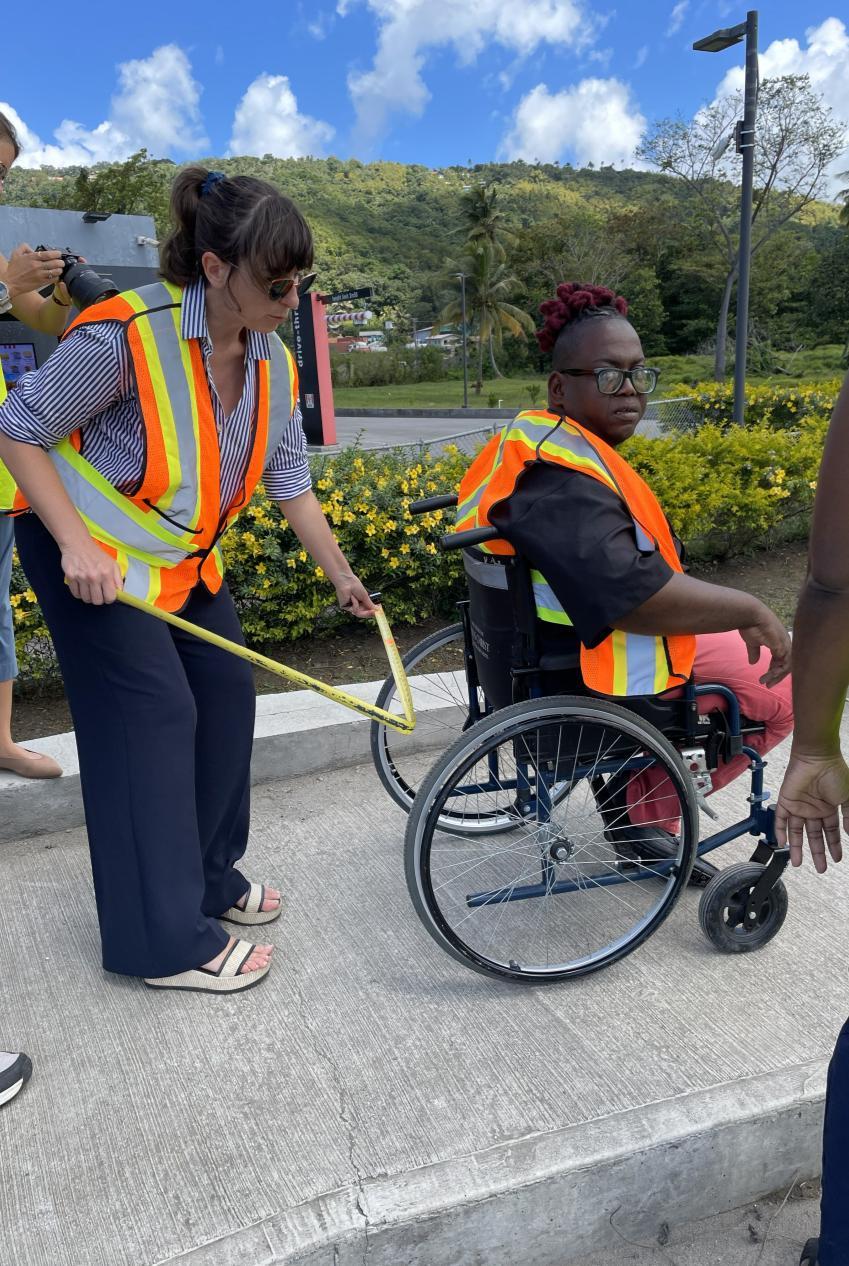
Disability Inclusion Workshop, Field Visit, UKCIF Project: Millennium Highway in Saint Lucia, March 2025
The Caribbean Development Bank (CDB) is pleased to present this groundbreaking Disability Inclusion Web-based Application under the UKCIF Programme. CDB is committed to advancing, disability--inclusive environments, products and services across our Borrowing Member Countries.
The UKCIF Disability Inclusion Web-Based Application builds on CDB’s Disability Inclusion Checklist and User Assessment Tool, offering a practical, user-friendly system that helps teams integrate accessibility and universal design from project design through construction and longterm operations and maintenance.
The tool reinforces CDB’s commitment to making disability inclusion a core part of infrastructure delivery. Embedding inclusive standards strengthens compliance and improves long-term social and economic outcomes enhancing mobility, expanding access to education and employment, and supporting safer, more connected communities. This web-based application is essential to making inclusive infrastructure a regional norm.
I commend the teams, partners, and consultants who have contributed to the development of this web-based application, and I encourage its active use across the UKCIF portfolio and future CDB-financed operations. Through deliberate action and sustained commitment, we can ensure that no one is left behind in the infrastructure that shapes our region’s development.
Dr. Isaac Solomon, Vice-President (Operations) Caribbean Development Bank



The Caribbean Development Bank (CDB/the Bank) Disability Inclusion Checklist for Infrastructure Projects is a practical tool that illustrates how infrastructure planning, design, and construction can be enhanced to improve accessibility outcomes.
Developed under the United Kingdom Caribbean Infrastructure Fund (UKCIF), the Checklist reflects the Bank’s and the UK's commitment to fostering an inclusive and equitable region that responds to the needs of persons with disabilities. By systematically embedding disability inclusion across the project cycle, from planning through implementation, the Bank advances its broader objectives of inclusive development, consistent with its commitments to equity and social justice. Ultimately, the tool reinforces that accessibility is a human right and a fundamental pillar of sustainable development across the Caribbean. For guidance on how to apply the Checklist, users are encouraged to refer to the UKCIF Disability Inclusion Checklist Instructions.
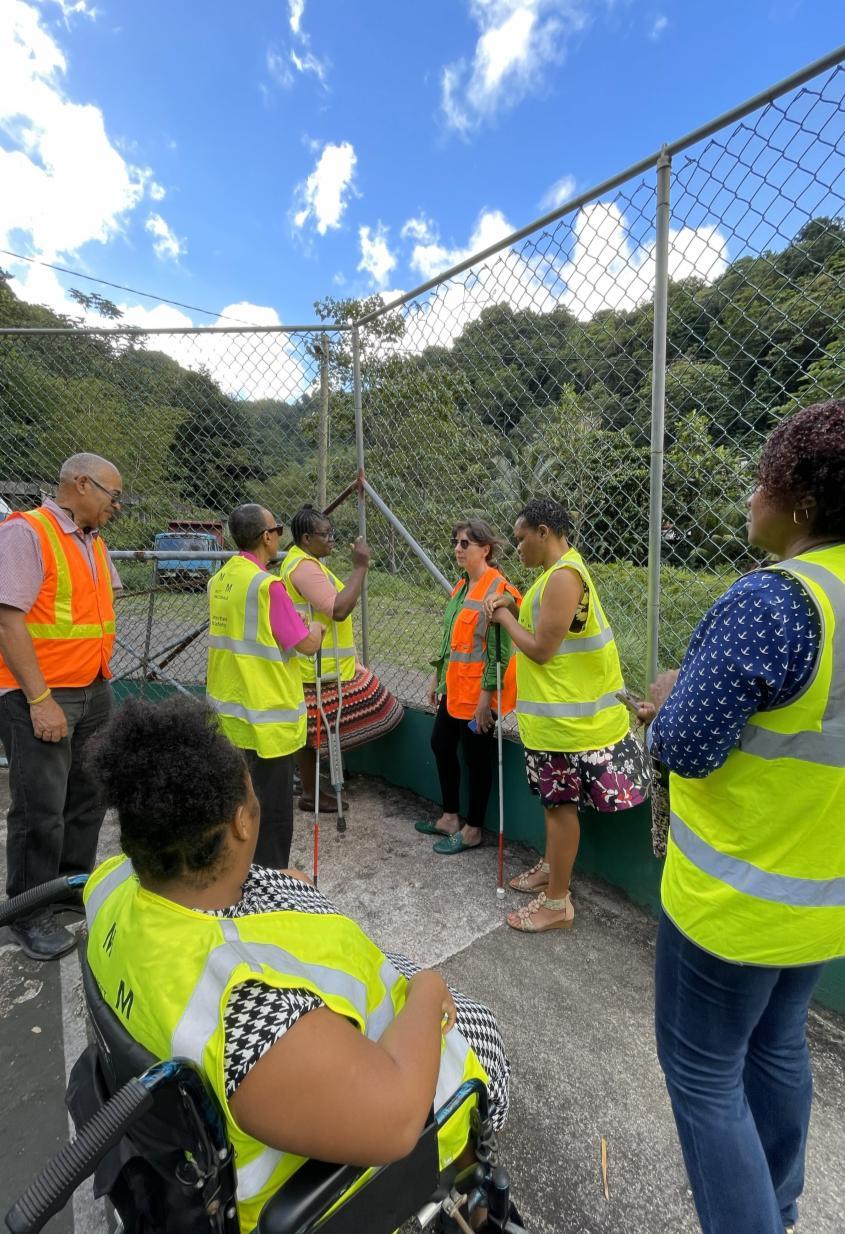
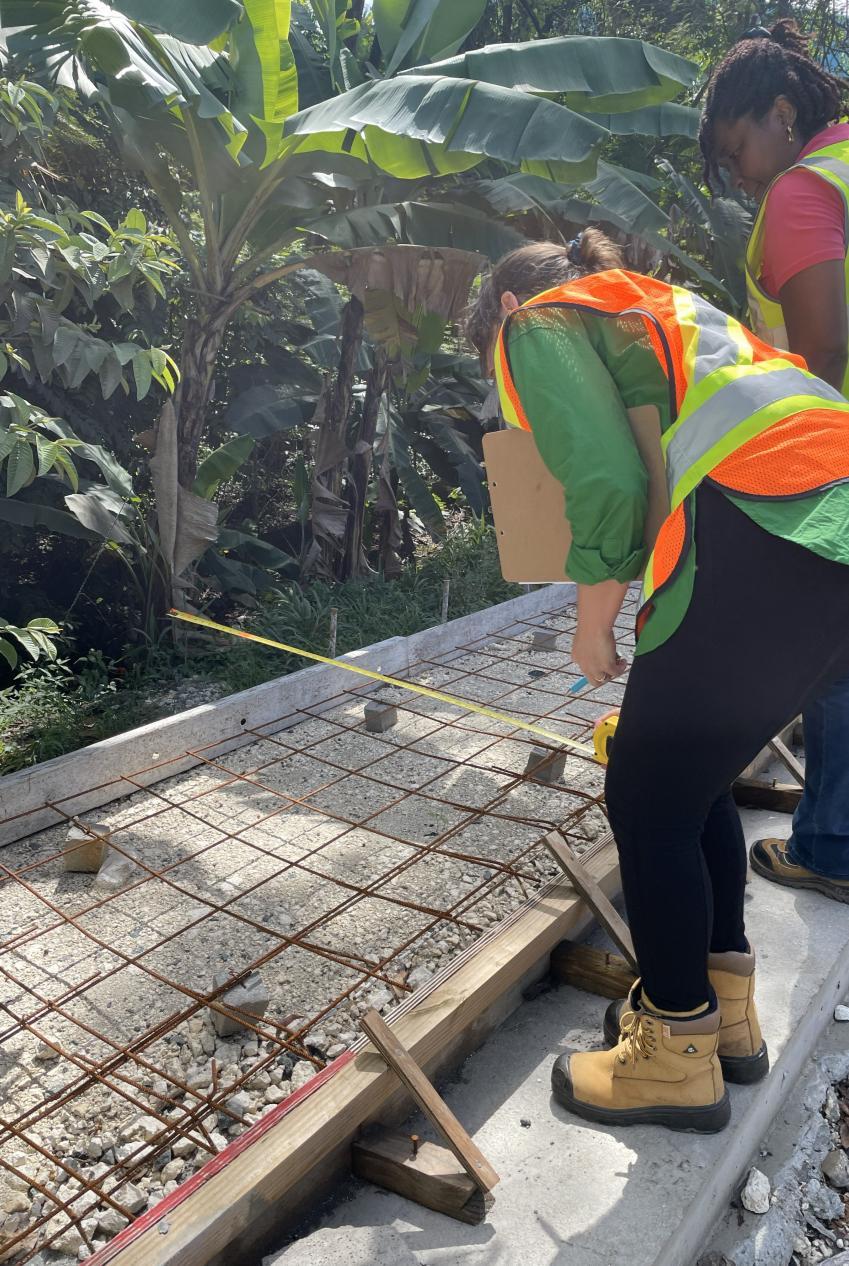
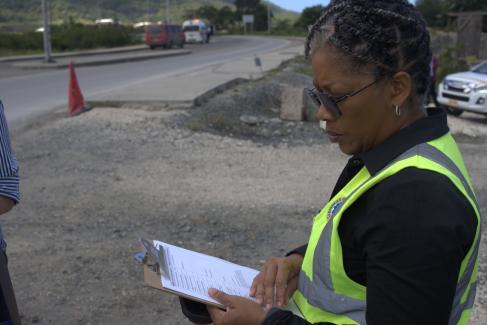
Disability Inclusion Workshop, Field Visit,
UKCIF Project: Loubiere to Grand Bay Road in Dominica February 2025

Facilitating Accessibility
It ensures infrastructure projects meet safety, access, and comfort standards for persons with disabilities.
Complementing Standards
It aligns with existing accessibility codes and technical standards through a structured, universal design-based review process.
Promoting Inclusion
It guides teams to identify barriers, document recommendations, and foster inclusion for persons with disabilities.
Supporting Accountability
It allows users to record deviations, to strengthen transparency, accountability, and continuous improvement in infrastructure accessibility.
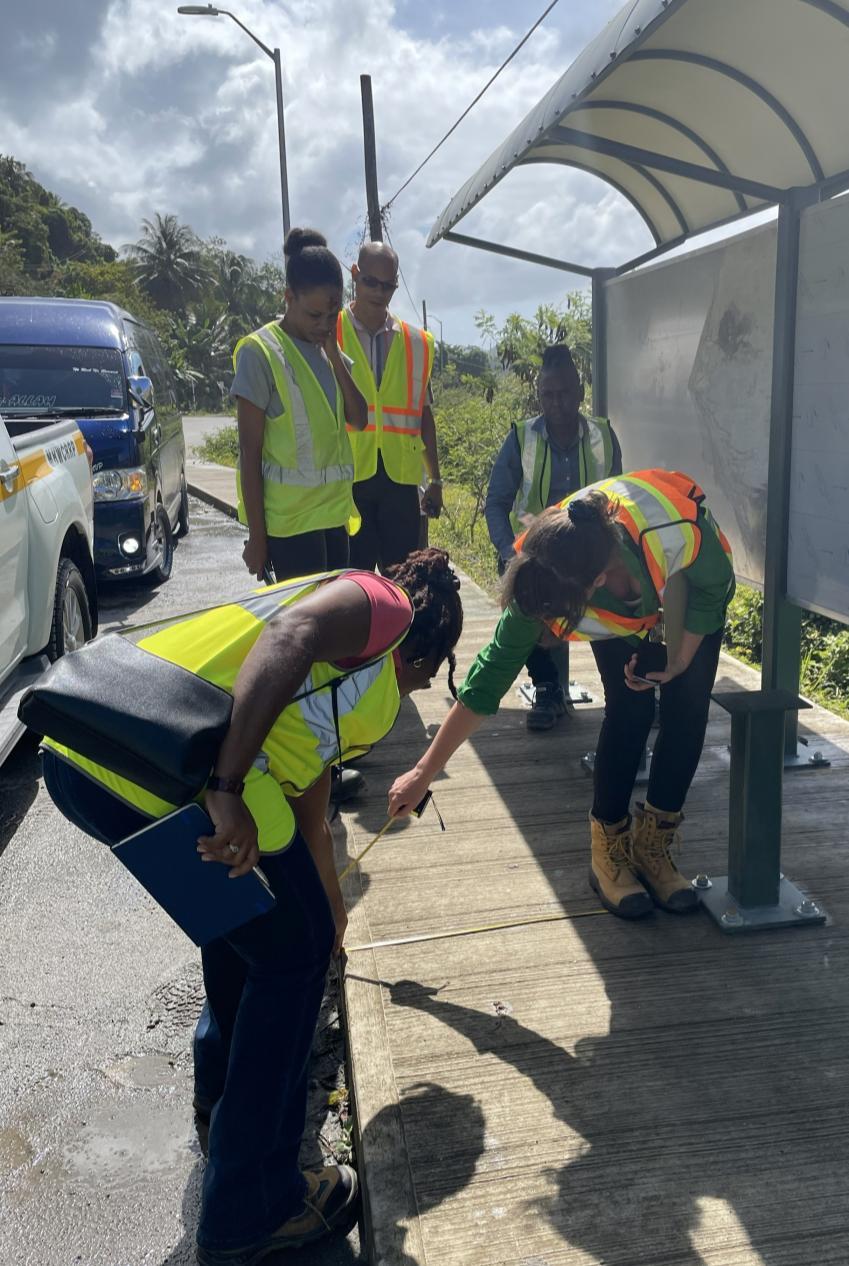
Examples include pedestrian routes, crossings, lighting, drainage, and hazard protection to ensure user security.
Examples include barrier-free pathways, kerb ramps, tactile warnings, signage, and accessible communication systems.
Examples include seating, accessible toilets, door hardware, and service counters designed for ease of use by all.
Examples include applicable building codes to guide compliance and encourages consultation of full codes for detailed requirements.
Regional Accessibility Guidelines
OECS Building Code Appendix F offers regional standards for accessible design in construction projects.
International Accessibility Standards
International Building Code Chapter 11 defines global requirements to ensure building accessibility worldwide.
Sector-Specific Accessibility Guides
Guides like AASHTO and Overseas Road Note 21 provide specialized accessibility standards for pedestrian and road facilities.
Universal Design Benefits
Following these codes fosters environments that are safe, accessible, and comfortable for all users.
Agricultural Project Accessibility
Ensure barrier-free access to water points and farm facilities with clear signage and safe temporary routes.
Energy and Water Infrastructure
Provide accessible washrooms, step-free to office access and public areas, and safely designed manholes covers in energy and water projects.
Port Development Accessibility
Ensure barrier-free circulation routes, accessible toilets, and inclusive communication systems for passengers, workers, and visitors.
Road Infrastructure Features
Incorporate kerb ramps, tactile warnings, audible signals, and safe pedestrian facilities, particularly near schools and high-use areas.
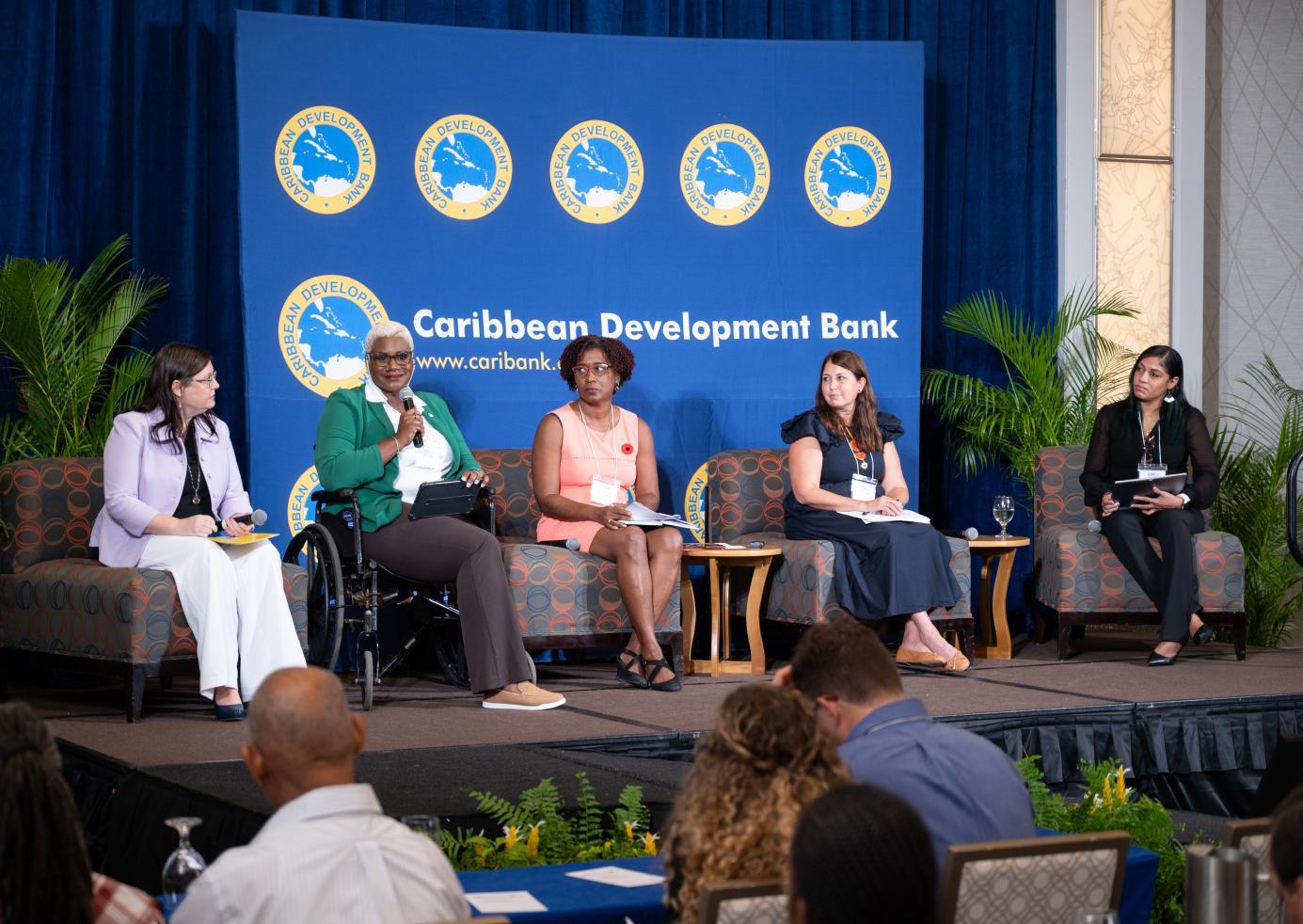
Disability inclusion is recognized as a fundamental human right and essential for sustainable development.
The checklist helps project teams identify barriers and ensure accessibility throughout infrastructure project planning and execution.
Meaningful engagement with persons with disabilities ensures infrastructure serves all community members.
CDB provides resources, including a Disability Policy Brief Summary, and training to support disability inclusion.

A structured review using the checklist carried out by the technical personnel responsible for the infrastructure project (e.g. the project team and/or the design and supervision consultants) to assess compliance with relevant accessibility codes, standards and guidelines, drawing upon project documentation and site conditions where applicable.
A direct assessment by persons with disabilities (facilitated if needed) and their caregivers where relevant, that uses the checklist to identify any barriers and issues, capture lived experience and inform inclusive design, construction and operations.
Conducted in parallel, Review A provides technical assurance while Review B delivers user-based insights. Together, they support informed decision-making and the delivery of infrastructure that is both compliant and inclusive.

Defined Personnel Roles
Designated technical team members from the design and supervision consultants and the project management unit to ensure effective and accountable checklist implementation.
Facilitator Expertise
Where needed, facilitators help manage Review B user assessments, ensuring ethical engagements, ensuring ethical engagement, informed consent, and inclusive, gender-sensitive communication with persons with disabilities.
Facilitators can be designated CLOs or Social and Gender Specialists from project teams, or specialised consultants, including persons with disabilities themselves.
Training for Inclusion
Training in Universal Design principles and disability rights strengthens team competence and sensitivity, supporting consistent and meaningful application of the checklist across project stages.
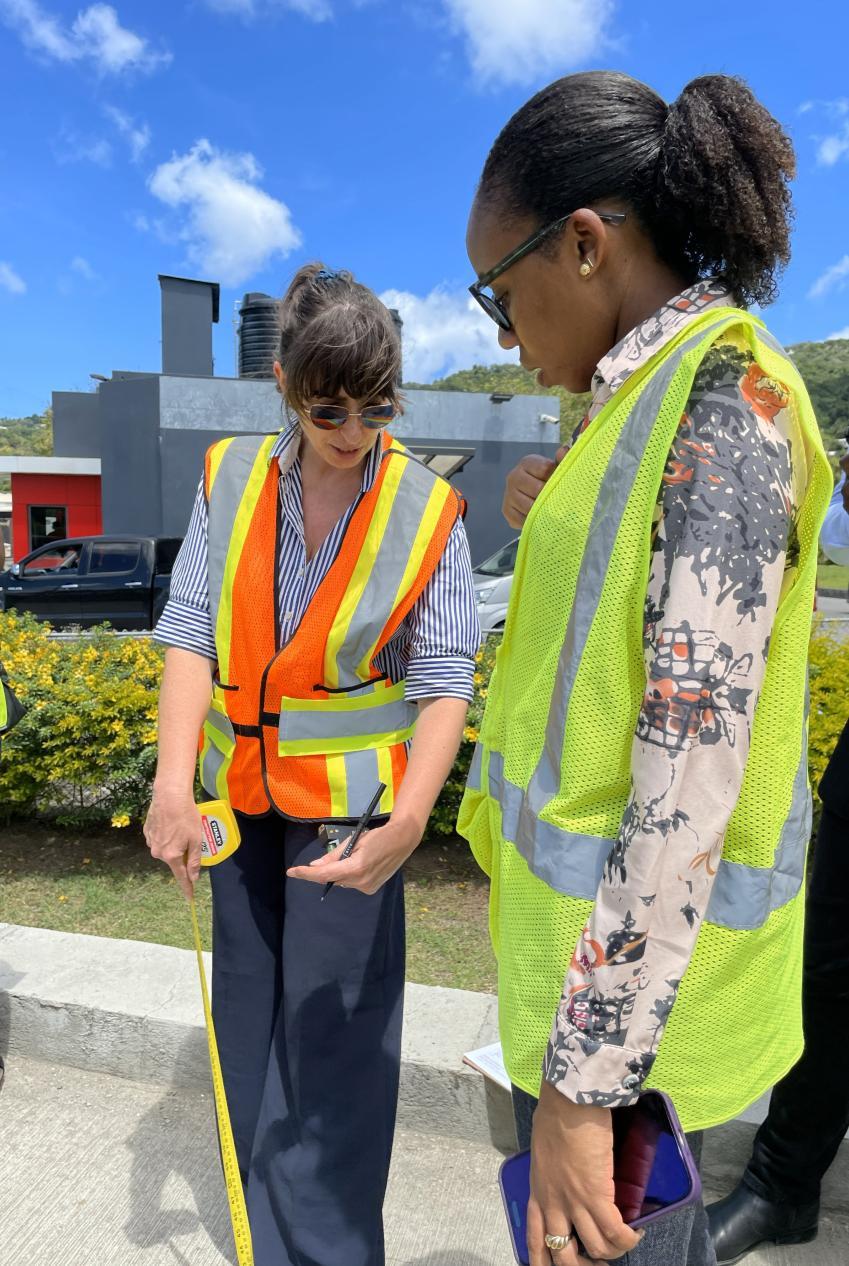
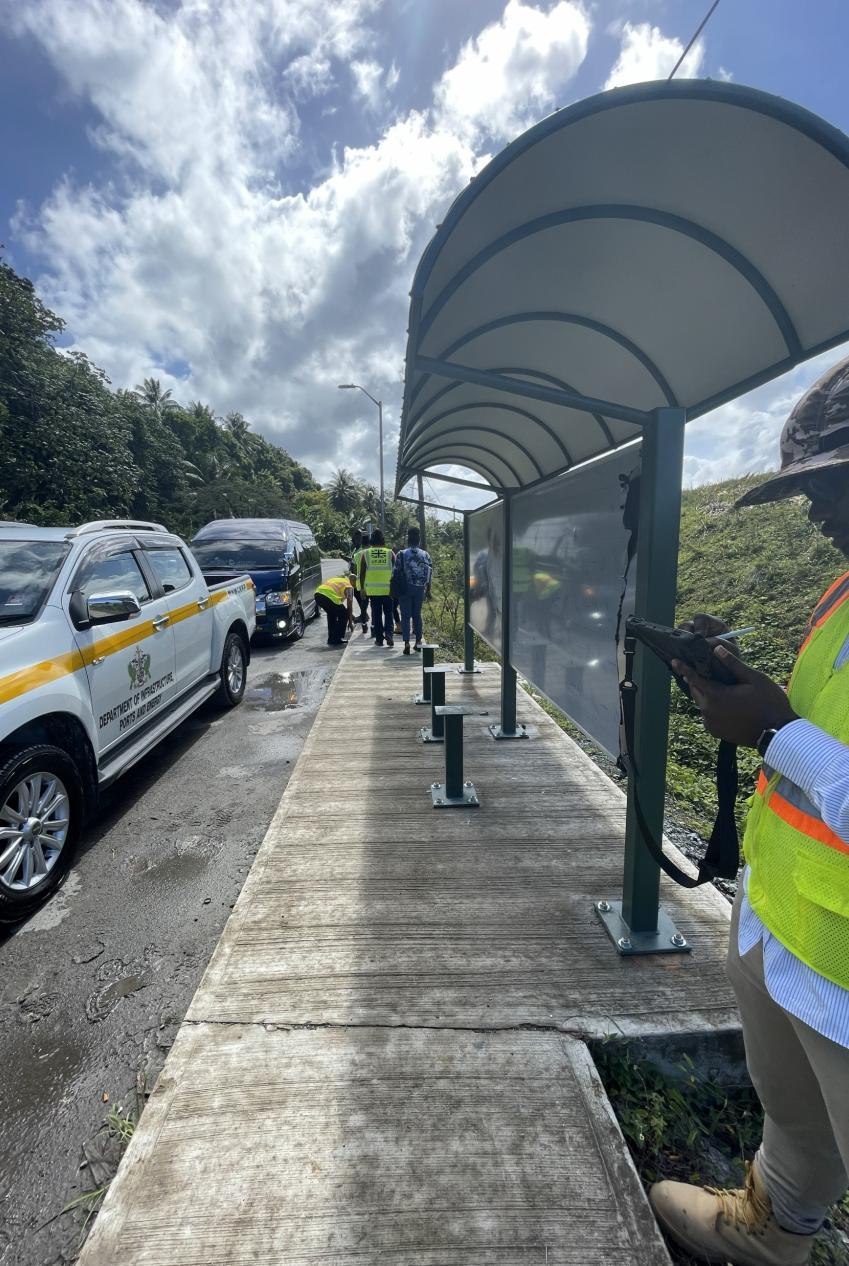
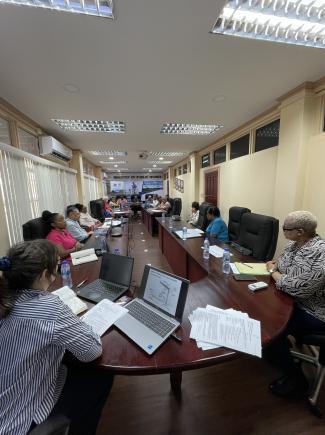
Disability Inclusion Workshop
UKCIF Project: Linden to Mabura Hill Road Upgrade in Guyana, February 2025
The process begins with identifying and recording the applicable accessibility codes, standards, and guidelines to be used for the project.
Each checklist item is reviewed under Safety, Access, and Comfort, with compliance marked (Yes, No, Partial or Not Applicable) and supporting notes recorded.
Each theme is assigned a subjective score from 1 to 5 to reflect overall accessibility performance, with emphasis placed on critical issues rather than cumulative totals.
Review A documents accessibility considerations, constraints, and justifications, creating a clear record to support transparency, accountability, and future improvements.

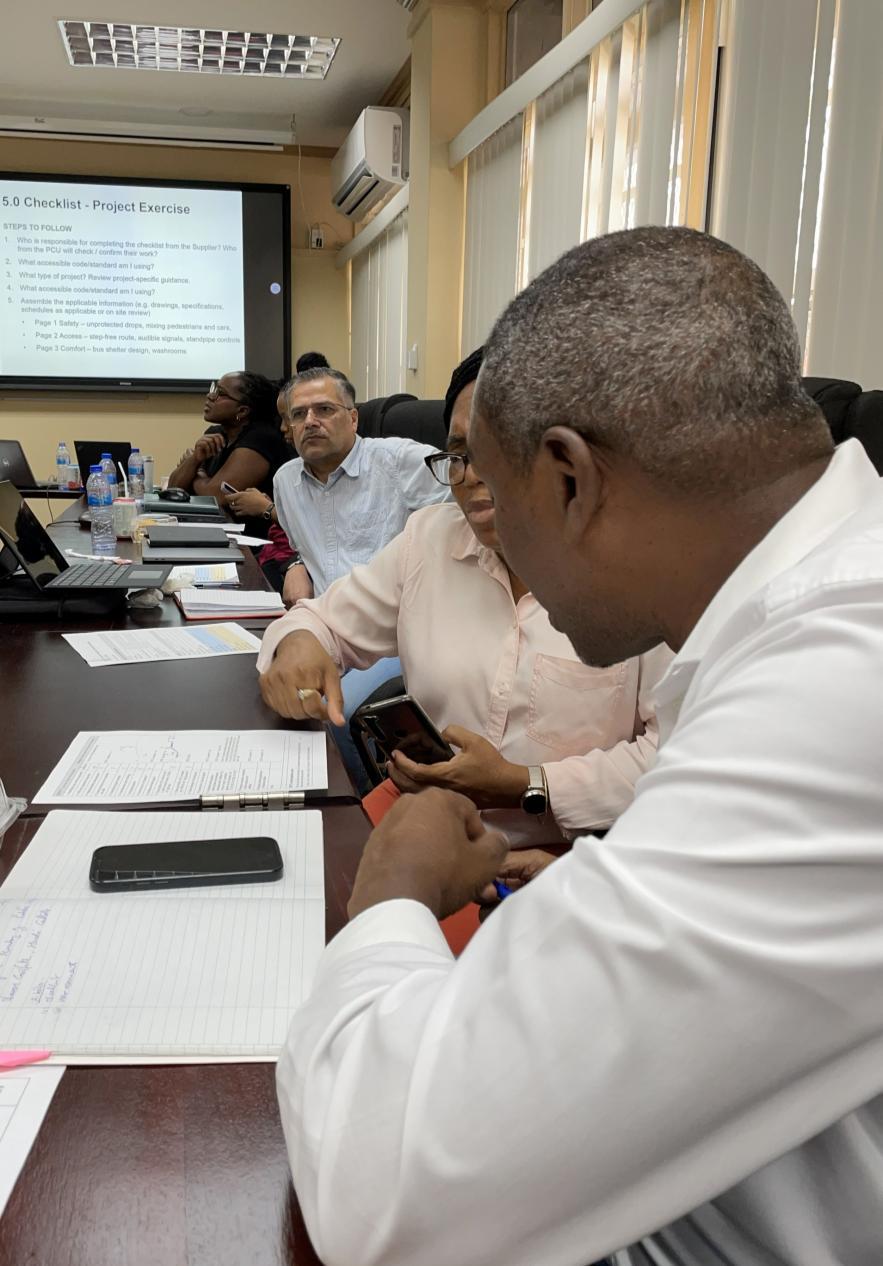
User-assessment workshops with persons with disabilities are carefully planned, including budgeting, participant recruitment through representative organisations, accessible venues, transport, and required supports (e.g. sign-language interpretation).
User-assessment engagements with persons with disabilities should be carefully planned. Participants may review plans, renders, or physical sites, depending on the project stage.
Engagements with persons with disabilities including workshops are conducted in line with ethical protocols, including informed consent, respect for participant wellbeing, and fair compensation for time, travel, and participation.
User feedback is systematically documented using the checklist to identify barriers, inform recommendations, and strengthen inclusive design outcomes and community trust.
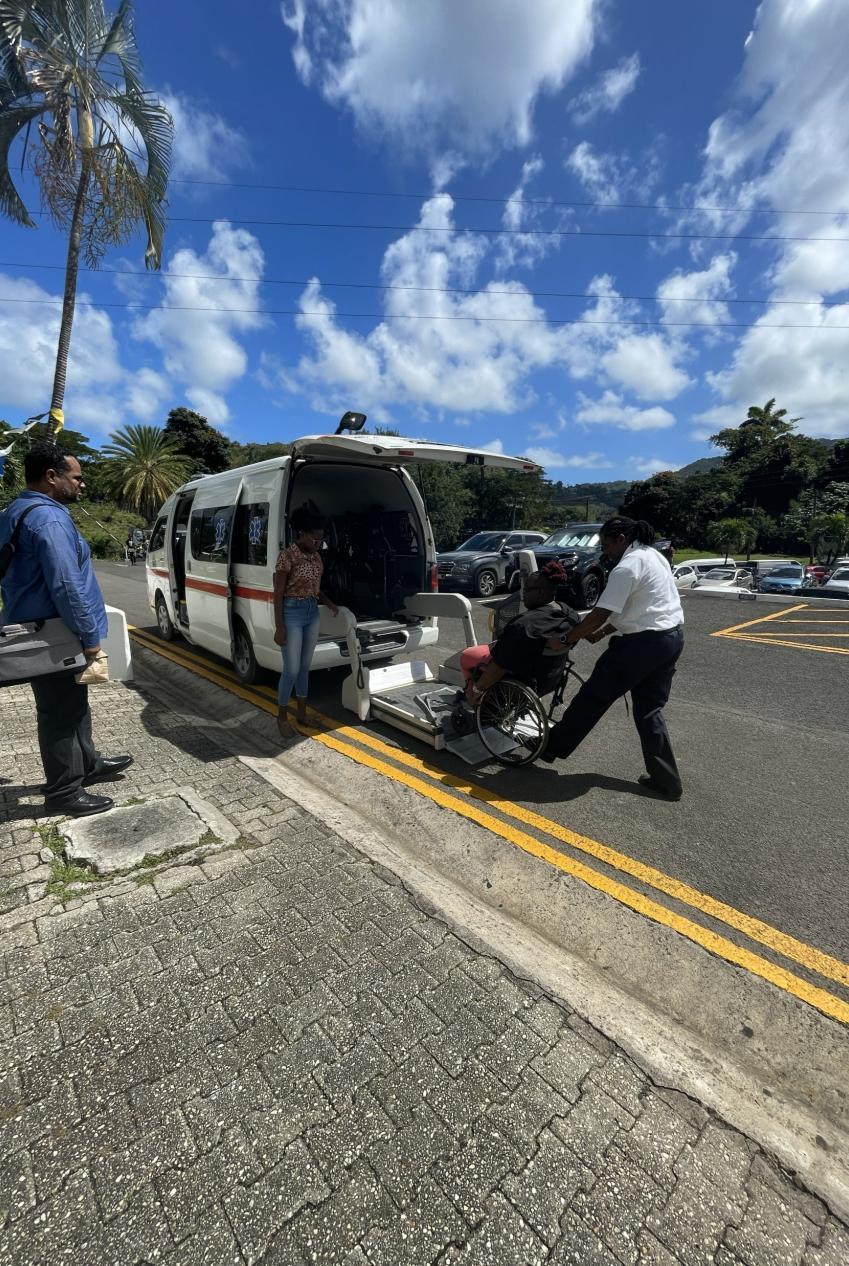
Accessible consent forms are provided and explained to participants, clearly outlining the purpose of the assessment, how information will be used, and the nature of compensation.
Participants are fairly compensated, with a recommended stipend of at least USD 30 per person, plus refreshments and coverage of transport and related costs, for sessions of up to four hours.
Meetings are held in safe, comfortable, and distraction-free locations, with appropriate accommodations such as accessible venues, seating, sign-language interpretation, and assistive communication supports.
Adherence to ethical protocols safeguards participants’ rights, promotes dignity and respect, and reinforces meaningful inclusion of persons with disabilities throughout the assessment process.

The following instructions refer to completing the Checklist with Persons with Disabilities / Users (Review B)
Mark each checklist item as Yes, No, Partial, or Not Applicable with detailed explanatory notes.
Desktop reviews require checklist forms, consent documents, project drawings, and accessibility code excerpts.
Field reviews need high-visibility gear, measuring tools, and safety equipment for thorough onsite assessment.
Use large-print documents, screen-reader files, and verbal descriptions for inclusive participant engagement.

Record items as ‘Not Applicable’ instead of removing them to accommodate future changes in project scope.
If standards cannot be met, document reasons and strive for partial compliance wherever possible.
Subjective scoring reflects critical safety issues better than quantitative scores by prioritizing overall accessibility.
Inclusion as a Human Right
Budget constraints should never justify ignoring minimum accessibility requirements, emphasizing inclusion for all.
sharon.griffith@caribank.org