Cara Welker Architecture Portfolio
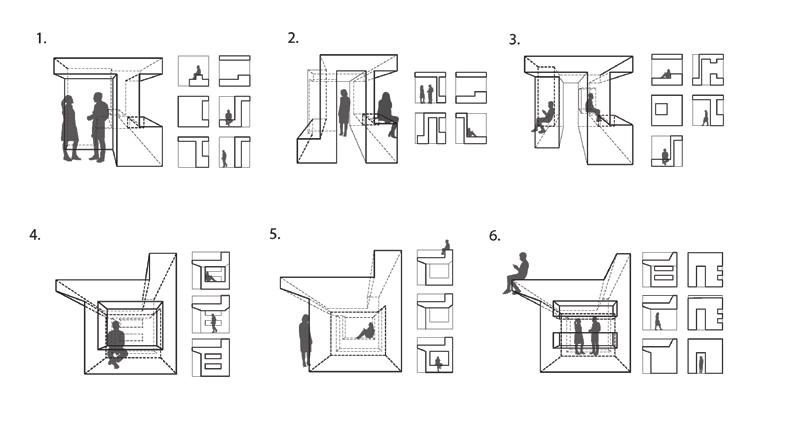
TABLE OF CONTENTS
Shifting Sands
Fall 2022
Elizabeth Park Health Center
Fall 2021
Balance: The Effect of Weight
Fall 2020
Totally Tubular
Fall 2022
Floating Bubbles
Spring 2022
River Arts Lantern
Spring 2023
Stewart Creek Village
Fall 2023
Shifting Sands
Semester: Fall 2022
Course: Architecture Design Studio, Lecturer Kuniko Bufford
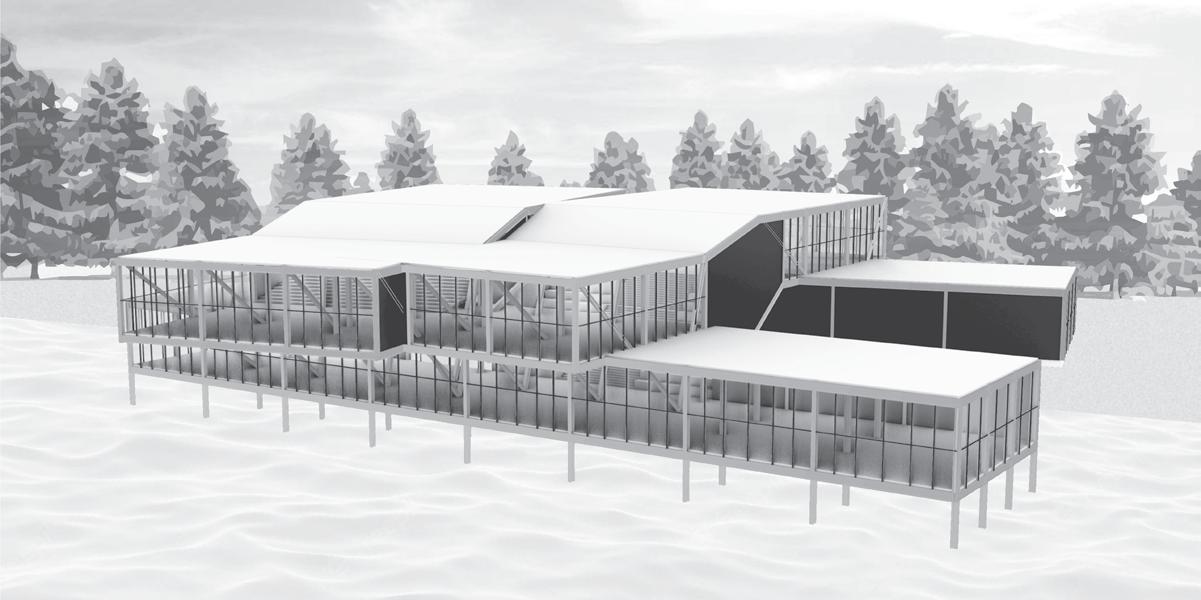
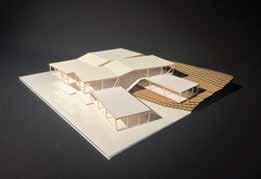
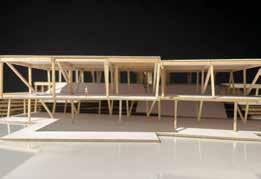
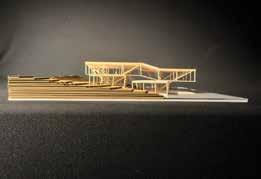
This project, located along Seattle’s Salmon Bay, aims to assist in healing the addiction epidemic of the city. Pottery making has become the central program for its addiction recovery benefits. The design includes learning, making, exhibition, and selling spaces. The design concept is “shifting” which can be seen in the overlapping forms and circulation weaving throughout the studio and exhibition spaces. In order to support the cantilevered spaces on the second level, a large truss system is placed on each end of the form.

Concrete Slab
Metal Decking
Steel Girder Soffit
3 5/8” Metal Stud
Steel Beam
Insulated Glass Mullion
Steel Column
Steel Bracket
Self-Adhered Flashing Siding
Connection Plate
Fluid-Applied Vapor Barrier
1/2” Glass-Mat Sheathing L-Bracket
Concrete Column
Concrete Pile Cap
Concrete Pile
Concrete Slab
ELIZABETH PARK HEALTH CENTER
Semester: Fall 2021
Course: Comprehensive Studio, Lecturer Melanie Reddrick
As an introduction to managing program, this project allowed for a more serious exploration around the relationships between form and function. Along with this, a deeper dive was taken into ground conditions and site analysis in order to better understand architecture as a form of design subjected to the influences of its surroundings.
View Covering Pathway Light E W Waiting Area Multipurpose Space Exercise Lockers/Storage Exam Rooms Behavioral Health Nutritionist and Dietitian Office/Administrative Space Toilet Rooms Elevator Service Closets Stairs Group Fitness First Floor Second Floor Third Floor Sections AA Sections BB A A B B Northwest Axon Southeast Axon
Balance: The Effect of Weight
Semester: Fall 2020
Course: Comprehensive Studio, Associate Professor Greg Snyder
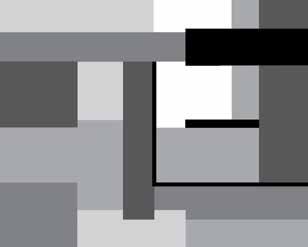
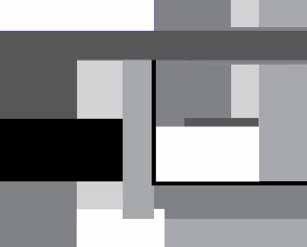
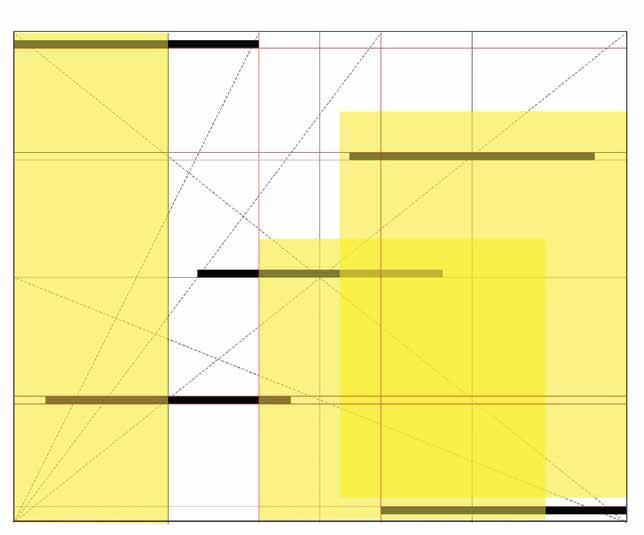
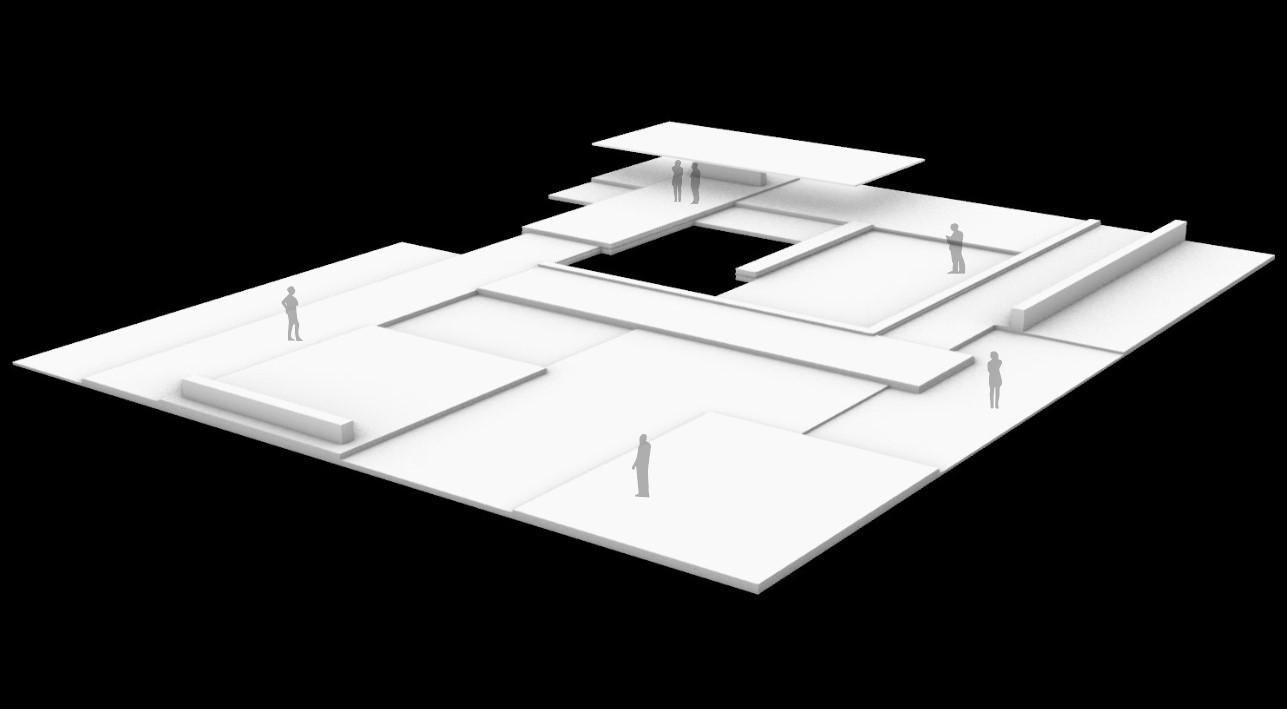
This project explores the effect of projecting regulating lines onto open space. These lines are used as an investigative tool into the creation of figure-ground relationships in a two-dimensional format. After deriving areas of space and void from those relationships, a series of extrusions were able to give way to an occupiable, three-dimensional space.

Totally Tubular
Semester: Fall 2022
Course: Architecture Design Studio, Professor David Thaddeus
Teammates: Emily Guy, Malak Fahmy, Diego Milner
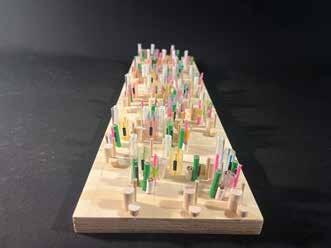
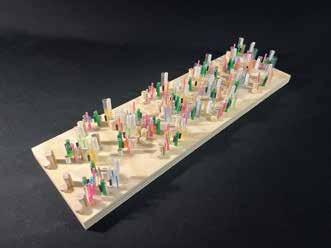
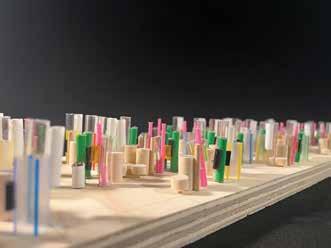
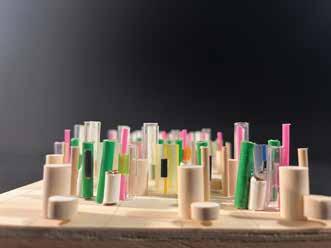
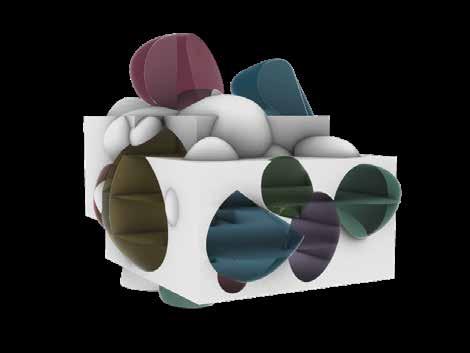
The design for this landscape originates from a team effort to create a structure with an intriguing profile. A single module made up of four different cylinder groupings was extracted from that design and multiplied across the site. A path of circulation was then removed to create variance amongst repetition. In the physical model, each grouping of cylinders is distinguished by materiality. All work shown was completed individually.
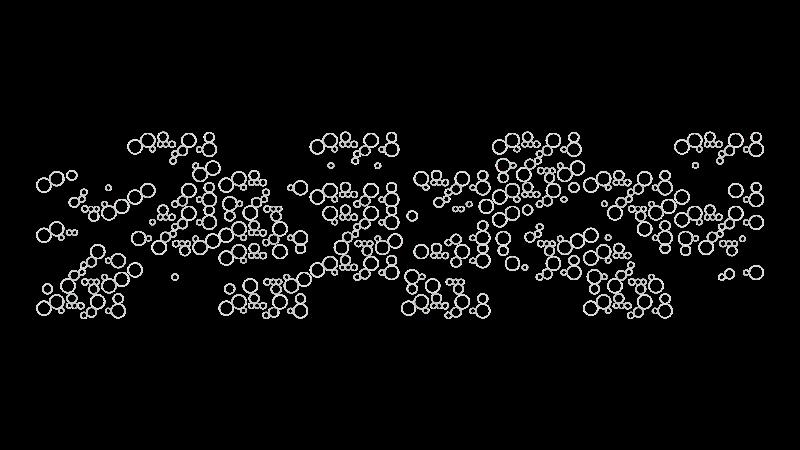
EXPLODED AXON
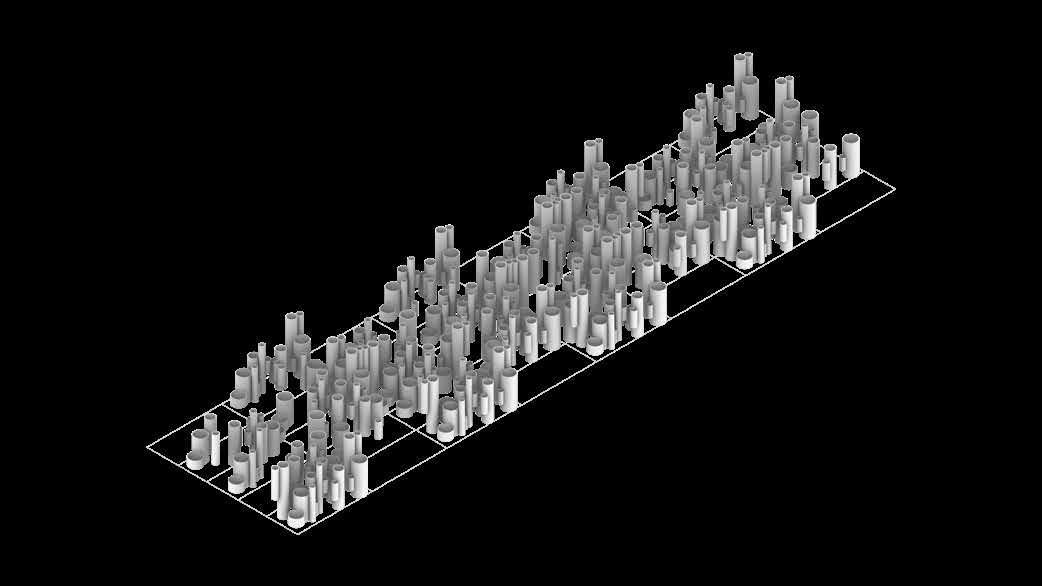
SPATIAL PERSPECTIVE
PLAN
Floating Bubbles
Semester: Spring 2022
Course: Comprehensive Studio, Lecturer Dean Crouch
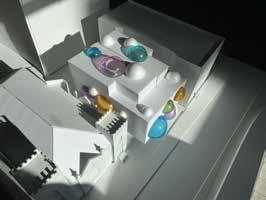
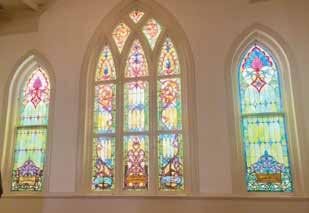
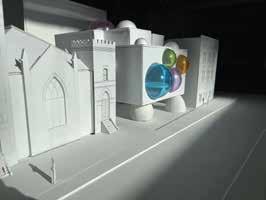
The effect of light and color acted as a major influence on the overall design of this project, specifically the connections between each space. Large colorful windows, derived from the stained glass of the historical church next door, are used to control light and create a playful aspect to the design. They also reflect the program of the building as an art studio and exhibition space. The large “bubbled” exterior influences the connections between the different spaces.
Program Diagram
Art Exhibition Space
Open Office
Lobby
Toilet Rooms
Egress
Elevator
Service Closets
Mechanical
Art Studio Space

River Arts Lantern
Semester: Spring 2023
Course: Architecture Design Studio, Associate Professor Betsy West
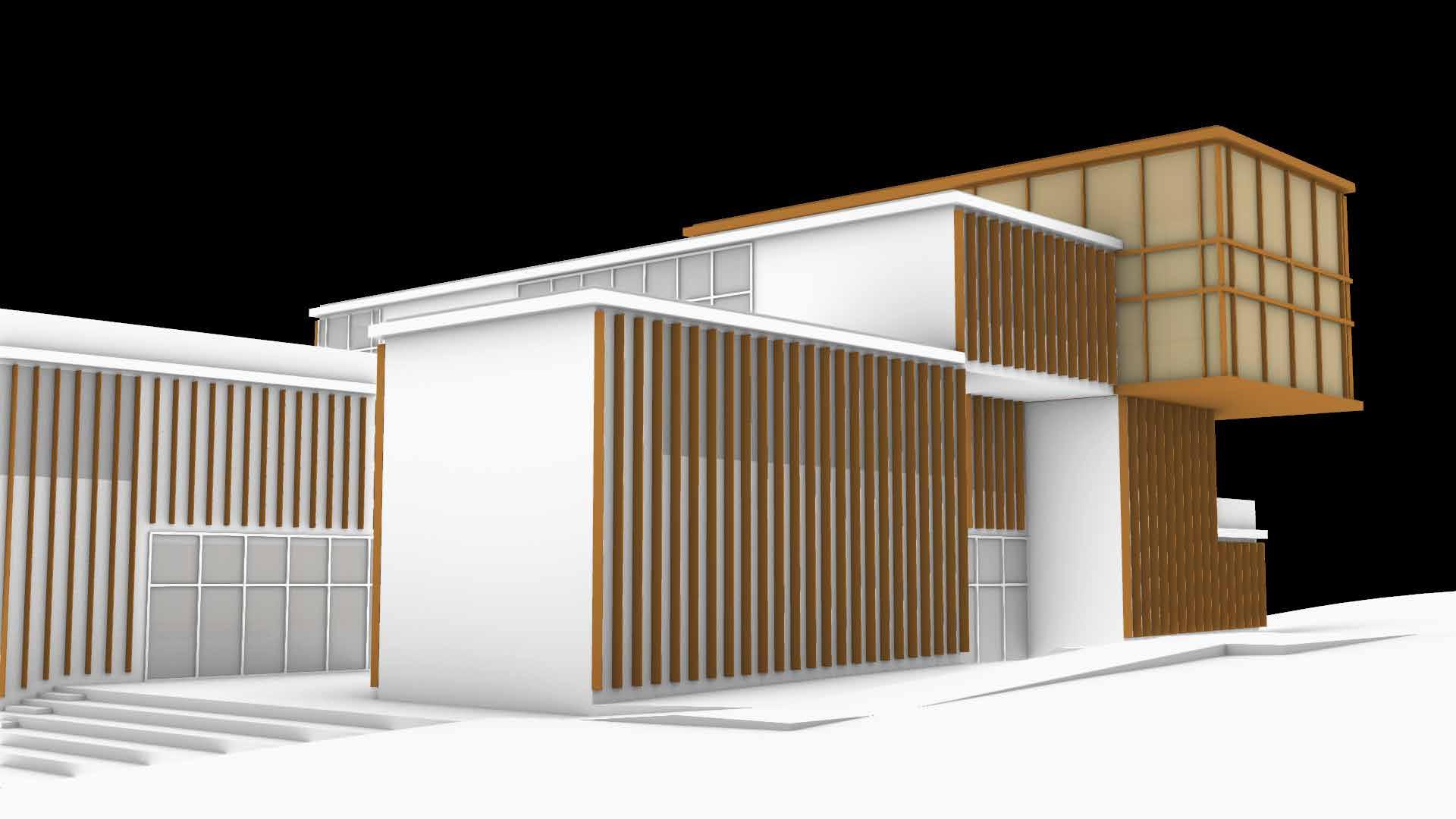
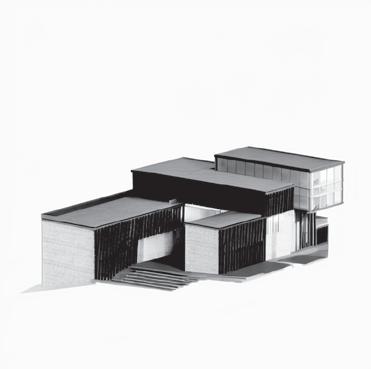
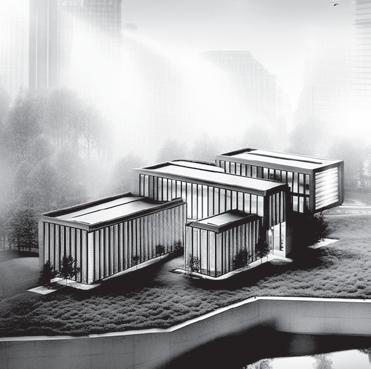
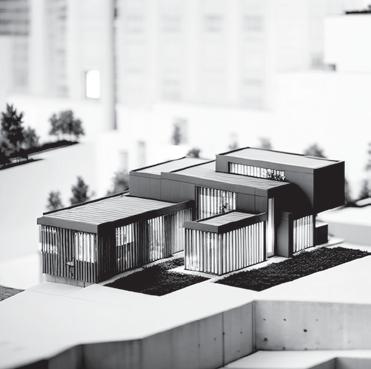
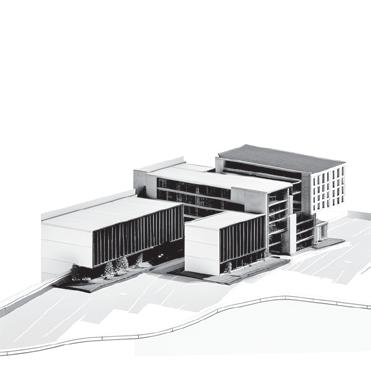
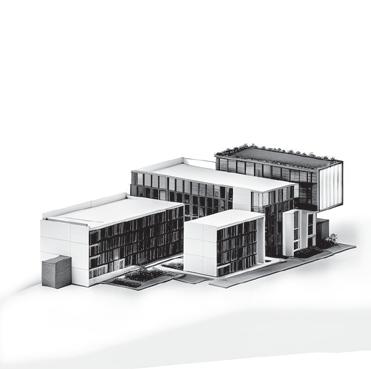
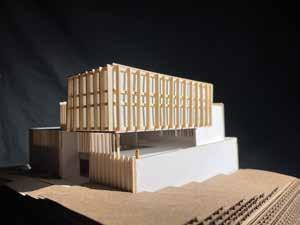
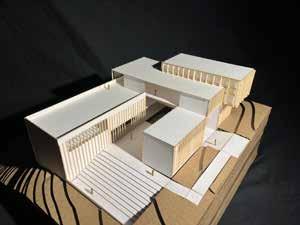
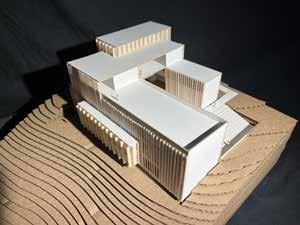
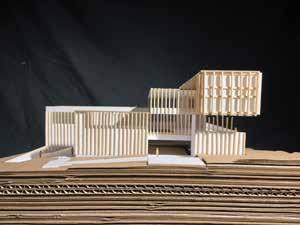
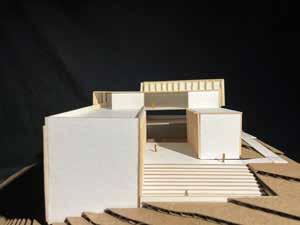
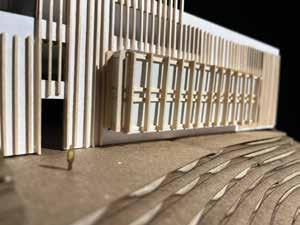
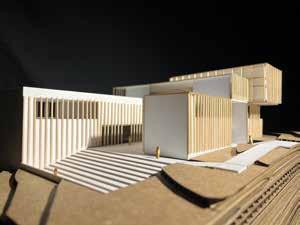
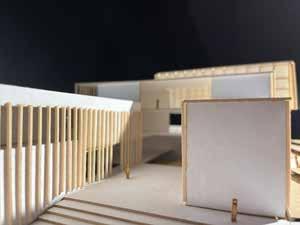
To address the sensitive wetlands along the French Broad River of Asheville, North Carolina, this project acts as an ecological research and design center for the area. The site sits within the River Arts District of Asheville which spans along the French Broad. The design of the building aims to provoke productivity and collaboration while fitting in with the artistic language of the surrounding architecture. The vertical fins along the exterior of the building allow for passive lighting and cooling while adding visual interest to the facade. Two “lanterns” that experiment with materiality and light protrude from the building’s form to emphasize spaces of gathering and collaboration.
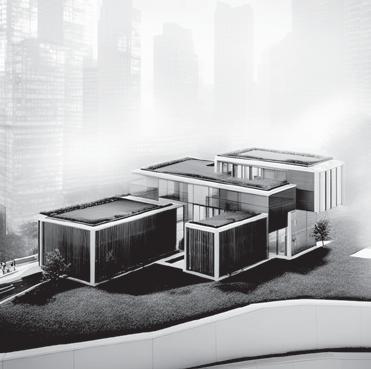
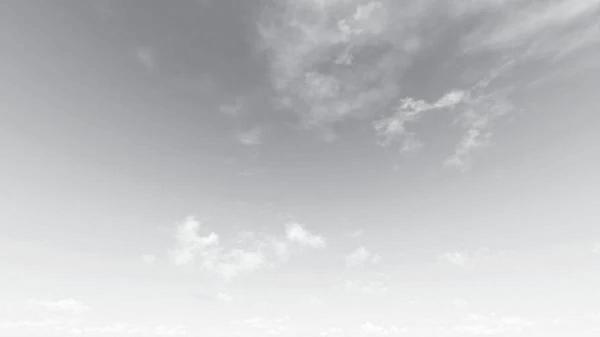
The images to the right are investigations into AI generated rendering. Each rendering resulted from inputting the same image of a preliminary building render and prompting the AI with key words surrounding facade and lighting conditions. Key words included “vertical shading,” “glass facade,” and “green roof.” Each image was generated with a different prompt to analyze the variations that could me made with small linguistic changes. The results express the iterative process of AI that can aid in the design of architecture.
N First Floor Second Floor Third Floor Fourth Floor Auditorium Food Prep Dry Lab Mechanical Entry Hall Courtyard Bathroom Staff Lounge Work Room Shipping & Receiving Offices Admin Wildlife Vet/ Animal Rehab Terrace Classroom Classroom Exhibit Space Green Roof Storage Cafe/Market Wet Lab Amphitheater Auditorium Amphitheater Bathroom
B A B A Section B Section A
Stewart Creek Village
Semester: Fall 2023
Course: Arch Studio VII, Associate Professor Ming-Chun Lee
Teammate: Olivia Meyer
Contributions: Site Perspective, Building Typologies, Open Space Assignment, Figure-Ground Diagrams, Site Plan, Renderings
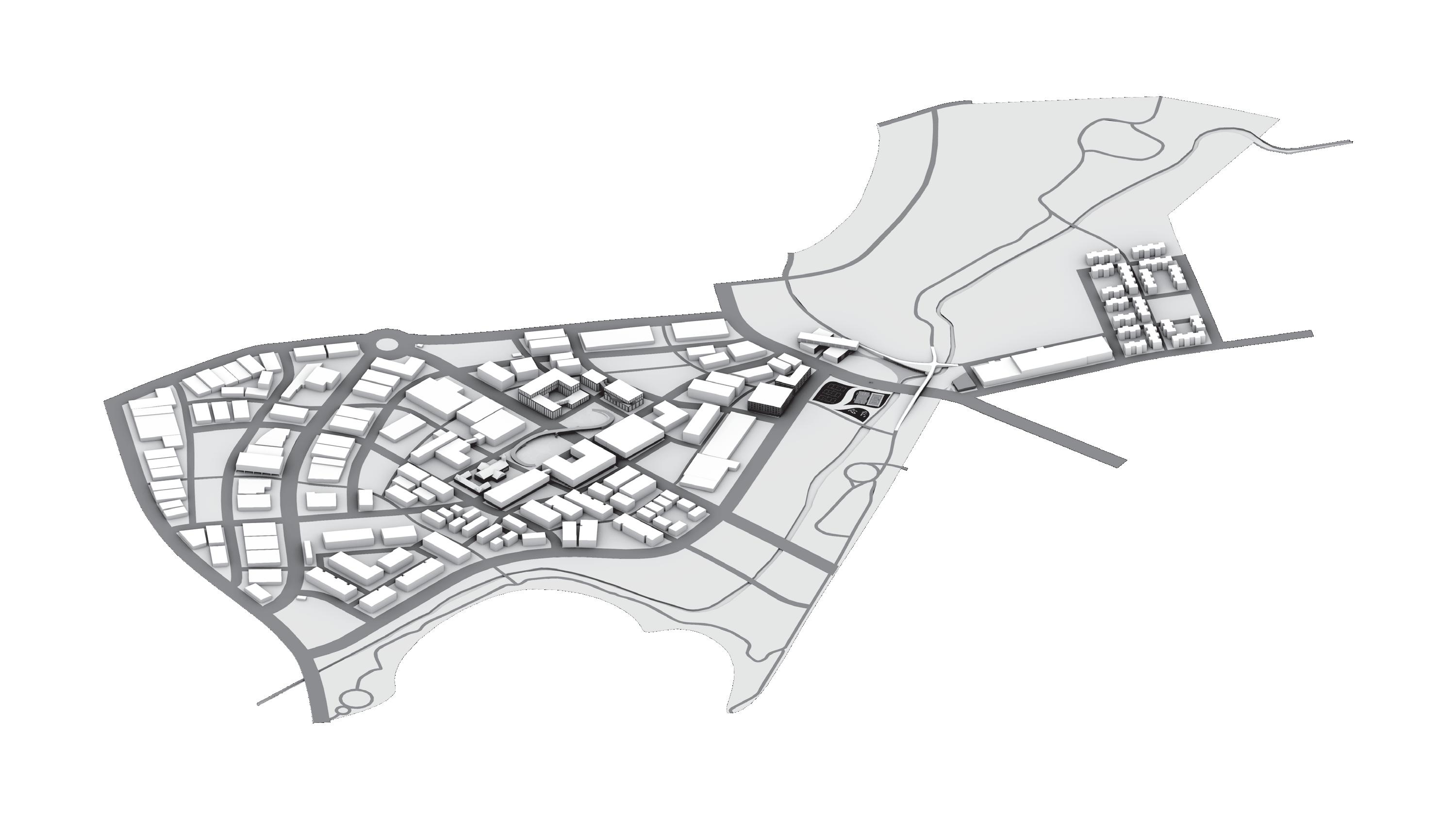
This urban design project was assigned to groups with the task of investigating a site located in West Charlotte. The design aims to create a neighborhood focused on walkable streets, greenspaces, and community gathering. Streets and paths are positioned throughout the site to allow the Stewart Creek Greenway running through the eastern edge of the site to “seep” into the urban landscape. Greenspaces emerge amongst different sectors of the site to allow for different forms of gathering. Bridging occurs between buildings and spaces to promote walkability and connectivity. Multi-family housing is located at the edges of the site to connect to the surrounding single-family homes and provide more affordable housing options for the area.
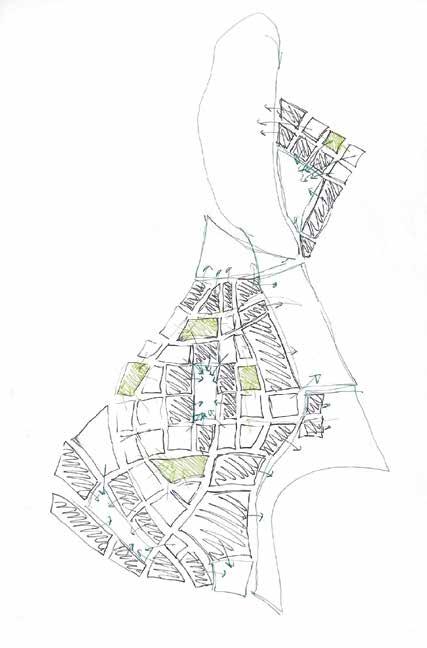
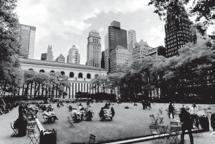
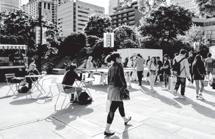
TOWNHOMES APARTMENTS MICRO-RETAIL COMMUNITY MULTI-USE COMMERCIAL CENTRAL FOUNTAIN PLAYGROUND MICRO-RETAIL SPORTS COURTS SPORTS COURTS OPEN SPACE TYPOLOGY Current Site Conditions Proposed Site Conditions OPEN SPACE ASSIGNMENT Plaza Concept Greenspace Concept
