H
ello! And a huge thanks for picking up the first issue of CAPture! This was born from support from the amazing lecturers at Edinburgh College’s Contemporary Art Practice Course. From the beautiful and inspiring writing classes led by Jennie Temple; the passion and creativity in Jen Ousen’s work with the AB-Z, artist’s book and zine, Collection; the wise words and gentle nurture provided by Colette Woods and last, but certainly not least, from the quiet and unwavering support of Alan Holligan. Teaching is often a derided profession of people who have many holidays and a short working day but (despite the cranky and authoritarian types that exist) there are those that genuinely care, who spend their own time (the researching, the emails and the lesson planning) and effort championing students who without them, would never have believed in themselves. I want to take this time and space to celebrate them and thank all of you- you know who you are!
As a publication CAPture aims to be curious, inclusive and questioning. That’s why it was so important that the theme of this first issue reflect the aims and values of the publication and here we hope to celebrate artwork of disabled artists but also ask the difficult questions about the art world and challenge the chasm of inequality that exists in the sector. Here we will not get it all right but we aim to be allies and fight for a fairer world which values the beauty and talent of everyone.
I personally hold my hands up. I was pretty clueless about accessibility in the arts when I first started out my journey. I then studied with another student who is a wheelchair user and realised what a shit show it was. As someone who has worked in schools providing education for young people with additional support needs for nearly 20 years, this realisation felt pretty shameful. Like many of us trying to forge a career, I had my head down and was trying to make work and opportunities for myself. But after becoming friends with Shae (see their interview pg 7) I witnessed the barriers within the arts education system and within the art world that they faced on a day-to-day basis. I also witnessed the devastating impact this had on their wellbeing and it was crushing.
Since then I’ve tried to educate myself and hopefully be an ally. I’m still aware that I often depend on my friend to answer questions and support my journey. And that this isn’t really their job or a weight they should have to bear on top of everything else they have to deal with. So, I still have a way to go. We all have a massive way to go!
It’s been a journey to some dark places- recognising how far just our tiny wee bit of the artworld needs to develop. (see An Open Letter- pg 6) and what this means for the whole of the artworld but there have been illuminating moments of joy in discovering new artists and the enthralling work they are producing. It’s also been wonderful to discover some of the organisations supporting and promoting disabled artists. Here I share some of the work with you and humbly ask your forgiveness wherever I may have slipped up.
Going forward CAPture will have many open calls and aims to explore marginalisation and issues of inequality within the artworld. If you’d like to contribute or have a proposal please get in touch, we’d love to hear from you, at: capture.artetc@gmail.com
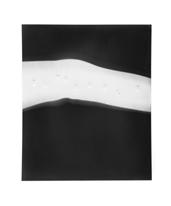
Under My Skin by Liv Harris @livsanaloguephotos
Under My Skin investigates [Liv’s] experience of living with chronic joint pain due to Hypermobile Ehlers Danlos Syndrome.
Image Description: part of a horizontal white leg cuts through a black background about two-thirds of the way up the image. The leg is embossed with the word ‘invisible’.
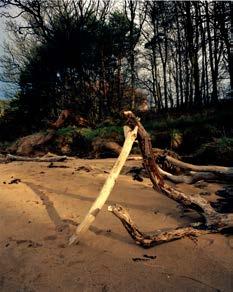
Amy Iona, Cotham, scan from medium format film @amyiona.photo amyiona.format.com
Image description: in the background of the portrait image are trees and uneven grassland, the foreground is sand. various large trunks of driftwood are littered around the scene. One piece appears to be propped against another in a sculptural intervention.
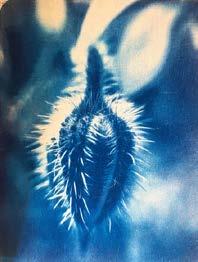
Eleanor Buffam, Borage Pod, cyanotype, @eleanorbuffam https://eleanorbuffam.uk/ ID: extreme close up of dark blue and white cyanotype. The teardrop shaped seedpod has dark and light leaves and has spikes protruding from it.
adapted from: https://www.scope.org.uk/campaigns/invisible-disabilities-itv/how-tobe-a-good-ally
1. Listen to disabled people. If you’re not sure, ask!
2. Not all impairments and conditions are visible. And some change. You may not be able to see them, but they’re still there.
3. Think about your language. Don’t use ableist terms and call these out when you hear them.
4. Champion accessibility and inclusion. Especially at work. Ask what access needs someone might have, like receiving presentations before a meeting.
5. Educate yourself. Read and learn about the advantages and benefits you experience as a non-disabled person and how to champion disabled people’s rights.
6. Speak out. If you see or hear bullying or discrimination, speak up or report it.
7. Don’t push. If someone says they can’t do something or aren’t feeling up to it, even if they look OK, don’t put them under pressure to change their mind.
8. Never assume someone is exaggerating or ‘faking it’. Just because you can’t see someone’s condition, doesn’t mean that it doesn’t exist.
9. It’s OK to ask questions But remember to ask something you’d be happy to answer yourself! (and ask first- your pal may have already had 20 questions that day pertaining to their disability and quite frankly- who needs that!)
10. Everyone is different. Not every disabled person will have the same views and prefernces on these tips. And that’s OK.
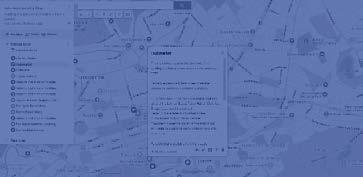

Image description: a blue map of central Edinburgh with markers signifying art spaces in the city. A panel on the left lists the arts spaces.
This interactive map was created in an effort to support disabled people in finding accessible art spaces. It is a work in progress and we are keen for people to collaborate with CAPture to highlight any inaccuracies or for people to add to the map across the country and beyond.
It was also compiled to put pressure on galleries who are lagging behind in the inclusion they offer our community. Opposite is an open letter to galleries that we have found offer poor accessibility in Edinburgh. I invite you to use this letter and send it to your local gallery if it isn’t meeting the needs of everyone. I implore you to adapt and cannibalise it and send it to your local MP to put pressure on them to get behind this cause.
We must highlight that fantastic work is already being done by disabled people, their families and friends in collating access reviews on Euan’s Guide. Please, please, check it out and support the amazing strides they are making in access equity.
If galleries and art spaces don’t, won’t or can’t make the changes necessary, we, as artists, can apply pressure and insist on change! We can show solidarity by choosing accessible spaces to show our work and for workshops. Community Centres almost always have accessible rooms and toilets and have the added bonus of being cheaper than most commercial spaces. We can show our work in the street which is not only more accessible but more democratic and will reach a wider audience. There’s so much that can be done with a little creativity and flexibility to be an ally and I hope the next time you see or show artworks you might consider how everyone can access it.
Dear gallery owner, I recently contacted your gallery regarding a small research project- gathering information on how accessible galleries are in Edinburgh. This has developed as an interactive map and in 2025 there are too many arts spaces simply not making the grade. Your space has been categorised as amber or red on the map, meaning it is totally or partially inaccessible for disabled people. I’m here to implore you to consider your accessibility and highlight how you can and must do better!
Whilst most institutional galleries in Edinburgh offer physical accessibility and support for the Blind, VI, Deaf and are now making events more friendly for neurodiverse people, as soon as we ‘step’ out of the handful of large galleries and museums with huge amounts of public funding, this accessibility narrows significantly. With approximately 1 in 4 Scottish people reporting a disability, we are excluding 25% of the population from cultural spaces, enrichment and engagement. Think of the talent and ideas that you are missing out on! Also consider this...Any one of our partners, parents, or children could become disabled tomorrow. When we consider this through a personal lens, wouldn’t we move mountains to make sure our loved ones would not experience isolation and or exclusion? But because it isn’t us, we are in danger of conceding that pain, cruelty and ableism are acceptable.
Whilst many people cite the historical nature of Edinburgh as the problem in making spaces accessible perhaps we can look to fact that they have made the Colosseum accessible?! Yes! So, if we can do that we can do anything, right? The “UK Art Market, [is also]worth £9.7 billion, [and] is one of the largest in the world” (https://www.dacs.org.uk/news-events/artists-earnings-report-2024) so there’s the money to make a change- it’s just the will that is missing. While we recognise the restrictions of legislation (primarily ‘Planning (Scotland Act) 1997), much can still be done to improve the current situation and primarily, arts spaces could choose accommodation which avoids these restrictions. It is not only the physical accessibility of the buildings that might be considered. For example, how might a Blind or Visually Impaired person might be able to access the work or someone with a hearing impairment? Simply printing out copies of exhibition texts and signage in 24pt and 36pt Arial and making it available on your website as a PDF so it can be accessed by screen reading software, is a really effective way to be inclusive. This will also help people with dyslexia access your work. Taking time to create an audio file and linking this with a QR code is another really useful way you can support accessibility. Captioning videos with free subtitle software and considering a BSL interpreter for online and in person events, as well as sharing on your website that guide dogs are welcome in your space, goes a long way to welcoming those who have a hearing impairment. You can support people who are neurodiverse by offering a low light, quiet session which could be booked through Eventbrite of Citizen Tickets to control numbers. As a starting point, we would suggest you carry out an accessibility audit for your organisation as soon as possible and develop an accessibility statement that is clearly visible on your website which can be developed as your accessibility improves. This admittedly will all take a little extra time on top of what is already a time-consuming business but are small acts in an effort to include a quarter of our community. These are small acts of humanity which will have a significant impact on the lives of our friends. Sending with hope and compassion, CAPture arts magazine
McKay
“I’d be happy as long as I’m getting to use my art to make noise about things”
Scan for the chat

Jodi
Harris-Walker
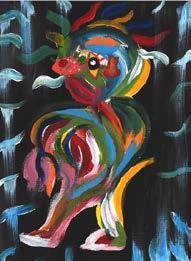
The Spectrum of Humanity, 2025 @harris.walker.art
ID: a figure, created with bold sweeping marks, in a variety of colours, fills the page on a black background. The facial features, in non-traditional colours sit at irregular places on the oversized head. Energetic blue/ white squiggles radiate from the figure.
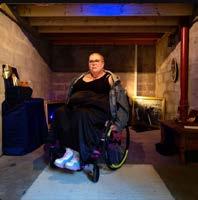
Shae Morgon (@shaemorgonart) at Concrete Block Gallery during their solo show Indigo. Image credit Andrew J Brooks. ID: A person in a black dress, denim jacket and white/ blue boots sits in a wheel chair at the centre of a breeze-block garage. Artefacts and artworks are presented around them. There is a QR code to scan and listen to the interview. The URL is: https://youtu. be/lMUd17t5R9Q
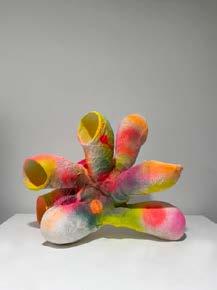
Andrew is an inspiring Edinburgh based artist whose work bridges sculpture and performance. He was recently awarded a grant from the Henry Moore Foundation. he said: “It comes at a time when I am working towards an exhibition, We Contain Multitudes, at Dundee Contemporary Arts. The project aims to create systemic change in the visual arts sector in Scotland, tackling ableism in the sector and imagining a future in which disabled artists have increased access to opportunities, are visible, and their expertise and experiences are truly valued.
Image description: the image shows a sculpture of hollow conical shapes protruding in all directions. These are created from casts of the artists limb difference. The sculpture is sprayed with sporadic patches of neon pink orange and yellow paint.
Lanzerotti is an access artist who uses disability access tools artistically. They make multimodal memoir comics and zines, tactile art books, and sculptural assemblages to stretch visual media into tactual, audible, and other vivid dimensions. When sudden vision loss changed how they read, Rae started making graphic medicine on topics like seeing double, aging, queerness, and community.
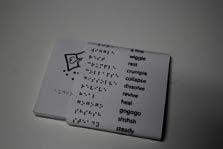
Rae Lanzarotti, Embodied: A Memoir Comic, 2023
ID: Braille and print words, in black, form a band around an artbook. A small illustration peeks out under the band but the image is unclear.
SUPPORT:
Project Ability
https://www.project-ability. co.uk/ Based in Glasgow this arts charity & gallery have supported and built an arts community for people with learning disabilities and mental ill-health for over 20 years.
READ:
Inklusion: https://www. inklusionguide.org/ In their own words: “A kickass guide to making literature events accessible to disabled people.”
SEE: Out of Sight Out of MIND
22 Oct – 9 Nov 25
Launch: Tues21 Oct 6-8pm (booking required)
Summerhall, Edinburgh
Admission: free
LISTEN: The White Pube Podcast https://thewhitepube. co.uk/podcasts/
Stills School
part of Stills, Centre for Photography in Edinburgh an alternative photography school for 16-25 year olds who face barriers to accessing the arts. The school is free of charge. All materials and equipment are provided, and they can cover travel
READ:
‘Her need to make is off the scale’: why Nnena Kalu’s Turner prize nomination is a watershed moment for art, The Guardian, 2025
https://www.theguardian.com/ artanddesign/2025/may/19/ nnena-kalus-turner-prize-watershed-glasgow
Disability Arts Online
A UK-based charitable arts organisation led by disabled people. They run the Artists Directory for artists and creatives who identify as disabled, D/deaf, neurodivergent and/or living with a long term health condition.
SEE: ir/regular BY
Grant Glennie
20 Sept 2025 - 1 Nov 2025
Reception, 20 Oct, 1pm - 3pm
Project Ability,
Admission: Free WATCH: Palestine Comedy Club
Documentary Sat 8 Nov 2025
Centre for Contemporary Arts, Glasgow
Admission: Pay What You Can £10 / £7 / £4 / FREE
SEE: We Contain Multitudes Sat 7 Feb 11:00Sun 26 Apr 2026 18:00 Dundee Contemporary Arts
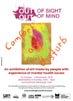
Image description: a poster advertising Out of Sight Out of MIND, ‘Comfort and Disturb’ exhibition. The title of the show is written in orange diagonally placed over a multicoloured abstract painting.
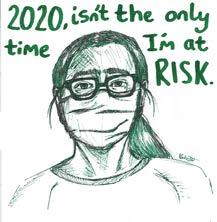
Romana Docherty 2020 isn’t the only time I’m at risk, 2025 romanadoc7@icloud.com
ID: a portrait drawn in green biro shows a young woman in glasses wearing a face mask. Around the top of the girl’s head are the words from the title written in green marker pen.
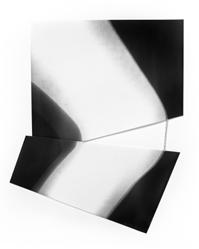
Under My Skin by Liv Harriss @livsanaloguephotos
ID: A photomontage of a thigh and a knee in b&w joined on an angle with a short length of silver chain.
Check out large print and audio copies + more art shenanigans at:
instagram:contemporaryartetc
email: capture.artetc@gmail.com
website: https://contemporaryartetc.com/blog/