Section One: Renewables Amid Shifting Energy Policy
Section Two: Grid Pressures and New Technologies
Section Three: The Growing Need for Smart Capital
Section Four: The Strategic Rise of Captives
Captive Intelligence was launched in December 2022 to meet the growing demand for credible and relevant news and analysis of the global captive insurance market. Through a combination of exclusive news stories, in-depth long reads, and data-driven analysis, Captive Intelligence provides valued insight to captive owners, risk managers, service providers and regulators around the world. 3 4 6 9 10 Executive Summary
Aon plc (NYSE: AON) exists to shape decisions for the better — to protect and enrich the lives of people around the world. Through actionable analytic insight, globally integrated Risk Capital and Human Capital expertise, and locally relevant solutions, our colleagues provide clients in over 120 countries with the clarity and confidence to make better risk and people decisions that protect and grow their businesses.
AXA XL provides insurance and risk management products and services for mid-sized companies through to large multinationals, and reinsurance solutions to insurance companies globally. We partner with those who move the world forward. To learn more, visit www.axaxl.com
Executive Summary
The global transition to low-carbon energy is accelerating, driven by rising electricity demand, decarbonisation commitments and the expansion of renewable energy. Solar and wind are expected to account for the majority of new capacity over the coming decade.
The global transition to low-carbon energy is accelerating, driven by rising electricity demand, decarbonisation commitments and the expansion of renewable energy. Solar and wind are expected to account for the majority of new capacity over the coming decade.
As renewables expand, the role of the electricity grid is becoming increasingly central to the success of the energy transition. In many regions, grid infrastructure is ageing and capacity is constrained by networks that were not designed to accommodate large volumes of intermittent renewable power.
As a result, grid congestion is emerging as a key challenge for renewables developers and policymakers. Addressing these issues will require substantial investment and improved grid resilience.
This shift is changing the nature of investment across the energy sector. Capital is increasingly moving toward the infrastructure that enables renewable power to be transmitted efficiently. Transmission systems, subsea interconnectors and grid reinforcement projects are becoming critical parts of the renewables space.
Emerging technologies such as battery storage and floating offshore wind are scaling quickly, but they introduce new risk profiles. Limited claims history and evolving data can make these risks more difficult to assess, particularly during the early stages of deployment.
Policy and regulatory dynamics also remain an important factor shaping the renewables landscape. In response, organisations are increasingly adopting more strategic approaches to risk management and capital deployment. Alongside traditional insurance markets, alternative risk financing mechanisms — including captive structures — are being explored as tools to manage volatility, support innovation and optimise the use of available insurance capacity.
As renewables capacity continues to grow and energy systems become more interconnected, the ability to manage risk across increasingly complex infrastructure and project structures will be key to supporting the next phase of the transition to decarbonised electricity generation.
Renewables Amid Shifting Energy Policy
The global shift toward a low-carbon, renewables-driven economy is reshaping both the energy landscape and the way risk is being financed. As more capital flows into grid infrastructure, solar, offshore wind, and emerging technologies, renewable energy companies are facing increasingly complex challenges concerning capital.
According to the International Energy Agency (IEA), global renewable capacity is expected to increase by 4,600 GW by 2030 — effectively adding the equivalent of China, the European Union and Japan’s combined power generation capacity to the global mix. Solar PV will account for almost 80% of that growth, followed by wind, hydropower, bioenergy and geothermal energy.
In the United Kingdom, the British Energy Security Strategy has raised offshore wind ambitions to 50 GW by 2030, including 5 GW from floating wind. If achieved, wind could account for more than half of the country’s renewable generation by the end of the decade. However, geopolitical headwinds against renewables growth remain, with energy policy in the United States shifting away from renewables and increasing alignment with fossil fuels.
“Investment in renewables remains vast but focus appears to be shifting beyond the generation technologies toward transmission, distribution and subsea infrastructure. That feels like a structural change in where capital is being deployed.”
David Brining, Aon
A 2025 AXA XL survey found that 59% of respondents expect policy and regulatory barriers to be the most significant blocker of low-carbon growth over the next five years. Financial barriers were cited by 45% of renewables developers and 58% of oil and gas companies, while 49% of developers and 35% of oil and gas companies pointed to inconsistent government targets as a potential impediment.
Expansion of renewable energy is creating structural challenges, with grid integration constraints, supply chain vulnerabilities, financial pressures and regulatory shifts causing increasing concerns. Electrification of homes and transport, growth in data centres and continued decarbonisation commitments are also driving sustained increases in electricity demand.
“Investment in renewables remains vast but focus appears to be shifting beyond generation toward transmission, distribution and subsea infrastructure,” said David Brining, regional director for power & renewables, EMEA at Aon. “That feels like a structural change in where capital is being deployed.”
Insurance markets are evolving alongside this shift, and after a number of years of hard market conditions, capacity is returning to the commercial market. There is now largely sufficient capacity for standard property and casualty and business interruption exposures in renewables construction and operations, as carriers lean into growth and external investment increases.
Capacity remains more constrained for certain exposures, such as natural catastrophe risks, particularly where renewable assets are concentrated in hail or windstorm zones, though captives can play an important role in removing some of the volatility from these programmes.
Renewables developers are typically smaller and more debtleveraged than the more traditional energy companies with large balance sheets. And revenue protection for these firms is key.
“When they look at things like non-damage BI – will the wind blow? will the sun shine? – how do they protect those revenue streams around their power purchase agreements and other risks?,” said Vicky Roberts-Mills, global head of energy transition at AXA XL.
Insurance can protect those revenue streams for smaller firms ultimately enabling sustainable commerce over the long term.
“There is a need to think more holistically across the value chain about where the risks are and how they are managed. That is part of the evolution of where the market is moving at the moment,” Roberts-Mills added.
The renewable transition is not just reshaping energy markets — it is forcing a changing mindset around how risk capital is accessed and deployed with captives well positioned to play a central role. As risk becomes more complex and capital deployment becomes more strategic, organisations are being required to think more holistically across the value chain about where risks sit and how they are managed.
“That is part of the evolution of where the market is moving at the moment,” Roberts-Mills added.
“There is a need to think more holistically across the value chain about where the risks are and how they are managed”
Vicky-Roberts Mills, AXA XL
Grid Pressures and New Technologies
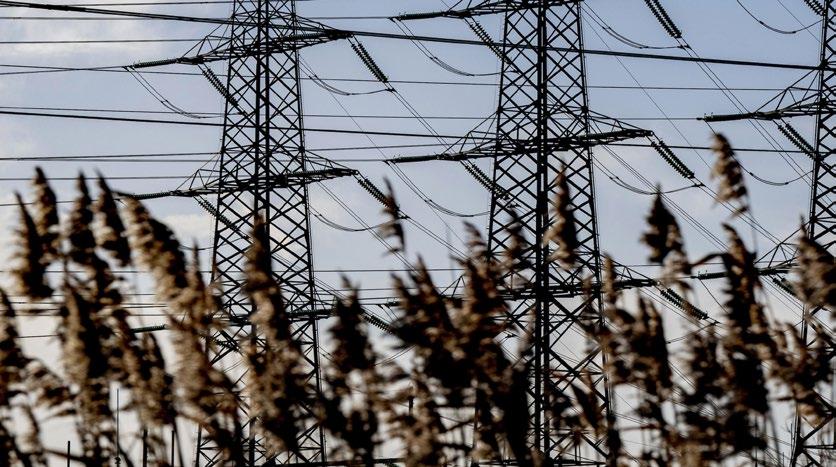
One of the biggest shifts over the last few years has been the growing recognition that most investment and innovation has focused on “edge-of-grid technologies” — solar, wind, battery storage, and other assets that connect into the energy grid.
The energy grids themselves have received comparatively less attention despite sitting at the centre of the renewable energy transition. Almost all of the renewable build-out or electrification agenda will not work without sufficient grid capacity.
The Netherlands is an example of a country where grid congestion has become a major bottleneck to the transition, challenging decarbonisation targets as well as energy security and affordability. With a five-fold increase in solar PV capacity between 2018 and 2023, driven mainly by distributed rooftop installations supported by a favourable net metering policy, the Netherlands has become one of the world leaders in solar power.
“Captives are not a pure alternative to the commercial market; they are meant to complement it.”
Marine Charbonnier, AXA XL
Source:
For years, investment was heavily focused on generation capacity, but now national energy grids need to catch up with the rising demand for energy.
Grid congestion poses a growing risk to energy security and energy transitions, and addressing this challenge requires action across several fronts.
“In many regions, grid infrastructure is aging, capacity is constrained, and there is a growing need for redundancy and resilience for grids to be operated in stable conditions in the face of ever increasing percentages of renewable energy generated electricity supply,” said Guido Benz., chief executive officer, global renewable energy at Aon.
“Renewable generation is inherently variable — solar and wind generation are not always aligned with demand patterns, meaning that grid stability increasingly depends on frequency control by balancing the supply and demand of electricity, for instance by means of frequency control ancillary services such as utility scale energy storage systems that allow to quickly charge or discharge energy. Large-scale outages in places like Spain and Portugal last year, and historically in markets like Germany, highlight the pressure grids are under as renewable penetration increases.”
New technologies
New technologies in the renewable space are scaling quickly and, as a result, there is a growing need for education around how these technologies work and the unique exposures they create. Insurers in the renewable energy space want to stay close to new and innovative technologies because it allows them to build technical understanding and maintain a strong market position.
However, these projects are often prototype or pilot-stage developments, meaning they typically generate limited risk appetite with insurers due to lack of historic performance data and relatively small amounts of premium generated by pilot projects while still carrying the full scale technology risk. From an underwriting perspective, this can make the segment less attractive. From an underwriting perspective, this can make the segment less attractive.
Yet insurers still need exposure to these risks in order to develop expertise and remain competitive as the technology scales. This presents an opportunity for those with captives, or considering captives, to bridge the gap. The captives could absorb part of that early-stage risk, helping to unlock commercial insurance capacity and make projects insurable.
“In that sense, captives can act as a bridge — helping new technologies move from prototype phase into mainstream insurable assets and effectively helping to kick-start market adoption by demonstrating skin in the game by the owner, unlocking follow market capacity or offering an option for
“Captives can act as a bridge — helping new technologies move from prototype phase into mainstream insurable assets and effectively helping to kick-start market adoption”
Guido Benz, Aon
difference in conditions and potentially a controlling position in case of claims” Benz said.
Many companies in the renewable space are highly innovation focused. That mindset can run counter to more structured, longer-term approaches to risk management, which can give initial captive conversations a different dynamic, while there is often more of a mindset shift required among decision-makers.
For emerging renewable technologies with limited loss history, carriers such as AXA XL typically write lines that are proportionate to the risk, with participation shared among multiple insurers.
Where the carrier feels more comfortable with the technology, they may take a larger share of the risk.
“The idea is to build our data: if there are claims, we are aware of them, and we are not over-exposed because we only take a small share,” said Sophie St John, head of pricing, energy and international construction at AXA XL.
“I think what’s happening is that a lot of the market is taking small lines on these risks, just to see how they evolve and to decide which risks we want to take, compared with others.”
By sharing the risk, the insurance industry can be more ambitious about supporting those developing technologies. AXA XL is increasingly looking to support the renewable transition with the carrier seeing more submissions and steadily growing its portfolio.
“Over the last couple of years, we have reviewed our pricing tools to accommodate new occupancies and greater complexity, and assessed those prices with the risk engineers,” St John added. “We’ve done a lot of work to be ready to price an increasing number of these risks.”
STRUCTURED SOLUTIONS IN PRACTICE Case Study
The TenneT Group is the national transmission service operator (TSO) of the Netherlands, and a key player in integrating renewable energy sources and enhancing the stability and reliability of European power grids. It serves more than 43 million residential and business users in the Netherlands and parts of Germany.
As part of its transition to low carbon operation, TenneT intends to invest hundreds of billions of euros into projects that strengthen and expand its electricity grids, to support the transformation towards a decarbonised energy system.
The risk profile of the project was influenced by the scale of the new technology involved, the significant investment needed and the fact that the client was regulated in two jurisdictions. These factors meant the project was likely to require a large increase in insurance premium spend.
To reduce its dependency on the traditional insurance market and obtain sufficient insurance capital while enhancing risk governance, the company decided to set up a Netherlands-domiciled reinsurance captive, TenneT Reinsurance NV. (TenneT Re).
The captive, for which AXA XL is a fronting partner, underwrites and reinsures construction all-risks (CAR) and operational all-risks (OAR) exposures. To protect against claims volatility, the captive uses a hybrid multi-year, multiline structured retrocessional programme combining CAR and OAR.
The retrocession attachment point will rise as TenneT Re’s capital grows from year three onwards. As well as giving TenneT greater stability of annual premiums and retentions, the captive enhances its strategy and ability to move towards a reliable, sustainable, and affordable energy supply in several other ways.
It gives the client access to a stable source of risk capital. It also enhances the client’s risk governance, which will be vital as the risk profile continues to evolve. And the captive will provide long-term balance sheet protection while generating surplus liquidity to support future investments in transmission systems that will aid the transition to a low-carbon economy.
Although the captive has only been operating for a year, the client has already seen measurable benefits, including an improvement in its solvency position, double-digit savings on direct placements above the captive retention and significant accumulation of shareholder capital within the captive.
The Growing Need for Smart Capital
Going forward, access to available capital and capacity will be increasingly important in helping to finance new renewable projects.
“The key question becomes how to blend different forms of capital and how to ensure the organisation is accessing the best combination of available capacity,” said Ciarán Healy, global captive leader for commercial risk solutions at Aon. “In simple terms, it is about constructing an optimal portfolio of different capital sources.”
That will be difficult without some form of platform or transformer, such as a captive, that allows capital to be aggregated and analysed. “In this context, captives sit at the intersection of insurance and finance,” Healy added.
There is a clear market shift in how insurers and capital providers are thinking, with more reinsurance-type techniques and approaches starting to permeate across all sources of capital. Alongside that, the captive still plays its traditional role in managing total cost of risk and ensuring the most efficient return on risk spend on an annual basis.
“That includes not transferring risks that are more efficient to retain, which is the traditional core captive philosophy,” Healy said.
It is also important that insurance needs in the renewables space are viewed in the context of project margins. Rates of return on these projects are generally much lower than in the traditional energy space, meaning that when insurance pricing is built into the overall cost it can challenge the project economics.
“That is not necessarily to say that the insurance pricing is wrong, because there is a price for the level of risk transfer,” Roberts-Mills said. “Rather, it is about how the overall allocation of risk is shared across project stakeholders, to ensure that each dollar of risk being transferred to insurance is the right dollar of risk.
“It is about how the overall allocation of risk is shared across project stakeholders, to ensure that each dollar of risk being transferred to insurance is the right dollar of risk”
Vicky Roberts-Mills, AXA XL
“Because of lender requirements, it is often easy to say, ‘just buy insurance for that,’ but this can have a counterintuitive impact on project economics. Instead, there is value in thinking earlier in the project about the risks, the financial consequences of those risks, and how they are allocated across stakeholders –that’s something our risk consultants can advise on.”
The main difference between small and large companies and their ability to utilise captives is their capital flexibility.
“Smaller captives are not necessarily more innovative — but they are often more constrained,” Brining said. With less capital and less balance sheet flexibility, they typically need to be more selective and more bespoke in how they deploy their captive capacity. “So rather than thinking about innovation versus size, it is probably more accurate to think about capital availability, flexibility, and strategic priorities,” he added.
The Strategic Rise of Captives
Large oil and gas groups have long operated highly capitalised captives and deployed them extensively across numerous risks, while established renewables operators are taking a largely measured approach to captive utilisation.
Some have created dedicated renewable-focused captives or cell structures to underwrite risks such as solar, wind or battery storage. In certain cases, this can reflect a desire to build underwriting experience and performance data before integrating those exposures into a broader captive portfolio.
“We are seeing dedicated programmes for the construction and operational phases of very specific renewable assets, and these can work well,” Roberts-Mills said.
For some organisations, utilisation of their captive is about more optionality. For example, a company may have a captive but may hesitate to write emerging risks – such as renewables – directly into it due to newer technologies, evolving risk profiles, and potentially higher loss frequency compared to conventional power programmes.
If a start-up wants to utilise a captive to write these sorts of risks they might be constrained on where the captive participates, because most of these lenders will want financial security that comes with A-rated paper. In those cases, a cell structure can be used as an incubation vehicle.
They can effectively “rent” a cell – through facilities such as Aon’s White Rock – and place newer or less certain risks in there. Over time, if the cell is performing well, the risk can be migrated into the company’s main captive programme. If not, the exposure can be run off without creating long-term legacy risk inside the core captive.
One of the key factors for success is the ability of the captive and the insurer to provide long-term coverage for a global strategy, not just one-year coverage, because these assets are specific and require long-term visibility. The duration of coverage within the captive is important – energy infrastructure, by its nature, often involves the need for insurance cover over several decades.
In some cases, this requires dedicated retrocession insurance. Marine Charbonnier, head of captives and facultative underwriting for APAC and Europe at AXA XL, said the insurer has seen deals structured with retrocession to protect investments with coverage on a five-year basis.
Source: Risk Strategies
“In simple terms, it is about constructing an optimal portfolio of different capital sources.”
Ciaran Healy, Aon
“We also have specific coverage supporting captive involvement through pure parametric solutions for non-damage BI exposure, such as lack of sun,” she said. Increasingly, captives are undertaking upstream analytical work with support from all stakeholders and for a few deals external specialists, including climate and risk consultants, to understand exposures in areas with limited historical claims data.
“This approach is important so they can then strategically complement the market. Captives are not a pure alternative to the commercial market; they are meant to complement it,” Charbonnier added. “A solution could be based on a traditional insurance placement or with more structured solutions depending on the situation.”
Depending on the risk profile, the optimal structure may involve a conventional placement, a structured solution, parametric cover, or a blended approach designed to align capital, risk appetite and long-term strategy.
However, as soon as there are many stakeholders exposed within a single book of projects it can become more complex to determine where the risk sits and who is responsible for it. This makes preparation key as parties must be able to organise legally around which risks they assume and up to what level.
“This is the real preparatory work when involving a captive,” Charbonnier said. “There are very few joint-venture captives today because it is complex to split where the risks sit and who is responsible.”
Brining said his mindset during his time at National Grid – and this highlights how captives differ by owner and use case –was to actively utilise their two captives. “Not just for pricing advantages, which can sometimes be marginal, but for the significant control it provides to the owner,” he said.
This allows companies to be in more control of their own destiny in terms of policy terms and conditions and speed of claims settlement.
“For many of the risks retained in the captive, you are not spending hours debating with external third parties or paying legal and loss adjuster fees to settle what is effectively your own claim,” Brining said. “In many ways, it is moving money from left pocket to right pocket, and there is clear efficiency and control in that.”
Parametric Programmes
There is increasing interest in and utilisation of parametric insurance in the extreme weather and renewables space.
Parametric insurance pays out when a predefined losscausing event (e.g. flood, hurricane, earthquake, etc.) occurs as measured by a specified parameter, or index.
When parametrics are evaluated through a capital and finance lens, they can be highly compelling for companies. The difficulty is they are still sometimes benchmarked directly against traditional indemnity policies, even though they have fundamentally different characteristics.
In most other financial contexts, instruments that serve different objectives are not compared purely on cost, but parametric insurance uptake has suffered somewhat as a result of this comparison. “For non-traditional solutions, there is an additional layer of learning,” Roberts-Mills said.
Many of these projects are finance-backed, with lenders requiring specific insurance. If parametric coverage is introduced then the lender will need to be educated on why this solution, or a blended solution, will provide the same or better protection than traditional property and casualty coverage.
“Without lender sign-off, even if you want to buy a parametric solution, it may not meet their requirements,” Roberts-Mills said.
There is an ongoing education component around parametrics, including understanding exposures and bringing all stakeholders along on the journey. This also includes risk consultancy and risk engineers, who help assess exposures and analyse analytics – for example, determining the best location for a solar plant based on natural hazard assessments.
“This adaptation and resilience work is becoming increasingly important. Overall, this is an area where we are all continuing to learn,” Roberts-Mills said.
AXA XL recently helped the first Luxembourg captives become involved in pure parametric coverage. “This requires deep preparatory work, as with all parametric covers, including gathering multiple data sets to reduce the risk gap between the actual impact and the policy formula and strong coordination with the captive manager as advisory of the captive itself and the set up ,” Charbonnier said.
Case Study
GREENIE RE
Vermont-domiciled sponsored captive, GreenieRE, Inc, was launched in 2024 to provide capacity for renewable energy and extreme weather-related risks. Every clean energy project developer that purchases an insurance policy that’s reinsured by GreenieRE becomes a member of its industry association.
Segregated cells allow the firm to manage separate pools of capital with different funding sources. “Beyond that, we really want to bring together anyone who shares our vision of using insurance as a force for good,” said Amy Antczak, COO and cofounder of GreenieRE.
Greenhouse Gas Reduction Fund funding forms the initial capitalisation in the first GreenieRE cell, and it must be used for commercial decarbonisation infrastructure. That essentially means energy technologies that have been in the market for at least five years – technologies people are familiar with, such as solar, wind, EVs, and energy efficiency projects.
Antczak has big plans for GreenieRE and has already been thinking about how it could help newer and emerging climate technology companies with their insurance and financing needs – companies that would not necessarily qualify for federal funding in the United States. Those initiatives would be funded from different sources.
GreenieRE is already in the process of setting up another cell for surety bonds. Venture Surety was also recently announced which offers surety bonds to venturebacked climate technology startups that are getting ready to launch their first- or second-of-a-kind projects.
“Surety bonds have been around forever, but we’re trying to do something a little more innovative,” said Amy Antczak. These types of companies often cannot access surety bonds in the traditional market due to their limited financial history, and they end up having to trap their venture capital in letters of credit or escrow accounts to deploy their first projects.
By offering sureties, GreenieRE can help those companies free up that capital that they need to scale and get their technology and products to market faster.
In Summary
The shift to decarbonised energy sources is not only reshaping how power is generated — it is redefining how risk is financed and how capital is deployed across the value chain. As investment shifts from pure generation toward transmission, distribution, storage and subsea infrastructure, the complexity of risk profiles is increasing.
Grid constraints, emerging technologies, policy uncertainty and tighter project margins are forcing organisations to take a more strategic view of their risk capital. At the same time, insurance markets are stabilising after a period of hard conditions, but volatility remains in areas such as natural catastrophe exposure and prototype technologies.
Renewables developers — often more leveraged and operating on thinner margins than traditional energy majors — cannot rely solely on commercial insurance. In this environment, captives are evolving from traditional risk financing vehicles into strategic capital platforms. They enable organisations to smooth volatility, support long-term infrastructure investments and unlock commercial market capacity.
They also provide a framework for blending different sources of capital, aligning insurance purchasing with lender requirements and supporting innovation through structured and parametric solutions.
As projects become more complex and stakeholder structures more layered, early planning around risk allocation and capital structure becomes critical. Captives, when integrated into broader financing strategies, offer greater control, flexibility and long-term balance sheet protection.
Ultimately, the transition to a low-carbon economy will depend not only on technological advancement and political will, but also on smarter deployment of risk capital. Captives are increasingly positioned at the intersection of insurance and finance — and are set to play a central role in powering the next phase of renewables growth.
Disclaimer
The information contained herein is intended for informational purposes only. Insurance coverage in any particular case will depend upon the type of policy in effect, the terms, conditions and exclusions in any such policy, and the facts of each unique situation.
The report presented here is researched and written by Captive Intelligence. The report reflects the viewpoints of the authors and are not necessarily the views of nor are described risks necessarily underwritten by AXA SA or its affiliates.
Clicking on the link button of other providers opens external websites. Since AXA SA and its affiliates have no influence on the design and content of the linked pages, including sub-pages, it cannot assume any guarantee or liability for the information presented on these pages.
In particular, AXA SA and its affiliates are not obliged to periodically check the content of third-party offers for illegality or criminal liability.
Any party who chooses to rely in any way on the contents of this document does so at their own risk. The information has been established on the basis of data, projections, forecasts, anticipations and hypotheses which are subjective.
This analysis and conclusions are the expression of an opinion, based on available data at a specific date.
AXA SA and its affiliates disclaim any and all liability relating to these scenarios’ description and can modify these scenarios according to market evolutions and taking into account that regulations in force may be subject to change without notice.
AXA SA and its affiliates expressly disclaim any responsibility for (i) the accuracy or completeness of third-party data, (ii) the accuracy or completeness of the models, assumptions, forecasts or estimates used in deriving the analyses, (iii) any errors or omissions in computing or disseminating the analyses or (iv) any uses to which the analyses are put.
This summary does not constitute an offer, solicitation or advertisement in any jurisdiction, nor is it intended as a description of any products or services of AXA SA or its affiliates.
AXA XL is a division of AXA Group providing products and services through three business groups: AXA XL Insurance, AXA XL Reinsurance and AXA XL Risk Consulting.
In the U.S., the AXA XL insurance companies are AXA XL Insurance Company Americas, Greenwich Insurance Company, Indian Harbor Insurance Company, XL Insurance Americas, Inc., XL Specialty Insurance Company and T.H.E. Insurance Company. In the U.S., the AXA XL insurance companies are AXA XL Insurance Company Americas, Greenwich Insurance Company, Indian Harbor Insurance Company, XL Insurance America, Inc., XL Specialty Insurance Company and AXA XL Excess & Surplus Lines Insurance Company.
In Canada, insurance coverages are underwritten by XL Specialty Insurance Company - Canadian Branch. In Bermuda, the insurance company is XL Bermuda Ltd. Coverages may also be underwritten by Lloyd’s Syndicate #2003. Coverages underwritten by Lloyd’s Syndicate #2003 are placed on behalf of the member of Syndicate #2003 by Catlin Canada Inc. Lloyd’s ratings are independent of AXA Group.