Captive Intelligence was launched in December 2022 to meet the growing demand for credible and relevant news and analysis of the global captive insurance market. Through a combination of exclusive news stories, in-depth long reads, and data-driven analysis, Captive Intelligence provides valued insight to captive owners, risk managers, service providers and regulators around the world. 3 4 6 9 12 Executive Summary
Founded in 2019 to address the insurability of risks worsened by climate change, Descartes’ mission is to help companies and communities build resilience in a world at risk. Descartes is a global corporate insurance specialist working exclusively with brokers to protect their corporate and public sector clients against climate, cyber and other emerging risks. At the forefront of AI and data analysis, Descartes utilises cutting-edge technology combined with data from worldclass research institutions to model, assess and manage risks. Descartes boasts the largest team of scientists in the global insurance industry, comprising over 150 experts in meteorology, climatology, physics, data science, software engineering, DevOps, modelling, and underwriting.
Previsico are surface water flood forecasting specialists enabling people and organisations to minimise the impact of flooding. Underpinned by two decades of research at Loughborough University, Previsico’s world leading solution is used by insurers, businesses and government to reduce their losses. Its mission is to be the leading global provider of cutting-edge flood prediction that saves lives and livelihoods whilst significantly reducing the cost of flooding. Having launched in January, 2019, Previsico has a growing team with offices in Loughborough, London, Hong Kong and Hartford, Connecticut.
Executive Summary
In 2025, flooding is one of the most underestimated yet escalating risks facing businesses and society around the world.
Extreme weather patterns are changing, and areas once considered low risk are now vulnerable to severe flooding.
Losses from flooding worldwide amounted to $325bn over the last five years, of which only $70bn was insured. In the United Kingdom alone, it is estimated that the total number of properties in areas at risk of flooding from surface water could increase from 4.6 million to 6.1 million – a rise of 30% between 2040 and 2060.
Despite the growing threat, many organisations choose to go uninsured, either assuming they will not be impacted because they have not previously suffered an event, or because the commercial market is viewed as inefficient and prohibitively expensive.
As insurance markets have grown increasingly cautious, often raising deductibles or excluding flood coverage altogether, large protection gaps for flood have been left.
Understanding flood risk means recognising that no business is immune – proactive planning and mitigation are key to avoiding costly disruption and loss.
In this report, From Exposure to Resilience: Captives, Parametrics, and the Future of Flood Insurance, Captive Intelligence explores how shifting weather patterns are causing an unprecedented increase in global flood risk, and how organisations can mitigate and finance the impact through innovative risk solutions.
Case studies, such as Balfour Beatty Vinci’s HS2 project, show how predictive tools can prevent asset losses and improve resilience.
Technologies such as flood forecasting and IoT sensors are giving organisations the solutions to enhance their resilience by providing early warnings and real-time data, while parametric policies are emerging as an alternative to the traditional market; offering quick, transparent payouts initiated by pre-defined triggers such as rainfall intensity, river height, or water depth.
When combined with captives, parametric solutions can become more effective – allowing insureds to formally retain a portion of flood risk, fund prevention measures, and smooth out “basis risk”.
This partnership allows companies to design tailored coverage that aligns with their risk profiles and changing local flood environment.
Glossary
What is Captive Insurance?
Captive insurance is a form of self-insurance where a parent company or a group of businesses creates its own regulated insurance company to underwrite its own risks. The parent company (the insured) then pays premiums to the captive in return for coverage, just like buying insurance from the commercial market. The captive will pay claims in the event of a loss experienced by the parent, but can also retain underwriting profits and generate investment income.
What is Parametric Insurance?
Parametric insurance pays out when a predefined losscausing event (e.g. flood, hurricane, earthquake, etc.) occurs as measured by a specified parameter, or index. Driven by objective data and near real-time monitoring from IoT, radar, and satellite imagery, parametric insurance provides a means to guarantee liquidity, via swift, direct payout, following a qualifying event. With no on-the-ground loss adjustment required, a parametric policy keeps cost low while offering precise protection. Source: Descartes Underwriting
Threat Landscape
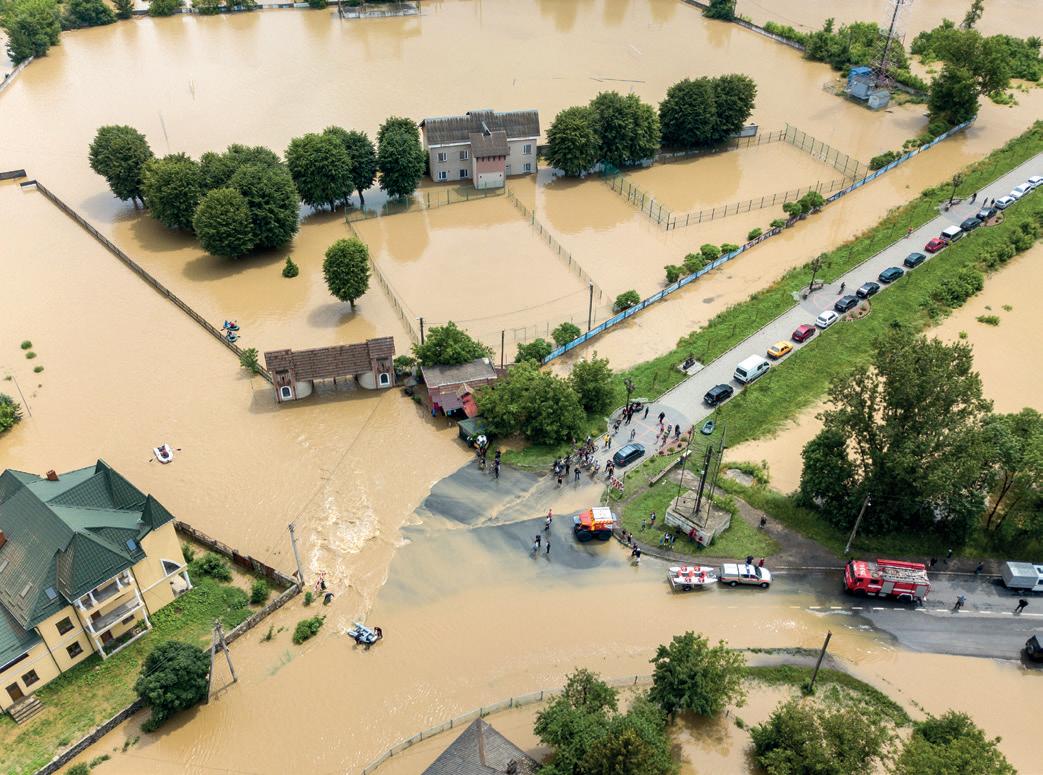
Each year, floods destroy assets worth billions of dollars around the world. Flood continues to be one of the most underestimated risks facing businesses today.
Rising sea levels and more intense rainfall events are placing critical infrastructure, homes, and businesses at greater risk. Manufacturing is a particularly exposed industry, with facilities often located near canals or rivers for transport purposes.
According to Munich Re, losses from flooding worldwide amounted to $325bn (inflation-adjusted), in the past five years, of which roughly US$70bn was insured.
Public First estimates that at present-day risk levels flooding costs the UK economy £2.4bn in direct physical property and infrastructure damages. Without more investment in flood prevention, Public First estimates that this will rise to £3.6bn in 2050.
In the United States, the number of flood events rose 28.8% from 2022 to 2023 (from 5,052 to 6,509) according to analysis by LendingTree. The US experienced 6,509 flood events in 2023, compared with 5,052 in 2022. Six states saw flooding events quadruple or more during this time: Vermont, Connecticut, North Dakota, Maine, Georgia and Massachusetts. Flood risk is also impacting major urban areas such as New York, Houston, and Miami which face increasing exposure to both coastal and inland flooding.
As the climate changes, the number of UK properties in areas at risk from rivers and the sea or surface water could increase to around 8 million (one in four) by mid-century. The National Flood
Risk Assessment (NafRA) estimates that the total number of UK properties in areas at risk of flooding from surface water could increase from 4.6m to 6.1m – a 30% increase between 2040 and 2060.
According to NafRA, more than a third (37%) of UK railways – a crucial means of transporting goods around the country – are in areas at risk from one or more sources of flooding. Applying climate change projections, the percentage rises to 54% by mid-century.
From Spain to Romania, countries across Europe have experienced severe rainfall-derived floods - events that were unprecedented in scale, and for insurers this poses a significant challenge.
In its European State of the Climate 2023 Report Copernicus, the European Union’s Earth observation programme that monitors and maps floods across the continent using satellite imagery and data, highlights that in 2023, about one third of Europe’s river network had flows exceeding the “high” flood threshold, which statistically recur every five years, while 16% of the river network exceeded “severe” flood thresholds, which have a 20-year return period.
37%
of UK railway is at risk from one or more sources of flooding.
Source: National Flood Risk Assessment
“Flood risk today is greater than it ever was, and proactive measures are essential to protect assets”
Hamid Khandahari Descartes Underwriting
“Historical event catalogues provide useful data, but they cannot fully account for events beyond anything previously recorded,” says Hamid Khandahari, data scientist and senior underwriter at Descartes Underwriting. This presents challenges in both modelling and risk management.
Some regions have made major investments in flood defences. In Vienna, for example, an elaborate defence system helped to avert widespread flooding in the city, when Storm Boris brought record rainfall in September 2024. However, in much of Europe, infrastructure adaptation has not been widespread, leaving many communities exposed.
Khandahari believes there is increasingly a sense that insurance is less luxury and more necessity, a shift driven by recent events and collective memory. In the UK, the major floods of 2007 and 2021 are frequently referenced by clients in affected areas.
Businesses now ask how much a policy would have paid had those floods occurred while they were covered.
“Direct experience of extreme events deepens the understanding of risk,” Khandahari says. “Independent reporting reinforces this awareness.”
Annual publications from the Met Office and NaFRA, for instance, track how return periods and other indicators change over time, highlighting the growing frequency and severity of events.
“These findings align with industry analysis, making it increasingly clear that flood risk has risen in certain areas and previously low-risk areas are becoming more vulnerable,” Khandahari says. “The goal is not to instil fear or overstate the issue, but rather to acknowledge the reality: flood risk today is greater than it ever was, and proactive measures are essential to protect assets.”
Types of flooding
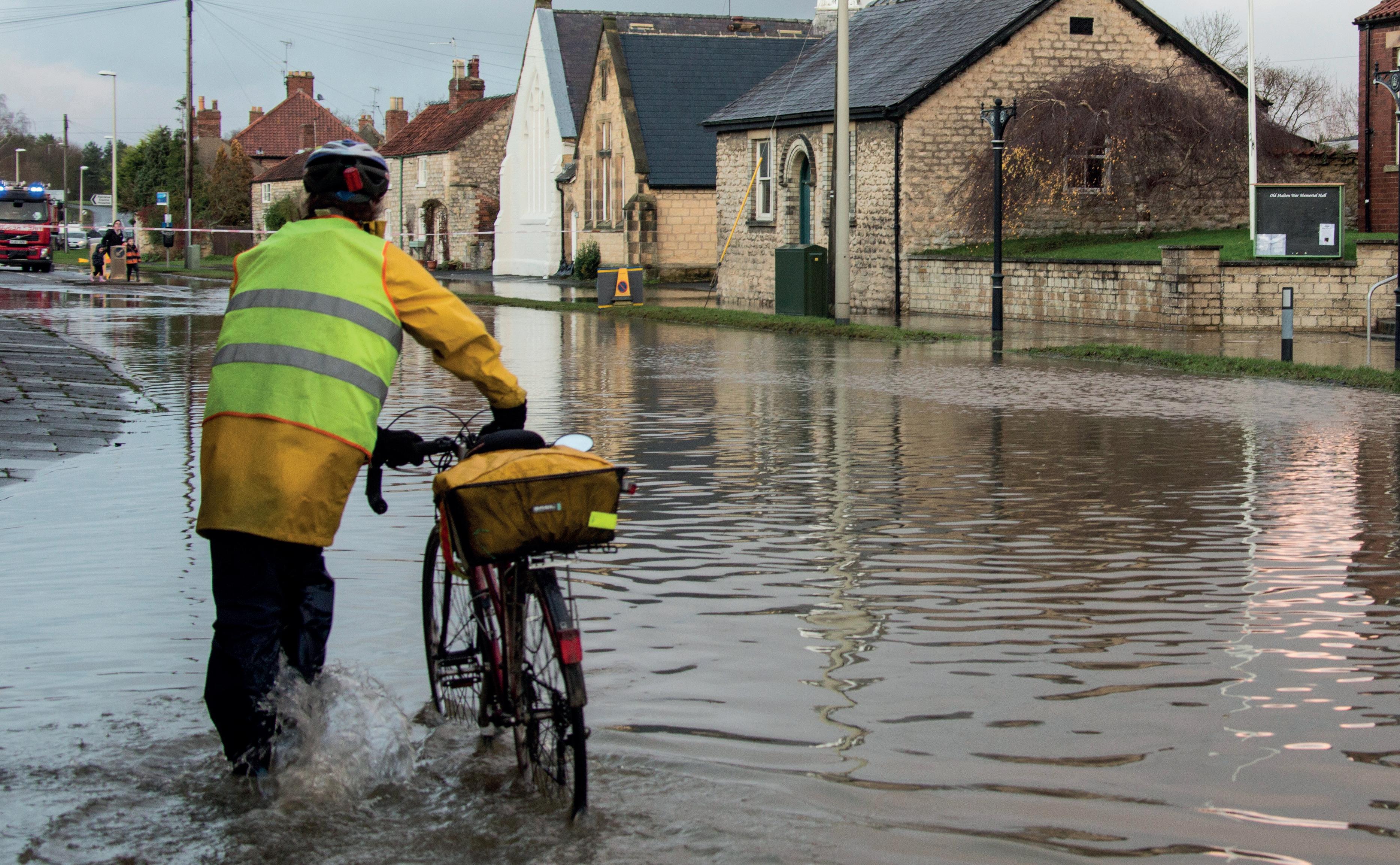
Flood risk can appear in different forms, including riverine flooding, pluvial flooding from intense rainfall, coastal flooding from storm surges or tides, and more localised events such as flash floods or flooding caused by ice or infrastructure failures. In the UK, surface water floods caused when rainfall overpowers drainage systems are the most common type of event.
Due to different types of flooding that occur in different locations, it not possible to replicate a flooding model worldwide. In a single country such as France, there could be at least five distinct types of flooding.
Descartes, for example, has a model for storm surges caused by tropical cyclones in the US, and another for those linked to winter storms. In Canada, flash floods are a danger, but also flooding caused by ice blocks forming in rivers.
“Each type requires a different approach,” says Sébastien Piguet, chief insurance officer & co-founder at Descartes Underwriting.
This is a challenge for underwriting, as multiple models are required and, in some cases, a separate model for each country.
Descartes covers all types of flooding, but the product varies from one country to another. For example, in some places the firm might need to install a flood gauge, and the best provider will differ by country.
“In some countries, there is no company providing accurate data about flood extent or flood depth, therefore we tend to rely on rainfall data,” Piguet explained. “In addition, the choice of the dataset needs to be carefully chosen on a case-by-case basis, as the accuracy of one rainfall dataset can vary significantly from one country to another.”
‘Hope’ is not a good strategy - Mitigating the Threat
Despite the growing volume of granular and increasingly alarming data, previous experience remains depressingly influential to flood planning. Senior leaders within businesses can often live under the assumption that they will never experience a severe flood because none of their locations have yet to be hit.
“However, there are many examples of sites that had never been flooded before and then were, resulting in £1–2 million insurance claims,” says Mike Still, strategic advisor for the SME sector.
“When that happens, the insurance company is unhappy, the business is unhappy because of paying a large excess, premiums increase, and the insurer then imposes tougher terms and conditions that are counterproductive to operations.”
Public First found the projected cost of flooding damage in 2024 was £1.2bn, and without improved defences, this could rise to £1.8bn in 2050. Still believes that a significant proportion of SME’s that have experienced flooding continue to stay uninsured because they believe it is uneconomical, or it will not happen again.
Hope, however, is not a good strategy for these situations as the threat of flooding is ever increasing. “For some, the choice is between paying the premium now and going out of business immediately or risking a flood event that could also put them out of business - so they decide to defer and hope,” Still says.
By being on the front foot, these issues can be addressed with insurers ahead of time and firms can avoid disaster. “Even if something happens, insurers and reinsurers recognise the business is collaborating, which makes a significant difference,”
“When companies are preparing for floods, they need an early alert”
Aleksander Surowiak Previsico
Still says.
It is common for businesses to presume they are safe because they are located in a one-in-100 year flood zone and believe they are safe for another 90 years after experiencing one event 10 years prior. However, a one-in-100-year flood zone simply means there’s a 1% chance of flooding in any given year.
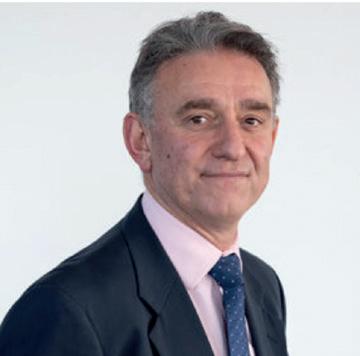
“If you’ve already been flooded, then you know the risk is real,” Johnathan Jackson, CEO at Previsico, says.
This is an area where captives can add value, by supporting companies in facilitating and financing surveys and assessments to understand and mitigate the insured’s flood exposures.
“Insurers are not expecting companies to have zero flood losses,” Jackson says. “What they want to see is that any potential losses are properly managed.”
As with fire, where insurers expect to see sprinkler systems installed, with flood, a thorough risk mitigation strategy is expected and should be rewarded.
“If insurers can believe in that, they’re more willing to underwrite the risk,” Jackson adds.
Sensors and Barriers
Protecting assets against flooding requires both foresight and timely action, and increasingly innovative tools are being made available to business to get ahead of the threat. Previsico has developed a hydrodynamic model that predicts surface water floods up to two days in advance.
The flood forecasting specialists sells the solution to insurers and large corporates, enabling them to mitigate up to 70% of the cost of floods. Over time, Previsico has also added IoT sensors to its proposition that supplement the flooding forecast.
“When companies are preparing for floods, they need an early alert,” says Aleksander Surowiak, head of sales & marketing at Previsico.
“If it comes too late – even if it’s highly accurate – say, just one hour before the event, it does not really help much. At the same
time, we need accuracy.”
Previsico conducts hydrodynamic model scans of the entirety of the UK every hour, identifying potential flooding risks.
“That gives our customers enough lead time to prepare, but ultimately, it’s still a forecast - and forecasts can change.”
While Previsico can keep updating clients that a flood is expected based on the model, sensors can then confirm the water level is rising and the threat is imminent.
“That’s the signal that it is really time to hit the big red button,” Surowiak said.
Early alerts can help firms to prepare by activating the flood action plan, calling maintenance teams, and evacuating or preparing the site. Sensors provide companies with that latestage confidence to act.
In some cases, Previsico will know flooding is set to occur, but it may not be a concern because the facility is designed to withstand raising water levels up to a certain height. Once the water level meets the designated threshold, planned or automated responses can be activated.
“In those cases, we have sensors in place detecting water
“Sensors can activate water pumps, trigger various protective systems, and send alerts”
Mike Still Strategic Advisor
levels,” Still says. “These sensors can activate water pumps, trigger various protective systems, and send alerts.”
Descartes and Previsico have collaborated when using sensors to underpin parametric policies for insureds.
“Organisations getting involved with parametric enables them to take on a higher deductible,” Jackson explains. “The organisation can even work with insurers to provide risk management bursaries in support.”
“Organisations getting involved with parametric enables them to take on a higher deductible. The organisation can even work with insurers to provide risk management bursaries in support.”
Jonathan Jackson Previsico
Case Study
PREVISICO SENSORS
Balfour Beatty Vinci (BBV) is HS2’s construction partner in the UK Midlands, responsible for delivering a 90km stretch of the rail route, spanning from Long Itchington in Warwickshire to the centre of Birmingham and onto Handsacre in Staffordshire.
By utilising the Previsico Flood Intel Platform, which integrates flood forecasting, drainage, and waterbody monitoring, BBV was able to more effectively manage its site and better protect itself from severe future losses.
BBV had previously experienced a multi-million-pound loss due to flooding, but having teamed up with Previsico they later received a 36 hour advanced alert for a potential event. This provided the company with the time to activate their flood action plans.
“When the sensor started beeping, they moved all their vehicles, machinery, and materials out of harm’s way,” Surowiak says.
With the addition of multiple sensors, some located off-site, the construction team could track the flow of the river and gain a clearer understanding of the flood situation.
From an operational perspective, if this data had not been available, it would have led to more waste, including damaged equipment, ruined materials, and delays in the project timeline.
“We used the Previsico flood forecasting and sensor technology, which delivered a flood alert specific to our River Blythe HS2 construction site with 36 hours to prepare,” says Rory Garry, construction manager at BBV HS2.
In this time, the firm was able to move critical infrastructure including, a crane, excavator, sheets of timber, fuel cubes, etc.
“This allowed us to mitigate asset damage during this event and safely demobilise from a flood zone,” Garry adds.
Market Dynamics & Risk Financing Strategies
As the threat evolves and exposure grow, traditional insurers have become increasingly cautious. Deductibles have been increased, or flood has been withdrawn or excluded, particularly in areas with a history of repeated losses. This has left significant protection gaps, both for businesses and households.
The challenge is most pronounced for firms and industries located near rivers or coastlines, where affordable coverage is often unavailable, if at all.
Established by the US Congress in 1968, the National Flood Insurance Program (NFIP) had been essential to the viability of flood insurance in the United States, but has not supported larger businesses.
Coverage had been limited and capped at $250,000 for residential buildings and $500,000 for commercial properties, making it unsuitable for large corporations and captives users. Unlike the Terrorism Risk Insurance Program, another Federal-backed insurance initiative, captives are not able to access the NFIP. Only around 120,000 small businesses had flood insurance through NFIP, leaving millions of businesses unprotected, according to Gallagher.
As severe weather events grow more frequent and intense, the shortage of flood capacity has become a pressing issue for risk managers seeking reliable protection.
In the UK, the government and insurance industry jointly created Flood Re in 2016 to improve affordability and availability of flood insurance for households in high-risk areas. Flood Re is a reinsurance scheme that allows insurers to transfer the flood element of household policies into a central pool, subsidised through a levy on the wider market. Importantly, the scheme does not extend to businesses, leaving SMEs and commercial property owners exposed to similar challenges as in the US.
Parametric Alternative
Descartes Underwriting offers parametric solutions that provide quick payouts based on measurable triggers, filling the capacity gap left by traditional insurers’ appetites and the limitations of NFIP coverage, bringing claims transparency and certainty to businesses.
“We always have capacity and an underwriting appetite for flood - even when the risks are high,” Piguet says. “A high risk is not necessarily a bad risk; it’s just reflected in the premium.”
Piguet believes that often when competitors decline risks, it is because they do not trust their models. “If you are not confident in your model, it is difficult to know what premium to charge,” Piguet adds.
Descartes has more than 100 underwriters, data scientists, and software and data engineers working together to design and develop its models. This ensures we can underwrite risks accurately and effectively, and it allows us to provide capacity even when risks are high,” he said.
When the risks are high, the need for coverage is often greater. As premiums and deductibles continue to rise, there is a natural space for parametric solutions to fit in.
Luc Schwartzbrod, head of risk finance & actuarial analytics at Aon Global Risk Consulting France, said that they have executed parametric programmes in Europe, particularly for flood.
“For example, in Belgium, we covered a specific location using data from the national stations that record river heights each day, and everyone was happy with the outcome - it worked very well,” he said.
“We also implemented similar programs in France, including for the height of the Seine in Paris.”
Meryl Bermond, Business Development Manager at Descartes Underwriting, has extensive experience in ART and captives. She points out that most insurance-market partners’ prices are based on factors like loss experience and market competition, as well as underlying risk. “This can leave captives scrambling to cover claims they insured too cheaply,” she said. “When integrated into conventional insurance programmes, parametric insurance provides a solution.”
By removing uncertainty over the quantum of the indemnity, she explained, and instead insuring only the likelihood of the occurrence of an event of a specific intensity, parametric structures deliver transparent and accurately priced coverage for specific, difficult perils like flood. “Parametric insurance prices are calculated scientifically based on the risk, rather than competitively with a loading for recent loss experience,” she continued. “This risk-based pricing approach ensures captives receive the premium they need to cover losses.”
But penetration of parametric solutions remains low.
Impact of and approach to flood risk in the UK
“A high risk is not necessarily a bad risk; it’s just reflected in the premium”
Sébastien Piguet Descartes Underwriting
Despite 43% of organisations in the UK stating that they have been impacted by flooding, only 7% of respondents to Previsico’s The State of Flood Resilience Report, include parametric insurance in their flood risk financing programme.
In some instances, clients can retain their broader, traditional coverage while a parametric structure steps in to cover the deductible, effectively protecting the entire risk tower, whilst providing fast and transparent payouts. In other cases, parametric insurance can serve as the primary solution.
Analyst note: results based on a survey of insurers and insured in the UK; a combination of surveys from Previsico and Airmic.
Has your organisation been impacted by floods?
Source: The State of Flood Resilience Report, Previsico, 2025
Does your organisation include parametric insurance in its flood risk financing programme?
After events such as the major floods in the UK and across much of Europe in 2021, traditional flood insurance became prohibitively expensive in some locations, and in these situations, parametric solutions can fill the gap. By offering coverage triggered by measurable flood events, they provide protection where traditional insurance may not, ensuring businesses remain resilient in the face of repeated losses.
As discussed, the threat perception of flood risk is often underestimated, resulting in the purchasing of insurance typically being a reactive decision. As most insurance buyers will know, going to the market after experiencing a significant loss does not put the insured in a strong position.
Unless strong risk management practices and clear guidelines are already in place, companies rarely seek out specialised flood insurance solutions. “Coverage may exist as part of a broader policy but obtaining a product that responds quickly and comprehensively – leaving the insured in the same financial position as before the event – is less common,” Khandahari says.
Flood insurance is often only pursued in response to a major event, whether locally or within the same industry. Some sectors have associations or unions that guide decisions on protection, but overall, there remains a gap in proactive risk transfer.
As severe events occur with greater frequency, however, perceptions may begin to shift and awareness of the need for dedicated coverage may increase.
Piguet says clients generally work with brokers to evaluate exposures and needs. “What is evident, however, is a demand for better products as clients cannot accept anymore to wait sometimes for years before having claims paid,” he says. Many clients recognise the risks but may find it difficult to capture the impact of climate change or agree on appropriate values.
Early adopters of parametric, particularly in the United States many years ago, understood this well.
“At that time, some were already using flood barriers to protect their assets, yet traditional insurers did not take those barriers into account,” Piguet explains. “Premiums were the same, whether flood barriers were in place or not.”
But it was and is possible with parametric policies to recognise the protective effect of the barriers, offer more affordable premiums that reflect their impact, and structure payouts to trigger when water levels exceeded the barriers, if and when losses actually occur.
“Clients often understood their risks better than some traditional insurers,” Piguet says. “What was required was a sophisticated counterparty able to reflect that knowledge in the product.”
Captives and Flood
In 2025, captive insurance utilisation is more widespread than ever before. Although already mature and widely adopted as a risk financing tool prior to the harsh insurance landscape of 20192024, it is fair to say the challenging environment for commercial insurance buyers revitalised the formalised self-insurance tool.
The Captive Intelligence DataHub has tracked more than 1,700 new captive formations across 52 domiciles between 1 January, 2020 and 30 September, 2025, while the global number of active captives is estimated to be over 7,000. These figures do not include individual cells, which would significantly increase the numbers further.
Captives are being used by an increasingly wide array of businesses, from Fortune 500 multinationals writing 30 or more lines of insurance, to mono-line captives owned mid-market, domestic or family-owned firms.
As captives have matured and balance sheets swelled, they have been able to become more ambitious. They are increasingly leveraged to manage complex and hard-to-place risks, often making effective use of the reinsurance market to piece together sophisticated multi-line, multi-year protections.
Captives can operate on a direct writing or a reinsurance basis. A reinsurance captive will utilise a ‘fronting insurer’ which will provide the paper, issue the policy and pay the claims and then be reimbursed in part or whole by the captive, depending on the arrangement.
When a captive is inserted into an insurance programme, it can give the business additional incentive to improve risk management and loss control. The captive providing risk bursaries to business units to spend on prevention measures that
should reduce claims is a long-held strategy, but still one that is under-utilised.
“Captives are a really fascinating area,” Jackson says. “The first captive we signed up, the operating business was responsible for the first $10m of loss, the captive picked up the next $40m, and then the (re)insurers came in above that.
“From the captive’s point of view, they were very motivated to encourage the operating divisions to manage flood risk effectively. They saw our service as a powerful tool to help control that risk.”
The captive was motivated to fund a significant portion of Previsico’s service across the operating divisions because it saw the benefits to wider group and the insurance programme.
“We really value the captive opportunity,” Jackson says. “We recognise that many captives - particularly in the US market - are absorbing flood risk. In the United States, getting flood coverage is incredibly difficult.”
“From the captive’s point of view, they were very motivated to encourage the operating divisions to manage flood risk effectively”
Jonathan Jackson Previsico
Parametric Play
Parametric policies, largely, still operate as a means to bring third-party capital closer to the real risk that is being covered. Traditional insurers, MGAs and catastrophe bonds are all ways that capital is being deployed using a parametric trigger. Conversely, a captive may choose to offer it’s parent a traditional flood policy and reinsure itself with a parametric policy - the captive being well placed to manage any ‘Difference in Conditions’ or ‘basis-risk’.
In the case of flood, such a policy could be modelled and designed by Descartes and use the sensors and early warning systems provided by Previsico. Additional capacity could also be provided by Descartes or other third parties. “In the UK, where the flood landscape is literally changing and flood risk metrics are shifting, people are being forced to think more imaginatively about managing risk,” says Matthew James, commercial director for the UK & Ireland at Descartes Underwriting.
It is common practice for captives to take on layers where traditional insurers are unable to play, or provide customised policies for unique risks or exposures that are not well understood by the commercial market. When the commercial market fails, an entrepreneurial captive can step into the breach.
“Even multi-billion-dollar data centres are sometimes only getting a $10m flood limit, which is essentially nothing, and captives are often the ones who have to step in and actively manage that risk,” Jackson explains. “Captives are looking at their risks carefully. Where the flood landscape is literally changing and flood risk metrics are shifting, people are being forced to think more imaginatively about managing risk. They understand flood is part of that, and once they see the exposure clearly, it really does become a no-brainer.”
“By working with captives to create a bespoke structure with a payout schedule specific to the end client, we can smooth out any remaining basis risk”
Matthew James Descartes Underwriting
If a company has got geographic spread across a country – for example, more than 100 properties – there is a good chance at least one location will be impacted by a flood in the coming years, and likely as many as half.
From a captive point of view, Still believes it is primarily about having a compelling story for the reinsurers. “If flood risk is insured through a captive, the business is effectively retaining the risk in the main, while the reinsurers cover the reinsurance portion,” he says.
Having a strong narrative for the reinsurers not only supports the coverage, but also helps significantly mitigate the probability of loss in the areas managed within the captive. “There’s nothing better than owning the risk yourself to drive the behaviours that reduce exposure and improve risk management,” Still said.
Payment structure and compensation calculator for flooding
Analyst note: to calculate the compensation in the event of flooding, the payout percentage is multiplied by the predefined location limit. The payout structure is tailored to each client, ensuring a fully adapted and efficient coverage.
Example of calculation
If the measured flood depth at the location is 5.0ft and the location limit defined by the client is $10 million, the client will receive: 50% x $10 million = $5 million
Source: Descartes Inc.
Case Study
PARAMETRIC
Companies with reinsurance captives may struggle to cover intangible risks – such as revenue losses from adverse weather – because of fronting partners’ reluctance to provide bespoke risk transfer mechanisms for such risks. This leaves corporations exposed to volatility that is difficult to manage, or to potential large losses that they would expect their captive to mitigate.
The Descartes captive solutions are fully flexible and designed around each business’s exact needs, giving them greater control over their risk transfer and more financial certainty.
Problem:
A global clothing manufacturer and retailer sought a fronting partner to design a coverage against the risk of lower sales caused by adverse weather. Because this type of exposure is difficult to model and place, they needed to find an insurer willing to design and implement a sophisticated and bespoke solution.
Solution:
To protect cash flows, supplier relationships, and subsidiaries’ revenue, the captive co-designed a parametric insurance policy with Descartes. It pays out a predetermined sum that enables the subsidiaries to cover the loss in revenue in case of a cooler spring.
The coverage was modelled and priced by Descartes’ large team of underwriters and climate scientists, and the policy was issued by Descartes Insurance.
Tackling Basis Risk
Parametric utilisation in captives is still relatively niche today and the number of captives using parametric for flood risk is even smaller. Descartes has completed a large number of transactions involving captives used by the Parent for “convenience”, as well as a growing number of cases where captive managers are taking a leading role in driving parametric initiatives and demonstrating strong creativity in developing bespoke, ‘captivefirst’ solutions.
These include parametric structures being utilised through captive fronting or bespoke covers, where the captive takes a layer, and parametric protection provides a wrap around, where the captive takes a ‘working layer’, and parametric policies provide a ‘stop loss’, or ‘excess layer’ protection, to manage catastrophic losses.
The interest of captives in the use of parametric tools for flood risk is growing. For parametric underwriters such as Descartes, the value of a captive lies in its ability to help manage basis risk – the difference between a client’s actual loss and what the parametric policy indicates the loss should be and pays out.
Basis risk exists in all insurance policies. It is the chance that the policy pays out a different amount than the insured requires from the event or, alternatively, the claim payout is lower than the losses incurred. Parametric starts with a big advantage: non-financial losses like Business Interruption and Loss of Access are automatically covered..
“By working with captives to create a bespoke, well calibratedstructure with a payout schedule specific to the end client, we
Captive Parametric Structure
Reinsurance Captive
can minimise out any remaining basis risk,” James explains. “For example, the captive can have an attachment point lower than ours. That way, if there’s some mismatch between the client’s losses and the parametric structure, the captive absorbs it. Then we absorb losses for particularly large events or years with excessive claims.”
The captive acts as a smoothing mechanism, mitigating basis risk while enabling broader and more generous coverage for the client.
“I also think there will be horizontal integration of parametrics into other covers,” James says.
He distinguishes between what he calls “full-fat” parametrics, where coverage is based entirely on proxy data such as rainfall, temperature, or other measurable conditions, and “diet” parametrics, where the payout mechanism is a function of the client’s actual loss or damage, but claims are calculated based on a predefined, streamlined methodology, potentially drawing on IoT or satellite data.
“I expect more of these mechanics to be integrated into traditional property damage or business interruption covers,” James adds. “In this way, the value of parametrics will both appear in standalone weather parametric contracts and gradually creep into other traditional contracts.”
Schwartzbrod agreed that captives can play an important role with parametrics. “A good transformer for parametric could be to get a captive reinsured through a parametric policy, and then have the captive underwrite a classic, traditional policy,” he said.
Another structure could involve parametric reinsurance sitting behind the captive, with the captive taking the lower part of the structure. “That could be attractive for captives, because they do not like big, high-intensity risks,” Schwartzbrod explained.
Captives are typically more comfortable with frequency risk and a small amount of volatility. “If we let the parametric take a few layers on the lower side of the structure, it could be very interesting for the captive, the insurer, and the insured.”
“We can definitely see a captive writing a parametric policy directly to the insured, with or without parametric reinsurance behind it,” he says.
Insurance Company European Business Units
Retains part of the risk according to the captive’s risk
Another way to use a captive to structure a parametric programme would be to set a different layer of triggers between the captive and the reinsurance behind it.
“For example, the captive could have a lower trigger to absorb the more frequent, lower-severity risks, while the reinsurance layer could be designed to take on the high-volatility, low-frequency risks,” Schwartzbrod says. “This kind of structure could be very efficient from a capital optimisation perspective.”