
... like the 11:59pm panic shop!

Get your festive shopping sorted early with Capricorn Rewards
The final date to order products in time for the upcoming festive season has passed, however vouchers can be ordered before 16 December 2025*.
Log in to myCAP to explore the catalogue and use your Rewards Points before the festive rush!
Welcome to the last edition of Ignition for 2025. It’s been a year of growth and impact for the Capricorn Community with new partners, expanded programs of work and record-breaking Member Returns. Thank you for being a part of it, and for trusting Capricorn with your business.
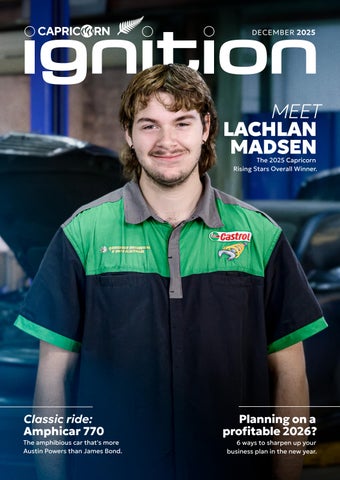
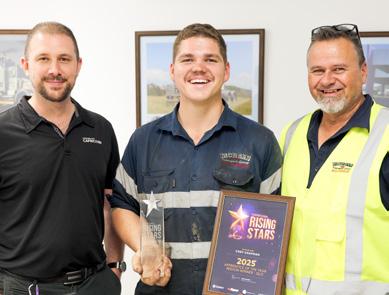
On the front page of Ignition, you can see our 2025 Rising Stars Overall Winner Lachlan Madsen from Homebush Auto Electrical. I had the honour of meeting Lachlan at our NSW Gala Dinner & Trade Show, he’s a remarkable young man and a fantastic role model for the industry. As a first-year apprentice, Lachlan brings great enthusiasm and energy to his role – we hope that by sharing his story others will consider a career in automotive.
Thank you to everyone who was a part of Rising Stars this year, it was fantastic to celebrate more apprentices than ever before and I look forward to making the program even better next year. A special thank you to our sponsors: Castrol, Repco and The Workshop Whisperer.
Recently we also had our first ever Automotive Careers Expos as part of our Gala Dinner & Trade Shows. Held on the Gold Coast and in Adelaide, hosted in partnership with the local Motor Trades Association, the expos provided valuable opportunities for our Members and Preferred Suppliers to engage with people interested in working in the industry. I was impressed by the genuine enthusiasm among attendees and it was great to see new connections being made – thank you to everyone who took part and I look forward to growing these events next year.
The festive season is a fitting moment to pause and reflect. I hope you can take the opportunity to spend time with the people you love and do the things you enjoy by taking some time off before tackling the new year. Each year brings both successes and opportunities, but I am always motivated by the remarkable resilience demonstrated by our Community.
I hope you and your loved ones have a safe and enjoyable holiday season and I look forward to another great year in 2026.

Brad Gannon Group CEO
4 MEET LACHLAN MADSEN
The 2025 Capricorn Rising Stars Overall Winner.
8 CAPRICORN SOCIETY ANNUAL GENERAL MEETING
We are pleased to share the main outcomes.
10 CLASSIC RIDE: AMPHICAR 770
The amphibious car that's more Austin Powers than James Bond.
14 2025 IN FOCUS
A year of growth, impact and community.
16 PLANNING ON A PROFITABLE 2026?
6 ways to sharpen up your business plan in the new year.
liability to you or any other person for any loss or damage whatsoever connected with: i. reliance on
like to stop receiving a printed copy of Ignition, you can opt-out at any time by logging into myCAP and updating your Account settings and Communication Preferences.
If
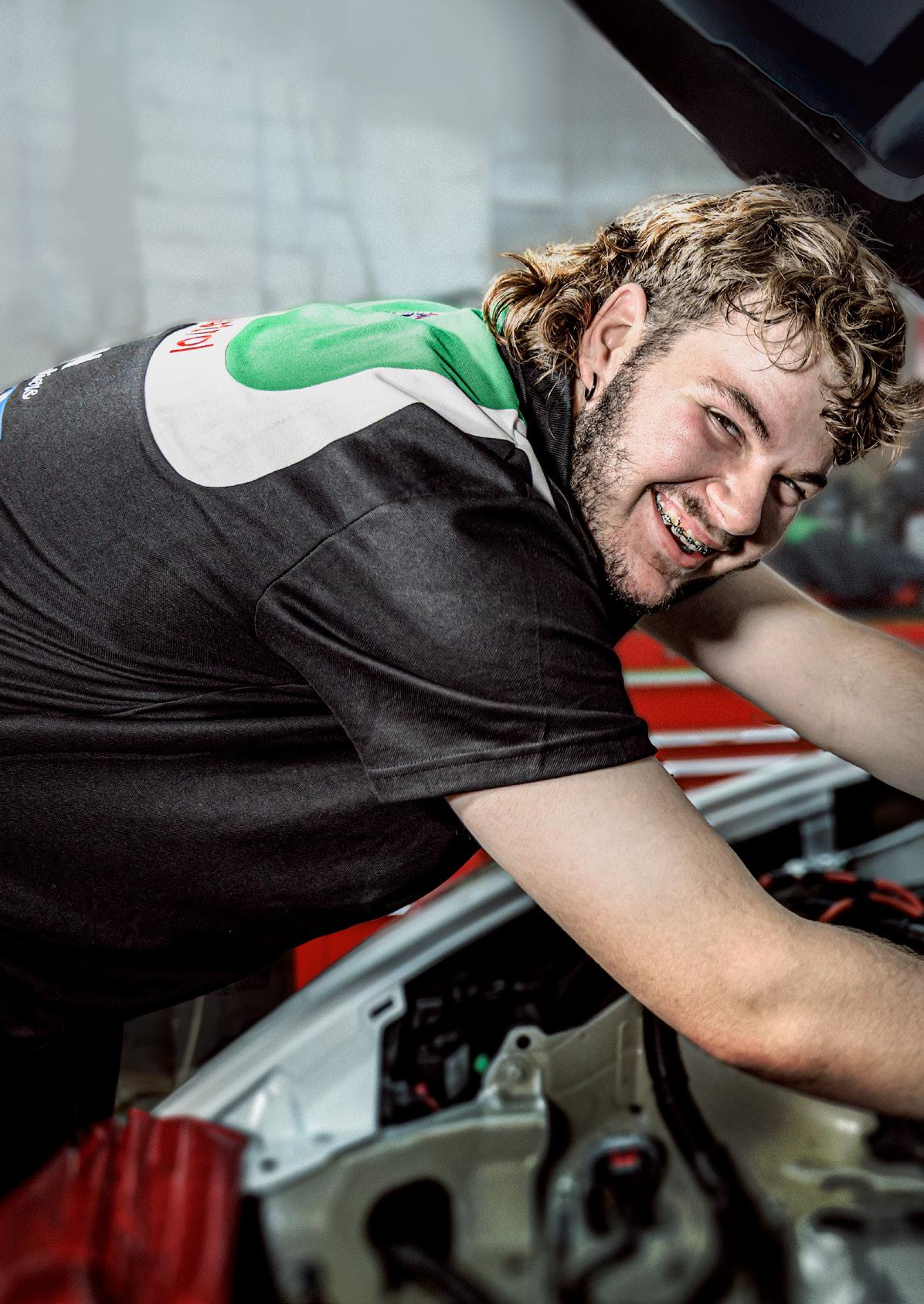
This year's award has been taken home by an outstanding firstyear apprentice.
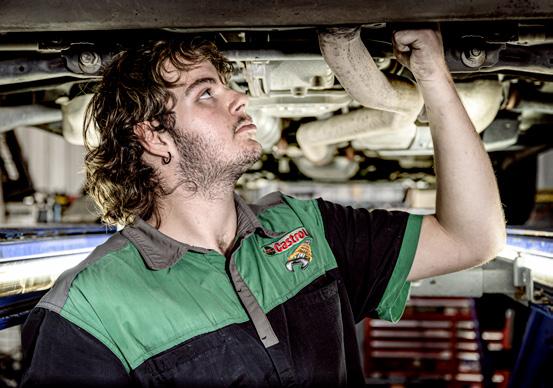
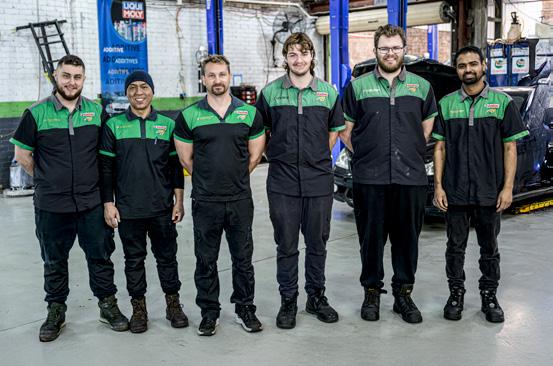
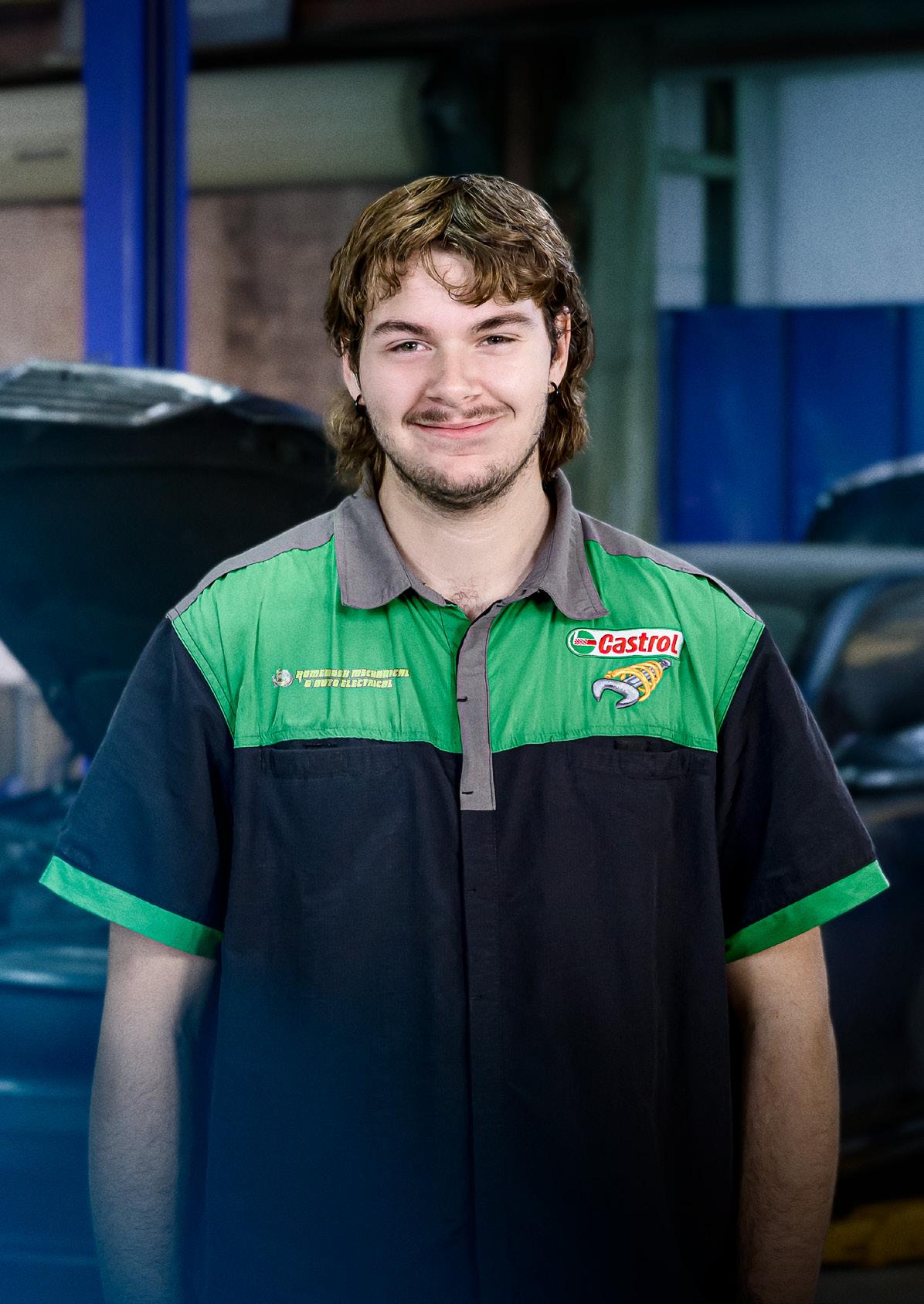
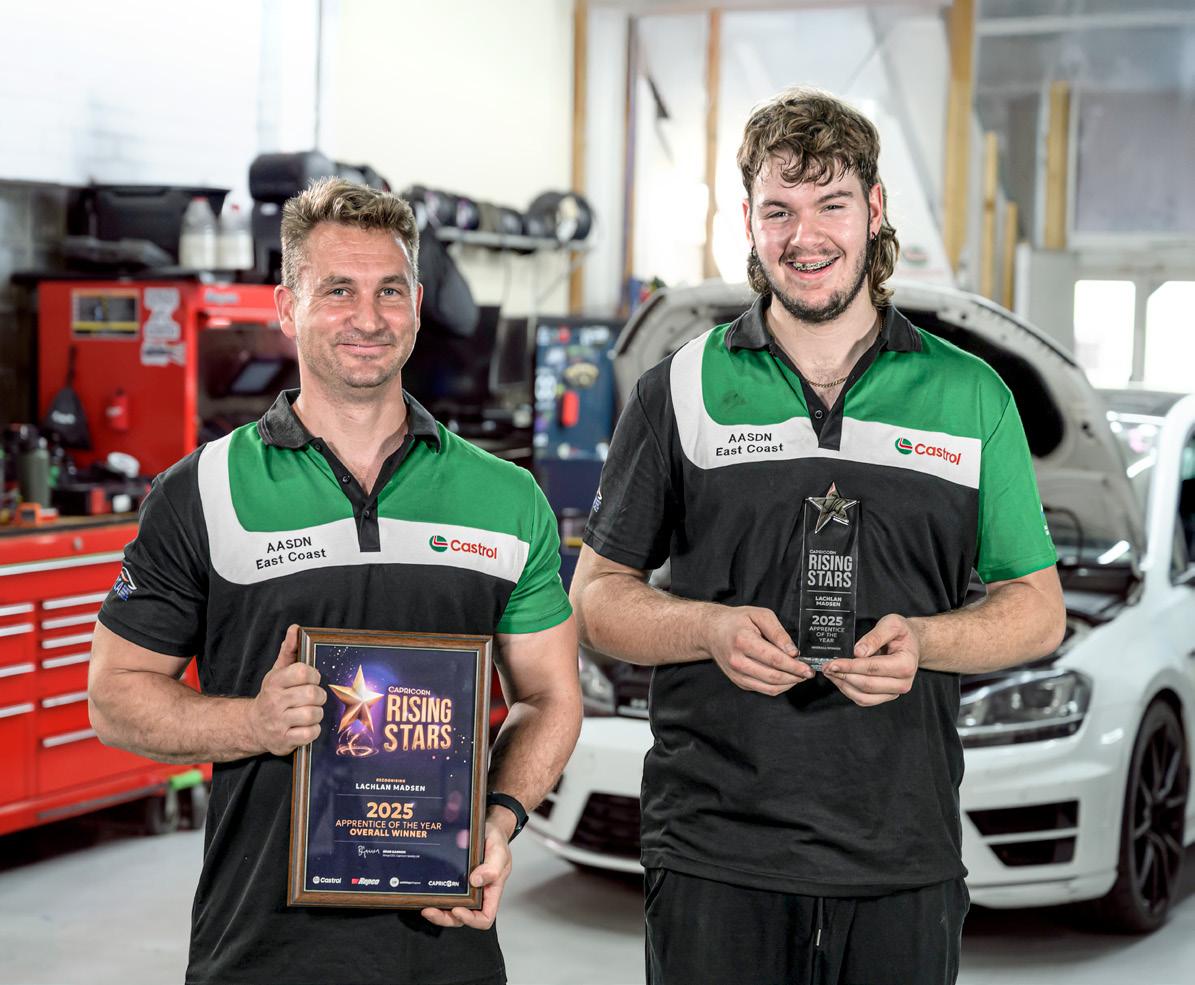
Congratulations to Lachlan Madsen, the Capricorn Rising Stars Overall Winner for 2025.
Lachlan, a first-year apprentice from Homebush Auto Electrical and Mechanical in NSW, took out the top prize in a tightly contested competition, narrowly edging out the five other Region Winners from across Australia and New Zealand.
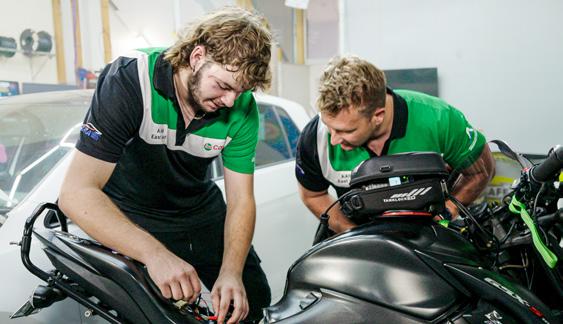
Lachlan was nominated by his boss, Tim lhuede, who said he realised quite quickly that the 16-year-old apprentice was “something special”.
“You get a gut feeling sometimes and this young bloke had the right mix of attitude, curiosity and grit from day one,” Tim said. “He wasn’t just here for a job; he was here to learn, to work hard and to grow into something more.”
“He’s the kind of guy who doesn’t wait to be told what to do; he sees what needs doing and gets stuck in. If he doesn’t know how to do something, he asks, listens, takes it in, and doesn’t make the same mistake twice.”
Lachlan grew up surrounded by cars, which sparked an early passion for the automotive industry.
“My dad was a mechanic and from a young age I spent countless hours in the garage watching him work, learning how things operated and developing a deep appreciation for the craft,” he said. “Whether it was helping him with a motorcycle rebuild or handing him spanners under a lifted bonnet, those early experiences shaped my passion for vehicles.”
“The combination of hands-on problem-solving, ever-evolving technology and the satisfaction of bringing machines back to life made the automotive world feel like home. It’s more than just a job; it’s a legacy and a lifelong passion.”
It’s diagnostics where Lachlan feels most at home.
“I enjoy the challenge of identifying and solving complex issues that aren’t always immediately visible,”
he said. “Using scan tools, technical data and problem-solving skills to trace faults and restore a vehicle’s performance is incredibly rewarding. It’s like solving a puzzle, and every job brings a new opportunity.”
It turns out he’s a bit of a whizz at it, too. He recently managed to diagnose a recurring engine fault that had several experienced technicians scratching their heads.
“The car had rough idling and low power, and many parts had already been replaced, without success,” Lachlan said. “I reviewed the job history, scanned the vehicle and performed tests like compression and fuel pressure checks. Everything looked normal, but I stayed patient and dug deeper. Eventually I found damaged wiring near the ECU, causing intermittent faults. After repairing it, the issue was resolved.”
“This experience taught me the value of a methodical approach, critical thinking, and not rushing to replace parts.”
Lachlan said his apprenticeship had taught him the importance of patience and attention to detail.
“Early on in my apprenticeship, I thought speed was the key to being a good technician, but I quickly realised that rushing often leads to mistakes and misdiagnoses,” he said. “Taking the time to properly inspect, test and understand a fault not only leads to better results but also builds trust with customers and the workshop team. I’ve learned that every vehicle tells a story and it’s our job to listen closely and solve problems with care and precision.”
The Rising Stars judges saw in Lachlan a great ambassador for the industry. He said automotive needed to “modernise its image”.
“Many still see it as greasy and outdated when, in reality, it’s becoming highly technical, with EVs and ADAS and smart diagnostics,” he said. “Schools should offer more hands-on exposure through trade taster programs, apprenticeships and industry-led workshops."
“Highlighting real success stories from young techs and showing how vital the industry is to modern transport and sustainability will attract fresh talent. Better pay and clearer pathways to upskilling wouldn’t hurt either.”
The judges also saw someone who has a bright future ahead of him, and Lachlan has a clear vision of what that future looks like.
“I see myself stepping into a leadership role, ideally managing or even running a workshop,” he said. “I’m passionate about both the technical side of the trade and the business side, and I want to combine those skills to build a team and deliver high-quality service.”
“To get there, I’m focusing on sharpening my diagnostic and problem-solving abilities, learning from experienced mentors like my boss, Tim, and paying close attention to how the workshop operates day to day. I’ve started taking on more responsibility and I plan to study business management or leadership courses alongside my trade.”
Lachlan thanked Tim for the nomination and for his ongoing guidance and thanked the whole workshop team for always having his back.
As the Overall Winner Lachlan receives a $5,000 cash prize from Castrol and Lachlan’s employer, Tim receives The Workshop Whisperer’s Service Advisor Pro online program valued at $3,000.
Capricorn would like to thank the generous sponsors of the 2025 Rising Stars Award: Castrol, Repco and The Workshop Whisperer.
Thanks also to all the Members that nominated and the apprentices that took the time to complete their applications. There are some exciting things in the pipeline, so keep your eyes peeled for a bigger and better Rising Stars awards program next year!

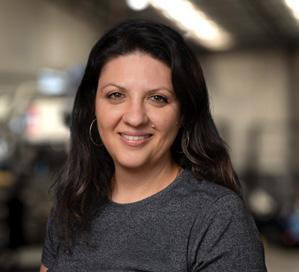
At the 2025 Capricorn Society Annual General Meeting (AGM), the results of the 2025 Director Election for VIC/TAS and NSW/ACT were announced. Congratulations to Anthony Shaw who was elected as Member Director for the VIC/TAS zone, and Lydia Stjepanovic who was re-elected to represent the NSW/ACT zone.
Anthony Shaw, co-owner of Shaw Performance Automotive and 4x4, brings 16 years of business ownership experience and a strong commitment to modernising the automotive industry. Based in Sandford, Tasmania, Anthony is recognised for his innovative approach, collaborative mindset, and community leadership; including his tenure as President of the 500 Car Club of Tasmania.
“I’m passionate about helping Members embrace modern technologies and smarter business practices,” Anthony said. “Capricorn represents the power of working together, and I’m excited to help grow that cooperative spirit across our industry.”
Lydia Stjepanovic, Managing Director of Barr Automotive in Hornsby, NSW, has been re-elected to the Board with a Member-first mindset and a future-focused approach to governance. A second-generation automotive business owner, Lydia has
served on multiple Capricorn committees and currently chairs the Remuneration and Nomination Committee.
“I’m honoured to continue representing Members and helping shape Capricorn’s strategic direction. My focus is on ensuring our decisions are grounded in real-world insight and built for the future,” Lydia said.
Capricorn Board Chair Mark Rowe welcomed both Directors, reinforcing the importance of strong Member representation on the Board.
“Capricorn is built on the strength of its Members, and our Board reflects that,” Mark said. “Anthony and Lydia bring unique perspectives, grounded in real business experience, and a shared commitment to supporting our industry’s evolution.”
Members also approved the selective share buy-back resolution at the AGM, enabling Members to continue selling their shares back to Capricorn.

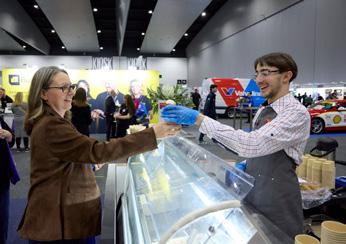

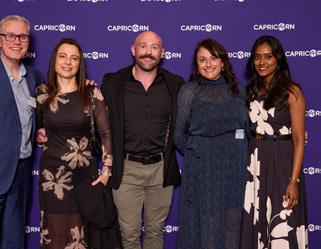
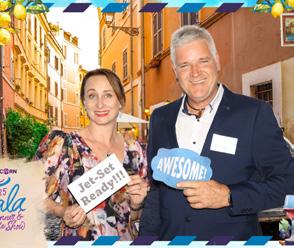

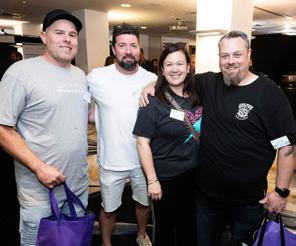
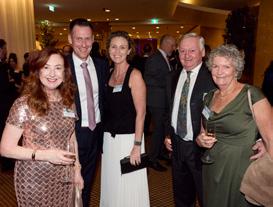


Thank you to everyone who helped make our 2025 Gala Dinner & Trade Show season such a roaring success! There’s nothing quite like bringing our Community together to learn, build connections and celebrate everything we’ve achieved.






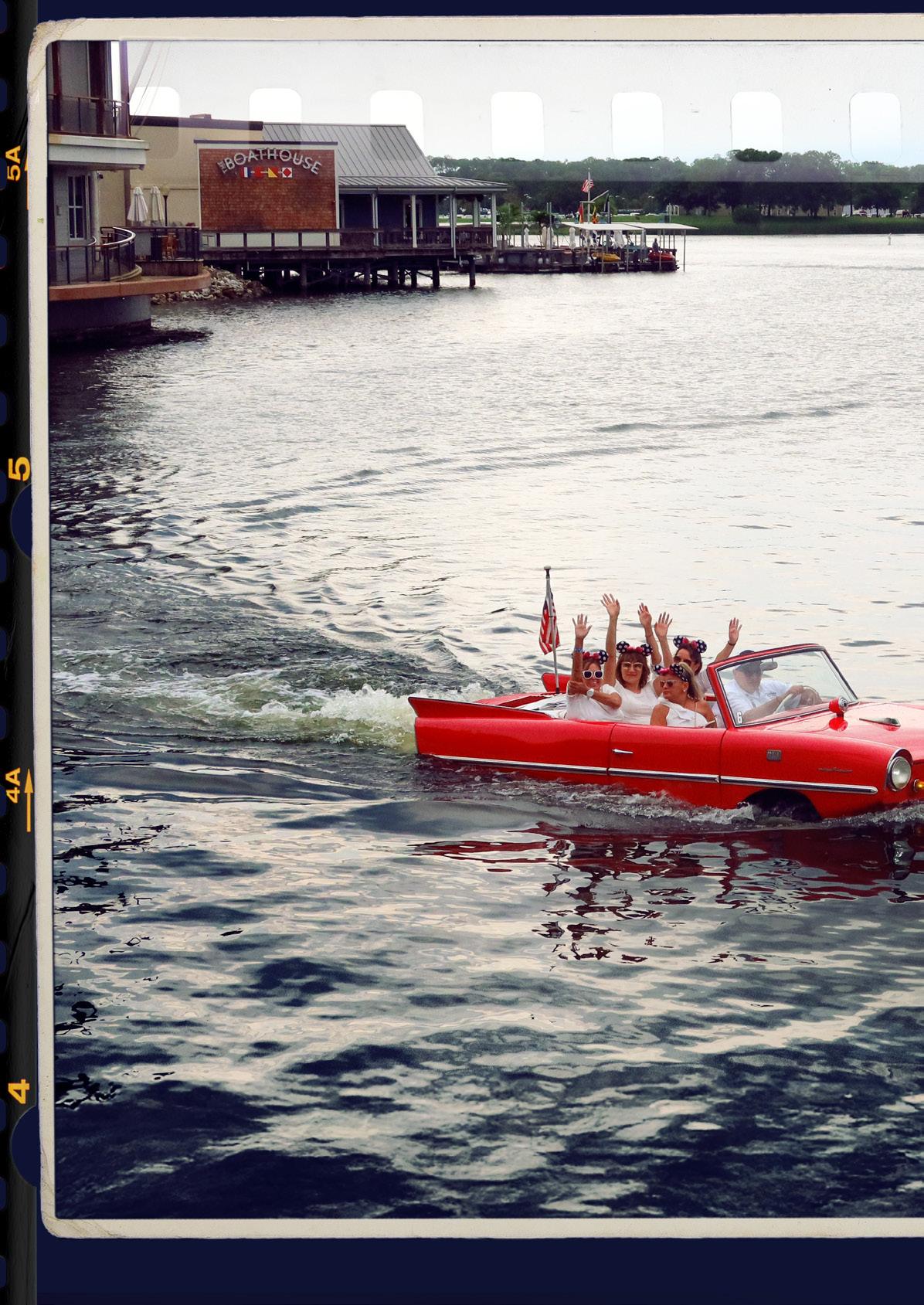


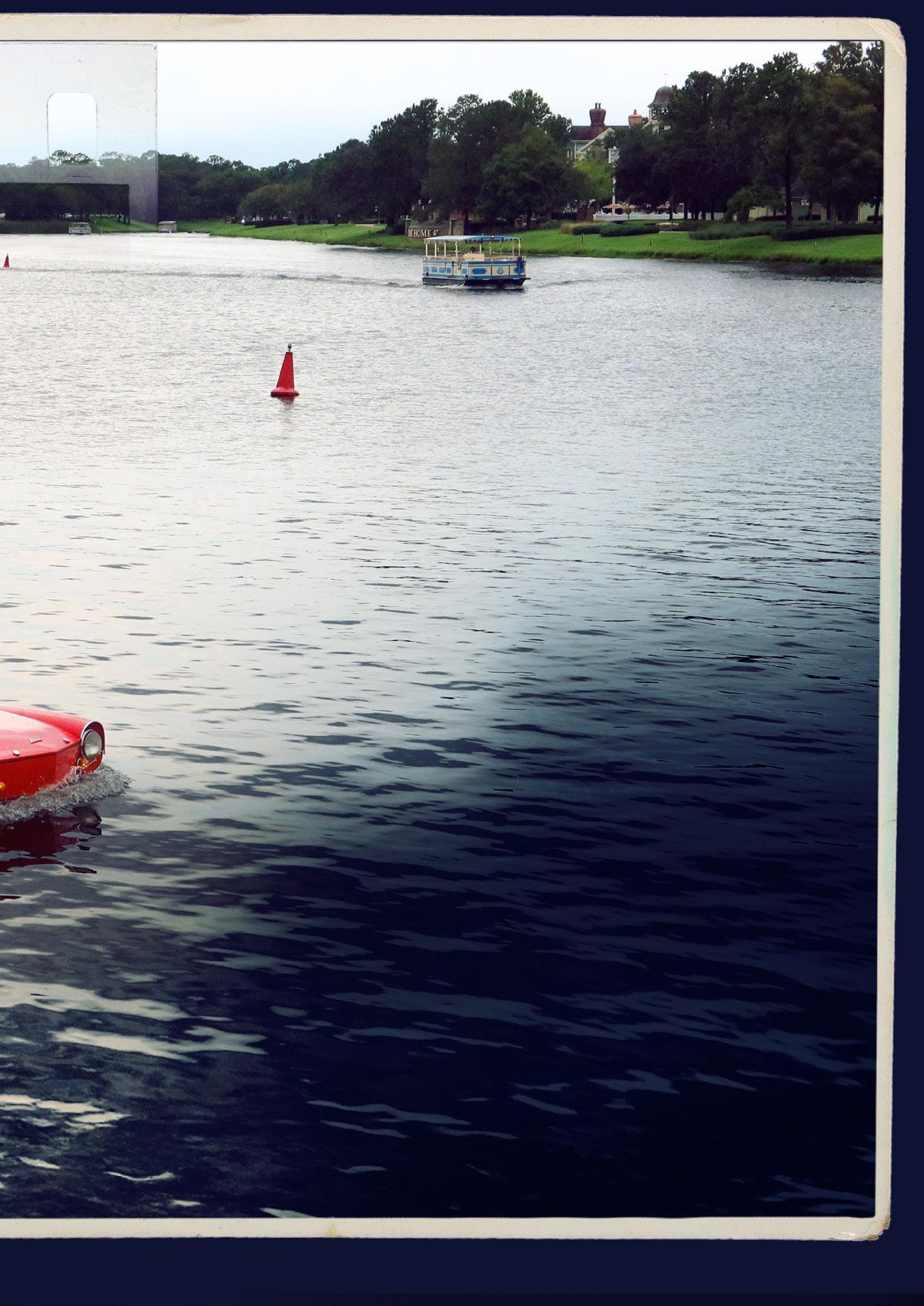
THE AMPHICAR 770 OF THE 1960S IS A LOT OF FUN, BUT IT WAS A SERIOUS ATTEMPT TO CREATE AN AMPHIBIOUS VEHICLE.

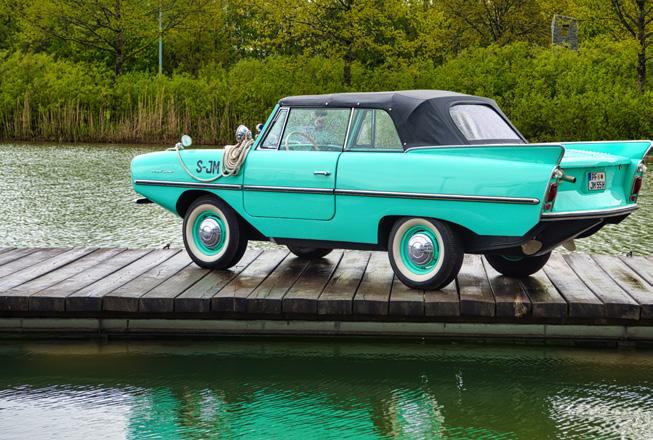
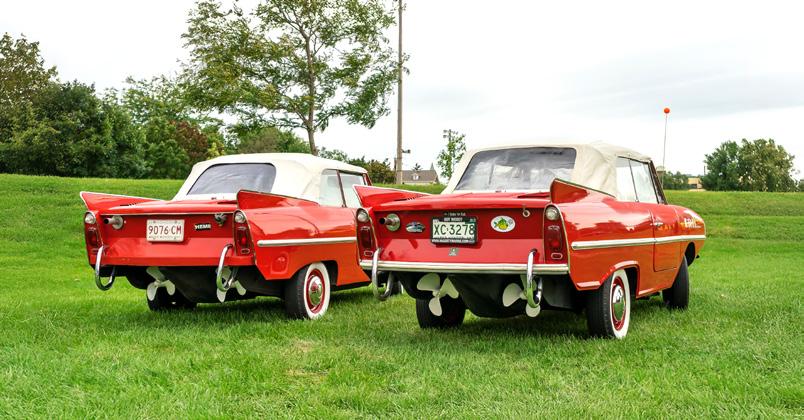







amphibious car. Not a boat with wheels tacked on. Not a car that could float for a few minutes. This wasn’t meant to be a gimmick. Trippel was serious. If your daily commute included getting to the other side of a lake or a river, the Amphicar 770 was going to get you there as efficiently as possible.
It was launched at that year’s New York Motor Show and was called the 770 because it did seven miles per hour on the water and 70
It was powered by a rear-mounted 1.1-litre four-cylinder petrol engine (from the Triumph Herald 1200), producing 38 bhp (28 kW).
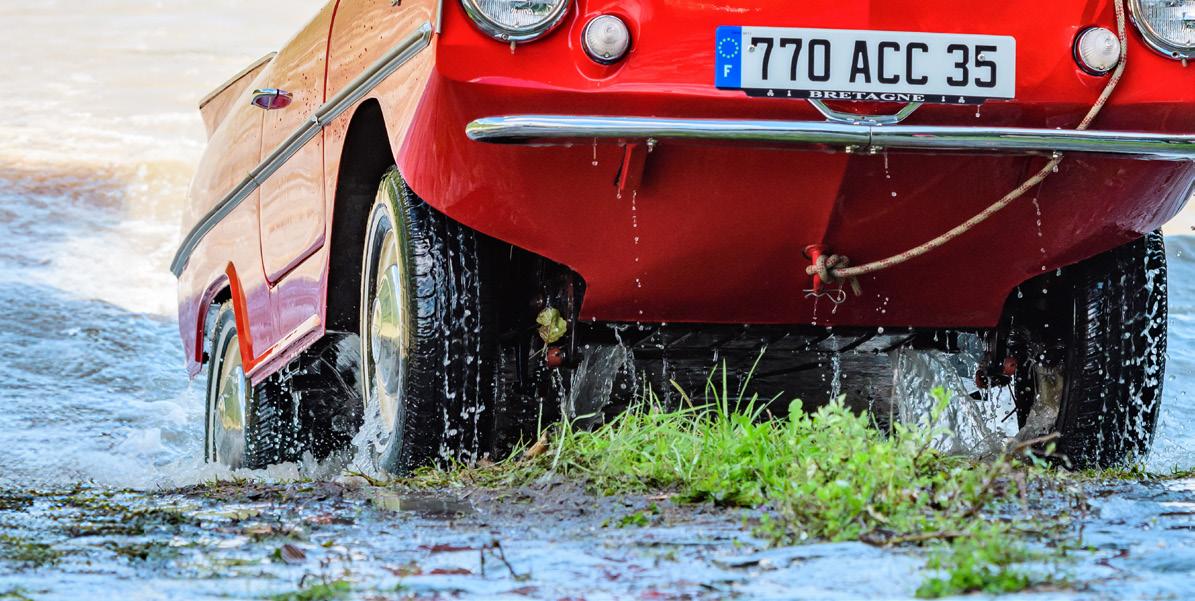
Power went to the rear wheels when the Amphicar was on land and to twin 12-inch propellors (mounted beneath the rear bumper) when on the water. The front wheels acted as rudders, while the propellors could spin at different speeds to aid steering.
The transmission itself was a marvel of compromise. It needed to handle the completely different load characteristics of wheeled versus propeller propulsion.
On land, the Amphicar performed like an underpowered economy car. In water, those same gears pushed it along at walking pace in first gear, building to its top speed in fourth.
The Amphicar weighed 1,043 kg—light for a car, heavy for a boat. Its relatively flat bottom and high sides provided buoyancy, while the rear-mounted engine helped keep the nose up when transitioning from land to water.
The fuel tank sat low and central, minimising stability issues as gas was consumed. Battery placement was critical too—mounted high and sealed tight, because a flooded battery system would end any aquatic adventure
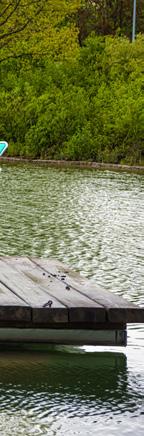
Anyone who has ever seen footage of the Manly Ferry crossing Sydney Harbour on a stormy day would struggle to imagine using an Amphicar for their daily commute, but a few years ago Jason Fischer from Gosford Classic Cars took to the harbour in his bright yellow 1966 Amphicar.
He told the Australian Broadcasting Corporation: “It’s obviously a fairly small car so in the water amongst all those other bigger boats, and the sheer size of that place, driving it in Sydney Harbour was a bit like being in a bathtub.”
Testing the Amphicar’s limits is almost irresistible. Back in 1965, two Amphicars drove across the English Channel. But surely no one has ever seriously used one for dayto-day driving?
Well, according to Fischer, in the 1960s and 70s, pharmacist Rod Radford used his Amphicar to visit his customers on the Woy Woy Peninsula on the New South Wales Central Coast, an area long since linked up by bridges but which was much less accessible back then.
“Instead of going all the way around and spending five hours driving, he could spend 20 minutes,” Fischer told the ABC.
You’ll have noticed by the number of Amphicars that regularly visit your workshop that the Amphicar didn’t take off. Only 3,878 were built between 1960 and 1968. It was actually US Government environmental regulations that finally killed it off—the Amphicar was too polluting.


Trippel found making a car watertight difficult. The Amphicar used a unitised body structure with double-wall construction in critical areas. The floor pan curved upward at the edges like a boat hull, and every seam was sealed with multiple layers of compound. Door seals were massive rubber affairs.
The front suspension used double wishbones—practical for land handling but complicated for waterproofing. Trippel installed two bilge pumps as standard equipment. They weren’t a backup plan; they were essential. No matter how carefully sealed, an Amphicar in the water would inevitably take on some amount of water through the prop shafts, wheel bearings, and door seals. The pumps ran continuously while swimming, ejecting water through ports in the rear.
While Trippel had been serious about his dream of an amphibious vehicle, the world really saw the Amphicar as a novelty. The fact you can now take a joyride in one at a Disney fun park in Florida, USA, rather proves that point. Even James Bond quickly moved on to hovercrafts as his amphibious vehicle of choice.
But not everything needs to be “James Bond cool”. The world needs “Austin Powers cool”, too. And the Amphicar 770 is certainly that. It’s fun. It’s a bit bonkers. And it’s impossible to see one without feeling sheer joy and delight. Is the world a lot more fun with the Amphicar in it? Yeah, baby!

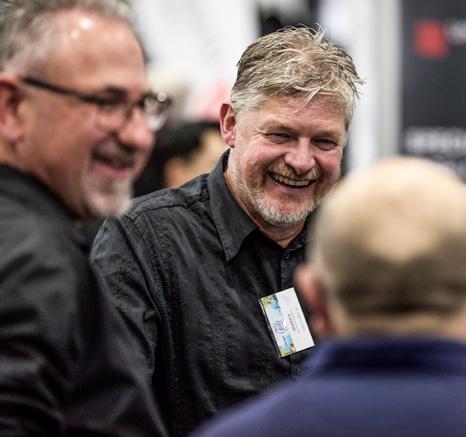

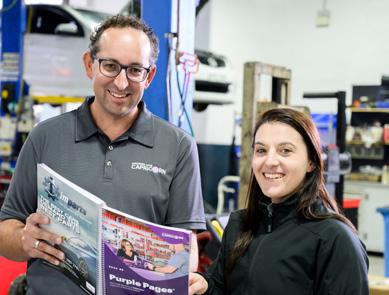
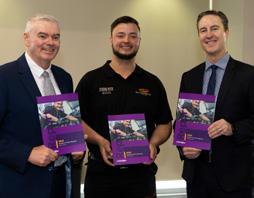
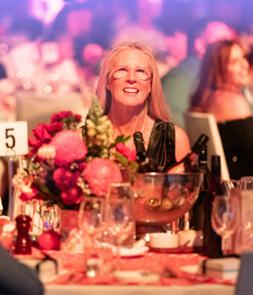
A year of growth, impact and community.

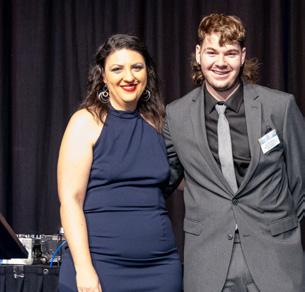

This has been a defining year for Capricorn, one that reflects the strength of our cooperative model and the resilience of our Community. From shaping the future of our industry with our research to celebrating the achievements of outstanding apprentices and delivering record Member Returns, this year has underscored what makes Capricorn so unique: a commitment to helping our entire Community thrive.
Capricorn welcomed 3,858 new Members in the financial year ending 30 June 2025 — a new record for us. Member purchases from Preferred Suppliers also reached a record level of AU$3.97 billion over the same period. However, growth this year wasn’t just about numbers; it was about impact. We returned over $100 million in value to Members, delivering tangible financial benefits and making good on our promise to share success. Our State of the Nation reports helped to highlight the challenges facing our industry and start important conversations with policymakers. We also hosted a number of Careers Expos connecting young people who want to work in the industry with our Members and Preferred Suppliers.

In short, it’s been a huge 12 months, so we thought we’d take a moment to reflect on some of the many, many highlights.
Nothing makes us happier than when we’re able to bring our Members, Preferred Suppliers and People together. It’s fundamental to our cooperative philosophy. In 2025, we were privileged to host a total of fifty five events across Australia and New Zealand, including:
10 Careers Expos where we connected engaged young people with prospective employers in the industry
6 Gala Dinner & Trade Shows
39 regional events including Trade Shows, Member Nights and Golf Days
Selling out our 2026 Convention in Cefalù, Sicily in record time
Our previous 50 years of success have been built entirely on the value that we’re able to deliver to our Members. That’s why it was such a thrill for us to exceed AU$100 million in Member Returns in respect of the financial year ending 30 June 2025 — the first time we’ve reached such a significant milestone.
This year’s Member Returns consisted of:
$20 million given back to Members in Trade Rebates (paid as additional Rewards Points)
An ordinary dividend of 7 cents per share, partially franked
Millions of Rewards Points earned on eligible purchases
Did you know that our State of the Nation survey represents one of the most comprehensive pieces of automotive aftermarket research across Australia and New Zealand? Now in its sixth year, we combined data from our State of the Nation Survey with our Apprenticeship Survey, and the EV and Lithium-Ion Battery Safety Survey to produce a comprehensive State of the Nation report for Australia and New Zealand.
Both reports were launched to audiences of key industry figures and policymakers and have served as a catalyst for important discussions about the challenges facing our industry. It’s one way that we act to advocate of behalf of our Members and ensure that the needs of automotive businesses are heard at the highest levels. By doing so, we aim to influence policy, drive industry support and create positive change for workshops and apprentices.
In an acknowledgement of apprentices as the future of our industry, this year’s Capricorn Rising Stars Award saw us recognise more outstanding apprentices than ever before with the inclusion of six Region Winners (one from each of Capricorn’s zones), one of whom went on to be named as Overall Winner.
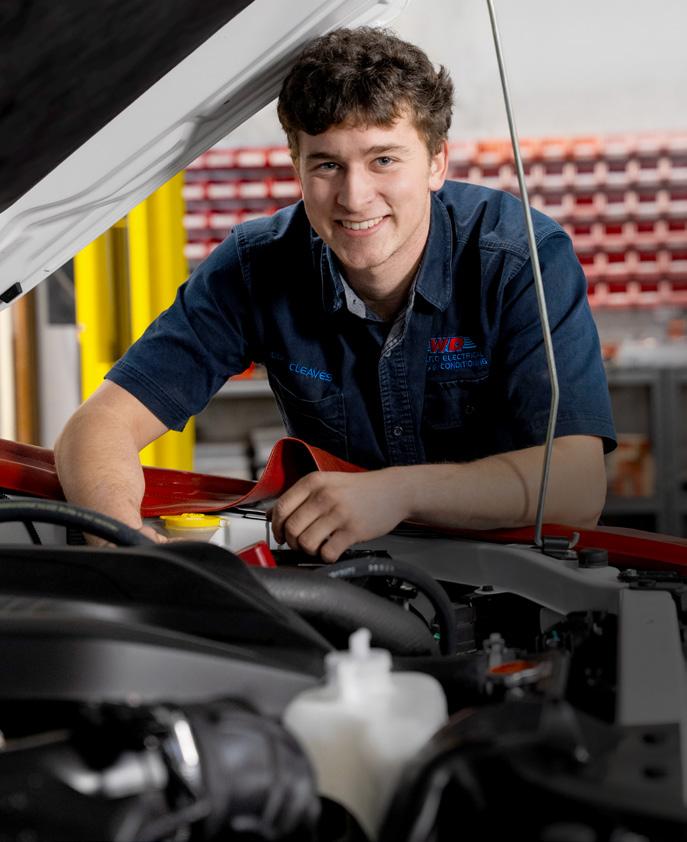
As always, we were blown away by both the volume and quality of the nominations and apprentice responses that we received. Congratulations once again to Overall Winner Lachlan Madsen and Region Winners Donovan Le Roux (NZ), Cody Chapman (QLD), Cole Cleaves (VIC/TAS), Hudson Rhodes (WA) and Isaac Davis (SA/NT).
We’re proud of what we accomplished together in 2025 and even more excited about what’s ahead. In 2026, we aim to deliver greater value and make a bigger positive impact—and we look forward to having you with us on that journey.
If 2025 was the year the auto aftermarket industry had a chance to catch its breath, 2026 will be the year to use that breath wisely.
Across Australia and New Zealand, independent workshops are navigating a car parc that’s leaning towards efficiency, with technology becoming the centre of everyday repairs. And it's a labour market that still rewards those businesses that invest in people, training and equipment.
Capricorn’s latest State of the Nation indicates that Member confidence remains strong, with many intending to grow or boost their profitability over the next 12 months despite a potentially challenging operating environment. However, intention is not the same as a plan. If you’re one of the many business owners aiming to grow and/or improve your profitability in 2026, now is the time to review your business plan. This should be done deliberately, calmly and with a focus on the work you are likely to see at your workshop over the coming year.
Battery electric vehicle (BEV) uptake has been slow but steady, so you’re unlikely to be flooded with electric vehicles (EVs) overnight. However, consumers have increasingly adopted hybrids, so workshops can expect to see more of these vehicles each year, along with latemodel vehicles equipped with safety systems and drivetrains that require a different level of workshop readiness.
The electrification story is best seen as the hybrid embrace. Even when EV sales fluctuate from month to month, hybrids continue to advance because they address a practical issue for consumers and help manufacturers meet efficiency targets. This doesn’t mean you have to overhaul your business model entirely. However, it does mean making strategic decisions. Choose the skills or specialisation that your workshop would like to excel at in 2026: high-voltage safety and isolation, thermal management, brake and tyre work, 12-volt diagnostics on complex CAN networks, or service procedures that use OEM information. Once you select your niche, make it clear. A website that boasts 'EV/hybrid service-ready, HV isolation protocols, Advanced Driver Assistance Systems (ADAS) aware' is actually telling the market that such special skills are not just for show, proving that your workshop doesn't rely on guesswork.
ADAS is no longer an optional extra to consider later. Calibrations and verification steps are increasingly integrated into everyday tasks, including windscreen replacements, suspension and steering work, alignments, tyre changes and routine servicing. This means your 2026 plan should view ADAS as a process, not just a piece of equipment. The process

includes pre-scan, alignment and ride-height checks, calibration using the correct method (static, dynamic, or both), post-scan, road test, and report. Whether you invest in targets and a dedicated space, partner with a mobile specialist, or work with another local workshop, the essential tool is the adoption of an effective checklist and the habit of using it consistently.
Skills shortages dominated workshop concerns during 2025, and for good reason. Recruitment may always be a campaign, but retention is a system. The most successful workshops have chosen to invest in their own talent and treat training as a necessary expense rather than an afterthought. An apprentice with a clear progression pathway, a mid-career technician with paid time to complete specific microcredentials (such as EV safety, CAN diagnostics, ADAS calibration, R1234yf refrigeration), and a senior technician whose mentoring is recognised in their KPIs — that’s a team ready for the future. Flexibility is just as important as pay, especially if you want to keep hold of technicians who could walk into another job tomorrow. A nine-day fortnight, a roster that respects family time, or a guaranteed training day each month is more cost-effective than constant recruitment.

Pricing is where discipline turns into dollars. With lower inflation, customers are potentially more sensitive to price increases. However, the solution isn’t to freeze your rate. It’s to articulate value and charge for the work that has been done. Separate diagnostic labour from routine labour and get comfortable with diagnostic authorisations that outline a first step, a deliverable (a report, a confirmed direction, or a repair), and a decision point. Itemise calibration, programming, and OEM data access rather than hiding them in a generic service price. Review rates at least twice a year using a simple formula — CPI plus a productivity delta that reflects new capabilities. Two small, predictable adjustments are easier to explain than one large increase. Manage the business by effective labour rates, utilisation of labour and gross profit per hour.
In New Zealand, where policies have shifted and the fleet is older, the smart money is on thorough inspections and safety-focused servicing covering brakes, tyres, suspension and ADAS checks. EV and hybrid capability remain important. Owners will increasingly seek routine care outside dealerships, but over-investing before local demand builds could impact cash flow. Ultimately, it’s about being able to define your scope carefully and price transparently.
Turning these ideas into a plan doesn’t require a whiteboard marathon. Begin with a short capability map to cover what you will do in-house in 2026, what you will sublet and what work will be declined. Audit equipment against that decision and prioritise the gaps that unlock the most profitable, frequent jobs – alignment that meets ADAS tolerances, an up-to-date scan tool strategy, high voltage personal protective equipment (HVPPE) and R1234yf capacity. Confirm your lawful data access pathway and fold OE information costs into your pricing. Write your ADAS process as a one-page checklist and train the front-of-house team to explain it effectively.
On people, set an apprentice intake date, nominate a mentor and choose two courses each technician will complete before winter. On pricing, implement diagnostic authorisations and publish a calibration/programming menu that you’re proud to hand over the counter.
By mid-year, you’ll want to measure more than just turnover. If the effective labour rate is healthy and first-time fix rates are high, you’ll notice it in your cash flow. If subcontracting remains too high on jobs you planned to bring in-house, decide whether to invest or formalise the partnership. If utilisation is low, start by examining workflow friction – are you waiting for parts,
approvals, or a free bay because a calibration setup is blocking the space? Small operational adjustments, such as booking calibration windows, pre-authorising routine OE data access, and prepping targets the night before, often unlock capacity without the need for extra staff.
A refreshed business plan for 2026 doesn’t need to predict the future. It needs to choose the work you want, assemble the necessary tools and training to deliver and clearly communicate to your market exactly what you do and why it’s worth paying for. Do that now and you’ll arrive in 2026 not as a passenger in someone else’s story, but as the workshop that’s ready for what’s actually coming to your door.
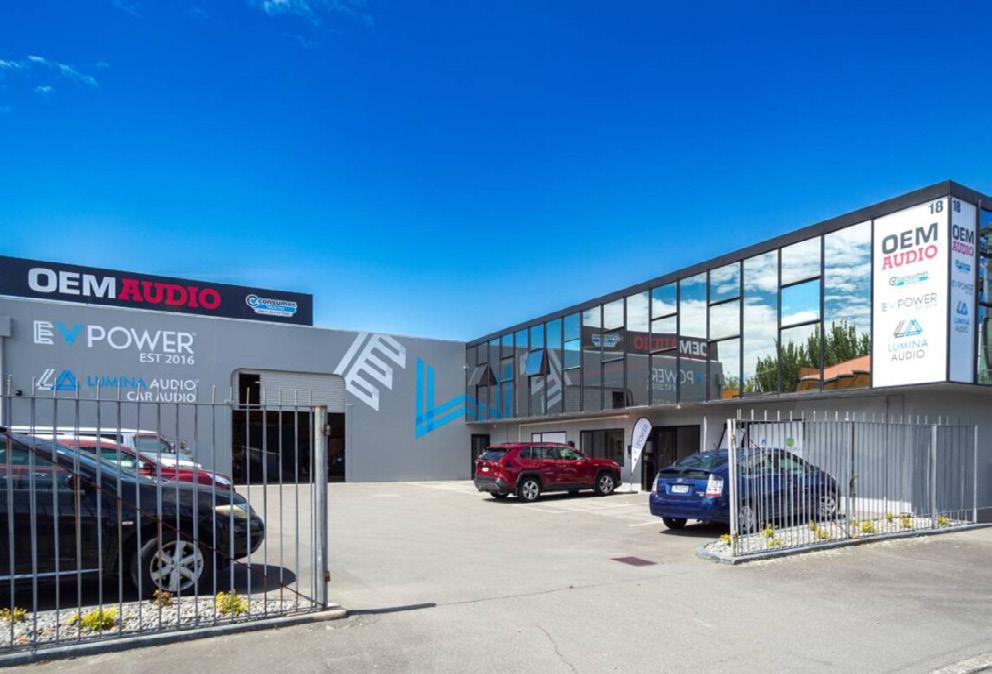
OEM Audio Ltd is a proudly New Zealand–owned company specialising in premium in-vehicle entertainment, connectivity and driver-assistance technology. Founded in Christchurch, they’ve grown into a trusted name among automotive professionals and enthusiasts nationwide. Their focus is on delivering smart, seamless solutions that enhance every drive, including advanced multimedia systems, reverse and dash cameras, OEM-style accessories and much more. Customers can expect car audio products that fit beautifully, look great and meet factory standards. They can also provide cutting-edge features like licensed Apple CarPlay and Android Auto.
As part of their continued innovation, OEM Audio is also New Zealand’s forward-thinking supplier of electric vehicle charging solutions. Through their EV Power range, they offer a complete lineup of AC EV charging products, from sleek, wall-mounted chargers for homes and businesses to durable charging cables designed in Christchurch. Their EV Power chargers feature RFID access, app control, load management and full compatibility with all EV models.
Over the years, they’ve helped thousands of Kiwis upgrade their vehicles with highquality solutions backed by expert local support, nationwide distribution and a strong commitment to supporting New Zealand’s businesses.
oemaudio.co.nz
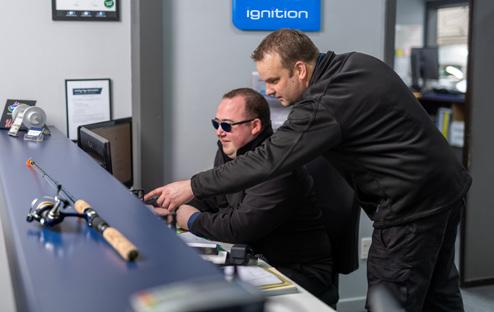
Submit your entry at cap.coop/funzone by 31 December 2025
October winner: BEN'S WHEEL ALIGNMENT AND SUSPENSION SPECIALIST who WON 5,000 Bonus Rewards Points
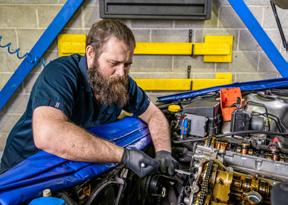
SPOT THE DIFFERENCE (5 differences to find!)
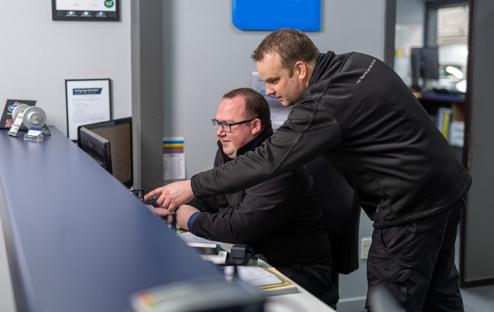
WORD HUNTER (15 words to find!)
Please note that this competition and participation in the Capricorn Rewards program are subject to terms and conditions. For the full terms and conditions, visit cap.coop/tc.
Achievement
Apprentice
Community
Curiosity
Diagnostics
Focus
Future
Impact
Leadership
Passion
Planning
Profitable
Recognition
Resilience
Returns

Accepted by a wide range service stations across New Zealand, the Capricorn Fuel Card lets you fill up without the fuss.
Just scan your card at a participating service station and the transactions will be automatically added to your Trade Account.
Save 8 cents off a litre (incl. GST) at the pump at participating service stations
Accepted at over 290 Mobil, Allied Fuel Stop, NPD and Waitomo fuel stations
Unlimited number of cards