





CORONAVIRUS SHOCK SUBSAHARAN AFRICA’S PUBLIC FINANCE

TURNING AN ECONOMIC DOWNTURN INTO AN OPPORTUNITY
COVID19 IN AFRICA: LOOKING BEYOND THE DOOM AND GLOOM

CORPORATE FINANCE
LANDSCAPE IN THE NEW NORMAL
INFRASTRUCTURE FINANCING USING PORTFOLIO INSURANCE
AFRICA’S TOURISM INDUSTRY FOR RESILIENCE GROWTH

Editor Tunde Akodu
Associate Editor Michael Osu
Feranmi Akodu
Advertising & Sales
Tola Ketiku
FEATURED ARTICLES
Coronavirus Shock Compounds
Sub-Saharan Africa’s Public Finance Challenges
Factors impacting the Development of Infrastructure in Africa
A focus on Africa: Turning an economic downturn into an opportunity
COVID-19 in Africa: Looking Beyond the Doom and Gloom
Africa: Corporate Finance Landscape in the “New Normal”
Scaling up Infrastructure financing using Portfolio Insurance wraps as a balance sheet optimization tool
New Normal for trade structuring in Africa
The Alternative Pockets: Covid-19 Pandemic and Digitalization
COVID-19 Pandemic Effect on the Mauritius Economy & Business
2020: Proven resilience of Moroccan economy
SPECIAL FEATURE
How Egypt banks on renewables to meet expected surge of energy demand
Harnessing Africa’s tourism industry for resilience and sustainable growth
Alternative lenders mustn’t be frozen out during the Covid-19 crisis
The Role of Export Diversification for Economic Growth and Employment Creation in Africa

DISCLAIMER:
Cover Image: Broken light bulb burn out with flame.
Image Source: canstockphoto.com
Welcome to the Sep/Oct 2020 edition of INTO AFRICA, a publication written by the professionals, for professionals, investors, policymakers … We Advance and provide fresh insights into Africa’s emerging markets through renowned thought leadership and peer-to-peer knowledge sharing. This edition is titled: Africa Economy: A Tipping Point
The coronavirus pandemic (COVID-19) has splintered the world economy, exposing social responsibility and governance fault lines across continents. The substantial shifts in society, its institutions and individuals during the pandemic have introduced major uncertainties into our familiar structures, and upended assumptions of what is true and stable. While no sector or industry can be recession-proof, the pandemic-driven action currently underway in many African countries contains the seeds of a large-scale reimagination of Africa’s economic structure, policy and political variables and reform, service delivery systems, and social contract. Sub-Saharan African economies face a slow recovery from the coronavirus pandemic and the region’s economic growth will fall behind the rest of the world next year, according to the International Monetary Fund. Gross domestic product in the region is projected to expand 3.1% in 2021, compared with a forecast of 5.2% for the world economy. This partly reflects sub-Saharan Africa’s relatively limited space for fiscal expansion, the Washington-based lender said in its Regional Economic Outlook report. The shock of the pandemic will push more countries in the region into debt distress and governments should be cautious about returning to international debt markets. A combination of dwindling revenues and higher spending during the pandemic will likely push debt-service costs in the region to 27% of GDP compared with a projection of 22% before the crisis.
As the same time, the pandemic is accelerating trends such as digitisation, market consolidation, and regional cooperation, and it is creating important new opportunities for example, to boost local manufacturing, accelerate digital transformation, transform Africa’s healthcare system with a focus on resilience and equity, formalise small businesses, and upgrade urban infrastructure.
ED PARKER (Head of EMEA Sovereign Ratings, Fitch Ratings) opens the edition with a stimulating write-up titled “Coronavirus Shock Compounds Sub-Saharan Africa’s Public Finance Challenges”. He indicated that coronavirus pandemic shock is having a severe adverse impact on SSA economies and government debt burdens are rising at a faster pace and to a higher level than for other EMs, heightening the risk of widespread debt distress across the region. TONNY TUGEE (Managing Director, SEACOM East Africa) highlights that the world is eager to do business with Africa but finds it difficult to access African markets because of poor infrastructure.
BITUMELENG MUKHOVHA (Corporate M&A Attorney, Writer and Community Activist) explores how to turn Africa economic downtown into opportunities. She also presented views on how to harness Africa’s tourism industry. In parallel, ROBERT BESSELING (Executive Director, EXX-Africa Mauritius) looks at COVID-19 in Africa beyond the doom and gloom. DEBORAH CARMICHAEL (Executive, Banking and Finance, ENSafrica South Africa) discusses corporate finance in Africa in the new normal (that is post-COVID 19). The Syndications Team, Africa Finance Corporation present a write-up: “Scaling up infrastructure financing using portfolio insurance wraps as a balance sheet optimization tool”. NOVAN MAHARAHAJE (Head of Capital Markets Services at Ocorian Mauritius) highlights trade finance structuring in Africa.
ENOCK RUKARWA (Research & Investment Analyst, FBC Securities Botswana) looks that the alternative pockets to COVID-19 pandemic and digitalization. BHAVIK DESAI (Head of Research, AXYS Stockbroking Mauritius) dissects that COVID-19 pandemic effect on the Mauritius economy and business. BMCE Capital Research Morocco states that Moroccan economy has proven resilience in the 2020. In addition, TOUFIK KHITOUS (Business Development Manager for North Africa, Wartsila Energy Business) talks about funding the renewal energy in Egypt.
DOUGLAS GRANT (Director of Conister Finance & Leasing Limited) advocates alternative lenders must not be frozen out during the COVID-19 crisis. IBRAHIM ABDULLAHI ZEIDY (Chief Executive Officer of the COMESA Monetary Institute) presents the role of export diversification for economic growth and employment creation in Africa.
Editor
Connect with The Editor on Linkedin. Follow us on twitter @capitaMKTafrica. Subscribe to INTO AFRICA at http://eepurl.com/buHhNv or please send an email to intoafrica@capitalmarketsinafrica.com.
Please visit our website at www.capitalmarketsinafrica.com for the latest news, bespoke analysis, investment events and outlooks.
ENJOY!
By Ed Parker, Head of EMEA Sovereign Ratings, Fitch Ratings
he coronavirus pandemic shock is having a severe adverse impact on SSA economies and government debt burdens are rising at a faster pace and to a higher level than for other EMs, heightening the risk of widespread debt distress across the region.
Median real GDP for Fitch-rated SSA sovereigns will fall by 2.1% in 2020, the first contraction in decades. Our forecast of 4% growth in 2021 is barely above trend growth.
As a result, we forecast the median budget deficit to widen to 7.4% in 2020, a record high in the modern era, from 4.9% in 2019. The combination of lower GDP, wider budget deficits and currency depreciation will trigger a jump in the median government debt ratio by 14pp to 71% of GDP at end-2020.
This shock compounds a marked secular deterioration in SSA public finances that has been running for a decade. The median of government debt/GDP for the 19 Fitch-rated SSA sovereigns increased to 57% at end-2019 from 26% in 2012, and Fitch forecasts it to reach 71% at end-2020. In comparison, we forecast the median for other EM to increase to 57% of GDP at end-2020, from 36% in 2008.
Two of the 19 Fitch-rated sovereigns have recently defaulted: Mozambique in 2016 and the Republic of Congo in 2016 and 2017. We believe further sovereign defaults are probable. Fitch rates Zambia at ‘CC’, while Gabon, Mozambique and Republic of Congo are rated at ‘CCC’, and a further 13 in the single ‘B’ range.
Widening primary budget deficits (before interest payments) have been the largest contributor to rising government debt/GDP. Debt will continue to rise without substantial fiscal consolidation. Moreover, the GDP growth rate has declined since 2014 while the average real interest rate on debt has risen since 2017, partly reflecting a decline in the share of borrowing that is on concessional terms, as countries stepped up borrowing from the Eurobond market.
There is a strong incentive for SSA governments to borrow to finance development, because each dollar of money spent judiciously on health, education or infrastructure can have a huge impact. But easy access to finance and political pressures can create less benign rationales to borrow. It was therefore no surprise that SSA sovereigns used space on balance sheets to increase borrowing

following the Highly Indebted Poor Countries (HIPC) initiative launched in 1996 and that debt ratios have risen over the past decade.
The post-HIPC initiative window of opportunity appears to have largely closed for many countries as debt has risen to levels associated with heightened risk of debt distress. Countries will need to adapt development models that are less dependent on accumulation of non-concessionary debt or accept a slowdown in the pace of GDP growth.
Between the outbreak of the pandemic and 17 June, the IMF approved USD8 billion of emergency support to Fitch-rated SSA sovereigns under its Rapid Credit Facility and Rapid Financing Instrument (totalling USD8.0 billion) and Catastrophe Containment and Relief Trust (USD48 million). This provides valuable fiscal and external financing to help the countries respond to the coronavirus shock and provide a breathing space for subsequent policy adjustment. But it is moderate at 0.9% of 2020 GDP of the 13 recipient countries.
The G20 DSSI has agreed to suspend bilateral debt service payments from 1 May to end-2020 (potentially extended to 2021) for 77 low-income economies. This includes 15 Fitch-rated sovereigns in SSA, with scheduled debt service payments of USD10.9 billion (1.2% of GDP of the eligible countries). The G20, IMF and World Bank have also called on private-sector creditors to participate, although that is not a condition for bilateral debt relief.
Participation in the DSSI provides countries with ‘flow’ relief on debt service in 2020 (and potentially in 2021), which reduces their fiscal and external financing needs and/or allows them to re-direct spending to health and social priorities. However, the challenges facing many SSA sovereigns are related to not only liquidity. The DSSI reschedules debt service payments rather than reduces it, so does not address the debt stock and medium-term public debt sustainability risks.
As Fitch’s Issuer Default Ratings only apply to debt to the private sector, participation in the DSSI and receiving debt relief from public-sector bilateral creditors would not constitute a default. Although a broader private-sector moratorium on debt service could qualify as a default, no country has said they intend to ask for one, and it is not currently sufficiently likely to affect ratings.
By Tonny Tugee, Managing Director, SEACOM East Africa
he world is eager to do business with Africa but finds it difficult to access African markets because of poor infrastructure Without a doubt, Africa is one of the world’s fastest-growing economic hubs. Crucial to this rate of development is the ability to meet the demand for key infrastructure. At the end of last year, a World Bank economic update reported that Kenya has seen its Information and Communications Technology (ICT) sector grow at an average of 10.8% annually since 2016, becoming a significant source of economic development and job creation with spillover effects in almost every sector of the economy.
While this is hugely encouraging news for Kenyans, it also raises questions about the factors which might impact the ongoing positive trajectory of infrastructure development, both in Kenya and the rest of the continent.
Fixed-line networks
In 2019, Kenya invested US$59 million in the Djibouti Africa Regional Express (DARE) submarine fibre-optic cable system, which reached the shores of Mombasa during March this year. The others include SEACOM, East African Marine System (TEAMS), Eastern African Submarine Cable System (EASsy) and Lion2 systems. According to Njoroge Nani Mungai, Chairman of Kenya’s Communications Authority, the investment demonstrates the government’s desire to improve Kenya’s position as a regional IT hub. It is also aimed at guaranteeing both companies and individuals’ access to a faster, more secure, and more reliable Internet connection. Revenues generated by the digital economy should reach US$23,000 billion by 2025, thanks to investments 6.7 times higher than those in other sectors.
In addition, terrestrial fibre networks have continued to expand, offering more connectivity options and better network redundancy – great news for land-locked countries. However, according to MainOne’s CEO, Funke Opeke, these remain underutilised due to high prices and a failure to establish an enabling environment.
Mobile network coverage
Telecommunications has continued to register positive growth, with increased uptake and usage of mobile phone services. High-bandwidth Internet infrastructure has become more widely available, while the rollout of 4G infrastructure by the MNOs has already led to substantial growth in subscriptions to data and Internet services. With the expansion of fibre-optic infrastructure across the country, more homes will be connected to better-quality, higher-speed broadband services, which will be extended to the rural areas.. Consequently, the increase in mobile network coverage has led to a decline in fixed-line networks related

to voice calls. Alternative solutions need to be considered to ensure a stable Internet connection throughout Kenya to bridge the rural and urban digital development divide.
Poor infrastructure
The world is eager to do business with Africa but finds it difficult to access African markets because of poor infrastructure. Greater economic activity, enhanced efficiency and increased competitiveness are hampered by inadequate transport, communication, water, and power infrastructure. The World Bank economic update, mentioned earlier, highlighted challenges relating to the inadequate power supply, transport networks and communication systems as crucial to ensuring ongoing connectivity, and continental economic development. It found that the poor state of infrastructure in sub-Saharan Africa reduced national economic growth by two percentage points every year and cut business productivity by as much as 40%.
It is estimated that about US$93 billion is needed annually over the next decade to overhaul subSaharan African infrastructure. About two-thirds or $60 billion of that is needed for entirely new infrastructure and $30 billion for the maintenance of existing infrastructure. Only about $25 billion annually is being spent on capital expenditure, leaving a substantial shortfall that must be financed.
Economic potential
The economic climate of Kenya will determine access to the tools needed to build the relevant infrastructure. According to André Pottas, Deloitte’s Corporate Finance Advisory Leader for sub-Saharan Africa, this translates into exciting opportunities for global investors who need to look past the traditional Western view of Africa as a homogeneous block and undertake the detailed research required to understand the nuances and unique opportunities of each region and each individual country.
The key to unlocking Kenya
With governments across the continent committing billions of dollars to infrastructure, Africa is at the start of a 20 to 30-year infrastructure development boom. Fortunately, we have access to a global network of exports, which we need to be utilising optimally to ensure a stable infrastructure, both digital and physical.
However, in preparation for the boom, the only way for Africa’s infrastructure backlogs to be cleared and to unlock connectivity and communications in Kenya is through globally competitive, growth-oriented, mobile, and digital technology businesses. It is imperative to establish partnerships with trusted private sector players who already cater to the local and international communications market with reliable connectivity solutions.
By Itumeleng Mukhovha, Corporate M&A Attorney, Writer and Community Activist
OVID-19 has splintered the world economy, exposing social responsibility and governance fault lines across continents. The substantial shifts in society, its institutions and individuals during the pandemic have introduced major uncertainties into our familiar structures, and upended assumptions of what is true and stable.
While no sector or industry can be recession-proof, the pandemic-driven action currently underway in many African countries contains the seeds of a large-scale reimagination of Africa’s economic structure, policy and political variables and reform, service delivery systems, and social contract. The pandemic is accelerating trends such as digitisation, market consolidation, and regional cooperation, and it is creating important new opportunitiesfor example, to boost local manufacturing, accelerate digital transformation, transform Africa’s healthcare system with a focus on resilience and equity, formalise small businesses, and upgrade urban infrastructure.
The sudden and simultaneous interaction of global supply and demand side shocks, combined with policy reactions to the pandemic, have greatly depressed the continent’s access to critical products. However, the pandemic could lead to a reshaped and more resilient manufacturing sectorafter a difficult recovery - if governments and businesses tackle long-standing barriers to industrialisation and cooperate to seize new opportunities.
In the immediate term, COVID-19 is driving countries across the continent to enact procurement incentives such as prioritising and incentivising the procurement of locally produced medical products and devices, providing advanced market commitments, and establishing pooled procurement mechanisms. According to the McKinsey Global Institute, this opportunity will contribute circa USD1.5 billion to the continent’s manufacturing output in 2020. Over the next five years, a serious push to reduce reliance on global supply chains

could add an initial USD10–20 billion to the continent’s manufacturing output if 5 to 10 percent of imported intermediate goods are produced on the continent.
The African Continental Free Trade Agreement (once fully implemented and operational) will undoubtedly play an important role in enabling market access by reducing tariff and non-tariff barriers, and harmonising trade-related regulations and customs control. In the long-term, key players in the manufacturing sector should take advantage of opportunities in intra-African trade and the global supply-chain realignments spurred by the pandemic.
Before the pandemic, Africa was in the midst of a far-reaching digital transformation. For example, the continent has seen the world’s fastest rate of new broadband connections (the second-largest internet user population after China) in recent years, while mobile data traffic was previously forecast to increase sevenfold between 2017 and 2022.
Despite the progress, there are clear winners and losers emerging in virtual marketplaces amid the pandemic. Several sectors and industries poised for swift growth in digitisation following the pandemic include new information and communication technologies, education, healthcare, public sector, finance, and retail trade.
The sudden disruption of economic activity presented by the pandemic means businesses as well as the government need to rethink their strategies and modus operandi, with the demand for face-to-face services, non-essential goods and leisure providers being heavily curtailed.
Anecdotal evidence suggests that African businesses have begun pivoting towards the provision of essential goods and services by leveraging off virtual marketplaces. In South Africa, Zulzi, an
on-demand delivery grocery platform, has partnered with major retailers including Woolworths, Pick n Pay, Spar, Clicks and Dis-Chem to deliver essential goods to consumers during the country’s lockdown.
Similarly, Nigeria’s Jumia, which has over 4 million customers in 14 African countries, has partnered with vendors to use its ePayment and last-mile delivery capabilities to offer contactless delivery of food and other necessities to all areas, including remote and rural locations. Jumia is betting that online sales will grow from 1 percent of total retail sales in Africa today to as much as 15 percent in 10 years.
Although trade and public services across the continent continue to experience a slow adaptation to technological innovations such as data analytics, artificial intelligence and automation, there are a few governments that are leveraging the basics of digitised signatures and documents to reduce the friction and delays in trade processes.
A good case in point is the Trademark East Africa’s (TMEA) introduction of various trade-related initiatives that have resulted in tangible reductions in the time and cost of trading within the East African region. The management of transit operations along the Northern Corridors traversing Uganda, Rwanda, Burundi, the Democratic Republic of Congo and South Sudan was, for a long time done via a convoy system characterised by paper-based controls, transit log sheets, physical escorts, high administrative costs, transit check points and poor information sharing between partner countries.
The recent implementation of electronic cargo tracking along the Northern Corridors has shortened transit times from Mombasa to Kampala from 11 days to 4 days. Meanwhile, the automation and digitisation of the customs management process in Uganda has led to 75 percent reduction in transit and clearance times, as well as a financial saving of USD56 million.
TMEA is currently building on these digitisation results to facilitate trade during the pandemic and beyond it.
Traditional classroom learning has taken a backseat in the face of the pandemic, resulting in an
acceleration in the adoption of e-learning as schools attempt to minimise interruptions to the school year. Several education innovators have developed new, promising solutions to enable students to continue learning while at home.
Tanzania’s Ubongo recently launched its Ubongo Toolkits platform, a large library of quality, Africanmade early learning materials and educational resources for children aged 0 to 14. This platform covers various topics from early numeracy, preliteracy, and social and emotional skills to engineering, science and technology. Meanwhile, Kenya’s Eneza Education has partnered with Safaricom to offer a government-accredited curriculum designed and refined for feature phones.
If these virtual classrooms take hold across African countries searching for solutions to scale quality education, they will spur a widespread use of digital tools in the classroom and remote learning in a post-COVID-19 world.
Transform African healthcare systems for resilience and equity
A quarter of the global disease burden weighs on Africa, but only 3 percent of the world’s health workers are based on the continent and the share of the world’s health expenditure for Africa is below 1 percent. Health systems frequently have to rely on non-profit organisations and external donors to fund and provide services for the largest underserved patient population in the world.
Thus, any African government’s healthcare investment plans should focus on improving the quality and availability of healthcare services by increasing the quantity and quality of the health workforce, ensuring availability and rational use of essential health commodities, upgrading equipment and health information management systems, improving the construction, distribution and maintenance of healthcare infrastructure.
On average, countries in sub-Saharan Africa have invested 20 percent of the regional gross domestic product (GDP) per annum between 2010 and 2017, and North African countries about 22.8 percent, in key infrastructure classes, including energy, road and rail transportation. The continent’s two largest economies, Nigeria and South Africa, have underperformed, with investment ratios of 15 percent
and 19.6 percent of the GDP, respectively, over the same period. The infrastructure investment over this period has been largely funded by traditional Official Development Assistance, Organization for Economic Co-operation and Development investors, and non-OECD countries, including China, India, and the Gulf countries, with China by far the largest national player.
The World Bank estimates that sub-Saharan Africa’s GDP per capita growth could increase by 1.7 percentage points per annum if the region were to close the infrastructure gap (in terms of both quantity and quality) relative to the developing world median. Therefore, investments in infrastructure and capital projects are required to diversify African economies, promote private sector activity and industrialisation, increase business confidence, support digitisation, and ensure enough jobs are created for the 12 million young people entering Africa’s labour force each year.
In order to scale up infrastructure investments, African governments will need to substantially scale up resources, reform institutional and policy frameworks to meet some requirements, work towards political stability, and ensure a continuous
pipeline of bankable projects and certainty of the envisaged future cash flows.
COVID-19 has exposed significant structural shortfalls in Africa’s development architecture, and if these shortfalls are not addressed, the continent will experience a reversal in the development gains already achieved. Therefore, African countries need to integrate a long-term perspective into the current recovery efforts by continuing to promote access to technology and infrastructure, good governance and regional integration, with a view of increasing productive capacities and creating the foundation for equitable and sustainable economic transformation.
This will require policy and political variables and reform, as well as a series of structural factors such as competitive industries, infrastructure, transport costs and the stock of skilled human capital. While the continent has a hard road ahead as it looks to recover, it also has the opportunity to create a recovery that features a more inclusive economy, more competitive industries and more resilient services.
Ghana has recorded total investments of US$869.47 million, with total FDI value amounting to US$785.62 million between January to June 2020 as FDI inflow showed rare strength in the final moments of the second quarter of the year, undeterred by the Covid-19 pandemic.
The total FDI of US$785.62 million represents investment recorded by the Ghana Investment Promotion Center (GIPC) and the Petroleum Commission.
Worldwide, the United Nations Conference on Trade and Development (UNCTAD) has estimated that the Covid-19 pandemic to send global FDI plunging by about 40 percent - driving the total value of FDI below US$1 trillion for the first time since 2005. However, in spite of a sluggish start in the first quarter of 2020 and a worrying slump in the beginning of the second quarter due to severe lockdown measures to contain the spread of the corona virus, FDI to Ghana have begun to rebound resulting in a notable increase in FDI inflow for the first half of the year.
At the GIPC, a total of 69 projects with a total estimated value of US$688.74 million was recorded by the end of June 2020. Of this, the total FDI component amounted to
US$627.52 million while local component accounted for an estimated US$61.22 million. The FDI value of US$627.52 million was a considerable increase of about 409.10 percent from last year’s FDI value of US$123.26 million recorded within the same period (Jan-Jun 2019), depicting a strong performance irrespective of the global pandemic.
Out of the 69 projects recorded, the services sector registered a majority of 25 projects followed by the manufacturing and export trade sector with 21 and 11 projects respectively. With regards to value, general trading recorded the highest amount of US$246.05 million. This was tailed closely by the mining exploration sector with US$231.02 million having sealed some major investments such as the Chirano Gold mine project for the exploration of minerals. The manufacturing sector also saw significant investments valued at US$170.67 million on the back of some notable ventures such as a deal by Matrix industries for the manufacture of paper and aluminium products as well as the Rainbow Paints Limited project which is a joint venture between Ghana and Kenya for the manufacturing of paints and related products.
Geographically, the spread of the projects
cuts across 6 regions namely, Greater Accra, Central, Eastern, Ashanti and Volta regions with most projects registered in the Greater Accra enclave. Together, the 69 projects are expected to make significant contribution to job creation in the country. Per estimations, a total of 14,614 jobs are expected to be created when the projects are fully operational. Out of this, 14,052 of the jobs representing 96.15 % will be for Ghanaians whilst the remainder of 562 jobs which represents 3.85% will be taken up by foreigners.
Meanwhile, additional equity totalling US$11.56 million was re-invested by existing companies within the first half of the year, while a total of GHC1,365.26 million was recorded as investments from 28 wholly owned Ghanaian businesses.
In this regard, the GIPC remains cautiously optimistic about the flow of FDI to Ghana, as we move forward. That notwithstanding, the Center will continue to assiduously pursue worthwhile investments for economic development as well as support government initiatives such as the COVID-19 Alleviation and Revitalisation of Enterprises Support (CARES) Programme to help bolster the Ghanaian economy towards a recovery and remain resilient pre and post pandemic.
By Robert Besseling, Executive Director, EXX-Africa Mauritius
he onset of the coronavirus in Africa has not reached the calamitous public health crisis that many analysts had initially forecast, even though there are ongoing debates over the accuracy of statistics, limited testing capacity, and important regional variations. But most analysts agree that COVID-19 has not yet fully hit the world’s most vulnerable continent and the next few months will be critical for many African countries as they deal with the pandemic.
In the meantime, the economic repercussions of lockdowns, smaller global trade flows, and supply chain disruptions are causing a more significant backlash that imperils political stability and economic resilience in some of the poorest countries on Earth. Africa’s external and fiscal buffers are therefore still being substantially eroded. The stimulus measures made by sub-Saharan African governments are, at 3.4 percent of GDP on average, easily the lowest in the world.
Economic recovery by 2021?
African finance ministers remain confident of an economic recovery next year and are putting in place stimulus measures and cutting taxes, which are further deepening budget deficits across the region. In East Africa, the June budgets included an array of tax waivers, direct cash handouts, and cheap credit to businesses. Kenya has even allocated USD 2 billion for political legacy projects, including massive new infrastructure ventures. Such appropriations are usually unfunded, while African governments pledge to raise domestic revenue generation despite having some of the worst tax collection records in the world and a history of years of unmet tax revenue targets. Trade and income tax revenues are also set to fall due to the global pandemic, supply chain disruption, and reduced African trading volumes which are unlikely to recover by year end.
The IMF and World Bank will revise their economic forecasts for Africa, with recessions in the major markets of South Africa and Nigeria set to be even deeper and longer than initially anticipated at the start of the pandemic. The Bretton Woods institutions will also downplay optimistic expectations of

an economic recovery next year, as demand for African resources remains subdued and foreign investment dwindles. But some more diversified and reformed economies in West and East Africa will maintain impressive growth rates and remain well-positioned to compete for investments in renewable energy, digital technology, healthcare, and other key sectors.
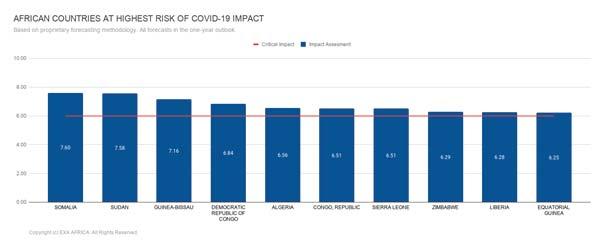
EXX Africa’s COVID-19 country risk vulnerability model forecasts that unstable states such as Sudan and DRC, as well as fragile economies like Sierra Leone, are most exposed to the longer-term implications of the pandemic. Countries such as Benin and Senegal consistently come out at the top of this resilience index. The fourth quarter of 2020 will also be filled with controversial elections from Guinea in the west to Tanzania in the east that will proceed despite fears of renewed coronavirus infections. The first polls will take place in Ghana and Côte d'Ivoire, where election-related violence is already brewing.
Multilateral institutions have taken the lead in supporting Africa’s response to the crisis, by quickly releasing funds for public healthcare and economic stimulus. Long-time sceptics of the Bretton Woods institutions, such as South Africa and Nigeria, have readily accepted IMF financial assistance, although such aid comes with few structural adjustment and transparency conditions. Other major economies like Egypt have returned to a formal programme with the Fund, which does include such conditionalities and will resume market-based reforms.
International efforts to alleviate Africa’s debt burden have remained uncoordinated, contradic-
tory, and often uncommitted, as forecast in a series of reports by EXX Africa since the start of the pandemic. The major multilaterals, especially the IMF, World Bank, African development Bank, and others, have taken the lead in approving emergency financing. The IMF alone has committed almost USD 11 billion in emergency financing and debt relief for sub-Saharan Africa and USD 9 billion for North African countries, especially Egypt. In addition to the Fund’s USD 20 billion total funding for Africa, the World Bank, AfDB, and G-20 countries have made separate sizable commitments. However, sub-Saharan Africa alone will require USD 110 billion this year – some reports say that another USD 44 billion will be needed to match a financing shortfall to avoid an economic and humanitarian calamity.
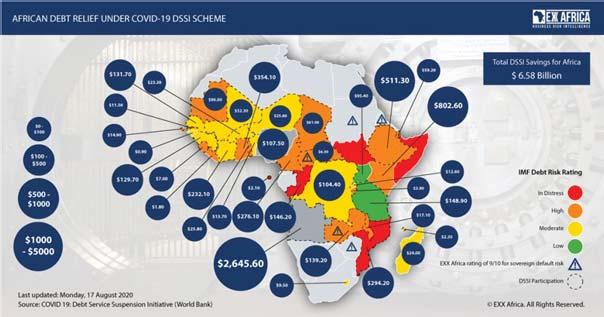
The G-20 is likely to extend and expand its debt service suspension initiative for emerging markets. This initiative, which can save African countries some USD 6.58 billion in interest payments due this year on Paris Club loans, is now likely to be extended into 2021. The biggest beneficiary will be Angola, whose debt-laden economy already stands to save USD 2.6 billion in interest this year and whose ongoing IMF facility has already been increased. Kenya, Ethiopia, Ghana, and Côte d'Ivoire also stand to save hundreds of millions in precious foreign exchange on debt servicing, although eventual loan repayment plans still seem unclear.
Any debt relief extension will almost certainly come too late for Zambia. Africa’s second largest copper exporter is set to trigger the continent’s first pandemic-related default event on a global bond interest payment due by the middle of the month. Eurobond holders have been less forgiving than the Paris Club, while several commercial creditors are already considering calling in sovereign guarantees in Zambia. Other defaults will follow, possibly in Republic of Congo, Chad, and possibly Angola. A restructuring of Chinese debt and improved collaboration between commercial, bilateral, and concessional lenders would mitigate such alarming sovereign risk scenarios.
However, the G-20 debt service suspension initiative will not be sufficient to stave off a wave of defaults on interest and capital repayments towards the end of 2020 and beyond. Countries like Zambia and Republic of Congo are set to join long-time arrears offenders, such as Zimbabwe, Eritrea, and Sudan, as state revenues dry up and local currencies collapse. To avoid such a
scenario, much broader debt relief will be required to encompass commercial creditors and China, although such a prospect seems unlikely in current conditions.
Looking beyond the doom and gloom, for some smaller and more diversified markets that have long embraced foreign investment and reform, such as Senegal, Benin, and Rwanda, the economic impact of the pandemic will be limited and a swift recovery remains probable in 2021. The crisis has also created fresh investment opportunities for some sectors, such as renewable energy and public healthcare investment, which have long been desperately needed on a continent that thrives on coal and oil, with often mediocre public health infrastructure. Foreign investors will find ample return on such projects and governments need to collaborate to ensure political risks are mitigated.
Africa’s largest economies with lacklustre economies and entrenched interests will also need to move towards reform. South Africa’s debtburdened state-owned enterprises require a shake-up, while Nigeria needs to proceed with oil sector restructuring before issuing more production licenses. The key question is whether Africa’s disparate states can collaborate on battling the coronavirus, embrace economic reforms, and boost intra-regional trade by reigniting the process towards creating the world’s largest free trade zone. Perhaps, the current crisis offers the most valuable opportunity to reshape Africa for generations to come.
Contributor’s Profile
Robert Besseling founded EXX AFRICA in 2015, after pursuing a decade-long career in political risk forecasting at industry-leading companies such as London-based Exclusive Analysis and NYSE-listed IHS Global. At EXX AFRICA, Robert leads a team of partners and contributing analysts to produce commercially relevant and actionable analysis on African political, security, and economic risk.
By Deborah Carmichael, Executive, Banking and Finance, ENSafrica South Africa
he Covid-19 virus has caused shock waves to ripple across the global economy. And, as is the way of the world, those countries which were already economically vulnerable, were always going to be the hardest hit by it. Lockdowns (of varying degrees) have, quite simply, broken many already struggling economies. Africa’s economic outlook has radically worsened. Poverty is also expected to increase by 2% across Africa with 26 million people falling under the poverty line, erasing five years of progress in poverty reduction. Today, there remains considerable uncertainty around the pathway of the pandemic, the means and speed of any economic recovery and what structural changes – particularly to the globalisation of trade and capital – it will bring in the longer-term.
The International Monetary Fund (IMF) expects growth across the African continent to collapse to a negative 1.6%. 2020 will, without a doubt, be the worst year since records began in 1970 for the continent's economic growth.
So where does that leave Africa on the Corporate Finance front and what complexion will corporate finance on the continent take?
There is no doubt that the conditions created by COVID-19 have caused SME’s a number of challenging situations. In many cases the lockdowns and work cessation requirements of governments across the continent for workers and industries other than for essential services have affected the ability of many entities to continue to meet existing contractual obligations of the businesses they run. Unsurprisingly, business disruptions have been accompanied by a strong decline in revenue and profitability. These conditions present opportunities for cash flush investors. These opportunities will most likely take the form of bargain basement offers involving distressed sales as most of these entities will simply be looking to new acquirers as a means of survival.
In South Africa alone, in a pre-COVID world, corporates were already struggling significantly with a contracting economy and a series of knocks occasioned by credit ratings downgrades. A report by SME South Africa (2018) highlighted that only 6% of small to medium enterprises (SME’s) in

South Africa (which make up the bulk of corporate South Africa) received government funding and only 9% had sourced funding from private sources. Additionally, the majority of private funding focused on mature businesses with around 90 percent of funding going to businesses that are more than five years old. What is likely to change in a post-COVID world, is the hunger for accessible, low interest funding and so, in the short term, for those corporates that do survive, we are probably going to see them making use of government aided funding and making use of payment reliefs (such as UIF and PAYEs in South Africa).
Obtaining traditional bank funding had also become more difficult in recent years as international banks retreated from the continent after new regulatory standards increased the costs and capital consumption of operations in noninvestment-grade countries. The result has been that the financing gap into Africa widened significantly as it become more difficult for Africa to rely on traditional forms of bank funding to cater to its needs. The international banks which did stay are probably going to need to stay invigorated and help reorganise African debt. In South Africa, banks and financial institutions have already played a fundamental role in trying to achieve this, including through the suspension of loan repayments or the reworking of principal repayments; the provision of resources and communication tools to clients; interest and fee waivers; relief loans; and pre-approved or expedited loan approvals. Some South African banks are providing instant shortterm deferral on credit products for up to three months and another is offering a similar programme for SMEs with a turnover of less than R20 million. Bank and institutional funding will continue to be a feature of corporate finance in Africa in the long term. It is traditional, accessible, stable and certain even with the conditions it comes with.
In addition to traditional sources of bank and institutional funding, Africa has been learning to help itself with the emergence of the stock exchange, bond markets, and equity markets. In 1990, there were only five stock markets. Today, there are 29 stock exchanges for 38 countries, including two regional ones. Africa has been
harnessing its own potential and improving the state of the continent’s economy. Its financial markets have gained more access to the global standards of service. However, a lot of reforms are still needed in order to improve their competitiveness. Weak policies have for a long-time hampered investor, both local and international, from participating in the capital markets. African countries need to facilitate liquidity in the markets through policy initiatives that attract local investors. From this point, it can enable development in financial products and increased asset acquisition. Ultimately, it will lead to market capitalization.
Well-regulated markets facilitate transparency, transparency in turn, builds investor confidence. The hope is that the challenges of 2020 will force regulators in each of the jurisdictions in which these markets already exist to align policies with global best practice to attract new investment and investors into the African markets. We will need to see a movement away from the “high-risk” moniker attached to African investment for real investment to occur. This change of perception will already have statistical support. In 2016, Moody’s released a report showing that the rate of project-finance defaults in Africa between 1983 and 2015 was the second-lowest in the world at just 2.7%.
Alternative sources of funds willing to invest in alternative instruments in economies other than Europe and the US, have also been accumulating. PwC expects the value of assets held worldwide by pension funds, insurance companies, sovereign wealth funds, and high-net-worth individuals to rise from $115 trillion in 2012 to $195 trillion by 2020. This number is probably still accurate (ratably)
despite COVID. The developing world is always an attractive investment for its higher return on investment. Coupled with a concerted effort by Africa’s regulators to align regulatory models to international best practice – despite the COVID hits –hopefully, Africa can start the process to close its funding gap requirements internally before looking outward.
Contributor’s Profile
Deborah Carmichael is an Executive at ENSafrica in the Banking and Finance department. She specialises in complex regulatory matters in the banking and financial services sector, including collective investment schemes, exchange control, derivatives, securities lending and over-the-counter trading.
She has acted for the International Swaps and Derivatives Association, the International Capital Market Association, the Securities Lending and Repo Committee and the Capital Adequacy Working Group on issues requiring derivatives and securities lending legal counsel. In addition, Deborah has acted for pension funds, insurance companies and other regulated financial services institutions.
Deborah’s experience also includes development finance, debt restructuring, workouts and transactions refinancing involving derivative instruments. She is the author of numerous articles on finance and South African investment related matters, and co-authored the South African Legislation Guide for South Africa in the IFLR1000 2010 Guide to the World's Leading Advisors.

By Syndications Team, Africa Finance Corporation
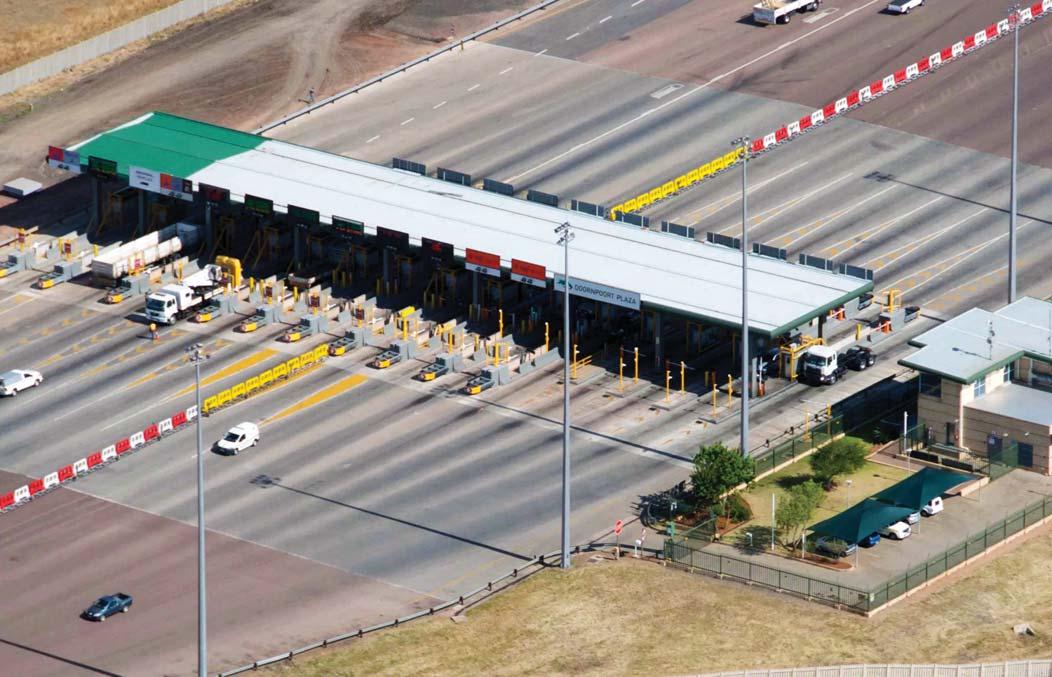
ith more than US$100billion of infrastructure needs in Africa, as estimated by the African Development Bank, the need for infrastructure and development lending continues to be even more critical year on year. With this significant mandate in mind, it has become imperative for Multilateral Development Banks (MDBs) and other Development Finance Institutions (DFIs) to provide innovative and structured solutions to optimize their balance sheets and to leverage their existing resources to meet their main objective of addressing the huge infrastructure needs on the continent.
Over the years, the halo effect provided by MDBs and DFIs through their preferred creditor status in their member countries, has played a critical role in helping to catalyze and mobilize private sector capital to fund development projects especially through risk mitigation products, syndications, other pooled funding structures, structuring and advisory services. Although MDBs and DFIs continue to play a key role in granting direct concessional and non-concessional funding to finance projects, this alone will not be enough to fill the huge infrastructure needs in the continent. Thus, the need for private sector funding. To complement the traditional mobilization

products and structures that MDBs and DFIs have developed over the years, there have been calls by the G20, as articulated in the 2015 G20 MDB Action Plan, for MDBs to optimize their balance sheets as a way to alleviate the capital constraints faced by MBDs and DFIs. This article sheds light on some of the structures that MDBs and DFIs can employ to achieve balance sheet optimization, along with the benefits that these structures can bring to MDBs and DFIs to help them in achieving their developmental goals.
Portfolio Insurance wraps can be used in achieving balance sheet optimization where by a referenced pool of portfolio asset is securitized and credit enhanced. The type of loans or assets covered are typically pre-defined in the insurance agreement between insurer(s) and the insured. Under this structure the insurers’ investment grade credit-rating is used as a substitute for the weighted average credit rating of the underlying assets in the portfolio thus, enhancing the portfolio’s credit rating and releasing headroom in the balance sheet of the insured entity, which will accordingly enable the entity to increase its lending activities.
Risk sharing is at the core of portfolio insurance
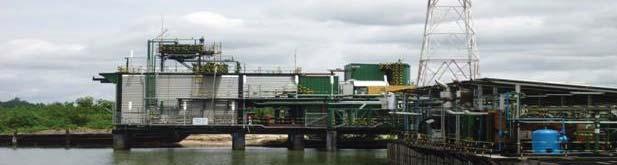
wraps and there are many ways by which both insurers and the insured entity can share the risk of the underlying assets in the portfolio.
Excess of loss insurance cover is one of the ways of risk sharing in a portfolio insurance wrap. In this structure, a mezzanine risk layer of the portfolio is shifted to the insurer(s). The insured agrees to take or retain an agreed amount of first loss arising from defaults in the underlying assets. Once this threshold of first loss is exceeded the insurer(s) provide a risk protection for the mezzanine layer in the portfolio and the insured retains the risk of a senior layer above the mezzanine protected tranche.
Quota Share is another common and straight forward way of risk sharing in a portfolio insurance wrap structure where insurers provide insurance cover for an agreed percentage of losses arising as a result of default under any asset across the entire underlying portfolio. While the two structures previously discussed could be considered as common structures, it is possible to structure various bespoke wraps which combine both structures or apply one or both across different layers of the portfolio in order to have a more balanced risk allocation between the insurers and the insured.
In addition to the aforementioned types of risk protection structures which are mainly structured on an unfunded basis and are primarily provided by the private insurance market, the African Development Bank’s (AfDB) Room2 Run transaction is another example of an innovative synthetic securitization structure which was developed between AfDB, as the MDB, and private sector investors on a funded basis with a cash collateral arrangement to cover for losses in the portfolio above the first loss layer. Room2 Run was structured as a synthetic securitization which transfers the mezzanine credit risk on a portfolio of
loans from AfDB’s non-sovereign lending book to mezzanine investors.
On the surface structuring such balance sheet optimization structures might look like a very simple and straight forward process, however, in reality the process requires two way transparency between the insurer(s) and the insured. It requires extensive negotiations and analysis to achieve the risk optimization and return expectations for both parties. In addition, it is worth mentioning that the process typically would involve an extensive analysis and modelling of the underlying portfolio to determine key parameters such as the expected loss, credit risk rating, attachment points for the securitization and expected economic capital relief to be achieved. These are all necessary in evaluating and agreeing on a final structure that would meet all parties’ objectives.
Despite some of these complexities, it is worth exploring such innovative structures due to their direct and indirect benefits. Balance sheet optimization, using one or more of the aforementioned structures, can be a catalyst in helping MDBs and DFIs in achieving their developmental goals. The portfolio’s lower risk profile could lead to and uplift in credit rating of the institution by credit rating agencies, potential reduction in funding costs, alleviation of capital constraints, and increased headroom in their balance sheets which will contribute to additional lending activities. Another key benefit for MDBs or DFIs is that although the credit risk of the underling projects are passed on to the insurer(s), these insurance wraps allow MDBs and DFIs to continue to maintain their relationships with the borrowers and remain the lender of record and same is beneficial to the insurer(s) who also benefit from the strong relationship between the lender of record and the borrowers.
By Novan Maharahaje, Head of Capital Markets Services at Ocorian in Mauritius

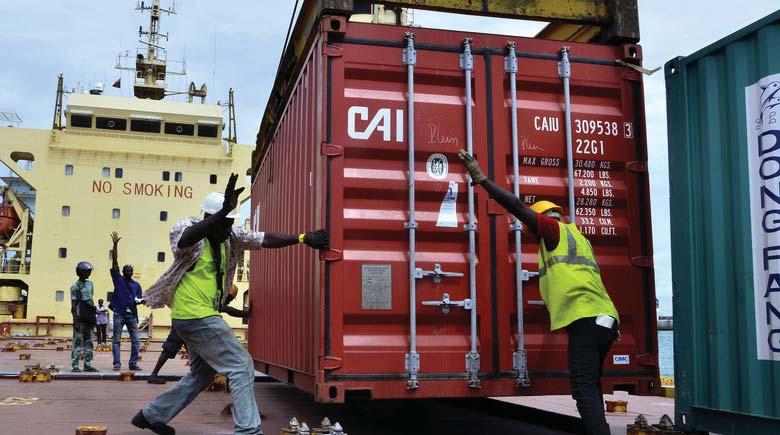
ovid-19 has brought a number of disruptions in cross border investments and trade - which entail a complete rethinking of how business and trade are being conducted and with whom. Business as usual, with historical trading partners and corridors (often established during the colonial era), is no longer an option. Traditional partners have, overnight, resorted to extreme protectionist measures, with many countries imposing export restrictions on medical equipment, pharmaceuticals and personal protective equipment, and some countries even restricting food exports.
In Africa, the pandemic has also served as a reality check about food security, health infrastructure and the manufacturing deficit resulting in an excessive dependence on imports for basic necessities.
With the disruption in global trade and the fall in commodity prices, the pandemic has also triggered USD liquidity shortages in many African economies and increased volatility of their major currencies. This could prove a major deterrent to intra-African trade, as it's a known fact that the bulk of world trade is denominated in USD, and that letter of credits are also often priced in the same currency. Hence, African trade flows are hugely dependent on and vulnerable to correspondent relationships. With the crisis, we have seen major international banks scaling back or even withdrawing trade credit lines into Africa as part of their de-risking process.
Further, many regional and local banks are retaining capital, in preparation for a probable second and follow-on waves.
Fortunately, the continent's leading development finance institutions, such as the Afreximbank and the AfDB have put in place comprehensive economic and financial support and guarantee mechanisms, such as the USD 3bn Pandemic Trade Impact Mitigation Facility by the former and the Trade Facilitation Program by the latter, with a view to supporting trade (of critical Covid-19 supplies, food and agricultural inputs), assisting local banks to meet trade payments falling due and stabilising foreign exchange resources of member states - with the ultimate objective to avoid the pandemic turning to a political and economic crisis. On the global stage, many governments are turning to their export credit agencies ("ECAs") to support exporters to cover their costs of inputs for production and manufacturing. This is a trend that we are likely to see more and more in Africa.
Further, the Pan-African Payment and Settlement System ("PAPSS") currently in pilot phase, could become a game-changer by relieving Africa from its over-reliance on hard currencies for regional trading. Per the Afreximbank, the PAPSS will provide a centralized payment market infrastructure for processing, clearing and settling of intraAfrican trade and commerce payments.
By magnifying the deficiencies and inefficiencies of cross-border trading in Africa, the pandemic has reiterated the importance of the African Continental Free Trade Area ("AfCFTA"), signed by 54 of the 55 African Union nations but ratified by only 31 as of date. The AfCFTA would constitute the largest new trading bloc in the world, with access to 1.3 billion people and will allow member states to draw on economies of scale to boost industrial production and manufacturing output. Hopefully the crisis will act as a catalyst for its full implementation by all member states.
After-pandemic strategies and policies will target the development of regional value chains and building local manufacturing capacities. Other emerging trends arising from the pandemic include acceleration of digital adoption and ecommerce; and virtual marketing and communication channels.
Investments in the short term will target pharmaceutical and medical equipment industries, as a matter of priority. In the medium term, the focus will be the acceleration of Africa’s industrial development. We are also likely to witness the emergence of regional hubs serving the whole continent: e.g. Mauritius and Rwanda for banking and financial services; Ethiopia and South Africa for aviation and logistics; South Africa, Egypt and the Maghreb countries for pharmaceutical industries; Ghana, Ivory Coast, South Africa and Kenya for food transformation and import substitution. In the new normal, non-bank lenders, DFI's and ECA are expected to play more prominent roles in addressing Africa's unmet trade finance gap, while regional and pan-African banks would continue to support their large corporate clients with good credit standing. The transition towards digitisation of trade documentation and digital trading platforms will be accelerated as more and more legal hurdles are removed.
At Ocorian, we firmly believe that structured trade finance will have an even more important role to play in the post Covid-19 era, as the dynamics of trade finance will evolve towards local currency
References and Further Reading:
financing, risk mitigation and de-risking strategies (leveraging the different support/products offered by DFI's, ECA and insurance providers) and compliance with stringent anti-money laundering regulations and customer due diligence requirements.
Further, with travel restrictions and the spectre of further lock-downs looming and potentially limiting physical meetings and on-site visits, access to reliable and credible information remains a critical success factor. Referrals and introductions from trusted partners and networks will be key to address any information gap in terms of preliminary KYC checks and reliability of financial information.
Post Covid-19 will catalyse the shift in manufacturing and trading patterns to lay the foundations of an integrated African market, with technology as an enabler and supported by a vibrant capital market. At Ocorian Mauritius, we have been privileged to have as clients and partners, both African corporates requiring access to capital markets and capital providers looking for quality transactions. This places us in a unique position to understand the critical success factors and market dynamics of trade and investment flows in Africa.
Contributor’s Profile:

Novan Maharahaje is a seasoned professional with over 15 years of transactional experience in corporate, project and trade finance.
He heads up Capital Market Services at Ocorian, where he is responsible for carrying independent valuations and offering deal structuring and transaction services to our clients.
Novan has accumulated significant exposure to various industries in Africa and Asia, including oil and gas, banking, insurance, micro-finance, agribusiness, ICT, real estate and hospitality.
Prior to joining Ocorian, he worked as a manager in the corporate finance team at PwC. Novan is bilingual in English and French.
Trade Finance in Africa: Trends Over the Past Decade and Opportunities Ahead (September 2020) by the African Development Bank (AfDB) and the African Export-Import Bank (Afreximbank).
Trade Finance in Times of Crisis - Responses from Export Credit Agencies (May 2020) by The Organisation for Economic Co-operation and Development (OECD). Rethinking Trade and Finance: 2012 by International Chamber of Commerce: Paris. Worldwide currency usage and trends (2015) by Lim, J. H., Masquelier, D., Raymaekers, W., & Thorsen, A. https://www.theafricareport.com/29466/afcfta-covid-19-is-a-hiccup-in-delay-says-afreximbanks-president/ https://www.africancfta.org/ https://au.int/en/cfta
By Enock Rukarwa, Research & Investment Analyst, FBC Securities Botswana
he Covid-19 pandemic which originated in Wuhan Province in China has ravaged the whole world through morbidity and mortality notwithstanding the socio-economic implications of the pandemic on global economies. Supply chains have been disrupted by this global pandemic as countries close their borders and effected lockdowns in a bid to contain the ailment. These disruptions are creating wide range of impacts on companies and some have entered into financial distress.
Covid-19 crisis has also exposed major vulnerabilities in company operations and supply chains linked to conditions of work and disaster preparedness. The government has taken extraordinary steps trying to contain the epidemic such as general confinements and large scale shutdowns of economic activity as well as issuing aid and recovery packages to support struggling companies and workers. Many listed and private companies have also stepped up to contribute to the containment effort and to soften the economic blow of workers and supply chains.

The virus strain is causing financial distress and liquidity problems for many companies as a result of reduction and cancellation of businesses. This has impacted workers, whose income and livelihoods are at risk. While some companies have been able to shield their workforce and chose to keep paying employees albeit suspension of operations, many companies have had to lay off workers or reduce working hours.
Many businesses struggle to identify the right balance of measures and safeguards to protect workers from being exposed or spreading the virus. In the face of unprecedented changes and impacts on companies own operations and their

own supply chains, enterprises have adopted a variety of responses, many actively putting resources logistics, skill an innovative approaches at the service of fight against the pandemic.
Adaptation, post covid-19 & digitalization
Coronavirus is a humanitarian crisis that continues to take a tragic toll of people’s lives. It is also acting as a catalyst for change economically, socially and at corporate level on a scale not seen since wartime.
The scale of change and speed at which it’s happening is shinning a bright light on the fact that companies are facing once in a generation shift. The challenging economic outlook and continued uncertainty is forcing investors to contemplate some difficult choices. Some are pulling in, making cuts and focusing on riding out the storm.
Others however are taking decisive action to make sure that when the crisis ends they’ll be stronger than they are today.
Enduring the pandemic, businesses need to safeguard and de-risk their operations for continuity and enterprise growth post Covid-19. Devising response that is rapid and robust to maintain continuity is of paramount importance. Organisations are increasingly using platforms that support analytics, artificial intelligence and machine learning alongside greater automation to drive digital experiences that help their operations to gain insights and become more intelligent.
The world is now operating in a post–digital era, with digital technologies a basic expectation of consumers and businesses alike. Sustained business continuity and success will come to rely
increasingly on more human focused experiences and continually adapting to the latest technologies.
For many companies, the only option is to accelerate digital transformation. This implies moving from active experimentation to active scale up supported by on-going testing and continuous improvement.
The disruptions of Covid-19 have underscored the crucial role of technology, from supporting remote working to scaling digital channels for surging customers. Despite the outstanding accomplishments in managing the technology response to the crisis, the many setbacks have highlighted systemic weaknesses.
Successful companies are looking beyond linear value chains and industry boundaries to create dynamic value map. They use technology to encourage collaboration and create shared value in broader digital ecosystems. The recent transformation of workforce is a crucial step forward for digital transformation. Organizations that have enhanced their IT capabilities and remotely engaged their employees are in a much better position to not only service the unparalleled circumstances but to overcome the short and long term challenges that will inevitably follow.

While it should be recognized that the immediate benefits of digital interventions may vary between sectors and firms, the adaption of digital solutions
can generally help businesses tap new revenue streams, reduce overheads and eliminate pain points.
Zoom, a video conferencing app developed in USA has quickly become an essential tool for businesses. It boasts roughly 200 mln daily active users and has quickly surpassed rival solutions produced during the pandemic.
One of the core challenges for virtually all businesses during the pandemic is remaining engaged with customers and acquiring new ones. Many consumer facing stocks and a number of B2B businesses now have Facebook pages with which they present brands, products and services. In addition, usage of platforms like instagram, where products can be featured visually is on the rise.
The benefits of digitalisation are clear and the rapidity and scale, with which many digital solutions can be rolled out further, support their adoption. However policy makers should remain cognizant of the complex challenges that are on the other side of the digital coin. These include cybercrime, data privacy, online misinformation, asymmetric market power, platform dominance, persistent digital divide and infrastructure related issues.
Threats of cybercrime and data privacy are both clear and present danger and a nebulous fear stoking the anxieties of businesses and individuals alike. Prior to the pandemic, reports of hacking incidents and data leaks were already abundant.
With covid-19 containment measures and significant increases in the adaption of digital tools, such incidences are likely to increase further.

By Bhavik Desai, Head of Research, AXYS Stockbroking Mauritius
arely since being a mono-crop economy has Mauritius encountered as many simultaneous “hits” on its diversified economy from multiple sides. First a crippling health crisis (pandemic) afflicted its economy exacerbating woes within select industries. Second, the European Union (EU) placed Mauritius on its list of ‘High Risk Third Countries’ due to its shortcomings in 5 out of 40 criteria determined by the the Financial Action Task Force. Third, some of its most pristine lagoons along the south-eastern coast were impacted by the spilling of about 1kt of bunker oil and other fluids from a wrecked dry bulk carrier that ran aground on the barrier reef. Prior to the MV Wakashio disaster, Statistics Mauritius had expected the Mauritian Gross Domestic Product in 2020 to shrink by historic proportions (-13%) – our first recession in four decades – to 2016 levels. Since the start of 2020, the Stock Exchange of Mauritius (SEM) has plunged by ~30% which is worse than the S&P Pan Africa’s -24%, and the MSCI Frontier’s -12%. In fact, the SEM is among the 20 worst performing markets in 2020 according to Bloomberg. Therefore, the answer to the key question “whether or not opportunities can be found in the depressed Mauritian market?” remains murky due to limited forward visibility.
Banks have never been better capitalised nor have they ever had as strong liquidity buffers than at the start of 2020 when Basel III requirements came into full effect. Since the start of the pandemic, the Bank of Mauritius (BoM), the central bank, has relaxed credit impairment guidelines, postponed the full-implementation of Basel III, offered US Dollar (USD) swap lines to banks, been gradually supplying USD out of reserves to commercial banks, granted moratoriums on loan and interest repayments to both households and businesses until the end of 2020. In addition to the above, the BoM has set-up the “Mauritius Investment Corporation” (MIC) which is the entity offering “quasiequity” funding to large corporates, and has made one-off monetary injections to support Government’s SME funding schemes, as well as other Wage, Self-Employed, and Wakashio-related assistance schemes. The resultant effect is that job

losses have been rather limited thus far, with several parts of the economy placed under IV. Although Moody’s downgraded its Mauritian outlook, in its banking sector comment, Moody’s stated that “a protracted period of low oil and commodity prices raises asset risk for many of them [banks]” yet nonetheless they believe that several of the measures discussed above would “mitigate coronavirus’ negative effects on banks”.
In a nutshell, banks have been rather shielded from the effects of the pandemic with loans provisioning of the order of ~2.5% of Risk Weighted Assets observed thus far. At this stage it is unclear whether this level is sufficient or insufficient. The picture will only become clearer towards the end of Q4 once borders are partially re-opened on Oct 1st, and the quantum of aid to be provided to businesses is disclosed which would in turn offer a better understanding of the state of households. While it does seem that the market has adequately priced these down-side risks with a 30% drop during 2020, it does appear that the worst is yet to come. We therefore do not expect banks nor consumer finance firms to pay out dividends in order to conserve capital throughout 2020, and would therefore suggest caution if seeking to invest in financial companies except perhaps for Insurers whose rather un-cyclical natured business is likely to offer limited downsides. On the contrary, the decrease in road accidents and sports (or other) injuries during confinement could even result in higher profitability.
Beach Resorts, Hotels, Travel Operators as well as all the ancillary service providers (including food & logistics providers) are all poised to experience their worst year on record. To say that the hospitality industry is the worst affected would be an understatement. The Mauritian Government has chosen to re-open borders on Oct 1st to any visitors willing to spend 14-days in quarantine at a cost of between MUR 40k and 50k per person. Meanwhile, the hospitality industry will continue to receive state wage assistance and will be eligible for other forms of quasi-equity or low interest funding to sustain cash flows. Thus, while it seems
like the industry will benefit from state support until borders are fully reopened, it is unclear which fraction of the ~1.4M annual visitors will come visit in 2021. It is nonetheless encouraging to note that while the emergence of a 2nd wave of infections in Europe is deterring travel, the demand for SunSea-Sand destination remains strong in 2021. Further, some parts of the south-eastern coastline will remain restricted areas with sea-based activities prohibited for the foreseeable future following the disastrous oil spill. Fortunately, there are few resorts along that part of the island thus limiting further damage, although excursionists and local fishermen will continue to struggle. It should therefore not come as a surprise to discover that the Travel & Leisure stocks recorded the steepest drop on the SEM and are largely hovering at near All-Time lows. Yet again given the low visibility for this sector, we would advise caution if investing in hotels.
An unintended consequence of the pandemicinduced slump in oil prices which in turn dragged down (?? Did it? What is the correlation?) demand for biofuels was the impact on sugar prices. Thus, while the picture seemed rather promising at the start of the year for sugarcane growers and millers, it is now less promising. Although ‘Crop 2020’ proceeds are expected to be lower than originally forecast, they are nonetheless expected to be 10%-20% higher than for Crop 2019. Consequently, sugarcane-reliant conglomerates are among those least affected by all of the current economic woes. Further, given the low interest and dividend environment making financial investments less attractive, Mauritians are turning to bare land as an investment alternative. Sugar conglomerates who own massive land banks are therefore well positioned to benefit from such a spike in demand. Given that sugar conglomerates have lost 21% in combined market cap. since the start of 2020 and are trading at multi-year lows and substantial discounts to Net Asset Value, these companies could offer some of the most attractive opportunities at this stage.
We expect a protracted slowdown in demand for luxury goods or expensive items, household materials {e.g. tiles}, and cars among others as households re-assess their spending. This stems from a reduction in disposable income, higher prices of imported goods following the Rupee’s depreciation, and a preference to save during uncertain times. This phenomenon is also expected to extend to general retail and grocery spending
due not only to a shift in consumer behaviour, but also because on average tourists makes up ~8% of the island’s population at any point in time, which implies that food and beverages consumption will drop by 10%-20%. In spite of these headwinds, consumer companies have constituted an excellent value preserve on the SEM having not lost any value since the start of 2020. Thus, as a value preserve, consumer stocks would be worthy of consideration.
With consumption lower than during pre-Covid times, it is likely that shopkeepers would either delay or skip rental payments. Further, following the ‘Work-from-Home’ experiment, we expect employers to change their office layouts/plans. Subsequently, downwards pressures on rental yields and in turn on investment properties are to be expected in the medium term, especially after existing property developments are completed. In terms of residential property developments aimed at an international clientele, we expect a drying-up of leads due to the global economic context; however, local investors are increasingly turning towards bare-land as value preserve due to the current low-interest and low-dividend environment,. Thus, while we would advise caution on commercial real estate and developments, some companies could see a short-term bump in income from sale of land.
In conclusion, it would be safe to say that Mauritius is currently experiencing its worst economic crisis in a generation. The performance of its stock exchange, which is in the bottom 15th percentile globally appears to reflect that. While the outlook remains murky at this stage, equities are trading at their lowest in years thus potentially offering an interesting entry-point for medium-to-long term investors. As for short term picks, non-cyclical businesses remain the ones with the most appeal.
Contributor’s Profile:
Bhavik Desai is the Head of Research at AXYS Stockbroking Ltd and joined AXYS in early 2010 to drive innovative local equity research and valuations. He has introduced scientific rigour and logic to the process, and will guide you in your investment decision making process. He will also assist you with securities trading. Prior to joining AXYS, Bhavik worked on the implementation and monitoring of corporate strategies at SAP Labs LLC in California. Bhavik holds a Double Bachelors in Arts in Physics and Astrophysics from the University of California, Berkeley.
By BMCE Capital Research Morocco
fter the recent events due to the Covid-19 pandemic, the year 2020 seems to be heading towards a major social and economic crisis. The effects of the CORONAVIRUS appear more impacting than initially feared thus calling into question, and for several countries, the progress and development gains made in recent years.
For its part, Morocco is severely affected by the repercussions of this pandemic with expectations of a recession of nearly 6% accompanied by worsening macroeconomic imbalances. To deal with this situation from the outset, the authorities tried as best as they could to put in place a series of measures and nets to prevent the risks of a further deterioration in the economic and social conditions of the country. Rather successful mission, but faced with the persistence of the health crisis even several months after the end of the confinement, a large-scale recovery plan of MAD 120bn is being scaffolded. In detail, MAD 45bn will be devoted to investment and MAD 75bn will be reserved for access to financing, guaranteed by the State for the benefit of all Moroccan companies, including very small businesses.
A strategic investment fund should take in charge the first component, in particular to support direct State investment in infrastructure projects, through public-private partnerships (PPP) and State participation, knowing that for its endowment in resources, it is planned to be financed to the tune of MAD 15bn from the public budget and for MAD 30bn to be mobilized from national and international institutions.
The guaranteed financing to be given by the State aim to maintain the activity of companies in difficulty and the employment level, in parallel with the extension, until the end of 2020, of other measures of support, in particular deferrals of repayment of bank maturities and compensation for employees in affected sectors.
This effort in terms of guarantees is already reflected in the volumes of loans initially given under DAMANE OXYGENE (MAD 16.5bn) and those approved under DAMANE RELANCE, of

which the level would have exceeded MAD 21bn at the end of August. This is what would have contributed to the dynamics of the loan distribution machine, as evidenced by the 5.8% increase to MAD 946.1bn of the total accumulated outstanding over the first 7 months of the year.
While this device has proven to be very necessary, it seems, however, difficult to maintain over time, given budgetary constraints in a context of dwindling resources, particularly fiscal resources in connection with the general decline in business activity. Finding which probably guided the choices of the Prime Minister in its orientations announced in the framing letter relating to the 2021 draft Finance Bill, as the room for maneuver appears narrow and the imperatives of returning to the present balances.
This framework letter thus hopes that the draft of the next Finance Bill will focus on
(i) the compliance with the commitments of the State budget, made within the framework of social dialogue,
(ii) the implementation of regionalization and
(iii) the continuation of the commodity subsidy. Its objective is to generate a 5.4% GDP growth, taking into account a butane gas price of USD 350 per ton and a 70m quintal cereal harvest.
In view of the difficult economic situation, the rationalization of spending is a priority, with the aim of reducing the budget deficit to nearly -5%. The country's growing financing needs are also forcing it to increase its debt level, given that the ceiling for external financing for 2020 has been revised upward by MAD 29bn.
As such, an issue of EUR 1bn has been successfully achieved at the end of September, reflecting the foreign investor’s confidence thanks to the Moroccan economics resilience.
The complexity of the situation can also be read in the execution of the Finance Bill at the end of July 2020, showing a deterioration of the budget deficit
to MAD -41.9bn following in particular the contraction of tax revenues and ordinary ones, while the special fund for the management of the COVID-19 pandemic sees its resources of MAD 33.7bn dwindling to cover the MAD 24.7bn of expenses incurred. The call for domestic financing has therefore increased significantly to MAD 38bn for the month of July 2020 alone against MAD 29.3bn a year earlier. This led to a +7.7% increase in outstanding domestic debt to MAD 603.9bn in y-t-d.
For our part and while awaiting for more details on the economic aggregates in Q2 and on the 2021.
Even if the situation seems delicate with a severe test in 2020, the proactivity in the decisions taken both upstream and during the COVID-19 crisis
should make it possible to confirm the resilience of the Moroccan economy with an expected rebound in 2021.
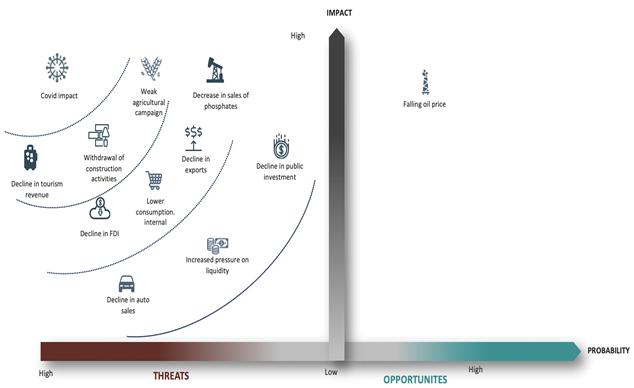
By Toufik Khitous, Business Development Manager for North Africa, Wärtsilä Energy Business
o meet its soaring demand for energy, Egypt is turning to renewable sources. Its targets, if accomplished, will see it become a pioneer in the African energy landscape. But are the plans realistic?
Egypt’s population has now passed 100 million. As one of the most populous and fastest-growing nations on the African continent, providing electricity to all its citizens is a matter of priority for the Egyptian government.
To ensure continuous security and stability of energy supply, Egypt has launched an energy diversification strategy, known as the 2035 Integrated Sustainable Energy Strategy (ISES), which aims to step up the development of renewable energy and energy efficiency in the country.
Egypt aims to produce 20% of its electricity using renewable sources by 2022 and 42% by 2035. For the second target, the goal is for wind to provide 14%, hydropower 2%, and solar 25%.
Ambition driven by necessity
This is a hugely ambitious energy plan, but it is one that is necessary for Egypt to flourish. In particular, the country wants to diversify its mix of power sources. Egypt has introduced nuclear power and it is also developing a few megaprojects that will bring a massive amount of gas into its energy mix.
This is in stark contrast to 2014, when, due to electricity shortages, Egypt was forced to introduce more coal into its energy mix in order to lower its dependence on imported gas. Rising demands, the falling costs of renewable energy, and the discovery of new natural gas sources have allowed Egypt to both diversify its energy mix and become an exporter of gas.
Furthermore, environmental concerns over the generation and use of coal have reinforced this ecological approach. Egypt has signed up to the United Nations Framework Convention on Climate Change (UNFCCC), meaning that it has no option but to reduce its dependence on fossil fuels.
The spill-over effect
Tapping into renewable energy will benefit Egypt in ways more than one. It will enhance the country's economic growth and bring revenues in foreign currency. The increased usage of renewable energy is expected to lead to exporting fossil fuels or using them in other areas domestically, such as industrial production.
The transition to renewable energy sources is also expected to help local businesses in Egypt, since the cost of electricity is an essential factor for business owners. While solar power and sustainable electricity are not widely available in the country yet, there is merit in Egypt's

plan to tap into renewable energy sources in the long run. More factories will lean towards sustainable renewable energy sources if it is economical, due to the cost of production and increasing price of electricity.
Need of the hour
But to leverage the benefits of the transition to renewable energy, Egypt needs to overcome a few infrastructural and geographic hurdles.
A report by the International Renewable Energy Agency (IRENA) provides a comprehensive assessment and recommendations for primary measures that Egypt must consider to achieve the goals set out in ISES. The report points out the need to update Egypt’s electric power sector strategies to reflect the growing cost advantages and other benefits of renewable energy. It also focuses on reforming the existing market framework to improve the economic feasibility of projects.
Additionally, the country is very much split in two by the fabled river Nile, with many regions in the south still not connected to the national grid. Egypt is very keen to invest in the tourism sector along the Red Sea, meaning there is a need for not only infrastructure but also the power to supply to these regions.
Egypt’s situation has changed a lot since 2011. Nowadays, the issue is distribution rather than consumption. Egypt has a tradition of setting its energy distribution vertically. This has a rather negative impact on how the energy is consumed, but this can change since we are starting to see more industries coming into the country as Egypt is encouraging private sector participation.
What lies ahead?
Between 2022 and 2027, Egypt plans to install an additional thermal power plant and two clean coal technology power plants. These initiatives are expected to exceed the nation’s peak power and electricity demands.
Of the renewable energy targets for 2022, both solar and wind are considered achievable. In particular, the Benban Solar Complex project, which is considered one of the largest solar PV power plant projects in the world, and has a total installed capacity of 1.8 GW, is foreseen to come online alongside a number of utility-scale wind farm projects in Gulf of Suez.
Egypt certainly has a lot of unanswered questions at present, but it does seem to be on the right track. Three big parts – gas, sea turbines and renewables – need to play their part going forward. Egypt has no choice; it must invest in renewables. The sector at the moment only makes up around 2% of the energy mix, but these announcements could rise it to 20% – this is almost a revolution.
By Itumeleng Mukhovha, Corporate M&A Attorney, Writer and Community Activist
espite the significant impact of the COVID-19 pandemic on the global tourism industry, there are new grounds and opportunities for African countries to rethink and rebuild tourism for resilience and sustainable growth. However, several conditions need to be in place for African countries to pursue tourism as a dynamic development growth option in a post-COVID-19 world. These conditions include, valuing and communicating cultural richness, enabling intra-African travel, addressing climate change, and investing in infrastructure.
Value and communicate cultural and natural richness
While tourism in Africa is mainly driven by natural tourism, there is ample room for improvement in protecting, valuing and communicating cultural richness. Considering Africa’s size and its rich cultural and natural resources, the 67 million tourists visiting the continent in 2018 is still low, compared to other parts of the world.
For Africa to make a statement in global tourism and have a fair share in the global tourism market, African operators must begin to emphasise cultural tourism which includes, the continent’s rich history and heritage, monuments, artifacts, handicrafts, artworks, cuisine, natural endowments, and recreational aspects such as festivals, songs, dances, folktales and myths.
Ghana’s launch of the Year of the Return initiative in 2019 is a good case in point. The Year of the Return was a fresh impetus to memorialise the liberation from slavery, afford Africans living in the diaspora the opportunity to trace their ancestry and have spiritual pilgrimages to the countries of their origin, unite Africans living on the continent and in the diaspora, and ultimately, bolster the country’s tourism industry. According to Ghana’s Minister of Tourism, Barbra Oteng Gyasi, the Year of the Return, attracted an additional 237,000 international visitors (with a significant increase in visitors from the United Kingdom and United States of America), and injected USD1.9 billion into Ghana’s economy.
Enable intra-African travel
Despite sustained economic growth over the past
decade, Africa has not seen the same kind of income increases enjoyed by Asian households. As a consequence, only a fraction of African people can afford to travel within the continent.
While tourism in Europe and more, specifically, Asia has been fuelled by intra-regional travel, available data reveals that, on average, African tourists spend a tenth of what an overseas tourist would spend on the continent. This is due to the lack of intra-regional openness, air connectivity costs, very strict visa policies and regulatory frameworks.
Despite African countries’ quest for unity, economic and social development, political integration, and free movement of Africans within the continent, visa policies are still very restrictive, especially in West Africa. But thanks to slow and incremental progress, that is beginning to change for African travellers. According to the Africa Development Bank’s Visa Openness 2019 report, for the first time Africans have travel access to 51 percent of the continent. Moving forward, championing visa openness across Africa will help to capitalise on the gains to be realised from the implementation of the African Continental Free Trade Area and the Protocol on the Free Movement of Persons.
Another impediment to intra-African travel is that there are limited commercial flights from one region to another and when they do exist, they are prohibitively expensive. Although most African countries have endorsed and ratified the Yamoussoukro Declaration 1988 to create a conducive environment for the development of intra-African travel and international air services, more than thirty years later, air travel remains inefficient throughout the continent. In addition, the International Air Transport Association reveals that Africa’s aircraft hull-loss accident rate is more than 6 times higher than those in Asia and Latin America, and more than 12 times higher than those in Europe and North America.
The benefits of positive policy changes and the liberalisation of the air transport industry are well known. In Ethiopia, for example, relaxing visa
restrictions while improving flight connectivity and forming strategic alliances has seen Addis Ababa transform into a regional transport hub, even overtaking Dubai as the world’s gateway to Africa. This has resulted in Ethiopia becoming Africa’s fastest growing travel country, growing 48.6 percent which translates to USD7.4 billion in 2018, according to the Jumia Hospitality 2019 report.
Scale up infrastructure development
Much of the prevailing scepticism around African tourism as a development vehicle stems from a legacy of market failure, and inadequate transport, communication, water and electricity infrastructure.
Notably, the continent’s airport infrastructure defined by a weak domestic airline industry and a lack of airport density greatly undermines local economies’ ability to facilitate tourist and business travel, which are already hampered by the vast size and geographical barriers in Africa. Road infrastructure is also notoriously poor in much of Africa, so it does not compensate for the inadequacy of internal airport infrastructure. However, both Namibia and South Africa are examples of destinations that, through consistent investment in infrastructure are now able to attract a large number of self-drive tourists.
In addition to poor airport and road infrastructure in many African countries, other fundamental constraints to tourism in Africa are water and electricity infrastructure, and access to finance and land. For example, the cost to develop a hotel in sub-Saharan Africa is greater than in other parts of the world. Hotel development costs in Nigeria, Angola, Mozambique, Ghana, Zimbabwe can be more significant than other parts of sub-Saharan Africa due to market imperfections, the increased need to develop infrastructure, and high import duties.
As with other development options, the long-term and sustainable growth of Africa’s tourism industry is intrinsically linked to infrastructure development. Without this infrastructure, Africa’s tourism industry will not reach the growth levels expected or required. The underpinning principle of prioritisation is to ensure that infrastructure investment takes place in a way which maximises the sustainable contribution of tourism to African economies.
Address climate change
The effects of climate change are causing changes in the ecosystems and natural resources needed to sustain the tourism industry. KPMG’s 2008 assess-
ment of the regulatory, physical, reputational and litigation risks of climate change posed to 18 major economic industries versus their level of preparedness found tourism to be one of the industries least prepared for the risks and opportunities posed by climate change. Climate change impacts that affect tourism in African countries include, beach erosion, saline intrusion, droughts, rising sea levels, desertification, deforestation, biodiversity loss, habitat loss, flash floods and landslides, coral-reef bleaching, less productive fisheries and agricultural systems.
Addressing climate change is a prerequisite to sustainable development and therefore a germane to advancing sustainable tourism. Any retreat from engagement with climate change issues by the tourism industry will be detrimental.
To militate against climate change, African governments and policymakers must begin to formulate mitigation and adaptation policies and strategies which will ensure that the tourism industry remains sustainable. The mitigation and adaptation strategies must include, the development of alternative energy sources, reforestation of mangroves and the protection of soft coastal reefs, the implementation of tourism development plans within the framework of Integrated Coastal Zone Management processes and spatial planning, the integration of climate-change factors into regulatory frameworks for tourism development such as Environmental Impact Assessment for tourism infrastructure and establishments, and substitution of practices that account for greenhouse gas emissions.
Conclusion
African tourism is predominantly a private sector activity, but without governments’ political support at the highest levels, the formulation of strategic public investment, a distinctive promotion and marketing strategy, a sensible coordination amongst different stakeholders, an enabling business environment, and effective policies to address climate change and liberalise intra-African travel, it remains vulnerable to adverse environmental, socio-cultural and economic impacts. Therefore, to achieve its tourism potential and in turn, energise economies, the continent will have to address a number of existing constraints which include, but are not limited to, market failures, low levels of tourism skills, climate change, restrictions on intra-African travel, the lack of safety and security and high crime, visa requirements, inadequate infrastructure, and bureaucratic red tape.
By Douglas Grant, Director of Conister Finance & Leasing Limited

here are around 5.9 million small and medium sized enterprises (SMEs, or any business with fewer than 250 employees) in the UK according to the Department for Business, Innovation & Skills. Seen to be the backbone of any healthy economy, they drive growth, create a group of skilled and semi-skilled workers, generate competition and encourage innovation across a range of industries, as well as supporting future industrial and business expansion in the country. They keep the business sector energised, generating a healthy flow of new skills and ideas.
Since 2008, alternative lenders have risen in prominence, working alongside larger more traditional clearing banks, offering a funnel of vital liquidity through tailored and flexible lending solutions to SMEs. Today there are significant amounts of private capital (often referred to as dry powder) waiting to be invested in resilient SMEs and the market share of clearing banks has fallen significantly in a far more diversified lending sector. In the last 12 years, banks have also become much better capitalised than during the Global Financial Crisis. Previously businesses could service debt from remaining cash flows with little or no capital for investment which resulted in a zombie status for many UK SME borrowers. Today, the environment is very different although this trend has not disappeared. In fact, as a result of Covid-19, it is estimated the trend could develop further given the potential that businesses may build up £100 billion of debt1 by next March.
The UK Government has been quick to back sectors post Covid-19 that are resilient to recessions and market volatility, providing financial security and protection through initiatives such as the bounce-back loans scheme. This is where alternative lenders that understand the very basic needs of specialist SMEs, often in their lending infancy and operating in sectors such as infrastructure, technology and renewables, can provide the additional support and natural lending progression alongside the larger clearing banks. Alternative lenders understand the characteristics of specialist SMEs and with the flexibility they offer, empower their staff to make judgement calls on capital requirements.
The economy though is facing a double dip recession that could last well into late 2021 and it will need these resilient sectors to be protected with their existence guaranteed. Many clearing banks are working tirelessly to process emergency loan applications but with pressures piling up – for example from within their mortgage lending divisions - a lot of SMEs will become unsustainable, with some estimates predicting 780,0001 insolvent SMEs. It was concerning therefore to see that alternative lenders are potentially unlikely to receive much financing from the Bank of England to deliver emergency government loans. It is crucial that clearing banks pass on finance from the Bank of England to alternative lenders and find a way to make it work on commercial terms. SMEs must have a tripartite level of support from Government, alternative and traditional lenders working together in these difficult times.
As traditional banks deal with the impact of Covid19 around their balance sheets, it is likely that they will have to pause financing discussions around succession and growth financing as well as recapitalisations, in order to redirect resources to addressing an enormous influx of CBILS applications from capital-starved SMEs. Those resilient SMEs who have weathered the pandemic best in their sector will be able to benefit from the potential acquisition opportunities to increase their market share and will need capital to carry this out. Alternative lenders have the know-how and flexibility to help process this type of financing quickly and effectively. Without legacy loan books and unencumbered by CBILS applications coupled with high levels of dry powder, alternative lenders working together with clearing banks can help to execute rapid credit decisions on flexible terms.
The UK business sector as a whole needs both more financial support for the alternative lending sector which is working together with traditional banks but also more sustainable initiatives to support SMEs in more resilient sectors from the Bank of England as we come to terms with an increasingly capital hungry economy – an issue that necessitates urgent attention.
By Ibrahim Abdullahi Zeidy, Chief Executive Officer of the COMESA Monetary Institute
Export growth plays an important role in the economy due to its effect on trade growth and economic growth. Therefore, the sustainability of export growth rate is an eligible target for any country. The globalization phenomenon and openness to trade under uncertain circumstances, for example, the global financial crisis in the late 2008, may introduce uncertainties and fluctuations in the export earnings which discourage the investment opportunities. Discouraging investment opportunities leads to instability in export growth which reflects negatively to economic growth. Most research has established that export diversification is the effective remedy for these uncertainties due to its pivotal role in avoiding the shortfalls in export concentration. Most African countries in recent years, has been therefore, making efforts to diversify their economies to processing and manufacturing sectors. In addition to reducing the dependence on few commodities whose prices fluctuates in the international market, diversification into other sectors, especially those more intensive in technology, is prone to trigger knowledge spill overs from the exposure to international markets, management and marketing practices and production processes.
The real test of the AfCFTA will be how quickly African countries can accelerate export diversification and product sophistication and make trade more inclusive. AfCFTA is expected to enable African countries to break into new African markets as they both diversify by export destination and type of goods produced.
The objective of this paper is to discuss major determinants and challenges of export diversification and to propose export diversification and employment strategies for Africa.
This paper is organized as follows. Section one provides brief Empirical review of the relationship between export diversification, employment and economic growth. Section two discusses major determinants. Section three discusses challenges of export diversification. Section four, provides overview of export diversification efforts of selected African countries. Section five briefly discusses lessons on export diversification and employment strategies of emerging market. Finally policy recommendations will be made.

A major implication of classical theories of trade is that African countries would specialize in exporting commodities in which they enjoyed comparative advantage and import manufactured goods. However, one of the early studies on the subject by Michaely (1958) challenged the classical view. His study provided support for export diversification based on the finding that economies with more diversified export structure were more developed in terms of income per capita. The study also found that export diversification yielded greater support for stablising export earnings in the longer run, with favourable implication for employment. This result was later corroborated by Ghosh and Ostry (1994) and Bleany and Greenway (2001). More recently, Mathee and Naude (2008) has provided empirical; evidence to buttress the need for African countries to diversify their exports. Subjective evidence suggests that almost there are no current developed countries with extremely high level of export concentration (Agosin, Alvarez and BravoOrtega (2009). Brenton, Newfarmer and Walkenhorst (2007) argued that export diversification makes countries to be less susceptible to adverse terms of trade shocks by stabilizing export revenues. As a result, it becomes easier to channel positive terms of trade shocks into growth, knowledge spill-overs and increasing return to scale, creating learning opportunities principal to new forms of comparative advantage.
C. Mudenda, I. Choga and C. Chigamba, (2014) examined the role of export diversification on economic Growth in South Africa. Results of the study reveal that export diversification and trade openness are positively related to economic growth.
Prominent among determinants which have been investigated include human capital, exchange rate, geographical location, investment, terms of trade, population and governance factors.
Human Capital: The level of qualifications of the workforce and the efforts made in education have a relevant influence on the capability of a country to diversify, innovate, upgrade to high technology, in production of quality and sophistication of exports and also in promoting product differentiation. Production of new products requires research and development. Human knowledge is important in the research of
new, efficient and affordable production method.
Investment: Acquiring new markets for products entails need to expand and diversify exports to high value markets in the industrialised countries. Part of the strategy is to put in place policies that attract more foreign direct investment (FDI) in order to facilitate more technology transfer. This needs to improve business regulations and governance environment for business. FDI was found to be a factor to speed up export diversification in countries that devoted significant amount of investment in education, health, and infrastructure as these will in turn create a better conducive atmosphere for FDI inflows. Domestic private sector investment diversification strategy also helps in shifting the composition of exports from primary products, to manufactured products.
Geographical location: Remoteness increases export concentration. Parteka and Tamberi (2008) using a sample of developed and developing countries found that transport costs discourage export diversification. A lower distance to the main world markets, access to the sea and overall transport costs, determine the ease with which a nation can increase the variety of products exported to the world market.
Terms of Trade: Theoretical and empirical literature suggests that failure to sustain industries with important internal and external economies of scale, and positive externalities of agglomeration of economic activity might limit African continent’s efforts towards a more diversified exports. This suggests that efforts towards a regional integration, by increasing the economic size in which Africa business companies can operate, might play an important role to successful export diversification. Elhiraika et al, (2014) Binti (2011) argues that economic integration in East Asian Countries has led to faster export diversification in the region. Again regional integration could facilitate commercial activities through reforming trade through improved customs procedures and cross-border entrepreneurship and trade.
Population: When the population of a country increases in terms of variety of consumers, this will lead to increased production of more diverse products that attend to the need of varied users/consumers. Further, the size of a countries economy, i.e. population, education, health, infrastructure and income per capita are crucial factors that can be used as factor inputs in the manufacture of diversified products.
Exchange Rate: Exchange rate volatility, especially the over valuation of currency can discourage diversification by increasing the prices of exports and undermining the competitiveness of the export sector.
Challenges for Export Diversification are classified in the literature into challenges due to domestic factors; policies and institutional arrangements; and to external factors. Challenges due to domestic factors include: training and quality of labour force; gaps in infrastructure and other logistics; access to and cost of finance; product quality; technology acquisition and adoption; marketing and cost of production. Policy and institutional factors include among others, tariffs, fiscal policy; exchange rate policy; monetary policy; access to and cost of finance; legal enforcement of laws; and lack of appropriate business environment etc.. External factors include among others, meeting international standards, entry barriers to international market; access to information on external market; and cost of operating in foreign markets.
The continents four most advanced economies, namely Egypt, Morocco, South Africa and Tunisia are already broadly diversified. Manufacturing and services together total 83%of their combined GDP. Domestic consumption is the largest contributor to growth in these countries. Cameroun, Ghana, Kenya, Mozambique, Senegal , Tanzania, Uganda and Zambia are some of the transition economies which have began diversifying their sources of growth. Kenya for example increasingly export manufactured goods particularly to other African countries. Expanding intra-Africa trade will be one key factor to the future growth of countries which are in transition to diversify their economies. Speedy implementation of AfCFTA will particularly enhance the diversification of African countries economies.
There are a number of countries that have made significant progress on export diversification over the years and have reaped the benefits of its positive effect on employment and growth. Some of these countries for example South Korea was either on the same socio-economic development level with most African countries a few decades ago. South Korea had export structures similar to Africa’s in the early 1960s. However, the country had experienced profound transformation of its export structure and base, with manufactures and other high value exports dominating its export basket as far back as early 1980s . Key policy measures adopted by South Korea for promotion and diversification of exports were exchange rate unification and devaluation, tax exemption as an incentive to encourage production of a wide variety of commodities for exports, financing through preferential credit schemes, cash subsidy and subsidy for the use of public utilities which were provided to export-
ers, export -import links scheme to increase knowledge and awareness of export opportunities through Korea Trade Promotion Corporation (KOTRA) established in 1964. As a result, according to World Bank’s World Development Indicators database, South Korea ranks consistently in the top ten exporting countries in the world for many years. It has also maintained very low unemployment rates that averaged 2.5% between 1991 and 2016. The country easily and successfully weathered the storm of the Asian financial crisis because it has developed strong capacity for rapid export response and adjustment.
Brazil is another emerging country which successfully diversified its exports. Financial instruments were the main tools used to promote export diversification. Credit and export credit insurance are the two key instruments that the country had widely employed in this respect. Advance payment under foreign exchange contract is another important financial support provided to encourage exporters. The National Bank for Economic and Social Development, popularly known as BNDES, has also been extensively used as an export financing channel to promote export diversification in Brazil. Strong institutional support and investment in R&D were also used to support export diversification. Today Brazil ranks as the 21st largest export economy in the world
Policy Recommendations
The key to ensure the diversification of exports is to ensure that a conducive environment is created in order to minimize the risk of undertaking relatively productive long term investment for it is such investment that is likely to yield export diversification for sustained growth and employment creation in Africa and LDCs. The following are key policy recommendations for different stakeholders on what needs to be done to improve export diversification particularly in Africa and LDCs with positive implication for employment:
a) National Policy makers should develop the following:
(i) A capable, accountable, developmental and transformational state which is conducive to private sector participation in promoting export diversification.
(ii) Strategic national and regional infrastructure by formulating best infrastructure policies that will lower costs of doing business and promote globally competitive exports. These will attract domestic and foreign investment to various sectors for expanding production for commodities for exports. Since many African countries are not big enough, one possible way to handle this challenge is for African countries to collectively promote regional infrastructure, in order to
reduce business risks, uncertainties, and export costs. Such cooperation could also contribute to expanding regional markets and deepening regional integration among the countries.
(iii) Innovative financing schemes to provide finance for export oriented firms such as direct credit incentives, and selective subsidies that target export-oriented firms. Priority should be given to potentially new export sectors that hold high promise for expanding the export horizon of African countries in particular and LDCs in general. Such subsidies should be structured in such a way that they do not encourage rentseeking behaviors but rather benefit working capital
(iv) Developing an integrated African economies into the global value chain(GVS). Africa’s share in GVS remains the lowest among all the developing regions of the world. A relatively more convenient starting point is with regional value chain integration as a stepping stone.
(v) Strengthen the institutional and regulatory framework.
(vi) Support SMEs to access export markets.
(vii) Initiate industrial development policies that are capable of facilitating vertical and horizontal export diversification.
(viii) Investing in human capital.
b) Continental, regional and sub-regional Institutions should undertake the following:
(i) Take the lead in coordinating regional infrastructure development;
(ii) Assist member countries to initiate continental export diversification policy;
(iii) Promote trade facilitation;
(iv) Explore innovative financing options that could compliment the traditional export diversification financing instruments, such as structured financing;
c) Private sector businesses should undertake the following:
(i) Take full advantage of export promoting incentives provided by government.
((ii) Initiate public-private-partnership(PPP) export diversification projects and infrastructure financing;
d) Development partners should undertake the following:
(i) Use ODA to build export promoting and diversifying capabilities;
(ii) Finding ways in which to relieve LDCs from WTO rules which constrain these countries such as TRIMS and TRIPS agreements.