





AFRICA EMERGING RISKS AND NEW OPPORTUNITIES IN 2019

ASSESSING THE OUTLOOK FOR SSA FOREX AND RATES MARKETS
THE POLITICAL OUTLOOK FOR AFRICA IN 2019

ALGERIA, MOROCCO, TUNISIA: MACROECONOMICS IN 2019
GHANA, KENYA, TANZANIA: FUNDAMENTALS IN 2019
NIGERIA, SOUTH AFRICA: PROSPECTS IN 2019
















Editor
Tunde Akodu
Associate Editor
Michael Osu
Feranmi Akodu
Advertising & Sales
Tola Ketiku
FEATURED ARTICLES
Africa Emerging Risks and New Opportunities in 2019
Algeria: Macroeconomic Fundamentals and Prospects
Angola: Turning the Corner in 2019
Botswana: Sustained Groth Momentum Continues
Côte d’Ivoire: Macroeconomic Fundamentals and Prospects
Ethiopia: Manufacturing-Led Boom Talk is Overdone
Ghana: Macroeconomic Fundamentals for 2019
Kenya’s Fundamentals Remain Robust in 2019
Mauritius Fundamentals Remain Resilient in 2019
Morocco: Consolidation Pending a New Cycle of Strong Growth
Nigeria: Macroeconomic Fundamentals for 2019
South Africa: Macroeconomic Considerations for 2019
Tanzania: Macroeconomic Insights for 2019
Tunisia: No exit from tightrope walking in 2019
Zambia: Macroeconomic Vulnerabilities Remain Egypt Macroeconomic Fundamentals
SPECIAL FEATURE
The Political Outlook for Africa in 2019
Assessing the Outlook for SSA Forex and Rates Markets
Corporate law as a means of Curbing Illicit Financial Flows in South Africa
ECONOMIC WATCH
What analysts are saying about Africa’s economic outlook and financial stability.
Commodity prospects for 2019: Crude oil and base metals.
SPONSORED FEATURE
Allianz Risk Barometer 2019: Businesses concerned about instability, uncertainty and volatility
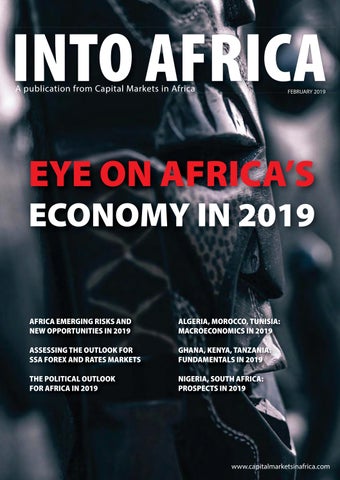
Wish you a prosperous year 2019 and welcome to the February 2019 edition of the INTO AFRICA– the publication with fresh insight into Africa’s emerging markets. This edition provides insight and foresight into African economies from economists and analysts, hence the edition titled: Eye on Africa’s Economy in 2019
The African region faced a tougher external environment in 2018 due to moderating activity and heightened risks clouding global economic prospects. International trade and investment have softened, trade tensions remain elevated, and some large emerging market and developing economies have experienced substantial financial market pressures. The region growth prospects continue upward trajectory - predicated on diminished policy uncertainty and improved investment in large economies together with continued robust growth in non-resource intensive countries. However, domestic political considerations could undermine the commitments needed to rein in fiscal deficits or implement structural reforms, especially where public debt levels are high and rising. The African Development Bank’s (AfDB) African Economic Outlook 2019, stated that gross domestic product reached an estimated 3.5 percent in 2018, about the same as in 2017 and up from 2.1 percent in 2016. It predicted Africa’s GDP growth to accelerate to 4.0 percent in 2019 and 4.1 percent in 2020. However, AfDB hinted that growth is not fast enough to address persistent fiscal and current account deficits and unsustainable debt. Indeed, countries must move to a higher growth path and increase the efficiency of growth in generating decent jobs.
PIETER DU PREEZ (Senior Economist, NKC African Economics South Africa) opens the edition with a stimulating write-up titled “Africa: Emerging risks and new opportunities in 2019”, where he examines some of the risks and opportunities facing countries on the continent in the short to medium term. From the north, DANIEL RICHARDS (MENA Economist, Emirates NBD United Arab Emirates), STEPHANE COLLIAC (Senior Economist, Euler Hermes France) and BMCE Capital Research Morocco discuss Algeria, Tunisia and Morocco macroeconomic prospects in “Algeria: Macroeconomic fundamentals and prospects”, “Tunisia: No exit from tightrope walking in 2019” and “Morocco: Consolidation pending a new cycle of string growth”, respectively.
From southern hemisphere, TIAGO DIONISIO (Chief Economist, Eaglestone Advisory) discusses in “Angola: Turning the corner in 2019” and MOATLHODI SEBABOLE (Chief Economist, First National Bank, Botswana) and GOMOLEMO BASELE (Quantitative Analyst, First National Bank Botswana) feature in “Botswana: Sustained growth momentum continues”. In parallel, SHAILEN SREEKEESSOON (Head of Strategy and Research, SBM Group Mauritius) and ANNABEL BISHOP (Chief Economist, Investec Bank Limited South Africa) diagnose Mauritius economic prospects and South Africa’s macroeconomic considerations, respectively. Likewise, THEA FOURIE (Senior Economist, Sub-Saharan Africa, IHS Markit Economics) distils Zambia economic prospects for 2019.
At the east coast, DAVID NGUGI GITAU (Investment Analyst, Cytonn Investments Kenya) deliberates on Kenya in “Kenya’s fundamentals remain robust for 2019” and FAITH ATITI (Senior Research Economist, Commercial Bank of Africa Kenya) identifies the key economic signs in “Tanzania: Macroeconomic Insights for 2019”. JOHN ASHBOURNE (African Economist, Capital Economics, London) opines that the success of Ethiopia’s fledgling manufacturing sector distinguishes the country from its African peers. Manoeuvring to the west end, COURAGE KINGSLEY MARTEY (Senior Economic Analyst, Databank Group, Ghana) dissects the Ghanaian economy in “Ghana’s Macroeconomic fundamentals for 2019”. In the same spirit, MICHAEL FAMOROTI (Partner, Stears Nigeria) reviews Nigerian economy.
Still more, we bring you special features, where RODDY BARCLAY (Head of Intelligence and Analysis, Africa Practice) examines African political, economic and business climatic conditions. Likewise, SAMIR GADIO (Head, Africa Strategy, FICC Research, Standard Chartered Bank) looks at the African local fixed income and FX markets in “Assessing the outlook for SSA forex and rates markets”. BONGANI MEMANI (Candidate Attorney, LNP Attorneys Incorporation South Africa) raises concerns over surge in illicit capital outflows in “Corporate law as a means of curbing illicit financial flows in South Africa”.

Cover Image : Ancient Africa Images Source: www.pexels.com https://www.pexels.com/photo/africa n-ancient-anonymous-art-267858
DISCLAIMER:
implied) is given and no responsibility or liability is accepted by CAPITAL MARKETS IN AFRICA or the authors or authors’ organisations as to the accuracy of the information contained and opinions expressed therein.
On a final note, we provide you with a summary of what analysts are saying about Africa’s economic outlook and credit quality as well as the prospects of the commodity markets in 2019.
Editor
Connect with The Editor on Linkedin. Follow us on twitter @capitaMKTafrica. Subscribe to INTO AFRICA at http://eepurl.com/buHhNv or please send an email to intoafrica@capitalmarketsinafrica.com.
Please visit our website at www.capitalmarketsinafrica.com for the latest news, bespoke analysis, investment events and outlooks.
By Pieter du Preez, Senior Economist, NKC African Economics South Africa

he past two years were promising on the global stage for economic growth and international trade in particular. Economic activity in the United States (US) and the Eurozone gained traction, whilst China continued to expand at a robust pace. Furthermore, international oil prices rebounded, leading to accelerated growth in some of the oil-exporting countries on the African continent. However, soft signals suggest that the tide is turning slowly and that 2019 could be a more challenging year for African countries. The following is our list of some of the risks and opportunities facing countries on the continent in general in the short to medium term.
US Foreign and Trade Policy
African countries’ exposure to China has increased over the years, therefore one of the biggest risks facing countries on the continent is a significant slowdown in growth in China. At this point in time the latter is not expected to materialise and our growth forecast for China is at 6.1% for this year. China’s major risk at the moment is the ongoing trade war with the US. However, fears have been alleviated over the past few months as it is speculated that US President Donald Trump and Chinese President Xi Jinping are close to signing a new trade deal. A slowdown in growth in China would most notably be felt in the commodity-exporting countries on the African continent. We can just turn back the clock to 2015 to see what effect a plunge in commodity prices will have on economic growth in African countries. Also, a done deal between the US and China could see President Trump turning his aim back towards Africa and the Africa Growth and Opportunity Act (Agoa) deal in particular. Last year the US suspended Rwanda’s benefits and also threatened to cut aid to countries which do not support US foreign policy through the UN General Assembly votes.
El Niño/Drought
According to the latest forecasts published in the World Food Programme Report in December, there
is a 90% chance of an El Niño materialising early in 2019 in Southern Africa. However, the report further noted that the weather phenomenon should be relatively short and over by mid-2019. In addition, the forecast is for a weak to moderate El Niño. Nonetheless, another drought in Southern Africa could be disastrous as numerous countries in the region only recently recovered from the severe drought experienced three years ago. Should this materialise, which already seems to be the case in some parts of South Africa, countries would have to turn to the international markets for food imports, leading to consumer price pressures in 2019 and a higher import bill.
One of the most concerning trends in African macroeconomics is the sharp rise in public debt levels of most countries on the continent. According to the IMF, the sub-Saharan Africa region’s public debt to GDP ratio averaged 57% at the end of 2017, which is a staggering 20 ppts increase in just five years. Many of the countries in the region are closer to debt distress due to excessive borrowing and large twin deficits. Furthermore, the multilateral organisation said that roughly 40% of low-income countries are already in debt distress or at high risk of it. The larger debt burden leaves countries with higher debt services costs, which in turn detract funds from much needed development expenditure. Moreover, this renders countries even more vulnerable to a sudden exchange rate depreciation, which will increase debt servicing costs. African countries run the risk of losing credibility as an investment destination if debt accumulation persists.
Elections
Another possible roadblock for quite a few African countries this year is elections. Africa’s economic heavyweights – Nigeria and South Africa – go to the polls this year, but two very different contests are expected. While Nigeria’s presidential race is set to be a close affair between the incumbent President Muhammadu Buhari of the All Progres-
sives Congress (APC) and seasoned campaigner Atiku Abubakar of the People’s Democratic Party (PDP), South Africa’s contest will be another one-horse race – with incumbent President Cyril Ramaphosa of the long-ruling African National Congress (ANC) all but assured victory. Although the South African election is less interesting with regard to who will emerge as president, the poll results will indicate how much damage, if any, the last Zuma term did to the ruling party. Elsewhere on the continent, citizens in Senegal, Algeria, Malawi, Botswana, Namibia, Tunisia, and Mozambique will also do their democratic duty this year. For the most part, the races in these countries have clear favourites which should ensure continuity, except in Tunisia where matters are rather less settled at the moment, and where a lot will still change before the election late in the year.
There is a real drive to finalise and implement the Africa Continental Free Trade Area (AfCFTA) agreement in the short term. Only nine more ratifications are needed to reach the required 22 for the AfCFTA to be in force, with the two biggest economies on the continent yet to sign the deal. Although Africa has historically developed many promising policies, it has struggled with implementation. However, there seems to be more urgency with this trade agreement which could possibly lead to a number of positive spinoffs. The industrial sector in particular has much to gain with the new trade agreement, especially the manufacturing sub-sector. The manufacturing sector in Africa lags when compared to other developing economies: it accounts on average for only about 10% of GDP, which provides scope for further development. The agreement could open new markets for manufacturers and thereby create more jobs, which potentially could reduce the youth unemployment problem of the continent. It is also important to note that we do not disregard the challenges that will be faced with the implementation of the AfCFTA.
African countries that engaged with the IMF over the years, and stuck to programme outlines, have seen some success. Egypt continues to push through with a reform programme, which has already yielded significantly positive results. In the Franc zone, almost all countries are involved in some kind of programme, and all of them have been fairly successful. These programmes are instrumental in steering fiscal policy in the right
direction and ensure enough liquidity. Countries like Ghana and Rwanda have also seen positive results from their engagement with the IMF. The success of these programmes and the involvement with the IMF leads to positive investor sentiment. The subsequent rise in FDI aids in job creation and higher economic growth. There are still numerous countries on the continent that would benefit from the IMF’s involvement; however, the multilateral organisation is reluctant to get involved until these nations get their house in order.
Although global economic growth is expected to slow in 2019 the rate of expansion remains solid and gives countries on the African continent the opportunity to capitalise. We forecast global economic growth at 2.8% for this year, after an estimated expansion of 3.0% in 2018. There is also the possibility for most countries on the continent to improve their external balances. More specifically, the prices of commodities, especially metals, are expected to decrease but to remain elevated, which provides African countries the opportunity to export at still high prices. In addition, oil-importing countries will find some reprieve from the recent drop in international oil prices.
The African continent presents a vast amount of opportunities for investments; however, the financial technology (fintech) sector has been the go-to for investors in recent times. According to an article published by Quartz Africa, almost one-third of total funding on the continent was raised by fintech startups in 2017. This comes as no surprise given the fact that just more than 57% of all mobile money accounts globally can be found in SubSaharan Africa, according to EcoBank. The sector is set to expand even further in the medium term, from roughly $200m in 2018 to $3bn by 2020. The majority of these investments have been routed toward Kenya, Nigeria, and South Africa recently, but expected to branch out to the rest of the continent
The outlook for the African continent is a mixed one with risks tilted towards the downside and with Africa’s debt metrics a particular reason for concern. However, on the upside African countries can still capitalise on a mostly supportive global growth and trade environment. As always, there will be bright spots on the continent where businesses and investors are able to harness the continent’s potential.
By Daniel Richards, MENA Economist, Emirates NBD UAE
lgeria’s economic and political landscape in 2019 will be dominated by the upcoming presidential elections. Whether or not long-serving incumbent, President Abdelaziz Bouteflika, stands for a fifth term, we expect that power will be retained by the ruling FLN/RND/TAJ/MPA coalition, meaning policy continuity is likely. In any case, the vote appears to already be influencing economic policy, as demonstrated in the commitment to greater social spending made in the 2019 budget. This, alongside a modest expansion in oil production and ongoing public and private investment, will underpin real GDP growth this year. However, the spending stimulus will come at a cost to fiscal balances, and continued unorthodox economic policies raises the risk of higher inflation hereafter.
More of the same Algeria’s presidential elections are scheduled to take place on April 18 following an announcement by President Bouteflika in January. President Bouteflika has not yet officially declared his candidacy – which he must do before March 4 if he is to stand – leading to mounting speculation that the 81-year old, physically frail incumbent might not stand after all. That being said, he did not announce his intentions until days before the 2014 election deadline either, when he was in similarly poor health, meaning that a fifth term should not yet be discounted. As things stand, we think that a continued Bouteflika presidency is the most likely scenario, albeit of a diminishing probability. Even failing that, we believe that power would remain within the ruling ‘pro-government’ four-party coalition, given the weak and disparate opposition, the advantages of incumbency, and continued support from business elites. Current Prime Minister Ahmed Ouyahia, of the RND, would likely be among the frontrunners to succeed President Bouteflika should he not ultimately stand.
Assuming there is no significant redistribution of power at the top, we expect Algeria’s economic policy to remain broadly unchanged, including a continued aversion to meaningful foreign support or investment, an overreliance on the oil sector, limited success in fiscal consolidation and the ongoing pursuance of unorthodox monetary policies.

Social spending to offset popular grievances While a relatively peaceful transition is the most likely outcome should Bouteflika not stand, there remains a risk of protest in Algeria in 2019. Last year already saw a number of demonstrations around the country, and with unemployment high and dissatisfaction among workers in key sectors such as health and education elevated, the elections could prove a focal point for further unrest. Likely aware of this risk, in September last year the government announced a boost to social spending in its 2019 budget, in a reversal of earlier austerity measures and fiscal consolidation efforts. Among concessions made by the government are free housing programmes and subsidies for essential consumer goods for families, all of which should help diffuse any discontent and shore up support for the government in the run-up to the vote.
The lack of any meaningful reforms mentioned in the budget highlight the desire to maintain the status quo in this critical year; Finance Minister Abderrahmane Raouya has said that ‘no taxation hikes for citizens are planned for 2019 and all the subsidies will remain unchanged.’ However, coupled with lower oil prices and an ongoing capital expenditure boost, this will have an adverse effect on Algeria’s budget deficit, which we project will widen from an estimated 6.9% in 2018 to 8.4% this year.
Higher oil production and expansionary fiscal policy will underpin growth While we forecast that oil prices will be lower on average in 2019, we project that Algerian production will increase, which will provide some support to spending. From an average 1.04mn b/d in 2018, flat on the previous year, we forecast production of 1.07mn b/d in 2019, representing growth of 2.9%. This will also support real GDP growth; having averaged just 1.0% over H1 2018, we believe that this accelerated in the second half, estimating full-year growth of 1.8%. The oil sector was a drag on growth in the first half, with the petroleum products and natural gas component of GDP contracting by an average 5.3% over Q1 and Q2. However, oil production was higher in H2 than H1. In 2019, we expect that the further increase in oil production, coupled with an expansionary fiscal policy, will see real GDP growth pick up to 2.2%.
state-owned oil & gas firm Sonatrach had signed new agreements with energy majors French Total and Italian Eni for the development of offshore gas fields and petrochemicals plants.
Unorthodox policies remain a tail risk Algeria was given something of a stay of execution in 2019 as oil prices rallied to an average USD 71.8/b, compared with USD 54.8/b in 2017. We expect these to moderate to an average USD 65.0/b this year though, increasing pressure on government budgets, especially in light of plans to boost spending. Reluctant to turn to outside lenders, the government’s plan is to fund much of this through monetary financing, and the Banque d'Algérie has been buying long-dated government debt in order to fund the budget.
The IMF has been critical of this plan, given the inflationary risk this presents, but in the short-term at least, this has been averted so far, likely in part owing to stronger oil revenues in 2018. Inflation has in fact averaged just 3.6% y/y over January to November, compared to a 2017 average of 6.0%. However, as a reliance on central bank financing increases the risk of exacerbated inflationary pressures in the coming years, this could lead to weaker non-oil private sector activity as consumer demand falls, and a renewed uptick in social unrest as household budgets are squeezed.
“Algeria’s
economic and political landscape in 2019 will be dominated by the upcoming presidential elections. Whether or not long-serving incumbent, President Abdelaziz Bouteflika, stands for a fifth term.”
Contributor’s Profile
Another factor which will support stronger growth in 2019 is the government’s spending programme –not only the aforementioned boost to social spending, but also ongoing capital expenditure. Private sector investment in the oil sector will also help support growth as it was announced in October that
Daniel Richards is Emirates NBD’s MENA economist, covering markets in North Africa and the Levant. Prior to joining Emirates NBD, Daniel served as Head of MENA Country Risk and as a senior Sub-Saharan Africa analyst for BMI Research, in London. He holds an MA in International Relations of the Middle East and a BA in Arabic, both from the University of Exeter, UK.
By Tiago Dionisio, Chief Economist, Eaglestone Advisory Portugal
The Angolan economy likely contracted for a third straight year in 2018 mainly due to a sharp decline in oil and gas production that reflects recent underinvestment in the sector. The latest figures disclosed by the country’s National Statistics Institute (INE) showed that real GDP fell by 2.7% in the first nine months of 2018 from a year earlier. The oil industry, which still represents over a third of the country’s GDP, recorded a contraction of 8.7% while activity in the agriculture, manufacturing, construction and retail sectors all declined in the period until September.
Overall, current projections indicate that real GDP probably contracted 1.7% last year after falling 0.1% in 2017 and 2.6% in 2016. The existing downturn in activity also followed the freefall in oil prices since the second half of 2014 and has had major repercussions in the country’s fiscal and external accounts, foreign exchange market and real economy.

2018, the annual inflation rate has kept a downward trajectory from a peak above 40% at the end of 2016. We note that inflation reached multi-year highs at the time due to a gradual elimination of fuel subsidies and a significant depreciation of the kwanza. More recently, inflation levels have been more contained, reflecting for the most part a persistently tight monetary policy adopted by the central bank and the implementation of price control measures for some goods.
The INE also recently announced that annual inflation stood at 18.6% in December 2018, standing near the government’s latest forecast of 18%, but clearly below its initial projection of 28.8% made in the 2018 budget proposal. This figure compares with 23.7% recorded in December 2017. Moreover, INE stated that the 12-month average inflation rate declined further to 19.6% last month (from 29.9% in December 2017).
Despite small increases in the last three months of
The Banco Nacional de Angola (BNA), the central bank, introduced a new foreign exchange regime in early-2018. It states that the kwanza will fluctuate within a range against the euro determined at central bank currency auctions and that the other exchange rates will result from how the euro trades against those currencies. The introduction of this new regime led to a sharp (but gradual) depreciation of the kwanza throughout 2018, with the local currency stabilizing later in the year at around 310 against the dollar and 355 against the euro. This corresponds to a depreciation of slightly more than 45% against both currencies from end-2017 levels.
Meanwhile, the gap in the exchange rate quoted in the parallel and official markets clearly diminished in recent months, narrowing from 150% at the end of 2017 (from a peak above 180%) to about 20-25% currently. This is due to the greater availability of foreign currency from the BNA and commercial banks as well as the lower demand for
foreign currency under the new exchange rate regime. It is worth noting though that central bank data shows that the euro is the only foreign currency being sold at its weekly auctions since October 2016.
In recent years, the BNA has had to intervene in the foreign exchange market in order to defend the kwanza. This has been reflected in the level of international reserves at the central bank, which fell from US$ 31.2 billion in 2013 (before the start of the oil crisis) to the current level of around US$ 11 billion.
cut in interest rates in four years. The BNA also gradually lowered the reserve requirements in local currency from 30% to 17% currently, while reserve requirements in foreign currency remained unchanged at 15%. More recently, the central bank lowered the BNA rate once again by an additional 75bps to 15.75% in January, stating that this decision was due to inflation keeping a downward trajectory in 2018.
The BNA significantly tightened liquidity conditions and raised its reference rate by 925bps (in a total of ten rate increases) since the end of 2014 in order to contain the depreciation of the kwanza and its subsequent impact on inflation levels. As a result, the BNA rate peaked at 18%, a multi-year high, in November 2017. The BNA also increased the banks’ mandatory reserve requirements in local currency three times since the end of 2014, lifting the required level from 15% to 30%.
Inflation levels have gradually receded, which allowed the central bank to lower interest rates by 150bps (to 16.5%) in July 2018. This was the first
The Angolan government expects to reach a fiscal surplus of AKZ 175 billion (0.6% of GDP) in 2018, as a significantly larger than previously forecasted contribution from revenues more than offsets slightly higher expenditures in the period. The revised fiscal balance projection compares with an earlier forecast for a deficit of AKZ 805 billion (-3.4% of GDP) included in the initial budget proposal. If confirmed, it would be the first time since 2012 that Angola achieves a fiscal surplus.
The new revenue projection for 2018 assumes a much larger contribution from oil tax receipts (+62% deviation) than previously anticipated. This is due to a revised average oil price forecast of US$ 71.9 per barrel for 2018 (vs. US$ 50 initially projected) that followed a much better oil price evolution since the start of the year. This pricing effect is expected to more than offset the impact from lower oil production in the year, namely 1.52 million barrels per day (bpd) (vs. 1.70 million bpd expected earlier).
The macroeconomic projections included in the government’s 2019 budget proposal suggest that the economic recession of the past three years (2016-18) will end in 2019. The government forecasts that real GDP will expand by 2.8% this year as the oil and gas sector recoups from a very weak
performance in the recent past and activity in the non-oil sector advances a slightly faster pace. The budget proposal also assumes that average daily oil production will increase to 1.570 million barrels (from a revised estimate of 1.524 million bpd in 2018) and that oil prices will average US$68. Meanwhile, inflation is expected to continue its downward trend and reach 15% in the period. Consumer prices are expected to remain contained due to a persistently tight monetary policy followed by the BNA and also some stabilization in the kwanza exchange rate.
Angola recently secured a three-year arrangement with the IMF under an Extended Fund Facility. The program mainly aims to (1) support the implementation of the government’s reform plan, (2) help restore external and fiscal sustainability and (3) promote economic diversification. It also consists of a financial aid package of US$ 3.7 billion for the three years, with US$ 990.7 million to be immediately made available. The program’s key policy commitments include (1) the implementation of fiscal consolidation measures, (2) the liberalization of the exchange rate regime, (3) strengthening the local financial sector and (4) improving governance and business environment.
The IMF program is expected to help the Angolan economy recover in the next three years. Current IMF projections point to real GDP growth of 2.5% this year and 3.2% in 2020-21, more in line with population growth in the country. An improvement in activity in the oil sector, as new oil fields come on stream, is expected to boost GDP growth, while the implementation of reforms to bolster business environment should lead to a stronger pickup in activity in the non-oil sector. A combination of tighter monetary and fiscal policies is expected to help keep inflation levels on a downward trajectory. However, monetary policy should also remain
supportive of much needed economic growth. On the fiscal front, a continued retrenchment will help reduce the public debt burden from above 90% of GDP in 2018 to a level more in line with the 65% target during the forecast period.
Together with the assistance of the current IMF program, the Angolan authorities are expected to remain highly committed to addressing the country’s imbalances built in recent years. A Macroeconomic Stabilization Program has helped strengthen fiscal accounts, lower inflation, reduce distortions in the foreign exchange market and is also expected to improve financial sector stability. At the same time, the government hopes the implementation of a National Development Plan for 2018-22 aimed at tackling structural bottlenecks and promoting economic diversification and inclusive growth will help the economy exit this prolonged recession. It remains to be seen if 2019 will be the year when Angolan turns the corner and economic growth returns.
Contributor’s Profile
Tiago Dionisio is Chief Economist at Eaglestone since 2013 where he covers Portuguese- speaking countries in Africa such as Angola and Mozambique both as a macro and banking sector research analyst. He has over 17 years' experience in investment banking, namely at Portugal’s Banco Português de Investimento (BPI) and later at Espírito Santo Investment Bank (ESIB). Before joining Eaglestone, Tiago was part of ESIB's Project Finance team for two years. Prior to that, Tiago was a sell-side analyst covering the main listed Iberian banks for eight years both at BPI and ESIB. Before that, he was a macro research analyst at BPI for three years responsible for covering Portugal, Spain and several Latin America countries, including Brazil and Argentina.
By Moatlhodi Sebabole, Chief Economist, First National Bank Botswana Gomolemo Basele, Quantitative Analyst, First National Bank Botswana
ur expectation is for Botswana’s economy to register a growth rate of 4.4% for 2018 due to higher diamond mining output, matched by favourable external demand for Botswana’s exports; with our growth forecasts for 2019 and 2020 at 4.7% and 4.5% respectively. The key to unlocking further growth opportunities for Botswana lies in diversification efforts through special economic zones and public-private partnerships. The successful implementation of these efforts will be key to unlocking further growth and job opportunities.
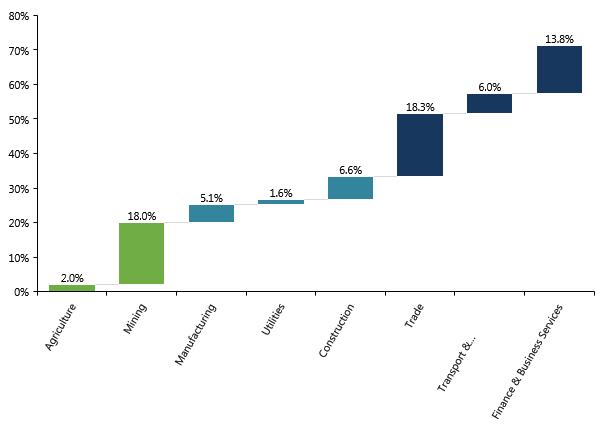
Botswana’s GDP growth in the 12 months to September 2018 increased to 5.1% y/y compared to 2.9% y/y at the same time last year. All industries in the economy registered positive growth rates, except mining which contracted by 2.7% mostly due to a reduction in mining production and lack of base metal exports in the past 12 months as major copper/nickel mines remain closed. By contrast, the non-mining private sector expanded by 6.1% y/y in 3Q18 compared to 3.6% in 3Q17 –a trend reinforced by the trade sector which remains the largest contributor to growth since 1Q17. Business confidence and the operational environment benefit from the continued stability on the supply side, evidenced by the 42.6% growth in the utilities sector in 3Q18 – mostly due to improved local electricity production and distribution over the period.
We note that the services sectors have accounted for over 50% of the growth in the past decade, thus highlighting some achievements in the diversification of the economy. However, Botswana remains reliant on diamonds as they account for over 85% of the country’s exports and contribute close to 30% to fiscal revenue – thus exposing the fiscus to external volatilities. Our growth forecasts thus remain cautiously optimistic as policy implementation as well as effective infrastructure development has been a challenge for Botswana historically, therefore, diversification efforts will rely heavily on favourable regulation and effective implementation of development projects. Given that the economy remains consumer-led, with


household expenditure at 49.1% of GDP in 3Q18 –employment creation as well as positive real wage increases must be achieved in other to result in positive multiplier effect from the growth outlook.
Figure 1: 3Q18 growth vs. 3Q17 growth
3Q18 3Q17
Financial and business services
Source: Statistics Botswana, FNB Botswana
Services sector continues to lead growth
The tertiary sector (which comprises trade, transport and communications, as well as finance and business services) continues to lead domestic growth, accounting for 38.1% of growth in 3Q18. The trade sector expanded by 6.9% y/y due to improvements in the wholesaling, retail, hotels and restaurants, and vehicle dealers sub-industries. Growth in the hotels and restaurants subsector was primarily driven by a spike in travel and tourism to Botswana, with the sector expected to grow at an average rate of 4.5% per annum between 2019 and 2028. These figures are expected to be supported by infrastructural developments such as the Kasane-Kazungula redevelopment to the tune of BWP599m.
Continued positive momentum
Supportive global diamond demand and fiscal stimulus is expected to drive GDP growth upwards, with a positive spillover into the manufacturing and services sectors. Although there has been some diversification of the economy away from mining, Botswana remains reliant on
diamonds as they account for 87.6% of the country’s exports. Our medium-term growth forecast almost exactly matches the country’s long-term historical average and incorporates the expected contribution of the government’s Cut 9 diamond mining project, which aims to provide access to 91 million tonnes of ore containing about 110 million carats of precious stones between 2024 and 2033.
The key to unlocking further growth opportunities for Botswana lies in diversification efforts through special economic zones and public-private partnerships. The successful implementation of these efforts will be key to unlocking further growth and job opportunities.
food products. Upside risks were mostly led by an increase in fuel prices as well as public transport fares. Despite the low headline inflation rates, price changes still hurt lower-to middle-income earners as essential spending accounts for 70% of total household spending – the top three of which are housing and utilities; transport, and; food. We reiterate that demand-pull pressures will limit the increase in inflation as growth in real income levels remain modest. In fact, we anticipate the headline figure of a short-to medium-term average of 4.0% through to 2023.
Rates will remain at cyclical lows – will this be an effective conduit for attracting investments?
Headline inflation averaged 3.2% in 2018 compared to 3.3% in 2017 and this subdued inflation profile mostly emanated from lower demand-pull pressures; a reduction in the administered prices of mobile network operators and the alcohol levy; as well as continued zero-VAT rating on most staple
Although inflation is expected to rise, it will remain low and within the Bank of Botswana’s inflation objective range of 3% - 6%.
Consequently, we believe the Bank of Botswana can continue to focus on supporting economic growth and keep their monetary policy stance accommodative for the next 12 – 15 months. We believe that the central bank will leave rates unchanged at 5.0% for the rest of 2019, with limited room to ease further, as money markets remain artificially low and rate differentials will increase, which poses a threat to capital outflows. ,We predict that overall credit extension will remain below 8% through to 2020, allowing for a slight increase in business credit extension as business confidence returns, while household credit remains restricted by the current pressures on consumer incomes.
Will the pula exchange rate regime maintain stability in the capital and financial markets? Botswana operates a “band, basket, crawl” exchange-rate regime, whereby the pula is pegged to the value of the rand and special drawing rights (SDR, the IMF’s currency that is composed of dollar, euro, sterling, yen and yuan) and where the peg rate is adjusted steadily so that by the end of the year, it matches the crawl. Changes to the regime are made annually at the beginning of each year.
On December 2018, the Ministry of Finance and Economic Development announced that the pula basket weightings will remain unchanged at 45% ZAR and 55% SDR, but has adjusted the crawl to 0.30% p.a. (appreciation) from -0.30% p.a. (depreciation). This adjustment makes little difference to the pula outlook: the pula will be just 0.60% stronger at year-end than it would have otherwise been – a difference that can only be seen in a single day’s trading.
Table 1: Pula determinants
Old (2018New (effec ve 1 January 2019)
Basket composi on55% SDR, 45% ZAR55% SDR, 45%ZAR
Crawl 0.30% 0.30%
Source: Ministry of Finance and Economic Development, Bank of Botswana (data as at January 2019)
The key issue with regards to the pula exchangerate regime is that of the weights in the basket. We note that no change has been made to the weights since 2017, when the weights were changed from 55% ZAR and 45% SDR to the current composi-
tion of 55% SDR and 45% ZAR. Effectively, the lower the value of the rand in the basket, the lower the pula’s sensitivity to the rand’s high volatility. The rand weight has been steadily reduced in the past few years, making crosses such as BWP/USD and BWP/EUR less volatile over time.
From a pula perspective, the change in the value of the crawl – the pace at which the pula appreciates over the course of the year – is almost completely meaningless. Consider that the pula will be 0.60% (a -0.30% old crawl versus a +0.30% new crawl) stronger at the end of 2019 than it would have been otherwise – but that USD/BWP and BWP/ZAR can easily move 10% during the year, depending on market factors.
We note that the pula regime will maintain stability in the currency in 2019 and could act as a conduit in attracting capital inflows and thus in line with the country’s diversification efforts.
From African Development Bank’s African Economic Outlook (AEO) 2019 Report
Macroeconomic performance
Real GDP growth reached 6.1% in 2017 and was estimated at 7.2% in 2018, supported by strong growth in services (4.1%) and industry (1.5%), particularly manufacturing. The key drivers of spending in 2018 were household consumption (5.8% of GDP) and investment (2.9%). The fiscal deficit was an estimated 4.3% in 2018, down from 4.8% in 2017, thanks to increased investment (from 23.4% of GDP in 2017 to 25.3% in 2018) and reduced grants, despite strong tax collection driven mainly by improved tax compliance and the introduction of an electronic tax payment system. Public sector debt increased to 41.1% of GDP in 2018 from 35.6% in 2016, but risk of debt distress remains low. With inflation low and the exchange rate relatively stable, monetary policy continued to be accommodative in 2018.
Inflation was estimated at 0.9% in 2018, much below the 8.2% in 2017, thanks to the lower cost of food and nonalcoholic beverages. The exchange rate remained relatively stable throughout 2018. In 2018, the foreign exchange rate pressures on the Rwandan franc remained modest due to continued improvements in the external sector resulting from a 15.8% increase in exports and a 1.4% increase in imports. The currency depreciated by 1.4% against the US dollar in 2017, far below the 9.4% in 2016.
The current account deficit widened to an estimated 8.4% in 2018 from 6.8% in 2017 due partly to a deterioration in the terms of trade to –3.6% in 2018 from 7.7% in 2017. Goods exports increased sharply by 29% and imports by 14.9% between January and May 2018, compared with the same period in 2017.
Tailwinds and headwinds
The economy is projected to grow at 7.8% in 2019 and 8.0% in 2020, supported by export growth resulting from the Made in Rwanda policy, continued public investments such as the Bugesera airport, and the country’s strong record of implementing reforms to achieve its long-term development goals. Inflation is projected to edge up to about 4.0% in both 2019 and 2020. Fiscal policy will continue to aim at prudent borrowing and fiscal consolidation to keep debt sustainable. The fiscal deficit is projected to reach 4.4% of GDP in 2019 but to decline to 3.6% in 2020, reflecting prudent borrowing and increased domestic resource mobilization. Rwanda’s economy has enjoyed a good governance buildup that has allowed for great strides toward deeply entrenched and respected good governance principles and toward structural transformation facilitated by broad-based growth. The country’s bold policy reforms present an opportunity for increased investment and job-creating growth. In terms of social developments,
Rwanda has translated its strong growth into reduced poverty and improved equality. The poverty rate fell from 56.7% in 2005/06 to 39.1% in 2013/14, while income inequality, as measured by the Gini coefficient, decreased from 0.52 to 0.45. Given the drought in 2016 and 2017, Rwanda’s high reliance on rain-fed agriculture poses a risk to its economic outlook. Diseases and pests, such as the bronze bug and the fall armyworm in maize, could also reduce agricultural production. Rwanda’s suspension from the African Growth and Opportunity Act, following its decision to ban secondhand clothes and shoes, could depress exports and thus growth prospects if the growth momentum in tourism and mining receipts is not sustained. Finally, an oil price increase could raise the country’s import bill.
Insecurity and instability in the Great Lakes Region, particularly the civil unrest in neighboring Burundi and the ongoing violence and Ebola outbreak in eastern Democratic Republic of Congo, remain a source of fragility for Rwanda. Increased violence is likely to affect Rwanda’s trade because Democratic Republic of Congo and the Great Lakes Region are among the country’s major trade partners. Rwanda also needs to improve its savings rate, which is low compared with regional peers—around 13% of GDP, well short of its investment rate of 26%.
By Lydia Rangapanaiken, Economist Sub-Saharan Africa, Ecobank London

Growth outlook still positive for foreseeable future
After reaching an average of 8.9% per annum over the 2012-17 period, Côte d’Ivoire’s economic growth remains optimistic, in line with the government’s ongoing efforts to develop infrastructure and simplify doing business in the country.
The agricultural sector has been the main economic driver for most of the country’s growth resilience, but in recent years, the industrial sector, especially mining, and the services sector have grown its contribution to economic growth.
Moreover, as we expect the low consumer price inflation to continue this year, alongside the national development plan, the government will continue to support growth with its elevated levels of investment spending and infrastructure development.
Improvements in agriculture are expanding Agriculture is a big part of the Ivorian economy and has been one of the major growth drivers over the years, and improvements keep thriving.
The country has favourable weather conditions and 65% of the total land area are arable land. Also, Côte d’Ivoire is the world’s largest producer of cocoa responsible for around 66% of trade receipts, with annual production averaging around 1.5 million tonnes. In line with the development objectives, the country also works to increase agricultural processing in order to add value to raw agricultural products and makes the industry less susceptible to changes in international commodity prices. It clearly presents new investment opportunities for agricultural companies which will support employment within the country. Moreover, the narrowing of the current account deficit over the medium term is expected to be driven by rising exports, as the country develops its agri - processing capabilities and as the mining sector gains traction.
Industry contribution to the economy is gaining momentum
The economic development is based on the National Development Plan (PND) 2016-2020. Côte d’Ivoire is the world’s top cocoa producer, but industry’s relative contribution to national GDP is increasing given industrial development and growth in the services sector. The country’s hydrocarbon sector is only at its early stage but may boom as the country had awarded two new oil and gas blocks to Tullow Oil; after awarding five new offshore blocks to BP and Kosmos Energy in December 2017. Also, the country will benefit from three major infrastructure projects: Abidjan Metro started in November 2017; a 1.4 km bridge over Banco Bay started in August 2018 which will provide additional rail and vehicle access to Yopougon, Abidjan’s most densely populated suburb and; the Port of Abidjan is to get a second container terminal that will increase its capacity to 1.5 million TEU (Twenty-Foot Equivalent Unit). Therefore, the industry sector is likely to continue its expansion.
Cote d’Ivoire economic risk will remain relatively moderate in 2019…
The main factor supporting our positive economic risk assessment is favorable real GDP growth, which is expected to remain robust over the medium term and the country’s diversification away from agricultural commodities, which is good for sustaining economic growth.
Another positive economic risk factor is monetary stability and low inflation. Consumer prices are reflecting a relatively stable macroeconomic and political environment, prudent monetary policy, increased agricultural output and improvements in farmers’ supply. Moreover, lower trending oil prices and its impact on fuel and transport costs will continue to add downward pressure on the domestic price level towards the coming year. Therefore, exchange rate risk will stay low, reflecting the region’s monetary and exchange rate stability due to its currency peg to the euro.
From an international perspective, Côte d’Ivoire will continue to attract substantial Foreign Direct Investment (FDI) inflows due to its growing economy. It especially attracts new investors in retail goods, banking and telecommunications. Following the sale of EUR1.7bn (USD1.9bn) Eurobonds in March 2018, Côte d’Ivoire is considering a return to the international market this year, at a time when investors are demanding higher rates on African sovereigns, while an ongoing trade war between the world’s biggest economies are curbing appetite for risky assets.
Lastly, Côte d’Ivoire’s programme with the IMF also has a positive impact on economic risk. The IMF-supported ECF and EFF programmes help the government to improve its fiscal policy and debt management, while providing a structure to economic reforms.
…But fiscal consolidation and political situation could negatively tilt the balance
Despite the government’s aim to improve the investment environment, there are still notable infrastructure deficiencies and challenges in the country. This factor weighs on economic risk, because it shows how dependent Côte d’Ivoire is on the public sector for economic growth. To ensure future growth sustainability, we think the private sector will have to become the main driver.
The twin fiscal and current account deficits also weigh on economic risk, although both are expected to narrow considerably this year on the back of a widening tax base and more rigorous public expenditure management, which in turn, should create some fiscal room for economic development spending. Côte d’Ivoire debt ratios are considered sustainable (government debt 2018e: 48.8%), especially in the context of robust growth, but if tougher economic times come, the
country could increasingly face challenges to repay its debt.
Finally, on the political front, although the political environment is expected to remain stable in the near-term, instability is expected to grow with the expiry of President Alassane Ouattara’s current term in 2020. The adoption of the controversial new constitution in 2016, which Ouattara claims allows him to serve two presidential terms commencing in 2020, is likely to polarise the political climate. The main opposition parties could seek to disrupt the political balance over this issue, destabilising the broadly stable climate despite continuing efforts to strengthen security in the country.
Côte d’Ivoire growth-boosting aspects in 2019:
• Country’s diversification: in addition to agriculture expansion, industrial development and growth in the services sector will continue to fuel the Ivorian economy
• Rising consumer demand: with low price inflation, consumer demand and consumer spending are expected to continue rising in the near future, making a big contribution to economic growth.
• Continued public investment: government investment has been elevated since authorities adopted the national development plan in 2012. The government will continue to stimulate the economy by investing in infrastructure development, improving the business environment and rationalizing the tax system.
Côte d’Ivoire threats to economic growth in 2019:
• A weakening trade surplus: although rising exports will be supported by improvements in agriculture sector, import growth is also expected to remain elevated (though slightly lower than export growth), as the country contin ues with its resource-intensive infrastructure investments.
• Rising political tensions: political rift is raising concerns for 2020 and fears of renewed violence in a country that still bears the marks of the civil war.
• Weaker global growth expected: with US - China escalation of trade disputes remaining a concern alongside Eurozone sluggish economy, we expect global GDP growth to slowdown in 2019, reflecting our more pessimistic outlook on emerging and frontier markets.
By John Ashbourne, Senior Emerging Markets Economist, Capital Economics
he success of Ethiopia’s fledgling manufacturing sector distinguishes the country from its African peers. But comparisons with Asia’s manufacturing-led boom are, at least as yet, premature.
The most widely-discussed aspect of rapid growth in Ethiopia is the development of a thriving clothing and footwear industry, which now generates almost 6% of export earnings. Since 2000, the country has established itself as one of Sub-Saharan Africa’s largest textile exporters. Perhaps most importantly, Ethiopian manufacturers are moving up the value chain; ten years ago, the country mostly exported raw hides and fabrics, but it now produces costlier finished products like clothing and footwear.
Investment by Chinese firms has sparked hopes that Ethiopia could – like Vietnam and Bangladesh –benefit as rising wages in the PRC push low-skilled industries elsewhere. This would be a crucial step; increasing the share of workers in higher-productivity sectors (like manufacturing) has been a key driver of economic growth in all of the Asian EMs that have successfully developed their economies. Textiles and light industry are often the first step on the ladder to industrial development.
Media coverage of Ethiopia’s manufacturing sector, however, sometimes exaggerates its economic importance. Ethiopia’s textile and clothing industry is noteworthy because of its growth – industries elsewhere on the continent have been hobbled by Chinese competition – but it remains very small. The country’s total textile and clothing exports were worth just US$235mn last year; a figure dwarfed not just by textile giants like Bangladesh (US$37bn) but also relatively small players like El Salvador (US$2bn). The country’s fledgling manufacturing sector makes headlines, but Ethiopia earns 10 times more exporting coffee than it does selling clothing and textiles. Indeed, a closer look at the country’s economy shows that it is much more similar to its African peers than leaders in Addis Ababa would like to admit. Ethiopia’s nascent manufacturing sector accounted for just 4% of GDP in 2015, comparable to the share in Ghana and less than in Kenya or Nigeria. And the sector’s share of output has actually fallen in recent years.
In recent years, the biggest driver of economic growth in Ethiopia – as elsewhere in Africa – was the service sector. It contributed an average of 2.9%-pts to headline GDP growth between 2000 and 2015,

compared to 2.8%-pts from the agricultural sector and just 0.7%-pts from the manufacturing sector.
The structure of Ethiopia’s labour market is slowly changing as workers leave the agricultural sector, but relatively few are taking up jobs in manufacturing. The available figures suggest that between 1999 and 2013, the sector’s share of total employment rose by just 0.3%-pts (to 4.7%), a smaller increase than that seen elsewhere in the economy. Indeed, Ethiopia remains by any measure a heavily agricultural economy; a serious drought caused headline GDP growth to plummet in 2016.
And while the country’s large workforce is often cited as a strength, rapid population growth will impede the structural transformation seen in Asia. The manufacturing sector will have raise employment by 75% between now and 2035 just to keep pace with population growth. Lifting the sector’s share of employment to match Vietnam’s 14% would require adding almost 12mn new jobs – more than the total number of people currently employed in Vietnam’s large manufacturing sector. Given the limited employment growth seen between 1999 and 2013, this seems unlikely.
Still, while comparisons between Ethiopia and Asian manufacturers may be premature, they are not entirely without merit. The country is one of the few in Africa to have followed the state-led, investmentheavy model common in East and South East Asia. The government’s capital spending is already bearing fruit. A new railway now links the landlocked country to Djibouti’s Red Sea port. And a major dam set to be completed this year will turn Ethiopia – which already has among the world’s lowest electricity tariffs – into a major power exporter..
Ethiopia is probably better placed than any of its major African peers to follow the path trod by Asian EMs. But the country’s small industrial base and rapidly-growing population mean that economic transformation there will be slower than that seen in China, Vietnam, or Bangladesh. And much depends on whether Prime Minister Abiy Ahmed can successfully manage the political instability caused by his reform programme. Mr. Abiy has been frequently compared with Deng Xiaoping (who guided China towards state-led capitalism). But he also runs the risk of becoming a Mikhail Gorbachev (whose reforms led to the collapse of the regime he was trying to save).
By Courage Kingsley Martey, Senior Economic Analyst, Databank Group Ghana
hana: Bullish 2019 outlook hinges on continued fiscal credibility amidst post-IMF fiscal expansion while recovery in bank lending is a necessary support for growth.
Macroeconomic conditions in Ghana continued on the path of steady improvement in 2018 but with persistent vulnerability to external shocks. This raised the need for policy vigilance and policy credibility in the aftermath of the ongoing IMF program. Barring external shocks and adverse market reaction to Ghana’s completion of the IMF program, the country is poised for a broad-based economic growth to be aided by fiscal push for infrastructure development and projected rebound in bank lending. Sustaining a credible policy environment is therefore key to realising Ghana’s growth prospects in 2019.
Fiscal Performance in 2018: Ghana’s fiscal adjustment program broadly stayed on course in 2018 as the authorities exhibited firm commitment to conclude the Extended Credit Facility (ECF) program with a positive rating on key macroeconomic targets. Notwithstanding the authorities’ commitment to fiscal efficiency, the persistent narrative of weak revenue mobilization remains a major fiscal risk in the months ahead. Revenue outturn in 2018 was lower-than-expected (same narrative as previous 2-years) despite growing pressure for fiscal stimulus to accelerate growth in the non-oil sector of the economy.
Although the total revenue grew by 12.8% Y-o-Y over the first 9-months of 2018 (to GH¢32.20 million), the outturn was 9.5% less than target, prompting the need for a firmer expenditure restraint in order to avert fiscal slippages. There are, however, positive indications of improved revenue mobilization in the near-term as revenue from direct taxes exceeded expectations by 2.6% (unlike previous 2-years). The main revenue concerns relates to indirect taxes where VAT collections recorded a negative deviation from target by 17.6%.
Fiscal Outlook for 2019: Following the broadly

disappointing revenue performance over the past three consecutive years, it is evident that improved revenue mobilization would be critical to sustaining a credible fiscal regime and managing the fiscal risks in 2019.
Ghana’s 2019 budget projects a 25.8% Y-o-Y growth in total revenue (including grants) to GH¢58.91 billion ($12.22 billion) against a 27.0% Y-o-Y growth in planned expenditure (including arrears payments) to GH¢73.44 billion ($15.24 billion). The revenue and expenditure framework is expected to culminate in an overall budget deficit of GH¢14.54 billion ($3.02 billion), equivalent to 4.2% of GDP.
The 2019 revenue outlook is based on anticipated
solutions to the challenges confronted in domestic and external VAT collections during the 2018 fiscal year. Key among the constraints to VAT collection in 2018 were: (1) consistently low realised CIF values on non-oil imports (2) admittance of largerthan-expected volumes of import into tax exempt or low tariff categories (3) increase in re-exports of ex-warehouse products (4) abuse of the prevailing tax exemption regime. Additionally, the delay in implementation of some revenue measures such as the Fiscal Electronic Devices for real-time monitoring of VAT registered sales, implementation of the tax stamp policy and the new tax measures announced at the mid-year review of the 2018 budget weighed on revenue performance.
In the light of the enumerated challenges above, the government of Ghana plans to intensify tax compliance measures in 2019 (as was commenced in late-2018) including tackling: the deliberate under-declaration of import values, the ex-warehousing of imports from the bonded warehouses without prior payment of customs taxes, the suppression of sales, the non-issuance of VAT receipts for VAT registered businesses, the diversion of goods cleared as transit goods into the domestic market. The compliance measures are expected to include prosecution of offenders with the hope of drastically reducing tax evasion and improving revenue mobilisation in 2019.
While the above tax compliance measures are supportive of a brighter revenue prospect in the medium-term, we anticipate only a moderately positive gains in the short-term (particularly 2019) as potential implementation challenges remain a key risk.
On the expenditure side, the government’s fiscal stance for 2019 (and the medium-term) is aimed at deepening macroeconomic stability, scale-up expenditure on growth-oriented flagship programs, support industrialization and continue with financial sector clean-up (which commenced with universal banks in 2017). The 2019 budget earmarks GH¢3.13 billion (~$650 million) to tackle the cleanup cost within Ghana’s Non-Bank Financial Instituutions (vs. ~GH¢10 billion fiscal cost for universal banks in 2017/2018). Against this backdrop, the IMF commends and advocates continued efforts to tackle the “large fiscal risks from the energy and financial sectors”.
A major growth-oriented plan for 2019 includes infrastructure expansion through the $2 billion Sinohydro infrastructure agreement with the
Chinese government. Under the agreement, Sinohydro Group Limited of China will provide $2 billion worth of infrastructure development (at the choice of government of Ghana) in exchange for Ghana’s refined bauxite. In this regard, Ghana is expected to establish a bauxite refinery in the next 3-years and select its own partner to undertake the refining of the bauxite in payment for the infrastructure support.
Overall, Ghana’s fiscal agenda for 2019 is aimed at accelerating growth mainly in the non-oil real sector through infrastructure development. We believe that the prospects are bullish and supportive of the growth outlook provided the fiscal operations remain credible.
Policy anchors in the aftermath of the IMF program: As Ghana prepares to officially complete the Extended Credit Facility program with the IMF, the market is keen to know what guides the policy outlook. Against this market anticipation, the government of Ghana has established a Fiscal Council (FC) and a Financial Stability Council (FSC) to anchor the policy outlook and sustain the credibility of Ghana’s policy framework.
The Financial Stability Council is composed of representatives from the various regulatory agencies within the financial sector with the mandate to identify and evaluate the threats, vulnerabilities, and risks to the stability of the financial sector. The Fiscal Council is expected to aid in developing a sustainable levels of public debt, ensuring fiscal balance at sustainable level and the management of fiscal risks in a prudent manner.
Further policy anchors which will prove critical for Ghana in the aftermath of the ECF program includes the continued adherence to zero central bank financing through 2020 and a 5% limit on the
budget deficit. While these fiscal and financial sector reforms are necessary anchors for sustaining post-IMF confidence, only a strict adherence and implementations of the reforms would ensure the realization of the brighter prospects in 2019 and beyond.
Inflation outlook for 2019: The outlook for price stability remains favourable as cost pressures are forecast to remain contained by range-bound crude oil prices, broadly stable Ghana Cedi and moderation in the effects of the tax measures introduced in late-2018. The Central Bank’s prudent approach to monetary easing is expected to continue in 2019 as we anticipate monetary policy to prioritize its core mandate of single-digit inflation. While the projected fiscal expansion would drive aggregate demand in 2019, the monetary policy framework is expected to remain
vigilant and this would guide the monetary policy path for 2019. Overall, we expect headline inflation to remain within the central bank’s target range of 6% – 10% in 2019.
By Roddy Barclay, Head of Intelligence and Analysis, Africa Practice London
t has been a witheringly turbulent start to the year for Africa. Within just two weeks, we have witnessed a failed coup attempt in Gabon, a highly controversial election outcome in the Democratic Republic of the Congo, a major terrorist attack in the Kenyan capital, violent unrest over fuel price rises and broader economic malaise in Zimbabwe, and a landmark acquittal of former Ivorian president Laurent Gbagbo who had been charged with war crimes by the International Criminal Court. These events are reminders of how complex and volatile African politics and security can be, as an undercurrent to the broader picture of long-term economic growth and development.
In 2019, we believe three themes will be particularly prominent in the African year:
The continent’s two largest economies head to the polls
2019 is a major electoral year for Africa, not least because the continent’s two biggest economies, South Africa and Nigeria, will both hold general elections. A resurgent opposition in Nigeria is going to make for a tight and hotly contested election in which the two leading candidates have perhaps the most stridently different ideological vision and ruling style of any recent election. President Muhammadu Buhari’s statist inclinations and centralised ruling style have been at the heart of the political frustrations which triggered highprofile defections from the ruling party last year. Meanwhile, his contender, former vice president Atiku Abubakar has vocally championed free market policies and liberalisation of key parts of the economy, including privatising parts of the national oil company. Atiku’s approach may sound like sweet music to the business community but a note of caution; it also runs the risk of empowering a new cabal of politically-connected business executives rather than enabling free competition and a more conducive business environment if it is not accompanied by strict governance controls. Precedent does not bode well in this regard, given the PDP’s past record in office.
Despite the opposition’s resurgence and the

genuine threat this poses in the upcoming elections, Buhari remains a narrow favourite to win as the ruling APC regains ground after a wobbly end to 2018. Although nominally signalling a continuity scenario, Buhari will be weaker in a second term after the defections his party has suffered, which will show in a narrower presidential and legislative margin. Questions around his health will also persist even if he has a very capable deputy in Yemi Osinbajo.
South African President Cyril Ramaphosa is unlikely to face a genuine threat to his ruling majority but in the South African context, securing around 60% of the vote will not provide a resounding mandate given the ruling ANC’s historical performance levels. The election is likely to be dominated by the land debate on which Ramaphosa has sought to see off populist pressures from the left of his party by embarking on a constitutional reform process to allow expropriation without compensation. While the highly emotive issue has raised significant investor concerns, the land reform agenda can also bring positive change in empowering citizens and enabling greater private ownership of land, which currently sits at around a third of the country’s total. A pragmatic approach and certain legal protections are likely to be applied to productive land, reducing the risk of a Zimbabwe-style land grab exercise, even if landowners – particularly the white community – will remain disconcerted by the populist rhetoric surrounding the process.
Beyond land, South Africa faces mounting economic travails as it remains caught in a fiscal trap of stagnant revenues and rising costs. The country’s debt burden is likely to climb as it takes on debt from crisis-ridden parastatal utility firm Eskom, potentially triggering a Moody’s downgrade which will send the country’s capital markets into a spiral. The end-game may ultimately be an IMF bailout but this will be a bitter pill to swallow, such is the resistance to austerity from the country’s powerful unions.
The debt mountain grows Beyond South Africa, Africa is facing an impending debt crisis on current trajectories. The continent emerged from a stubborn debt crisis that characterised the 1980s and 1990s, thanks in large part to multilateral debt relief programmes such as the World Bank’s Heavily Indebted Poor Countries (HIPC) initiative which launched in the 1990s. Yet in the last decade, African governments have faced huge demographic and political pressures to drive development more visibly as accountability pressures increase. This has resulted in massive increases in capital investments on infrastructure projects – often funded through foreign currency payments – as well as resistance to cutbacks in the public wage bill or subsidies on key commodities, which could be politically damaging. The result has been resurgent debt and a growing trend towards non-concessional, but more expensive, borrowing.
The IMF considers that over 40% of Sub-Saharan African countries are now at high risk of debt distress and this number is likely to increase. Vulnerability to a global recession, spike in oil prices (or fall for oil-producing countries), or other domestic issues is evident across the region. Yet there remains resistance to countenance politically-damaging reforms and austerity measures as governments fear the consequences of any perceived slippage in growth and investment. Broadening the tax base provides part of the solution but africapractice believes this will be too little, too late. The next three-to-four years are therefore going to see the debt mountain – and the cost of servicing – rise dramatically, becoming a major headache. With China being one of the biggest creditors to the continent, Chinese policy approach to handling the continent’s indebtedness will be every bit as important as how the likes of the IMF seek to help the continent avert another crisis of the scale of what was witnessed in the 1980s.
Between integration and populism
The global order has been truly shaken in recent years as populist forces have torn up the rule book. Europe’s Brexit travails and US President Donald Trump’s efforts to reinvent trade and diplomacy have damaged established global alliances and brought greater friction to international trade. Africa is by no means immune from the seismic shifts taking place in global politics.
The continent is also showing itself prone to some
of these same influences with the appeal of populist nationalism and protectionism evident across many African countries. From Kenya’s inability to push through tax and banking reforms that would improve macro-economic stability and ensure continued IMF support, to Nigeria’s reticence to fully deregulate its downstream oil and gas sector, adopt market-based pricing for electricity or increase VAT, the forces of populism continue to creep across the policy agenda. But the continent is also to some extent bucking the global trend as it becomes increasingly integrated into the global economy and institutional framework, and indeed makes tentative steps towards strengthening intra-African regional trade ties.
With the US holding huge influence over critical processes in the WTO, trade reforms that would have benefited Africa have stalled in the last year. As the arbiter of global trade becomes weaker with populist protectionism taking hold and regional trade agreements remaining largely in limbo, some observers place their hopes on the new African Continental Free Trade Agreement (CFTA). This will require immense efforts in 2019 to make the announcements from 2018 a reality; precedent does not suggest we are likely to see rapid and significant progress but steps are at least seemingly being taken in the right direction. Meanwhile, African industry is increasingly pushing governments to consider free trade agreements (FTAs) with other large trading blocks, with South African industry cautiously arguing in favour of FTAs with China and Japan to counter the global and continental backlog and slow pace.
Despite these efforts to foster stronger regional and international trade, we have also seen a number of African governments impose trade restrictions such as export and import bans, prohibitive taxes, quota systems based on skewed reference prices and full border shutdowns in violation of global or regional trade rules – a worrisome trend that we expect to continue in 2019. For all the positive noise around CFTA, in our experience operating at the intersect of government and industry in Africa, domestic agendas continue to trump regional alignment ambitions and the influences of multilateral authorities such as the WTOor the regional economic communities. This will continue to be seen in the failure of regional trade agreements such as CFTA to unlock the huge potential of intra-African trade – notably in politically sensitive staple crops.
By David Ngugi Gitau, Investment Analyst, Cytonn Investments Kenya
enya’s economy has continued to be resilient in the recent past. In 2018, the economy rebounded to record an average GDP growth of 6.0% in the first three quarters compared to 4.7% in a similar period in 2017. The growth was mainly driven by a rebound in the Agricultural sector, which has the largest sectoral contribution to GDP at 18.9% as at Q3’2018, on account of improved weather conditions, with Kenya having come from a drought period. The growth was further boosted by a recovery in the Tourism sector, which saw the number of tourist arrivals improve by 7.5% in the 9 months to September 2018, driven by the efforts of promoting Kenya as a tourist destination, coupled with an influx of conference activities. Increased output in the manufacturing sector was also a major driver of growth, mainly supported by manufacture of dairy products, beverages, sugar, and processing of tea and coffee.
Going into 2019, economic growth is expected to remain robust, with our growth projection at 5.7%-5.9%, supported by similar underlying fundamentals as 2018, in line with the consensus GDP from 14 different firms at 5.8%, including World Bank (5.8%), Oxford Economics (5.6%), International Monetary Fund, (6.1%), among others. Growth is expected to be supported by the Agricultural, Real Estate, Tourism, Construction and Manufacturing sectors. On the Agricultural front, the Government increased its budgetary allocations to support the sector in a bid to enhance food security and nutrition, which is a key pillar in the “Big 4 Agenda”. The funds will be channeled to the ongoing irrigation projects, cereal and crop enhancement, crop insurance schemes and strategic food reserves. Growth in the real estate sector will be driven by the affordable

housing initiative focused on delivering 500,000 units of housing by 2022 to address the two million housing deficit, with houses within a price range of Kshs 600,000- Kshs 3 mn. To finance this, the government made an allocation of Kshs 6.5 bn in the Kenya National Budget 2018/19 and later on an additional Kshs 21.0 bn in the Supplementary Appropriation Bill No. 2 of 2018.
In addition to the economic growth projections, we also look at a number of factors to determine the overall macroeconomic environment for the country, namely: (i) Currency, (ii) Inflation, (iii) Interest Rates and Monetary Policy, (iv) Government Borrowing
In 2018, the Kenya Shilling was among the best performing currencies globally having gained by 1.3% against the US Dollar. The shilling remained stable during the year, which saw it reclassified by the IMF to “stabilized” from “free floating”, informed by the fact that it remained within a margin of 2.0% against the US Dollar, its “de facto” anchor exchange rate. Going into 2019, the Kenyan Shilling is expected to remain stable supported by the improving balance of payment position. This has seen Kenya’s current account position narrowing to a deficit of 5.3% in the 12-months to September 2018, compared to 6.5% in September 2017, due to an increase in the value of the principal exports i.e. tea and horticulture, improved diaspora remittances, stronger receipts from tourism, and lower imports of food and infrastructural-related equipment. The Central Bank of Kenya (CBK) is also expected to continue anchoring the shilling through its activities in the money market, such as repurchase agreements. These factors, coupled with the sufficient forex reserves currently at USD 8.0 bn (equivalent to 5.2-months of import cover), are expected to provide adequate cover, and a buffer against shocks in the foreign exchange market.
ii. Inflation
Inflation remained muted in 2018, averaging 4.7%,
compared to 8.0% recorded in 2017, mainly put in check by the decline in food prices, which carry the highest weight in the consumer price index (CPI) broad commodity group at 36.0%. In 2019, we expect the inflation rate to average 5.4%, remaining within the government’s target of 2.5-7.5% driven by lower food and fuel prices. A decline in fuel prices has already been recorded in January, with the prices of super petrol, diesel and kerosene declining by 8.2%, 8.9% and 3.3%, respectively.
With the expectations of muted inflationary pressure, stability of the Kenyan Shilling and the rebound in economic growth, monetary policy is expected to be accommodative in 2019, with a bias to a possible easing. In 2018, the Monetary Policy Committee cut the Central Bank Rate by 100 bps to close at 9.0%, which had an effect of keeping the interest rate environment low, allowing the government to access domestic debt at lower rates. This has led to crowding out the private sector, owing to the cap on lending rates. With the interest rate cap still in place, private sector credit growth is expected to remain subdued, below the 5-year historical average of 12.4%. The subdued growth has had a negative effect mainly in the growth of Small and Medium-sized Enterprises (SME’s) and the Real Estate sector, which has been affected on both the buy side and the development side.
iv.
Government borrowing has continued to be a thorny issue in Kenya, with the country’s debt sustainability put into question due to the ballooning debt, which has seen the debt to GDP ratio rise over the past five years to stand at 57.0% as of June 2018, from 42.1% of GDP in June 2013. The rising debt to GDP ratio, coupled with issues of debt refinancing due to debt maturities, necessitated the raising of Kenya’s debt distress risk to Moderate from Low in October 2018, by the International Monetary Fund (IMF). In 2019, the government faces the same issues with the continued expansion of the expenditure as per the Budget coupled with the Kenya Revenue Authority (KRA) not meeting its revenue targets, with domestic and foreign borrowing expected to plug in the deficit. The government however faces refinancing risks with three foreign commercial loans amounting to about Kshs 200 bn expected to be retired in the first half of 2019, coupled with heavy domestic debt maturities as well. This will put some pressure on the government in terms of borrowing, but with the interest rate environment still low coupled with improved liquidity in the market driven by the debt maturities, pressure on the domestic front is expected to be mitigated.
In summary, the outlook for 2019 is Positive with three indicators being positive, three at neutral and one negative, as highlighted in the table below.
• With the expecta ons of KRA not achieving their revenue targets, this is expected to result in further borrowing from the domes c market to plug in the deficit, which coupled with heavy maturi es might lead to pressure on domes c borrowing
• The government has a net external financing target of Kshs 272.0 bn to finance the budget deficit, coupled with the need to re re 3 commercial loans maturing in H1’2019, which might put pressure on Eurobond yields
Exchange Rate
Interest Rates
Infla on
GDP
Investor Sen ment
Security
• The Kenya Shilling is expected to remain stable against the US Dollar in the range Kshs 101.0Kshs 104.0 against the USD in 2019, with con nued support from the CBK in the short term through its sufficient reserves of USD 8.0 bn (equivalent to 5.2-months of import cover)
• We expect slight upward pressure on interest rates in H1’2019, as the government falls behind its domes c borrowing targets for the fiscal year coupled with heavy domes c debt maturi es
• infla on is expected to average 5.4% and within the government target range of 2.5%- 7.5%
• GDP growth is projected to range between 5.7%-5.9%, lower than the expected growth rate of 6.0% in 2018, but higher than the 5-year historical average of 5.4%
• The capital market is expected to register improved foreign inflows from the nega ve posi on in 2018, mainly supported by long term investors who enter the market looking to take advantage of the current cheap valua ons in select sec ons of the market
• Security is expected to be upheld in 2019, given that the poli cal climate in the country has eased. Despite the recent terror a acks, Kenya was spared from travel advisories, evidence of the interna onal community’s confidence in the country’s security posi on
Neutral
Posi ve
Posi ve
Neutral
Putting into consideration the above factors, Kenya’s macroeconomic outlook for 2019 is Positive, supported by expectations for strong economic growth at between 5.7%-5.9%, a stable currency, inflation rates within the government’s target, and stable interest rates in 2019.
By Shailen Sreekeessoon, Head of Strategy and Research, SBM Group Mauritius

conomic activity was buoyant in 2018, with investment in building and construction works registering a significant increase, driven by a solid performance in the ‘non-residential buildings’ and ‘other construction works’ segments. This follows the upswing in public sector investment, namely with respect to the transport sector, as well as higher private sector investment in the real estate sector. Consumption growth also accelerated in 2018, underpinned by an upturn in the public sector as well as resilient private sector consumption activity. Net exports of goods and services remained negative as some export sectors continue to struggle, but the deficit is estimated to be lower compared to 2017. Overall, real GDP at market prices grew by 3.8% in 2018. The growth momentum is expected to be sustained in 2019, supported by strong investment amidst positive business confidence as well as resilient growth in consumption.
From a sectoral perspective, the main contributors to growth are: construction, trade, financial services, accommodation and food service activities, and business and financial services. On the other hand, some key export-oriented sectors, namely sugar and textiles, continue to struggle and drag down the economy.
Growth upturn led by construction, trade, tourism and business and financial services
Construction activity accelerated in 2018 as both public sector and private sector investment picked up. On the public sector front, major progress has been achieved in respect of land transportation projects, including the Metro Express light railway project and major road infrastructure projects such as the Phoenix roundabout and the A1-M1 bridge. The construction of a major sports center at Côte d’Or as well as a new Supreme Court in Port Louis are well underway. These undertakings should continue to provide support to construction activity in 2019 whilst new projects, namely the extension
of Bagatelle Mall, the construction of Beau Vallon Mall and a new hospital at Flacq for a total investment value exceeding MUR 5 billion, will further boost the sector. As regards the private sector, investment in hotel development was lower than earlier anticipated in view of delays in the materialization of some projects, but this was compensated by higher investment in real estate projects. This sector continues to benefit from high foreign interest. Looking ahead, private sector investment is expected to remain strongly driven by the hospitality and property sectors.
An upturn was also noted in the trade sector in 2018 in line with an increase in disposable earnings for lower income categories following the implementation of a minimum wage structure, as well as increases in annual cost of living compensation. Although the growth rate remains moderate, the sector is expected to be one of the major contributors to overall expansion by virtue of size. Trade should sustain a healthy performance in 2019 in line with the resilient economic performance.
The accommodation and food services sector (mainly led by tourism) continued to buttress its position as a main pillar of the economy with tourist arrivals reaching nearly 1.4 million and expected to generate gross earnings of MUR 64 billion for the year 2018. The good performance of the industry is underpinned by an increase in seat capacity following the arrival of Saudi Airlines, KLM Royal Dutch Airlines, Kenya Airways and additional flights by British Airways. The industry is projected to record another appreciable performance in 2019 and beyond on the back of an expected expansion of the hotel park as well as increased seat capacity over the coming years.
Financial services continue to be buoyant, spurred by overall economic growth as well as product and market diversification. In line with the solid investment environment, credit to the private sector picked up in the first half of 2018, increasing by
9.0% year on year, compared to an increase of 2.2% for the same period in 2017. Nonetheless, the banking sector – which is the mainstay of financial services – continued to be plagued by excess liquidity in the system, putting pressure on bank profitability. The Central Bank is closely monitoring the situation by mopping excess liquidity through the issuance of Bank of Mauritius bills as and when required. Whereas threats to the Global Business sector could reduce the availability of foreign currency funding for banks going forward, risks are mitigated by diversification of funding sources by banks and requirements for them to keep sufficient high quality liquid assets in foreign currencies. On that basis, we expect the financial services sector, led by the banking segment, to maintain strong expansion rates in the periods ahead.
From a broader perspective, changes to the Global Business environment can potentially have an adverse impact on a few other sectors, prominently professional services and administrative and support activities. Major recent developments include the OECD-driven overhaul to tax, compliance and other regulatory frameworks on the global scene, the revision of the Double Taxation Avoidance Agreement(DTAA) with India and the implementation of General Anti-Avoidance Rule (GAAR) in India. Nonetheless, we reckon that the threats posed to these sectors will be mitigated by ongoing efforts to reform the institutional setup and to broaden and deepen the Mauritius international financial center.
Indeed, the Government has launched a series of measures including the elaboration of a blueprint for the financial services sector. The blueprint contains several policies and proposals which will further develop this sector based on three broad concepts namely (i) consolidating the role of Mauritius as a jurisdiction of substance, (ii) diversifying and upscaling the international business activities, and (iii) improving the country’s competitiveness. Recent initiatives include: the revision of the fiscal tax regime for the global businesses; and the abolition of the issuance of the Category 2 Global Business Companies (GBC2) licenses effective 01 January 2019. This shows the commitment of the government to abide by international norms, more specifically the OECD standards. However, the road to a more diversified and robust financial services sector is likely to be an arduous one.
Whilst recent statistics point to a drop in both the volume and the share of FDI flows to India from Mauritius – with Singapore being the main beneficiary – no conclusive trend has yet emerged. The situation warrants some close monitoring given that bulk of the current stock of direct investments of Category 1 Global Business Companies (GBC1) is heavily centered on India. We anticipate that, while there will be a slowdown in flows to India, some critical level of related activity will remain. At the same time, the number of new GBCs incorporated continues to be upbeat, with a strong focus on Africa-bound investments. This is testimony that the intended objective of the Government to position Mauritius as a financial hub for investment into Africa is starting to bear results, which augurs well for the future. The revamped business model will provide more opportunities for attracting talent and moving up the value chain, eventually leading to a higher contribution of this sector to the economy.
Overall, we reckon that, despite the ongoing challenges, the business activities segment –which encompasses “professional, scientific and technical activities” and “administrative and support service activities” – will continue to expand at an appreciable pace in the short to medium term, albeit at reduced rates of 5.2% in 2018 and 5.0% in 2019 compared to 5.8% in 2017.
Challenges persist in the sugar and textile sectors
The sugar growing and milling segments are estimated to have contracted by 11% and 19% respectively in 2018 amidst declining yields following adverse climatic conditions, lower area harvested as global prices become unattractive for farmers and reduced raw materials imports. Other agricultural activities are also expected to contract owing to lower production of food crops. All in all, the agricultural sector, including sugar, is expected to register a negative growth rate of 2% in 2018. However, should climatic conditions normalize in 2019, the likelihood of a reversal of the past downtrends in the agricultural sector remains credible, albeit moderate.
Another important pillar of the economy, namely textile manufacturing, is also facing important challenges such as high operational costs, shortage of local skilled workers and heightened risk of delocalization of local manufacturing companies to countries like Bangladesh where labor is cheaper.
As a result, we have significantly downgraded our 2018 estimate for this sector to -6%.
On a positive note, the Government has announced a series of budgetary measures to boost activity in the manufacturing sector which include the construction of new business parks across the island – a high-tech park at Côte d’Or, a logistics park at Riche Terre and a pharmaceutical and life sciences park at Rose Belle. It has been noted that some of the measures, which were put in place in the previous budget, have come to fruition. For instance, 98 companies have benefitted from the Speed-to-Market Scheme, resulting in an increase of 9% in exports by air to Europe. The Mer Rouge Oil Storage Terminal, consisting of the construction of additional storage facilities of 25,000 MT for Mogas and Gas Oil, has been completed in September 2018. These developments should provide some support to the manufacturing sector going forward.
Risks to the economic outlook appear to be broadly balanced. Downside risks include: a weaker-than-expected global macroeconomic environment, significantly higher financial outflows than anticipated following the revision of the DTAA
and execution lags in respect of key infrastructure projects.
On the upside, an acceleration in the implementation of the public investment program, a faster transition to a regional and financial hub supported by appropriate policy measures, and an earlier adoption of technology and innovation in the way of doing business and in the public sector, would propel the economy to a higher growth path.
Shailen Sreekeessoon holds a BSc Economics with first class honours and an MSc in Finance and Economics from the London School of Economics and Political Science. He is also a Fellow of the Association of Chartered Certified Accountants, UK, and a member of the Mauritius Institute of Professional Accountants. Shailen has more than 15 years’ experience in market and economic research, as well as banking strategy, covering market surveys, industry analysis, macroeconomic analysis, country analysis, business strategy, and project management, amongst others. He is currently Head of Strategy and Research for the SBM Group, which is one of the largest financial groups in Mauritius, with a growing regional footprint through its presence in India, Kenya and Madagascar.
A survey conducted by the World Economic Forum shows that increasing geopolitical and geo-economic tensions are the most urgent global risks in 2019, with 91% of participants expecting further economic frictions between major powers this year, 88% of respondents expecting further erosion of multilateral trading rules and agreements, and 85% of participants predicting increased risks of political confrontations between major powers in 2019.
In addition, the survey shows that 82% of respondents expected increased risks of cyber-attacks that will lead to theft of money and data in 2019, while 80% of participants anticipated rising
risks of cyber-attacks that will lead to disruption of operations and infrastructure. The survey covered about 1,000 experts and decision-makers across the world who were asked to assess whether the risks associated with 42 current global issues would increase or decrease in 2019 compared to 2018. The respondents were then asked to evaluate the likelihood and impact of 30 major risks occurring globally within the next 10 years. The WEF defined global risk as an uncertain event or condition that, in the event of its occurrence, can cause significant detrimental impact on several countries or industries within the next 10 years.
Further, the survey shows that environ-
mental risks continue to dominate the respondents’ concerns, as they cited extreme weather events, including floods and storms, as the risk with the highest likelihood of occurrence within the next 10 years. This was followed by the failure of climate change mitigation and adaptation, as well as major natural disasters, massive incident of data fraud and theft, and large-scale cyber-attacks. Also, participants cited weapons of mass destruction, failure of climate change mitigation and adaptation, extreme weather events, water crises and major natural disasters as the top five global risks with the highest impact on countries and industries in the long term.
By BMCE Capital Research Morocco
he 2019 Finance Bill puts the social sectors at the heart of its objectives, particularly in the fields of education, training and health. As such, the establishment of a unified national register to improve the targeting of disadvantaged individuals and households has been planned.
The reduction of inequalities would also include:
(i) accelerating the implementation of the Royal Program to Combat Territorial and Social Disparities in the Rural World (Programme Royal de Lutte contre les Disparités Territoriales et Sociales),
(ii) launching the third phase of the National Initiative for Human Development for 20192023 and
(iii) implementing advanced regionalization by allocating 10% of the revenues generated from the increase in the tax and social security rates to the income allocated to regions and to the General Budget for the benefit of the Interregional Solidarity Fund.
In addition to these social measures, the Government does not lose sight of the need to boost the national economy by capitalizing on numerous measures to support investment, including:
The investment charter activation after a 2-year delay;
The official launch of the National Financial Inclusion Strategy;
Start-ups and innovative companies financing through the "Innov Invest" seed fund, Business Angels and crowd funding;
SMEs' access to financing diversification through the development plan of the Central Guarantee Fund (CGC);
And, the preparation of an offer to finance green economy in partnership with the EBRD as part of the Tamwil fund which is managed by the CGC for the benefit of SMEs projects in the region.
In order to support these actions, the current corporate tax rate has been revised downward from 20% to 17.5% for companies whose profits are between MAD 300k and MAD 1m and by capping the rate at 17.5% for those already subject to this rate (exporting, mining, hotel, artisanal companies, etc.) and whose profits are higher than MAD 300k. In addition, a 60% rebate will apply to the profits distributed by OPCIs to shareholder companies and self-employed entrepreneurs will benefit from a decrease in income tax rates.
In addition, other tax measures have been introduced to accompany government programs while limiting the pressure on its fiscal position. Those particularly include the institution of a social solidarity contribution (2.5%) for companies whose profit is greater than or equal to MAD 40m (excluding companies operating in export processing zones and those with the "CASA" FINANCE CITY" status.
The Budget should also benefit from other non-tax revenues, particularly those from privatization and partnerships with institutional investors.
Indeed and while the MAD 10bn privatization and capital opening program reactivation is one of the 2019 main government objectives, a MAD 12bn new financing mechanism called "financements innovants" (innovative financing), aiming at entrusting institutional investors with the financing of infrastructure projects, was announced as part of publicprivate partnerships. Those projects could include
the construction of the Dakhla port and the Jorf Lasfar energy port, the Nador West Med port connection to the motorway network in addition to the railway connection, the generalization of preschool and the construction of new schools
In this context also marked by the fall in the investment budget MAD 6.1bn, the Finance Bill expects a 3.2% GDP growth due to a decline in agricultural production (under the assumption of an average cereal harvest of 70 million quintals) combined with an improvement in non-agricultural activity, considering:
A budget deficit of 3.7% of GDP (3.3% taking into account privatization revenues);
An average butane gas price of USD 560 / tonne (vs. USD 541 / tonne on average at the end of October 2018);
Oil price around USD 68 / barrel (vs. USD 52.7 / barrel at the end 2018);
And, an inflation below 2% (same as in 2018).
opportunities and threats as we illustrate in the diagram below:
While these prospects once again confirm the country's dependence on rainfall, industrial activities are expected to strengthen, notably thanks to the expected benefits of the continued implementation of the Industrial Acceleration Plan and other government sectorial strategies and programs aimed at improving business climate and competitiveness.
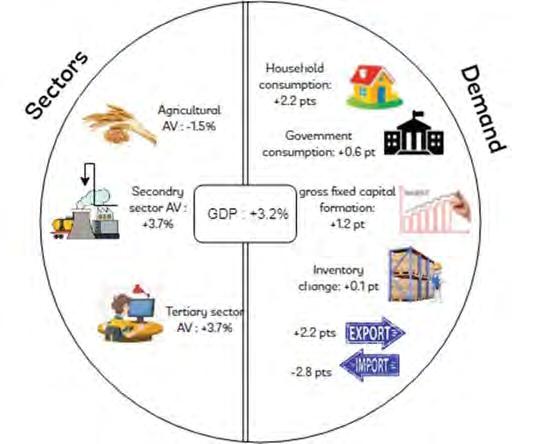
More generally, the 2019 finance bill execution should take place within a context marked by both
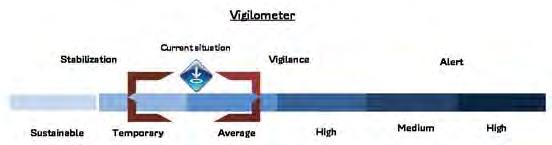
As for our economic scenario, we expect a 3.3% growth in 2019 as a central assumption, almost in line once again with the latest BANK AL-MAGHRIB forecasts (+3.1%) and those of the Finance Bill (+3.2%). This scenario includes a -1.9% decline in agricultural value added more than offset at 3.7% by the consolidation of the non-agricultural value added. For their part, domestic consumption and gross investment are expected to contribute 2.2 pts and 1.2 pts respectively to growth.
ew countries handle elections like Nigeria, a country where democracy is more performative act than a civic occasion. In 2018, the Nigerian economy was still struggling to recover from its 2016 recession and faced volatile oil prices, heightened insecurity, and financial market weakness. And yet, all eyes were fixed on the elections. The 2019 elections. Now that the elections have come around, there is little doubt about the primary issue for Nigeria’s economy in 2019.
The most noticeable effect of the 2019 elections on the economy is the slowdown in economic policy as politicking takes precedence over governance. Following closely behind, aggregate demand should be boosted by campaign spending as candidates often disregard the legal limits. The impact of this discretionary spending is most keenly felt by low-income groups, and industries related to rallies and events. At the same time, election spending is considered to have a slight inflationary effect, though it is hard to tease out the precise impact based on historical inflation. The final point of note here is that elections (and the uncertainty they bring) disincentivises investment in Nigeria—whether fixed asset or capital market investment—and we expect this to have an adverse effect on 2019 economic performance.
Beyond the elections, Nigeria’s economic prospects will hinge on external developments—as seen in 2018. Here, there are three main issues: oil prices, monetary policy, and trade. Oil prices were surprisingly high in 2019 and consensus expecta-
tion is a year-on-year decline as the market tilts closer to oversupply. As oil exports are Nigeria’s primary source of federal revenues and dollar earnings, the health of the oil market would have an outsized effect on the country’s fiscal performance and exchange rate, both of which are key determinants of broader economic performance.
Looking at global monetary policy, although the United States (U.S.) Federal Reserve (Fed) should be less aggressive with its rate hikes compared to 2018 (two predicted in 2019 vs four implemented in 2018), we still expect higher global interest rates as the European Central Bank ends its quantitative easing program. Thus, we anticipate continued capital reversals from emerging markets like Nigeria. Finally, the U.S.-China trade war still brews in the background, although we are reasonably hopeful that a permanent resolution would be reached at the end of the truce period (by Q2’19). Nevertheless, the strain in Sino-American trade relations has jolted the global trade consensus and also dented the outlook on the global economy. This is negative for Nigeria given its reliance on external capital for investment (particularly in its financial markets) and the importance of the dollar-naira exchange rate in the country.
Overall, 2019 is likely to be a muted year for the Nigerian economy, with adverse external conditions and the distraction of local elections contributing to a slowdown in investment in the country. One potential boost would be a hasty implementation of the proposed minimum wage hike, which we expect to support consumer spending. How-
ever, we note that an increase in the minimum wage would do more harm than good in the long run given Nigeria’s parlous fiscal state.
Looking under the hood of the Nigerian economy
Whilst it is important to dimension the year ahead, there is a risk of being too transient in our analysis of the Nigerian economy. This is particularly important because there are fundamental issues in the Nigerian economy that are unlikely to rise to relevance in 2019 but remain key to the development of Africa’s most populous nation.
The recent dynamic of the Nigerian economy is worrying. After averaging 6% annual growth between 2010 and 2014, the economy has struggled to post growth above 2% per annum since its 2016 recession, despite boasting a population growth rate closer to 3%. Moreover, the regression in living standards is evident in many development indicators. In 2018, Nigeria usurped India as the poverty capital of the world, with over 90 million people living in poverty, and within the space of just three years, youth unemployment rose from 5 million to 13 million.
It is difficult to see how this economic trajectory would change in the near future. The present administration has attempted to plug the gap created by weaker consumer spending power through expansionary fiscal policy. Between 2014 and 2017, budget expenditure rose 57%, and the fiscal deficit expanded from N0.8 trillion to N3.8 trillion. Moreover, spending has shifted towards capital expenditure (capex), with realised federal government capex rising from N0.6 trillion in 2014 to N1.4 trillion in 2017. However, this spending is still too little for an economy as big as Nigeria’s. The proposed 2019 Budget expenditure is N8.8 trillion, which equates to less than 7% of GDP. The reality is that the Nigerian government cannot afford to spend any more now that global oil prices are no longer triple-digit. State governments have struggled fiscally for half a decade, but the federal government’s finances have also become much worse, leading to excessive borrowing in recent years. In 2014, government debt amounted to 12.6% of GDP. In 2017, it was 18.9%.
With the government unable to spend the economy out of its current malaise, will the private sector pick up the slack? Doubtful; it is still very difficult to do business in Nigeria. For example, inconsistent
power supply forces businesses to rely on expensive diesel generators and an entrenched culture of impunity has weakened the judicial and bureaucratic institutions that support small business growth. Meanwhile, Nigeria’s credit markets are faulty as credit is too expensive and inaccessible for individuals and small businesses due to a combination of persistently high inflation, high bank operating costs, and asymmetric information.
These are just some of many fundamental issues Nigeria faces. There are still ways of turning the economy around, but hard decisions must be made. Therefore, real progress in 2019 would come in the form of clear steps in the direction of these difficult decisions; such as the removal of costly and corrupt petroleum subsidies. This, along with the removal of other price controls, would save the government scarce funds and also lead to better allocative efficiency in the economy. Another critical element of the solution is the commitment to a robust public-private-partnership (PPP) framework that would facilitate infrastructure investment in the country. Finally, we would be looking forward to the passage of the various elements of the petroleum industry bill—to unshackle Nigeria’s oil & gas industry—and a move towards a robust identity management system that greases the wheels of Nigeria’s credit markets.
2019 is a significant year for the Nigerian economy. Not because of year’s economic activities and performance, but because the elections provide the opportunity to re-pivot and move the economy towards a more optimal steady state. The 2019 elections and global developments may obscure the fundamental issues related to public debt, credit markets, and youth unemployment, but it is on these issues that the Nigerian economy would ultimately rise and fall.
Contributor’s Profile

Michael Famoroti is a Partner at Stears Business, a media and data company focused on data-driven journalism and analytics in Nigeria. He is an economist by profession and has vast writing and editing experience.
By Annabel Bishop, Chief Economist, Investec Bank Limited South Africa

t has become a trend for South Africa that economic growth forecasts made at the start of the year tend to be revised down throughout the year –with economic growth initially expected around 1.4% y/y for 2018 now likely to come out at 0.6% y/y instead, as the historical data for last year feeds through. We expect 2019 to see economic growth in South Africa of around 1.7% y/y, but it is a year which also faces a National Election, with probable amplified political noise and uncertainty in the run up to this (which if extreme will likely dent the economy’s growth prospects), and also resolution to key issues such as expropriation of land without compensation. Concerns over weakening global growth have come to the fore - we have revised our forecast for world GDP growth down slightly, to 3.0% y/y for 2019, versus the forecast we made in Q4.18 of 3.1% y/y. This slight, 0.1% y/y downwards revision reflects the potential for US economic growth to come out slightly lower than previously expected (2.5% y/y vs 2.6% y/y) as well.
The chance of the US pausing in its interest rate hike cycle this year, potentially delivering fewer hikes than signalled in December 2018, has increased slightly. Such an outcome, which markets are currently factoring in as increasingly likely, would serve to support the domestic currency, likely driving it stronger against the US dollar, and also assisting South Africa on the inflation and interest rate front. Indeed, lower inflation is already likely for South Africa in December 2018, of closer to 4.4% y/y, and in January 2019 of around 4.0% y/y, down from the 5.2% y/y that was recently published for November 2018, given substantial petrol price cuts in those months. This will lower the CPI inflation outcome for 2019, but the resultant base effect will boost inflation in 2020, as will likely larger electricity tariff increases than in recent years, raising it to potentially average 5.6% y/y –with 2020 now the year that the MPC will be targeting in 2019 regarding inflation. The SARB targets inflation chiefly twelve to eighteen months out, but also looks six to twenty four months out. With CPI inflation likely to be closer to 5.6% in 2020, an interest rate increase in H2.19 (of 25bp) is
possible for SA. However much will depend on the US interest rate hike trajectory in 2019.
In the US however, its unofficial inflation targeting focusses on the PCE deflator, not CPI. The plunge in oil prices since October last year will impact US CPI but have significantly less effect on this core inflation rate (the impact of food and energy prices is stripped out of the personal expenditure consumption price index) in 2019. Shrinking excess capacity aids upwards pressure on inflation, with pressure on the tightening labour market also expected to drive core inflation to shift out to around 2% via some upwards wage pressure. Wage pressures have been slow to come through in the US economy, but are likely to tick up in 2019, with price pressure coming from the services sector. US monetary policy focus is likely to be largely on inflation, with the slowdown in economic growth not expected to be marked, as yet, and with the Fed likely to wish to demonstrate its independence, after recent commentary against it interest rate path from the US President. While we forecast two more hikes in US interest rates this year, a sharper slowing in US economic growth than we anticipate could delay, if not nullify the likelihood of these, (and so SA’s forecast July hike).
The Federal Reserve Bank shows its officials are fairly evenly split between raising interest rates one, two or even three times (by 25bp at each move), indicating a fair degree of leeway in the approach to US monetary policy in 2019. Such openness to being guided by incoming information on the part of the Fed was also highlighted in the recent speech by its Chair Jerome Powell, who said “(w)ith muted inflation readings that we've seen coming in, we will be patient as we watch to see how the economy evolves”. The more dovish speech, compared to that in the December 2018 FOMC statement, has seen EM currencies gain, and the rand slip below R14.00/USD, as markets have largely factored out a chance of a US rate hike this year. This provides room for significant rand volatility in 2019, as incoming US economic data showing that the economy is not weakening
materially, and that the US PCE inflation measure is remaining around 2%, would likely ignite some markets expectations for higher US interest rates, in turn placing pressure on the rand to depreciate. The US government shutdown, if persistent over the next coming weeks would delay the publication of economic data on the health of the US economy.
The rand has recently pierced the R14.00/USD mark, on the perceived more dovish tone from the Fed, with this dovishness also pulling through to decisions on the Fed’s balance sheet, causing markets to recalibrate expectations. The expected case includes mild risk-on in general (interspersed with some risk-off but not for substantial or prolonged periods), a gradual pace of hikes in US interest rates, and only a very mild slowing in US economic growth – the likelihood of the expected case has been revised up to 42% from 40% previously. The down case is one of largely market risk-off where US monetary policy normalisation occurs at a faster rate than markets expect. The down case includes additional credit rating downgrades for SA and fiscal deterioration. The down case also includes a financial crisis, and has seen its probability revised up, to 37% from 35%. Additionally, the likelihood of a prolonged deep financial crisis, and prolonged recession has waned globally, with equity markets seeing a near correction towards the end of 2018, and with the slowdown in global and US, China growth seen to be gentler.
The third quarter of 2018 saw a lift in real disposable income of households, versus the contraction in Q2.18, leading to a lift in household consumption expenditure (HCE), after the drop in Q2.18, while credit growth remained steady and salary and wages improved in nominal terms. Household debt as a % of disposable income remained unchanged at 71.3% of disposable income, and the cost of servicing debt as a percentage of disposable income remained at 9.0%. Households’ net wealth fell in Q3.18, as liabilities outpaced non-financial and financial assets. 2019 is likely to see further lift in HCE growth, assisting GDP growth to rise to 1.7% y/y. Similarly, GFCF (fixed investment, or gross fixed capital formation) growth is expected for 2019 versus the contraction in 2018. With the Ramaphosa Presidency showing evidence of better governance in a number of areas, the steep downward trend in business confidence seems to have been arrested.
Commodity prices have seen a slump toward the end of last year, although there has been some pick up also in the early days of this year, which would also likely to have been supportive to the domestic currency. Commodity prices will come under renewed pressure to weaken if further data comes out indicating more substantial US and China economic weakness, serving to exert a drag on the domestic currency. SA relies significantly on the export of commodities for economic growth, and as such the perceived late cycle nature of global economic growth risks SA’s mining sector seeing less significant performance. Stats SA reports that the mining sector recorded close to a 50% rise in net profit before tax in 2016/17, chiefly on the production of metal ores, coal and lignite, gold, and uranium ore sub-groups. Stats SA added, “losses experienced in previous years have eroded the amount of capital available to buy new assets. Mining was the only industry that reported a decrease in capital expenditure in 2017 (a fall of 27%). This is the third consecutive year of decline in capital expenditure in the mining industry”. Mineral sales at current prices were still positive in 2017/18, alongside fairly static volumes but higher commodity prices, with similar for the seven months to October in 2018. Exports of resources, and manufactured goods, are a key driver of economic growth in SA, and a slowdown in commodity prices would negatively impact both the rand and economic growth.
Annabel Bishop joined Investec in 2001, and has worked in the macroeconomic, risk, financial market and econometric, among others, fields for around 25 years. Annabel is the holder of the Sake/Beeld Economist of the Year title for 2010 and has won numerous monthly Reuters Econometer awards, and various Focus Economics (Economic Forecasts from the World’s Leading Economists) categories for correctly forecasting a range of economic variables. She has authored a wide range of in-house and external articles, published both abroad and in South Africa. She has also lectured at Gibbs, the University of Pretoria, Wits, UJ and other academic institutions, and has presented at various national and international conferences.
By Samir Gadio, Head, Africa Strategy, FICC Research, Standard Chartered Bank
he outlook for emerging-market and SubSaharan African (SSA) currencies has turned more constructive in early 2019. This is due to a softer USD as the Fed signalled a pause in its tightening cycle amid mixed economic data (strong labour market; a slowdown in manufacturing), and after a correction in equities. The resumption of US-China trade talks has also supported global risk conditions, despite a still-uncertain outcome. That said, the market may still shift its focus to negative factors that could affect asset price performance, including downside risks to global growth (for example, in China). As such, even if the US economy slows down, the USD could still benefit from its safe-haven status should growth prospects in other G10 and core emerging markets soften more..
For now, pressure on SSA local markets has generally eased. In South Africa, the most liquid regional market, the rand was better supported at the turn of the year, along with high-yield EM FX. The South African Reserve Bank (SARB) turned more dovish at its 17 January Monetary Policy Committee (MPC) meeting, citing downside risks to growth, lower 2019 oil price projections and downward revisions to inflation. Its Quarterly Projection Model now implies only one 25bps hike by end-2021 from four by end-2020 previously. Short-dated rates have compressed significantly and do not appear to price in any policy, local or external market risks, which may offer value in paying positions at some point (especially if a more hawkish SARB tone re-emerges).
That said, longer-dated South African government bonds have barely reacted to the recent dovish shift in monetary policy, despite a very steep yield curve and robust real rates. This suggests that bond investors may remain cautious ahead of the 20 February budget presentation and elections in May, even though some moderate portfolio inflows have resumed recently. As such, we think the local yield curve is more likely to bear flatten than bull flatten in the coming months.
In Nigeria, carry in bills and even bonds remains

robust amid FX resilience and policy-driven total returns. The Nigerian naira (NGN) has actually appreciated moderately in the Investors and Exporters’ FX window from mid-January on renewed moderate portfolio inflows (after continuous net outflows from Q2-2018). Despite lower oil prices than last year and an upcoming presidential election on 16 February, there has been no tangible frontloading of local FX demand, while Central Bank of Nigeria (CBN) FX supply remains adequate in various FX windows. Robust FX reserves mean that the CBN has enough ammunition to anchor confidence in the NGN and provide FX liquidity to domestic and external market stakeholders. We see limited risk of a free float of the NGN and expect the CBN to maintain a heavily managed FX regime in line with its price stability mandate.
The yield curve is still inverted in Nigeria given the issuance of open market operation (OMO) bills by the CBN at attractive effective rates, especially closer to 12M. That said, we think OMO bill yields may have peaked given receding FX pressure, relative stabilisation in oil prices and tentative new portfolio inflows. The inverted curve could limit room for a bond rally, while supply pressure at bond auctions may also constrain more significant duration gains. But if bond yields were to back up again, support would likely re-emerge from local pension funds and institutional investors. Thus bonds may trade in a broadly contained range for now.
Elsewhere in West Africa, the Ghanaian cedi (GHS) has stabilised against the USD around the 5 level in the recent past, but it remains vulnerable to the roll-over of local debt positions by non-residents. Last year, foreign ownership of Ghanaian bonds declined gradually while some coupon maturities were not reinvested, possibly partly because of less supportive EM risk conditions and alreadycrowded positioning. This pressured the GHS and prompted large FX sales by the Bank of Ghana until October. Although higher local bond yields and a better risk bias in EM may limit the scale of outflows in 2019, foreign investors will closely monitor policy and reform continuity after the IMF
programme ends in April and in the period leading to the 2020 elections.
Against this backdrop, it is unlikely that Ghana’s yield curve could bull flatten further, despite limited recent and expected issuance at the long end. In addition, the authorities have been tapping shortdated bonds and notes at elevated rates, which effectively creates a floor for longer-dated yields. Ad-hoc debt supply (even away from regular auctions) to bail out the financial sector could eventually test local absorption capacity for tradable fixed-income securities.
In Kenya, infrastructure bonds will likely deliver low-volatility carry in the foreseeable future. A bout of FX volatility in late 2018 has eased, as the Kenyan shilling (KES) saw strong support in early 2019 despite a typical pick-up in seasonal FX demand at the turn of the year. Contained oil prices and robust diaspora remittances will likely limit risks to the current account position; this, coupled with a softer USD, should support the KES. The authorities could lean towards more short-dated regular bond issuance at auctions, as they are behind their FY19 (ends June 2019) local currency borrowing plans and given muted domestic investor appetite for longer tenors (save for infrastructure bonds). That said, primary-market rates will likely remain in check. The key risk to our benign rates view could come from a relaxation of the lending rate cap, but this does not appear imminent.
Ugandan shilling (UGX) resilience in recent months has probably been supported by a softer USD given the fully liberalised FX regime and the correction in oil prices in mid-Q4-2018. This is despite the usual pick-up in corporate import demand at the turn of the year. Bank of Uganda (BoU) USD purchases have further supported already ample interbank market liquidity. As a result, T-bill and bond auction subscriptions have remained robust and pushed fixed-income yields moderately lower in recent weeks, despite increased auction sizes and some supply risks from a potential supplementary budget. That said, foreign flows into local bonds have yet to resume and could be constrained by lower rates, while less liquid SSA markets may only benefit from better EM risk conditions in a lagged fashion. A recovery in credit growth and economic expansion, and a gradual
pick-up in inflation from a low base, could still prompt the BoU to tighten monetary policy from Q2-2019. Thus, it is possible that fixed-income yield downside eventually reverses, especially if seasonal FX pressure resumes in June.
Finally, in Zambia, the primary-market rate curve has inverted, as T-bill rates rose further at recent auctions; bond auction yields were contained at the December sale (except the 10Y) despite poor demand. Better bids for T-bills (even amid tighter liquidity conditions from mid-January) suggest that domestic investors are reluctant to extend exposure to duration at current rates. This should eventually force a back-up in bond auction rates, in our view, especially in light of higher secondarymarket levels. Foreign ownership of bonds has declined marginally and at a very slow pace given wide bid-offer spreads and the limited liquidity of the debt market. Although the Zambian kwacha (ZMW) has been stable against the USD amid balanced FX flows in recent months (after a sell-off in late September), renewed portfolio inflows are constrained by perceived FX vulnerability. Indeed, FX reserves have declined consistently, while Zambia faces large foreign debt-service payments in 2019 and could have limited access to new external financing. However, a restructuring of the debt owed to China and more tangible steps towards a still-uncertain IMF funded programme would help improve market confidence.
“The outlook for emerging-market and Sub-Saharan African (SSA) currencies has turned more constructive in early 2019. This is due to a softer USD as the Fed signalled a pause in its tightening cycle amid mixed economic data (strong labour market; a slowdown in manufacturing), and after a correction in equities.”
Contributor’s Profile:
Samir Gadio is the head of the African Strategy team, based in London. Samir holds a PhD and MA in Economics from Fordham University and a BSc in Economics from the Russian Peoples’ Friendship University. He speaks English, French and Russian.
By Faith Atiti, Senior Research Economist, Commercial Bank of Africa Kenya
In the early 2000s, Africa was considered the world’s new economic frontier. This economic promise was predicated on the famous Africa rising narrative that denoted a period of strong economic performance.
While the narrative has faded, following the commodity rout of 2016 which precipitated a sharp decline in economic growth, primarily in the large commodity backed economies, some countries have continued to rise.
Economies, especially within East Africa, have been growing at over 5.0% on average and look set to sustain this impetus, heightened global uncertainty notwithstanding. Behind this upbeat performance has been economic reforms, improving business environment, strengthening institutions, rising entrepreneurship, improving governance and in deed, the persistent search for the new economic frontier – foreign direct investments.
Specifically, in Tanzania, growth has remained robust averaging 6.0-7.0% over the last decade backed by a combination of strong public spending as well as solid private investments and consumption.
There is little doubt that the momentum will be sustained into the medium term. Although official data is yet to be published, Tanzania is estimated to have expanded by 6.8% in 2018 compared to 7.1% in 2017 and is projected to grow at 6.7% in 2019 underpinned by;
Macroeconomic indicators have been largely stable partly reflecting the improved interplay between fiscal and monetary policies. The policy coordination was reinforced by the operationalization of the treasury single account in 2016 which provided the Central Bank with better sight of government cash flows, allowing for more efficient conduct of monetary policy.
Benign inflation prospects
Inflation has been relatively stable and below the Central Bank’s medium-term target of 5.0%. To be sure, annual headline inflation declined to 3.60% in 2018 from 5.33% in 2017 and is expected to remain below 5.0% in 2019 supported by stable food and fuel prices as well as tame demand pressures in the economy.
Core inflation declined to 1.19% in 2018 from 1.94% in 2017, underpinned by lethargic growth in money

supply. In spite of easier financial conditions, banks have tightened credit to the private sector on the back of a high non-performing loans ratio, currently at 12.0% and persistently fragile business sentiments.
Additionally, the breakdown in the interbank market, which redistributes liquidity from firms with surplus funds to those with deficits, could further undermine credit expansion subduing aggregate demand.
While low inflation may be welcome, its persistence underlines loss of momentum in consumption and spending, whose tenacity, may be unhealthy for the economy.
Gradual exchange rate depreciation
The shilling shrugged off the volatility in emerging and frontier to depreciate by just 2.4% against the US dollar in 2018. The exchange rate was anchored by an improved current account position, tighter surveillance and timely intervention by the Bank of Tanzania (BoT).
However, the predicate is changing! The current account which had narrowed to 1.7% of GDP in 2017 is now expected to widen to 3.0% in 2019. While earnings from agriculture and tourism have been upbeat, the suspension of mineral exports (which accounts for nearly 40% of Tanzania’s export earnings) delays in cashew nut exports and reduced capital inflows due to a closed capital account, policy uncertainty and unfavorable interest rate differentials will keep the gap wide.
Meanwhile, imports have increased materially consistent with the heavy demand for capital goods for on-going infrastructure projects as well as some aircraft purchases, meant to revamp the national airline. This more than offset the respite from lower oil prices.
While foreign exchange reserves have remained healthy at about 5.3 months of import cover, a sharp decline from 6.3 months of imports due to external debt settlement and the said evolution in the current account position could reduce the cushion for the shilling. This could leave it susceptible to more volatility with the potential to depreciate by over 4.0% in 2019.
The Pro-growth policy matrix
Despite the obvious fiscal and external imbalances, the policy mix in Tanzania continues to buttress the twin goals of maximizing growth while keeping
overall prices relatively stable, with fair success.
Expansionary
Tanzania continues to make reasonable progress towards the industrialization agenda. After outlining the framework in 2017, the government has aggressively embarked on laying out the necessary infrastructure. To this, Treasury will this year increase the fiscal deficit to 3.1% of GDP from an average of 1.7% over the last two years. This will mostly finance construction of roads, a standard gauge railway, a new airport, and port upgrade as well as investments in energy.
Government reforms have helped elevate revenues to 15.4% of GDP from 13.0% in 2015. However, growth may strain going forward given that tax compliance is almost 100% and the private sector’s earnings and consumption have been flat, at best.
On a positive note, public debt has remained low at 37.0% of GDP over the last three years. This provides considerable room to still run a wider deficit without destabilizing the macroeconomic environment. The sovereign risk remains sound and could see the government finance deficit externally at a reasonable cost, although the fragile policy landscape remains a major downside.
Even then, it is worth noting that budget absorption remains low at about 60.0%. A considerable improvement in spending could see debt rise substantially, although this may be offset by a commensurate increase in economic growth. With the relatively low debt levels, Tanzania remains in a good spot to still press hard on both fiscal and monetary levers to catalyze economic activity.
In response to the slow credit growth and dangerously low demand pressures, monetary policy is expected to extend the current easing cycle to provide more liquidity for lending. This could be encouraged by more signs of waning momentum in private investment and consumption.
However, in spite of strong easing signals from the BoT, private sector credit growth remained in single digits throughout 2018. In the 12 months to December 2018, private sector credit expanded by 4.6%. While business reforms and restructuring could somewhat de-elevate credit risk perception, sustained caution amongst banks could keep growth below the BoT’s 12.5% target.
While monetary conditions are likely to remain loose supported by stable inflation, low credit growth and the below potential economic output, its efficacy remains constrained by the sector’s high NPLs, poor liquidity distribution and elevated credit risk as businesses continue to adjust to the policy shocks of the last two years.
Moreover, the collapse of Bank M and the sharp deterioration in the quality of assets held by banks has led to segmentation of the interbank market based on size, with discrimination of smaller players perceived more susceptible to shocks. This has reduced their access to credit in the interbank market and increased the premium on available funds, rising reliance on the expensive funds provided by the BoT for liquidity management, which is unsustainable! Certainly, without an effectively functioning interbank market, the intermediation role of banks will be greatly inhibited, with dire implications for credit and output growth.
But the uncertainty…
The causal relationship between policy certainty and private investment is rather obvious. As the unintended consequences of recent fundamental policy adjustment become more apparent, most investors will stay on the edge or divert their capital to other destinations.
The fundamental shake-up of the country’s soft infrastructure with increased nationalization of resources and companies - take-over of a 40% stake in all mining companies, repossession of some assets and idle land, public shareholding in telecoms among others, could undermine sentiment and investments in the near to medium term.
This is in part credited to the loss of economic growth momentum in Tanzania over the last two years. Lack of investments in new capacity and increased consolidation of business operations as they adjust to the policy environment will continue to hurt employment and demand.
While this could be offset by increased government spending, it is obvious that the multiplier effect of the mega projects has thus far been low, given the low level of local content both material and labor primarily due lack of local capacity for the required quality of inputs as well as the necessary expertise.
The reverberations of these policy changes will continue through 2019. Increased nationalistic tendencies, though well intended will continue to keep Tanzania closed, restricting the much-needed capital that could help unlock the country’s immense untapped potential. Already donors have expressed concerns, promising to withdraw support should government uphold its policy changes that have precipitated ‘abuse of some human rights’.
All said, increased government spending will certainly sustain strong growth in the near term. Further, a relatively stable macroeconomic environment coupled with a pro-growth policy mix will continue to encourage private investments. However, with sustained policy uncertainty and poor liquidity for businesses and consumers, the current momentum could be as good as it gets!
By Stéphane Colliac, Senior Economist for Africa, Allianz and Euler Hermes
Executive Summary
• Growth is supposed to reach again the 3% mark in 2019 for the first time since the Arab Spring. Obviously, there was an indicator that has broken the 3-threshold recently, but that was the dinar/USD exchange rate. If a currency is an index of the overall economic health of a country, Tunisia is not in good shape and growth should miss the target (our expectation is +2.5%).
• Growth has accelerated in 2018 to +2.7%, but this performance is fully attributable to tourism and agriculture. Manufacturing did not show any sign of relief, with a +0.5% growth in 2018. Unemployment is still rising and structural unemployment affects one third of the youngest population.
• Low growth has eroded public finance buffers. Debt has increased and put the government on a tightrope in a pre-electoral period. The international financial support is helpful, since foreign currency liquidity is stretch, but the measures that should be implemented in order to respect IMF conditionality (lower subsidies, dinar depreciation) will bear a cost on inflation (highest since 1991) which is weighing on the short-term outlook.
Low growth trap: No exit yet Growth has recovered in 2018 to +2.7% (from +2% in 2017). However, this growth acceleration was fully explained by a jump in tourism revenues (+45%) and agricultural output growth (+9% in volume). Excluding these two sectors, growth would have been the same in 2017 and 2018 (+1.4%). It explains why this growth acceleration was not perceived by all the Tunisians, since it was not equally distributed.
Overall, growth has not delivered enough jobs and unemployment continued to deteriorate (15.5% in 2018Q3). Youth unemployment is particularly high and structural, since the indicator was always above 30% since the Arab spring. Barriers to entry on the job market or in the education system also mean that a significant share of the population has no Income, no job or assets. About 17% of young

people are not in education (including university), employment or training according to KfW calculations.
Public finance was mobilized in order to cope with this protracted low growth period and should continue to provide some cushion. The wage bill ascended to about 45% of public spending and subsidies and transfers (about 25% of public spending) were also on the rise to smooth the inflationary impact of recurrent dinar depreciations.
The deterioration of the business climate is obvious, as the World Bank Doing Business 2019 survey ranks Tunisia 80 out of 190 economies (45th in 2012), now below Morocco, Kenya and Zambia. Among key aspects, there are now more barriers to trade across borders from Tunisia (101st) compared to Morocco (62nd).
Added to other factors, this lower attractiveness nurtured a loss of export revenues (in particular tourism activities) that put Tunisia external account under pressure while low growth weighed on fiscal revenues. Despite the uptick observed in exports and lower oil prices, the resulting twin deficits should remain sizeable in 2019 (-4.5% of GDP for the fiscal deficit, -6% of GDP for the current account deficit).
Stretch liquidity to trickle down on inflation
After years of sizeable current account deficits, the liquidity situation of Tunisia worsened, despite several IMF assistance programs. The country benefitted from a Stand-By Arrangement (SBA) from June 2013 to December 2015 (USD 1.4bn disbursed during the two following years) and has been granted with an Extended Fund Facility (EFF) from March 2016. The current program is not designed to cope with liquidity mismatches problems, since the program aims at tackling fiscal imbalances in the medium-run (to end-2020).
Moreover, 85% of the amount drawn (USD 1.4bn during the last three years) financed repayments to IMF of past loans.
The deterioration of Tunisia’s liquidity was strong
enough during the last three years to reach critical levels (2.7 months of imports currently). The structural balance of payment problem is putting the country’s foreign reserves under pressure, and stable financing is too scarce (FDI covers only 25% of the current account deficit). Moreover, foreign exchange interventions had a detrimental effect on the foreign currency liquidity level. These interventions tried to contain Dinar depreciation in order to limit inflation pressures, since price evolutions and purchasing power issues were (and are) detrimental for the social cohesion of the country.
As a result, the Central Bank had to allow the dinar to depreciate further (-17% in 2018). Along with the commitment made with the IMF to lower subsidies, there are now more reasons for inflation to be higher for longer. Inflation ascended to +7.5% in 2018 (highest level since 1991) and is expected at +7% in 2019.
calendar are all adding to the constraints faced by the Tunisian government. Growth remains very low in core sectors. The manufacturing output increased by +0.5% in 2018, a stable growth rate compared to the average growth observed during the last 5 years. This is a key difference compared to what was the growth performance during the former decade. There were several plans announced in order to reignite past growth performance, particularly in order to increase the connectivity of the industry. But, these efforts have not delivered yet and the protracted low growth period should continue except for some export driven sectors with limited positive spillovers on the domestic economy.
As a result, social discontent remains strong, as inflation is adding to concerns related to low income growth. General elections are set to be organized in December 2019, limiting the policy space that the current government will have to implement costly measures (including subsidies cuts). The political landscape remains quite divided between several forces, adding to the uncertainty. Renewed protests from December 2018 also show that social discontent is likely. In our view, this uncertainty will weigh on the overall growth performance by about -0.5pp, explaining why we do not expect Tunisia’s growth to reach 3% this year, despite international institutions and government forecasts.
Policy response to remain constrained
During the last years, low growth and persistent twin deficits put debt on an upward trend. Public debt has increased by +16.5pp over the last three years, to 71.5% of GDP. A new increase is expected in 2019 (74% of GDP). External debt increased even more and should continue to rise, particularly since the dinar depreciation is pushing the debt to GDP ratio on the upside (92% is expected in 2019).
By Thea Fourie, Senior Economist Sub-Saharan Africa, IHS Markit Economics

IHS Markit is of the view that Zambia’s GDP growth rate could trail down to 3.0% in 2019 from an estimated 3.8% in 2018. External liquidity pressures, the public sector debt overhang and a shift towards more constrictive monetary and fiscal policies underline IHS Markit’s growth expectation.
Zambia’s economic growth rate showed a sharp rebound to 5.0% year-on-year (y/y) during the third quarter of 2018 following a lacklustre performance during the first half of the year. The financial and transport and communications sectors outperformed, but a rebound in wholesale and retail trade growth (accounting for 23% of real GDP) to 5.8% y/y during the third quarter of 2018 from an average of 2.2% during the first half of the year was primarily responsible for the strong overall growth performance. Zambia’s macro-economic fundamentals remain fragile, with IHS Markit assuming a slowdown in headline growth to an estimated 3.0% in 2019
he Stanbic Purchasing Managers Index (PMI), compiled by IHS Markit, has recorded a reading below the 50-neutral since August 2018. The rate of decline in new business continued to soften during December 2018 while output fell at a faster pace. Inflationary pressures continued to build, leaving the December 2018 overall input costs increasing at the fastest pace since March 2017.
External liquidity pressures, public sector debt overhang and a shift towards more constrictive monetary and fiscal policies underline IHS Markit’s growth expectation.
Zambia’s external debt increased by USD782 million during 2017, accounting for 62% of GDP and 171% of foreign exchange earnings, latest numbers compiled by IHS Markit's Sovereign Risk Service shows. Short-term external debt accounts for 40.6% of international reserve holdings during 2017. Although Zambia’s short-term external debt holdings fell by USD164 million during 2017, the sharp fall in the country’s foreign reserve holdings contributed to the worrying state of external debt
fundamentals. An 8.6% year-on-year slowdown in foreign reserves during 2017 and a further estimated 22% during 2018 is expected to have left Zambia’s import cover ratio at 1.7 months of imports of goods and services by the end of 2018, alarmingly below the 3 months of imports of goods and services benchmark.
Loose fiscal and monetary policies, a lack of access to concessional borrowing and a partial donor aid freeze, an over dependency on commodity exports, primarily copper, combined with high import propensity contributed to the precarious foreign exchange position of the country and spurred external liquidity pressures in the economy.
The Bank of Zambia’s (BoZ) policy rate was reduced by a cumulative 575 basis points since 2016 as headline inflation trailed down. The lower interest rate environment increased private sector credit growth in the economy, which reached 25% y/y in September 2018 and caused the rebound in retail and wholesale sector growth during the third
quarter of the year. Fiscal policy remained loose despite a drawback in foreign donor assistance over donor fund mismanagement allegations and lack of International Monetary Fund financial support. The country’s high import propensity for consumer and investment related goods widened the current account deficit to USD756.6 million during the first half of 2018 from USD340 million for the same period a year ago, BoZ numbers show. Exports resilience was matched by strong import demand while a higher external debt servicing bill added to a widening current account deficit over the period.
With headline inflation accelerating since the beginning of 2018, IHS Markit is of the view that the BoZ policy rate could move from sideways to up during the coming year, leaving consumer spending less resilient.
The government’s worrying debt fundamentals, and lack of access to some foreign donor aid assistance and International Monetary Fund (IMF) funding, prompted the indefinite cancellation of some contracted but undisbursed loans linked to capital spending in the 2019 national budget. Although tax measures—the updated rules on tax deductions and transfer pricing, the increases on the tax withholding rate, a higher mining royalty tax (up by 1.5%) and replacement of the Value Added Tax system with a non-refundable sales tax — could increase revenue flows, this will not be enough to counterbalance the expected increases in government capital spending on projects already under construction. A total of USD4.3 billion in new external debt will be acquired over 2019–2021, amounting to an estimated 4.3% of GDP per year, international ratings agency Fitch estimates show.
Zambia’s external liquidity position is furthermore not expected to show a strong improvement. Although IHS Markit is of the view that international copper prices could support the kwanza exchange rate and the current account during 2019, this benefit could be counterbalanced by a fall in Zambia’s copper exports and high external debt servicing obligations during the year. IHS Markit is of the view that a projected copper market deficit of over 100,000 metric tons in 2019 will provide support for copper prices to above $6,700 per metric ton by year end. The advantages of stronger copper prices on the current account and foreign reserve levels could be mitigated by lower copper production in 2019. Local industry sources warn that the higher mining taxes could not only lead to
job losses in the sector, but a cutback in capital spending and less production over the next three years. In January 2019, Vedanta, the largest shareholder in Konkola Copper Mines (KCM), announced the indefinite suspension of operations at one of its mines over the recently introduced copper import duties and insufficient supplies needed for copper processing.
It is the view of IHS Markit that the 2019 tax proposals, which are the most comprehensive tax changes in Zambia in the past decade, indicate that the Patriotic Front government's economic policy is aggressively targeting foreign mining operators. Additionally, the government is highly likely to use audits to seek increased tax compliance and to enforce stricter local content, pushing for more domestic primary commodity processing by the mining industry. Local content enforcement is also likely to target both multinationals and small- to medium-sized enterprises (SMEs) operating in the agriculture, manufacturing, construction, and utilities sectors with threats of licence revocations for multinational companies that fail to comply.
Ongoing international trade war threats, weaker growth in China, international commodity price vulnerabilities, changing emerging market sentiment and adverse weather conditions also pose near term risk factors for the Zambian economic outlook.
“Zambia’s GDP growth rate could trail down to 3.0% in 2019 from an estimated 3.8% in 2018. External liquidity pressures, the public sector debt overhang and a shift towards more constrictive monetary and fiscal policies underline IHS Markit’s growth expectation”
Contributor’s Profile
Thea Fourie is a sub-Saharan Africa senior economist at IHS Markit, south African office. She is responsible for analysing and forecasting economic developments in South Africa, Angola, Zambia, Mozambique, Namibia, Comoros, Madagascar and reunion. She has over 20 years of experience in the financial and consulting industry. Fourie holds a B.econ (hons.) degree from the University of Pretoria and is fluent in both Afrikaans and English.
nternational Monetary Fund (IMF) assessment
The macroeconomic outlook remains favourable, supported by strong policy implementation. Robust growth and a narrowing of the current account deficit reflect a rebound in tourism and strong remittances, while unemployment has declined to its lowest level since 2011. The public-debt-to-GDP ratio declined markedly last year and is projected to decline further over the medium term due to the authorities’ fiscal consolidation efforts and high nominal GDP growth.
While the outlook remains favourable, a more difficult external environment poses new challenges as global financial conditions have tightened. Egypt has successfully weathered recent capital outflows, but consistent policy implementation will be essential to further strengthen policy buffers, including by containing inflation, enhancing exchange rate flexibility, and reducing public debt.
Monetary policy remains anchored by the mediumterm objective of bringing inflation to single digits. The recent pick-up in headline inflation reflected temporary increases in food and energy prices, but a restrictive monetary policy stance has helped to reverse the increase and keep core inflation well anchored. The authorities have taken important steps to deepen the foreign exchange market and allow greater exchange rate flexibility, including by eliminating the repatriation mechanism.
This year’s primary surplus target of 2 percent of GDP appears on track, which would achieve a cumulative fiscal adjustment of 5.5 percent of GDP in three years. The authorities remain committed to reaching cost recovery for most fuel products by mid-2019 and implementing automatic fuel price indexation, which together are critical to encourage more efficient energy use and combined with revenue enhancing reforms will help create fiscal space for high-priority spending on health and education.
The authorities’ structural reform agenda aims to support inclusive growth by addressing long-standing constraints to private sector development. These include reforms to improve competition policy, public procurement, management of SOEs, and land allocation. Sustained implementation of these reforms is essential to reduce opportunities for rent seeking and to support strong and inclusive medium-term growth and job creation.
The African Development Bank (AfDB) projected Egyptian real GDP growth as 5.3 percent in 2018, the highest rate in a decade. The growth was associated
with a decrease in unemployment to around 10% from 12% in 2017. On the supply side, recoveries in tourism and in natural gas production sustained growth. On the demand side, net exports and investment rebounded, while private household consumption weakened due to inflation. With the ongoing broad fiscal consolidation effort, the fiscal deficit declined to 9.0% in 2018, and the fiscal balance excluding interest payments (primary balance) reached a modest surplus. The debt-to-GDP ratio decreased to 92.5% in 2018 from 103% in 2017. Following the 2016 devaluation, the nominal and real effective exchange rates dropped substantially, benefiting exports due to increasing price competitiveness and improving terms of trade. In addition, AfDB stated that the real GDP to reach 5.8% in 2020 due to improved business climate is leading to a major recovery in foreign direct investment, while better security conditions benefit tourism.
Egypt undertook impressive structural reforms in 2017–18. Landmark policies eased starting a business, strengthened legal rights, improved the bankruptcy law, and enhanced access to credit. The energy sector has become more sustainable and competitive, with improved governance. A large public investment in power generation turned the country’s power supply from shortage to surplus, and the government is planning to establish the country as a regional energy hub. Moreover, the new energy sector law should enable higher private investment and stronger competitiveness.
Goldman Sachs’s commentary on Egyptian Pound Goldman Sachs did not expect the Central Bank of Egypt's decision to suspend the currency repatriation mechanism to make the exchange rate more volatile, despite its recent appreciation. It noted that the pound has been stable even though the majority of portfolio flows to the local bond market over the past two years have taken place outside the repatriation mechanism. It added that the depreciation pressure from the selloff of emerging markets bonds, including Egyptian bonds, between April and November 2018, has subsided. Goldman Sachs anticipated that positive developments in Egypt's balance of payments would ease foreign currency liquidity constraints and support the Egyptian pound. It anticipated the trends in the oil and gas sector, as well as elevated remittance inflows and tourism receipts to help shift the current account deficit to a surplus in the fiscal year that ends in June 2020. Goldman Sachs said that risks to the outlook include security risks that would derail the recovery in the tourism sector, with adverse consequences on the economy and foreign currency receipts.
By Bongani Memani, Candidate Attorney, LNP Attorneys Incorporation
he amount of money X Private Limited conducting business in South Africa spends on its directors’ holiday trips to western countries would build a hospital big enough to serve a community. The amount of foreign exchange X Private Limited pays yearly to subsidise its foreign group companies would build a primary school in South Africa. The amount of money X Private Limited transfers illegally to a bank account in another country or country overseas could establish community banks, local businesses and fund poverty alleviation projects.
Countries highly dependent on natural resources are among the most severely affected by the problem of illicit financial flows (“IFFs”) and these countries stem from Africa. IFFs are illegal movements of money or capital from one country to another.
1
The IFFs have been noticed and recorded to have been increased over the past few years. In a report addressed to the PAN African Parliament by former President Thabo Mbeki who is currently the Chairman of High Panel on IFFs, he stated that it was estimated that Africa lost in excess of US$1-trillion in illicit financial outflows in the last 50 years. Furthermore, the High Panel on IFFs estimated that Africa loses over $50-billion through these illicit financial outflows annually.2 Primary reliance on Criminal Law as a mechanism for addressing illicit financial outflows is not sufficient as Criminal Law liabilities are limited to imprisonment and criminal fines3. Criminal Law penalties are therefore not sufficient because they do not stop corporations from continuing with the illicit outflow actions because the corporations will hide under the liability the directors provide for in section 77 of the 2008 Act.4 This paper aims to highlight on how the South African corporate law regime has placed measures on curbing IFFs.
In a High school, there is a child who is well known for being disruptive. The disciplinary committee of

the school has run out of ideas on how to discipline the child as all attempts have failed. Just as the school decides to expel him, a teacher in the disciplinary committee comes up with a solution: he suggests that they place the problematic child in a leadership position in an attempt to change his mind-set as he will now have the responsibility of trying to stop other students from being disruptive. As time progresses, the child’s behaviour changes tremendously. In fact, the problematic child has developed into being the most well behaved student in the school.
The example mentioned above reflects what the Companies Act 71 of 2008 (the” Act”) has done as it has placed an obligation on members or employees of corporations registered in South Africa with the Companies Intellectual Property Commission to curb illicit financial outflow through an amendment of corporate law regulations and structures. This indirectly means that members of corporations are regarded as being fundamentally pivotal in combating the illicit financial flow through their governance structures.
The solution to the issue of illicit financial outflow will stem from the above example of the high school placing the problematic child in a position of authority in order to change his behaviour. The High school child is compared to members of corporations, since corporations are commonly known to cause the illicit financial outflows in Africa, they may tend to stop doing so if they are given authority to stop these outflows themselves. The 2008 Companies Act places an indirect obligation over certain members or employees of corporations to curb illicit capital outflow by a company’s decisions and actions being made in the best interest of the company of which are made by its directors. This is stated in section 76 (3) which provides that, a director of a company, when acting in that capacity, must exercise the powers and perform the functions of director— (a) in good faith and for
a proper purpose; (b) in the best interests of the company; and (c) with the degree of care, skill and diligence that may reasonably be expected of a person— (i) carrying out the same functions in relation to the company as those carried out by that director; and (ii) having the general knowledge, skill and experience of that director.
Section 76 of the Act forces directors to refrain from running companies fraudulently because they would be aware that if they breach their statutory fiduciary obligations they may face civil or even criminal liability.
If directors breach their statutory duties, they would be held liable under s 77 of the Act which provides that: “Any person who contravenes any provision of this Act is liable to any other person for any loss or damage suffered by that person as a result of that contravention”. This means that this subsection makes provision for civil liability if one suffers any loss or damage and is wide enough for one to institute action against a director or anyone else that acts inappropriately by taking part in illicit outflow of capital schemes.
The Act also provides for corporate transparency regulations in section 84. Corporate transparency refers to ‘the widespread availability of relevant, reliable information about the periodic performance, financial position, investment opportunities, governance, value, and risk of companies.5 It is a key element of ensuring good corporate governance because it enables evaluation of company and board performance. It is essential because ‘power without accountability invites abuse and a wide passage for illicit capital outflows. Corporate transparency provides accurate disclosures in terms of how money is spent and how it moves in terms of group companies owned by foreign companies which has subsidiaries because foreign companies tend to register subsidiaries in developing countries so as to evade tax locally. In regards to IFFs, transparency regulations discourage them because accounting forces the directors to account the inflows and outflows on finances by providing for who is accountable to whom; what they are liable to be called to account for; through what processes accountability is to be assured; by what standards the putatively accountable behaviour is to be judged; and what the potential effects are of finding that those standards have been
breached6 that is also a rich provision enacted by the South African legislature which indirectly provides a means to curb IFFs.
Equity investors or shareholders are always the ones feared and in most cases they are foreigners from the west who are always inclined to take away profits to their countries out of South Africa. The development of corporate law remedies, which may conveniently be categorised as direct and indirect corporate law remedies in the Act especially on section 65 has provided protection to all kinds of shareholders and directors either majority or minority. In most cases minority shareholders are always the non-constituent parties in a company. The inclusion of non-shareholder corporate constituencies, coupled with the corporate law’s representative actions, such as class actions, increases the utility of direct corporate law remedies, particularly for combating illicit financial flows. As regards the indirect corporate law remedy, derivative action proceedings are at the centre as it is the company's interests which are being vindicated. This legal standing can be extremely useful in the context of attempts by members of the public to take measures to put an end to illicit capital flows perpetrated within groups of companies. The extension of standing to nonconstituent parties is important as realistically, as these parties are allowed to litigate against majority shareholders who might be making decisions promoting illicit capital outflows.
Finally, the African countries that are affected by illicit capital outflows should take a page from the company law rules of South Africa and should, and most importantly consider extending ‘standing rules’ to empower those acting in ‘the public interest’ with right of action in company law in order to protect the interests of the companies concerned.
“The amount of money X Private Limited transfers illegally to a bank account in another country or country overseas could establish community banks, local businesses and fund poverty alleviation projects.”
n the wake of mega data breaches and privacy scandals, major IT outages and the introduction of tighter data protection rules in the European Union, South Africa and other countries, cyber risk is now a core concern for businesses in 2019 and beyond. According to the Allianz Risk Barometer 2019, Cyber incidents (37% of responses) are neck- and-neck with Business interruption (BI) (37% of responses) as the top business risks globally1. Climate change (#8 with 13% of responses) and Shortage of skilled workforce (#10 with 9% of responses) are the biggest climbers globally. At the same time companies are more worried year-on -year about changes in legislation and regulation (#4 with 27% of responses) resulting in impacts such as Brexit, trade wars and tariffs. The annual survey on global business risks from Allianz Global Corporate & Specialty (AGCS) incorporates the views of a record 2,415 experts from 86 countries including CEOs, risk managers, brokers and insurance experts
“Companies need to plan for a wide range of disruptive scenarios and triggers as this is where their big exposure lies in today’s networked society,” says Chris Fischer Hirs, CEO of AGCS. “Disruptive risks can be physical, such as fire or storms, or virtual such as an IT outage which can occur through malicious and accidental means. They can stem from their own operations but also from a company’s suppliers, customers or IT service providers. Whatever the trigger, the financial loss for companies following a standstill can be enormous. New risk management solutions, analytical tools and innovative partnerships can help to better understand and mitigate the modern myriad of business interruption risks and prevent losses before they occur.”
The report shows a major concern about the unpredictable business environment where markets are volatile (#1) and political perils, such as civil commotion or terrorism are on the rise at #2 with 30% responses. Other emerging risks include digital dilemmas arising from new technologies and cyber incidents (#3), as well as changes in legislation and regulation (#4) with 26% responses.
“Businesses in Africa are faced with political instability and policy uncertainty, which are among the key risk factors that have an impact on business confidence and investor sentiment. In addition to these, fire and explosion as well as changes in legislation and regulation remain major concerns for companies in 2019. For Africa to stay globally competitive, the
business community needs to be on the cutting edge of technological advancement and innovation. However, new technologies such as the impact of increasing interconnectivity, and artificial intelligence could result in increased cyber incidents, which is the second largest risk in South Africa. Therefore, it is vital for companies to mitigate against risks through modern and traditional risk management and transfer methods as well as trusted and reliable insurance solutions,” says AGCS Africa CEO Thusang Mahlangu.
Business interruption remains the top threat for businesses worldwide for the seventh year running and is the top risk in countries such as the South Africa, US, Canada, Germany, Spain, Italy and China. Potential BI scenarios are becoming ever more diverse and complex in a globally connected economy, including breakdown of core IT systems, product recalls or quality issues, terrorism or political rioting or environmental pollution. Both cyber and business interruption risks are increasingly interlinked as ransomware attacks and accidental IT outages often result in disruption of operations and services costing over a hundred of millions of dollars. For Africa, BI received 23% responses dropping by 8% to move from #1 to #5. This business risk is fueled by the increasing interdependencies between companies, the global supply chain and lean production processes.
“BI can lead to significant income losses, but also because multiple new triggers are emerging, especially non-physical damage or intangible perils, such as cyber incidents, and disruption caused by political violence and strikes. This trend is driven, in part, by the rise of the ‘Internet of Things’ (IoT) and the ever-greater interconnectivity of machines, companies and their supply chains which can easily multiply losses in case of an incident,” explains Mahlangu.
When Theft, fraud and corruption (#6 with 19% responses) are rife, the general business climate is tremendously affected, resulting in business trust being at jeopardy, which in turn robs the business of profits and credibility in the eyes of their customers. Fire, explosion is one of largest cause of losses for businesses in Africa. It accounts for a quarter of the value of all claims at #7 with 17% responses as a concern for businesses in Africa. Natural catastrophes such as floods, storms and earthquakes is a rising concern for businesses in Africa at #8 with 14% responses.
he 2019 African Economic Outlook from the African Development Bank shows that the continent’s general economic performance continues to improve. Gross domestic product reached an estimated 3.5 percent in 2018, about the same as in 2017 and up from 2.1 percent in 2016. Africa’s GDP growth is projected to accelerate to 4.0 percent in 2019 and 4.1 percent in 2020. But even that growth is not fast enough to address persistent fiscal and current account deficits and unsustainable debt. Indeed, countries have to move to a higher growth path and increase the efficiency of growth in generating decent jobs. The 2019 Outlook shows that macroeconomic and employment outcomes are better when industry leads growth.
Sub-Saharan Africa’s growth is expected to accelerate to 3.4 percent in 2019, predicated on diminished policy uncertainty and improved investment in large economies together with continued robust growth in non-resource intensive countries. Growth in Nigeria is expected to rise to 2.2 percent in 2019, assuming that oil production will recover and a slow improvement in private demand will constrain growth in the non-oil industrial sector. Angola is forecast to grow 2.9 percent in 2019 as the oil sector recovers as new oil fields come on stream and as reforms bolster the business environment. South Africa is projected to accelerate modestly to a 1.3 percent pace, amid constraints on domestic demand and limited government spending.
The International Monetary Fund projected real GDP growth in the economies of the West African Economic & Monetary Union (WAEMU), which consist of Benin, Burkina Faso, Côte d'Ivoire, Guinea-Bissau, Mali, Niger, Senegal and Togo, at more than 6% annually over the medium term. It said that achieving this growth rate is conditional on all member countries making a strong commitment to implement their fiscal consolidation and development programs, which would improve competitiveness and encourage private investment. It noted that growth is subject to downside risks, including delays in implementing reforms, persistent security risks, as well as uncertainties about the global economic outlook and financial conditions.
S&P Global Ratings indicated that the overall sovereign creditworthiness in the Sub Saharan
Africa (SSA) region slightly improved in the second half of 2018. It upgraded the long-term foreign currency rating of Ghana from 'B-' to 'B' on a more effective monetary policy, as well as the rating of the Republic of Congo from 'CCC+' to 'B-' on reduced legal risks of default and higher oil revenues. In contrast, it downgraded the rating of Zambia from 'B' to 'B-' due to the rising fiscal deficits and debt burden. Further, S&P revised the outlook on Rwanda from 'stable' to 'positive' due to stronger exports and economic growth in the first half of 2018. It noted that 15 out of the 18 rated-SSA countries carry a 'stable' outlook on their sovereign ratings, two have a 'positive' outlook, while Mozambique is in 'Selective Default'. It said that the average rating of SSA sovereigns was slightly higher than 'B' at end-2018 compared to an average of 'B+' at end-2014.
Citi Research indicated that Ethiopia's foreign currency reserves increased from around $3bn at the end of 2017 to $4.1bn at end-July 2018 mainly supported by a $1bn deposit from the UAE government and a $1.2bn disbursement from the World Bank. However, it noted that the improved reserve position has resulted in a modest change in the National Bank of Ethiopia's (NBE) exchange rate policy. It noted that the NBE allowed the Ethiopian birr to depreciate from ETB23.5 against the US dollar to ETB27 per dollar in October 2017 and has allowed a gradual depreciation since mid-2018 to the current level of ETB28 per dollar. Still, Citi considered that authorities should allow further currency depreciation to over ETB35 per US dollar in order to clear foreign currency backlogs.
Citi Research indicated that the Tunisian dinar (TND) has been under pressure since early 2018, as the exchange rate depreciated by 20% in 2018. It attributed the weakening of the dinar to the sustained fiscal and current account deficits, as well as to the very limited progress in economic reforms, even though the country has a financial agreement with the International Monetary Fund that is linked to achieving pre-set targets. Overall Citi considered that the Tunisian dinar remains overvalued despite its significant depreciation since 2018. It expected the exchange rate to depreciate by only 15% to 20% and to reach TND3.5 against the US dollar by the end of this year, in case financial support from the international community persists.
lobal oil market to remain balanced in 2019 ICE Brent crude oil front-month prices continued to trade at between $61 per barrel (p/b) and $63 p/b in the week to January 23, 2019. Oil prices have been supported by prospects of subdued growth in U.S. oil production. The U.S. Energy Information Administration projected the rise in U.S. oil output at about 1.2 million barrels per day (b/d) in 2019 relative to a growth of 1.6 million b/d in 2018, mainly reflecting increased pipeline capacity constraints in the Permian basin. In addition, oil prices are getting support from the implementation of oil output cuts under the OPEC and non-OPEC agreement. On the demand side, the negotiations between China and the U.S. over trade issues have sent positive signals to the global oil market.
Gold prices to reach five-year high over coming 12 months
Gold prices traded above $1,280 per ounce on a daily so far in 2019 and exceeded the average of $1,253 an ounce in December 2018 and of $1,269 per ounce in 2018. They also reached a six-month high of $1,294.5 an ounce on January 16, 2019. In this context, investors resorted to the purchase of the safe haven asset following the British Parliament's vote to cancel Prime Minister Theresa May's deal for the United Kingdom to leave the European Union, which raised concerns of a disorderly Brexit in March 2019. Also, the renewed appetite for gold reflects the partial shut-down of the U.S. government, renewed concerns about an economic slowdown in the U.S. and Japan, as well as the International Monetary Fund's recent downgrade of global growth projections. Further, gold prices are expected to continue to increase this year and to average $1,325 per ounce in the coming three months, $1,375 an ounce in the next six months and to reach a five-year high of $1,425 per ounce in the coming 12 months.
Diamond industry to shift from stable to uncertain environment
The diamond industry is expected to shift from a relatively stable environment to a highly uncertain one, due to the expansion of the laboratory-grown diamonds segment. In fact, laboratory-grown diamonds are anticipated to begin their growth phase in 2019 and 2020, with manufacturers increasingly able to produce such diamonds in larger quantity and better quality. Also, with improved technologies and attractive margins in this segment, markets of higher quality natural
stones will face competitive challenges. As such, ABN AMRO recommended a decrease in inventories of natural diamonds, given the uncertainties about their future value and anticipated miners to be the most affected from the expansion of the laboratory-grown diamonds market.
Copper prices drop as China's growth hit lowest level in three decades
LME copper three-month future prices reached $6,052 per metric ton on January 18, 2019, their highest level so far this year, and up by 1.5% from the end of 2018. The increase in prices was supported by the easing of U.S.-Chinese trade tensions, a weaker US dollar, and Chinese authorities' plans to extend fiscal and monetary stimuli. However, copper prices closed at $5,952 per ton on January 23, 2019 amid renewed concerns about demand in China, as official data indicated that economic growth in the world's largest consumer of copper slowed to 6.6% in 2018, its weakest level in 28 years. In parallel, the latest available figures show that global demand for refined copper rose by 2.8% annually to 20.2 million tons in the first 10 months of 2018. On the supply side, global refined copper production increased by 1.2% annually to 19.6 million tons in the first 10 months of 2018.
Aluminum prices to decrease in 2019 due to expected increase in supply
The LME cash price of aluminum reached $1,846 per ton on January 28, 2019, down by 1% from $1,863 per ton at the end of 2018, due to an ease in supply disruptions following the U.S. decision to lift the sanctions it imposed in April 2018 on the Russian company Rusal, the world's secondlargest aluminum producer. However, the metal's prices recovered to $1,891 per metric ton on January 30, 2019. The rally was mainly driven by a weaker US dollar and the U.S. Federal Reserve's decision to ease the pace of interest rate hikes, which, in turn, would avoid an increase in inventory financing costs. In addition, prices were supported by expectations of higher global demand, as the metal's top consumer, China, plans a new economic stimulus program for 2019, as well as by the large deficit in the aluminum market. Still, average aluminum prices are expected to drop from $2,108 per ton in 2018 to $1,978 per ton in 2019, due to higher output amid the lifting of U.S. sanctions on Russia’s Rusal.